Apr 252023
 

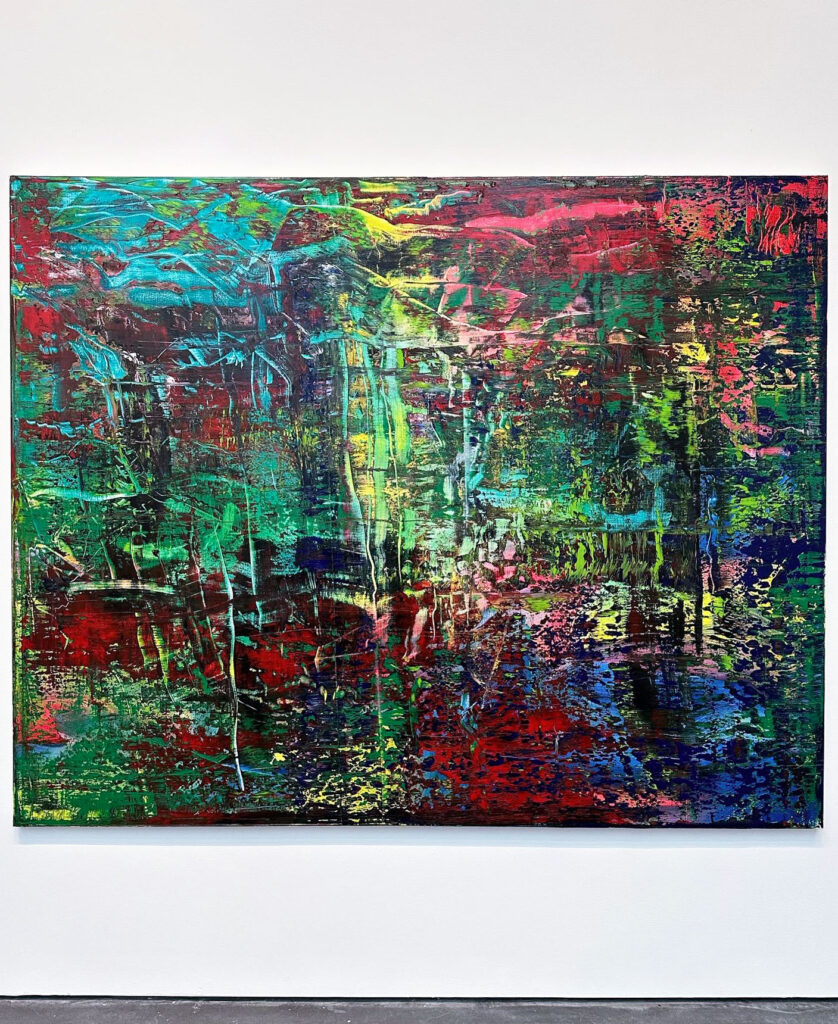
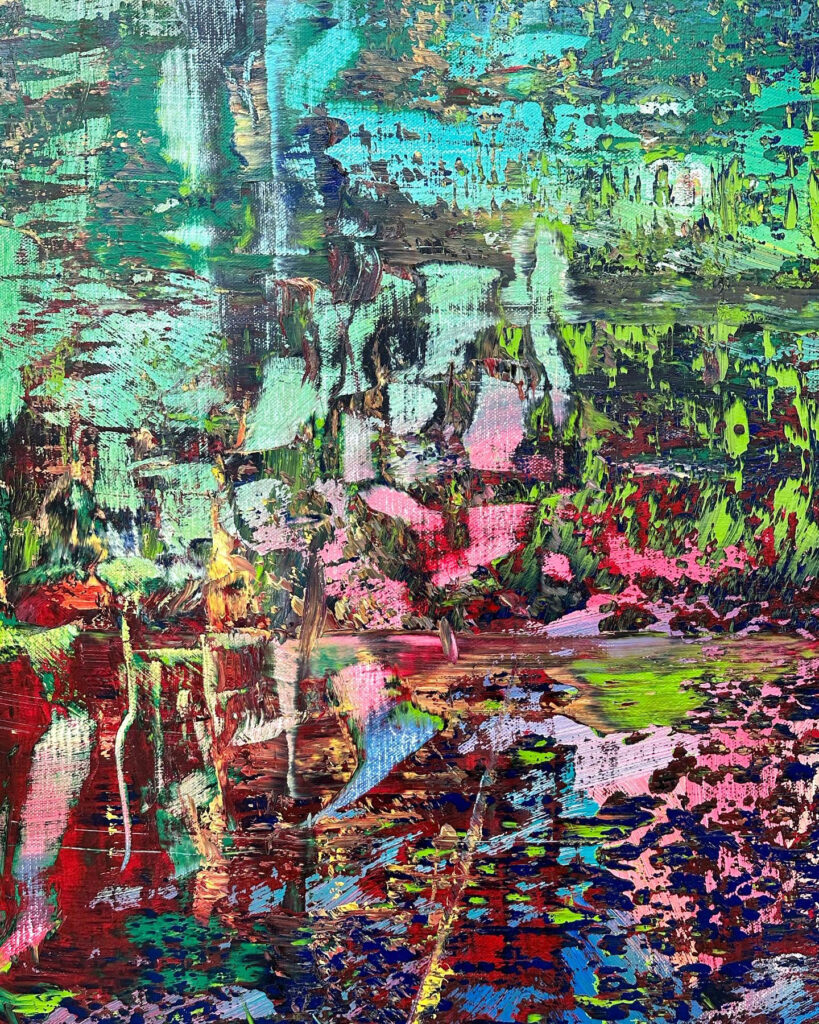
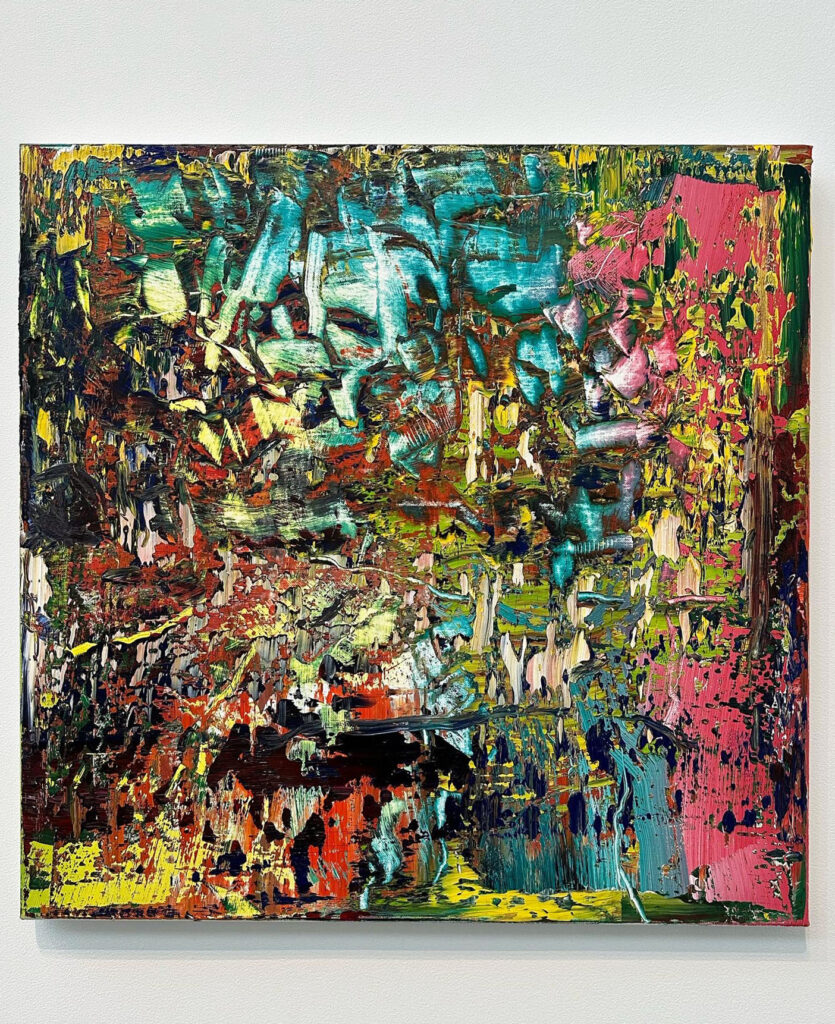
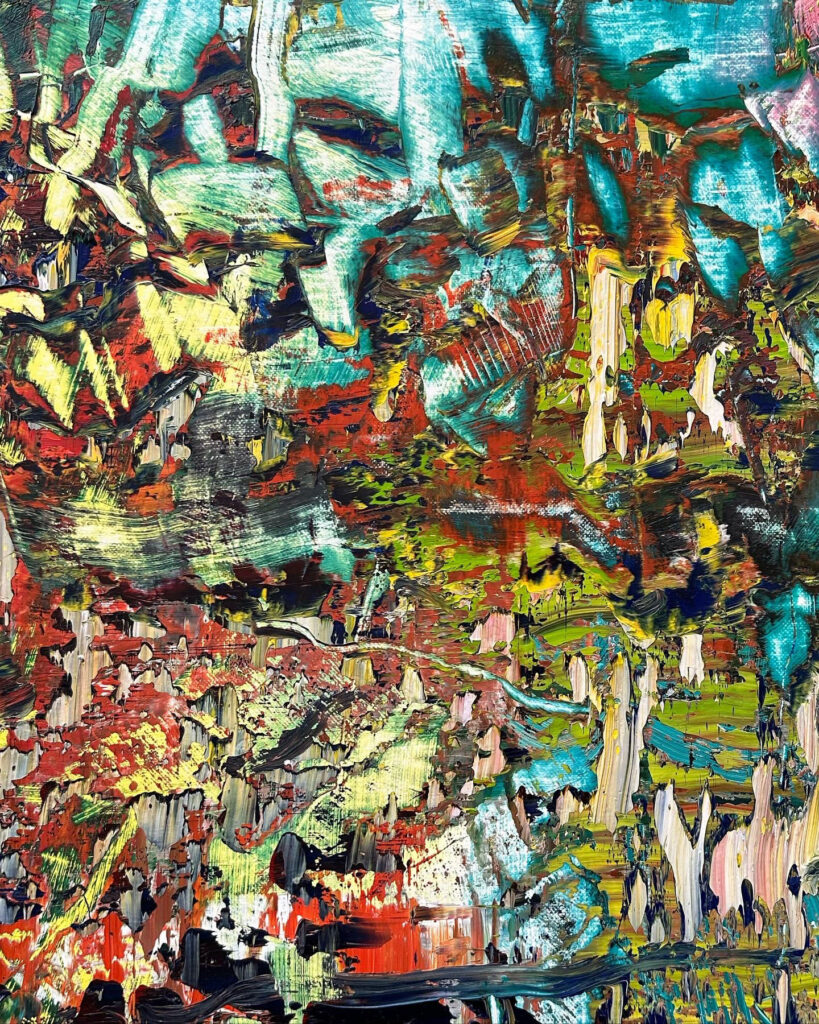
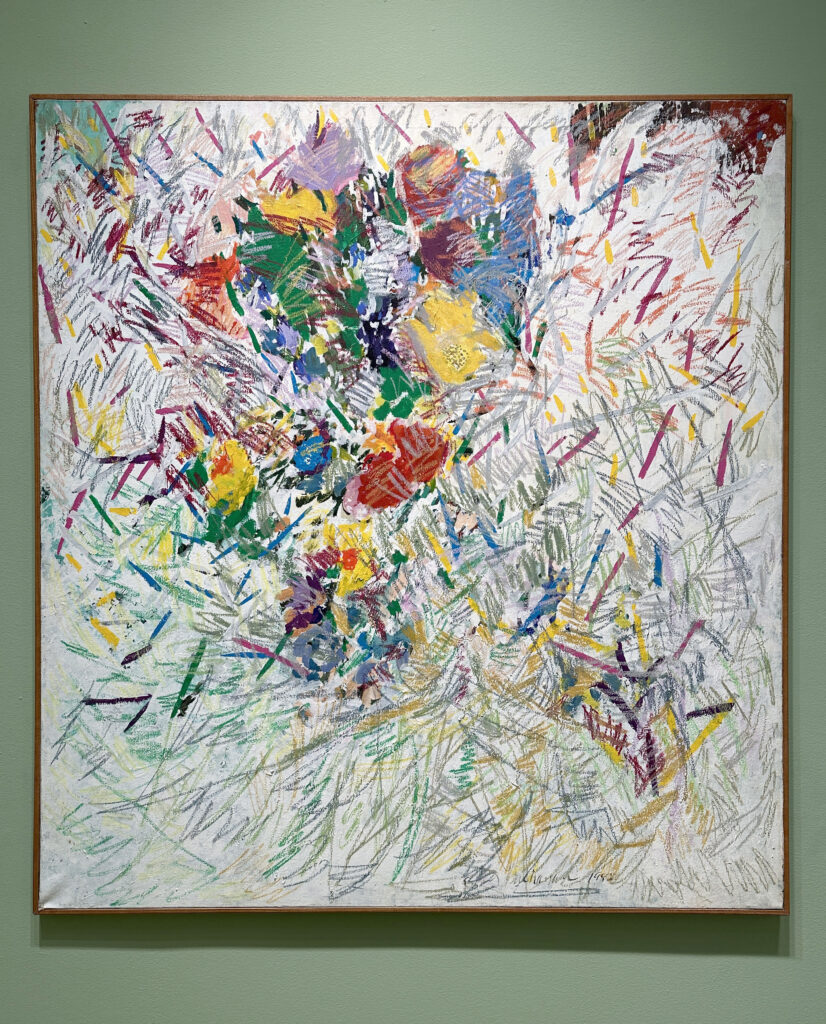
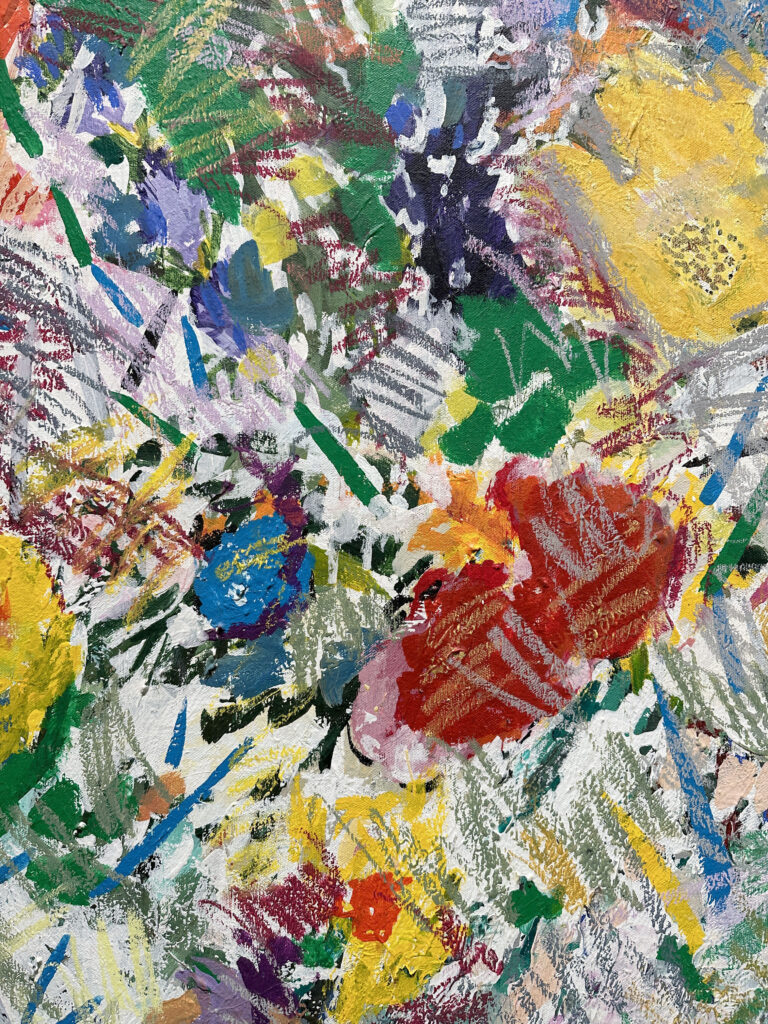
It’s the last week to see the Gerhard Richter exhibition at David Zwirner. The show includes a group of Richter’s last paintings from 2016-17, two of which are pictured above, as well as a new glass sculpture and recent works on paper.

From the press release-

Celebrated worldwide as one of the most important artists of his generation, with a career spanning from the 1960s to the present, Richter has pursued a diverse and influential practice characterized by a decades-long commitment to painting and its formal and conceptual possibilities. The artist has consistently probed the relationship between painting and photography, engaging a variety of styles and innovative techniques in a complex repositioning of genres. In Richter’s work, dual modes of representation and abstraction fundamentally question the way in which we relate to images.

The exhibition will bring together a significant group of Richter’s last oil paintings, made in 2016–2017, a number of which will be shown in New York for the first time. Richter stopped making oil paintings in 2017, and the final work on canvas he made will be on view in the exhibition. Part of the artist’s Abstrakte Bilder (Abstract Paintings) series—a cornerstone of his practice since the 1970s—the works on view exemplify Richter’s investigations into chance occurrences and the painted medium’s historical and material properties. With their highly worked and intricately stratified surfaces, the last paintings foreground the sheer physical presence of paint and color, enacting a mode of composition that is aleatory yet deliberately planned.

Centrally featured will be 3 Scheiben (3 Panes) (2023), a new glass sculpture that continues Richter’s exploration of human perception and the built environment. Comprising three sequential rectangular panes of transparent yet reflective glass—each one positioned upright and measuring almost ten feet in height—the installation invites viewers to look at, through, and beyond its surface, revealing the inherently subjective and situational nature of perceived reality. Richter has consistently created glass and mirrored works since 1967, often presenting them alongside his paintings and drawings and placing them in the larger context of their surrounding architecture. Crucially, while sculptural, these free-standing glass works are also positioned as a literal reflection on painting and image-making; they respond to the art-historical notion of the painting as both a mirror and a window, while also acting as a powerful corollary to the blurred effect of Richter’s photo paintings, which the artist began experimenting with in the 1960s. As critic Hal Foster notes, “The felt analogy between a composed painting and a contemplative viewer is so fundamental that we are not aware of it until it is interfered with. And this is precisely what the glass pieces do: our reflection, in the sense of our mirrored image, disrupts our reflection, in the sense of our contemplation.”1

An expansive suite of new works on paper from 2021–2022—some made with ink and others with graphite and colored pencil—will also be on view. Richter’s drawings constitute a significant element of his practice, allowing him to explore another aspect of the role of the artist’s hand in the creation of a dynamic and abstract pictorial narrative. Many of these works feature passages of cloudy graphite rubbings juxtaposed with equally hazy semi-erased portions. The artist embeds a sparse network of crisscrossing arcs and lines amongst this backdrop, forming an enigmatic topography that seems to map out the very possibilities of image-making itself. Other drawings on view are composed of abstract monochrome washes of ink and graphite, taking on a decisively painterly appearance; as Richter describes, these works on paper chart out a parallel but complementary path to his painted oeuvre, much like that of “a poem and a novel by the same author.”2

Also on view will be mood, a group of inkjet prints that relate to a recent series of colored ink drawings by Richter, both of which debuted at the Fondation Beyeler in Basel in 2022. Part of the artist’s extensive career-long experiments with the iterative translation and interplay of mediums, these vibrant prints are almost indistinguishable from their ink counterparts, revealing Richter’s continued fascination with the possibilities of image reproduction.

This exhibition closes 4/29/23.

Mar 292023
 

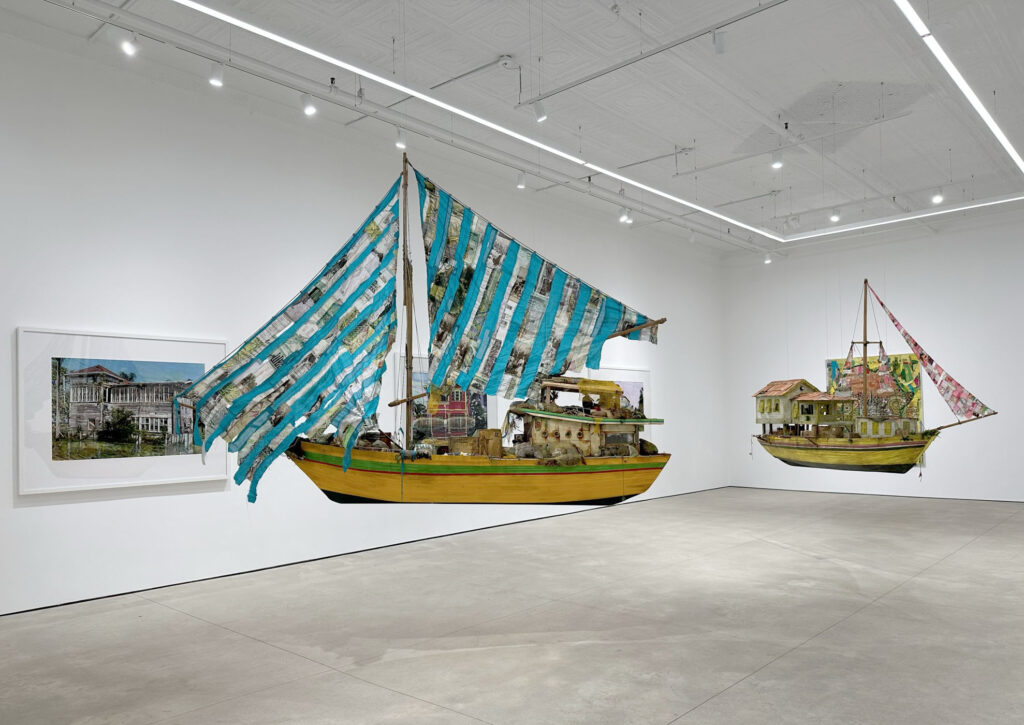
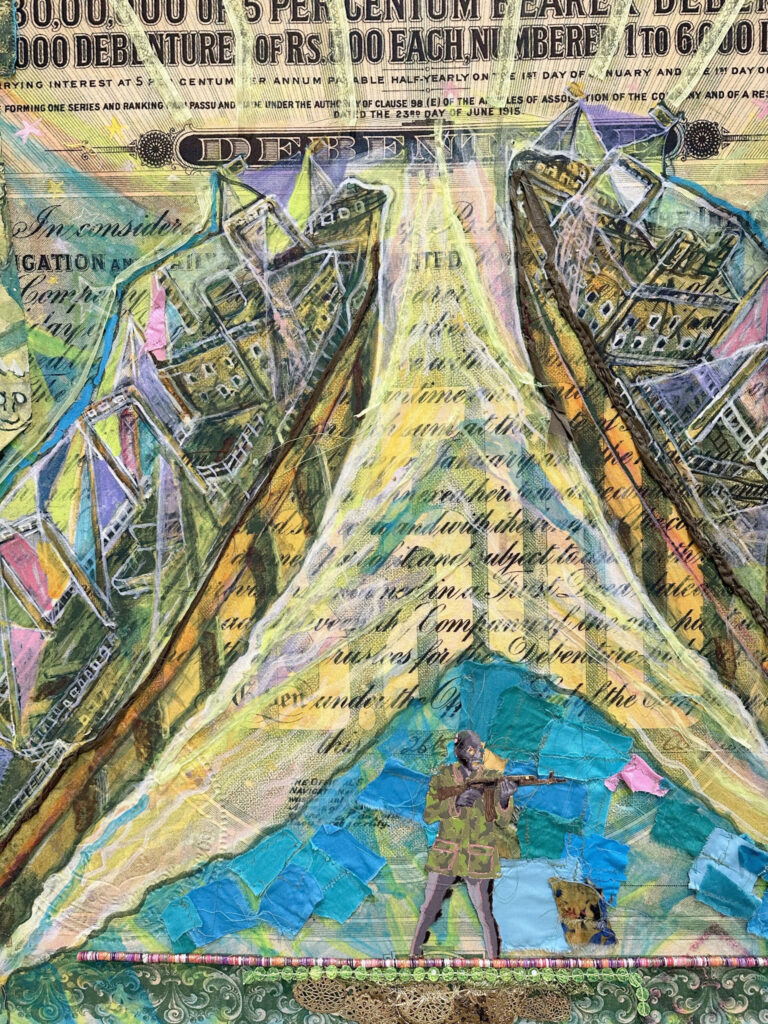
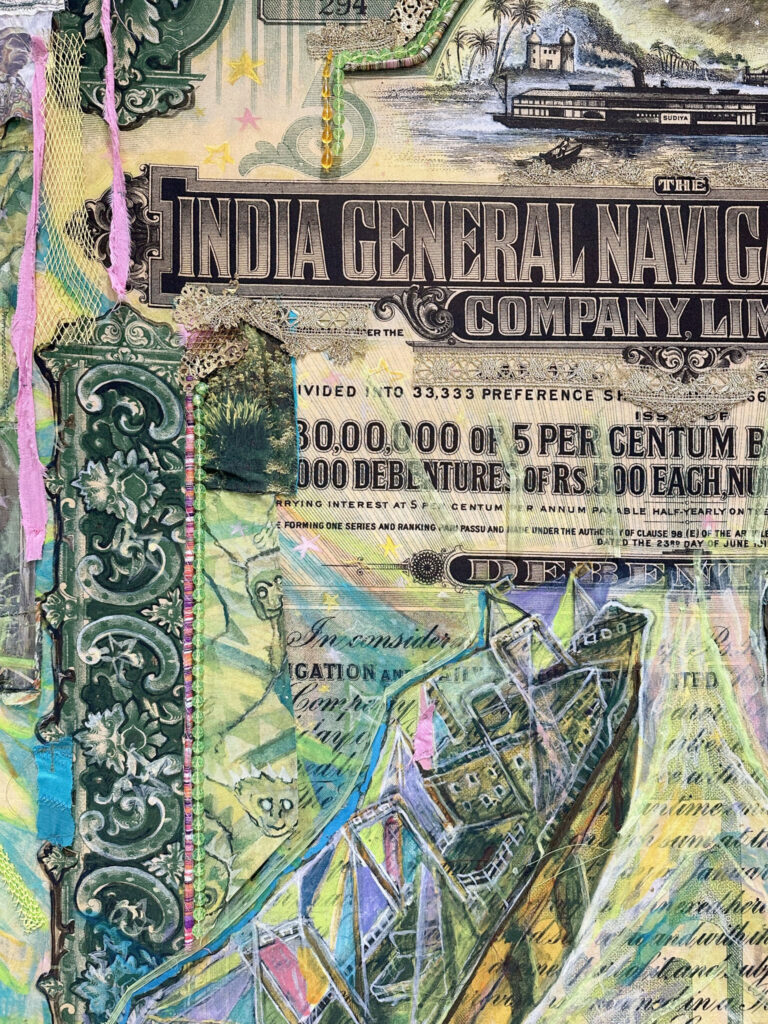
Hew Locke, “Listening to the Land” room view

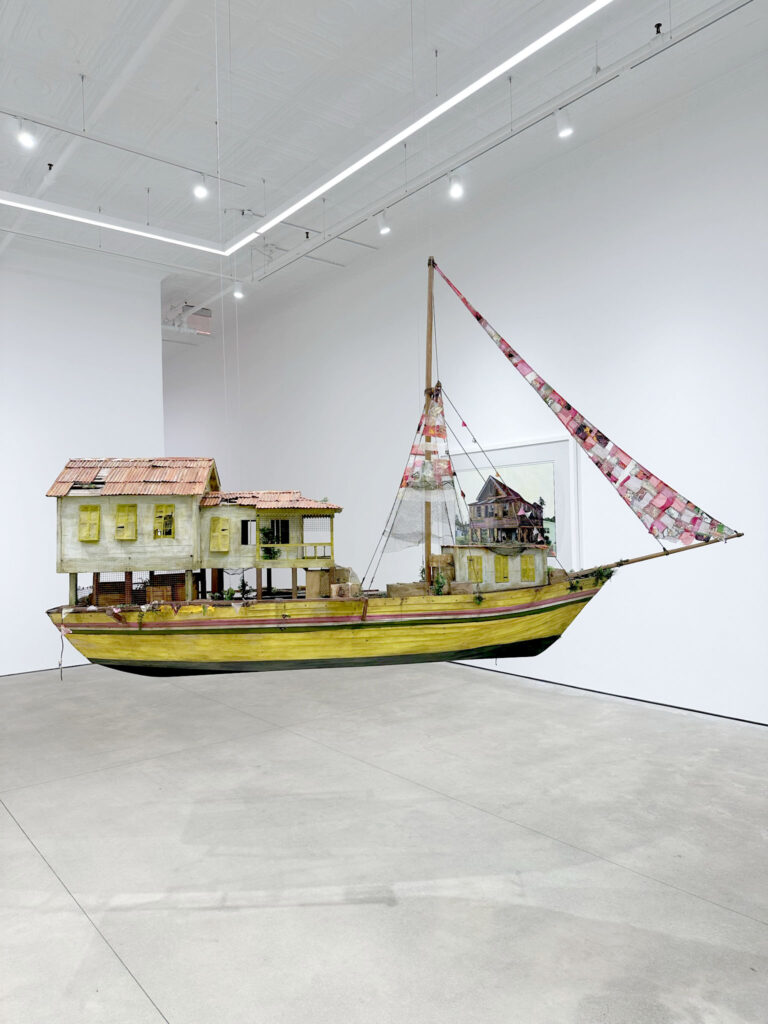
“The Relic”, 2022

“The Relic” 2022 (another side)

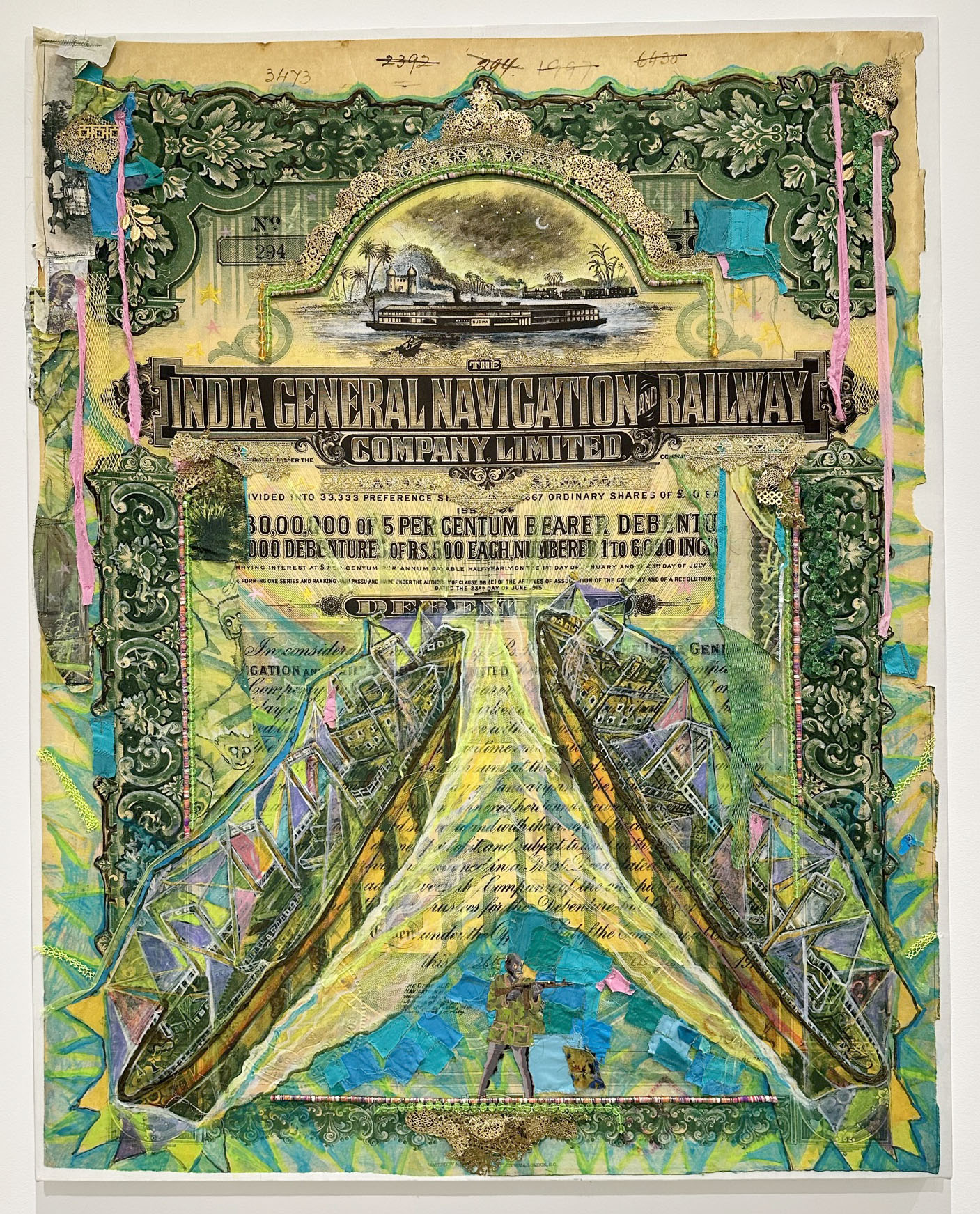
“Raw Materials 3”, 2022

“Raw Materials 3”, 2022 (detail)

“Raw Materials 3”, 2022 (detail)

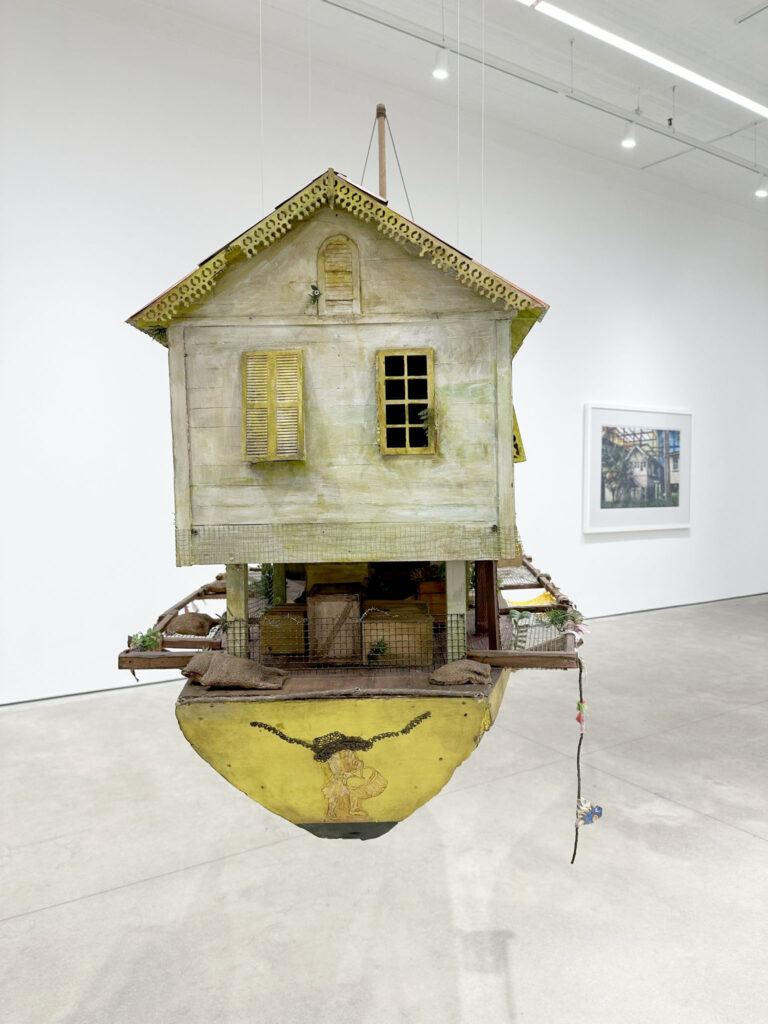
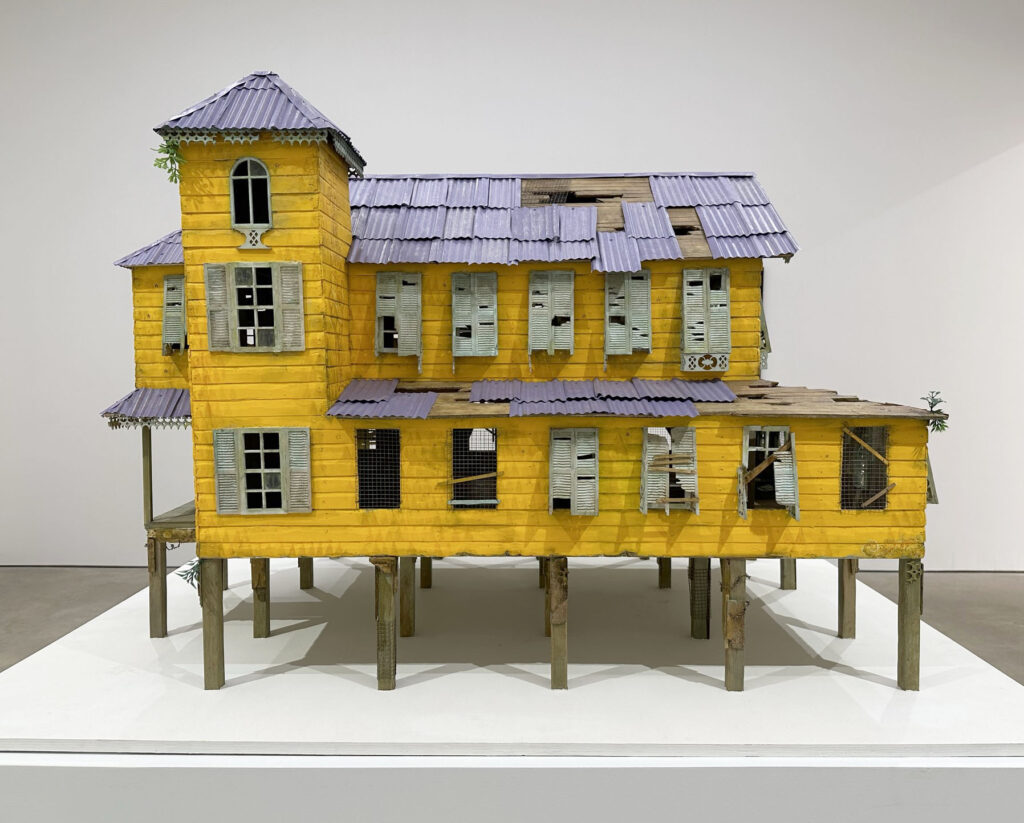
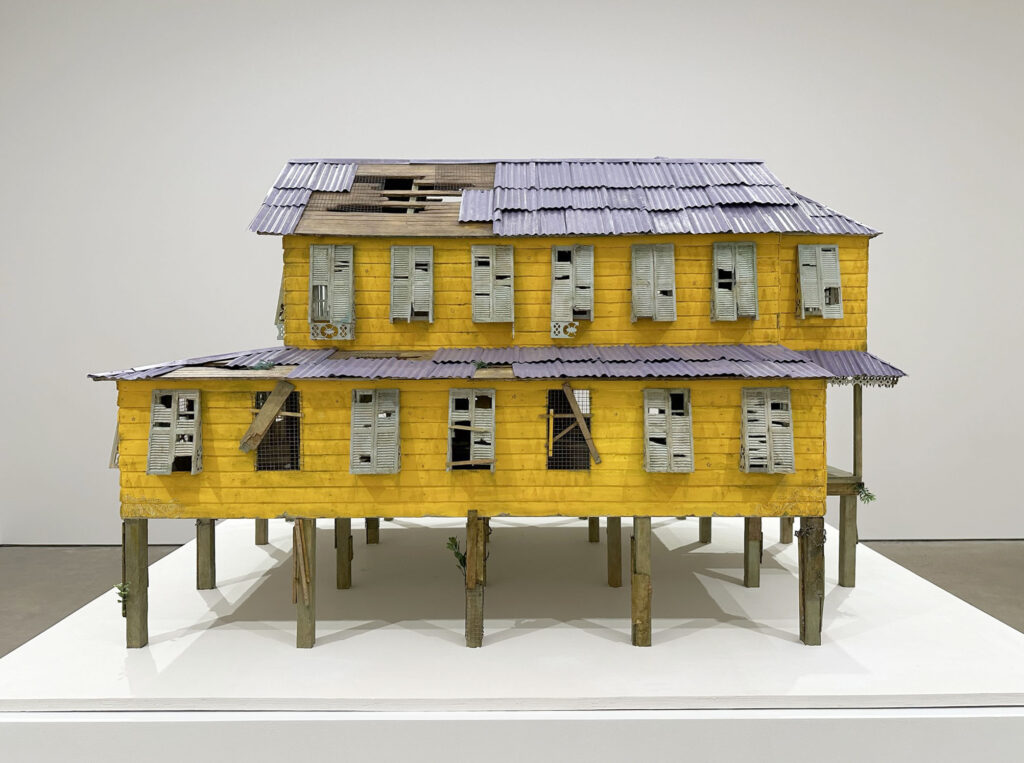
“Jumbie House 2”, 2022

“Jumbie House 2”, 2022

For Hew Locke’s exhibition, Listening to the Land, at P.P.O.W. he has created intricate sculptures and paintings that are fascinating in person.

From the press release-

Locke is known for exploring the languages of colonial and post-colonial power, and the symbols through which different cultures assume and assert identity. Furthering the themes explored in his celebrated commission The Procession at Tate Britain, and his concurrent installation Gilt on the façade of The Metropolitan Museum of Art, this exhibit engages with contemporary and historical inequities while reflecting on the landscape and history of the Caribbean. The exhibition draws its title from a poem by Guyanese political activist and poet Martin Carter which situates itself between two opposing forces of the landscape – sea and forest. Locke’s show features new sculptures and wall works with recurring motifs of stilt-houses, boats, memento mori, and share certificates referencing tensions between the land, the sea, and economic power. Reflecting on these links, Locke notes, “The land was created to generate money for colonial power, now the sea wants it back.”

Translating to ‘land of many waters,’ Guyana and its physical, economic, and political landscape serve as one of the primary sources for Locke’s work. Having spent his childhood in this newly independent nation, the artist witnessed first-hand an era of radical transformation. Now, the country teeters on the precipice of an oil boom and is one of the world’s fastest growing economies. Juxtaposing personal meditations on the climate crisis with political commentary on the history of a globalized world, Locke contemplates the ways in which colonies were exploited to accumulate capital, and observes how Guyana’s economic future lies in the exploitation of its waters. Locke’s new boat sculptures The Relic and The Survivor embody this broad worldview as the two battered wrecks drift through time and history. Evoking the fragmented and diverse legacies of the global diaspora, the boats’ patchwork sails are interspersed with photo transfers of 19th Century cane cutters and banana boat loaders, while their decks are loaded with cargo that could allude to colonial plunder, trade goods or personal belongings.

Based on an abandoned plantation house, Locke’s newest sculpture Jumbie House 2 features layered images that unveil the spirits that haunt this colonial vestige. Presented alongside are a series of painted photographs of dilapidated vernacular architecture across Georgetown and rural Guyana. Constantly under threat of being washed away by storms or rising sea levels, these crumbling structures echo anxieties surrounding climate change and historical erasure. A new series of mixed media wall works, Raw Materials, is derived from antique share certificates and bonds. Locke richly decorates the appliques with acrylic, beads, and patchwork to draw attention to the complex ways in which the past shapes the present. The image of an 1898 Chinese Imperial Gold Loan behind painted Congolese figures connects the global economy at the height of Empire to current Sino-African trade networks. In another work, a painted representation of a Nigerian Ife mask, alongside an image of David Livingstone, is layered on a French-African Mortgage Bond from 1923, connecting exploration and exploitation of African land, to current conversations surrounding the repatriation of artifacts. Taken together, the works in Locke’s Listening to the Land echo William Faulkner’s adage “The past is never dead. It’s not even past.”

This exhibition closes 4/1/23.

The Procession, mentioned above, can now be seen at Baltic Centre for Contemporary Art, in Gateshead, England until June 11th, 2023.

Gilt, also mentioned above, is on view at The Metropolitan Museum of Art until May 30th, 2023.


Mar 282023
 

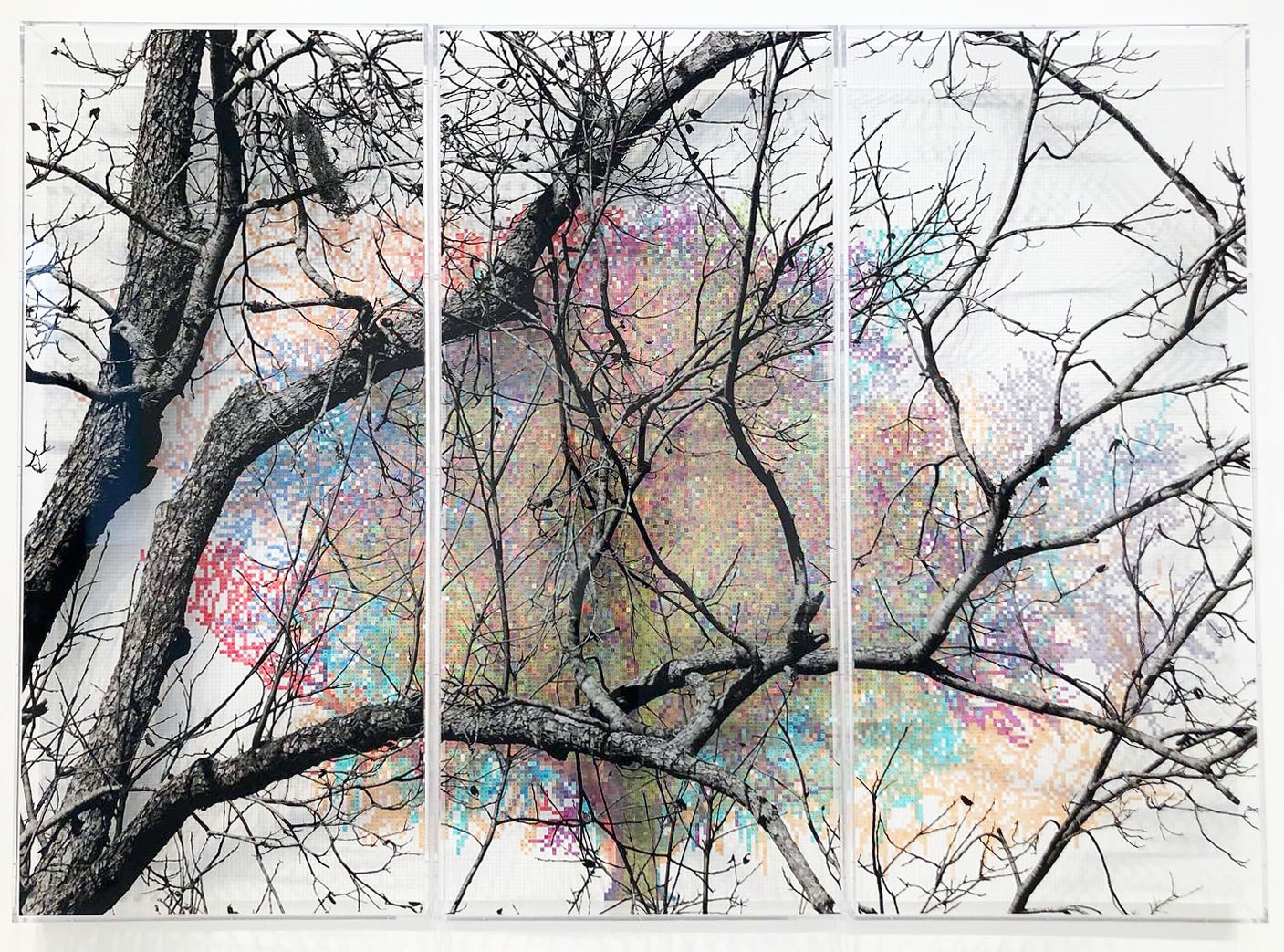
Charles Gaines’ work never fails to impress and his recent exhibition, Southern Trees, at Hauser and Wirth in NYC, is no exception.

From the press release-

One of the most important conceptual artists working today, the show explores the evolution of Gaines’s complex practice, demonstrating how he has continued to forge new paths within the innovative framework of two of his most acclaimed series, Numbers and Trees and Walnut Tree Orchard. The exhibition’s title, ‘Southern Trees,’ alludes directly to the 150-year-old pecan trees pictured in the new works, and symbolically to the opening lyrics of ‘Strange Fruit,’ Billie Holiday’s haunting protest anthem from the 1930s.

The image of the tree has been central to Gaines’s practice since he first began the Walnut Tree Orchard series in the 1970s. In ‘Southern Trees,’ Gaines advances the series using pecan trees photographed on a visit to Boone Hall Plantation in Charleston County, South Carolina––not far from where the artist was born and lived until he was five years old. Presented alongside a key early example from the walnut tree series, eight new triptych works on paper revisit and expand upon this significant original body of work.

‘Walnut Tree Orchard: Set M’ (1977), on loan from the Whitney Museum of American Art, New York, pairs a black and white photograph of a walnut tree with two drawings derived from it––an ink outline of the same tree and a grayscale grid that plots all of the trees included in the series up until that point. The newest series, titled Pecan Trees (2022), begins similarly, with a stark black and white photograph of a tree; yet in the drawings that accompany it, Gaines has filled in the outline of the tree with solid ink and used vibrant watercolors to plot all the previous trees in the final drawing. These successive modifications to scale, color and background demonstrate Gaines’s theory that while ‘the system has never changed, the outcome is always different.’

This extends to Gaines’s new Numbers and Trees Plexiglas series, which begin with the artist assigning each tree a distinctive color and numbered grid––breaking down the composition into individual cells that reflect the full form of the tree depicted in the photograph on the surface. However, Gaines reverses his signature process in this new series by overlaying the forms of the trees one at a time and in progression on the back panel of the work rather than on the front. He then brings the photograph to the surface by printing an enlarged detail of the most recently added tree on the work’s Plexiglas surface. This approach brings the tree’s shadowy branches to the foreground, highlighting its textural details and contrasting tones while obscuring the colorful numbered grids painted underneath it. This reversal produces a dramatically different effect, igniting a more somber, yet stirring, reaction to the work as the austere branches, dripping with moss, dominate the picture.

Created through carefully considered systems rather than through the artist’s own imagination or intuition, these new works remove the artist’s subjectivity by following a set of self-determined rules and procedures. The works call into question both the objective nature of the trees and the subjective natural and material human actions that surround them. The fastidious layering process allows Gaines to reveal the differences between the trees’ shapes where the forms do not align. These differences, highlighted by the artist’s systems, suggest the arbitrary nature of other manufactured systems in our society––such as politics, gender, race and class.

This exhibition closes 4/1/23.

Mar 262023
 

Kirsty Wither “Tumbling Crowd”

Yelena Lezhen “Clockwork Bird Song”

Esther Rosa “Goes around, comes around III”

This weekend is the Affordable Art Fair in NYC. It’s a chance to check out and buy art at reasonable prices.The fair goes to Hampstead, London next, and will return to New York in September of 2023.

For more on the artists pictured above and their galleries-

Kirsty Wither runs the London gallery Cameron Contemporary with her husband, Robin Cameron.

Yelena Lezhen’s work was shown by Barcelona gallery Manifest Destiny Art. Check out her Instagram for current work.

Esther Rosa’s sculpture was part of InSight Artspace’s booth. Her Instagram is also a good place to see her work.


Mar 232023
 

Stefan Kürten, “We are all made of stars”, 2013

Stefan Kürten, “Running to Stand Still”, 2014

Stefan Kürten, “Running to Stand Still”, 2014 (detail)

Stefan Kürten, “Fine Wrinkles”, 2000

Rita McBride, “Mae West Mandala (Oaxaca), 2009 and “Color Test (Green Bar)”, 2009

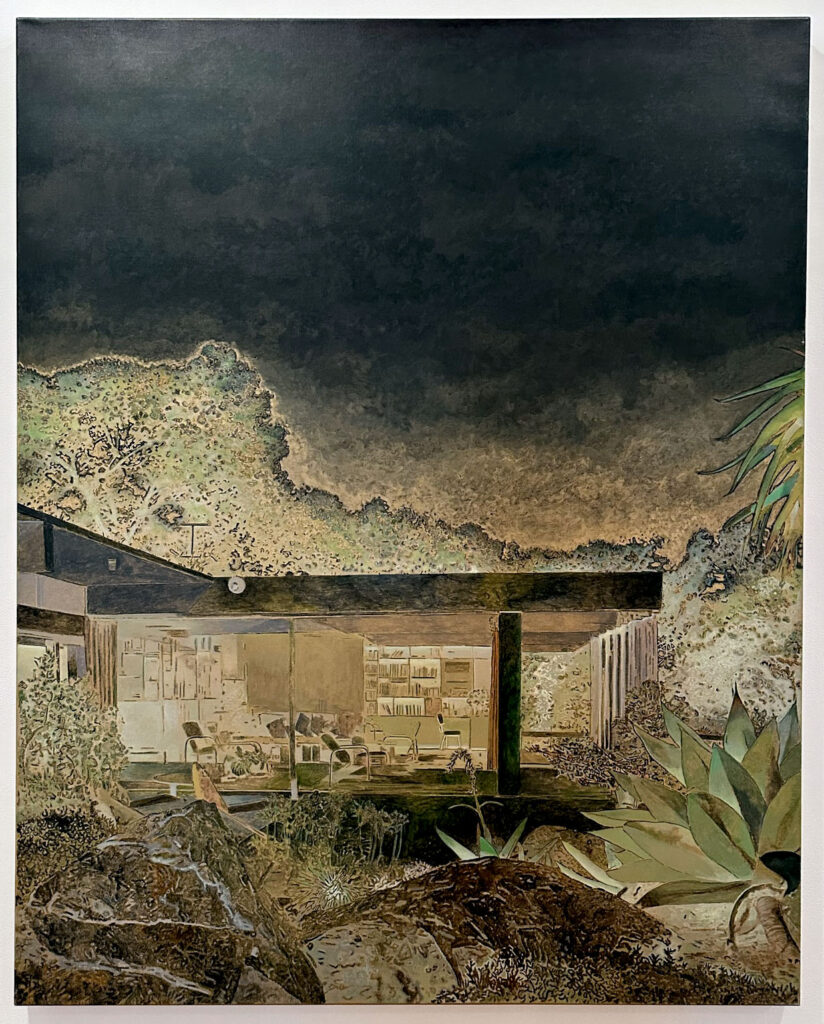
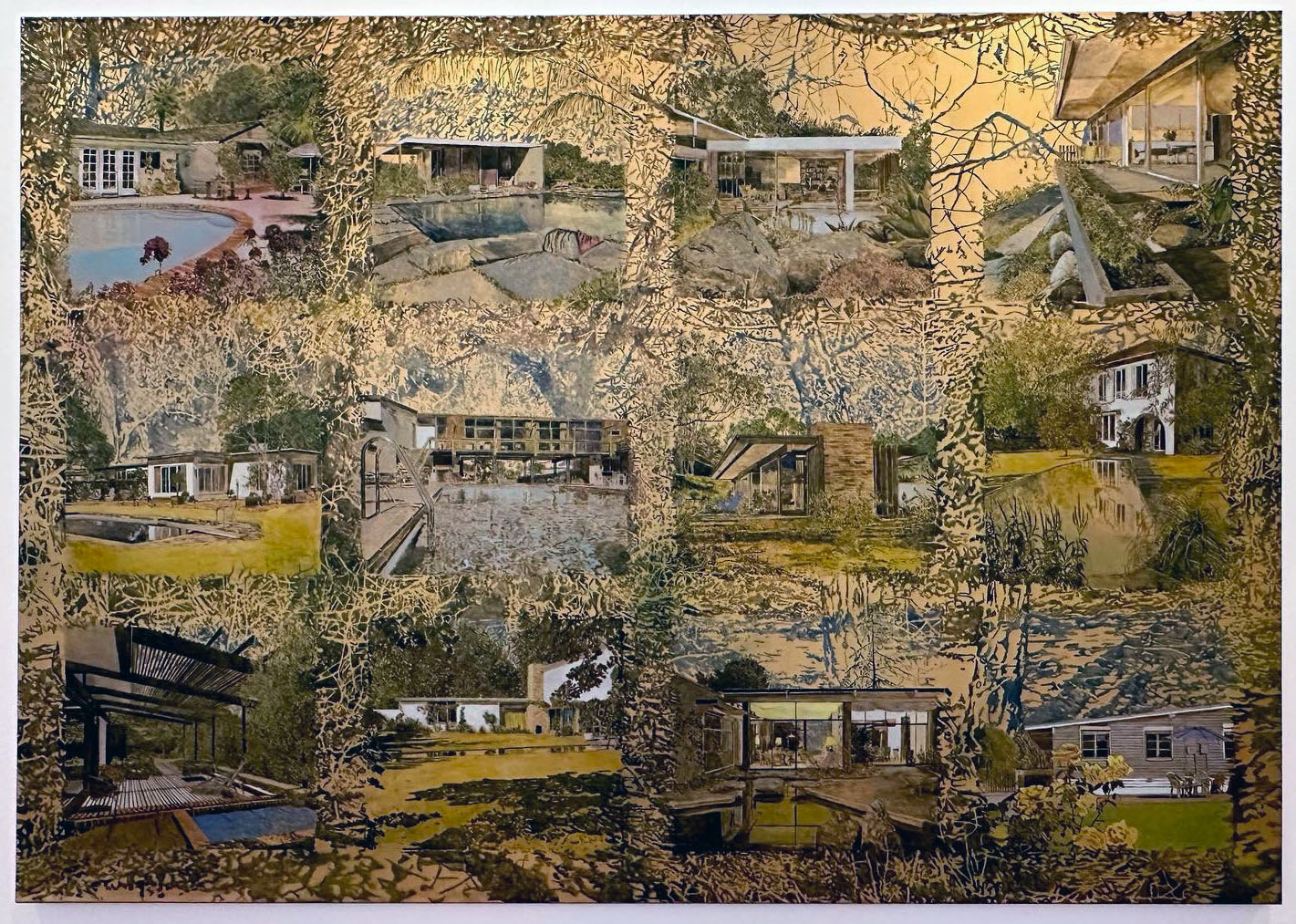
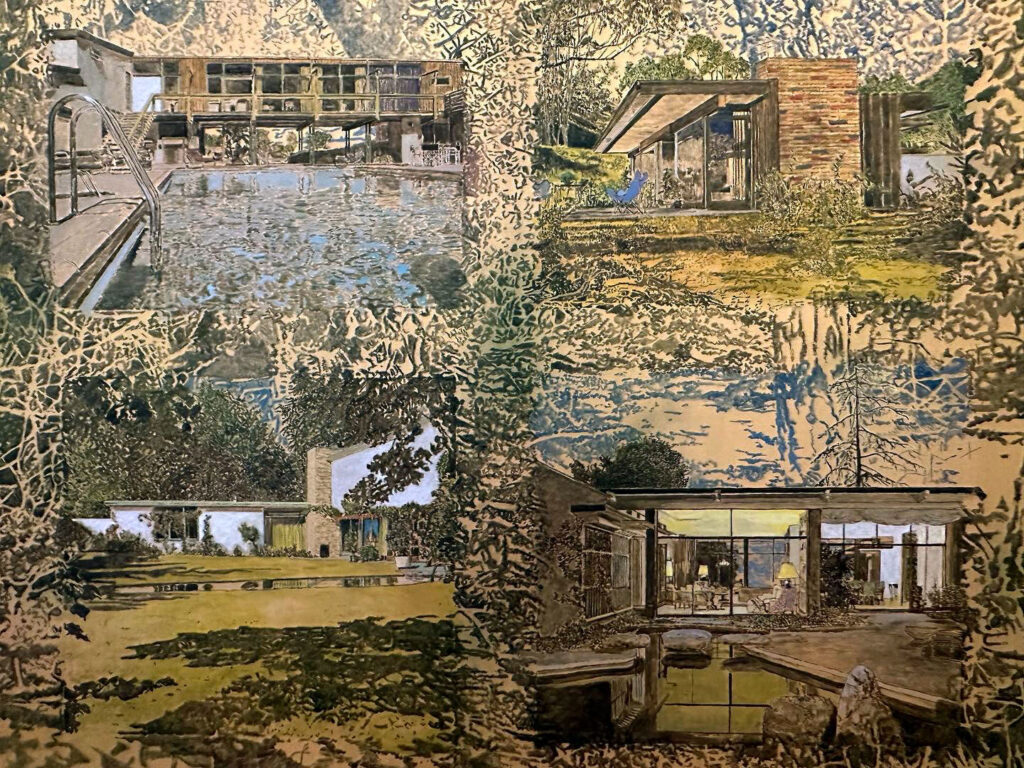
Stefan Kürten’s paintings of houses and Rita McBride’s wall coverings (and other sculptures) work with each other to question the concept of home, as well as the objects you might find within one. The exhibition, titled I Continue To Live In My Glass House, is on view at Alexander and Bonin until 3/25/23.

From the press release-

Stefan Kürten is known for detailed depictions of homes. Although constructed from both found and invented imagery, his homes feel known or experienced. The slippage between archetypes, memories, and dreams are central to his compositions. Set in lush landscapes and mysteriously unpeopled, Kürten’s homes evoke modern art or design museums with iconic sculptures and furniture viewable inside and outside of their transparent walls.

Rita McBride’s work invites us to reconsider structures and design elements such as ductwork, awnings, wall coverings and other utilitarian objects. McBride represents a bentwood chair in Murano glass, fastened together by a material that evokes spun candy or plastic wrap. Chair (1999) comments on the life of a domestic object whose usage necessitates an inventive approach to repair or stabilization.
McBride is also showing Particulates, an art installation that combines lasers with ambient dust and water molecules, will be on view at the Hammer Museum in Los Angeles starting 3/27/23.


Mar 162023
 

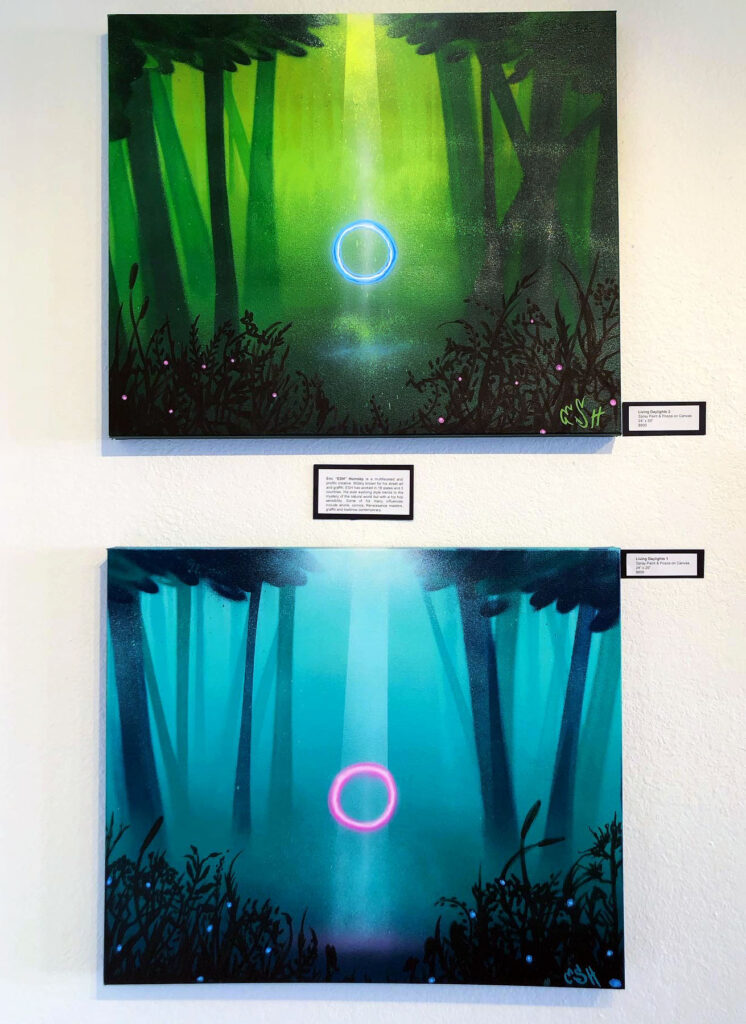
Eric “ESH” Hornsby, “Living Daylights 1″and “Living Daylights 2”

Adam Christopher Reed, “The Judge”

Nikita Rosalind, “Peace in the Wild Waves”

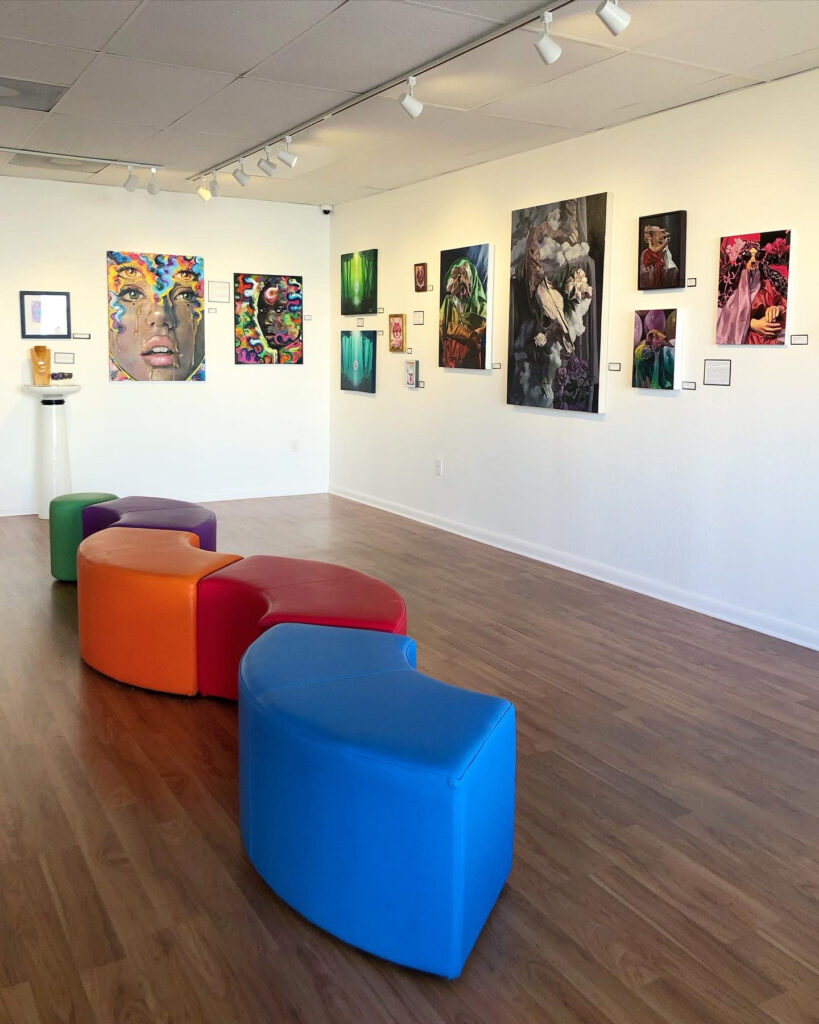
The Werk Gallery is an exciting new space in St. Pete that hosts monthly exhibitions in one half and the owners’ curated mix of vintage and modern items in the other. The photos above are from Shiny & New, the first gallery’s first show.

Artists from this exhibition pictured above- Adam Christopher Reed, Nikita Rosalind, and Eric “ESH” Hornsby

Currently the gallery is showing Rite of Spring, featuring artists Kenny Jensen, Nathan Beard, Samson Huang, Laura Spencer (Miss Crit), John Gascot, and Leafmore Studios (Becca McCoy and Justin Groom).

The gallery is open Thursday- Sunday from 12-5 pm.

Mar 082023
 

Chiharu Shiota, “Connected to the Universe”, 2023

Chiharu Shiota, “Connected to the Universe”, 2023 (detail)

Chiharu Shiota, “Connected to the Universe”, 2023, detail

“Connected to the Universe”, 2023

Chiharu Shiota’s gorgeous installations are just one part of her engaging exhibition, Signs of Life, at Templon in NYC. The installations lead to other rooms of smaller sculptures as well as  paintings.

From the press release-

After a foundation degree in painting at Seika University in Kyoto, Chiharu Shiota chose to pursue her artistic studies in Berlin, focusing on performance. Her practice soon shifted towards site-specific installations. She skilfully weaves knotted threads to create fantastical scenes combining salvaged window frames, a piano, suitcases, books and used clothes. Bordering on drawing and sculpture, her fabulous ephemeral, immersive installations have become her signature. Since her impressive installation for the Japanese Pavilion at the Venice Bienniale in 2015, she has become one of the key figures on the international art scene and is regularly invited to show her work at museums worldwide.

In a hyper-connected world, Chiharu Shiota’s new exhibition questions the notion of the “web”, a living organism similar to the structures that make up the universe or the neurons our brains are built on. Created on-site over two weeks, a large-scale installation made of red threads symbolizes this permanent connection of information, collective memory and the world’s knowledge which cuts across cultures and continents. At the heart of the work are two arms, her own, placed on the ground. They are cast in bronze, palms facing up to the sky. “I always thought that if death took my body, I wouldn’t exist anymore,” explains the artist. “I’m now convinced that my spirit will continue to exist because there is more to me than a body. My consciousness is connected to everything around me and my art unfolds by way of people’s memory.”

The installation is followed by a series of sculptures. Enfolded at the centre of each one, as though frozen in place by the intertwined threads, are objects from daily life. “I feel that the objects we possess are like a third skin,” she says. “We accumulate these things and transpose our presence and our memory to them.” Often obsolete, weighed down by impenetrable histories, these objects — old suitcases, stained dolls, miniature pieces of furniture and tiny bottles — represent the treasures offered up by memory, to be seen but not touched.

“State of Being (Dress)”, 2022

State of Being (Photos), 2022

State of Being (Photos), 2022 (detail)

This exhibition closes 3/9/23.

Mar 022023
 

Artist Miguel Luciano– Vinyl banner from the public art project “Mapping Resistance: The Young Lords in El Barrio”, 2019 Image: Young Lords Member with Pallante Newspaper (1970)” by Hiram Maristany and “The People’s Pulpit” (2022), a repurposed vintage pulpit from the First Spanish Methodist Church in East Harlem.

Miguel Luciano- Vinyl banner from the public art project “Mapping Resistance: The Young Lords in El Barrio”, 2019 Image: Young Lords Member with Pallante Newspaper (1970)” by Hiram Maristany


Poor People’s Art: A (Short) Visual History of Poverty in the United States at USF Contemporary Art Museum in Tampa uses installations and artworks to tell the story of, and expand perspectives on, The Poor People’s Campaign- from its origins in the late 1960s to the present day form, as well as comment on poverty and other social issues. Both educational and engaging, it shows that despite long struggles and some progress, we are still very far from much needed social change, especially in regards to poverty.

The museum also produced a free full color, 48 page workbook that you can pick up there or download as a PDF that can be downloaded from their website.

From the gallery’s website-

Dr. Martin Luther King Jr. is well known for his “I Have a Dream” speech, yet much less emphasis is placed on his campaign to seek justice for America’s poor, “The Poor People’s Campaign.” This was a multi-cultural, multi-faith, multi-racial movement aimed at uniting poor people and their allies to demand an end to poverty and inequality. Fifty-three years after Dr. King’s death, the Reverend William Barber II launched a contemporary push to fulfill MLK’s ambitious brief — one that calls for a “revolution of values” that unites poor and impacted communities across the country. The exhibition Poor People’s Art: A (Short) Visual History of Poverty in the United States represents a visual response to Dr. King’s “last great dream” as well as Reverend Barber’s recent “National Call for Moral Revival.”

With artworks spanning more than 50 years, the exhibition is divided into two parts: Resurrection (1968-1994) and Revival (1995-2022). Resurrection includes photographs, paintings, prints, videos, sculptures, books, and ephemera made by a radically inclusive company of American artists, from Jill Freedman’s photographs of Resurrection City, the tent enclave that King’s followers erected on the National Mall in 1968, to John Ahearns’ plaster cast sculpture Luis Fuentes, South Bronx (1979). Revival offers contemporary engagement across a range of approaches, materials, and points of view. Conceived in a declared opposition to poverty, racism, militarism, environmental destruction, health inequities, and other interlocking injustices, this exhibition shows how artists in the US have visualized poverty and its myriad knock-on effects since 1968. Participating artists include John Ahearn, Nina Berman, Martha De la Cruz, Jill Freedman, Rico Gatson, Mark Thomas Gibson, Corita Kent, Jason Lazarus, Miguel Luciano, Hiram Maristany, Narsiso Martinez, Adrian Piper, Robert Rauschenberg, Rodrigo Valenzuela, William Villalongo & Shraddha Ramani, and Marie Watt.

Below are some images from the show and the descriptions from the museum.

About the two works above from the museum’s walls-

A multimedia visual artist whose work explores themes of history, popular culture, and social justice, Miguel Luciano revisits the history of the Young Lords, a revolutionary group of young Puerto Rican activists who organized for social justice in their communities beginning in the late 1960s. Luciano’s first contribution to Poor People’s Art is a vinyl banner from the public art project Mapping Resistance: The Young Lords in El Barrio (2019), a collaboration with artist Hiram Maristany. It features the photograph “Young Lords Member with Pa’lante Newspaper (1970)” by Maristany, who was the official photographer of the Young Lords and a founding member of the New York chapter. This banner, along with nine other enlarged Maristany photographs, were installed throughout East Harlem at the same locations where their history occurred 50 years prior.

Luciano’s second contribution to Poor People’s Art is the sculpture The People’s Pulpit (2022), a repurposed vintage pulpit from the First Spanish Methodist Church in East Harlem. The Young Lords famously took over the church in 1969 and renamed it “The People’s Church”; they hosted free breakfast programs, clothing drives, health screenings, and other community services there. In this exhibition, The People’s Pulpit features an historic recording of Nuyorican poet Pedro Pietri reciting the celebrated poem Puerto Rican Obituary during the Young Lord’s takeover of The People’s Church.

Placards created by USF Contemporary Art Museum students, faculty and staff

Martha De La Cruz, “Techo de Sin (Roof of Without)”, 2021, made from stolen, scavenged and donated materials found in Southwest Florida.

About the above work from the wall plaque-

Afro-Taino artist Martha De la Cruz fashioned her sculptural installation Techo de sin (Roof of Without), 2021, from stolen, scavenged and donated materials found in Southwest Florida. According to the artist, “Florida is home to a large population of Latin American migrants who have ended up in the US largely due to economic pressures, exploitation and veins of power etched by Europe and the US.” Her powerful work deals with the results of this disjunction and the “symptoms thereabouts (e.g. houselessness, fugitiv-ity, government corruption, and income disparity, etc.).” According to De la Cruz, the word “sin” is a common Dominican mispronunciation for the word “zinc.” The sculpture is animated by a single light bulb that turns on for just ten minutes a day.

Narsiso Martinez “Hollywood & Vine”, 2022

Jason Lazarus “Resurrection City /Poor People’s Campaign: A National Call for Moral Revival / A Third Reconstruction”, 2023, plywood, utility fabric, blankets, sleeping cot, paint, lamp, plastic, research library, historical ephemera

From the wall plaque about the Lazarus installation-

Jason Lazarus’s sculptural installation Resurrection City/Poor People’s Campaign: A National call for Moral Revival/A Third Reconstruction (2023) is anchored in the artist’s historical research and several key photographs of Resurrection City. A tent-like shelter inspired by the temporary residences that populated the 1968 mass protest, the interactive sculpture contains simple sleeping quarters and a curated library filled with physical literature and ephemera centered on both the 1968 Poor People’s Campaign and the 2018 Poor People’s Campaign: A National Call for Moral Revival, co-led by Rev. Dr.William Barber and Rev. Dr. Liz Theoharis. The library allows for audiences to trace, listen, and talk about the history of advocating for the poor, from 1865 to the present. Additionally, the artist provides a custom transcription (and a QR hyperlink) to Barber’s 49-minute address on the syndicated radio show “The Breakfast Club” in which he carefully outlines his powerful vision for how we might address poverty going forward.

Inside the Jason Lazarus installation

A book and magazine from Jason Lazarus’ installation floor

Mark Thomas Gibson, “Town Crier July 23rd”, 2021

Rico Gatson, “Audre #2”, 2021

Jill Freedman, “Poor People’s Campaign, Resurrection City” 1968

About Jill Freedman’s photograph-

In the spring of 1968, the talented young street photographer Jill Freedman quit her day job as a copywriter in New York City to join the Poor People’s March on Washington. Freedman lived in Resurrection City for the entire six weeks of the encampment’s existence, photographing its residents as they rallied, made speeches, protested in front of government buildings, confronted police, built makeshift kitchens, organized clothing swaps, and dealt with flooding, petty crime, and illness. One of the most important postwar documentarians, and one of the few women photographers of the era, Freedman captured it all. Freedman’s 2017 book, Resurrection City, 1968-from which this exhibition draws a dozen powerful images-showcases the photographs that she made as a participant in the original Poor People’s Campaign. In multiple ways, Freedman’s images are the sympathetic perch upon much of which much of the present exhibition loosely hangs.

This exhibition closes 3/4/23.

Feb 252023
 

Christopher Skura, “Keep the Dream from Ending”, 2022

Christopher Skura, “Keep the Dream from Ending”, 2022 (detail)

Christopher Skura “Sketchbook Drawings”

Christopher Skura, “The Turnaround”, 2021; “Sketchbook Drawings”; “Head Cult”, 2022


Christopher Skura, “Story Bored (Cast of Characters)”, 2021

Christopher Skura, “Gob Stopper”, 2018

Christopher Skura’s exhibition The Beginner’s Mind (starting over after Covid) at Dunedin Fine Art Center is an interesting selection of his drawings, paintings and sculpture.

The artist’s statement on his work from the gallery wall-

Working in my Woodstock, NY studio during the 2020 Covid pandemic influenced my creative process by making my working method more direct and immediate. I have begun a routine of drawing everyday in sketchbooks. Out of these small drawings have come many sculptural ideas. Each imagined form serves as a kind of placeholder and represents someone we have lost. Drawing quickly with paint marker, my natural, hardwired shapes have become more pronounced. The goal is to work with a “beginner’s mind” and utilize the flow-state to achieve a direct expression.

All of my work comes out of extensive sketching and drawing. Very rarely do I recreate exact drawings as sculpture but I use them as a spring board to begin experimenting. Most of these drawings are small and done very quickly. By hesitating less, I have focused on completing an artwork in one or two sessions as opposed to laboring over it. The surfaces on the new works have become less concerned with refinement and I feel this has created a warmer and more active surface.

The style of my most recent artworks is influenced by the “street” art that blanketed my New York City neighborhood during lockdown. The images reference psychology, structural systems, emergence theory and the architecture of the human body. Improvisation and freehand drawing are emphasized for phenomenological effect and I try to capture the speed of living in Lower Manhattan. Some of my forms are organic and plant-like but others suggest the machinery of a man-made environment. This duality reflects my visual experiences growing up in the lush Florida landscape and my current life living in New York City.

The forms speak to the effects of time on the human body and the natural world. Each work imagined is a small psychological portrait of something struggling to survive or already gone.


Feb 242023
 

Micaela Amateau Amato, “Yoran Por Aire (contes brevas)”

Photographs by Amadia Shadow Rabbit

Film still from Kiara Mohammed Amin’s “Black Presence”

Film still from Kiara Mohammed Amin’s “Black Presence”

Soonoqo: We Become Body in Waves of Light and Sound at Dunedin Fine Art Center is a multimedia exhibition of 18 artists from around the world who “share a common desire for healing, communal growth and interdependence with nature” curated by S. Toxosi.

S. Toxosi’s statement about the exhibition (from the gallery wall)-

I do not possess the language to truly describe the be-holdings within Soonoqo. As a term within the Somali language, it would be difficult to translate into contemporary English. It considers a pluralistic worldview that allows ‘becoming and returning’ to bear witness of itself, within oneself while conjoining through space and time. Soonoqo, basks in the universal soul. Its otherness is imbued as the ‘physical cosmos’ and all its avatars and manifestations.

To speak in metaphor or in a sense of ‘poetic meditation’, one would engulf whirling vortexes, volcanoes and maelstroms that end up in other universes from which bring new revelations or images, The senses are engaged as viewed in Bruno Ferreira Abdala’s video art When Mother Breathes. It is here we can see a pluralist’s sensibility where the cohorts of Soonoqo ‘become and return’ with offerings that contend with the mythical genesis through the acknowledgement and practices of ancestral wisdom, queering mores, spirituality and love. Thus creating fission through initiating and remembering. There is a subtlety of conjuration, ritual, humility, vulnerability in K. Tauches’s Q.A.L. video-making that unfolds and reveals the sentience of a Nature that provides true sustainability.

Soonoqo is a web of interconnected lights in continuous synchrony. It enables manifestations from varied domains of areas of perceptibility through human inner weavings of life experiences and becomes a variety of communicative prowess that encompasses video arts, film, photography, the written word and sonic compositions. These forms all ultimately resonate with and point toward healing where one/all is purified, catalyzed and cleansed through cooperation with nature, technology, shadow matter, dark matter and invisible matter. As can be seen in the film Womb not Tomb by Dea, where she investigates and yields to the teaching of the four elements or in Kiara Mohammed Amin’s Black Presence, a short film of talismanic energy and transformation.

Artists included in the exhibition- Brandy Eve Allen, Viveka Krumm, Harry Wilson Kapatika, Cara Judea Alhadeff, Sadie Sheldon, Chelsea Rowe, Micaela Amateau Amato, Saudade Toxosi, Jennifer Pyron, Amadia Shadow Rabbit, K.Tauches, Javier T. Dones, Bruno Ferreira Abdala, Sall Lam Toro, Kiara Mohamed Amin, Nayetesi, Dea

For more information on this exhibition check out @soono.qo and this conversation with S. Toxosi and DFAC Curators Catherine Bergmann and Nathan Beard which is very informative.