
The painting above, Wave of Mutilation, is from Alex Sewell’s February 2023 exhibition Dad? at TOTAH in NYC.
Wave of Mutilation is also a song by the band Pixies, off their 1989 album Doolittle.

The painting above, Wave of Mutilation, is from Alex Sewell’s February 2023 exhibition Dad? at TOTAH in NYC.
Wave of Mutilation is also a song by the band Pixies, off their 1989 album Doolittle.
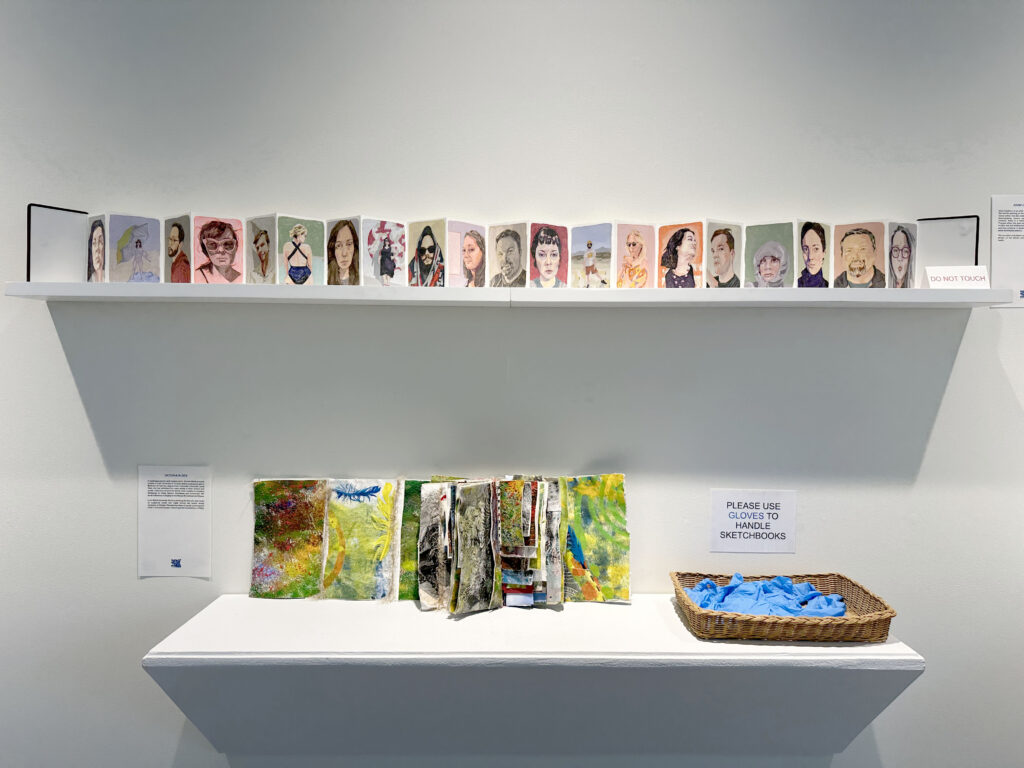
Work by Jenny Granberry (top) and Victoria Block (bottom)
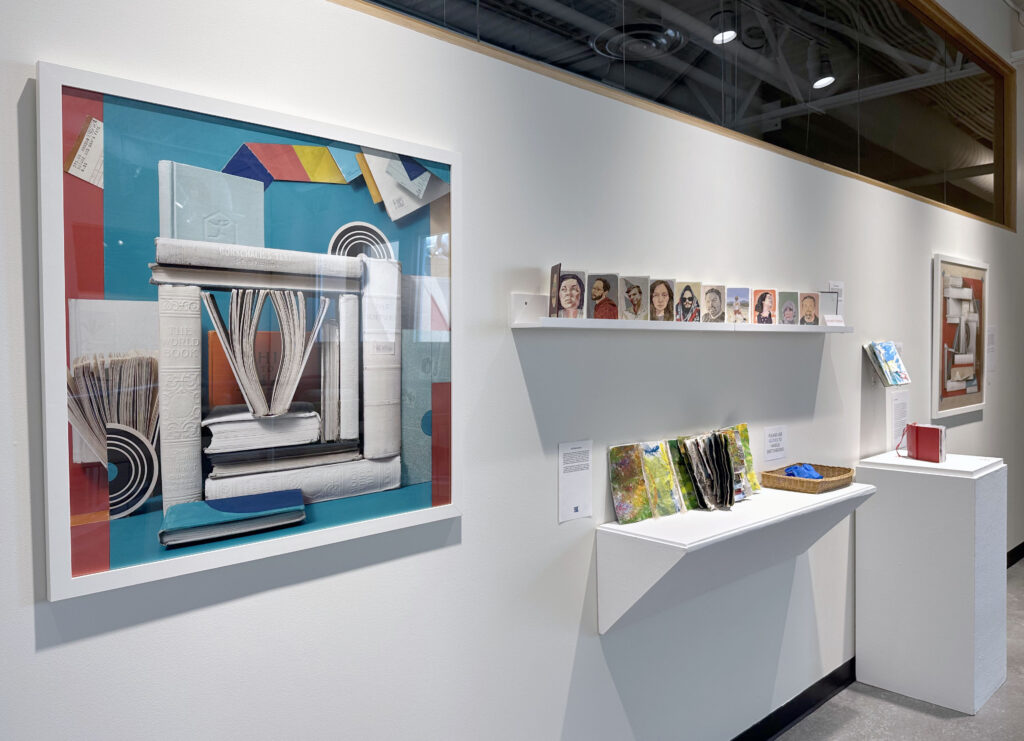
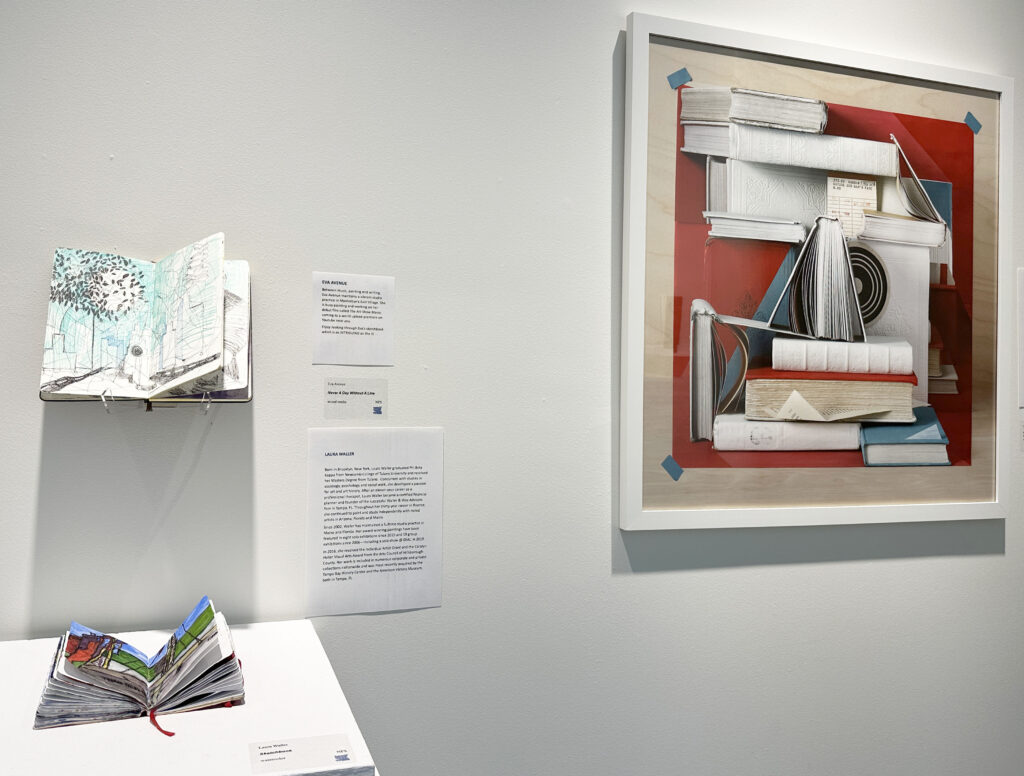
Journals by Eva Avenue (top left) and Laura Waller (bottom left) and photography by Andrew Sovjani
On the second floor of the Dunedin Fine Art Center are photographs by Andrew Sovjani and a collection of sketchbooks from a variety of artists, many of which you can look through- with gloves of course. It’s easy to spend lots of time with all the inspiring books these artists have created.
The exhibition closes 8/13/23.
About Andrew Sovjani, from the gallery-
Andrew Sovjani is a visual artist recognized for blurring the boundaries between photography, printmaking and painting. Raised in a family of working studio artists, art making is in his blood. Andrew has drawn from his life experiences in the scientific world and living in Asia to create transcendent bodies of work that are often extremely peaceful. His award-winning photographs have been shown in exhibitions throughout the U.S., Europe and Japan and are held in many public and private collections. He has won awards of distinction at many of the top fine arts festivals in the nation and was a finalist for the Critical Mass book awards in 2008 and 2016.
Some of the artists whose books are included in the exhibition are- Jenny Granberry, Victoria Block, Eva Avenue, Laura Waller, Dion Dior, Daniel Mrgan, Julia Collver, Coralette Damme, Joan Duff Bohrer, Marjorie Greene Graff, Lukas Mosimann, Luis Colan, Kathy Pollak, Jennifer Kosharek, and Katy Deits.
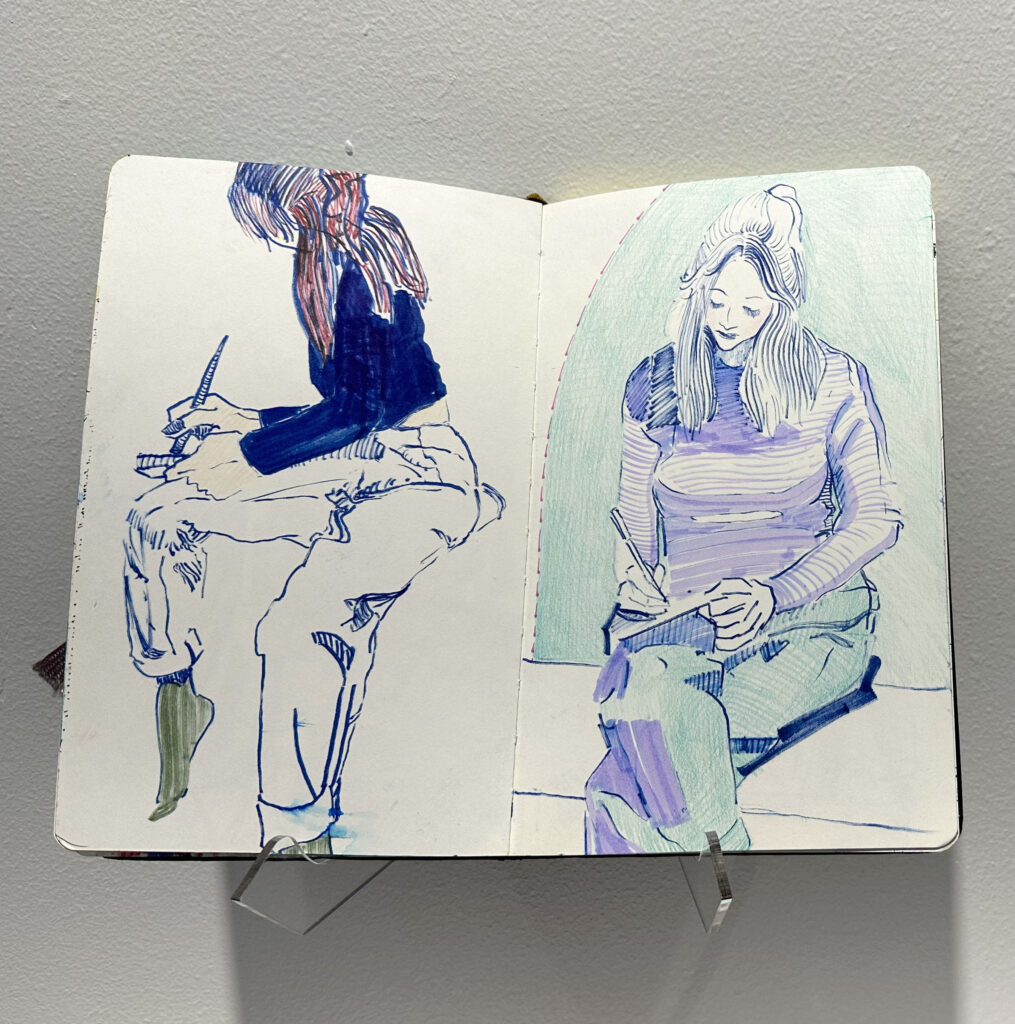
Work by Eva Avenue
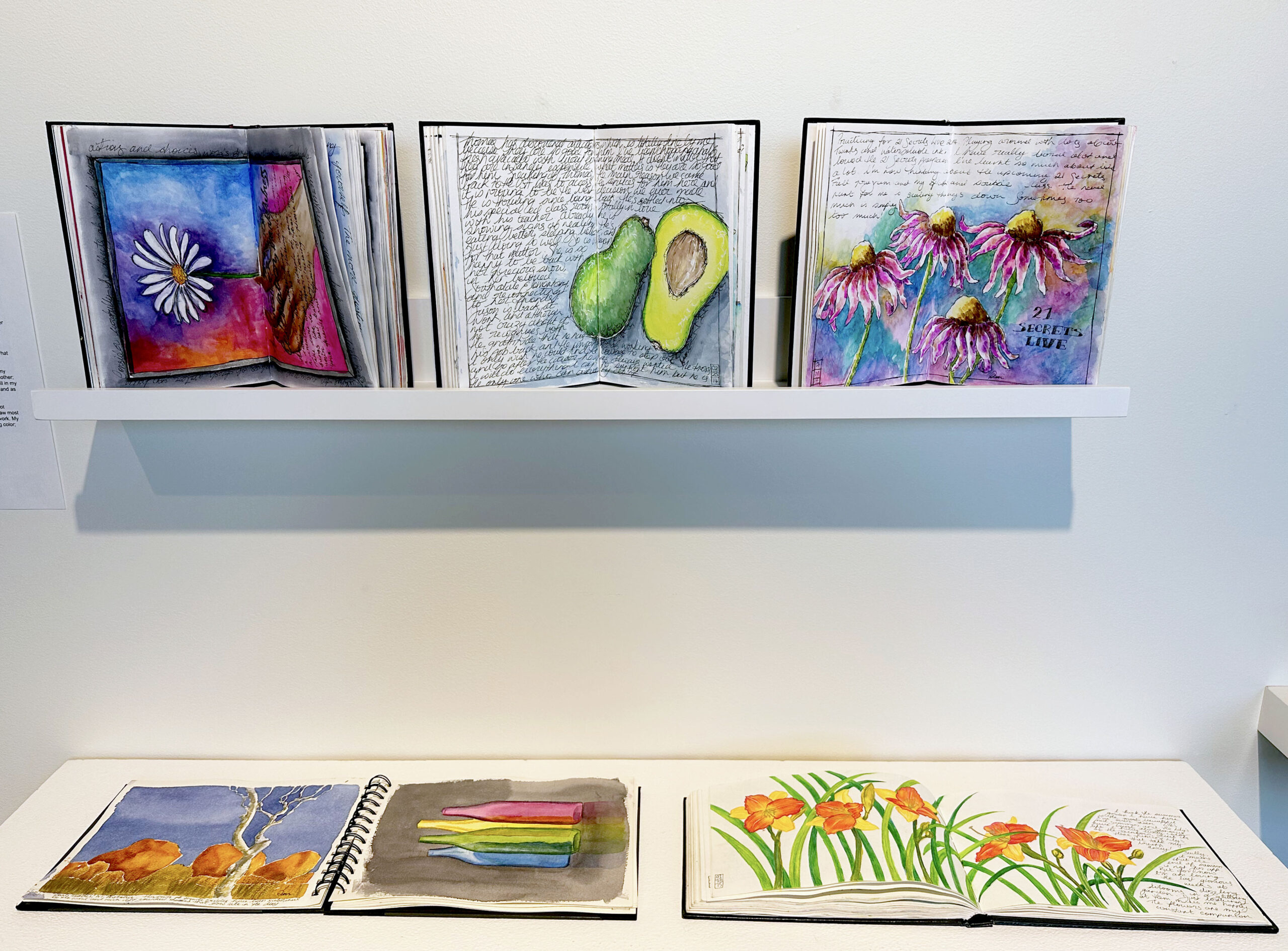
Work by Dion Dior
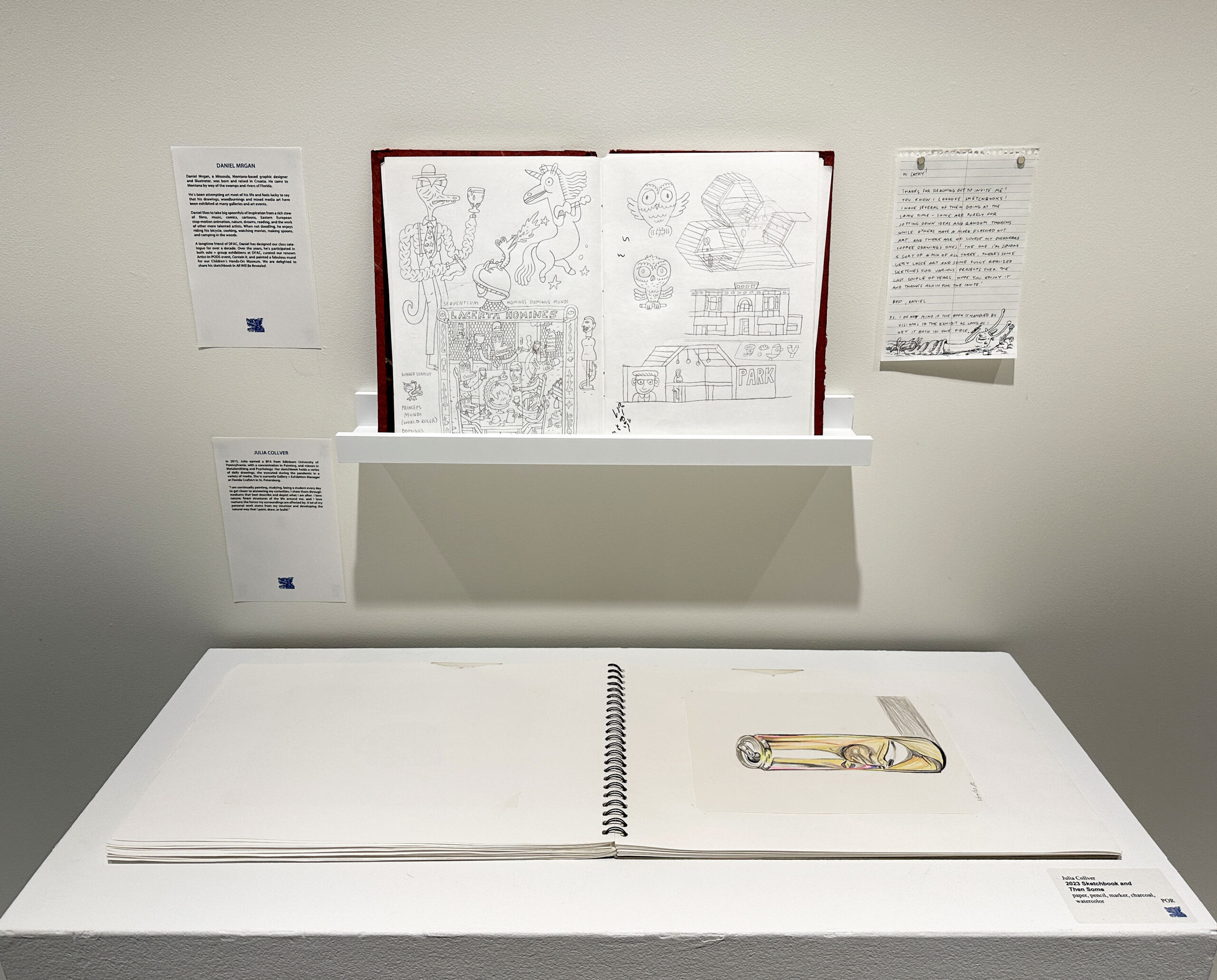
Work by Daniel Mrgan (top) and Julia Collver
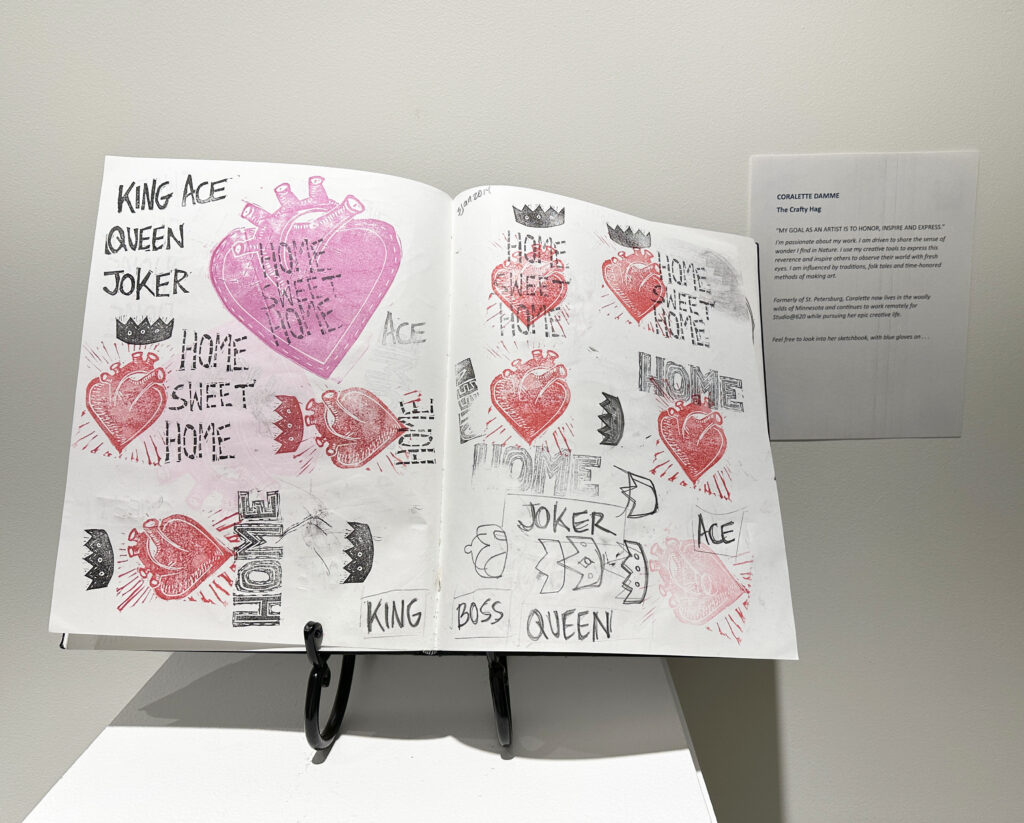
Work by Coralette Damme
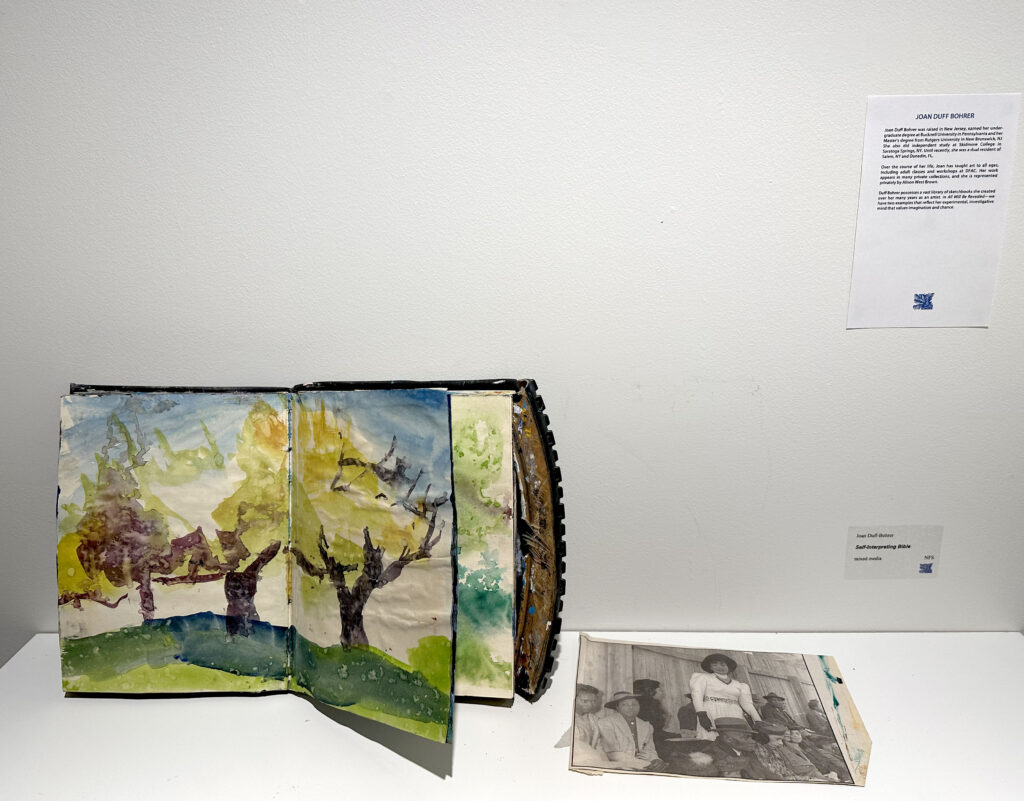
Work by Joan Duff Bohrer
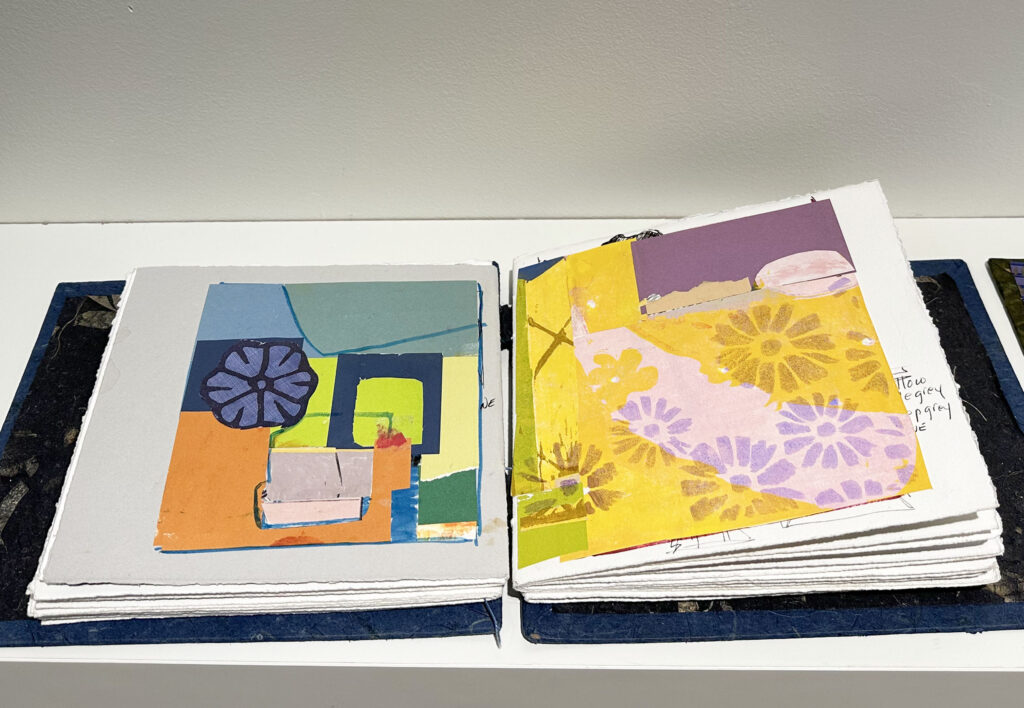
Work by Marjorie Geene Graff
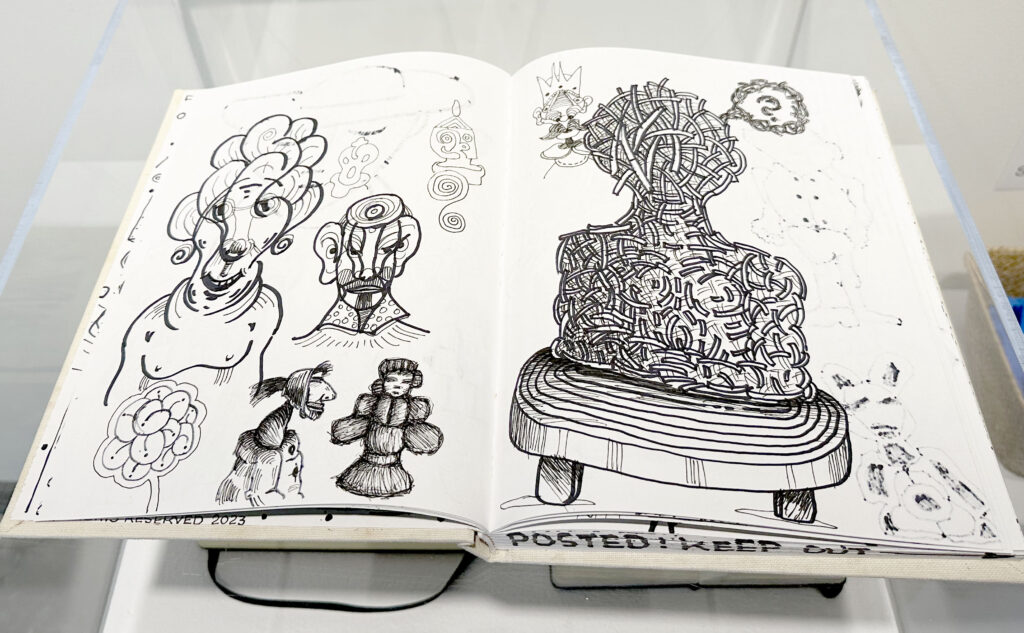
Work by Lukas Mosimann
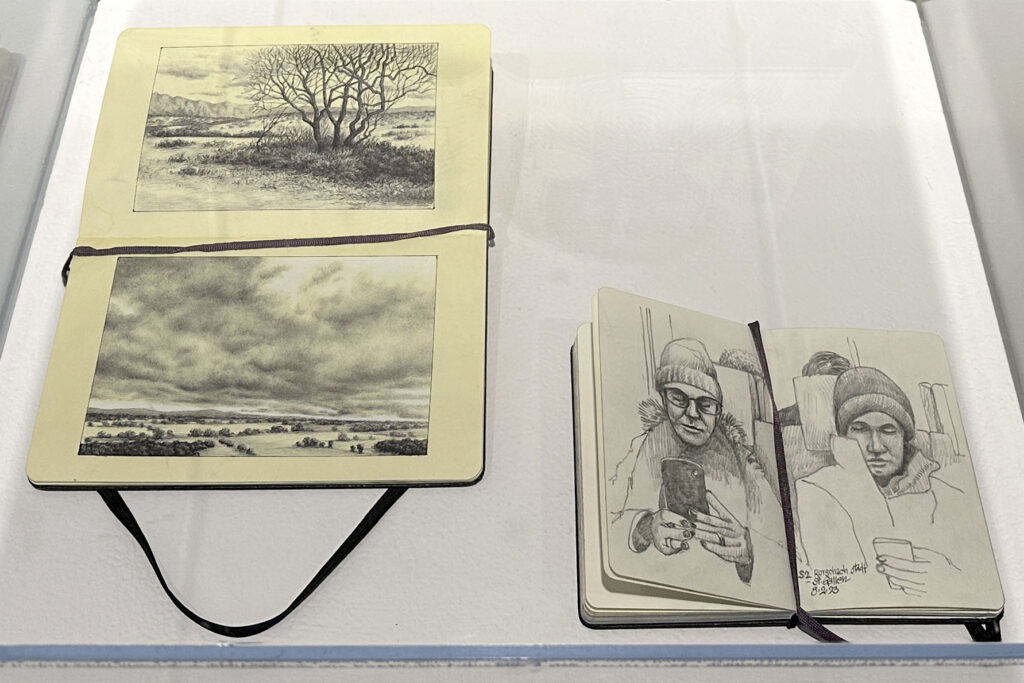
Work by Luis Colan (left) and Lukas Mosimann
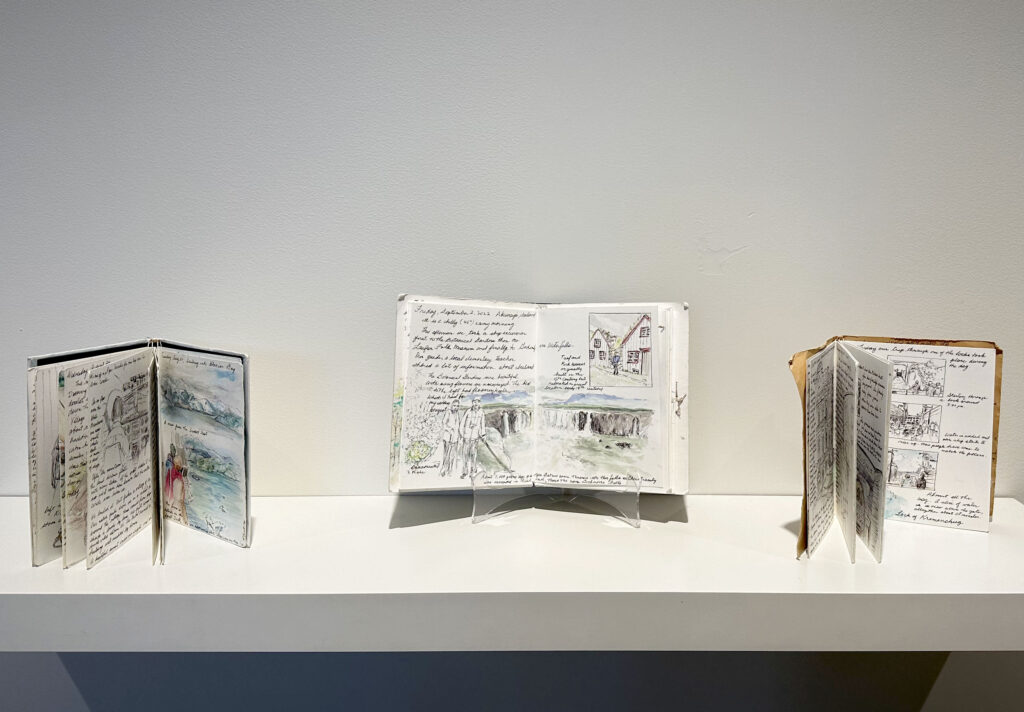
Journals by Kathy Pollak
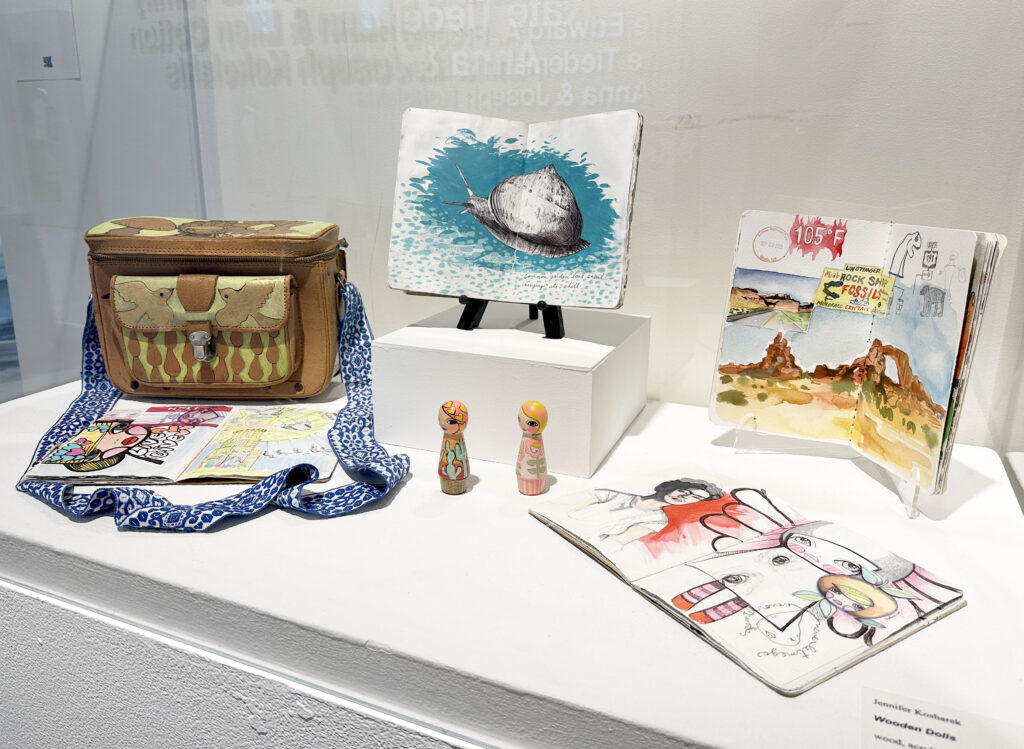
Work by Jennifer Kosharek
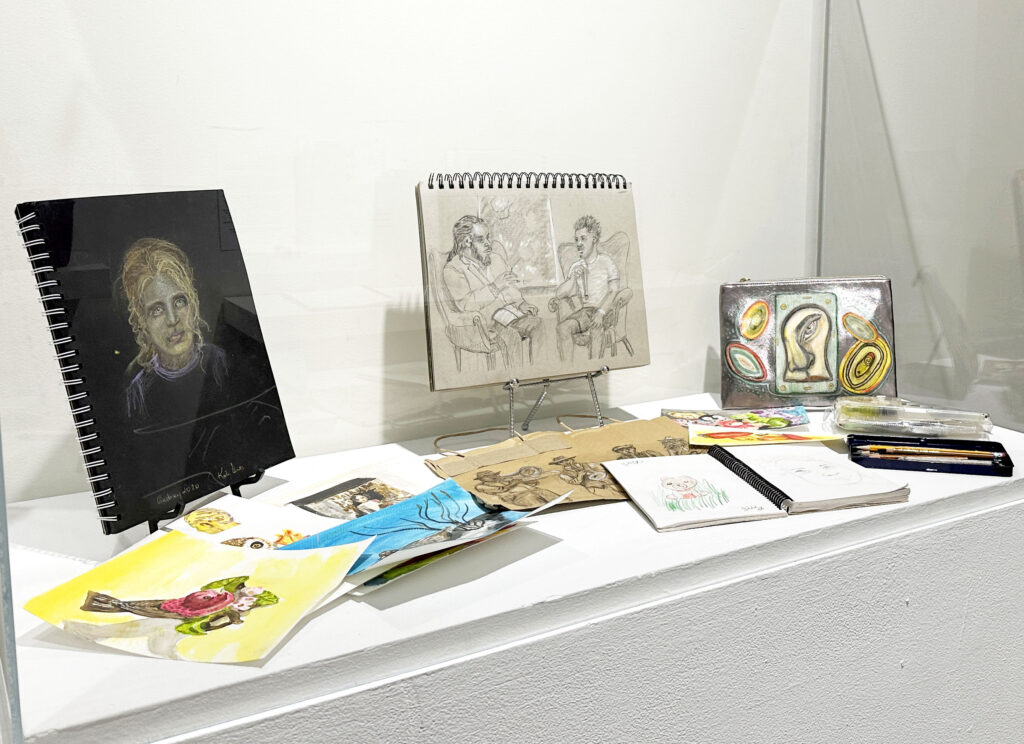
Work by Katy Deits

In honor of Leo season, here’s French artist Rosa Bonheur’s painting Crouching Lion, 1872, currently on view at Orlando Museum of Art.
From the museum’s information plaque-
Rosa Bonheur specialized in animal subject matter and was one of only a few women in the 19th century to achieve international success as an artist. She painted large-scale and complex compositions that were regularly exhibited in the prestigious Salon-the official art exhibition of the Académie des Beaux-Arts.
Bonheur did many versions of lions at rest, alone or in groups. A number of these compositions were reproduced in popular engravings that helped give her work a large international audience.
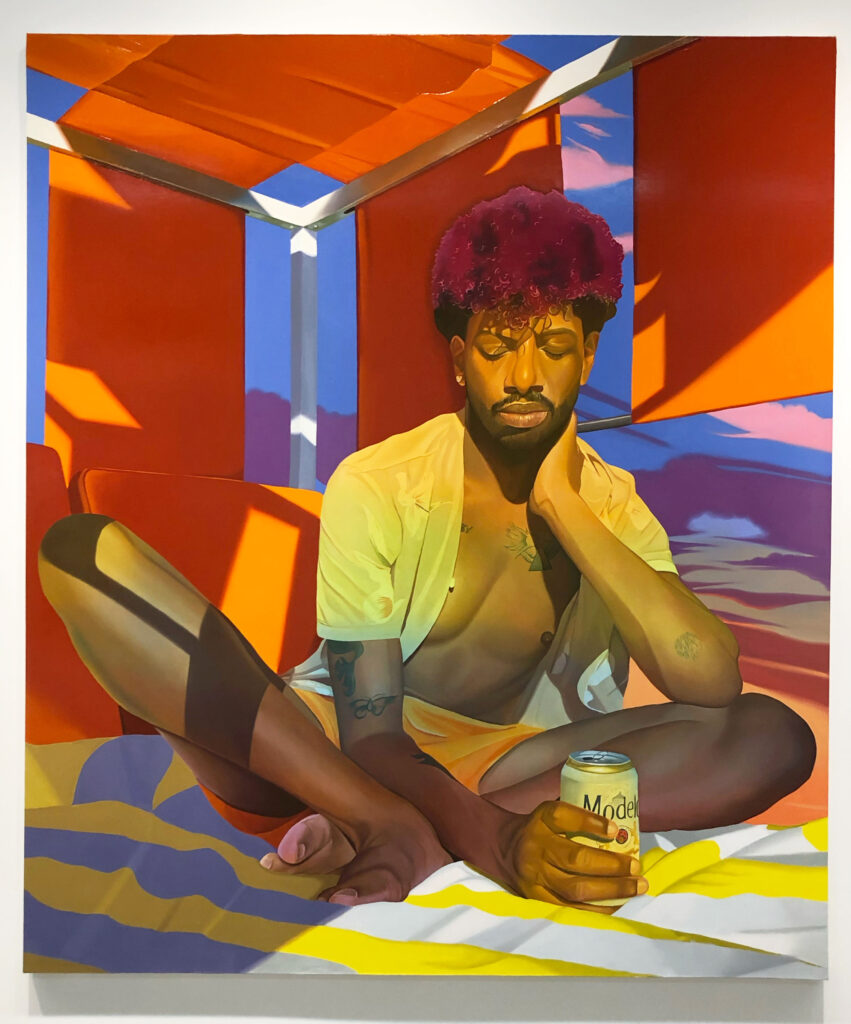
Danny Ferrell’s Thirty in Palm Springs, 2020 from the group exhibition, Sound & Color at Miles McEnery Gallery in 2020.


The work above is from Regina Durante Jestrow’s current exhibition Free Form Connections at Dunedin Fine Art Center.
The artist’s statement about the exhibition-
This exhibition includes my organically shaped geometric art quilts from various series from 2020-23. I utilize improvisation, repeat patterns and shifts in scale while incorporating colors, textures, and structures representative of the diversity of the people and the natural surroundings of my current home in South Florida.
I use diversely toned second-hand, gifted, or saved fabrics and dyes from locally sourced plants and rust. Textiles are also manipulated with burning and staining with inks and acrylic paint. Other materials, such as neoprene, sequins, and faux leather, reference Miami’s pop culture.
Along with my constant interest in American Folk-Art Quilts, geometric-abstract artists from the mid to late twentieth century are my influencers, including Gees Bend quilters, Elizabeth Murray, Helen Frankenthaler, Anni Albers, and Gego. These artistic voices have driven me to create quilts of scale with strong personal symbolism and narrative.
This exhibition is on view until 8/13/23.
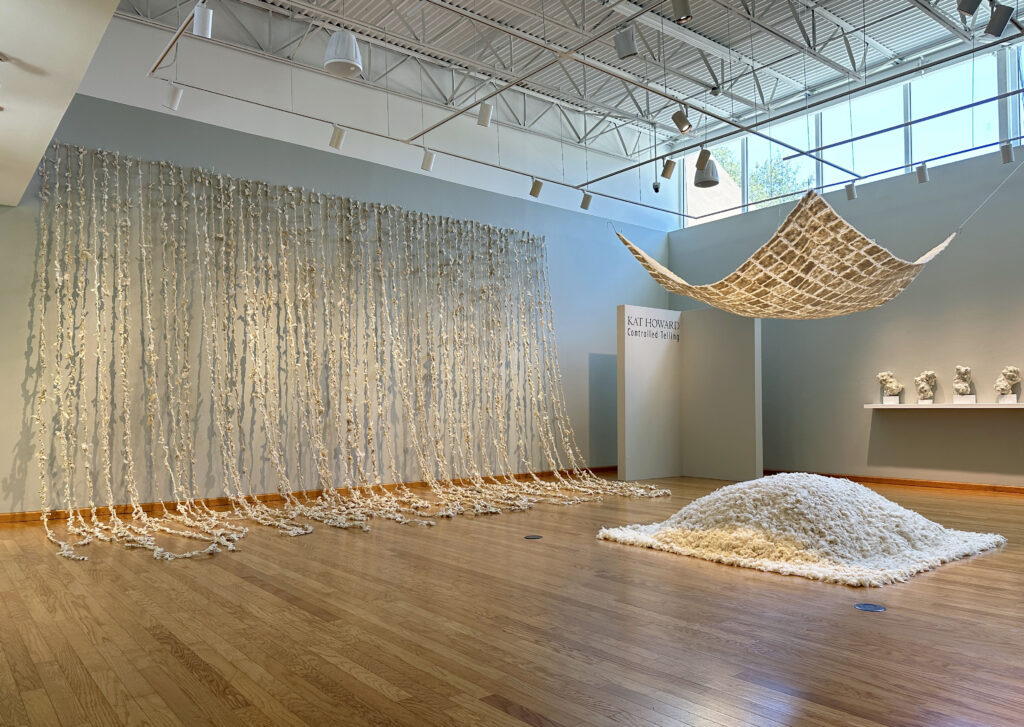
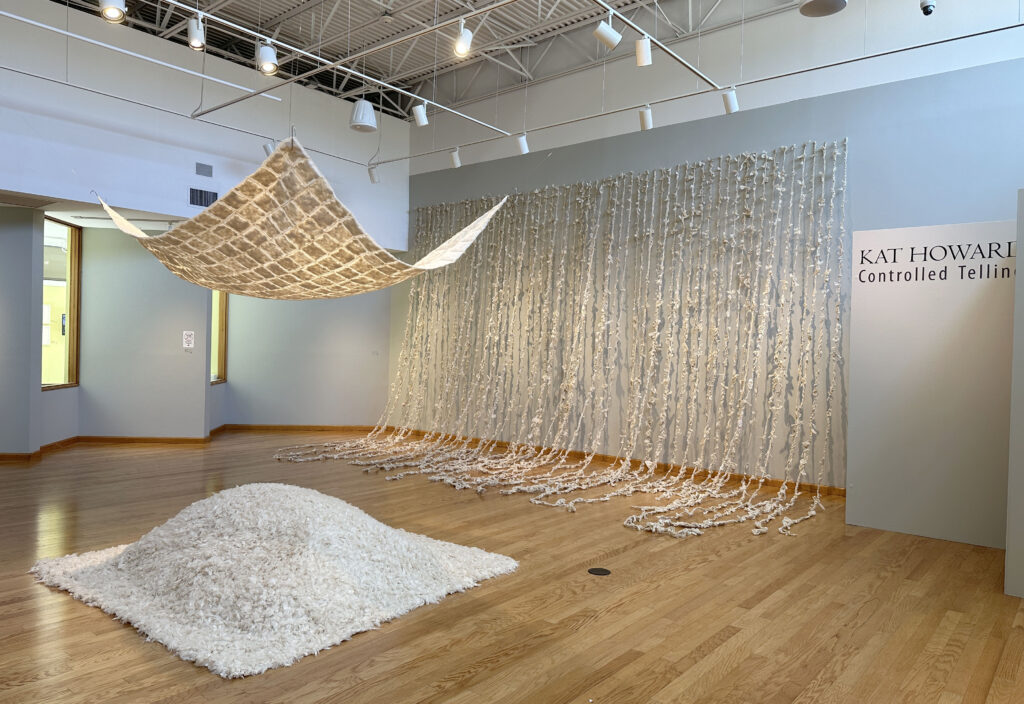
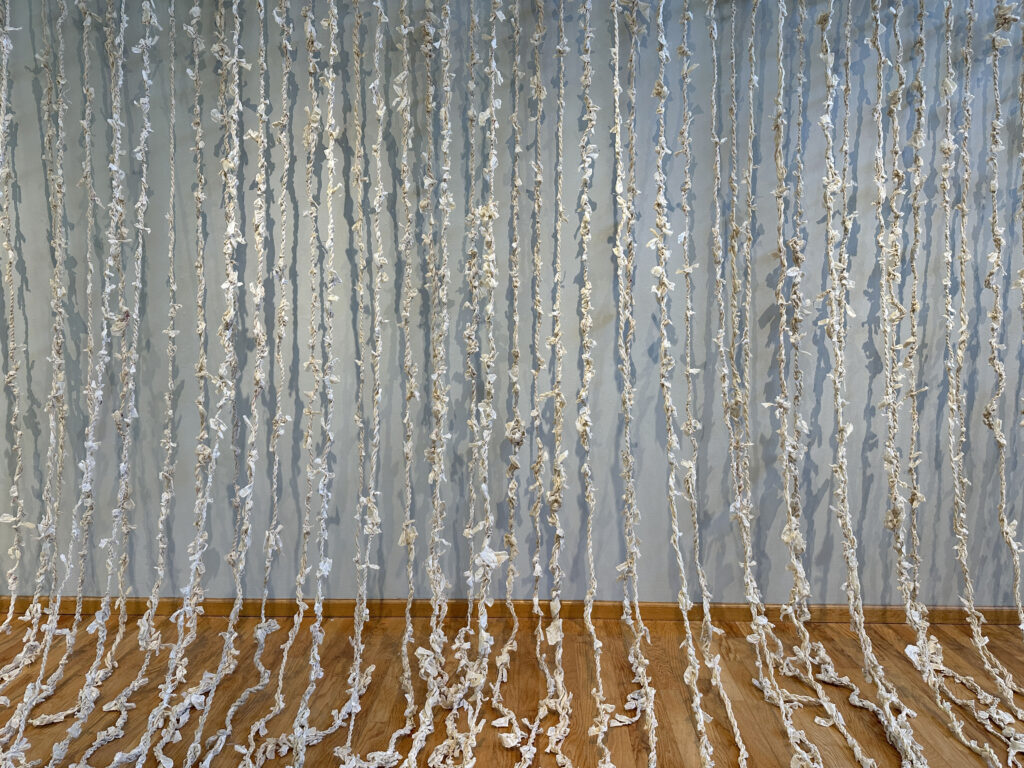
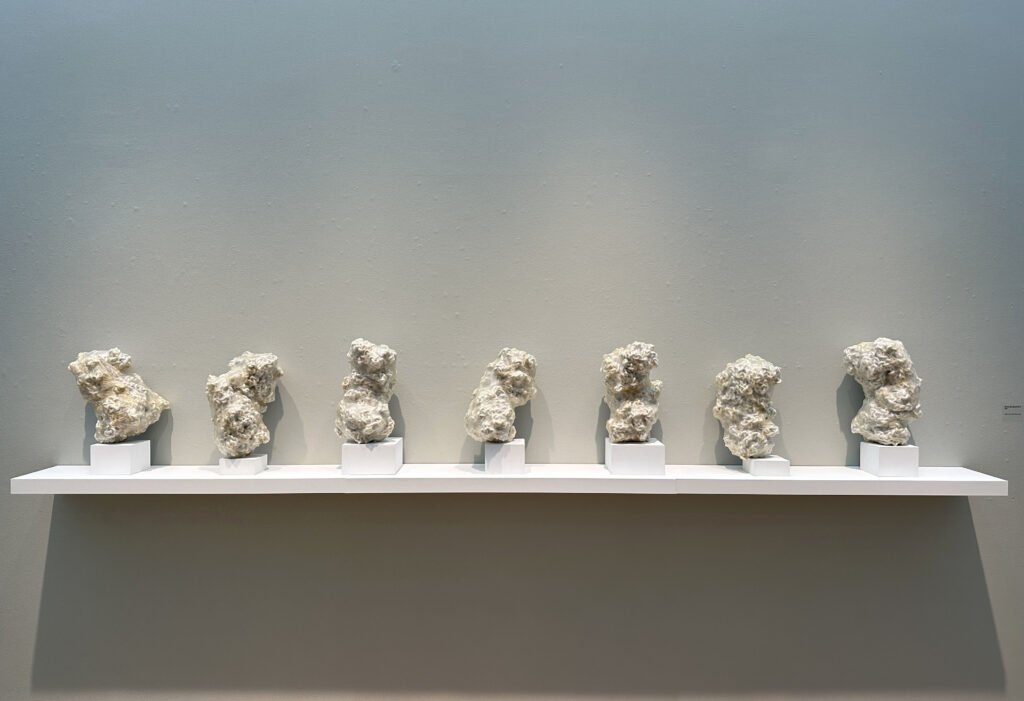

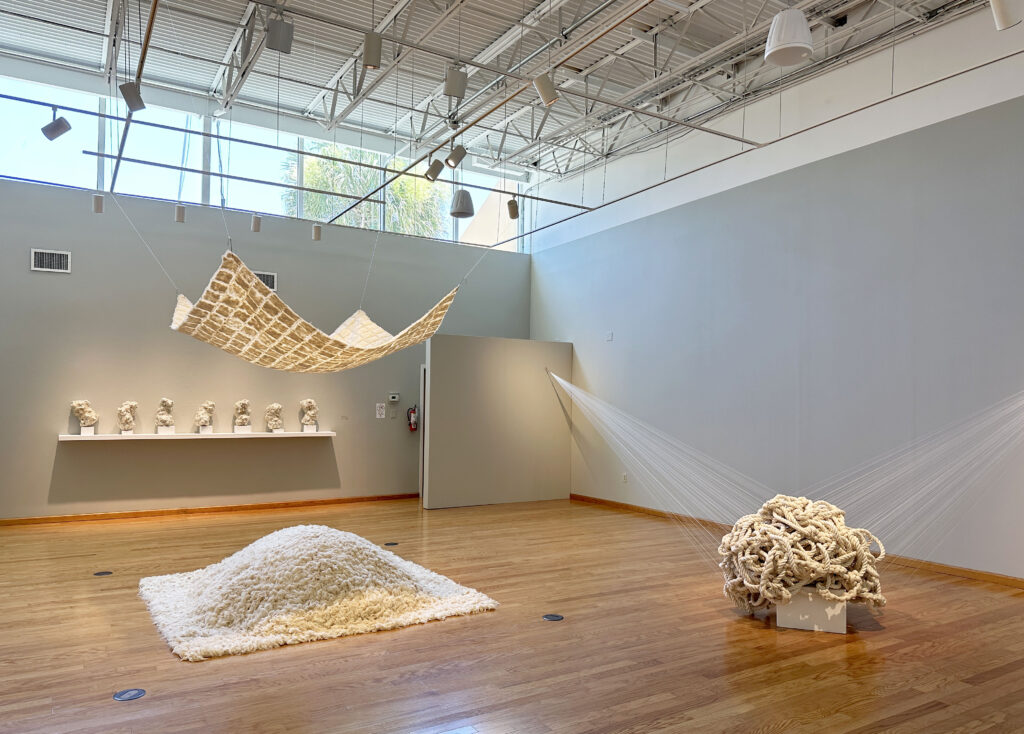
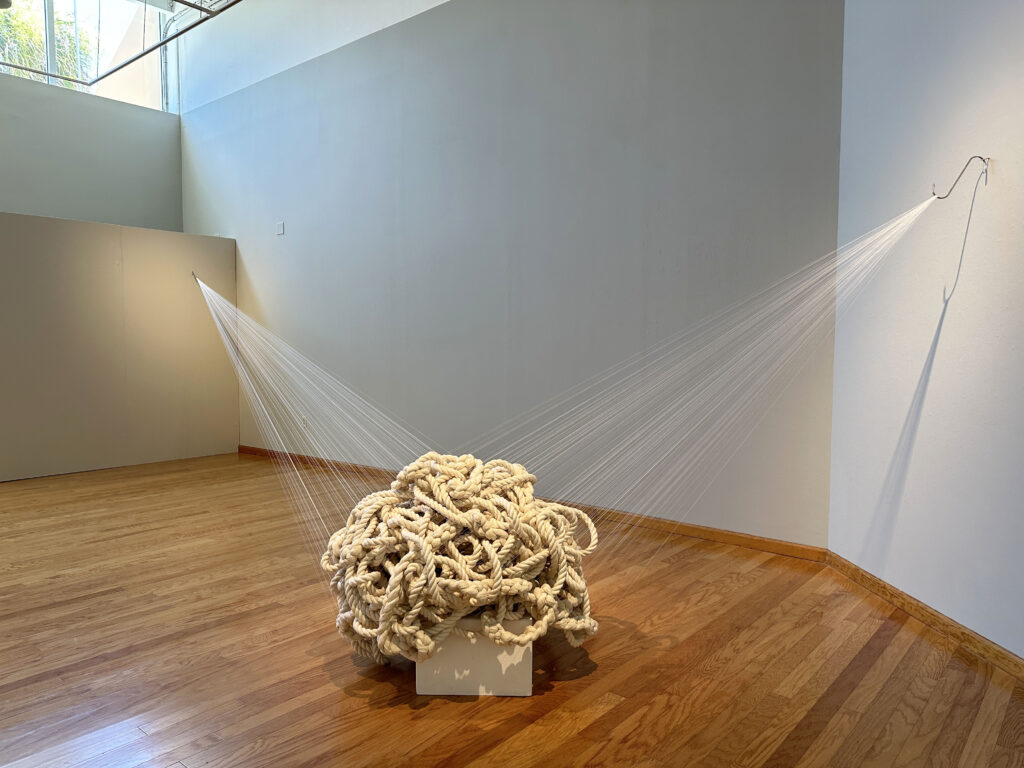
The sculptures above are from Kat Howard’s current exhibition Controlled Telling, at Dunedin Fine Art Center.
From the gallery about the work-
Kat Howard’s work interrogates the complicated process of healing from trauma. The sculptures in ‘Controlled Telling’ examines the burden and pressure to conceal the truth.
Existing as various restricted forms of cotton, bound braids, transparent quilts, compressed scraps of muslin, mound of raw material, or hand-twined waxed rope, the writhing abstracted bodily forms overwhelm and invade the viewer’s personal space, emulate the feeling of tension, imploring the viewer to navigate physically and emotionally around them.
Howard creates visual art that uses abstraction, the innate language of texture, and the repulsion/attraction of touch to interrogate her identity as a survivor of abuse and sexual violence. The material and texture of the object is integral to her practice, and its connection to the body. Evidence of the hand and the physical marks of the body are always present in her work. What happens to the body when it is forced to become a vessel for trauma? In what ways do we physically carry pain? How is the self altered afterwards?
Howard’s pieces either have a physicality to them that feels almost human, or they are twisted abstractions from the domestic landscape. Repetition and labor are vital aspects to the work. Through the labor, the anxiety tethered to a desire for freedom is palpable. The viewer can sense the thousands of hours, and the fevered precision which act as an echo of the madness in the mind that comes to claim the body. What does freedom look like? The answer is in taking up space. The answer is in speaking up. The answer is in the attempt.
This exhibition is on view until 8/13/23.


There are so many wonderful, detailed art works in Hannah O’Hare Bennett’s current exhibition Recede, on view at Dunedin Fine Art Center. They are all worthy of a closer look.
Below is the artist’s statement about the work-
“From the moment we are born until we die, we are almost constantly in contact with cloth as we move through our lives. Without thinking about it, we are familiar with its varied qualities–the simplicity of white cotton, the luxury of silk velvet, the flexibility of knitting, the structure of weaving. We can see the impact of time in a piece of fabric: how it wrinkles, stains, takes repairs, unravels. Handmade paper is a kind of non-woven cloth and is in fact often made of recycled cotton or linen. It can be dyed, stitched, wrinkled, torn, and repaired much in the same way as fabric.
My work explores the expressive possibilities of these materials, which I use to deal with my fascination with time altered urban and rural landscapes. A piece of land in the Oregon outback, the brick wall of buildings in Madison, a leafy Minneapolis neighborhood, etc. are all impacted by the passing of time, actions of human beings, weather. These occurrences can be incremental or sudden, and the change they bring almost imperceptible or very radical, each change layering on top of what came before. I use that observation to inspire my work. Fabric surfaces are worked over with layers and layers of pigments, embellished with embroidery, dunked into dye, cut and torn. Paper pulp is poured, dipped, mixed with sawdust, painted, crumpled and smoothed out again. In this small human way, I am channeling the world into the objects I create.”
The exhibition closes 8/13/23.


Sun and Moon, created by Jia Sung, is one of the artists chosen by The Collision Project, whose work can be seen in Industry City, Brooklyn.
About the mural-
The mural depicts two goddesses from Chinese mythology, flanking the courtyard door. The lunar deity Chang’E floats on the left with her companion rabbit, while solar goddess Xihe sits on the right with her ten sun-crow children. The paired murals reimagine protective door guardian imagery through the lens of the divine feminine.


The above painting is Leslie Lerner’s My Life in France: The Oceanside (The Green Day), 2002, currently on view at Tampa Museum of Art.
From the museum’s wall plaque about the work-
Paintings and sculpture comprise Leslie Lerner’s series My Life in France, a fictional travelogue of the artist’s globetrotting alter ego. Inspired by Rococo painter Antoine Watteau (French, 1684-1721), Lerner’s work nods to the idyllic and lush canvases of 18th-century landscape paintings. The Oceanside (The Green Day) depicts a man standing on a grassy cliff and facing the ocean. His size pales in comparison to the vastness of the ocean he faces. Calming shades of aquamarine blue and moss green emphasize the serene beauty of the shoreline.
Born in Chicago, Illinois, Lerner developed his artistic practice in San Francisco and initially created installation art. He taught art in various colleges and universities in California for several years before relocating to Sarasota, Florida. For 15 years, Lerner served on the faculty at the Ringling College of Art and Design.
