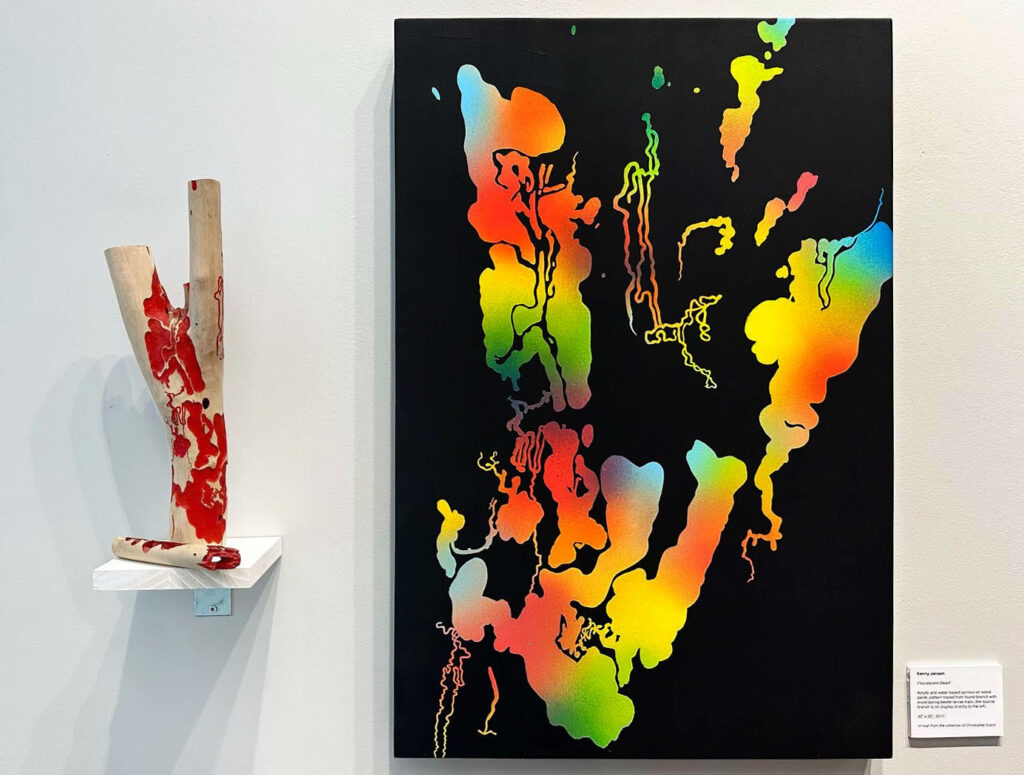
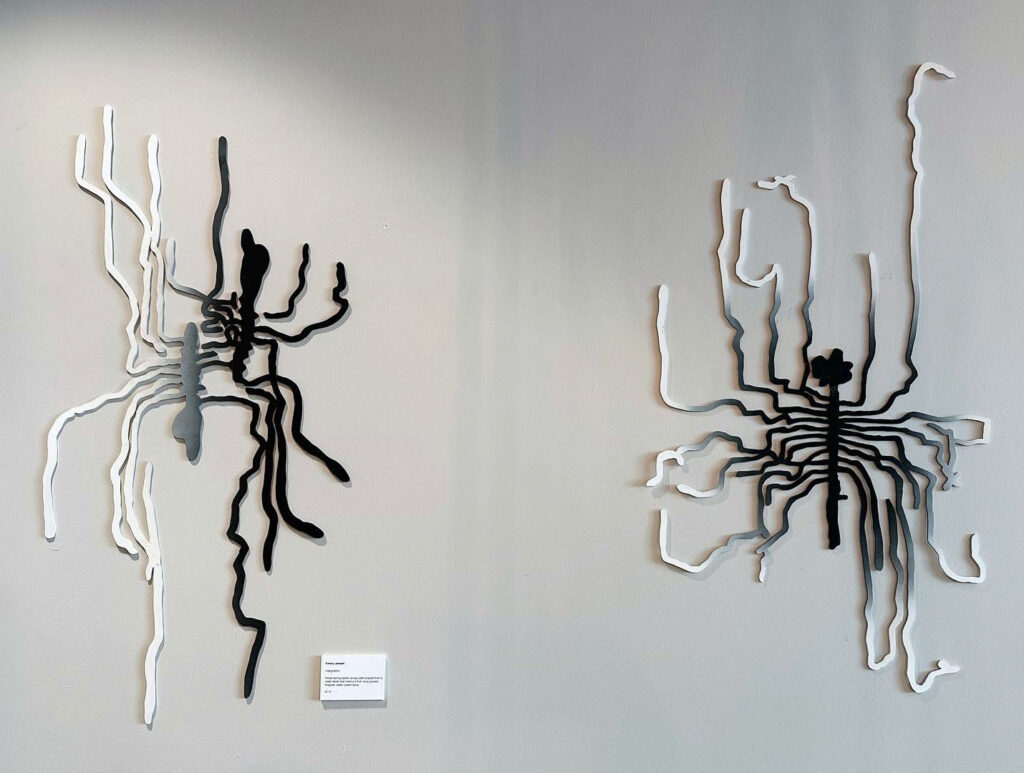
“Fluorescent Dwarf”, 2017, Acrylic and water based aerosol on wood panel, pattern traced from found branch with wood boring beetle larvae trails (the source branch is on display directly to the left)
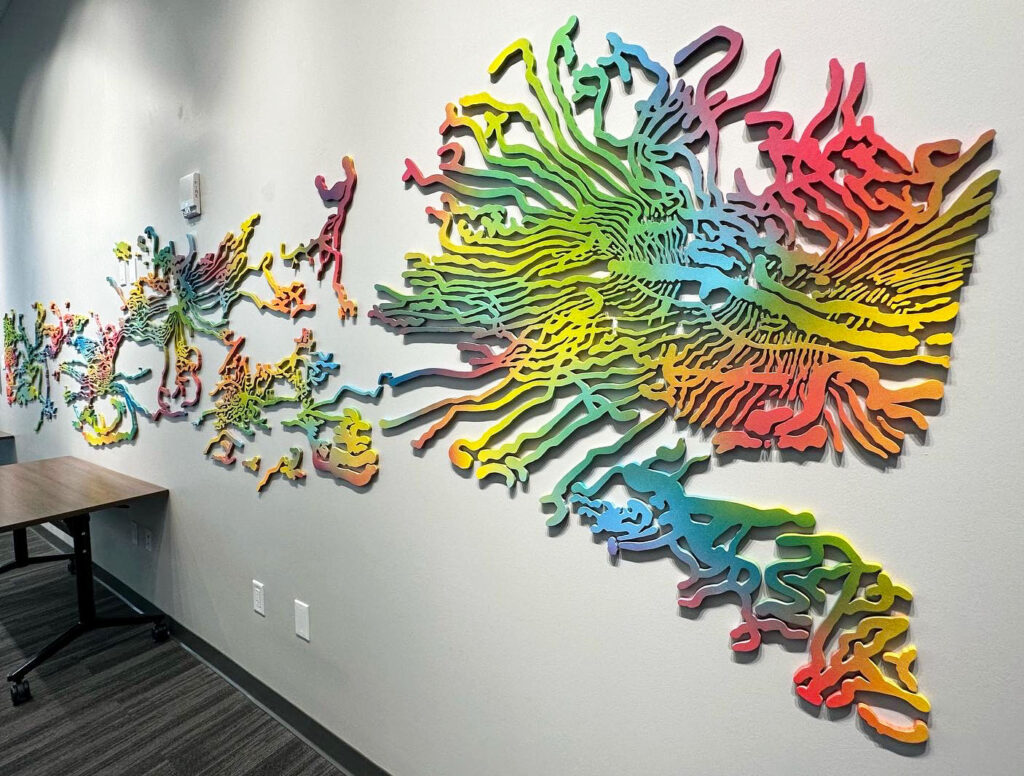
“The Expanding Universe”, 2017, Hand cut (jigsaw) plywood, water based spray, nails, pattern traced from found branch with wood boring beetle larvae trails
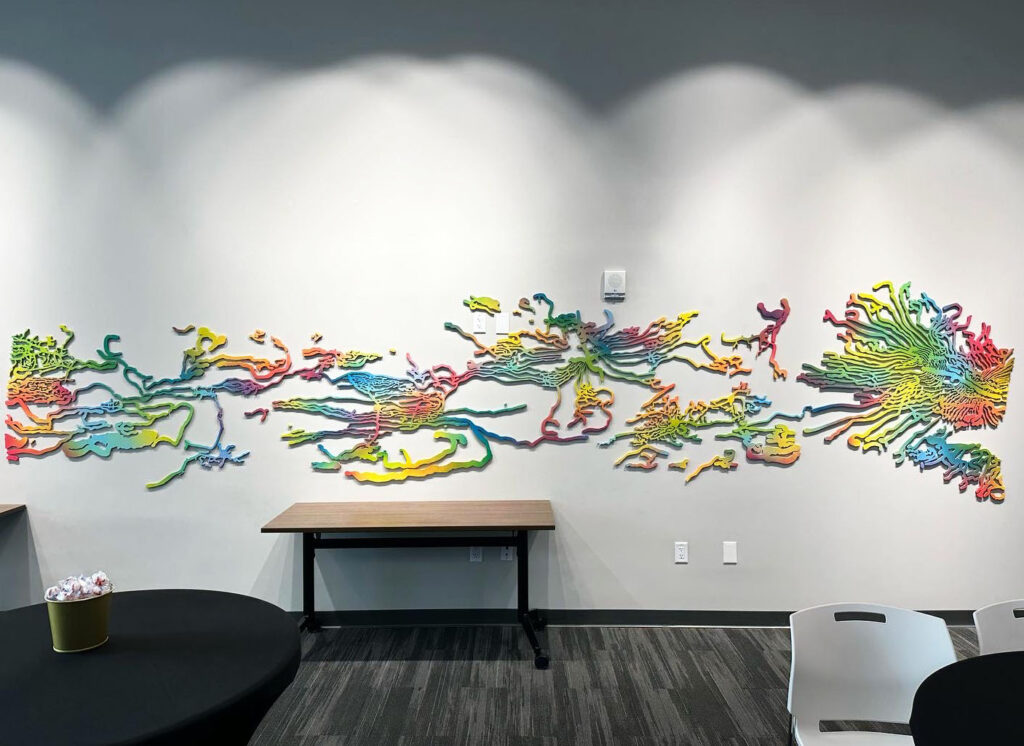
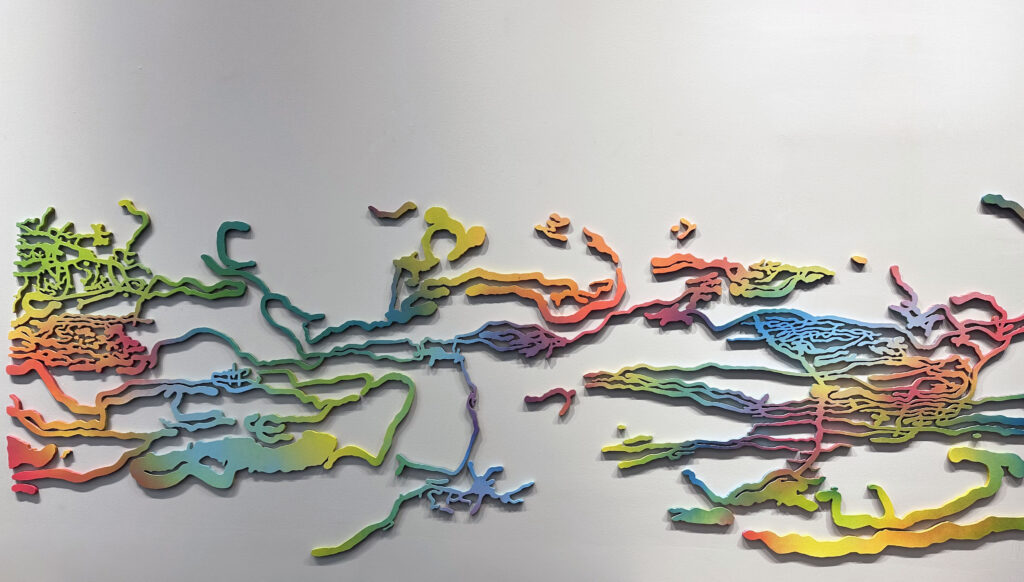
“Transcend and Include”, 2019, Wood boring beetle larvae paths traced from a dead cedar tree hand-cut from re-purposed Aluplast, water based spray
Community Foundation Tampa Bay works to match people and organizations with the resources they need to carry out projects that make a positive impact on local communities. In their space in St. Pete they also exhibit work by local artists. Currently on view are selections from Kenny Jensen’sPaths of Consumption series.
From the artist about this work-
As a Florida native who spent much of my childhood outdoors both in the city and the country, I have always had an essential connection to our unique natural environment. This relationship has steadily deepened over the years through my evolving art practice, and related ecological research. Becoming a parent has also raised the stakes and heightened my ecological awareness and concern. As a result there is a tension present in my work – An earnest desire to share the wonder and mystery I continually encounter in common, overlooked nature while also expressing grief and frustration over what is actively being lost.
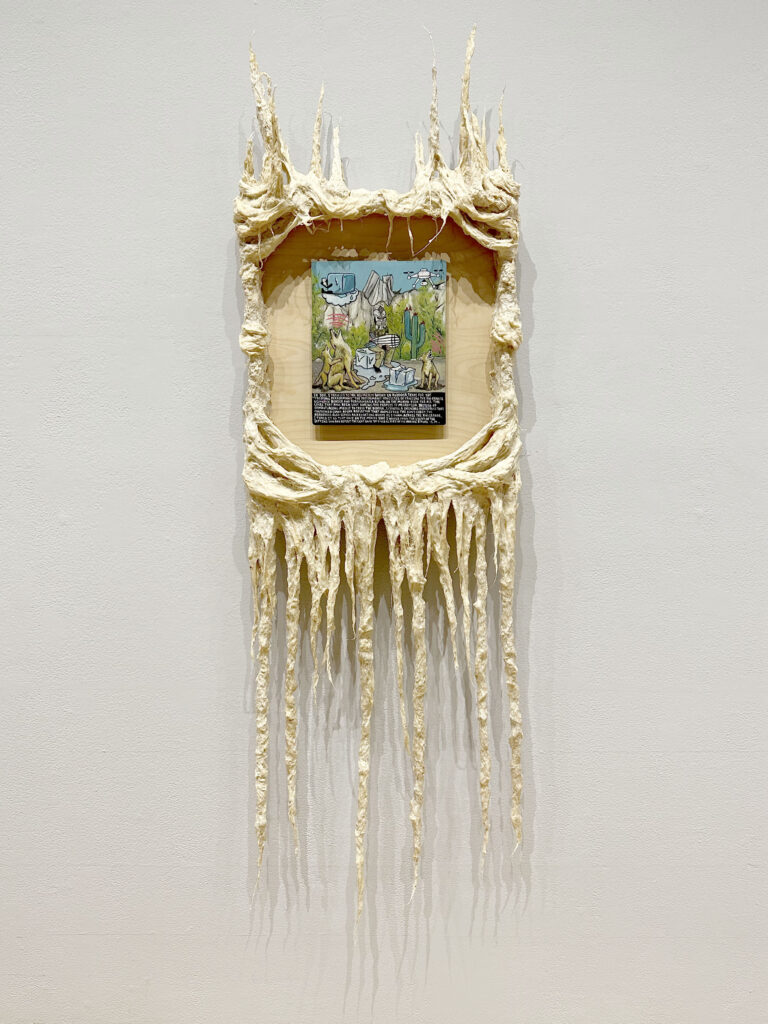
All of the work on display here is a part of an ongoing environmentally focused sculpture project entitled Paths of Consumption which recreates found patterns eaten out of by various insect larvae at exaggerated scale and with a full spectrum of layered hues. This series is a meditation on our consumption of the natural environment. The inverted insect paths act as a kind of metaphorical map to guide us to reflect on our own record of consumption as we develop and grow, both as individuals and as a society.
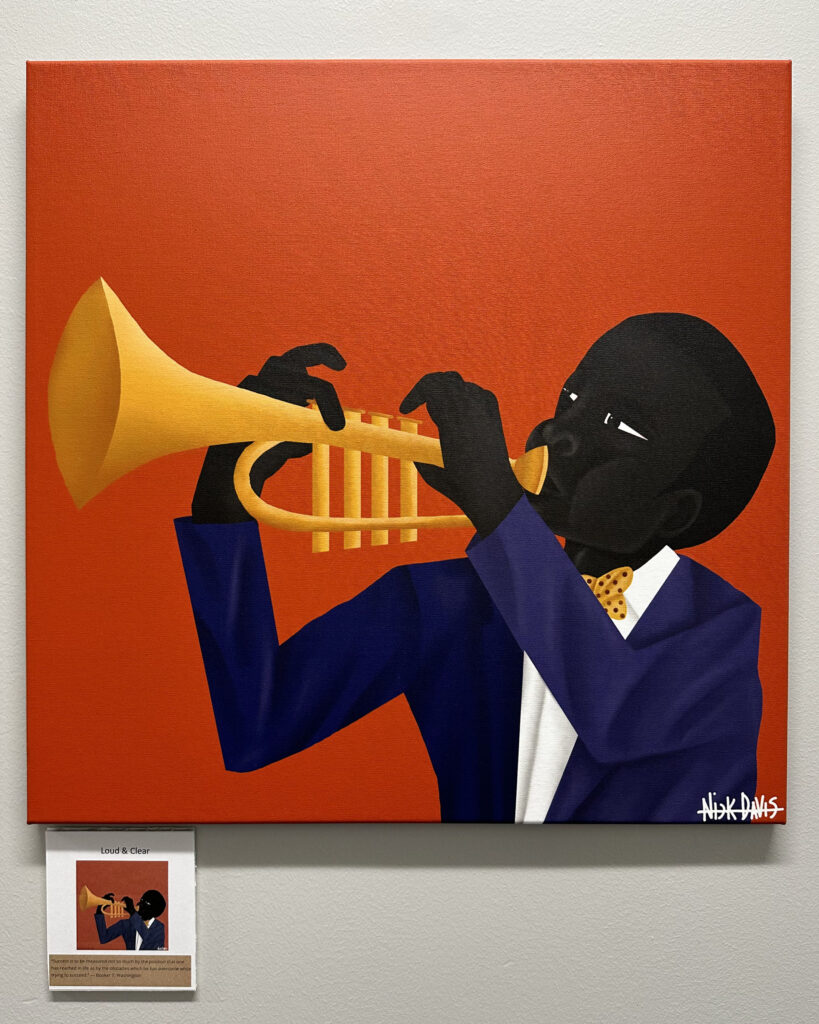
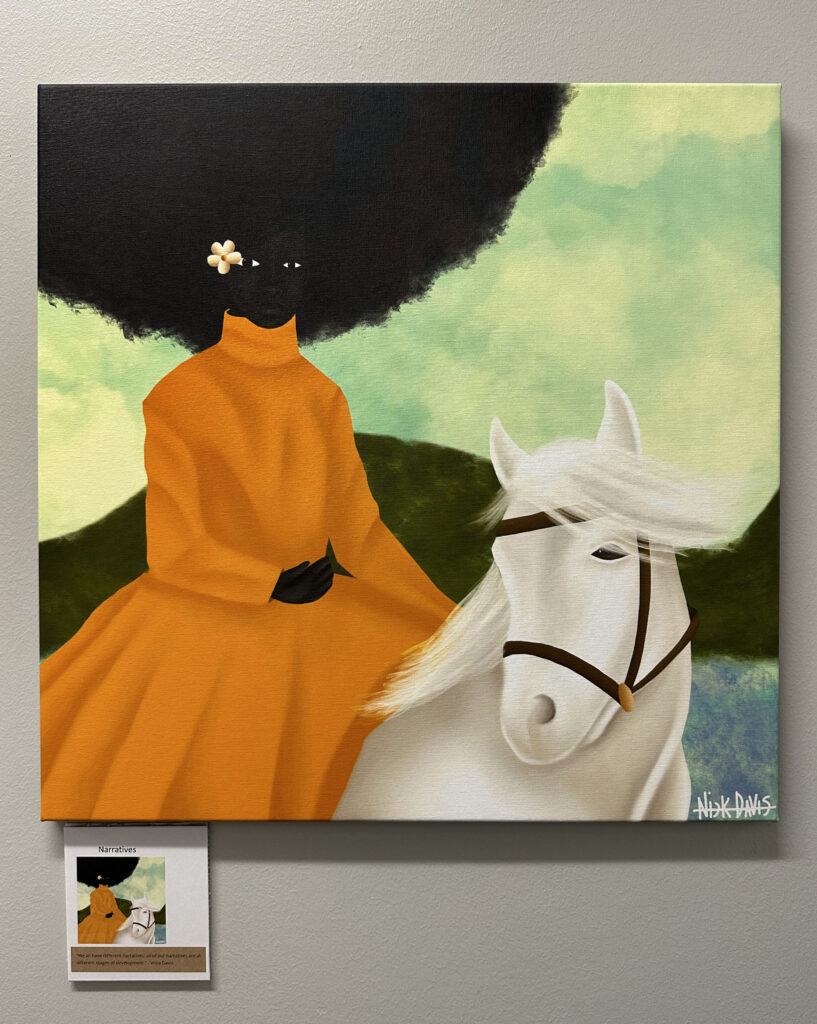
Also on view at the gallery are digital works from Nick Davis’sBlack is Beautiful series. Sadly, Davis passed away in December of 2022.
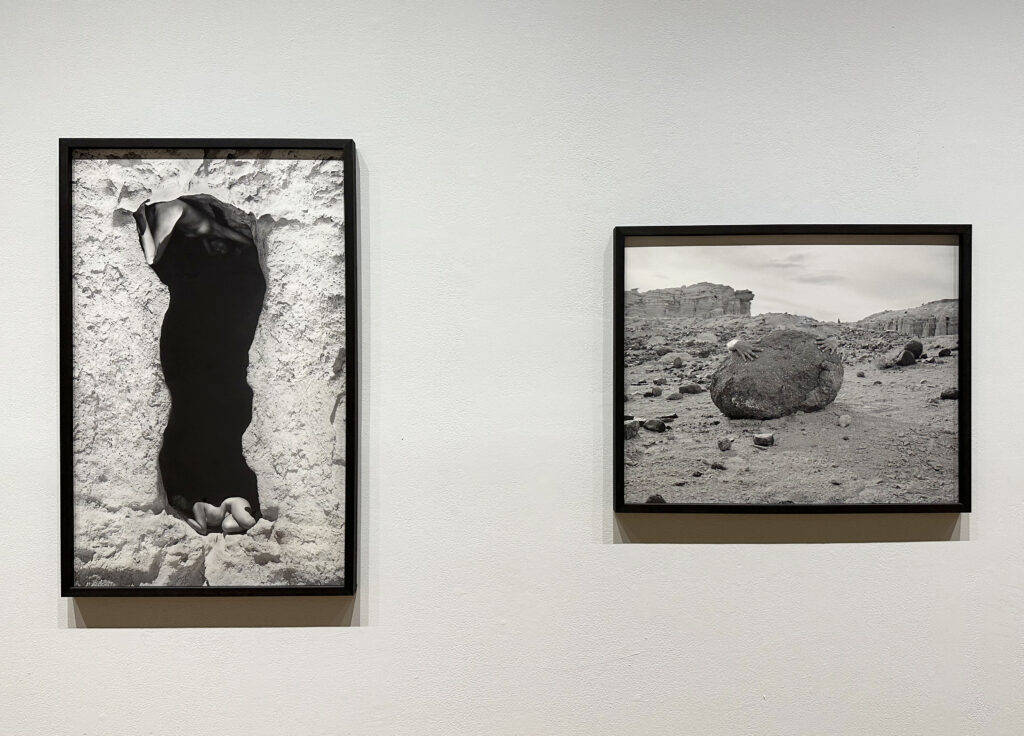
Koyoltzintli, “Gathering Roots” and “Spider Woman Embrace”, Abiquiú, New Mexico, 2019, from the series MEDA, 2018/19, Archival pigment print
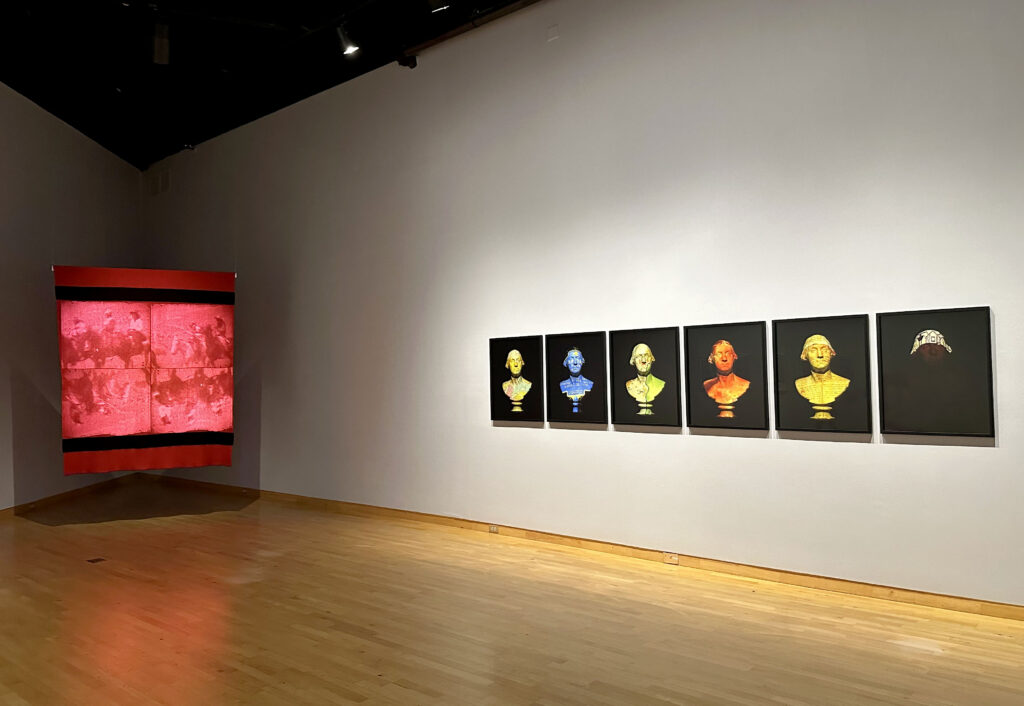
Alan Michelson “Hanödagayas (Town Destroyer): Whirlwind Series”, 2022 Archival pigment prints and “Pehin Hanska ktepi (They Killed Long Hair)”, 2021 Single-channel video installation: wool blanket and video projection; 1:05 minutes (looped), no sound
Currently at the USF Contemporary Art Museum is Native America: In Translation curated by Wendy Red Star and organized by Aperture. The work included offers viewers a chance to discover new perspectives on the Native American experience.
From the museum-
“The ultimate form of decolonization is through how Native languages form a view of the world. These artists provide sharp perceptions, rooted in their cultures.” —Wendy Red Star
Native America: In Translation assembles the wide-ranging work of nine Indigenous artists who pose challenging questions about identity and heritage, land rights, and histories of colonialism. Probing the legacies of settler colonialism, and photography’s complex and often fraught role in constructing representation of Native cultures, the exhibition includes works by lens-based artists offering new perspectives on Indigenous identity, reimagining what it means to be a citizen in North America today.
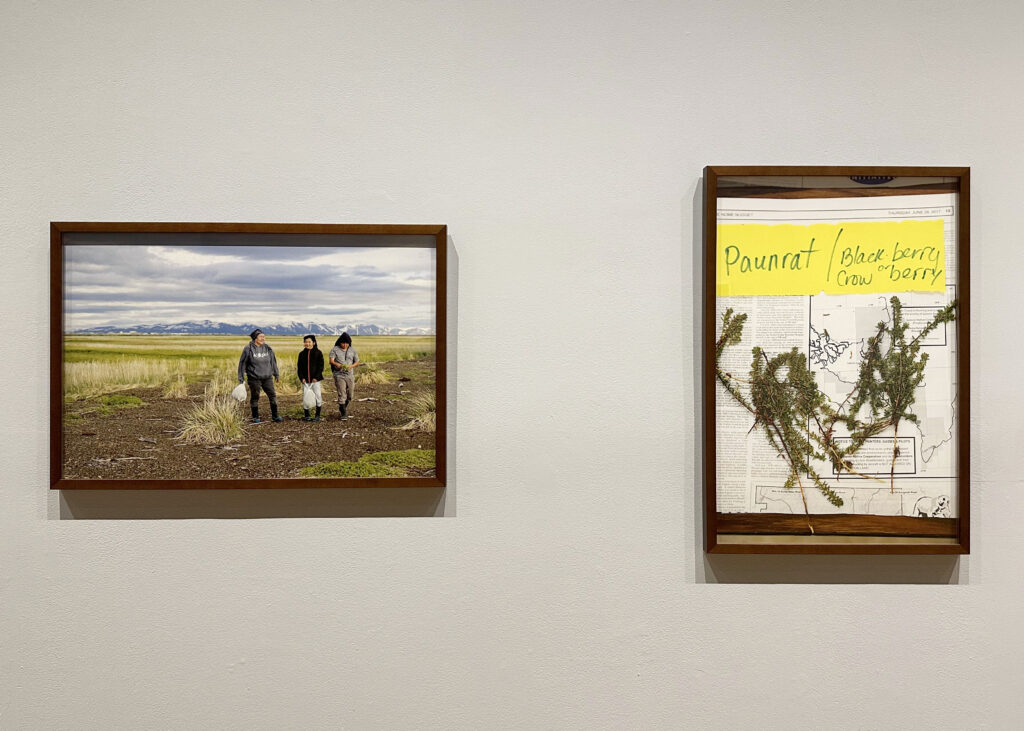
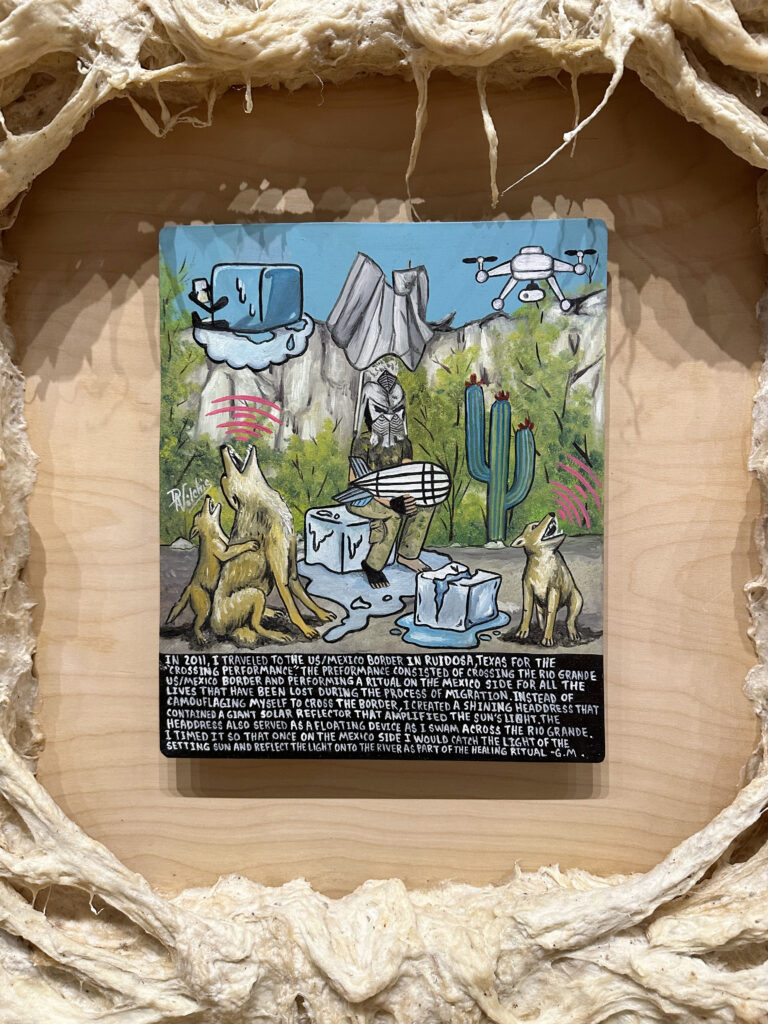
Works included in the exhibition address cultural and visual sovereignty by reclaiming Native American identity and representation. Honoring ancestral traditions and stories tied to the land, Koyoltzintli (Ecuadorian-American, b. 1983) reflects on how the landscape embodies traditional knowledge, language, and memories. Nalikutaar Jacqueline Cleveland’s (Yup’ik, b. 1979) photographs of contemporary tribal communities in western Alaska document Native foraging and cultural traditions as a form of knowledge passed through generations. Revealing stories of trauma and healing, Guadalupe Maravilla (American, b. El Salvador, 1976) communicates autobiographical and fictional narratives informed by myth and his own migration story.
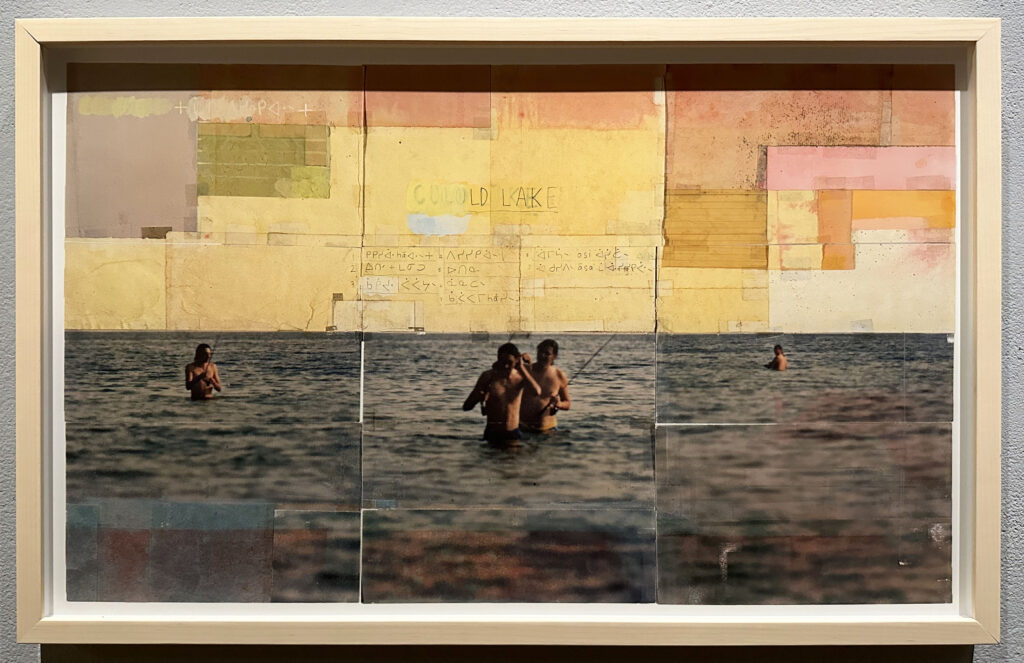
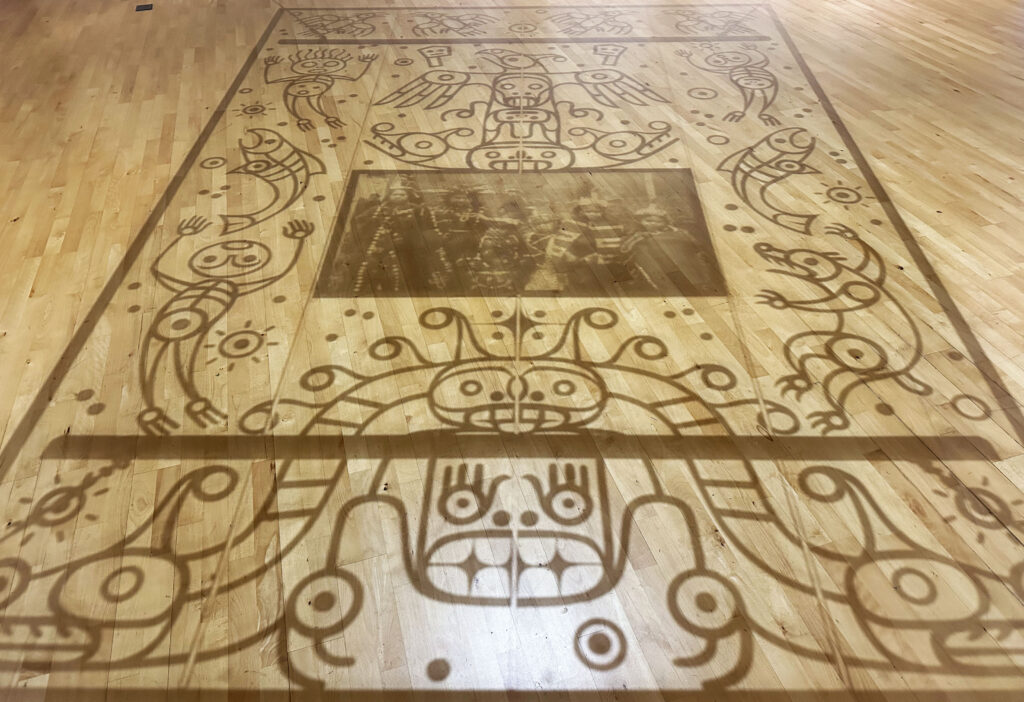
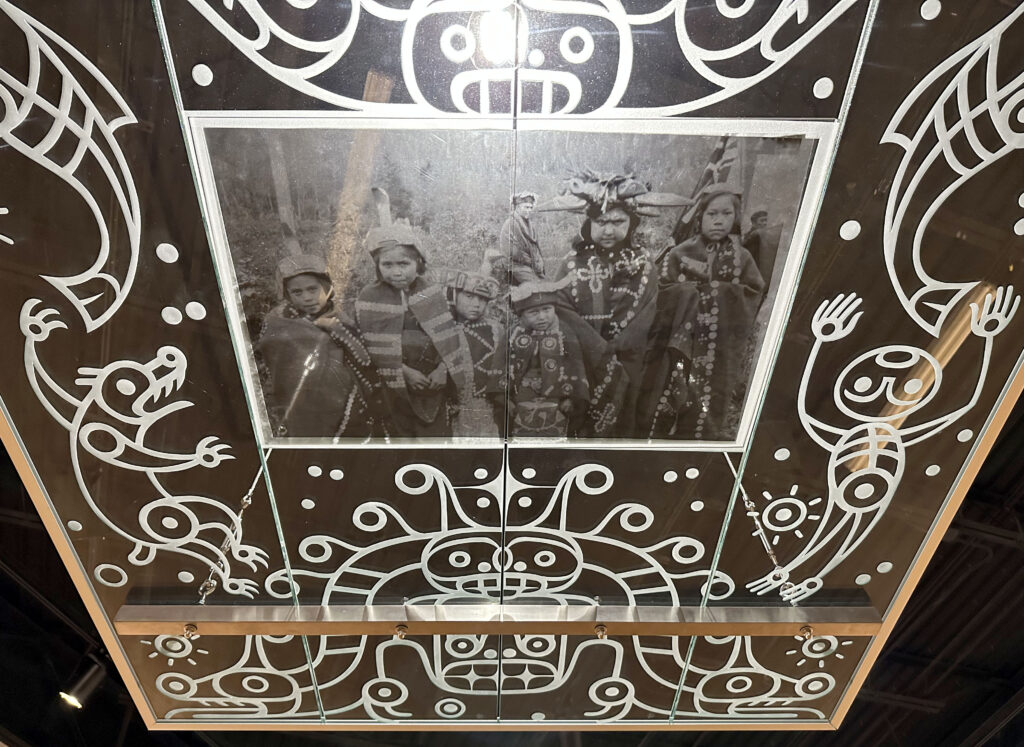
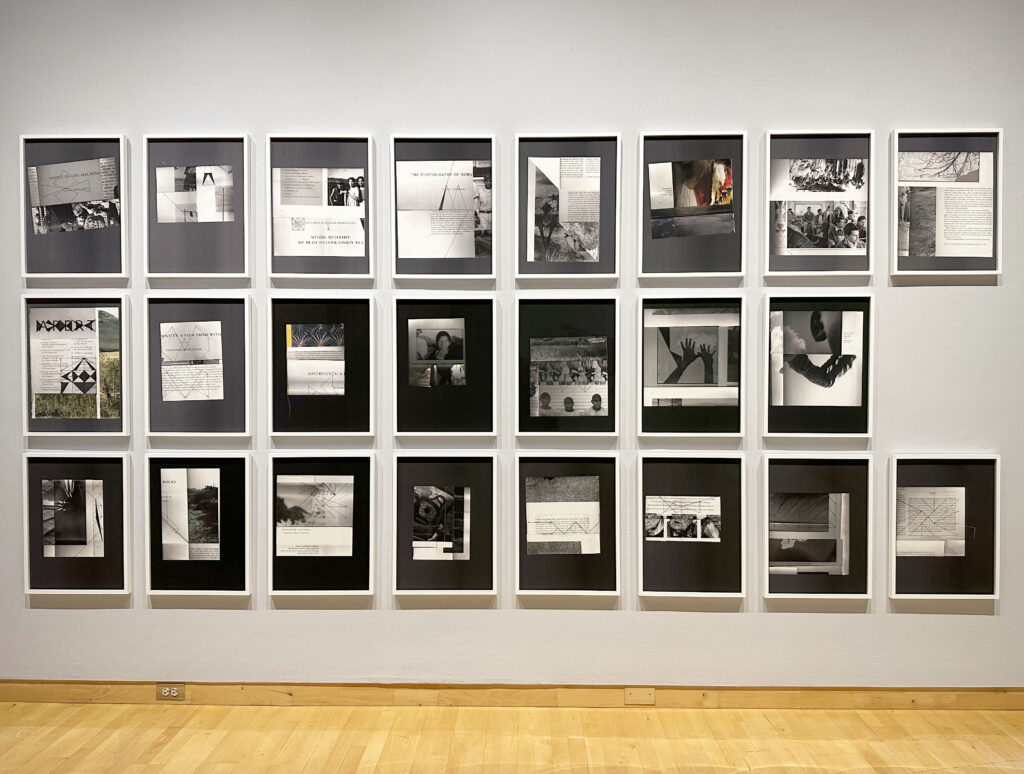
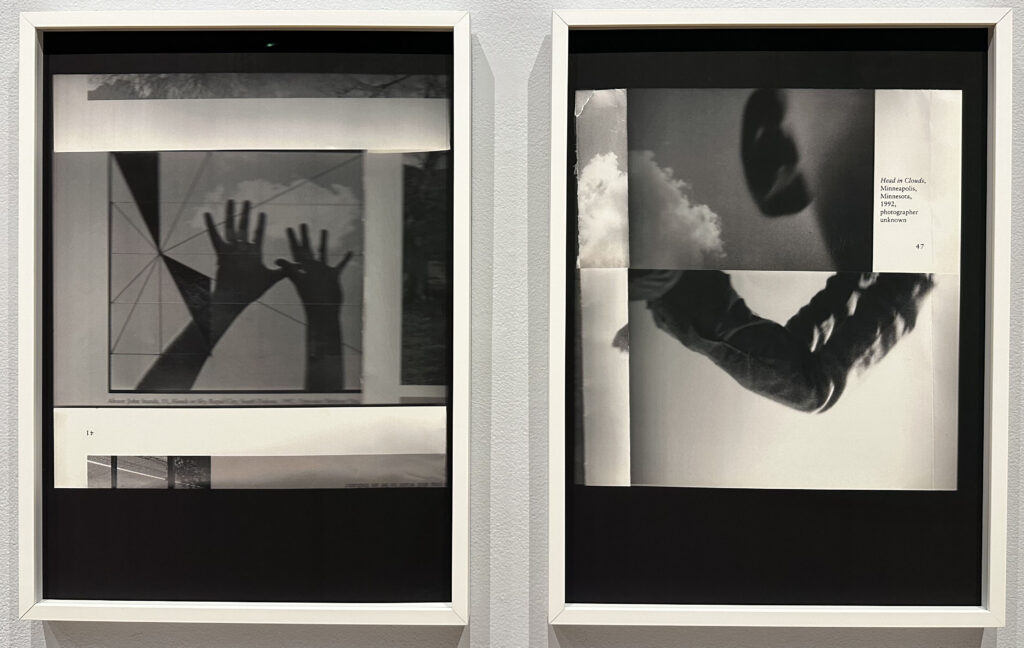
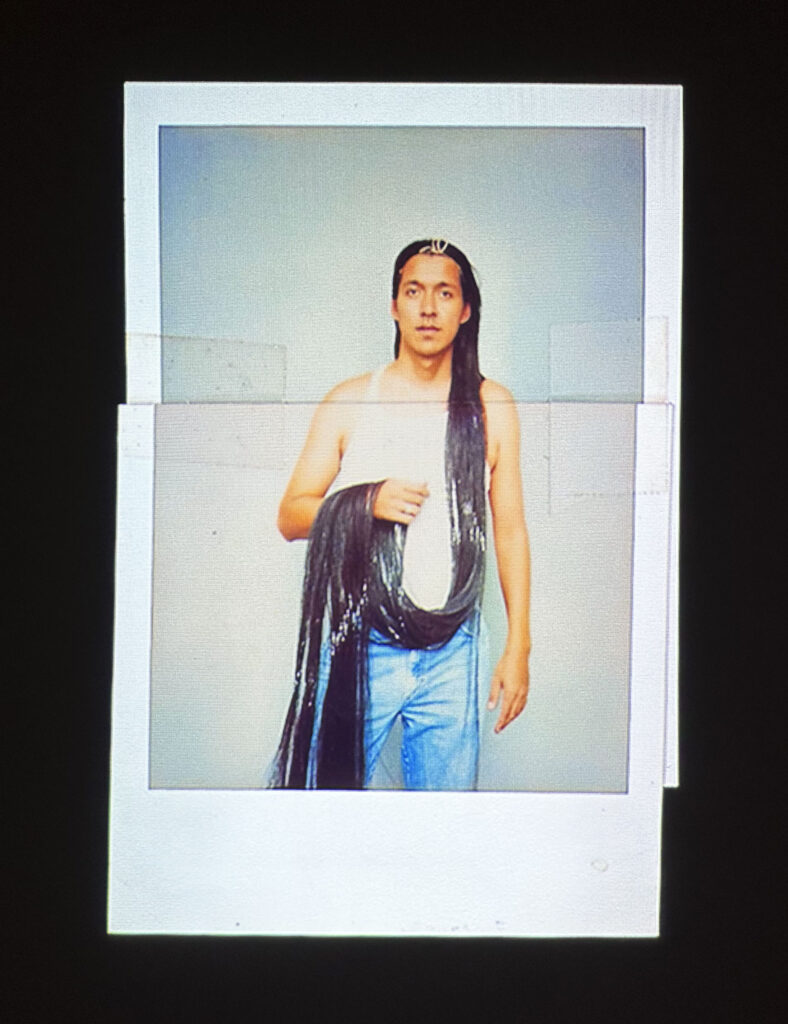
Expanding Indigenous archives and collective memory through photographic means, works by the late artist Kimowan Metchewais (Cree, Cold Lake First Nations, 1963–2011), drawn from his personal archive of Polaroid photographs, construct self-realized Native imagery challenging the authority of colonial representation. Excavating repressed colonial histories of invasion and eviction, Alan Michelson (Mohawk, Six Nations of the Grand River, b. 1953) reinterprets and repositions archival material to redress history from an Indigenous perspective. Marianne Nicolson’s (Musgamakw Dzawada’enuxw First Nations, b. 1969) light-based installation projects Dzawada’enuxw tribal symbols of authority and power onto colonized spaces to contest treaties that imposed territorial boundaries on Indigenous lands. Duane Linklater(Omaskêko Ininiwak from Moose Cree First Nation, b. 1976) reconfigured the pages sourced from a 1995 issue of Aperture, featuring Indigenous artists, creating space for artistic improvisation and reinvention across generations.
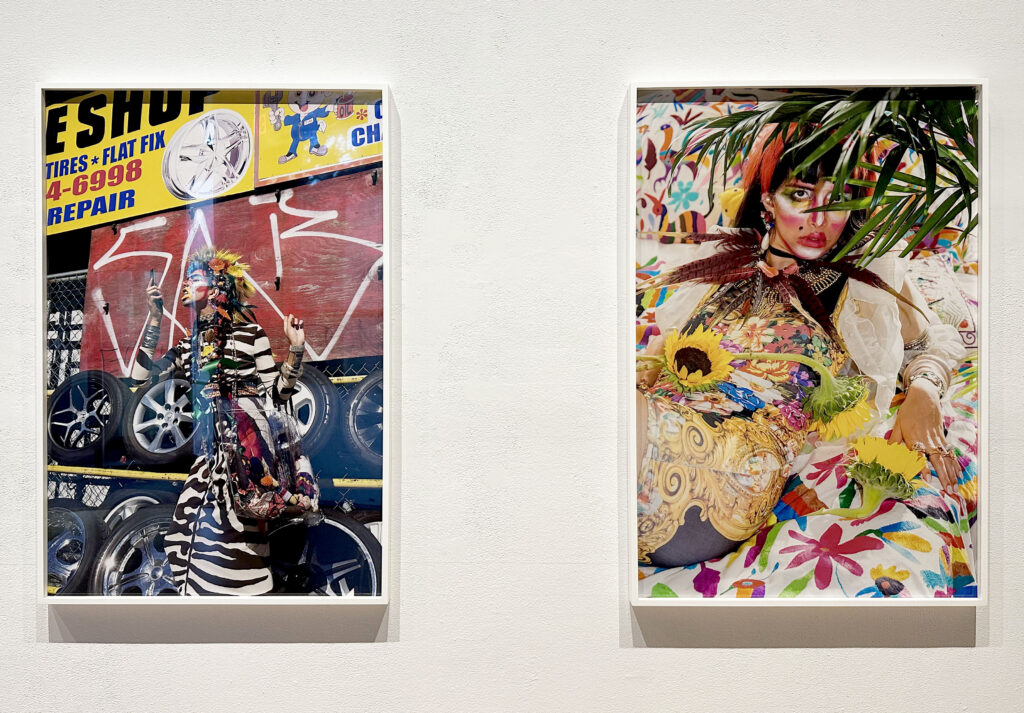
Reflecting on performative aspects of Indigeneity and the colonial gaze, Martine Gutierrez’s (American, b. 1989) series of photographs reinterpret high-fashion magazine spreads with a revolving roster of identities and narratives to question Native gender and heritage. Working across performance and photography, Rebecca Belmore (Anishinaabe, Lac Seul First Nation, b. 1960) creates powerful reenactments of past performances incorporating organic materials that reference knowledge, labor, and care of the Earth in defiance of state violence of Indigenous people.
This exhibition closes 12/1/23.
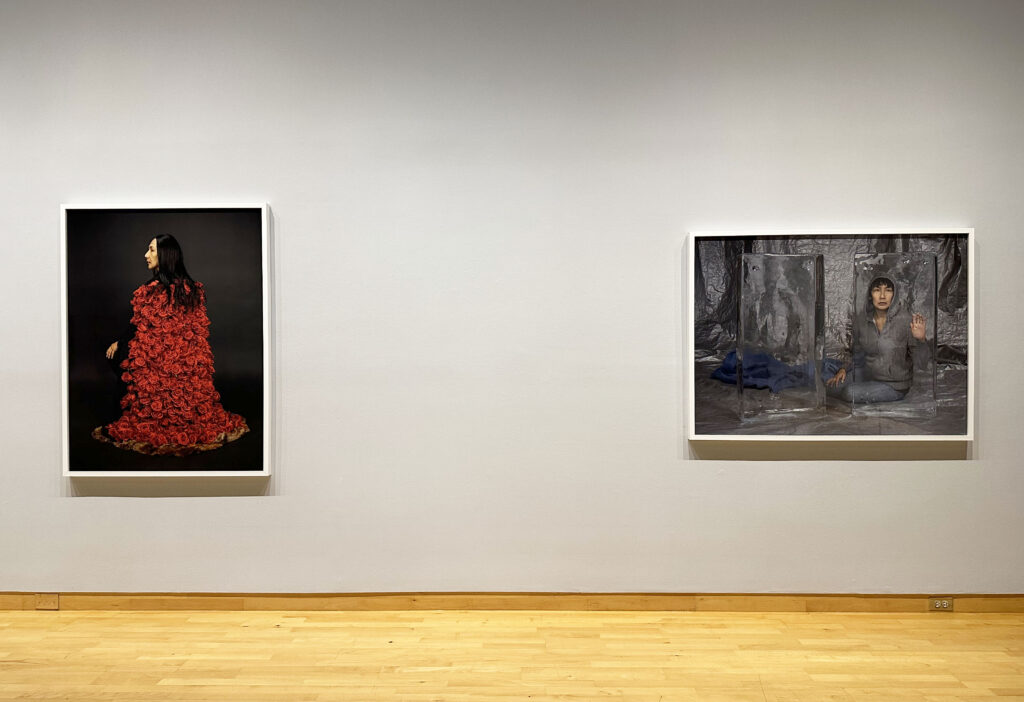
Rebecca Belmore, “matriarch”, 2018, and “mother” from the series “nindinawemaganidog (all of my relations)”, 2018, Archival pigment prints
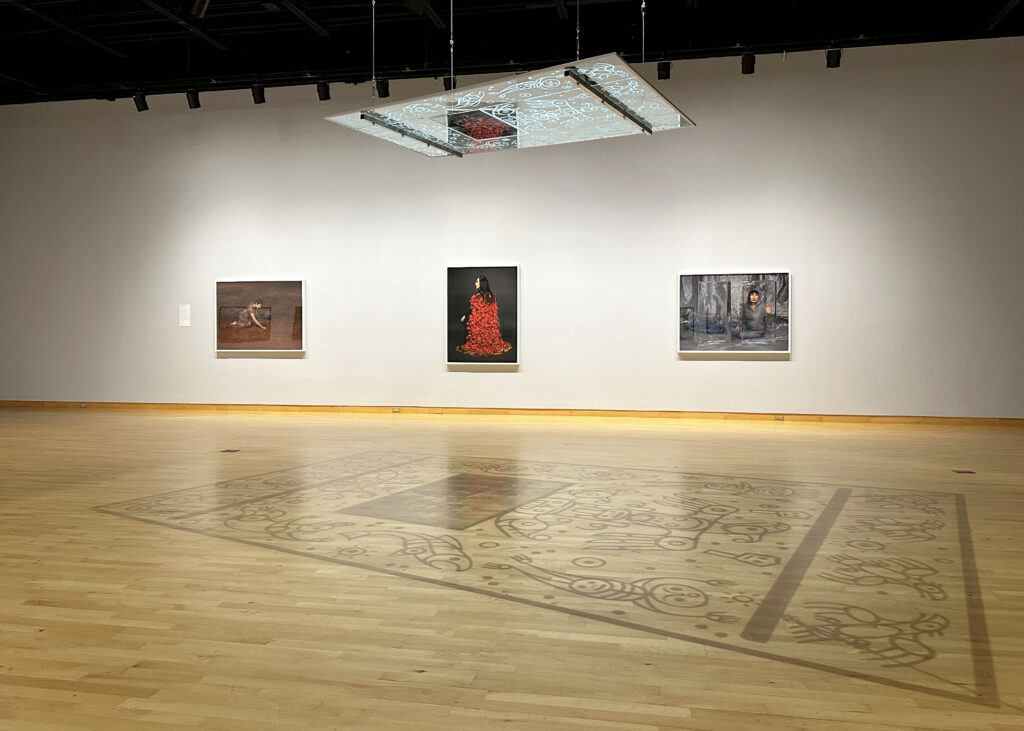
Photos by Rebecca Belmore and Installation by Marianne Nicolson
Marianne Nicolson’s installation detail
Marianne Nicolson’s installation detail
Nalikutaar Jacqueline Cleveland, “Molly Alexie and her children after a harvest of beach greens in Quinhagak, Alaska”, 2018 and “There are two main Yup’ ik names for crowberries or blackberries in Alaska, “paunrat” and “tangerpiit””, 2017, Archival pigment prints
Guadalupe Maravilla, “I Crossed the Border Retablo”, 2021, Oil on tin, cotton, glue mixture, wood
Guadalupe Maravilla, “I Crossed the Border Retablo”, 2021, detail
Duane Linklater, “ghost in the machine”, 2021, Archival pigment prints
Duane Linklater, “ghost in the machine”, 2021, Archival pigment prints
Martine Gutierrez, “Queer Rage, Dear Diary, No Signal During VH1’s Fiercest Divas”, and “Queer Rage, THat Girl Was Me, Now She’s A Somebody”, 2018. digital chromogenic print
One of Kimowan Metchewais’ polaroids from the slide show
It was recently announced that Gibson was selected by the U.S. State Department to represent the country at the 2024 Venice Biennale. He is a member of the Mississippi Band of Choctaw Indians and of Cherokee descent, and will be the first Indigenous artist to have a solo exhibition in the U.S. Pavilion at the event.
The artist’s statement about the work from the Desert X site-
ALIVE! is a found object ready made sculpture altered with paint and text that reads: I am alive! You are alive! They are alive! We are living!
I chose to work with a wind turbine blade because of how it alters one’s perceptions when they look out across the desert landscape. They are enormous and when viewing one up close you get a sense of the expansiveness of the desert landscape that they occupy. They are also really beautiful in form and their shape reminds me of something like a wing, a fin, or a bone from a massive whale. The text references the people who live in Palm Springs and the original indigenous people who occupied this land and their belief that the landscape is living.
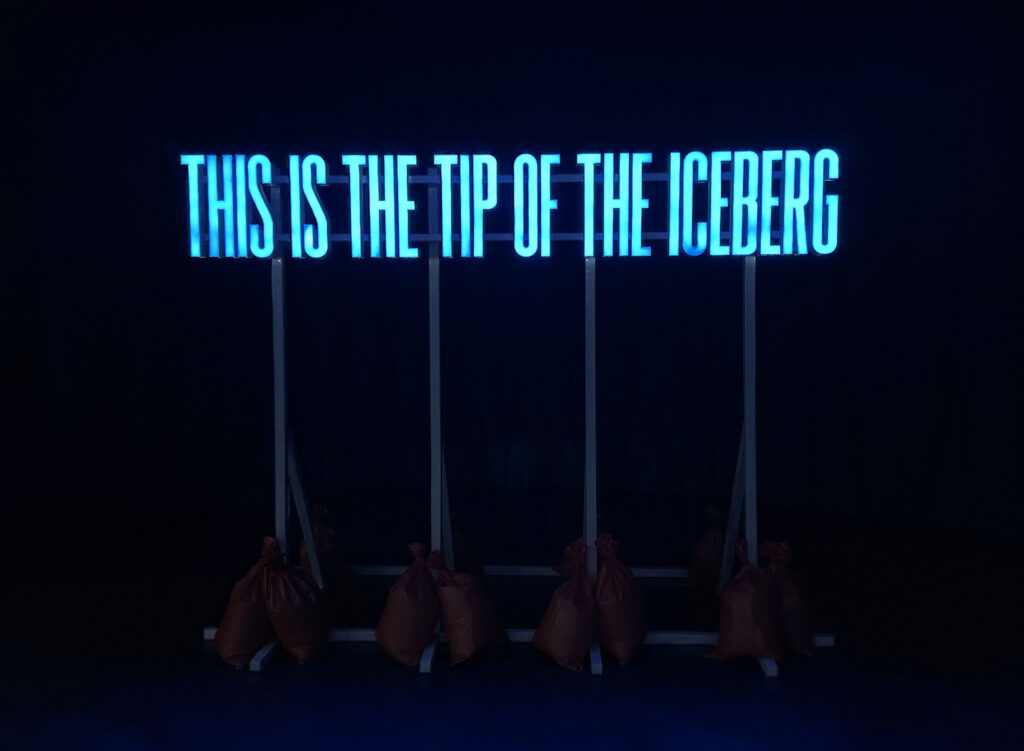
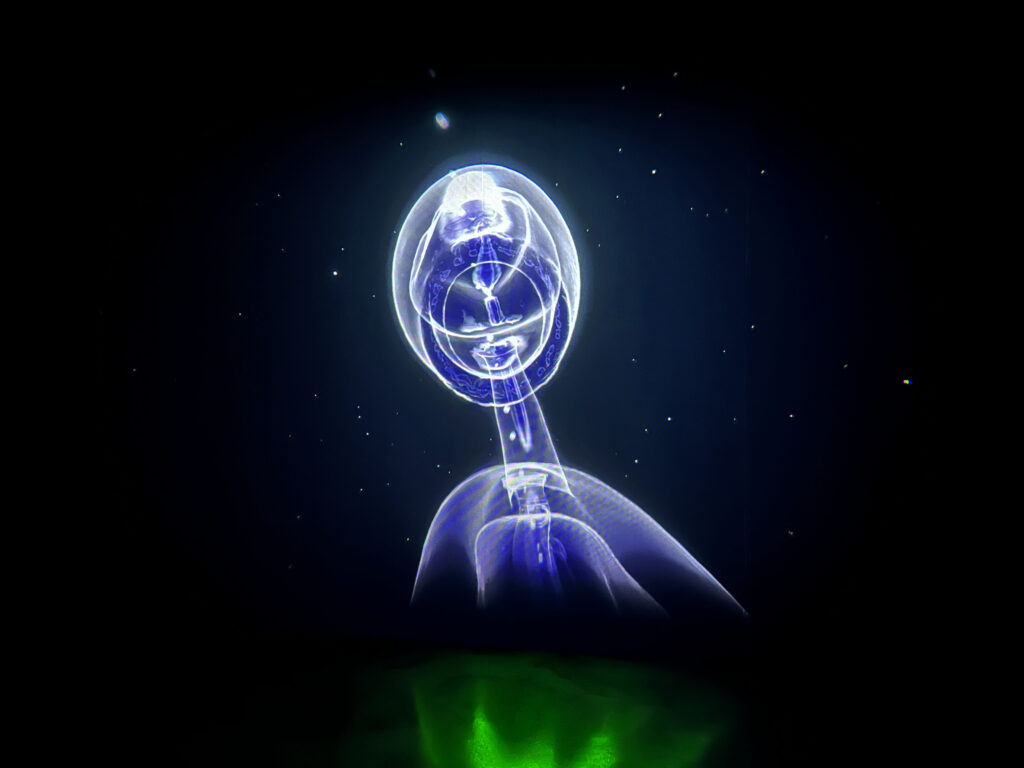
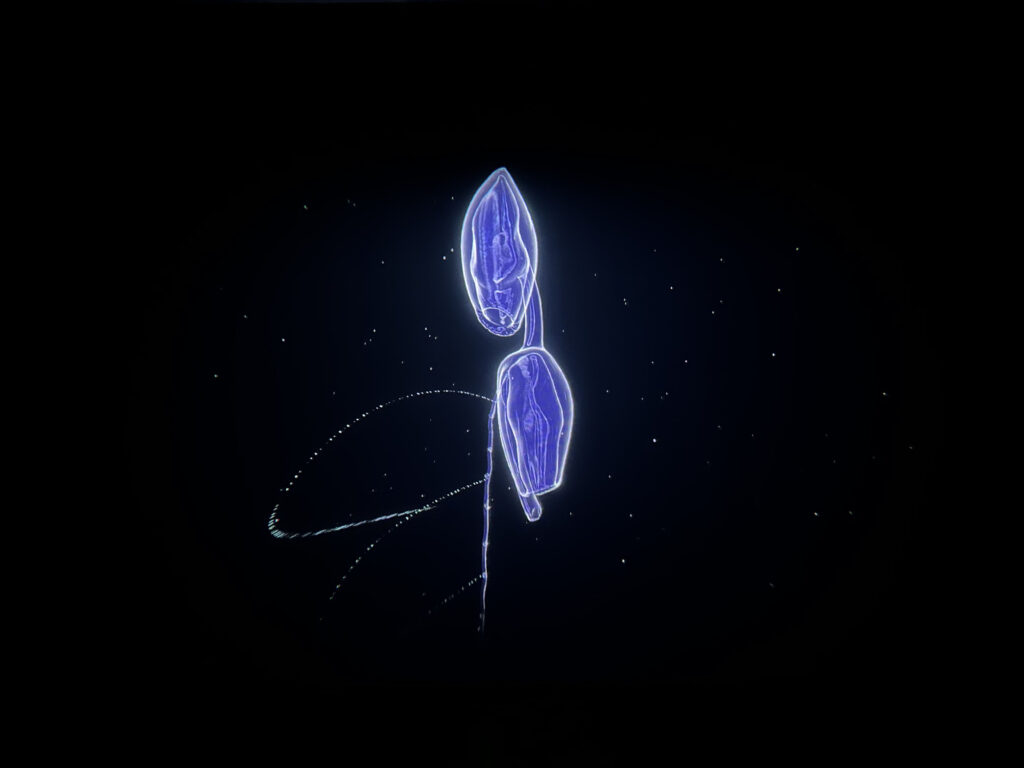
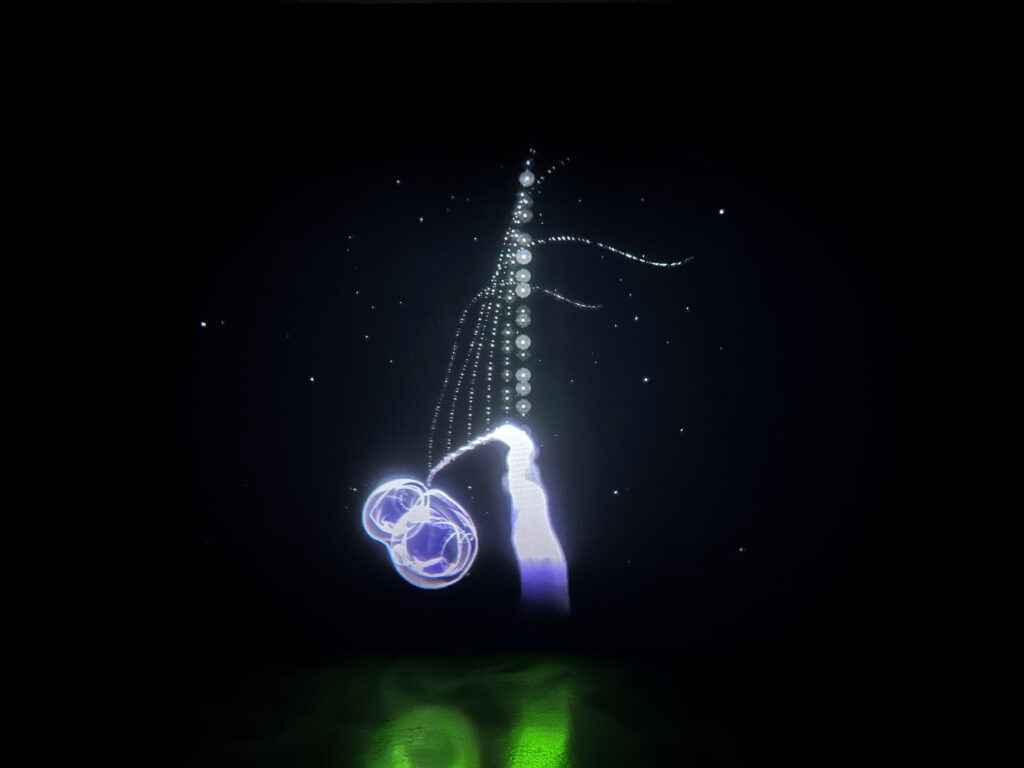
The images above are from SUPERFLEX: This Is The Tip Of The Iceberg,GENERATOR: USF Contemporary Art Museum’s inaugural exhibition. The two part exhibition includes a sculptural installation and the mesmerizing interactive animation Vertical Migration, in which viewers encounter a siphonophore that reacts to their movements.
From the gallery about the exhibition-
This Is The Tip Of The Iceberg emerges from SUPERFLEX’s in-depth research into the deep sea, biodiversity, and the climate. The exhibition immerses viewers in two parallel and interconnected realms, separated by a curtain which acts as an imaginary filter between land and sea. Passing through the curtain brings visitors from a terrestrial space unsettled by rising water to the ocean’s dark depths, to meet one of the most important cleaners of the ocean, the siphonophore. Relatives of the jellyfish, siphonophores bring between two and six billion tons of carbon a year from the surface down to the seabed, where it is stored. This Is The Tip Of The Iceberg offers an opportunity to encounter this unfamiliar species, prompting reflection on the impacts and consequences of climate change, especially relevant to Florida and its coastal communities, and encouraging humans to imagine a future defined by interspecies living and ecological coexistence.
For a more detailed discussion of the work, the gallery has created an exhibition catalogue that can be viewed online or downloaded as a pdf.
Vertical Migration was originally created in 2021 by SUPERFLEX for ART 2030 and was projected on the United Nations Secretariat Building in NYC during the 76th United Nations General Assembly.
The sea is not an abyss. It teems with an almost unimaginable array of life. Every night, the largest biological migration on Earth takes place, as trillions of creatures travel closer to the surface to feed. Some of these animals, like shrimp, are well-known. Others, like siphonophores—relatives of jellyfish—are unfamiliar: varying wildly in size, from the slightness of a fingernail to the length of a whale, they look like nothing that we find on land.
How does it feel to be one of these creatures? To explore this question, SUPERFLEX designed a computer-generated siphonophore and created an animated film, Vertical Migration, depicting its ascent. At first, the film mechanically circles the creature, getting closer and closer while giving the audience a view of it from all angles. But eventually the perspective shifts, the camera’s movements become more fluid, and the viewer sees the world from the perspective of the siphonophore.
Unsettling our perceptions of scale and otherness, Vertical Migration is an intimate encounter with a life form that bears no resemblance to human beings, though we share a planet, an ecosystem, and a future. Because of sea-level rise, humans will also be migrating vertically in the coming centuries, to higher elevations and raised buildings. The siphonophore’s story is our story. Though we can never experience its journey through the pitch-black ocean depths, we can shift our perspective to recognize that we’re connected, that our actions affect each other, and that we share a common fate.
For a look at the work in motion, below is the trailer from ART 2030.
About SUPERFLEX from their website-
SUPERFLEX was founded in 1993 by Jakob Fenger, Bjørnstjerne Christiansen, and Rasmus Rosengren Nielsen. Conceived as an expanded collective, SUPERFLEX has consistently worked with a wide variety of collaborators, from gardeners to engineers to audience members. Engaging with alternative models for the creation of social and economic organisation, works have taken the form of energy systems, beverages, sculptures, copies, hypnosis sessions, infrastructure, paintings, plant nurseries, contracts, and public spaces.
Working in and outside the physical location of the exhibition space, SUPERFLEX has been engaged in major public space projects since their award-winning Superkilen opened in 2011. These projects often involve participation, involving the input of local communities, specialists, and children. Taking the idea of collaboration even further, recent works have involved soliciting the participation of other species. SUPERFLEX has been developing a new kind of urbanism that includes the perspectives of plants and animals, aiming to move society towards interspecies living. For SUPERFLEX, the best idea might come from a fish.
This past weekend was Studio Waltz, an annual artist studio tour that takes place around Dunedin and Palm Harbor. One of the stops was The Mosaic House of Dunedin.
Carol Sackman and Blake White’s magical home has so much going on you almost don’t know where to look first. The couple teach classes from November thru April and can be contacted for tours of their home.
The Mosaic House was also featured in a gallery exhibition at the Dunedin Fine Art Center last year.
Spotted while at their home was a mural, pictured below, by former local artist Jennifer Kosharek, pictured below. She recently relocated to Alaska.
Founded by artists Barbara Gerdeman and Elizabeth Goodwill, Creative Liberties opened its first location at the end of 2021 and the second in February of this year. Along with the artist studios, the space hosts exhibitions and classes for children and adults.
The exhibition space and tables from a finished class from September 2023
If you go make sure to also check out the delightful Free Little Art Gallery. Created by artist Judy Robertson and modeled after the Free Little Libraries, you are encouraged to take a piece of art, leave a piece of art, or sometimes just admire what’s been donated. There is one for work by adults and for children’s art work.
Below are images from a few of the artist’s spaces in the Creative Liberties buildings.
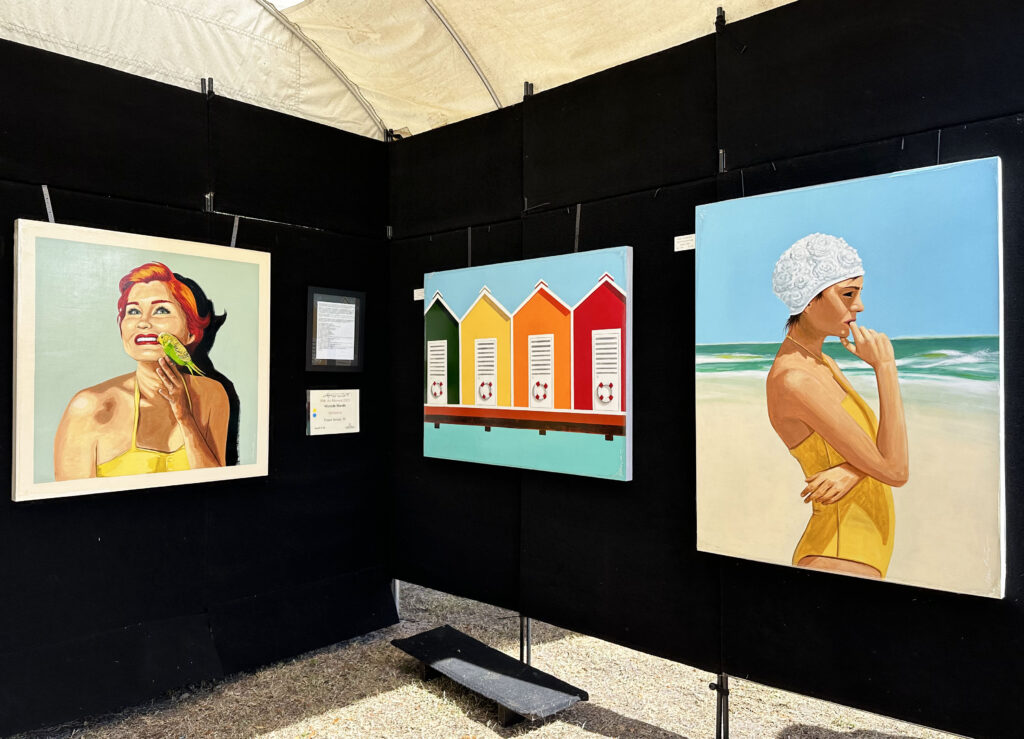
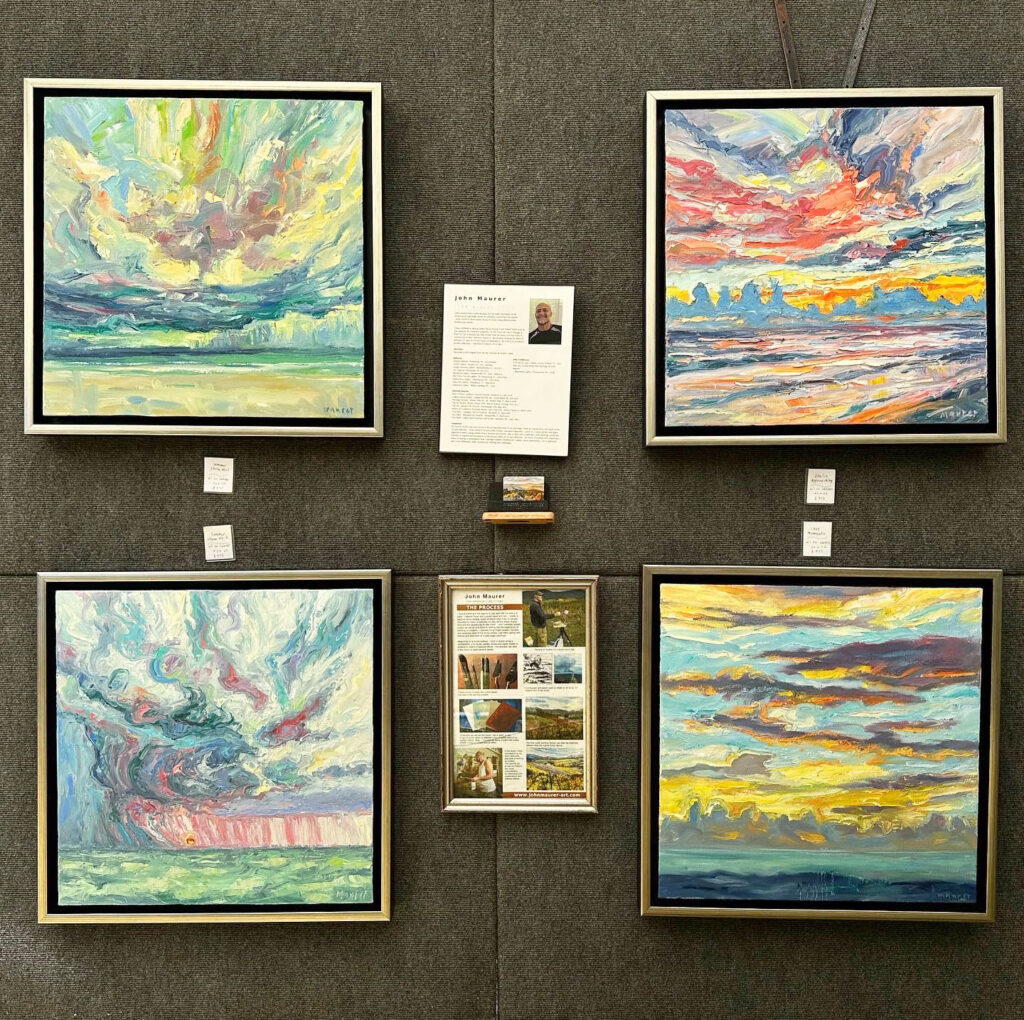
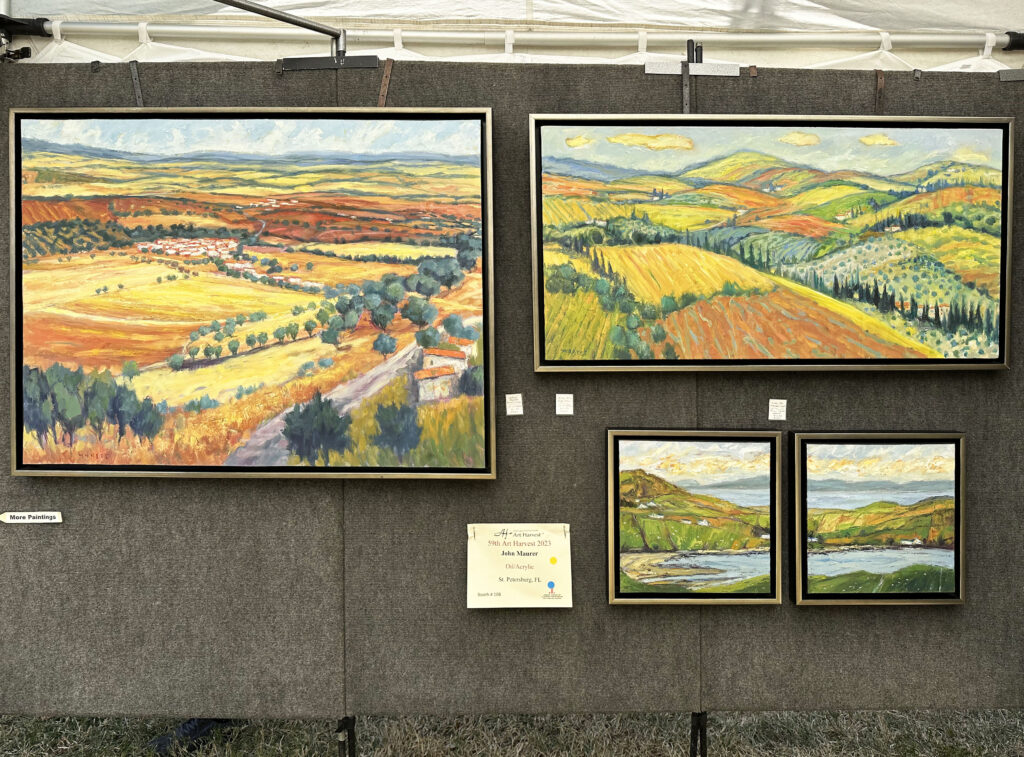
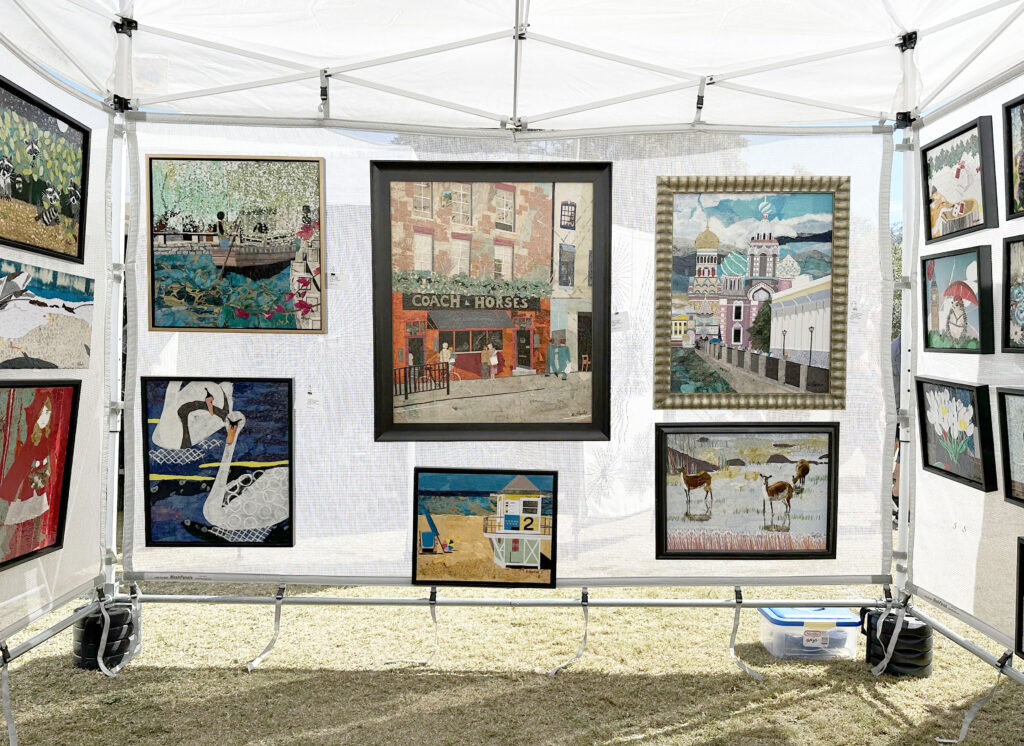
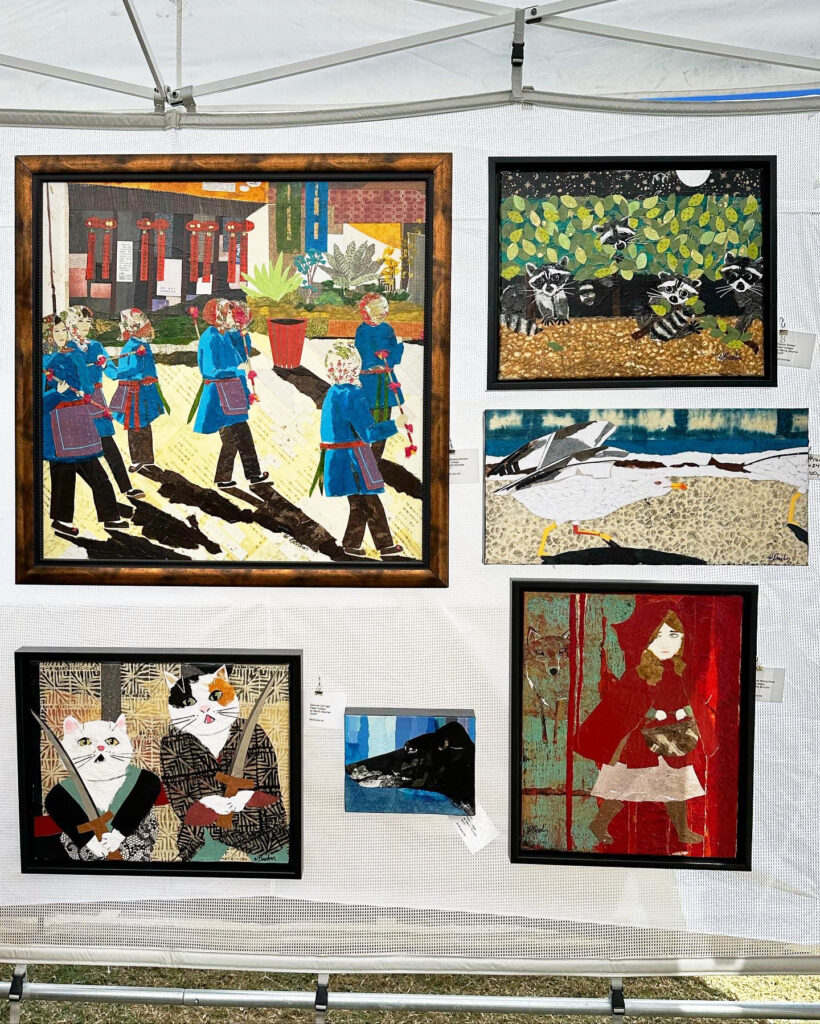
The weather this past weekend was perfect for enjoying two big outdoor art events in the Tampa Bay area- the annual Art Harvest juried art show in Dunedin and the autumn edition of the biannual Art in the Yard event in Gulfport (the next one is next year in March).
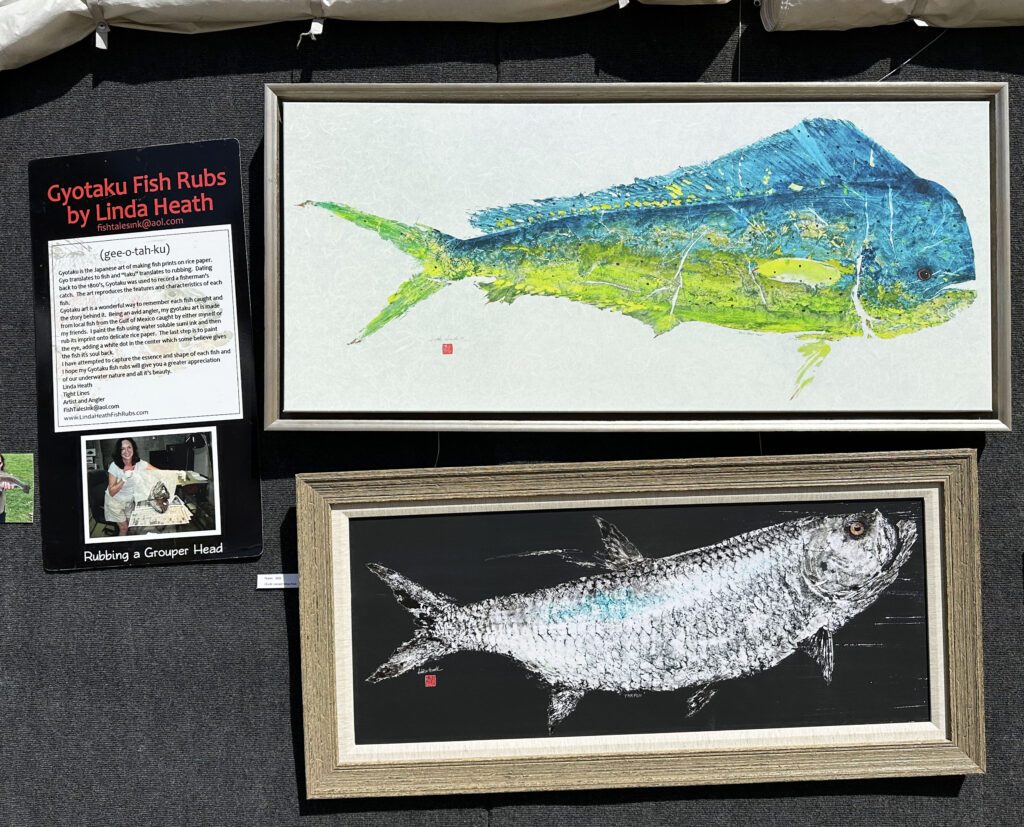
Linda Heath (work above) uses the Gyotaku technique to make prints from the fish she catches in the Gulf of Mexico.
Below are a few artists from Art in the Yard-
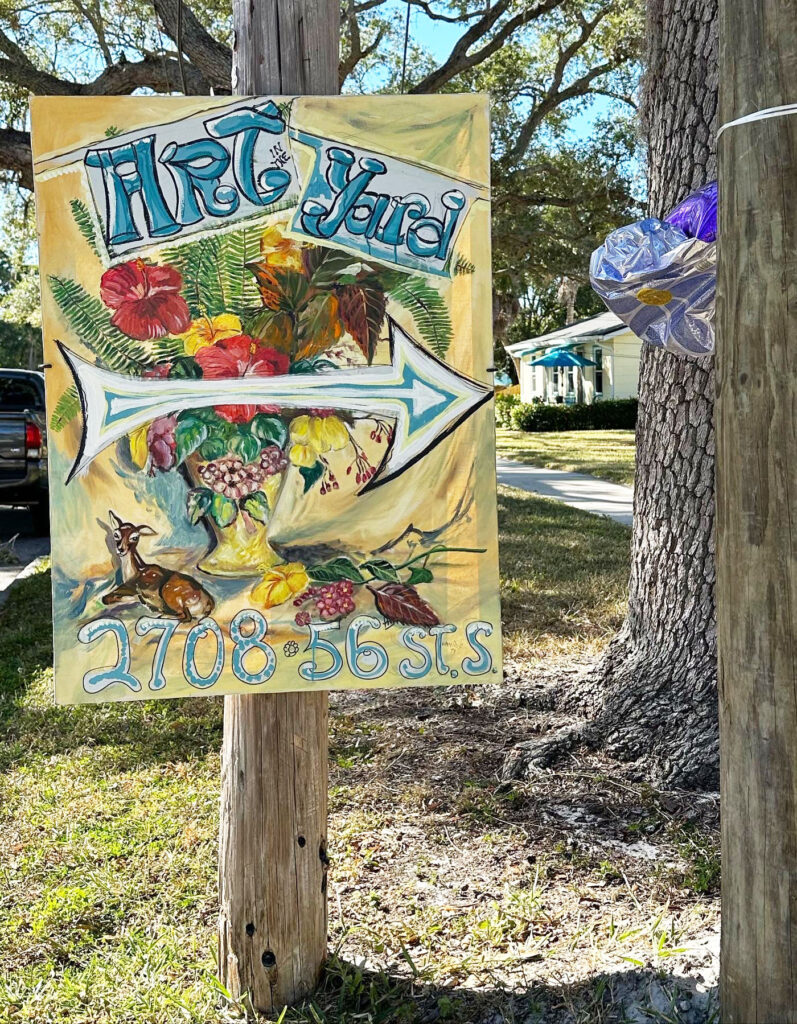
A homemade sign from Art in the Yard
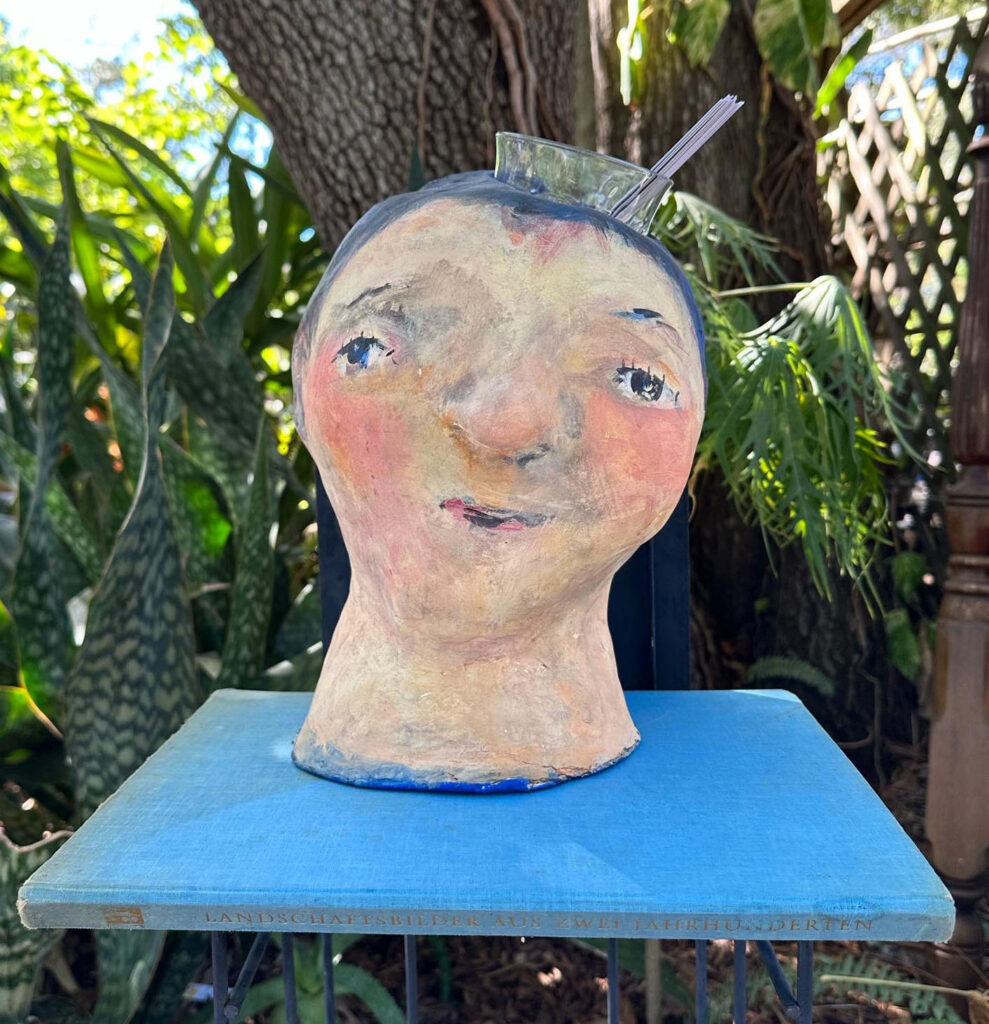
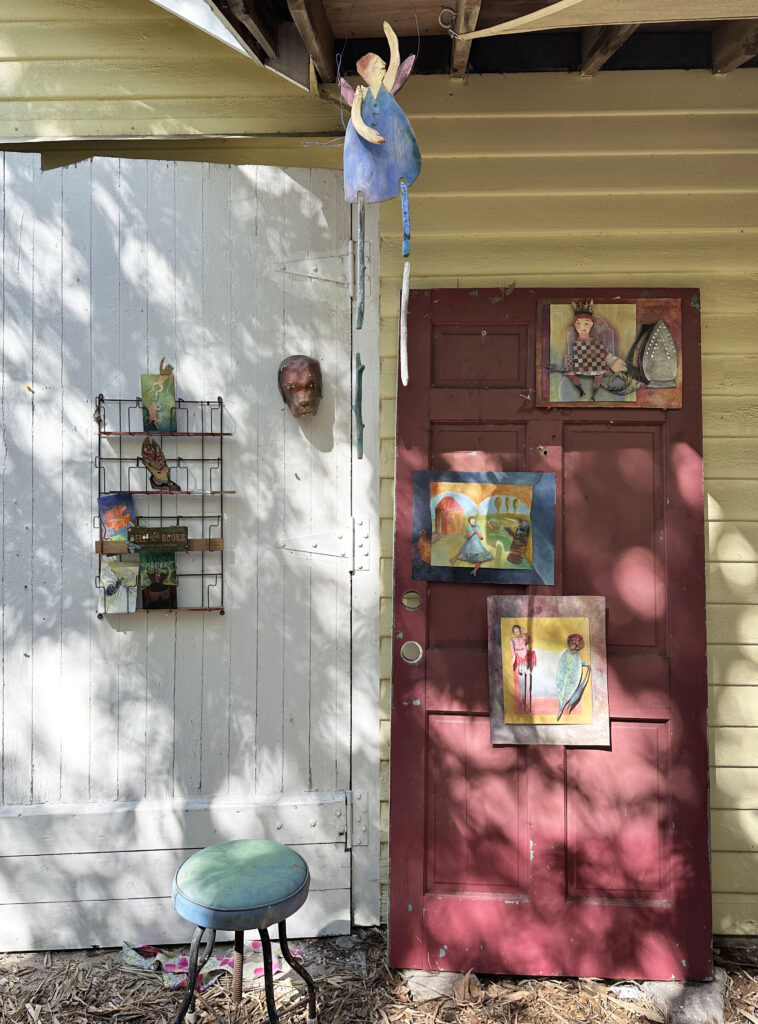
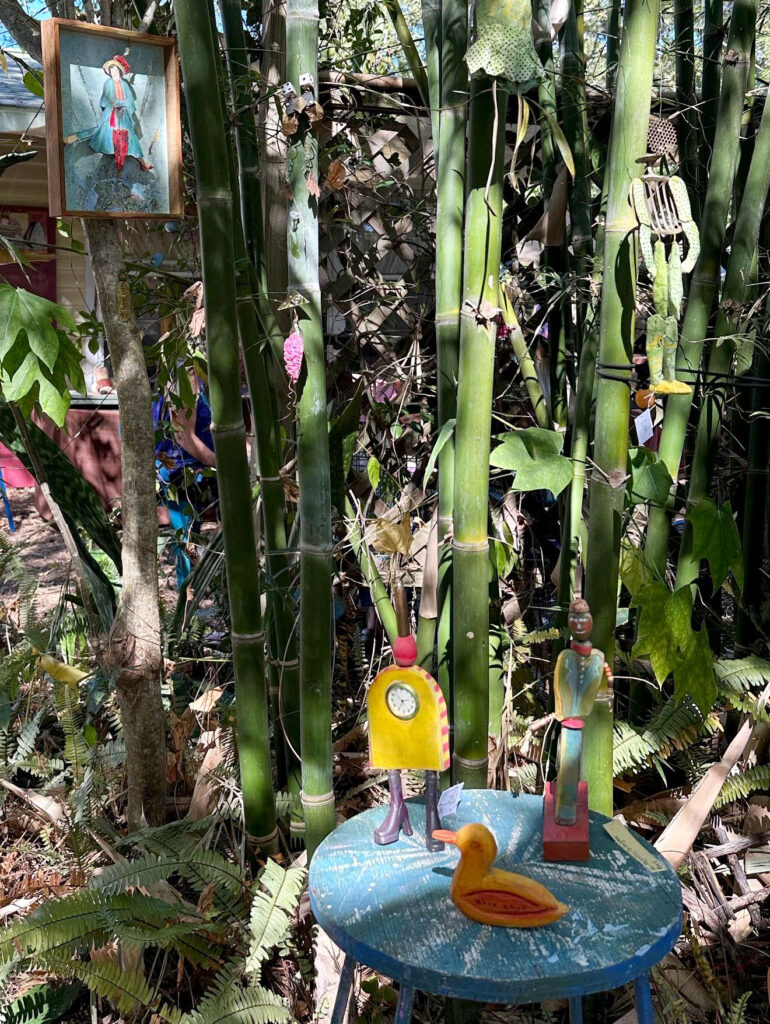
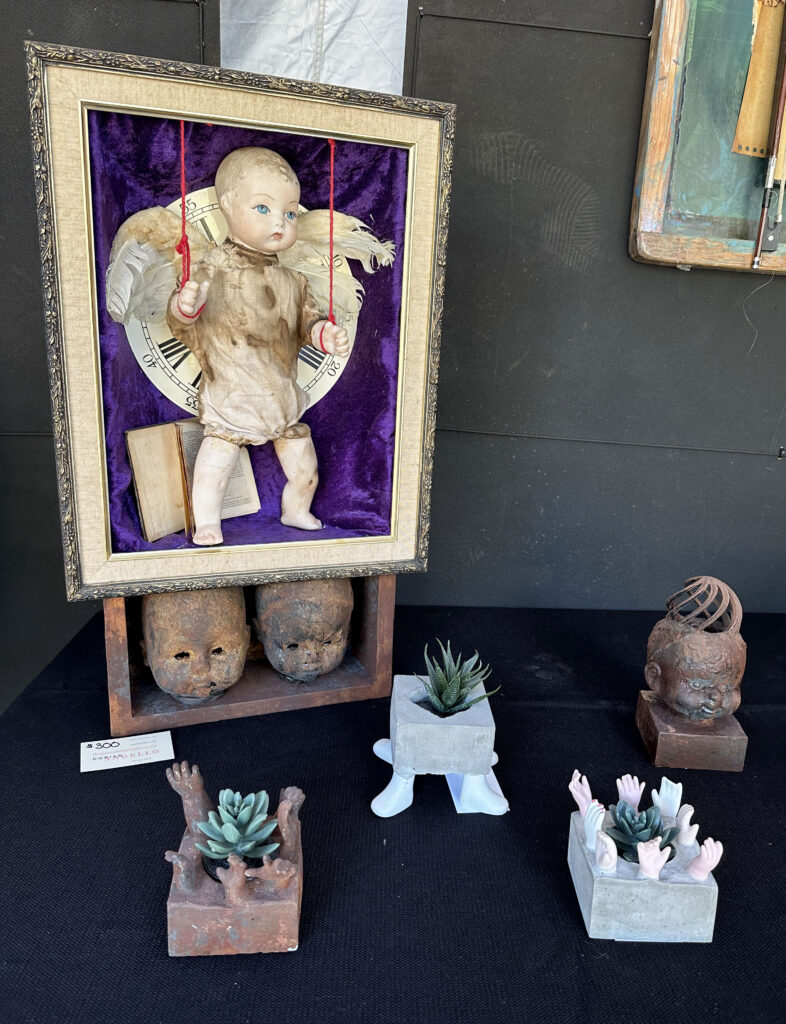
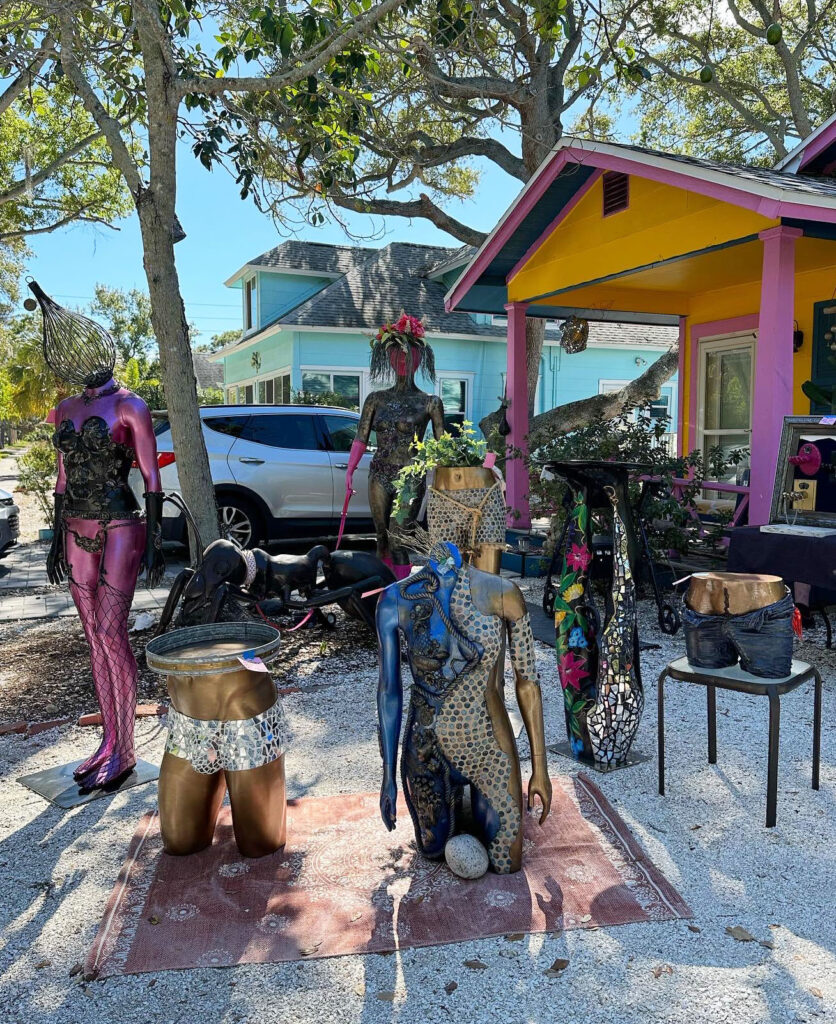
Art in the Yard is a great way to interact with local Gulfport artists and to see their creations. Stopping at the home of The Oiseaux Sisters (Susan Andrews and Carolyn Fellman), is a journey into their whimsical world. The head above was filled with little cards with their website and a different word, like a fortune, on each. My card read “Surrender”. All around their property you can find work hidden among the vegetation, on walls, and in among tables of materials they use for their work.
Hobby House– where art meets self-indulgence, subversion meets humor, and creativity meets absurdity. With ceramics, sterling silver, a little photography and a lot of gemstones Hobby House presents objects that are meticulously crafted for no good reason other than looking fabulous. Hobby House contemplates the places and practices of art making with humor, irony, and a little wit.
Jenn Ryann Miller explores materiality and aesthetics through sculpture and painting. With a background in functional ceramics, her work subverts tradition and process through the experimentation with oblique materials and forms. Miller has been part of numerous solo and group exhibitions in Florida and the United States. Originally from Connecticut, she received a BFA from the University of Connecticut and MA from the University of South Florida. Miller currently teaches ceramics at the University of South Florida.
In another of the Tempus Projects gallery spaces is Justin Myers‘ exhibition, What Did We Use To Say, seen below, which uses collage along with a video and sound installation to explore the concept of memory.
From the gallery and artist-
What Did We Use To Say? Trying to remember things from the past from distorted and fragmented memories. Is that really how it happened? With intention, the mind has the ability to erase just as easily as it does create. The mind decides what stays and what gets purged for the new. Are you in control? Or is the subconscious doing as it pleases? In this work, I explore deconstruction, recomposition, and sampling, and their impact on memory and perception.
Justin Myers, a Tampa Native, is a member of music projects Justin Depth, Alien House, and Diamond Man. He also is the co-founder of Tampa-based record label, Image Research Records.
Justin studied printmaking at HCC in Ybor City and began experimenting with sculpture and installation-based works during his time there. Myers finds inspiration from discarded imagery, random thought, and spontaneous actions. Over the last 10 years, Myers has participated in numerous exhibitions at Tempus Projects, including the T-shirt shows, Mix Tape Show, Return to Sender, and an offsite window installation as part of a partnership with Downtown Tampa and more. In 2020, Myers partnered with his brother, Jeremy Myers on a virtual exhibit with Tempus Projects titled, “One Day of Perfect”. Justin has been involved with Tempus Projects since his music project Alien House made its debut performance in November of 2011.
Both of these exhibitions are on view until 12/14/23.
Spooky season may be coming to a close but there is still time to see the ghosts, and the artists behind them, in At Home with “City of Ghosts” at Dunedin Fine Art Center. Thoughtfully curated by Nathan Beard, the exhibition focuses on artwork, in a variety of mediums, by 17 of the artists who helped create the award winning Netflix series City of Ghosts.
Created by Elizabeth Ito, City of Ghosts follows a group of children as they track down and record stories about the history of Los Angeles from the ghosts who also live in the city.
Luis Grané– “Pool Maintenance” , acrylic on canvas
“La Mejor Herrencia”, Maqueos-Gonzalez family photos and “Maqueos Music (Banda Oaxaqueña)”, 2023, video by Decibel Studios LA with Los Angeles based clarinet player Yulissa Maqueos
Pendleton Ward (left) and Elizabeth Ito (right) both created Pepper’s Ghost animations for the exhibition