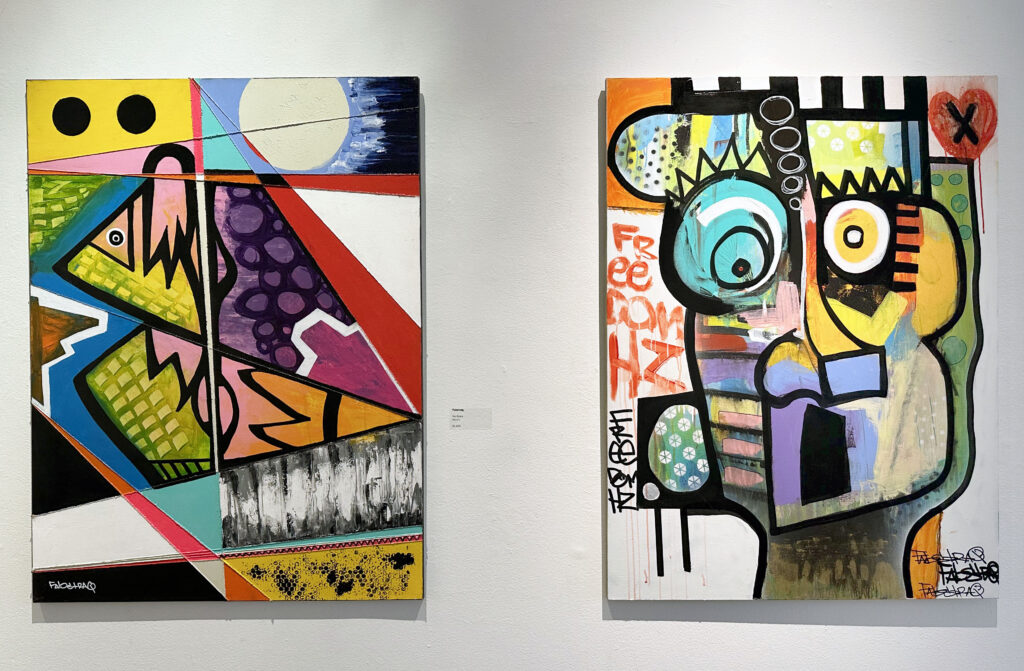
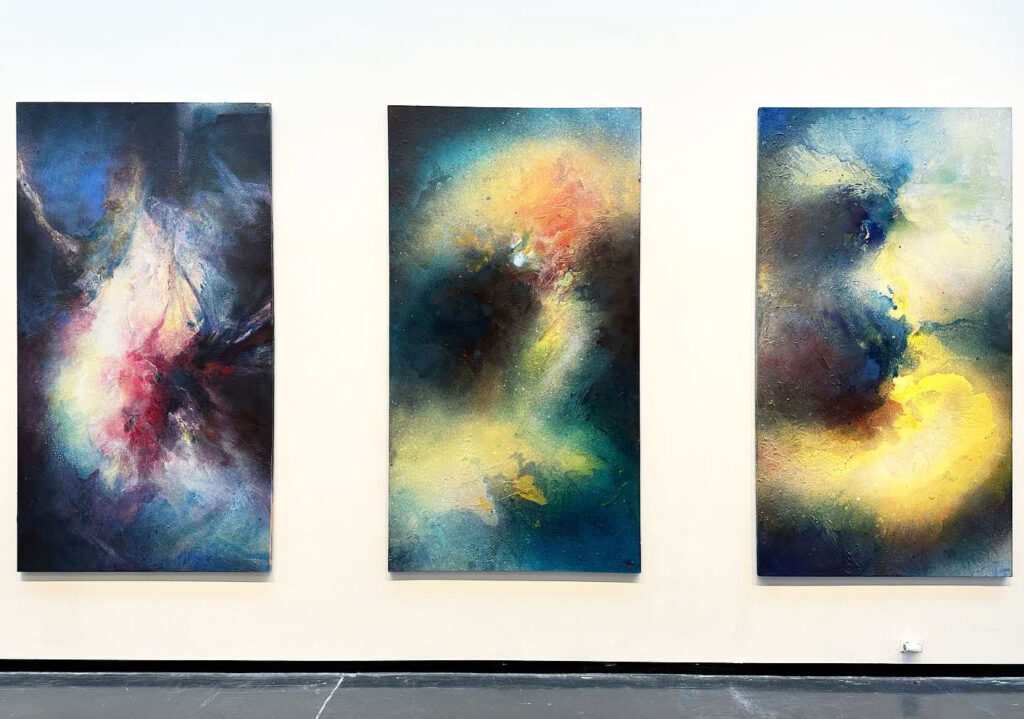
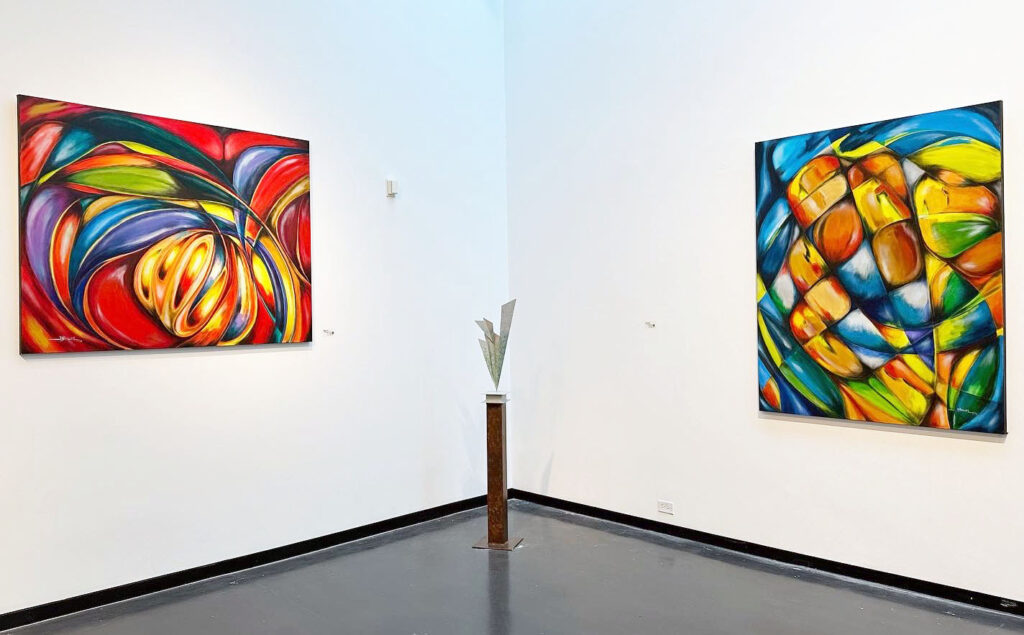
Ermin Tabakovic has created an intriguing world with his geometric paintings for Transcending Space, on view at Morean Arts Center in St. Pete.
From the gallery’s website-
Ermin Tabakovic was born in 1980 in former Yugoslavia (now Bosnia). In 1993 he and his family moved to Berlin, Germany where they lived between 1993-1998. As a teenager in Berlin, Ermin was involved in the city’s vibrant graffiti art scene and completed numerous murals. In 1998 he and his family emigrated to the United States, settling in the Tampa Bay area. Upon arrival in the US, Ermin took on painting and studied at St. Petersburg College where he focused on art and architecture. He went on to study art at the University of Central Florida in Orlando where he completed his BFA in Art Studio with Minors in Graphic Design and Art History.
Ermin actively exhibited his work between 2000-2008, taking part in many shows throughout Florida. He stopped painting in 2008 due to health issues and picked it up again in 2020 with a new vigor and a new vision. His new works are mature, colorful and bold representations of his core vision and aesthetic steeped in geometric form and a structural sensibility. Currently Ermin resides in Tampa with his wife Lisa and their beloved cat Maximus.
“Modern geometric painting has had a very big influence on my work, especially the Constructivist artists such as Malevich and El Lissitzky and the various other modern Art movements of the 20th century such as Cubism, Neoplasticism, Minimalism, and Surrealism. In my current work I tend to fuse all these different influences and combine them with my own personal aesthetic to create a new visual language that transcends the past and points to something new and different. We live in a digital age, so there is that digital touch to my compositions as well by using the hard-edge approach.
“I want the works to be visually striking, thus my use of vibrant colors, contrast, pure and robust geometric forms, clean lines, etc. I also like to add a surreal touch to my works to give them a sense of mystery and visual drama. Furthermore, I seek to create visual paradoxes by intertwining 2D and 3D space to add tension and ambiguity. My aim is to challenge the viewer’s perception of space and test the boundaries of what is possible by juxtaposing the seemingly impossible.”
Currently on view at Soft Water Gallery in St. Pete are Carrie Jadus’sRorschach-inspired paintings for Open to Interpretation. The paintings (as per the title) encourage the viewer to come up with their ideas about what they mean.
From the gallery about the exhibition-
The series began as a direct result of the uncertainty surrounding the early period of the Covid pandemic. It has since become a much broader reflection on the human condition and the ways in which our individual points of view deeply influence the way in which we see the world. Though Jadus has made very specific artistic choices in the creation of the paintings in this series, the works are ultimately left to the viewer to experience and interpret on their own terms.
Currently on view at Hillsborough Community College’s Gallery 114 in Ybor City is Ya La’Ford’s solo exhibition HENGE- unearthing ancestral memory. The exhibition includes the sculptures seen above as well as several prints. The geometric work taps into universal themes of cross cultural connectivity through form.
From the gallery about the artist and the exhibition-
Ya La’ford (b. 1979, Bronx, NY) is an internationally recognized multimedia artist whose bold, geometric work explores themes of transformation and transcendence. Her solo exhibition HENGE – unearthing ancestral memory in Gallery114@HCC invites viewers to reconsider symbols from ancient civilizations as keys for navigating the shapes and patterns of modern life. Concepts such as connection, excavation, reverence and memory are woven together for an immersive and multi-sensory installation. Inspired by forms such as Neolithic henges, kivas, and other ancient architectural monuments, these new works by La’ford investigate ancestral messages and reimagines them for contemporary audiences.
The prints, seen above, strike an intriguing balance with their delicacy to the more solid forms of the sculptures.
About the prints from the gallery-
Many numbers have symbolic associations. For example, sets of three can sometimes indicate cycles of time, such as past, present, and future.
The prints included in HENGE are titled in a series as Seven שבע. In ancient near eastern and Israelite culture, the number seven can be used to communicate a sense of fullness or completeness (שבע “seven” is spelled with the same consonants as the word שבע “complete/full). The number seven can also be associated with intuition, wisdom, spiritual revelations, a growing self-awareness, or upcoming shifts that may have a positive impact on one’s life.
To celebrate the 9th year of the SHINE Mural Festival, Morean Arts Center is showing work by several of the artists who are participating. The center is also one of the places to pick up a guidebook for the festival with information on the artists and a map of the mural locations.
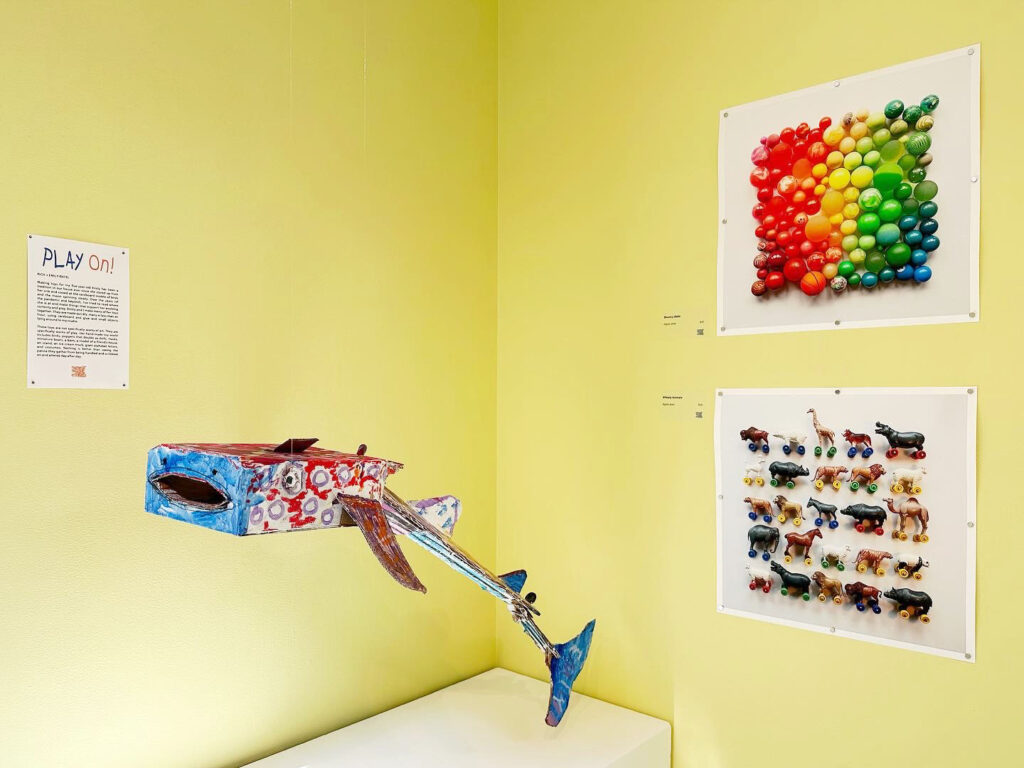
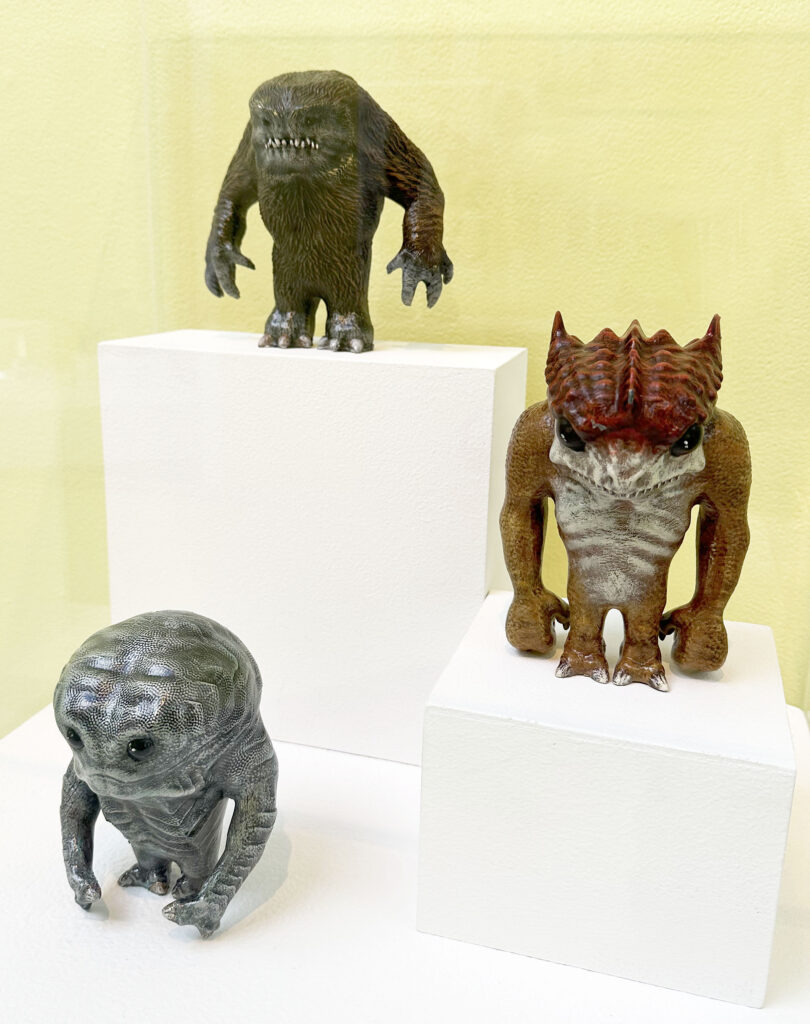
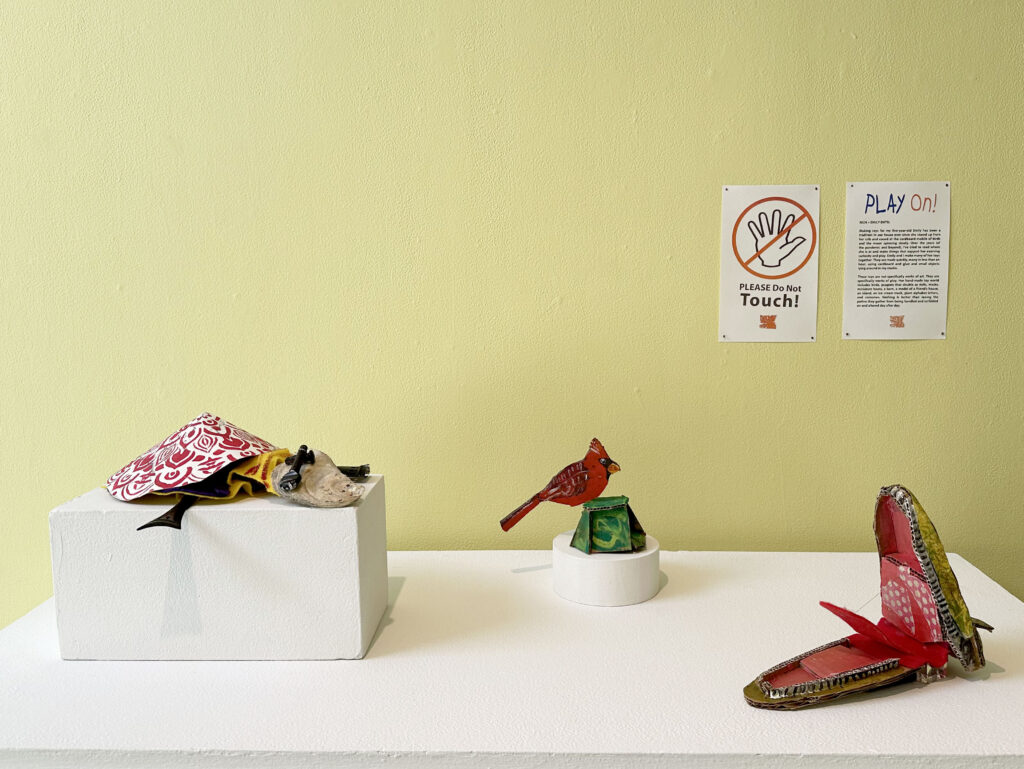
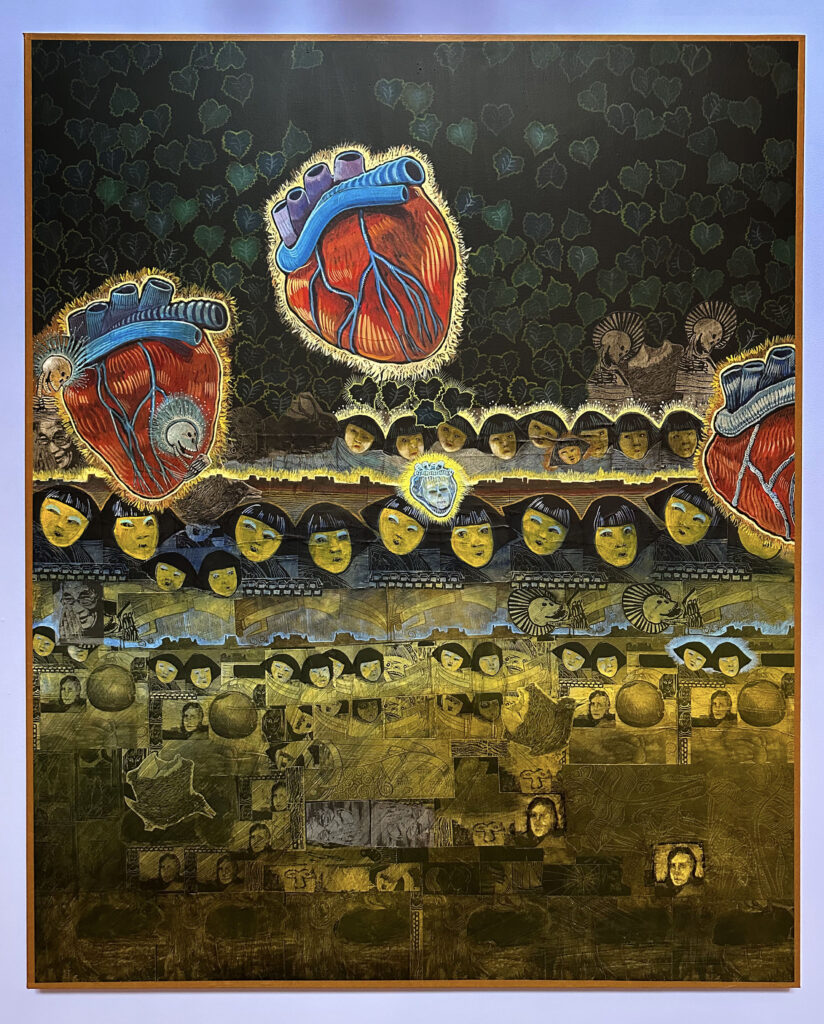
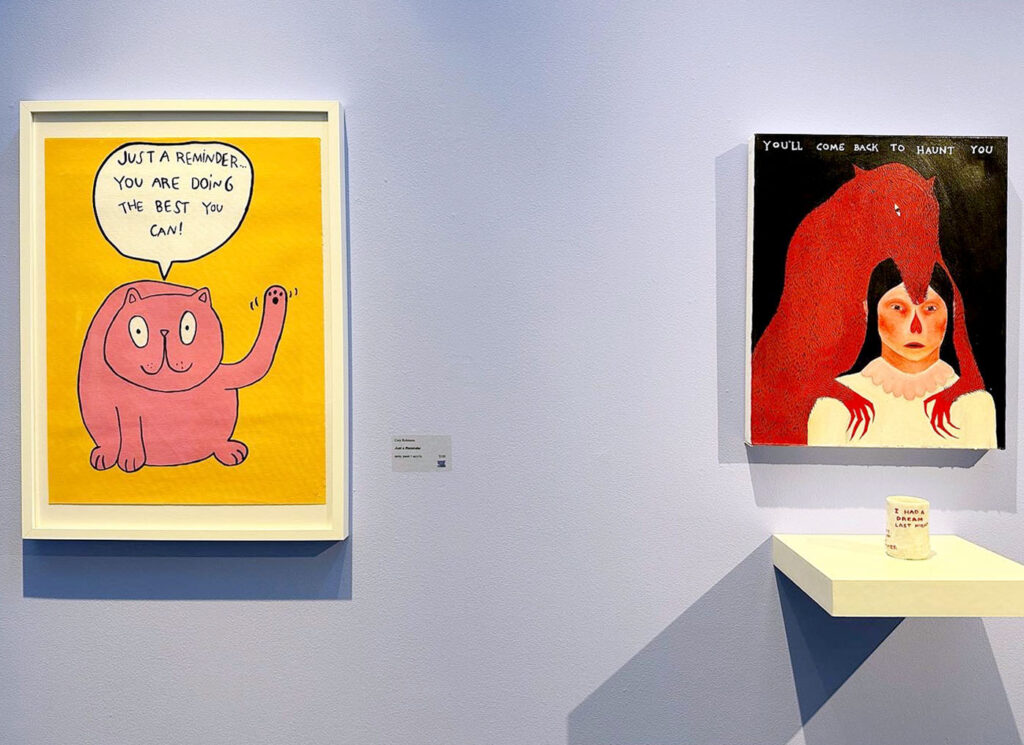
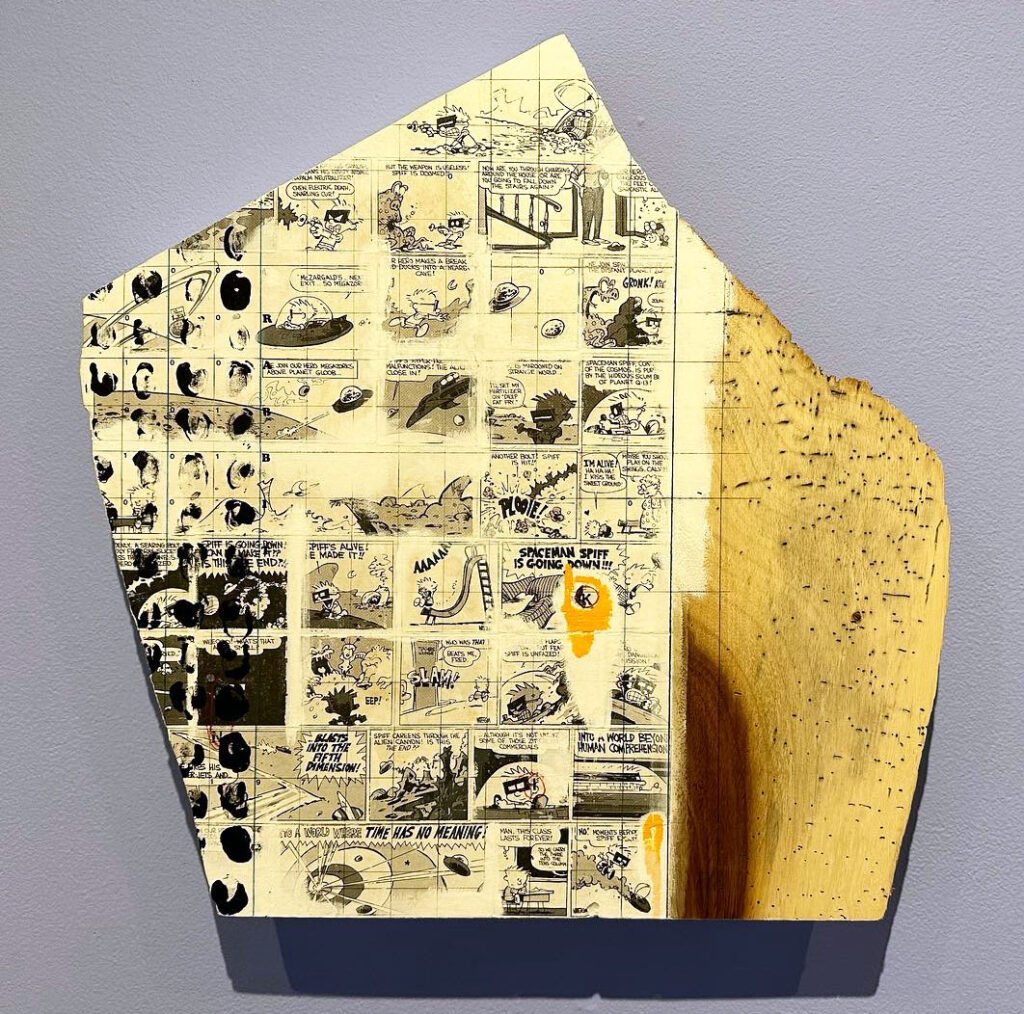
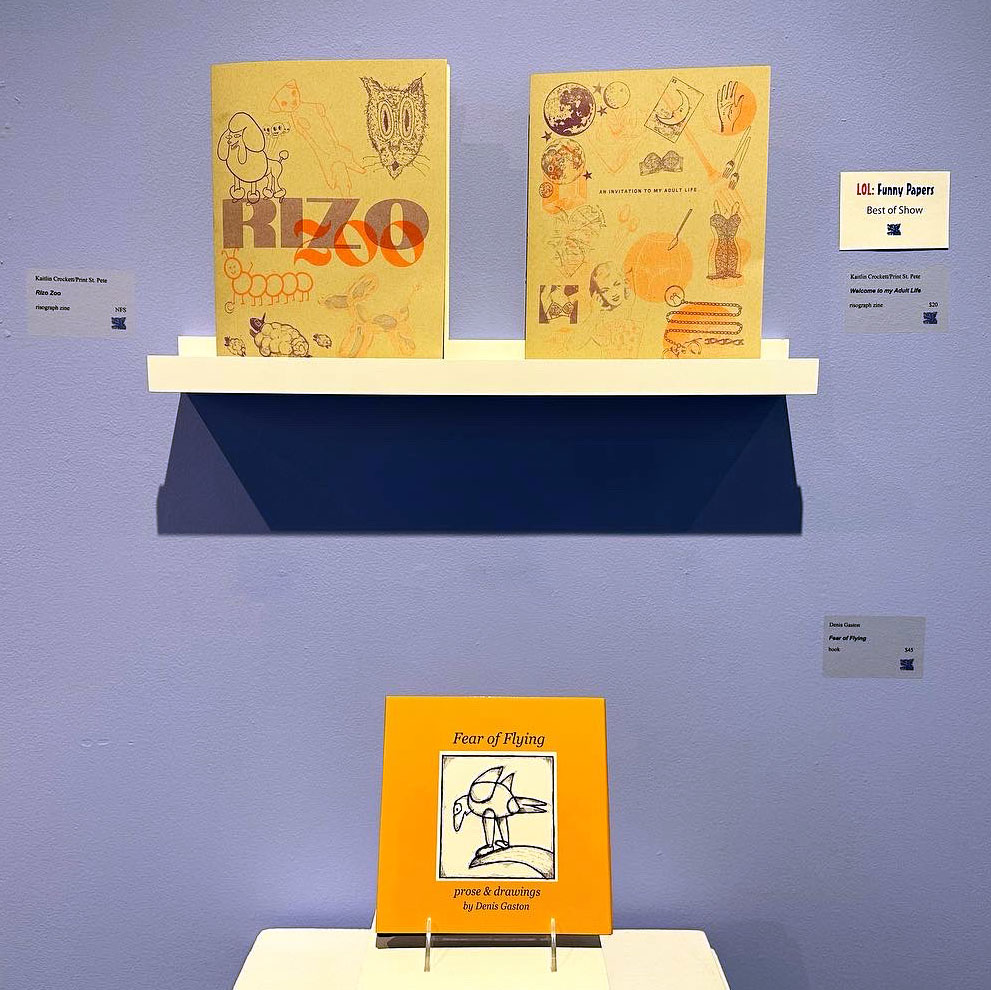
Every autumn Dunedin Fine Art Center chooses a universal theme that runs through all of their galleries. This year they chose PLAY. It’s a wonderful choice and makes for a delightful time in the various galleries. This is the last week to see two of the exhibitions- PLAY On!, a selection of wonderful artist made toys and toy related art (photos above), and LOL: Funny Papers, a juried selection of art work incorporating comics, illustrations, zines and mixed media collage (photos below).
Catch both of these shows before they close on 10/15/23.
Barbara Hubbard, “Quantum Entanglement #5”, print collage/hand colored
Cory Robinson, “Just a Reminder”, spray paint and acrylic (left); and Cort Hartle “You’ll Come Back to Haunt You” acrylic, and “We were running hand in hand”, ceramic
Print St. Pete, founded by Kaitlin Crockett and Bridget Elmer is a small community letterpress and risograph printshop which offers studio access, workshops, and custom printing.
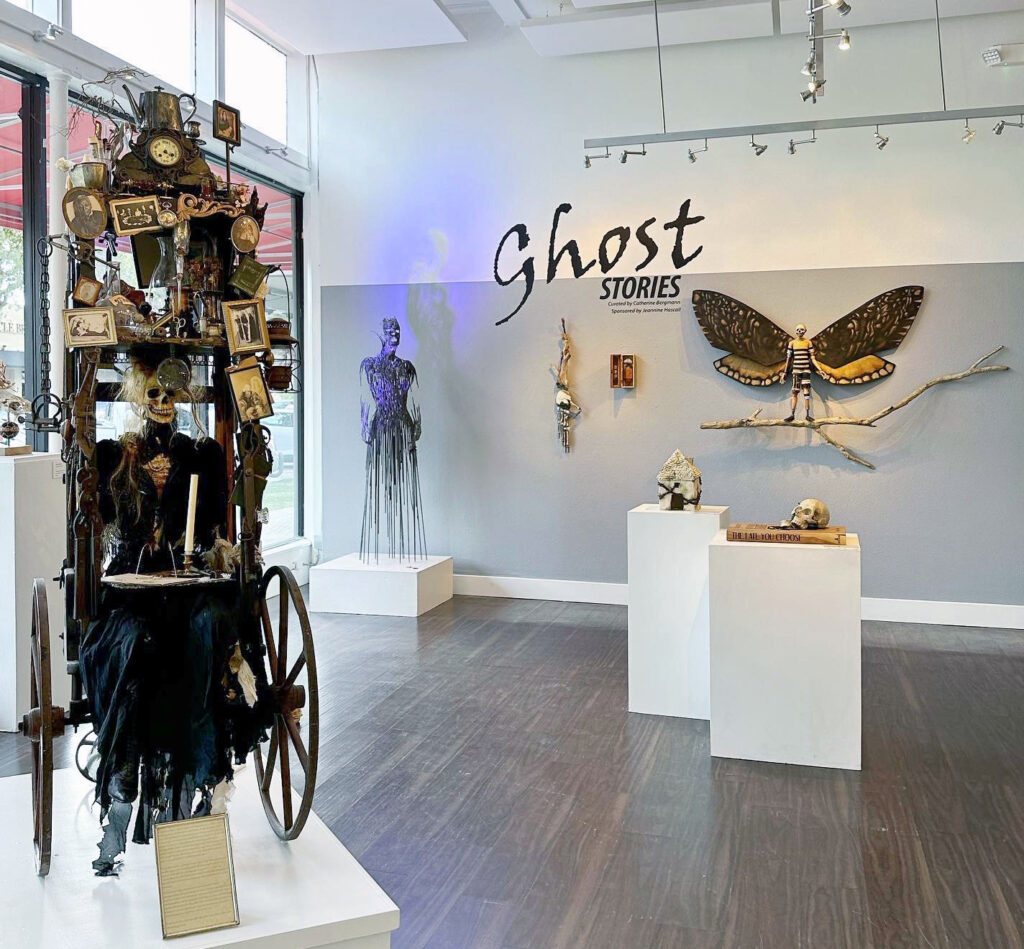
On Thursday, 10/5/23, in partnership with Keep St. Pete Lit, a group of local writers will be telling ghost stories at the gallery inspired by pieces from the exhibition. The reading will take place at 6pm.
Below are a few more selections-
Work by Alegrobot, Hand sculpted paper clay, acrylic paint
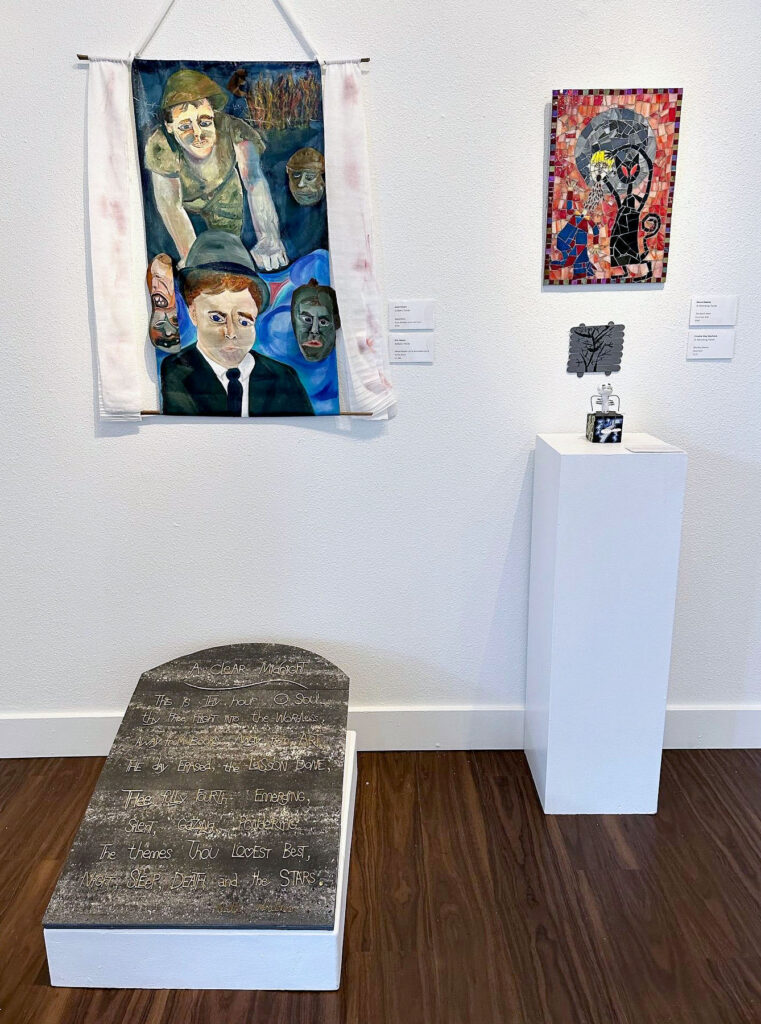
Janet Folsom, “Apparitions”, Mixed media (top left); Eric Folsom, Gravestone, bronze on marble; Donna Slawsky, (top right) “The Devil’s Work”, Stained glass, beads, and Creative Clay, Stephanie,(bottom right) “Monkey Dreams”, Mixed Media
About Creative Clay, who contributed several works to the exhibition-
“Creative Clay achieves its mission by providing ongoing studio arts workshops for individuals with disabilities five days per week. Creative Clay teaching artists provide students with education and experience in artistic techniques, as well as vocational skills related to the display, promotion, and sale or their expressive work.”
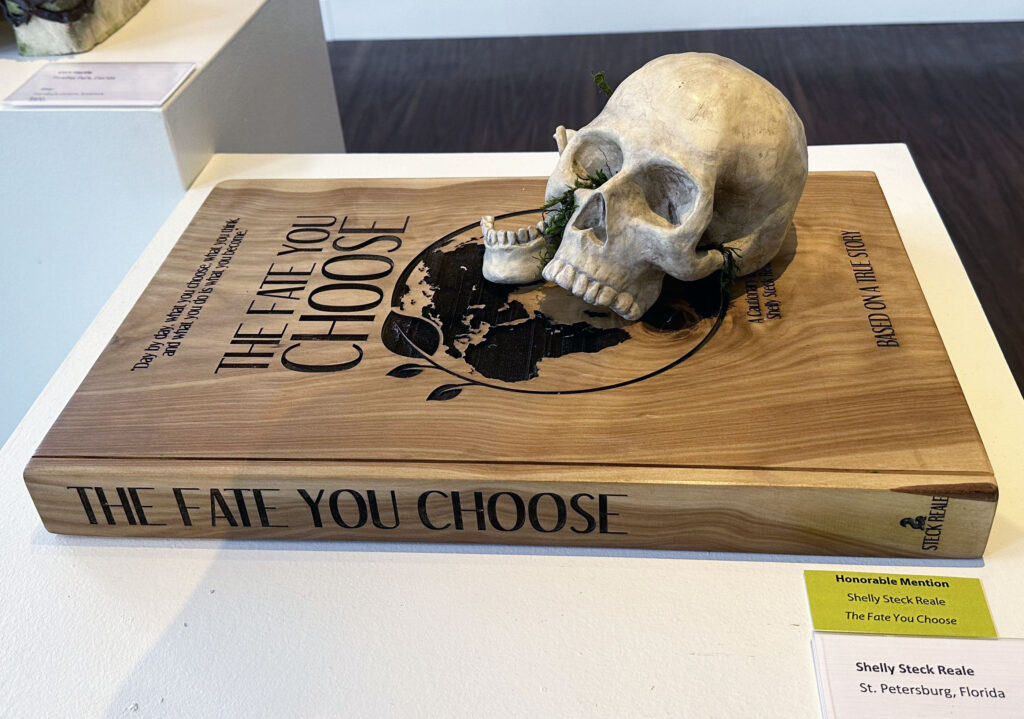
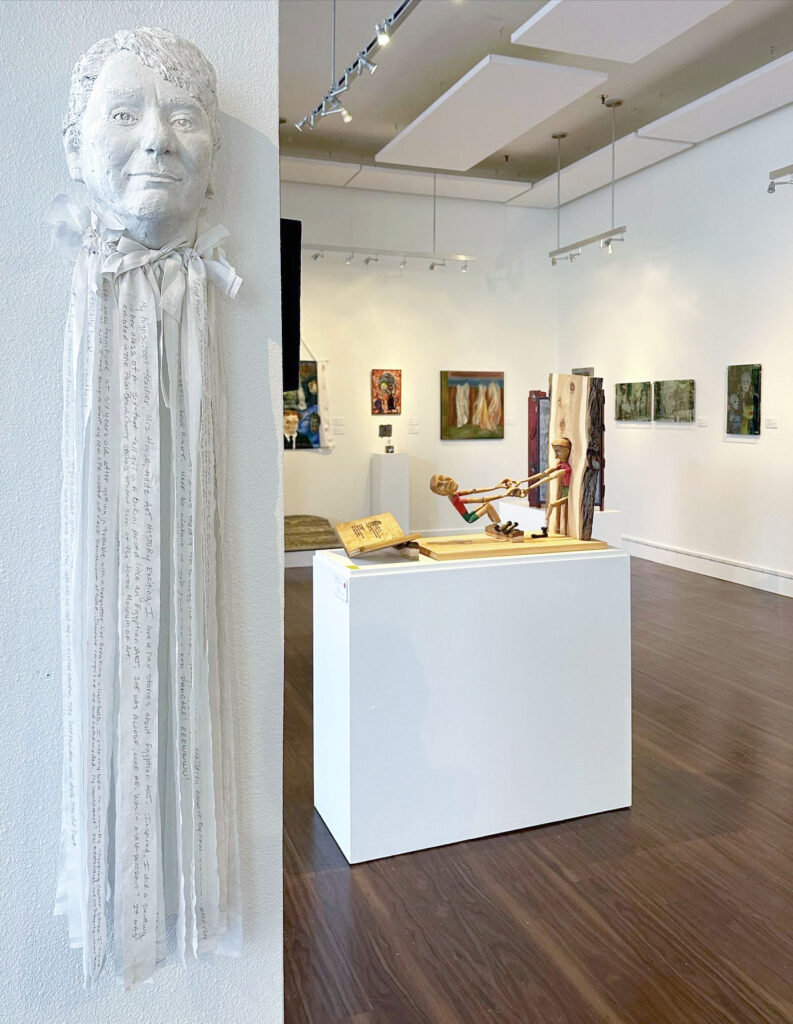
Katie Deits, “Haunted by the Past”, Ceramic, cotton, pencil, acrylic paint (left) and Nick Reale, “Out of the Wood” wood sculpture
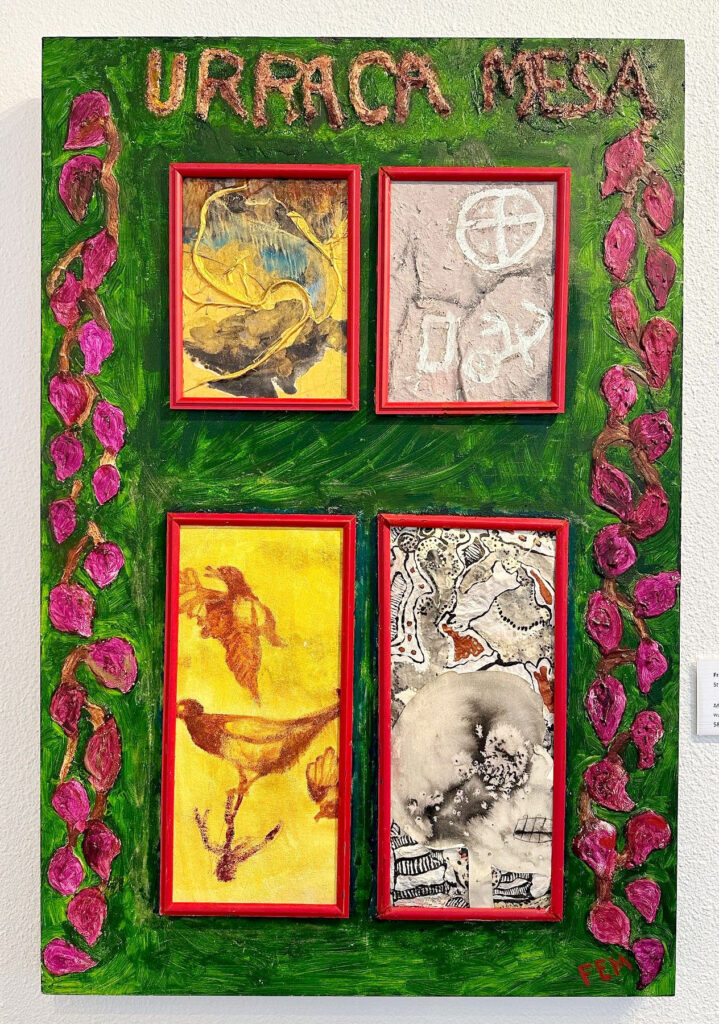
Francine Michel “Mysteries of Urraca Mesa”, Water mixable oil, collage
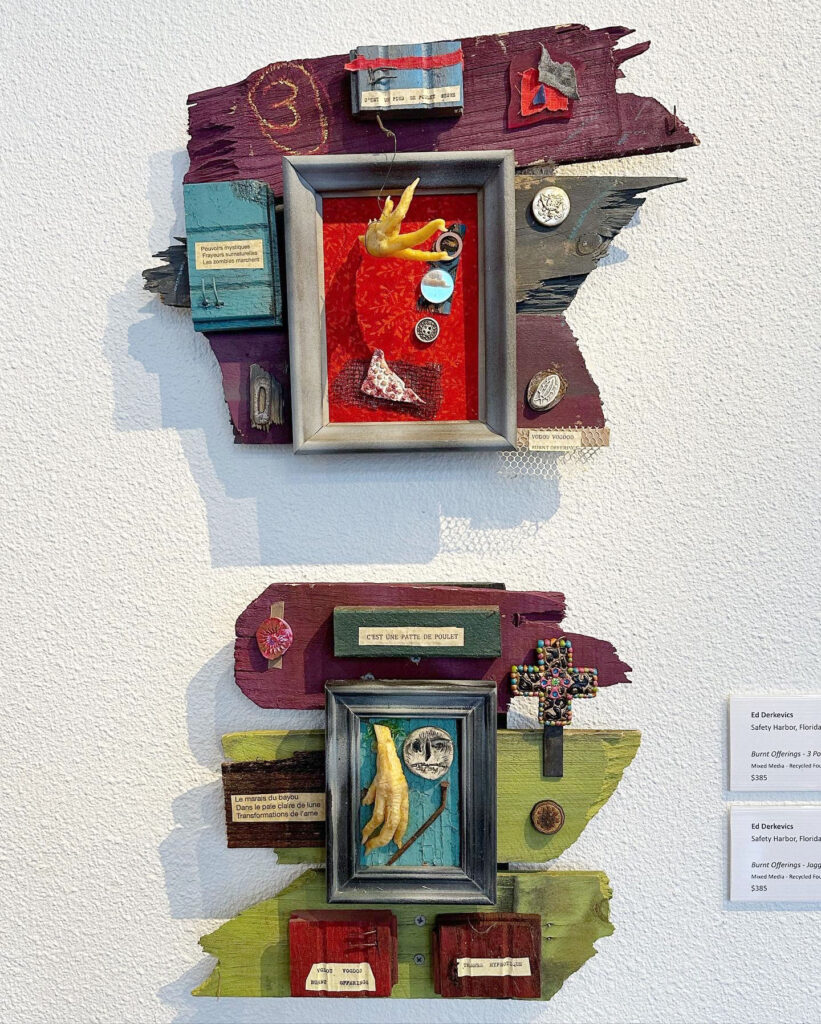
Ed Derkevics, “Burnt Offerings”- “3 Potions” and “Jagged”- Mixed Media, recycled found objects
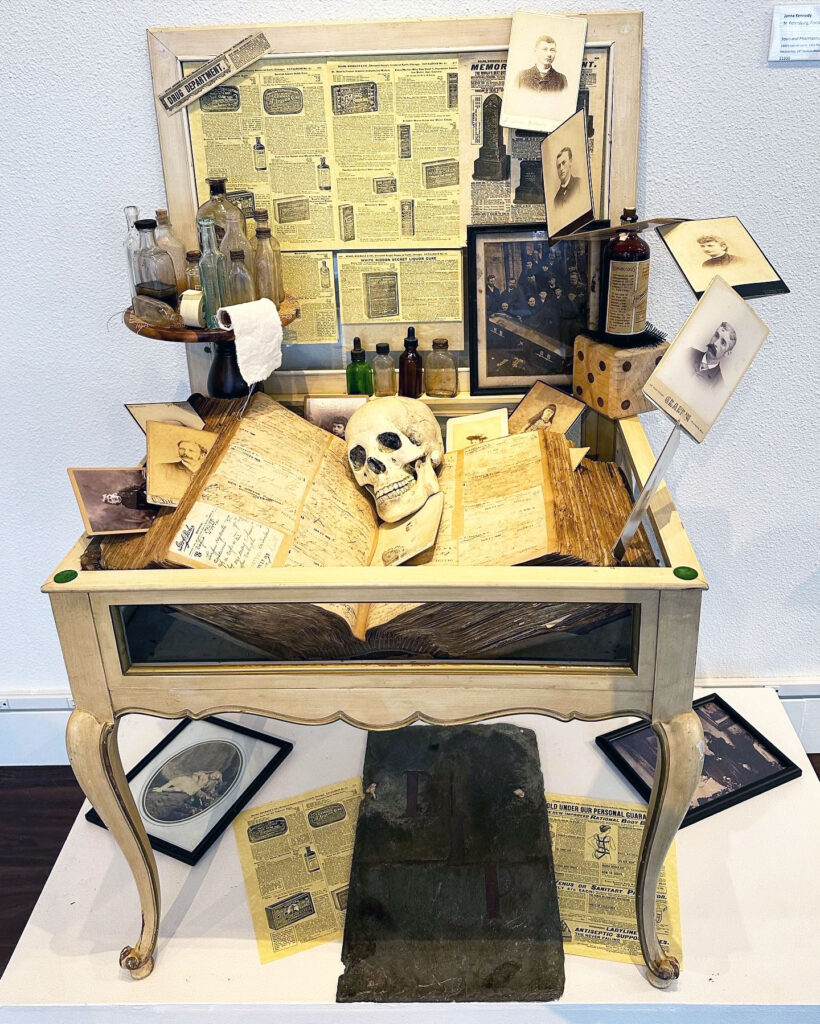
Janna Kennedy, “Souls and Pharmaseuticles”, 1800s Cabinet Cards, 1902 Pharmacy Ledger & Medical Ads, 19th Century Medicine Bottles
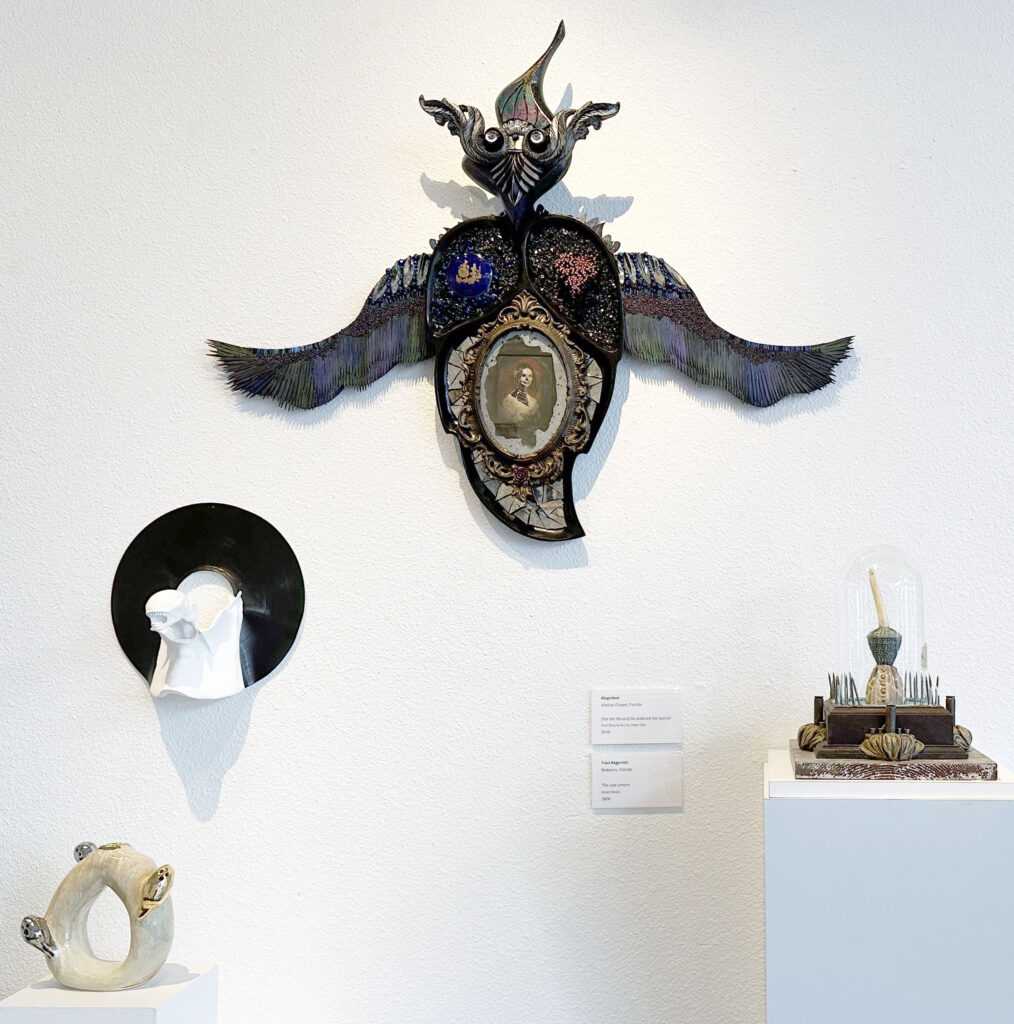
LA Finfinger, Ghost Ceramic work (bottom left); Alegrobot, “(For the Record) he ordered the special”, Vinyl record, paper clay; Traci Kegerreis, “The Lost Lenore”, Mixed media (center top); Demeree Barth, “Remembering Sedlec Ossuary”, Clay, bullet casings, wood display stand, found objects (bottom right)
With all of the recent Sarasota posts, I thought I’d put up this fun painting, Spirit of Sarasota by Asa Cassidy, for “Throwback Thursday” this week. The painting was part of Tampa Museum of Art’s 2022 exhibition, Poetry in Paint: The Artists of Old Tampa Bay.
From the museum about the painting-
Asa Cassidy was a New York City lithographer who, in 1924, sold his lithography interests and moved to Sarasota to devote his life to painting. Cassidy loved the beauty of Sarasota Bay and built a home on Bay Island. His painting “Spirit of Sarasota”, depicting a 1920’s bathing beauty riding a tarpon in Sarasota Bay, hung in Sarasota City Hall for years.
“Paolo and the Bomb”, 2023, Assemblage of diverse materials
“Lions Escape from the Zoo or Portrait of Andy Kaufman”, 2023, Assemblage of diverse materials
Center work- “Hive, Helmet, and Butter Brick”, 2023, Assemblage of Diverse Materials
“Colossus in Repose”, 2023, Assemblage of diverse materials
“All Their Friends Are Rabbits”, 2023, Assemblage of diverse materials
After visiting Ry McCullough in his studio back in May to see what he was working on, I was very excited to finally see his exhibition SUPERPOSITIONS at Art Center Sarasota. His mixed media sculptures capture the imagination as the viewer imagines the connections between the objects in the work. The titles provide often humorous clues, but make sure to check out his Instagram for more background on his inspirations.
About the work from the center-
McCullough’s practice engages the fields of printmaking, creative writing, drawing, sound, and sculpture to create unique systems that probe the margins and boundaries of how art crafts language and communicates meaning. Using these systems of making as a guide for a range of media processes, they articulate parameters that can expand or collapse, generating opportunities for discovery in thematic investigations of the philosophical, abstract, and fluid state of being across time and space. SUPERPOSITIONS is inspired by an affection for the traditions of still life, modernist abstraction, and humor.
Artist Statement-
The SUPERPOSITIONS project comprises works of collage, sculpture, and wall-bound hybrids that exist between two-dimensional and three-dimensional space. The tension between these two spatial expressions is celebrated within this project through the playful application of collage. More than a tradition of material operations, McCullough views collage as a bundle of behaviors, a toolbox, and a signifier of fragmentation that forms an ethos of revision and reorganization.
McCullough is attracted to humble materials such as plywood and paper, concrete and plaster, foam and found things, essential stuff that requires intervention to establish meaningful presence through the relations it forms to other components in each work. The formal language is idiosyncratic; combinations of hard and soft edges, geometric and organic form, and a buffet of color with a penchant for balance. These works are propelled by the forces of potential change, by the energies of process, and by developing a poetic and clumsy status of unfinishedness.
Angel Rivera Morales, “Dystopian Paradise I, II, and III”, 2023, Acrylic and oil on canvas
Gilbert Salinas, “As We Speak”, 2022, Mixed media on canvas
Juan Nieves Burgos, “Germinar de patria” and “Mundo sin tiranos”, 2019; Carmen Rojas Gines, “She Warrior-SW3 “Guerrera”-G3″, Steel metal
Valentin Tirado Barreto, “Salcedos Death- La Muerte de Salcedo” and “Rebellion of the slaves- Rebelión”, Acrylic on canvas
Currently at Creative Pinellas is the group exhibition Keepers of Heritage: Hidden Tales / Custodios de la Herencia: Cuentos Ocultos, on view until 10/15/23.
From the Creative Pinellas website-
Keepers of Heritage is an extended collaborative effort whose purpose is to document, present and promote the contributions of artists of Puerto Rican artists in the Caribbean archipelago and abroad.
Its roots go back to 2015 with the presentation of the “La Diaspora” exhibition at the Terrace Gallery in Orlando City Hall. Since then, the collective has expanded and traveled to institutions such as the National Museum for Puerto Rican Arts and Culture in Chicago, the Appleton Museum of Art in Ocala, and the Albin Polasek Museum in Winter Park, Florida.
Over eight years, the collective has documented and presented the work of nearly 30 artists whose artistic practices include a diversity of mediums such as painting, drawing, sculpture, engraving, multimedia, and photography.
Launched in 2006 to support the next wave of contemporary portraiture in the United States, the National Portrait Gallery’s celebrated triennial Outwin Boochever Portrait Competition is a major survey of the best American portraiture selected by internationally prominent jurors and curators. Now in its sixth edition, The Outwin: American Portraiture Today presents 42 works selected from over 2,700 entries, that foreground the vibrancy and relevance of portraiture today. In addition to paintings, photographs, drawings, and sculptures, The Outwin includes video, performance art, and textiles, highlighting the limitless possibilities of contemporary portraiture.
Open to both emerging and established artists, this year’s entrants were encouraged to submit work that moves beyond traditional definitions of portraiture, and to explore a portrait’s ability to engage with the social and political landscape of our time. The variety of media and subjects featured in the exhibition invite audiences of all backgrounds to find relation in the human experience.
Since its inception, finalists for the exhibition have been determined by a panel of jurors including three Portrait Gallery staff members and four external professionals (critics, art historians, artists). The competition is endowed by and named for Virginia Outwin Boochever (1920 – 2005) who, for 19 years, volunteered as a docent at the Portrait Gallery. Her commitment to advancing the art of portraiture is continued through the support of her children.
Below are a selection of works from the show and information about them from the museum.
Alison Elizabeth Taylor– Anthony Cuts under the Williamsburg Bridge, Morning, 2020 (pictured above)
On walks around her Brooklyn neighborhood during the COVID-19 lockdowns, Alison Elizabeth Taylor encountered the hair groomer Anthony Payne, who,with his workplace shuttered, had taken his scissors, mirror, and chair to the streets. Payne sought to financially support the Black Lives Matter movement, especially in the aftermath of George Floyd’s murder, and turned over proceeds from his donation-based haircuts to organizations advocating for social justice.
Taylor’s process, one she developed and named “marquetry hybrid,” incorporates vivid paints, inkjet prints, and the natural grains of over one hundred veneers. Marquetry, with its inlaid combination of woods, can “memorialize,” Taylor notes. She acknowledges the history of the craft, which was favored by Louis XIV (1654-1715) when he was acquiring furniture for Versailles. By giving Payne this “royal treatment,” Taylor aims to pay tribute to him.”I want him to see how much his example meant to me,” she explained.
Kira Nam Greene, “Kyung’s Gift in Pojagi (From the series “Women in Possession of Good Fortune”)”, 2019 Oil, gouache, colored pencil, and acrylic ink on canvas
Kira Nam Greene– Kyung’s Gift in Pojagi (From the series “Women in Possession of Good Fortune”), 2019
In this mixed-media work, by Kira Nam Greene, the artist Kyung Jeon faces us with relaxed self-assurance. She is carefully positioned on her couch as her long black hair falls over her orange and turquoise tunic. In the foreground, a wooden cylinder containing paint brushes reveals her medium of choice. A plate with persimmons, consumed during the harvest festival Chuseok to celebrate good fortune, brims with potential while the rest of the painting pulsates with action.
Greene situates her friend in a fantasy world that echoes Jeon’s artwork and their mutual interest in the traditional Korean fabric quilting technique of pojagi. Two rabbits, representing Jeon’s Chinese zodiac, appear to be concocting a potion. Flowers sprout as kaleidoscopic patterns envelop her. The reference to pojagi, the visible paint drips in the background painting, and the hands of the sitter- left unfinished- invoke the role of tradition, process, and exploration in artmaking.
Stuart Robertson, “Self Portrait of the Artist” from the “Out and Bad” series, 2020, Aluminum, earth, acrylic paint, enamel, paper,metallic bubble wrap, sequins, and gold foil on wood
Stuart Robertson– Self Portrait of the Artist from the Out and Bad series, 2020
“In my world, skin is high-tech, amorphous, and armored,” the artist Stuart Robertson observes. “Blackness is percussive, lustrous, flexible, and indestructible.” Self-Portrait of the Artist depicts a fragment of a man- half of his face and his upper torso-shiny and monumental. A black beard delineates his jaw, and a small gold hoop adorns his ear. Although the figure is cropped beyond recognition, the work’s title provides a clue.
Through the alternation of flat and repoussé aluminum sheets, Robertson achieves a hypnotic effect, a poignant tension playing on what he reveals or hides from us viewers. His refusal to depict his entire face or figure challenges the notion of what a portrait should be and blocks the objectification of the Black male body, so often sexualized in visual culture. Simultaneously, Robertson delivers an irrepressible, resplendent image of that body, one inspired by the aesthetics of Jamaica’s dancehall culture.
Vincent Valdez, “People of the Sun (Grandma and Grandpa Santana)”, 2019, Oil on canvas
Vincent Valdez– People of the Sun (Grandma and Grandpa Santana), 2019
An elderly couple faces us with the gentle authority that old age provides. People of the Sun (Grandma and Grandpa Santana) is a portrait of Vincent Valdez’s maternal grandparents. “My grandparents spent most of their time outside,” the artist recalled. “Grandpa spent his entire life working under the blazing Texas sun as a carpenter and yard worker, cutting lawns in the wealthy communities of San Antonio right up until he passed away. Grandma was constantly working with her hands–raising kids, washing, sewing clothes, and tending the plants in her yard.”
The Santanas are depicted in a space defined by details the artist remembers: their vintage AM radio, their plants, their homemade clothes. The bedsheet, like the Virgen de Guadalupe’s aura, signals their spiritual role in the family. This portrait connects the pair to the Indigenous and mestizo cultures of the American Southwest, including the Aztec and Maya, who honored the sun.
For more work from the exhibition, please head to page 2.