Apr 172026
 

Today’s flashback is to Noah Davis‘s Imitation of Wealth installation which was shown in MOCA’s storefront space in 2015. Sadly, Davis passed away before it opened.

Some of these works are currently on view as part of his gorgeous retrospective at the Philadelphia Museum of Art.

From MOCA’s website about the installation-

One of the unique characteristics of the contemporary art scene in Los Angeles is the proliferation of artist-run spaces, many of which are located in storefronts across the city. MOCA was founded by artists and, due to its philosophy of placing artists at the center of its mission, has long been known as “the artist’s museum.” Storefront continues this tradition by inviting two artist-run organizations to take over MOCA’s Marcia Simon Weisman Works on Paper Study Center each year.

Founded in 2012, The Underground Museum is a storefront space developed by artist Noah Davis. Located at 3508 West Washington Avenue in Los Angeles’s Arlington Heights neighborhood, The Underground Museum has a gallery space, offices that serve as editing suites and a painting studio, and an outdoor garden which hosts parties, events, and film screenings. Davis wanted to bring what he called “museum-quality art” to a traditionally African American and Latino working-class neighborhood. However, when The Underground Museum first opened, no museums were willing to lend such works. Undaunted, Davis decided to recreate iconic artworks by famous artists such as Marcel Duchamp, On Kawara, and Jeff Koons. The title for his inaugural exhibition, Imitation of Wealth, alludes to Douglas Sirk’s classic film Imitation of Life (1959), a pre-civil rights era melodrama about passing. Just as the film’s protagonist pretends to be white in order to escape the fate of the second-class citizenship offered to African Americans, the works in the exhibition masquerade as famous works of art in an attempt to break down the traditional class and ethnic barriers to high culture. Irreverent and tongue-in-cheek, Imitation of Wealth stages many of art’s time-honored questions about the nature of truth and authenticity.

The Underground Museum, where this work was first shown, was a unique and special place that held many great exhibitions and events. After Davis’s death it was run by his wife, artist Karon Davis (who co-founded the space), and his brother filmmaker Kahlil Joseph. The museum closed in 2022.

Below are some images from a visit in 2019.

Front doors of the Underground Museum

Two views of the outdoor space at the museum-

Along with the galleries, bookstore, and outdoor spaces, you could even find artwork in the bathrooms. The unique wallpaper collage seen below was created by Genevieve Gaignard.

Objects in the bathroom at the Underground Museum

Wallpaper detail

Apr 162026
 

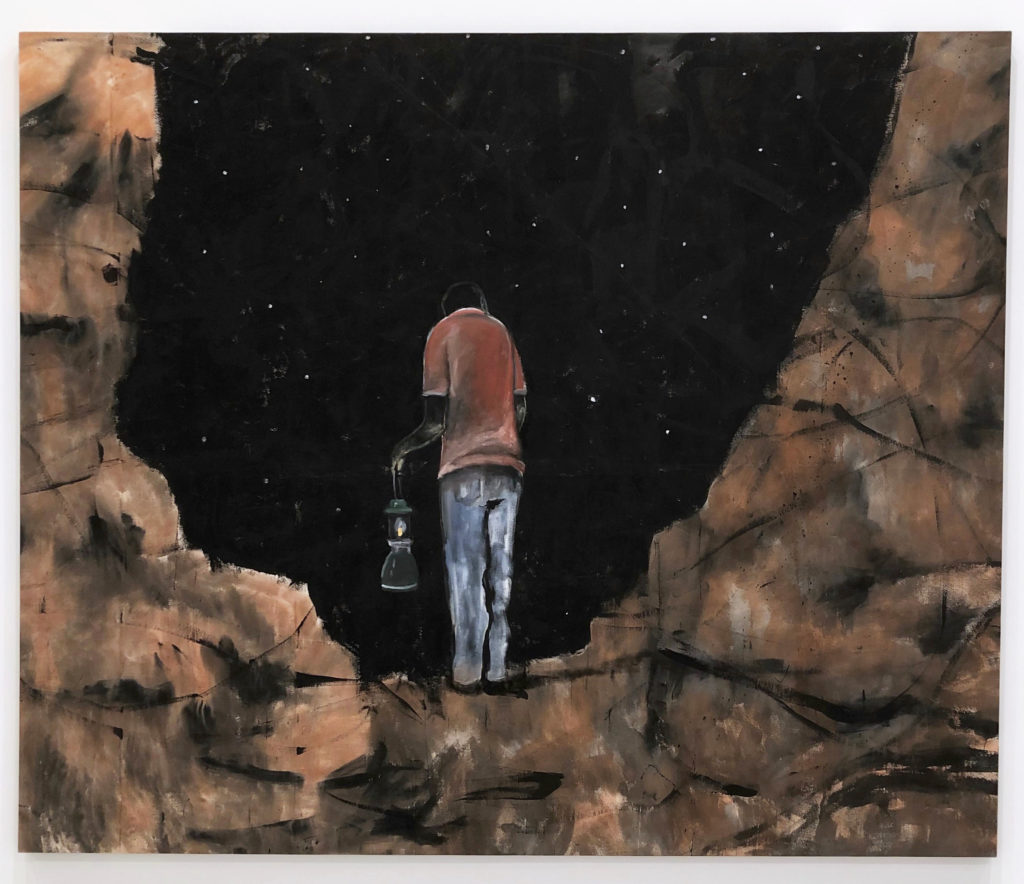
Noah Davis, “The Conductor”, 2014, Oil on canvas

A collection of photographs, notes, documents, and a video (not pictured) are located on a wall at the beginning of the exhibition

Currently at the Philadelphia Museum of Art, the retrospective Noah Davis presents a collection of works from the artist’s short but impressive career.

From the museum about the show-

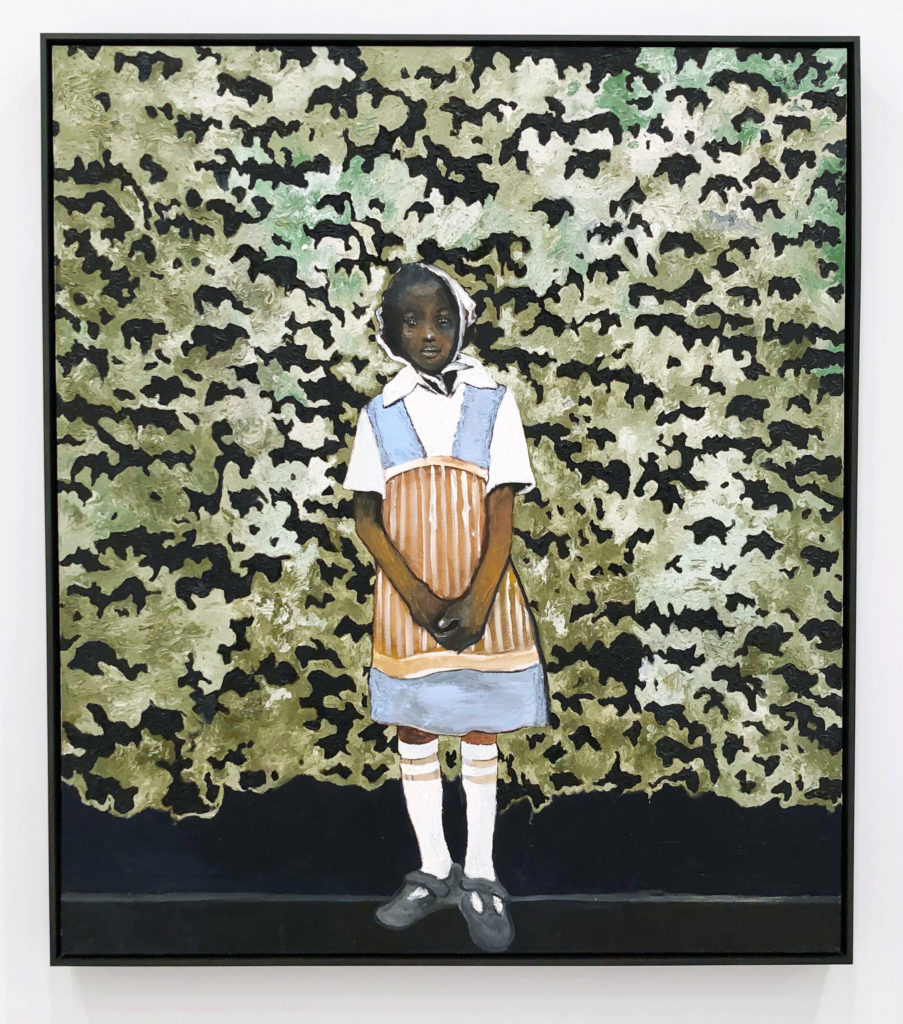
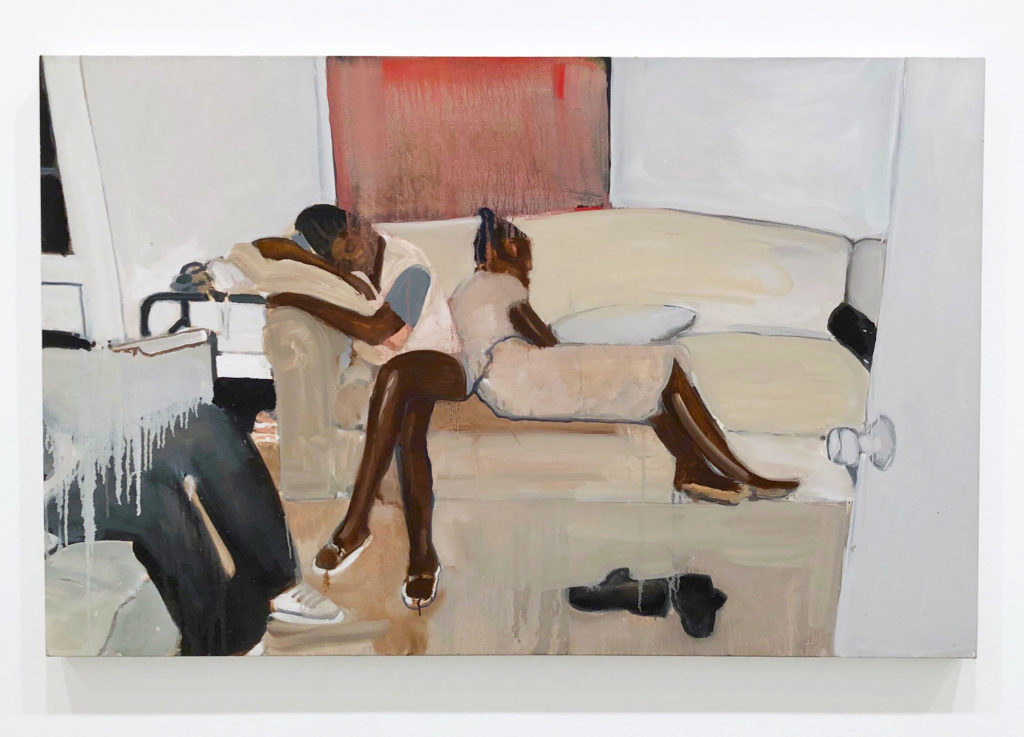
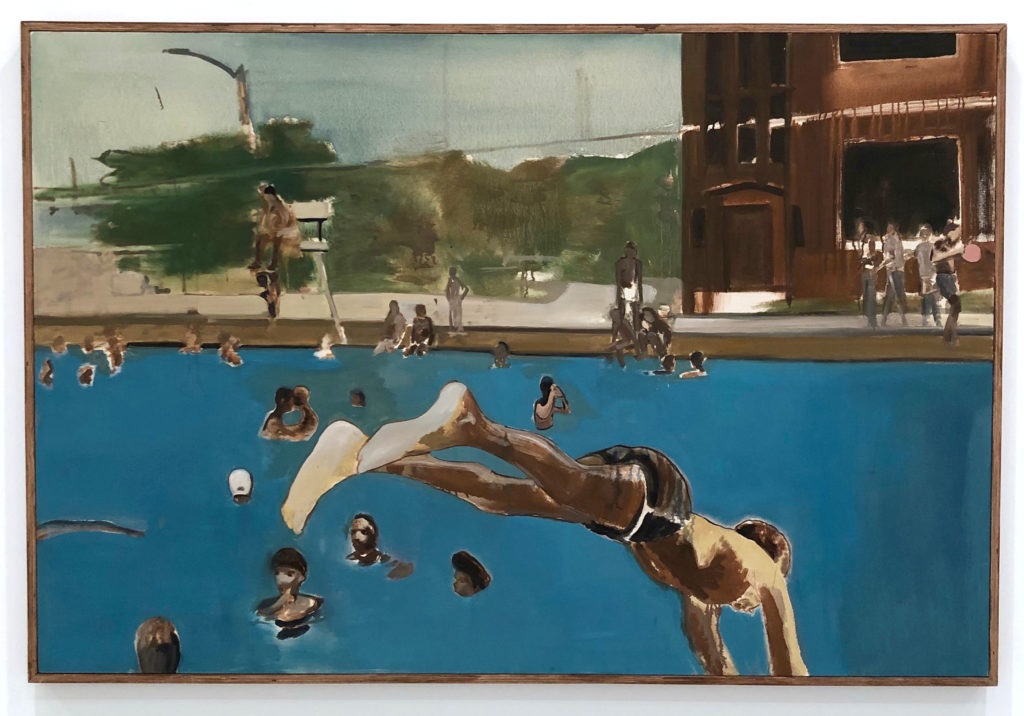
Noah Davis (born in 1983) drew inspiration from every corner of life: photographs dug out of bins in flea markets, books on Egyptian mythology, daytime television, history paintings, early internet blogs. He used these sources to populate his work with a cast of anonymous figures who rest and play and dance and read and swim in scenes that tug between the fictional and the imaginary, the ordinary and the fantastical.

Even as a high school student, Davis had a painting studio, a space near his family home in Seattle that his parents had rented in the hope that he would kindly stop ruining the carpets. He studied film and conceptual art at Cooper Union in New York City before assembling his own motley education among fellow artists in Los Angeles. He slid fluidly between painting styles to present a breadth of Black life, feeling keenly a responsibility to represent the people around him. In 2012, Davis and his wife Karon cofounded the Underground Museum, in the historically Black and Latinx Los Angeles neighborhood of Arlington Heights. There they transformed three storefronts into a cultural center that was free and open to all.

This exhibition, the first museum retrospective of Davis’s work, highlights his relentless creativity from 2007 until his untimely death in 2015, and his devotion to all aspects of a person’s encounter with art. As he put it simply: “Painting does something to your soul that nothing else can. It is visceral and immediate.”

Below are a few selections-

“Isis”, 2009, Oil and acrylic on linen

Artist Karon Davis, Noah’s wife, discussed Isis on the audio tour provided for Hammer Museum’s version of the exhibition.

Below is an excerpt from the transcript-

…Isis is based on a photo Noah took the day I unfurled two large fans, each with cheesy images of an Egyptian king and queen printed on their surface, and painted them yellow with house paint. I threw on my sister’s Naja’s old gold dance leotard from the 80s with sequins lining the hems and tassels that hung off my butt and sparkled like tinsel.

Noah said, “Stand there. You are Isis.” Using the fans as wings, I raised my arms and opened them. He snapped the pic and quickly retreated to paint. Egypt has always held a special place in my heart. When Noah and I met, I was studying ancient myths and history. I had just left my production job in Hollywood and was exploring film projects. Black Wall Street, Black Cowboys, Stepin Fetchit, The Frogs, Egyptian mythology, and so on.

Noah joined me on these journeys through history, and our home became a portal where imaginations could run wild. We exchanged stories, dreams, and techniques of making art. He painted and we lost ourselves in the magical time.

You can see both of us in this painting. Noah’s reflection is behind me in the window of our home. This painting holds so much for me. It is our past, and it is my present, and future in both painting and in life. I am Isis, and Noah is Osiris.

In ancient Egyptian mythology, Isis assembles all the scattered parts of Osiris in order to cast a spell to make him whole again, so he can live forever as a god. Noah is my Osiris. He will live forever through his work. My assignment is gathering these parts of my love and protecting them..

“Pueblo del Rio: Arabesque”, 2014, Oil on canvas

From the museum about the paintings above-

These works were inspired by Pueblo del Rio, a housing project designed in part by Paul Williams in 1941 for Black defense workers in Los Angeles. The projects were built along the concept of a “garden city,” with shared lawns and outdoor spaces designed to promote community, but they quickly degenerated into one of the most impoverished and dangerous areas in the city. In quiet resistance to this reality, Davis reimagined Pueblo del Rio as a place of harmony and accord, where ballet dancers arabesque and a trumpeter plays.

The exhibition also includes Davis’s Imitation of Wealth, pictured below, where he recreated famous works of art.

“Imitation of Wealth” -Davis’s versions of sculptures by Dan Flavin and Marcel Duchamp along with a real On Kawara painting

From the museum-

Davis’s father left him a small inheritance, specifically for fostering community and joy. Davis and Karon rented three storefronts in the Arlington Heights section of Los Angeles, and started devoting themselves to what would become known as the Underground Museum (UM) – an art space, free and open to all — made possible by his father’s legacy. Davis’s paintings of this time reveal a man deeply invested in the question of what he felt had been missing all these years: spaces for “the people around me” to feel recognized and to congregate. The exhibition The Missing Link opened at Roberts & Tilton Gallery in Los Angeles in February 2013.

Davis persuaded his gallery to throw the opening dinner at the UM, which became the museum’s unofficial opening. He served frogs’ legs and champagne, and guests were able to enjoy new sculptures by Karon, as well as their first jointly curated show: Imitation of Wealth. When no museums would lend, Davis decided he would simply make do himself: “What if we just use what we have — like these ugly-ass lights.” The building’s LED strip lights were turned into an imitation Dan Flavin sculpture, while a $70 vacuum cleaner from Craigslist became a knockoff Jeff Koons. The exhibition became a kind of elegy to the bootleg, the title alluding to Douglas Sirk’s 1959 melodrama Imitation of Life, in which the young Black protagonist passes as white.

The museum included one work from their own collection, On Kawara‘s 3. JUNI 2001, in this recreation, with an interesting coincidence-

When he started bootlegging his own artworks, he made a fake On Kawara painting with the date of Oct. 7, 1957, to mark his father, Keven Davis’s, birthday. To honor his original spirit and ambition, we are lending this authentic On Kawara from our collection to join his “imitations” — it’s a special coincidence that the date is Noah Davis’s own birthday. The year 2001 was when he moved to New York to become an artist; a moment that led to everything else in this exhibition.

This exhibition closes 4/26/26.

Feb 202020
 

Mary Jane, 2008

Untitled, 2015


1975 (8), 2013

Painting for My Dad, 2011

The “Fitz”, 2015

Black Widow, 2007

Leni Riefenstahl, 2010

Artist Noah Davis’s superb paintings are currently on view at David Zwirner gallery’s two 19th Street locations in New York until 2/22. Although his career was brief, he died in 2015, what he accomplished in his life is admirable.

From the press release

Davis’s body of work encompasses, on the one hand, his lush, sensual, figurative paintings and, on the other, an ambitious institutional project called The Underground Museum, a black-owned-and-operated art space dedicated to the exhibition of museum-quality art in a culturally underserved African American and Latinx neighborhood in Los Angeles. The works on view will highlight both parts of Davis’s oeuvre, featuring more than twenty of his most enduring paintings, as well as models of previous exhibitions curated by Davis at The Underground Museum. The exhibition also includes a “back room,” modeled on the working offices at The Underground Museum, featuring more paintings by Davis, as well as BLKNWS by Davis’s brother Kahlil Joseph; a sculpture by Karon Davis, the artist’s widow; and Shelby George furniture, designed by Davis’s mother Faith Childs-Davis.

Helen Molesworth notes:

Noah Davis (b. Seattle, 1983; d. Ojai, California, 2015) was a figurative painter and cofounder of The Underground Museum (UM) in Los Angeles. Despite his untimely death at the age of thirty-two, Davis’s paintings are a crucial part of the rise of figurative and representational painting in the first two decades of the twenty-first century.

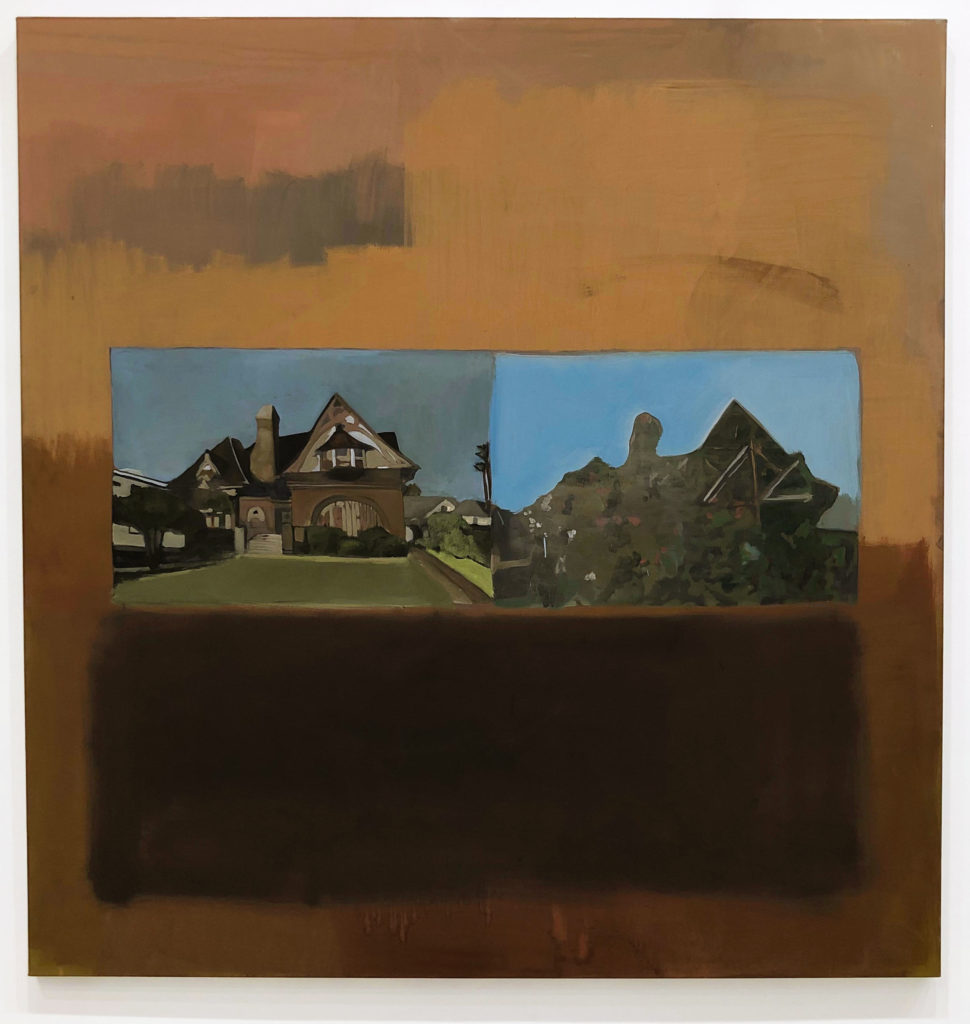
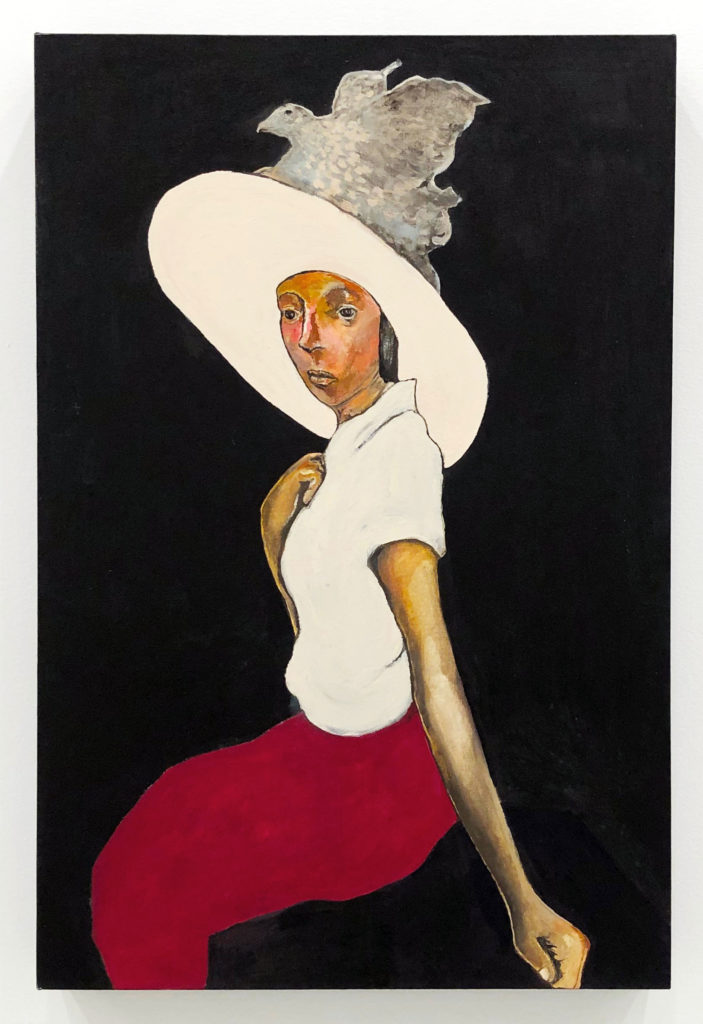
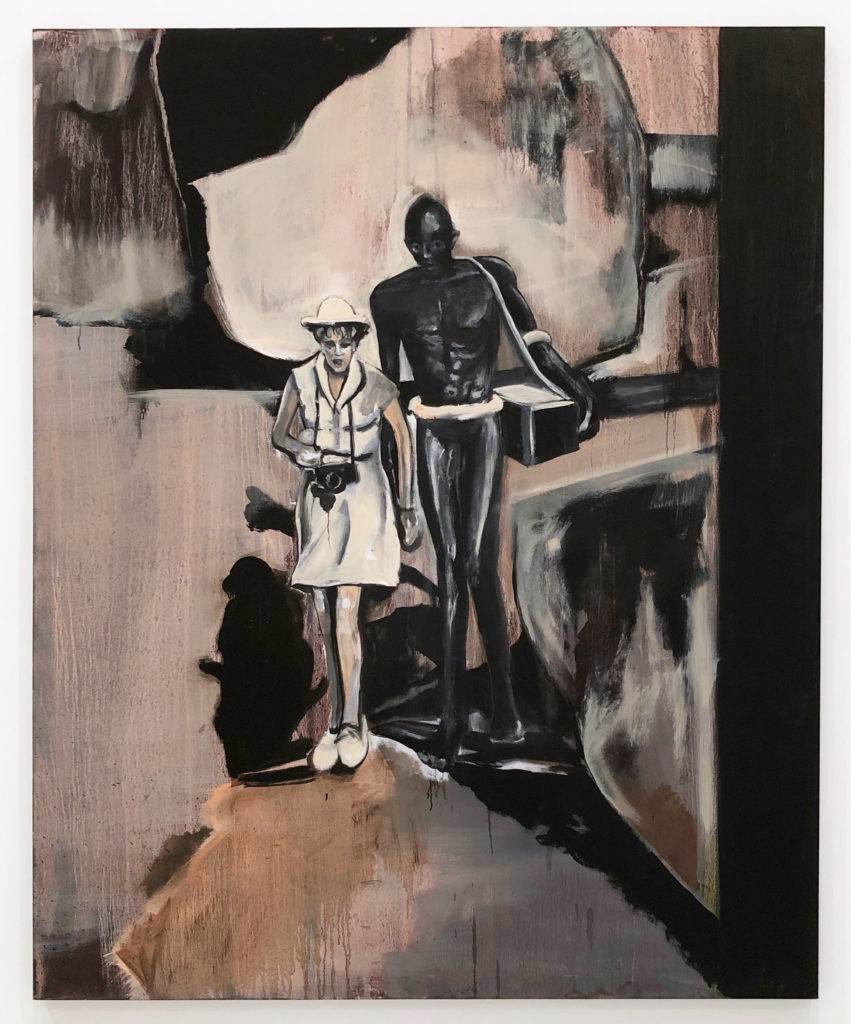
Loneliness and tenderness suffuse his rigorously composed paintings, as do traces of his abiding interest in artists such as Marlene Dumas, Kerry James Marshall, Fairfield Porter, and Luc Tuymans. Davis’s pictures can be slightly deceptive; they are modest in scale yet emotionally ambitious. Using a notably dry paint application and a moody palette of blues, purples, and greens, his work falls into two loose categories: There are scenes from everyday life, such as a portrait of his young son, a soldier returning from war, or a housing project designed by famed modernist architect Paul Williams. And there are paintings that traffic in magical realism, surreal images that depict the world both seen and unseen, where the presence of ancestors, ghosts, and fantasy are everywhere apparent.

Generous, curious, and energetic, Davis founded, along with his wife, the sculptor Karon Davis, The Underground Museum, an artist- and family-run space for art and culture in Los Angeles. The UM began modestly—Noah and Karon worked to join three storefronts in the city’s Arlington Heights neighborhood. Davis’s dream was to exhibit “museum-quality” art in a working-class black and Latino neighborhood. In the early days of The UM, Davis was unable to secure museum loans, so he organized exhibitions of his work alongside that of his friends and family, and word of mouth spread about Davis’s unique curatorial gestures.

In 2014 Davis began organizing exhibitions using works selected from The Museum of Contemporary Art’s collection as his starting point. In the aftermath of Davis’s passing, the team of family and friends he gathered continued his work at The UM, transforming it into one of the liveliest and most important gathering places in Los Angeles for artists, filmmakers, musicians, writers, and activists.

If you are in Los Angeles, The Underground Museum is definitely worth a visit, and if you cannot make it to this exhibition in NYC- a portion of it moves there this March.

Also, Kahlil Joseph’s “BLKNWS” will be shown the Brooklyn Academy of Music in NYC from 3/23-6/21/20.

Jun 292019
 

“Graduation”, (1949) © Estate of Roy DeCarava

We look at so many images today that often the value of individual photos decreases with the abundance of them. That’s why it is such a pleasure to spend time with Roy DeCarava’s black and white photographs at The Underground Museum. His images have a meditative beauty to them. They catch your eye and hold it. There is a richness to his compositions, his use of textures and light.

While at The Underground Museum, also take a moment to look through a copy of De Carava’s book collaboration with writer Langston Hughes, The Sweet Flypaper of Life in the book store.  The images in it influenced artist Kahlil Joseph’s film Flypaper (2017), which was recently shown at MOCA.  Kahlil Joseph’s brother, artist Noah Davis, who sadly passed away in 2015, founded The Underground Museum with his wife, artist Karon Davis, in 2012.

Roy DeCarava: The Work of Art closes 6/29/19.


“Bill and son”(1962) © Estate of Roy DeCarava