Jul 222022
 

Typewriter Eraser, Scale X, 1999, part of The ARIA Fine Art collection in Las Vegas

Artist Claes Oldenburg passed away this week at the age of 93. He was most famous for his large scale sculptures of everyday objects, many of which were produced with his wife Coosje van Bruggen, who passed away in 2009.

While primarily working in sculpture, early in his career in the 1960s he also created “happenings”- theatrical art related performances and collaborations with other artists in his circle. In 1985 he returned to performance and along with van Bruggen, architect Frank Gehry, and writer Germano Celant presented Il Corso del Coltello (The Course of the Knife) in Venice, Italy. In 2021, Pace Gallery in NYC, as part of the two gallery exhibition Claus & Coosje, showed work from this performance, pictured below.

From Pace’s website about the performance-

This ambitious event involved the creation and embarkation of a sea-worthy sculpture in the shape of a giant Swiss army knife. With oars protruding from its red-enameled hull as if from a Viking longship, the image of Oldenburg and van Bruggen’s Knife Ship sailing the Grand Canal has become iconic, while the massive kinetic sculpture was later shown in the rotunda of the Guggenheim Museum in New York, at the Centre Pompidou in Paris, and finally at the Museum of Contemporary Art, Los Angeles.

With so much of Oldenburg’s work, the examination of the ordinary object engages the viewer with what they might previously taken for granted and gives them a chance to look again with new eyes. There is also something lighthearted and fun, as well as investigative, about his body of work.

(image via Whitney Museum’s website)

The Whitney Museum has a video showing the process of assembling his soft sculpture Giant BLT (Bacon, Lettuce, and Tomato Sandwich) 1963, which involves putting the sandwich together piece by piece.

For more on Oldenburg, MoMA has a tribute that includes the words of people who knew him as well as his own. His 1961 artist statement is wonderful and worth reading in its entirety, here is the opening section-

I AM FOR

I am for an art that is political-erotical-mystical, that does something other than sit on its ass in a museum.
I am for an art that grows up not knowing it is art at all, an art given the chance of having a starting point of zero.
I am for an art that embroils itself with the everyday crap and still comes out on top.
I am for an art that imitates the human, that is comic, if necessary, or violent, or whatever is necessary.
I am for all art that takes its form from the lines of life itself, that twists and extends and accumulates and spits and drips, and is heavy and coarse and blunt and sweet and stupid as life itself.

I am for an artist who vanishes, turning up in a white cap painting signs or hallways.

The Guardian’s obituary is also worth a read for more information on the artist’s history.

Jun 282022
 

Crystal and Counter Light, 1994 at The Ringling

The Mississippi “Shake Rag”, 2020 at Pace

The Mississippi “Shake Rag”, 2020 (detail)

Abstract artist Sam Gilliam passed away last weekend at the age of 88. The innovative artist had an extensive body of work that encapsulated numerous styles and techniques. I was lucky enough to see his work at Pace gallery in NYC in 2020 and at The Ringling in Sarasota, Florida, in 2021.

The Hirshhorn Museum in Washington D.C. is currently showing his final solo exhibition, Sam Gilliam: Full Circle, until 9/21/22.

ARTNews has a good profile on Gilliam, as does The Washington Post, and under this Smithsonian tribute are numerous examples of his work from their collection.

Apr 152022
 

Lynette Yiadom-Boakye’s 2018 painting, The Ever Exacting, from her 2019 exhibition, In Lieu of a Louder Love at Jack Shainman Gallery in NYC.

This poem, written by the artist, was included with the press release for the show-

In Lieu Of A Louder Love

In the Shade of Hooded Cove,

In Debt to the Dead Oak.

In Range of a Twelve Gauge,

On Embers over Smoke.

At Pains to Hold the Wanton,

At Home to all who Knock.

At Prayer on Prickly Hearth Rug,

An Eye upon the Clock.

In the Parlance of the Pilgrim,

In Hallelujah Coat and Tie.

In Soul so Black Beguiling,

That the Ravens do Carp and Cry.

In Memory of A Cipher,

At Peace beside resting Dove.

In Light of Care and Kindness,

In Lieu of A Louder Love.

The information below is from the gallery’s artist biography, and gives some added insight on her paintings.

Lynette Yiadom-Boakye’s oil paintings focus on fictional figures that exist outside of specific times and places. In an interview with Nadine Rubin Nathan in the New York Times Magazine, Yiadom-Boakye described her compositions as “suggestions of people…They don’t share our concerns or anxieties. They are somewhere else altogether.” This lack of a fixed narrative leaves her work open to the projected imagination of the viewer.

Her paintings are rooted in traditional formal considerations such as line, color, and scale, and can be self-reflexive about the medium itself, but the subjects and the way in which the paint is handled is decidedly contemporary. Her predominantly black cast of characters often attracts attention. In an interview with Hans Ulrich Obrist in Kaleidoscope, she explained “People are tempted to politicize the fact that I paint black figures, and the complexity of this is an essential part of the work. But my starting point is always the language of painting itself and how that relates to the subject matter.”

The New Yorker published a wonderful portrait of Yiadom-Boakye by Zadie Smith in 2017, that is well worth a read as well.

Aug 182021
 

I Thought Freedom Would Set Me Free (And You Gave Me A Song), 2020

Hey Tomorrow, Do You Have Some Room For Me (Failure Is A Part Of Being Alive), 2021

Currently at Lehmann Maupin’s New York location is Hey Tomorrow, Do You Have Some Room For Me: Failure Is A Part Of Being Alive, the gallery’s first exhibition with New York-based painter Arcmanoro Niles. The painting’s colors are intense and bright and often utilize gold tones and glitter, contrasting with what they depict.

From the press release–

Featuring a series of new portraits, still lives, and a single landscape, this exhibition continues the artist’s critical investigation into the function and form of historically revered genres in painting. Niles is best known for his vivid, brightly-hued canvases that illustrate the seemingly mundane aspects of daily life―a man about to get into his car, a father and daughter sitting on their stoop with their dog, a woman waiting at a bus stop. His subjects are drawn from photographs of friends and relatives and from memories of his past, offering a highly personal record of contemporary life. The paintings, though autobiographical, engage with universal subjects of desire, hope, fear, and failure, while also recalling numerous art historical predecessors, including Italian and Dutch baroque, history painting, Color Field painting, and ancient Egyptian sculpture. For Hey Tomorrow, Niles has created a number of his distinct portraits, but the exhibition also features still lives and interiors that become surrogates for the figure―a cluttered bedside table, a urine test in a doctor’s office bathroom, or a kitchen table littered with liquor bottles and food containers….

…The titular work in the exhibition is the only landscape featured and the first Niles has created in his professional career. The painting, Hey Tomorrow, Do You Have Some Room For Me (Failure is a Part of Being Alive), depicts an idyllic view from the edge of a body of water. The surface is blue and calm, a tree occupies the left side of the composition, and the foreground is marked by a row of rocks. The clouds are a vibrant pink that stand in stark contrast to the pale blue sky. The serene scene is the outlier in the exhibition and offers the viewer “room” for contemplation, self-reflection, a moment of pause in the otherwise dense body of work. In depicting not only people close to him but the places and times they inhabit, Niles creates his own chronicle of life today. Each painting invites us to consider the time in which it was made, as well as our own histories―our struggles, successes, and desires for the future. While most of the paintings represent the past and the present, for Niles, the painting Hey Tomorrow offers space to imagine tomorrow, and what might come next.

This exhibition closes 8/27/21.


Aug 112021
 

Rapunzel, 2021

Fruity, 2021

Fee-fi-fo-fum, 2021

Good Hair, 2021

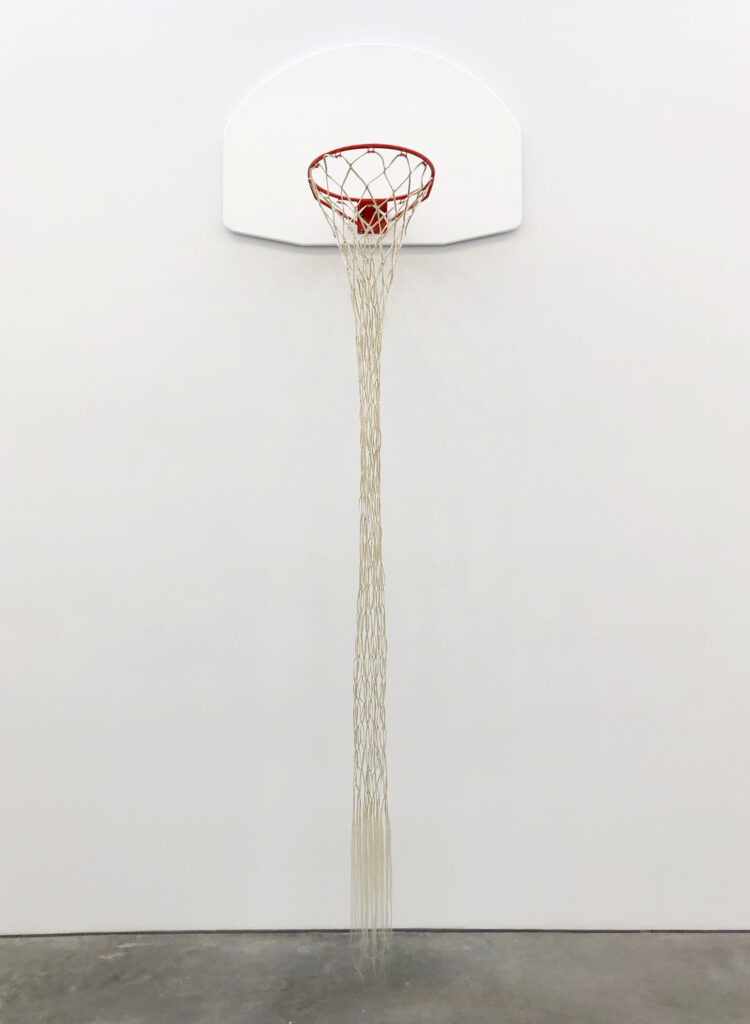
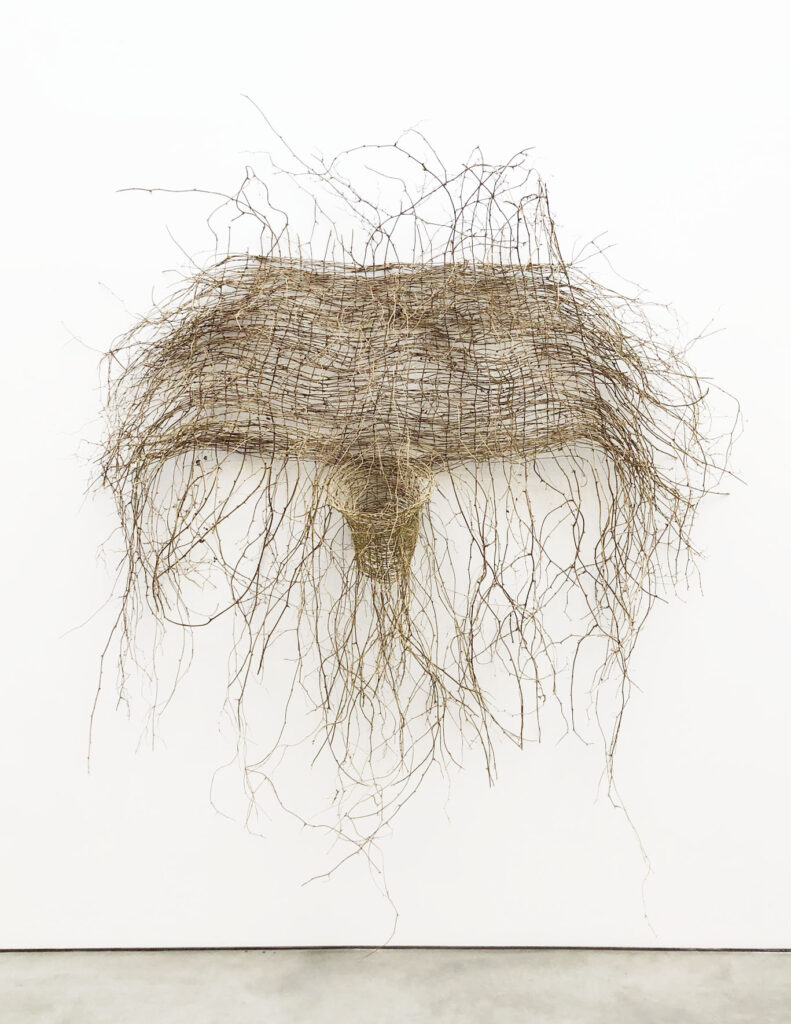
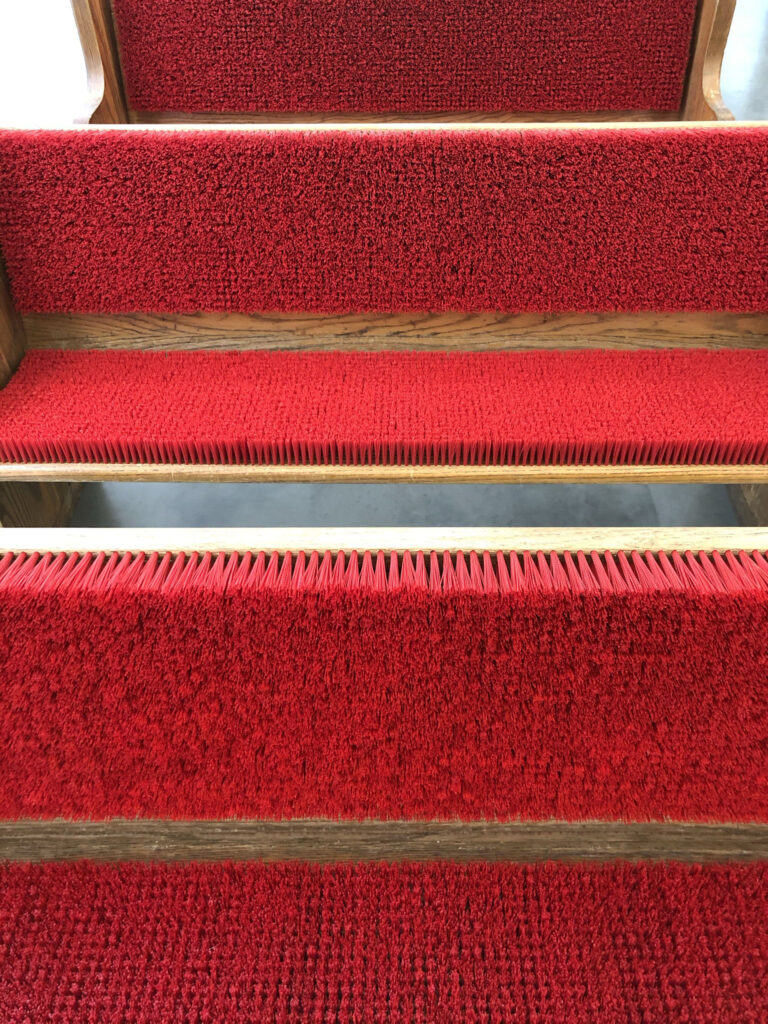
Lisson Gallery in New York is currently showing Hugh Hayden: Huey. This new body of work by Hayden “examines the American experience via agency, appearance, athletics and religion” and “interweaves symbols of the institutions that play key roles in an American upbringing with equally ever-present fairy tales to produce a new series of sculptures in wicker, vine, and ebony.”

More from the press release-

Hugh Hayden has previously examined the concept of the American Dream as well as the role historical foodways and dining traditions have played in shaping American identity. For Huey, the Texas-born artist chronicles and remixes his upbringing in the American South. Church, sport, school and hair are highlighted as Hayden probes the ingrained nature of cultural expectations. The exhibition is split into a trinity of rooms: a barber shop cum sanctuary, a basketball chapel and an ebony crypt, all of which harbor Hayden’s meticulously sculpted, sawed, sanded and woven objects.

The sanctuary features “Good Hair,” a new body of bristled wooden works that explore expectations of appearance and refinement in obligatory adolescent participation in athletics, education and religion. For Hayden the bristles render a subject simultaneously desirable yet uncomfortable, creating order via an abrasive action that, like the American Dream, is challenging and difficult to inhabit.

In the second chapel-like space hang woven basketball hoops out of hair, rattan and vine. The works are a childhood reimagination of the iconic peacock chairs the artist grew up with as well as an homage to the 1967 portrait of Black Panthers co-founder Huey P. Newton seated in one. The braided and woven works conflate tedious domestic handwork with hypermasculine athletics to materialize a queerness at odds with the fairy tale-like aspirations and reservations of becoming a professional athlete.

The final room of the exhibition is a meditation on agency, blackness and invisibility. Works sculpted from Gabon and Texas ebonies are presented in a daylight-lit, all-black room shifting in and out of visibility. Sculptures that reference the body, both moving fast as well as relaxing, offer an opportunity to reflect on the many hues of blackness.

This exhibition closes 8/13/21.

Aug 102021
 

summer syllables, 2021

soft, dark, demigod, 2021

marshling, 2021

Currently at Jack Shainman Gallery is Diedrick Brackens: Rhyming Positions, the artist’s second exhibition with the gallery. Brackens’ weavings use nature as symbolism to tell stories about the current world.

From the press release-

In several tableaux situated in nature, Brackens plays with the idea of creating home in a wild space, honoring the outdoors as a place in which queerness lives. This is a nod to the history of queer and femme folks who have gathered in nature, creating safe spaces for ritual and communion. This notion of commune is present in summer syllables, in which two figures stretch in lyrical movement, seemingly fashioning loops out of their own bodies, as if flowing one into the other within a vast, yellow landscape. In soft, dark, demigod, a figure bends over, caught within a thicket of roses in full bloom. This moment is indicative of Brackens’ own observation of the outside world over the course of the past year, as he has relished in these quiet moments of continued life as flowers grow. The presence of roses hint at the sensuality and eroticism that are apparent throughout this body of work and in Brackens’ practice more broadly.

In marshling a lone figure stands poised in the water, akimbo, surrounded by catfish and flora of the swamp. Catfish are a recurring motif in Brackens’ work, an emblem of the American South, embodying the soul and ancestral spirits. Continuing his practice of pulling from traditional folklore, two rabbits rest on chairs in each their own, almost as if they have been conjured up by the figure seated in their midst. Rabbits, creatures that live both above and below the earth, have shown up throughout African and African-American tales and literature as messengers and trickster figures. To Brackens, the animals in these works feel less literal and more like other humans or spirits  in communion with the figures, the trio seated together almost as if awaiting a dance.

This exhibition closes 8/20/21.

Aug 082021
 

Deresolution Tools, 2014

Also at Pace Gallery is the group exhibition Hiding in Plain Sight, a collection of work that includes Hito Steyerl’s installation (pictured above). It accompanies her video How Not to Be Seen: A Fucking Didactic Educational .MOV File, 2013. As we approach possible new ways of being tracked by technology, the work has never seemed more relevant.

From the gallery’s website–

Hito Steyerl’s video installation examines how hidden infrastructures operate at both an individual level and at a global scale. Offering five lessons in invisibility, the film wryly maps the formal, symbolic, and real connections between the worlds of art, economics, and global political regimes in our era. In an interview Steyerl explains “in the case of How Not to Be Seen, it started with a real story that I was told about how rebels avoid being detected by drones. The drone sees movement and body heat. So, these people would cover themselves with a reflective plastic sheet and douse themselves with water to bring down their body temperature. The paradox, of course, is that a landscape littered with bright plastic-sheet monochromes would be plainly visible to any human eye—but invisible to the drone’s computers.” Exploring the complexities of the digital world and its relationship to lived reality, Steyerl’s film and installation chart circuitous connections to art and capitalism through vision and technology.


This exhibition closes 8/20/21.

Aug 082021
 

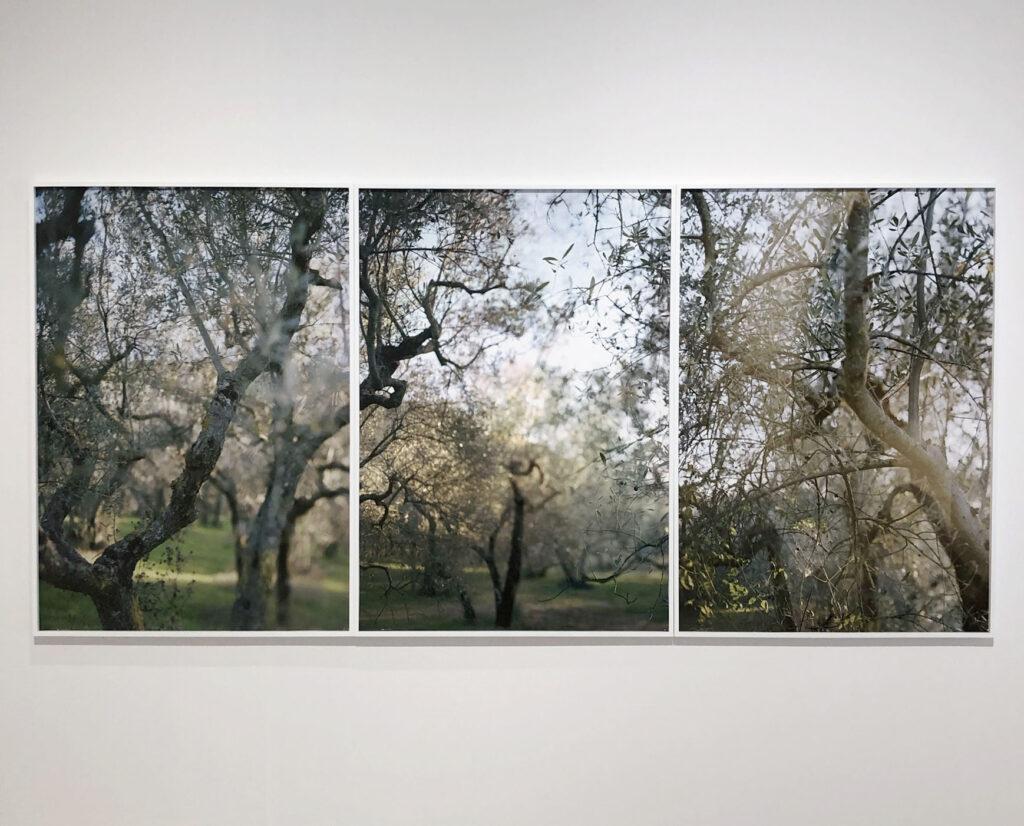
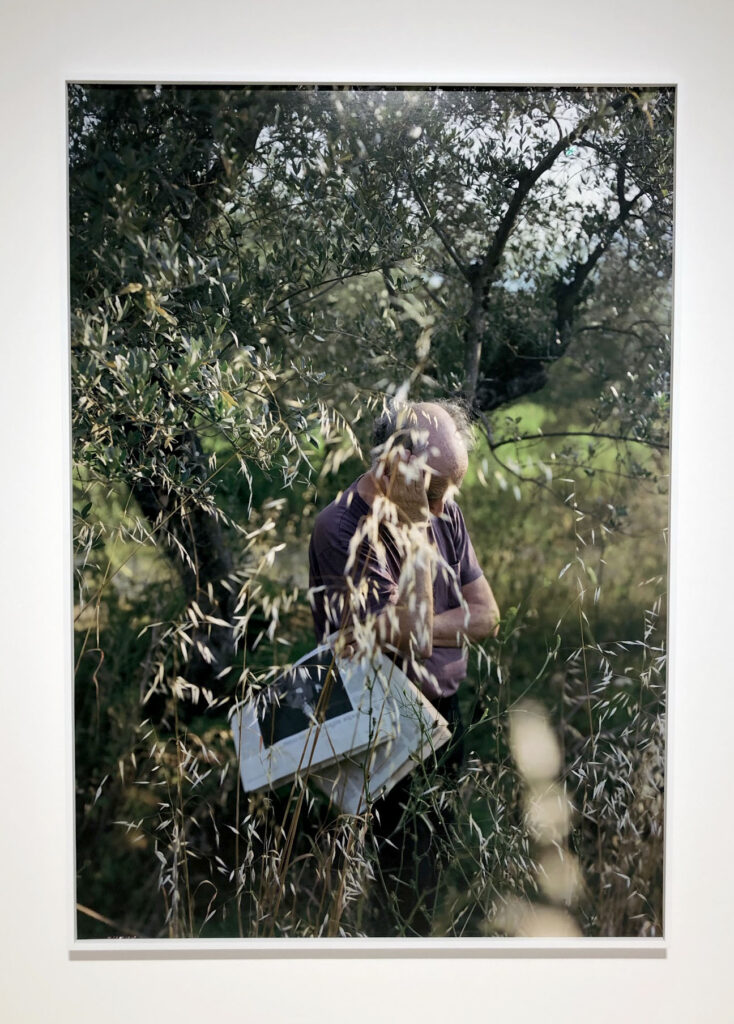
Pace Gallery is currently showing the lovely, meditative photographs of JoAnn Verburg at their NYC location.

From the press release-

JoAnn Verburg: For Now debuts recent multiple-frame photo and video works by the renowned American photographer depicting olive trees captured on three continents. Exemplifying Verburg’s multidisciplinary practice, which for over four decades has existed at the intersection of a range of art-historical traditions, including still life and portraiture, these experiential artworks offer a contemplative respite from the cacophonous urban environment outside of Pace’s gallery space in New York. In response to a period of social and political unrest and a global health crisis, Verburg’s presentation invites viewers to pause and enter a world of self-reflection while simultaneously diving into landscapes from Italy to California to Israel. Generating what the artist has called an “imagined reality,” her images become vehicles for orchestrating a performative and existential encounter between the viewer and the world.

For Now marks Verburg’s first solo exhibition with Pace since the gallery began representing her in 2020, and only the second exhibition in New York since her survey exhibition Present Tense: Photographs by JoAnn Verburg at The Museum of Modern Art in 2007.

Since her last exhibition in New York in 2010, Verburg has been experimenting with the intriguing implications of creating an installation of photos and videos within an urban environment that both acknowledge the environment and provide an escape from it. In this sense, Verburg’s desire to exhibit her images of olive trees in New York reflects her interest in the disjuncture between the contemplative space of the gallery and the busy world outside. Like the pioneering Italian still life artist Giorgio Morandi, Verburg returns repeatedly to the same subject matter—arranging and rearranging her images in three-dimensional space through use of vantage point, framing, and light, while employing techniques of classical craftsmanship, including the production of each singular print herself. In the editing process, she manipulates elements forward and back in space, creating emphases and clarifying her images by manipulating color like a painter. Having studied sociology as an undergraduate, her artwork also reflects a deep philosophical engagement with the social and formal histories of photography as well as the work of key practitioners who blended formalist concerns with sociological awareness, such as Diane Arbus and Robert Frank.

While the subject matter depicted in For Now is olive trees, the subject of the exhibition itself is the experience of the present moment—what Verburg calls “Vermeer time,” evoking the sense of suspended animation that characterizes the paintings of Dutch master Johannes Vermeer. “Her pictures describe spaces and moments suspended in the reverie that precedes action,” observed the celebrated photographer, curator, and critic John Szarkowski, “Like a Leyden jar, they are containers of potential.” Treating the olive grove as both landscape and still life, her focus on a limited range of subject matter suggests a connection between her work and the Minimalist and serial practices of the 1970s. Yet Verburg’s practice is also aligned with Old Master paintings: her works resist the acceleration and velocity of contemporary culture…

If you are unable to see the works in person, the Pace website has them on view as well as the full press release and a video of the artist in her studio.

This exhibition closes on 8/20/21.

Aug 052021
 

hic manebimus optime, 2021

Ave Maria, 2019

Resolute in Privation, 2021

The Temptation of Christ, 2020

The Courtier, 2021

Currently at Matthew Marks Gallery in New York is Julien Nguyen’s first one person show at the gallery, Julien Nguyen: Pictures of the Floating World.

From the press release-

Nguyen is known for his deftly rendered paintings that combine elements of art history, science fiction, and contemporary subjects. His interest in worldbuilding can be seen in several new paintings that use biblical and classical themes as a starting point, including Ave Maria (2019), a take on the Madonna Enthroned, and St. John the Baptist (2020), a reworking of Caravaggio’s John the Baptist featuring one of Nguyen’s friends as the model.

The exhibition also highlights Nguyen’s recent emphasis on portraiture, with depictions of friends, lovers, and fellow artists painted from life. He has said of his art, “Reality occurs only in the intimacy of understanding and being understood.” The Los Angeles studio where he lives and works can be seen in several paintings, including one that presents the view from a second-story window in a depiction as thoroughly detailed as it is inventive.

The exhibition’s title refers to the visual art of Edo-period Japan, a decadent period of flourishing culture. An enthusiast of history, Nguyen uses the past as a lens through which to view, analyze, and reframe our present moment. As Zack Hatfield has described in Artforum, “Some declare the end of the world; others make new worlds. Julien Nguyen does a bit of both.”

If Nguyen’s work looks familiar, it may be because he also collaborated with Ottolinger on its fall 2020 collection, which was then worn by several celebrities.

This exhibition closes on 8/13/21.