Feb 162019
 

This month there are a lot of excellent exhibitions on view in Chelsea.

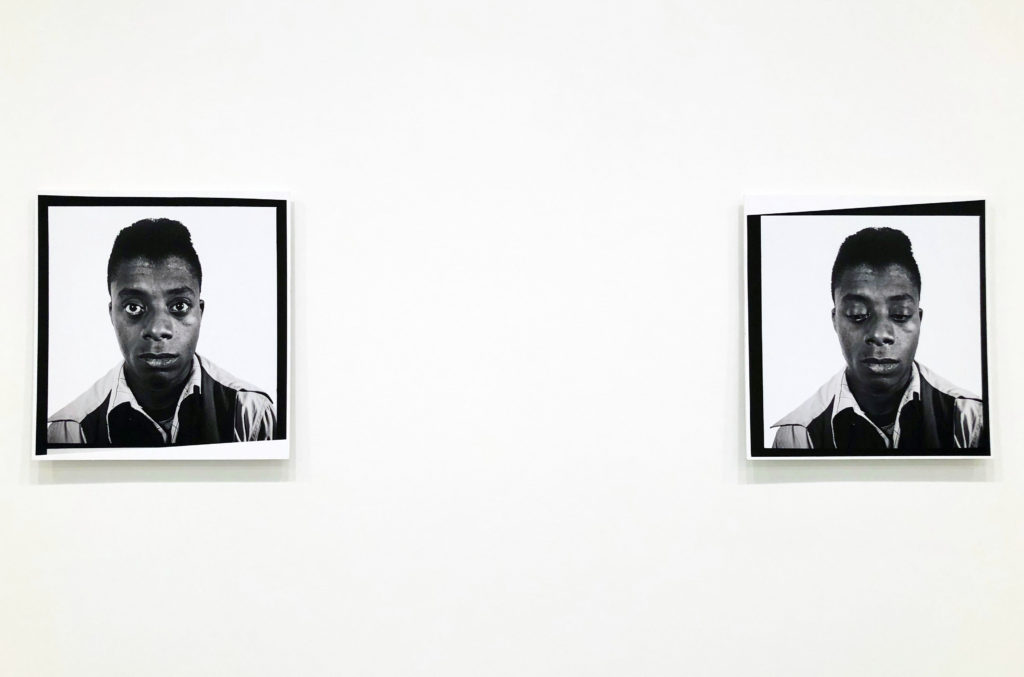
At David Zwirner is God Made My Face: A Collective Portrait of James Baldwin, a group show curated by writer Hilton Als. The works are varied and include portraits by Richard Avedon (shown above), a friend of Baldwin’s who also attended De Witt Clinton High School with him, as well work by Njideka Akunyili Crosby (seen below), Kara Walker, James Welling, Beuford Delaney, Glenn Ligon and many more.
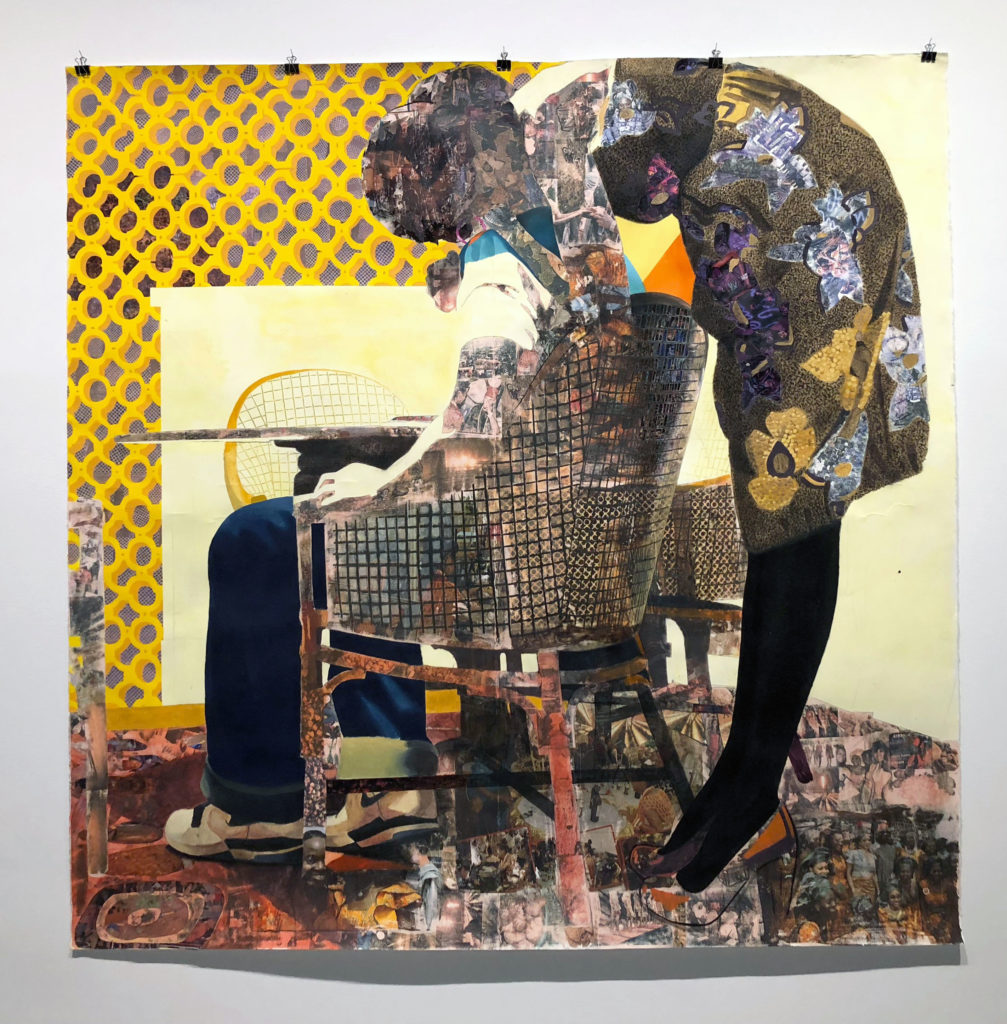
Nyado: The Thing Around Her Neck, 2011 by Njideka Akunyili Crosby

At Marianne Boesky Gallery is Pure, Very, New, Paul Stephen Benjamin’s first solo exhibition in New York. The exhibition includes paintings, photographs, sculpture, and single and multi-channel video installations, as well as a new site-specific black light installation in the internal passageway between the two spaces.

From the press release–

Benjamin’s practice is rooted in a vigorous meditation on blackness, considering: “What is the color black?” “What does black sound like?” “Is it an adjective, a verb, an essence, or all of these components mixed to create a nuanced whole?” For his large-scale monochromatic paintings, Benjamin thickly coats the canvas in varying shades of black, producing a sensation of boundless depth. This is further accentuated by Benjamin’s application of the particular tonality’s name within the field of color—the words appearing to float and dissipate within the richness of the paint itself. The development of these paintings followed an ordinary visit to a hardware store, where Benjamin was confronted with the many permutations of commercial black paint. Shades of black came with emotive titles like “Totally Black,” “New Black,” and “Pure Black,” among numerous others. For Benjamin, this sparked a multi-layered investigation of the color and whether it could be distilled or understood differently within the context of a painting or the color itself.

 … Benjamin’s practice also extends into a conceptual investigation of sound, and how “black” can be conveyed and experienced aurally. In these works, he often uses single and multi-channel video installations to loop portions of particular historic and cultural footage to isolate fragments of collective memories or internalized narratives. With Black is the Color (2015), which will be included in the exhibition, Benjamin arranges a towering cluster of antiquated televisions, forming a glowing grid that endlessly repeats a segment of Nina Simone’s 1959 performance of “Black is the Color of My True Love’s Hair.” Here, Benjamin appropriates only the words “Black is the Color,” creating an abstraction of the song that reveals the contradictions and parallels between the notion of black being the color and it being a color. Moving fluidly from sound installation to painting to photography and sculpture, Benjamin’s practice is driven by the idea that blackness, whether explored as a matter of conceptual inquiry or identity, cannot be captured in a single action, emotion, or language.
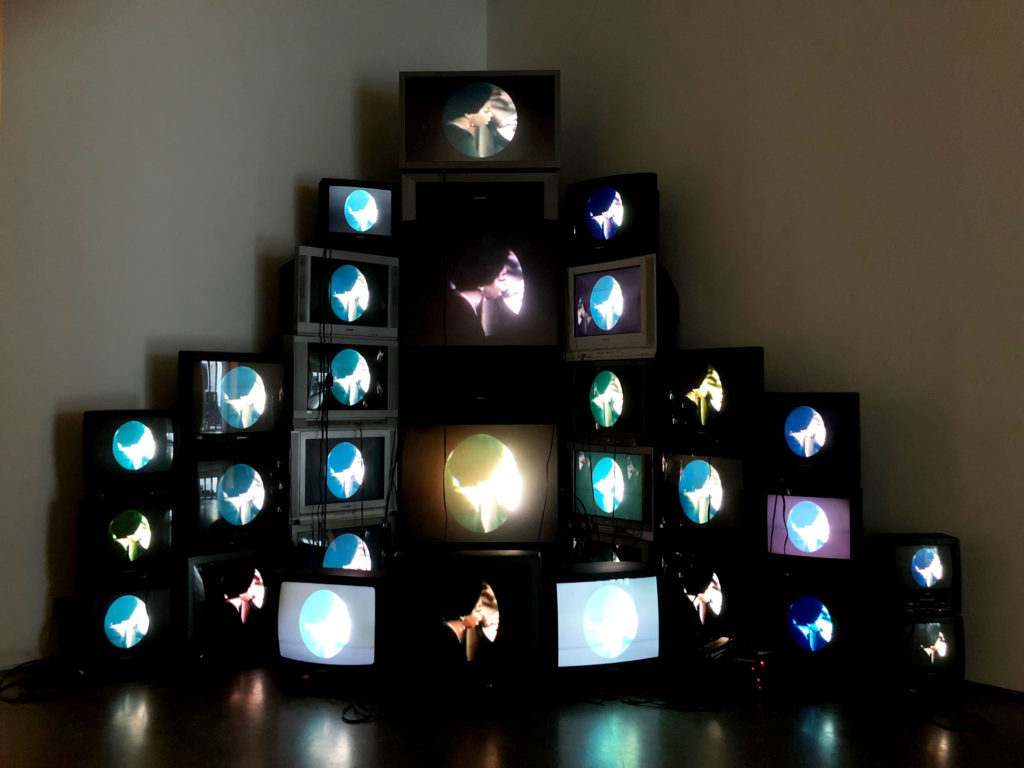
Black Is The Color 2015 by Paul Stephen Benjamin

At Yancey Richardson is Blue Sweep, an exhibition of Andrew Moore’s beautiful photographs, taken in Alabama and Mississippi over the course of three years.
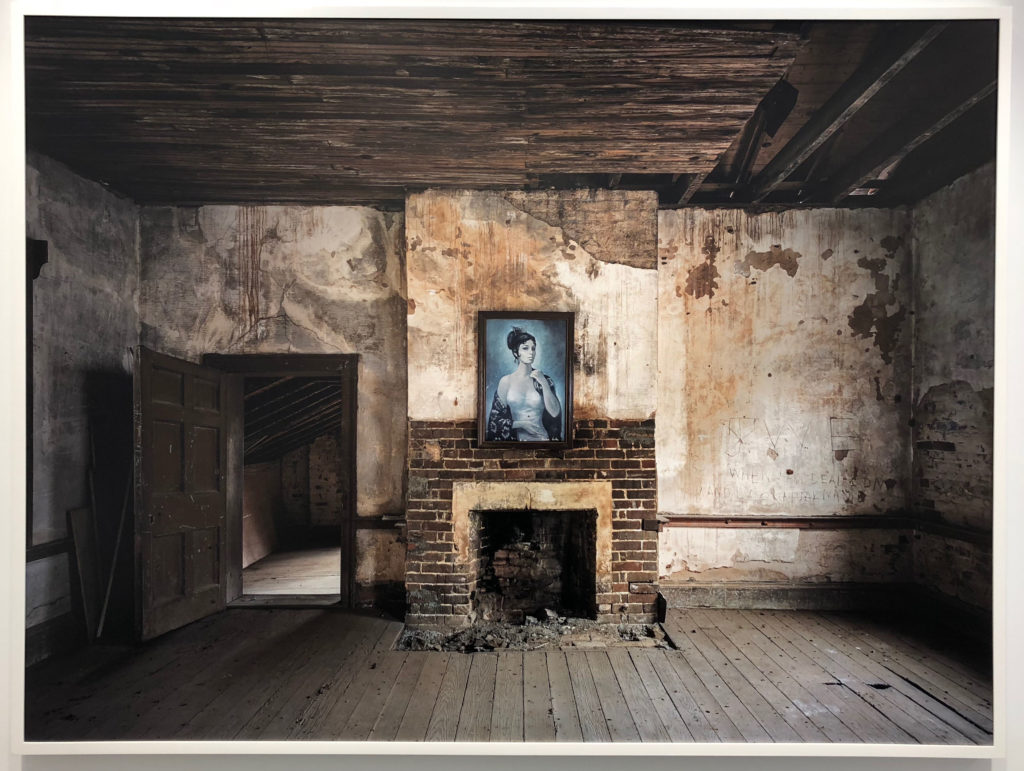
Carmen, Saunders Hall, AL 2015 by Andrew Moore

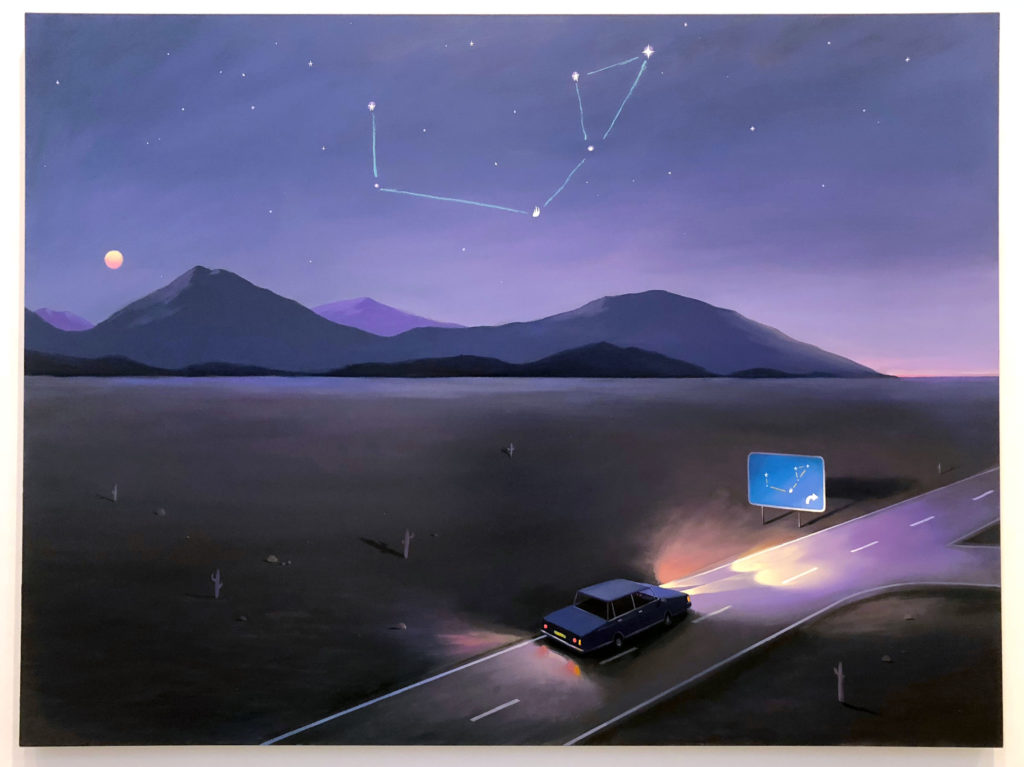
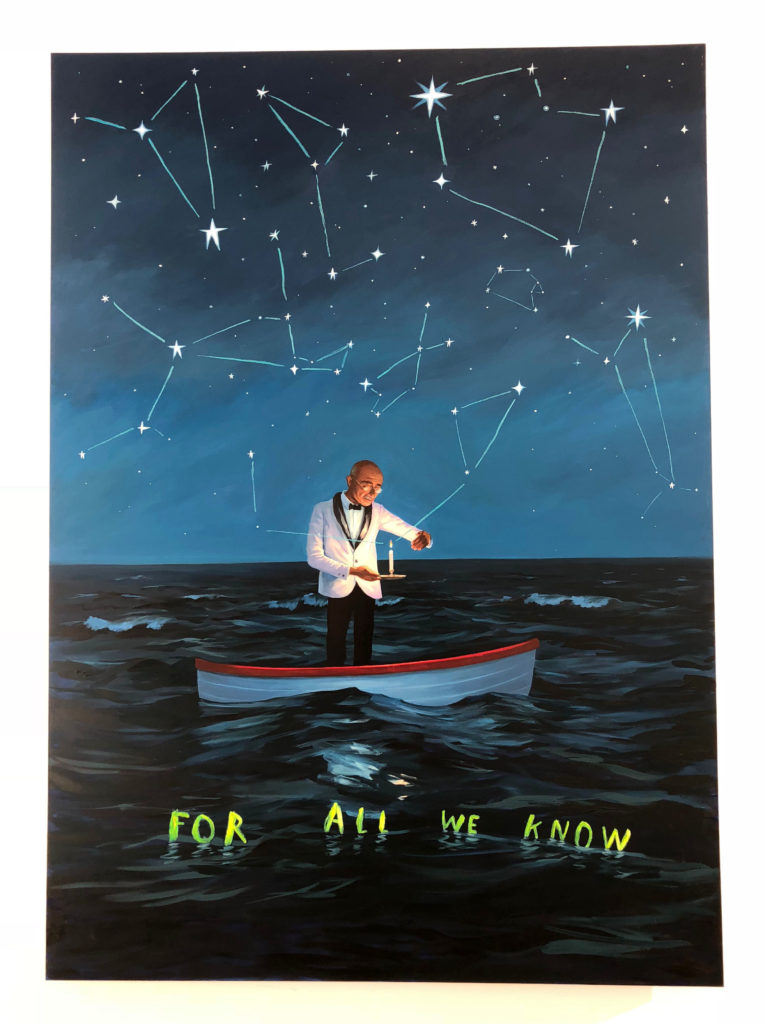
At Bryce Wolkowitz Gallery is Oliver Jeffers’ charming painting exhibition For All We Know. If his work looks familiar it may be because Jeffers is also the author of several critically acclaimed picture books.

From the press release–

This series of paintings illuminate a dream-like nocturnal world populated by astronauts, deep-sea divers, sinking ships, floating pianos, and burning matches. Omnipresent throughout are the night sky and the ocean – the two great and unknown frontiers – glittered with the imaginary lines that create constellations, serving in this case as a mysterious key to unlock our world.

Expanding on years of observation, from the history of his upbringing in Belfast, to contemporary New York City, Jeffers’ evokes the precarious state of our home and its inhabitants. Inspired by Buckminster Fuller’s seminal book Operating Manual for Spaceship Earth, he presents pianos as dubious flotation devices and our planet presented as a cumbersome motor vehicle, overheating as we argue over what to play on the radio. From researching astronaut’s descriptions of looking at Earth from the distance of the Moon, Jeffers noticed certain recognizable patterns to the way in which he discussed the politics of his hometown from a vantage point of across the Atlantic Ocean. In finding that few people outside of Northern Ireland knew or cared of the intricate conflict there, a great waste of time was revealed: a divided population identical to each other in every way save for the flags they flew and the stories they told. Tragically, each side’s identity are still firmly rooted to the existence of the other, and therefore locked into a spiral of repeated patterns.
 

At both of Jack Shainman’s locations are a series of impressive paintings by Lynette Yiadom-Boakye.

Black Allegiance to the Cunning, 2018 by Lynette Yiadom-Boakye


For a new kind of exhibition experience, Asad Raza has organized the group show Life to Come, at Metro Pictures which “brings together works that meditate on the creation of new worlds and new models for living.” There are no labels or listings for the works included in the show. Instead there is a guided tour by hosts who take you around the various works to help you draw connections between the objects. Adding to the uniqueness of the experience, at one point the host pauses while talking and partially in motion, recreating a work by artist Tino Sehgal, and at another they show you that they have changed their eye color, a work by Rirkrit Tiravanija.

From the press release–

Experiencing these works together incites intellectual, physical, and spiritual understandings of what it means to make an entirely new world, one in which reality is made from fiction. Raza asserts that “by re-immersing ourselves in the strangeness and fecundity of attempts to create worlds that have gone before, our imagination of a world beyond the present may be renewed.” The uncertainty about what new paradigm awaits us is unsettling in the wake of the modernist 20th century, but it links us to previous generations who experienced radical reinventions of biological and social life.
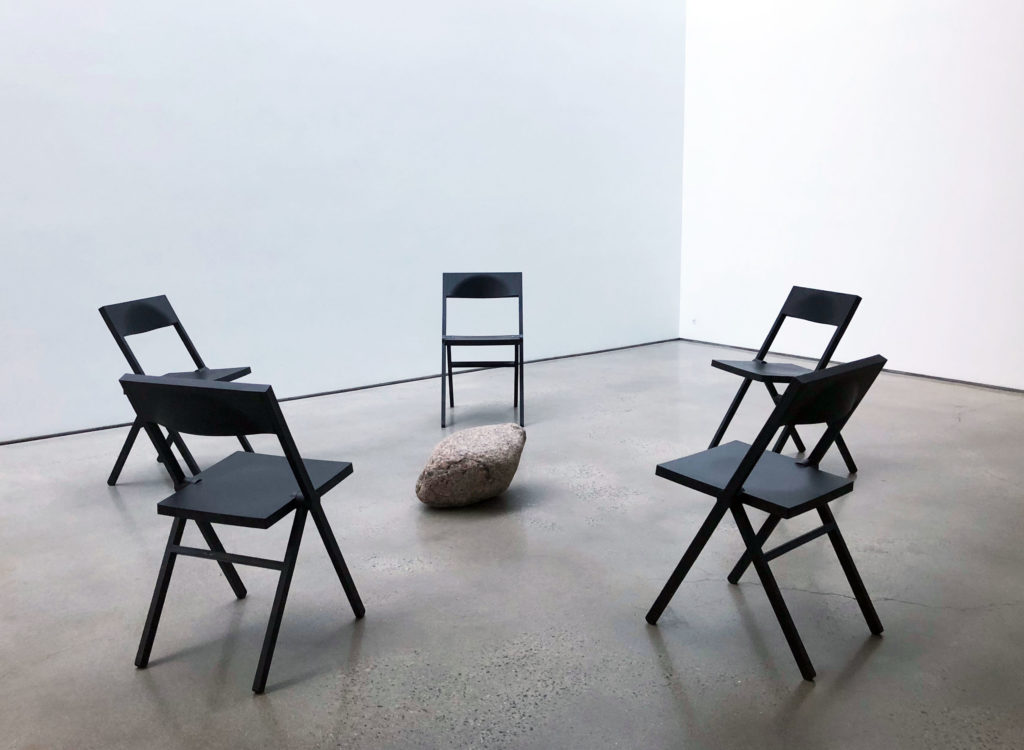
Philippe Parreno, La pierre qui parle (The Speaking Stone), 2018.
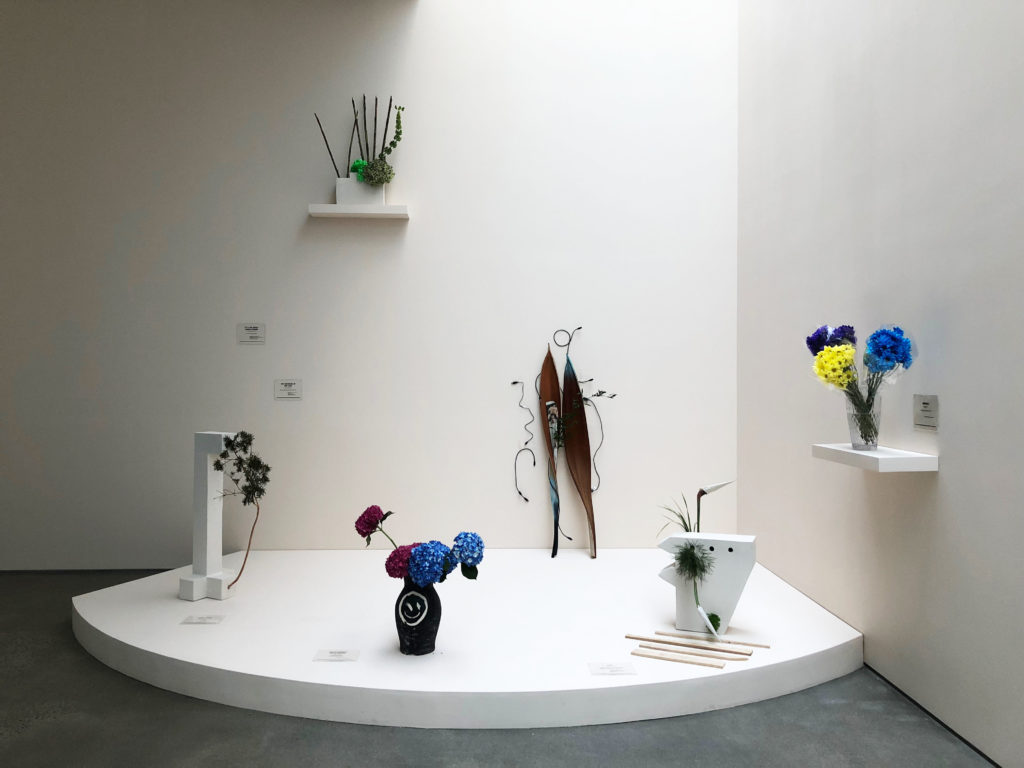
 

Selection of work by Camille Henrot (floral arrangements inspired by books)

All of these exhibitions close 2/16/19.


May 282018
 

William Eggleston, Tennesee (image via Metropolitan Museum of Art)

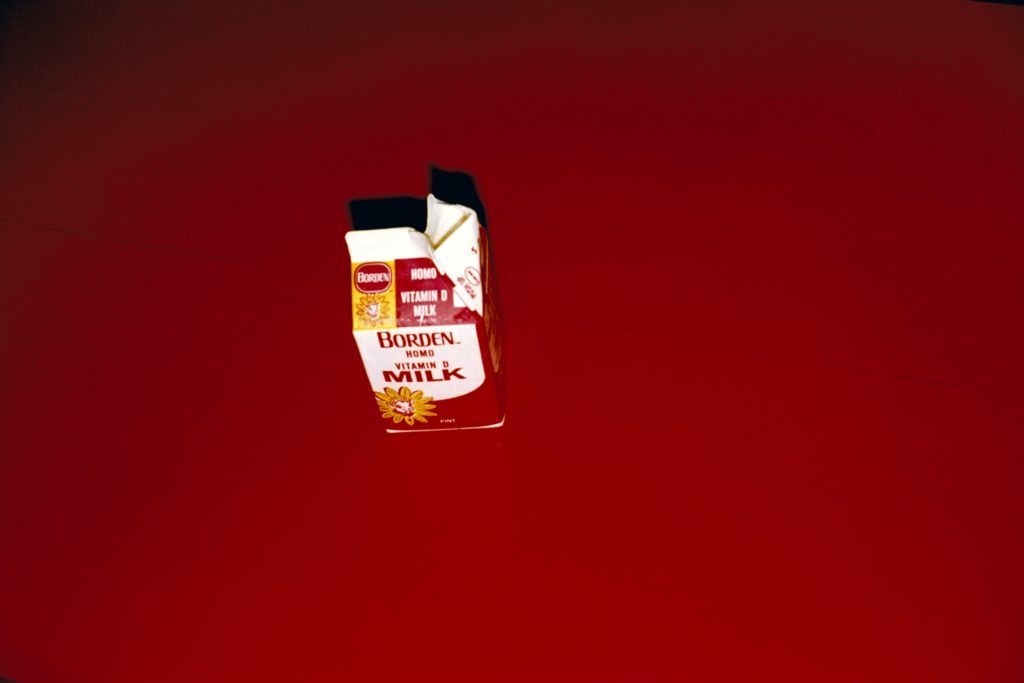
There are two great photography exhibitions happening in New York. William Eggleston‘s Los Alamos, at The Metropolitan Museum of Art is comprised of seventy-five of his dye transfer prints from color negatives made between 1965 and 1974. The color in these images is incredible as is his ability to evoke feeling from work that is deceptive in its simplicity.  Enhancing the exhibition are a series of quotes from the artist located on various walls, which offer a glimpse into his process and philosophy.

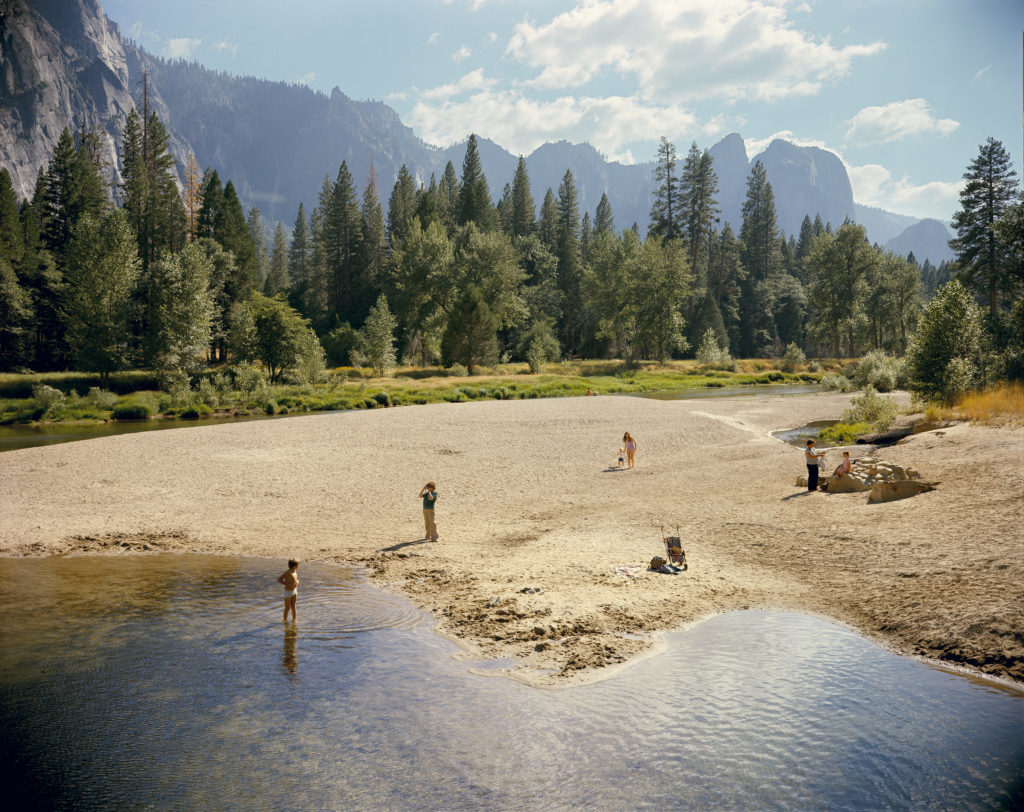
The Museum of Modern Art’s Stephen Shore exhibition includes work from his entire career- his start as a teenager meeting with Edward Steichen, time spent with Andy Warhol at The Factory, his large format images from around America, and finally his work in Israel and his current Instagram.  The body of work is impressive and where Eggleston’s work feels like it’s creating a dreamworld from the mundane, Shore’s work seems to present things as they are in true documentary form. Pictures of meals and hotel rooms force the viewer to look at things they usually take for granted in a new way. Not to say that there aren’t images like the large format work, that present an idealistic beauty.

Also included, and especially charming, are his stereographs- presented at a small table the images become three dimensional as you peer through the viewer.

Stephen Shore, Amarillo, Texas, July 1972 (1972) Image courtesy 303 Gallery

Stephen Shore, Merced River, Yosemite National Park, California, August 13, 1979 1979. image courtesy of The Museum of Modern Art

Both of these exhibitions close 5/28/18.

Mar 242018
 

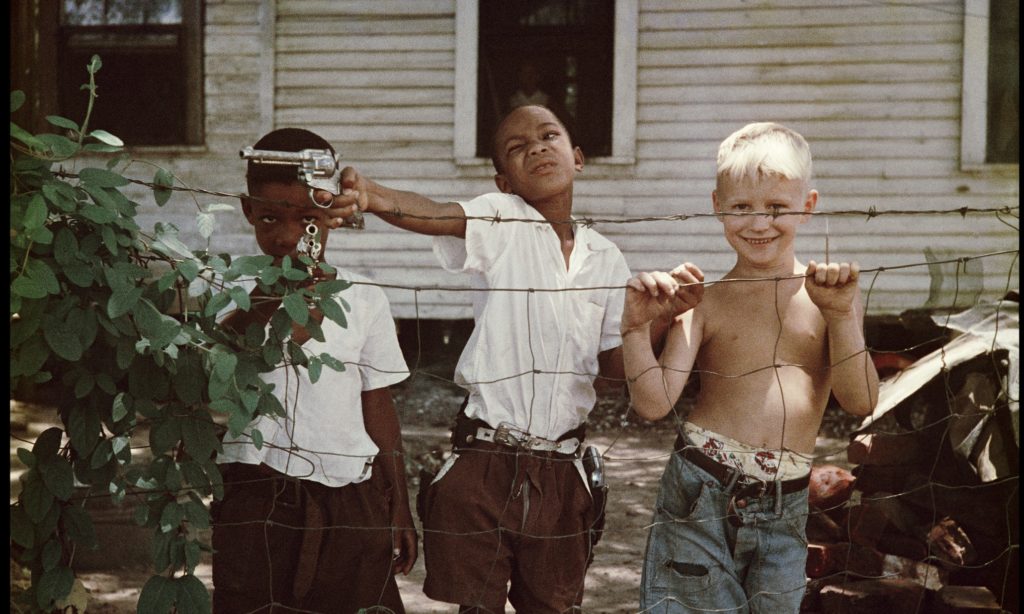
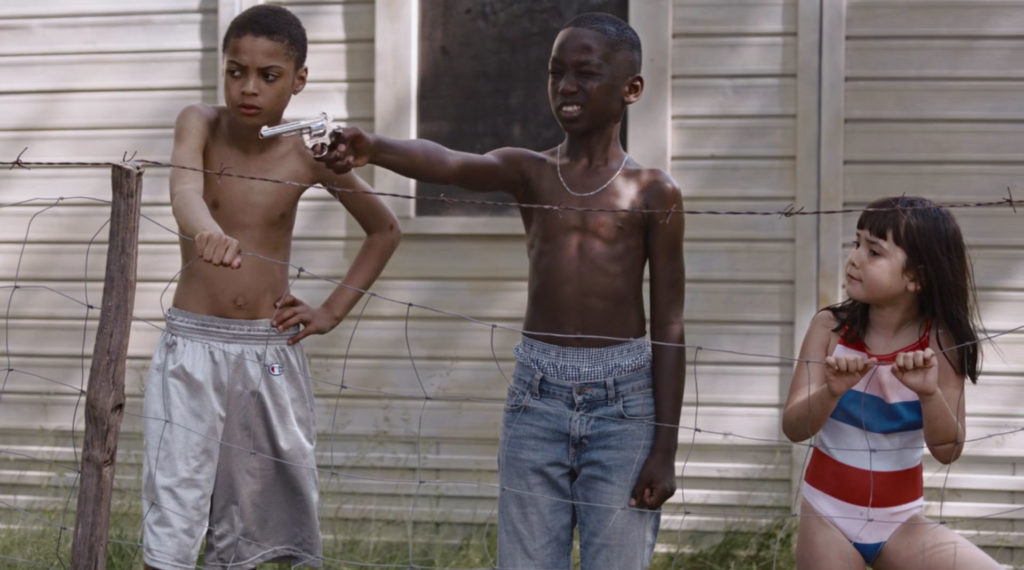
Gordon Parks, “Untitled”, Alabama (1956)

Gordon Parks was an incredible photographer whose influence continues to be felt in photography today. He had a long creative career that also expanded beyond photography to include writing several books, composing music, and directing films- the most famous being Shaft.

The Gordon Parks Foundation recently hosted the exhibition ELEMENT, which focused on several of the photographs that inspired Kendrick Lamar’s video from his album DAMN, seen below. The photo pictured above can be seen as part of the exhibition of Gordon Parks’ work I Am You Part 2 at Jack Shainman Gallery in New York. It is from his series Segregation Story for Life magazine which focused on the daily lives of three black families in Alabama in 1956.

The photo below is a still from Kendrick Lamar’s Element. The video was directed by Jonas Lindstroem and The Little Homies (Kendrick Lamar and Dave Free).

To see more of Parks’ work and the work he has influenced, The Gordon Parks Foundation’s website is a good resource for upcoming exhibitions around the world.

Mar 112018
 

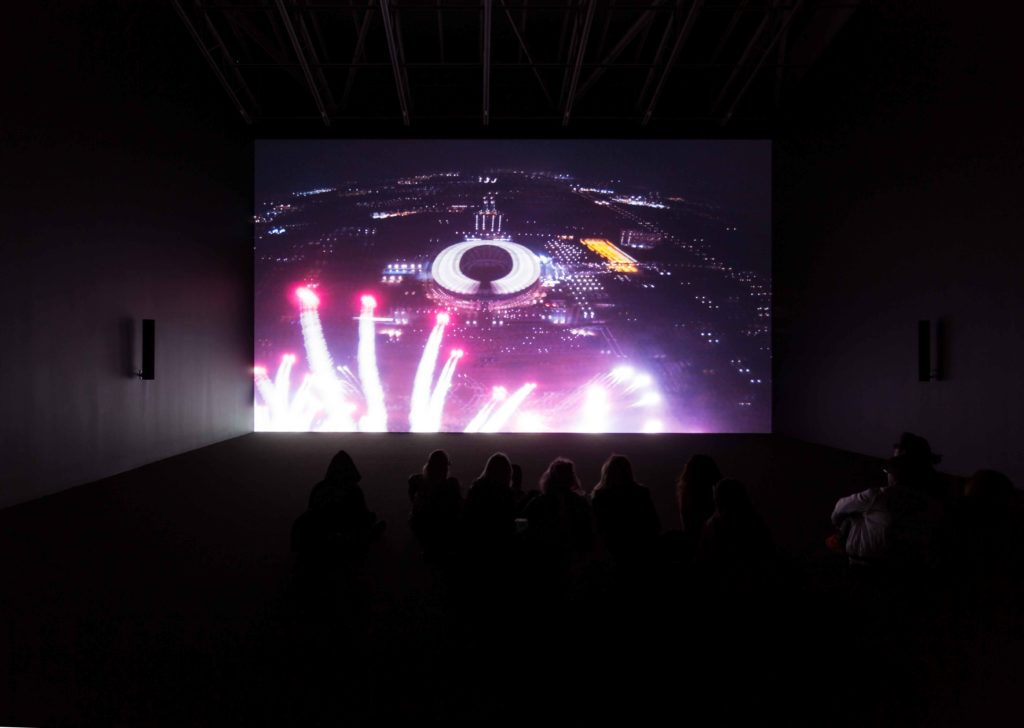
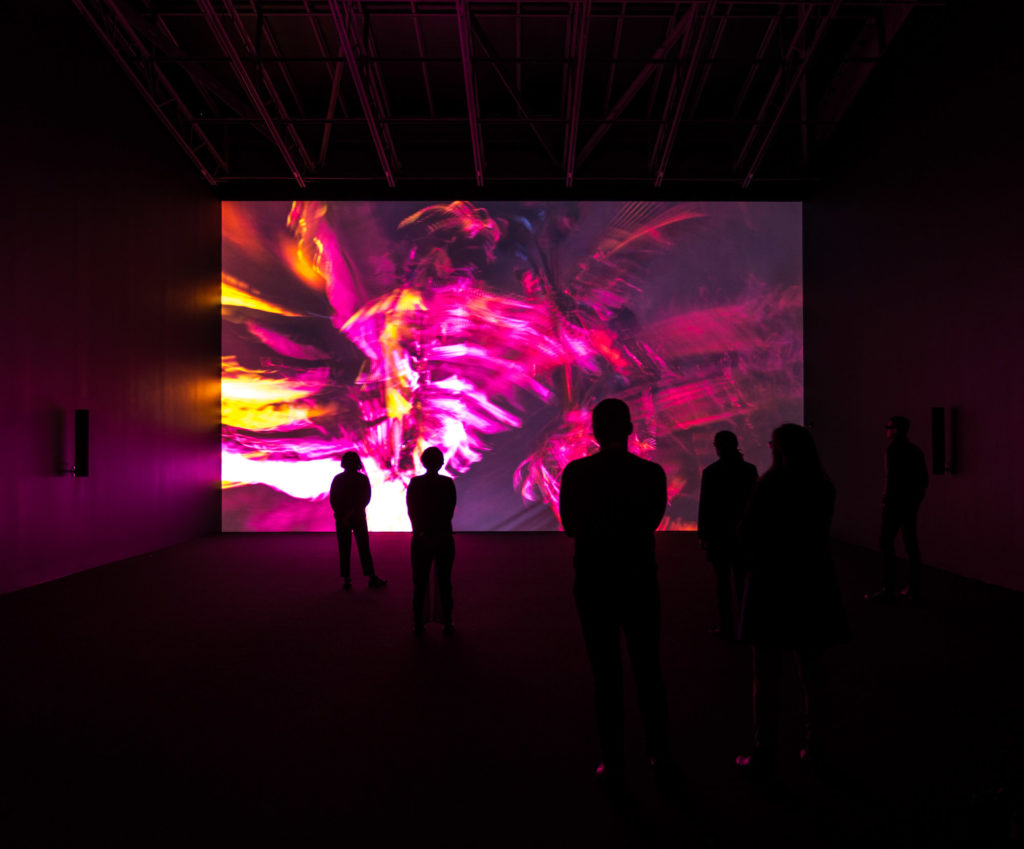
Cyprien Gaillard, Nightlife (Images above via Gladstone gallery)

At Gladstone Gallery, Cyprien Gaillard‘s 3-D film Nightlife is a wonderfully immersive experience. Starting with Rodin’s The Thinker at the Cleveland Museum of Art, the film then moves to a series of plants and trees moving in slow motion in Los Angeles, followed by the annual Pyronale fireworks at the Olympiastadion in Berlin, and finally a return to Cleveland, where a helicopter lights up the site where Jesse Owens’ Olympic oak is planted. While the film plays, a dub song reverberates throughout the room on a loop, adding to the dreamlike atmosphere.

This exhibition closes 4/14/18.

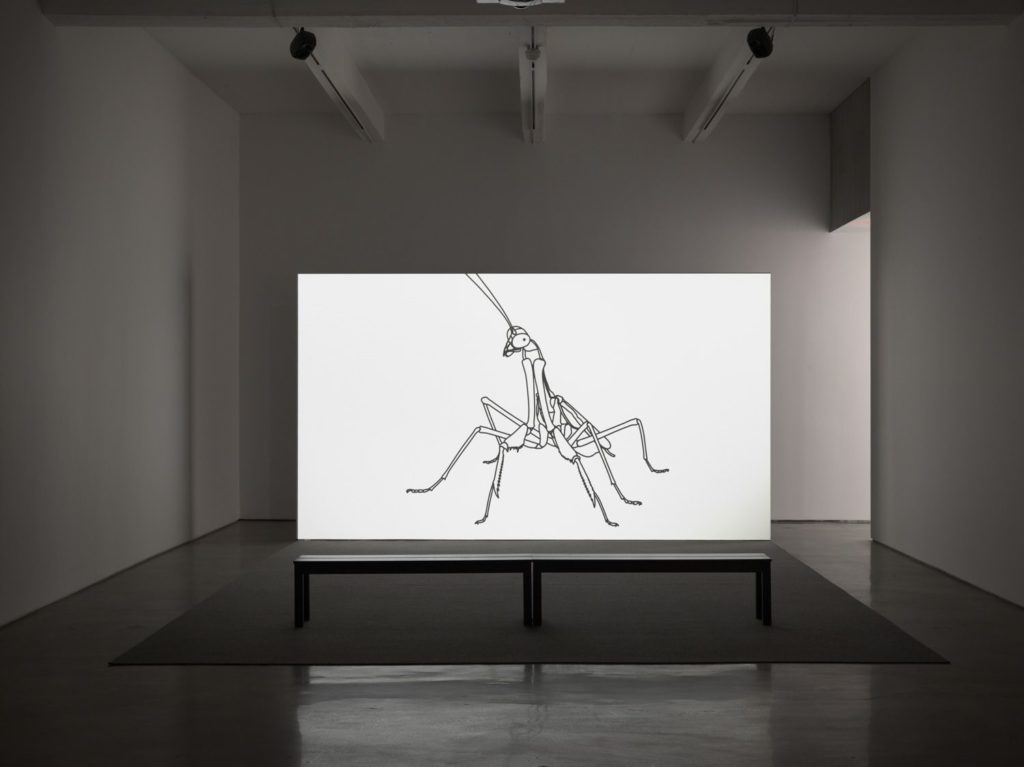
Oliver Laric, Year of the Dog (Image via Metro Pictures)

At Metro Pictures is Oliver Laric‘s two part exhibition, Year of the Dog. The video animation, the stronger part of the show, takes place in the main gallery.

From the press release–

The animation continues his inquiry into concepts of metamorphosis, encompassing concerns about time and the complex dynamic between human and nonhuman lifeforms. Against a white background, linear animations of fish, fungi, and other figures move and change shape. The lines composing the animations continually extend or contract to zoom in on greater and greater detail, magnifying a sense of time as the images change. While the shapes and figures, as in his previous video works, are drawn from cartoons and Japanese anime, Laric’s subject matter has grown to also include animations based on live footage. He constructed the animation via an exacting technique in which each line moves continually between sequences—in contrast with traditional techniques in which each sequence consists of a series of redrawn frames. As the shapes perpetually transform, an atmospheric soundtrack commissioned from musician Ville Haimala establishes the sense of an unfolding narrative.

In the back gallery are three resin sculptures of a human dog hybrid holding a smaller dog in its arms, titled Hundemensch. Each sculpture is from the same mold but differs in opacity and color.

This exhibition closes 4/14/18.


Desiree Dolron, Complex Systems (2017)- Image via GRIMM

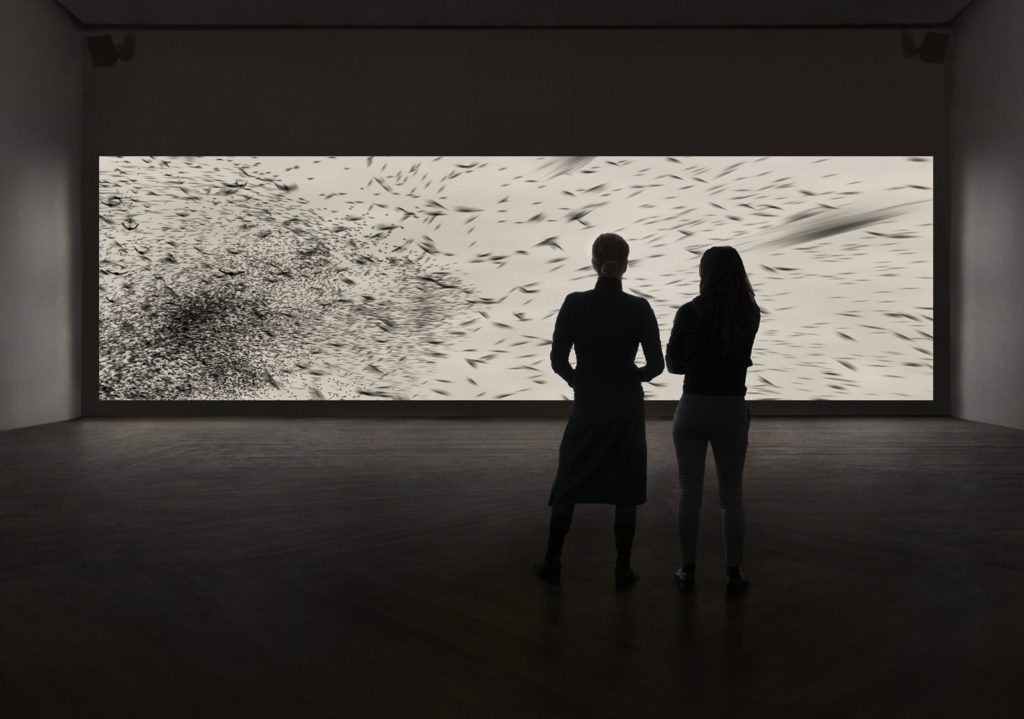
Finally if you are on the Lower East Side, near the ICP Museum and the New Museum is GRIMM gallery, which is currently showing Desiree Dolron’s video, Complex Systems (2017). Her digital illustrations of the movements of starlings are made more intense by the unnatural patterns she includes, and the sounds that accompany the piece.

From the press release–

Complex Systems displays a digitally drawn flock of starlings, scattering throughout the sky in a loop of ever-changing patterns. In this work themes such as the fragility of existence, impermanence and the dichotomy between the individual and the collective form the conceptual ground of her inquiry. The title of the film is adopted from the scientific field of network research, which employs the term to define the complex interactions between different components of the same group.

The shapes assumed by the birds are proven to be the result of a defense mechanism system: in order to avoid attack by predators, a singular starling keeps track of seven others simultaneously – in doing so, the starling is able to adapt to the changing flying directions of the entire flock, thus keeping the collective intact. The dichotomy between the individual and the collective is at the core of Dolron’s interest in this natural phenomenon. Complex Systems investigates the relation between singular and shared intelligence, prompting questions concerning humanity, the psyche and the possible presence of a collective unconscious.

The link to the human psyche is emphasized by the cyclical character of the film; Dolron underlines the full turn of life in which the starlings function as a metaphor. Their movements change from an initial drive to a final, slow fall, while the murmuration happens in an eternal loop that symbolizes the cycle of life and its fragility. The movements of the starlings, combined with the pivotal soundtrack of murmuring voices that intensify and fade according to the flock’s movements, allude to the human mind in a state of constant flux.

Jan 092018
 

Jim Shaw “Cloud Maintenance”, 2017

Jim Shaw “The Ties That Bind”, 2017

Currently at Metro Pictures, Jim Shaw‘s current mixed media exhibition is full of works that are interesting, engaging and fun.

From the press release–

Rendered in exquisite detail, Shaw’s virtuosic work combines his analysis of the political, social and spiritual histories of the United States with contemplative reflections of his own psyche. For more than three decades he has examined art history, comic books, subcultural undergrounds and consumer products—to name only a few of his wide-ranging fields of interest—to articulate a distinct visual language that charts the country’s ever-shifting sociopolitical landscape.

The paintings in this exhibition incorporate symbols and characters of the past to comment on our fraught present. Using imagery drawn from Old Testament stories, pagan myths and satirical cartoons, Shaw relies on his encyclopedic knowledge to visualize our common vernacular. His layered symbology reads like an exaggerated mirror of our hyper-mediated, “post-truth” reality.

This show closes 1/9/18.

Work by Elizabeth Murray

At Pace Gallery’s 25th Street location is Elizabeth Murray: Painting in The ’80s, a collection of sixteen unique colorful canvases the artist created during this period.

From the press release-

Elizabeth Murray: Painting in the ‘80s presents formal and narrative content that continues to influence the techniques and subject matter of contemporary painting. Murray arrived in New York in 1967 during the heyday of Minimalism and the rise of Conceptualism, and amid prevailing assertions of painting’s demise. As she recollected, “The mood was that painting was out, that hip people, people who were avant, weren’t involved in painting. That was unnerving, but then I didn’t give a damn.” Fully committed to painting, Murray broke new ground depicting personal, poetic and at times feminist narratives on complex multidimensional shaped canvases. Murray’s compositions from the 1980s suggest large-scale breaking cups, tumbling wineglasses, tilting tables, windows, rooms, attenuated human forms, letters, symbols and abstract shapes constructed through positive and negative, real and imagined space. As Roberta Smith has written, “She has put the vocabulary of twentieth-century abstraction to new and different uses, tracing in irresistible formal terms a psychological narrative that is not explicitly feminine but that women, thanks to society’s relentless conditioning, know best and most completely.”

This show closes 1/13/18.

Jorge Pardo

For Jorge Pardo‘s first painting show at Petzel Gallery, he combines his painted self portraits with a sculptural element. Candid snapshots of the artist are “blown-up, engraved, laser-cut, hand-painted and back-lit with LEDs, to produce, in some cases, vast ornamental objects”. The beautiful large works have the added effect of changing slightly depending on where you stand in the gallery as the light shines through the wood.

This show closes 1/13/18.


Oct 202017
 

Work by Leslie Wayne

If you are heading to Chelsea this weekend, stop in to these galleries which have excellent shows closing 10/21/17-

At Jack Shainman’s 24th Street space are Leslie Wayne’s rich and colorful sculptural paintings for her exhibition Free Experience.

From the press release-

In Free Experience, I have returned to the figure-ground relationship as a way of exploring the range of possibilities for the representation of an illusion in as many different ways as possible, from trompe l’oeil to verisimilitude, while still remaining undeniably within the confines of a traditional painting. These paintings are a collision of abstraction and representation, of illusion and three-dimensional form. They are defined not so much by the shape of the objects they represent, but by the perceptual slippage between object and illusion. They are, like all my work, somewhere between sculpture and painting, and perhaps in Krauss’s view would simply be considered painting in the expanded field.

Looking at art is a free experience. It costs you nothing. But it should also be an experience that is free from encumbrances, one that inspires you to see the world as if for the very first time. But perception is a tricky thing. It is never without personal history. How do we see, what do we think we see? And what makes the experience of looking at a work of art so compelling? The answer lies outside of language, in that transformational moment between looking and seeing, between information and knowledge. In that moment before the need to translate the experience into language moves from the id to the ego. Seeing is indeed forgetting the name of the thing one sees.

Upstairs at David Zwirner’s 20th Street location, is the gallery’s first exhibition of the work of Ruth Asawa (pictured below). It includes many of her famous wire sculptures as well as works on paper, paintings, and vintage photos of her and her work taken by Imogen Cunningham.

Oct 202017
 

                                                            Fanon (Even the Dead Are Not Safe) 2017 (image via Metro Pictures)

Artificial intelligence is a growing field with numerous implications for the future, some more sinister than others. Trevor Paglen’s current exhibition at Metro Pictures gives some insight into this evolving technology.

From the Metro Pictures press release-

Trevor Paglen’s A Study of Invisible Images is the first exhibition of works to emerge from his ongoing research into computer vision, artificial intelligence (AI) and the changing status of images. This body of work has formed over years of collaboration with software developers and computer scientists and as an artist-in-residence at Stanford University. The resulting prints and moving images reveal a proliferating and otherwise imperceptible category of “invisible images” characteristic of computer vision.

Paglen’s exhibition focuses on three distinct kinds of invisible images: training libraries, machine-readable landscapes, and images made by computers for themselves. For Machine-Readable Hito, for example, Paglen took hundreds of images of artist Hito Steyerl and subjected them to various facial recognition algorithms. This portrait of Steyerl presents the images alongside metadata indicating the age, gender, emotional state and other signifiers that the algorithms have interpreted from the images. In another portrait in the show, Paglen trained facial recognition software to read the face of philosopher Frantz Fanon. A ghostly image of Fanon shows the facial signature–the unique qualities of a face as determined by biometric recognition software–used by computer vision to identify an individual.

To make the prints in Adversarially Evolved Hallucinations, Paglen trained an AI to recognize images associated with taxonomies such as omens and portents, monsters, and dreams. A second AI worked in tandem with the first to generate the eerie, beautiful images that speak to the exuberant promises and dark undercurrents characterizing our increasingly automated world.

The video installation Behold These Glorious Times! brings together hundreds of thousands of training images routinely used for standardized computer vision experiments and pairs them with visual representations of an AI learning to recognize the objects, faces, expressions and actions. A loose narrative begins to emerge about the collapsing distinctions between humans, machines and nature. Electronic musician Holly Herndon composed a soundtrack using libraries of voices created to teach AI networks how to recognize speech and other acoustic phenomena.

The image below is one of the prints from Adversarially Evolved Hallucinations. A series of these images, presented all in one room in the back gallery, are particularly unsettling as they have elements that seem familiar while remaining distorted. As artworks, they are captivating in their strangeness as well as their beauty.

                                                                Porn (Corpus: The Humans) 2017 (image via Metro Pictures)
The exhibition also has a printout with more detail about the creation of the work that goes beyond the press release, located at the front of the gallery. Make sure to leave time to take in this fascinating show. A Study of Invisible Images closes 10/21/17.

May 202017
 

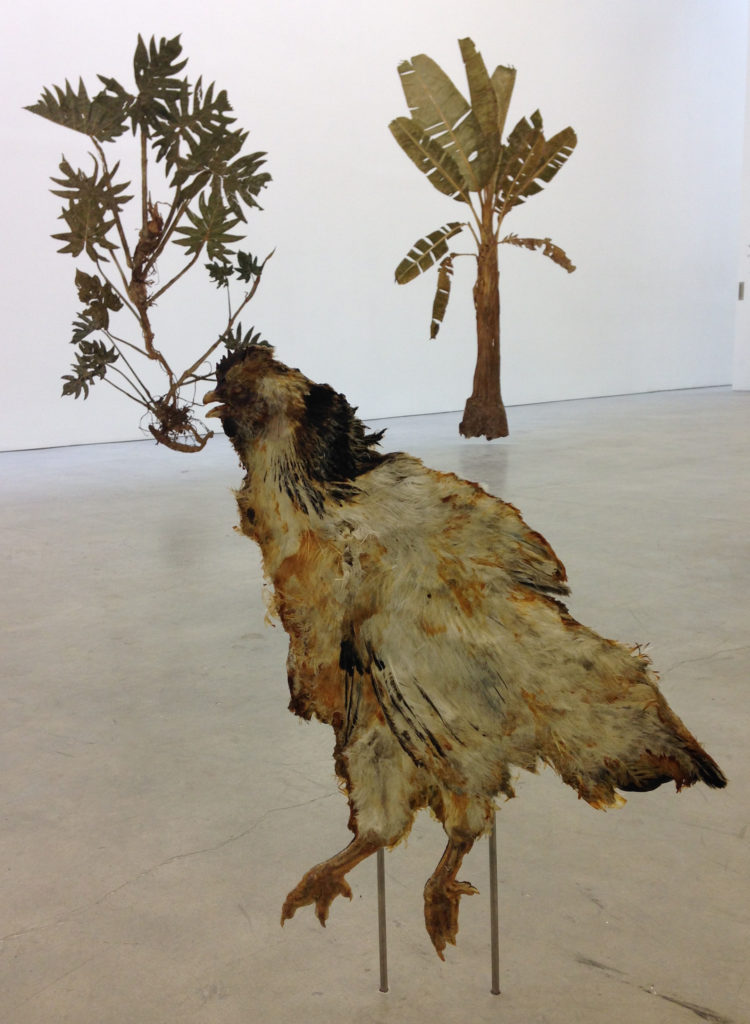
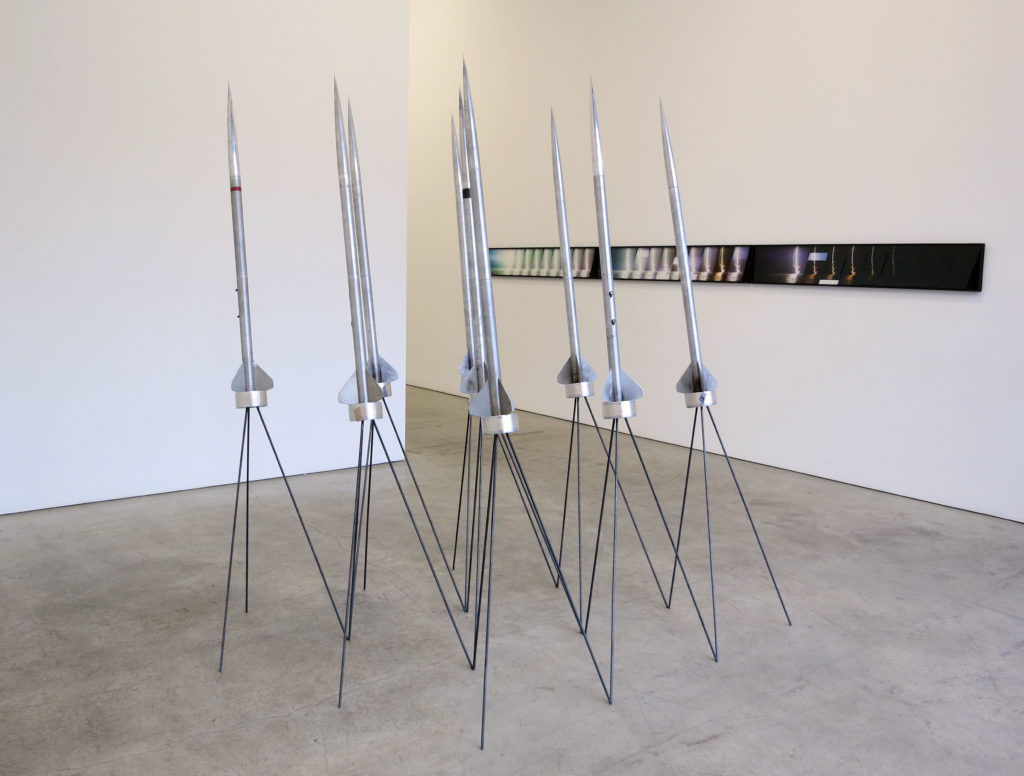
Julius von Bismarck’s Good Weather at Marlborough Contemporary is an interesting meditation on man’s desire to control nature. The first half of the exhibition focuses on Bismarck’s attempts to capture a lightning bolt with the rockets pictured above. In a side room there is a mesmerizing video of a storm rolling into a jungle and the lightning that he used for his experiment. The second half of the gallery focuses on pressed plant species and chickens.

In the press release his process for achieving these flattened works is described in detail-

Like a Colonial scientist, von Bismarck has collected plant species from jungle. Rather than pressing tiny flowers in a notebook, the artist has pressed large plants and entire palm trees into flattened specimens. Heated to a precise 250 degrees in an enormous custom-built oven and a 50-ton hydraulic press, the plants are completely dehydrated without losing their verdant coloration, and squashed astonishingly flat. They are then backed with thin stainless steel to maintain their shape for presentation.

This exhibition closes 5/20/17.

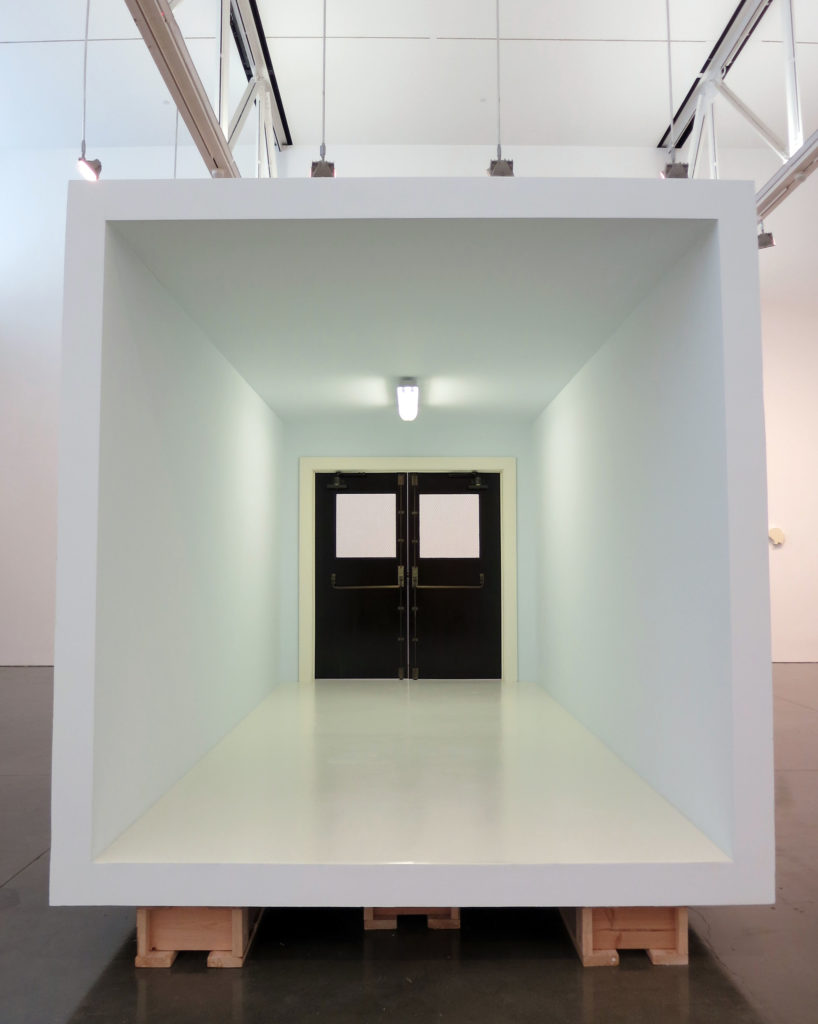
                                                                                       No title (room, panic doors), 2013-14
At Gagosian gallery is Robert Therrien‘s first show in New York in ten years. The artist, well known for his sculptures of massive tables, chairs and plates, is now creating rooms and new objects- which include drops, a bow, and a flagpole. The rooms are the works that stand out most, both in scale and in the disconcerting feeling of environments that should feel more normal than they do.

From the press release-

Despite their verisimilitude, Therrien’s rooms impede the viewer’s ability to engage with space in any comfortable way.  Meticulously assembled features of common industrial design allow one to stand in front of architectural vistas. Elevated above ground level and cut away to show interiors that, like dioramas, become impenetrable replicas of reality, each is like a mise-en-scène or readymade. No title (room, panic doors) (2013–14) presents a set of doors in a room filled with fluorescent light. In No title (paneled room) (2017), tambourines rest silent on the floor of a room luxuriously paneled in hardwood, and a ladder leads to a trapdoor in the ceiling. Each room transports the viewer out of the gallery and into a new narrative situation, prompting connections between material details and their subconscious associations. By making use of everyday things that are often overlooked, Therrien situates the viewer in familiar territory, then allows the objects to demand reassessment as instruments of subjectivity and of consciousness itself.

This exhibition closes 5/26/17.

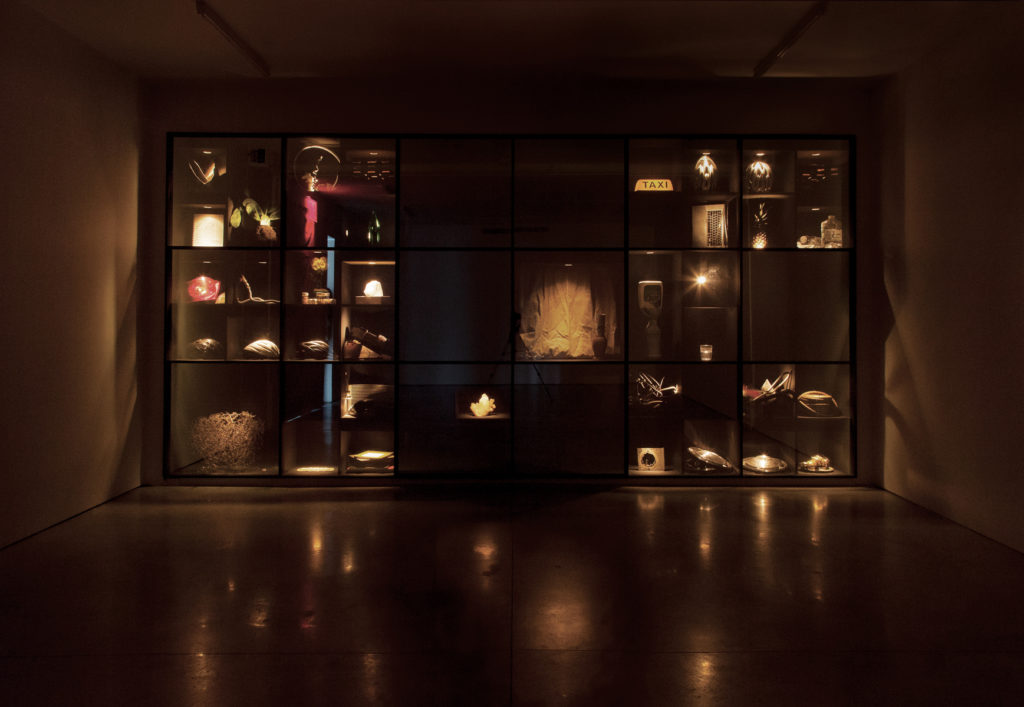
For a room of a different sort, there is Gabriel Lester’s Nevada at Ryan Lee gallery, in which various sections of a wall sized installation light up as assorted voices tell their stories.

                                                                                        Nevada, 2017 (image courtesy of Ryan Lee)

From the press release-

Questions of presence and absence resurface in Nevada, the second component of this exhibition. Nevada confronts the viewer with a floor to ceiling modular wall. Carefully selected objects that correspond with the individual stories combined in Nevada’s multilayered narrative occupy each compartment. Guided by light and sound, the viewer navigates the histories of a series of anonymous characters that find themselves locked out of the world they used to inhabit. In an effort to escape the parallel world in which they have come to dwell, each character attempts to understand the nature and cause of their own existence. Considering personal memories and local histories of migration, mining, gambling, nuclear test sites, and mysterious locations like Area 51 and the Nevada triangle (an area in the California-Nevada desert where numerous aircrafts have vanished), Lester’s Nevada probes the tensions that link the seemingly distinct characteristics of this place to a number of characters looking for a way back to a life they have lost.

The exhibition opens onto a room of low-resolution LED panels showing internet-sourced images of near extinct animals and their habitats. The two rooms feel like separate exhibitions but are brought together by their shared qualities of losing one’s place in the current world.

This show runs until 5/20/17.

May 062017
 

                                                                                             Drizzle (Wangechi Mutu) 2010

                                                                                                  Redhead, 2015
Marilyn Minter: Pretty/Dirty at Brooklyn Museum is absolutely stunning and a must see if you are in New York. The four decades of her work shown in the retrospective offer a chance to see the artist’s progression in style and technique, as well as content.

The exhibit starts with early black and white photos Minter took of her mother, smoking in bed, applying makeup or just staring into a mirror, with a hint of a former glamour that has now faded. It becomes immediately clear that Minter’s interest in exploring standards of beauty were present early on.  Moving through the exhibit you follow her evolution into her current work. From her early Photorealist paintings, to suggestive paintings of food, and then moving gradually to work that more explicitly uses sexual imagery, including a series of pubic hair paintings for Playboy that were mostly rejected. In that same section her slow motion videos of thick liquids being licked up and spit out on a glass pane by a red lipped mouth, walk the line between fascinating and repulsive.  Her large scale photo-realistic enamel on metal paintings that make up a large part of the retrospective are a particular standout with their lush colors.  The exhibition ends with the video, Smash, 2014, in which ominous music plays as a closeup of feet in high heeled silver sandals and red painted toenails breaks glass and splashes silvery liquid in slow motion. It is mesmerizing.

This interview with Minter is interesting and shows the work in the retrospective (from when it was shown at the Orange County Museum of Art)-

This exhibition closes 5/7/17.


Mar 102017
 

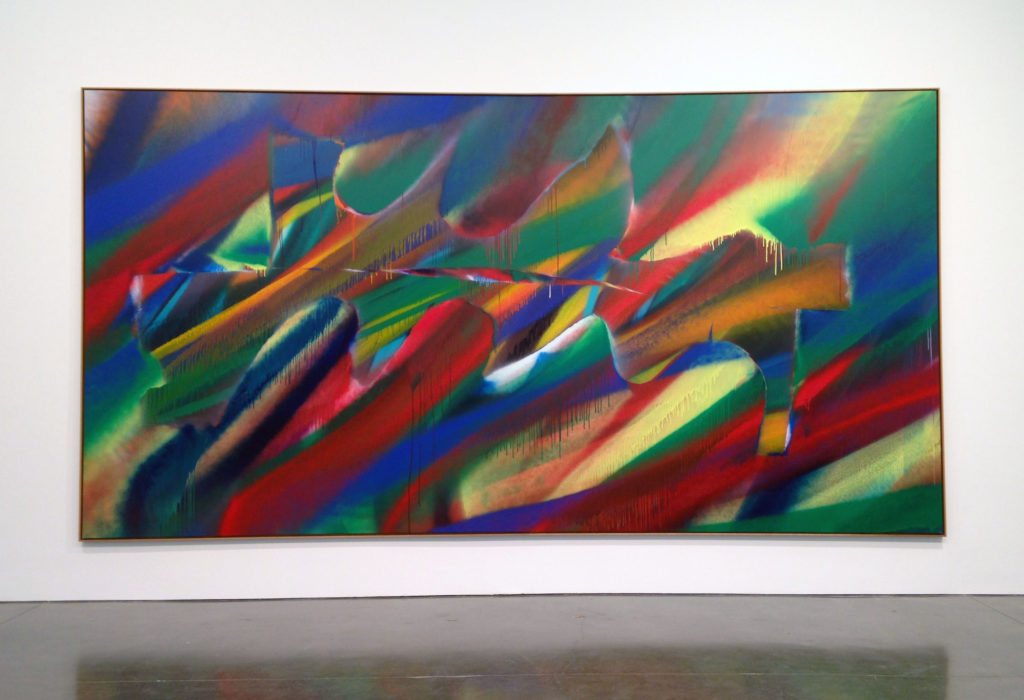
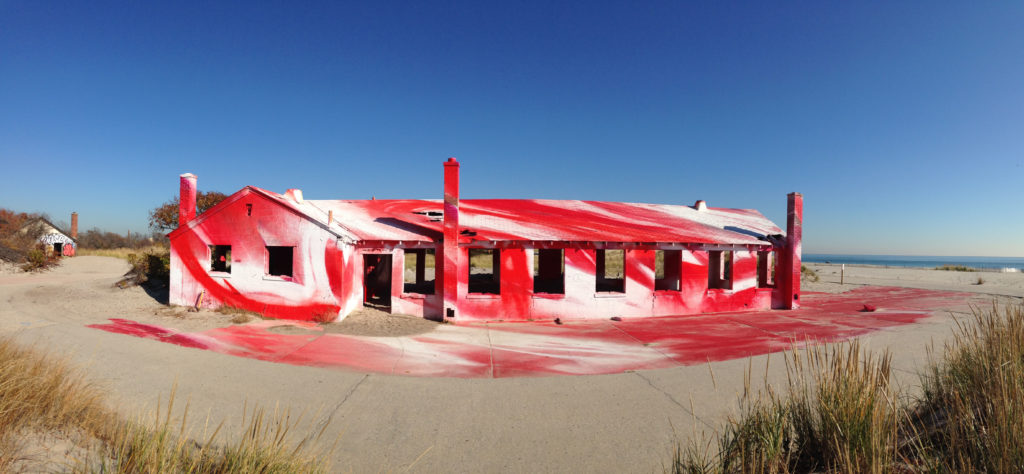
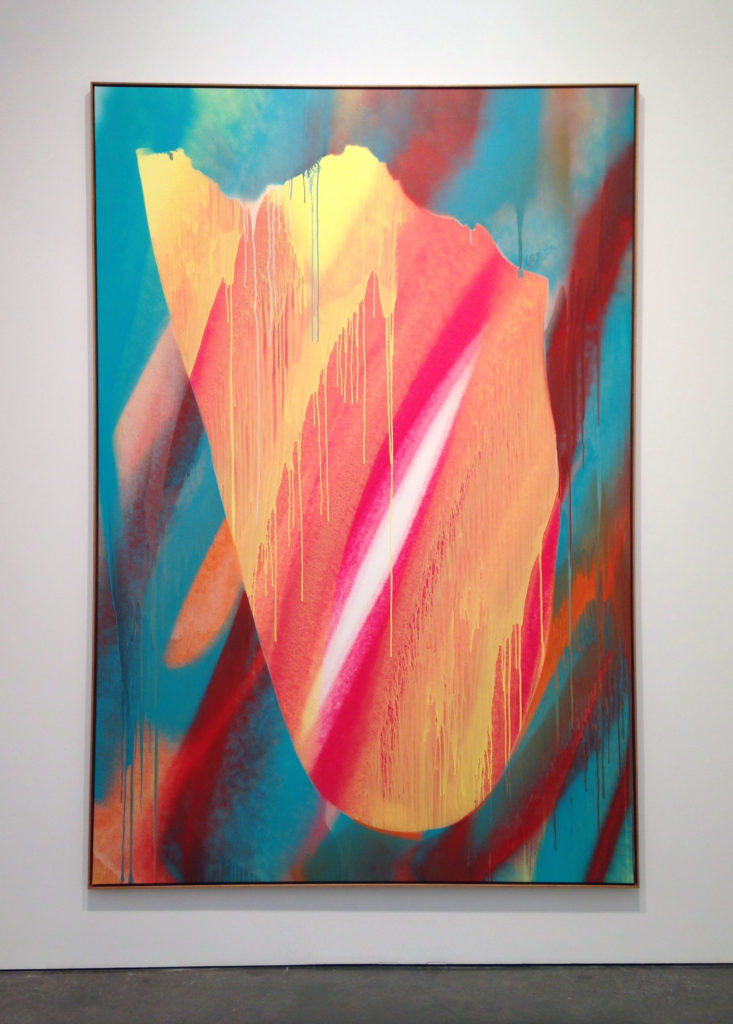
Katharina Grosse‘s current exhibition at Gagosian, consists of dynamic brightly colored canvases and one cast metal sculpture. Unlike traditional painting, these works are created using a spray gun which creates the unique effects.

Her process is described in the press release-

Embracing the events and incidents that arise as she paints, Grosse opens up surfaces and spaces to the countless perceptual possibilities of the medium. While she is widely known for her temporary and permanent in situ work, which she paints directly onto architecture, interiors, and landscapes, her approach begins in the studio. With calculated focus, she allows new patterns and procedures in her paintings to emerge from action, further multiplying this potential with stencils cut from cardboard and thick foam rubber—tools with which to develop further cuts, layers, and perspectival depths. Grosse’s gestures unfold all at the same time in unmixed acrylic colors, engulfing the viewer in a toxic sublime.

In this exhibition, selected works from several interconnected suites of untitled paintings produced during the last twelve months demonstrate this constant interaction of process and material. Base shapes migrate from one painting to another, appearing in new layers or fusing into clusters that advance and retreat. The paintings record Grosse’s ongoing choices about color, density, and velocity. In one group, monadic forms proclaim their specific hues within larger zones of color. A red shape takes its place amidst expressive jewel-toned streaks. A plane of cerulean blue opens, or perhaps closes, to a black and yellow void. In other more complex orchestrations, these coloristic moments become so compelling that the canvas, which supports it all, is easily forgotten.

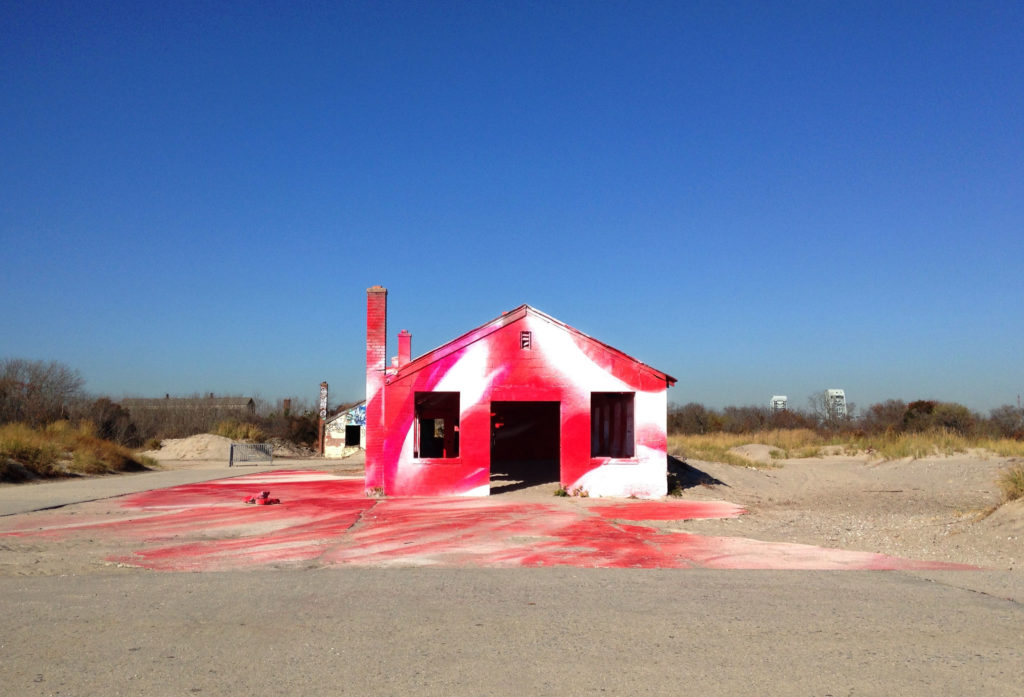
Grosse also made news this past summer with her installation for MOMA P.S. 1, titled Rockaway!. Located at Fort Tilden, she used a similar technique to paint an abandoned and soon to be demolished building (due to being structurally unsound after Hurricane Sandy).

 Grosse’s gallery exhibition closes this weekend, 3/11/17.