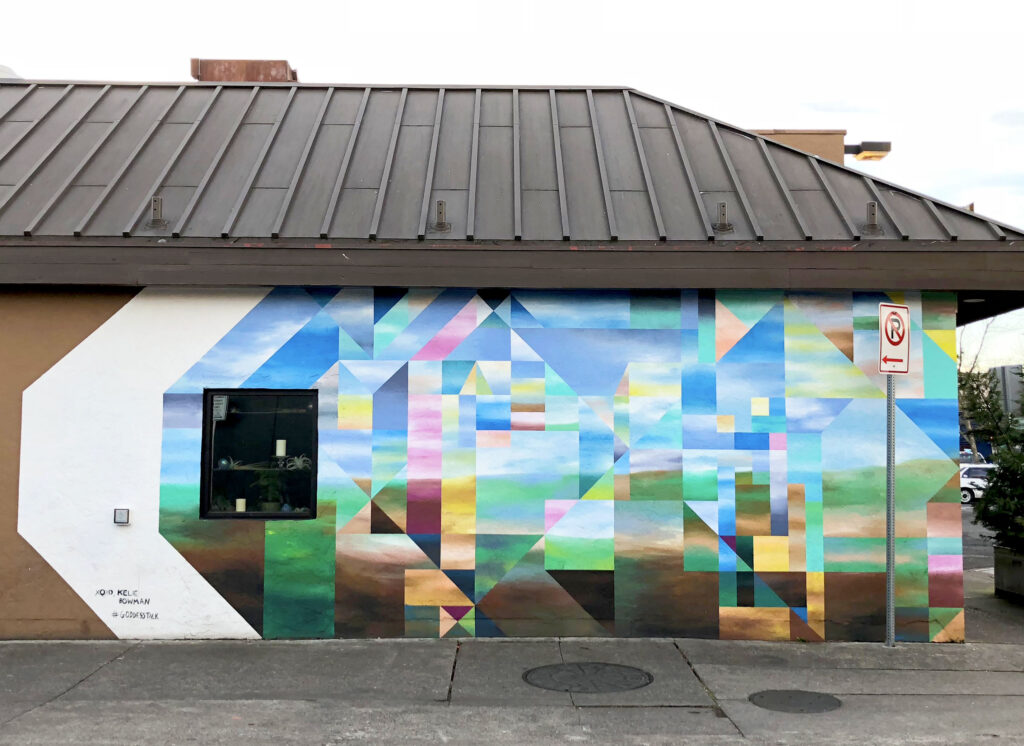
This mural by Kelie Bowman in Eugene, Oregon was created in 2017. For more work by the painter and muralist, check out her Instagram.

This mural by Kelie Bowman in Eugene, Oregon was created in 2017. For more work by the painter and muralist, check out her Instagram.
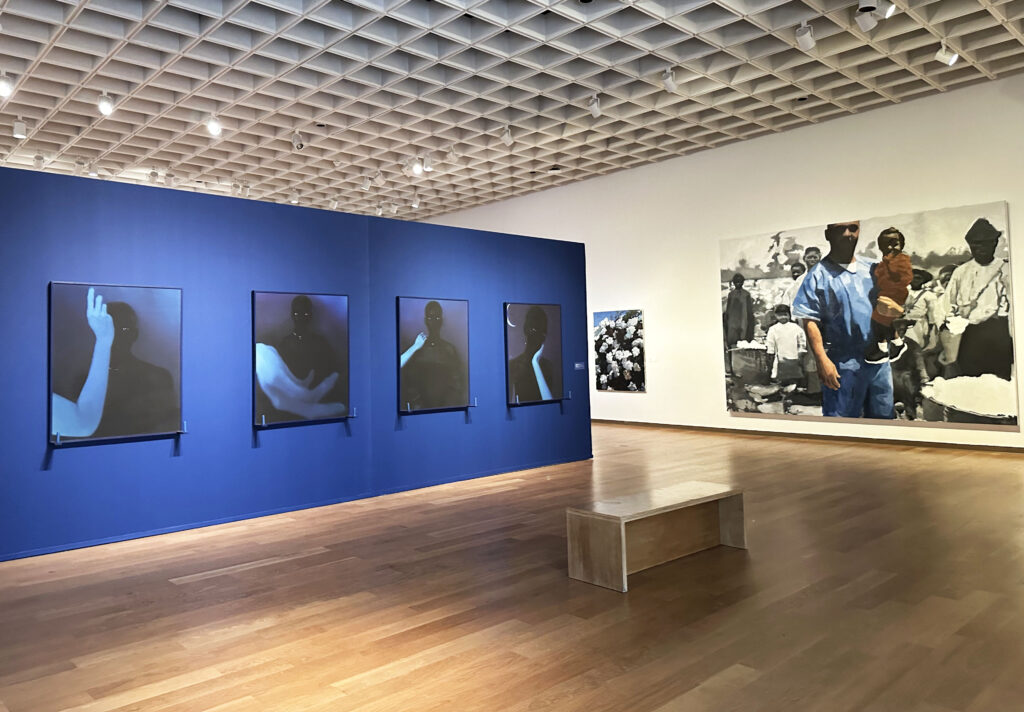
Work by Elliot and Erick Jiménez (photographs, left) and Reginald O’Neal (paintings, right)
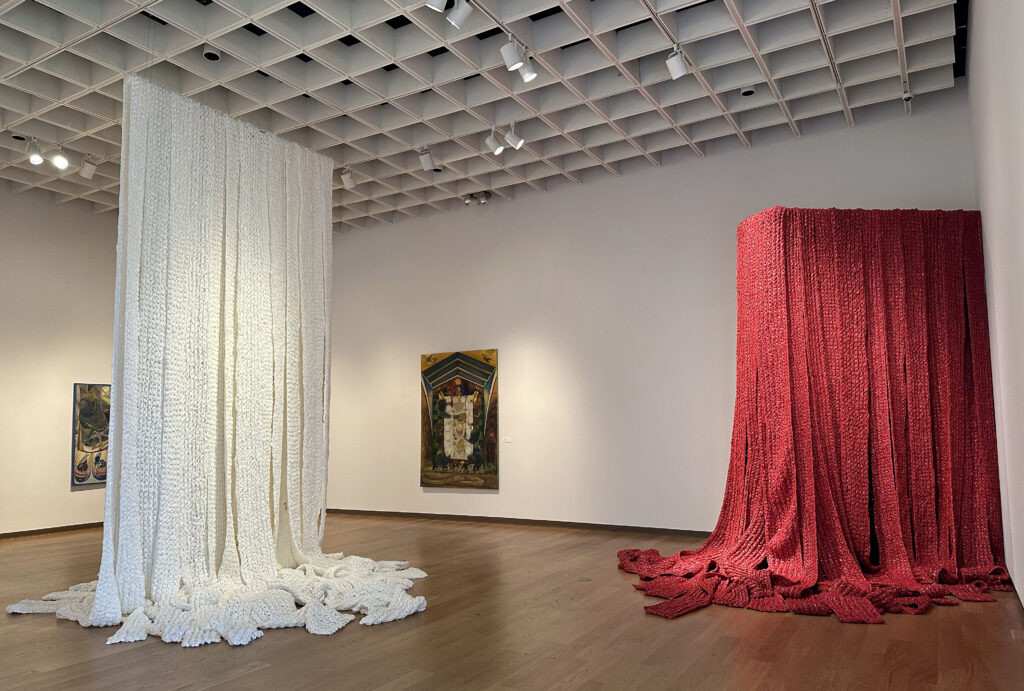
Sculptures by Akiko Kotani, Paintings by MJ Torrecampo
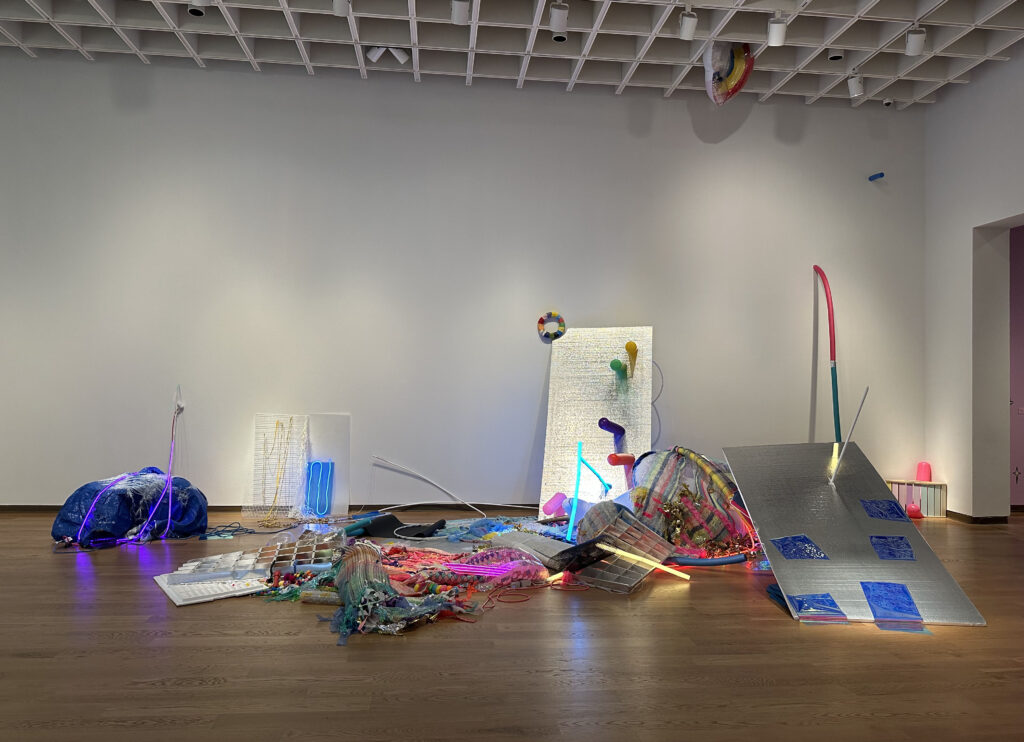
Work by Denise Treizman
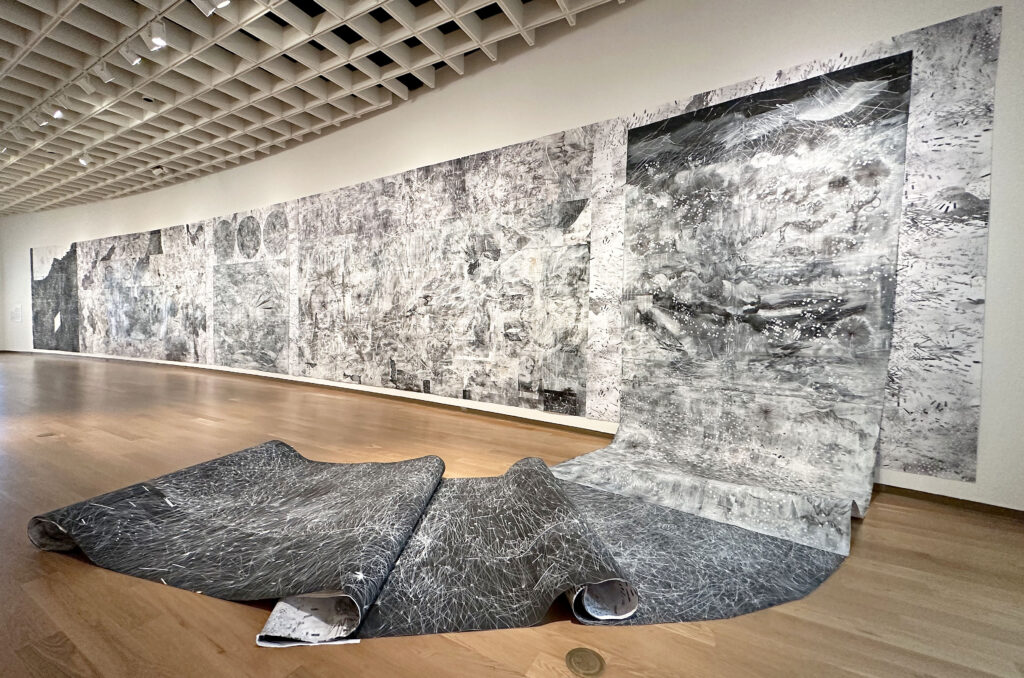
Work by Amy Schissel

Photography by Peggy Levison Nolan
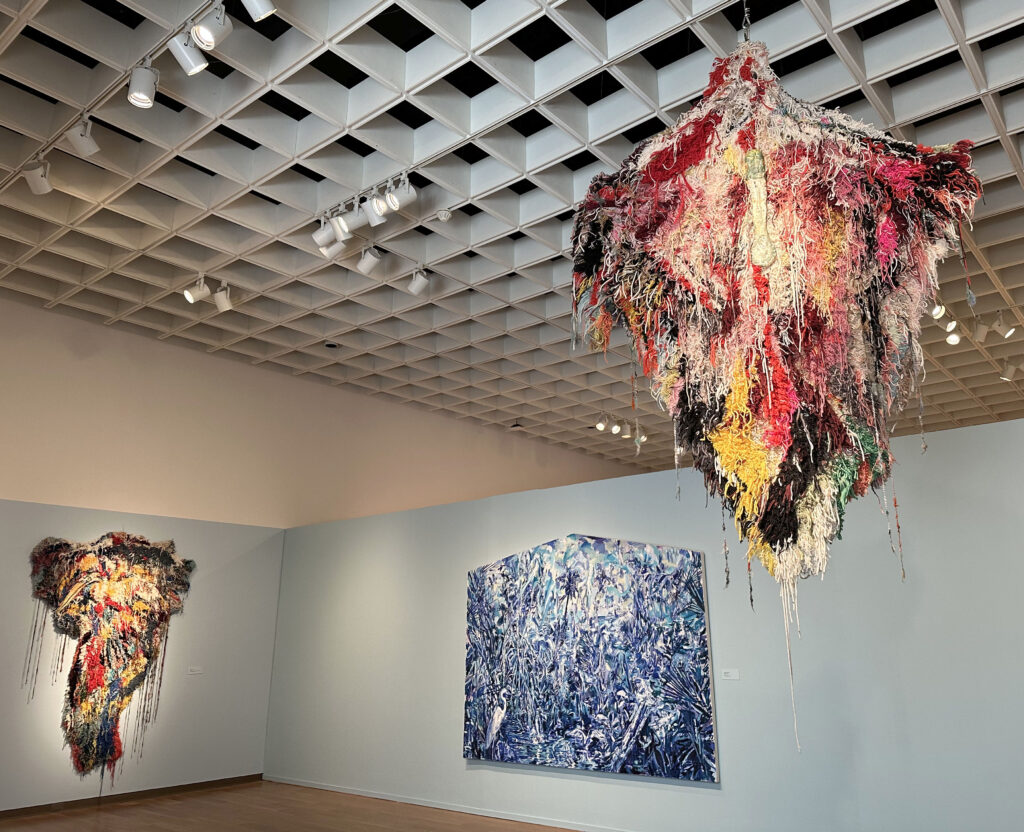
Work by Magnus Sodamin
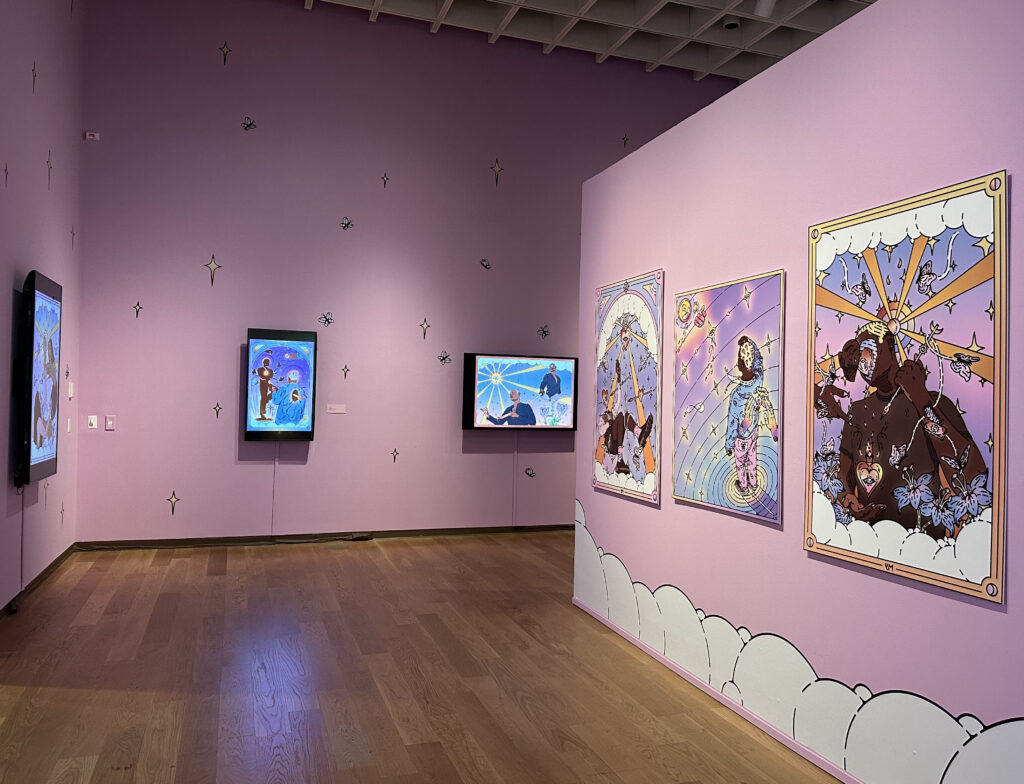
Work by Yosnier Miranda
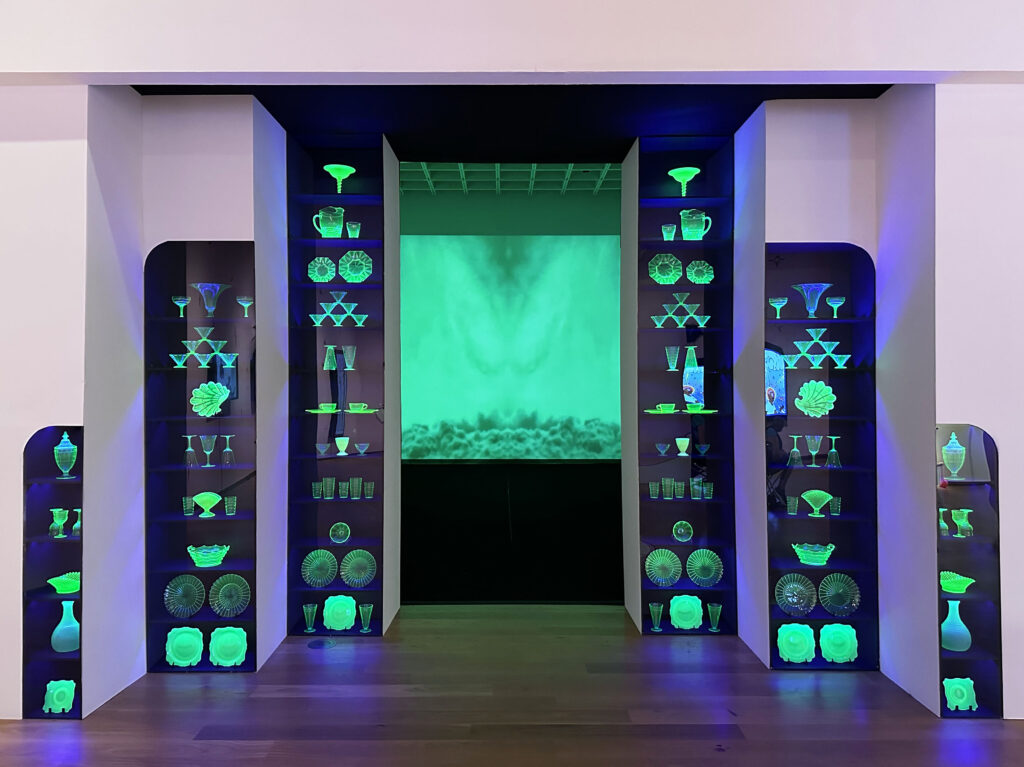
Work by Cara Despain
There is some really impressive work currently on view for the 2023 Florida Prize in Contemporary Art at Orlando Museum of Art.
From the museum site about the exhibition-
The Florida Prize in Contemporary Art is organized by the Orlando Museum of Art to bring new recognition to the most progressive artists in the State. Each year OMA’s curatorial team surveys artists working throughout the State before inviting ten to participate. One artist will receive a $20,000 award made possible with the generous support of local philanthropists Gail and Michael Winn. Artists range from emerging to mid-career, often with distinguished records of exhibitions and awards that reflect recognition at national and international levels. In all cases, they are artists who are engaged in exploring significant ideas of art and culture in original and visually exciting ways.
This year’s artists are-
Denise Treizman (@denisetreizman )
MJ Torrecampo (@mjtorrecampo )
Peggy Levison Nolan (@peggylevisonnolan )
Reginald O’Neal (@_reginaldoneal_ )
Elliot & Erick Jimenez – (@elliotanderick )
Yosnier Miranda (@occurrences)
Magnus Sodamin (@magnificentmagnus )
On the following pages below are more works by the above artists and detailed information on their work in the exhibition.

The painting above, Wave of Mutilation, is from Alex Sewell’s February 2023 exhibition Dad? at TOTAH in NYC.
Wave of Mutilation is also a song by the band Pixies, off their 1989 album Doolittle.
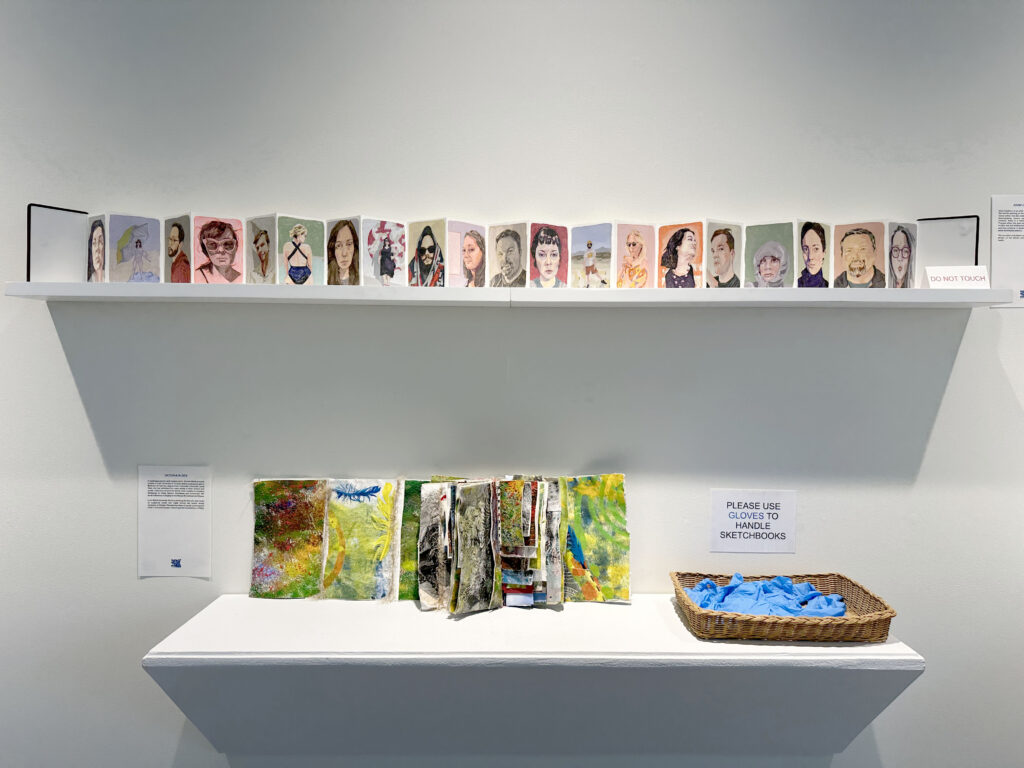
Work by Jenny Granberry (top) and Victoria Block (bottom)
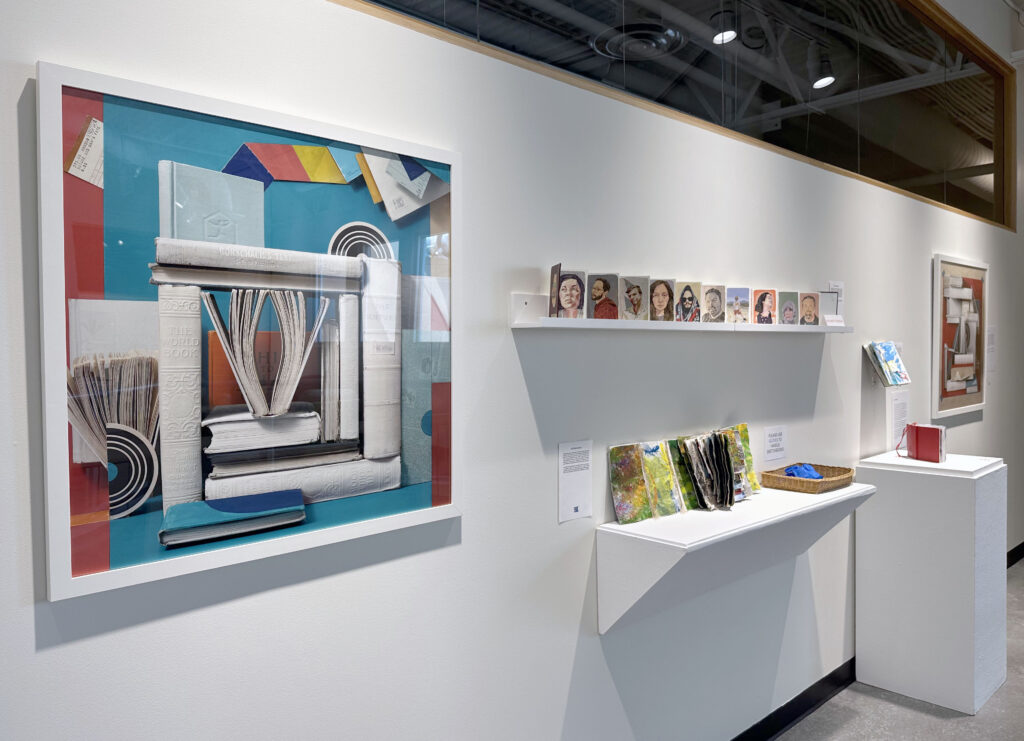
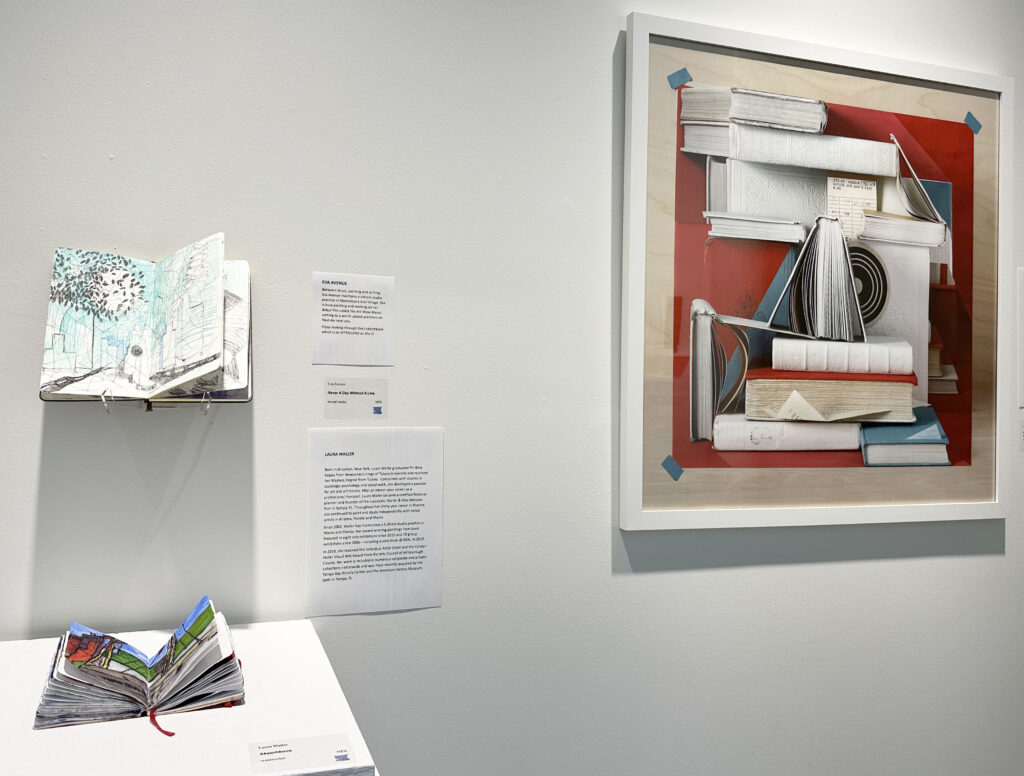
Journals by Eva Avenue (top left) and Laura Waller (bottom left) and photography by Andrew Sovjani
On the second floor of the Dunedin Fine Art Center are photographs by Andrew Sovjani and a collection of sketchbooks from a variety of artists, many of which you can look through- with gloves of course. It’s easy to spend lots of time with all the inspiring books these artists have created.
The exhibition closes 8/13/23.
About Andrew Sovjani, from the gallery-
Andrew Sovjani is a visual artist recognized for blurring the boundaries between photography, printmaking and painting. Raised in a family of working studio artists, art making is in his blood. Andrew has drawn from his life experiences in the scientific world and living in Asia to create transcendent bodies of work that are often extremely peaceful. His award-winning photographs have been shown in exhibitions throughout the U.S., Europe and Japan and are held in many public and private collections. He has won awards of distinction at many of the top fine arts festivals in the nation and was a finalist for the Critical Mass book awards in 2008 and 2016.
Some of the artists whose books are included in the exhibition are- Jenny Granberry, Victoria Block, Eva Avenue, Laura Waller, Dion Dior, Daniel Mrgan, Julia Collver, Coralette Damme, Joan Duff Bohrer, Marjorie Greene Graff, Lukas Mosimann, Luis Colan, Kathy Pollak, Jennifer Kosharek, and Katy Deits.
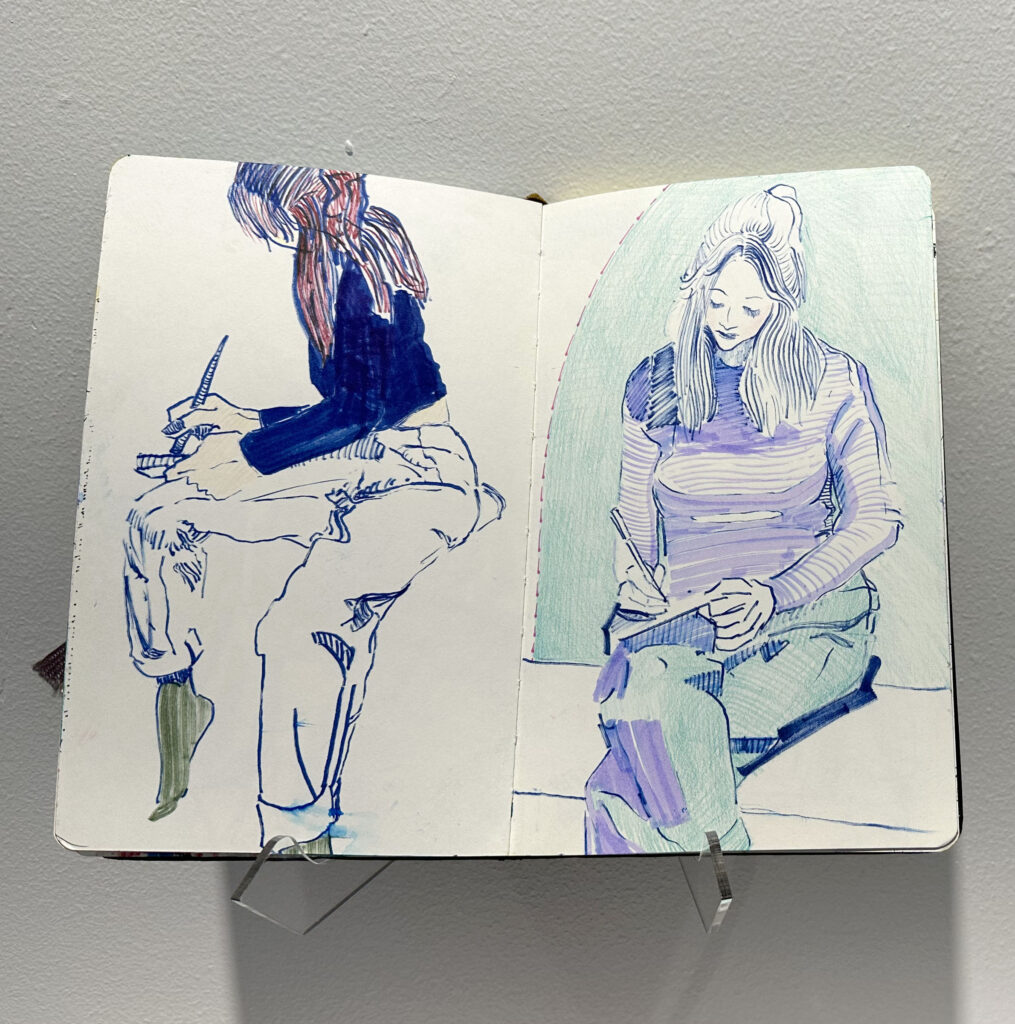
Work by Eva Avenue
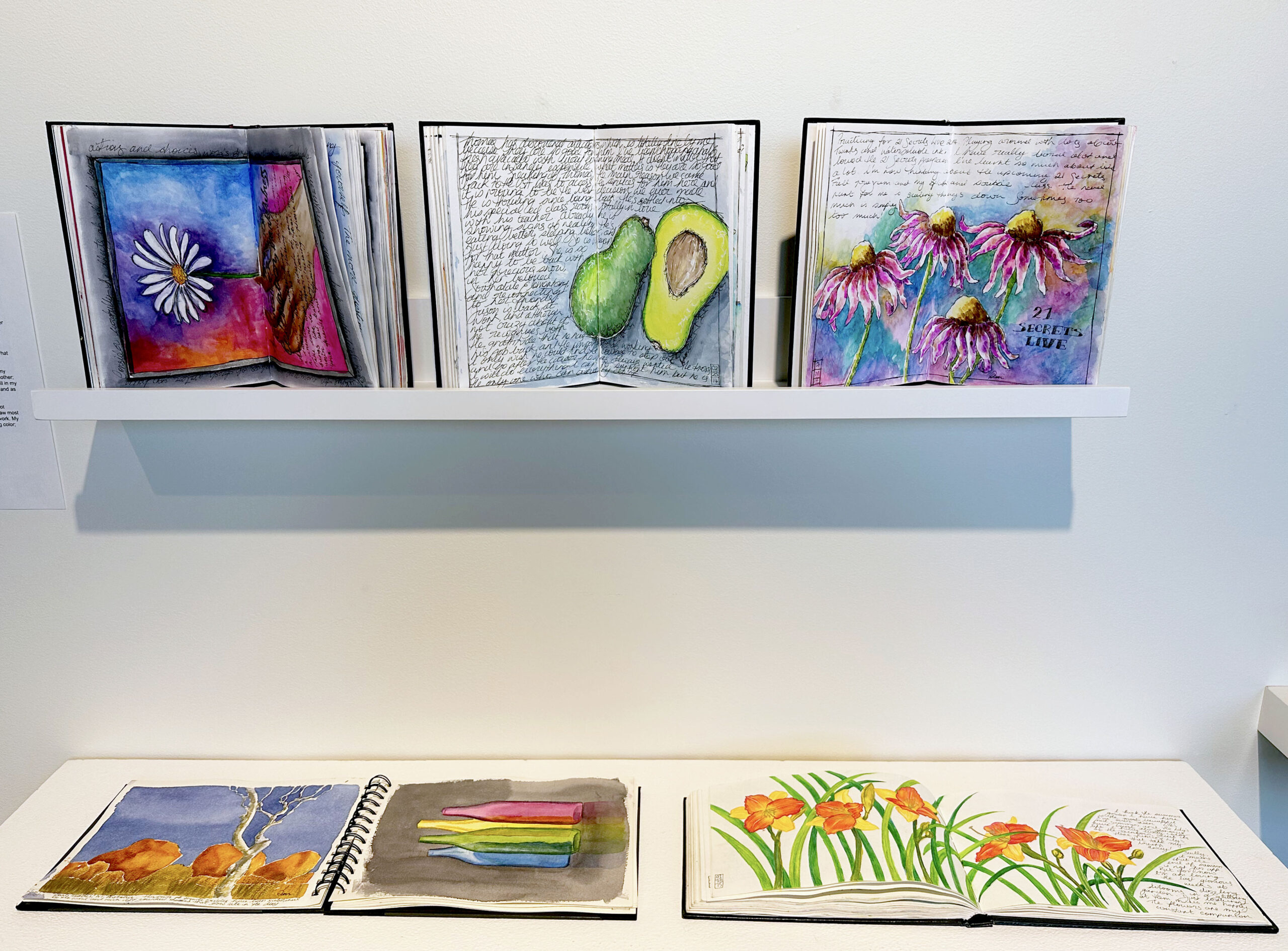
Work by Dion Dior
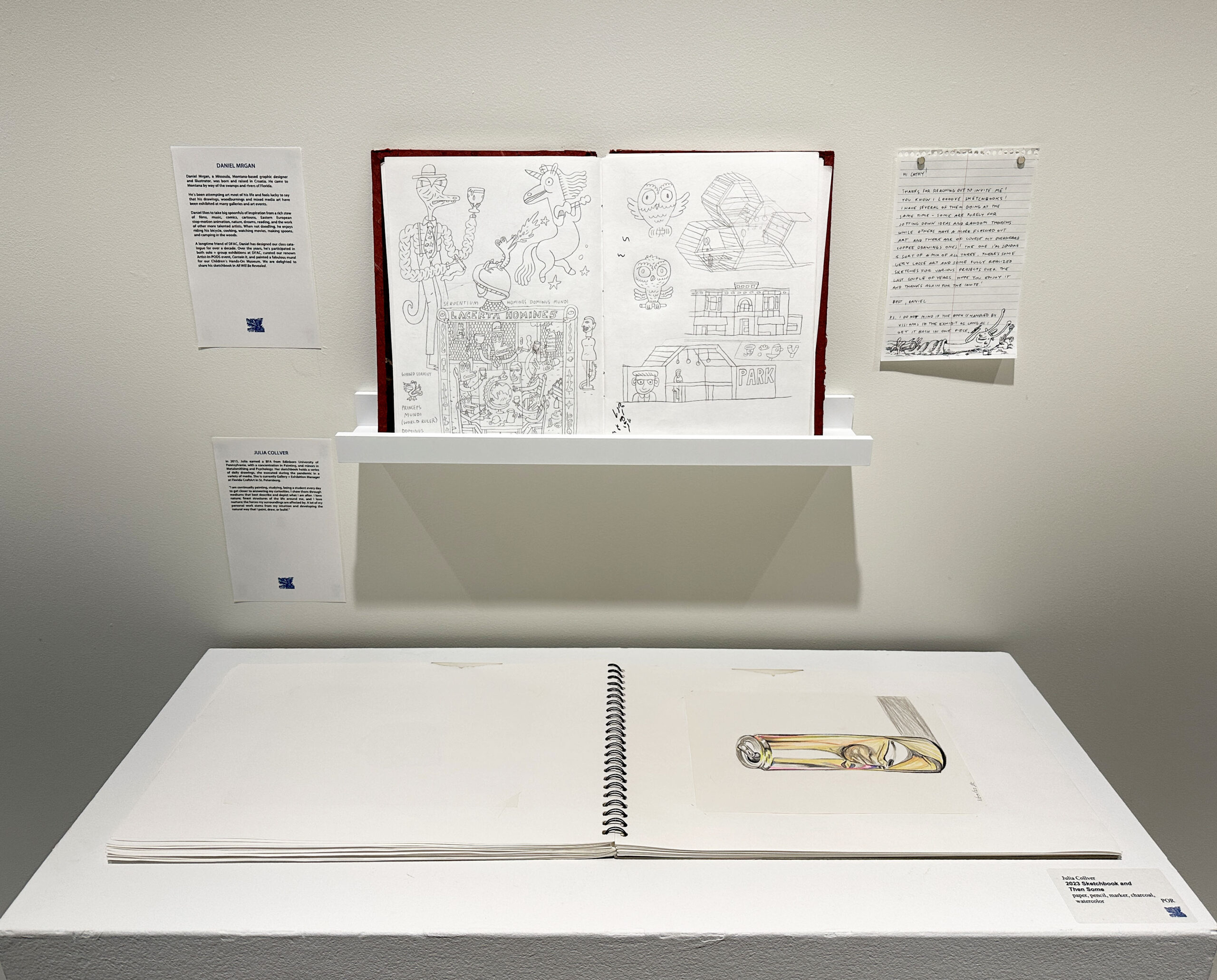
Work by Daniel Mrgan (top) and Julia Collver
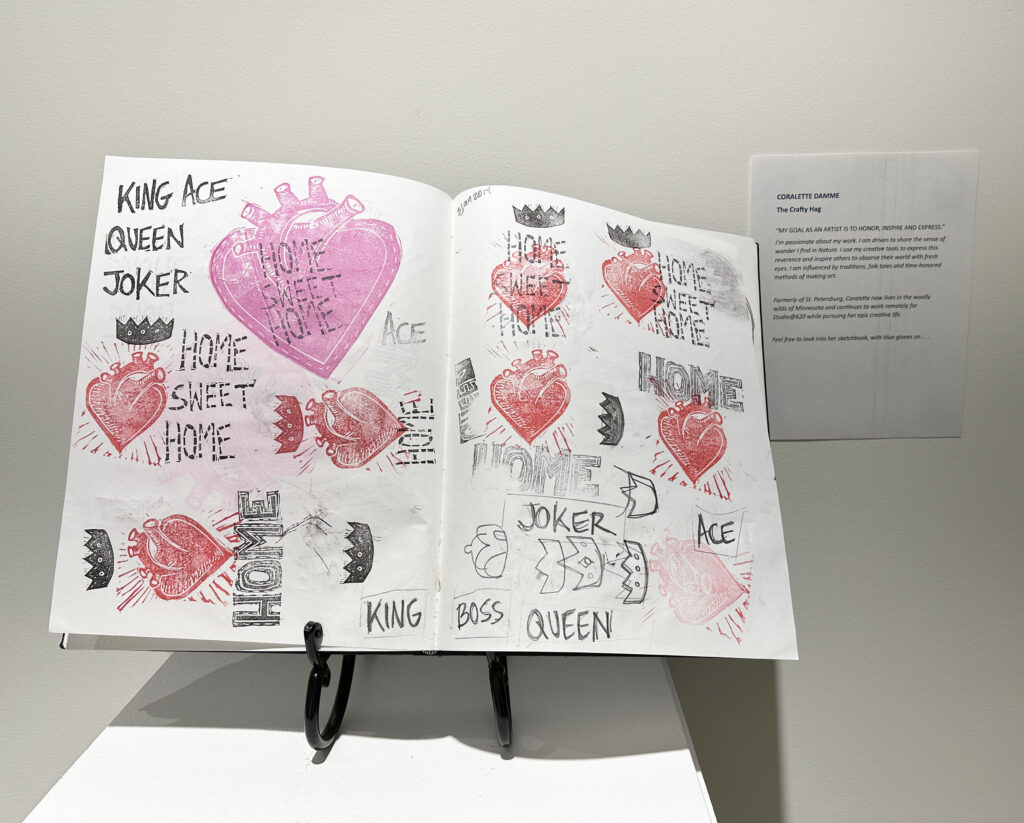
Work by Coralette Damme
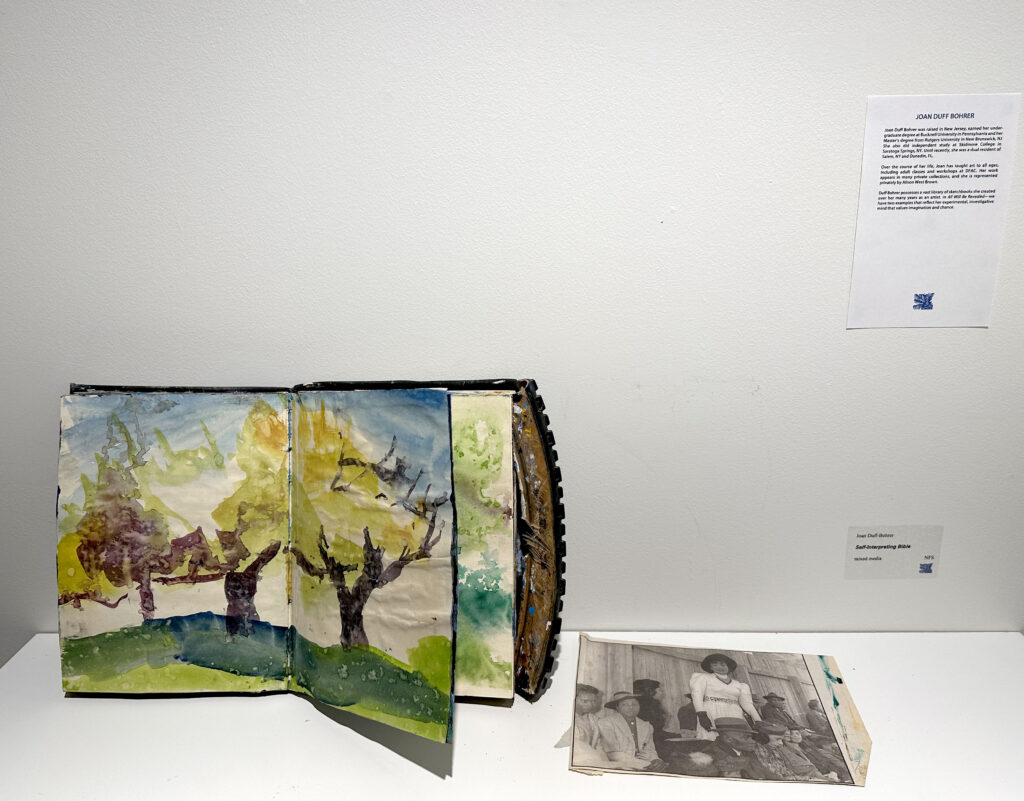
Work by Joan Duff Bohrer
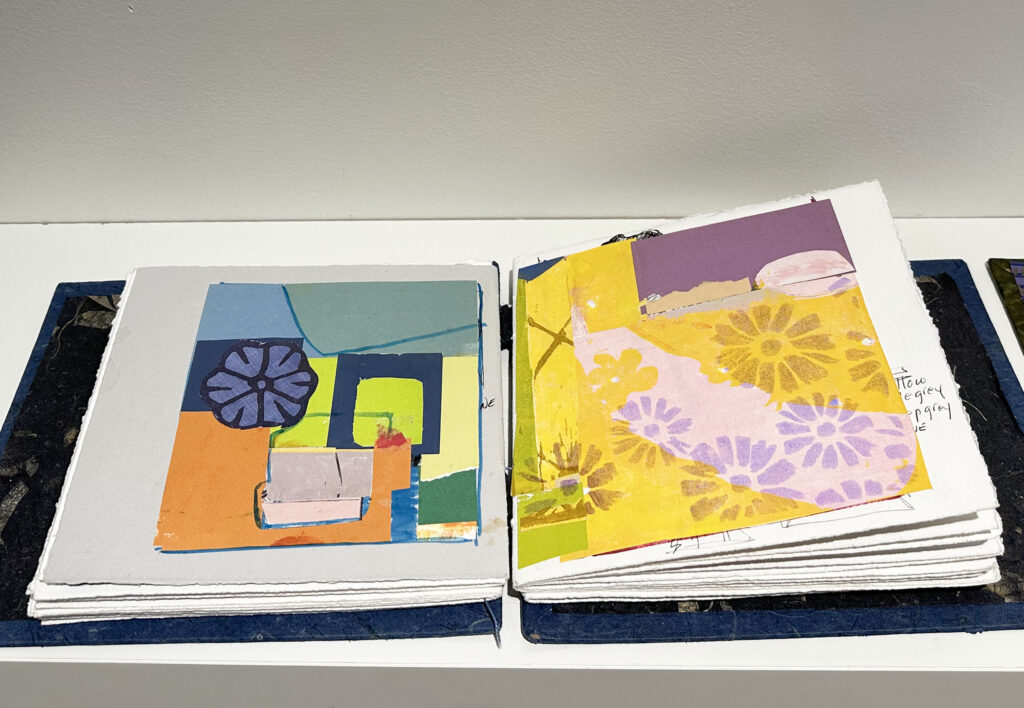
Work by Marjorie Geene Graff
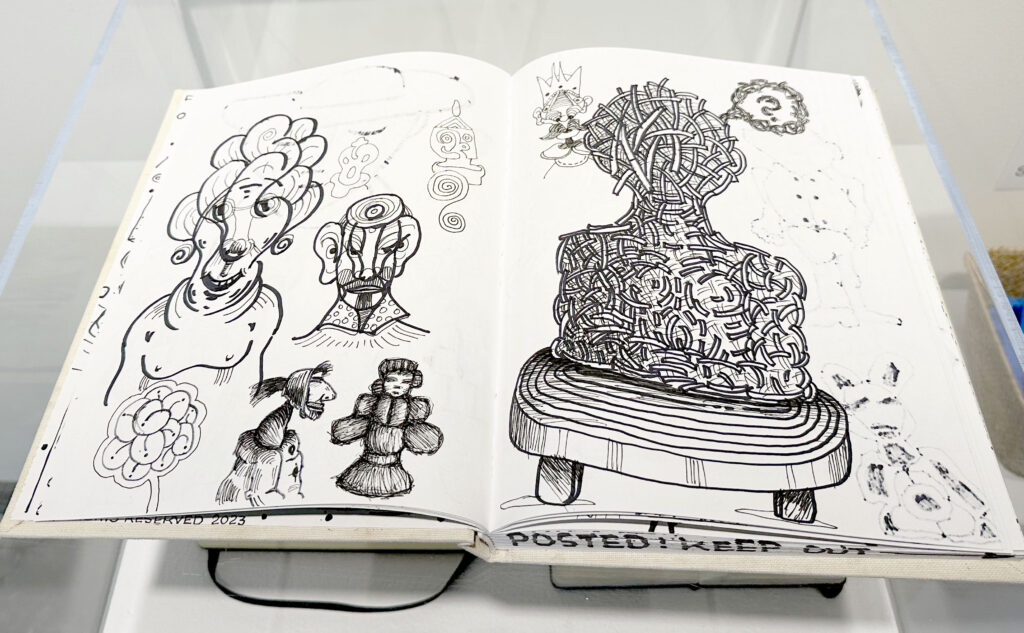
Work by Lukas Mosimann
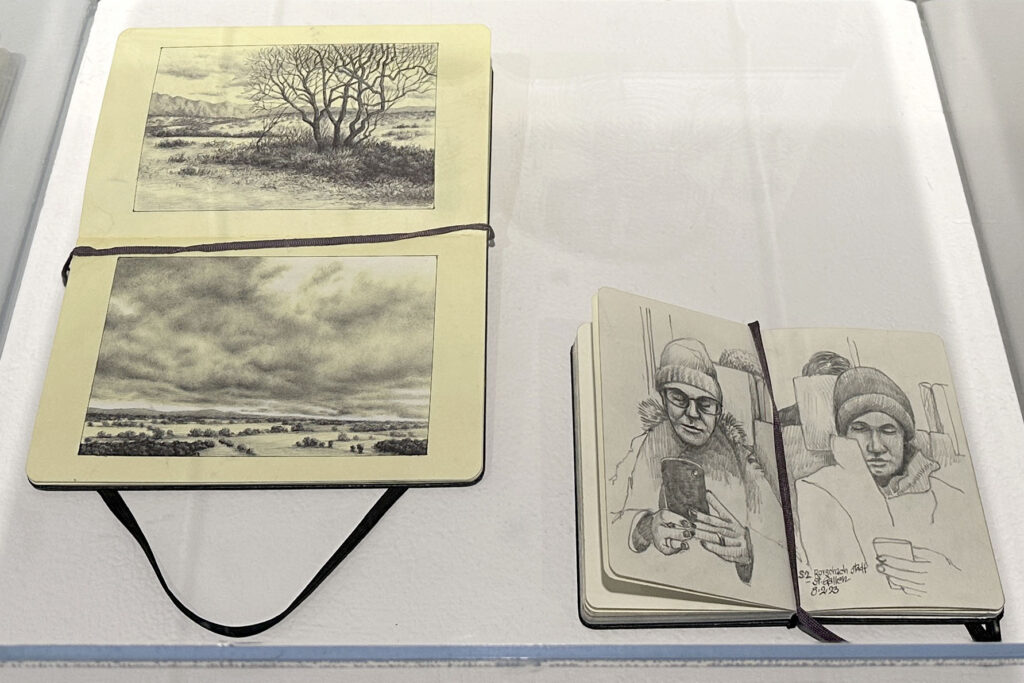
Work by Luis Colan (left) and Lukas Mosimann
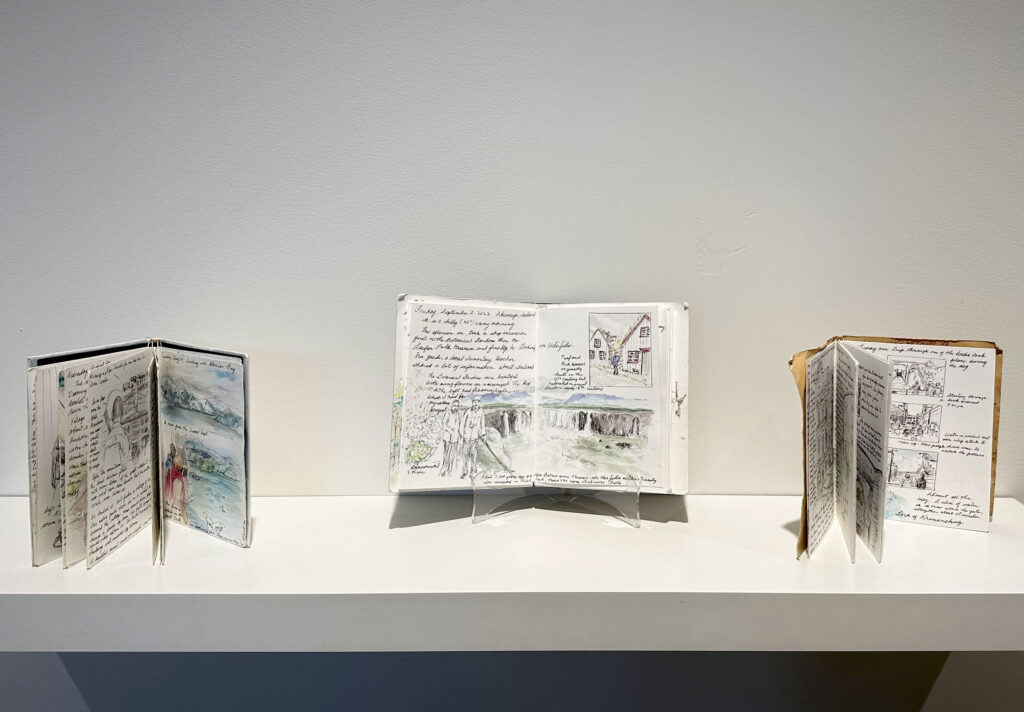
Journals by Kathy Pollak
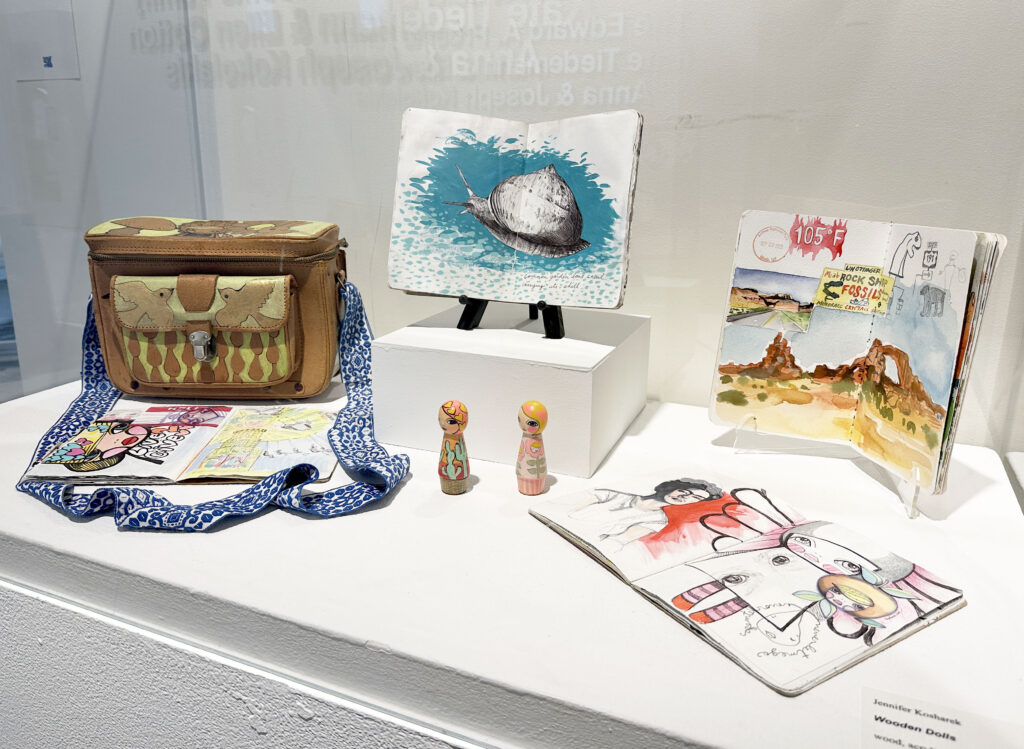
Work by Jennifer Kosharek
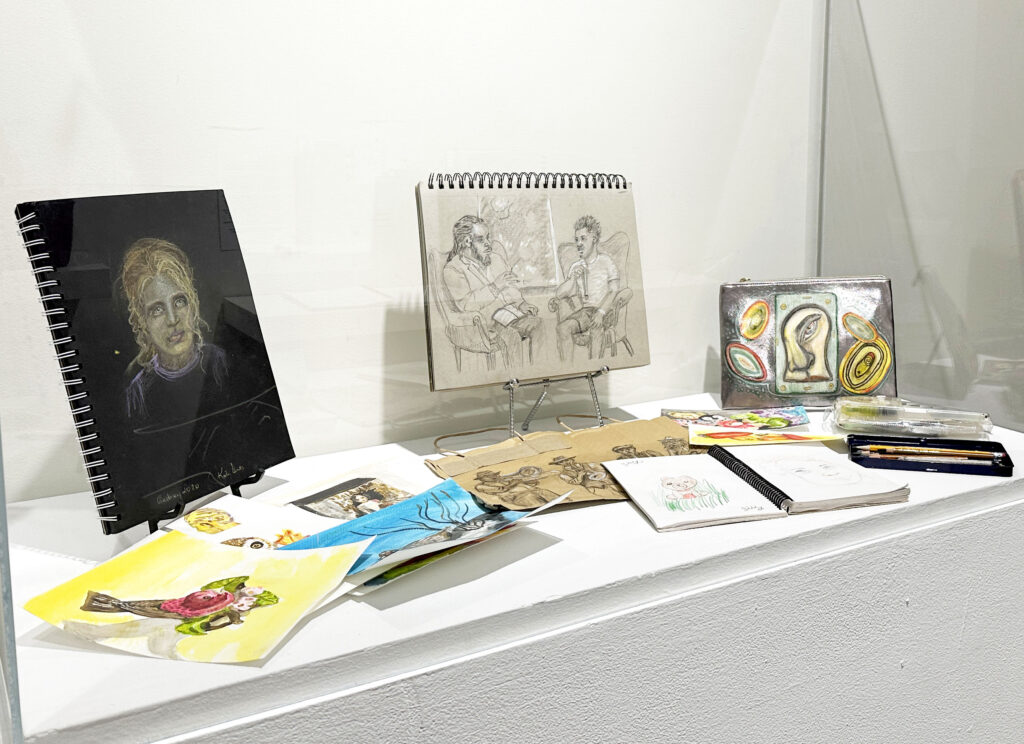
Work by Katy Deits
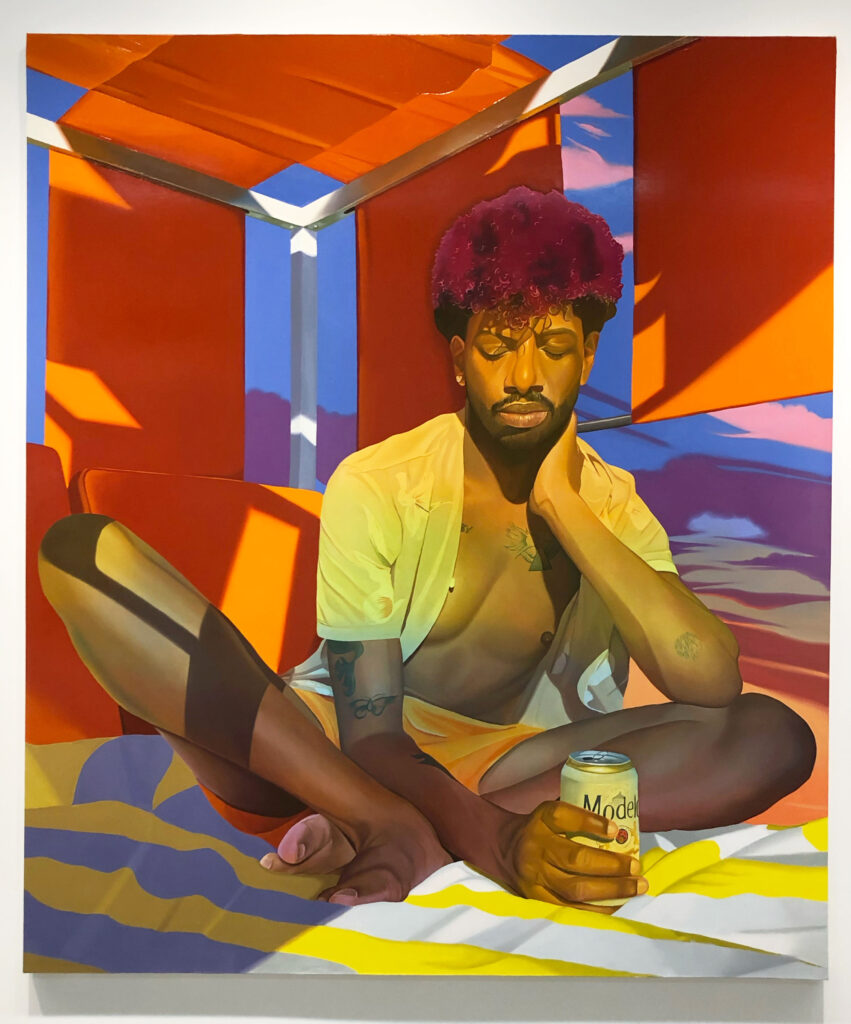
Danny Ferrell’s Thirty in Palm Springs, 2020 from the group exhibition, Sound & Color at Miles McEnery Gallery in 2020.


There are so many wonderful, detailed art works in Hannah O’Hare Bennett’s current exhibition Recede, on view at Dunedin Fine Art Center. They are all worthy of a closer look.
Below is the artist’s statement about the work-
“From the moment we are born until we die, we are almost constantly in contact with cloth as we move through our lives. Without thinking about it, we are familiar with its varied qualities–the simplicity of white cotton, the luxury of silk velvet, the flexibility of knitting, the structure of weaving. We can see the impact of time in a piece of fabric: how it wrinkles, stains, takes repairs, unravels. Handmade paper is a kind of non-woven cloth and is in fact often made of recycled cotton or linen. It can be dyed, stitched, wrinkled, torn, and repaired much in the same way as fabric.
My work explores the expressive possibilities of these materials, which I use to deal with my fascination with time altered urban and rural landscapes. A piece of land in the Oregon outback, the brick wall of buildings in Madison, a leafy Minneapolis neighborhood, etc. are all impacted by the passing of time, actions of human beings, weather. These occurrences can be incremental or sudden, and the change they bring almost imperceptible or very radical, each change layering on top of what came before. I use that observation to inspire my work. Fabric surfaces are worked over with layers and layers of pigments, embellished with embroidery, dunked into dye, cut and torn. Paper pulp is poured, dipped, mixed with sawdust, painted, crumpled and smoothed out again. In this small human way, I am channeling the world into the objects I create.”
The exhibition closes 8/13/23.


The above painting is Leslie Lerner’s My Life in France: The Oceanside (The Green Day), 2002, currently on view at Tampa Museum of Art.
From the museum’s wall plaque about the work-
Paintings and sculpture comprise Leslie Lerner’s series My Life in France, a fictional travelogue of the artist’s globetrotting alter ego. Inspired by Rococo painter Antoine Watteau (French, 1684-1721), Lerner’s work nods to the idyllic and lush canvases of 18th-century landscape paintings. The Oceanside (The Green Day) depicts a man standing on a grassy cliff and facing the ocean. His size pales in comparison to the vastness of the ocean he faces. Calming shades of aquamarine blue and moss green emphasize the serene beauty of the shoreline.
Born in Chicago, Illinois, Lerner developed his artistic practice in San Francisco and initially created installation art. He taught art in various colleges and universities in California for several years before relocating to Sarasota, Florida. For 15 years, Lerner served on the faculty at the Ringling College of Art and Design.

“A Cut Below”, 2000, Acrylic on canvas
Theo Wujcik’s painting, A Cut Below, is part of Tampa Museum of Art‘s All in Favor: New Works in the Permanent Collection, on view until 7/30/23.

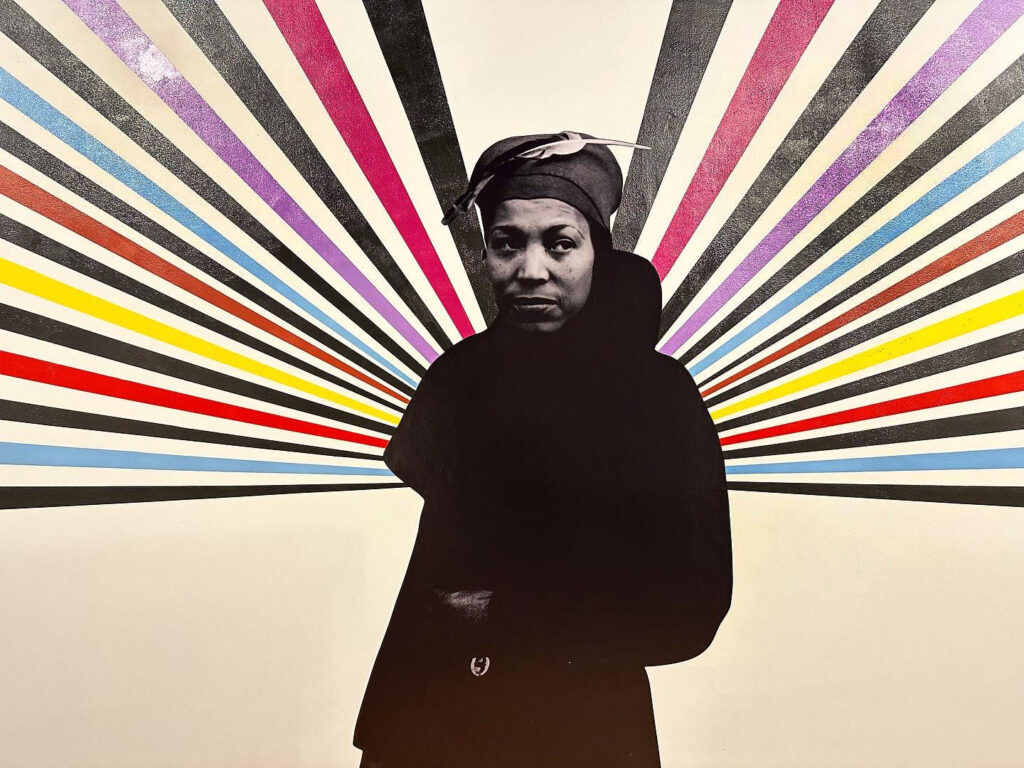
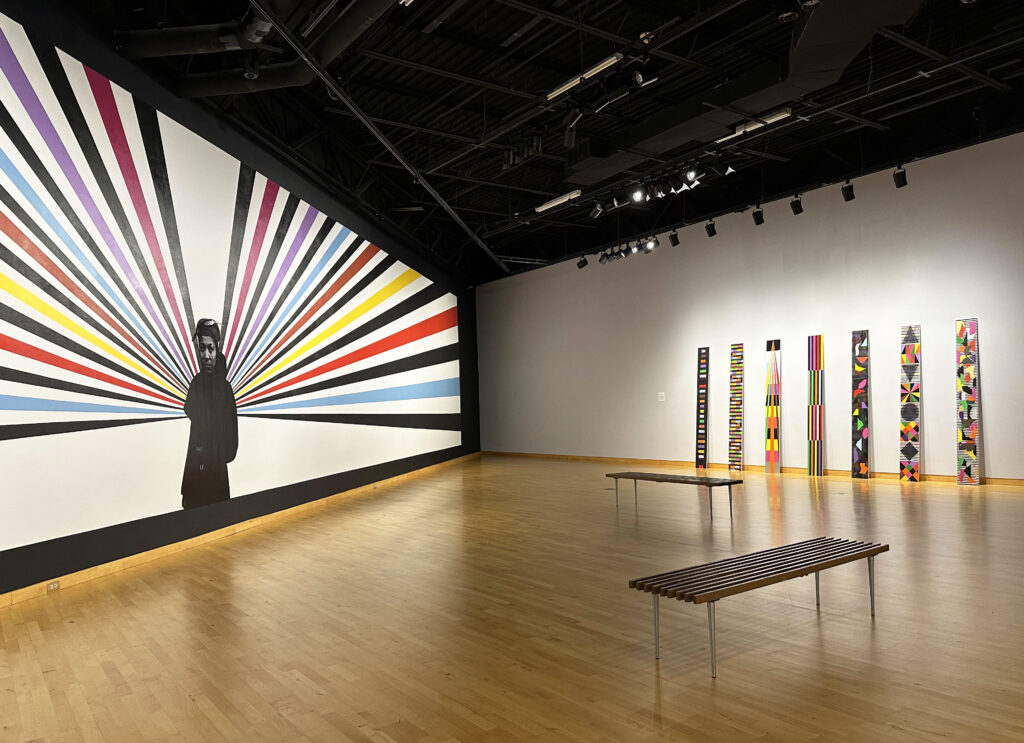
Currently at the University of Florida’s Contemporary Art Museum is Rico Gatson: Visible Time. The exhibition includes a collection of the artist’s paintings and works on paper, video works from 2001-present, and a life size mural of author Zora Neale Hurston.
From the museum’s website about the exhibition-
For more than two decades, Brooklyn-based artist Rico Gatson has been celebrated for his vibrant, colorful, and layered artworks. Inspired by significant moments in African American history, identity politics and spirituality, his oeuvre includes images of protests and longstanding injustices—touching on subjects like the murder of Emmett Till, the Watts Riots, and the formation of the Black Panthers—as well as dynamic abstract geometries that celebrate Pan-Africanist aesthetics and Black cultural and political figures.
About the mural, Zora III, commissioned by the museum (pictured above)-
Zora Neale Hurston was an American author, anthropologist, and filmmaker. She portrayed racial struggles in the early-1900s American South and published research on hoodoo (a set of spiritual practices, traditions, and beliefs created by enslaved Africans in the Southern U.S.). The most popular of her four novels is Their Eyes Were Watching God, published in 1937. Born in Notasulga, Alabama, Hurston grew up near Orlando, in Eatonville, Florida, incorporated in 1887 as one of the first self-governing all-black municipalities in the country. Despite her landmark achievements, Hurston died penniless and in obscurity in 1960-her novels and other writings largely unknown, until they were single-handedly rescued by novelist Alice Walker in 1975. Through his wall painting Rico Gatson extends the monumental impact of Hurston’s legacy-and Walker’s- into a visual arena reminiscent of the Mexican Muralists and hand-painted cinema signs.
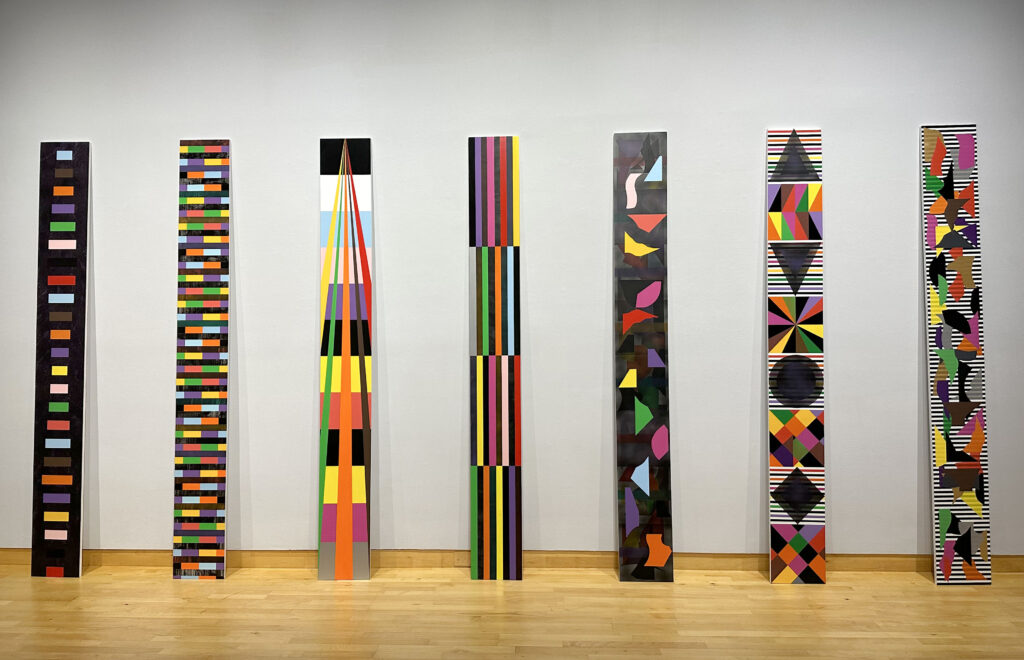
“Untitled (Seven Panels)”, 2022 acrylic paint on wood, in seven parts
From the museum’s wall plaque about the above paintings-
According to catalog contributor Mark Fredricks, Rico Gatson’s “panel paintings” resemble “a musical framework.” Arranged together along a single wall, the “rhythm” animating their colorful compositions and their “uniformity of structure” suggest, anthropomorphically speaking, musicians in a jazz combo. One of the many ways in which Gatson draws on music as a lasting influence in his art, his seven panels approximate what legendary jazz player Albert Ayler described as “the healing force of the universe,” but in three dimensions.
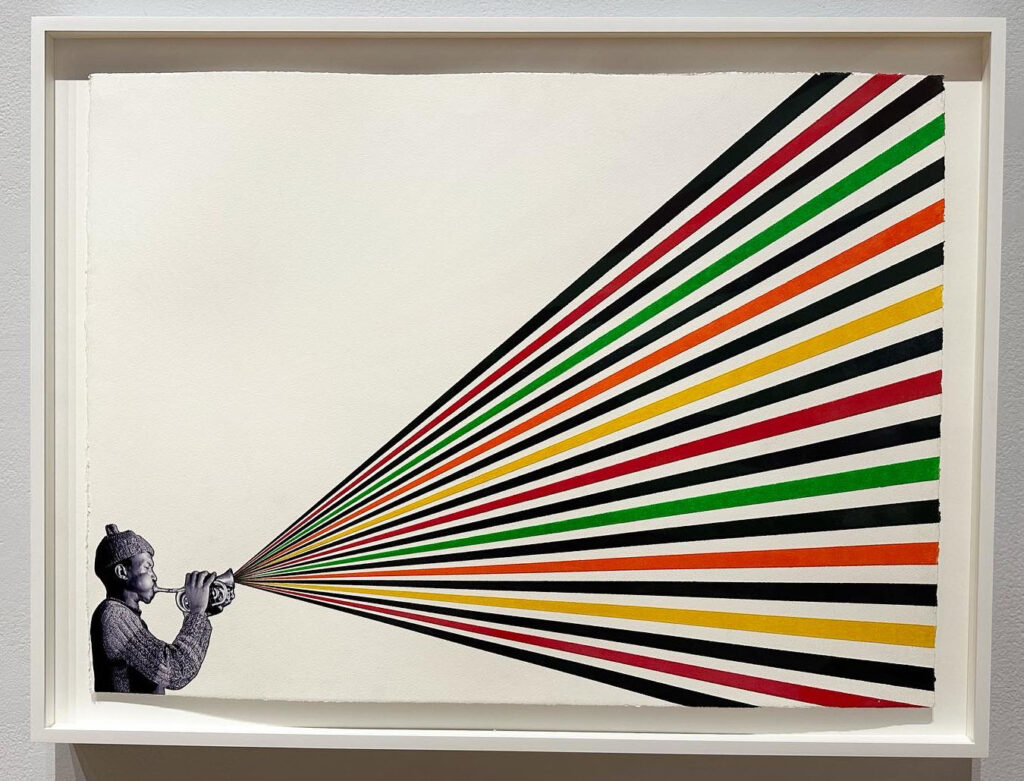
“Don” 2022, Color pencil and photo-collage on paper
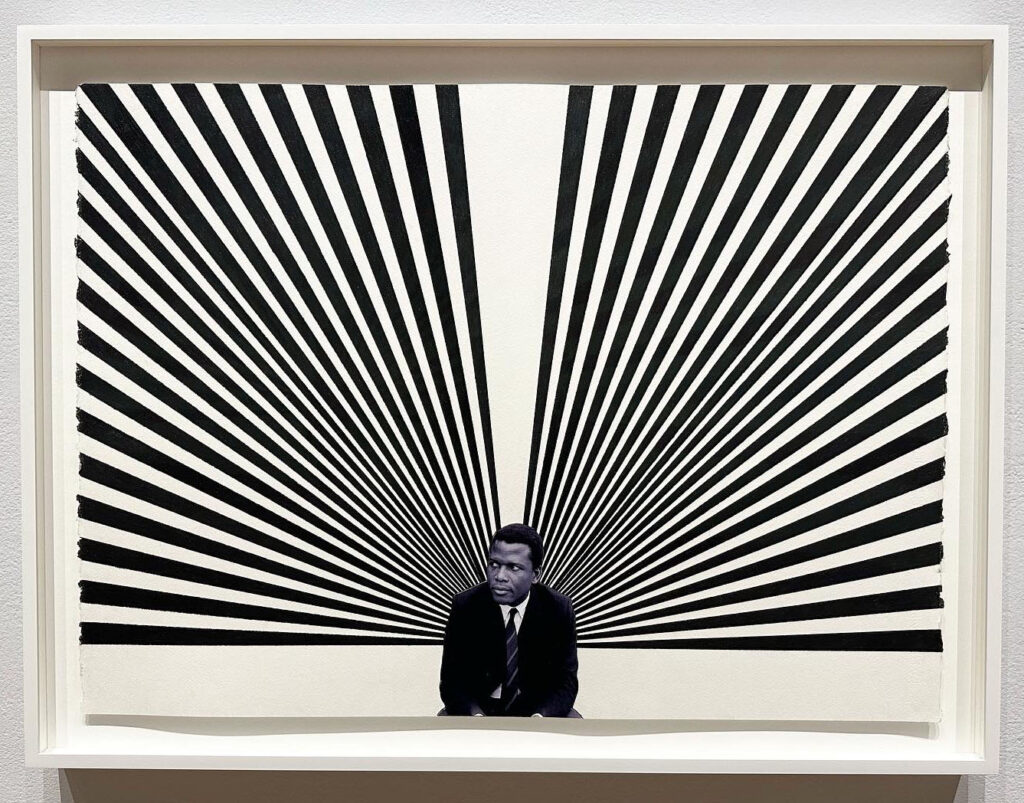
“Sidney” 2022, Color pencil and photo-collage on paper
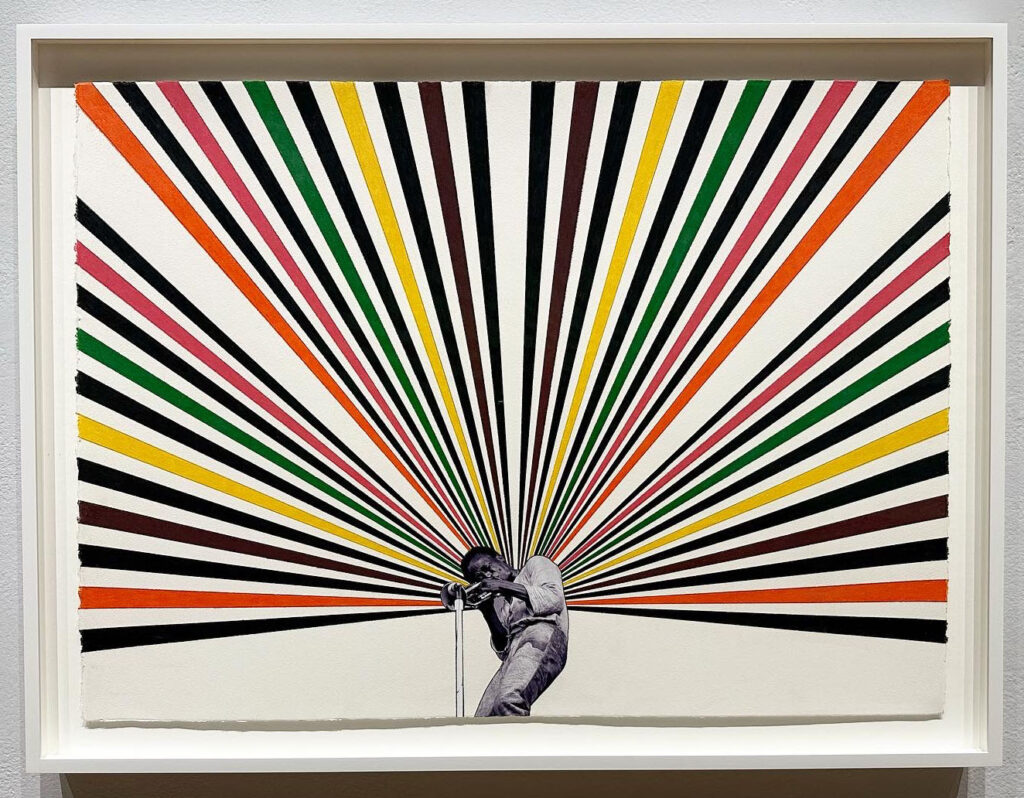
“Miles #2″ 2022, Color pencil and photo-collage on paper
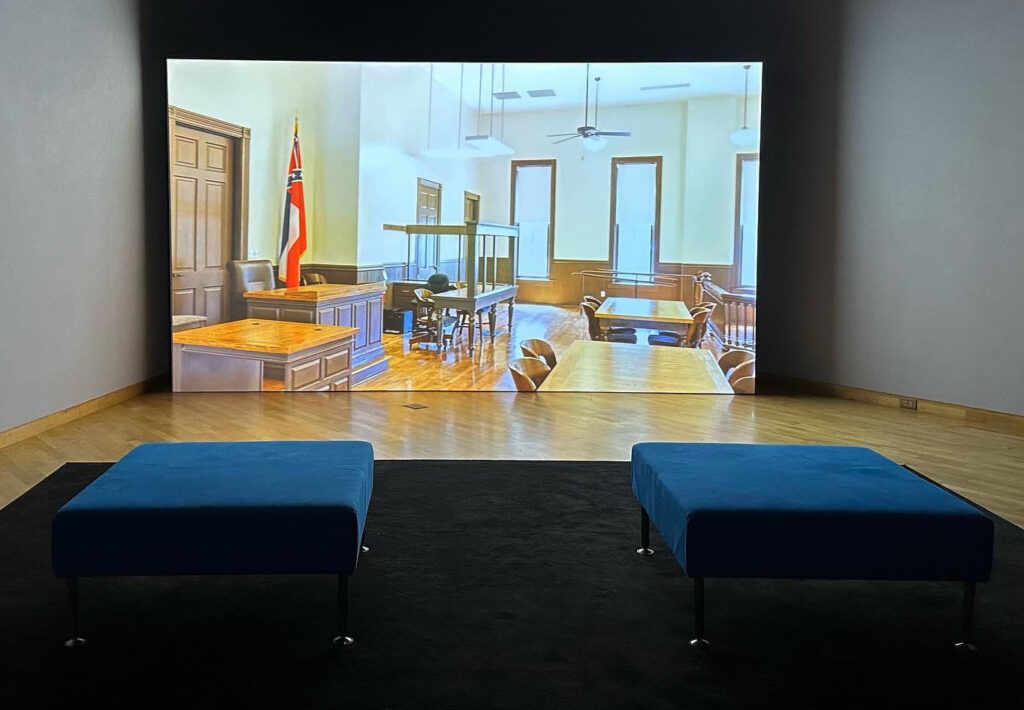
Below are images are from Four Stations, one of the five moving image works in the exhibition. For this work, Gatson traveled to Money, Mississippi and took handheld footage along the trail of places and events that led to the lynching of 14-year-old Emmett Till.
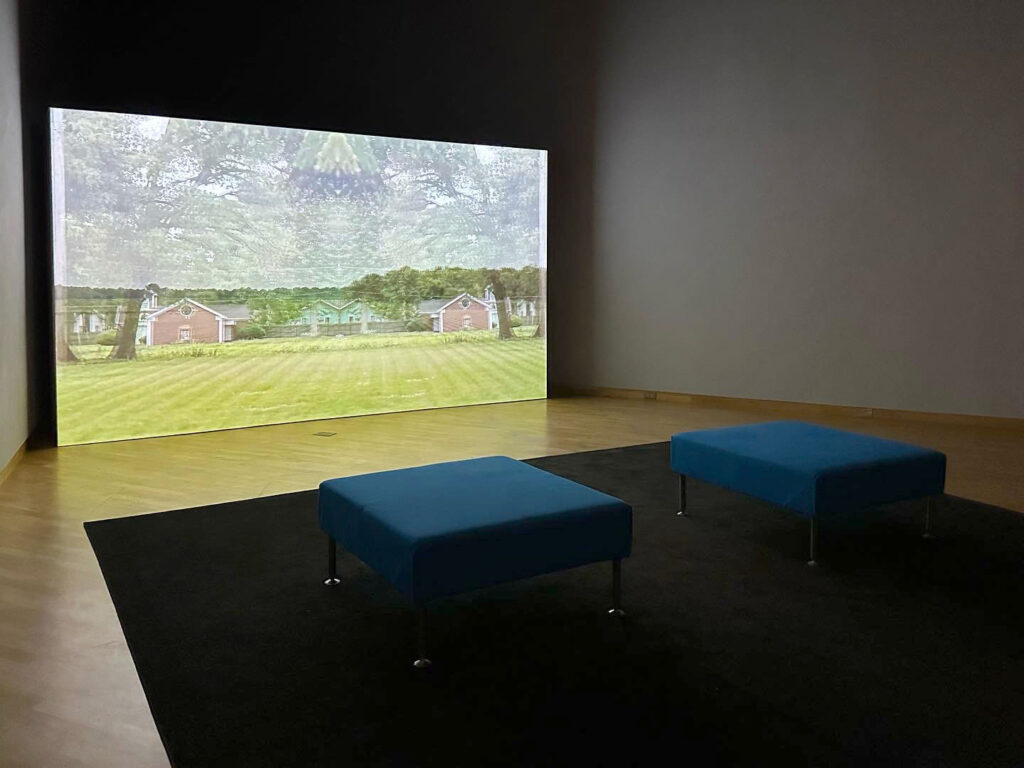
“Four Stations” 2017
On one of the smaller screens is Gun Play, 2001, a film collage that mixes sequences from Foxy Brown and The Good, the Band and the Ugly, combining them together with kaleidoscopic effects.
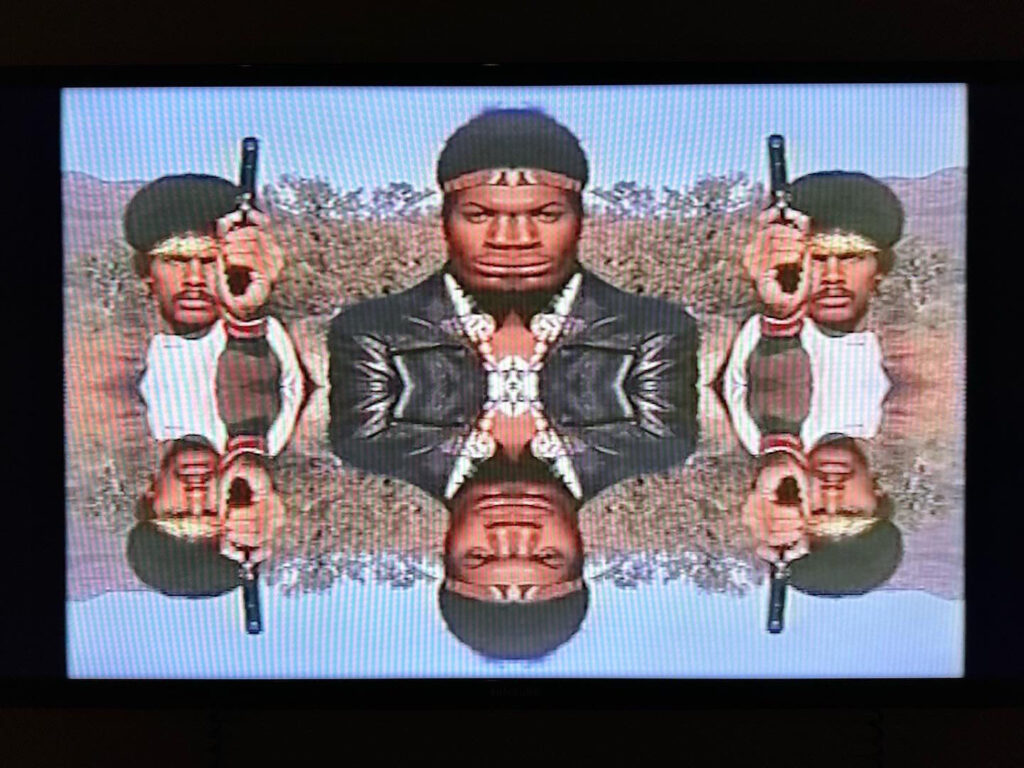
“Gun Play”, 2001, single-channel video, color, sound
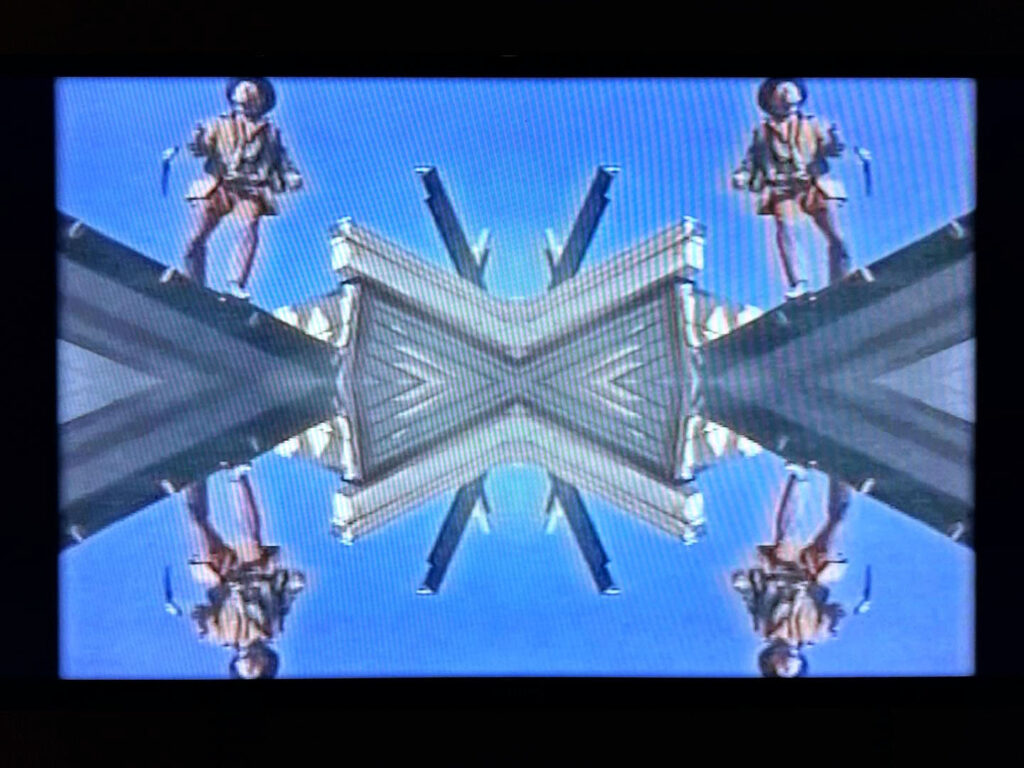
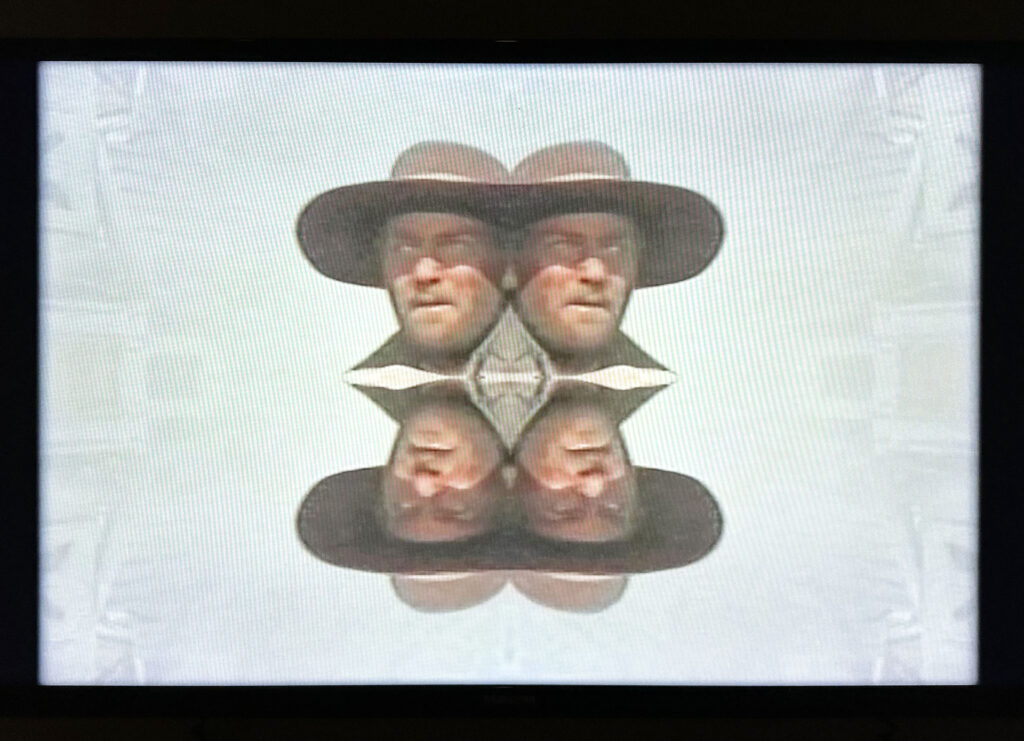
This Thursday 7/27/23, the museum will be showing Spike Lee’s Do the Right Thing, the last of the three films chosen by Gatson to accompany the exhibition.
The exhibition will close on Saturday, 7/29.

Built Landscape I, 2015, by Paul Davies, was included in Palm Springs Art Museum’s 2018 group exhibition, Eighty @ Eighty.
From the museum’s wall plaque-
Through a rich process of layering, mirroring, and mimicking, Davies explores the fusion of manmade and cultivated natural elements that comprise our environment. Reflecting a contemporary Southern California sensibility, his paintings are at once a dream of an idealized lifestyle made popular by midcentury modern architecture, and a commentary on how such structures interact with and fragment the world around us. This image references the unique periscope-like structure of architect Albert Frey’s first home in Palm Springs.
Davies’ work can currently be seen as part of Stark White gallery’s exhibition Surface Tension in Queenstown, New Zealand, on view until 8/20/23.