Mar 062019
 

Currently at The Rendon Gallery, at a pop-up space on Palmetto Street, is Los Angeles based South African artist Ralph Ziman’s exhibition, The Casspir Project. The Casspir is a massive military vehicle that was used to terrorize the civilian population in South Africa during the apartheid-era. Sadly, they are still used by police forces in certain parts of the world, including in the United States. Ziman, with a team of artists from Zimbabwe and the Mpumalanga province of South Africa, have covered the Casspir in brightly colored beads in traditional patterns, making something beautiful out of what was once a symbol of horror.

Although the vehicle is the centerpiece, the exhibition also focuses on the arms trade and includes photos, a video, and additional beaded work. From the press release-

For this iteration of The Casspir Project, Ziman has designed the massive gallery space with a “macro and micro” experience in mind. Each room within the gallery space brings context to the next, informing the project as whole. The exhibition starts with an installation of brightly colored AK-47s leading into a room with large photographs taken in Soweto. For the photos, Ziman recreated scenes from newspapers during the apartheid, incorporating many of the elements found within the exhibition such as the beaded guns and SPOEK 1. A screening room shows a 20 minute documentary by Ziman which tells the history of the Casspir, from its design and conception to people’s personal experiences with it in the ‘70s and ‘80s. It chronicles Ziman’s reclaiming of the Casspir, detailing how he transformed and Africanized it. The exhibition culminates with the dramatic presentation of SPOEK 1, lit only by a spotlight in a dark room.

Opening a dialogue between those who remember and those too young to know, The Casspir Project is a profound attempt to reconcile history. Ziman has reclaimed the savagely violent brute—embellished and bedazzled, the Casspir has been made less threatening, its power and authority subverted.

This exhibition has been extended through 3/10/19 and this weekend Ziman will be live painting at the gallery with artist Keya Tama.


Feb 232019
 

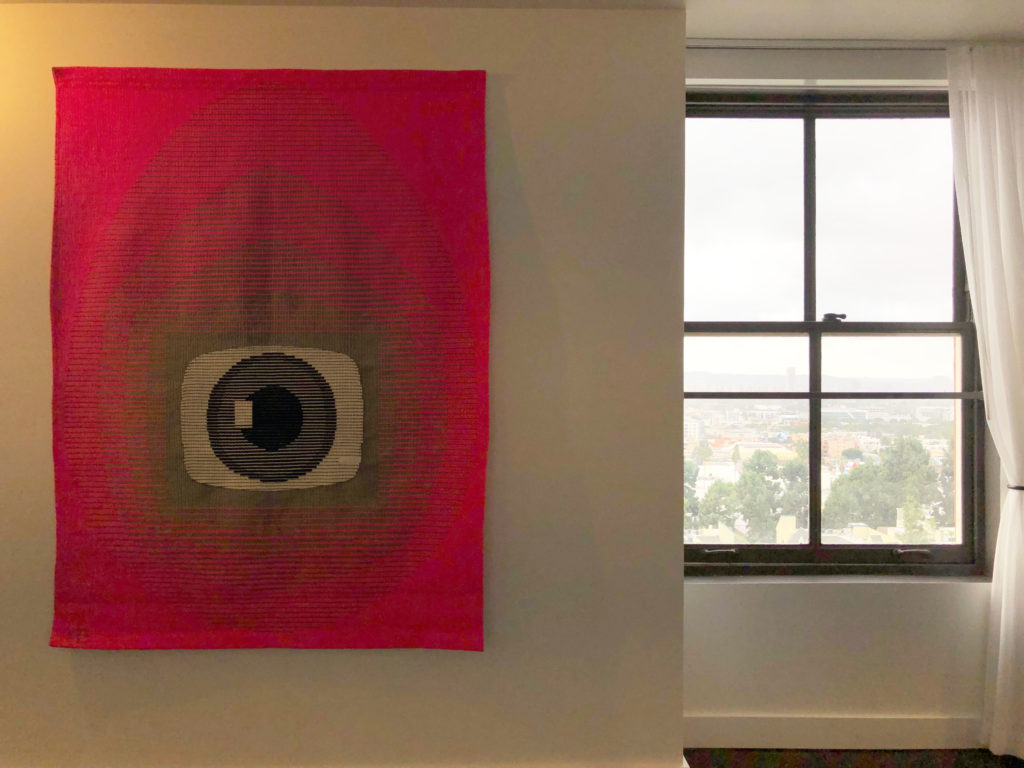
Artist Pierre Daquin’s tapestry “La Vue” courtesy of Galerie Chevalier as part of The 13th Floor project

Several art fairs took over Los Angeles last weekend, two of which used hotels to create temporary galleries and installations.

At the The Hollywood Roosevelt was the first edition of Felix, a free art fair co-founded by Dean Valentine along with brothers Al Morán and Mills Morán (of LA gallery Morán Morán). Galleries took over rooms along the pool, on the 11th floor, and the penthouse.  Starting at the penthouse was The 13th Floor (pictured above), a collection of work by French artists curated by writer Andrew Berardini and presented by The French Committee of Art Galleries and the Cultural Services of the French embassy.

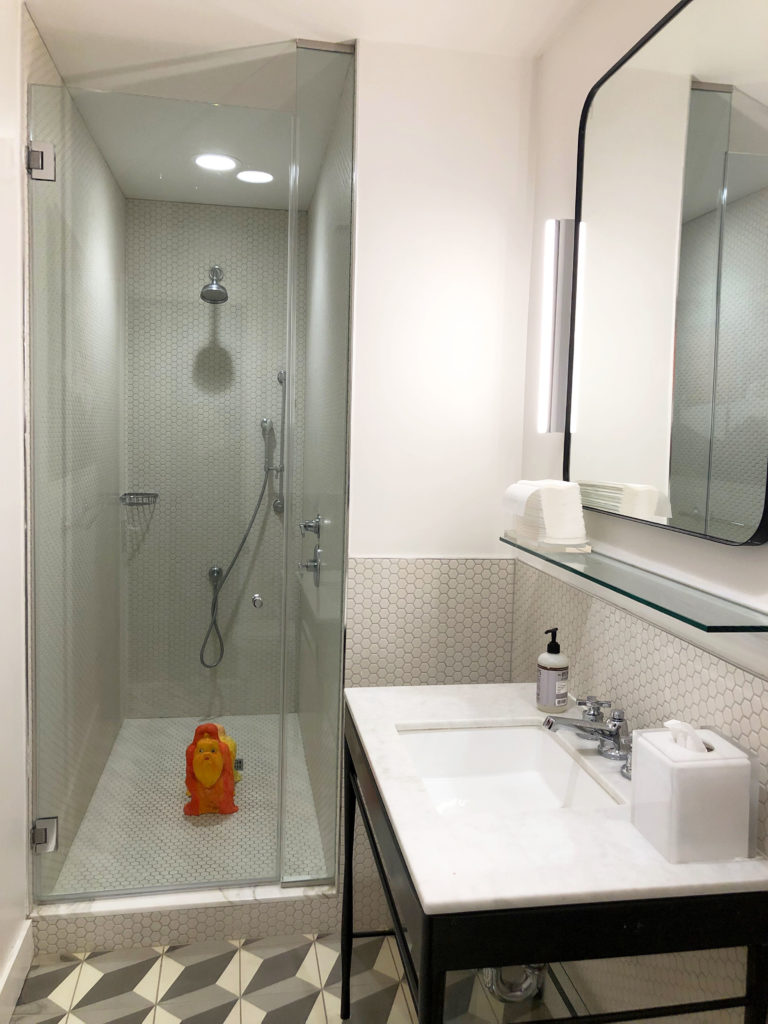
Kenny Schachter had some fun pieces in his room on the 11th Floor including Ilona Rich’s sculptures, one of which was in the bathroom shower (pictured above), and a framed collection of artist Chris Burden’s cancelled checks.

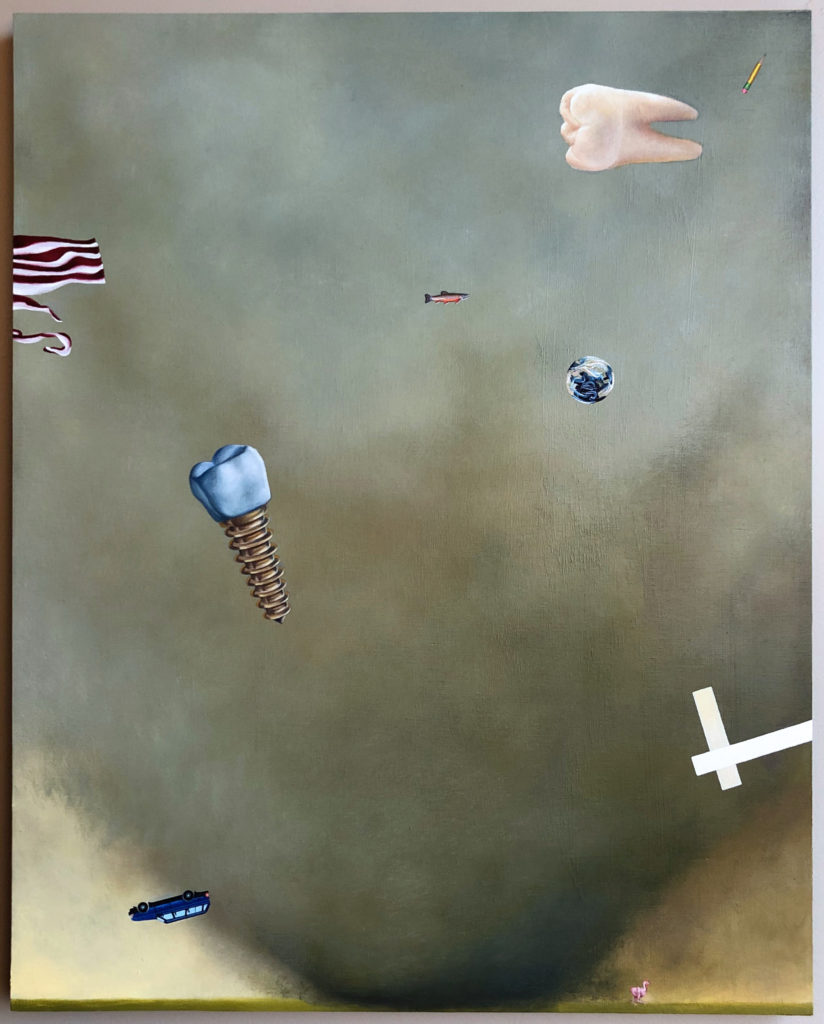
Bodega gallery, from New York’s Lower East Side, had a selection of interesting work including paintings by Alexandra Noel.

Alexandra Noel, “And then the air was filled with 10,000 things (or when a minor piece of wood becomes a missile)”

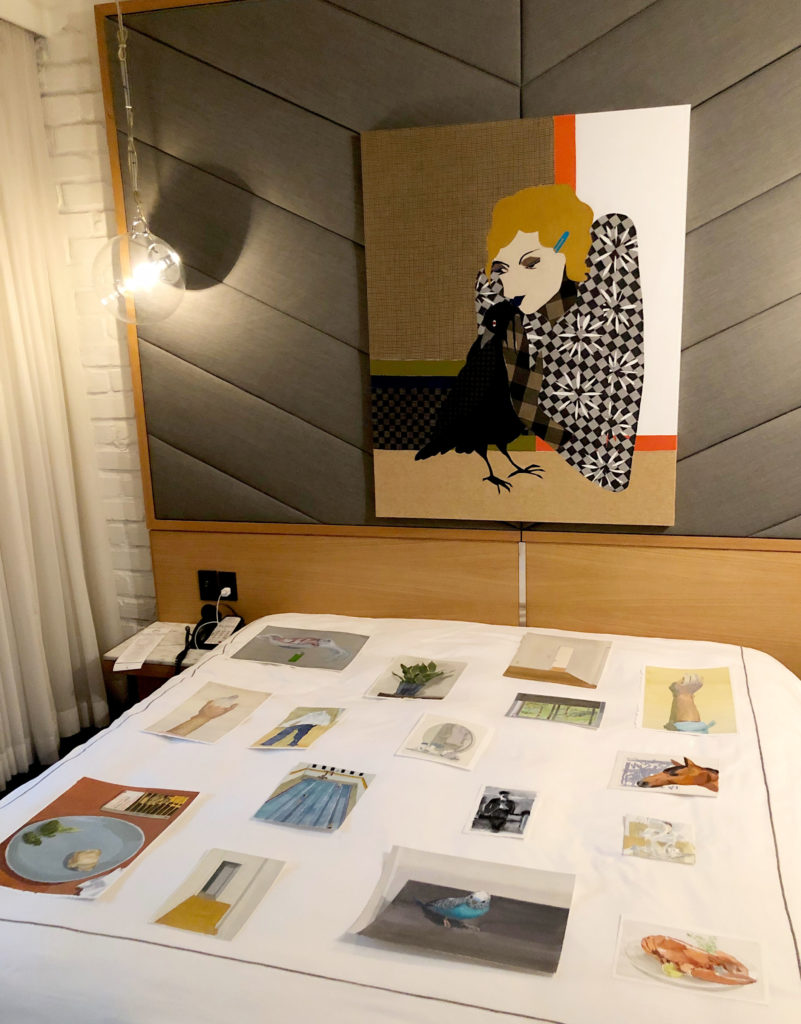
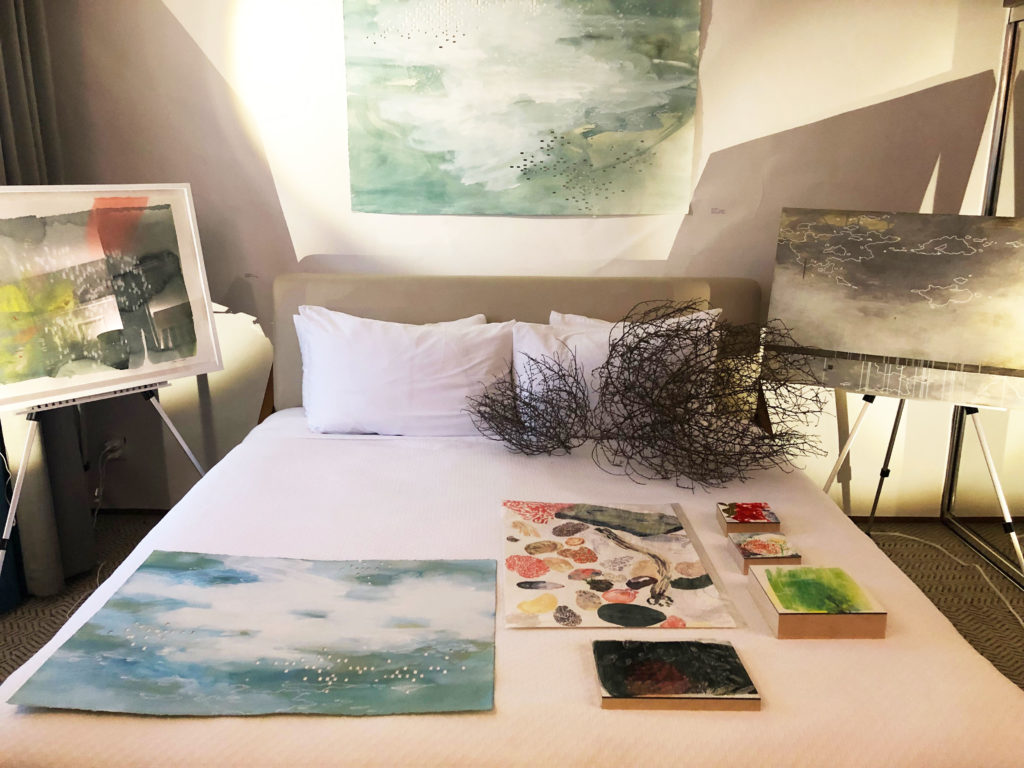
Grice Bench’s selections included a collection of lovely watercolors by Roger White and a painting placed above the bed by Lara Schnitger.

Work by Lara Schnitger and Roger White

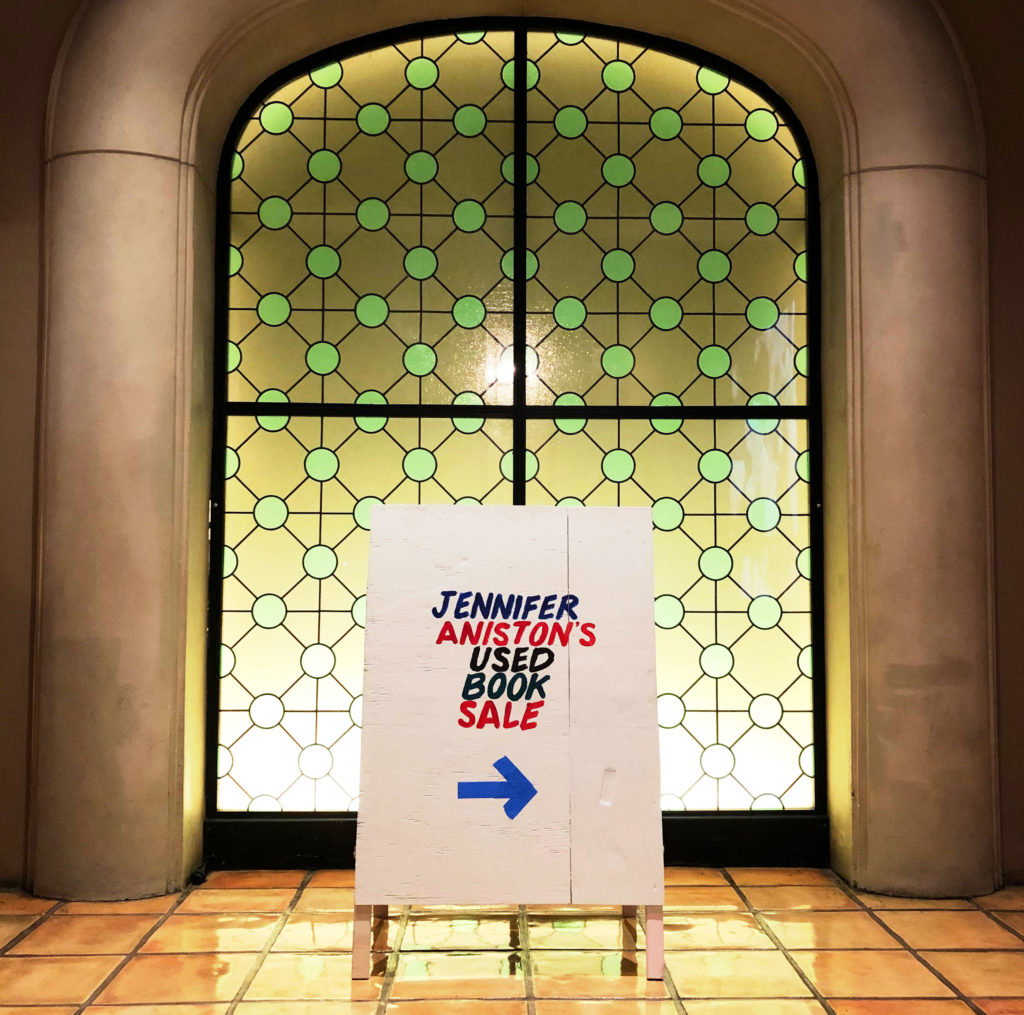
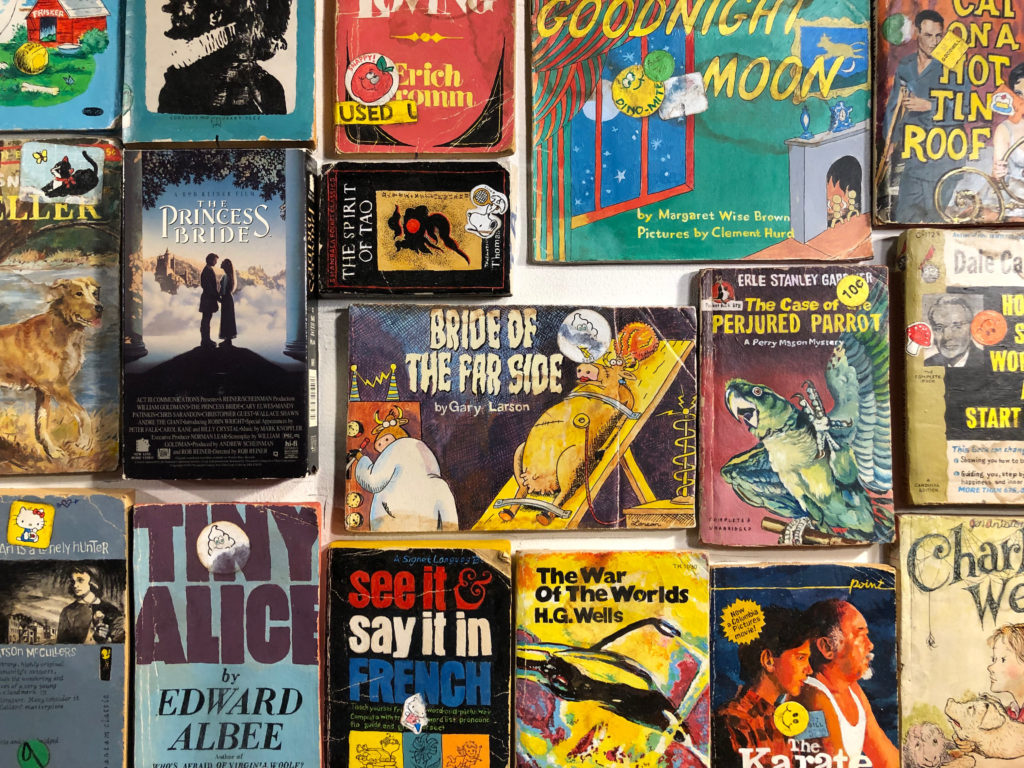
On the ground floor Marc Selwyn Fine Art presented Jennifer Aniston’s Used Book Sale, artist Kristen Morgin’s incredibly realistic ceramic replicas of books she imagines might make up the actress’ collection (the VHS tape is real).

Kristen Morgin’s ceramic books

At a hotel in a completely different part of town was the stARTup Art Fair, taking place at The Kinney in Venice. Here, instead of galleries representing the artists, it’s the artists that set up their rooms and sell their art.  It made for a great experience as the artists were all very friendly and eager to discuss their work. Below are a few highlights from the fair.

Lisa Kairos and Melissa Mohammadi’s work

“Leaf Insects Turn Into Butterflies” by Melissa Mohammadi

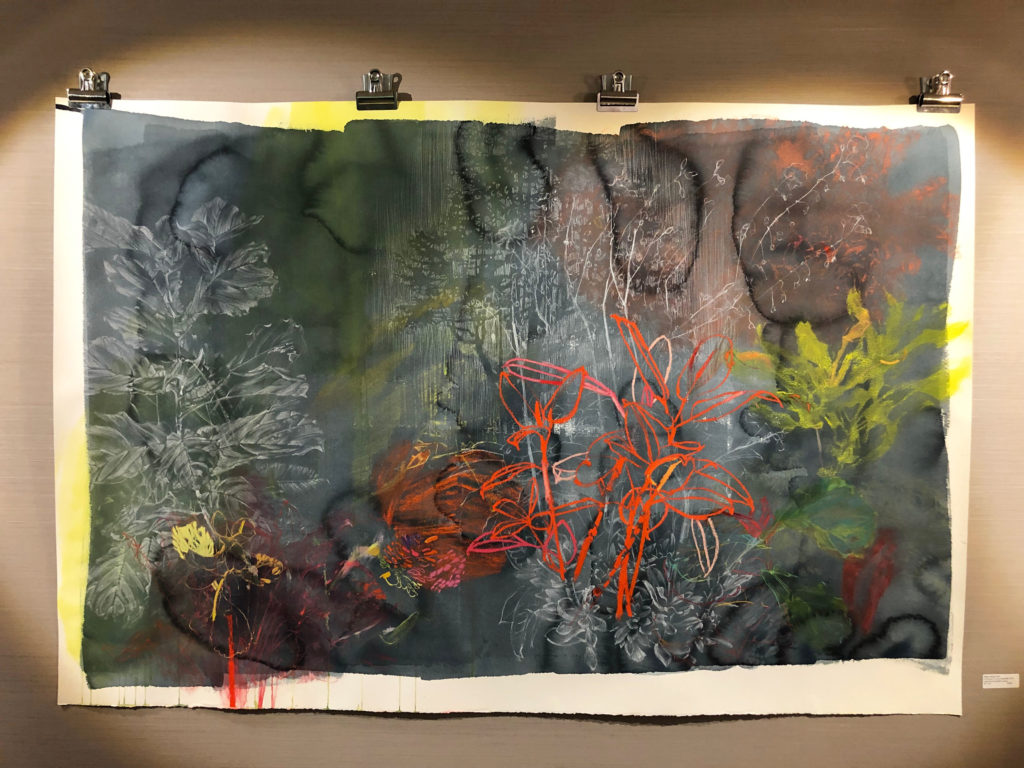
San Francisco artists Lisa Kairos and Melissa Mohammadi’s room was filled with really beautiful work. Kairos makes dreamy multilayered paintings based on natural landscapes. She then cuts patterns into the images which adds yet another dimension to the paintings. Mohammadi’s work incorporates botanical and marine life into a meditative world where bright pastels stand out among subdued watercolor backgrounds; highly detailed sections mix with the more abstract. The end result for both artists is work you want to spend time looking at.

Work by Annie Galvin of 3 Fish Studios

Work by Eric Rewitzer of 3 Fish Studios

Husband and wife artists Eric Rewitzer and Annie Galvin of 3 Fish Studios in San Francisco had lots of great, affordable prints. They also teach printmaking and collage classes in their studio.

One of Camilla Magrane’s artworks

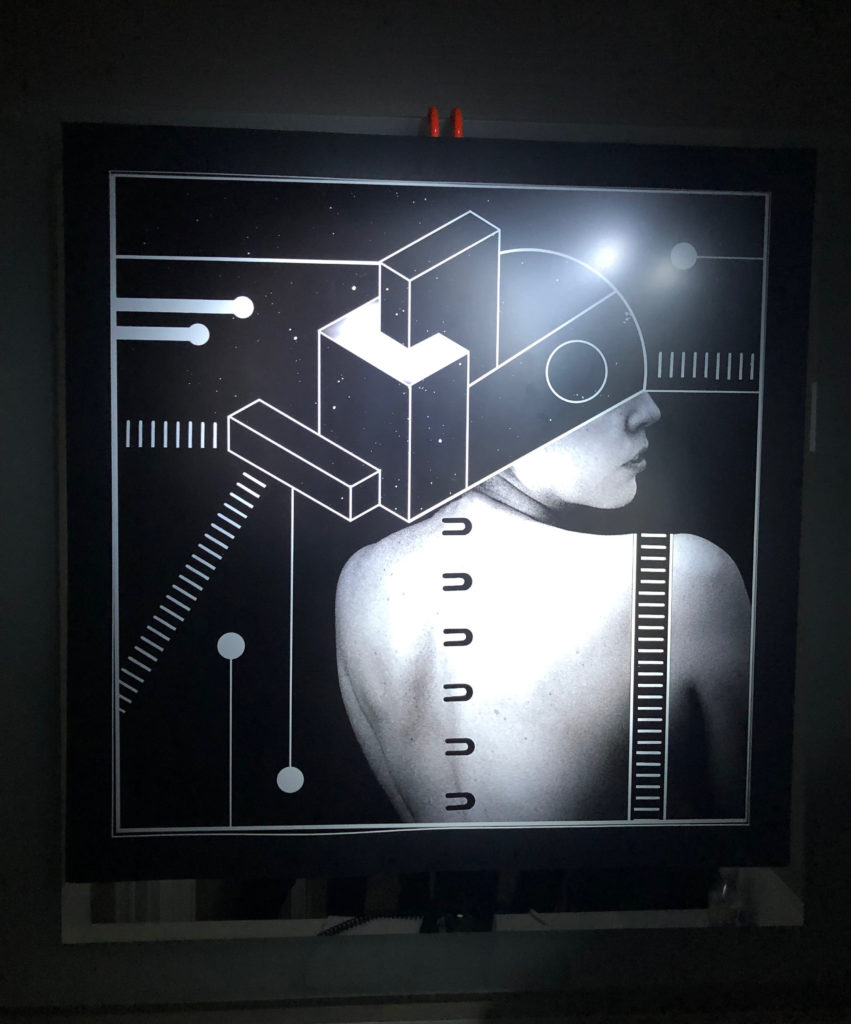
Artist Camila Magrane had several pieces in her darkened hotel room that use augmented reality technology to make the works animated and three dimensional when looked at through her Virtual Mutations app. The video above illustrates the effect.

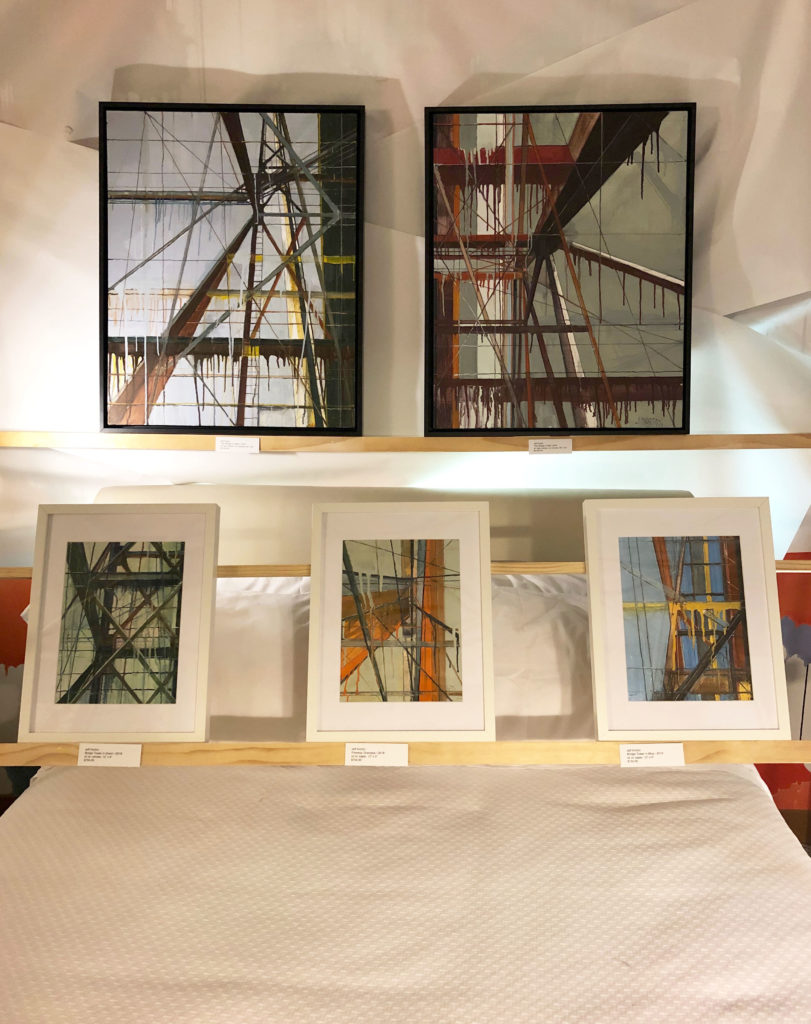
Jeff Horton uses his architecture background to create paintings of urban structures (often larger than what’s pictured above), some of which incorporate wax with oil paint for an added layer.

Other artists work not shown but worth checking out- Margaret Hyde makes ethereal still life photographs of natural objects she finds and combines with water, and Kyong Ae Kim showed a variety of impressive work including her animal skulls cut from multiple layers of drafting film and acrylic paintings combined with hand cut elements.


Feb 162019
 

This month there are a lot of excellent exhibitions on view in Chelsea.

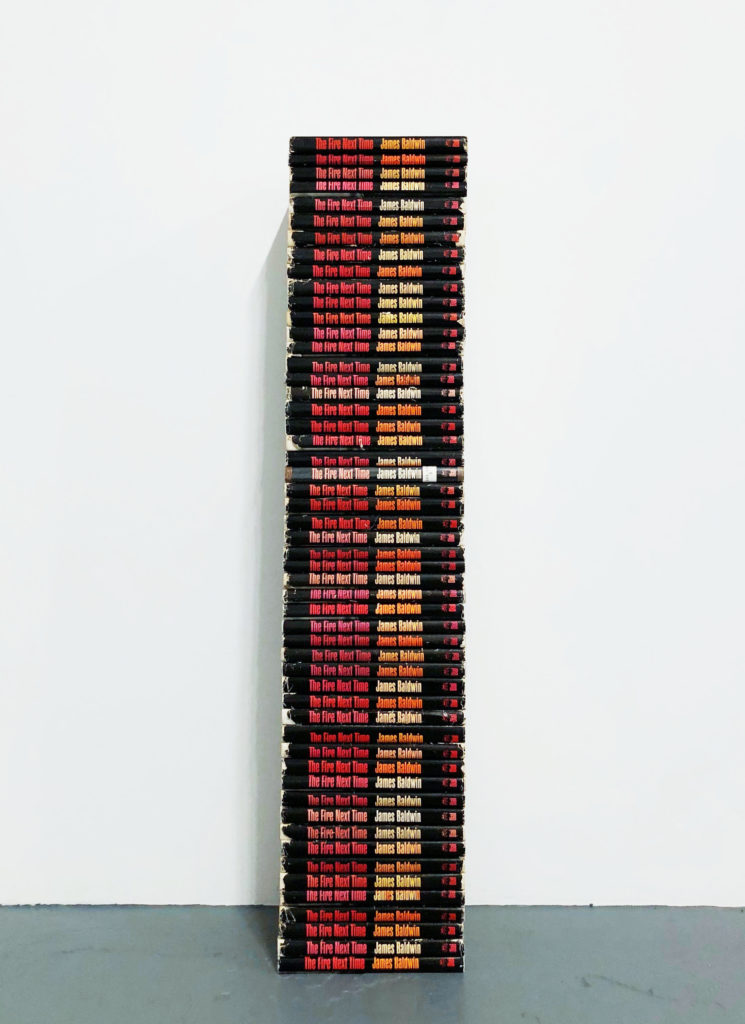
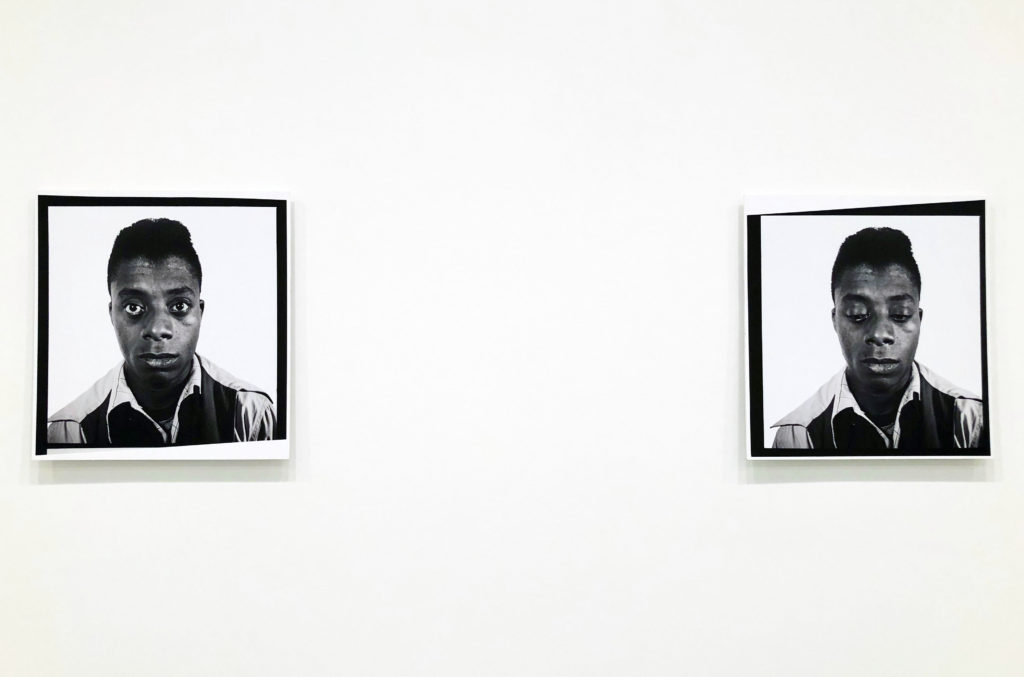
At David Zwirner is God Made My Face: A Collective Portrait of James Baldwin, a group show curated by writer Hilton Als. The works are varied and include portraits by Richard Avedon (shown above), a friend of Baldwin’s who also attended De Witt Clinton High School with him, as well work by Njideka Akunyili Crosby (seen below), Kara Walker, James Welling, Beuford Delaney, Glenn Ligon and many more.
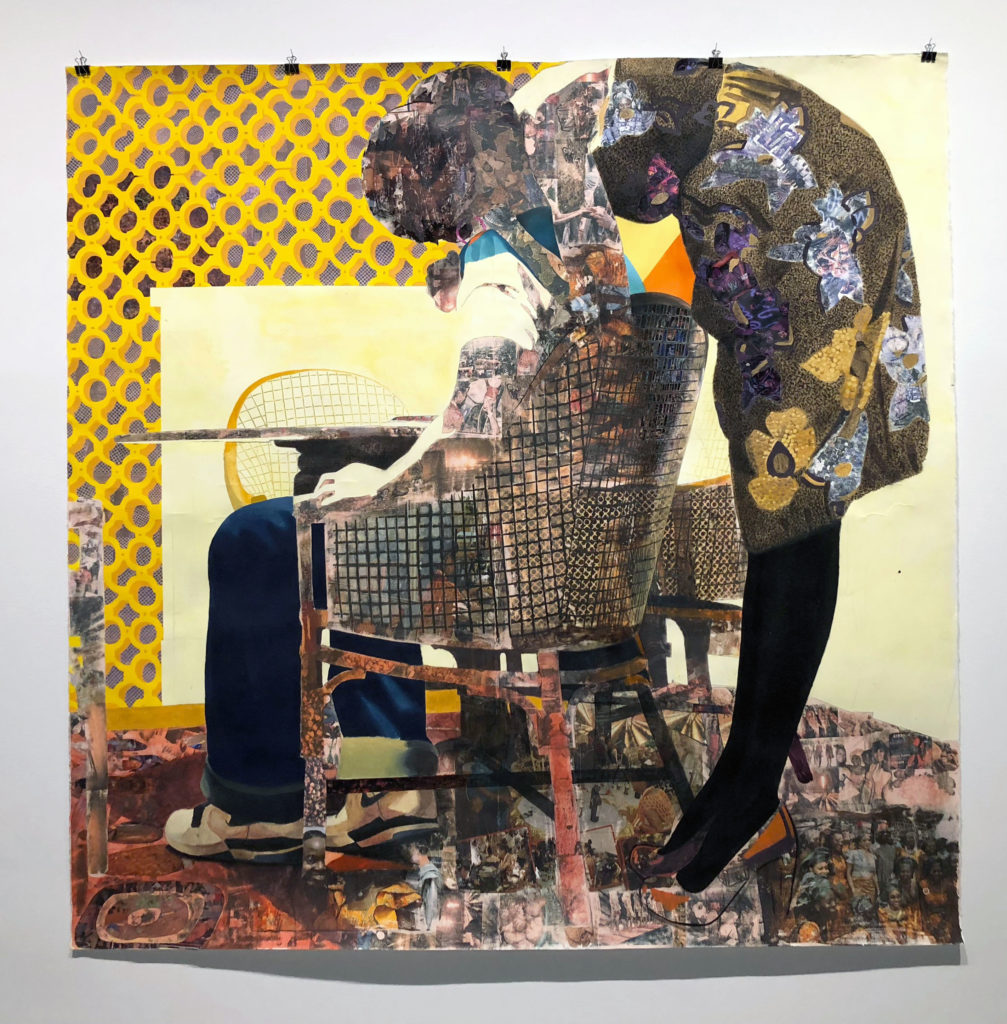
Nyado: The Thing Around Her Neck, 2011 by Njideka Akunyili Crosby

At Marianne Boesky Gallery is Pure, Very, New, Paul Stephen Benjamin’s first solo exhibition in New York. The exhibition includes paintings, photographs, sculpture, and single and multi-channel video installations, as well as a new site-specific black light installation in the internal passageway between the two spaces.

From the press release

Benjamin’s practice is rooted in a vigorous meditation on blackness, considering: “What is the color black?” “What does black sound like?” “Is it an adjective, a verb, an essence, or all of these components mixed to create a nuanced whole?” For his large-scale monochromatic paintings, Benjamin thickly coats the canvas in varying shades of black, producing a sensation of boundless depth. This is further accentuated by Benjamin’s application of the particular tonality’s name within the field of color—the words appearing to float and dissipate within the richness of the paint itself. The development of these paintings followed an ordinary visit to a hardware store, where Benjamin was confronted with the many permutations of commercial black paint. Shades of black came with emotive titles like “Totally Black,” “New Black,” and “Pure Black,” among numerous others. For Benjamin, this sparked a multi-layered investigation of the color and whether it could be distilled or understood differently within the context of a painting or the color itself.

 … Benjamin’s practice also extends into a conceptual investigation of sound, and how “black” can be conveyed and experienced aurally. In these works, he often uses single and multi-channel video installations to loop portions of particular historic and cultural footage to isolate fragments of collective memories or internalized narratives. With Black is the Color (2015), which will be included in the exhibition, Benjamin arranges a towering cluster of antiquated televisions, forming a glowing grid that endlessly repeats a segment of Nina Simone’s 1959 performance of “Black is the Color of My True Love’s Hair.” Here, Benjamin appropriates only the words “Black is the Color,” creating an abstraction of the song that reveals the contradictions and parallels between the notion of black being the color and it being a color. Moving fluidly from sound installation to painting to photography and sculpture, Benjamin’s practice is driven by the idea that blackness, whether explored as a matter of conceptual inquiry or identity, cannot be captured in a single action, emotion, or language.
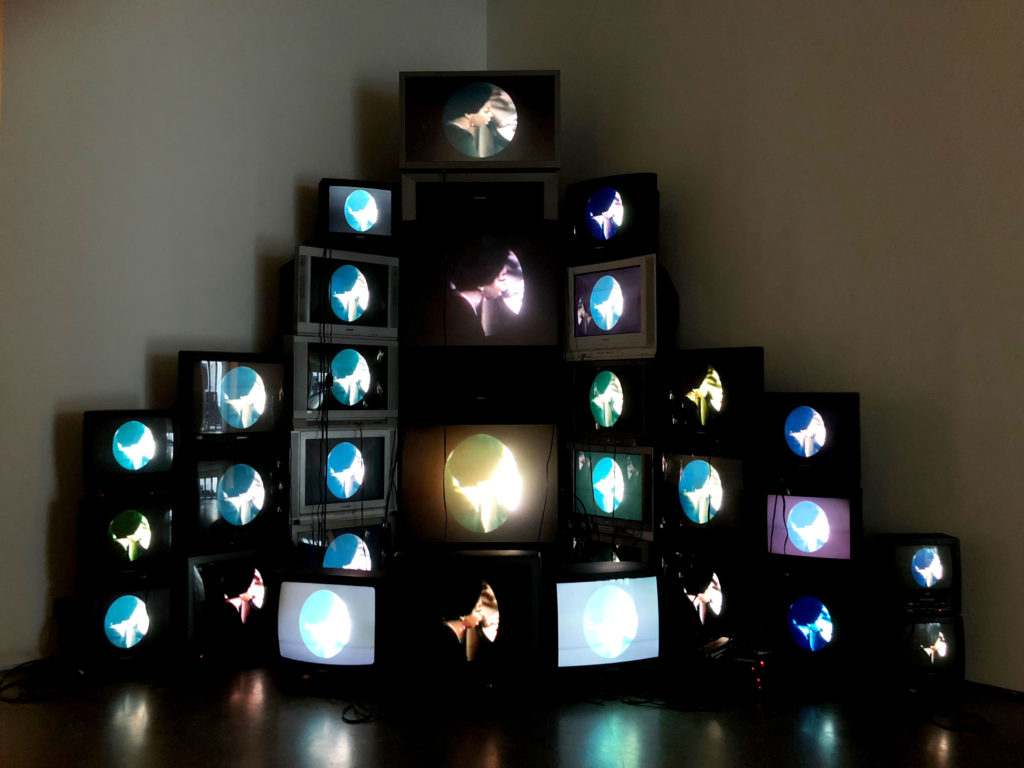
Black Is The Color 2015 by Paul Stephen Benjamin

At Yancey Richardson is Blue Sweep, an exhibition of Andrew Moore’s beautiful photographs, taken in Alabama and Mississippi over the course of three years.
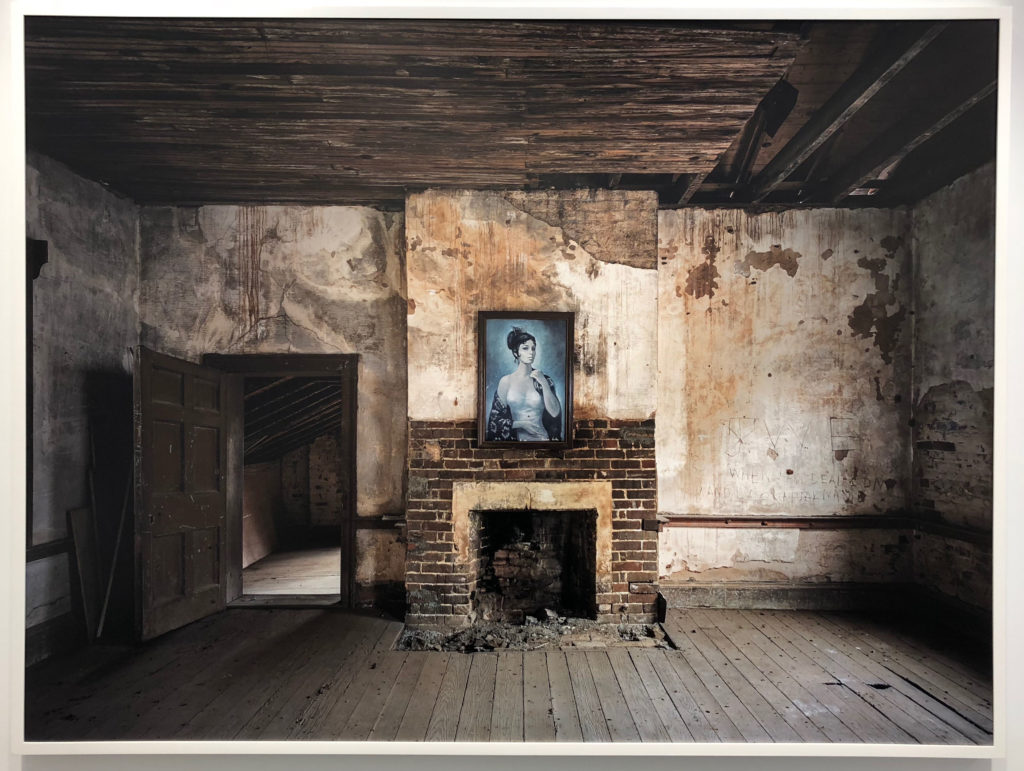
Carmen, Saunders Hall, AL 2015 by Andrew Moore

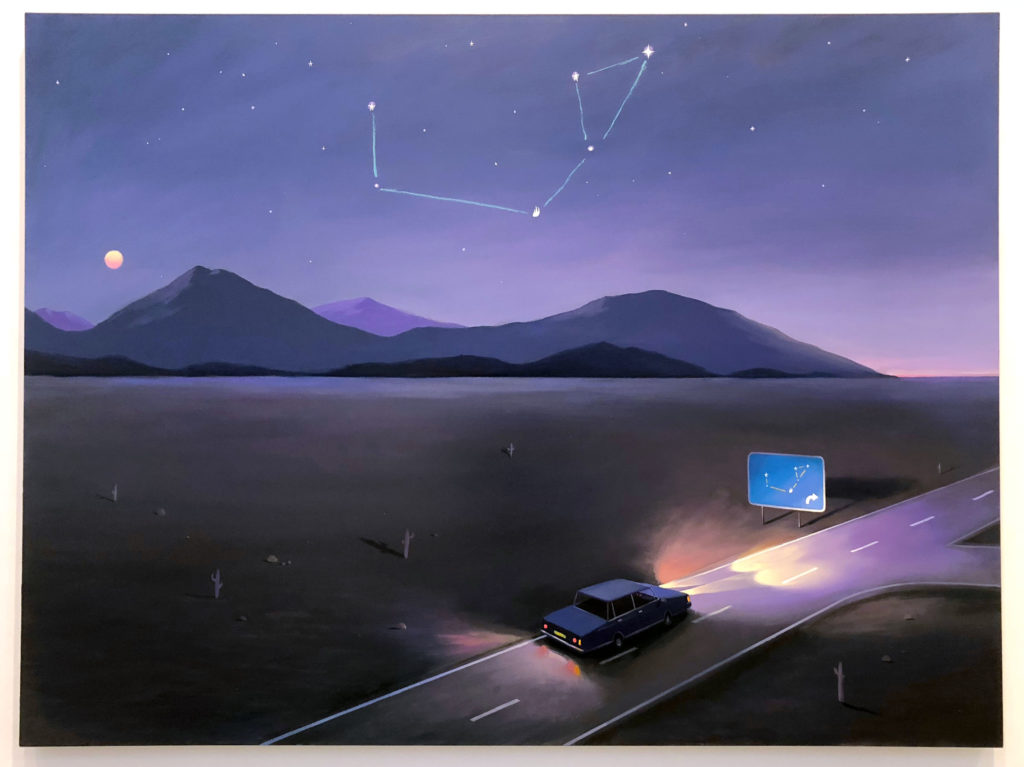
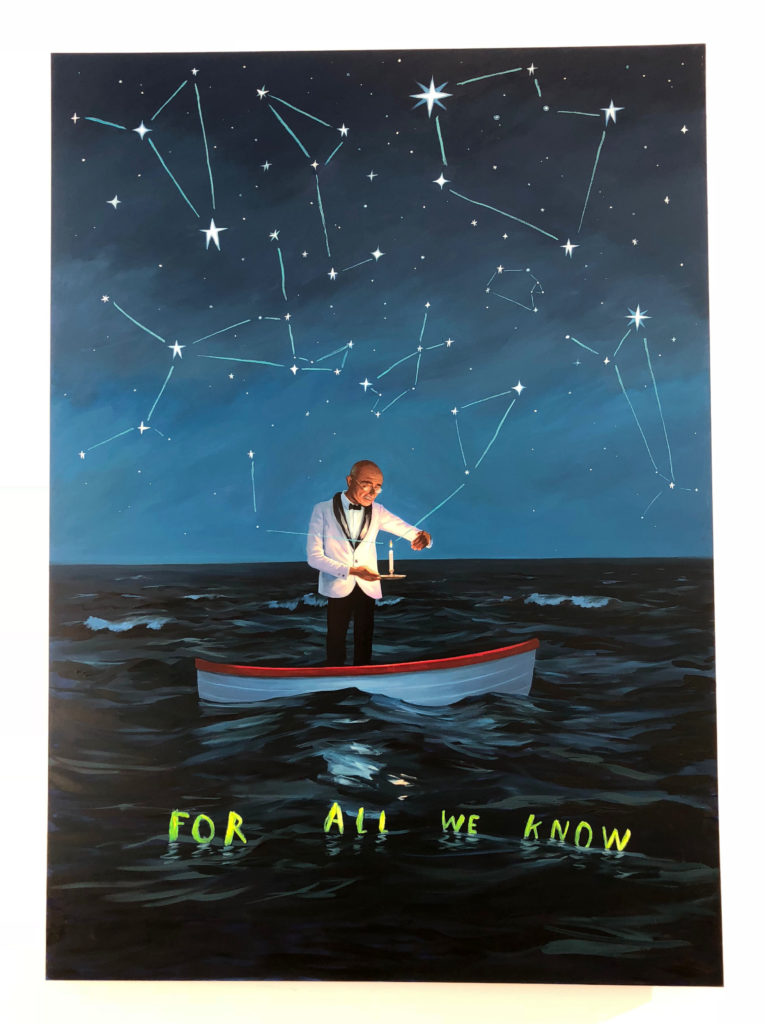
At Bryce Wolkowitz Gallery is Oliver Jeffers’ charming painting exhibition For All We Know. If his work looks familiar it may be because Jeffers is also the author of several critically acclaimed picture books.

From the press release

This series of paintings illuminate a dream-like nocturnal world populated by astronauts, deep-sea divers, sinking ships, floating pianos, and burning matches. Omnipresent throughout are the night sky and the ocean – the two great and unknown frontiers – glittered with the imaginary lines that create constellations, serving in this case as a mysterious key to unlock our world.

Expanding on years of observation, from the history of his upbringing in Belfast, to contemporary New York City, Jeffers’ evokes the precarious state of our home and its inhabitants. Inspired by Buckminster Fuller’s seminal book Operating Manual for Spaceship Earth, he presents pianos as dubious flotation devices and our planet presented as a cumbersome motor vehicle, overheating as we argue over what to play on the radio. From researching astronaut’s descriptions of looking at Earth from the distance of the Moon, Jeffers noticed certain recognizable patterns to the way in which he discussed the politics of his hometown from a vantage point of across the Atlantic Ocean. In finding that few people outside of Northern Ireland knew or cared of the intricate conflict there, a great waste of time was revealed: a divided population identical to each other in every way save for the flags they flew and the stories they told. Tragically, each side’s identity are still firmly rooted to the existence of the other, and therefore locked into a spiral of repeated patterns.
 

At both of Jack Shainman’s locations are a series of impressive paintings by Lynette Yiadom-Boakye.

Black Allegiance to the Cunning, 2018 by Lynette Yiadom-Boakye


For a new kind of exhibition experience, Asad Raza has organized the group show Life to Come, at Metro Pictures which “brings together works that meditate on the creation of new worlds and new models for living.” There are no labels or listings for the works included in the show. Instead there is a guided tour by hosts who take you around the various works to help you draw connections between the objects. Adding to the uniqueness of the experience, at one point the host pauses while talking and partially in motion, recreating a work by artist Tino Sehgal, and at another they show you that they have changed their eye color, a work by Rirkrit Tiravanija.

From the press release

Experiencing these works together incites intellectual, physical, and spiritual understandings of what it means to make an entirely new world, one in which reality is made from fiction. Raza asserts that “by re-immersing ourselves in the strangeness and fecundity of attempts to create worlds that have gone before, our imagination of a world beyond the present may be renewed.” The uncertainty about what new paradigm awaits us is unsettling in the wake of the modernist 20th century, but it links us to previous generations who experienced radical reinventions of biological and social life.
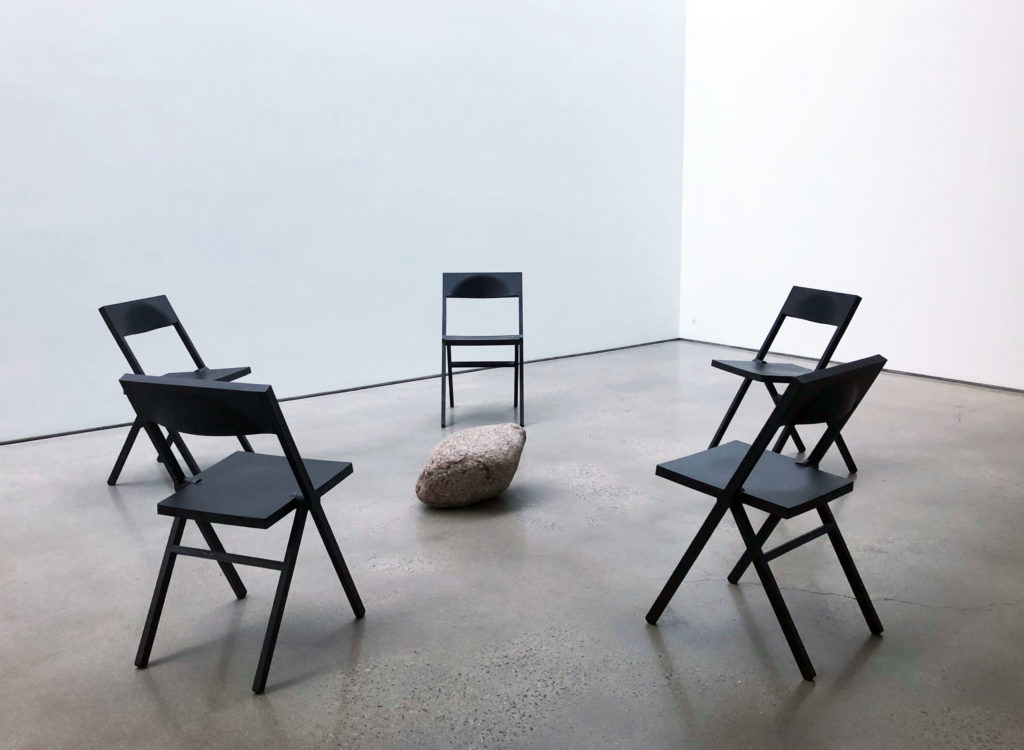
Philippe Parreno, La pierre qui parle (The Speaking Stone), 2018.
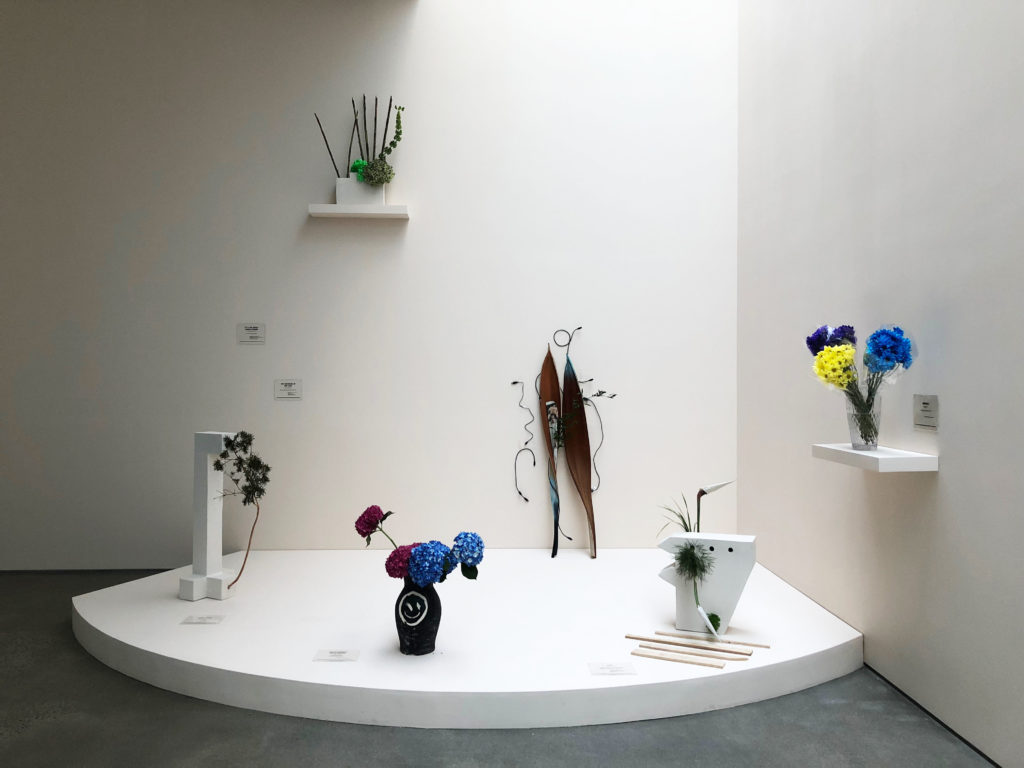
 

Selection of work by Camille Henrot (floral arrangements inspired by books)

All of these exhibitions close 2/16/19.


May 282018
 

William Eggleston, Tennesee (image via Metropolitan Museum of Art)

There are two great photography exhibitions happening in New York. William Eggleston‘s Los Alamos, at The Metropolitan Museum of Art is comprised of seventy-five of his dye transfer prints from color negatives made between 1965 and 1974. The color in these images is incredible as is his ability to evoke feeling from work that is deceptive in its simplicity.  Enhancing the exhibition are a series of quotes from the artist located on various walls, which offer a glimpse into his process and philosophy.

The Museum of Modern Art’s Stephen Shore exhibition includes work from his entire career- his start as a teenager meeting with Edward Steichen, time spent with Andy Warhol at The Factory, his large format images from around America, and finally his work in Israel and his current Instagram.  The body of work is impressive and where Eggleston’s work feels like it’s creating a dreamworld from the mundane, Shore’s work seems to present things as they are in true documentary form. Pictures of meals and hotel rooms force the viewer to look at things they usually take for granted in a new way. Not to say that there aren’t images like the large format work, that present an idealistic beauty.

Also included, and especially charming, are his stereographs- presented at a small table the images become three dimensional as you peer through the viewer.

Stephen Shore, Amarillo, Texas, July 1972 (1972) Image courtesy 303 Gallery

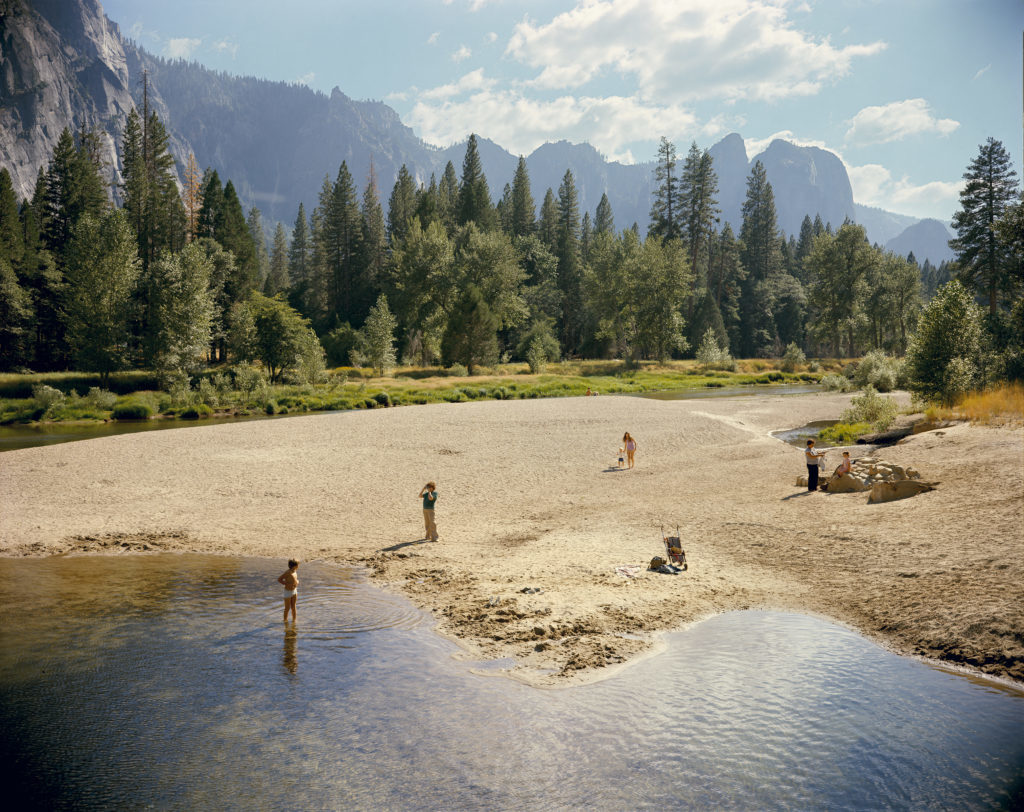
Stephen Shore, Merced River, Yosemite National Park, California, August 13, 1979 1979. image courtesy of The Museum of Modern Art

Both of these exhibitions close 5/28/18.
Mar 242018
 

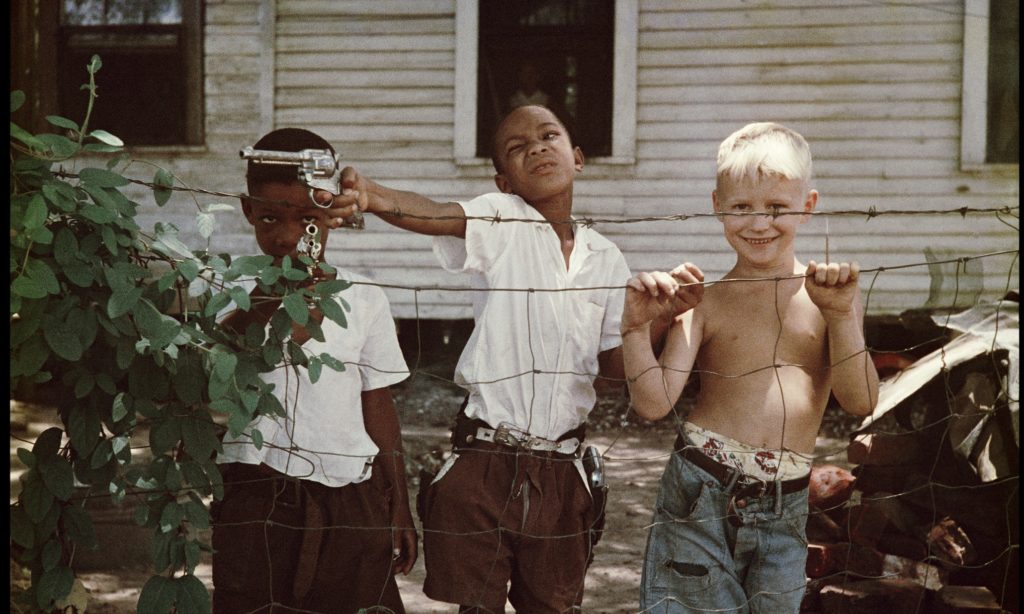
Gordon Parks, “Untitled”, Alabama (1956)

Gordon Parks was an incredible photographer whose influence continues to be felt in photography today. He had a long creative career that also expanded beyond photography to include writing several books, composing music, and directing films- the most famous being Shaft.

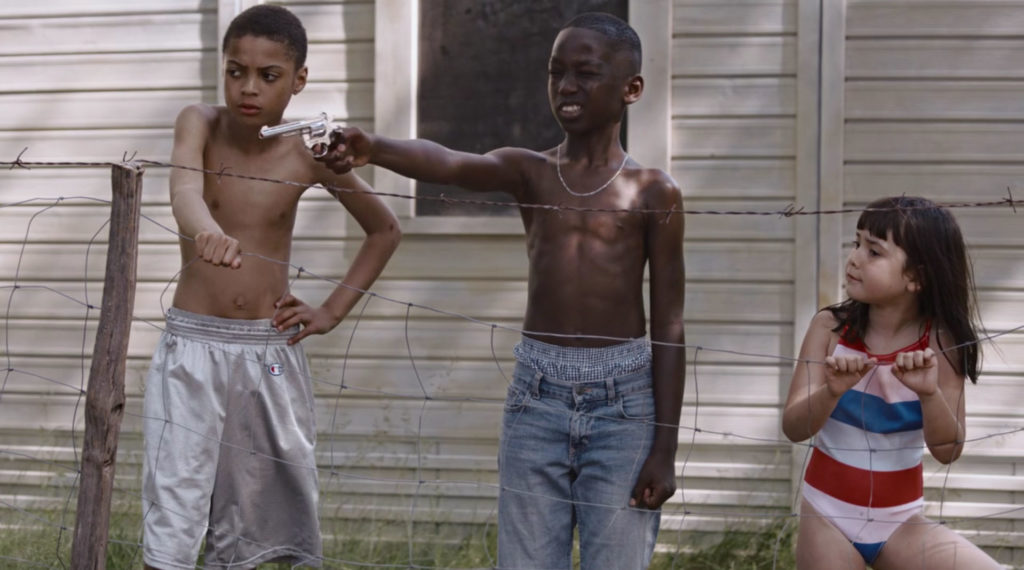
The Gordon Parks Foundation recently hosted the exhibition ELEMENT, which focused on several of the photographs that inspired Kendrick Lamar’s video from his album DAMN, seen below. The photo pictured above can be seen as part of the exhibition of Gordon Parks’ work I Am You Part 2 at Jack Shainman Gallery in New York. It is from his series Segregation Story for Life magazine which focused on the daily lives of three black families in Alabama in 1956.

The photo below is a still from Kendrick Lamar’s Element. The video was directed by Jonas Lindstroem and The Little Homies (Kendrick Lamar and Dave Free).

To see more of Parks’ work and the work he has influenced, The Gordon Parks Foundation’s website is a good resource for upcoming exhibitions around the world.

Mar 082018
 

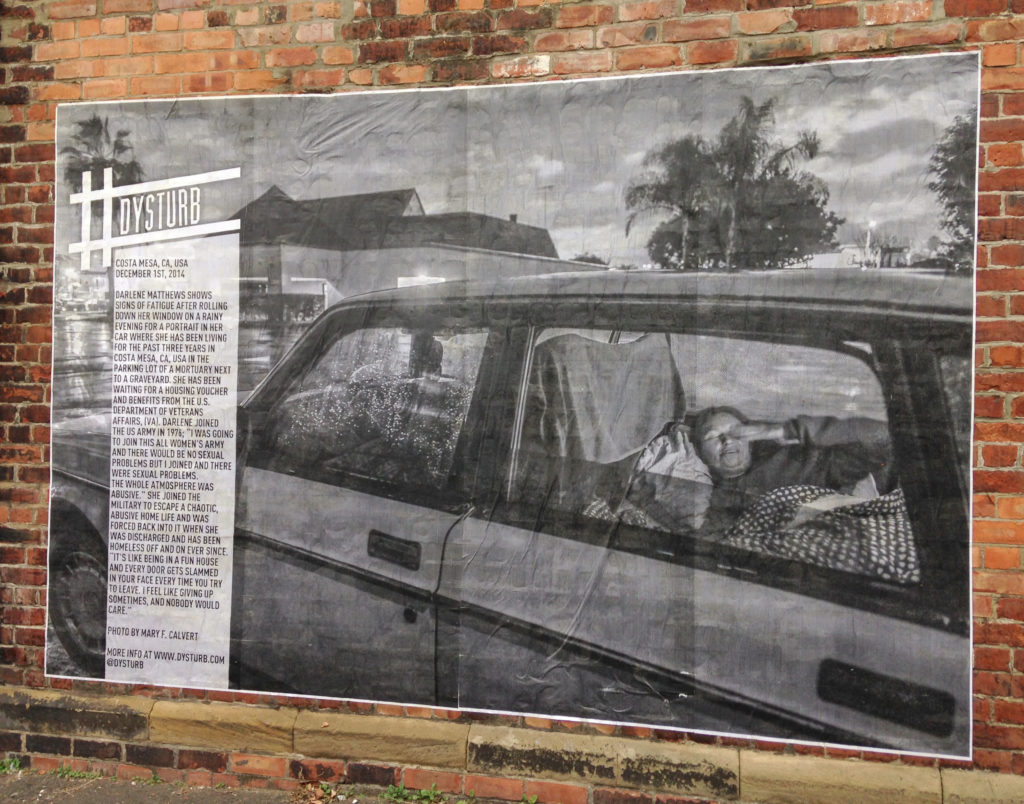
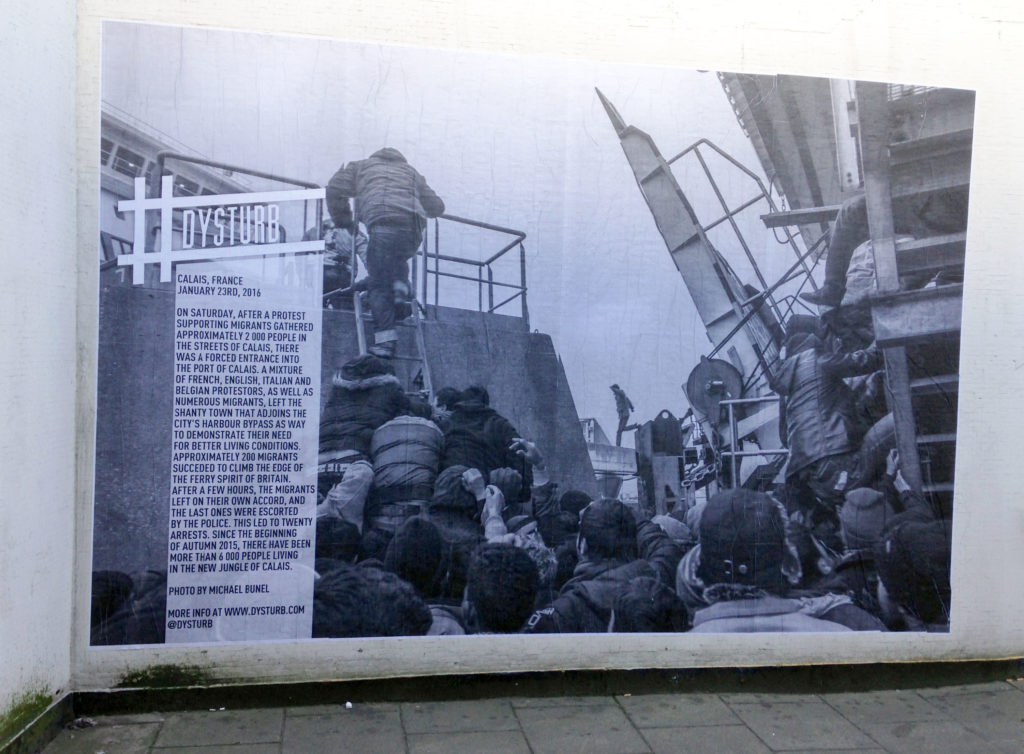
#Dysturb is a group of photojournalists who paste large-size posters in cities around the world, focusing on under-reported stories with the intention of getting this information to a wider audience. In addition to their public projects, they also have a quarterly print journal.

I first saw their work in Newcastle, UK (pictured above) as part of The Newbridge Project’s Hidden Civil War, a month of programming by various artists around the city in October of 2016.

#Dysturb’s current project is #WomenMatter, focusing on the fight against all types of violence against women. On International Women’s Day 2018, the group will be celebrating their fourth anniversary with a free discussion of this project, as well as their other work and the role of paste-up campaigns in contemporary documentary practice at ICP Museum in NYC.

Oct 202017
 

                                                            Fanon (Even the Dead Are Not Safe) 2017 (image via Metro Pictures)

Artificial intelligence is a growing field with numerous implications for the future, some more sinister than others. Trevor Paglen’s current exhibition at Metro Pictures gives some insight into this evolving technology.

From the Metro Pictures press release-

Trevor Paglen’s A Study of Invisible Images is the first exhibition of works to emerge from his ongoing research into computer vision, artificial intelligence (AI) and the changing status of images. This body of work has formed over years of collaboration with software developers and computer scientists and as an artist-in-residence at Stanford University. The resulting prints and moving images reveal a proliferating and otherwise imperceptible category of “invisible images” characteristic of computer vision.

Paglen’s exhibition focuses on three distinct kinds of invisible images: training libraries, machine-readable landscapes, and images made by computers for themselves. For Machine-Readable Hito, for example, Paglen took hundreds of images of artist Hito Steyerl and subjected them to various facial recognition algorithms. This portrait of Steyerl presents the images alongside metadata indicating the age, gender, emotional state and other signifiers that the algorithms have interpreted from the images. In another portrait in the show, Paglen trained facial recognition software to read the face of philosopher Frantz Fanon. A ghostly image of Fanon shows the facial signature–the unique qualities of a face as determined by biometric recognition software–used by computer vision to identify an individual.

To make the prints in Adversarially Evolved Hallucinations, Paglen trained an AI to recognize images associated with taxonomies such as omens and portents, monsters, and dreams. A second AI worked in tandem with the first to generate the eerie, beautiful images that speak to the exuberant promises and dark undercurrents characterizing our increasingly automated world.

The video installation Behold These Glorious Times! brings together hundreds of thousands of training images routinely used for standardized computer vision experiments and pairs them with visual representations of an AI learning to recognize the objects, faces, expressions and actions. A loose narrative begins to emerge about the collapsing distinctions between humans, machines and nature. Electronic musician Holly Herndon composed a soundtrack using libraries of voices created to teach AI networks how to recognize speech and other acoustic phenomena.

The image below is one of the prints from Adversarially Evolved Hallucinations. A series of these images, presented all in one room in the back gallery, are particularly unsettling as they have elements that seem familiar while remaining distorted. As artworks, they are captivating in their strangeness as well as their beauty.

                                                                Porn (Corpus: The Humans) 2017 (image via Metro Pictures)

The exhibition also has a printout with more detail about the creation of the work that goes beyond the press release, located at the front of the gallery. Make sure to leave time to take in this fascinating show. A Study of Invisible Images closes 10/21/17.

Mar 042017
 

                                                                         (above work by Sandra Low, Steve Seleska, and Amy Kaps)

Currently at Walter Maciel Gallery is With Liberty and Justice for Some, for which the gallery invited artists from across the country to do 8×8 inch portraits of individuals who came to the United States as immigrants- including historic subjects, personal friends, relatives, strangers, and sometimes self portraits. The gallery is also donating a portion of each sale to various non-profit groups including ACLU, Planned Parenthood, The Trevor Project, Center for Reproductive Rights, and the LA and SF LGBT Centers. Also showing at the gallery is I.D. Please!, with works by artists Hung Liu, John Bankston, Lezley Saar, John Jurayi, Maria E. Piñeres, Nike Schröder, Dana Weiser and Monica Lundy, who have all developed studio practices based around notions of identity.

This exhibition closes 3/4/17.

Also closing this weekend in Culver City-

Egan Frantz‘s The Oat Paintings at Roberts & Tilton

(image above via Roberts & Tilton)

And at Kopeikin Gallery are Ardeshir Tabrizi‘s Observations in Linear Time (palm tree), and Jason Engelund‘s Meta-Landscapes and Visual Ambient Drones (blue).

Ardeshir Tabrizi

Jason Engelund

(images via Kopeikin)

Feb 182017
 

For Cory Arcangel and Olia Lialina’s exhibition at The Kitchen, Asymmetrical Response, the early days of the internet come to life in various artworks. The carpet is made of a diamond plate pattern that used to be a common background on 1990s websites and the wallpaper uses patterns from early Yahoo templates. One of the most interesting pieces is Lialina’s Give me time/This page is no more, a slide projection of former popular hosting site Geocities’ members home pages that promise a site they will create or come back to in the future. It’s hard not to look at these pages and wonder how soon what we are seeing now on the web will seem as antiquated as these images.

From the press release-

In military parlance, the terms asymmetrical and symmetrical are employed to refer to political provocations and diplomatic démarches, escalation and tension, and power dynamics of the highest order. Not specific to war, these terms also refer more generally to a set of relations that define our connections to power.

On the eve of Y2K, Russian­-born Olia Lialina—who is among the best-known participants in the 1990s net.art scene—first met American artist Cory Arcangel. Ever since, the artists have been deep in dialogue about the social and cultural impact of the Internet’s historical shift from a tool for military communication to an “information superhighway” promising open and equal exchange, and, finally, the increasingly asymmetric “content delivery system” we experience today.

This show closes 2/18/17.

Feb 112017
 

                                         Jonathan HorowitzDoes she have a good body? No. Does she have a fat ass? Absolutely. 2016

For their current exhibition, Petzel Gallery decided to focus on the issues raised by the recent election by having a group show related to that theme. In addition they are encouraging visitors to “write down their reactions, thoughts, anxieties, hopes for the future.”

There is a lot of great work in the show by a long list of artists that includes Barbara Kruger, Robert Longo, Glenn Ligon, Jenny Holzer, Charles Gaines and Sam Durant.  Although it can be exhausting these days to follow politics, it is encouraging to see creative expression thriving in the midst of the chaos.