Sep 122025
 

Born today, 9/12, artist Robert Irwin used light and space in his work as a way to create an experience for the observer. He started out as a painter but later became well known for his site-specific installations and architectural and outdoor projects- including the central garden at the Getty Center in Los Angeles (pictured below) and his work for the Chinati Foundation in Marfa, Texas.

The works above are from his 2020 exhibition, Unlights, at Pace Gallery in New York.

About that show from Pace-

Irwin’s new works are composed from unlit six-foot fluorescent lights mounted to fixtures and installed in vertical rows directly on the wall. The glass tubes are covered in layers of opulently colored translucent gels and thin strips of electrical tape, allowing the reflective surfaces of unlit glass and anodized aluminum to interact with ambient illumination in the surrounding space and produce shifting patterns of shadow and chromatic tonality. Reflecting his recent turn toward the perceptual possibilities of unlit bulbs, Irwin’s new body of work expands the range of possibilities for how we experience sensations of rhythm, pulsation, expansion and intensity, while continuing the artist’s long-standing interest in registering the immediacy of our own presence in space.

Expanding from his breakthrough disc paintings of the late 1960s, Irwin’s new works effectively dissolve the perceived border between object and environment, focusing the viewer’s consciousness on the act of perception. Each light fixture in Irwin’s sculptures contains one or two unlit bulbs—or no bulb at all—while alternating gaps of “empty” wall are painted in subtle shades of gray, producing a sense of uncertainty about what is tactile and what is merely optical. As the shadowed, painted and reflected intervals of space reverberate in the viewer’s visual field, the wall itself enters the composition, destabilizing any sense of figure and ground. To encounter Irwin’s sculptures is thus to allow oneself to be caught in a ceaseless oscillation between flatness and volume, transparency and opacity, solidity and atmosphere.

In Irwin’s art, the object functions as a kind of score for orchestrating “the continual development and extension of humans’ potential to perceive the world.” Although unlit, the bulbs in these new sculptures are therefore never “off.” Their optically rich surfaces serve as energetic loci for heightening the sensory possibilities of the human body. In their chromatic complexity, the works convey an almost painterly quality, recalling Irwin’s origins as a second-generation Abstract Expressionist painter in the 1950s. Suggesting a rhythmic, minimal composition of repeated linear elements, the works also evoke his innovative line paintings of the early 1960s, which involve us physically and perceptually in an open-ended, immersive and transitory experience of seeing.

Widely recognized as a pivotal figure in contemporary art, Irwin is closely associated with the Light and Space movement that emerged in Los Angeles in the 1960s, and he has continued to live and work in Southern California for his entire career. He first used fluorescent lights as substrates for producing what he has called a “conditional art” in the 1970s, often in combination with architectural scrims and other spatial interventions. In the 1990s he introduced colored gels to the fluorescent tubes to alter the chromaticism of the light, and, over the past decade, began isolating the bulbs and fixtures as sculptural objects in their own right. In returning to the use of solely ambient light, Irwin’s new sculptures embody the culmination of seven decades of rigorous experimentation.

“Everything in the world is ultimately conditional,” Irwin has observed. “There is nothing that’s transcended or infinite or whatever you want to call it. Everything acts within a set of conditions.” Like all of Irwin’s works, his new sculptures respond differently to the conditions of each specific environment in which they are installed, attuning our senses to a given context and making possible an intuitive and incidental experience of seeing that resists rational or conceptual explanation. “It’s not about answers,” the artist once remarked, but rather about the act of questioning: “It’s the constant pursuit of the possibilities of what art is.”

Getty Center, Los Angeles

Below is one of his earlier paintings Untitled, 1964-6, which was on view at Palm Springs Art Museum for the 2024 exhibition Particles and Waves: Southern California Abstraction and Science, 1945-1990.

From the museum about the work-

Although this work appears to have a monochromatic white surface from afar, a matrix of thousands of painted dots becomes visible from a closer vantage point. Irwin aimed to highlight the visual effects of color interaction by juxtaposing light green and lavender, complementary colors across from each other on a color wheel. The canvas’s outwardly bowed supports and the increasing density of dots towards the painting’s center further heighten the viewer’s perceptual experience of the work.

The documentary Robert Irwin: A Desert of Pure Feeling, does an excellent job detailing his life, art, and the philosophy behind his work. It is well worth a watch and inspiring to watch him still at work in Marfa at 87. He passed away in 2023 at the age of 95.

Jul 292025
 

Isabelle, by German sculptor Julian Voss-Andreae is located in Palm Springs, California. Voss-Andreae creates sculptures designed to change their appearance- disappearing at times when viewed at a certain angle. His background in science helped to influence this work when he went on to study art.

Below is a section of his biography from his website-

Prior to his art career, Julian Voss-Andreae studied quantum physics and philosophy at the Universities of Berlin and Edinburgh. As a graduate student at the University of Vienna, Voss-Andreae was one of the small team led by 2022 Nobel Prize Laureate Anton Zeilinger that conducted a ground-breaking experiment in quantum mechanics in 1999. The researchers showed that even molecules as big as C-60 “Buckyballs” can reveal their fundamentally quantum nature under the right conditions. Zeilinger’s group found that a beam of them, passed through a diffraction grating, will exhibit the purely wavelike property of interference. Subsequent experiments showed how interactions with the environment (in the form of infrared photons and background gas of different densities) will gradually wash away the ‘quantum-ness’ thanks to the process of decoherence, which is now recognized as the way the classical world emerges from the quantum.

Our Single Garment of Destiny, (pictured below) is located in  Washington Gladden Social Justice Park in Columbus, Ohio. It was specifically designed for the park and takes its name and inspiration from the Martin Luther King Jr. quote below.

“All [people] are caught in an inescapable network of mutuality, tied in a single garment of destiny.  Whatever affects one directly, affects all indirectly.”  – Martin Luther King, Jr., Letter from Birmingham Jail (1963)

The video below explains his process when creating the sculptures.

Aug 152024
 

After seeing the Albert Frey exhibition at Palm Springs Art Museum Architecture and Design Center, you can visit his recently unveiled Aluminaire House near the museum’s main location. It’s incredible at every angle as it reflects its surroundings.

The structure has an interesting history. Before it arrived in Palm Springs, it was rebuilt on architect Wallace Harrison’s property in Huntington, Long Island where it remained from 1931 until 1987. From 1988-2012, it was partially rebuilt on New York Institute of Technology’s Central Islip campus before being dismantled and stored in a trailer.

From the museum-

Designed by Albert Frey, Aluminaire House is one of the first examples of European-style modernist architecture in the United States. Built in 1931 as a full-scale model house for a temporary exhibition, it was intended to be a prototype of mass-produced housing, factory made with modern materials. Composed primarily of aluminum, steel, and glass, it was an experiment in realizing a democratic ideal in architecture of creating affordable, well-designed homes using modern industrial methods and materials. Palm Springs Art Museum acquired the Aluminaire House to add to its rich holdings by Albert Frey, who spent most of his life and career in Palm Springs.

Jul 202023
 

Built Landscape I, 2015, by Paul Davies, was included in Palm Springs Art Museum’s 2018 group exhibition, Eighty @ Eighty.

From the museum’s wall plaque-

Through a rich process of layering, mirroring, and mimicking, Davies explores the fusion of manmade and cultivated natural elements that comprise our environment. Reflecting a contemporary Southern California sensibility, his paintings are at once a dream of an idealized lifestyle made popular by midcentury modern architecture, and a commentary on how such structures interact with and fragment the world around us. This image references the unique periscope-like structure of architect Albert Frey’s first home in Palm Springs.

Davies’ work can currently be seen as part of Stark White gallery’s exhibition Surface Tension in Queenstown, New Zealand, on view until 8/20/23.


Apr 052019
 

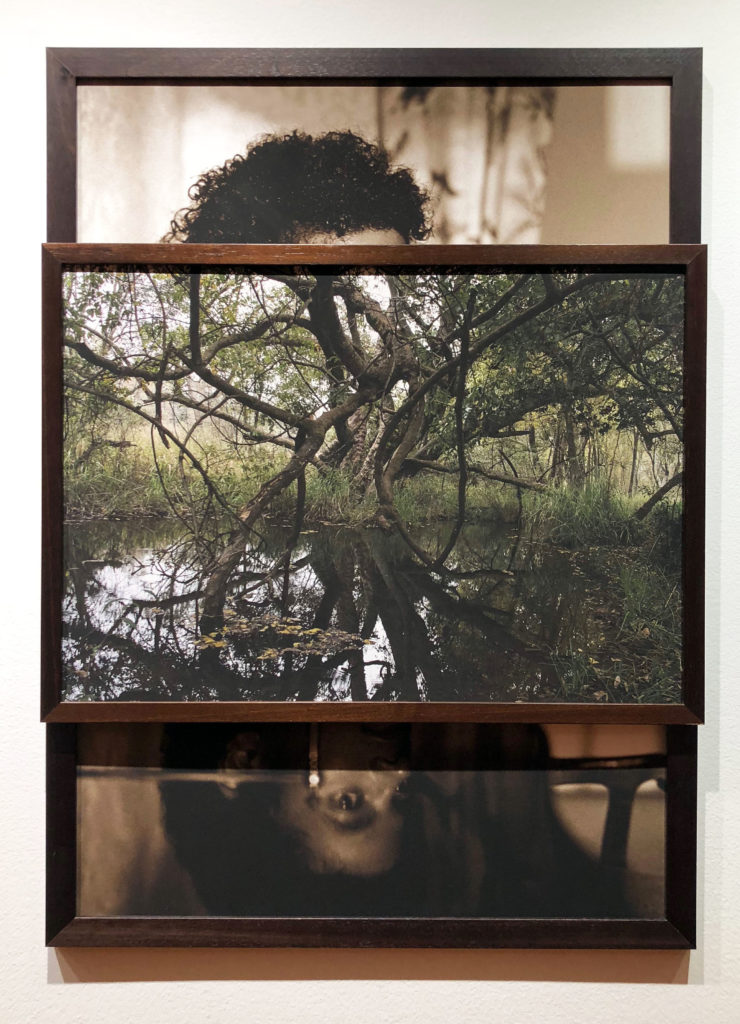
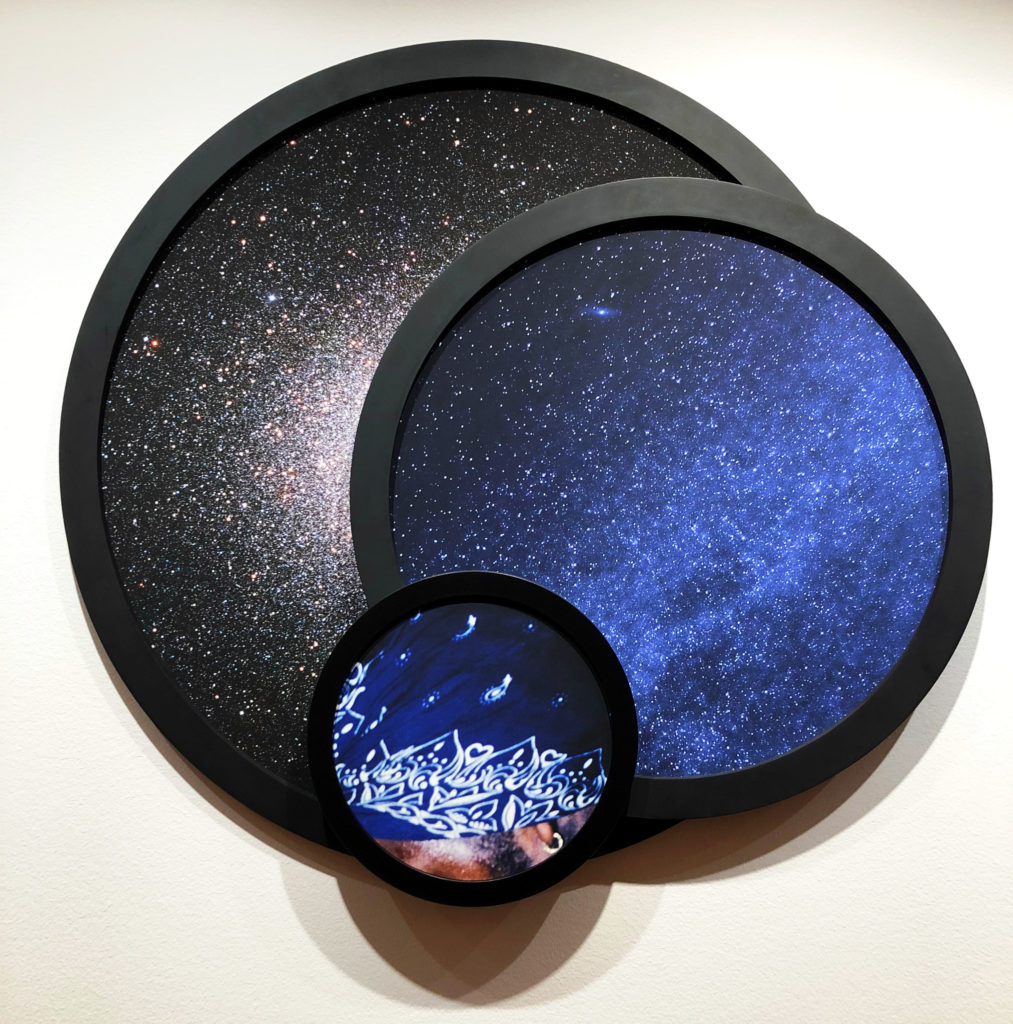
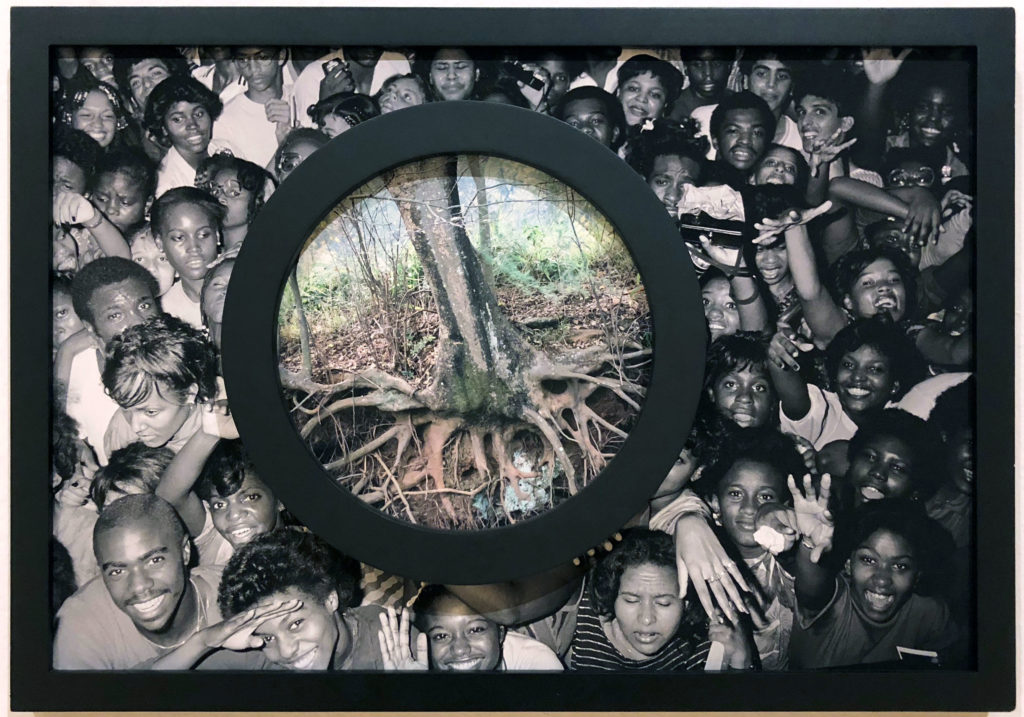
For his current exhibition at the Palm Springs Art Museum, Todd Gray:Plurality of Being, Gray combines images that could initially be seen as incongruous to add layers of meaning and complexity to issues of identity.

Using his own previous photographic explorations from different parts of the world, he then places the images together within frames he’s found or was given. Through this process the history of his own journey combines with that of those he’s photographed. In some works the roots of trees reach out between images pulling them together or imitate the stretching out of arms. The blue and white of a bandanna finds its place within the colors of the universe in another. The viewer can put together their own meanings from these juxtapositions or just enjoy the beauty of the sculptural collages.

From the press release-

Using pictures made when he was Michael Jackson’s personal photographer in the 1980s, along with those of verdant flora, local friends, and galactic imagery, Todd Gray’s wall collages portray the multiplicity of experience and memory across space and time.

Mixing archival images of Jackson on tour in the United States with lush landscapes from Italy to South Africa, Gray’s photographic sculptures reframe and reveal an intimate yet collective post-colonial, transatlantic memory. By layering images, bodies and faces become fragmented, drawing into question the role photography plays in the transmission of history and cultural identity.

This is the first U.S. presentation of work made during Gray’s 2017 residency at NIROX in Johannesburg, South Africa.

This exhibition closes 4/7/19.


Dec 312018
 

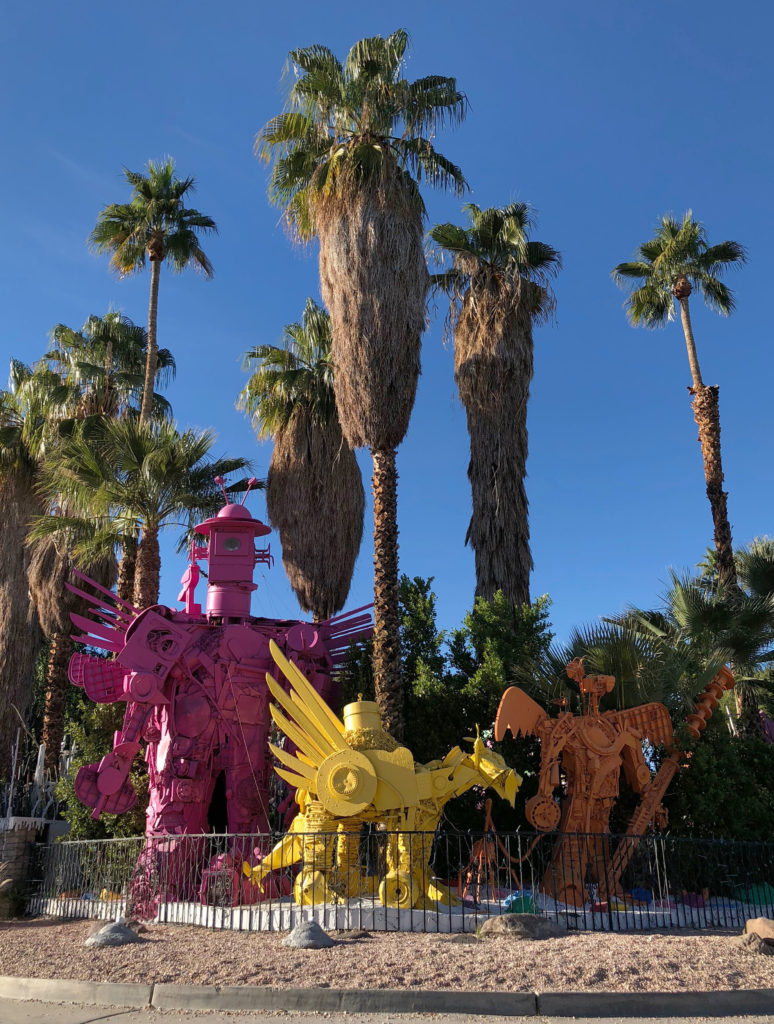
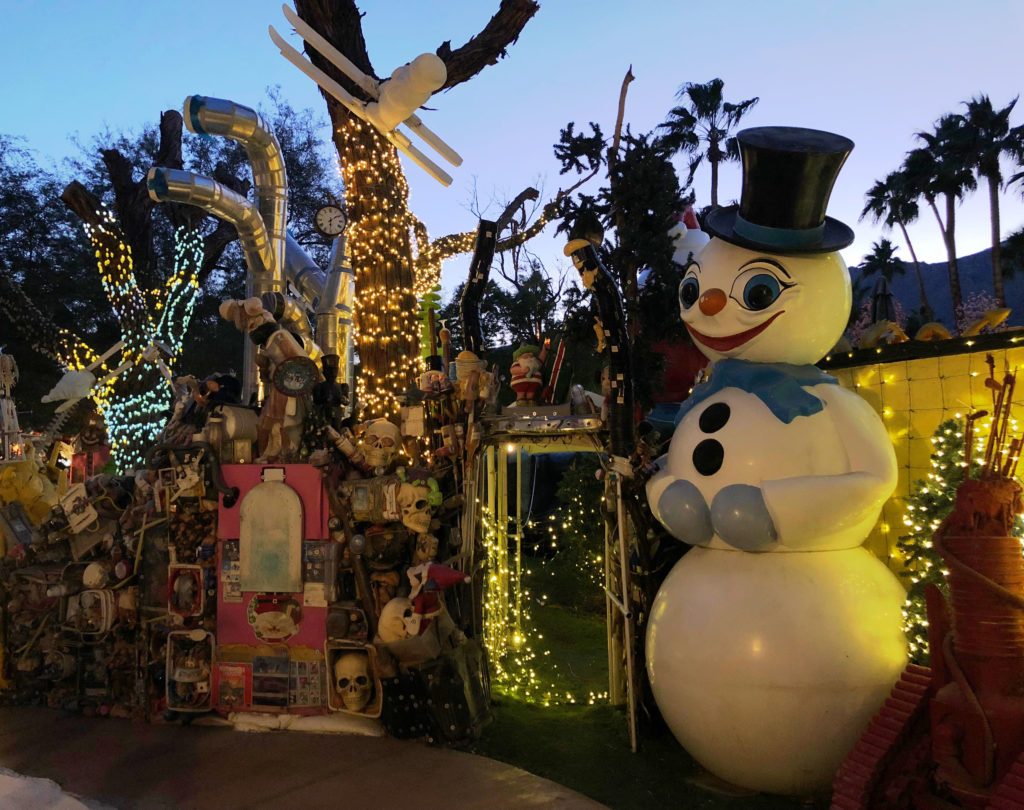
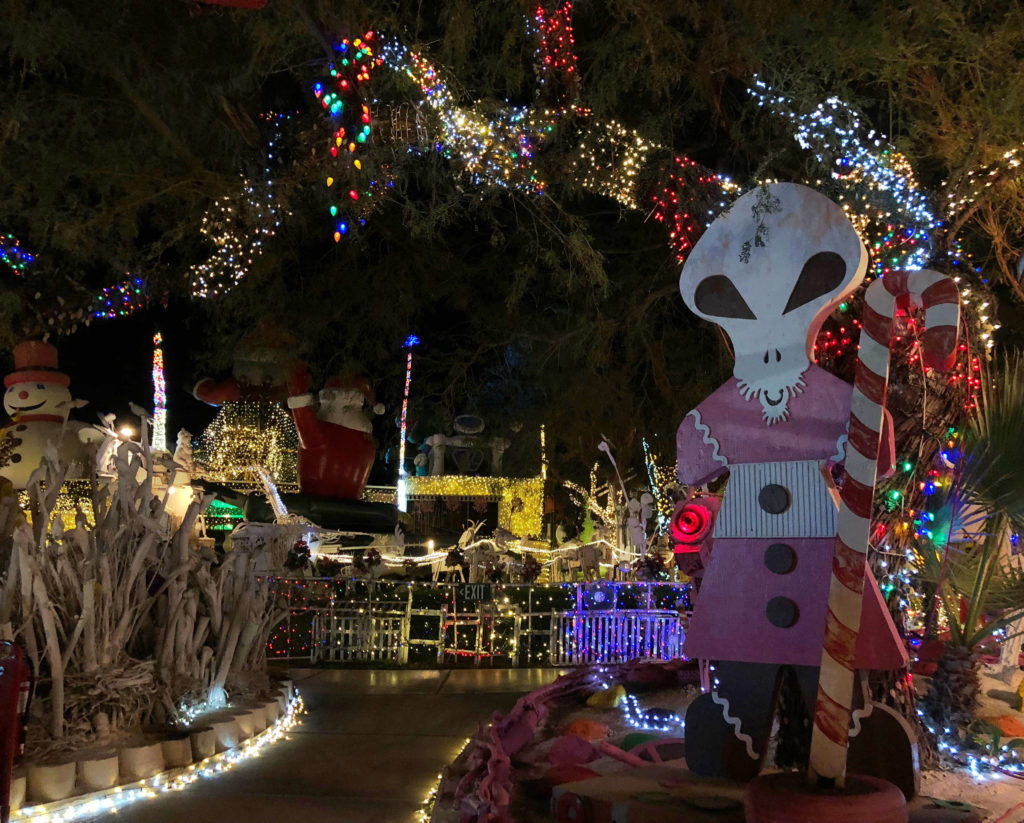
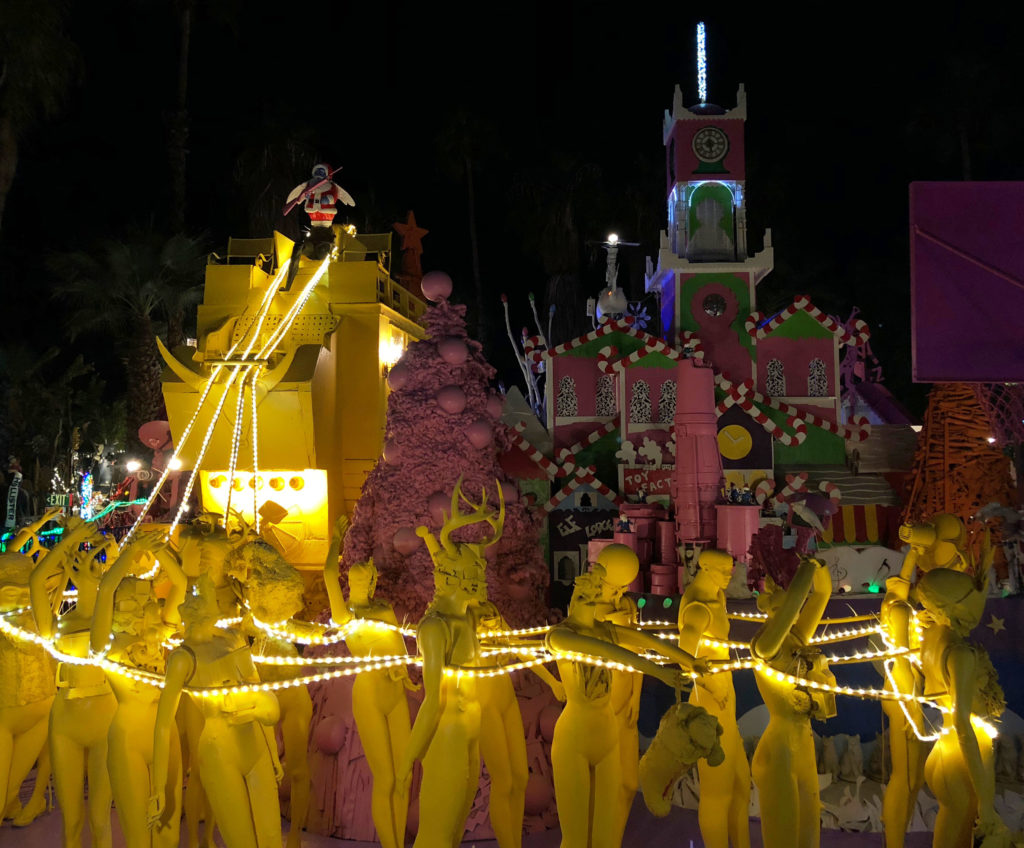
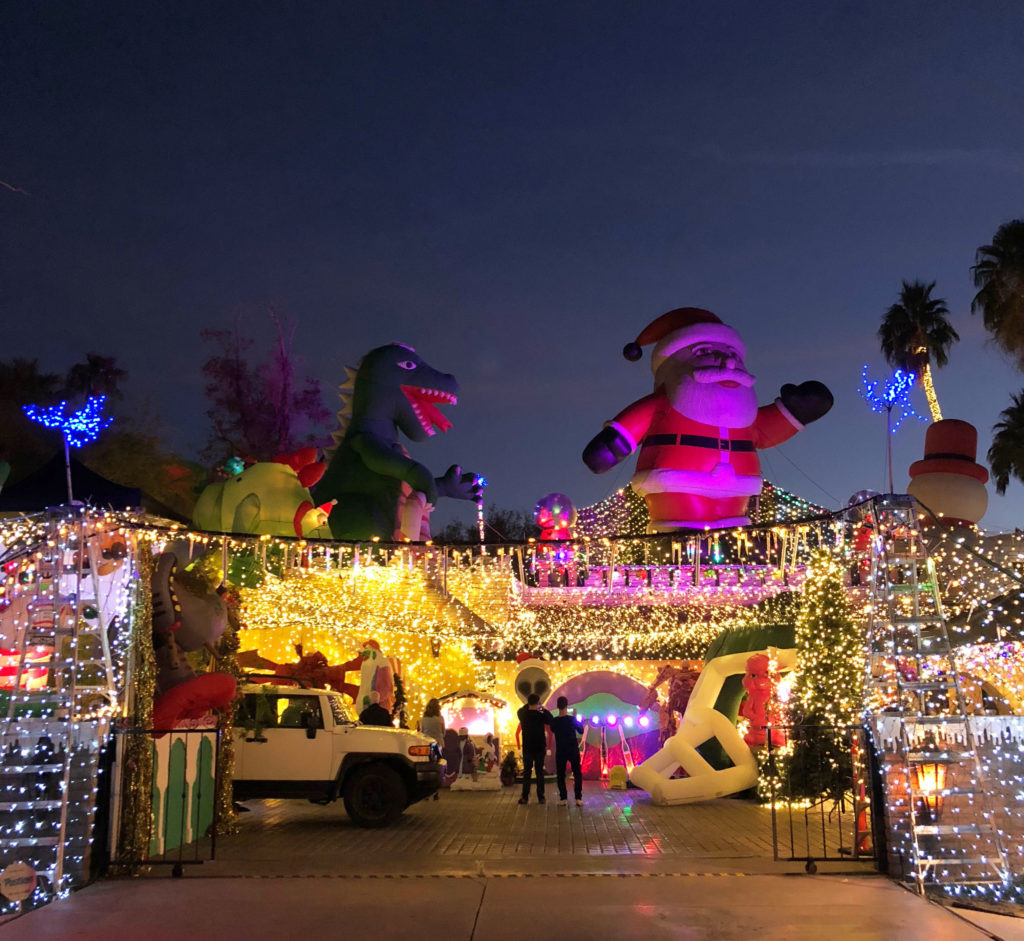
If you are in Palm Springs for New Year’s Eve, take some time and visit Robolights. This is the last year it will be at its current location on an estate in the Movie Colony area.

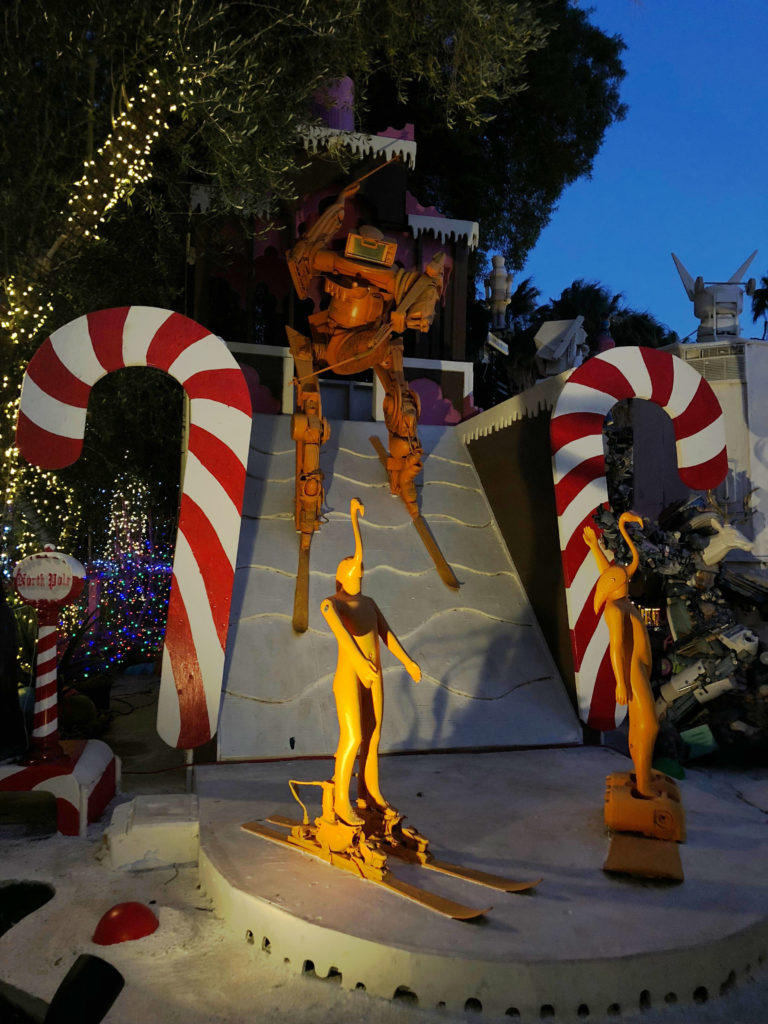
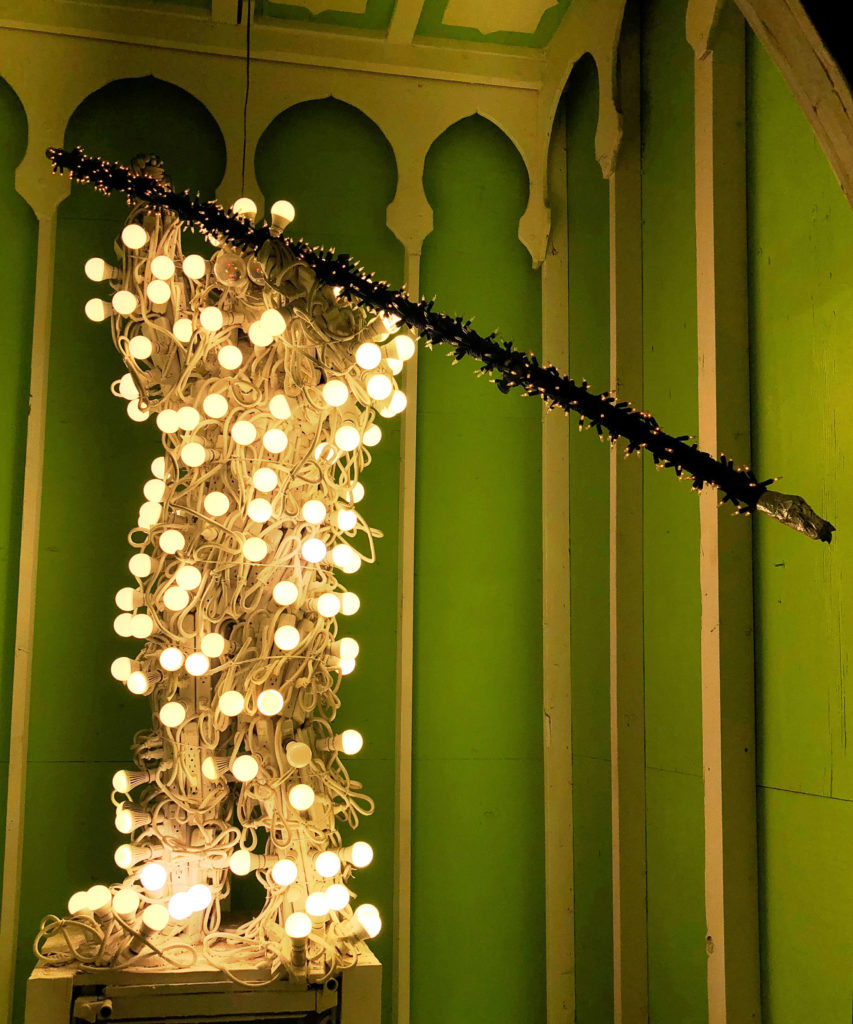
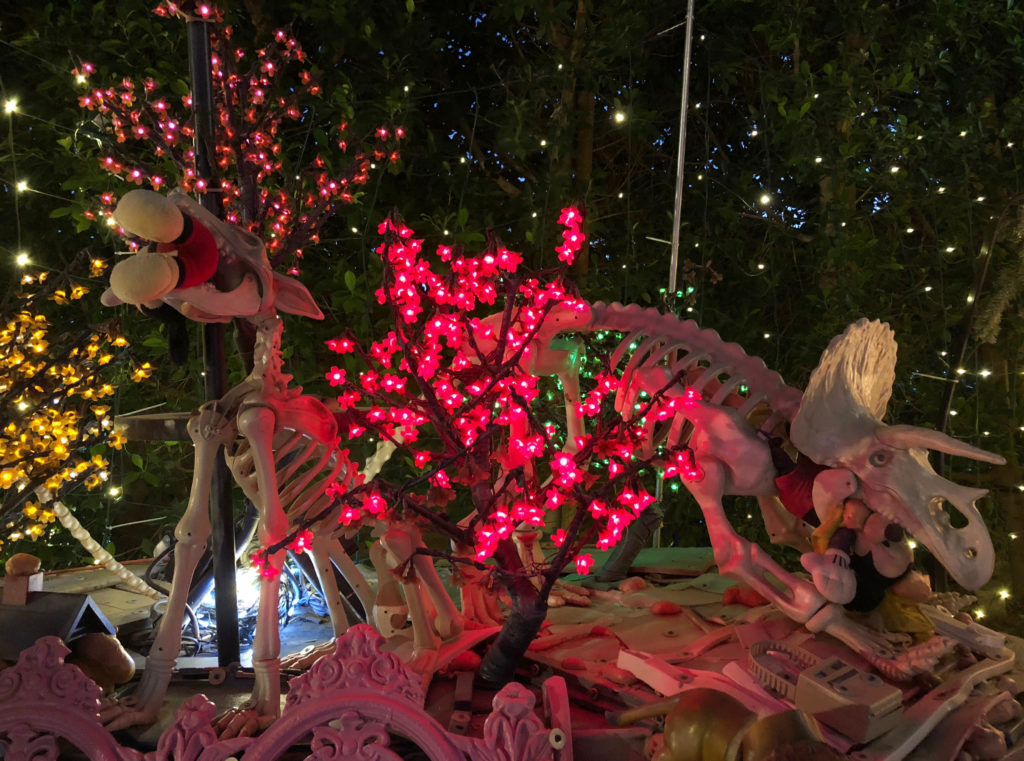
Robolights is an ongoing work created by artist Kenny Irwin Jr., at his childhood home. The sprawling installation incorporates Christmas holiday themes, robots, aliens and, of course, numerous lights. The various creations are made from found, recycled, and donated objects.

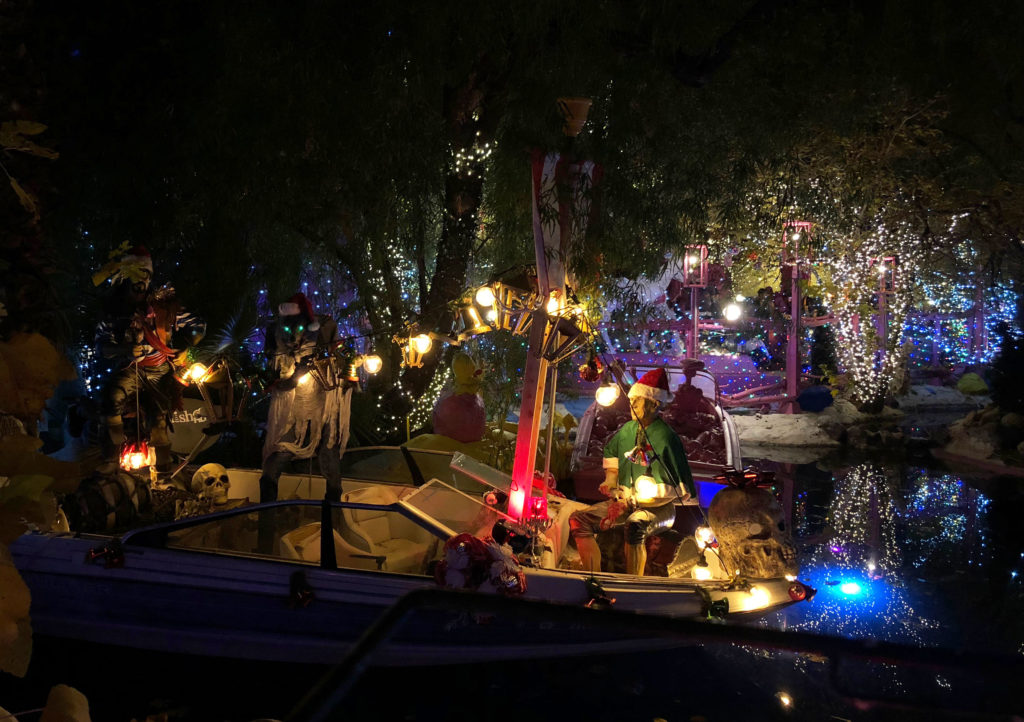
There are some Disneyland influences, seen in a castle similar to the It’s A Small World Castle, and a boat with creatures singing holiday songs (you see it while crossing a bridge over the water), reminiscent of the Pirates of the Caribbean ride. There are also merry-go-rounds, animatronics, video games, and music which give the place the feeling of an amusement park.

Also worth mentioning are the Islamic details seen around the installation, adding to the uniqueness of the space. The artist converted to Islam as an adult.

Robolights is a maze of larger than life creatures as well as little details that become more and more noticeable on each pass through. It’s eccentric, fun, chaotic, a little bit dark at times (so many skulls and skeletons) and well worth spending some time exploring.

Keep in mind if you go that there is no neighborhood parking around Robolights- only for residents. Parking is located a short walk away at Ruth Hardy Park.  Robolights will close on January 2nd, 2019.


May 282018
 

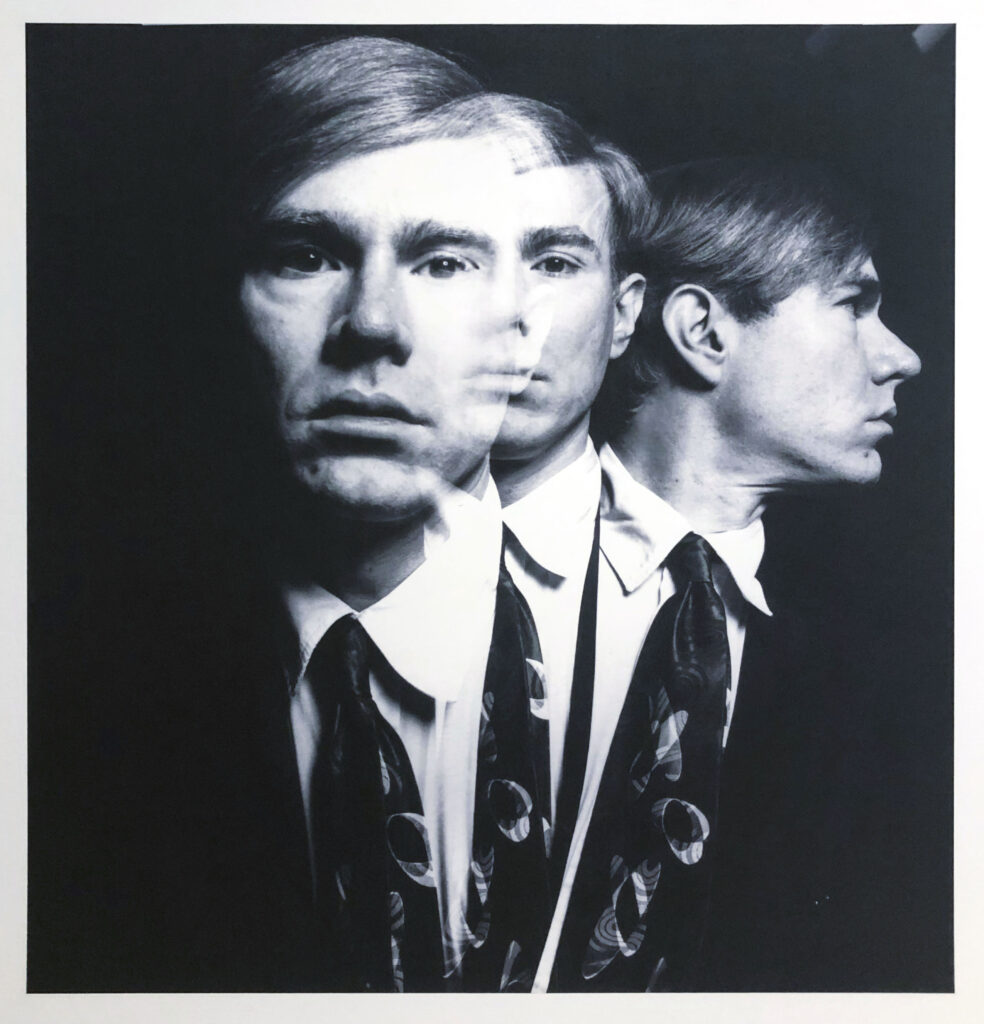
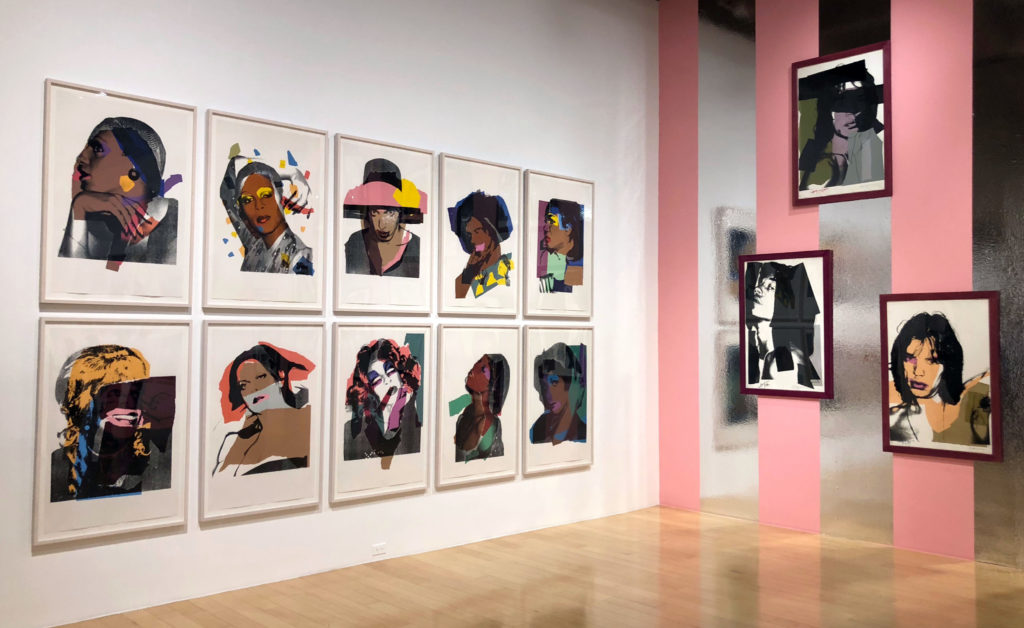
Currently at Palm Springs Museum of Art is Andy Warhol: Prints from the Collections of Jordan D. Schnitzer and His Family Foundation. Taking up the majority of the first floor of the museum, the exhibition includes many of his well known prints as well as several of his illustrations from his early graphic design career, a few of his Screen Tests (including Edie Sedgwick’s), his album covers, and a short documentary created for the museum with local residents who knew the artist.

This exhibition closes 5/28/18.