Nov 042023
 

Jenn Ryann Miller’s charming creations, seen above, are currently on view at Tempus Projects in the Kress Contemporary building in  Ybor City for her solo exhibition, Hobby House.

From the gallery-

Hobby House– where art meets self-indulgence, subversion meets humor, and creativity meets absurdity. With ceramics, sterling silver, a little photography and a lot of gemstones Hobby House presents objects that are meticulously crafted for no good reason other than looking fabulous. Hobby House contemplates the places and practices of art making with humor, irony, and a little wit.

Jenn Ryann Miller explores materiality and aesthetics through sculpture and painting. With a background in functional ceramics, her work subverts tradition and process through the experimentation with oblique materials and forms. Miller has been part of numerous solo and group exhibitions in Florida and the United States. Originally from Connecticut, she received a BFA from the University of Connecticut and MA from the University of South Florida. Miller currently teaches ceramics at the University of South Florida.

In another of the Tempus Projects gallery spaces is Justin Myers‘ exhibition, What Did We Use To Say, seen below, which uses collage along with a video and sound installation to explore the concept of memory.

From the gallery and artist-

What Did We Use To Say? Trying to remember things from the past from distorted and fragmented memories. Is that really how it happened? With intention, the mind has the ability to erase just as easily as it does create. The mind decides what stays and what gets purged for the new. Are you in control? Or is the subconscious doing as it pleases? In this work, I explore deconstruction, recomposition, and sampling, and their impact on memory and perception.

Justin Myers, a Tampa Native, is a member of music projects Justin Depth, Alien House, and Diamond Man. He also is the co-founder of Tampa-based record label, Image Research Records.

Justin studied printmaking at HCC in Ybor City and began experimenting with sculpture and installation-based works during his time there. Myers finds inspiration from discarded imagery, random thought, and spontaneous actions. Over the last 10 years, Myers has participated in numerous exhibitions at Tempus Projects, including the T-shirt shows, Mix Tape Show, Return to Sender, and an offsite window installation as part of a partnership with Downtown Tampa and more. In 2020, Myers partnered with his brother, Jeremy Myers on a virtual exhibit with Tempus Projects titled, “One Day of Perfect”. Justin has been involved with Tempus Projects since his music project Alien House made its debut performance in November of 2011.

Both of these exhibitions are on view until 12/14/23.

Oct 282023
 

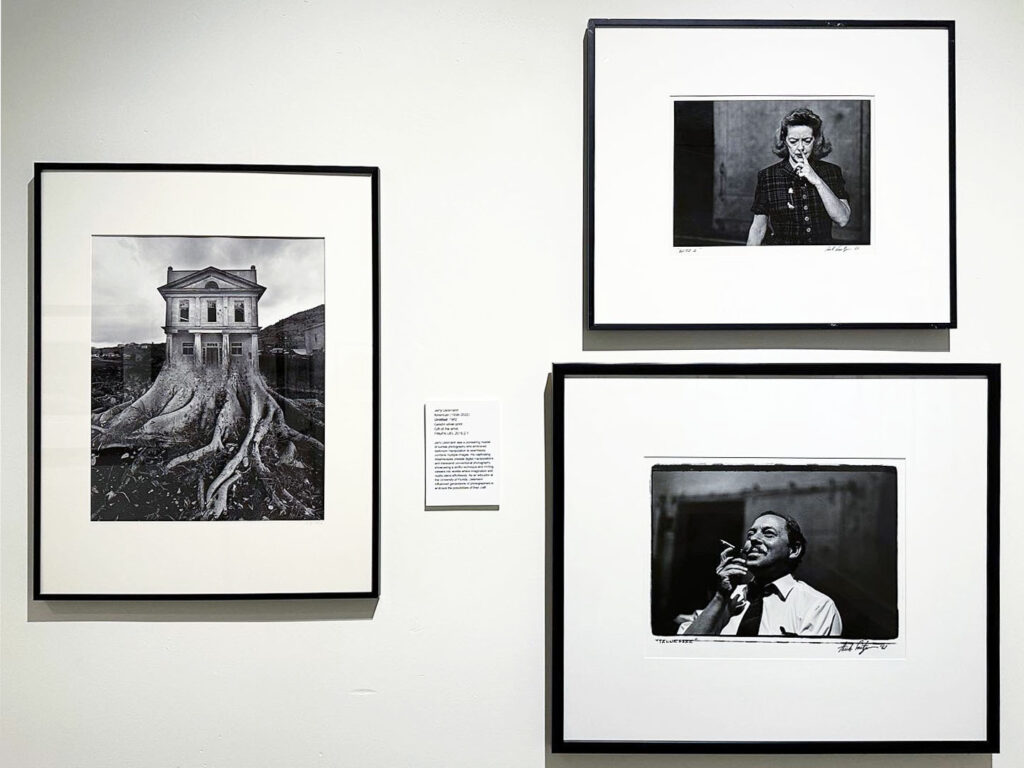
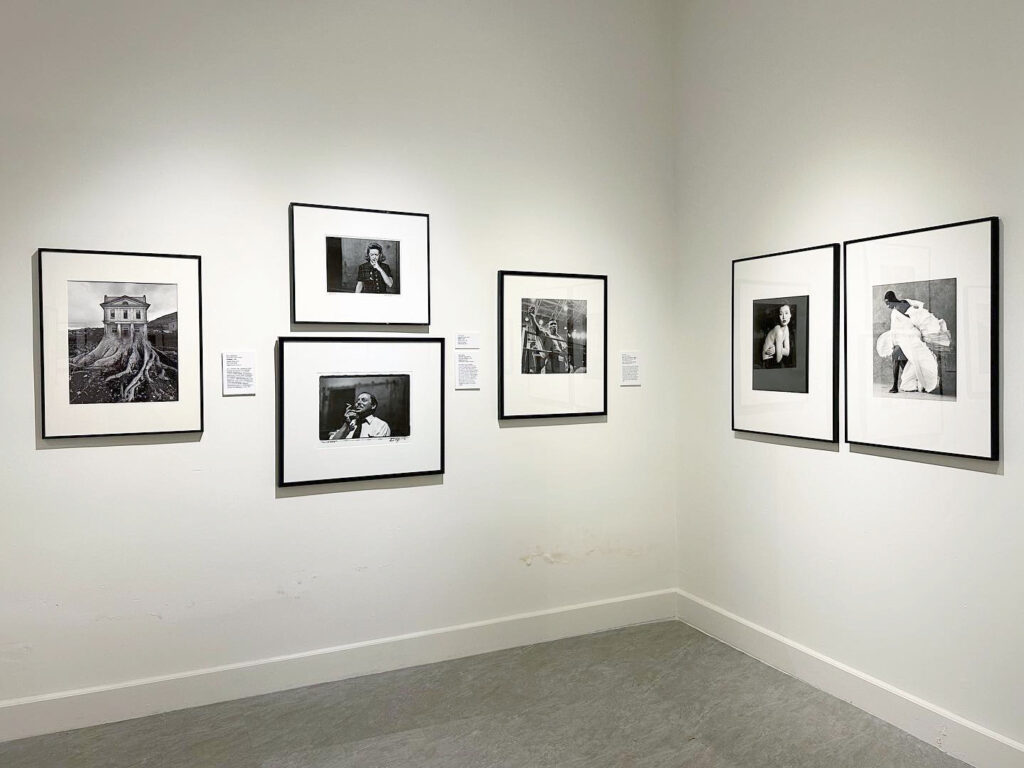
Photographs by Jerry Uelsmann (left) and Herb Snitzer (right)-“Bette II”, top and “Tennessee Williams”, bottom)

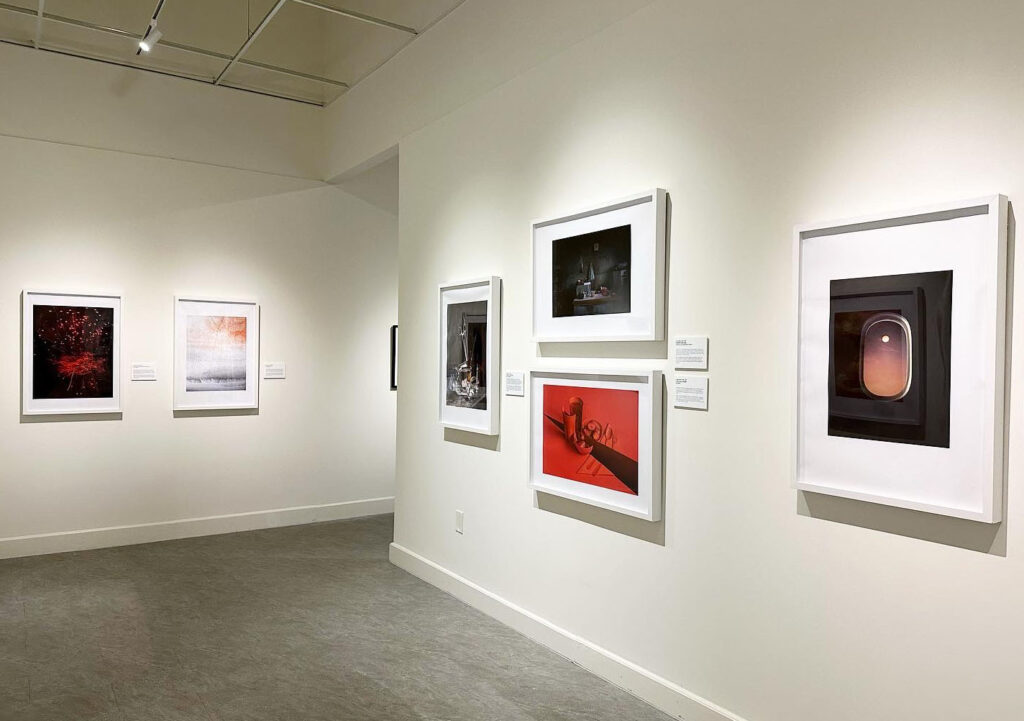
Photographs from the International Photography Competition

Continuing from the previous post about the Ybor Arts Tour, there are three venues that were part of the tour that are also worth highlighting.

The Florida Museum of Photographic Arts (FMoPA) is showing some impressive photography in their new Ybor City space. On one side of the museum is Icons of Black and White, a selection of over 60 fine art photographs, by some of the most famous photographers in history including Ansel Adams, Dorothea Lange, Edward Weston and more. This show will be on view until 12/3/23.

In the FMoPA Community Gallery are the winning photographs from the 2023 International Photography Competition, previously on view at The Tampa International Airport. This exhibition closes 10/28/23.

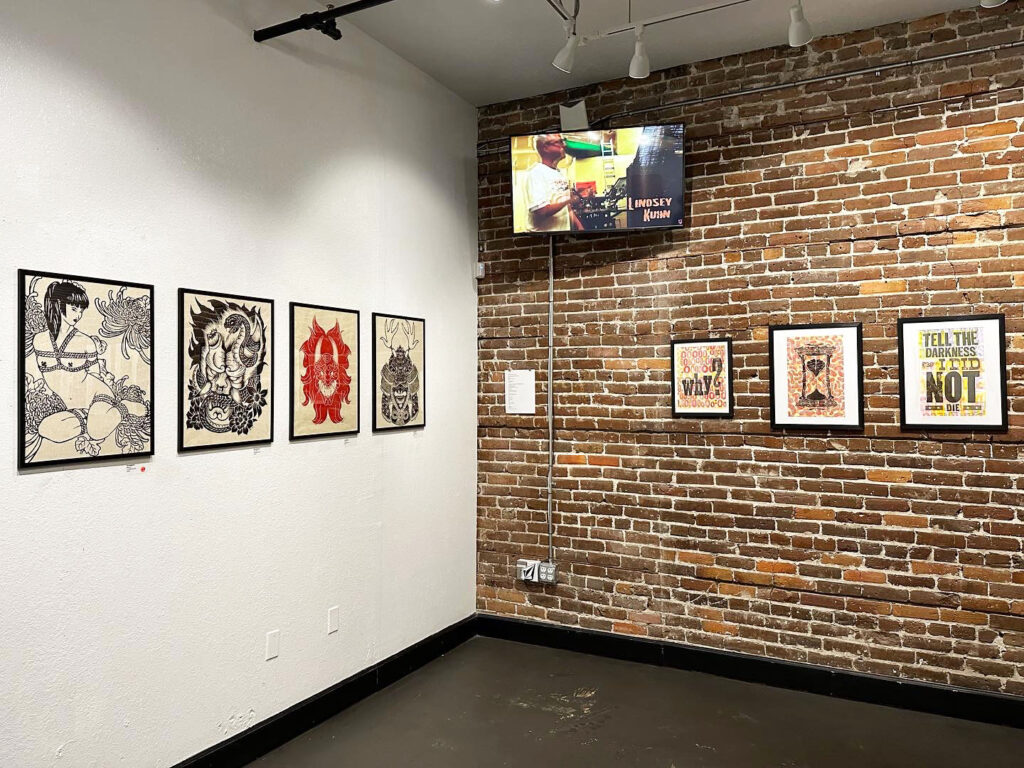
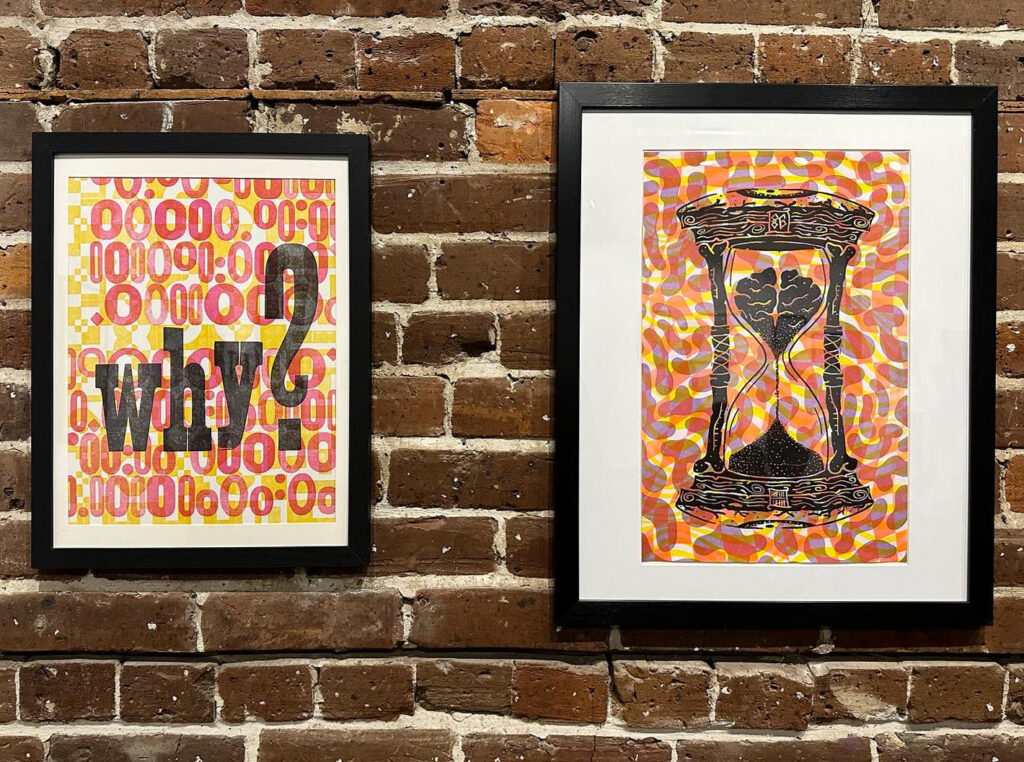
Kaitlin Crockett of Print St. Pete, “Why?” letterpress monoprint (left) and Chris Sellen/ Kaitlin Crockett, “It’s Only A Matter of Time”, risograph print

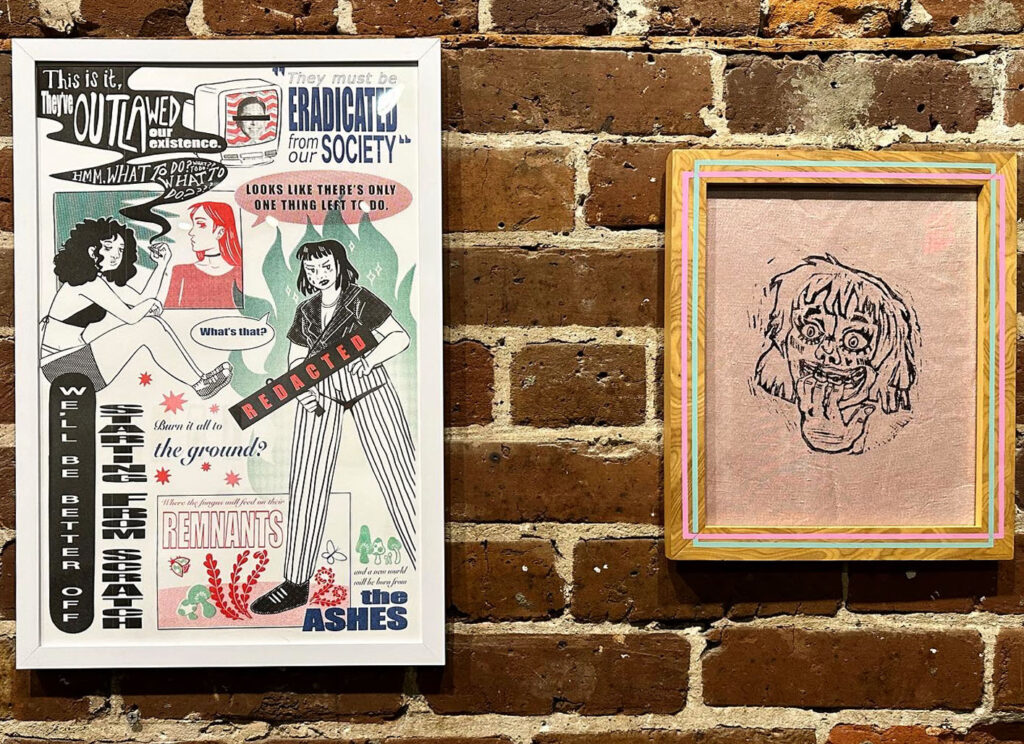
Mia Makes It, “[redacted]”, risograph print, and “Molecular Anxiety”, linocut on fabric

The Bricks is a restaurant in Ybor City that also has an event space. For the Arts Tour the space turned into a gallery for Print Mode (2) a selection of work by Tampa Bay printmakers. That show will be up for a few more weeks.

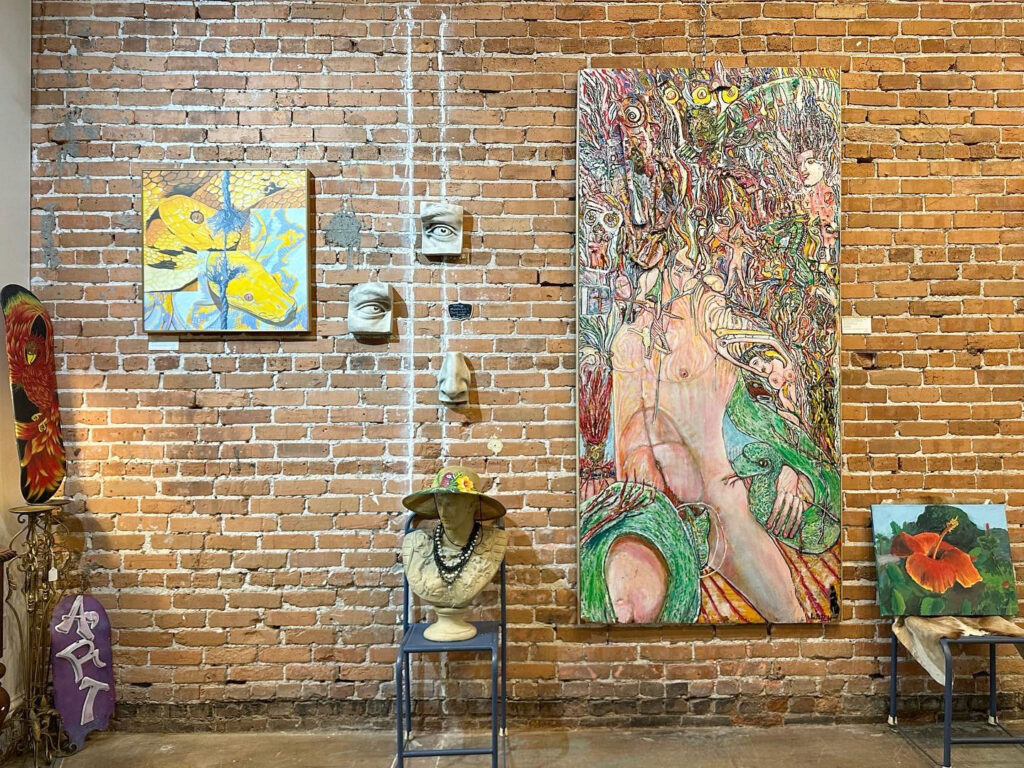
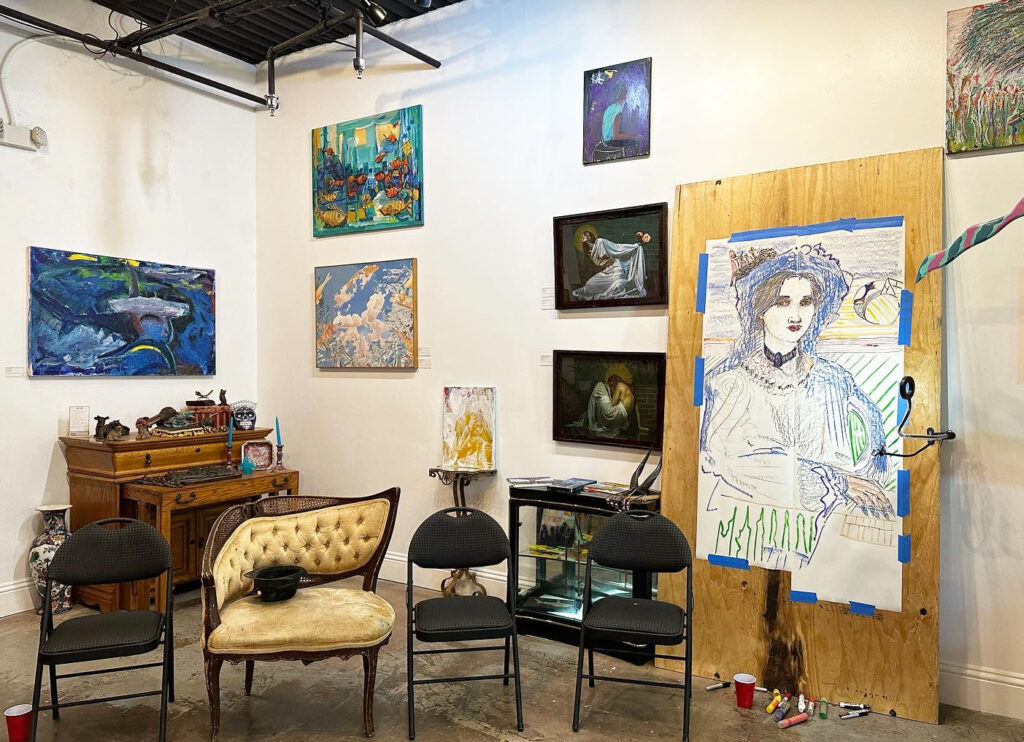
Marcolina’s (seen below) is a relatively new gallery currently showing the group exhibition EDEN: Beyond Paradise until 11/30/23. Check out their Instagram and Facebook to see upcoming events like Nude Model Life Drawing (every third Wednesday) and Deidre Kling’s “The Haunted Flesh” Photography Book Release on 10/28.

Oct 252023
 

Anthony Freese “State of Emergency”, 2023 vinyl and “Termination”, 2023 3D print

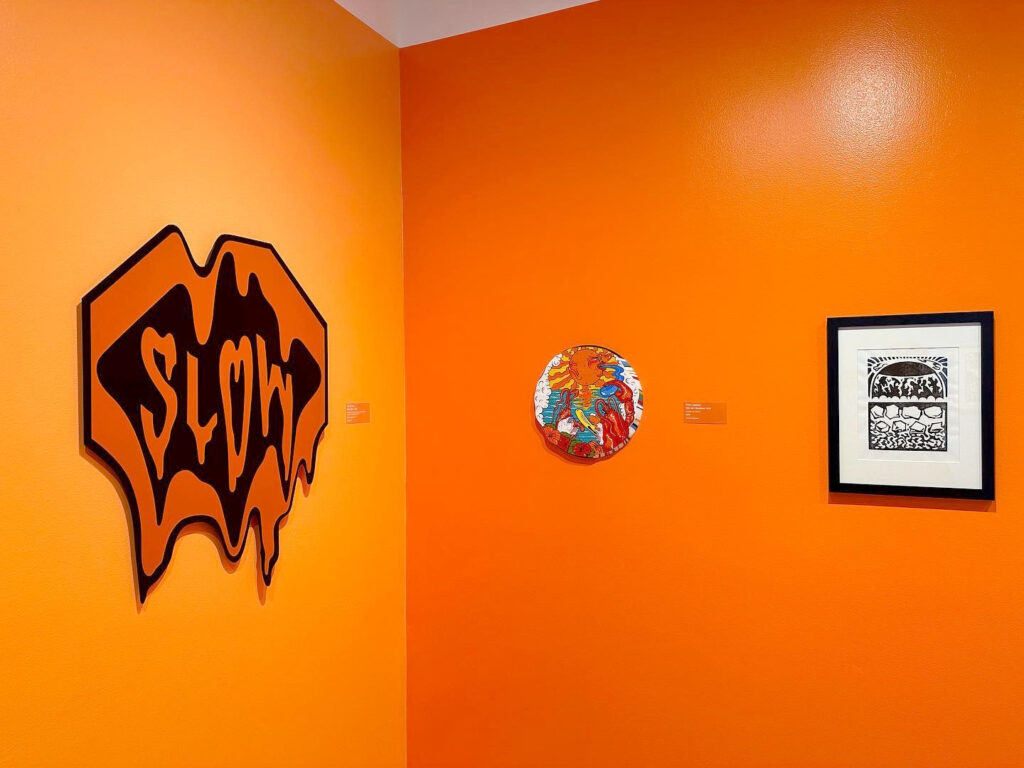
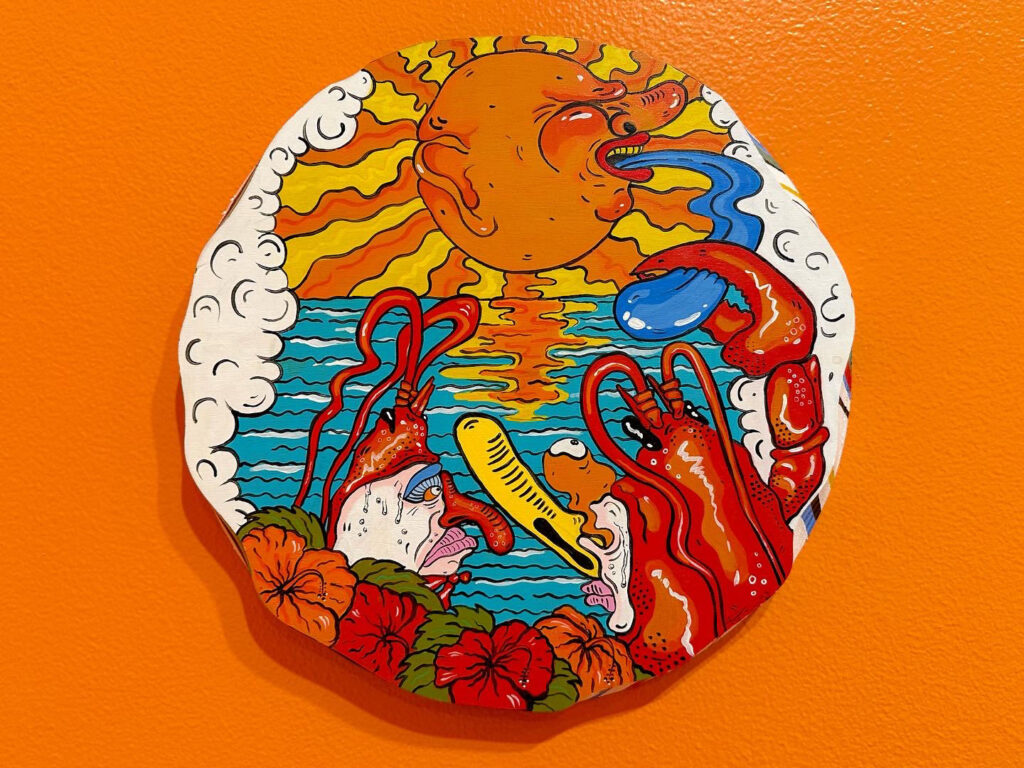
(L to R) Jay Giroux “Slow Burn”, 2023, waterborne acrylic on aluminum sign panel mounted to MDF; Ryan Lagasse, “This Isn’t Sunshine”, 2023, acrylic on wood; Blake Bailey, “Solar Pressure”, 2023, linocut relief print

Ryan Lagasse “This Isn’t Sunshine”, 2023, acrylic on wood

Jay Giroux, “Drug Store”, 2023, acrylic on primed MDF

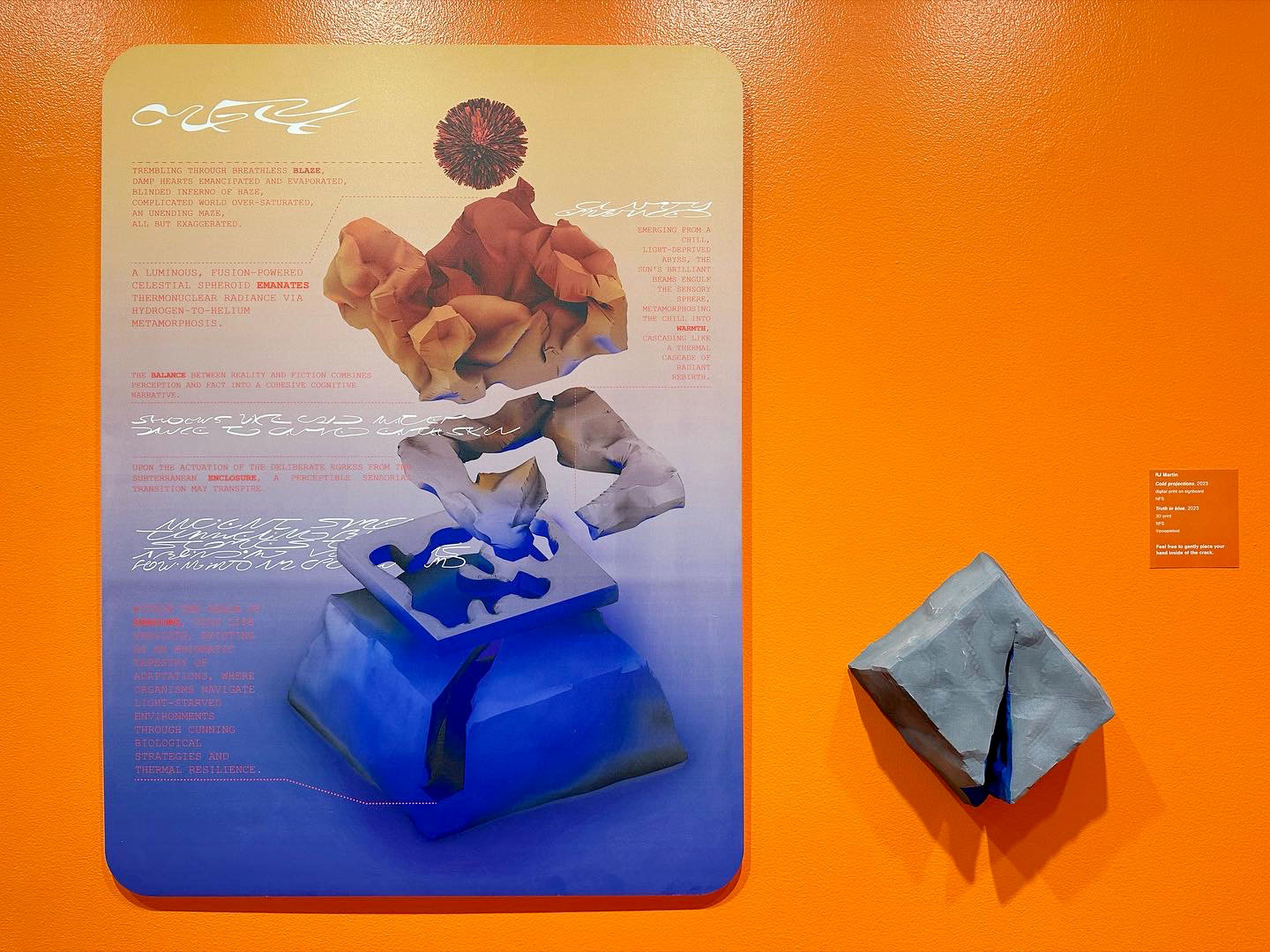
RJ Martin, “Cold projections”, 2023, digital print on signboard and “Truth in blue”, 2023, 3D print

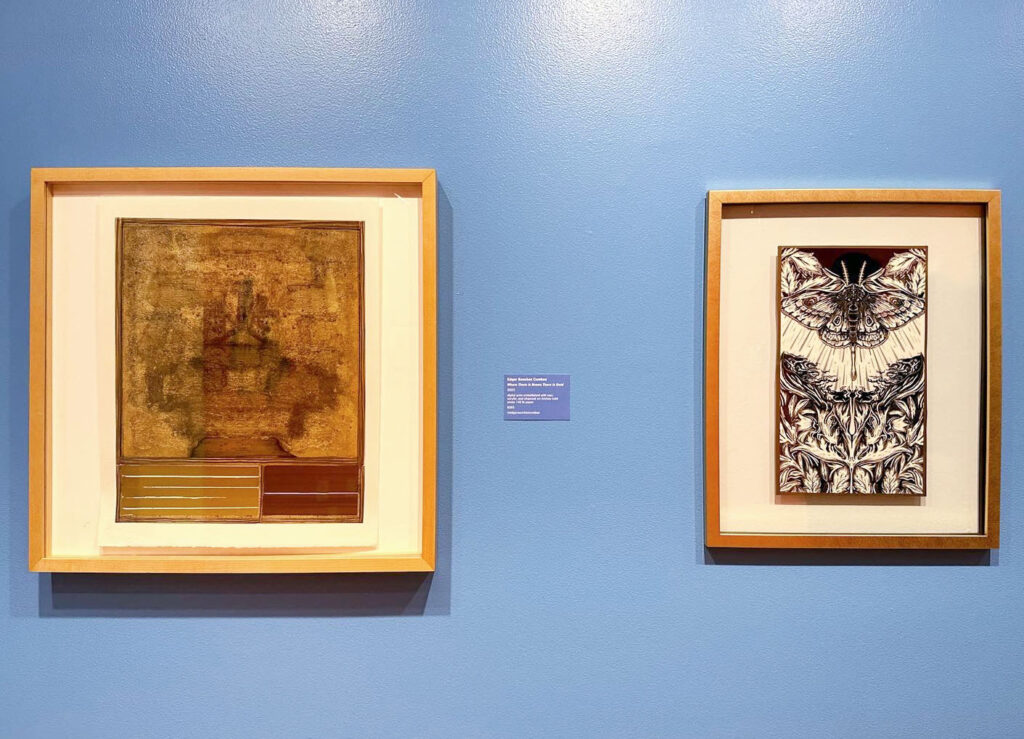
(left) Edgar Sanchez Cumbas, “Where There Is Brown There Is Gold”, 2023, digital print embellished with wax, acrylic, and charcoal on Arches cold press 140lb paper; (right) Joana Hila “Equilibrium of Insect & Flora”, 2023, mixed media

The works above are from Department of Contemporary Art’s latest group exhibition Degrees, organized with Tampa’s Greater Public Studio. It explores the multiple uses of the word “degrees” including in climate change, education and history.

Artists included in the exhibition- Blake Bailey, Anthony Freese, Jay Giroux, Joana Hila, Ryan Lagasse, Richard Martin, Julia Parrino, Alex Roberts, and Edgar Sanchez Cumbas.

About Degrees from the gallery’s website-

In this exhibition, we unravel the layers of meaning behind ‘Degrees’. From the nuanced shades of truth that shape our perceptions to the tangible degrees of temperature that influence our environment, the exhibition creates a dynamic dialogue between different dimensions of this concept.

Situated in a pivotal battleground state, the exhibition also contemplates the intricate relationship between degrees and the pressing issue of global warming. Delving into the political discourse, we examine how degrees of belief and denial intersect, particularly in the context of climate change debates.

Furthermore, the exhibition prompts contemplation on the notion of an art degree. What does it signify? How does it define one’s creative journey? These questions guide us through an exploration of artistic qualifications and the degrees of expertise they represent.

A journey through art history reveals the connection between degrees and lines, as we delve into the associations between angles, perspectives, and the progression of artistic movements. This collection invites you to ponder how degrees of inclination can shape artistic expression and historical narratives.

Join us in this immersive exhibition, where degrees of interpretation converge, offering a multi-dimensional encounter with the concept of ‘Degrees’.

Tomorrow (10/26/23) from 6-9pm is the last chance to see the show.

Oct 202023
 

Currently on view at Hillsborough Community College’s Gallery 114 in Ybor City is Ya La’Ford’s solo exhibition HENGE- unearthing ancestral memory. The exhibition includes the sculptures seen above as well as several prints. The geometric work taps into universal themes of cross cultural connectivity through form.

From the gallery about the artist and the exhibition-

Ya La’ford (b. 1979, Bronx, NY) is an internationally recognized multimedia artist whose bold, geometric work explores themes of transformation and transcendence. Her solo exhibition HENGE – unearthing ancestral memory in Gallery114@HCC invites viewers to reconsider symbols from ancient civilizations as keys for navigating the shapes and patterns of modern life. Concepts such as connection, excavation, reverence and memory are woven together for an immersive and multi-sensory installation. Inspired by forms such as Neolithic henges, kivas, and other ancient architectural monuments, these new works by La’ford investigate ancestral messages and reimagines them for contemporary audiences.

The prints, seen above, strike an intriguing balance with their delicacy to the more solid forms of the sculptures.

About the prints from the gallery-

Many numbers have symbolic associations. For example, sets of three can sometimes indicate cycles of time, such as past, present, and future.

The prints included in HENGE are titled in a series as Seven שבע. In ancient near eastern and Israelite culture, the number seven can be used to communicate a sense of fullness or completeness (שבע “seven” is spelled with the same consonants as the word שבע “complete/full). The number seven can also be associated with intuition, wisdom, spiritual revelations, a growing self-awareness, or upcoming shifts that may have a positive impact on one’s life.

This exhibition is on view until 11/2?23.

Oct 072023
 

Emiliano Settecasi, “Baby Blue Blowers”, 2023, faux fur, metallic fringe, box fans, wood

Jessica Caldas, “I come honouring your power (Clytemnestra)”, 2023, house linens, poly fiber fill, house patterned quilt, fabricated structures from gifted furniture, fabric wallpaper, found and embellished light fixture

Saumitra Chandratreya, “Throne”, 2022, Cyanotype on sateen, hand embroidery

Touchy/Feely at Hillsborough Community College’s Gallery 221 in Tampa has a lot of great interactive (and non-interactive work) on view. The three artists in the exhibition- Jessica Caldas, Saumitra Chandratreya, and Emiliano Settecasi– have contributed work that explores important themes while also adding an element of fun by allowing the viewer to become actively involved in the show.

The Curatorial Statement by Alyssa Miller-

Art touches you, and sometimes you get to touch it back. Challenging conventional gallery manners, Touchy/Feely encourages visitors to assume the role of participant by handling and manipulating several of the works on view. Contemporary fiber artists disrupt the long-held distinction between art and craft, blending the conceptual with the experiential in a highly tactile medium. In Touchy/Feely, artists Jessica Caldas, Saumitra Chandratreya, and Emiliano Settecasi go one step further in collapsing the space between artist and viewer, exploring themes of labor, motherhood, relationships, conscious choice, and joy through fiber art that both holds and is held.

So much of art and history is exhibited at a distance, close enough to see but never touch. Whereas engaging with the nature of textiles can be familiar, exciting, and sensational. Combinations of art and cloth have a long and fraught history within contemporary art, such as the novelty of interactive exhibitions that can become a commodity in contemporary museums. Ogled and beaten become the play spaces, tarnished and brassy the sculptures, worn and bruised the forms become overtime through the nature of interaction. Touchy/Feely aims to be a space in between museum rules and contemporary art photo-ops. Here, artists display a mix of interactive and static artwork that exemplifies intense feeling, encouraging the viewer to make decisions in real time, and submerge themselves in something they did not expect.

Ultimately, this exhibition satisfies my urge to explore, manipulate, caress, and experience art in a way not many individuals are able to do. In working behind the scenes, I am allowed to safely satisfy my interest in exploration. I will forever be grateful to the HCC Art Galleries team for their dedication to students, staff, and artists for this exhibition and the work they do year-round. I hope that visitors come away from this exhibition with a new experience, perspective, feeling, or sensation.

This exhibition closes on 10/12/23.

Jessica Caldas, “A name can be in a lot of places at once (Helen)”, 2023, house linens, crochet, fabricated structures from gifted furniture, polymer clay, yarn, polyfiber fill, fake pearls, and ceramic

Emiliano Settecasi, “Neon Green Furry Shelf”, 2023, faux fur, plywood, metal brackets; “Hand Bags (Purple)”, 2023 velvet Velour, polypropylene pellets; “Inman Ottoman”, 2023, ottoman reupholstered with vintage fabric that matches family chairs; Hand Bags (Merlot), 2023

Sep 282023
 

With all of the recent Sarasota posts, I thought I’d put up this fun painting, Spirit of Sarasota by Asa Cassidy, for “Throwback Thursday” this week. The painting was part of  Tampa Museum of Art’s 2022 exhibition, Poetry in Paint: The Artists of Old Tampa Bay.

From the museum about the painting-

Asa Cassidy was a New York City lithographer who, in 1924, sold his lithography interests and moved to Sarasota to devote his life to painting. Cassidy loved the beauty of Sarasota Bay and built a home on Bay Island. His painting “Spirit of Sarasota”, depicting a 1920’s bathing beauty riding a tarpon in Sarasota Bay, hung in Sarasota City Hall for years.

Sep 082023
 

Mary Ann Carroll (1940-2019), “Untitled (Backcountry Twilight)”, n.d., Oil on Masonite board

Harold Newton (1934-1991), “Untitled (Painting of the Indian River)”, c. 1958, Oil on Upson board; Alfred Hair (1941-1970), “Untitled (Marshland with palm), c. 1958, Oil on Upson board

James Gibson (1938-2017) “Untitled (Moonlit palms)”, n.d., Oil on Upson board

In early 2021, Tampa Museum of Art presented the work of Florida’s famous Highwaymen painters in the exhibition Living Color: The Art of the Highwaymen.

From the museum-

The Highwaymen are a group of African American artists celebrated for their distinctive paintings of Florida’s natural environment. Working in and around the Fort Pierce area beginning in the 1950s, these self-taught artists depicted the state’s scenic coastline and wild backcountry, often in dazzling combinations of color and tone. Brilliant tropical sunsets, windblown palms, towering sunlit clouds, and blooming poinciana trees are among the many subjects that have become iconic images of Florida in part because of the paintings that the Highwaymen created. In the state’s postwar boom years their paintings found an enthusiastic audience among a growing population of new residents and visitors. Unrecognized by the region’s art establishment of galleries and museums, the Highwaymen by necessity catered directly to their patrons, selling their paintings door-to-door along such thoroughfares as Route 1. It was from this practice that the name “Highwaymen” was later coined.

The popularity of Highwaymen paintings waned in the 1980s as the vision of Florida was reimagined by an ever-increasing population and once-pristine landscapes were lost to development. Then in the mid-1990s a new generation of collectors, with fresh eyes, rediscovered the paintings and began to assemble significant collections. These collectors saw the art of the Highwaymen as an important artistic legacy and together with several writers, scholars, and enthusiasts began the process of establishing the historical context and reevaluation of their work. Books and articles followed, bringing a new level of recognition for the achievements of these artists and, with that, growing popular acclaim. The contribution of the Highwaymen to the cultural life of Florida was formally recognized in 2004 when the group of 26 artists was inducted into the Florida Artists Hall of Fame.

Living Color: The Art of the Highwaymen brings together 60 paintings by a core group of the Highwaymen including Al Black, Mary Ann Carroll, Willie Daniels, Johnny Daniels, James Gibson, Alfred Hair, Roy McLendon, Harold Newton, Sam Newton, Willie Reagan, and Livingston Roberts.

Focusing on work produced from the 1950s to the 1980s, the exhibition is an in-depth examination of the group’s initial period of success when their groundbreaking style of fast painting was being developed. Fast painting is a hallmark and essential innovation of the Highwaymen. Facing limitations imposed by the racial prejudice of their time, they had little or no access to formal training or to conventional art markets. To overcome these obstacles, they produced large numbers of works which could be sold at very affordable prices. Some estimates of the group’s overall production during their heyday exceed 200,000 paintings, with certain artists creating dozens of paintings per day. Their creative response to the racism they confronted resulted in an original artistic practice.

Opening at The Woodson African American Museum of Florida in St. Pete this Saturday, 9/9/23, is Florida Highwaymen: The Next Generation – The Legacy Continues, an exhibition of work by Ray McLendon, son of Highwayman Roy McLendon, who creates Florida landscapes in the same iconic style his father used.

Aug 222023
 

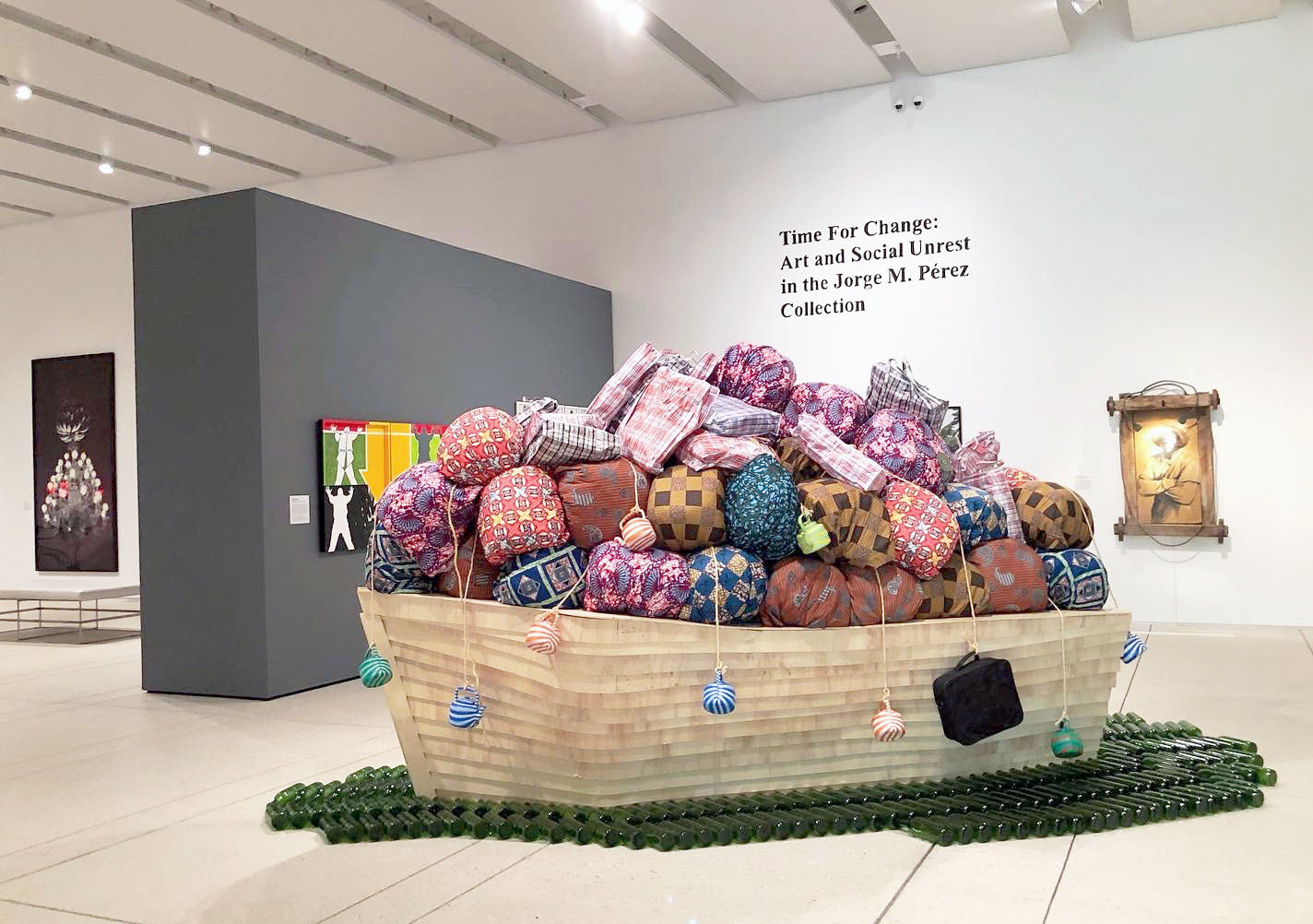
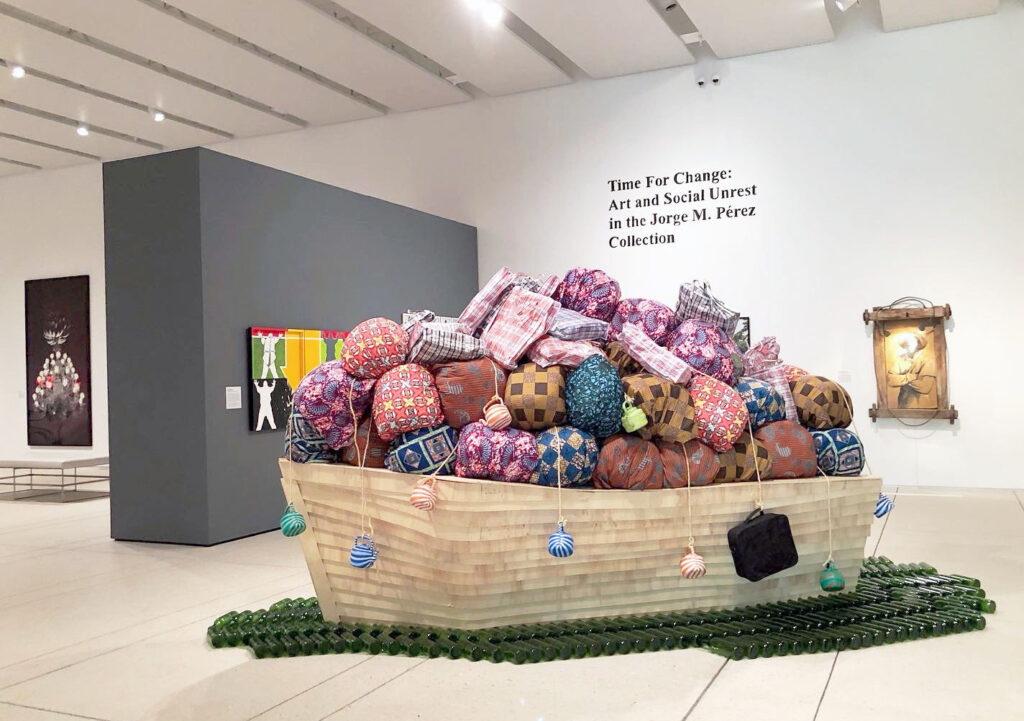
Barthélémy Toguo (Cameroonian, b. 1967), “Road to Exile”, 2018. Wooden boat, cloth bundles, glass bottles, and plastic containers

Currently on view at Tampa Museum of Art is Time for Change: Art and Social Unrest in the Jorge M. Pérez Collection. The exhibition highlights art from around the world that focuses on social issues.

From the museum-

“It is enough for the poet to be the bad conscience of his age”, stated Saint-John Perse in his 1960 Nobel Prize acceptance speech. Something similar could be said when artists address the transformations of society. We should not ask for measurable political action when their role is to point out, to render evident, to shake us from indifference. Art may not provide answers, but most of the time it interrogates and proposes uncomfortable issues, almost like rubbing salt in a wound. Artists are seldom celebratory, nor do they usually provide solutions-art’s potency lays in the symbolic efficacy of the actions it proposes more than in the practical effects they entail. Paraphrasing Brazilian poet Ferreira Gullar, “art exists because life is not enough.”

Time for Change is structured around six themes or nuclei: Entangled Histories, Extraction and Flows, Artivism, State Terror, Spatial Politics, and Emancipatory Calls. The sections are organically linked and establish dialogue and correlations among artworks that do not necessarily illustrate an argument nor are they contained by one. Entangled Histories proposes essential questions: how do we remember as a society? Who is forgotten by History, and for what reasons? Extraction and Flows examines displacement of peoples (usually forced), as well as the unequal logic on the territory. Artivism: Art in the Social Sphere focuses on political unrest and public protest on the streets. State Terror signals how protest is countered with repression and violence. The fifth section, Spatial Politics, reflects on modern architecture and its role in creating segregated communities. Lastly, Emancipatory Calls summons to reclaim difference, in the understanding that a more just society can only be built on respect for one’s right to be different.

A comprehensive look at the Jorge M. Pérez Collection reveals a tendency towards art with an interest in social change- art that examines the conflicts and contradictions of contemporary society, art that critically analyzes historical events and reframes them in the present. Many of the 60 works on view, due to their size or complexity have rarely been exhibited and are shown together for the first time in Time for Change.

About the main work pictured above, Barthélémy Toguo’s Road to Exile, from the museum–

In 2018, the Parrish Art Museum in Water Mill, New York hosted Barthélémy Toguo’s first solo exhibition in the United States. While on site at the Parrish he made Road to Exile, a large-scale installation highlighting the plight of refugees, in particular African migrants in search of a better and safer quality of life. The installation features a life-sized wooden boat that rests on glass bottles. A metaphor of the dangerous voyage across the sea, the bottles represent the fragile line between life and death. The boat nearly overflows with bundles wrapped in brightly colored African textiles and serve as stand-ins for the body. In Road to Exile Toguo employs imagery of the boat as a means of escape rather than a vessel for exploration or adventure.

Below are images from the exhibition as well as some information on a few of the works.
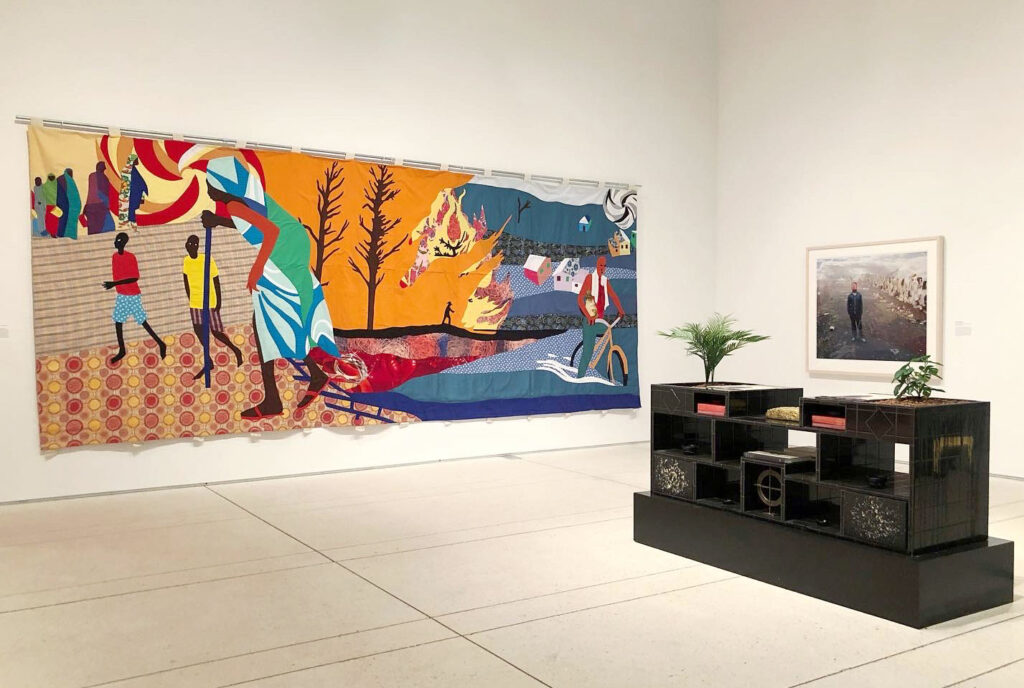
Rashid Johnson, “A Place for Black Moses, (2010), bottom right sculpture, and Christopher Myers “How to Name a Famine, a Fire, a Flood”, 2019, left wall piece
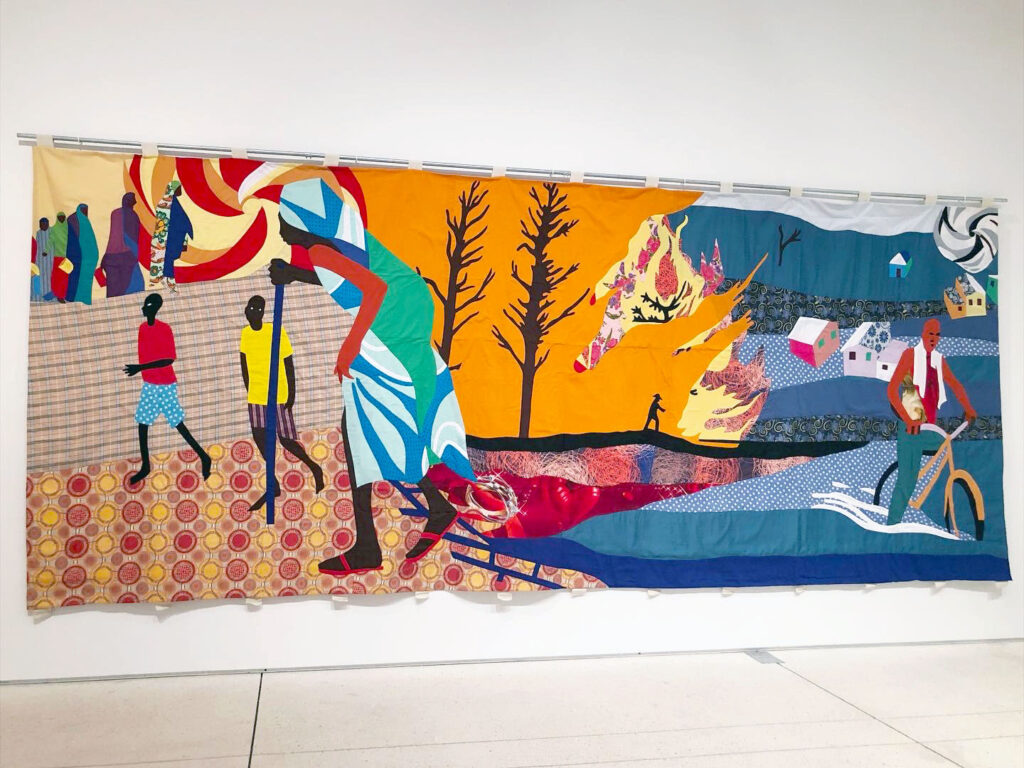
Christopher Myers “How to Name a Famine, a Fire, a Flood”, 2019, Applique fabric

From the museum about the above work-

Storytelling anchors Christopher Myers’ artistic practice. Working in a range of media, he mines history and creates art that links the past to the present. Myers’ tapestries, such as How to Name a Famine, a Fire, a Flood draws on the rich tradition of quilt making as a quiet yet radical form of resistance and protest. The stories depicted center on the effects of globalization on individuals and more specifically, communities of color. In How to Name a Famine, a Fire, a Flood, Myers portrays three different natural disasters linked to climate change. With vivid color and patterned fabric, he illustrates the impact and devastation of these catastrophic events in neighborhoods with minority populations.
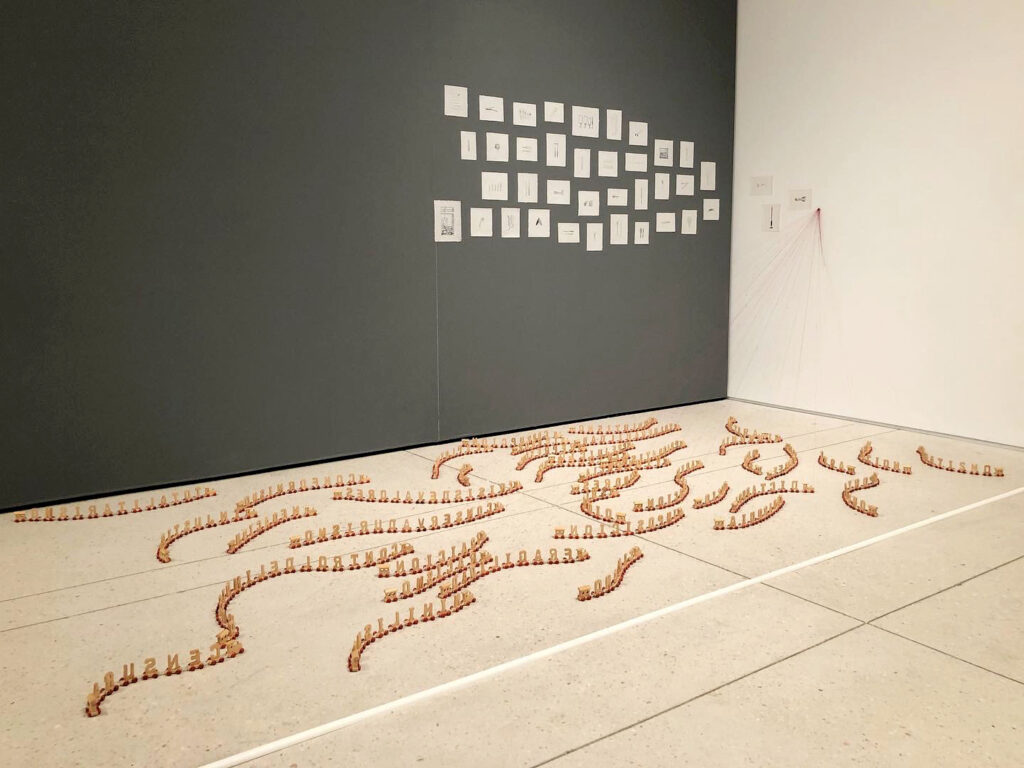
 

Carlos Garaicoa “La habitacion de mi negatividad (The Room of My Negativity)”, 2003, 39 ink and pencil drawings on rice paper and toy train installation
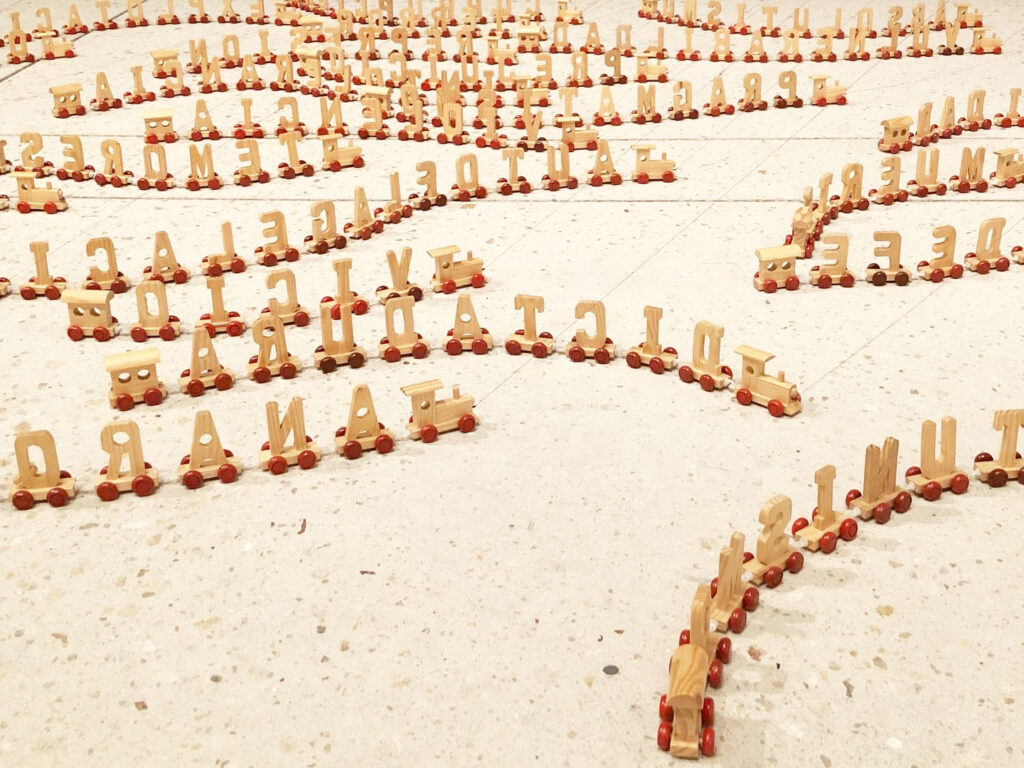
Carlos Garaicoa “La habitacion de mi negatividad (The Room of My Negativity)”, 2003 (detail)

Carlos Garaicoa “La habitacion de mi negatividad (The Room of My Negativity)”, 2003 (detail)

About the above work from the museum-

Carlos Garaicoa works in a variety of media, ranging from installation, photography, and video to performance and public interventions. His early work in the 1990s focused on the urban decay of Havana as result of its political climate and economic strife. La habitacion de mi negatividad (The Room of My Negativity), turns Garaicoa’s lens inward. In this installation, comprised of toy trains and drawings of medical instruments, the artist explores his psyche and subconscious. The train’s engine pulls words that represent Garaicoa’s negative thoughts. Each train is connected to thin red thread that acts as a vein or conduit for the negative thoughts to travel. Arrange in a curved form, the train shapes mimic brain waves or the slink of a snake. Garacoia’s drawings of medical tools serve as mechanisms in which the negatively could be excavated from one’s mind.
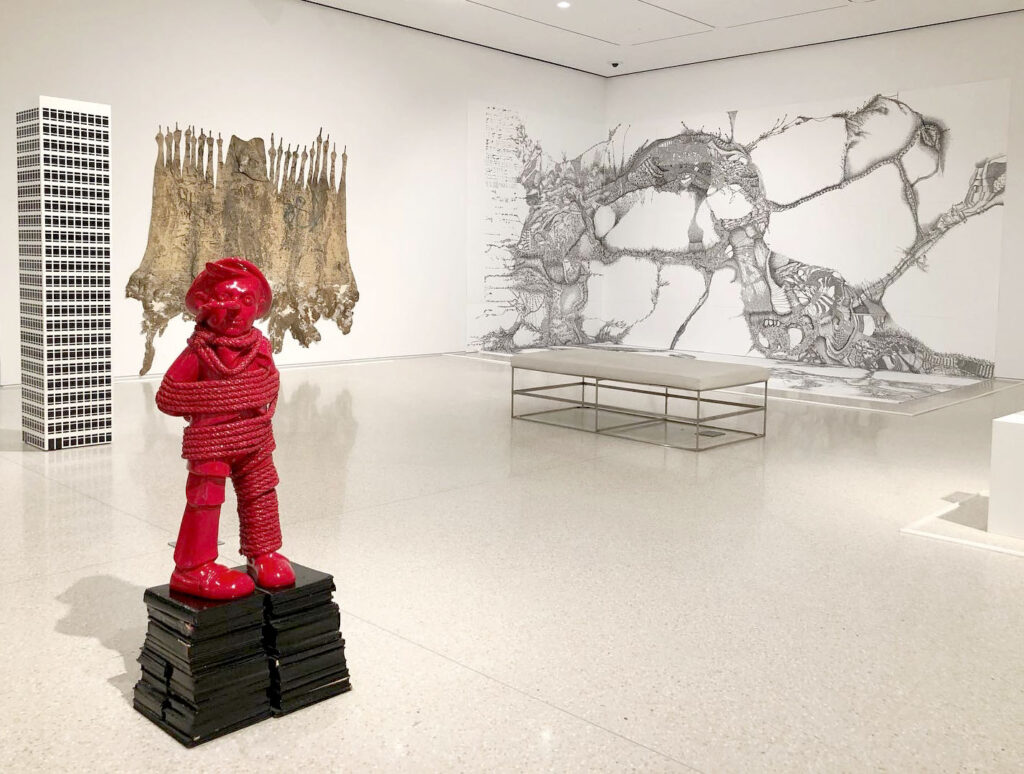
Esterio Segura, “La historia se muerde la cola (History Bites its Tail)”, 2015, (statue bottom left); Anamaría Devis, “Infinito (Infinite)”, 2018(upper right)
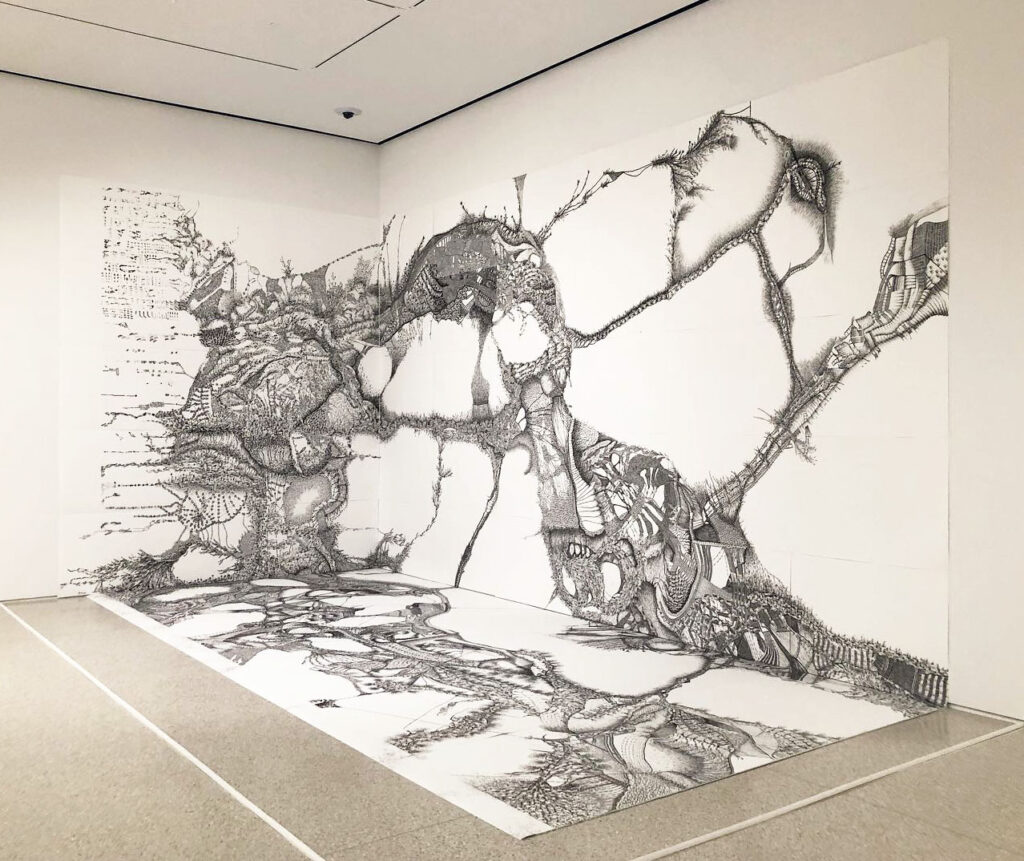
Anamaría Devis, “Infinito (Infinite)”, 2018, Ink on paper
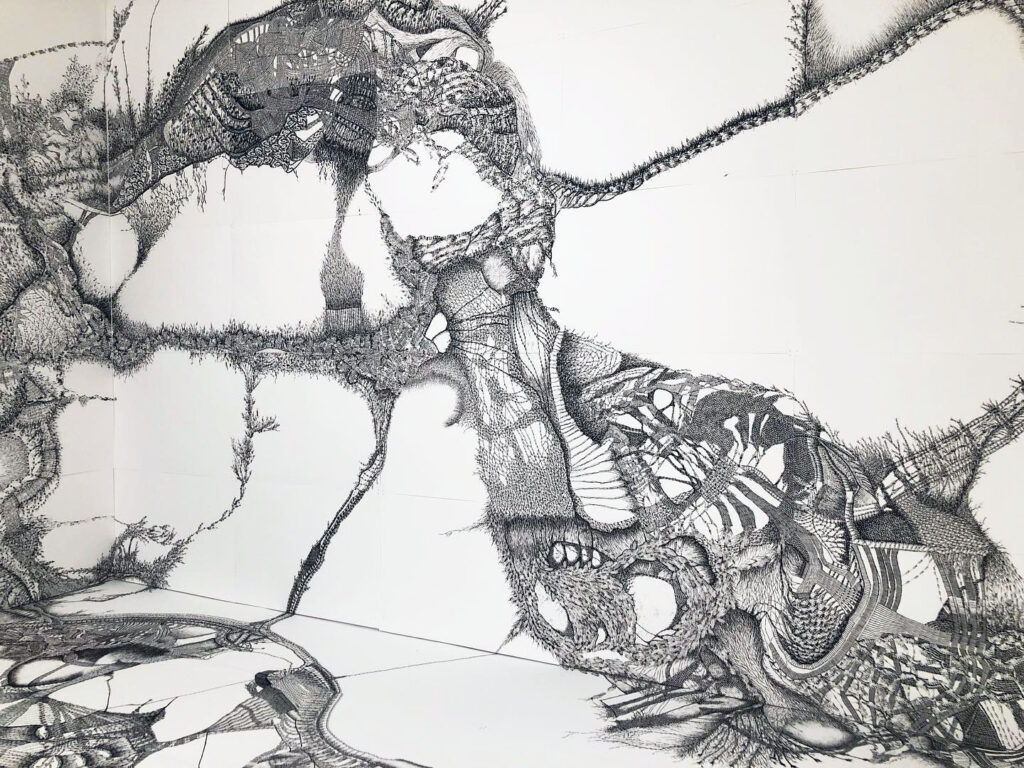
Anamaría Devis, “Infinito (Infinite)”, 2018, Ink on paper (detail)

About this work from the museum-

Anamaría Devis’ large-scale installation Infinito (Infinite) represents the artist’s study of African history in San Basilio de Palenque, Colombia. Escaped slaves founded Palenque and it was the first free town in the Americas during colonial times. While researching this history, Devis discovered that in this region of Colombia, braided hairstyles worn by Africans served as escape maps. Braid patterns reflected safe points in the area’s topography. This silent form of resistance inspired her to look at other bodily topographies like the characteristics of fingerprints, which also had names associated with cartography such as crossing, island, and fork. Devis then began to create drawings that incorporated footprints, braid patterns, and elements of nature. From the drawings she made stamps and each panel of paper that comprises Infinito (Infinite) is rendered from Devis’ various imprints. The result is an abstract representation of the body and landscape visualized through mapping and codes.
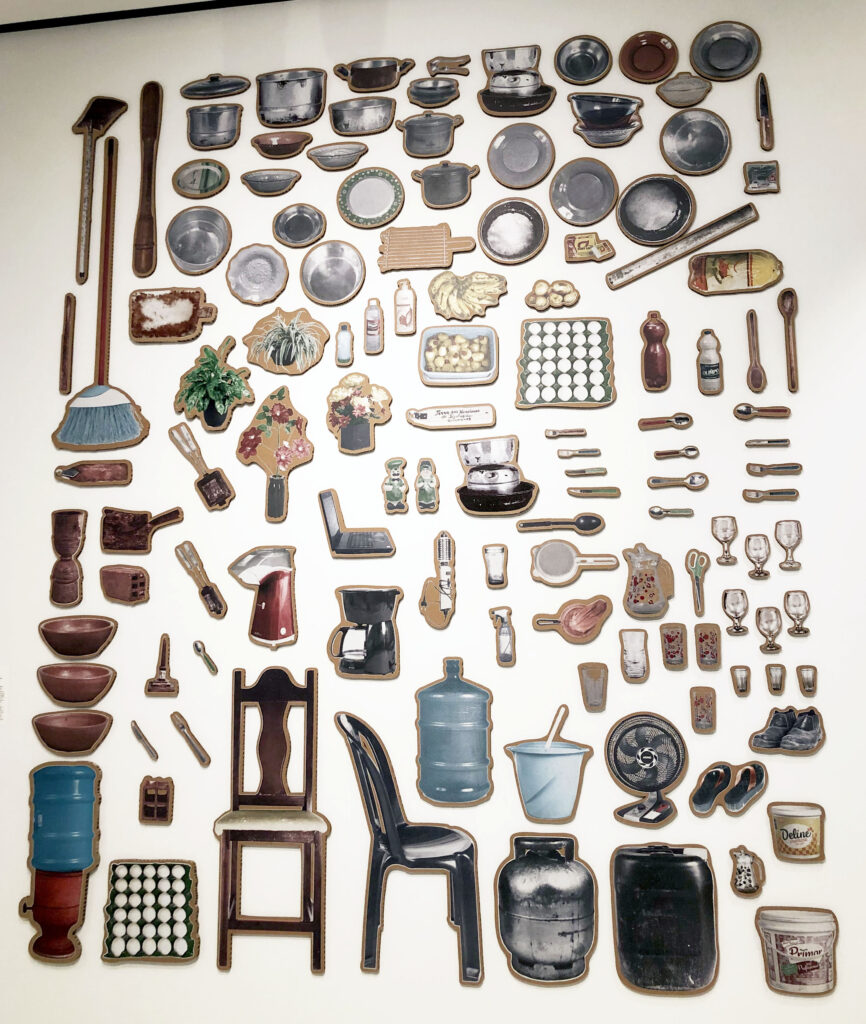
Jonathas de Andrade, “A batalha de todo dia de Dona Luzia, de Tejucupapo (The daily battle of Dona Luzia, from Tejucupapo)”, 2022 Images printed on raw falconboard

About this work from the museum-

Jonathas de Andrade collaborated with the Brazilian theater company Teatro Heroínas de Tejucupapo to create a visual reenactment of the historic 1646 Battle of Tejucupapo. For nearly 25 years, between 1630 and 1654, the Dutch occupied the northeast of Brazil including Tejucupapo, a small community in the city of Goiana. During the Battle of Tejucupapo, a brigade of black and indigenous women forced Dutch soldiers to retreat by arming themselves with household and farm objects. The Teatro Heroínas de Teiucupapo commemorates this female-led rebellion each April by restaging the battle with local actors.

Artist Jonathas de Andrade celebrates the power and courage of Tejucupapo’s women with his large-scale photographic installation A batalha do todo dia de Tejucupapo (The Battle of Tejucupapo). The work on this wall, A batalha de todo dia de Dona Luzia, de Tejucupapo (The daily battle of Dona Luzia, from Tejucupapo), presents everyday objects from the home of one of the women participating in Teatro Heroínas de Tejucupapo. This inventory explores the daily struggles, as well as strength, of Brazil’s black and indigenous women that have spanned centuries.

This exhibition will close on Sunday, 8/27/23.


Jul 272023
 

“A Cut Below”, 2000, Acrylic on canvas

Theo Wujcik’s painting, A Cut Below, is part of Tampa Museum of Art‘s All in Favor: New Works in the Permanent Collection, on view until 7/30/23.

Jul 252023
 

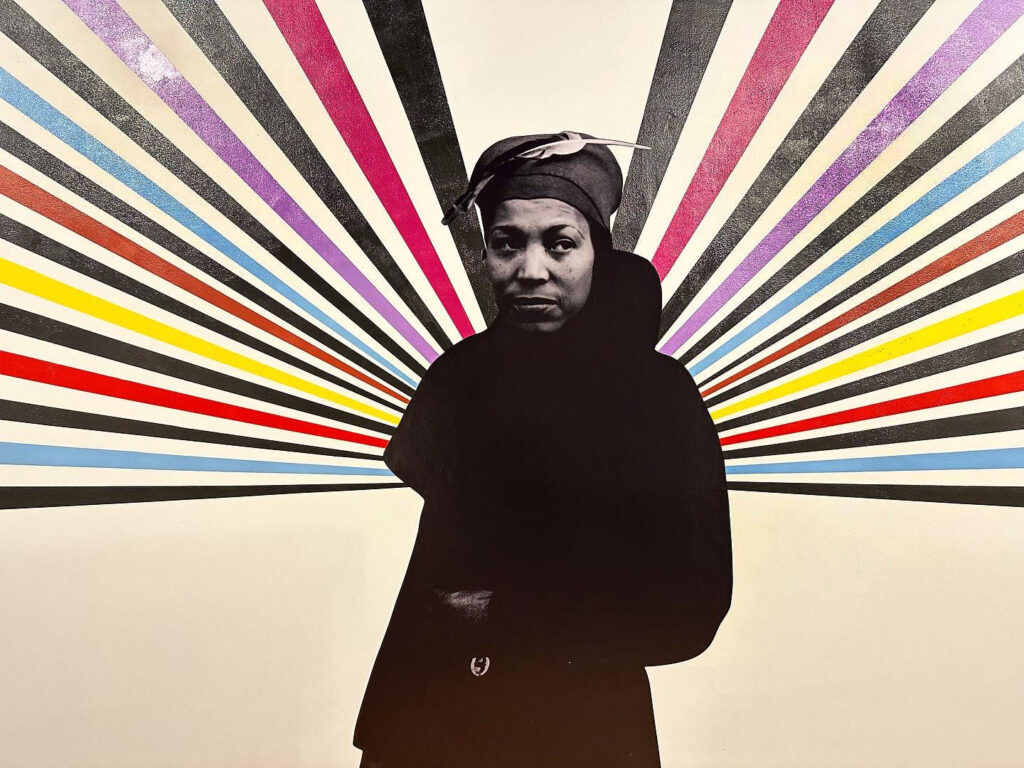
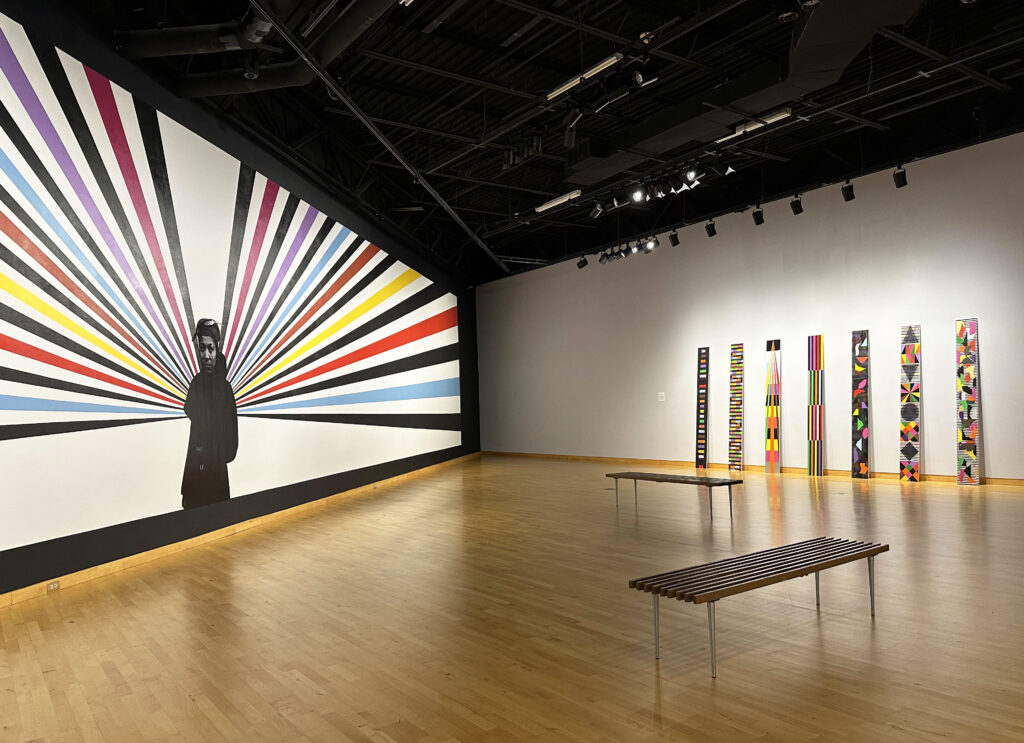
Currently at the University of Florida’s Contemporary Art Museum is Rico Gatson: Visible Time. The exhibition includes a collection of the artist’s paintings and works on paper, video works from 2001-present, and a life size mural of author Zora Neale Hurston.

From the museum’s website about the exhibition-

For more than two decades, Brooklyn-based artist Rico Gatson has been celebrated for his vibrant, colorful, and layered artworks. Inspired by significant moments in African American history, identity politics and spirituality, his oeuvre includes images of protests and longstanding injustices—touching on subjects like the murder of Emmett Till, the Watts Riots, and the formation of the Black Panthers—as well as dynamic abstract geometries that celebrate Pan-Africanist aesthetics and Black cultural and political figures.

About the mural, Zora III, commissioned by the museum (pictured above)-

Zora Neale Hurston was an American author, anthropologist, and filmmaker. She portrayed racial struggles in the early-1900s American South and published research on hoodoo (a set of spiritual practices, traditions, and beliefs created by enslaved Africans in the Southern U.S.). The most popular of her four novels is Their Eyes Were Watching God, published in 1937. Born in Notasulga, Alabama, Hurston grew up near Orlando, in Eatonville, Florida, incorporated in 1887 as one of the first self-governing all-black municipalities in the country. Despite her landmark achievements, Hurston died penniless and in obscurity in 1960-her novels and other writings largely unknown, until they were single-handedly rescued by novelist Alice Walker in 1975. Through his wall painting Rico Gatson extends the monumental impact of Hurston’s legacy-and Walker’s- into a visual arena reminiscent of the Mexican Muralists and hand-painted cinema signs.

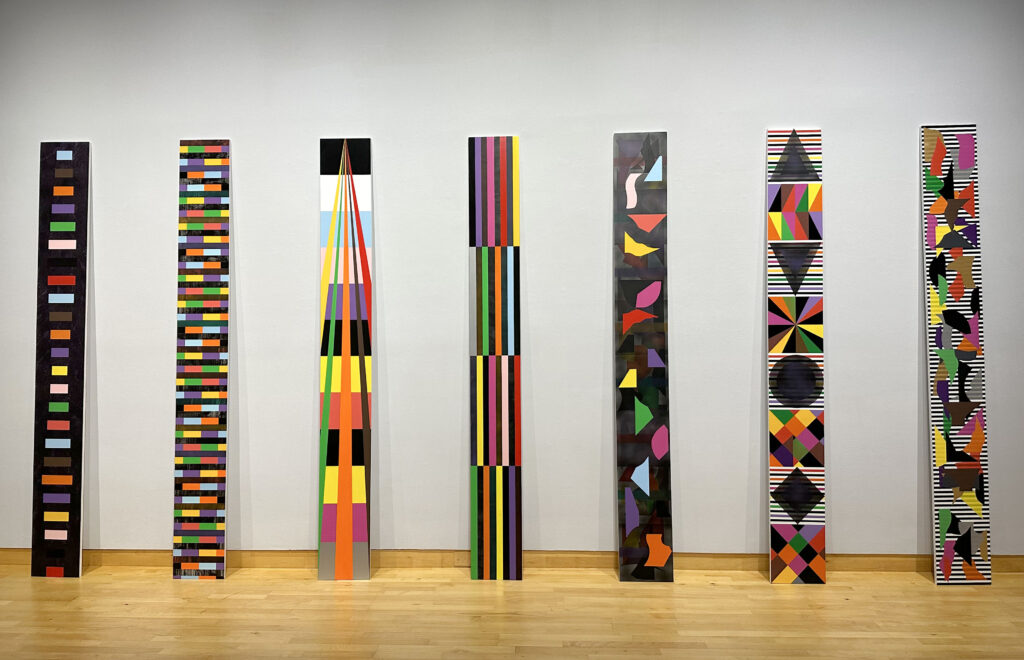
“Untitled (Seven Panels)”, 2022 acrylic paint on wood, in seven parts

From the museum’s wall plaque about the above paintings-

According to catalog contributor Mark Fredricks, Rico Gatson’s “panel paintings” resemble “a musical framework.” Arranged together along a single wall, the “rhythm” animating their colorful compositions and their “uniformity of structure” suggest, anthropomorphically speaking, musicians in a jazz combo. One of the many ways in which Gatson draws on music as a lasting influence in his art, his seven panels approximate what legendary jazz player Albert Ayler described as “the healing force of the universe,” but in three dimensions.

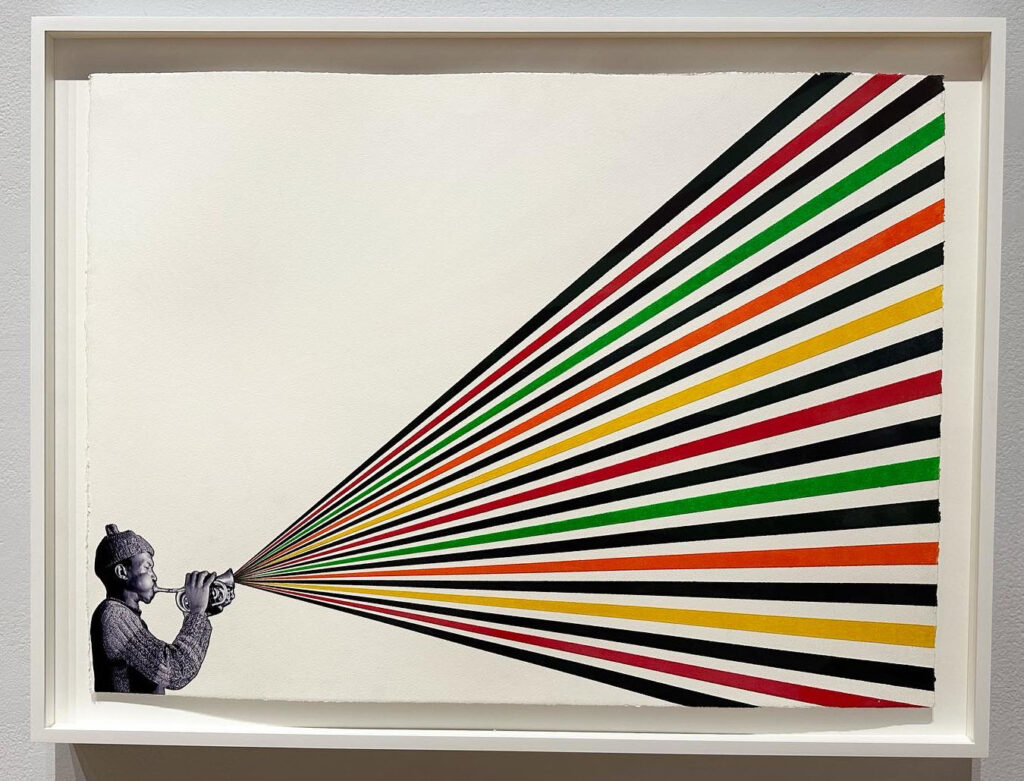
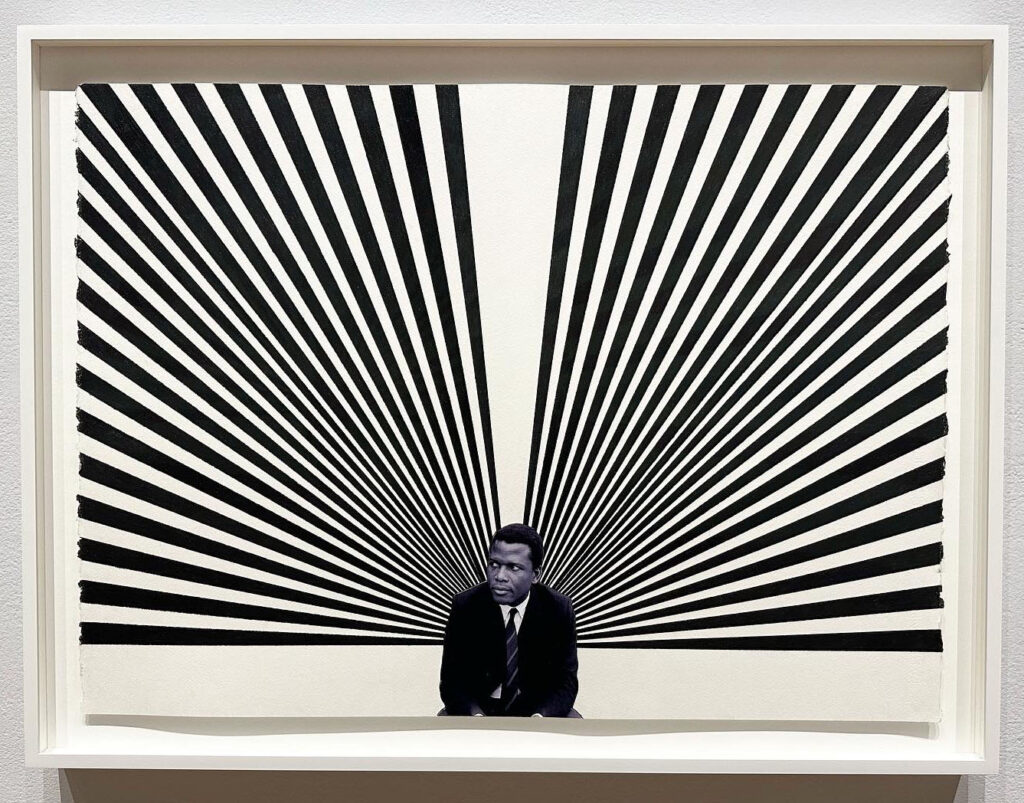
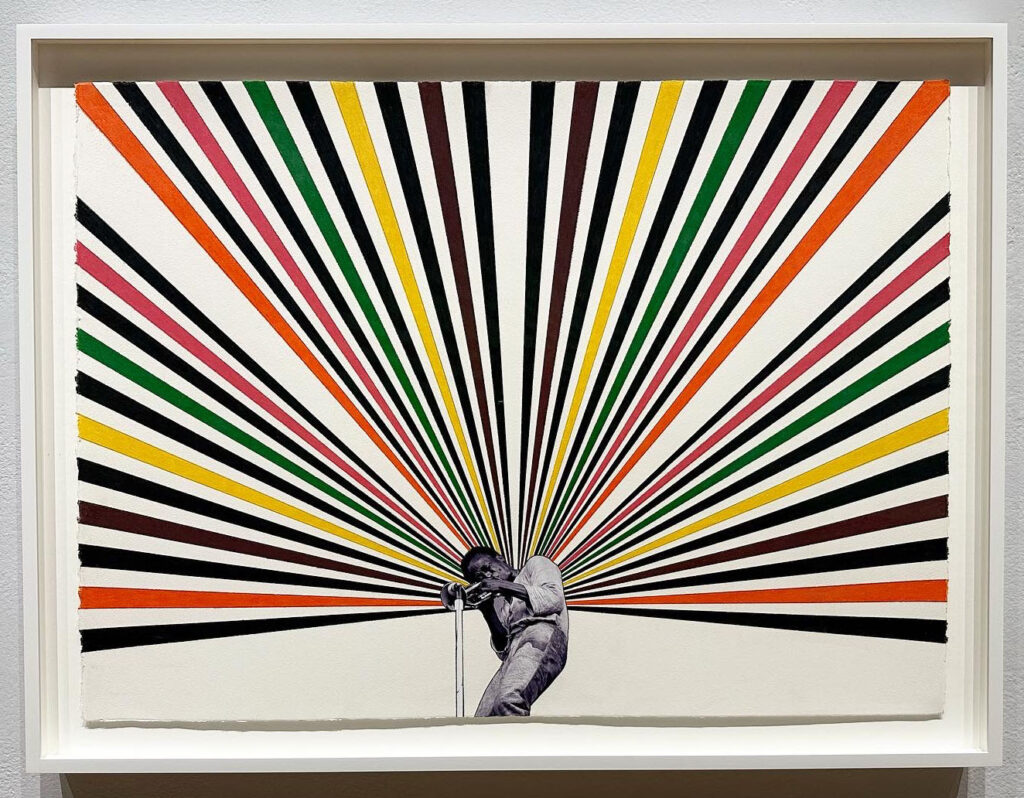
“Don” 2022, Color pencil and photo-collage on paper

“Sidney” 2022, Color pencil and photo-collage on paper

“Miles #2″ 2022, Color pencil and photo-collage on paper

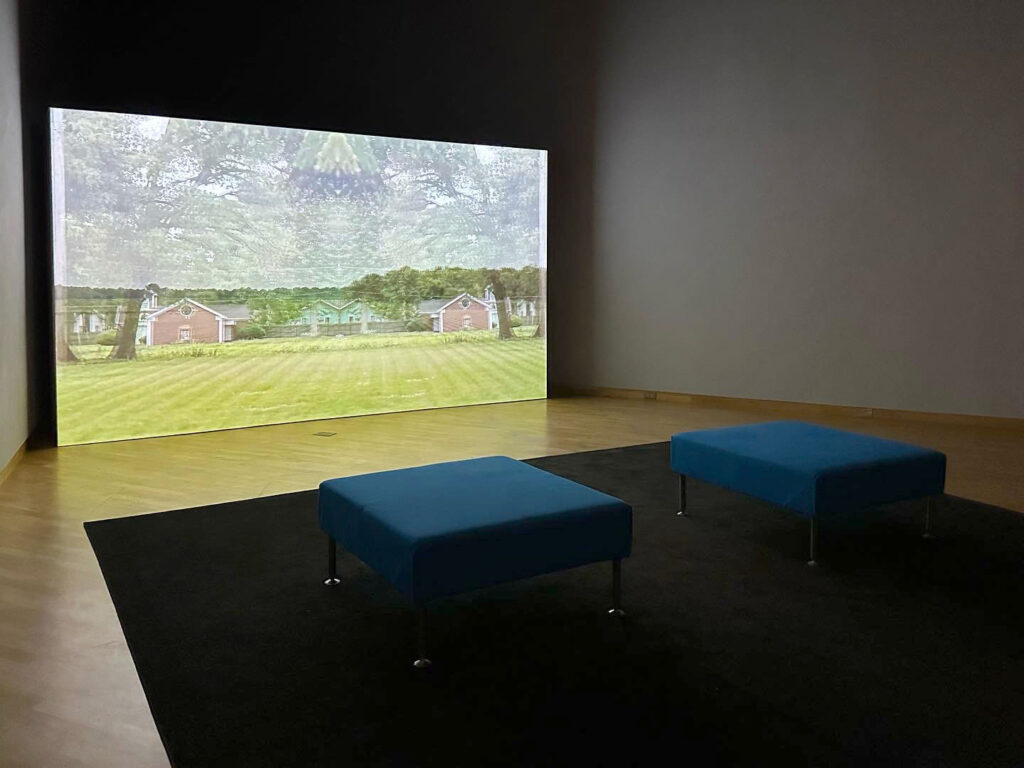
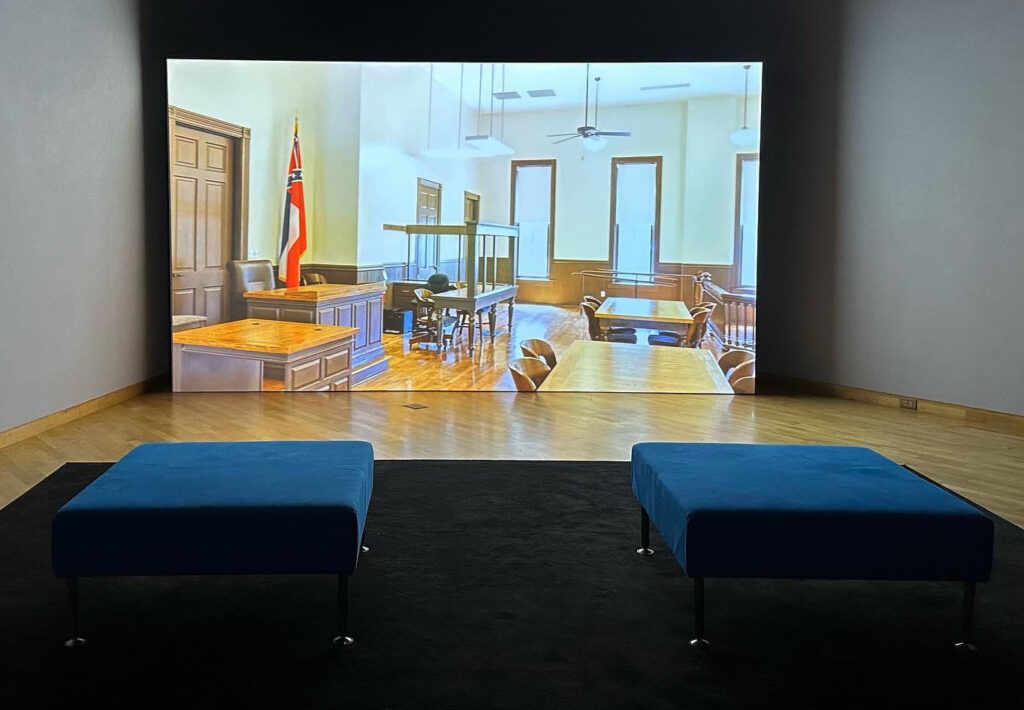
Below are images are from Four Stations, one of the five moving image works in the exhibition. For this work, Gatson traveled to Money, Mississippi and took handheld footage along the trail of places and events that led to the lynching of 14-year-old Emmett Till.

“Four Stations” 2017

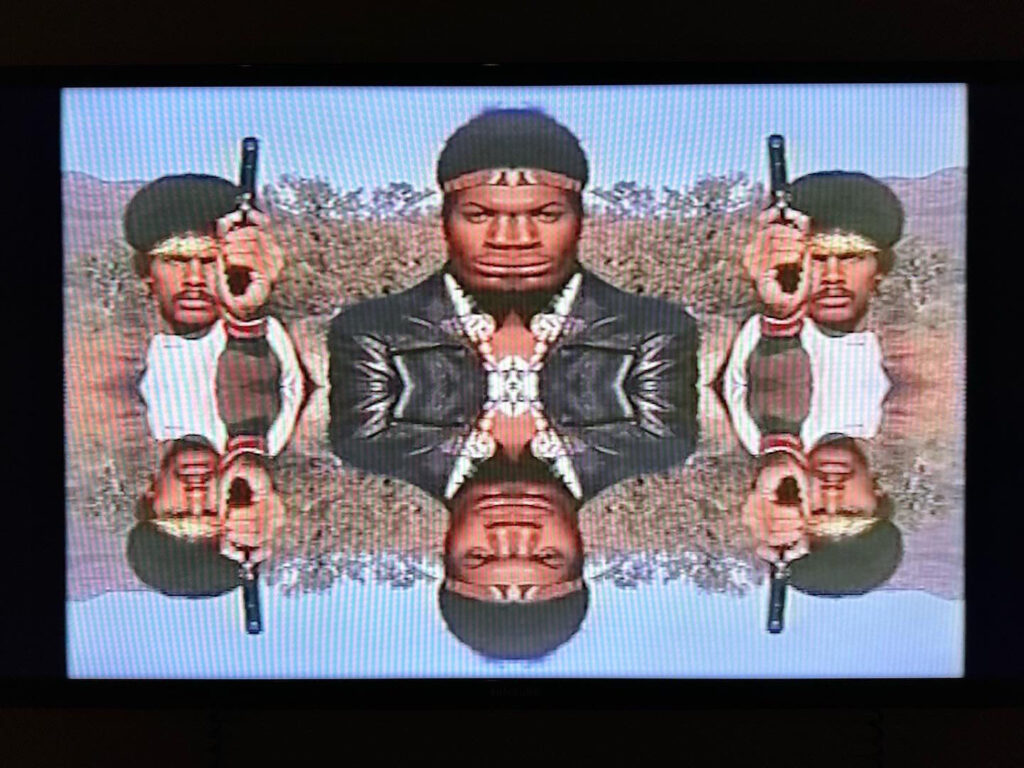
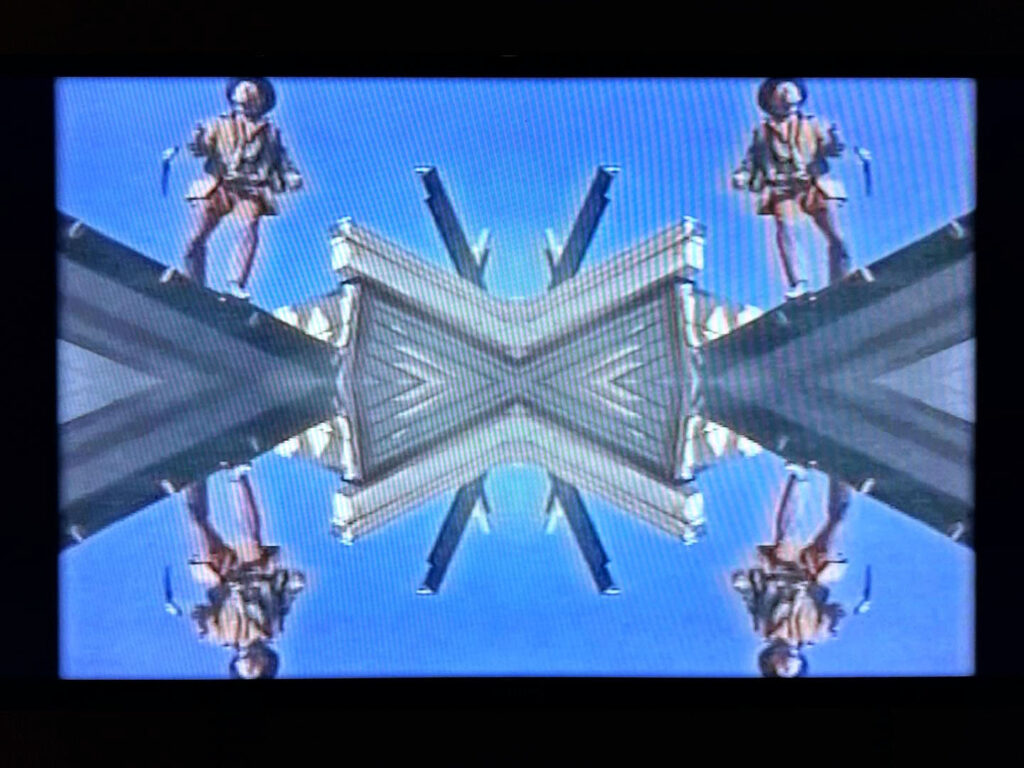
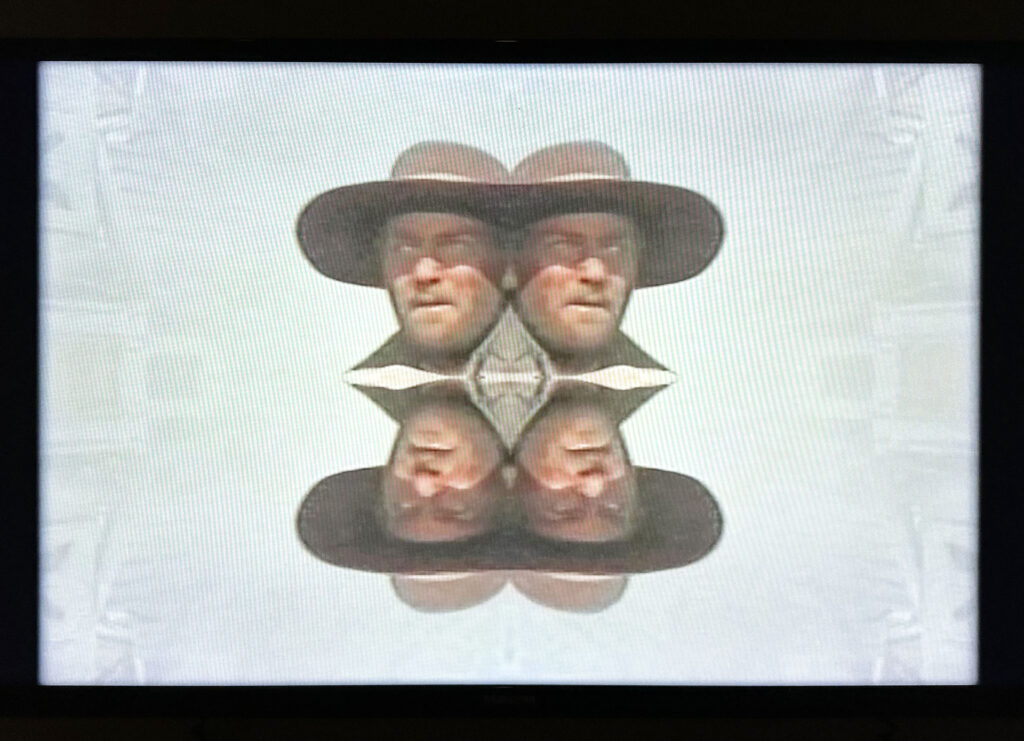
On one of the smaller screens is Gun Play, 2001, a film collage that mixes sequences from Foxy Brown and The Good, the Band and the Ugly, combining them together with kaleidoscopic effects.

“Gun Play”, 2001, single-channel video, color, sound

This Thursday 7/27/23, the museum will be showing Spike Lee’s Do the Right Thing, the last of the three films chosen by Gatson to accompany the exhibition.

The exhibition will close on Saturday, 7/29.