
Superpalm Mural, by Florida artist Elizabeth Barenis, was commissioned by the city of Dunedin in 2022 for their Parks and Recreation building.
Her solo exhibition, Tropical Splendor, is on view at Morean Arts Center in St. Pete until 9/24/24.

Superpalm Mural, by Florida artist Elizabeth Barenis, was commissioned by the city of Dunedin in 2022 for their Parks and Recreation building.
Her solo exhibition, Tropical Splendor, is on view at Morean Arts Center in St. Pete until 9/24/24.


Last year Tampa Museum of Art installed work by fashion designer Naeem Khan, including the two pieces above, Floating Flowers Fuchsia and Gold and Floating Flowers Pink and Silver.
From the museum about the work-
As part of its ongoing exhibition series exploring the intersection of art and fashion, the Tampa Museum of Art presents a series of paintings by globally renowned fashion designer Naeem Khan. Khan works independently, as well collaboratively with artist Stanley Casselman as the collective KACE, to create large-scale works inspired by his ongoing exploration of flora, light, and color. Five monumental works, comprised of paint and sequins represent Khan’s inaugural museum exhibition.
The Khan Family, steeped in the tradition of fashion and textiles for over 100 years, is renowned for their atelier in Mumbai and their luxurious couture worn by luminaries and India’s royalty. Khan arrived in New York at the age of 17, travelling to the United States with his father. A business appointment with Halston changed the course of his life as the famed designer decided on the spot that Khan would be his protégé. With Halston as his mentor, Khan became immersed in Manhattan’s art and social circles. From the atelier to Studio 54 and Andy Warhol’s Factory, Khan emerged as a designer at a pivotal moment in the 1970s where the lines between art, fashion, music, film, and celebrity were often blurred, further signifying New York City as the epicenter of creativity.
While working with Halston, Khan met Andy Warhol who frequently collaborated with Halston on his projects. Khan participated in their collaborations by drawing the flowers for their designs, specifically poppies. Warhol, like Halston, took Khan under his wing and once told the young designer, “You shouldn’t hold your pencil that way. Let me show you how to draw.” Flowers, inspired by his work and friendship with Warhol as well as the flora in his home country of India, anchor Khan’s visual language.
In 2020, painter Stanley Casselman introduced himself to Khan at one of his fashion shows and was immediately struck by the beauty and power of the designer’s work. Casselman observed that Khan’s designs could be translated into painting. Conversations lead to collaboration and today the two artists work both individually and together under the name KACE. Works, such as Jardin Chrome and Jardin d’Or, feature Khan’s elaborate sequined blooms in concert with Casselman’s gestural paint strokes. The compositions reveal the signature elements of each artists’ practice. Here, Khan’s ornate craftsmanship and Casselman’s abstract mark making unite in dazzling effect.
Khan’s solo works, Floating Flowers Pink and Silver and Floating Flowers Fuchsia and Gold, nod to his familial history with fabric, color, composition, and texture while pushing the boundaries of contemporary painting. Each flower is comprised of hundreds of sequins and beads. Delicately sewn onto silkscreen material, Khan suspends the panels one over the other, creating a sculptural quality to the paintings. Fabricated in a range of petal formations and size, Khan’s blossoms both capture and reflect light. As if suspended in space, the flowers come to life, symbolizing Khan’s creative past and his burgeoning artistic future.


Above is Jaume Plensa’s sculpture Laura with Bun, 2014, on view at Tampa Museum of Art.
From the museum-
At more than 23 feet tall, this artwork expresses both individual and universal traits at great scale, inviting viewers to consider multiple aspects of beauty and human nature. Like all of his large-scale female portrait heads, Laura has her eyes closed, as if looking within. In speaking about these works, Plensa has said, “Look into yourself. My piece is a mirror to reflect your image, so you can think about your own interior—how much beauty we have inside of ourselves.”
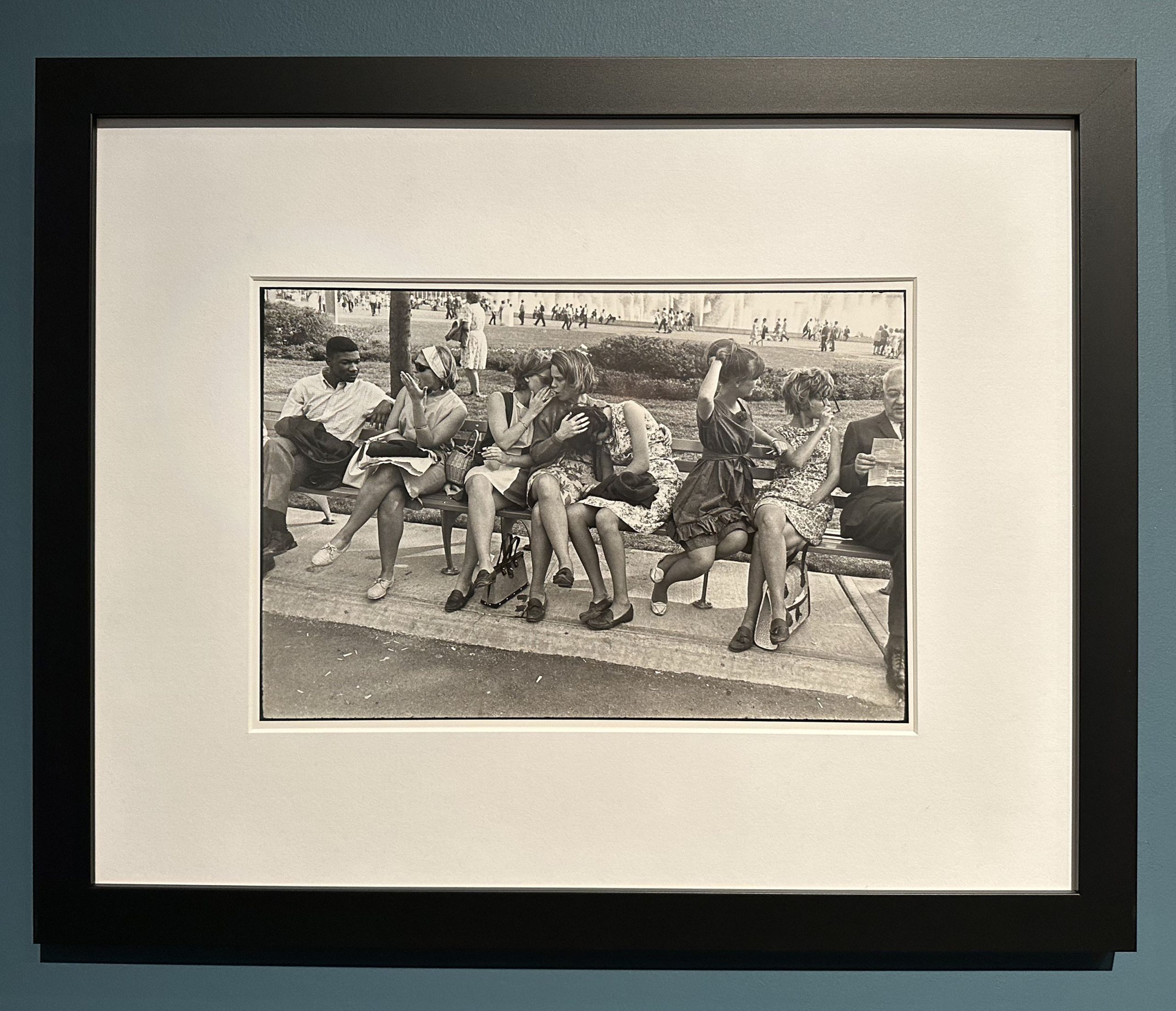
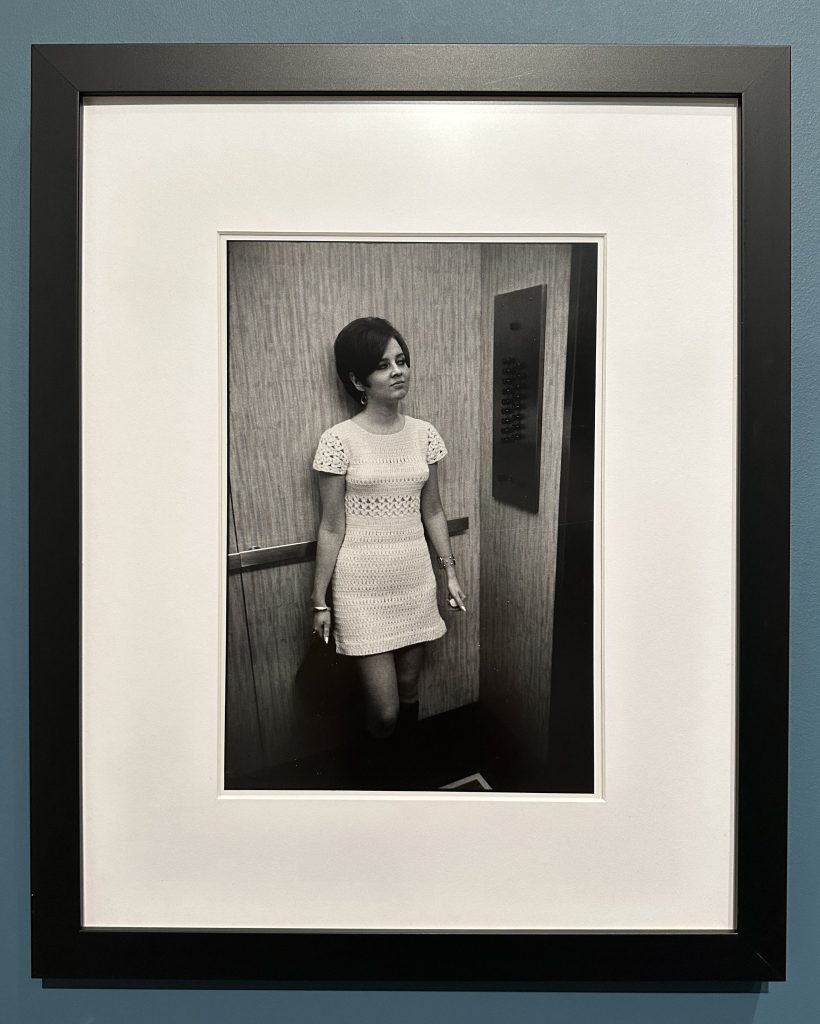
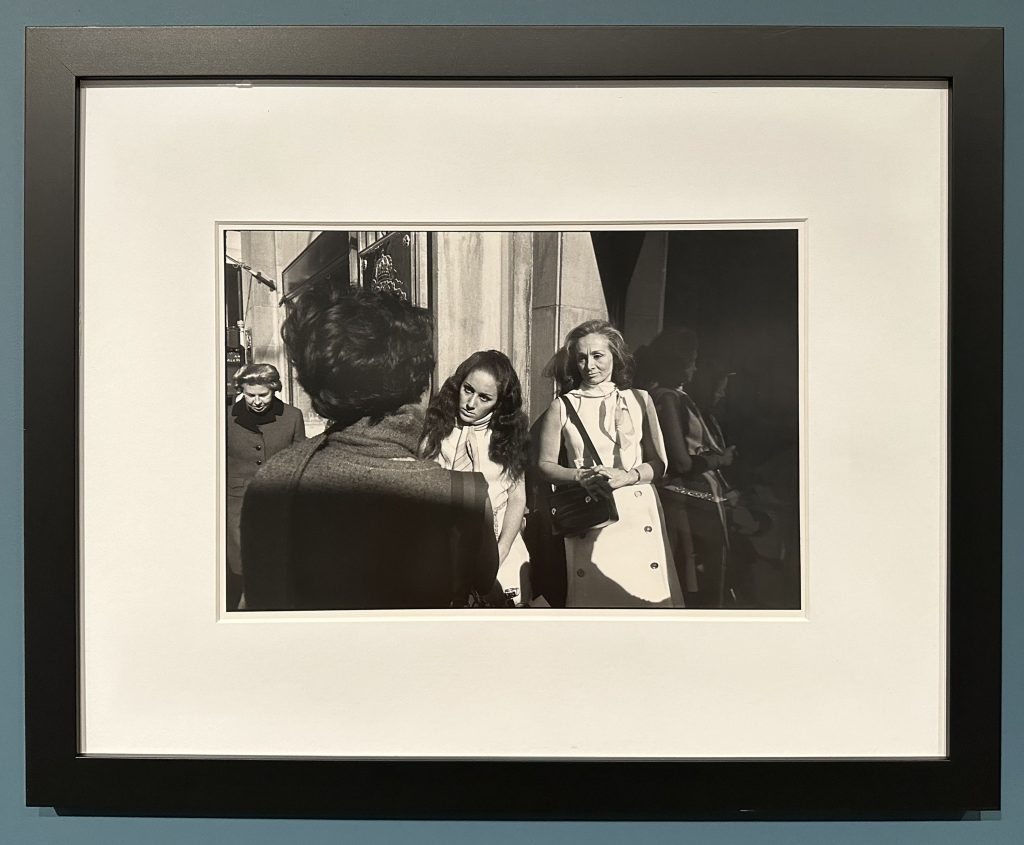
Currently Tampa Museum of Art is showing work from Garry Winogrand’s book, Beautiful Women. The photographs are from the 1960s and 1970s and are a fascinating glimpse of this time period. His ability to find and capture these brief moments is impressive. At the same time, some of the photos of these women feel invasive and, as said in the museum’s statement on the work below, voyeuristic.
From the museum-
Garry Winogrand was a master at photographing the unseen, extraordinary moments of everyday life. With his Leica camera, Winogrand photographed both up close and at a distance, but spontaneously as the image came together. He liked to break the rules of photography by ignoring traditional horizon lines and shooting at titled angles to create compositional allure.
Described as one of the 20th-century’s most influential street photographers, Winogrand often defied social decorum by getting into the space of his subjects – sometimes unknowingly to the person and at other times to their great annoyance. He captured life in the 1960s and 1970s in the blink of an eye, preferably with his 28mm lens which allowed more of what was in front of him to be featured in the frame. Winogrand once remarked, “I photograph to see what the world looks like in photographs.”
Women are Beautiful represents of one Winogrand’s most celebrated yet controversial artworks. His magnum opus, Women are Beautiful was first published as a book in 1975 and later printed as a portfolio in 1981. Comprised of 85 photographs, the works were shot over a ten-year period between 1965 and 1975, notably at the height of second-wave feminism and the sexual revolution, the anti-war movement, and the civil rights movement. As the title suggests, women served as the inspiration for the project. Winogrand culled images from his extensive archive that emphasized the confidence, vibrancy, and individuality of the American woman. While the photographs have been lauded as artifacts of their time, the works have also been criticized as voyeuristic and invasive to women’s privacy. Both observations deserve consideration in viewing this body of work.
The presentation of Women are Beautiful in this gallery follows the format of the book, which is now out of print. Winogrand selected the images and organized the photos without reference to subject, date, and place. Apart from the first photograph in the series, the images are presented as pairs to represent Winogrand’s book spreads. This arrangement aims to highlight how the photographer viewed and read his pictures. While women anchor the photographs, Winogrand looked at the total image-such as the other people in the photo or the quietness of solitude, the surrounding landscape, and the objects featured in the frame. At quick glance, the connections between images may not appear readily visible but it is in these photographs that Winogrand invites viewers to take a longer, closer look at the pictures. Subtle gestures such as the common angle of limbs and facial profiles, or shadows, corners, and lines – even the shared shading of a hat and tree-inspired Winogrand’s paired selections. Viewed together, the photographs reveal a deliberate sequencing and pacing, like a storyboard or film. Winogrand’s Women are Beautiful offers insight into the vantage point of one the 20th-century’s most accomplished photographers.
Below are some of the pairs from the show.
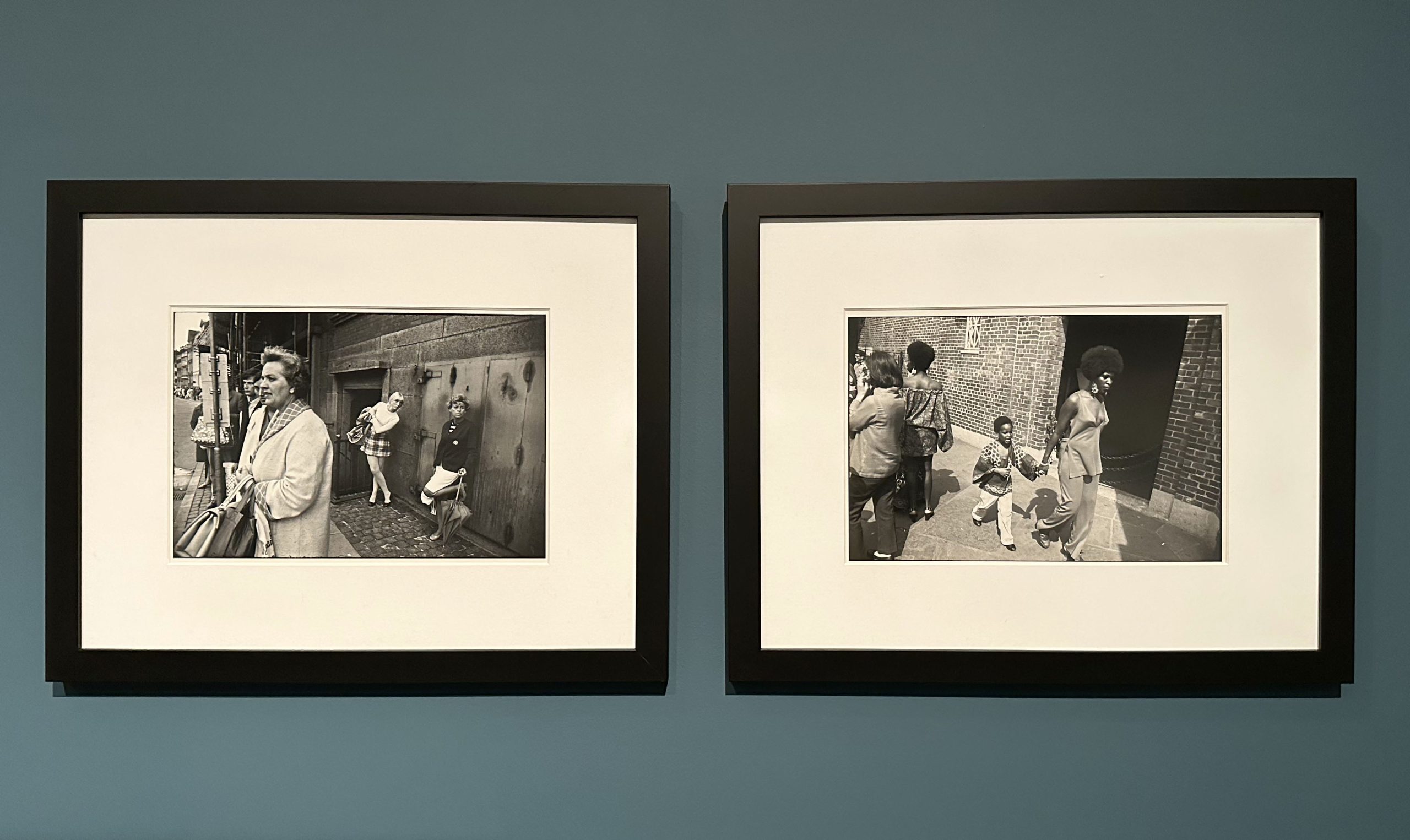
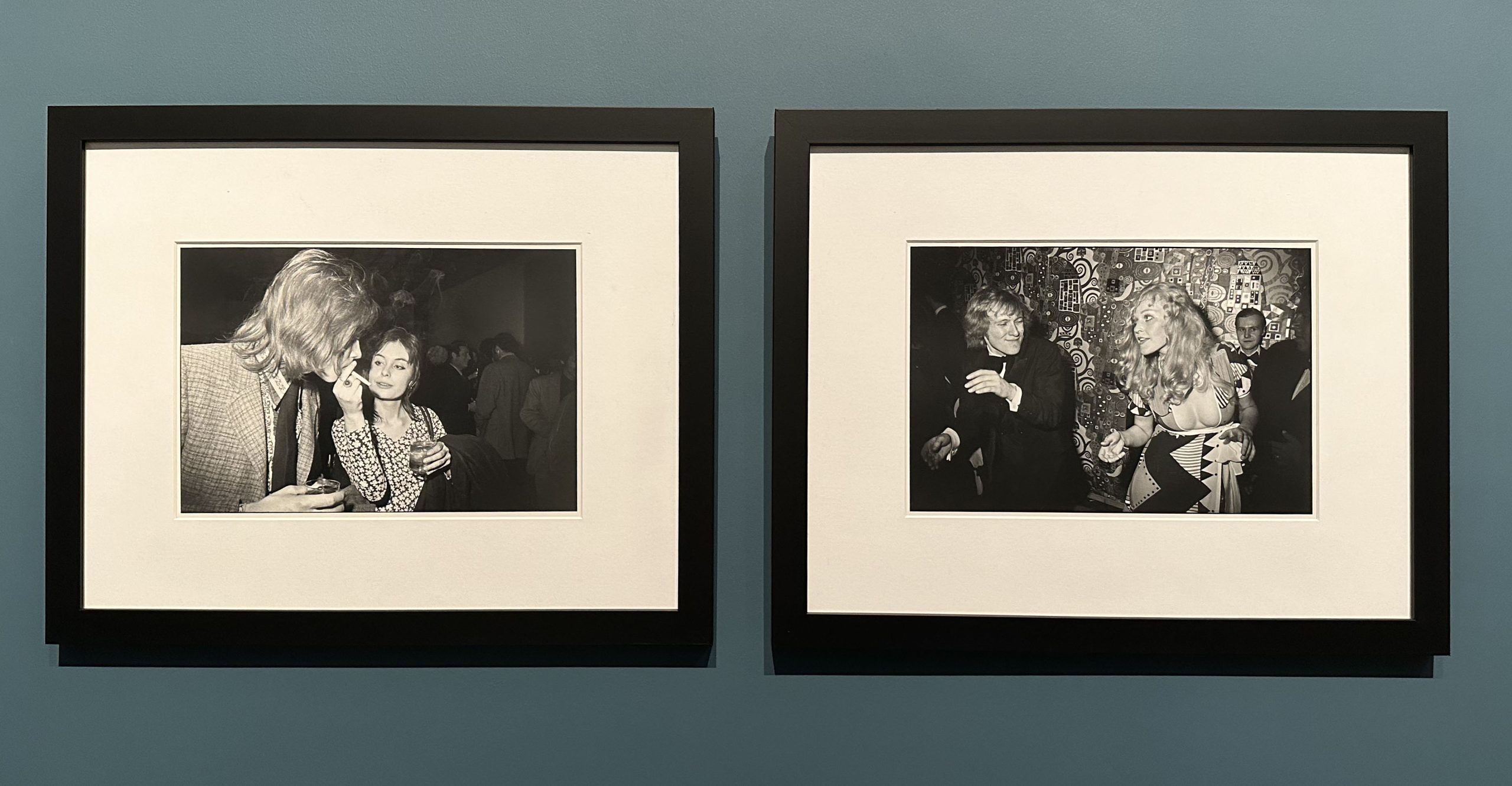
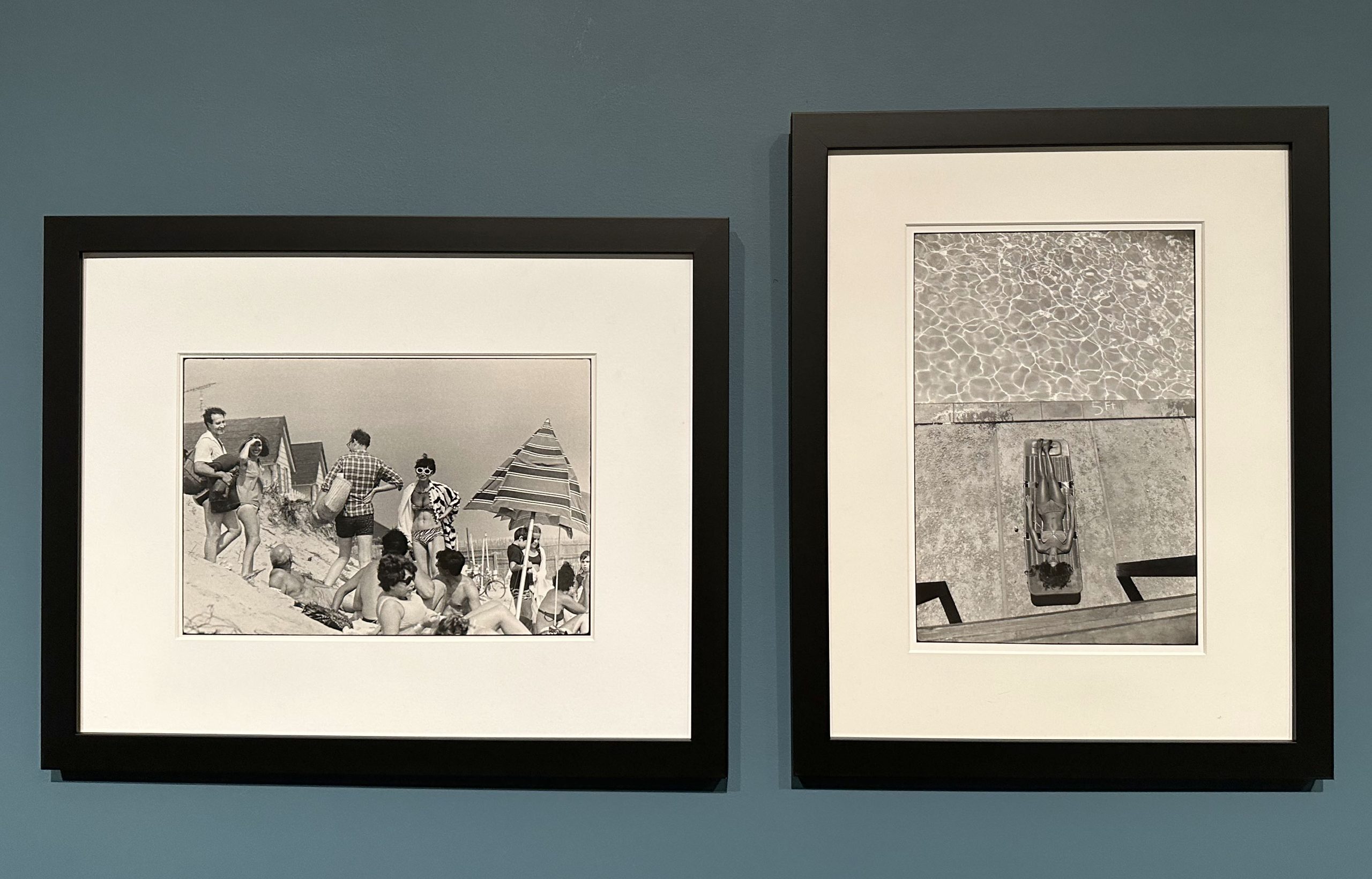
This exhibition closes 4/21/24.
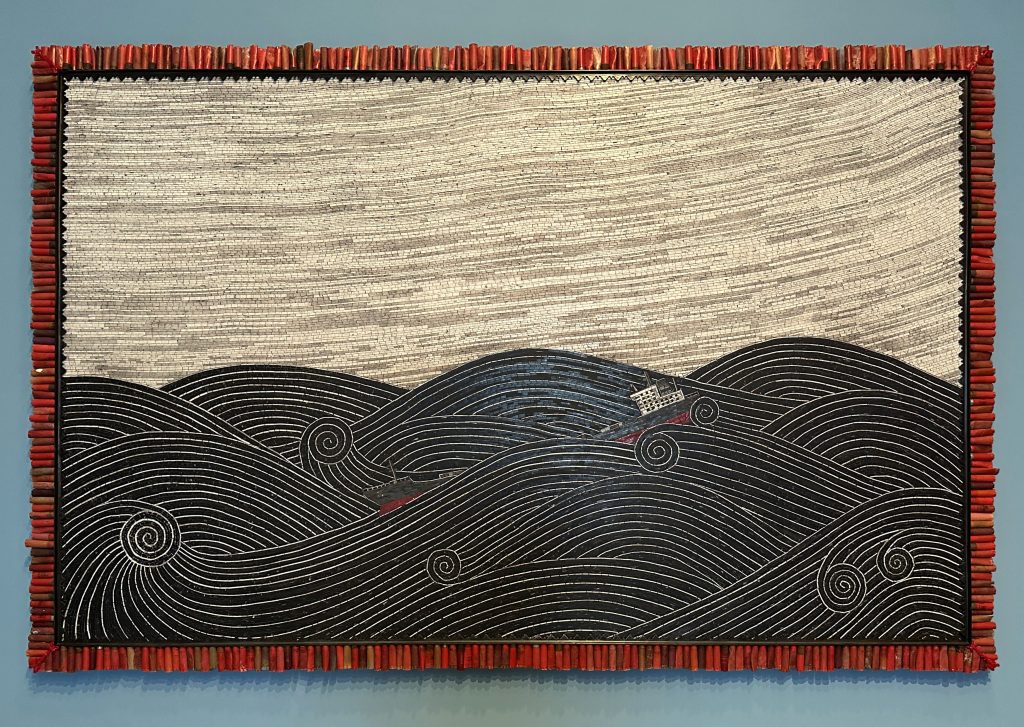
“Erika”, 2021, VCT, shotgun shells, and drink stirrers
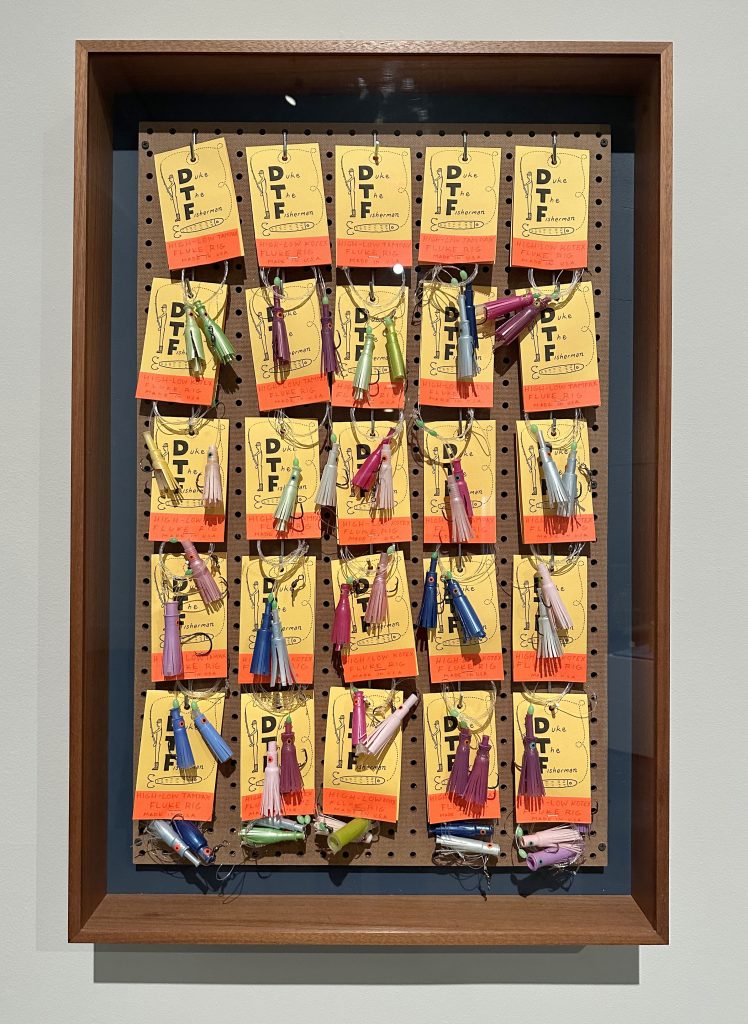
“Duke the Fisherman’s High Quality Fluke Rigs Made in the USA™”, 2022, Found tampon applicators, fishing line, fishing hooks, nail polish, peg board, card stock
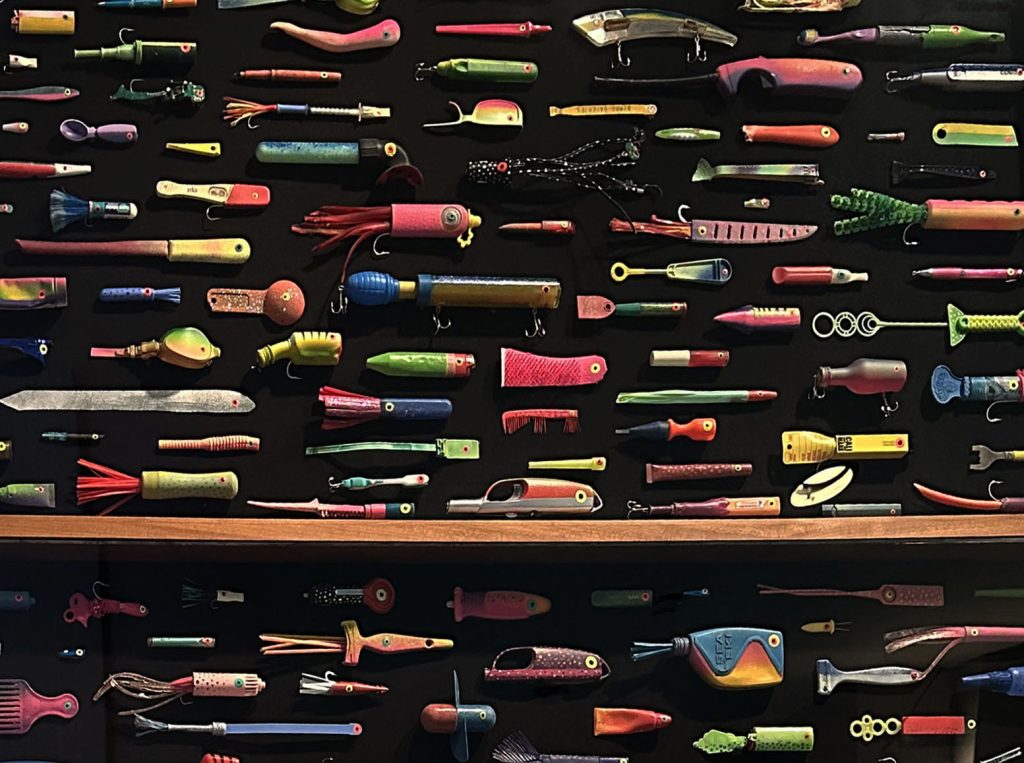
Detail of “Monument to Five Thousand Years of Temptation and Deception V, VI, VII”, 2022, Salvaged plastic, paint, fishhooks
The images above are from Duke Riley’s exhibition DEATH TO THE LIVING, Long Live Trash, on view at Brooklyn Museum in 2023. The artist’s inventive fishing lures, made from discarded plastic items found around waterways, are engaging to look at but highlight the grim reality of how much garbage is polluting our natural environment.
From the museum-
In DEATH TO THE LIVING, Long Live Trash, Brooklyn-based artist Duke Riley uses materials collected from beaches in the northeastern United States to tell a tale of both local pollution and global marine devastation. Riley’s contemporary interpretations of historical maritime crafts—such as scrimshaw, sailor’s valentines, and fishing lures—confront the catastrophic effect that the oil, food, and beverage industries have had on the environment through single-use plastics. The works are presented in the seventeenth- and eighteenth-century Jan Martense Schenck and Nicholas Schenck Houses, alongside a selection of historical scrimshaw from our collection, directly connecting environmental injustices past and present.
In his contemporary interpretations of scrimshaw—ink drawings etched into bone by sailors—Riley replaces the medium’s customary whale teeth with repurposed plastic containers, detergent bottles, toothbrushes, and other waste. The works incorporate the maritime imagery traditional to scrimshaw, but expand it to portray international business executives that the artist identifies as responsible for the perpetuation of single-use plastics. Also on view are Riley’s fishing lures and sailor’s valentines, similarly created with detritus found on northeast coastal beaches. The exhibition juxtaposes corporation-driven pollution with new short films by Riley that highlight New York community members working to remediate plastic damage and restore our waterways.
Erika, the mosaic pictured above, depicts the 1999 shipwreck of MV Erika which, after splitting in two during a heavy storm, released thousands of tons of oil into the Bay of Biscay off the coast of Brittany.
In the video below, Riley gives a brief tour of the Brooklyn show.
Some of the work from this exhibition is currently on view at Museum of Fine Arts St. Petersburg as part of their exhibition, The Nature of Art.
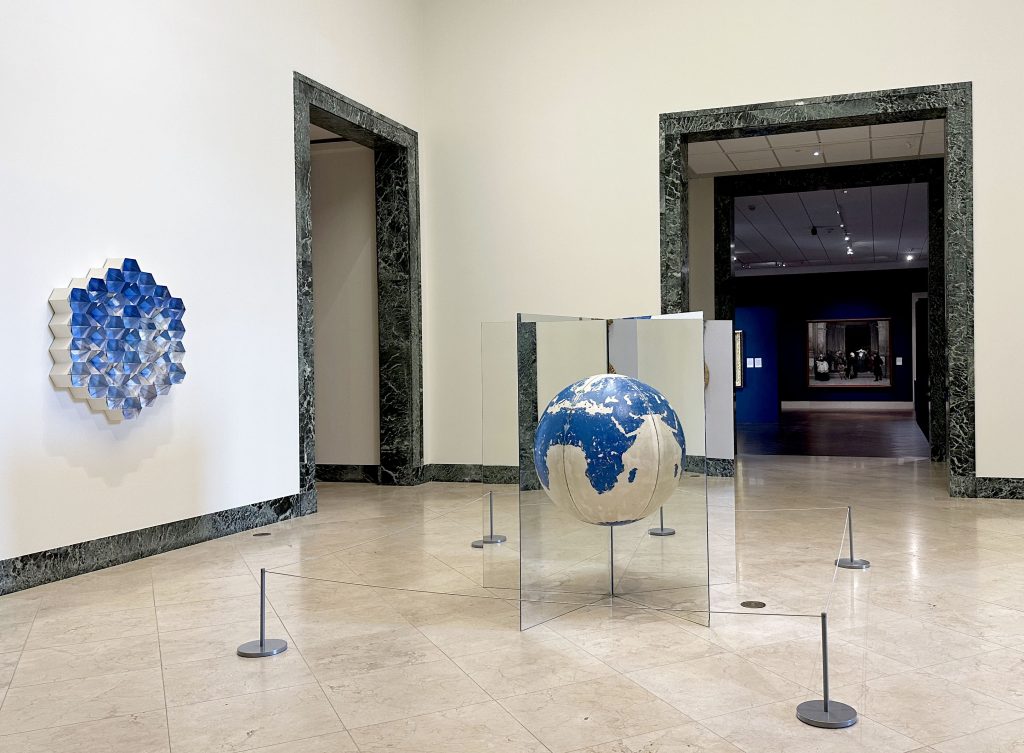

Brookhart Jonquil, “Groundless”, 2023, Mirrors, steel, acrylic paint, enamel paint
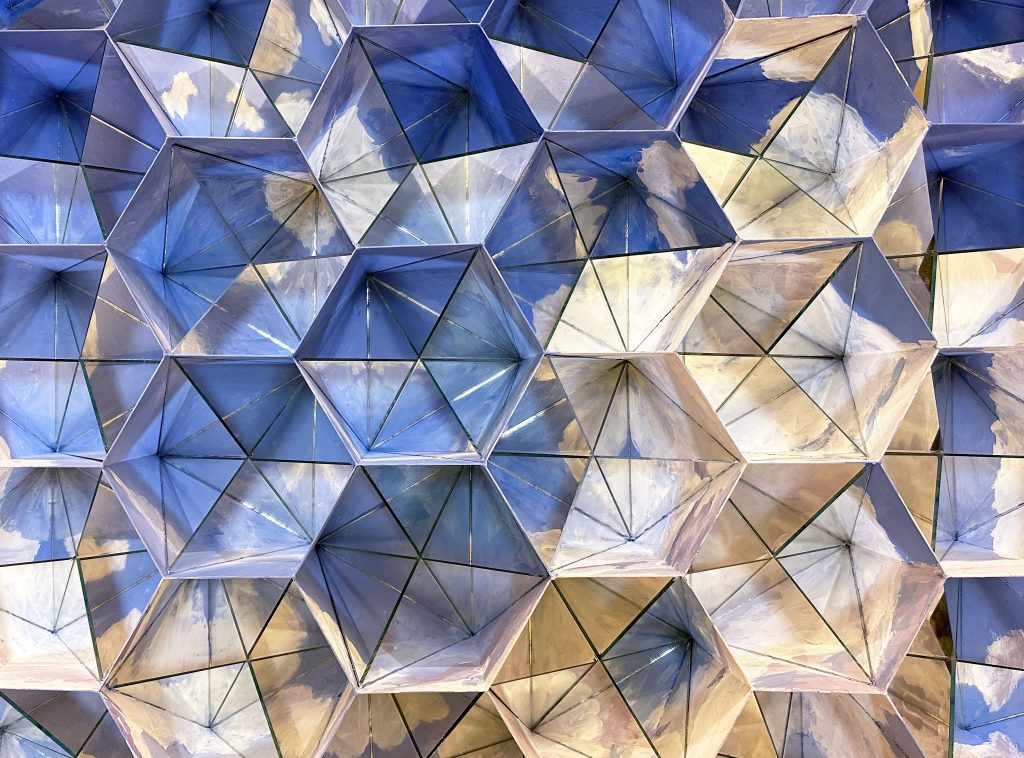
Brookhart Jonquil, “Groundless”, 2023, Mirrors, steel, acrylic paint, enamel paint (detail)
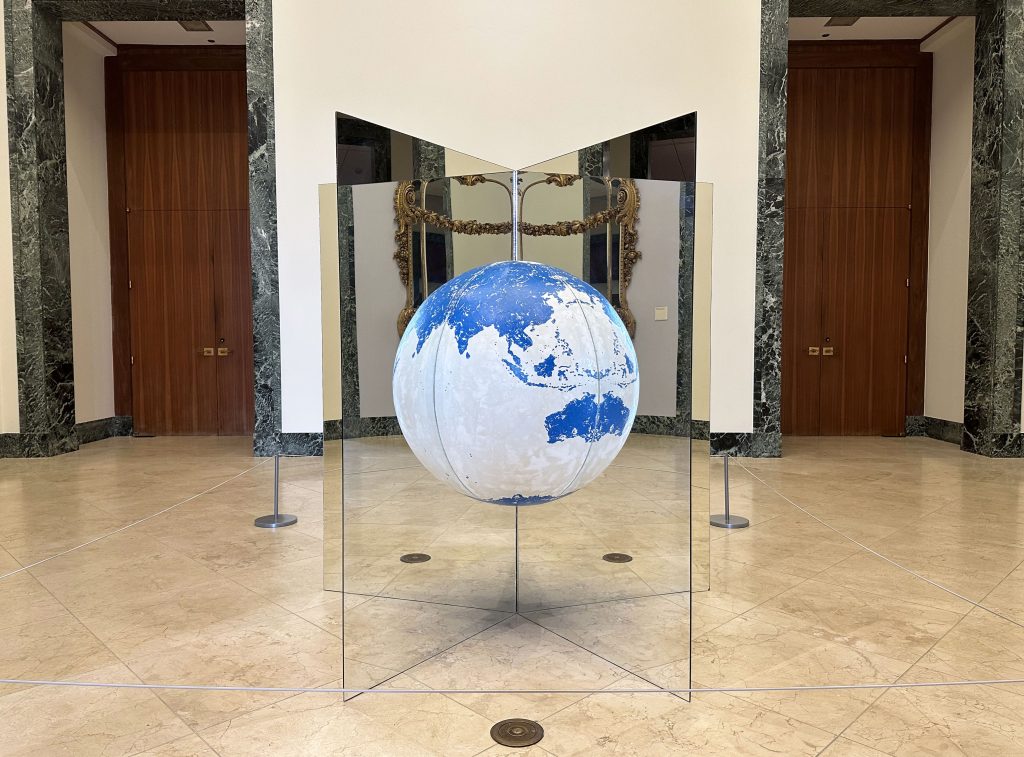
Brookhart Jonquil, “E)A)R)T)H)”, 2012, Mirrors, EPS, MDF, plaster, paint
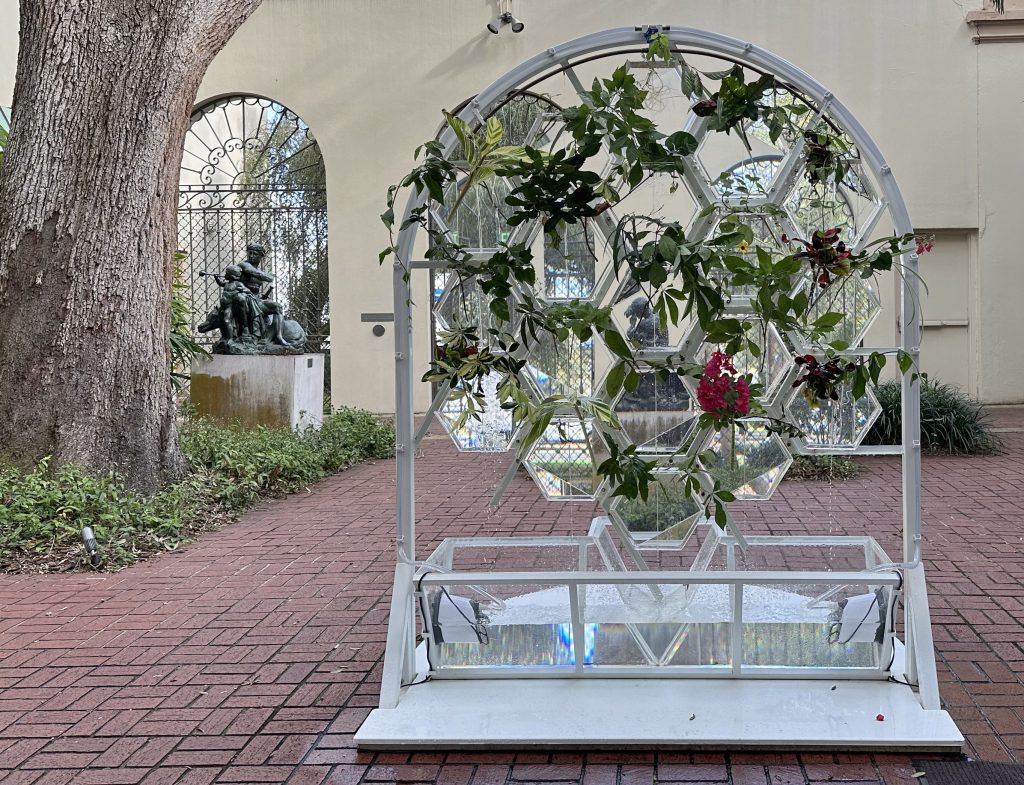
Brookhart Jonquil, “Multiplication Portal”, 2022, Plexiglass, water, powdercoated steel, plant cuttings, marine polymer sheet, pump system

Brookhart Jonquil, “Multiplication Portal”, 2022, Plexiglass, water, powdercoated steel, plant cuttings, marine polymer sheet, pump system
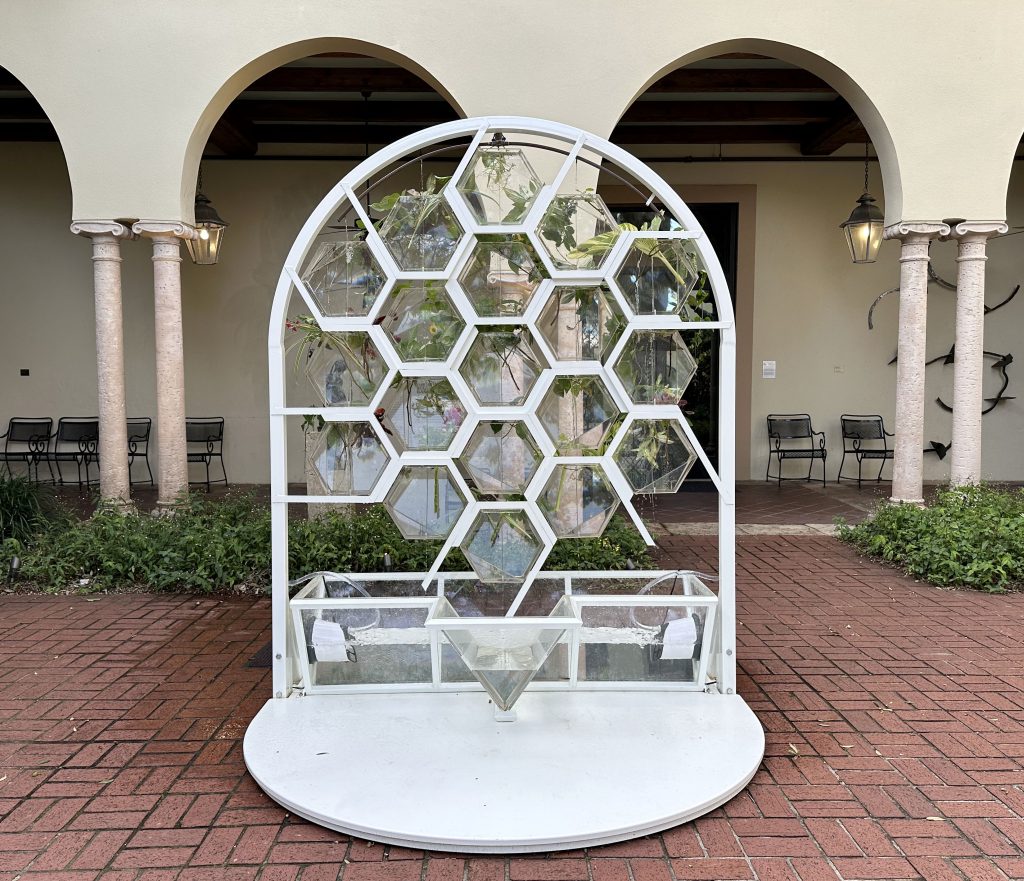
Brookhart Jonquil, “Multiplication Portal”, 2022, Plexiglass, water, powdercoated steel, plant cuttings, marine polymer sheet, pump system
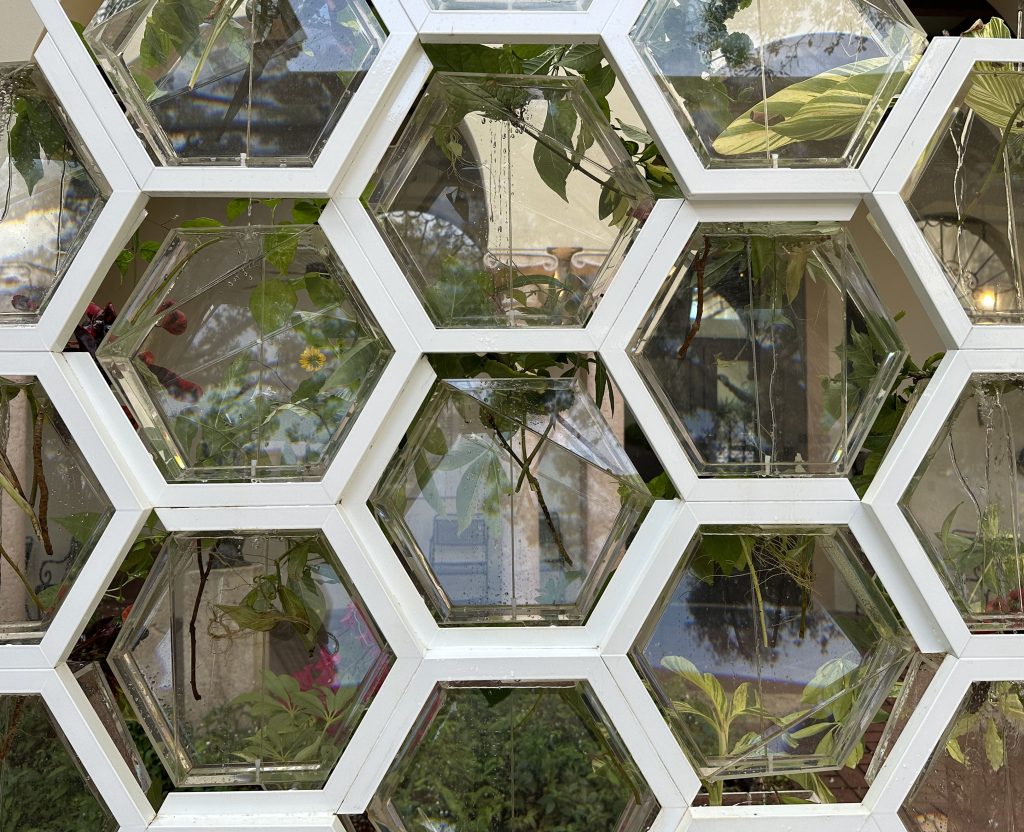
Brookhart Jonquil, “Multiplication Portal”, 2022 (detail)
For The Nature of Art at the Museum of Fine Arts St. Petersburg, work from the exhibition is spread throughout different sections of the museum. In the Great Hall and Sculpture Garden are installations by Brookhart Jonquil.
From the museum about these works-
In this group of installations, Brookhart Jonquil creates art that engages physics, architecture, and ecology to explore the immaterial, shifting aspects of the natural world. His work reflects influences ranging from Minimalism to theories of utopia and perfection; it offers viewers new ways of seeing and a nuanced understanding of our place in the world. The works exhibited here and in the Sculpture Garden encompass over a decade of his career, illustrating how nature has always influenced his artistic practice.
Groundless is Jonquil’s most recent work, inspired by painting en plein air, the Impressionist practice of working outdoors. However, the artist has complicated this by incorporating mirrored surfaces that deny full control of his compositions. Jonquil notes, “Each stroke of paint multiplies unpredictably as I place it, while shifting colors and cloud-forms evade fixity.”
The floor-based sculpture E)A)R)T)H) uses five pieces of mirror glass to dissect an earthly sphere. Unlike Groundless, these mirrors reflect the Great Hall, foyer, and surrounding galleries, suggesting a macro-and micro-viewing of our planet. To further a sense of dislocation, Jonquil has inverted the colors typically associated with land and water: bodies of water are depicted in white, while land is blue.
Multiplication Portal-on view in the Sculpture Garden- is a participatory sculpture highlighting the care and responsibility involved in cultivating plants. Reminiscent of both a kaleidoscope and a beehive, it was inspired by chaos theory-also known as the butterfly effect, which is the idea that one tiny gesture can have colossal consequences within dynamic systems. Brookhart created Multiplication to fight environmental disillusionment. Can one individual impact the impending climate disaster? What is the point of separating paper and plastic? Does turning off the lights make a difference? Multiplication Portal serves as a reminder that our seemingly small actions have the potential for significant consequences.
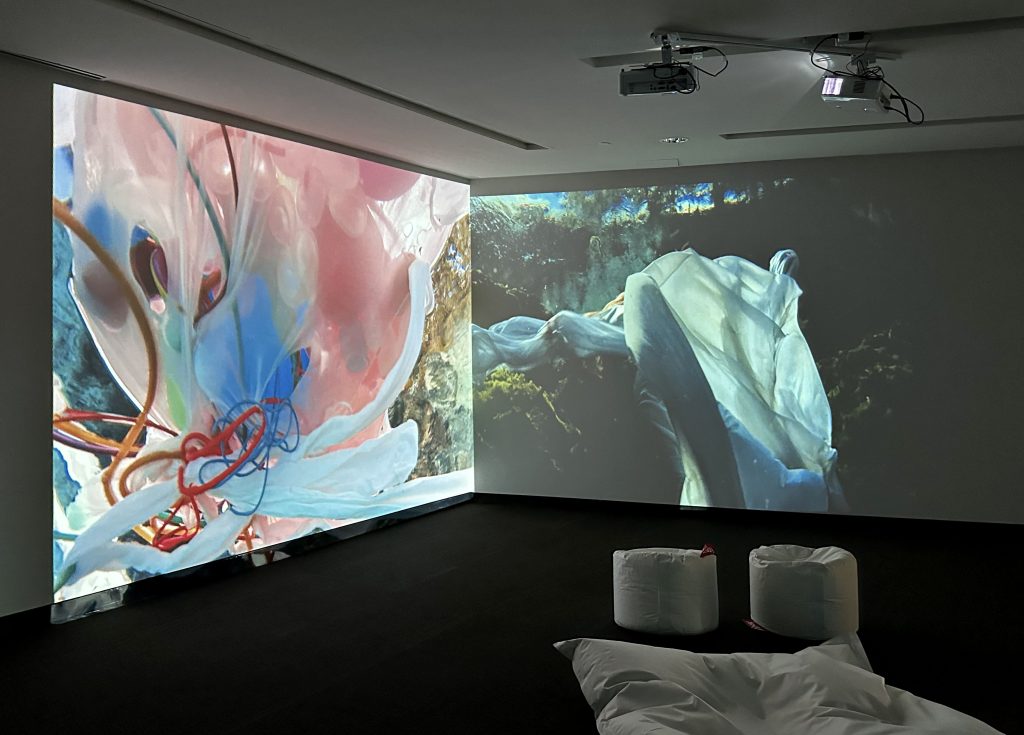
In an upstairs gallery is the video installation, Blood, Sea by Janaina Tschäpe (seen below). The dreamy video takes you underwater to explore transformation through sea maiden myths.
Information on the installation from the museum-
Reminiscent of Voltaire’s Micromégas, Janaina Tschäpe’s fantastical scenes dissolve boundaries, seamlessly intertwining in an ever-flowing continuum of evolution and transformation in a grand opera that delves into themes of change, gender, and the construction of myth and history. The universe created by Tschäpe beckons one into a parallel world of ambiguous scale-indeterminate in both time and space. The spring-fed grotto provides the scenographic impetus for this grand production, a captivating fusion of a theme park nestled within a state park and bearing the distinction as one of Florida’s oldest roadside attractions. The sea maiden mythologies that inform Blood, Sea link endless stories from across time and space, as many cultures have some version of a water goddess. Millennia of previously unknown deep-sea creatures caught in fishermen’s nets spawned the mythic narratives that gave rise to these goddess/creature tales. From the Mami Wata spirits of West Africa to the water sprites of Irish lore, the trope of the sea maiden appears around the world and across time. Tschäpe’s primary connection is her namesake, the Orixa lemanja of Candomblé. This powerful water spirit is the Brazilian version of the many syncretic gestures born of the Yoruban Afro-Atlantic diaspora. But lemanja is merely one character in the global pantheon of the water goddess.
The split-tail mermaid motifs that adorn the exterior walls of centuries-old homes in the landlocked Swiss Alps are a testament to the enduring allure of the fish woman’s imagery. The split-tail represents the hybrid presence of both home and away, the perpetual dual identity of the émigré, and a curious cipher of Tschäpe’s experience living between the culturally antipodean points of Germany and Brazil. This existence places her between logic and magic, between Protestant rationalism and the mystical worldview of Candomblé, between the grey angst of northern Romanticism and the sensual elegance of the southern hemisphere. This ever-changing identity is evidenced clearly in Blood, Sea, where the video’s perspective perpetually shifts. At certain moments, the viewer finds themselves aboard a ship, assuming the role of a scientist discovering a previously unknown life form. In other instances, we have the privilege of swirling amidst the creatures, becoming one with them.
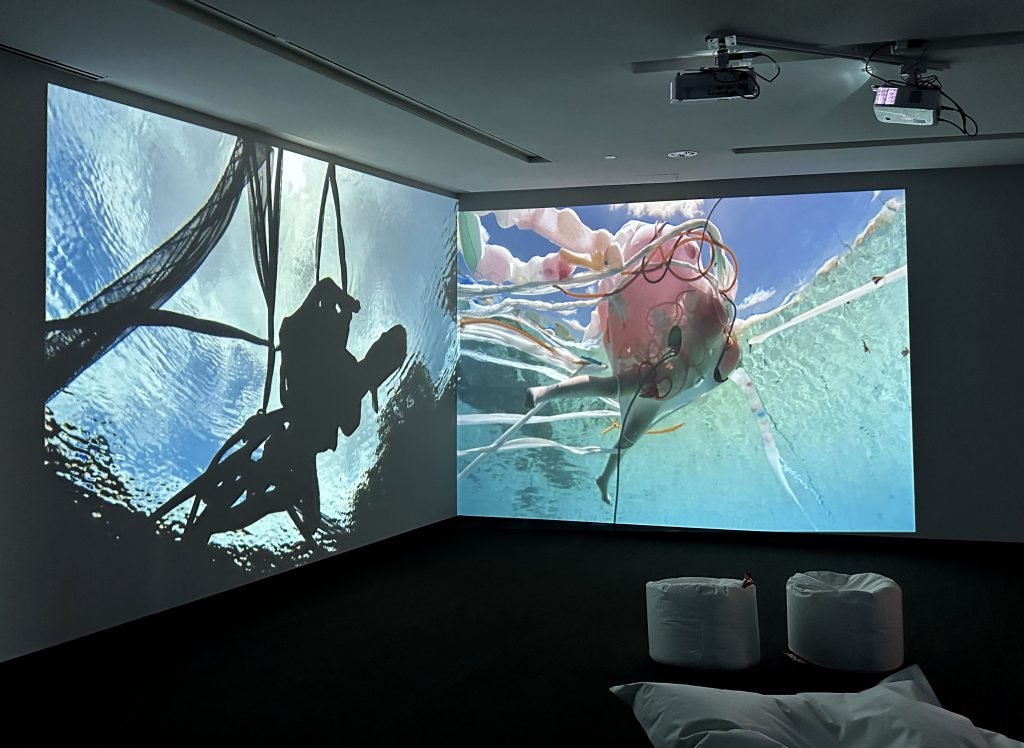

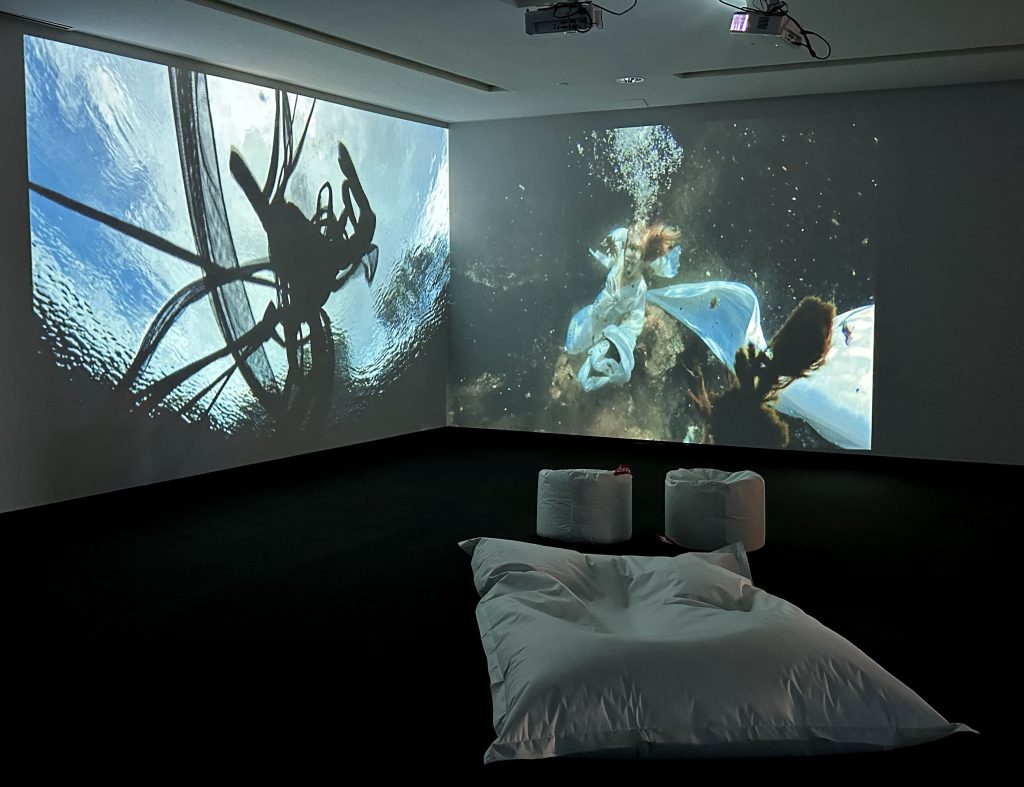
This exhibition closes on 4/14/24.
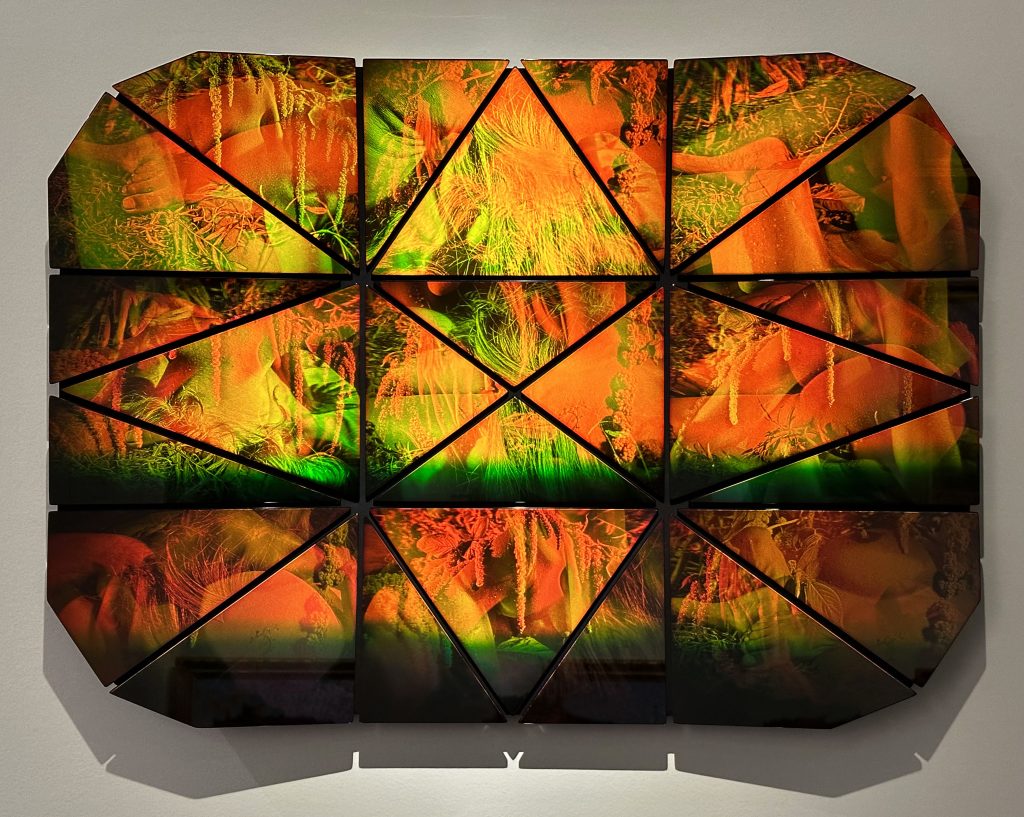
Sarah Meyohas, “Interference #19”, 2023, Holograms, mirrored black glass, aluminum
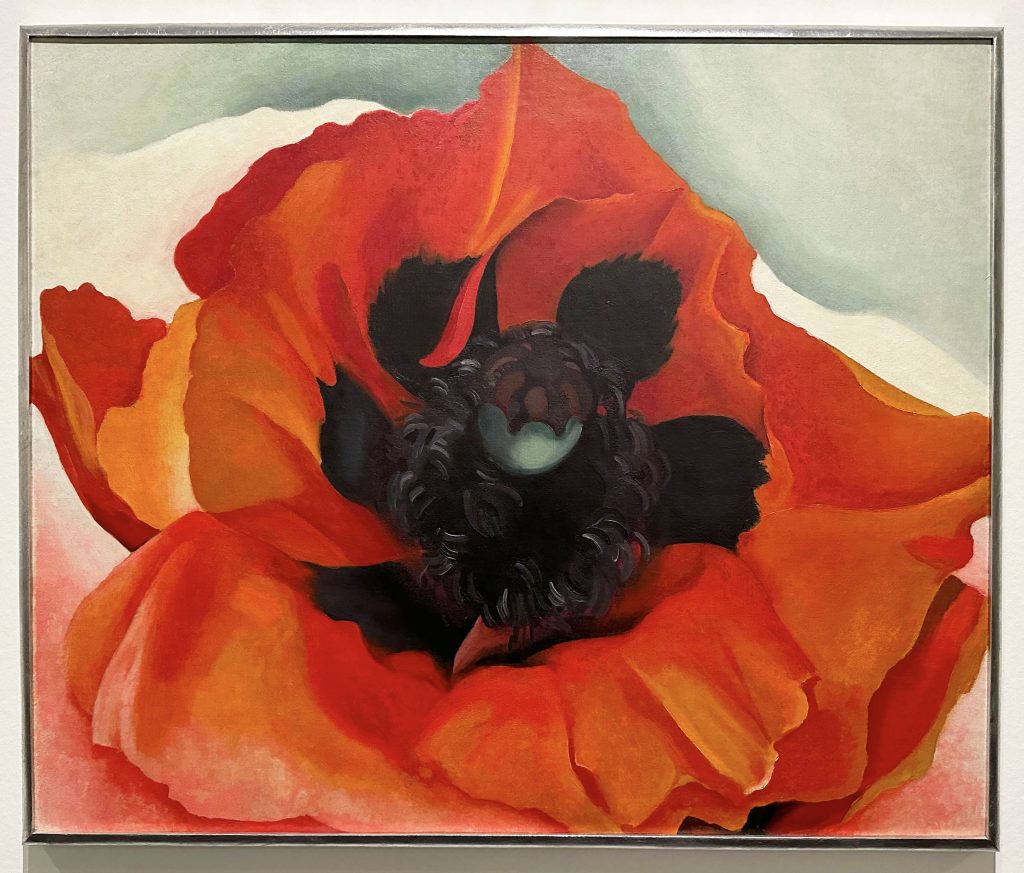
Georgia O’Keeffe, “Poppy”, 1927, Oil on canvas
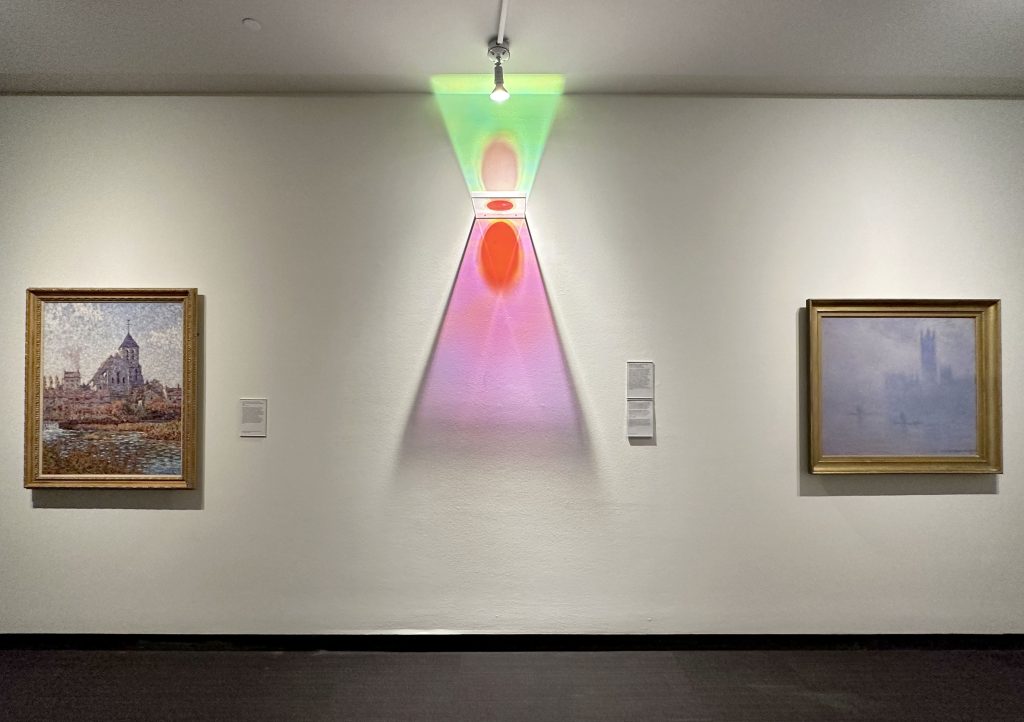
Francis Picabia “The Church of Montigny, Effect of Sunlight” 1908, Oil on canvas (left); Christian Sampson “Projection Painting”, 2023, Acrylic and films with LED light; and Claude Monet “The Houses of Parliament, Effect of Fog, London” 1904, Oil on canvas (right)
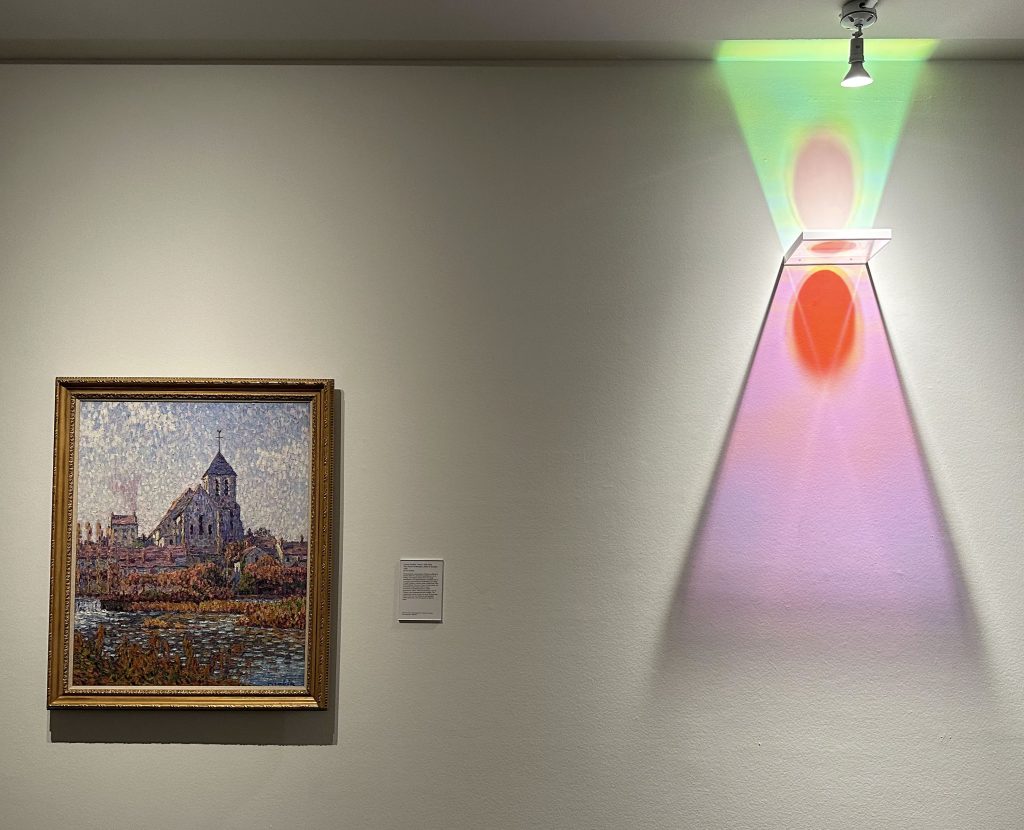
The Nature of Art exhibition at the Museum of Fine Arts St. Petersburg merges art from the museum’s collection with loaned works to explore- “art’s crucial role in our evolving quest to understand our relationship with nature and our place in the cosmos”.
One of the benefits of an encyclopedic museum is that visitors have the opportunity to experience art throughout history, and to revisit works that resonate with them. For the section titled Artist as Curator, Sarah Meyohas and Christian Sampson chose pieces from the museum’s collection to pair with their own work.
From the museum-
At first glance, perhaps, these may seem like unusual combinations, but upon deeper contemplation, their selections reveal complementary artistic intents. For instance, Meyohas and Georgia O’Keeffe share an interest in close looking, particularly in finding new ways to examine underappreciated aspects of the natural world. Sampson, influenced by the California Light and Space Movement, is interested in current scholarship that suggests the hazy fog found in Claude Monet’s work is an early depiction of air pollution, offering an entirely new perspective on the artist’s representations of light.
Sampson also created the four-part installation, Tempus volat, hora fugit, on view until 2025 at the museum.
Below are some of the works from additional sections of the exhibition.
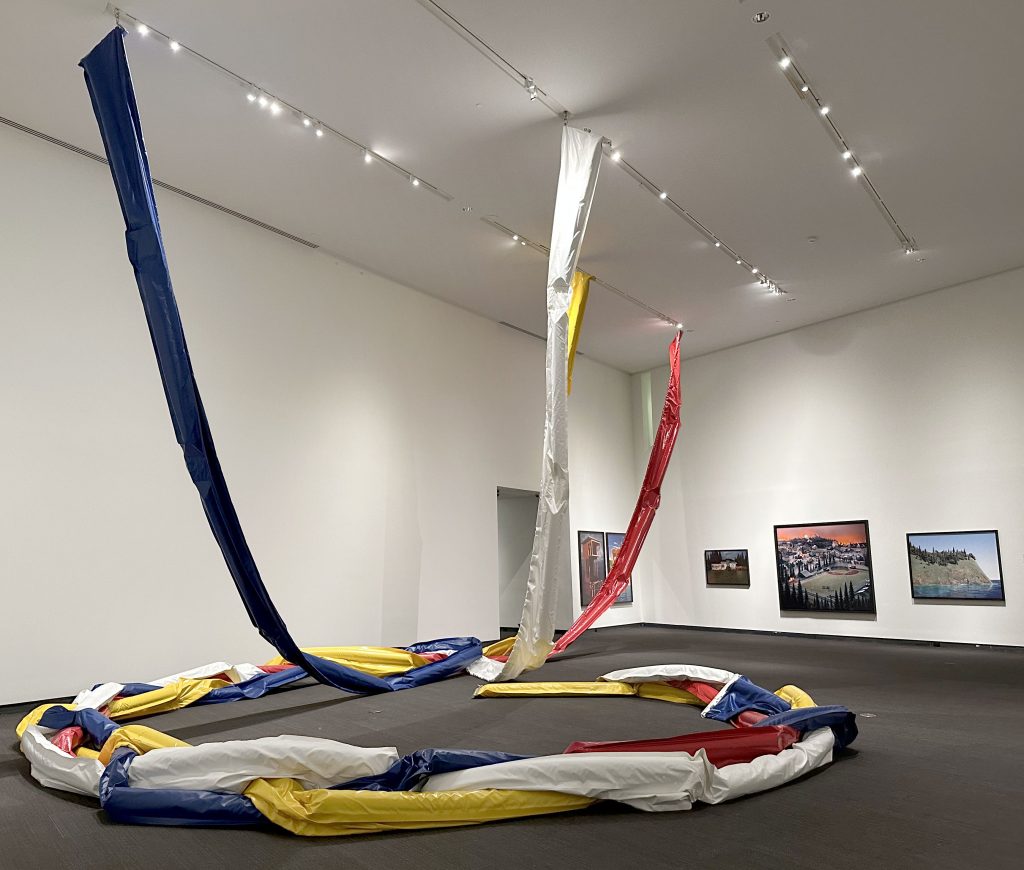
Postcommodity, “kinaypikowiyâs”, 2021, Four 30.5-metre industrial debris booms
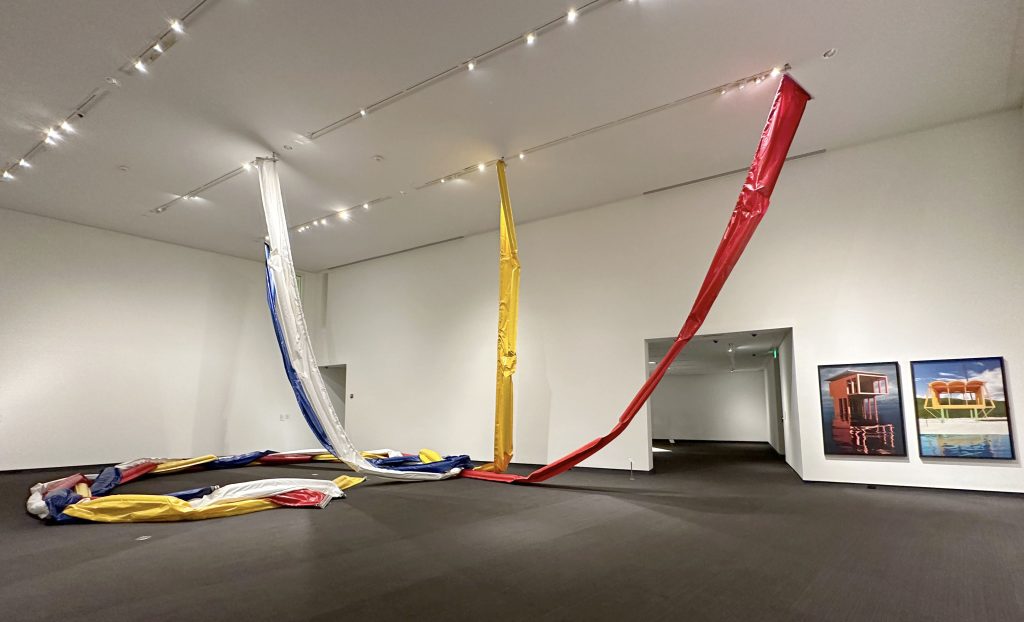
Postcommodity, “kinaypikowiyâs”, 2021, Four 30.5-metre industrial debris booms
Postcommodity is an interdisciplinary art collective comprised of Cristóbal Martínez (Genizaro, Manito, Xicano), and Kade L. Twist (Cherokee).
About Postcommodity’s work, kinaypikowiyâs, (seen above) from the museum-
This work is composed of debris booms, used to catch and hold environmental contaminants such as garbage, oil, and chemicals. The colors of the booms correspond to different types of threats— red (flammable), yellow (radioactive), blue (dangerous), and white (poisonous)-in the labeling system for hazardous materials. To indigenous peoples, these are shared medicine colors that carry knowledge, purpose and meaning throughout the Western Hemisphere. Suspended like hung meat, the booms represent a snake that has been chopped into four parts. Each part represents an area of the colonial map of the Western Hemisphere: South America, Central America, North America, and all of the surrounding islands. The title, kinaypikowiyâs, is a Plains Cree word, meaning snake meat. Divided by borders, Postcommodity asserts that all people living in the Americas are riding on the back of this snake.
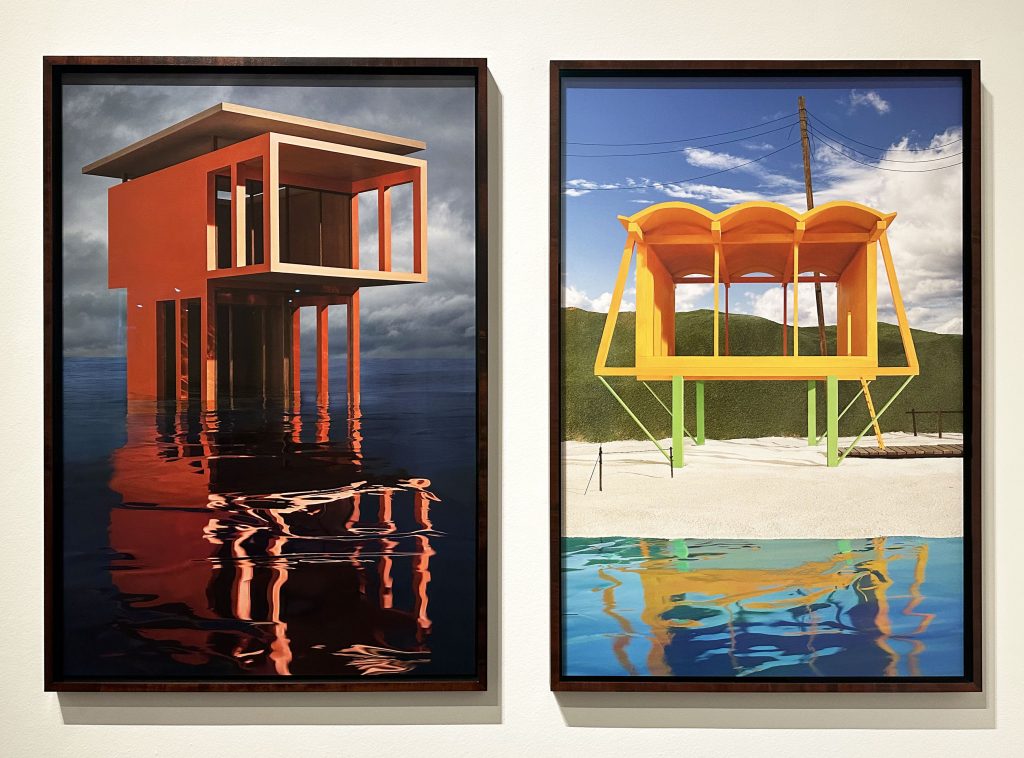
James Casebere, “Red/Orange Solo Pavilion”, and “Orange Guesthouse”, 2018, Archival pigment print mounted to Dibond
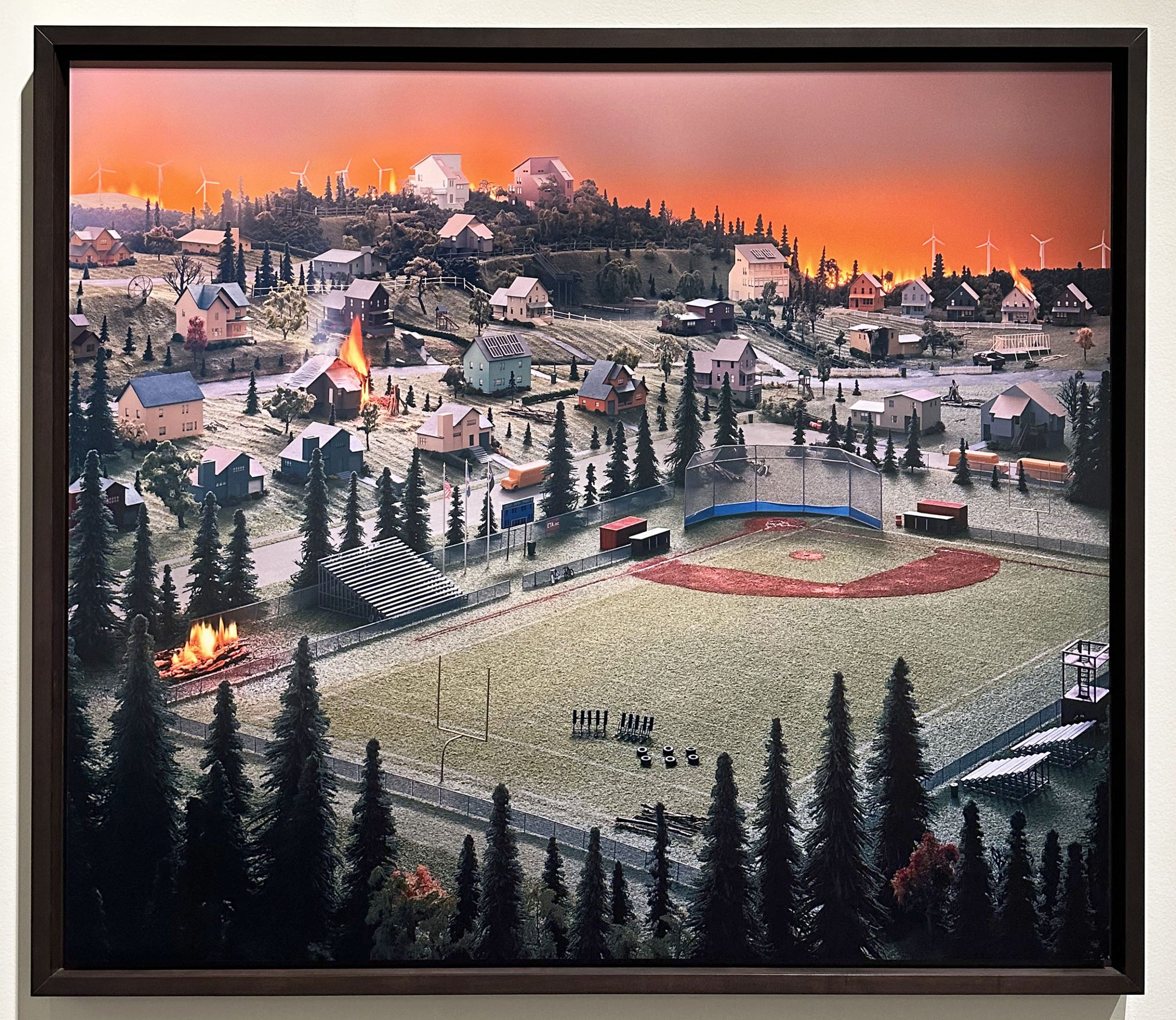
James Casebere, “Landscape with Houses (Dutchess County, NY), 2009, Archival pigment print mounted to Dibond
James Casebere creates architecturally based models for the large scale photographs seen above.
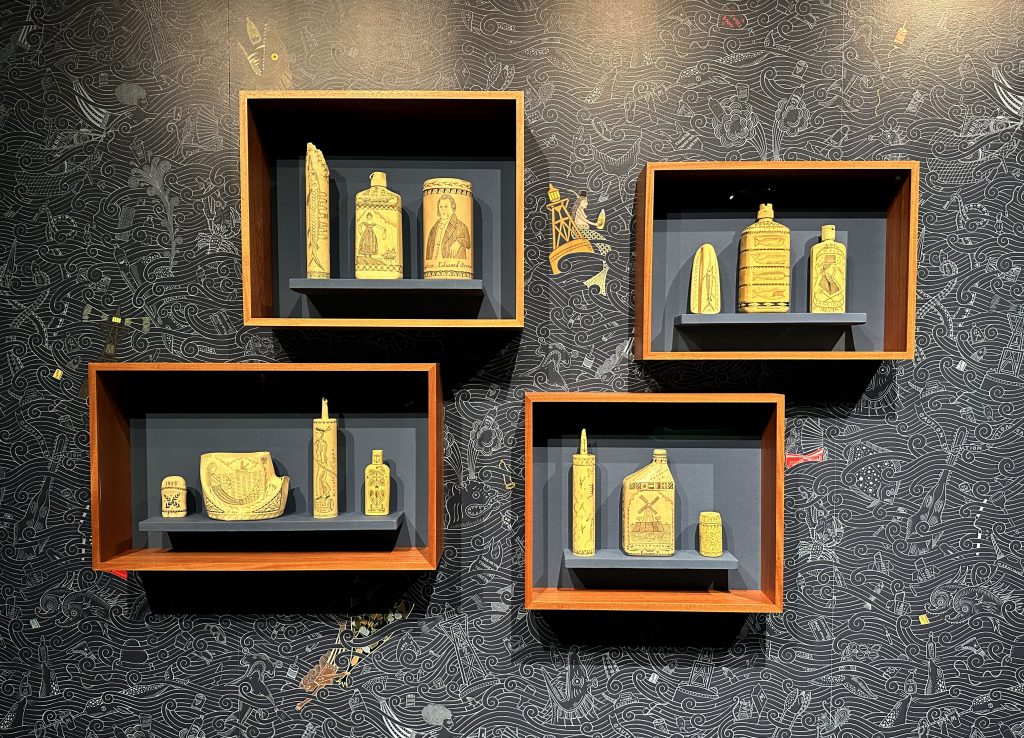
Reclaimed ocean plastic sculptures and “Tidal Fool” wallpaper by Duke Riley
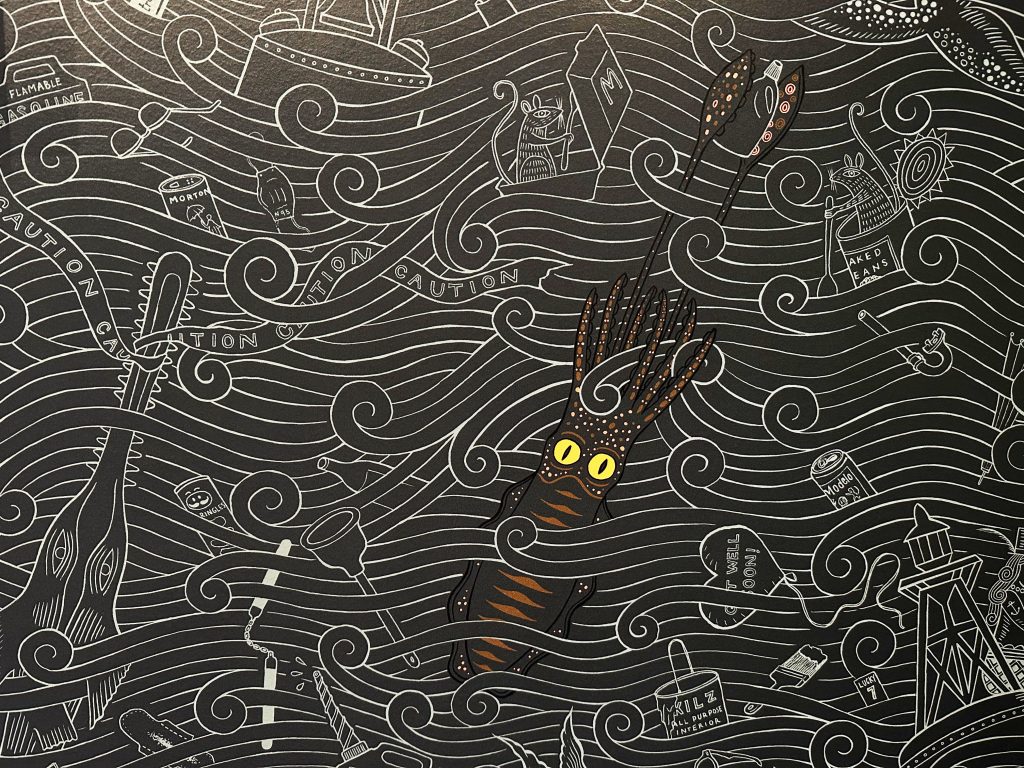
Duke Riley custom wallpaper, Tidal Fool, detail
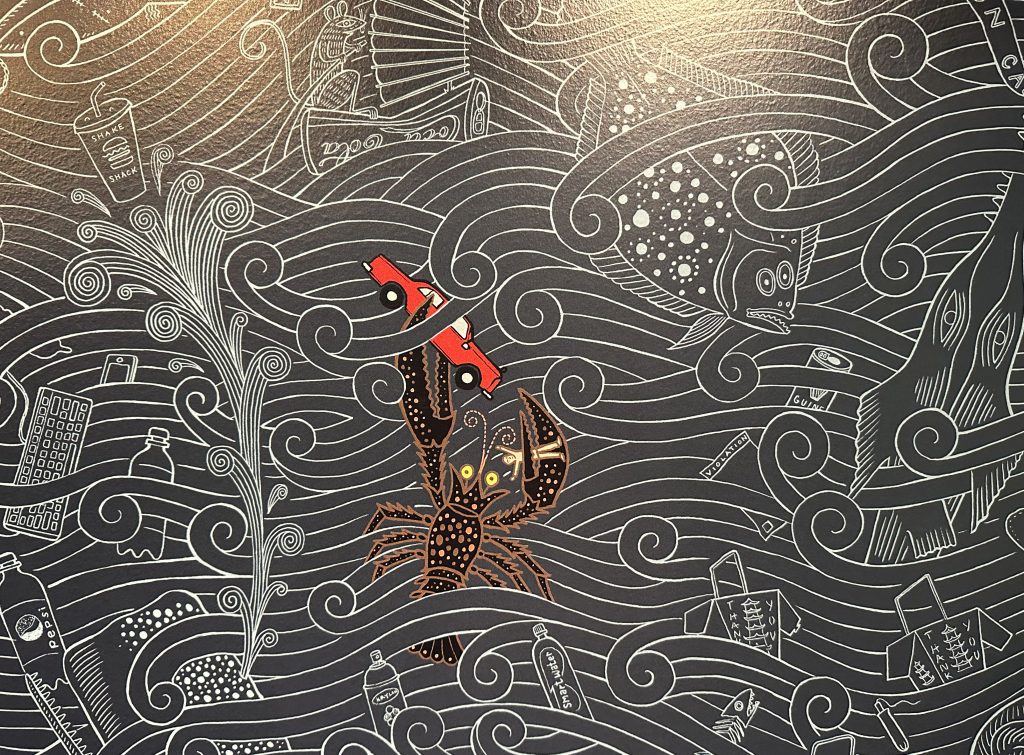
Duke Riley custom wallpaper, Tidal Fool, detail
Duke Riley’s work, which was previously shown at Brooklyn Museum, addresses issues of environmental pollution by using discarded plastics found in the ocean and other waterways to create new work inspired by the past. You can hear him discuss his work in this video.
From the museum-
Inspired by the maritime museum displays he saw while a child growing up in New England, Riley’s scrimshaw series is a cutting observation of capitalist economies-historic and today-that endanger sea life. The sculptures were created for the fictional Poly S. Tyrene Memorial Maritime Museum, and are contemporary versions of sailors’ scrimshaw, or delicately ink-etched whale teeth and bone. Riley first thought about using plastic as an ode to scrimshaw when he saw what he thought was a whale bone washed up on the beach in Rhode Island; it turned out to be the white handle of a deck brush. Riley regularly removes trash from beaches and waterways, and often uses this refuse in his work.
Riley collaborated with Brooklyn-based Flavor Paper to create these two custom wallpapers for his solo exhibition DEATH TO THE LIVING, Long Live Trash at the Brooklyn Museum. Tidal Fool exhibits Riley’s trademark humor in the face of devastating water pollution; notice the Colt 45-guzzling mermaid. Wall Bait vibrantly references Riley’s meticulous fishing lures, which he crafts from refuse found in the waters around New York City.
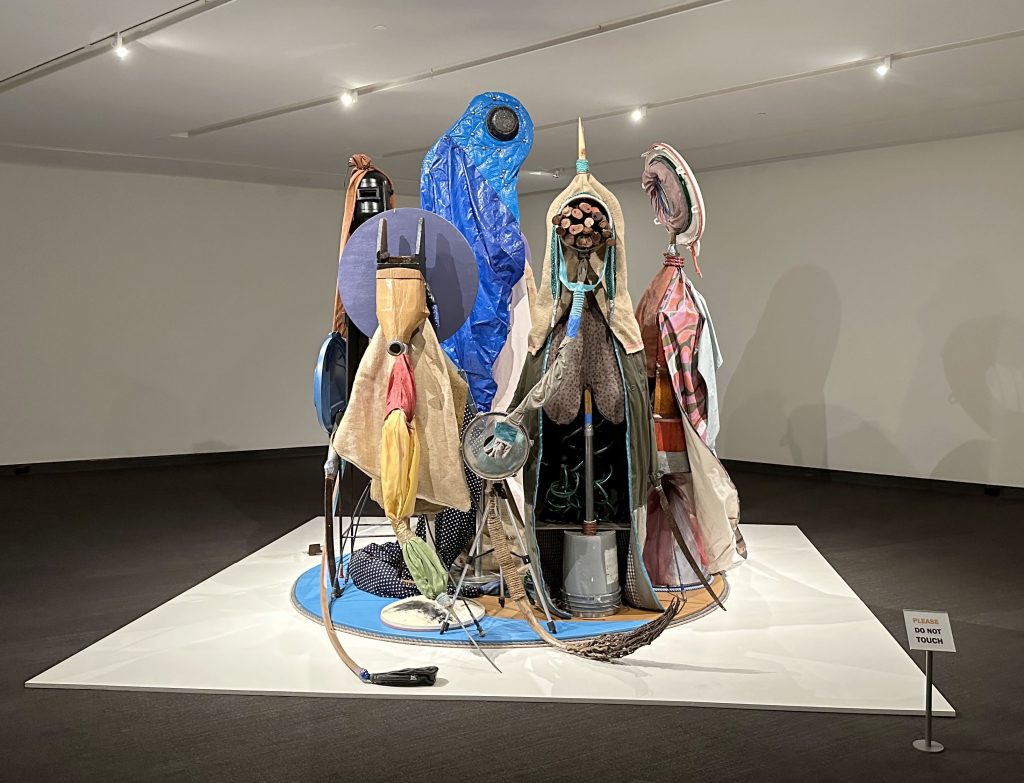
Daniel Lind-Ramos,”Centinelas de la luna nueva (Sentinels of the New Moon)”, 2022-2023, Mixed media
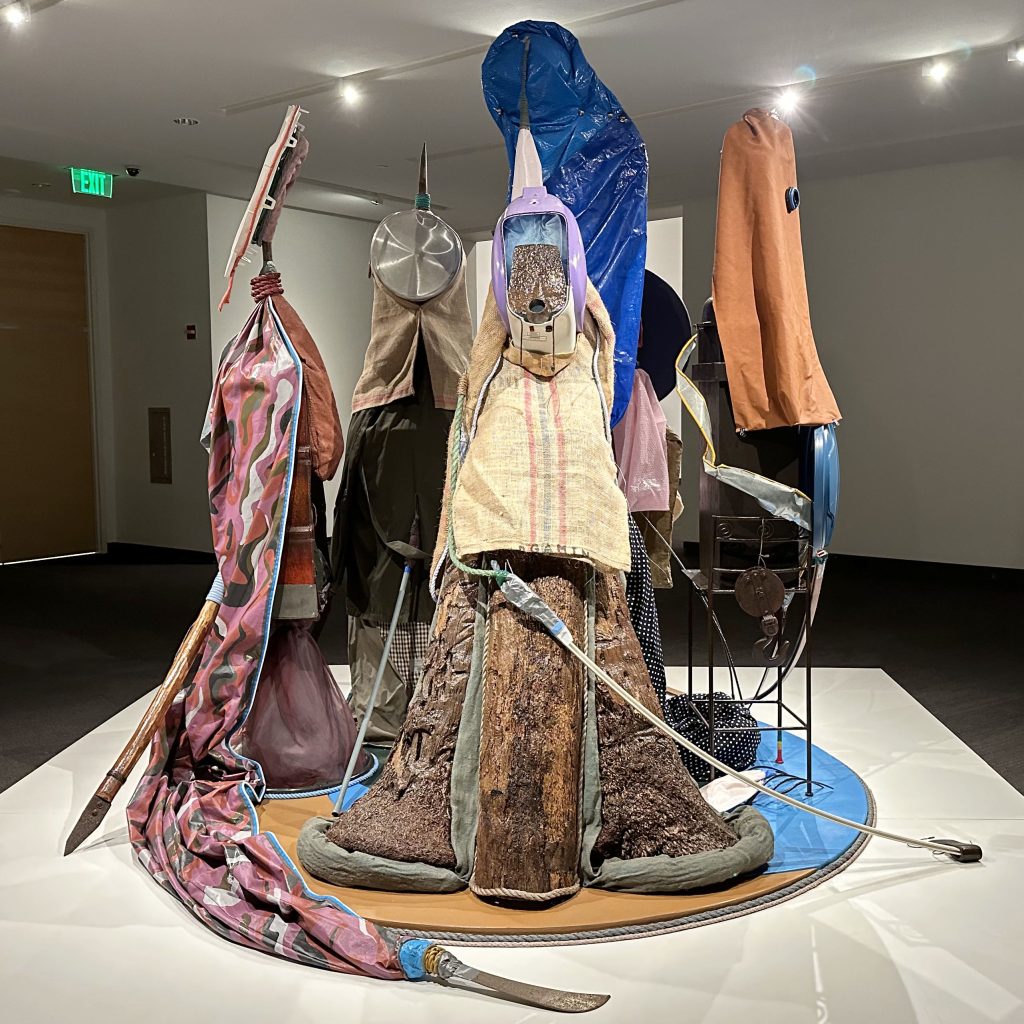
Daniel Lind-Ramos,”Centinelas de la luna nueva (Sentinels of the New Moon)”, 2022-2023, Mixed media
Daniel Lind-Ramos also uses a variety of recycled objects to create his sculptures.
From the museum about this work-
In Centinelas de la luna nueva, he evokes the elders of the mangroves, spiritual beings who watch over and ensure the health of this essential coastal tree. Mangroves are the basis for a complex ecosystem that shelters sea life and serves as the first line of defense in the tropical storms that batter the sub-tropics—including Florida.
Lind-Ramos’s practice reflects the vibrant culture of his native Loíza, Puerto Rico, by honoring local agriculture, fishing, cooking, and masquerade. His sculptures also evoke Hurricane Maria (2017), the COVID-19 pandemic, and ongoing environmental degradation. Lind-Ramos is committed to the survival and sustenance of Afro-Taíno traditions and people of the Puerto Rican archipelago. However, his art engages the global community through shared emotions, parallel histories, and the commonality of human experience.
The next post will discuss two other artists in the exhibition, Brookhart Jonquil and Janaina Tschäpe.
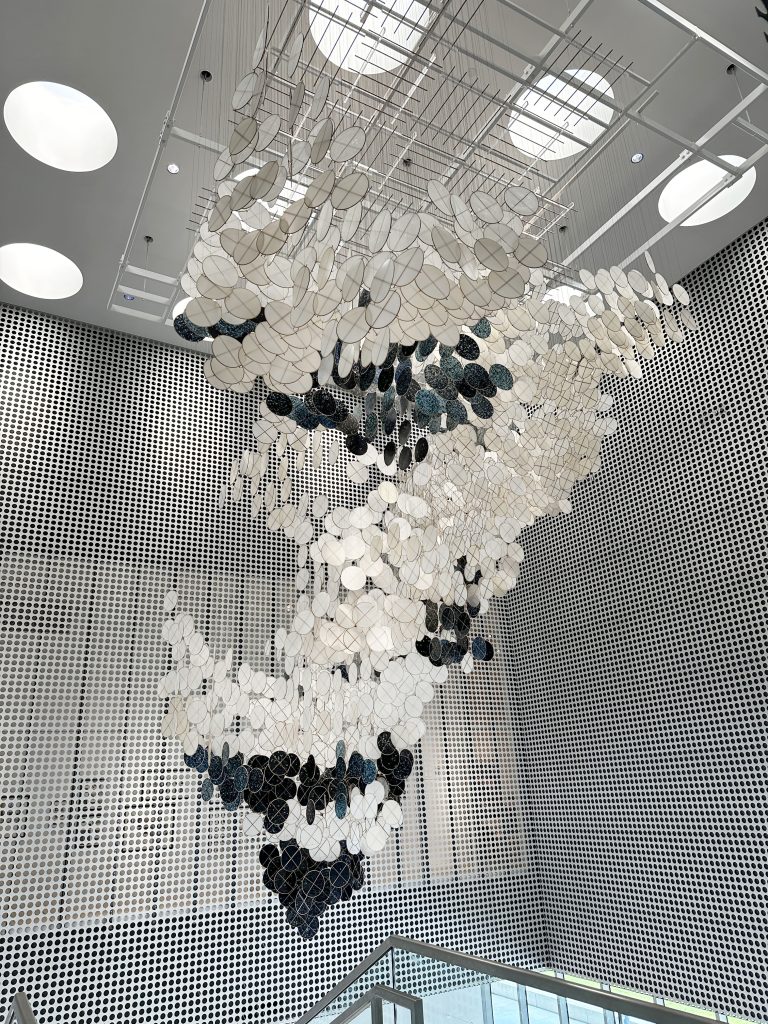
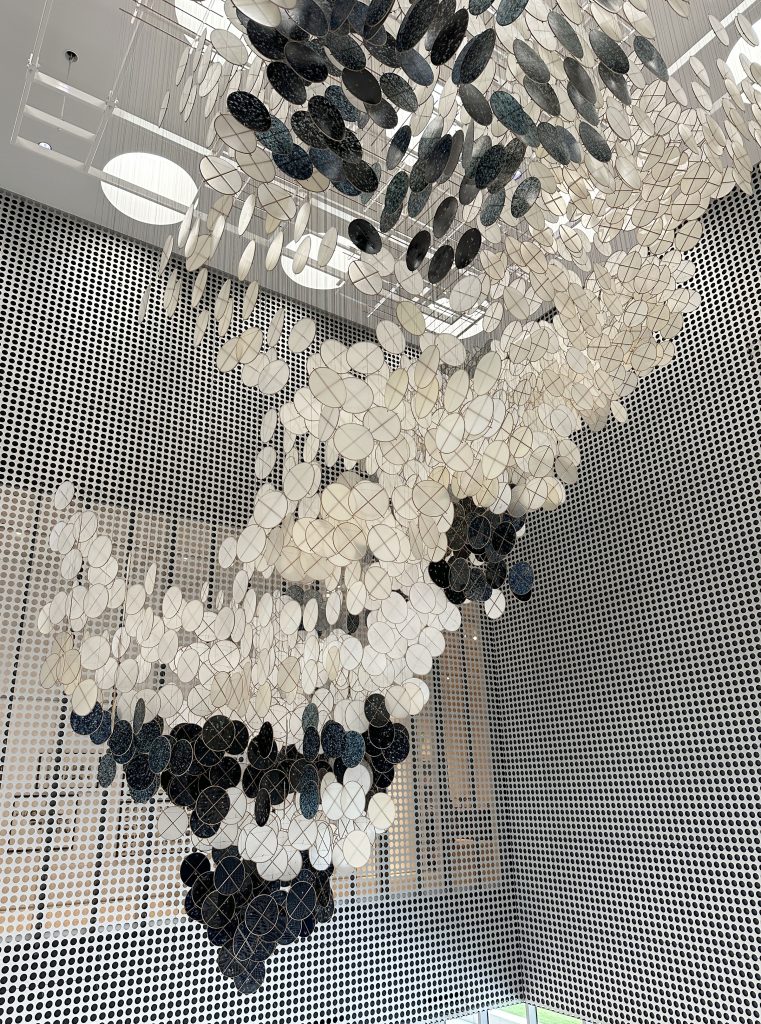
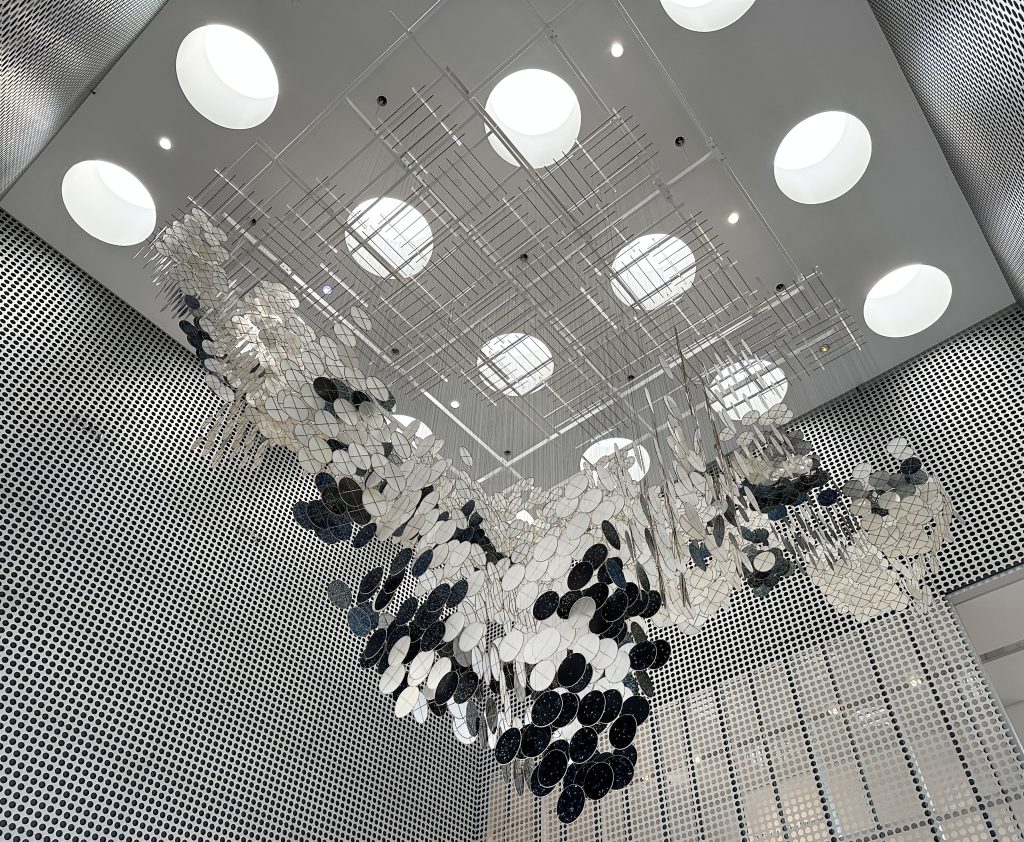
Pictured is Jacob Hashimoto’s This Particle of Dust, on view at Tampa Museum of Art through 2025. At first glance, it may seem monochromatic, but on closer inspection the blue color and star patterns begin to emerge on the darker pieces. It also changes depending on the viewer’s vantage point and the changing natural light.
From the museum about the work-
The artist takes inspiration from cloud formations and the cosmos, with each navy blue kite featuring star-like markings. Depending on the time of day and the natural light filtering through the atrium skylights, the kites will shift in color intensity. This Particle of Dust explores the visual poetics of light and dark, color and form, as well as space and architecture.
Created from over 2,500 handmade kites, This Particle of Dust is a site-specific installation and unique to the Tampa Museum of Art’s architecture. The installation represents Jacob Hashimoto’s exploration of abstract landscape and his interest in blurring the boundaries between painting and sculpture. This Particle of Dust evokes the experience of observing the night sky through various cloud clusters. Thousands of transparent and opaque white discs hang suspended from a bespoke armature. Navy blue kites, imprinted with white and cerulean blue star patterns, hang amidst the cloud shapes and catch the light as the sun rises over the Museum and dips into the horizon over the Hillsborough River. Depending on one’s vantage point, either from the lobby, stairwell, or galleries, the experience of This Particle of Dust shifts—from below the cloudscape appears to drift into the sky while at eye-level the viewer looks directly into the stars.
Hashimoto began making kite sculptures twenty-years ago while an art student in Chicago. Inspired by traditional Chinese kite making in the city of Weifang, where the artform of sculptural dragon kites originated, Hashimoto has made hundreds of thousands of kites from Japanese paper and resin. He appreciates kites as a universal object of joy that is recognized across the globe. Transformed into monumental artworks, Hashimoto’s kites convey happiness, wonder, and serenity.
Below is Tampa Museum of Art’s video of the artist discussing this installation.
Hashimoto is also showing several wall-mounted sculptural works for his solo exhibition, Fables, at Rhona Hoffman Gallery in Chicago. It will be on view until 4/20/24.


Esterio Segura’s Goodbye My Love, 2013, three sculptures created with fiberglass and automobile paint, are currently on view at Tampa Museum of Art.
From the museum about the work-
A new acquisition to the Museum’s permanent collection, Goodbye My Love represents Esterio Segura’s (Cuban, b. 1970) ongoing exploration of the meaning of airplanes and flight. Produced in multiple editions at different scales, this version is nearly the largest. In describing the series, Segura explained, “In this work, the reference to the airplane hybridizes with a reference to another well-known universal symbol: a simplified image of the heart. This is fused with an easily understood title with several meanings, from the most corny and sentimental to the most controversial, from a political and social standpoint. With this work, I reference the experience of uprooting, nostalgia, memory, loss—how we experience the breakdown of everything we love.”
He discusses the work in the video below in a bit more detail.


Whimzeyland, the “Bowling Ball House”, is a local landmark located in Safety Harbor, Florida, created by artists Todd Ramquist and Kiaralinda.
About the house from their website–
In 1985, they purchased the beige house on Third Street in Safety Harbor, Florida. They traveled everywhere, actively seeking out inspirational and unusual places. Inspired by these travels, they began transforming their house. One of the earliest additions were the wooden triangles to the eaves of their house. The beige house became bold in color, too.
One day, they went to a flea market and saw a sign that said that anybody could take 10 free bowling balls. They took the bowling balls and began painting and placing them around the property. This is how they became known as the bowling ball house of Safety Harbor.
Todd and Kiaralinda even branched out of decorating their home, creating two different art cars, designed a restaurant, and making public sculptures, among other things. They began calling themselves the Whimzey Twinz because they work together on all of their projects.
Their travels soon included visits to folk artists and artists that they met at their shows. These friends visited them, too. Todd and Kiaralinda’s bowling balls inspired many of them. They would create bowling balls for Todd and Kiaralinda, who got so many of these works from artist friends that they started a gallery in their home. They created a “Call for Balls” which made a lot more of these art works roll into their home. Today, they have over 80 bowling balls from various artists around the world and people still bring them bowling balls as gifts.
If you are in the area, make sure to also stop by Safety Harbor Art and Music Center (SHAMc), a nonprofit they opened in 2017. It has an art gallery and shop, and hosts music events and art classes as well.


