Sep 142023
 

“Untitled”, 2020, glazed ceramic

“Midnight Garden (Jnana)”, 2020 Pigment on canvas

“Untitled”, 2020, glazed ceramic

The works above are from Sam Falls’ 2020 exhibition at 303 Gallery in NYC. For more on these works, check out the gallery’s press release.

He is currently showing his work at The Little House, located at 451 N. La Cienega Blvd. in Los Angeles, presented by Dries Van Noten.

From their press release-

On view will be a selection of recent work by Sam Falls which merges photography, painting, and installation which results in captivating pieces that invite viewers to explore the relationship between humans and the environment. The works in the exhibition offer a meditation on the sublime dichotomy of mortality, including ceramics combining fossilized images of nature and the human form, as well as found airbags from crashed cars that are embroidered with symbolic idioms on the transience of time and life quoted from ancient Greek and Roman sundials.

Falls’ artistic process explores the varying representations of nature and materials through the passage of time. Rain, sunlight, wind, and the gradual effects of weathering all contribute to the unique aesthetic of each piece, creating a dialogue between art and nature that captures the essence of life represented in time and space. By exposing his artwork to elements, he invites the environment to act as a collaborator in reinterpreting organic materials into new forms.

This exhibition will be on view until 9/30/23.


Aug 222023
 

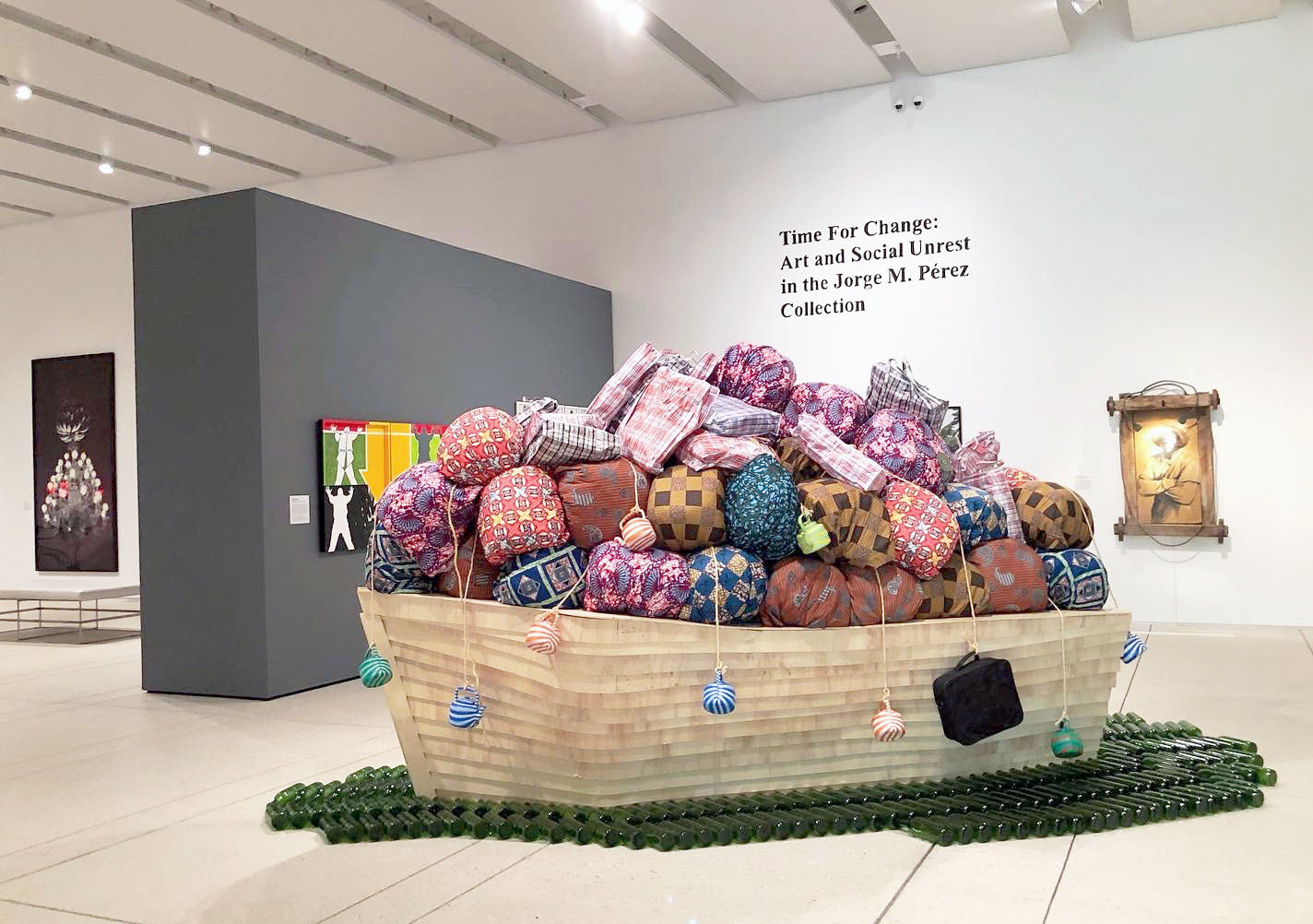
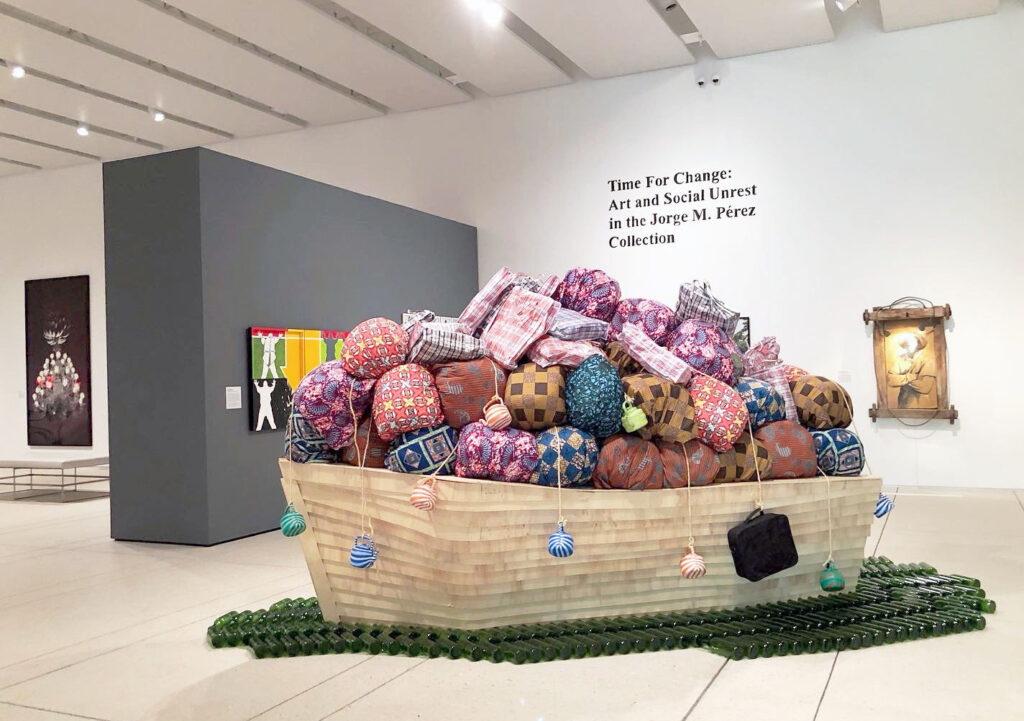
Barthélémy Toguo (Cameroonian, b. 1967), “Road to Exile”, 2018. Wooden boat, cloth bundles, glass bottles, and plastic containers

Currently on view at Tampa Museum of Art is Time for Change: Art and Social Unrest in the Jorge M. Pérez Collection. The exhibition highlights art from around the world that focuses on social issues.

From the museum-

“It is enough for the poet to be the bad conscience of his age”, stated Saint-John Perse in his 1960 Nobel Prize acceptance speech. Something similar could be said when artists address the transformations of society. We should not ask for measurable political action when their role is to point out, to render evident, to shake us from indifference. Art may not provide answers, but most of the time it interrogates and proposes uncomfortable issues, almost like rubbing salt in a wound. Artists are seldom celebratory, nor do they usually provide solutions-art’s potency lays in the symbolic efficacy of the actions it proposes more than in the practical effects they entail. Paraphrasing Brazilian poet Ferreira Gullar, “art exists because life is not enough.”

Time for Change is structured around six themes or nuclei: Entangled Histories, Extraction and Flows, Artivism, State Terror, Spatial Politics, and Emancipatory Calls. The sections are organically linked and establish dialogue and correlations among artworks that do not necessarily illustrate an argument nor are they contained by one. Entangled Histories proposes essential questions: how do we remember as a society? Who is forgotten by History, and for what reasons? Extraction and Flows examines displacement of peoples (usually forced), as well as the unequal logic on the territory. Artivism: Art in the Social Sphere focuses on political unrest and public protest on the streets. State Terror signals how protest is countered with repression and violence. The fifth section, Spatial Politics, reflects on modern architecture and its role in creating segregated communities. Lastly, Emancipatory Calls summons to reclaim difference, in the understanding that a more just society can only be built on respect for one’s right to be different.

A comprehensive look at the Jorge M. Pérez Collection reveals a tendency towards art with an interest in social change- art that examines the conflicts and contradictions of contemporary society, art that critically analyzes historical events and reframes them in the present. Many of the 60 works on view, due to their size or complexity have rarely been exhibited and are shown together for the first time in Time for Change.

About the main work pictured above, Barthélémy Toguo’s Road to Exile, from the museum–

In 2018, the Parrish Art Museum in Water Mill, New York hosted Barthélémy Toguo’s first solo exhibition in the United States. While on site at the Parrish he made Road to Exile, a large-scale installation highlighting the plight of refugees, in particular African migrants in search of a better and safer quality of life. The installation features a life-sized wooden boat that rests on glass bottles. A metaphor of the dangerous voyage across the sea, the bottles represent the fragile line between life and death. The boat nearly overflows with bundles wrapped in brightly colored African textiles and serve as stand-ins for the body. In Road to Exile Toguo employs imagery of the boat as a means of escape rather than a vessel for exploration or adventure.

Below are images from the exhibition as well as some information on a few of the works.
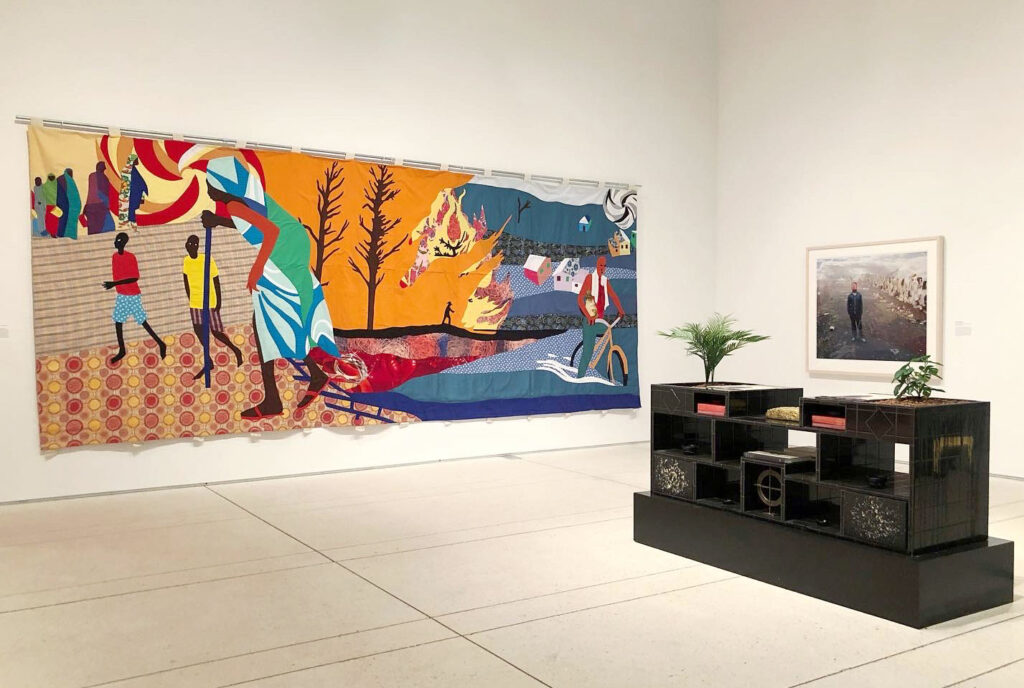
Rashid Johnson, “A Place for Black Moses, (2010), bottom right sculpture, and Christopher Myers “How to Name a Famine, a Fire, a Flood”, 2019, left wall piece
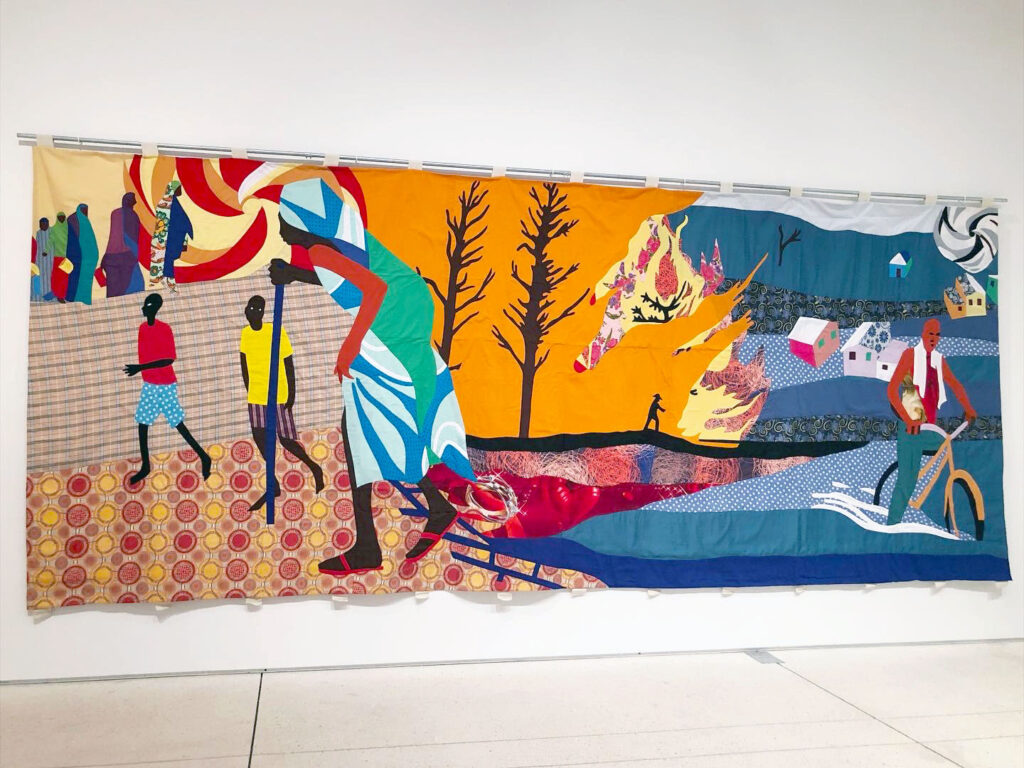
Christopher Myers “How to Name a Famine, a Fire, a Flood”, 2019, Applique fabric

From the museum about the above work-

Storytelling anchors Christopher Myers’ artistic practice. Working in a range of media, he mines history and creates art that links the past to the present. Myers’ tapestries, such as How to Name a Famine, a Fire, a Flood draws on the rich tradition of quilt making as a quiet yet radical form of resistance and protest. The stories depicted center on the effects of globalization on individuals and more specifically, communities of color. In How to Name a Famine, a Fire, a Flood, Myers portrays three different natural disasters linked to climate change. With vivid color and patterned fabric, he illustrates the impact and devastation of these catastrophic events in neighborhoods with minority populations.
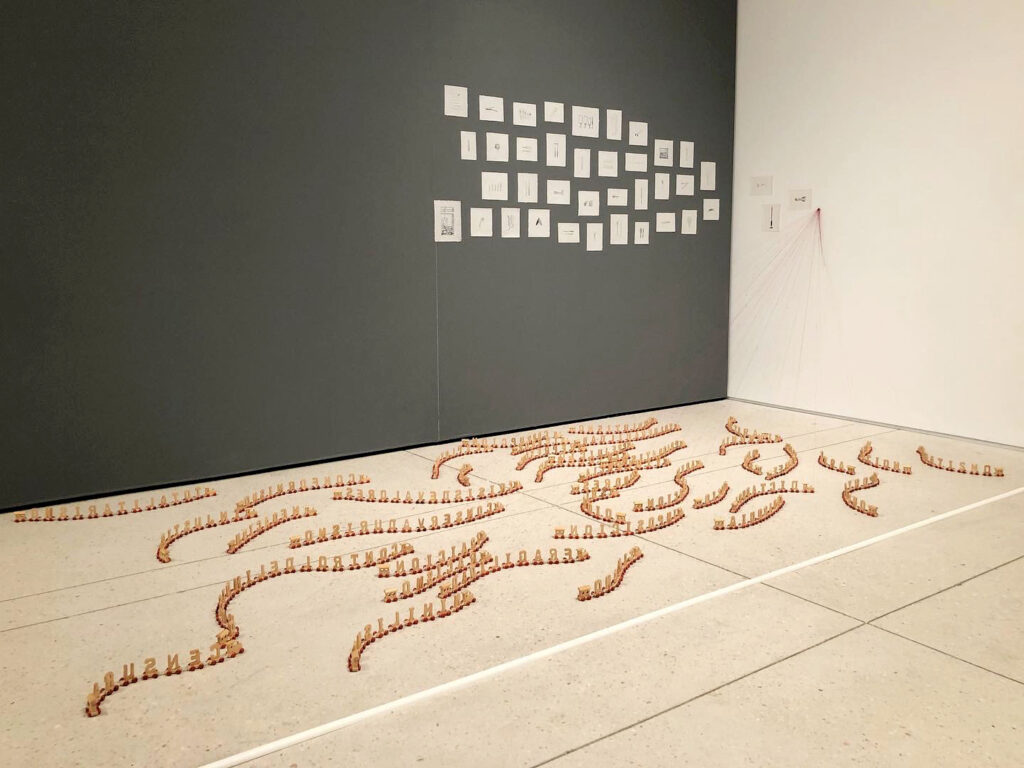
 

Carlos Garaicoa “La habitacion de mi negatividad (The Room of My Negativity)”, 2003, 39 ink and pencil drawings on rice paper and toy train installation
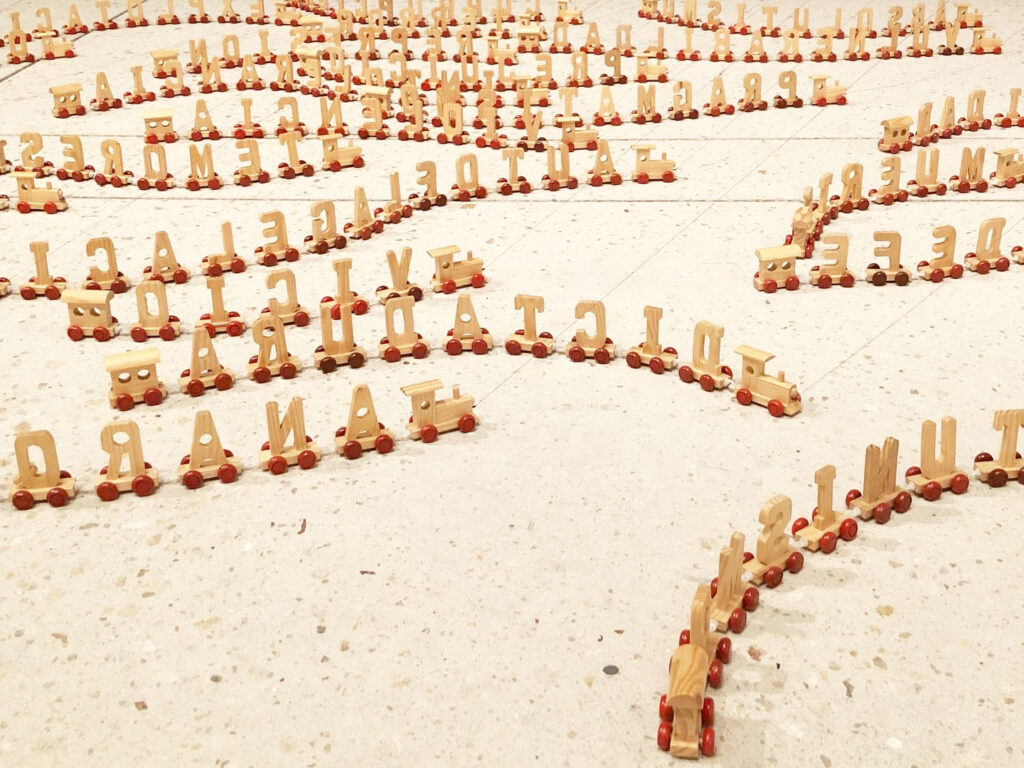
Carlos Garaicoa “La habitacion de mi negatividad (The Room of My Negativity)”, 2003 (detail)

Carlos Garaicoa “La habitacion de mi negatividad (The Room of My Negativity)”, 2003 (detail)

About the above work from the museum-

Carlos Garaicoa works in a variety of media, ranging from installation, photography, and video to performance and public interventions. His early work in the 1990s focused on the urban decay of Havana as result of its political climate and economic strife. La habitacion de mi negatividad (The Room of My Negativity), turns Garaicoa’s lens inward. In this installation, comprised of toy trains and drawings of medical instruments, the artist explores his psyche and subconscious. The train’s engine pulls words that represent Garaicoa’s negative thoughts. Each train is connected to thin red thread that acts as a vein or conduit for the negative thoughts to travel. Arrange in a curved form, the train shapes mimic brain waves or the slink of a snake. Garacoia’s drawings of medical tools serve as mechanisms in which the negatively could be excavated from one’s mind.
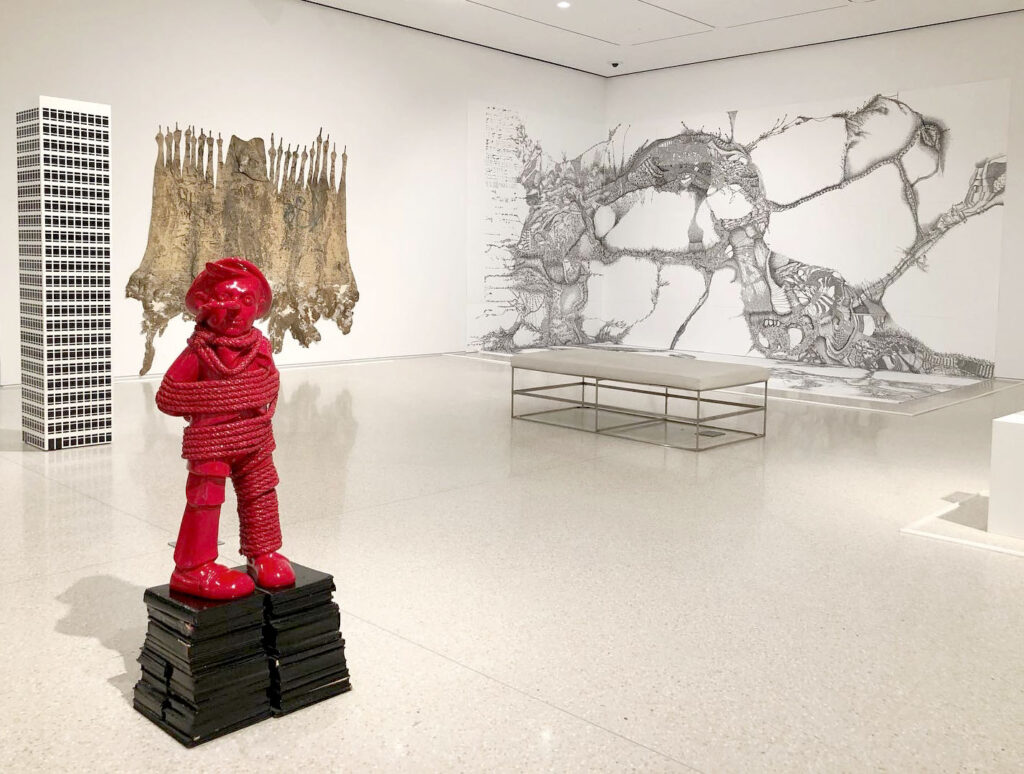
Esterio Segura, “La historia se muerde la cola (History Bites its Tail)”, 2015, (statue bottom left); Anamaría Devis, “Infinito (Infinite)”, 2018(upper right)
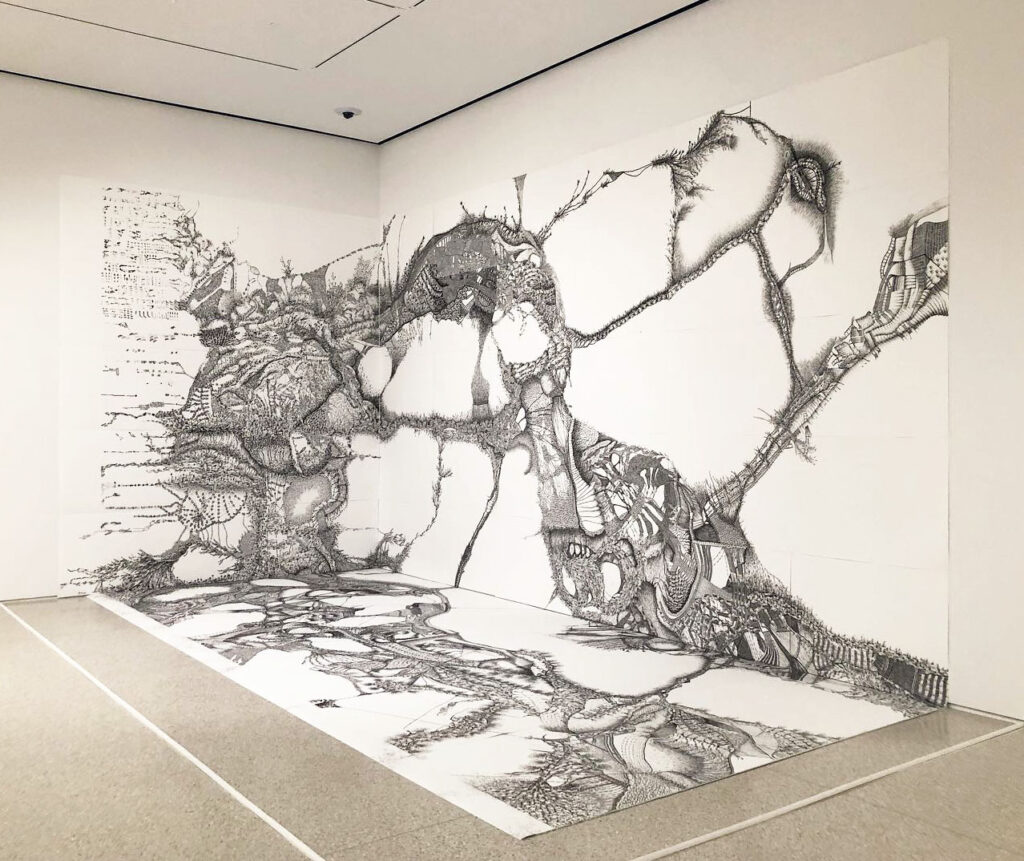
Anamaría Devis, “Infinito (Infinite)”, 2018, Ink on paper
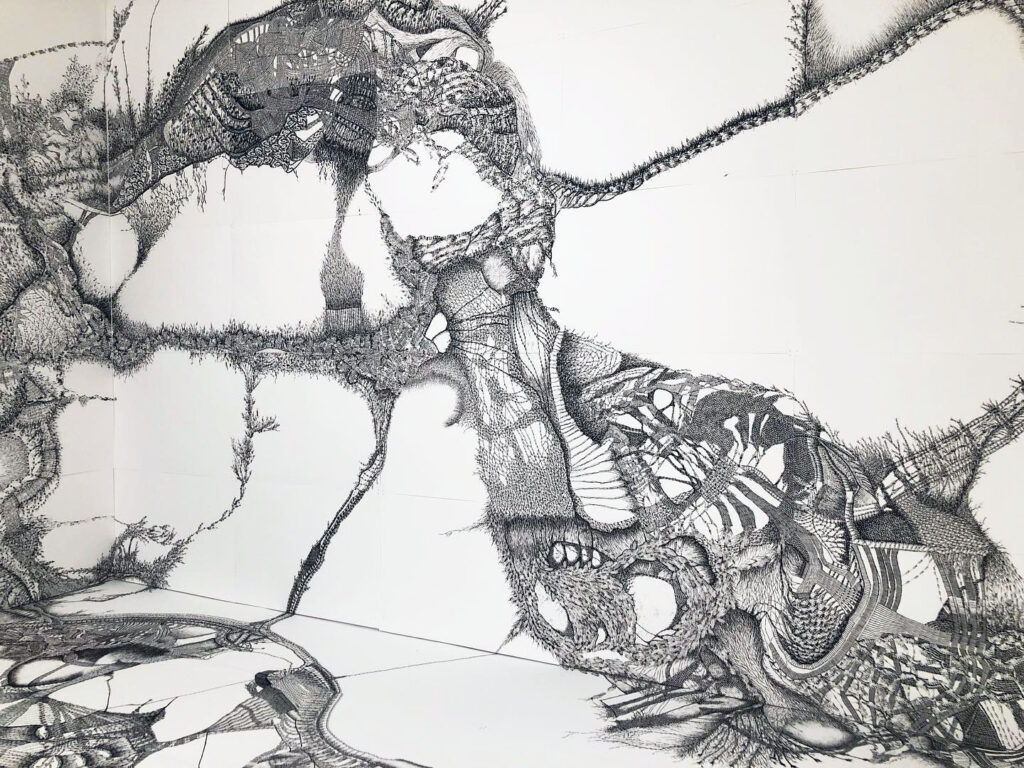
Anamaría Devis, “Infinito (Infinite)”, 2018, Ink on paper (detail)

About this work from the museum-

Anamaría Devis’ large-scale installation Infinito (Infinite) represents the artist’s study of African history in San Basilio de Palenque, Colombia. Escaped slaves founded Palenque and it was the first free town in the Americas during colonial times. While researching this history, Devis discovered that in this region of Colombia, braided hairstyles worn by Africans served as escape maps. Braid patterns reflected safe points in the area’s topography. This silent form of resistance inspired her to look at other bodily topographies like the characteristics of fingerprints, which also had names associated with cartography such as crossing, island, and fork. Devis then began to create drawings that incorporated footprints, braid patterns, and elements of nature. From the drawings she made stamps and each panel of paper that comprises Infinito (Infinite) is rendered from Devis’ various imprints. The result is an abstract representation of the body and landscape visualized through mapping and codes.
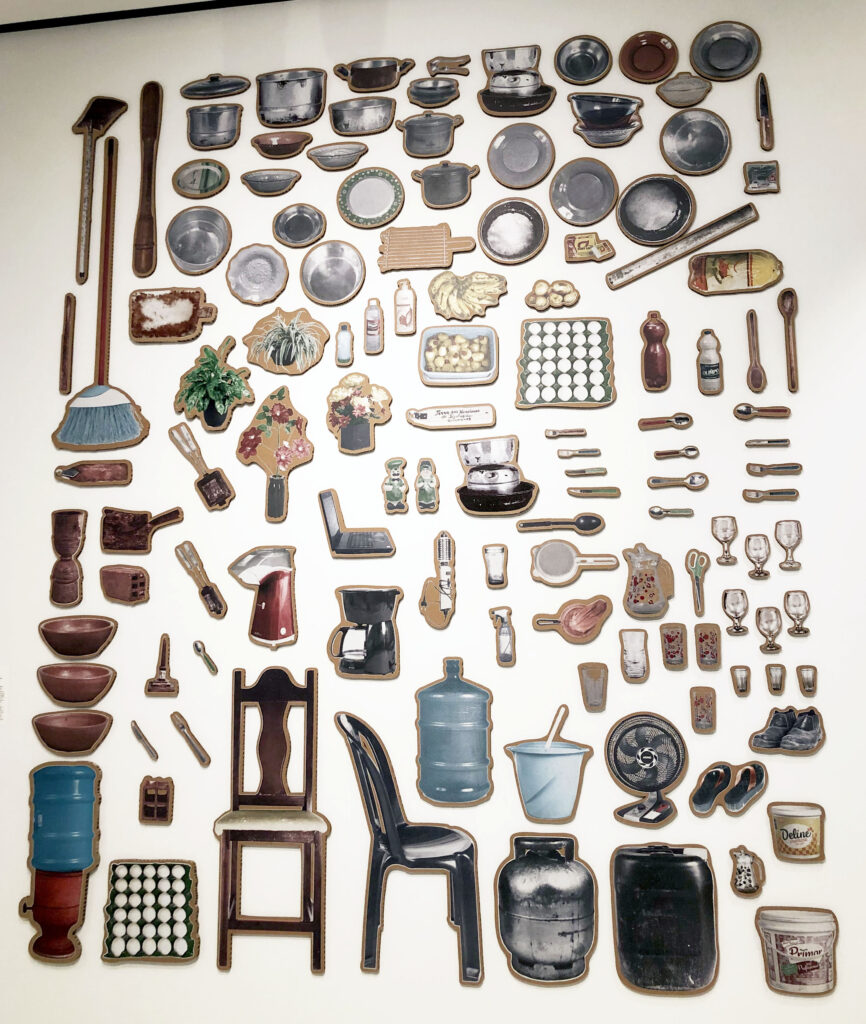
Jonathas de Andrade, “A batalha de todo dia de Dona Luzia, de Tejucupapo (The daily battle of Dona Luzia, from Tejucupapo)”, 2022 Images printed on raw falconboard

About this work from the museum-

Jonathas de Andrade collaborated with the Brazilian theater company Teatro Heroínas de Tejucupapo to create a visual reenactment of the historic 1646 Battle of Tejucupapo. For nearly 25 years, between 1630 and 1654, the Dutch occupied the northeast of Brazil including Tejucupapo, a small community in the city of Goiana. During the Battle of Tejucupapo, a brigade of black and indigenous women forced Dutch soldiers to retreat by arming themselves with household and farm objects. The Teatro Heroínas de Teiucupapo commemorates this female-led rebellion each April by restaging the battle with local actors.

Artist Jonathas de Andrade celebrates the power and courage of Tejucupapo’s women with his large-scale photographic installation A batalha do todo dia de Tejucupapo (The Battle of Tejucupapo). The work on this wall, A batalha de todo dia de Dona Luzia, de Tejucupapo (The daily battle of Dona Luzia, from Tejucupapo), presents everyday objects from the home of one of the women participating in Teatro Heroínas de Tejucupapo. This inventory explores the daily struggles, as well as strength, of Brazil’s black and indigenous women that have spanned centuries.

This exhibition will close on Sunday, 8/27/23.


Aug 212023
 

Leora Stewart (1943-2021) “Banyan Tree”, Fiber wall hanging

Leora Stewart “Banyan Tree”, Fiber wall hanging (detail)

Norma Lewis (1929-2015) “Kimono”, Paper fiber

Nneka Jones- “Layers of Identity”, Fiber collage and embroidery on canvas

Kathleen “Kaki” King, “Syngonium”, Earthenware

Abraham Rattner (1893-1978), “Birds”, 1971, Wool

Taylor Robenalt, “Rookery Queen”, Ceramic

Josette Urso, “Chola”, 1990, Fabric collage, found object quilt

Duncan McClellan, “Alchemy”, 2013, Hand blown glass, sand carved

The works above are from Material Mastery: Florida CraftArt Permanent Collection of Fine Craft on view at Leepa Rattner Museum of Art in Tarpon Springs.

From the museum-

Florida CraftArt (formerly known as Florida Craftsmen) was organized in 1951 by Stetson University art professors Elsa and Louis Freund as a statewide organization celebrating fine craft. As the only statewide nonprofit representing Florida’s fine craft artists, Florida CraftArt is a member-supported organization helping mentor and advance artists. Now headquartered at 5th Street and Central Avenue in St. Petersburg, this vibrant organization has been at the center of St. Pete’s artistic renaissance.

The Leepa-Rattner Museum of Art is delighted to partner with Florida CraftArt to showcase their permanent collection and enduring contribution to Florida’s cultural heritage. The goals of this collection are to recognize the significance of Florida’s fine craft art in our broad artistic landscape, document the rich tradition of craft art statewide and beyond, and to educate and inspire future generations of artists and arts appreciators.

This exhibition will close 8/27/23.

Artists included in this post-

Leora Stewart

Norma Lewis

Nneka Jones

Kathleen “Kaki” King

Abraham Rattner

Taylor Robenalt

Josette Urso

Duncan McClellan


Aug 182023
 

Norbert Gonsalves, “Mood Indigo” and “Mellow Yellow”

“Interrupted Structure #61” by Babette Herschberger, Mixed media collage and acrylic on panel and “Stoneware Cups”

“Maia” and “Hektor” clay works by Craig Wood

Ceramic pieces by Jennifer Rosseter

Above are a few pieces from some of the artists in Salon Gestalt at the Morean Center for Clay in St. Pete, Florida.

From the center about the show-

Salon Gestalt is an annual exhibition of work created by the studio artists working out of the Morean Center for Clay. As the largest clay center in the Southeast United States, we take pride in the diverse collection of work that is created within these walls. Since 2001 our historic train station has brought together innumerable artists who, despite their individuality, find common ground in a shared passion for clay. Our center is a space where artists engage in dialogue, exchange ideas, and challenge one another. There is power in community, and clay has the unique ability to foster a strong sense of camaraderie. In sharing space, these artists support one another and grow together, nurturing both individual artistic practice and collective ambition. 

Salon Gestalt is a reinterpretation of the Paris Salon. While the original exhibitions have a history of exclusion and classism, our revision of the Salon rejects the notion that there is hierarchy in the arts. The Morean Center for Clay is a space where the novice and experienced artists can come to create and learn in a communal environment where everyone is accepted as equal. Together these artists form a collection of work that creates something greater than the sum of its parts. 

For more about the artists pictured above, head to the websites and Instagram links below.

Norbert Gonsalves (@shree_norbert)

Babette Herschberger (@abstractbabz)

Craig Wood (@craigwoodceramics)

Jennifer Rosseter (@jenniferrosseter)

Jun 162023
 

There was a lot to see at last Saturday’s ArtWalk in St. Pete, Florida. Below is a brief roundup. Many of these artists and exhibitions can also be seen for the rest of the month (if not longer).

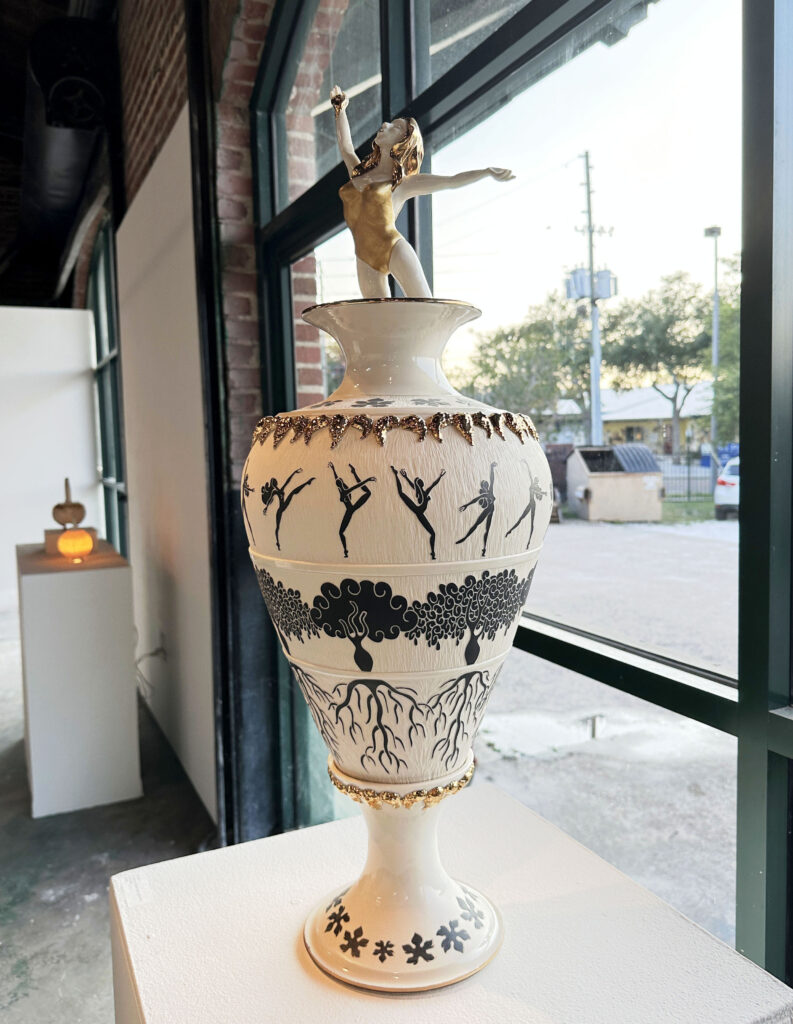
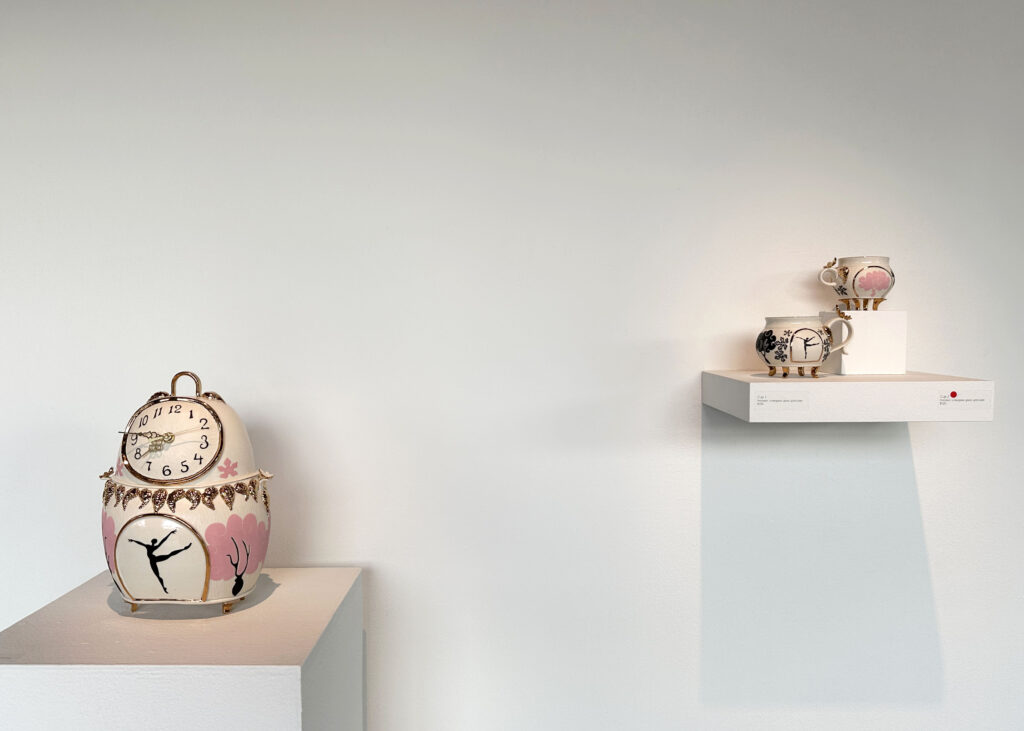
Above is ceramic work by Rebecca Stevens from her exhibition, The Good Life, at Morean Center for Clay. Her work is influenced by her experience as a ballet dancer, ancient Greek art, and by Art Nouveau.

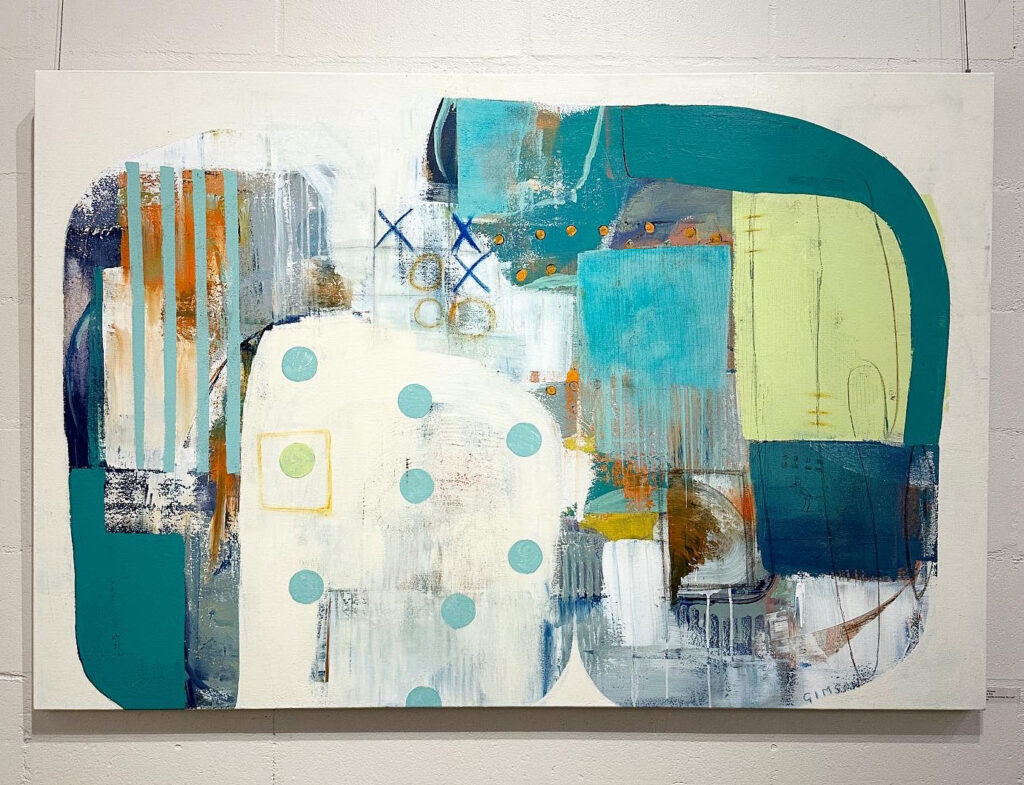
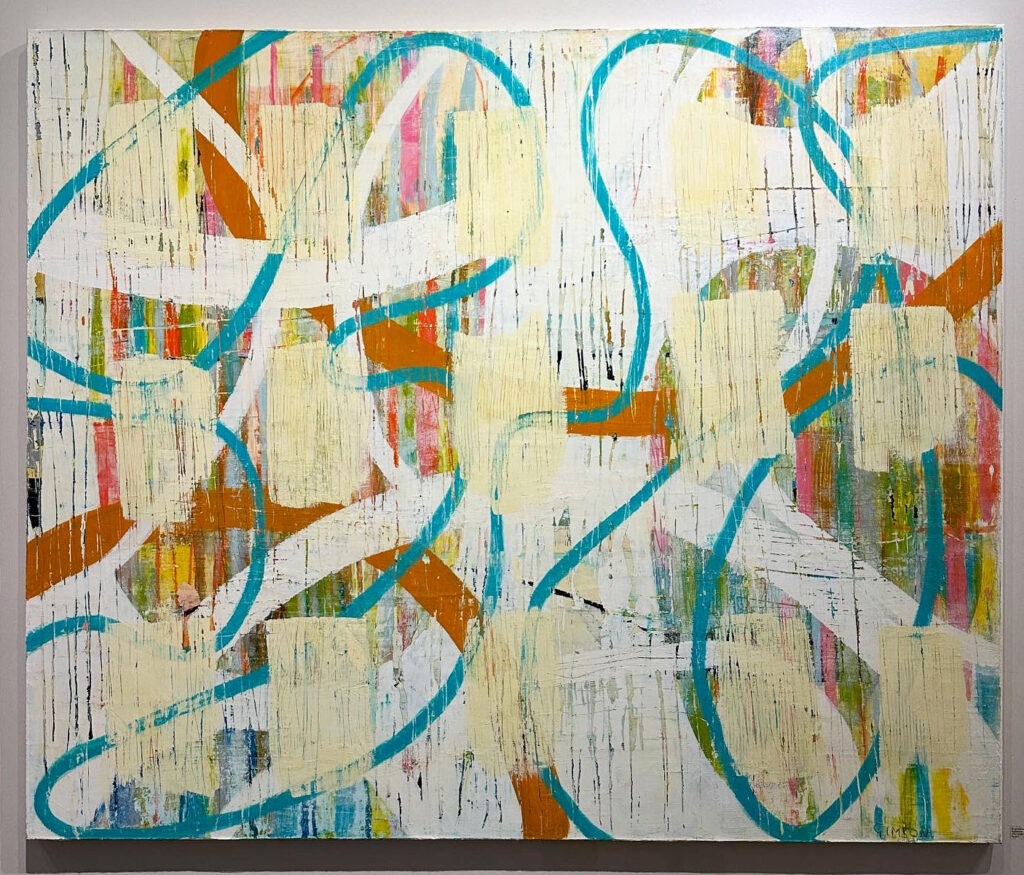
Soft Water Gallery, part of the Arts Xchange in the Warehouse District is showing Abstract Visions, work by Steph Gimson.

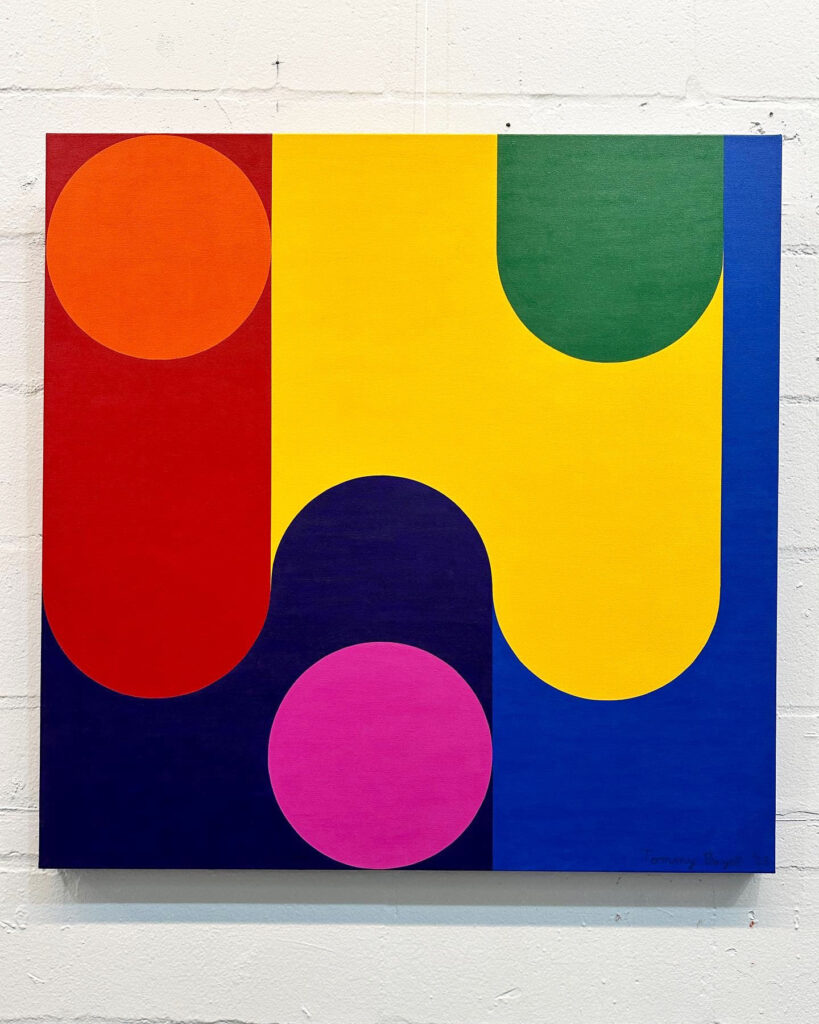
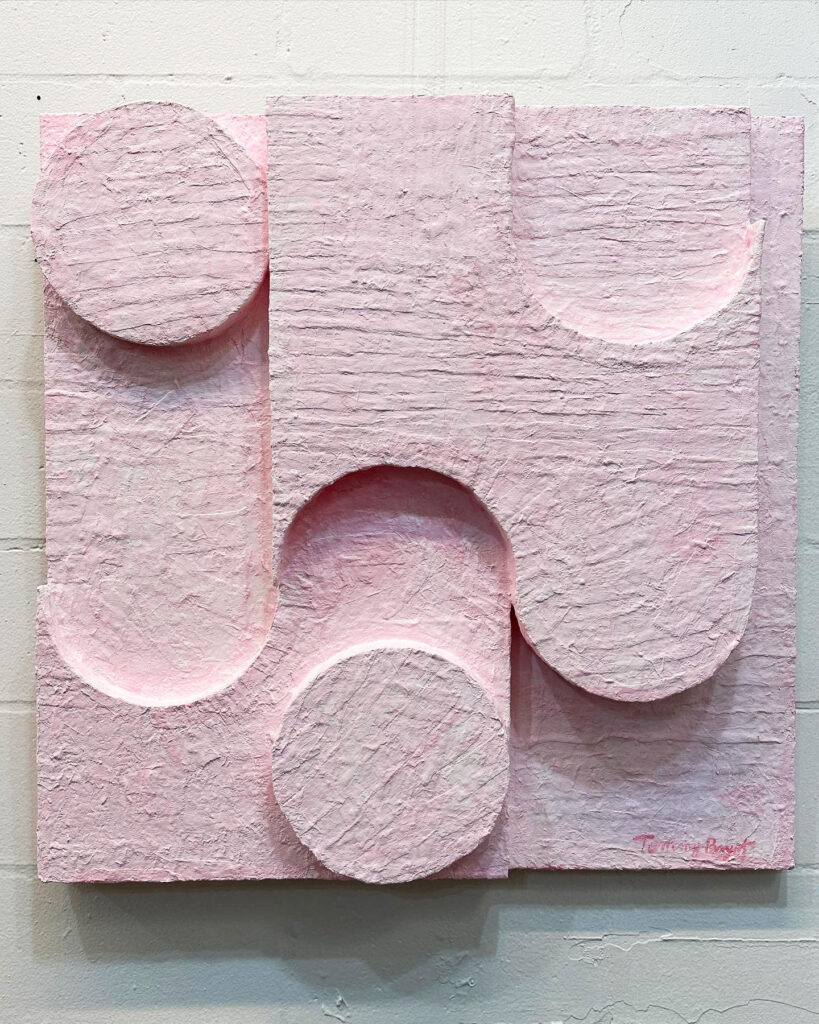
Tommy Bayot’s exhibition Lines is on view at The Factory St. Pete, part of their Pride Month celebrations. The show will be on view until 7/2/23 and includes a variety of work, in addition to the abstract pieces below. Check out his Instagram for more.

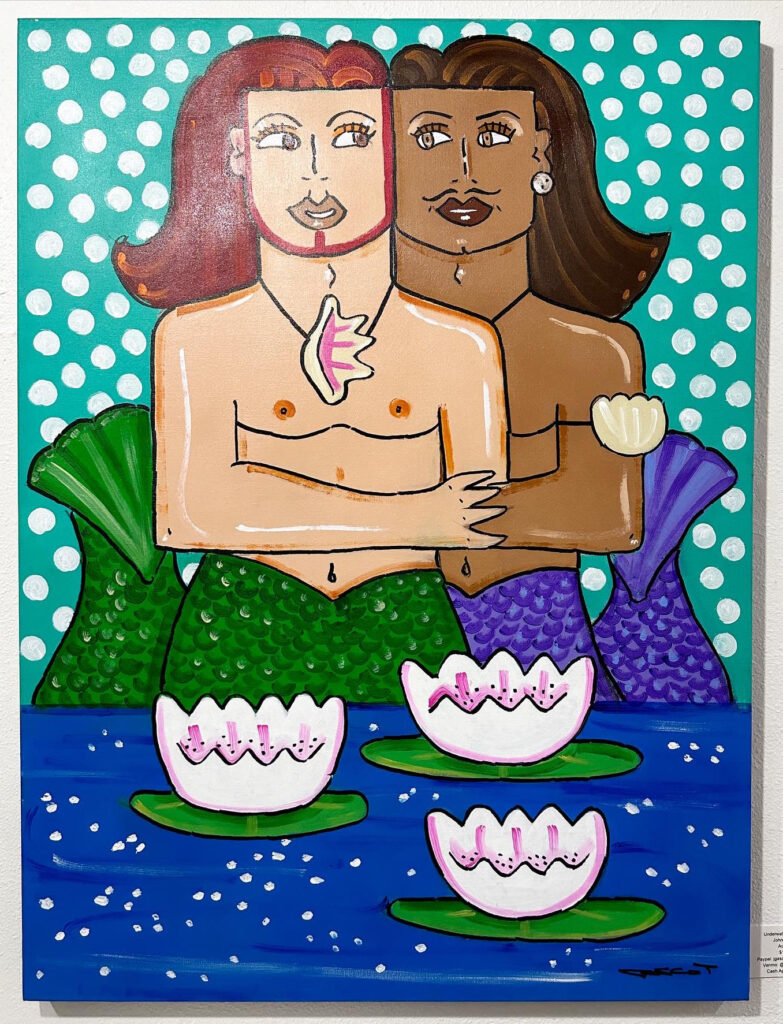
The ArtLofts are located above Florida CraftArt Gallery and are currently showing John Gascot’s Sweet Boys.

John Gascot, “Underwater Romance”

The space also contains 19 artist studios. Below are works from two of the many artists.

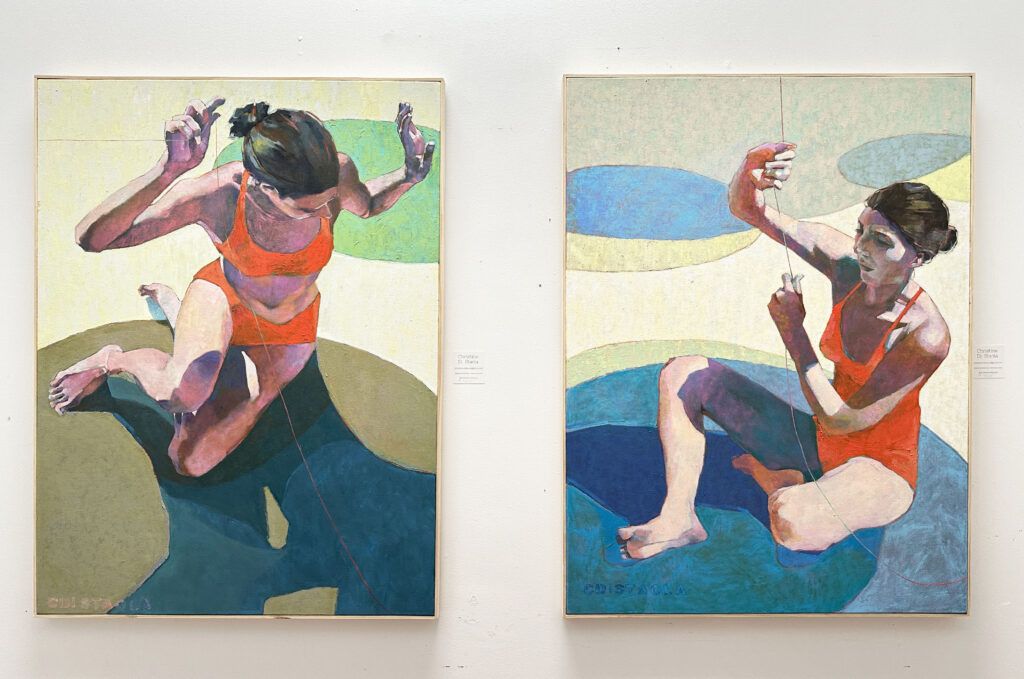
Christine Di Staola’s “Atlas Compass 2” and “Atlas Compass 3”

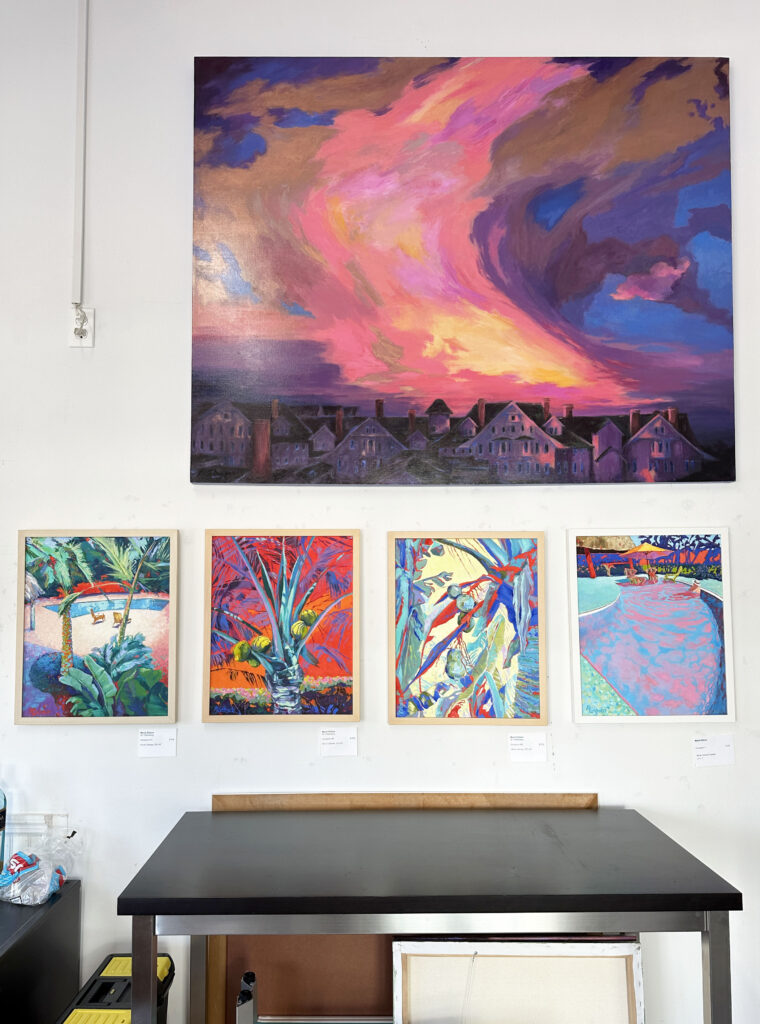
Work by Mavis Gibson

The next ArtWalk in St. Pete will be on July 8th (second Saturday of the month).


Jun 102023
 

Ketsy Ruiz, “El Yunque in my Corazón I and II”, acrylic on canvas

Work by (L to R)- Chloe Lewis, Kyra Connolly, Ketsy Ruiz. and Joerod Collier

Photos by Joerod Collier, Ceramics by Babette Herschberger

Currently on view at Parachute Gallery in Ybor City, Tampa, is the group exhibition Buy Me Flowers & Call Me Pretty. The show celebrates the beauty of nature and features seven artists with Florida roots.

The artists included are-

This show is on view until 6/25/23.


Jun 052023
 

Currently at Jenny Carey’s Gratus Gallery in Ybor City are photographs by Johanna Keefe.

Keefe is a talented ceramicist as well as photographer. For this series she created the objects, photographed them, and than used a specific AI filter to obtain her final results.

This exhibition will be on view until 6/15/23.

May 242023
 

Rachel Ratcliff, “Roll of the Kaleidoscope”, 2021, acrylic on canvas

Richard Logan “Sea Oats”, 2022, photographic transfer on metal with etched glass

Steven Spathelf, “Orange Blossom”, 2022, acrylic on canvas

This past Friday the city of Dunedin, Florida, celebrated the opening of its new City Hall. As part of the celebration, the building and all of its offices were open to the public. It was the first opportunity to see all the wonderful art by Florida artists- selected and commissioned by Elizabeth Brincklow.

Pictured above are works by Rachel Ratcliff (wave painting) and Richard Logan (photography). The third work is by Steven Spathelf whose oranges can be seen adorning buildings and homes all around town.

Scroll through the pages below to see the other works on view.

Apr 282023
 

Installation by Molly A. Duff

Work by Trinity Oribio (left) and Manon VanScoder (videos on right)

Currently on view at The USF Contemporary Art Museum is SOMEDAY YOU’LL HAVE TO SAY IT OUT LOUD, an exhibition of eight students graduating with MFA degrees from the USF School of Art and Art History.

The artists included are Molly Duff, Kai Holyoke, Caitlin Nobilé, Trinity Oribio, Rachel Treide, Manon VanScoder, Alicia Watkinson, and Willow Wells.

For the artists’ statements about their work, as well as more information on the exhibition, the museum has produced this PDF.

The show will be on view until 5/6/2023.

Installation by Molly A. Duff, another view

Alicia Watkinson, “Notations in Passing II”, 2023, plywood, lightbulbs, ceramic bases, timers. Duration of light set daily according to the previous day’s activities and observations

Alicia Watkinson, “Notations in Passing II”, 2023 (detail)

Photo transfer on glass by Rachel Treide

Still from video by Rachel Treide

Caitlin Nobilé, “The gap in the door”, 2023 triptych, acrylic on wood

Willow Wells, “Whispers”, 2023, oil painting on panel

Trinidad Oribio “Untitled”, 2023 oil on canvas

Trinidad Oribio, “La Trinidad”, 2023, archival pigment print

Video installation by Manon VanScoder

Manon VanScoder, “each day is an endless scroll”, 2023

Kai Holyoke “Paradise Lakes”, 2023

Kai Holyoke “Paradise Lakes”, 2023


Apr 222023
 

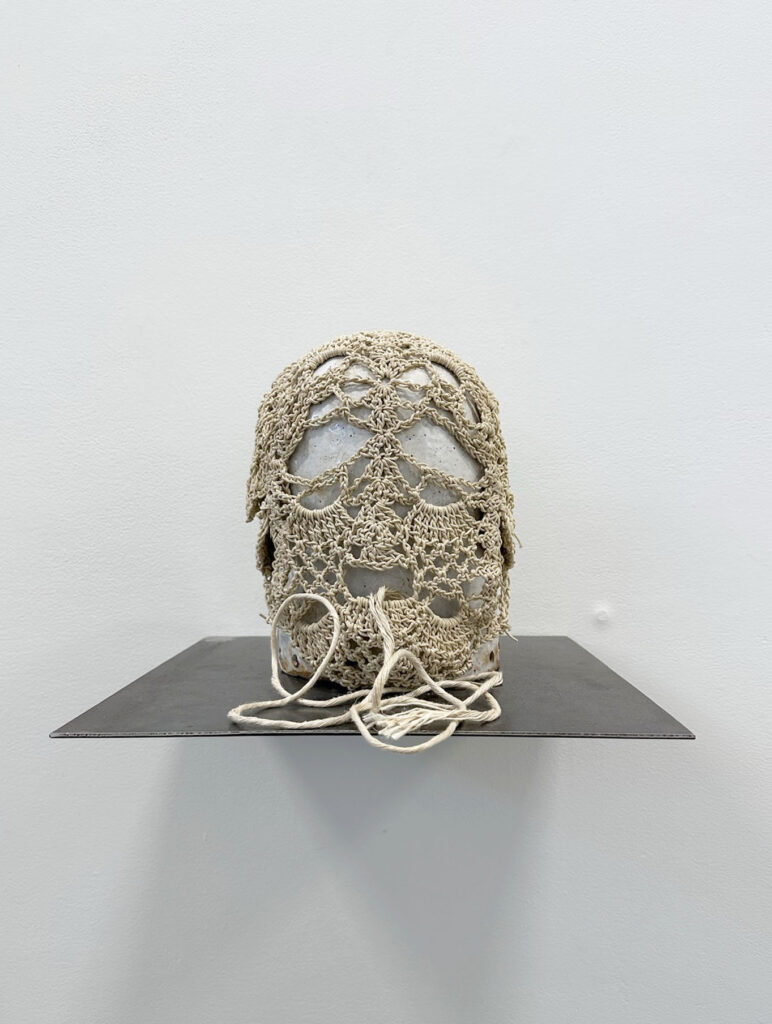
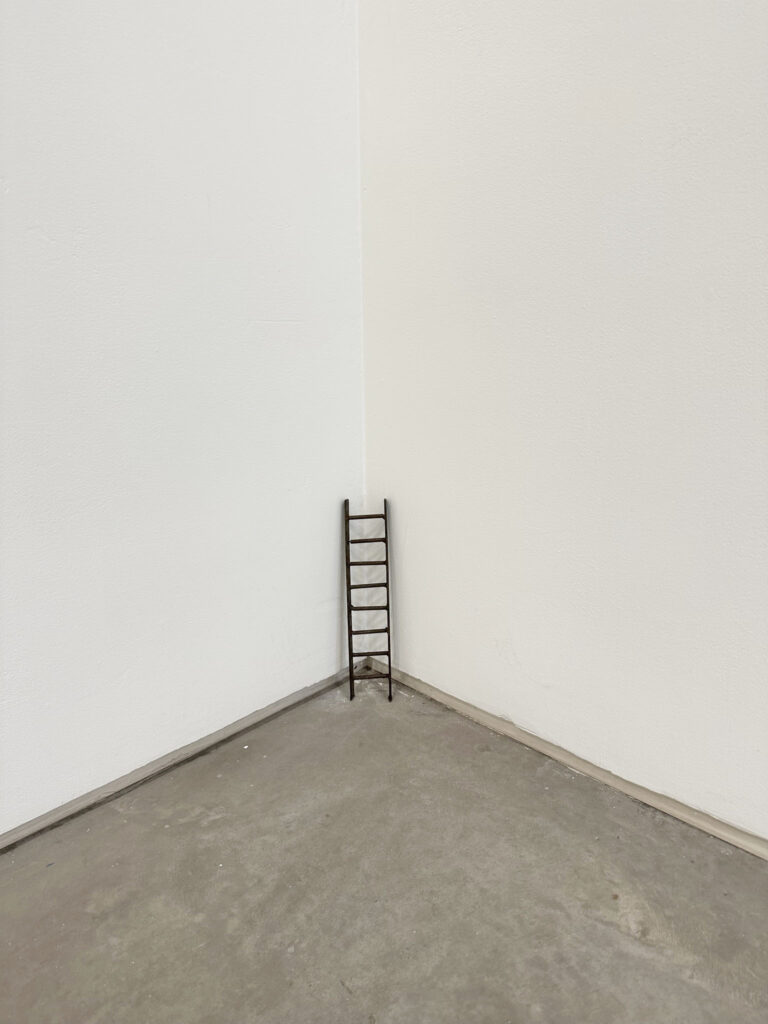
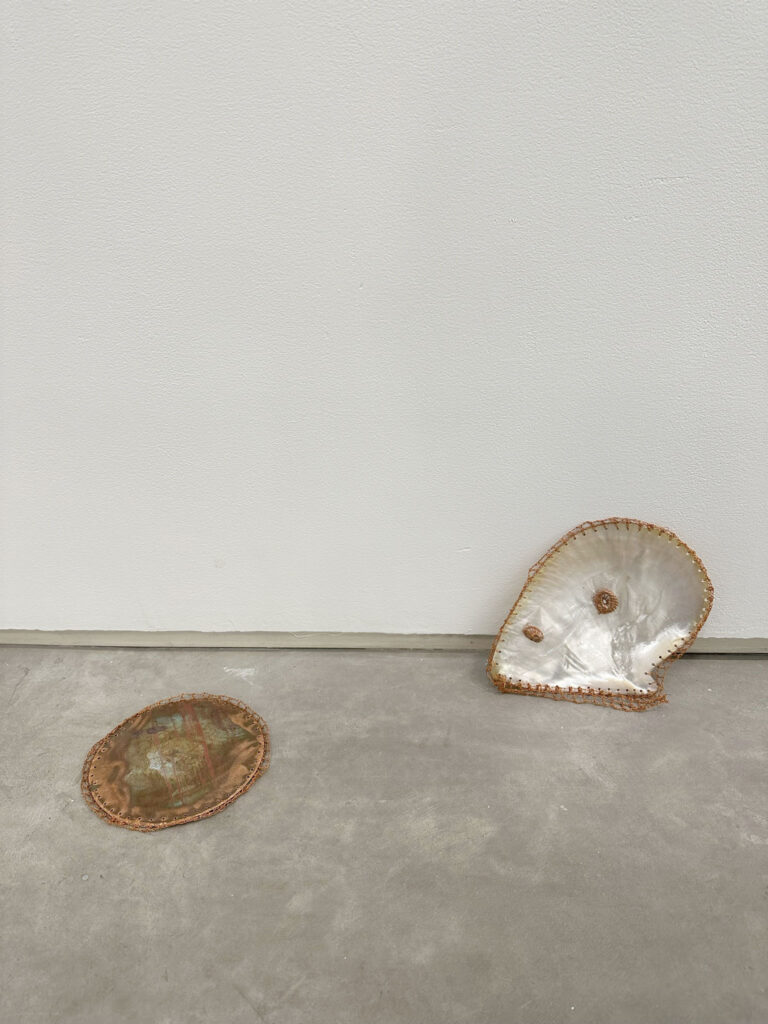
cabeza güera, 2019 Glazed ceramic and crochet cotton

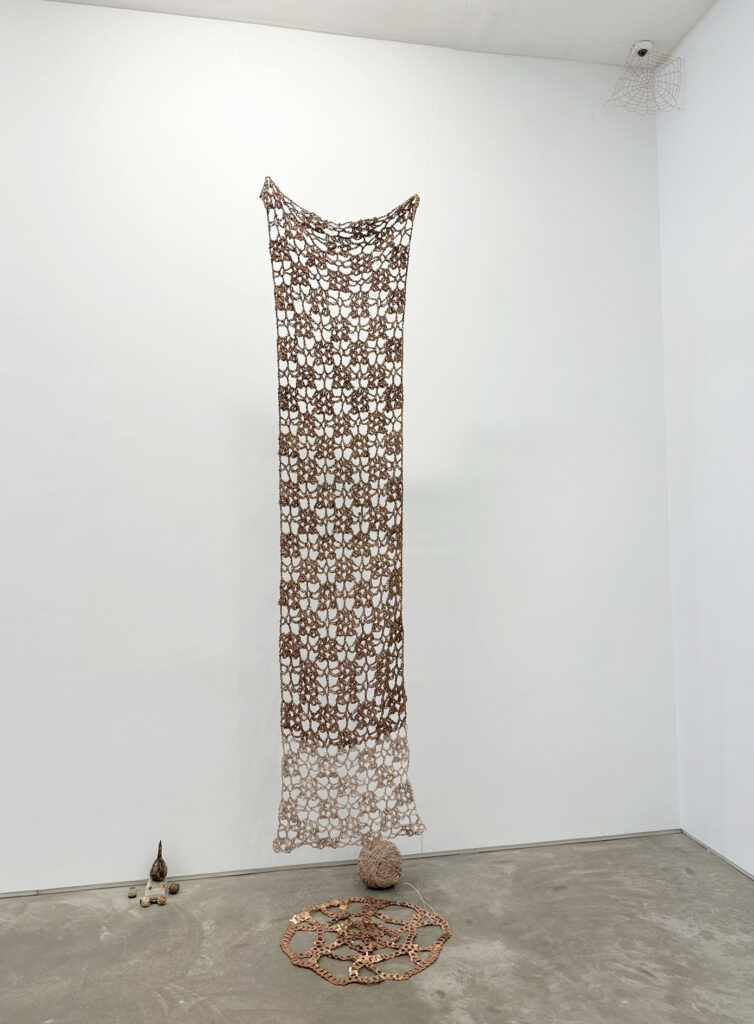
“encuero”, 2022-2023, Crochet leather and copper; “gotitas”, 2023 Agate, glazed ceramic, plasma cut metal, steel, onyx, palm, and seed podand; “telaraña de cobre”, 2020 (web in upper corner)

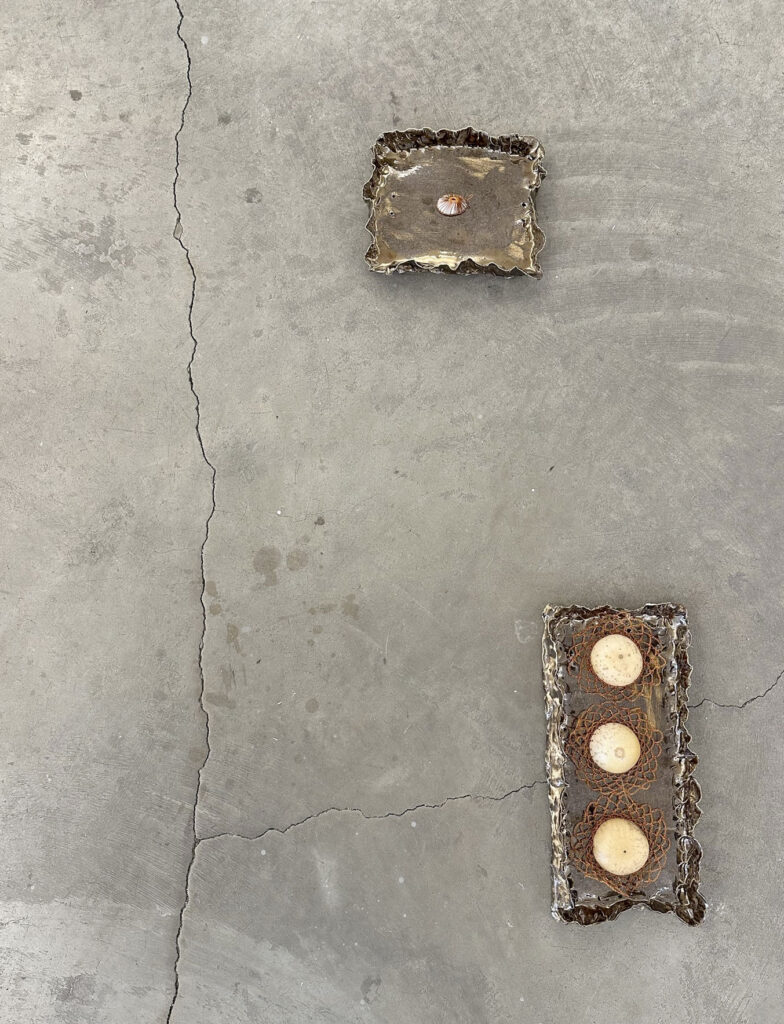
“trastes ceramica”, 2023 Glazed ceramic, gourds, crochet copper wire, and limpet shell

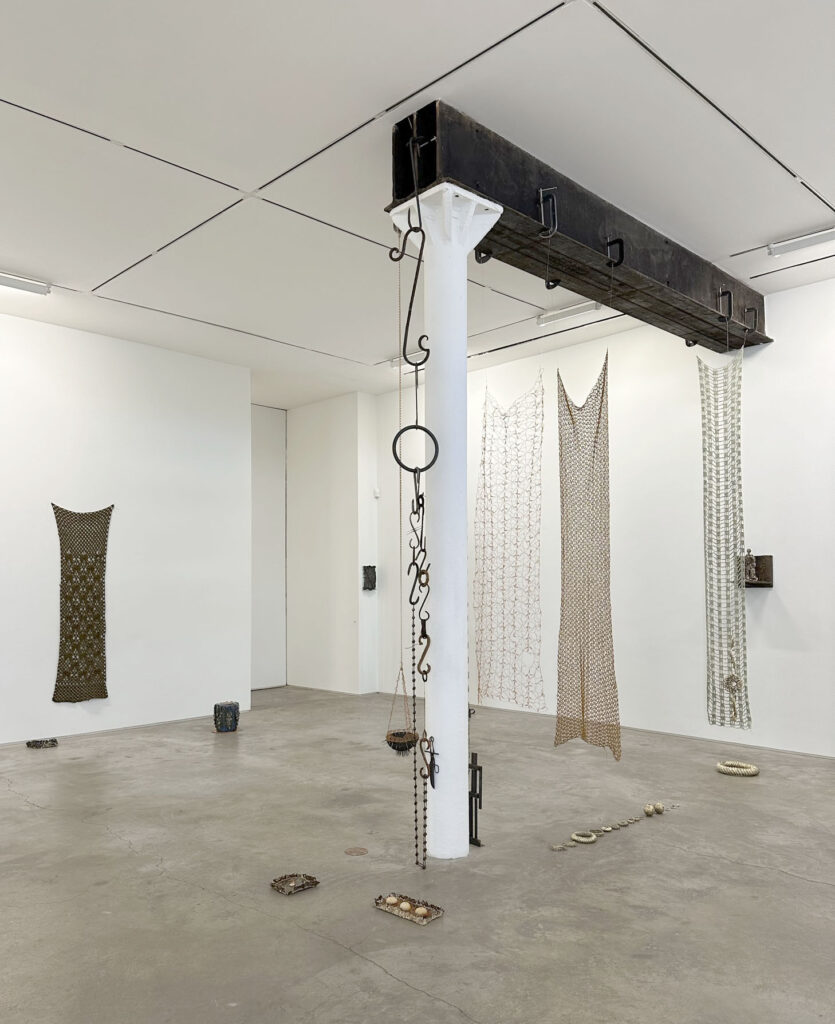
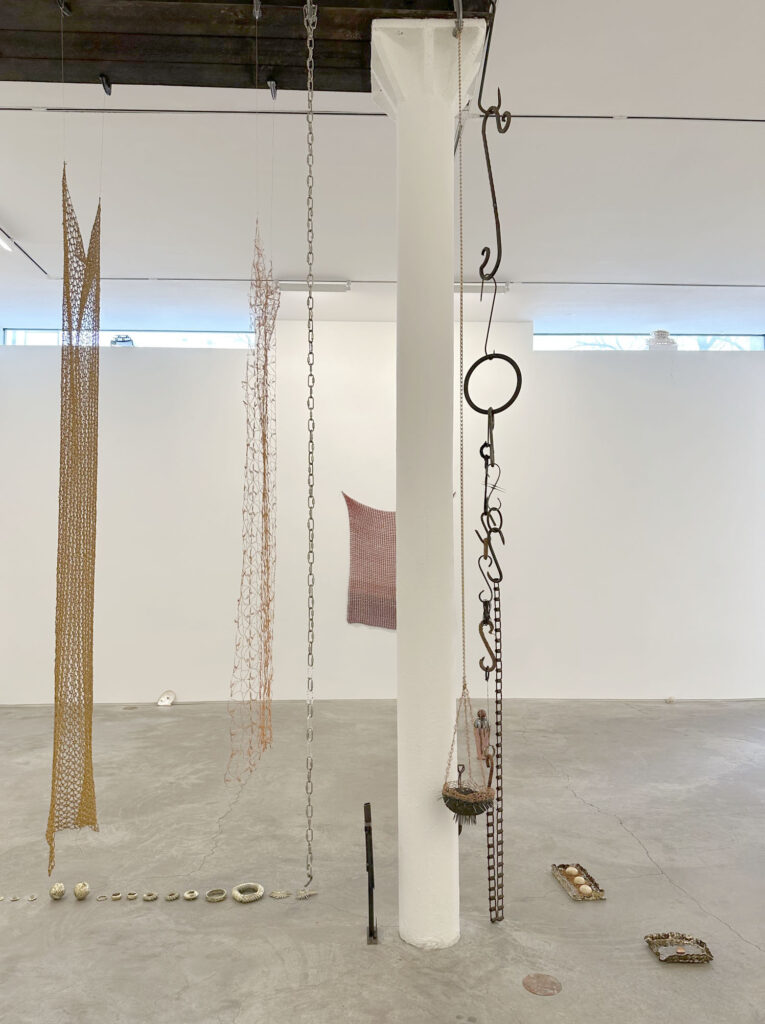
There’s only two days left to see ektor garcia: esfuerzo at James Fuentes. The enchanting sculptures inspire curiosity and encourage the viewer to imagine the story behind the work while also admiring their construction.

From Art Daily about the exhibition-

Each of ektor garcia’s exhibitions are more like a marker of a moment of pause in his work, rather than a presentation of something complete or discrete. In this way his works are evidence of a continual natural progression, as things build on top of each other, evolving. In relation to the specific time and place of this newest exhibition; it marks a cyclical continuation of the garcia’s presentations at the New Museum in 2017 and Sculpture Center in 2019—both of which moments in the artist’s life when he was traveling a lot, largely moving between Mexico, being on the road, and New York, specifically. This is the case once again, today:

For this show garcia traveled from his studio in Mexico City, suitcases filled with materials, to occupy the basement space below the gallery at 55 Delancey St in the lead up to the exhibition’s opening to the public. He has also retrieved objects previously exhibited or in storage—for example a 15-ft copper link piece recently exhibited at the Henry Art Museum has been broken into smaller pieces, added to and reconfigured into a new work(s). The exhibition title, esfuerzo translates to effort; as in a big push, like a birth, which feels apt for what the artist does. Pieces come together little by little over a long period of time; and the work comprises many small parts that each reflect his esfuerzo in making them. Another translation for esfuerzo could be output; and, shortened, fuerza means strength. Via his artistic practice, garcia is the conduit or vessel through which that life-force runs, resulting in an output that is this body of work. garcia is constantly making, hands always moving; this is simply part of how he lives his life. The work therefore isn’t made toward constructing a larger conceptual conceit; instead, its making is its meaning, the working is the work. Its presence in the space is evidence of all this; making room for it to be approached and even interceded, we inherently take part in the work’s life cycle, even potentially changing its course by entering this domain.

This sense of force, therefore, isn’t tied to garcia’s hand only, but relates externally as well. One piece in the show, cochinilla (2022), is woven from wool dyed red from the shell of the cochineal insect. Last year it was installed on the exterior of the Museum of Contemporary Art in Monterrey, Mexico, and upon taking it down garcia’s realized it had become sun bleached unexpectedly. With other pieces he more deliberately pushes, forcing change, for example by using a blowtorch against copper to catalyze an oil-spill patina. Over time, crochet has been one constant; a crocheted piece needs time, and then it meets time. In his words: “The materials are vibrating back and forth, taking turns. That is how they evolve.” And so although the works reference the past they do not prioritize it; likewise the future. Rather, in the style of the ouroboros, they are cyclical, perpetual, and most generous about the present.

Artist Cy Gavin wrote this piece to accompany the exhibition, which is worth a read as well.