May 022023


Currently on view at Bortolami is Tom Burr’s excellent multimedia exhibition. With new discoveries around every corner, the show keeps you engaged, at times even on an emotional level.

From the press release-

Once more Burr has assumed his dual role as artist and exhibition maker, relocating the act of making from the traditional studio space into the gallery. An architectural intervention of four walls defines the show, a deconstructed box whose contents have been scattered both in view and out of sight yet remain connected on levels of materiality, memory, biography, and history. Moving through the gallery, the viewer is directly confronted by Burr’s work, activating the artworks and the physical space created for them. As the interconnectivity of the different facets of the exhibition comes into view, not only here and now but in its connection to the entirety of Burr’s career, we begin to understand this as not merely an assortment of objects as artworks, but on a larger scale as a total artwork.
Four new wooden panels populate each makeshift wall, continuing the signature plywood sculptural series begun in the 1990s. Each painted a different color, the artist loosely utilizes the shipping crate motif, a point of interest for Burr. Adhering stainless steel and brass plates to each panel, the images portray the artist himself as well as his own simulation of stereotypical “faggy gestures,” as he refers to them, creating an intersection of public expectations of artistic sensibility, identity performance and exposure.

Also on view in the main gallery are a series of furniture-based sculptures. Set behind the walls, each work draws the viewer into the constructed architectural space as they grapple with themes of legacy, memory, and biography. Pulse utilizes various items once belonging to the “lounge” at Burr’s project space in Torrington, Connecticut—a disco ball, a couch, a lamp, a wool blanket — the disco ball being a relic from American Fine Arts, the legendary SoHo gallery run by Colin de Land where Burr exhibited throughout the 1990s and early 2000s. Accompanying the work is a wall text listing the various academic definitions of the word “pulse,” while the last line, a new addition by the artist, is a reference to the infamous shooting at the gay nightclub in Orlando, Florida, a signal to both the individual and communal meanings associated with the word. Similarly, the artist has gathered various items belonging to his father to create Johns (my father’s chest)—a chest of drawers, long johns, a metal storage box, and a handkerchief— evoking the same ideas of legacy and biography.

A new photo series entitled Capricornus I, II, III, and IV lines the outer walls of the main gallery. Depicting Burr in the three public bathrooms of his Torrington space, he is in the midst of various movements—lounging, laying down, reading. In a string of associations from Bruce Nauman to Francesca Woodman, as well as nods to his own past work, here the studio becomes a stage as Burr equates the everyday banal and artmaking.

Occupying the small gallery space, Floor Model (adolescent), is the most recent continuation of the artist’s series His Personal Effects, while in the office Burr has installed a series of new collages made in homage to Stefania Bortolami. The Visit, I, II, III depicts images of a visit by Bortolami to Burr’s space in Torrington, CT, as well as images of plant foliage from Burr’s seminal work, Construction of An American Garden, currently installed in the Torrington space. In the words of scholar and curator Blake Oetting “the body of the dealer emphasizes the commercial system that supports Burr’s work and translates it into exchange-value, a framework, he reveals, that often moves beyond the physical boundaries of the gallery.”

This exhibition closes 5/4/23.

Apr 282023
 

Leo Villareal’s exhibition at PACE, Interstellar, consists of fifteen mesmerizing, colorful sculptures that are a joy to watch.

From the PACE website-

Villareal’s practice is part of a lineage of artistic engagement that explores the connections between nature, technology, and human experience. The artist’s upcoming exhibition with Pace in New York will feature wall-based sculptures, including works from his new Nebulae series. Emitting hypnotic, diffused light, the Nebulae sculptures are informed by celestial imagery and evoke the dynamism of space through interplays of color and shape. Villareal creates unique and specific sequencing for each artwork through code that is generative and visceral, like nature itself. As such, no two sculptures are the same.

This presentation at Pace in New York will also include works realized at a scale that Villareal hasn’t explored in nearly a decade: two-foot square wall-mounted sculptures. These intimately scaled artworks, paired with their glass enclosures, encourage focused readings of Villareal’s abstractions. Like his larger works, the two-foot pieces invite viewers to consider the boundary separating physical and digital worlds.

This exhibition is on view until 4/29/23.

Apr 282023
 

Installation by Molly A. Duff

Work by Trinity Oribio (left) and Manon VanScoder (videos on right)

Currently on view at The USF Contemporary Art Museum is SOMEDAY YOU’LL HAVE TO SAY IT OUT LOUD, an exhibition of eight students graduating with MFA degrees from the USF School of Art and Art History.

The artists included are Molly Duff, Kai Holyoke, Caitlin Nobilé, Trinity Oribio, Rachel Treide, Manon VanScoder, Alicia Watkinson, and Willow Wells.

For the artists’ statements about their work, as well as more information on the exhibition, the museum has produced this PDF.

The show will be on view until 5/6/2023.

Installation by Molly A. Duff, another view

Alicia Watkinson, “Notations in Passing II”, 2023, plywood, lightbulbs, ceramic bases, timers. Duration of light set daily according to the previous day’s activities and observations

Alicia Watkinson, “Notations in Passing II”, 2023 (detail)

Photo transfer on glass by Rachel Treide

Still from video by Rachel Treide

Caitlin Nobilé, “The gap in the door”, 2023 triptych, acrylic on wood

Willow Wells, “Whispers”, 2023, oil painting on panel

Trinidad Oribio “Untitled”, 2023 oil on canvas

Trinidad Oribio, “La Trinidad”, 2023, archival pigment print

Video installation by Manon VanScoder

Manon VanScoder, “each day is an endless scroll”, 2023

Kai Holyoke “Paradise Lakes”, 2023

Kai Holyoke “Paradise Lakes”, 2023


Apr 252023
 

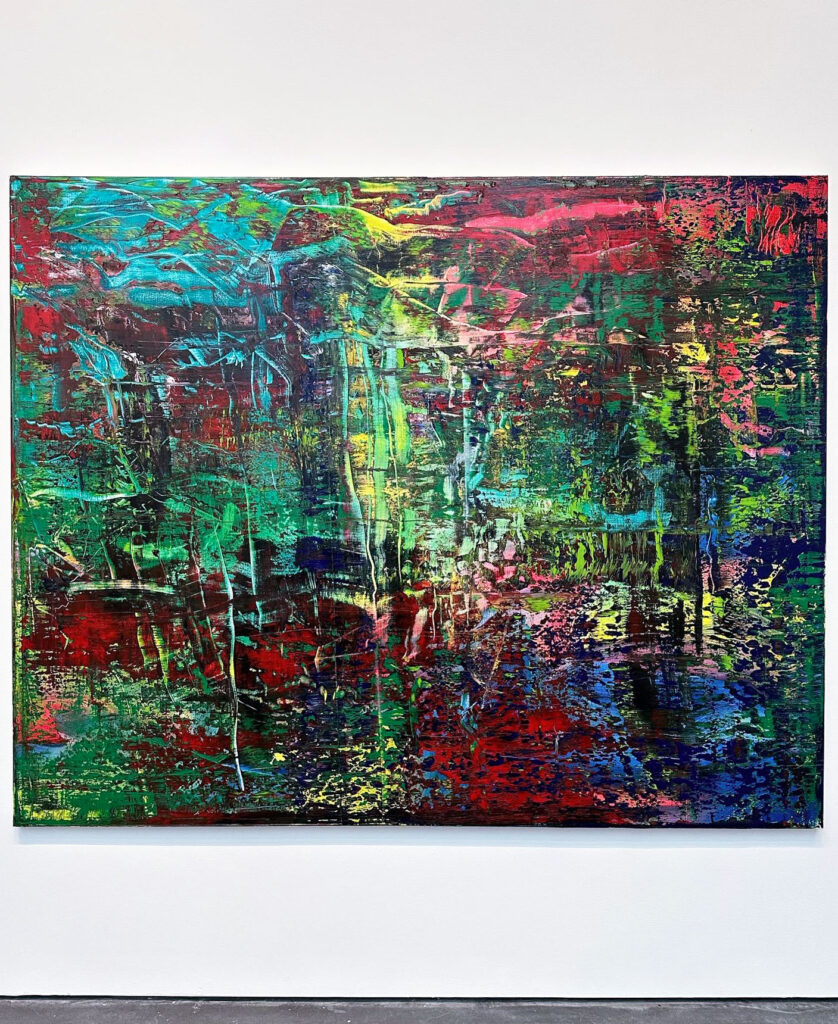
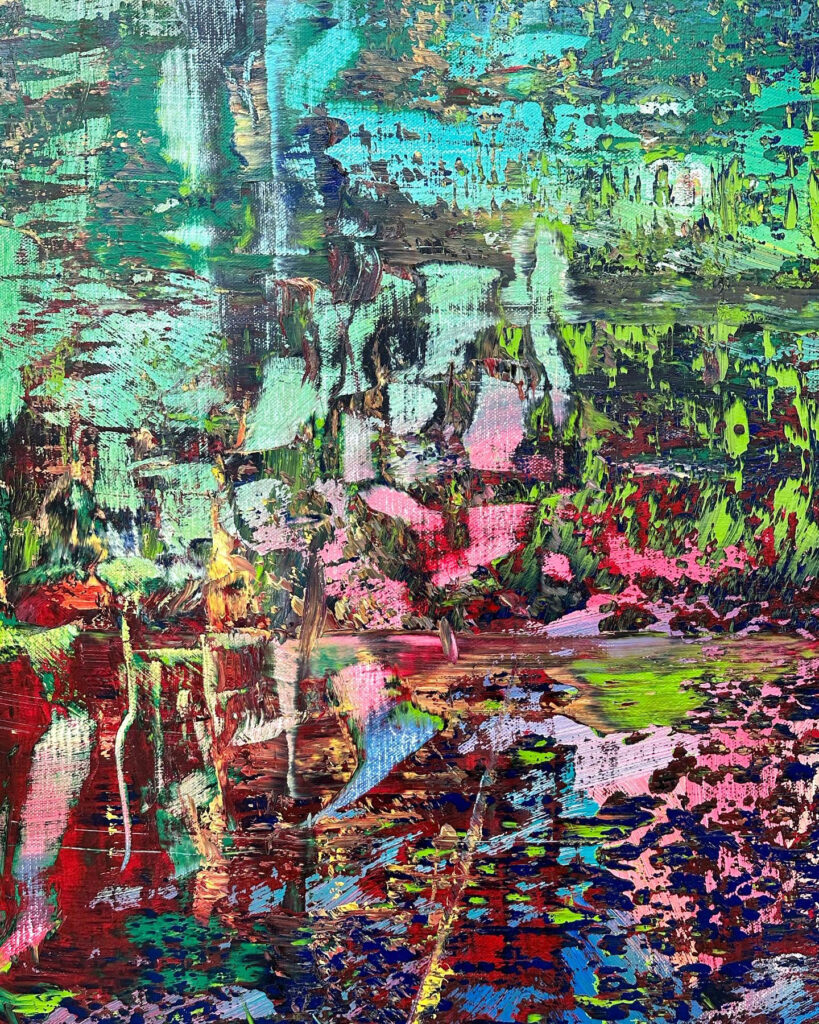
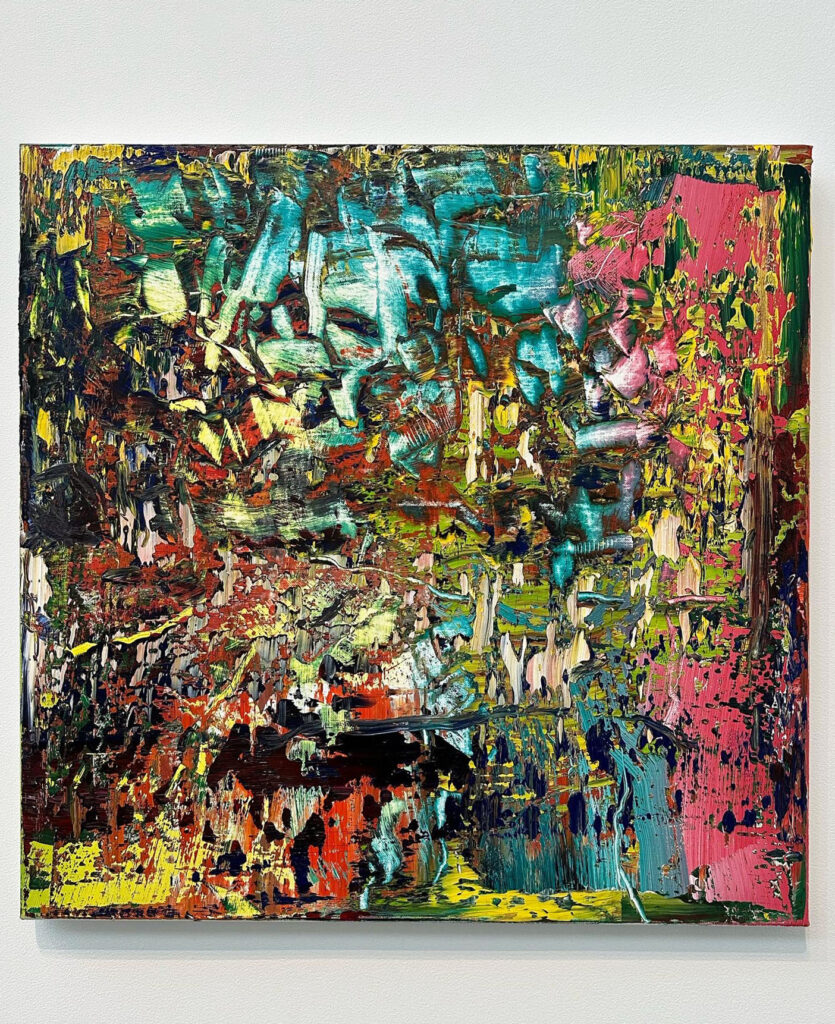
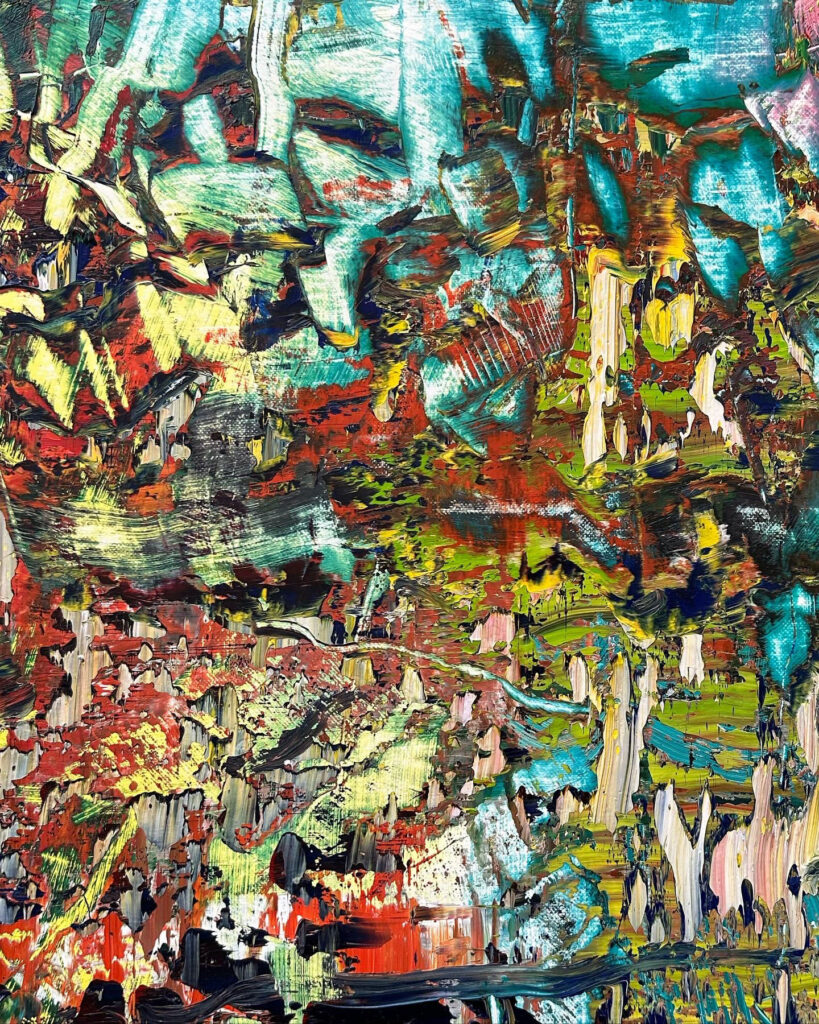
It’s the last week to see the Gerhard Richter exhibition at David Zwirner. The show includes a group of Richter’s last paintings from 2016-17, two of which are pictured above, as well as a new glass sculpture and recent works on paper.

From the press release-

Celebrated worldwide as one of the most important artists of his generation, with a career spanning from the 1960s to the present, Richter has pursued a diverse and influential practice characterized by a decades-long commitment to painting and its formal and conceptual possibilities. The artist has consistently probed the relationship between painting and photography, engaging a variety of styles and innovative techniques in a complex repositioning of genres. In Richter’s work, dual modes of representation and abstraction fundamentally question the way in which we relate to images.

The exhibition will bring together a significant group of Richter’s last oil paintings, made in 2016–2017, a number of which will be shown in New York for the first time. Richter stopped making oil paintings in 2017, and the final work on canvas he made will be on view in the exhibition. Part of the artist’s Abstrakte Bilder (Abstract Paintings) series—a cornerstone of his practice since the 1970s—the works on view exemplify Richter’s investigations into chance occurrences and the painted medium’s historical and material properties. With their highly worked and intricately stratified surfaces, the last paintings foreground the sheer physical presence of paint and color, enacting a mode of composition that is aleatory yet deliberately planned.

Centrally featured will be 3 Scheiben (3 Panes) (2023), a new glass sculpture that continues Richter’s exploration of human perception and the built environment. Comprising three sequential rectangular panes of transparent yet reflective glass—each one positioned upright and measuring almost ten feet in height—the installation invites viewers to look at, through, and beyond its surface, revealing the inherently subjective and situational nature of perceived reality. Richter has consistently created glass and mirrored works since 1967, often presenting them alongside his paintings and drawings and placing them in the larger context of their surrounding architecture. Crucially, while sculptural, these free-standing glass works are also positioned as a literal reflection on painting and image-making; they respond to the art-historical notion of the painting as both a mirror and a window, while also acting as a powerful corollary to the blurred effect of Richter’s photo paintings, which the artist began experimenting with in the 1960s. As critic Hal Foster notes, “The felt analogy between a composed painting and a contemplative viewer is so fundamental that we are not aware of it until it is interfered with. And this is precisely what the glass pieces do: our reflection, in the sense of our mirrored image, disrupts our reflection, in the sense of our contemplation.”1

An expansive suite of new works on paper from 2021–2022—some made with ink and others with graphite and colored pencil—will also be on view. Richter’s drawings constitute a significant element of his practice, allowing him to explore another aspect of the role of the artist’s hand in the creation of a dynamic and abstract pictorial narrative. Many of these works feature passages of cloudy graphite rubbings juxtaposed with equally hazy semi-erased portions. The artist embeds a sparse network of crisscrossing arcs and lines amongst this backdrop, forming an enigmatic topography that seems to map out the very possibilities of image-making itself. Other drawings on view are composed of abstract monochrome washes of ink and graphite, taking on a decisively painterly appearance; as Richter describes, these works on paper chart out a parallel but complementary path to his painted oeuvre, much like that of “a poem and a novel by the same author.”2

Also on view will be mood, a group of inkjet prints that relate to a recent series of colored ink drawings by Richter, both of which debuted at the Fondation Beyeler in Basel in 2022. Part of the artist’s extensive career-long experiments with the iterative translation and interplay of mediums, these vibrant prints are almost indistinguishable from their ink counterparts, revealing Richter’s continued fascination with the possibilities of image reproduction.

This exhibition closes 4/29/23.

Apr 222023
 

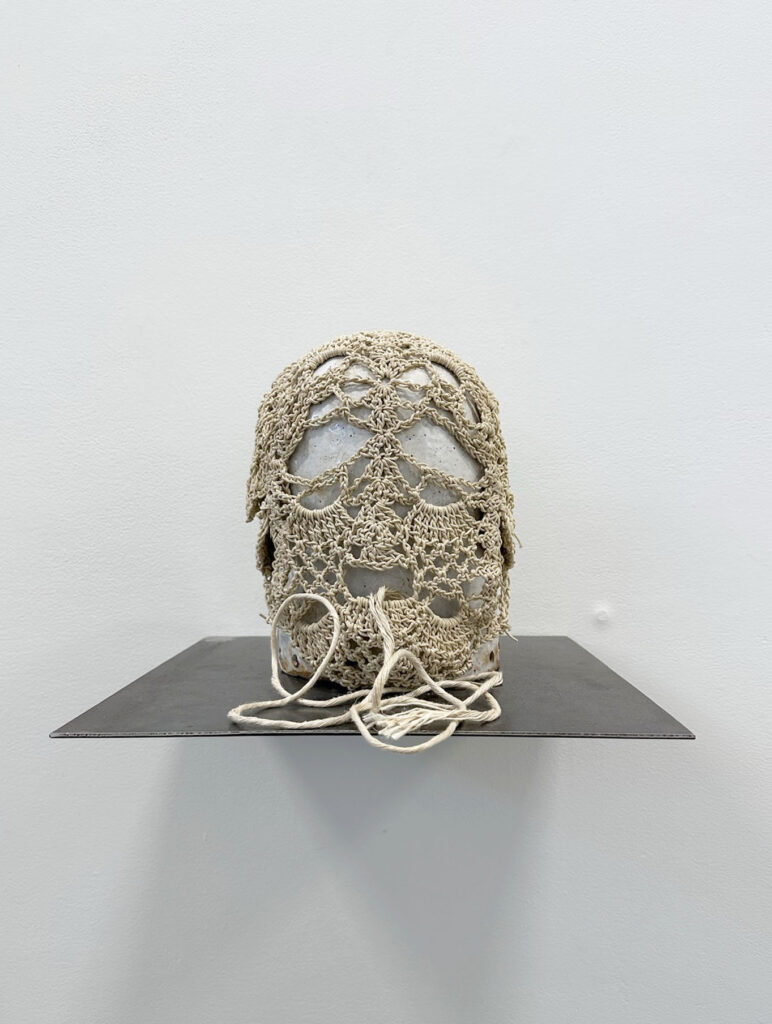
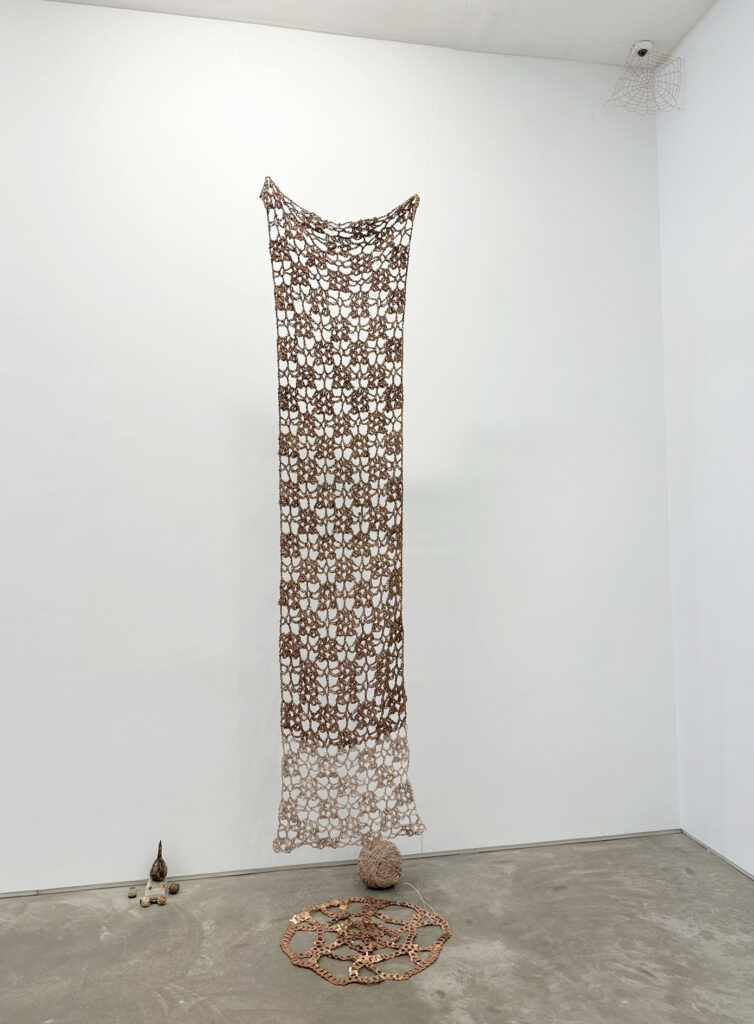
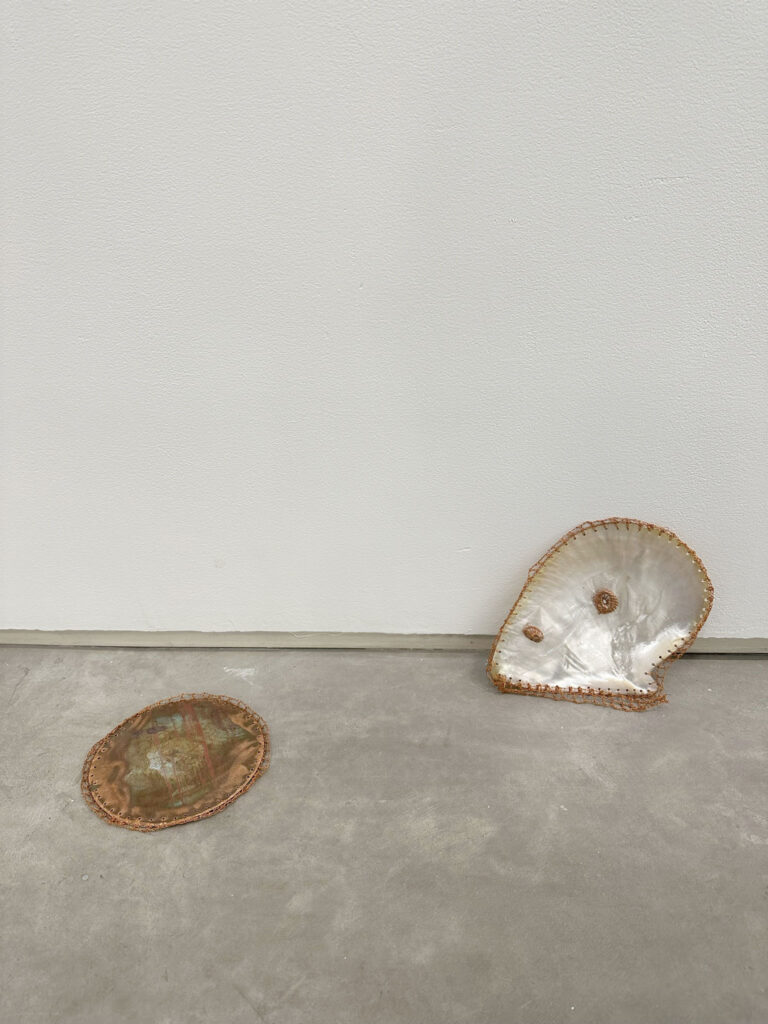
cabeza güera, 2019 Glazed ceramic and crochet cotton

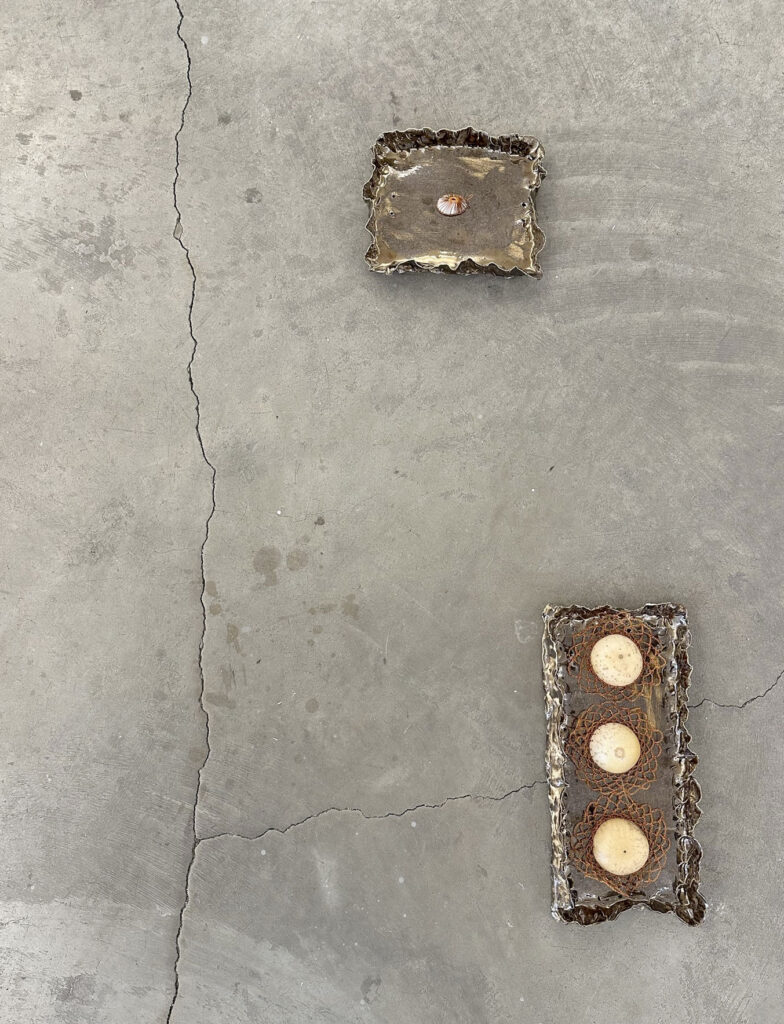
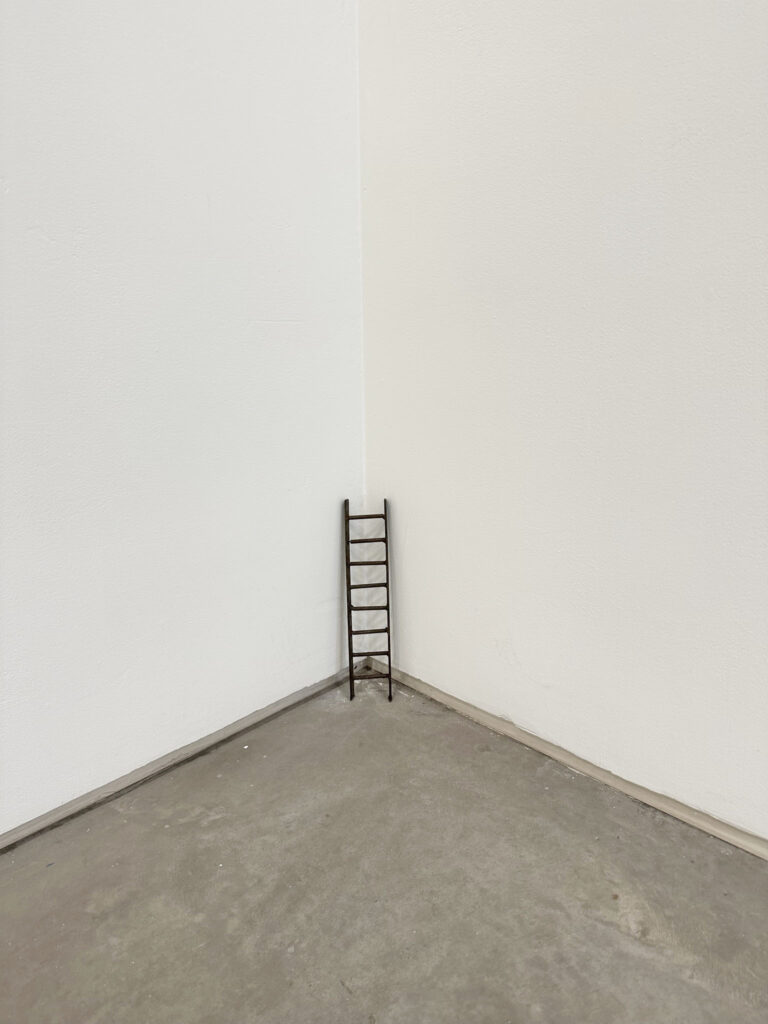
“encuero”, 2022-2023, Crochet leather and copper; “gotitas”, 2023 Agate, glazed ceramic, plasma cut metal, steel, onyx, palm, and seed podand; “telaraña de cobre”, 2020 (web in upper corner)

“trastes ceramica”, 2023 Glazed ceramic, gourds, crochet copper wire, and limpet shell

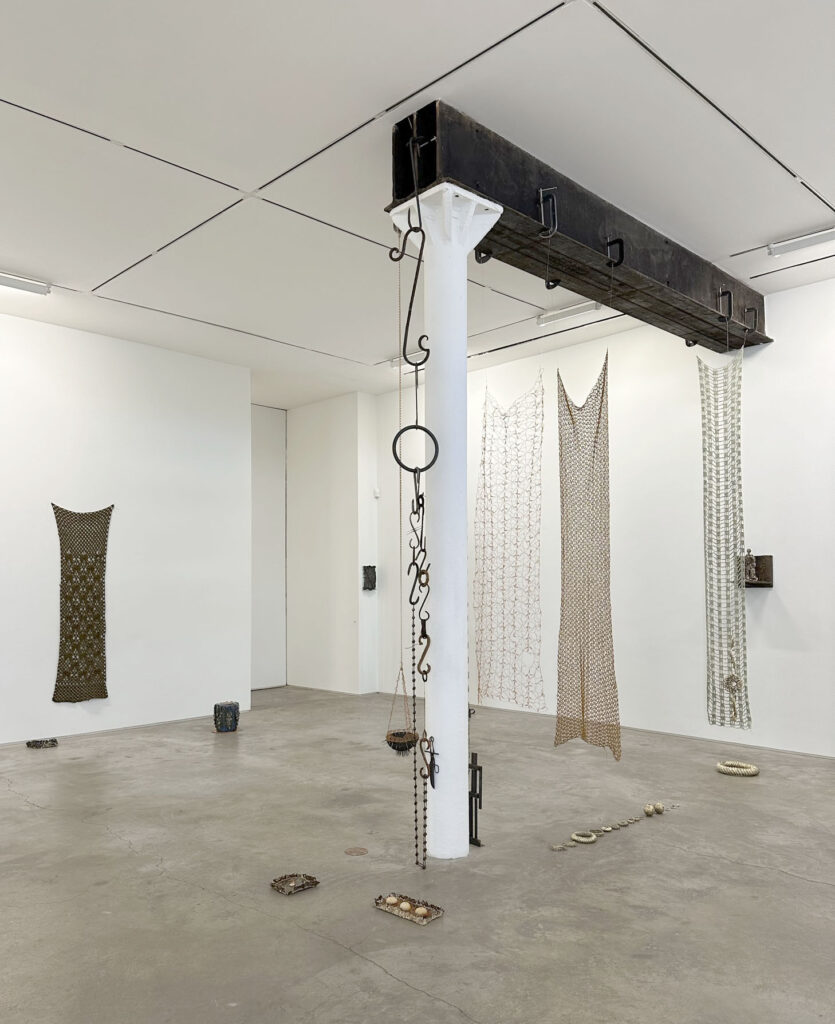
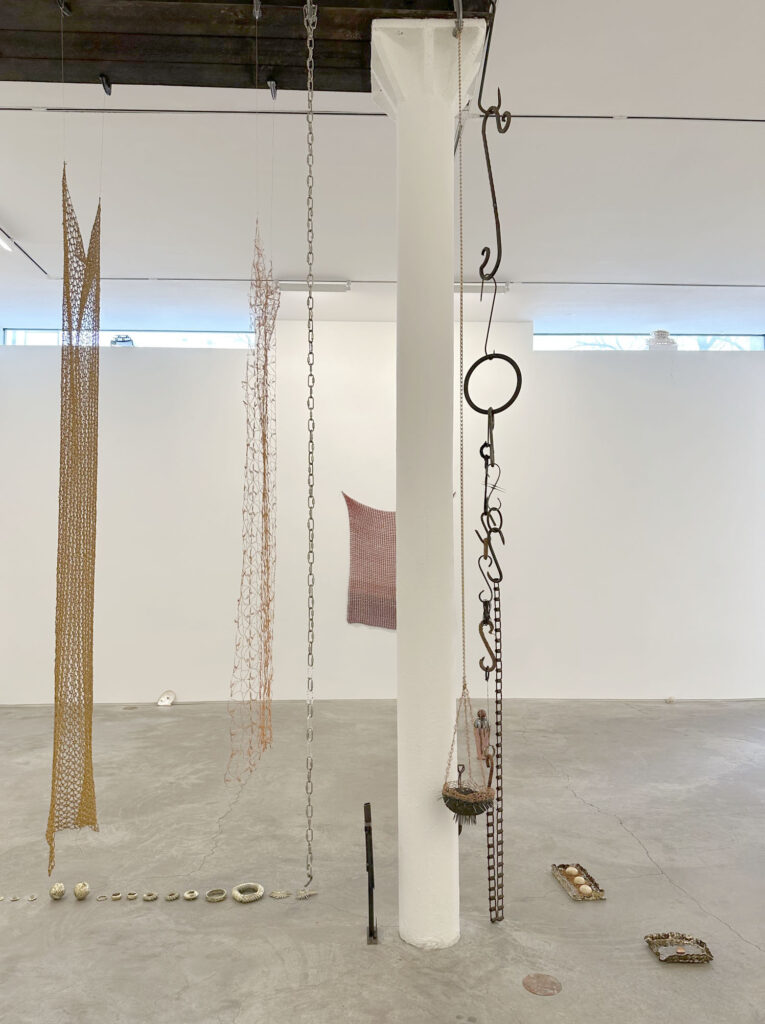
There’s only two days left to see ektor garcia: esfuerzo at James Fuentes. The enchanting sculptures inspire curiosity and encourage the viewer to imagine the story behind the work while also admiring their construction.

From Art Daily about the exhibition-

Each of ektor garcia’s exhibitions are more like a marker of a moment of pause in his work, rather than a presentation of something complete or discrete. In this way his works are evidence of a continual natural progression, as things build on top of each other, evolving. In relation to the specific time and place of this newest exhibition; it marks a cyclical continuation of the garcia’s presentations at the New Museum in 2017 and Sculpture Center in 2019—both of which moments in the artist’s life when he was traveling a lot, largely moving between Mexico, being on the road, and New York, specifically. This is the case once again, today:

For this show garcia traveled from his studio in Mexico City, suitcases filled with materials, to occupy the basement space below the gallery at 55 Delancey St in the lead up to the exhibition’s opening to the public. He has also retrieved objects previously exhibited or in storage—for example a 15-ft copper link piece recently exhibited at the Henry Art Museum has been broken into smaller pieces, added to and reconfigured into a new work(s). The exhibition title, esfuerzo translates to effort; as in a big push, like a birth, which feels apt for what the artist does. Pieces come together little by little over a long period of time; and the work comprises many small parts that each reflect his esfuerzo in making them. Another translation for esfuerzo could be output; and, shortened, fuerza means strength. Via his artistic practice, garcia is the conduit or vessel through which that life-force runs, resulting in an output that is this body of work. garcia is constantly making, hands always moving; this is simply part of how he lives his life. The work therefore isn’t made toward constructing a larger conceptual conceit; instead, its making is its meaning, the working is the work. Its presence in the space is evidence of all this; making room for it to be approached and even interceded, we inherently take part in the work’s life cycle, even potentially changing its course by entering this domain.

This sense of force, therefore, isn’t tied to garcia’s hand only, but relates externally as well. One piece in the show, cochinilla (2022), is woven from wool dyed red from the shell of the cochineal insect. Last year it was installed on the exterior of the Museum of Contemporary Art in Monterrey, Mexico, and upon taking it down garcia’s realized it had become sun bleached unexpectedly. With other pieces he more deliberately pushes, forcing change, for example by using a blowtorch against copper to catalyze an oil-spill patina. Over time, crochet has been one constant; a crocheted piece needs time, and then it meets time. In his words: “The materials are vibrating back and forth, taking turns. That is how they evolve.” And so although the works reference the past they do not prioritize it; likewise the future. Rather, in the style of the ouroboros, they are cyclical, perpetual, and most generous about the present.

Artist Cy Gavin wrote this piece to accompany the exhibition, which is worth a read as well.


Apr 192023
 

“…from dawn to dusk, (January)”, 2022

“…from dawn to dusk, (May)”, 2022

“…from dawn to dusk, (December)”, 2022

“white blind (bright red) (02.13)”, 2002

“white blind/bright red (02.6)”, 2002

“Untitled (98.5)”, 1998

From “nowhere near” Untitled (NW 18), 1999

“… and to draw a bright white line with light (Untitled 11.10)”, 2011

Uta Barth’s two part exhibition at Tanya Bonakdar Gallery is a fascinating look at the artist’s work.  It includes the New York debut of her most recent piece, …from dawn to dusk, a nearly 360-degree installation of images commissioned by the J. Paul Getty Trust.

From the press release-

Barth’s expansive 2022 series … from dawn to dusk focuses on the intersection of Southern California light with the architecture of the Getty Center. It traces the changing light at one location of the Richard Meier built campus, for the period of one year. The location was photographed every five minutes, from dawn to dusk, on two days each month, for the entirety of the year. Made with a GigaPan, over 64,000 images were captured and a Timelapse video sequence now shows the progression of this movement of light. As the view repeats from panel to panel, there are subtle changes in light as well as more dramatic blurring and color shifts, which invoke inverted optical afterimages and other visual phenomena that occur when staring at a fixed point for a prolonged period of time. Presented as twelve consecutive single views, the video is embedded among the still images of the installation, and it comes as a surprise to discover what one first assumes to be a still photograph to actually be the moving summation of the show.

In the upstairs galleries, Elizabeth Smith’s selection of work reveals the foundations of the artist’s renowned and influential practice, as well as the trajectory that led to the explorations found in …from dawn to dusk. Elizabeth Smith shared her thoughts on Barth’s practice as she approached this exhibition:

It’s been almost thirty years since I worked with Uta Barth to present her first solo museum show at MOCA in 1995. In relation to her newest project, the gallery’s invitation to select some key examples from both her early series and subsequent ones has offered a welcome opportunity to reengage with and consider the full trajectory of her work. From her earliest to her most recent photographs, Barth’s practice has centered on a nuanced investigation of visual experience, free from narrative. Light, color, the passage of time, and the shifting nature of the process of vision through bodily experience are the ongoing subjects of her resonant images, probed in various ways over decades.

Throughout her career, Uta Barth has made visual perception the subject of her work. Regarded for her “empty” images that reference painterly abstraction, the artist carefully renders blurred backgrounds, cropped frames and the natural qualities of light to capture incidental and fleeting moments, those which exist almost exclusively within our periphery. With a deliberate disregard for both the conventional photographic subject and the point-and-shoot role of the camera, Barth’s work delicately deconstructs conventions of visual representation by calling our attention to the limits of the human eye.

As Leah Ollman writes in her recent Los Angeles Times profile of the artist,

From her earliest years as an artist, Barth’s attention has been drawn to the eye’s behavior: what attracts it, what makes it stay, what causes it to double back, what generates after-images and optical fatigue. Learning to photograph was, for her, a way of learning to see.

This exhibition closes 4/22/23.


Apr 142023
 

Thornton Dial, “Memory of the Ladies That Gave Us the Good Life”, 2004, Tin, carpet, wood, glove, washbasin, scrub brush, yard ornament, motor-oil bottle, paint brush, clothing, wire, enamel, and spray paint on wood

David Hammons, “Untitled”, 1976-77, Wire, rope, pipe cleaner, hair, rubber ball, mesh, aluminum, sand paper, thumb tack

Robert Rauschenberg, “Matt’s Defense (Scenarios)”, 2005, Pigment transfer on polylaminate

Dial / Hammons / Rauschenberg at David Lewis presents several works by the three artists that, although different in many ways, work together well.

From the press release-

This is the first-ever exhibition to solely bring together these three great American artists, each of whose conceptual ingenuity is expressed by way of material transformation and possibility. In particular, Dial / Hammons / Rauschenberg seeks to articulate the intersection between the American Duchampian legacy, as expressed in the material invention and possibilities of postwar Neo-Dada, and African-American traditions of redemptive, alchemical, and visionary practices based in found and discarded objects.

The exhibition ranges over more than 50 years; the earliest work presented is in Rauschenberg’s iconic 1962 assemblage Cartoon, then includes an early Duchampian wire, rope, pipe cleaner, hair, ball, and tack construction by David Hammons (Untitled, 1976-77), and then focuses on the 90s and 2000s, featuring four magisterial assemblages from Thornton Dial’s ‘high,’ most modernist phase of work, as well as an example of each of Hammons Kool-Aid and Tarp series from 2006 and 2007 and additional later Rauschenberg works. The exhibition also features two important sculptures: Dial’s Top of the World (1998), and Rauschenberg’s extraordinary The Lurid Attack of the Monsters from the Postal News, August, 1875 (Kabal American Zephyr) (1981). The largest work in the exhibition, Dial’s astonishing Master of Space (2004), conjures and critiques the iconography of American imperialism, military and corporate both (the eagle is made of neckties), while simultaneously calling upon and vengefully subverting the most classical of all modernist devices: the grid.

Every piece in the exhibition deploys, invents, and reflects upon the logic of assemblage: the Duchampian act of appropriation, transmuted in postwar America, into the language of assemblage, the Rauschenbergian combine. Dial / Hammons / Rauschenberg highlights these acts of American alchemy, and asks us to imagine their power and possibilities in ways which revise, expand, and complicate the history of modern and contemporary art, and weave a broader tapestry.

This exhibition closes 4/15/23.

Apr 132023
 

Closing on 4/15/23 is Sean Landers’ exhibition Adrift at Petzel Gallery in NYC.

From the gallery’s press release-

Featuring over twenty new oil paintings by Landers, this largely allegorical exhibition illustrates the complexity of artistic mortality using four protagonists: dogs—depicted in single portraits and alone in rowboats unmoored at sea; lighthouses; the ocean; and sperm whale skeletons at rest on ocean shorelines. Each subject represents the dichotomy of freedom and trepidation involved in the act of releasing art to an unknown fate. “…a bit of the artist remains in their paintings, so in that way, a painting is like an artist adrift in time and space,” says Landers in an interview with writer Johanna Fateman for the exhibition catalogue.

A cornerstone of inspiration for Adrift is Landers’ long-term interest in the work of American painter Winslow Homer (b. 1836—d. 1920) and in particular Homer’s ocean paintings. The vast and unpredictable ocean marks time and space, a preeminent symbol used throughout the years in Landers’ paintings and art history. Homer’s style is emulated by Landers in paintings throughout the exhibition including Northeaster, Summer Squall, and Yellow Dog.

Each of these subjects can be seen as a character existing within the vicissitudes of artistic practice. The dogs, at attention and alone in their boats, symbolize the vulnerability of art against an unknown future. These works also parallel Joachim Patinir’s (b. 1483—d. 1524) painting Charon crossing the Styx in which a human soul is being transported by boat into afterlife. Landers sees this as symbolic for what a painting is—a vessel for the artist into afterlife.

Two lighthouses, Portland Lighthouse, US and Sunderland Lighthouse, UK, are both welcoming and warning beacons, allegories for institutions that signal to the public what art is worth preserving. This ruling system will determine the dogs’ fate as they head into the unknown of art history. The bare whale bones, epic in their repose on the sandy shore echo the finality in the lifespan of an artwork. Such relics are epitaphs and beginnings, a sentiment imparted in We Hover, where Landers’ text painted over a fierce ocean reads: And then we hover in between existence and nonexistence in our paintings and that is both terrifying and reassuring. For Landers, Adrift is the everlasting reminder that the artist, like Patinir’s soul, is forever navigating the here and hereafter.

For added perspective on the symbolism, this is from Landers’ Instagram account

“The ocean represents time and space. The dog adrift in the boat is like an artwork adrift in time and space after the artist passes. The lighthouse is the institution that decides which art civilization will preserve. The whale skeleton is the fear of a life’s work gone unloved and allowed to die.”

Apr 122023


How does one truly reckon with history?  The imagery in Yael Bartana’s three channel film Malka Germania at Petzel Gallery draws you in and presents you with this question for the entire 43 minutes. Drifting along with the film’s protagonist, scenes of beauty and destruction unfold- but seeing the eagle rise from the water as Hitler and Albert Speer’s proposed Volkshalle continues to emerge, you feel as stunned as those on the beach.

From the press release-

Malka Germania investigates the longing for collective redemption for German and Jewish histories as a response to an age of anxiety.

Malka Germania is Hebrew for “Queen Germany.” The name references a female designation for the Messiah: Malka Meshichah, or the “Anointed Queen.” In Bartana’s film, a new androgynous Messiah, Malka Germania, joins forces with the Israeli Army to liberate Berlin from its collective traumas, memories, and inherited pasts.

The 3-channel video portrays Malka as she walks through Berlin’s haunted landscape, revisiting historical events that seamlessly blend with contemporary scenes. The film weaves subconscious elements through surreal hallucinations, the biblical and mystical to leave questions of redemption, national myths and collective identities for the viewer to contemplate.

This exhibition closes 4/15/23.


Apr 122023
 

“With a Full Heart”

“Unforbidden Pleasures”

“Unforbidden Pleasures” (detail)

“Wild Nights”

Currently at the Creative Pinellas gallery is Yolanda Sánchez’s Out of Eden, a collection of her paintings and textile work. The gallery is filled bright pleasing colors and this is the perfect exhibition to celebrate the spring season.

On the Creative Pinellas website, Sánchez discusses her work in a detailed essay. Below is a section of that piece.

Whether in painting or textiles, my working instruments are rhythm and color. I am interested in the joyful, playful or even spiritual properties of light. I am reflecting the light and color of where I live, of my immediate environment.

This artistic practice is improvisational and process-oriented, abstract. The relationship of one color to another creates a rhythm and tempo and establishes the composition. Each color suggests the next color, almost like the “call and response” form found in many musical traditions. There is a continuous orchestration, as the colors converse with one another, suggesting a mood or vibe.

I am often not sure where it is going or going to go. It is a surprise at every turn. I shape my perception as I work.

My textile work is informed by the Korean art form known as Bojagi. Humble in its origins, nameless women made these traditional textiles as often extravagant visual pieces using mundane, leftover fabric from wrapping, storing and transporting goods. Over time, the nobility introduced finer, more delicate cloth.

In its traditional form, design characteristics include stitching and seams to create linear elements, especially with translucent fabrics. These features differentiate and distinguish Bojagi from patchwork textiles found in other cultural traditions. Nevertheless, Bojagi shares what feminist art historians identify as centuries-old histories of turning scraps of fabric into beautiful objects and ultimately shifting perspectives from private to public.

I pay homage to these unknown women, authenticating their domestic work – and I affirm their values of inclusion, pleasure, love, the familial, the decorative, the colorful and joyful, the spiritual and the everyday.

My Bojagi-inspired textile work – painting with thread and fabric – honors the Korean tradition. Still, while relying on the conventions and basic structure, these pieces extend and interpret the Bojagi into a more contemporary form. I offer a new direction by varying medium and size and utilizing color compositions and stitching techniques less anchored to established methods.

Material, color, texture and transparency are crucial elements in this work, as is the geometry inherent in the design. While geometry, in this case, emerges from a particular culture, the form does not demand a specific culture-dependent response. Its only function is beauty. It is about the sensual delight derived from looking – the viewer can ascribe or chose meaning, if at all.

As an order, rhythm and pattern are generated within the geometry, creating beauty through harmony and stability, color dominates as a suggestive poetic force, concurrently evoking a connection to my immediate tropical environment. It sets as my intention arousing a sense of place, a feeling, and the atmosphere of an abstract garden, or even a walk through a field of flowers.

It is the color but also the sensuousness of nature that I endeavor to suggest in both my paintings and textiles.

This exhibition closes 4/16/23.