Oct 242019


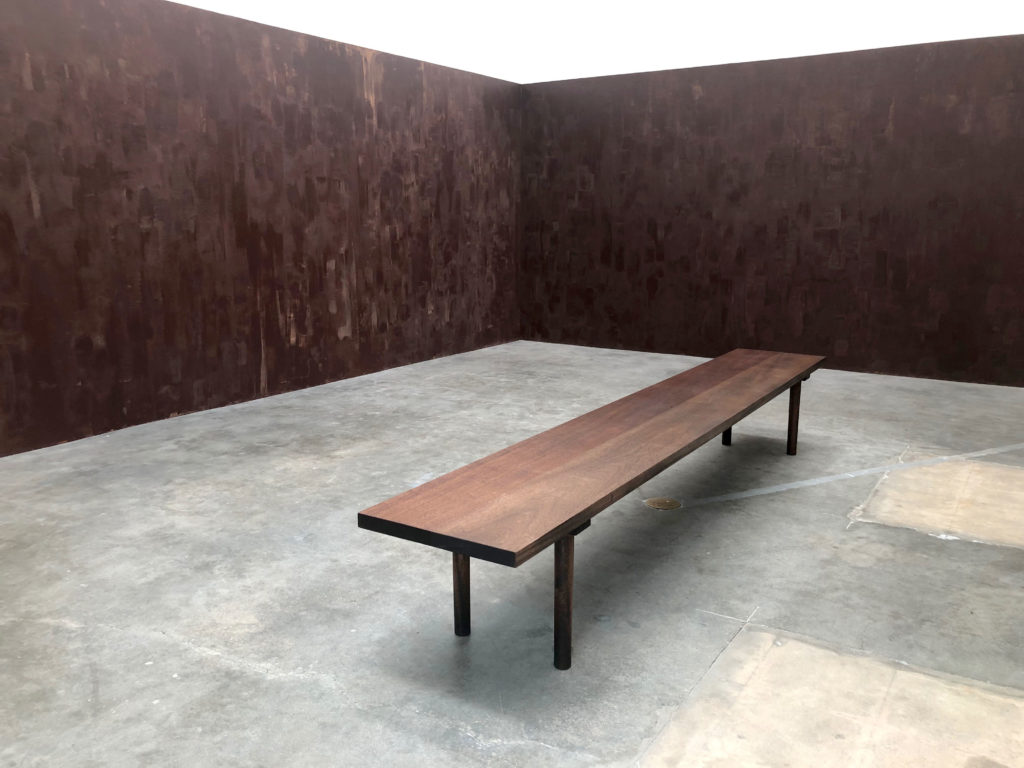
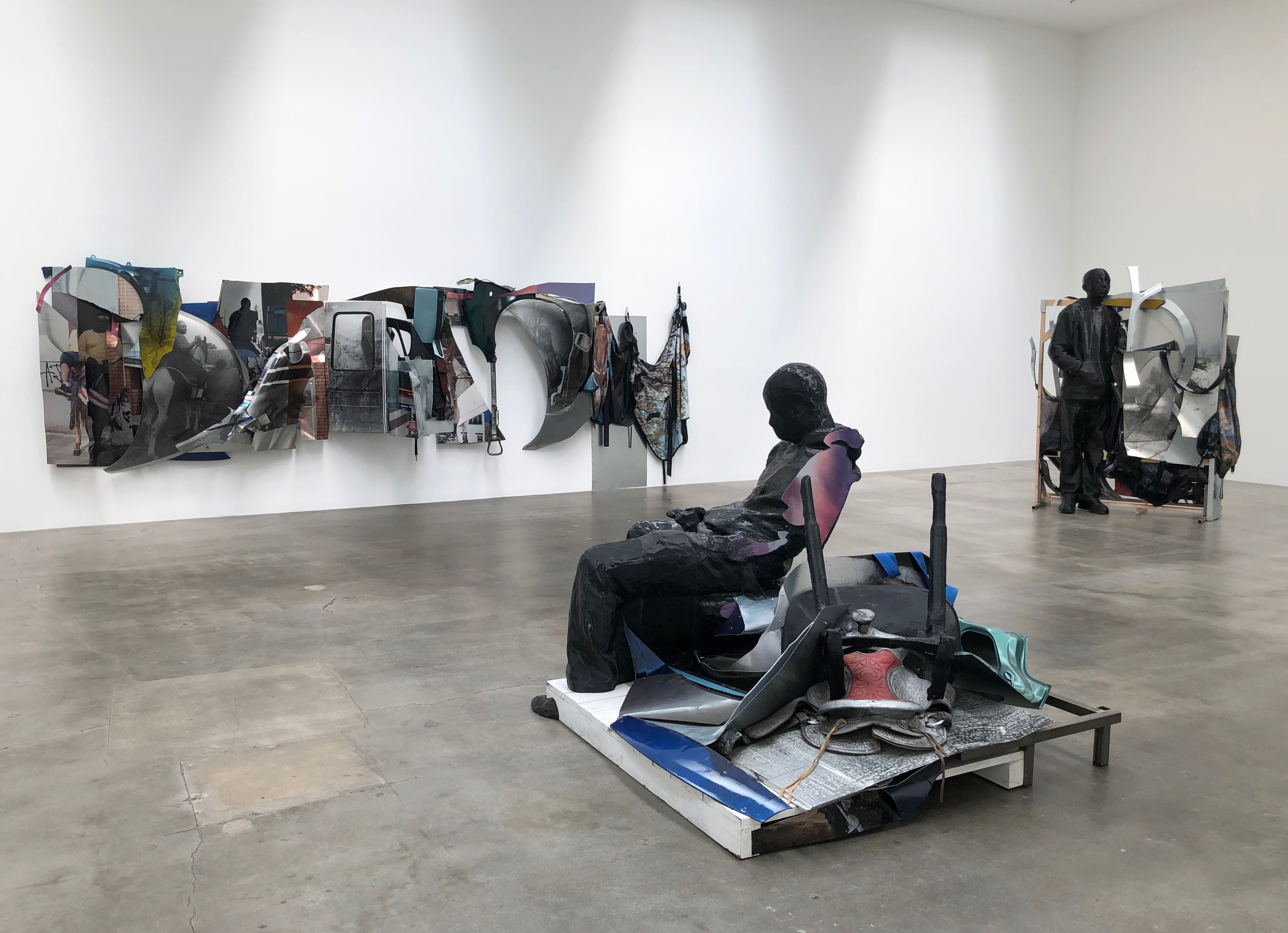
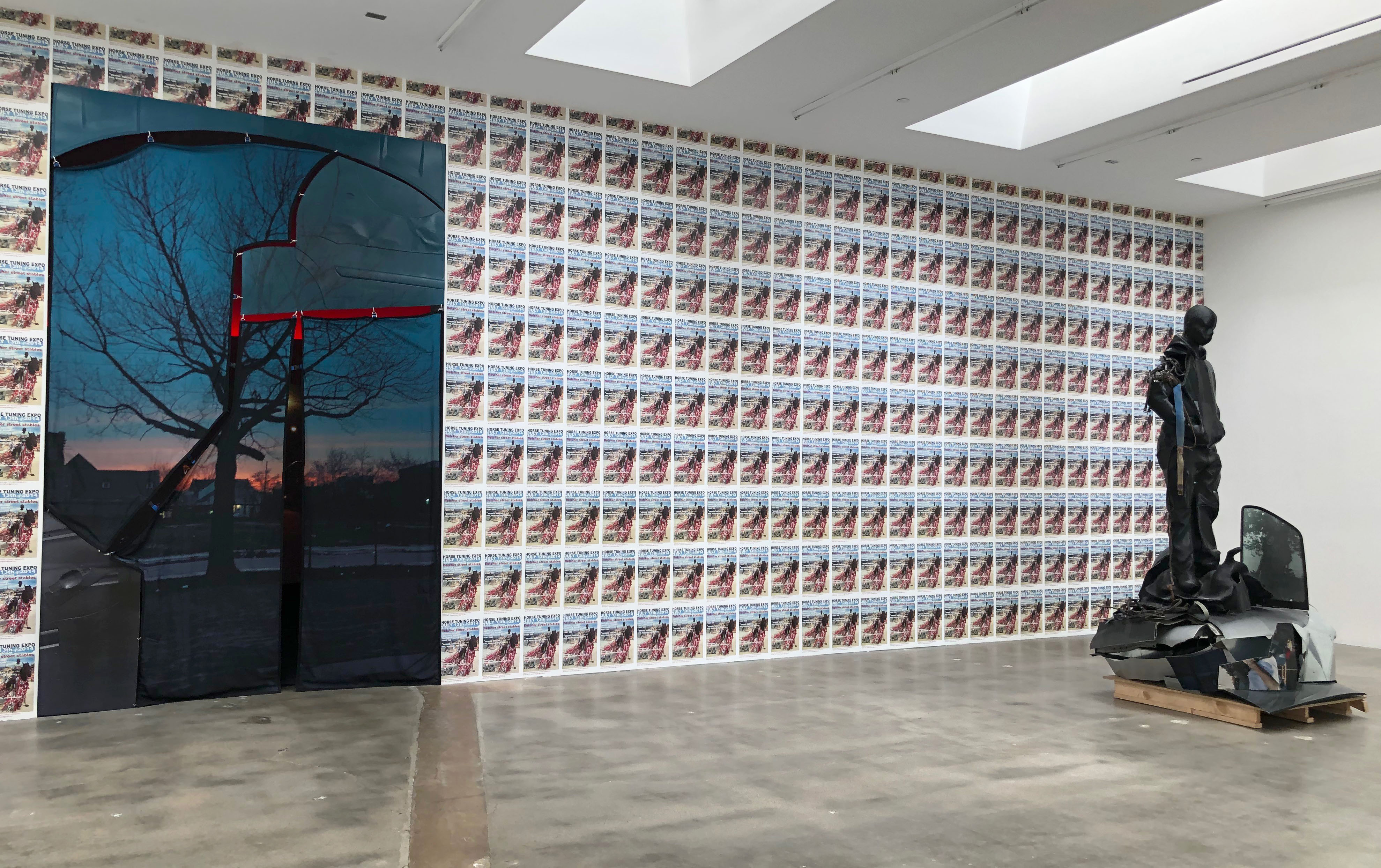
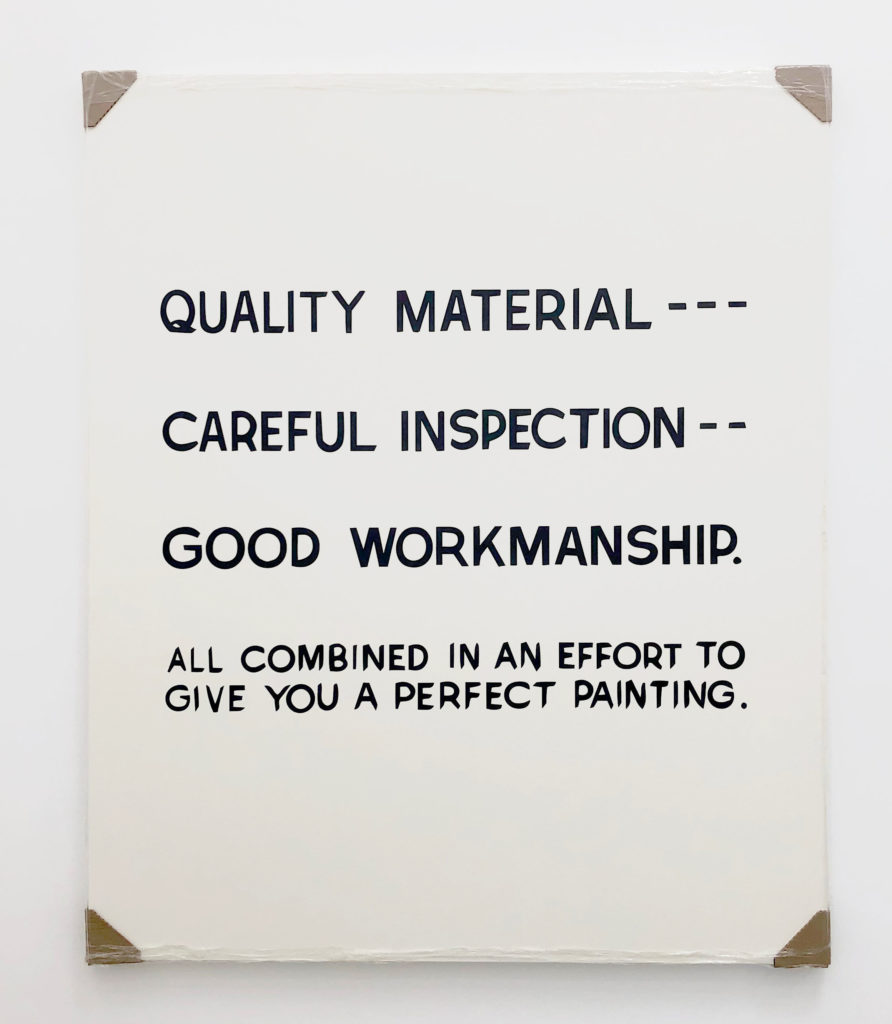
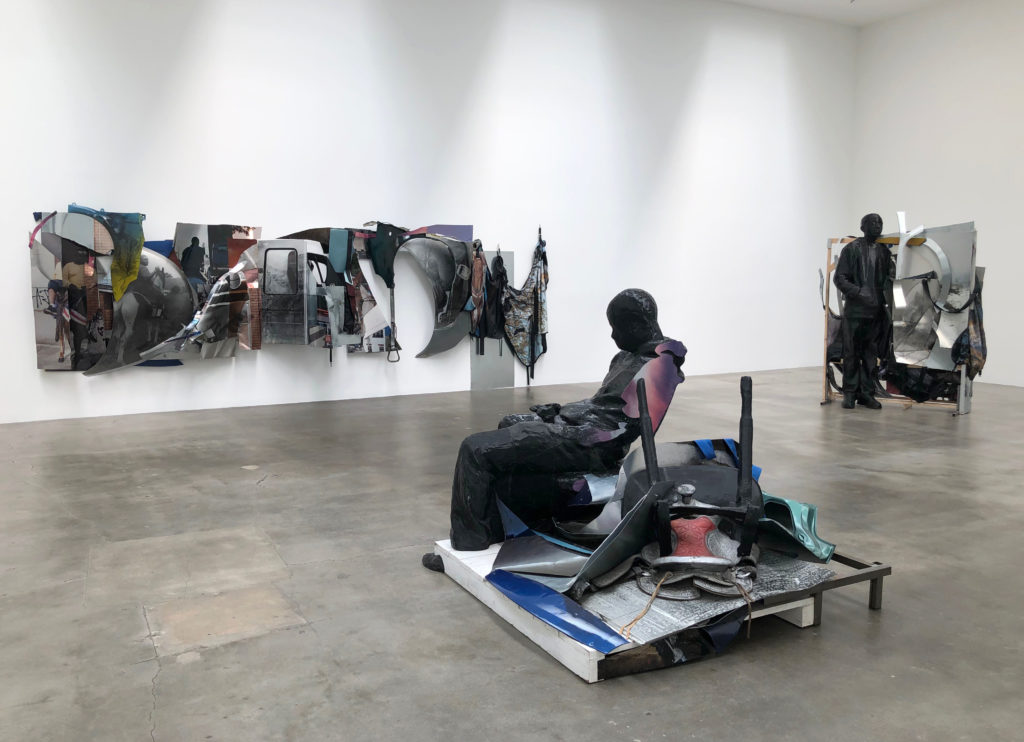
Tammi Campbell’s exhibition Boring Art at Anat Ebgi in Culver City takes on the male dominated art world canon in a fun way. She’s recreated iconic works and then covered them with bubble wrap, packaging tape, and cardboard corners. But yet those materials are an illusion. They have been made with acrylic painting medium.

From the press release-

The gesture of covering these works emphasizes the preciousness of the goods they contain, while simultaneously highlighting the frequently invisible network of art world laborers, art handlers, shippers, registrars, studio assistants, etc. who support and care for them as they circulate. The coverings also obscure the originals and draw our attention to their fixed state of transition.

…Campbell is concerned with memorializing art history, while also making a break from it. Her work literally envelopes, secures, and mummifies historical paintings; it asks viewers to ponder what is valued and allows us to imagine making room for something new. Full of contradictions, Campbell’s work pays homage to the past, while simultaneously taking it hostage.

The title, Boring Art, is a reference to John Baldessari’s I Will Not Make Anymore Boring Art, but this exhibition is anything but dull. See it before it closes on 10/26/19.


Oct 222019
 

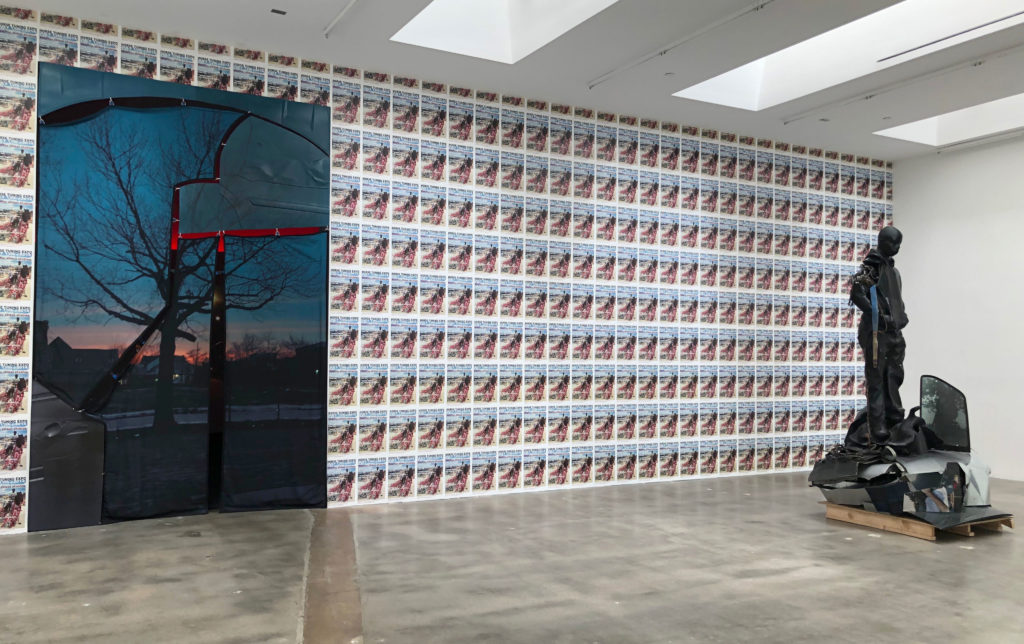
Alex Prager’s exhibition at Lehmann Maupin’s 22nd Street location combines sculpture and still photography with her new film Play The Wind. The photographs in the show recreate scenes from the film, but are not from the film itself.  There are also photos of scenes that could have been from the film, but are not. These allow the viewer to consider alternate narratives to the story they have just seen. The photos also offer an opportunity to see many of the details from the film seen only briefly while watching.

Running for eight minutes, Play the Wind is a journey into a bizarre version of Los Angeles. It’s seen mainly through the window of a car, the way many Los Angeles residents often see it. Places seem familiar, as do many of the large cast of extras who inhabit this world, even if you are not personally familiar with the city.

The cab driver, played by Dimitri Chamblas (dean of the Sharon Disney Lund School of Dance at CalArts), drives through situations that seem both surreal and possible at the same time, like many things that happen in LA. At one point the cab driver, drives past an accident on the highway and sees a car vertical between two other cars with children in a school bus leaning out of the windows to observe. He passes alongside and moves on. It’s just another moment in a chaotic Los Angeles day. When he locks eyes with a woman played by actress Riley Keough, the film changes to her perspective and it all becomes even more dreamlike.

From the press release

…She anchors her characteristically elaborate fictional scenes within the real Los Angeles, shooting for the first time in many years primarily on location rather than in the studio—a decision that harkens back to when Prager began her career over a decade ago. Though the images contain large constructed set pieces and are populated with carefully cast extras (numbering up to 300), the presence of the Los Angeles streets infuses an element of urban lifeblood that is palpable in the work. Prager’s perception of Los Angeles is one of the artifice and drama befitting Hollywood, with real world chaos that overflows into sci-fi dystopia and post-apocalyptic dread. She toys with these visions of the city disseminated on film, TV, and within the popular imagination, which inform our characterization of a place as much as our own memories.

Technically important to the making of this film was Prager’s collaboration with a team to produce set designs and props that would add a layer of artifice and duplicity to her real-world locations. The interference of these traditional illusionary effects upon the actual Los Angeles streets and locations Prager shot on creates an unnerving sensation, hinting at the reality that might exist just outside of our perception. All of these elements are recast in the series of photographs, which appear in different configurations or on various scales that further destabilize any linear narrative. Drawing on the concept of a distorted memory, Prager has found ways to incorporate objects seen in the photographs and film into the gallery as sculpture, with the intent to further dislodge our understanding of place and time and bring us deeper into her highly constructed world.

Connoisseurs of Prager’s work will likely spot the references to her past series, such as the noir themed Compulsion (2012), or the archetypical ingénue of The Big Valley (2008). This self-referencing becomes yet another layering device, mixing Prager’s career-spanning themes and the greater art historical genres from which they are drawn to create work both entirely new, yet seemingly familiar. Prager’s incorporation of her past into her present work serves as a reminder that while the past may not be returned to, it does remain with us, appearing in surprising, sometimes unsettling ways.

This exhibition closes 10/26/19.

Oct 182019
 

“Crescent (Timekeeper)”

“Crescent (Timekeeper)”

“Crescent (Timekeeper)” Detail

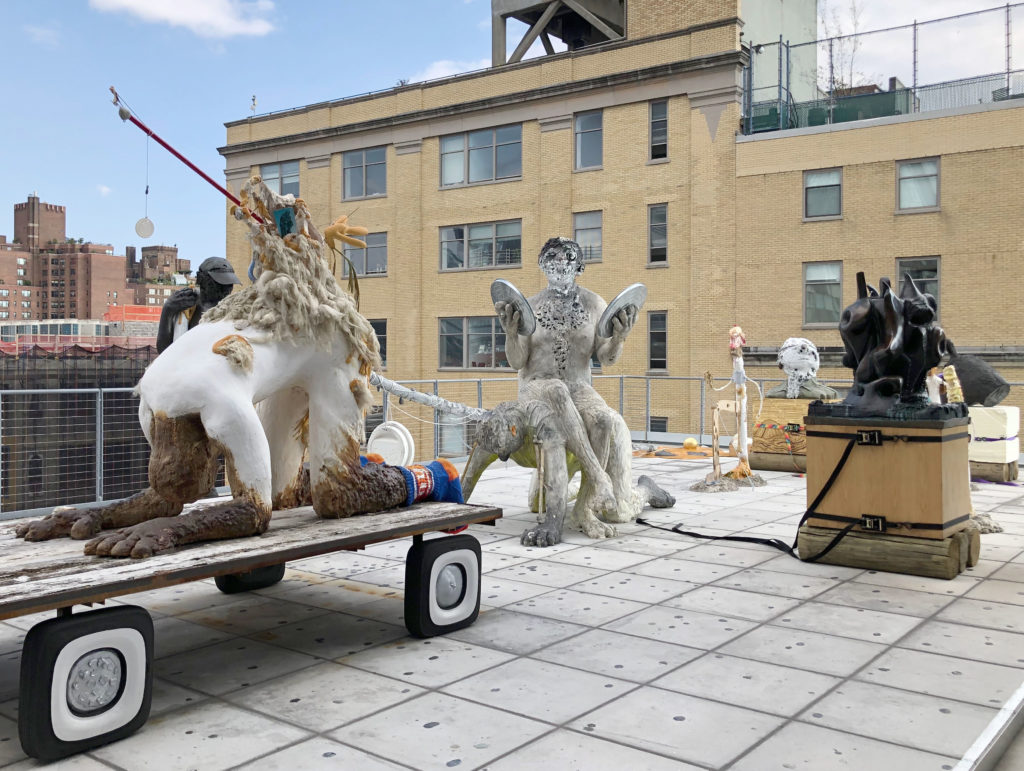
Sarah Sze’s exhibition at Tanya Bonakdar’s gallery in New York is stunning. There is so much to look at, to appreciate. There are so many pieces to all of the work, and yet it never feels overwhelming. It makes you want to keep looking.

It’s also immersive. The windows on the outside of the gallery are covered in her work, as is the staircase alcove. The video projections in the main room travel all around the room, surrounding you with visuals and sound. Upstairs the floors of the gallery have paint splattered on them, accompanying the works on the walls.

Detail of the above work

In a room on the first floor is a “studio space” where you can gain insight into Sze’s process and how she makes these elaborate works.

From the press release-

Sze’s latest body of work frays “the seam between the real and the image” (Smith). Through complex constellations of objects and a proliferation of images, Sze expands upon the never- ending stream of visual narratives that we negotiate daily, from magazines and newspapers, television and iPhones, to cyberspace and outer space. The works evoke the generative and recursive process of image-making in a world where consumption and production are more interdependent, where the beginning of one idea is the ending of another—and where sculpture gives rise to images, and images to sculpture.

In this new exhibition, Sze expands her work by embedding her nuanced sculptural language into the material surfaces of painting and into the digital realm through the interplay of cloth, ink, wood, paper, metal, paint, found objects, light, sound and structural supports—collapsing distinctions between two, three and four dimensions. This body of work fundamentally alters our sense of time, place, and memory by transforming our experiences of the physical world around us. Both objects and images, Sze says, are “ultimately reminders of our own ephemerality”.

This exhibition closes 10/19/19.


Oct 102019
 

From the press release-

Klowden Mann is proud to present San-Diego-based artist Andrea Chung’s first solo exhibition with the gallery, … Only to meet nothing that wants you. The exhibition features large-scale cyanotype works depicting under-sea images of coral that have then been bleached with sugar crystals—a material woven throughout Chung’s practice for over a decade in reference to its relationship to colonialism in the Caribbean. The cyanotypes are placed in context with a brass chandelier that recalls designs from the 19th century; where crystals would hang, Chung has hung glass vials filled with sugar in various shades.

Chung’s practice often utilizes perishable and precious materials with strong underlying histories, forming relationships to pre-emancipation images of the Caribbean, touristic misrepresentations of people and place, the export or import of goods and materials, and the labor of the human body. Completing the quote by Nayyirah Waheed that Chung used as the title of her first solo museum exhibition at the Museum of Contemporary Art San Diego in 2017, “You broke the ocean in half to be here,” the title of the exhibition at Klowden Mann answers with the second half of the phrase, “…Only to meet nothing that wants you.”

In the cyanotype works, coral bleaching becomes a metaphor for colonialism, and the expanding of the philosophy and impact of imperialism on colonial populations and cultures. The addition of sugar crystals to the already highly sensitive cyanotypes underlines Chung’s interest in creating work that defies the notion of artworks as static objects that are meant to remain unchanging and unyielding in the face of shifting environments and time; in a way that also reflects the constant uncontrolled and irresponsible effects of human actions on the environment, and on vulnerable populations. The works are intended to shift and change over the course of the exhibition, as the sugar embeds further in the cyanotype, falls, and expands. The works are linked to the environment in which they are placed in a way that Chung cannot predict and control—and along with the chandelier, ask the audience to consider who pays for the superficial opulence and beauty to which so many have become accustomed.

The work in this exhibition is really stunning, and the fact that it is work that is changing with time, makes seeing it feel even more special. Like so much of the beauty in the world, and especially in nature, you appreciate it, while wondering how long it will still be around to be seen.

This exhibition closes 10/12/19.

Oct 032019
 

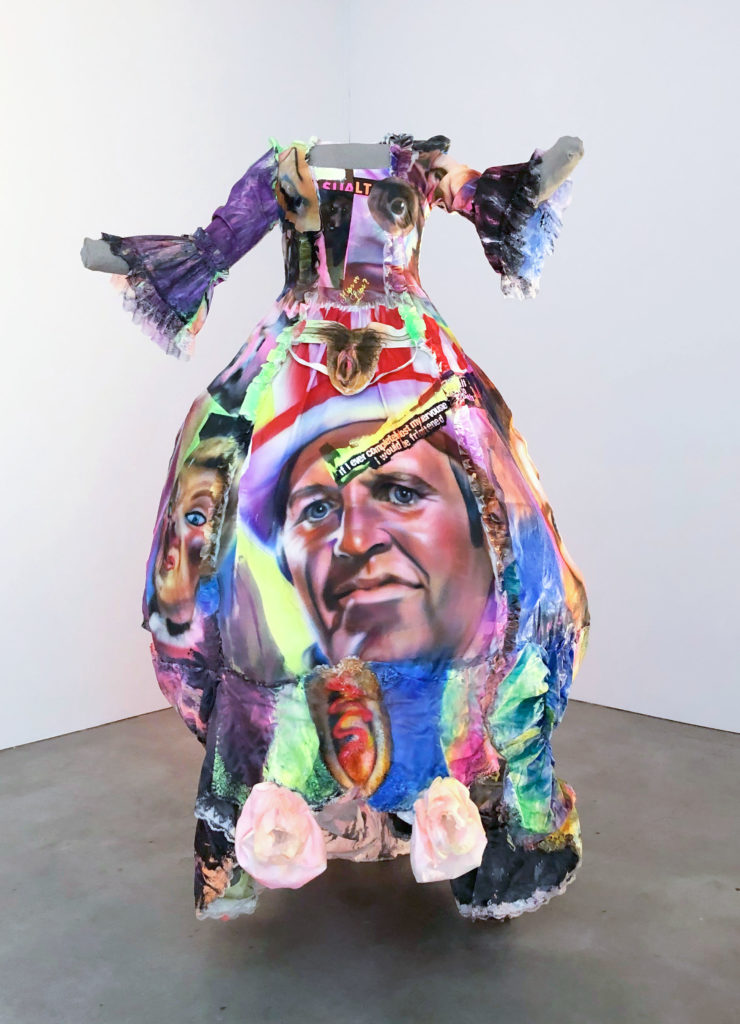
Jim Krewson’s “tribute to a vanishing subculture”, A Requiem for Paul Lynde, currently in the Viewing Room in the back of Marlborough Gallery’s downtown location, “questions the loss and amnesia of marginal identity in a new age of equality, instant access, Instagram influencers and celebrity, from homosexuality to homogenization in 20 short years.”

The airbrushed wedding dress spins with images that include Lynde himself, as well as Lady Elaine Fairchild from Mister Rogers’ Neighborhood, and the Madame puppet, a Wayland Flowers creation. Flowers’ puppet had her own sitcom in 1982 and also took over Paul Lynde’s center square on Hollywood Squares. Sadly Flowers, an openly gay entertainer, passed away in 1988 at the age of 48 from AIDS related Kaposi’s sarcoma.

If you love of a certain time period of pop culture and Paul Lynde than it will be hard not to embrace this project. But it’s also interesting as a meditation on the state of gay pop culture in the past, the place it is in today, and the question of where it may go in the future now that it is has such a strong, but less subversive place, within mainstream media.

In the main viewing space of Marlborough Gallery is Joe Zucker’s multi-panel 100-Foot-Long-Piece created from 1968 to 1969.

From the press release

This masterwork, exhibited here with a large body of related archival material, comprises a blueprint for Zucker’s long and diverse practice. It plants a flag for the artist’s ongoing inventiveness, irony, and eclecticism.
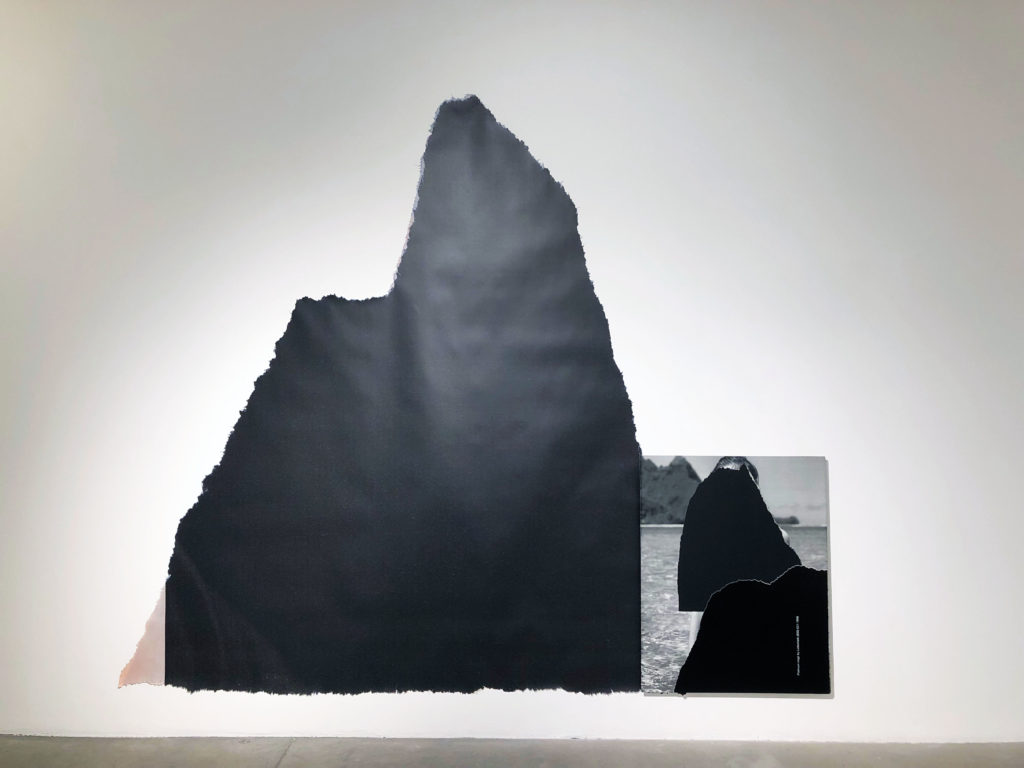
With the creation of this work, Zucker presents the viewer with a puzzle-like, encyclopedic visual vocabulary, anticipating subsequent pictorial and conceptual approaches such as New Image, Neo-Expressionism, Appropriation, Neo Geo, as well as more recent process- based abstraction, with a self-referential, wry regard for the embedded, associative meaning of his imagery and materials.

100-Foot-Long Piece is a linear aggregate in which gestural abstraction rubs elbows with hard edged grids, silk-screened passages, sculptural reliefs, and a host of other styles and forms. One is mindful of both physical and critical tropes of progressive art history from the physicality of the frieze to a qualitative timeline tracing the contributions of Modernism.

Both shows close 10/5/19.

Sep 202019
 

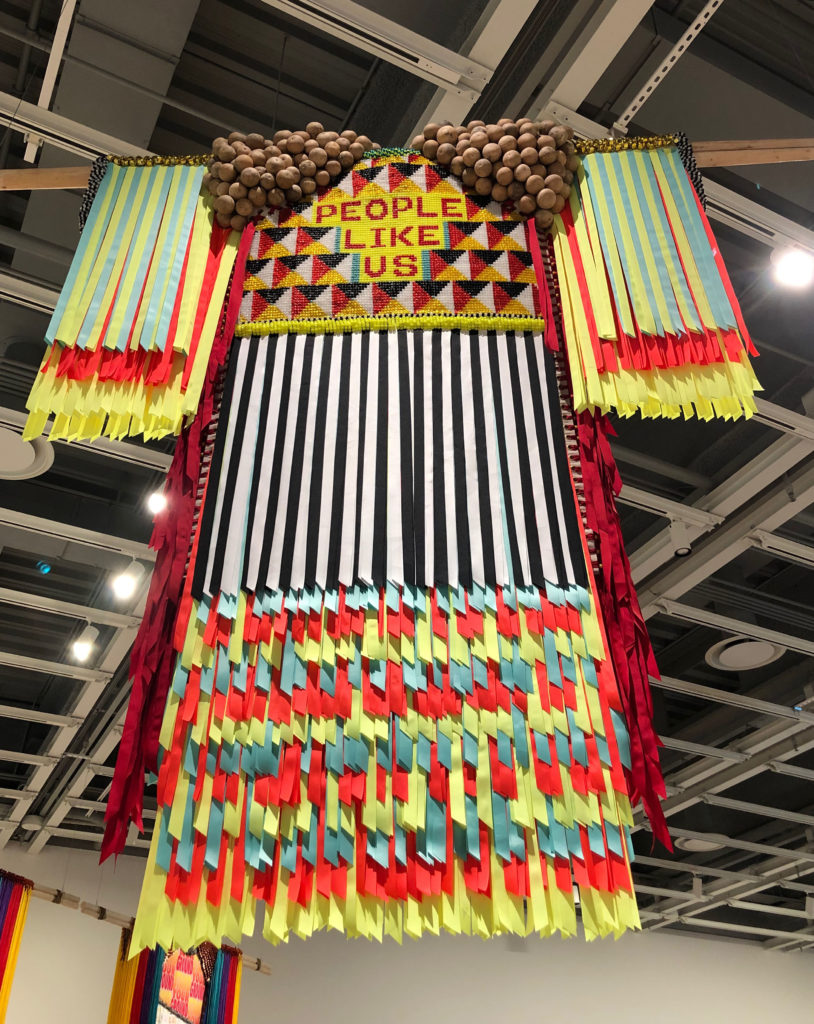
Jeffrey Gibson, “PEOPLE LIKE US”, 2019

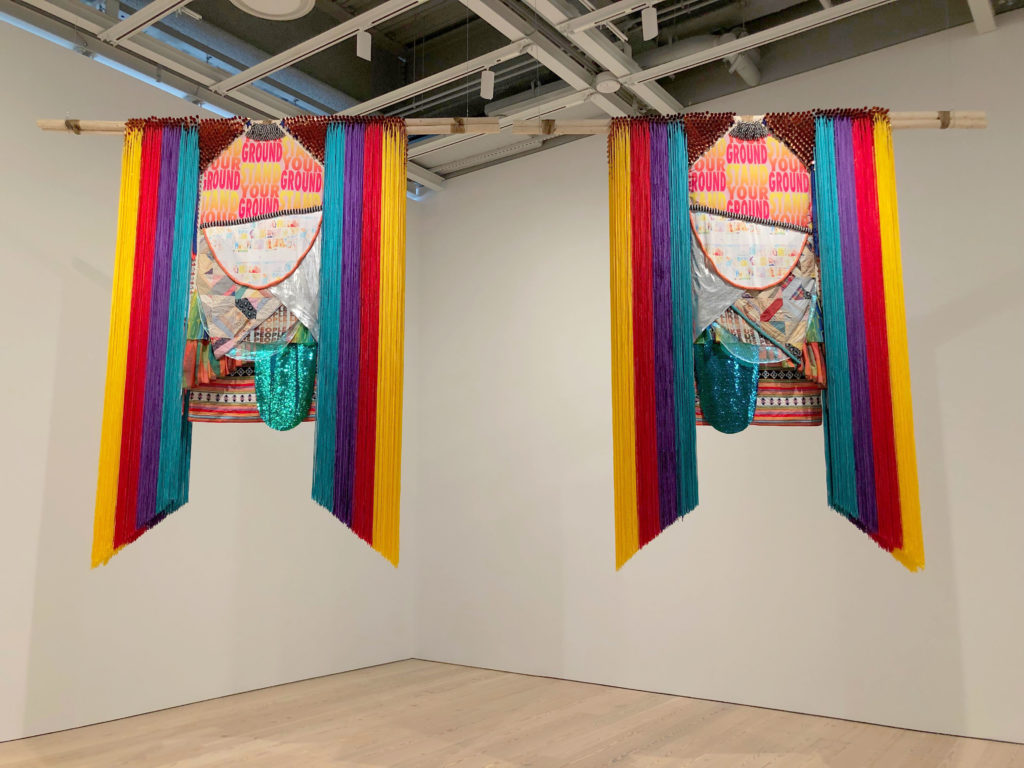
Jeffrey Gibson

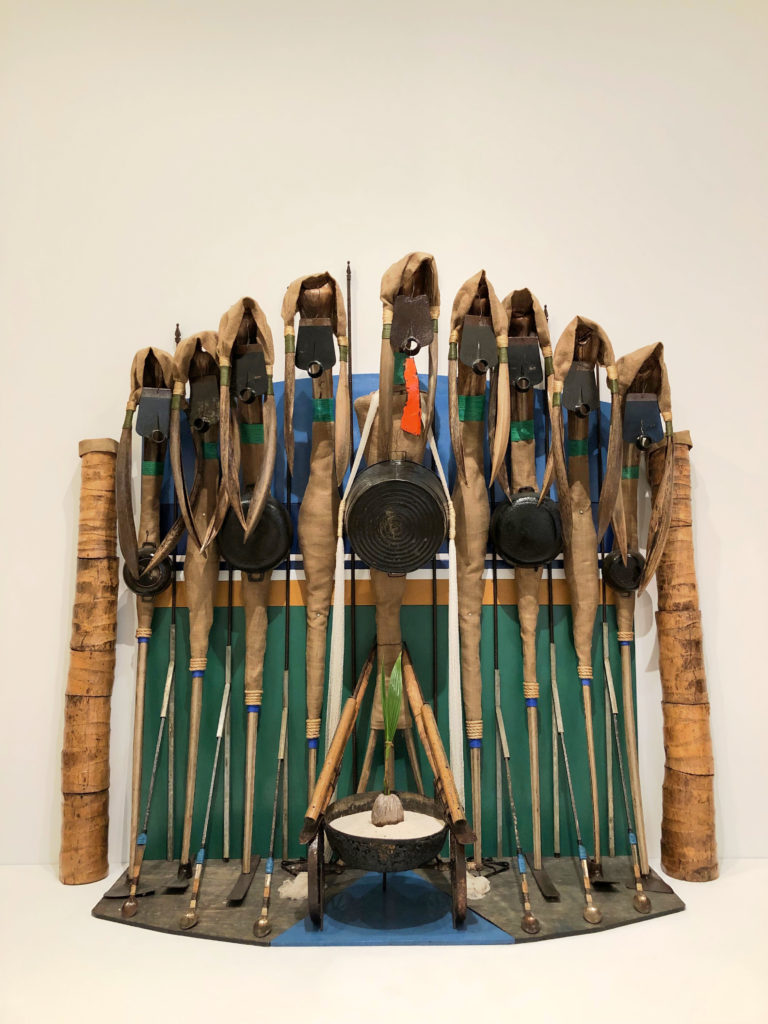
2019’s Whitney Biennial presents an interesting selection of work, by a mostly young and diverse group of artists. The works included in the show are consistently good, and often intriguing, but this time around nothing is particularly outrageous or polarizing- a contrast to many of the previous iterations.

Not that there wasn’t any drama surrounding the show. This time around, however, the controversy was not with an artwork but with former Whitney executive board member Warren B. Kanders and his ownership of Safariland, a tear-gas canister maker. He has since resigned after protests and threats of withdrawal from several of the artists included in the show. Artist collective Forensic Architecture’s film, Triple Chaser, on view in the exhibition, investigates Safariland and Kanders.

Below are a few highlights from the exhibition.

Janiva Ellis ” Uh Oh, Look Who Got Wet”, 2019

Daniel Lind-Ramos, “Centinelas (Sentinels)”, 2013

Section of Nicole Eisenman’s, “Procession”, 2019

This exhibition closes 9/22/19.


Aug 092019


When trying to talk about the David Hammon’s exhibition at Hauser and Wirth Los Angeles, his first in Los Angeles in 45 years, it’s hard to know where to start. There are no titles or descriptions of any of the works in the show, although there is writing on the walls in certain places. The press release, shown below, is a mass of lines and a dedication to jazz musician Ornette Coleman.

Before you enter either of the two massive galleries housing the exhibition you encounter a courtyard filled with tents, some with “this could be u and u” stenciled on them. Tents also line the corridor under Martin Creed’s neon piece, EVERYTHING IS GOING TO BE ALRIGHT, with a rack of fancy vintage coats nearby. Once predominantly in Skid Row, Los Angeles’ tent cities have been growing rapidly on street corners and under bridges and highways all over the city, but they often just blend into the background for people walking and driving past. What does a fake tent city in the courtyard of a high end gallery in a newly gentrified neighborhood mean? Is its fake version more affecting than the real one to gallery and restaurant patrons wandering by?

The work in the show feels at times random, clever, humorous, and confounding, but also impressive, thought provoking, and most importantly never dull. There are stacks of art history books sitting on scales. A water filled bowl that contains what once was a snowball Hammons had sold on the street at one point in his career, sits on a wooden shelf. A room with empty glass cubes on wood columns requires you to bend down to see the feet underneath. A book titled A History of Harlem is filled with empty black pages.

In the room pictured below is a three legged chair next to a wall of photos of women sitting in it. Nearby, one of Ornette Coleman’s suits is surrounded by glass.

Another room is filled with paint splattered and damaged fur coats, one facing an antique mirror that is covered. The symbolism feels a bit heavy handed, like the tents, but it works in that there are still several ways to interpret what Hammons might be saying.

Throughout the exhibition paintings are covered in various ways. One in paper, ripped with a bit of the painting visible. Others are partially hidden with tarps, plastic, different fabrics, even an antique rug (shown below). Once again, you can interpret the meaning of this in several ways. With the rug, for example, it’s turned so that only a bit of its design is visible in front of a painting that is not completely visible. These rugs are often associated with old money and sometimes are hung on walls themselves as artwork. Or is it just another assemblage, a visual combination to be taken at face value.

Ultimately the interpretation of all of the work is up to the viewer. There is something freeing in that, not being given answers. Sure, it’s nice to have an explanation of an artist’s intentions sometimes, but you often add your own ideas anyway. Art should make you think, question things, look at the world from a new perspective- this exhibition does all of that and more.

David Hammons at Hauser & Wirth Los Angeles closed 8/11/19.


Jul 122019
 

Juan Capistrán, Psychogeography of Rage (sending up searchlights in the form of flames) Western, 2019

Kim Fisher- Los Angeles Hedge, 2019

Kim Fisher, Woman Behind Rocks, 2019

Sabrina Gschwandtner, Cinema Sanctuary, 2019

Sabrina Gschwandtner, Cinema Sanctuary (close-up)

Enrique Castrejon, You, me, and all of us are in this together/Reach out to those that don’t know their status, 2019

Enrique Castrejon, You, me, and all of us are in this together/Reach out to those that don’t know their status, 2019 close-up

Every year The City of Los Angeles Department of Cultural Affairs (DCA) awards grants to the city’s best mid-career artists. The work created with these grants is then shown in the Los Angeles Municipal Art Gallery (LAMAG) in Barnsdall Park for the C.O.L.A.(City of Los Angeles) exhibitions.

COLA 2019 is made up of 11 artists working in various mediums. Two of the artists, Juan Capistrán and Kim Fisher were also shown together as part of Hammer Museum’s biennial exhibition, Made in L.A. 2014. For this show, Capistrán created large brick sculptures that he placed in sites in South Los Angeles that haven’t been rebuilt since the 1992 LA Riots. In his section of work in the gallery, he includes photos of these temporary site specific installations as well as some of the brick sculptures- two of which have balloons tied to them spelling GRATIS. The bricks can be seen as objects of destruction or building blocks, and the dual meanings work well in the context of the work.

Kim Fisher’s large collages capture another side of Los Angeles. From the hedge she used for the largest piece, to the ocean, swimming pools, and car culture, included in her others, the graphics and color come together in a way that feels very much like the traditional ideas associated with the city.  The different sections, created to look as if they were torn or cut from magazines, form collages that feel like scattered memories that have somehow arranged themselves cohesively.

Sabrina Gschwandtner took forgotten films made by female directors and stitched them together to form patterns drawn from the history of quilt-making. The use of a craft that is traditionally associated with women and tying it an artistic pursuit that women are only more recently being acknowledged for is an interesting juxtaposition. The resulting work is stunning graphically and reminiscent of Agnés Varda’s colorful house of film reels created for LACMA’s Agnés Varda in Californialand from 2014.

Enrique Castrejon created sculptures that stem from his work in an LGBTQ center in Los Angeles. His sculptures of fragmented bodies are surrounded by strips of paper with HIV infection rates. The humanity of the figures contrasts with the overwhelming strips of typed documentation that swarms all around them.

All of the work created for this exhibition is incredibly strong and these annual exhibitions are a great way to see some of the best work being created by Los Angeles artists today. If you can’t make it to the exhibition there is a video on the site that takes you on a walk through with one of the curators. Also make sure to catch Stephanie Taylor’s Municipal Art Song, which plays at the entrance to the exhibition. She created song lyrics based on text from LAMAG and DCA’s websites and catalogs, and used them to create sheet music using Schoolhouse Rock! as an inspiration. The result is really funny, especially if you read a lot of press releases.

This exhibition closes 7/14/19.


Jun 202019
 

Regen Projects is currently showing Elliot Hundley’s Clearing (pictured above) and Liz Larner’s As Below, So Above (shown below). Hundley’s exhibition includes five panel works as well as three benches with accompanying sculptures. The panel works are incredible, with dizzying amounts of detail and texture. Tiny images, pieces of fabric, tags, and even one flip flop, mix with paint and ink to form the final works. The best way to appreciate the work is by moving close to look at small sections at a time and then pulling back to see it as a whole.

In the video below, that was made for the exhibition at MOCA that Hundley recently curated, he talks a bit about his process. Especially interesting is when he says he tries to leave his creations “in an open ended form so that people who look at them can also imagine making them or interacting with them or destroying them or rearranging them”.

For Liz Larner’s exhibition she has created several new works that “demonstrate her ongoing examination into sculpture, painting, drawing, and ceramics. The environment – the personal and the entrenched – are set together in these artworks that reach for an understanding of vulnerability through what is and has been considered low and directed, made capital of, and endangered.”

Both of these exhibition will close on 6/22/19.

Jun 132019
 

It’s not often an art show comes along where you wish there were more people in the gallery, but going to see Urs Fischer: PLAY at Jeffrey Deitch in Los Angeles was one of them. When you first walk into the large space filled only with office chairs, you notice them moving but in ways you might not expect- if you expect office chairs to be moving on their own in the first place.

The chairs are controlled by artificial intelligence that determines and learns from each encounter. Even alone in the gallery, it was delightful to watch the chairs interact with each other and then myself as I walked around. They come close to you and each other. They spin and travel together or seem to interact one by one. When others entered the gallery they change their movement again, seemingly without any set pattern. At one point I watched one of the chairs move all the way to the desk by the entrance, a space that seemed like it would be out of bounds.

Urs Fischer is quoted in the press release saying- “despite the complexity of the parts, the exhibition as a whole is pretty simple. It’s about what you, the viewer, project onto it. It’s not about chairs, it’s about humans.” This is what makes the show so fascinating, it is almost impossible not to anthropomorphize the chairs and their interactions.

PLAY, conceived of by Urs Fischer with choreography by Madeline Hollander, runs through June 15th.