Jul 252024
 

Canton Museum of Art’s Spring/Summer Exhibitions include three artists who have created engaging new worlds for visitors to explore.

Ginny Ruffner’s sculptures hide colorful surprises in her exhibition Reforestation of the Imagination. Working with animator and media artist Grant Kirkpatrick, they have created digitally animated fictional plants that burst from the certain sections of the works when using their app on your phone (the museum will also loan you a tablet if you need one). Ruffner has also provided delightful descriptions for these creations, as well as her drawings.

From the museum-

Imagine an apocalyptic landscape. It appears barren, devastated, and hopeless. It is not.

In this traveling exhibition from the Renwick Gallery of the Smithsonian American Art Museum, internationally renowned artist Ginny Ruffner creates a seemingly bleak environment that suddenly evolves into a thriving floral oasis by combining traditional sculpture with augmented reality (AR) technology. In collaboration with animator and media artist Grant Kirkpatrick, Ruffner brings to life a colorful world where glass stumps suddenly sprout mythical flora that have adapted to their surrounding conditions in unexpected, beautiful and optimistic ways. By transforming the CMA lower galleries into a multidimensional experience, Ginny Ruffner: Reforestation of the Imagination calls into question the very notions of reality and fantasy, of concrete and abstract, and of desolation and hope.

Ginny Ruffner is among a vibrant group of artists bringing AR to museum installations. By using this technology as another art media, she transforms visitor experiences. The installation consists of landmasses featuring intricate handblown glass sculptures of tree stumps, with painted tree rings that function as discrete QR codes. These islands surround a landmass that supports a large fiberglass stump sprouting beautifully grotesque bronze and glass appendages. Other than the central stump and the painted shelf mushrooms and tree rings on the surrounding stumps, the scene appears colorless and desolate; however, when viewed through AR’s technological lens an alternate landscape is revealed.

Visitors can download the free app “Reforestation” on their phones or use the iPads in the gallery to bring this second reality to life. When the tree rings of a stump are viewed through the device’s camera lens, a hologram of a fictional plant appears to sprout from the sculpture. These imagined fruits and flowers have evolved from existing flora, developing dramatic appendages and skills necessary to flourish in this radically different environment. In this reality, tulips develop stem flexibility, pears contain windows to the outside world and flowers take on the form of birds. The installation includes Ruffner’s tongue-in-cheek descriptions of her fanciful flora and their remarkable, sometimes humorous adaptations, as well as 19 original drawings by the artist that were the inspiration for the AR images.

“This is nature reimagining itself,” said Ruffner. “The imagination cannot be exterminated. It just re-creates itself. To me, ‘Reforestation’ is about hope.”

The intricate porcelain works Janice Jakielski created for her exhibition Impossible Objects are reminiscent of papercut art. Through her unique ceramic process (detailed in the Ceramics Monthly article linked below) the delicate work takes traditional objects and presents them in new and intriguing ways.

From the museum-

Janice Jakielski is a Massachusetts (soon to be Colorado) based sculptor. By inventing new ways of casting and manipulating ultra-thin porcelain sheets she can create impossible objects of curiosity, beautiful objects to provide focus, retreat and pause in an overwhelming world.  Using meticulous detail, familiar forms and uncertain function she coaxes her audience to draw near, closing the physical gap between viewer and object.  In this way the details of workmanship and the excessive fragility of the porcelain act as a whisper, flirtatiously demanding investigation. Her impossible objects were also featured in the January 2021 issue of Ceramics Monthly.

For Laine Bachman’s paintings for Beyond Worlds, she has created detailed environments filled with creatures and color.

From the museum and the artist-

Suspended in the ether of some surreal galaxy, the worlds I create give a glimpse into flora and fauna that exist in a hidden interplanetary realm.  Each is a themed bouquet where I explore and study different species that exist in our own world.  I relish the details of their structures and include many forms of life I find fascinating. I approach each piece as a puzzle with parts that can coexist, painting a picture of a precious ecosystem that becomes more complex as the work evolves.  One may find a frog nestled below a fern or a mole napping under a toadstool. There are many creatures and plants we recognize from the past and some that have yet to be discovered. Creating these planets has been a journey to capture the beauty of nature and elevate small moments that may otherwise go unseen. Though they reside in the mire of a newly formed galaxy, they are truly a celebration of our world and the life that exists within it.”- Laine Bachman

As a young child growing up in a once flourishing town in the Rust Belt of Ohio, Laine Bachman always had an affinity towards drawing and painting. Her parents encouraged her creativity from the beginning which led to her attending art school in nearby Columbus, receiving a BFA from the Columbus College of Art and Design in painting in 1997.

Often inspired by myths and folklore, Bachman infuses the worlds she creates with archetypal imagery, underlying themes, decorative motifs, and meticulous details. Working in watercolor and acrylics, her paintings are full of creatures and landscapes, real or imagined, that are all part of the larger story behind her work. Bachman’s work, recognized as Magical Realism, is greatly influenced by Henri Rosseau and his flat, lush, and detailed landscapes and also by surrealist Frida Kahlo.

Representations of life, death, beauty, innocence, and evil are depicted in Bachman’s work.  Whether it’s animals, insects, birds or favored objects, they become symbols of different expressions.  As owls are a symbol for wisdom or butterflies can represent a transformation, it’s this kind of idea behind the creatures that helps them tell a part of the whole story.

The works expose unique environments in which to explore and pay homage to the various forms of life that Bachman finds fascinating and mysterious in nature. Vast landscapes are used to showcase these life forms, showing the spaces between and the surfaces above and below. The worlds she creates are hidden and untouched by man, and give the viewer a glimpse into the secret lives of their peculiar inhabitants.

These exhibitions close 7/28/24.

The museum is free all day on Thursdays and tonight, 7/25, is the last of their Virtual Reality Nights. From 4-8pm you can create your own reality with VR headsets, guided by a CMA educator.
Mar 282024
 

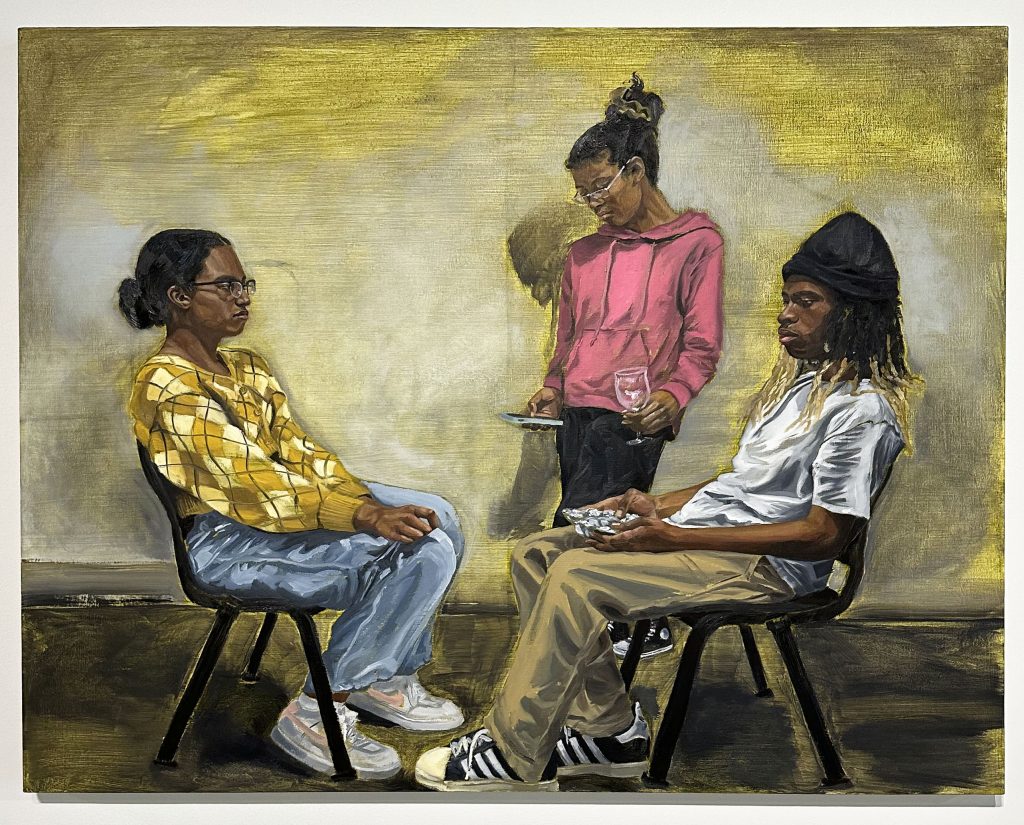
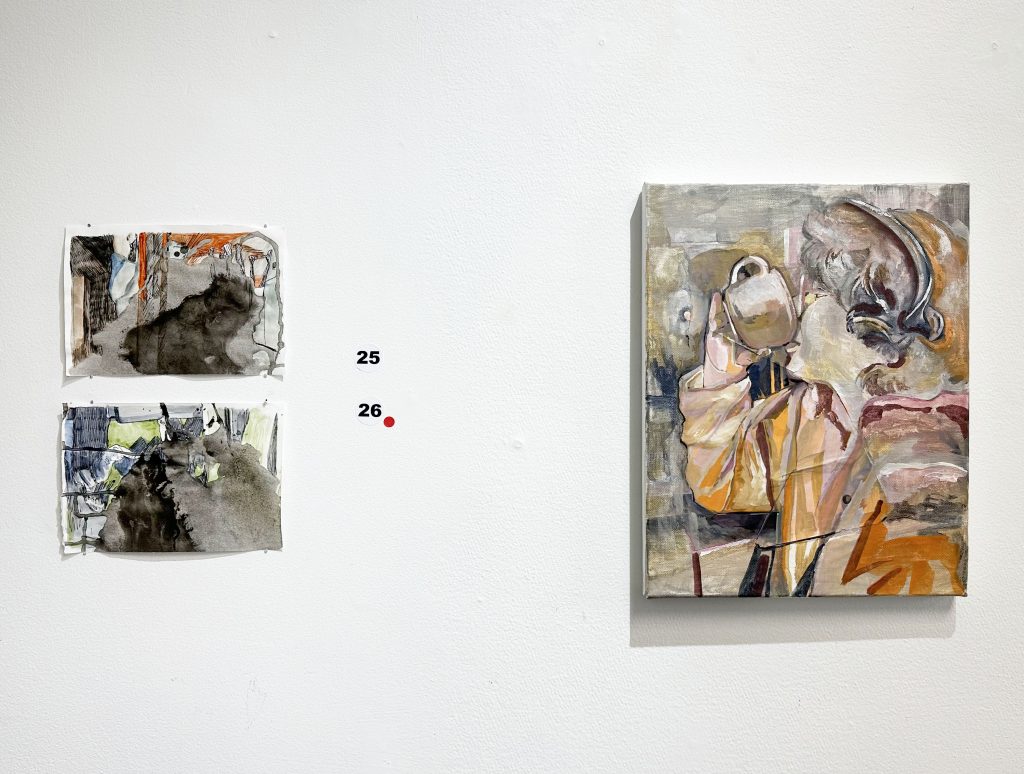
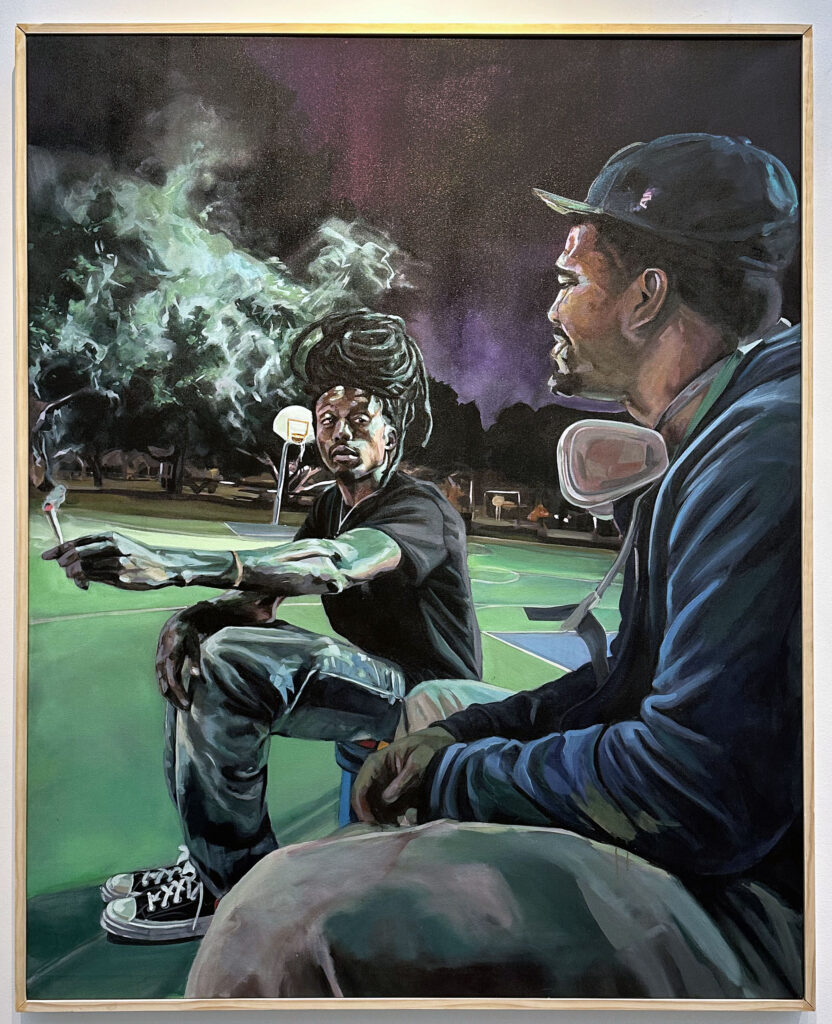
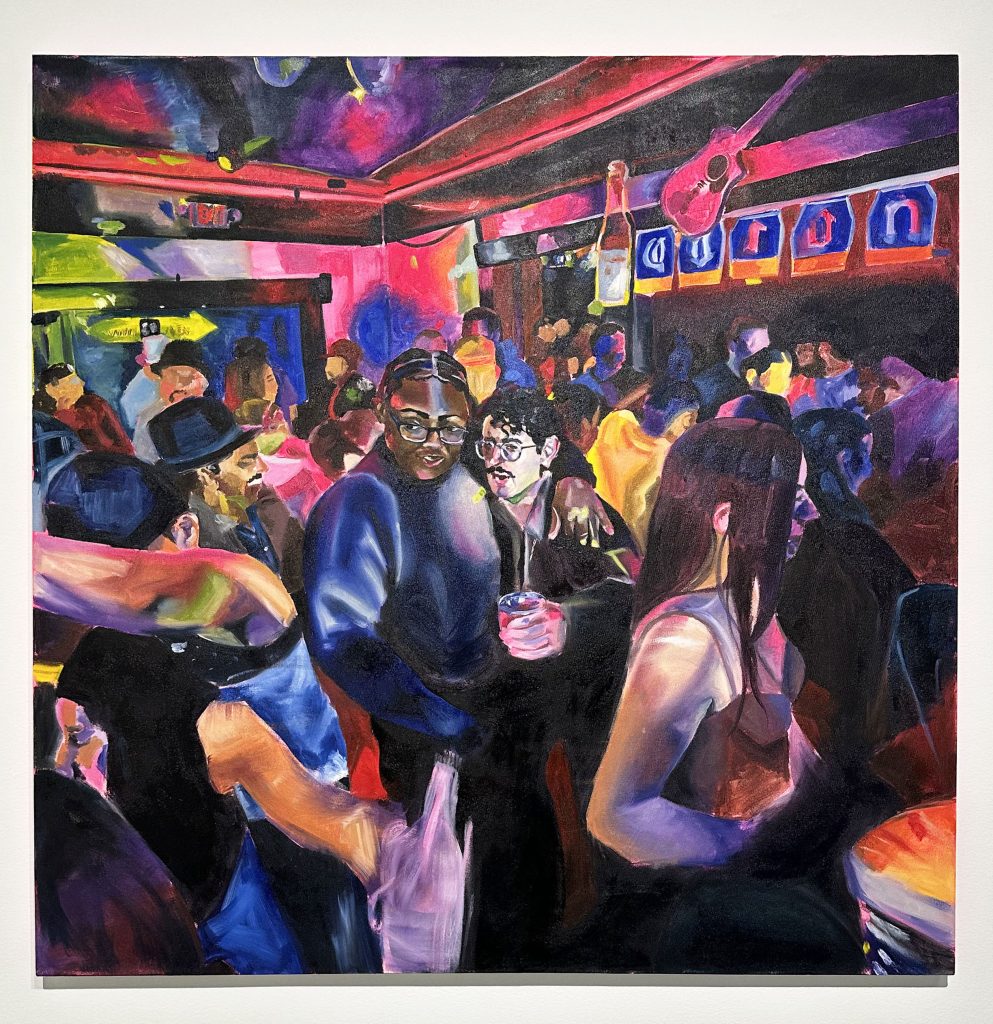
Jazzalyn Palma, “21st st”, Oil on canvas, 2023

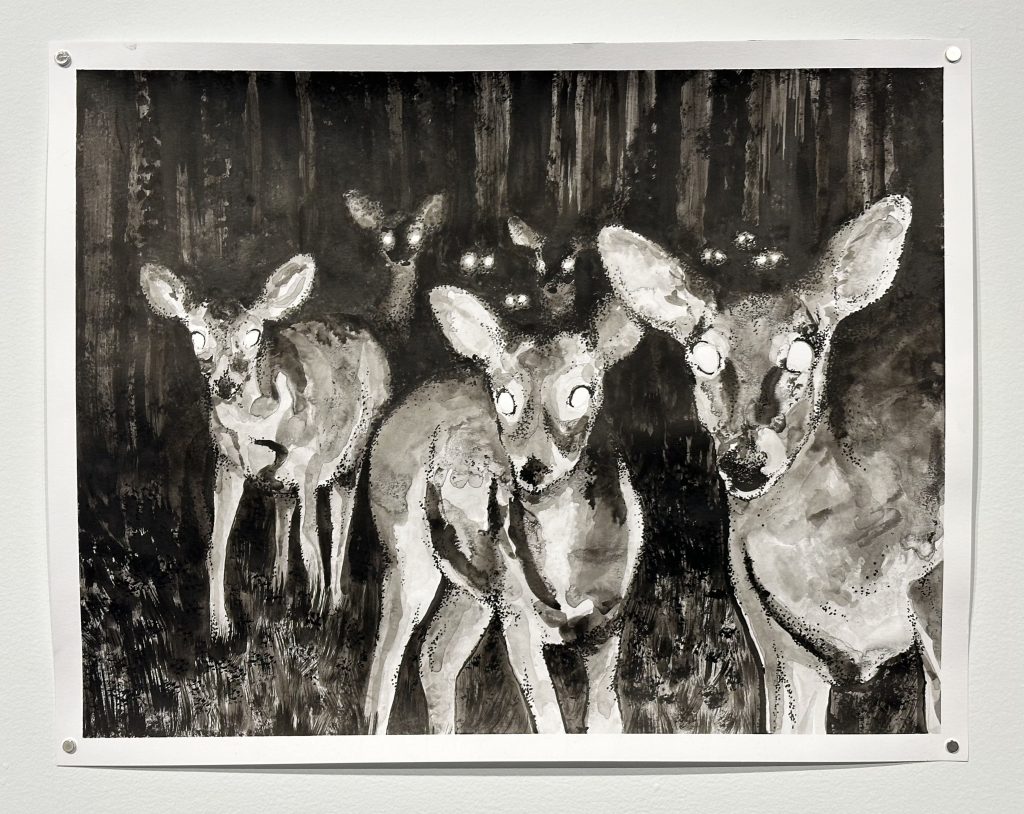
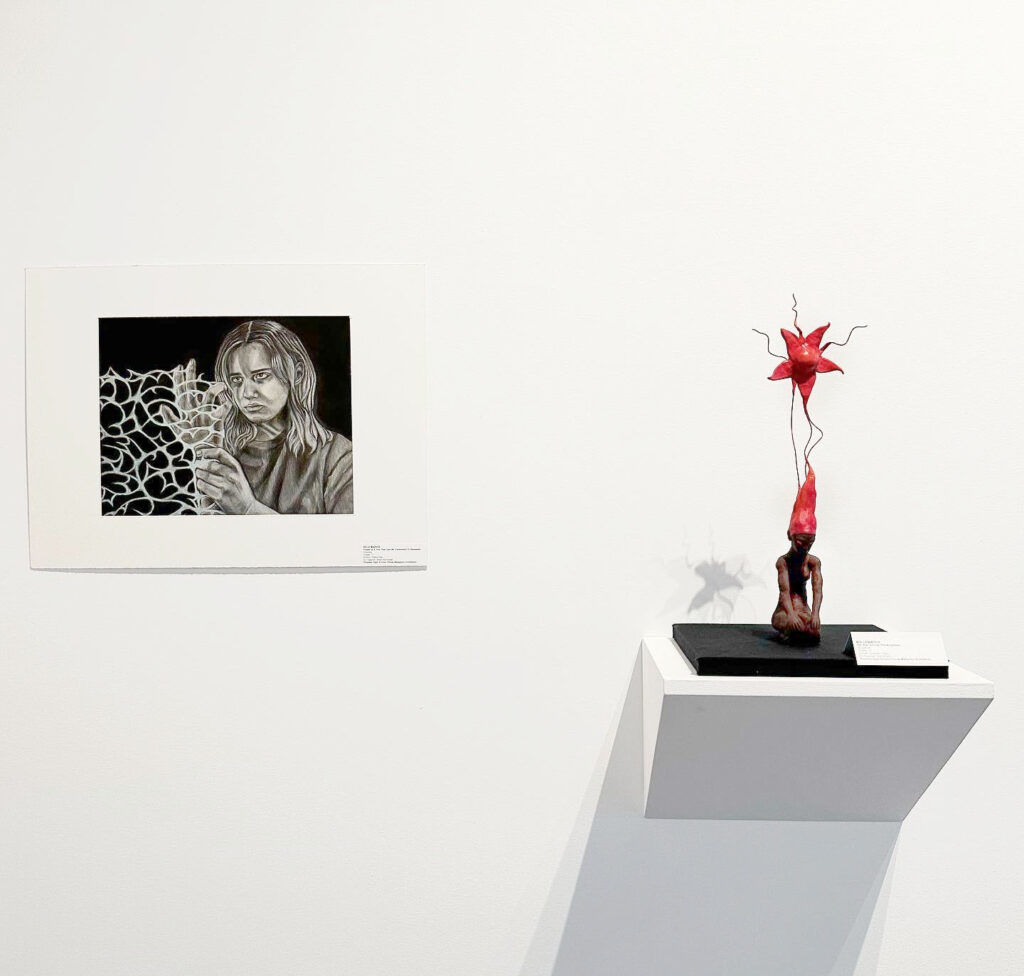
Rachel Augustson, “Gaze”, Ink on Paper, 2023

Ashton Burton, “…”, Oil on canvas, 2023

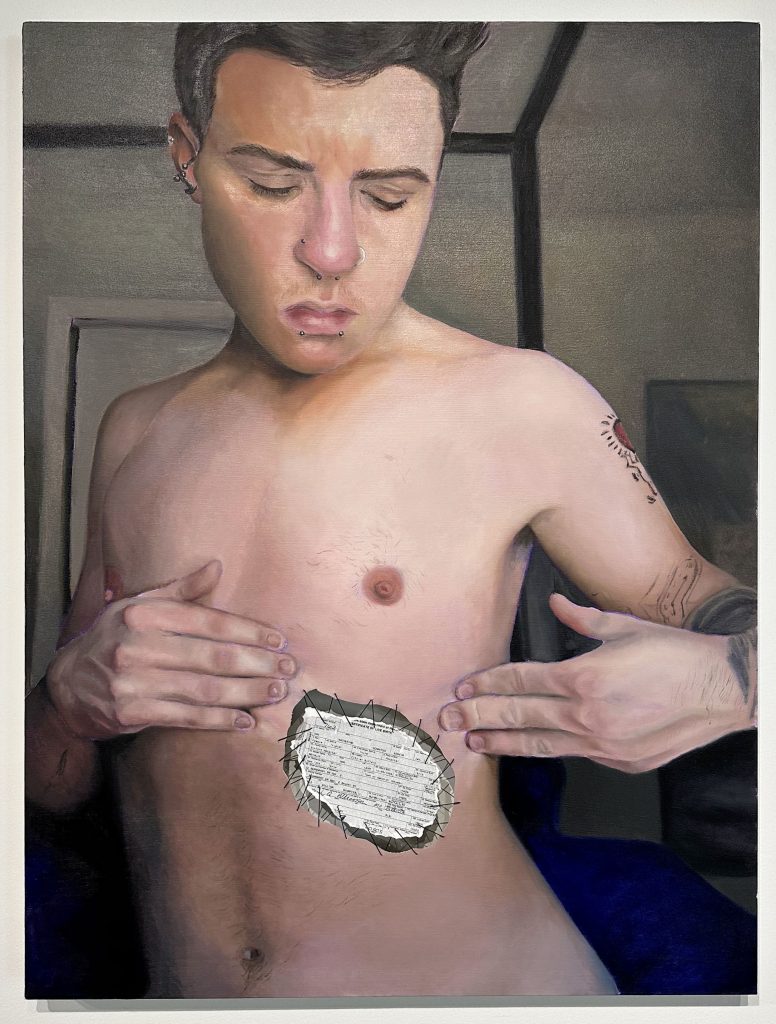
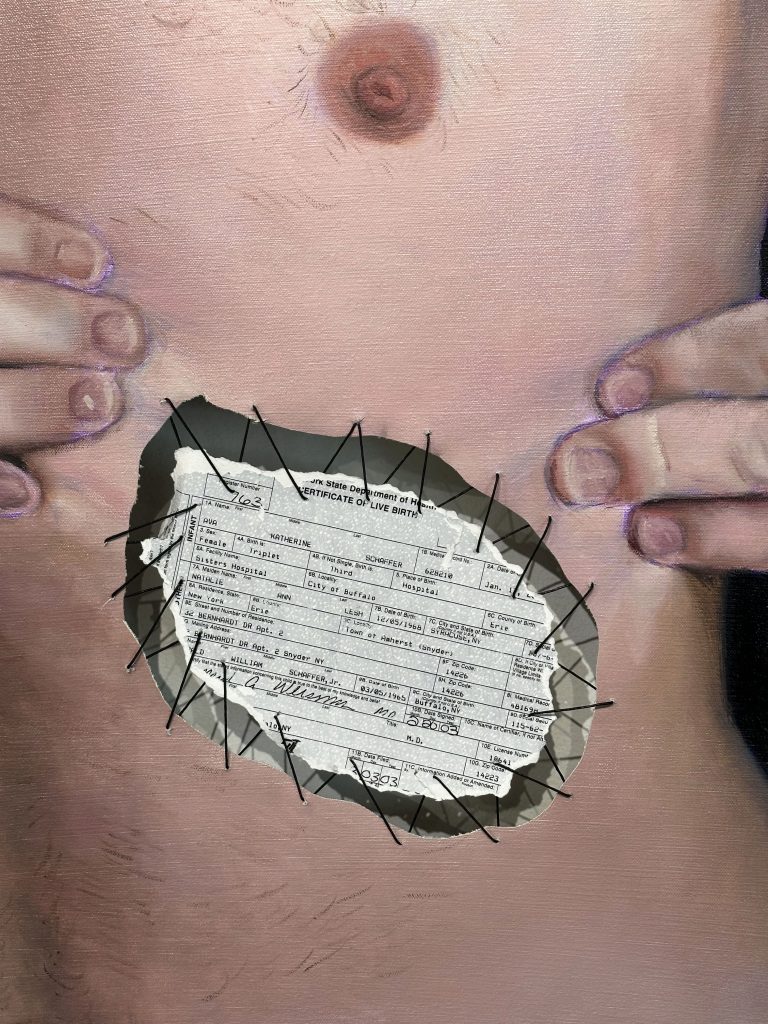
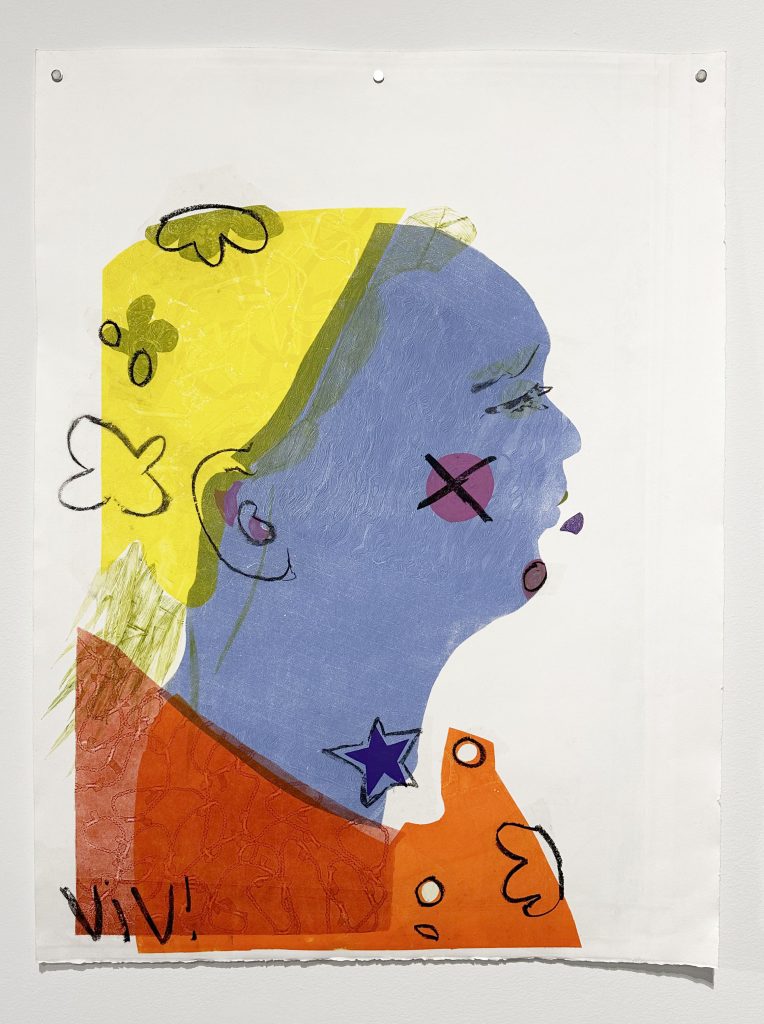
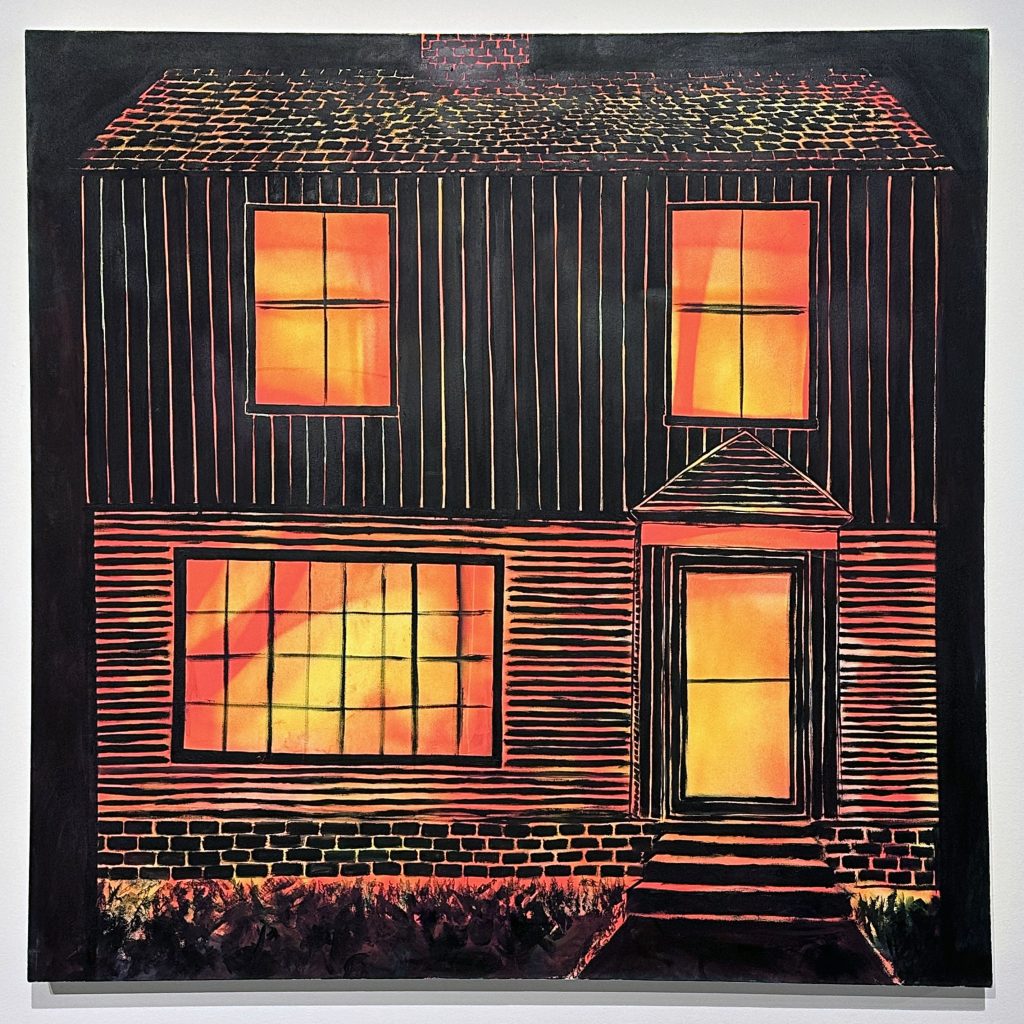
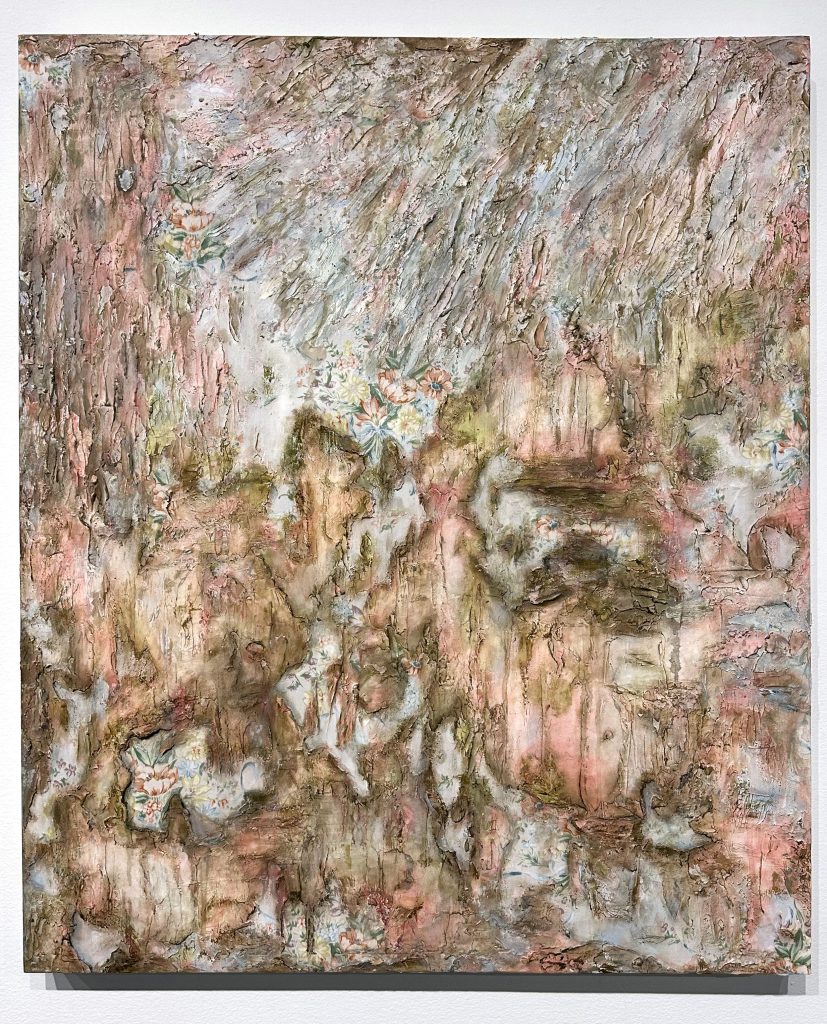
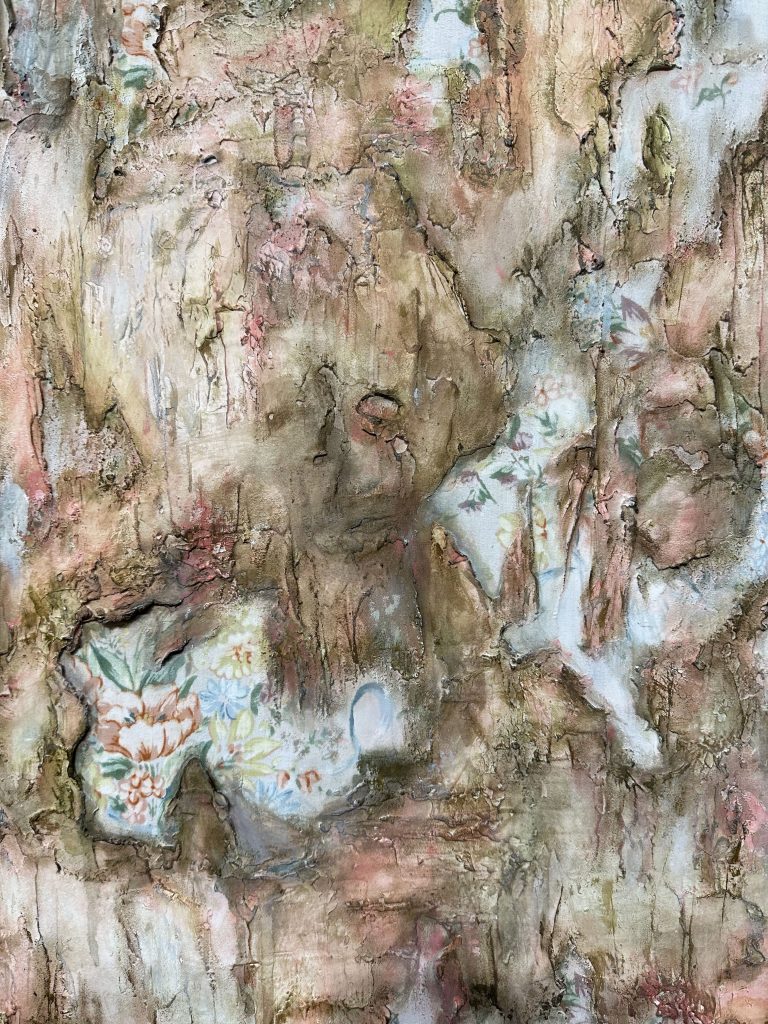
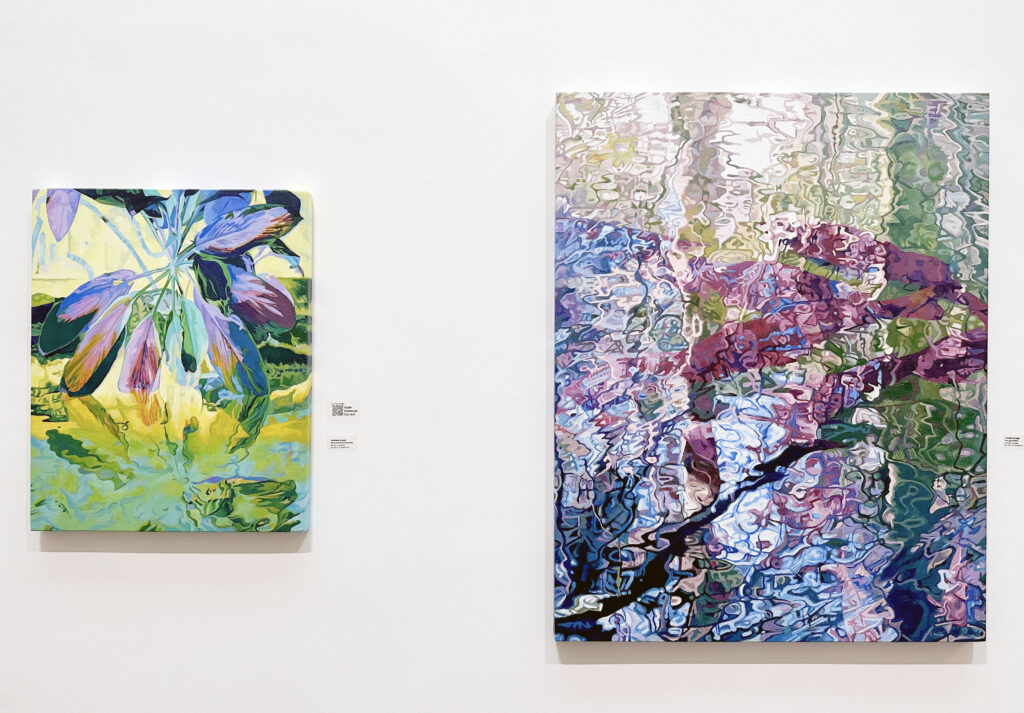
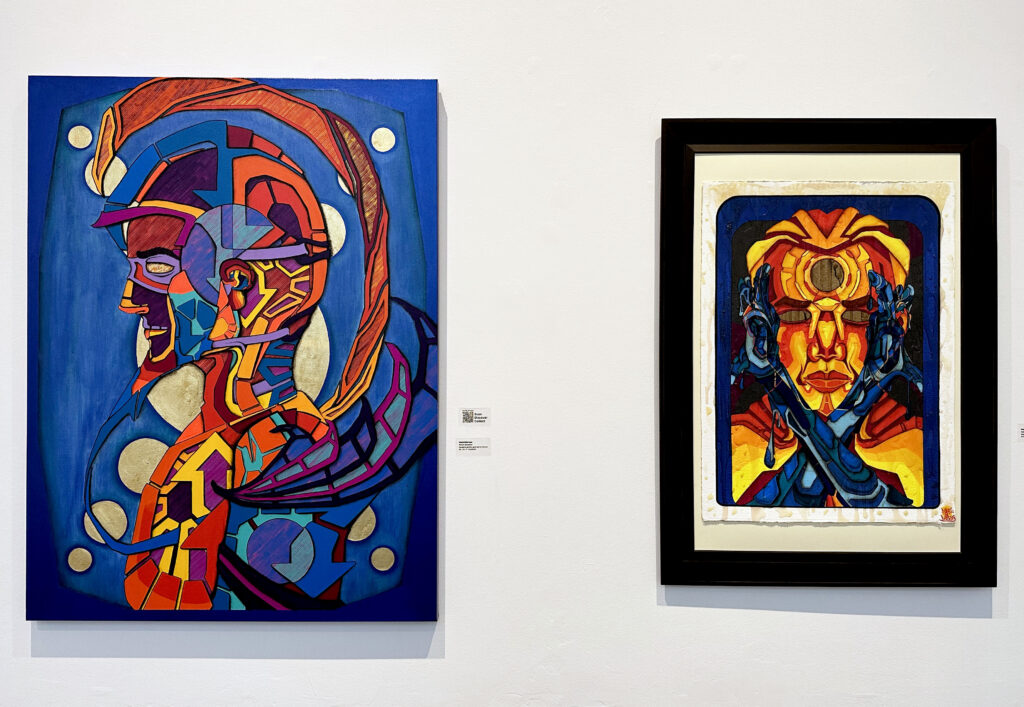
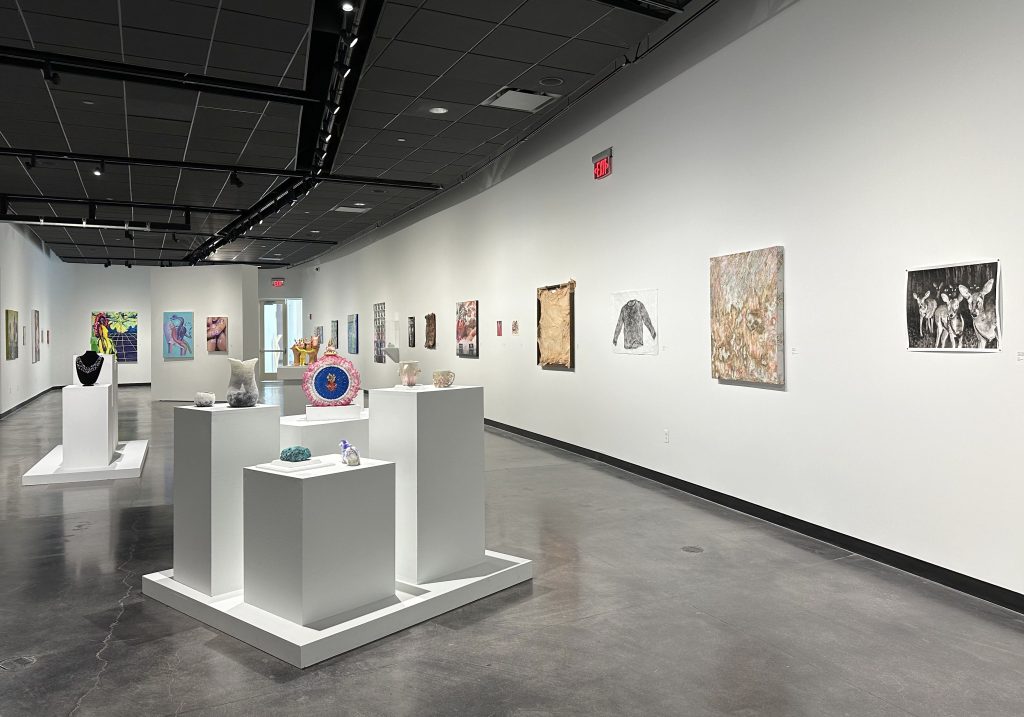
Cleveland Institute of Art’s 78th Student Independent Exhibition is currently on view in their Reinberger Gallery. The juried show is organized by the students and includes work from all mediums.

There are so many great pieces in this show, above and below are just a few selections.

This exhibition closes 4/7/24.

James Schaffer, “Bound”, Oil on canvas, 2023

James Schaffer, “Bound”, Oil on canvas, 2023 (detail)

Gwen Putz, “Viv!”, Monoprint, 2023

Tristen Kovacs, “897”, Spray paint and acrylic on canvas, 2023

Emily Fontana, “Untitled”, Acrylic and spackle on fabric, 2024

Emily Fontana, “Untitled”, Acrylic and spackle on fabric, 2024 (detail)

Mar 162024
 

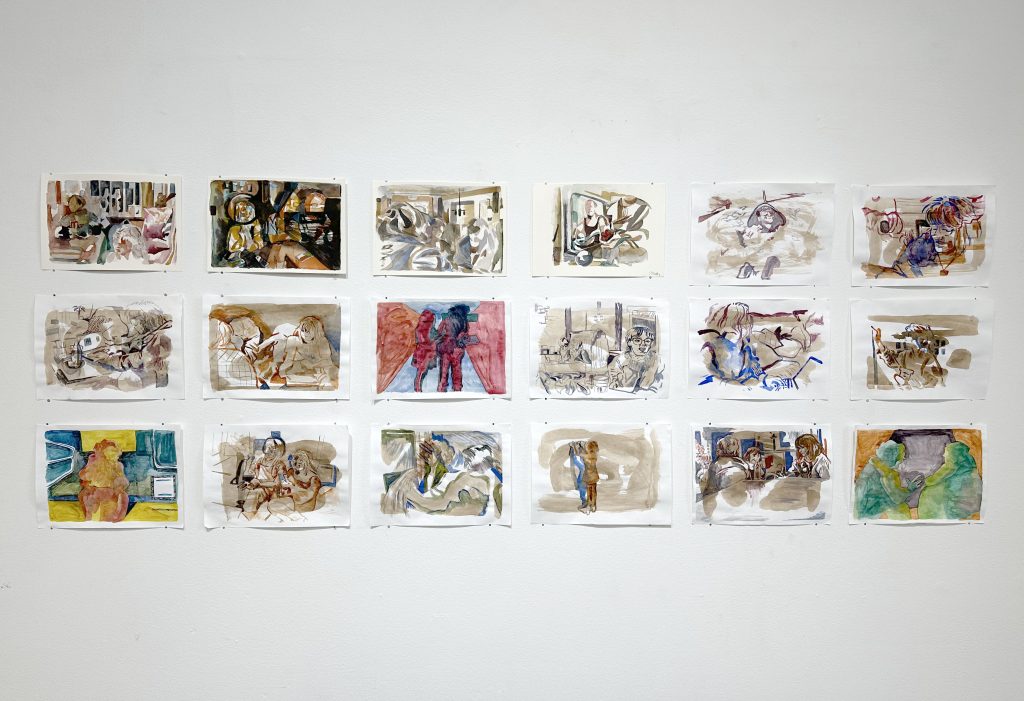
Watercolor paintings by Katherine Strobel

There is A LOT of work currently on view at Summit Artspace for their Winter Exhibitions (see the previous two posts) and it is worth mentioning these shows as well.

In the Welcome Gallery are watercolor paintings (seen above) by Katherine Strobel, for her exhibition, Bad Nostalgia.

Her statement about the work-

People forget to take pictures of things that don’t matter because it’s impossible to photograph qualities such as the feeling of an inside joke, the sound of an exhale through the nose, or dirty silverware that must be returned to the kitchen and replaced. These things act as set, pieces for what make up the rest of our lives. This series is a catalog of work that focuses on memory and candidness of a scene or subject. The people pictured are painted from life or candid photographs which are then emphasized from a naive image to something more. When an image is exaggerated with new colors and shapes it serves to make the mundane more desirable. The paintings are watercolors with a textured surface; the texture creates a sense of play with paper elements. In my work watercolor is often indicative of memory because of its ephemeral quality and transparent layers. This is because of how impossible it is to clarify every element that makes up a color when the layers are all compressed and viewed as a complete state.

Below are works from FRESH, an annual exhibition of local artists juried by Pita Brooks, Executive Director of Akron Soul Train. The website has all of the artists included and their statements and bios- definitely worth taking a look at what is being created in the area.

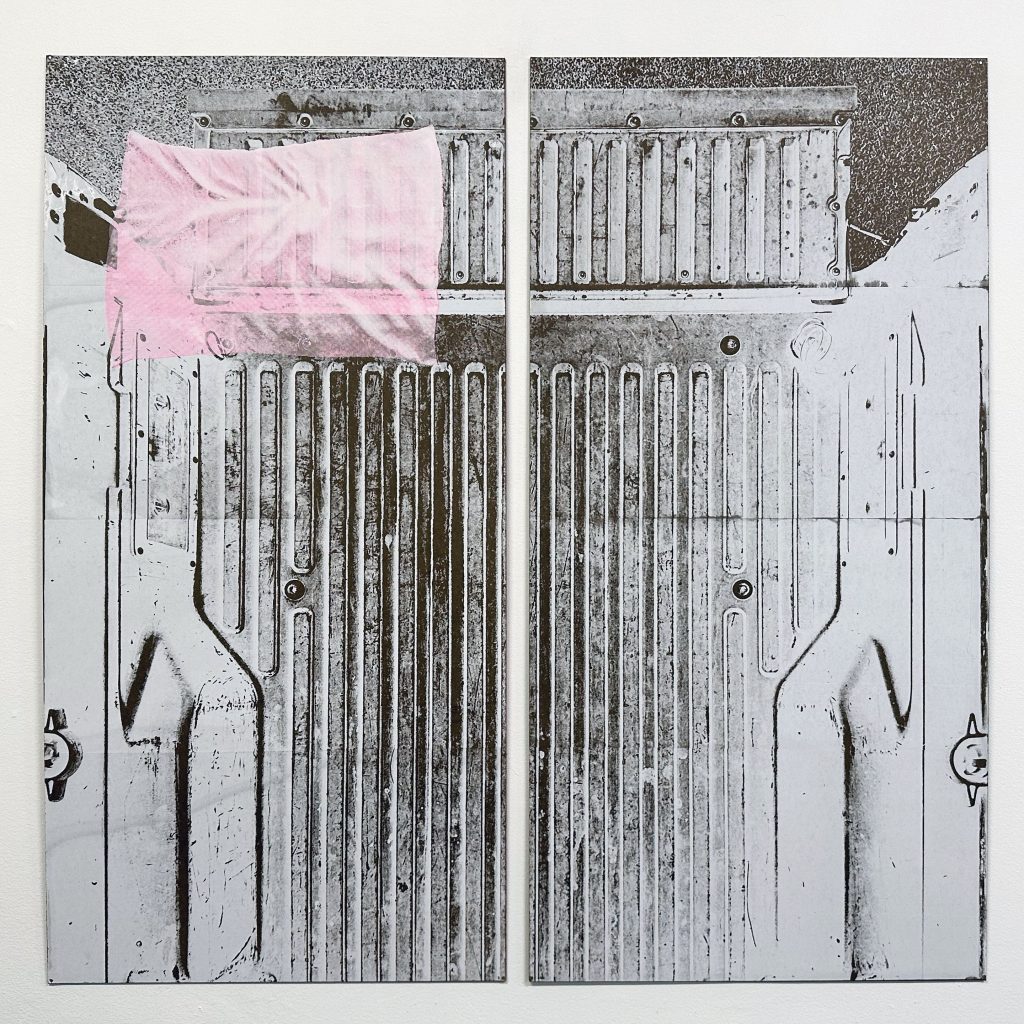
Michelle Eisen, “I’ve Made My Bed”, Silkscreen on hardboard

Steven Mastroianni “Fathomable Series #24”, Unique cameraless photogram, silver gelatin print

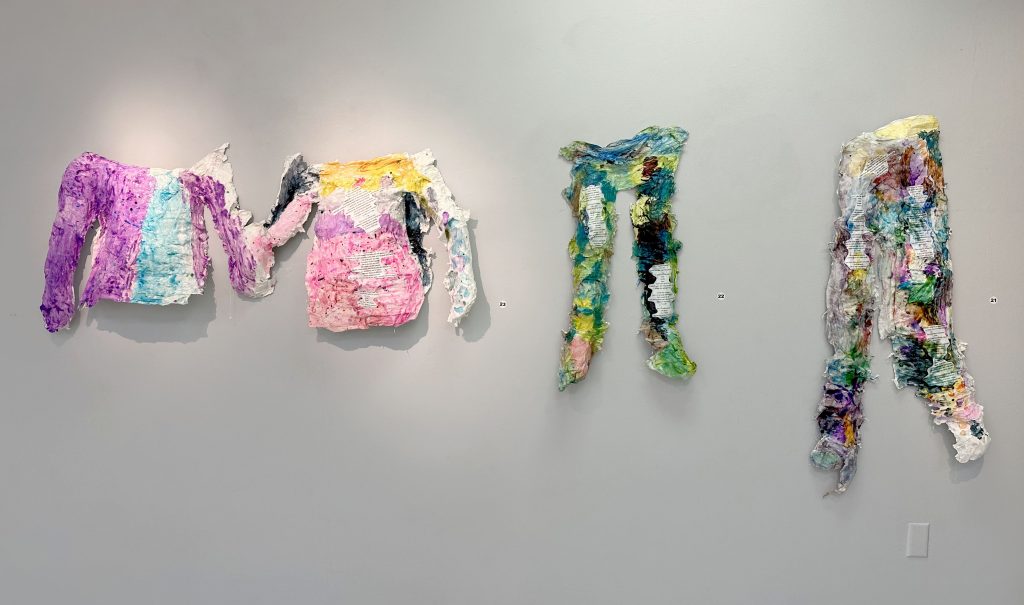
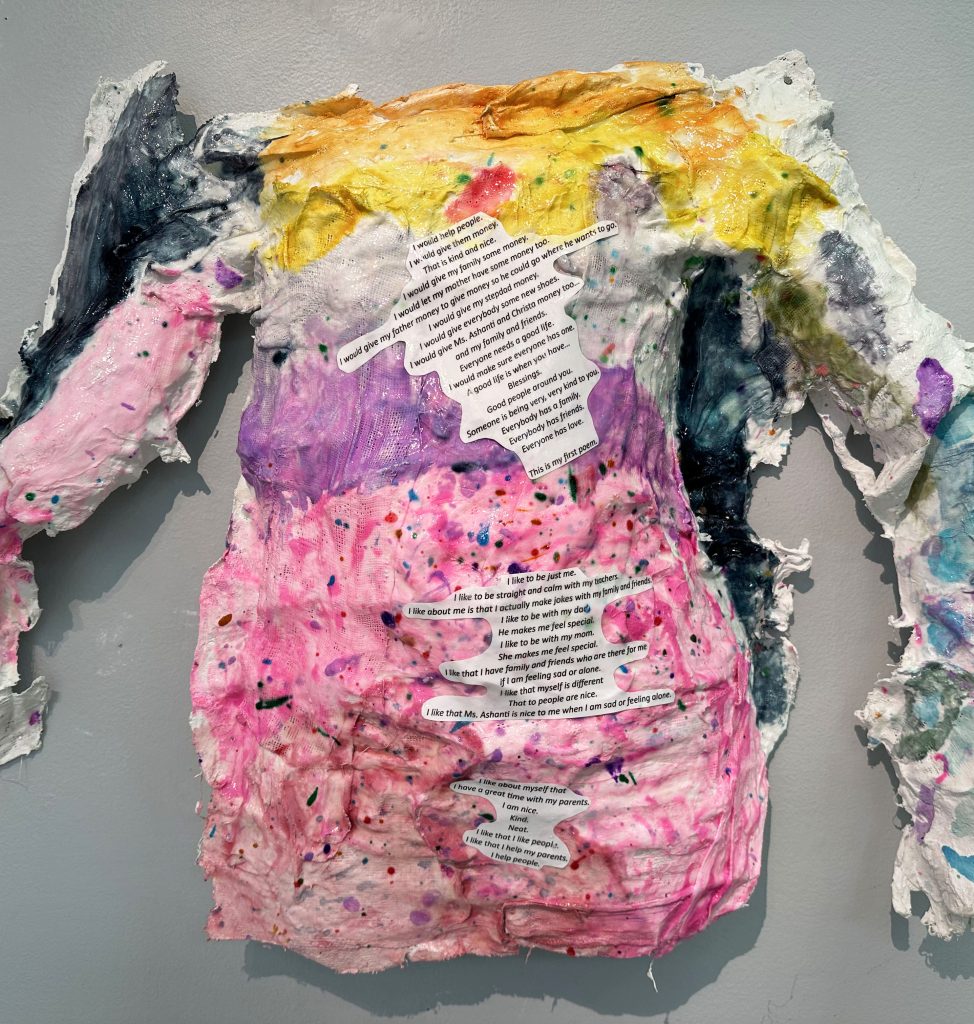
Finally, on view throughout the building are works by local students, teachers, and school leaders for Taking Care of Our House: Communities Coming Together and Making a Difference. The exhibition is made with the organization Art Resistance Through Change (ART-C). The works pictured below are a few of the sculptures created that included the personal narratives of the artists.

It’s worth mentioning that along with these exhibitions there are artists studios and galleries also in the building and worth checking out. Summit Artspace is open Fridays 12-7pm and Saturdays 11am-5pm.

Mar 162024
 

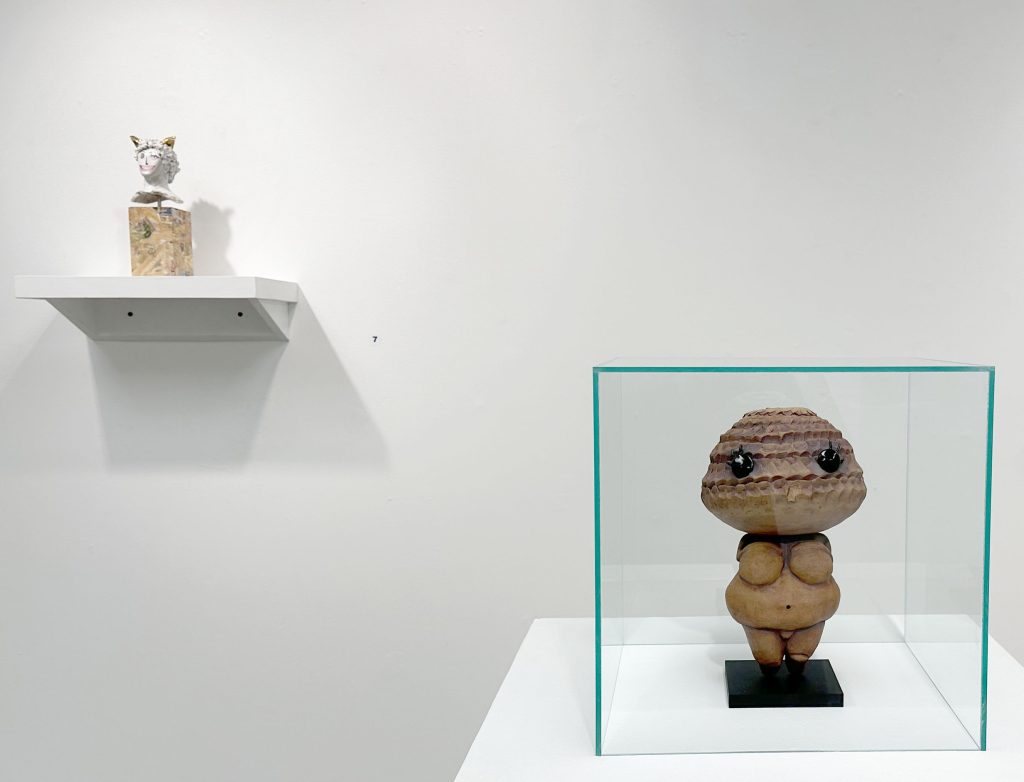
David Kruk’s solo exhibition Nobody Here at Summit Artspace in Akron, asks questions about the state of culture (or lack of culture) we are currently experiencing. Is the difference between the Venus of Willendorf and a Funko Pop just time period and material? Using the Vaporwave aesthetic, a remix of past pop culture in itself, he explores consumerism and nostalgia. Walking around the empty spaces in his video game creation, one is left wondering- what comes next?

The artist’s statement about the work-

This exhibition will consider Mark Fisher’s concept of “lost futures” through the aesthetics of Vaporwave and Funko Pops. I am interested in how these anachronistic objects utilize nostalgia through the remixing of cultural references to engage with consumer capitalism. According to Fisher, this continual referencing of the past exemplifies contemporary society’s cultural stagnation and the erosion of collective imagination towards a radically transformative future.

The sculptures in the exhibition are intended to push these anachronisms a bit further; to undergo a life cycle of adaptation and re-contextualization. I enjoy thinking about the ways in which something like Vaporwave can function as a critique of consumer culture, questioning capitalism’s impulse to commodify everything in sight, including our identities and memories. Vaporwave was born from the internet, and its aesthetic continues to be quite popular within online communities. These communities may often be collectors of pop culture paraphernalia: such as Funko Pops, which I’ve become interested in for their cultural symbolic value. Collecting Funko Pops can provide a source of aesthetic stability for some, while simultaneously operating as totems for coping with the realities of adulthood.

Conceptually within this exhibition, I wonder about the ideological trajectory from ritualistic idol to mass-produced fandom figurine, how capitalism influences our engagement with nostalgia, how the concept of a collectible operates within the spheres of the household to the museum, and how an art object may change over time through being digested through the body of consumerism.

For the video below, available on the gallery’s website, Kruk discusses his work – from tracing images using an oven light as a child, to a growing interest in sculpture, to creating the interactive video game from the show.

This exhibition closes 3/16/24.

Feb 292024
 

Today’s throwback is to Jenson Leonard’s solo exhibition Workflow, at Wood Street Galleries in Pittsburgh, from the beginning of February.

From the gallery about the work-

Workflow, the first institutional solo exhibition of artist Jenson Leonard, centers on a titular film that explores the velocity and momentum of Blackness as it relates to the philosophical concept of acceleration—the notion that the only way out of capitalism is through its intensification.

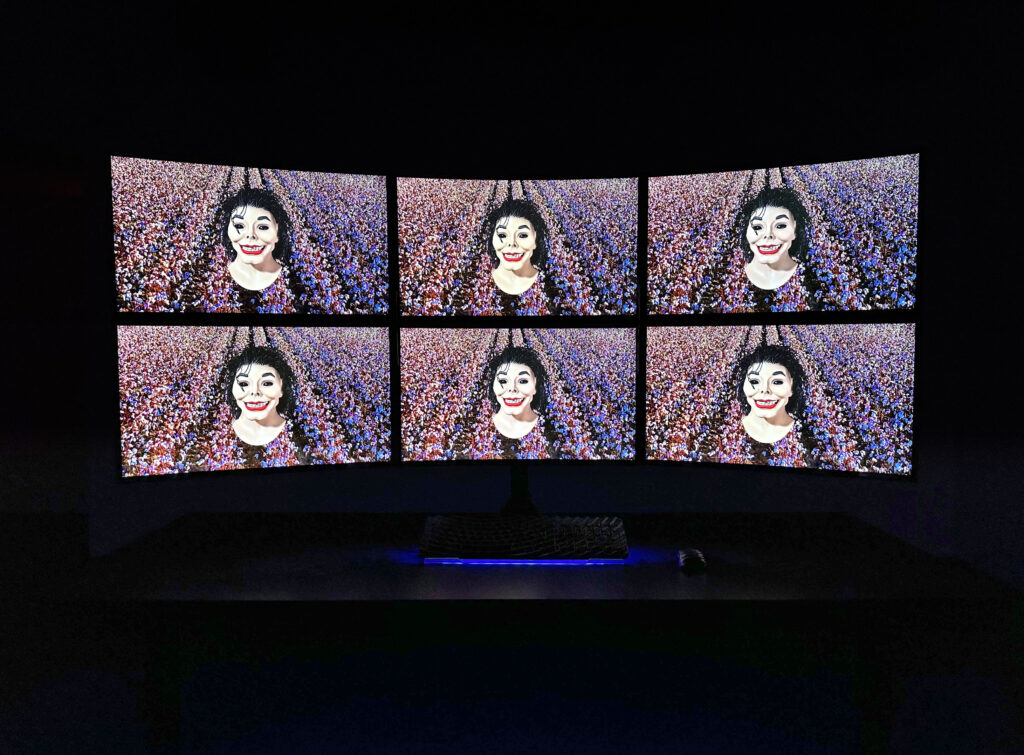
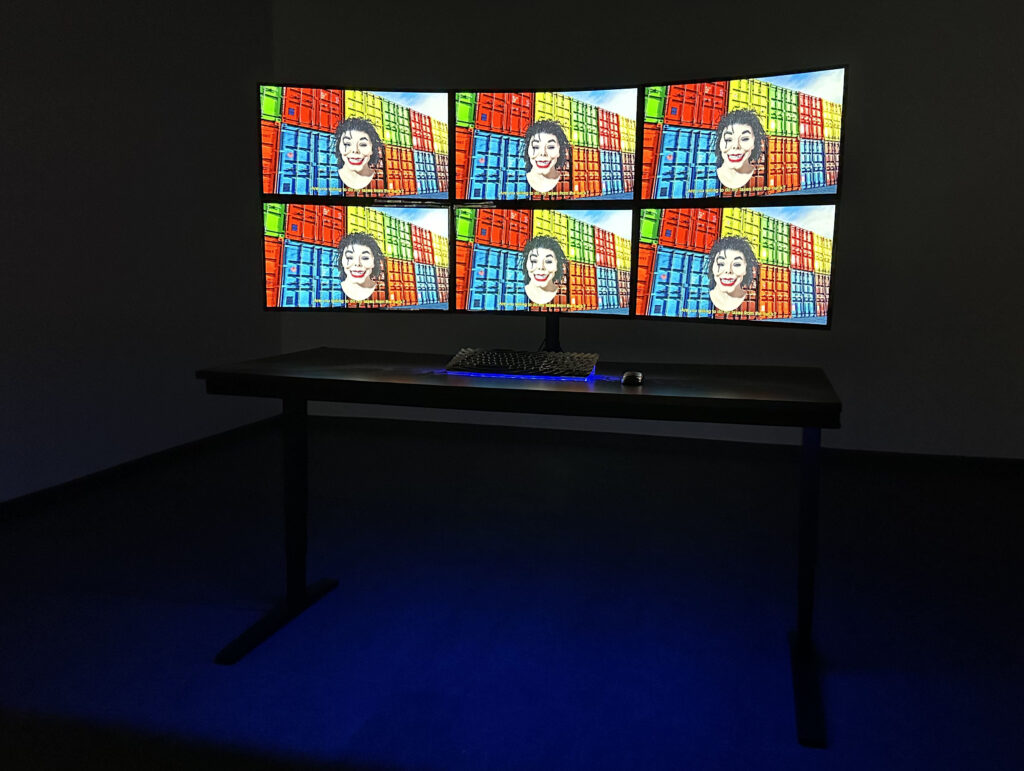
In Workflow, a spectral Michael Jackson Halloween mask recites a surrealistic quarterly earnings reports. Building on a 2017 essay by artist Aria Dean titled “Notes on Blacceleration,” the short film centers on the ways in which the Black subject grapples with its commodified status within the labor market despite—or, resultant of—its own history as a commodity, stemming back to the Trans-Atlantic slave trade. Completed during Leonard’s residency at Pioneer Works in 2021, the video utilizes uncanny humor as a mechanism to expose the shared grammars inherent in Afro-pessimism and speculative finance.

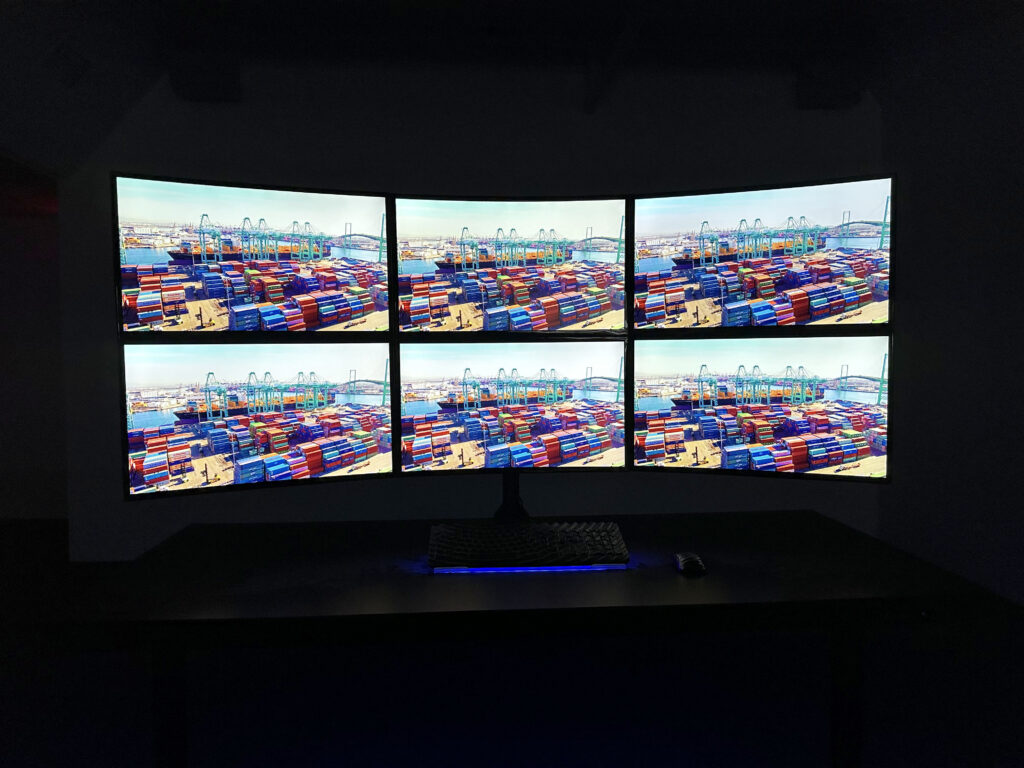
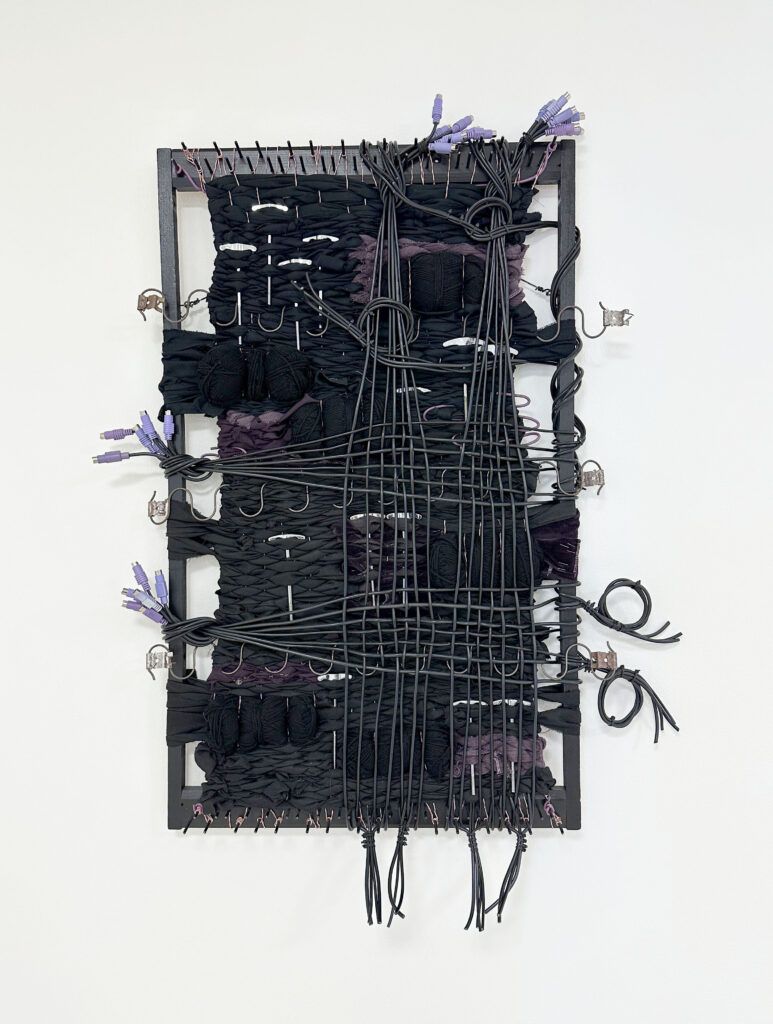
Within the exhibition, the film repeats simultaneously across two grids of computer monitors situated on ergonomic desks that flank the gallery, mimicking the workstations that can be found ubiquitously across stock trading floors and financial institutions. Sculptures modeled after computer keyboards and mouses are displayed on the desks, each rendered inoperable by concentric riffs that symbolize the erratic transformations caused by the flows of capital. The appearance of Jackson represents a transmogrification of its own; whereas many have aligned the controversial pop icon’s bleached skin and surgical procedures with Black self-hatred, Leonard positions his bodily modifications as a radical rupture from racial paradigms of being.

In Leonard’s own words, “Workflow is defined as the sequence of industrial, administrative, or other processes through which a piece of work passes from initiation to completion. My film seeks to disabuse notions of completion, whether it be completion of the human, the nation state, or civil society. As Dean notes, Blackness is ‘always already accelerationist’ via its incongruence with Western humanism, a wrench thrown into the locomotive gears of ‘capital and subjecthood.’ Her essay prompts us to look toward the way that the Black has been historically constructed outside of the human, as coterminous with the slave. Slavery therefore represents a kind of proto-automation, a mass forced coercion of labor, and the Blacks’ transition from object to subject calls for a reappraisal of accelerationist ideas about the (non)human entity and its revolutionary potential.”

The artist continues, “There is something about going to work—the repetition of it—that gets inscribed at an epigenetic level, as an everyday, embodied violence. From there, I thought about the panoptic workplace (open air plan, transparent yet closely surveilled, management that does not have to be in the room to be monitoring you), the fetish of efficiency (ergonomic mouse and keyboards so you can work longer), biometric data of a labor force (fingerprint and facial scans to help reduce repeat processing tasks). All of these methods to maximize profits and production can be traced back to methods worked out and perfected in the cotton and sugar cane fields hundreds of years prior.”

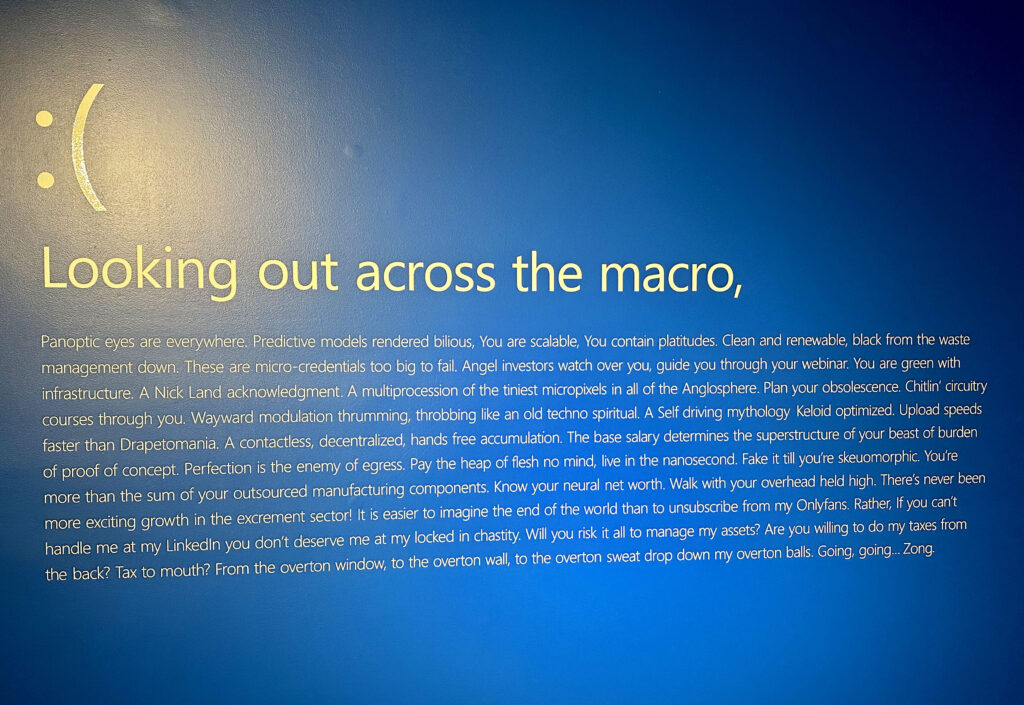
The text from the video was included on one of the gallery walls (image above) but I’ve included it below as well as it is definitely worth reading.

“Looking out across the macro- Panoptic eyes are everywhere. Predictive models rendered bilious, You are scalable, You contain platitudes. Clean and renewable, black from the waste management down. These are micro-credentials too big to fail. Angel investors watch over you, guide you through your webinar. You are green with infrastructure. A Nick Land acknowledgment. A multiprocession of the tiniest micropixels in all of the Anglosphere. Plan your obsolescence. Chitin’ circuitry courses through you. Wayward modulation thrumming, throbbing like an old techno spiritual. A Self driving mythology Keloid optimized. Upload speeds faster than Drapetomania. A contactless, decentralized, hands free accumulation. The base salary determines the superstructure of your beast of burden of proof of concept. Perfection is the enemy of egress. Pay the heap of flesh no mind, live in the nanosecond. Fake it till you’re skeuomorphic. You’re more than the sum of your outsourced manufacturing components. Know your neural net worth. Walk with your overhead held high. There’s never been more exciting growth in the excrement sector! It is easier to imagine the end of the world than to unsubscribe from my Onlyfans. Rather, If you can’t handle me at my Linkedin you don’t deserve me at my locked in chastity. Will you risk it all to manage my assets? Are you willing to do my taxes from the back? Tax to mouth? From the overton window, to the overton wall, to the overton sweat drop down my overton balls. Going, going… Zong.”

Feb 272024
 

Jo Westfall, “The Queens Astronomer”, 2023, Mixed media

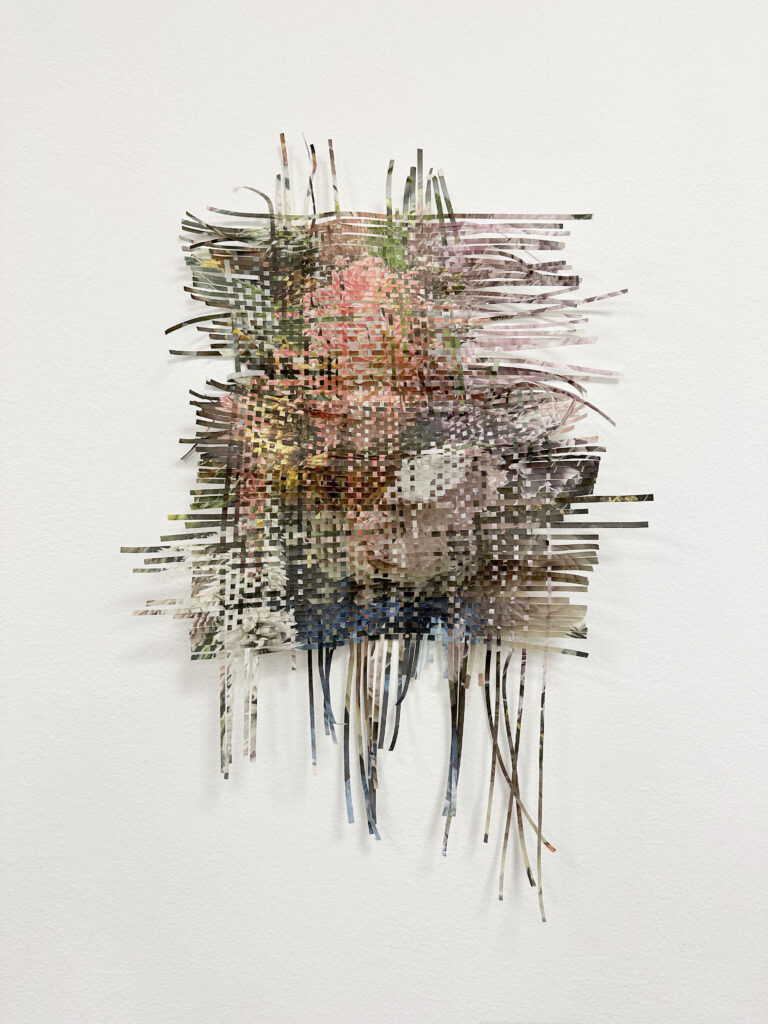
Christine Mauersberger, “Kates Bouquet”, 2022, Digital print on Japanese Kozo paper, of loom weaving

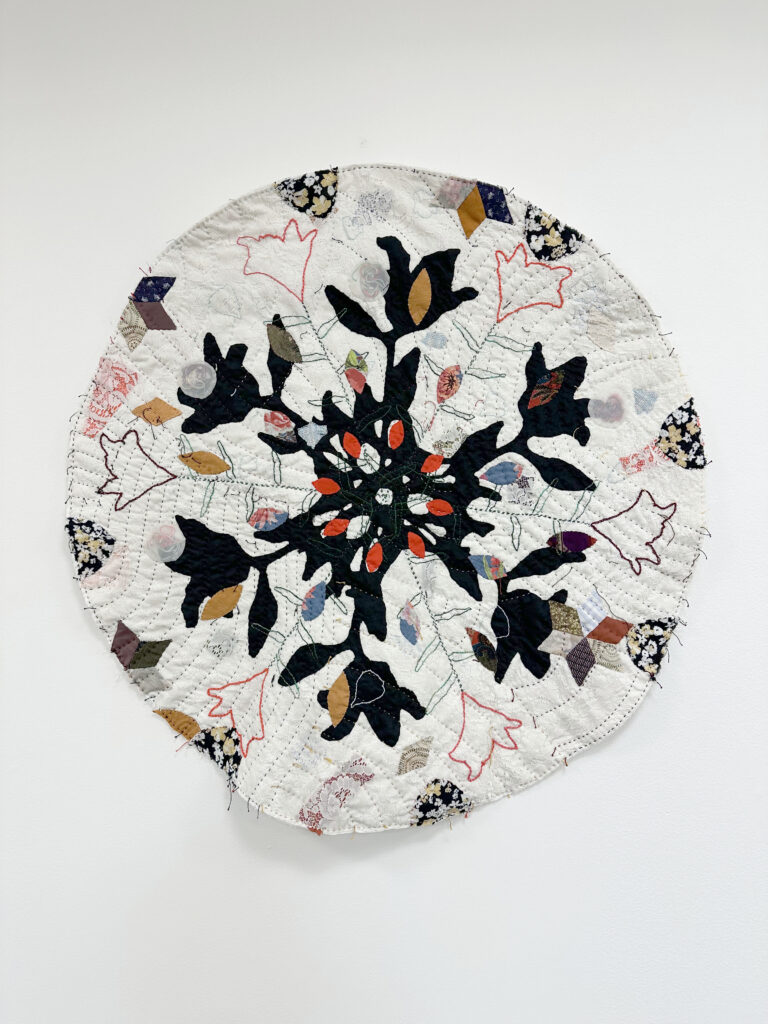
Cat Mailloux, “Rose Window”, 2023, Quilted appliqué on found fabric

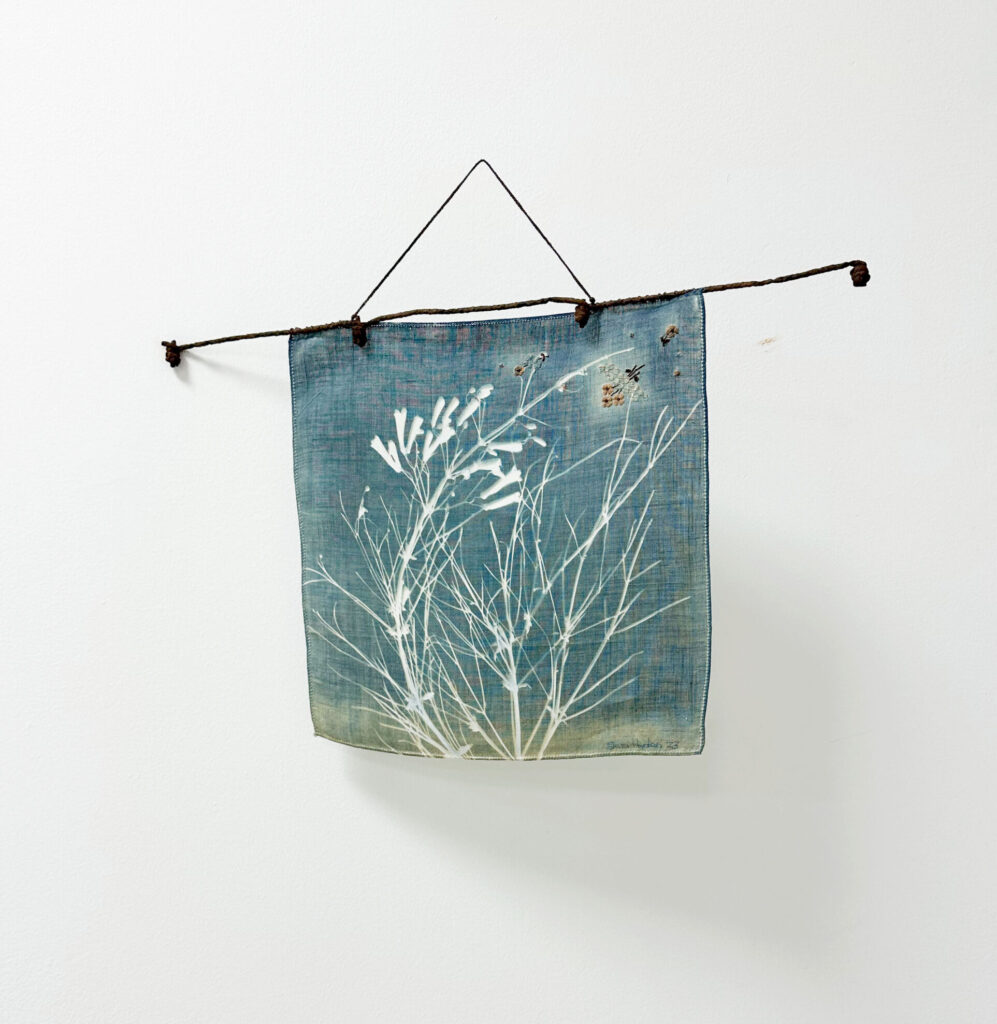
Suzi Hyden, “If the Sun Could Kiss Me”, 2023, Toned cyanotype on vintage linen hand-stitched onto metal fencing

Above are a few of the works from Common Thread, the current exhibition at Malone University’s art gallery. It is on view until 2/29/24.

From the gallery about the show-

Although quite different, all artists in this exhibition are united by the idea of textiles. Suzi Hyden’s work celebrates the environment by combining elements from nature and repurposed materials to create cyanotypes on vintage fabrics.

Cat Mailloux’s textile practice is focused in quilt making, pursuing connections between the visual language of churches, cathedrals, and domestic spaces that slowly bleed their way into imagined and limitless landscapes, exploring questions of the infinite through material.

Christine Mauersberger’s body of work is aesthetically eclectic. Hard and soft. Digital and analog. Some pieces fill a room, others can be held in your hand. The common thread is that each piece attempts to make the invisible visible.

Jo Westfall creates visual work considered resource art. It is portraiture, fiber art, and assemblage made with local materials that were discarded, overlooked, or unused. It reclaims the aesthetic capacity and utility of these items by integrating them into fresh renderings.

Feb 262024
 

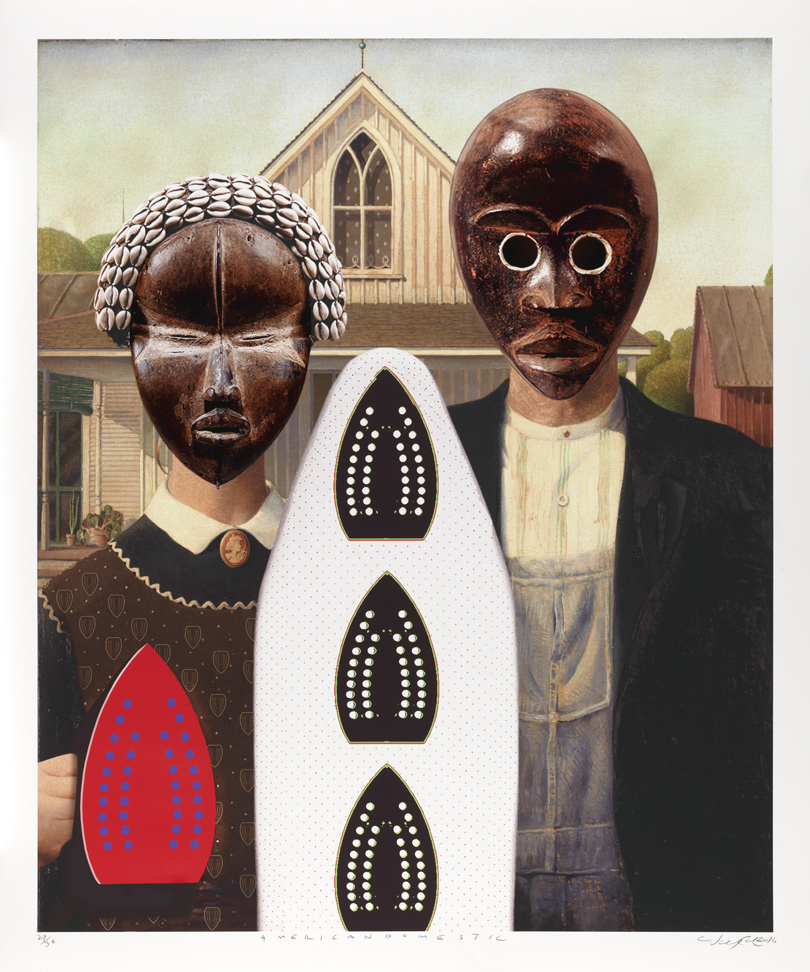
Willie Cole, “American Domestic”, 2016, Digital Print

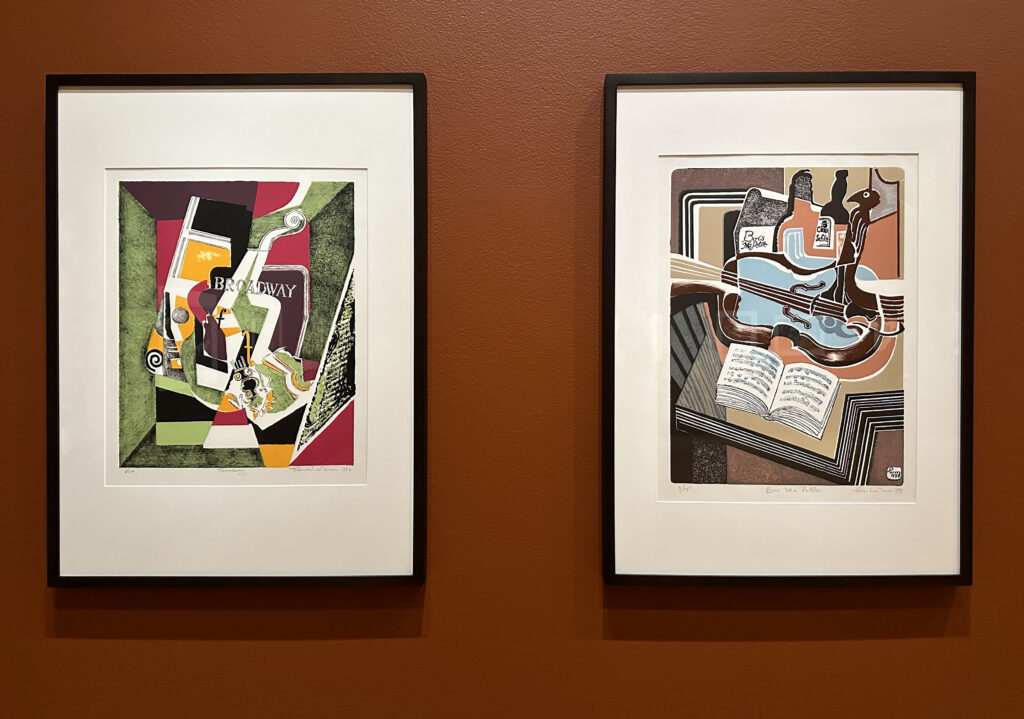
Tom Laidman, “Broadway”, 1993 and “Bois Ma Petite”, 1999, Lithograph on paper

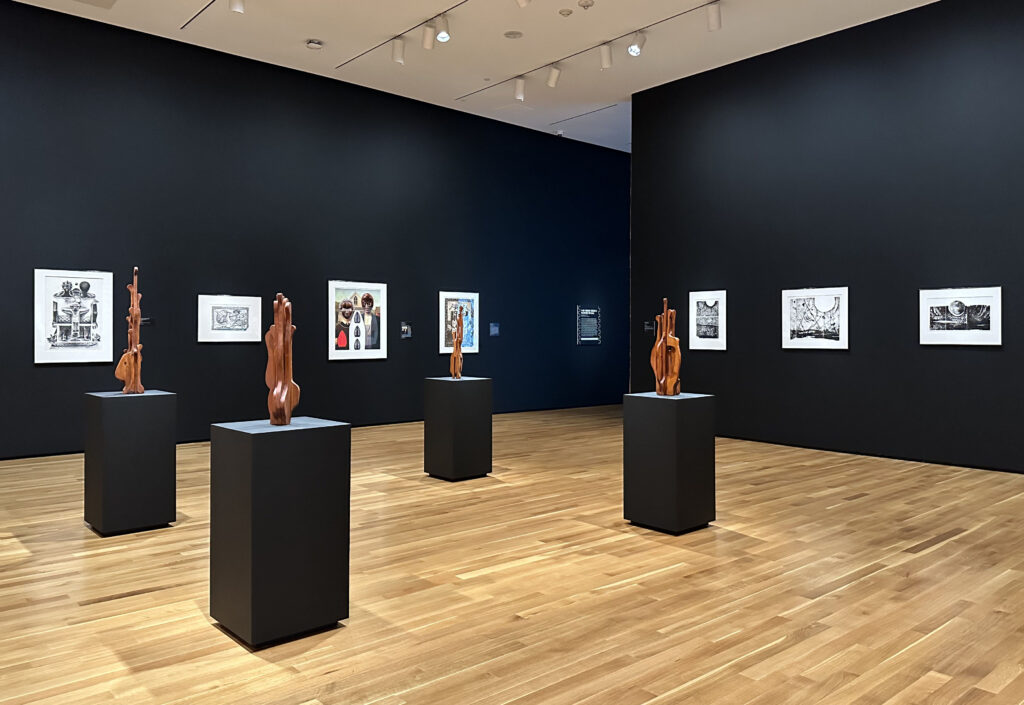
Currently on view at Akron Museum of Art is RETOLD: African American Art and Folklore, a collection of art from the Wesley and Missy Cochran collection, organized into themes exploring aspects of African American history and culture. The show features many well known and lesser known artists including Amiri Baraka, Beverly Buchanan, Willie Cole, Trenton Doyle Hancock, William Pope.L., Tom Laidman, Jacob Lawrence, Alison Saar and more.

From the museum about the exhibition-

African folklore has been around as long as humankind, and the African diaspora in America has added new dimensions to its rich history. African American folk stories teach about culture, the mysteries of life, and the survival of a race of people bought and sold who continue to thrive in an unjust society.

“RETOLD: African American Art and Folklore” focuses on four themes: Remembering, Religion, Racialization, and Resistance. These themes provide a comprehensive retelling of the works featured in the exhibition. In many of the pieces, the artist’s muse connects closely with stories that have been told generation after generation. Folklore texts are featured throughout the space as a means to retell a richer, deeper story of African American culture.

There are more than forty artists represented in this exhibition, all holding one similar truth: their story of joy and struggle in the African American experience.

In addition to the artwork, there is also an educational video produced by Josh Toussaint-Strauss of The Guardian that explores the misconceptions about Haitian Voudou that is worth a watch.

How ‘voodoo’ became a metaphor for evil

Dec 172023
 

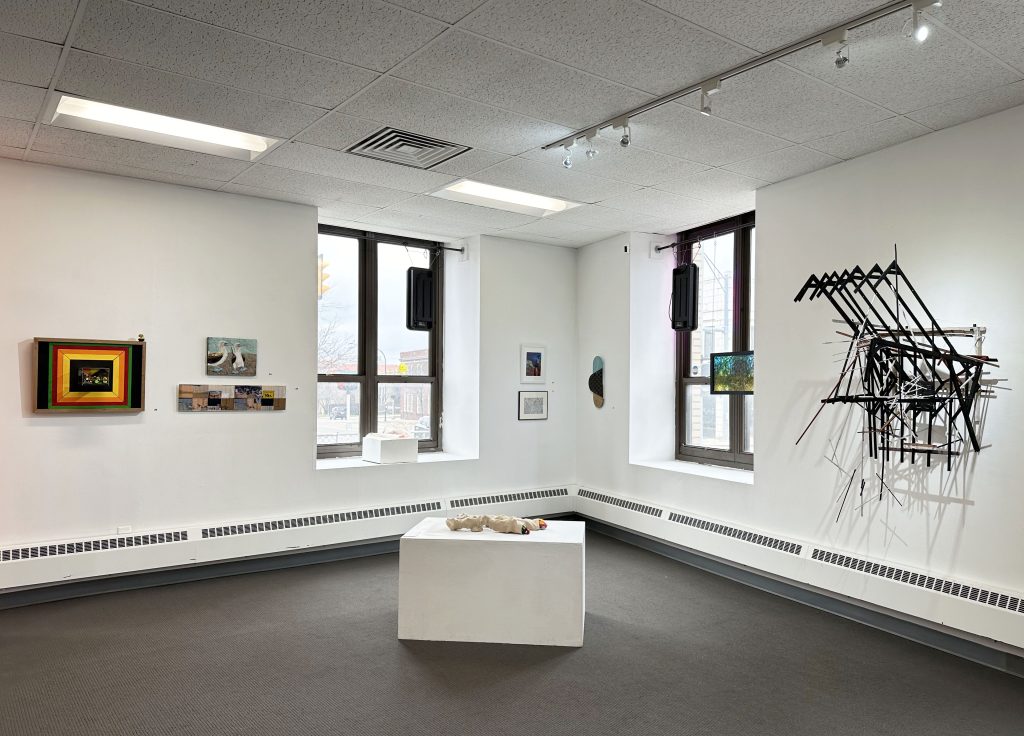
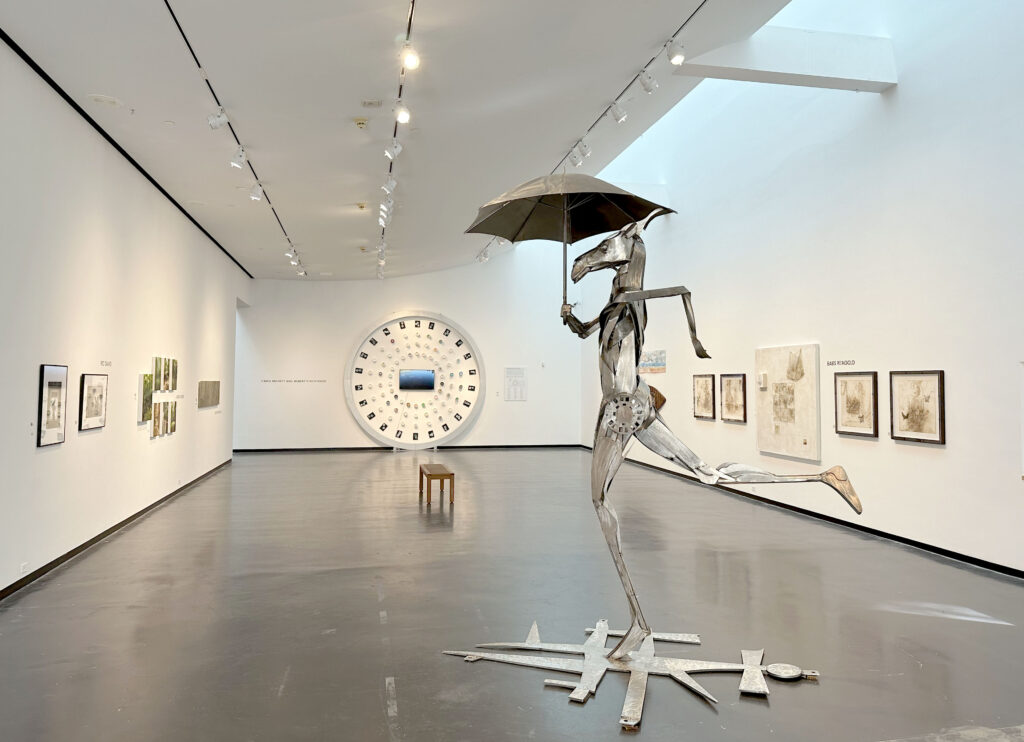
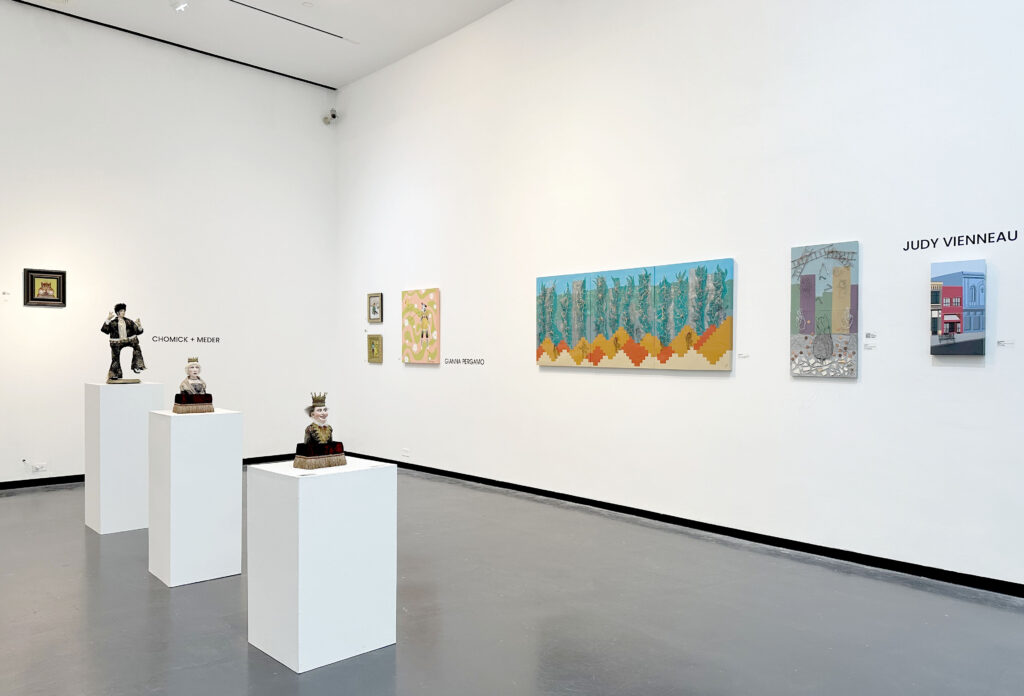
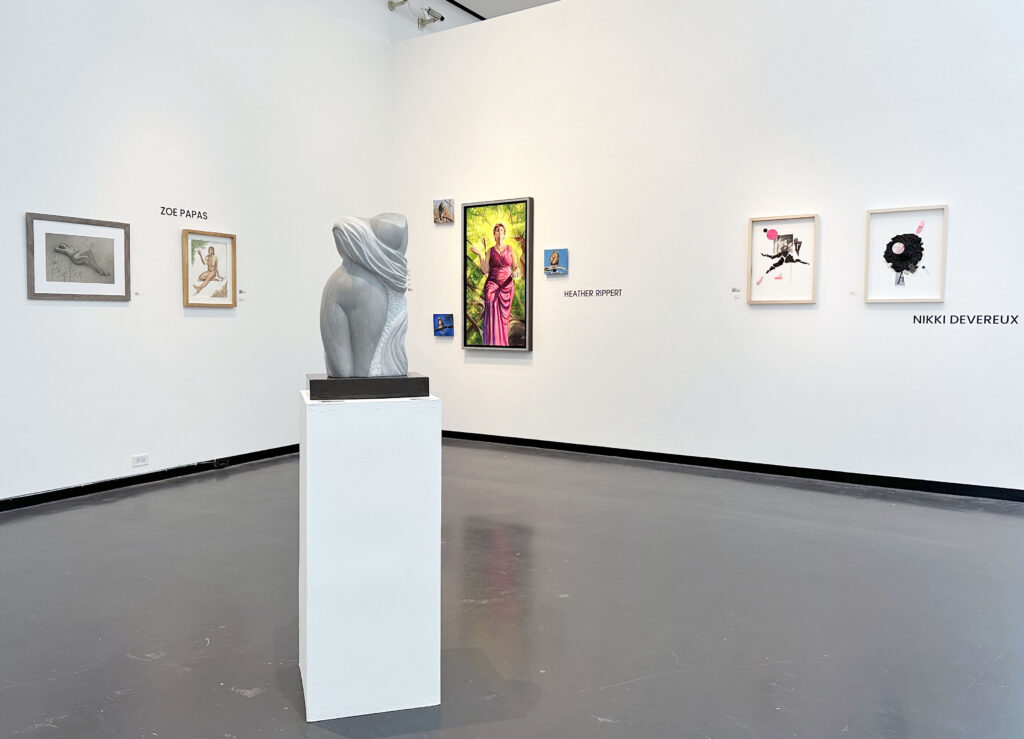
The Arts Annual at Creative Pinellas is always a great way to see what the artists in the area are creating. For 2023’s larger than ever edition, there is also a separate space for a video program that includes short films, theater productions, poetry readings, musical performances and more.

Artists included in the exhibition-

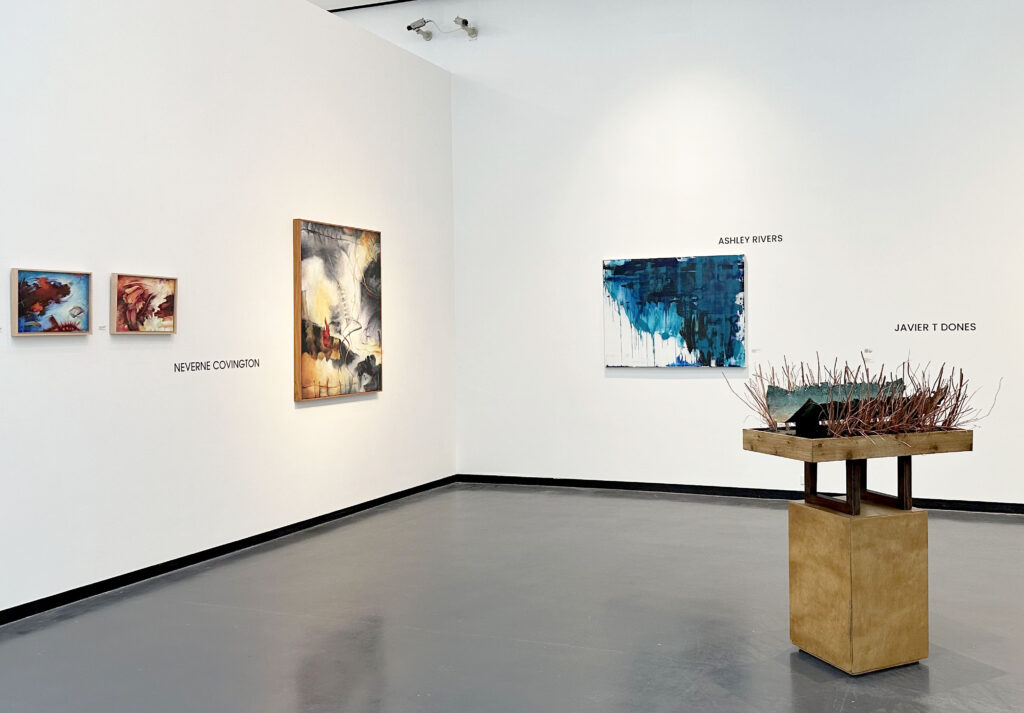
Tatiana Baccari, Elizabeth Barenis, Christina Bertsos, Daniel Barojas, Chomick + Meder, Courtney Clute, Neverne Covington, Sheila Cowley, Patricia Kluwe Derderian, Nikki Devereux, Javier T Dones, Dunedin Music Society, Sara Ries Dziekonski, Sarah Emery, Roxanne Fay, Jean Blackwell Font, John Gascot, Denis Gaston, Mason Gehring, Donald Gialanella, Jim Gigurtsis, Kevin Grass, Sheree L. Greer, Jason Hackenwerth, Steph Hargrove, Patrick Arthur Jackson, Reid Jenkins, Kenny Jensen, Charlotte Johnson, Victoria Jorgensen, Steven Kenny, Candace Knapp, Akiko Kotani, Teresa Mandala, Cora Marshall, Carol Mickett & Robert Stackhouse, Miss Crit, Mark Mitchell, Chad Mize, Desiree Moore, Zoe Papas, Gianna Pergamo, Rose Marie Prins, Gabriel Ramos, Babs Reingold, George Retkes, Heather Rippert, Ashley Rivers, Marlene Rose, Ric Savid, Tom Sivak, Sketzii, Emily Stehle, Rachel Stewart, Erica Sutherlin, Takeya Trayer, Judy Vienneau, Kirk Ke Wang, Angela Warren, and Joseph Weinzettle

The show is on view until 12/31/23.

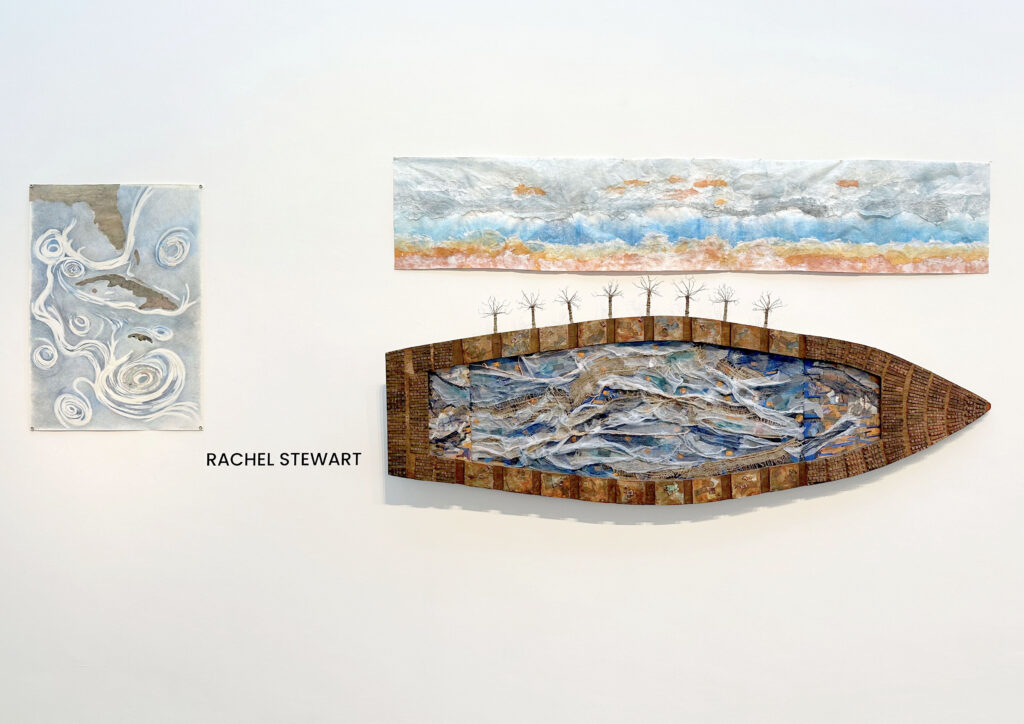
Below are some additional selections from the exhibition.  

Reid Jenkins, “Holding Court”, Acrylic

Candace Knapp, “What the Blue Heron Sees” and “The Light Within” Acrylic on canvas

Daniel Barojas, “Future Ancestor”, Gouache, acrylic, gold leaf on canvas and “Future Ancestor #3”, Gouache and resin on paper

Rachel Stewart, “Caribbean Currents” Colored pencil, oil stick and collage on Archers archival paper; “Under a Different Sky”, Wall installation Painted relief wood construction with cooper and mixed media materials; Printing Ink and collage on rice paper

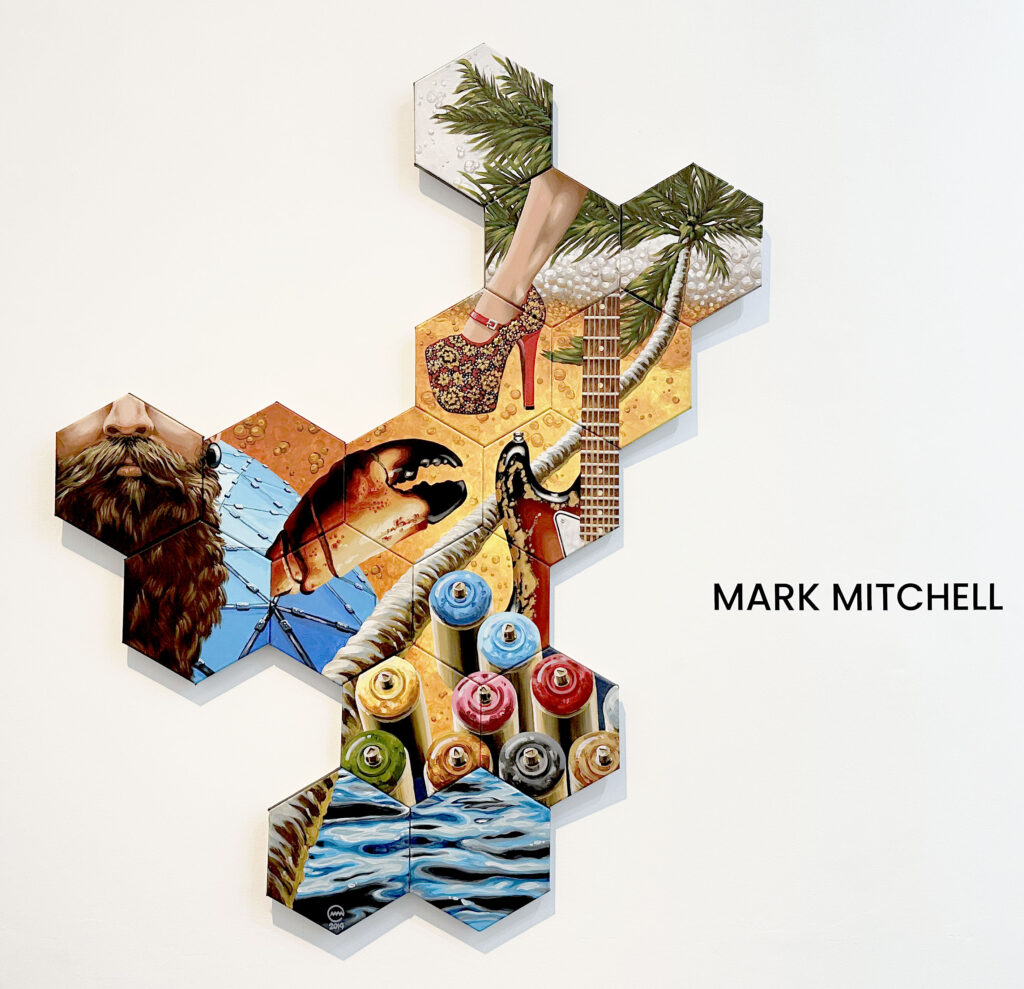
Mark Mitchell, “The BurgHive”, Acrylic on Hexagonal canvases

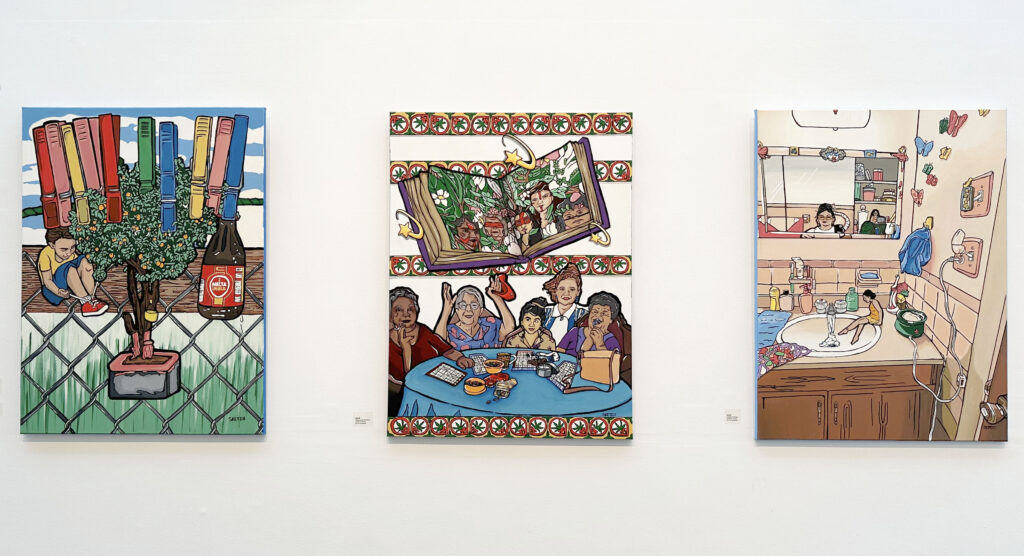
Sketzii,”Out of the Pink Concrete”, “Reclamando Mis Raices” and “A Señora’s Dream”, Acrylic on canvas

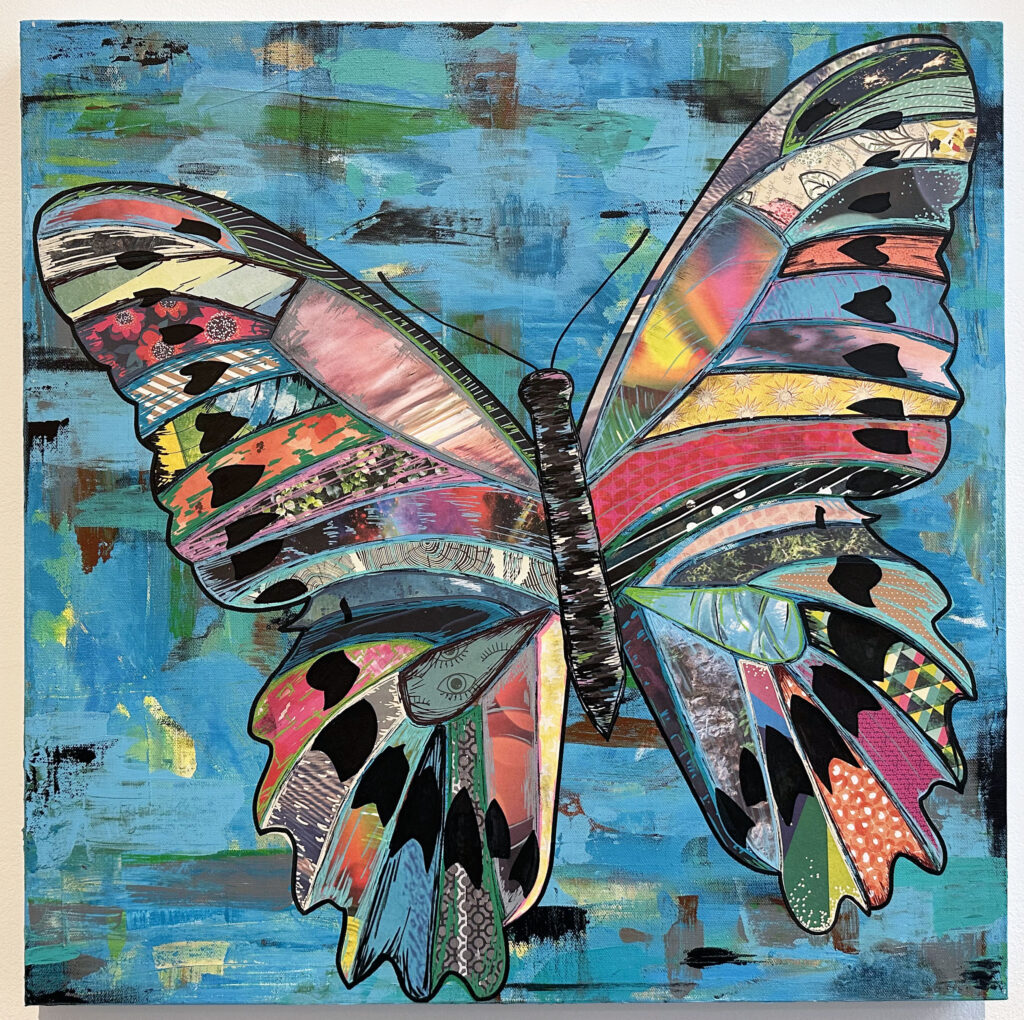
Steph Hargrove, “Catch You Later”, Acrylic paint, paper on canvas

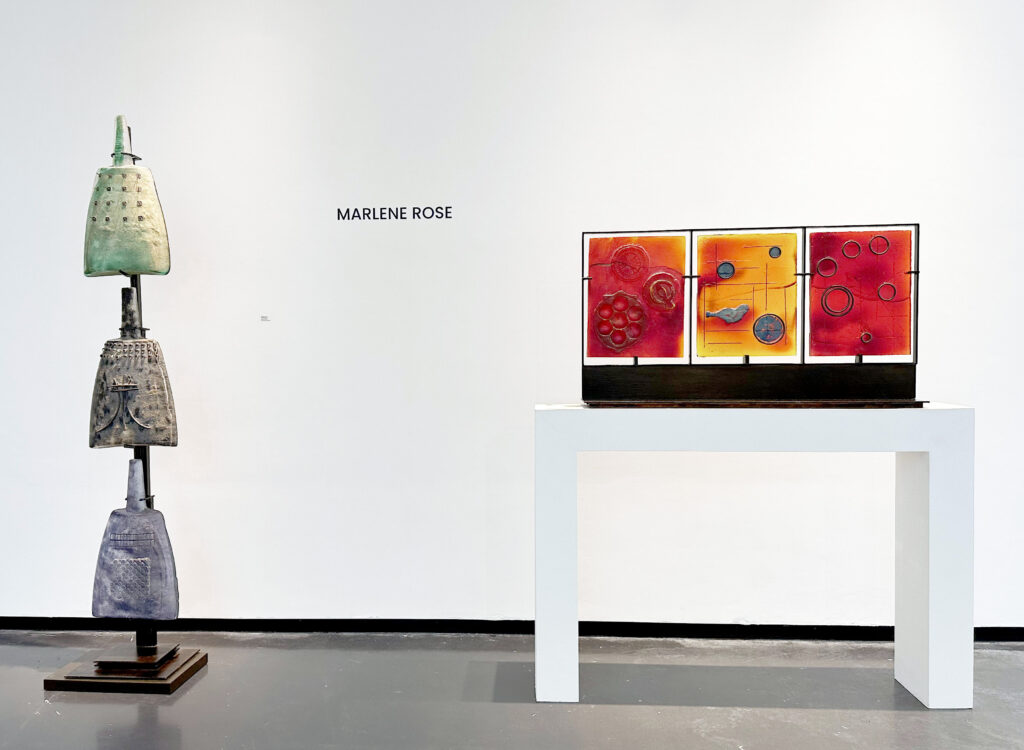
Marlene Rose, “Three Bell Tower”, Sandcast glass and “Map Triptych” Sandcast glass

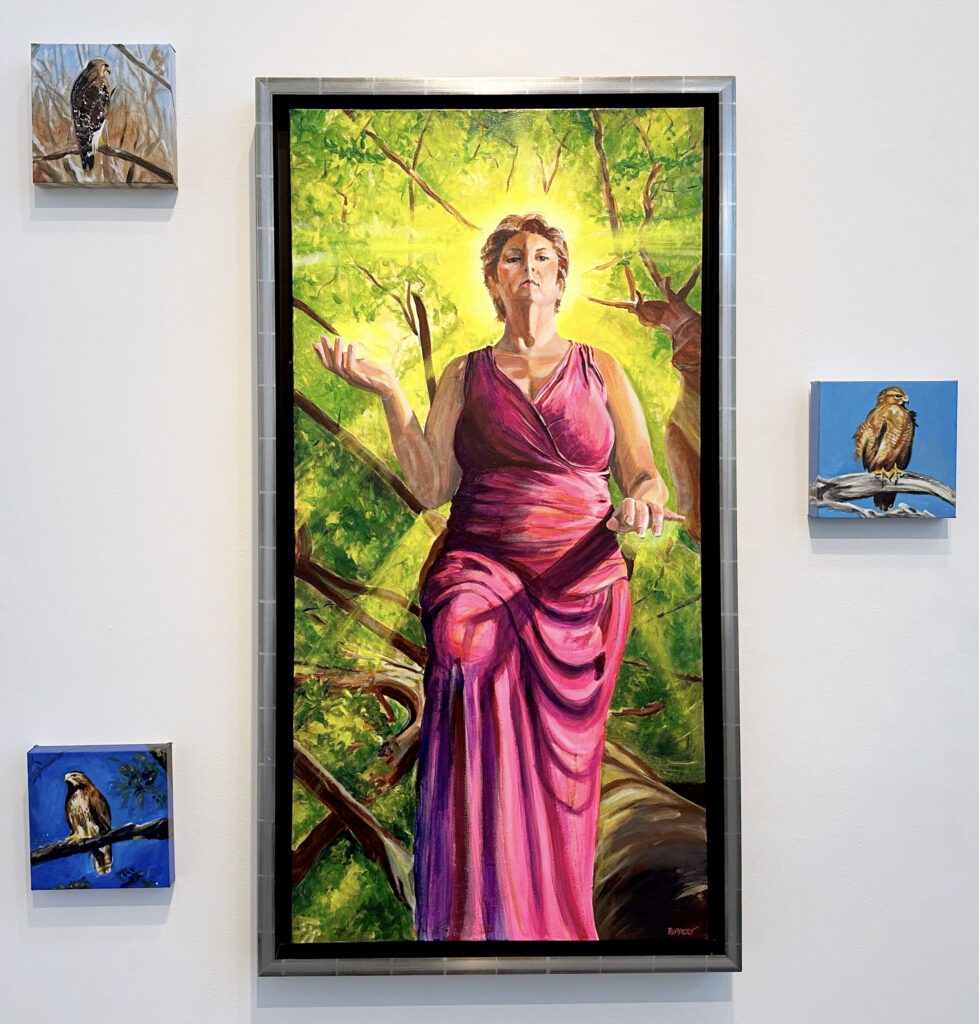
Heather Rippert, “Shakti” (center) and “Hawk 1, 2, and 3”, acrylic on canvas


Dec 072023
 

V.J. Hagenbuckle, “On Mars”, 2020, Oil on canvas

Paintings by V.J. Hagenbuckle

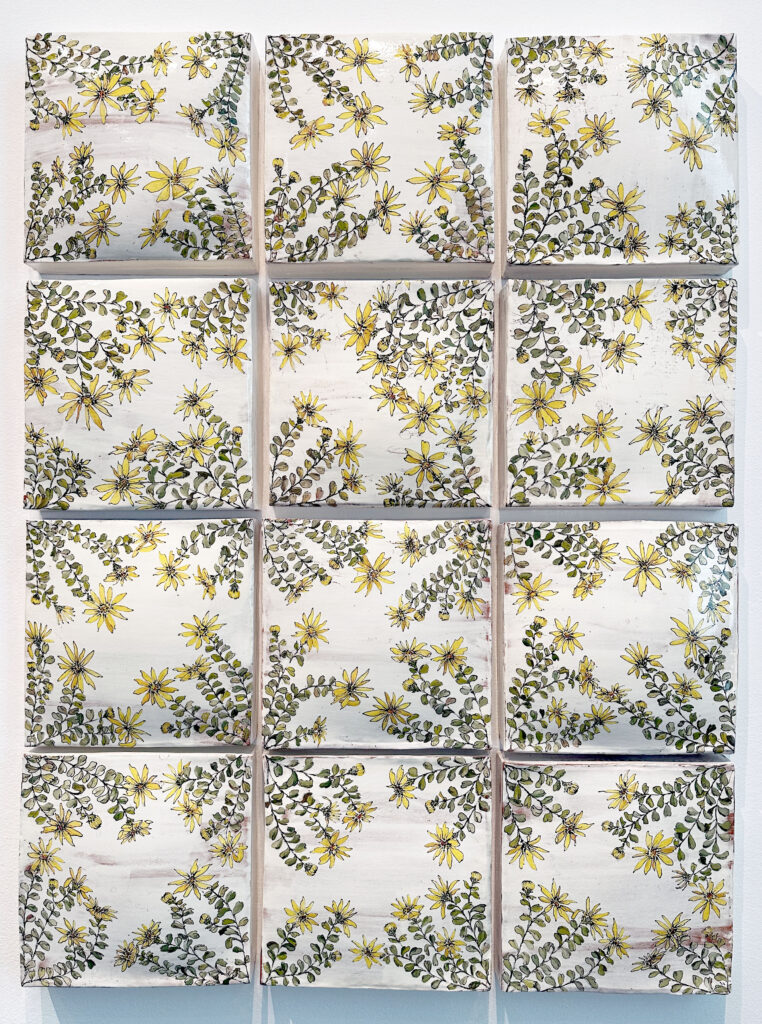
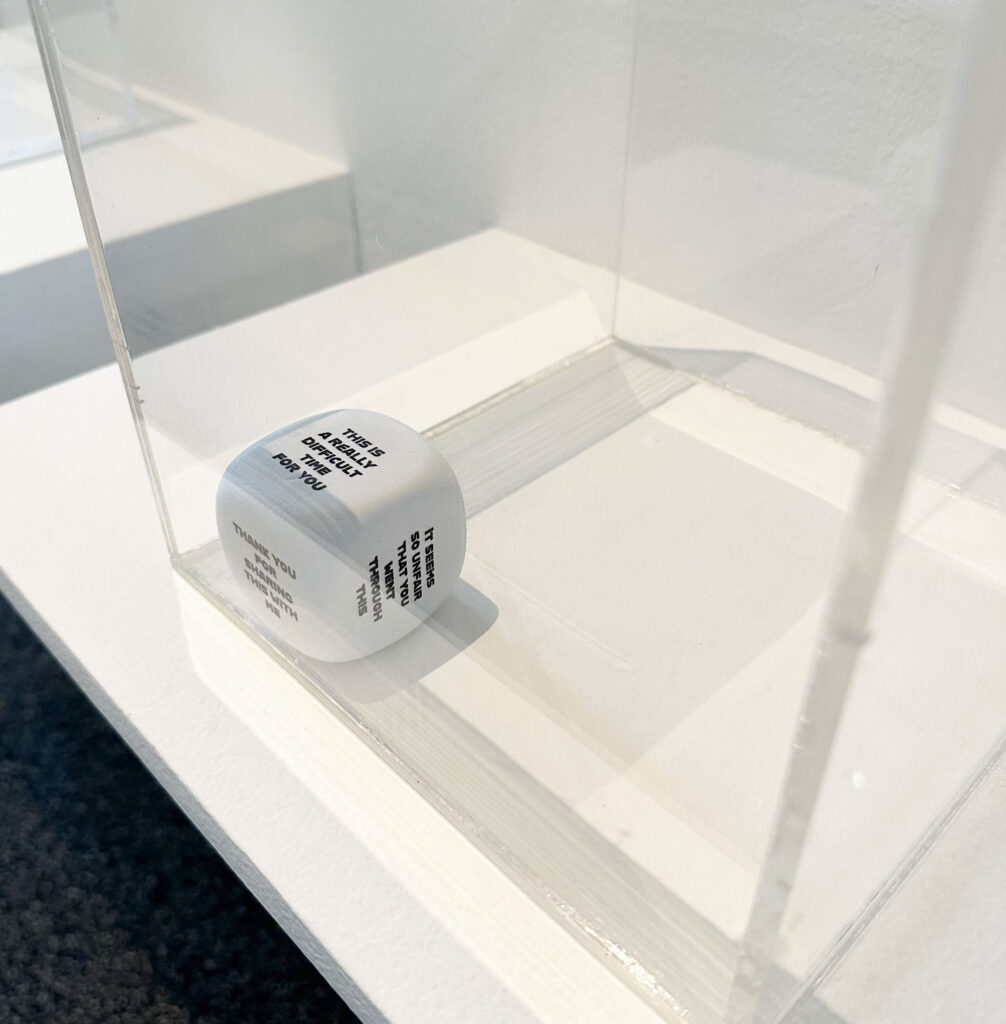
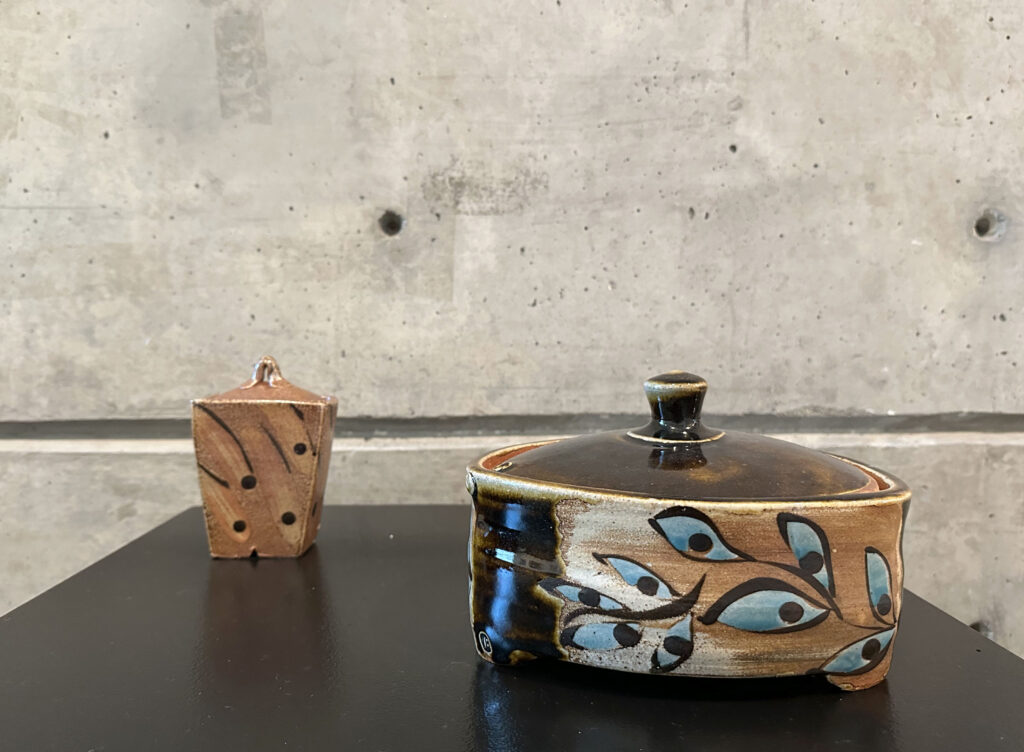
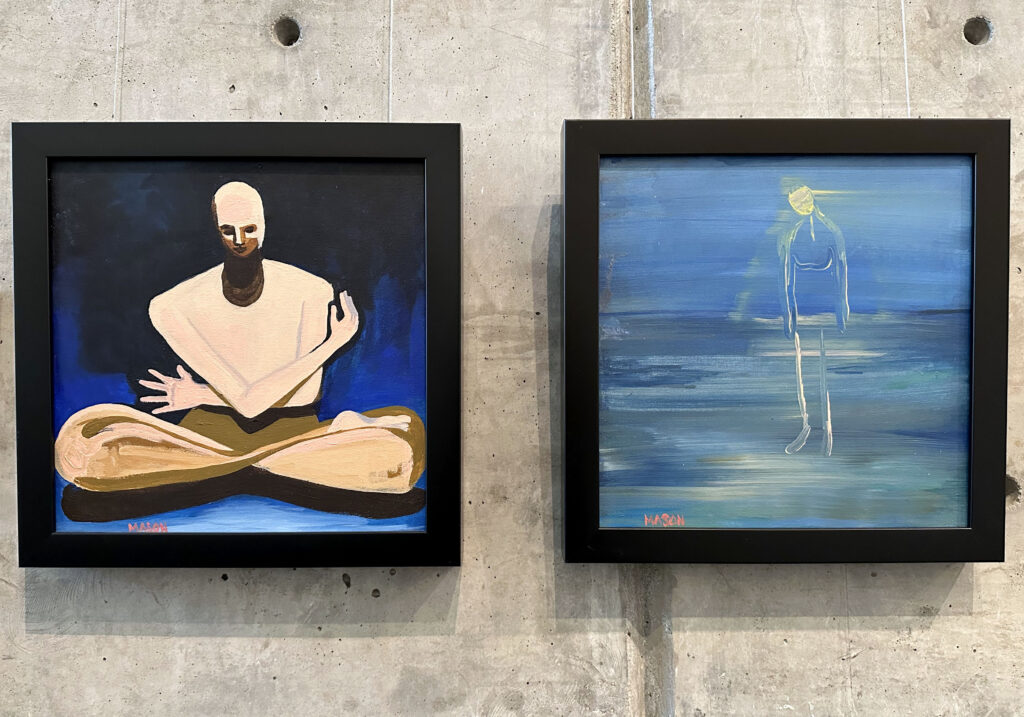
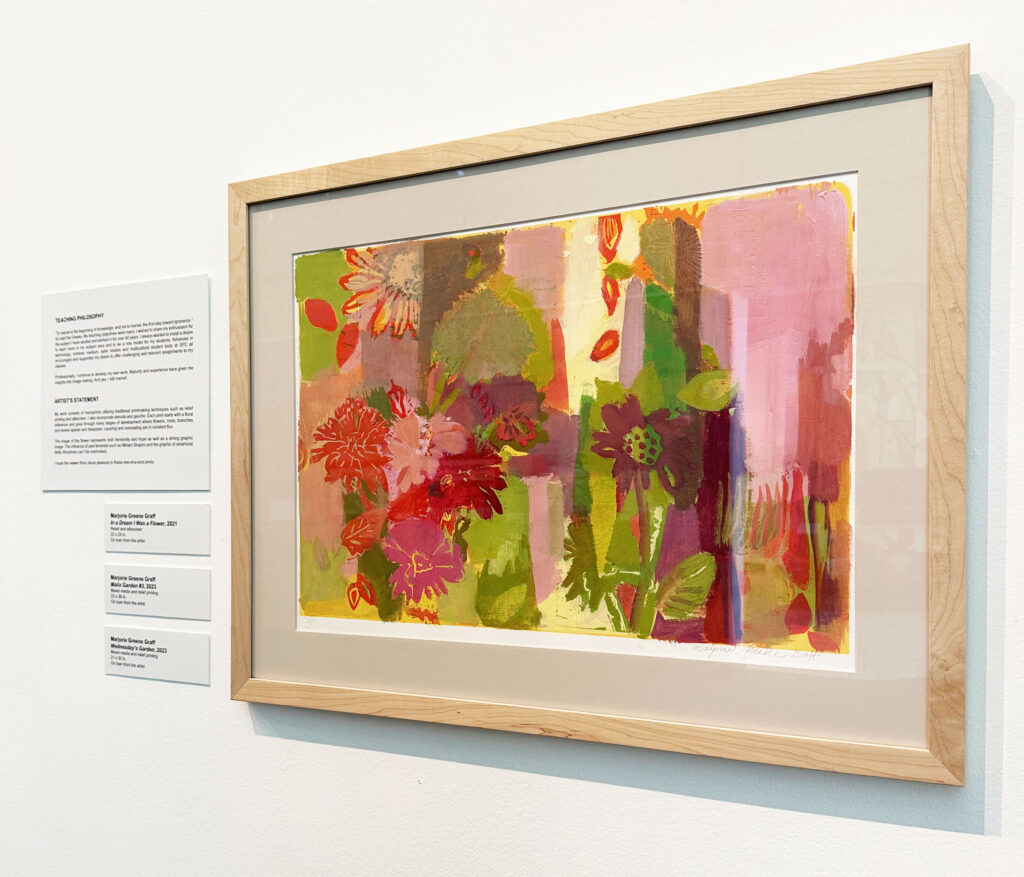
There are many incredible artists living and working in the Tampa Bay area and quite a few of them also teach. Leepa-Rattner Museum of Art in Tarpon Springs is currently showing work by faculty from the Visual Arts department at St. Petersburg College. In addition to a statement about their work, each faculty member also contributed their teaching philosophy.

Artists included in the exhibition- Jonathan Barnes, Nathan Beard, Ragan Brown, Mason Gehring, Barton Gilmore, Kevin Grass, Marjorie Greene Graff, Jennifer Guest, Jim Hagenbuckle, Elizabeth Indianos, Kim Kirchman, Michaela Oberlaender, Krishna Sadasivam, and McKenzie Smith.

Tonight, 12/7, Jim Hagenbuckle will be giving a talk at the museum at 6pm.

This exhibition is on view until 12/17/23.

Michaela Oberleander, “Bleed Out”, 2010, Acrylic on canvas

Kim Kirchman, “Cultivating What Might Be Lost”, 2022, Terra cotta with slip transfer

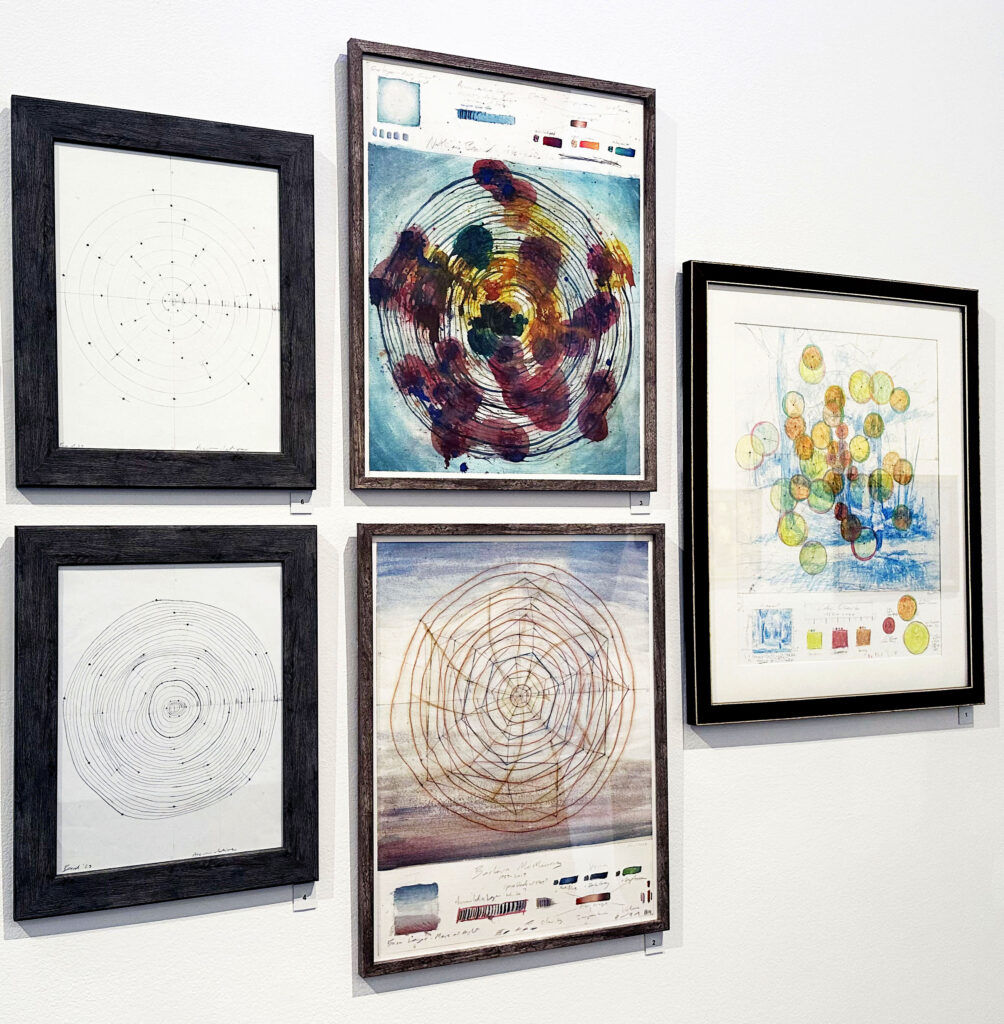
Work from Nathan Beard’s “LIFE LINES”

Nathan Beard’s description of this recent personal and intriguing project (pictured above)-

The Memory Map works on view here are my very newest attempt at understanding the role that fallible memory plays in the shaping of culture and self. These small watercolor studies are Phase II of LIFE LINES, a grand 3-part project in which I am examining my family’s memory of themselves and making artwork that tells their story. I plan to collect all of these studies into a singular book that can be handed down through the generations, or perhaps even preserved in a museum for everyone to see.

To create Memory Maps, I have created a survey for each family member. I ask them some general genealogy questions, since this survey will also function as a historical record, including their three favorite colors. I then ask them to try to remember each year of their life, from birth til now, and assign a rank between 0 and 5 for a) how clear their memory of the year is; b) how important that year was for them; c) how “good” or “bad” the year was. I add these columns together to get an “Accumulative” data set that I use to create a skeleton composed of alternating pentagons and hexagons that rotate as they expand. This part is important since it incorporates movement through time and space as we grow outward. Using the fact that our life’s journey always wavers, I then connect the points and end up with a “map” that resembles the cross-section of a tree, and contains all the metaphors associated with tree rings and natural growth cycles.

The most important visual development presented itself with Cate Clark, where I allowed myself the freedom to incorporate representational imagery. I asked my wife about her favorite place ever, and she surprised me with the family trip we took to Letchworth State Park in upstate NY. I found a picture from that trip with our daughter Vera standing at the edge of wood, and proceeded to paint that memory in resemblance of an antique plate. I also allowed myself the freedom to stray away from the tree ring aspect, while still using the data skeleton to place the bursts of color.
For more information, his artist talk is available here.
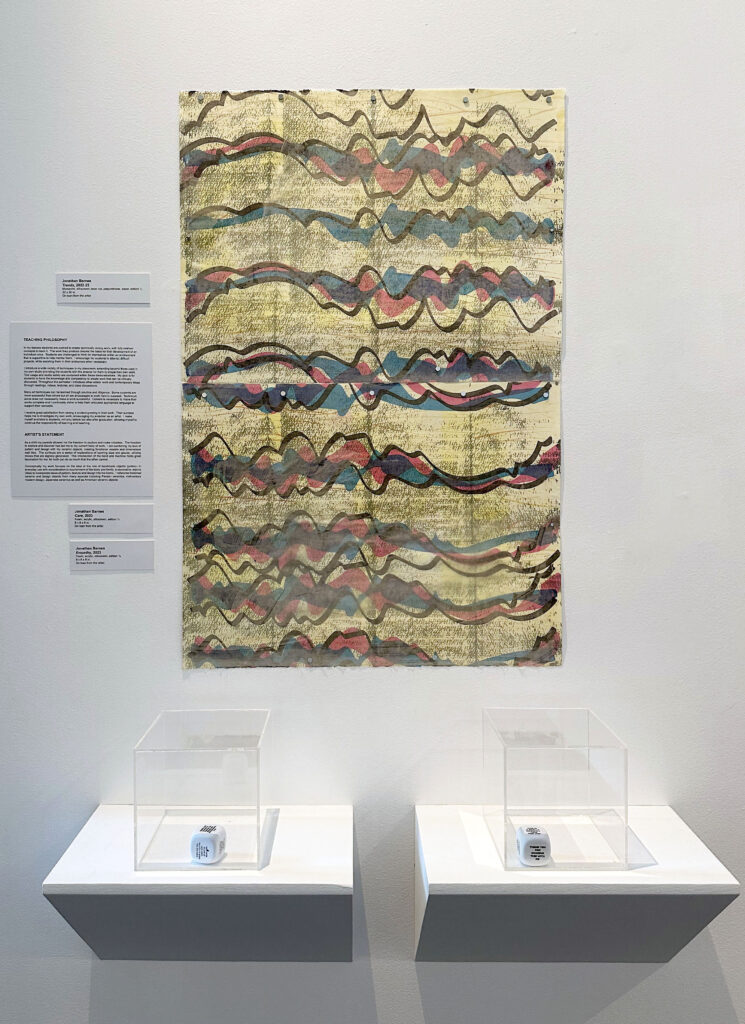
Work by Jonathan Barnes

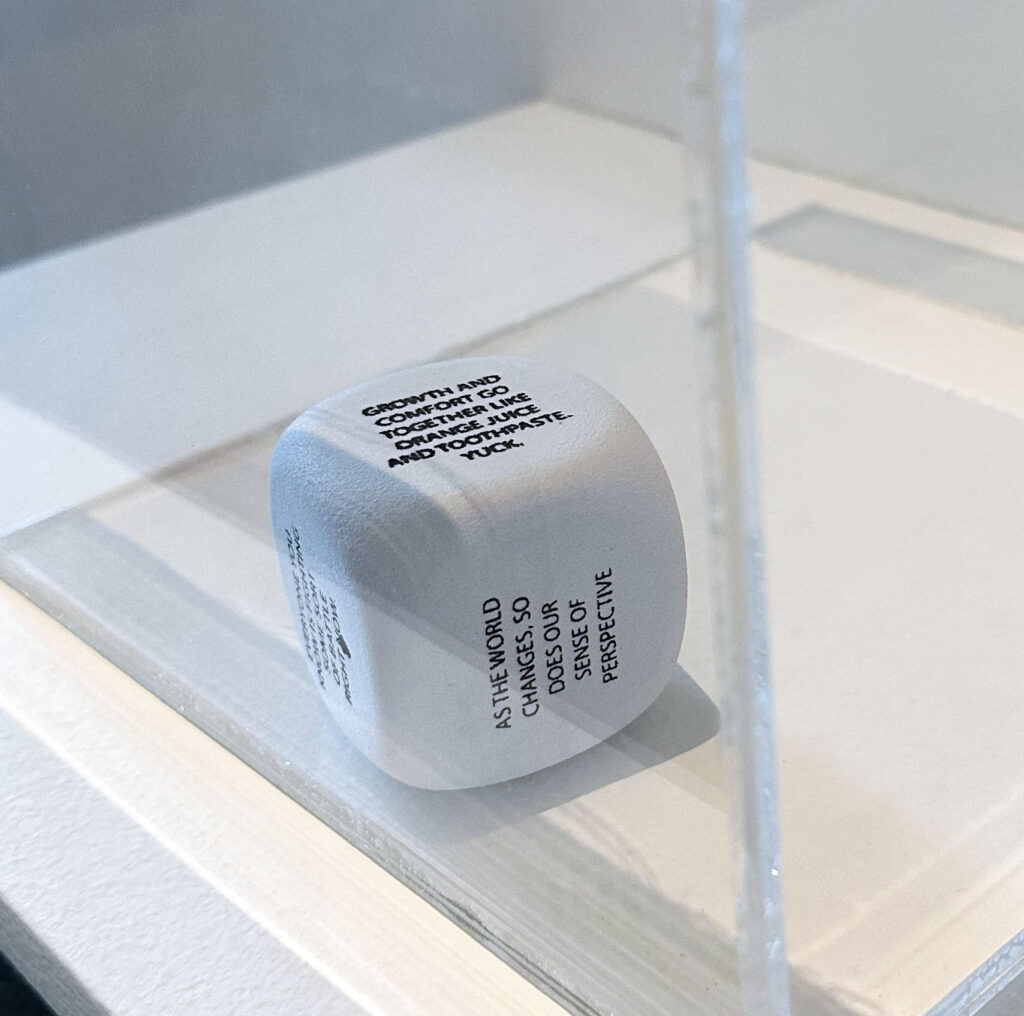
Sculpture by Jonathan Barnes

Sculpture by Jonathan Barnes

Soda/Salt Fired stoneware by McKenzie Smith

Acrylic on canvas paintings by Mason C. Gehring

Relief and silkscreen by Marjorie Greene Graff


Artists continue on page 2.

Dec 072023
 

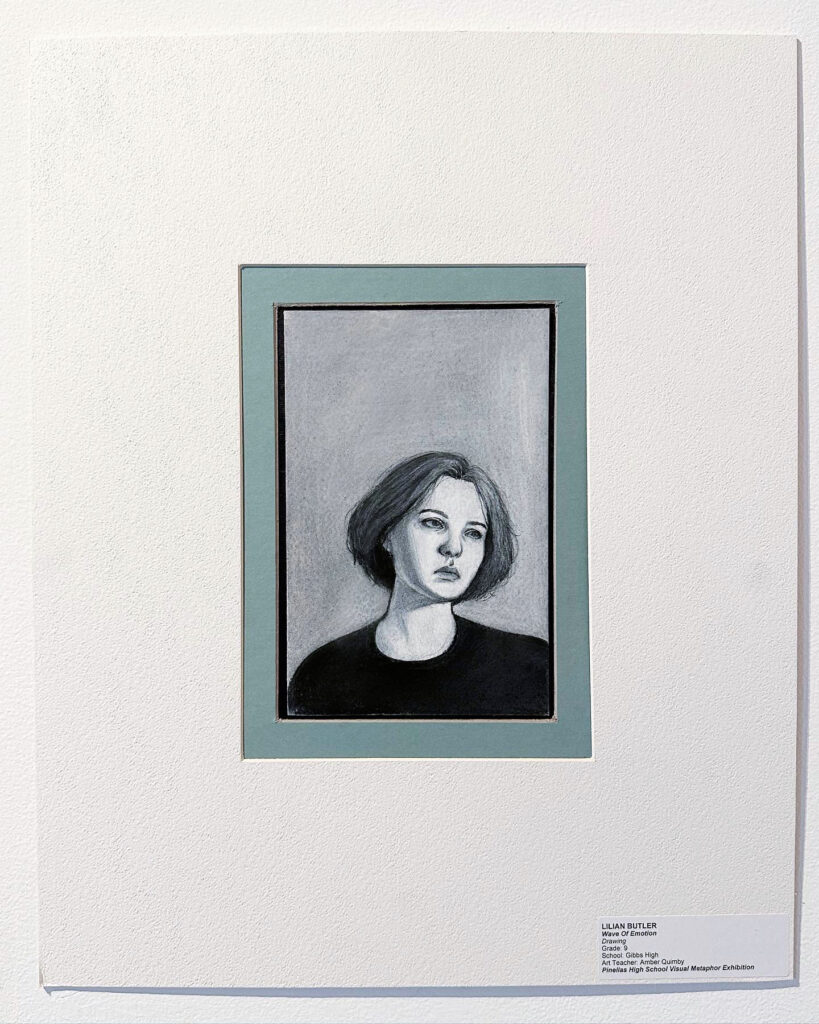
Lilian Butler, “Wave of Emotion”, Drawing

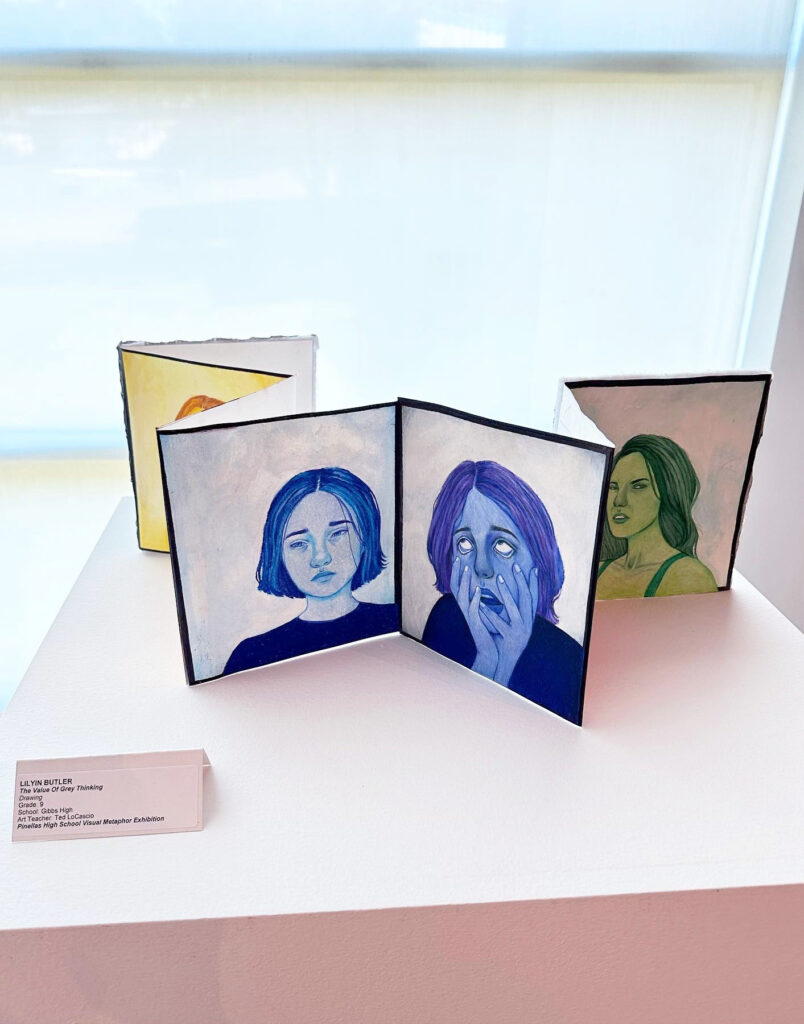
Lilian Butler, “The Value of Grey Thinking”, Drawing

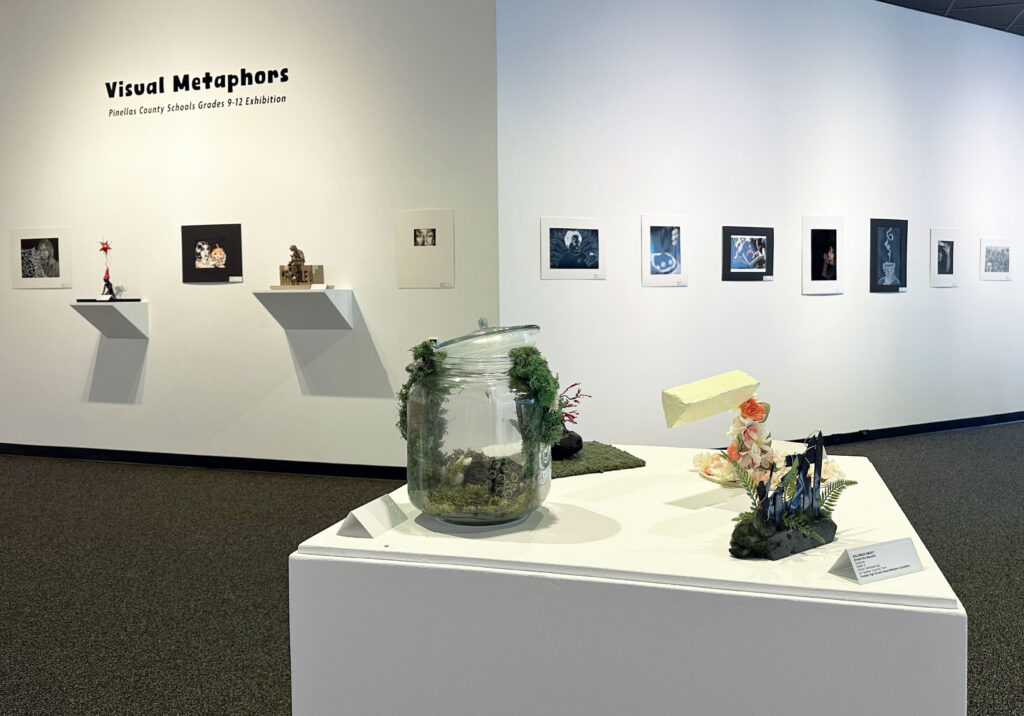
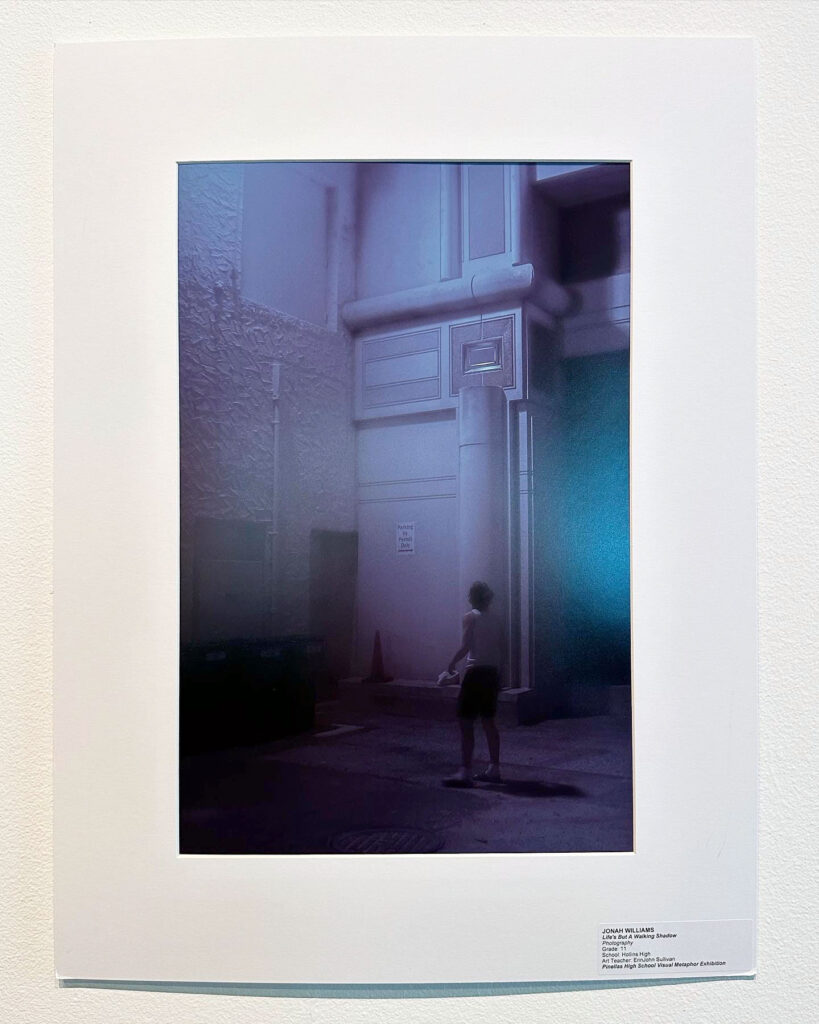
Currently on view at Leepa-Rattner Museum of Art in Tarpon Springs is Visual Metaphors, an exhibition of impressive work created by Pinellas County public high school students. Hopefully this is just the beginning for these young, talented artists.

From the museum-

Presented in partnership with Pinellas County Schools (PCS), this exhibition presents a selection of two- dimensional and three-dimensional work from public high school students in grades 9-12. Like its namesake, Visual Metaphors are comparisons used to create a heightened awareness or emotional connection to a statement, a figure of speech, or condition. Think “raining cats and dogs,” “rollercoaster of emotions,” or “tongue in cheek.” A visual metaphor represents a person, place, thing, or idea by means of an image that shows a particular association or similarity. The students asked themselves “How will I convey a visual metaphor through my art? Will I illustrate a metaphor that is part of everyday speech, a cliché, a poem, or a lyric? Are there seemingly unexpected images that I can combine to create a metaphor? Will the metaphor be humorous, subtle, or overt?”

Now on view at the Leepa Rattner Museum of Art (LRMA) for the first time, this installation of Visual Metaphors is a continuation of an exhibition series, which was previously hosted at the Museum of Fine Arts, St. Petersburg, for the last thirty years. LRMA is proud to continue our partnership with PCS, as well as showcase the incredible talent that makes up our student communities.

This show will be on view until 12/10/23. Below are a few more selections.

Jonah Williams, “Life’s But A Walking Shadow”, Photography

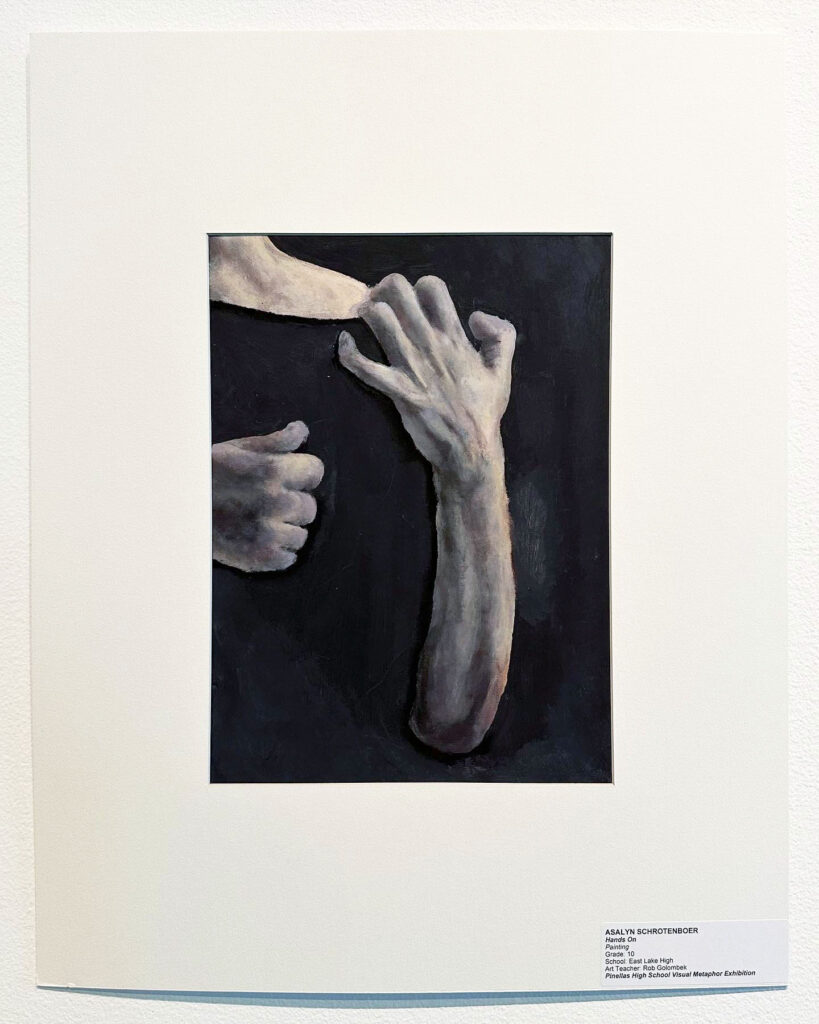
Asalyn Schrotenboer, “Hands On”, Painting

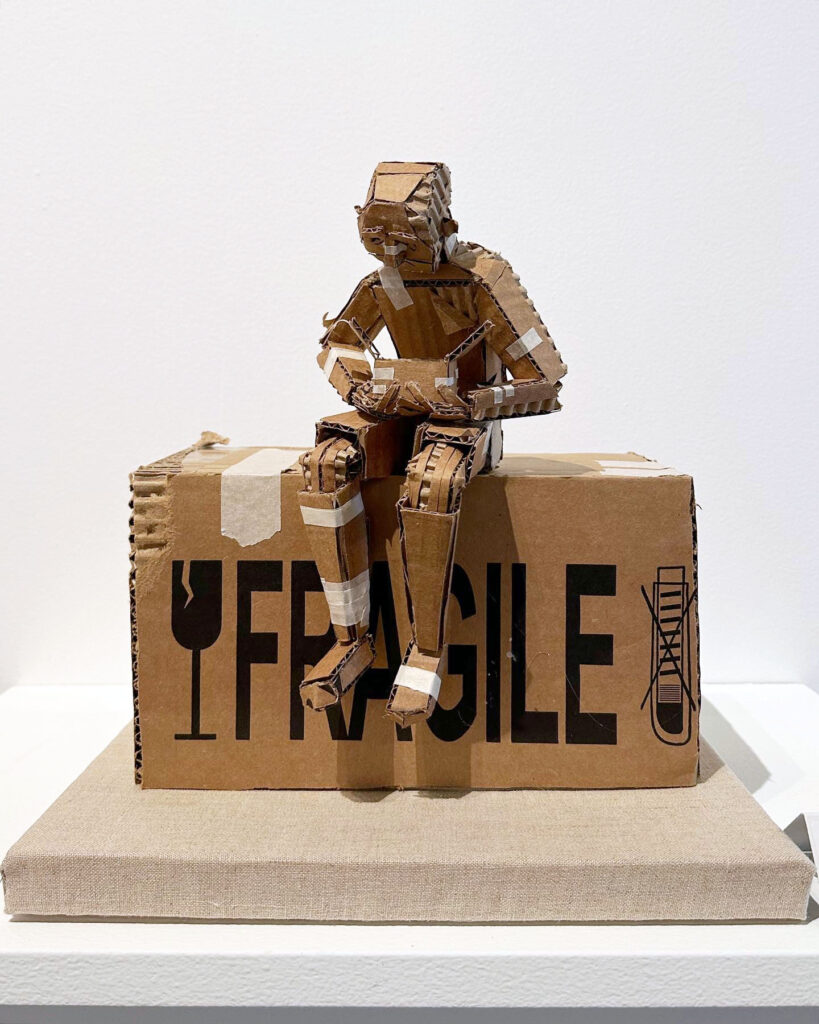
Siena Van Beynen, “Handle With Care”, Sculpture

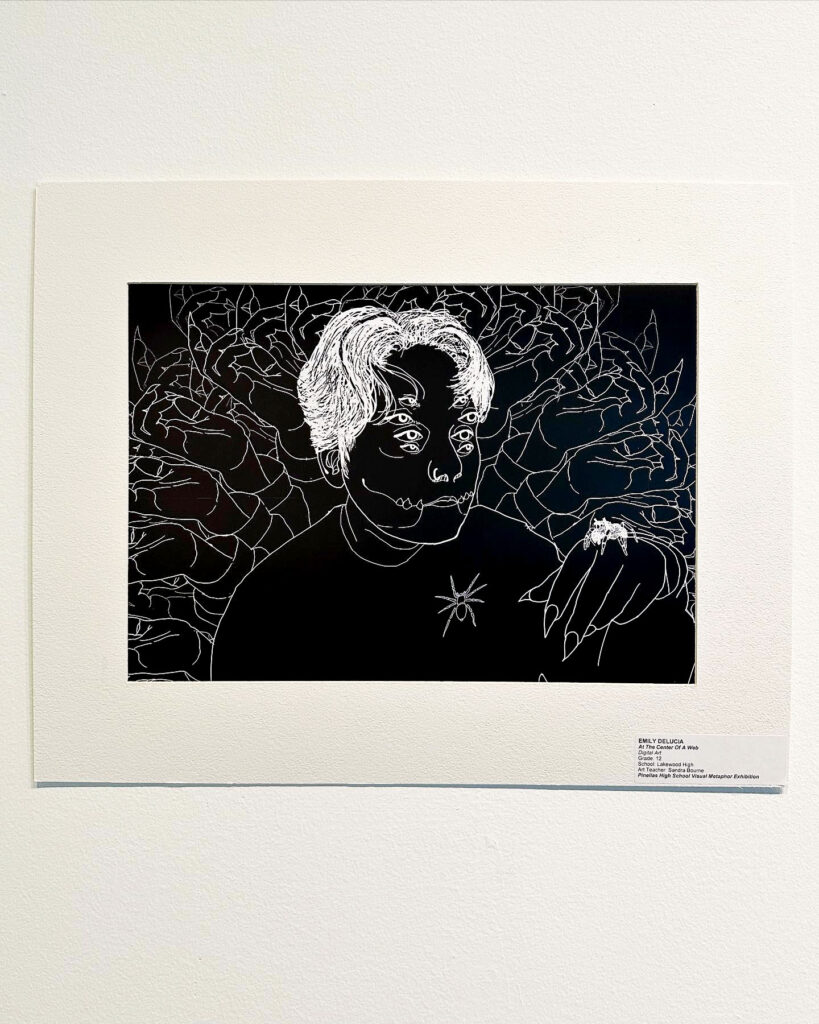
Emily Delucia, “At The Center of A Web”, Digital Art

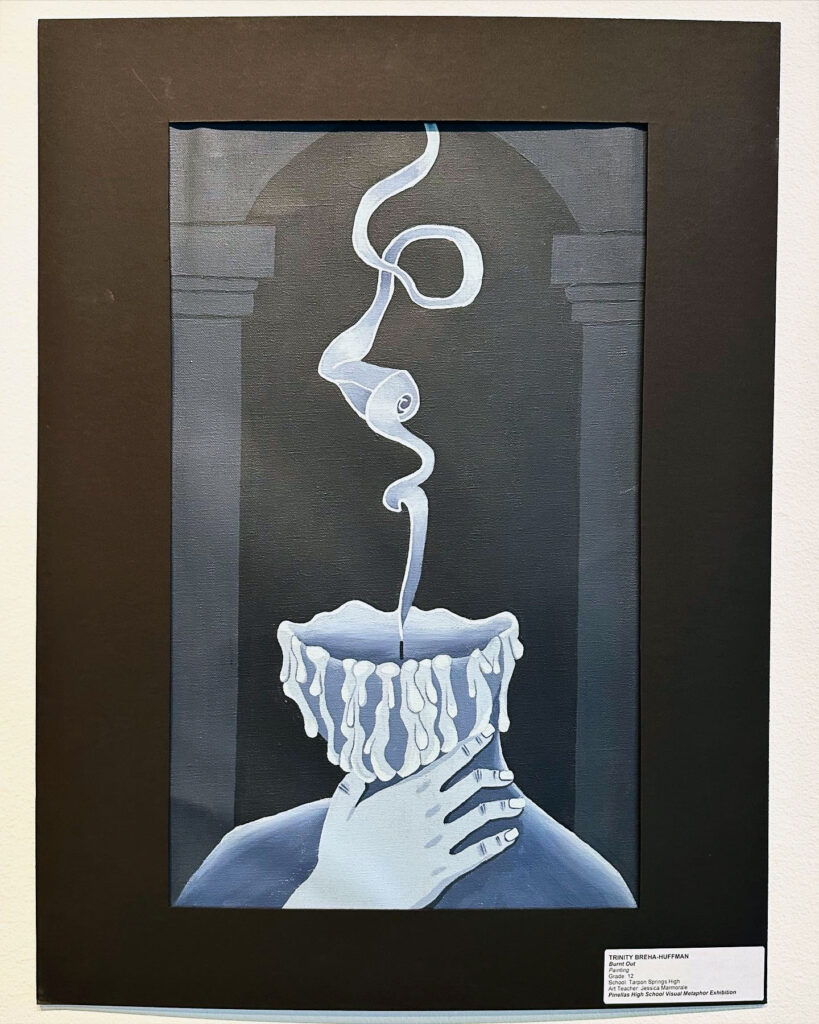
Trinity Breha-Huffman, “Burnt Out”, Painting

Sela Marks “Power is A Fire That Can Be Controlled or Released”, Drawing, and Mia Lemmons “Her Star Shines The Brightest”, Sculpture