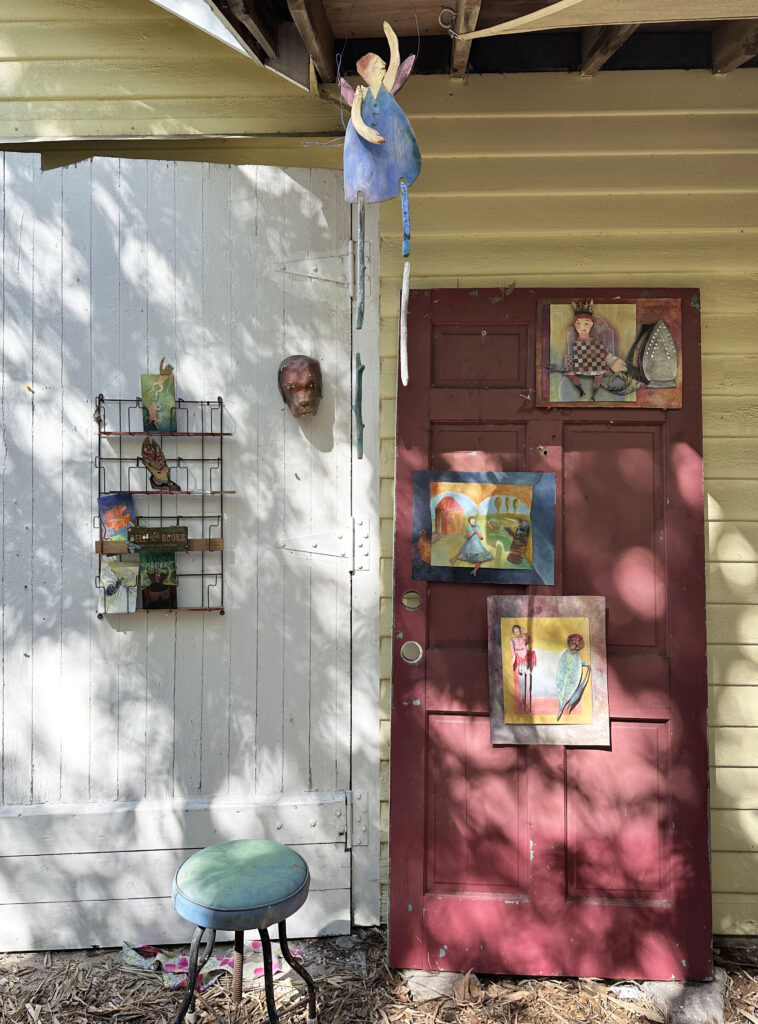
Founded by artists Barbara Gerdeman and Elizabeth Goodwill, Creative Liberties opened its first location at the end of 2021 and the second in February of this year. Along with the artist studios, the space hosts exhibitions and classes for children and adults.
The exhibition space and tables from a finished class from September 2023
If you go make sure to also check out the delightful Free Little Art Gallery. Created by artist Judy Robertson and modeled after the Free Little Libraries, you are encouraged to take a piece of art, leave a piece of art, or sometimes just admire what’s been donated. There is one for work by adults and for children’s art work.
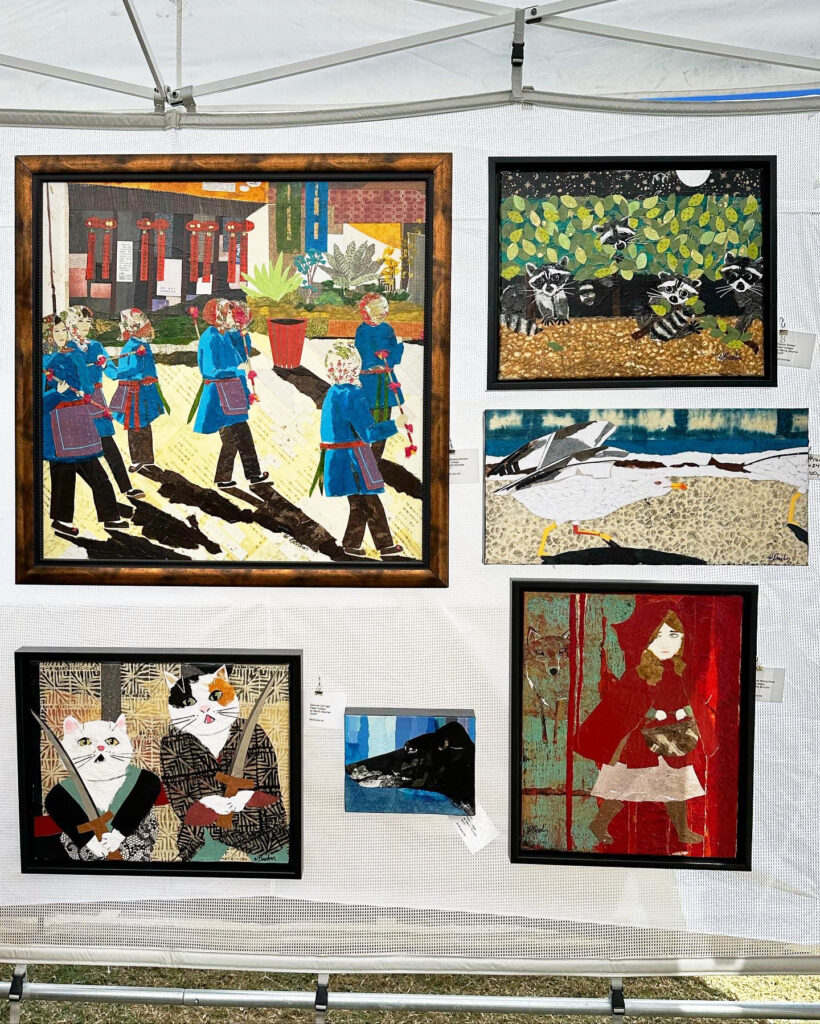
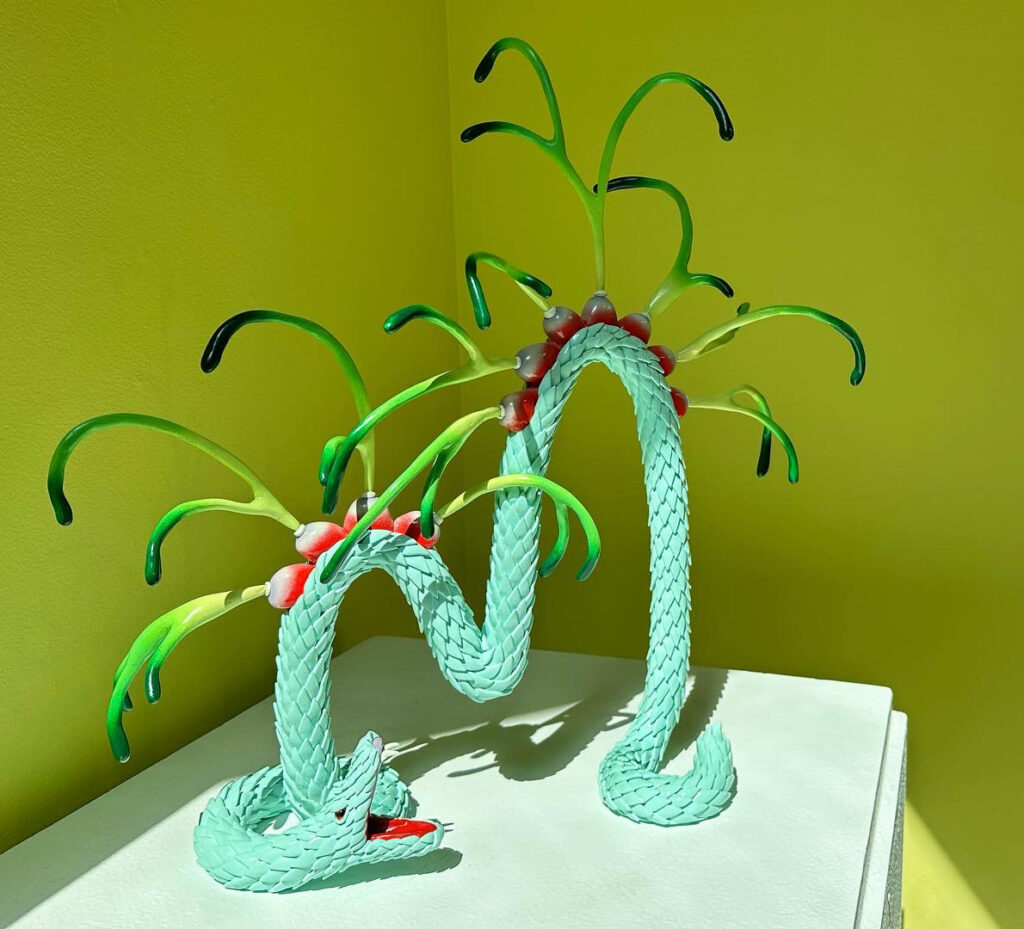
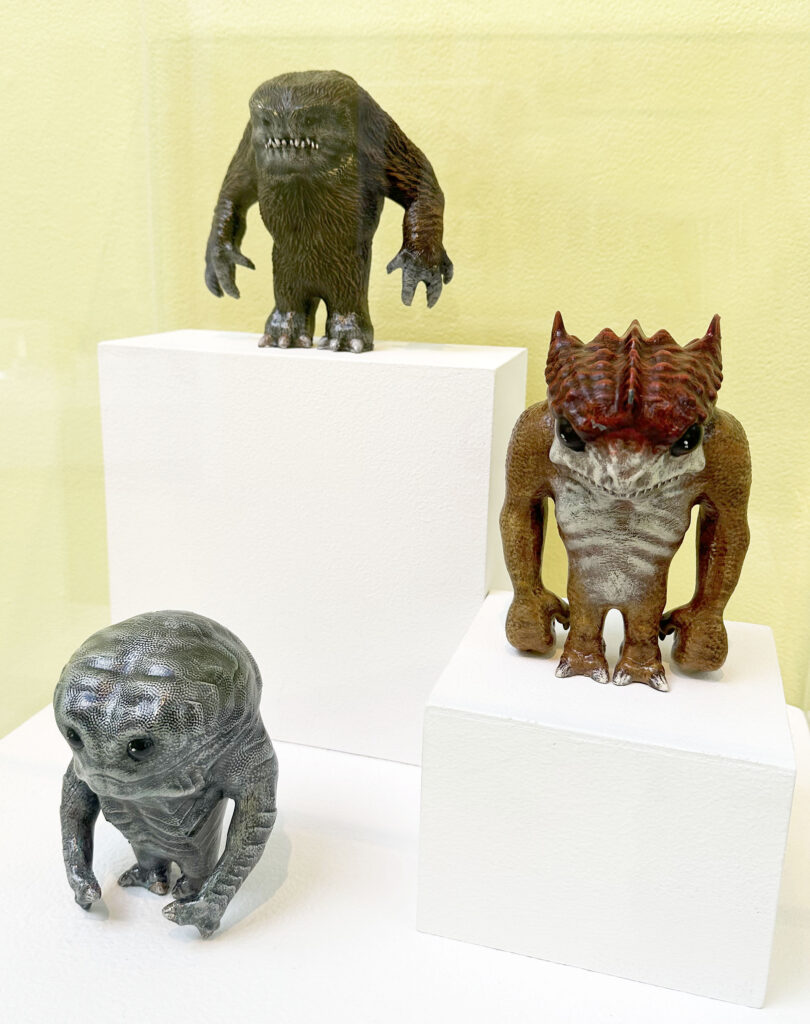
Below are images from a few of the artist’s spaces in the Creative Liberties buildings.
The weather this past weekend was perfect for enjoying two big outdoor art events in the Tampa Bay area- the annual Art Harvest juried art show in Dunedin and the autumn edition of the biannual Art in the Yard event in Gulfport (the next one is next year in March).
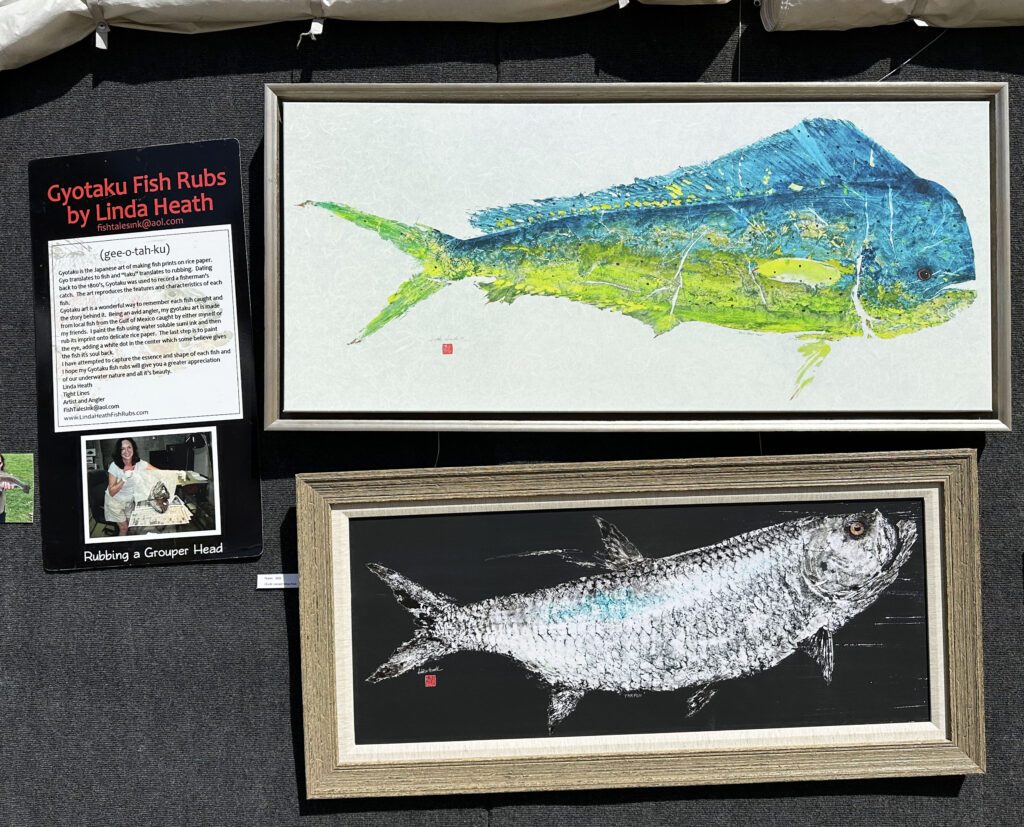
Linda Heath (work above) uses the Gyotaku technique to make prints from the fish she catches in the Gulf of Mexico.
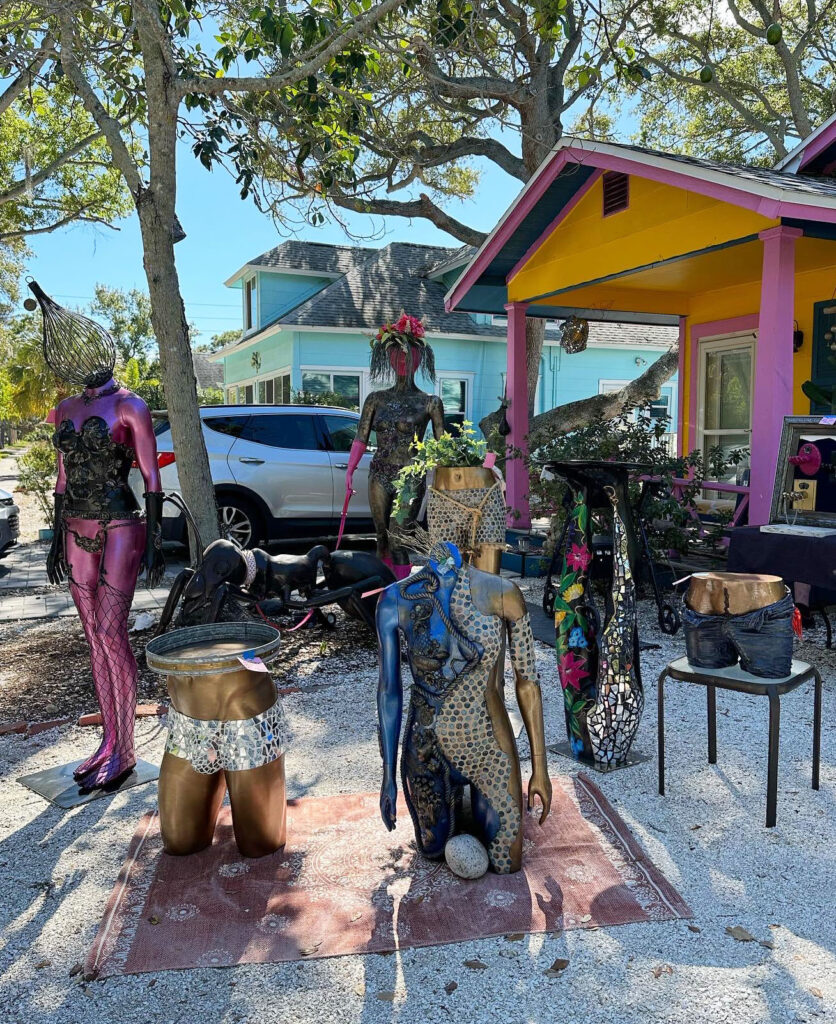
Below are a few artists from Art in the Yard-
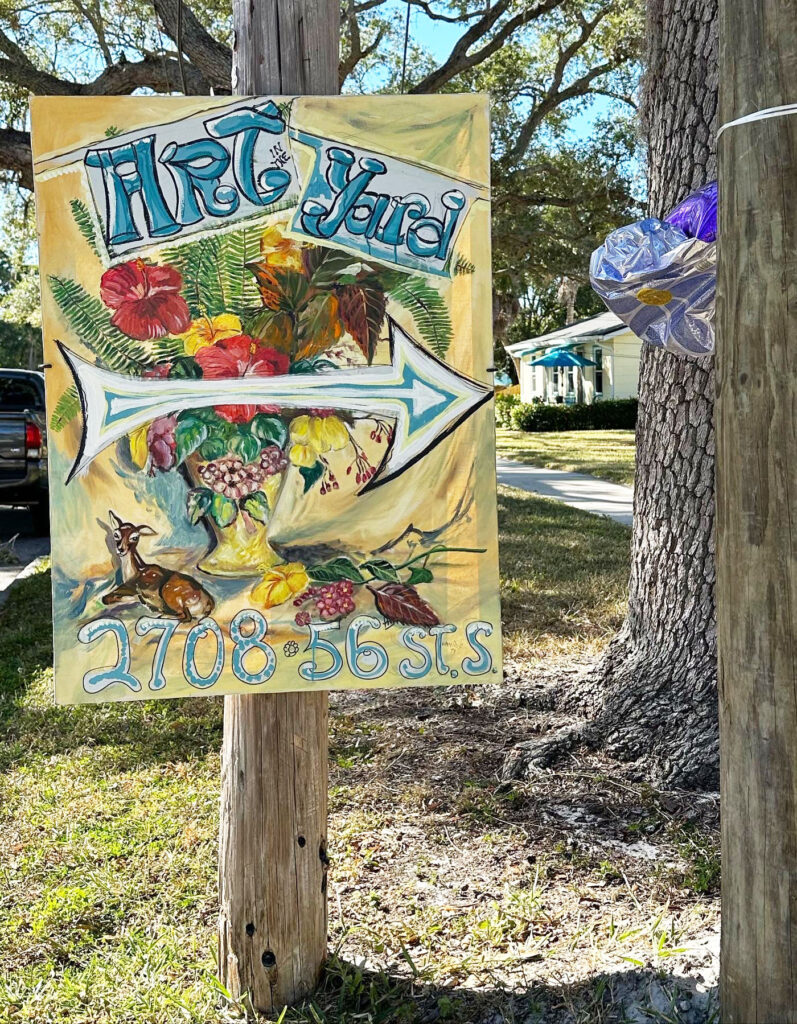
A homemade sign from Art in the Yard
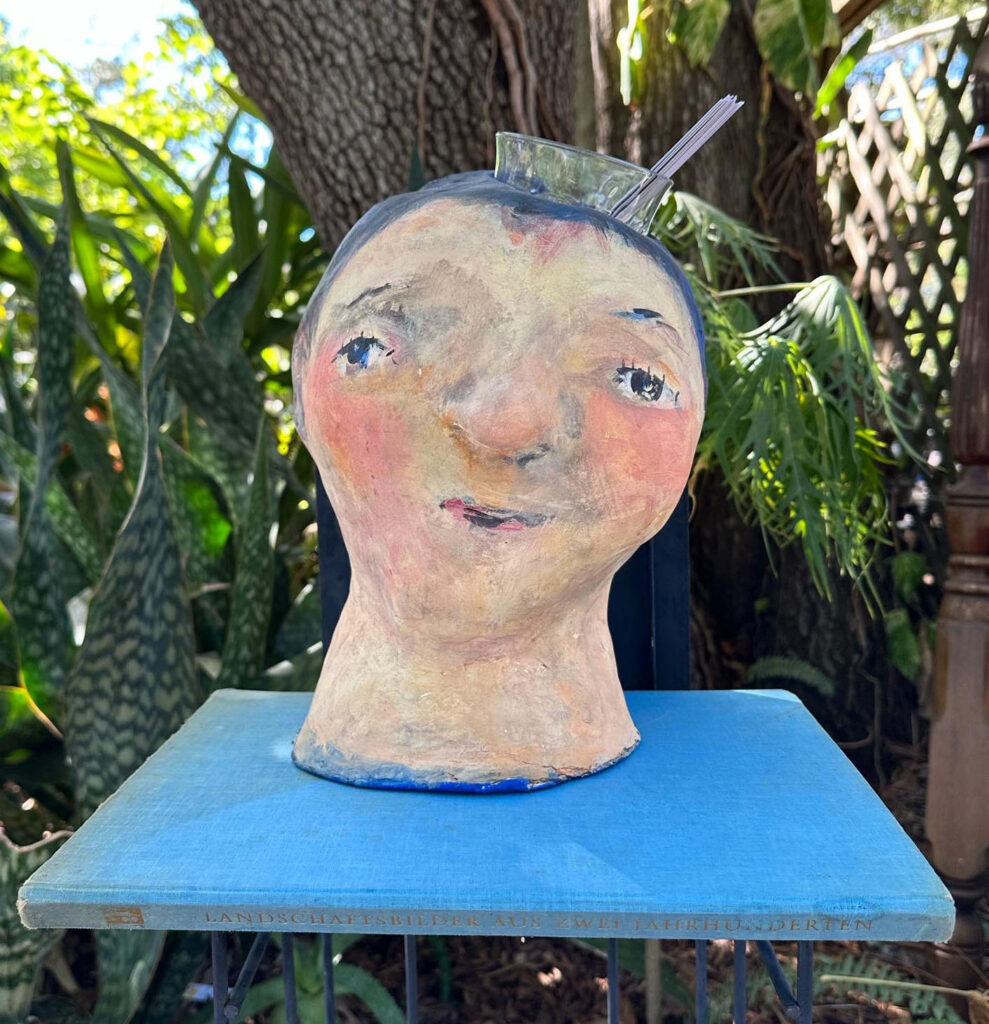
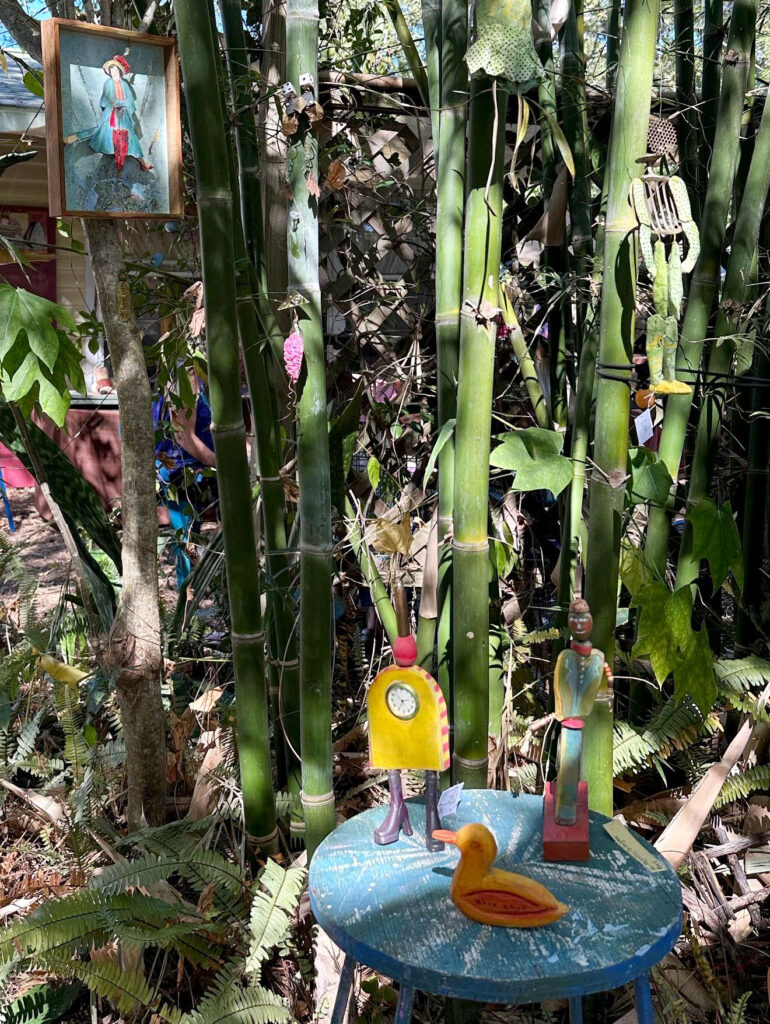
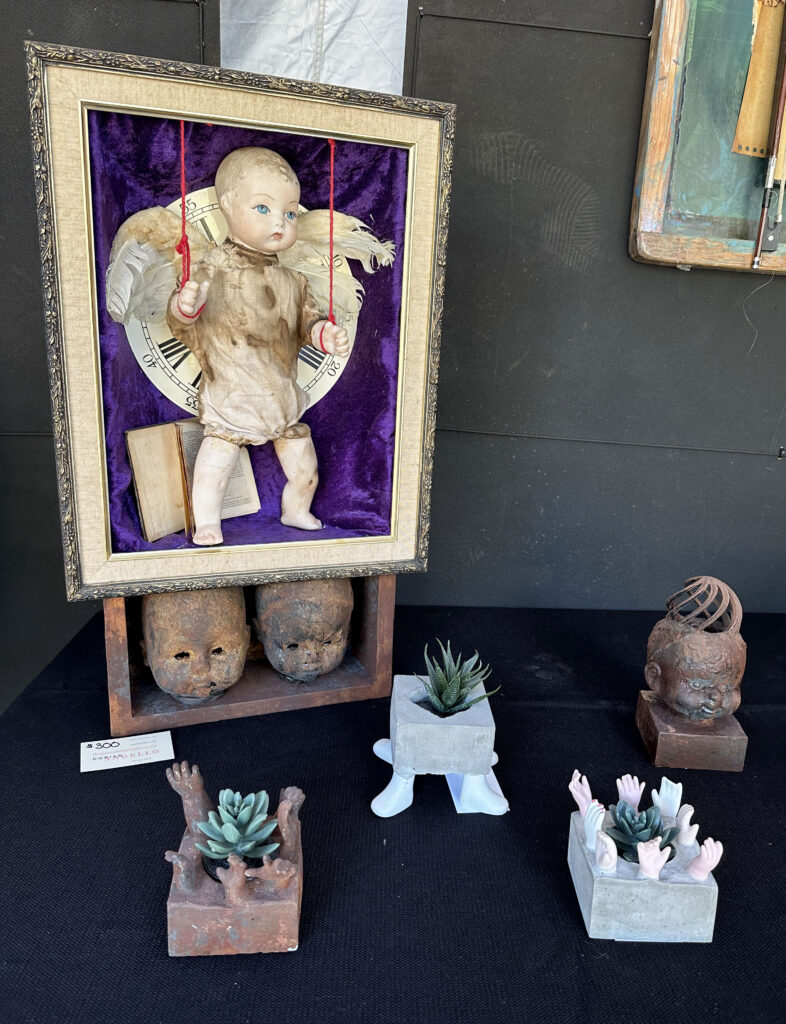
Art in the Yard is a great way to interact with local Gulfport artists and to see their creations. Stopping at the home of The Oiseaux Sisters (Susan Andrews and Carolyn Fellman), is a journey into their whimsical world. The head above was filled with little cards with their website and a different word, like a fortune, on each. My card read “Surrender”. All around their property you can find work hidden among the vegetation, on walls, and in among tables of materials they use for their work.
Hobby House– where art meets self-indulgence, subversion meets humor, and creativity meets absurdity. With ceramics, sterling silver, a little photography and a lot of gemstones Hobby House presents objects that are meticulously crafted for no good reason other than looking fabulous. Hobby House contemplates the places and practices of art making with humor, irony, and a little wit.
Jenn Ryann Miller explores materiality and aesthetics through sculpture and painting. With a background in functional ceramics, her work subverts tradition and process through the experimentation with oblique materials and forms. Miller has been part of numerous solo and group exhibitions in Florida and the United States. Originally from Connecticut, she received a BFA from the University of Connecticut and MA from the University of South Florida. Miller currently teaches ceramics at the University of South Florida.
In another of the Tempus Projects gallery spaces is Justin Myers‘ exhibition, What Did We Use To Say, seen below, which uses collage along with a video and sound installation to explore the concept of memory.
From the gallery and artist-
What Did We Use To Say? Trying to remember things from the past from distorted and fragmented memories. Is that really how it happened? With intention, the mind has the ability to erase just as easily as it does create. The mind decides what stays and what gets purged for the new. Are you in control? Or is the subconscious doing as it pleases? In this work, I explore deconstruction, recomposition, and sampling, and their impact on memory and perception.
Justin Myers, a Tampa Native, is a member of music projects Justin Depth, Alien House, and Diamond Man. He also is the co-founder of Tampa-based record label, Image Research Records.
Justin studied printmaking at HCC in Ybor City and began experimenting with sculpture and installation-based works during his time there. Myers finds inspiration from discarded imagery, random thought, and spontaneous actions. Over the last 10 years, Myers has participated in numerous exhibitions at Tempus Projects, including the T-shirt shows, Mix Tape Show, Return to Sender, and an offsite window installation as part of a partnership with Downtown Tampa and more. In 2020, Myers partnered with his brother, Jeremy Myers on a virtual exhibit with Tempus Projects titled, “One Day of Perfect”. Justin has been involved with Tempus Projects since his music project Alien House made its debut performance in November of 2011.
Both of these exhibitions are on view until 12/14/23.
Spooky season may be coming to a close but there is still time to see the ghosts, and the artists behind them, in At Home with “City of Ghosts” at Dunedin Fine Art Center. Thoughtfully curated by Nathan Beard, the exhibition focuses on artwork, in a variety of mediums, by 17 of the artists who helped create the award winning Netflix series City of Ghosts.
Created by Elizabeth Ito, City of Ghosts follows a group of children as they track down and record stories about the history of Los Angeles from the ghosts who also live in the city.
Luis Grané– “Pool Maintenance” , acrylic on canvas
“La Mejor Herrencia”, Maqueos-Gonzalez family photos and “Maqueos Music (Banda Oaxaqueña)”, 2023, video by Decibel Studios LA with Los Angeles based clarinet player Yulissa Maqueos
Pendleton Ward (left) and Elizabeth Ito (right) both created Pepper’s Ghost animations for the exhibition
The Ybor City Arts Tour was last week and was a great way to check out the many spaces currently in the Ybor City area. The Kress Contemporary building with its multiple galleries, artist studios, performance space (The Fringe Theatre), and microcinema, was definitely a highlight.
The above images are of sculptural work by Edgar Sanchez Cumbas (he was also in the Department of Contemporary Art group show in the same building). It is just one of the rotating works you can find while walking around the space.
Below are some selections from the event.
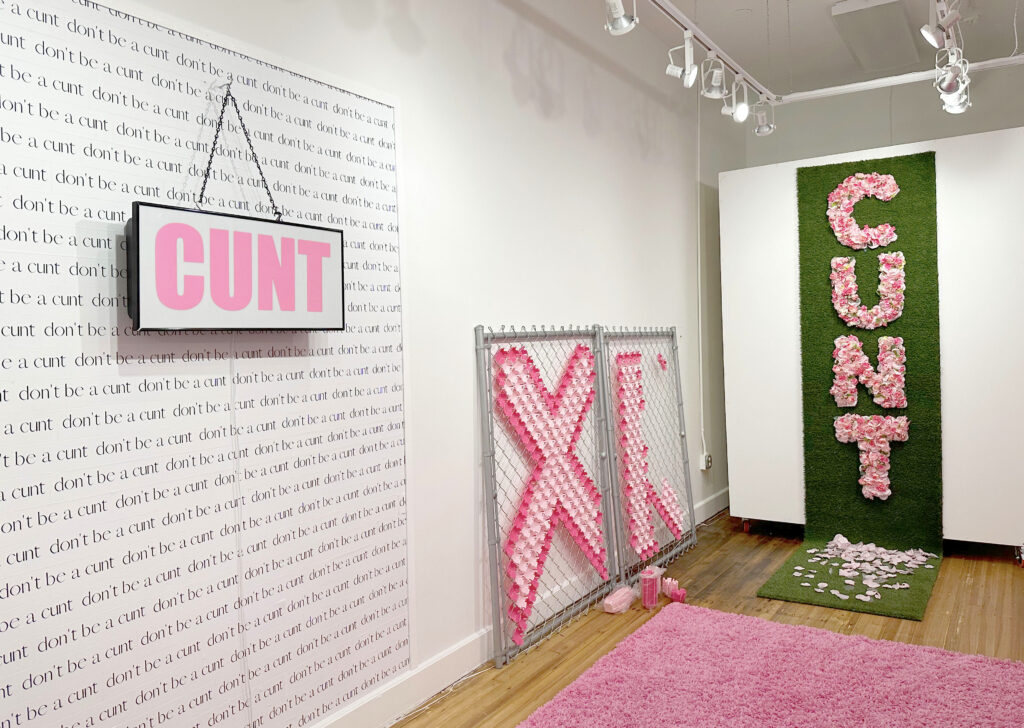
Kim Radatz opened her space, currently showing an installation focused on the “C” word.
Screen Door: An Ybor City Microcinema is always showing interesting films from a variety of genres. Pictured are the seating area and the movie posters lining the hallway outside of the film viewing area. For the art tour they were showing past Flex Fest short films.
On the third floor are a large group of artist studios with several walls hanging work by many of the artists.
Self taught painter Karol Batansky just moved in to her new studio from the Ybor Art Colony which is closed while currently being renovated.
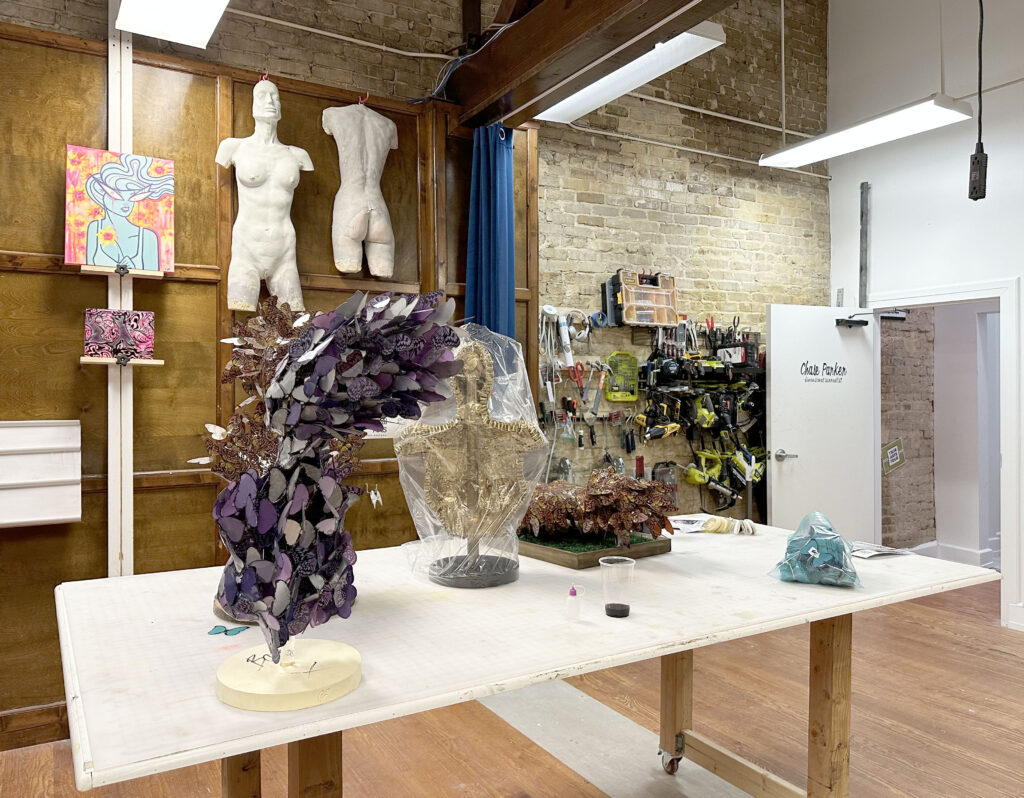
Mixed media artist Chase Parker makes a variety of work, including the unique sculptures pictured above.
Ron Watson creates highly detailed drawings at his Shades of Gray Studio.
Below is one of the common spaces filled with work by a selection of artists. It’s always worth a trip up from the 2nd floor galleries even if most of the artists are not in their studios to see what’s new.
Anthony Freese “State of Emergency”, 2023 vinyl and “Termination”, 2023 3D print
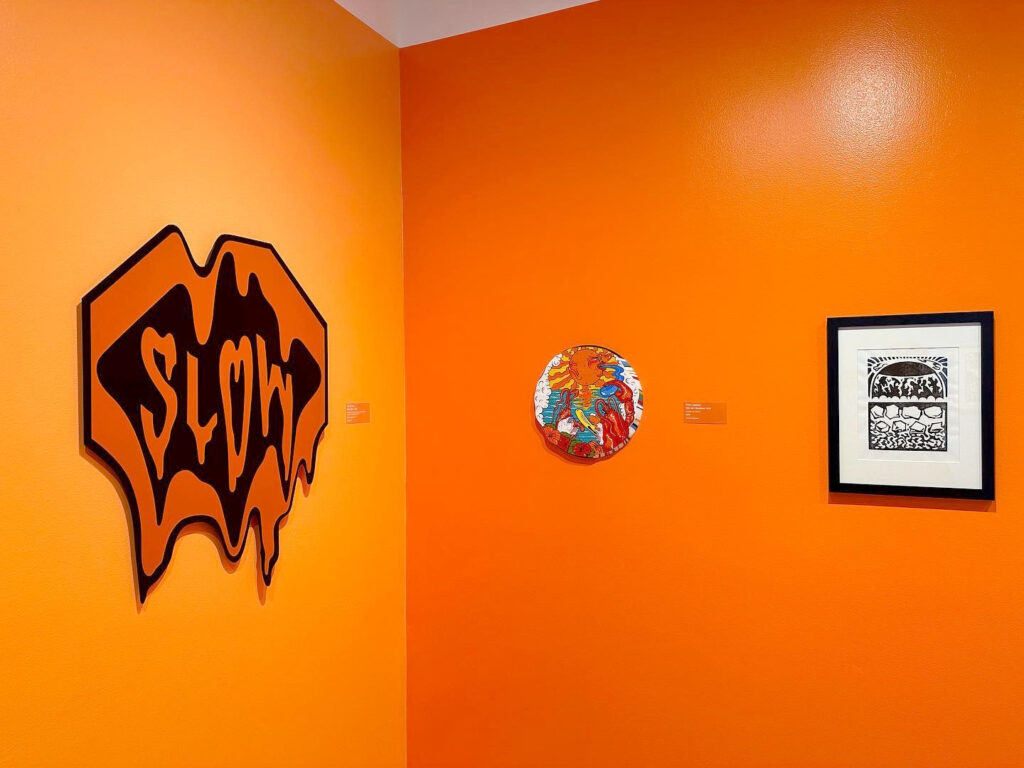
(L to R) Jay Giroux “Slow Burn”, 2023, waterborne acrylic on aluminum sign panel mounted to MDF; Ryan Lagasse, “This Isn’t Sunshine”, 2023, acrylic on wood; Blake Bailey, “Solar Pressure”, 2023, linocut relief print
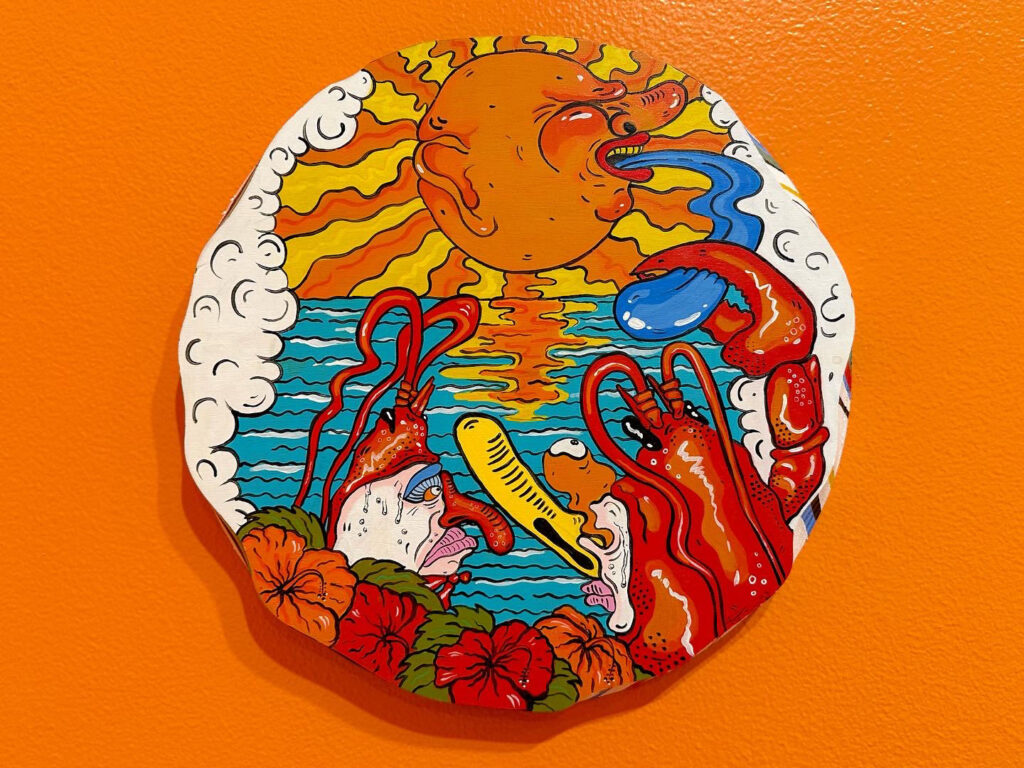
Ryan Lagasse “This Isn’t Sunshine”, 2023, acrylic on wood
Jay Giroux, “Drug Store”, 2023, acrylic on primed MDF
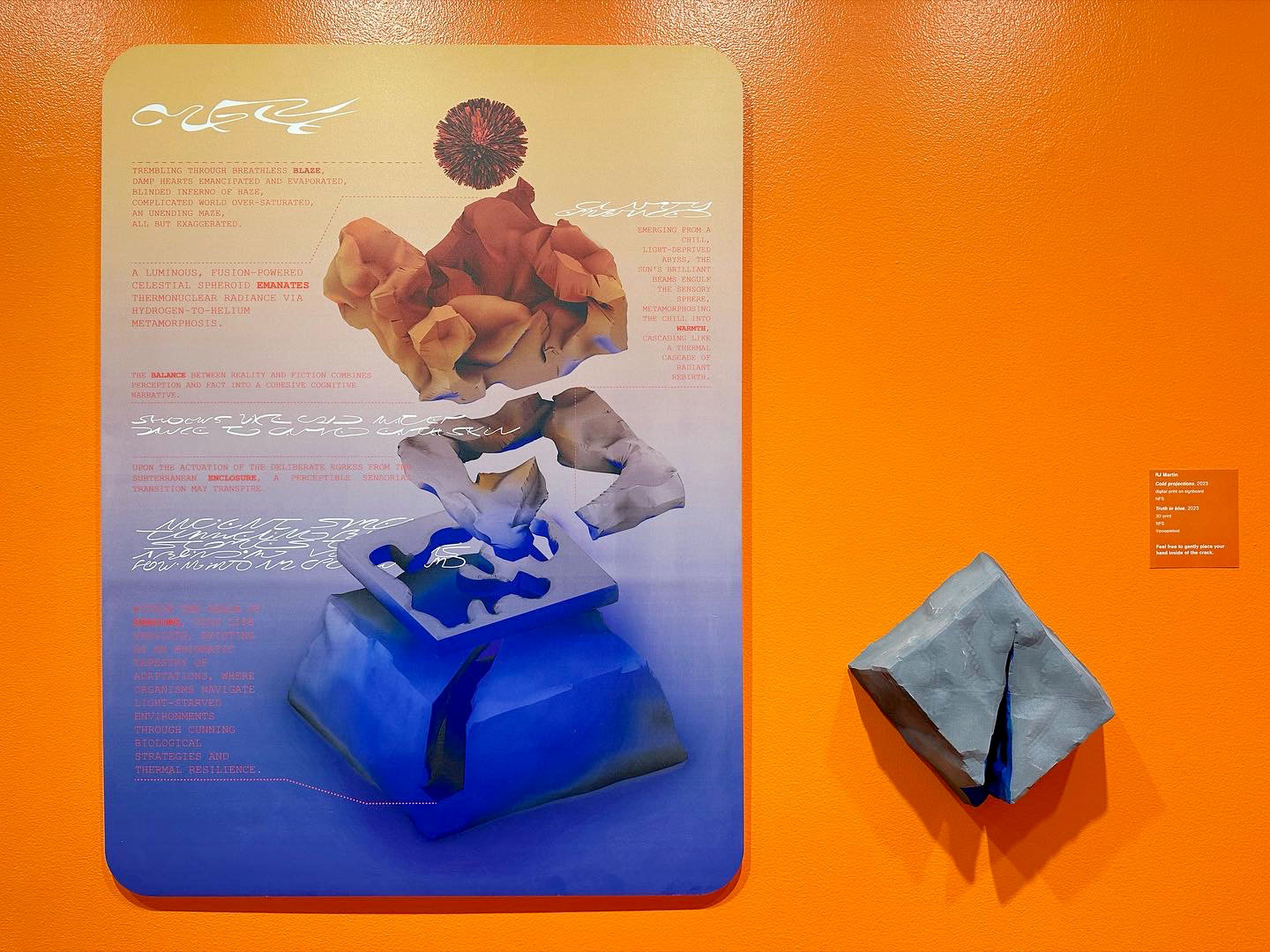
RJ Martin, “Cold projections”, 2023, digital print on signboard and “Truth in blue”, 2023, 3D print
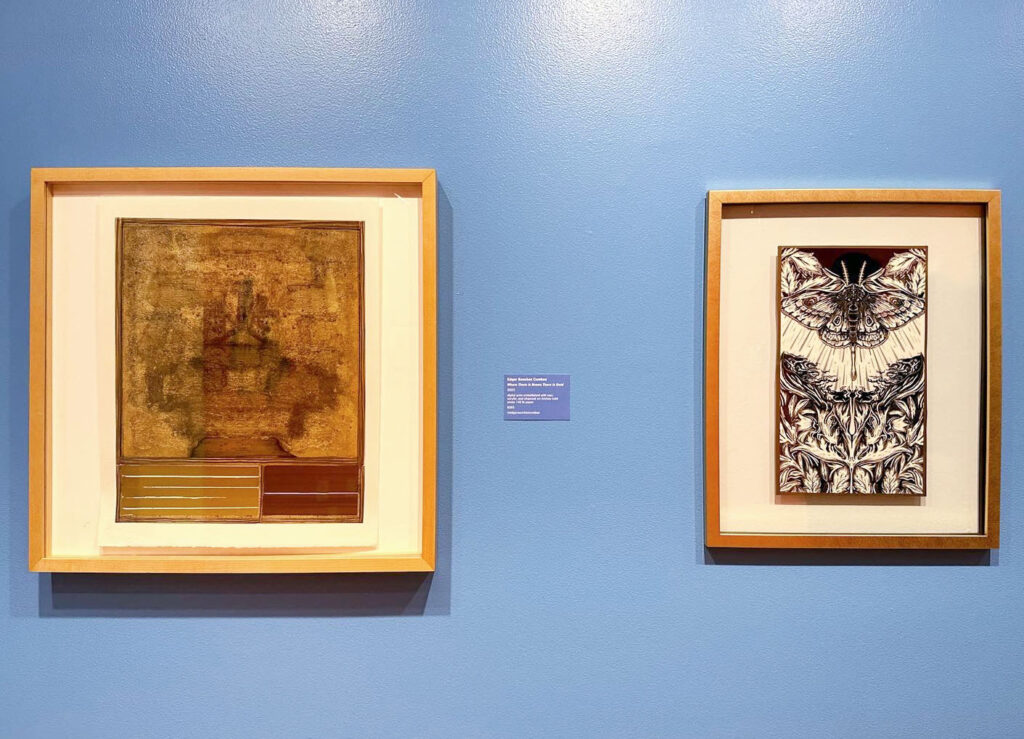
(left) Edgar Sanchez Cumbas, “Where There Is Brown There Is Gold”, 2023, digital print embellished with wax, acrylic, and charcoal on Arches cold press 140lb paper; (right) Joana Hila “Equilibrium of Insect & Flora”, 2023, mixed media
The works above are from Department of Contemporary Art’s latest group exhibition Degrees, organized with Tampa’s Greater Public Studio. It explores the multiple uses of the word “degrees” including in climate change, education and history.
In this exhibition, we unravel the layers of meaning behind ‘Degrees’. From the nuanced shades of truth that shape our perceptions to the tangible degrees of temperature that influence our environment, the exhibition creates a dynamic dialogue between different dimensions of this concept.
Situated in a pivotal battleground state, the exhibition also contemplates the intricate relationship between degrees and the pressing issue of global warming. Delving into the political discourse, we examine how degrees of belief and denial intersect, particularly in the context of climate change debates.
Furthermore, the exhibition prompts contemplation on the notion of an art degree. What does it signify? How does it define one’s creative journey? These questions guide us through an exploration of artistic qualifications and the degrees of expertise they represent.
A journey through art history reveals the connection between degrees and lines, as we delve into the associations between angles, perspectives, and the progression of artistic movements. This collection invites you to ponder how degrees of inclination can shape artistic expression and historical narratives.
Join us in this immersive exhibition, where degrees of interpretation converge, offering a multi-dimensional encounter with the concept of ‘Degrees’.
Tomorrow (10/26/23) from 6-9pm is the last chance to see the show.
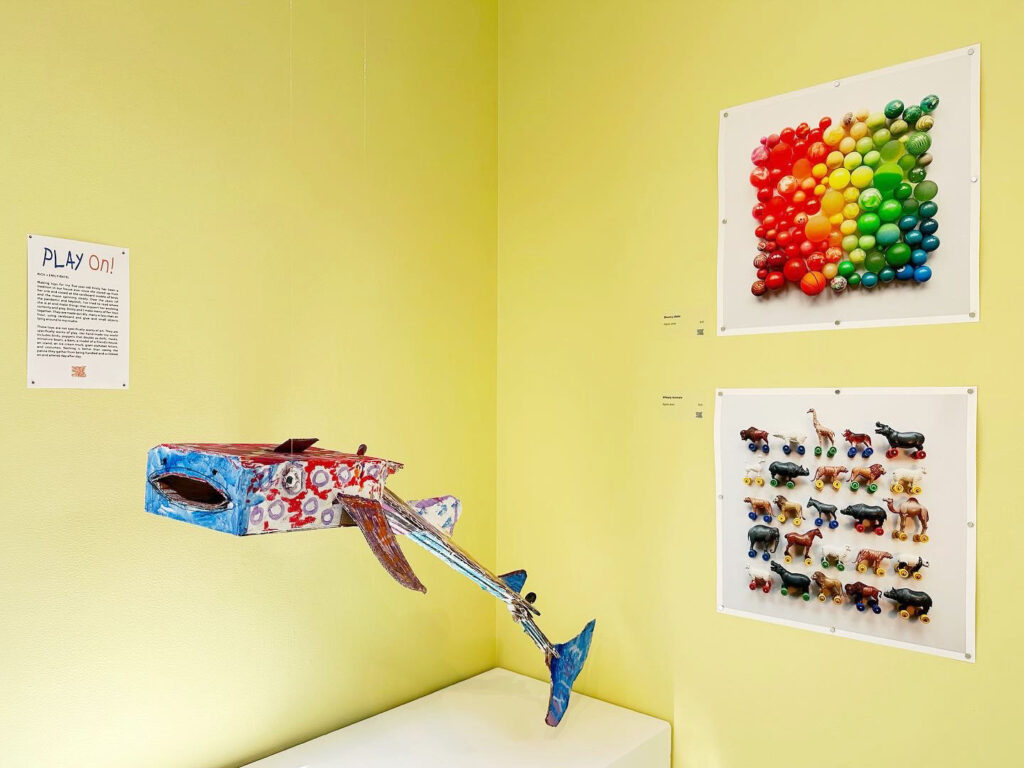
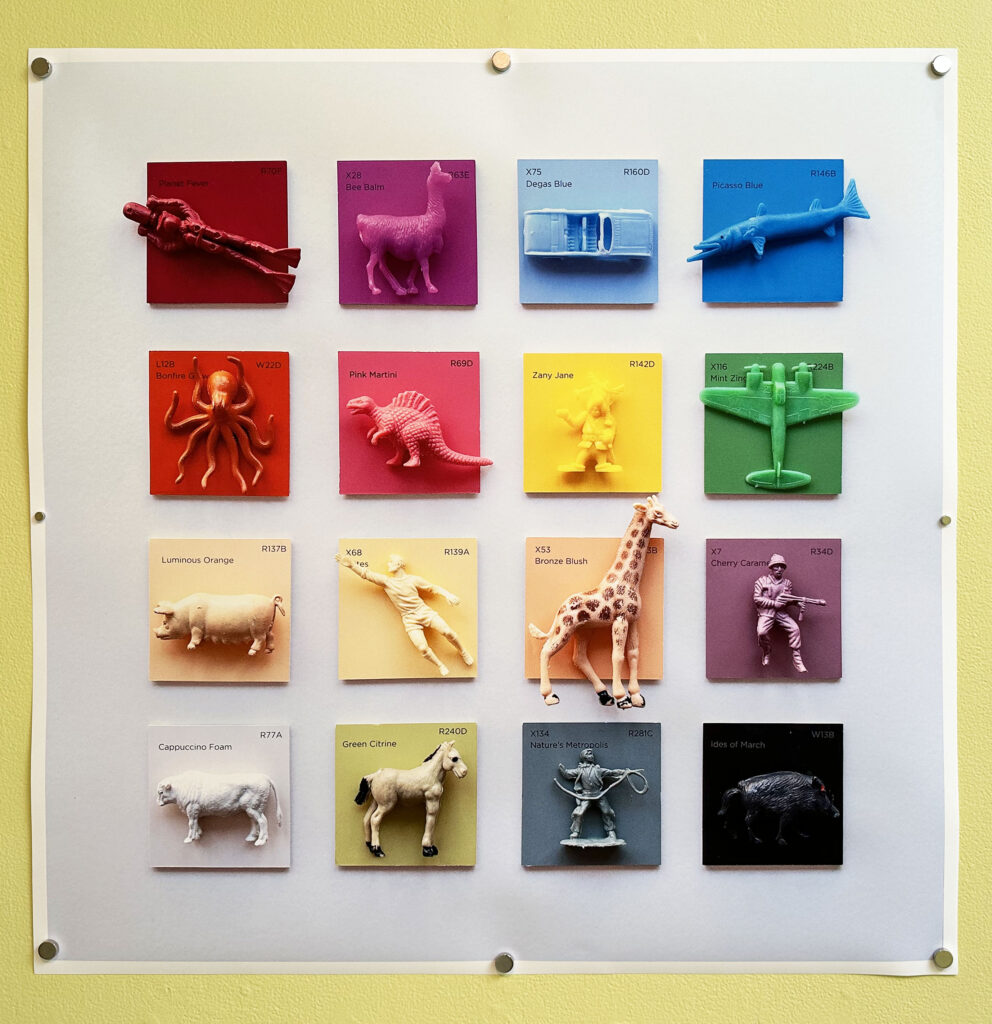
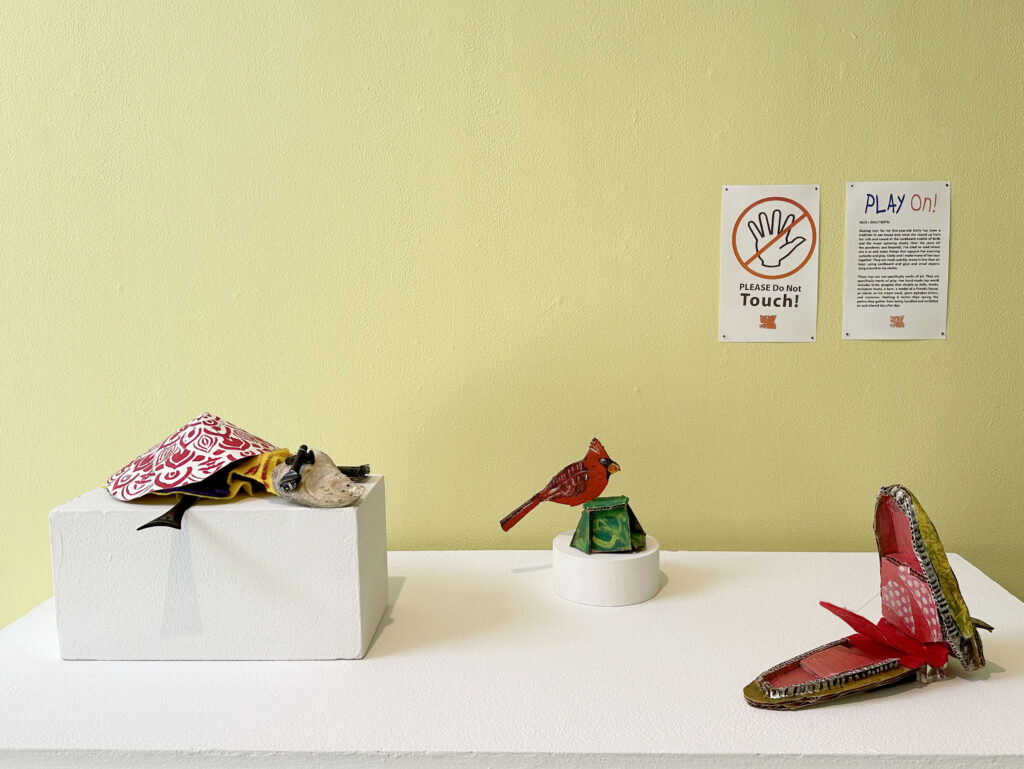
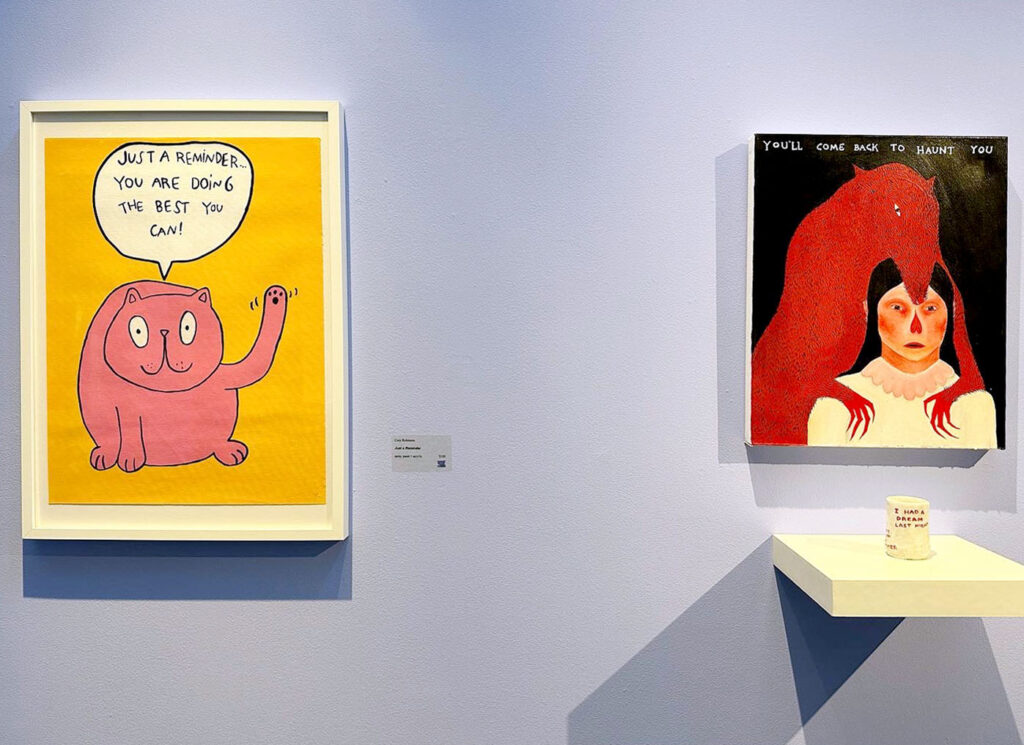
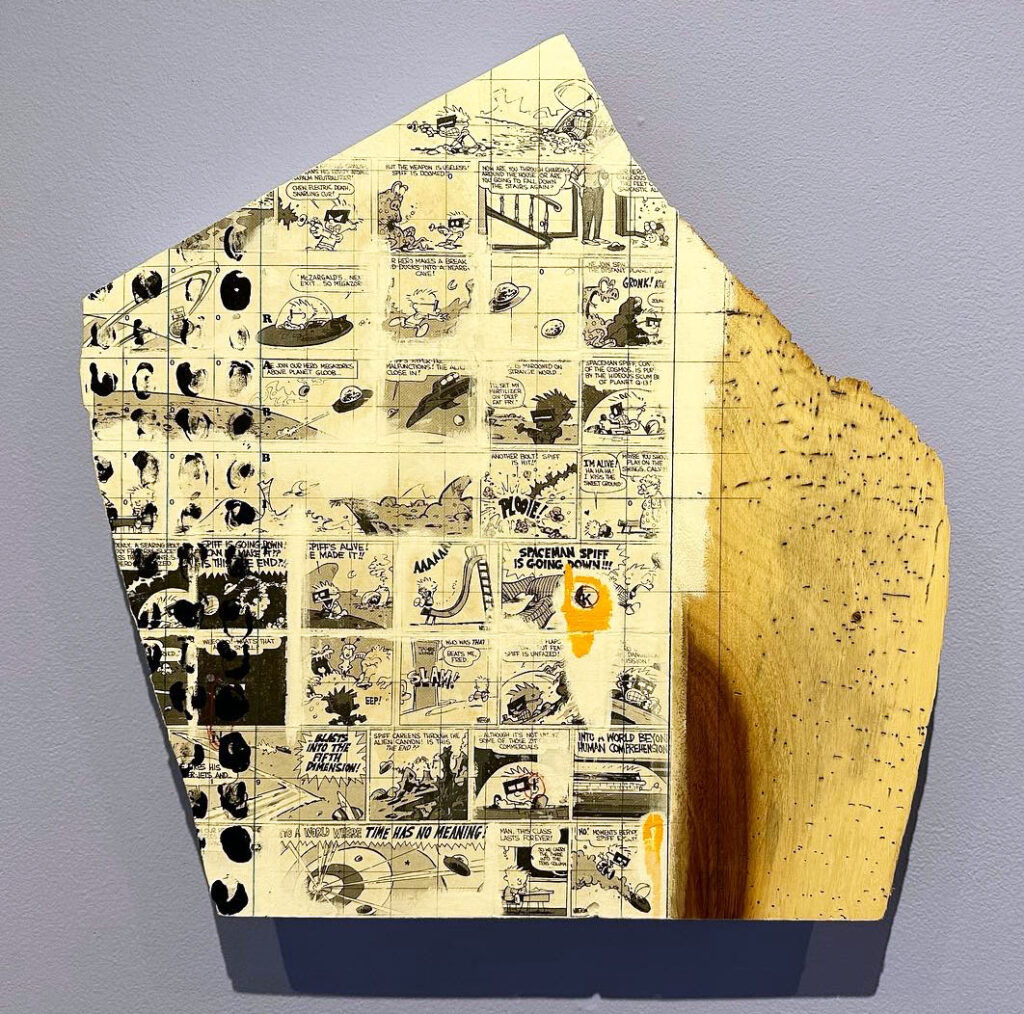
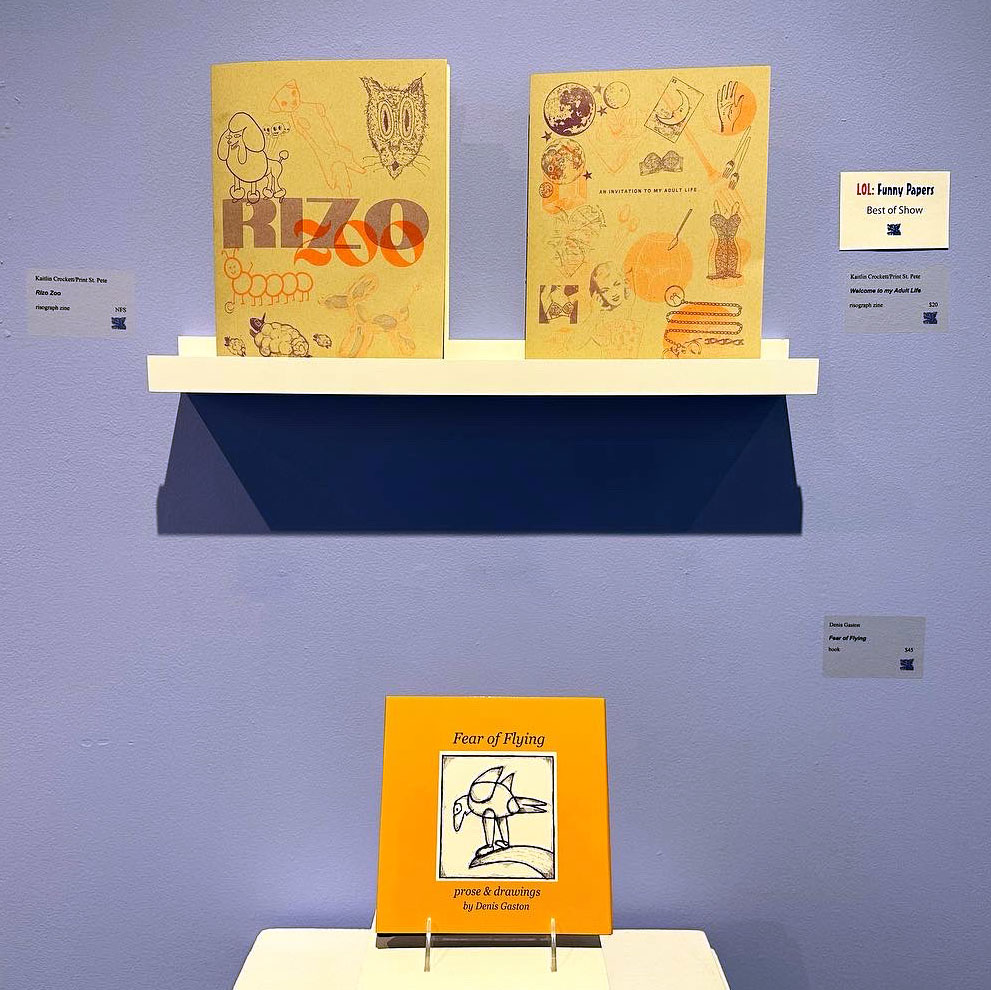
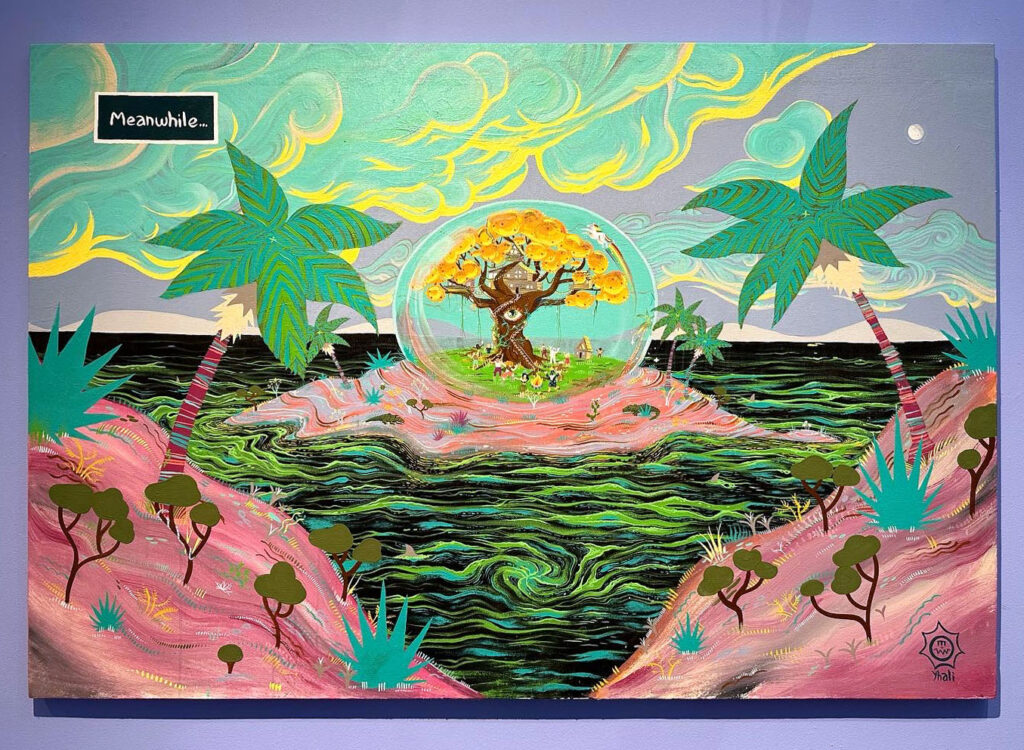
Every autumn Dunedin Fine Art Center chooses a universal theme that runs through all of their galleries. This year they chose PLAY. It’s a wonderful choice and makes for a delightful time in the various galleries. This is the last week to see two of the exhibitions- PLAY On!, a selection of wonderful artist made toys and toy related art (photos above), and LOL: Funny Papers, a juried selection of art work incorporating comics, illustrations, zines and mixed media collage (photos below).
Catch both of these shows before they close on 10/15/23.
Barbara Hubbard, “Quantum Entanglement #5”, print collage/hand colored
Cory Robinson, “Just a Reminder”, spray paint and acrylic (left); and Cort Hartle “You’ll Come Back to Haunt You” acrylic, and “We were running hand in hand”, ceramic
Print St. Pete, founded by Kaitlin Crockett and Bridget Elmer is a small community letterpress and risograph printshop which offers studio access, workshops, and custom printing.
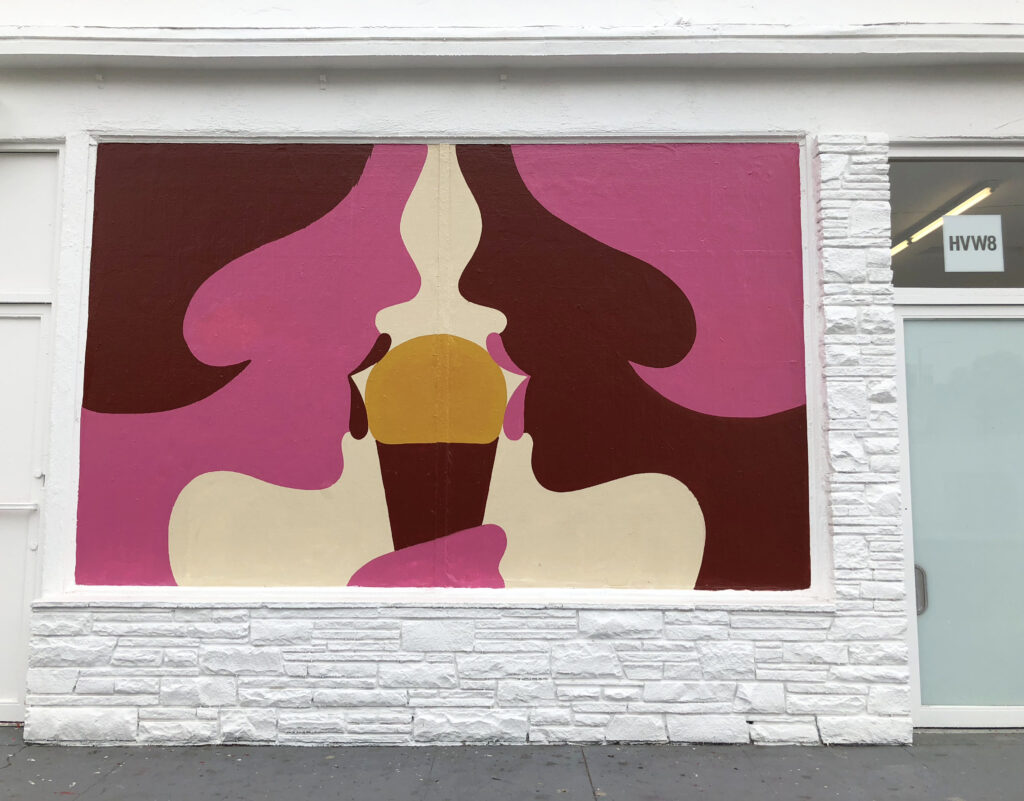
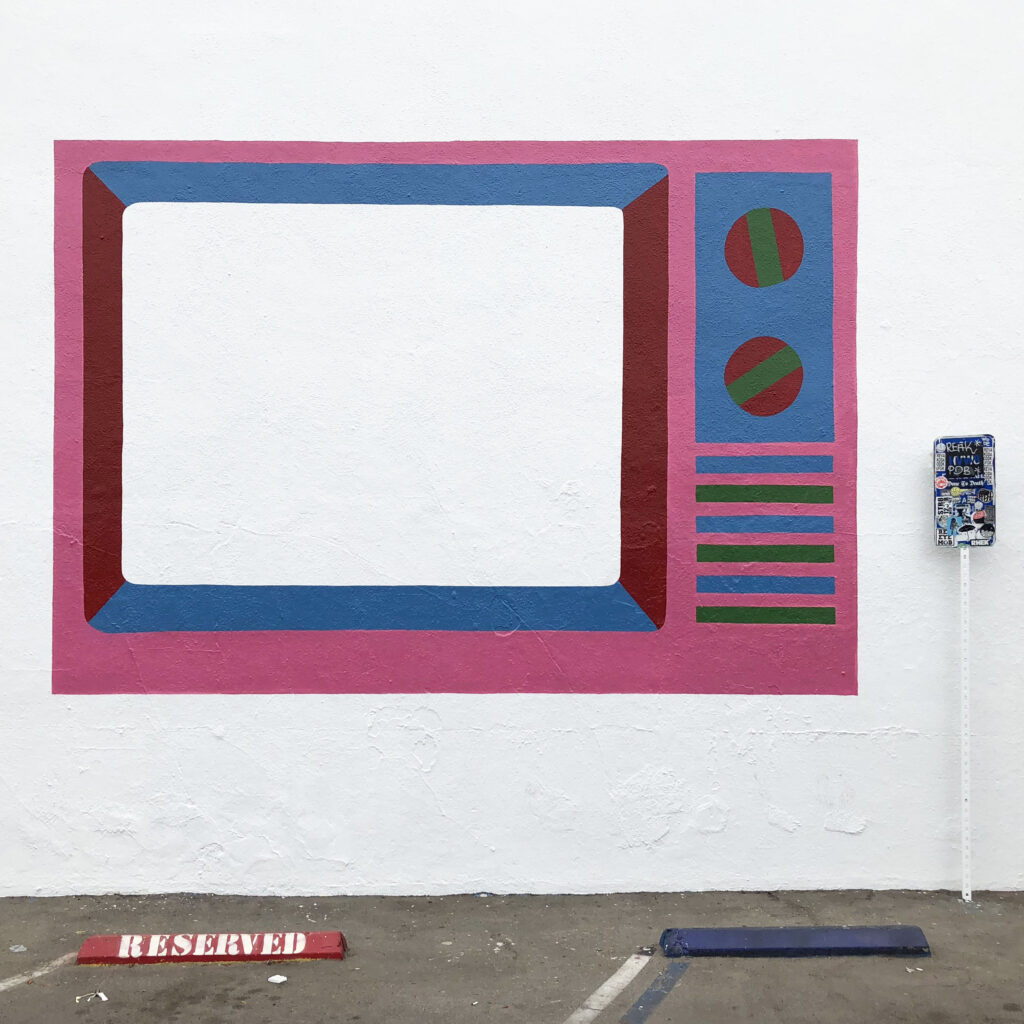
Above are images from Olimpia Zagnoli’s 2018 exhibition Cuore di Panna at HVW8 Gallery in Los Angeles. She is currently showing her work, along with her talented family at Antonio Colombo Gallery in Milan, Italy. That exhibition, ZaLiZaZa. Inventario di famiglia will be on view until 11/19/23.
The press release from the gallery-
Galleria Antonio Colombo is pleased to present the exhibition ZaLiZaZa. Inventario di famiglia, curated by Francesca Pellicciari, featuring a group of artists belonging to the same family: the photographer Miro Zagnoli (Za), the artist Emi Ligabue (Li) and their two daughters: the illustrator Olimpia Zagnoli (Za), already connected with the gallery, and the costume designer Emilia Zagnoli (Za).
The members of ZaLiZaZa are a very modern family, but also one of days gone by: were they not engaged in making their own various artifacts, we could imagine them operating in a family workshop in the Renaissance or Baroque spirit, experimenting with new painting techniques, revolutionizing styles or using them as examples to make their own; creating majestic theatrical wings, garbed in their style which is simultaneously classic and eccentric.
After all, this image is not so far from what ZaLiZaZa are doing today, in the 21st century, each in his or her own field – contiguous and often overlapping ambits – constantly coming to grips with their own research and experimentation, relying on a shared language, a true family lexicon.
The exhibition pathway is an inventory of works of all kinds – drawings and photographs, wooden books, collages, object/sculptures, fabrics, screens and magic boxes – in an intense dialogue of correspondences, where the four voices alternate and take turns, without a chronological order; a dialogue accompanied by a selection of items (sketches, notes, postcards, family photos) that document a methodology, while at the same time emphasizing the constant presence of art in the private life of ZaLiZaZa.
Thus it is no coincidence that many subjects are similar in the work of ZaLiZaZa.
While for decades design has pervaded the still analog settings and photographs of Miro (Za), it is also a recurring theme in the works of Emi (Li), from the Cicognino of Albini to the life and work of Charlotte Perriand, or anonymous design found for sale online: “I have no taboos, no type of respect or norm.” Similar use of anonymous and unconventional materials is found in the “Souvenir” clothing series by Emilia (Za), made from touristy dishtowels with the map of Italy, just as certain archetypes return in the thousands of stripes traced by Olimpia (Za), always in pursuit of the perfect synthesis between the idea and its representation.
Beyond this, beyond design, mountains, figures, bodies, portraits, chiaroscuro effects, balconies, there is the continuing echo – in the various generations of ZaLiZaZa of what Matisse said one day to Picasso, as Emi (Li) reminds us: “In the end, Picasso, we don’t have to try to be so smart. You and I are alike: what we try to rediscover in art is the atmosphere of our First Communion.” To always observe the world with the eyes of children, with the gaze of ZaLiZaZa.
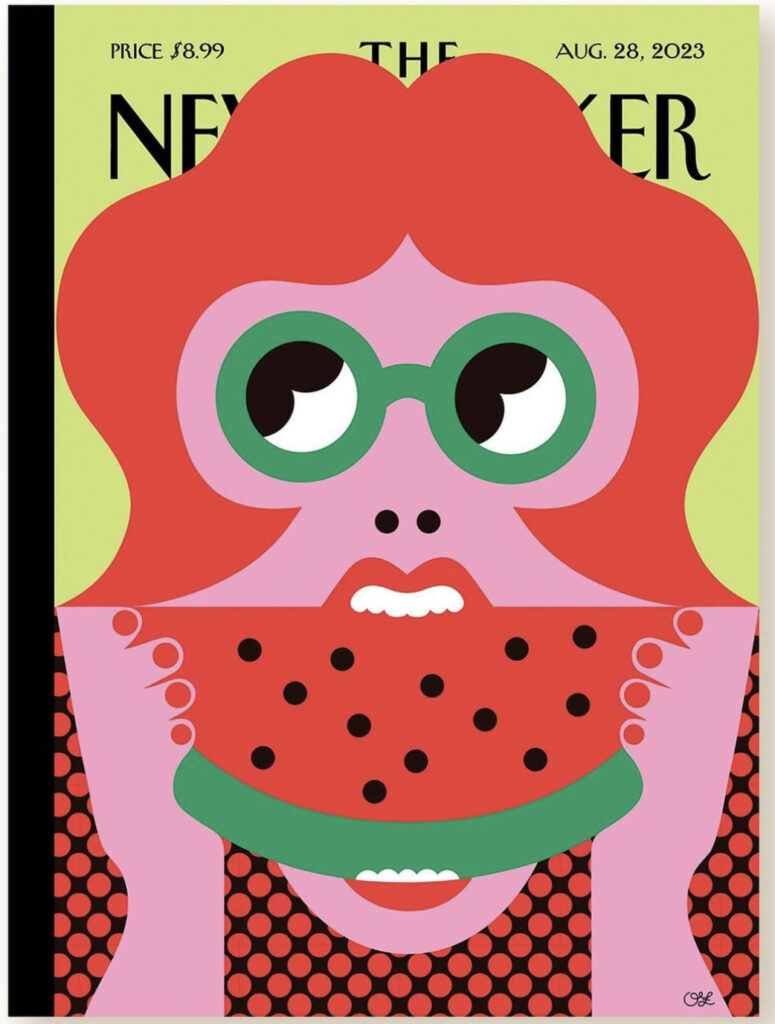
If Olimpia Zagnoli’s work looks familiar, she also designed The New Yorker’s August 28th issue, seen below.
Launched in 2006 to support the next wave of contemporary portraiture in the United States, the National Portrait Gallery’s celebrated triennial Outwin Boochever Portrait Competition is a major survey of the best American portraiture selected by internationally prominent jurors and curators. Now in its sixth edition, The Outwin: American Portraiture Today presents 42 works selected from over 2,700 entries, that foreground the vibrancy and relevance of portraiture today. In addition to paintings, photographs, drawings, and sculptures, The Outwin includes video, performance art, and textiles, highlighting the limitless possibilities of contemporary portraiture.
Open to both emerging and established artists, this year’s entrants were encouraged to submit work that moves beyond traditional definitions of portraiture, and to explore a portrait’s ability to engage with the social and political landscape of our time. The variety of media and subjects featured in the exhibition invite audiences of all backgrounds to find relation in the human experience.
Since its inception, finalists for the exhibition have been determined by a panel of jurors including three Portrait Gallery staff members and four external professionals (critics, art historians, artists). The competition is endowed by and named for Virginia Outwin Boochever (1920 – 2005) who, for 19 years, volunteered as a docent at the Portrait Gallery. Her commitment to advancing the art of portraiture is continued through the support of her children.
Below are a selection of works from the show and information about them from the museum.
Alison Elizabeth Taylor– Anthony Cuts under the Williamsburg Bridge, Morning, 2020 (pictured above)
On walks around her Brooklyn neighborhood during the COVID-19 lockdowns, Alison Elizabeth Taylor encountered the hair groomer Anthony Payne, who,with his workplace shuttered, had taken his scissors, mirror, and chair to the streets. Payne sought to financially support the Black Lives Matter movement, especially in the aftermath of George Floyd’s murder, and turned over proceeds from his donation-based haircuts to organizations advocating for social justice.
Taylor’s process, one she developed and named “marquetry hybrid,” incorporates vivid paints, inkjet prints, and the natural grains of over one hundred veneers. Marquetry, with its inlaid combination of woods, can “memorialize,” Taylor notes. She acknowledges the history of the craft, which was favored by Louis XIV (1654-1715) when he was acquiring furniture for Versailles. By giving Payne this “royal treatment,” Taylor aims to pay tribute to him.”I want him to see how much his example meant to me,” she explained.
Kira Nam Greene, “Kyung’s Gift in Pojagi (From the series “Women in Possession of Good Fortune”)”, 2019 Oil, gouache, colored pencil, and acrylic ink on canvas
Kira Nam Greene– Kyung’s Gift in Pojagi (From the series “Women in Possession of Good Fortune”), 2019
In this mixed-media work, by Kira Nam Greene, the artist Kyung Jeon faces us with relaxed self-assurance. She is carefully positioned on her couch as her long black hair falls over her orange and turquoise tunic. In the foreground, a wooden cylinder containing paint brushes reveals her medium of choice. A plate with persimmons, consumed during the harvest festival Chuseok to celebrate good fortune, brims with potential while the rest of the painting pulsates with action.
Greene situates her friend in a fantasy world that echoes Jeon’s artwork and their mutual interest in the traditional Korean fabric quilting technique of pojagi. Two rabbits, representing Jeon’s Chinese zodiac, appear to be concocting a potion. Flowers sprout as kaleidoscopic patterns envelop her. The reference to pojagi, the visible paint drips in the background painting, and the hands of the sitter- left unfinished- invoke the role of tradition, process, and exploration in artmaking.
Stuart Robertson, “Self Portrait of the Artist” from the “Out and Bad” series, 2020, Aluminum, earth, acrylic paint, enamel, paper,metallic bubble wrap, sequins, and gold foil on wood
Stuart Robertson– Self Portrait of the Artist from the Out and Bad series, 2020
“In my world, skin is high-tech, amorphous, and armored,” the artist Stuart Robertson observes. “Blackness is percussive, lustrous, flexible, and indestructible.” Self-Portrait of the Artist depicts a fragment of a man- half of his face and his upper torso-shiny and monumental. A black beard delineates his jaw, and a small gold hoop adorns his ear. Although the figure is cropped beyond recognition, the work’s title provides a clue.
Through the alternation of flat and repoussé aluminum sheets, Robertson achieves a hypnotic effect, a poignant tension playing on what he reveals or hides from us viewers. His refusal to depict his entire face or figure challenges the notion of what a portrait should be and blocks the objectification of the Black male body, so often sexualized in visual culture. Simultaneously, Robertson delivers an irrepressible, resplendent image of that body, one inspired by the aesthetics of Jamaica’s dancehall culture.
Vincent Valdez, “People of the Sun (Grandma and Grandpa Santana)”, 2019, Oil on canvas
Vincent Valdez– People of the Sun (Grandma and Grandpa Santana), 2019
An elderly couple faces us with the gentle authority that old age provides. People of the Sun (Grandma and Grandpa Santana) is a portrait of Vincent Valdez’s maternal grandparents. “My grandparents spent most of their time outside,” the artist recalled. “Grandpa spent his entire life working under the blazing Texas sun as a carpenter and yard worker, cutting lawns in the wealthy communities of San Antonio right up until he passed away. Grandma was constantly working with her hands–raising kids, washing, sewing clothes, and tending the plants in her yard.”
The Santanas are depicted in a space defined by details the artist remembers: their vintage AM radio, their plants, their homemade clothes. The bedsheet, like the Virgen de Guadalupe’s aura, signals their spiritual role in the family. This portrait connects the pair to the Indigenous and mestizo cultures of the American Southwest, including the Aztec and Maya, who honored the sun.
For more work from the exhibition, please head to page 2.