Feb 222023
 

Robert Yasuda, “Boundary” 2010-2020

Robert Yasuda, “Boundary” 2010-2020 (detail)

Robert Yasuda, “Pele”, 2022

Robert Yasuda, “Pele”, 2022 (side view)

Robert Yasuda, “Maluhia”, 2022

Robert Yasuda, “Pipeline”, 2022

Currently at Sundaram Tagore gallery in New York are Robert Yasuda’s sculptural paintings for his exhibition Transparent and Translucent.

From the gallery’s press release-

The artist’s latest body of work is a culmination of his decades-long exploration of perception, light and space. On view will be a series of atmospheric paintings rooted in his early encounters with nature in Hawaii where he was born and raised.

Yasuda’s iridescent paintings are composed of translucent veil-like fields of color layered on slabs of wood that protrude from the wall or nestle into corners. Several works are constructed to cast a reflected glow of colored light into the surrounding space. Depending on where you stand, the surfaces of the paintings shift in color and temperature.

“For many people, looking at a painting for 20 seconds can be extremely long but these are pieces that reveal themselves over time,” says Yasuda, who invites viewers to pause and immerse themselves in the work in order to perceive these subtle transformations.

Yasuda begins by shaping wooden panels, which are up to two inches thick, with chisels and grinders. Softening harsh vertical lines, he introduces bowed and gently sloping edges as well as sharply upturned corners. After painting a base layer onto the wood, he wraps the wood in diaphanous cotton. Adding as many as 40 layers of pearlescent acrylic paint, he suspends the fabric amid layers of luminous color. Most of his works are multi-paneled, with intricately wrought and detailed seams, and mounted on cradle-like structures that push them away from the wall.

Several of the works on view feature aqueous expanses of rich blues and lush greens evoking the ocean. In other pieces, sensuous swathes of paint evoke sunsets or the iridescent lining of seashells. “My entire childhood I saw myriad greens in the countryside of Hawaii and I spent a great deal of time diving…These works are connected with that point of view and the process of meditating on nature,” says Yasuda.

This exhibition closes 2/25/23.

Feb 222023
 

Diana Al-Hadid “The Long Defeat”, 2017-2023

Diana Al-Hadid “The Long Defeat”, 2017-2023 (detail)

Diana Al-Hadid “The Long Defeat”, 2017-2023 (detail 2)

Bianca Bondi, “The Antechamber (Myths of descent and return)”, 2023

Bianca Bondi, “The Antechamber (Myths of descent and return)”, 2023 (detail)

Bianca Bondi, “The Antechamber (Myths of descent and return)”, 2023 (detail)

Closing today at Kasmin in NYC, is Shades of Daphne, curated by Stephanie Cristello. It is a “timely survey of painting, sculpture, installation, and film by a group of 11 international and intergenerational contemporary artists, many of whom have not previously exhibited in the United States.”

From the Kasmin gallery website-

Bringing together recent and historical works spanning over three decades from the 1990s to the present, the exhibition includes new commissions, site-specific performances and installations that respond to the architecture of the gallery space.

Celebrating the spirit of resistance and revolt, the exhibition takes the figure of Daphne—the Ancient Greek nymph who turned herself into a laurel tree to escape Apollo’s pursuit—as metaphor to explore work that engages with hybrid figures, metamorphoses, and suspended states of becoming. Highlighting deconstructed impressions of the body in relation to mythologies of transformation, the exhibition focuses on work that features remnants of presence even when the figure is absent—objects that hold the memories of living things. Acting as portals, thresholds, and containers of shifting states, each work also engages with architecture as a framework, both in reference to the body and to spaces constructed for both personal and collective ritual.

Information on Diana Al-Hadid’s sculpture, The Long Defeat

Diana Al-Hadid’s (b. 1981 Aleppo, Syria) sculpture takes the Flemish primitive painter Hans Memling’s Allegory of Chastity (c. 1475) as a starting point. The work pictures the bodice of a female figure, her head bowed, hands interlaced at the waist, surrounded by the mouth of a volcanic mountain. Al-Hadid’s first interpretation of the painting culminated in the monumental sculpture Citadel (2017–18), a hollowed silhouette of a woman framed by the base of an embankment whose porous mass extends like a root system toward the ground. Her face is vacant of features, delineated instead by two severe lines like one would find in the initial sketch of a portrait artist, that indicate her gaze remains lowered. Yet in contrast to the demure painting, the massive scale of the work allows for her downcast eyes to stare straight into those of the viewer below.

Information on Bianca Bondi’s installation, The Antechamber (Myths of descent and return), 2023-

An iteration of Bianca Bondi’s (b. 1986, South Africa) installation for Busan Biennale 2020, The Antechamber (Myths of descent and return), grew from a translation of Kim Hyesoon’s poem, “Tundra Swan.” As Bondi states: “salt is essential for life but too much brings death.” Taking inspiration from paintings such as Henri Gervex’s Rolla (1878) or John Everett Millais’s Ophelia (1851–52), we observe a clinical but feminine bedroom setting composed of a bed with a pond at its center, echoing a circular mirror above a dresser at the end of a pathway through the tundra. Salt surrounds the installation, representing both preservation and resurrection. A swan stands alone, symbolizing the force of art and poetry. This is the third chapter of the installation, following the Thailand Biennial in 2021.


Feb 212023
 

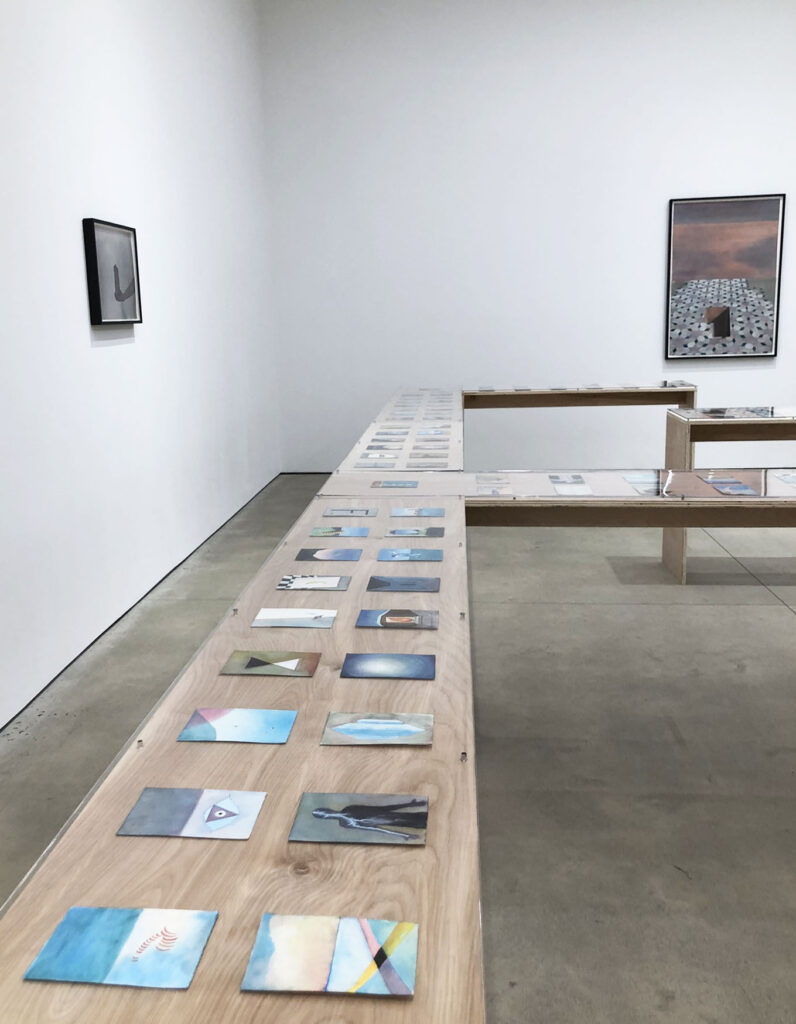
For Adam Putnam’s recent exhibition Holes at P.P.O.W gallery in New York, he takes the visitor on a multimedia journey into the self.

From P.P.O.W’s press release-

Through the building up of imagery by means of photography, drawing, sculpture, film, and performance, Adam Putnam continues an ongoing exploration of the boundaries between architecture, nature, the physical and the internal self, often using one as a stand in for the other.

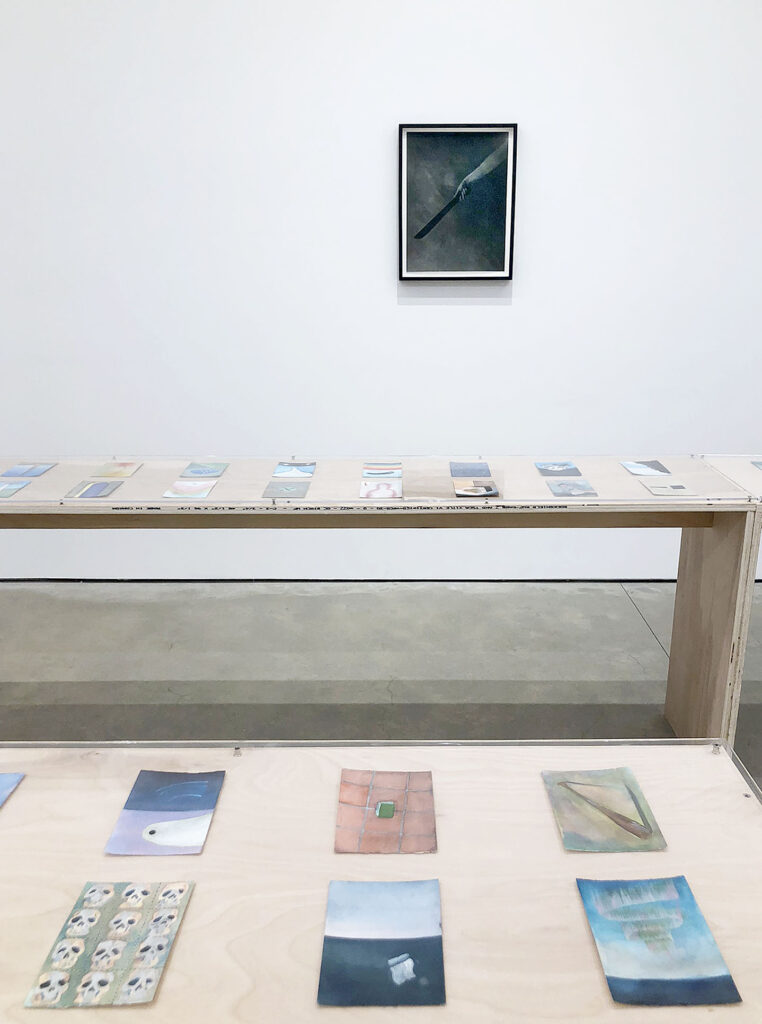
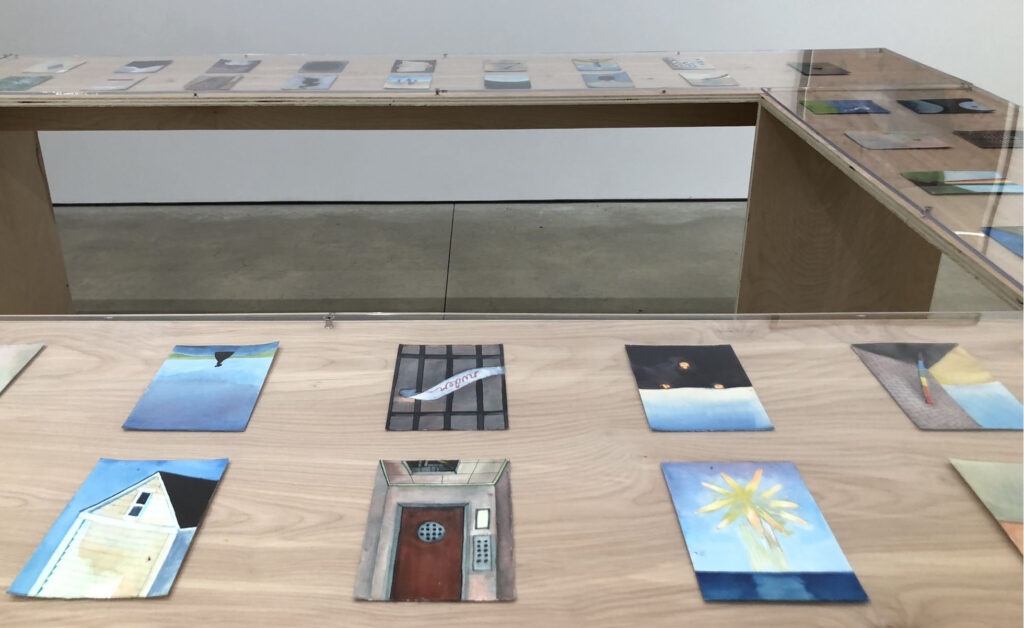
A single, hand-carved wooden finger beckons the viewer toward a labyrinth of 365 “visualizations.” Initiated during the long months of lockdown, this mass of miniature drawings takes on an elusive arrangement, like an archaic diagram of the unconscious mind, with patterns emerging and dissolving as the visitor weaves through the space. Accompanying this accumulation are a new series of drawings and photographs, depicting architectural inversions and other implements such as a crumbling brick column and a rusty sword.

The labyrinth ultimately leads to a shadowy monolith vibrating with light, smoke and bubbles. Based on a 2022 site- specific, multi-sensory work commissioned in response to the experiential interests and preferences of a small group of people with Profound Mental and Learning Disabilities (PMLD) living in Midlothian, Scotland, the tower, which can be viewed alternately as a lighthouse, clocktower, steeple and sundial, aims to connect through touch, scent, light and sound. As we enter a post-pandemic world, Holes offers an opportunity for collective experience and contemplation of the otherworldliness imbedded in the everyday.

Putnam’s Instagram is currently private, but you can check out his Tarot influenced artwork here. He was giving Tarot readings throughout the duration of the show using his handmade cards.

Feb 202023
 

Pictured L to R: Peter Cotroneo, Alexander Nixon (foot), and Joshua Haddad

Pictured: Molly Evans (sketches installation) and Kendra Frorup

Pictured L to R: Chris Valle; Emma Quintana and Rick Hanberry; Joseph Scarce

This is the last week to check out the Art+Design Faculty Exhibition at University of Tampa’s art gallery, Scarfone Hartley. It’s a wonderful chance to check out the talent that is teaching at the school as well as some impressive work.

Artists included: Jaime Aelavanthara, Peter Cotroneo, Molly Evans, Kendra Frorup, Corey George, Jennifer Guest, Joshua Haddad, Ry McCullough, Samantha Modder, Alexander Nixon, Eric Ondina, Angelina Parrino, Emma Quintana, Joseph Scarce, and Chris Valle.

Below are more selections from the exhibition-

Feb 042023
 

Le’Andra LeSeur, “In Reverence (An Honoring)”, 2019

Le’Andra LeSeur, “There are other hues of blue”, 2019-2022 (ongoing)

Le’Andra LeSeur, “There are other hues of blue”, 2019-2022 (ongoing)

Le’Andra LeSeur, “The CD Man”, 2017

Le’Andra LeSeur, “Superwoman”, 2018

Spirit, Rhythm, BluesLe’Andra LeSeur’s exhibition at Gallery221@HCC Dale Mabry Campus is a multimedia exploration of life, death, and rebirth- all bathed in blue.

From the Gallery 221 website-

LeSeur’s body of work—a celebration of Blackness, queerness, and femininity—seeks to dismantle systems of power and achieve transcendence and liberation through perseverance. In “Spirit, Rhythm, Blues” at Gallery221@HCC, LeSeur’s installation encourages viewers to contemplate themes such as identity, family, grief and joy, the experience of invisibility, and the power of language.

From the Gallery 221 press release description of Superwoman

This video is a documentation of a self-baptism that took place in the summer of 2018. The work speaks to the cyclical process of the emotional “waves”- highs and lows- experienced in life. As LeSeur conducts the baptism Donny Hathaway’s rendition of Superwoman plays over the visual, and the words “Where were you when I needed you last winter” repeat as the video proceeds then visually plays out in reverse. The words in the song symbolize the internal struggle present when asking how we show up for ourselves during moments of transition and change. Instead of putting pressure on ourselves to be better or do better, those words bring us back to a place of understanding the importance of self-love in how we overcome and get back to a place of grounding and balance in our lives.

It is a moving piece and works well as a balance to the other video works that reference the police killings of Akai Gurley and Alton Sterling (The CD Man, 2017, pictured above).

This exhibition is on view until 3/2/23.
 

Jan 312023
 

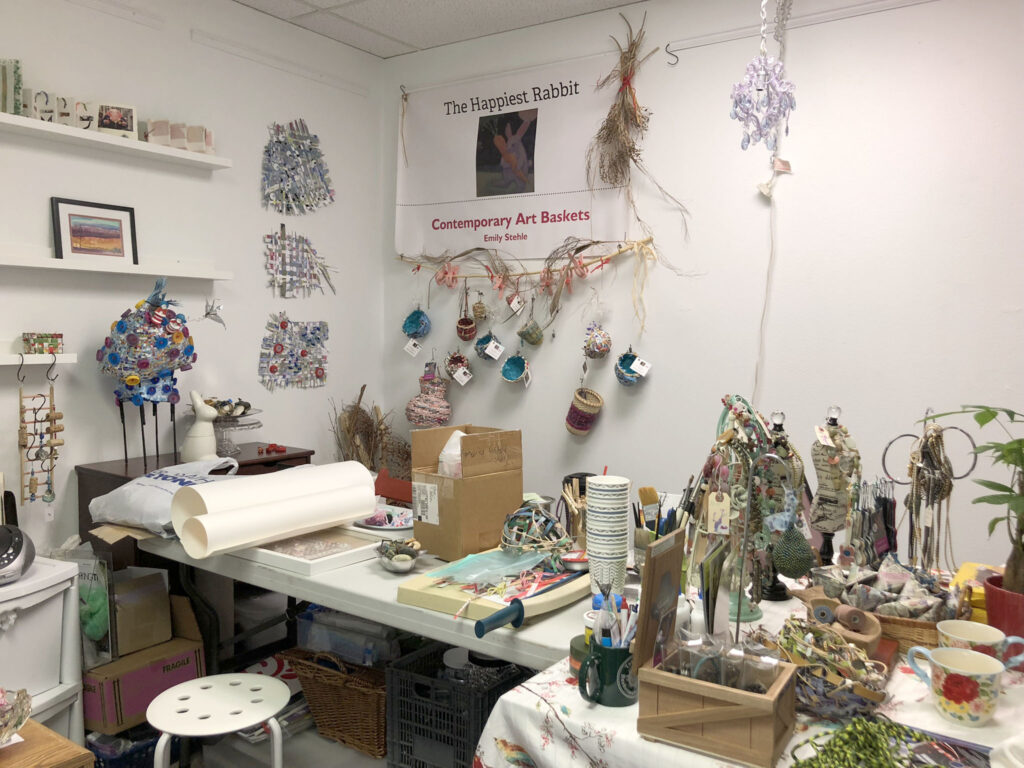
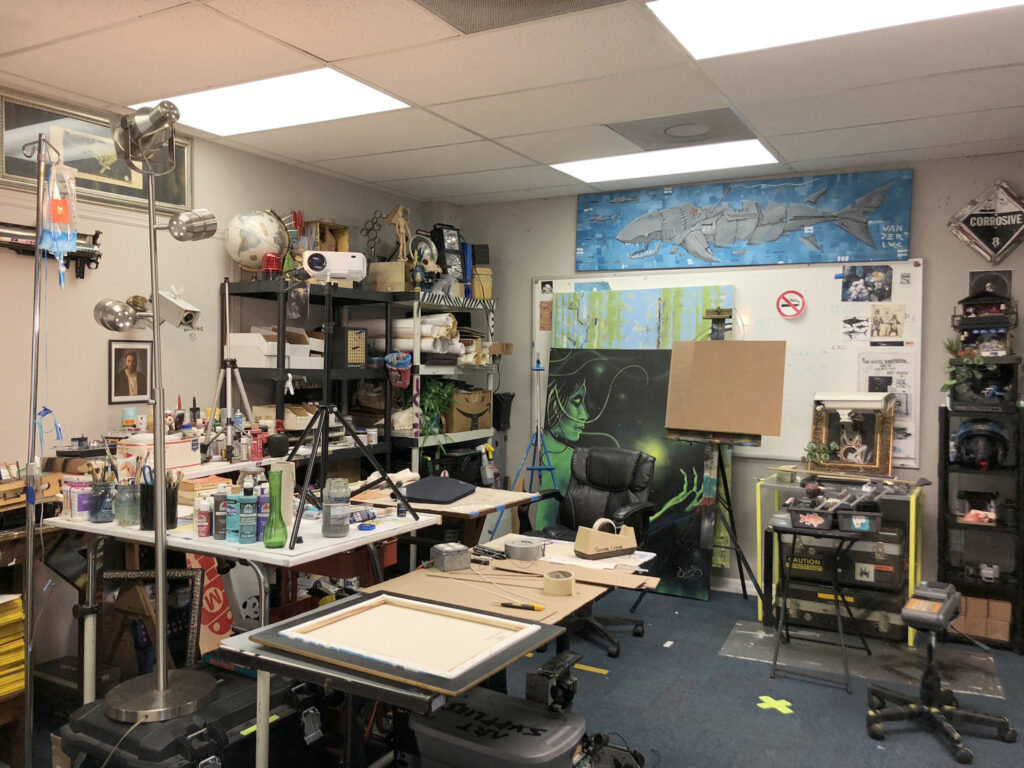
Emily Stehle’s studio

John Gascot’s studio

Tricia Lynn’s studio

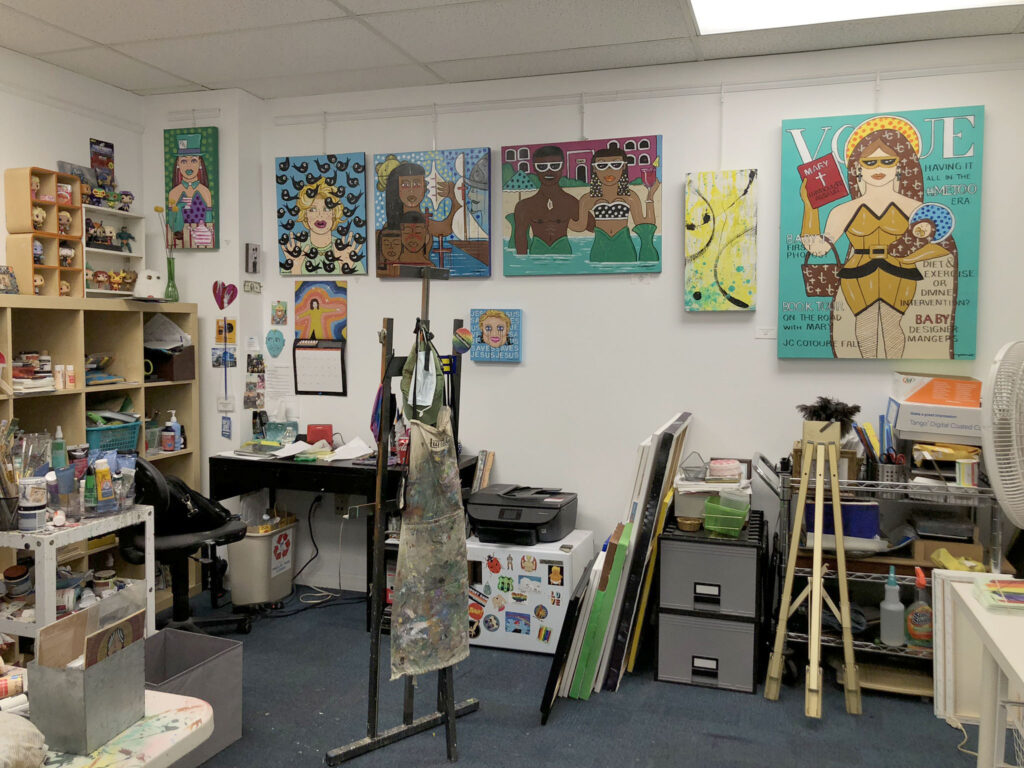
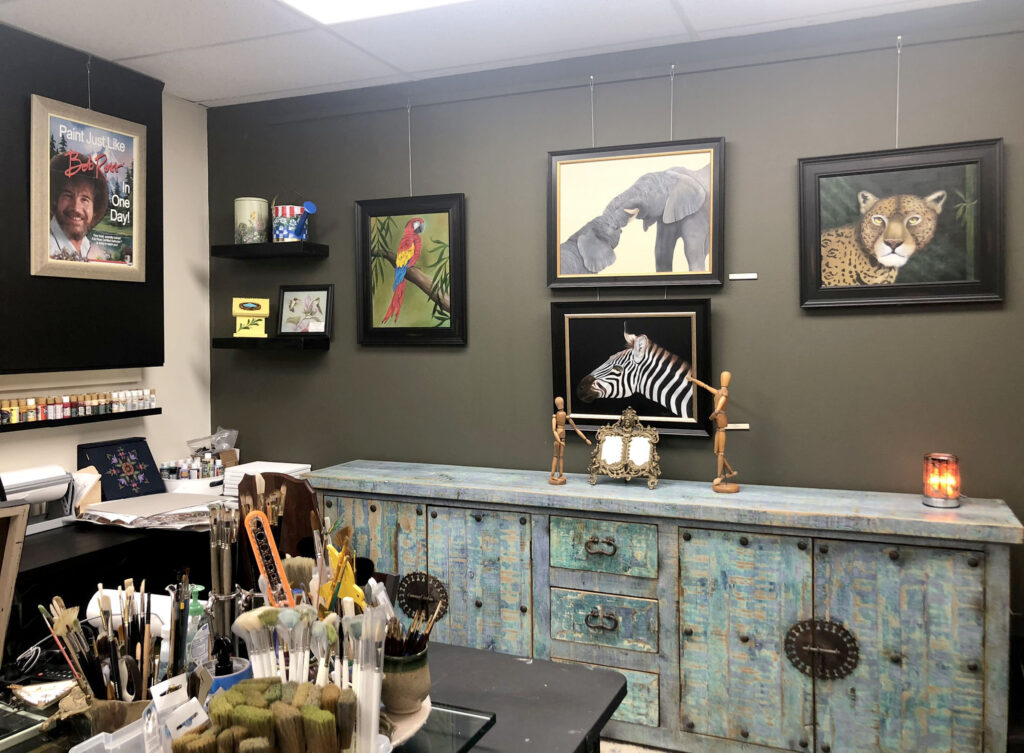
Pictured above are three of the artists who have studios at The Studios @5663 in Pinellas Park, Florida. Emily Stehle and John Gascot were part of the recent Arts Annual 2022 exhibition at Creative Pinellas. Tricia Lynn is a wildlife oil painter and teacher.

On the fourth Saturday of the month Pinellas Arts Village hosts a block party with vendors, open galleries and studios, crafts, live music, and food. It’s a fun event that offers the opportunity to check out the neighborhood and see what local artists are working on.

Jan 312023
 

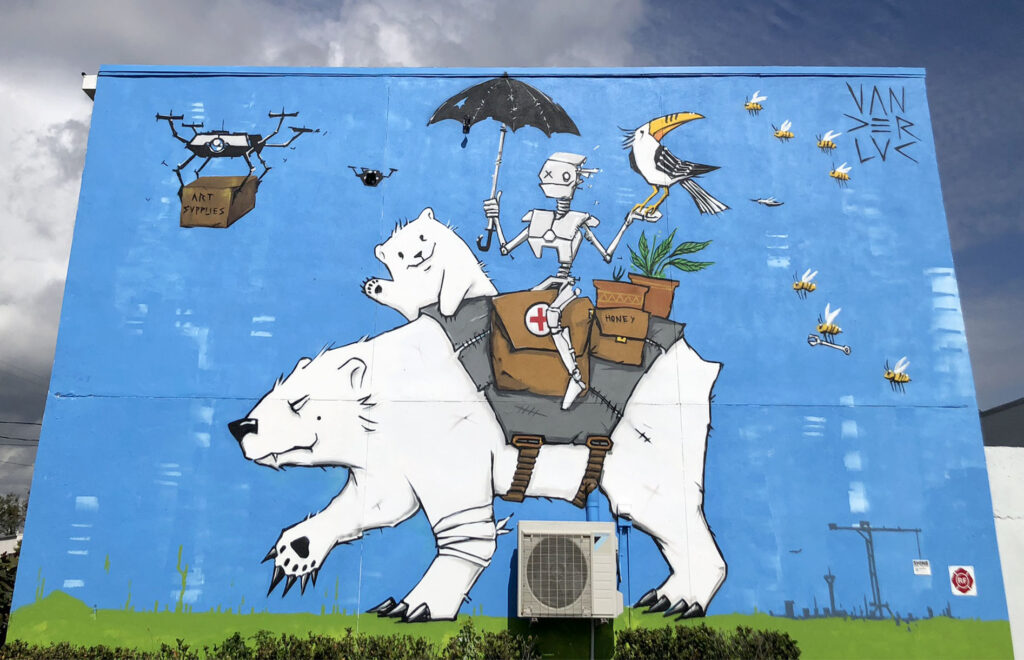
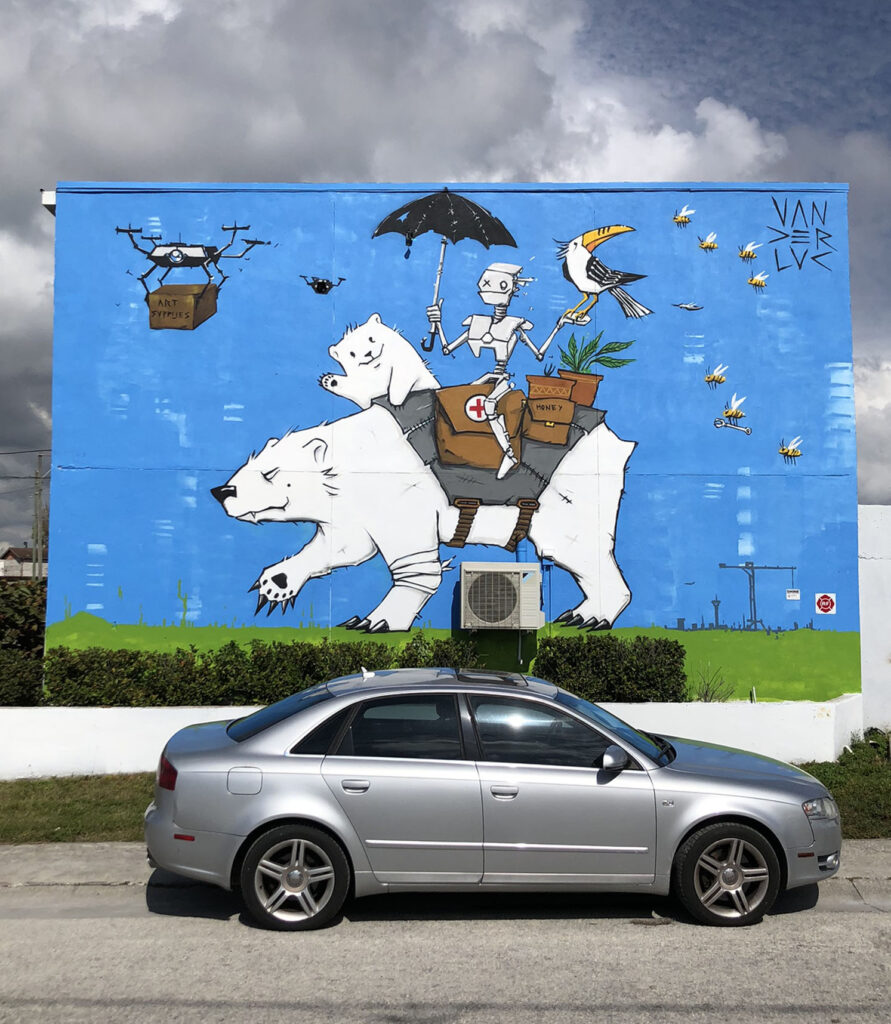
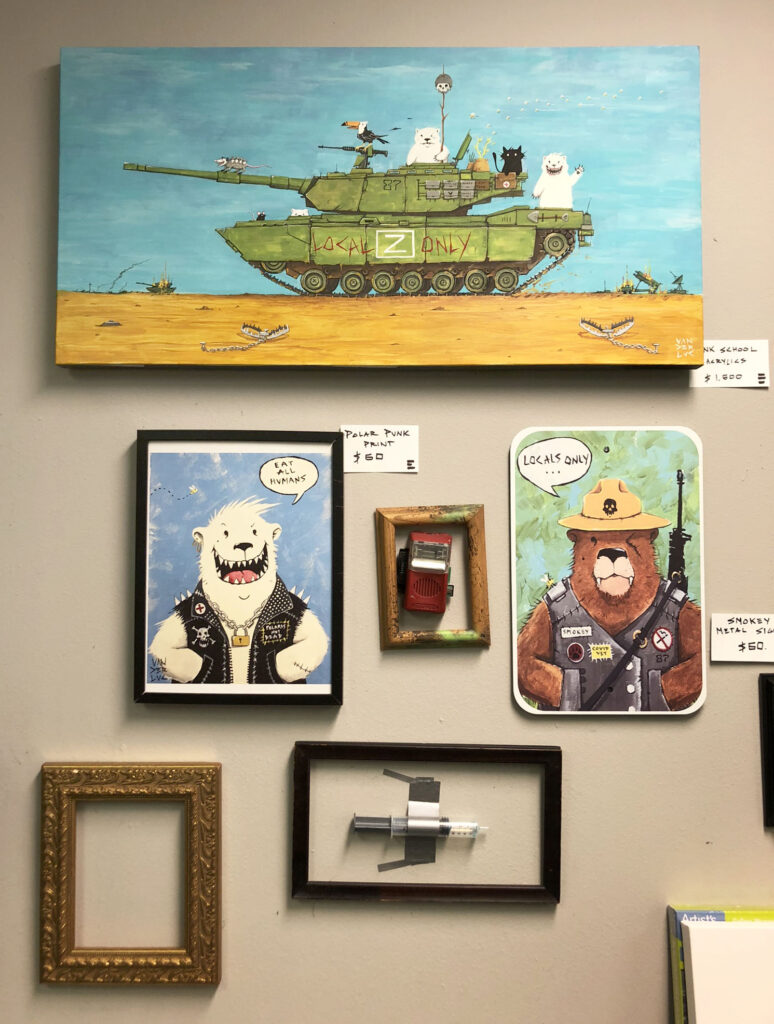
Pictured at the top is local artist Van Der Luc’s mural for the 2022 edition of SHINE Mural Festival in St. Pete.

He is one of the artists at The Studios @5663 in Pinellas Park. It’s a great place to see what local artists are making and working on.

On the fourth Saturday of the month Pinellas Arts Village hosts a block party with vendors, open galleries and studios, crafts, live music, and food. It’s a fun event that offers the opportunity to check out what local artists are working on.

Jan 252023
 

Now it Makes Sense

iFA Peddler

Conquering Pride

Internal Dialogue

Currently at the Tully-Levine Gallery at the ArtsXchange ( part of  The Warehouse Arts District Association) is The Wiz Reimagined a collaborative art exhibition by iBOMS (Jabari Reed- Diop) and Zulu Painter.

The imaginative paintings accompany sculptures and an installation which also at times includes video projections.

Tonight (1/25/23) there will be a screening of The Wiz, hosted by Hillary Van Dyke of Green Book Tampa Bay and an artist talk with both artists and Scott Terry of Mahogany Gallery.

Dec 302022
 

Xenobia Bailey’s mosaic tile work Morning Stars, 2018, in downtown St. Petersburg, Florida. The work was commissioned by the St. Petersburg Arts Commission.

From the information plaque-

Bailey primarily works in fiber arts, creating crocheted mandalas which consist of colorful concentric circles and repeating patterns. For Morning Stars, Bailey crocheted several mandalas of brightly-colored fiber medium and worked with her fabricators to create the design digitally to be applied as a mosaic design.


Dec 202022
 

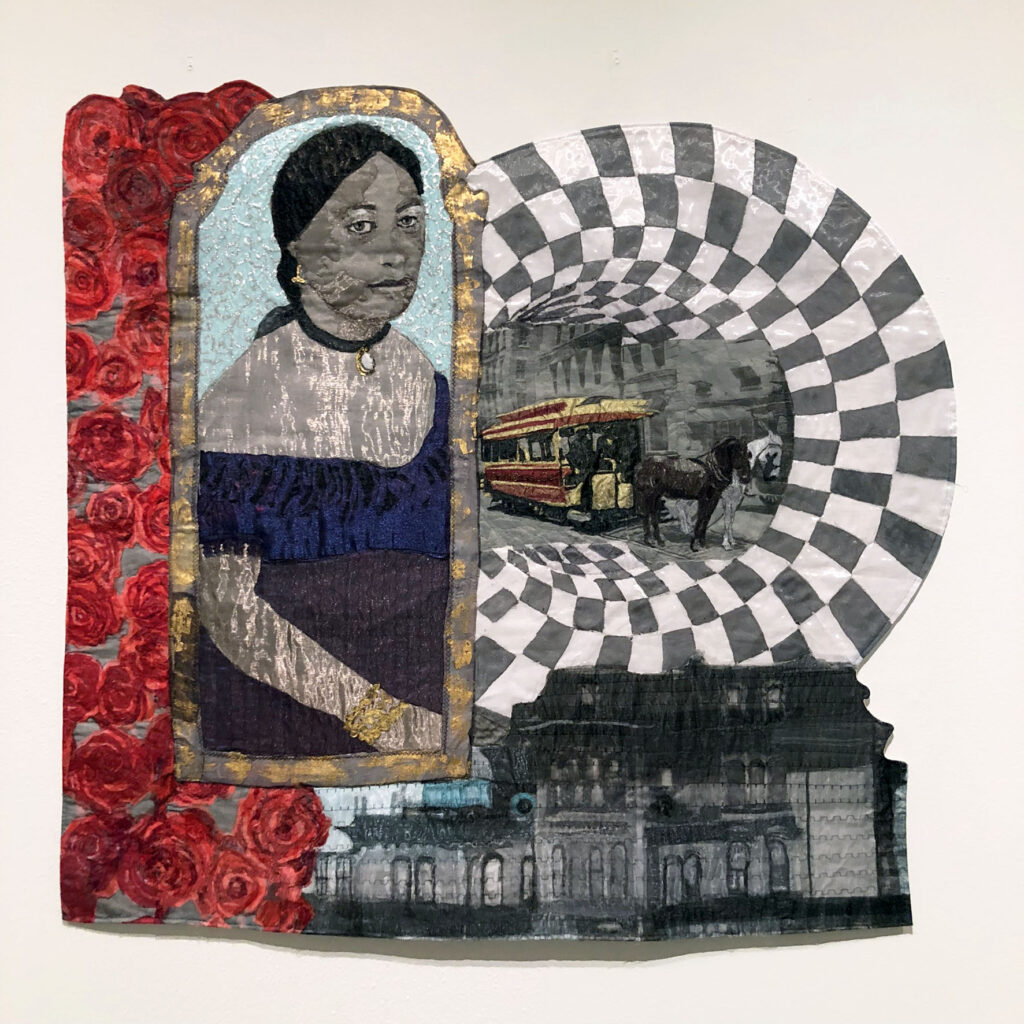
“Call Me Mrs. Mary E. Pleasant: The Midas Touch” by L’Merchie Frazier

Pictured above is a portrait of entrepreneur, civil rights activist and benefactor, Mary Ellen Pleasant who made a name and a fortune for herself in Gold Rush era San Francisco. Her timeline from 1814 to 1904 begins in racial slavery as an indentured servant girl with no formal education. She ascended to a self-made millionaire, amassing a fortune in her lifetime of over $30 million, ($900 million today).

Organized by historian, artist, and curator Dr. Carolyn Mazloomi, “Black Pioneers: Legacy in the American West” at The James Museum of Western and Wildlife Art, consists of 50 pictorial quilts created by members of Women of Color Quilters Network, a group founded by Mazloomi in 1985.

Mazloomi’s statement at the exhibition entrance-

American history is incomplete without the stories of African American men and women, from our enslaved ancestors to our societal challenges. The role of African Americans in the movement toward westward expansion has been largely overlooked. This exhibition of original pictorial quilts brings into focus the rich and diverse stories and achievements of Blacks in American western history. The timeline begins with Esteban’s 1528 arrival in the West and continues through the Civil Rights Movement.

At the end of Reconstruction in the South, discrimination and segregation caused African Americans to seek opportunities where there was less prejudice. In the 1800s, they moved by the thousands to the American West. Some went West as slaves, while free African American men joined the United States Army or became ranch hands, fur traders, cowboys, or miners.

Why quilts? Quilts and quilt making are important to American, and Black culture in particular. The art form was historically one of the few mediums accessible to marginalized groups to tell their own story, to provide warmth for their families, and to empower them with a voice through cloth. Using quilts to tell these stories accentuates the intersections of African Americans in the Western frontier while at once informing about the art form and its role in Black history. It is this often unknown and underappreciated shared reality that must be voiced if we are ever to truly value the unique contributions diverse groups make to the fabric of our nation.

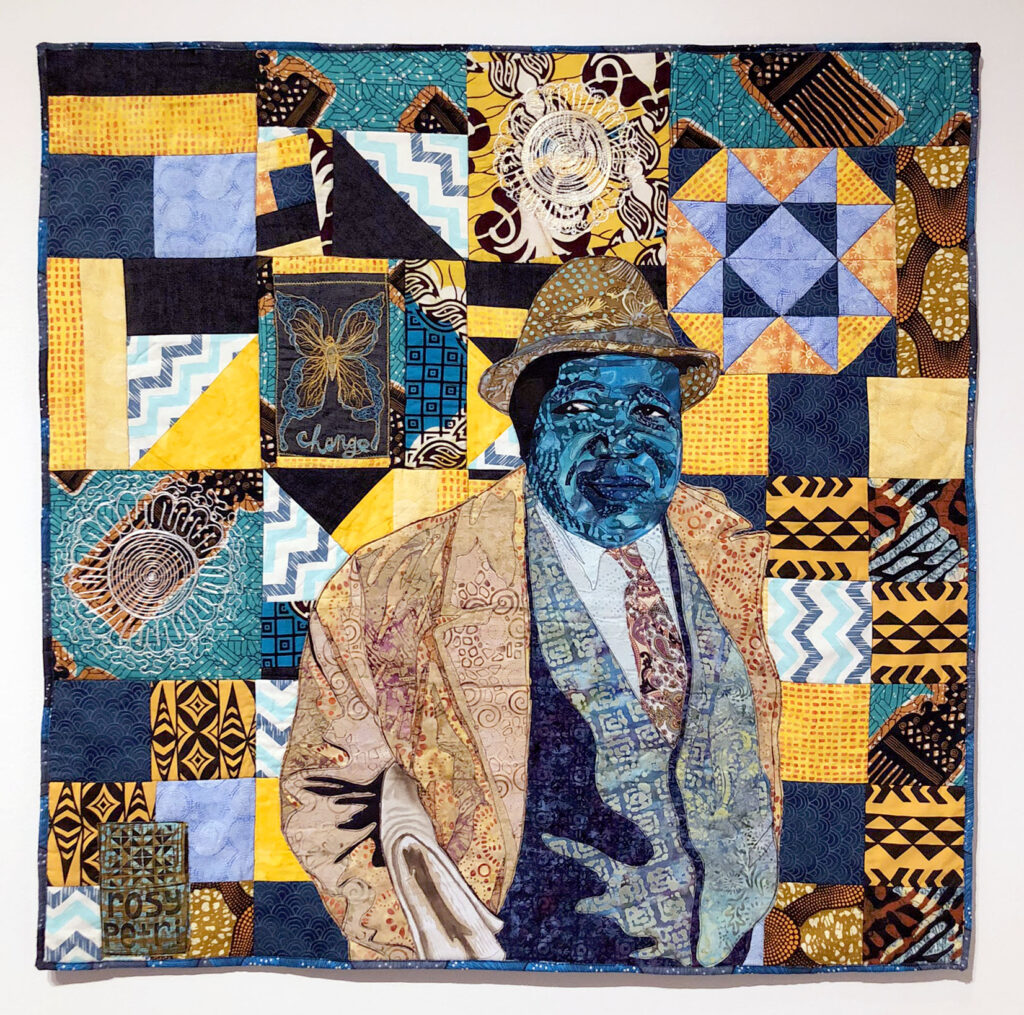
Two more selections from the exhibition are below, although it was very hard to choose which quilts to highlight- there are so many great ones to choose from.

“A Good Soldier: Thomas C. Fleming, America’s Longest Serving Black Journalist” by Rosy Petri

At the time of his retirement in 1997, California journalist Thomas C. Fleming was the nation’s oldest Black journalist with the longest consecutive period of publication.

Information from the Museum’s wall plaque on Stagecoach Mary

Mary Fields- also known as Stagecoach Mary, Black Mary and White Crow-became a Wild West legend because she was the second woman and the first African American woman star route mail carrier in the United States.

Born into slavery and freed after the Civil War, she worked as a servant and laundress for families on riverboats before moving to Montana in 1885. A decade later she became a star route carrier, delivering mail using a stagecoach. She drove the 15-mile route from Cascade to Saint Peter’s Mission, Montana, from 1895 to 1903. Nicknamed Stagecoach Mary, she was known for her reliability and speed.
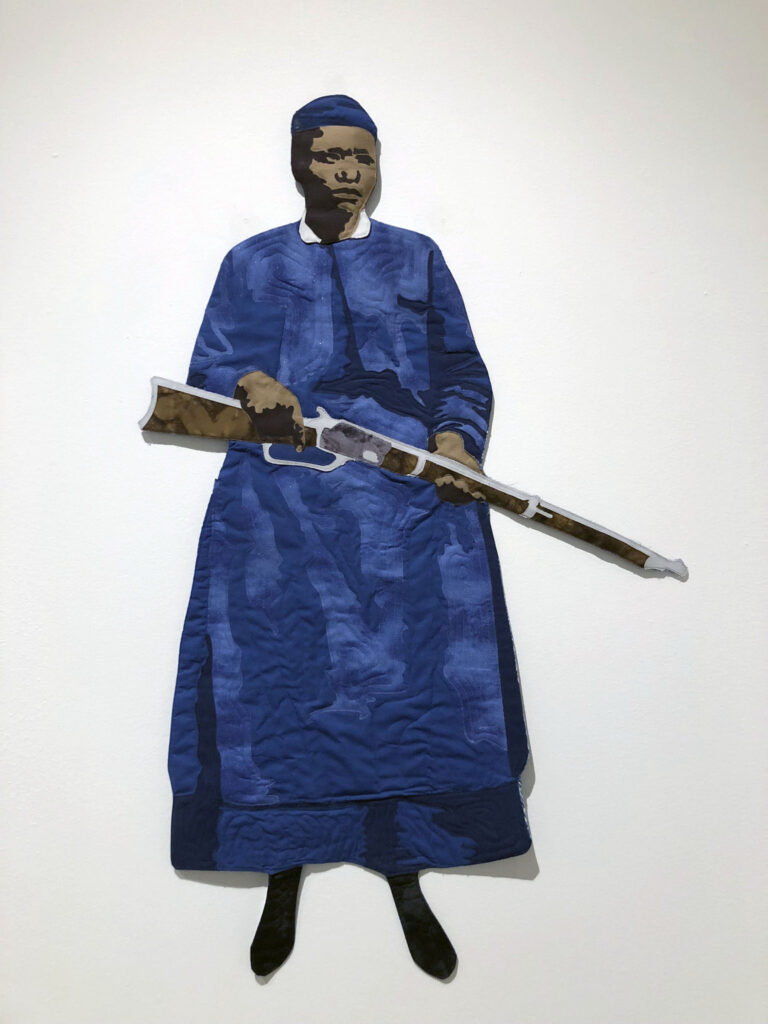
The six-foot-tall Fields was a quick-shooting and hard drinking mail carrier who wore men’s clothing and flaunted a revolver and a rifle. Locals praised her kindness and generosity, and schools in the town of Cascade were closed each year to celebrate her birthday.  Cascade’s mayor granted her an exemption to enter saloons after Montana passed a law forbidding women from entering these establishments.

The impressive quilts on view educate viewers with stories of individuals and events in African American history that may not have previously been familiar, and present new perspectives on those that are. It’s a wonderful way to utilize a visual medium to captivate, inform, and often inspire.

This exhibition closes on 1/8/2023.