Jul 292022
 

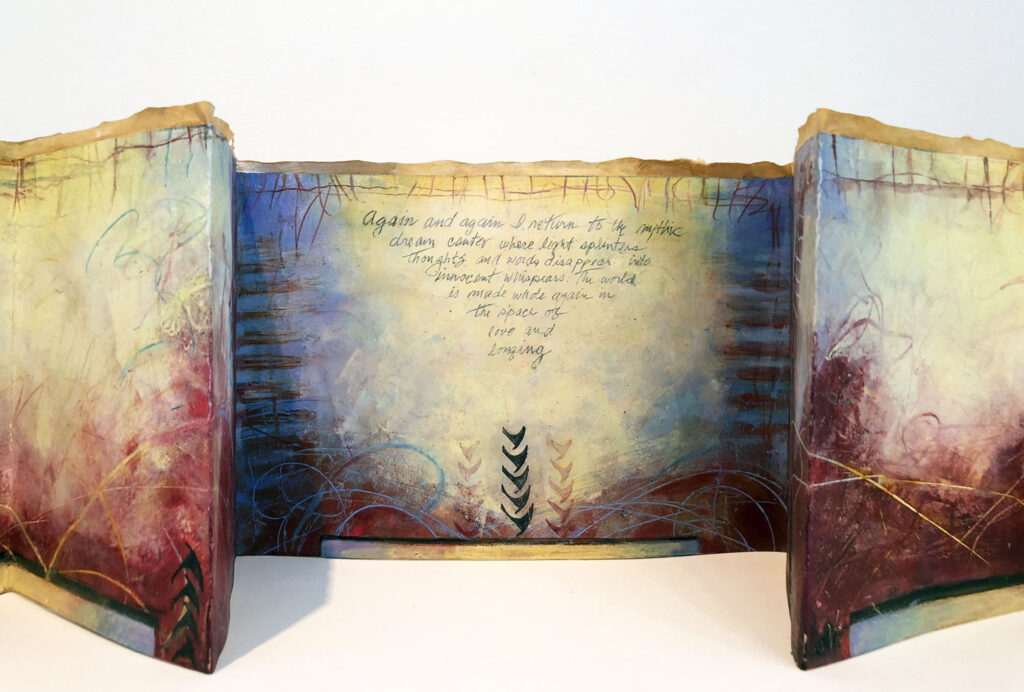
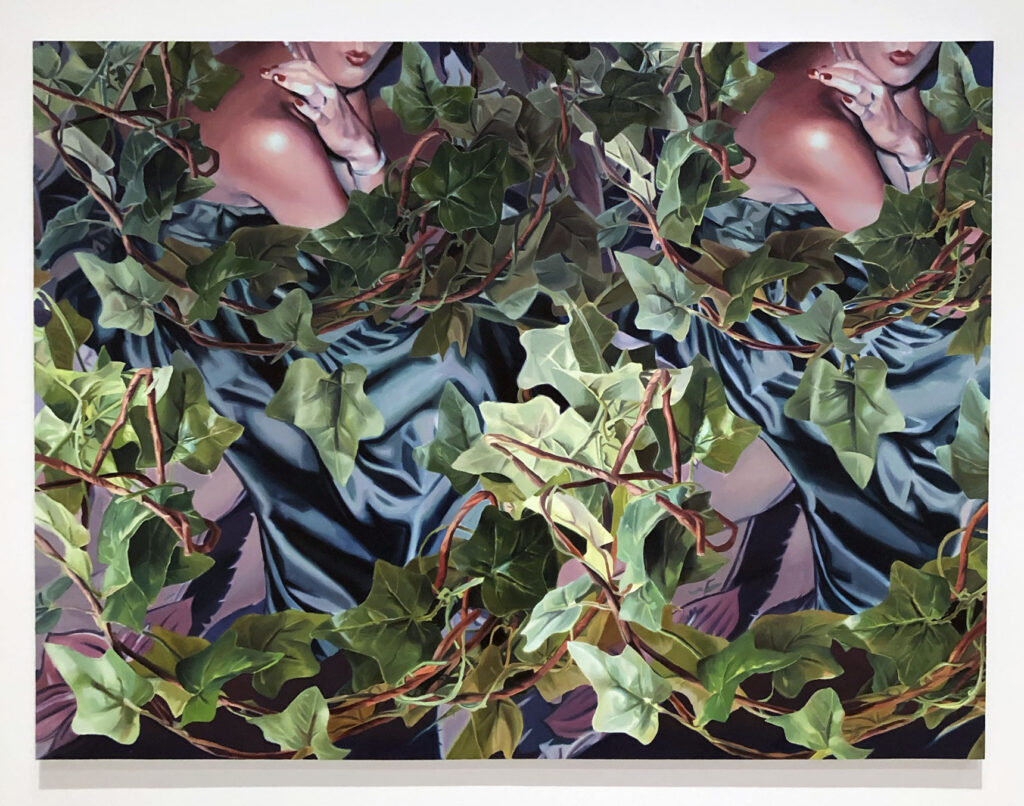
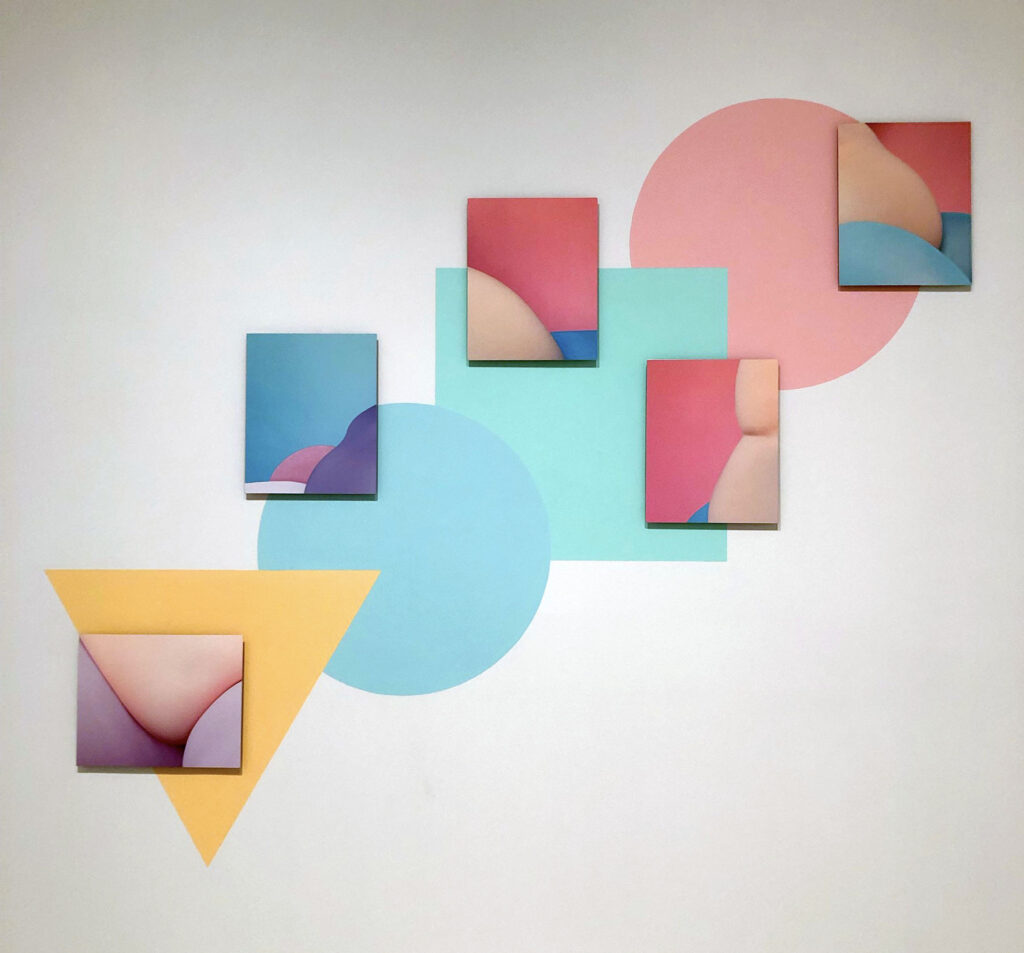
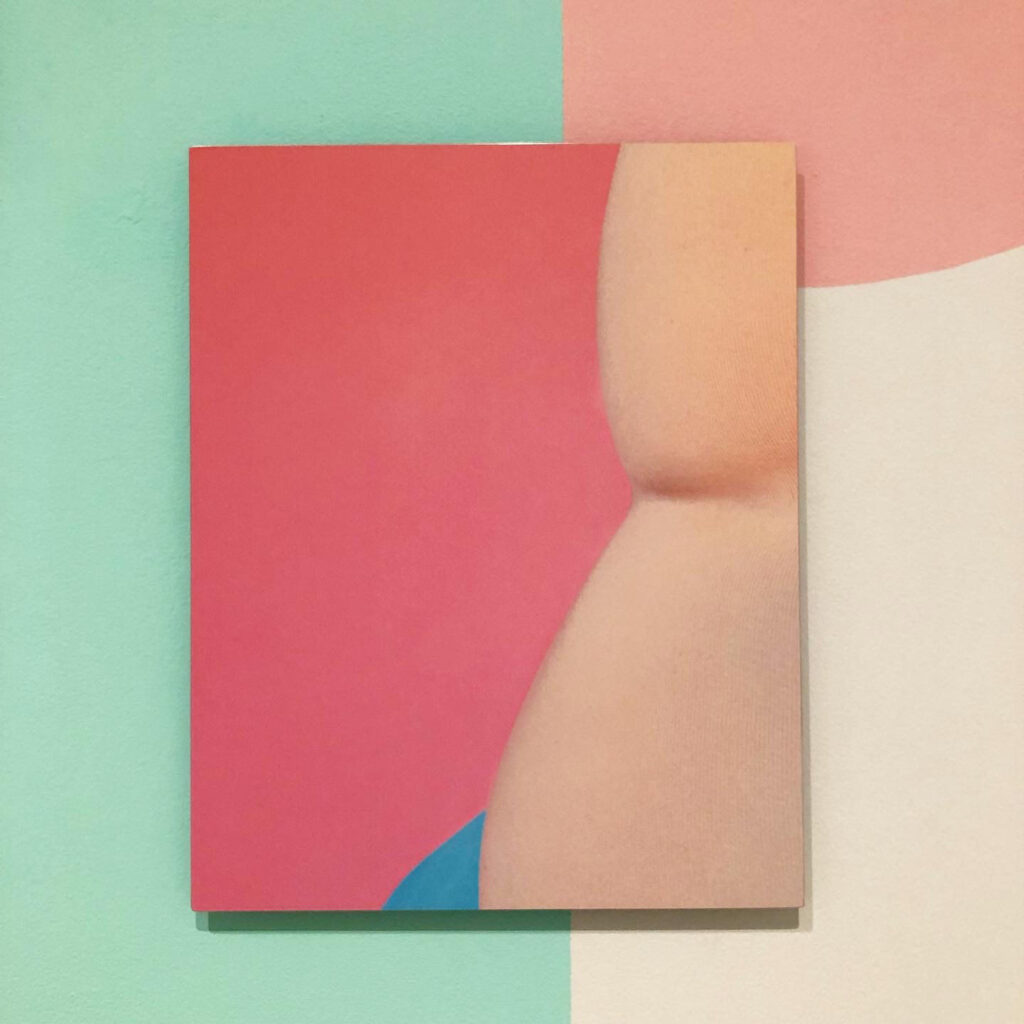
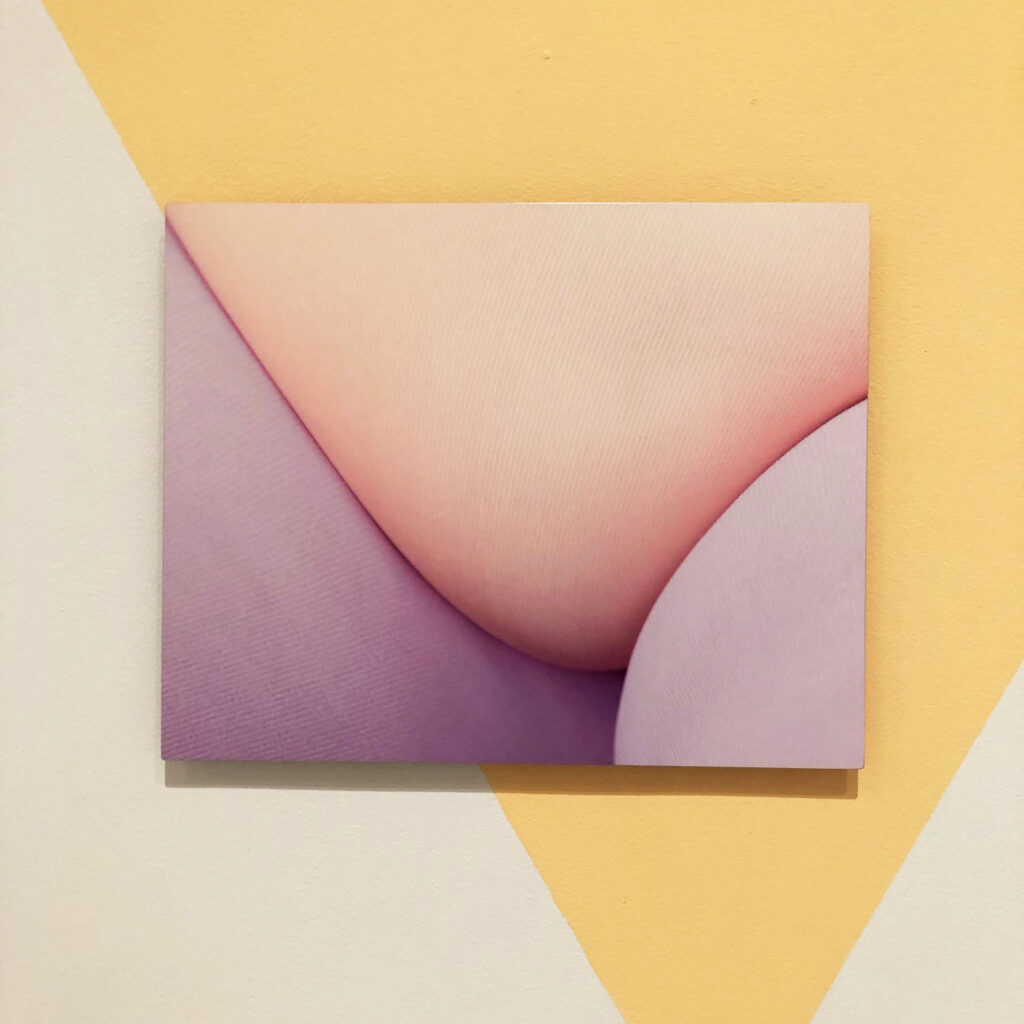
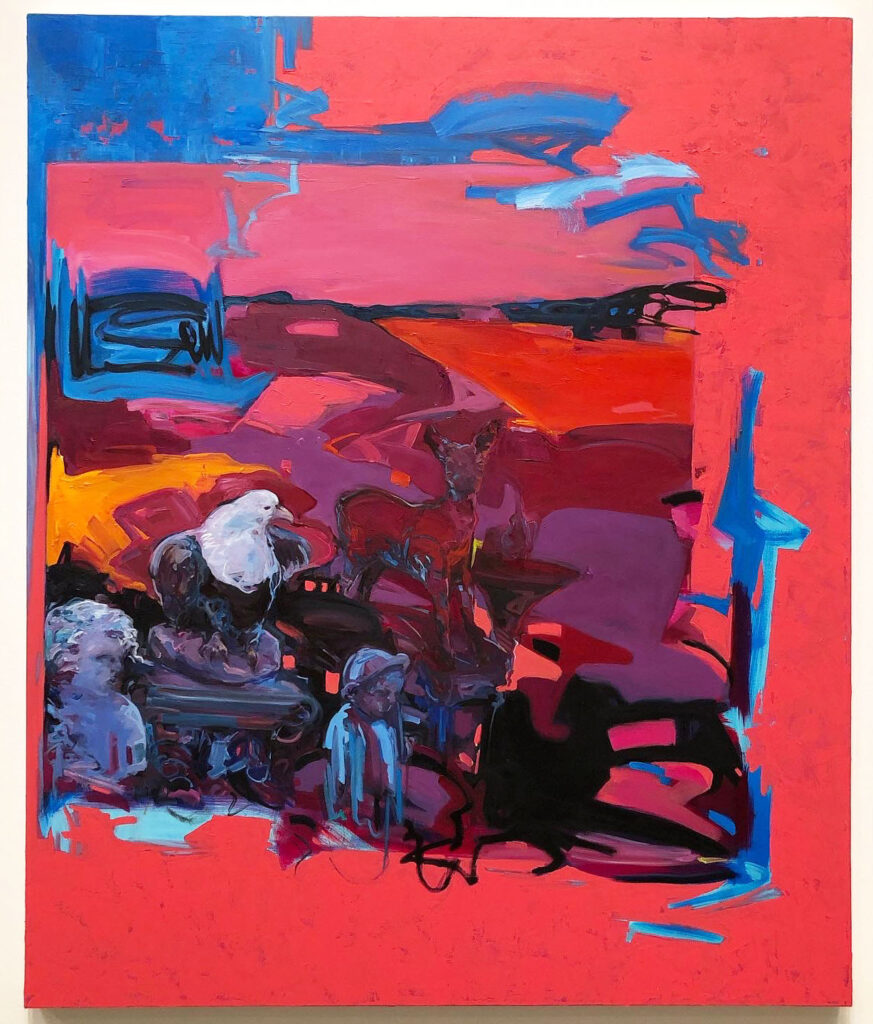
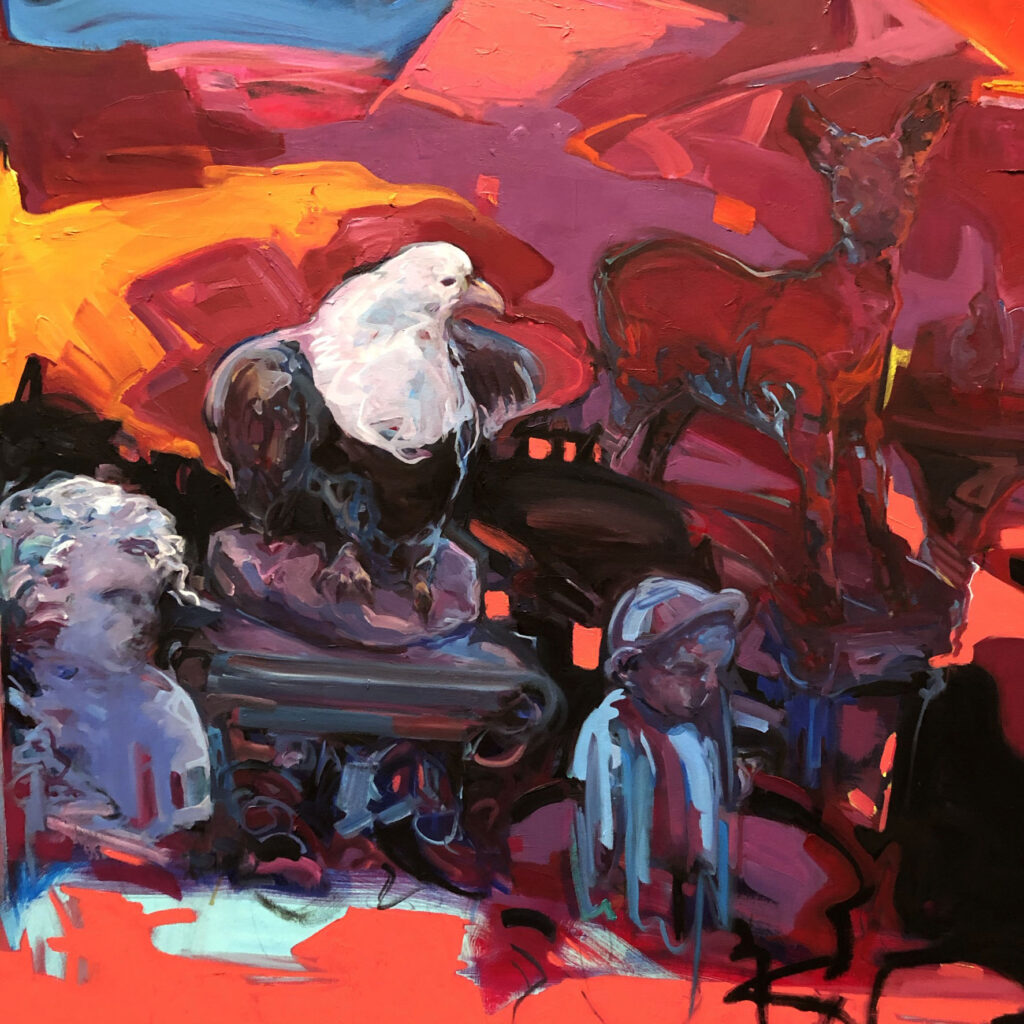
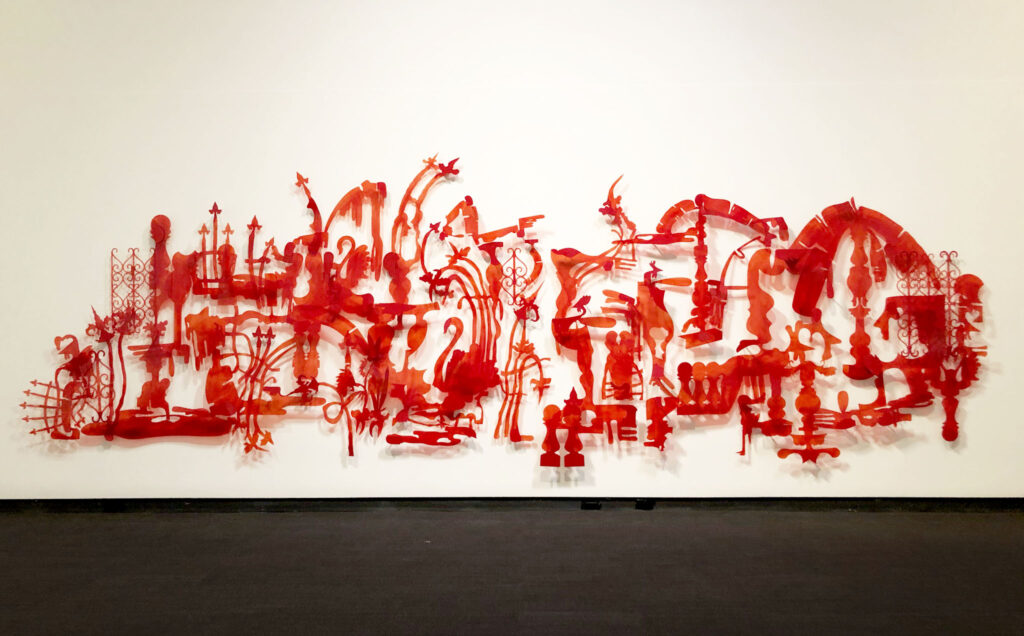
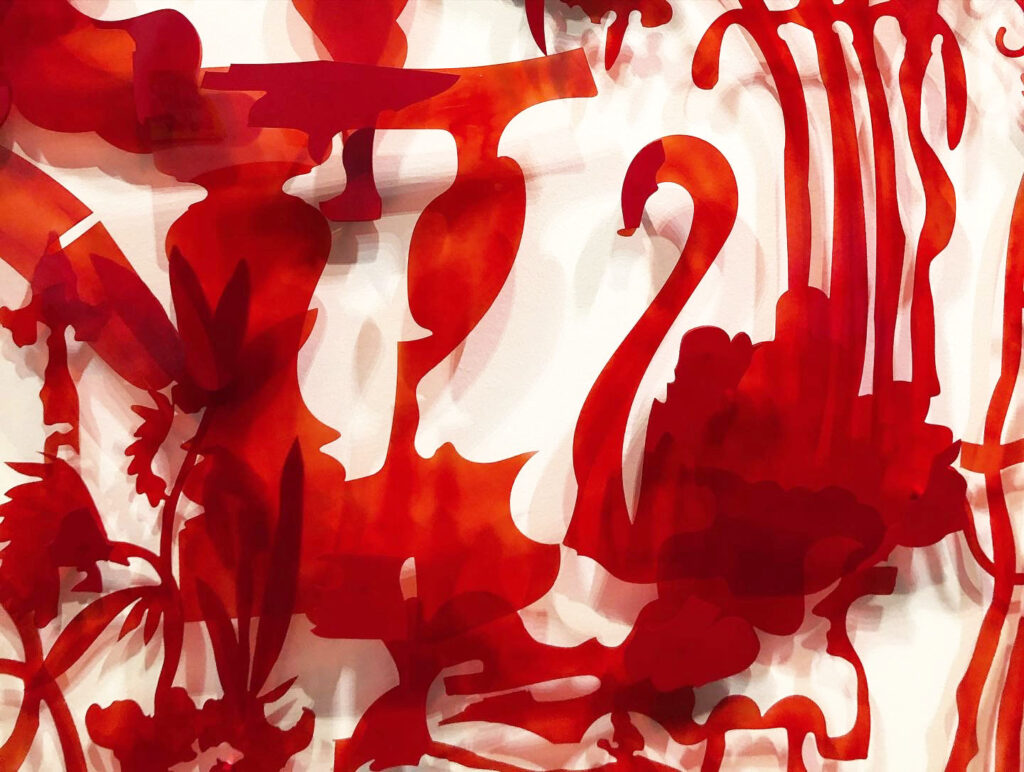
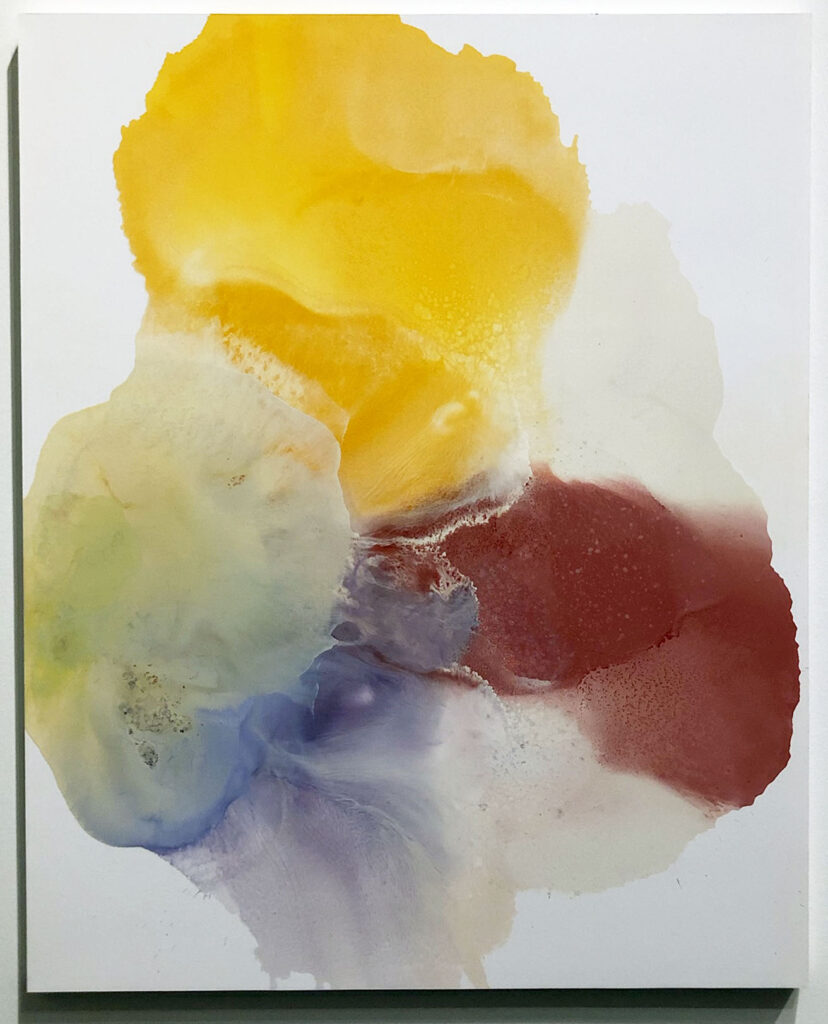
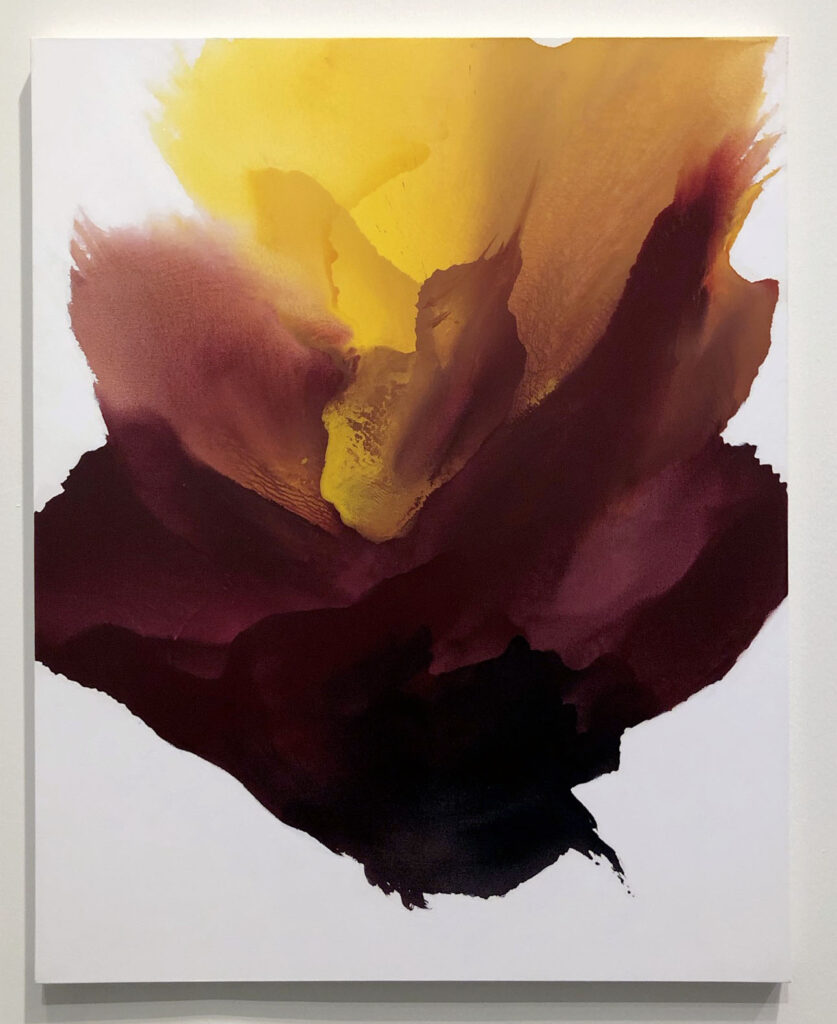
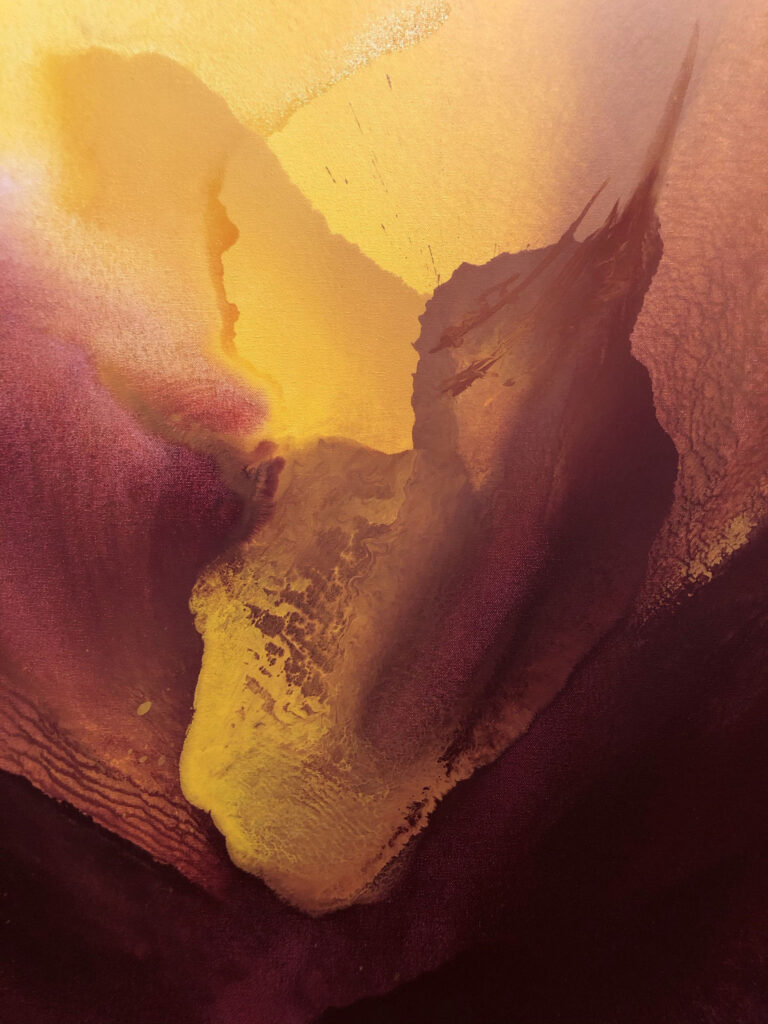
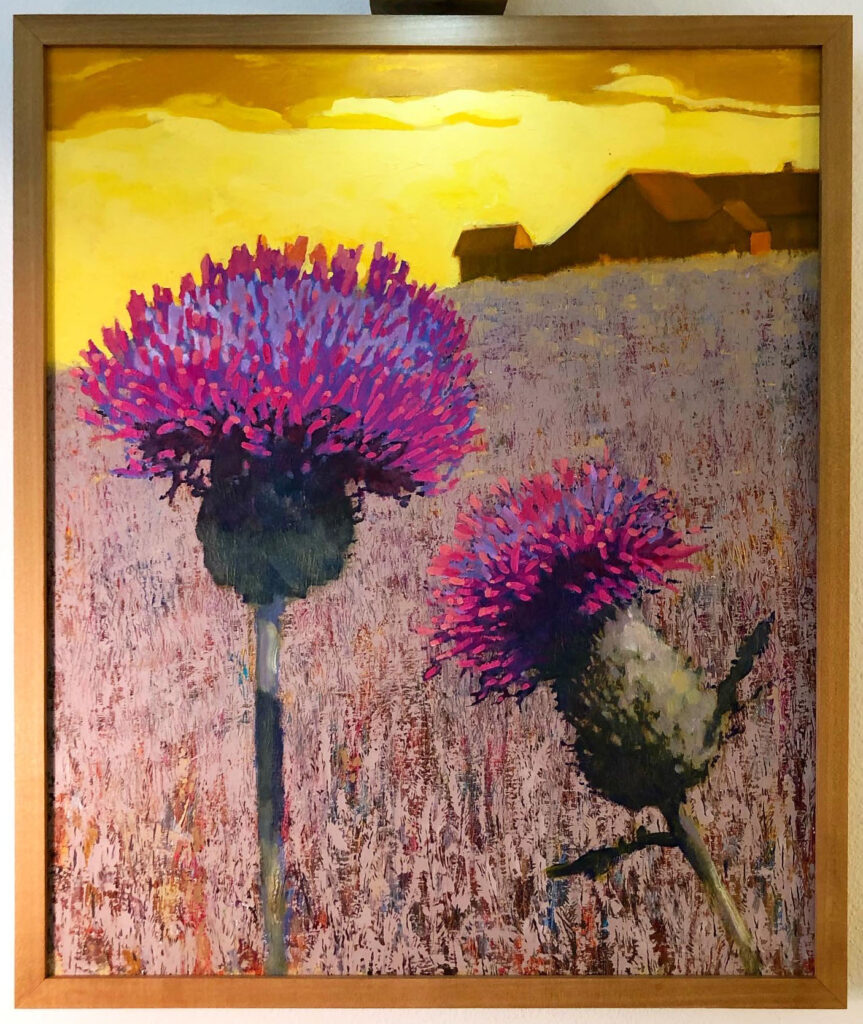
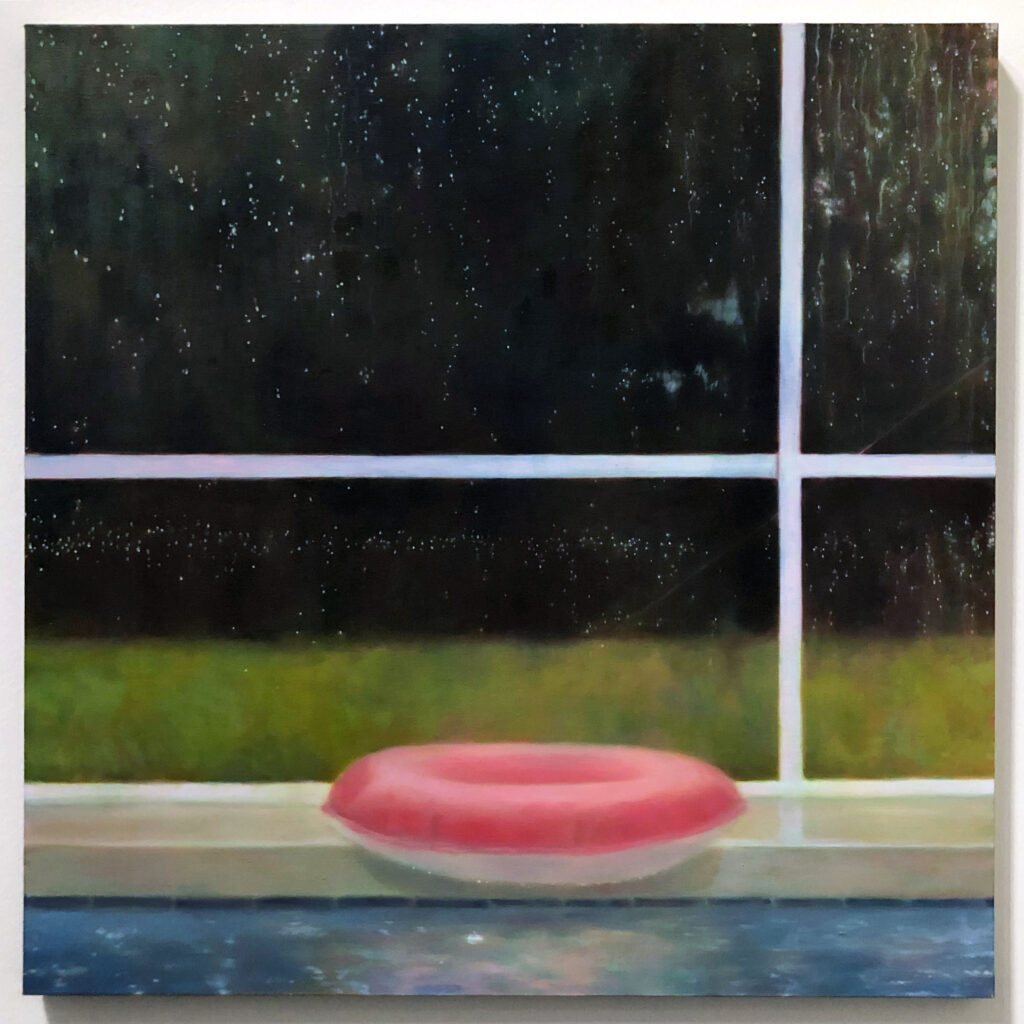
Buoyant, by Canadian artist Vicki Smith, from a 2018 exhibition at Bau-Xi Gallery in Vancouver. Smith is currently in the two person show Swimmers with photographer Joshua Jensen-Nagle at Pendulum Gallery.

Jun 252022
 

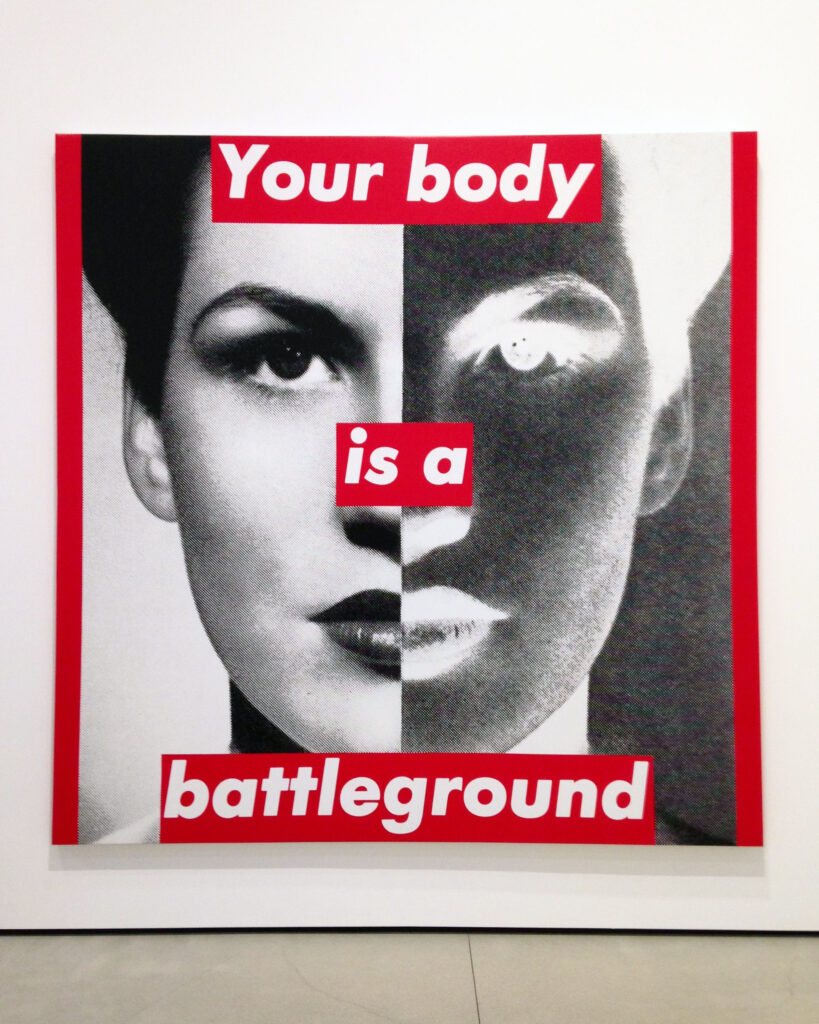
This work is currently on view at The Broad in Los Angeles.

Information from the museum’s website about this artwork-

Barbara Kruger addresses media and politics in their native tongue: tabloid, sensational, authoritative, and direct. Kruger’s words and images merge the commercial and art worlds; their critical resonance eviscerates cultural hierarchies — everyone and everything is for sale. The year 1989 was marked by numerous demonstrations protesting a new wave of antiabortion laws chipping away at the 1973 Roe v. Wade Supreme Court decision. Untitled (Your body is a battleground) was produced by Kruger for the Women’s March on Washington in support of reproductive freedom. The woman’s face, disembodied, split in positive and negative exposures, and obscured by text, marks a stark divide. This image is simultaneously art and protest. Though its origin is tied to a specific moment, the power of the work lies in the timelessness of its declaration.


Feb 172022
 

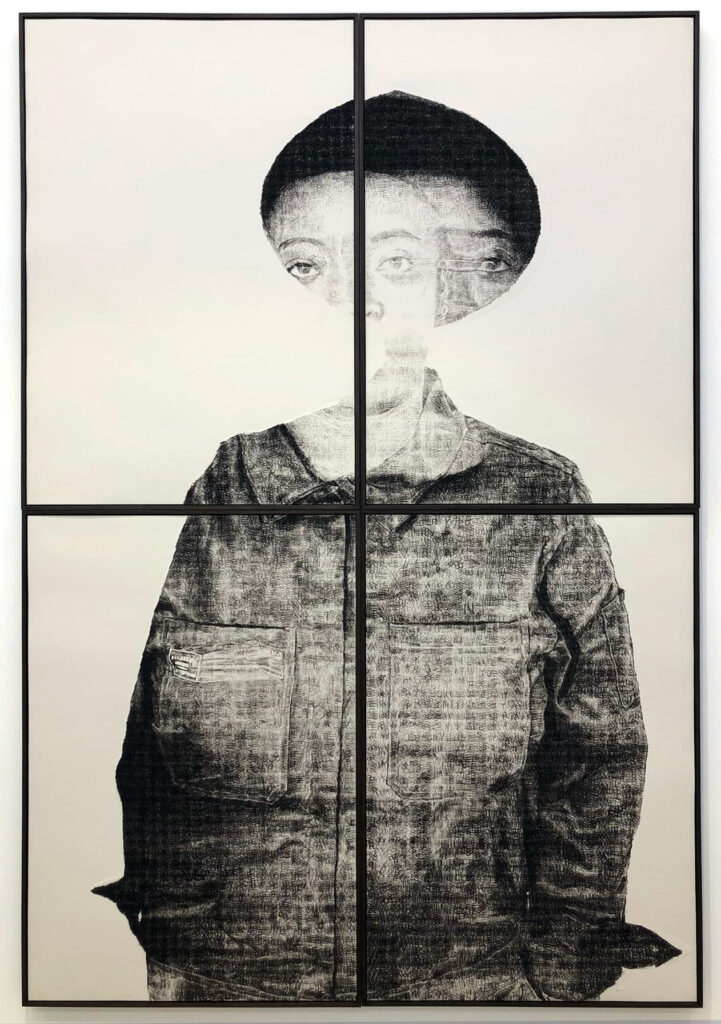
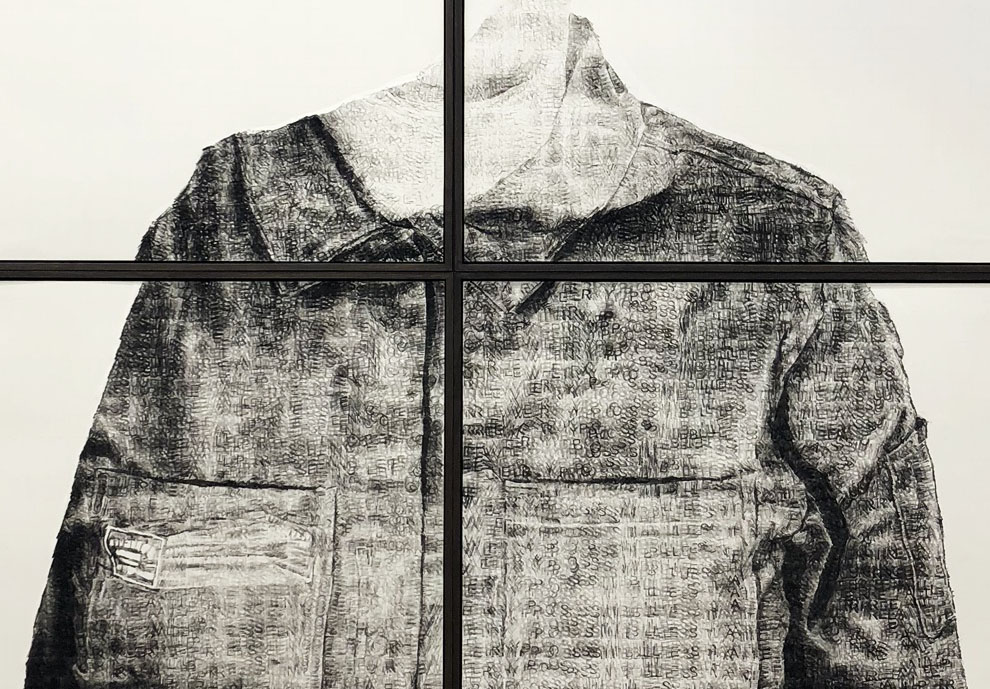
A Surreal Presence for Every Possible State, 2018 by Kenturah Davis from her 2019 exhibition, Blur in the Interest of Precision at Matthew Brown Los Angeles. The four panel work was created using oil paint applied with rubber stamp letters and graphite grid on embossed Mohachi paper.

From the press release-

Blur in the Interest of Precision is a search for parallel conditions between the poetics of our visual experience and the strangeness of our relationship to language. We often use language to carve out distinctions between one thing and another. Davis’ objective—to complicate ideas about meaning, representation and perception—have found refuge in blur and doubling. The new drawings are rendered with arrangements of text, but the words are virtually illegible. Many of the portraits pursue ideas the artist is working through via the writings of Fred Moten and Toni Morrison’s essay, Sites of Memory.

Davis’ work oscillates between various facets of portraiture and design. Using text as a point of departure, the artist explores the fundamental role that language has in shaping how we understand ourselves and the world around us. This manifests in a variety of forms including drawings, photographs and performances.

Recently Davis was commissioned by LA Metro to create work for the future Inglewood Station, slated to open in November of 2022. The work, Sonder, depicts community members photographed at gatherings at the artist’s Inglewood art studio and made into large porcelain enamel steel panels.

From Metro’s site

The photographs were hand painted with stamps incorporating letters that form the words defining the term “sonder.”

Davis was drawn to the term which alludes to the realization that every person has a unique and significant story. She hopes that the portraits inspire connections between strangers, even if only for a passing moment while waiting for the train.

(images below via LA Metro’s site)

For more images, information about the station, and a video of the artist discussing the work, check out Metro’s website.


Oct 052021
 

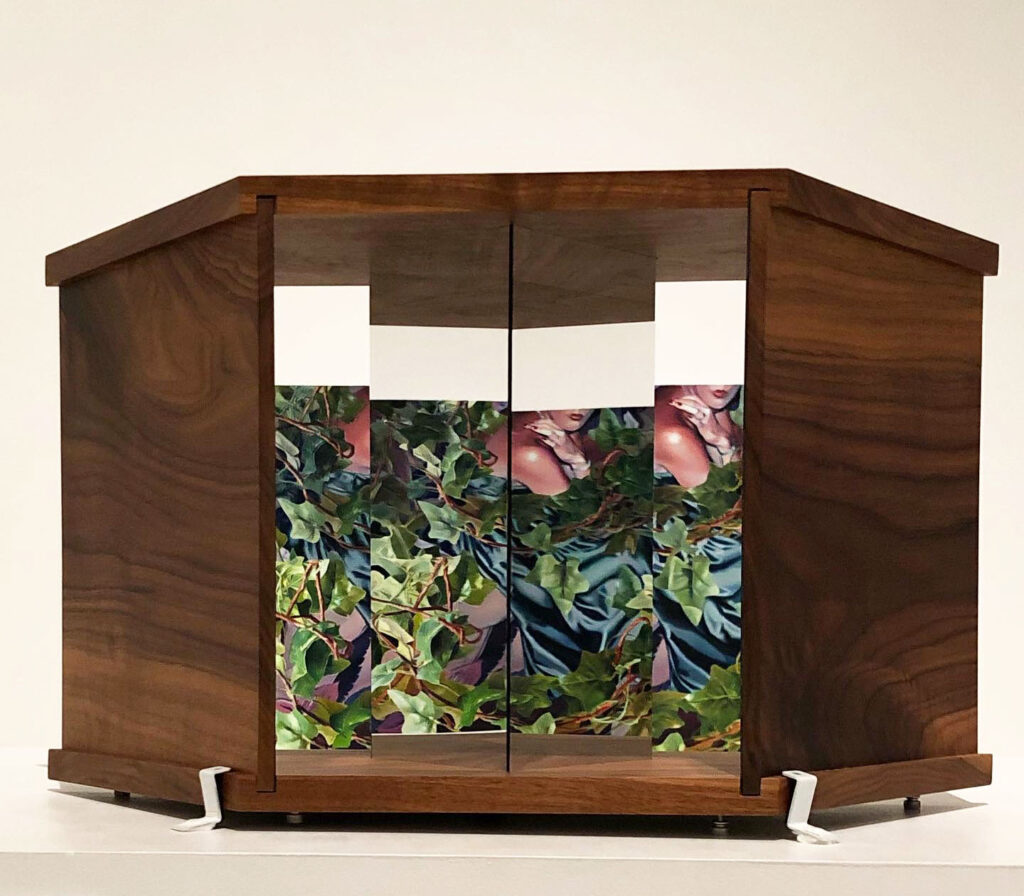
Kim Anderson, “Alone Together”, 2021

Stereoscope for viewing the above painting

Skyway 20/21: A Contemporary Collaboration, is the second iteration of a joint exhibition across four institutions that highlights contemporary art created in the Central Florida region. Artists selected by a jury are from five counties- Hillsborough, Pinellas, Pasco, Manatee, and Sarasota. The exhibitions are an excellent sampling of the work being made in the Tampa Bay area.

The works shown in this post are from the exhibition at the Tampa Museum of Art. The museum has a video playlist on YouTube that includes all of the artists in the exhibition discussing their work. The links below are to the artists’ websites or those videos.

Selina Román “XS” 2019

For Selina Román’s XS series, she created abstract self portraits that examine standards of beauty in relation to expectations of weight and body. The title XS references an extra small size and alludes to the word excess.

This exhibition closes 10/10/21.


Aug 132021
 

Dolores Coe “Perimeter”, 2019

Dolores Coe, “Borderland”, 2020

Dolores Coe, “Borderland”, 2020 (detail)

Skyway 20/21: A Contemporary Collaboration, is the second iteration of a joint exhibition across four institutions that highlights contemporary art created in the Central Florida region. Artists selected by a jury are from five counties- Hillsborough, Pinellas, Pasco, Manatee, and Sarasota. The exhibitions are an excellent sampling of the work being made in the Tampa Bay area.

The works shown in this post are from the exhibition at the Museum of Fine Arts, St. Petersburg. I’ve included links for these artists as well as those not pictured.

Gabriel Ramos, “Mi Isla”, 2021

Gabriel Ramos, “Mi Isla”, 2021 (detail)

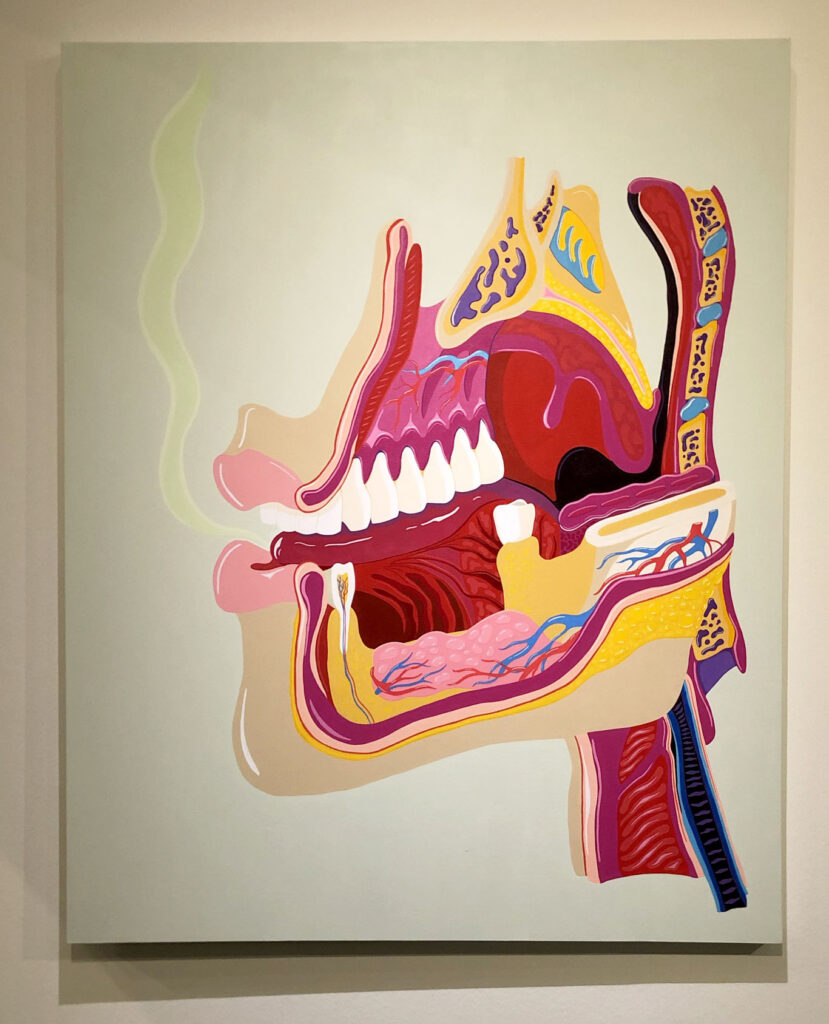
Savannah Magnolia, “Chemical Inhalation”, 2019

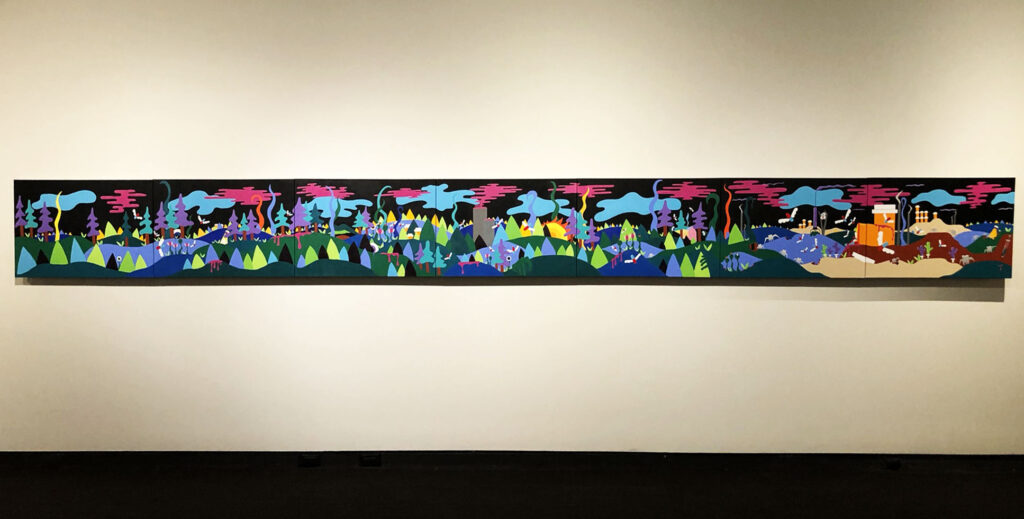
Savannah Magnolia “In Big Pharma We Trust”, 2019

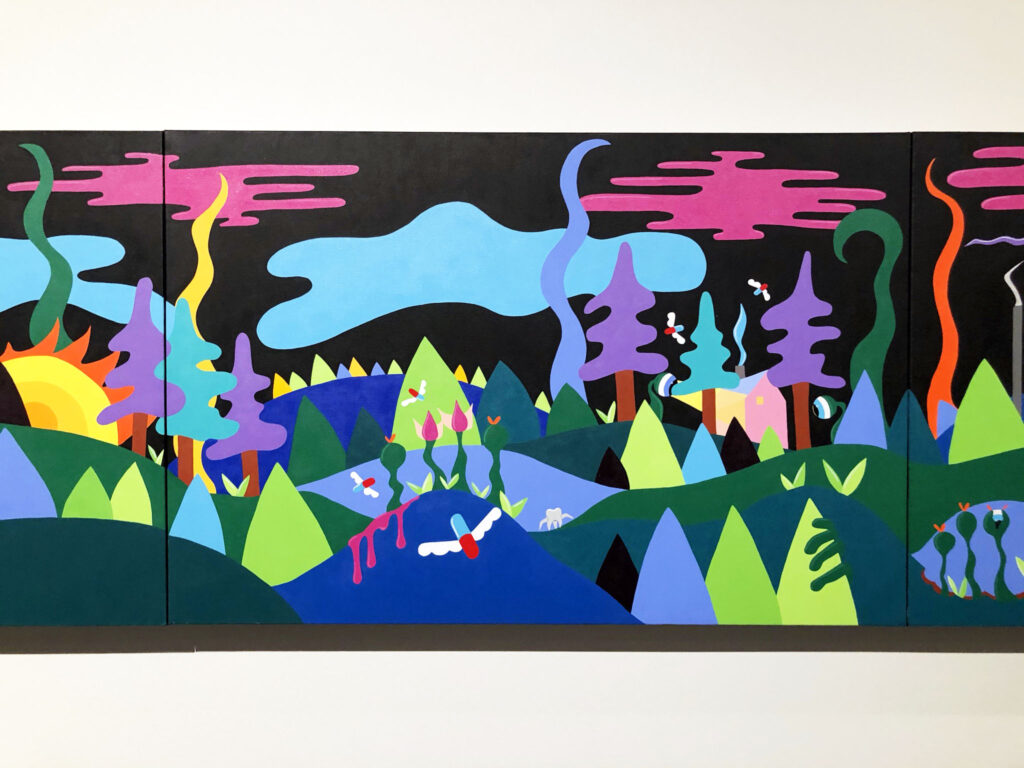
Savannah Magnolia “In Big Pharma We Trust”, 2019 (detail)

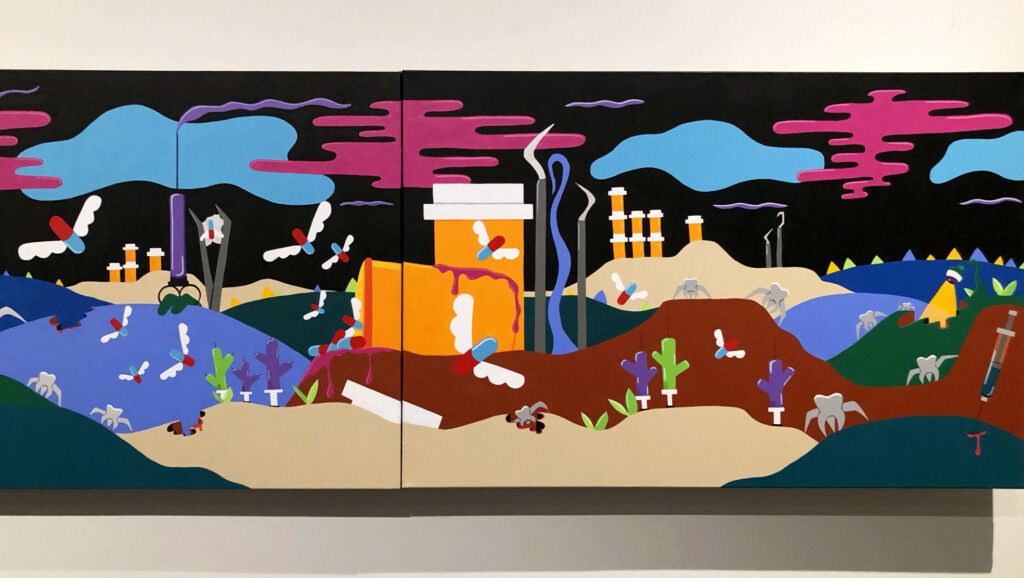
Savannah Magnolia “In Big Pharma We Trust”, 2019 (detail)

Keith Crowley, “Rain Season”, 2019

Keith Crowley, “Nocturne”, 2020

Bassmi Ibrahim, “Awareness 41”

Bassmi Ibrahim, “Isness 158”

Bassmi Ibrahim, “Isness 158” (detail)

The exhibition at this location closes 8/22/21.

Aug 082021
 

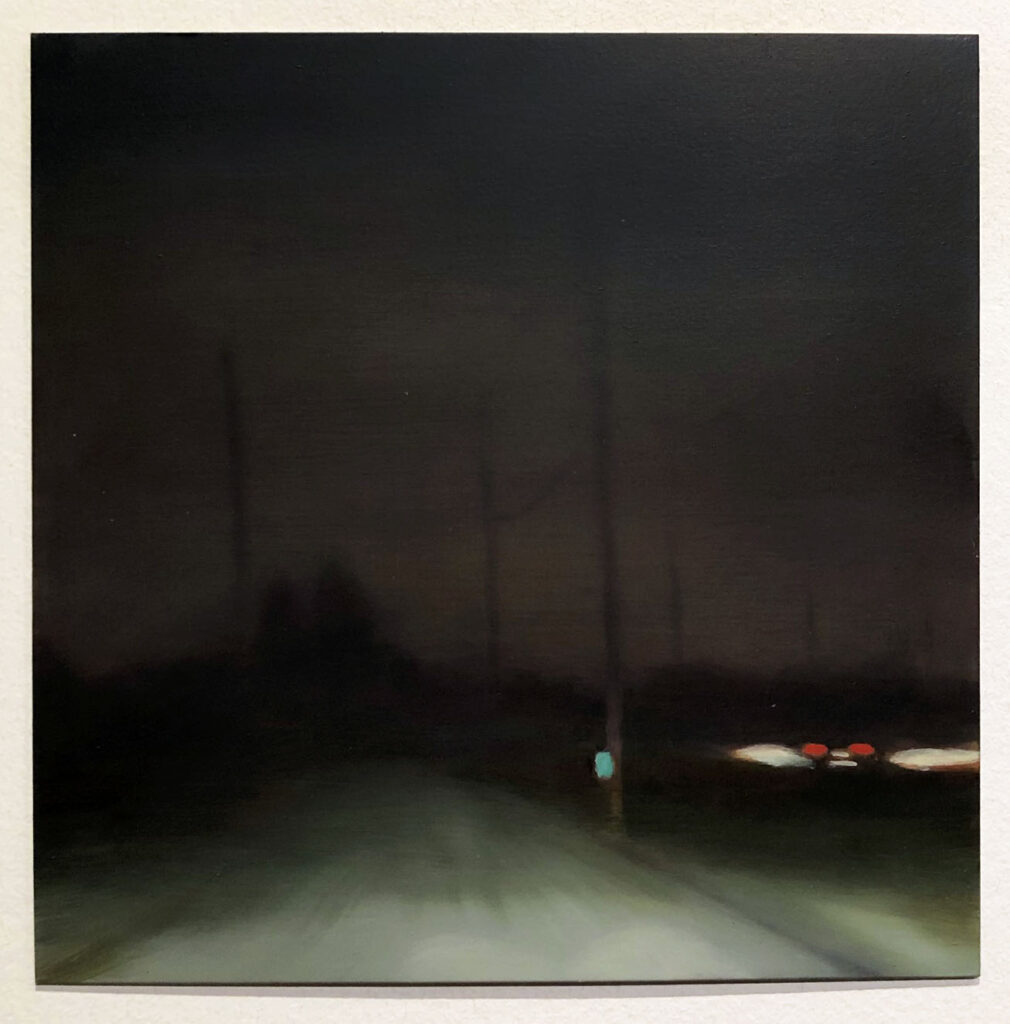
Pace Gallery is currently showing the lovely, meditative photographs of JoAnn Verburg at their NYC location.

From the press release-

JoAnn Verburg: For Now debuts recent multiple-frame photo and video works by the renowned American photographer depicting olive trees captured on three continents. Exemplifying Verburg’s multidisciplinary practice, which for over four decades has existed at the intersection of a range of art-historical traditions, including still life and portraiture, these experiential artworks offer a contemplative respite from the cacophonous urban environment outside of Pace’s gallery space in New York. In response to a period of social and political unrest and a global health crisis, Verburg’s presentation invites viewers to pause and enter a world of self-reflection while simultaneously diving into landscapes from Italy to California to Israel. Generating what the artist has called an “imagined reality,” her images become vehicles for orchestrating a performative and existential encounter between the viewer and the world.
For Now marks Verburg’s first solo exhibition with Pace since the gallery began representing her in 2020, and only the second exhibition in New York since her survey exhibition Present Tense: Photographs by JoAnn Verburg at The Museum of Modern Art in 2007.

Since her last exhibition in New York in 2010, Verburg has been experimenting with the intriguing implications of creating an installation of photos and videos within an urban environment that both acknowledge the environment and provide an escape from it. In this sense, Verburg’s desire to exhibit her images of olive trees in New York reflects her interest in the disjuncture between the contemplative space of the gallery and the busy world outside. Like the pioneering Italian still life artist Giorgio Morandi, Verburg returns repeatedly to the same subject matter—arranging and rearranging her images in three-dimensional space through use of vantage point, framing, and light, while employing techniques of classical craftsmanship, including the production of each singular print herself. In the editing process, she manipulates elements forward and back in space, creating emphases and clarifying her images by manipulating color like a painter. Having studied sociology as an undergraduate, her artwork also reflects a deep philosophical engagement with the social and formal histories of photography as well as the work of key practitioners who blended formalist concerns with sociological awareness, such as Diane Arbus and Robert Frank.

While the subject matter depicted in For Now is olive trees, the subject of the exhibition itself is the experience of the present moment—what Verburg calls “Vermeer time,” evoking the sense of suspended animation that characterizes the paintings of Dutch master Johannes Vermeer. “Her pictures describe spaces and moments suspended in the reverie that precedes action,” observed the celebrated photographer, curator, and critic John Szarkowski, “Like a Leyden jar, they are containers of potential.” Treating the olive grove as both landscape and still life, her focus on a limited range of subject matter suggests a connection between her work and the Minimalist and serial practices of the 1970s. Yet Verburg’s practice is also aligned with Old Master paintings: her works resist the acceleration and velocity of contemporary culture…

If you are unable to see the works in person, the Pace website has them on view as well as the full press release and a video of the artist in her studio.

This exhibition closes on 8/20/21.

Nov 262020
 

This year because of the pandemic, Photoville’s 2020 version is entirely outside. It is in all five boroughs of New York City, but the majority of the exhibits are located in Brooklyn Bridge Park.

It closes this weekend (9/29/20) and is a wonderful way to get some fresh air and see some excellent work.

Pictured above is work by anonymous art collective Mz. Icar featuring Erin Patrice O’Brien (VALUE: In terms of Iconography), George Nobechi (Here. Still.), and Francesca Magnani (People of the Ferry 2020. Connection at a Time of Social Distancing). 

For more information on these works and to check out samples from the other installations check out Photoville’s website.

May 182020


Two works from Museum of Latin American Art’s outdoor sculpture garden, just one of the great things about this Long Beach museum.

Currently they are showing Arte, Mujer, y Memoria: Arpilleras from Chile; Dreamland: A Frank Romero Retrospective En Vision: Picturing the Self -selected pieces from MOLAA’s Permanent Collection in conversation with self-portraits by students of Las Fotos Project, a community-based nonprofit organization that inspires teenage girls through photography, mentorship and self-expression; and the work of Afro Cuban artists José Bedia and Belkis Ayón; in addition to work from the museum’s permanent collection, as part of their Museum en Casa online programming.

Mar 062020
 

Spoons, 1979.

For Sandy Skoglund’s exhibition Winter, at Ryan Lee gallery in New York, she has partially recreated the environment she used to created the title piece. Many of her photographs are created by building new worlds-this is a chance to immerse yourself in one of them.

The exhibition also includes a collection of her work from the late ’70s to 2005, including Radioactive Cats from 1980 (pictured below).

From the press release-

Skoglund describes Winter as “a study in perseverance and persistence, an artificial landscape celebrating the beautiful and frightening qualities of the coldest season.” In the photographic image, a man, woman, and child punctuate an icy blue scene. They are inside of an iceberg, perhaps, surrounded by its craggy walls. Standing pensive with hands in the pockets of their winter coats, only the child, a red-headed girl, looks out toward the viewer. The trio is joined in this fantastical setting by a cluster of three snowflake-emblazoned owls and a female figure that seems to have frozen mid-slumber. The imagery evolved from Skoglund’s interest in similarity and difference among snowflakes. Her fascination with the appearance of correspondence versus the reality of difference extends from earlier investigations of the liminal territory between the natural and the artificial, or order and chaos. Through her constructed imagery, Skoglund explores the space between what the human eye and the camera can see.

Since the late 1970s, Skoglund has been celebrated for her panoramic installations—entire environments that she meticulously designs, constructs, and then re-visualizes photographically. Skoglund likens Winter to “a very slow shutter speed on a camera. Time stands still but also inches forward.” Relentlessly inventive, Skoglund challenges herself to experiment with new creative technologies, always in search of the medium best suited for her message. For Winter, which was part of a larger project on the four seasons, years of experimenting with various forms of clay modeling and 3D-printing led to the ultimate inclusion of digitally-cut metal snowflakes bearing ultraviolet cured ink, and the computer-sculpted figure and owls.

Radioactive Cats, 1980. (image courtesy of Ryan Lee )

This exhibition closes 3/7/20.