Cola- Hedgesitting
This song is from Montreal band Cola‘s 2026 album Cost of Living Adjustment.
They are currently on tour and playing at Sid The Cat Auditorium in Pasadena on Thursday, 9/24/26, with Artificial Go.

Cola- Hedgesitting
This song is from Montreal band Cola‘s 2026 album Cost of Living Adjustment.
They are currently on tour and playing at Sid The Cat Auditorium in Pasadena on Thursday, 9/24/26, with Artificial Go.

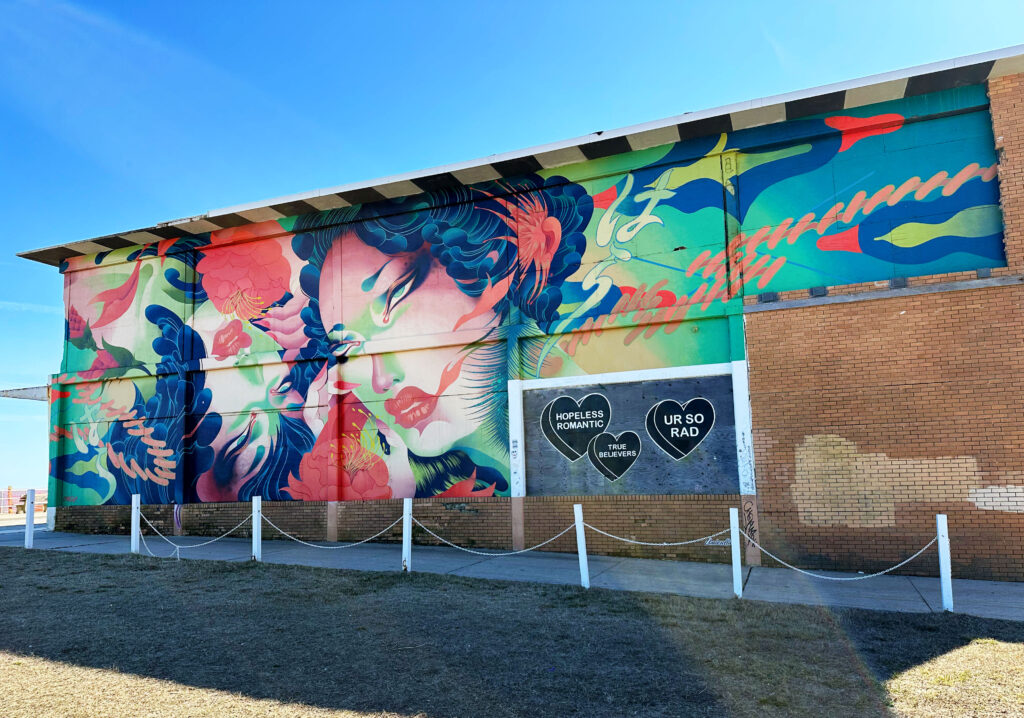
Japanese artist ONEQ created this mural, Hara Hara, in Asbury Park in 2023. It is one of the many murals in the area organized by the Wooden Walls Mural Project.
The hearts are by Amberella.
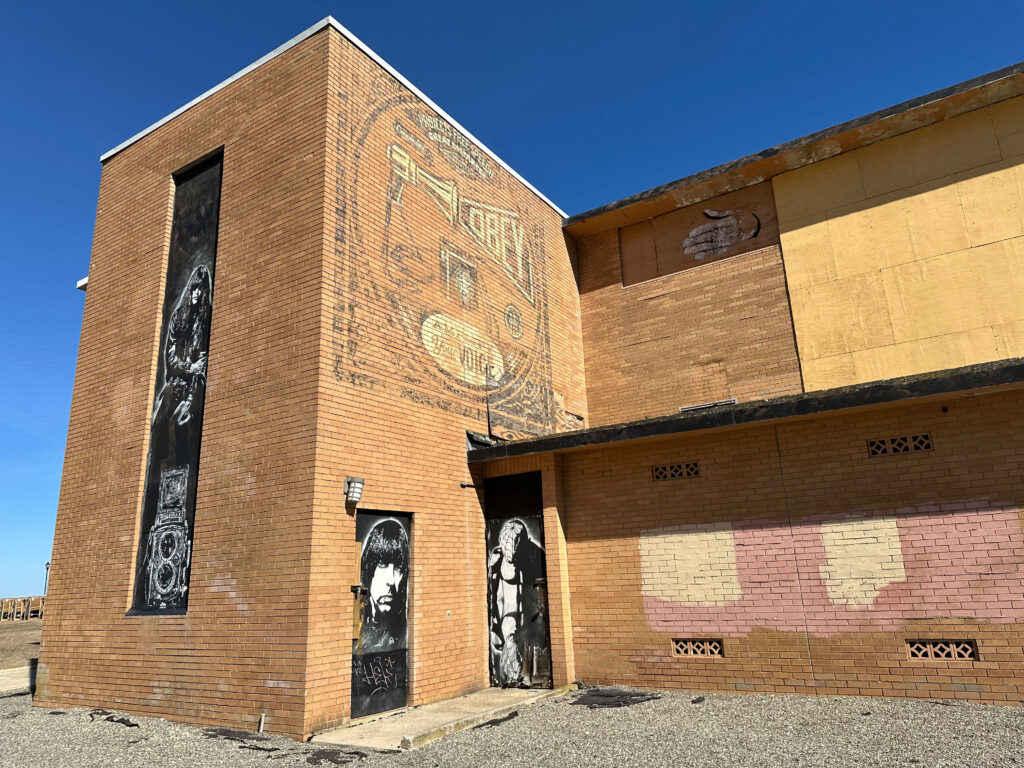
2011 mural by Shepard Fairey surrounded by work from Danny Clinch and RC Hagan’s 2016 collaborative mural project
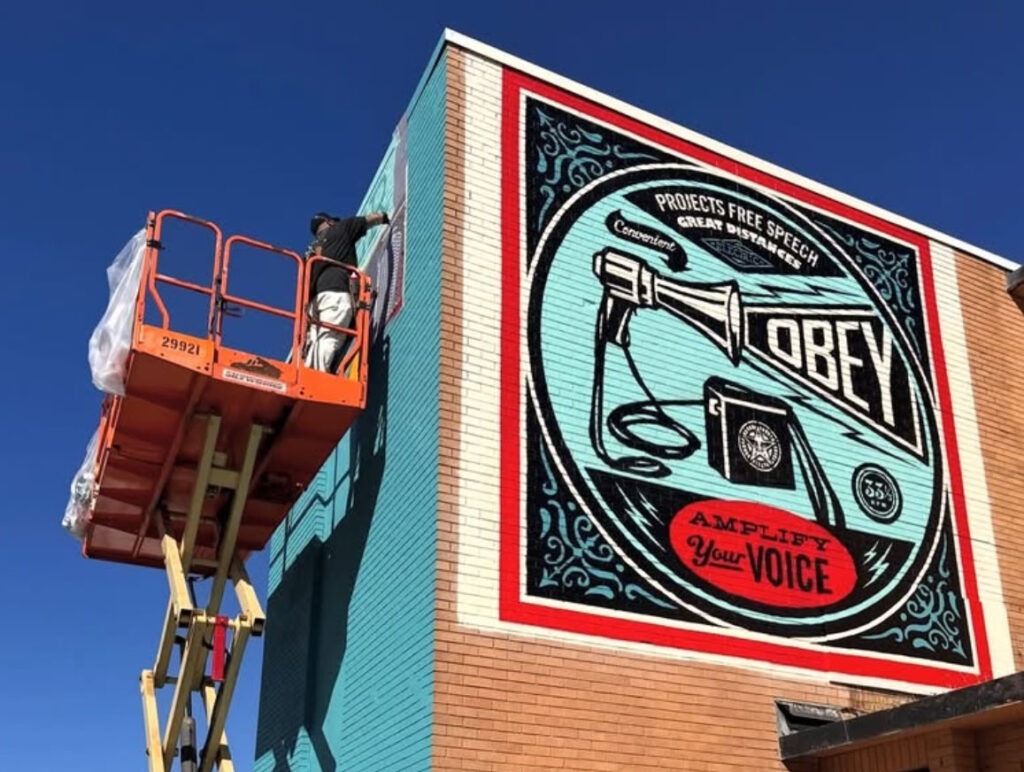
The updated Shepard Fairey mural (2026) by photographer Connor Kane (images from PlusOne.ap Instagram account)

The updated Shepard Fairey mural (2026) by photographer Connor Kane (images from PlusOne.ap Instagram account)
Lots to do in Asbury Park, New Jersey, this weekend! Tonight marks the beginning of Wooden Walls inaugural three-weekend art party, PlusOne. It will include new murals, immersive installations, exhibitions, art tours, and more.
Artist Shepard Fairey has returned for the first time since 2011 and has updated his original mural and added several more. The first image above is from 2024 and shows the original mural, plus a few leftover pieces from a 2016 collaborative project (the images of musicians) between photographer Danny Clinch and RC Hagans . The second images are the recent updates, courtesy of PlusOne and photographer Connor Kane.
Raw Power, an exhibition of artwork by Fairey presented by Wooden Walls and Jonathan Levine Projects, is showing in two locations in Asbury Park– The Art Spot (where it opened yesterday, 9/17) and Parlor Gallery (opening tonight 9/18). The works will be on view in both locations until 10/18/26.
Also part of PlusOne’s programming, the 4th Annual “March of Medusa” procession created by multidisciplinary artist Dennis McNett, aka Wolfbat, is taking place on Sunday (9/20). The procession route is along the Boardwalk from the Carousel House to 4th Avenue Pavilion.
The full schedule for all three weekends can be found here and the press release for the event here.
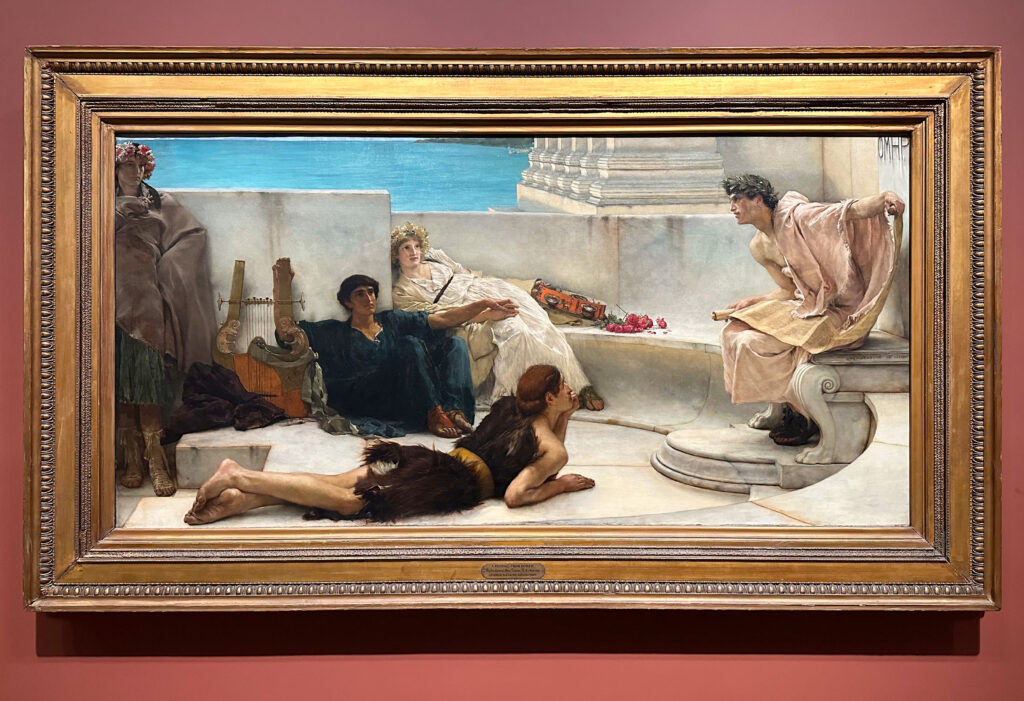
Sir Lawrence Alma-Tadema, “A Reading from Homer” (1885) at the Philadelphia Museum of Art
While interest in Homer’s epic poem the Odyssey grew this summer with the release of Christopher Nolan’s film version, it is also one of the oldest and most popular works of literature in the Western canon. Over the years it has been referenced by many artists in painting, film, and works of literature. In addition, according to Merriam-Webster, there are even a few words in the English language that can trace their origins back to the Odyssey.
Currently on view at the Philadelphia Museum of Art, is Sir Lawrence Alma-Tadema‘s painting A Reading from Homer (1885).
From the museum about the work:
Here, a young poet crowned with a laurel wreath reads from Homer to an audience dressed for a festival. The setting is probably Greece toward the end of the seventh century BCE. The Greek letters in the upper right indicate that the place is dedicated to the poet.
Through attention to details such as architecture and dress, Alma-Tadema evokes scenes of everyday life in ancient Greece and Rome. However, his pictures are rarely entirely archaeologically accurate. For example, while he accurately rendered the ancient musical instrument on the left, a cithara, he also included a type of rose that did not exist before the nineteenth century.
Live readings of Homer’s works continue to this day. At the end of October, for example, the National Hellenic Museum in Chicago is hosting a marathon reading of the Odyssey taking place over two days.
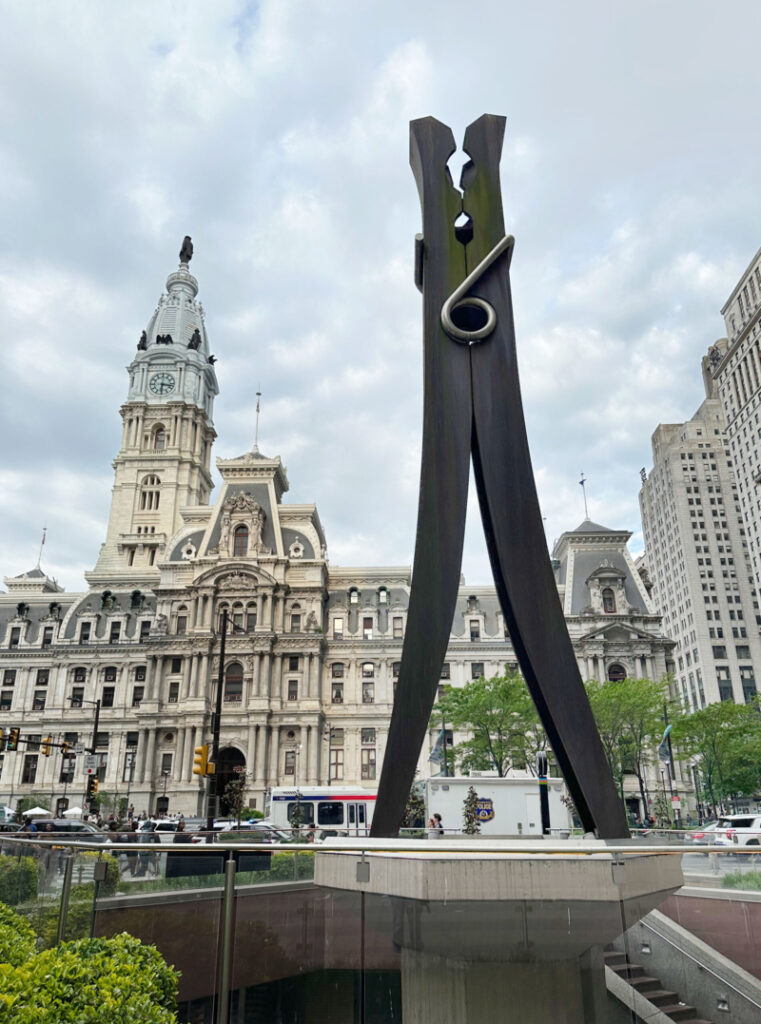
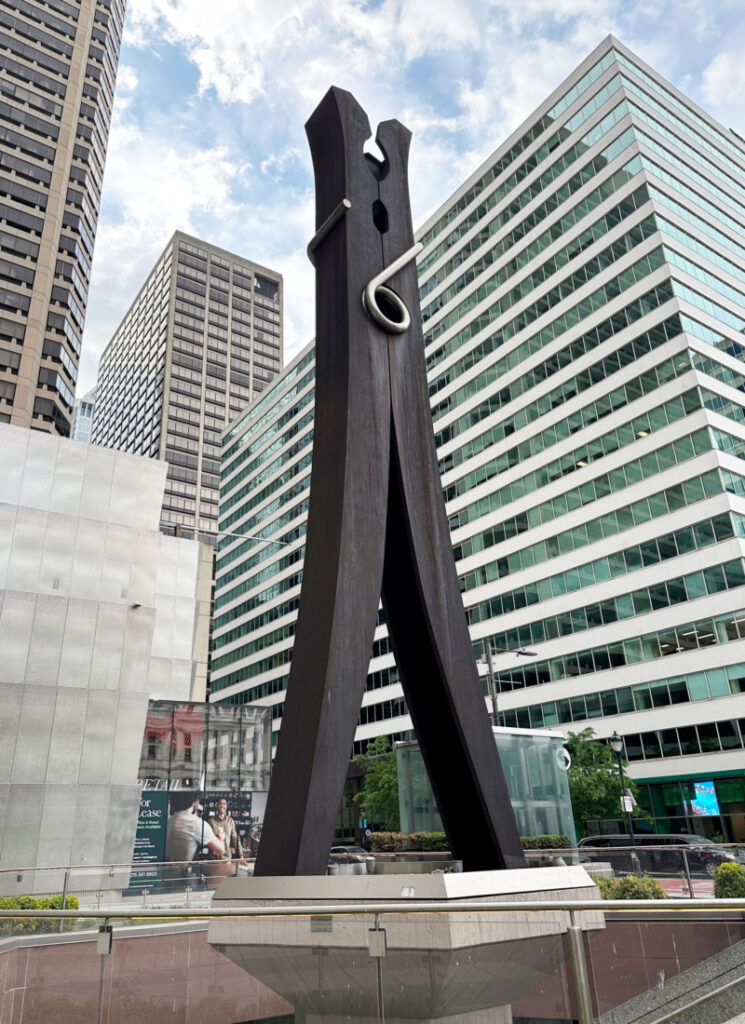
Sculptor Claes Oldenburg‘s Clothespin was installed across from City Hall in downtown Philadelphia in 1976. It was commissioned as part of the Redevelopment Authority’s Percent for Art program.
Two details about the 45-foot, 10-ton Cor-Ten steel sculpture may have you looking at it a bit differently. The first is it’s spring, which is meant to resemble the number 76, a reference to the signing of the Declaration of Independence in Philadelphia in 1776. The other is that Oldenburg was influenced by Constantin Brâncuși‘s The Kiss when creating this work. The Kiss is on view at the Philadelphia Museum of Art.
For more information about the sculpture and its history, this article on The Encyclopedia of Greater Philadelphia, is worth checking out.
Friko- Seven Degrees
This song is from Illinois band Friko‘s 2026 album, Something Worth Waiting For.
They are currently on tour and will be playing with villagerrr at Sid The Cat Auditorium in Los Angeles on Sunday, 9/20/26.

Jennifer Hintz Eggers, “Through the Night”, Oil on birch panel

RitaMarie Cimini, “After the Dream”, Oil on acrylic

Maia Palmer, “Splitting Headache”, Migraine Portrait Series, Charcoal and pastel on paper

Jennifer S. Rodgers, “Nearly every day (PHQ-9 Depression)” and “More than half the days (GAD-7 Anxiety)” acrylic paint, ink on canvas

Interactive work by Jennifer S. Rodgers– gallery visitors are encouraged to write down worries, fears or anxieties on the paper and place them in the box
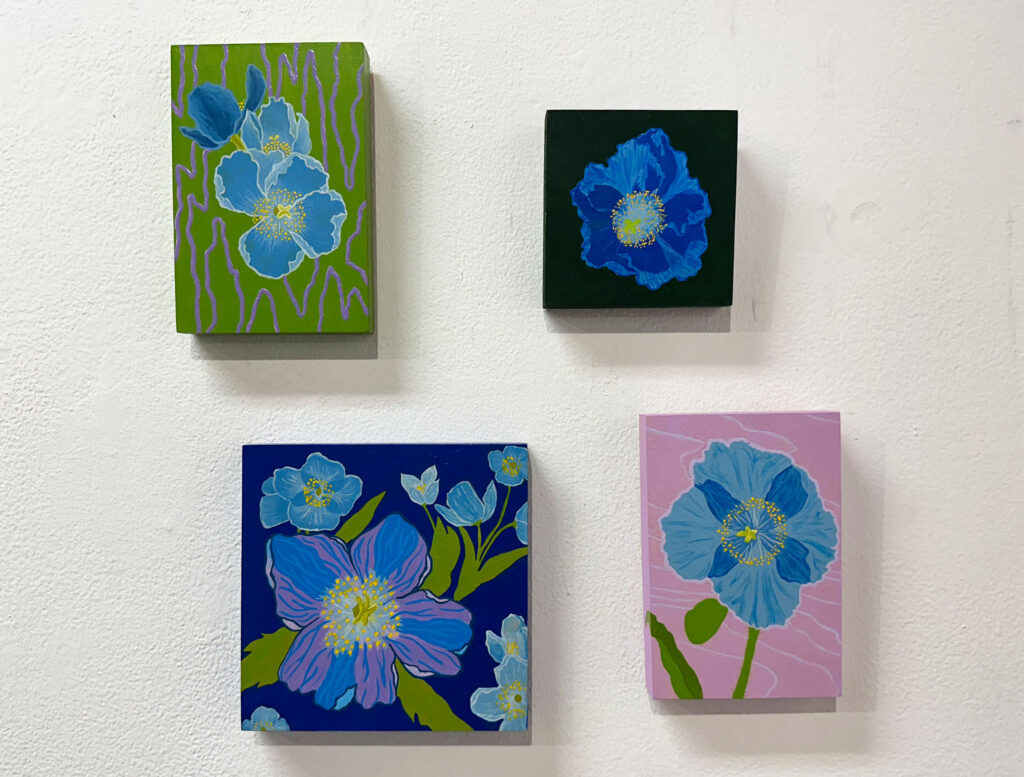
Acrylic on wood paintings by Carly Maiorano
Tonight (9/11/26) is the closing reception for Shadow Work, a group exhibition at Chris White gallery in downtown Wilmington. Curated by Jen Hintz Eggers and Rebecca Howell, nine local artists present work exploring what can be discovered through “shadow work“.
From the gallery:
Shadow Work invites impolite conversations. By shining a light on the hidden aspects of ourselves and our society, each artist examines their experience through honest dialog around parts rarely seen or discussed. From impeccably constructed portraits and florals to expressive large scale paintings and found object sculptures, these works offer a space for vulnerability by opening up the door to community.
Other artists included in the exhibition but not pictured: Regina Katz, Jane Quarterone, Rebecca Howell, and Samara Weaver.
Tonight is also Art Loop Wilmington, a monthly event where galleries and cultural spaces stay open late.
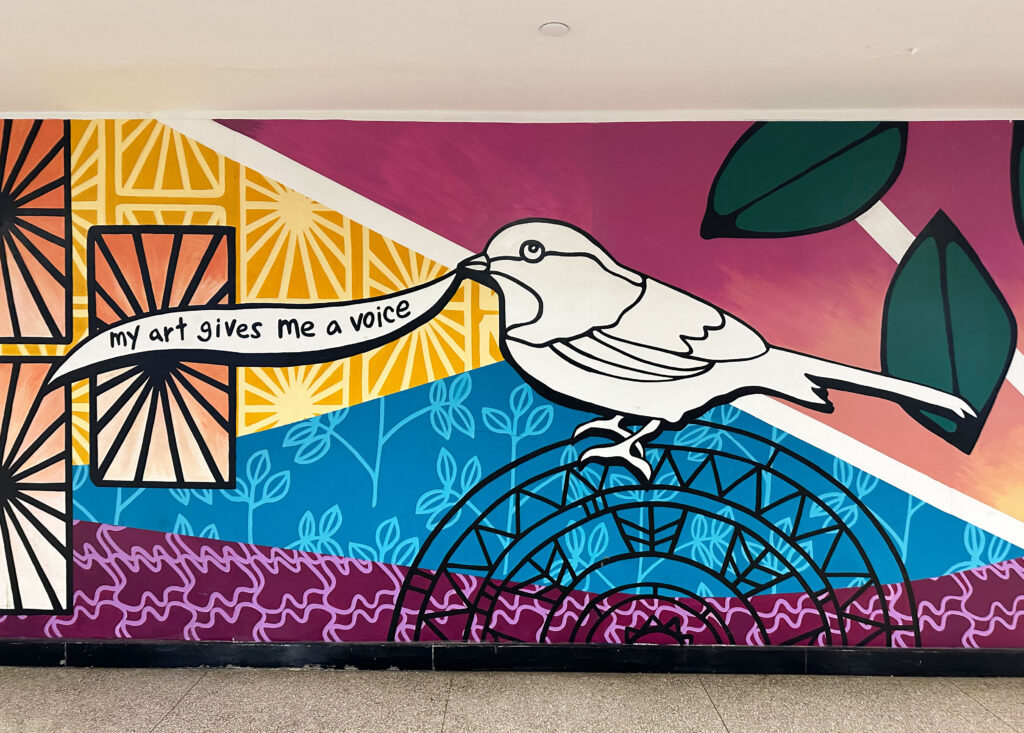
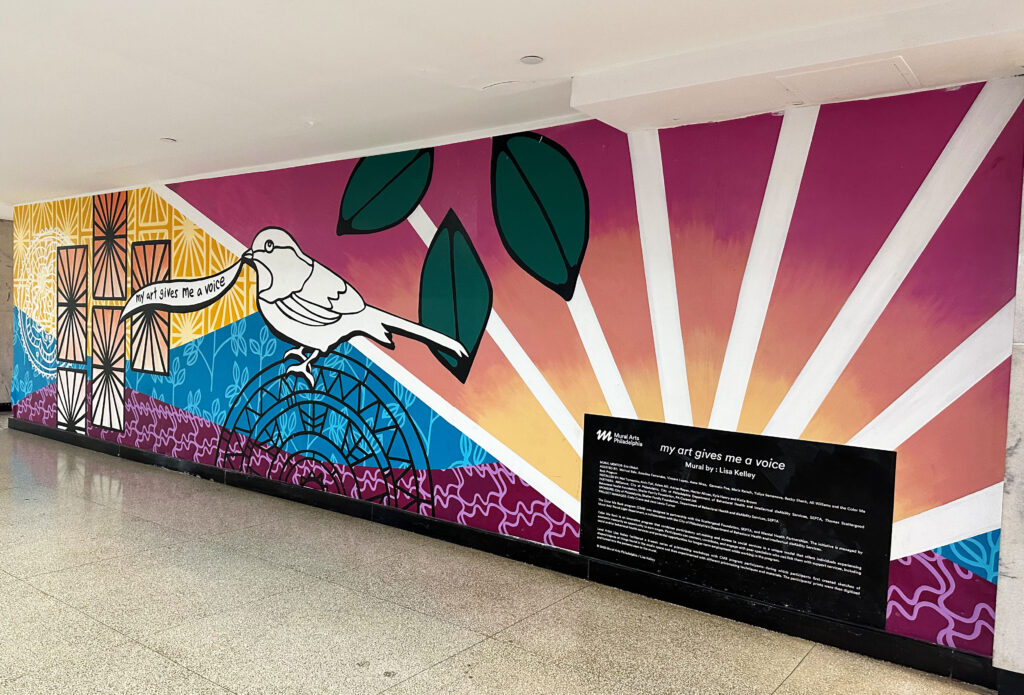
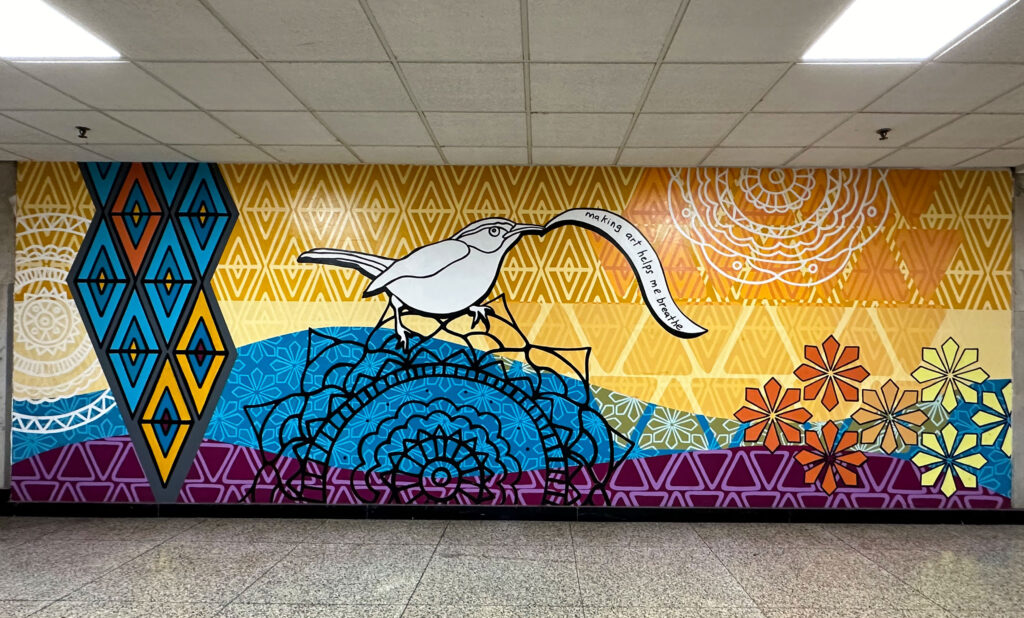
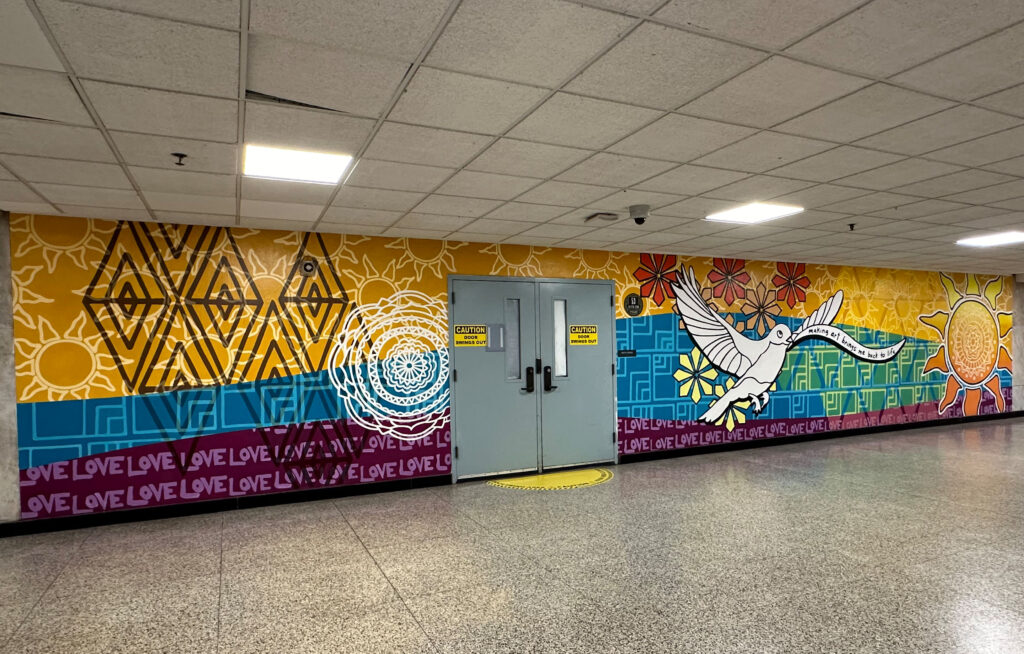
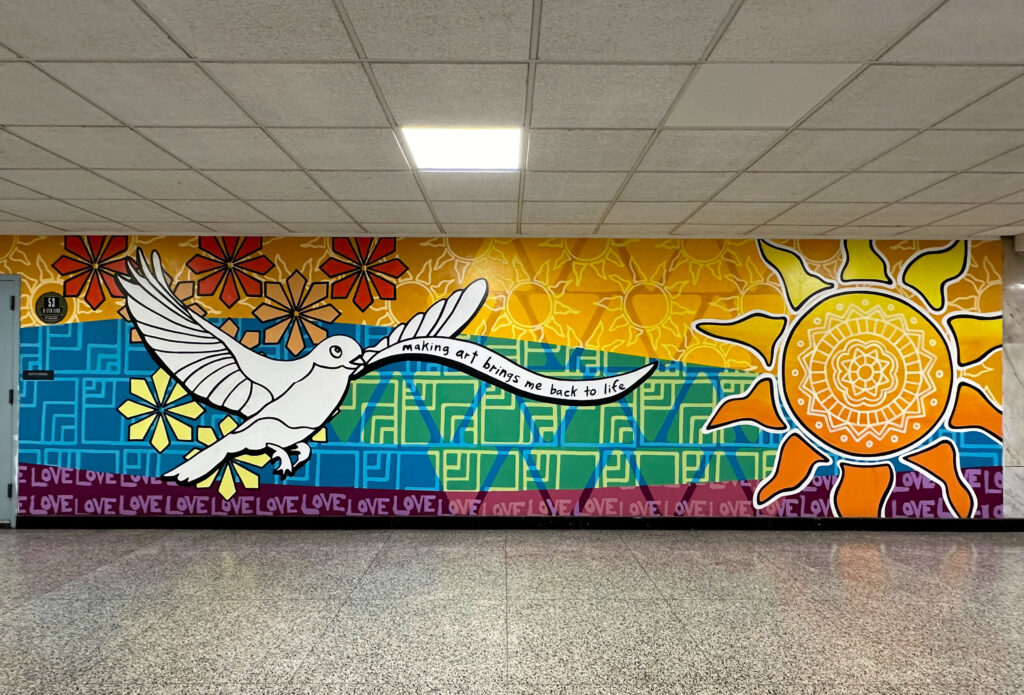
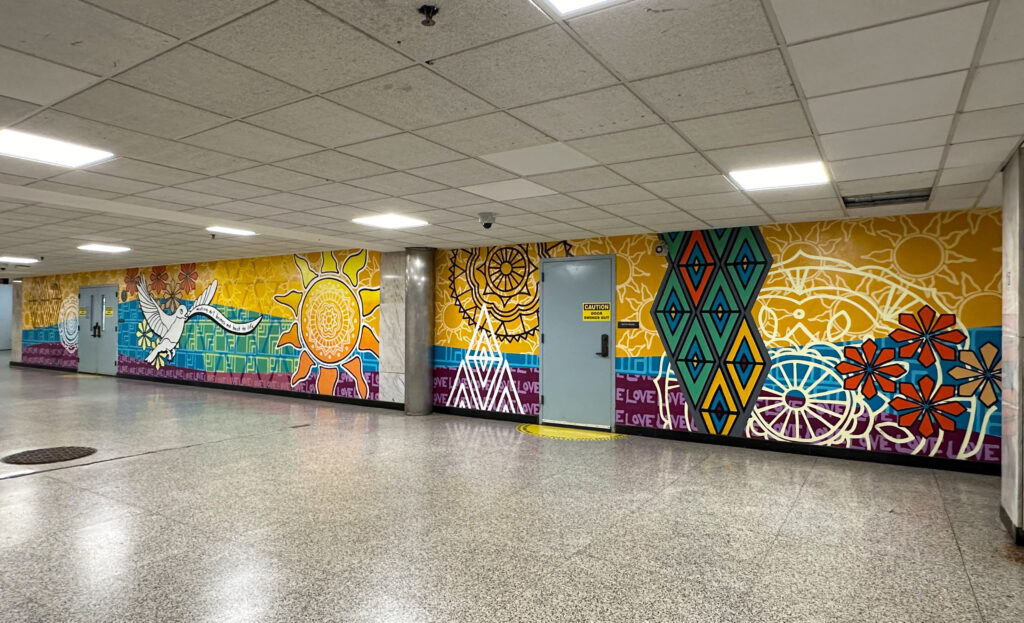
Located in Philadelphia SEPTA’s Suburban Station, my art gives me a voice by Philadelphia artist Lisa Kelley was created for Mural Arts Philadelphia in 2022.
More from Mural Arts:
The mural was inspired by the chirps of bluebirds, wrens, and chickadees that Kelley listens to when she walks in a park to clear her mind. Kelley hopes that the mural, which features suns, flowers, geometric shapes, and mandalas, is meant to evoke feelings of healing and growth and will uplift the spirits of people who see it.
The designs used in the mural are from printmaking workshops that Kelley led for participants of Mural Arts’ Color Me Back program, a same-day work and pay program in collaboration with the City of Philadelphia’s Department of Behavioral Health and Intellectual disAbility Services that combines participatory art-making and access to social services.
Another of her murals, Let Your Dreams Take Flight, is currently on view at Philadelphia International Airport in Terminal A. It is just one of the many works on display as part of Art at PHL, the airport’s Exhibitions Program.
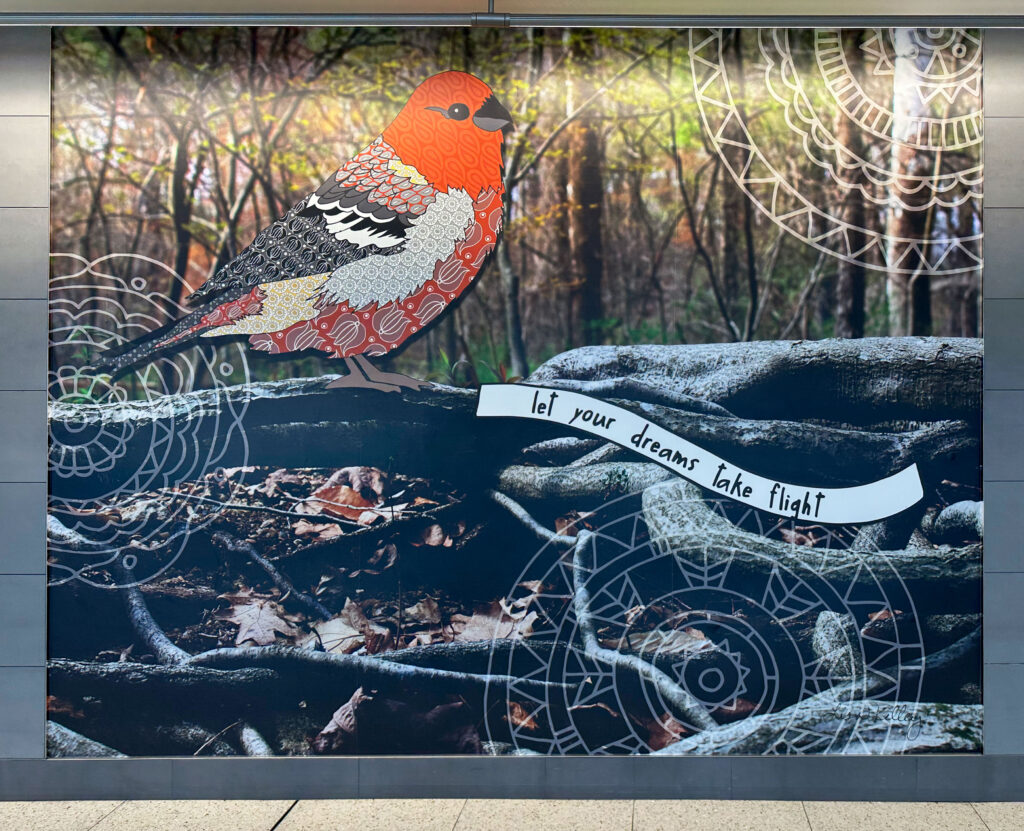
Lisa Kelley at PHL
Brother Bird- Landlord
This song was released in August and is from Brother Bird‘s upcoming album The Lodge in Miller County, releasing on 9/25/26.
They are currently on tour and will be playing at The Belasco Theater in Los Angeles on Saturday, 9/12, with Manchester Orchestra.
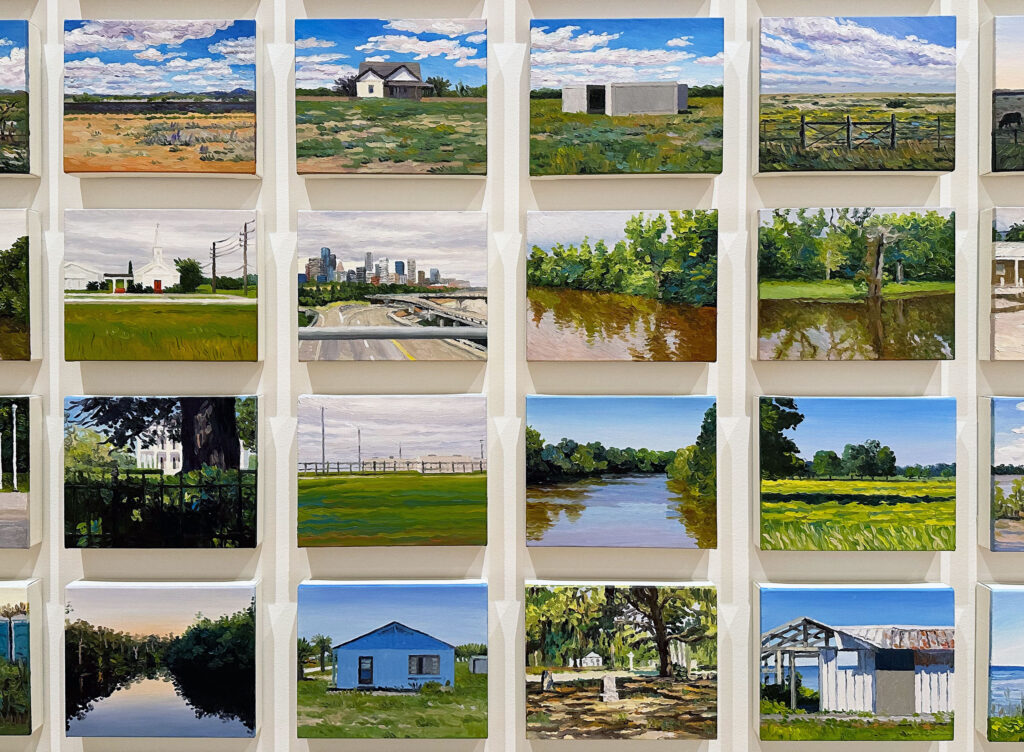
Cynthia Daignault, “Light Atlas”, 2014-2016, Oil on linen (detail)
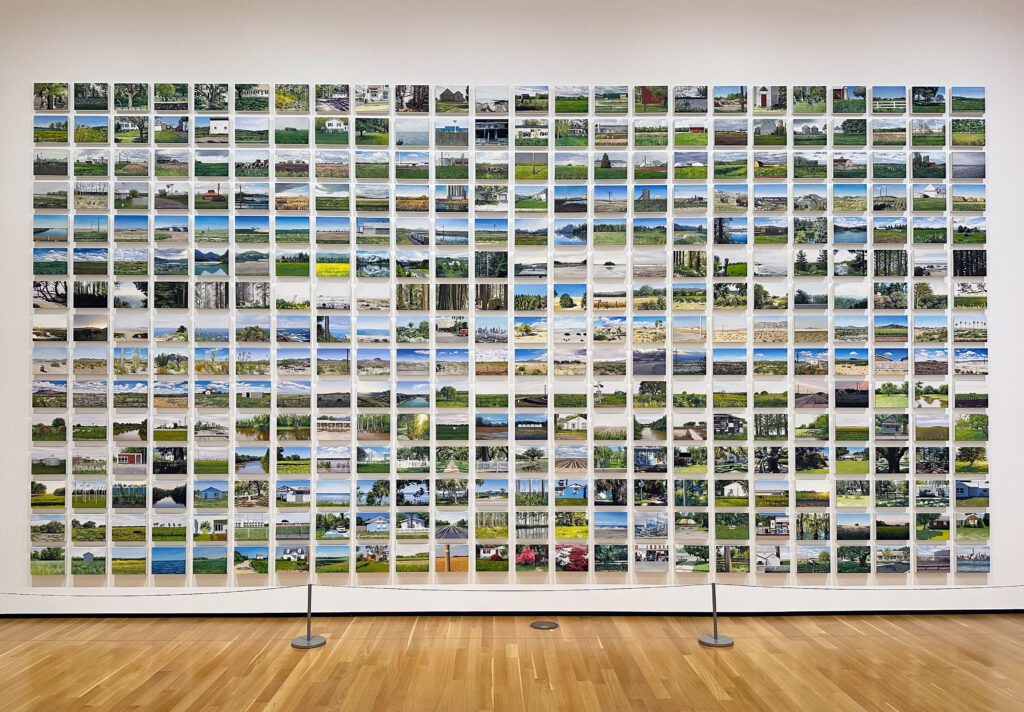
Light Atlas, a painting series by Cynthia Daignault, was on view at Akron Art Museum in 2024.
From the museum:
In 2014, Cynthia Daignault began driving north from her home in Brooklyn, New York. She turned west in New England and south at the Pacific Northwest, and she kept going until she had traced the entire outer perimeter of the continental United States. Having calculated the necessary distance, the artist stopped about every twenty-seven miles to make a sketch so that she could record a total of 360 images, representing the full circle of her journey. After five months on the road, she returned to her studio and created the paintings of Light Atlas. In each picture, Daignault placed the horizon line at the center, helping to suggest a continuous narrative and a collective portrait of the country. Having intentionally set out in the spring, she aimed to capture a mood of optimism and rebirth.
This series is currently on view as an installation at Thomas Cole National Historic Site in Catskill, NY. The 360 landscape paintings, will be on view until November 1st. On Saturday, September 12th, you can create a landscape painting with her for the site’s Second Saturday Workshop, and on Sunday she will be discussing Light Atlas for their Sunday Salon lecture series.
Daignault’s recent series, based on Yosemite National Park‘s iconic Tunnel View, is on view at the Institute of Contemporary Art / Boston until January 2027. For these paintings she used “the “mediated consciousness” of digital images, to meditate on our urgent and evolving relationship with the American landscape”.
For more about this series, this interview, from the museum’s website, provides more background on many of the conceptual ideas she is exploring with this work.
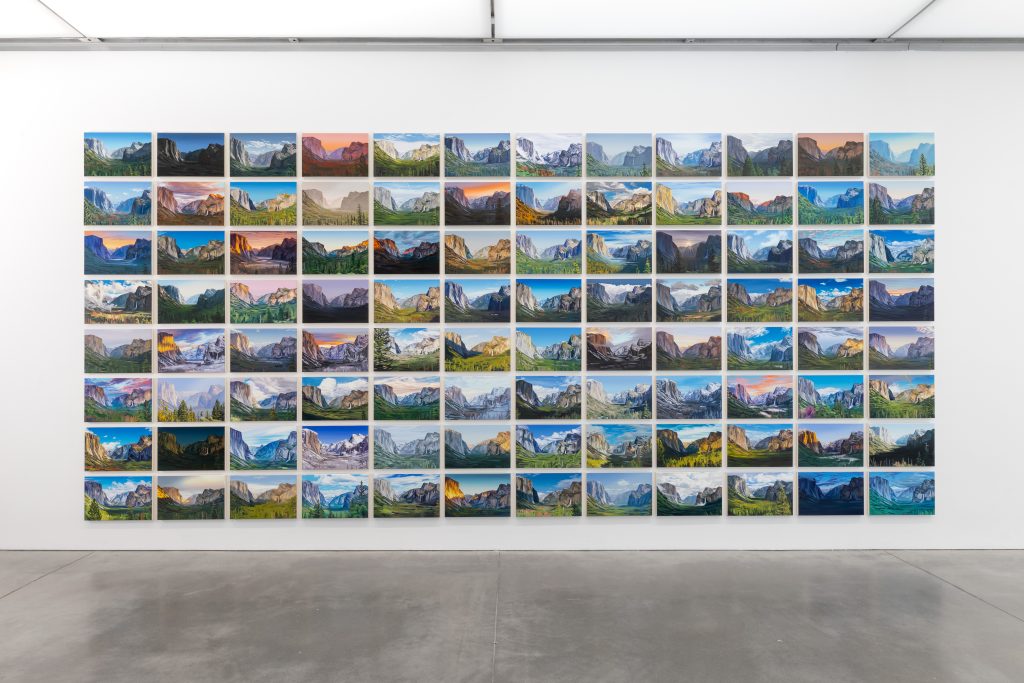
Installation view, Cynthia Daignault: Valley, the Institute of Contemporary Art/Boston, 2026-27. Photo by Mel Taing (Image via the Institute of Contemporary Art Boston website)