
One of the pieces from Drew Heitzler’s 2015 exhibition Pacific Palisades at Blum and Poe Los Angeles.

One of the pieces from Drew Heitzler’s 2015 exhibition Pacific Palisades at Blum and Poe Los Angeles.


Today, July 6th, is the four year anniversary of the fatal shooting of Philando Castile by a police officer during a traffic stop in Minnesota. Castile was shot five times while his girlfriend and her four year old daughter were in the car.
Mark Bradford’s 150 Portrait Tone, 2017, currently at LACMA, is a devastating large scale work that uses excerpts from Philando Castile’s girlfriend Diamond Reynolds’s dialogue from the video she live streamed on Facebook from the incident.
From LACMA’s wall description of the work-
Bradford notes that he was moved by the multiple subjects Reynolds simultaneously addressed and the different spaces they occupied: her boyfriend, Castile, next to her (“stay with me”); the officer outside the car (“please, officer, don’t tell me that you just did this”); God (“Lord, please Jesus, don’t tell me that he’s gone”); as well as the unknown receiver on the other side of her lifestream (“please don’t tell me he just went like that”).
Like many of Bradford’s works, the mural-size composition contains elements of both abstraction and realism. In places, layers of manipulated paint render the text almost illegible. The dark form in the background, however, evokes all-too-real associations with the horrific shooting, such as Castile’s twisted arm and the dark-red bloodstain spread across his white shirt, both visible in the live stream feed.
The title, “150 Portrait Tone”, refers to the name and color code of the pink acrylic used throughout the painting (most conspicuous in a large patch at the work’s bottom edge). Like the now-obsolete “flesh” crayon in the Crayola 64 box (the color was renamed “peach” in 1962), the color “portrait tone” carries inherent assumptions about who, exactly, is being depicted. In the context of Bradford’s painting, the title presents a sobering commentary on power and representation.
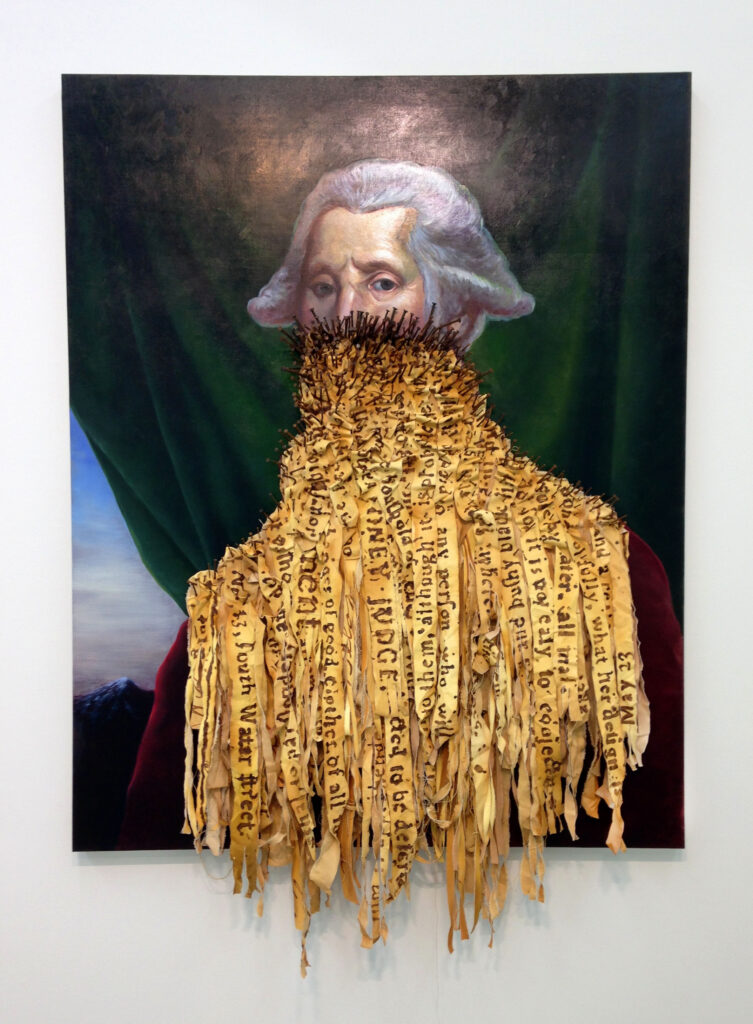
Absconded From the Household of the President of the United States, 2016
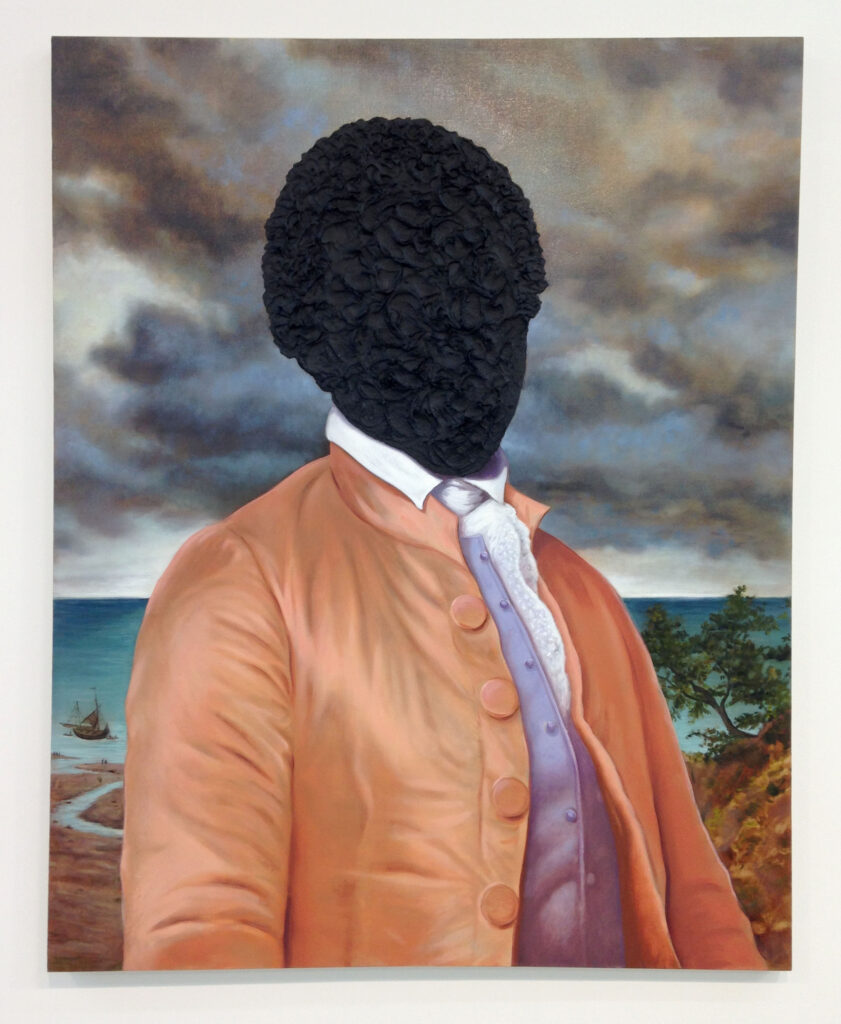
Billy Lee: Portrait in Tar, 2016
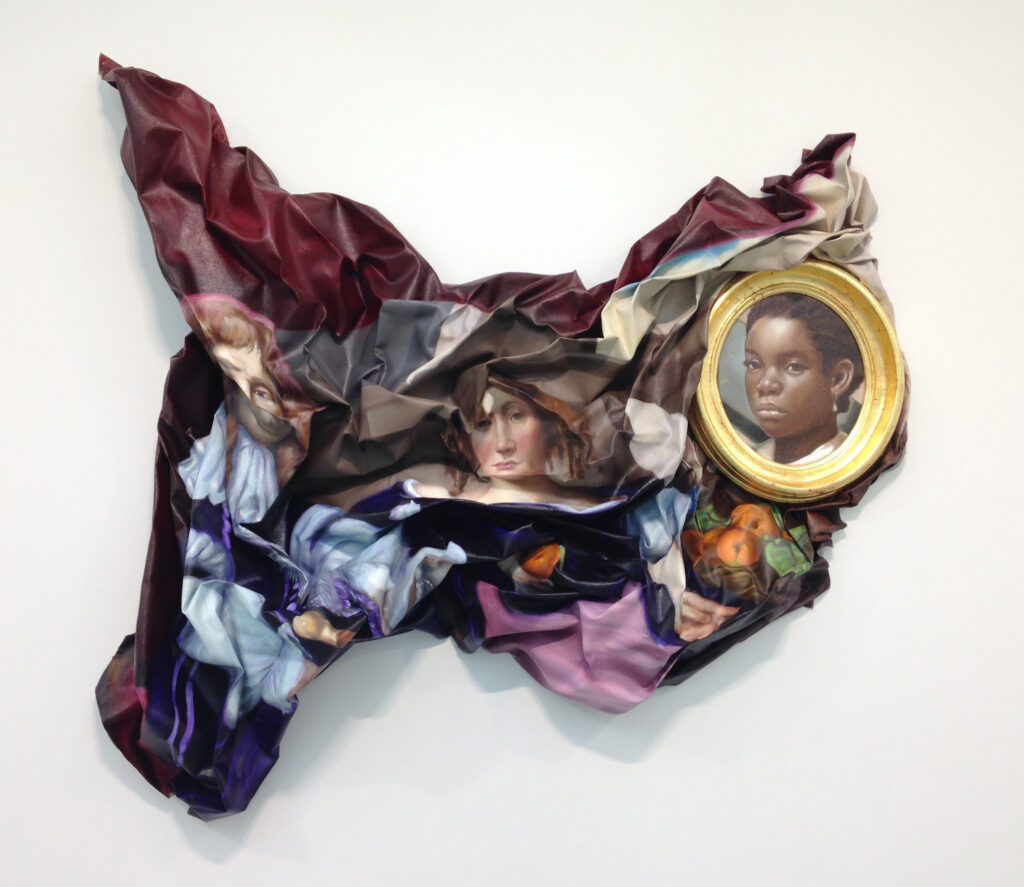
Twisted Tropes, 2016
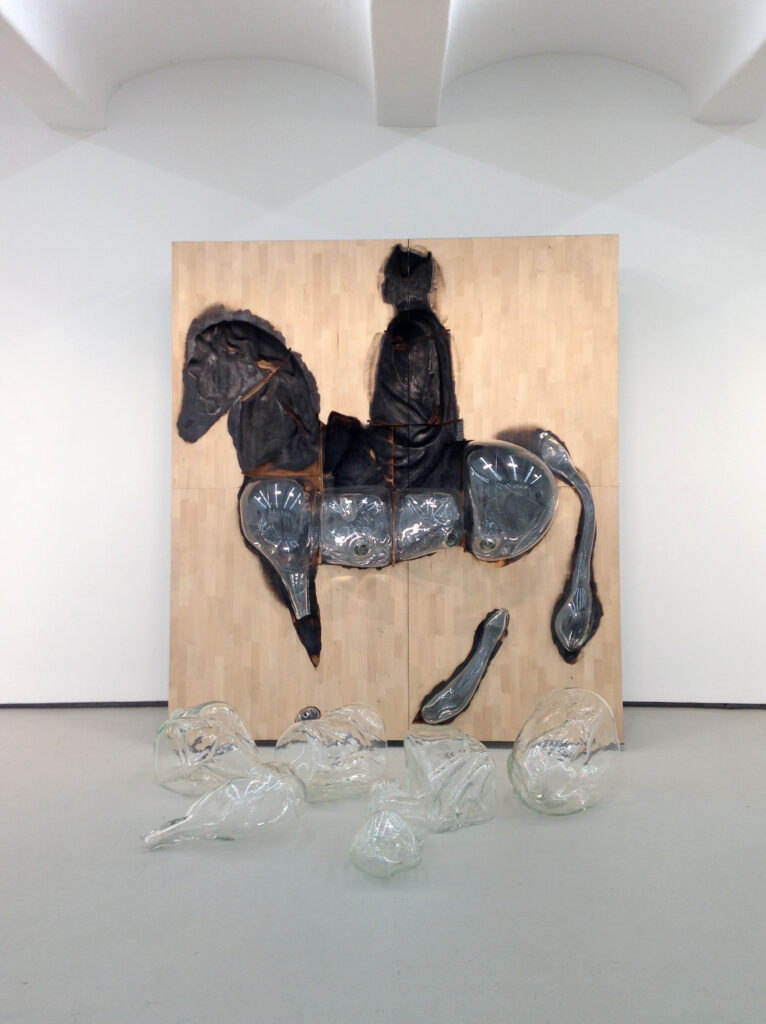
Monumental Inversions: George Washington, 2016
The above images are from Titus Kaphar’s exhibition Shifting Skies at Jack Shainman Gallery in 2017. Kaphar recently created the cover of the June 15th issue of Time Magazine covering the George Floyd protests.

Rise, 2019

Set, 2020
Currently at Susan Inglett Gallery in New York City is IN WAVES, new paintings and drawings by Benjamin Degen. This show will be on view until July 24th, 2020.
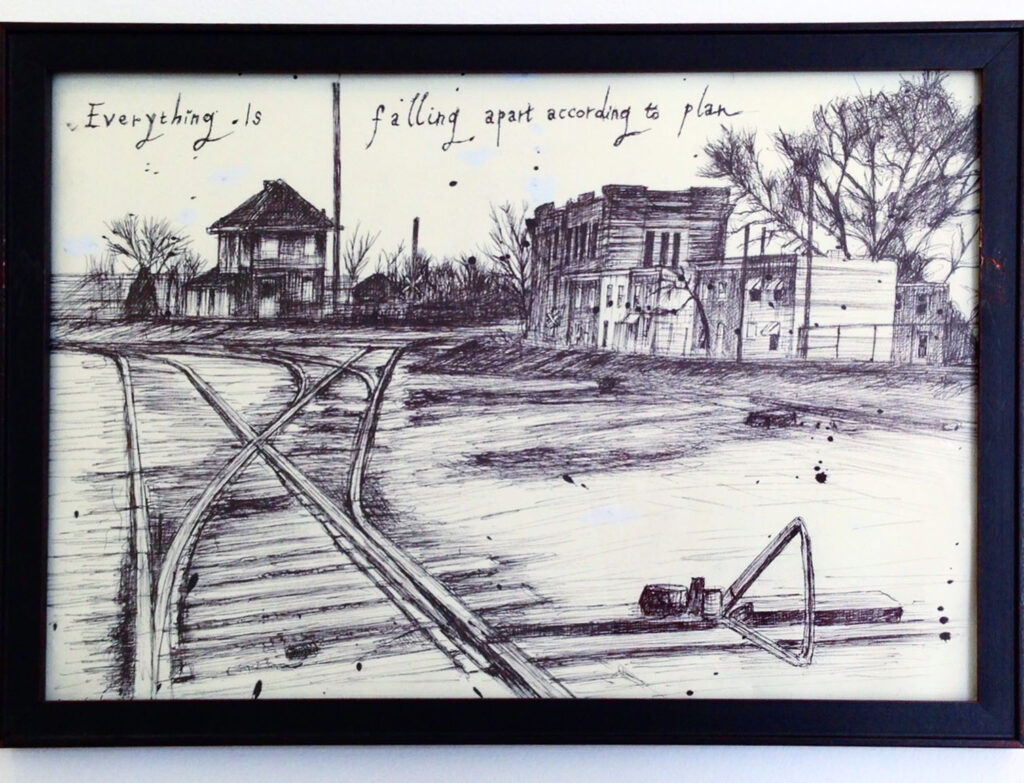
Everything is falling apart according to plan, one of artist and writer John Tottenham’s works from his show The Indifferent Sublime, at Maloney Fine Art in Culver City in 2014.
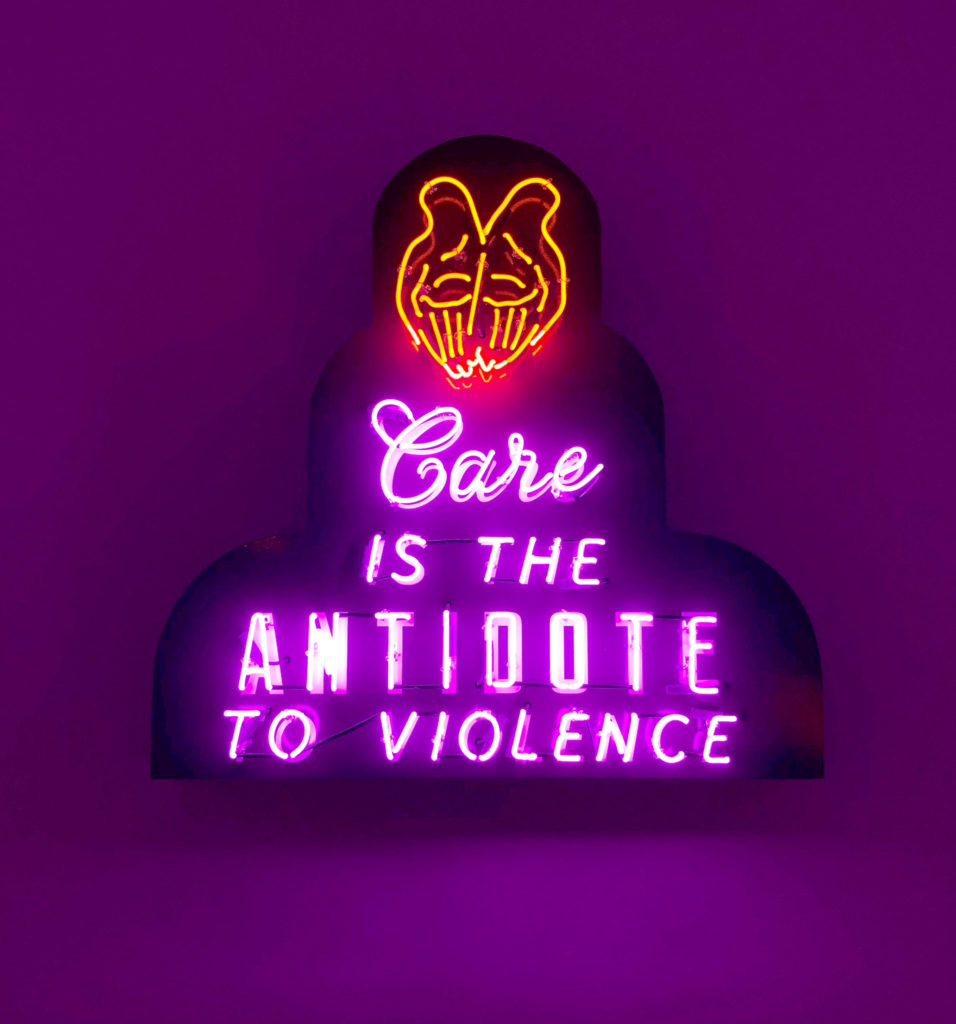
Artist Ja’Tovia Gary’s Citational Ethics (Saidya Hartman, 2017), 2020, from her recent exhibition flesh that needs to be loved at Paula Cooper Gallery in NYC.

Nina Chanel Abney’s In the Land Without Feelings (2017) from her 2017 exhibition Safe House at Mary Boone Gallery in collaboration with Jack Shainman Gallery.
From the press release-
Safe House is so termed for being a place of refuge. It is also a phrase used more colloquially as a space where one escapes the dangers affiliated with the law. With these eight single-panel paintings, Abney invites us into a place of reprieve, showing us people partaking in everyday activities. Abney’s scenarios offer sincere portrayals that counter how black life is represented in the mainstream media. The decision intentionally explores black joy as a means of resistance.
A deeply accomplished artist associated with innovating history painting, Abney took a multipart strategy to reclaim a space for creativity for this exhibition. To begin, she sourced graphics from posters dating from the 1960s that addressed aspects of safety for occupation, home, and leisure, abstracted these, and made them grounds for large-scale compositions. Then, against this backdrop Abney painted figures, objects, and letters to articulate the complex dynamics of contemporary urban life. She unequivocally is in pursuit of a depiction of commonplace activities and things. With each intuitively developed composition, each element such as the figures is often obfuscated by another element such as text, which in turn is challenged by a direction, such as an arrow. The imagery is reminiscent of sign painting, and each move made by Abney necessitates another. This chain of forms turns each element over to a type of writing, which opens a narrative and its reception to many readings. The abstracted source material (safety posters), combined with the abounding narratives from the detailed scenes, returns us to the title of the exhibition. The phrase prompts us to ask directly or obliquely: What caution and care are these narratives invoking and advocating? What danger might not be readily apparent to the viewer here?
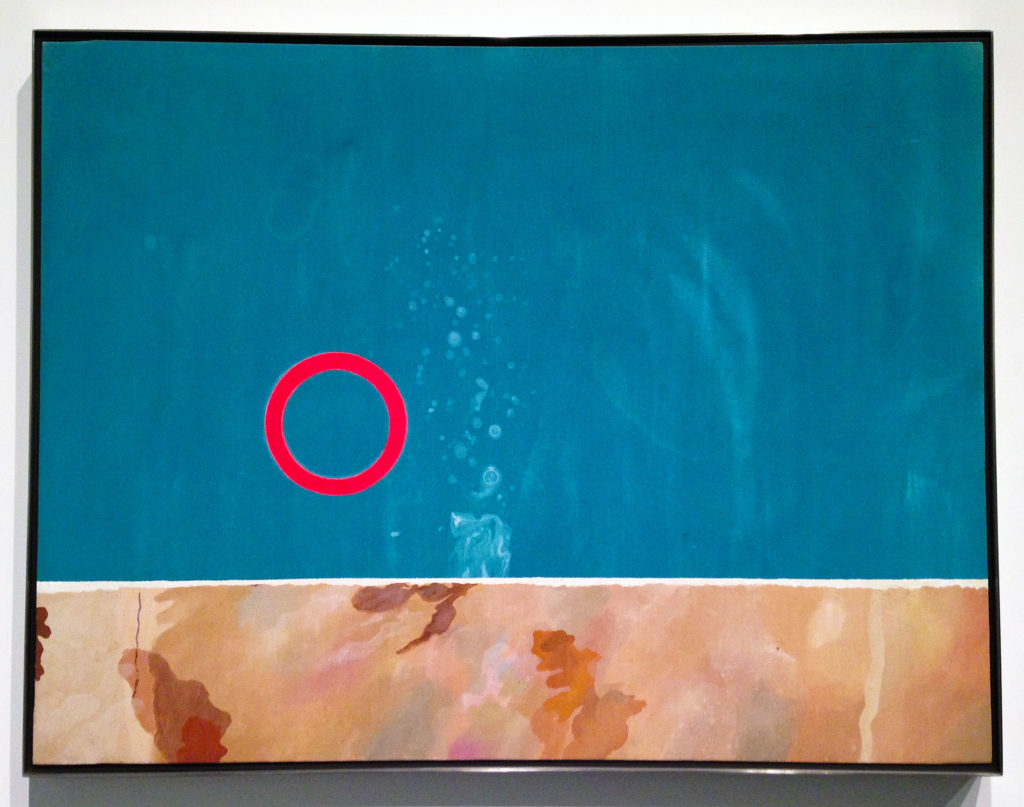
Pictured above is David Hockney’s Rubber Ring Floating in a Swimming Pool (1971), from his excellent exhibition at the Metropolitan Museum of Art in 2018.
From the show’s wall caption-
Hockney was impressed with how a photograph he had taken of a red pool toy floating in the water in Cadaqués, Spain looked nearly abstract, “like a Max Ernst,” he said. “I thought, it’s marvelous, I could just paint it.” He pointed out later that while the picture may look completely abstract at first glance, once the viewer reads its title, the work changes completely.
The Met has a lot of great online programming due to the closures for COVID-19, including virtual tours of iconic spaces in the museum and their current exhibitions; talks, performances, and concerts; over 500 free books; art instructions; six seasons of The Artist Project- short videos from contemporary artists discussing art that inspires them; coloring pages; a full length feature documentary film on Gerhard Richter (he has an exhibition currently at The Met Breuer) and more.

Ryan Brown’s Praia do Sancho (2015), from the 2015 group exhibition Extraction at Steve Turner in Los Angeles. For this work he used the structural components of stretched canvas to create this large work that resembles a beach chair.
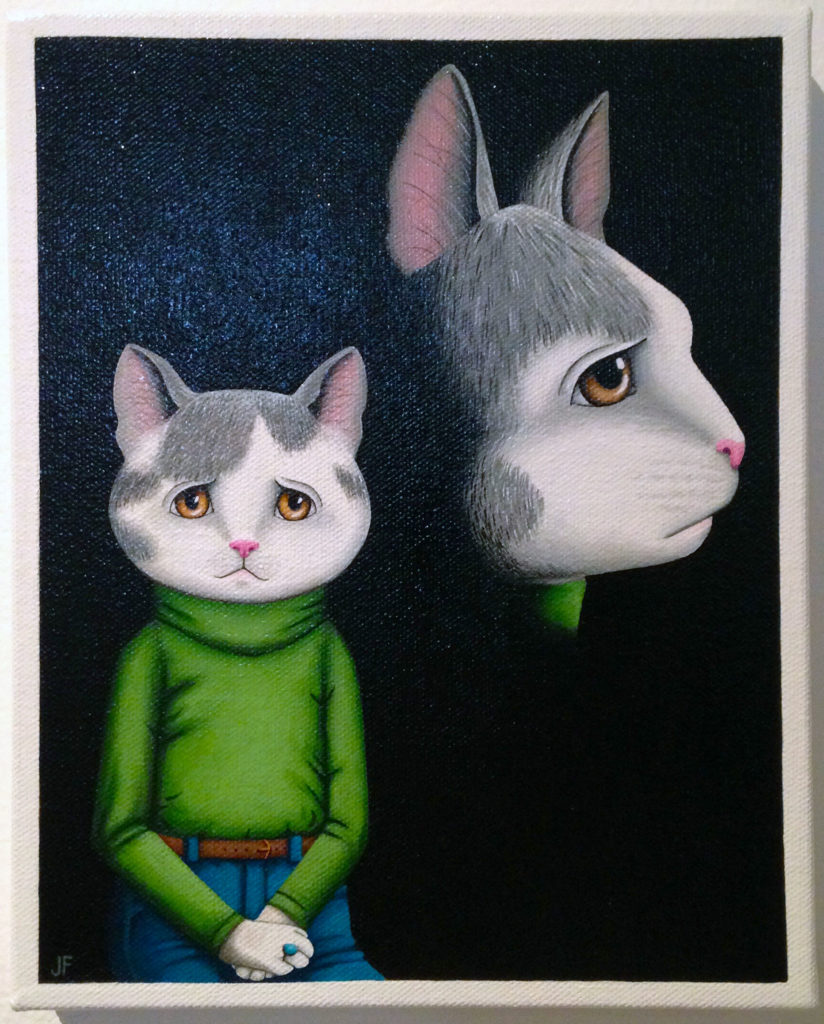
Jamie Fales contributed this painting to the Cat Art Show, in Los Angeles in 2016.