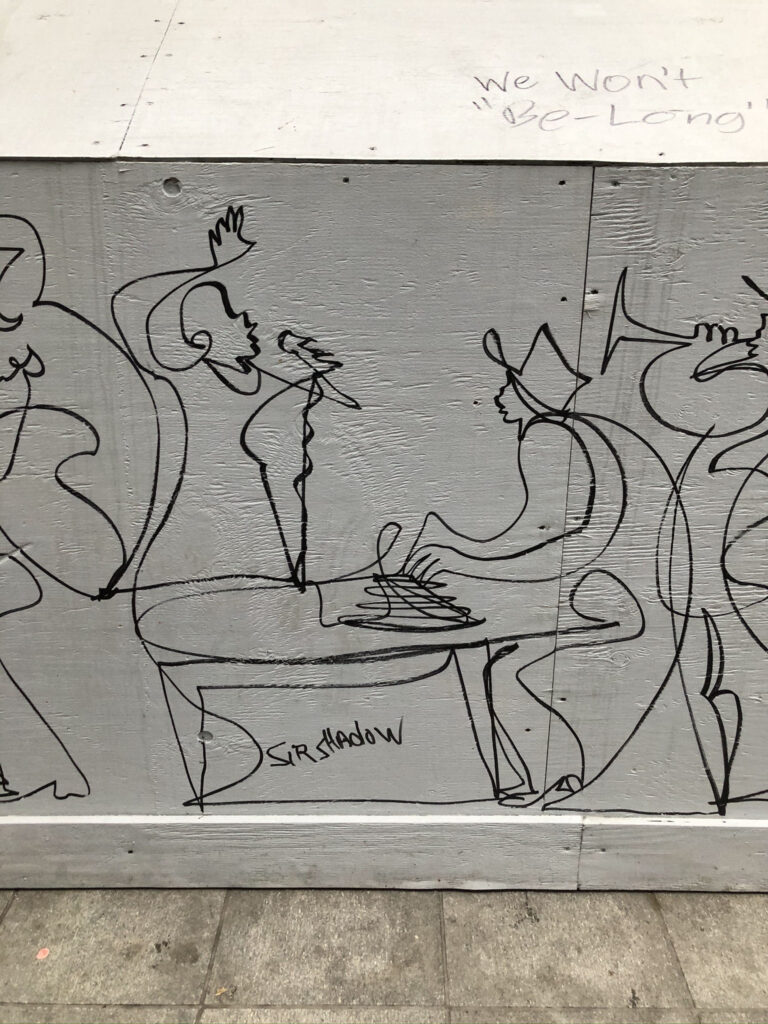
For more work by Sir Shadow, check out his website and Instagram.
The New York Times ran a profile of the artist in 2018, when he was living in the Whitehouse Hotel on Bowery.

For more work by Sir Shadow, check out his website and Instagram.
The New York Times ran a profile of the artist in 2018, when he was living in the Whitehouse Hotel on Bowery.

For more of Ya La’Ford’s artwork, check out her website and Instagram.
She was also one of the Tampa Bay artists featured in the recent exhibition Skyway 20/21.
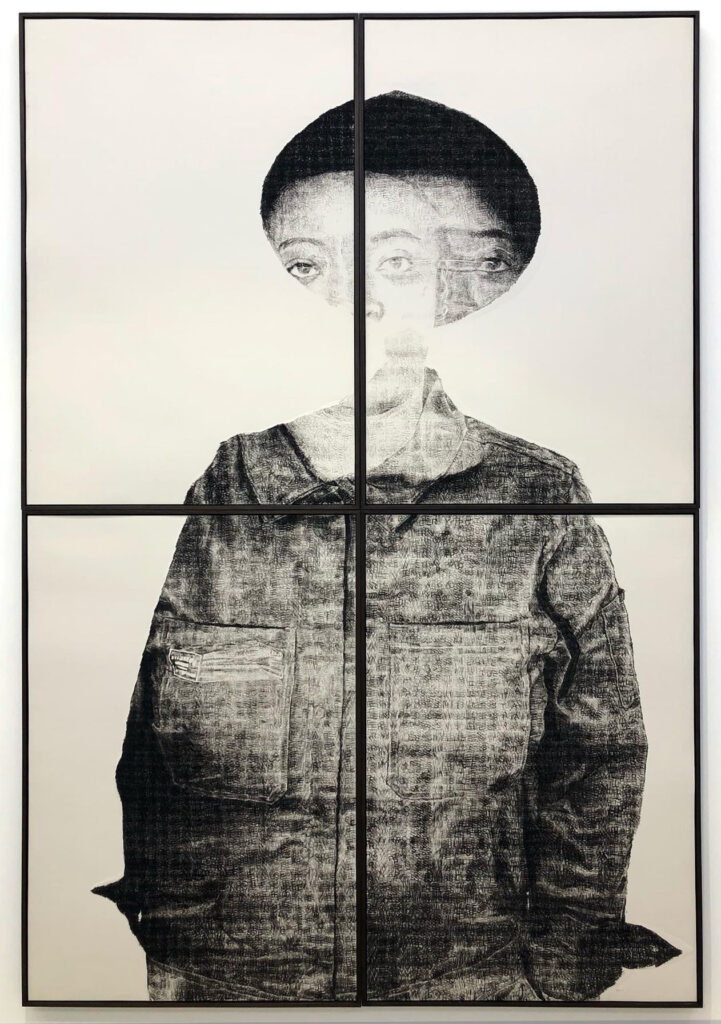
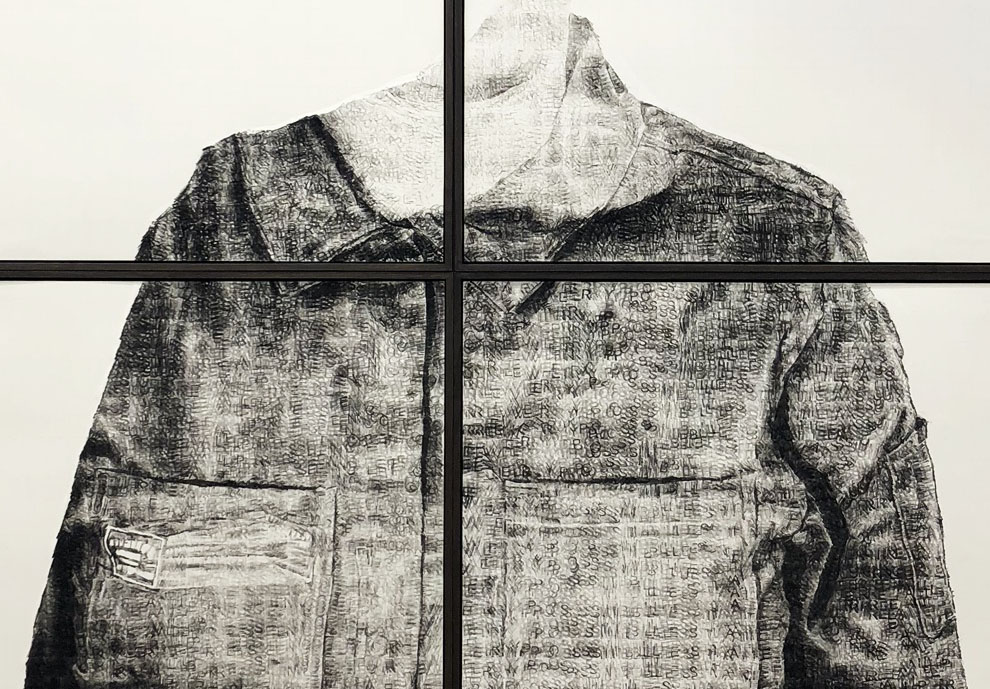
A Surreal Presence for Every Possible State, 2018 by Kenturah Davis from her 2019 exhibition, Blur in the Interest of Precision at Matthew Brown Los Angeles. The four panel work was created using oil paint applied with rubber stamp letters and graphite grid on embossed Mohachi paper.
From the press release-
Blur in the Interest of Precision is a search for parallel conditions between the poetics of our visual experience and the strangeness of our relationship to language. We often use language to carve out distinctions between one thing and another. Davis’ objective—to complicate ideas about meaning, representation and perception—have found refuge in blur and doubling. The new drawings are rendered with arrangements of text, but the words are virtually illegible. Many of the portraits pursue ideas the artist is working through via the writings of Fred Moten and Toni Morrison’s essay, Sites of Memory.
Davis’ work oscillates between various facets of portraiture and design. Using text as a point of departure, the artist explores the fundamental role that language has in shaping how we understand ourselves and the world around us. This manifests in a variety of forms including drawings, photographs and performances.
Recently Davis was commissioned by LA Metro to create work for the future Inglewood Station, slated to open in November of 2022. The work, Sonder, depicts community members photographed at gatherings at the artist’s Inglewood art studio and made into large porcelain enamel steel panels.
From Metro’s site–
The photographs were hand painted with stamps incorporating letters that form the words defining the term “sonder.”
Davis was drawn to the term which alludes to the realization that every person has a unique and significant story. She hopes that the portraits inspire connections between strangers, even if only for a passing moment while waiting for the train.
(images below via LA Metro’s site)


For more images, information about the station, and a video of the artist discussing the work, check out Metro’s website.
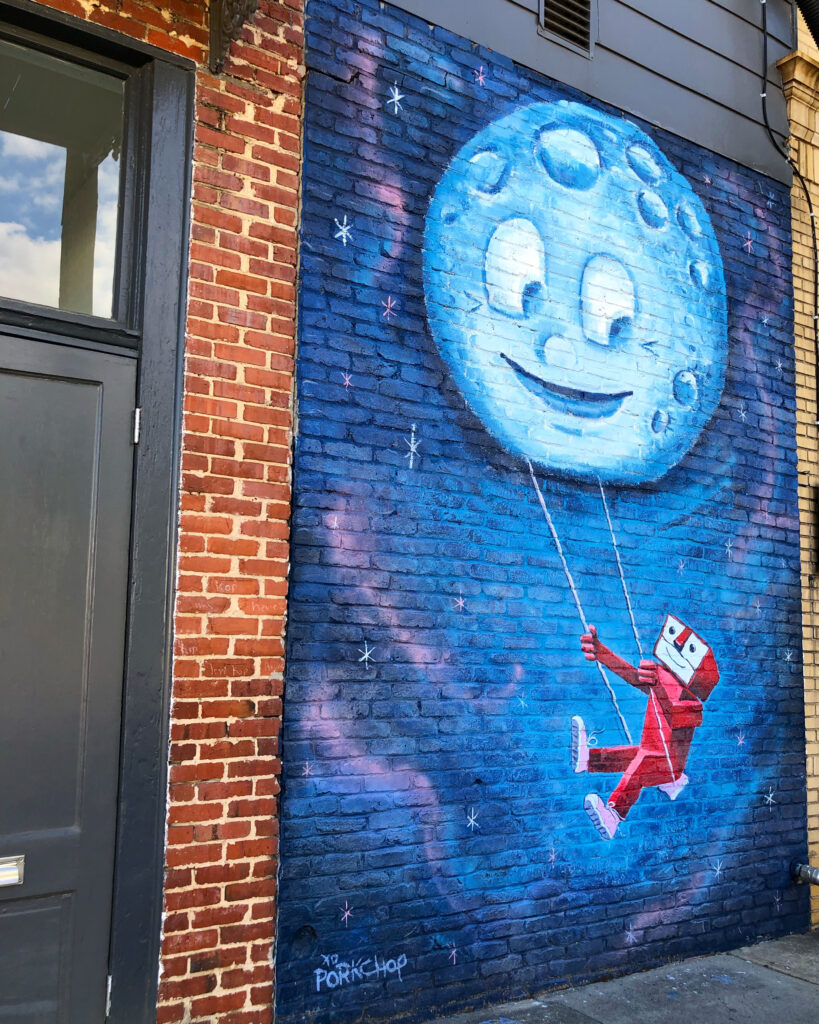
This work is by Augusta artist Leonard “Porkchop” Zimmerman.
Zimmerman is the subject of the 2016 documentary Happy: A Small Film With a Big Smile, by filmmaker Michael McKinley. The film was inspired by the artist’s 2014 TED Talk.
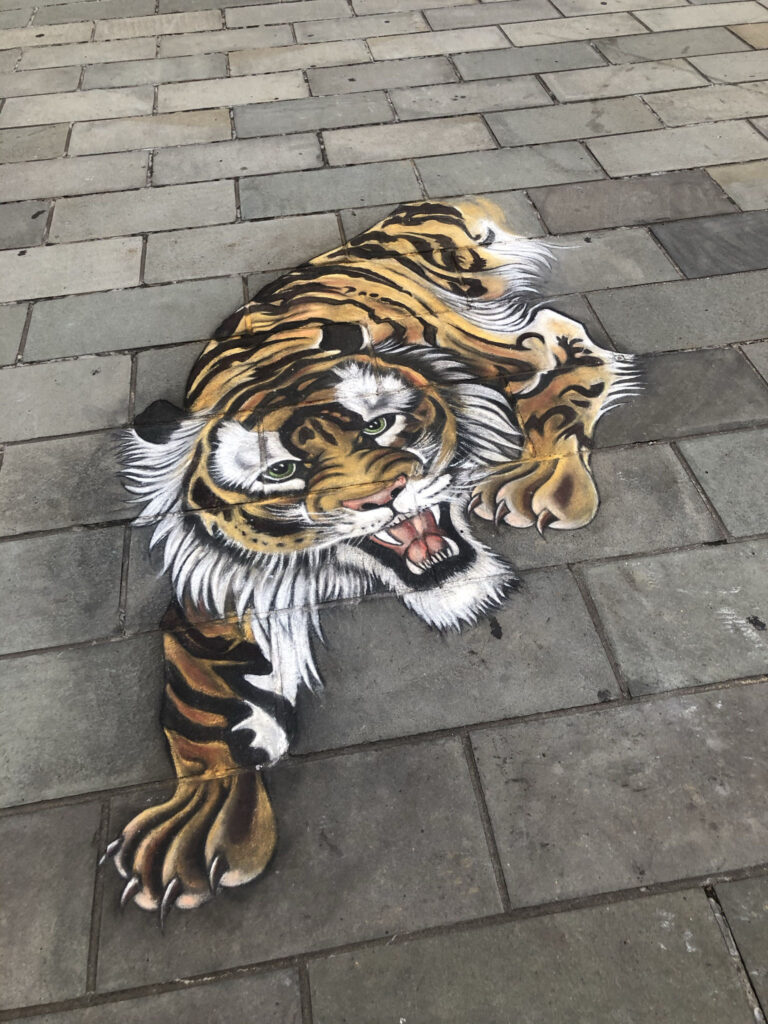
Happy Year of the Tiger! This work was spotted on a NYC sidewalk and is by artist @hanisidewalkart
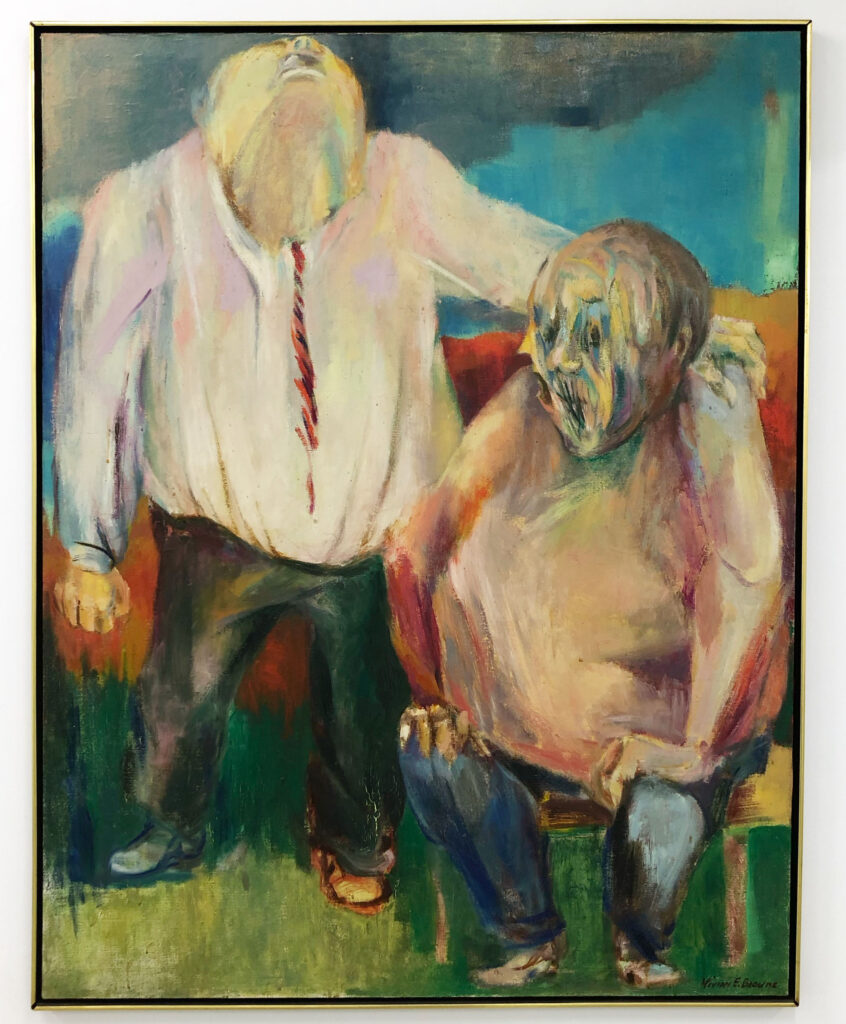
Two Men, 1969 by Vivian Browne, part of a group show this past summer at Ryan Lee Gallery in New York.
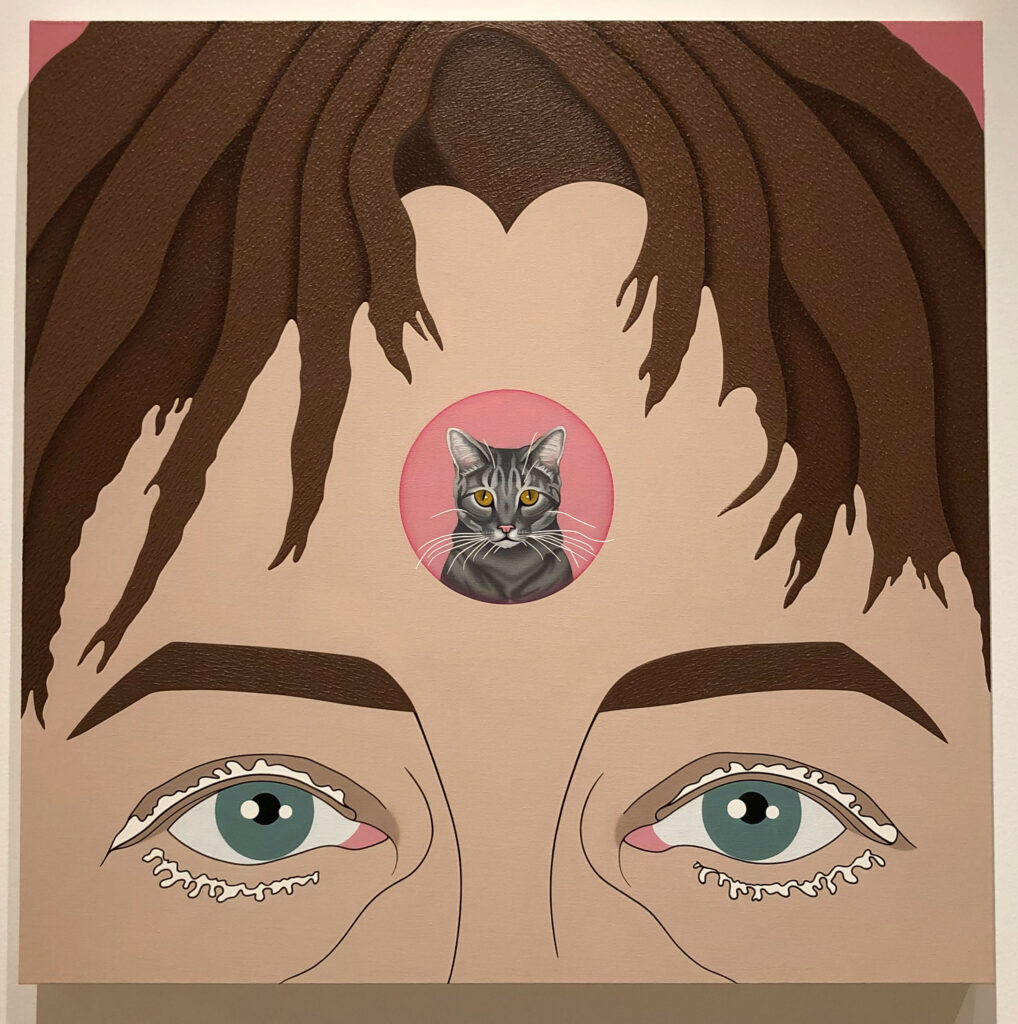
Self Portrait with Ray, 2017 by Linda Stark, part of Hammer Museum’s Made In L.A. 2018 Biennial in Los Angeles.
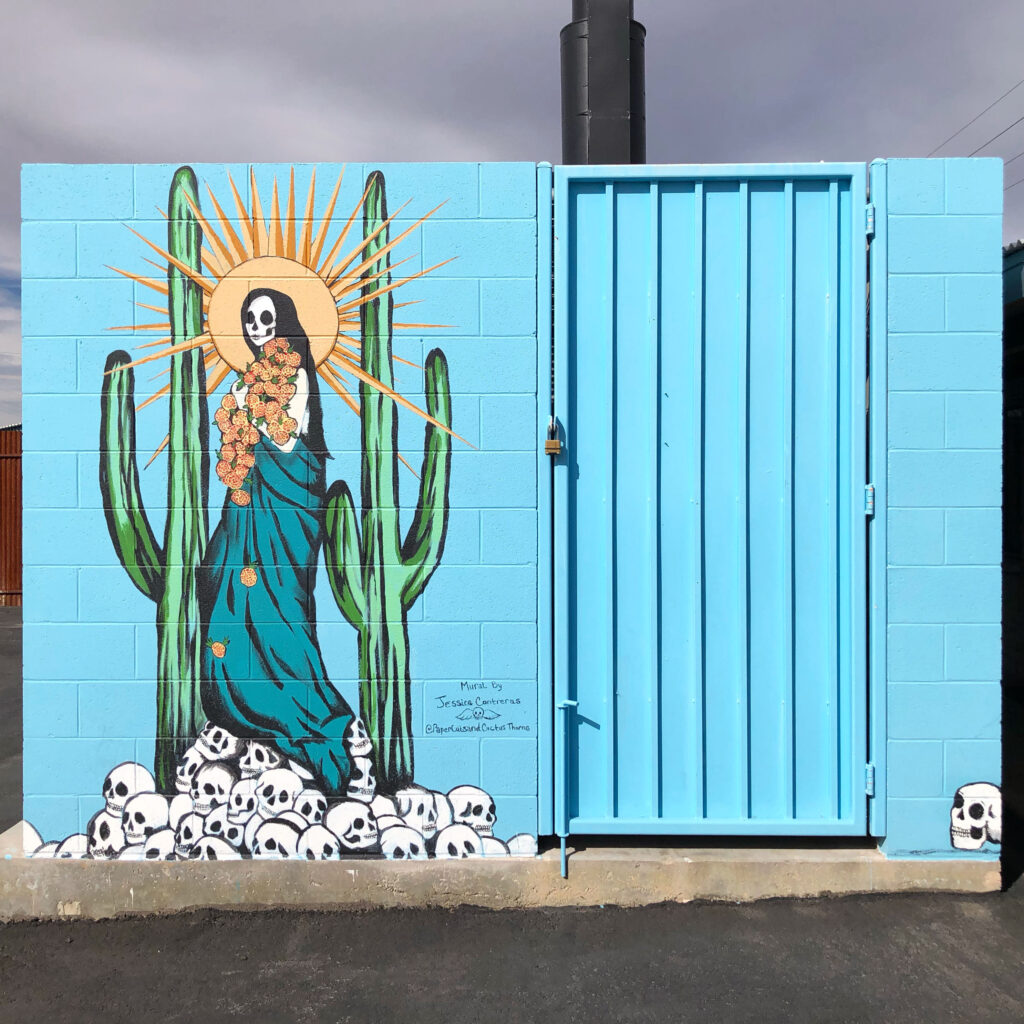
For more of Jessica Contreras’ work, check out her Instagram


Happy Indigenous People’s Day! The work above, Because You Enter My House, It Becomes Our House, is by Choctaw-Cherokee artist Jeffrey Gibson. The sculpture was commissioned for Socrates Sculpture Park in New York, but is currently located at deCordova Sculpture Park and Museum in Lincoln, Massachusetts.
The deCordova website gives the following information about Gibson and the work-
Jeffrey Gibson weaves together his Choctaw-Cherokee heritage and queer identity into vibrantly patterned painting, sculpture, video, performance, and installation. Drawing on Indigenous process and materials and queer camp aesthetics, his artistry aims to transcend binary thinking and corrects nostalgic views of indigeneity. Merging styles and historical references, Gibson states, “I have continued to think about my practice as encompassing the past and present while considering the future.” Gibson often integrates phrases and words into his artwork, with language drawn from pop songs to activist slogans, to offer open-ended declarations of love, community, and liberation.
Standing over 40 feet wide and 20 feet tall at the entrance to deCordova’s Sculpture Park, Gibson’s Because Once You Enter My House, It Becomes Our House commands attention to its stepped form and psychedelic facade. Originally commissioned by Socrates Sculpture Park in Long Island City, this installation expands Gibson’s signature artistry and collaborative process to a monumental scale. He took inspiration from North American Indigenous history, as well as queer nightlife to create this monument advocating for Indigenous space and culture. The tri-layered form references the earthen forms of the ancient Mississippian city of Cahokia which flourished in the seventh through the fourteenth centuries before European contact.
The title, Because Once You Enter My House, It Becomes Our House, comes from the song “Can You Feel It” by Mr. Fingers (Larry Heard). Gibson evokes 80s and 90s-era house music and night clubs as they provided welcoming spaces for queer communities and people of color. Mr. Finger’s lyrics embrace intimacy, generosity, acceptance, and community. This installation echoes this broad communal ethos as Gibson invited fellow Indigenous artists–Eric-Paul Riege (Diné), Luzene Hill (Eastern Band of Cherokee Indians), and Dana Claxton (Hunkpapa Lakota)–to co-create the wheat-pasted posters covering the façade of the installation and stage performances on and around the ziggurat.