Jul 202023
 

Built Landscape I, 2015, by Paul Davies, was included in Palm Springs Art Museum’s 2018 group exhibition, Eighty @ Eighty.
From the museum’s wall plaque-

Through a rich process of layering, mirroring, and mimicking, Davies explores the fusion of manmade and cultivated natural elements that comprise our environment. Reflecting a contemporary Southern California sensibility, his paintings are at once a dream of an idealized lifestyle made popular by midcentury modern architecture, and a commentary on how such structures interact with and fragment the world around us. This image references the unique periscope-like structure of architect Albert Frey’s first home in Palm Springs.

Davies’ work can currently be seen as part of Stark White gallery’s exhibition Surface Tension in Queenstown, New Zealand, on view until 8/20/23.


Jul 202023
 

Polly E. Perkins, “Woodstork Portrait”, 2022 from Ferman Center for the Arts

24 Hands is a printmaking collective of Florida Gulf Coast printmakers founded by Marjorie Greene Graff. The group has regular exhibitions throughout the year at various locations in the area.

Recently a group of their artists were showing work at The Ferman Center for the Arts, on the University of Tampa’s campus. Below are a few selections from that exhibition.

For more information on Polly E. Perkins, whose work is in the first image, check out her Instagram.

Linda Dee Guy, “Botanical Shroud”, 2021, acrylic, Inkjet print, Goldleaf on canvas

Linda Dee Guy, “Nucleus”, 2021

Linda Dee Guy, “Seascape”, 2021

For more work by Linda Dee Guy, check out her website and Instagram.

Serhat Tanyolacar, “Untitled”, 2020, Laser engraved relief print

Serhat Tanyolacar, “Untitled”, 2020, Laser engraved relief print

For more work by Serhat Tanyolacar, check out his website.

Ry McCullough, “Meditations in Orange”, 2021, Pochoir, serigraphy, gouache, watercolor, vinyl, gaffers tape on okawara

For more of Ry McCullough’s work, check out his website and Instagram.

Currently at Brooker Creek Preserve’s Education Center in Tarpon Springs is Nature Inspired, another exhibition of work by the 24 Hands collective.

From the exhibition-

For “Nature Inspired”, the artists visited Brooker Creek Preserve in March 2022 and March 2023 to strategize the exhibit and hike around the Preserve. Their love for Brooker Creek and nature has been inspiring and their work represents a variety of approaches from comical to realist to aesthetic abstraction. The exhibition includes prints by: Holly Bird, Saumitra Chandratreya, Tyrus Clutter, Elizabeth Coachman, Marjorie Greene Graff, Mary-Helen Horne, Stephen Littlefield, Ry McCullough, Polly E. Perkins, Christine Renc-Carter, and Rachel Stewart.

Below is work from the exhibition by Mary-Helen Horne. You can also find her work on Instagram.

Mary-Helen Horne, “Floating on Air”, 2023, Monoprint with drypoint, relief and pochoir

Nature Inspired has been extended until 8/13/23. It’s a great show and a chance to check out the natural surroundings that helped create the work.


Jul 142023
 

The 2023 Emerging Artist Exhibition in Creative Pinellas’ gallery space highlights work from the ten Pinellas County artists chosen by the organization for this year’s Emerging Artist Grant.

Above are sculptures by Amy Wolf. She has written several articles for the Creative Pinellas website which give some insight into her work and are worth a read.


According to artist Kimberly Engel, the paintings above “explore vibrant color interaction while inviting viewers to meditate on an illusive horizon line where sky meets water.”

From the Creative Pinellas website-

Kimberly Engel is a contemporary abstract painter who lives and works in Clearwater, Florida. Her distinct gestural style combines a love for color interaction with spontaneous mark making. Engel’s paintings explore levels of transparency, evoking depth and light. She is inspired by the constant presence and changing states of large bodies of water. She has lived on the shore of Lake Erie in Euclid, Ohio prior to moving to the Gulf Coast.

Engel describes her process as an exploration of herself and ultimately the dissolving of herself mirrored in the process of making and deconstructing works. Her gestural marks have been described as both compulsive and somewhat calligraphic. They undulate and disappear under thin veils of color.

Also check out her Instagram.

Denis DeBon created the unique glass works seen above.

His biography from the gallery website-

Dennis DeBon is the creator of EnergyWebs, which are one-of-a-kind works of modern glass art. He is often been compared to artist Jackson Pollock. Like Pollack, Dennis uses simple artistic techniques and has combined reverse painting on glass with spin art and taken both to a whole new level.

Each EnergyWeb is cut from a large sheet of plate glass, then free-style hand-cut into shape, scalloped, polished then spun. Dennis uses a multitude of application techniques and color combinations when creating each piece before firing and hand-signing them.

Every EnergyWeb is a unique, one-of-a-kind work of modern glass art and he is the only artist in the world creating them.

In addition to selling his artwork at fine art festivals across the country, Dennis was commissioned as the artist to create the Richard Dawkins Awards. In addition, his past creations have been presented to James “The Amazing” Randi, Carl Sagan’s widow, Ann Druyan,  and the Zora Neale Hurston and the Koi Society of America award winners.

Dennis was born and raised in Buffalo, New York and attended the Rochester Institute of Technology in Rochester, New York, where he studied photography and graphic design.

He now lives in Saint Petersburg, Florida and when he isn’t creating art, you might find him writing screenplays or in the boxing ring . . . working as a professional boxing referee.

For more of the artists in the exhibition, head to the pages below.

Jul 032023
 

There are currently two exhibitions in New York celebrating Richard Avedon’s photography. At The Metropolitan Museum of Art is Richard Avedon: Murals. Pictured above are two of the large murals included. The first is of Andy Warhol and members of The Factory and the other is of members of the Mission Council in Saigon.

From The Met’s website about the show-

In 1969, Richard Avedon was at a crossroads. After a five-year hiatus, the photographer started making portraits again, this time with a new camera and a new sense of scale. Trading his handheld Rolleiflex for a larger, tripod-mounted device, he reinvented his studio dynamic. Instead of dancing around his subjects from behind a viewfinder, as he had in his lively fashion pictures, he could now stand beside a stationary camera and meet them head-on. Facing down groups of the era’s preeminent artists, activists, and politicians, he made huge photomural portraits, befitting their outsized cultural influence. On the centennial of the photographer’s birth, Richard Avedon: MURALS will bring together three of these monumental works, some as wide as 35 feet. For Avedon, the murals expanded the artistic possibilities of photography, radically reorienting viewers and subjects in a subsuming, larger-than-life view.

The murals are society portraits. In them, Avedon assembles giants of the late twentieth century—members of Andy Warhol’s Factory, architects of the Vietnam war, and demonstrators against that war—who together shaped an extraordinarily turbulent era of American life. Presented in one gallery, their enormous portraits will stage an unlikely conversation among historically opposed camps, as well as contemporary viewers. The formal innovations of Avedon’s high style—of starkly lit bodies in an unsparing white surround—are best realized in these works, where subjects jostle and crowd the frame, and bright voids between them crackle with tension. Uniting the murals with session outtakes and contemporaneous projects, the exhibition will track Avedon’s evolving approach to group portraiture, through which he so transformed the conventions of the genre.

About Andy Warhol and members of The Factory

Avedon fantasized about throwing an annual fete for New York society and watching the group evolve over time. This mural is his downtown take on such a party, featuring a new “smart set” of sexual revolutionaries. They were affiliated with Andy Warhol’s Factory, the studio and gathering place for a coterie of avant-garde filmmakers, artists, and socialites. Avedon summoned them to his own studio, where they met over a series of weeks. Working in his most directorial mode, he arranged his subjects—including transgender actress Candy Darling and adult film star Joe Dallesandro—in a lateral frieze across adjoining frames, the fracture and repetition of their bodies in space suggesting the filmic passage of time.

The culmination of much trial and error, the mural’s composition took time to perfect, as evidenced by session outtakes displayed nearby. Avedon later praised the professionalism of his cast but joked, “You couldn’t keep the clothes on anybody in those years. . . . Before you could say ‘hello,’ they were nude and ready to ride.” If this unabashed undress tests gallery decorum, it is a provocation grounded in art history: in the central panel Avedon presents a male version of the “three graces,” riffing on a gendered tradition in allegorical painting with an ironic, Warholian wink.

About The Mission Council, Saigon, South Vietnam

Avedon knew he would have mere minutes to photograph the U.S. generals, ambassadors, and policy experts who ran the war in Vietnam—not the weeks he spent refining his first mural. Planning in advance, he requested the heights of the men known collectively as the Mission Council and mapped out their positions, with careful attention to rank and influence. He rigged a makeshift studio at the embassy in Saigon, and recalled that once assembled, they “lined up like high school boys. They all wanted to be in the picture.” This is true of all but Ted Shackley, the camera-averse CIA station chief known to colleagues as the Blond Ghost, who begged out of the sitting for “a meeting,” leaving a void in the rightmost panel.

As blunt and procedural as a police lineup, the mural recalls Avedon’s first photography gig as a teenager in the Merchant Marine, where he made mugshot-style portraits of new recruits. Here, scrutinizing the faces of the war’s top brass, Avedon invokes their unseen operatives and victims. When the work was later published, one critic deemed it “a terrifying picture of business as usual.”

This exhibition closes 10/1/23.

For a more comprehensive look at Avedon’s career, Gagosian’s Chelsea location is showing Avedon 100, “a collection of Avedon photographs was selected by more than 150 people—including prominent artists, designers, musicians, writers, curators, and fashion world representatives—who elaborate on the impact of the photographer’s work today.”

The gallery’s website has a video of the installation that is well worth checking out, especially if you can’t see the exhibition in person.

This exhibition will close on Friday, 7/7/23.

Jun 302023
 

“Amalfi Coast”, 2022, Oil on Canvas

“Terraza”, 2022, Oil on canvas

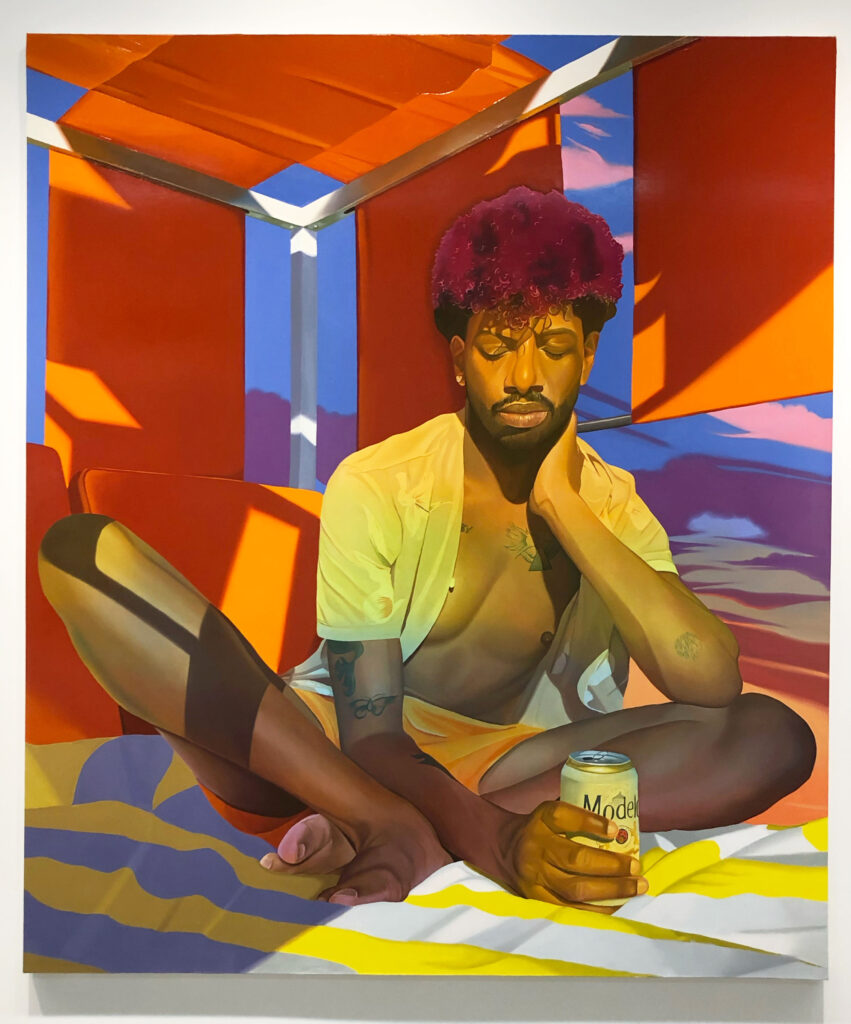
Above are two of the colorful paintings from Navot Miller’s exhibition, Eurovision, at Yossi Milo, in February of 2023.

From the press release-

With his distinctively vibrant palette, Navot Miller (b. 1991; Israel) draws from the flow of moments and memories in his own life, presenting the landscapes, architecture, and people he sees with fresh, inquisitive eyes. Growing up in a rural Israeli village, Miller found it difficult to express himself and his identity as a young gay person. Upon relocating to Berlin as an adult, he found a community of creatives who opened up new possibilities for self-expression. Among them were curator Joel Mu, who introduced Miller to Berlin’s alternative art scene, and instructors Michael von Erlenbach and Kathrin Ruhlig, who became his most significant mentors. Today, Miller’s bold, colorful palette has become a means of expressing the parts of himself that remained hidden during his childhood. The new body of work in Eurovision presents the artist’s past year living in Berlin and traveling through Europe. Nodding to the hit international singing competition of the same name, Eurovision encapsulates Miller’s experiences while journeying across a continent, collecting memories and forging relationships along the way.

The series of paintings presented in Eurovision focuses on those precious memories gathered during travel and the quiet yet meaningful moments of the everyday, offering colorful, candid snapshots from the artist’s life as he sees it. To capture these moments, Miller takes hundreds of photos as they pass, revisiting them later as the source material for his paintings. Amalfi Coast (2022) is painted from one such snapshot, depicting a group of vacationers as they lounge on a cliff by the Mediterranean Sea. Beyond the water’s edge, the complex topography of the rocky shore is simplified into flat planes of color. At the scene’s foreground, a man peers over the cliff’s edge, ensuring the waters below are safe for diving. Miller identifies the man as a father who, out of concern for his son out of view, scans the scene for any potential danger. Foregoing the climactic moment of the dive itself, Miller zooms in on this moment of preparation, quietly celebrating the familial love and the protective care between father and son.

A similar glimpse into the subtleties of intimacy is granted in Terraza (2022), which depicts a gathering of six men lounging on a Berlin terrace. Totally at ease, the men converse, cuddle, and convene in this scene of uninhibited repose. The commanding colors of Miller’s vibrant palette amplify what seems to be a hot summer day, as evidenced by the semi-nude men gathered outdoors. In terms of the painting’s composition, their bodies are the only portions of the work that the artist has blended. They consequently take on a depth and dimensionality that is absent from the rest of the rendering, bringing them into sharp relief against the flattened forms of their background. In this painting, Miller brings focus to the men who gather on this sunny terrace as a celebration of the simple pleasure of gathering on a summer’s day, and the joy of letting an evening’s events unfold as they may.


Jun 292023
 

Judy Pickett is an Orlando based artist who often shows her work at Soft Water Gallery in St. Pete, Florida. Her beautiful cyanotypes are painted with encaustic to give them added texture.

Jun 252023
 

Frederic Leighton’s 1895 painting Flaming June is currently on view at The Metropolitan Museum of Art. It is on loan from Museo de Arte de Ponce in Puerto Rico, which is currently undergoing earthquake-related renovations.

From The Met’s website about the work-

According to Leighton, the composition was inspired by the posture of a tired model. He elaborated her sinuous pose and then added sheer orange draperies. Her skin flushed by the sun, she is transformed into a personification of summer heat. The image reflects Leighton’s allegiance to artistic ideals that emphasized harmonious color and form over narrative.

This and Lachrymae (hanging nearby) were the last great pair of paintings he exhibited at the Royal Academy in London, in 1895. Critics raved, but tastes soon changed; Flaming June did not regain its fame until the Museo de Arte de Ponce acquired it in the 196os. The frame is a reconstruction of the lost original designed by the artist.

This work will be on view until February of 2024.

Jun 232023


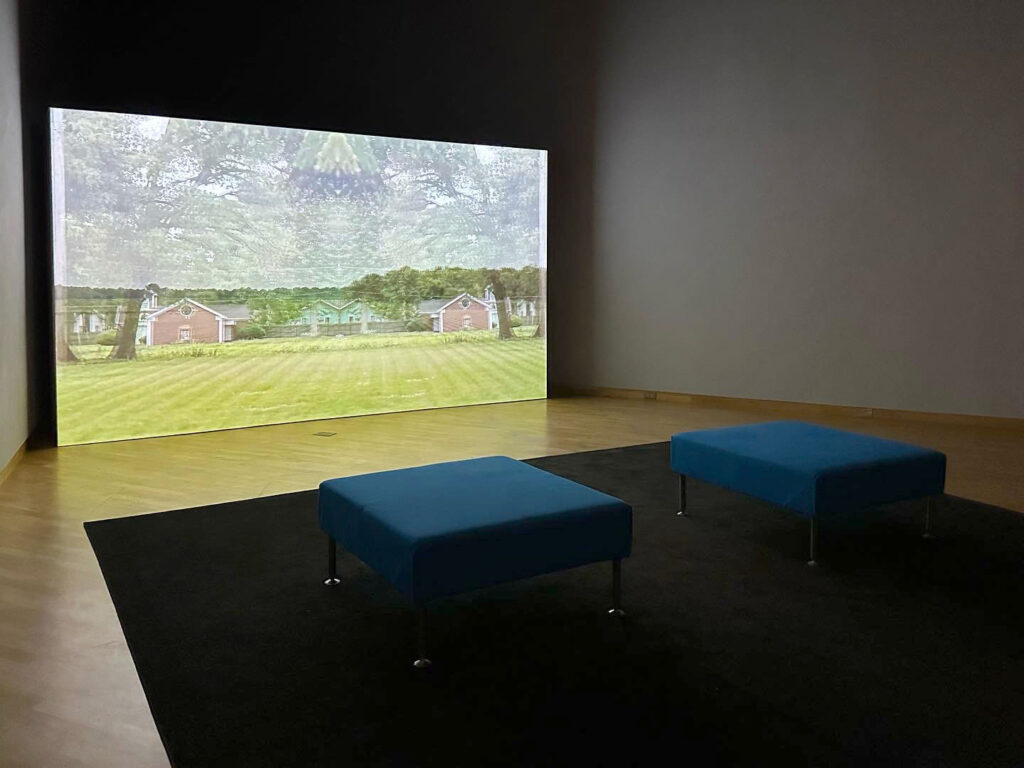
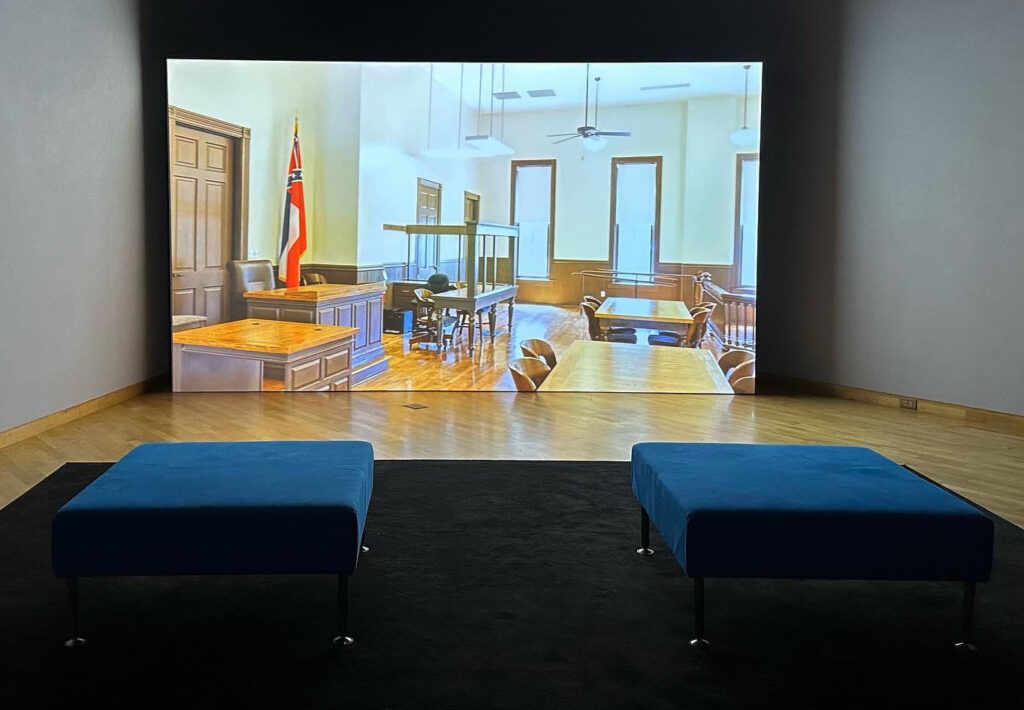
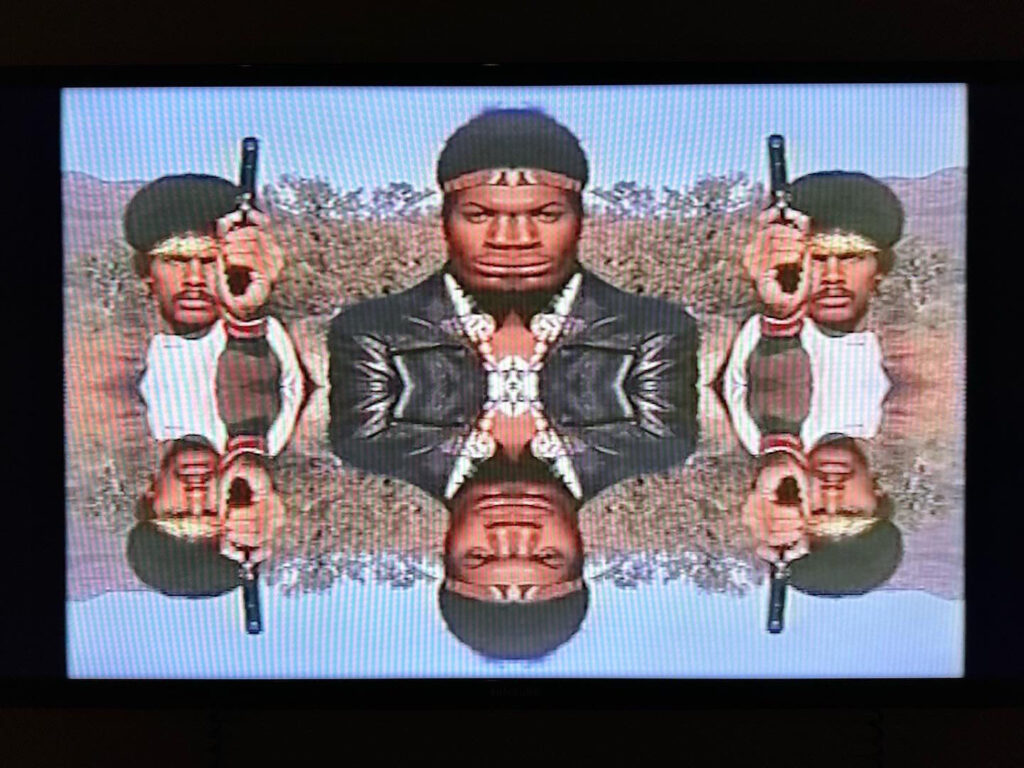
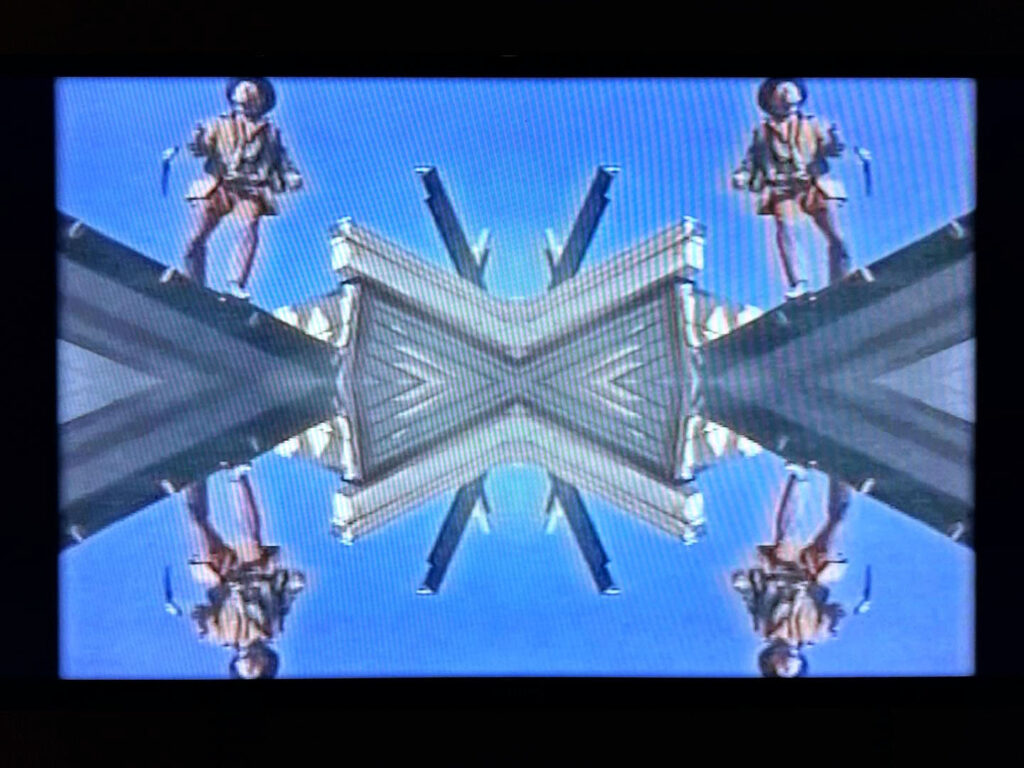
Closing tomorrow, 6/24, is Cross Communication, an exhibition of Chris Burden’s relics, films, video works, and other materials that document his early performances at Gagosian’s 75th and Park location in NYC.

Walking into the gallery and hearing one of his TV commercials in which he reads off the names of famous artists followed by his own name (Chris Burden Promo (1976)), is a humorous introduction to Burden’s often audacious work. Poem for LA from 1975, which follows with the messages- “SCIENCE HAS FAILED”, “HEAT IS LIFE” and “TIME KILLS” still resonates today.

Check out the video below to see the commercials and hear Burden discuss the work.

Other videos included have him crawling across glass; lying between two sheets of glass that are on set on fire (Icarus); and one of his most infamous- being shot in the arm (Shoot, 1971). The less outrageous works are great too, including Disappearing (1971), pictured above.

For more on the artist, the excellent documentary Burden, by Richard Dewey and Timothy Marrinan, follows his career from these earlier works to the large scale sculptures like Metropolis II and Urban Light that came later. Both of these installations are on view in Los Angeles at LACMA.

Jun 222023
 

“When I Was Young”, 1995

“Here I Am/Estoy Aquí”, 2022

Two works from Joey Terrill: Cut and Paste, a solo exhibition at Ortuzar Projects in NYC this past February.

From the gallery’s press release-

Raised in Highland Park and East Los Angeles, Terrill was part of a small group of Chicano artists who in the 1970s and 80s created works that diverged from traditional Chicano-based imagery and subject matter to include visual representations reflecting his queer lived experiences. Utilizing the existing image culture that surrounded him, Terrill combines personal photographs, found pop cultural imagery, and reproductions of artworks by queer predecessors, including Diane Arbus, Robert Mapplethorpe and Wilhelm von Gloeden, to conjure utopic spaces. Spanning from his earliest explorations to substantial new works, Cut and Paste reveals collage as a foundational element to Terrill’s expanded artistic practice.

Beginning with abstract collages and silkscreens made while Terrill was an undergraduate at Immaculate Heart College—an art department still heavily influenced by the graphic artist and activist Sister Corita Kent—the exhibition draws out the interconnectivity of illustration, collage, and printmaking in Terrill’s work and their influence upon the characteristically flat style of his early paintings. Like many artists who came of age in the wake of Pop, he found refuge within the fantasies of American image culture–his earliest artworks covering his bedroom walls, which he transformed with a mix of drawings, photographs, and clippings of comic books, film starlets, and music icons. His silkscreens from the mid-1970s–a medium central to the larger Chicano art movement–find him applying a graphic sensibility to not only representations of brown bodies, but queer desire, an impulse he would continue to explore in his episodic Homeboy Beautiful proto-zines from the end of the decade.

Terrill was selected to be one of the artists in Hammer Museum’s 2023 biennial, Made in L.A., which will open this October. He also has a work in the current exhibition at the museum- Together in Time: Selections from the Hammer Contemporary Collection running until 8/20/23.

Jun 222023
 

“North Tower”, 2021, mixed media on canvas

“North Tower” detail

“South Tower”, 2023 mixed media on canvas

Paintings created from zoomed-in sections of the underpaintings of the larger works

“Memories”, 2023, digital photographs

“Memories”, 2023, digital photographs (closer look)

Gallery 221, at Hillsborough Community College’s Dale Mabry Campus, is currently showing Snow in September, an exhibition of work by Kirk Ke Wang. The layered mixed media works are really pretty but there is a deeper meaning within the details.

From the gallery about the exhibition-

Kirk Ke Wang (b. Shanghai, China) is a multimedia artist whose work focuses on critiquing modern stereotypes as a diaspora. Throughout his career, Wang has used painting, installation, mixed media, video and photography to present his vision of the world, led by a consistent thread: the fear of inexorable cataclysm.

Wang’s solo exhibition in Gallery221@HCC draws inspiration from a 13th century Chinese play called The Injustice to Dou E, also known as Snow in Midsummer. In the story, the tragic and unjust death of Lady Dou E causes the heavens to snow during a hot midsummer day, thereby proving her innocence.

Today, the story symbolizes injustice and tragedy, and in Wang’s exhibition Snow in September, the artist parallels the Chinese fable with abstracted images of more recent tragedies such as 9/11, calling to mind the moment when the twin towers collapsed, and debris rained down like falling snow.

Through retelling tragedies, Wang tries to find a spiritual solace and the meaningfulness of being human.

This exhibition closes 6/22/23.