Feb 232024
 

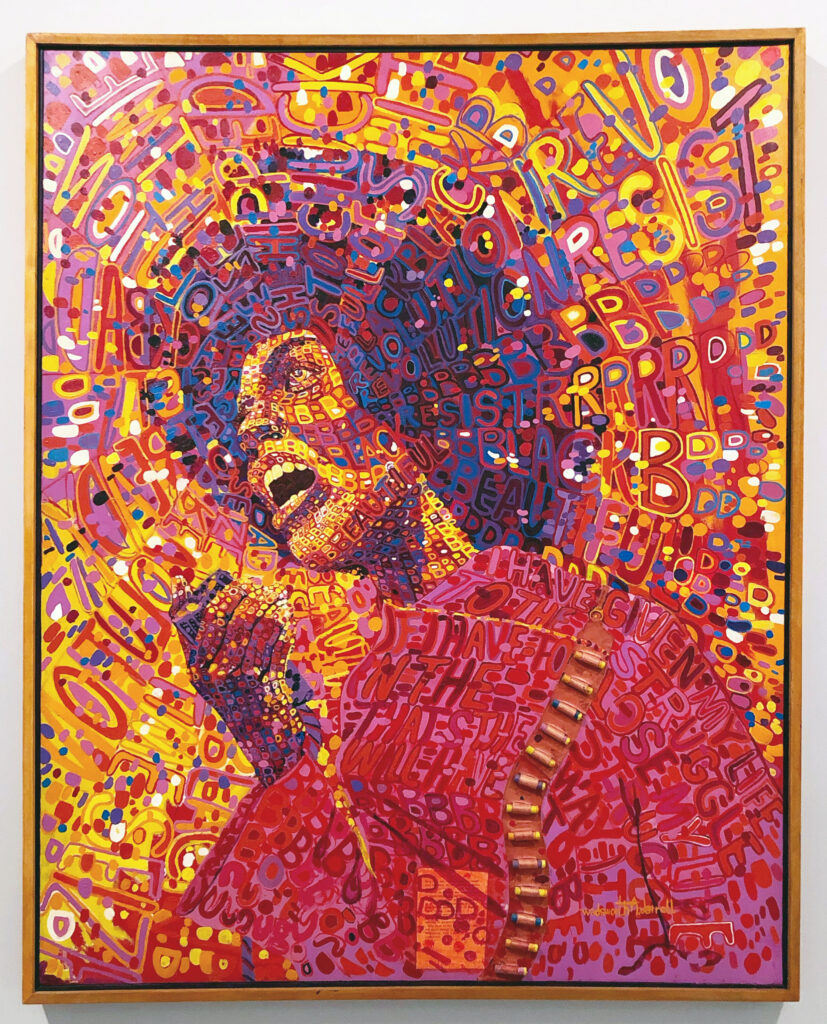
Wadsworth A. Jarrell’s Revolutionary (Angela Davis), 1971, spotted at Brooklyn Museum in 2020, is based off of a photograph of the activist.  The colorful painting includes words from her speeches and actual bullet cartridges.

From the museum about the work-

Wadsworth Jarrell’s Revolutionary (Angela Davis) is one of the most recognized paintings associated with the Black Arts Movement, a cultural manifestation of the Black Power Movement. Artists of this movement sought to create uplifting images that called upon Black people to harness their collective power. The power of communal action is here expressed through a chromatic swirl of individual colors that coalesce into a unified image of the radical activist and intellectual Angela Davis. Davis’s militant clothing—complete with bullet cartridges—was modeled after the Revolutionary Suit designed by artist Jae Jarrell, Wadsworth’s wife. An icon of Black Power, Davis continues to lead the prison abolition movement today.

Jarrell, along with his wife, is part of the African American artist collective AFRICOBRA, formed in Chicago in 1968.

Below is part of a statement about the group from their website by another of the founders, Gerald Williams.

AFRICOBRA began very loosely in 1968 as an association of visual artists. We decided to commit our selves to the collective exploration, development, and perpetuation of an approach to image making which would reflect and project the moods, attitudes, and sensibilities of African Americans independent of the technical and aesthetic strictures of Euro-centric modalities.  Jeff Donaldson, who spearheaded the movement,Wadsworth Jarrell, Jae Jarrell, Barbara Jones-Hogu, and myself, Gerald Williams opened the lid on what we called AFRICOBRA – African Commune of Bad Relevant Artists.  It was an original name that came to identify our place within the broader context of Black art.

Our mission was to encapsulate the quintessential features of African-American consciousness and world view as reflected in real time 1968 terms.  For months, beginning as early as 1967, we examined and talked about the forms of expression and images produced by previous generations of artists.  We came to the realization that there was not the existence of a consistent, unequivocal, uniquely Black aesthetic in visual arts as there was in other disciplines, notably music and dance. Many of our contemporary artists, at the time, generally said that they “were artists who happened to be black”, or held the view that their work was expressing universal ideas or concepts that were not tied to such a narrow category as Black art.   The notion of an intrinsically Black view point, expressed in characteristically “Black ways”  was a relatively alien idea for the most part.  That notion begged the question as to whether it was possible to create a style or approach to art that at its core could be identified as African-American or Black, notwithstanding  the presence of Black imagery or subject matter.  If imagery and subject matter were the sole criteria then the question was moot.  One could conclude, thereby, that Winslow Homer or any number of artists produced Black art when they painted Black images.  After numerous brain storming sessions where such topics were discussed, after test projects and critiques,  the five of us mapped out the core principles that became the foundation of AFRICOBRA.
 

Feb 162024
 

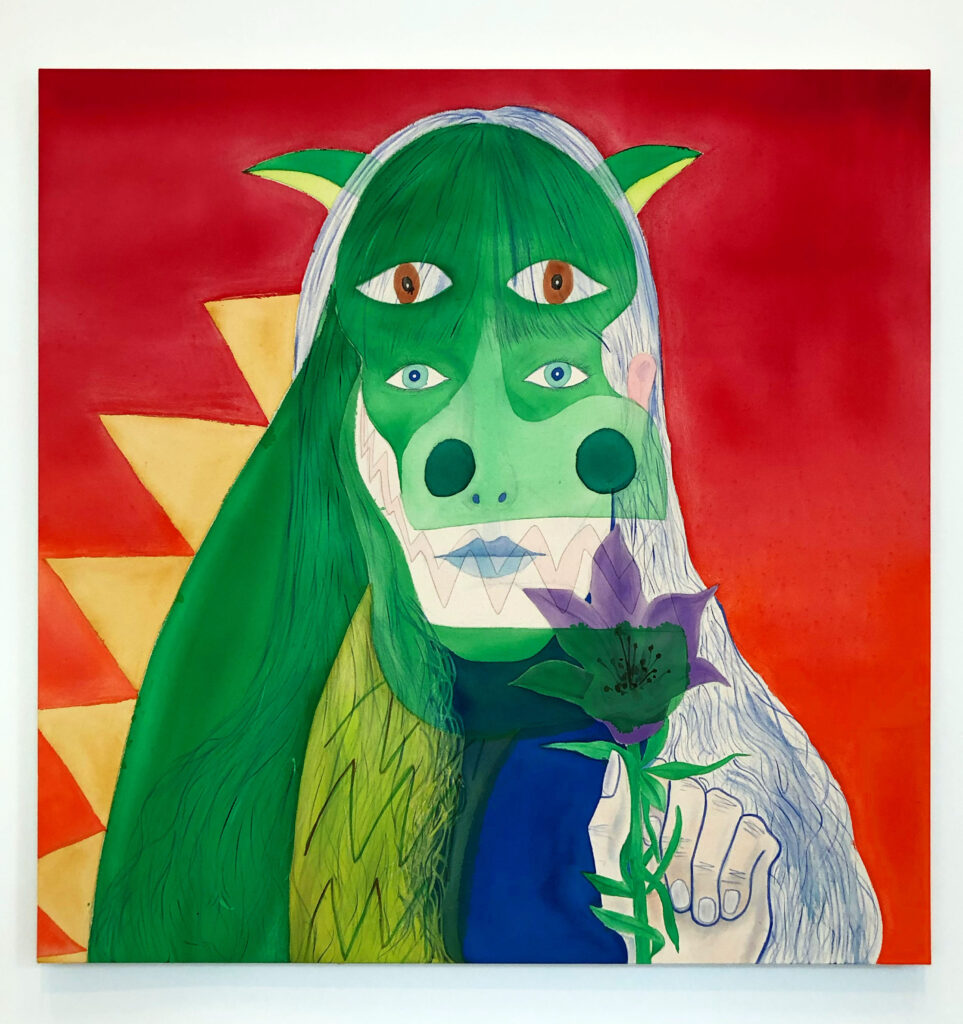
Gentle Ladies Dragon Man, 2021, (Acrylic and graphite on canvas) by Jason Fox was part of the group show Time-Slip at Petzel Gallery in New York in 2021.

Feb 092024
 

This sculpture, The Only Other, 2021, by the artist Midabi, was located in Union Square Park in NYC from June 2021- June 2022.

It is currently located adjacent to Palm Springs Art Museum in California.

Jan 262024
 

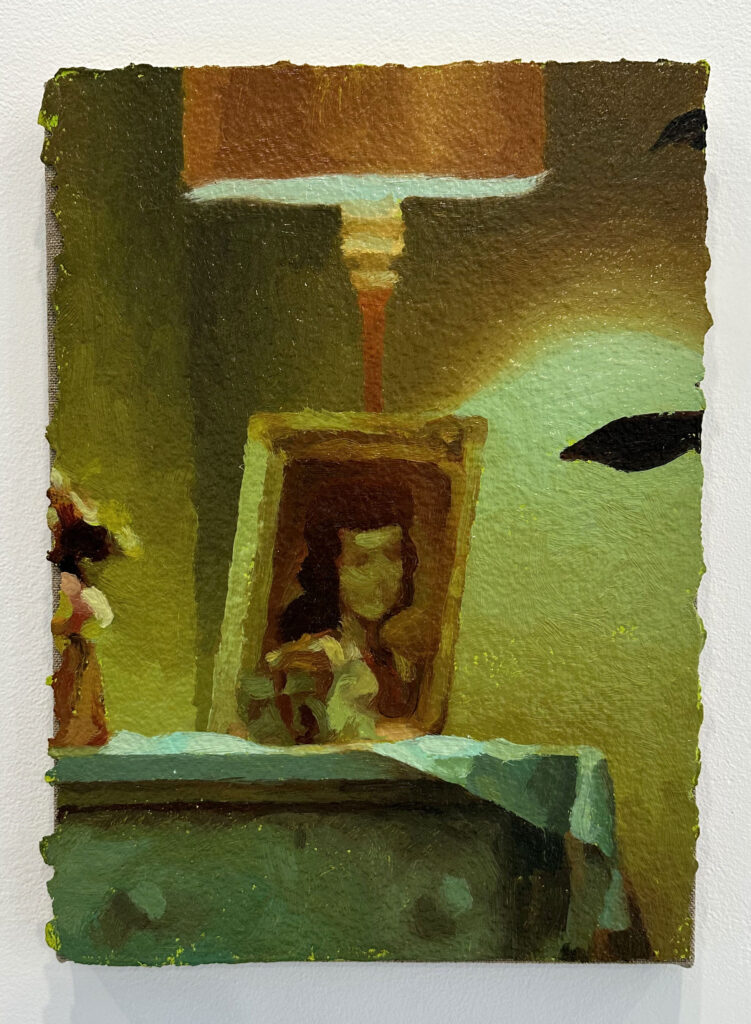
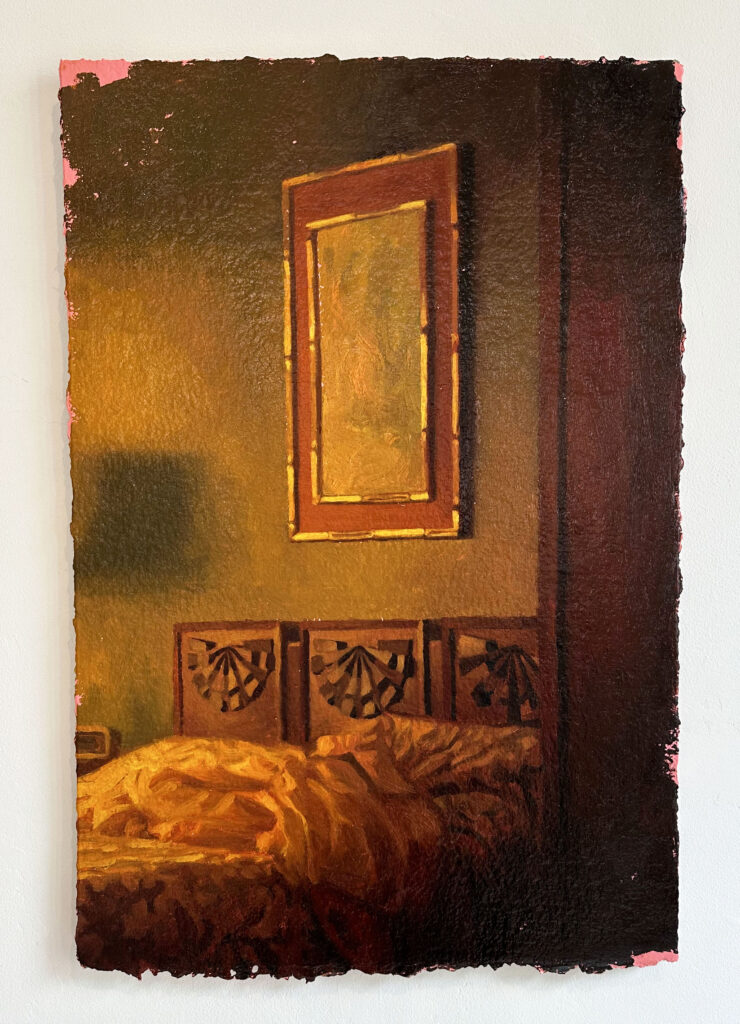
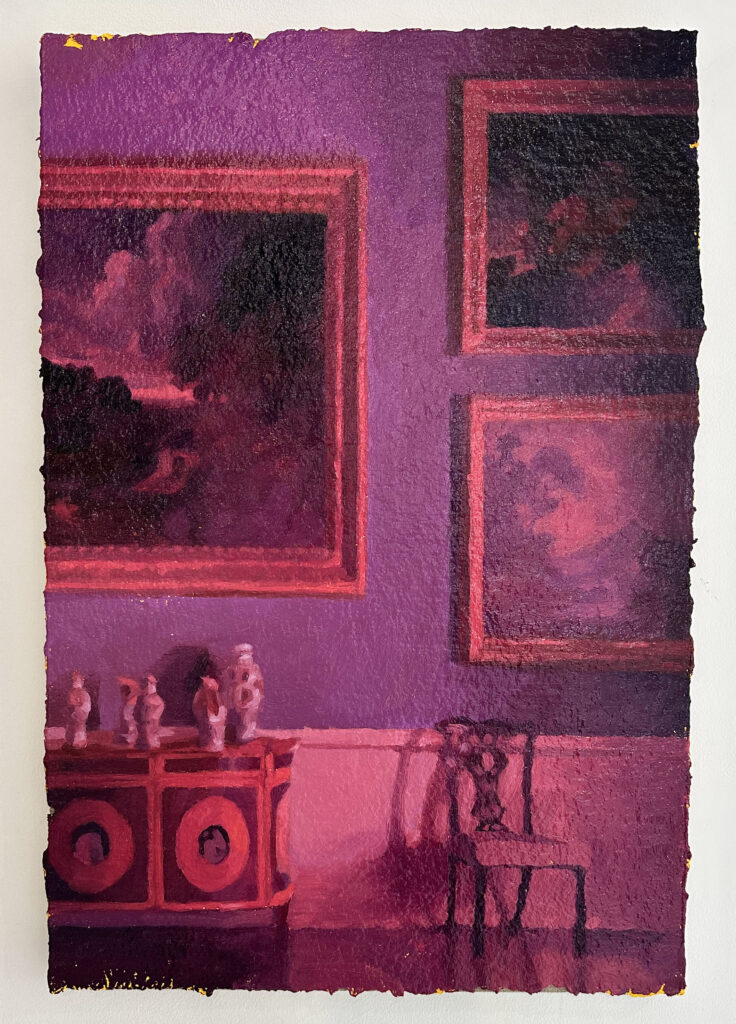
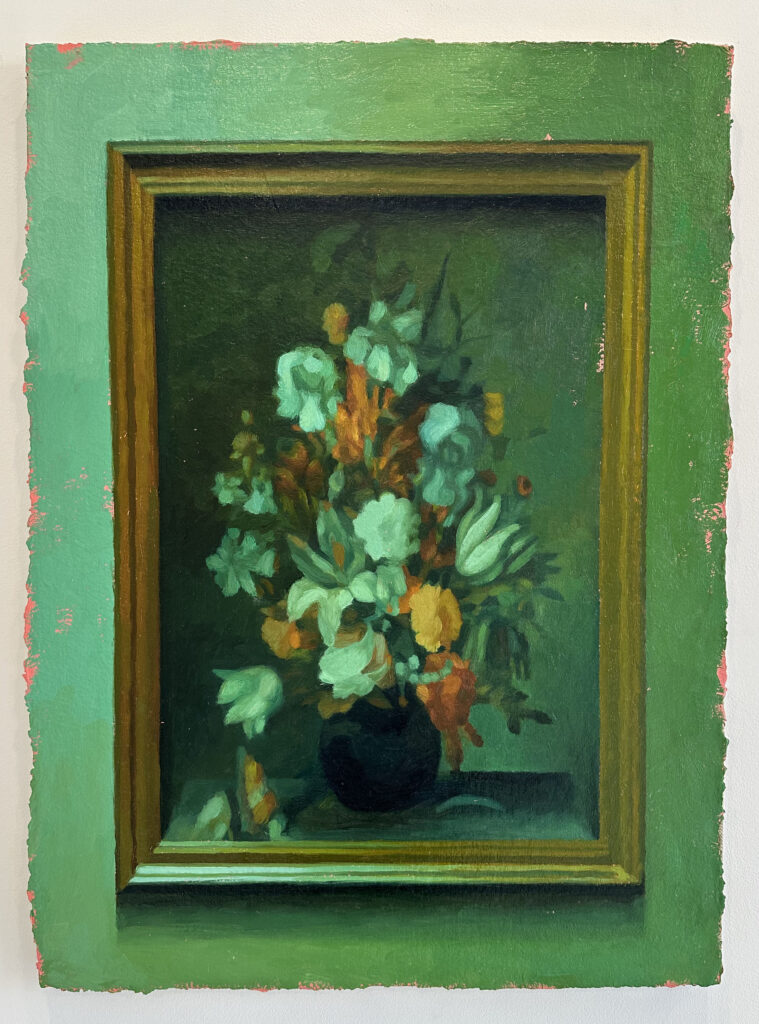
Paintings by Tim Wilson from his 2023 solo exhibition, Pictures Aside, at Nathalie Karg gallery in NYC.

From the press release-

“Everything is deceptive, only the mask never lies.”
—Pierre de Marivaux

On the surface, Wilson presents a group of paintings depicting an assortment of mirrored reflections, paintings, prints, photographs, and reproductions. These pictures within the paintings adorn a variety of provisional spaces; foyers, waiting areas, bedside tables, drawing rooms, and motels. Like his previous work, Wilson recasts images of interior spaces and set dressing found in the seemingly endless availability of streaming television and film. These repurposed screen grabs are then filtered through the historical lens of premodern tendencies in representation. This practice, an attempt at slowing the viewer down for reflection remains, yet here, Wilson doubles down by zooming in on the re-depiction of those quoted histories within his own pictures. This reframing literally and metaphorically rearranges the conditions with which one engages in that contemplation.

“To me, the recursive nature of these paintings is analogous to the infinite regress of thought and meaning—in the way that the definition of words require the use of other, yet to be defined, words to describe them, and so on. Painting is a way of re-contextualizing these strange loops and harnessing meaning indirectly. For example, to quote me speaking now in this context is altogether different than the previous paragraph, despite the fact that I wrote them both.”
—Tim Wilson

He is currently showing work at JDJ gallery in Tribeca, for the group exhibition, Feels Like Home, running until 3/2/24.

Jan 202024
 

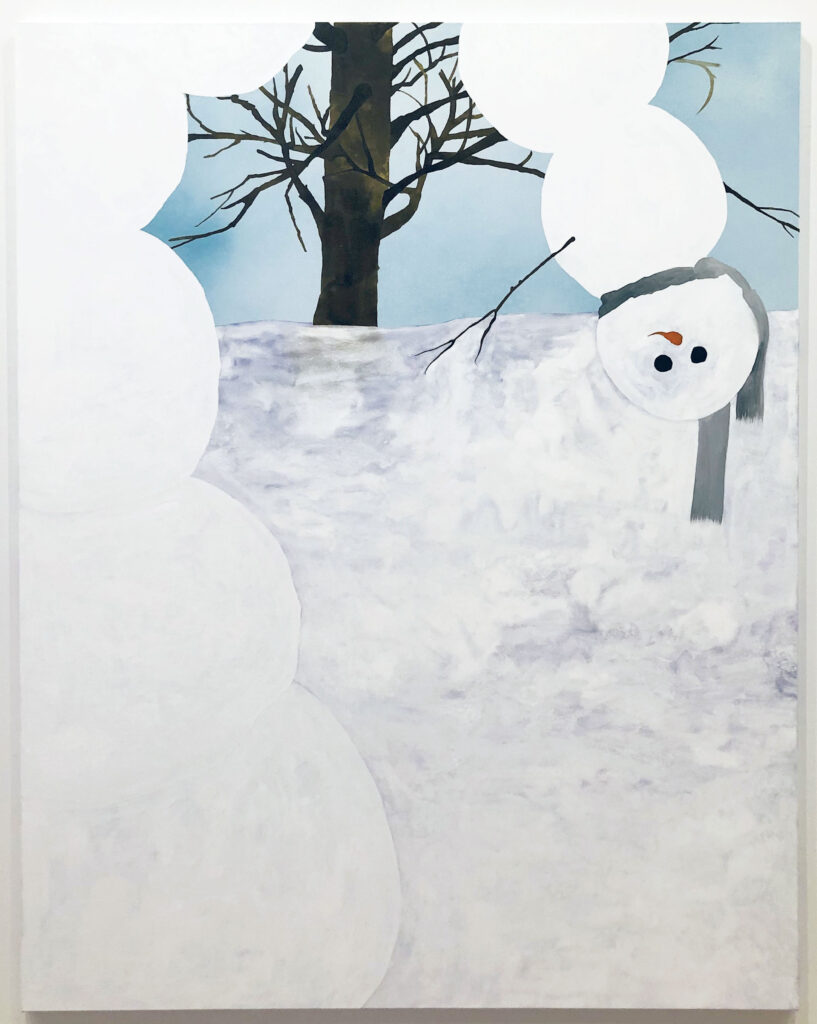
Calvin Marcus’ Tall Snowman, 2019, (Watercolor and vinyl paint on linen), was one of several of his large paintings included in Whitney Museum’s 2019 Biennial.

He and fellow Los Angeles artist Laura Owens will be in an exhibition together at Gaga gallery’s Guadalajara, Mexico location, opening 2/2/24.

Oct 202023
 

“Ybor’s Colonel”, Acrylic on canvas

The images above are from El Arte: Echoes of Cuba a group exhibition on view at Clearwater’s Main Library this past summer that included the work of Tampa Bay artist Lynn Rattray. The work is part of her ongoing project creating portraits of the Historic Ybor City chickens. Each work she creates includes a biography of the bird.

Information on Ybor’s Colonel from the exhibition-

“In 2016, a law was broken. In the dark of night, a dingy bedraggled rooster was dropped off in the streets of Ybor City. Thrown away by his owner, he had little chance of survival in the feral community and his future seemed bleak.

Fast forward: He ascended to become the superstar of Centennial Park. Soon stunning in both appearance and character, he was dubbed, The Colonel, and a group of diverse humans became his fan club. Our Colonel was the guardian of baby chicks and new mama hens, protecting the little families from danger. Now when this artist sits in the silence of the park, she still feels the magic of our Colonel and sheds a tear for a life well lived.”

More detail on the Ybor City chicken project from her artist statement-

…A portion of her portfolio is dedicated to the free roaming chickens of Historic Ybor City. “Why chickens”, you might ask. The history of these beautiful birds dates back to 1885, when Tampa’s cigar industry was first established by Vincent Martinez Ybor. Moving his industry first from Cuba to Key West, he ultimately rebuilt in Tampa. His hopeful workers brought their families, and their chickens, from Key West, dreaming of a new and prosperous future. When the Great Depression hit that same year, the economy crashed and the cigar factories shuttered their doors.

Forced to seek new opportunities, the workers moved on, leaving their chickens behind to fend for themselves. Having adapted to life on the streets, the descendants of those original birds proudly remain in Tampa’s Historic Ybor City, linking us all to that bygone era. It’s the descendants of these original chickens that Lynn paints. Having spent much time observing the chickens, it is each bird’s personality that she seeks to capture, as much as the likeness. Working hand-in-hand with Dylan Breese, founder of Ybor Chicken’s Society, and The Ybor Misfits Micro-Sanctuary, (@theybormisfits), a recently established 503(1)(c) non-profit designed to help sick and injured chickens.

This collaboration assures that each portrait reflects not only the likeness but more importantly, the personality of the bird.

Rattray has a studio in the Kress Contemporary building in Ybor City and it is often open to the public. There you can find more of her chicken portraits as well as see the other charming paintings she is working on. The image below is of her studio at last night’s Ybor Arts Tour.


Oct 142023
 

For more work by WK Interact check out his website and Instagram.

Oct 142023
 

A flashback to earlier this year and checking out Juan Alonso-Rodriguez’s studio when he opened it for St. Pete’s 2nd Saturday ArtWalk. His studio will be open again for this month’s ArtWalk and is filled with all new and different work.

You can also check out his studio on Instagram.

Sep 082023
 

Mary Ann Carroll (1940-2019), “Untitled (Backcountry Twilight)”, n.d., Oil on Masonite board

Harold Newton (1934-1991), “Untitled (Painting of the Indian River)”, c. 1958, Oil on Upson board; Alfred Hair (1941-1970), “Untitled (Marshland with palm), c. 1958, Oil on Upson board

James Gibson (1938-2017) “Untitled (Moonlit palms)”, n.d., Oil on Upson board

In early 2021, Tampa Museum of Art presented the work of Florida’s famous Highwaymen painters in the exhibition Living Color: The Art of the Highwaymen.

From the museum-

The Highwaymen are a group of African American artists celebrated for their distinctive paintings of Florida’s natural environment. Working in and around the Fort Pierce area beginning in the 1950s, these self-taught artists depicted the state’s scenic coastline and wild backcountry, often in dazzling combinations of color and tone. Brilliant tropical sunsets, windblown palms, towering sunlit clouds, and blooming poinciana trees are among the many subjects that have become iconic images of Florida in part because of the paintings that the Highwaymen created. In the state’s postwar boom years their paintings found an enthusiastic audience among a growing population of new residents and visitors. Unrecognized by the region’s art establishment of galleries and museums, the Highwaymen by necessity catered directly to their patrons, selling their paintings door-to-door along such thoroughfares as Route 1. It was from this practice that the name “Highwaymen” was later coined.

The popularity of Highwaymen paintings waned in the 1980s as the vision of Florida was reimagined by an ever-increasing population and once-pristine landscapes were lost to development. Then in the mid-1990s a new generation of collectors, with fresh eyes, rediscovered the paintings and began to assemble significant collections. These collectors saw the art of the Highwaymen as an important artistic legacy and together with several writers, scholars, and enthusiasts began the process of establishing the historical context and reevaluation of their work. Books and articles followed, bringing a new level of recognition for the achievements of these artists and, with that, growing popular acclaim. The contribution of the Highwaymen to the cultural life of Florida was formally recognized in 2004 when the group of 26 artists was inducted into the Florida Artists Hall of Fame.

Living Color: The Art of the Highwaymen brings together 60 paintings by a core group of the Highwaymen including Al Black, Mary Ann Carroll, Willie Daniels, Johnny Daniels, James Gibson, Alfred Hair, Roy McLendon, Harold Newton, Sam Newton, Willie Reagan, and Livingston Roberts.

Focusing on work produced from the 1950s to the 1980s, the exhibition is an in-depth examination of the group’s initial period of success when their groundbreaking style of fast painting was being developed. Fast painting is a hallmark and essential innovation of the Highwaymen. Facing limitations imposed by the racial prejudice of their time, they had little or no access to formal training or to conventional art markets. To overcome these obstacles, they produced large numbers of works which could be sold at very affordable prices. Some estimates of the group’s overall production during their heyday exceed 200,000 paintings, with certain artists creating dozens of paintings per day. Their creative response to the racism they confronted resulted in an original artistic practice.

Opening at The Woodson African American Museum of Florida in St. Pete this Saturday, 9/9/23, is Florida Highwaymen: The Next Generation – The Legacy Continues, an exhibition of work by Ray McLendon, son of Highwayman Roy McLendon, who creates Florida landscapes in the same iconic style his father used.

Aug 252023
 

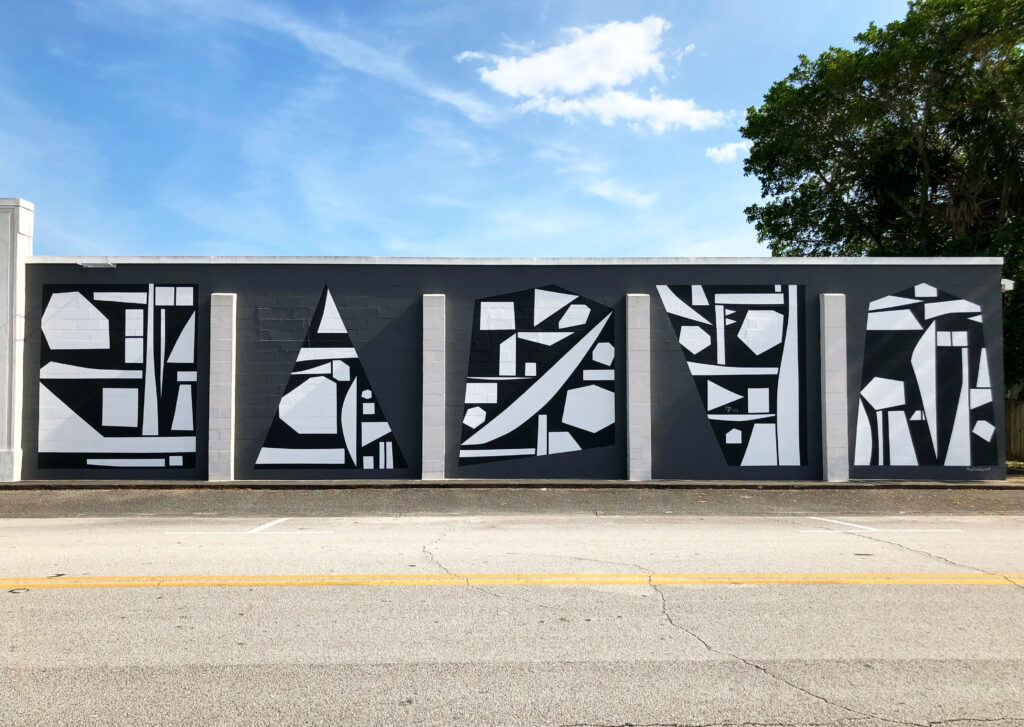
This mural was created by Hyland Mather, aka The Lost Object, in 2017 for Anti Gravity Project and The Foosaner Art Museum in the Eau Gallie Arts District in Melbourne, Florida. The museum, sadly, closed in 2021.