Aug 132026
 

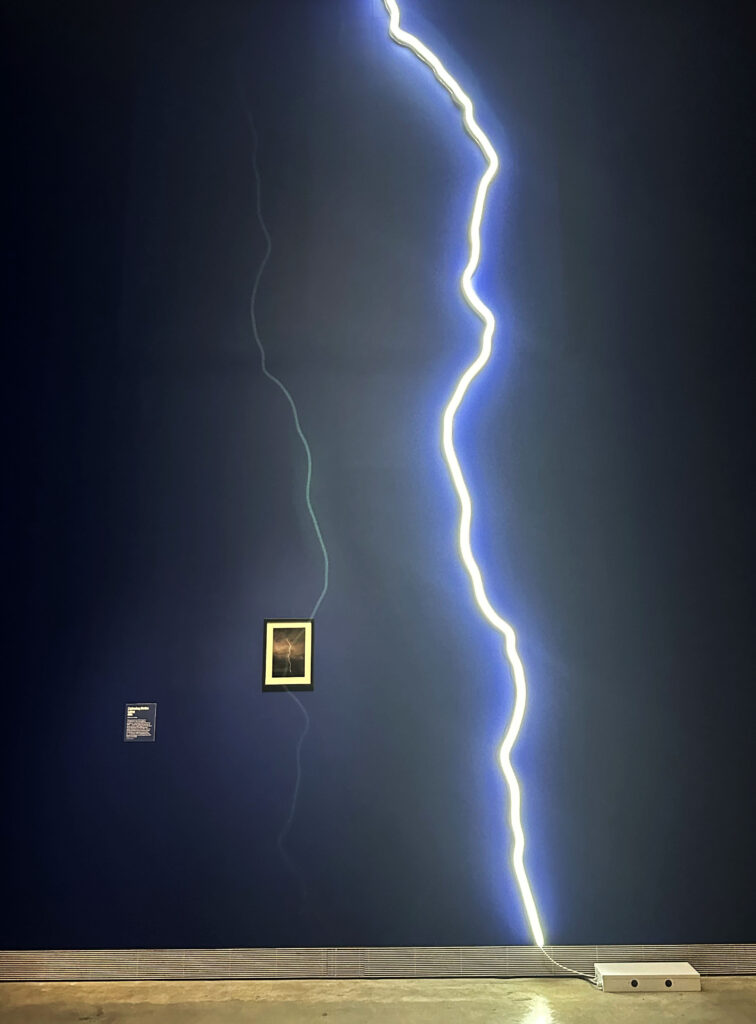
“Lightning Strike Lamp”, 2025
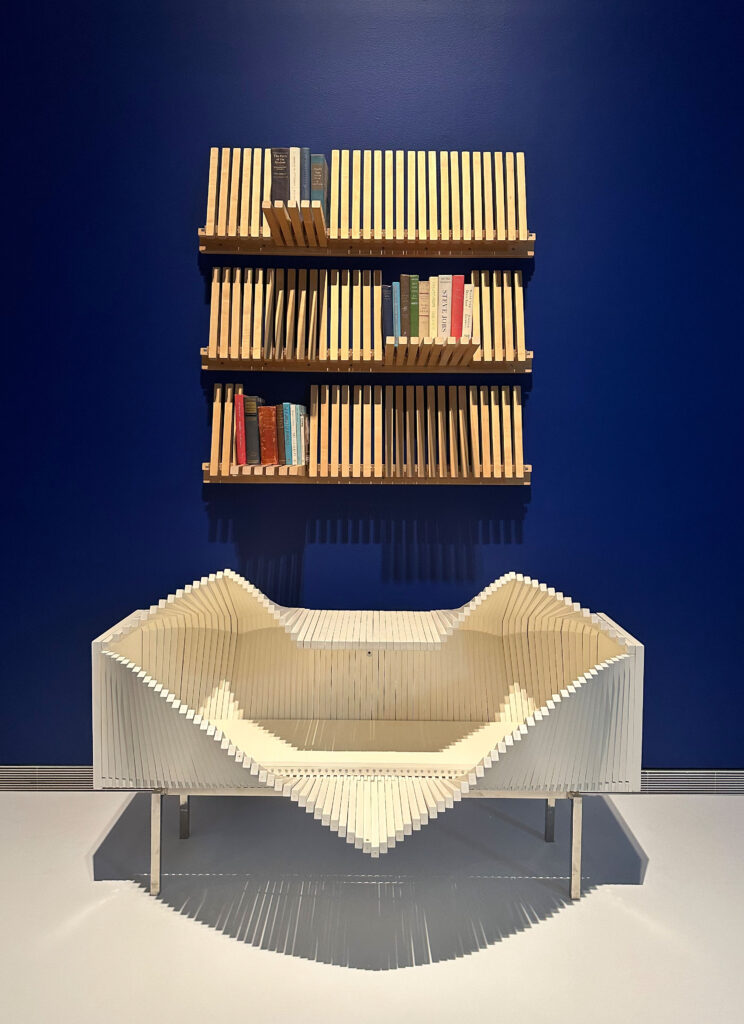
Top: “Piano Shelf”, 2014, Lacquered mahogony, steel ; Bottom: “Wave Cabinet”, Lacquered Baltic birch, steel, glass
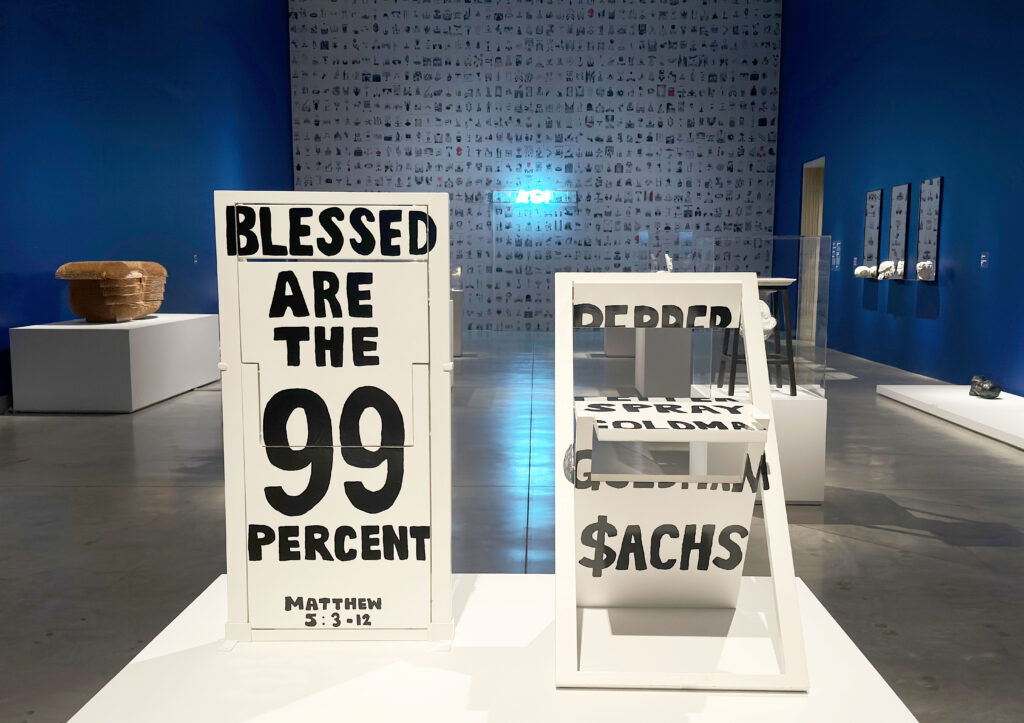
“Occupy Chair”, 2012
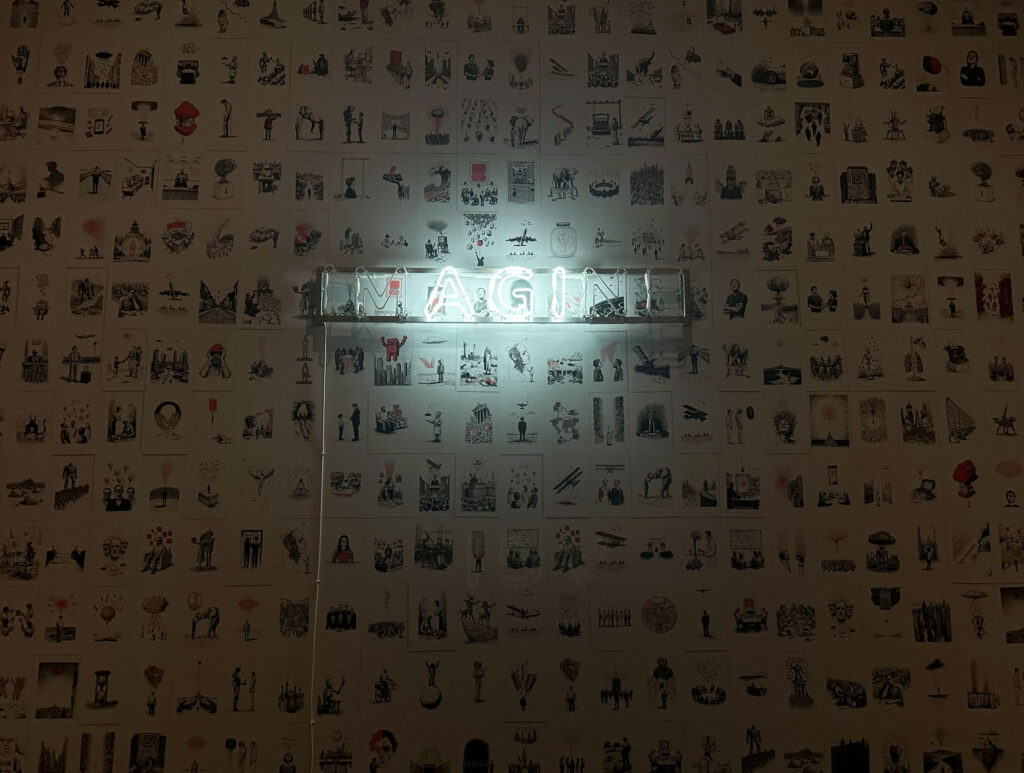
“IMAGINE Neon”, 2025, Neon tubing
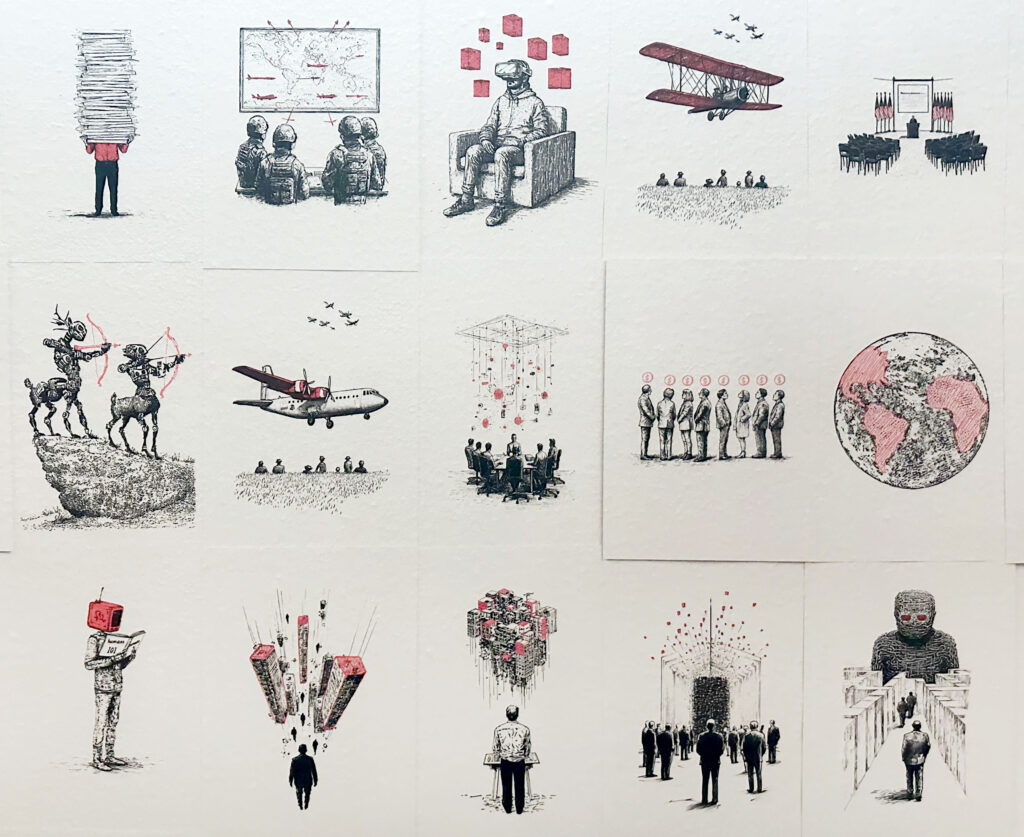
Detail from wall of AI generated drawings behind “IMAGINE Neon”

Mixing art, design, and politics, Sebastian Errazuriz‘s exhibition Double Take at the Philadelphia Museum of Art is a lot of fun. On one side of the room a neon bolt of lightning repeatedly flashes against the wall, while on another neon letters alternate between “IMAGINE” and “AGI” (Artificial General Intelligence) illuminating AI-generated drawings based on his original sketches. There’s also uniquely designed furniture, lamps made using taxidermy chickens, chairs referencing the Occupy Movement, objects incorporating Greco-Roman statue head reproductions, and more, all encouraging visitors to think about nature, technology, and the world around them.

From the museum:

Sebastian Errazuriz (Chilean, born 1977) twists our typical expectations and experiences of using furniture, lighting, and everyday objects. Embracing humor and appropriation, his limited edition and one-of-a-kind pieces often have a subtext that goes beyond form or function, offering personal narrative, a political message, or cultural commentary. This mid-career survey presents over twenty years of a multi-hyphenate practice that gives design a conceptual, Surrealist slant.

Works featured in the exhibition span art, craft, design, and technology. His “kinetic” furniture, constructed from the early 2010s, is characterized by moveable parts – doors, drawers, and shelves that are repositionable, creating new configurations. Other works take nature as a source of inspiration or make new and surprising use of found objects, including vintage watches and taxidermy fowl. Also on display are furniture, mirrors, and other objects that the designer creates by scanning original Greco-Roman antiquities that are then digitally-manipulated and recast in poured marble. A newly commissioned fluorescent light explores Errazuriz’s fascination with, and apprehension about, the potential impact of Artificial General Intelligence on artists, designers, and culture more broadly.

The diverse works on view convey imagination and wit, while also bewildering those who encounter them. The pieces are meant to be lived with, but, at the same time, are provocations with an air of mystery around their function and meaning. Attesting to Errazuriz’s expansive definition of design, the works in this exhibition suggest alternate ways of seeing, thinking, and living.

The show is on view until 8/16/26.
 

Jul 172026
 

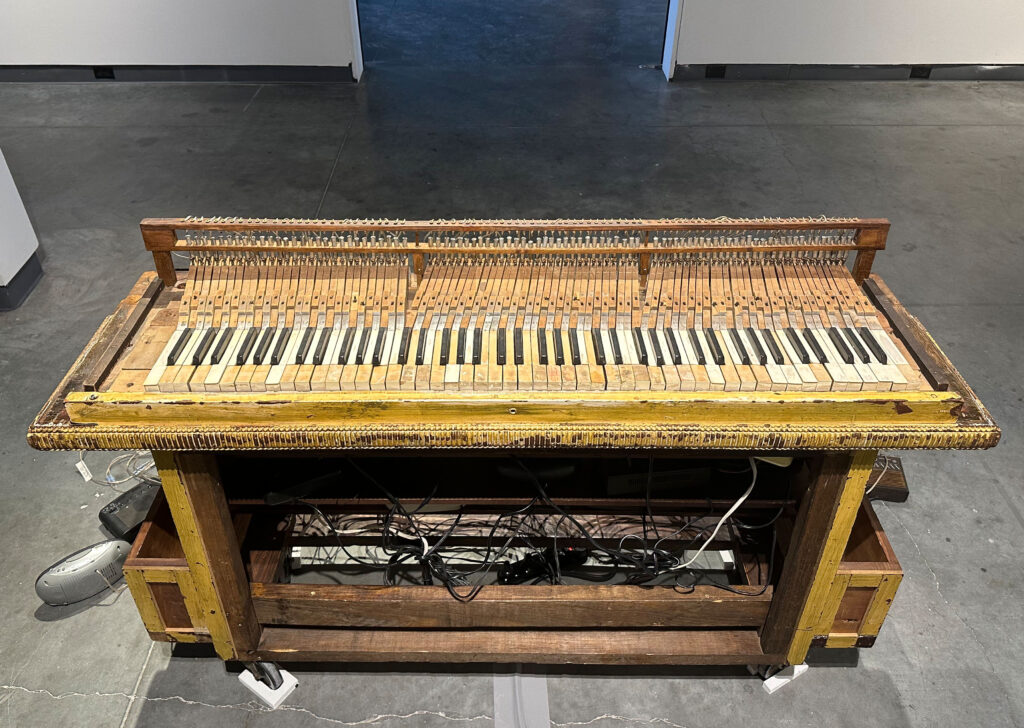
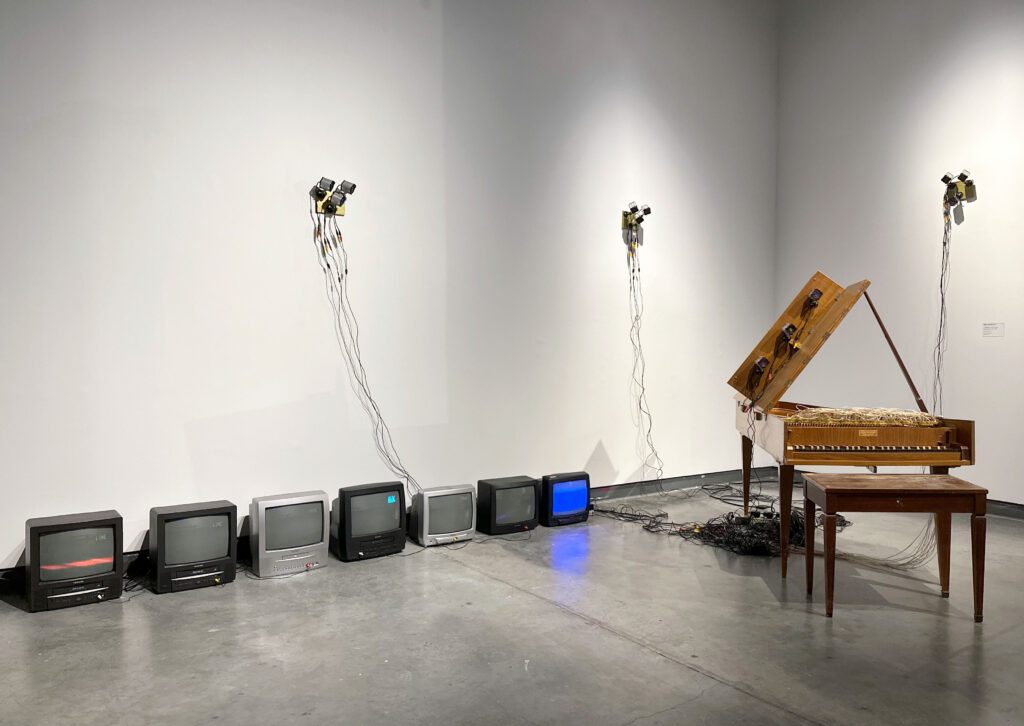
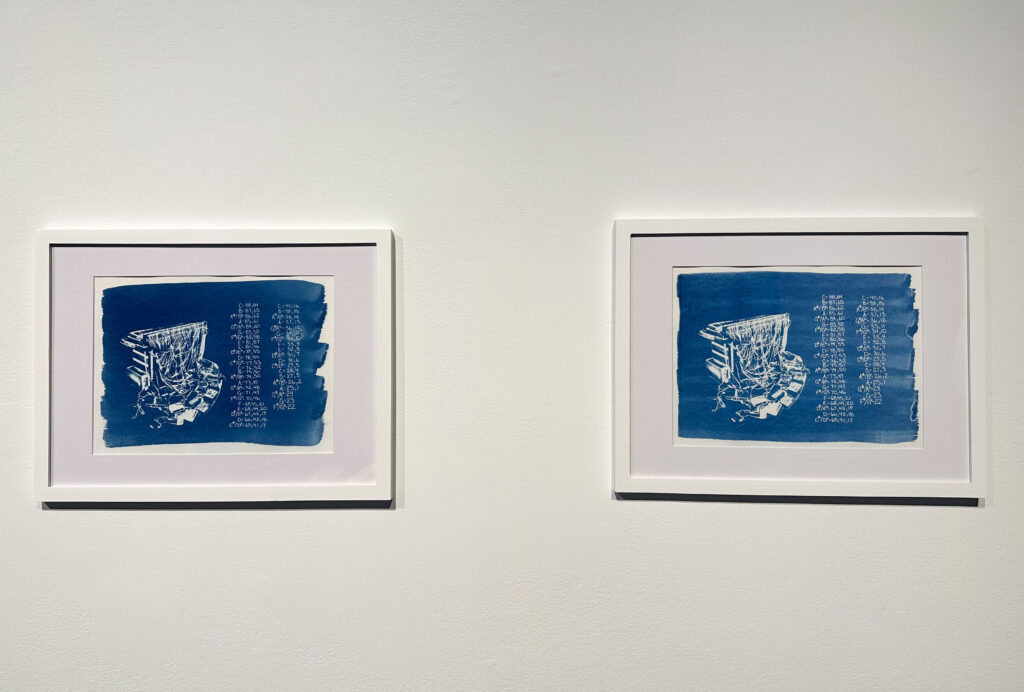
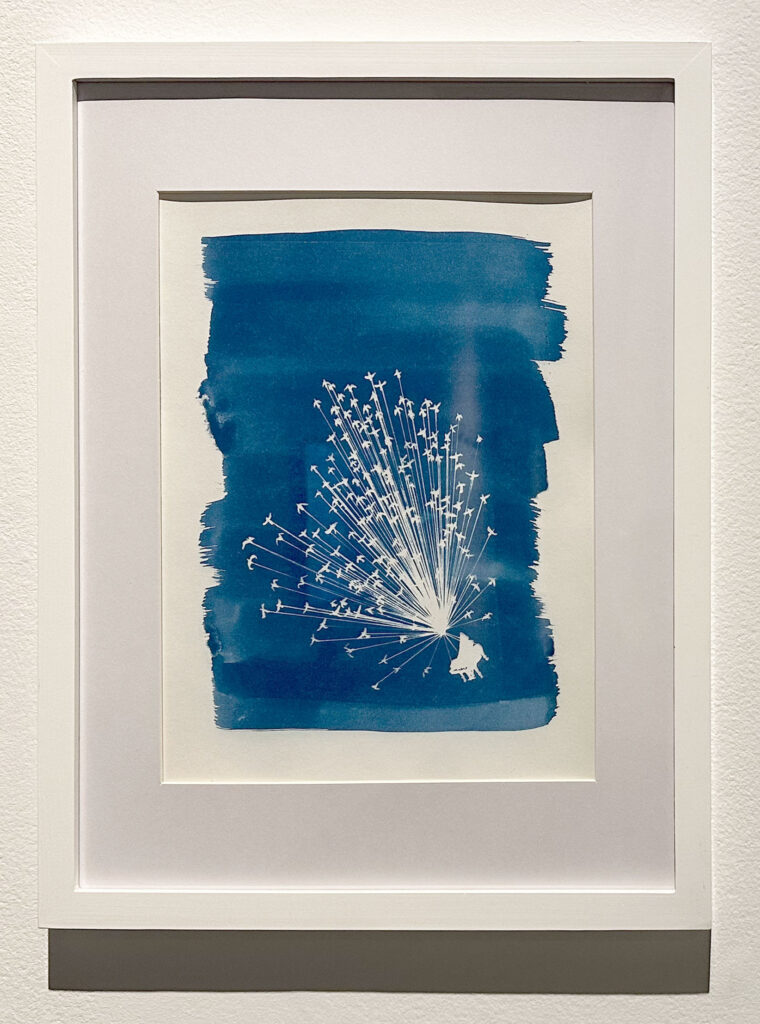
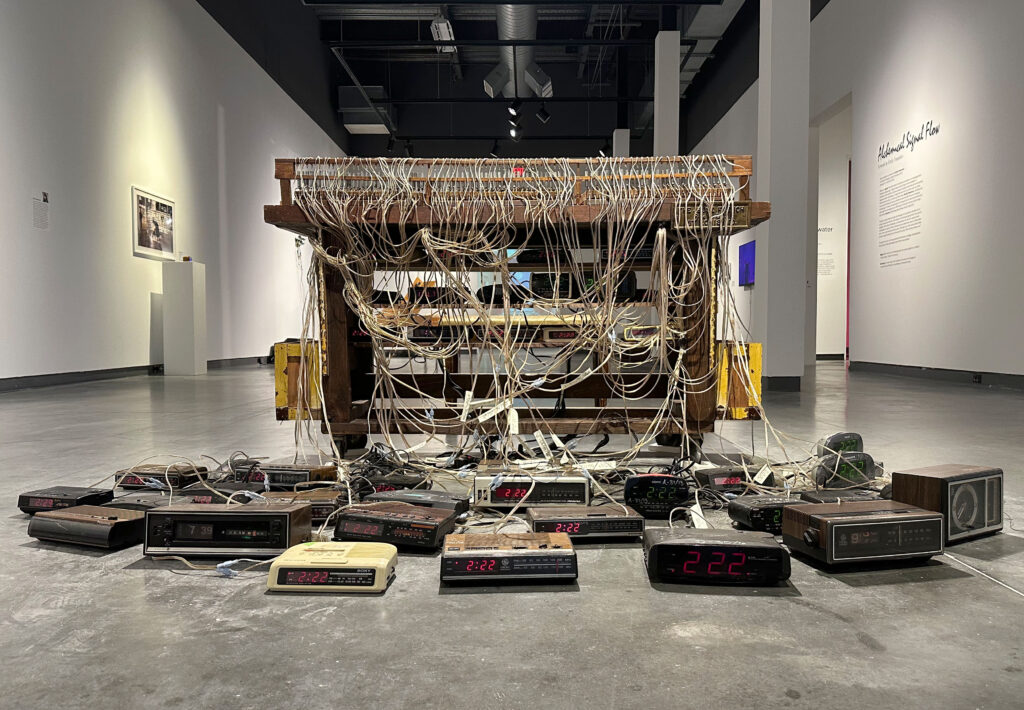
Old televisions and clock radios are given a second life in the interactive sculptures in Emily Francisco‘s exhibition, Alchemical Signal Flow at The Delaware Contemporary. The exhibition also includes videos and documentation of some of Francisco’s other projects, and a few cyanotype prints.

From the museum:

What is a signal? We often think of cell phone reception, or a message sent through a digital app. A signal means many things in this exhibition, it references the transfer of physical data and digital data (ones and zeroes) that happens within technology. A signal can also be social, like how you dress, what brands you buy, or what you throw away. Emily Francisco combines old and new technology to help us rethink how we live with new and changing technology. To many, the mechanics of a harpsichord (a keyboard instrument) and organ are as magical as an MP3 player. Francisco embraces that magic and makes alchemy of blending old and new, low and high tech.

Francisco uses cheap everyday technology and discarded, obsolete (or no longer produced) devices. By doing so, she disrupts signal flows from user to speaker. This action challenges our expectation of call-and-respond and challenges our sense of time. Someone once owed every piece of discarded tech. One could have even been yours. She asks us to think about what these personal objects mean to us at the end of the day. What do they mean to us?

Through her work, she brings together the memory, nostalgia, and aspiration these objects hold, attempting to give them new purpose.

This exhibition closes 8/2/26.

May 172024
 

“New body, new body”, 2024, Oil and graphite on linen

“Our family portrait/ Dancing over the town”, 2024, Oil and graphite on linen

“In Bed” 2024, and “The world was different when Leonard painted Emily”, 2024, Oil and graphite on linen

“I love basketball”, 2024, Oil and graphite on linen

Tanya Merrill’s exhibition, Watching women give birth on the internet and other ways of looking, at 303 Gallery explores the way we look at the world today while referencing classical imagery from the past. What has changed in the way we see ourselves, our place in society, and our place in time? How much has changed because of self documentation and the internet? All of these questions feel even more prevalent now with technology and environmental issues moving at an accelerated pace.

From the press release-

True to her propensity for a cyclical and narrative installation, the show begins and ends with the creation of life. Each painting represents a diverse point of interest and concern to the artist— sexuality and ideas of fertility, the natural world and the fraught state of the environment, and the broader implications of contemporary technology, sports, and religion on the artist’s experience as a woman today.

The scale of the subjects in each canvas approximate life, creating a one-to-one perspective when standing in front of, say, a tree trunk, a cat perched on a fish tank, or a man admiring himself with a basketball. One work shows a trompe l’oeil stack of papers illustrating a 15th century manuscript: an early representation of a woman’s fertility cycle in relation to the stars. The modes for distributing images have changed, but the need to see them has not—jump ahead 800 years and the show’s namesake painting frames the edge of a computer screen, documenting the recent phenomenon of sharing one’s birthing story and corresponding photographs publicly on the internet.

Humans have always employed tools for looking. The earliest manufactured mirrors were made from volcanic glass in Turkey and date some 8000 years ago, the invention of the telescope advanced our understanding of Earth’s place in the cosmos, a phone now captures our own image with a recent poll finding 92 million selfies are taken every day around the world: the Allegory of Sight and mythology of Narcissus regenerates.  In I love basketball, a naked man gazes affectionately at himself in the mirror. Coyly, he holds a basketball in front of his own genitalia; pensive yet playful, he engages the long tradition of masculinity in sports seen throughout art history. Across the gallery, a pregnant woman is doubled in the frame and photographs her changing body. The technology she clutches, perhaps soon to be obsolete, will be inextricably linked to the start of the 21st century.

The North American cecropia moth is seen on its host plant, a white birch tree, one of the few plants a Cecropia larva can eat. A recent report found dramatic rates of decline that may lead to the extinction of 40% of the world’s insect species over the next few decades. And with a single nest of baby birds needing up to 9,000 caterpillars before they are ready to fledge, the looming demise and precarity of our food chain is blatant. Merrill is compelled to paint the species that are still here, a record that they really did live before they died. The ecologist David Wagner says of the insect decline, “… We don’t know if it’s an apocalypse or Armageddon.”

In Our family portrait/ Dancing over the town, three skeletons– two human and one dog– are seen romping joyfully, even in death. The couple, winged and facing eternity together, point to religious imagery from a 17th century wall tomb, while the surrounding landscape references the art movements of Europe which inspired the Hudson River School Painters— an homage to the place this exhibition was made. Merrill’s studio in the Hudson Valley can be seen nestled in the bottom left corner of the canvas.

This exhibition closes 5/18/24.