Nov 052025
 

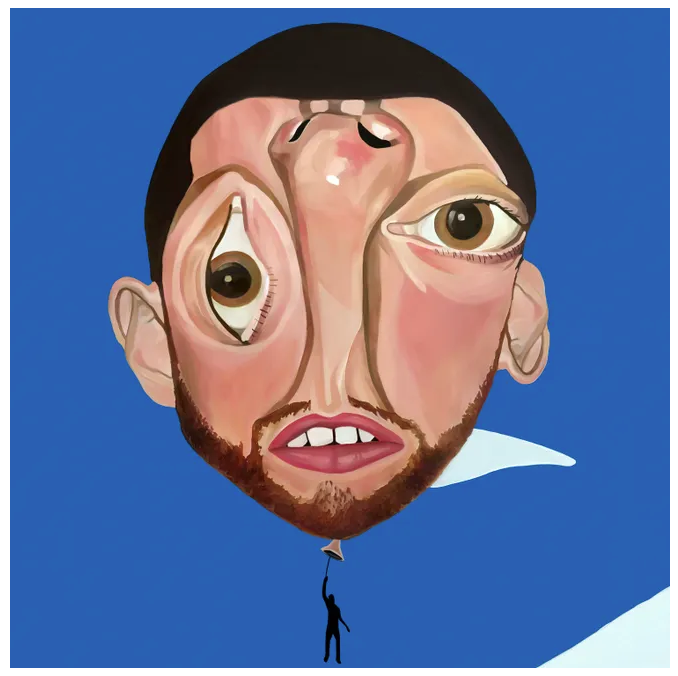
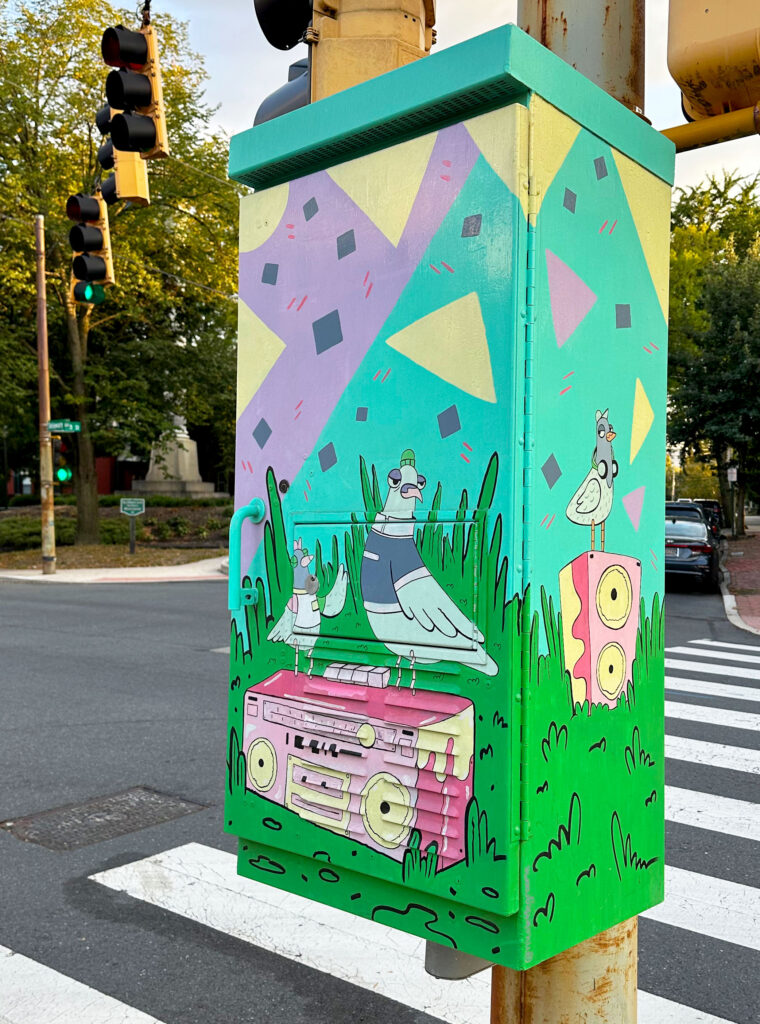
Nicolette Groome created Hip Hop Pigeons for the 2022 Trolley Square Mural Project, in Wilmington, Delaware. Organized by the Delaware Avenue Community Association, several artists created fun utility box murals to brighten up the neighborhood with art.

From more of Groome’s more recent work, also check out her Instagram.

Oct 232025
 

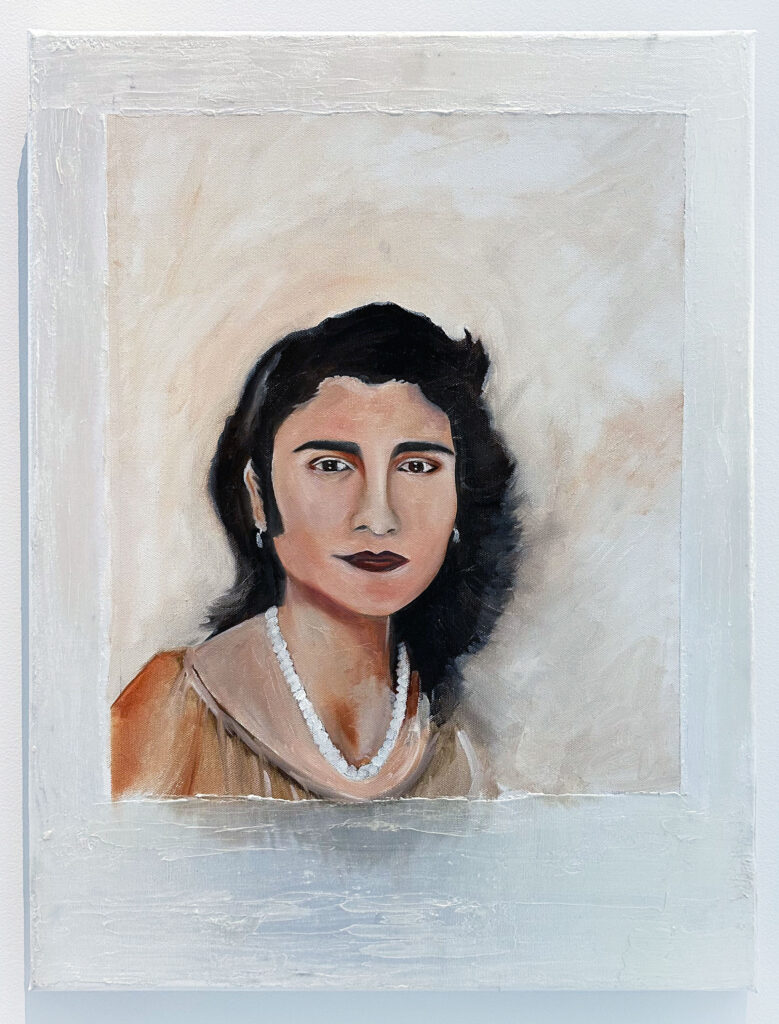
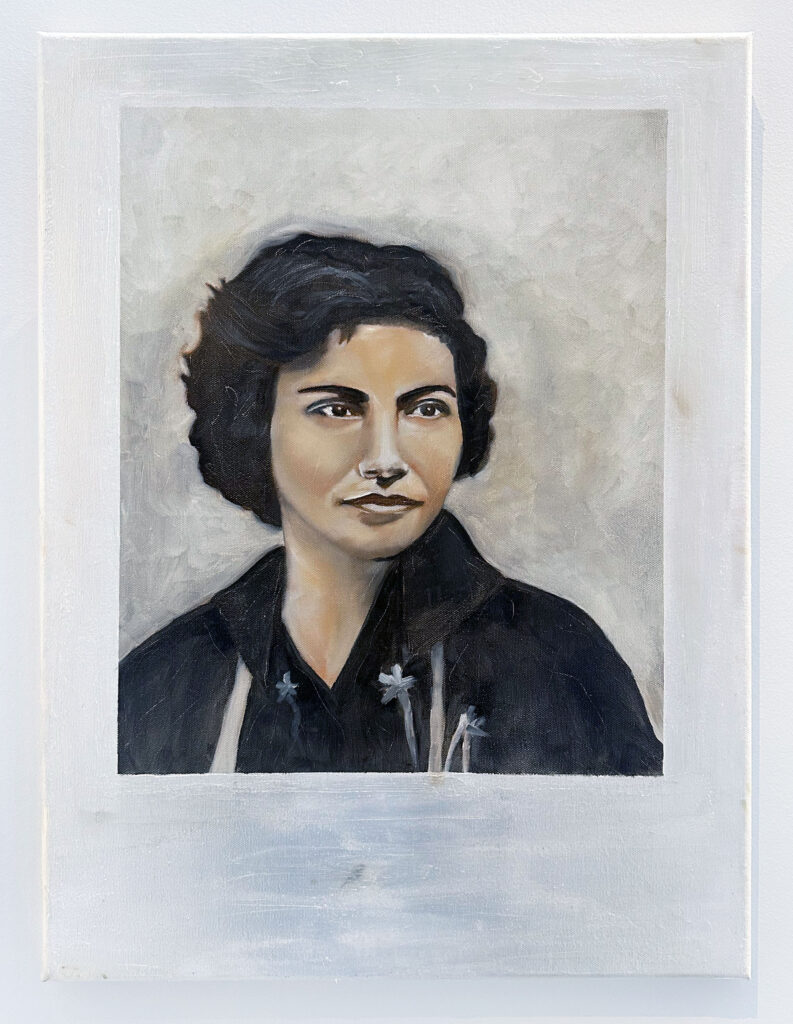
The paintings above by Nicole Parker were part of the exhibition, Phantasia, on view earlier this year at The Delaware Contemporary.

The artist’s statement about her work from her website-

I am a representational artist specializing in narrative and symbolic paintings and hand-pulled intaglio prints.  In my current body of work, I’m exploring the triangular relationship between my sense of self, my perception of what “home” means, and the physical spaces and environments that I’ve occupied throughout my life.  My imagery often involves structures, spaces and objects that represent a story or dream from a specific period in my life.  They are places and things that evoke strong emotions like love, loneliness, joy, or fear.  I’m often unable to physically visit or return to the things I’m rendering, so in the studio I work from memory and cobbled references.

Although memory is always unreliable and changing by nature, I’m interested in the potency of my own sensory memories, and the way that light, color and the smell of the air stick in my mind.  These concrete sensory ideas are always at the core of my practice.

Oct 082025
 

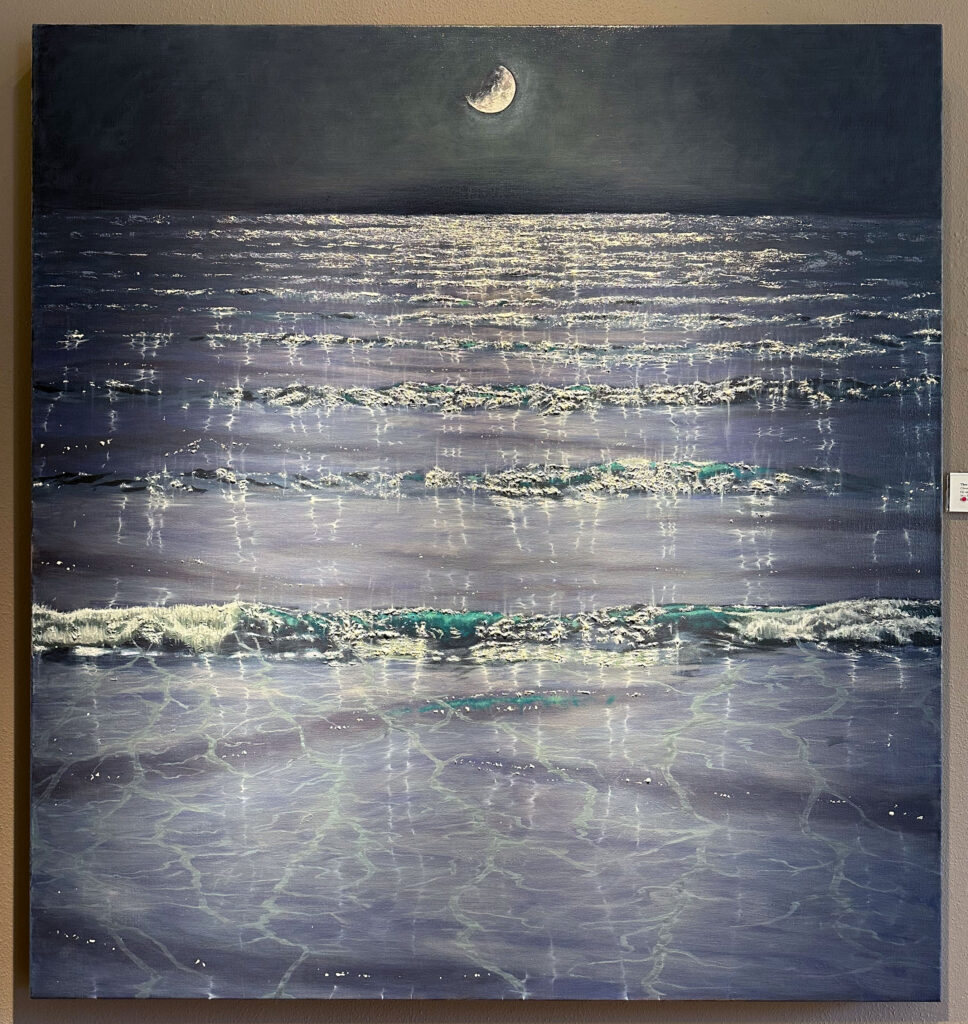
Theo Platt, “Chrome”, Oil on canvas

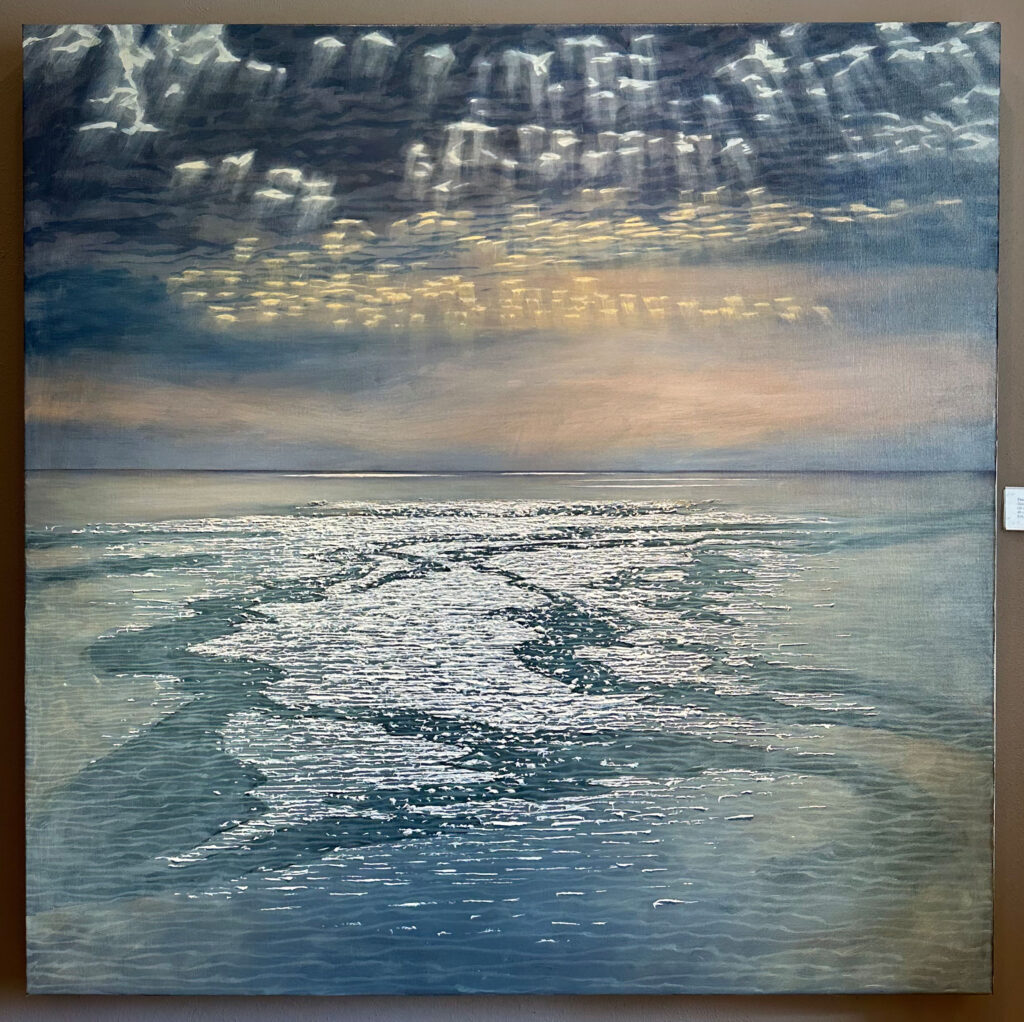
Theo Platt, “Sunstream”, Oil on canvas

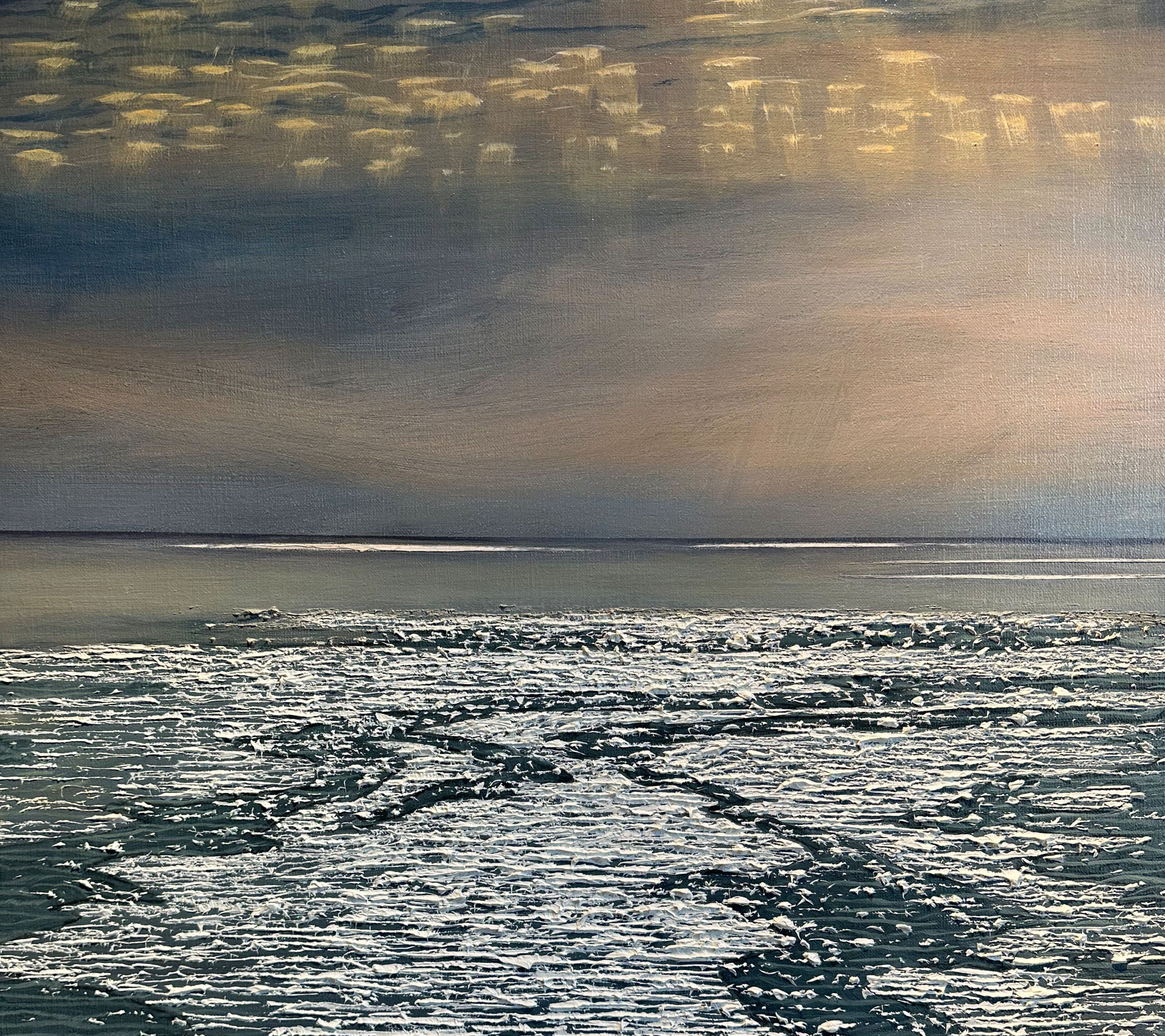
Theo Platt, “Sunstream”, Oil on canvas (detail)

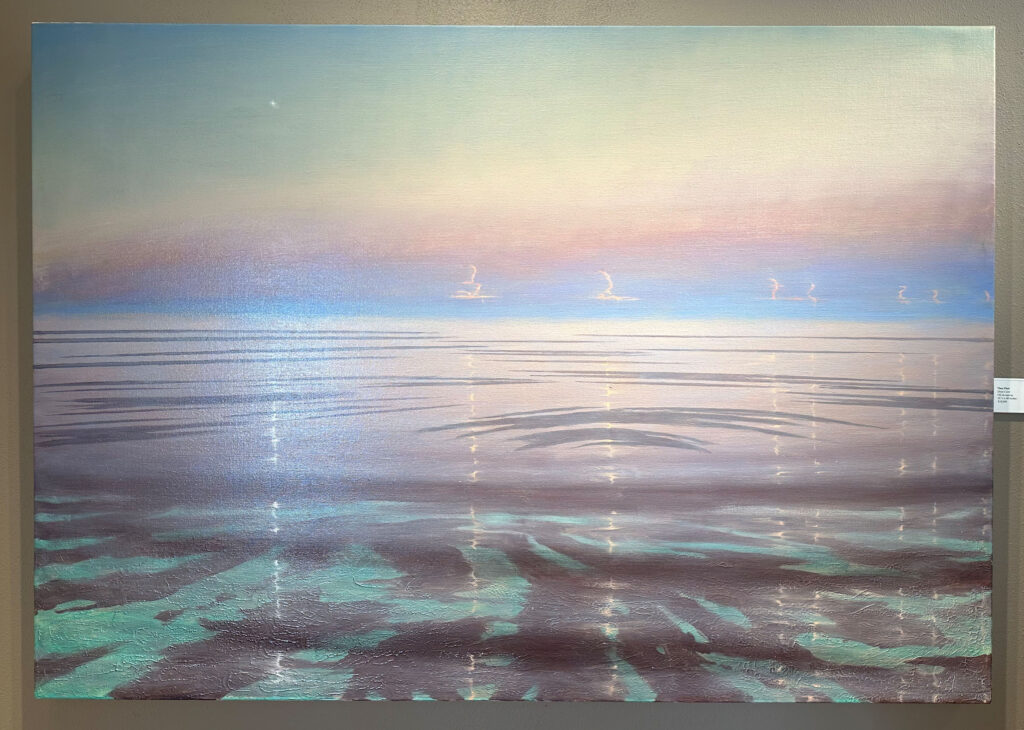
Theo Platt, “Deep Calm”, Oil on canvas

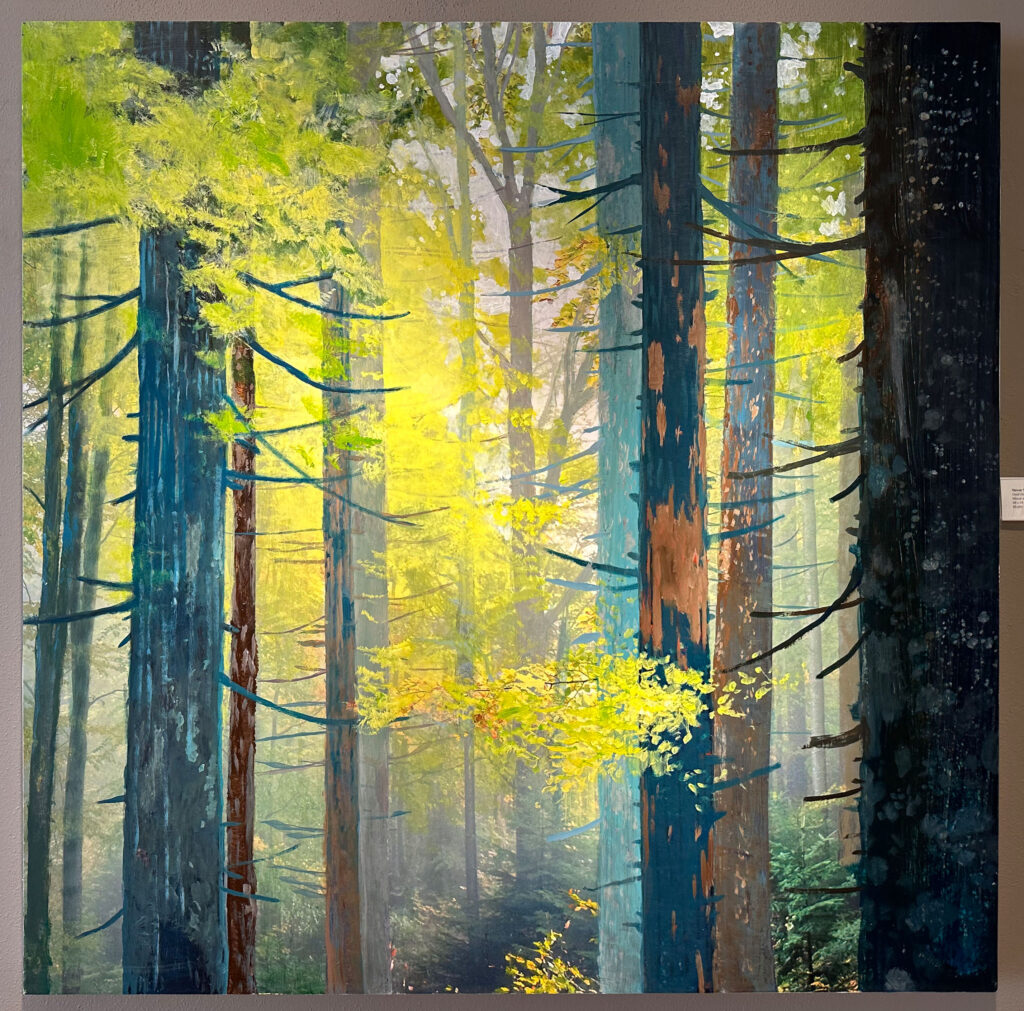
Somerville Manning Gallery is currently showing two painting exhibitions: Theo Platt‘s textured oil paintings from his Oceans series of works (pictured above) and Steven Nederveen‘s Stillness in the Shade of Green.

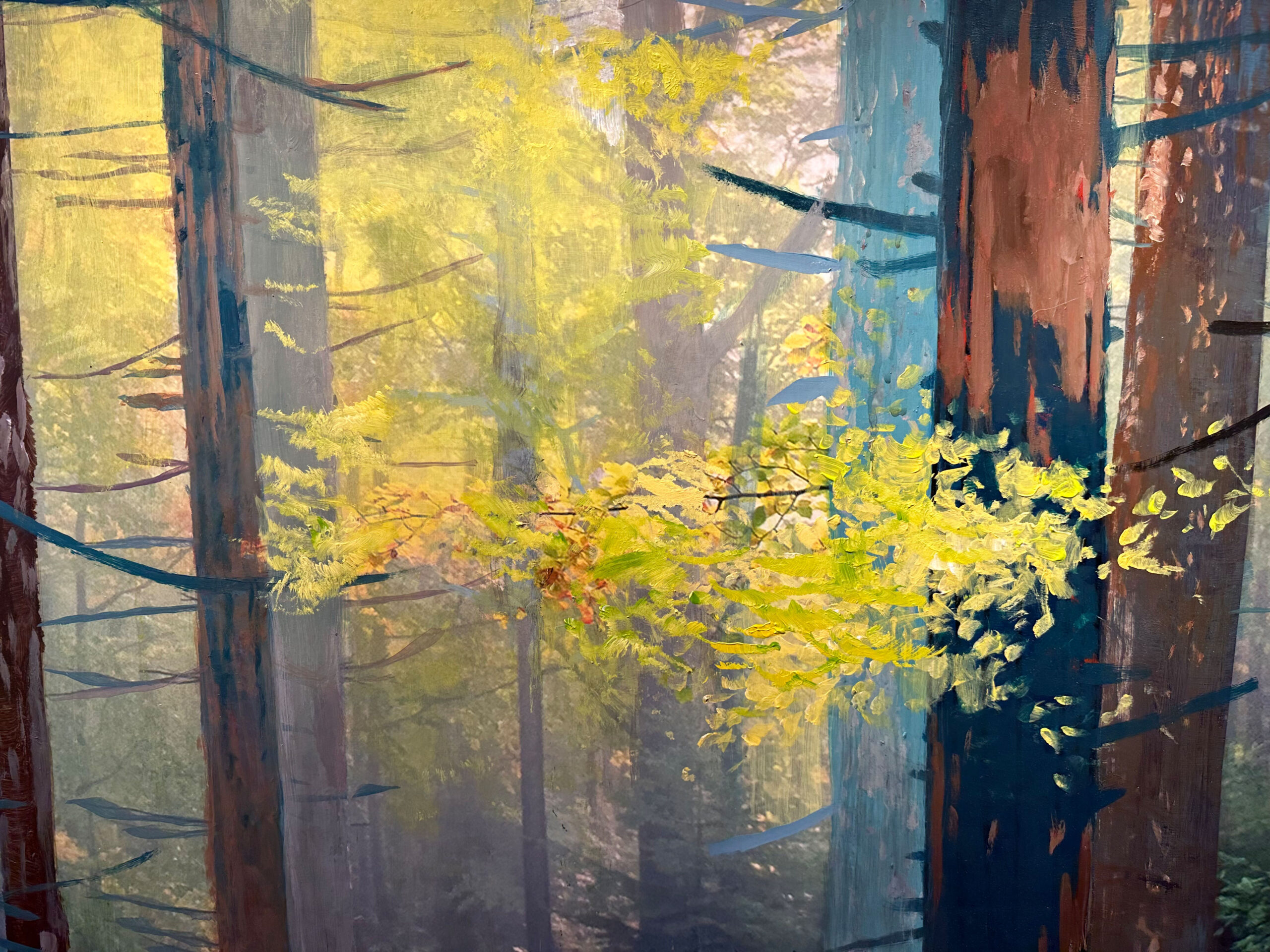
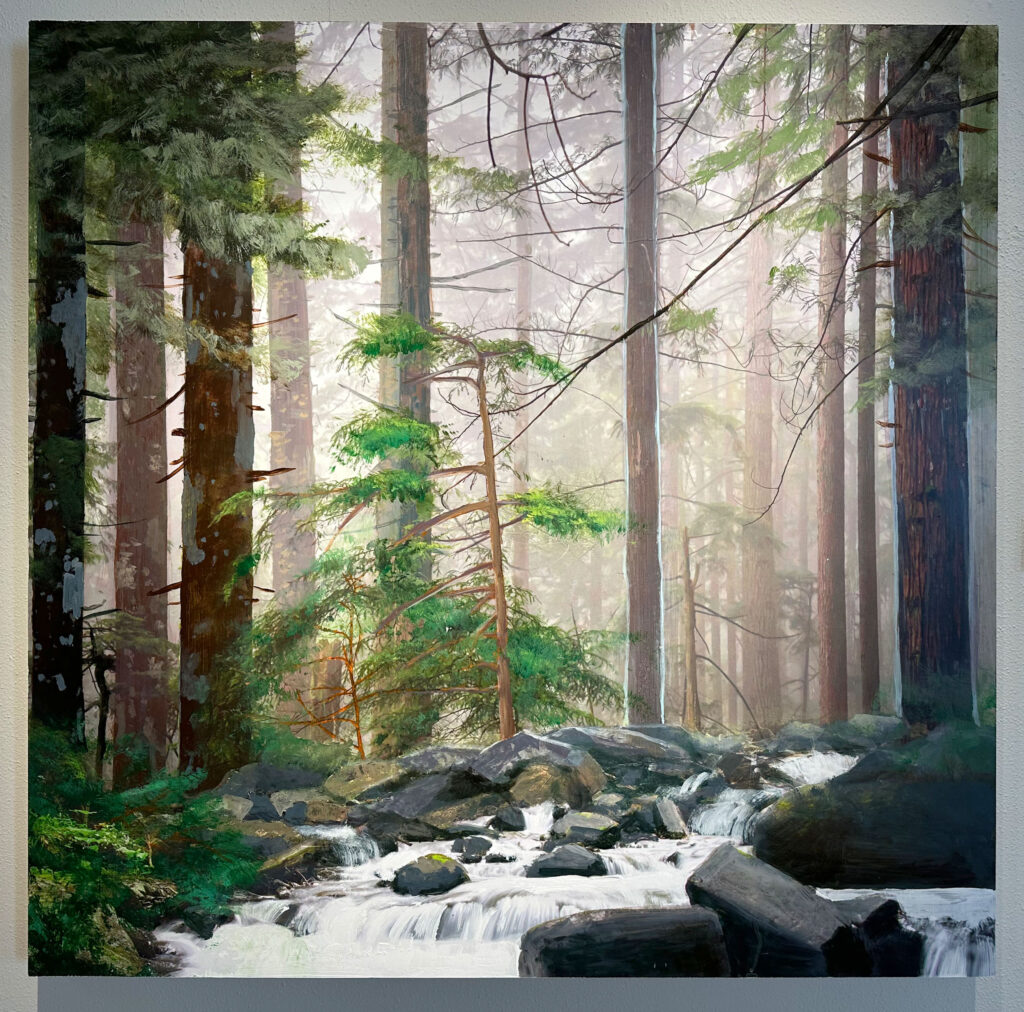
Below Nederveen describes his process for the work (pictured below)-

Using a mixed media approach to image making, I combine acrylic paint and C-print photographs. By layering these elements I can etch down into the emulsion of the photograph to reveal golden hues and also build up the surface with impasto and washes of colour. The result is an image with photo sharp detail in focal areas and painterly brush marks that obscure and create space for the imagination.

Both of these exhibitions close 10/11/25.

Steven Nederveen, “Gold Hidden Within”, Mixed Media

Steven Nederveen, “Gold Hidden Within”, Mixed Media (detail)

Steven Nederveen, “Breathe In the Forest Air”, Mixed Media


Aug 272025
 

William T. Williams, “Walter’s Advice”, 1970, Oil on canvas

10-color screen prints by William T. Williams in collaboration with HKL Ltd.

A selection of books surrounded by posters created for The Pennsylvania Opera Company

Six works by painter and printmaker Gabor Peterdi

Prints by Ilya Bolotowsky

Delaware Art Museum is currently showing an impressive collection of prints from a variety of artists for Marisol to Warhol: Printmaking and Creative Collaboration.

From the museum about the exhibition-

Marisol to Warhol: Printmaking and Creative Collaboration, brings together more than a dozen portfolios and suites in DelArt’s collection. The featured prints showcase the creative collaboration of artists who experiment across media. The exhibition presents a who’s who of American artists working in the second half of the 20th century, including Marisol, William Majors, Jacob Lawrence, Andy Warhol, Audrey Flack, Robert Blackburn, Ben Sakoguchi, Lorna Simpson, Lowell Nesbitt, and Luis Jiménez. Produced by individuals and print shops, these groups of prints functioned as tools for commemoration, fundraising, and political awareness in a range of techniques, styles and intentions.

Joining the exhibition is a special loan from Art Bridges, William T. Williams’ painting Walter’s Advice from 1970. Produced the same year as a newly acquired print portfolio by Williams, Walter’s Advice employs similar forms and colors. The two are displayed together to showcase an artist’s creative exploration across media and the collaborative aspect of printmaking.

Below are a few more selections-

Pages from Dead Birds, a book which combined poetry by Christopher Erb with prints by 24 artists.

From the museum-

Dead Birds pairs poetry by Christopher Erb with prints by 24 artists, demonstrating the vibrant artistic community around the poet and his wife Elena Laza, a printer, designer, and typographer. Erb penned the poems and sent them to artists who used them as inspiration for their prints. Once the prints were produced, Laza typeset and printed the text using a turn-of-the-century press and created boxes to house the prints.

Several of the collaborating artists were affiliated with Robert Blackburn’s Printmaking Workshop and the Center for Book Arts in New York, where Erb and Laza exhibited. Others worked and studied at the Art Students League of New York and were introduced to the project through Will Barnet, a master printer and longtime instructor at the League. Dead Birds was among Erb’s most ambitious and collaborative projects.

Above are four prints from Lowell Nesbitt‘s Moon Shot print series.

From the museum-

Lowell Nesbitt produced this suite of prints, published by the Palley Gallery, following his participation in NASA’s Artist Cooperation Program. Artists working for NASA had behind-the-scenes access to witness events like launches and splashdowns up close and in person. For this series, though, Nesbitt reproduces photographs of the one place NASA can’t let him go: the Moon.

Nesbitt is often associated with Photorealism, but these prints take evocative liberties with their approach to depicting the Moon. Bolstered by quotes from astronauts, Nesbitt meditates on the visual experience of seeing the Moon up close and undistorted by the Earth’s atmosphere. The cratered surface appears in shimmering gestural whorls against the black paper-an appropriate stand-in for the unpigmented vacuum of outer space. Nesbitt’s portfolio considers space exploration alongside his printmaking process. One lithograph showing the footprint of an astronaut’s boot pressed into the lunar soil seems to reference the lithographic process itself.

Upstairs in a separate section are prints from Salvador Dalí’s playing card series, seen below.

From the museum-

In 1967 and 1969, Salvador Dali designed a set of playing cards for the renowned French printing house Draeger Freés. Several years later, the artist revisited the project and created a series of 17 designs featuring an ace, jack, queen, king, and joker in each suit. The art dealer Reese Palley later published the 250-print edition with the goal of selling individual prints at an elaborate, 50th birthday party in Paris. The sales scheme, and the chartered Pan American flights from Atlantic City to the event, were widely covered in national press in January 1972. Both the original cards and the prints that followed feature Dali’s surreal motifs and reference many of his most famous paintings.

This exhibition closes 9/7/25.

Aug 212025
 

Painting by Kelly Irvine

Installation of sculptures by Allison Hudson

Work by Anna Guarneri

Each of the five artists in Bricolage: Artists and Accumulation, currently on view at The Delaware Contemporary, use their materials to express meaning through a layering process.

From the curators, Kasia J. Bunofsky and Leah Triplett-

“I have a very simple theory. I have always pretended that objects themselves formed a self-composition. My composition consisted of allowing them to compose themselves.” – Armand Pierre Fernandez (Arman) (November 17, 1928 – October 22, 2005)

When ‘assemblage’ first circulated as an art-historical term in the early twentieth century, it referred to the primarily formalist practice of joining tangible, often discarded or found, materials. Like a three-dimensional collage, assemblages made novel juxtapositions of individual components to create a whole artwork with its own impact. As the topography of the art world shifted mid-century, assemblage was often used to critique the post-war era’s burgeoning consumerism. Similarly, “accumulation” refers to a kind of assemblage that emphasizes materiality through the mass repetition of similar objects or forms. Accumulations lent themselves particularly well to expressing discontent with consumerism. They underscored the commodity’s necessity as a medium while maintaining the artist’s agency to reclaim meaning through the processes of recontextualization and repetition. As time persisted, assemblage continued to inspire and lend credibility to avant-garde contemporary movements. Even the new wave of ‘conceptual art’–a blatant rejection of materiality–was seen as an assemblage that forwent concrete objects to assemble ideas, language, or concepts. From installation art, to performance, to ‘relational aesthetics’, assemblage and accumulation helped pave the way for today’s contemporary art world and its many innovations.

Assemblage and accumulation emphasize the importance of each material element to the message of the completed work of art. This idea evokes a sense of collectivism; a metaphorical microcosm of material cooperation that might inspire a yearning to change our individualistic society, as art reminds us the whole cannot exist without the contributions of every one of its parts.

The artists and works featured in Bricolage: Artists and Accumulation reference the tradition of assemblage, accumulation, and their many corollaries; either through the performance held within their artistic process, their compilation of abstract concepts, or their passion to speak through material. They build, assemble, accumulate, gather, and collect. Using assemblage as both a method and technique, these artists engage assemblage as an action that is always in perpetual evolution of form. Be their medium drawing or sculpting, painting or installation-their material glass or found objects, acrylic or graphite- Anna Guarneri, Allison Hudson, Brynn Hurlstone, Kelly Irvine, and Emilio Maldonado, apply an iterative, intuitive approach to making, resulting in a bricolage.

This aesthetic- in which the whole is a sum of parts-demonstrates a depth of material knowledge. The works presented here require long looks to unfold and reveal their discrete components. Layering, stacking, blending, and amalgamating are processes and aesthetic devices that enable the viewer to experience the work in an instinctual way. Throughout these artists’ individual practices, an emphasis on transformation through collecting and comingling materials, media, and forms is paramount, with bricolage being a means for metamorphosis.

Below are additional works by the artists and information from the museum-

Allison Hudson

“My work explores the nature of cycles and the emergence of growth from decay. It’s tactile and fragile- a combination of unfired clay, wool, fabric, resin, and wax. Driven to manipulate raw materials into something new and unrecognizable, I enjoy the physicality of building, tearing apart, and mending together – striving to create work that is at once ethereal and visceral.”

Kelly Irvine

“My abstract color field paintings invite the viewer to step into a lush, translucent world of color. Drawn to the beauty of layered transparent hues from an early age, I use sheer color, overlapping forms, gestural brush work, organic forms, and repeating motifs that flow and intersect, resulting in delicious new hues and increased tonal depth. Contrast is important in my work as well; hard edges are in conversation with areas of soft gradation, while vibrant, neon hues pop against muted tints and natural, raw canvas.

I’m especially inspired by the canvas staining techniques and paintings of Helen Frankenthaler and Washington Color School artists Morris Louis and Kenneth Victor Young. I pair that inspiration with constant experimentation and manipulation of materials, developing new processes as a natural outcome.”

Anna Guarneri‘s work explores the possibilities of suggestive imagery and the devotional connotations of stained glass. She uses crude marks and associations to tap into early human experience, pulling from a range of sources – ancient art, architecture, dance history, and her own body. Colors in her work conjure poignant memories, turning drawn forms and glass structures into celebrations, memorials, or premonitions.

Guarneri’s latest body of work pulls from the visual world of postpartum life, incorporating imagery of bodily landscapes and interiors, and the various devices, accessories, and toys encountered during pregnancy, birth, and early motherhood.

Brynn Hurlstone

In Time explores the process of healing from trauma, and the permanent transformation left behind once that process begins. Layers of broken safety glass are frozen within ice and slowly melt over a steel platform. The thaw allows for the release of contained breakage onto the foundation, where it rests in a slowly evaporating pool of water. Over time the water evaporates and the shattered glass may be swept away, but the foundational steel upon which the process took place will forever carry its traces.”

Emilio Maldonado

“I create art to explore personal narratives and navigate life through the material culture of capitalist America.
My work raises questions about social constructs, structural inequalities, and the dynamics of race and class. Through a multidisciplinary approach, I repurpose discarded objects as a means to reflect on memory, identity, and social conventions.”

This exhibition is on view until 8/24/25.

Aug 212025
 

Work by Tracey Tse

The Delaware Contemporary currently has several shows on view for their summer series Radius. Several of these exhibitions include emerging artists including ARC 2025. The exhibition will close 8/24/25.

More from the museum-

The Artist-in-Residence Cohort (ARC) identifies and supports local emerging artists poised for careers as dedicated artists. This year, jurors Dr. Casey Smith and former ARC resident Shefon Taylor chose four regional artists: Geraldo Gonzalez, Oscar De Paz, Tracy Tse, and Lucy H. West. These artists have spent several months in intensive professional development seminars, formal and informal critiques, and one-on-one meetings with mentors to prepare for their culminating exhibition. This year, the ARC residents “came full circle” through mini-residencies at Art-O-Mat by the Wilmington Alliance. This extended their perspective on the creative needs and opportunities of Wilmington, Delaware. You are seeing the results of ten months of their experimentation, planning, and growth.

This year’s cohort pushed the envelope to develop their skills beyond what they came to the museum doing. Lucy H. West has incorporated sophisticated video editing, performance, and sculpture into a tracing of sensory experience. Oscar De Paz has refined his political commentary in his painting practice, deeply rooted in social revolution iconography. Geraldo Gonzalez increased his scale and output, documenting the legacy and daily role DART plays in his life. And Tracy Tse, with the help of a new loom, weaves plastic nets and tapestries. These artists grew through a new partnership with Wilmington Alliance, where they each spent one month in the Art-O-Mat studio space. Their time working with a view to mid-center city grounded their work in an even deeper Wilmington context.

Below are additional selections and the artists’ bios from the museum-

Tracy Tse– “I like this little life of mine. It’s not something amazing, and it’s not a tragedy. However, every day doing art is enough in my world.

I’m a first generation Chinese American who grew up in a family tailoring business. Like many family-run businesses, I started helping out at a young age where I picked up skills in mending and tailoring. Over the years I’m grown into the career as a contemporary artist, where I used my skills interconnectively to express myself.

In my current work, I have been incorporating plarn (yarn made from plastic) to construct large-scale sculptures that protrude from the wall. Each piece is completed through labor-intensive repetition of sewing, knitting, crocheting, weaving, braiding, and knotting techniques to sculpt. The use of a variety of techniques is then adopted and shaped to form a specific look that is derived from family, tradition, heritage, history, and childhood.

Manufactured goods go through many hands and iterations before becoming the final product. Every hand played a role by putting blood, sweat, and tears into the production. Honoring and paying homage to the human touch and the sentiments that are overlooked during the production process is important. My collection of depicts efforts laborers and craftsmen. Convey the message of what human touch means.”

Geraldo Gonzalez

“I am, first and foremost, a transit artist. I began working as an artist in the early 2000s. I first started taking photos for a homework assignment in middle school, which inspired me to start taking photographs of local transit systems. Public transit has always been an interest of mine. I regularly took the bus as a teenager going to and from school, then went out and got to know other transit routes within the greater Delaware valley, like SEPTA, PATCO, AMTRAK, MTA, NJT, and DTC. My passion for public transportation has led me to make thousands of artworks to encourage people to use and find the beauty in these local transportation systems. I am a self-taught multimedia artist, working in colored pencil, acrylic paint, oil paint, watercolor, photography, video and sculpture. My process is to project images that I take and find online and translate them into my artwork through tracing, then going back and adding color.

Issues surrounding transportation like road rage and gas inflation have inspired me to spread my message about public transportation. Outside of transit-related art, I also create self portraits that express my identity and feelings. My Puerto Rican culture influences my art, in my self portraits and expressive use of color.”

Oscar Eduardo De Paz

“My drawings, paintings, and books tie together the threads of my personal experiences and sociopolitical issues. I reflect on my personal experiences of poverty, discrimination, homelessness, immigration, and disruptions in my family and education to explore how these experiences engage with their historical and sociopolitical expressions and contexts, and shape who I am. My intent is to stimulate reflection, discussion, and examination of the impacts of sociopolitical institutions and systems on individuals, specifically vulnerable populations. My artistic process begins with writing personal narratives and poetry that become sources for me to interpret or amend into visual representations. Historical, sociological, and visual research provide further inspiration in the process of creating my work. Subjects and elements in my work often function as symbolic representations of the idea and emotions evoked by my written pieces. The writing is rarely literately translated into a visual representation, but instead through a process of association translated into figurative and metaphorical representations that contain subjects and elements laden with personal, cultural, spiritual, and mythological meanings.

Sometimes, the work stands alone visually. At other times, the work stands with the written text in a unity. It is the space between the text and image where the audience, both as viewer and reader, is invited to experience the themes of my work, and to contribute their insights.”

Lucy H. West investigates intimacy, mindfulness, incorporeal inner experiences, and understanding of the worlds we inhabit and cohabit. Using painting, installation, and most recently multi-sensory media, West seeks to push the boundaries between the artist and spectator by inviting the viewers to be involved in her work, transforming them into active collaborators.

Through participatory art projects, she is interested in eliciting social consciousness, playfulness, curiosity, experimentation, and introspection from her collaborators, creating avenues for her work to evolve and be defined by the community who engages.

West is a Philadelphia-based artist from Tokyo, Japan. She has exhibited and had works acquired in Philadelphia, New York, Tokyo, Rome, and Madrid. Her artwork has also been selected and acquired by the University of Pennsylvania’s Department of Medicine.

Aug 132025
 

The Delaware Contemporary currently has several exhibitions on view for their summer series Radius. Guise/Trickery, a two person exhibition curated by Erica Loustau and Moriah Berrouet, features a photographic series by Ashley Suszczynski (Guise), pictured above, and hyper-realistic recreations of discarded fast food packaging created by Brian Richmond (Trickery), pictured below.

From the museum about the Suszczynski-

Ashley Suszczynski is an award-winning photographer focused on capturing ancient traditions in the modern day. The photographs on exhibit include work from her series, Ancient Tradition in the Modern Day, which is an ongoing discovery of ancient pagan roots of masked traditions throughout the villages of the Iberian Peninsula. Ashley documents costumed villagers, unearthing the various cultural traditions and winter rites of the region. The masked festivals are designed to ward away evil spirits and welcome a fresh and healthy new year. Elaborate handmade costumes allow participants to step outside their everyday identities and engage in imaginative storytelling.  Whether the suits are made from silky goat hair, fur, mirrors, or feathers, the wearing of masks and costumes fosters a sense of liberation and communal celebration. The concept of guise plays a vital role in masked folk traditions and festivals, serving as a powerful tool for transformation. Ultimately, the guise in these traditions invites reflection on the nature of identity itself and challenges participants to explore the boundaries between reality and fantasy.

Ashley’s work has been seen in National Geographic, Photo District News, All About Photo and more. Her most recent exhibition, “Ancient Tradition in the Modern Day: Iberian Folklore and Maskarades” headlined the 2022 Barcelona Foto Biennale along with the 7th Biennial of Fine Art and Documentary Photography. The exhibit took the grand prize in the worldwide Julia Margaret Cameron Award for Women Photographers.

About Brian Richmond and his work from the museum-

Brian Richmond creates hyper-realistic renditions of mass-produced packaging.  Adept in paper modelling and painting, Brian tricks the viewer into seeing “trash”.  His work addresses the pervasiveness of single-use packaging and the “highly manufactured refuse that permeates our daily lives and environments in such a powerful way that we hardly notice it anymore”. By blurring the lines between illusion and actuality, Brian exploits trickery to enrich the viewer’s experience, encouraging them to explore layers of meaning beyond the surface.  Each unique artwork deceives the eye and makes us question its reason for being in a museum context.  The trickery has drawn us in only to remind us that the trick is actually on us.  We are the ones creating the real debris that litters our cities and towns.

Brian William Richmond is a visual artist from Pennsylvania who makes three-dimensional paintings of trash. Brian graduated from the Pennsylvania College of Art and Design with a BFA in 2001. In 2008, he was awarded the Pennsylvania Council on the Arts Fellowship. In 2012, he was awarded the West Collects acquisition prize. He previously exhibited at Pulse Art Fair, Miami in 2012 as part of The West Collection’s “THIS END UP” installation. In 2013, Richmond was one of five artists who were selected by Jonathan Ferrara Gallery to participate in a group exhibition entitled “Philadelphia”, where Richmond’s mass-produced packaging series was exhibited. In 2016, he was awarded the Fleisher Wind Challenge from Fleisher Art Memorial. Brian has also been a songwriter/composer for many years now, and his current project with his long-term collaborator Nick Hardy is the Bell Harmers. Brian is currently working on his next collection of paintings, which he plans to release in the fall of 2024. Brian works and resides in Chester County, Pennsylvania.

This exhibition closes 8/24/25.

Jul 232025
 

Portia Mortensen, “Floating Landscape”, 2025, Colored crayon, acrylic, and oil on canvas

Work by Portia Mortensen

Wes Memeger, “Squares, Circles, Arcs and Lines Together”, 2019, Acrylic on canvas

Wes Memeger, “Homage to Venetians IV”, 2013 (top) and “Homage to Venetians II”, 2012

Haeley Kyong, “Harmonic Progression”, Oil on Canvas

Haeley Kyong, “In Pursuit of Invariable”, Oil on canvas

Currently at John William Gallery in Wilmington is Beauty in Unwavering Truths, an exhibition of geometric art by Portia Mortensen, Wes Memeger, and Haeley Kyong.

From curator Phoebe Caswell-

In a universe of great complexity, sometimes the quiet and simple things can resonate most deeply. The simplest shapes compose the form of many of our most rudimentary understandings of the world, and the laws of geometry are immutable facts that bind the very fabric of our existence. In Beauty in Unwavering Truths, artists Haeley Kyong, Wes Memeger, and Portia Mortensen investigate these fundamentals and highlight the beauty in the simple forms of squares, circles, and diamonds, each finding their unique aesthetic voices through experimentation in color, light, and composition.

Haeley Kyong works particularly in soft pastel colors and keeps her compositions abstract and minimalist. For example, Harmonic Progression, oil on canvas, 30 x 30 x 2 inches, is a mathematical expression of emotion. The painting’s gentle hues of pink and purple accompany the generous use of circles and squares to mimic the mathematical formula of the Fibonacci sequence. The spiraled pattern often appears in nature and is called the “golden ratio” for its aesthetic appeal. Despite its simple components, Kyong takes advantage of the golden ratio to create an aesthetically elevated piece.

The late Wes Memeger took a similar approach to his work, developing abstracted pieces from shapes he became enchanted by through his work as a polymer chemist. Like Kyong and Mortenson, Memeger found beauty in the simplicity of shapes and the evolution of each piece as he created each composition using the eternal geometric models. In his, Squares, Circles, Arcs, and Lines Together, 2019, acrylic on canvas, 72 x 72 inches, Memeger explores luminous warm tones to create a similar depth to his piece as the composition recedes into the background. Austere shapes and a lush monochromatic color palette form the complex pictorial structure.

Portia Mortensen, too, composes her work out of the foundational elements of shape and color. Her use of light and shadow plays with one another to simulate 3D forms in the diamond shapes, producing “spinners.” In Rainbow and Blue Spinners on Checkers, acrylic on canvas, 30 x 40 inches, the simple shapes seem to move on the canvas, the contrasting saturations adding to its depth. Of the three artists, Mortensen adds a stark asymmetry to her work with the roughly sketched diamond shapes to reinforce the beauty of the composed spinners.

Together, the works of Kyong, Memeger, and Mortensen serve as a compelling reminder that complexity is not a prerequisite for profundity. Through their shared focus on elementary shapes and disciplined exploration of light, color, and form, these artists reveal geometry’s quiet elegance and expressive power. Though rooted in the familiar, their pieces transcend the ordinary to evoke wonder, movement, and emotional resonance—showcasing that there is infinite space for artistic discovery within unwavering truths.

This exhibition will be on view until 9/25/25.

Jul 182025
 

“Arches Symbolize Growth”, 2024, Acrylic and spray paint on canvas

“Pulse: Contemporary Meets Classical”, 2023, Acrylic and spray paint on canvas

Over this past winter Delaware artist Jennifer Small had two solo exhibitions in Wilmington- Walking in the City at The Delaware Division of the Arts’ Mezzanine Gallery and Facades and Rooftops at The Delaware Contemporary.

For Walking in the City, the paintings (pictured above) capture elements from a single day in Venice, Italy. In Facades and Rooftops, works on paper and laser cut wood panels (a selection of which are pictured below) are based on homes and businesses she observed and photographed on neighborhood walks.

The works in both of these shows capture the fleeting nature of memory and observation, and the fragments that linger- juxtaposing these elements in unique ways.

Here’s what she says in her Artist Statement about the work (from her website)-

My art, initially abstract in appearance, records a journey of a day in the life—a practice that starts with documentation through the lens of a camera. I see my experiences through special goggles with the ability to transform banal spaces and objects into engaging formal elements that are pulled out of their environment and placed into my painting compositions strictly for their aesthetic significance. The process of cataloging my everyday leads to the solidification of my memories in a specific time and place and constant access to a breadth of inspiration for my paintings. New inspiration comes out of each new environment I experience whether as a resident or a visitor allowing the work to be an ever-evolving documentation of my days.

The observations I collect are combined into compositions through a process of drawing and collage where I am selecting and joining bits of each sighting to build abstract structures in imagined worlds displaying a combination of shallow and deep space. The work demonstrates loose, painterly applications juxtaposed with more rigid, hard-edge areas of the acrylic paint and spray paint that I use. While the palette is imagined, each painting is an archive of a time and place connected to a personal experience.

I want to challenge the viewer to see the work as personal yet universal. A compilation of my experiences, but also as a way to connect with abstract painting in a tangible way. I want to elevate the humble from unnoticed and small to colorful and grand by putting a spotlight on the unrecognized poetry of daily routine.

For more information, Small also recently joined fellow artist Kat Collins to discuss her process on the podcast The Artist is In.

May 282025
 

“Khola”, Mixed media, acrylic paint, fabric and collage on canvas

“Kanga Amricani”, Mixed media, acrylic paint, fabric and collage on canvas

The images above are from Fabric Secrets, Maurice Evans‘ solo exhibition of mixed media paintings, on view at Bridge Art Gallery in Wilmington until 5/31/25.

From the gallery-

Born in Smyrna, Tennessee, Maurice Evans discovered his artistic passion through music before transitioning to visual arts. After studying Fashion Illustration at the Art Institute of Atlanta, he pursued a career that blended bold colors, cultural narratives, and mixed media. In 1994, his independent career took off with a successful exhibition at the Black Arts Festival in Atlanta, leading to national and international recognition.

Evans’ work, often incorporating photography, painting, and sculpture, explores themes of music, culture, gender, and politics. His distinctive style has been showcased in numerous galleries, museums, and collections, including Hartsfield-Jackson International Airport and the Hammonds House Museum.

Residing in Atlanta, Evans continues to push artistic boundaries, living by the mantra, “Create art for art’s sake,” inspiring artists and audiences alike.

It’s also worth checking out his Instagram account where he posts videos of his process, as well as his most recent work.