Mar 072024
 

Francesca Woodman, “Untitled (Rome), 1977-8, Gelatin silver print (image via Columbus Museum of Art)

Two of Cindy Sherman’s “Film Stills”, Gelatin silver prints from the 1970s

Four Gelatin silver prints by Diane Arbus

Francesca Woodman’s “Italy”, 1977-1978 (printed later) Gelatin silver print

Currently on view at Columbus Museum of Art is Arbus • Sherman • Woodman: American Photography from the 1960s and 1970s. Although many of these photographs by Diane Arbus, Cindy Sherman and Francesca Woodman are well known, it’s great to see the work of these three exceptional artists in person. The black and white images still captivate, even in our current image saturated world.

About the show from the museum-

This selection of monochromatic prints reflects a shared interest in capturing the world outside oneself as well as the world within. Perspective is an elemental link between each work: the images speak to how we see ourselves as individuals, how we are perceived, and how we observe others.

While Arbus was known for photographing families, children, pedestrians, performers, and celebrities, both Sherman and Woodman turned the camera on themselves. Dressing as anonymous female film characters from the 1950s and 1960s, Sherman poses in the series “Untitled Film Stills”. However, these works are not considered self-portraits, but rather carefully constructed performances of various female identities. Conversely, Woodman’s surrealist images might be called non-traditional self-portraits. By obscuring, blurring, or cropping parts of herself out of the final image, the photographs become intimate, personal snapshots that reflect a wider human fragility.

Arbus, Sherman, and Woodman are considered among the most prominent twentieth-century photographers and remain influential to contemporary artists today. By including aspects of feminism in their work and pushing the limits of the medium, these women challenged societal norms of their time while contributing to the elevation of photography as an art form.

It’s always interesting to hear artists discuss each other’s work. Included in the exhibition is this quote by Cindy Sherman about Francesca Woodman-

“She had few boundaries and made art out of nothing: empty rooms with peeling wallpaper and just her figure. No elaborate stage set-up or lights… Her process struck me more the way a painter works, making do with what’s right in front of her, rather than photographers like myself who need time to plan out what they’re going to do.”

For more on Francesca Woodman, her short life, and her artistic family, The Woodmans is an excellent documentary.

Feb 282024
 

The images above are from Brianna Lynn Hernandez’s exhibition Anticipatory|Después, one of three currently on view at Spaces gallery in Cleveland. Her moving video and sculptural installations focus on themes of end-of-life-care, grief, and mourning.

From the gallery about the work-

Anticipatory|Después visualizes the anticipatory grief of caregiving and the process of dying through performative videos and photography. Each piece shares the physical and emotional state of the dying, the caregiver, and at times the two concurrently. Ranging from fast and aggressive dance-like movement to slow and meditative contemplation, the enacted scenes capture a range of emotions and thought processes of understanding and untangling the intertwined traumas of caregiving and acute grief.

As her mother’s caregiver in the final year of her life, Hernández translated her personal experience of grief into her studio practice in order to combat the isolation and shame many grievers face in our death-avoidant culture. Through several series including Anticipatory | Después, the works aim to normalize honest conversations of grief and act as an entry point into education on end-of-life planning. Hernandez states that while we will all eventually experience the pains of loss, preparing for the logistics of death and nurturing supportive communities for grievers can provide comfort and lessen the unnecessary stressors attached to loss.

A Botanical Conversation, Mehdi-Georges Lahlou’s exhibition, explores environmental, identity, and cultural issues using the natural world as a backdrop. The two large murals are of an enlarged palm tree cell as seen through a microscope.

The exhibition statement by curator Conor Moynihan-

The palm tree is a central component of Mehdi-Georges Lahlou’s practice, a motif he has explored to highlight themes of exoticism, migration, and cultural heritage. Recently, Mehdi- Georges Lahlou has used the palm tree to explore themes of colonization, climate change, and history. While members of the Arecaceae family- palm trees- can be found in many parts of the world, they are not found here in Ohio. Unless, of course, you go to the Cleveland Botanical Garden as Mehdi-Georges Lahlou did for his residency at Spaces.

For A Botanical Conversation, Mehdi-Georges Lahlou has created four new video works using the Cleveland Botanical Garden as the setting and backdrop. While many of the plants visible in these works come from elsewhere across the world, his collaborators Diwe Augustin-Glave, CHIMI x Nature, and Dr Lady J are based in Cleveland. In many ways, this body of work imagines the conversations that might happen if the flora in the Cleveland Botanical Garden could speak, sing, chant, and educate, and then transports this dialogue in the gallery space.

Microscopy, the mural that extends over two walls in the gallery, serves a double function. Based on the cell of a dead palm tree, it enlarges from an unusual perspective a motif central to the exhibition. And it also serves as a container and a frame for the four videos. This conversation emerges within the boundaries of the palm tree cell, transporting this exhibition into the botanical garden.

Characteristic of his practice, Mehdi-Georges Lahlou draws our attention to how plants and botanical gardens become ways to highlight histories of colonization, compulsory heterosexuality, and climate disaster all contained under canopies of glass. Yet, especially through the performances of Diwe Augustin-Glave, CHIMI x Nature, and Dr Lady J, they also celebrate new queer ecologies and configurations, melding African and African American musical traditions, queer theory and scholarship, ecological history, and environmental justice towards new ends.

A Botanical Conversation is a cacophony. It asks us to listen carefully to hear all the voices that make up this chorus.

Aaron D. Williams has created a video installation, ESCAPING AAWFUL LAND, that continues the work created for his previous Aawful Friends exhibition. This new creation addresses the issue of anxiety and the power of collaboration as a way to combat it.

From the gallery-

ESCAPING AAWFUL LAND is an immersive exhibition that builds upon the success of Aaron D. William’s previous Aawful Friends showcase at Zygote Press. This new showcase explores the creative journey between Williams and collaborating artists. By delving into anxiety through art, we seek to acknowledge its profound impact on our collective well-being. We must address anxiety as a shared concern and foster a future community that supports and uplifts one another. Through individual and collective artistic expression, we can overcome the gravity of the situation and find healing and unity. In our fast-paced society, anxiety affects people from all walks of life, taking various forms and manifesting in relentless thoughts, paralyzing fear, and an overwhelming sense of unease. Despite its grip, we encourage you to embrace your inner courage and take the leap. The installation will be held at The Vault in SPACES gallery, where you will be transported to AAWFUL LAND – a hidden realm within our city accessible only to those who know it exists. Guided by the mysterious GUARDIAN, you will journey through its enigmatic mysteries. As you step into AAWFUL LAND, you will be captivated by a mesmerizing video presentation. Witness AAWFUL AARON engaged in a gripping game against a formidable opponent, reminding us that we have the inner strength to persevere and pursue our dreams even amidst anxiety. In Aawful Land, anxiety takes on tangible forms and bursts forth in vibrant colors. CREATURE is at the heart of our narrative, an overbearing shadowy figure personifying anxiety and serving as the central antagonist. Aawful Aaron is locked in a fierce battle against CREATURE, desperately seeking escape from this hidden world. However, a subtle hint suggests that Aaron may need assistance to overcome his challenges. Within Aawful Land, a group of trapped artists may hold the key to their collective liberation. Together, they offer a glimmer of hope, representing collaboration’s power in overcoming Aawful Land’s perils. This work serves as a proof-of-concept or work-in-progress, paving the way for Aawful Friends II. In the forthcoming installation, we will feature this newfound group of artists, showcasing their collective efforts and unveiling the transformative power of collaboration. Their shared experience demonstrates that collective creativity and expression can lead to freedom and transcendence. ANXIETY IS HARD – TAKE YOUR SHOT ANYWAY.

All three of these exhibitions close 3/1/24.

Feb 272024
 

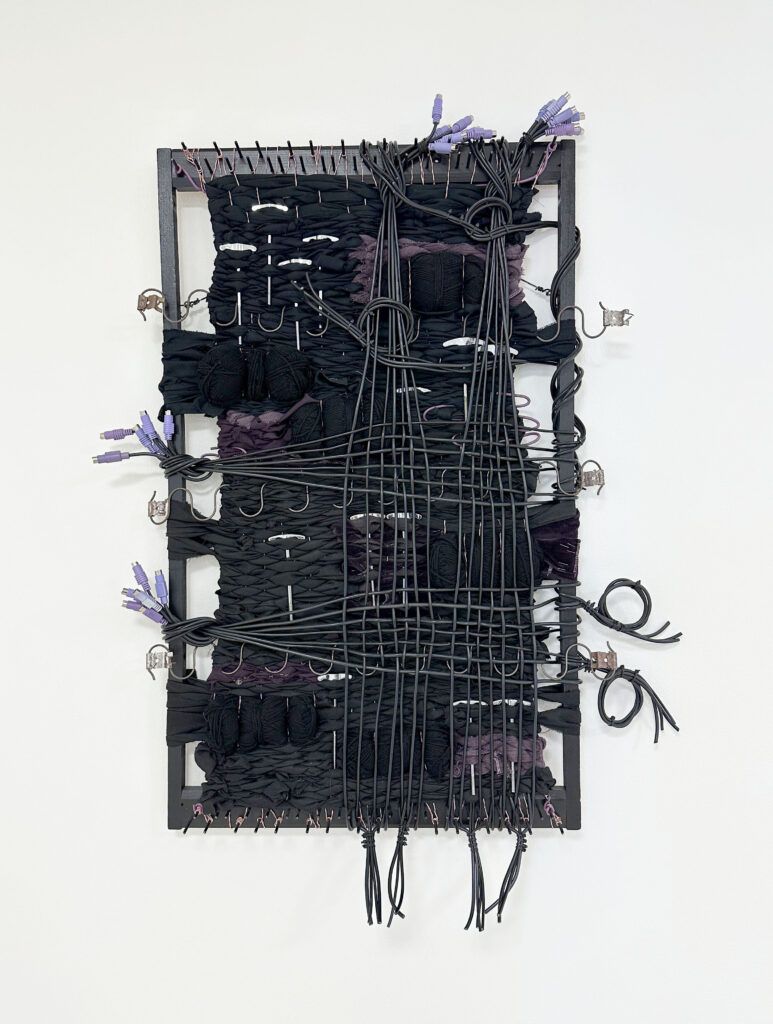
Jo Westfall, “The Queens Astronomer”, 2023, Mixed media

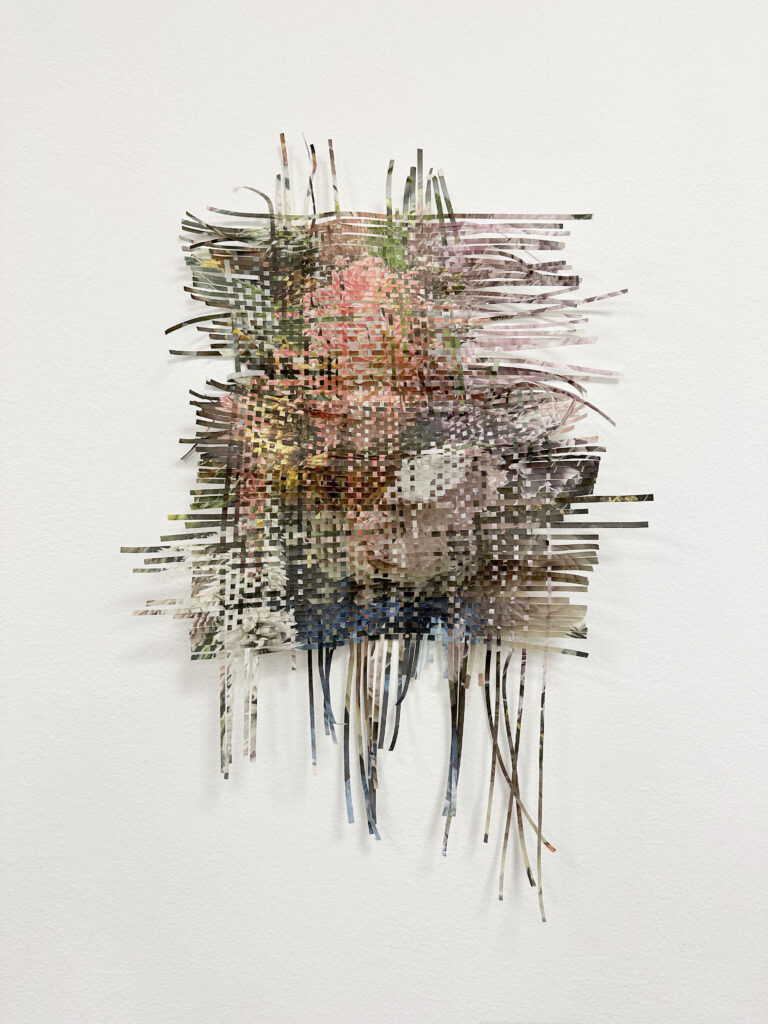
Christine Mauersberger, “Kates Bouquet”, 2022, Digital print on Japanese Kozo paper, of loom weaving

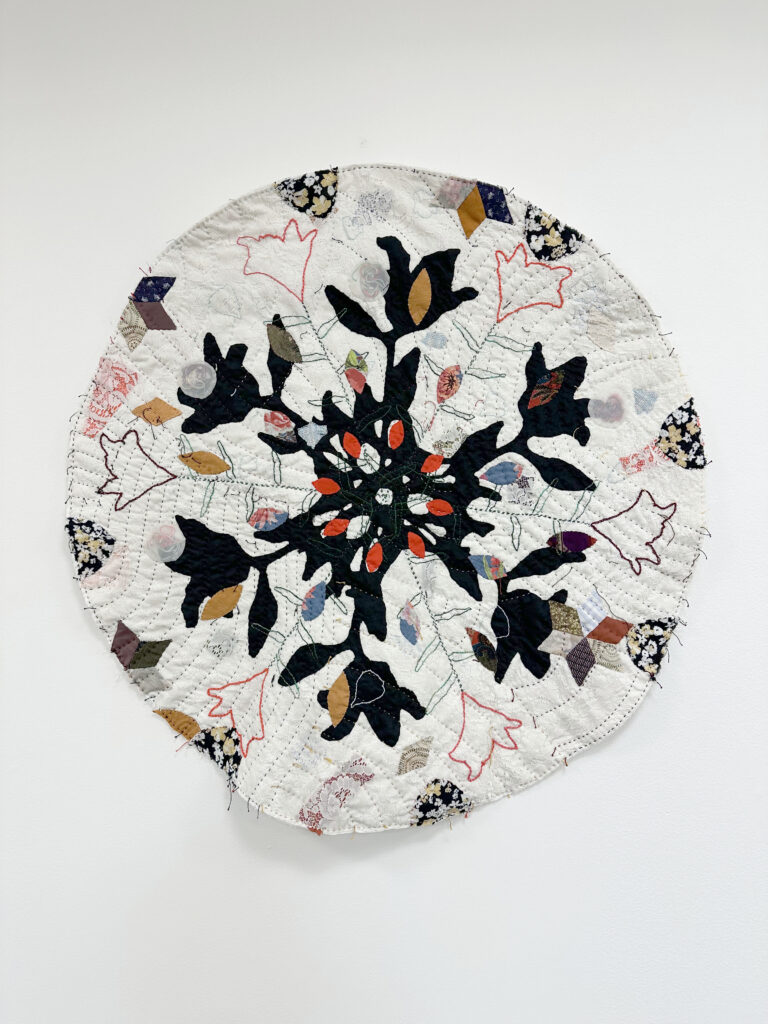
Cat Mailloux, “Rose Window”, 2023, Quilted appliqué on found fabric

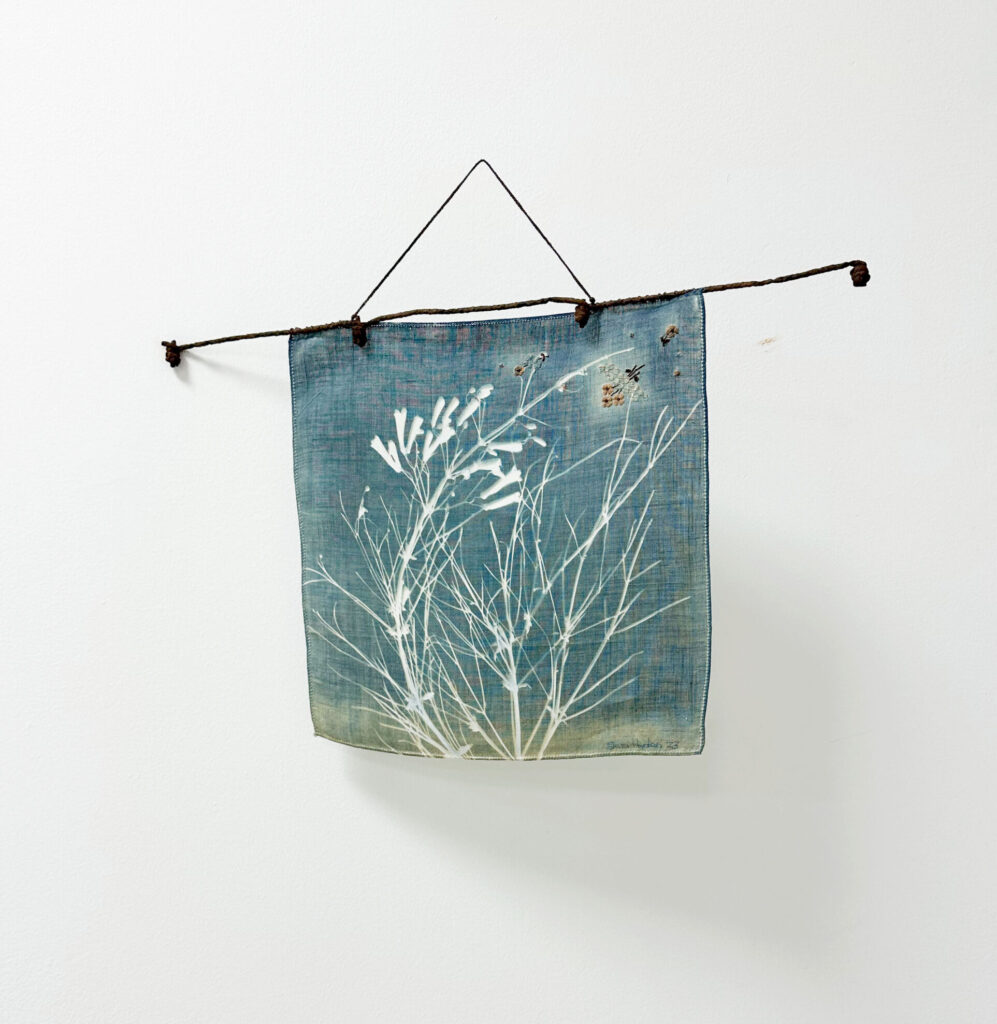
Suzi Hyden, “If the Sun Could Kiss Me”, 2023, Toned cyanotype on vintage linen hand-stitched onto metal fencing

Above are a few of the works from Common Thread, the current exhibition at Malone University’s art gallery. It is on view until 2/29/24.

From the gallery about the show-

Although quite different, all artists in this exhibition are united by the idea of textiles. Suzi Hyden’s work celebrates the environment by combining elements from nature and repurposed materials to create cyanotypes on vintage fabrics.

Cat Mailloux’s textile practice is focused in quilt making, pursuing connections between the visual language of churches, cathedrals, and domestic spaces that slowly bleed their way into imagined and limitless landscapes, exploring questions of the infinite through material.

Christine Mauersberger’s body of work is aesthetically eclectic. Hard and soft. Digital and analog. Some pieces fill a room, others can be held in your hand. The common thread is that each piece attempts to make the invisible visible.

Jo Westfall creates visual work considered resource art. It is portraiture, fiber art, and assemblage made with local materials that were discarded, overlooked, or unused. It reclaims the aesthetic capacity and utility of these items by integrating them into fresh renderings.

Feb 262024
 

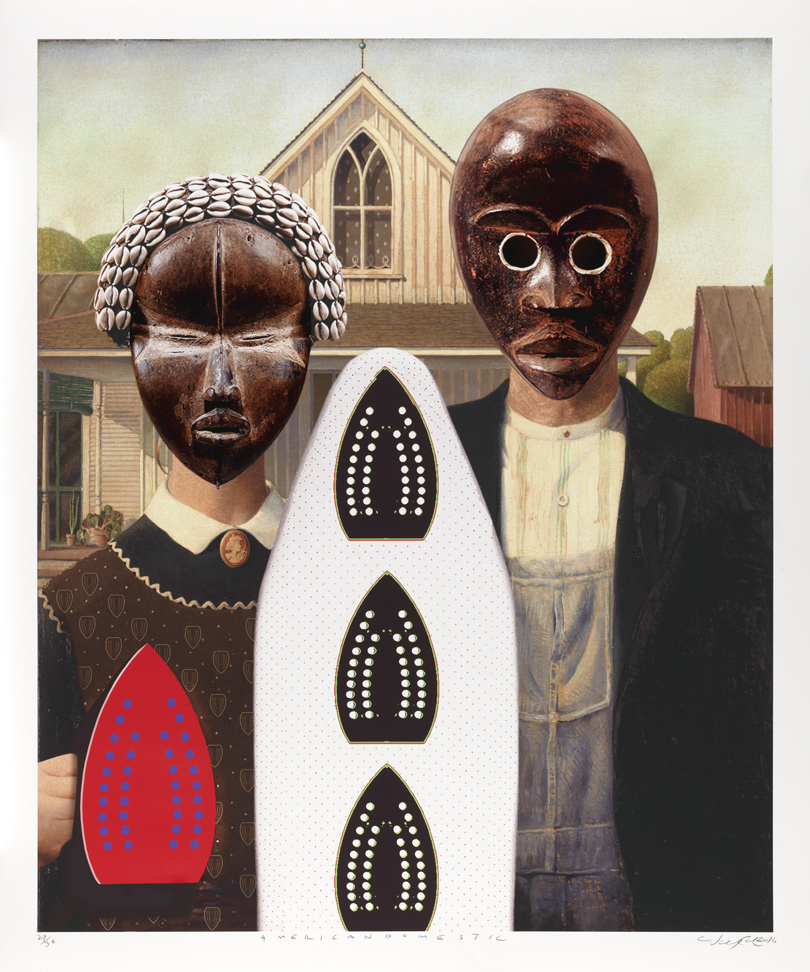
Willie Cole, “American Domestic”, 2016, Digital Print

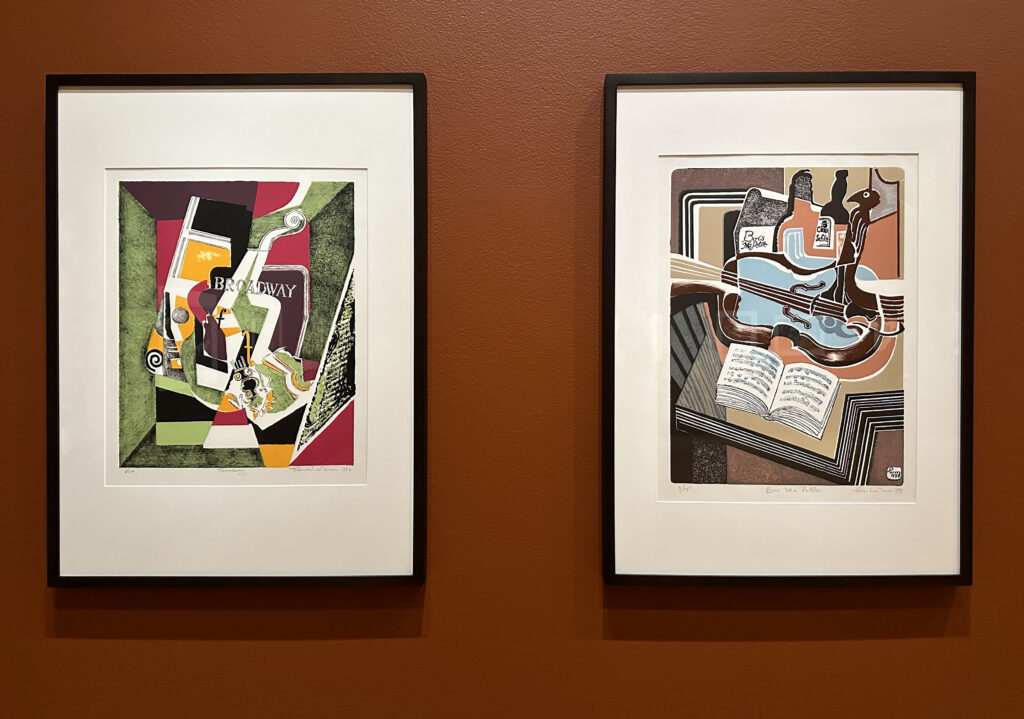
Tom Laidman, “Broadway”, 1993 and “Bois Ma Petite”, 1999, Lithograph on paper

Currently on view at Akron Museum of Art is RETOLD: African American Art and Folklore, a collection of art from the Wesley and Missy Cochran collection, organized into themes exploring aspects of African American history and culture. The show features many well known and lesser known artists including Amiri Baraka, Beverly Buchanan, Willie Cole, Trenton Doyle Hancock, William Pope.L., Tom Laidman, Jacob Lawrence, Alison Saar and more.

From the museum about the exhibition-

African folklore has been around as long as humankind, and the African diaspora in America has added new dimensions to its rich history. African American folk stories teach about culture, the mysteries of life, and the survival of a race of people bought and sold who continue to thrive in an unjust society.

“RETOLD: African American Art and Folklore” focuses on four themes: Remembering, Religion, Racialization, and Resistance. These themes provide a comprehensive retelling of the works featured in the exhibition. In many of the pieces, the artist’s muse connects closely with stories that have been told generation after generation. Folklore texts are featured throughout the space as a means to retell a richer, deeper story of African American culture.

There are more than forty artists represented in this exhibition, all holding one similar truth: their story of joy and struggle in the African American experience.

In addition to the artwork, there is also an educational video produced by Josh Toussaint-Strauss of The Guardian that explores the misconceptions about Haitian Voudou that is worth a watch.

How ‘voodoo’ became a metaphor for evil

Feb 152024
 

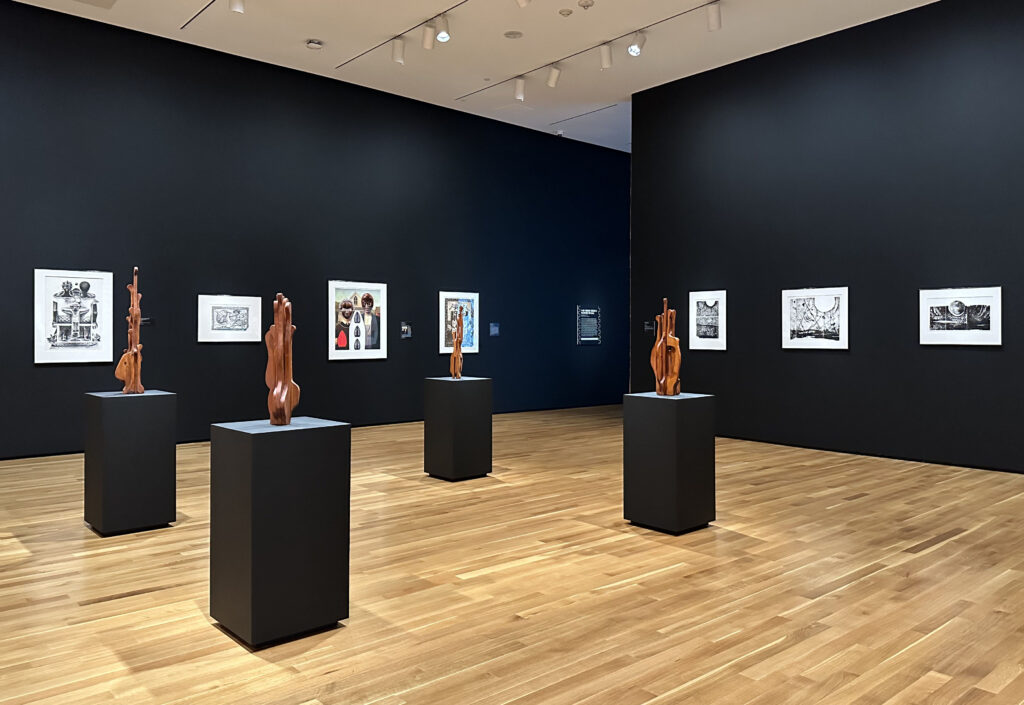
“The Flameless Green Dragon”, 2018, Elm and acrylic

“In Rhythm”, 2018, Elm and acrylic; and “Water Music”, 2002, Inkjet photocollage on paper

“Introvert”, 2019, Elm; “Engendering Life”, 2020, Green soapstone

Two left sculptures made of Italian translucent alabaster and “Harboring Emptiness”, 2021, Maple and acrylic

Above are several works from Barbara Stanczak Spirit and Matter, the artist’s recent exhibition at Akron Art Museum.  Stanczak’s sculptures are energetic shapes created in partnership with the natural materials used.

From the museum’s web page-

Barbara Stanczak’s sculptures are born from an essential combination: the artist’s creative vision and the natural qualities of her materials. This two-sided collaboration remains in effect throughout Stanczak’s entire process of conceiving and creating an artwork. A piece of wood or stone presents initial possibilities that help to set a direction, but invariably the course will change—the substance may be so hard as to resist carving, or it may contain internal structures that must be accommodated. But the artist does not surrender her own interests, as she has found that a successful work must become the physical embodiment of a rich and valuable idea. In her own words, “I can only hold onto my idea of the whole by letting go of ‘mine’ and focusing on ‘our.’ The material becomes a partner who needs my patience, respect, thoughtfulness, cooperation, skill, and persistence.”

Stanczak committed to working with wood and stone only after a long process of discovery. Born in Germany in 1941, she moved to the United States in 1960 to assist her grandfather in painting church frescoes, and later worked in handmade paper, metal, and a variety of other media. She also worked alongside her husband, Julian Stanczak, whose paintings and prints were celebrated at the Akron Art Museum with a one-artist show in 2013. As her own career evolved throughout her thirty-seven-year tenure as a professor at the Cleveland Institute of Art, Barbara carved her first wooden sculpture in 1992. “I was tired of searching,” she recalls. “It was time to arrive!”

Stanczak continues to find wood and stone compelling because, as she puts it, they are constantly “teasing, tempting, and provoking me to see more, to see beyond, to see the micro and the macro of the universe.” She finds these universal qualities not in immediately recognizable forms like leaves and flowers, but rather in dense rings and layers, subtle features formed over decades or even thousands of years. As Stanczak exercises her own intuition, she aligns it with these natural processes. As the artist and the materials harmonize, it is as if two forms of intelligence are working together—as if spirit and matter are not so separate as one might expect.

Jan 162024
 

(photograph by Richard Avedon from The New Yorker’s website)

Above is Richard Avedon’s portrait of Martin Luther King Jr. with his father, Martin Luther King, and his son, Martin Luther King III, 1963. The image is part of the 1964 book Nothing Personal, Avedon’s collaboration with writer James Baldwin.

Dec 172023
 

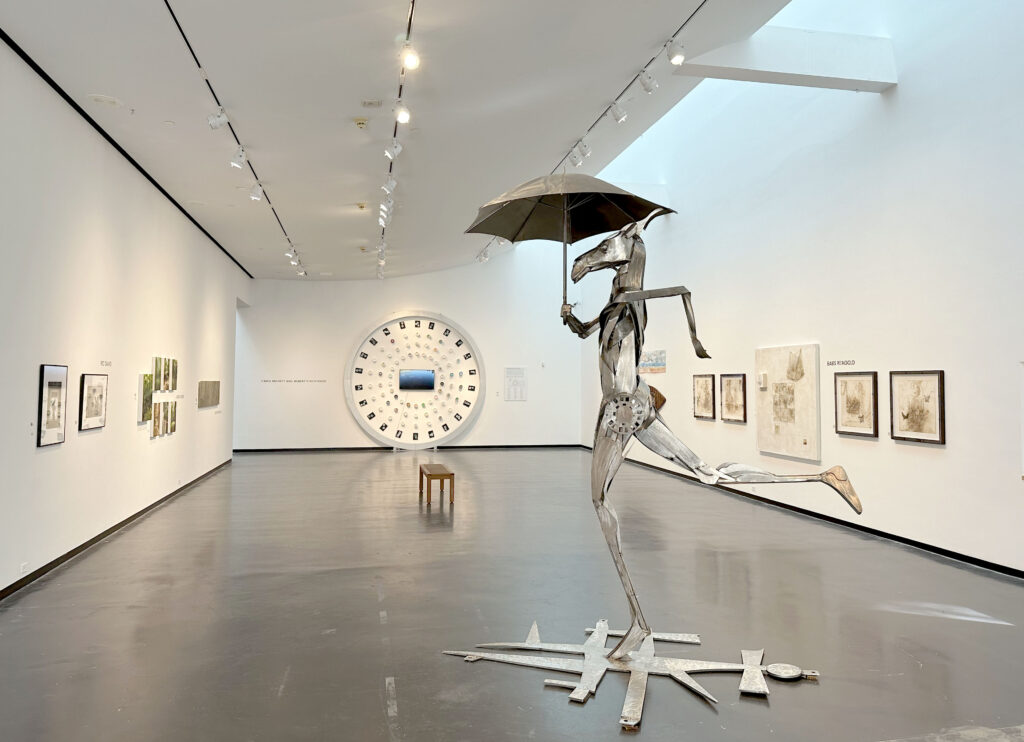
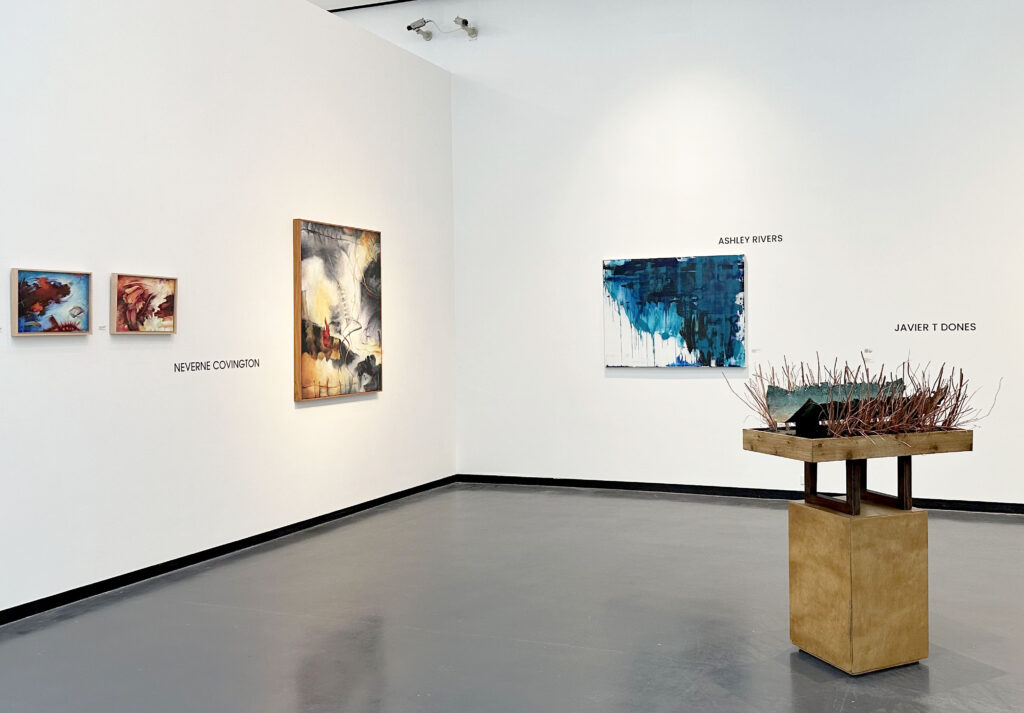
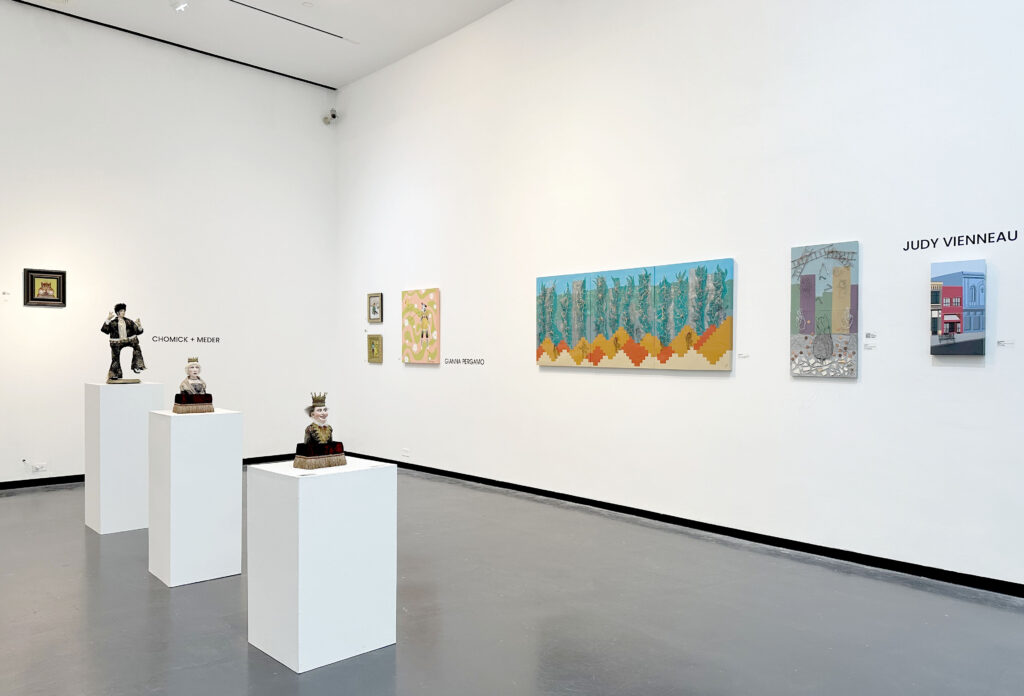
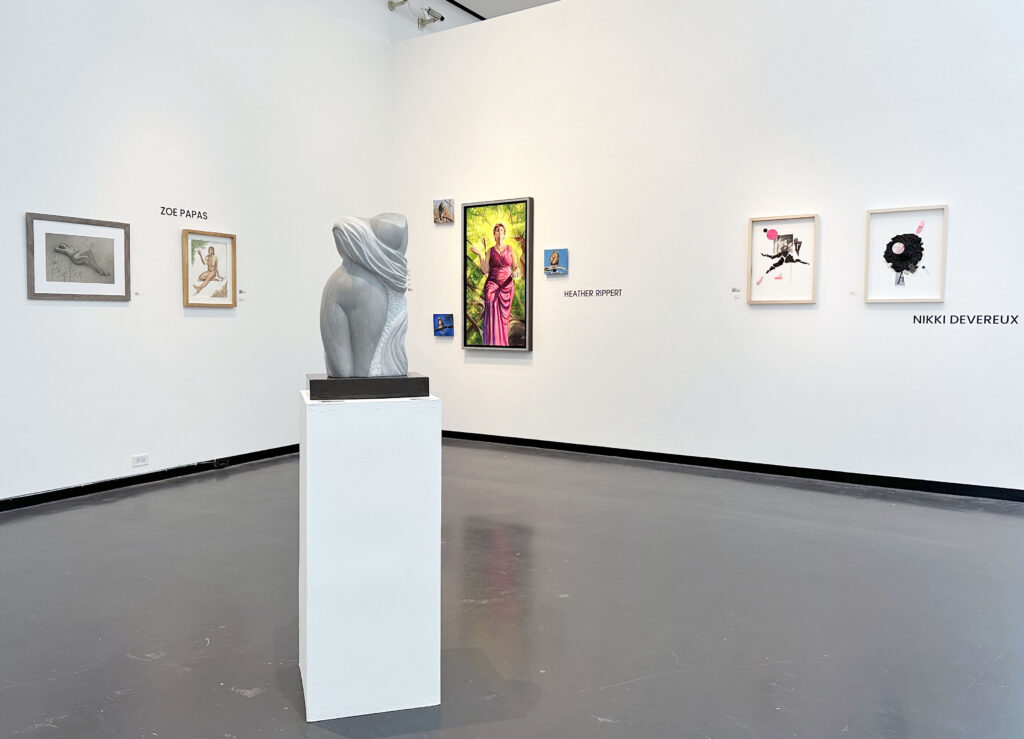
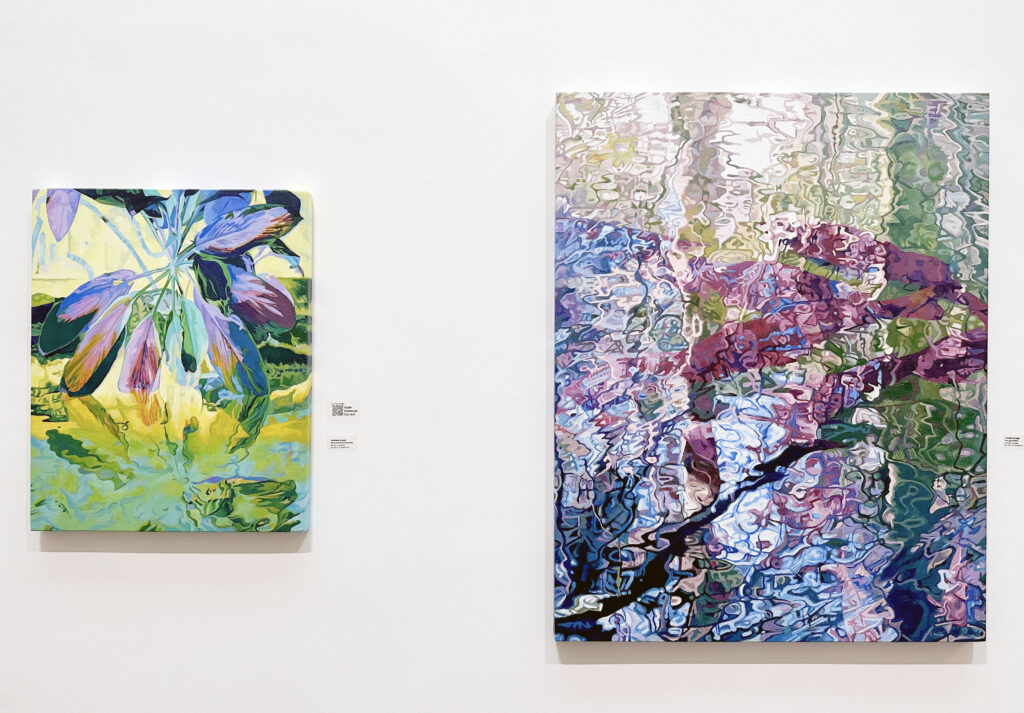
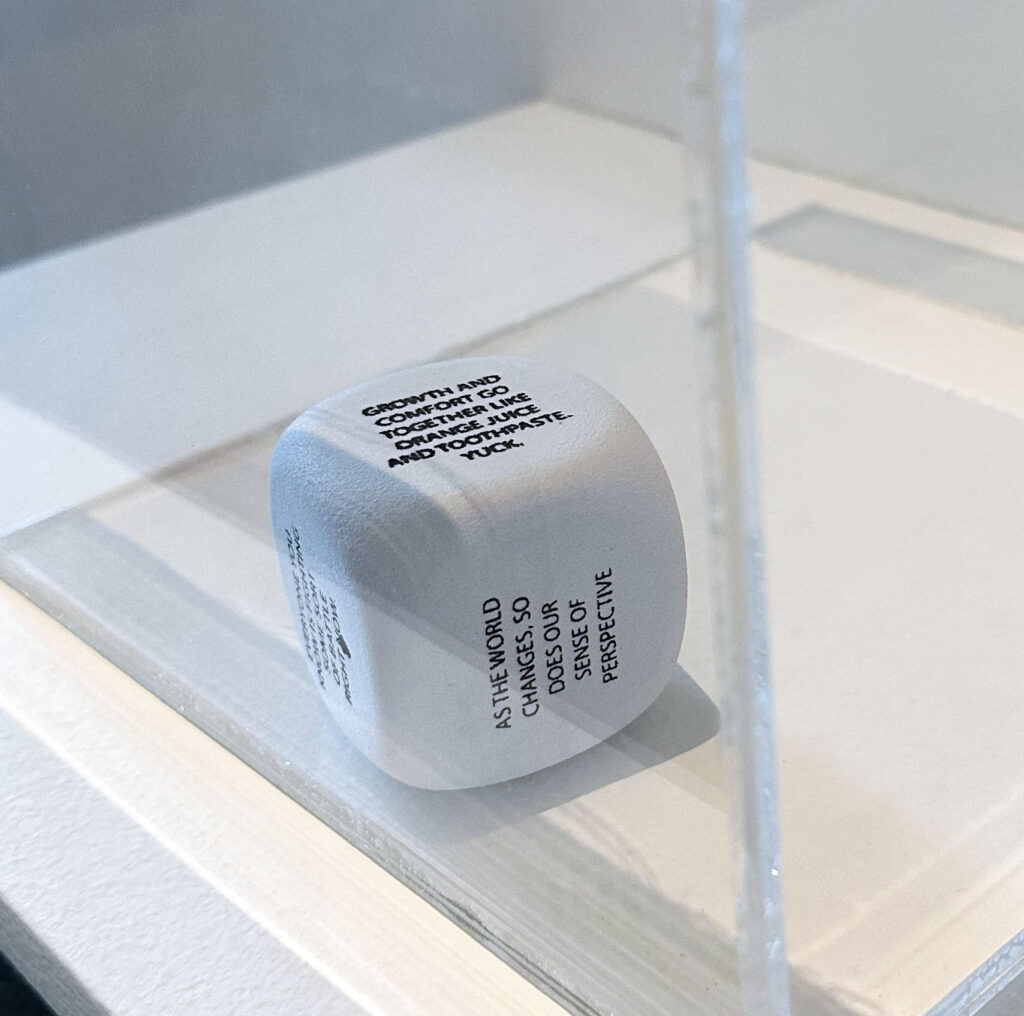
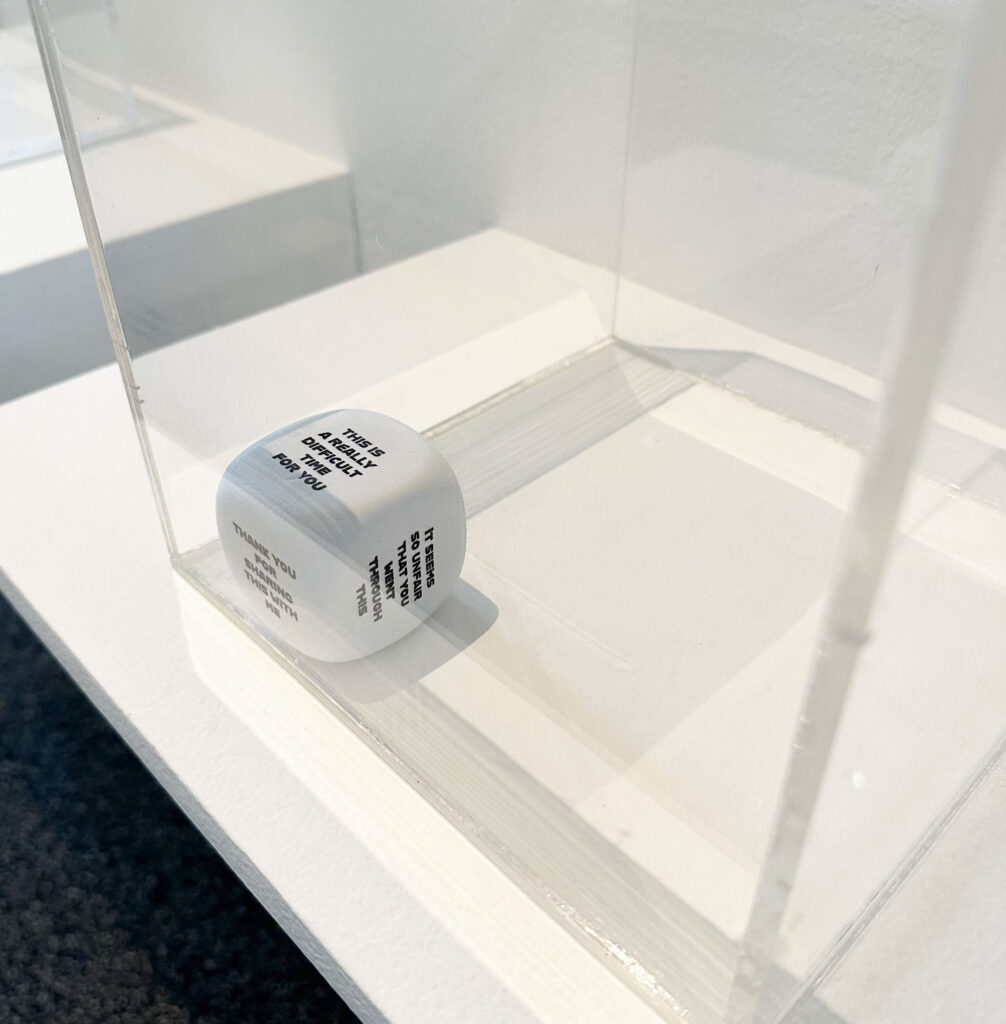
The Arts Annual at Creative Pinellas is always a great way to see what the artists in the area are creating. For 2023’s larger than ever edition, there is also a separate space for a video program that includes short films, theater productions, poetry readings, musical performances and more.

Artists included in the exhibition-

Tatiana Baccari, Elizabeth Barenis, Christina Bertsos, Daniel Barojas, Chomick + Meder, Courtney Clute, Neverne Covington, Sheila Cowley, Patricia Kluwe Derderian, Nikki Devereux, Javier T Dones, Dunedin Music Society, Sara Ries Dziekonski, Sarah Emery, Roxanne Fay, Jean Blackwell Font, John Gascot, Denis Gaston, Mason Gehring, Donald Gialanella, Jim Gigurtsis, Kevin Grass, Sheree L. Greer, Jason Hackenwerth, Steph Hargrove, Patrick Arthur Jackson, Reid Jenkins, Kenny Jensen, Charlotte Johnson, Victoria Jorgensen, Steven Kenny, Candace Knapp, Akiko Kotani, Teresa Mandala, Cora Marshall, Carol Mickett & Robert Stackhouse, Miss Crit, Mark Mitchell, Chad Mize, Desiree Moore, Zoe Papas, Gianna Pergamo, Rose Marie Prins, Gabriel Ramos, Babs Reingold, George Retkes, Heather Rippert, Ashley Rivers, Marlene Rose, Ric Savid, Tom Sivak, Sketzii, Emily Stehle, Rachel Stewart, Erica Sutherlin, Takeya Trayer, Judy Vienneau, Kirk Ke Wang, Angela Warren, and Joseph Weinzettle

The show is on view until 12/31/23.

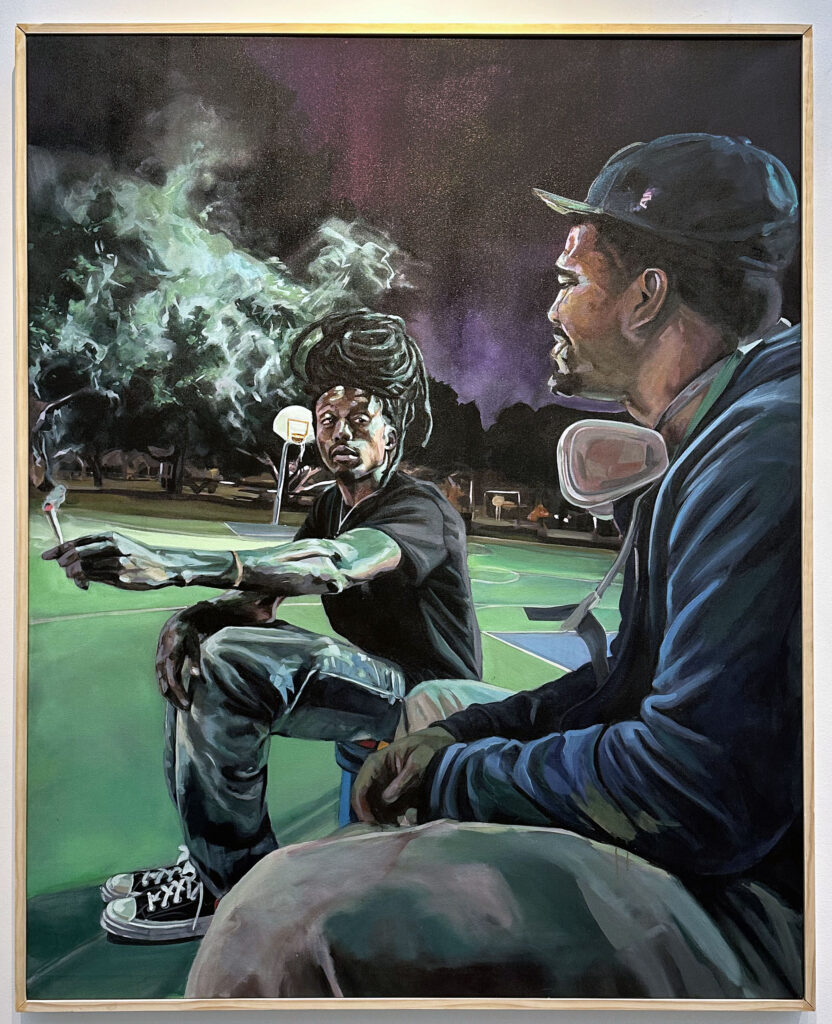
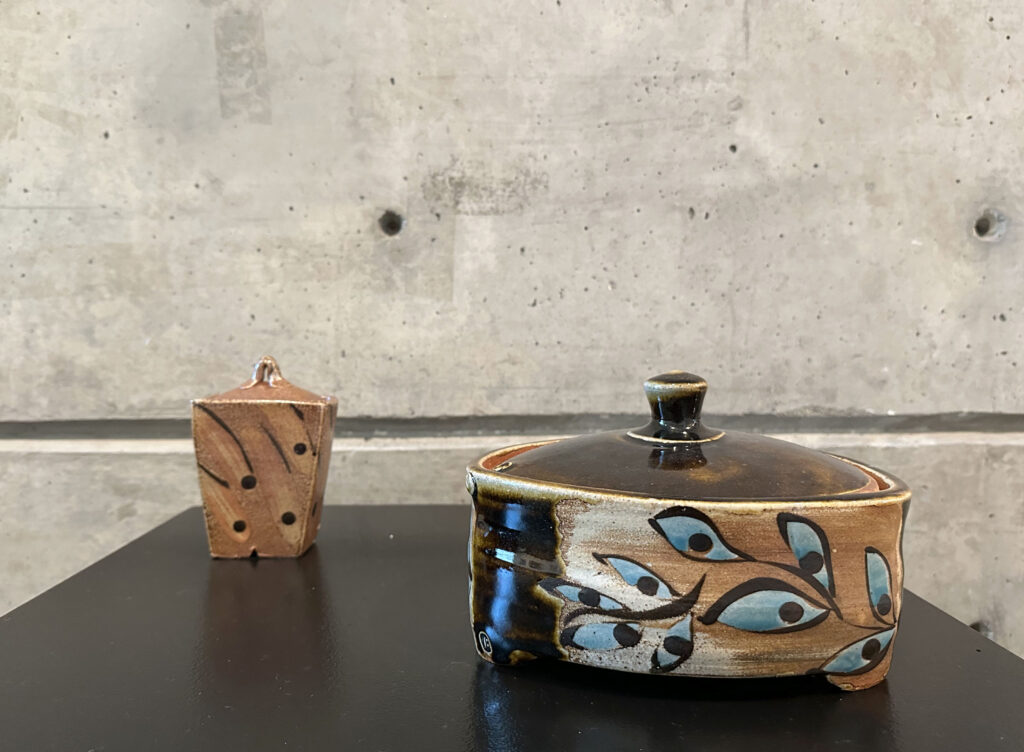
Below are some additional selections from the exhibition.  

Reid Jenkins, “Holding Court”, Acrylic

Candace Knapp, “What the Blue Heron Sees” and “The Light Within” Acrylic on canvas

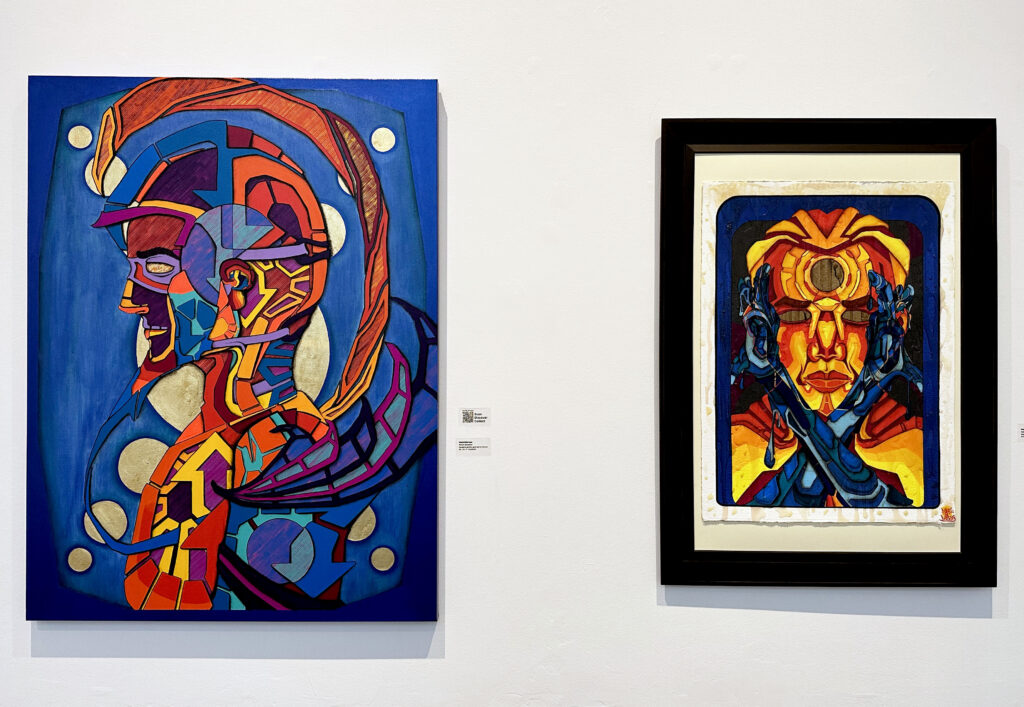
Daniel Barojas, “Future Ancestor”, Gouache, acrylic, gold leaf on canvas and “Future Ancestor #3”, Gouache and resin on paper

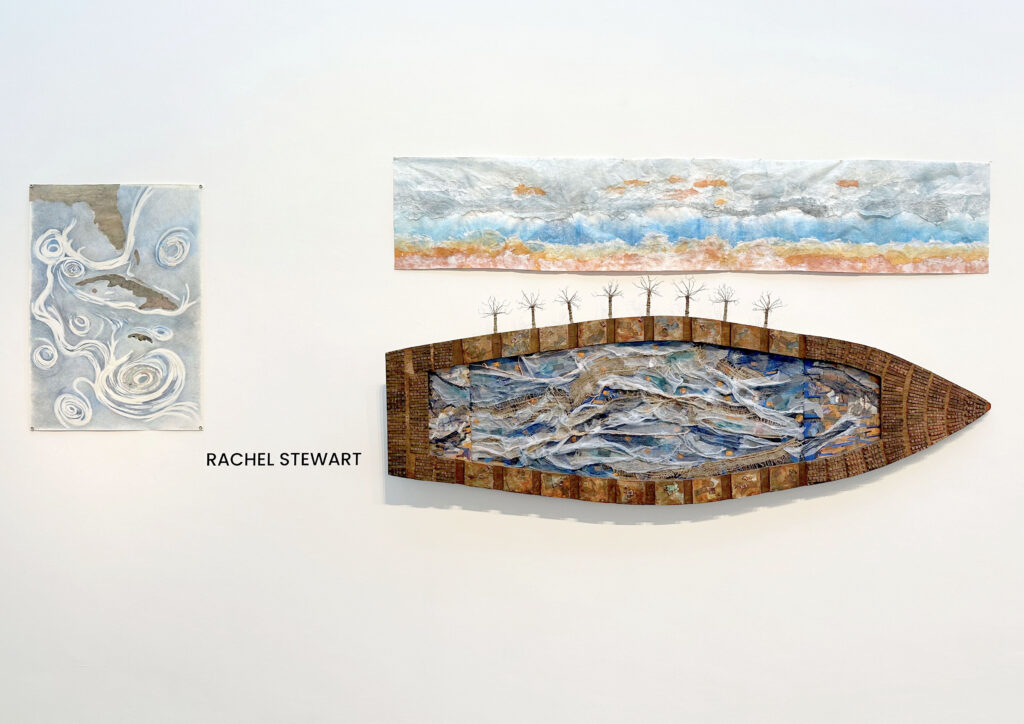
Rachel Stewart, “Caribbean Currents” Colored pencil, oil stick and collage on Archers archival paper; “Under a Different Sky”, Wall installation Painted relief wood construction with cooper and mixed media materials; Printing Ink and collage on rice paper

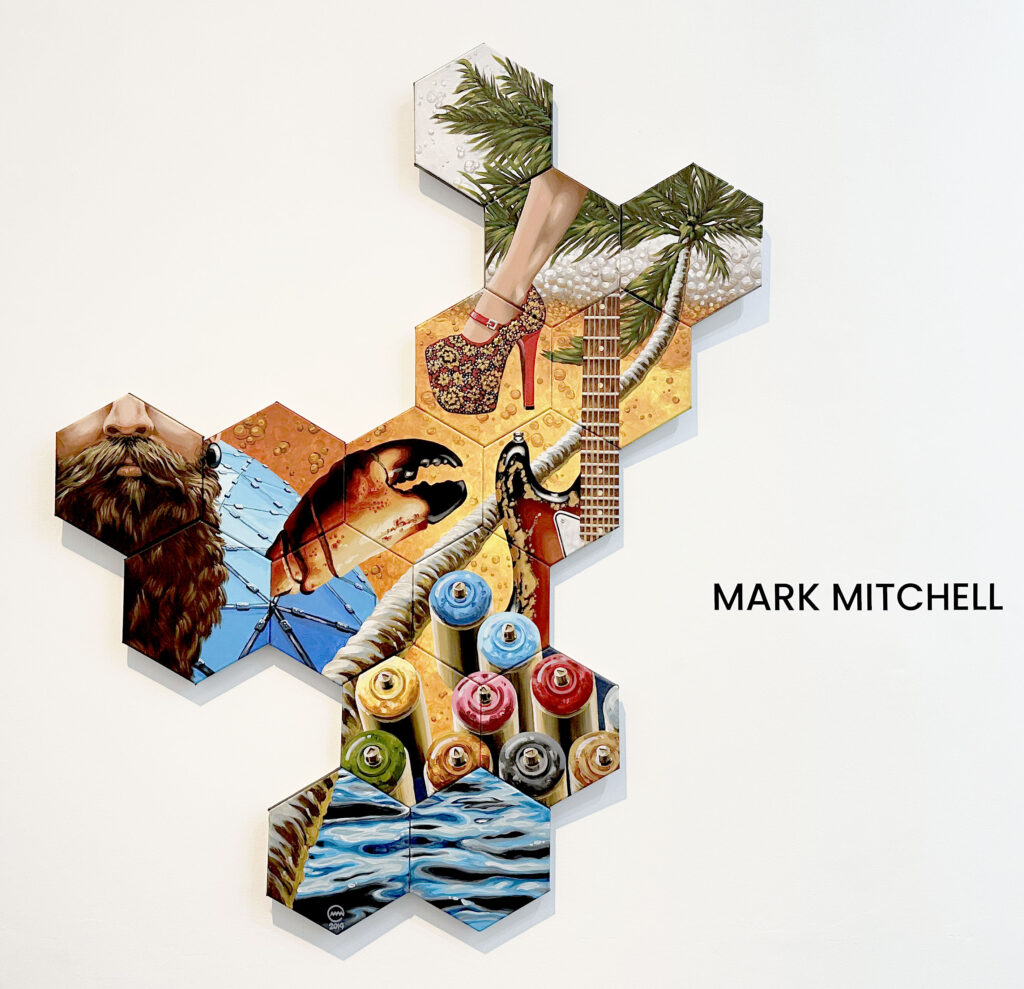
Mark Mitchell, “The BurgHive”, Acrylic on Hexagonal canvases

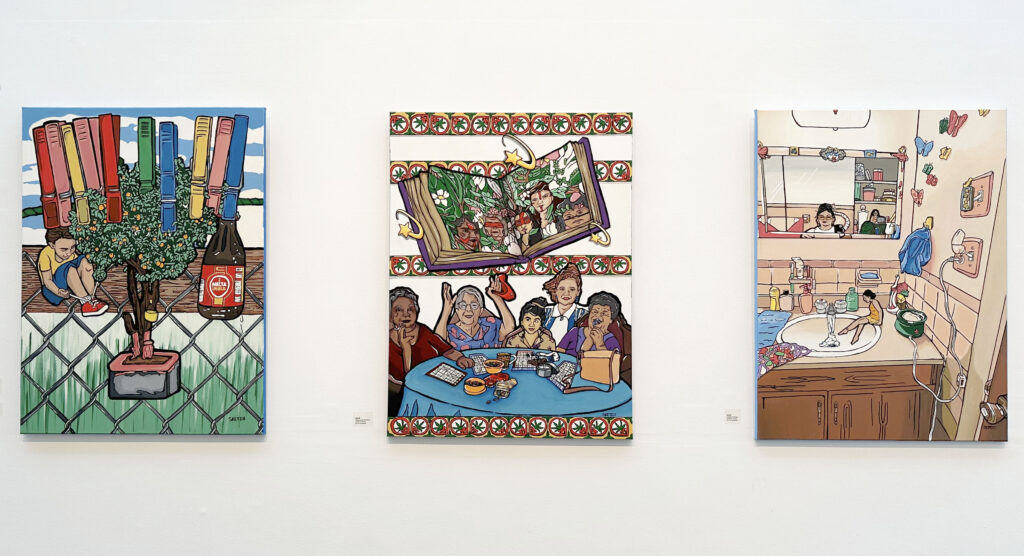
Sketzii,”Out of the Pink Concrete”, “Reclamando Mis Raices” and “A Señora’s Dream”, Acrylic on canvas

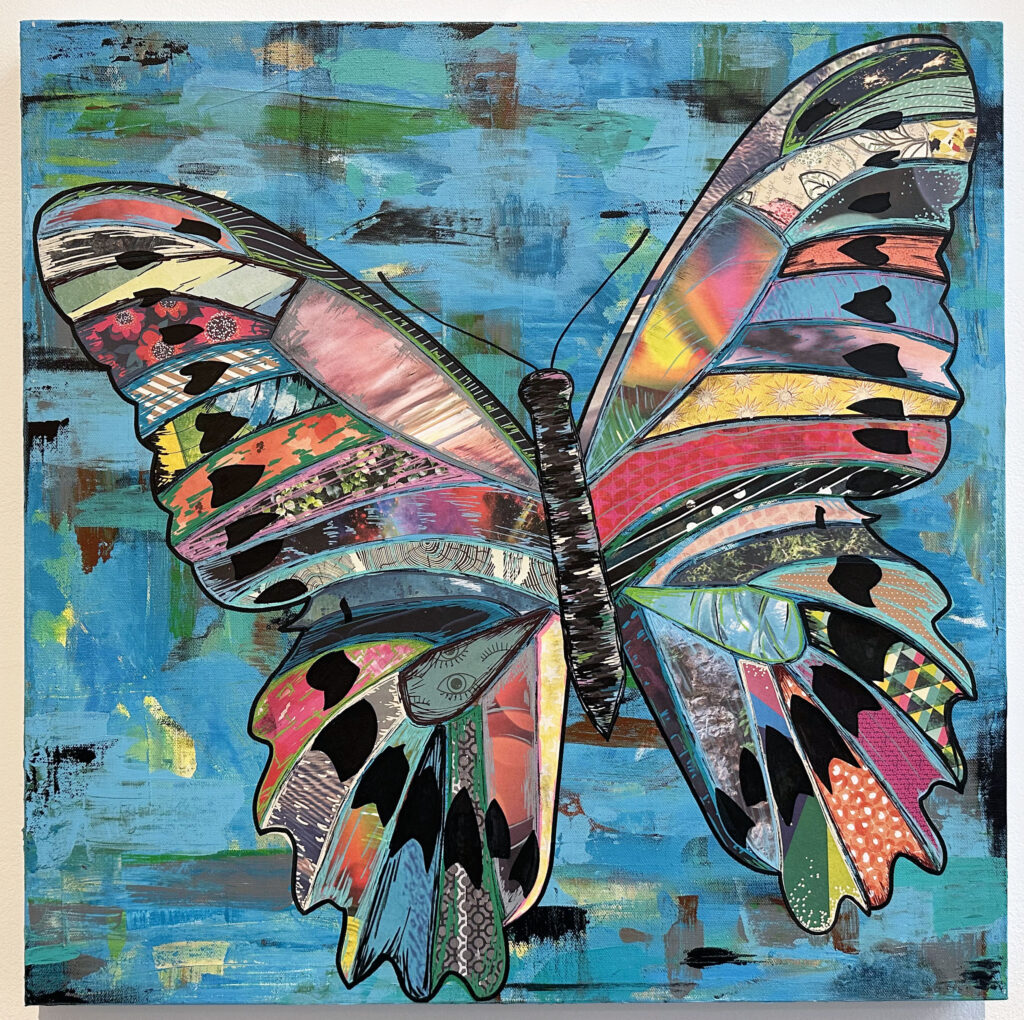
Steph Hargrove, “Catch You Later”, Acrylic paint, paper on canvas

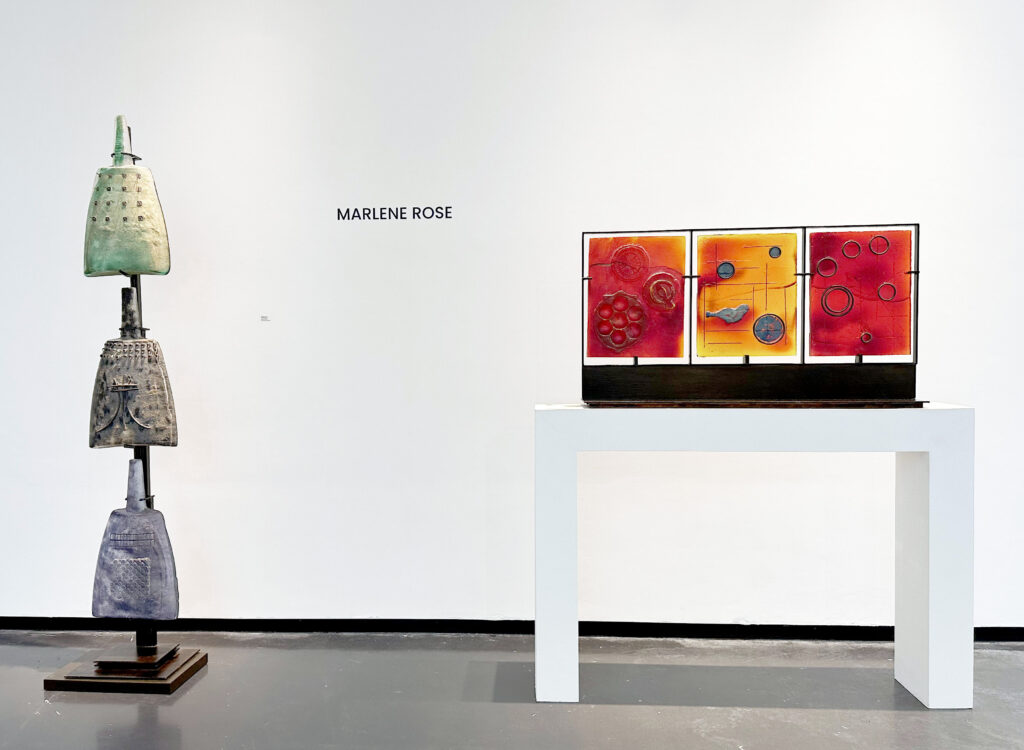
Marlene Rose, “Three Bell Tower”, Sandcast glass and “Map Triptych” Sandcast glass

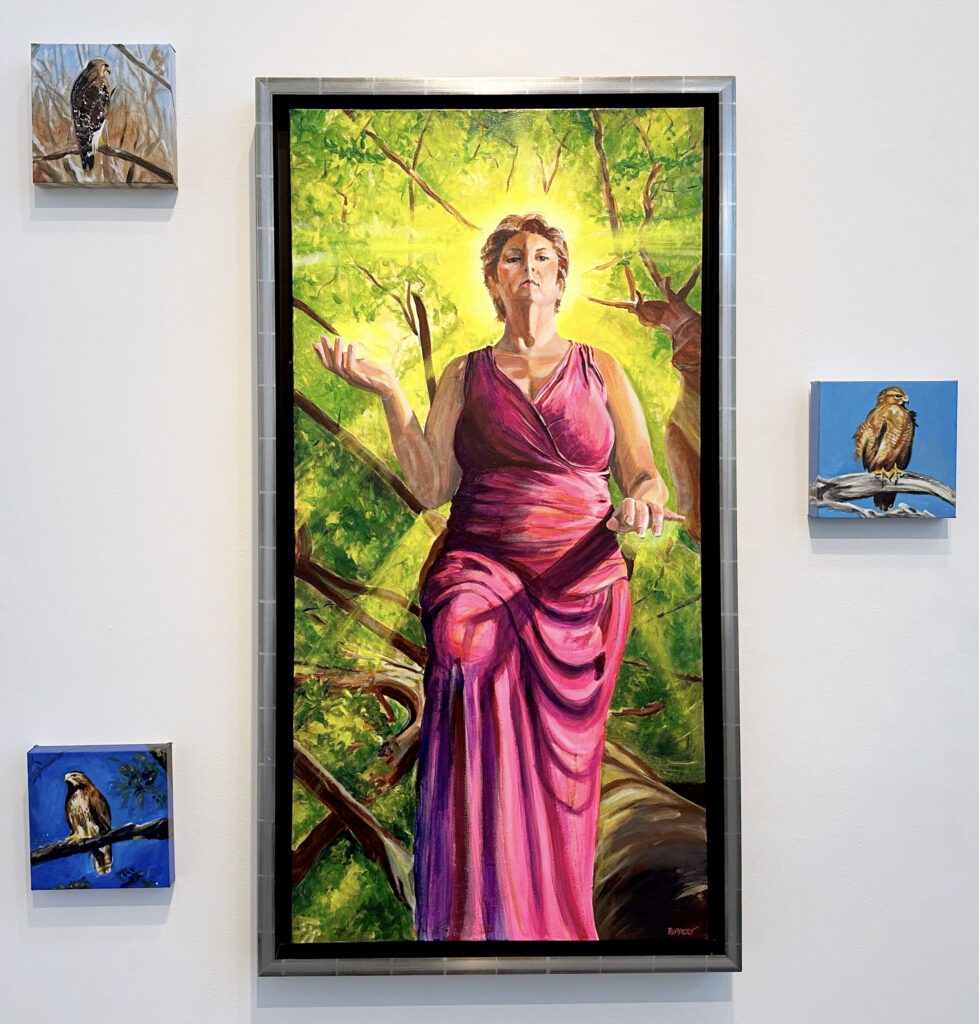
Heather Rippert, “Shakti” (center) and “Hawk 1, 2, and 3”, acrylic on canvas


Dec 122023


Heiress Gallery in St. Pete is currently showing Melissa Spitz’s solo show You Have Nothing to Worry About, a moving portrait of her mother’s mental illness and substance abuse.

From the gallery about the exhibition-

In her solo exhibition at HEIRESS, Spitz presents medium-to large-format prints of her iconic images. The works are installed in a chaotic environment, scattered amongst the detritus of familial tragedy: her mother is found in the context of hundreds of pills and pill bottles, a glimpse into the chaos that Spitz and her family have dealt with for many years. Thousands of 4×6 glossy photos are scattered on a table in the center of the space and invites gallery visitors to attempt to make sense of the nostalgia that they hold. In addition to photographs, Spitz has included new sculptural works including ten enameled hammers titled, You Are the Nail, which encourages an examination of the over-reliance of pharmaceutical solutions in the United States. Spitz’s work freezes moments of chaos in time, to be dissected and understood by the artist after the fact. The majority of her most intimate traumatic life experiences are captured through her lens, and finds a second life in the digital sphere on Instagram, to a community of over 50 thousand followers, which blurs the lines between catharsis and entertainment.

From the artist about the exhibition-

Since 2009, I have been making photographs of my mentally ill, substance-abusing mother. Her diagnoses change frequently-from alcoholism to dissociative identity disorder–and my relationship with her has been fraught with animosity for as long as I can remember. I am fully aware that my mother thrives on being the center of attention and that, at times, our portrait sessions encouraged her erratic behavior.

The photographs are simultaneously upsetting and encouraging; honest and theatrical; loving and hateful. By turning the camera toward my mother and my relationship with her, I capture her behavior as an echo of my own emotional response. The images function like an on going conversation.

The series in installation form encourages an examination of the role prescription drugs play in the United States. Aiming to prompt discussions on the cultural, social, and individual implications of an overreliance on pharmaceutical solutions. Through visual metaphors and imagery, You Have Nothing to Worry about continues to raise awareness about the need for a balanced and holistic approach to health and well-being. While acknowledging the limitations and potential pitfalls of relying solely on prescription medications.

The immersive exhibition functions as a thought-provoking commentary on the pervasive and complex issue of prescription drug culture in America. Through the meticulous arrangement of pill bottles, pills, photographs, and family ephemera, I seek to engage viewers in a dialogue about the consequences of our society’s reliance on pharmaceutical drugs.

The Vanity, pictured above, which includes family notes and photos, adds even more depth to the family’s struggles.

From the artist-

I have always been interested in sculptural installations and photography. Sandy Skoglund, Jeff Wall and Carrie Mae Weems are a few big names who have directly inspired me. The obsessive nature of details and experience only add to telling a story and I’ve been eager to find a way to participate. This vanity belonged to my great-aunt Sophie and has been in my bedroom my whole life, it went to college and graduate school with me, and my brother has been storing it since I moved to New York. This exhibition presented the perfect opportunity to utilize it. Informed by actual experiences, The Vanity, showcases family ephemera, letters from my mom, pill bottles, scattered pills, lipsticks and flickering candles. The mirror allows viewers to reflect on their own shared familiarity.

Spitz also created You Are The Nail, pictured below, for the exhibition.

Her description of the work-

I’m not sure when I first heard the phrase “when your only tool is a hammer, you begin to see everything as a nail” but it was used regarding my mom being over medicated and her prescriptions mixing, sending her into another psychotic episode. It wasn’t the doctors’ fault, or mom’s or the pharmacist but the drugs, they were to blame. I was frustrated and angry and confused, but too young to understand that doctors received kickbacks for writing certain prescriptions and that patients like my mom were a goldmine. I do want to be clear that I know anti-psychotic medications have saved people’s lives and mom would not be able to function normally without a carefully balanced mix of mood stabilizers, anti-depressants and anti-anxiety pills. But all too quickly do I find doctors in almost any capacity pushing drugs on me…I was alarmed to learn that the United States pharmaceutical industry generates over 110 bilion dollars of revenue each year.

You are the Nail is a series of ten hammers representing the ten most prescribed anti-psychotic / antidepressant pharmaceutical drugs in the United States. Several of which my mom is prescribed. Informed by Abraham Maslow’s theory of over reliance, you are the nail visually depicts our mental health field’s greatest tool, prescription drugs. The hammers are titled, Zoloft, Lexapro, Trazadone, Prozac, Wellbutrin, Cymbalta, Seroquel, Celexa, Vensir and Abilify.

This exhibition closes 1/13/24.

Dec 122023
 

Artists from L to R: Julie Schumer, Vivien Collens (sculpture), Maggie Kruger, and Blair Vaughn-Gruler

Renee Mendler, “Rainbow Vision I and II”, Acrylic, Gold leaf, and resin on panel (left) and “Pure Joy No. 10 and No. 14”, Acrylic on canvas by Hans Petersen
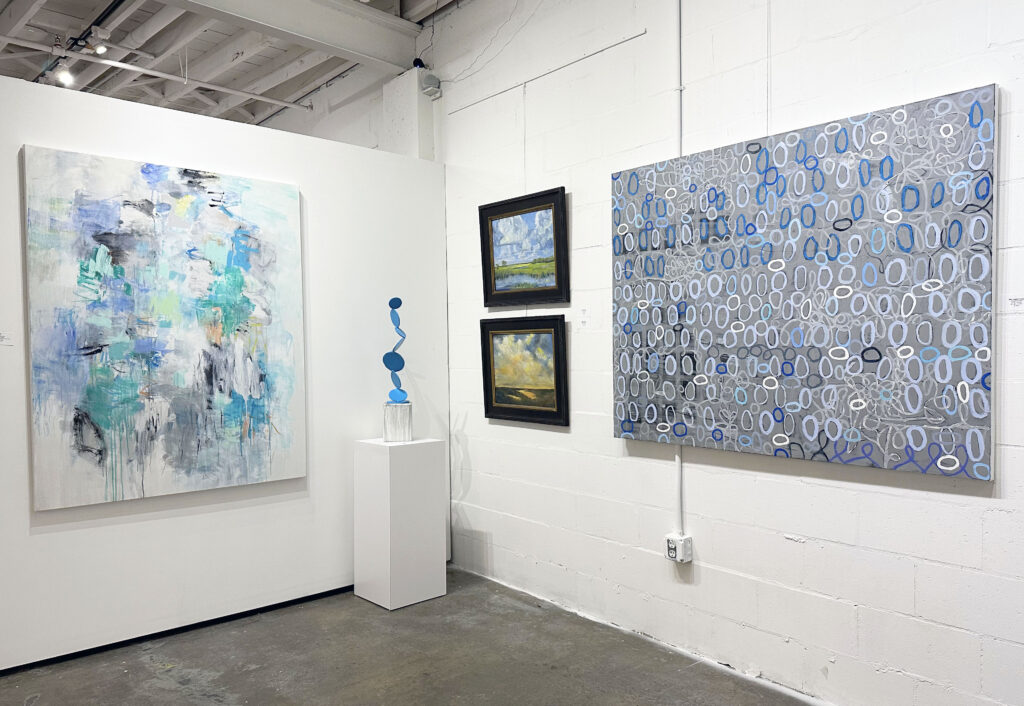
Imani Bilál, “If Dreams Could Wander”, Acylic paint and ink on canvas (left) and work from the “Accumulation” series by Blair Vaughn-Gruler, Oil, mixed media, wood, on canvas

Michelle Gordon, “Ocean Splash”, Oil on canvas

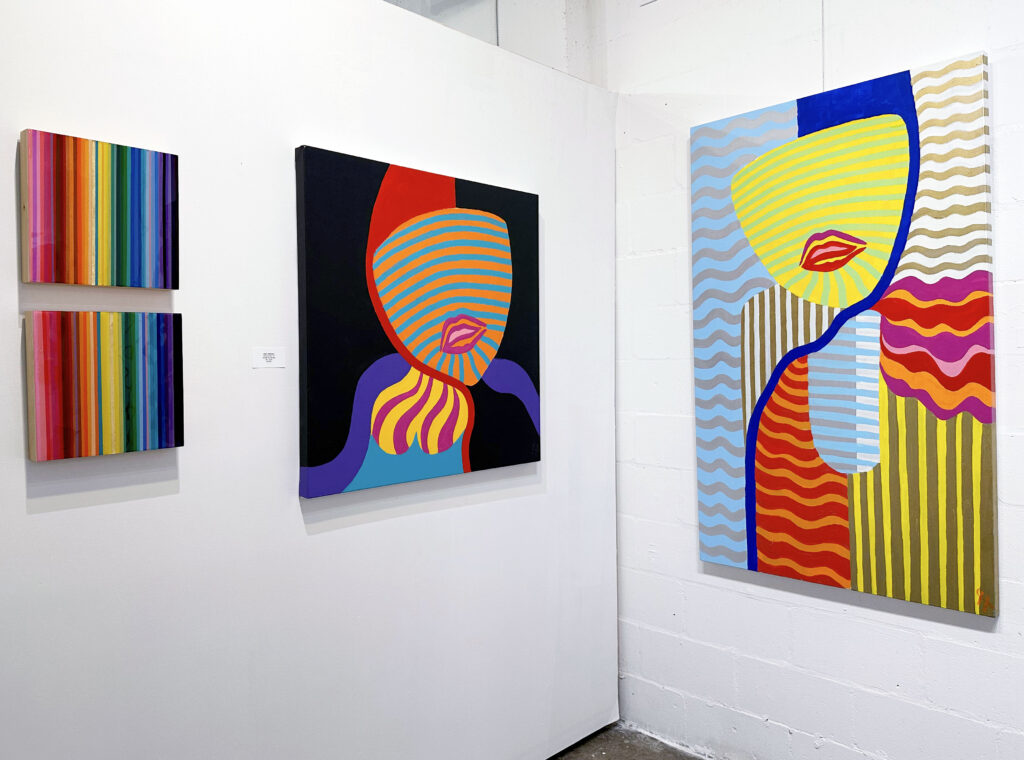
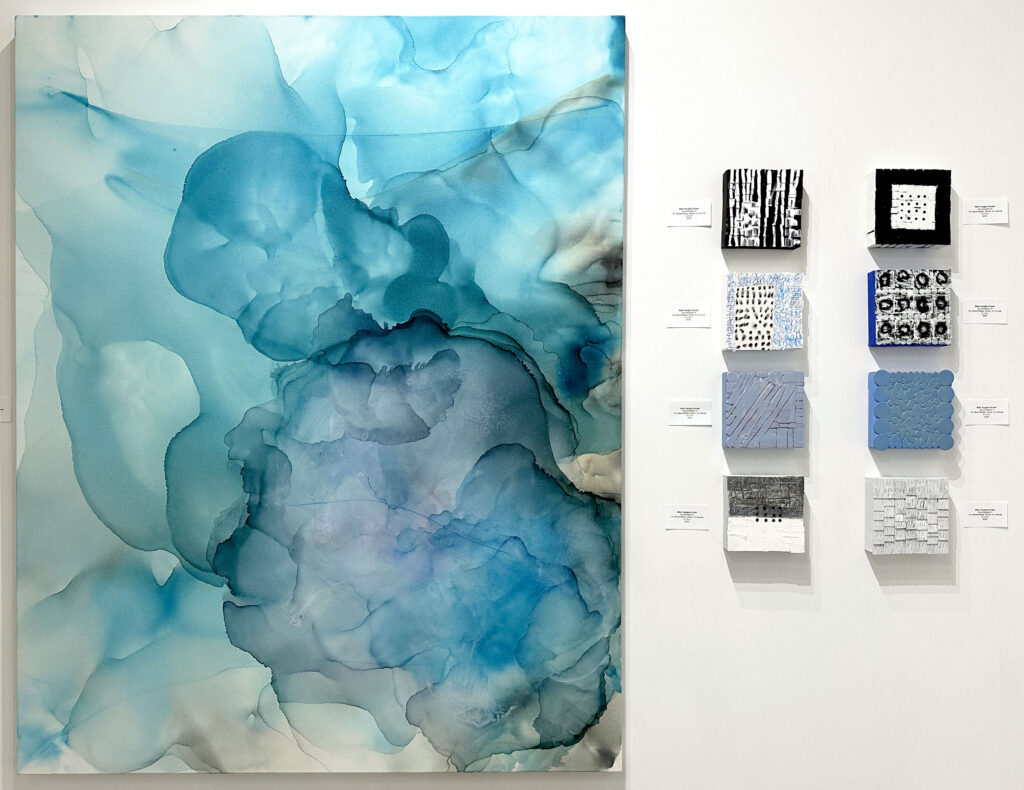
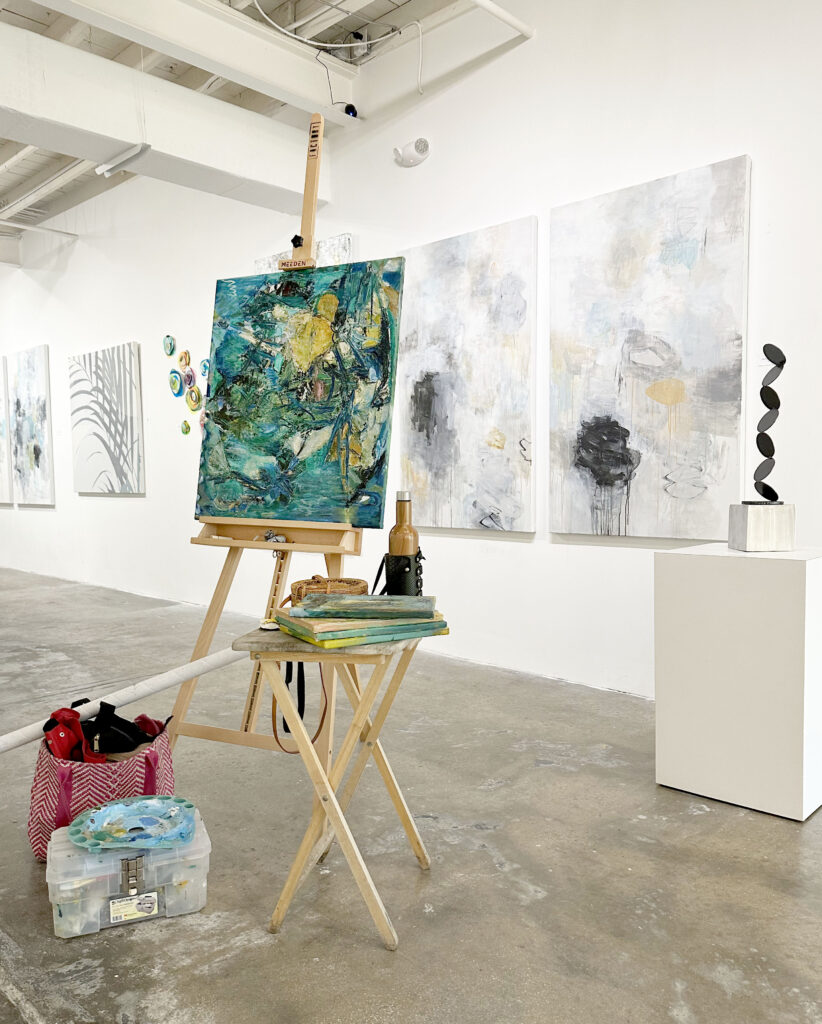
This past weekend was the Second Saturday ArtWalk in St. Pete, Florida with numerous galleries staying open into the evening. Above are images from the recently opened Drew Marc Gallery, part of The Factory St. Pete’s complex in the Warehouse District. In addition to the artwork, the gallery also had live painting by Michelle Gordon.

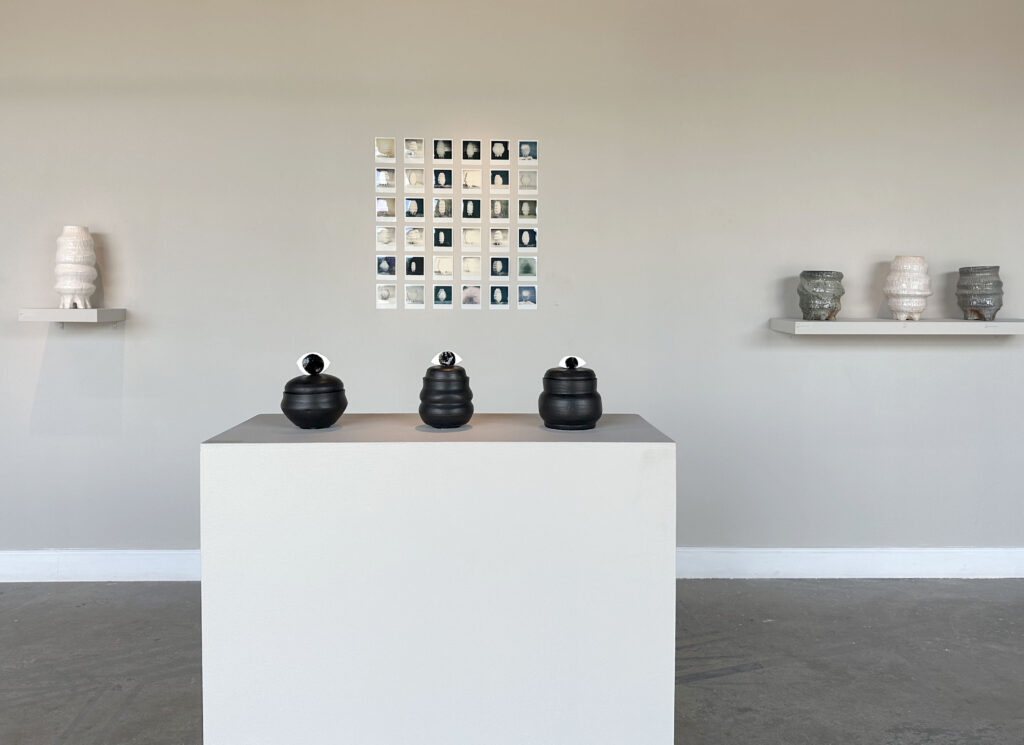
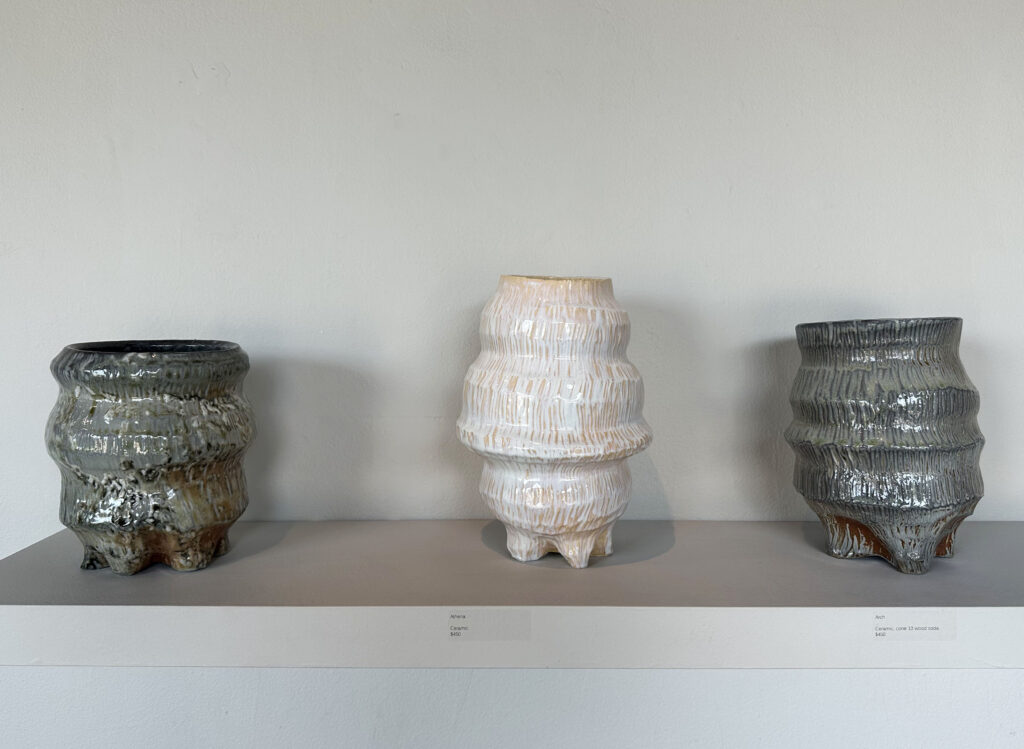
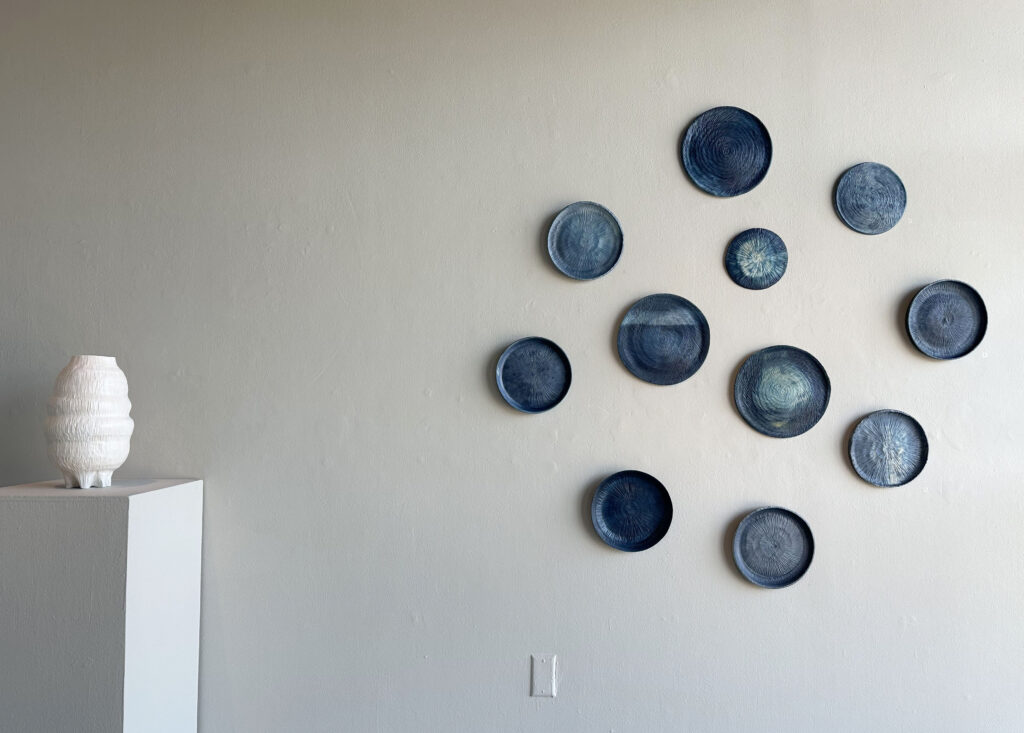
At Morean Center for Clay is Lauren Hope: Time (pictured below), a solo exhibition that includes the artist’s ceramic work and photography.

From the gallery-

...Time is an investigation of alternative photographic process, using clay as a catalyst for record keeping. Using ceramic vessels as pin hole cameras, Lauren captures moments in time and transfers them onto ceramic surfaces. This exhibition will be a collection of photographic prints, vessels, cyanotypes, and handmade pinhole cameras. 

 Her statement about her work-

My work is heavily influenced by the complexity of hues, forms, and patterns found in the natural world. This studio practice has become deeply cathartic, signifying the ephemeral and fleeting notions of time.

Ceramic vessels within this collection are wheel-thrown, altered, and sculpted. Every striation carved serves as a visual representation and a gentle reminder of the delicate passing moment. This method of subtractive carving has become transformative, developing into deep states of meditation and reflection.

Experimental photography is used as an explorative process, allowing for the convergence of internal and external experiences. By casting memories and photographic recollections onto stoneware, I attempt to immortalize my profound experiences and revelations.

This exhibition will be on view until 12/30.

For selections from additional galleries, head to the next page.

Dec 072023
 

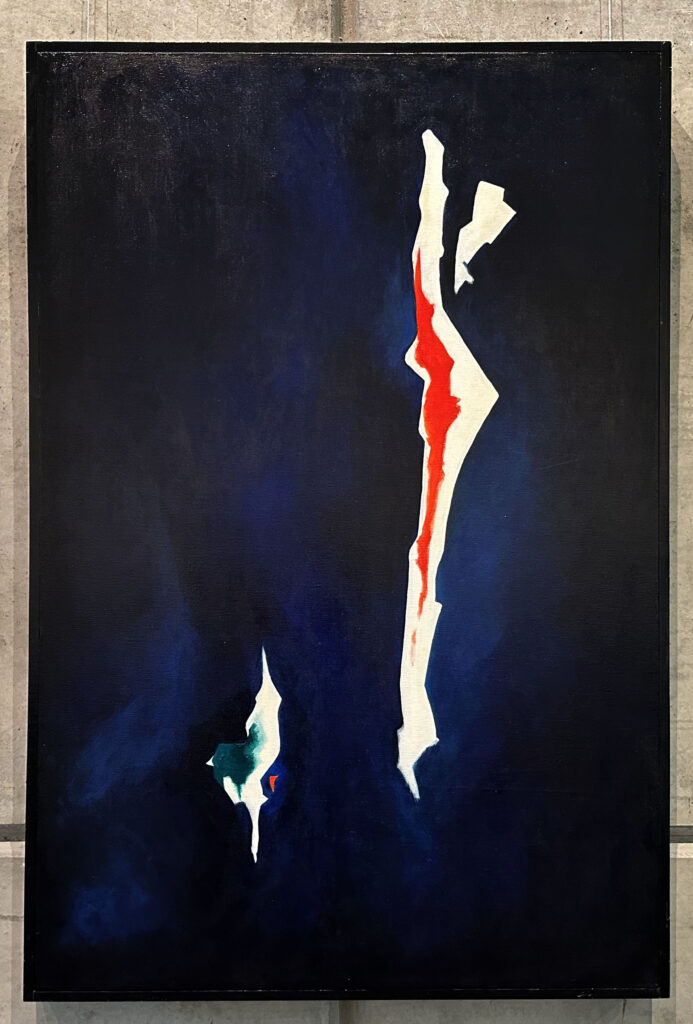
V.J. Hagenbuckle, “On Mars”, 2020, Oil on canvas

Paintings by V.J. Hagenbuckle

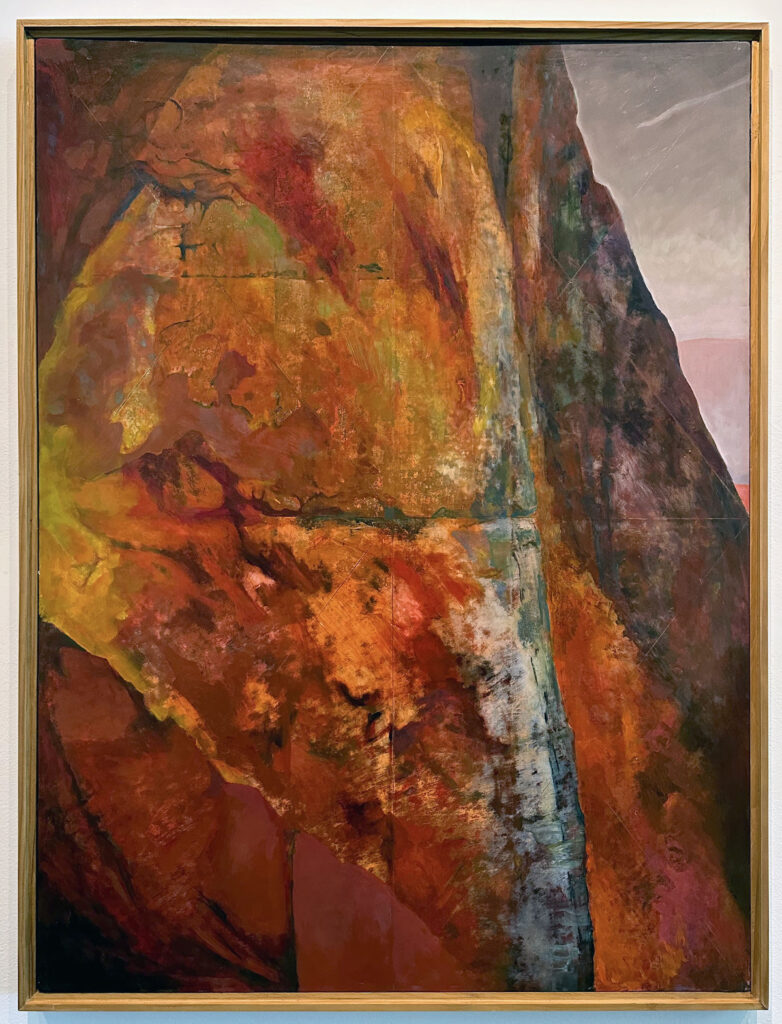
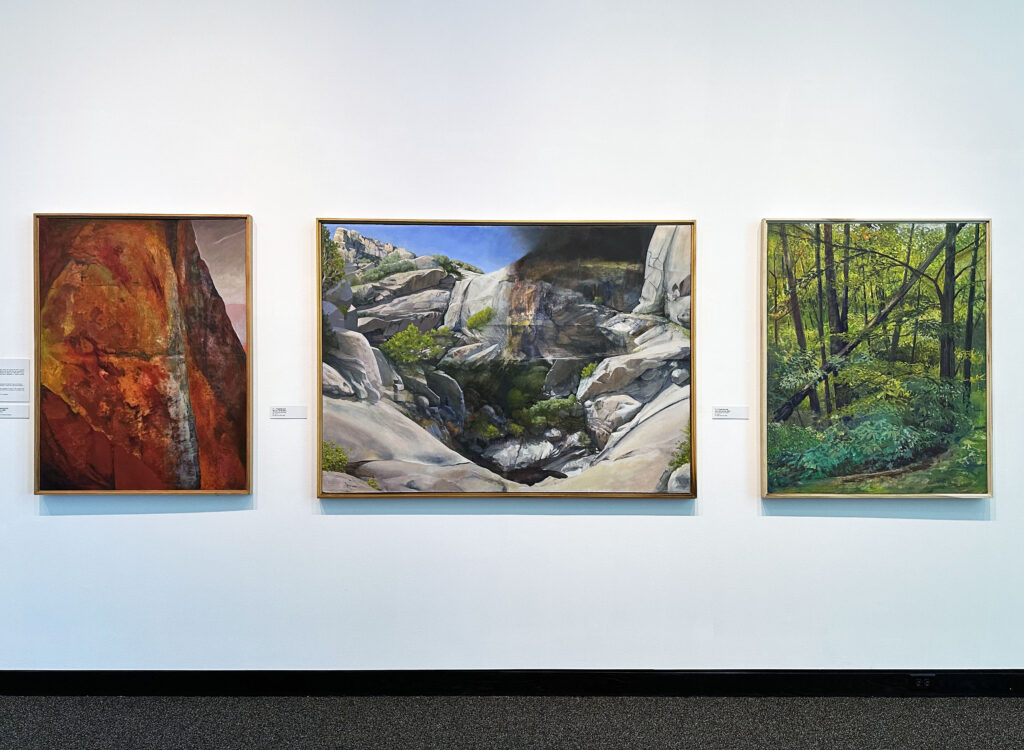
There are many incredible artists living and working in the Tampa Bay area and quite a few of them also teach. Leepa-Rattner Museum of Art in Tarpon Springs is currently showing work by faculty from the Visual Arts department at St. Petersburg College. In addition to a statement about their work, each faculty member also contributed their teaching philosophy.

Artists included in the exhibition- Jonathan Barnes, Nathan Beard, Ragan Brown, Mason Gehring, Barton Gilmore, Kevin Grass, Marjorie Greene Graff, Jennifer Guest, Jim Hagenbuckle, Elizabeth Indianos, Kim Kirchman, Michaela Oberlaender, Krishna Sadasivam, and McKenzie Smith.

Tonight, 12/7, Jim Hagenbuckle will be giving a talk at the museum at 6pm.

This exhibition is on view until 12/17/23.

Michaela Oberleander, “Bleed Out”, 2010, Acrylic on canvas

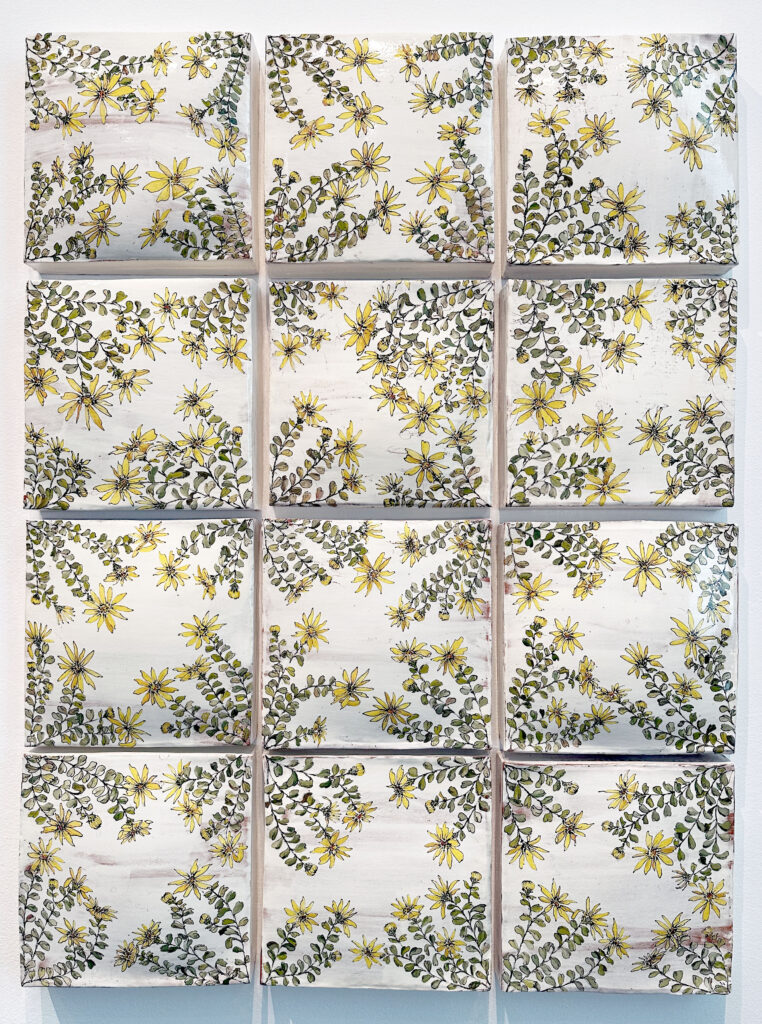
Kim Kirchman, “Cultivating What Might Be Lost”, 2022, Terra cotta with slip transfer

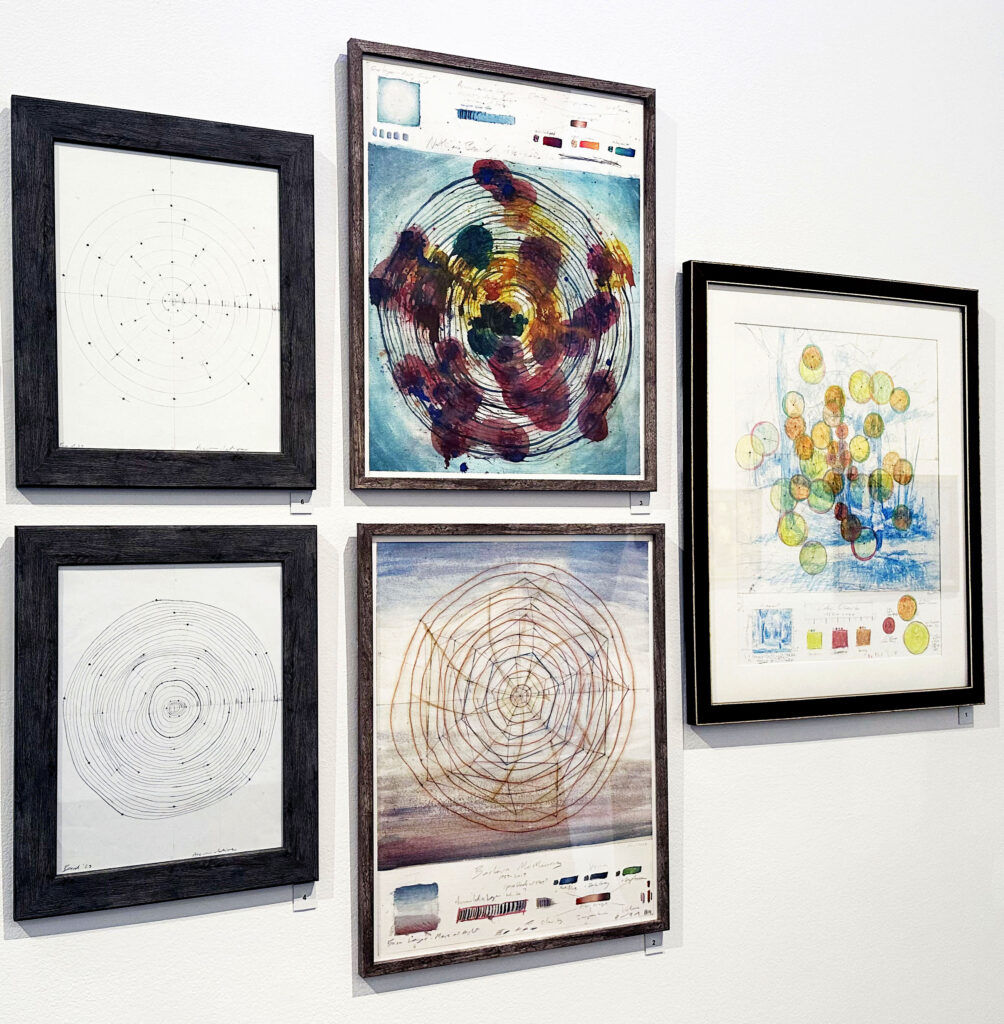
Work from Nathan Beard’s “LIFE LINES”

Nathan Beard’s description of this recent personal and intriguing project (pictured above)-

The Memory Map works on view here are my very newest attempt at understanding the role that fallible memory plays in the shaping of culture and self. These small watercolor studies are Phase II of LIFE LINES, a grand 3-part project in which I am examining my family’s memory of themselves and making artwork that tells their story. I plan to collect all of these studies into a singular book that can be handed down through the generations, or perhaps even preserved in a museum for everyone to see.

To create Memory Maps, I have created a survey for each family member. I ask them some general genealogy questions, since this survey will also function as a historical record, including their three favorite colors. I then ask them to try to remember each year of their life, from birth til now, and assign a rank between 0 and 5 for a) how clear their memory of the year is; b) how important that year was for them; c) how “good” or “bad” the year was. I add these columns together to get an “Accumulative” data set that I use to create a skeleton composed of alternating pentagons and hexagons that rotate as they expand. This part is important since it incorporates movement through time and space as we grow outward. Using the fact that our life’s journey always wavers, I then connect the points and end up with a “map” that resembles the cross-section of a tree, and contains all the metaphors associated with tree rings and natural growth cycles.

The most important visual development presented itself with Cate Clark, where I allowed myself the freedom to incorporate representational imagery. I asked my wife about her favorite place ever, and she surprised me with the family trip we took to Letchworth State Park in upstate NY. I found a picture from that trip with our daughter Vera standing at the edge of wood, and proceeded to paint that memory in resemblance of an antique plate. I also allowed myself the freedom to stray away from the tree ring aspect, while still using the data skeleton to place the bursts of color.

For more information, his artist talk is available here.

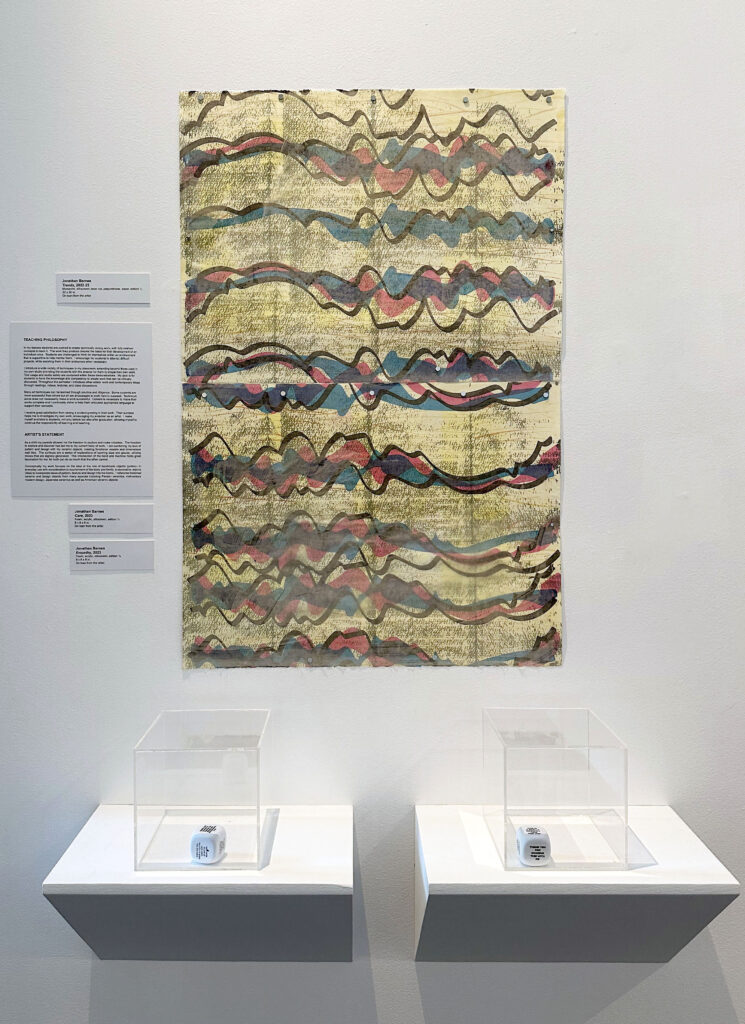
Work by Jonathan Barnes

Sculpture by Jonathan Barnes

Sculpture by Jonathan Barnes

Soda/Salt Fired stoneware by McKenzie Smith

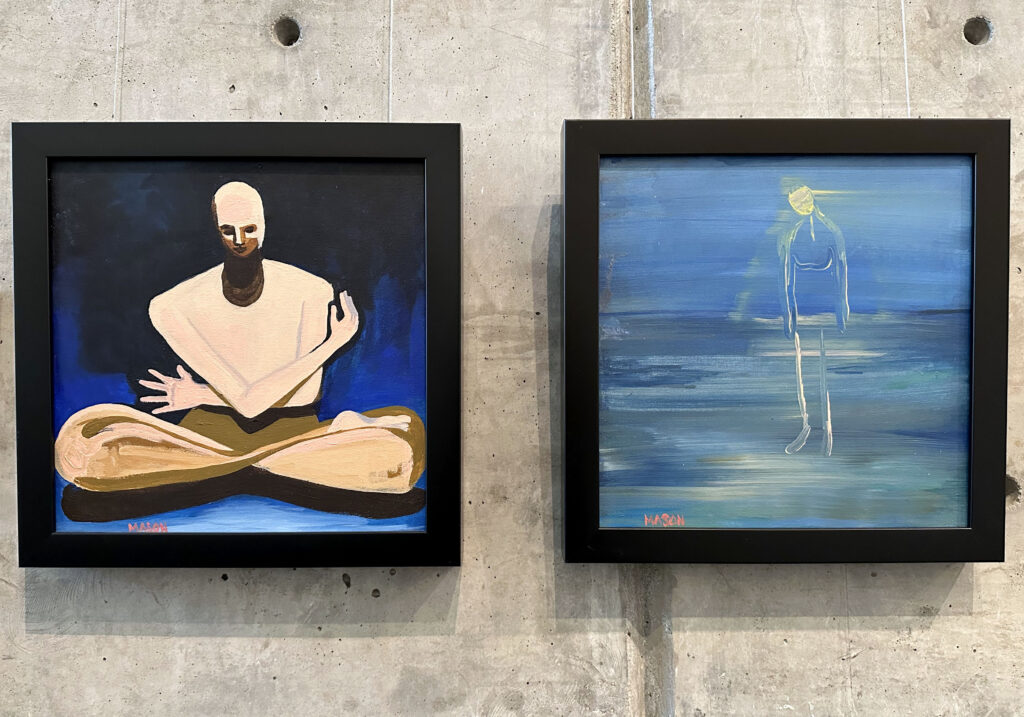
Acrylic on canvas paintings by Mason C. Gehring

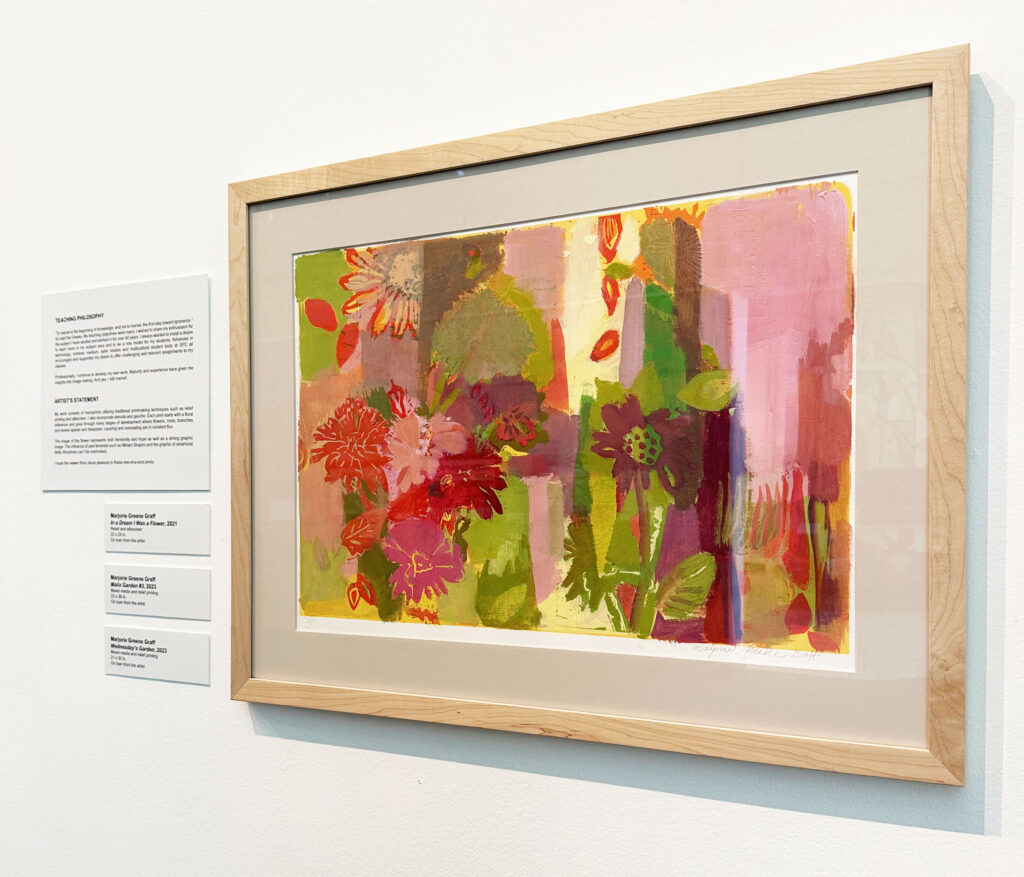
Relief and silkscreen by Marjorie Greene Graff


Artists continue on page 2.