May 192024
 

Ann Schaumburger, “Silver Moon in Darkened Sky House”, 2023, Flashe on wood

Ann Schaumburger

Ann Schaumburger

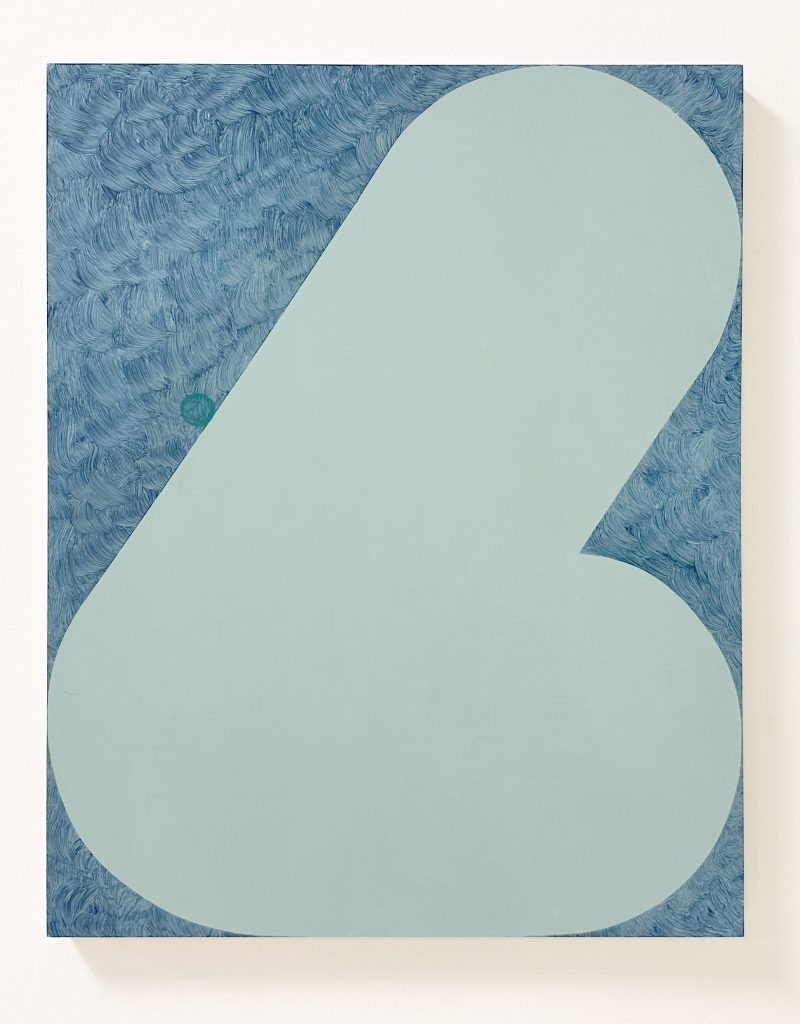
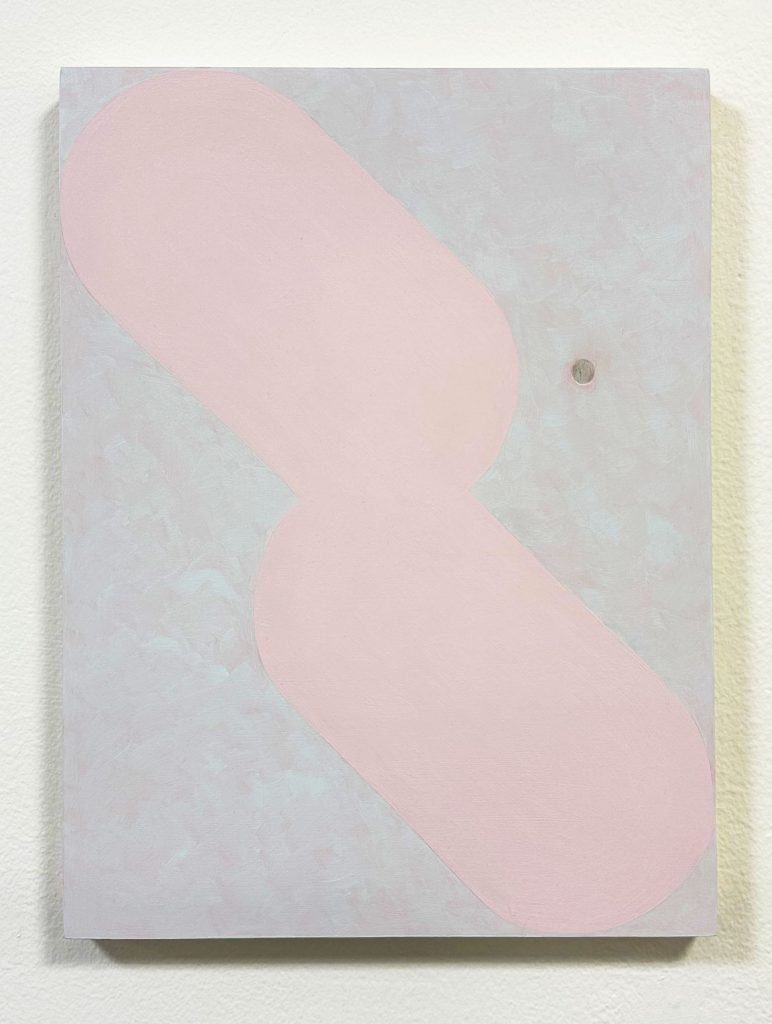
The three exhibitions currently on view at A.I.R. Gallery in Brooklyn all focus on homes in unique ways. In the first gallery, Ann Schaumburger’s paintings of houses for New Work continue her exploration of color.

From the gallery-

For over fifty years, Schaumburger has used the house as a basic structure—a scaffold—for exploring how colors interact with one another. Schaumburger builds her houses with blocks of four pigments, using stencil brushes and tape to fill each house with modular forms. Influenced by the theories of Josef Albers, Schaumburger’s approach to color is meticulous yet playful. Different colors dazzle and dance when placed in proximity, creating a sense of surprise.

The paintings in this new body of work depart from Schaumburger’s earlier explorations in one key detail: the houses are now mounted on wheels. This choice was inspired by Schaumburger’s reading of the biography of Henry David Thoreau, whose family had attached wheels to their domicile, allowing them to transport the house across different sites in Concord, Massachusetts. “The idea of taking a solid house, attached to the ground, and letting it roll away,” Schaumburger says, “seems both comical and deeply suggestive of our times.”

Schaumburger has described her color choices as an attempt to “solve an aesthetic problem.” Yet the work is not entirely abstract. Titles like Forest House Under Summer Sky and Moonscape Moving House gesture toward the fact that certain color relationships become evocative of different seasons, places, and times of day. All of the paintings in the exhibition feature a crescent or small globe in the upper left or right quadrant. Sometimes, this globe is rendered in metallic gold or bronze, recalling the sun. Other times, it is a lunar silver. The round shape of the globe mirrors the house’s circular wheels. Just as the earth rotates around the sun, the wheels rotate around their own axles, allowing the house to move.

The wheeled house becomes a spirited metaphor for Schaumburger’s practice. Dynamic rather than stationary, it embodies the liveliness and energy of Schaumburger’s color choices, as well as the open-ended nature of her process.

Roberta Dorsett’s photos for Sleepwalking explore isolation and uneasiness in her family’s suburban home.

Roberta Dorsett, “Sleepwalking”

Roberta Dorsett, “Sleepwalking”

Roberta Dorsett, “Sleepwalking”

From the gallery-

Dorsett’s Sleepwalking is a series of photographs examining isolation in the suburbs and how a sense of danger often accompanies seemingly idyllic environments. The work depicts three women, Dorsett’s aunt, her cousin, and Dorsett herself, occupying the shared space of a suburban home in Connecticut. Tension arises from the camera’s interaction with the women. The camera acts as an intrusive person, an interloper, and a voyeur as it captures the women in moments of discomfort and vulnerability.

In Dorsett’s previous work, she took on the role of family historian, photographing moments of in-betweenness that result in candid and uncontrived images. Her obsession with taking photographs of her family is driven by their lack of extant family albums or other visual documentation. Because of the family’s socioeconomic status, photography was considered a luxury and only done for special occasions. Moreover, Dorsett’s mother had to leave behind her family’s photographic history when she immigrated from Jamaica to the United States.

Dorsett initially intended Sleepwalking to be a straightforward documentation of her aunt and cousin’s experience as first-time Black homeowners. But she found herself drawn into the project’s narrative and began photographing her family in a more constructed and story-driven way, drawing inspiration from slasher and horror films. Dorsett captures the visceral thrills of these types of films by continuing to utilize her family to explore the concepts of voyeurism and anxiety. The single-family home, once a symbol of milestone achievement, now becomes a surreal site of both safety and terror. As she stood behind and in front of the camera, registering the uneasiness and distress of these three women inside their home, Dorsett dreamed up a distorted reality and asked herself, “Am I awake or sleepwalking?”

Finally, Denisse Griselda Reyes multimedia installation for Did you have a hard time finding me?  explores home and identity using a combination of original artwork and family archives.

Denisse Griselda Reyes, “Did you have a hard time finding me?“

Denisse Griselda Reyes

From the gallery-

Featuring short films and familial ephemera alongside a new body of paintings, this exhibition humorously meditates on questions of self-formation, reparative representation, and archival preservation, inviting us to dwell in the absurdity these ambitions unintentionally generate. This is Reyes’s first solo exhibition in New York City.

Presenting what Reyes has called a “maximalist constellation of memory,” the exhibition juxtaposes materials from their family archives with paintings and multimedia projections within an installation space that recalls, yet does not perfectly reproduce, the domestic interiors of Reyes’s family. Anchoring this exhibition is a short film that ties together two threads. First, the border crossings of Reyes’s grandmother Anita that were necessitated by the peril of the Salvadoran Civil War, and this history’s impact on Reyes’s mother. Second, the queer dating life of Reyes’s indignant and savvy alter-ego, Griselda. Part-narrator, part-drag-persona, part-survival-strategy, Griselda offers Reyes a means to dictate the terms of their own representation against the expectations that constrict queer Latinx artists in the United States. Still, Griselda is also beholden to identitarian demands. Reyes allows their avatar to straddle the line of spectacle, flirting with failure, acknowledging that self-formation might be an impossible endeavor. By juxtaposing Griselda’s exploits with the narrative of their grandmother, Reyes interrogates whether familial, social, and historical processes have the final word on what generates a self.

Reyes has produced Griselda as a mediating figure—one who negotiates their own identity between femininity and non-binary gender, and who personifies the absurdity of any singular narrative of origin. In its plenitude and play, the exhibition exceeds the ostensible facticity of the familial and historical archive. Featuring new paintings that hazily recreate family photographs, a vitrine full of childhood teeth that parodies genres of museal presentation, screens that toggle between home videos and the simulation of archival footage, and striking blue-green walls that recall the past domestic spaces of Reyes’s family in El Salvador, the exhibition transforms processes of preservation into acts of mythmaking. The exhibition is less a recreation of the artist’s family’s domiciles than a space of critical reflection and ambiguity. Guests are invited to join in this meditation—and may find their own notions of selfhood implicated as a result.

These exhibitions close 5/19/24.

May 172024
 

“Island”, 2024. Acrylic on paper

“Daredevil”, 2024, Acrylic and colored pencil on paper, and “L’Observatoire“, 2024, Acrylic on paper

Yancey Richardson is currently showing two exhibitions which focus on architecture and city life. Mary Lum’s paintings and collages for temporary arrangements combine elements of city life found on her walks in New York and Paris. Fragments she discovers along the way combine to form dynamic interpretations of these environments.

From the press release-

Lum mines aspects of daily life, vistas of architecture, design, and advertising that could easily go unnoticed. These familiar and often mundane sights are transformed into something more: juxtapositions and layers of random elements, which show both spontaneity and control, perhaps revealing a glimpse into the soul of a city.

The exhibition title temporary arrangements refers to Lum’s journeys though the streets of New York and Paris, observing the fragments of a crumbling façade of a building, a vendor’s pushcart, or a poster for a vernissage, which may have a short shelf life in the urban environment. Lum takes photographs on the streets looking at geometric forms, planes of color, and text. She pulls off bits of advertising posters that are peeling from their bases and collects printed materials – all of which are collaged in her sketchbooks, becoming the basis for her paintings. These elements provide inspiration for Lum, who creates a collision of perspectives and forms that boldly announce the delights of quiet discoveries.

Susan Cross, Senior Curator, Mass MoCA, wrote that Lum’s work “suggests the speed of daily life and the fragmented way in which we encounter language in the world. Language speeds up and slows down, much in the way that when we are walking or riding a bike in the city our pace is determined by what we notice around us. Words come together and fall apart, with each individual viewer making meaning.”

Influenced by Cubism and Russian Constructivism, Lum is also interested in the concept of psychogeography, as practiced by members of the Situationist International movement in the 1950s and ‘60s. Referring to the effect of a geographical location on the emotions and behavior of the individual, one may see Lum’s interdisciplinary practice as a physical manifestation of this phenomenon. Lum also finds inspiration in artist and activist Corita Kent’s graphic style and fractured text as well as artist Ray Yoshida’s use of comics, which tell stories with isolated fragments.

Mary Lum wrote, “A couple of years ago I saw a William Kentridge exhibition at the Royal Academy in London. One of the things that kept jumping out at me from that show was the phrase: ’FIND THE LESS GOOD IDEA.’ That painted phrase was repeated several times in various parts of the exhibition, and each time I saw it I got a little jolt of recognition. I’m not sure exactly what Kentridge meant by that phrase (it’s related to his Centre for the Less Good Idea in Johannesburg), but to me it meant everything about the way I work. I took the reference to mean finding the things that are in the margins, those things that are on the periphery, those things that are between the lines, that you see out of the corner of your eye. Not through a concerted effort, but by paying attention, looking around, looking the other way. And often, later, you are not sure that you’ve seen these things at all.”

For Lynn Saville’s exhibition Elevated, she has captured NYC at its most peaceful time, twilight.

From the press release-

Twilight in the city, after the sun disappears below the horizon and the hustle and bustle has dissipated, is where Lynn Saville finds refuge and inspiration. For decades, she has documented these fleeting, dream-like moments suspended in time within the urban landscape.

Elevated showcases Saville’s mastery of the city’s natural light. Much like Edward Hopper, who painted the solitude of New York City through its buildings and rooftops, Saville’s photographs transform architectural elements and structures into dramatic geometric forms and patterns through light and shadows. Saville describes the importance of capturing images at twilight, “During this transitional time, the change from daylight to moonlight and artificial light seems to awaken the city’s own dreams, apart from the business and errands of its inhabitants. For me, these dreams are expressed in basic shapes and patterns, as if the infrastructure were communing with its own geometry while distracting details are hidden in shadow. The shifting light brings out forms that may disappear in the darkness of night or remain invisible during the more chaotic visual world of daylight.”

As the exhibition title implies, photographs featured in the show were taken from the elevated platforms of New York City’s mass transit system or from the street looking upward at structures on rooftops. These photographs explore perspectives on the language of the built environment and our perception of the cityscape. For example, Elevated subway platforms offer an expanse of skyline structures such as rooftops, water towers, and upper sections of nearby buildings, which along with the coming and goings of trains become the focal point.

Both of these exhibitions close 5/18/24.

Apr 192024
 

Meryl Engler, “Lying in Red”, 2023, Woodcut

Work by Michael Loderstedt (left), Eva Pozler (center) and Lori Kella (right)

Work by Lori Kella, Maria Uhase, and Meryl Engler (right two pieces)

Lori Kella, “Mudslide and Forsythia”, 2022, Inkjet print (left) and Corrie Slawson, “Amalgam 4”, 2022 (top) and “Amalgam 3”, 2022 (bottom), Oil and screenprint on plywood

Today (4/19/24) is the last day to see Life Out of Balance at the Emily Davis Gallery at The University of Akron. The group show show includes work by Maria Uhase, Meryl Engler, Lori Kella, Benjamin Lambert, Michael Loderstedt, Eve Polzer, Ron Shelton, Ariel Bowman, and Corrie Slawson.

From the gallery-

When a tree falls in a forest, we may see it as the death of the tree. It stops photosynthesizing, growing, feeding its mycorrhizal symbionts, flowering, developing fruit, dispersing seeds, taking in carbon dioxide, and producing oxygen. But in the ecosystem, it begins a whole new life in decay. It feeds the soil and microbes through the decomposition of its tissues; it provides a place for fungi, mosses, and lichens to grow; and it becomes a protected habitat for a myriad of insects, mammals, and birds. This same tree, therefore, can be both dying and living at the same time, depending on perspective. It can be dead if considered separate from its surroundings, or it can be alive in its continued relationship within its ecosystem.

Humans can feel more alive by being integrated with the rest of the natural world. We are not living to our full potential, or allowing nature to be its full potential, when we consider ourselves as separate from it.

If we are to have hope for solving the complex environmental issues that are facing us today, we need to work with, rather than against, the forces of nature.

Below are a few more selections.

Ron Shelton, “Yellow Mosaic”, 2021, Plastic and wire

Ariel Bowman, “Wall Trophy Series”, 2019, (Cave Bear, Antique Bison, Early Horse, Saber Cat, Dodo, Brontotherium, Parasaurolophus), Unglazed, high fired porcelain; Maria Uhase, “Splitting Headache”, 2022 Ink on paper and “Softly”, 2023, Graphite on paper

Ariel Bowman, “Wall Trophy Series”, 2019, (Cave Bear, Antique Bison, Early Horse, Saber Cat, Dodo, Brontotherium, Parasaurolophus), Unglazed, high fired porcelain

Benjamin Lambert, “A pint for a gallon”, 2020 and “I Found Your Damn Lost Shaker of Salt”, 2020, Stoneware, underglaze, glaze, epoxy

Corrie Slawson, “Stage Set Tapestry 1, for Feast: a ballet. Of Bats, Blue Footed Boobies, Penguins and other threatened fauna and flora. Pastoral landscape after Rubens”, 2020, Oil and mixed media on muslin

Corrie Slawson, “Stage Set Tapestry 1, for Feast: a ballet. Of Bats, Blue Footed Boobies, Penguins and other threatened fauna and flora. Pastoral landscape after Rubens” (detail)

Michael Loderstedt, “Snakehead”, 2023, “Thistles”, 2023, Cyanotypes on fabric, embroidery, fabric collage

Lori Kella, “Mayflies in the Grass”, and “Yellow Irises”, 2024, Framed inkjet prints

Maria Uhase, “Encircled”, 2023, Oil on linen panel, “Worm”,2023, Oil on linen and “Conglomeration in the Spiders’ Ghost Town”, 2020, Oil on canvas

Eva Polzer, “Gift from a Cat”, 2024, Ceramic, underglaze, velvet jewelry box, and “Gift from a Rat”, 2024, Ceramic, underglaze, petri dish

Meryl Engler, “Waiting”,2023, Woodcut Block


Apr 172024
 

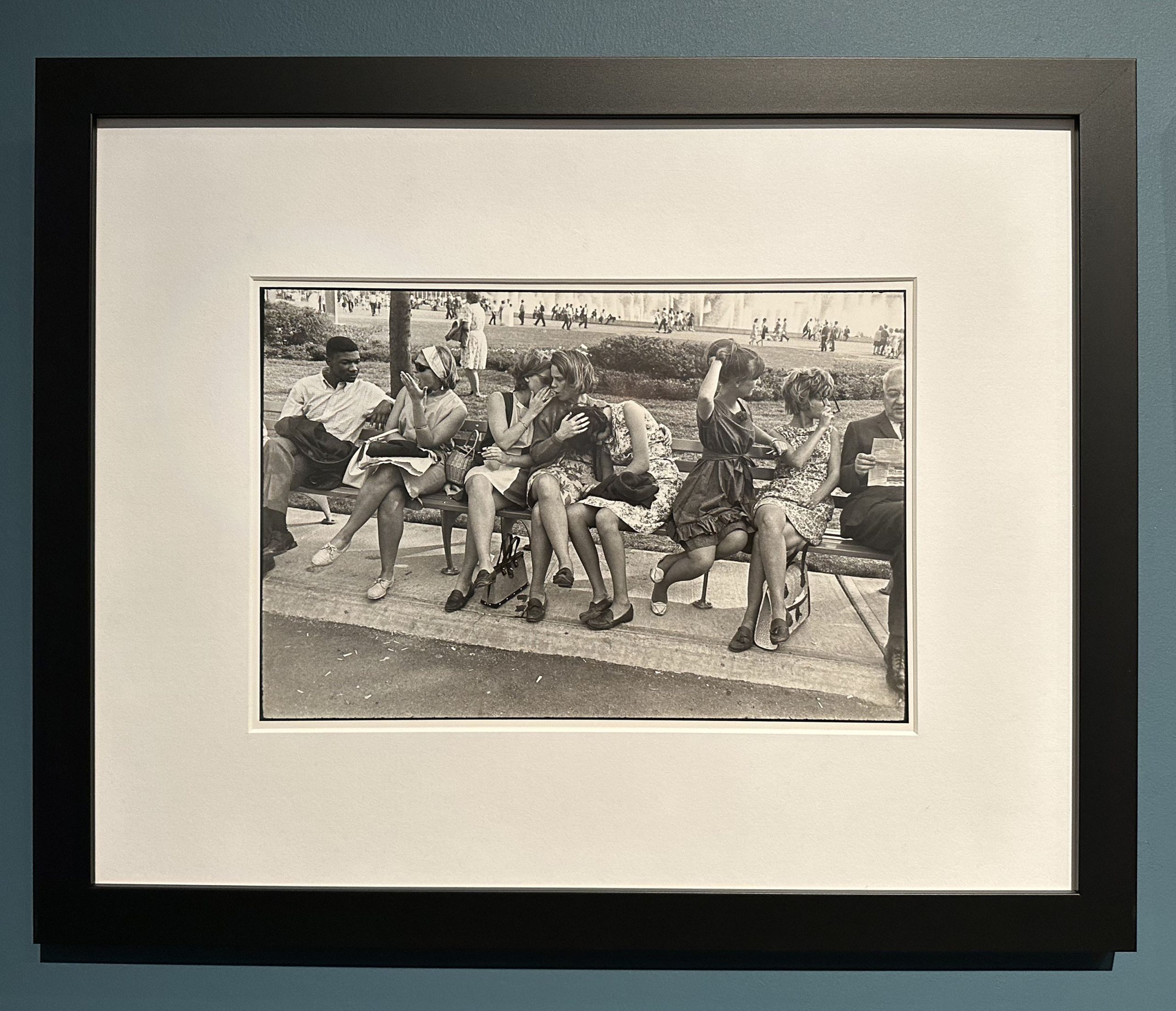
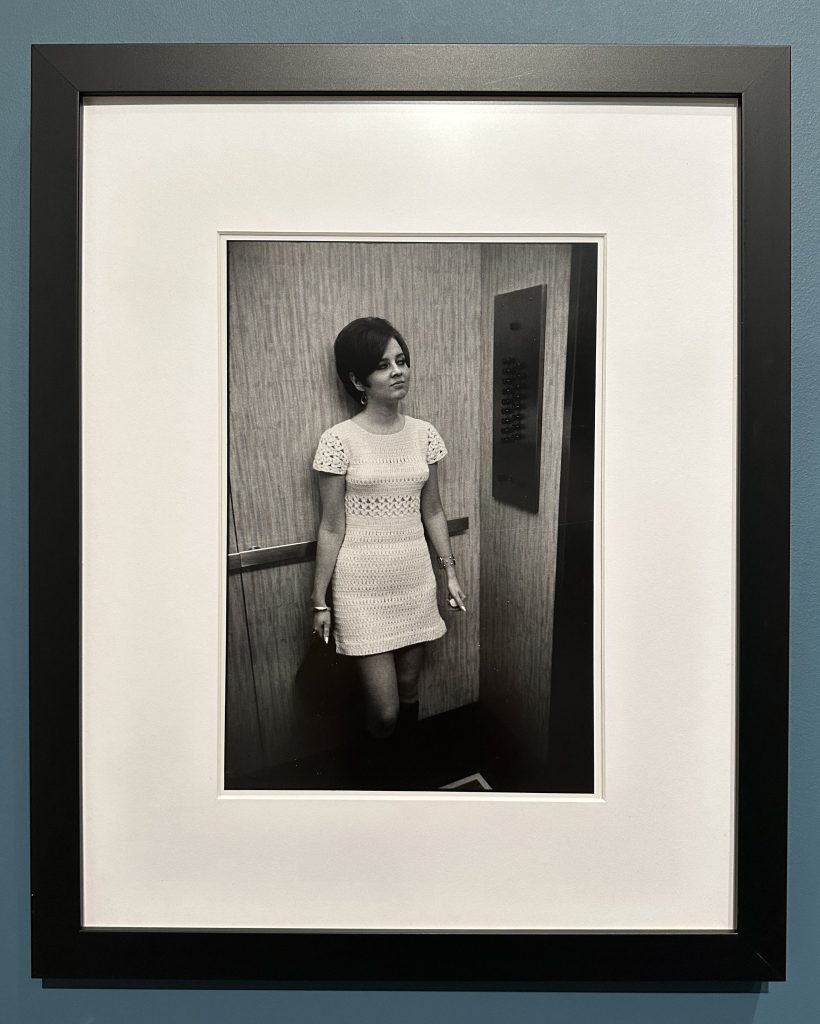
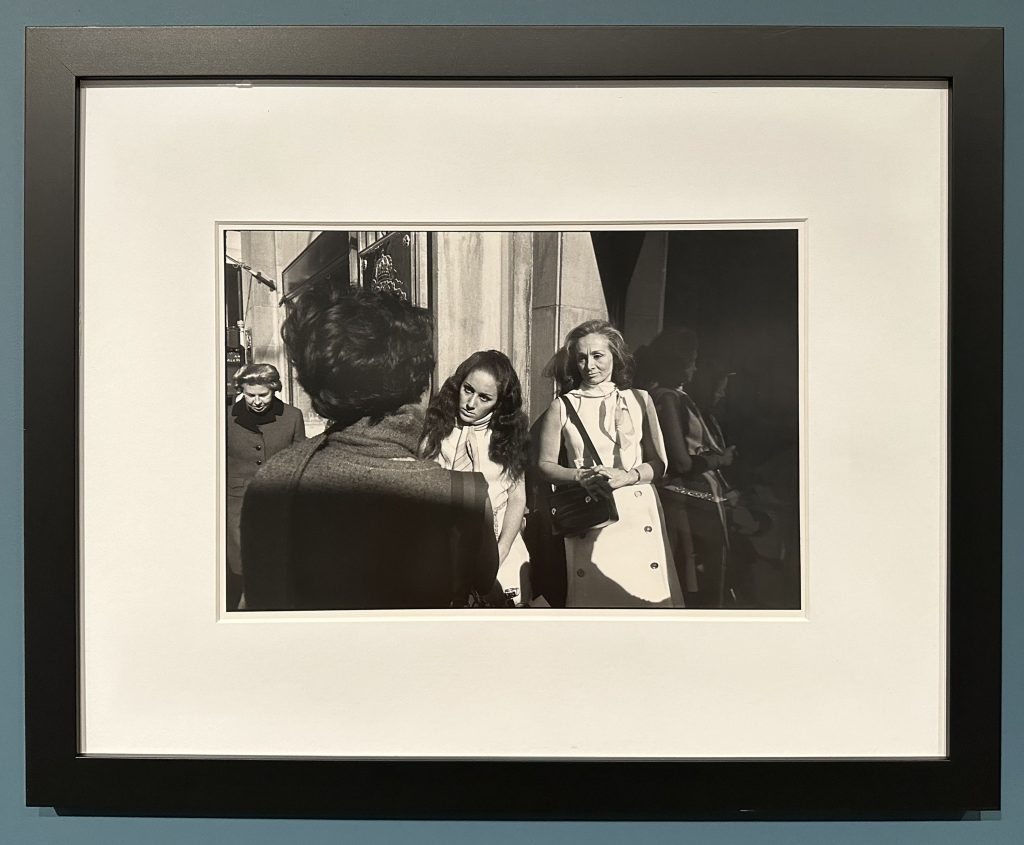
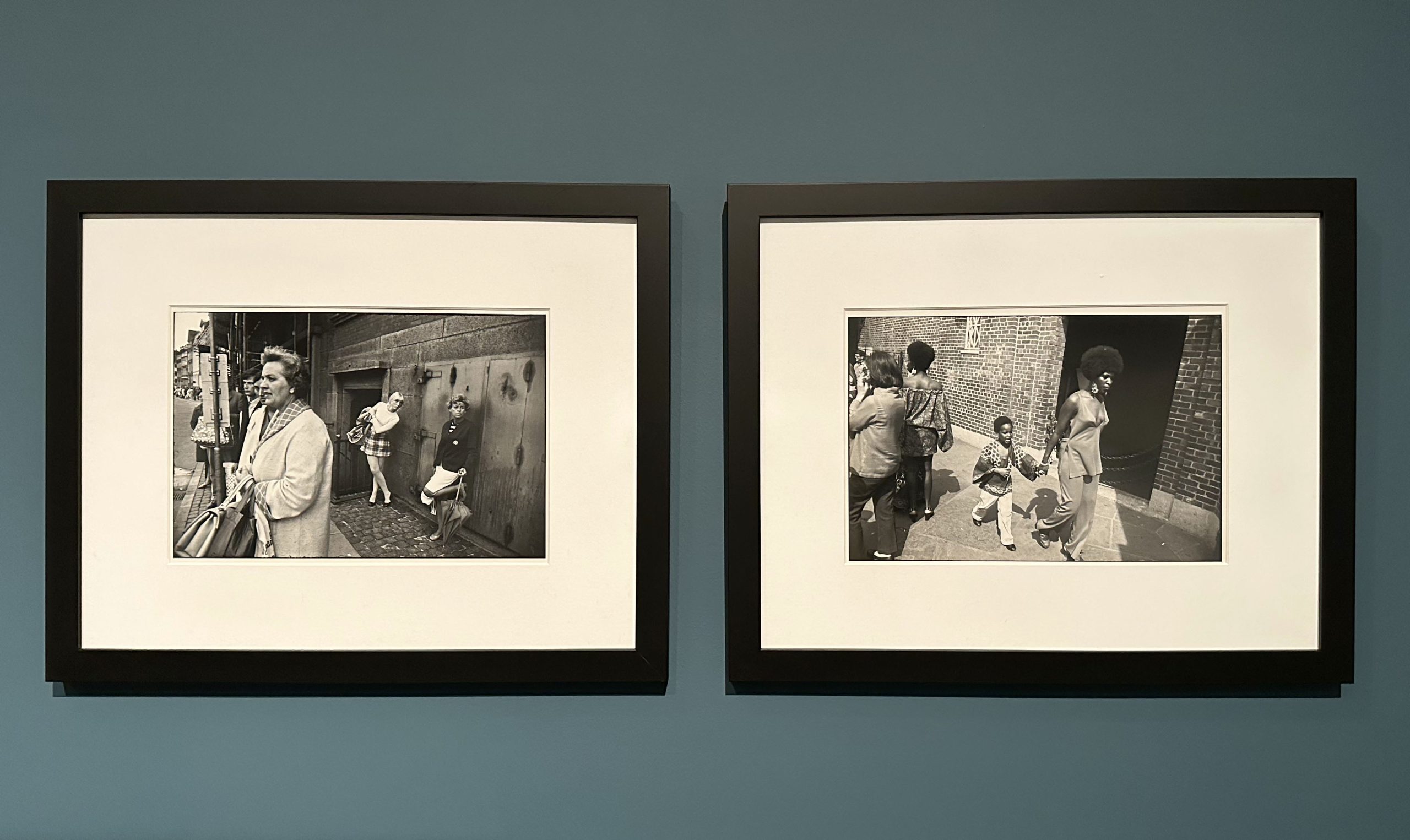
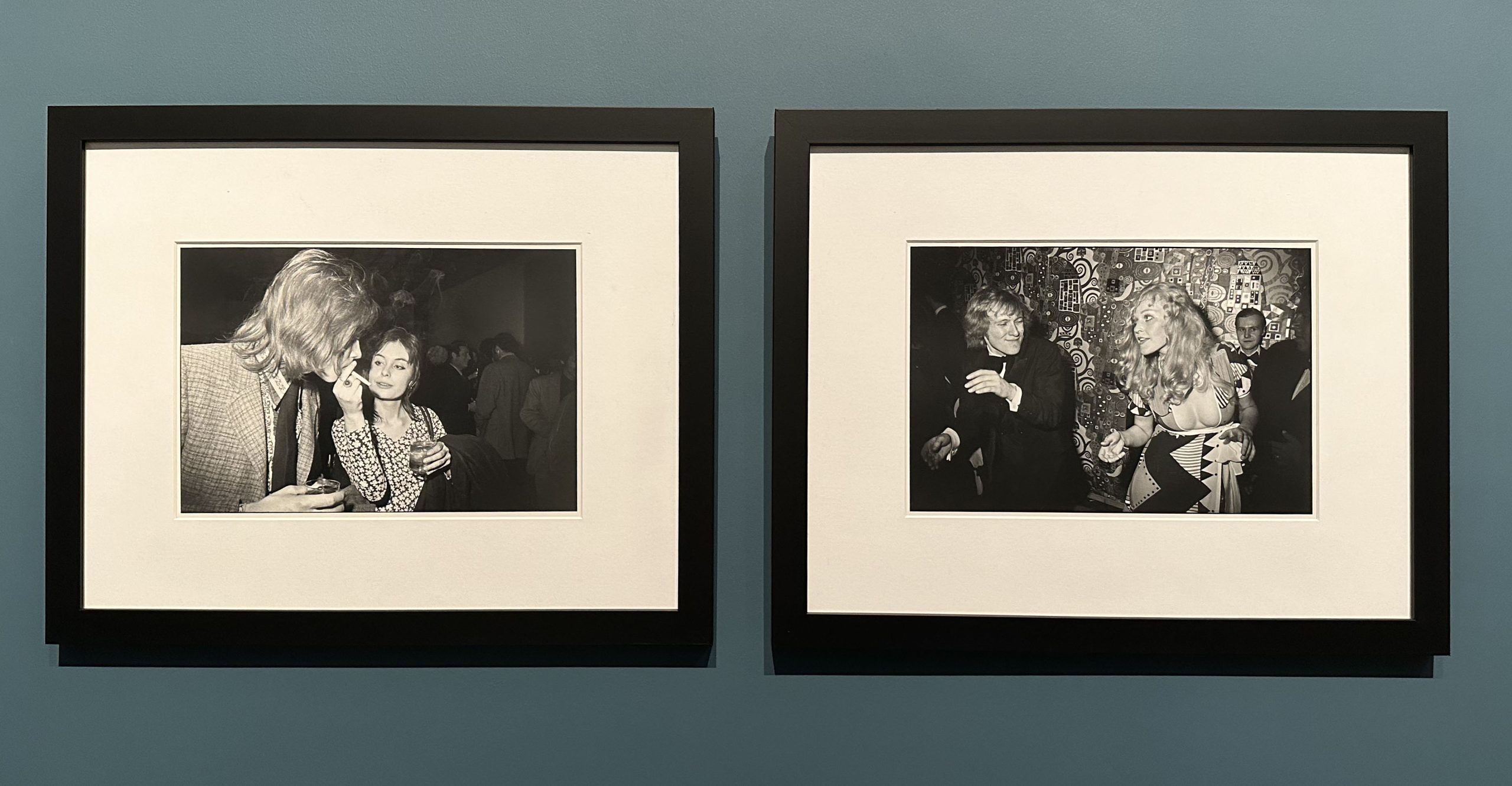
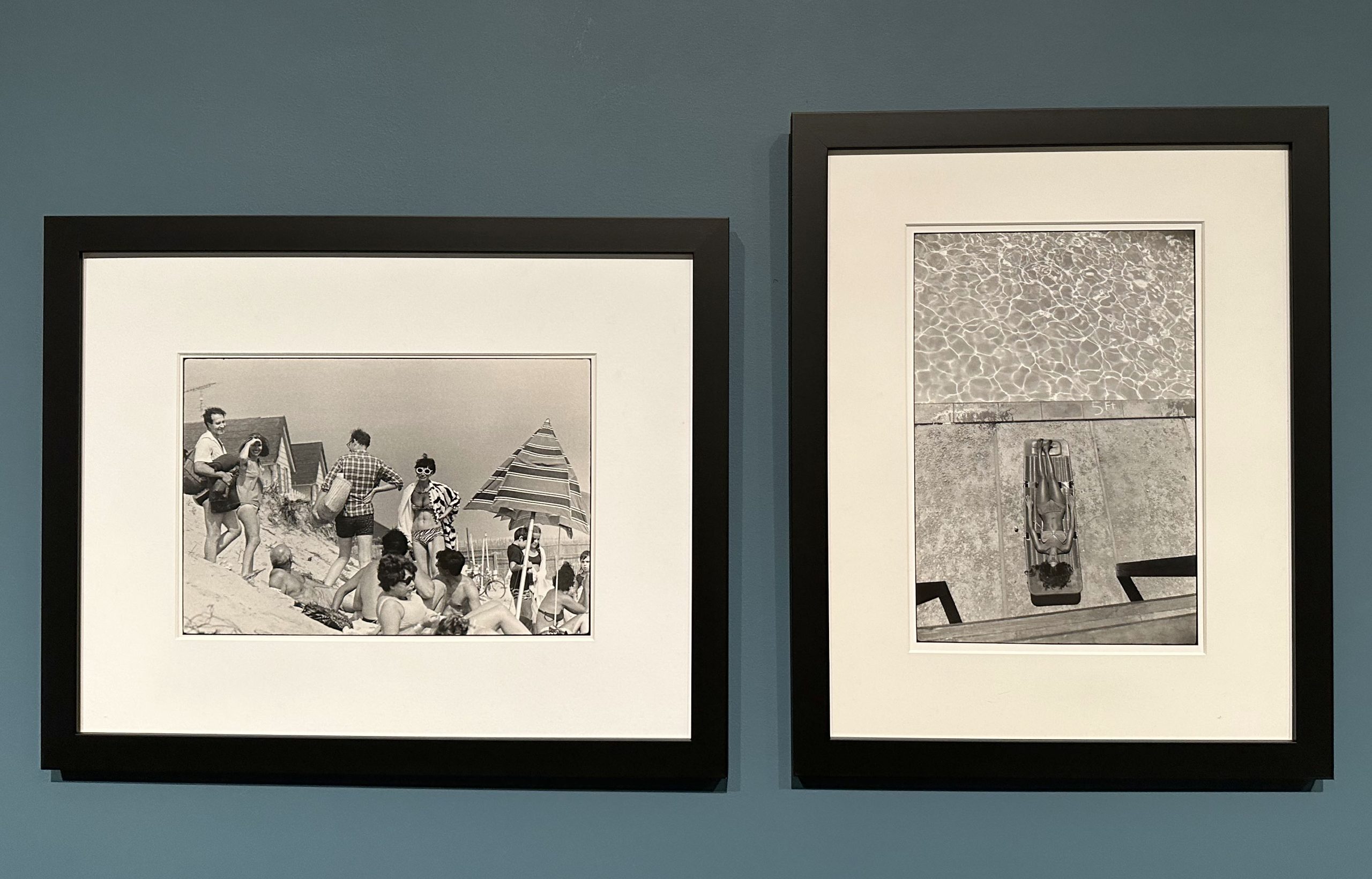
Currently Tampa Museum of Art is showing work from Garry Winogrand’s book, Beautiful Women. The photographs are from the 1960s and 1970s and are a fascinating glimpse of this time period. His ability to find and capture these brief moments is impressive.  At the same time, some of the photos of these women feel invasive and, as said in the museum’s statement on the work below, voyeuristic.

From the museum-

Garry Winogrand was a master at photographing the unseen, extraordinary moments of everyday life. With his Leica camera, Winogrand photographed both up close and at a distance, but spontaneously as the image came together. He liked to break the rules of photography by ignoring traditional horizon lines and shooting at titled angles to create compositional allure.
Described as one of the 20th-century’s most influential street photographers, Winogrand often defied social decorum by getting into the space of his subjects – sometimes unknowingly to the person and at other times to their great annoyance. He captured life in the 1960s and 1970s in the blink of an eye, preferably with his 28mm lens which allowed more of what was in front of him to be featured in the frame. Winogrand once remarked, “I photograph to see what the world looks like in photographs.”

Women are Beautiful represents of one Winogrand’s most celebrated yet controversial artworks. His magnum opus, Women are Beautiful was first published as a book in 1975 and later printed as a portfolio in 1981. Comprised of 85 photographs, the works were shot over a ten-year period between 1965 and 1975, notably at the height of second-wave feminism and the sexual revolution, the anti-war movement, and the civil rights movement. As the title suggests, women served as the inspiration for the project. Winogrand culled images from his extensive archive that emphasized the confidence, vibrancy, and individuality of the American woman. While the photographs have been lauded as artifacts of their time, the works have also been criticized as voyeuristic and invasive to women’s privacy. Both observations deserve consideration in viewing this body of work.

The presentation of Women are Beautiful in this gallery follows the format of the book, which is now out of print. Winogrand selected the images and organized the photos without reference to subject, date, and place. Apart from the first photograph in the series, the images are presented as pairs to represent Winogrand’s book spreads. This arrangement aims to highlight how the photographer viewed and read his pictures. While women anchor the photographs, Winogrand looked at the total image-such as the other people in the photo or the quietness of solitude, the surrounding landscape, and the objects featured in the frame. At quick glance, the connections between images may not appear readily visible but it is in these photographs that Winogrand invites viewers to take a longer, closer look at the pictures. Subtle gestures such as the common angle of limbs and facial profiles, or shadows, corners, and lines – even the shared shading of a hat and tree-inspired Winogrand’s paired selections. Viewed together, the photographs reveal a deliberate sequencing and pacing, like a storyboard or film. Winogrand’s Women are Beautiful offers insight into the vantage point of one the 20th-century’s most accomplished photographers.

Below are some of the pairs from the show.

This exhibition closes 4/21/24.

Apr 122024
 

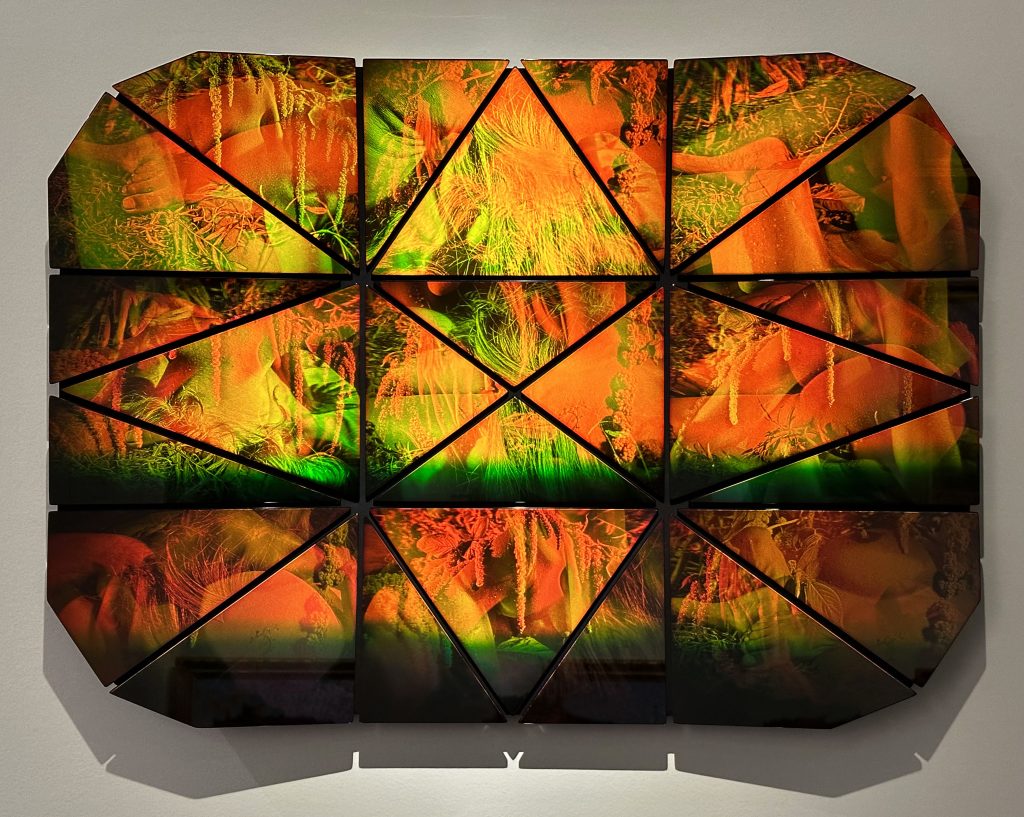
Sarah Meyohas, “Interference #19”, 2023, Holograms, mirrored black glass, aluminum

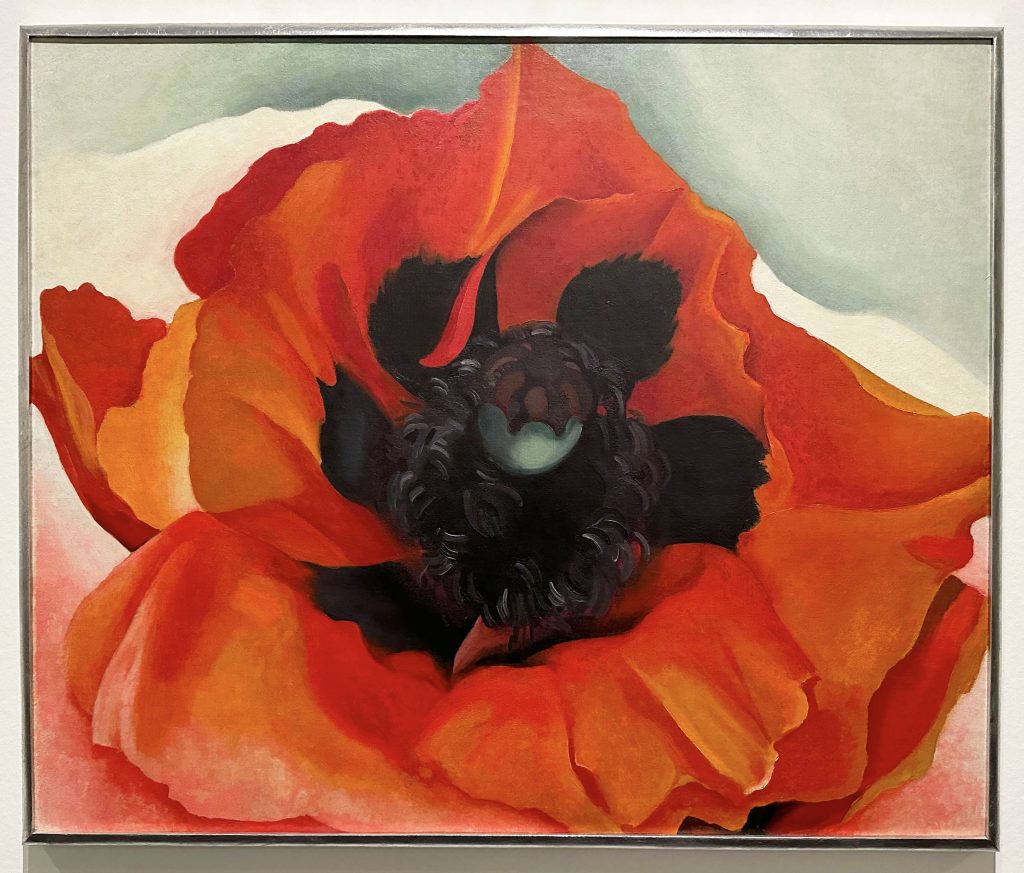
Georgia O’Keeffe, “Poppy”, 1927, Oil on canvas

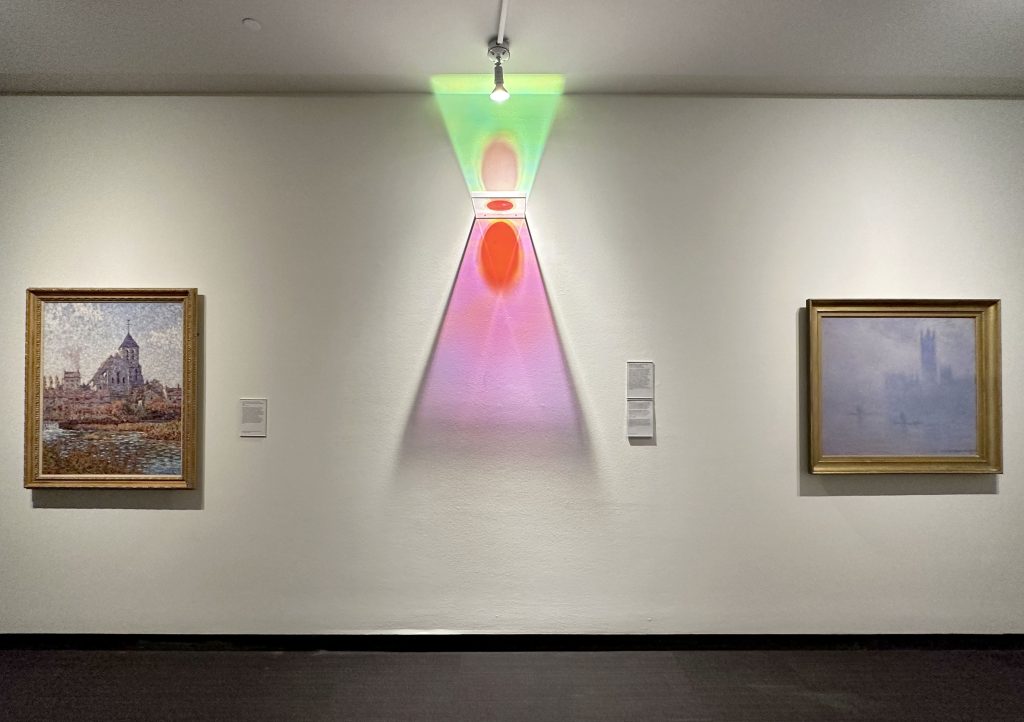
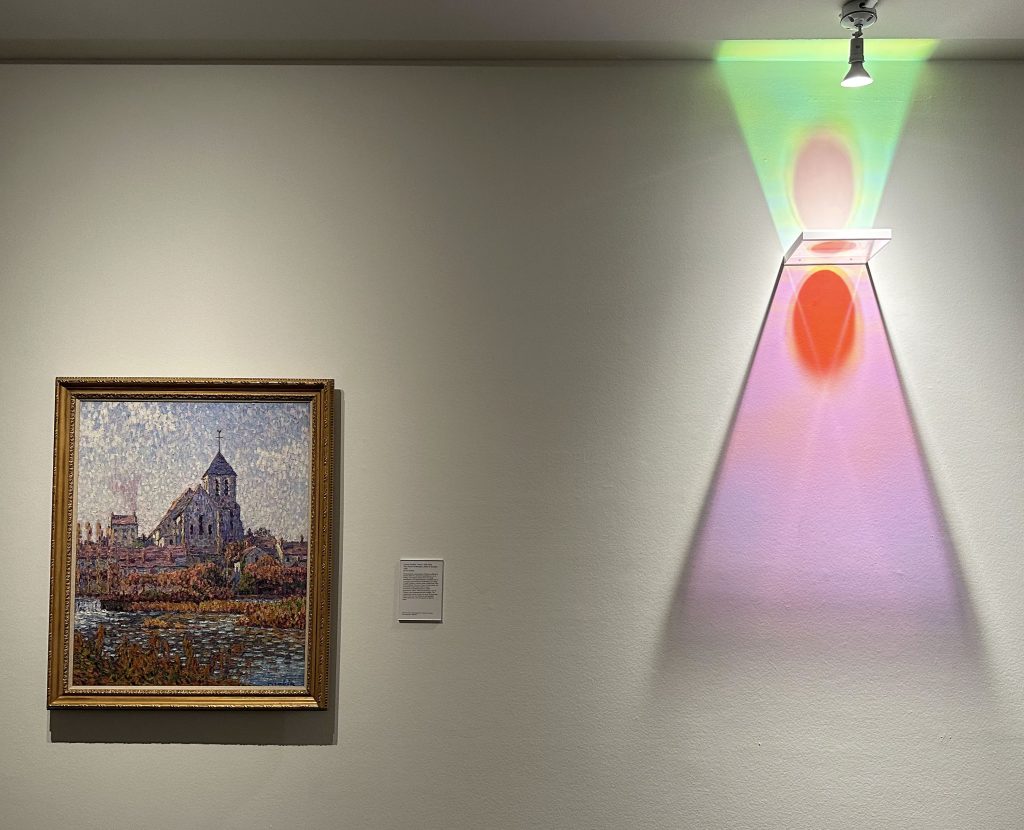
Francis Picabia “The Church of Montigny, Effect of Sunlight” 1908, Oil on canvas (left); Christian Sampson “Projection Painting”, 2023, Acrylic and films with LED light; and Claude Monet “The Houses of Parliament, Effect of Fog, London” 1904, Oil on canvas (right)

The Nature of Art exhibition at the Museum of Fine Arts St. Petersburg merges art from the museum’s collection with loaned works to explore- “art’s crucial role in our evolving quest to understand our relationship with nature and our place in the cosmos”.

One of the benefits of an encyclopedic museum is that visitors have the opportunity to experience art throughout history, and to revisit works that resonate with them. For the section titled Artist as Curator, Sarah Meyohas and Christian Sampson chose pieces from the museum’s collection to pair with their own work.

From the museum-

At first glance, perhaps, these may seem like unusual combinations, but upon deeper contemplation, their selections reveal complementary artistic intents. For instance, Meyohas and Georgia O’Keeffe share an interest in close looking, particularly in finding new ways to examine underappreciated aspects of the natural world. Sampson, influenced by the California Light and Space Movement, is interested in current scholarship that suggests the hazy fog found in Claude Monet’s work is an early depiction of air pollution, offering an entirely new perspective on the artist’s representations of light.

Sampson also created the four-part installation, Tempus volat, hora fugit, on view until 2025 at the museum.

Below are some of the works from additional sections of the exhibition.

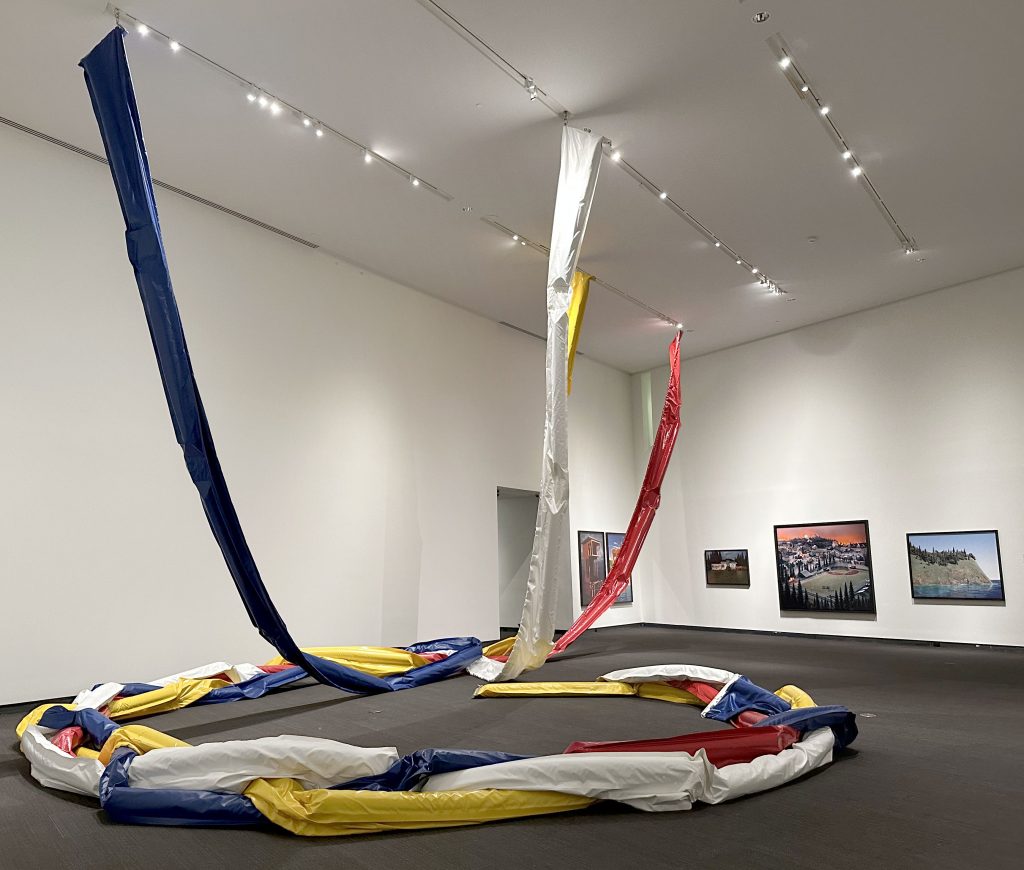
Postcommodity, “kinaypikowiyâs”, 2021, Four 30.5-metre industrial debris booms

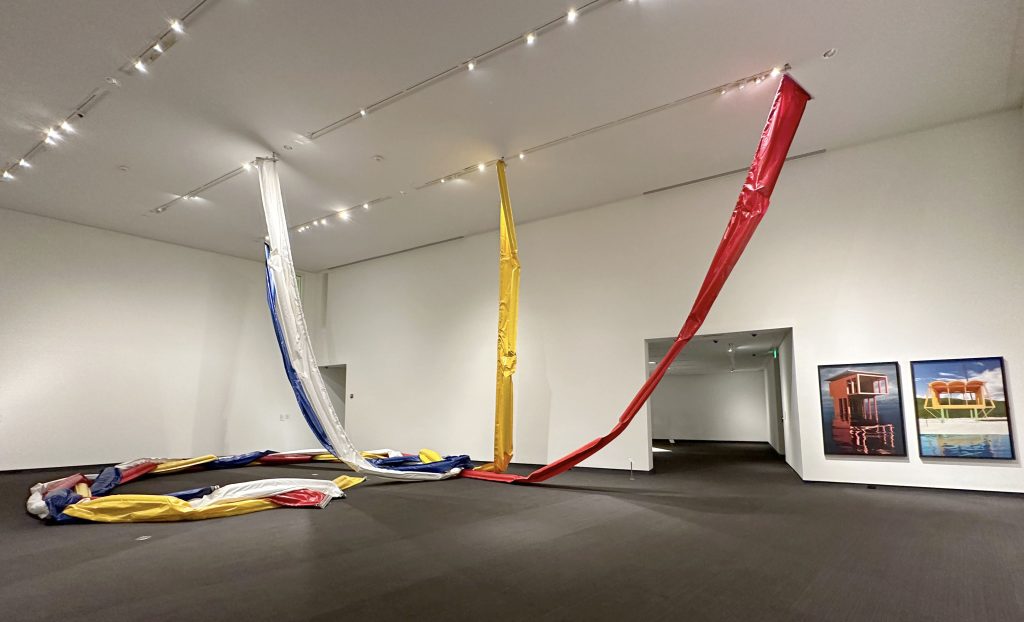
Postcommodity, “kinaypikowiyâs”, 2021, Four 30.5-metre industrial debris booms

Postcommodity is an interdisciplinary art collective comprised of Cristóbal Martínez (Genizaro, Manito, Xicano), and Kade L. Twist (Cherokee).

About Postcommodity’s work, kinaypikowiyâs, (seen above) from the museum-

This work is composed of debris booms, used to catch and hold environmental contaminants such as garbage, oil, and chemicals. The colors of the booms correspond to different types of threats— red (flammable), yellow (radioactive), blue (dangerous), and white (poisonous)-in the labeling system for hazardous materials. To indigenous peoples, these are shared medicine colors that carry knowledge, purpose and meaning throughout the Western Hemisphere. Suspended like hung meat, the booms represent a snake that has been chopped into four parts. Each part represents an area of the colonial map of the Western Hemisphere: South America, Central America, North America, and all of the surrounding islands. The title, kinaypikowiyâs, is a Plains Cree word, meaning snake meat. Divided by borders, Postcommodity asserts that all people living in the Americas are riding on the back of this snake.

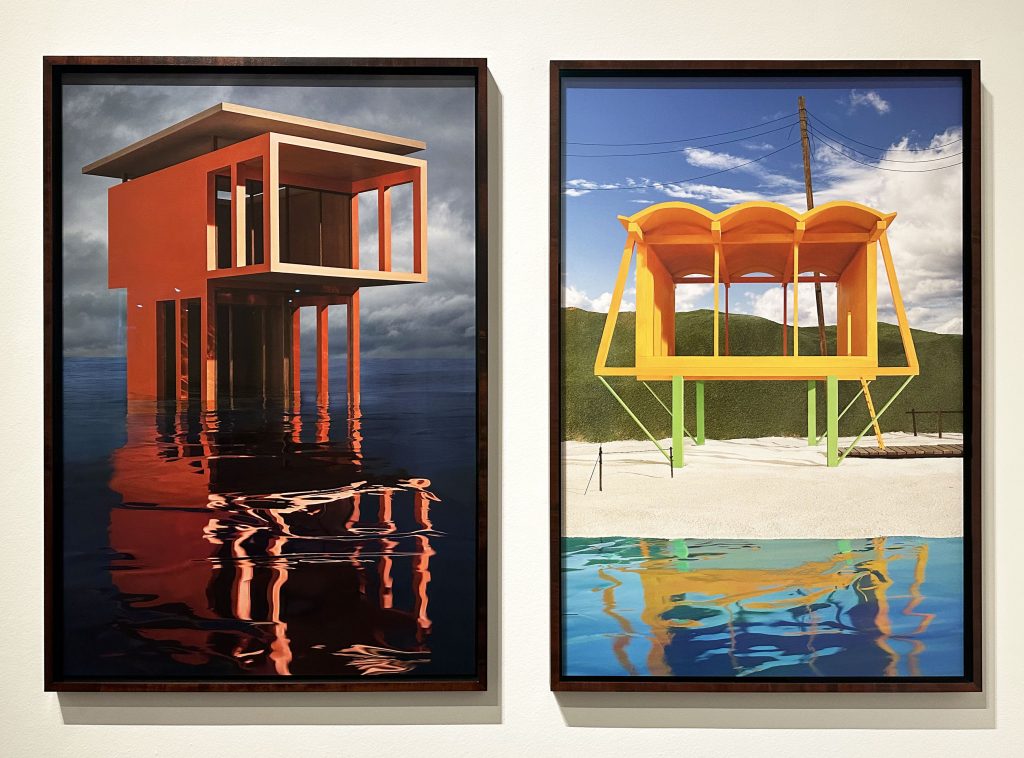
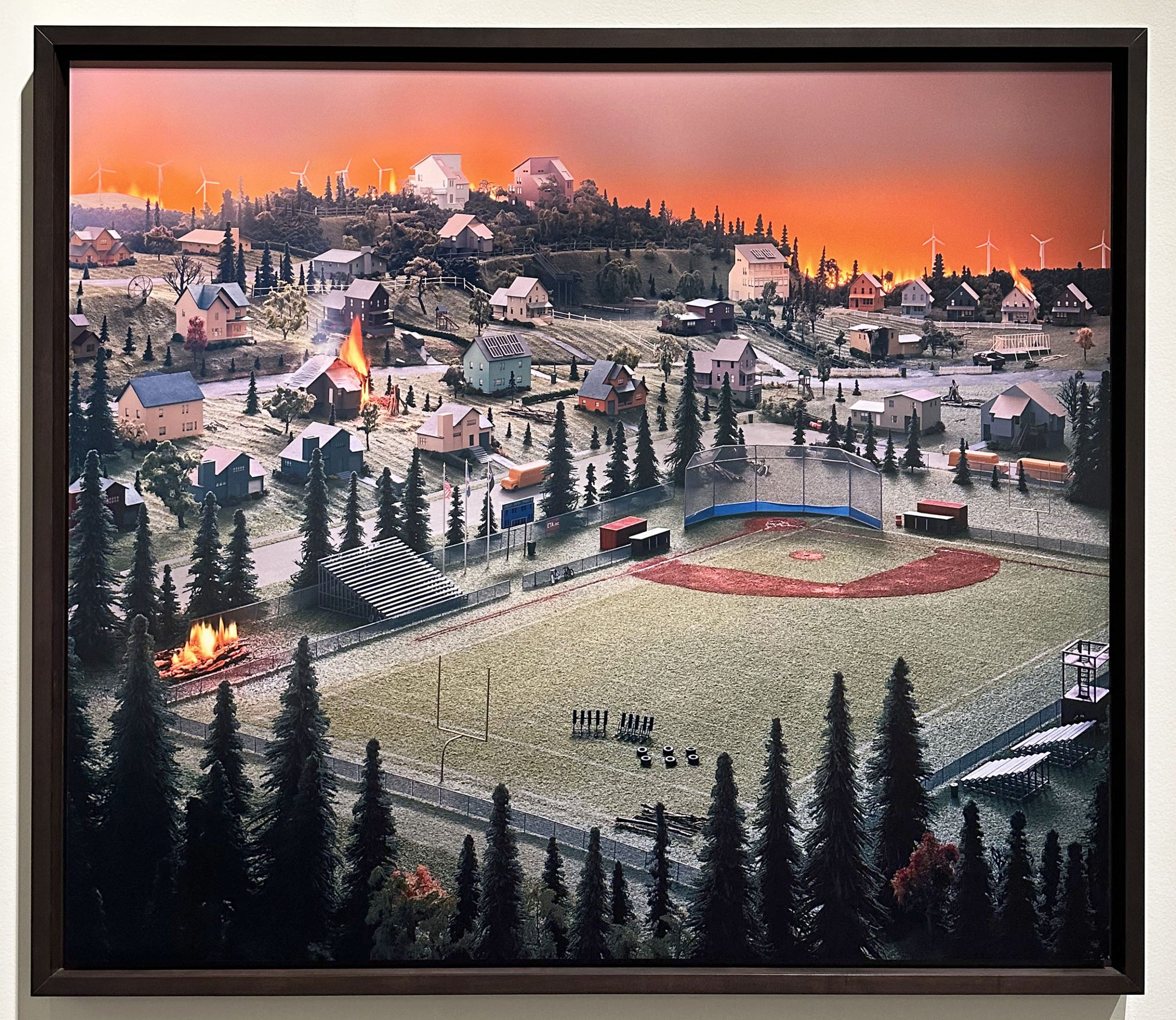
James Casebere, “Red/Orange Solo Pavilion”, and “Orange Guesthouse”, 2018, Archival pigment print mounted to Dibond

James Casebere, “Landscape with Houses (Dutchess County, NY), 2009, Archival pigment print mounted to Dibond

James Casebere creates architecturally based models for the large scale photographs seen above.

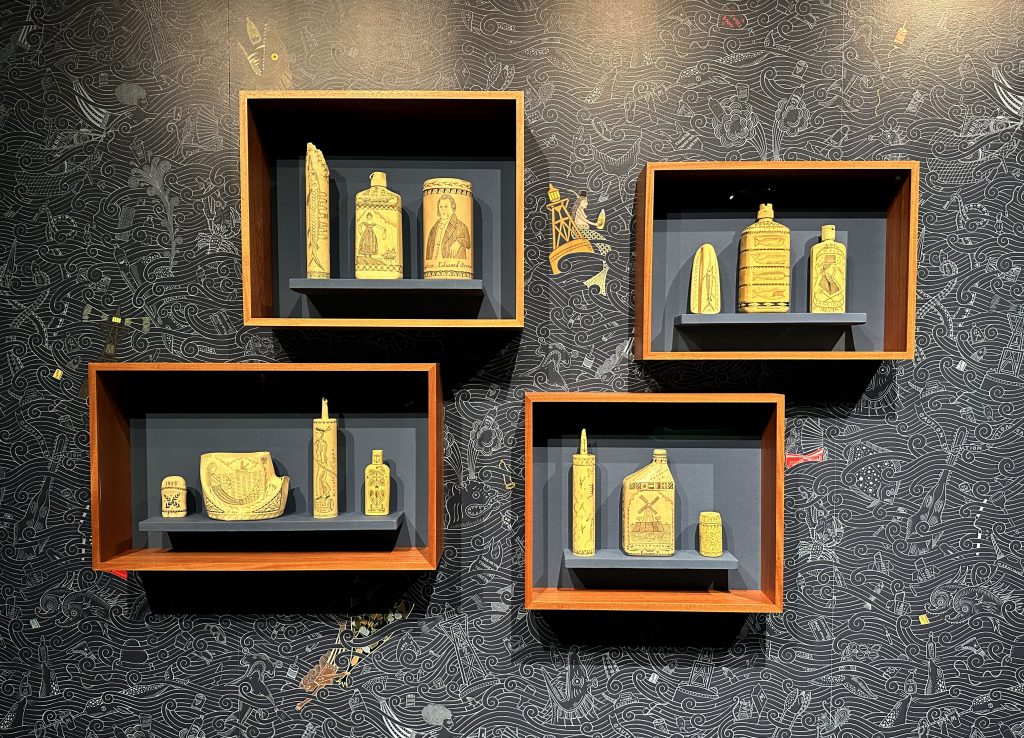
Reclaimed ocean plastic sculptures and “Tidal Fool” wallpaper by Duke Riley

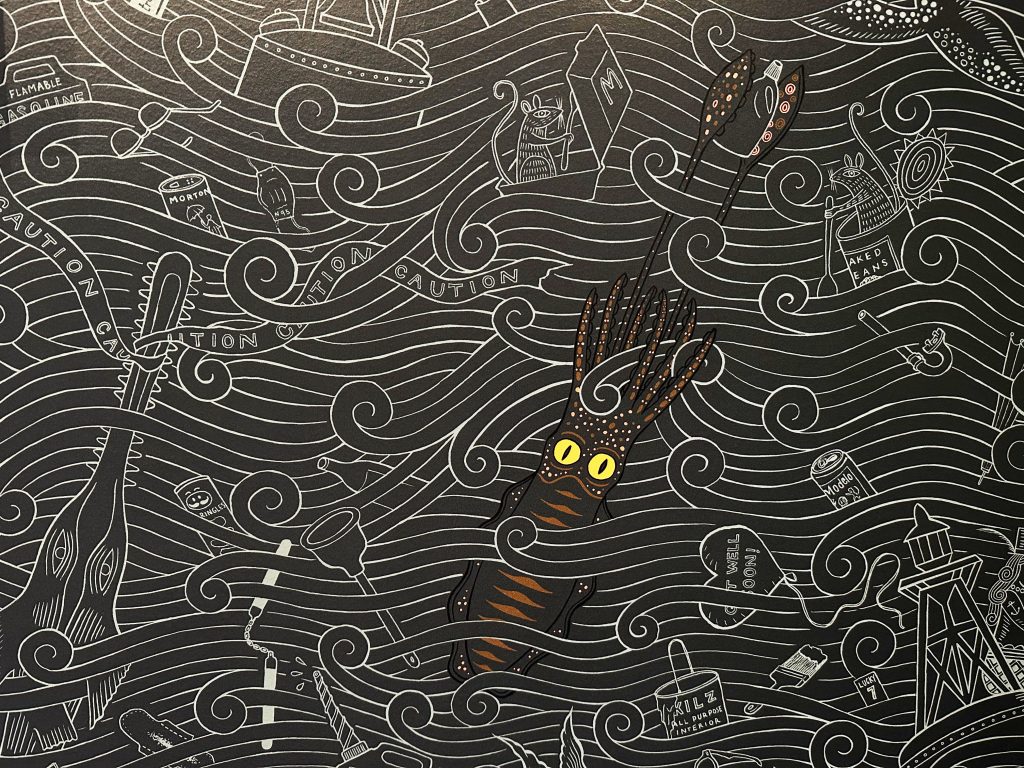
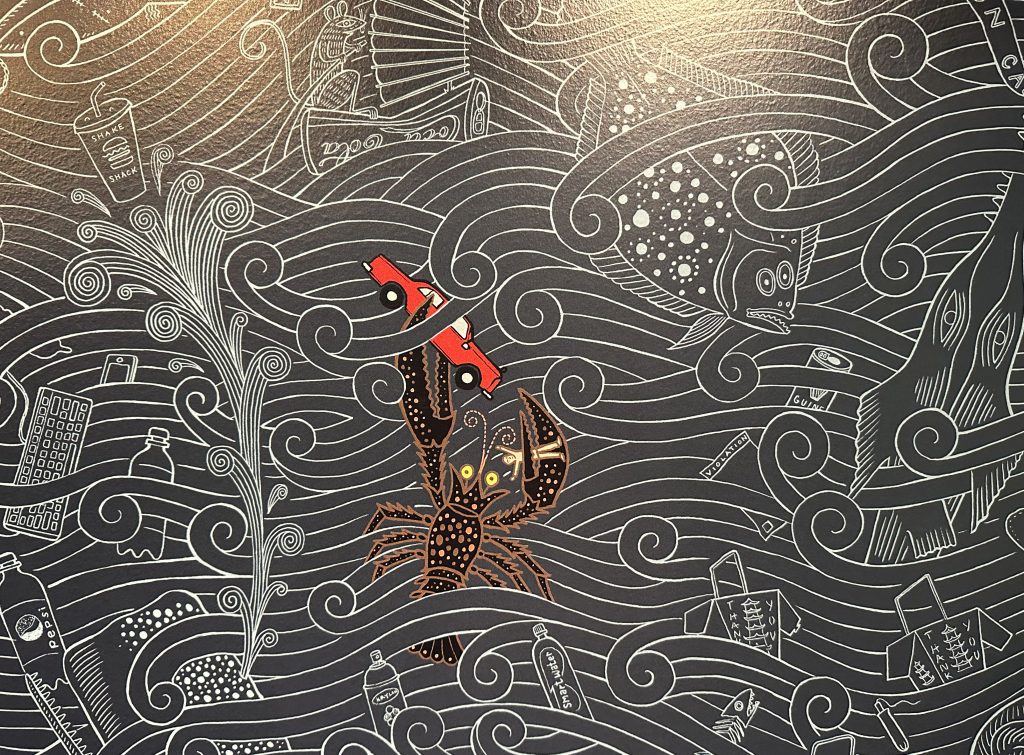
Duke Riley custom wallpaper, Tidal Fool, detail

Duke Riley custom wallpaper, Tidal Fool, detail

Duke Riley’s work, which was previously shown at Brooklyn Museum, addresses issues of environmental pollution by using discarded plastics found in the ocean and other waterways to create new work inspired by the past. You can hear him discuss his work in this video.

From the museum-

Inspired by the maritime museum displays he saw while a child growing up in New England, Riley’s scrimshaw series is a cutting observation of capitalist economies-historic and today-that endanger sea life. The sculptures were created for the fictional Poly S. Tyrene Memorial Maritime Museum, and are contemporary versions of sailors’ scrimshaw, or delicately ink-etched whale teeth and bone. Riley first thought about using plastic as an ode to scrimshaw when he saw what he thought was a whale bone washed up on the beach in Rhode Island; it turned out to be the white handle of a deck brush. Riley regularly removes trash from beaches and waterways, and often uses this refuse in his work.

Riley collaborated with Brooklyn-based Flavor Paper to create these two custom wallpapers for his solo exhibition DEATH TO THE LIVING, Long Live Trash at the Brooklyn Museum. Tidal Fool exhibits Riley’s trademark humor in the face of devastating water pollution; notice the Colt 45-guzzling mermaid. Wall Bait vibrantly references Riley’s meticulous fishing lures, which he crafts from refuse found in the waters around New York City.

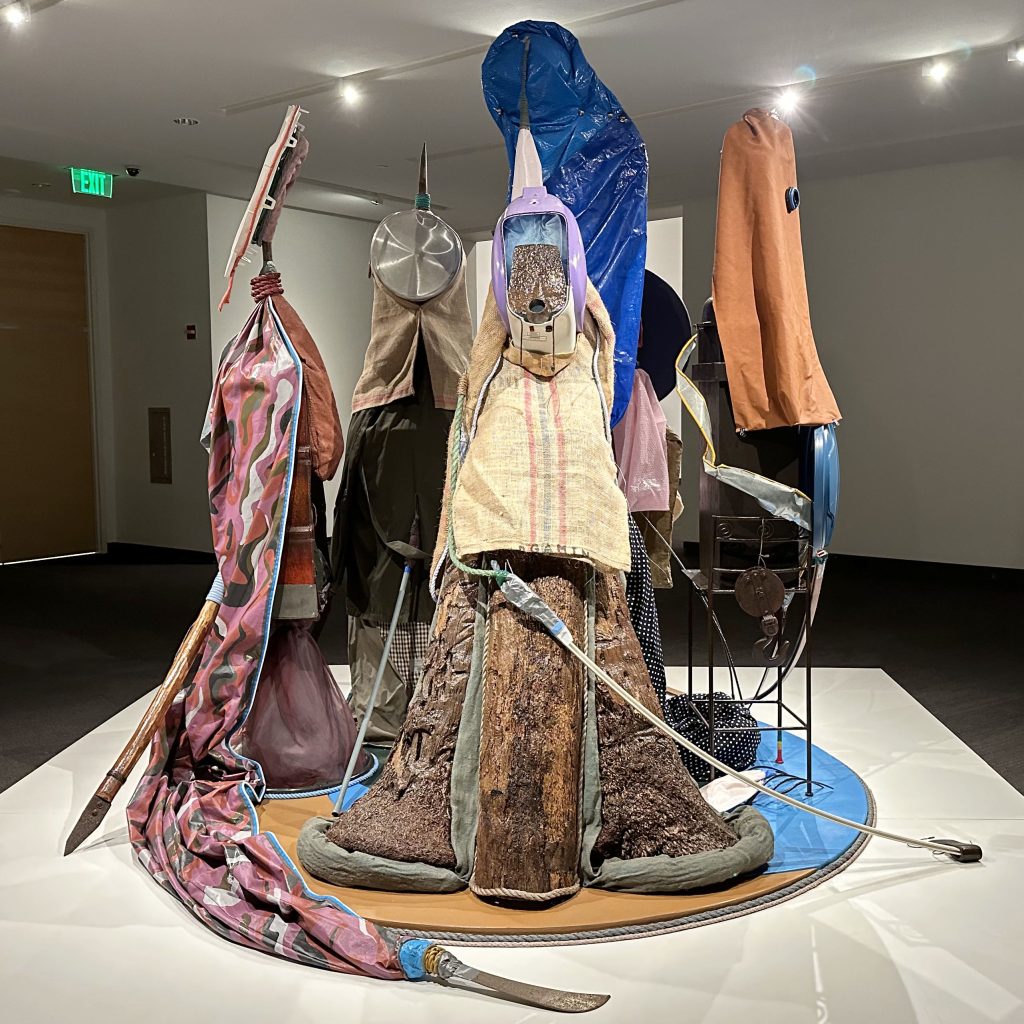
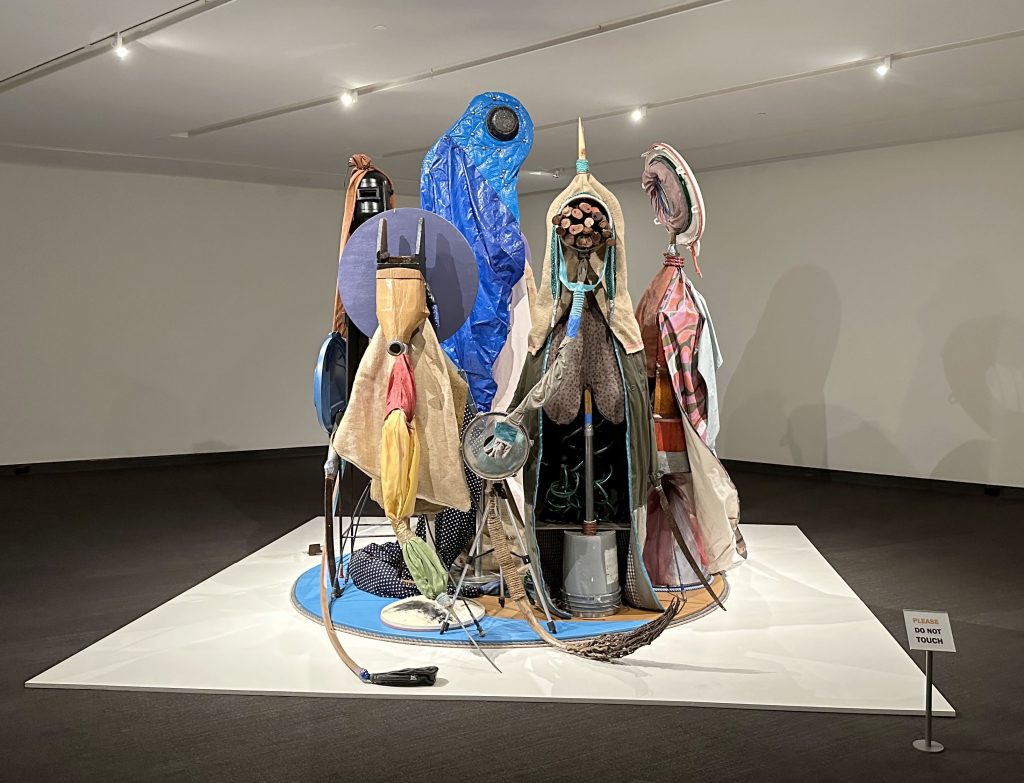
Daniel Lind-Ramos,”Centinelas de la luna nueva (Sentinels of the New Moon)”, 2022-2023, Mixed media

Daniel Lind-Ramos,”Centinelas de la luna nueva (Sentinels of the New Moon)”, 2022-2023, Mixed media

Daniel Lind-Ramos also uses a variety of recycled objects to create his sculptures.

From the museum about this work-

In Centinelas de la luna nueva, he evokes the elders of the mangroves, spiritual beings who watch over and ensure the health of this essential coastal tree. Mangroves are the basis for a complex ecosystem that shelters sea life and serves as the first line of defense in the tropical storms that batter the sub-tropics—including Florida.

Lind-Ramos’s practice reflects the vibrant culture of his native Loíza, Puerto Rico, by honoring local agriculture, fishing, cooking, and masquerade. His sculptures also evoke Hurricane Maria (2017), the COVID-19 pandemic, and ongoing environmental degradation. Lind-Ramos is committed to the survival and sustenance of Afro-Taíno traditions and people of the Puerto Rican archipelago. However, his art engages the global community through shared emotions, parallel histories, and the commonality of human experience.

The next post will discuss two other artists in the exhibition, Brookhart Jonquil and Janaina Tschäpe.

Apr 072024
 

“Moon Setting into Fog Bank over Cape Cod Bay, Morning of the Total Lunar Eclipse”, 2007, printed 2023

“1:30-4:30a.m., Moon Rising, Antelope Lake”, 2011, printed 2023

“Sun Ball, Imnamatnoon Creek, Lochsa River Valley”, 1995, printed 2023

“Fireflies”, 2005

One of the smaller prints from the “Fireflies” series

There is something so peaceful about the photographs in Barbara Bosworth: Sun Light Moon Shadow, currently on view at Cleveland Museum of Art. These beautiful moments she has captured allow the viewer to share her sense of wonder.

From the museum about the exhibition-

“My childhood home is where all my photographs come from,” says American photographer Barbara Bosworth (born 1953). Growing up in Novelty, Ohio, Bosworth adored walking with her father and looking up at the night sky, a practice that became a lifelong passion. This exhibition -timed to coincide with the total solar eclipse visible in Cleveland on April 8— features the artist’s photographs of light, from eclipses, sunrises, and sunsets to the luminescent glow of fireflies and a flashlight. Her images both explore how we endow these phenomena with personal meaning and elucidate bonds between humans and the natural world that often go unnoticed.

Photography is an art form with its roots in science, even though the two disciplines are sometimes considered opposites. The term photography was coined in 1839 by British scientist and astronomer Sir John Herschel from Greek words meaning “drawing with light.” Bosworth notes that light is an essential ingredient in both astronomy and photography. The camera and telescope, used together as Bosworth has in a number of the photographs on view, each collect light.

Time is another integral component of photography: a photograph records the light that strikes a sensitized surface-such as film or, in the case of digital photography, a sensor-during a certain length of time. In making her photographs of the heavenly bodies, Bosworth says she wants “to be reminded of the mystery closer to home: the sheer strangeness that light — millions of years old, unfathomably old – can still land on my film and be seen.”

This exhibition is on view until 6/30/24.


Apr 032024
 

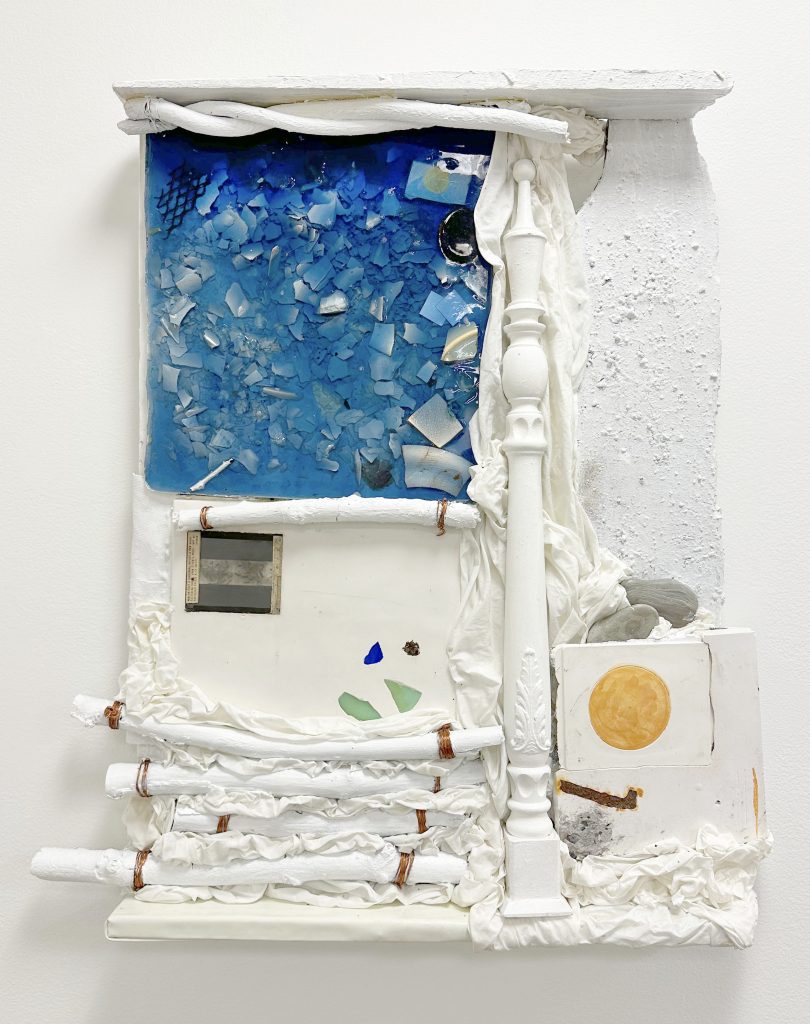
Julia Schenkelberg, “Blue Ocean”, 2020, Blue dye, resin, rusted metal from Detroit factory floors, plaster chips, vintage china, glass from Brooklyn beaches

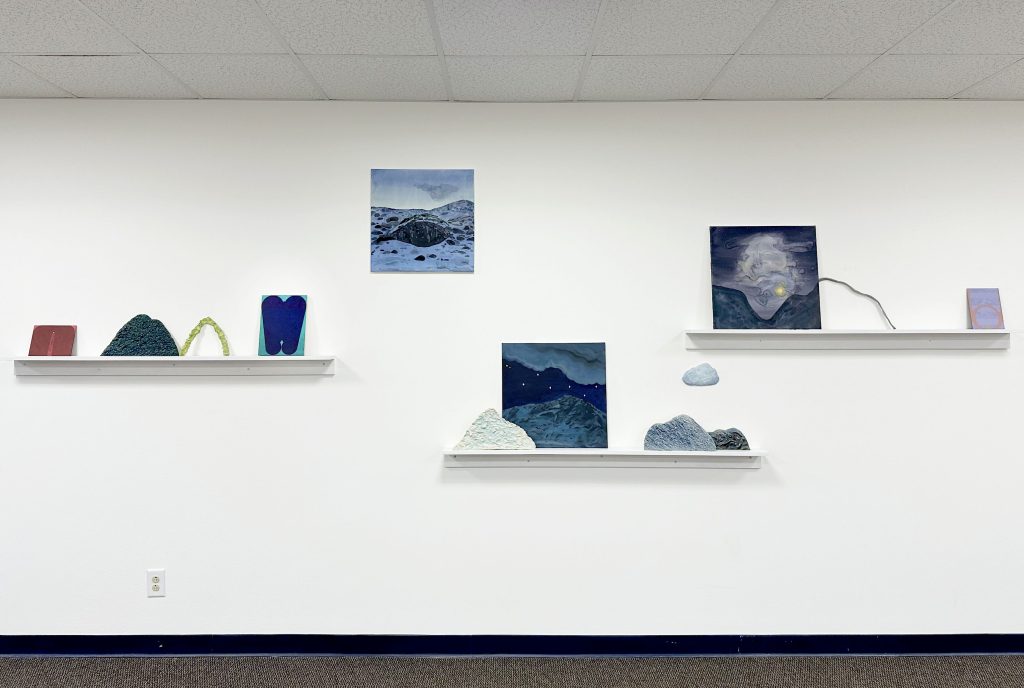
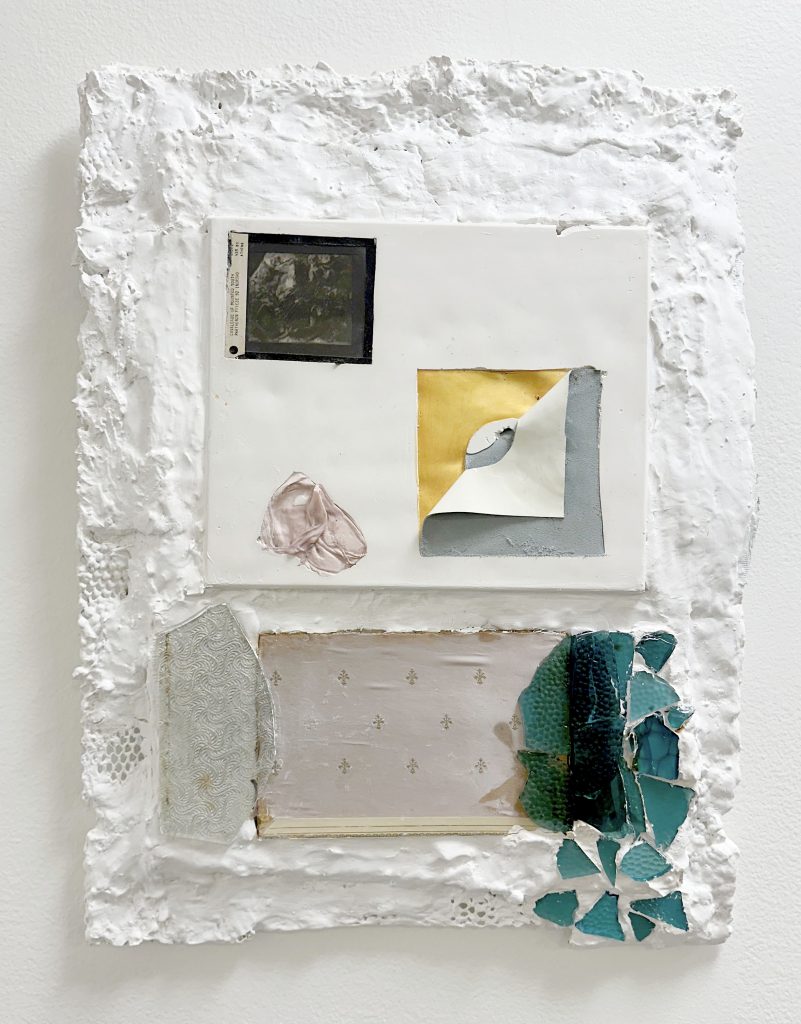
Malone University Art Gallery’s exhibition Healing Spaces features work by Northeastern Ohio artists Julie Schenkelberg, Chen Peng, Yiyun Chen, and Emily Bartolone. Although the mediums differ, the work flows together in the room. Below are some selections and more about each artist from the gallery’s documentation.

Julie Schenkelberg, “Modern Memorial”, 2020, Found screen, plaster, acrylic paint, vintage leather and fabric, jewelry box interior, glass gathered from Cleveland and Detroit auto and steel factory abandoned floors, vintage glass slide of the Parthenon Frieze

Julie Schenkelberg grew up in the post-industrial landscape of Cleveland, Ohio. Her mixed-media installations start with furniture, dishware, textiles, and marble, combined with concrete, resin, and construction materials, to transform notions of domesticity, and engage with the American Rust Belt’s legacy of abandonment and decay. Using the home as a playground for formal and conceptual subversions, the work aggressively disrupts cohesion within the physical sphere. Familiar furnishings rekindle memories or premonitions of collapse, suggesting both the utter destruction of war, calamities, or urban decay, but also the uncanny juxtapositions of fragile substances such as cloth and china, with industrial materials such as rusty metal, heavy concrete, and tool-made marks such as drilled holes and chain-sawed indentations.

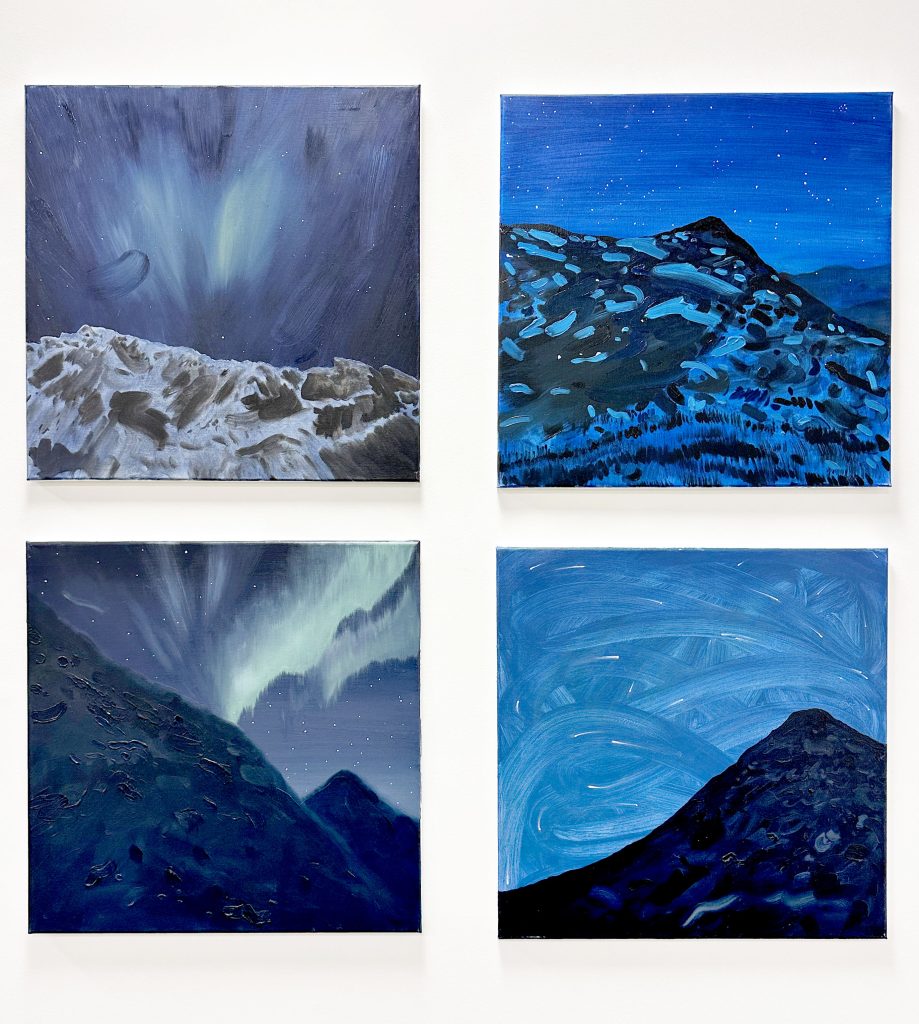
Chen Peng, Paintings from the “Mountains at Night” series, 2023, gouache, acrylic, and oil on canvas

Deriving from a desire to find stillness and grounding as an immigrant, Chen Peng explores the connection between landscape and the complexities of identity and belonging. She creates foreign landscapes from a combination of past experiences, memories, and imagination, delving into the disorienting sense of not knowing where home is. The moon, particularly in its fullness, becomes a symbol encapsulating emotions and metaphors associated with loneliness, reverence, and even terror. Her ceramic pieces extend this exploration of landscapes, featuring textures and marks that convey the essence of mountains, clouds, and the moon.

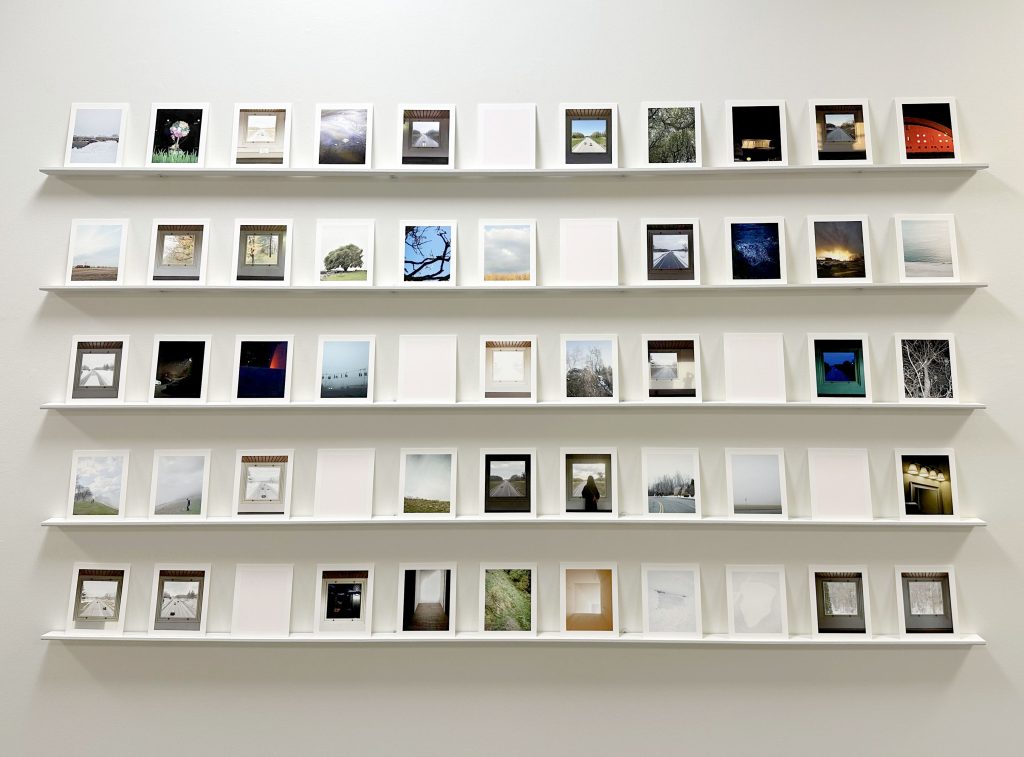
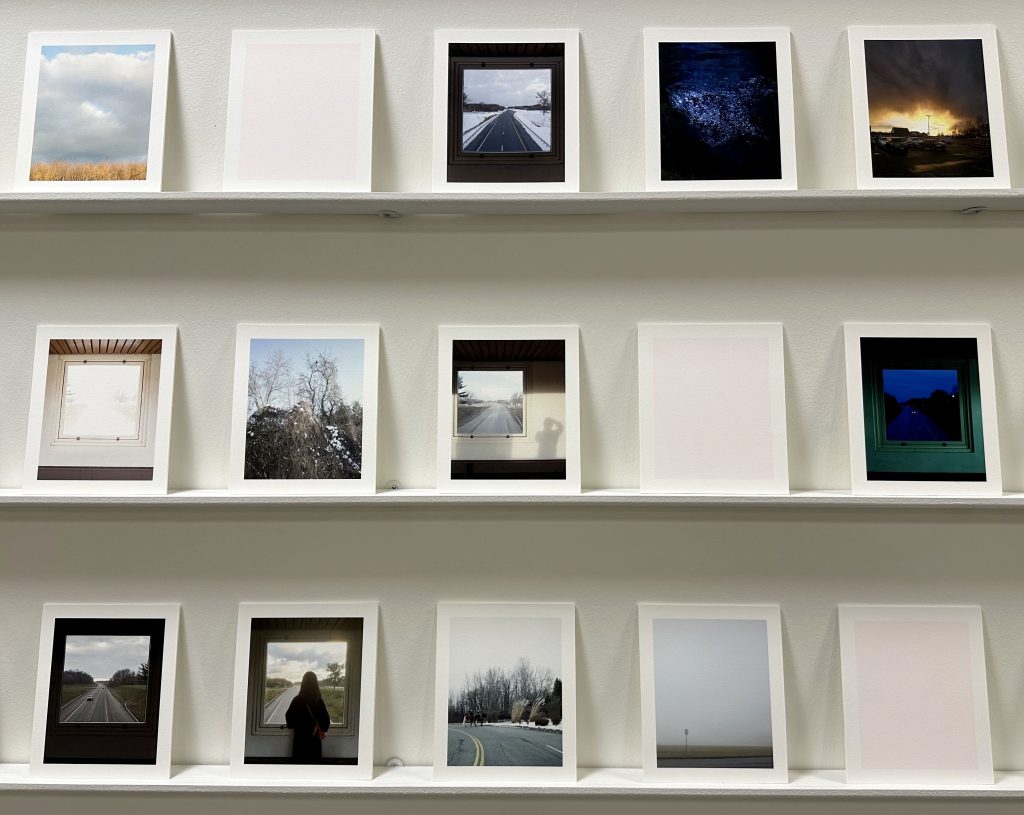
Photographs from from Yiyun Chen’s series “Velleity”, 2016-2018

Yiyun Chen, “Velleity”, detail

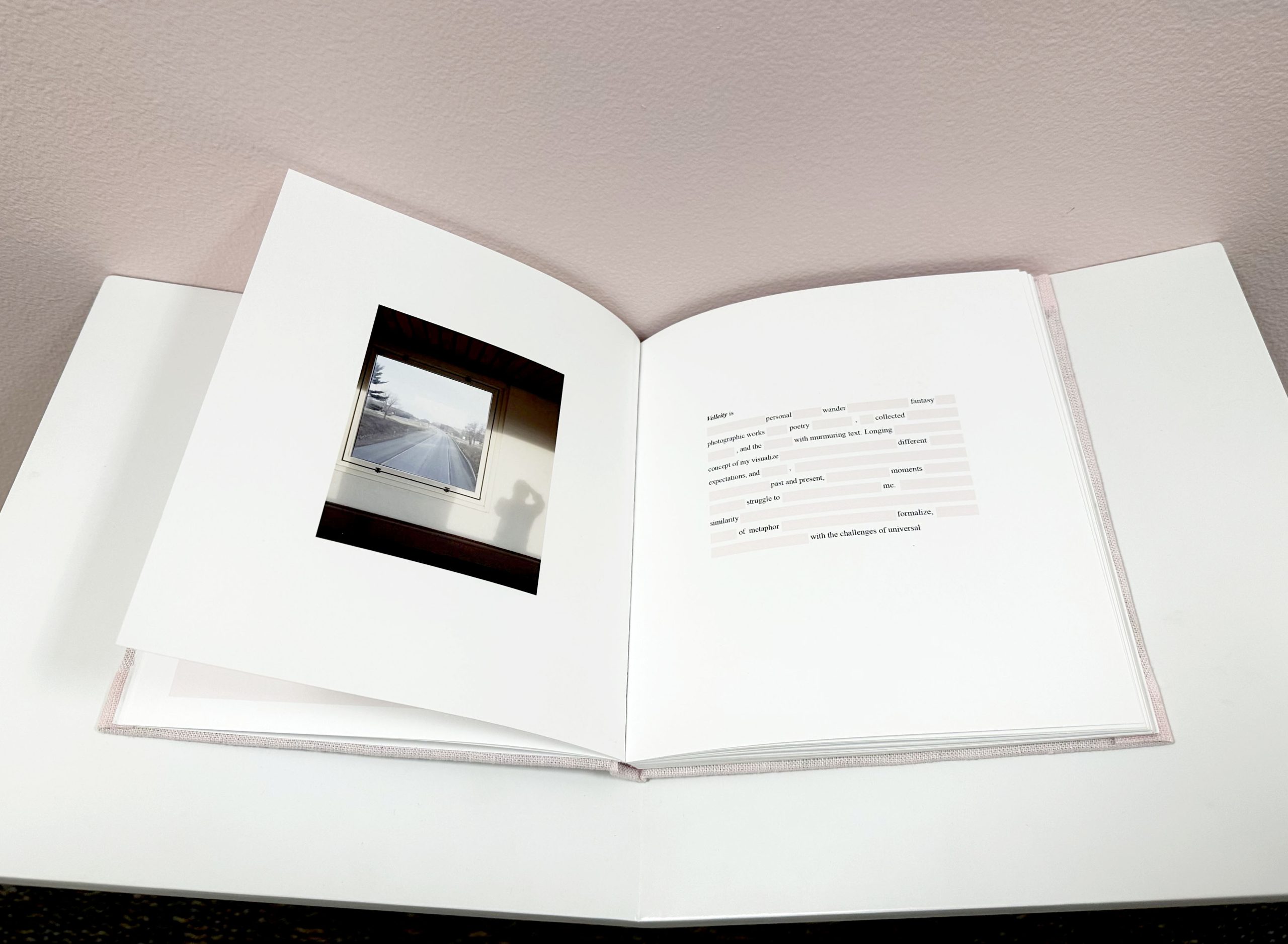
Yiyun Chen, Handmade photobook, 2018

The photography of Yiyun Chen is about the process of self-reflection and self-discovery as an Asian immigrant, exploring the relationship between people, environment and society, turning its personal experience and empathy into gentle conversations between humans and nature, capturing the poetic and distance of the environment around us. Through photography, we can take the essence of life seriously again and treat the people and things around us tenderly. Through his lens, they often have similar structure, people look tiny in nature scenes, creating an intimate visual experience. Most of his photographs are captured outdoors, with soft light and harmonious colors often used.

Painting by Emily Bartolone

Painting by Emily Bartolone

Stemming from her infatuation with the formal elements of painting, the work of Emily Bartolone pairs down simple, anthropomorphized shapes in an effort to explore paint and color theory while simultaneously creating tension and humor through color, edges, and texture. The playful, human qualities of painting are incorporated into the work through the use of amorphous shapes animated within the picture plane. Further informed by ideas of the mundane, the awkward, and the jovial that surround everyday life, the complexity of human relationships are mimicked by the shapes interacting on each painting’s surface. In acknowledging that life is not always cordial, moments of tension are placed within the satisfying surfaces in the form of an abrupt mark, a disparate color, or a shift in scale. These ideas are used to take viewers outside of themselves for a short period of time, hoping to offer a break from the bombardment of distractions, notifications, and news we encounter so often on a daily basis.

This exhibition closes 4/9/24.
 

Mar 202024
 

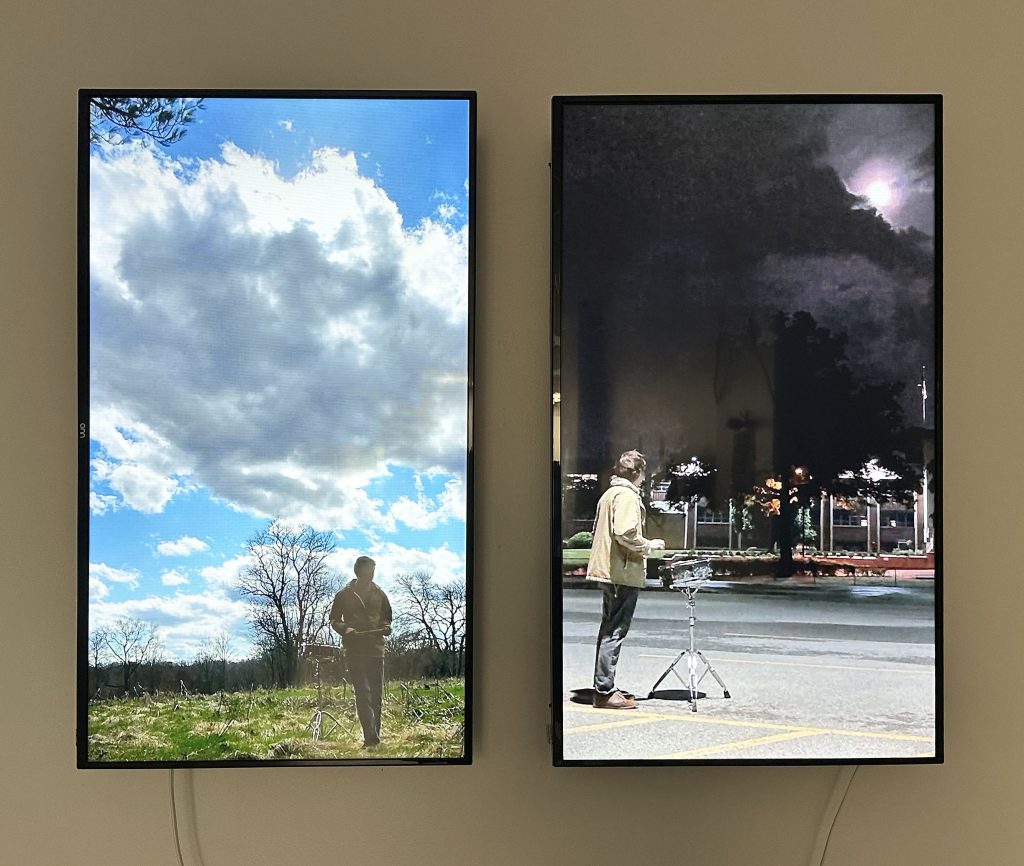
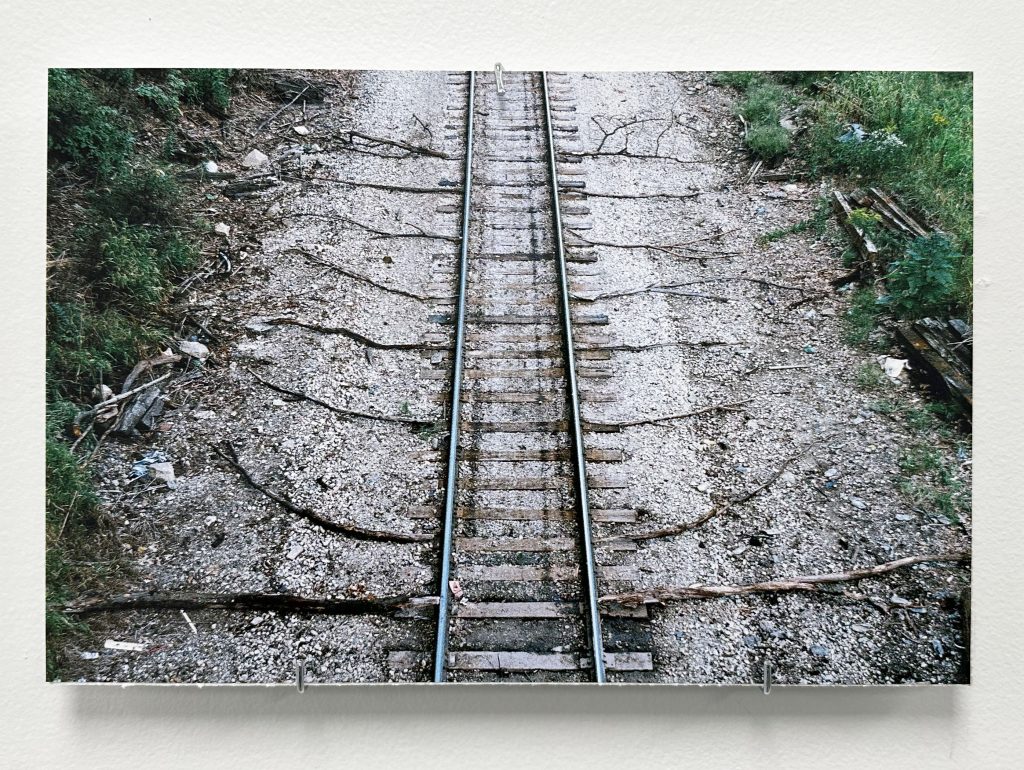
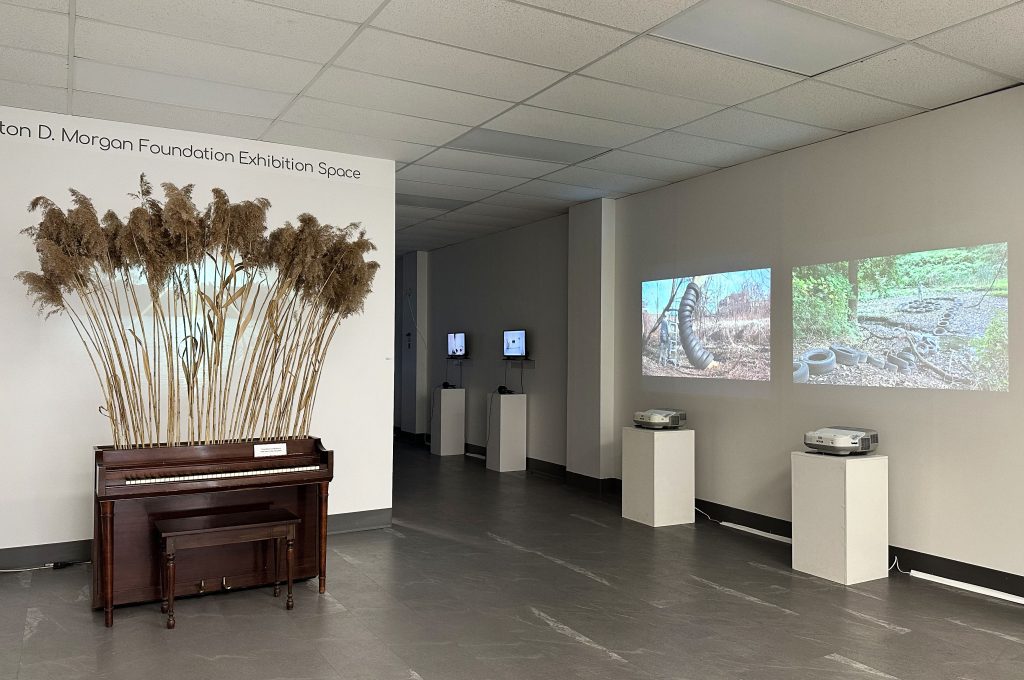
Akron Soul Train supports local artists through a residency program, exhibitions, and a shop in the front of the gallery which sells their work. Currently the gallery is showing work by Matthew Kurtz (work seen above) and Thomas Smith (work pictured below). Both artists are approaching the environment in different and interesting ways. Several of Kurz’s video pieces are focused on his upcoming performance for the solar eclipse. His photographs, for which he’s created additions to scenes he finds, are charming- as is his sculpture- a piano that moves his natural additions when played.
From the gallery-

Performance artist Matthew B. Kurtz presents Drumroll for a Total Eclipse: A Preliminary Exhibition, a prelude to his upcoming live performance with this year’s solar eclipse. Kurtz’s work fuses place, nature, sound, rhythm, and movement to question the mystery of existence. With humor, curiosity, and in tandem with his surroundings, Drumroll explores the process of trying to understand wonder.

For his upcoming performance on April 8, 2024, Kurtz will invite an audience to celebrate the total eclipse. Collaborating with the cosmos, he will perform a drumroll before “totality” passes over Northeast Ohio and creates the natural phenomenon known as “the blackout.”

“When I engage with a site for an art piece, I consider its history, recontextualize its objects, and insert my identity through intuitive gestures. I was raised to believe that humans are supposed to connect the lines between their innate feelings and the unknown. Making art is [my] attempt to reclaim this existential directive. These experiences are documented so outside viewers can participate in my examination of ambiguities, systems, and the sublime.” — Matthew B. Kurtz

Kurtz is also a musician. Check out his Instagram and Bandcamp to listen to his 2021 album 107.

For Thomas Smith’s sculptures he creates natural environments within man-made structures and uses the results as a commentary on the growth and sustainability of suburban development.

From the gallery-

In SUBARIUM II reprise, Thomas Smith combines materials from big box stores with contained terrariums to generate a sense of security and quality. However, upon second look, the viewer may see past the façade of what may look safe to what is substandard. Perhaps it is even denying growth and positive change. Smith’s sculptures dare to ask questions about survival, public image, and the landscape of today.

“Akin to an ecosystem enclosed in a terrarium, my sculptures depict a vibrant but, ultimately, unsustainable artificial environment. As plants within the terrarium grow, competition for space intensifies, turning the once-comfortable space into a struggle for survival. The metaphor extends to suburban America, where curated living conditions prioritize aesthetics over functionality, reflecting an impermanent American Dream.”

— Thomas Smith


Both of these exhibitions close 3/23/24.​

Mar 162024
 

Watercolor paintings by Katherine Strobel

There is A LOT of work currently on view at Summit Artspace for their Winter Exhibitions (see the previous two posts) and it is worth mentioning these shows as well.

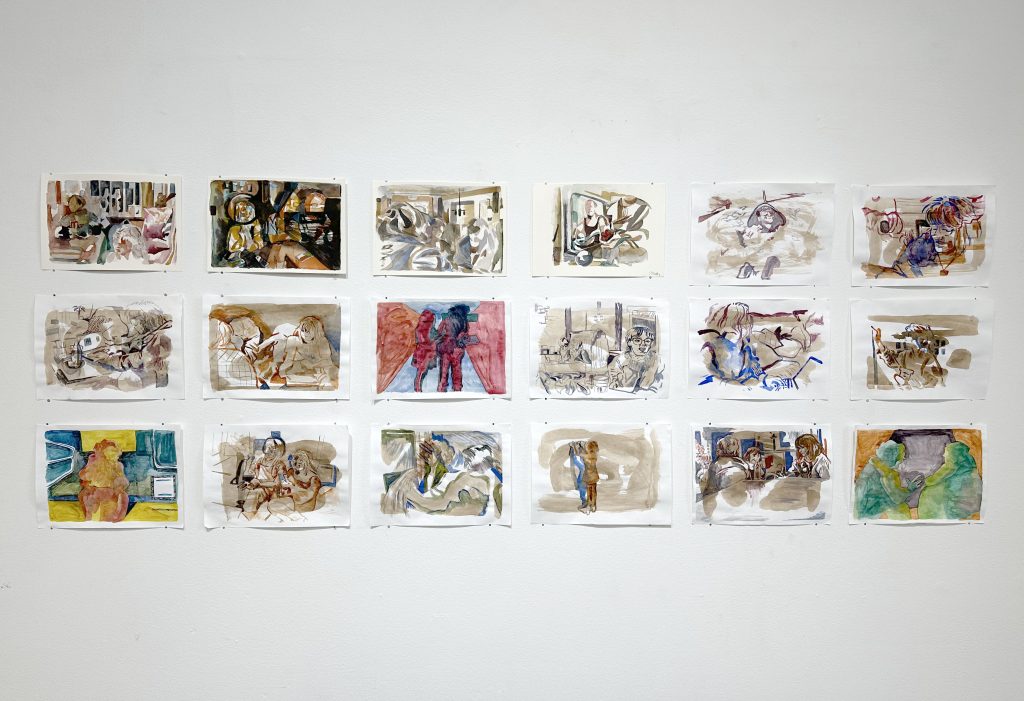
In the Welcome Gallery are watercolor paintings (seen above) by Katherine Strobel, for her exhibition, Bad Nostalgia.

Her statement about the work-

People forget to take pictures of things that don’t matter because it’s impossible to photograph qualities such as the feeling of an inside joke, the sound of an exhale through the nose, or dirty silverware that must be returned to the kitchen and replaced. These things act as set, pieces for what make up the rest of our lives. This series is a catalog of work that focuses on memory and candidness of a scene or subject. The people pictured are painted from life or candid photographs which are then emphasized from a naive image to something more. When an image is exaggerated with new colors and shapes it serves to make the mundane more desirable. The paintings are watercolors with a textured surface; the texture creates a sense of play with paper elements. In my work watercolor is often indicative of memory because of its ephemeral quality and transparent layers. This is because of how impossible it is to clarify every element that makes up a color when the layers are all compressed and viewed as a complete state.

Below are works from FRESH, an annual exhibition of local artists juried by Pita Brooks, Executive Director of Akron Soul Train. The website has all of the artists included and their statements and bios- definitely worth taking a look at what is being created in the area.

Michelle Eisen, “I’ve Made My Bed”, Silkscreen on hardboard

Steven Mastroianni “Fathomable Series #24”, Unique cameraless photogram, silver gelatin print

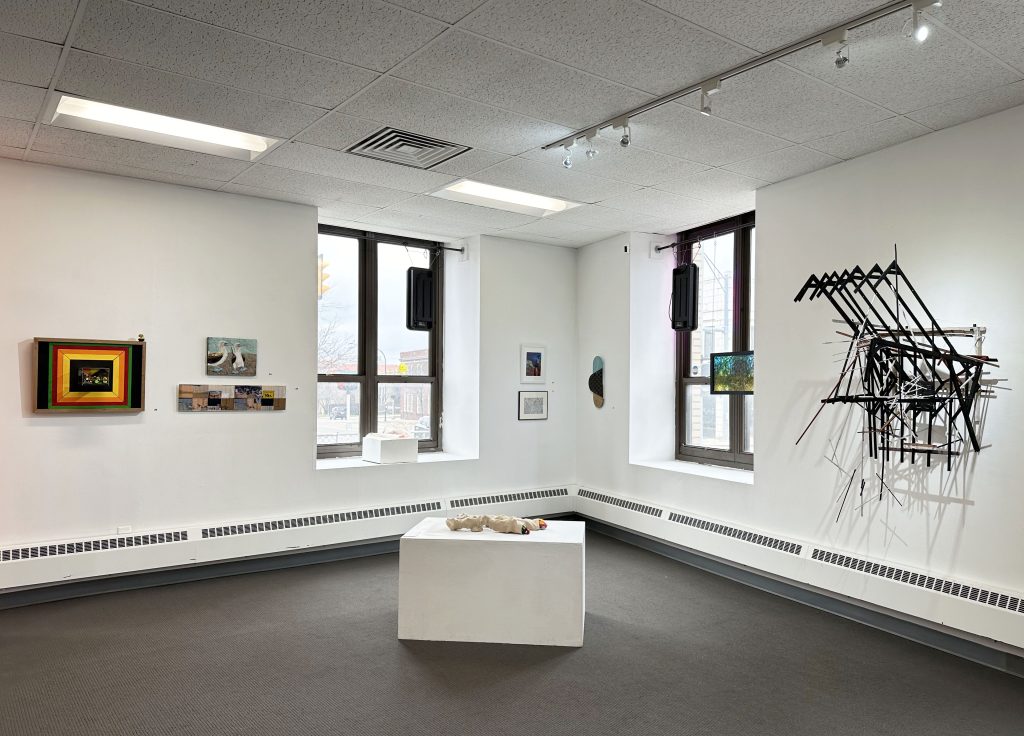
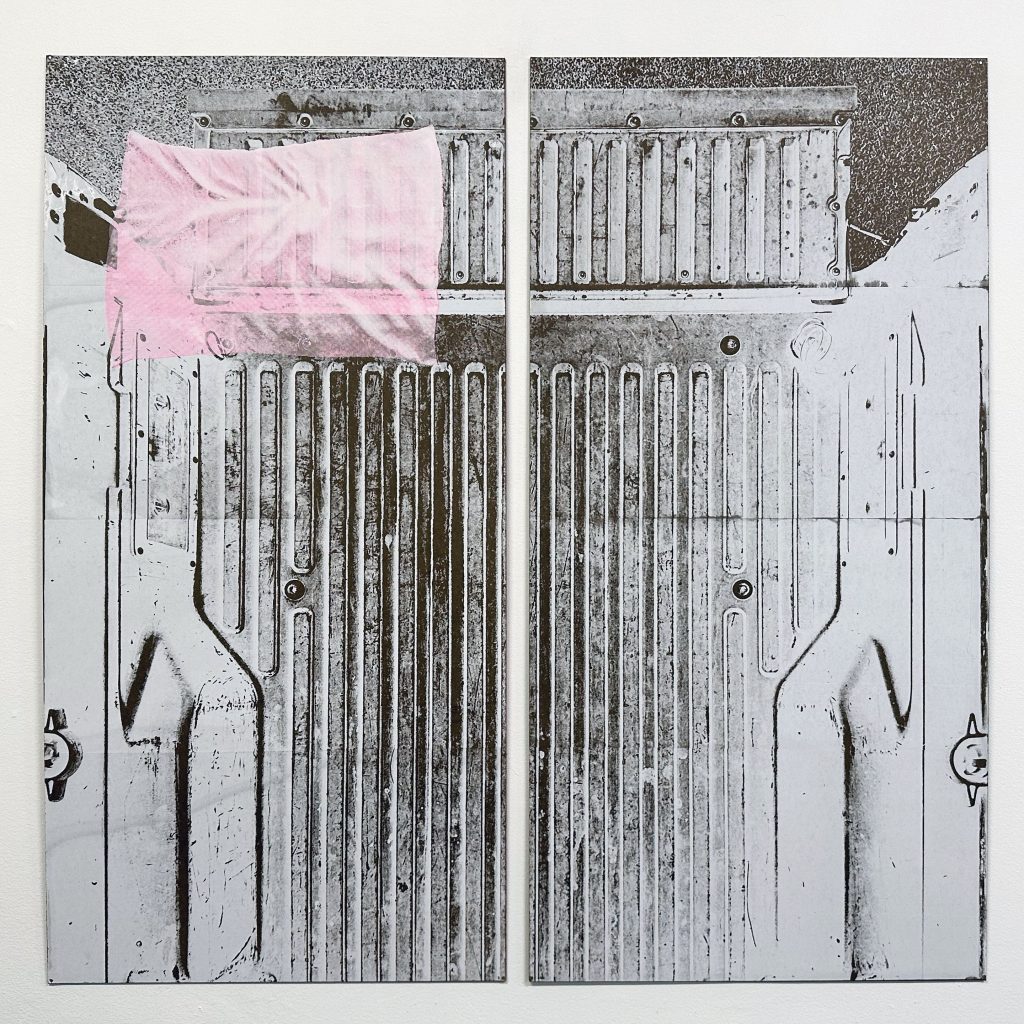
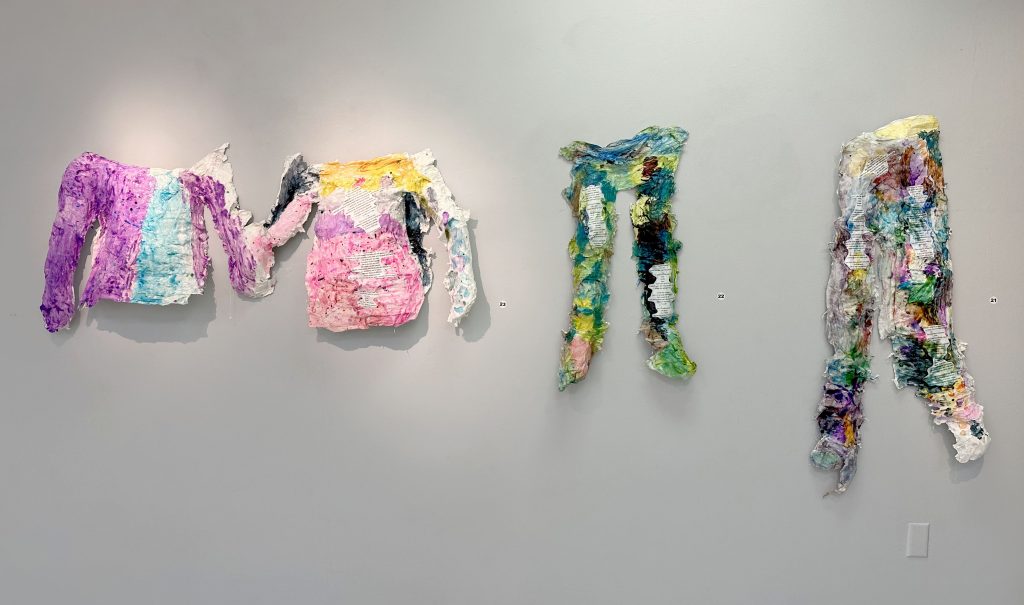
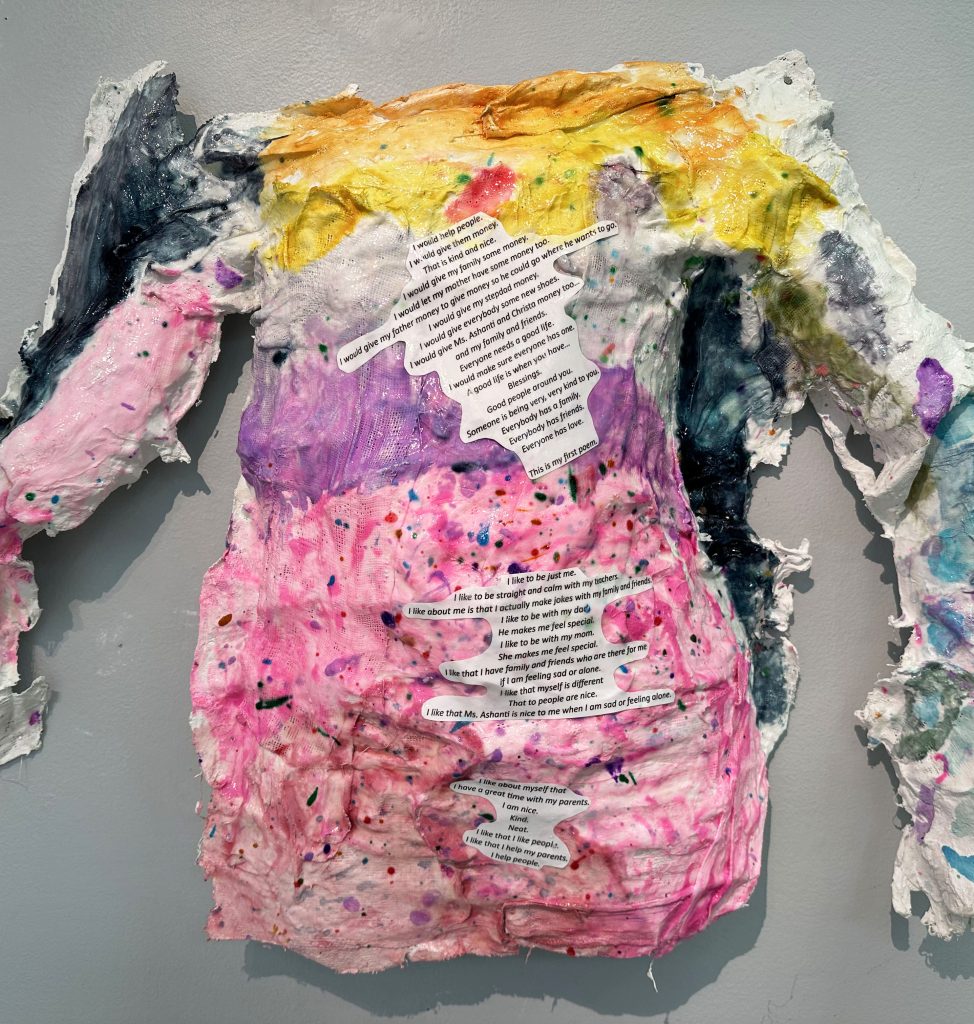
Finally, on view throughout the building are works by local students, teachers, and school leaders for Taking Care of Our House: Communities Coming Together and Making a Difference. The exhibition is made with the organization Art Resistance Through Change (ART-C). The works pictured below are a few of the sculptures created that included the personal narratives of the artists.

It’s worth mentioning that along with these exhibitions there are artists studios and galleries also in the building and worth checking out. Summit Artspace is open Fridays 12-7pm and Saturdays 11am-5pm.

Mar 152024


The mural above is a reproduction of Masumi Hayashi’s Edgewater Park no.2, Cleveland, OH. The mural is located in Cleveland and is one of the many public art projects organized by LAND Studio.

From the information plaque next to the mural about the artist-

Masumi Hayashi (1945- 2006) was a visionary fine art photographer who taught at Cleveland State University for 25 years. During her time in Cleveland, she lived in the Gordon Square neighborhood in the first residential development project of the Detroit Shoreway Community Development Organization. Dr. Hayashi was a beloved neighbor, friend, and local artist. She achieved global success with her signature format, the panoramic photo collage.

Hayashi was born in the Gila River War Relocation Camp in Rivers, Arizona, which was one of the U.S. government’s Internment camps for Japanese-Americans during World War II. Hayashi created her striking panoramic photo collages by assembling individually shot color photographs into a composition, like tiles in a mosaic. She shot photographs in a meticulously ordered sequence using a completely manual, non-digital film camera on a tripod. A single piece could take four to eight hours to shoot, and she might not see the results for days or weeks. When working at a site, she had to imagine the composition she desired from a location, and then create the individual photographs, while considering factors like time of day, weather, and location of the sun, through the entire shoot. Many of her large panoramic compositions involve more than one hundred individual photographic prints.

Much of Hayashi’s work explores socially difficult subjects, like the Japanese-American Internment camps, abandoned prisons, and EPA Superfund cleanup sites. She was able to create artwork that makes difficult subjects approachable. Her earlier work includes many significant sites in Cleveland, including the Cultural Gardens, RTA stops, Lake Erie and Edgewater Park (as seen in the artwork shown to the left). Later in her career, her artwork reflected a deep interest in culturally significant spiritual sites in India, Nepal, Japan, and Thailand.