

Judy Pickett is an Orlando based artist who often shows her work at Soft Water Gallery in St. Pete, Florida. Her beautiful cyanotypes are painted with encaustic to give them added texture.

Judy Pickett is an Orlando based artist who often shows her work at Soft Water Gallery in St. Pete, Florida. Her beautiful cyanotypes are painted with encaustic to give them added texture.

Robert Pruitt, “A Song for Travelers”
Brooklyn Museum’s exhibition, A Movement in Every Direction: Legacies of the Great Migration, is an opportunity to learn about an important period of American history, and see it interpreted through the eyes of twelve contemporary artists.
From the museum’s website-
Between 1915 and 1970, in the wake of racial terror during the post-Reconstruction period, millions of Black Americans fled from their homes to other areas within the South and to other parts of the country. This remarkable movement of people, known as the Great Migration, caused a radical shift in the demographic, economic, and sociopolitical makeup of the United States. A Movement in Every Direction: Legacies of the Great Migration brings together twelve contemporary artists to consider the complex impact of this period on their lives, as well as on social and cultural life, with newly commissioned works ranging from large-scale installation, immersive film, and tapestry to photography, painting, and mixed media. Featured artists are Akea Brionne, Mark Bradford, Zoë Charlton, Larry W. Cook, Torkwase Dyson, Theaster Gates Jr., Allison Janae Hamilton, Leslie Hewitt, Steffani Jemison, Robert Pruitt, Jamea Richmond-Edwards, and Carrie Mae Weems.
A Movement in Every Direction presents a departure from traditional accounts of the Great Migration, which are often understood through a lens of trauma, and reconceptualizes them through stories of self-possession, self-determination, and self-examination. While the South did lose generations of courageous, creative, and productive Black Americans due to racial and social inequities, the exhibition expands the narrative by introducing people who stayed in, or returned to, the region during this time. Additionally, the Brooklyn Museum’s presentation centers Brooklyn as another important site in the Great Migration, highlighting historical and contemporary census data about the borough’s migration patterns. Visitors are encouraged to share their own personal and familial stories of migration through an oral history “pod” available in the exhibition galleries.
About Robert Pruitt’s work, pictured above, from the museum’s wall information plaque-
“A Song for Travelers” celebrates the individual and Black collective experiences that have shaped the histories of rural East Texas and Houston’s Third, Fourth, and Fifth Wards. In this drawing-based on an early 1970’s photograph of a reunion of the artist’s family in Dobbin, Texas -sixteen people gather around a seated central figure about to embark on a journey. During the creation of this work, the masked traveler became a stand-in for Pruitt, who had recently left his hometown of Houston.
Pruitt often draws inspiration from his and others’ family photographs while examining historical events that have impacted Houston’s Black communities. Wearing costumes and adorned with items that reference various aspects of Black culture found in schools, social clubs, and religious spaces, the figures in the work reflect the numerous networks that remained and flourished in the South. Merging the Great Migration period with the present, Pruitt centers the Black neighborhoods across the southern region that served as safe havens and rich sites of cultural expression for migrants during the twentieth century. This link extends to today as many Black Americans leave the northern and western cities that once attracted their elders and return to the South.
Allison Janae Hamilton’s A House Called Florida, below, takes the viewer on a journey through part of northern Florida’s natural beauty.


From the museum’s information plaque about the video installation-
Allison Janae Hamilton produced the three-channel film installation A House Called Florida in her hometown region of northern Florida. The breathtaking landscapes of Apalachicola Bay and the swampy Blackwater Lakes of Florida’s Big Bend frame musicians, dancers, motorists, a Victorian house, and a slow resounding rhythm.
The artist references French Argentinian writer Julio Cortázar’s 1946 short story “Casa Tomada.” (“House Taken Over”) about ghosts that slowly take over a home and eventually push out its owners, room by room. Hamilton echoes the story’s theme of displacement with two regally dressed, spirit-like protagonists who move about the house engaging in mark-making and ritual performances. Hamilton’s film pays tribute to the Black Floridians who remained in the Red Hills and the Forgotten Coast regions, despite the racial violence and environmental precariousness they faced throughout the nineteenth and twentieth centuries.
Carrie Mae Weems‘ personal and moving contribution is in two parts- a series of photographs and a unique digital video installation.


The museum’s description of the work-
Carrie Mae Weems explores a painful family story: the disappearance of her grandfather Frank Weems, a tenant farmer and union activist who was attacked by a white mob in Earle Arkansas, in 1936. Presumed dead, he narrowly escaped and made his way to Chicago on foot, never again reuniting with his family. Frank Weems may have followed the North Star to Chicago. Weems’s series of seven prints, The North Star, makes an apt metaphor for Frank’s life. In Leave! Leave Now! Weems conjures the figure of her grandfather with a Pepper’s Ghost, a late nineteenth-century form of illusion first used in theater. By weaving historical events with fragmented family stories, photographs, poetry, music, and interviews, the artist reveals the tragedy of her grandfather’s disappearance and the aftermath.
This exhibition will close on Sunday, June 25th, 2023.

The latest pop-up exhibition at Chad Mize’s SPACE in St. Pete’s Warehouse Arts District, is Hot Box, which opened Friday 6/9/23. The show includes a LOT of artists and installations as well as, for this past weekend, an immersive performance by Dirty John’s comedy troupe.
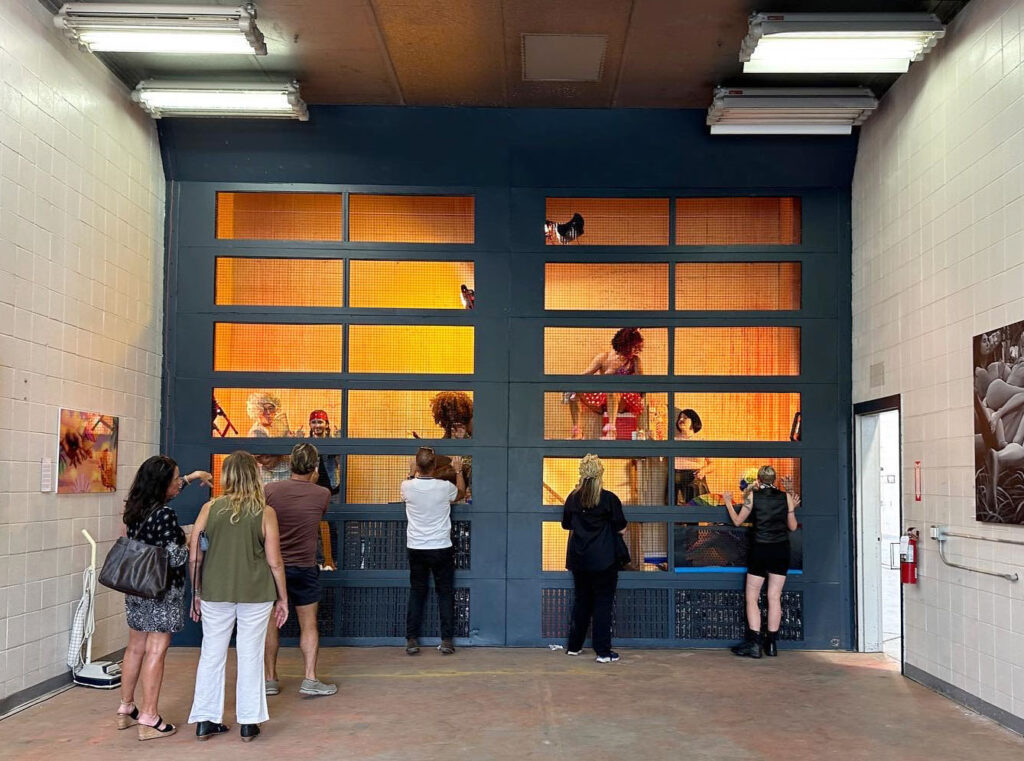
Below are some of the works from the show-
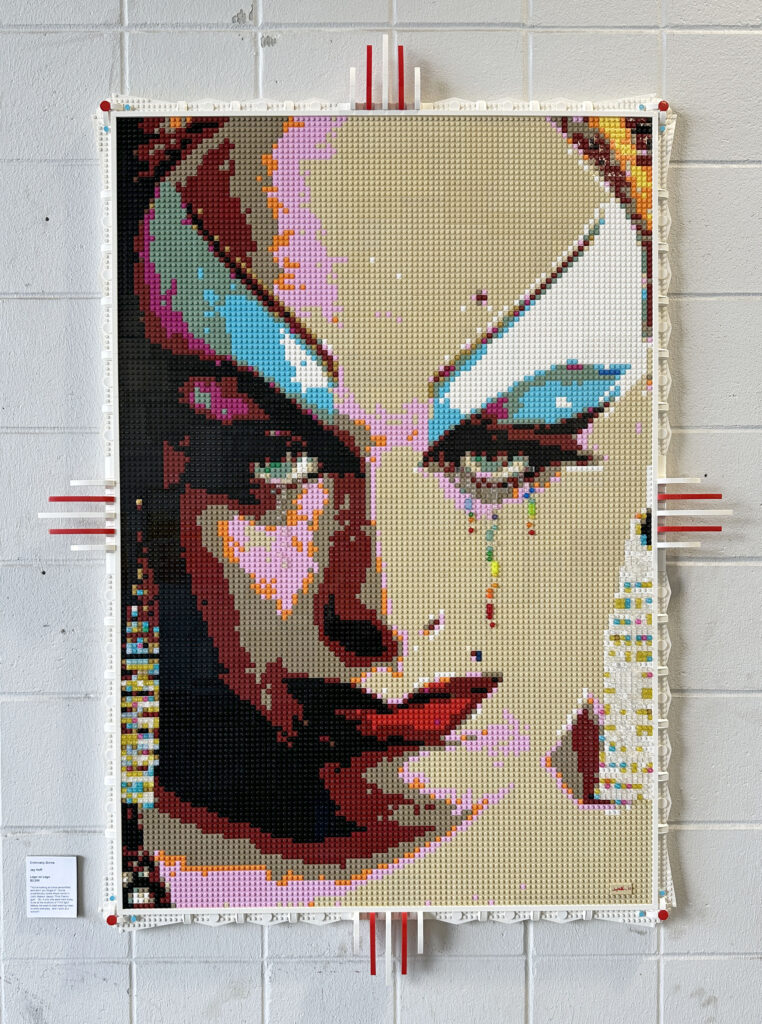
Jay Hoff, “Criminally Divine”, Lego on Lego
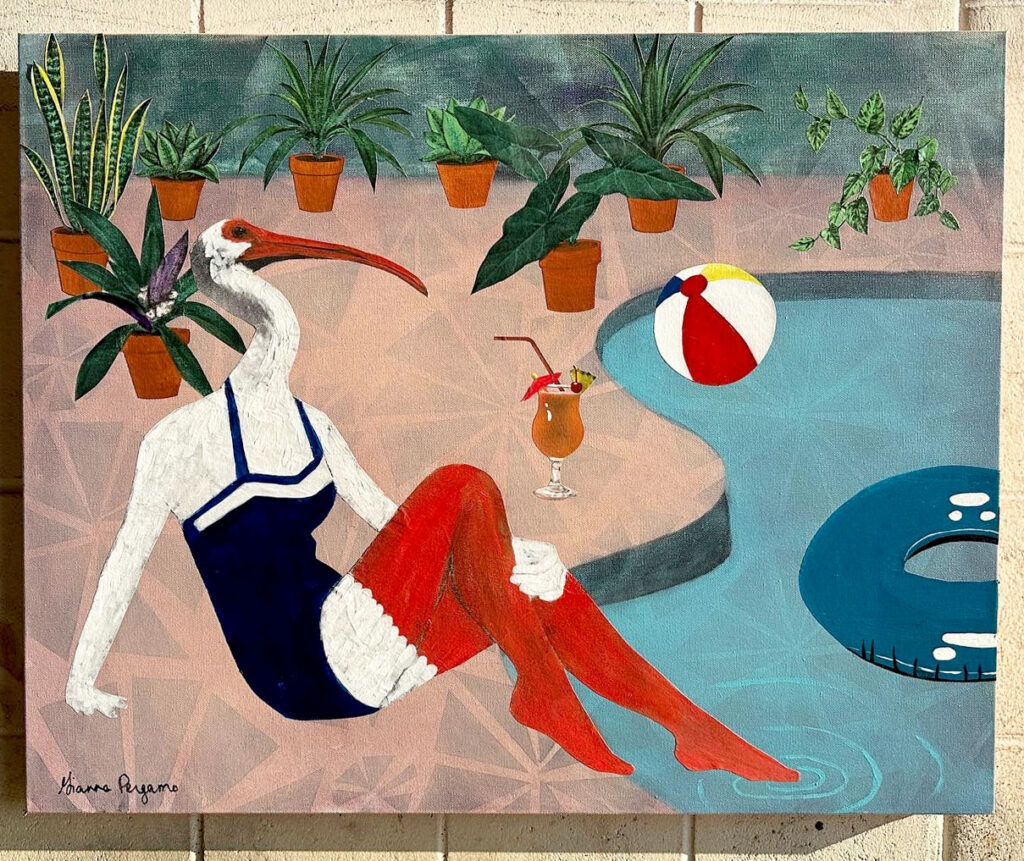
Gianna Pergamo, “Pool Day”, Mixed Media
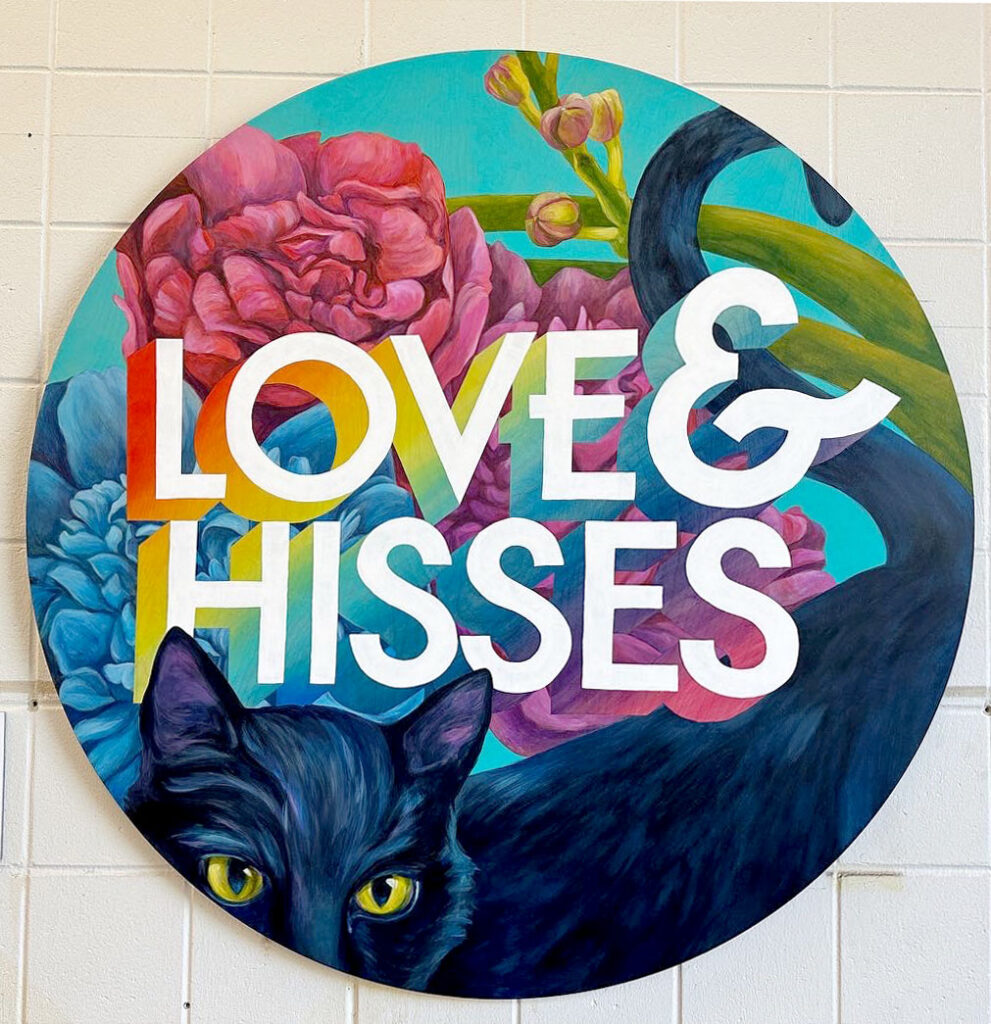
Miss Crit, “Love and Hisses” Acrylic on Wood
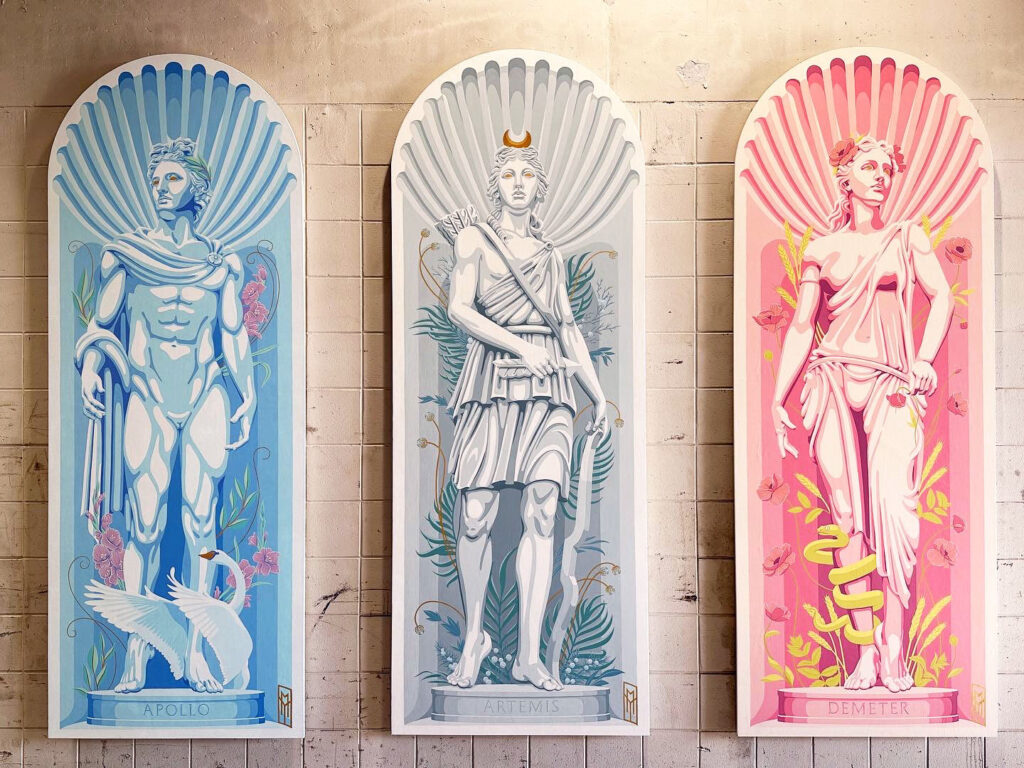
Rhys Meatyard, “Apollo, Artemis, Demeter”, Acrylic on wood
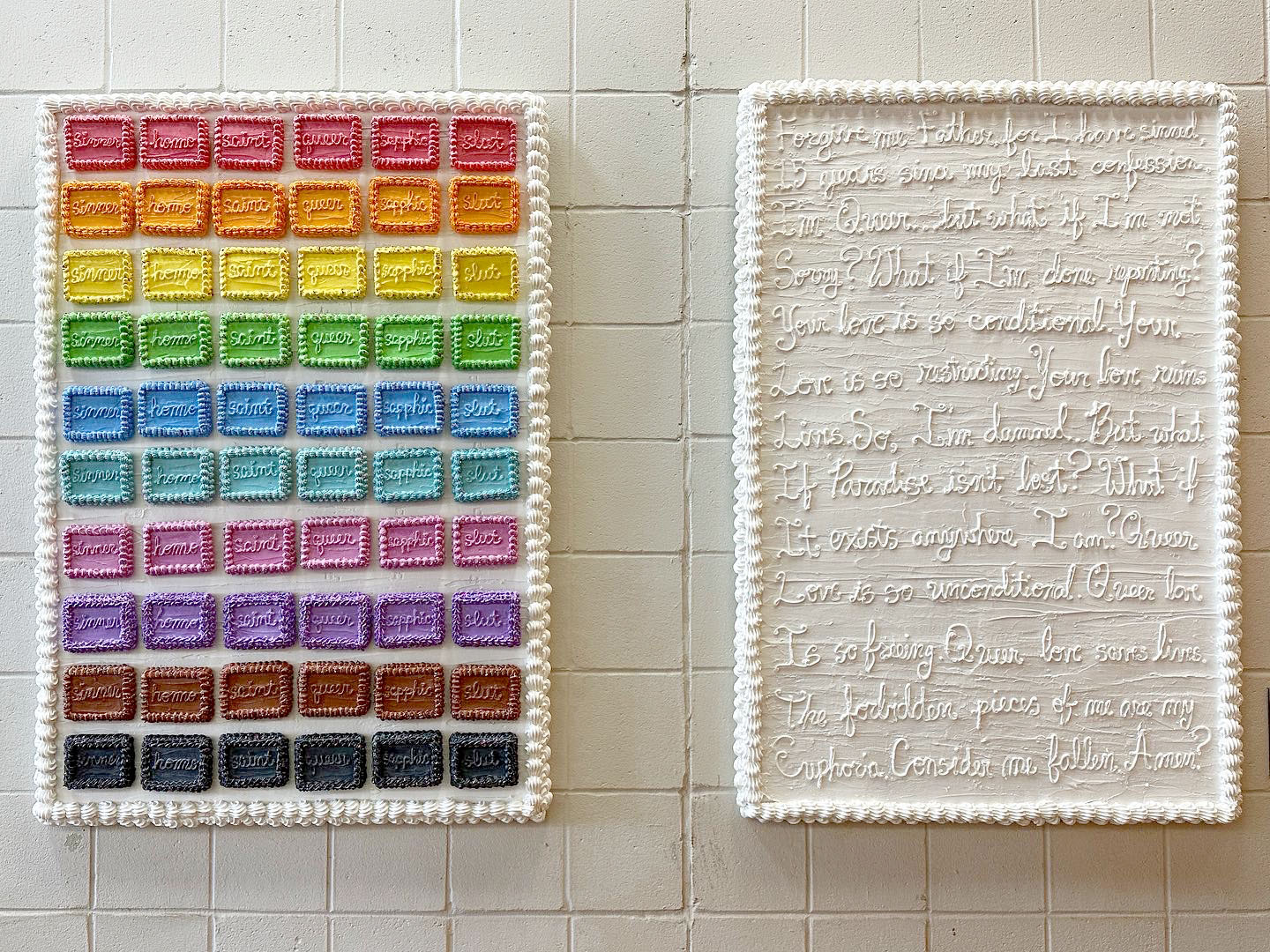
Macy Eats Paint (Macy Higgins), “Pieces of Me”, Mixed Media
In an upstairs section, artist Paul LeRoy has created a mixed media world of art world and celebrity icons, drawings, paintings and more.
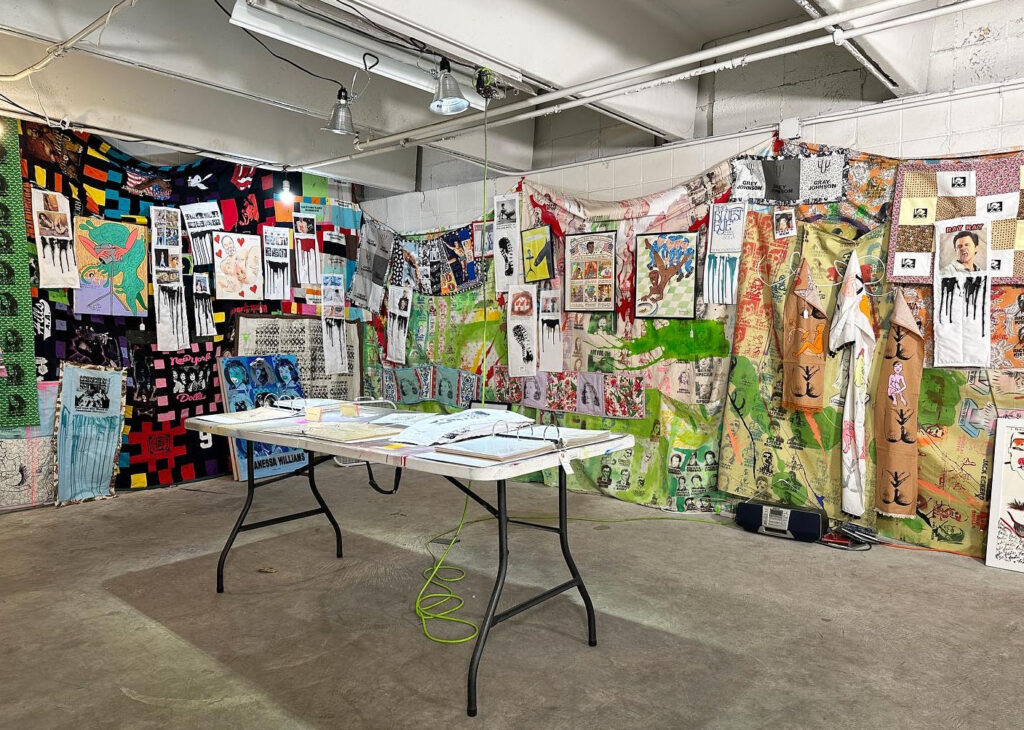
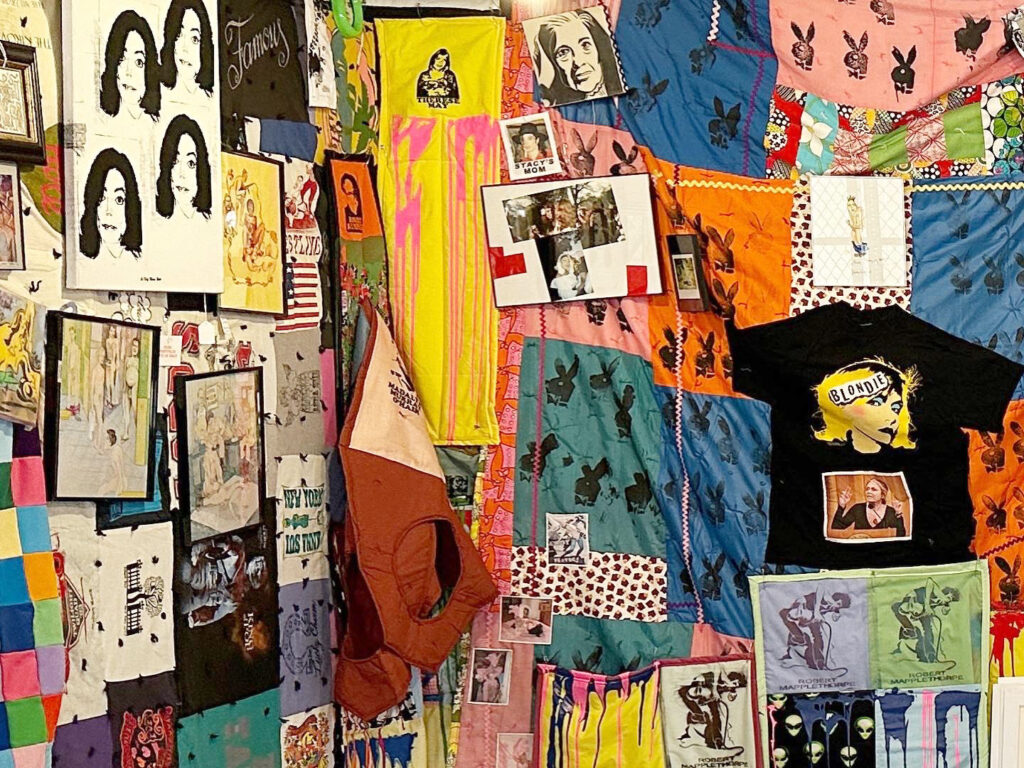
The show will be open for its final weekend on Saturday 6/17 from 4-9pm and Sunday 6/18 from 11am-3pm.

Ketsy Ruiz, “El Yunque in my Corazón I and II”, acrylic on canvas

Work by (L to R)- Chloe Lewis, Kyra Connolly, Ketsy Ruiz. and Joerod Collier

Photos by Joerod Collier, Ceramics by Babette Herschberger
Currently on view at Parachute Gallery in Ybor City, Tampa, is the group exhibition Buy Me Flowers & Call Me Pretty. The show celebrates the beauty of nature and features seven artists with Florida roots.
The artists included are-
Joerod Collier aka Surreal Styles (Tampa, FL)
Kyra Connolly (St. Petersburg, FL)
Babette Herschberger (St. Petersburg, FL)
Chloe Lewis (Brooklyn, NY)
Jenn Ryann Miller (Tampa, FL)
Ivan Riascos (Apopka, FL)
Ketsy Ruiz aka Sketzii (Largo, FL)
This show is on view until 6/25/23.


Tempus Volta, one of Tempus Projects’ spaces in the Ybor Kress building in Tampa, is currently showing Gigi Lage’s solo exhibition, Exposure Garden.
From the gallery’s website-
Lage uses generative AI as a tool to construct still frames from the artist’s own text input. Lage examines how AI processes its learning patterns from existing data and how its output defines the image, its deranged textures, and the story found within the frame. This work explores themes surrounding the implication of replication, the complexities of a single image, and a machine’s relationship to our natural world.
Exposure Garden uncovers the disturbances between AI-generated realities and our human experiences through the exploration of human life in natural elements as processed by machines. Lage explores the simulation of human connection as re-imagined video stills & film negatives. These extractions of images romanticize a version of our world in a dream-like state; through another type of mind that may or may not be our own.
This show will be up until 6/15/23.


Currently at Jenny Carey’s Gratus Gallery in Ybor City are photographs by Johanna Keefe.
Keefe is a talented ceramicist as well as photographer. For this series she created the objects, photographed them, and than used a specific AI filter to obtain her final results.
This exhibition will be on view until 6/15/23.

Jaime Aelavanthara, “Cicada Calling “and “Ribs”


As part of St. Pete Month of Photography (SPMOP), Morean Arts Center is showing Photo Laureate 2023: The Nominees.
For more on the five nominees, below are links to their websites and an example from their personal websites of their work.
Jaime Aelavanthara (see first image above)- website and Instagram
Selina Román– website and Instagram

Selina Román “Refusal to Unpack”, 2020, image from her website
Emily Will– website and Instagram

Emily Will- “Saint Petersburg, Russia”, image from her website
Tristan Wheelock– website and Instagram

Tristan Wheelock- “NASCAR Family”, 2014, image from his website
Thomas Sayers-Ellis became the winning finalist and will be the Photo Laureate this year. The 2023 Photo Laureate will create an historical document of events, people and places of Tampa Bay for the next twelve months. The results of this project will be shown next year in a solo exhibition.

Thomas Sayers-Ellis, “The Mirror in Uncle Tom’s Camera”, 2011 image from his Instagram
The best place to see his photography is on his Instagram.
The photo exhibition will be on view until 6/30/23.


Rachel Ratcliff, “Roll of the Kaleidoscope”, 2021, acrylic on canvas

Richard Logan “Sea Oats”, 2022, photographic transfer on metal with etched glass

Steven Spathelf, “Orange Blossom”, 2022, acrylic on canvas
This past Friday the city of Dunedin, Florida, celebrated the opening of its new City Hall. As part of the celebration, the building and all of its offices were open to the public. It was the first opportunity to see all the wonderful art by Florida artists- selected and commissioned by Elizabeth Brincklow.
Pictured above are works by Rachel Ratcliff (wave painting) and Richard Logan (photography). The third work is by Steven Spathelf whose oranges can be seen adorning buildings and homes all around town.
Scroll through the pages below to see the other works on view.


This mural was created by Lara Nguyen in 2016 for The Refinery in Asheville, North Carolina. The local artist and teacher’s design was chosen for the building by the Asheville Area Arts Council.
From a Mountain Xpress article about the work-
Bowerbirds and butterflies decorate the building’s facade. Nguyen considers the former “the artists of the bird world.” Each year, for up to six months, the male bowerbird will spend its days building arches made of straw. He will then gather brightly colored objects and place them outside the construction in order to attract mates.
“They perform,” says Nguyen. “They use the hole [of the arch] as a stage. … They’re also great mimickers and singers. I thought that was interesting. They’re like actors, performance artists, builders, makers, collectors, [and] in some way they’re painters. They pick certain colors and situate them.”
Nguyen saw the creature as a perfect symbol for The Refinery Creator Space. She lists off the various types of artists (painters, photographers, sculptors, filmmakers, fiber artists…), in addition to the art-based organizations (Asheville Darkroom, Asheville Makers, The Bright Angle, Local Cloth and Mechanical Eye Microcinema) that now call the space their home. She views her mural, with its bright colors and visual appeal, as a way to help facilitate traffic; a way to intrigue the public to step inside and support the arts.
More recently, Nguyen contributed work to the 2023 annual ArtFields event in Lake City, South Carolina. The two pieces are from her series “Letters to My Children”.
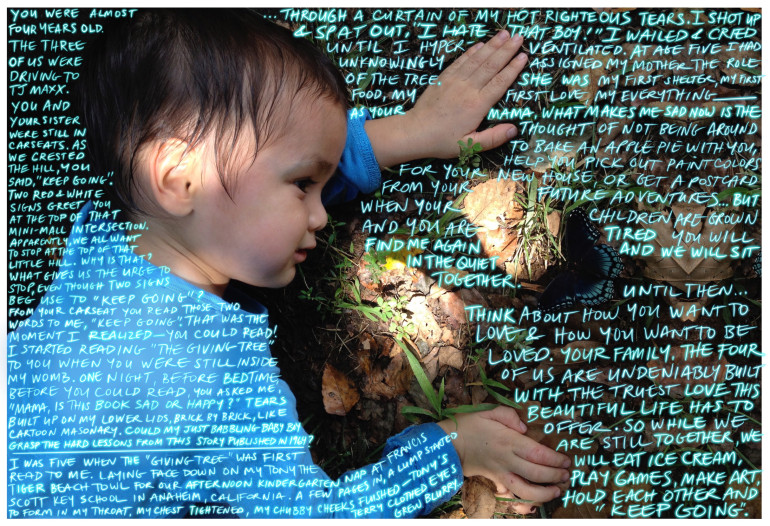
Her statement about these works-
“Strong Arms” & “Keep Going” are from a series entitled “Letters to My Children.” I was diagnosed with uterine leiomyosarcoma in July 2018 when my kids, Atticus and Moon, were 7 & 9 years old. In January 2020, my lung collapsed and I underwent a lobectomy. Now with a stage 4 cancer diagnosis I have found myself up at all hours worrying about dying before my kids are grown. When I couldn’t sleep, I wrote letters to them, recording their favorite recipes and my fondest memories of them for them. In 2021, I decided to share my writing with them instead of saving all this pondering in a box for later. Making and sharing this work has allowed us to cry and grieve together, which, in turn, has opened up space to truly be honest and present for one another while we are all still alive. With my children’s permission, I present slices of difficult conversations we have had to a wider audience in hopes of easing any load the viewer might be carrying on their own personal journey.

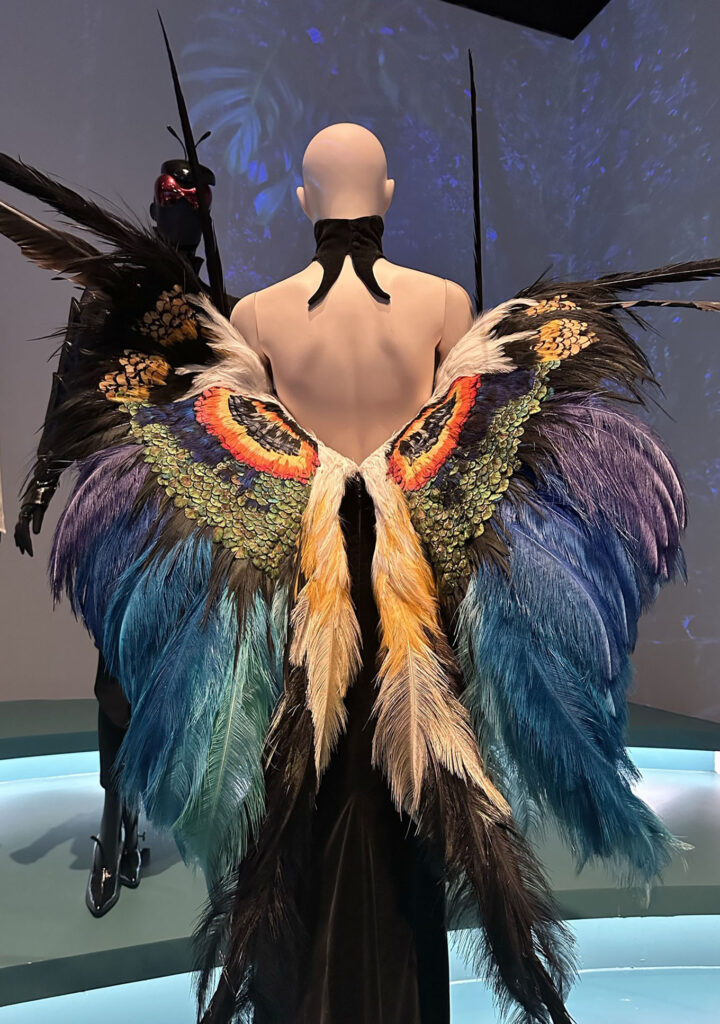
“Méduse de bal” gown

Even if fashion isn’t something you normally find interesting, it’s hard to resist the allure of the creations on view at the Brooklyn Museum for the retrospective Thierry Mugler: Couturissime.
From the museum’s web page-
Thierry Mugler: Couturissime is the first retrospective to explore the fascinating, edgy universe of French designer and creator of iconic perfumes Thierry Mugler. A fashion visionary, Mugler established himself as one of the most daring and innovative designers of the late twentieth century. His bold silhouettes and unorthodox techniques and materials—including glass, Plexiglas, vinyl, latex, and chrome—made their mark on fashion history.
In the 1970s, Mugler defined trends with his acclaimed “glamazon,” a chic, modern woman whose style evolved from the hippie fashions of the 1960s. In the 1980s and ’90s, Mugler galvanized the renaissance of haute couture through his provocative collections and theatrical fashion shows, which involved grandiose locations and the era’s most iconic models. Just as his work is still influencing new generations of couturiers, celebrities continue to be drawn to Mugler’s designs: his classic gowns have recently been worn by Beyoncé, Cardi B, and Kim Kardashian.
The exhibition features over one hundred outfits ranging from haute couture pieces to stage costumes, alongside custom accessories, sketches, videos, images by leading fashion photographers, and spectacular installations that mirror Mugler’s futuristic approach. The Brooklyn Museum’s presentation also introduces an expanded section dedicated to fragrance, centered on Mugler’s trailblazing scent Angel. Thierry Mugler: Couturissime is an opportunity to discover and rediscover the fantastical work of this multidisciplinary artist, who revolutionized the world of fashion.


A description of the above gown from the museum’s info plaque-
The “La Chimère” gown-Mugler’s masterpiece made in collaboration with the South African corset maker Mr. Pearl and the artist Jean-Jacques Urcun- has mythical status, considered by some as one of the most expensive creations in couture history, given the meticulous amount of work required in its making.
Mr. Pearl describes that collaboration with Mugler as the most extreme experience of his life: “[‘La Chimère gown] was probably the most intense project, it took six weeks working 24/7, so basically more than one thousand hours just in embroidery. We were about twenty people working on different parts of it along with Jean-Jacques Urcun. It’s about fantasy, it was like going to the University of Beauty. To fulfill his vision and his fantasies with clothes is already a challenge, he is a genius, a perfectionist. You have to try, and he pushes everyone to try what seems impossible to achieve with a needle.”
Also included in the exhibition are several incredible (and often safety-defying) photos Mugler took himself at various landmarks, including the one below at NYC’s Chrysler Building.

“Chrysler Building, New York”, 1989 -Claude Heidemeyer in “Vertigo” by Mugler, 1988
This exhibition closes 5/7/23.