Oct 222019
 

Alex Prager’s exhibition at Lehmann Maupin’s 22nd Street location combines sculpture and still photography with her new film Play The Wind. The photographs in the show recreate scenes from the film, but are not from the film itself.  There are also photos of scenes that could have been from the film, but are not. These allow the viewer to consider alternate narratives to the story they have just seen. The photos also offer an opportunity to see many of the details from the film seen only briefly while watching.

Running for eight minutes, Play the Wind is a journey into a bizarre version of Los Angeles. It’s seen mainly through the window of a car, the way many Los Angeles residents often see it. Places seem familiar, as do many of the large cast of extras who inhabit this world, even if you are not personally familiar with the city.

The cab driver, played by Dimitri Chamblas (dean of the Sharon Disney Lund School of Dance at CalArts), drives through situations that seem both surreal and possible at the same time, like many things that happen in LA. At one point the cab driver, drives past an accident on the highway and sees a car vertical between two other cars with children in a school bus leaning out of the windows to observe. He passes alongside and moves on. It’s just another moment in a chaotic Los Angeles day. When he locks eyes with a woman played by actress Riley Keough, the film changes to her perspective and it all becomes even more dreamlike.

From the press release–

…She anchors her characteristically elaborate fictional scenes within the real Los Angeles, shooting for the first time in many years primarily on location rather than in the studio—a decision that harkens back to when Prager began her career over a decade ago. Though the images contain large constructed set pieces and are populated with carefully cast extras (numbering up to 300), the presence of the Los Angeles streets infuses an element of urban lifeblood that is palpable in the work. Prager’s perception of Los Angeles is one of the artifice and drama befitting Hollywood, with real world chaos that overflows into sci-fi dystopia and post-apocalyptic dread. She toys with these visions of the city disseminated on film, TV, and within the popular imagination, which inform our characterization of a place as much as our own memories.

Technically important to the making of this film was Prager’s collaboration with a team to produce set designs and props that would add a layer of artifice and duplicity to her real-world locations. The interference of these traditional illusionary effects upon the actual Los Angeles streets and locations Prager shot on creates an unnerving sensation, hinting at the reality that might exist just outside of our perception. All of these elements are recast in the series of photographs, which appear in different configurations or on various scales that further destabilize any linear narrative. Drawing on the concept of a distorted memory, Prager has found ways to incorporate objects seen in the photographs and film into the gallery as sculpture, with the intent to further dislodge our understanding of place and time and bring us deeper into her highly constructed world.

Connoisseurs of Prager’s work will likely spot the references to her past series, such as the noir themed Compulsion (2012), or the archetypical ingénue of The Big Valley (2008). This self-referencing becomes yet another layering device, mixing Prager’s career-spanning themes and the greater art historical genres from which they are drawn to create work both entirely new, yet seemingly familiar. Prager’s incorporation of her past into her present work serves as a reminder that while the past may not be returned to, it does remain with us, appearing in surprising, sometimes unsettling ways.

This exhibition closes 10/26/19.

Oct 222019
 

An assortment of beaded and marble creations have taken over Marianne Boesky Gallery in Chelsea, courtesy of The Haas Brothers’ exhibition Madonna.

From the press release-

As is now a signature of The Haas Brothers’ presentations, Madonna will transport viewers into an otherworldly realm, where fantastical animals and odd hybrids reside. Here, colorful sculptures and objects that resemble futuristic creatures will be positioned among seemingly rare tropical plants, and connected into a cohesive environment through undulating platforms. The featured works capture the Brothers’ wide-ranging artistic processes, from intricate beading techniques to monumental stonework to the incorporation of woven elements, and produce an incredibly tactile and evocative experience. The exhibition also highlights the Brothers’ diverse collaborations, including with workshops in California, South Africa, and Portugal, and encapsulates their deep engagement and support for those working in traditionally understood craft.

The Haas Brothers were first introduced to beading in 2015, when they met a group of women artisans selling beadworks in a craft market in Cape Town, South Africa. The Brothers’ were enamored with both the complexity of the technique and the incredible artistry in the women’s work. Seizing the serendipity of the moment, the Brothers’ established a collaboration with the artisans, which led to the development of the Afreaks series, a group of beaded creatures that were shown at the Cooper Hewitt’s Design Triennial in 2016. Since then, The Haas Brothers’ collaboration with the collective of women, who warmly go by The Haas Sisters, has grown and matured.

For Madonna, the collective will support the production of the featured beaded objects, guided by The Haas Brothers’ preparatory drawings and using a selection of Murano glass beads produced in Venice between 1880 and 1980, which The Haas Brothers purchased after the factory became defunct. In addition, Simon Haas has developed a complex system that captures the expansive creative opportunities that beading allows and that provides a guide to learning the craft. This system has been articulated in The Haas Brothers’ Bead Book, which has allowed Simon and Niki to teach the techniques to people local to the area of Lost Hills in Central California, establishing a workshop that offers work and pay in an area that lacks employment options. As part of their work with different communities and artisans, The Haas Brothers establish fair pay systems that include both economic support for the creation of works as well as in some instances profit sharing from sales.

“Part of the vision for our practice, and what we see as essential to the creation of art, is the establishment of communities. We are constantly asking how we can engage with others to achieve something new; something beautiful; something that excites or brings joy—that is really the importance and value of art and artmaking,” said The Haas Brothers. “At the same time, we recognize the platform and voice that we have been given, and think it is critical that we use both to uplift and support others, especially women who have traditionally not been recognized for their craftwork and skills. We feel so lucky to have developed this relationship with The Haas Sisters, and to have the opportunity to shed light on their dedication and tremendous work, while also paying a fair and right wage for their contributions.”

The beadwork in the exhibition will be augmented by several sculptures made with Portuguese Pele de Tigre marble. The Brothers first came to stone carving in their youth, learning from their father, artist Berthold Haas, and recently returned to the material, showing several large pieces at Marianne Boesky Gallery’s Aspen location in June 2018. The solid, smooth, and monumental nature of the stone works provides a powerful counterpoint to the more delicate and finely detailed beadworks and highlights the range of The Haas Brother’s practice. Here too, community proves an important element, as The Haas Brothers’ engagement has helped spur the development of stone-carving as an economic engine at the quarry that they use. The anchor figure, the Madonna, within the upcoming exhibition combines the efforts and visions of the various communities with which the Brothers are involved—each lending to an aspect of its creation and making it a true embodiment of their collaborative vision.

This exhibition closes 10/26/19.

Oct 182019
 

“Crescent (Timekeeper)”

“Crescent (Timekeeper)”

“Crescent (Timekeeper)” Detail

Sarah Sze’s exhibition at Tanya Bonakdar’s gallery in New York is stunning. There is so much to look at, to appreciate. There are so many pieces to all of the work, and yet it never feels overwhelming. It makes you want to keep looking.

It’s also immersive. The windows on the outside of the gallery are covered in her work, as is the staircase alcove. The video projections in the main room travel all around the room, surrounding you with visuals and sound. Upstairs the floors of the gallery have paint splattered on them, accompanying the works on the walls.

Detail of the above work

In a room on the first floor is a “studio space” where you can gain insight into Sze’s process and how she makes these elaborate works.

From the press release-

Sze’s latest body of work frays “the seam between the real and the image” (Smith). Through complex constellations of objects and a proliferation of images, Sze expands upon the never- ending stream of visual narratives that we negotiate daily, from magazines and newspapers, television and iPhones, to cyberspace and outer space. The works evoke the generative and recursive process of image-making in a world where consumption and production are more interdependent, where the beginning of one idea is the ending of another—and where sculpture gives rise to images, and images to sculpture.

In this new exhibition, Sze expands her work by embedding her nuanced sculptural language into the material surfaces of painting and into the digital realm through the interplay of cloth, ink, wood, paper, metal, paint, found objects, light, sound and structural supports—collapsing distinctions between two, three and four dimensions. This body of work fundamentally alters our sense of time, place, and memory by transforming our experiences of the physical world around us. Both objects and images, Sze says, are “ultimately reminders of our own ephemerality”.

This exhibition closes 10/19/19.


Oct 082019
 

The Museum of Broken Windows is a free pop-up experience in New York City, a project by the NYCLU currently located Cooper Union.

From the Museum of Broken Windows/ NYCLU websites-

The broken windows theory is an academic theory proposed by social scientists James Q. Wilson and George Kelling in 1982. The academic theory, which first appeared in The Atlantic Monthly, states that signs of disorder in a neighborhood, like a broken window, encourages petty crimes and leads to more serious crimes. This postulation was adopted by the New York City Police Department and has led to the criminalization of poverty and the over-policing of Black and Brown communities at disproportionate rates. The theory has never been proven to be effective at reducing crime.

The Museum showcases the ineffectiveness of broken windows policing, which criminalizes our most vulnerable communities. The strategy of broken windows policing is outdated and has never been proven to be effective at reducing crime. For decades, communities of color have been disproportionately impacted by broken windows policing.

It is time for a change. New Yorkers are coming together for important conversations on policing and what it means to feel and be safe. Using art and creativity, the Museum of Broken Windows will provide a powerful and emotional experience that critically looks at the system of policing in New York.


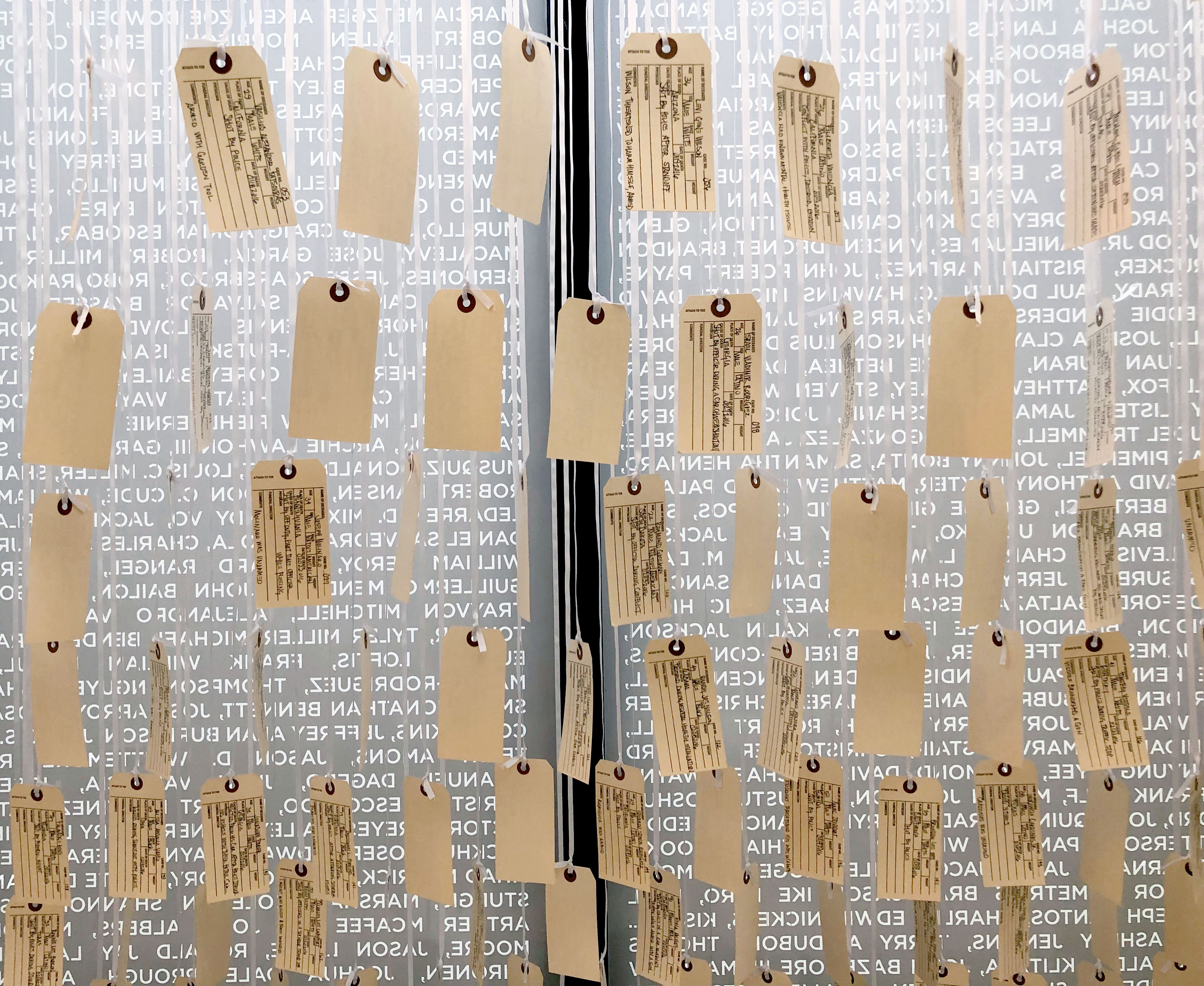
Pictured above are “…and counting” by Ann Lewis (each tag is filled out with the name of a person killed by police) and one of the group of portraits by Tracy Hetzel of women who have lost loved ones because of broken window policing. The one pictured is of Gwen Carr who is holding a picture of her son Eric Garner.

This show ends on 10/8/19.

Oct 032019
 

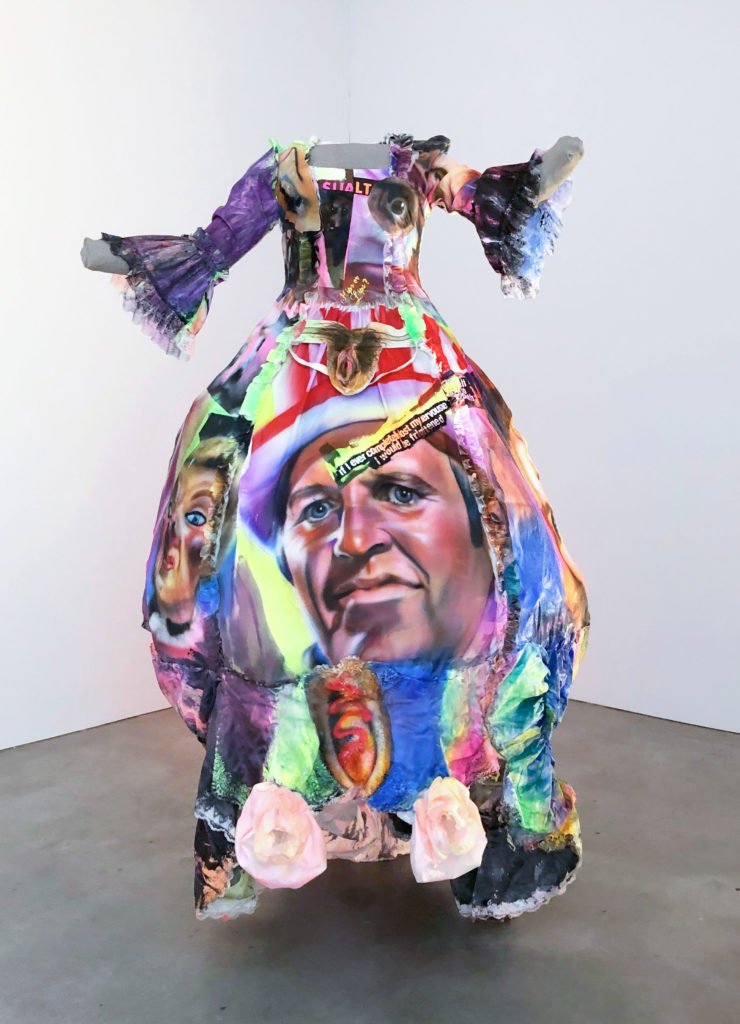
Jim Krewson’s “tribute to a vanishing subculture”, A Requiem for Paul Lynde, currently in the Viewing Room in the back of Marlborough Gallery’s downtown location, “questions the loss and amnesia of marginal identity in a new age of equality, instant access, Instagram influencers and celebrity, from homosexuality to homogenization in 20 short years.”

The airbrushed wedding dress spins with images that include Lynde himself, as well as Lady Elaine Fairchild from Mister Rogers’ Neighborhood, and the Madame puppet, a Wayland Flowers creation. Flowers’ puppet had her own sitcom in 1982 and also took over Paul Lynde’s center square on Hollywood Squares. Sadly Flowers, an openly gay entertainer, passed away in 1988 at the age of 48 from AIDS related Kaposi’s sarcoma.

If you love of a certain time period of pop culture and Paul Lynde than it will be hard not to embrace this project. But it’s also interesting as a meditation on the state of gay pop culture in the past, the place it is in today, and the question of where it may go in the future now that it is has such a strong, but less subversive place, within mainstream media.

In the main viewing space of Marlborough Gallery is Joe Zucker’s multi-panel 100-Foot-Long-Piece created from 1968 to 1969.

From the press release–

This masterwork, exhibited here with a large body of related archival material, comprises a blueprint for Zucker’s long and diverse practice. It plants a flag for the artist’s ongoing inventiveness, irony, and eclecticism.

With the creation of this work, Zucker presents the viewer with a puzzle-like, encyclopedic visual vocabulary, anticipating subsequent pictorial and conceptual approaches such as New Image, Neo-Expressionism, Appropriation, Neo Geo, as well as more recent process- based abstraction, with a self-referential, wry regard for the embedded, associative meaning of his imagery and materials.

100-Foot-Long Piece is a linear aggregate in which gestural abstraction rubs elbows with hard edged grids, silk-screened passages, sculptural reliefs, and a host of other styles and forms. One is mindful of both physical and critical tropes of progressive art history from the physicality of the frieze to a qualitative timeline tracing the contributions of Modernism.

Both shows close 10/5/19.

Sep 202019
 

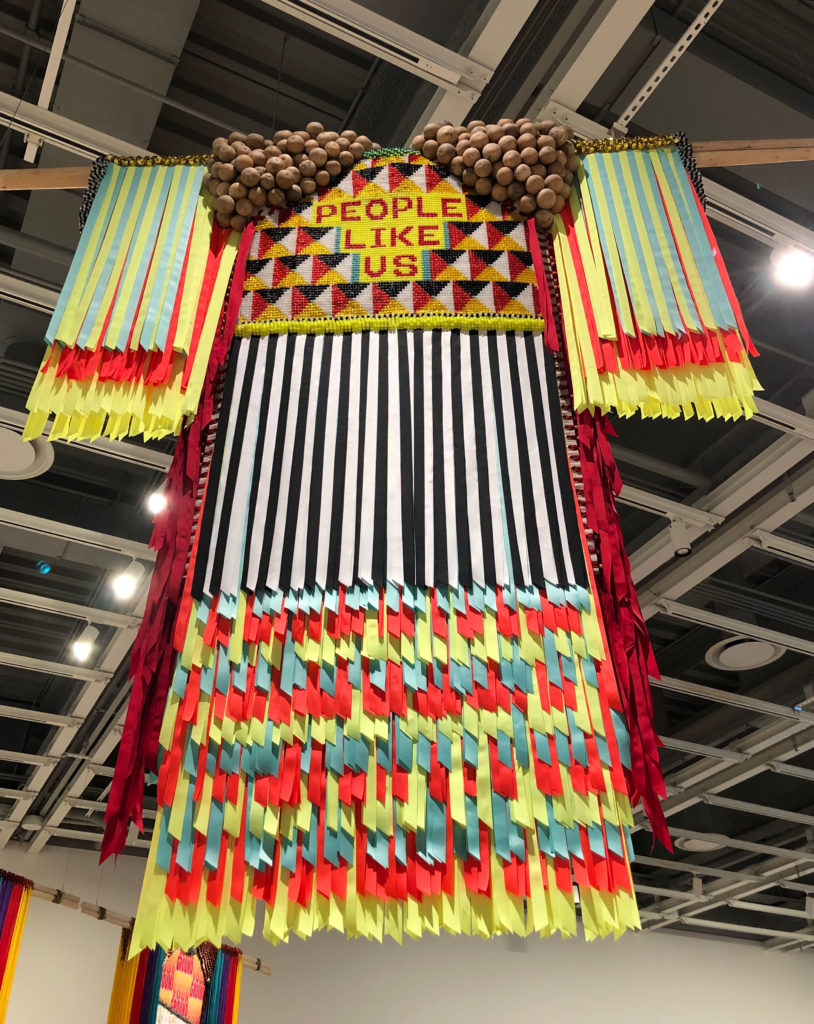
Jeffrey Gibson, “PEOPLE LIKE US”, 2019

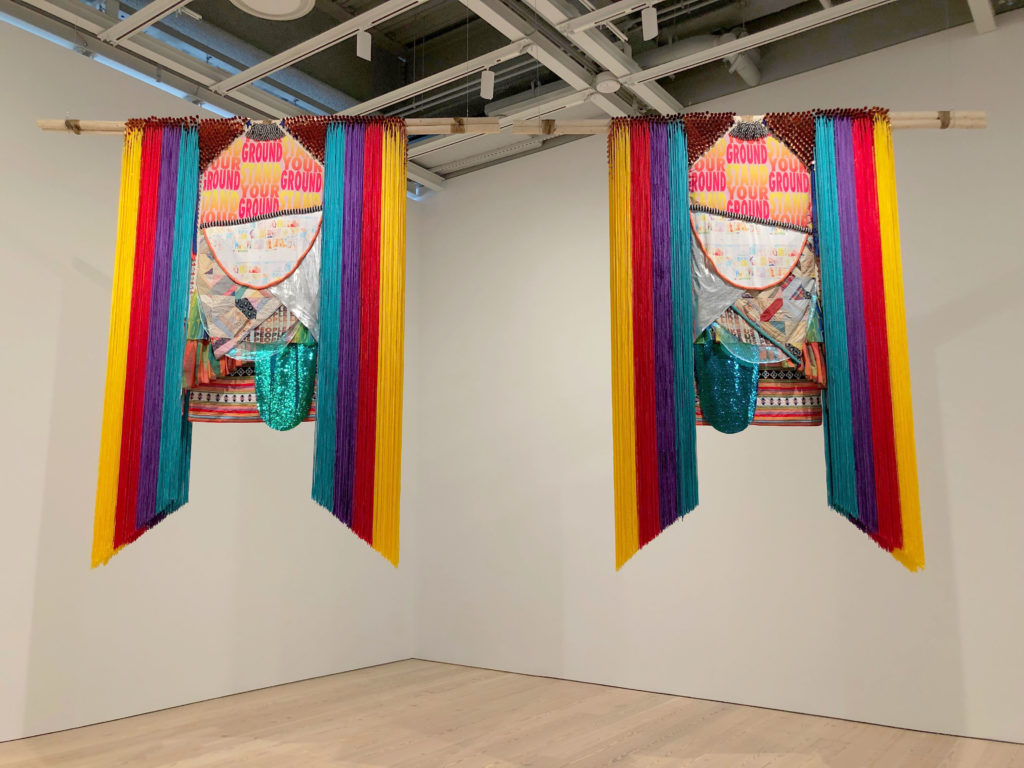
Jeffrey Gibson

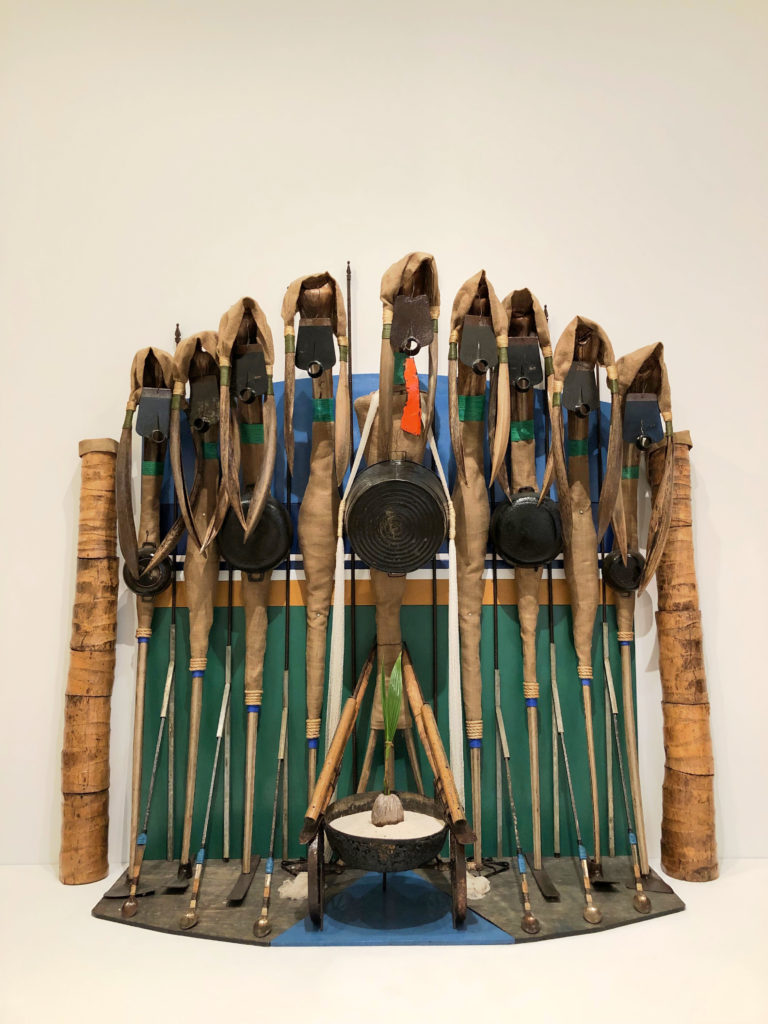
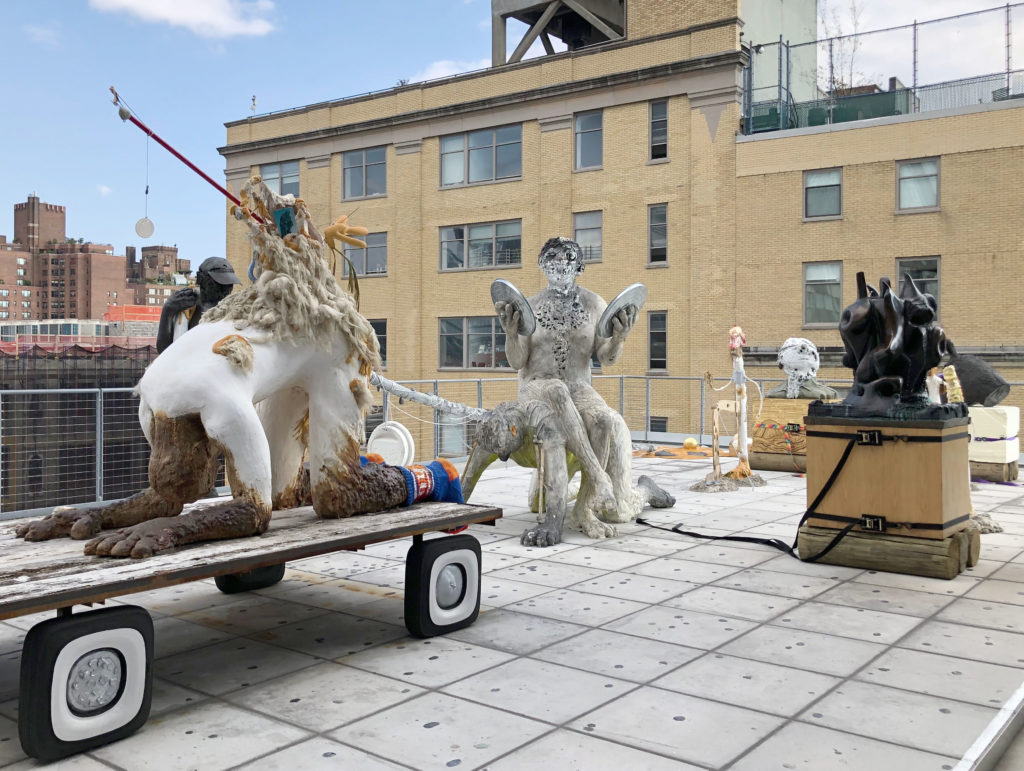
2019’s Whitney Biennial presents an interesting selection of work, by a mostly young and diverse group of artists. The works included in the show are consistently good, and often intriguing, but this time around nothing is particularly outrageous or polarizing- a contrast to many of the previous iterations.

Not that there wasn’t any drama surrounding the show. This time around, however, the controversy was not with an artwork but with former Whitney executive board member Warren B. Kanders and his ownership of Safariland, a tear-gas canister maker. He has since resigned after protests and threats of withdrawal from several of the artists included in the show. Artist collective Forensic Architecture’s film, Triple Chaser, on view in the exhibition, investigates Safariland and Kanders.

Below are a few highlights from the exhibition.

Janiva Ellis ” Uh Oh, Look Who Got Wet”, 2019

Daniel Lind-Ramos, “Centinelas (Sentinels)”, 2013

Section of Nicole Eisenman’s, “Procession”, 2019

This exhibition closes 9/22/19.


Aug 222019
 

A Universe of One, 2018

A Universe of One, 2018 (detail)

The Dream of Flight, 2019

The Dream of Flight, 2019 (detail)

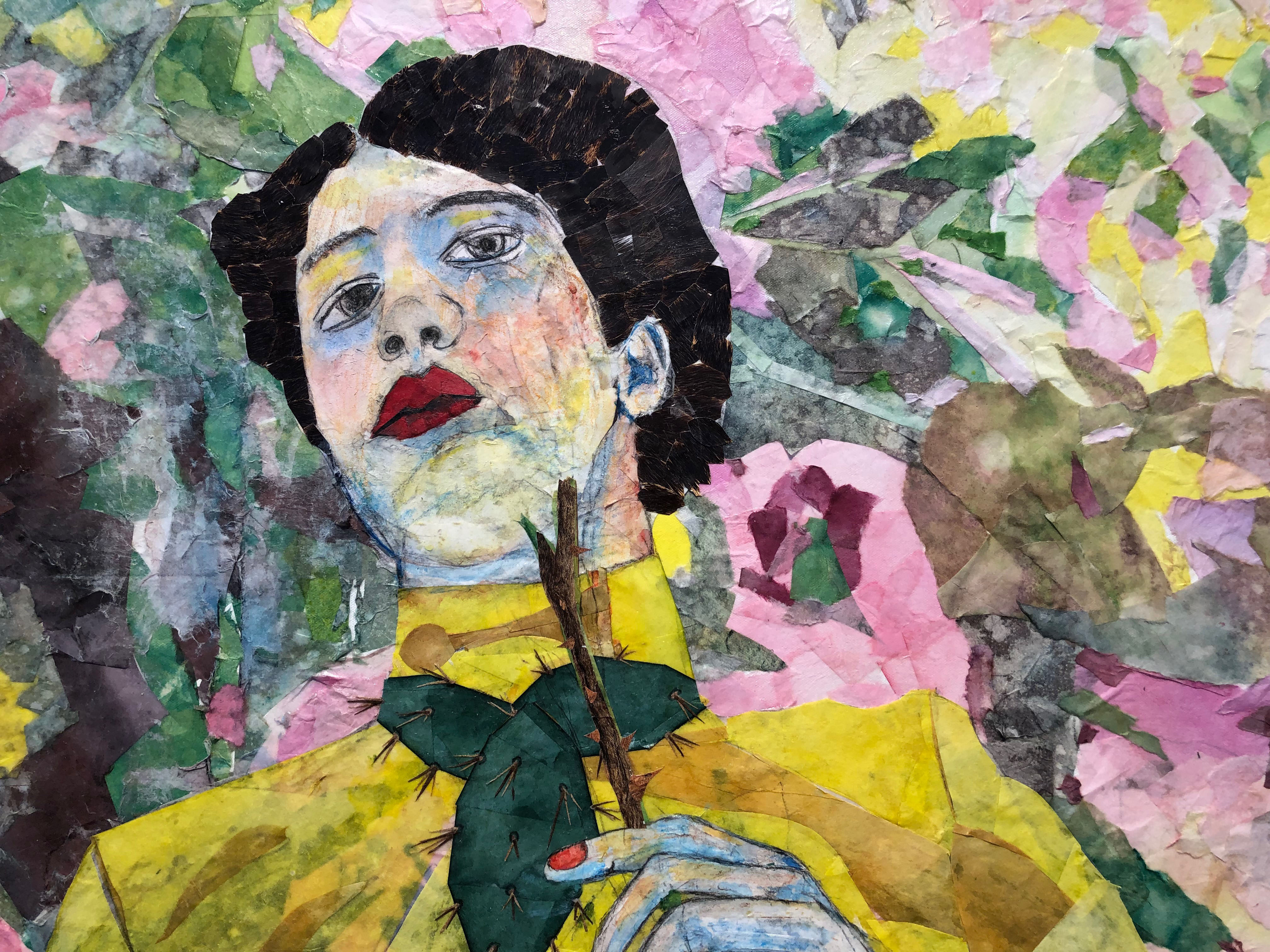
Currently at Kohn Gallery is New York-based artist María Berrío’s first solo exhibition in Los Angeles.

From the press release-

Inspired by her youth in the countryside of Bogotá, Colombia, Berrío’s paintings explore the experience of immigrant identity, intercultural connectivity and the beauty that is found in the diversity of cultures and countries. Berrío depicts her figures with richly detailed and patterned backgrounds of exteriors and interiors. The large, detailed mixed media canvases employ lush, carefully crafted, multilayered Japanese papers and paint, resulting in scenes replete with pensive yet confident figures amid a scene of visual exuberance.

Berrío’s work often places female figures at the center of her intricately woven landscapes. Painted with watercolor details, her figures stare out of the composition determined to confront the viewer from their own surreal surroundings. Her work is evocative of predecessors such as Gustav Klimt and Egon Schiele, both known for their exceptional degree of emotional directness and figural distortion in the place of conventional beauty. Berrío’s works float seamlessly between historical and contemporary artistic styles as they employ a wide visual vernacular ranging from expressionism to graphic, abstract marks.

The variety of media and techniques found in María Berrío’s practice emphasizes the interwoven cultural breadth of the world in which we live, where globalization and injustice touch the lives of everyone. Each character Berrío paints is a symbol of this new reality and the strength that can issue from it. For the artist, a female soldier on the front lines is as brave and mighty as the mother who protects her children from the perils of war. These depictions of women are seen as guiding spirits who are strong, vulnerable, compassionate, courageous and in harmony with Nature and themselves. With these combinations of human traits and emotions, Berrío fortifies her belief that with womanhood every action is considered beautiful and strong, no matter how small or large.

For her current show, A Cloud’s Roots, Berrío focuses especially on place and migration. The individuals are seen in preparation for their travels, in moments of transition, and in various states of uncertainty. Berrío states, “the ambiguity is intentional; although I may have a specific idea in mind when making the work, the actual piece lacks cultural specificity to allow for all symbolic possibilities.” Berrío therefore gravitates towards symbols with global cultural significance, such as braids, birds, and flowers, with the hope that they allow diverse audiences to bring their own understanding to the work.

In her recent work, A Cloud’s Roots (2018), Berrío creates a fictional species of tree based on the dragon’s blood tree, found exclusively on an island off the coast of Yemen. The dragon’s blood tree has adapted perfectly to the island’s desert-like climate and rocky soil, inhospitable to most other plant life. It is a powerful symbol of survival and resilience, able to thrive even in the most unlikely conditions. The figures in the piece are compelled to leave their home but they carry with them the knowledge that they too have the power to put down roots wherever they go.

By reflecting on the beauty of our immigrant nation, Berrío’s new body of work aims to rewrite the narrative of American history to include the stories of people who have long been excluded. It makes space for those who were not born in this country, but come here full of hope and desire to make it their home. As the art canon expands its scope and redefines its boundaries, Berrío imagines a future in which people with diverse perspectives can walk into an institution and see themselves reflected back. Berrío states, “so many immigrants, myself included, are stuck in the inbetween, not quite from here, and no longer from there. I create work that bears witness to this liminal state of being and acknowledges it as an essential part of being American. I wish to convey that which can never be conveyed: the sheer joy of being, of creation, and the undiscoverable mystery of being alive.”

This exhibition closes 8/24/19.

Also, if you are in New York City, she recently created several glass and ceramic mosaics that can be seen in the Fort Hamilton Pkwy Station.


Aug 092019


When trying to talk about the David Hammon’s exhibition at Hauser and Wirth Los Angeles, his first in Los Angeles in 45 years, it’s hard to know where to start. There are no titles or descriptions of any of the works in the show, although there is writing on the walls in certain places. The press release, shown below, is a mass of lines and a dedication to jazz musician Ornette Coleman.

Before you enter either of the two massive galleries housing the exhibition you encounter a courtyard filled with tents, some with “this could be u and u” stenciled on them. Tents also line the corridor under Martin Creed’s neon piece, EVERYTHING IS GOING TO BE ALRIGHT, with a rack of fancy vintage coats nearby. Once predominantly in Skid Row, Los Angeles’ tent cities have been growing rapidly on street corners and under bridges and highways all over the city, but they often just blend into the background for people walking and driving past. What does a fake tent city in the courtyard of a high end gallery in a newly gentrified neighborhood mean? Is its fake version more affecting than the real one to gallery and restaurant patrons wandering by?

The work in the show feels at times random, clever, humorous, and confounding, but also impressive, thought provoking, and most importantly never dull. There are stacks of art history books sitting on scales. A water filled bowl that contains what once was a snowball Hammons had sold on the street at one point in his career, sits on a wooden shelf. A room with empty glass cubes on wood columns requires you to bend down to see the feet underneath. A book titled A History of Harlem is filled with empty black pages.

In the room pictured below is a three legged chair next to a wall of photos of women sitting in it. Nearby, one of Ornette Coleman’s suits is surrounded by glass.

Another room is filled with paint splattered and damaged fur coats, one facing an antique mirror that is covered. The symbolism feels a bit heavy handed, like the tents, but it works in that there are still several ways to interpret what Hammons might be saying.

Throughout the exhibition paintings are covered in various ways. One in paper, ripped with a bit of the painting visible. Others are partially hidden with tarps, plastic, different fabrics, even an antique rug (shown below). Once again, you can interpret the meaning of this in several ways. With the rug, for example, it’s turned so that only a bit of its design is visible in front of a painting that is not completely visible. These rugs are often associated with old money and sometimes are hung on walls themselves as artwork. Or is it just another assemblage, a visual combination to be taken at face value.

Ultimately the interpretation of all of the work is up to the viewer. There is something freeing in that, not being given answers. Sure, it’s nice to have an explanation of an artist’s intentions sometimes, but you often add your own ideas anyway. Art should make you think, question things, look at the world from a new perspective- this exhibition does all of that and more.

David Hammons at Hauser & Wirth Los Angeles closed 8/11/19.


Aug 082019
 

In addition to the murals created for POW! WOW! Antelope Valley 2018, artist Dan Witz also created a few small pieces like the one shown above. For more of his work, check out his website and Instagram.

Aug 082019
 

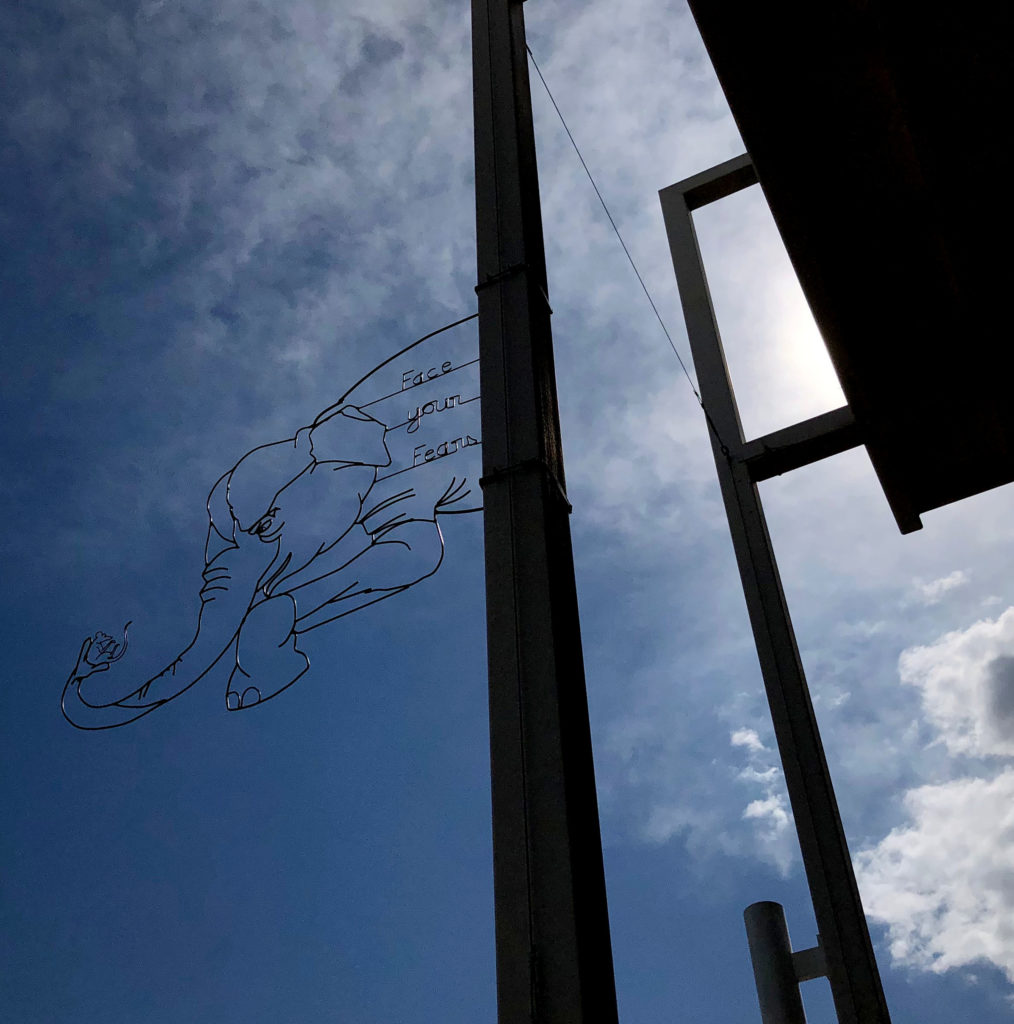
In addition to the murals created for POW! WOW! Antelope Valley 2018, there were also several smaller works including several of Spenser Little’s wire sculptures. For more of his work, check out his Instagram.