Dec 192019
 

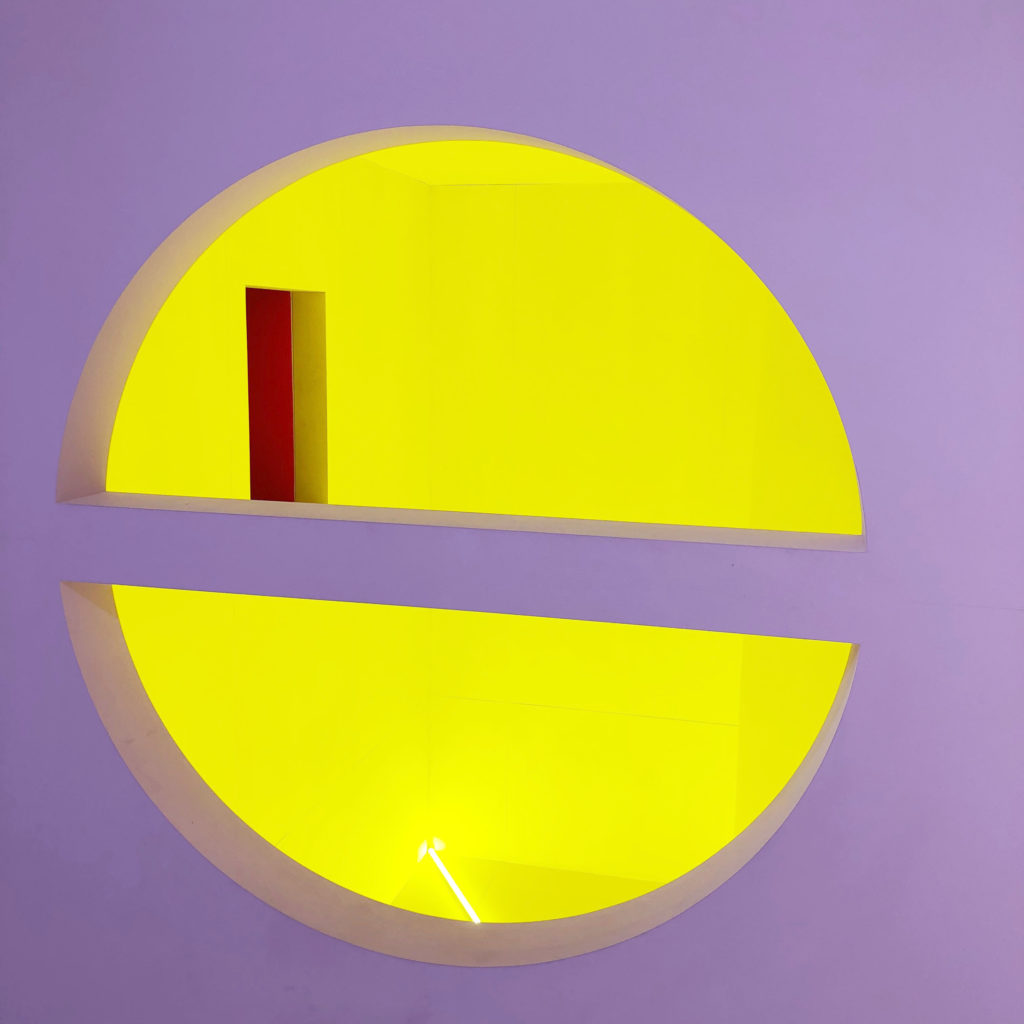
For Peter Halley’s Heterotopia II, at Greene Naftali’s ground floor gallery in Chelsea, he has created a delightful, brightly colored maze-like installation.

From the press release

In Des Espaces Autres (1984), Michel Foucault defines heterotopia in opposition to utopia. While utopias are unrealized representations of a perfected society, heterotopias exist within all societies as realms differentiated from everyday life. Examples include ceremonial, sacred, and institutional spaces such as chapels, cemeteries, libraries, and prisons. They are spaces designated for special activities – creating their own sense of time and operating according to their own standards.

Through a range of media – painting, architectural installation, digital prints, and critical writing – Peter Halley’s work has illuminated the structures of social space and communication that shape our experience of contemporary life. For his second solo exhibition at Greene Naftali, Halley presents Heterotopia II, the latest in a series of large-scale installations exploring the relationship between painting and architectural space. Halley has created a multi-colored, labyrinthine structure in the ground floor gallery housing eight new shaped-canvas paintings, titled after imaginary planets from Isaac Asimov’s science-fictional universe.

The installation is enclosed by tall neon yellow walls coated in Roll-a-Tex, with only a narrow slot in the front wall offering the viewer a preemptive glimpse inside. The interior space is organized around a glowing yellow core – an inaccessible inner sanctum whose light is solely visible through three distinctive apertures. Around the core are arrayed eight interconnected rooms rendered in vivid colors, each defined by architectural elements, including staircases, keyhole windows, beams, and columns. The arrangement of these elements playfully nods to motifs in the work of architects Peter Eisenmann, Hans Hollein, Luis Barragán, and Louis Kahn, as well as to Halley’s own oeuvre. Halley’s installation, with its candy colored surfaces, is a postmodern reverie on neoplasticism and modernist geometry, founded on a tension between rationalist geometry and lyrical color.

Visitors circulating through the maze-like installation encounter Halley’s shaped-canvas paintings one-by-one, as the interactions between two-dimensional image and three-dimensional architecture unfolds. Composed of multiple interlocking prisons and cells, the paintings create ambiguous figure-ground relationships, while echoing the geometric plan of their three-dimensional setting.

This exhibition closes 12/20/19.
Dec 132019


Closing on 12/14/19 is Kenny Scharf’s current exhibition at Honor Fraser, Optimistically Melting!. The exhibition includes multiple installations, paintings, and sculptures- including new ceramic work.

From the press release-

After four decades of constant production, Scharf’s latest group of paintings introduces a new subject: the still life. The trope of flowers in a vase appears throughout Western art, notably in the work of artists such as Jan Brueghel the Elder, Vincent Van Gogh, and Andy Warhol. In Flores Flores Flores (2019), happy flowers spring from a vase casually set on a table at the center. Closer inspection finds a less happy flower at the edge of the table with X’s over its eyes, a cartoon signifier of death. Further, the viewer notices the drips of darkness in the background, adding to a growing sense of unease in the work, something sinister lurks behind the pleasant centerpiece. These signifiers of global anxiety become more overt in the artist’s Sloppy Melt series of paintings, also to be included in the exhibition, which feature dripping cartoon figures and screen-printed news headlines in English and Korean about climate change. With clear memories of smog days as a child growing up in Southern California, environmental concerns have appeared throughout Scharf’s oeuvre. The artist believes it is important to be mindful of future damage we will cause to the environment if we continue to prioritize comfort and ease in the present.

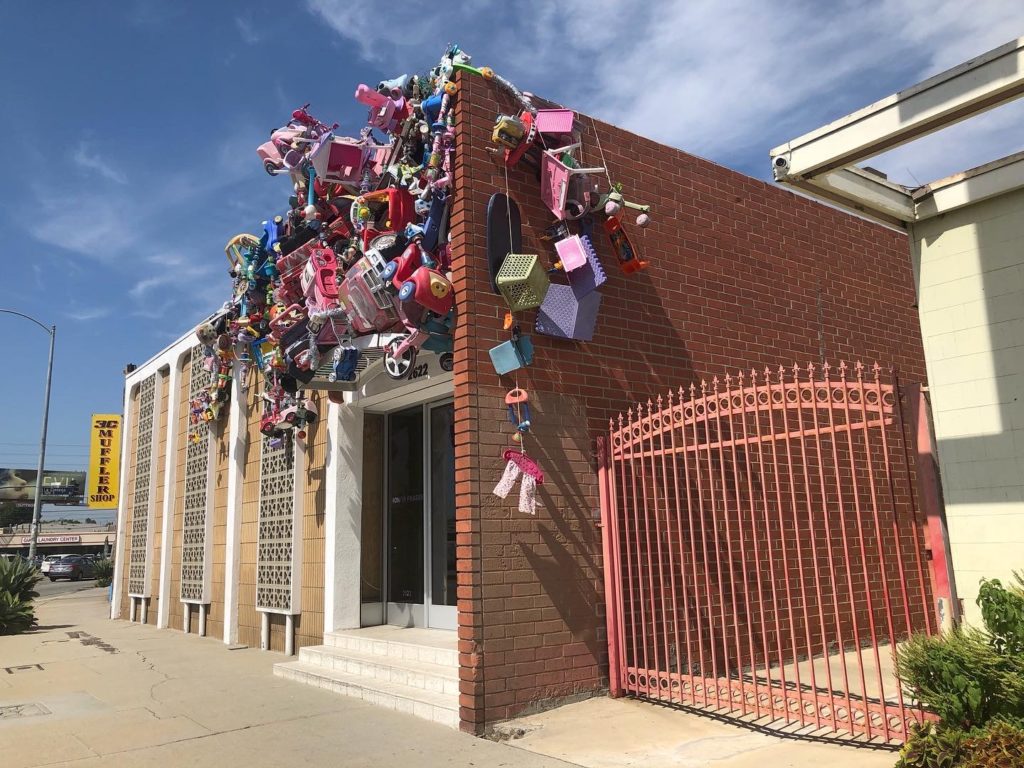
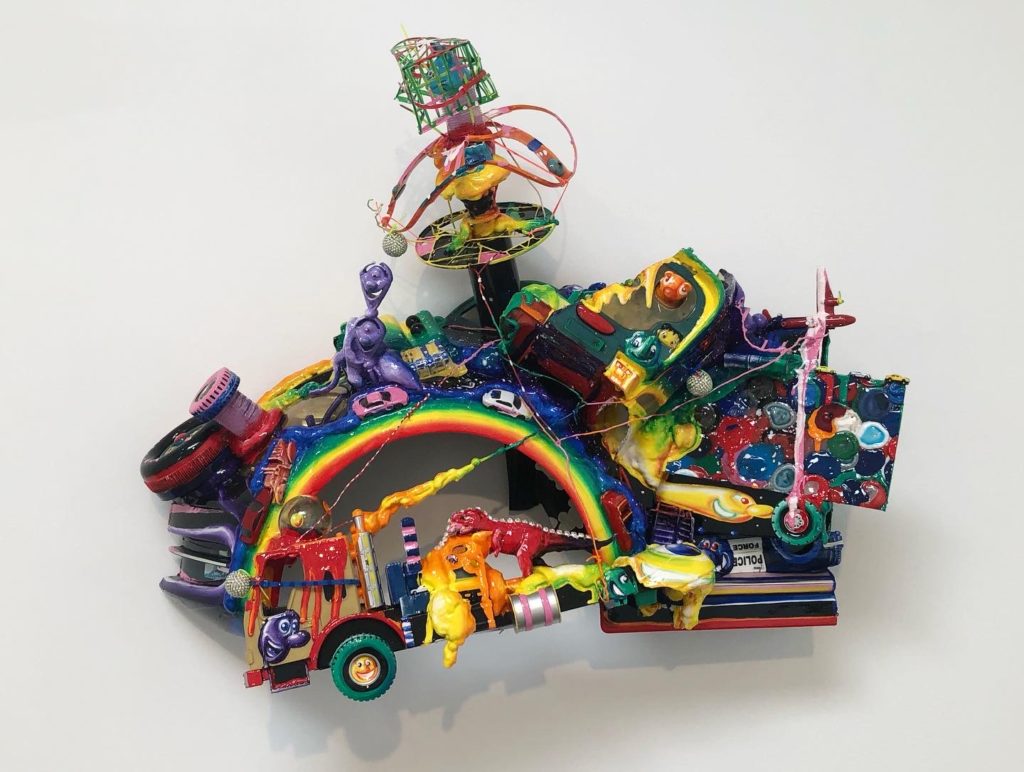
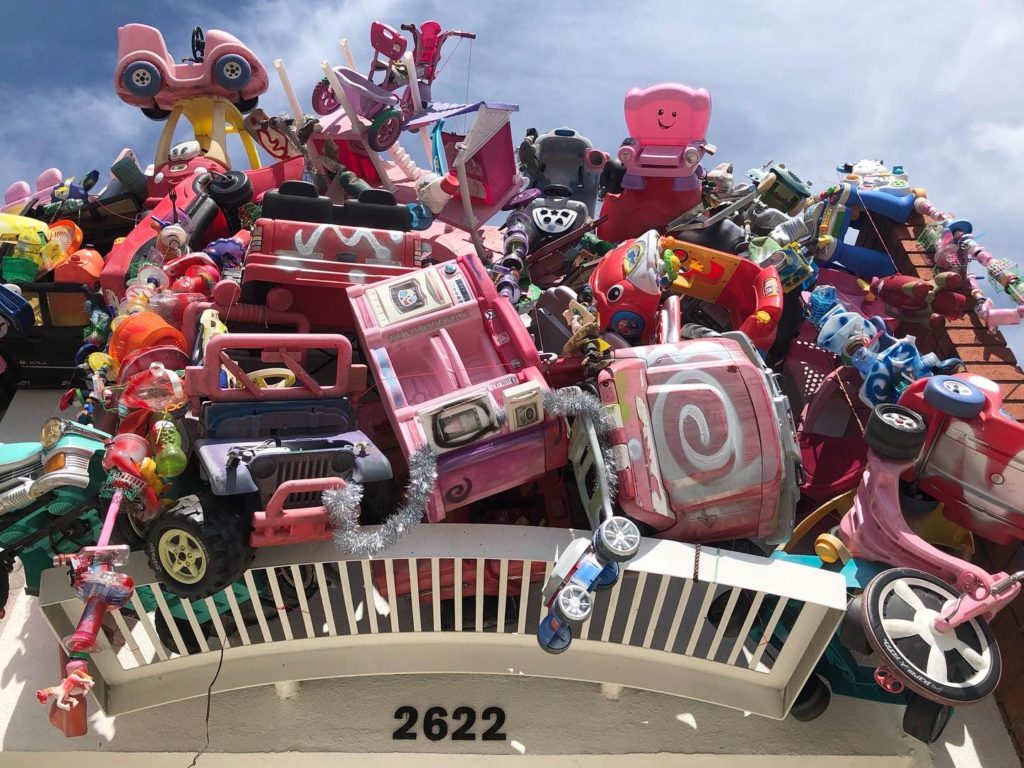
In the 80s, Kenny Scharf began collecting plastic detritus that he found along the beach in Brazil, where he was living at the time. The artist would assemble these discarded items into sculptures for the wall, giving them new life as aesthetic objects called Lixos (“trash” in Portuguese). Though the sculptural practice has continued intermittently, Scharf made a habit of collecting discarded plastics from around the world, which have not degraded over the years. More recently, the artist began collecting all of his single-use plastics and stringing them together as a garland around his studio, a constant reminder of daily waste. In light of the current reckoning with the overproduction of plastics and climate change denial, Scharf will present a new body of Lixos in the gallery along with a giant garland wrapped around the outside of the building. Materials for the garland will be collected at Honor Fraser Gallery throughout the summer and leading up to the exhibition. In addition to creating a personal alternative to recycling methods that require more toxic chemicals, Scharf aims to shine more light on this urgent issue. As in his paintings, deep concerns about our future lie beneath these brightly colored works.

Expanding his sculptural practice, Kenny Scharf will unveil a group of large ceramics featuring his signature characters in the round. Produced in collaboration with Stan Edmondson in Pasadena, these works were fired locally and hand-glazed by the artist. Bordering on living sculpture, the pots will contain greenery to be nurtured beyond the term of the exhibition, a gesture of possibility and hope rom the artist. In addition to converting carbon dioxide into oxygen, caring for plants has proven to be a beneficial practice for humans as it requires patience, reduces stress, and promotes close observation. These plants grown by the artist himself contain Scharf’s intention for a more respectful and conscientious future.

Dec 122019
 

Petzel Gallery is currently showing Walead Beshty’s solo show “Abstract of A Partial Disassembling of an Invention Without a Future: Helter-Skelter and Random Notes in Which the Pulleys and Cogwheels Are Lying Around at Random All Over the Workbench”. The sheer volume of work covering the walls is overwhelming and impressive in its assembly.

From the press release-

The work A Partial Disassembling of an Invention Without a Future: Helter-Skelter and Random Notes in Which the Pulleys and Cogwheels Are Lying Around at Random All Over the Workbench, was originally commissioned by the Barbican Centre, London. The London-born, Los Angeles-based artist first exhibited the work there in 2014, covering the 273 ft long Curve gallery from floor to ceiling in cyanotype prints. The prints were produced over the duration of a year (October 9, 2013–October 8, 2014) and are chronologically installed in proportion to the exhibition space. For its New York première at Petzel, approximately 5,120 cyanotypes (38% of the total 15,616 sq. ft work) will be presented.

In A Partial Disassembling of an Invention … , each cyanotype (a 19th Century photographic process using ferric ammonium citrate and potassium ferro-cyanide) was produced by placing tools and other objects used in the production process of the studio on cellulose waste material generated by that same process (such as wood, cardboard, or paper) that was coated with UV-sensitive cyanotype material. After being exposed to sunlight and washed in water, the object’s silhouette appears in reverse against a cyan-blue background.

In using everyday objects, such as receipts, prescriptions, invoices, financial statements, legal documents, letters, gallery invitations, etc. from the working life of the studio, an inherent transparency is embedded in the work, demystifying the artwork and exposing its process of coming to be. Representative of the lives of those who made it, the cyanotypes expose both aspects of identity and circumstance, situating the work within political, social, and economic exchange without being representational or depictive in the conventional sense. While both the Barbican and Petzel iterations deal with debris, this new display has a more overtly American immediacy to it. Considering the resurgent discourse on the politics of representation, there is a new urgency to exhibiting the work for the questions it evokes about the modes and uses of representation, such as how art can accurately display real world conditions of labor, production and power, and whether a truly accurate and transparent form of representation is possible.

Beshty will also show Prologue to A Partial Disassembling of an Invention Without a Future: Helter-Skelter and Random Notes in Which the Pulleys and Cogwheels Are Lying Around at Random All Over the Workbench, which are the cyanotypes that were produced in anticipation of the Barbican work from August 1, 2013–October 8, 2013, along with seven volumes of the 59-volume archive of the work. The books—in their Prologue and Opus volumes—comprise bound pages printed recto and verso of the entire work reproduced at 1:2 scale. The volumes create both an archival record of Beshty’s workspace as well as an index of all the tools and artefacts used for the work’s own making.

The title of the project is a reference to Hollis Frampton’s hypothetical lecture he muses about in a talk delivered at the Whitney Museum of American Art, but never actually gives. The title of this phantom lecture alludes to the origins of the medium, and its inevitable obsolescence. It also calls forward the question of the role objects play when they have ceased being useful. Wrenched by time from their intended use, the objects become purely aesthetic, becoming the focus of contemplation in both historical and poetic terms.

This exhibition closes 12/14/19.

Dec 062019
 

Murals of La Jolla is a project started in 2010 by The Athenaeum and the La Jolla Community Foundation. It commissions artists to create work to be displayed on buildings around La Jolla. The works are on view for a minimum of two years (a map of current work here)

The above work is Favorite Color (2010) by Roy McMakin.

From the Murals of La Jolla website regarding this work-

…“The idea was very simple. I have always, since a child, been intrigued at both my own emotions around color preference, and also others. It has been important, and part of my identity to know what my favorite color is. I often recall times that I discussed color with my friends as a child and the talk always centered around preference. And I have found as an adult that most people still enjoy sharing what their favorite color is.”

“My proposal for the wall in La Jolla was to create a visual document of what a somewhat arbitrary group of people, of various ages, etc., choose as their favorite color. I began the process by asking people their favorite color, and then I presented them with a selection of 4 to 6 colors, of which they choose the one that was closest to the color they liked best. For example, if someone said “blue”, then I showed them blue swatches and they chose one. One square was painted that color. I like the idea that this takes place at a certain time, and that the ultimate form of the mural was dictated by the number of folks that showed up.”

This mural is located at 7596 Eads Avenue.


Nov 232019
 

The Second Home Serpentine Pavilion, designed by Spanish architects Lucia Cano and Jose Selgas of SelgasCano, is a bright and colorful addition to the park that houses the La Brea Tarpits and LACMA.

The installation will be up and accessible to the public until 11/24/19 (although tickets are available for Monday 11/25 and Friday 11/29). Get free tickets here.

Oct 312019
 

Located in LACMA’s B. Gerald Cantor Sculpture Garden among the sculptures by Rodin is Zak Ové’s sculptural installation, The Invisible Man and the Masque of Blackness.

From the LACMA’s website-

The title’s references—Ben Jonson’s 1605 play, The Masque of Blackness, and Ralph Ellison’s 1952 novel, Invisible Man—mark two milestones in black history: the first stage production to utilize blackface makeup, and the first novel by an African American to win the National Book Award. In addition to literary references, the artist draws inspiration from Caribbean Carnival, a festival that originated from the Mardi Gras celebrations of the region’s French colonists, and Canboulay, a parallel celebration in which enslaved people expressed themselves through music and costume and paid homage to their African traditions. The installation’s 40 graphite figures stand tall and dignified to represent the strength and resilience of the African diaspora.

In the the video below, Ové  provides some interesting insight and information on the work.

This exhibition closes 11/3/19. LACMA is free for residents with ID from 3pm and is open late on Fridays until 8pm.

Aug 082019
 

In addition to the murals created for POW! WOW! Antelope Valley 2018, artist Dan Witz also created a few small pieces like the one shown above. For more of his work, check out his website and Instagram.

Mar 022019
 

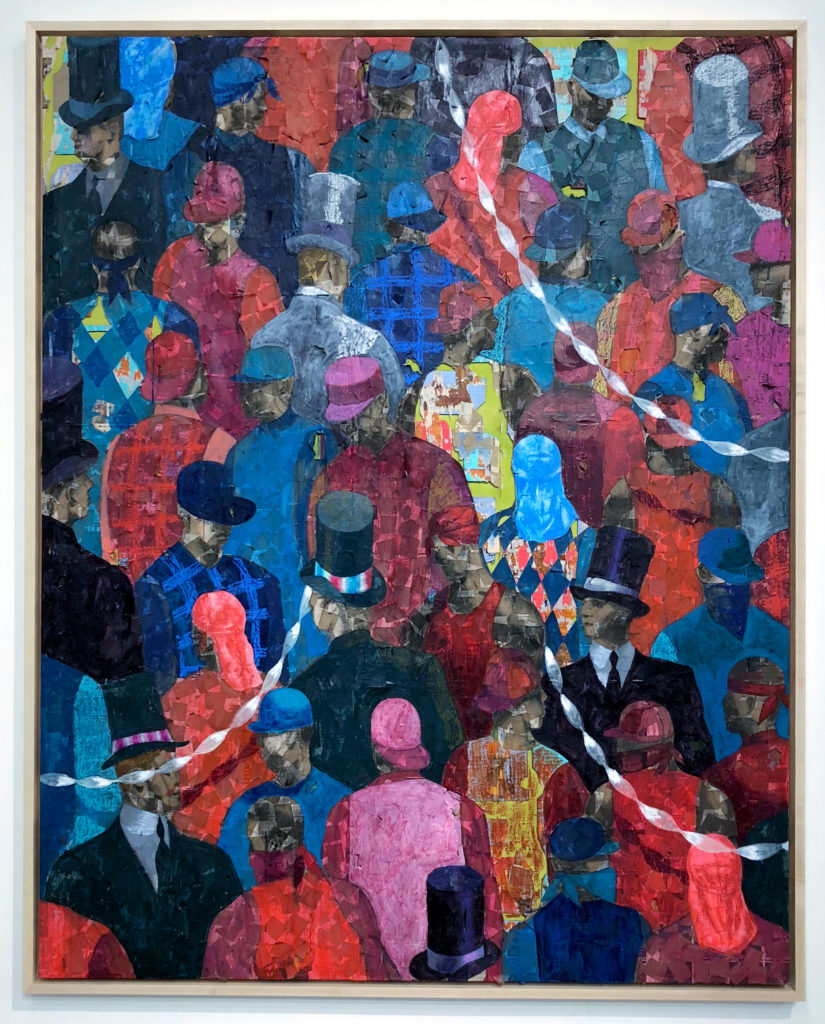
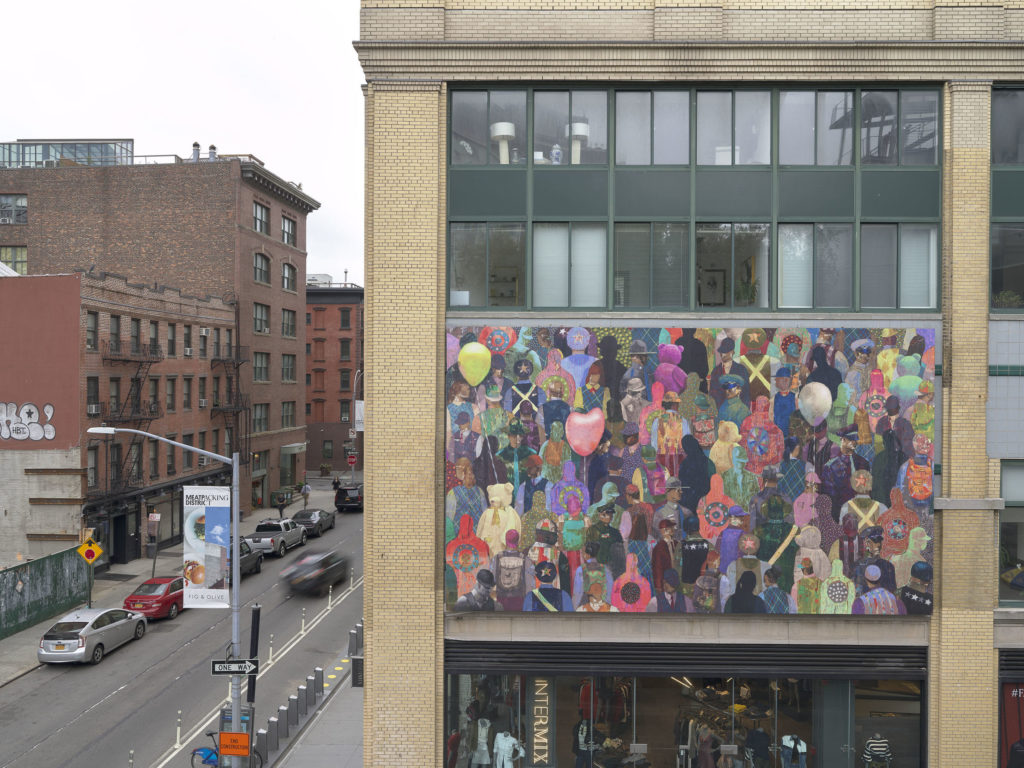
Derek Fordjour, Two Party System, 2019


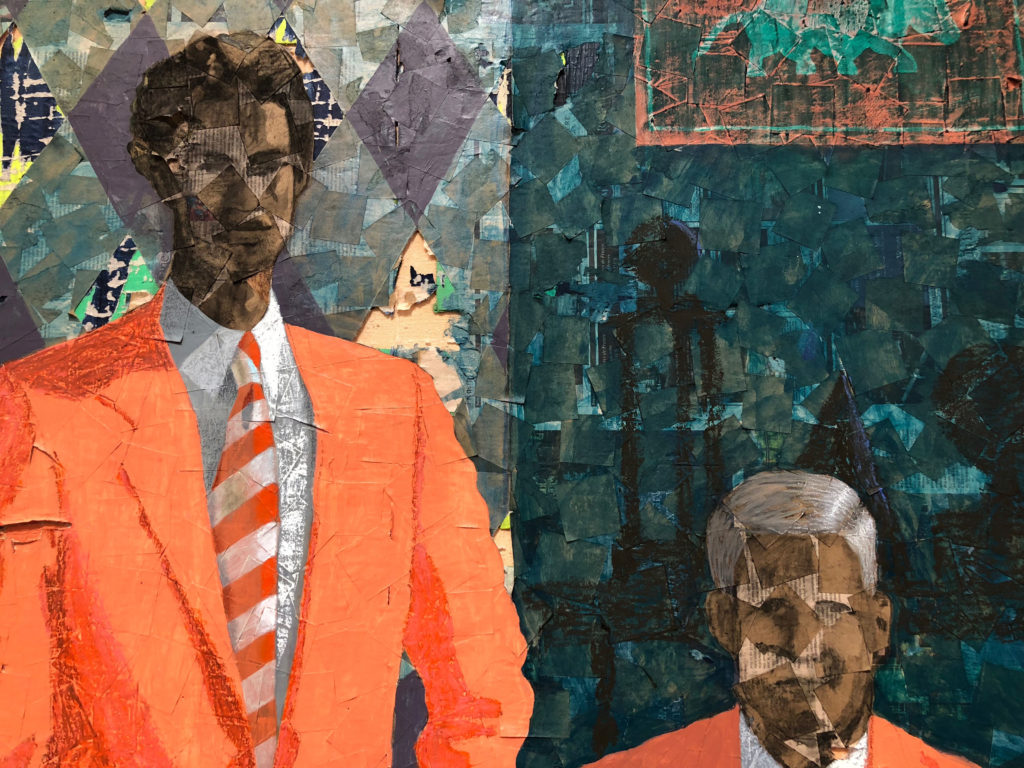
JRRNNYS, Derek Fordjour’s solo exhibition at Night Gallery, includes new paintings and sculptures that “advance explorations of earlier works, returning to the subjects of crowds and athletic competitions to illustrate the entrenchment of power relations, capital flows, and racial inequality within the economic and social systems of the United States”. The paintings are made of multiple layers of painted cardboard and newspaper that are then scored and sections are removed.

This interview with the artist from artnet goes into more detail on his fascinating process and the reasons behind it.

Signing Day, 2019

Signing Day detail


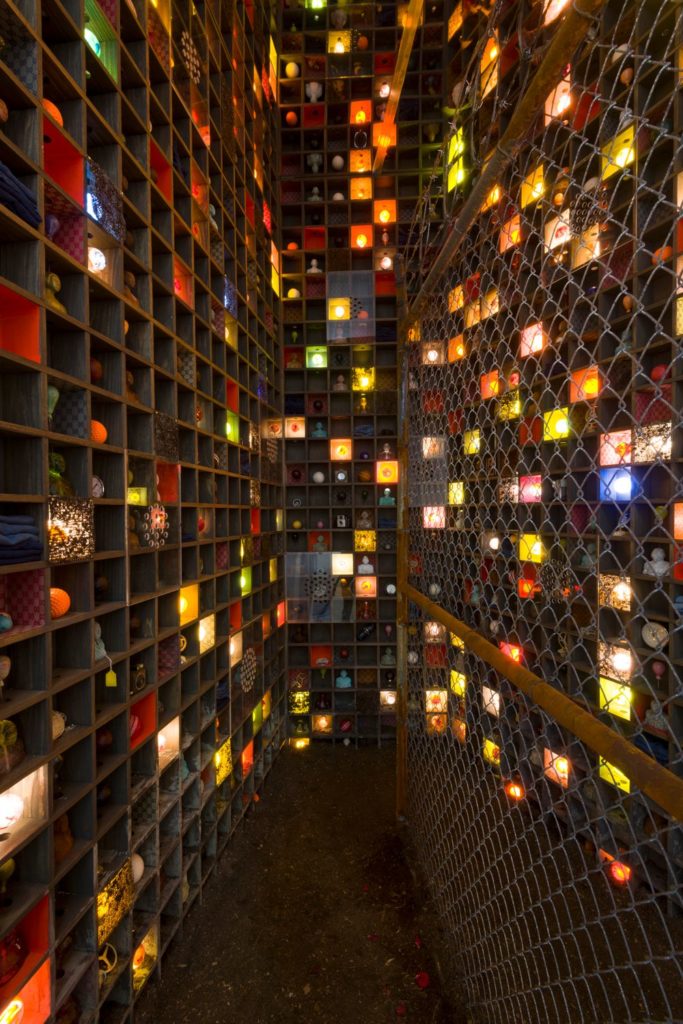
The centerpiece of the exhibition is the installation STOCKROOM Ezekiel.

From the press release

…The work takes its name from the 1884 letters of Ezekiel Archey, an 25-year-old unjustly held as a prisoner sent to labor at the Pratt Coal Mines in Birmingham. Archey’s letters, sent to the Alabama inspector of prisons, are among the most prominent primary-source documentation of the ravages of the convict leasing system, acknowledging the stark preponderance of black prisoners and the gruesome treatment of the laborers by their supervisors. Fordjour’s installation responds to Archey’s letters by creating a walled-in structure comprised of over 1,000 individually constructed compartments – cells, as the artist calls them – painstakingly organized with a variety of found and handmade objects, though by a logic that is never explicated to the viewer. Lights in individual cells blink on and off variously, while small speakers let forth bursts of music by the dictates of a rigid but similarly inscrutable pattern, luring the viewer in the eye-popping manner of the carnival game or game board. The intermittent sounds of music range from the early field recordings of 20th century ethnomusicologist Alan Lomax to 80s- and 90s-era drug dealer anthems to modern day Trap music, a largely Southern genre of hip-hop inspired by the illegal drug trade. The viewer has entered a gamelike arena whose rules remain obscure. With time, the objects that populate the shelves come into focus. Some cells contain familiar items – balls extracted from various sporting contests, the lottery and billiards, cameras, hood ornaments from luxury sports cars, decommissioned prison uniforms, and hundreds of hand blown glass balloons, among others. Others are closed off with metal grating, while still more are lined with the ubiquitous fabrics of luxury designers, invoking the aspirational quests of poverty-stricken urban communities. Finally, many cells contain small busts of the same expressionless figure, molded from resin, copper, metal, plaster, dirt, and salt – materials which stand in for the most prominent products from the era of convict leasing, including the coal mines and steel plants of of Alabama and the molasses distilleries of Florida. Taken individually, the contents of these cells suggest luxury and labor, surveillance and displacement, strategy and competition; as a whole, the work suggests the laws of chance taking place within the confines of a framework that is as unknowable as it is oppressive. From the era of Pig Laws to our current three-strikes mandatory sentencing, educational lotteries to modern day sporting empires, Fordjour’s installation points to the tragic persistence of unjust structures that define American life, employing contemporary commodities while invoking history. At once mournful and flickering with possibility, the installation conjures notions of personal loss and gain within the macro-scale context of the inscrutable systems that have determined the fates of black and brown people through the nation’s history.

Derek Fordjour, STOCKROOM Ezekiel, 2019 image via Night Gallery

This exhibition closes 3/2/19.

If you are in NYC you can see one of Fordjour’s new works, Half Mast, as a public art installation for the Whitney Museum. The large vinyl reproduction of his painting can be seen at the intersection of Gansevoort and Washington Streets, directly across from the Whitney and the High Line.

Derek Fordjour, Half Mast. Image via Whitney Museum

Dec 312018
 

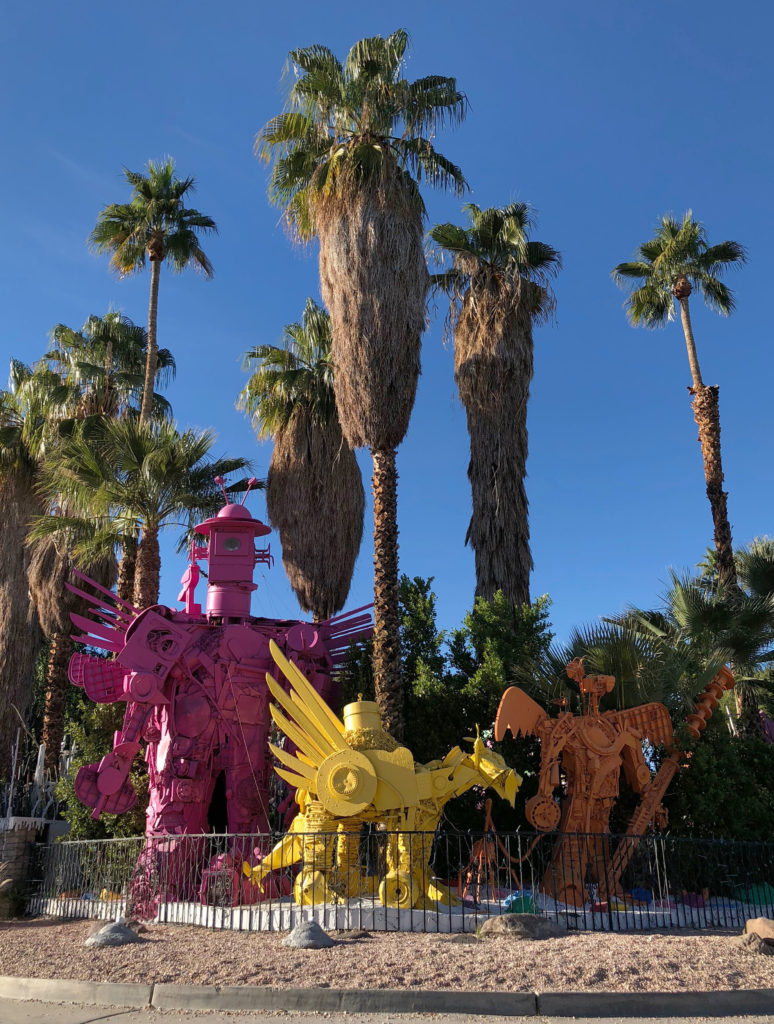
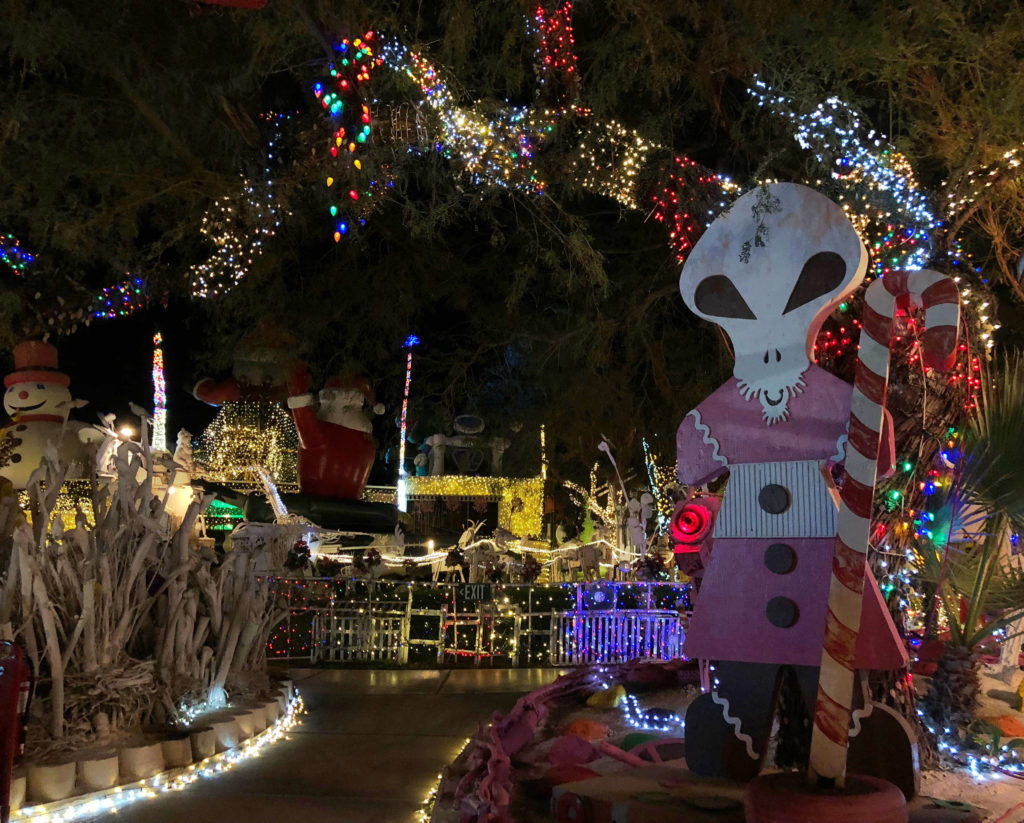
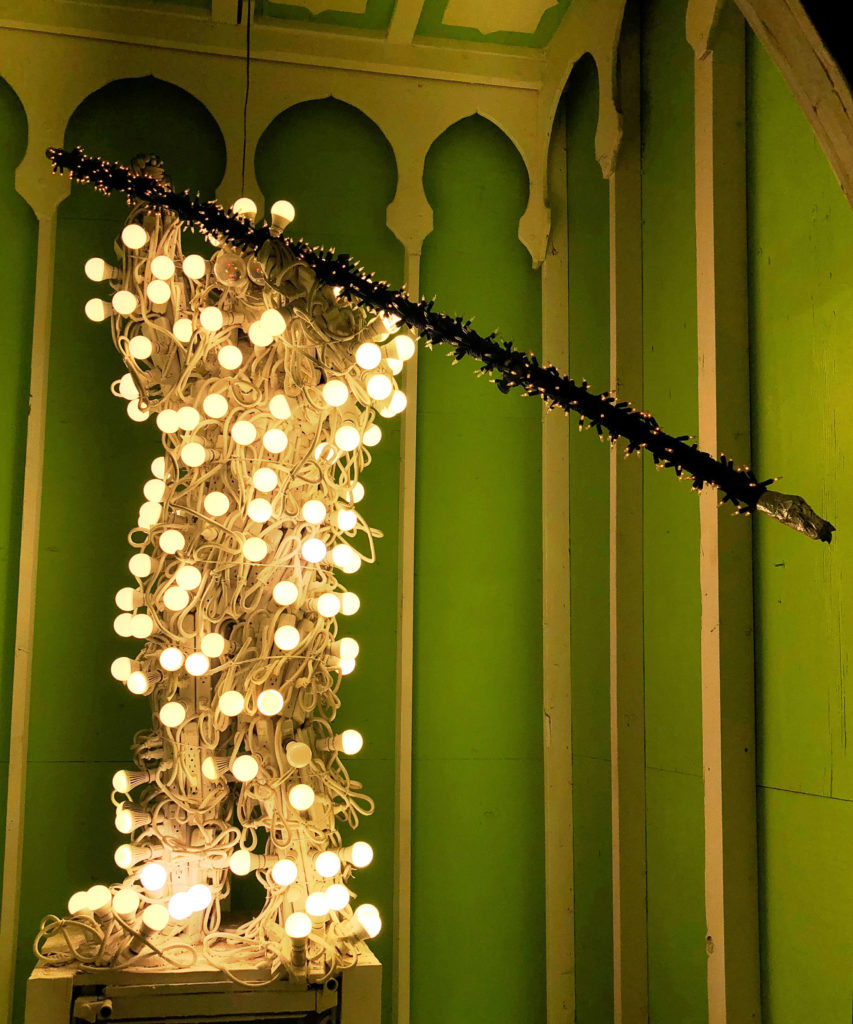
If you are in Palm Springs for New Year’s Eve, take some time and visit Robolights. This is the last year it will be at its current location on an estate in the Movie Colony area.

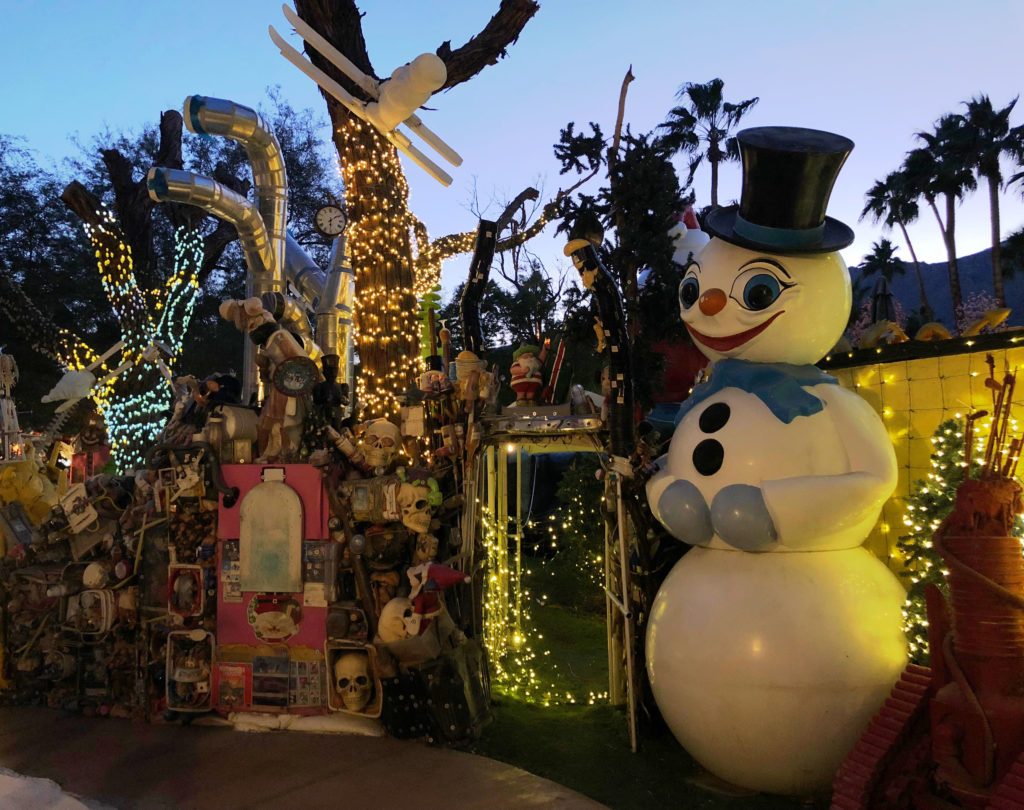
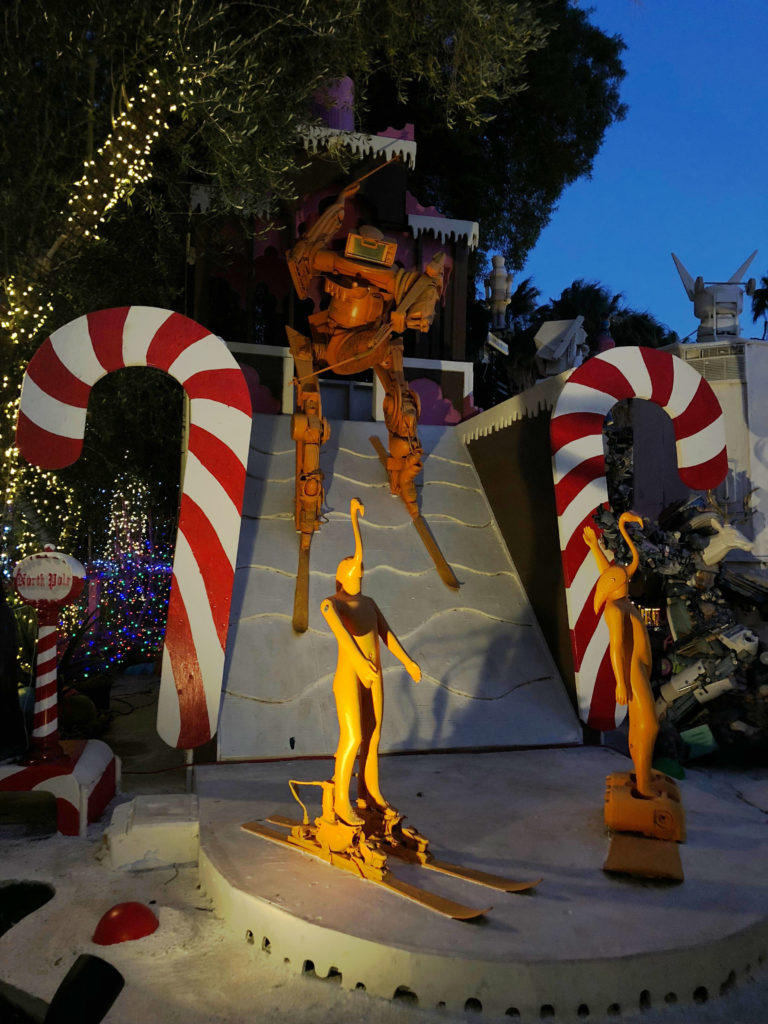
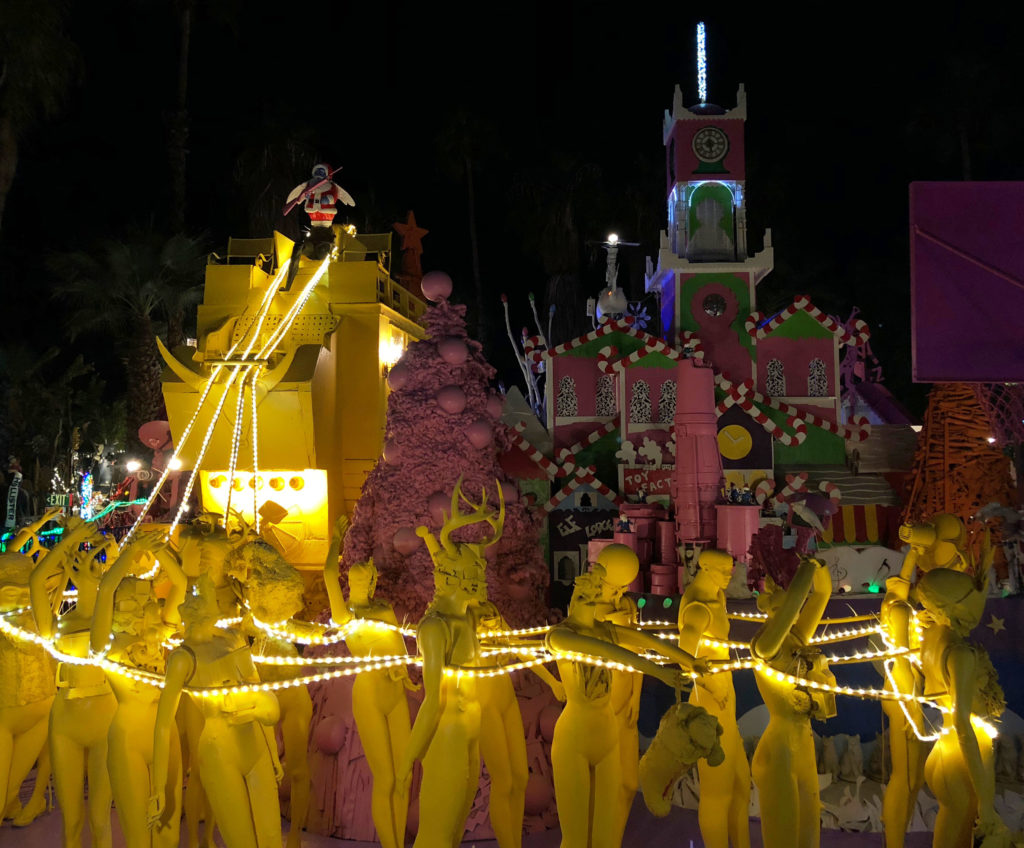
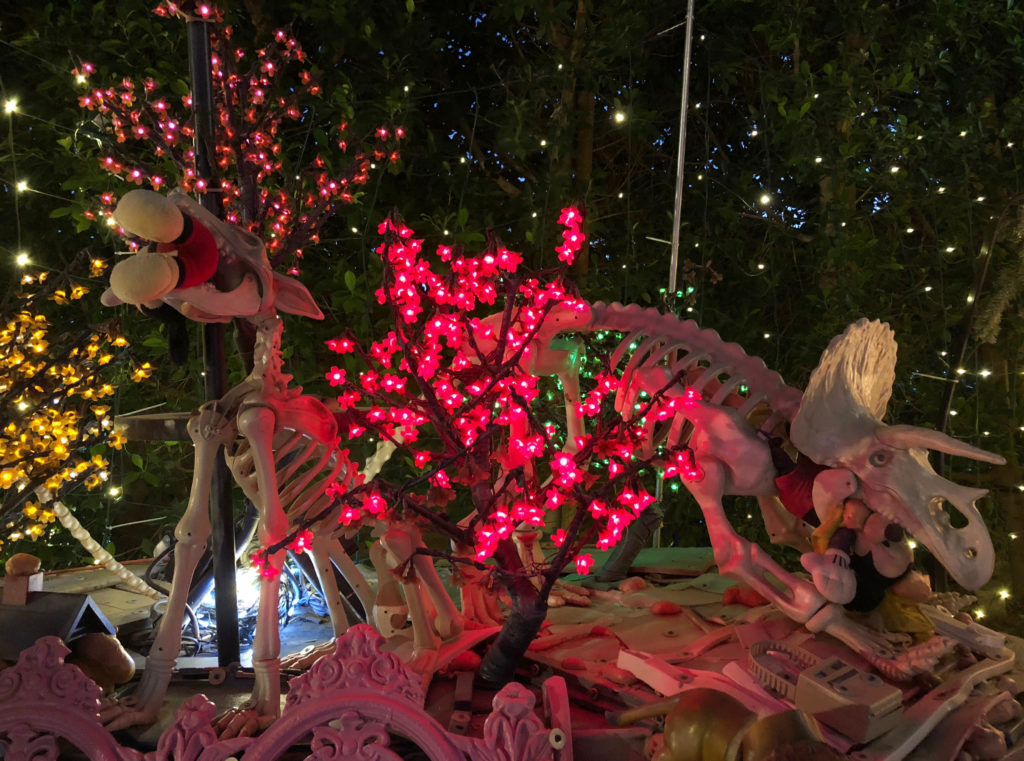
Robolights is an ongoing work created by artist Kenny Irwin Jr., at his childhood home. The sprawling installation incorporates Christmas holiday themes, robots, aliens and, of course, numerous lights. The various creations are made from found, recycled, and donated objects.

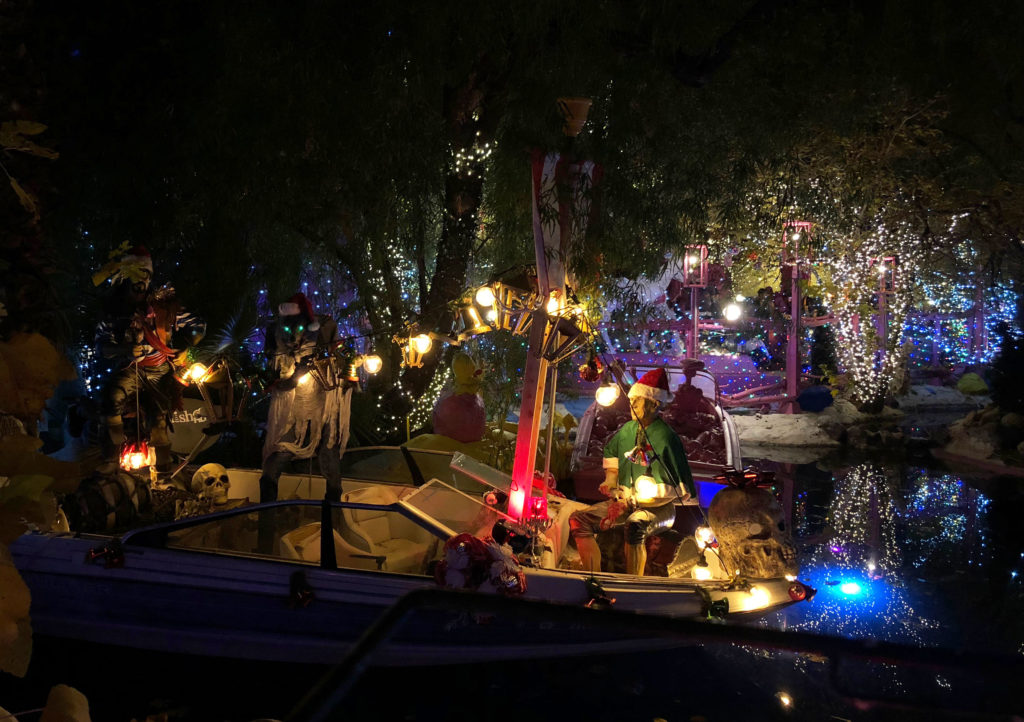
There are some Disneyland influences, seen in a castle similar to the It’s A Small World Castle, and a boat with creatures singing holiday songs (you see it while crossing a bridge over the water), reminiscent of the Pirates of the Caribbean ride. There are also merry-go-rounds, animatronics, video games, and music which give the place the feeling of an amusement park.

Also worth mentioning are the Islamic details seen around the installation, adding to the uniqueness of the space. The artist converted to Islam as an adult.

Robolights is a maze of larger than life creatures as well as little details that become more and more noticeable on each pass through. It’s eccentric, fun, chaotic, a little bit dark at times (so many skulls and skeletons) and well worth spending some time exploring.

Keep in mind if you go that there is no neighborhood parking around Robolights- only for residents. Parking is located a short walk away at Ruth Hardy Park.  Robolights will close on January 2nd, 2019.


Nov 222013
 

shirtsartrestore

This is the last weekend for Arts ReSTORE LA: Westwood. There are several events planned for the weekend including Popup Arcade Extravaganza– a free event on Saturday with games designed by former and current UCLA students.