Oct 232024
 

magnetic instinct, Liz Larner’s current exhibition at Regen Projects, balances the textures and colors of her unique ceramic sculptures with the simplicity of her 1989 work Rubber Divider. The show is also part of the Getty’s PST ART: Art and Science Collide programming.

From the press release-

“…for wander is a verb that needs no object…My aim is to limit myself to the ingenuity of innate action, to be awed by it, and not to try and clear up its mysteries.”
—Fernand Deligny, The Arachnean and Other Texts, 2015, pp. 37/46

The exhibition presents new ceramic works surrounding Larner’s “Rubber Divider, 1989—two sheets of pure gum rubber connected to steel rods attached to two flame-cut, solid steel blocks that hold the tension of the opposing pull of weight and elasticity of the rubber sheets. Their opposition and mutual dependence underscores Larner’s longstanding interest in the relationship between structural support and the attitude of the object.

Engaged with the many possibilities of sculpture and abstract form, Larner uses material to encourage discoveries led by an intrinsic link between impulse and perception. Polished to a mirror finish, the brass and aluminum of these sculptures allows them to be positioned on the wall, as the side of the glazed ceramic facing the wall is reflected in the cool light of aluminum and the warm glow of brass. Each surface has its own quality, from the extremely reflective to a textured matte, and these differences create a varying vibrancy of reflected light. Larner’s ceramics highlight a symbiotic continuity that troubles definitions of art and environment, object and subject.

Larner’s morphological research thinks likewise with ecological networks, as described in the writings of Fernand Deligny, or by the botanist Anne Pringle, in “Establishing New Worlds: The Lichens of Petersham.” The dialogue between these new works and Larner’s more historic sculpture, Rubber Divider—which debuted in the 1989 Whitney Biennial—underscores the interplay between support, form, surface effect, and infrastructure, that has often animated her practice, exploring how our observed experience of the world is innately personal but based on connection. Mindful of the specter of the Anthropocene, it also occasions a meditation on how we distinguish past and present, wondering what forms, what artifacts of human action and intelligence will last, and outlast us.

Distinguished by the unique physical rules that govern its transition, from soft to fragile to almost indestructible, Larner engages clay in part because of its apparent self-determination and pliancy, a kind of material agency and chemical intelligence distinct from our own. The ceramic forms in this exhibition are molded by impressions with ubiquitous forms made with a precision that often goes unnoticed. These forms are softened by the contact of the clay being shaped by them. The consequence of this method of forming is ghostly and transpositional. Among many other potential interpretations and resonances, the exhibition’s title points to these principles, and likens them to the same encodings that inform human perception and the activity of many other life-forms, as we are learning to be of and with.

Larner’s work is also currently on view as part of Transformative Currents: Art and Action in the Pacific Ocean at the Orange County Museum of Art and For Dear Life: Art, Medicine, and Disability at the Museum of Contemporary Art San Diego . Both shows are also part of PST ART: Art and Science Collide.

For more on her creative process, and earlier work, check out the video below from Art21 in 2016.


Oct 182024
 

Currently at VSF LA are Sarah Ippolito’s new colorful sculptures inspired by aquatic creatures for her exhibition Liquid Realm.
From the gallery-

The ocean is what makes the earth habitable, without the ocean life is not possible, “in a way we’re all sea creatures” – Sylvia Earle

Los Angeles-based Ippolito’s exuberantly biomorphic sculptures are inspired by time spent underwater, immersed in contemplation of the umwelt of aquatic creatures and the central role of the oceans in the health and wellbeing of people and our planet. Divided between the &Milk project space and the VSF courtyard, Ippolito’s exhibition considers the differing sensory environments and inhabitants of the sunlit shallows and the expansive open ocean. While the ocean covers more than 70% of the planet’s surface and contains roughly 97% of Earth’s biosphere, life underwater and the nature of the ocean often feels alien. Ippolito’s works bring some of this vibrancy and abundance onto dry land.

Color and texture are central to Ippolito’s work – her sculptures are recognizable not only for their uncanny and whimsical shapes, but for her use of bright color, evocative texture, and shifts in scale. For Ippolito, color expresses exuberance, optimism, and vitality. Intricate and tactile textured surfaces are dynamic and invite curiosity and engagement. Scale is used as a way to disrupt expected hierarchies, the viewer may feel they have been shrunk or the forms they look at magnified; each scale relationship impacts the experience of her body in space and in relationship to others. Scale is also a key in our relationship to the ocean – In its vastness, the ocean feels as unknowable as outer space and yet, somehow, it is also as familiar as our own backyards. The lively nature of Ippolito’s work is underscored by the use of active verbs in the titles for all of her new works: Filtering, Undulating, and Fanning their names describe the range of movement implied by their forms.

In the courtyard, Ippolito presents her first cast bronze sculpture. Standing at just about the same height as the artist, the form blends shapes and textures from a Salp spiral (phylum Chordata) and the tentacles of Portuguese man o’ war (phylum Cnidaria.) Both “creatures” are colonies of individual organisms. The bold cobalt-blue figure stands erect, its tentacles meandering and sensing its surroundings. Nearby an installation of hand-formed ceramic shapes represents a bloom of Phytoplankton – tiny single celled organisms that drift in the upper layer of the ocean using photosynthesis to transform carbon dioxide into oxygen. The word “plankton” comes from the Greek word for “drifter” or “wanderer.” It’s estimated that roughly 50% of the oxygen on Earth is produced by oceanic phytoplankton. Phytoplankton are the primary producers of the ocean – offering food for a range of organisms from small filter feeders like salps to massive whale sharks. Phytoplankton also play a crucial role in regulating the atmosphere in the biological carbon pump – absorbing carbon dioxide at the surface and as they die they sink to the bottom (marine snow) and sequester carbon in the deep ocean. The forms in this piece are inspired by the most abundant types of phytoplankton – the diatoms, dinoflagellates, green algae, cyanobacteria, and coccolithophores.

In &Milk a group of table-top scaled works and a large figural work inspired by a range of creatures from the phylum Cnidaria (sea anemones, jellyfish, coral, sea fans) and phylum Annelida (feather duster and tube worms) are on view. These are some of the earliest life forms to evolve on the planet after phytoplankton transformed the atmosphere of the Earth to one hospitable for animal life – appearing between about 635 million and 515 million years ago, they have survived 5 mass extinctions. Abounding with color, these animals are sometimes naturally pigmented or get their distinctive coloration from symbiotic algae that live in their tissues. They possess a unique form of intelligence; operating without a brain and sometimes with rudimentary eyes. With their flexible tentacles that are sensitive to the slightest touch and vibrations they reach into the open water to filter feed plankton or capture small prey.

By reimagining marine organisms and their adaptations, Ippolito invites viewers to explore the hidden wonders of our oceans and consider the interconnectedness of all life. Her creative practice, rooted in direct observation and scientific exploration, embodies the potential of art to spark environmental reflection. In a world where the health of our oceans is increasingly vital, Ippolito’s work reminds us of our deep connection to the vast liquid realm that defines our planet.

This exhibition closes 10/19/24.

Oct 102024
 

The ceramic sculptures above are from Becky Tucker’s Umbra, currently on view at Steve Turner in Los Angeles. The Glasgow-based artist’s work is inspired by “the history of Britain’s lost villages”.

From the gallery-

Tucker relishes working with fired ceramic, the very material that survives for thousands of years. She uses white stoneware that is glazed several times as well as faux suede dyed with indigo to assemble the pieces of her larger works. The idea of lost artifacts is at the root of her practice and the objects she creates cannot be clearly placed in a specific time period. Her mix of source imagery–Chinese tomb guardians, fossils, motorcycle armor, medieval illuminated manuscripts and Indian theater costumes–complicates identifying the origin of the works. Tucker’s works imply that the past can be as shadowy as the future.

This exhibition closes 10/12/24.

Jun 072024
 

It was great to see new work by Keya Tama and his partner Isolina Minjeong at Court Tree Collective in Industry City. I last saw Tama’s work in Los Angeles in 2019. The woven and ceramic pieces they have created for Defender are charming and reflect their personal backgrounds. The couple have also kept the prices low to encourage younger collectors.

From the gallery-

Court Tree Collective proudly presents “Defender”, a duo exhibition by Isolina Minjeong and Keya Tama. These two young artists work by blending the old with the new and by infusing their cultural heritage into their creations. This new body of work breathes fresh life into traditional art forms. Their work is a vibrant reflection of their identity and experiences, enriching the viewer with diverse perspectives and narratives. The title “Defender” is for upholding traditions in a modern world. The exhibition features folklore history through ceramics, paintings, and tapestries. Combining traditional art forms, while incorporating elements of pop culture brings to light the protection of the past. Exacting the moment of when history becomes relevant in both the past and future.

Playing off each other’s strengths has unified the work as something special. Not only as two artists in pursuit of creating together, but in working in the present to bring a unique perspective on art history.

“Defender” is an exhibition of their collaborative language. Through tapestries, paintings, muralism, and ceramic sculptures, Keya and Isolina protect each other’s hearts. This is their first duo exhibition in New York.

This exhibition closes 6/8/24.


May 142024


Kris Lemsalu’s sculptures for One foot in the gravy at Margot Samel are well crafted explorations into life and death, using a lot of tongues. There’s a lot of humor in the work, and this levity is nice to see in the galleries- especially in our current times.

The press release is interesting too-

One should acknowledge, with infinite joy, the fact of being alive. We should celebrate our existence and recognize its fragility in every moment. It’s easy to forget, to get distracted by mundane circumstances of our day-to-day life. On the other hand, life’s impermanence may induce panic, an all-encompassing fear that leaves us searching for answers. Still, we are resilient to becoming just another customer at Café Gratitude, its slogan ringing in our ears like a mosquito — What Are You Grateful For? Baruch Spinoza introduced the concept of conatus, which illustrates the internal drive of every being to persevere in its existence. The conatus is inherent to every substance; it is the engine that propels life. However, older philosophies get boiled down to artificially made bite-sized snacks at Café Gratitude — Live Laugh Love — pushing us to habitually flee from quick, feel-good moments.

Celebrating life doesn’t seem to intimidate Estonian artist Kris Lemsalu. Her work emphasizes, with absolute honesty, life and its different stages. This direct form of communication is not new to the artist. In 2019, she presented the work Birth V – Hi and Bye at the Venice Biennale which was an unmediated exploration of cycles relating to birth, life, death, and (fortunately) rebirth. Lemsalu continues her celebratory, inquisitive, and pagan journey in her exhibition at Margot Samel. We are welcomed with a grand altar inscribed with “VITA”, each letter created with an anthropomorphic character that references Baubo, a figure from Greek mythology associated with vitality and renewal, famed for making Demeter laugh in her most tragic moment. This figure often recurs in Lemsalu’s work, appearing with a jaw (or vulva) as a head, wearing a pair of cargo pants with tongues leaning out from its utilitarian pockets.

Tongues multiply in various sizes and formats throughout the space. Sometimes they are raised like the bright flag of a grand country, other times they rest on a rocking chair, contemplating life. The tongue is a familiar symbol in Lemsalu’s work. The artist often correlates the body part to the Hindu deity Kali, a controversial figure, who in the ecstasy of an uncontrolled dance, extended her great tongue to drink the blood of demons, resulting in a triumph over negative forces. Kali’s tongue is a symbol that evokes both laughter and fear, simultaneously bestowing life and death, creation and destruction.

When we enter the world of Lemsalu’s work, our experience functions as a ritual. Each work acts as a rite that celebrates our conatus and the perseverance of our existence, shamelessly celebrating our fragility and the passage of time, commemorating life with flowers, with one foot deep into the gravy.

–Enrique Giner de Los Ríos

Apr 192024
 

Meryl Engler, “Lying in Red”, 2023, Woodcut

Work by Michael Loderstedt (left), Eva Pozler (center) and Lori Kella (right)

Work by Lori Kella, Maria Uhase, and Meryl Engler (right two pieces)

Lori Kella, “Mudslide and Forsythia”, 2022, Inkjet print (left) and Corrie Slawson, “Amalgam 4”, 2022 (top) and “Amalgam 3”, 2022 (bottom), Oil and screenprint on plywood

Today (4/19/24) is the last day to see Life Out of Balance at the Emily Davis Gallery at The University of Akron. The group show show includes work by Maria Uhase, Meryl Engler, Lori Kella, Benjamin Lambert, Michael Loderstedt, Eve Polzer, Ron Shelton, Ariel Bowman, and Corrie Slawson.

From the gallery-

When a tree falls in a forest, we may see it as the death of the tree. It stops photosynthesizing, growing, feeding its mycorrhizal symbionts, flowering, developing fruit, dispersing seeds, taking in carbon dioxide, and producing oxygen. But in the ecosystem, it begins a whole new life in decay. It feeds the soil and microbes through the decomposition of its tissues; it provides a place for fungi, mosses, and lichens to grow; and it becomes a protected habitat for a myriad of insects, mammals, and birds. This same tree, therefore, can be both dying and living at the same time, depending on perspective. It can be dead if considered separate from its surroundings, or it can be alive in its continued relationship within its ecosystem.

Humans can feel more alive by being integrated with the rest of the natural world. We are not living to our full potential, or allowing nature to be its full potential, when we consider ourselves as separate from it.

If we are to have hope for solving the complex environmental issues that are facing us today, we need to work with, rather than against, the forces of nature.

Below are a few more selections.

Ron Shelton, “Yellow Mosaic”, 2021, Plastic and wire

Ariel Bowman, “Wall Trophy Series”, 2019, (Cave Bear, Antique Bison, Early Horse, Saber Cat, Dodo, Brontotherium, Parasaurolophus), Unglazed, high fired porcelain; Maria Uhase, “Splitting Headache”, 2022 Ink on paper and “Softly”, 2023, Graphite on paper

Ariel Bowman, “Wall Trophy Series”, 2019, (Cave Bear, Antique Bison, Early Horse, Saber Cat, Dodo, Brontotherium, Parasaurolophus), Unglazed, high fired porcelain

Benjamin Lambert, “A pint for a gallon”, 2020 and “I Found Your Damn Lost Shaker of Salt”, 2020, Stoneware, underglaze, glaze, epoxy

Corrie Slawson, “Stage Set Tapestry 1, for Feast: a ballet. Of Bats, Blue Footed Boobies, Penguins and other threatened fauna and flora. Pastoral landscape after Rubens”, 2020, Oil and mixed media on muslin

Corrie Slawson, “Stage Set Tapestry 1, for Feast: a ballet. Of Bats, Blue Footed Boobies, Penguins and other threatened fauna and flora. Pastoral landscape after Rubens” (detail)

Michael Loderstedt, “Snakehead”, 2023, “Thistles”, 2023, Cyanotypes on fabric, embroidery, fabric collage

Lori Kella, “Mayflies in the Grass”, and “Yellow Irises”, 2024, Framed inkjet prints

Maria Uhase, “Encircled”, 2023, Oil on linen panel, “Worm”,2023, Oil on linen and “Conglomeration in the Spiders’ Ghost Town”, 2020, Oil on canvas

Eva Polzer, “Gift from a Cat”, 2024, Ceramic, underglaze, velvet jewelry box, and “Gift from a Rat”, 2024, Ceramic, underglaze, petri dish

Meryl Engler, “Waiting”,2023, Woodcut Block


Mar 162024
 

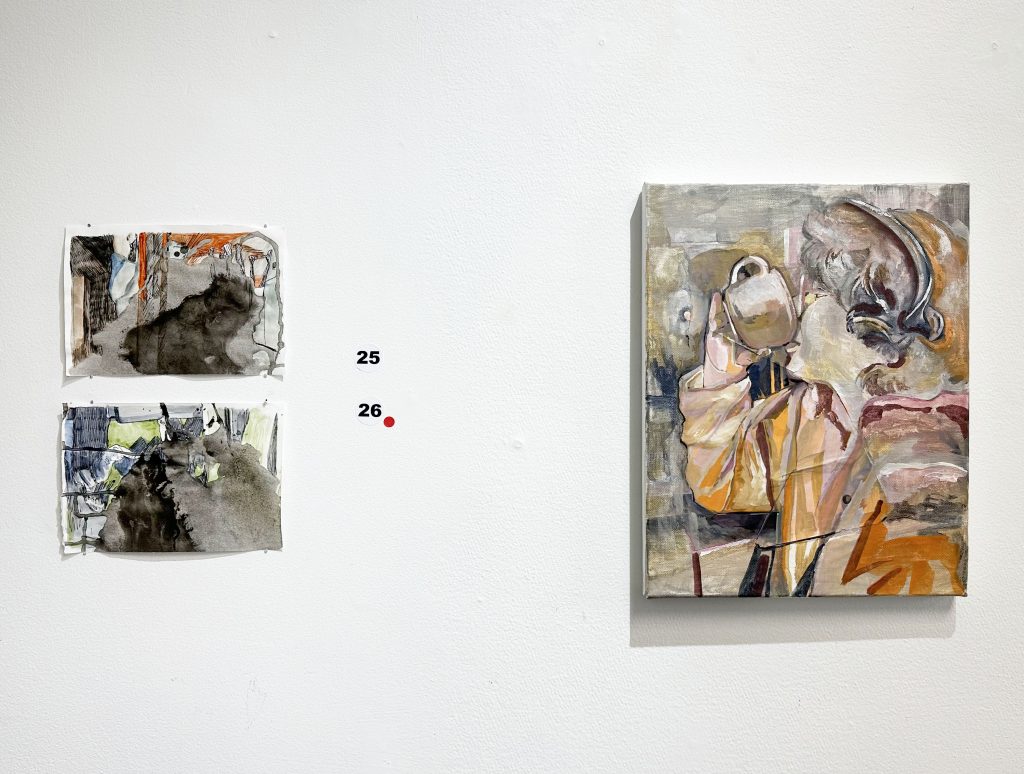
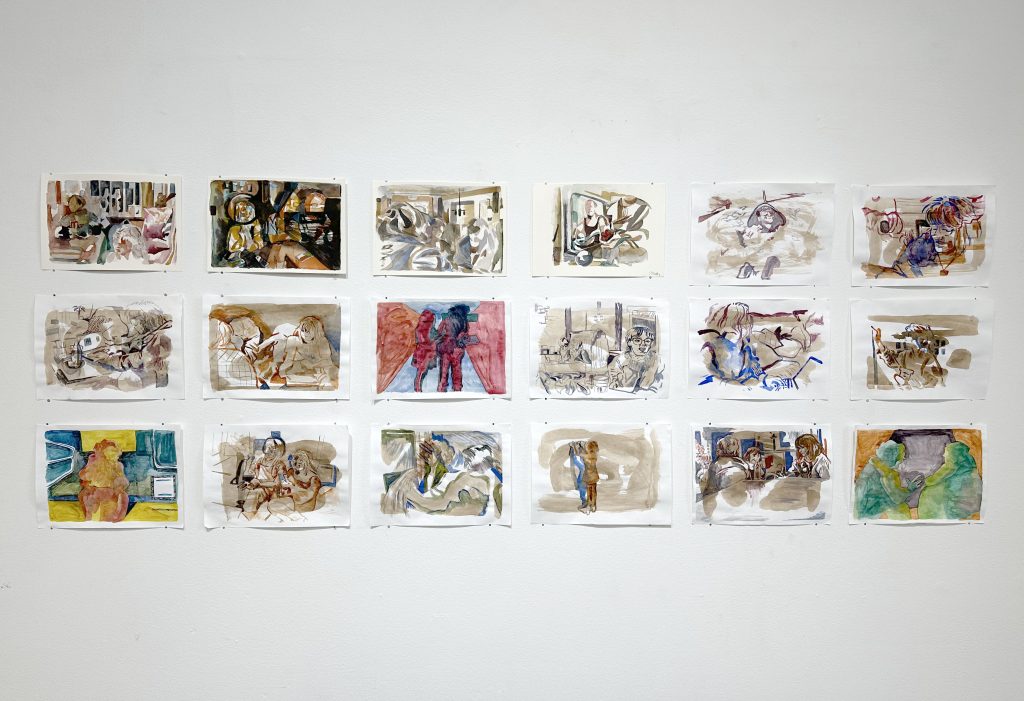
Watercolor paintings by Katherine Strobel

There is A LOT of work currently on view at Summit Artspace for their Winter Exhibitions (see the previous two posts) and it is worth mentioning these shows as well.

In the Welcome Gallery are watercolor paintings (seen above) by Katherine Strobel, for her exhibition, Bad Nostalgia.

Her statement about the work-

People forget to take pictures of things that don’t matter because it’s impossible to photograph qualities such as the feeling of an inside joke, the sound of an exhale through the nose, or dirty silverware that must be returned to the kitchen and replaced. These things act as set, pieces for what make up the rest of our lives. This series is a catalog of work that focuses on memory and candidness of a scene or subject. The people pictured are painted from life or candid photographs which are then emphasized from a naive image to something more. When an image is exaggerated with new colors and shapes it serves to make the mundane more desirable. The paintings are watercolors with a textured surface; the texture creates a sense of play with paper elements. In my work watercolor is often indicative of memory because of its ephemeral quality and transparent layers. This is because of how impossible it is to clarify every element that makes up a color when the layers are all compressed and viewed as a complete state.

Below are works from FRESH, an annual exhibition of local artists juried by Pita Brooks, Executive Director of Akron Soul Train. The website has all of the artists included and their statements and bios- definitely worth taking a look at what is being created in the area.

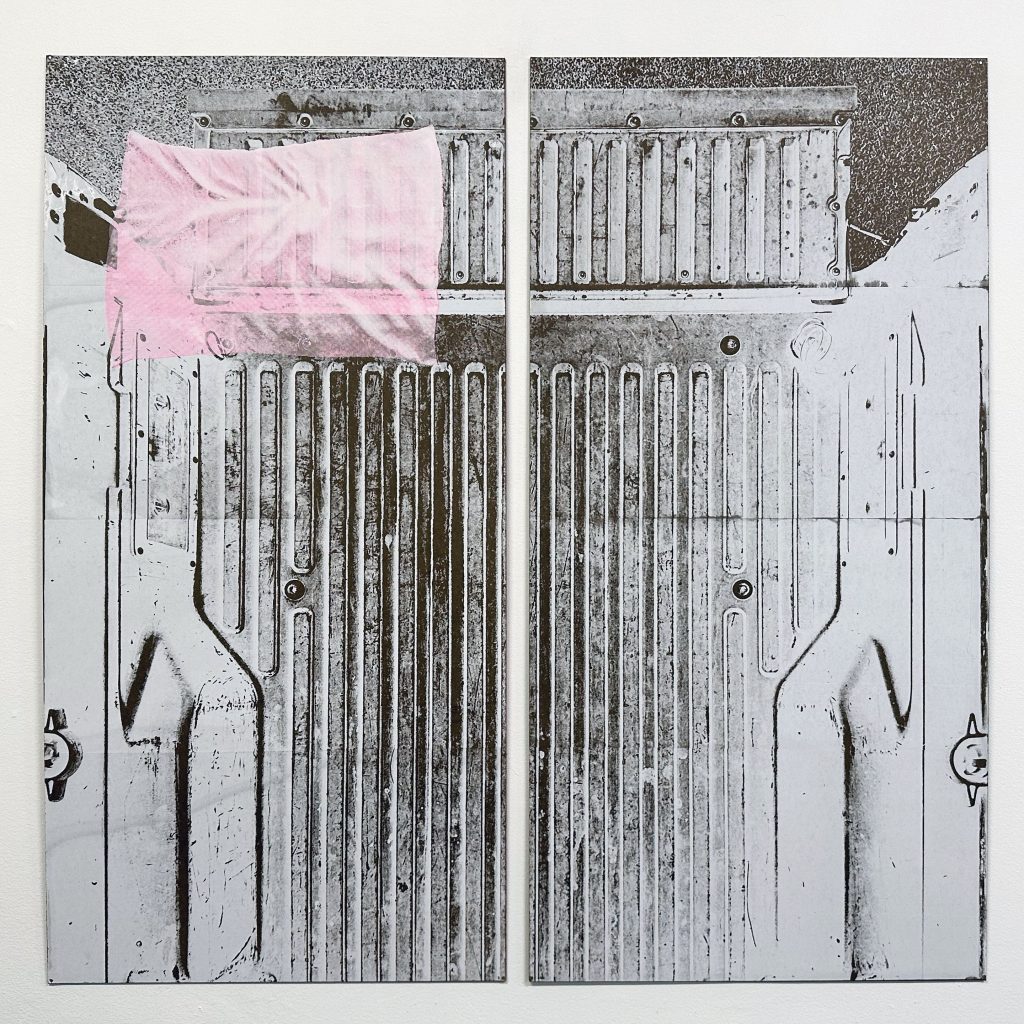
Michelle Eisen, “I’ve Made My Bed”, Silkscreen on hardboard

Steven Mastroianni “Fathomable Series #24”, Unique cameraless photogram, silver gelatin print

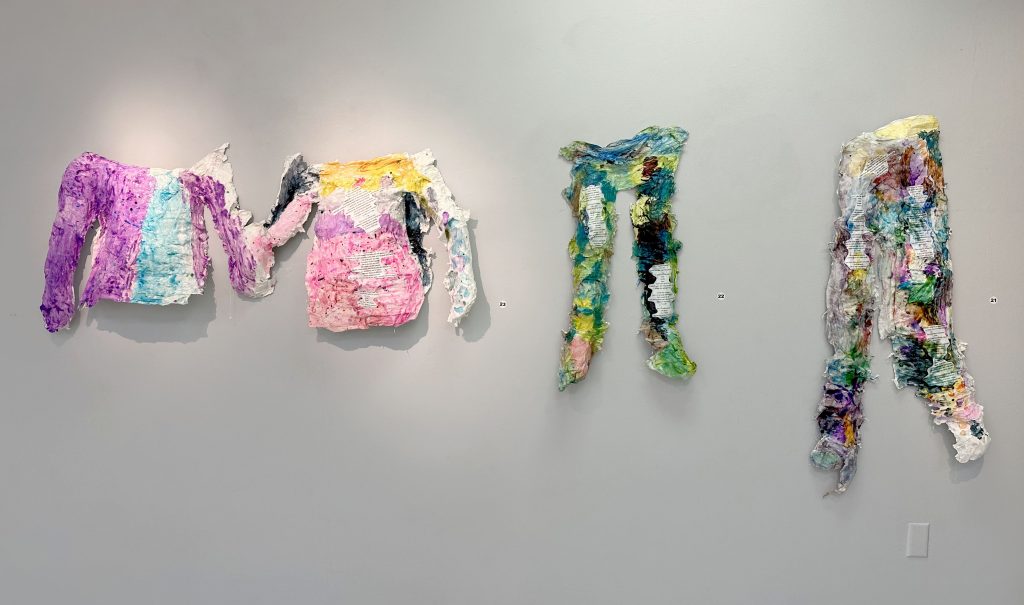
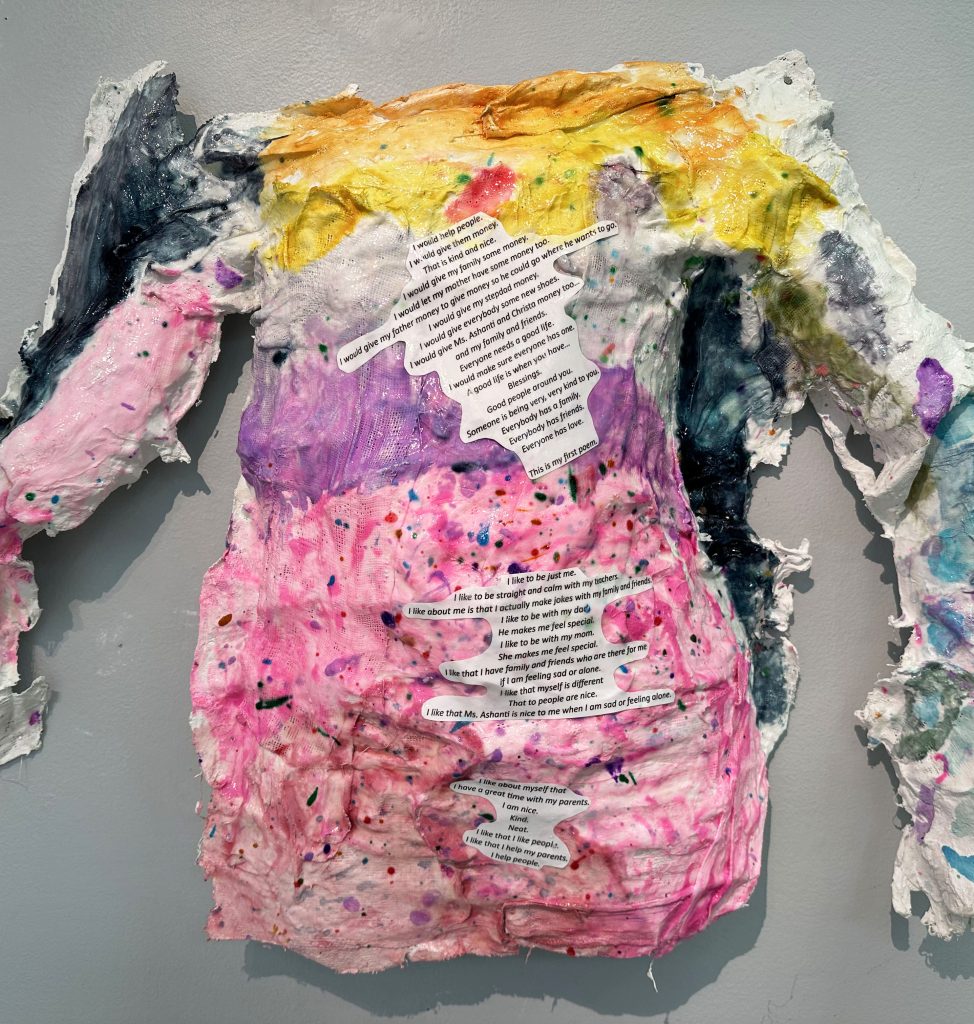
Finally, on view throughout the building are works by local students, teachers, and school leaders for Taking Care of Our House: Communities Coming Together and Making a Difference. The exhibition is made with the organization Art Resistance Through Change (ART-C). The works pictured below are a few of the sculptures created that included the personal narratives of the artists.

It’s worth mentioning that along with these exhibitions there are artists studios and galleries also in the building and worth checking out. Summit Artspace is open Fridays 12-7pm and Saturdays 11am-5pm.

Mar 162024
 

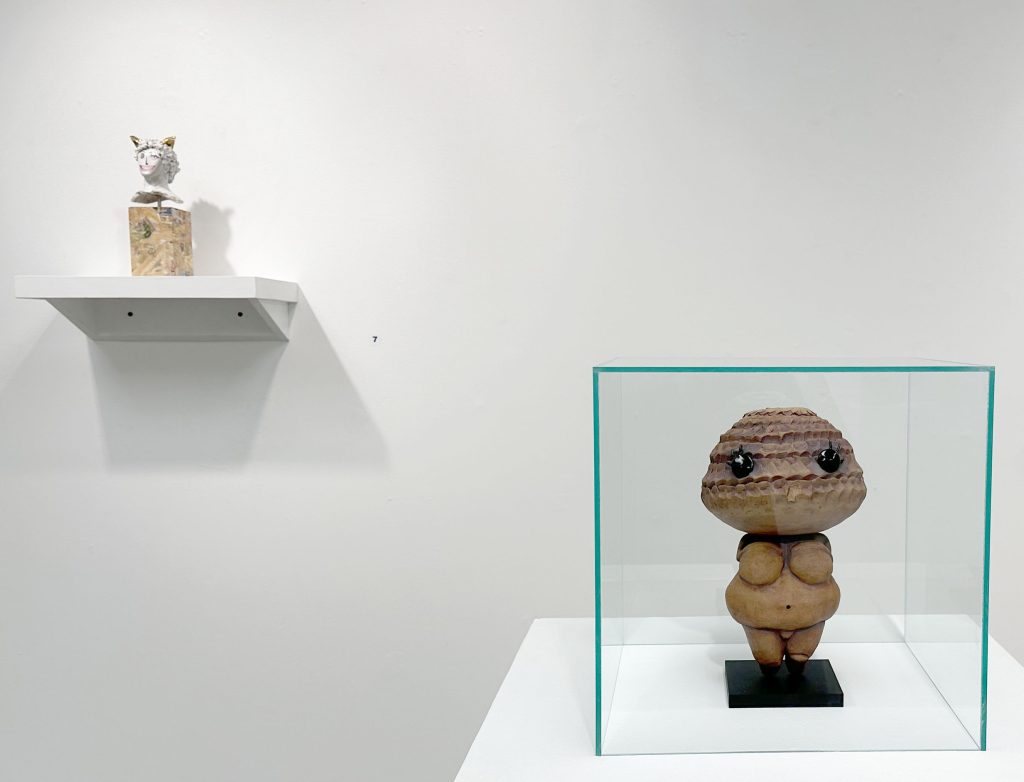
David Kruk’s solo exhibition Nobody Here at Summit Artspace in Akron, asks questions about the state of culture (or lack of culture) we are currently experiencing. Is the difference between the Venus of Willendorf and a Funko Pop just time period and material? Using the Vaporwave aesthetic, a remix of past pop culture in itself, he explores consumerism and nostalgia. Walking around the empty spaces in his video game creation, one is left wondering- what comes next?

The artist’s statement about the work-

This exhibition will consider Mark Fisher’s concept of “lost futures” through the aesthetics of Vaporwave and Funko Pops. I am interested in how these anachronistic objects utilize nostalgia through the remixing of cultural references to engage with consumer capitalism. According to Fisher, this continual referencing of the past exemplifies contemporary society’s cultural stagnation and the erosion of collective imagination towards a radically transformative future.

The sculptures in the exhibition are intended to push these anachronisms a bit further; to undergo a life cycle of adaptation and re-contextualization. I enjoy thinking about the ways in which something like Vaporwave can function as a critique of consumer culture, questioning capitalism’s impulse to commodify everything in sight, including our identities and memories. Vaporwave was born from the internet, and its aesthetic continues to be quite popular within online communities. These communities may often be collectors of pop culture paraphernalia: such as Funko Pops, which I’ve become interested in for their cultural symbolic value. Collecting Funko Pops can provide a source of aesthetic stability for some, while simultaneously operating as totems for coping with the realities of adulthood.

Conceptually within this exhibition, I wonder about the ideological trajectory from ritualistic idol to mass-produced fandom figurine, how capitalism influences our engagement with nostalgia, how the concept of a collectible operates within the spheres of the household to the museum, and how an art object may change over time through being digested through the body of consumerism.

For the video below, available on the gallery’s website, Kruk discusses his work – from tracing images using an oven light as a child, to a growing interest in sculpture, to creating the interactive video game from the show.

This exhibition closes 3/16/24.

Dec 172023
 

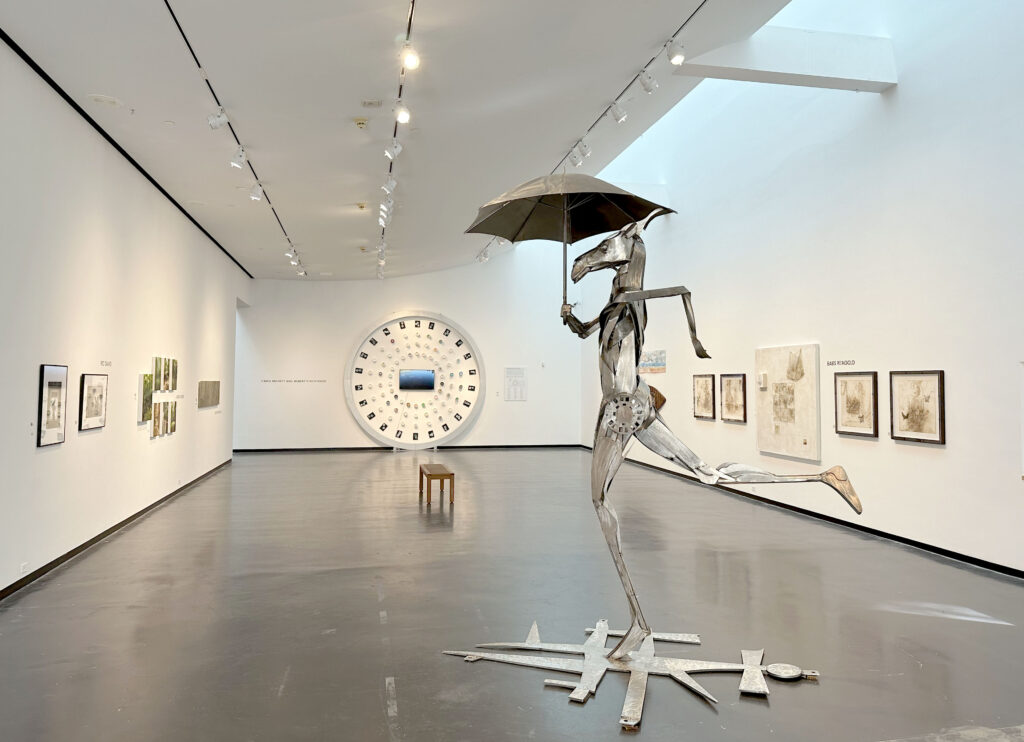
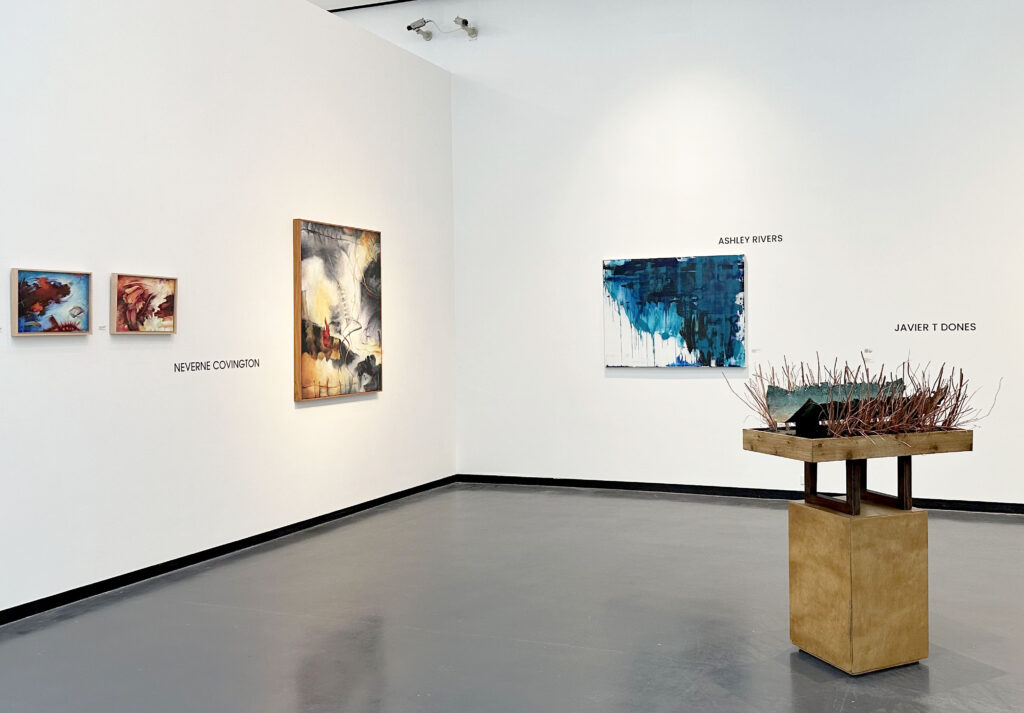
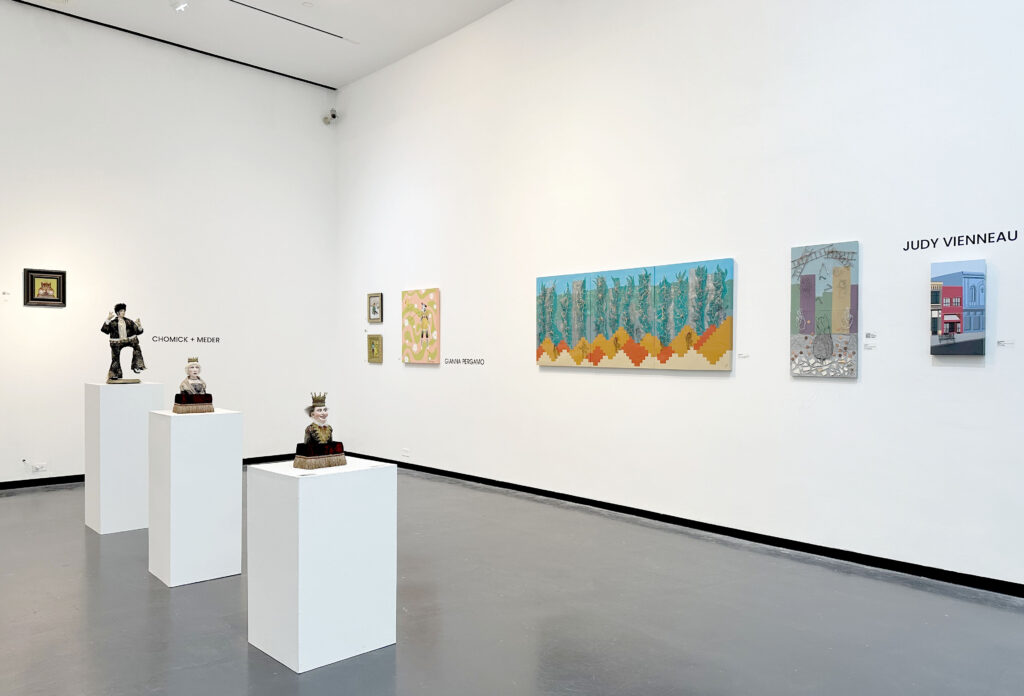
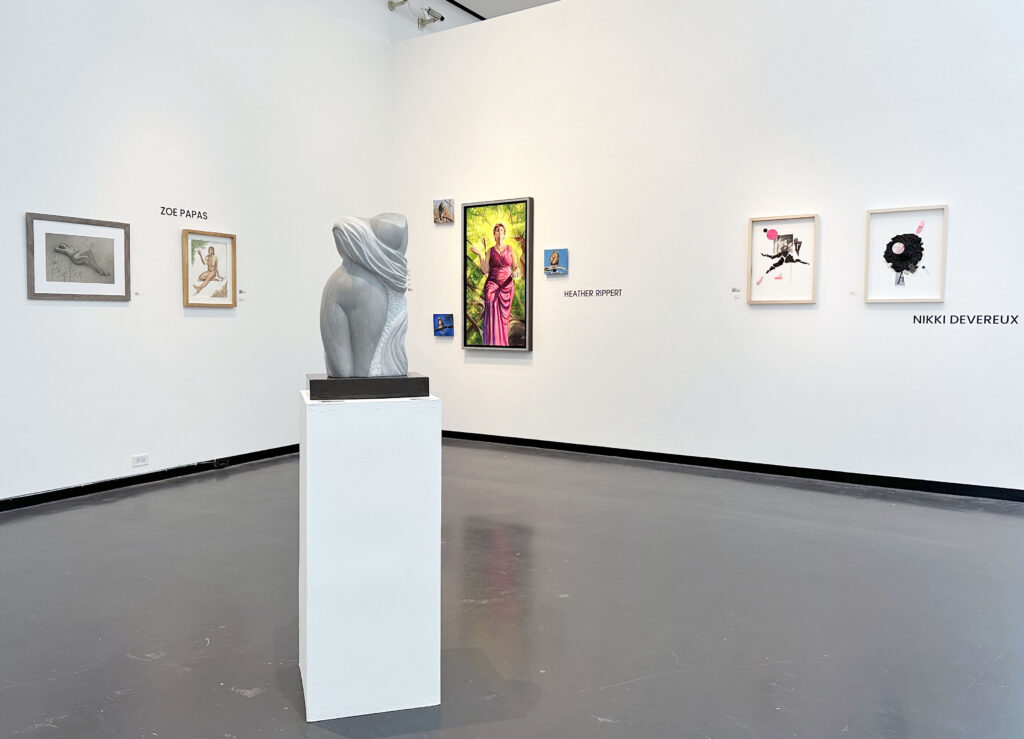
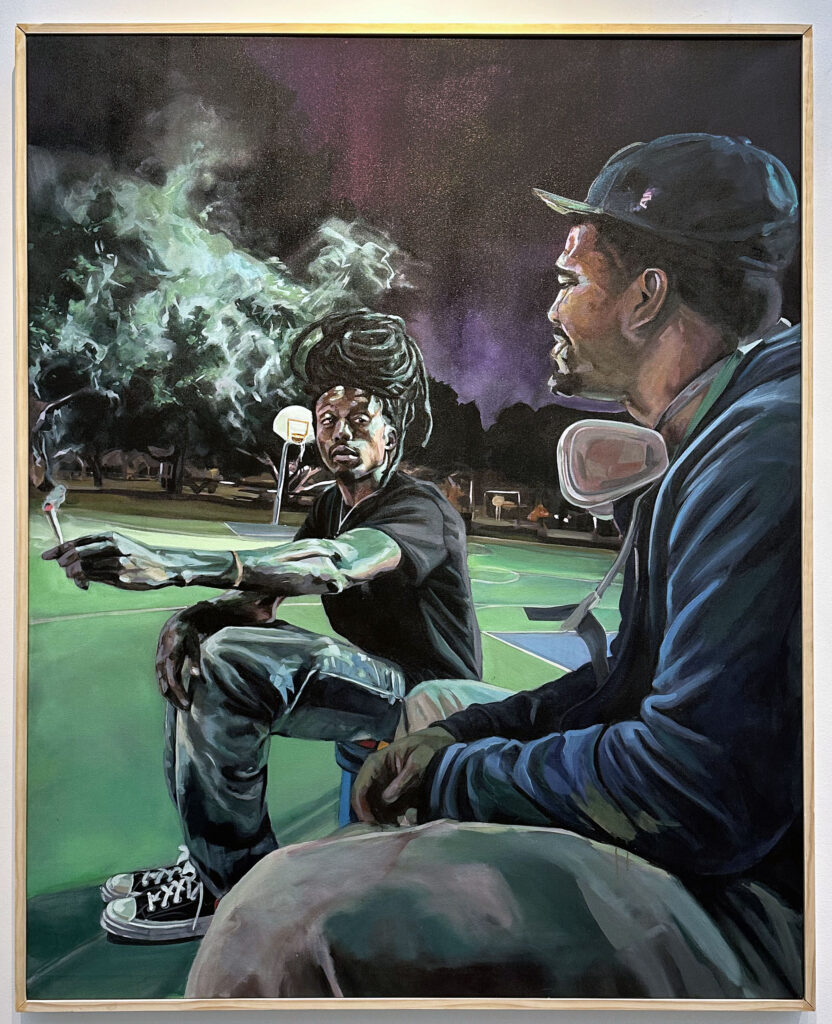
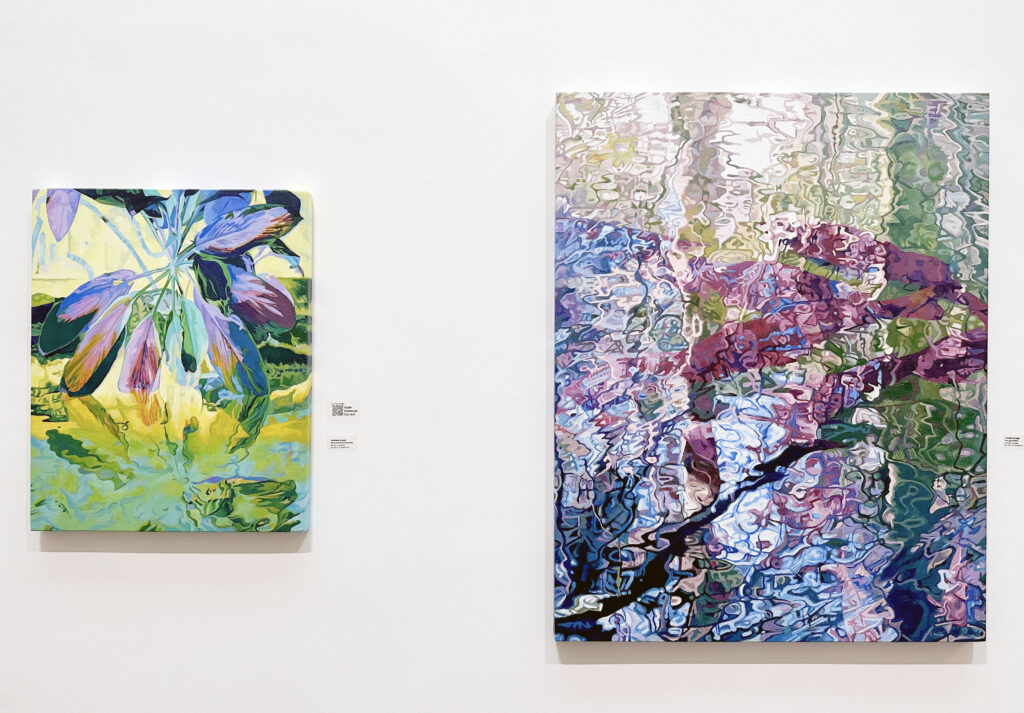
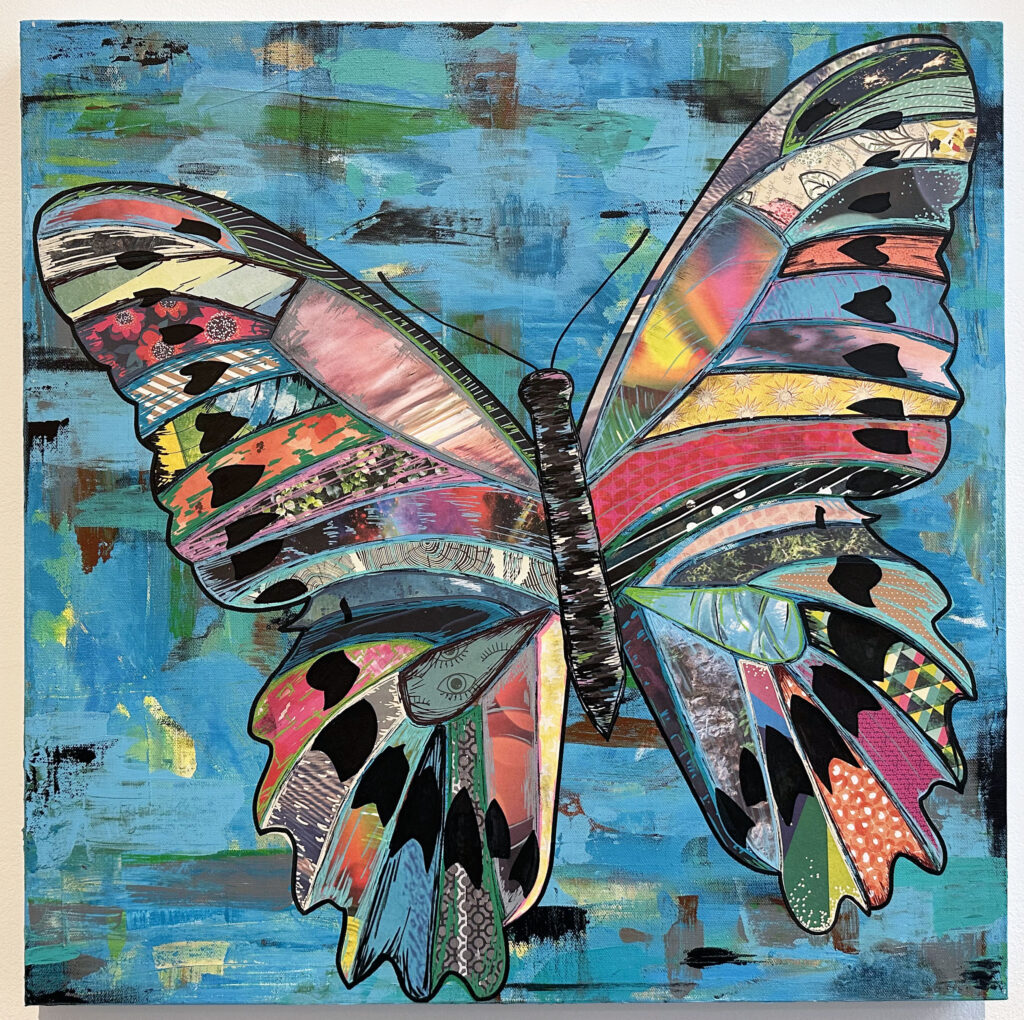
The Arts Annual at Creative Pinellas is always a great way to see what the artists in the area are creating. For 2023’s larger than ever edition, there is also a separate space for a video program that includes short films, theater productions, poetry readings, musical performances and more.

Artists included in the exhibition-

Tatiana Baccari, Elizabeth Barenis, Christina Bertsos, Daniel Barojas, Chomick + Meder, Courtney Clute, Neverne Covington, Sheila Cowley, Patricia Kluwe Derderian, Nikki Devereux, Javier T Dones, Dunedin Music Society, Sara Ries Dziekonski, Sarah Emery, Roxanne Fay, Jean Blackwell Font, John Gascot, Denis Gaston, Mason Gehring, Donald Gialanella, Jim Gigurtsis, Kevin Grass, Sheree L. Greer, Jason Hackenwerth, Steph Hargrove, Patrick Arthur Jackson, Reid Jenkins, Kenny Jensen, Charlotte Johnson, Victoria Jorgensen, Steven Kenny, Candace Knapp, Akiko Kotani, Teresa Mandala, Cora Marshall, Carol Mickett & Robert Stackhouse, Miss Crit, Mark Mitchell, Chad Mize, Desiree Moore, Zoe Papas, Gianna Pergamo, Rose Marie Prins, Gabriel Ramos, Babs Reingold, George Retkes, Heather Rippert, Ashley Rivers, Marlene Rose, Ric Savid, Tom Sivak, Sketzii, Emily Stehle, Rachel Stewart, Erica Sutherlin, Takeya Trayer, Judy Vienneau, Kirk Ke Wang, Angela Warren, and Joseph Weinzettle

The show is on view until 12/31/23.

Below are some additional selections from the exhibition.  

Reid Jenkins, “Holding Court”, Acrylic

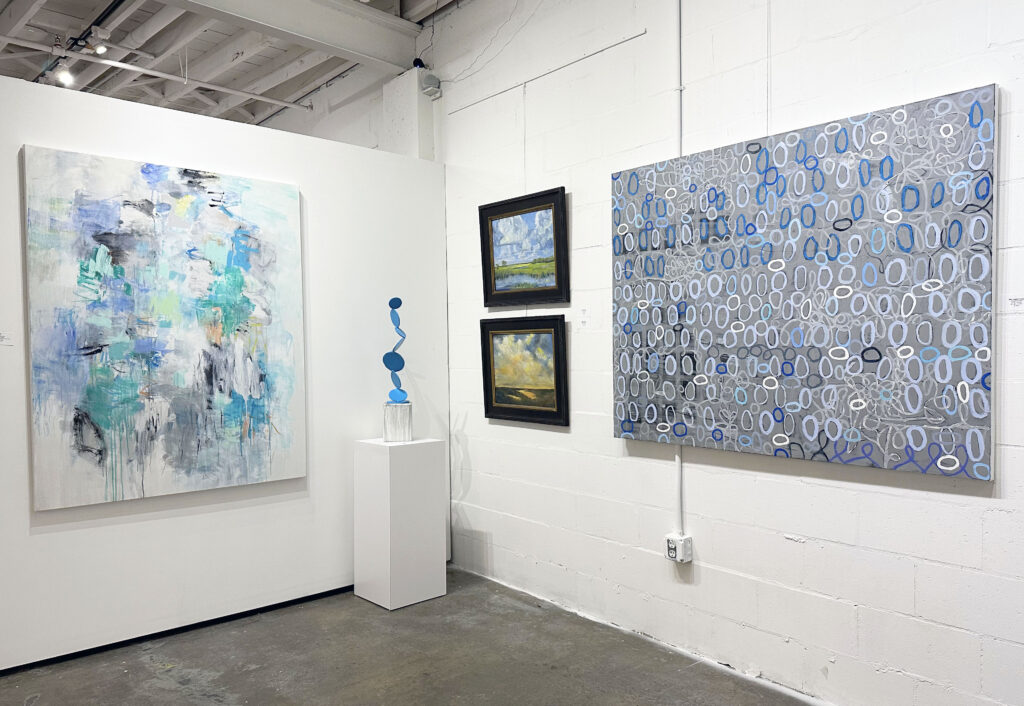
Candace Knapp, “What the Blue Heron Sees” and “The Light Within” Acrylic on canvas

Daniel Barojas, “Future Ancestor”, Gouache, acrylic, gold leaf on canvas and “Future Ancestor #3”, Gouache and resin on paper

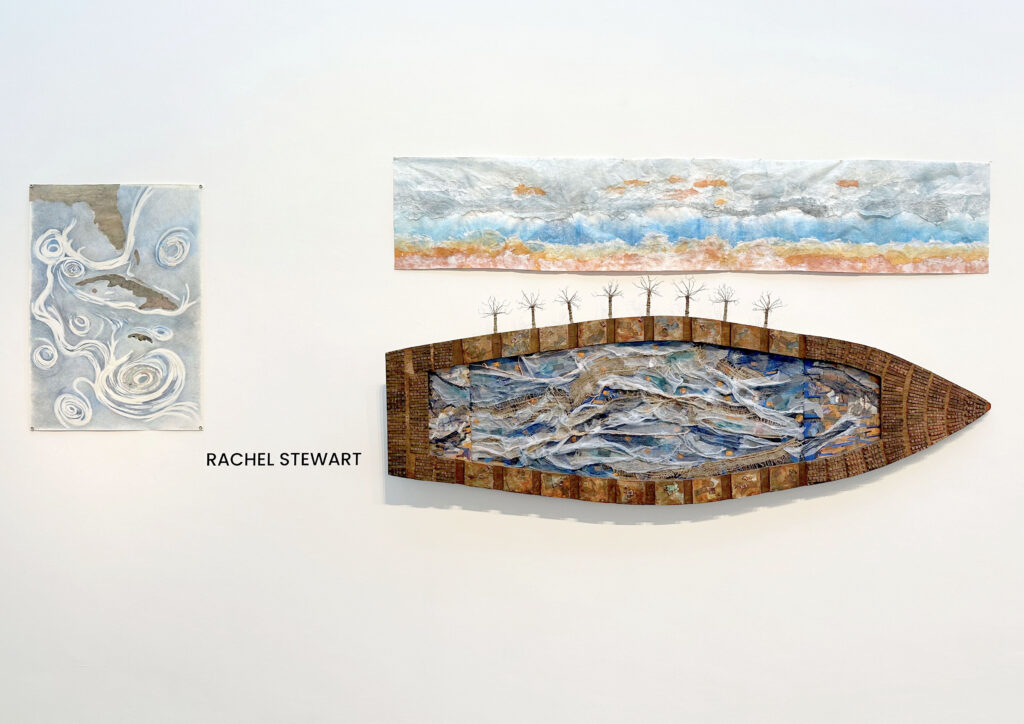
Rachel Stewart, “Caribbean Currents” Colored pencil, oil stick and collage on Archers archival paper; “Under a Different Sky”, Wall installation Painted relief wood construction with cooper and mixed media materials; Printing Ink and collage on rice paper

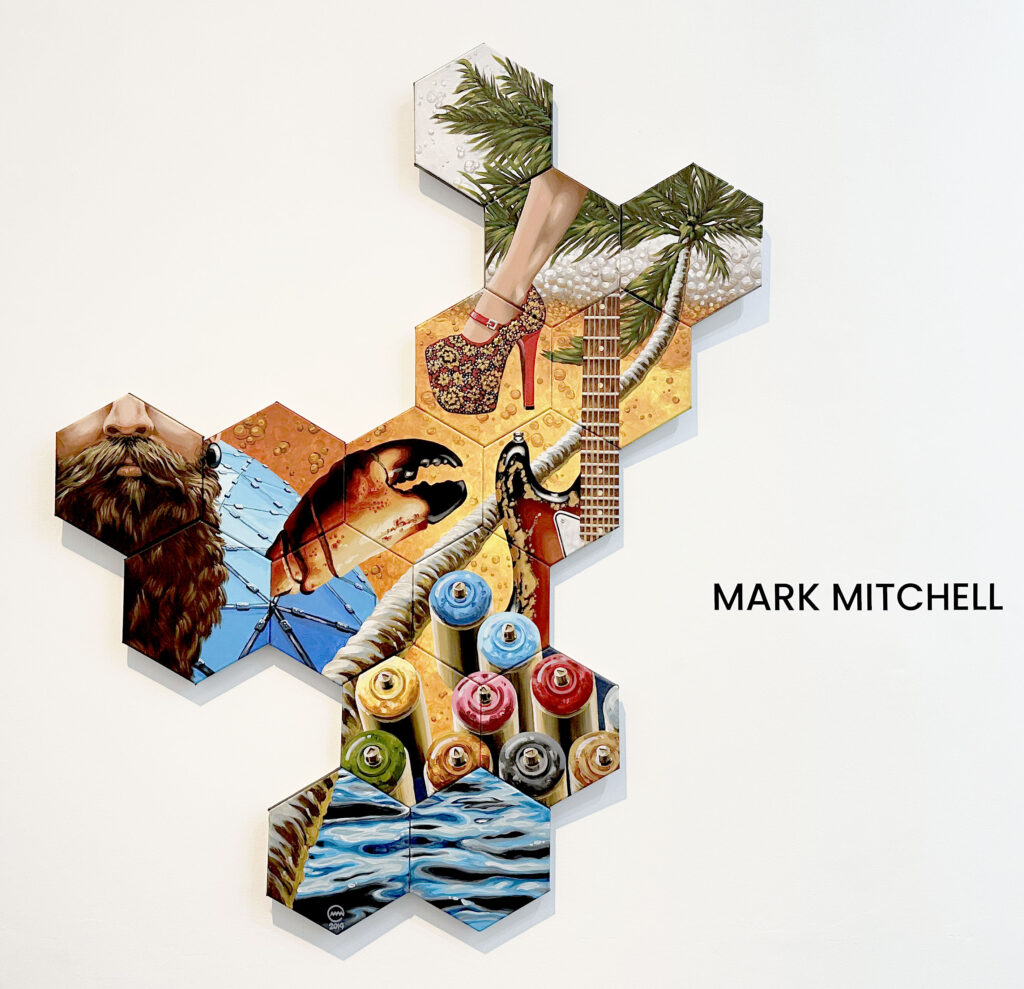
Mark Mitchell, “The BurgHive”, Acrylic on Hexagonal canvases

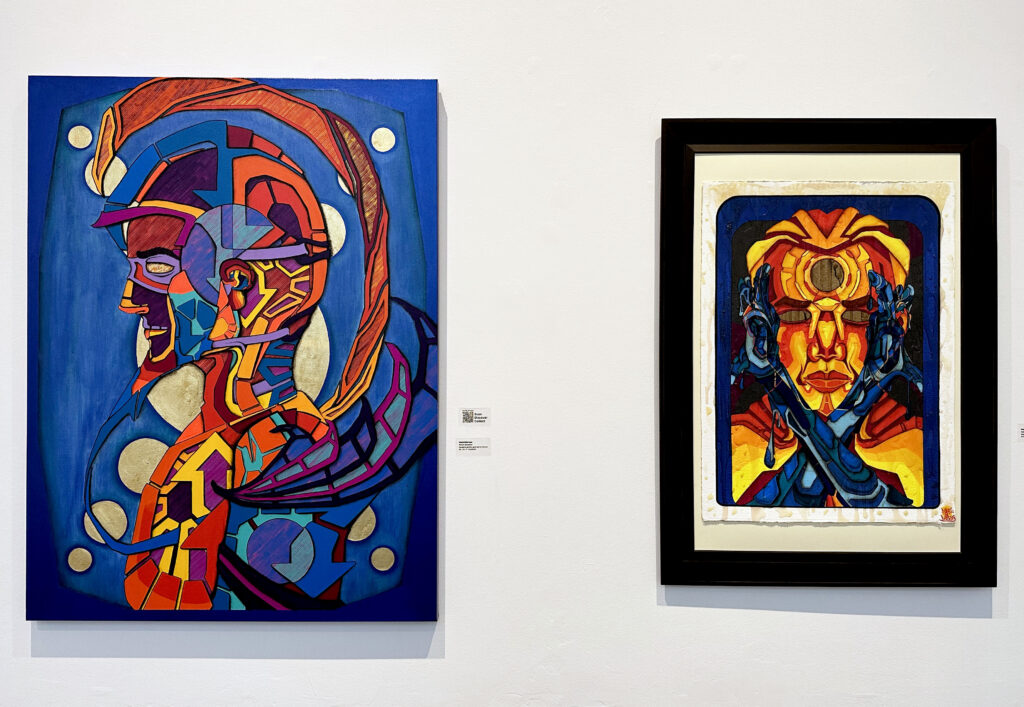
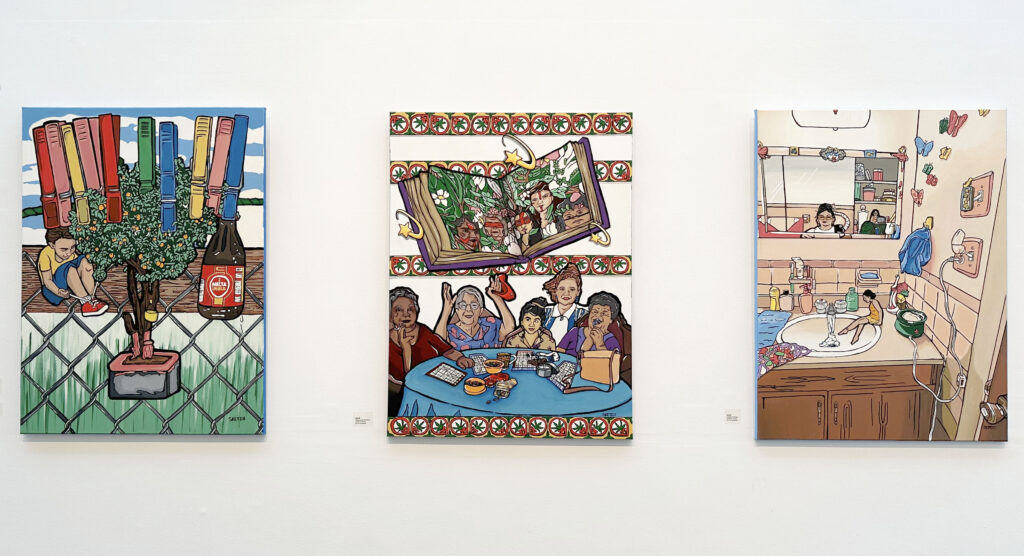
Sketzii,”Out of the Pink Concrete”, “Reclamando Mis Raices” and “A Señora’s Dream”, Acrylic on canvas

Steph Hargrove, “Catch You Later”, Acrylic paint, paper on canvas

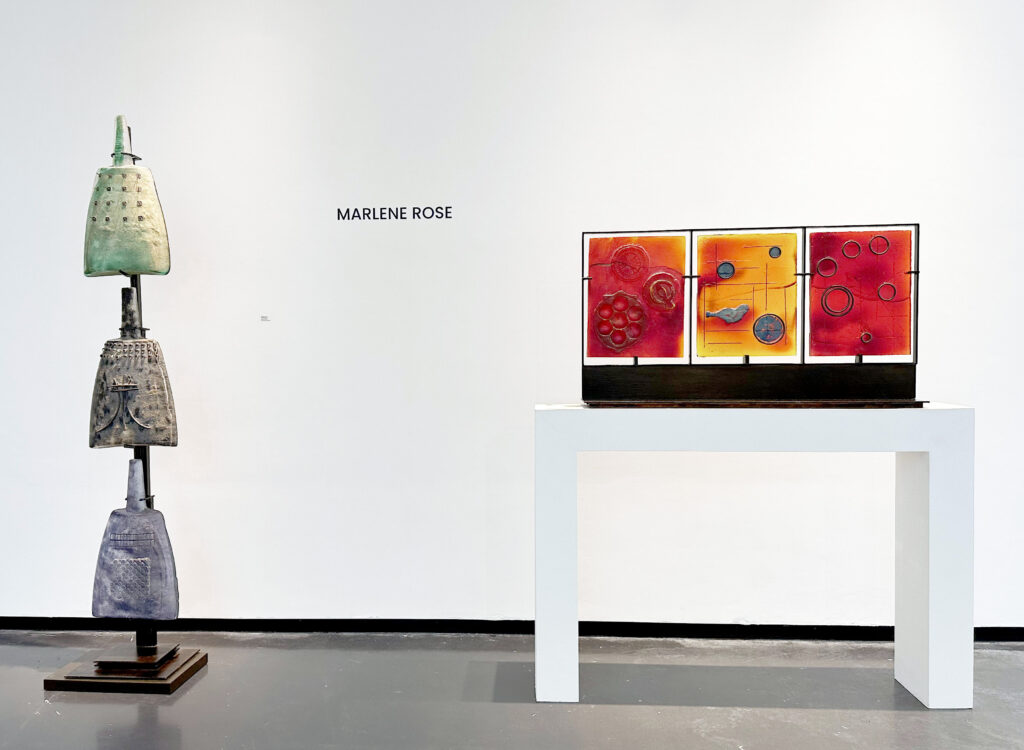
Marlene Rose, “Three Bell Tower”, Sandcast glass and “Map Triptych” Sandcast glass

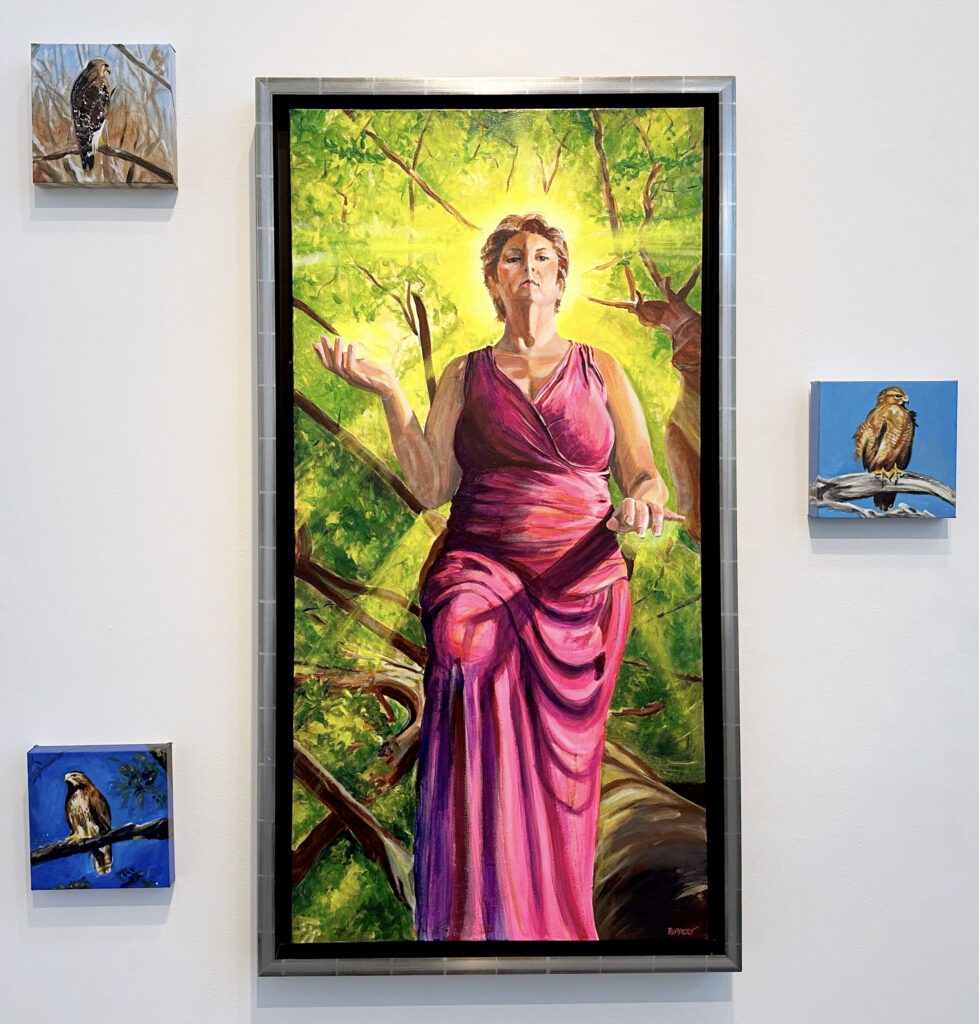
Heather Rippert, “Shakti” (center) and “Hawk 1, 2, and 3”, acrylic on canvas


Dec 122023
 

Artists from L to R: Julie Schumer, Vivien Collens (sculpture), Maggie Kruger, and Blair Vaughn-Gruler

Renee Mendler, “Rainbow Vision I and II”, Acrylic, Gold leaf, and resin on panel (left) and “Pure Joy No. 10 and No. 14”, Acrylic on canvas by Hans Petersen

Imani Bilál, “If Dreams Could Wander”, Acylic paint and ink on canvas (left) and work from the “Accumulation” series by Blair Vaughn-Gruler, Oil, mixed media, wood, on canvas

Michelle Gordon, “Ocean Splash”, Oil on canvas

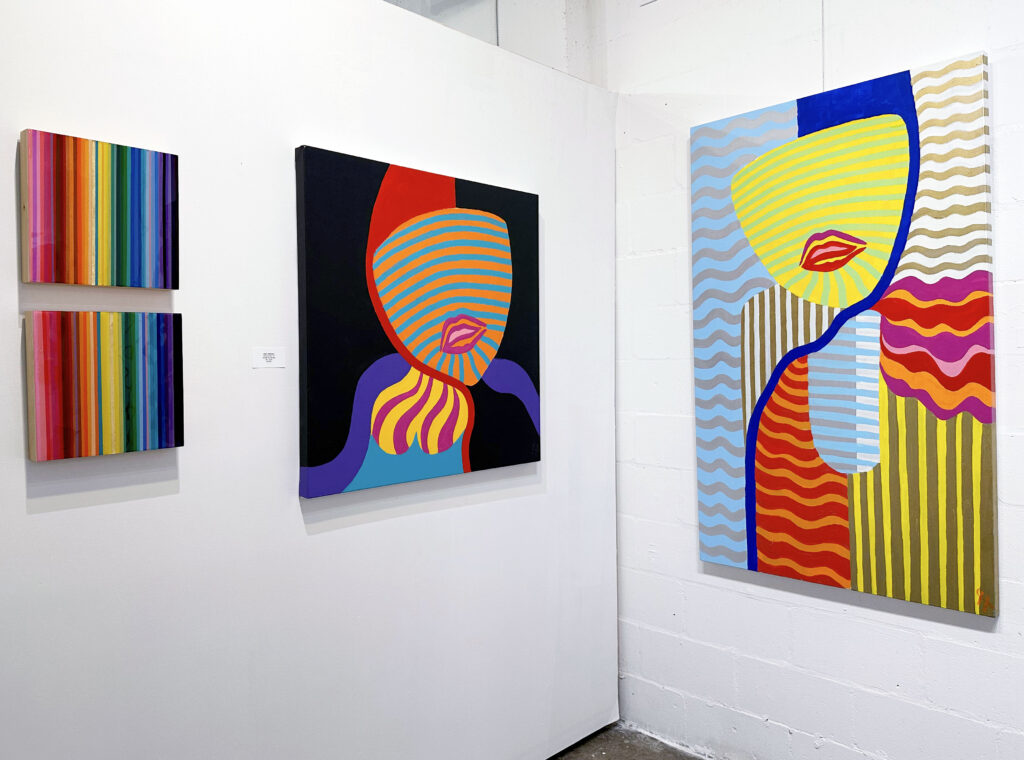
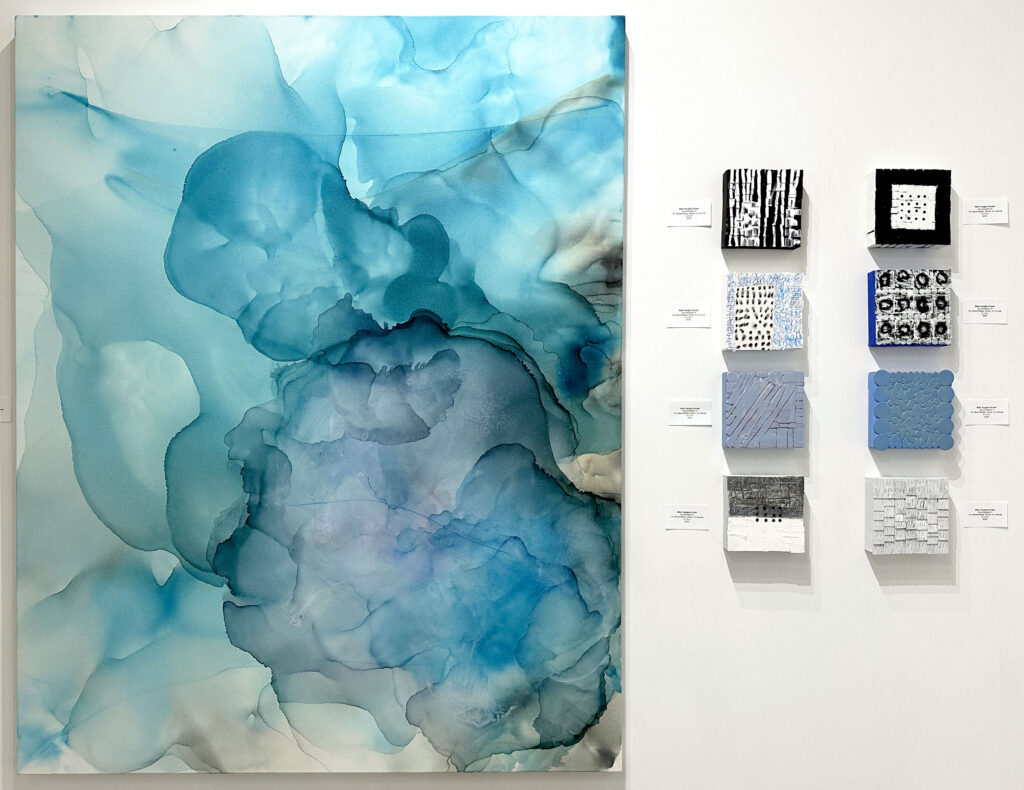
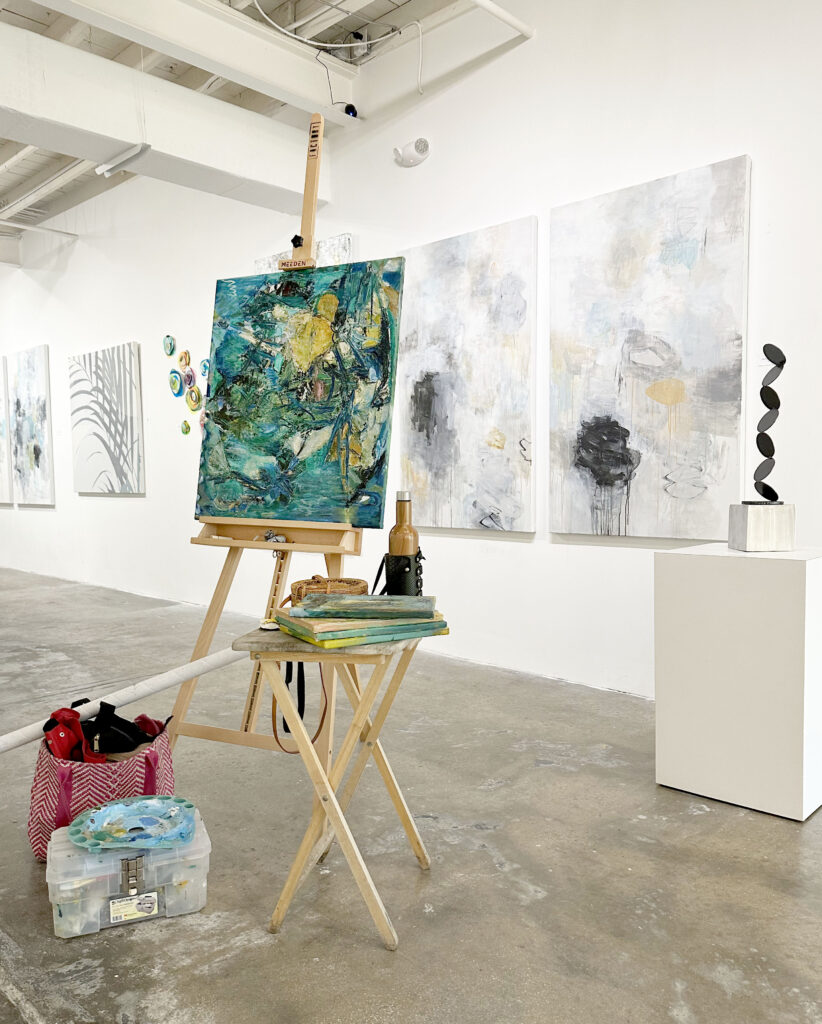
This past weekend was the Second Saturday ArtWalk in St. Pete, Florida with numerous galleries staying open into the evening. Above are images from the recently opened Drew Marc Gallery, part of The Factory St. Pete’s complex in the Warehouse District. In addition to the artwork, the gallery also had live painting by Michelle Gordon.

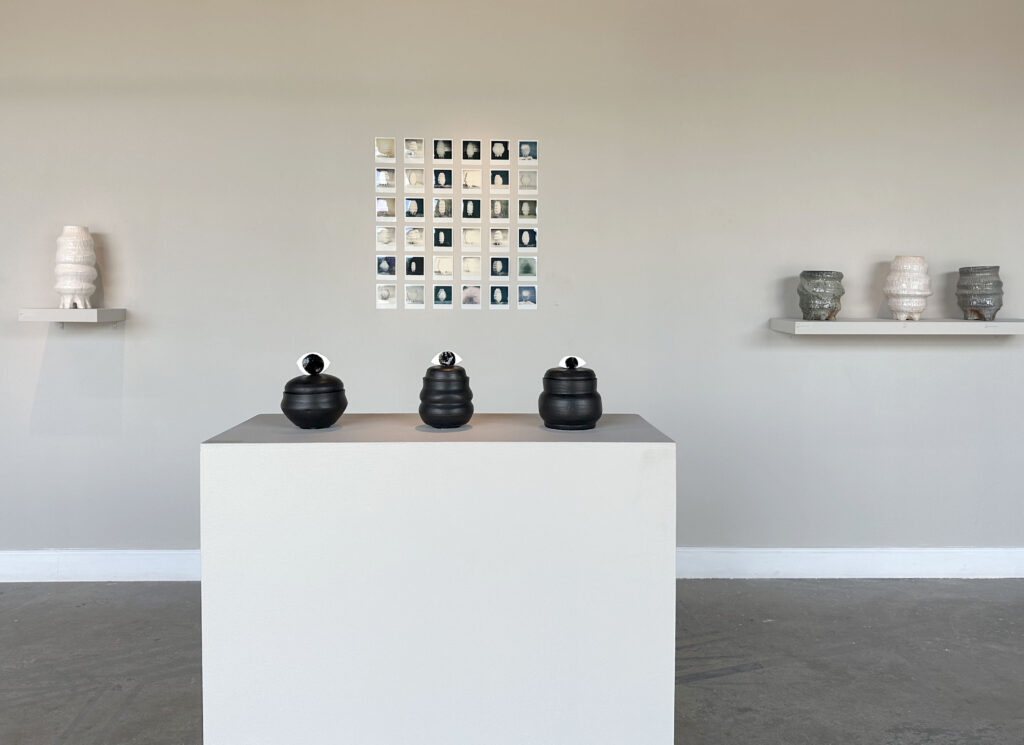
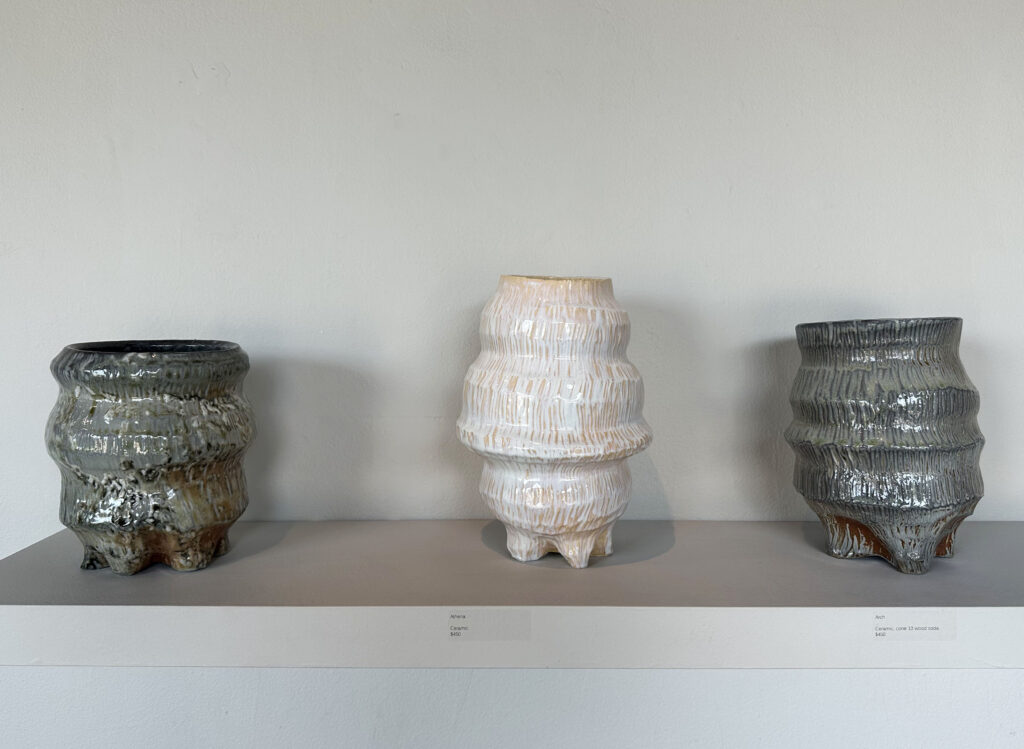
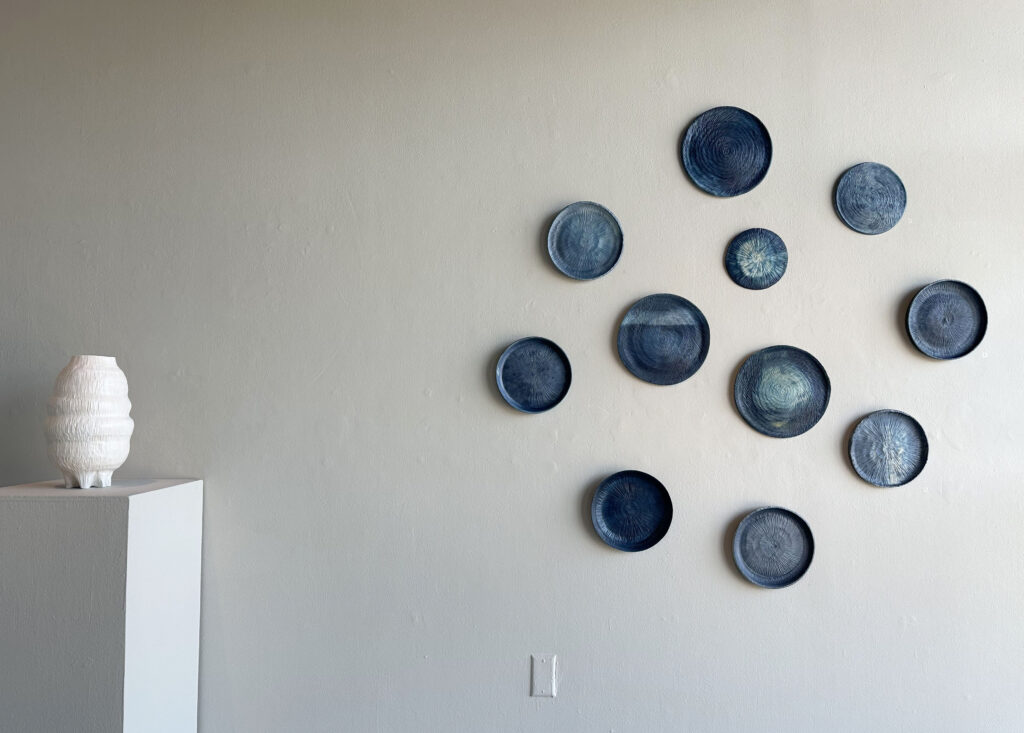
At Morean Center for Clay is Lauren Hope: Time (pictured below), a solo exhibition that includes the artist’s ceramic work and photography.

From the gallery-

...Time is an investigation of alternative photographic process, using clay as a catalyst for record keeping. Using ceramic vessels as pin hole cameras, Lauren captures moments in time and transfers them onto ceramic surfaces. This exhibition will be a collection of photographic prints, vessels, cyanotypes, and handmade pinhole cameras. 

 Her statement about her work-

My work is heavily influenced by the complexity of hues, forms, and patterns found in the natural world. This studio practice has become deeply cathartic, signifying the ephemeral and fleeting notions of time.

Ceramic vessels within this collection are wheel-thrown, altered, and sculpted. Every striation carved serves as a visual representation and a gentle reminder of the delicate passing moment. This method of subtractive carving has become transformative, developing into deep states of meditation and reflection.

Experimental photography is used as an explorative process, allowing for the convergence of internal and external experiences. By casting memories and photographic recollections onto stoneware, I attempt to immortalize my profound experiences and revelations.

This exhibition will be on view until 12/30.

For selections from additional galleries, head to the next page.