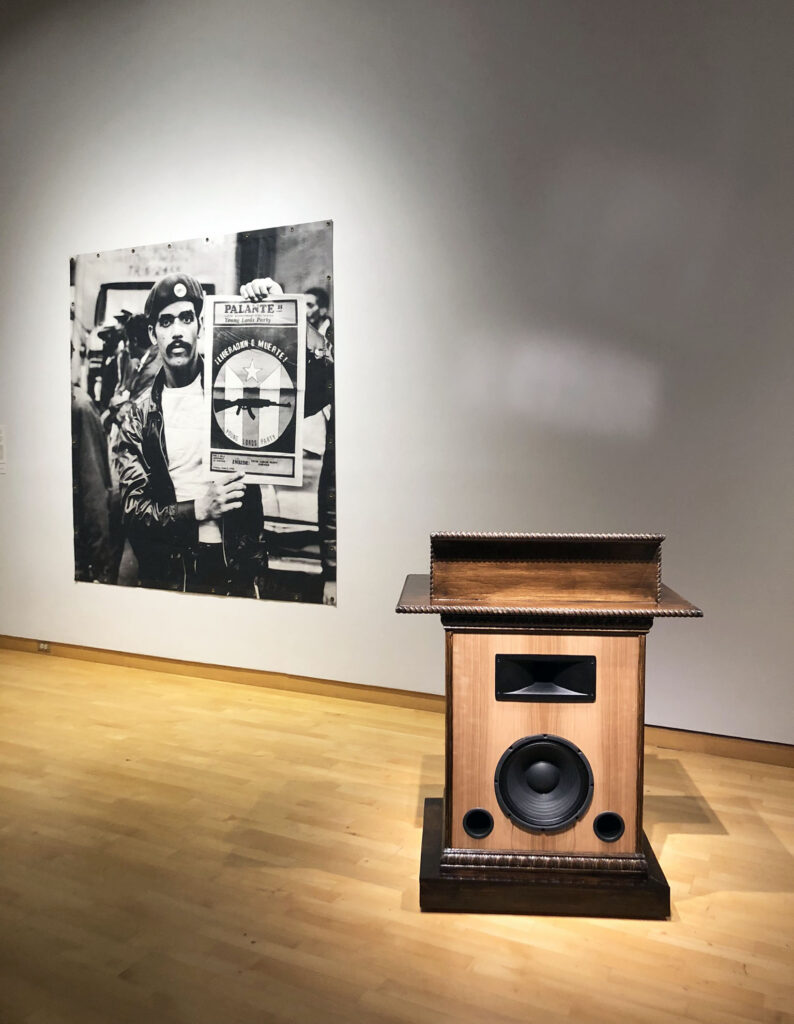
Artist Miguel Luciano– Vinyl banner from the public art project “Mapping Resistance: The Young Lords in El Barrio”, 2019 Image: Young Lords Member with Pallante Newspaper (1970)” by Hiram Maristany and “The People’s Pulpit” (2022), a repurposed vintage pulpit from the First Spanish Methodist Church in East Harlem.
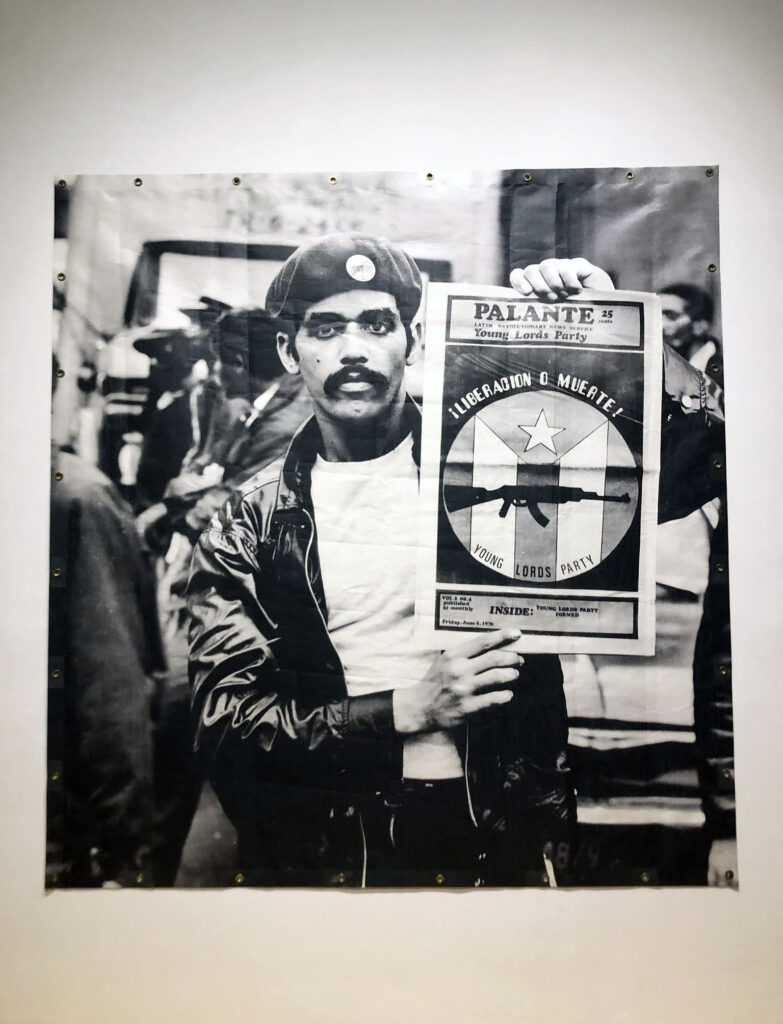
Miguel Luciano- Vinyl banner from the public art project “Mapping Resistance: The Young Lords in El Barrio”, 2019 Image: Young Lords Member with Pallante Newspaper (1970)” by Hiram Maristany
Poor People’s Art: A (Short) Visual History of Poverty in the United States at USF Contemporary Art Museum in Tampa uses installations and artworks to tell the story of, and expand perspectives on, The Poor People’s Campaign- from its origins in the late 1960s to the present day form, as well as comment on poverty and other social issues. Both educational and engaging, it shows that despite long struggles and some progress, we are still very far from much needed social change, especially in regards to poverty.
The museum also produced a free full color, 48 page workbook that you can pick up there or download as a PDF that can be downloaded from their website.
From the gallery’s website-
Dr. Martin Luther King Jr. is well known for his “I Have a Dream” speech, yet much less emphasis is placed on his campaign to seek justice for America’s poor, “The Poor People’s Campaign.” This was a multi-cultural, multi-faith, multi-racial movement aimed at uniting poor people and their allies to demand an end to poverty and inequality. Fifty-three years after Dr. King’s death, the Reverend William Barber II launched a contemporary push to fulfill MLK’s ambitious brief — one that calls for a “revolution of values” that unites poor and impacted communities across the country. The exhibition Poor People’s Art: A (Short) Visual History of Poverty in the United States represents a visual response to Dr. King’s “last great dream” as well as Reverend Barber’s recent “National Call for Moral Revival.”
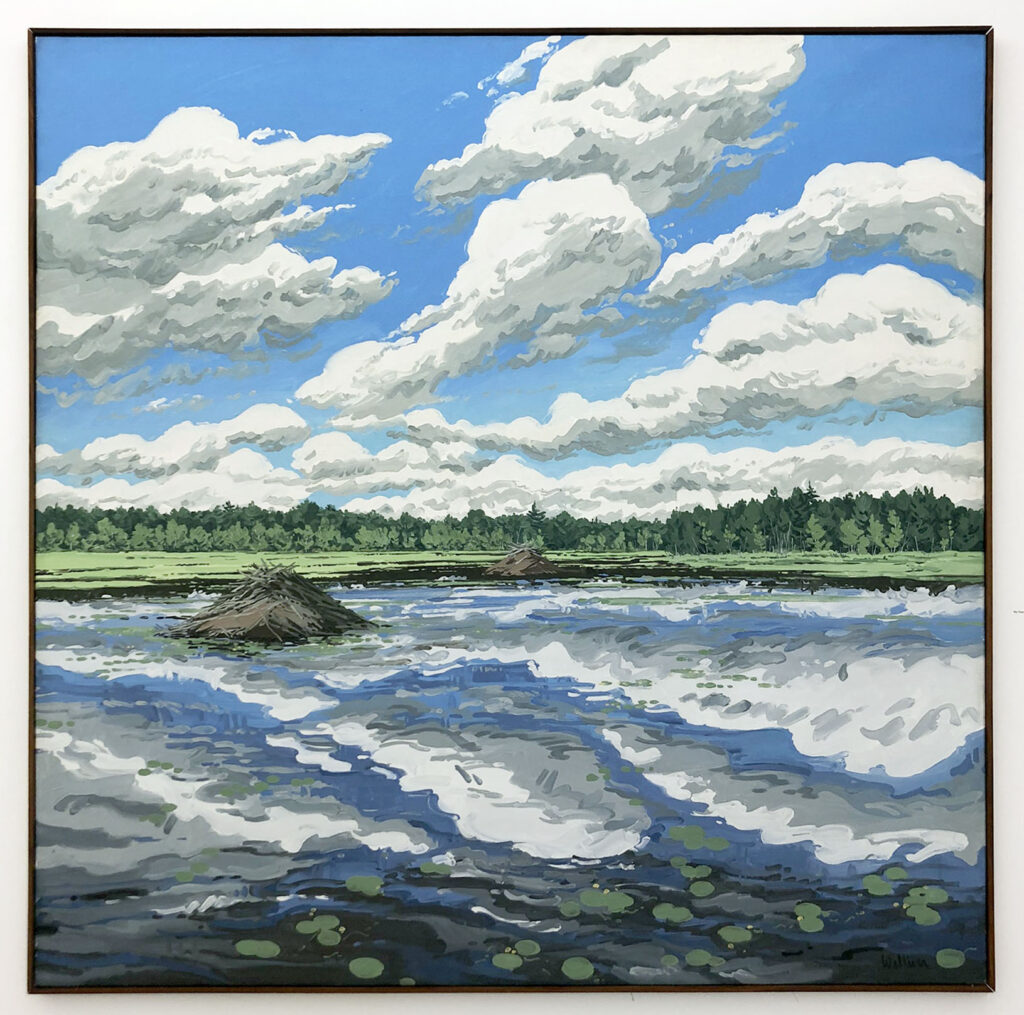
With artworks spanning more than 50 years, the exhibition is divided into two parts: Resurrection (1968-1994) and Revival (1995-2022). Resurrection includes photographs, paintings, prints, videos, sculptures, books, and ephemera made by a radically inclusive company of American artists, from Jill Freedman’s photographs of Resurrection City, the tent enclave that King’s followers erected on the National Mall in 1968, to John Ahearns’ plaster cast sculpture Luis Fuentes, South Bronx (1979). Revival offers contemporary engagement across a range of approaches, materials, and points of view. Conceived in a declared opposition to poverty, racism, militarism, environmental destruction, health inequities, and other interlocking injustices, this exhibition shows how artists in the US have visualized poverty and its myriad knock-on effects since 1968. Participating artists include John Ahearn, Nina Berman, Martha De la Cruz, Jill Freedman, Rico Gatson, Mark Thomas Gibson, Corita Kent, Jason Lazarus, Miguel Luciano, Hiram Maristany, Narsiso Martinez, Adrian Piper, Robert Rauschenberg, Rodrigo Valenzuela, William Villalongo & Shraddha Ramani, and Marie Watt.
Below are some images from the show and the descriptions from the museum.
About the two works above from the museum’s walls-
A multimedia visual artist whose work explores themes of history, popular culture, and social justice, Miguel Luciano revisits the history of the Young Lords, a revolutionary group of young Puerto Rican activists who organized for social justice in their communities beginning in the late 1960s. Luciano’s first contribution to Poor People’s Art is a vinyl banner from the public art project Mapping Resistance: The Young Lords in El Barrio (2019), a collaboration with artist Hiram Maristany. It features the photograph “Young Lords Member with Pa’lante Newspaper (1970)” by Maristany, who was the official photographer of the Young Lords and a founding member of the New York chapter. This banner, along with nine other enlarged Maristany photographs, were installed throughout East Harlem at the same locations where their history occurred 50 years prior.
Luciano’s second contribution to Poor People’s Art is the sculpture The People’s Pulpit (2022), a repurposed vintage pulpit from the First Spanish Methodist Church in East Harlem. The Young Lords famously took over the church in 1969 and renamed it “The People’s Church”; they hosted free breakfast programs, clothing drives, health screenings, and other community services there. In this exhibition, The People’s Pulpit features an historic recording of Nuyorican poet Pedro Pietri reciting the celebrated poem Puerto Rican Obituary during the Young Lord’s takeover of The People’s Church.

Placards created by USF Contemporary Art Museum students, faculty and staff
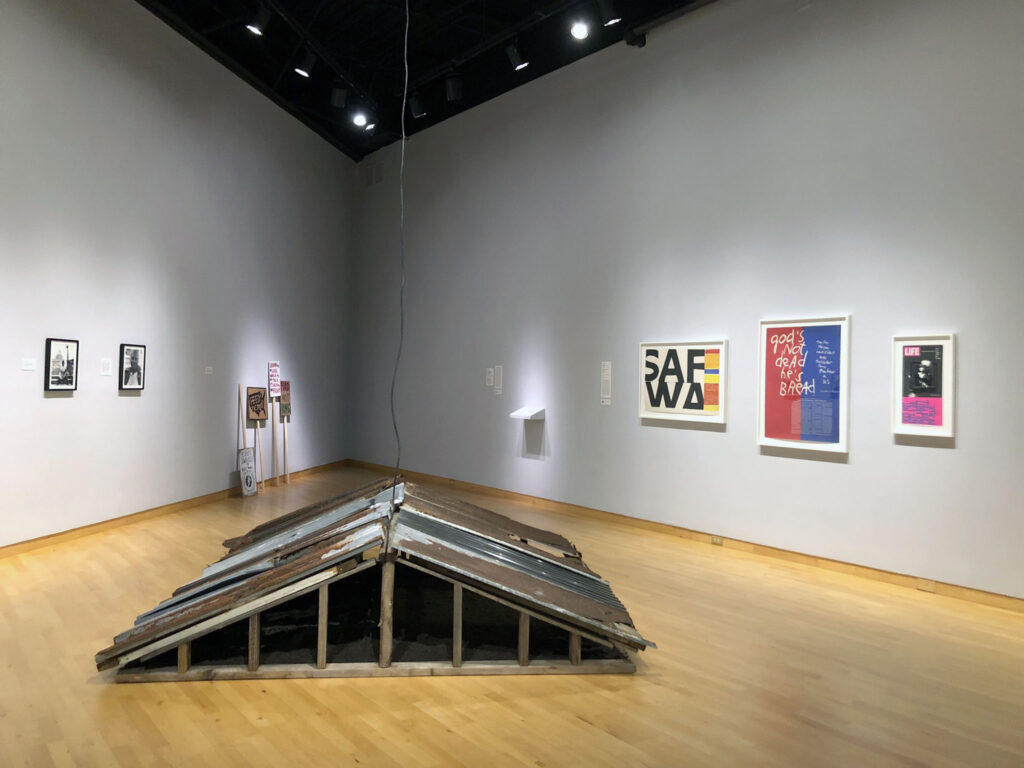
Martha De La Cruz, “Techo de Sin (Roof of Without)”, 2021, made from stolen, scavenged and donated materials found in Southwest Florida.
About the above work from the wall plaque-
Afro-Taino artist Martha De la Cruz fashioned her sculptural installation Techo de sin (Roof of Without), 2021, from stolen, scavenged and donated materials found in Southwest Florida. According to the artist, “Florida is home to a large population of Latin American migrants who have ended up in the US largely due to economic pressures, exploitation and veins of power etched by Europe and the US.” Her powerful work deals with the results of this disjunction and the “symptoms thereabouts (e.g. houselessness, fugitiv-ity, government corruption, and income disparity, etc.).” According to De la Cruz, the word “sin” is a common Dominican mispronunciation for the word “zinc.” The sculpture is animated by a single light bulb that turns on for just ten minutes a day.
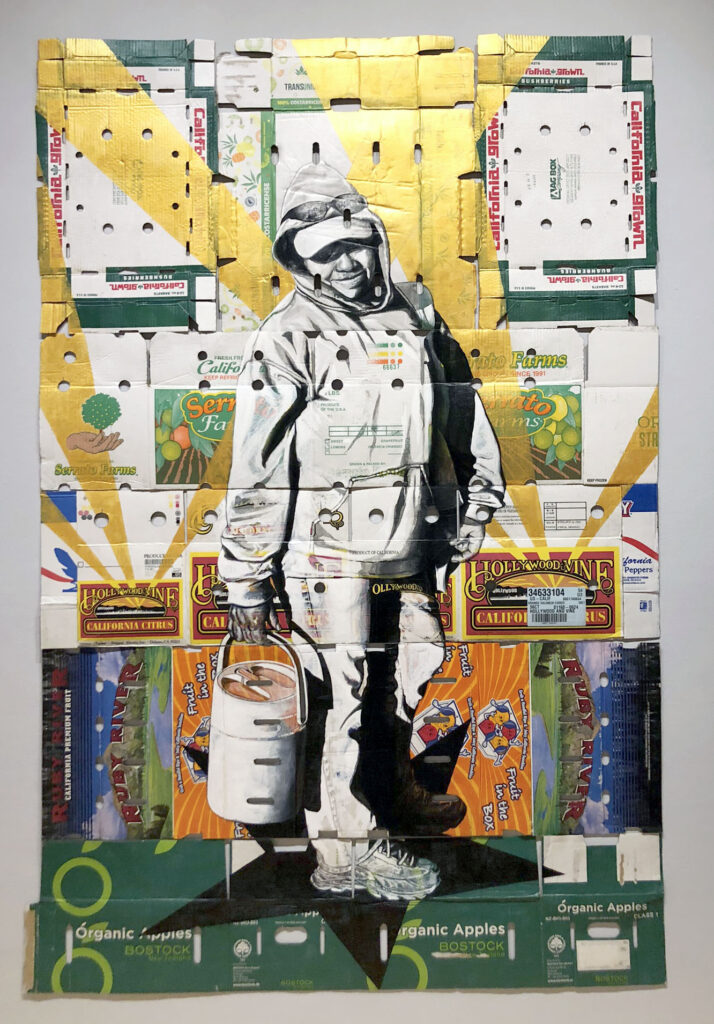
Narsiso Martinez “Hollywood & Vine”, 2022
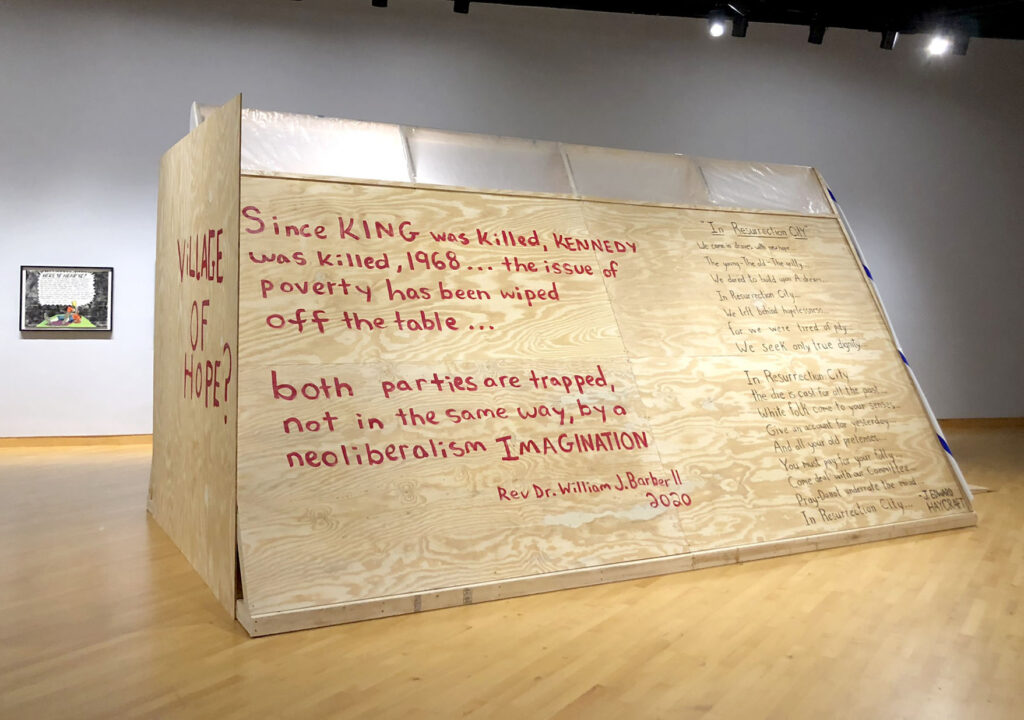
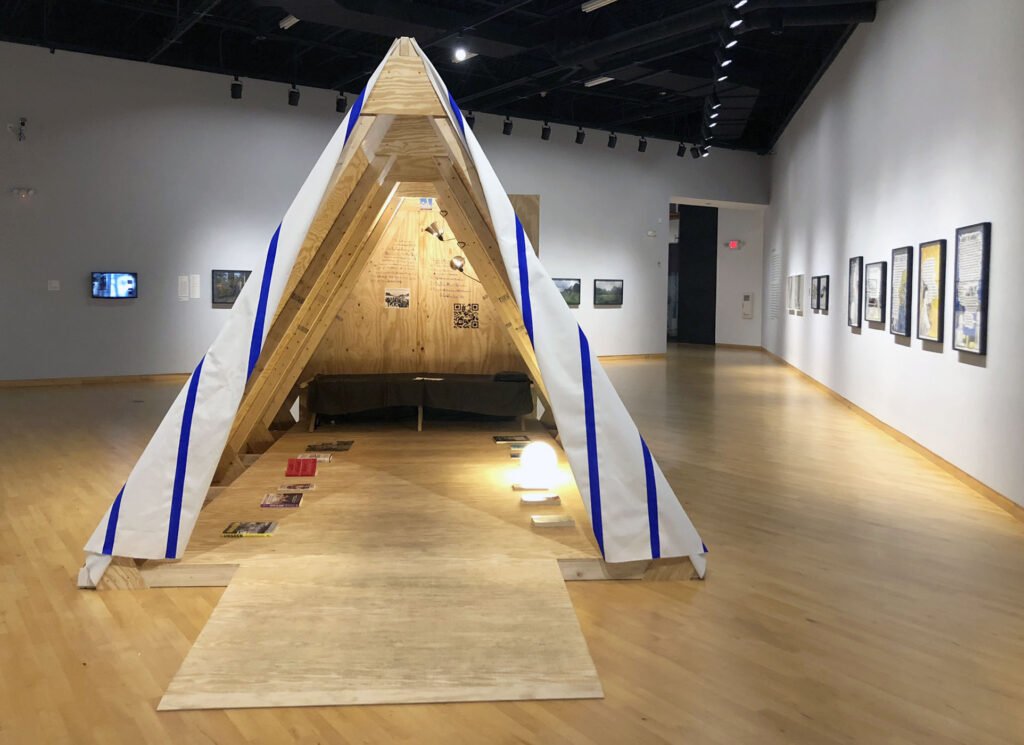
Jason Lazarus “Resurrection City /Poor People’s Campaign: A National Call for Moral Revival / A Third Reconstruction”, 2023, plywood, utility fabric, blankets, sleeping cot, paint, lamp, plastic, research library, historical ephemera
From the wall plaque about the Lazarus installation-
Jason Lazarus’s sculptural installation Resurrection City/Poor People’s Campaign: A National call for Moral Revival/A Third Reconstruction (2023) is anchored in the artist’s historical research and several key photographs of Resurrection City. A tent-like shelter inspired by the temporary residences that populated the 1968 mass protest, the interactive sculpture contains simple sleeping quarters and a curated library filled with physical literature and ephemera centered on both the 1968 Poor People’s Campaign and the 2018 Poor People’s Campaign: A National Call for Moral Revival, co-led by Rev. Dr.William Barber and Rev. Dr. Liz Theoharis. The library allows for audiences to trace, listen, and talk about the history of advocating for the poor, from 1865 to the present. Additionally, the artist provides a custom transcription (and a QR hyperlink) to Barber’s 49-minute address on the syndicated radio show “The Breakfast Club” in which he carefully outlines his powerful vision for how we might address poverty going forward.
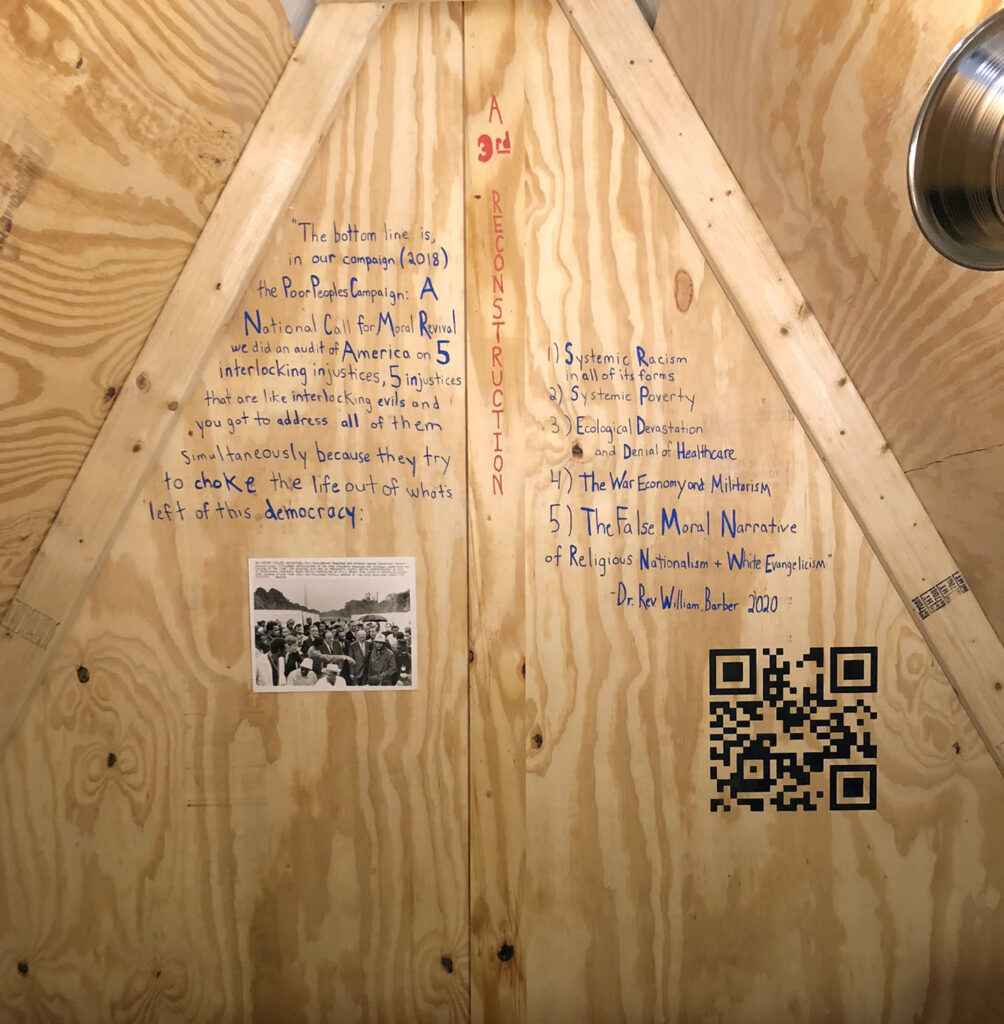
Inside the Jason Lazarus installation
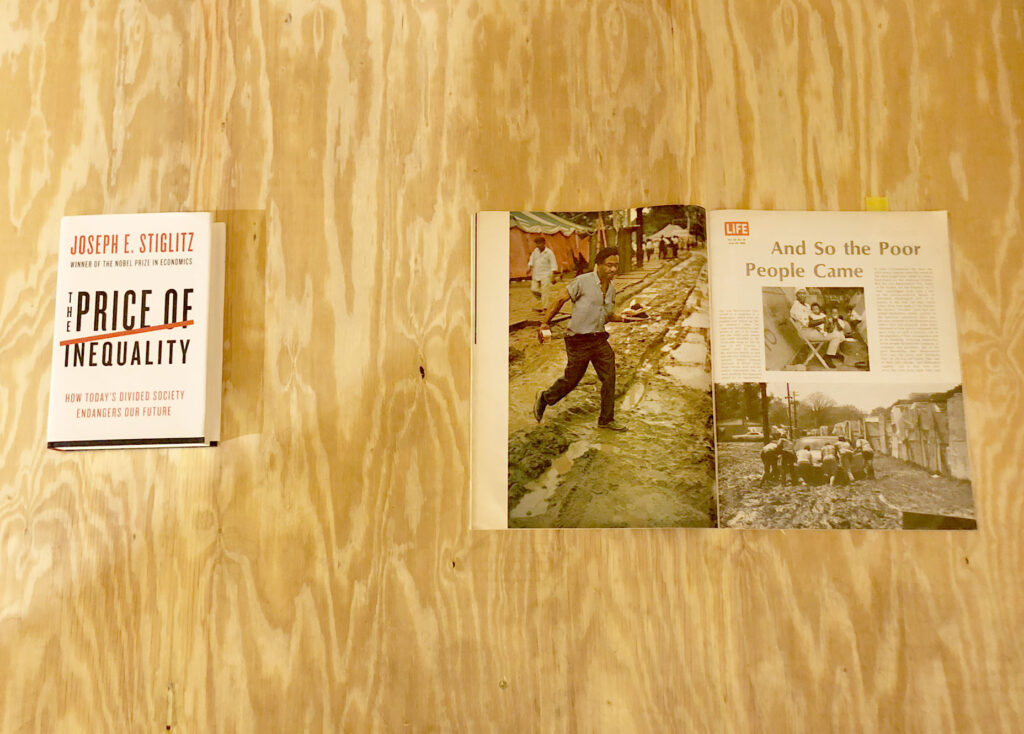
A book and magazine from Jason Lazarus’ installation floor
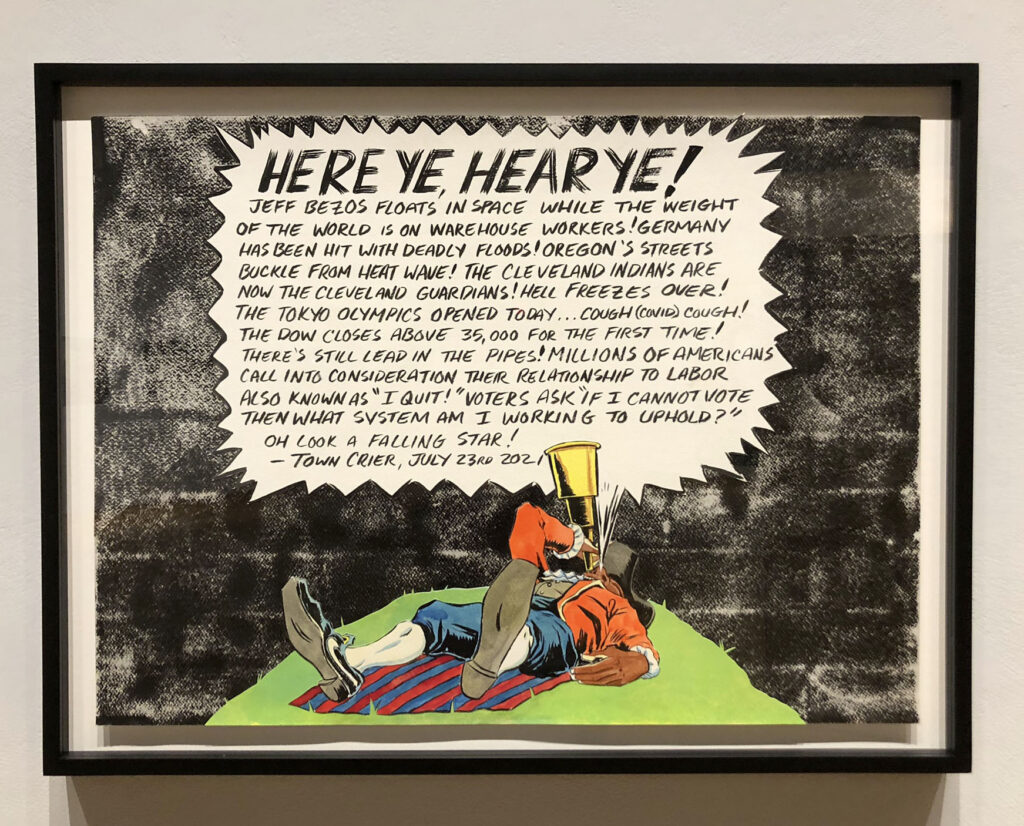
Mark Thomas Gibson, “Town Crier July 23rd”, 2021
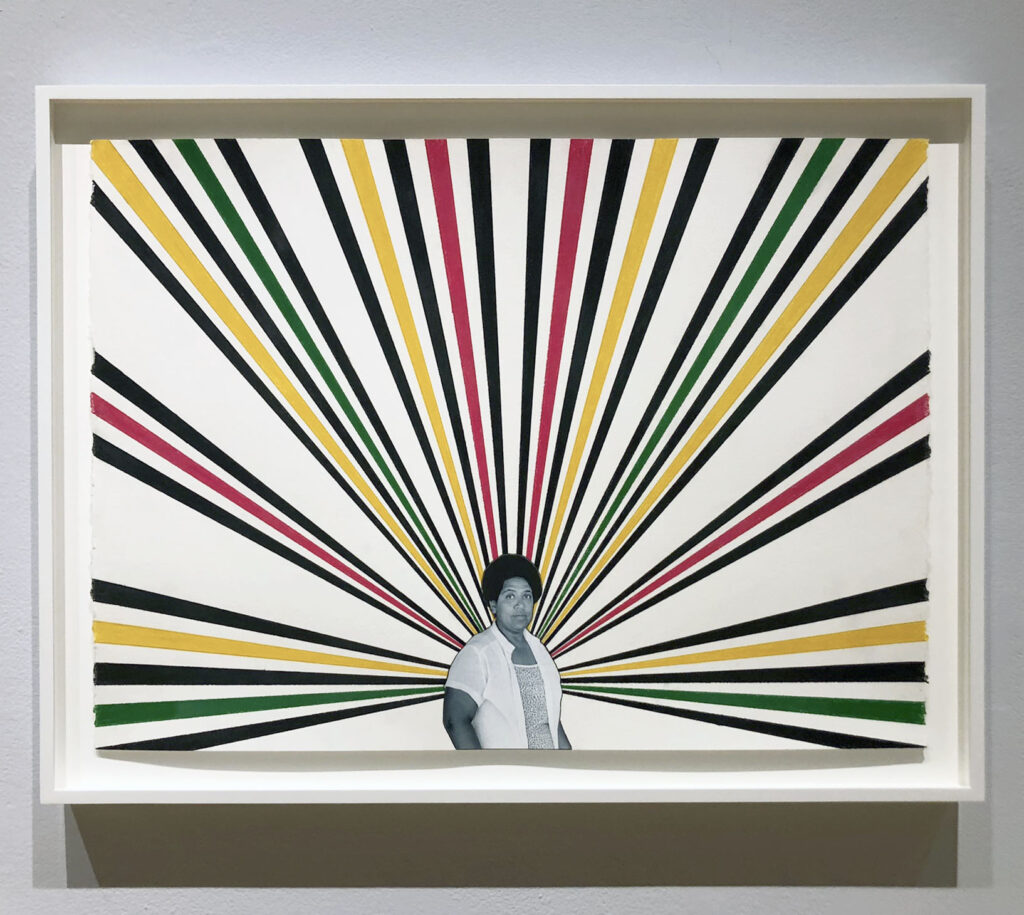
Rico Gatson, “Audre #2”, 2021
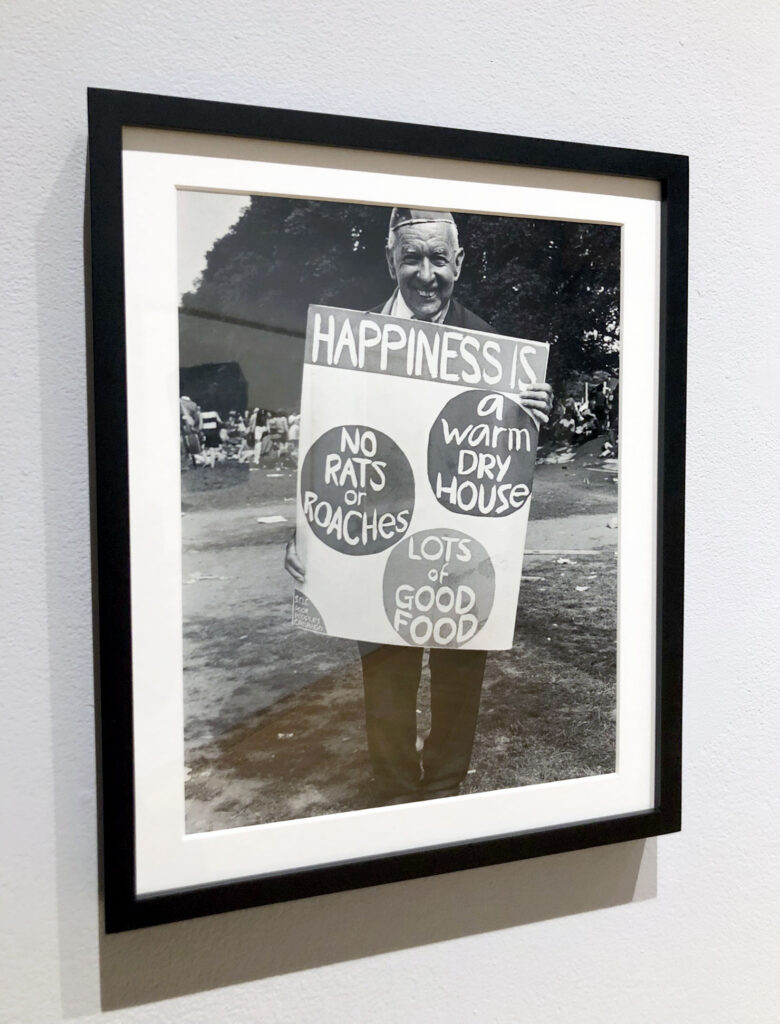
Jill Freedman, “Poor People’s Campaign, Resurrection City” 1968
About Jill Freedman’s photograph-
In the spring of 1968, the talented young street photographer Jill Freedman quit her day job as a copywriter in New York City to join the Poor People’s March on Washington. Freedman lived in Resurrection City for the entire six weeks of the encampment’s existence, photographing its residents as they rallied, made speeches, protested in front of government buildings, confronted police, built makeshift kitchens, organized clothing swaps, and dealt with flooding, petty crime, and illness. One of the most important postwar documentarians, and one of the few women photographers of the era, Freedman captured it all. Freedman’s 2017 book, Resurrection City, 1968-from which this exhibition draws a dozen powerful images-showcases the photographs that she made as a participant in the original Poor People’s Campaign. In multiple ways, Freedman’s images are the sympathetic perch upon much of which much of the present exhibition loosely hangs.
This exhibition closes 3/4/23.