Jan 162024
 

(photograph by Richard Avedon from The New Yorker’s website)

Above is Richard Avedon’s portrait of Martin Luther King Jr. with his father, Martin Luther King, and his son, Martin Luther King III, 1963. The image is part of the 1964 book Nothing Personal, Avedon’s collaboration with writer James Baldwin.

Dec 122023


Heiress Gallery in St. Pete is currently showing Melissa Spitz’s solo show You Have Nothing to Worry About, a moving portrait of her mother’s mental illness and substance abuse.

From the gallery about the exhibition-

In her solo exhibition at HEIRESS, Spitz presents medium-to large-format prints of her iconic images. The works are installed in a chaotic environment, scattered amongst the detritus of familial tragedy: her mother is found in the context of hundreds of pills and pill bottles, a glimpse into the chaos that Spitz and her family have dealt with for many years. Thousands of 4×6 glossy photos are scattered on a table in the center of the space and invites gallery visitors to attempt to make sense of the nostalgia that they hold. In addition to photographs, Spitz has included new sculptural works including ten enameled hammers titled, You Are the Nail, which encourages an examination of the over-reliance of pharmaceutical solutions in the United States. Spitz’s work freezes moments of chaos in time, to be dissected and understood by the artist after the fact. The majority of her most intimate traumatic life experiences are captured through her lens, and finds a second life in the digital sphere on Instagram, to a community of over 50 thousand followers, which blurs the lines between catharsis and entertainment.

From the artist about the exhibition-

Since 2009, I have been making photographs of my mentally ill, substance-abusing mother. Her diagnoses change frequently-from alcoholism to dissociative identity disorder–and my relationship with her has been fraught with animosity for as long as I can remember. I am fully aware that my mother thrives on being the center of attention and that, at times, our portrait sessions encouraged her erratic behavior.

The photographs are simultaneously upsetting and encouraging; honest and theatrical; loving and hateful. By turning the camera toward my mother and my relationship with her, I capture her behavior as an echo of my own emotional response. The images function like an on going conversation.

The series in installation form encourages an examination of the role prescription drugs play in the United States. Aiming to prompt discussions on the cultural, social, and individual implications of an overreliance on pharmaceutical solutions. Through visual metaphors and imagery, You Have Nothing to Worry about continues to raise awareness about the need for a balanced and holistic approach to health and well-being. While acknowledging the limitations and potential pitfalls of relying solely on prescription medications.

The immersive exhibition functions as a thought-provoking commentary on the pervasive and complex issue of prescription drug culture in America. Through the meticulous arrangement of pill bottles, pills, photographs, and family ephemera, I seek to engage viewers in a dialogue about the consequences of our society’s reliance on pharmaceutical drugs.

The Vanity, pictured above, which includes family notes and photos, adds even more depth to the family’s struggles.

From the artist-

I have always been interested in sculptural installations and photography. Sandy Skoglund, Jeff Wall and Carrie Mae Weems are a few big names who have directly inspired me. The obsessive nature of details and experience only add to telling a story and I’ve been eager to find a way to participate. This vanity belonged to my great-aunt Sophie and has been in my bedroom my whole life, it went to college and graduate school with me, and my brother has been storing it since I moved to New York. This exhibition presented the perfect opportunity to utilize it. Informed by actual experiences, The Vanity, showcases family ephemera, letters from my mom, pill bottles, scattered pills, lipsticks and flickering candles. The mirror allows viewers to reflect on their own shared familiarity.

Spitz also created You Are The Nail, pictured below, for the exhibition.

Her description of the work-

I’m not sure when I first heard the phrase “when your only tool is a hammer, you begin to see everything as a nail” but it was used regarding my mom being over medicated and her prescriptions mixing, sending her into another psychotic episode. It wasn’t the doctors’ fault, or mom’s or the pharmacist but the drugs, they were to blame. I was frustrated and angry and confused, but too young to understand that doctors received kickbacks for writing certain prescriptions and that patients like my mom were a goldmine. I do want to be clear that I know anti-psychotic medications have saved people’s lives and mom would not be able to function normally without a carefully balanced mix of mood stabilizers, anti-depressants and anti-anxiety pills. But all too quickly do I find doctors in almost any capacity pushing drugs on me…I was alarmed to learn that the United States pharmaceutical industry generates over 110 bilion dollars of revenue each year.

You are the Nail is a series of ten hammers representing the ten most prescribed anti-psychotic / antidepressant pharmaceutical drugs in the United States. Several of which my mom is prescribed. Informed by Abraham Maslow’s theory of over reliance, you are the nail visually depicts our mental health field’s greatest tool, prescription drugs. The hammers are titled, Zoloft, Lexapro, Trazadone, Prozac, Wellbutrin, Cymbalta, Seroquel, Celexa, Vensir and Abilify.

This exhibition closes 1/13/24.
Dec 122023
 

Artists from L to R: Julie Schumer, Vivien Collens (sculpture), Maggie Kruger, and Blair Vaughn-Gruler

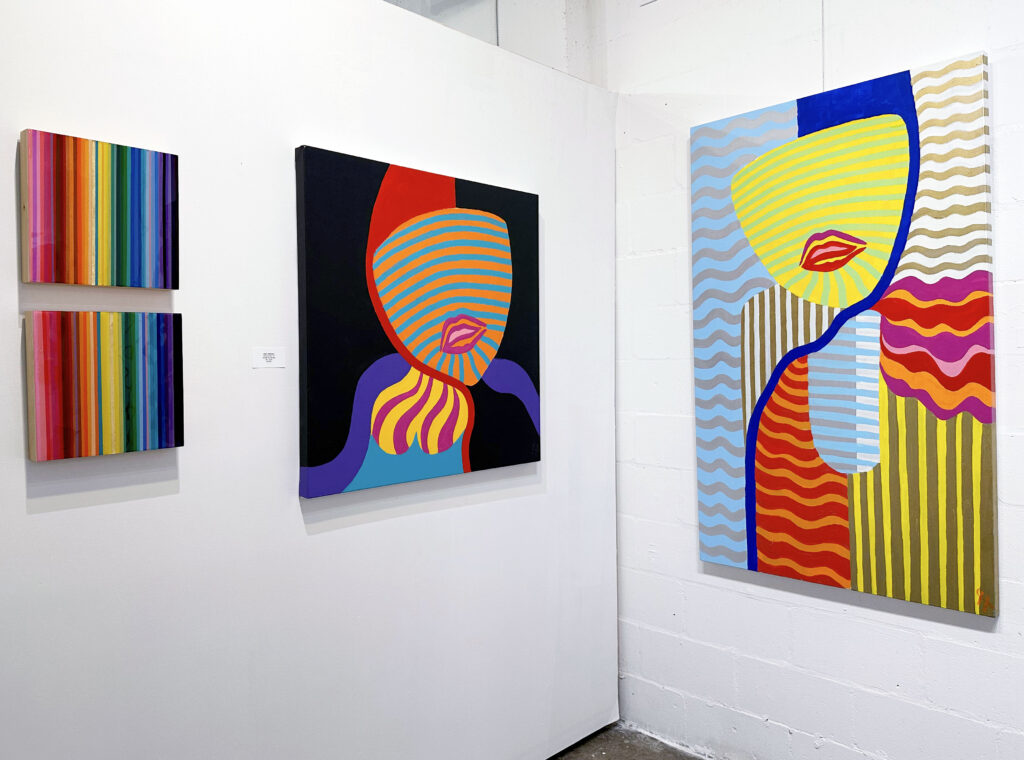
Renee Mendler, “Rainbow Vision I and II”, Acrylic, Gold leaf, and resin on panel (left) and “Pure Joy No. 10 and No. 14”, Acrylic on canvas by Hans Petersen
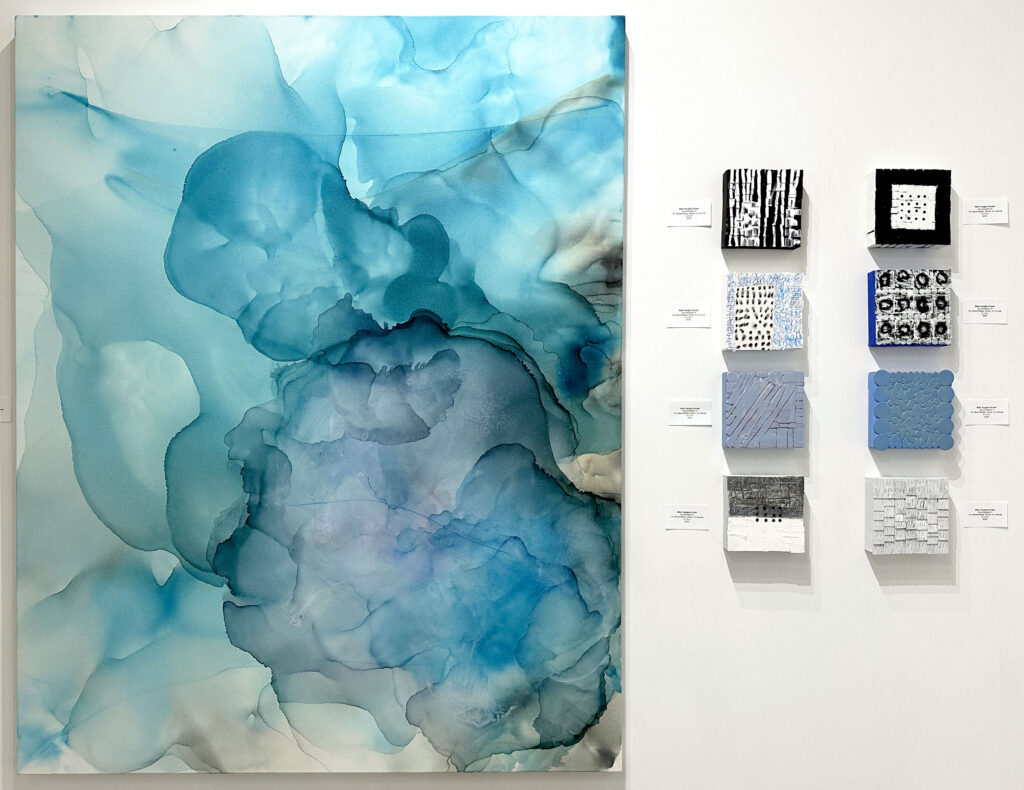
Imani Bilál, “If Dreams Could Wander”, Acylic paint and ink on canvas (left) and work from the “Accumulation” series by Blair Vaughn-Gruler, Oil, mixed media, wood, on canvas

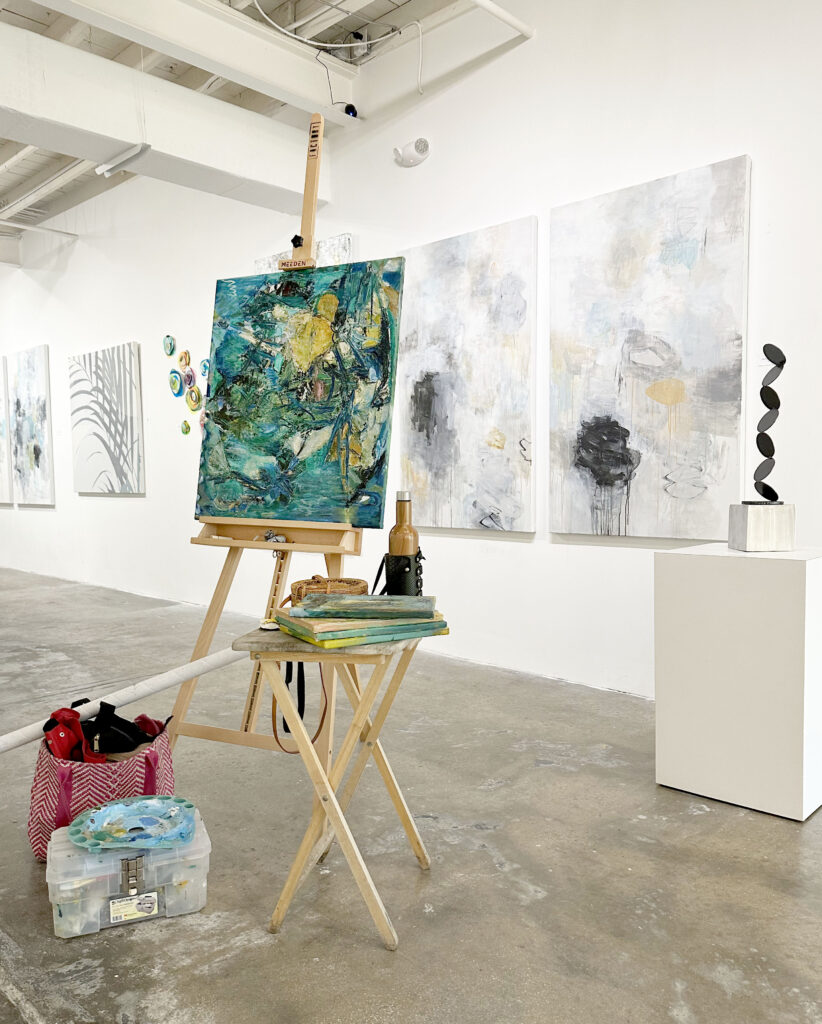
Michelle Gordon, “Ocean Splash”, Oil on canvas

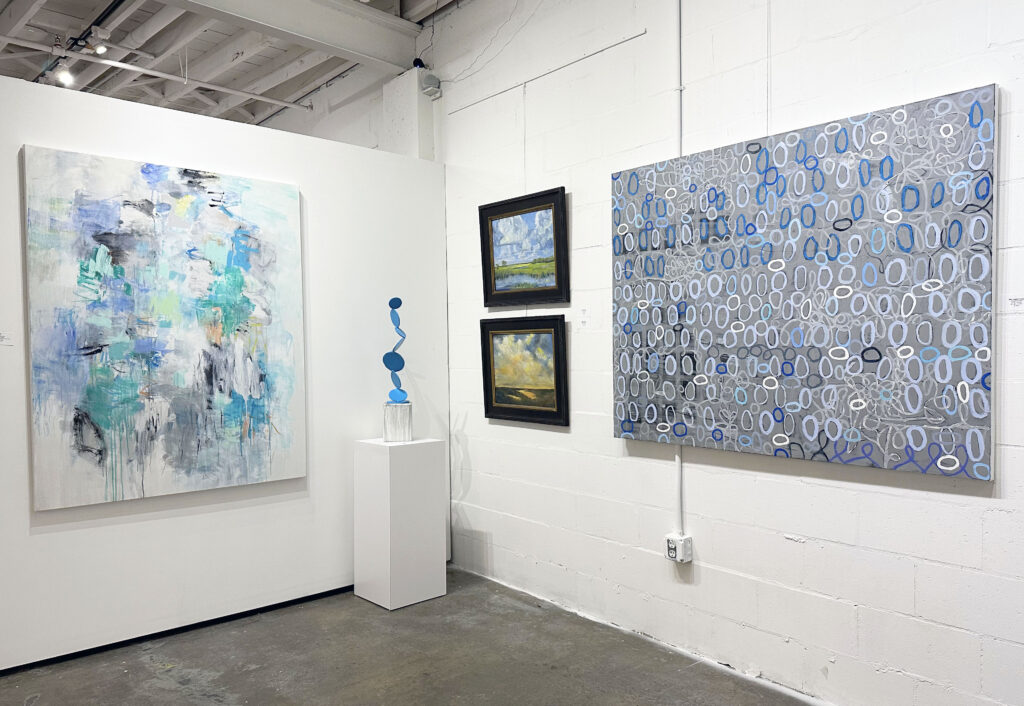
This past weekend was the Second Saturday ArtWalk in St. Pete, Florida with numerous galleries staying open into the evening. Above are images from the recently opened Drew Marc Gallery, part of The Factory St. Pete’s complex in the Warehouse District. In addition to the artwork, the gallery also had live painting by Michelle Gordon.

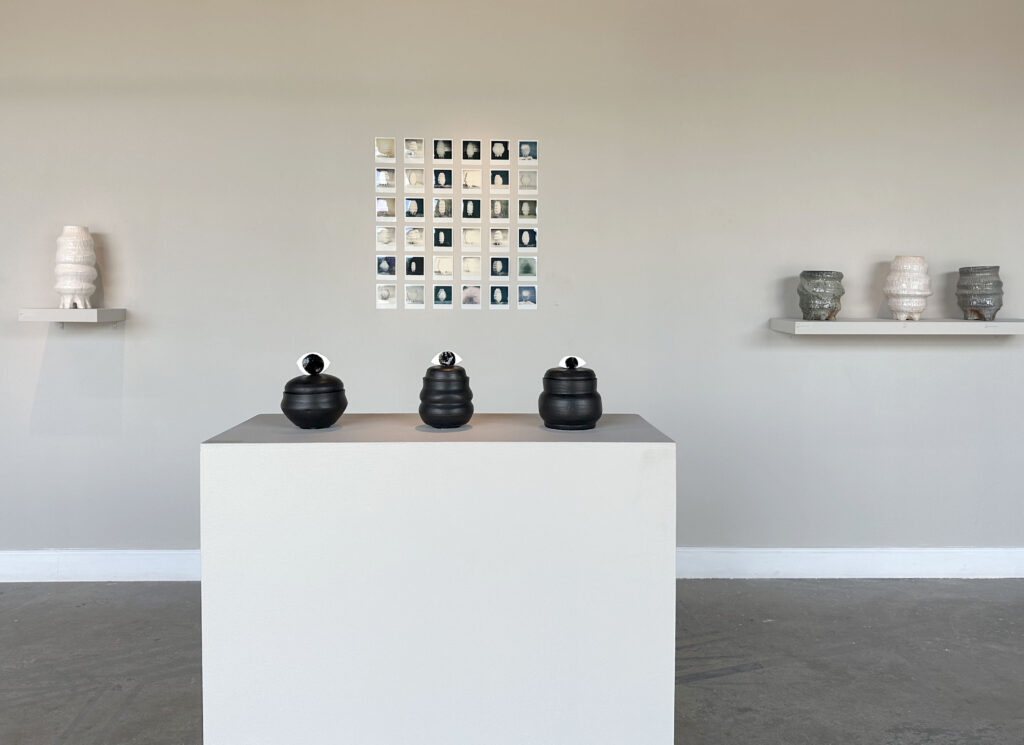
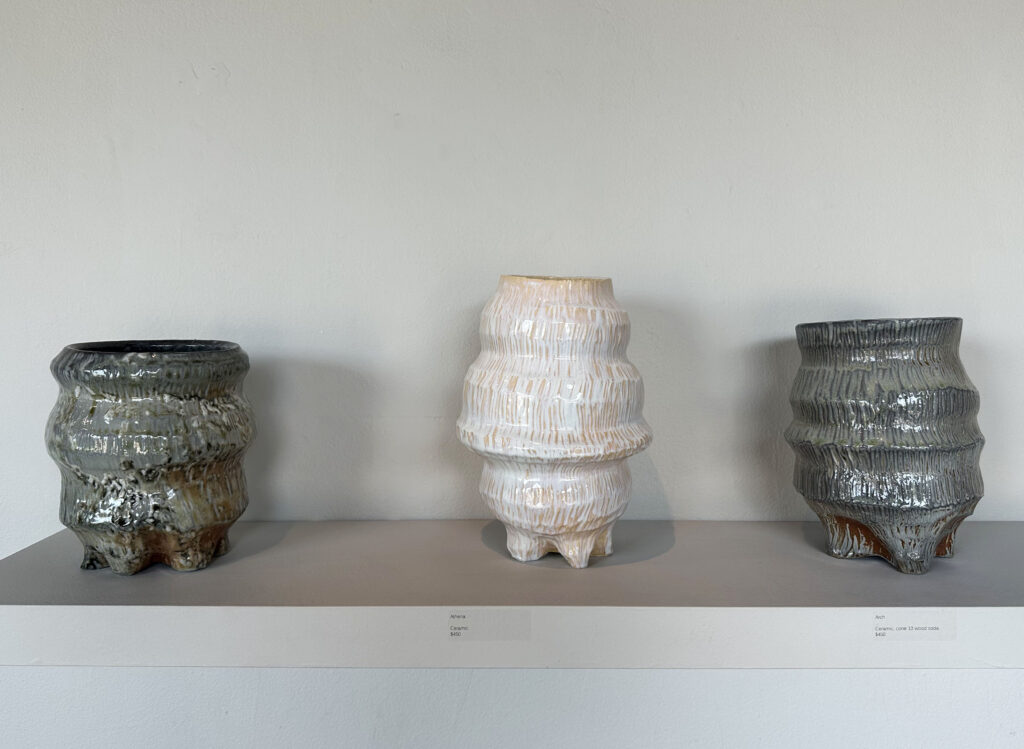
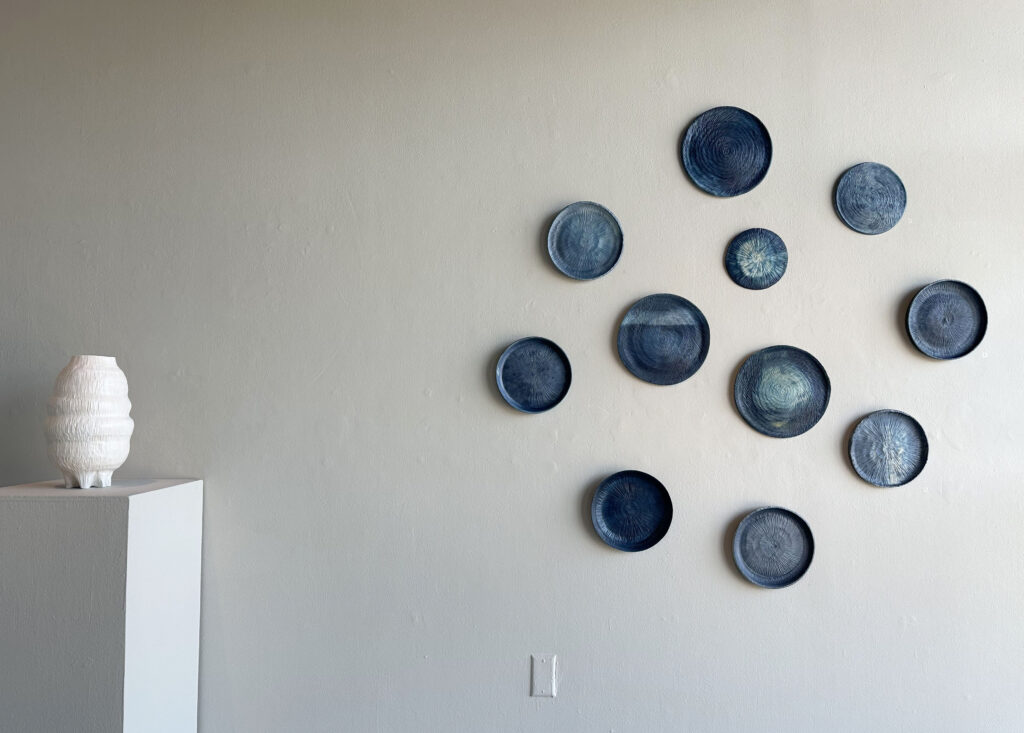
At Morean Center for Clay is Lauren Hope: Time (pictured below), a solo exhibition that includes the artist’s ceramic work and photography.

From the gallery-

...Time is an investigation of alternative photographic process, using clay as a catalyst for record keeping. Using ceramic vessels as pin hole cameras, Lauren captures moments in time and transfers them onto ceramic surfaces. This exhibition will be a collection of photographic prints, vessels, cyanotypes, and handmade pinhole cameras. 

 Her statement about her work-

My work is heavily influenced by the complexity of hues, forms, and patterns found in the natural world. This studio practice has become deeply cathartic, signifying the ephemeral and fleeting notions of time.

Ceramic vessels within this collection are wheel-thrown, altered, and sculpted. Every striation carved serves as a visual representation and a gentle reminder of the delicate passing moment. This method of subtractive carving has become transformative, developing into deep states of meditation and reflection.

Experimental photography is used as an explorative process, allowing for the convergence of internal and external experiences. By casting memories and photographic recollections onto stoneware, I attempt to immortalize my profound experiences and revelations.

This exhibition will be on view until 12/30.

For selections from additional galleries, head to the next page.

Dec 072023
 

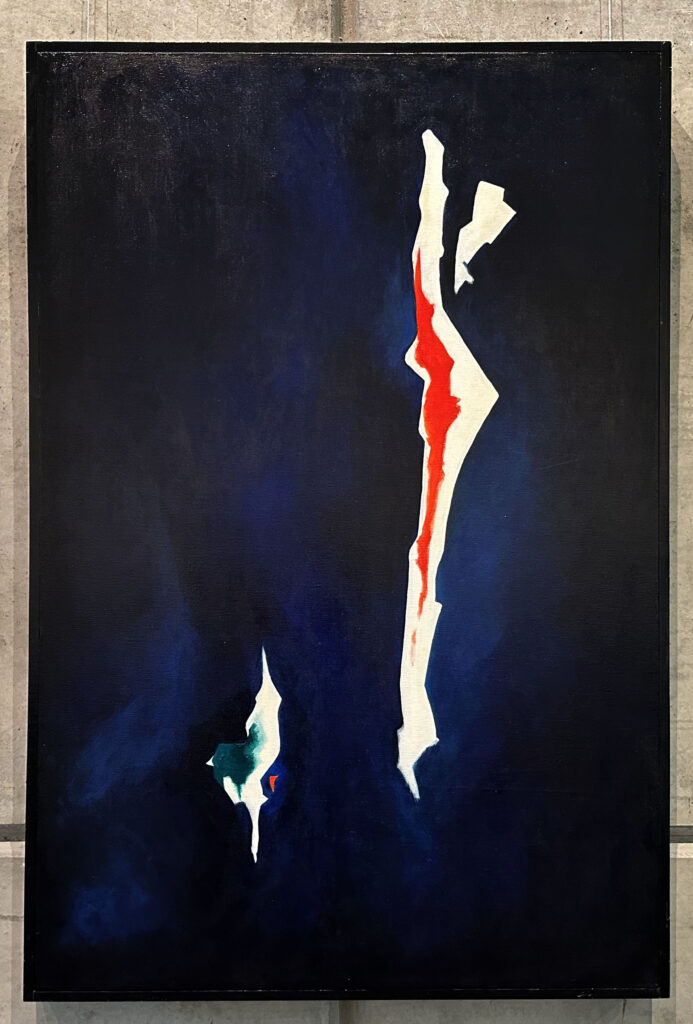
V.J. Hagenbuckle, “On Mars”, 2020, Oil on canvas

Paintings by V.J. Hagenbuckle

There are many incredible artists living and working in the Tampa Bay area and quite a few of them also teach. Leepa-Rattner Museum of Art in Tarpon Springs is currently showing work by faculty from the Visual Arts department at St. Petersburg College. In addition to a statement about their work, each faculty member also contributed their teaching philosophy.

Artists included in the exhibition- Jonathan Barnes, Nathan Beard, Ragan Brown, Mason Gehring, Barton Gilmore, Kevin Grass, Marjorie Greene Graff, Jennifer Guest, Jim Hagenbuckle, Elizabeth Indianos, Kim Kirchman, Michaela Oberlaender, Krishna Sadasivam, and McKenzie Smith.

Tonight, 12/7, Jim Hagenbuckle will be giving a talk at the museum at 6pm.

This exhibition is on view until 12/17/23.

Michaela Oberleander, “Bleed Out”, 2010, Acrylic on canvas

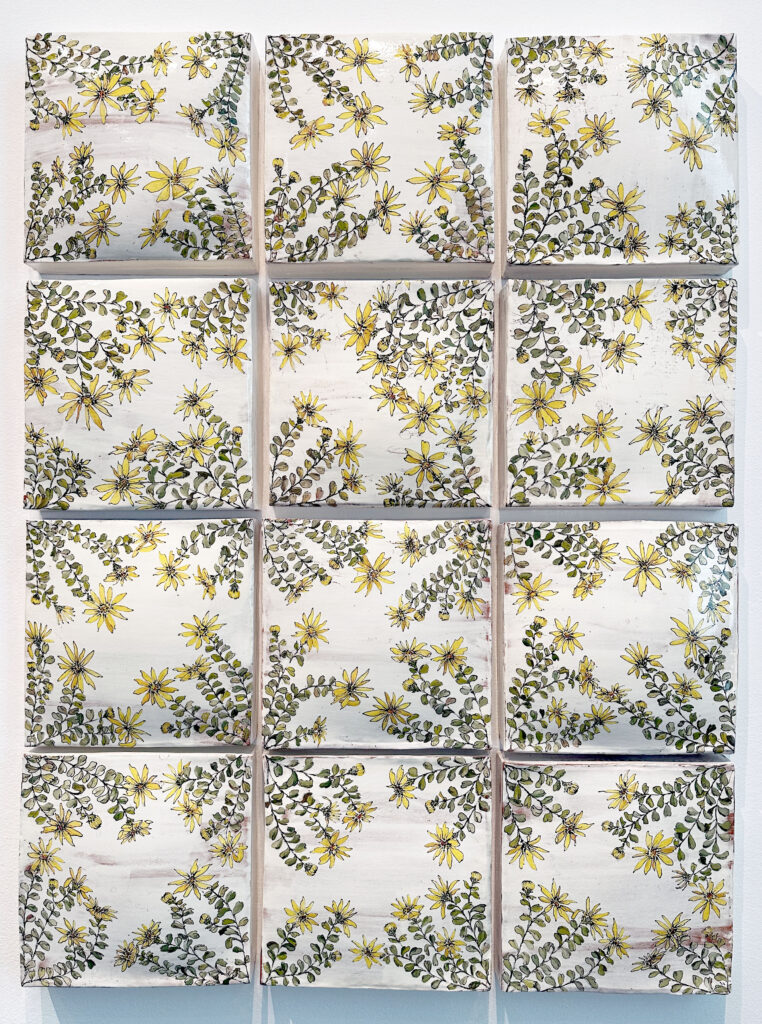
Kim Kirchman, “Cultivating What Might Be Lost”, 2022, Terra cotta with slip transfer

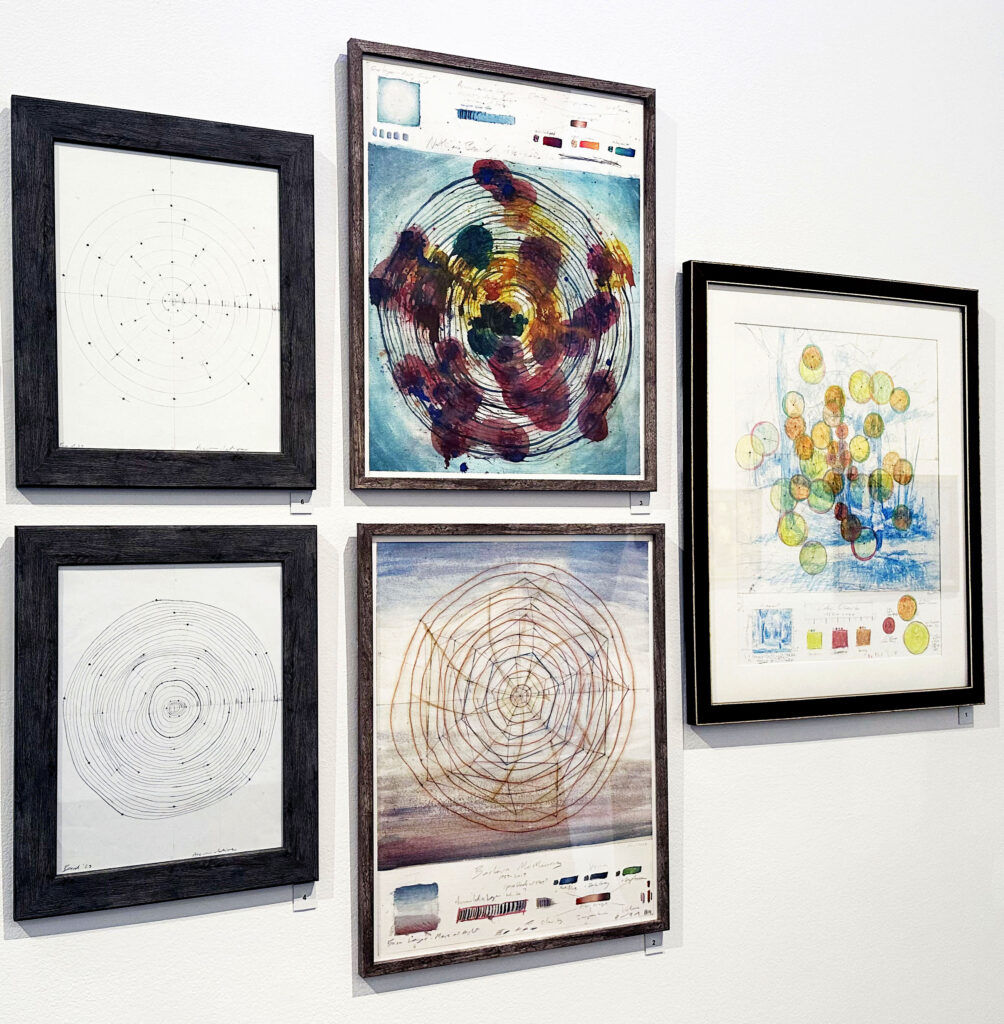
Work from Nathan Beard’s “LIFE LINES”

Nathan Beard’s description of this recent personal and intriguing project (pictured above)-

The Memory Map works on view here are my very newest attempt at understanding the role that fallible memory plays in the shaping of culture and self. These small watercolor studies are Phase II of LIFE LINES, a grand 3-part project in which I am examining my family’s memory of themselves and making artwork that tells their story. I plan to collect all of these studies into a singular book that can be handed down through the generations, or perhaps even preserved in a museum for everyone to see.

To create Memory Maps, I have created a survey for each family member. I ask them some general genealogy questions, since this survey will also function as a historical record, including their three favorite colors. I then ask them to try to remember each year of their life, from birth til now, and assign a rank between 0 and 5 for a) how clear their memory of the year is; b) how important that year was for them; c) how “good” or “bad” the year was. I add these columns together to get an “Accumulative” data set that I use to create a skeleton composed of alternating pentagons and hexagons that rotate as they expand. This part is important since it incorporates movement through time and space as we grow outward. Using the fact that our life’s journey always wavers, I then connect the points and end up with a “map” that resembles the cross-section of a tree, and contains all the metaphors associated with tree rings and natural growth cycles.

The most important visual development presented itself with Cate Clark, where I allowed myself the freedom to incorporate representational imagery. I asked my wife about her favorite place ever, and she surprised me with the family trip we took to Letchworth State Park in upstate NY. I found a picture from that trip with our daughter Vera standing at the edge of wood, and proceeded to paint that memory in resemblance of an antique plate. I also allowed myself the freedom to stray away from the tree ring aspect, while still using the data skeleton to place the bursts of color.

For more information, his artist talk is available here.

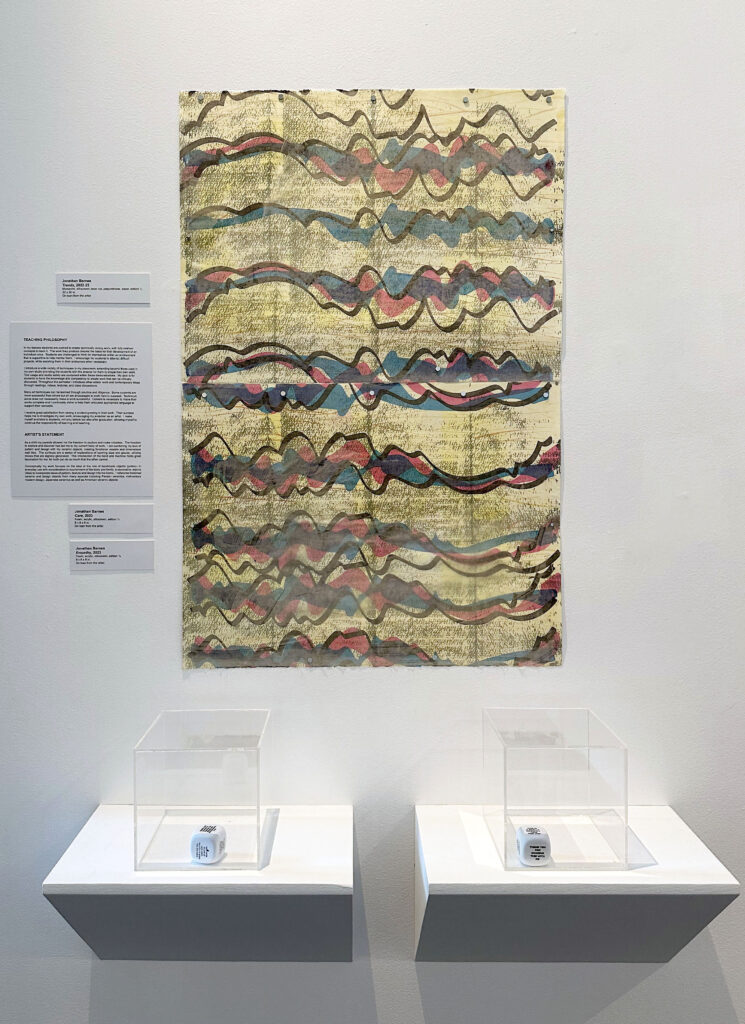
Work by Jonathan Barnes

Sculpture by Jonathan Barnes

Sculpture by Jonathan Barnes

Soda/Salt Fired stoneware by McKenzie Smith

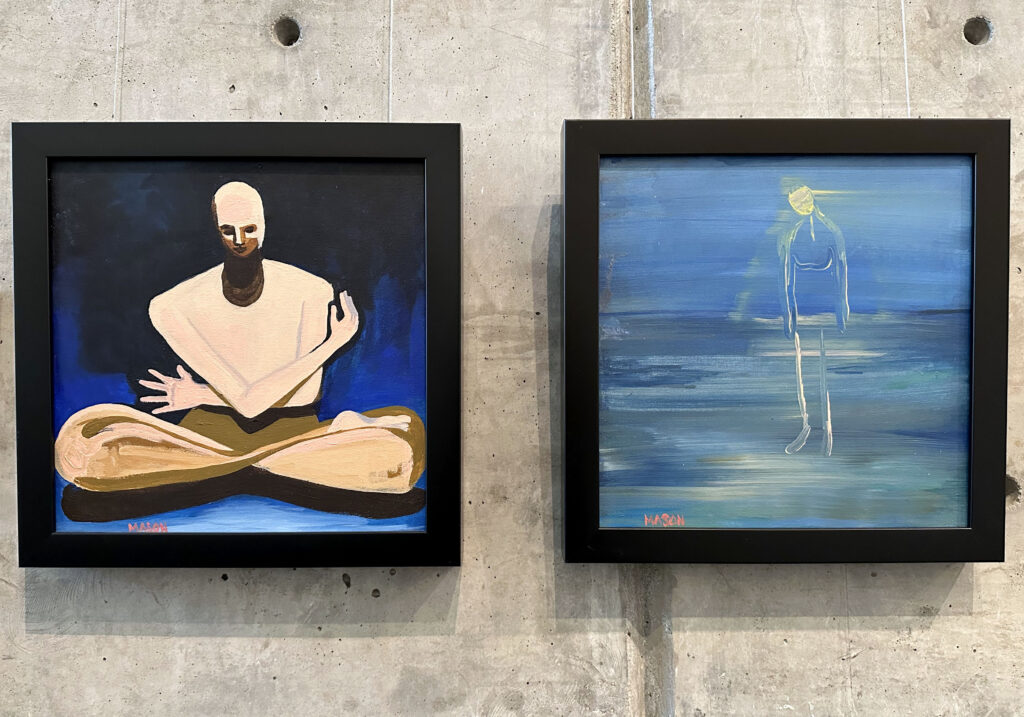
Acrylic on canvas paintings by Mason C. Gehring

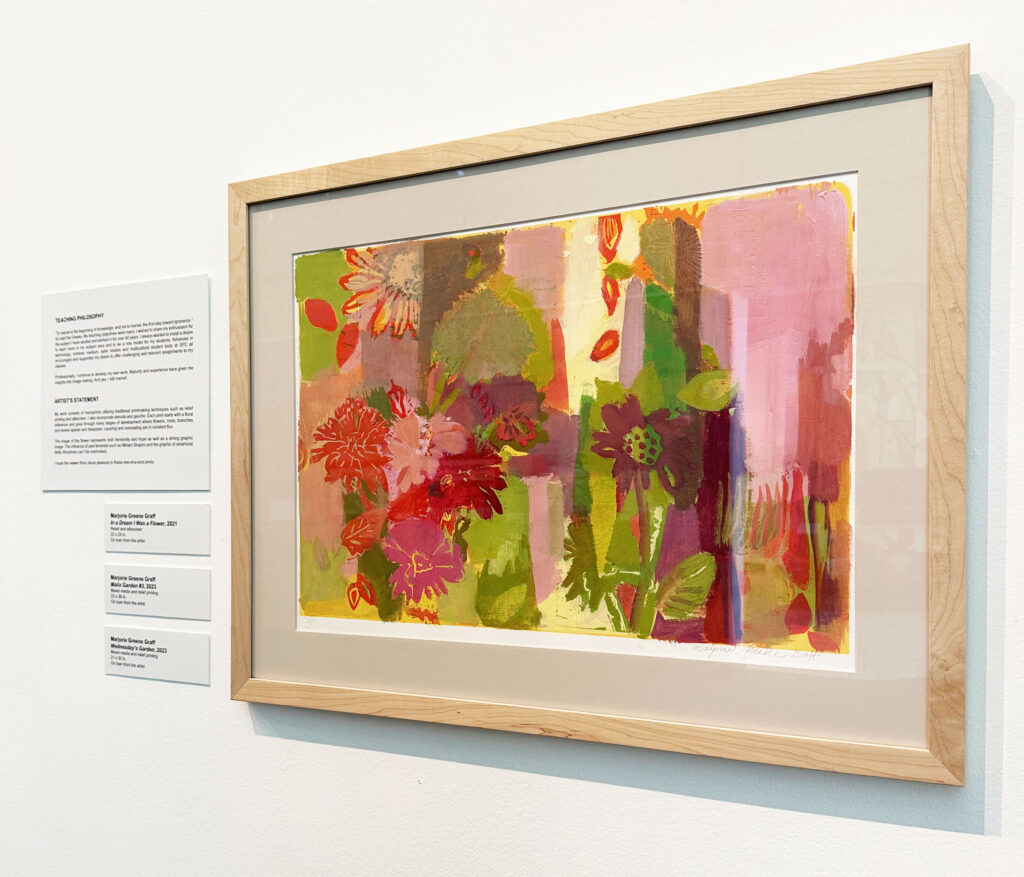
Relief and silkscreen by Marjorie Greene Graff


Artists continue on page 2.

Dec 072023
 

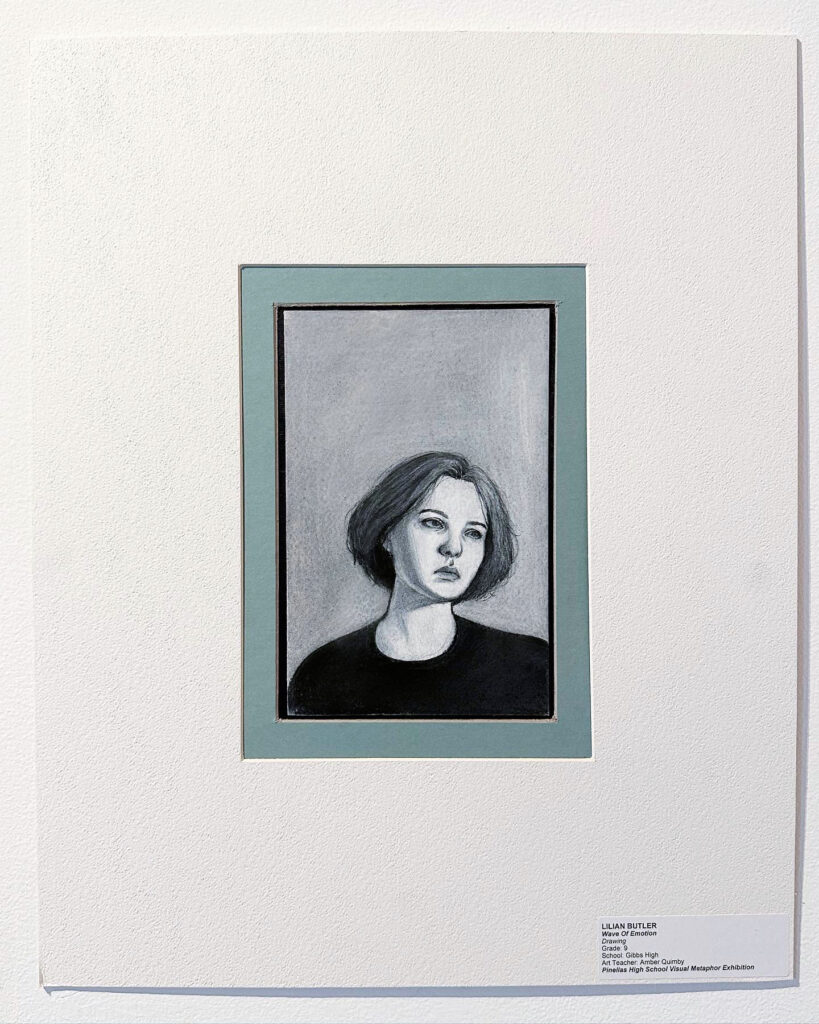
Lilian Butler, “Wave of Emotion”, Drawing

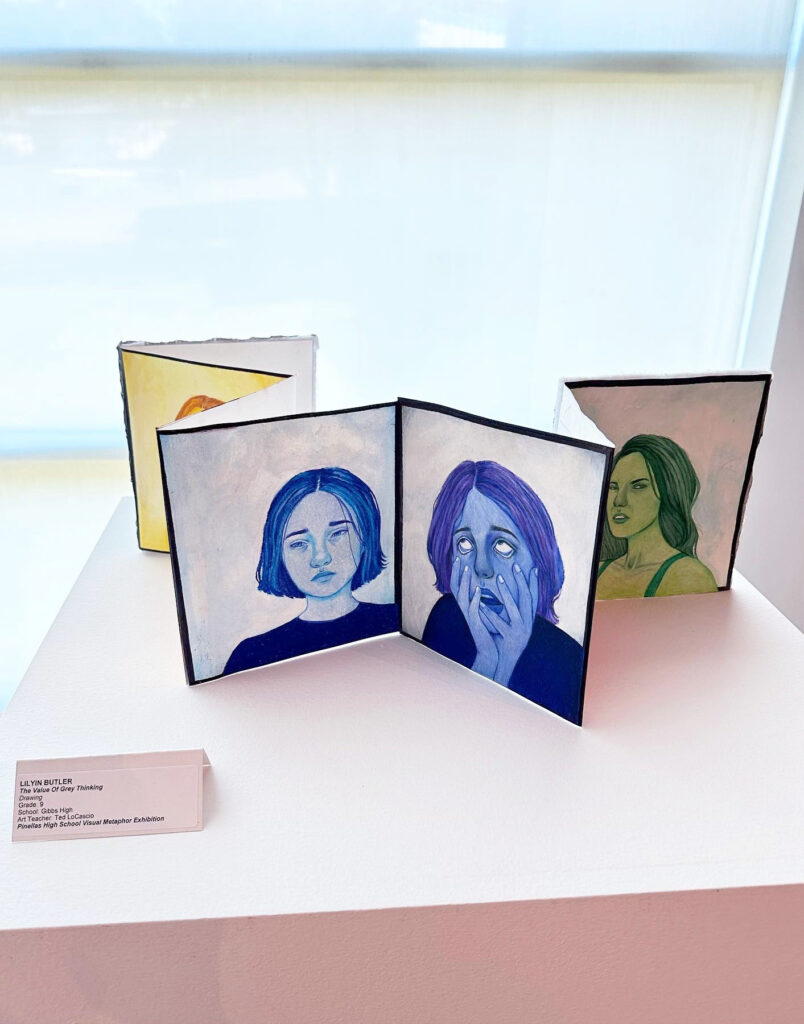
Lilian Butler, “The Value of Grey Thinking”, Drawing

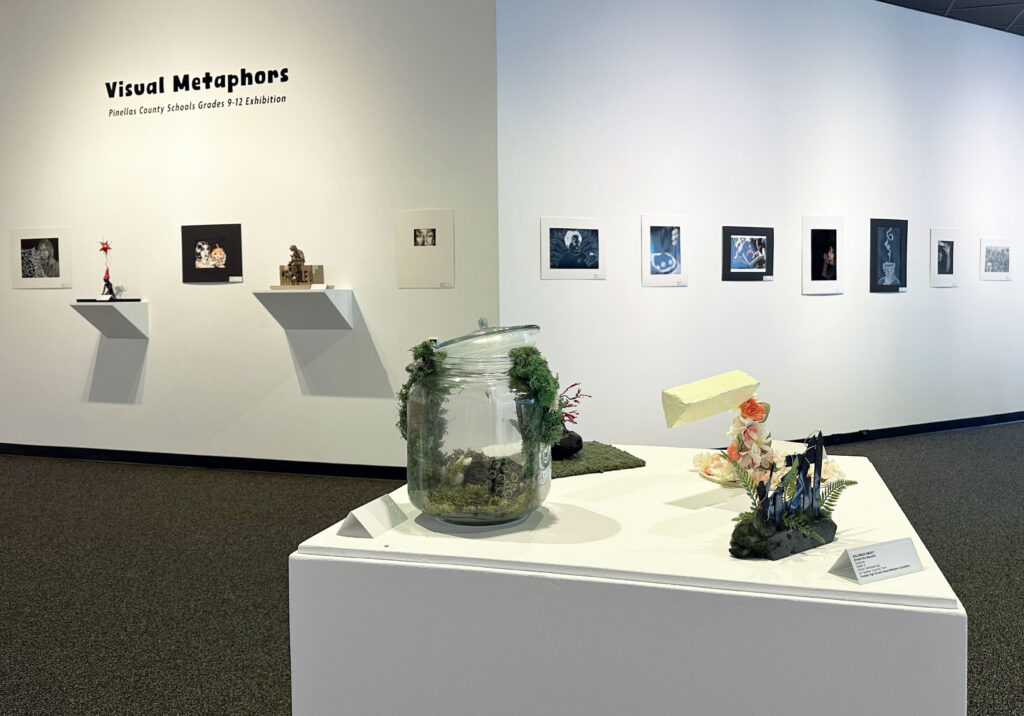
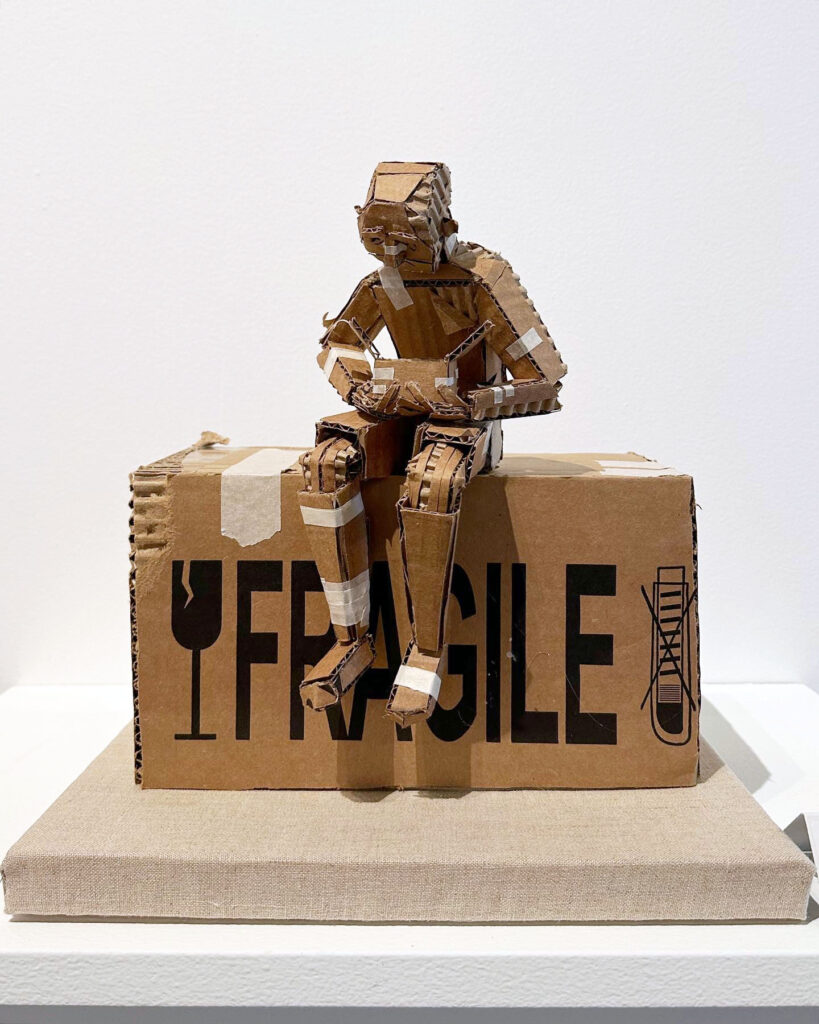
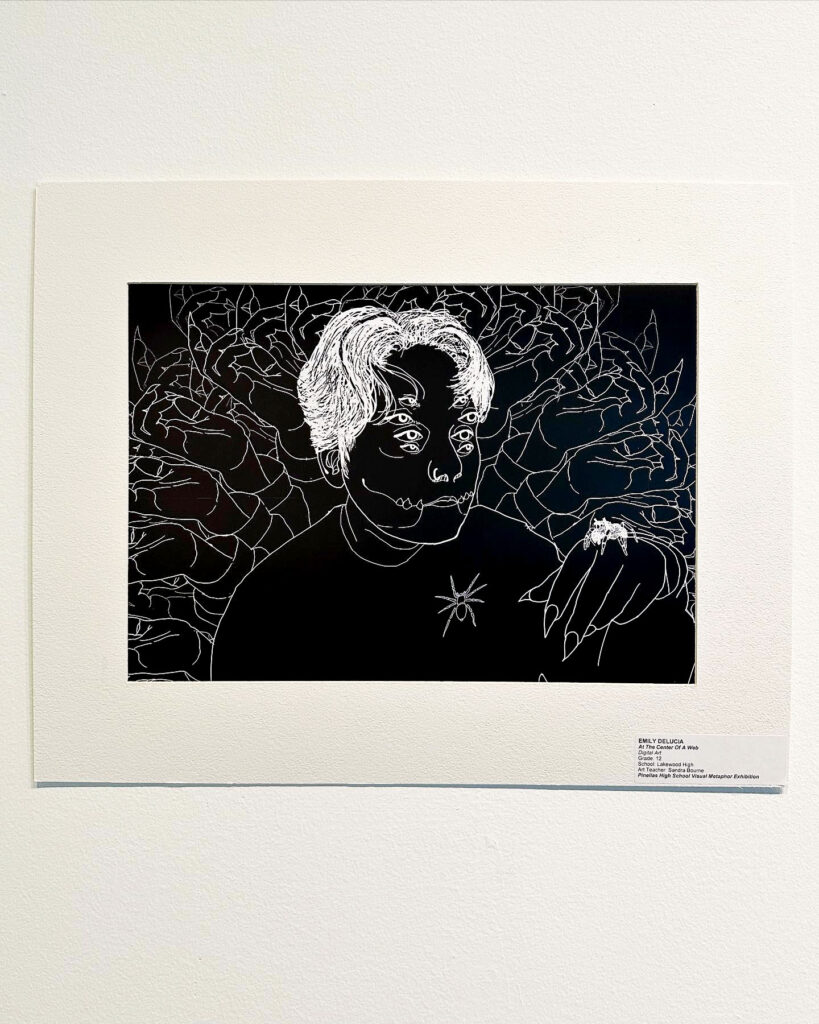
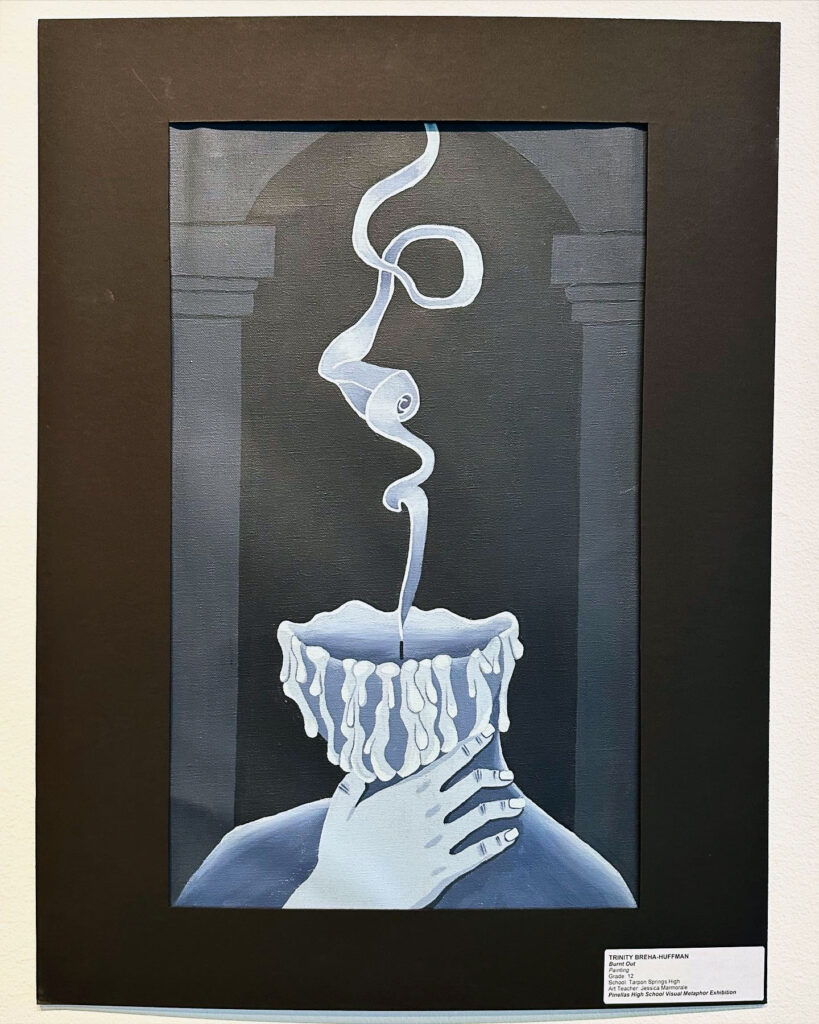
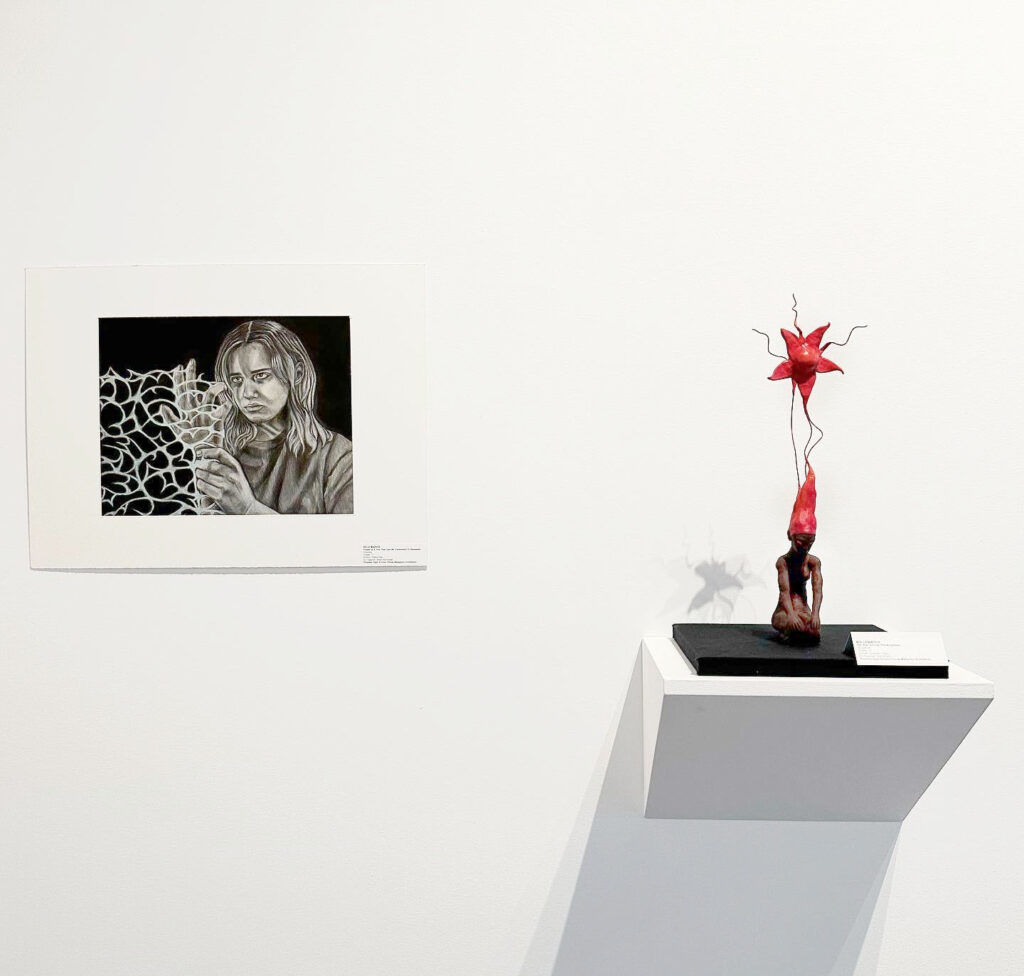
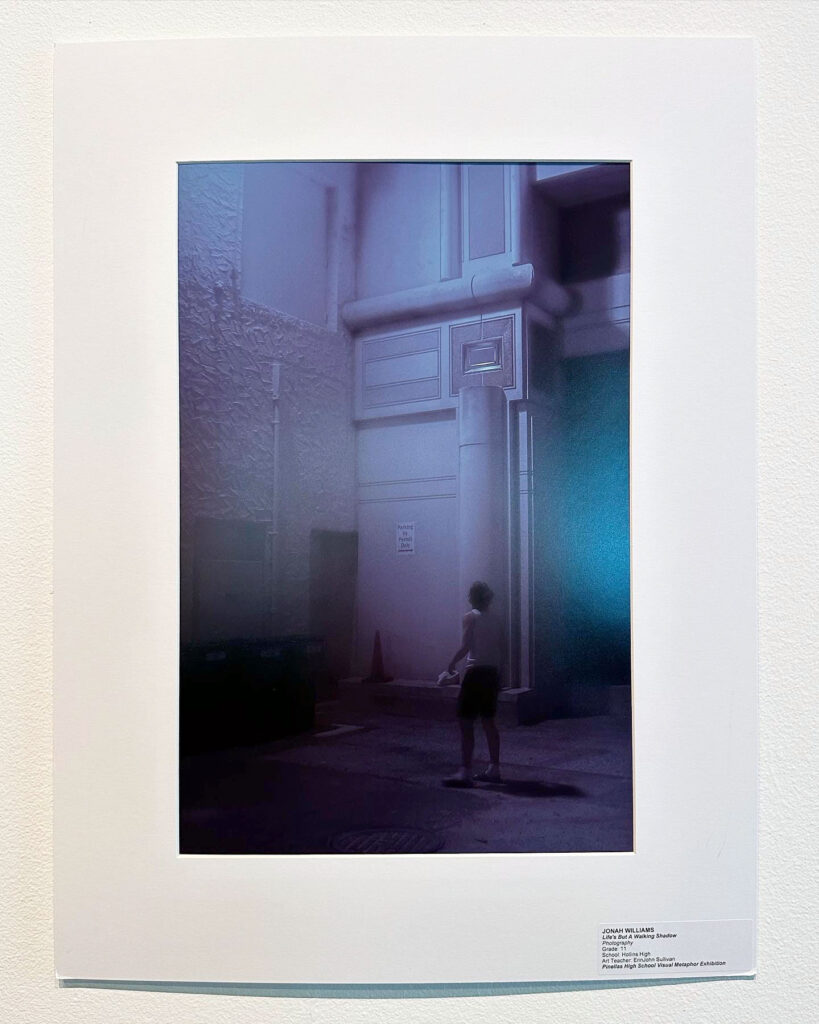
Currently on view at Leepa-Rattner Museum of Art in Tarpon Springs is Visual Metaphors, an exhibition of impressive work created by Pinellas County public high school students. Hopefully this is just the beginning for these young, talented artists.

From the museum-

Presented in partnership with Pinellas County Schools (PCS), this exhibition presents a selection of two- dimensional and three-dimensional work from public high school students in grades 9-12. Like its namesake, Visual Metaphors are comparisons used to create a heightened awareness or emotional connection to a statement, a figure of speech, or condition. Think “raining cats and dogs,” “rollercoaster of emotions,” or “tongue in cheek.” A visual metaphor represents a person, place, thing, or idea by means of an image that shows a particular association or similarity. The students asked themselves “How will I convey a visual metaphor through my art? Will I illustrate a metaphor that is part of everyday speech, a cliché, a poem, or a lyric? Are there seemingly unexpected images that I can combine to create a metaphor? Will the metaphor be humorous, subtle, or overt?”

Now on view at the Leepa Rattner Museum of Art (LRMA) for the first time, this installation of Visual Metaphors is a continuation of an exhibition series, which was previously hosted at the Museum of Fine Arts, St. Petersburg, for the last thirty years. LRMA is proud to continue our partnership with PCS, as well as showcase the incredible talent that makes up our student communities.

This show will be on view until 12/10/23. Below are a few more selections.

Jonah Williams, “Life’s But A Walking Shadow”, Photography

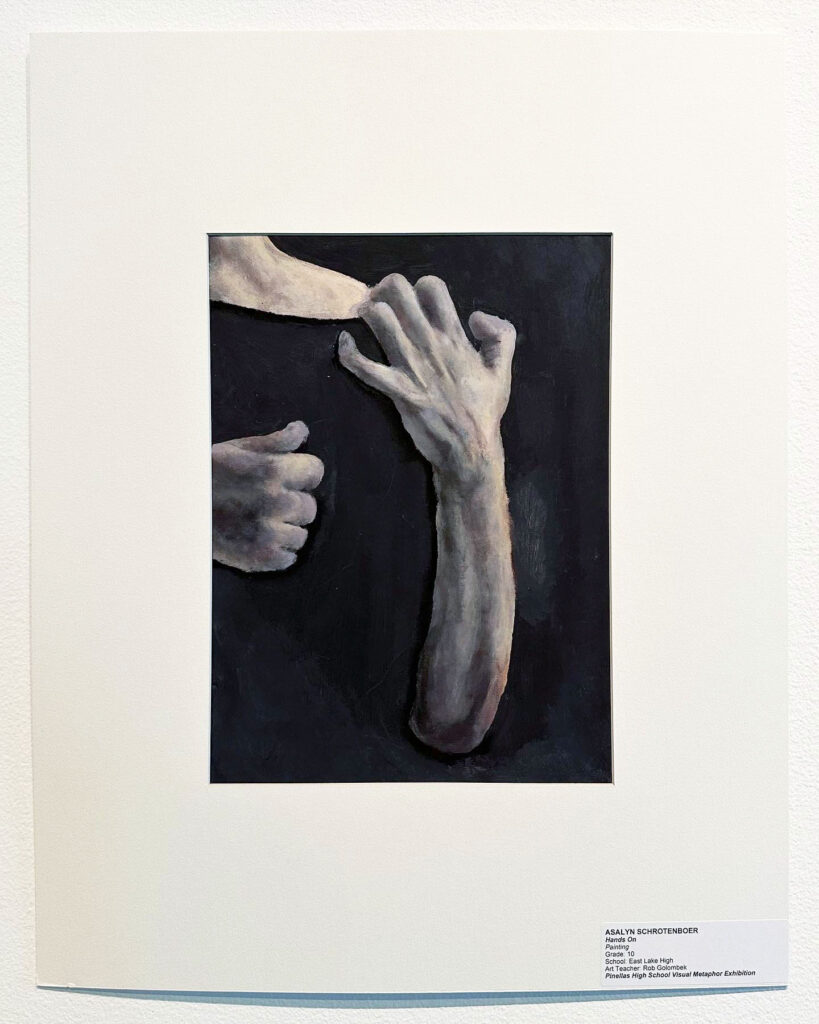
Asalyn Schrotenboer, “Hands On”, Painting

Siena Van Beynen, “Handle With Care”, Sculpture

Emily Delucia, “At The Center of A Web”, Digital Art

Trinity Breha-Huffman, “Burnt Out”, Painting

Sela Marks “Power is A Fire That Can Be Controlled or Released”, Drawing, and Mia Lemmons “Her Star Shines The Brightest”, Sculpture

Nov 292023
 

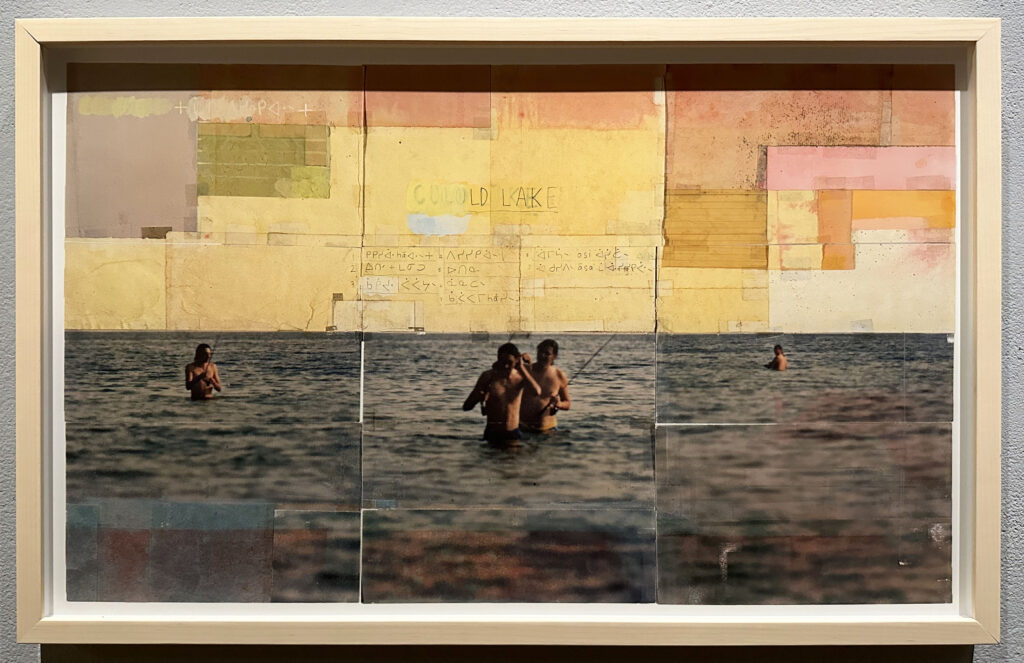
Kimowan Metchewais, “Cold Lake Fishing”, 2004/06

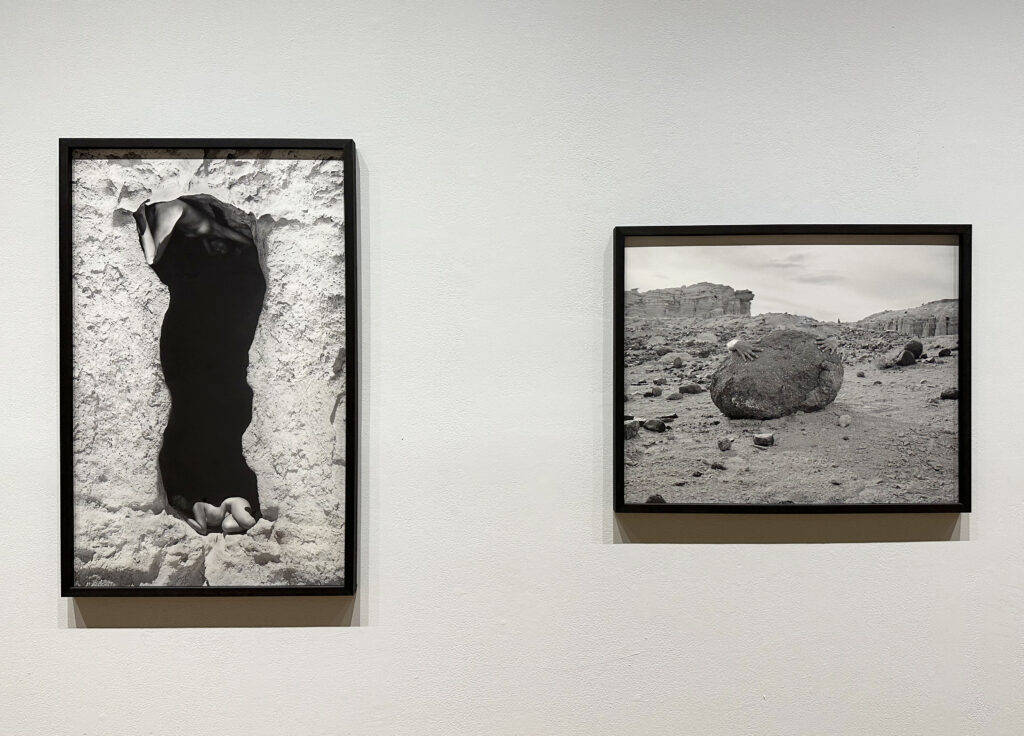
Koyoltzintli, “Gathering Roots” and “Spider Woman Embrace”, Abiquiú, New Mexico, 2019, from the series MEDA, 2018/19, Archival pigment print

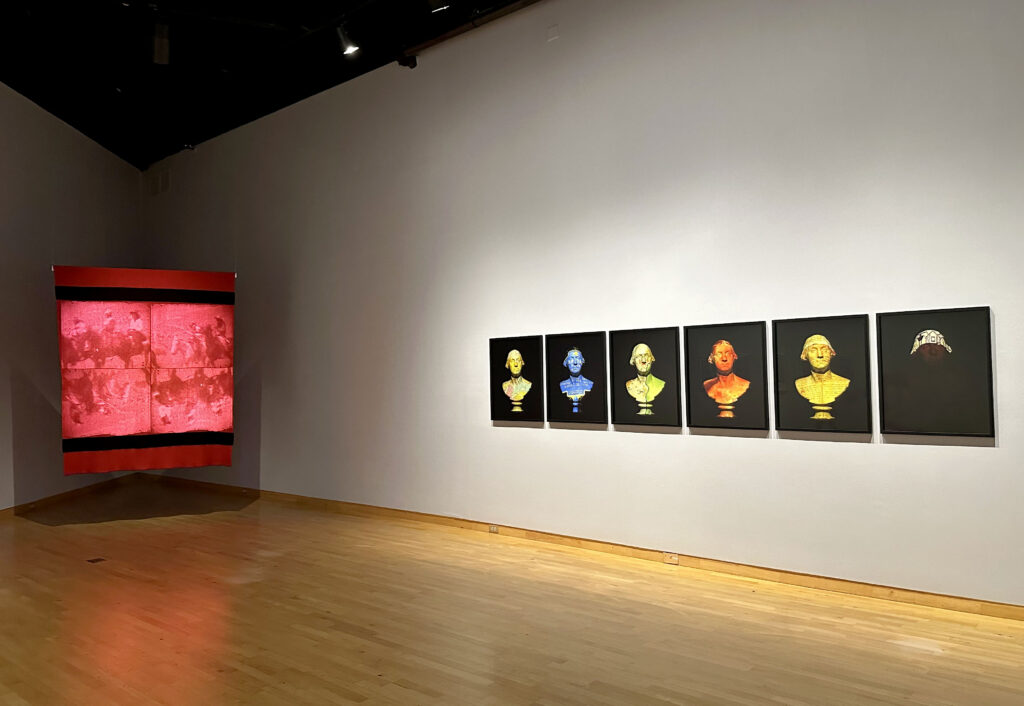
Alan Michelson “Hanödagayas (Town Destroyer): Whirlwind Series”, 2022 Archival pigment prints and “Pehin Hanska ktepi (They Killed Long Hair)”, 2021 Single-channel video installation: wool blanket and video projection; 1:05 minutes (looped), no sound

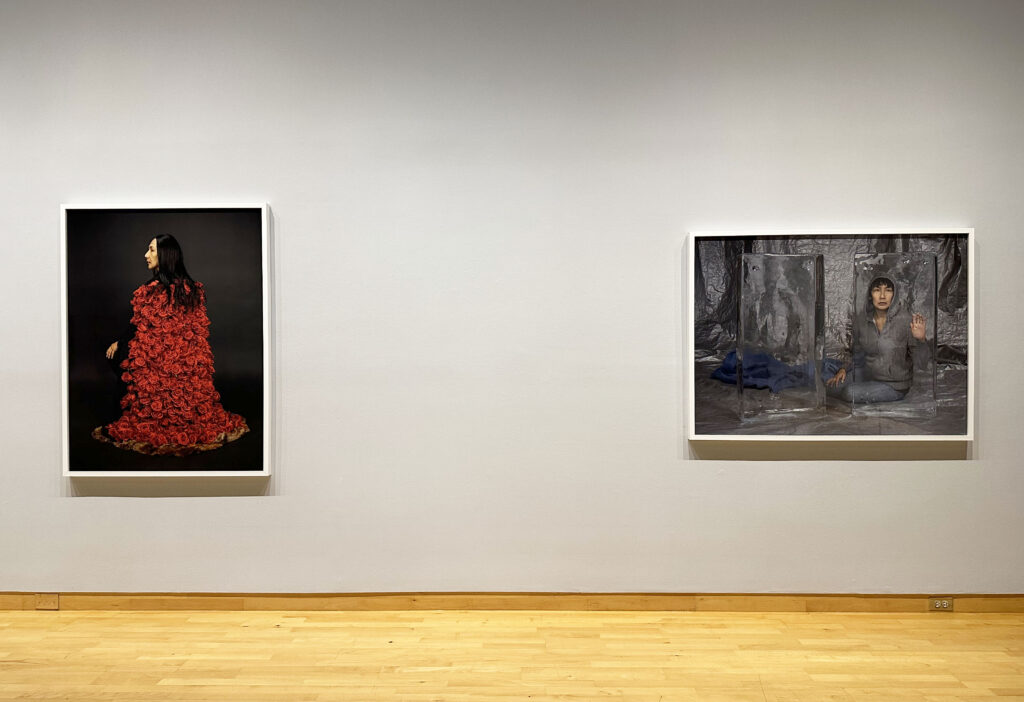
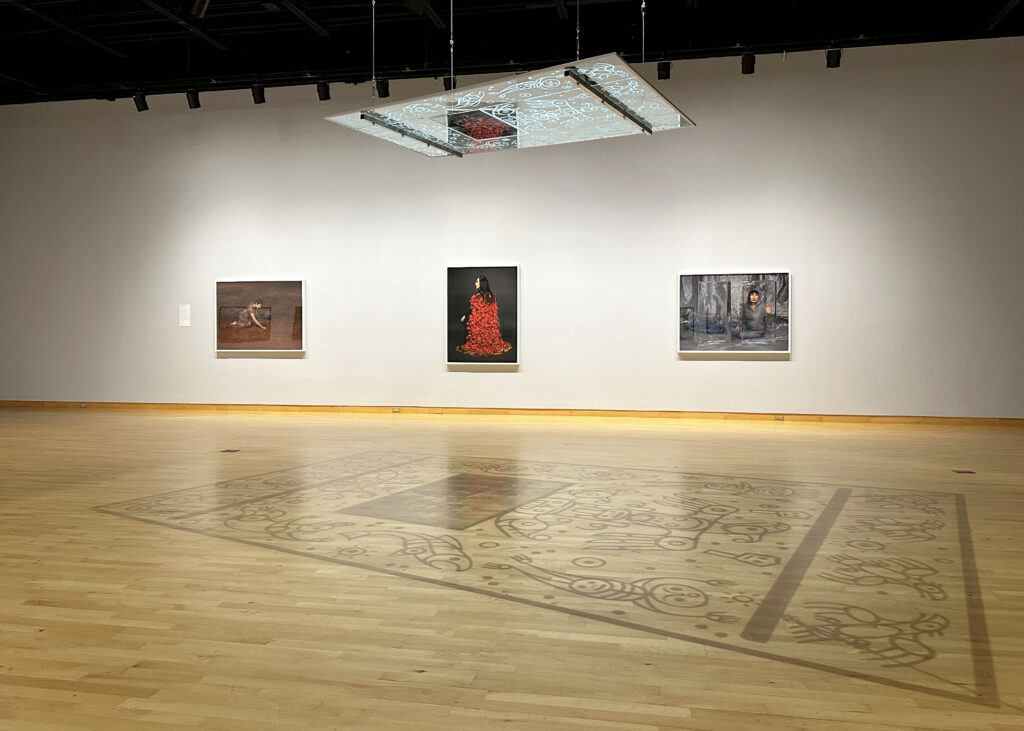
Currently at the USF Contemporary Art Museum is Native America: In Translation curated by Wendy Red Star and organized by Aperture. The work included offers viewers a chance to discover new perspectives on the Native American experience.

From the museum-

“The ultimate form of decolonization is through how Native languages form a view of the world. These artists provide sharp perceptions, rooted in their cultures.” —Wendy Red Star

Native America: In Translation assembles the wide-ranging work of nine Indigenous artists who pose challenging questions about identity and heritage, land rights, and histories of colonialism. Probing the legacies of settler colonialism, and photography’s complex and often fraught role in constructing representation of Native cultures, the exhibition includes works by lens-based artists offering new perspectives on Indigenous identity, reimagining what it means to be a citizen in North America today.

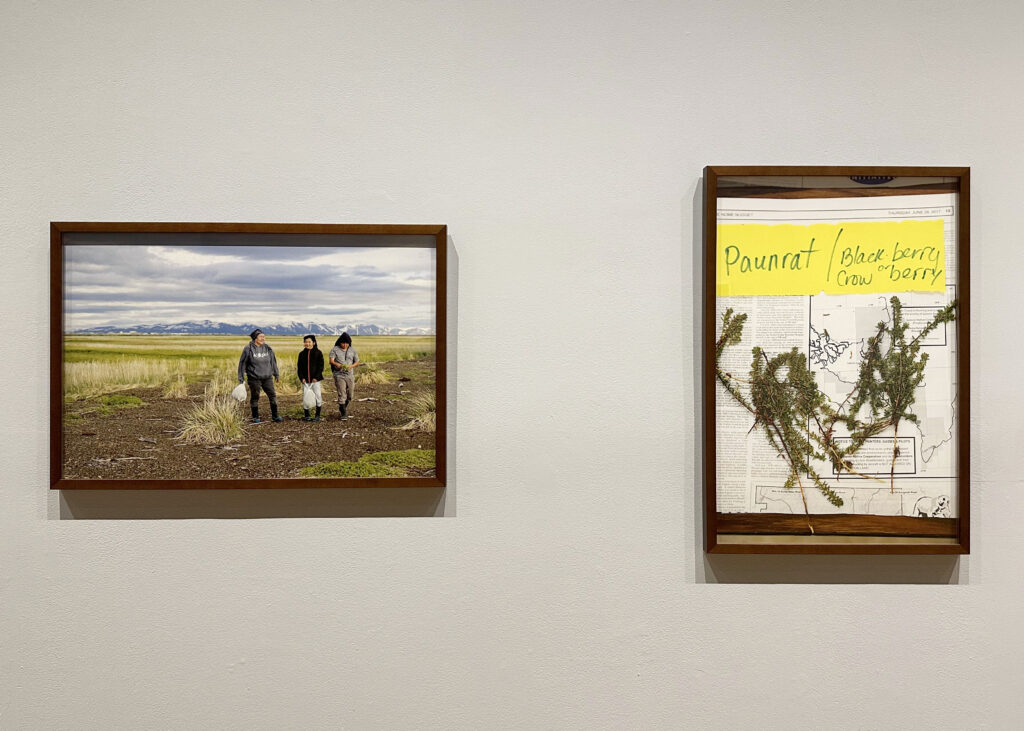
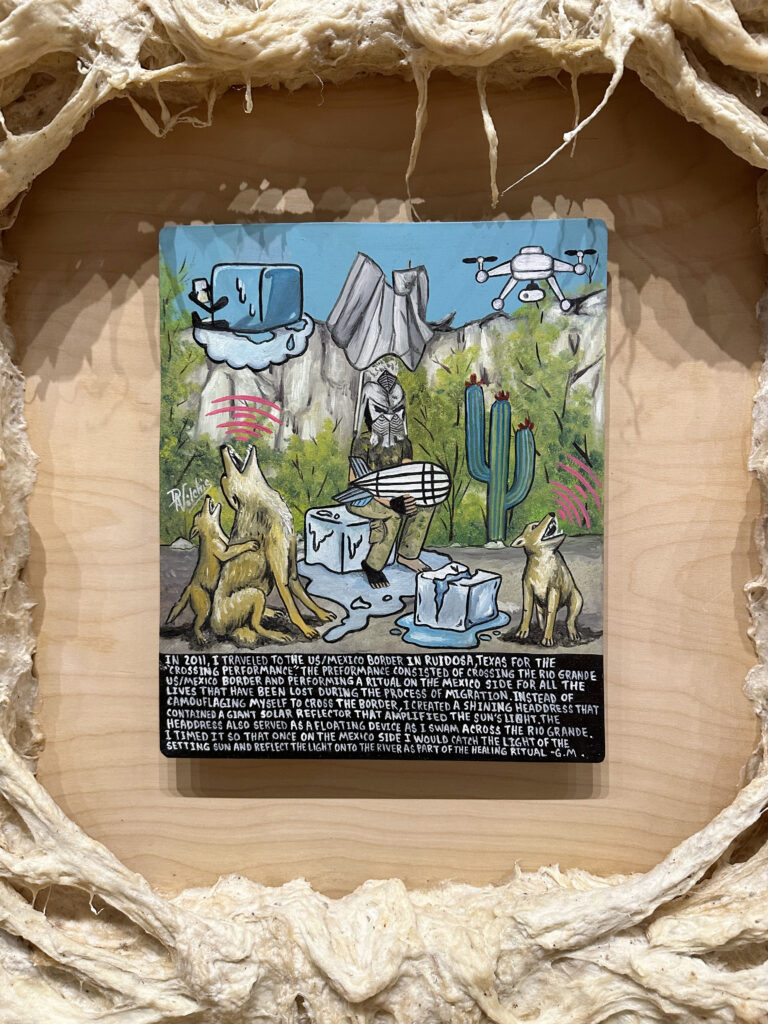
Works included in the exhibition address cultural and visual sovereignty by reclaiming Native American identity and representation. Honoring ancestral traditions and stories tied to the land, Koyoltzintli (Ecuadorian-American, b. 1983) reflects on how the landscape embodies traditional knowledge, language, and memories. Nalikutaar Jacqueline Cleveland’s (Yup’ik, b. 1979) photographs of contemporary tribal communities in western Alaska document Native foraging and cultural traditions as a form of knowledge passed through generations. Revealing stories of trauma and healing, Guadalupe Maravilla (American, b. El Salvador, 1976) communicates autobiographical and fictional narratives informed by myth and his own migration story.

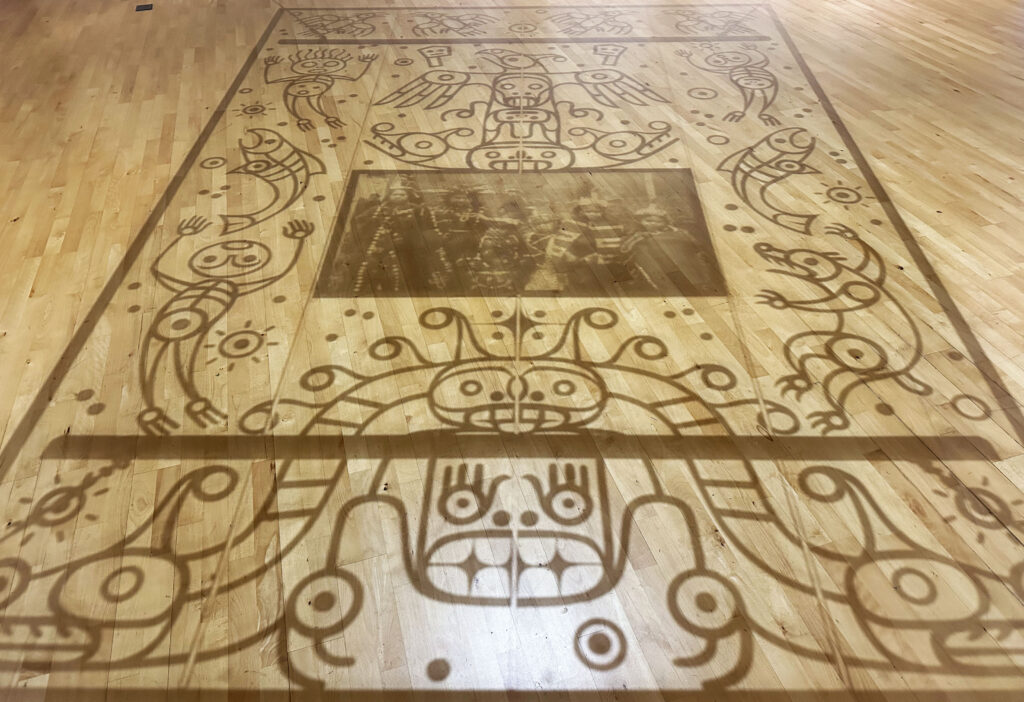
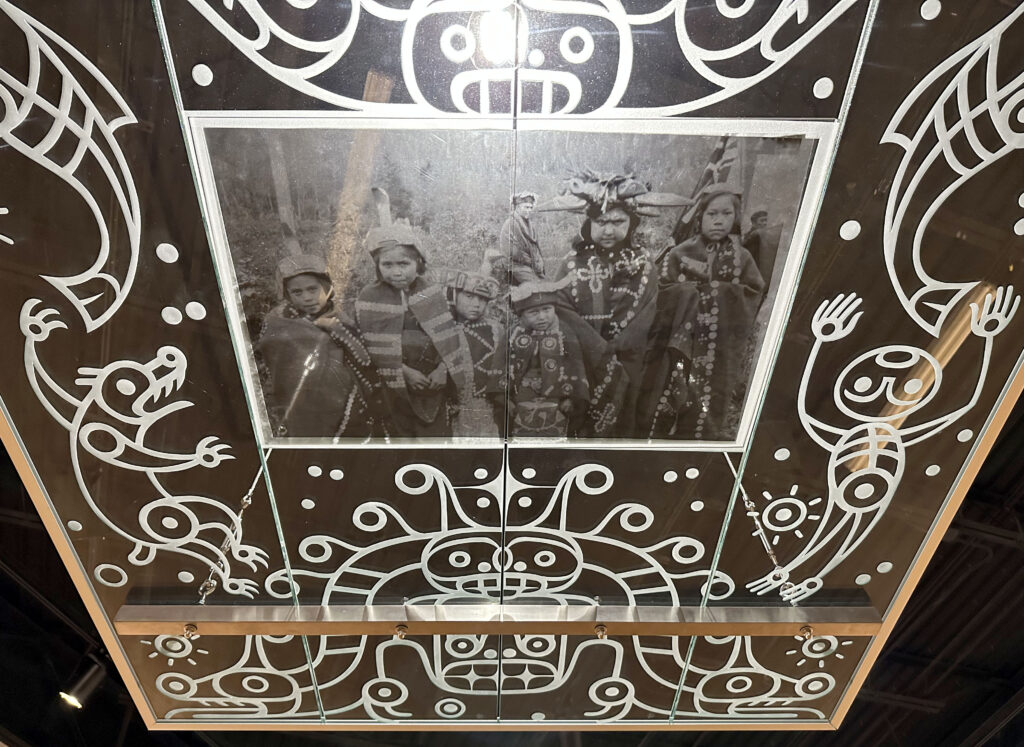
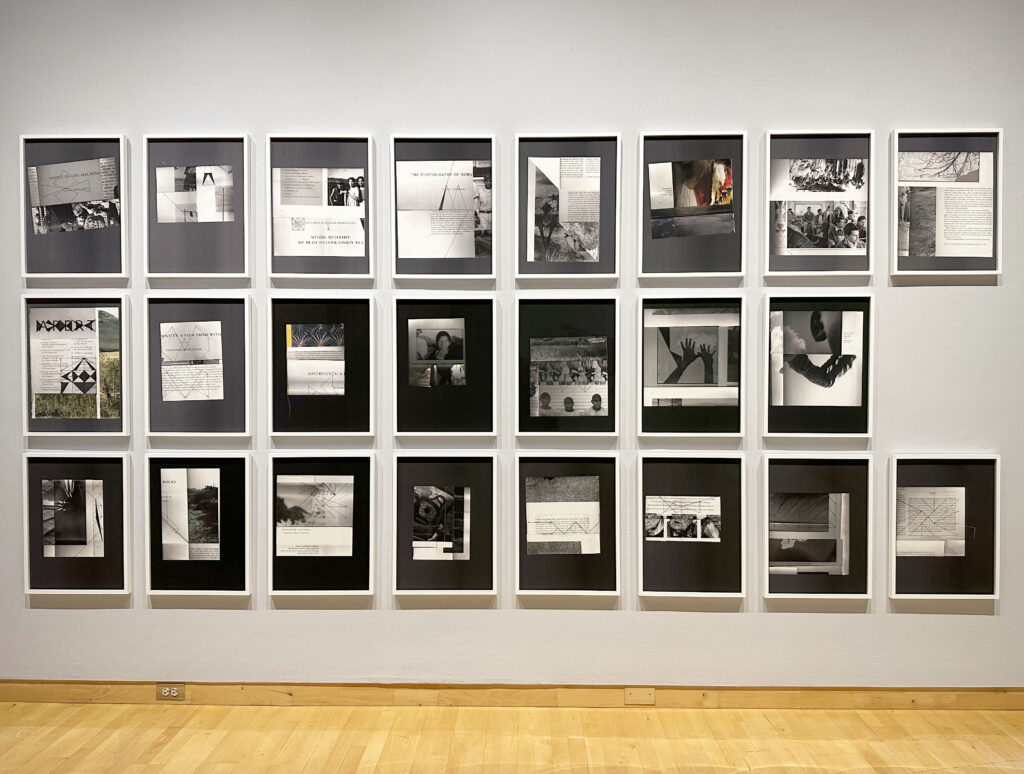
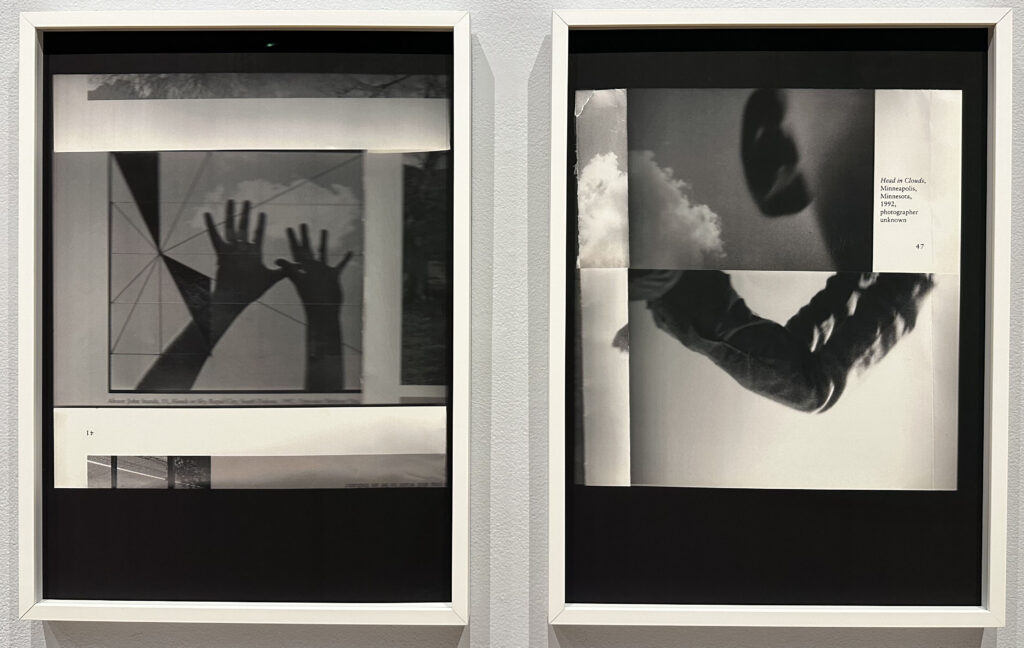
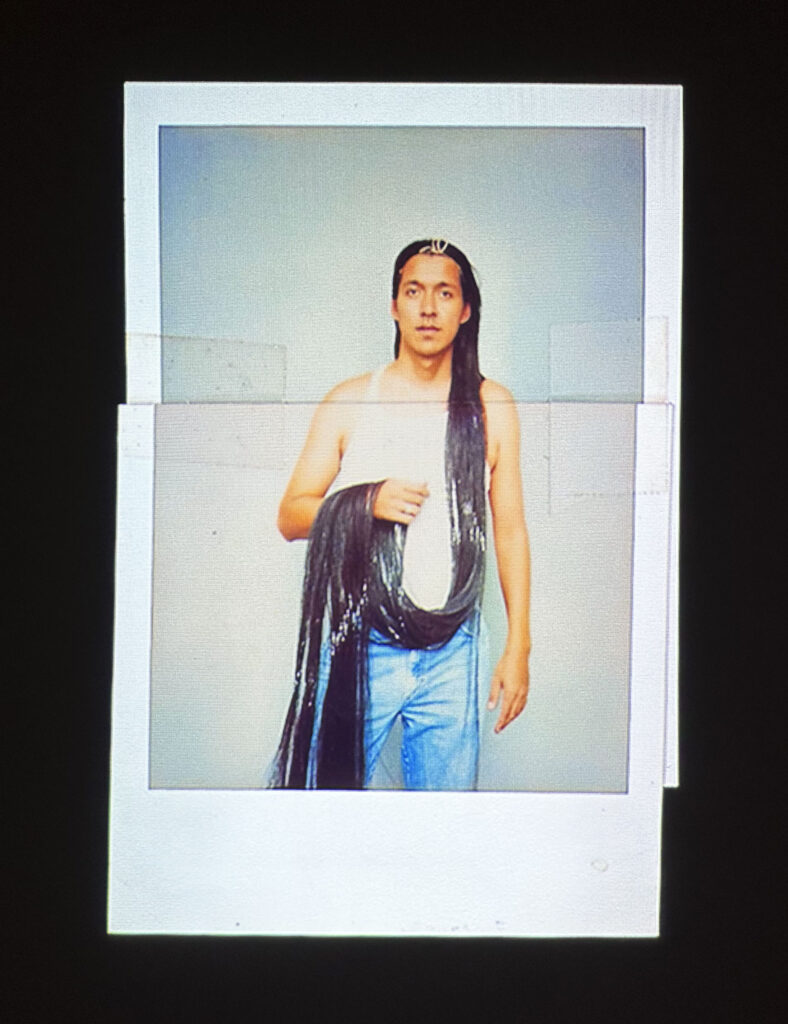
Expanding Indigenous archives and collective memory through photographic means, works by the late artist Kimowan Metchewais (Cree, Cold Lake First Nations, 1963–2011), drawn from his personal archive of Polaroid photographs, construct self-realized Native imagery challenging the authority of colonial representation. Excavating repressed colonial histories of invasion and eviction, Alan Michelson (Mohawk, Six Nations of the Grand River, b. 1953) reinterprets and repositions archival material to redress history from an Indigenous perspective. Marianne Nicolson’s (Musgamakw Dzawada’enuxw First Nations, b. 1969) light-based installation projects Dzawada’enuxw tribal symbols of authority and power onto colonized spaces to contest treaties that imposed territorial boundaries on Indigenous lands. Duane Linklater (Omaskêko Ininiwak from Moose Cree First Nation, b. 1976) reconfigured the pages sourced from a 1995 issue of Aperture, featuring Indigenous artists, creating space for artistic improvisation and reinvention across generations.

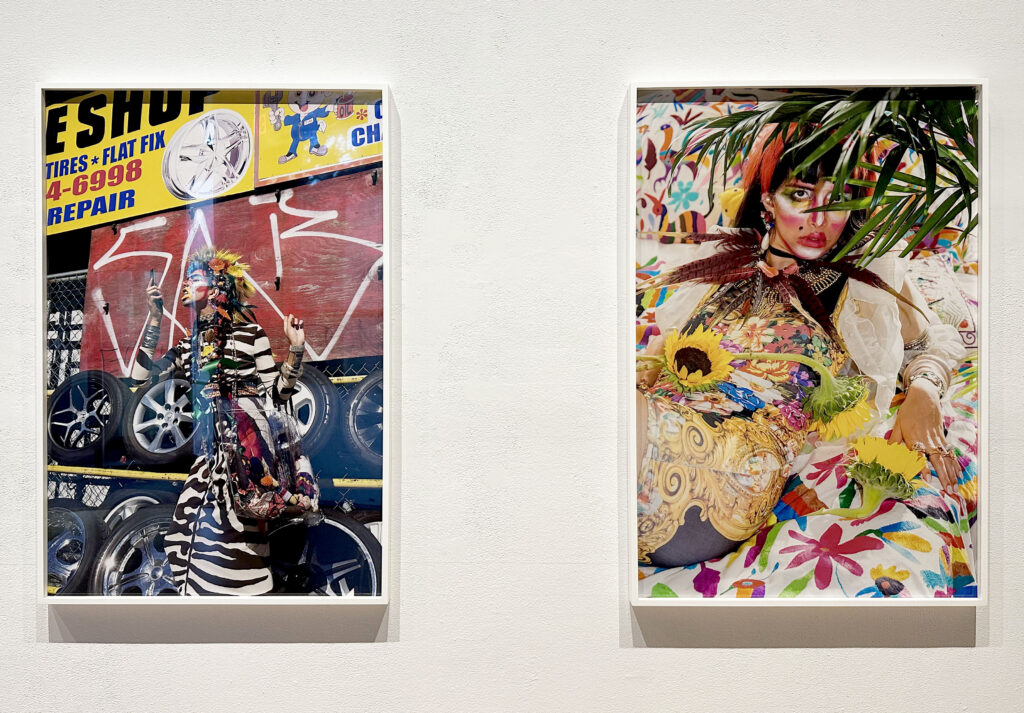
Reflecting on performative aspects of Indigeneity and the colonial gaze, Martine Gutierrez’s (American, b. 1989) series of photographs reinterpret high-fashion magazine spreads with a revolving roster of identities and narratives to question Native gender and heritage. Working across performance and photography, Rebecca Belmore (Anishinaabe, Lac Seul First Nation, b. 1960) creates powerful reenactments of past performances incorporating organic materials that reference knowledge, labor, and care of the Earth in defiance of state violence of Indigenous people.

This exhibition closes 12/1/23.

Rebecca Belmore, “matriarch”, 2018, and “mother” from the series “nindinawemaganidog (all of my relations)”, 2018, Archival pigment prints

Photos by Rebecca Belmore and Installation by Marianne Nicolson

Marianne Nicolson’s installation detail

Marianne Nicolson’s installation detail

Nalikutaar Jacqueline Cleveland, “Molly Alexie and her children after a harvest of beach greens in Quinhagak, Alaska”, 2018 and “There are two main Yup’ ik names for crowberries or blackberries in Alaska, “paunrat” and “tangerpiit””, 2017, Archival pigment prints

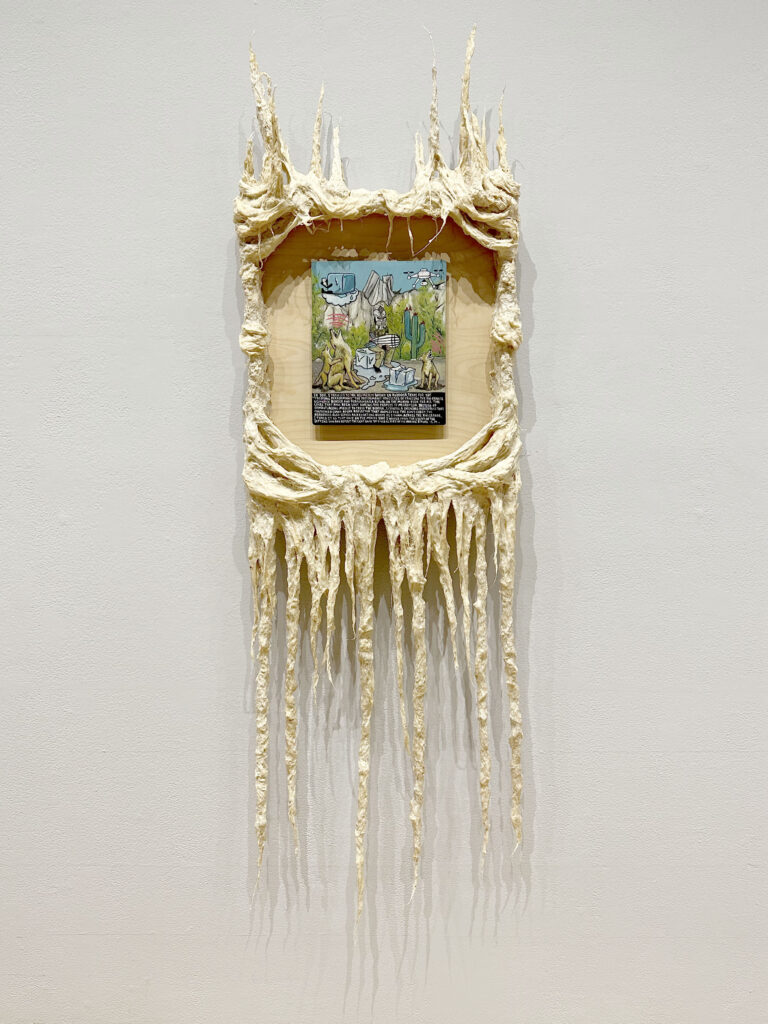
Guadalupe Maravilla, “I Crossed the Border Retablo”, 2021, Oil on tin, cotton, glue mixture, wood

Guadalupe Maravilla, “I Crossed the Border Retablo”, 2021, detail

Duane Linklater, “ghost in the machine”, 2021, Archival pigment prints

Duane Linklater, “ghost in the machine”, 2021, Archival pigment prints

Martine Gutierrez, “Queer Rage, Dear Diary, No Signal During VH1’s Fiercest Divas”, and “Queer Rage, THat Girl Was Me, Now She’s A Somebody”, 2018. digital chromogenic print

One of Kimowan Metchewais’ polaroids from the slide show


Nov 142023
 

One of the two Creative Liberties spaces in the Limelight District

On the second Saturday of every month artists from the Sarasota Studio Artists Association open their studios around Sarasota, Florida. One place to stop is the Limelight District where you can find Creative Liberties, Palmer Modern, and The Bazaar.

Founded by artists Barbara Gerdeman and Elizabeth Goodwill, Creative Liberties opened its first location at the end of 2021 and the second in February of this year. Along with the artist studios, the space hosts exhibitions and classes for children and adults.

The exhibition space and tables from a finished class from September 2023

If you go make sure to also check out the delightful Free Little Art Gallery. Created by artist Judy Robertson and modeled after the Free Little Libraries, you are encouraged to take a piece of art, leave a piece of art, or sometimes just admire what’s been donated. There is one for work by adults and for children’s art work.

Below are images from a few of the artist’s spaces in the Creative Liberties buildings.

Paintings by Lisa DiFranza

Paintings by Adrienne Watts

Paintings by David Sigel

Photography by Henry Martin

Work by Sandra Wix

Paintings by Cheryl Taub

Paintings by Ava Young

Work by Creative Liberties founder Barbara Gerdeman

Work by artists Traci Kegerreis and Sandy Koolkin

On the next page- Palmer Modern and The Bazaar

Nov 042023
 

Jenn Ryann Miller’s charming creations, seen above, are currently on view at Tempus Projects in the Kress Contemporary building in  Ybor City for her solo exhibition, Hobby House.

From the gallery-

Hobby House– where art meets self-indulgence, subversion meets humor, and creativity meets absurdity. With ceramics, sterling silver, a little photography and a lot of gemstones Hobby House presents objects that are meticulously crafted for no good reason other than looking fabulous. Hobby House contemplates the places and practices of art making with humor, irony, and a little wit.

Jenn Ryann Miller explores materiality and aesthetics through sculpture and painting. With a background in functional ceramics, her work subverts tradition and process through the experimentation with oblique materials and forms. Miller has been part of numerous solo and group exhibitions in Florida and the United States. Originally from Connecticut, she received a BFA from the University of Connecticut and MA from the University of South Florida. Miller currently teaches ceramics at the University of South Florida.

In another of the Tempus Projects gallery spaces is Justin Myers‘ exhibition, What Did We Use To Say, seen below, which uses collage along with a video and sound installation to explore the concept of memory.

From the gallery and artist-

What Did We Use To Say? Trying to remember things from the past from distorted and fragmented memories. Is that really how it happened? With intention, the mind has the ability to erase just as easily as it does create. The mind decides what stays and what gets purged for the new. Are you in control? Or is the subconscious doing as it pleases? In this work, I explore deconstruction, recomposition, and sampling, and their impact on memory and perception.

Justin Myers, a Tampa Native, is a member of music projects Justin Depth, Alien House, and Diamond Man. He also is the co-founder of Tampa-based record label, Image Research Records.

Justin studied printmaking at HCC in Ybor City and began experimenting with sculpture and installation-based works during his time there. Myers finds inspiration from discarded imagery, random thought, and spontaneous actions. Over the last 10 years, Myers has participated in numerous exhibitions at Tempus Projects, including the T-shirt shows, Mix Tape Show, Return to Sender, and an offsite window installation as part of a partnership with Downtown Tampa and more. In 2020, Myers partnered with his brother, Jeremy Myers on a virtual exhibit with Tempus Projects titled, “One Day of Perfect”. Justin has been involved with Tempus Projects since his music project Alien House made its debut performance in November of 2011.

Both of these exhibitions are on view until 12/14/23.

Oct 282023
 

Photographs by Jerry Uelsmann (left) and Herb Snitzer (right)-“Bette II”, top and “Tennessee Williams”, bottom)

Photographs from the International Photography Competition

Continuing from the previous post about the Ybor Arts Tour, there are three venues that were part of the tour that are also worth highlighting.

The Florida Museum of Photographic Arts (FMoPA) is showing some impressive photography in their new Ybor City space. On one side of the museum is Icons of Black and White, a selection of over 60 fine art photographs, by some of the most famous photographers in history including Ansel Adams, Dorothea Lange, Edward Weston and more. This show will be on view until 12/3/23.

In the FMoPA Community Gallery are the winning photographs from the 2023 International Photography Competition, previously on view at The Tampa International Airport. This exhibition closes 10/28/23.

Kaitlin Crockett of Print St. Pete, “Why?” letterpress monoprint (left) and Chris Sellen/ Kaitlin Crockett, “It’s Only A Matter of Time”, risograph print

Mia Makes It, “[redacted]”, risograph print, and “Molecular Anxiety”, linocut on fabric

The Bricks is a restaurant in Ybor City that also has an event space. For the Arts Tour the space turned into a gallery for Print Mode (2) a selection of work by Tampa Bay printmakers. That show will be up for a few more weeks.

Marcolina’s (seen below) is a relatively new gallery currently showing the group exhibition EDEN: Beyond Paradise until 11/30/23. Check out their Instagram and Facebook to see upcoming events like Nude Model Life Drawing (every third Wednesday) and Deidre Kling’s “The Haunted Flesh” Photography Book Release on 10/28.

Oct 282023
 

Installation by Edgar Sanchez Cumbas

The Ybor City Arts Tour was last week and was a great way to check out the many spaces currently in the Ybor City area. The Kress Contemporary building with its multiple galleries, artist studios, performance space (The Fringe Theatre), and microcinema, was definitely a highlight.

The above images are of sculptural work by Edgar Sanchez Cumbas (he was also in the Department of Contemporary Art group show in the same building). It is just one of the rotating works you can find while walking around the space.

Below are some selections from the event.

Kim Radatz opened her space, currently showing an installation focused on the “C” word.

Screen Door: An Ybor City Microcinema is always showing interesting films from a variety of genres. Pictured are the seating area and the movie posters lining the hallway outside of the film viewing area. For the art tour they were showing past Flex Fest short films.

On the third floor are a large group of artist studios with several walls hanging work by many of the artists.

Work by Jon Pannier

Sculpture by Eileen Goldenberg

Polaroid work by Brian Pannier

Lots of great work by the three very different artists that make up the Y3K Collective- Jon Pannier, Eileen Goldenberg, and Brian Pannier, seen above.

Work by Juan Espinosa (left) and Ashley Cantero (right) of Dluance

Inside Dluance

Creative space Dluance is run by visual artist Ashley Cantero and music producer/ graphic designer Juan Espinosa.

Paintings by Marilyn Binder Silverman

Paintings by Eilzabeth Fontaine-Barr

The work above is from the painters Marilyn Binder Silverman and Elizabeth Fontaine-Barr who share their studio space.

Painting by Karol Batansky

Self taught painter Karol Batansky just moved in to her new studio from the Ybor Art Colony which is closed while currently being renovated.

Mixed media artist Chase Parker makes a variety of work, including the unique sculptures pictured above.

Ron Watson creates highly detailed drawings at his Shades of Gray Studio.

Below is one of the common spaces filled with work by a selection of artists. It’s always worth a trip up from the 2nd floor galleries even if most of the artists are not in their studios to see what’s new.

Work by Jenal Dolson (left) and Michael Jones (collage, right)

The next post will focus on three spaces outside of Kress Contemporary that were also part of the tour.