Jul 122024
 

The painting above is 3 Oracles, 2022, by Sayre Gomez, on view at Columbus Museum of Art. It is part of the exhibition New Encounters: Reframing the Contemporary Collection of the Columbus Museum of Art .

From the museum about the work-

Based in Los Angeles, Sayre Gomez often employs techniques borrowed from Hollywood set painting and commercial advertising to heighten the sense of lifelikeness in his paintings. In 3 Oracles, Gomez’s depiction of a vacant big-box store renders the shifting forces of the consumer economy in exacting, photo-realistic detail. The three appliance brands represented on the store’s façade, DieHard, Craftsman, and Kenmore, were all formerly owned by Sears Corporation, a retail giant that filed for bankruptcy in 2018.

Gomez recently co-curated the Feed the Streets Benefit Show at Sebastian Gladstone in Los Angeles. The opening is tomorrow evening (7/13) from 6-9pm and the exhibition will be on view until 8/3/24.

The group exhibition includes work by- Alfonso Gonzalez Jr. , Andrew Park, Bennet Schlesinger, Bryan Ruiz, Calvin Marcus, Chad Murray, Eddie Martinez, Emma McMillan, Evan Holloway, Greg Ito, G.V. Rodriguez, Jaime Muñoz, Jake Longstreth, Jonas Wood, Josh Smith, JPW3, Julia Yerger, Juliana Halpert, Justin Caguiat, Kalan Strauss, Mario Ayala, Max Hooper Schneider, Mungo Thomson, Nick Angelo, Nick Clark, Nihura Montiel, Richard Tinkler, Ryan Preciado, Sam Moyer, Sayre Gomez, Sterling Ruby, timo fahler, and Tristan Unrau.

All proceeds benefit Feed the Streets and their ongoing mission of colecting donated food, hygiene products, clothing, and educational items for hand to hand distribution in Los Angeles and New York. Feed the Streets also provides athletic and creative resources for underserved youth.

Apr 272024
 

“Pale Rider”, 2019, Oil on canvas

The large painting above is from Srijohn Chowdhury’s 2019 exhibition, A Divine Dance, at Anat Ebgi in Los Angeles.

From the gallery-

Srijon Chowdhury’s paintings are characterized by moody symbolist compositions of richly colored floral and domestic settings. He conjures poetic and allegorical narratives through the use of myth, memory, and repetition.

Pale Rider, the largest painting in the exhibition, depicts an angelic woman with flowing hair riding horseback; its monumental scale envelopes viewers in a mystical narrative. The rider appears translucent and wields a scythe as she moves across a meadow of blooming flowers—an allusion to death and birth. In the foreground, there is a fence composed from a poem by William Blake titled “A Divine Image” that Chowdhury has turned into a sigil—an ancient practice of transforming pictorial text into a symbol that is considered to have magical powers. The poem speaks about destructive abstracts of human nature: cruelty, jealousy, terror, and secrecy.

Chowdhury’s work confronts universal physical and emotional themes. Soft aura of moonlight, glow of flowers, and dancing flames invite quiet contemplation. He sensitively vacillates between despair and hopelessness at the human condition, while brightening at joy, beauty, and hope that like flowers, life will go on.


Dec 272023
 

This painting, Night Breeze, by Sarah Lee, was part of a group exhibition last year at 1969 Gallery in NYC. It seemed like a good choice to post in honor of tonight’s full moon, the last of 2023, known as the Cold Moon.

Lee is currently part of two group exhibitions- Quiet Storm at Long Story Short’s Paris location and Standing Still at Gana Art’s Los Angeles location.

Oct 052023
 

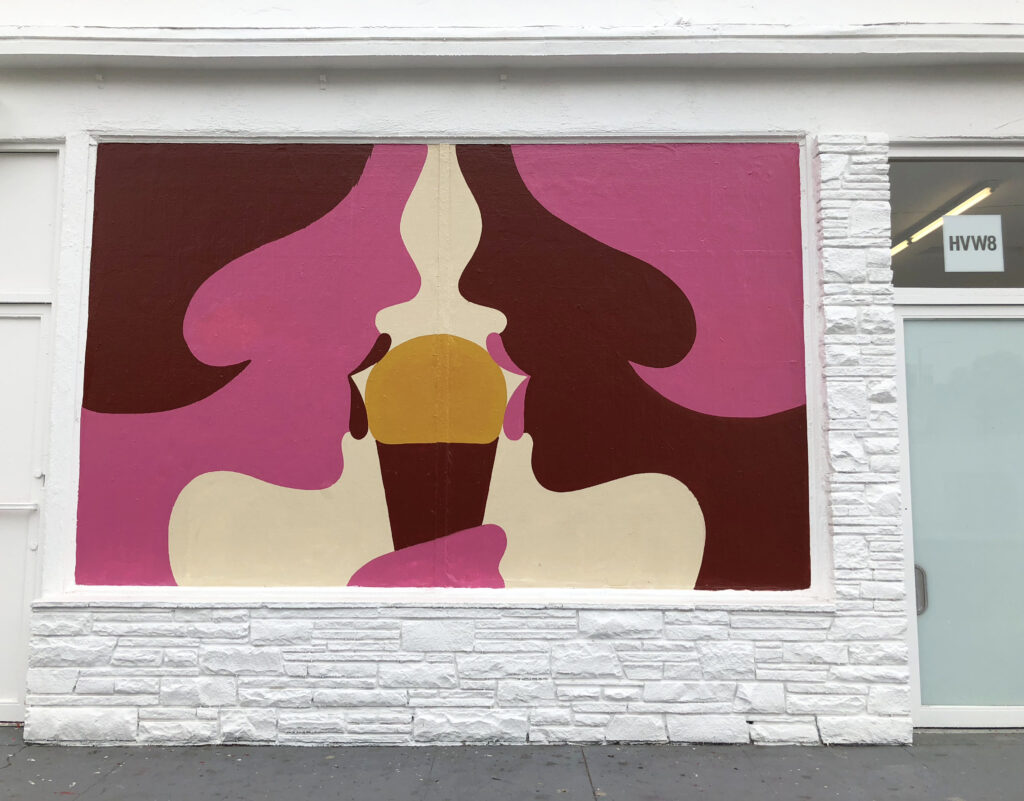
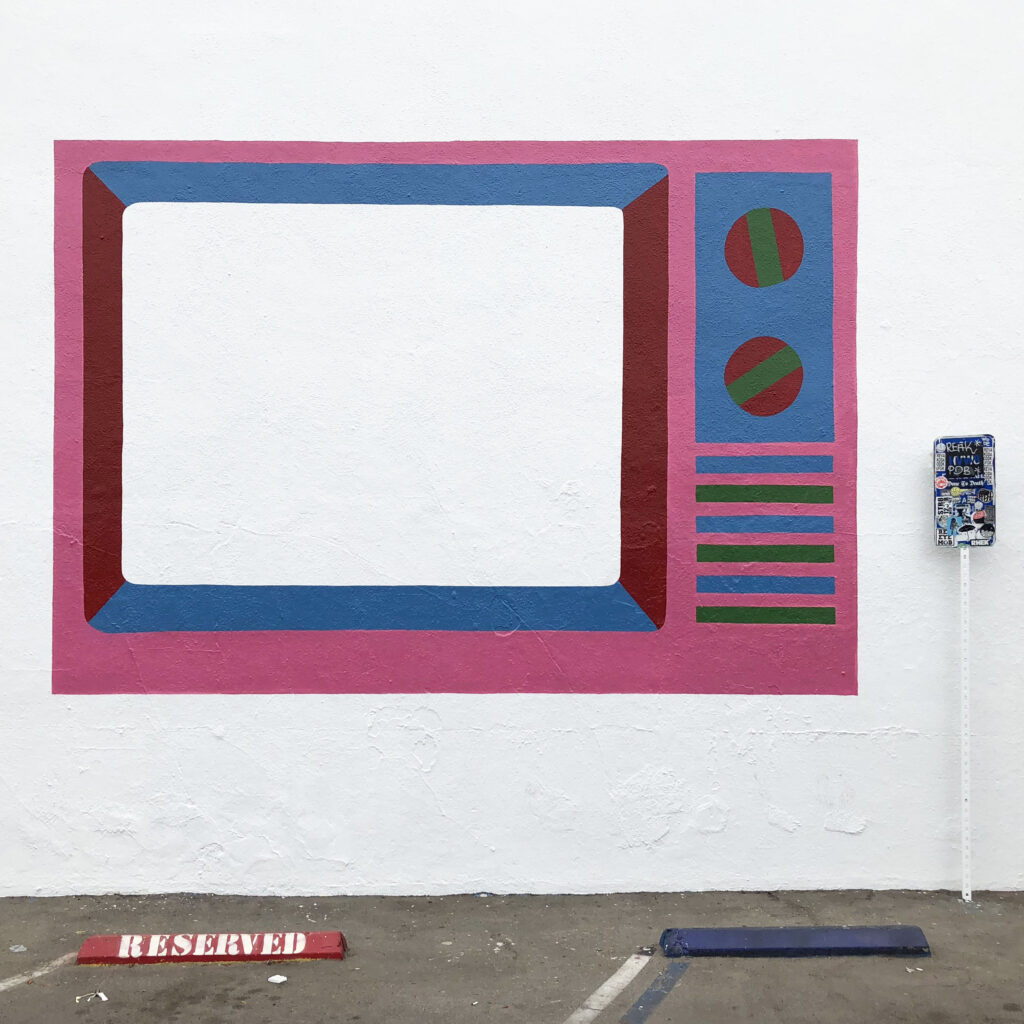
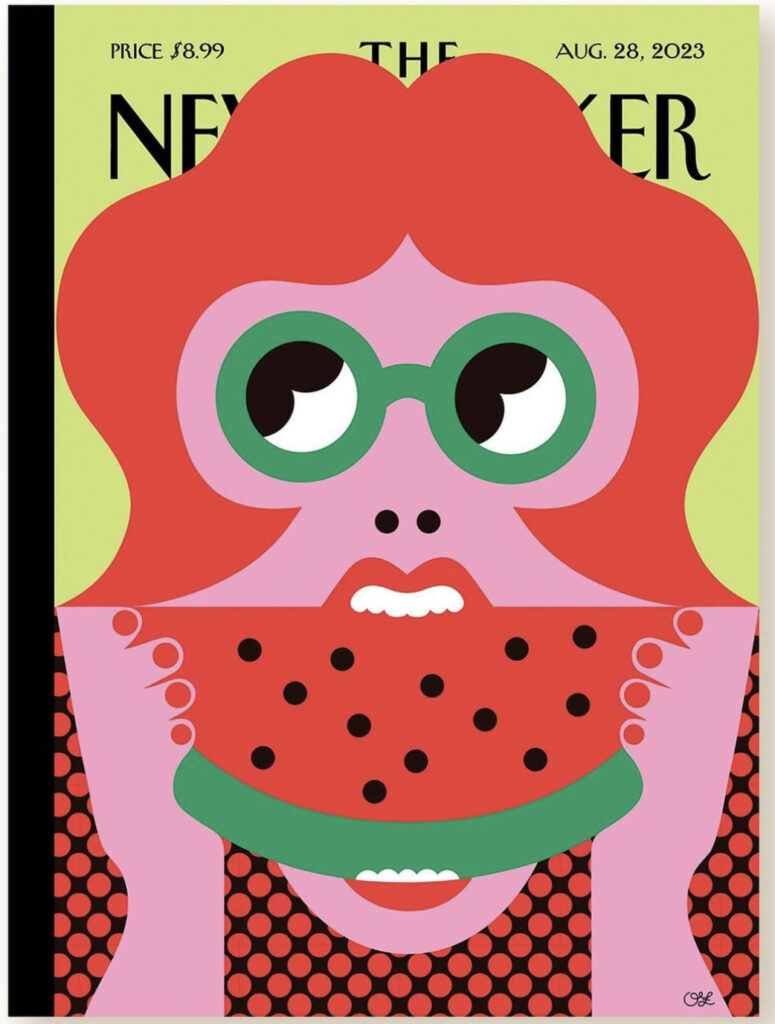
Above are images from Olimpia Zagnoli’s 2018 exhibition Cuore di Panna at HVW8 Gallery in Los Angeles. She is currently showing her work, along with her talented family at Antonio Colombo Gallery in Milan, Italy. That exhibition, ZaLiZaZa. Inventario di famiglia will be on view until 11/19/23.

The press release from the gallery-

Galleria Antonio Colombo is pleased to present the exhibition ZaLiZaZa. Inventario di famiglia, curated by Francesca Pellicciari, featuring a group of artists belonging to the same family: the photographer Miro Zagnoli (Za), the artist Emi Ligabue (Li) and their two daughters: the illustrator Olimpia Zagnoli (Za), already connected with the gallery, and the costume designer Emilia Zagnoli (Za).

The members of ZaLiZaZa are a very modern family, but also one of days gone by: were they not engaged in making their own various artifacts, we could imagine them operating in a family workshop in the Renaissance or Baroque spirit, experimenting with new painting techniques, revolutionizing styles or using them as examples to make their own; creating majestic theatrical wings, garbed in their style which is simultaneously classic and eccentric.

After all, this image is not so far from what ZaLiZaZa are doing today, in the 21st century, each in his or her own field – contiguous and often overlapping ambits – constantly coming to grips with their own research and experimentation, relying on a shared language, a true family lexicon.

The exhibition pathway is an inventory of works of all kinds – drawings and photographs, wooden books, collages, object/sculptures, fabrics, screens and magic boxes – in an intense dialogue of correspondences, where the four voices alternate and take turns, without a chronological order; a dialogue accompanied by a selection of items (sketches, notes, postcards, family photos) that document a methodology, while at the same time emphasizing the constant presence of art in the private life of ZaLiZaZa.

Thus it is no coincidence that many subjects are similar in the work of ZaLiZaZa.

While for decades design has pervaded the still analog settings and photographs of Miro (Za), it is also a recurring theme in the works of Emi (Li), from the Cicognino of Albini to the life and work of Charlotte Perriand, or anonymous design found for sale online: “I have no taboos, no type of respect or norm.” Similar use of anonymous and unconventional materials is found in the “Souvenir” clothing series by Emilia (Za), made from touristy dishtowels with the map of Italy, just as certain archetypes return in the thousands of stripes traced by Olimpia (Za), always in pursuit of the perfect synthesis between the idea and its representation.

Beyond this, beyond design, mountains, figures, bodies, portraits, chiaroscuro effects, balconies, there is the continuing echo – in the various generations of ZaLiZaZa of what Matisse said one day to Picasso, as Emi (Li) reminds us: “In the end, Picasso, we don’t have to try to be so smart. You and I are alike: what we try to rediscover in art is the atmosphere of our First Communion.” To always observe the world with the eyes of children, with the gaze of ZaLiZaZa.

If Olimpia Zagnoli’s work looks familiar, she also designed The New Yorker’s August 28th issue, seen below.

Sep 142023
 

“Untitled”, 2020, glazed ceramic

“Midnight Garden (Jnana)”, 2020 Pigment on canvas

“Untitled”, 2020, glazed ceramic

The works above are from Sam Falls’ 2020 exhibition at 303 Gallery in NYC. For more on these works, check out the gallery’s press release.

He is currently showing his work at The Little House, located at 451 N. La Cienega Blvd. in Los Angeles, presented by Dries Van Noten.

From their press release-

On view will be a selection of recent work by Sam Falls which merges photography, painting, and installation which results in captivating pieces that invite viewers to explore the relationship between humans and the environment. The works in the exhibition offer a meditation on the sublime dichotomy of mortality, including ceramics combining fossilized images of nature and the human form, as well as found airbags from crashed cars that are embroidered with symbolic idioms on the transience of time and life quoted from ancient Greek and Roman sundials.

Falls’ artistic process explores the varying representations of nature and materials through the passage of time. Rain, sunlight, wind, and the gradual effects of weathering all contribute to the unique aesthetic of each piece, creating a dialogue between art and nature that captures the essence of life represented in time and space. By exposing his artwork to elements, he invites the environment to act as a collaborator in reinterpreting organic materials into new forms.

This exhibition will be on view until 9/30/23.


Jul 212023
 

“Precarious recline”, 2015, Found lawn chairs, strap, bottle

This sculpture, Precarious recline, is from Bjorn Copeland’s 2015 exhibition Over Easy at Various Small Fires Los Angeles. It was created using discarded furniture found around East Los Angeles.

The exhibition also included a sound sculpture, Scrambled Eggs, Mexican Radio Edit (2015).  It was made in collaboration with the artist’s Black Dice band mates Eric Copeland and Aaron Warren, and combined signals from multiple car radios in an unpredictable and erratic disharmony. The resulting composition was synthesized in real-time and constantly changing.

The video below is for White Sugar, from Black Dice’s 2021 album Mod Prog Sic.

Jul 212023
 

“You’re Fired”, 2015, Concrete, grill, shredded office documents, charcoal

This sculpture by Josh Kline was located in the Various Small Fires Los Angeles courtyard in 2015.

From the press release-

In the warm breeze of Southern California’s endless summer, the 20th Century dream of life in the early evening after work: a large backyard covered in concrete and grass, a hammock or a lawn chair, cold beer, and a blazing grill. Ground meat sizzling above a glowing bed of charcoal soaked in lighter fluid. Underneath the avocado tree. Or the oak tree. Or the whatever tree. Putting the last 8-10 hours of your day out of your mind and enjoying your “free” time. A nuclear family fantasy repeated across hundreds of millions of suburban and semi-suburban homes and half a century of North American lives.

Pattern recognition is the primordial ooze from out of which living consciousness and intelligence crawled into the minds of animals. The ability to recognize repetitive relationships and recurring phenomena. The habits of food, the faces of your loved ones, and the sounds of human language. From automobile factory assembly line and the discount drug store cash register today to the taxi cab’s driver seat and patent lawyer’s office tomorrow: unconscious software is slowly and not-so- slowly aping the abilities of the living mind.

Reading without eyes. Recognizing without consciousness. The outsourcing of understanding. You’re Fired!

The first U.S. museum survey of his work, Josh Kline: Project for a New American Century, is currently on view at the Whitney Museum in NYC.


Jun 222023
 

“When I Was Young”, 1995

“Here I Am/Estoy Aquí”, 2022

Two works from Joey Terrill: Cut and Paste, a solo exhibition at Ortuzar Projects in NYC this past February.

From the gallery’s press release-

Raised in Highland Park and East Los Angeles, Terrill was part of a small group of Chicano artists who in the 1970s and 80s created works that diverged from traditional Chicano-based imagery and subject matter to include visual representations reflecting his queer lived experiences. Utilizing the existing image culture that surrounded him, Terrill combines personal photographs, found pop cultural imagery, and reproductions of artworks by queer predecessors, including Diane Arbus, Robert Mapplethorpe and Wilhelm von Gloeden, to conjure utopic spaces. Spanning from his earliest explorations to substantial new works, Cut and Paste reveals collage as a foundational element to Terrill’s expanded artistic practice.

Beginning with abstract collages and silkscreens made while Terrill was an undergraduate at Immaculate Heart College—an art department still heavily influenced by the graphic artist and activist Sister Corita Kent—the exhibition draws out the interconnectivity of illustration, collage, and printmaking in Terrill’s work and their influence upon the characteristically flat style of his early paintings. Like many artists who came of age in the wake of Pop, he found refuge within the fantasies of American image culture–his earliest artworks covering his bedroom walls, which he transformed with a mix of drawings, photographs, and clippings of comic books, film starlets, and music icons. His silkscreens from the mid-1970s–a medium central to the larger Chicano art movement–find him applying a graphic sensibility to not only representations of brown bodies, but queer desire, an impulse he would continue to explore in his episodic Homeboy Beautiful proto-zines from the end of the decade.

Terrill was selected to be one of the artists in Hammer Museum’s 2023 biennial, Made in L.A., which will open this October. He also has a work in the current exhibition at the museum- Together in Time: Selections from the Hammer Contemporary Collection running until 8/20/23.

May 212023
 

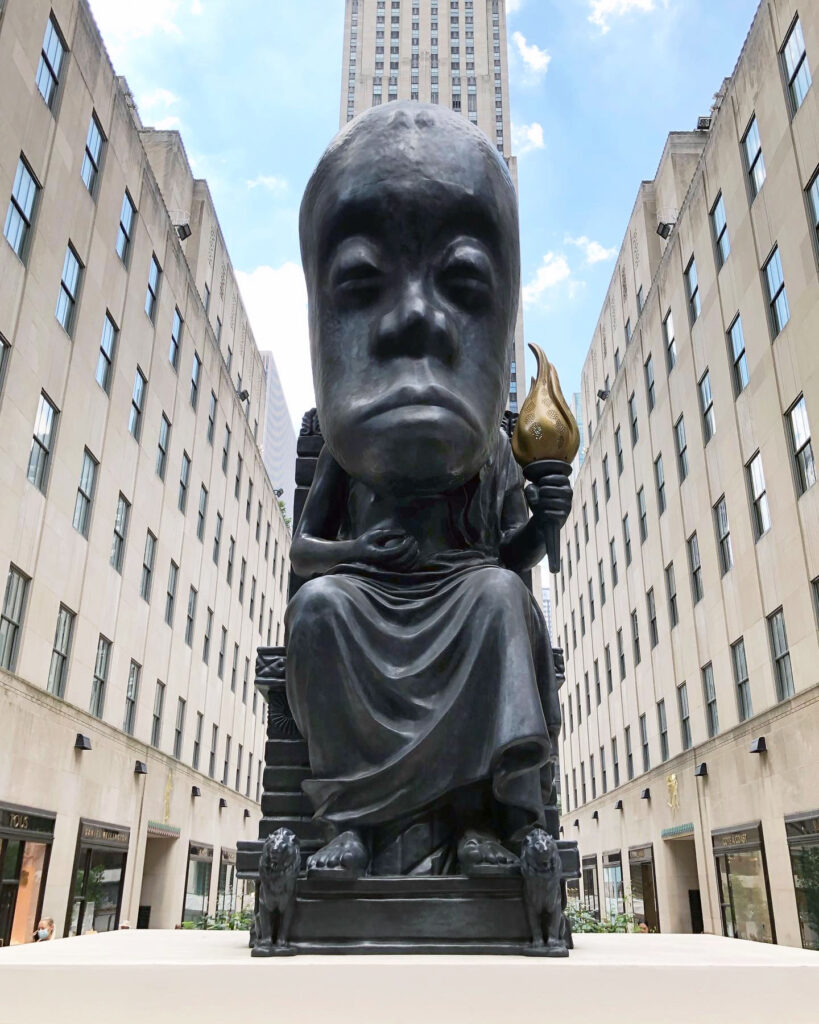
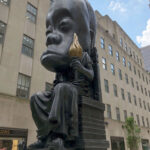
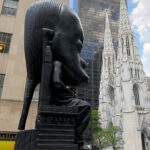
The above photos are of Sanford Biggers’ sculpture The Oracle when it was located at Rockefeller Center in NYC in 2021, where it was part of a multimedia installation.

It now resides outside the Hammer Museum in Los Angeles, on the new outdoor sculpture pedestal on Wilshire Boulevard and Glendon Avenue. It will be there until March of 2024.

From the Hammer website about the work-

Anchoring this corner is Oracle (2021), a cast bronze figure weighing 7.64 US tons (15,280 pounds) and standing at 25 feet tall. This monumental commission from Biggers continues his “Chimera” series that hybridizes the canonical figures and gestures of Greco-Roman sculpture with an assortment of iconic African objects from the 14th–20th centuries. Unlike Biggers’s other “Chimera” sculptures that are made in marble, Oracle is cast in bronze. The seated figure in Oracle is a depiction of the statue of Zeus at Olympia, while the head is a composite of several masks and busts from different African cultures, including the Luba Kingdom and the Maasai.

Biggers sculpturally patchworks historical depictions of the body and their subsequent myths, narratives, perceptions, and power. Biggers is intrigued by the recent scholarship about the academic and historical “white-washing” of classical Greco-Roman sculpture simultaneously intersecting with the early twentieth-century “black-washing” of various African sculptural objects. Oracle challenges the associated cultural and aesthetic assumptions about their source material while acknowledging the often dubious origins of the original objects themselves.