Mar 152022
 

Artist Sophie Calle’s Here Lie The Secrets of the Visitors of the Green-Wood Cemetery, a 25 year long public artwork. The project debuted on April 29th and 30th, 2017.

From Creative Time’s website-

To inaugurate the project, the public was invited to Green-Wood Cemetery, a National Historic Landmark, in Sunset Park, Brooklyn, to privately unburden and inter their most intimate confessions.

During the two-day opening, in a setting nestled among the mausoleums and monuments of Green-Wood’s verdant rolling hills, visitors transcribed their secrets onto paper, and deposited them into the earth below, through a slot on a marble obelisk of Calle’s design. The artist was on hand during the two-day event to receive some visitors’ secrets.

The two-day performance was free and open to the public. Guests were invited to spend the day exploring the sculptures and monuments throughout Green-Wood, a tradition that dates back to the early 1800s. Free maps of the cemetery, specially designed to accompany Calle’s installation, were be available. Guided walking tours emphasizing the cemetery’s symbols and iconography were offered at no cost.

Visitors to the Cemetery can now see Calle’s installation during regular cemetery hours and independently deposit secrets into the marble obelisk. Calle has also pledged to return periodically over the next 25 years, each time the grave is filled, to exhume and cremate them in a ceremonial bonfire service and moment of remembrance.

Everyone has a secret to tell, now there’s a place to put one of yours.


Feb 172022
 

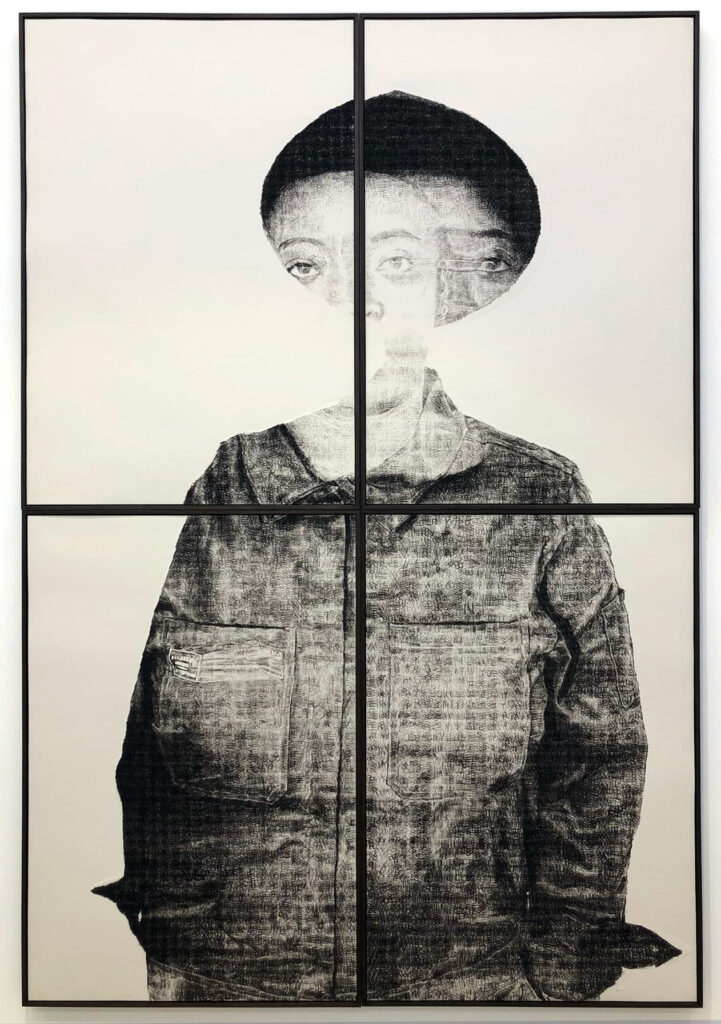
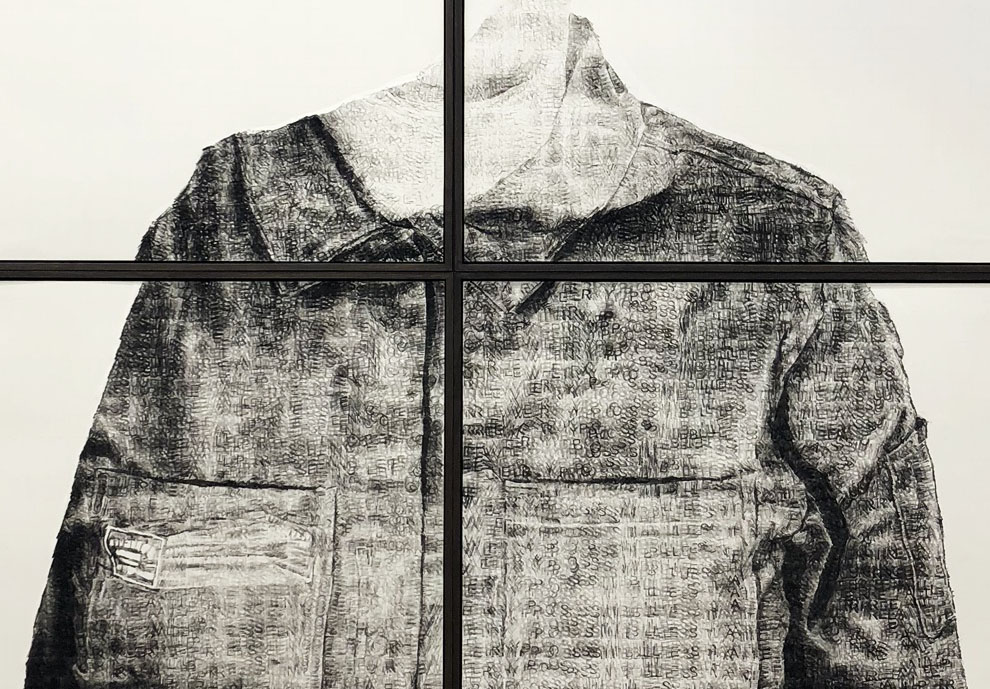
A Surreal Presence for Every Possible State, 2018 by Kenturah Davis from her 2019 exhibition, Blur in the Interest of Precision at Matthew Brown Los Angeles. The four panel work was created using oil paint applied with rubber stamp letters and graphite grid on embossed Mohachi paper.

From the press release-

Blur in the Interest of Precision is a search for parallel conditions between the poetics of our visual experience and the strangeness of our relationship to language. We often use language to carve out distinctions between one thing and another. Davis’ objective—to complicate ideas about meaning, representation and perception—have found refuge in blur and doubling. The new drawings are rendered with arrangements of text, but the words are virtually illegible. Many of the portraits pursue ideas the artist is working through via the writings of Fred Moten and Toni Morrison’s essay, Sites of Memory.

Davis’ work oscillates between various facets of portraiture and design. Using text as a point of departure, the artist explores the fundamental role that language has in shaping how we understand ourselves and the world around us. This manifests in a variety of forms including drawings, photographs and performances.

Recently Davis was commissioned by LA Metro to create work for the future Inglewood Station, slated to open in November of 2022. The work, Sonder, depicts community members photographed at gatherings at the artist’s Inglewood art studio and made into large porcelain enamel steel panels.

From Metro’s site

The photographs were hand painted with stamps incorporating letters that form the words defining the term “sonder.”

Davis was drawn to the term which alludes to the realization that every person has a unique and significant story. She hopes that the portraits inspire connections between strangers, even if only for a passing moment while waiting for the train.

(images below via LA Metro’s site)

For more images, information about the station, and a video of the artist discussing the work, check out Metro’s website.


Oct 112021
 

Happy Indigenous People’s Day! The work above, Because You Enter My House, It Becomes Our House, is by Choctaw-Cherokee artist Jeffrey Gibson. The sculpture was commissioned for Socrates Sculpture Park in New York, but is currently located at deCordova Sculpture Park and Museum in Lincoln, Massachusetts.

The deCordova website gives the following information about Gibson and the work-

Jeffrey Gibson weaves together his Choctaw-Cherokee heritage and queer identity into vibrantly patterned painting, sculpture, video, performance, and installation. Drawing on Indigenous process and materials and queer camp aesthetics, his artistry aims to transcend binary thinking and corrects nostalgic views of indigeneity. Merging styles and historical references, Gibson states, “I have continued to think about my practice as encompassing the past and present while considering the future.” Gibson often integrates phrases and words into his artwork, with language drawn from pop songs to activist slogans, to offer open-ended declarations of love, community, and liberation.

Standing over 40 feet wide and 20 feet tall at the entrance to deCordova’s Sculpture Park, Gibson’s Because Once You Enter My House, It Becomes Our House commands attention to its stepped form and psychedelic facade. Originally commissioned by Socrates Sculpture Park in Long Island City, this installation expands Gibson’s signature artistry and collaborative process to a monumental scale. He took inspiration from North American Indigenous history, as well as queer nightlife to create this monument advocating for Indigenous space and culture. The tri-layered form references the earthen forms of the ancient Mississippian city of Cahokia which flourished in the seventh through the fourteenth centuries before European contact.

The title, Because Once You Enter My House, It Becomes Our House, comes from the song “Can You Feel It” by Mr. Fingers (Larry Heard). Gibson evokes 80s and 90s-era house music and night clubs as they provided welcoming spaces for queer communities and people of color. Mr. Finger’s lyrics embrace intimacy, generosity, acceptance, and community. This installation echoes this broad communal ethos as Gibson invited fellow Indigenous artists–Eric-Paul Riege (Diné), Luzene Hill (Eastern Band of Cherokee Indians), and Dana Claxton (Hunkpapa Lakota)–to co-create the wheat-pasted posters covering the façade of the installation and stage performances on and around the ziggurat.

Oct 052021
 

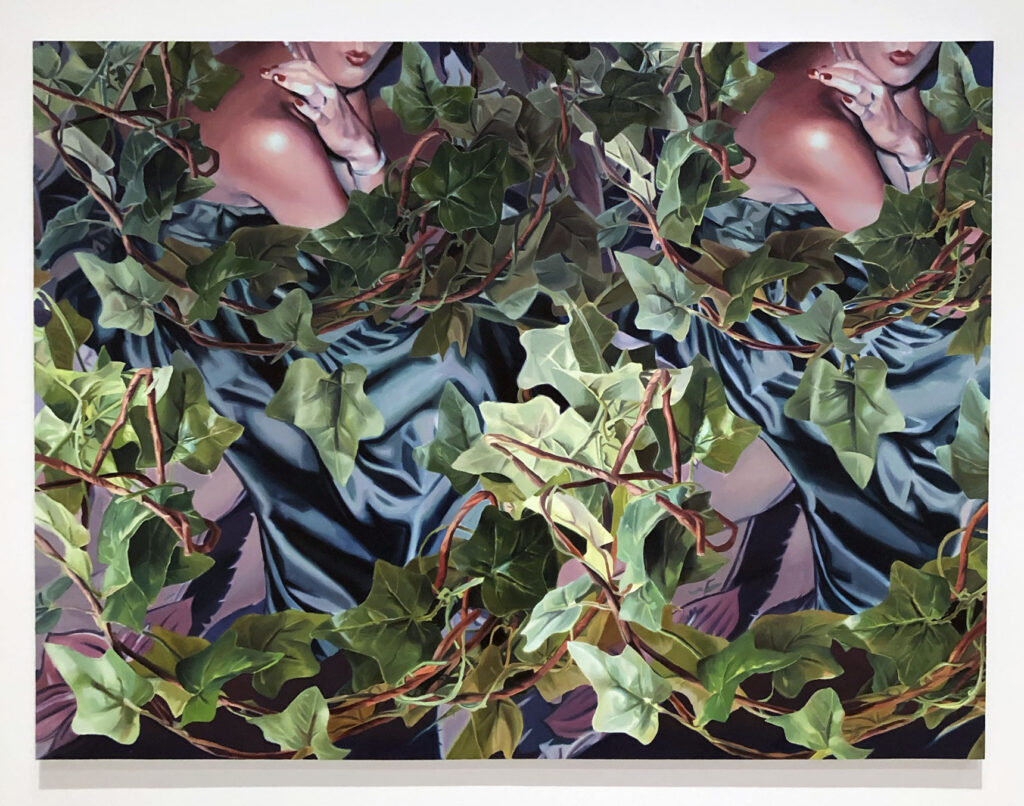
Kim Anderson, “Alone Together”, 2021

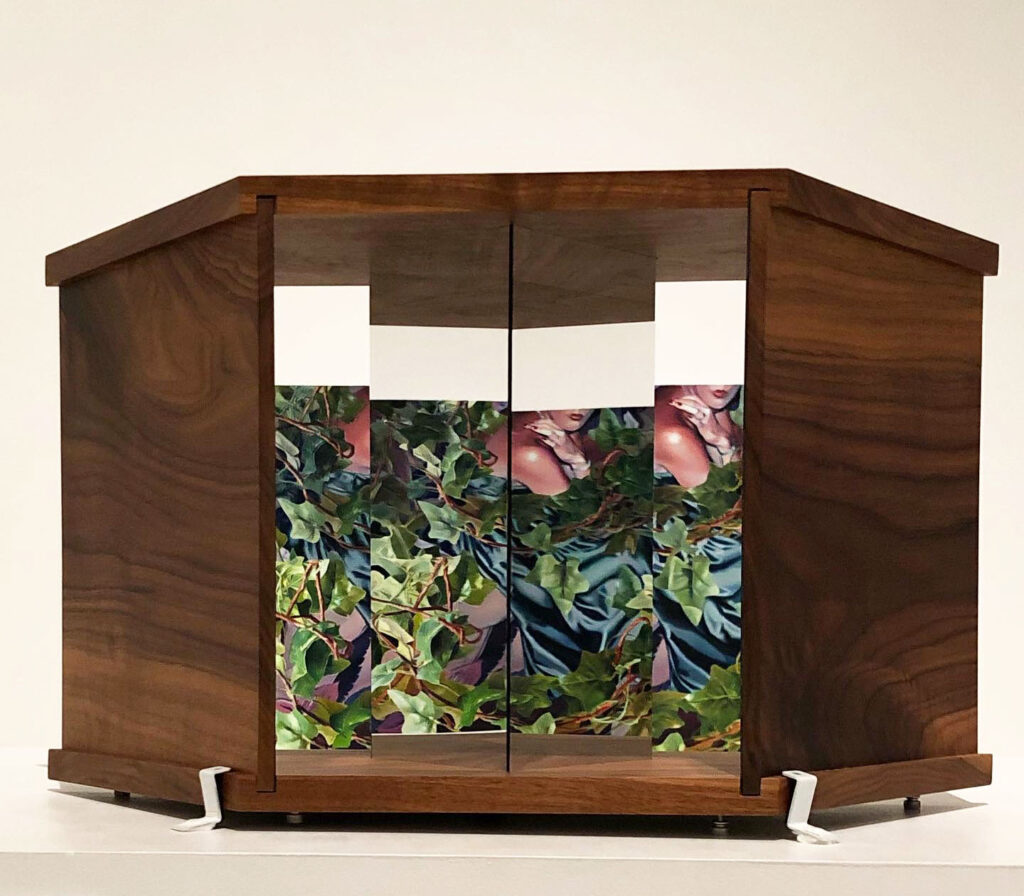
Stereoscope for viewing the above painting

Skyway 20/21: A Contemporary Collaboration, is the second iteration of a joint exhibition across four institutions that highlights contemporary art created in the Central Florida region. Artists selected by a jury are from five counties- Hillsborough, Pinellas, Pasco, Manatee, and Sarasota. The exhibitions are an excellent sampling of the work being made in the Tampa Bay area.

The works shown in this post are from the exhibition at the Tampa Museum of Art. The museum has a video playlist on YouTube that includes all of the artists in the exhibition discussing their work. The links below are to the artists’ websites or those videos.

Selina Román “XS” 2019

For Selina Román’s XS series, she created abstract self portraits that examine standards of beauty in relation to expectations of weight and body. The title XS references an extra small size and alludes to the word excess.

This exhibition closes 10/10/21.


Aug 142021
 

Casey McDonough “the immeasurability of this cosmological collider”, 2021

Casey McDonough “the immeasurability of this cosmological collider”, 2021 (detail)

Casey McDonough “the immeasurability of this cosmological collider”, 2021 (another view)

Skyway 20/21: A Contemporary Collaboration, is the second iteration of a joint exhibition across four institutions that highlights contemporary art created in the Central Florida region. Artists selected by a jury are from five counties- Hillsborough, Pinellas, Pasco, Manatee, and Sarasota. The exhibitions are an excellent sampling of the work being made in the Tampa Bay area.

The works shown in this post are from the exhibition at USF Contemporary Art Museum. I’ve included links for these artists as well as those not pictured.

Cynthia Mason, “Limp Grid with Arm”, 2021

Cynthia Mason, “Limp Pricks and Plants in Rising Water” 2021

Akiko Kotani, “Red Falls”, 2021

Akiko Kotani, “Red Falls”, 2021 (detail)

This exhibition closes 9/1/21.


Aug 112021
 

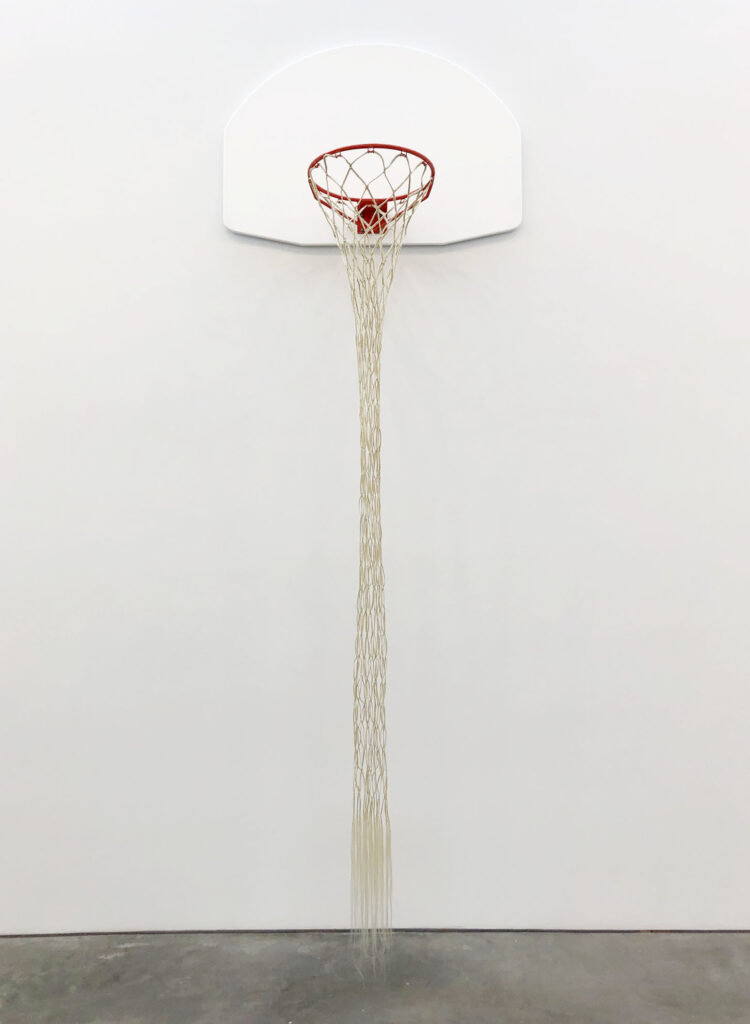
Rapunzel, 2021

Fruity, 2021

Fee-fi-fo-fum, 2021

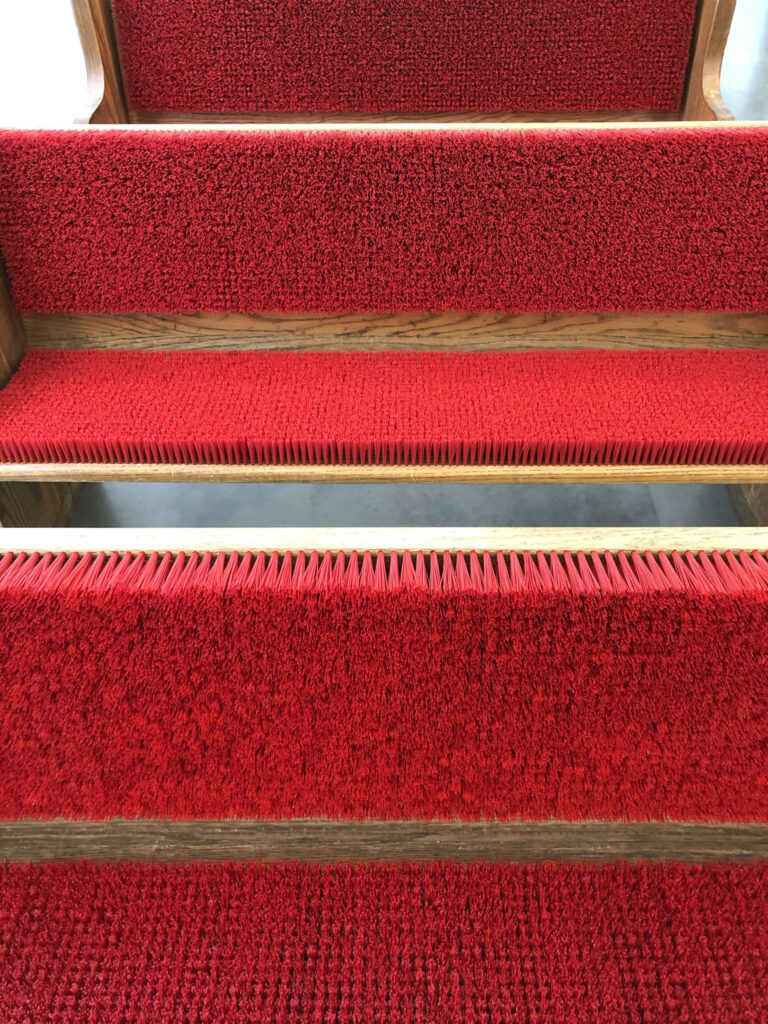
Good Hair, 2021

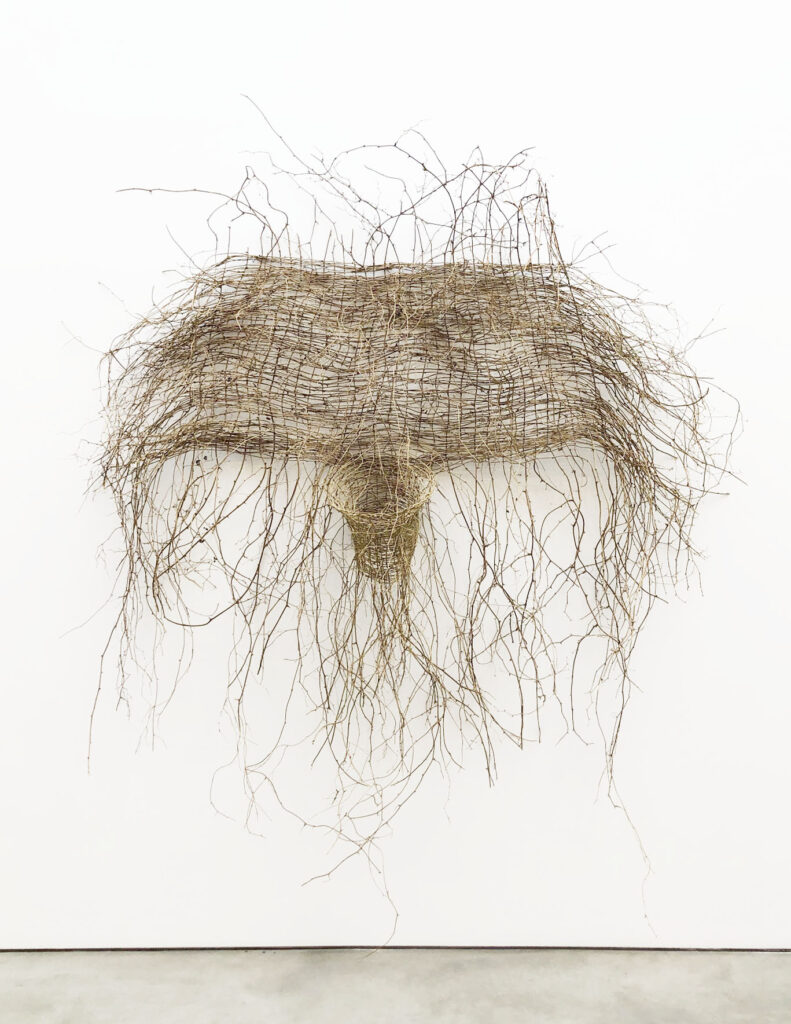
Lisson Gallery in New York is currently showing Hugh Hayden: Huey. This new body of work by Hayden “examines the American experience via agency, appearance, athletics and religion” and “interweaves symbols of the institutions that play key roles in an American upbringing with equally ever-present fairy tales to produce a new series of sculptures in wicker, vine, and ebony.”

More from the press release-

Hugh Hayden has previously examined the concept of the American Dream as well as the role historical foodways and dining traditions have played in shaping American identity. For Huey, the Texas-born artist chronicles and remixes his upbringing in the American South. Church, sport, school and hair are highlighted as Hayden probes the ingrained nature of cultural expectations. The exhibition is split into a trinity of rooms: a barber shop cum sanctuary, a basketball chapel and an ebony crypt, all of which harbor Hayden’s meticulously sculpted, sawed, sanded and woven objects.

The sanctuary features “Good Hair,” a new body of bristled wooden works that explore expectations of appearance and refinement in obligatory adolescent participation in athletics, education and religion. For Hayden the bristles render a subject simultaneously desirable yet uncomfortable, creating order via an abrasive action that, like the American Dream, is challenging and difficult to inhabit.

In the second chapel-like space hang woven basketball hoops out of hair, rattan and vine. The works are a childhood reimagination of the iconic peacock chairs the artist grew up with as well as an homage to the 1967 portrait of Black Panthers co-founder Huey P. Newton seated in one. The braided and woven works conflate tedious domestic handwork with hypermasculine athletics to materialize a queerness at odds with the fairy tale-like aspirations and reservations of becoming a professional athlete.

The final room of the exhibition is a meditation on agency, blackness and invisibility. Works sculpted from Gabon and Texas ebonies are presented in a daylight-lit, all-black room shifting in and out of visibility. Sculptures that reference the body, both moving fast as well as relaxing, offer an opportunity to reflect on the many hues of blackness.

This exhibition closes 8/13/21.

Jun 252021
 

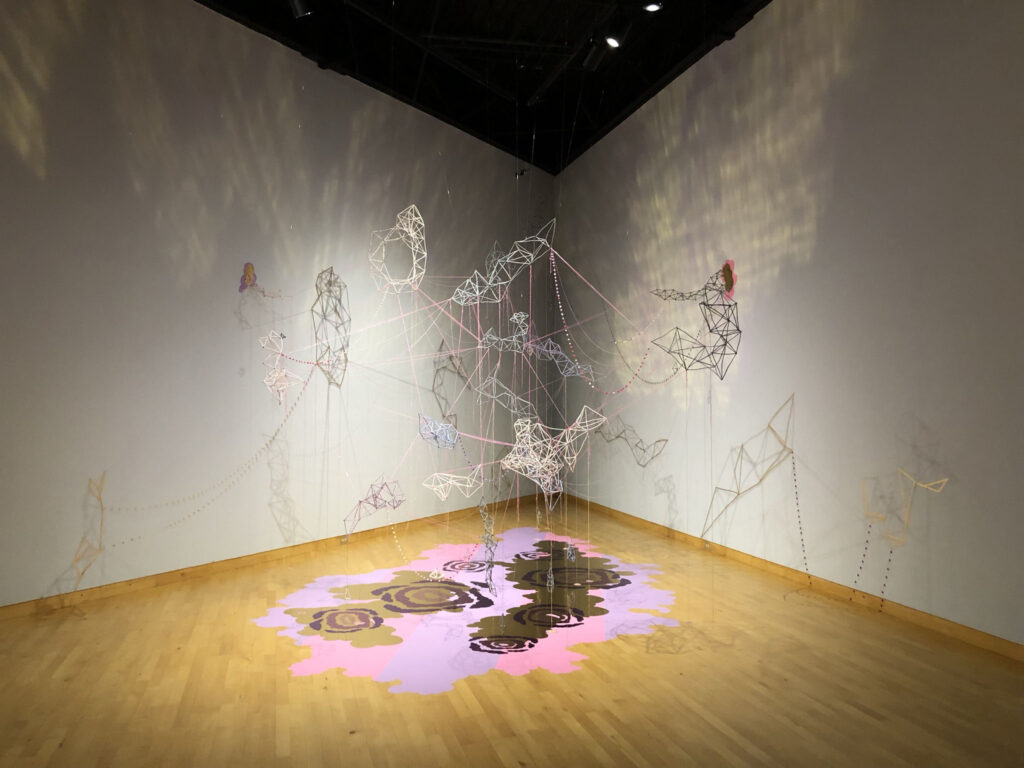
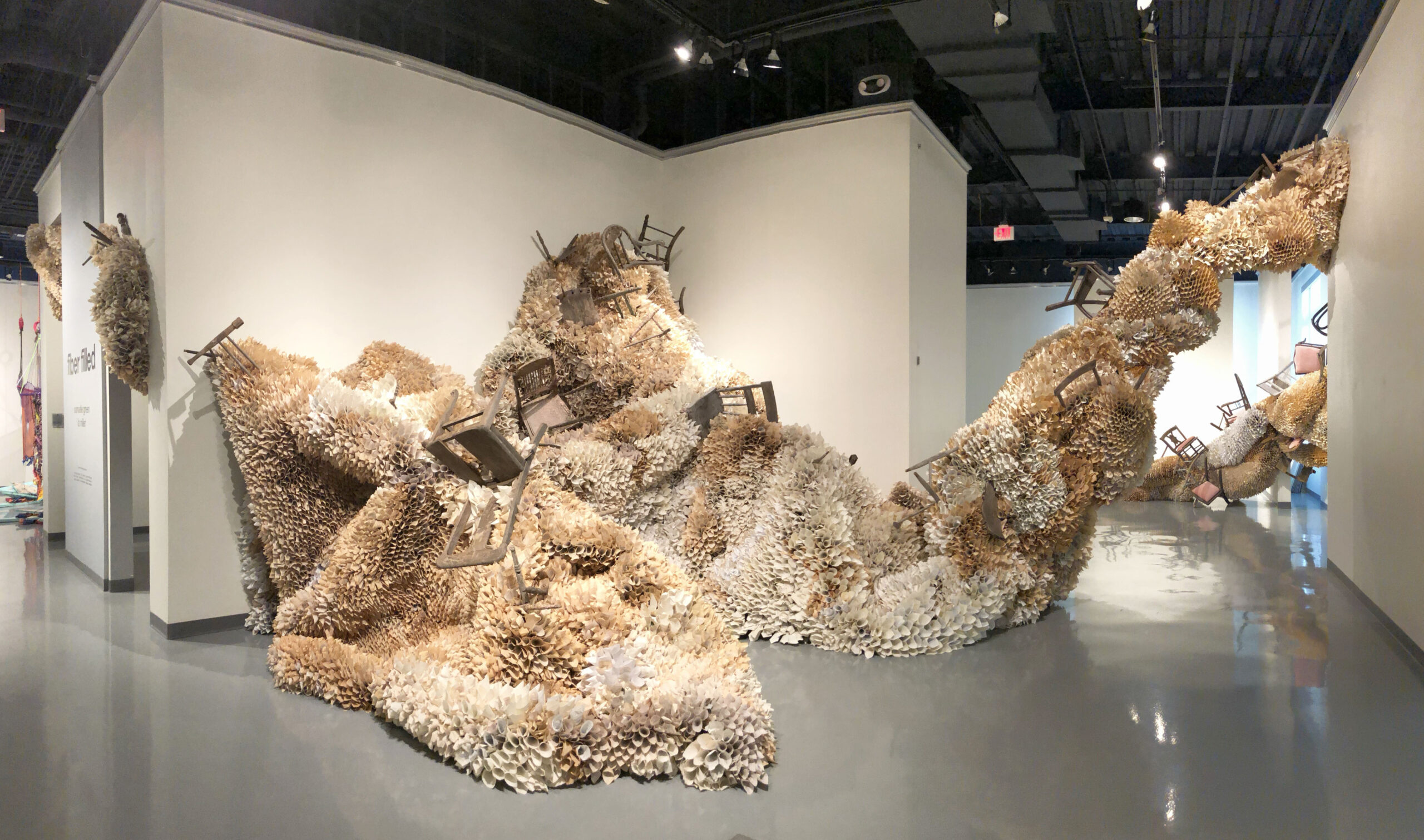
Currently at the Spartanburg Museum of Art in South Carolina is fiber filled, an exhibition consisting of two art installations. The one pictured above is by artist Samuelle Green, titled Manifestation 8: Permutation 1.

Her statement about the work-

There is structure and design inherent in the natural world, which we constantly draw from and take for granted. We generally fail to acknowledge the skill, time, and detail required to manifest the intricate structures found in objects we encounter regularly- such as those found in bird and wasps nests, beehives, spiderwebs, rock formations, anthills, feathers, etc.

My work, especially the large scale installations like this one, reference these natural forms as they merge with human-made objects, inspiring contemplation.

Also check out the museum’s site for a short video from the artist going into more detail on her process.

The other installation is by Liz Miller, titled Alchemical Conundrum, part of which is seen below.

Her statement about the work-

My work explores the fallibility of infrastructure and the precariousness of perceptions, as seen through a materially-intensive process-based lens. I create elaborate site specific installations that are equal parts absurd, menacing, and poetic. Pattern and tactility confuse and complicate identification, camouflaging recognizable forms and evoking recognition when applied to non-objective forms. The tensions between fact/fiction and dimensionality/flatness are endlessly fascinating to me, playing out my work as a dialogue between reality and illusion.

More recently I have become fascinated with rope and knotting as a byproduct of my large-scale installations, where I utilize rope to achieve tension that gives volume to otherwise flat materials. The varied use of rope and knotting across cultures and history ranges from utilitarian to decorative, and even deadly. I create interdependent knotted topographies that allude to both structure and malleability. The repeated act of tying by hand integrates an emphatic sense of strength, while the flexibility and nuance of the textile material ensures structural permutations. The resulting works are only quasi-architectural providing metaphorical insight laced with humor as related to a variety of structural and systemic behavior.

This exhibition closes 6/30/21.

Jun 242021


From The High Line’s information page on this work-

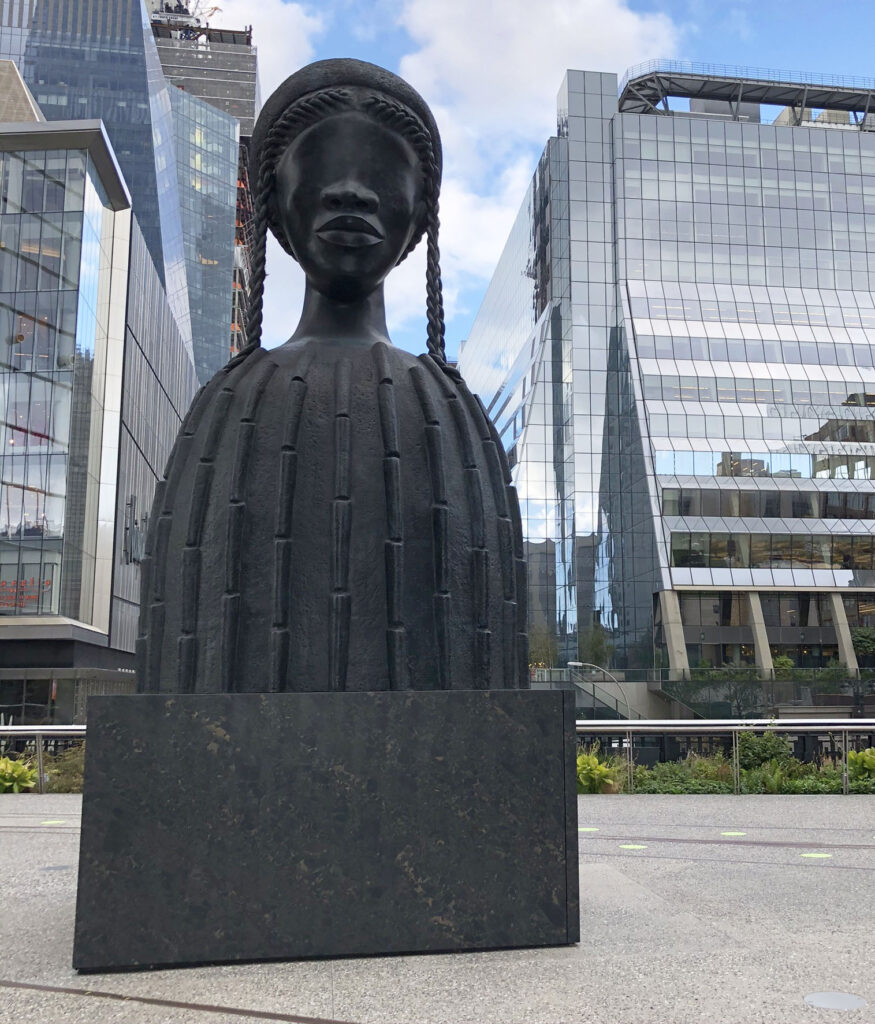
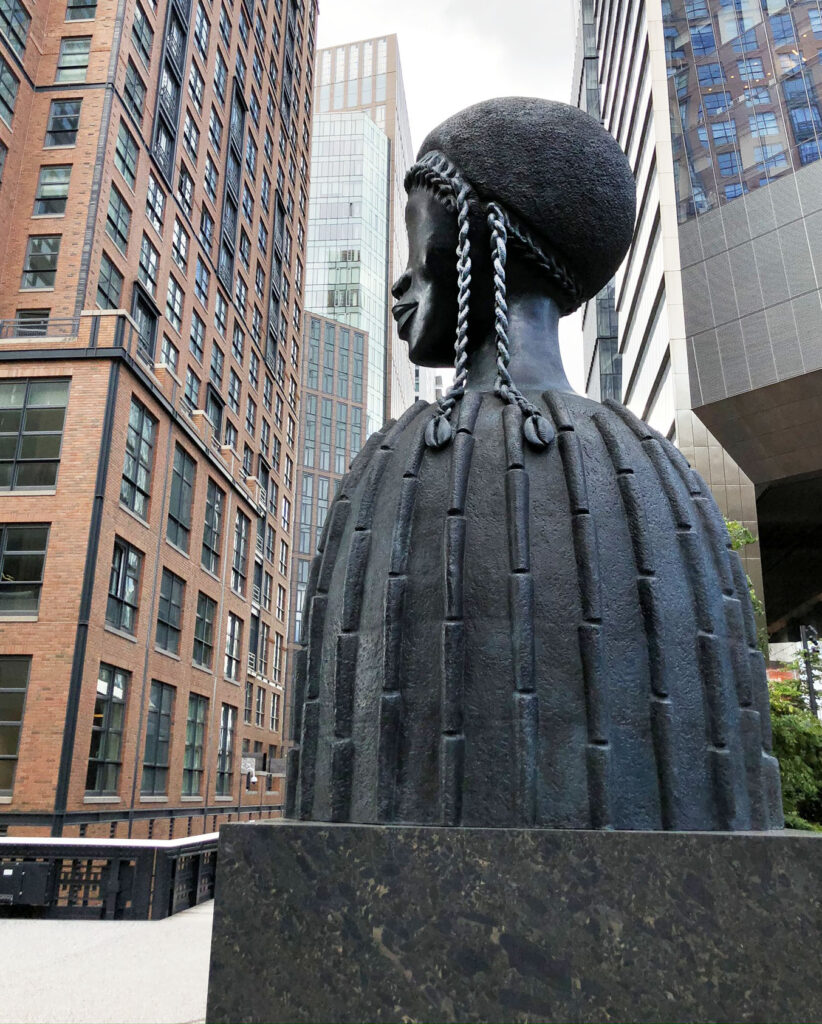
Simone Leigh presents Brick House, a 16-foot-tall bronze bust of a Black woman with a torso that combines the forms of a skirt and a clay house. The sculpture’s head is crowned with an afro framed by cornrow braids, each ending in a cowrie shell. Brick House is the inaugural commission for the High Line Plinth, a new landmark destination for major public artworks in New York City. This is the first monumental sculpture in Leigh’s Anatomy of Architecture series, an ongoing body of work in which the artist combines architectural forms from regions as varied as West Africa and the Southern United States with the human body. The title comes from the term for a strong Black woman who stands with the strength, endurance, and integrity of a house made of bricks.

Brick House references numerous architectural styles: Batammaliba architecture from Benin and Togo, the teleuk dwellings of the Mousgoum people of Cameroon and Chad, and the restaurant Mammy’s Cupboard in Natchez, Mississippi. The sculpture contrasts sharply against the landscape it inhabits, where glass-and-steel towers shoot up from among older industrial-era brick buildings, and where architectural and human scales are in constant negotiation. Resolutely facing down 10th Avenue, Leigh’s powerful Black female figure challenges us to consider the architecture around us, and how it reflects customs, values, priorities, and society as a whole.

Leigh works across sculpture, video, installation, and social practice, stitching together references from different historical periods and distant geographical locations. As a sculptor, Leigh works predominantly in ceramics—a medium that she mastered early in her career—continually pushing the boundaries of her chosen material by working in new methods and larger scales. In her intersectional practice, Leigh focuses on how the body, society, and architecture inform and reveal one another. She examines the construction of Black female subjectivity, both through specific historical figures such as Josephine Baker and Katherine Dunham, and more generally through overlapping historical lineages across Europe, Africa, the US, and the Caribbean.

The High Line’s website also has some excellent videos and additional information on the making of the sculpture well worth checking out.  This work was on view until May of 2021.

Jun 032021
 

Barbara Kruger designed this mural, Untitled (Blind Idealism Is…) for the High Line in 2016. It is based on the quote “Blind idealism is reactionary” by Afro-Caribbean psychiatrist and political philosopher Frantz Fanon.

From the High Line website-

The original statement by Fanon, “Blind idealism is reactionary,” suggests that political and religious convictions stem from the situations from which they grow, not from the inherent nature of individual human beings. According to Kruger, the work reflects “how we are to one another” within “the days and nights that construct us.” These texts, along with Kruger’s own writings, resonate with particular potency in today’s political climate.

For more on this work at the time it was made, check out this interview with Kruger by The Intelligencer at New York Magazine.