Apr 032024
 

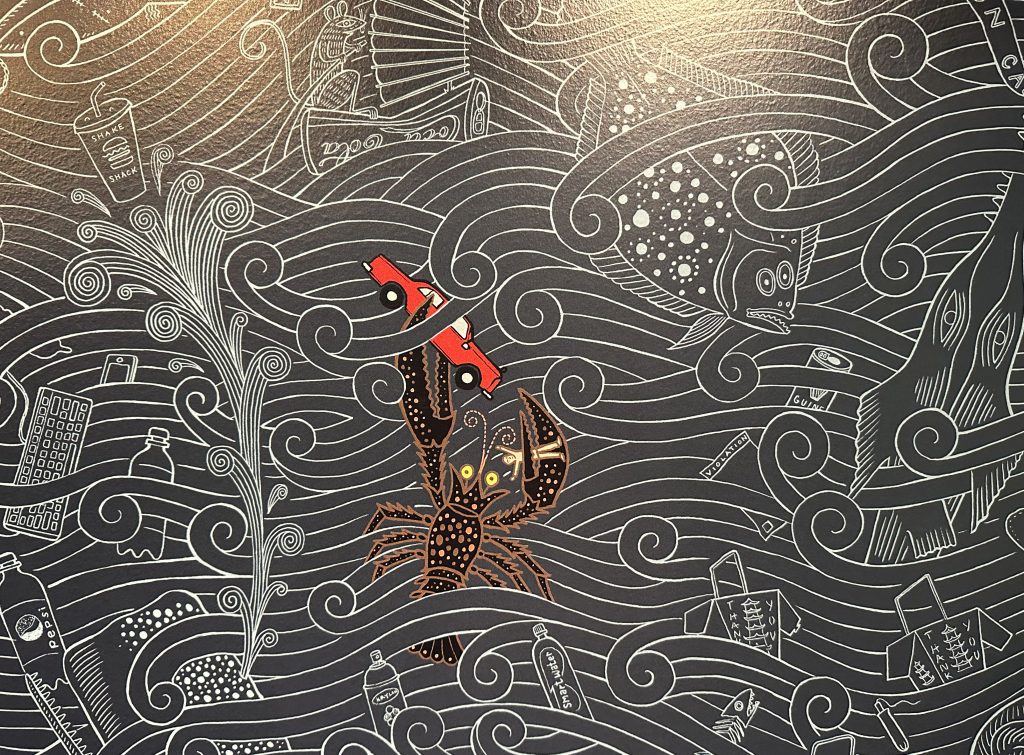
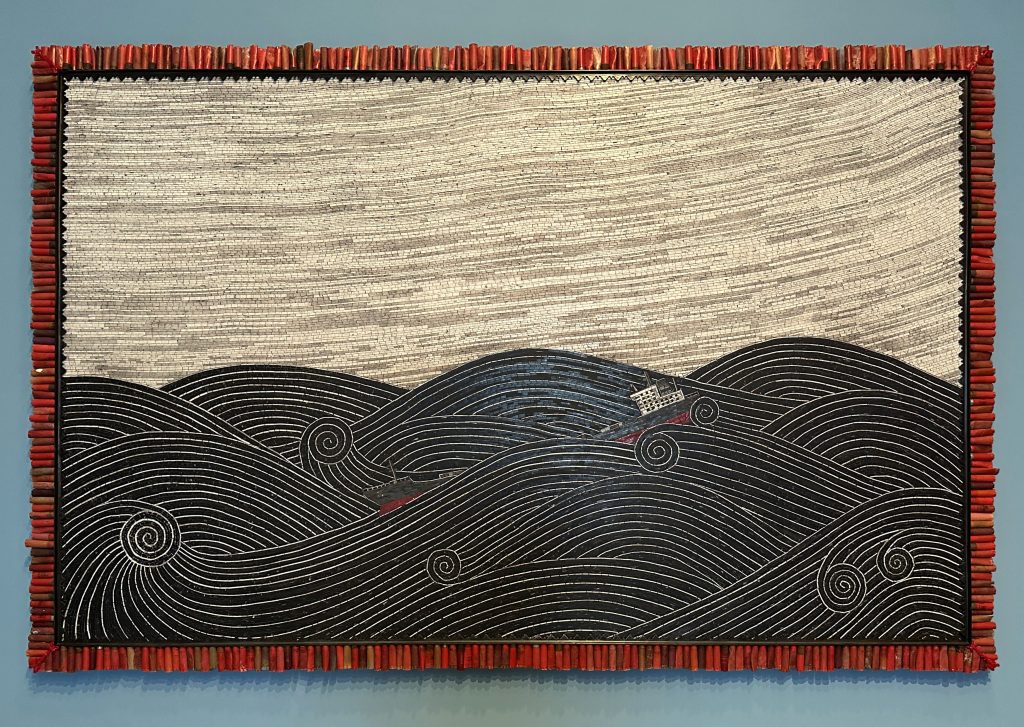
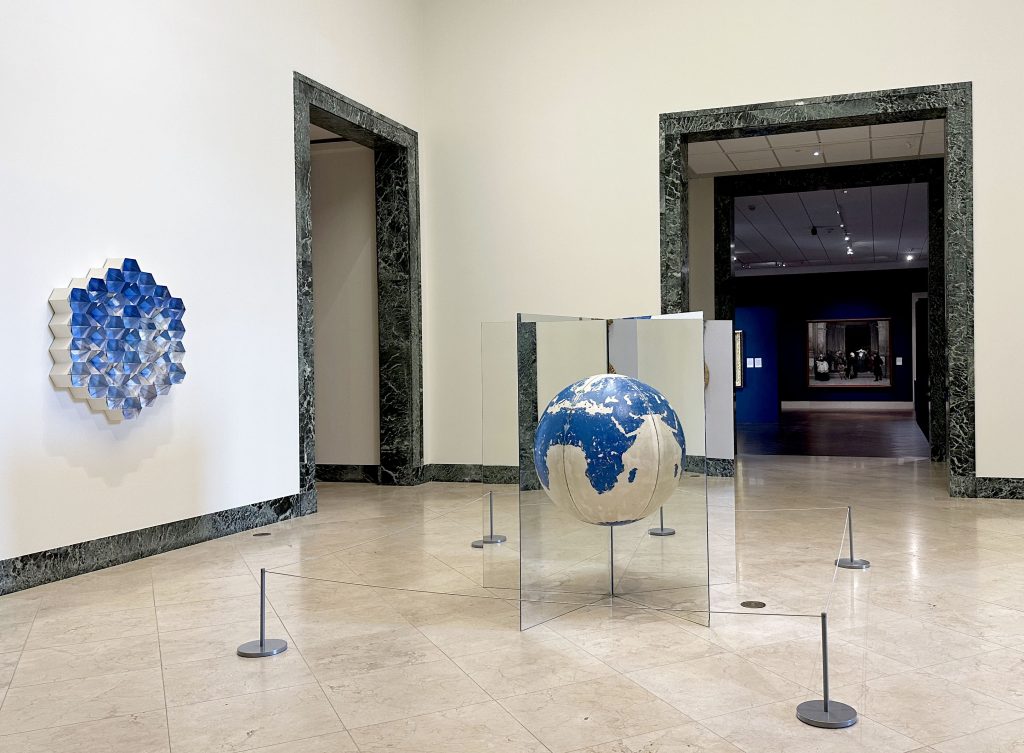
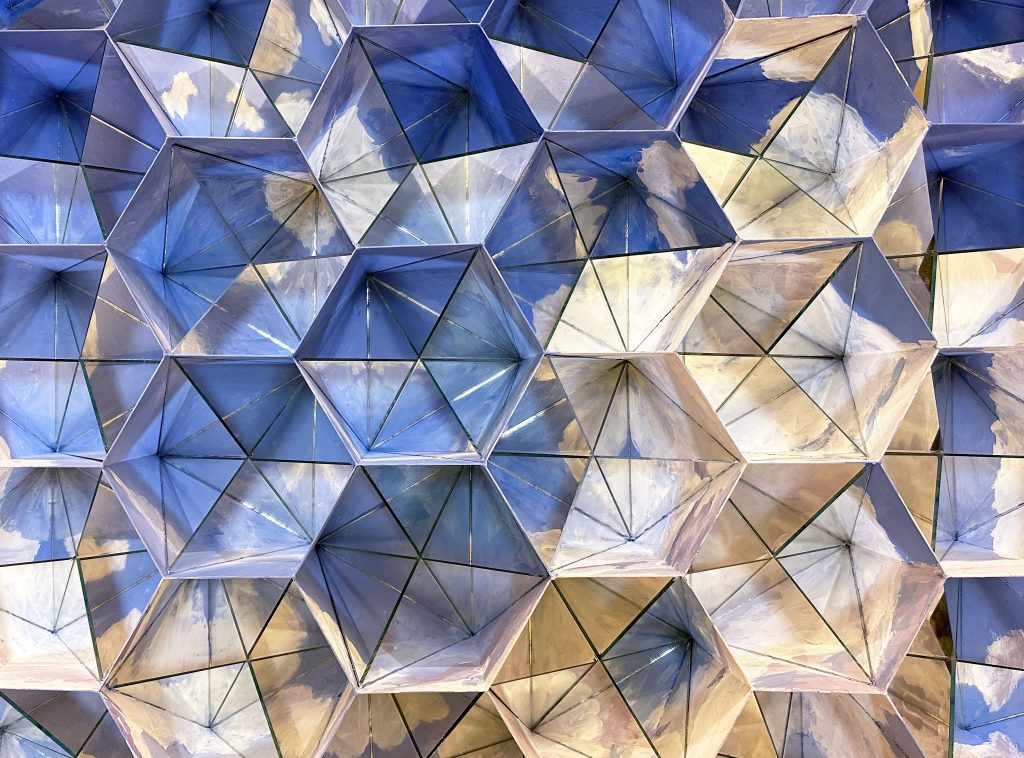
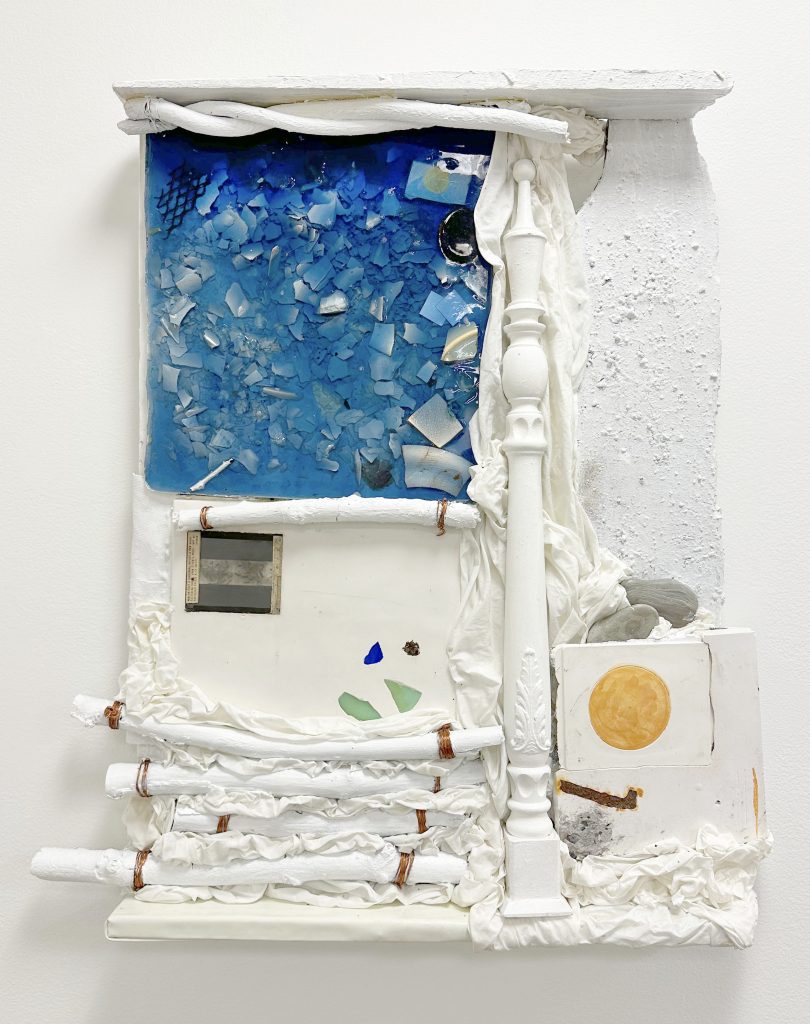
Julia Schenkelberg, “Blue Ocean”, 2020, Blue dye, resin, rusted metal from Detroit factory floors, plaster chips, vintage china, glass from Brooklyn beaches

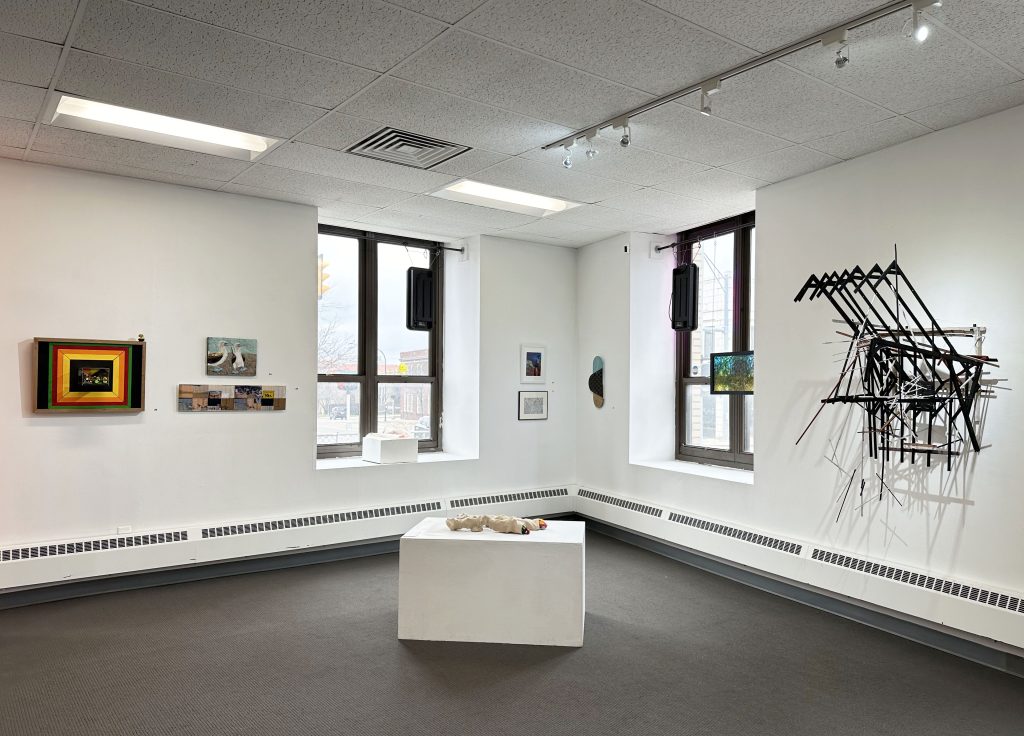
Malone University Art Gallery’s exhibition Healing Spaces features work by Northeastern Ohio artists Julie Schenkelberg, Chen Peng, Yiyun Chen, and Emily Bartolone. Although the mediums differ, the work flows together in the room. Below are some selections and more about each artist from the gallery’s documentation.
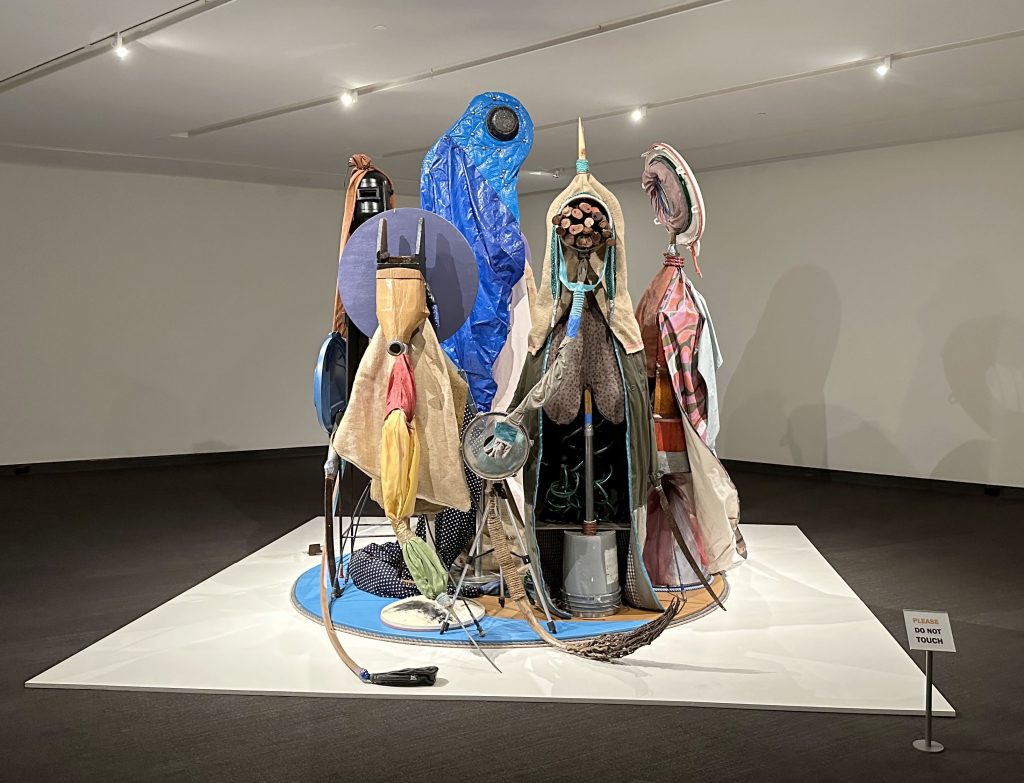
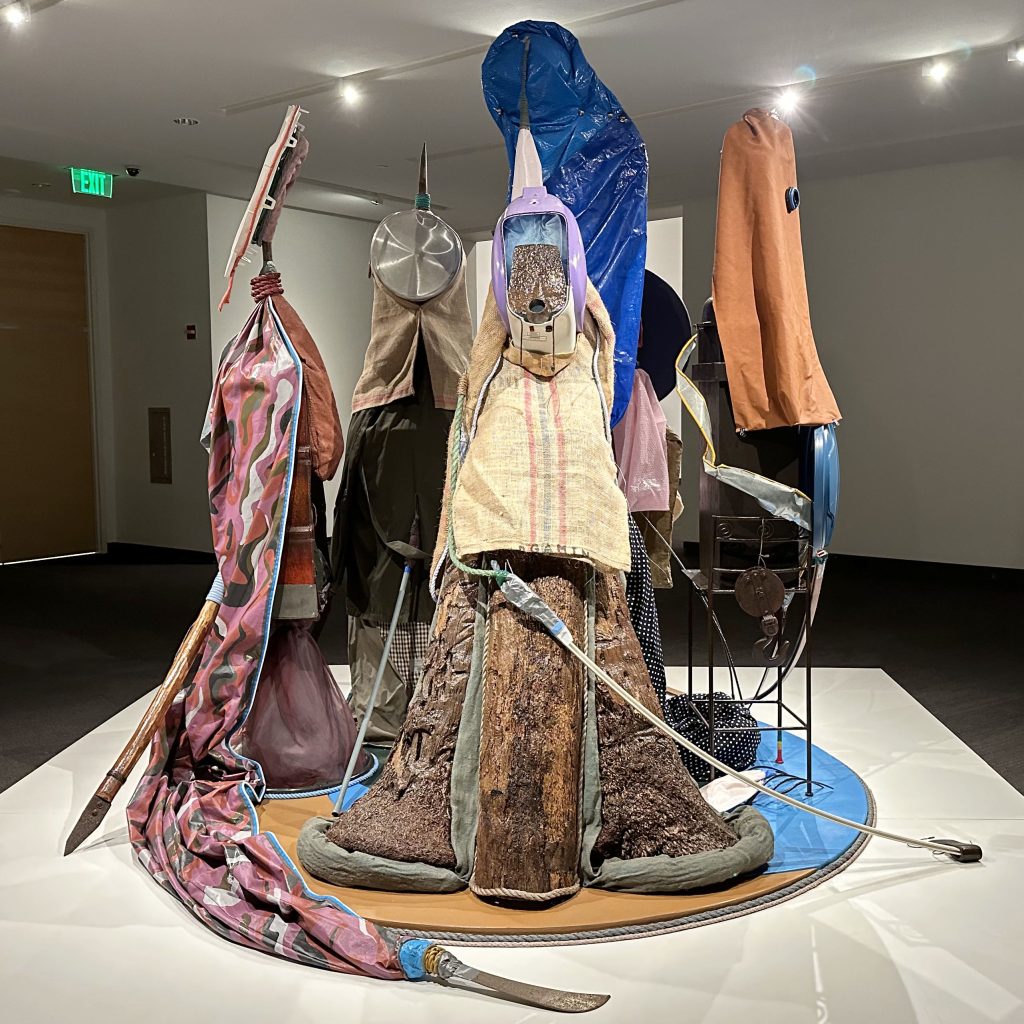
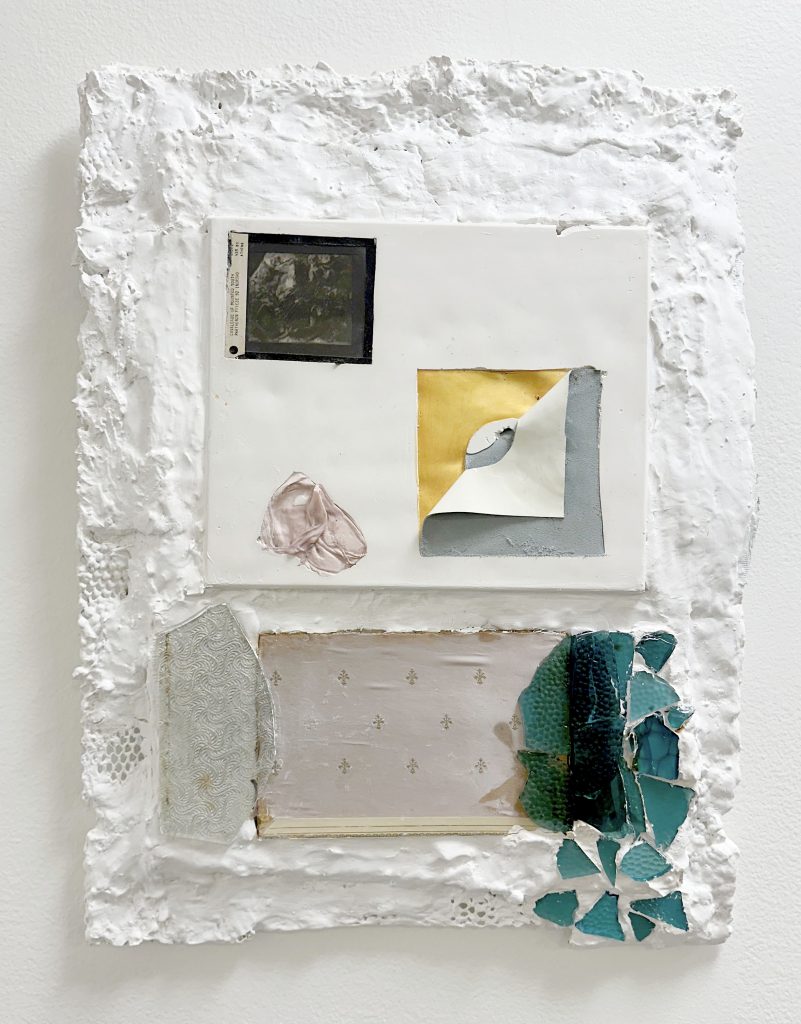
Julie Schenkelberg, “Modern Memorial”, 2020, Found screen, plaster, acrylic paint, vintage leather and fabric, jewelry box interior, glass gathered from Cleveland and Detroit auto and steel factory abandoned floors, vintage glass slide of the Parthenon Frieze

Julie Schenkelberg grew up in the post-industrial landscape of Cleveland, Ohio. Her mixed-media installations start with furniture, dishware, textiles, and marble, combined with concrete, resin, and construction materials, to transform notions of domesticity, and engage with the American Rust Belt’s legacy of abandonment and decay. Using the home as a playground for formal and conceptual subversions, the work aggressively disrupts cohesion within the physical sphere. Familiar furnishings rekindle memories or premonitions of collapse, suggesting both the utter destruction of war, calamities, or urban decay, but also the uncanny juxtapositions of fragile substances such as cloth and china, with industrial materials such as rusty metal, heavy concrete, and tool-made marks such as drilled holes and chain-sawed indentations.

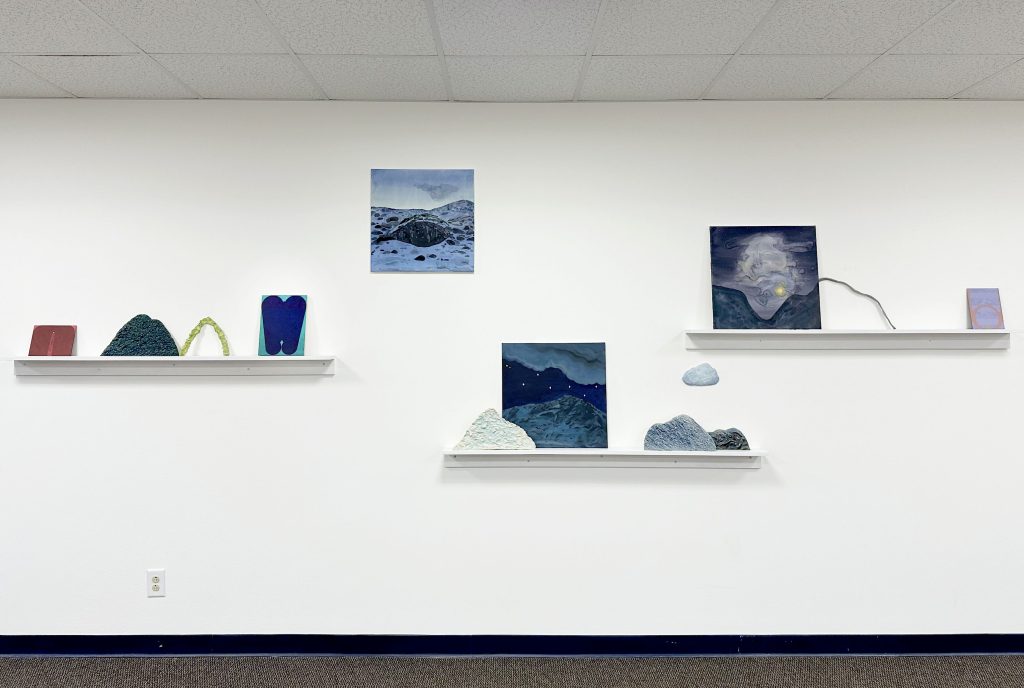
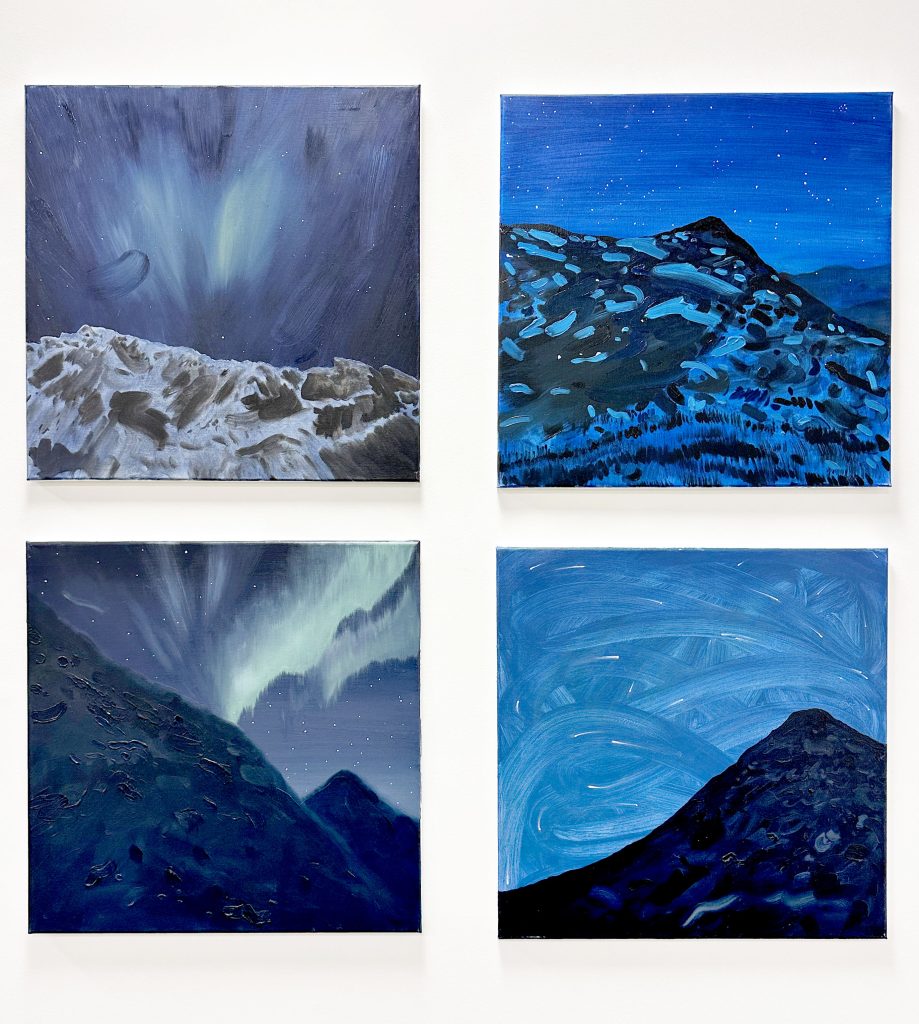
Chen Peng, Paintings from the “Mountains at Night” series, 2023, gouache, acrylic, and oil on canvas

Deriving from a desire to find stillness and grounding as an immigrant, Chen Peng explores the connection between landscape and the complexities of identity and belonging. She creates foreign landscapes from a combination of past experiences, memories, and imagination, delving into the disorienting sense of not knowing where home is. The moon, particularly in its fullness, becomes a symbol encapsulating emotions and metaphors associated with loneliness, reverence, and even terror. Her ceramic pieces extend this exploration of landscapes, featuring textures and marks that convey the essence of mountains, clouds, and the moon.

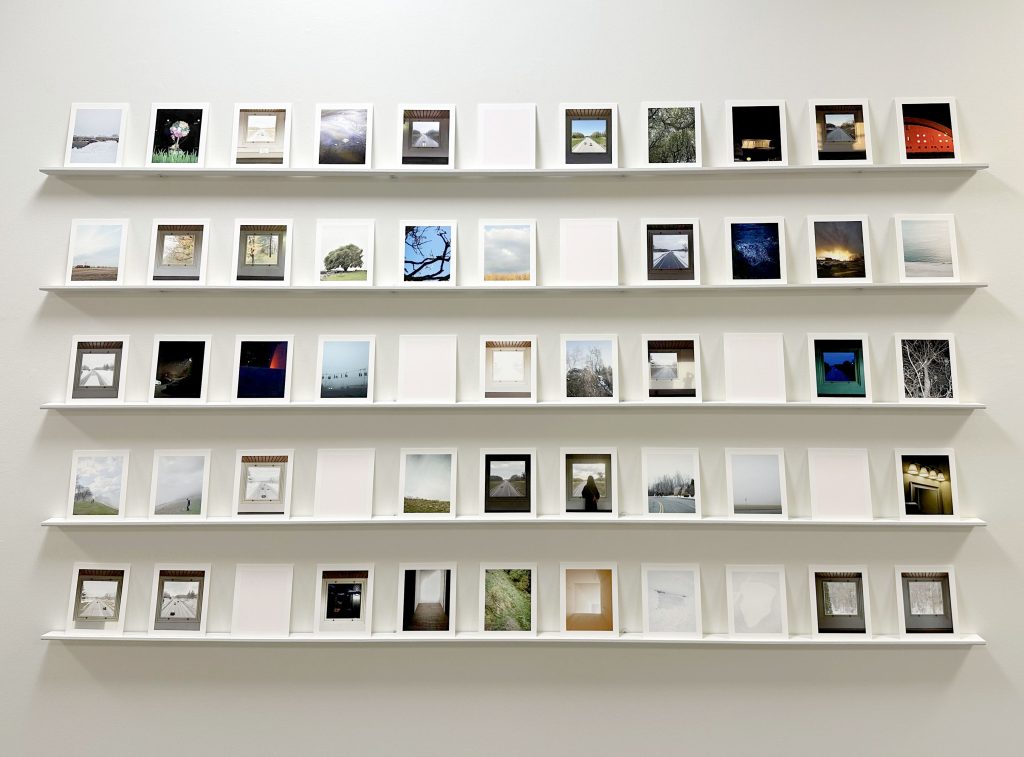
Photographs from from Yiyun Chen’s series “Velleity”, 2016-2018

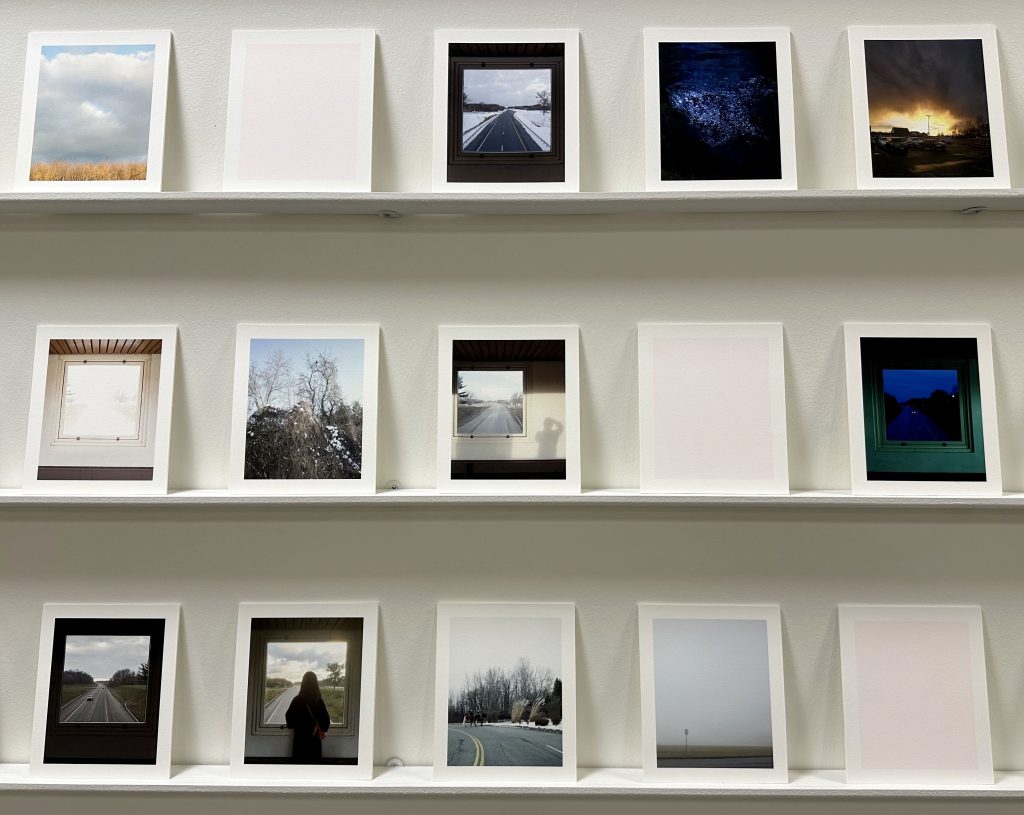
Yiyun Chen, “Velleity”, detail

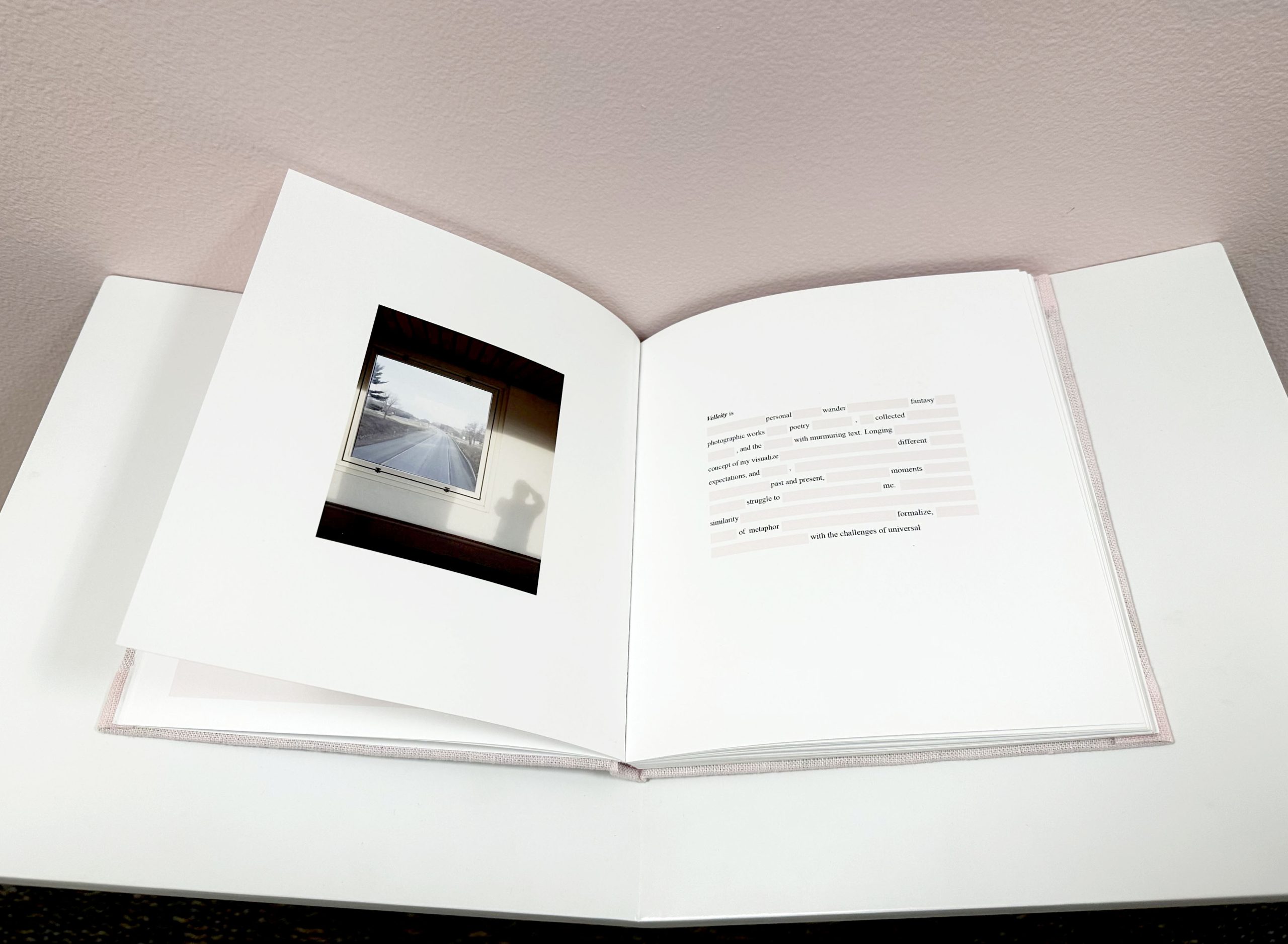
Yiyun Chen, Handmade photobook, 2018

The photography of Yiyun Chen is about the process of self-reflection and self-discovery as an Asian immigrant, exploring the relationship between people, environment and society, turning its personal experience and empathy into gentle conversations between humans and nature, capturing the poetic and distance of the environment around us. Through photography, we can take the essence of life seriously again and treat the people and things around us tenderly. Through his lens, they often have similar structure, people look tiny in nature scenes, creating an intimate visual experience. Most of his photographs are captured outdoors, with soft light and harmonious colors often used.

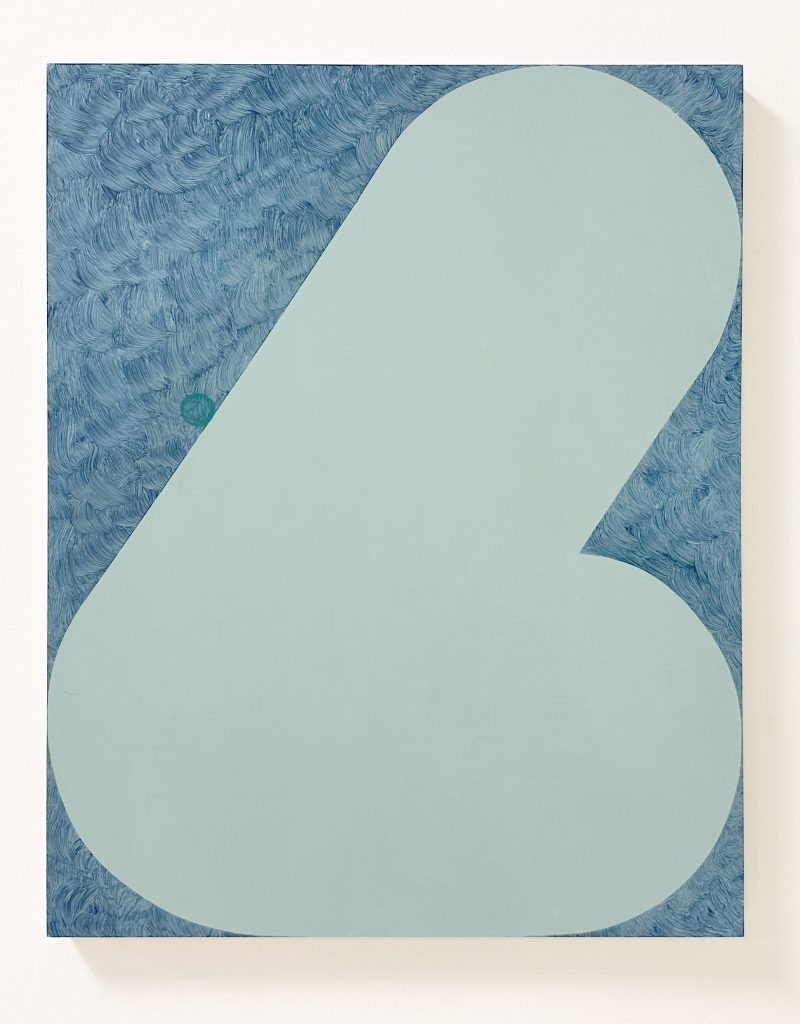
Painting by Emily Bartolone

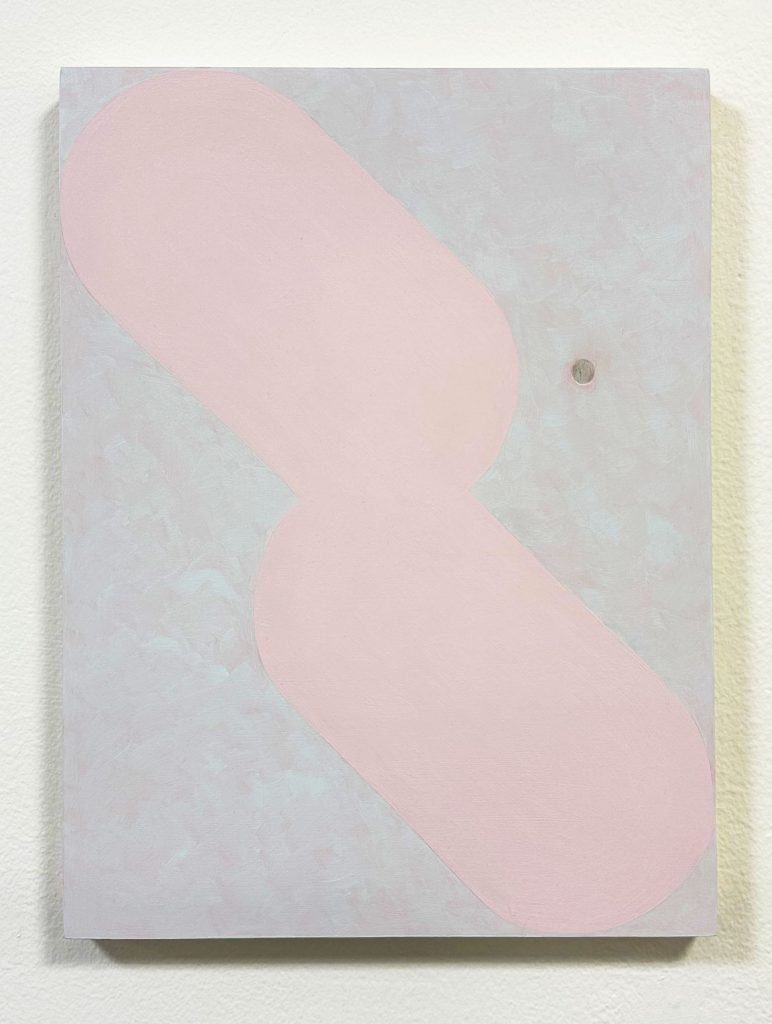
Painting by Emily Bartolone

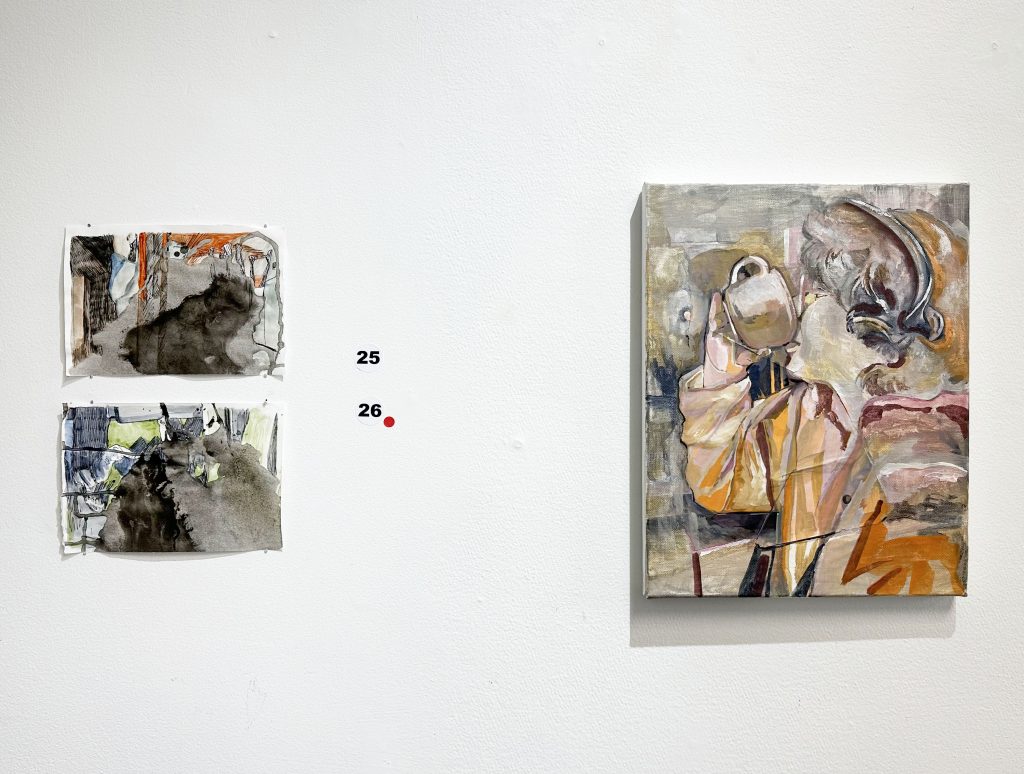
Stemming from her infatuation with the formal elements of painting, the work of Emily Bartolone pairs down simple, anthropomorphized shapes in an effort to explore paint and color theory while simultaneously creating tension and humor through color, edges, and texture. The playful, human qualities of painting are incorporated into the work through the use of amorphous shapes animated within the picture plane. Further informed by ideas of the mundane, the awkward, and the jovial that surround everyday life, the complexity of human relationships are mimicked by the shapes interacting on each painting’s surface. In acknowledging that life is not always cordial, moments of tension are placed within the satisfying surfaces in the form of an abrupt mark, a disparate color, or a shift in scale. These ideas are used to take viewers outside of themselves for a short period of time, hoping to offer a break from the bombardment of distractions, notifications, and news we encounter so often on a daily basis.

This exhibition closes 4/9/24.


Mar 282024
 

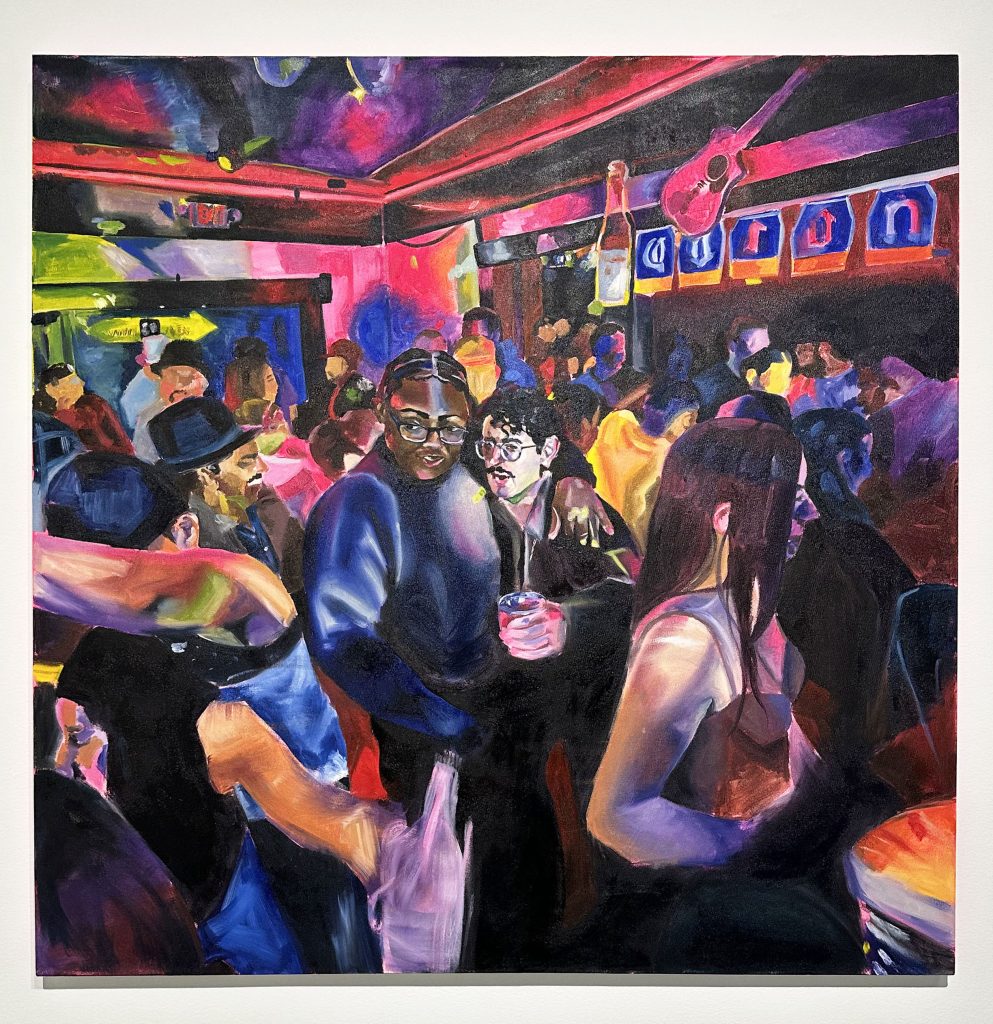
Jazzalyn Palma, “21st st”, Oil on canvas, 2023

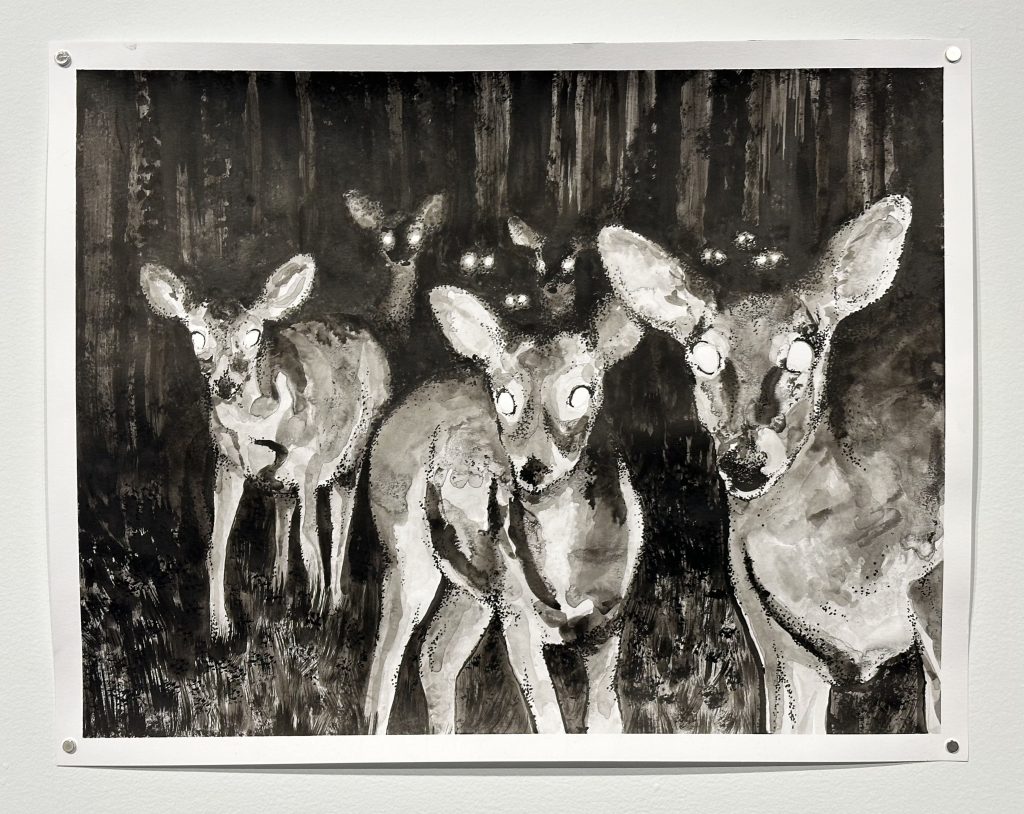
Rachel Augustson, “Gaze”, Ink on Paper, 2023

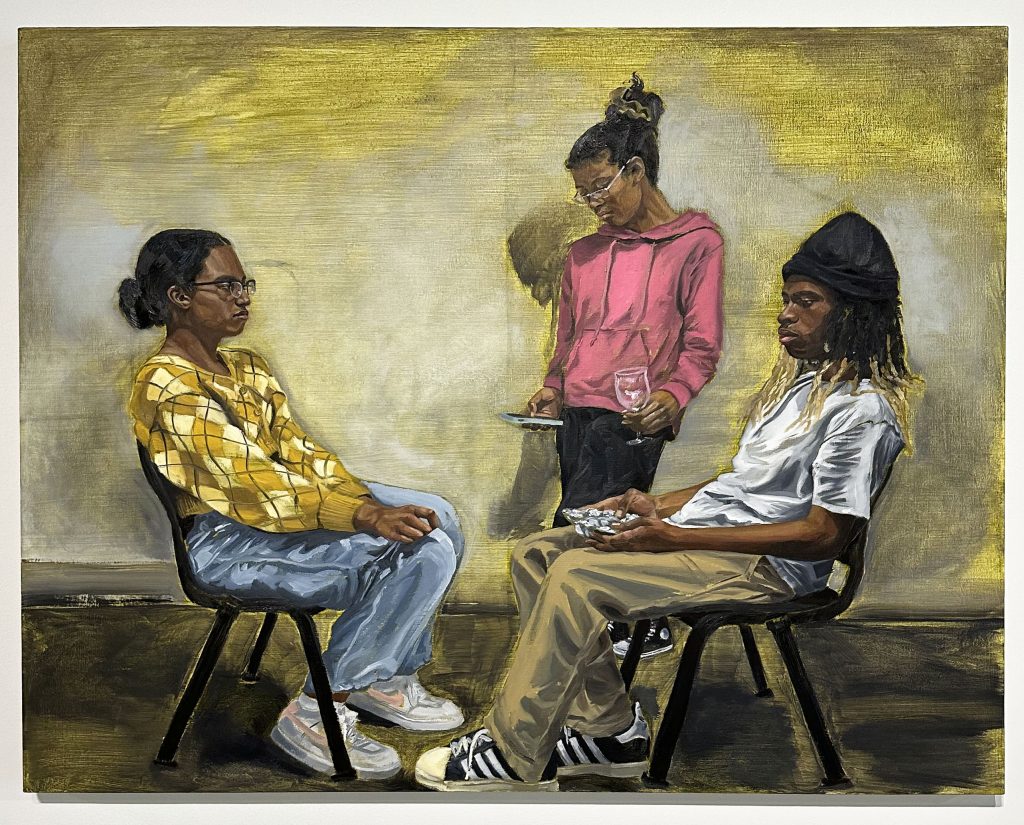
Ashton Burton, “…”, Oil on canvas, 2023

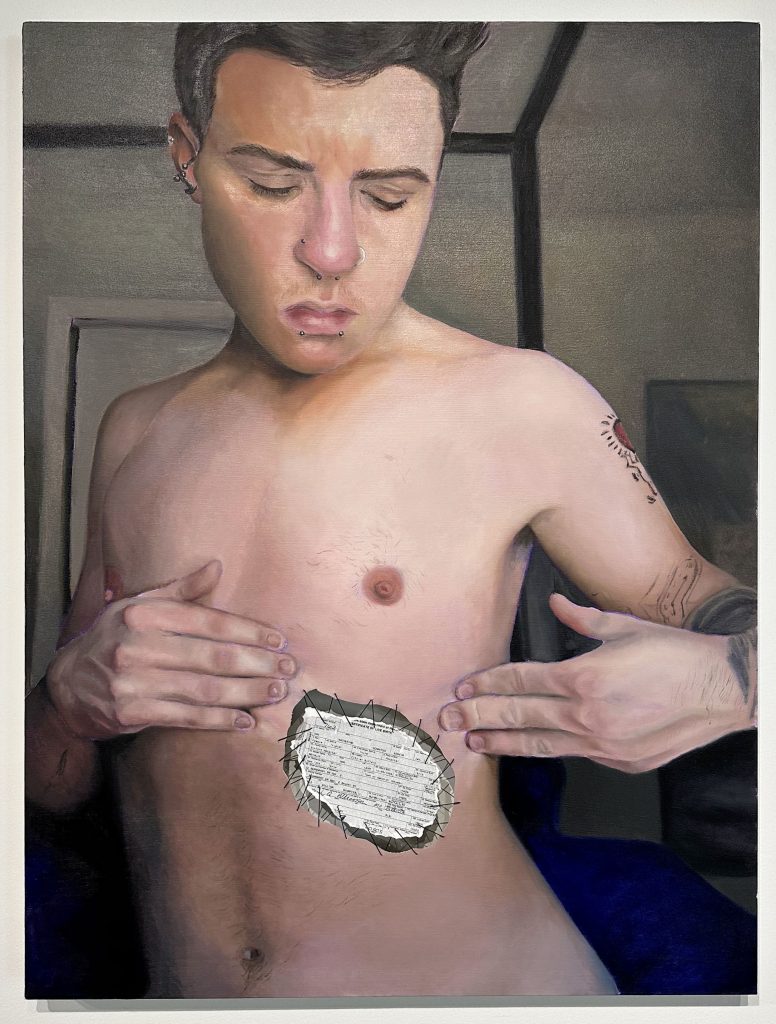
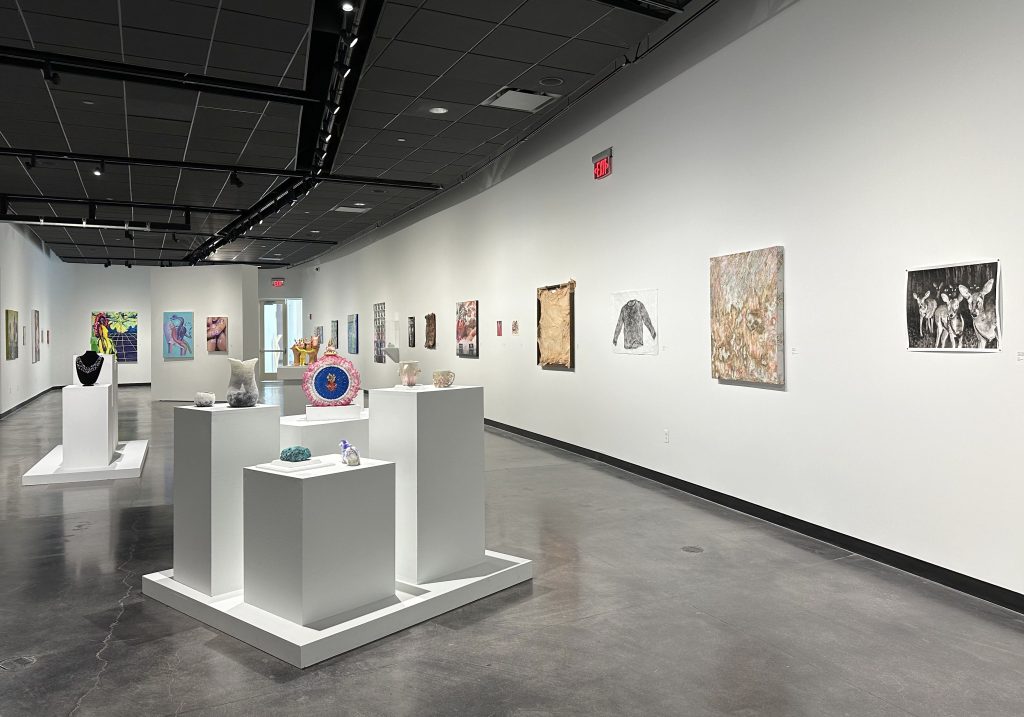
Cleveland Institute of Art’s 78th Student Independent Exhibition is currently on view in their Reinberger Gallery. The juried show is organized by the students and includes work from all mediums.

There are so many great pieces in this show, above and below are just a few selections.

This exhibition closes 4/7/24.

James Schaffer, “Bound”, Oil on canvas, 2023

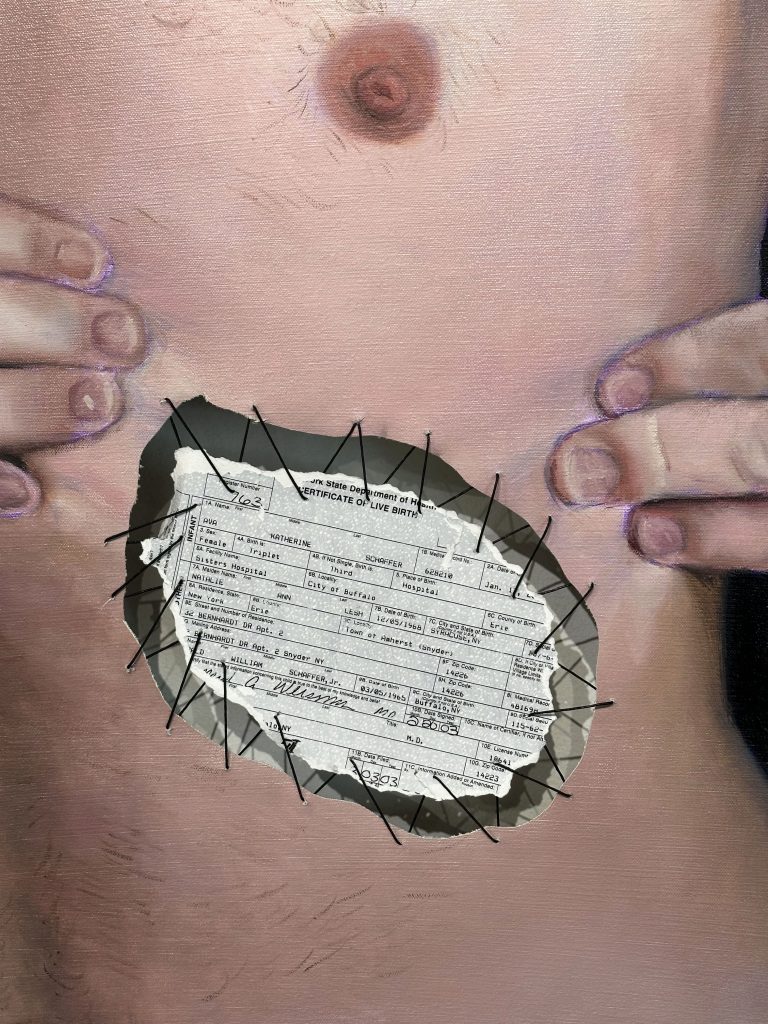
James Schaffer, “Bound”, Oil on canvas, 2023 (detail)

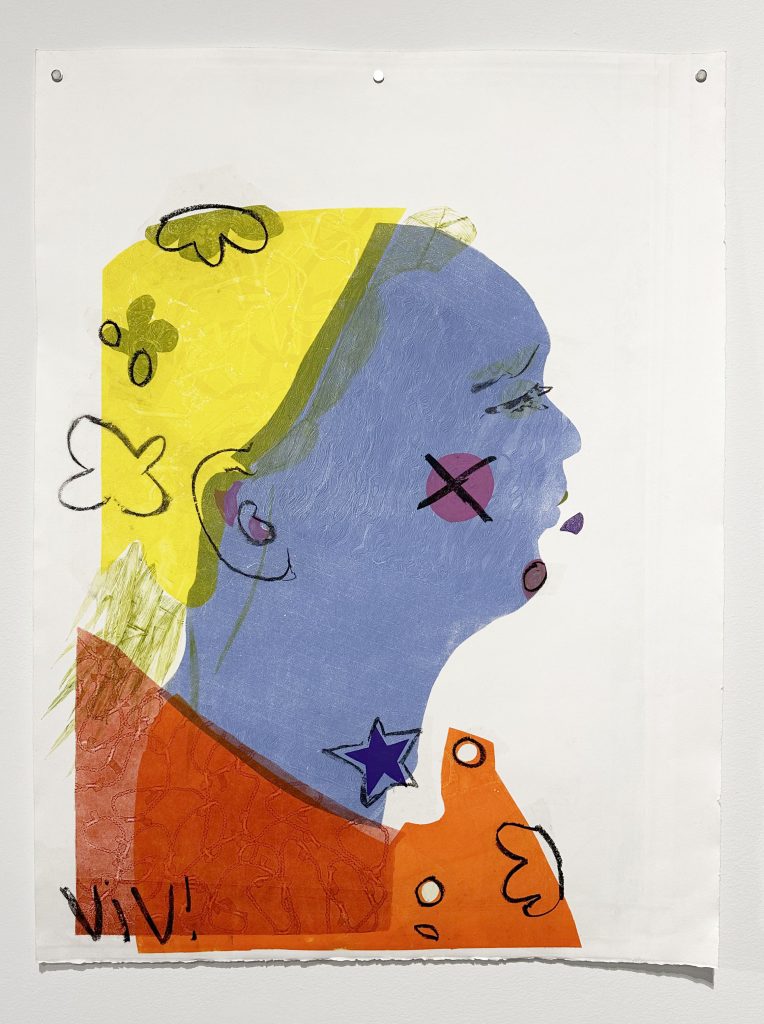
Gwen Putz, “Viv!”, Monoprint, 2023

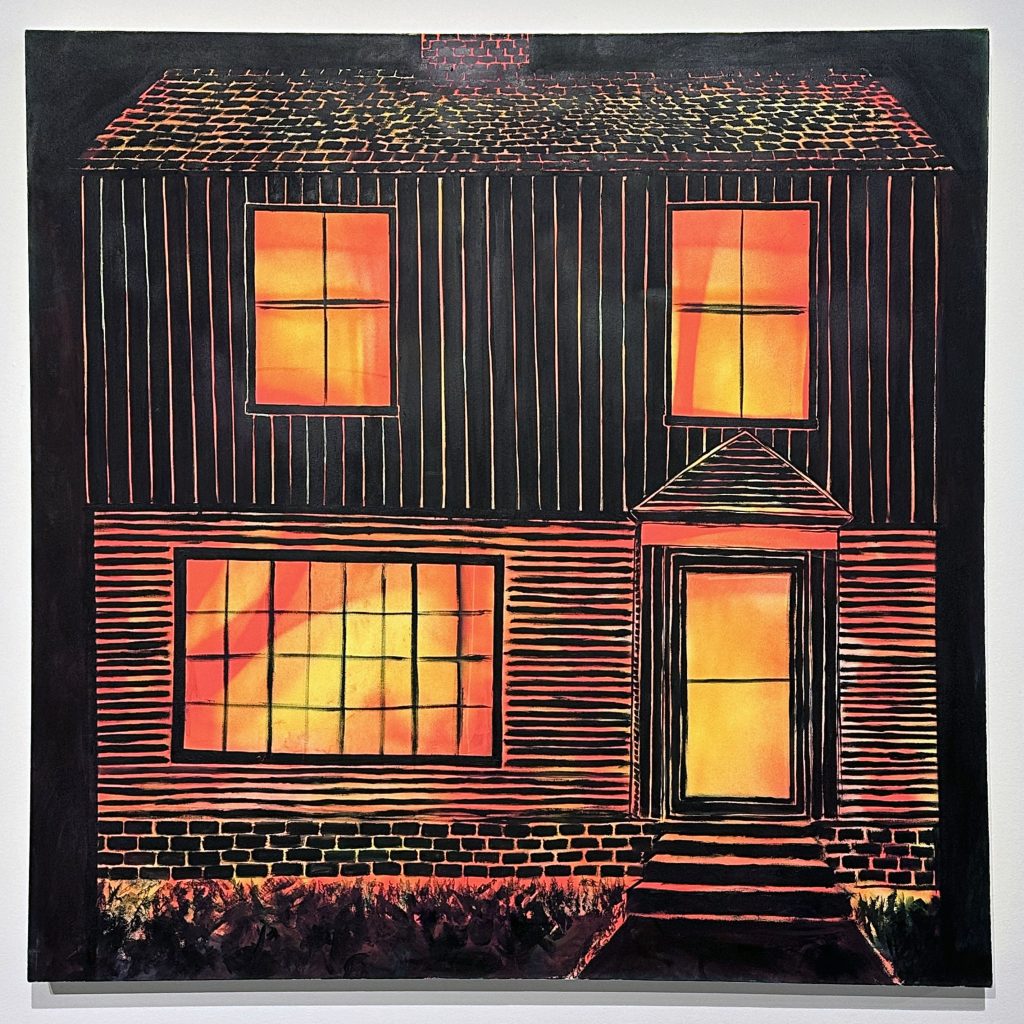
Tristen Kovacs, “897”, Spray paint and acrylic on canvas, 2023

Emily Fontana, “Untitled”, Acrylic and spackle on fabric, 2024

Emily Fontana, “Untitled”, Acrylic and spackle on fabric, 2024 (detail)

Mar 162024
 

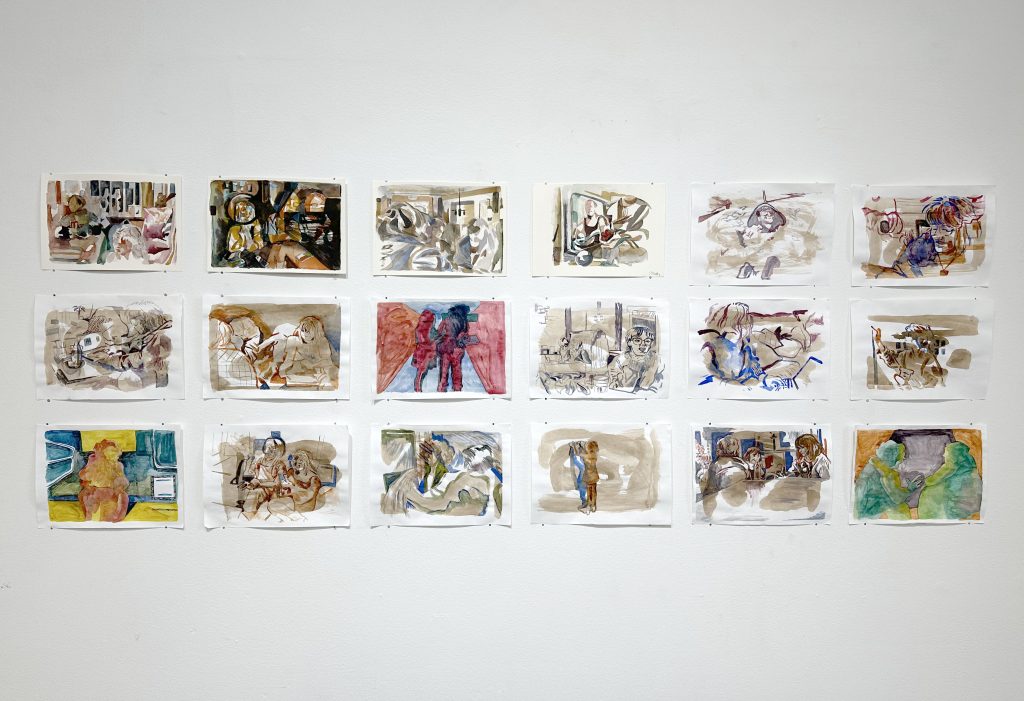
Watercolor paintings by Katherine Strobel

There is A LOT of work currently on view at Summit Artspace for their Winter Exhibitions (see the previous two posts) and it is worth mentioning these shows as well.

In the Welcome Gallery are watercolor paintings (seen above) by Katherine Strobel, for her exhibition, Bad Nostalgia.

Her statement about the work-

People forget to take pictures of things that don’t matter because it’s impossible to photograph qualities such as the feeling of an inside joke, the sound of an exhale through the nose, or dirty silverware that must be returned to the kitchen and replaced. These things act as set, pieces for what make up the rest of our lives. This series is a catalog of work that focuses on memory and candidness of a scene or subject. The people pictured are painted from life or candid photographs which are then emphasized from a naive image to something more. When an image is exaggerated with new colors and shapes it serves to make the mundane more desirable. The paintings are watercolors with a textured surface; the texture creates a sense of play with paper elements. In my work watercolor is often indicative of memory because of its ephemeral quality and transparent layers. This is because of how impossible it is to clarify every element that makes up a color when the layers are all compressed and viewed as a complete state.

Below are works from FRESH, an annual exhibition of local artists juried by Pita Brooks, Executive Director of Akron Soul Train. The website has all of the artists included and their statements and bios- definitely worth taking a look at what is being created in the area.

Michelle Eisen, “I’ve Made My Bed”, Silkscreen on hardboard

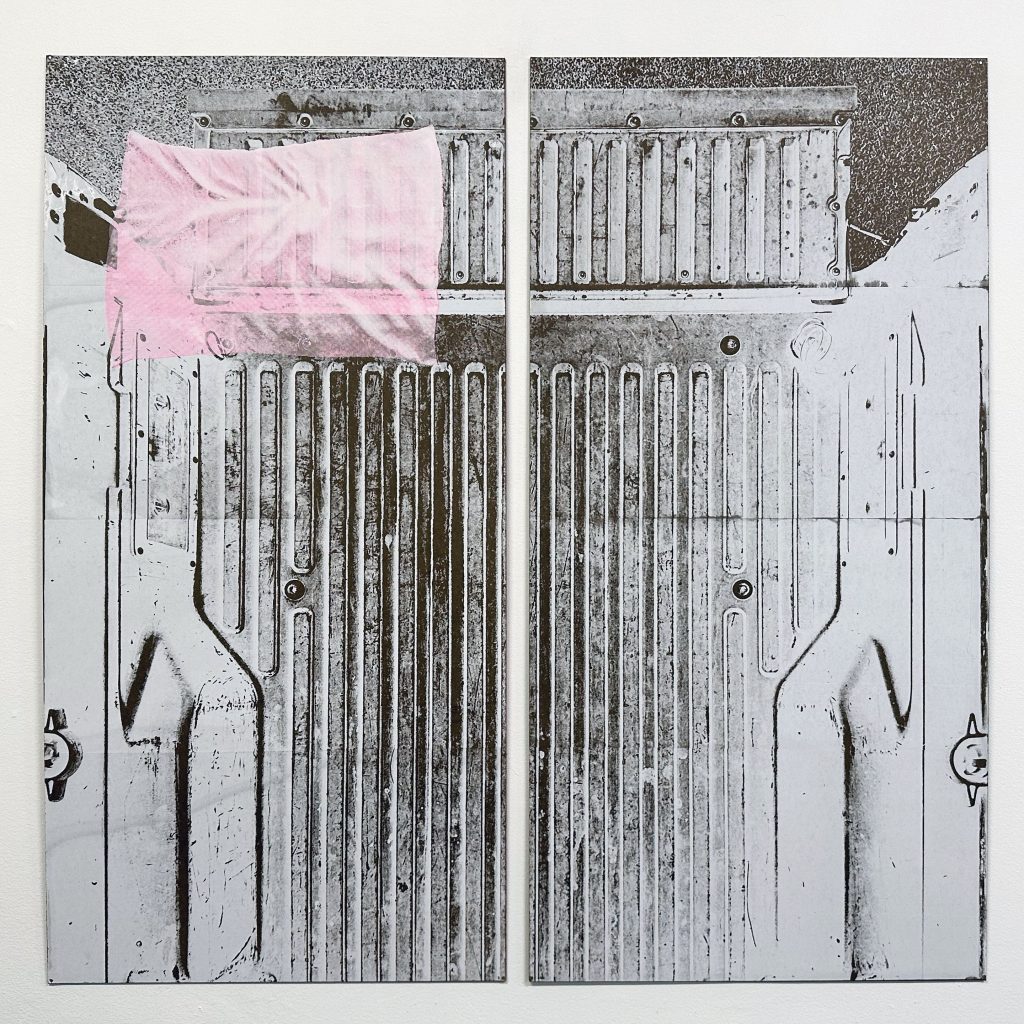
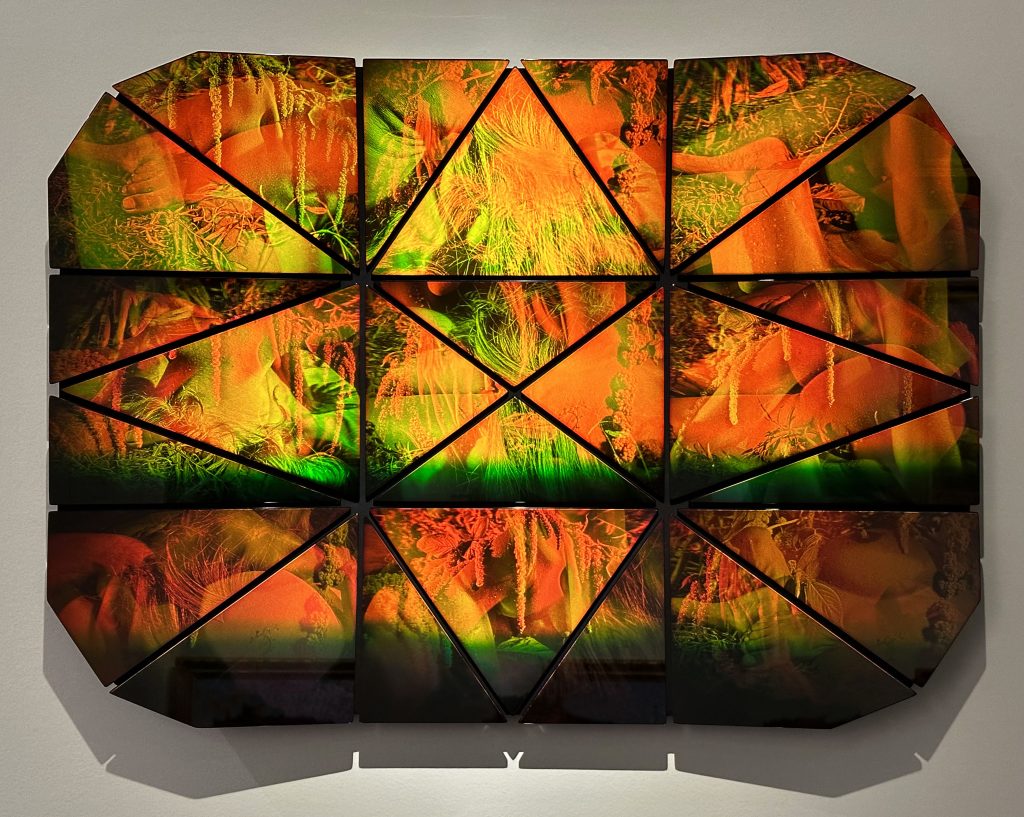
Steven Mastroianni “Fathomable Series #24”, Unique cameraless photogram, silver gelatin print

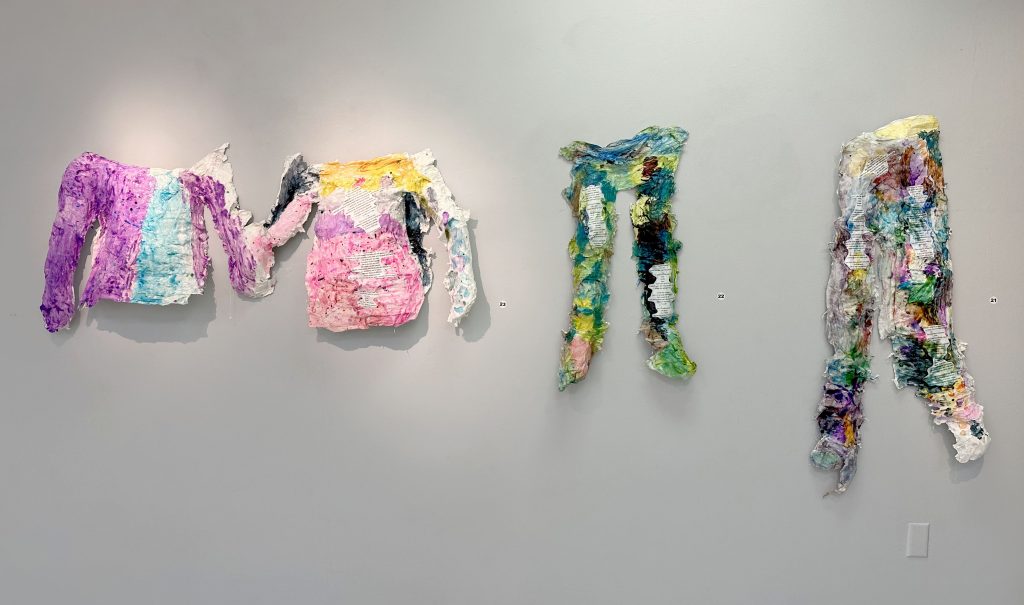
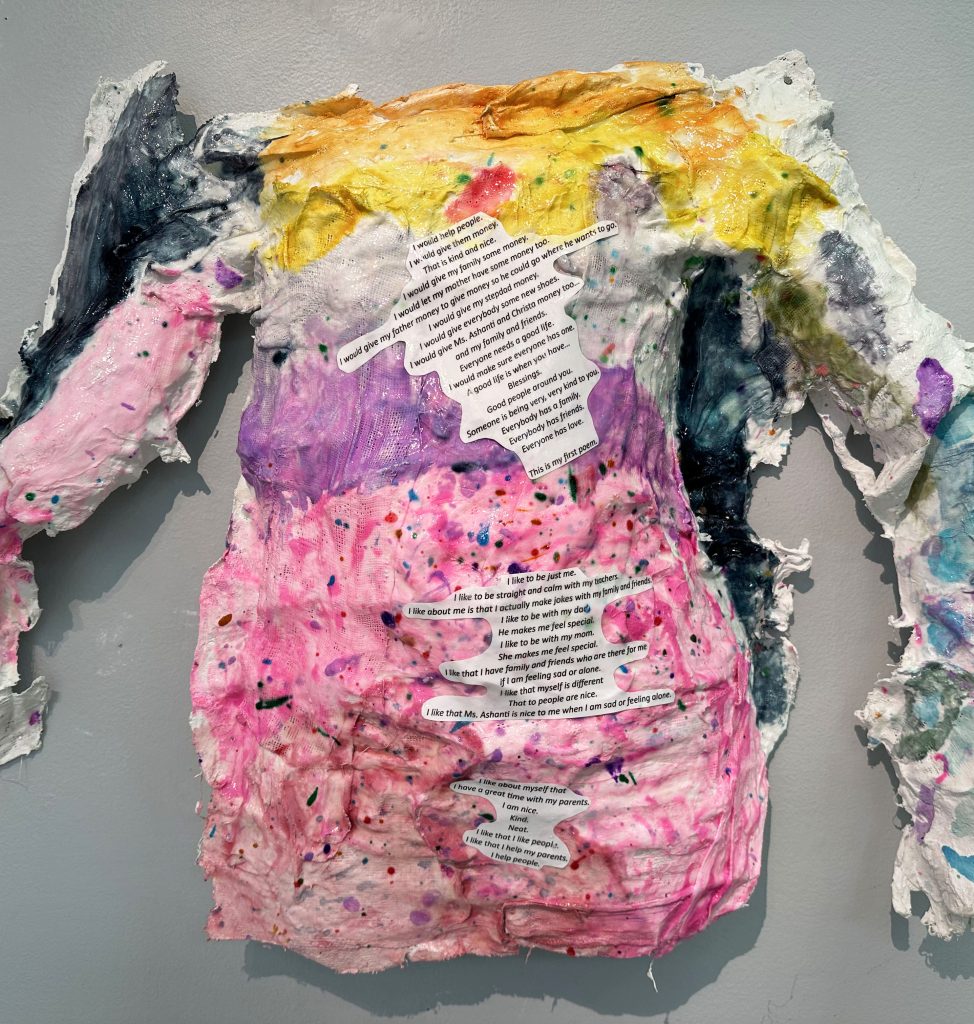
Finally, on view throughout the building are works by local students, teachers, and school leaders for Taking Care of Our House: Communities Coming Together and Making a Difference. The exhibition is made with the organization Art Resistance Through Change (ART-C). The works pictured below are a few of the sculptures created that included the personal narratives of the artists.

It’s worth mentioning that along with these exhibitions there are artists studios and galleries also in the building and worth checking out. Summit Artspace is open Fridays 12-7pm and Saturdays 11am-5pm.

Mar 162024
 

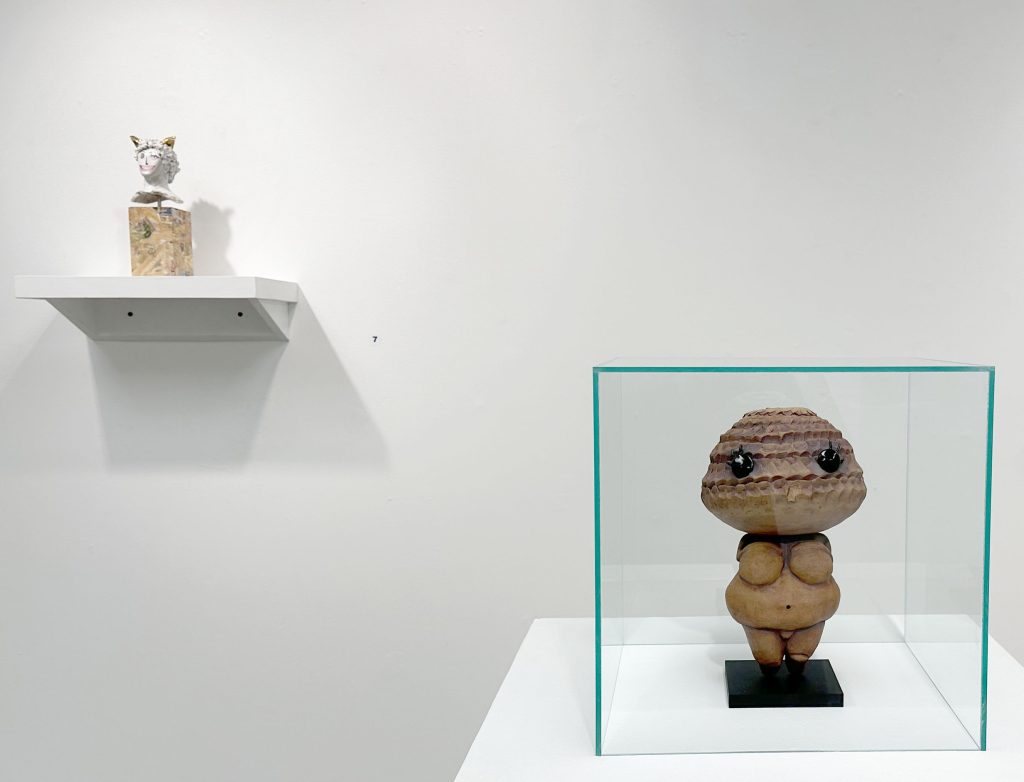
David Kruk’s solo exhibition Nobody Here at Summit Artspace in Akron, asks questions about the state of culture (or lack of culture) we are currently experiencing. Is the difference between the Venus of Willendorf and a Funko Pop just time period and material? Using the Vaporwave aesthetic, a remix of past pop culture in itself, he explores consumerism and nostalgia. Walking around the empty spaces in his video game creation, one is left wondering- what comes next?

The artist’s statement about the work-

This exhibition will consider Mark Fisher’s concept of “lost futures” through the aesthetics of Vaporwave and Funko Pops. I am interested in how these anachronistic objects utilize nostalgia through the remixing of cultural references to engage with consumer capitalism. According to Fisher, this continual referencing of the past exemplifies contemporary society’s cultural stagnation and the erosion of collective imagination towards a radically transformative future.

The sculptures in the exhibition are intended to push these anachronisms a bit further; to undergo a life cycle of adaptation and re-contextualization. I enjoy thinking about the ways in which something like Vaporwave can function as a critique of consumer culture, questioning capitalism’s impulse to commodify everything in sight, including our identities and memories. Vaporwave was born from the internet, and its aesthetic continues to be quite popular within online communities. These communities may often be collectors of pop culture paraphernalia: such as Funko Pops, which I’ve become interested in for their cultural symbolic value. Collecting Funko Pops can provide a source of aesthetic stability for some, while simultaneously operating as totems for coping with the realities of adulthood.

Conceptually within this exhibition, I wonder about the ideological trajectory from ritualistic idol to mass-produced fandom figurine, how capitalism influences our engagement with nostalgia, how the concept of a collectible operates within the spheres of the household to the museum, and how an art object may change over time through being digested through the body of consumerism.

For the video below, available on the gallery’s website, Kruk discusses his work – from tracing images using an oven light as a child, to a growing interest in sculpture, to creating the interactive video game from the show.

This exhibition closes 3/16/24.

Feb 272024
 

Jo Westfall, “The Queens Astronomer”, 2023, Mixed media

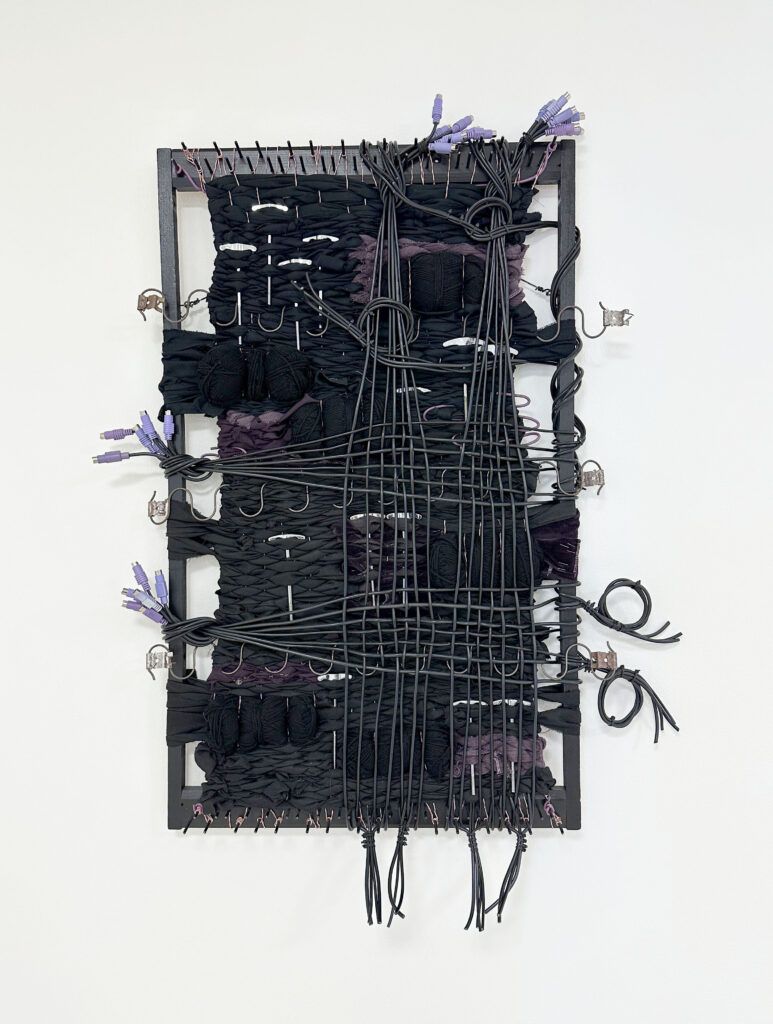
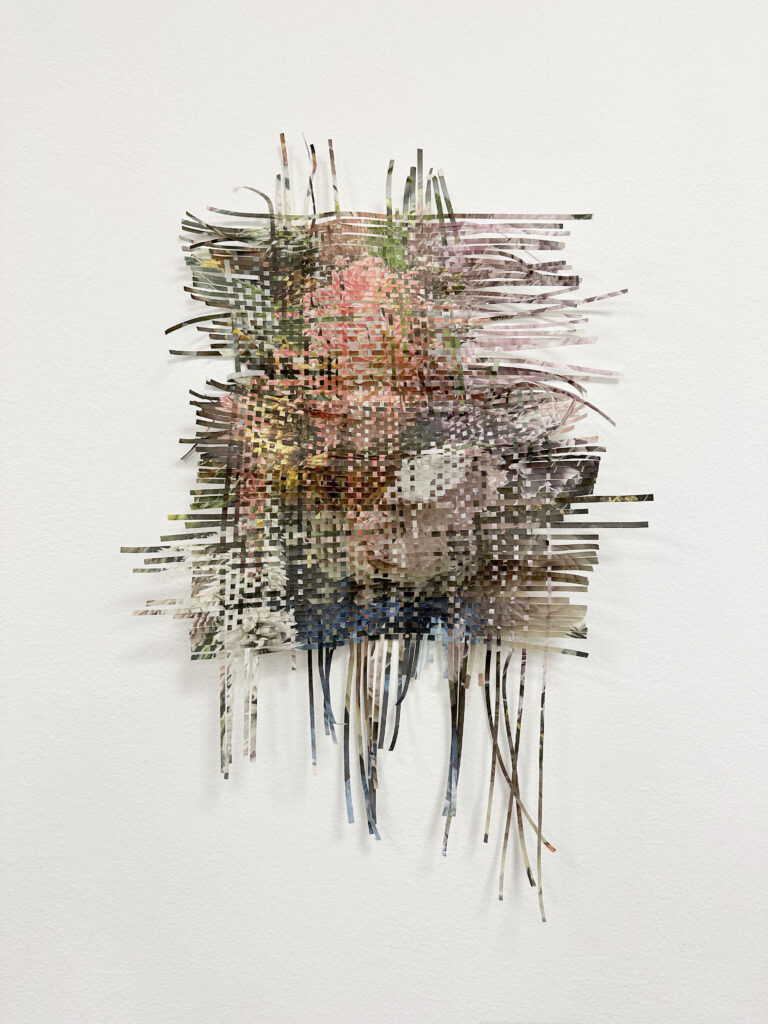
Christine Mauersberger, “Kates Bouquet”, 2022, Digital print on Japanese Kozo paper, of loom weaving

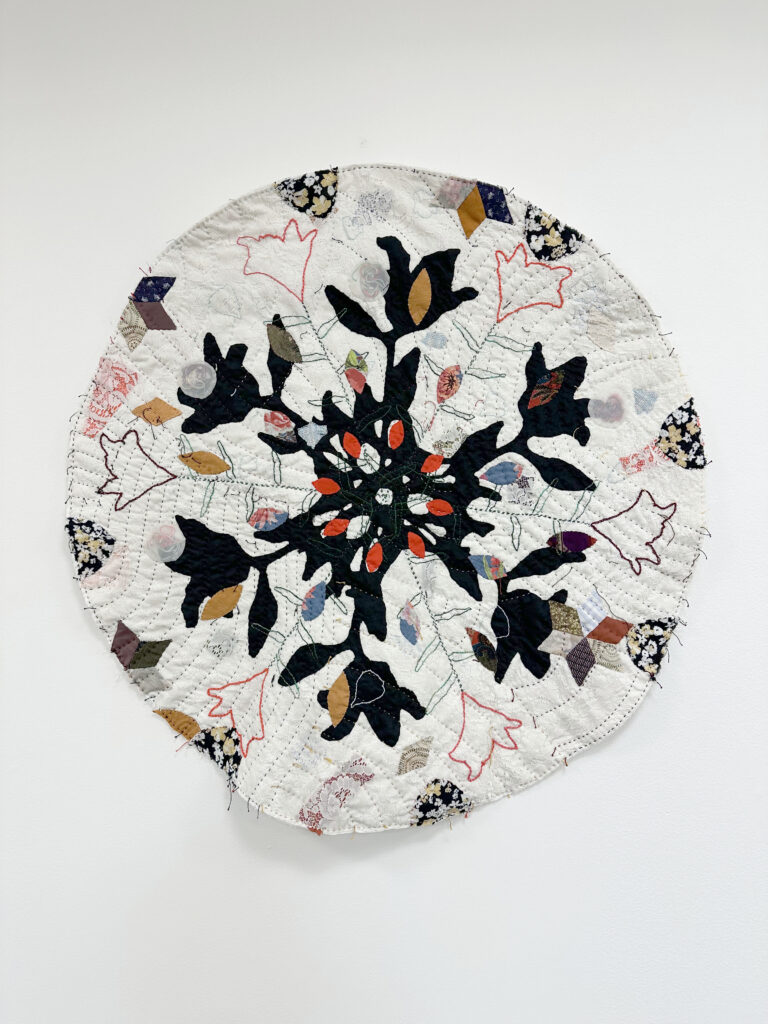
Cat Mailloux, “Rose Window”, 2023, Quilted appliqué on found fabric

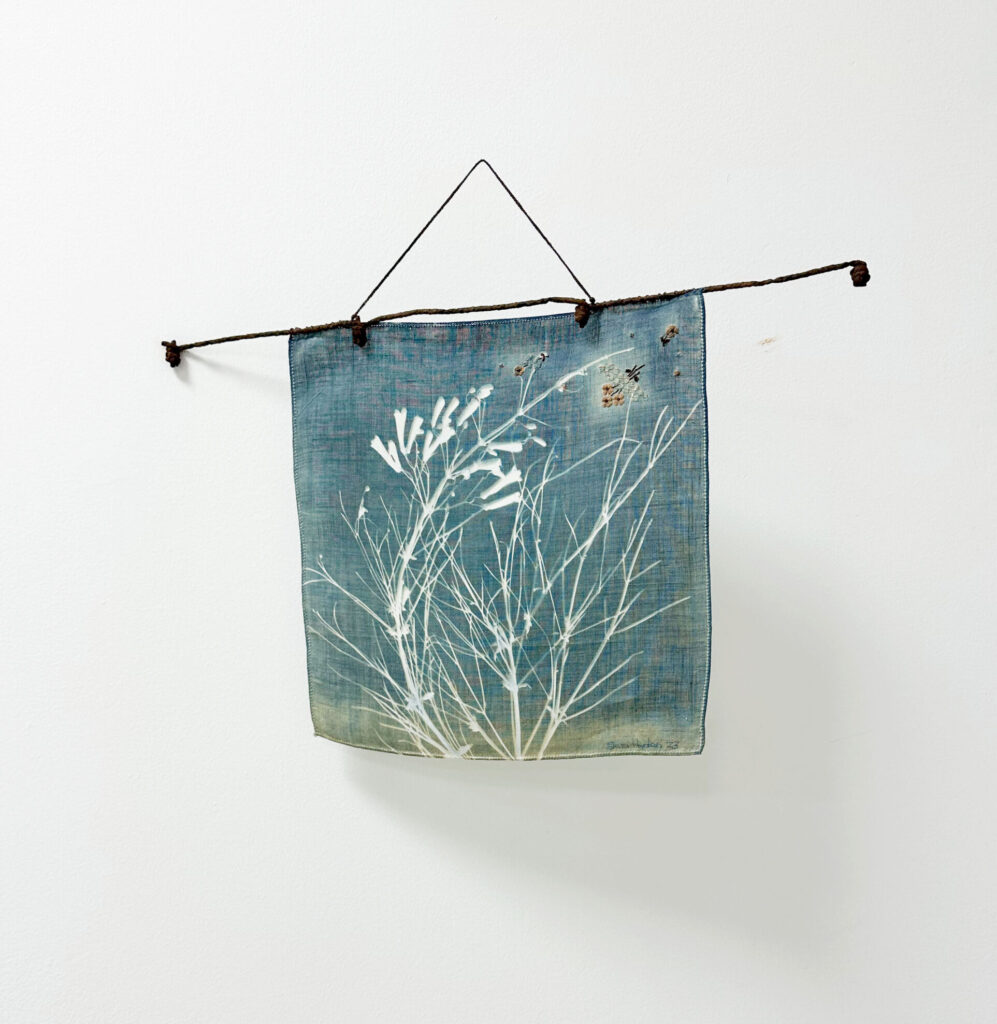
Suzi Hyden, “If the Sun Could Kiss Me”, 2023, Toned cyanotype on vintage linen hand-stitched onto metal fencing

Above are a few of the works from Common Thread, the current exhibition at Malone University’s art gallery. It is on view until 2/29/24.

From the gallery about the show-

Although quite different, all artists in this exhibition are united by the idea of textiles. Suzi Hyden’s work celebrates the environment by combining elements from nature and repurposed materials to create cyanotypes on vintage fabrics.

Cat Mailloux’s textile practice is focused in quilt making, pursuing connections between the visual language of churches, cathedrals, and domestic spaces that slowly bleed their way into imagined and limitless landscapes, exploring questions of the infinite through material.

Christine Mauersberger’s body of work is aesthetically eclectic. Hard and soft. Digital and analog. Some pieces fill a room, others can be held in your hand. The common thread is that each piece attempts to make the invisible visible.

Jo Westfall creates visual work considered resource art. It is portraiture, fiber art, and assemblage made with local materials that were discarded, overlooked, or unused. It reclaims the aesthetic capacity and utility of these items by integrating them into fresh renderings.

Feb 262024
 

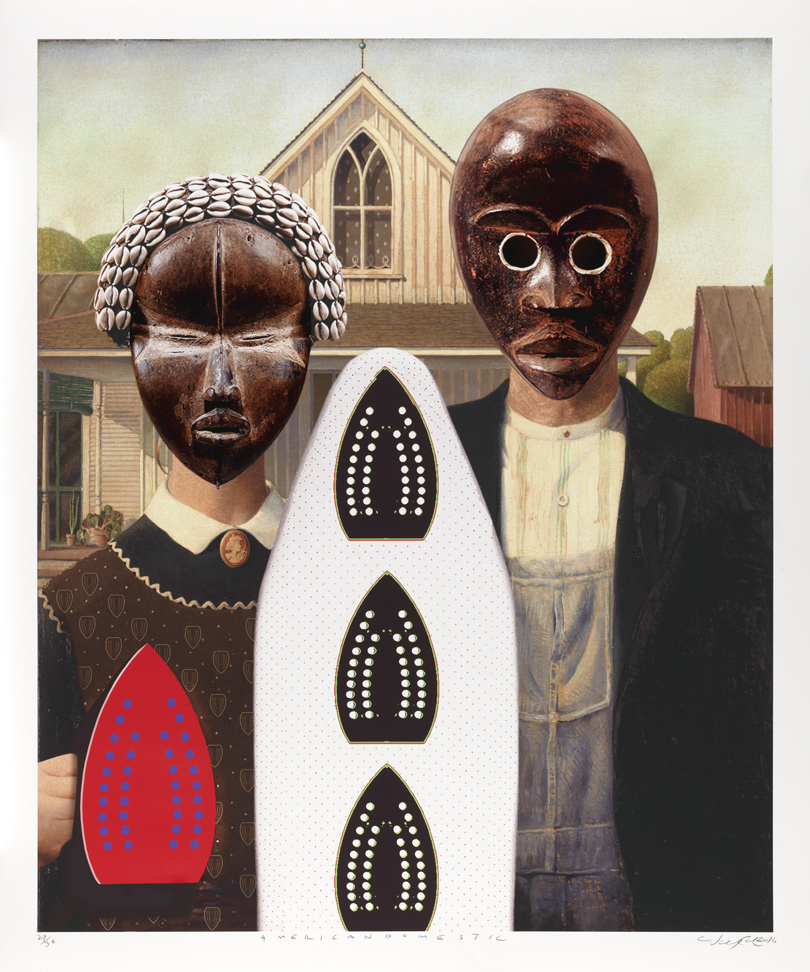
Willie Cole, “American Domestic”, 2016, Digital Print

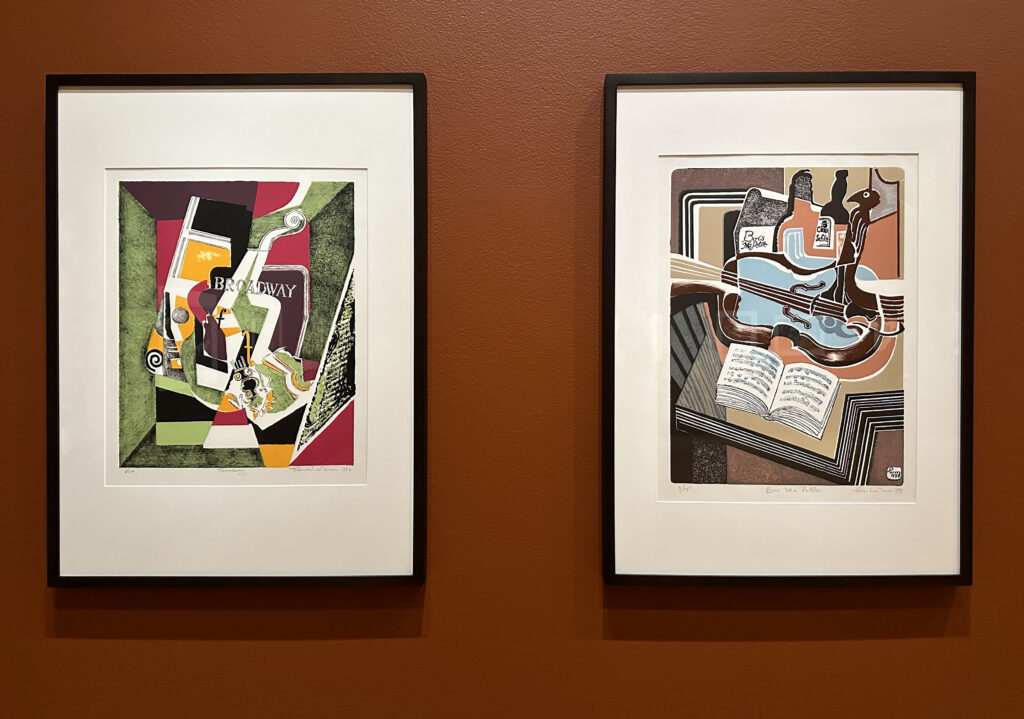
Tom Laidman, “Broadway”, 1993 and “Bois Ma Petite”, 1999, Lithograph on paper

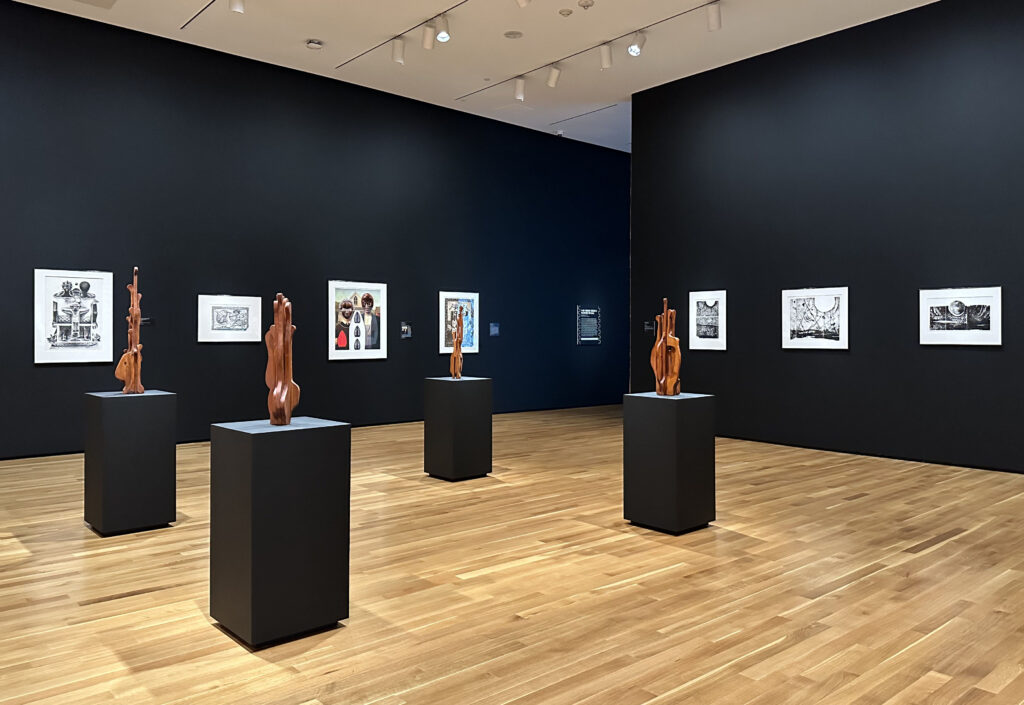
Currently on view at Akron Museum of Art is RETOLD: African American Art and Folklore, a collection of art from the Wesley and Missy Cochran collection, organized into themes exploring aspects of African American history and culture. The show features many well known and lesser known artists including Amiri Baraka, Beverly Buchanan, Willie Cole, Trenton Doyle Hancock, William Pope.L., Tom Laidman, Jacob Lawrence, Alison Saar and more.

From the museum about the exhibition-

African folklore has been around as long as humankind, and the African diaspora in America has added new dimensions to its rich history. African American folk stories teach about culture, the mysteries of life, and the survival of a race of people bought and sold who continue to thrive in an unjust society.

“RETOLD: African American Art and Folklore” focuses on four themes: Remembering, Religion, Racialization, and Resistance. These themes provide a comprehensive retelling of the works featured in the exhibition. In many of the pieces, the artist’s muse connects closely with stories that have been told generation after generation. Folklore texts are featured throughout the space as a means to retell a richer, deeper story of African American culture.

There are more than forty artists represented in this exhibition, all holding one similar truth: their story of joy and struggle in the African American experience.

In addition to the artwork, there is also an educational video produced by Josh Toussaint-Strauss of The Guardian that explores the misconceptions about Haitian Voudou that is worth a watch.

How ‘voodoo’ became a metaphor for evil

Feb 232024
 

Wadsworth A. Jarrell’s Revolutionary (Angela Davis), 1971, spotted at Brooklyn Museum in 2020, is based off of a photograph of the activist.  The colorful painting includes words from her speeches and actual bullet cartridges.

From the museum about the work-

Wadsworth Jarrell’s Revolutionary (Angela Davis) is one of the most recognized paintings associated with the Black Arts Movement, a cultural manifestation of the Black Power Movement. Artists of this movement sought to create uplifting images that called upon Black people to harness their collective power. The power of communal action is here expressed through a chromatic swirl of individual colors that coalesce into a unified image of the radical activist and intellectual Angela Davis. Davis’s militant clothing—complete with bullet cartridges—was modeled after the Revolutionary Suit designed by artist Jae Jarrell, Wadsworth’s wife. An icon of Black Power, Davis continues to lead the prison abolition movement today.

Jarrell, along with his wife, is part of the African American artist collective AFRICOBRA, formed in Chicago in 1968.

Below is part of a statement about the group from their website by another of the founders, Gerald Williams.

AFRICOBRA began very loosely in 1968 as an association of visual artists. We decided to commit our selves to the collective exploration, development, and perpetuation of an approach to image making which would reflect and project the moods, attitudes, and sensibilities of African Americans independent of the technical and aesthetic strictures of Euro-centric modalities.  Jeff Donaldson, who spearheaded the movement,Wadsworth Jarrell, Jae Jarrell, Barbara Jones-Hogu, and myself, Gerald Williams opened the lid on what we called AFRICOBRA – African Commune of Bad Relevant Artists.  It was an original name that came to identify our place within the broader context of Black art.

Our mission was to encapsulate the quintessential features of African-American consciousness and world view as reflected in real time 1968 terms.  For months, beginning as early as 1967, we examined and talked about the forms of expression and images produced by previous generations of artists.  We came to the realization that there was not the existence of a consistent, unequivocal, uniquely Black aesthetic in visual arts as there was in other disciplines, notably music and dance. Many of our contemporary artists, at the time, generally said that they “were artists who happened to be black”, or held the view that their work was expressing universal ideas or concepts that were not tied to such a narrow category as Black art.   The notion of an intrinsically Black view point, expressed in characteristically “Black ways”  was a relatively alien idea for the most part.  That notion begged the question as to whether it was possible to create a style or approach to art that at its core could be identified as African-American or Black, notwithstanding  the presence of Black imagery or subject matter.  If imagery and subject matter were the sole criteria then the question was moot.  One could conclude, thereby, that Winslow Homer or any number of artists produced Black art when they painted Black images.  After numerous brain storming sessions where such topics were discussed, after test projects and critiques,  the five of us mapped out the core principles that became the foundation of AFRICOBRA.


Feb 152024
 

“The Flameless Green Dragon”, 2018, Elm and acrylic

“In Rhythm”, 2018, Elm and acrylic; and “Water Music”, 2002, Inkjet photocollage on paper

“Introvert”, 2019, Elm; “Engendering Life”, 2020, Green soapstone

Two left sculptures made of Italian translucent alabaster and “Harboring Emptiness”, 2021, Maple and acrylic

Above are several works from Barbara Stanczak Spirit and Matter, the artist’s recent exhibition at Akron Art Museum.  Stanczak’s sculptures are energetic shapes created in partnership with the natural materials used.

From the museum’s web page-

Barbara Stanczak’s sculptures are born from an essential combination: the artist’s creative vision and the natural qualities of her materials. This two-sided collaboration remains in effect throughout Stanczak’s entire process of conceiving and creating an artwork. A piece of wood or stone presents initial possibilities that help to set a direction, but invariably the course will change—the substance may be so hard as to resist carving, or it may contain internal structures that must be accommodated. But the artist does not surrender her own interests, as she has found that a successful work must become the physical embodiment of a rich and valuable idea. In her own words, “I can only hold onto my idea of the whole by letting go of ‘mine’ and focusing on ‘our.’ The material becomes a partner who needs my patience, respect, thoughtfulness, cooperation, skill, and persistence.”

Stanczak committed to working with wood and stone only after a long process of discovery. Born in Germany in 1941, she moved to the United States in 1960 to assist her grandfather in painting church frescoes, and later worked in handmade paper, metal, and a variety of other media. She also worked alongside her husband, Julian Stanczak, whose paintings and prints were celebrated at the Akron Art Museum with a one-artist show in 2013. As her own career evolved throughout her thirty-seven-year tenure as a professor at the Cleveland Institute of Art, Barbara carved her first wooden sculpture in 1992. “I was tired of searching,” she recalls. “It was time to arrive!”

Stanczak continues to find wood and stone compelling because, as she puts it, they are constantly “teasing, tempting, and provoking me to see more, to see beyond, to see the micro and the macro of the universe.” She finds these universal qualities not in immediately recognizable forms like leaves and flowers, but rather in dense rings and layers, subtle features formed over decades or even thousands of years. As Stanczak exercises her own intuition, she aligns it with these natural processes. As the artist and the materials harmonize, it is as if two forms of intelligence are working together—as if spirit and matter are not so separate as one might expect.

Dec 222023
 

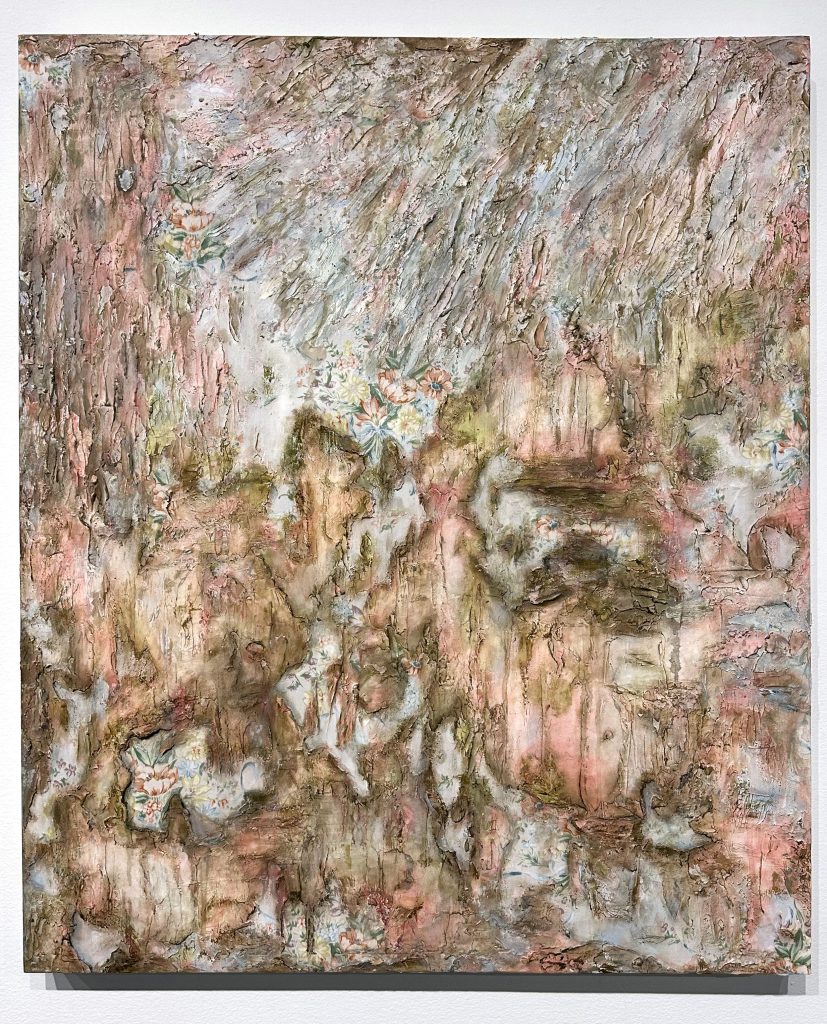
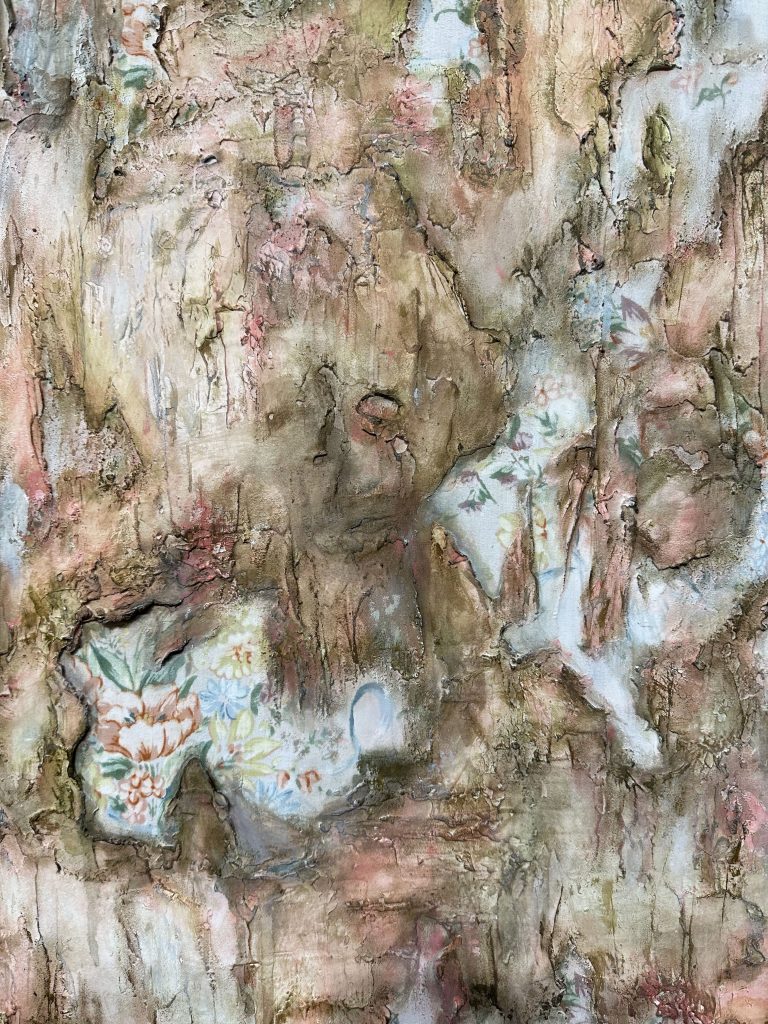
José Parlá’s majestic paintings, pictured above, are from his series CICLOS: Blooms of Mold. They are currently on view as part of the Brooklyn Museum exhibition, Brooklyn Abstraction: Four Artists, Four Walls. The other artists included are Maya Hayuk, Kennedy Yanko, and the late Leon Polk Smith.

From the museum about the work-

In his monumental compositions, José Parlá layers and scrapes paint to obscure, reveal, and abstract both text and narrative, creating landscapes with textured gestural skies interwoven with a unique code of writing to reveal a new horizon with a universal line. Parlá’s abstracted text visually recalls underground mycelium formations, complex and mysterious fungi communication networks he references that interconnect everything on earth through a web of life. The five newly created paintings on view draw upon his youth as a Cuban American in Miami in the 1980s, his world travels, his almost fatal battle with COVID-19 in 2021, and his survival and recovery.

While in a three-month-long coma after contracting the virus, Parlá experienced dreams that carried him through his healing process. While recovering in the hospital, he transformed these visions into acrylic on paper drawings and, once back in the studio, into these powerful, otherworldly paintings that evoke natural landscapes. Their distinct horizon lines and internal, precise, psychological geographies remind us of our shared humanity.

Blooms of Mold, this new body of large-scale paintings, was inspired by what the art historian Simon Schama, in describing the art of Dutch painter Rembrandt van Rijn, once called “blooms of mold,” which one encounters on decaying urban and natural landscapes.

Parlá chose the subtitle Ciclos (from the Greek Kúkos, meaning circle) to refer to the life cycle and the function of the mycelium. It connects to ecosystems, providing nutrients and information to trees, which, in turn, convert carbon dioxide into oxygen, providing critical support for the respiratory systems of humans and all other living beings. Without mycelium, there would be no life.

The exhibition will be on view until 7/28/24.

Dec 172023
 

The Arts Annual at Creative Pinellas is always a great way to see what the artists in the area are creating. For 2023’s larger than ever edition, there is also a separate space for a video program that includes short films, theater productions, poetry readings, musical performances and more.

Artists included in the exhibition-

Tatiana Baccari, Elizabeth Barenis, Christina Bertsos, Daniel Barojas, Chomick + Meder, Courtney Clute, Neverne Covington, Sheila Cowley, Patricia Kluwe Derderian, Nikki Devereux, Javier T Dones, Dunedin Music Society, Sara Ries Dziekonski, Sarah Emery, Roxanne Fay, Jean Blackwell Font, John Gascot, Denis Gaston, Mason Gehring, Donald Gialanella, Jim Gigurtsis, Kevin Grass, Sheree L. Greer, Jason Hackenwerth, Steph Hargrove, Patrick Arthur Jackson, Reid Jenkins, Kenny Jensen, Charlotte Johnson, Victoria Jorgensen, Steven Kenny, Candace Knapp, Akiko Kotani, Teresa Mandala, Cora Marshall, Carol Mickett & Robert Stackhouse, Miss Crit, Mark Mitchell, Chad Mize, Desiree Moore, Zoe Papas, Gianna Pergamo, Rose Marie Prins, Gabriel Ramos, Babs Reingold, George Retkes, Heather Rippert, Ashley Rivers, Marlene Rose, Ric Savid, Tom Sivak, Sketzii, Emily Stehle, Rachel Stewart, Erica Sutherlin, Takeya Trayer, Judy Vienneau, Kirk Ke Wang, Angela Warren, and Joseph Weinzettle

The show is on view until 12/31/23.

Below are some additional selections from the exhibition.  

Reid Jenkins, “Holding Court”, Acrylic

Candace Knapp, “What the Blue Heron Sees” and “The Light Within” Acrylic on canvas

Daniel Barojas, “Future Ancestor”, Gouache, acrylic, gold leaf on canvas and “Future Ancestor #3”, Gouache and resin on paper

Rachel Stewart, “Caribbean Currents” Colored pencil, oil stick and collage on Archers archival paper; “Under a Different Sky”, Wall installation Painted relief wood construction with cooper and mixed media materials; Printing Ink and collage on rice paper

Mark Mitchell, “The BurgHive”, Acrylic on Hexagonal canvases

Sketzii,”Out of the Pink Concrete”, “Reclamando Mis Raices” and “A Señora’s Dream”, Acrylic on canvas

Steph Hargrove, “Catch You Later”, Acrylic paint, paper on canvas

Marlene Rose, “Three Bell Tower”, Sandcast glass and “Map Triptych” Sandcast glass

Heather Rippert, “Shakti” (center) and “Hawk 1, 2, and 3”, acrylic on canvas