Aug 112021
 

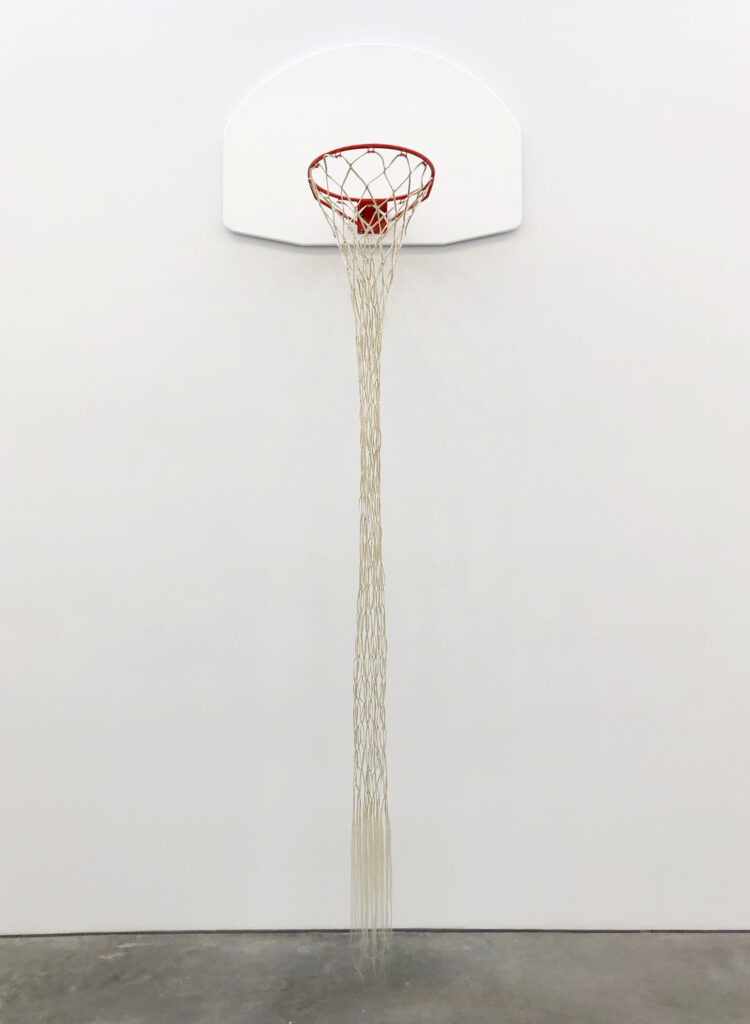
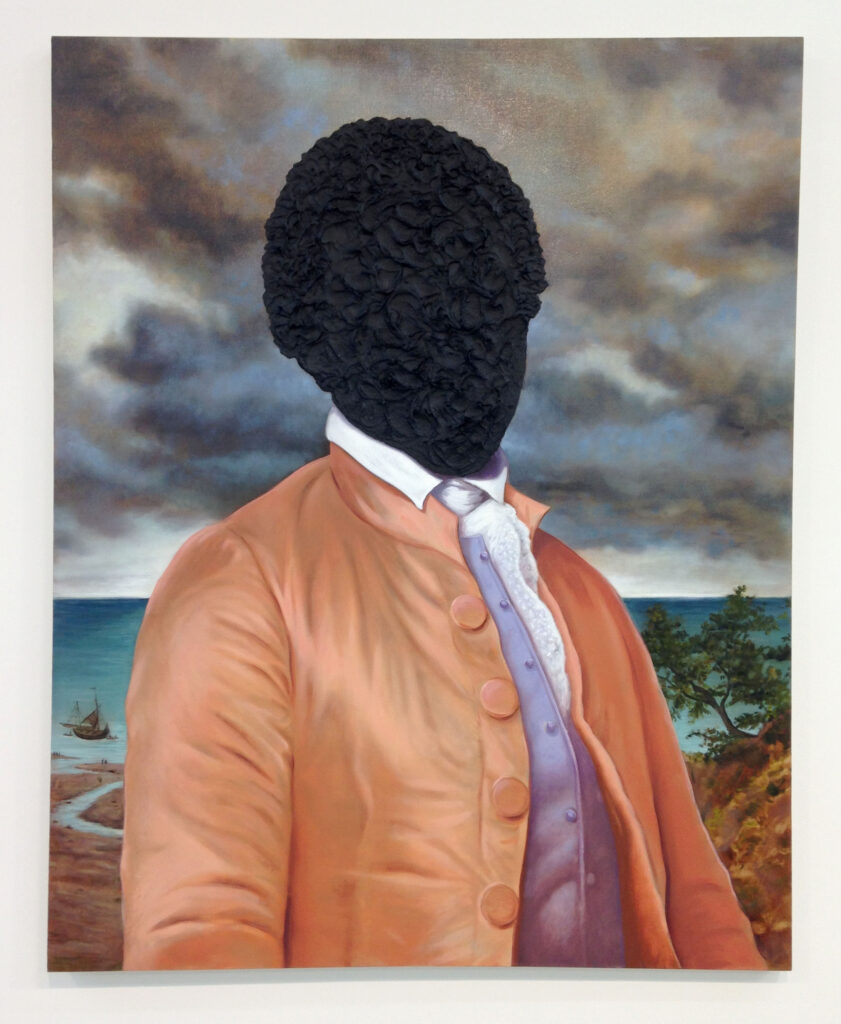
Rapunzel, 2021

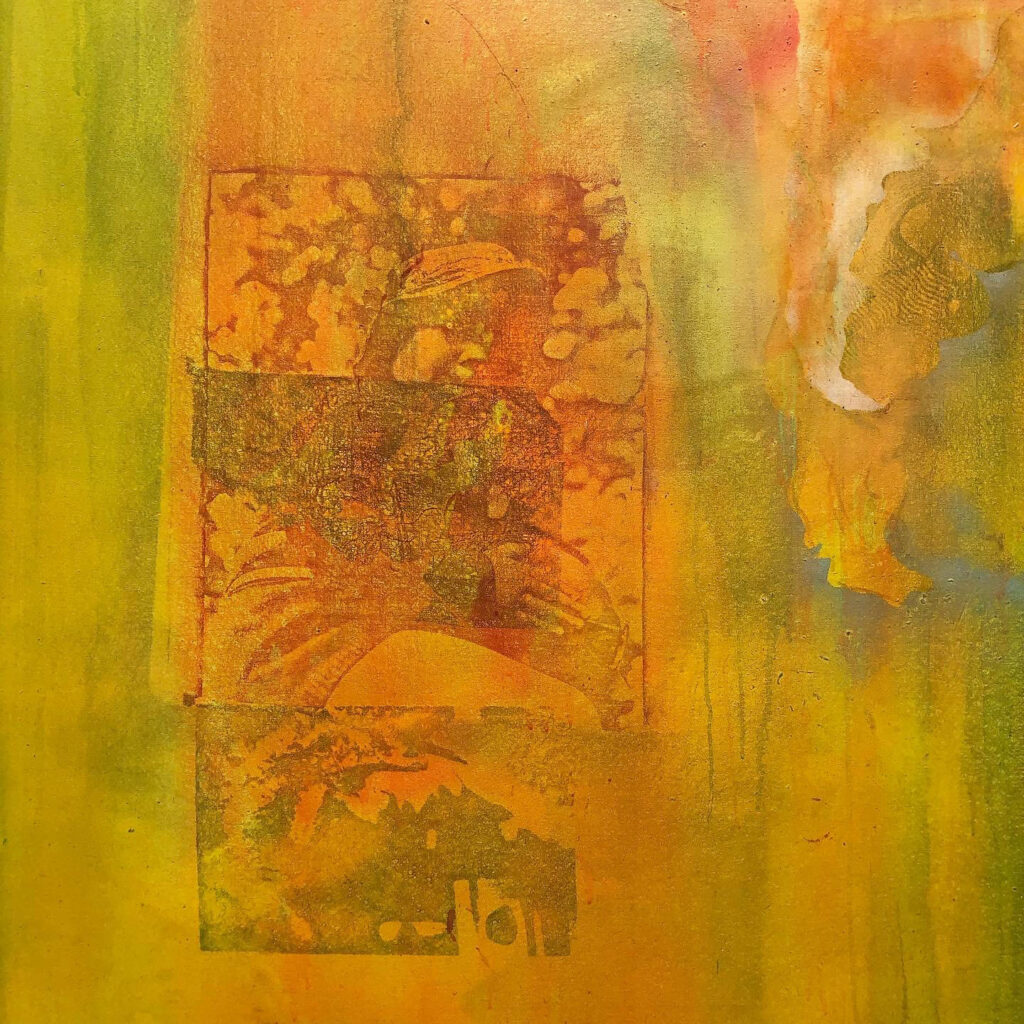
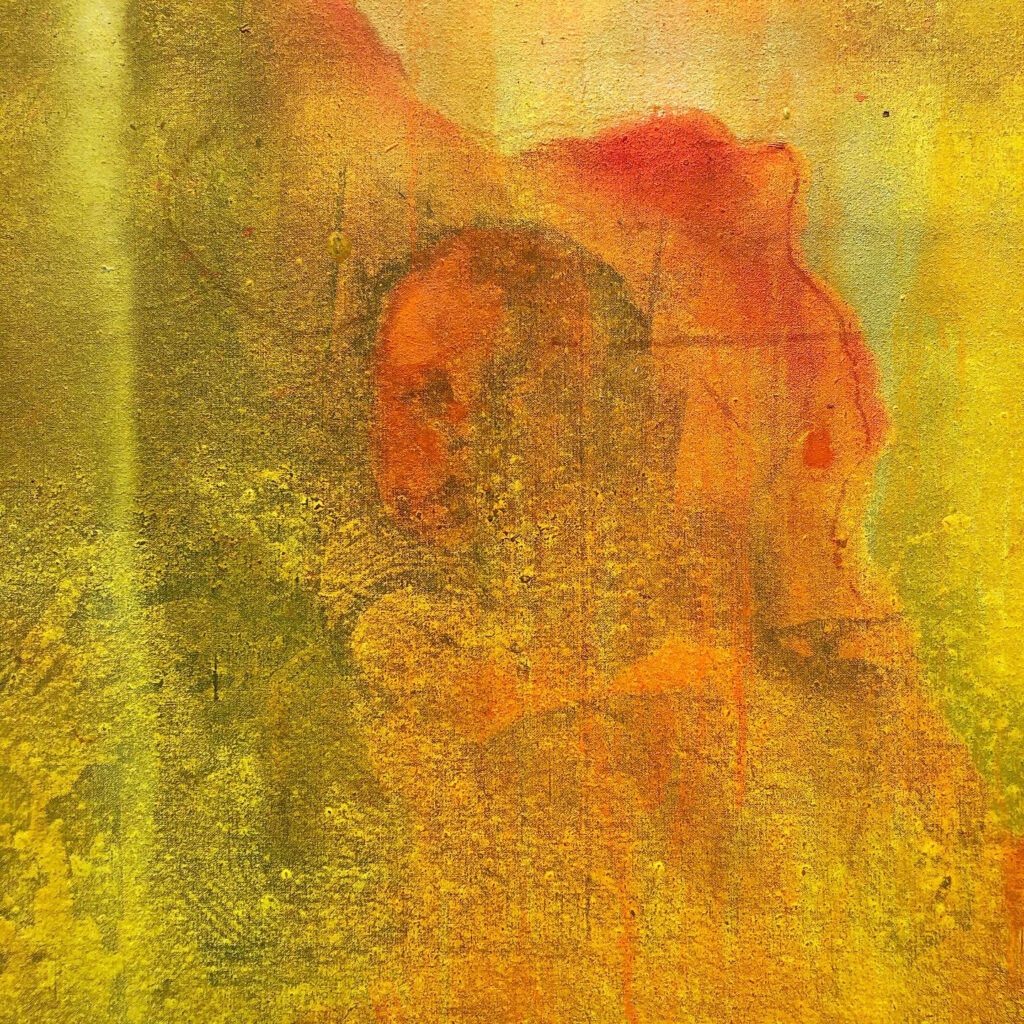
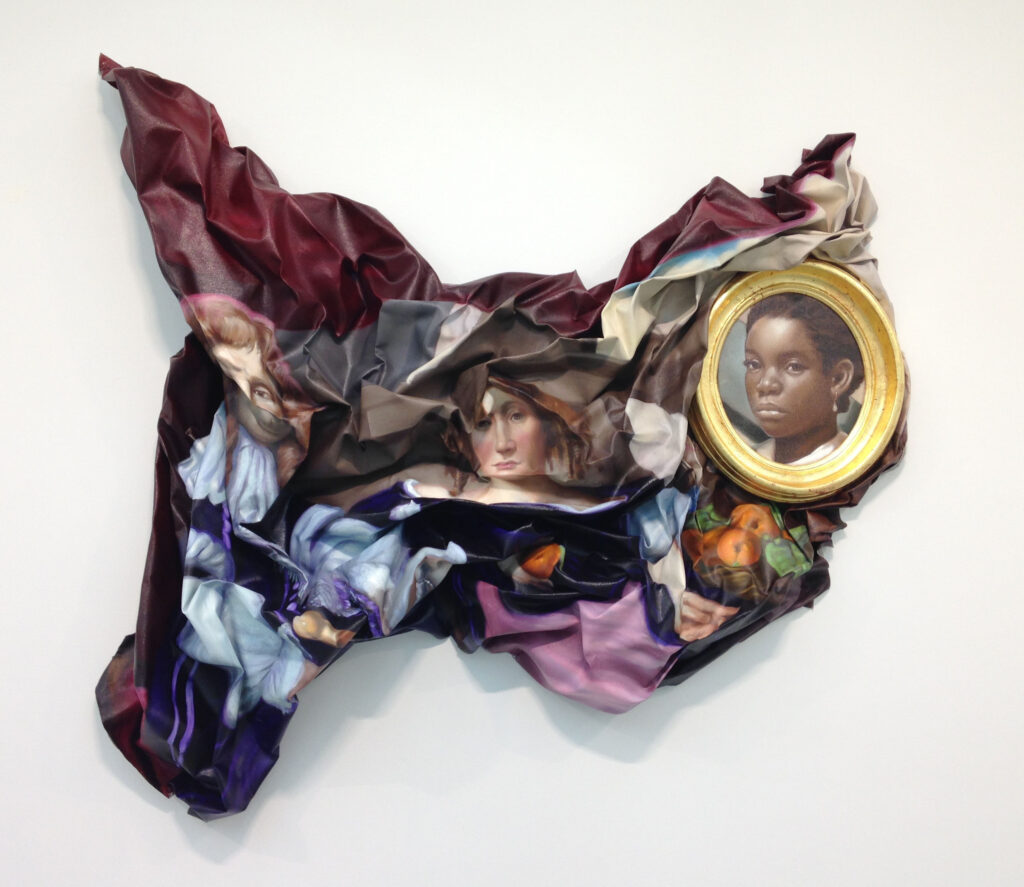
Fruity, 2021

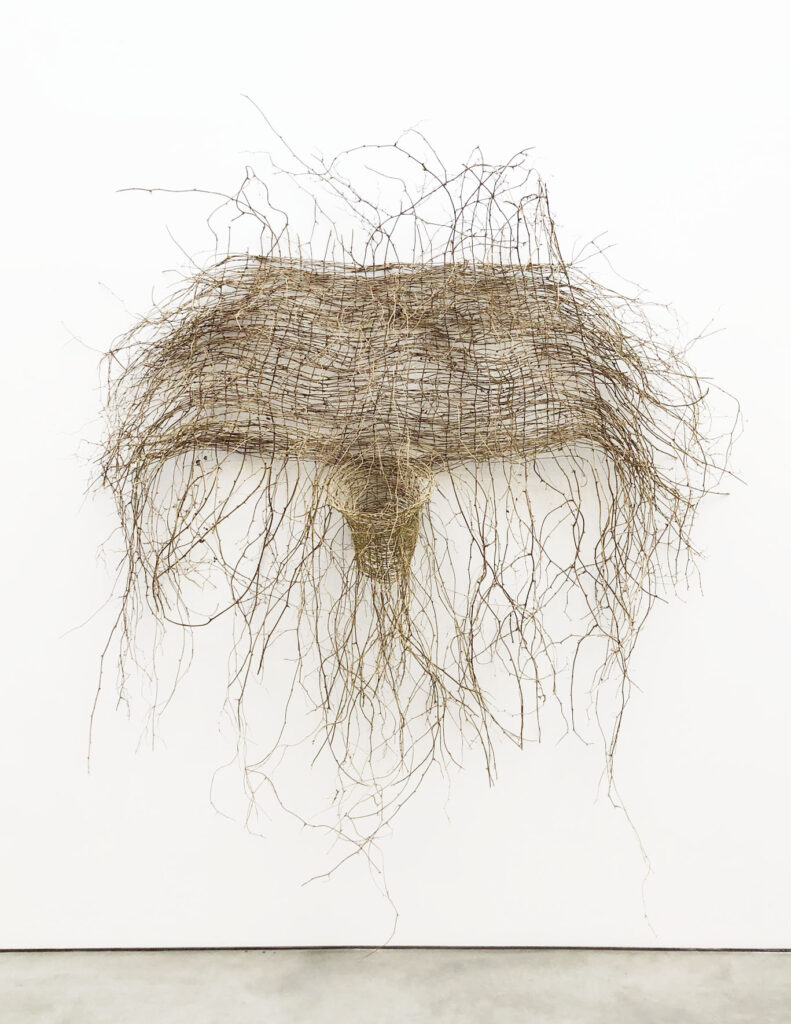
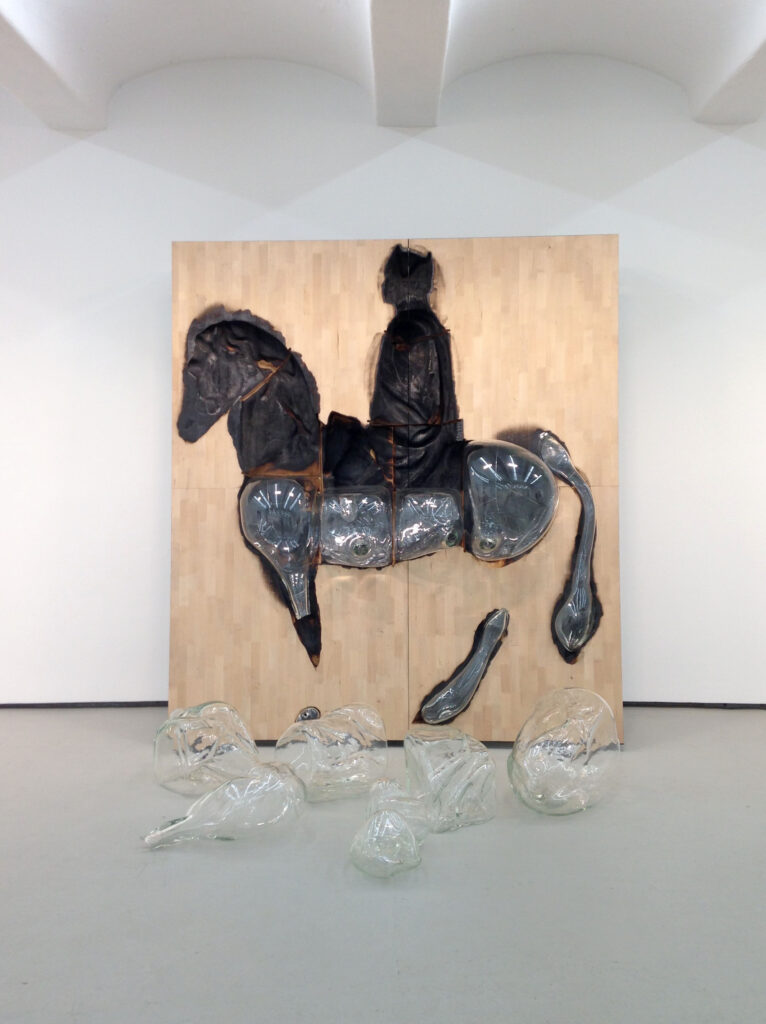
Fee-fi-fo-fum, 2021

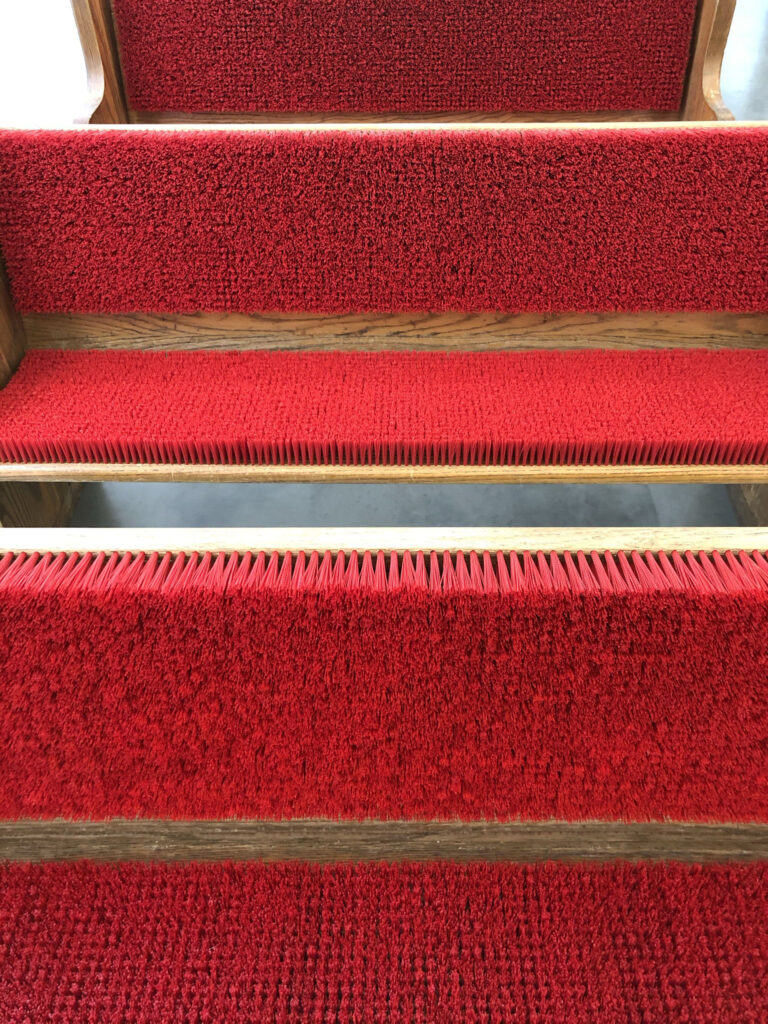
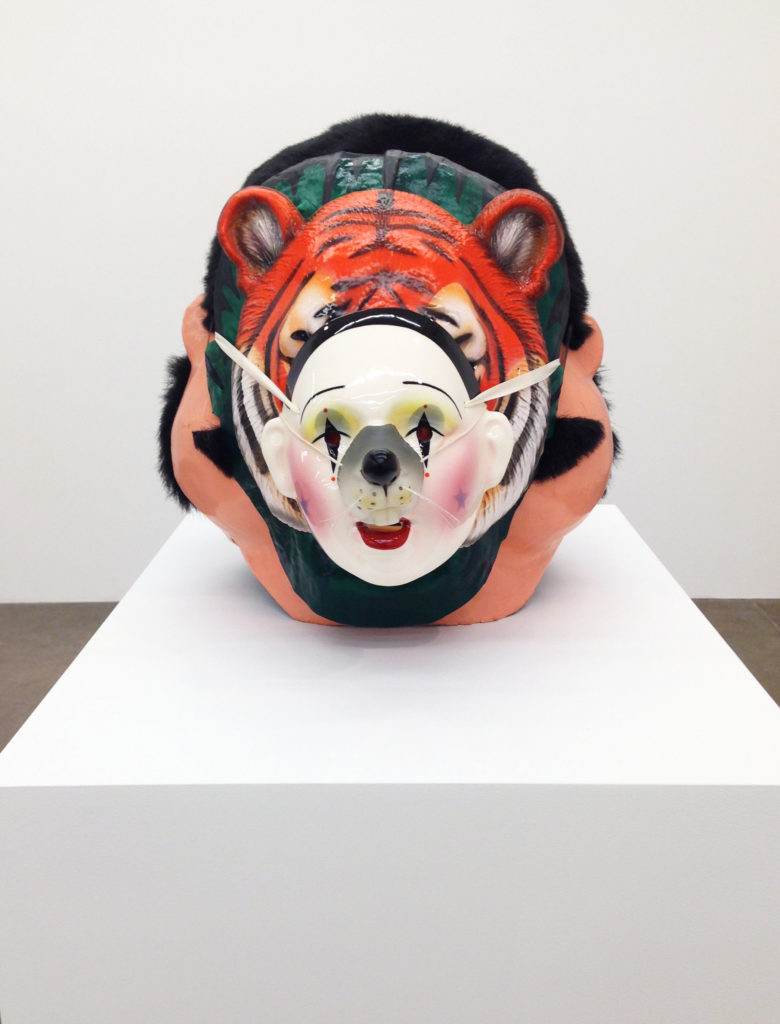
Good Hair, 2021

Lisson Gallery in New York is currently showing Hugh Hayden: Huey. This new body of work by Hayden “examines the American experience via agency, appearance, athletics and religion” and “interweaves symbols of the institutions that play key roles in an American upbringing with equally ever-present fairy tales to produce a new series of sculptures in wicker, vine, and ebony.”

More from the press release-

Hugh Hayden has previously examined the concept of the American Dream as well as the role historical foodways and dining traditions have played in shaping American identity. For Huey, the Texas-born artist chronicles and remixes his upbringing in the American South. Church, sport, school and hair are highlighted as Hayden probes the ingrained nature of cultural expectations. The exhibition is split into a trinity of rooms: a barber shop cum sanctuary, a basketball chapel and an ebony crypt, all of which harbor Hayden’s meticulously sculpted, sawed, sanded and woven objects.

The sanctuary features “Good Hair,” a new body of bristled wooden works that explore expectations of appearance and refinement in obligatory adolescent participation in athletics, education and religion. For Hayden the bristles render a subject simultaneously desirable yet uncomfortable, creating order via an abrasive action that, like the American Dream, is challenging and difficult to inhabit.

In the second chapel-like space hang woven basketball hoops out of hair, rattan and vine. The works are a childhood reimagination of the iconic peacock chairs the artist grew up with as well as an homage to the 1967 portrait of Black Panthers co-founder Huey P. Newton seated in one. The braided and woven works conflate tedious domestic handwork with hypermasculine athletics to materialize a queerness at odds with the fairy tale-like aspirations and reservations of becoming a professional athlete.

The final room of the exhibition is a meditation on agency, blackness and invisibility. Works sculpted from Gabon and Texas ebonies are presented in a daylight-lit, all-black room shifting in and out of visibility. Sculptures that reference the body, both moving fast as well as relaxing, offer an opportunity to reflect on the many hues of blackness.

This exhibition closes 8/13/21.

Jul 282021
 

Texas Louise, 1971

Where is Lucienne?, 1971


Where is Lucienne? (detail), 1971

Where is Lucienne? (detail), 1971

Frank Bowling’s incredible paintings are currently on view at two of Hauser & Wirth’s locations, London and NYC, reflecting the artist’s time living in both cities. The paintings above are from the New York location.

From the press release-

The exhibition charts Bowling’s life and work between the UK and the United States. Born in Guyana (then British Guiana) in 1934, Bowling arrived in London in 1953, graduating from the Royal College of Art in 1962. He later divided his time between the art scenes in London and New York, maintaining studios in both cities. London is the city where Bowling trained as a painter and achieved early acclaim. New York is the city that drew him to itself at the height of the Civil Rights movement, where he became involved in discussions of Black Art – New York was a place of fresh energy and ideas for an artist in search of new ways to make paintings.

Bowling’s transatlantic orientation reveals itself in a shift from his early engagement with expressive figuration and pop art, to an immersion in a uniquely poetic abstraction that continues to evolve even today. Visible in his work are the legacies of both the English landscape tradition and American abstract expressionism. Developing in and between two cities over the course of decades, Bowling’s exploration of light, colour, and geometry can be understood as profoundly influenced by the two great rivers of his life: he has maintained studios close to The Thames in London and the East River in New York, absorbing the brilliance of the rivers’ light into his vision. Bowling would often begin a work in one city and finish it in the other, merging the atmospheres of both. In his own words, ‘I would just roll the lot up and move. And I knew that when I got to the other end, I could roll them out again and continue to work.’

Bowling’s restless innovation on the painted plane endures in his latest works. He continues to break ground through the use of thick impasto textures, acrylic gels, collage, stitched canvas, and metallic and pearlescent pigments. The complexities of his upbringing in Guyana and his constant journeying between London and New York have only served to activate the richness of the different influences of each location. His paintings are a celebration of life lived in varying lights and colours.

Jul 142021
 

For Marlene McCarty’s current exhibition Into The Weeds: Sex & Death at Sikkema Jenkins, she has combined her large scale drawings with an indoor and outdoor garden.

From the press release-

Using everyday materials such as graphite and ballpoint pen, McCarty’s work often focuses on representations of the female body, femininity, and its position within familial and biological systems. Her subjects are depicted engaging in unorthodox or transgressive social formations, breaking down the traditional, accepted interactions among humans and other species, as well as between humans and nature. For Into the Weeds, McCarty turns to plants, and their complex ecocultural role within society to explore issues of reproductive health, physical autonomy, public space, and the symbiosis of growth and decay.

Throughout history, certain plants and weeds have been foraged and cultivated for a wide range of purposes, both curative and toxic. The alkaloids of the deadly nightshade, for example, have also been used to treat fevers and inflammation, while mugwort has been used to regulate menstruation and induce abortion. Seedlings have been cultivated and installed alongside McCarty’s densely drawn compositions of plants, weeds, body parts, clothing, and abstract geometric forms. Meticulously shaded limbs and flowers interlace one another, mirroring each other’s shape with the curl of a finger or the droop of a petal. This interplay of human body and plant is disrupted by various symbols alluding to a hegemony of white western culture: a Civil War ball gown, cowboy hat, and fragments of Modernist architecture, including the honeycomb-esque Vessel at Hudson Yards. Within these chimerical gardens lies a contentious ecosystem, constantly negotiating the power dynamics across gender, race, health, and history.

This exhibition is on view until 7/30/21.

Dec 042020
 

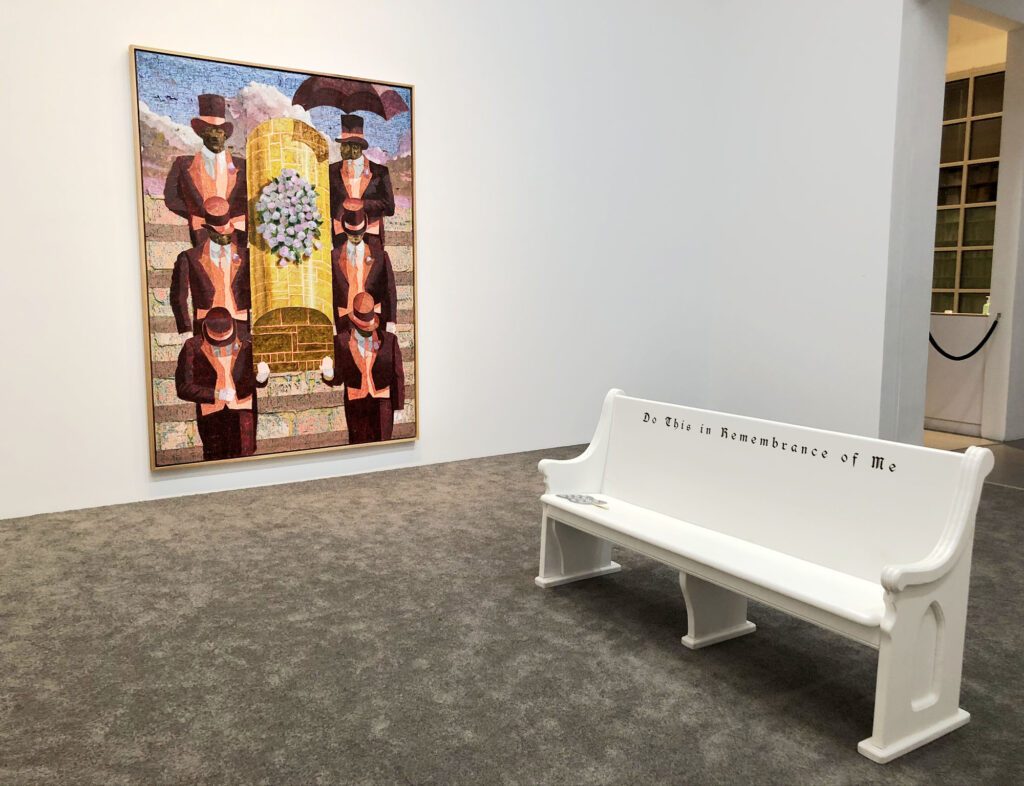
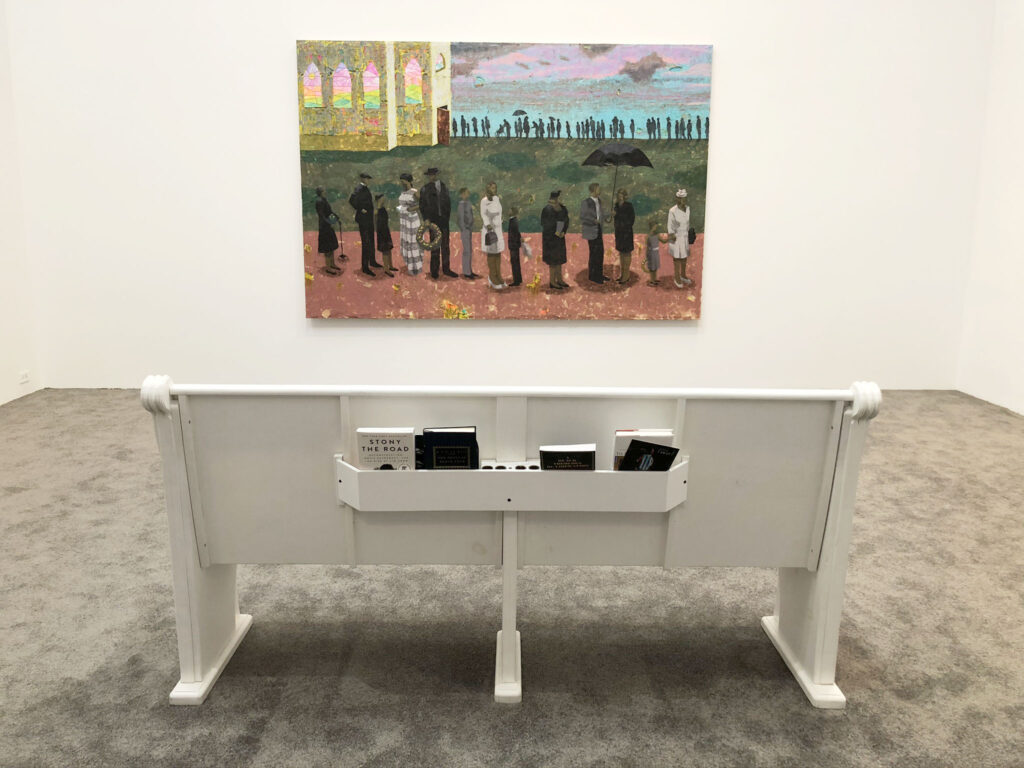
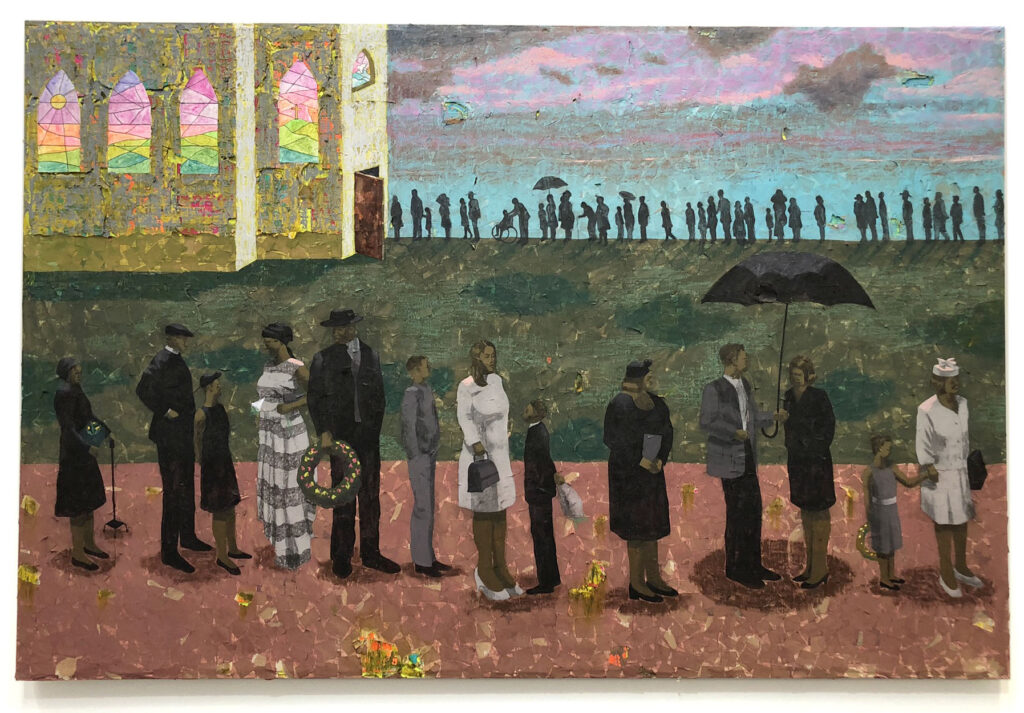
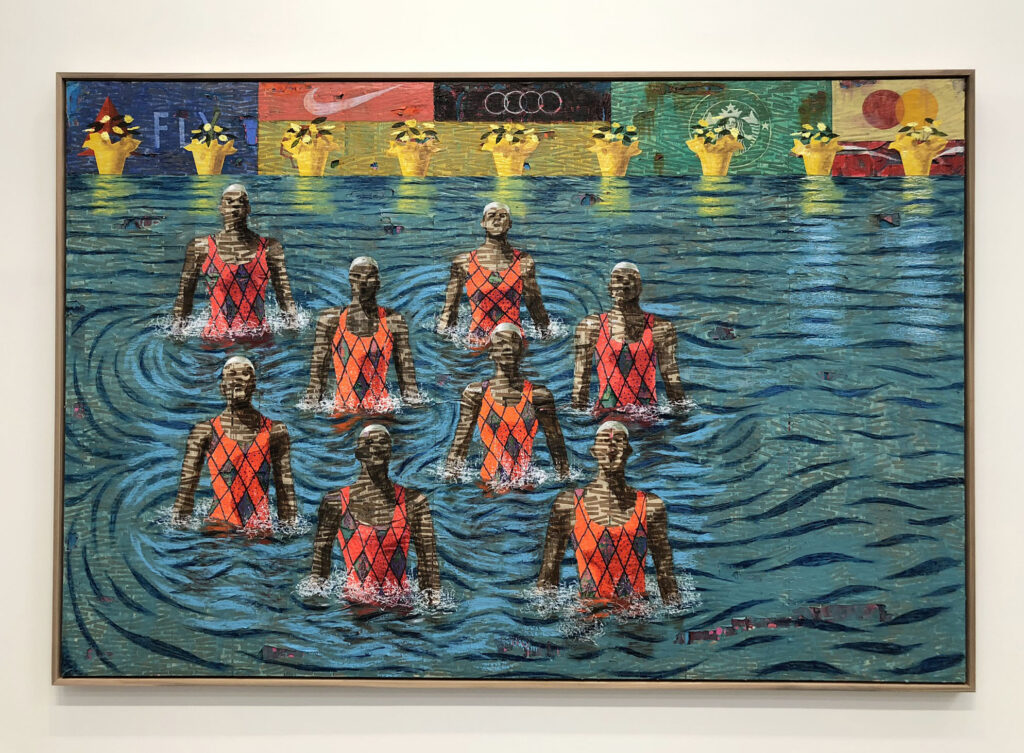
Currently at Petzel in NYC is Derek Fordjour’s solo exhibition, SELF MUST DIE, which incorporates painting, sculpture and Fly Away, a performance collaboration between Fordjour and award-winning puppeteer Nick Lehane.

From the press release-

The show, Fordjour’s first with the gallery, is an offering of creative labor in response to our current moment, a deeply personal and collective state of anxiety around death and hyper-visible racial violence. It examines the nature of martyrdom, vulnerabilities inherent to living in a Black body, performance of competency, and the liminal space existing between autonomy and control.

In SELF MUST DIE, Fordjour interrogates the inevitability of actual death, made more urgent by the realities of a global pandemic, and points to the aspirational death of the artist’s ego brought into focus by a burgeoning career. It is both cultural manifesto and personal declaration. The show is comprised of three parts: VESTIBULE, a site-specific sculptural installation; Fly Away, a live puppetry art performance; and a suite of new paintings.

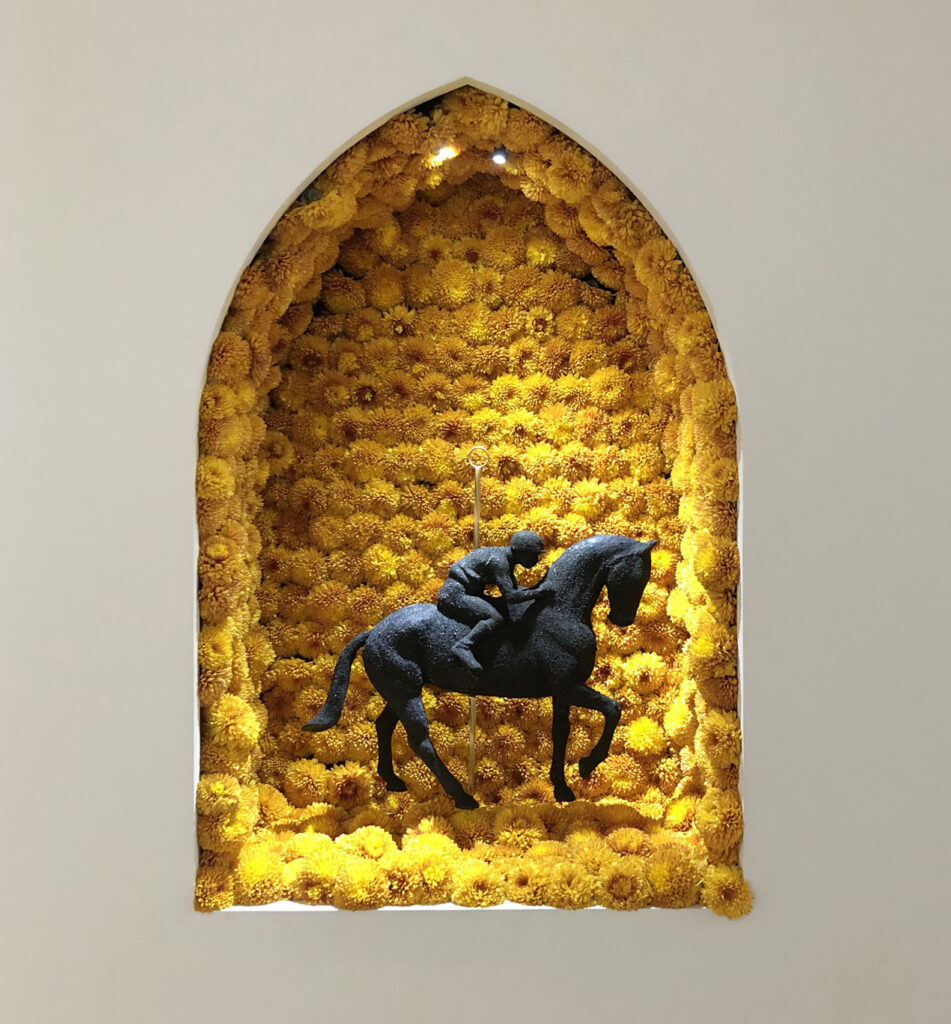
VESTIBULE offers a collection of sculptural objects imbued with biblical allegory and the spirit of James Cone’s Black Theology of Liberation. It refashions the gallery as a secular yet sacred space of memorial. Among its features, the small entry compels visitors to undergo a destabilizing bodily shift that elicits an intimate and reorienting experience. A directional light from above slowly combs the entire room, invoking both searchlight and spotlight, ideas central to the recent death of Breonna Taylor. Constructed of bituminous coal and wrought iron, Taylor Memorial hangs from above.

Fly Away, a collaboration between Fordjour and award-winning puppeteer Nick Lehane, is performed by a stellar cast, with an original score composed by John Aylward and performed live by oboist Hassan Anderson. The puppet is a Fordjour-designed, hand-sculpted figure crafted by Robert Maldonado. The protagonist’s narrative arc rises and falls along a journey of personal discovery. Larger themes that course through Fordjour’s body of work become resonant.

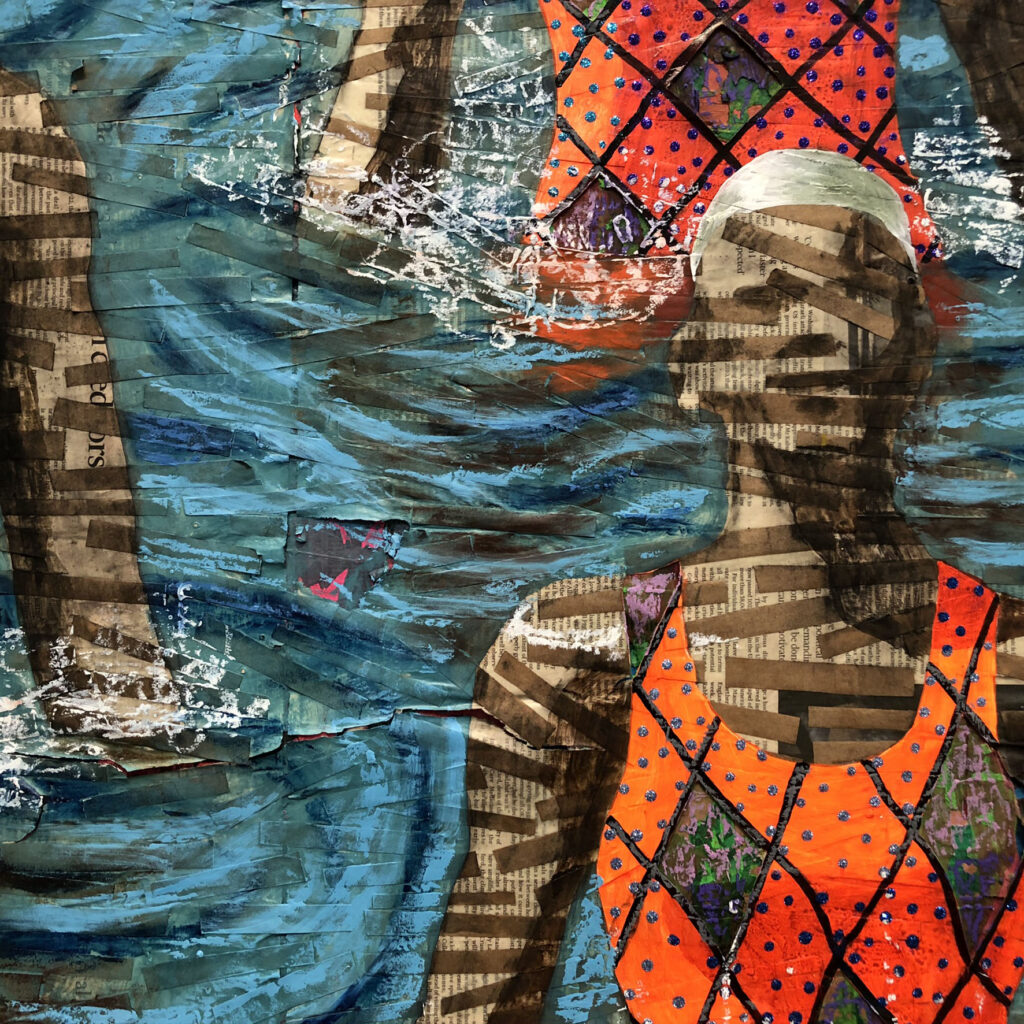
Spanning two galleries are several new paintings, executed in Fordjour’s signature collage technique, representing the latest developments in his studio practice. The first is a suite of paintings based on Black funerary tradition. The second gallery presents a broad range of subjects including several at monumental scale.

This exhibition closes 12/19/20.

Jul 062020
 

Today, July 6th, is the four year anniversary of the fatal shooting of Philando Castile by a police officer during a traffic stop in Minnesota. Castile was shot five times while his girlfriend and her four year old daughter were in the car.

Mark Bradford’s 150 Portrait Tone, 2017, currently at LACMA, is a devastating large scale work that uses excerpts from Philando Castile’s girlfriend Diamond Reynolds’s dialogue from the video she live streamed on Facebook from the incident.

From LACMA’s wall description of the work-

Bradford notes that he was moved by the multiple subjects Reynolds simultaneously addressed and the different spaces they occupied: her boyfriend, Castile, next to her (“stay with me”); the officer outside the car (“please, officer, don’t tell me that you just did this”); God (“Lord, please Jesus, don’t tell me that he’s gone”); as well as the unknown receiver on the other side of her lifestream (“please don’t tell me he just went like that”).

Like many of Bradford’s works, the mural-size composition contains elements of both abstraction and realism. In places, layers of manipulated paint render the text almost illegible. The dark form in the background, however, evokes all-too-real associations with the horrific shooting, such as Castile’s twisted arm and the dark-red bloodstain spread across his white shirt, both visible in the live stream feed.

The title, “150 Portrait Tone”, refers to the name and color code of the pink acrylic used throughout the painting (most conspicuous in a large patch at the work’s bottom edge). Like the now-obsolete “flesh” crayon in the Crayola 64 box (the color was renamed “peach” in 1962), the color “portrait tone” carries inherent assumptions about who, exactly, is being depicted. In the context of Bradford’s painting, the title presents a sobering commentary on power and representation.

Jul 032020
 

Absconded From the Household of the President of the United States, 2016

Billy Lee: Portrait in Tar, 2016

Twisted Tropes, 2016

Monumental Inversions: George Washington, 2016

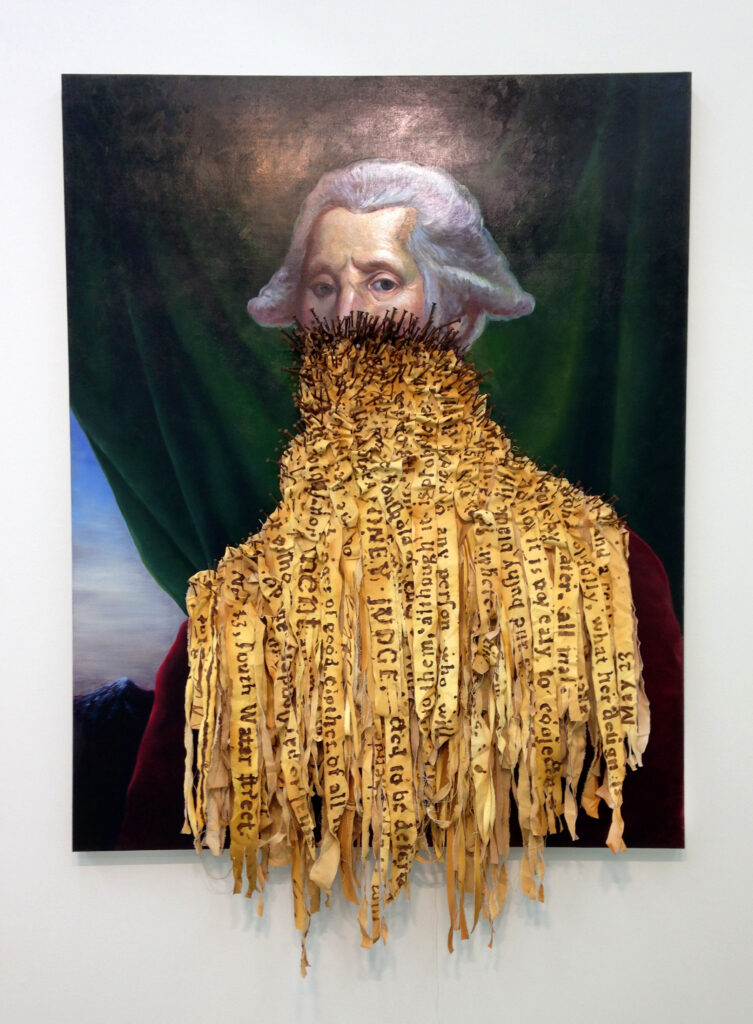
The above images are from Titus Kaphar’s exhibition Shifting Skies at Jack Shainman Gallery in 2017. Kaphar recently created the cover of the June 15th issue of Time Magazine covering the George Floyd protests.

May 172020
 

Jamie Isenstein’s Onions (Mario to Clown Mouse), 2015, from her exhibition Para Drama at Andrew Kreps Gallery in New York in 2015.

From the press release–

… And on the wall are a series of photographs of masks wearing masks. By putting on masks the support masks become anthropomorphized into faces so that these inanimate objects come alive. At the same time, the layering of these masks emphasizes their emptiness. Behind the illusions there is nothing. Absurdly, the more masks the masks wear, the deeper the layering of nothingness becomes. Onions, 2015, is a sculpture of many masks layered over the hollow head of a mascot costume. The title of the work refers to a monologue in the Henrik Ibsen play Peer Gynt in which Peer peels away the layers of an onion as he examines the various roles he has played in his life. Eventually he comes to realize there is nothing substantial at the core.


Feb 272020
 

Currently at Sikkema Jenkins & Co. gallery in New York is on the lower frequencies I speak 4U (alquimia sagrada), a solo exhibition of work by william cordova.

From the press release-

For the artist’s fourth solo exhibition at the gallery, cordova has developed a multi-media installation seeking to explore “the juxtaposition of past structures to more contemporary structures that illuminate the ephemeral nature of our existence, as beings who create material culture as a means of documentation and memory.”

The exhibition incorporates large-scale drawing collages, photography, and sculpture into an environment that reflects on abstract forms rooted in sacred geometries, while also drawing from historical moments and monuments of resistance. Two large scale sculptures, untitled (RMLZ), and untitled (palenque), reference both Brutalist and pre-Columbian architecture, specifically the temple-Citadel sites at Sacsayhuaman and Ollantaytambo. Incorporating the architectural motifs found at these sites, such as zigzags and grids, cordova’s sculptures thread an ephemeral repository, meditating on the concepts of image encoding from biological, natural, galactic, and cultural sources. The sculptures disrupt the formal structure of the gallery, creating alternative perceptions of space and time.

In his series rumi maki, william cordova takes on an ethnographic approach in addressing shared symbolism found in textile data encoding and architectural design. Named after the ancient Andean martial arts, rumi maki consists of multi-colored collages on paper, constructed from vivid layers of recycled paint chips. The arrangement of colors and patterns carry latent meanings, dependent on geography, culture, and the readings of celestial bodies. As cosmological maps, the collages synthesize the sacred geometries of architecture with the visual narratives of historical civilizations. Its form also recalls pioneering early video installation artist Beryl Korot, and her contributions to the 1970s video journal Radical Software.

ogun (el siglo de silencio) sees the artist return to large-scale collage on paper after several years focused on site-specific installations and smaller-scaled work. This work introduces viewers to a new series titled el quinto suyo (the fifth suyo), collages culled from reclaimed paint chip samples and recycled cardboard pigmented with old discarded oil stick paint. Literary references permeate cordova’s collages; texts such as El Siglo de Las Luces by Alejo Carpentier, El Monte by Lydia Cabrera and Decimas by Nicomedes Santa Cruz point to his ongoing interest in the distribution of power, spirituality, and labyrinths of perception.

In the back gallery is an exhibition of paintings (pictured below) by Josephine Halvorson, titled On The Ground.

From the press release-

On The Ground, also the title of her essay in Art In America (June/July 2018), continues Halvorson’s exploration of the ground—as a motif, material, and metaphor. Each painting registers an area of ground through Halvorson’s close observation and pictorial description, while its accompanying surround incorporates crushed rocks and debris from the site of the painting’s making. Together, they realize a faithful translation of place and time. The work in this exhibition was made in the Berkshire mountains, the Mojave Desert, and Matanzas, Cuba.

These hybrid paintings are made with gouache, site material, dry pigment, and printmaking. They expand Halvorson’s on-site practice of transcribing direct experience by hand. While her previous work in oil allowed her encounter with an object to congeal over the course of a day, Halvorson has turned to gouache, a fast drying and graphic medium, which, like handwriting, records her observations in real time. Her paint application is indelible and fresco-like, transferring color from the brush into the absorbent ground of the panel.

Touching down at various points of interest—a piece of plastic, a blade of grass—Halvorson’s notational marks establish a correspondence between environment, painting, and viewer. Like a map, they depict the literal scape of the ground while offering an escape from mimesis. The reality of proximity breaks down as one gets lost in the archeology of a single stride. Gravel becomes galactic. The surround acts as a legend or key, a space for evidence and tools of calibration. A ruler, coins, or color chart orient the onlooker in terms of scale and perception, and the site material indexes the painting to its original locale. These are paintings of verification and memorialization. They ask how we make sense of what we see, how we express that witnessing, and how an account of experience is made concrete.

Both of these exhibitions close 2/29/20.

Feb 212020
 

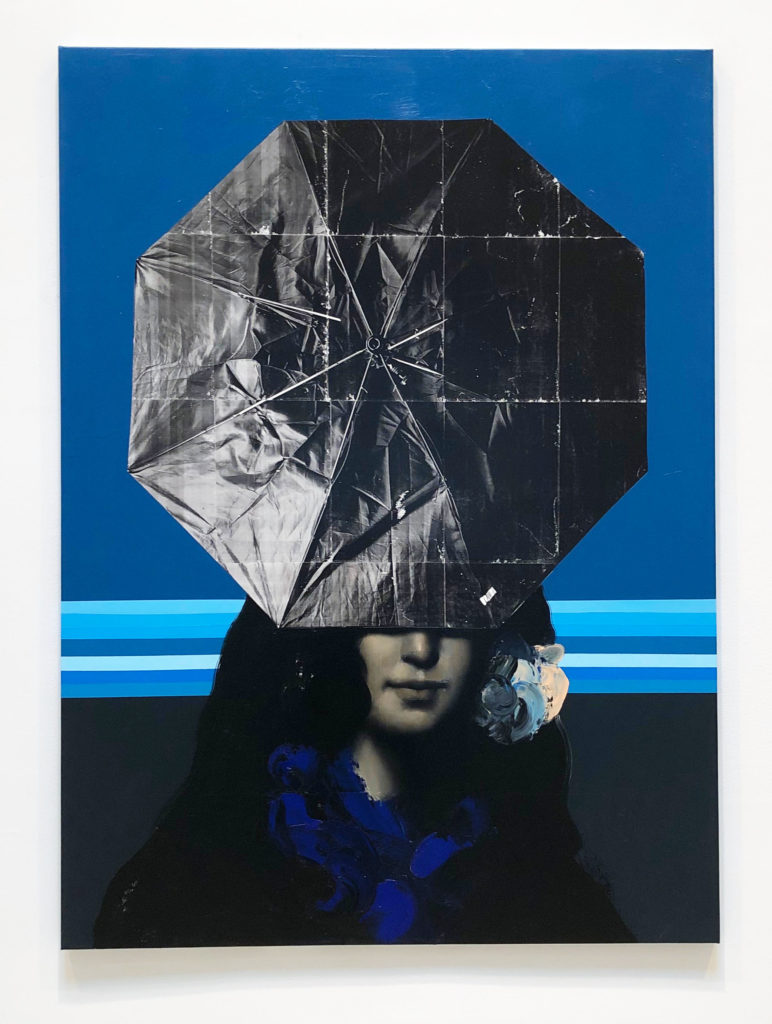
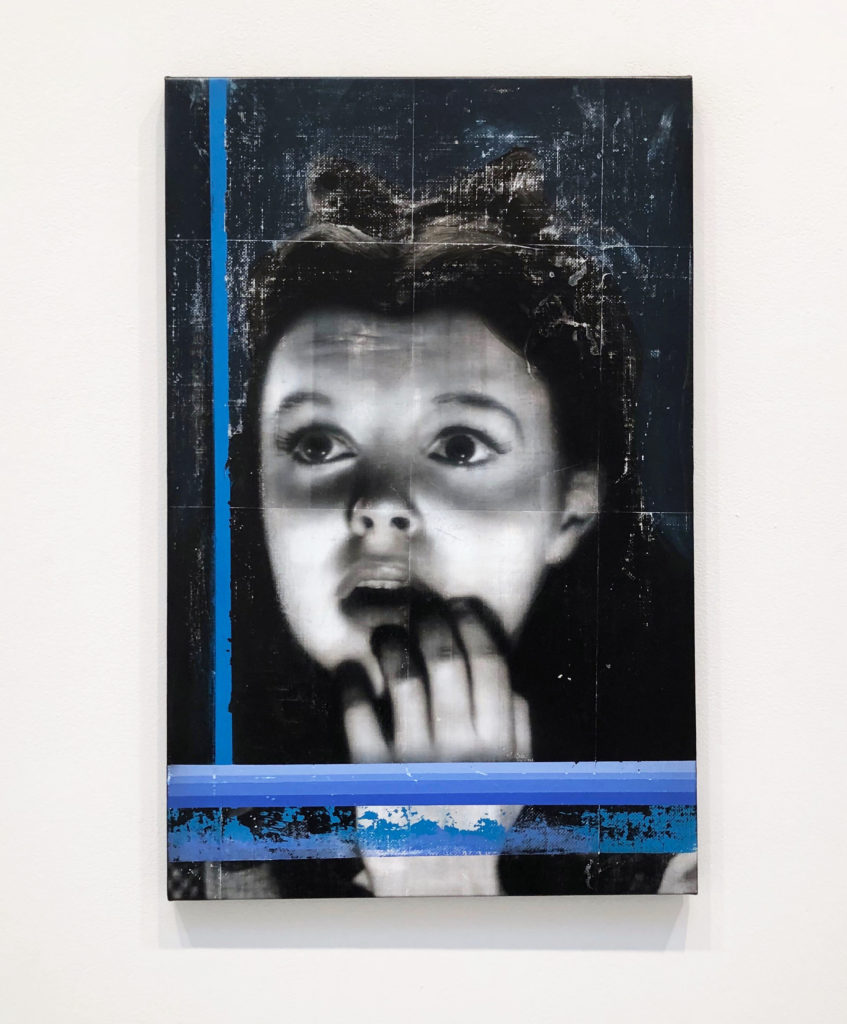
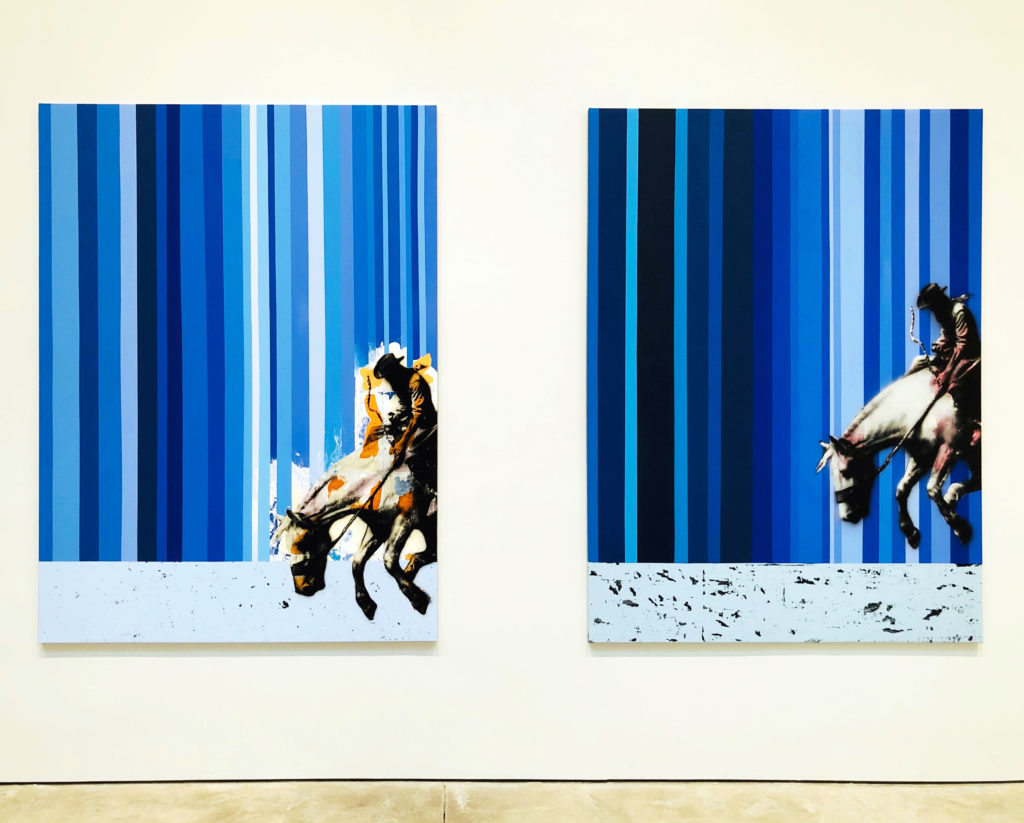
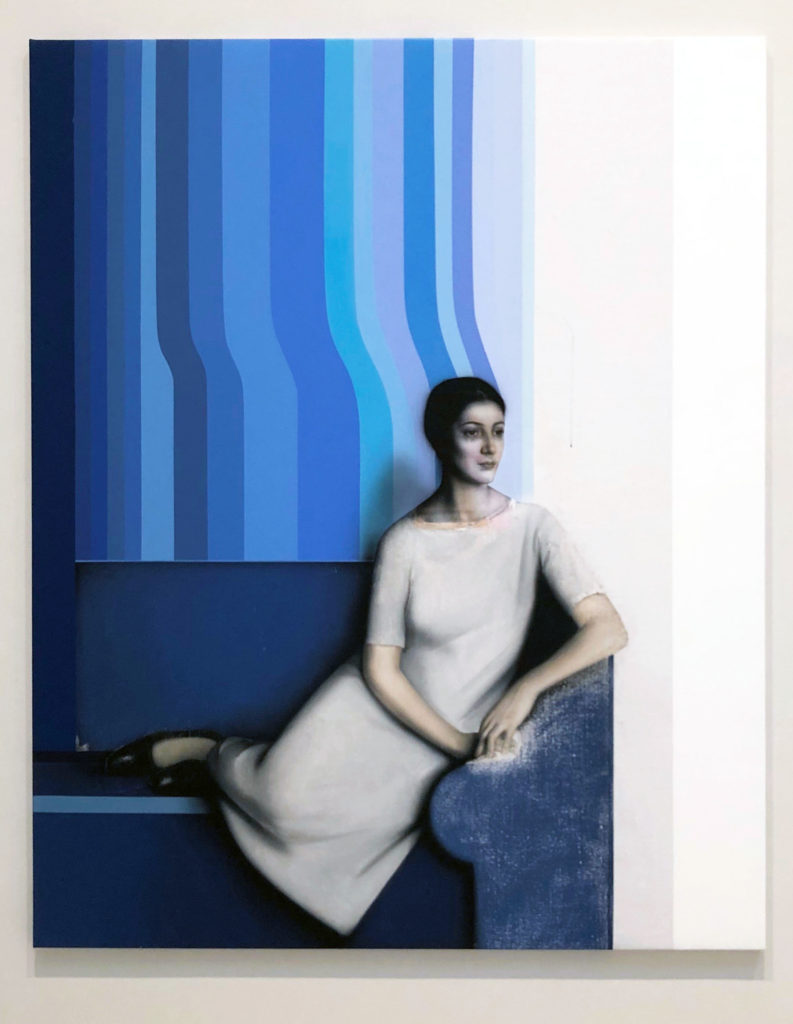
Currently at Blain Southern gallery’s New York location is  Mircea Suciu’s Universal Fatigue.

From the press release-

Part of the Cluj School, Mircea Suciu (b. 1978, Baia Mare, Romania) is regarded as one of Romania’s leading artists. During his formative years he witnessed the country’s tumultuous transition after the only violent overthrow of a communist government in the 1989 revolutions. Describing himself as an image creator rather than a traditional painter, Suciu mines and references art history and contemporary imagery, reducing down the elements and adding colour coded symbolism. He has ‘his own complex way of making things in which painting, photography, drawing and print all cooperate while playing their individual parts’ 1

Inspired by his former studies on the restoration of Baroque paintings, Suciu has developed a process he calls ‘monoprinting’. A photographic image is split into a grid of A4 surfaces, each one printed onto an acetate sheet onto which a layer of acrylic paint is applied. The paint acts as a ‘glue’ that adheres to directly to the canvas and once dry, the acetate sheet is peeled off. The result is a transference of the printed image with associated faults and imperfections which Suciu then ‘restores’ by re-painting with oil and acrylic paint. Sometimes, as with works in the Disintegration series, he overlays the image multiple times using various colours until he creates a surface that is barely recognisable from the original. As a final stage the whole image is repainted. This multi-layered process creates compositions of reinvented images which allude to history, memory and eventual dissolution of all things.

‘A characteristic of my work is frailty, not regarding the subject but the relationship between the surfaces that constitute the ensemble of the whole picture.’ – Mircea Suciu

This exhibition closes 2/21/20.
 

Feb 132020
 

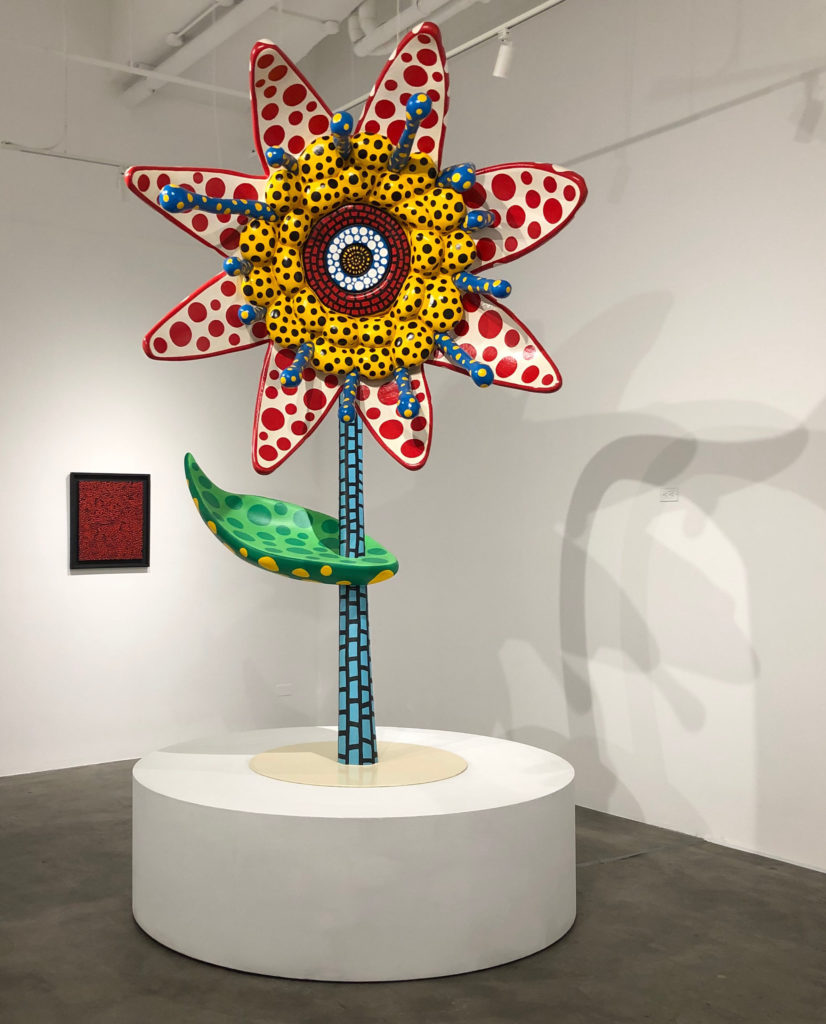
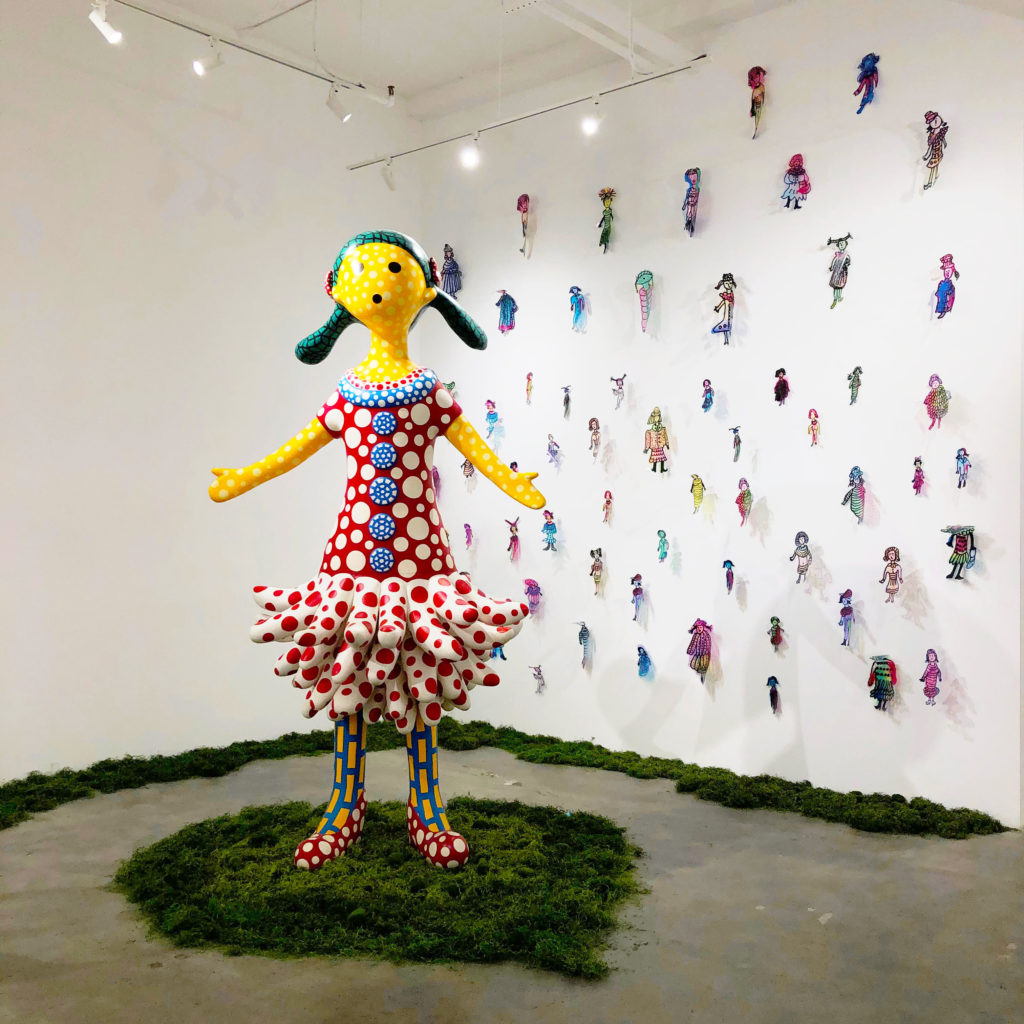
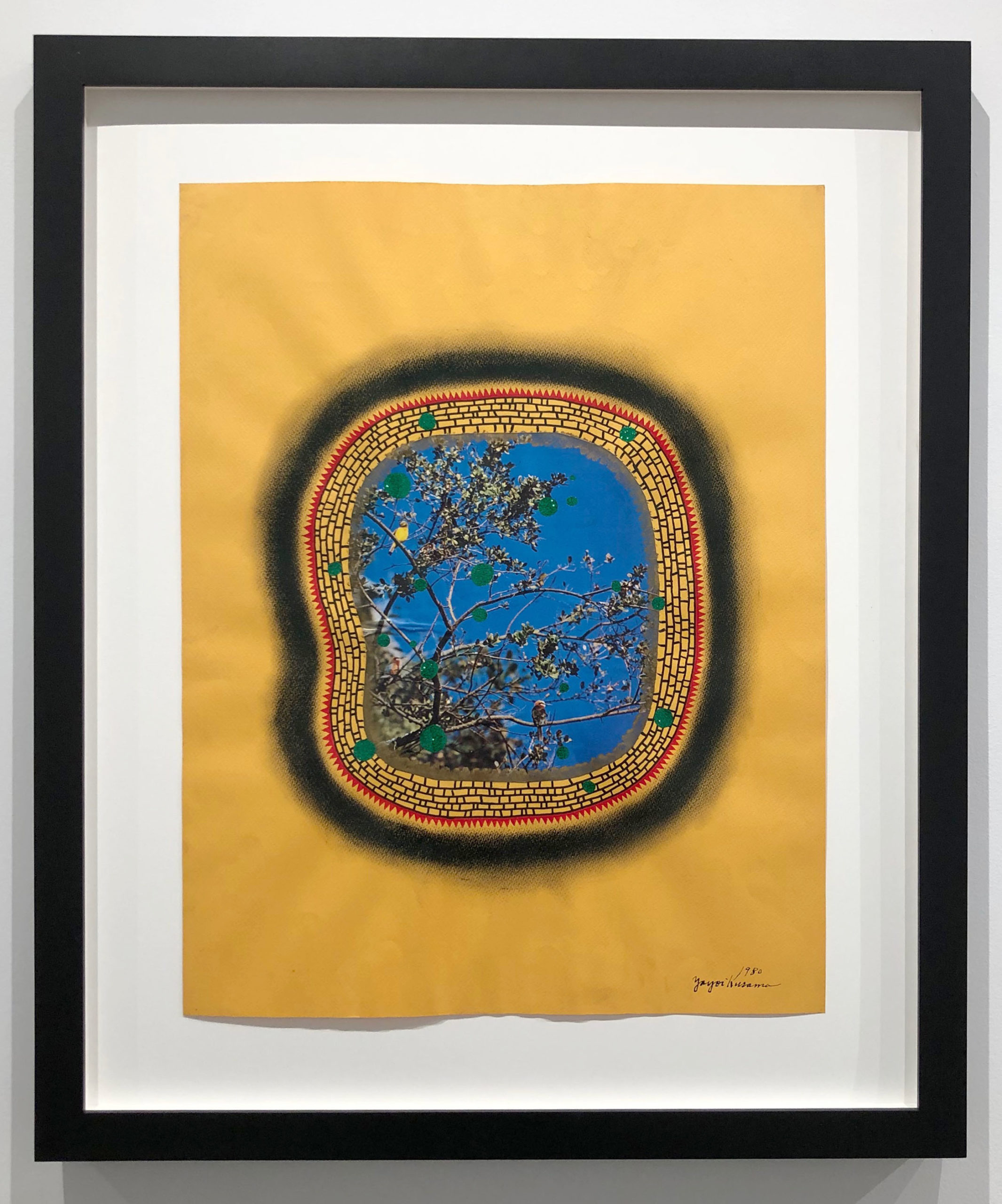
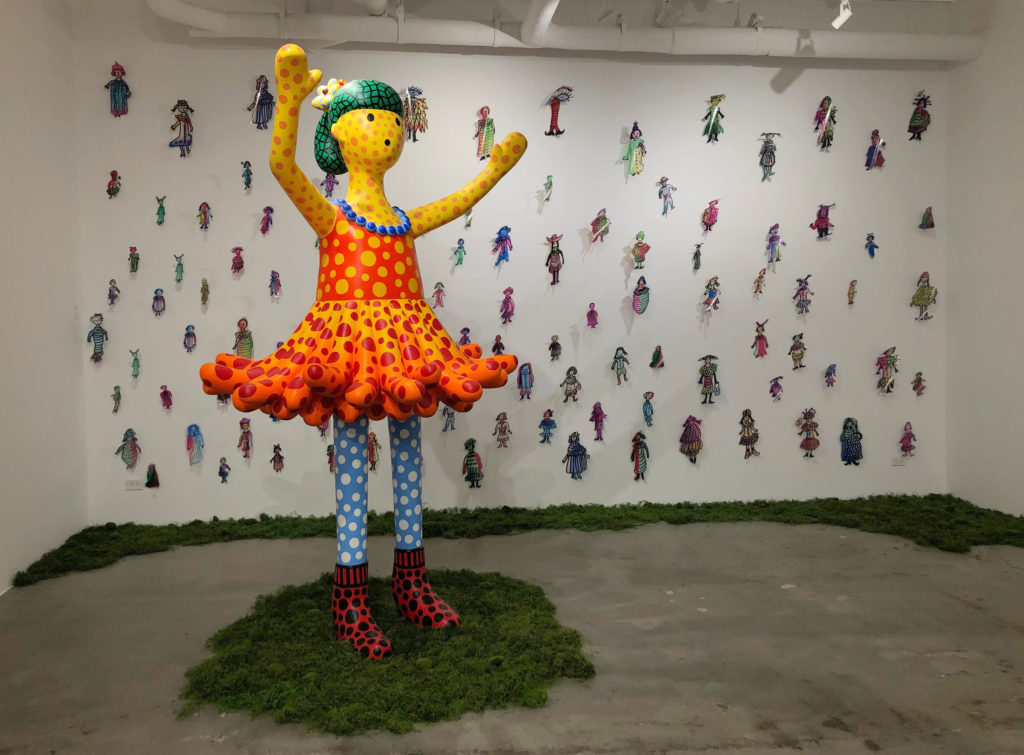
For its inaugural exhibition at its Chelsea New York location, Mucciaccia Gallery is showing the work of Yayoi Kusama. The show includes sculptures, her signature infinity polka dot paintings, and several of her works on paper.

This exhibition closes 2/15/20.