Jul 032020
 

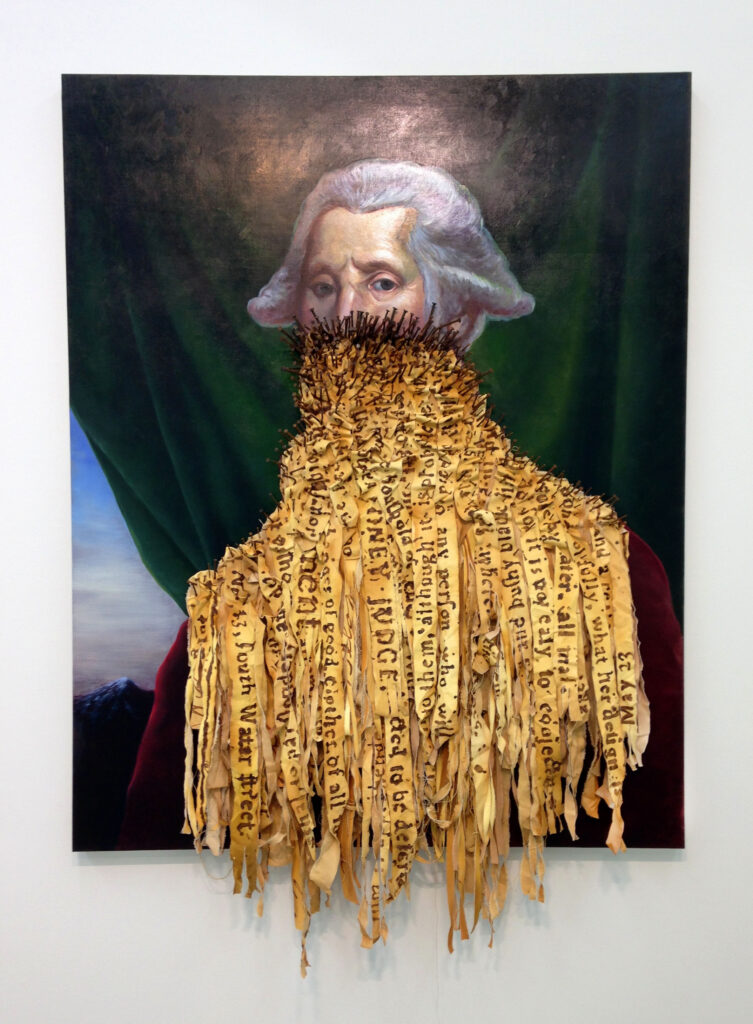
Absconded From the Household of the President of the United States, 2016

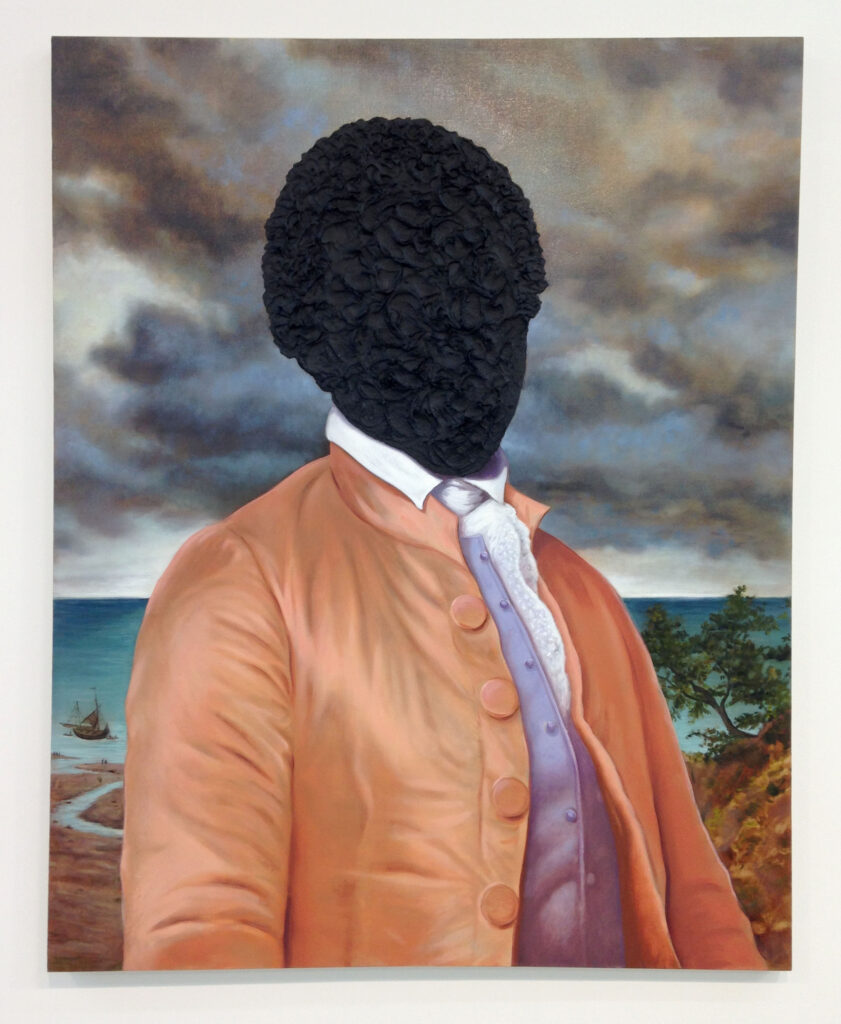
Billy Lee: Portrait in Tar, 2016

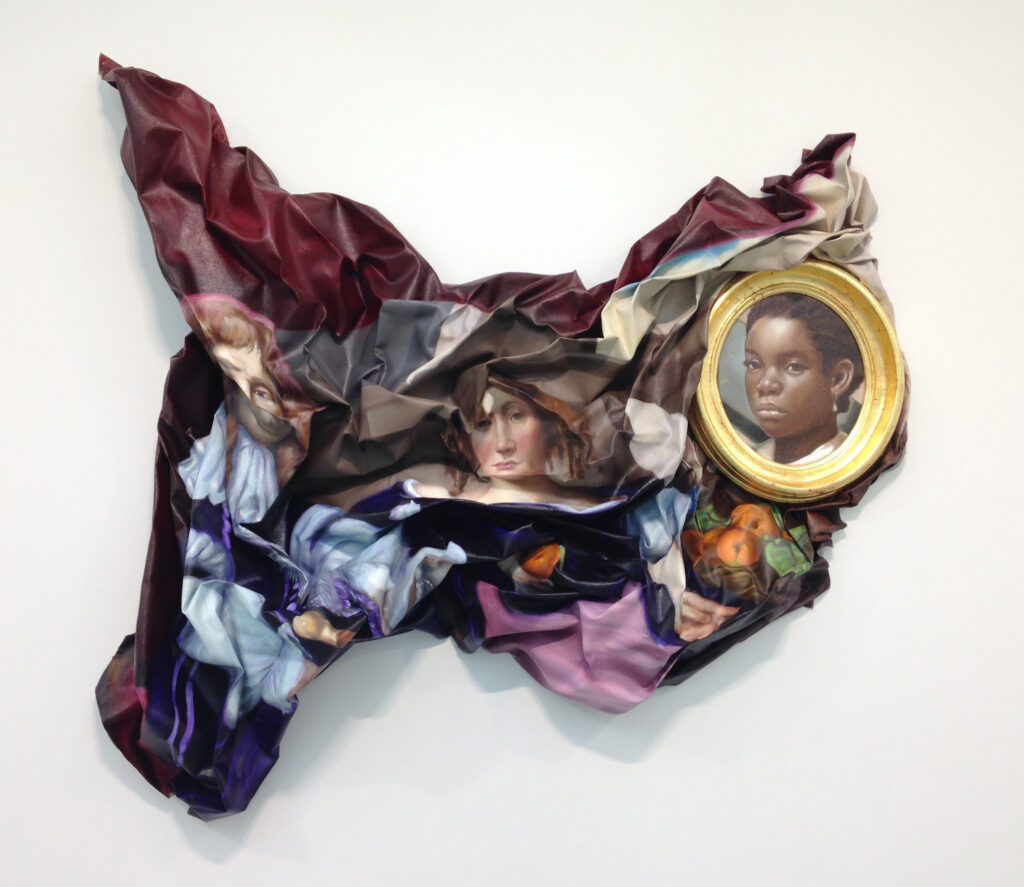
Twisted Tropes, 2016

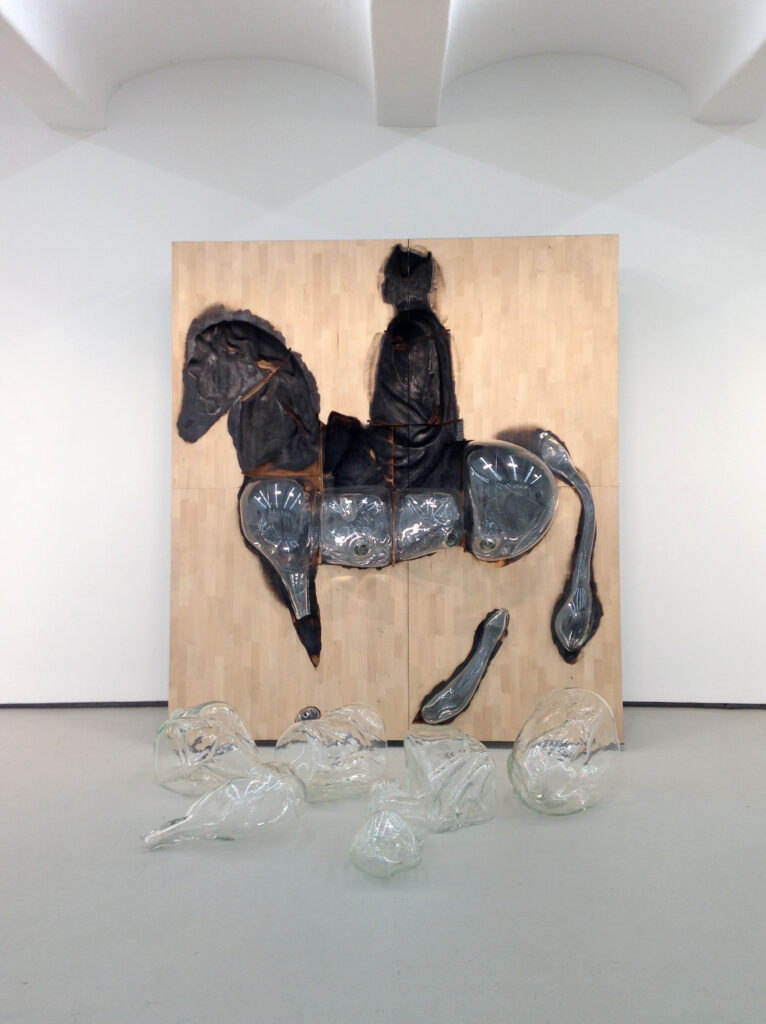
Monumental Inversions: George Washington, 2016

The above images are from Titus Kaphar’s exhibition Shifting Skies at Jack Shainman Gallery in 2017. Kaphar recently created the cover of the June 15th issue of Time Magazine covering the George Floyd protests.

Jun 032020
 

Artist Ja’Tovia Gary’s Citational Ethics (Saidya Hartman, 2017), 2020, from her recent exhibition flesh that needs to be loved at Paula Cooper Gallery in NYC.

May 302020
 

Nina Chanel Abney’s In the Land Without Feelings (2017) from her 2017 exhibition Safe House at Mary Boone Gallery in collaboration with Jack Shainman Gallery.

From the press release-

Safe House is so termed for being a place of refuge. It is also a phrase used more colloquially as a space where one escapes the dangers affiliated with the law. With these eight single-panel paintings, Abney invites us into a place of reprieve, showing us people partaking in everyday activities. Abney’s scenarios offer sincere portrayals that counter how black life is represented in the mainstream media. The decision intentionally explores black joy as a means of resistance.

A deeply accomplished artist associated with innovating history painting, Abney took a multipart strategy to reclaim a space for creativity for this exhibition. To begin, she sourced graphics from posters dating from the 1960s that addressed aspects of safety for occupation, home, and leisure, abstracted these, and made them grounds for large-scale compositions. Then, against this backdrop Abney painted figures, objects, and letters to articulate the complex dynamics of contemporary urban life. She unequivocally is in pursuit of a depiction of commonplace activities and things. With each intuitively developed composition, each element such as the figures is often obfuscated by another element such as text, which in turn is challenged by a direction, such as an arrow. The imagery is reminiscent of sign painting, and each move made by Abney necessitates another. This chain of forms turns each element over to a type of writing, which opens a narrative and its reception to many readings. The abstracted source material (safety posters), combined with the abounding narratives from the detailed scenes, returns us to the title of the exhibition. The phrase prompts us to ask directly or obliquely: What caution and care are these narratives invoking and advocating? What danger might not be readily apparent to the viewer here?

May 252020
 

Ryan Brown’s Praia do Sancho (2015), from the 2015 group exhibition Extraction at Steve Turner in Los Angeles. For this work he used the structural components of stretched canvas to create this large work that resembles a beach chair.

May 212020
 

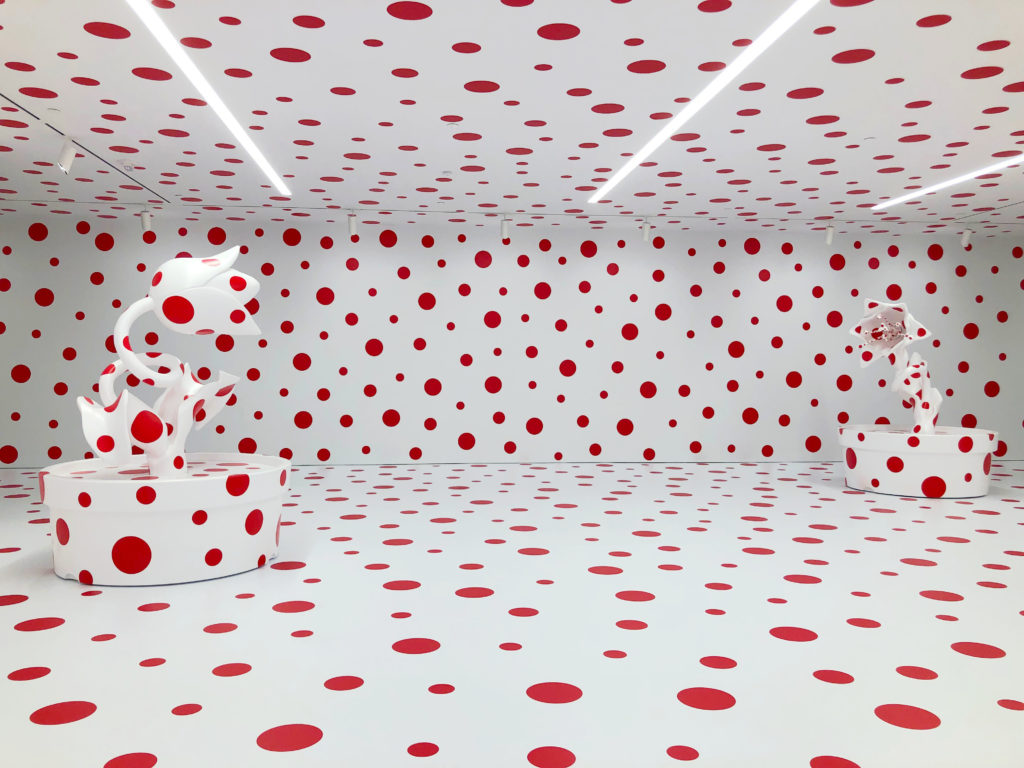
Yayoi Kusama’s installation, With All My Love For The Tulips, I Pray Forever (2011), was on view at Marciano Art Foundation in Los Angeles in 2019.

From the foundation about the work:

Kusama’s exuberant sculptural installation “With All My Love For The Tulips, I Pray Forever”(2011) exemplifies the dualism found throughout her work between the organic and the artificial. Shown here for the first time in Los Angeles, the oversized flower-potted tulips made from fiberglass-reinforced plastic are painted with the same red polka dots as the floor, ceiling, and walls, creating an immersive viewing experience while at the same time diminishing the appearance of depth. This work exemplifies Kusama’s singular vision and her distinctive gift for drawing viewers into the work on a deeply visceral level. Kusama currently lives and works in Tokyo.

May 182020


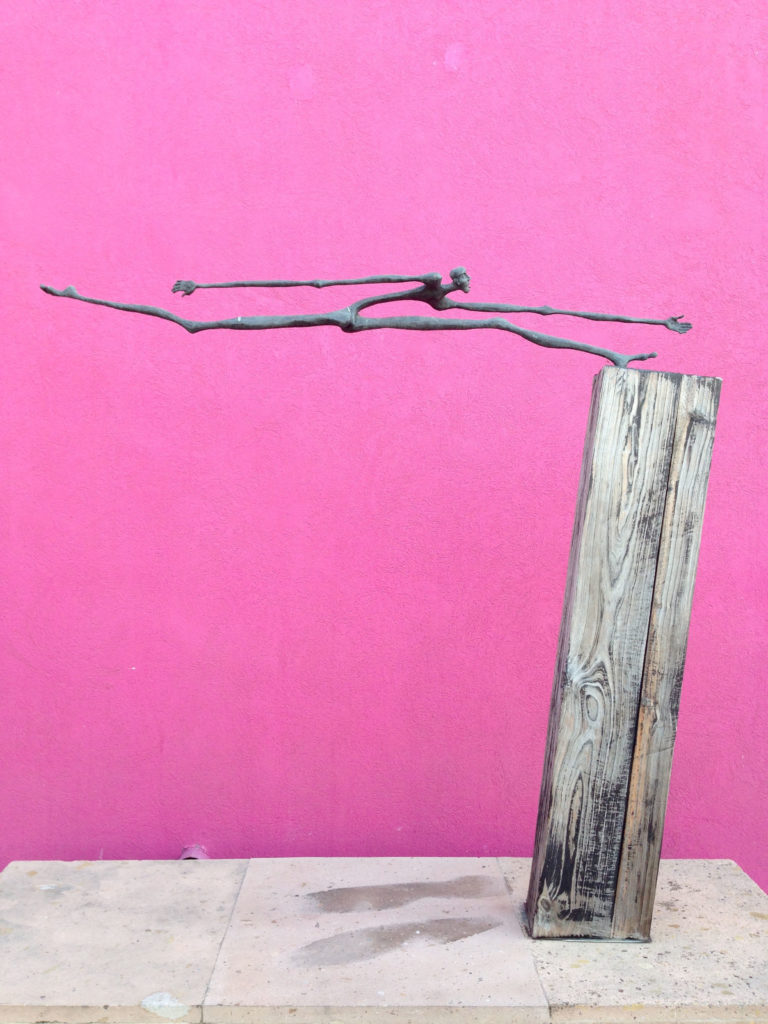
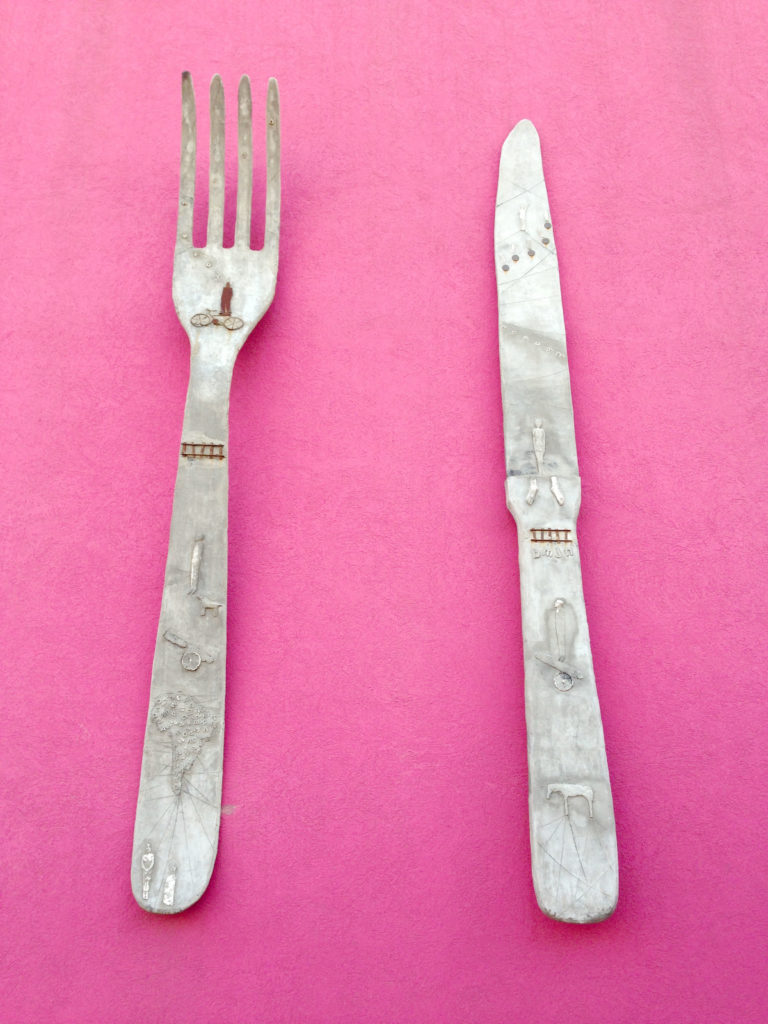
Two works from Museum of Latin American Art’s outdoor sculpture garden, just one of the great things about this Long Beach museum.

Currently they are showing Arte, Mujer, y Memoria: Arpilleras from Chile; Dreamland: A Frank Romero Retrospective En Vision: Picturing the Self -selected pieces from MOLAA’s Permanent Collection in conversation with self-portraits by students of Las Fotos Project, a community-based nonprofit organization that inspires teenage girls through photography, mentorship and self-expression; and the work of Afro Cuban artists José Bedia and Belkis Ayón; in addition to work from the museum’s permanent collection, as part of their Museum en Casa online programming.

May 172020
 

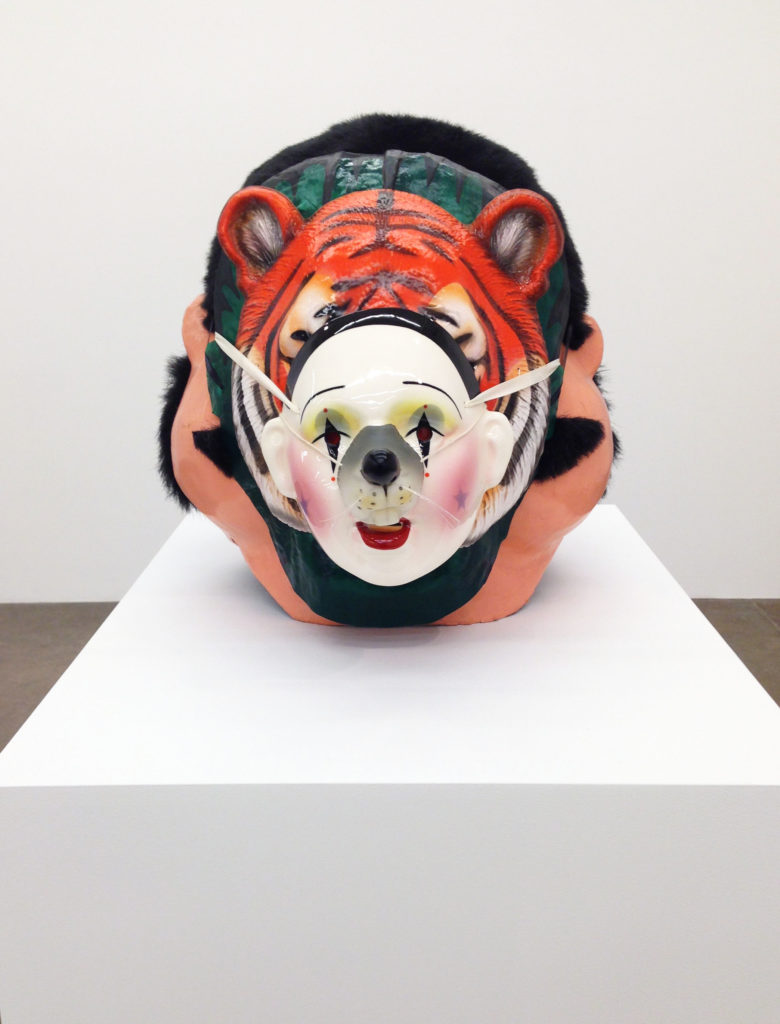
Jamie Isenstein’s Onions (Mario to Clown Mouse), 2015, from her exhibition Para Drama at Andrew Kreps Gallery in New York in 2015.

From the press release

… And on the wall are a series of photographs of masks wearing masks. By putting on masks the support masks become anthropomorphized into faces so that these inanimate objects come alive. At the same time, the layering of these masks emphasizes their emptiness. Behind the illusions there is nothing. Absurdly, the more masks the masks wear, the deeper the layering of nothingness becomes. Onions, 2015, is a sculpture of many masks layered over the hollow head of a mascot costume. The title of the work refers to a monologue in the Henrik Ibsen play Peer Gynt in which Peer peels away the layers of an onion as he examines the various roles he has played in his life. Eventually he comes to realize there is nothing substantial at the core.


Apr 182020
 

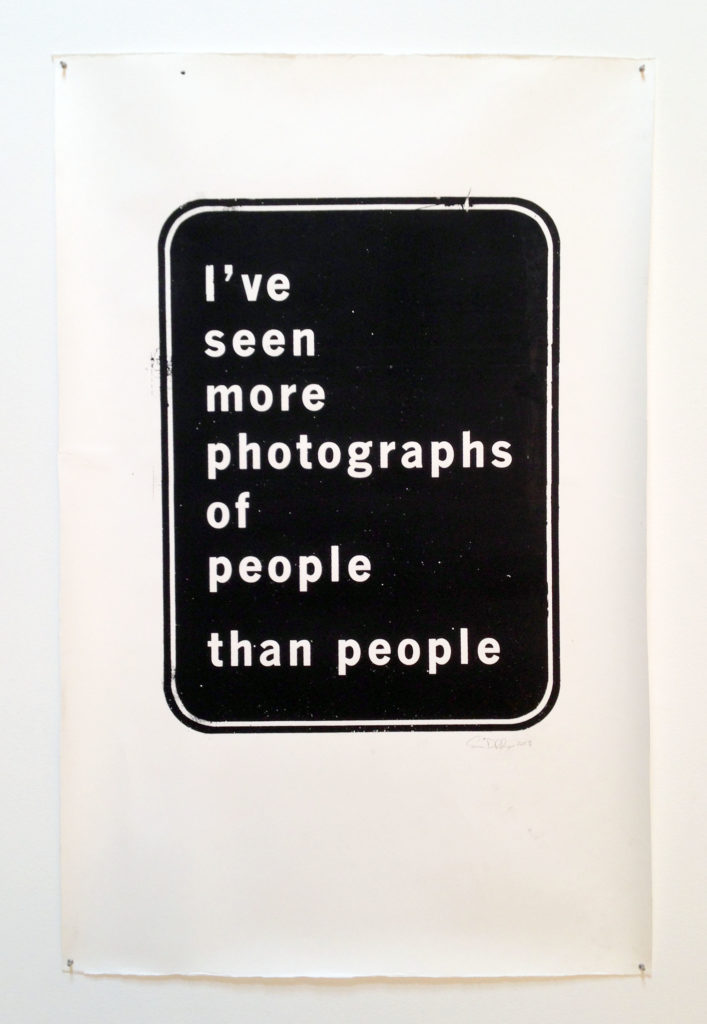
One of artist Sean Duffy’s Road Signs, part of a group exhibition in 2013 at Vielmetter Los Angeles.

Apr 062020
 

For Doug Wheeler’s fourth solo exhibition at David Zwirner’s NYC location, he created the immersive light installation 49 Nord 6 Est 68 Ven 12 FL (2011–2012), shown above.

This exhibition opened on 1/24/20 but was closed due to the Coronavirus (COVID 19) pandemic.

Apr 042020
 

This work by Scottish artist Nathan Coley is located outside the Scottish National Gallery of Modern Art in Edinburgh.

From the museum’s website

This outdoor work by Nathan Coley proposes, on a scaffolding support six metres high in illuminated text, ‘There Will Be No Miracles Here’. This originates from a project in which Coley posted a series of public announcements around the town of Stirling. One included these words, taken from a seventeenth-century royal proclamation made in a French town believed to have been the frequent site of miracles. Coley’s practice is based in an interest in public space, and how systems of personal, social, religious and political belief structure our towns and cities, and thereby ourselves.