Mar 222024
 

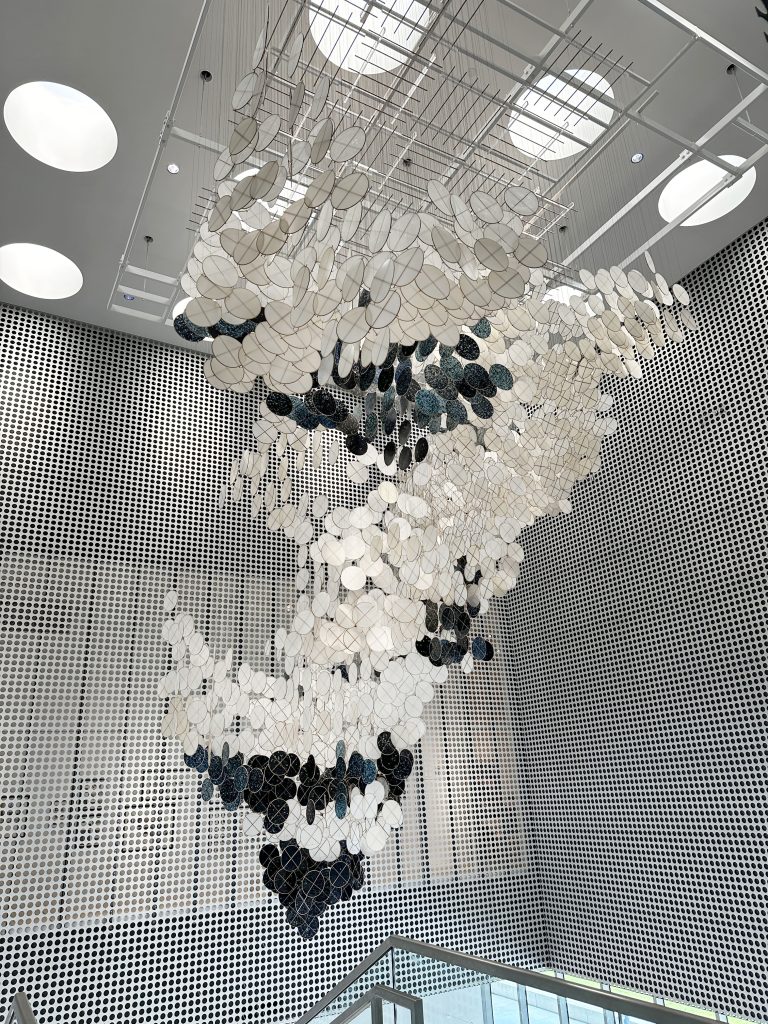
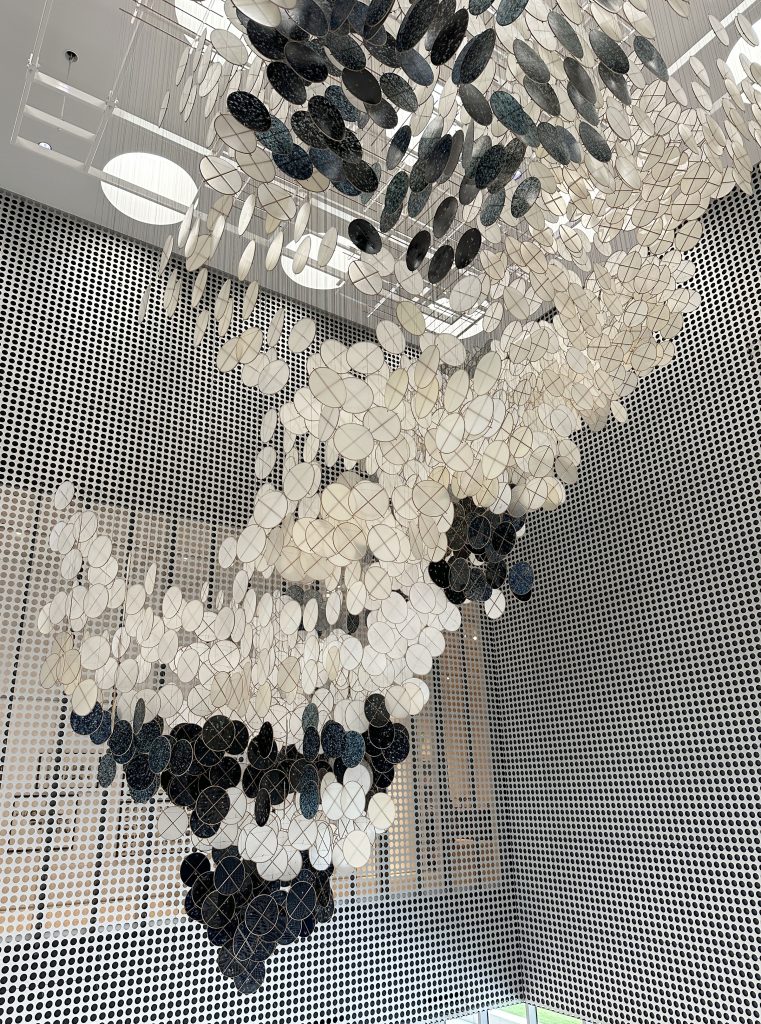
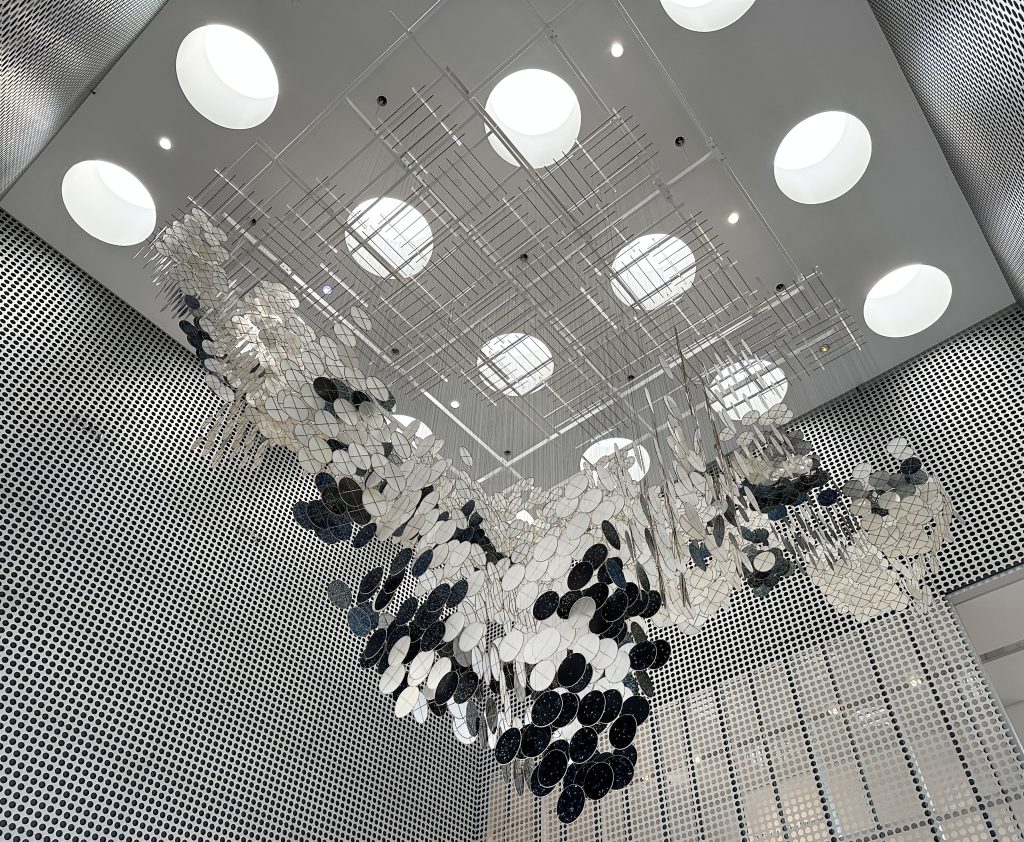
Pictured is Jacob Hashimoto’s This Particle of Dust, on view at Tampa Museum of Art through 2025.  At first glance, it may seem monochromatic, but on closer inspection the blue color and star patterns begin to emerge on the darker pieces. It also changes depending on the viewer’s vantage point and the changing natural light.

From the museum about the work-

The artist takes inspiration from cloud formations and the cosmos, with each navy blue kite featuring star-like markings. Depending on the time of day and the natural light filtering through the atrium skylights, the kites will shift in color intensity. This Particle of Dust explores the visual poetics of light and dark, color and form, as well as space and architecture.

Created from over 2,500 handmade kites, This Particle of Dust is a site-specific installation and unique to the Tampa Museum of Art’s architecture. The installation represents Jacob Hashimoto’s exploration of abstract landscape and his interest in blurring the boundaries between painting and sculpture. This Particle of Dust evokes the experience of observing the night sky through various cloud clusters. Thousands of transparent and opaque white discs hang suspended from a bespoke armature. Navy blue kites, imprinted with white and cerulean blue star patterns, hang amidst the cloud shapes and catch the light as the sun rises over the Museum and dips into the horizon over the Hillsborough River. Depending on one’s vantage point, either from the lobby, stairwell, or galleries, the experience of This Particle of Dust shifts—from below the cloudscape appears to drift into the sky while at eye-level the viewer looks directly into the stars.

Hashimoto began making kite sculptures twenty-years ago while an art student in Chicago. Inspired by traditional Chinese kite making in the city of Weifang, where the artform of sculptural dragon kites originated, Hashimoto has made hundreds of thousands of kites from Japanese paper and resin. He appreciates kites as a universal object of joy that is recognized across the globe. Transformed into monumental artworks, Hashimoto’s kites convey happiness, wonder, and serenity.

Below is Tampa Museum of Art’s video of the artist discussing this installation.

Hashimoto is also showing several wall-mounted sculptural works for his solo exhibition, Fables, at Rhona Hoffman Gallery in Chicago. It will be on view until 4/20/24.

Mar 202024
 

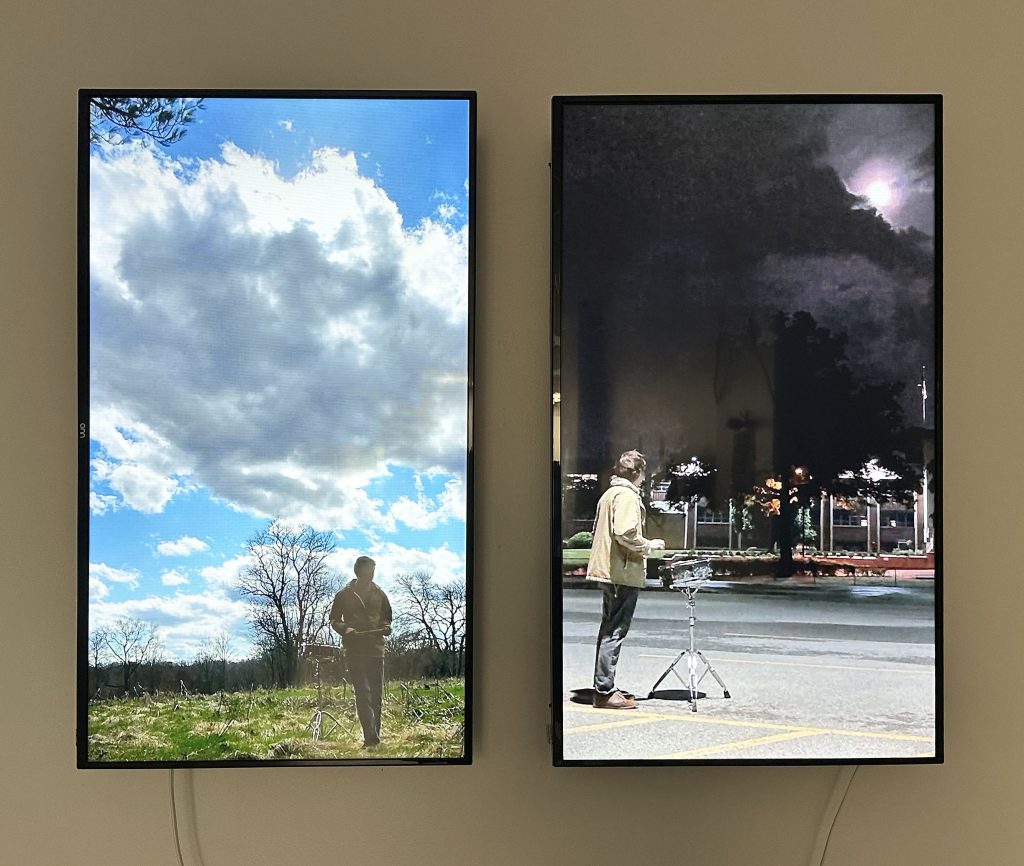
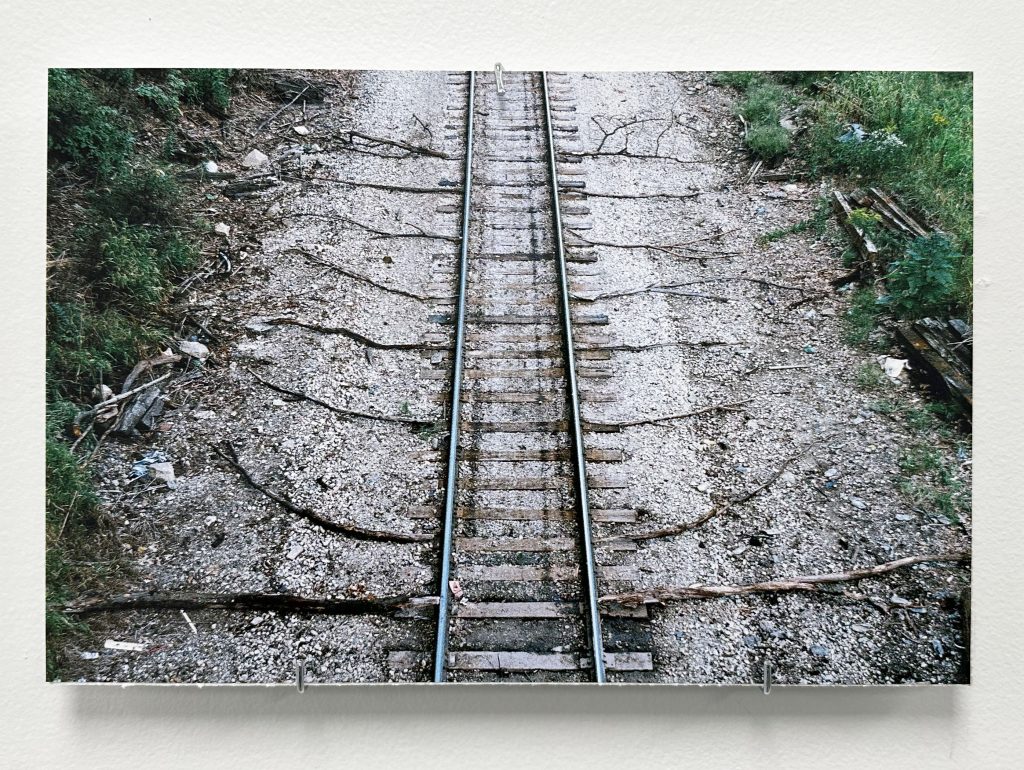
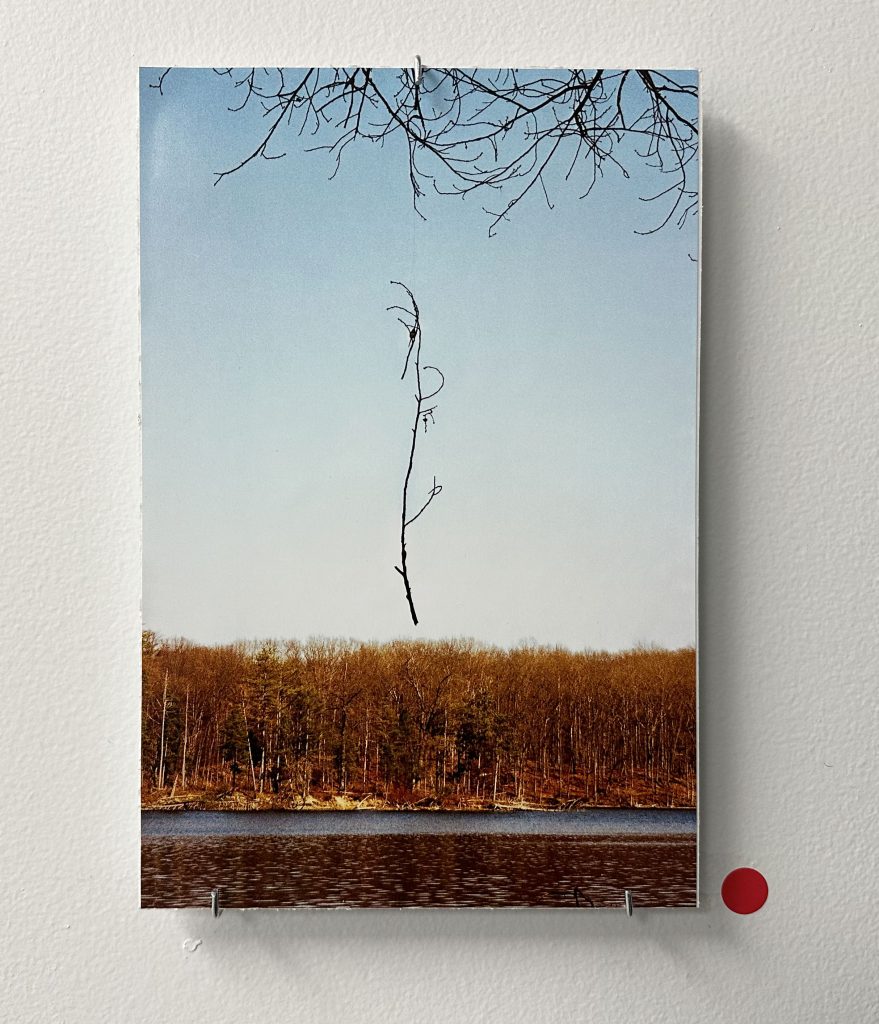
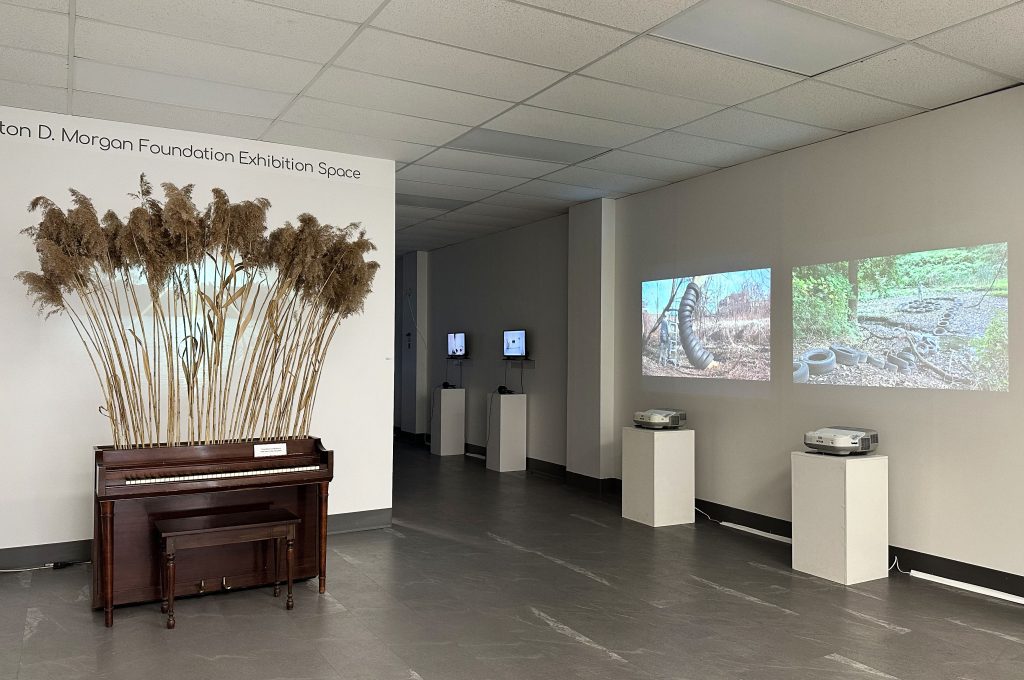
Akron Soul Train supports local artists through a residency program, exhibitions, and a shop in the front of the gallery which sells their work. Currently the gallery is showing work by Matthew Kurtz (work seen above) and Thomas Smith (work pictured below). Both artists are approaching the environment in different and interesting ways. Several of Kurz’s video pieces are focused on his upcoming performance for the solar eclipse. His photographs, for which he’s created additions to scenes he finds, are charming- as is his sculpture- a piano that moves his natural additions when played.

From the gallery-

Performance artist Matthew B. Kurtz presents Drumroll for a Total Eclipse: A Preliminary Exhibition, a prelude to his upcoming live performance with this year’s solar eclipse. Kurtz’s work fuses place, nature, sound, rhythm, and movement to question the mystery of existence. With humor, curiosity, and in tandem with his surroundings, Drumroll explores the process of trying to understand wonder.

For his upcoming performance on April 8, 2024, Kurtz will invite an audience to celebrate the total eclipse. Collaborating with the cosmos, he will perform a drumroll before “totality” passes over Northeast Ohio and creates the natural phenomenon known as “the blackout.”

“When I engage with a site for an art piece, I consider its history, recontextualize its objects, and insert my identity through intuitive gestures. I was raised to believe that humans are supposed to connect the lines between their innate feelings and the unknown. Making art is [my] attempt to reclaim this existential directive. These experiences are documented so outside viewers can participate in my examination of ambiguities, systems, and the sublime.” — Matthew B. Kurtz

Kurtz is also a musician. Check out his Instagram and Bandcamp to listen to his 2021 album 107.

For Thomas Smith’s sculptures he creates natural environments within man-made structures and uses the results as a commentary on the growth and sustainability of suburban development.

From the gallery-

In SUBARIUM II reprise, Thomas Smith combines materials from big box stores with contained terrariums to generate a sense of security and quality. However, upon second look, the viewer may see past the façade of what may look safe to what is substandard. Perhaps it is even denying growth and positive change. Smith’s sculptures dare to ask questions about survival, public image, and the landscape of today.

“Akin to an ecosystem enclosed in a terrarium, my sculptures depict a vibrant but, ultimately, unsustainable artificial environment. As plants within the terrarium grow, competition for space intensifies, turning the once-comfortable space into a struggle for survival. The metaphor extends to suburban America, where curated living conditions prioritize aesthetics over functionality, reflecting an impermanent American Dream.”

— Thomas Smith


Both of these exhibitions close 3/23/24.​

Mar 162024
 

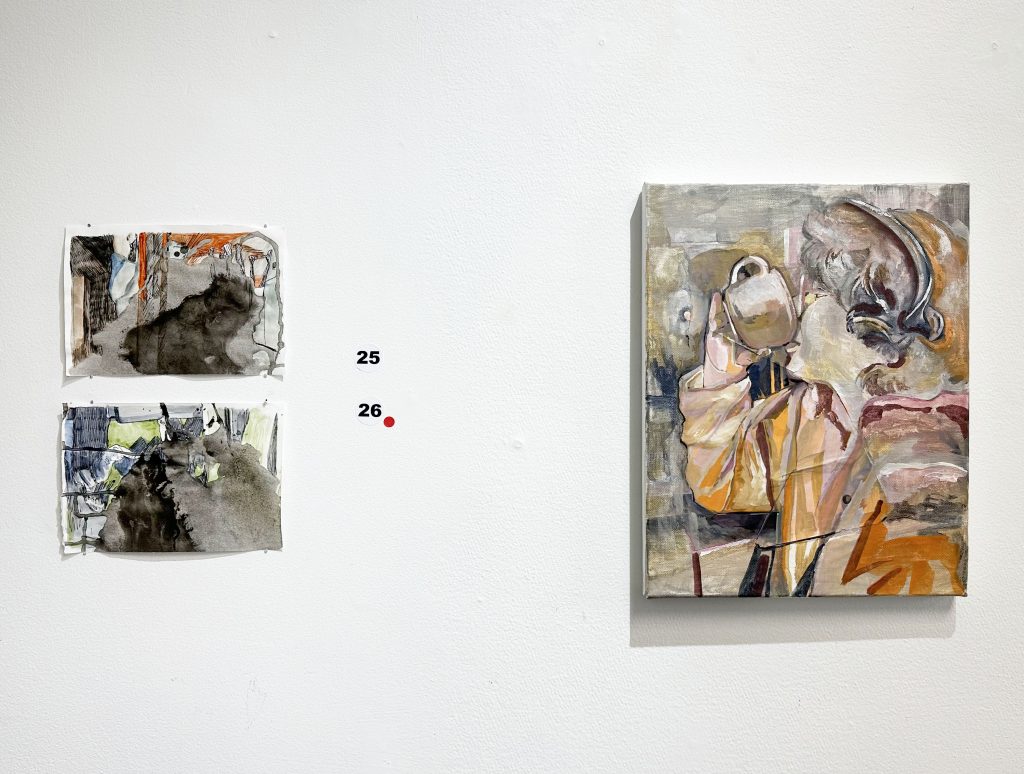
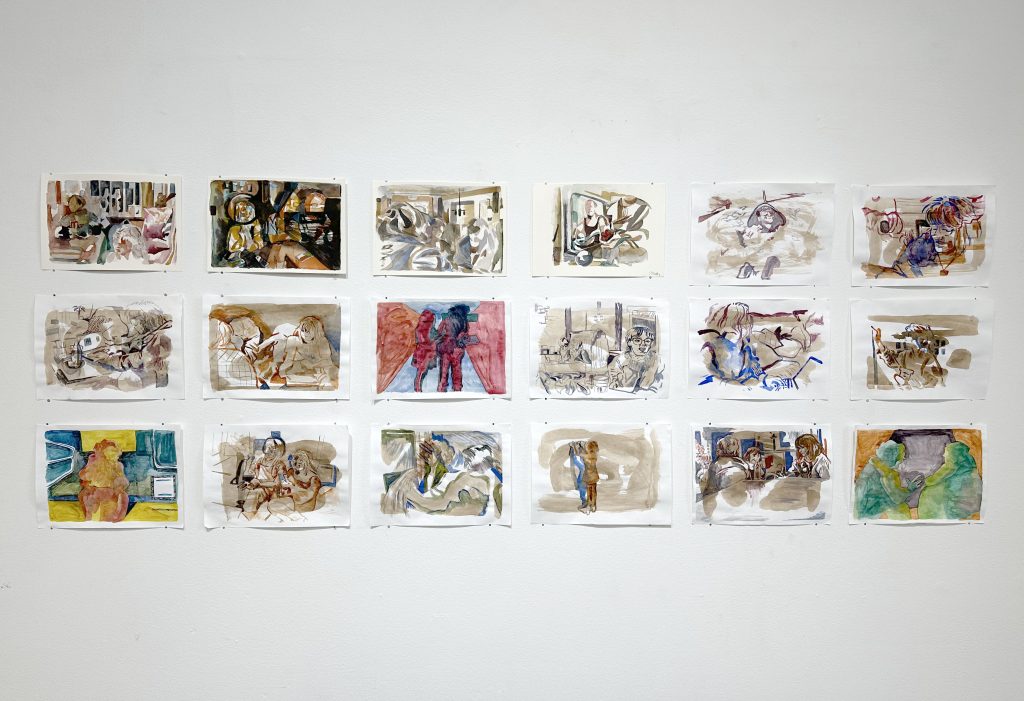
Watercolor paintings by Katherine Strobel

There is A LOT of work currently on view at Summit Artspace for their Winter Exhibitions (see the previous two posts) and it is worth mentioning these shows as well.

In the Welcome Gallery are watercolor paintings (seen above) by Katherine Strobel, for her exhibition, Bad Nostalgia.

Her statement about the work-

People forget to take pictures of things that don’t matter because it’s impossible to photograph qualities such as the feeling of an inside joke, the sound of an exhale through the nose, or dirty silverware that must be returned to the kitchen and replaced. These things act as set, pieces for what make up the rest of our lives. This series is a catalog of work that focuses on memory and candidness of a scene or subject. The people pictured are painted from life or candid photographs which are then emphasized from a naive image to something more. When an image is exaggerated with new colors and shapes it serves to make the mundane more desirable. The paintings are watercolors with a textured surface; the texture creates a sense of play with paper elements. In my work watercolor is often indicative of memory because of its ephemeral quality and transparent layers. This is because of how impossible it is to clarify every element that makes up a color when the layers are all compressed and viewed as a complete state.

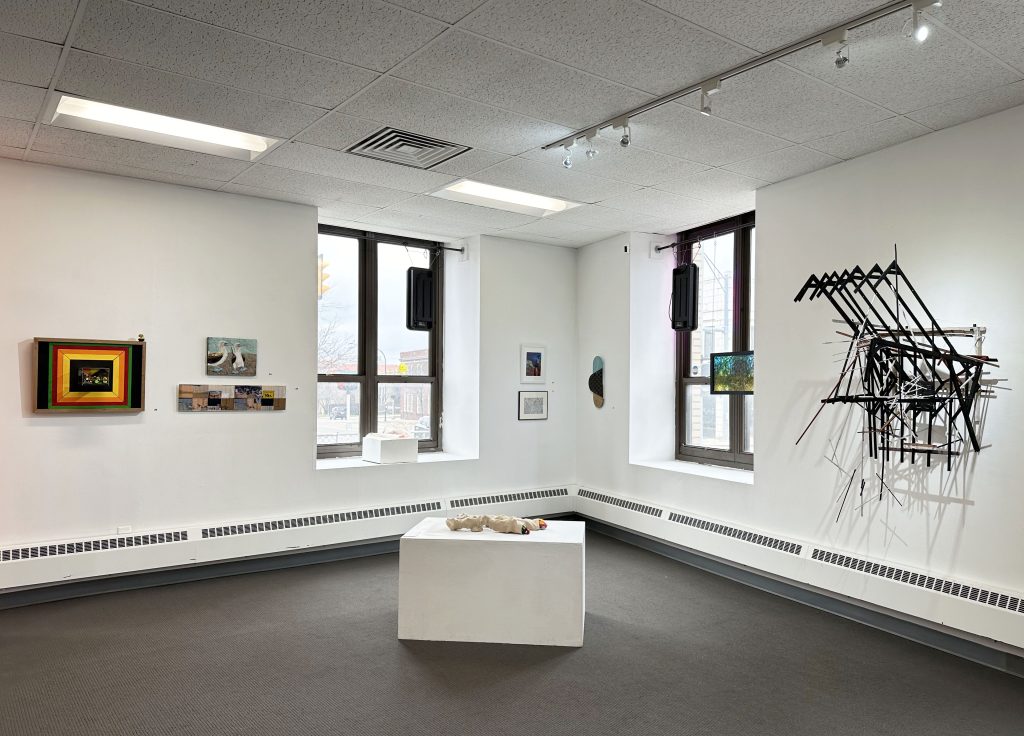
Below are works from FRESH, an annual exhibition of local artists juried by Pita Brooks, Executive Director of Akron Soul Train. The website has all of the artists included and their statements and bios- definitely worth taking a look at what is being created in the area.

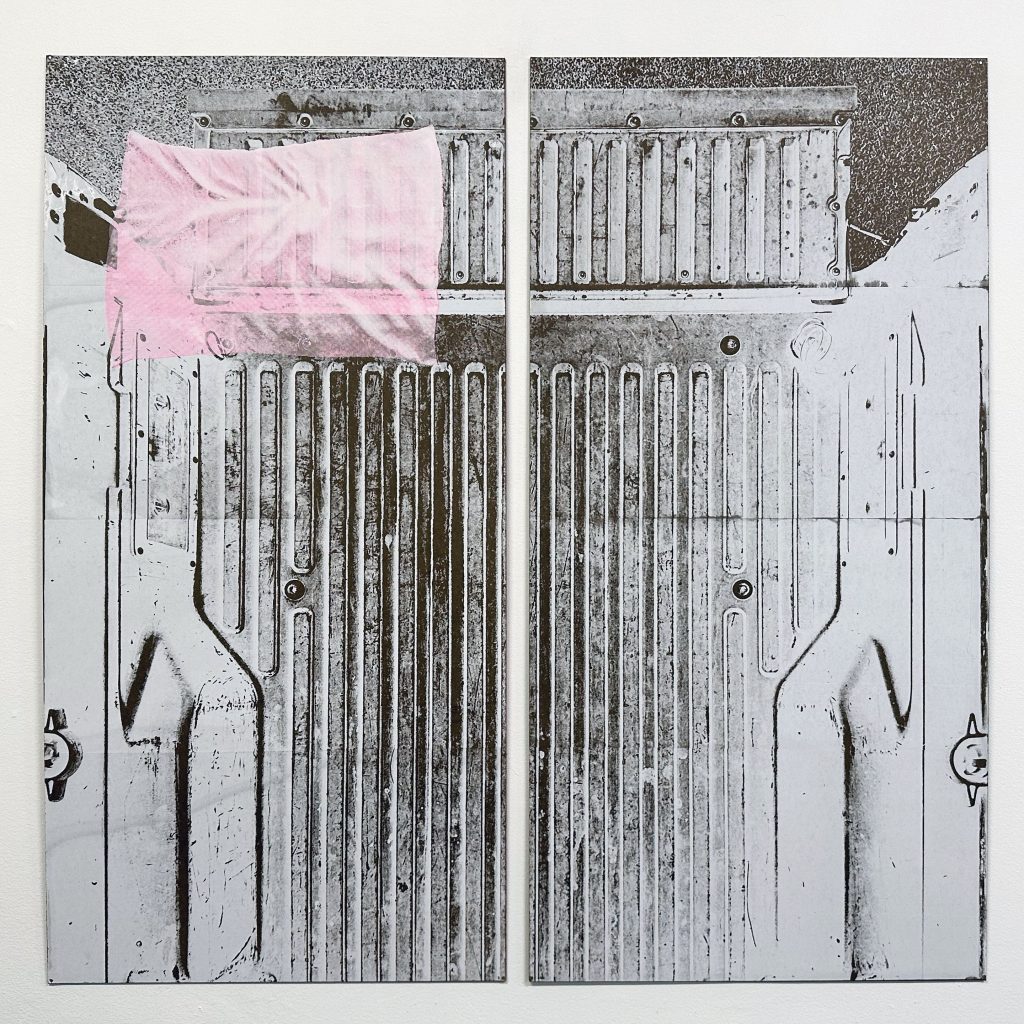
Michelle Eisen, “I’ve Made My Bed”, Silkscreen on hardboard

Steven Mastroianni “Fathomable Series #24”, Unique cameraless photogram, silver gelatin print

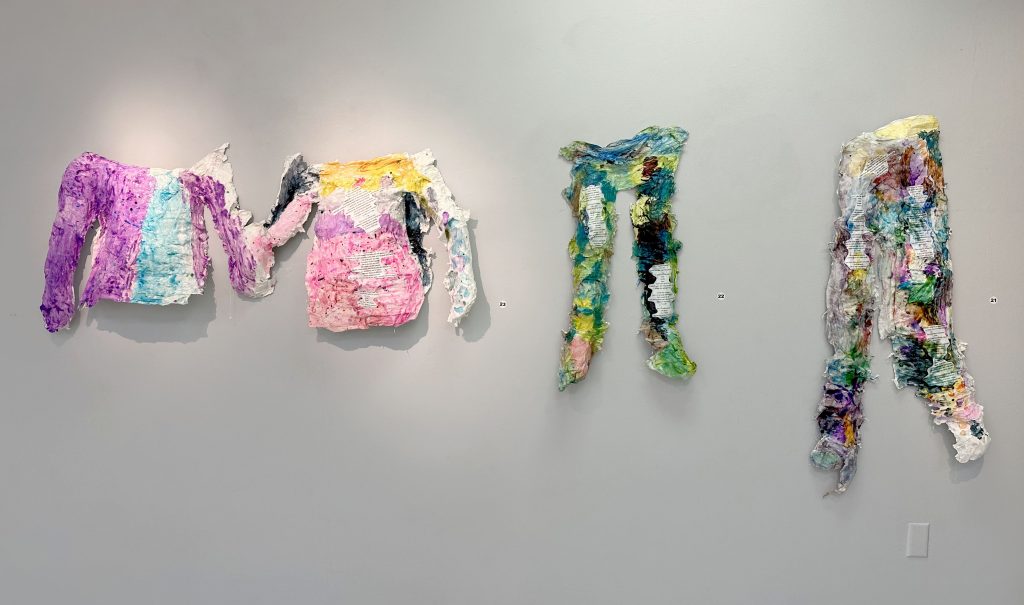
Finally, on view throughout the building are works by local students, teachers, and school leaders for Taking Care of Our House: Communities Coming Together and Making a Difference. The exhibition is made with the organization Art Resistance Through Change (ART-C). The works pictured below are a few of the sculptures created that included the personal narratives of the artists.

It’s worth mentioning that along with these exhibitions there are artists studios and galleries also in the building and worth checking out. Summit Artspace is open Fridays 12-7pm and Saturdays 11am-5pm.

Mar 162024
 

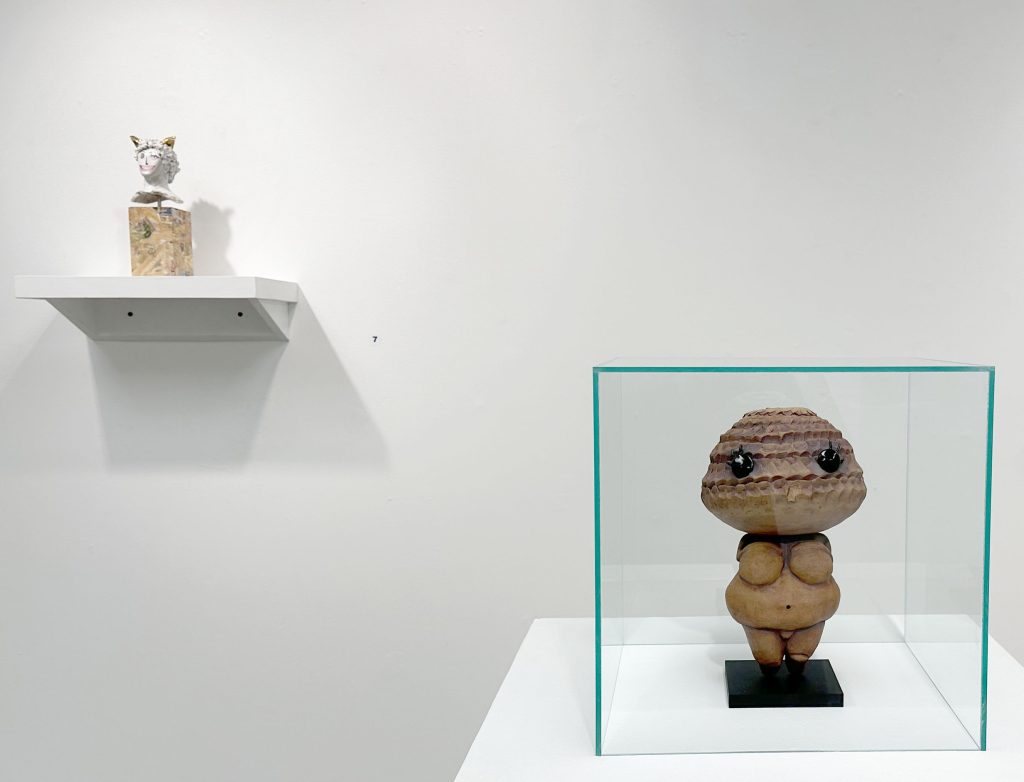
David Kruk’s solo exhibition Nobody Here at Summit Artspace in Akron, asks questions about the state of culture (or lack of culture) we are currently experiencing. Is the difference between the Venus of Willendorf and a Funko Pop just time period and material? Using the Vaporwave aesthetic, a remix of past pop culture in itself, he explores consumerism and nostalgia. Walking around the empty spaces in his video game creation, one is left wondering- what comes next?

The artist’s statement about the work-

This exhibition will consider Mark Fisher’s concept of “lost futures” through the aesthetics of Vaporwave and Funko Pops. I am interested in how these anachronistic objects utilize nostalgia through the remixing of cultural references to engage with consumer capitalism. According to Fisher, this continual referencing of the past exemplifies contemporary society’s cultural stagnation and the erosion of collective imagination towards a radically transformative future.

The sculptures in the exhibition are intended to push these anachronisms a bit further; to undergo a life cycle of adaptation and re-contextualization. I enjoy thinking about the ways in which something like Vaporwave can function as a critique of consumer culture, questioning capitalism’s impulse to commodify everything in sight, including our identities and memories. Vaporwave was born from the internet, and its aesthetic continues to be quite popular within online communities. These communities may often be collectors of pop culture paraphernalia: such as Funko Pops, which I’ve become interested in for their cultural symbolic value. Collecting Funko Pops can provide a source of aesthetic stability for some, while simultaneously operating as totems for coping with the realities of adulthood.

Conceptually within this exhibition, I wonder about the ideological trajectory from ritualistic idol to mass-produced fandom figurine, how capitalism influences our engagement with nostalgia, how the concept of a collectible operates within the spheres of the household to the museum, and how an art object may change over time through being digested through the body of consumerism.

For the video below, available on the gallery’s website, Kruk discusses his work – from tracing images using an oven light as a child, to a growing interest in sculpture, to creating the interactive video game from the show.

This exhibition closes 3/16/24.

Feb 282024
 

The images above are from Brianna Lynn Hernandez’s exhibition Anticipatory|Después, one of three currently on view at Spaces gallery in Cleveland. Her moving video and sculptural installations focus on themes of end-of-life-care, grief, and mourning.

From the gallery about the work-

Anticipatory|Después visualizes the anticipatory grief of caregiving and the process of dying through performative videos and photography. Each piece shares the physical and emotional state of the dying, the caregiver, and at times the two concurrently. Ranging from fast and aggressive dance-like movement to slow and meditative contemplation, the enacted scenes capture a range of emotions and thought processes of understanding and untangling the intertwined traumas of caregiving and acute grief.

As her mother’s caregiver in the final year of her life, Hernández translated her personal experience of grief into her studio practice in order to combat the isolation and shame many grievers face in our death-avoidant culture. Through several series including Anticipatory | Después, the works aim to normalize honest conversations of grief and act as an entry point into education on end-of-life planning. Hernandez states that while we will all eventually experience the pains of loss, preparing for the logistics of death and nurturing supportive communities for grievers can provide comfort and lessen the unnecessary stressors attached to loss.

A Botanical Conversation, Mehdi-Georges Lahlou’s exhibition, explores environmental, identity, and cultural issues using the natural world as a backdrop. The two large murals are of an enlarged palm tree cell as seen through a microscope.

The exhibition statement by curator Conor Moynihan-

The palm tree is a central component of Mehdi-Georges Lahlou’s practice, a motif he has explored to highlight themes of exoticism, migration, and cultural heritage. Recently, Mehdi- Georges Lahlou has used the palm tree to explore themes of colonization, climate change, and history. While members of the Arecaceae family- palm trees- can be found in many parts of the world, they are not found here in Ohio. Unless, of course, you go to the Cleveland Botanical Garden as Mehdi-Georges Lahlou did for his residency at Spaces.

For A Botanical Conversation, Mehdi-Georges Lahlou has created four new video works using the Cleveland Botanical Garden as the setting and backdrop. While many of the plants visible in these works come from elsewhere across the world, his collaborators Diwe Augustin-Glave, CHIMI x Nature, and Dr Lady J are based in Cleveland. In many ways, this body of work imagines the conversations that might happen if the flora in the Cleveland Botanical Garden could speak, sing, chant, and educate, and then transports this dialogue in the gallery space.

Microscopy, the mural that extends over two walls in the gallery, serves a double function. Based on the cell of a dead palm tree, it enlarges from an unusual perspective a motif central to the exhibition. And it also serves as a container and a frame for the four videos. This conversation emerges within the boundaries of the palm tree cell, transporting this exhibition into the botanical garden.

Characteristic of his practice, Mehdi-Georges Lahlou draws our attention to how plants and botanical gardens become ways to highlight histories of colonization, compulsory heterosexuality, and climate disaster all contained under canopies of glass. Yet, especially through the performances of Diwe Augustin-Glave, CHIMI x Nature, and Dr Lady J, they also celebrate new queer ecologies and configurations, melding African and African American musical traditions, queer theory and scholarship, ecological history, and environmental justice towards new ends.

A Botanical Conversation is a cacophony. It asks us to listen carefully to hear all the voices that make up this chorus.

Aaron D. Williams has created a video installation, ESCAPING AAWFUL LAND, that continues the work created for his previous Aawful Friends exhibition. This new creation addresses the issue of anxiety and the power of collaboration as a way to combat it.

From the gallery-

ESCAPING AAWFUL LAND is an immersive exhibition that builds upon the success of Aaron D. William’s previous Aawful Friends showcase at Zygote Press. This new showcase explores the creative journey between Williams and collaborating artists. By delving into anxiety through art, we seek to acknowledge its profound impact on our collective well-being. We must address anxiety as a shared concern and foster a future community that supports and uplifts one another. Through individual and collective artistic expression, we can overcome the gravity of the situation and find healing and unity. In our fast-paced society, anxiety affects people from all walks of life, taking various forms and manifesting in relentless thoughts, paralyzing fear, and an overwhelming sense of unease. Despite its grip, we encourage you to embrace your inner courage and take the leap. The installation will be held at The Vault in SPACES gallery, where you will be transported to AAWFUL LAND – a hidden realm within our city accessible only to those who know it exists. Guided by the mysterious GUARDIAN, you will journey through its enigmatic mysteries. As you step into AAWFUL LAND, you will be captivated by a mesmerizing video presentation. Witness AAWFUL AARON engaged in a gripping game against a formidable opponent, reminding us that we have the inner strength to persevere and pursue our dreams even amidst anxiety. In Aawful Land, anxiety takes on tangible forms and bursts forth in vibrant colors. CREATURE is at the heart of our narrative, an overbearing shadowy figure personifying anxiety and serving as the central antagonist. Aawful Aaron is locked in a fierce battle against CREATURE, desperately seeking escape from this hidden world. However, a subtle hint suggests that Aaron may need assistance to overcome his challenges. Within Aawful Land, a group of trapped artists may hold the key to their collective liberation. Together, they offer a glimmer of hope, representing collaboration’s power in overcoming Aawful Land’s perils. This work serves as a proof-of-concept or work-in-progress, paving the way for Aawful Friends II. In the forthcoming installation, we will feature this newfound group of artists, showcasing their collective efforts and unveiling the transformative power of collaboration. Their shared experience demonstrates that collective creativity and expression can lead to freedom and transcendence. ANXIETY IS HARD – TAKE YOUR SHOT ANYWAY.

All three of these exhibitions close 3/1/24.

Feb 272024
 

Jo Westfall, “The Queens Astronomer”, 2023, Mixed media

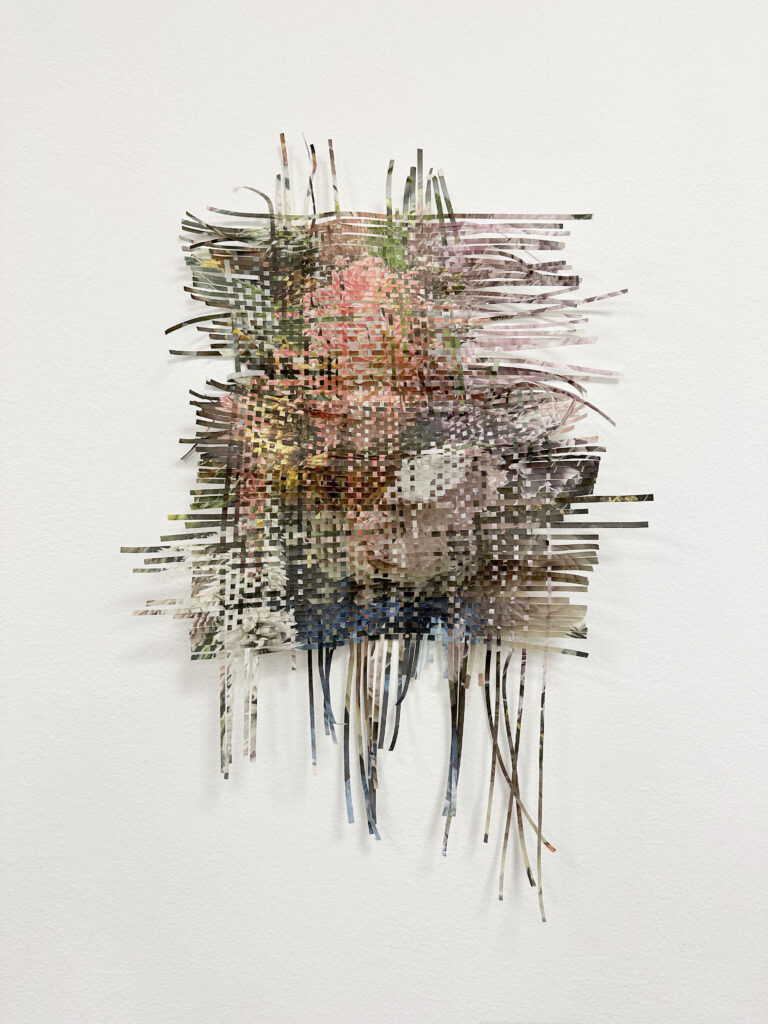
Christine Mauersberger, “Kates Bouquet”, 2022, Digital print on Japanese Kozo paper, of loom weaving

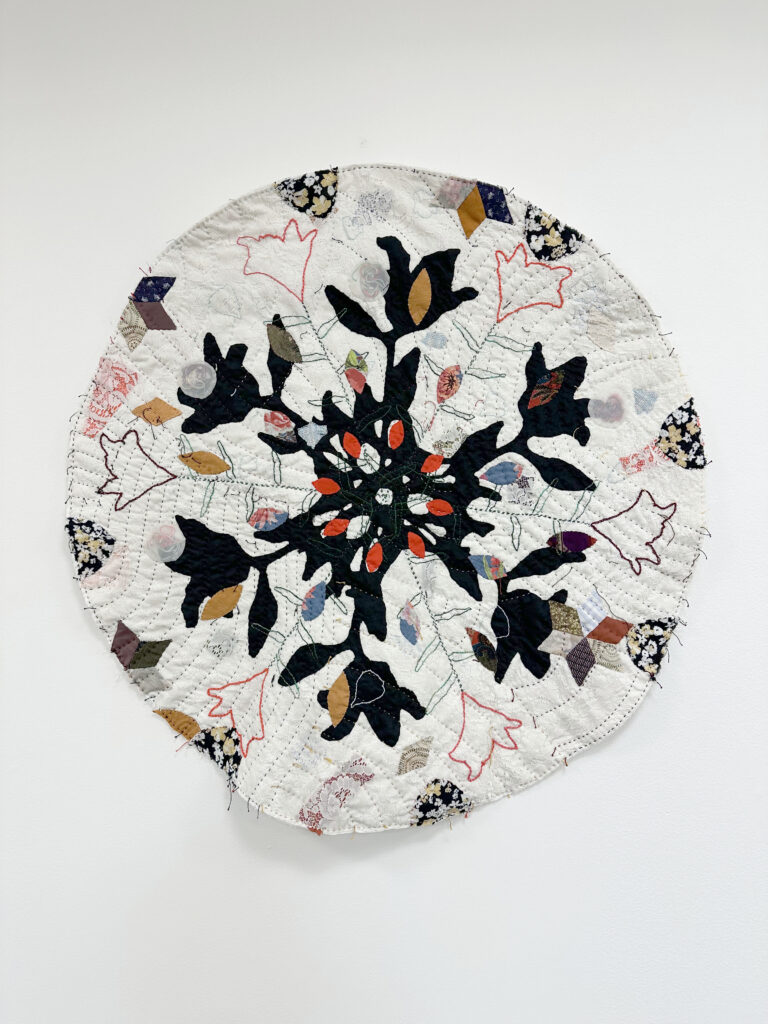
Cat Mailloux, “Rose Window”, 2023, Quilted appliqué on found fabric

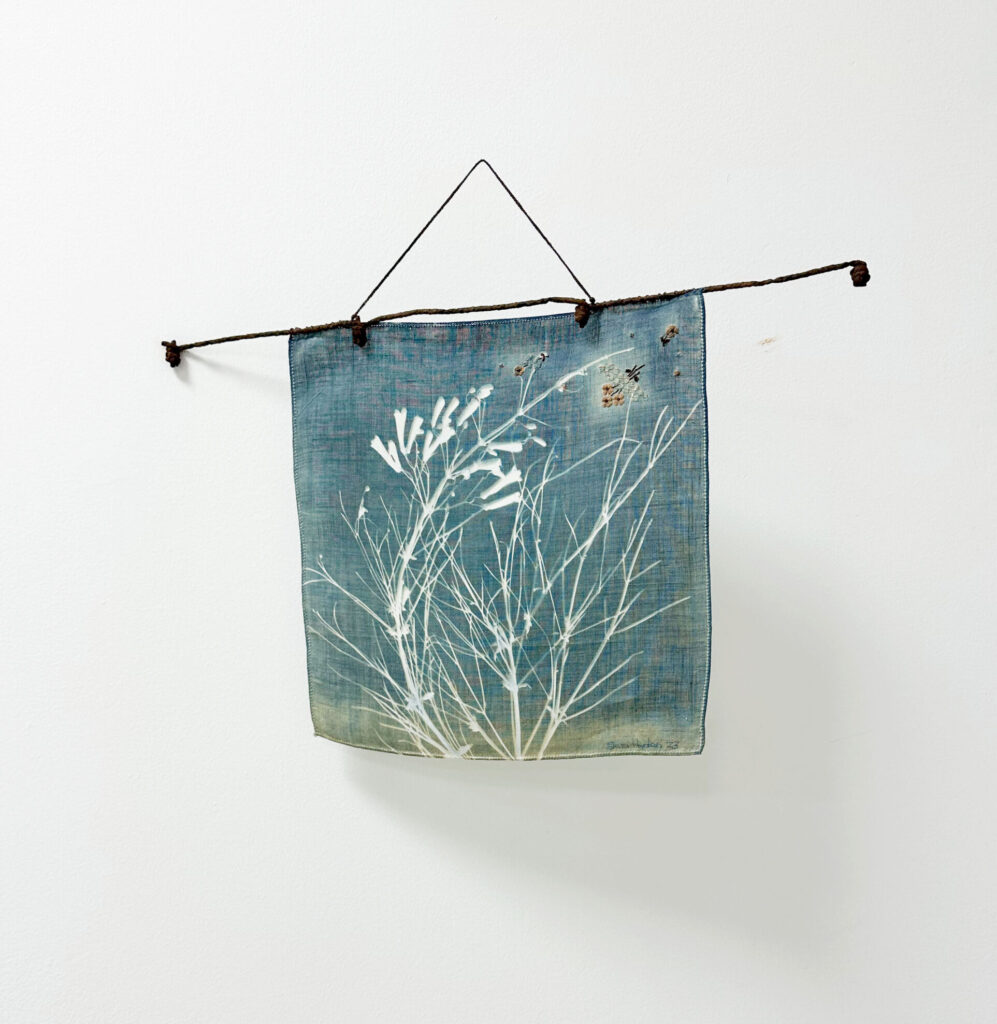
Suzi Hyden, “If the Sun Could Kiss Me”, 2023, Toned cyanotype on vintage linen hand-stitched onto metal fencing

Above are a few of the works from Common Thread, the current exhibition at Malone University’s art gallery. It is on view until 2/29/24.

From the gallery about the show-

Although quite different, all artists in this exhibition are united by the idea of textiles. Suzi Hyden’s work celebrates the environment by combining elements from nature and repurposed materials to create cyanotypes on vintage fabrics.

Cat Mailloux’s textile practice is focused in quilt making, pursuing connections between the visual language of churches, cathedrals, and domestic spaces that slowly bleed their way into imagined and limitless landscapes, exploring questions of the infinite through material.

Christine Mauersberger’s body of work is aesthetically eclectic. Hard and soft. Digital and analog. Some pieces fill a room, others can be held in your hand. The common thread is that each piece attempts to make the invisible visible.

Jo Westfall creates visual work considered resource art. It is portraiture, fiber art, and assemblage made with local materials that were discarded, overlooked, or unused. It reclaims the aesthetic capacity and utility of these items by integrating them into fresh renderings.

Feb 262024
 

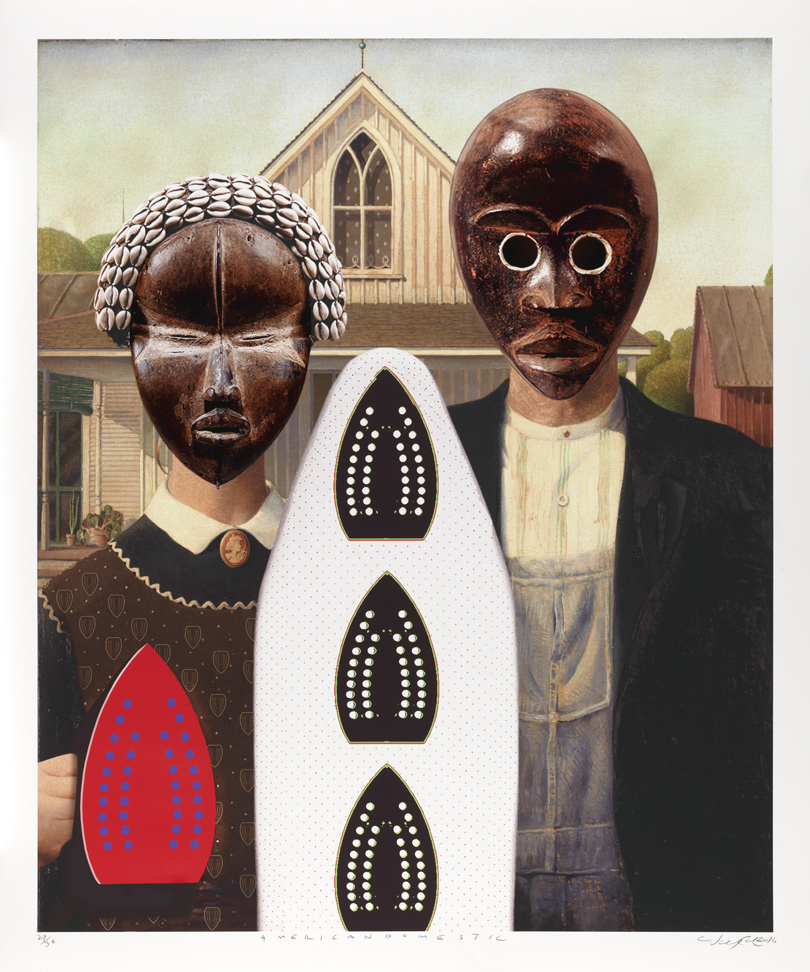
Willie Cole, “American Domestic”, 2016, Digital Print

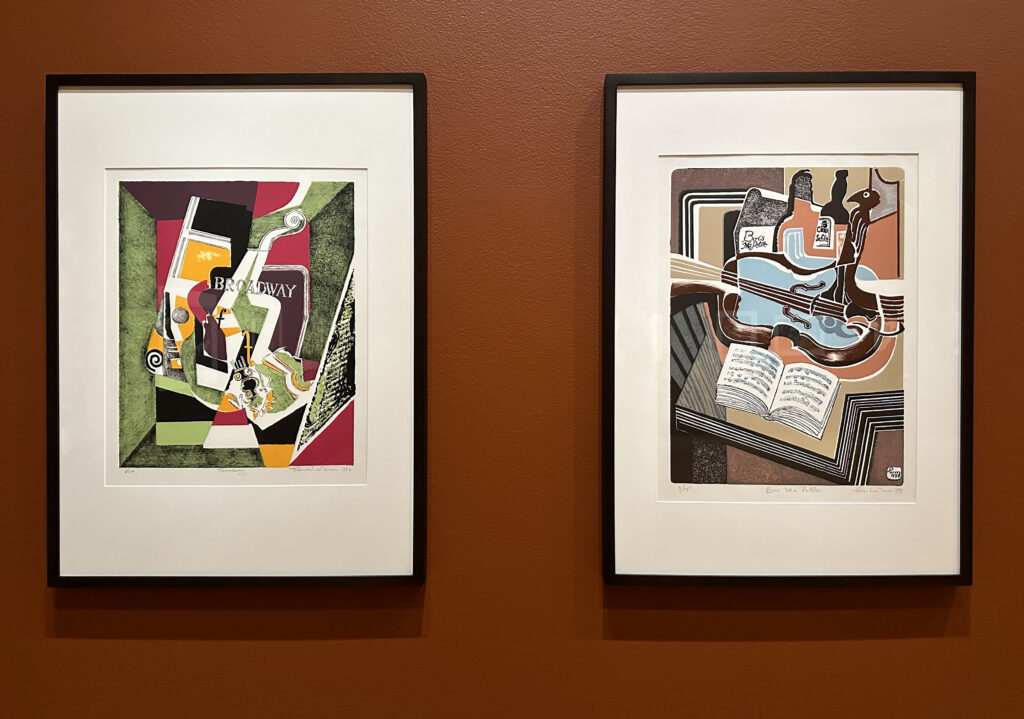
Tom Laidman, “Broadway”, 1993 and “Bois Ma Petite”, 1999, Lithograph on paper

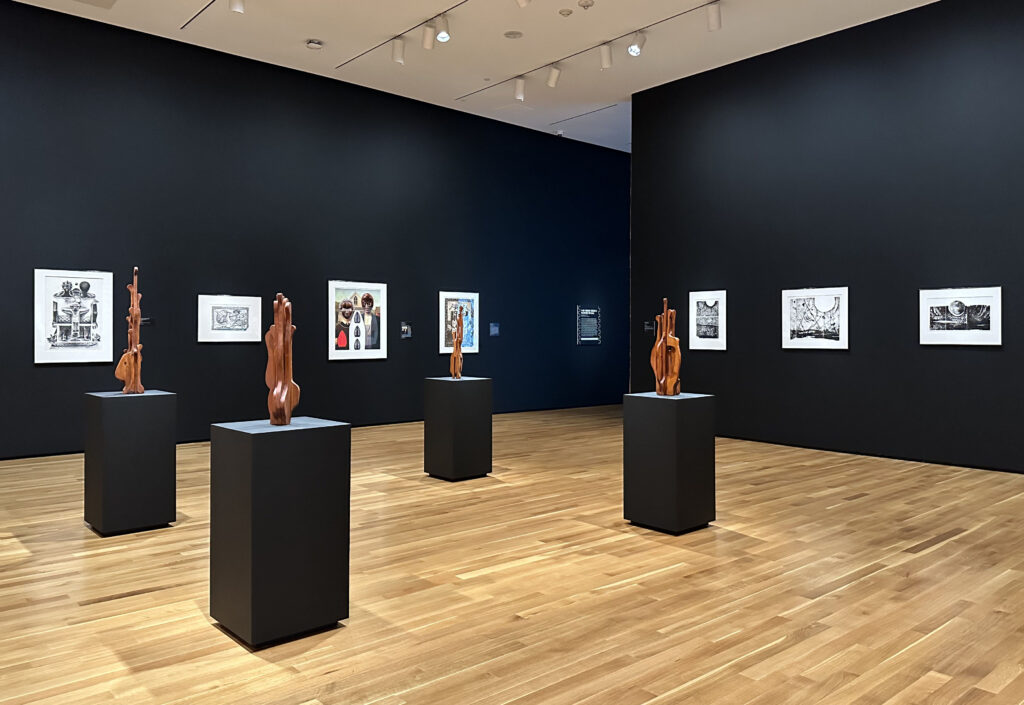
Currently on view at Akron Museum of Art is RETOLD: African American Art and Folklore, a collection of art from the Wesley and Missy Cochran collection, organized into themes exploring aspects of African American history and culture. The show features many well known and lesser known artists including Amiri Baraka, Beverly Buchanan, Willie Cole, Trenton Doyle Hancock, William Pope.L., Tom Laidman, Jacob Lawrence, Alison Saar and more.

From the museum about the exhibition-

African folklore has been around as long as humankind, and the African diaspora in America has added new dimensions to its rich history. African American folk stories teach about culture, the mysteries of life, and the survival of a race of people bought and sold who continue to thrive in an unjust society.

“RETOLD: African American Art and Folklore” focuses on four themes: Remembering, Religion, Racialization, and Resistance. These themes provide a comprehensive retelling of the works featured in the exhibition. In many of the pieces, the artist’s muse connects closely with stories that have been told generation after generation. Folklore texts are featured throughout the space as a means to retell a richer, deeper story of African American culture.

There are more than forty artists represented in this exhibition, all holding one similar truth: their story of joy and struggle in the African American experience.

In addition to the artwork, there is also an educational video produced by Josh Toussaint-Strauss of The Guardian that explores the misconceptions about Haitian Voudou that is worth a watch.

How ‘voodoo’ became a metaphor for evil

Feb 232024
 

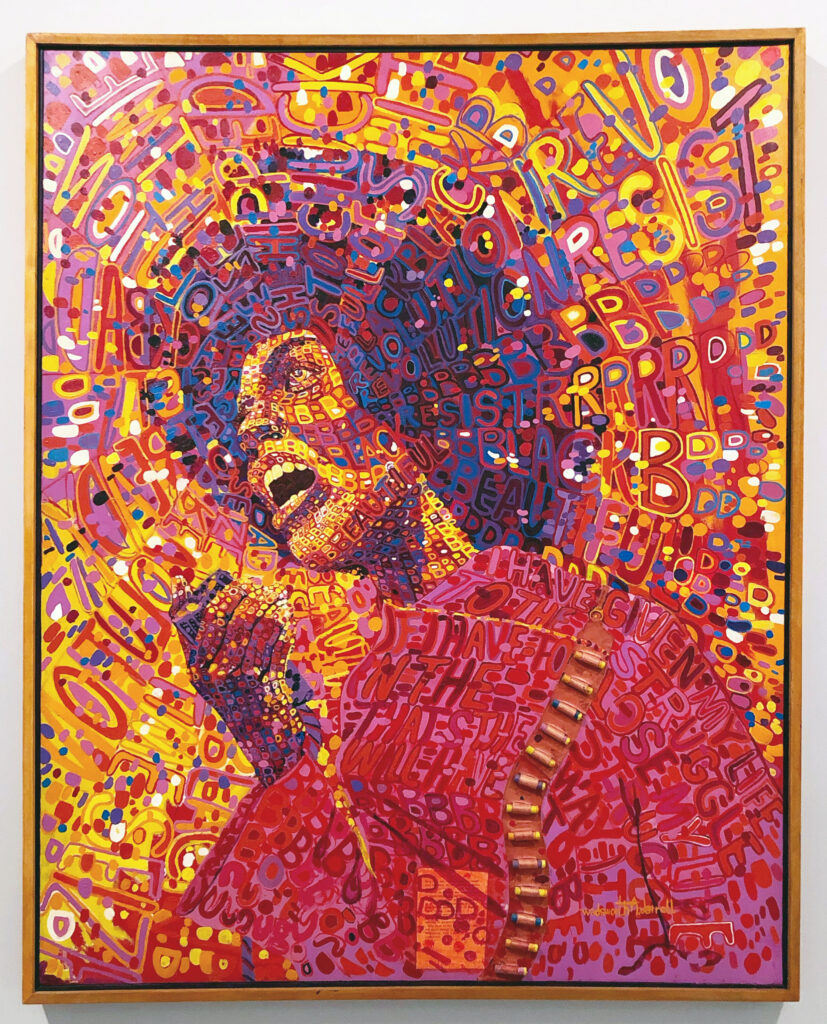
Wadsworth A. Jarrell’s Revolutionary (Angela Davis), 1971, spotted at Brooklyn Museum in 2020, is based off of a photograph of the activist.  The colorful painting includes words from her speeches and actual bullet cartridges.

From the museum about the work-

Wadsworth Jarrell’s Revolutionary (Angela Davis) is one of the most recognized paintings associated with the Black Arts Movement, a cultural manifestation of the Black Power Movement. Artists of this movement sought to create uplifting images that called upon Black people to harness their collective power. The power of communal action is here expressed through a chromatic swirl of individual colors that coalesce into a unified image of the radical activist and intellectual Angela Davis. Davis’s militant clothing—complete with bullet cartridges—was modeled after the Revolutionary Suit designed by artist Jae Jarrell, Wadsworth’s wife. An icon of Black Power, Davis continues to lead the prison abolition movement today.

Jarrell, along with his wife, is part of the African American artist collective AFRICOBRA, formed in Chicago in 1968.

Below is part of a statement about the group from their website by another of the founders, Gerald Williams.

AFRICOBRA began very loosely in 1968 as an association of visual artists. We decided to commit our selves to the collective exploration, development, and perpetuation of an approach to image making which would reflect and project the moods, attitudes, and sensibilities of African Americans independent of the technical and aesthetic strictures of Euro-centric modalities.  Jeff Donaldson, who spearheaded the movement,Wadsworth Jarrell, Jae Jarrell, Barbara Jones-Hogu, and myself, Gerald Williams opened the lid on what we called AFRICOBRA – African Commune of Bad Relevant Artists.  It was an original name that came to identify our place within the broader context of Black art.

Our mission was to encapsulate the quintessential features of African-American consciousness and world view as reflected in real time 1968 terms.  For months, beginning as early as 1967, we examined and talked about the forms of expression and images produced by previous generations of artists.  We came to the realization that there was not the existence of a consistent, unequivocal, uniquely Black aesthetic in visual arts as there was in other disciplines, notably music and dance. Many of our contemporary artists, at the time, generally said that they “were artists who happened to be black”, or held the view that their work was expressing universal ideas or concepts that were not tied to such a narrow category as Black art.   The notion of an intrinsically Black view point, expressed in characteristically “Black ways”  was a relatively alien idea for the most part.  That notion begged the question as to whether it was possible to create a style or approach to art that at its core could be identified as African-American or Black, notwithstanding  the presence of Black imagery or subject matter.  If imagery and subject matter were the sole criteria then the question was moot.  One could conclude, thereby, that Winslow Homer or any number of artists produced Black art when they painted Black images.  After numerous brain storming sessions where such topics were discussed, after test projects and critiques,  the five of us mapped out the core principles that became the foundation of AFRICOBRA.


Feb 152024
 

“The Flameless Green Dragon”, 2018, Elm and acrylic

“In Rhythm”, 2018, Elm and acrylic; and “Water Music”, 2002, Inkjet photocollage on paper

“Introvert”, 2019, Elm; “Engendering Life”, 2020, Green soapstone

Two left sculptures made of Italian translucent alabaster and “Harboring Emptiness”, 2021, Maple and acrylic

Above are several works from Barbara Stanczak Spirit and Matter, the artist’s recent exhibition at Akron Art Museum.  Stanczak’s sculptures are energetic shapes created in partnership with the natural materials used.

From the museum’s web page-

Barbara Stanczak’s sculptures are born from an essential combination: the artist’s creative vision and the natural qualities of her materials. This two-sided collaboration remains in effect throughout Stanczak’s entire process of conceiving and creating an artwork. A piece of wood or stone presents initial possibilities that help to set a direction, but invariably the course will change—the substance may be so hard as to resist carving, or it may contain internal structures that must be accommodated. But the artist does not surrender her own interests, as she has found that a successful work must become the physical embodiment of a rich and valuable idea. In her own words, “I can only hold onto my idea of the whole by letting go of ‘mine’ and focusing on ‘our.’ The material becomes a partner who needs my patience, respect, thoughtfulness, cooperation, skill, and persistence.”

Stanczak committed to working with wood and stone only after a long process of discovery. Born in Germany in 1941, she moved to the United States in 1960 to assist her grandfather in painting church frescoes, and later worked in handmade paper, metal, and a variety of other media. She also worked alongside her husband, Julian Stanczak, whose paintings and prints were celebrated at the Akron Art Museum with a one-artist show in 2013. As her own career evolved throughout her thirty-seven-year tenure as a professor at the Cleveland Institute of Art, Barbara carved her first wooden sculpture in 1992. “I was tired of searching,” she recalls. “It was time to arrive!”

Stanczak continues to find wood and stone compelling because, as she puts it, they are constantly “teasing, tempting, and provoking me to see more, to see beyond, to see the micro and the macro of the universe.” She finds these universal qualities not in immediately recognizable forms like leaves and flowers, but rather in dense rings and layers, subtle features formed over decades or even thousands of years. As Stanczak exercises her own intuition, she aligns it with these natural processes. As the artist and the materials harmonize, it is as if two forms of intelligence are working together—as if spirit and matter are not so separate as one might expect.

Jan 292024
 

Whimzeyland, the “Bowling Ball House”, is a local landmark located in Safety Harbor, Florida, created by artists Todd Ramquist and Kiaralinda.

About the house from their website

In 1985, they purchased the beige house on Third Street in Safety Harbor, Florida. They traveled everywhere, actively seeking out inspirational and unusual places. Inspired by these travels, they began transforming their house. One of the earliest additions were the wooden triangles to the eaves of their house. The beige house became bold in color, too.

One day, they went to a flea market and saw a sign that said that anybody could take 10 free bowling balls. They took the bowling balls and began painting and placing them around the property. This is how they became known as the bowling ball house of Safety Harbor.

Todd and Kiaralinda even branched out of decorating their home, creating two different art cars, designed a restaurant, and making public sculptures, among other things. They began calling themselves the Whimzey Twinz because they work together on all of their projects.

Their travels soon included visits to folk artists and artists that they met at their shows. These friends visited them, too. Todd and Kiaralinda’s bowling balls inspired many of them. They would create bowling balls for Todd and Kiaralinda, who got so many of these works from artist friends that they started a gallery in their home. They created a “Call for Balls” which made a lot more of these art works roll into their home. Today, they have over 80 bowling balls from various artists around the world and people still bring them bowling balls as gifts.

If you are in the area, make sure to also stop by Safety Harbor Art and Music Center (SHAMc), a nonprofit they opened in 2017. It has an art gallery and shop, and hosts music events and art classes as well.