There were so many great artists showing work at the group of galleries in the Kress Building in Ybor City, this post needed to be split in two. For part one, on Tempus Projects’ three spaces, head here.
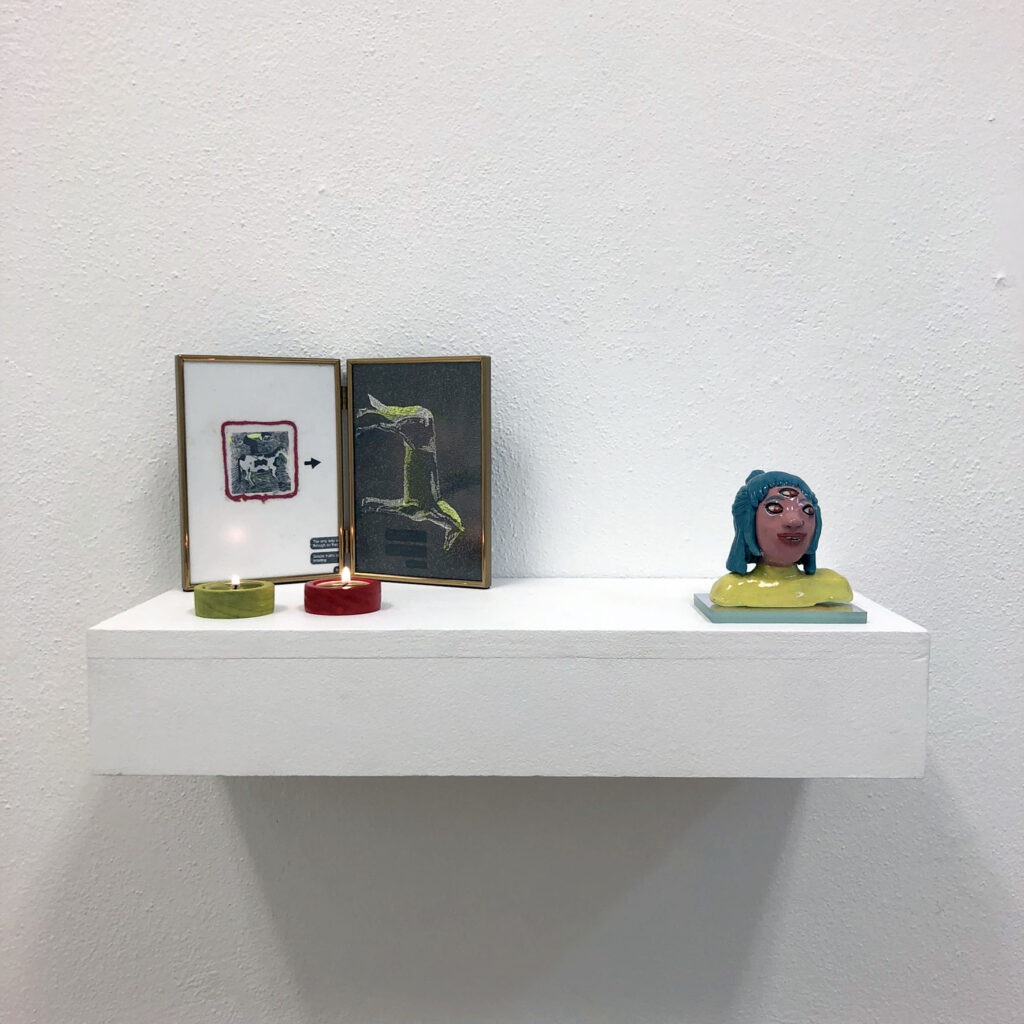
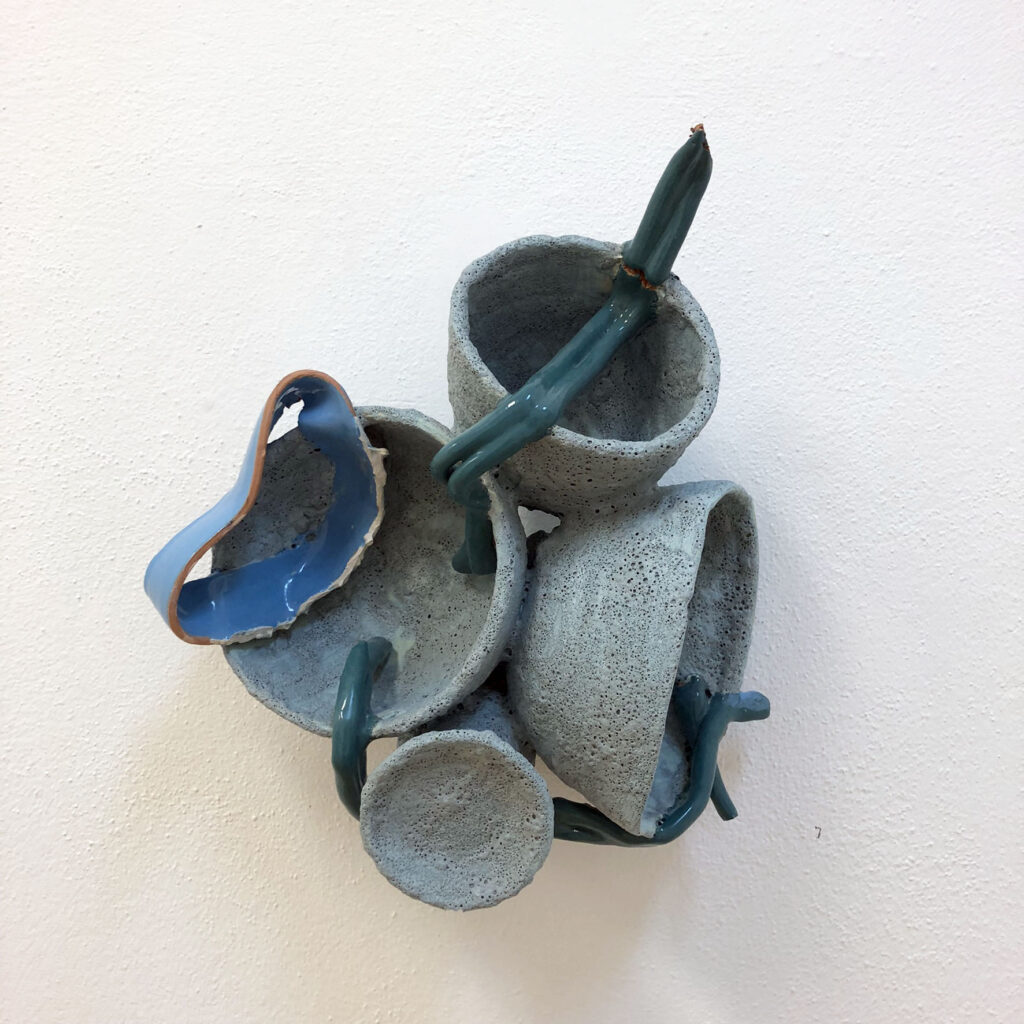
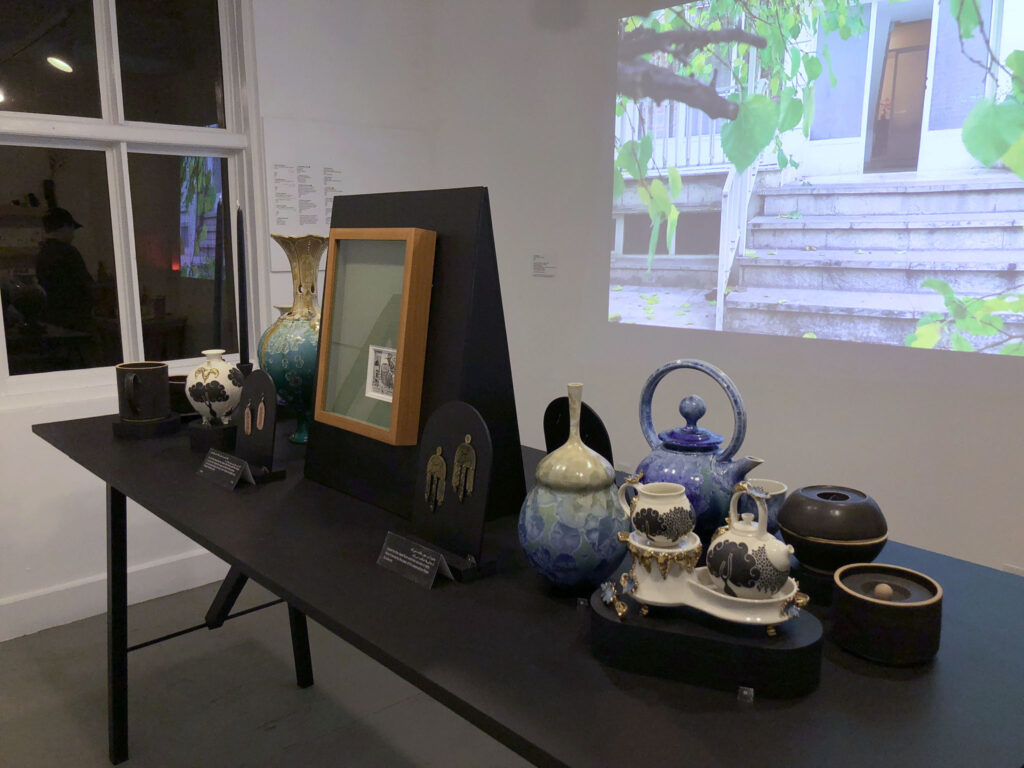
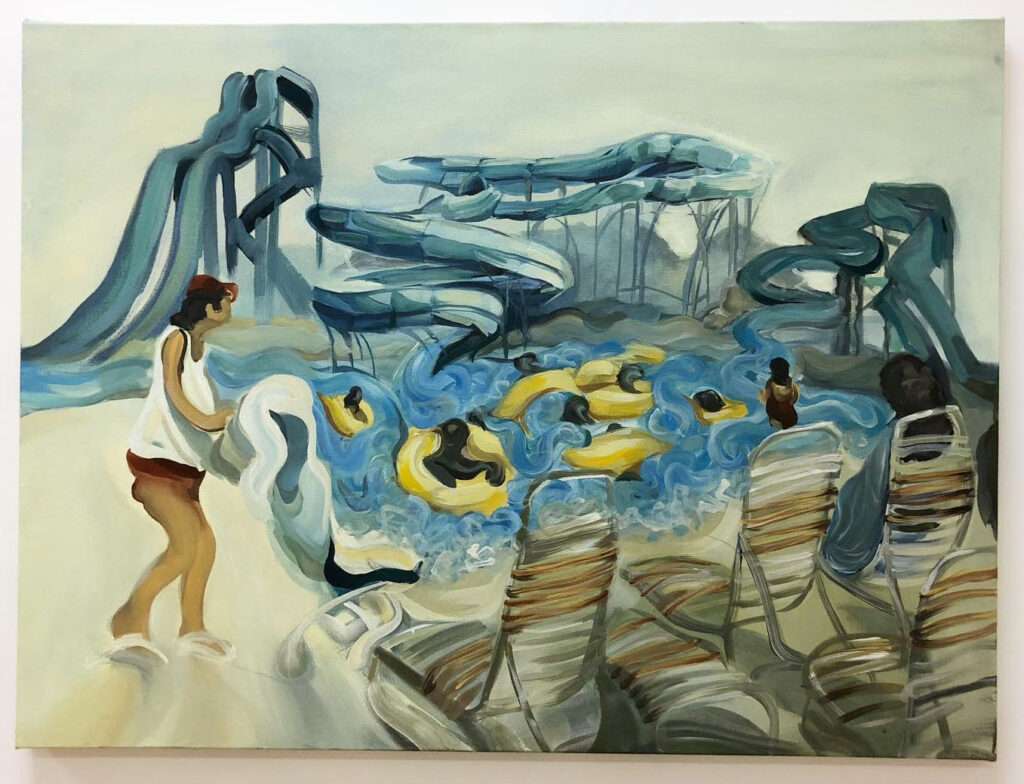
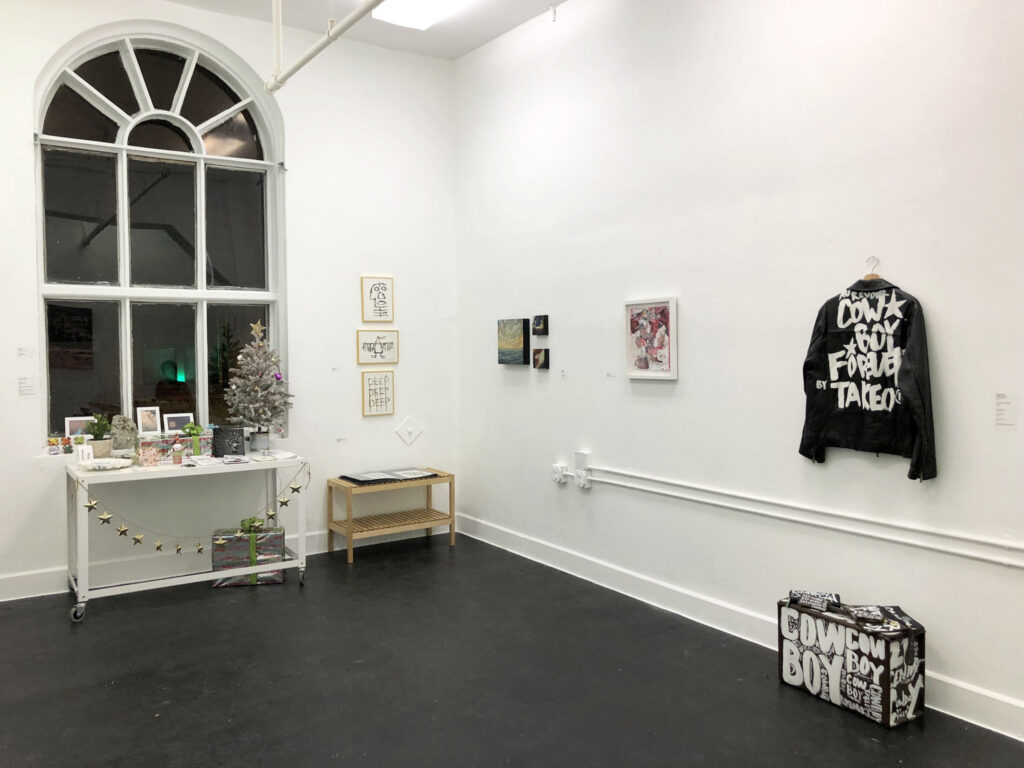
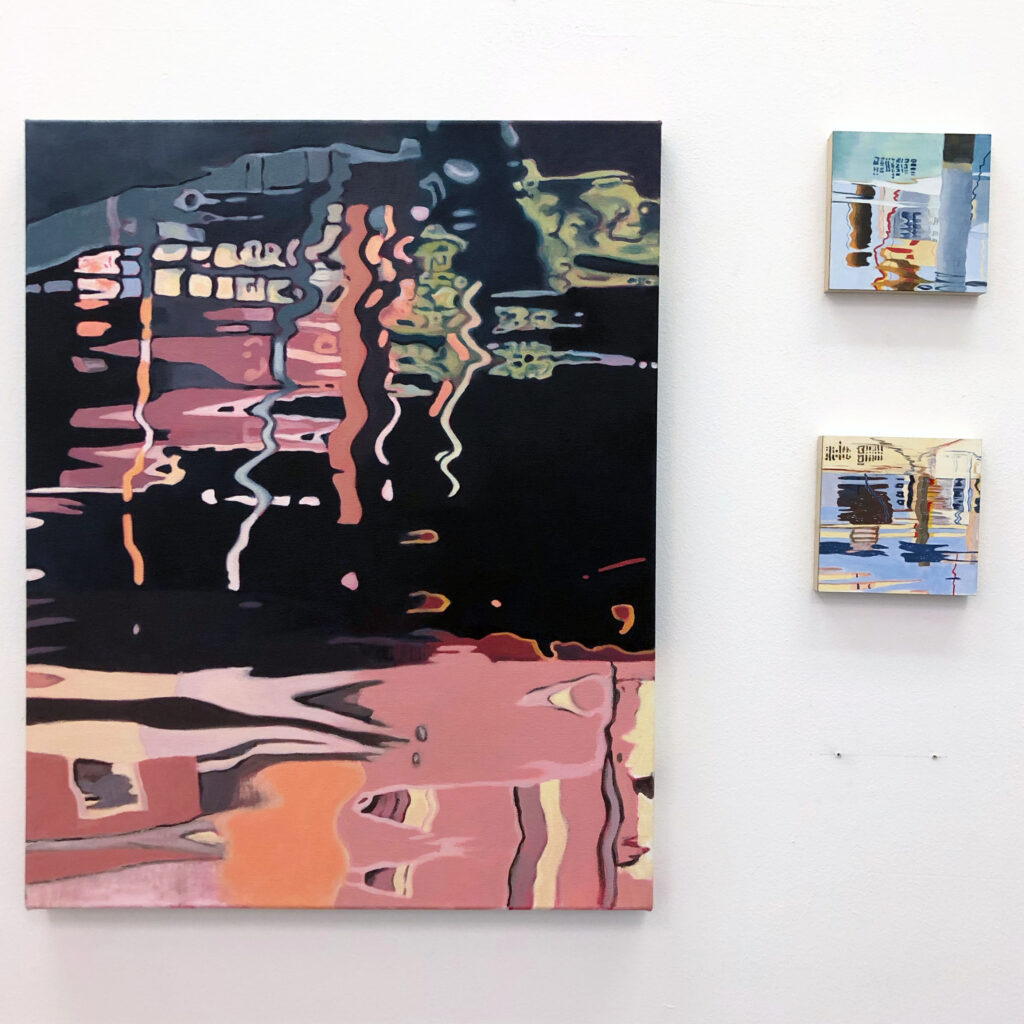
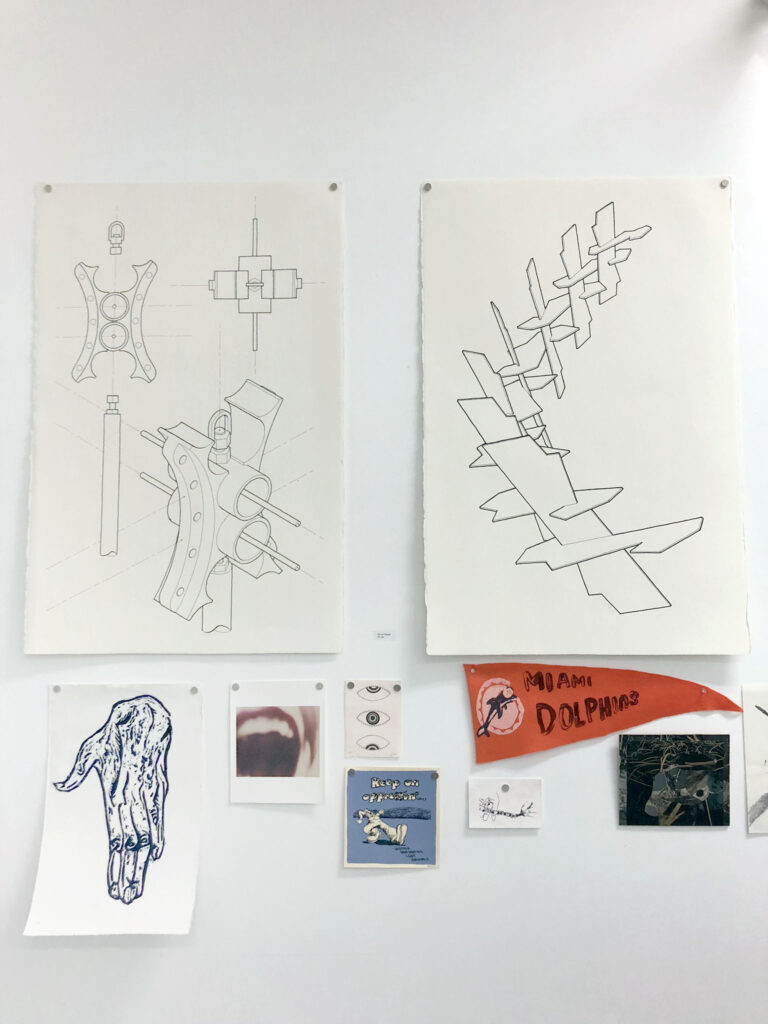
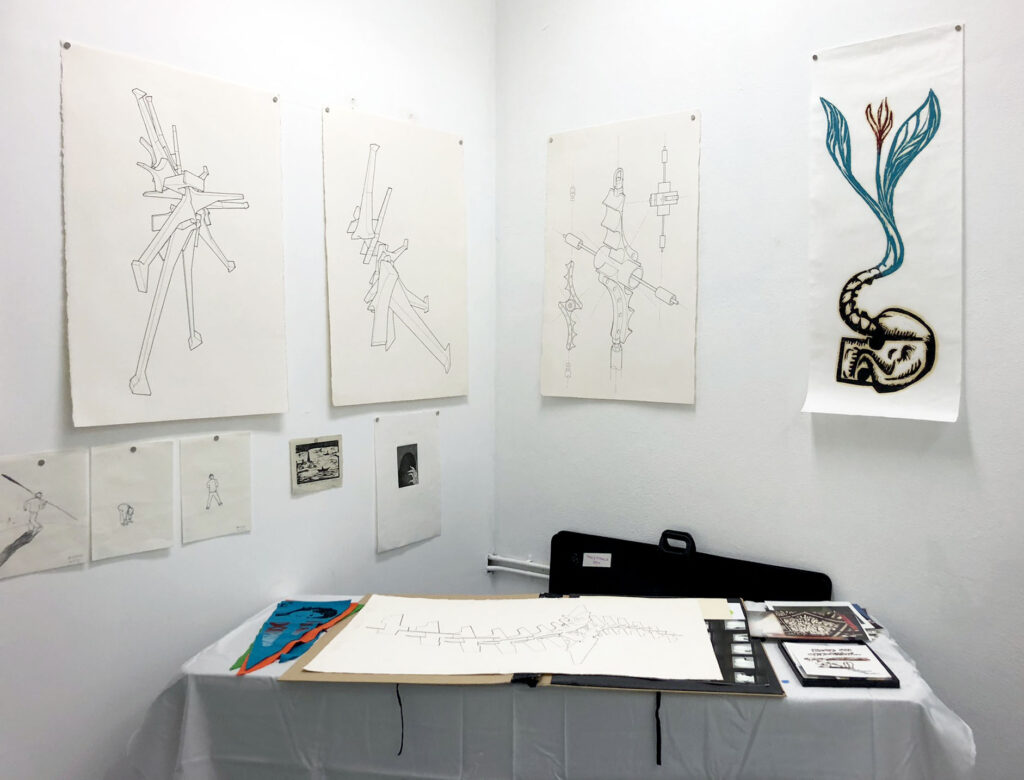
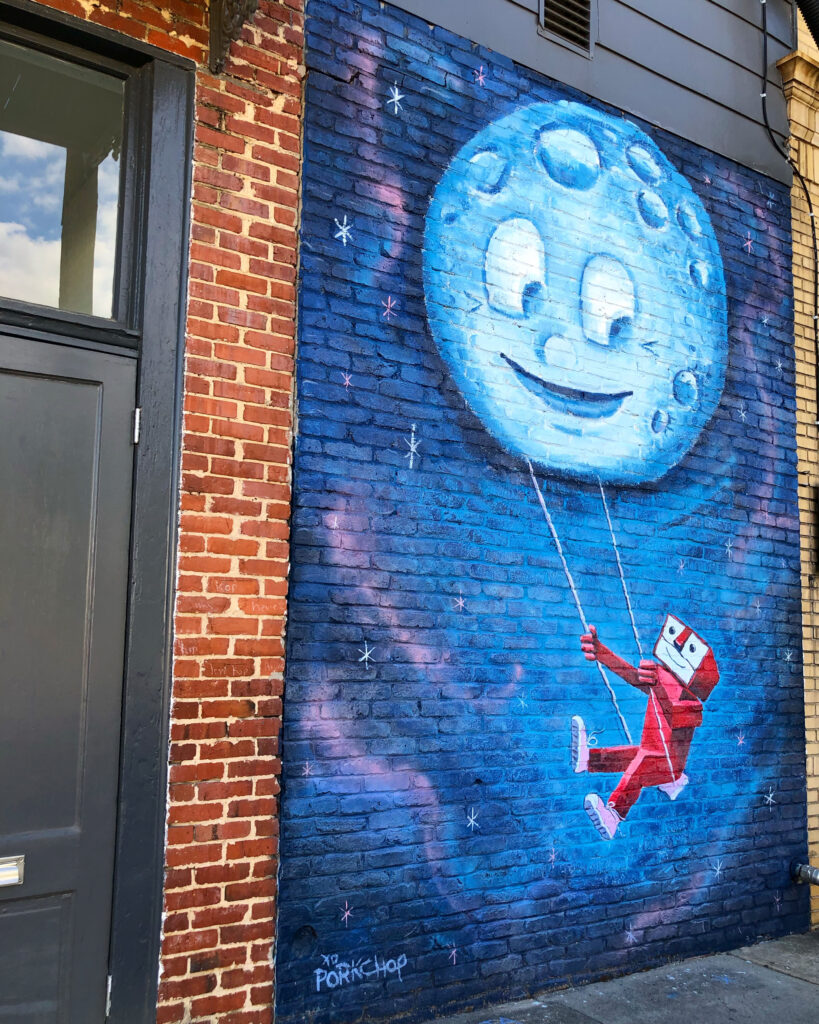
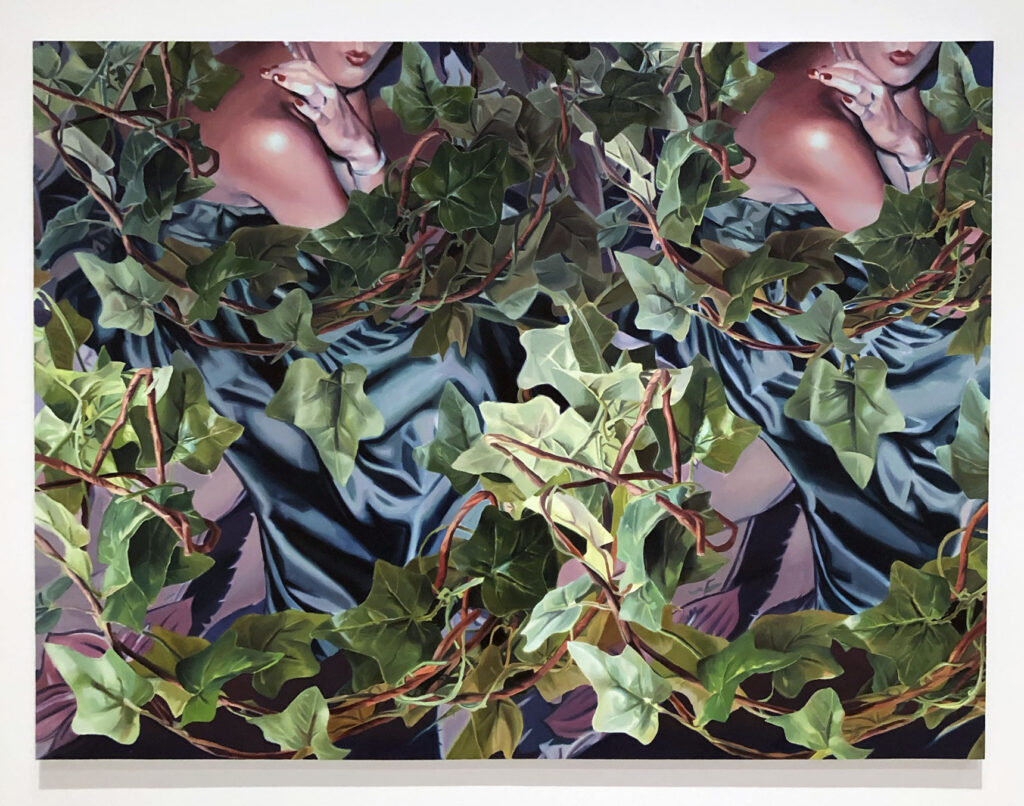
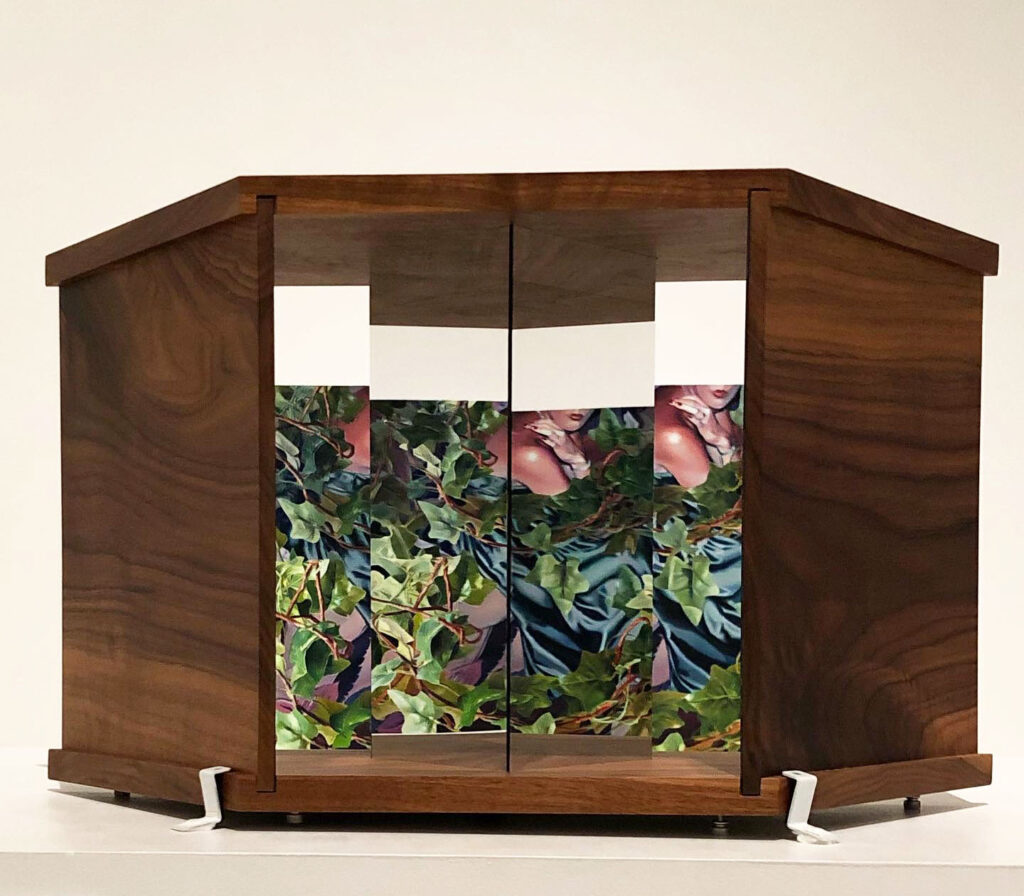
Quaid Gallery is an artist cooperative gallery founded by a group of Tampa artists and is focused on contemporary artists creating mixed media exhibitions. In addition to monthly curatorial projects, they are planning to host events which will include readings, drawing nights and film screenings. Liquid Snow is their current exhibition and included the artwork pictured above by Jessi Sherbet, Mia Makes It, and Mike Cannata.
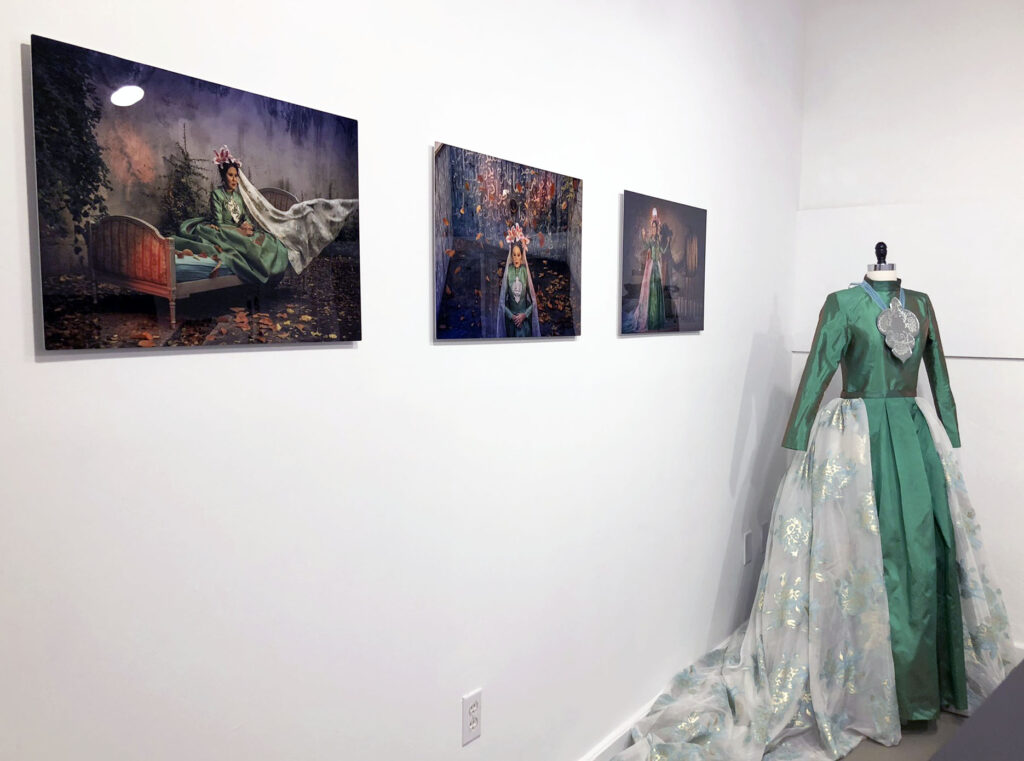
In late 2021, Mesdaghi traveled to her childhood home in Tehran, Iran, to throw herself a wedding, sans partner. She writes, “As a child I had dreams about getting married and having a wedding in our house. An Iranian wedding is a heavily glamorized and festive event where the bride is treated like a princess and guests come celebrate and admire her with gold and jewelry. I decided to have a wedding for myself. I made my dress at a high-end fashion boutique, bought a beautiful gold ring with my dad’s money, hired Maryam Saeedpoor (a well-known photographer,) a hair stylist, played Persian wedding music, and had a few friends plus my aunt and uncle as my guests.”
Documentation of the ceremony—a series of six limited-edition portraits by Saeedpoor and a collaborative video piece with director Khashayar Khalilkhani and vocalist Mahboubeh Golzari, reciting a poem by Iranian poet Houshang Ebtehaj about love and longing—beautifully articulates the complex emotions behind the project.
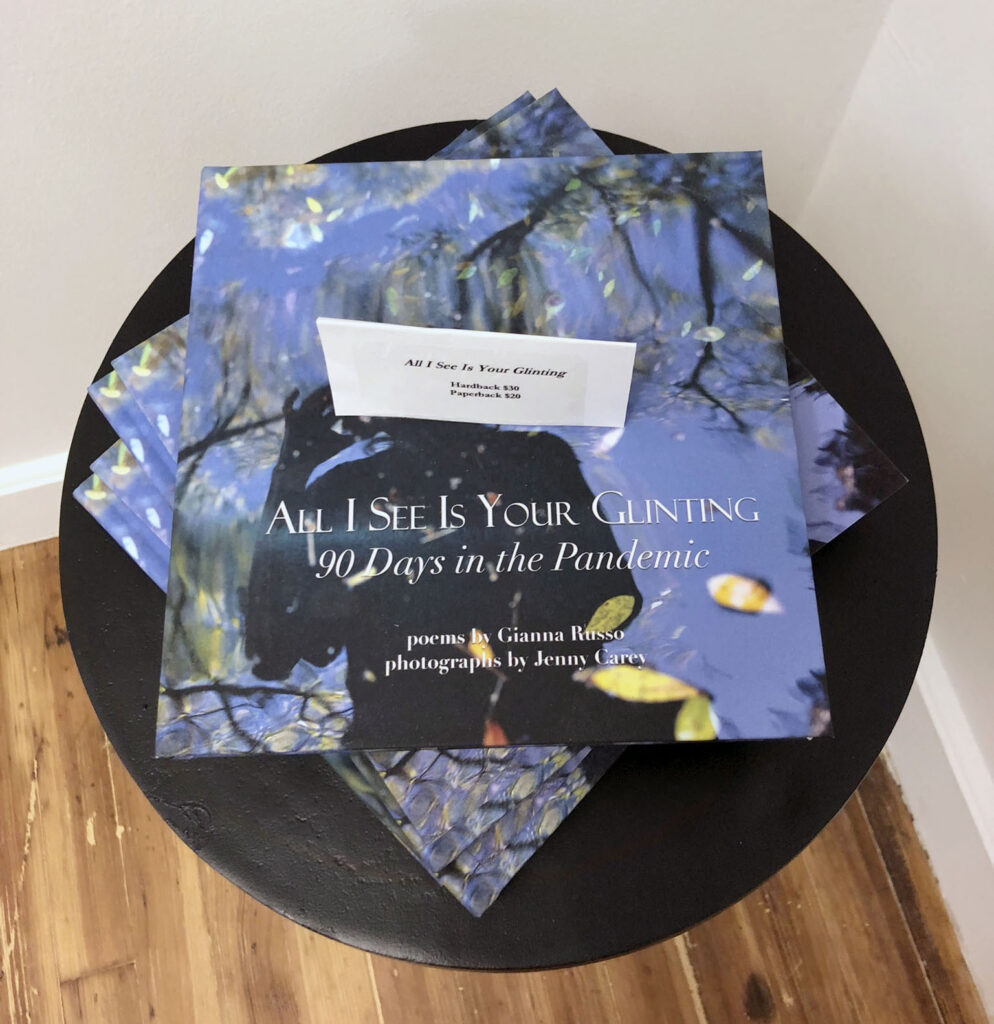
For more of Carey’s work and to see what’s next for the gallery, check out her Instagram. She also founded Creatives Exchange, a collective of professional women artists in Tampa.
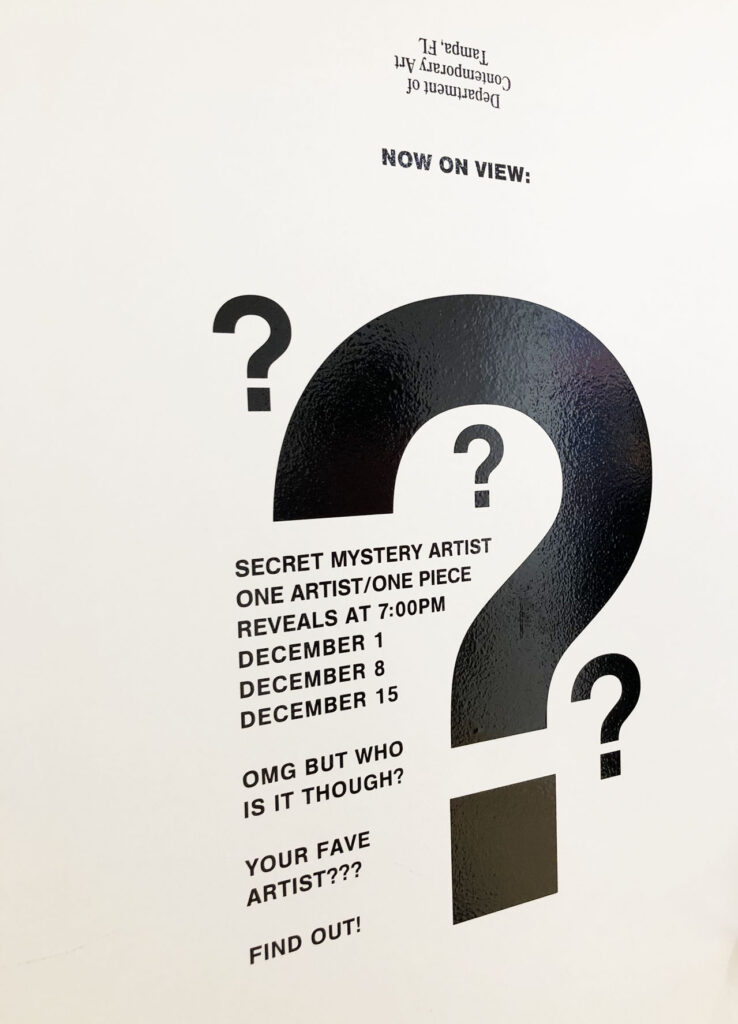
Finally, Department of Contemporary Art Tampa, FL, once a week for three weeks is hosting a mystery local artist. During the event the artist of the evening was revealed as Selena Ferrer. This week on 12/15/22, the last artist will be revealed. Also check out the gallery’s Instagram for updates.
It was an exciting night for art this past Thursday in Ybor City, Tampa, as several spaces opened their doors in the Kress Building.
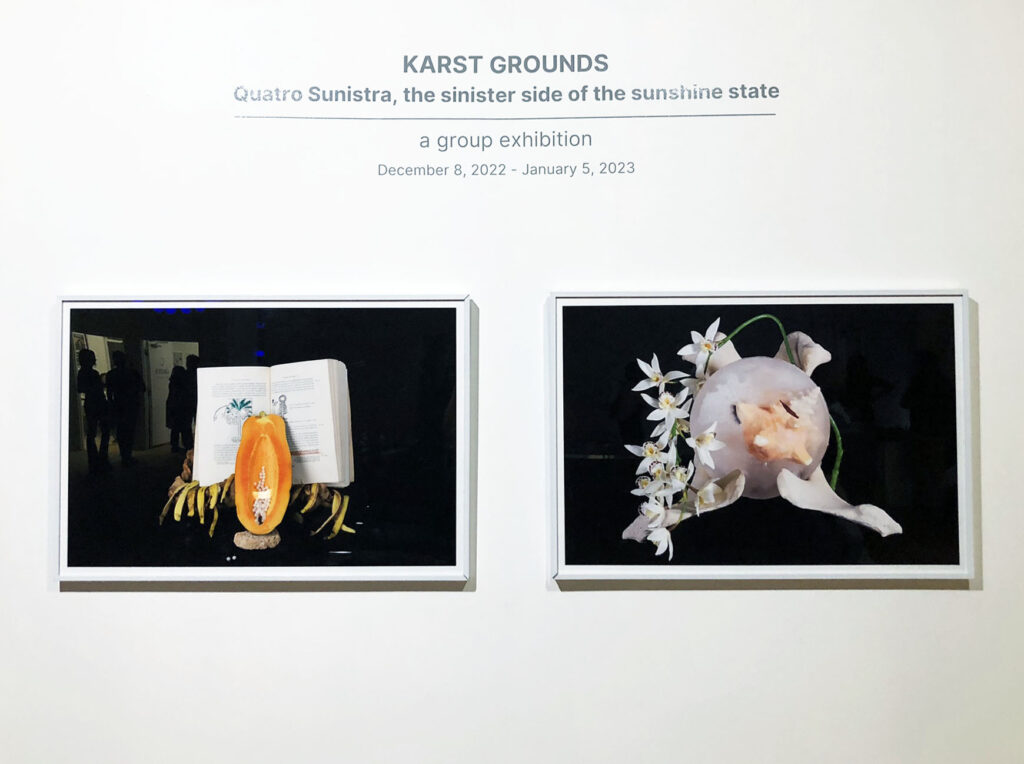
Tempus Projects now has three spaces in the building. In their main gallery was KARST GROUNDS ::QUATRO SUNISTRA, the fourth iteration of their annual open call exhibition exploring “the sinister side of the Sunshine State”. The work varied in medium, and included painting, photography, and sculpture.
From their website-
The exhibition title is a portmanteau of “sunshine” and the Latin word “sinistra”—the forebearer of the English word “sinister” which retains some of its original connotations of something that is harmful and inauspicious. The play on words reflects the often idyllic/nightmarish dichotomy Florida embodies in its natural, social, and political climates. This serves as a thematic jumping-off point for the exhibition’s applicants as the artists investigate this peculiar state through their diverse perspectives and unique approaches.
In their Tempus Volta space was Beneath the Mistletoe Screaming, a group exhibition and holiday shop with lots of great affordable art, with most pieces ranging from $5 to $500.
Started above a Detroit record store in 1969, CREEM magazine would go on to cover the music scene until 1989. Now, 33 years later, it’s back. The first new issue of “America’s Only Rock ‘n’ Roll Magazine” is now in print and online- with a cover by artist Raymond Pettibon.
CREEM magazine gained a loyal following for both its unique writing and format. It also covered the punk, new wave, and heavy metal scenes in a time still dominated primarily by pop and rock music. Lester Bangs, who became more widely known after his portrayal by Philip Seymour Hoffman in Almost Famous, was editor of the magazine for five years. Cameron Crowe, who wrote and directed that film, also contributed articles for CREEM.
The premiere issue of the magazine has something for every music fan, while keeping the feel of the original. Special Interest, Mac DeMarco, Amyl and the Sniffers, Warthog, and KeiyaA are among the current artists covered. There’s an article on an album by The Osmonds and an excerpt from an unreleased book on The Who. Features from the original magazine like “Stars Cars” and their letters section also make a return.
This Wednesday (9/21/22) at The Grammy Museum, there will be a screening of the 2020 documentary CREEM: America’s Only Rock ‘n’ Roll Magazine. The film will be followed by a conversation with JJ Kramer (CREEM Chairman and son of CREEM founder Barry Kramer), Jaan Uhelszki (Editor at the original CREEM and Editor Emeritus today), and Dave Carnie (CREEM Editorial Director), moderated by journalist Scott Sterling.
CREEM also just released a special David Bowie edition of the magazine. It includes articles from past issues, as well as an interview with Brett Morgen, director of Moonage Daydream, the new Bowie documentary which opens in theaters today, 9/16/22.
There are digital and print subscription options for the quarterly magazine and all subscriptions give you access to the digital archives- all 224 of the past issues.
The first two pictures are from a press conference scene where Seberg’s character asks an author (played by influential director Jean-Pierre Melville) for his “greatest ambition in life” He replies- “To become immortal, and then die”.
Although it was sad to hear of Godard’s passing, he has certainly achieved immortality through his beautiful work.
Typewriter Eraser, Scale X, 1999, part of The ARIA Fine Art collection in Las Vegas
Artist Claes Oldenburg passed away this week at the age of 93. He was most famous for his large scale sculptures of everyday objects, many of which were produced with his wife Coosje van Bruggen, who passed away in 2009.
While primarily working in sculpture, early in his career in the 1960s he also created “happenings”- theatrical art related performances and collaborations with other artists in his circle. In 1985 he returned to performance and along with van Bruggen, architect Frank Gehry, and writer Germano Celant presented Il Corso del Coltello (The Course of the Knife) in Venice, Italy. In 2021, Pace Gallery in NYC, as part of the two gallery exhibition Claus & Coosje, showed work from this performance, pictured below.
From Pace’s website about the performance-
This ambitious event involved the creation and embarkation of a sea-worthy sculpture in the shape of a giant Swiss army knife. With oars protruding from its red-enameled hull as if from a Viking longship, the image of Oldenburg and van Bruggen’s Knife Ship sailing the Grand Canal has become iconic, while the massive kinetic sculpture was later shown in the rotunda of the Guggenheim Museum in New York, at the Centre Pompidou in Paris, and finally at the Museum of Contemporary Art, Los Angeles.
With so much of Oldenburg’s work, the examination of the ordinary object engages the viewer with what they might previously taken for granted and gives them a chance to look again with new eyes. There is also something lighthearted and fun, as well as investigative, about his body of work.
(image via Whitney Museum’s website)
The Whitney Museum has a video showing the process of assembling his soft sculpture Giant BLT(Bacon, Lettuce, and Tomato Sandwich) 1963, which involves putting the sandwich together piece by piece.
For more on Oldenburg, MoMA has a tribute that includes the words of people who knew him as well as his own. His 1961 artist statement is wonderful and worth reading in its entirety, here is the opening section-
I AM FOR
I am for an art that is political-erotical-mystical, that does something other than sit on its ass in a museum.
I am for an art that grows up not knowing it is art at all, an art given the chance of having a starting point of zero.
I am for an art that embroils itself with the everyday crap and still comes out on top.
I am for an art that imitates the human, that is comic, if necessary, or violent, or whatever is necessary.
I am for all art that takes its form from the lines of life itself, that twists and extends and accumulates and spits and drips, and is heavy and coarse and blunt and sweet and stupid as life itself.
I am for an artist who vanishes, turning up in a white cap painting signs or hallways.
The Guardian’s obituary is also worth a read for more information on the artist’s history.
Skyway 20/21: A Contemporary Collaboration, is the second iteration of a joint exhibition across four institutions that highlights contemporary art created in the Central Florida region. Artists selected by a jury are from five counties- Hillsborough, Pinellas, Pasco, Manatee, and Sarasota. The exhibitions are an excellent sampling of the work being made in the Tampa Bay area.
The works shown in this post are from the exhibition at the Tampa Museum of Art. The museum has a video playlist on YouTube that includes all of the artists in the exhibition discussing their work. The links below are to the artists’ websites or those videos.
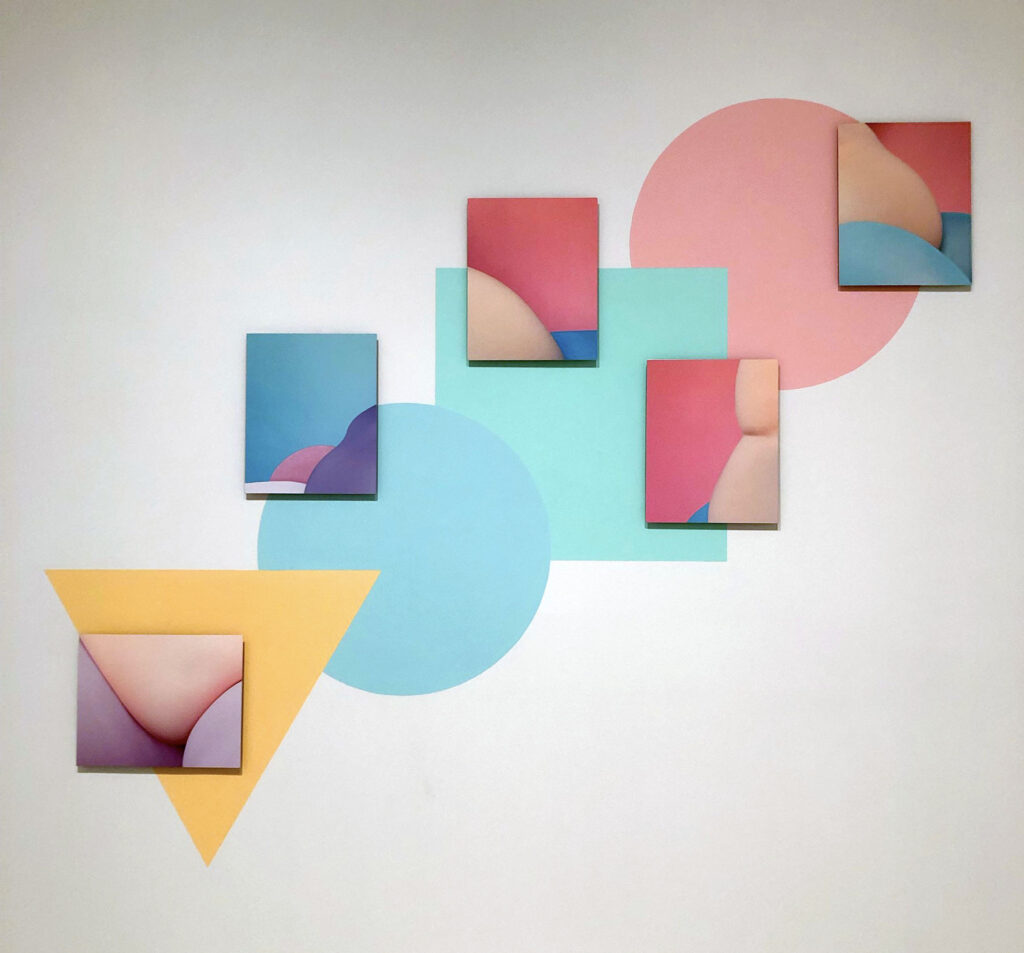
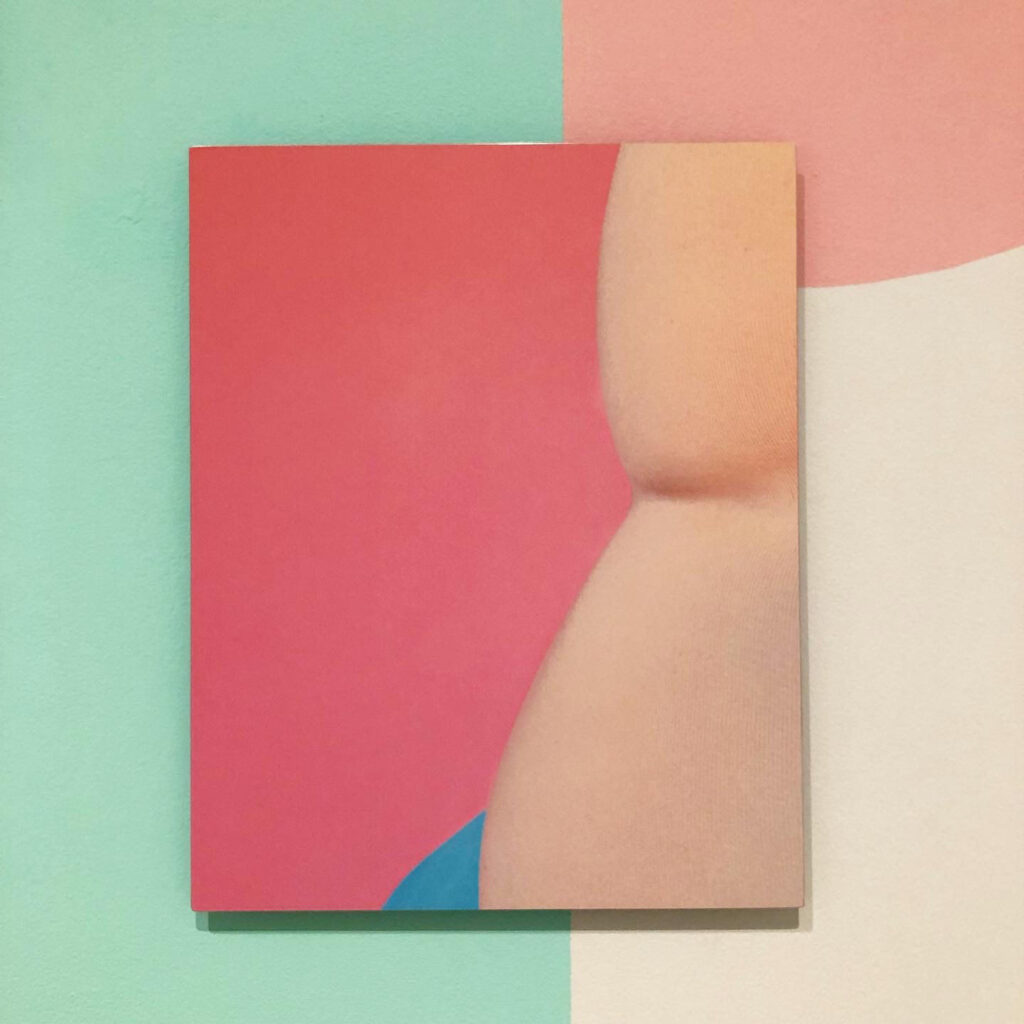
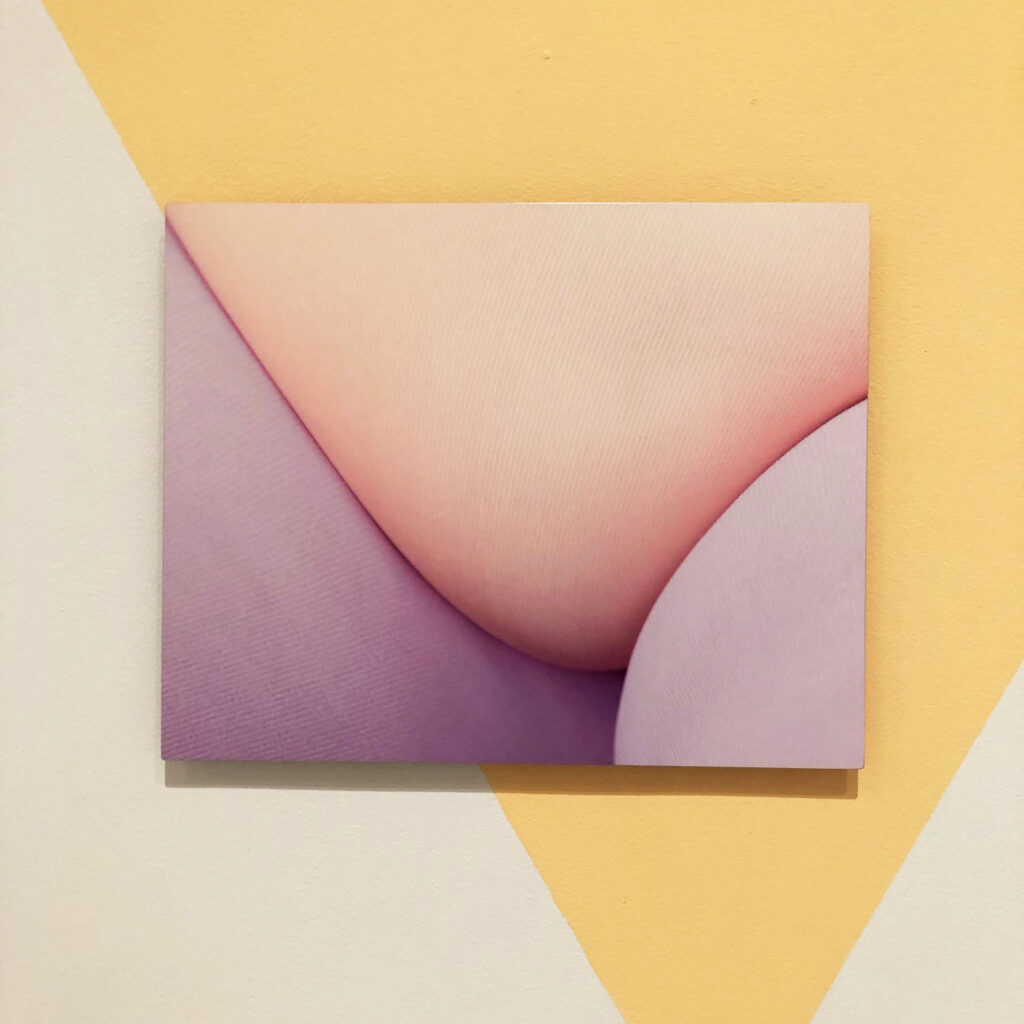
For Selina Román’s XS series, she created abstract self portraits that examine standards of beauty in relation to expectations of weight and body. The title XS references an extra small size and alludes to the word excess.
Also at Pace Gallery is the group exhibition Hiding in Plain Sight, a collection of work that includes Hito Steyerl’s installation (pictured above). It accompanies her video How Not to Be Seen: A Fucking Didactic Educational .MOV File, 2013. As we approach possible new ways of being tracked by technology, the work has never seemed more relevant.
Hito Steyerl’s video installation examines how hidden infrastructures operate at both an individual level and at a global scale. Offering five lessons in invisibility, the film wryly maps the formal, symbolic, and real connections between the worlds of art, economics, and global political regimes in our era. In an interview Steyerl explains “in the case of How Not to Be Seen, it started with a real story that I was told about how rebels avoid being detected by drones. The drone sees movement and body heat. So, these people would cover themselves with a reflective plastic sheet and douse themselves with water to bring down their body temperature. The paradox, of course, is that a landscape littered with bright plastic-sheet monochromes would be plainly visible to any human eye—but invisible to the drone’s computers.” Exploring the complexities of the digital world and its relationship to lived reality, Steyerl’s film and installation chart circuitous connections to art and capitalism through vision and technology.
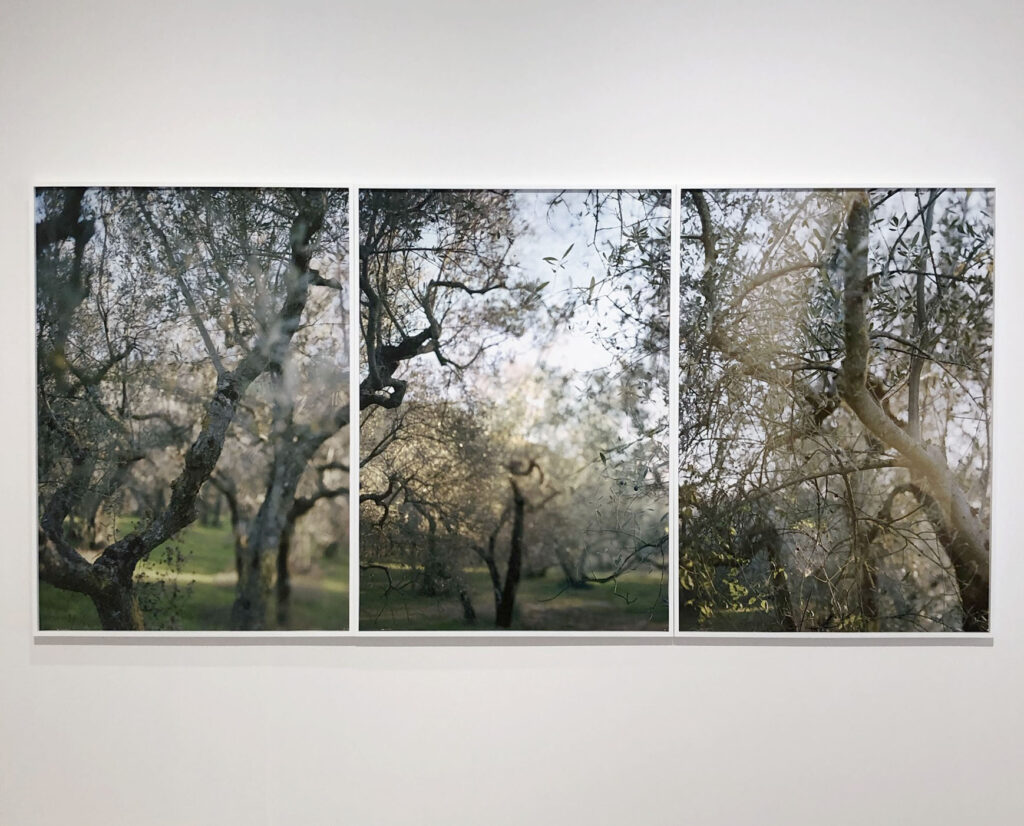
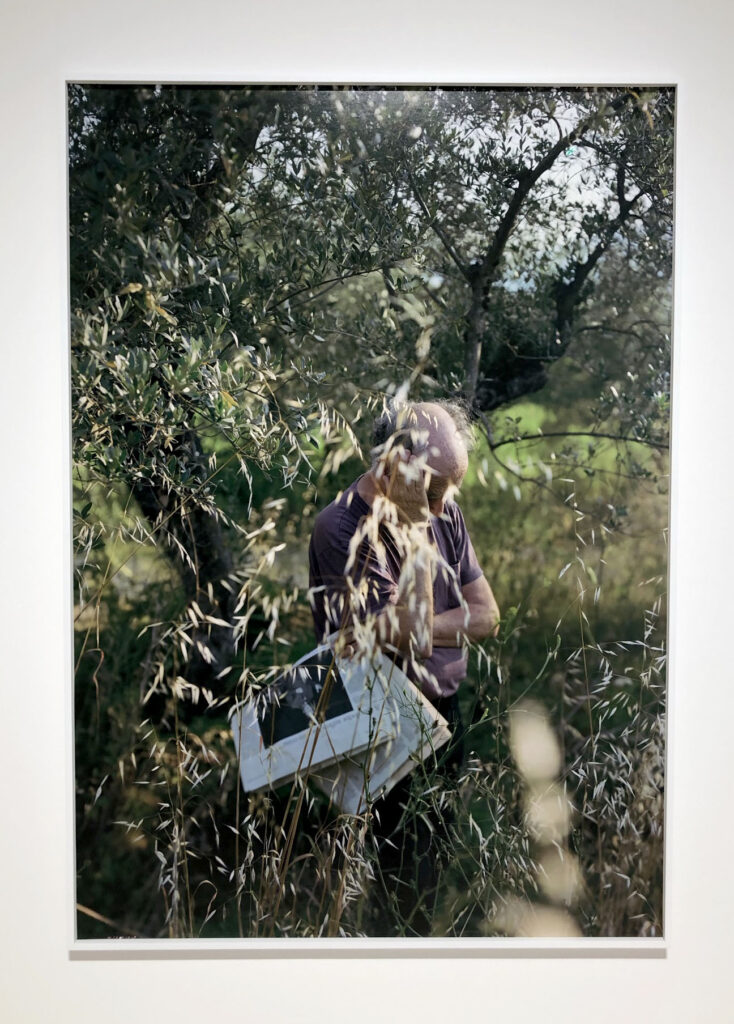
Pace Gallery is currently showing the lovely, meditative photographs of JoAnn Verburg at their NYC location.
From the press release-
JoAnn Verburg: For Now debuts recent multiple-frame photo and video works by the renowned American photographer depicting olive trees captured on three continents. Exemplifying Verburg’s multidisciplinary practice, which for over four decades has existed at the intersection of a range of art-historical traditions, including still life and portraiture, these experiential artworks offer a contemplative respite from the cacophonous urban environment outside of Pace’s gallery space in New York. In response to a period of social and political unrest and a global health crisis, Verburg’s presentation invites viewers to pause and enter a world of self-reflection while simultaneously diving into landscapes from Italy to California to Israel. Generating what the artist has called an “imagined reality,” her images become vehicles for orchestrating a performative and existential encounter between the viewer and the world.
For Now marks Verburg’s first solo exhibition with Pace since the gallery began representing her in 2020, and only the second exhibition in New York since her survey exhibition Present Tense: Photographs by JoAnn Verburg at The Museum of Modern Art in 2007.
Since her last exhibition in New York in 2010, Verburg has been experimenting with the intriguing implications of creating an installation of photos and videos within an urban environment that both acknowledge the environment and provide an escape from it. In this sense, Verburg’s desire to exhibit her images of olive trees in New York reflects her interest in the disjuncture between the contemplative space of the gallery and the busy world outside. Like the pioneering Italian still life artist Giorgio Morandi, Verburg returns repeatedly to the same subject matter—arranging and rearranging her images in three-dimensional space through use of vantage point, framing, and light, while employing techniques of classical craftsmanship, including the production of each singular print herself. In the editing process, she manipulates elements forward and back in space, creating emphases and clarifying her images by manipulating color like a painter. Having studied sociology as an undergraduate, her artwork also reflects a deep philosophical engagement with the social and formal histories of photography as well as the work of key practitioners who blended formalist concerns with sociological awareness, such as Diane Arbus and Robert Frank.
While the subject matter depicted in For Now is olive trees, the subject of the exhibition itself is the experience of the present moment—what Verburg calls “Vermeer time,” evoking the sense of suspended animation that characterizes the paintings of Dutch master Johannes Vermeer. “Her pictures describe spaces and moments suspended in the reverie that precedes action,” observed the celebrated photographer, curator, and critic John Szarkowski, “Like a Leyden jar, they are containers of potential.” Treating the olive grove as both landscape and still life, her focus on a limited range of subject matter suggests a connection between her work and the Minimalist and serial practices of the 1970s. Yet Verburg’s practice is also aligned with Old Master paintings: her works resist the acceleration and velocity of contemporary culture…
If you are unable to see the works in person, the Pace website has them on view as well as the full press release and a video of the artist in her studio.