Apr 282023
 

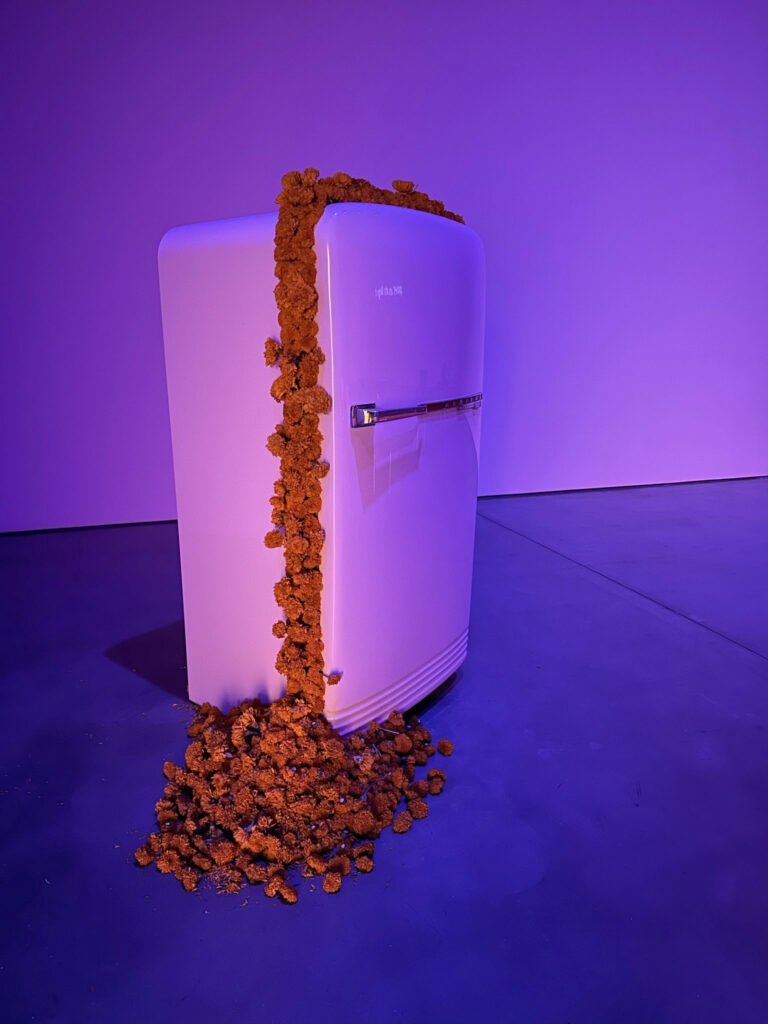
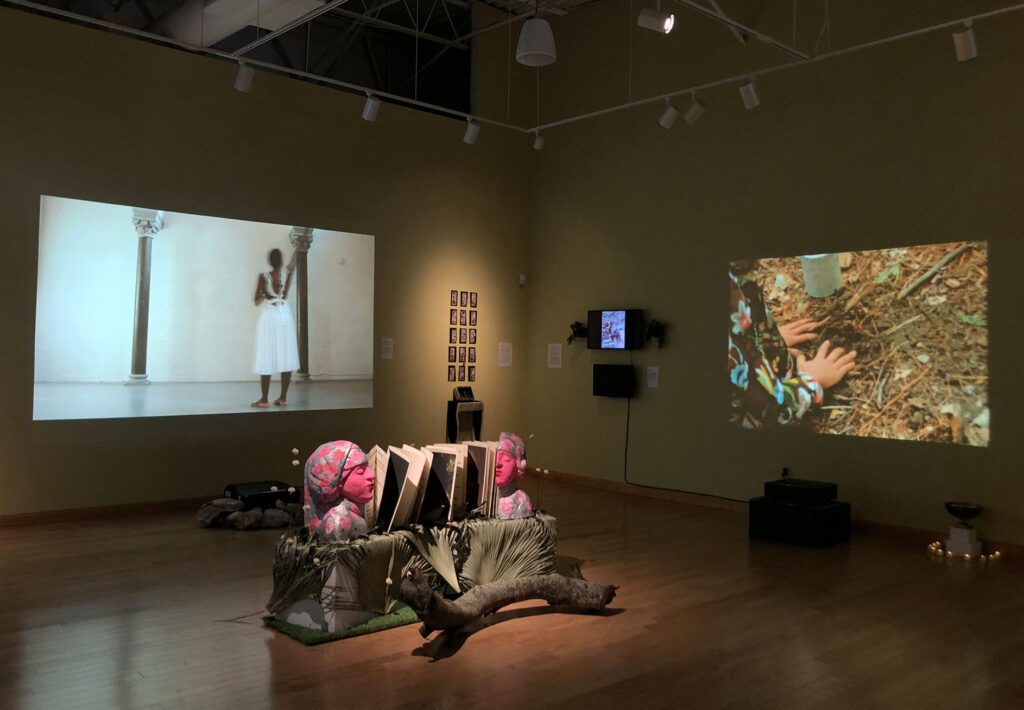
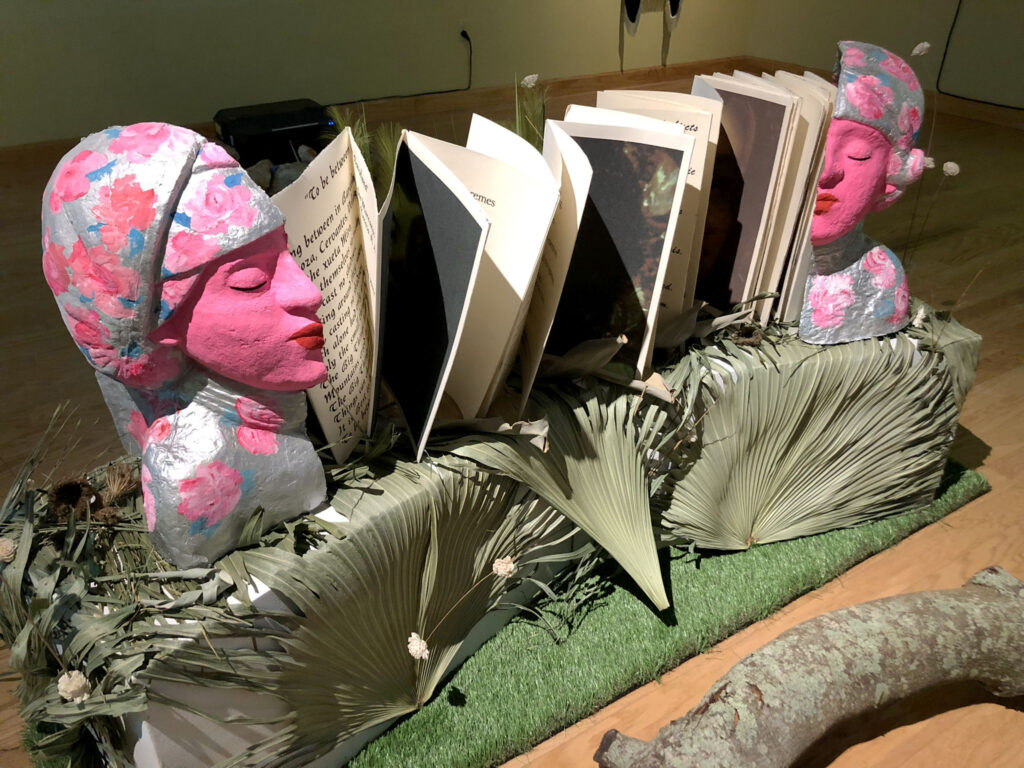
Installation by Molly A. Duff

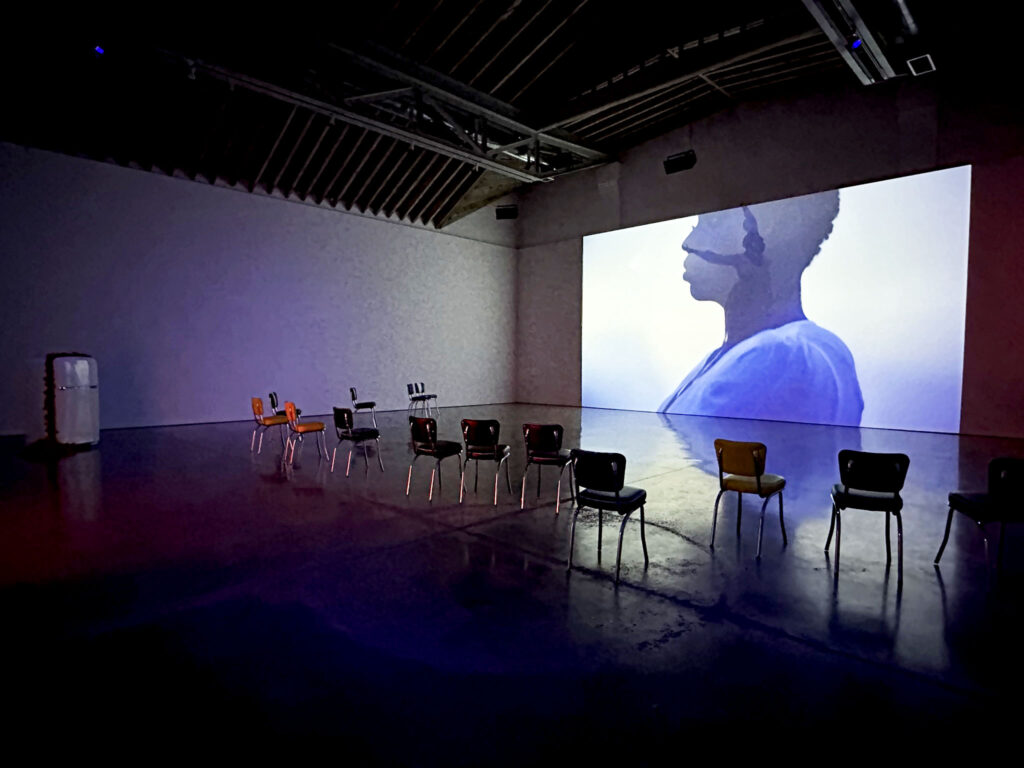
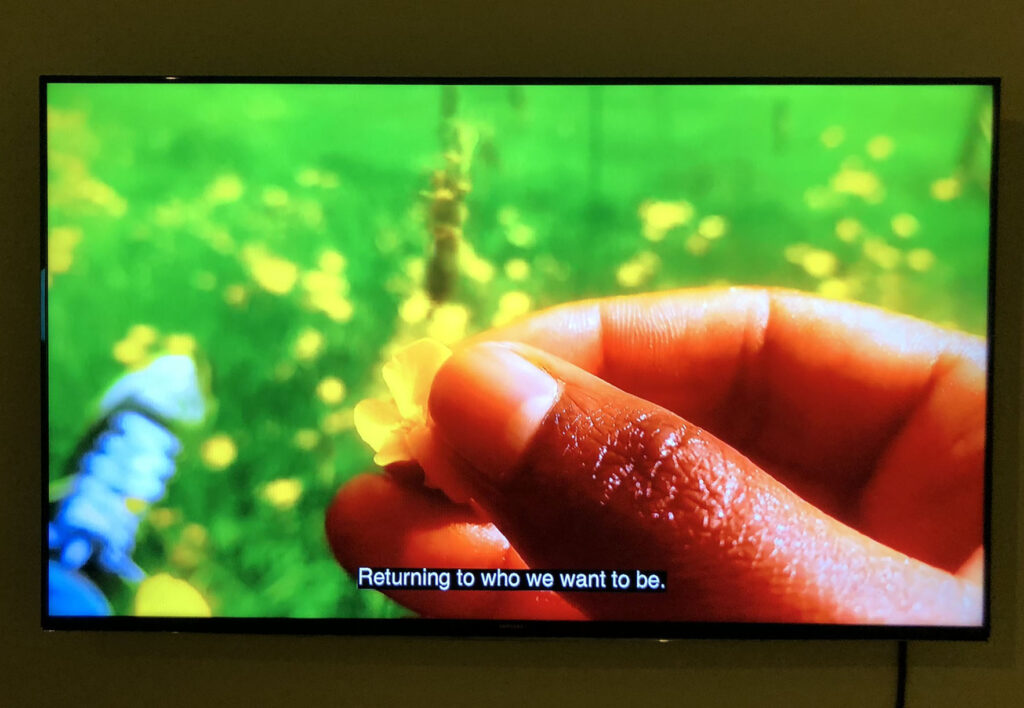
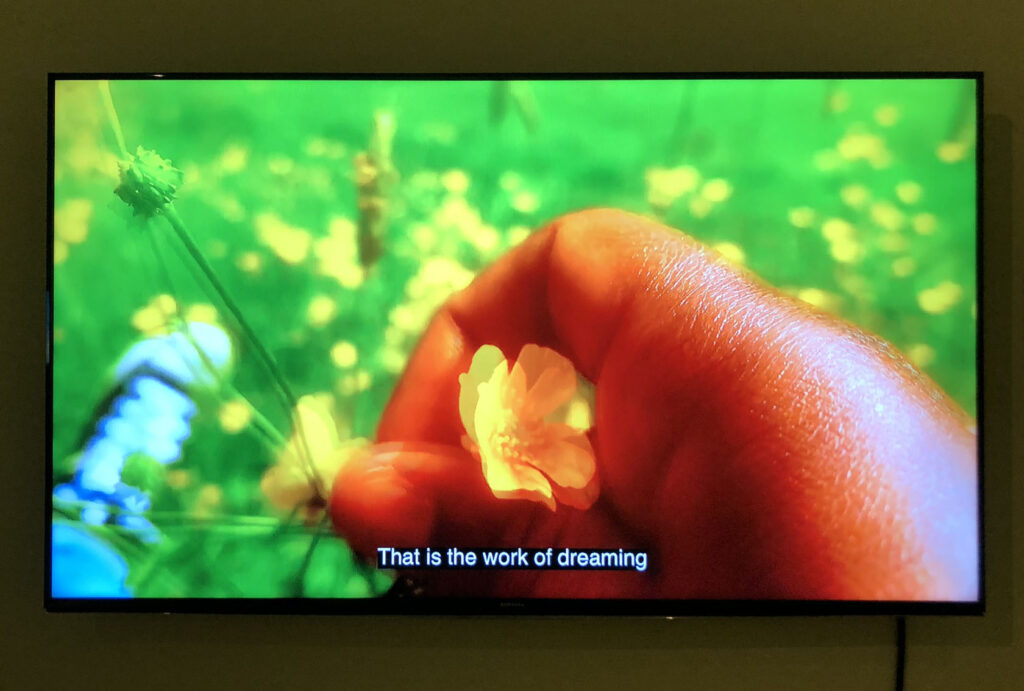
Work by Trinity Oribio (left) and Manon VanScoder (videos on right)

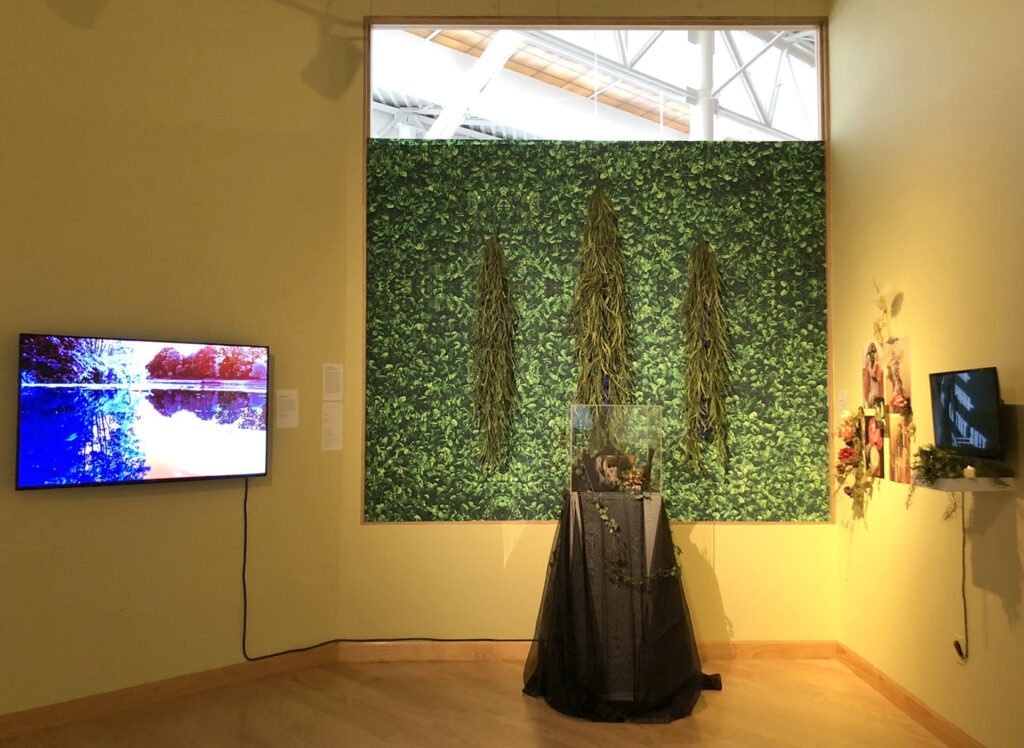
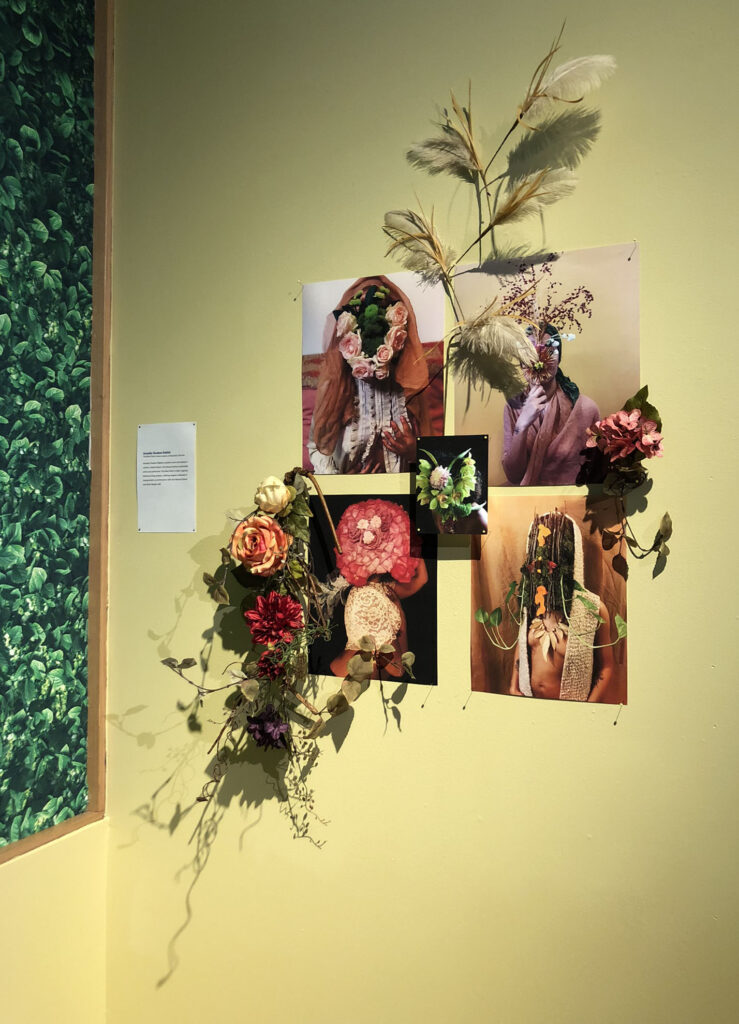
Currently on view at The USF Contemporary Art Museum is SOMEDAY YOU’LL HAVE TO SAY IT OUT LOUD, an exhibition of eight students graduating with MFA degrees from the USF School of Art and Art History.

The artists included are Molly Duff, Kai Holyoke, Caitlin Nobilé, Trinity Oribio, Rachel Treide, Manon VanScoder, Alicia Watkinson, and Willow Wells.

For the artists’ statements about their work, as well as more information on the exhibition, the museum has produced this PDF.

The show will be on view until 5/6/2023.

Installation by Molly A. Duff, another view

Alicia Watkinson, “Notations in Passing II”, 2023, plywood, lightbulbs, ceramic bases, timers. Duration of light set daily according to the previous day’s activities and observations

Alicia Watkinson, “Notations in Passing II”, 2023 (detail)

Photo transfer on glass by Rachel Treide

Still from video by Rachel Treide

Caitlin Nobilé, “The gap in the door”, 2023 triptych, acrylic on wood

Willow Wells, “Whispers”, 2023, oil painting on panel

Trinidad Oribio “Untitled”, 2023 oil on canvas

Trinidad Oribio, “La Trinidad”, 2023, archival pigment print

Video installation by Manon VanScoder

Manon VanScoder, “each day is an endless scroll”, 2023

Kai Holyoke “Paradise Lakes”, 2023

Kai Holyoke “Paradise Lakes”, 2023


Apr 122023


How does one truly reckon with history?  The imagery in Yael Bartana’s three channel film Malka Germania at Petzel Gallery draws you in and presents you with this question for the entire 43 minutes. Drifting along with the film’s protagonist, scenes of beauty and destruction unfold- but seeing the eagle rise from the water as Hitler and Albert Speer’s proposed Volkshalle continues to emerge, you feel as stunned as those on the beach.

From the press release-

Malka Germania investigates the longing for collective redemption for German and Jewish histories as a response to an age of anxiety.

Malka Germania is Hebrew for “Queen Germany.” The name references a female designation for the Messiah: Malka Meshichah, or the “Anointed Queen.” In Bartana’s film, a new androgynous Messiah, Malka Germania, joins forces with the Israeli Army to liberate Berlin from its collective traumas, memories, and inherited pasts.

The 3-channel video portrays Malka as she walks through Berlin’s haunted landscape, revisiting historical events that seamlessly blend with contemporary scenes. The film weaves subconscious elements through surreal hallucinations, the biblical and mystical to leave questions of redemption, national myths and collective identities for the viewer to contemplate.

This exhibition closes 4/15/23.


Mar 262023
 

Kirsty Wither “Tumbling Crowd”

Yelena Lezhen “Clockwork Bird Song”

Esther Rosa “Goes around, comes around III”

This weekend is the Affordable Art Fair in NYC. It’s a chance to check out and buy art at reasonable prices.The fair goes to Hampstead, London next, and will return to New York in September of 2023.

For more on the artists pictured above and their galleries-

Kirsty Wither runs the London gallery Cameron Contemporary with her husband, Robin Cameron.

Yelena Lezhen’s work was shown by Barcelona gallery Manifest Destiny Art. Check out her Instagram for current work.

Esther Rosa’s sculpture was part of InSight Artspace’s booth. Her Instagram is also a good place to see her work.


Mar 092023


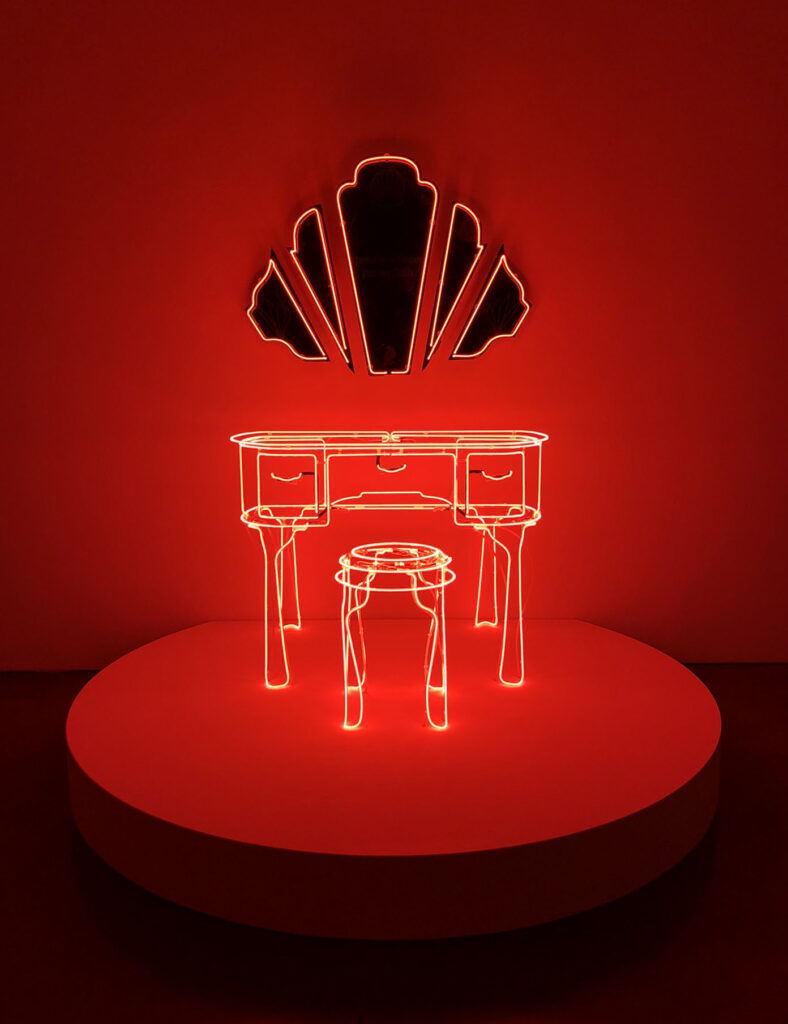
Ja’Tovia Gary “Citational Ethics (Zora Neale Hurston, 1943)”, 2023, wood, neon and engraved obsidian

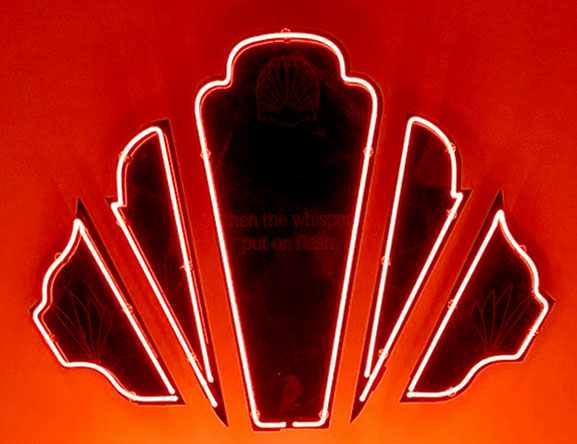
Ja’Tovia Gary “Citational Ethics (Zora Neale Hurston, 1943)”, 2023, wood, neon and engraved obsidian (detail)

Currently at Paula Cooper Gallery in NYC is Ja’Tovia Gary’s You Smell Like Outside…, an exhibition that centers around her 2023 film, Quiet As It’s Kept, and includes two new sculptures.

From the press release-

The artist continues her practice of interrogating and re-contextualizing multiple archives, concerning herself with the power and responsibility of language and the radical possibilities of narrative. The exhibition title You Smell Like Outside… is a Black Southern phrase that foregrounds the artist’s specific cultural origins with discursive traditions that invoke an interior knowledge. Inspired by Toni Morrison’s 1993 Nobel Laureate lecture, Gary attempts to heighten the contradictions between a living and a dead language. Notions of domesticity, interior and exterior, and the conflict between perception and being perceived are explored in the show.

With a filmic and sculptural language uniquely her own, Gary eloquently intervenes into foundational renderings of Black life to expand the conversation and the possibilities of being. The artist considers what is destabilized when we include the cinematic within the category of language, asserting: “if we are to ensure the future efficacy of storytelling, we must boldly and audaciously insist upon new narrative forms.” Quiet As It’s Kept (2023) is a contemporary response to The Bluest Eye, Toni Morrison’s first novel published in 1970. Set in Ohio in 1941, the book is an evocative illustration of the everyday particulars of colorism and its ravaging effects on the intramural. Themes of embodiment, psychoanalysis, and beauty are explored in both the source text and the answering film. Instinctual and eviscerating, the film encourages viewers to make meaning that is rooted in the subjective and examine their position within looking relations.

Following Gary’s critically acclaimed films THE GIVERNY DOCUMENT (2019) and An Ecstatic Experience (2015), Quiet As It’s Kept (2023) is an intimate bricolage of vintage Hollywood, direct animation, original super 8 and 16mm film footage, and documentary conventions. Mediating on the gaze and Black women’s particular embodied realities, Gary also re-contextualizes contemporary social media footage. Creating conceptual links for each viral clip to a character, event, or thematic element from Morrison’s story, the film emphasizes questions around the book’s themes of internalized and externalized anti-blackness in contemporary culture. Situated within an immersive installation with domestic elements, the film asks the viewer to employ an oppositional gaze that allows for narrative structures that run counter to those of the mainstream.

High John de Conquer came to be a man, and a mighty man at that. But he was not a natural man in the beginning. First off, he was a whisper, a will to hope, a wish to find something worthy of laughter and song. Then the whisper put on flesh. [1]

The sculptures in Gary’s Citational Ethics series illuminate the words of Black women through the medium of neon, with the title of each work serving as a citation for the quote. Citational Ethics (Zora Neale Hurston, 1943) cites Zora Neale Hurston’s 1943 essay on High John de Conquer, a Southern folk trickster figure who brought joy, laughter, and strength to enslaved people while continuously evading capture. The sculpture is a vanity mirror set which gestures towards a speculative future past. Comprising a desk, stool, and fan-shaped obsidian mirror, the object invokes the Harlem Renaissance, Art Deco, and southern Black Hoodoo lore. A departure from the previous works in the series, the quote is etched into the highly polished black stone said to bring about visions through gazing, while the furniture is rendered in neon. Drawing the viewer in to read the words written in the mirror while bathed in red light, the sculpture summons an intimate encounter with the self and spirit.

[1] Zora Neale Hurston, “High John de Conquer,” in The American Mercury, October 1943, pp. 450-458

This exhibition closes 3/11/23

Mar 092023


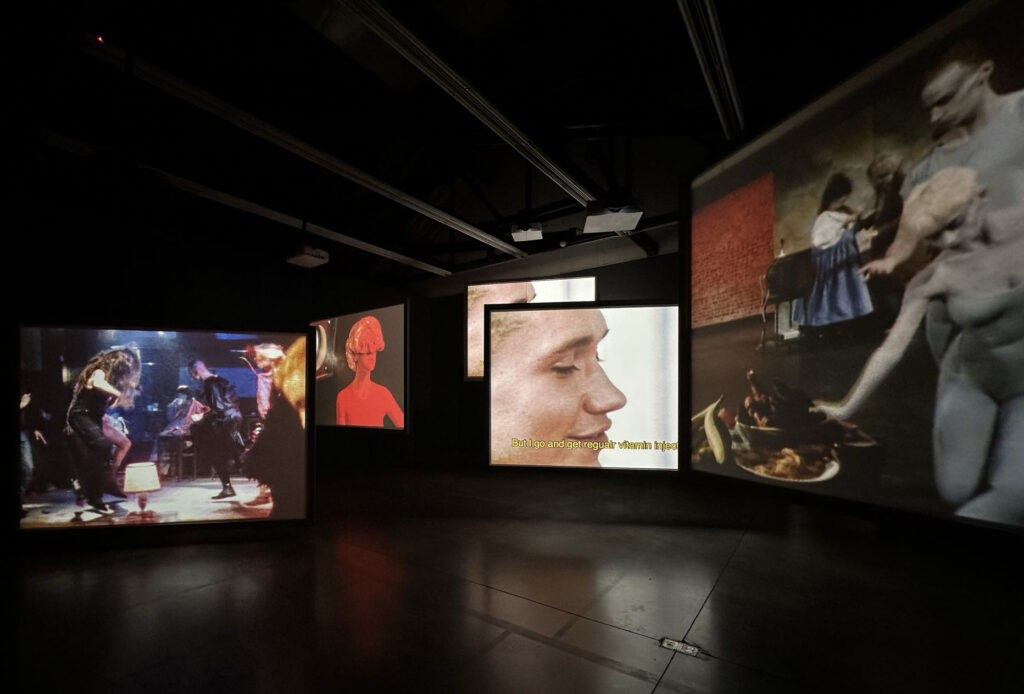
It often feels like we are oversaturated with images in today’s world, but the energy at the Charles Atlas exhibition A Prune Twin at Luhring Augustine gets the balance right.

From the gallery’s press release-

Luhring Augustine is pleased to announce A Prune Twin, the gallery’s third solo exhibition with pioneering film and video artist Charles Atlas. The presentation will mark the American debut of this major multi-channel installation with sound that was originally commissioned by the Barbican Centre, London as the centerpiece of their 2020 exhibition, Michael Clark: Cosmic Dancer; which traveled to the Victoria and Albert Museum in Dundee, Scotland in 2021.

The collaboration between the two artists began in 1984 when the young dancer, Clark, performed in two single-channel films by Atlas: Parafango and Ex-Romance. However, it was not until the groundbreaking Hail the New Puritan in 1986, that the relationship between the two artists was deeply cemented. Originally commissioned as an arts documentary by Channel 4 of the BBC, Hail the New Puritan turned the genre on its head, presenting a highly stylized and fictionalized version of a typical day in Clark’s life – an “anti-documentary”, as Atlas has called it.  The two artists also worked closely together on another Channel 4 production, Because We Must (1989), which was full of extreme theatricality in its dance, choreography, scenery, costumes, and directorial position.

In A Prune Twin, Atlas pulls material from these two major films to create an immersive eight-channel installation of sound and moving image. He extends the idea of choreography to camera and sound, flowing across and throughout screens and monitors; in this sense, Atlas choreographs his own past material into a new and compelling dance all of its own. Evident in this work, and many others by Atlas, is his strong affection and attraction to exceptionally creative collaborators, his sensitivity to movement and how to capture it on film, and his novel skills as both a storyteller and observer. Much like MC9, an immersive installation that compiles Atlas’ extensive work with Merce Cunningham, A Prune Twin surrounds the viewer in a beautifully choreographed spectacle. The work captures the spirit and passion of a 35-year collaborative relationship, one that continues to this day – currently realized through the lighting design that Atlas produces for all of Clark’s live performances, an endeavor he has undertaken since the 1980s.

Mar 042023
 

Alex Prager’s photographs, top floor of the gallery

Alex Prager, “Run” film still

Alex Prager, “Run” film still

Alex Prager, “Run” film still

Alex Prager, “Run” film still

It’s hard not to be delighted by Alex Prager’s latest exhibition, Part Two: Run at Lehmann Maupin gallery in NYC. Upon arriving on the lower level of the gallery you are met with a pinball machine, brightly colored photos, and the sculpture of a woman’s body with her head crushed under a giant silver ball. In the next room, the short film Run sucks you in to it’s strange world.

From the press release-

Directly responding to a period of cultural ambivalences and uncertainties, the exhibition urgently examines human perseverance and explores the opportunities for empathy, participation, and action present both within art and everyday life.

Across her practice, Prager crafts rich, often ambiguous narratives that examine the cultural mythologies and archetypes that shape collective existence. As she deploys and deconstructs artistic and narrative conventions, Prager explores how both our senses of self and our engagement with others are often mediated by familiar stories and tropes. Occupying a tenuous relationship to time and place, the artist’s carefully choreographed figures remain suspended between the past and the present, and Prager gestures to a collective will to exist that not only transcends our immediate circumstances but persists despite them.

The foundation for Prager’s latest body of work is the artist’s powerful new film, Run. Featuring musical compositions by Ellen Reid and Philip Glass and starring Katherine Waterston, the film deploys cinematic archetypes and absurdist humor as it examines human resilience in the face of catastrophe. An otherwise ordinary day in an uncannily generic setting erupts into chaos when a massive, mirrored sphere propels itself through a community. Here, forward motion is countered by retrospection. Figures collide into their own reflections in the sphere’s surface, and Prager suggests a curative, collective reckoning with those forces outside of our control.

The New York exhibition presents Run in dialogue with photographs and sculptures that further complicate and enrich the film’s fundamental concerns. Prager’s photographic work Sleep (2022) shows the intricately staged mass of people from Run, as they momentarily lay on the ground, after each colliding with the accelerating mirrored ball. Sleep humorously deconstructs the conventions of the film still, and Prager unveils the absurdist potential of suspending a single moment in time. Dramatizing the scene’s ambiguities, the work offers a narrative with a multitude of possible conclusions. Directly engaging the film’s central image, Prager’s sculpture Ball (2022) shows a hyper-realistic figure of a woman, whose head appears to be crushed by the mirrored sphere. As viewers approach the object, they are likewise confronted by their reflections, and they, too, become enfolded within Prager’s lively narratives. Here, as throughout the exhibition, Prager invites viewers into her visually and symbolically saturated works, suggesting that they, too, have critical parts to play.

Part Two: Run marks the culmination of a multipart exhibition, which also included distinct presentations at Lehmann Maupin Palm Beach in November 2022 and Lehmann Maupin London in January 2022.

Make sure to head to the top floor of the gallery as well, where the exhibition continues with more photographs.

This exhibition closes 3/4/23.

Mar 022023
 

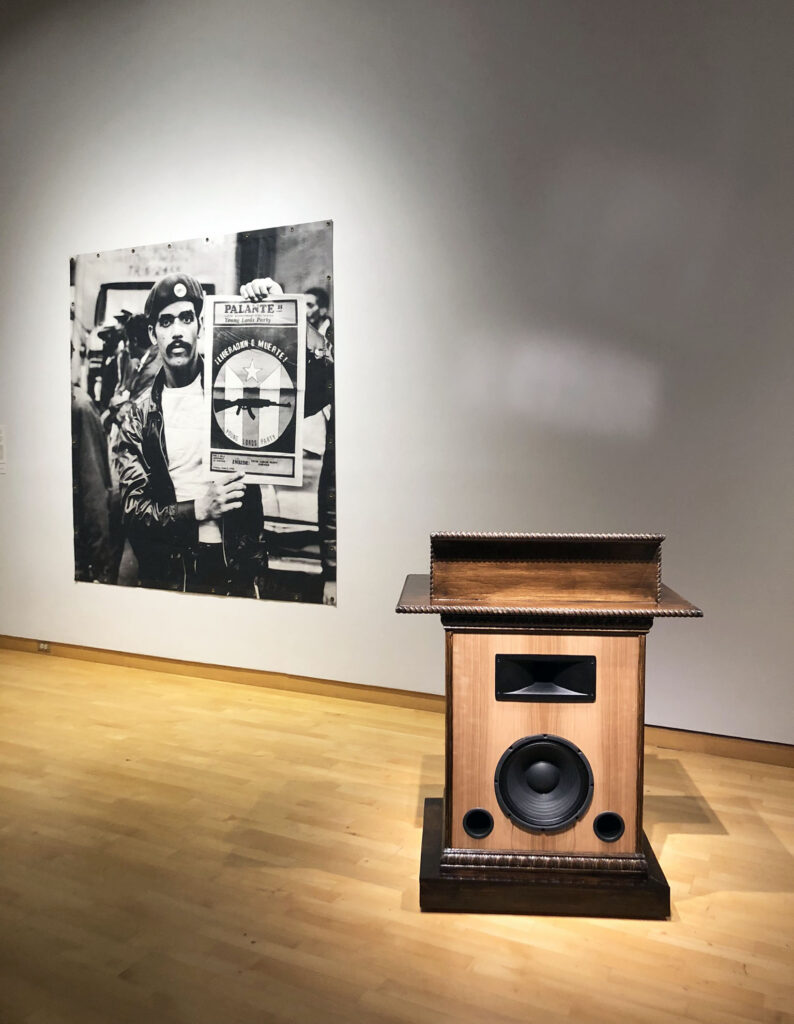
Artist Miguel Luciano– Vinyl banner from the public art project “Mapping Resistance: The Young Lords in El Barrio”, 2019 Image: Young Lords Member with Pallante Newspaper (1970)” by Hiram Maristany and “The People’s Pulpit” (2022), a repurposed vintage pulpit from the First Spanish Methodist Church in East Harlem.
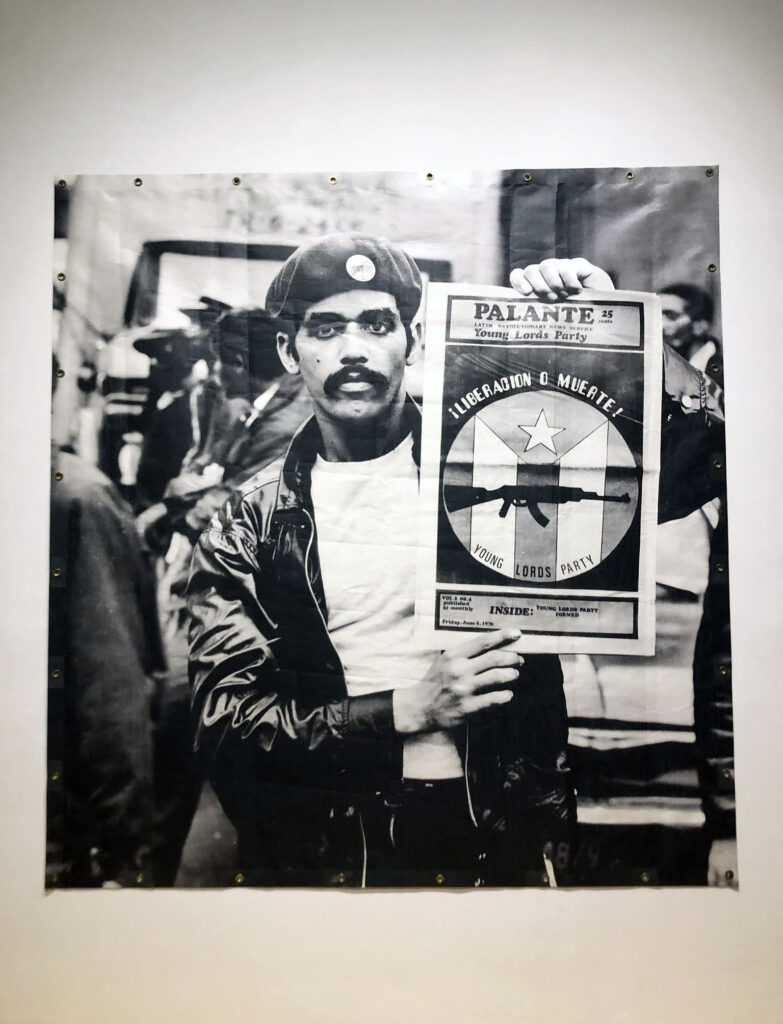
Miguel Luciano- Vinyl banner from the public art project “Mapping Resistance: The Young Lords in El Barrio”, 2019 Image: Young Lords Member with Pallante Newspaper (1970)” by Hiram Maristany


Poor People’s Art: A (Short) Visual History of Poverty in the United States at USF Contemporary Art Museum in Tampa uses installations and artworks to tell the story of, and expand perspectives on, The Poor People’s Campaign- from its origins in the late 1960s to the present day form, as well as comment on poverty and other social issues. Both educational and engaging, it shows that despite long struggles and some progress, we are still very far from much needed social change, especially in regards to poverty.

The museum also produced a free full color, 48 page workbook that you can pick up there or download as a PDF that can be downloaded from their website.

From the gallery’s website-

Dr. Martin Luther King Jr. is well known for his “I Have a Dream” speech, yet much less emphasis is placed on his campaign to seek justice for America’s poor, “The Poor People’s Campaign.” This was a multi-cultural, multi-faith, multi-racial movement aimed at uniting poor people and their allies to demand an end to poverty and inequality. Fifty-three years after Dr. King’s death, the Reverend William Barber II launched a contemporary push to fulfill MLK’s ambitious brief — one that calls for a “revolution of values” that unites poor and impacted communities across the country. The exhibition Poor People’s Art: A (Short) Visual History of Poverty in the United States represents a visual response to Dr. King’s “last great dream” as well as Reverend Barber’s recent “National Call for Moral Revival.”

With artworks spanning more than 50 years, the exhibition is divided into two parts: Resurrection (1968-1994) and Revival (1995-2022). Resurrection includes photographs, paintings, prints, videos, sculptures, books, and ephemera made by a radically inclusive company of American artists, from Jill Freedman’s photographs of Resurrection City, the tent enclave that King’s followers erected on the National Mall in 1968, to John Ahearns’ plaster cast sculpture Luis Fuentes, South Bronx (1979). Revival offers contemporary engagement across a range of approaches, materials, and points of view. Conceived in a declared opposition to poverty, racism, militarism, environmental destruction, health inequities, and other interlocking injustices, this exhibition shows how artists in the US have visualized poverty and its myriad knock-on effects since 1968. Participating artists include John Ahearn, Nina Berman, Martha De la Cruz, Jill Freedman, Rico Gatson, Mark Thomas Gibson, Corita Kent, Jason Lazarus, Miguel Luciano, Hiram Maristany, Narsiso Martinez, Adrian Piper, Robert Rauschenberg, Rodrigo Valenzuela, William Villalongo & Shraddha Ramani, and Marie Watt.

Below are some images from the show and the descriptions from the museum.

About the two works above from the museum’s walls-

A multimedia visual artist whose work explores themes of history, popular culture, and social justice, Miguel Luciano revisits the history of the Young Lords, a revolutionary group of young Puerto Rican activists who organized for social justice in their communities beginning in the late 1960s. Luciano’s first contribution to Poor People’s Art is a vinyl banner from the public art project Mapping Resistance: The Young Lords in El Barrio (2019), a collaboration with artist Hiram Maristany. It features the photograph “Young Lords Member with Pa’lante Newspaper (1970)” by Maristany, who was the official photographer of the Young Lords and a founding member of the New York chapter. This banner, along with nine other enlarged Maristany photographs, were installed throughout East Harlem at the same locations where their history occurred 50 years prior.

Luciano’s second contribution to Poor People’s Art is the sculpture The People’s Pulpit (2022), a repurposed vintage pulpit from the First Spanish Methodist Church in East Harlem. The Young Lords famously took over the church in 1969 and renamed it “The People’s Church”; they hosted free breakfast programs, clothing drives, health screenings, and other community services there. In this exhibition, The People’s Pulpit features an historic recording of Nuyorican poet Pedro Pietri reciting the celebrated poem Puerto Rican Obituary during the Young Lord’s takeover of The People’s Church.

Placards created by USF Contemporary Art Museum students, faculty and staff
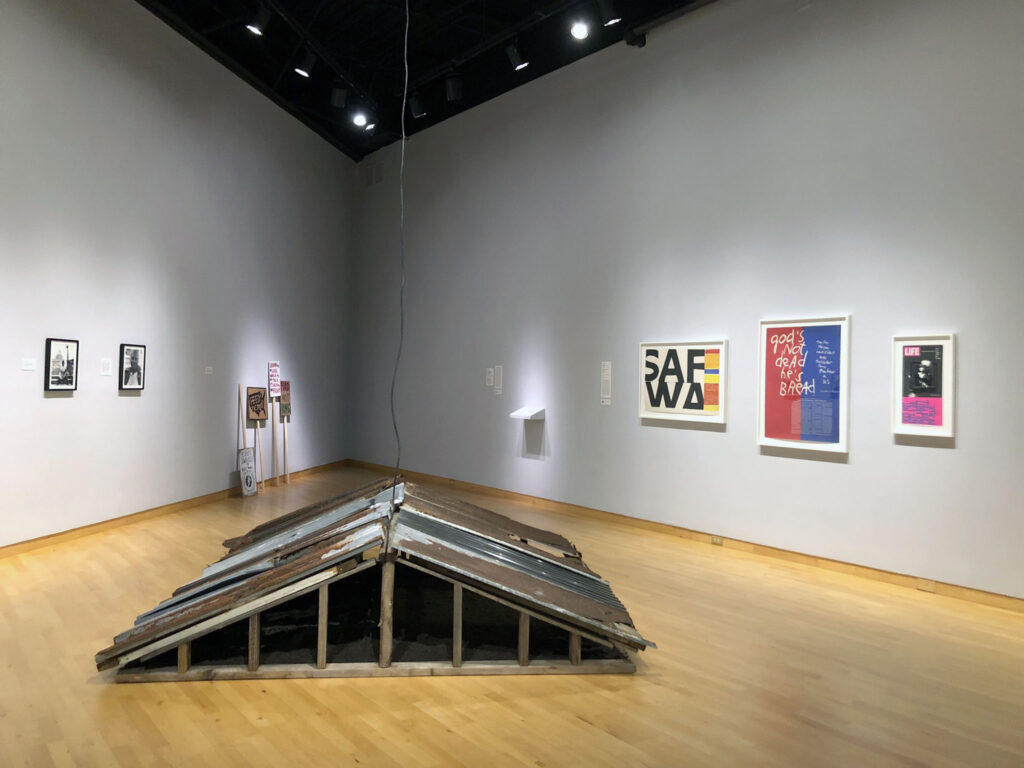
Martha De La Cruz, “Techo de Sin (Roof of Without)”, 2021, made from stolen, scavenged and donated materials found in Southwest Florida.

About the above work from the wall plaque-

Afro-Taino artist Martha De la Cruz fashioned her sculptural installation Techo de sin (Roof of Without), 2021, from stolen, scavenged and donated materials found in Southwest Florida. According to the artist, “Florida is home to a large population of Latin American migrants who have ended up in the US largely due to economic pressures, exploitation and veins of power etched by Europe and the US.” Her powerful work deals with the results of this disjunction and the “symptoms thereabouts (e.g. houselessness, fugitiv-ity, government corruption, and income disparity, etc.).” According to De la Cruz, the word “sin” is a common Dominican mispronunciation for the word “zinc.” The sculpture is animated by a single light bulb that turns on for just ten minutes a day.
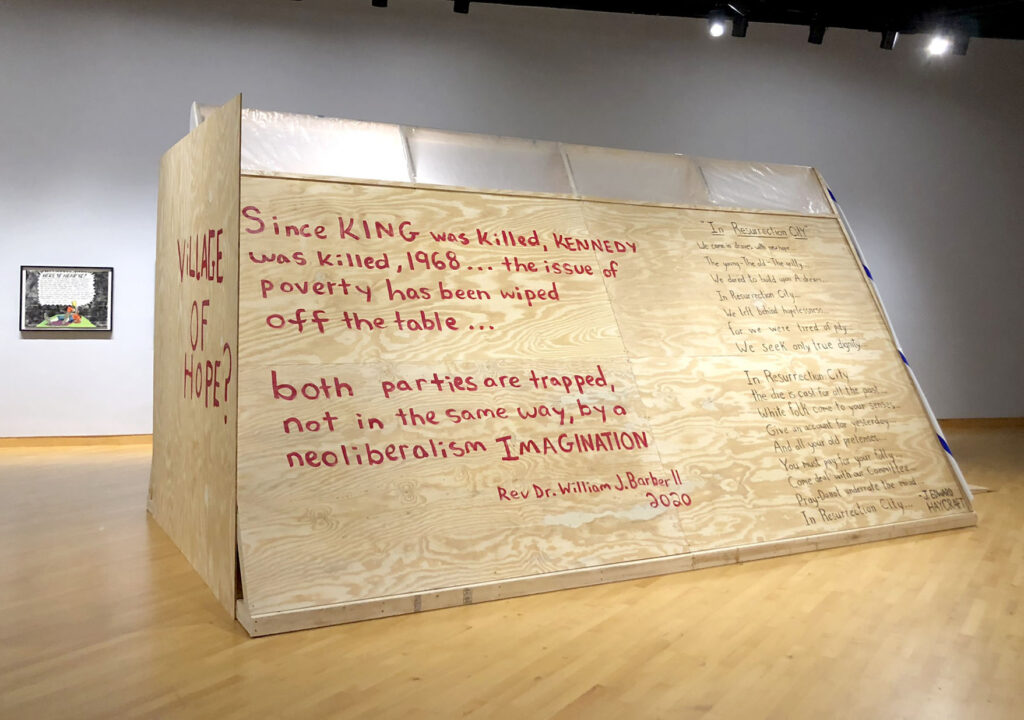
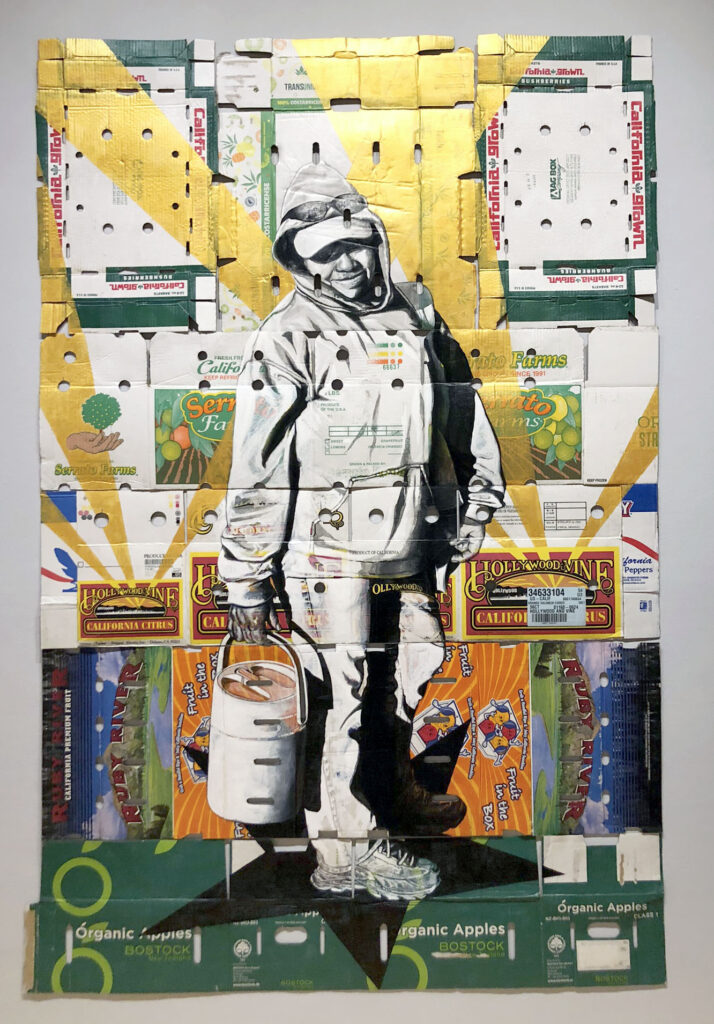
Narsiso Martinez “Hollywood & Vine”, 2022

Jason Lazarus “Resurrection City /Poor People’s Campaign: A National Call for Moral Revival / A Third Reconstruction”, 2023, plywood, utility fabric, blankets, sleeping cot, paint, lamp, plastic, research library, historical ephemera
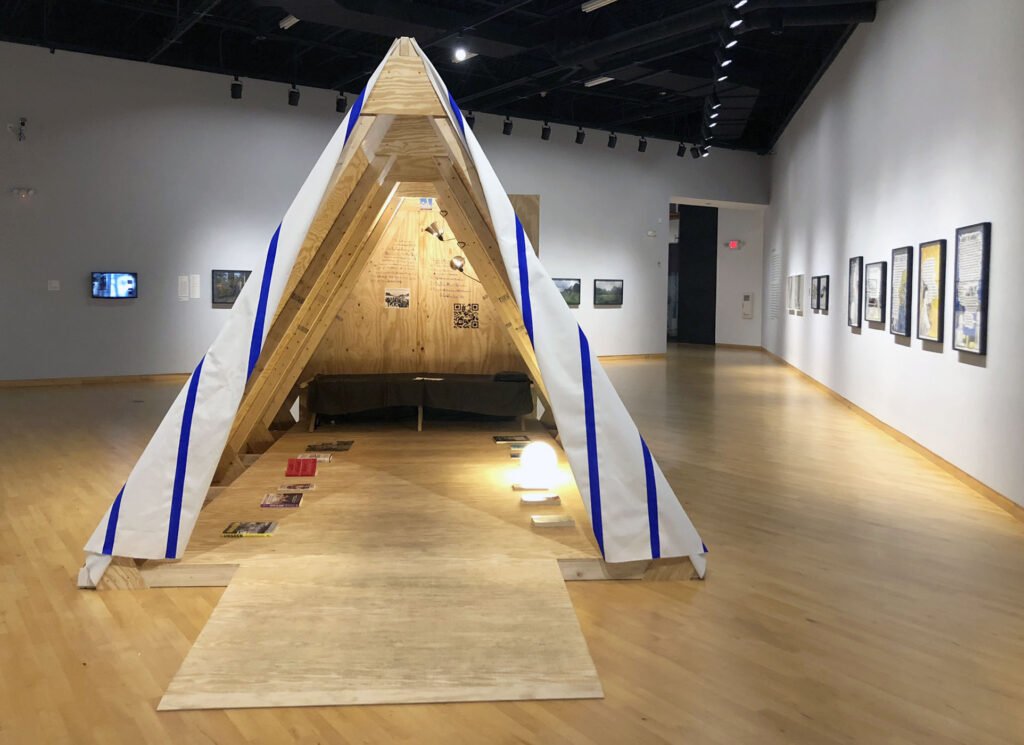
From the wall plaque about the Lazarus installation-

Jason Lazarus’s sculptural installation Resurrection City/Poor People’s Campaign: A National call for Moral Revival/A Third Reconstruction (2023) is anchored in the artist’s historical research and several key photographs of Resurrection City. A tent-like shelter inspired by the temporary residences that populated the 1968 mass protest, the interactive sculpture contains simple sleeping quarters and a curated library filled with physical literature and ephemera centered on both the 1968 Poor People’s Campaign and the 2018 Poor People’s Campaign: A National Call for Moral Revival, co-led by Rev. Dr.William Barber and Rev. Dr. Liz Theoharis. The library allows for audiences to trace, listen, and talk about the history of advocating for the poor, from 1865 to the present. Additionally, the artist provides a custom transcription (and a QR hyperlink) to Barber’s 49-minute address on the syndicated radio show “The Breakfast Club” in which he carefully outlines his powerful vision for how we might address poverty going forward.
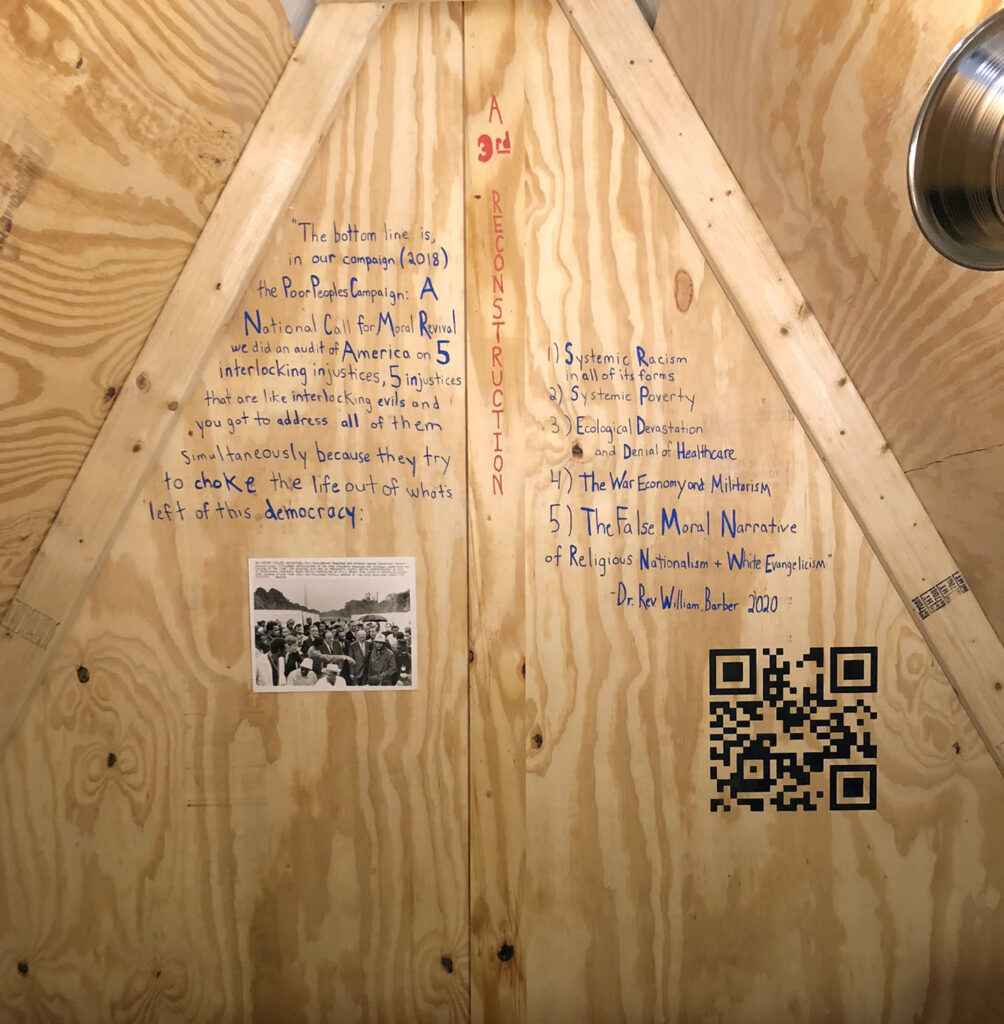
Inside the Jason Lazarus installation
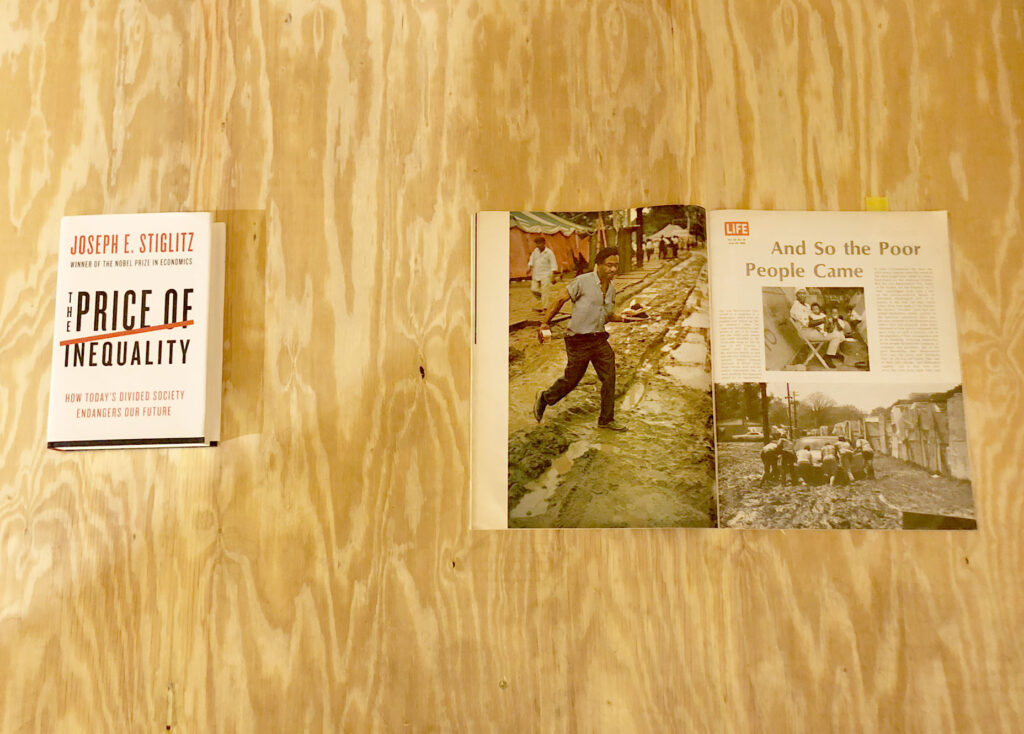
A book and magazine from Jason Lazarus’ installation floor
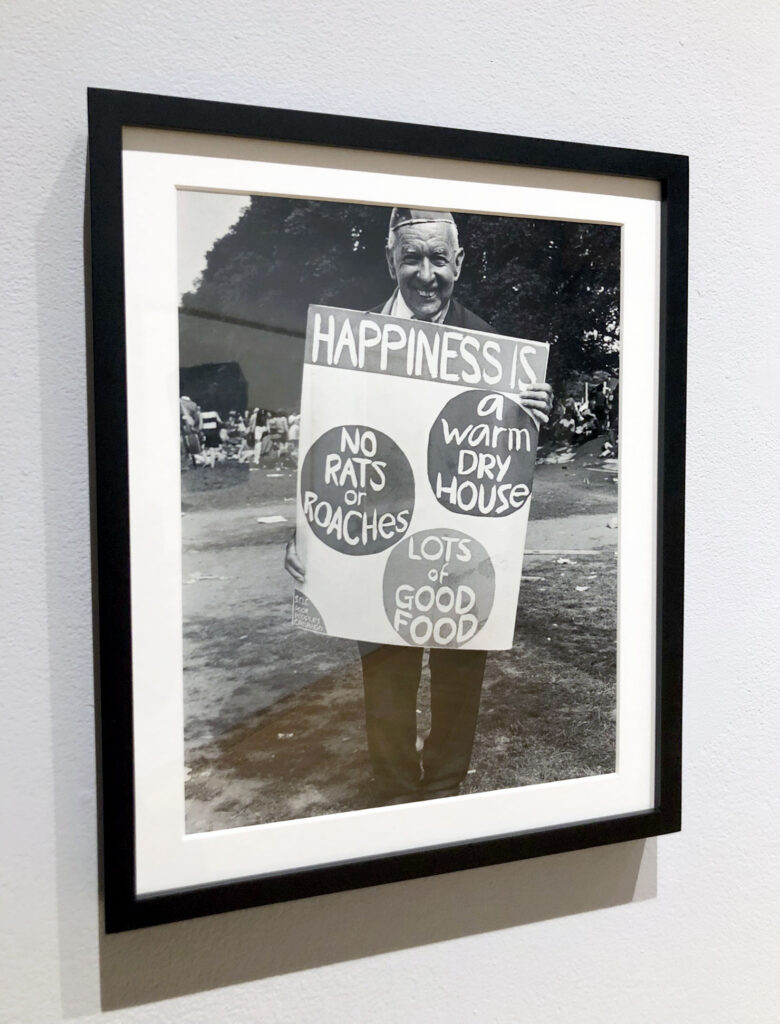
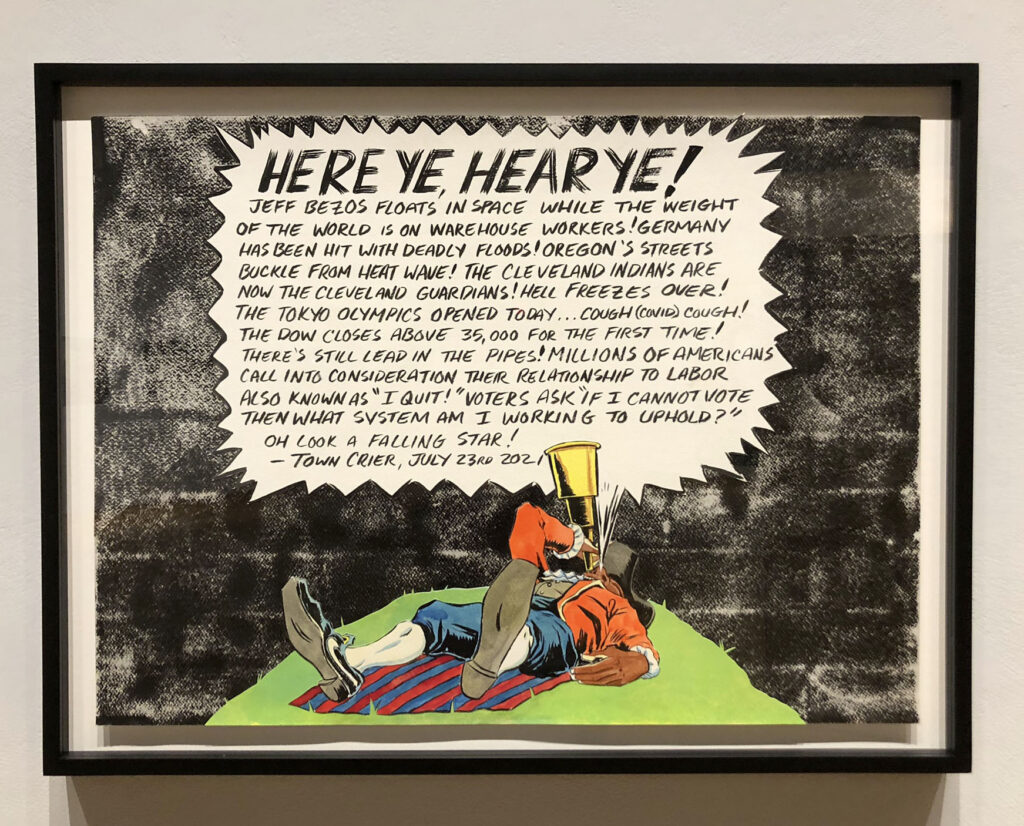
Mark Thomas Gibson, “Town Crier July 23rd”, 2021

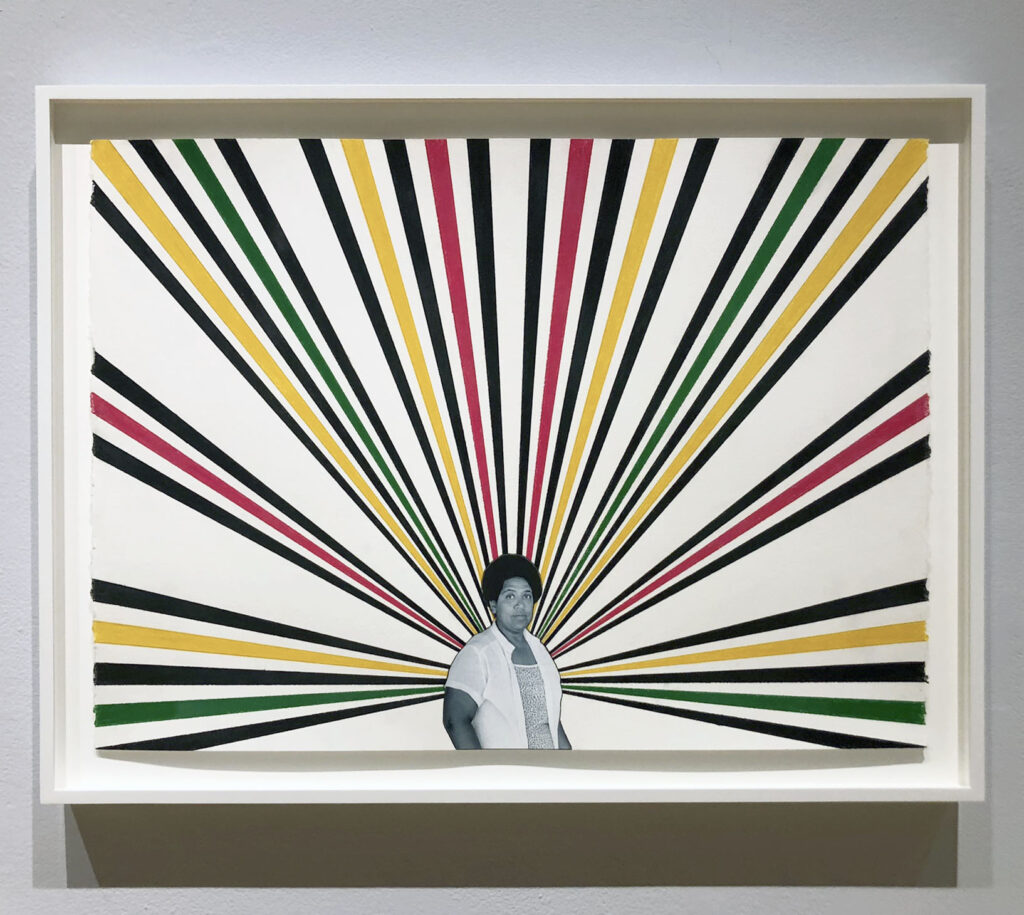
Rico Gatson, “Audre #2”, 2021

Jill Freedman, “Poor People’s Campaign, Resurrection City” 1968

About Jill Freedman’s photograph-

In the spring of 1968, the talented young street photographer Jill Freedman quit her day job as a copywriter in New York City to join the Poor People’s March on Washington. Freedman lived in Resurrection City for the entire six weeks of the encampment’s existence, photographing its residents as they rallied, made speeches, protested in front of government buildings, confronted police, built makeshift kitchens, organized clothing swaps, and dealt with flooding, petty crime, and illness. One of the most important postwar documentarians, and one of the few women photographers of the era, Freedman captured it all. Freedman’s 2017 book, Resurrection City, 1968-from which this exhibition draws a dozen powerful images-showcases the photographs that she made as a participant in the original Poor People’s Campaign. In multiple ways, Freedman’s images are the sympathetic perch upon much of which much of the present exhibition loosely hangs.

This exhibition closes 3/4/23.

Feb 242023
 

Micaela Amateau Amato, “Yoran Por Aire (contes brevas)”

Photographs by Amadia Shadow Rabbit

Film still from Kiara Mohammed Amin’s “Black Presence”

Film still from Kiara Mohammed Amin’s “Black Presence”

Soonoqo: We Become Body in Waves of Light and Sound at Dunedin Fine Art Center is a multimedia exhibition of 18 artists from around the world who “share a common desire for healing, communal growth and interdependence with nature” curated by S. Toxosi.

S. Toxosi’s statement about the exhibition (from the gallery wall)-

I do not possess the language to truly describe the be-holdings within Soonoqo. As a term within the Somali language, it would be difficult to translate into contemporary English. It considers a pluralistic worldview that allows ‘becoming and returning’ to bear witness of itself, within oneself while conjoining through space and time. Soonoqo, basks in the universal soul. Its otherness is imbued as the ‘physical cosmos’ and all its avatars and manifestations.

To speak in metaphor or in a sense of ‘poetic meditation’, one would engulf whirling vortexes, volcanoes and maelstroms that end up in other universes from which bring new revelations or images, The senses are engaged as viewed in Bruno Ferreira Abdala’s video art When Mother Breathes. It is here we can see a pluralist’s sensibility where the cohorts of Soonoqo ‘become and return’ with offerings that contend with the mythical genesis through the acknowledgement and practices of ancestral wisdom, queering mores, spirituality and love. Thus creating fission through initiating and remembering. There is a subtlety of conjuration, ritual, humility, vulnerability in K. Tauches’s Q.A.L. video-making that unfolds and reveals the sentience of a Nature that provides true sustainability.

Soonoqo is a web of interconnected lights in continuous synchrony. It enables manifestations from varied domains of areas of perceptibility through human inner weavings of life experiences and becomes a variety of communicative prowess that encompasses video arts, film, photography, the written word and sonic compositions. These forms all ultimately resonate with and point toward healing where one/all is purified, catalyzed and cleansed through cooperation with nature, technology, shadow matter, dark matter and invisible matter. As can be seen in the film Womb not Tomb by Dea, where she investigates and yields to the teaching of the four elements or in Kiara Mohammed Amin’s Black Presence, a short film of talismanic energy and transformation.

Artists included in the exhibition- Brandy Eve Allen, Viveka Krumm, Harry Wilson Kapatika, Cara Judea Alhadeff, Sadie Sheldon, Chelsea Rowe, Micaela Amateau Amato, Saudade Toxosi, Jennifer Pyron, Amadia Shadow Rabbit, K.Tauches, Javier T. Dones, Bruno Ferreira Abdala, Sall Lam Toro, Kiara Mohamed Amin, Nayetesi, Dea

For more information on this exhibition check out @soono.qo and this conversation with S. Toxosi and DFAC Curators Catherine Bergmann and Nathan Beard which is very informative.

Feb 042023
 

Le’Andra LeSeur, “In Reverence (An Honoring)”, 2019

Le’Andra LeSeur, “There are other hues of blue”, 2019-2022 (ongoing)

Le’Andra LeSeur, “There are other hues of blue”, 2019-2022 (ongoing)

Le’Andra LeSeur, “The CD Man”, 2017

Le’Andra LeSeur, “Superwoman”, 2018

Spirit, Rhythm, BluesLe’Andra LeSeur’s exhibition at Gallery221@HCC Dale Mabry Campus is a multimedia exploration of life, death, and rebirth- all bathed in blue.

From the Gallery 221 website-

LeSeur’s body of work—a celebration of Blackness, queerness, and femininity—seeks to dismantle systems of power and achieve transcendence and liberation through perseverance. In “Spirit, Rhythm, Blues” at Gallery221@HCC, LeSeur’s installation encourages viewers to contemplate themes such as identity, family, grief and joy, the experience of invisibility, and the power of language.

From the Gallery 221 press release description of Superwoman

This video is a documentation of a self-baptism that took place in the summer of 2018. The work speaks to the cyclical process of the emotional “waves”- highs and lows- experienced in life. As LeSeur conducts the baptism Donny Hathaway’s rendition of Superwoman plays over the visual, and the words “Where were you when I needed you last winter” repeat as the video proceeds then visually plays out in reverse. The words in the song symbolize the internal struggle present when asking how we show up for ourselves during moments of transition and change. Instead of putting pressure on ourselves to be better or do better, those words bring us back to a place of understanding the importance of self-love in how we overcome and get back to a place of grounding and balance in our lives.

It is a moving piece and works well as a balance to the other video works that reference the police killings of Akai Gurley and Alton Sterling (The CD Man, 2017, pictured above).

This exhibition is on view until 3/2/23.


Jan 252023
 

Now it Makes Sense

iFA Peddler

Conquering Pride

Internal Dialogue

Currently at the Tully-Levine Gallery at the ArtsXchange ( part of  The Warehouse Arts District Association) is The Wiz Reimagined a collaborative art exhibition by iBOMS (Jabari Reed- Diop) and Zulu Painter.

The imaginative paintings accompany sculptures and an installation which also at times includes video projections.

Tonight (1/25/23) there will be a screening of The Wiz, hosted by Hillary Van Dyke of Green Book Tampa Bay and an artist talk with both artists and Scott Terry of Mahogany Gallery.