Feb 202025
 

Large painting on the right- Bettina Brendel, “Particles or Waves?”, 1969, acrylic on canvas

Center sculpture by Claire Falkenstein- “Point as a Set #10, c.1962, copper

Palm Springs Art Museum is currently showing Particles and Waves: Southern California Abstraction and Science, 1945-1990 a selection of abstract work created by Southern California artists influenced by that era’s scientific ideas and breakthroughs. These explorations are divided into sections focused on optical science, mathematics, color in motion, and space age abstraction. The exhibition also includes several experimental films created during this period.

From the museum-

Beginning in the 1920s and 1930s, scientists at institutions near Los Angeles including Mount Wilson Observatory, the California Institute for Technology, and the Jet Propulsion Laboratory in Pasadena, generated groundbreaking experimental research in astronomy and particle physics. During and after World War II, the region remained at the forefront of scientific inquiry in theoretical physics and its applications within aerospace engineering, industrial manufacturing, and communications technologies. Between 1945 and 1990, many artists in Los Angeles produced visually abstract artworks while closely engaging with scientific ideas, mathematical theories, and materials or processes derived from physics and engineering.

The exhibition unites several generations of artists working in diverse materials and styles to examine how subfields of scientific investigation inspired a range of non-figurative artworks by practitioners concerned with light, energy, motion, and time. By drawing interdisciplinary connections between the work of early abstractionists and contemporary practitioners, the exhibition considers abstract artwork from Southern California in a new way.

Below are a few selections along with information from the museum.

Claire Falkenstein, “Orbit the Earth”, 1963, Oil and metallic paint on nine canvas panels

Claire Falkenstein, “Orbit the Earth”, 1963, Oil and metallic paint on nine canvas panels

Through both abstract paintings and sculptures, Falkenstein explored subjects inspired by astrophysics. In Orbit the Earth, she conveys a sense of motion through patterns of curved points in metallic paint and sweeping lines that reveal traces of the painting’s black background. The artist referred to her small gestural marks as “moving points” and explored how arrangements of these painted forms could express types of motion and energy in the universe. In her hanging sculpture Sun represents a dynamic celestial form that shifts in appearance as viewers move around the work. The sculpture’s open, webbed structure creates a continuum between the work and its surrounding space, parallelling interconnections between the Sun and other cosmic phenomena in the solar system.

Helen Lundeberg, “Untitled (Sectioned Planet)”, 1969, Acrylic on canvas

Eva Slater, “Galaxy”, 1954, Oil on panel

Oskar W. Fischinger, “Space Abstraction No.3”, 1966, Oil on canvas

Oskar W. Fischinger, “Multi wave”, 1948, Oil on canvas

Hilaire Hiler, “Parabolic Orange to Leaf Green”, 1942, Oil on board

Dr. Frank J. Malina, “Mitosis”, 1974, Painted wood, painted plexiglas, metal, fluorescent tubes, motor

Inspired by the idea of enlivening artwork with electricity, Malina developed a range of kinetic paintings like Mitosis beginning in 1956. This work exemplifies the artist’s Lumidyne system of works where illuminated colors shift through cycles generated by an encased motor, rotating components, and electric light sources. A founder of Caltech’s Jet Propulsion Laboratory in 1936 and a preeminent American specialist in rocketry, Malina turned to creating artwork in the early 1950s after relocating to France.

DeWain Valentine, “Vertical Section”, 1979, Laminated glass

DeWain Valentine, “Vertical Section”, 1979, Laminated glass (detail)

Bettina Brendel, “Prisms”, 1982, Acrylic on canvas

Miriam Schapiro, “Computer Series #3”, 1969, Acrylic on canvas

Bettina Brendel “A Numbered Universe”, 1966, Oil on canvas

In A Numbered Universe, Brendel painted the symbols of binary code within a grid drawn onto the canvas in pencil. The work’s composition is both structured and slightly irregular. The hand painted notations and off-kilter composition humanize the abstract technological language of computer code.

Lee Mullican, “Computer Joy”, 1987, TGA file 512 x 428 pixels

In Computer Joy, repeated and overlaid sections of lines and geometric forms produce an all-over field of pixelated patterns.
While teaching at the University of California, Los Angeles in 1986, Mullican explored the artistic posibilities of new computer imaging technologies. The ability to readily duplicate digital shapes using the computer complemented his long-standing practice of applying repeated striations of pigment into patterned arrangements in paintings like Source from 1981.

Lee Mullican, “Source”, 1981, Oil on canvas

Lee Mullican, “Source”, 1981, Oil on canvas (detail)

James Turrell, “Afrum (White)”, 1966, projected light

In Afrum (White), a modified projector casts a rectangle of white light onto the corner of the otherwise darkened gallery, creating the illusion of a floating three-dimensional cube. The crisply defined area of light changes in appearance depending on how viewers move in the space. Through his precise manipulation of light within specific spatial environments, James Turrell creates opportunities for viewers to engage with nuanced processes of perceptual experience.

Man Ray, “Shakespearean Equation: King Lear”, 1948, Oil on canvas

While living in Hollywood in the late 1940s, Man Ray produced his Shakespearean Equations, a series of paintings depicting mathematical models that reference plays by William Shakespeare. King Lear highlights the aesthetic qualities of a particular form known in algebraic geometry as a Kummer surface with eight real double points. For the artist, the drips of paint on the mathematical form recalled the tears shed by King Lear after learning that his favorite daughter was killed, layering human emotion onto the geometric shape.

This exhibition, part of The Getty’s PST ART programming, closes Sunday, 2/24/25.

Nov 292024
 

Leon Polk Smith is one of the artists featured in Brooklyn Museum’s Brooklyn Abstraction: Four Artists, Four Walls, on view until July 2025. His work was the impetus for the exhibition which is located on the walls of the museum’s Beaux-Arts Court.

From the museum about the artist-

Known for his bold use of color and geometry, the “hard-edge” painter Leon Polk Smith drew from his youth in Oklahoma and later in life immersion into the New York City art scene. Born in what was then Indian Territory, which became Oklahoma the following year, Smith was raised on a farmstead settled among the Chickasaw and Choctaw Nations. Although his parents were of Cherokee descent, Smith was never enrolled as a citizen of the Cherokee Nation and did not publicly claim his Native heritage until the end of his life. The influence of his Southwest origins and his upbringing among Native American communities can be seen through his vibrant use of color, the abstract implication of landscape and the farmland that he was raised on, and the use of symbolism that reflects the style of artworks produced by those around him.

In his adult life, Smith trained and worked as an educator while continuing to pursue painting. Without formal training in fine arts, he had his first solo exhibition at Uptown Gallery in New York City in 1941. In 1945, Smith settled permanently in the city. The Brooklyn Museum hosted his first and only major retrospective, “Leon Polk Smith: American Painter”, in 1995. The artist passed away the following year, after which his estate bequeathed eighteen works to the Museum.

Nov 202024
 

“Untitled”, 1930s-40s, Osamu Shiihara, photogram

The Getty has gathered several innovative photo works made from the 1920s to the 1950s for Abstracted Light: Experimental Photography, part of their PST ART: Art & Science Collide series. The exhibition also includes several experimental films and a room dedicated to Thomas Wilfred’s  “Lumia Instruments” that produce colorful moving abstract forms.

From the museum-

Light abstraction emerged after the First World War as a preoccupation of photographers and filmmakers in international centers of art production. Many artists began seeing light as something that could be manipulated, then photographed and filmed, like any other physical material. This exhibition offers a selection of works, dating from the 1920s onward, that reveals these artists’ fascination with the formal qualities of light as well as their innovative methods of projecting, reflecting, and refracting its rays to liberate their media from traditional modes of representation. They emphasized the novelty of their varied approaches by inventing new terms-including “Rayograph” (Man Ray), “Light Drawing” (Barbara Morgan), “Luminogramm” (Otto Steinert), “Photogenics” (Lotte Jacobi), and “Lumia” (Thomas Wilfred) -to characterize their work. “More and more artists of our generation have begun to contemplate light with the eyes of a sculptor gazing upon a block of marble,” noted Wilfred, “seeing in light a new and basic medium of expression with unlimited possibilities.”

Below are a few selections.

Edward W. Quigley, “Untitled (Light Abstraction)” 1931-39, and “Vortex”, 1933, Gelatin silver prints

Nathan Lerner, “Car Light Study #7”, 1939, and Hy Hersh, “Untitled (Abstraction)”, About 1950, Chromogenic print

Man Ray, “Untitled (Sequins)”, 1930 and “Untitled (Corkscrew and Lampshade)”, 1927

Francis Bruguiére, “Untitled (Design in Abstract Forms of Light)”, About 1927

This exhibition closes 11/24/24.

Aug 012024


Jack Shainman Gallery is currently showing two bodies of work by Leslie Wayne for her exhibition This Land.  One half of the show is paintings based on photos she took of landscapes from an airplane window while traveling from New York to the Seattle. Abstract work influenced by aspects of the natural world makes up the other half.

In a recent interview with designboom, Wayne was asked how perception and memory influenced her process for this work-

Perception is just an interpretation really, of what one sees, and while the paintings in ‘This Land is Your Land’ series were made directly from the photographs I took on a flight to the Pacific Northwest, they are infused with the feelings and memories I hold dear of my childhood. I’ve lived in New York since 1982, but I grew up in California and I still have a very strong attachment to the West Coast and to the geology and geography of the West. Even the abstract work in which I am manipulating thick layers of paint, I am drawing on those sensations I remember having of being in nature where the tectonic and geologic forces are right there for one to see and feel — millions of years of layered strata, of compression and subduction, of gravity and erosion, and certainly of the shifting plates that cause earthquakes.

More on the show from the press release-

Jack Shainman Gallery is pleased to present This Land, an exhibition of two kindred bodies of work by Leslie Wayne that express the nature of the American West through perception and memory. In each piece, Wayne considers different ways in which we interpret and imagine geological space, exploring landscape both as a vertical, abstracted force and a horizontal, figurative expanse. Named in homage to Woody Guthrie’s heartland ballad “This Land is Your Land,” Wayne offers a contemporary vision of Manifest Destiny—imbuing her symbolic, and experienced, westward voyages with topographies that are sensorial, memorial, and tectonic.

In a series of dimensional abstract paintings on large, metronome-like planks, Wayne uses a dramatic and vibrant palette to mold paint so that it cascades down the wood panel in a multitude of ways. Applying the paint in heavy layers, she encourages the influence of gravity and refines her materials to their most basic form, color, and behavior. Adopting, rather than controlling the rhythm of nature, these compositions are fluid to the viewer’s myriad associations with this image of momentum—be it reminiscent of the rush of an avalanche, the swell of hot lava, or the pileup of driftwood on a seashore.

In her series entitled This Land is Your Land, she creates compact, observational paintings based on snapshots she took from her seat as she flew west over the Rocky Mountains all the way to the Cascade Range in Washington State in 2021. Creating a precise mise-en-scène by placing each painting in a frame that resembles the Boeing 737 window she peered out from, Wayne transports her viewers into a precise sensation: beholding our nation as the land settles into one continuous, harmonious expanse—stripped down to simple shapes and shades. Her portholes offer a view into a terrain of awe, reminiscence, and omniscience, a collective vision of a region fraught with, and fractured by, territories and borders.

Extending beyond the format of the airplane-window frame, Wayne has also created two unique works inspired by the same journey. The first is a twenty-two-foot-long painted scroll entitled From the Rockies to the Cascades, in addition to High Dive, a large-format painting in which she stretches her canvas onto a frame of coiled springs—materials that simulate a bird’s-eye view of the landscape as if seen by a skydiver descending towards a trampoline. The paintings from this series are accompanied by a vitrine displaying Wayne’s special limited edition This Land, a handmade accordion book that illustrates the aerial photographs from her voyage, alongside Taylor Brorby’s poem “The Ages Have Been at Work” and the lyrics to Woody Guthrie’s “This Land is Your Land.”

In German, heimat is a term used to describe not only the characteristics of a place, but the complex and interdependent physical, social, and mental associations with a homeland. For Wayne, this sentiment stretches, folds, and bends from the west coast, her childhood home, to the east coast, where she has resided since 1982. Treading across this land, psychic routes unfold, and Wayne savors “That path [which] is never straight and always various, each time opening new ways of seeing and thinking about the world we occupy, the ways we inhabit nature, and the legacies we leave behind.”

This exhibition closes 8/2/24.

Mar 082024
 

“Valentine”, 2022, oil on linen

“Braid”, 2022, oil on linen

“Braid”, 2022, oil on linen (detail)

The two colorful paintings above are from Andrea Belag’s 2023 solo exhibition, Currents, at Bienvenu Steinberg & J in New York.

From the gallery’s press release-

Since the 1990s, Belag has constantly modified her approach to abstraction through various transitions and mutations. Her internal genealogy matters as much as her relationship to a tradition of abstraction. In the words of artist and critic Julian Kreimer: “it’s not hard to metaphorize those traces, lines left behind by larger swaths of paint that were wiped away, lines whose own shifting colors reveal how they are made by what they’ve touched and changed. But as with so many of Belag’s paintings, the point isn’t to nail down the metaphors (…) Belag’s work becomes an edge condition for painting without flirting with minimalist near-nothingness; it tests out where beauty can emerge, and what we can get to work. It opens up from a few wiped shapes into a sophisticated object able to transport one into a reverie about slippage, slipping away, the here and not hereness of life, death, and the varieties of love”.

Geometry and order have progressively given place to swirling swaths of color, solidity replaced by suspended motion. Painting is an all consuming action. She paints standing up, leaning over and often walking around the canvas placed horizontally. It starts with the arm and as she walks around the canvas her whole body gets involved. Transparent colors on the surface are not fixed and can create form or dissolve into light. She rubs, smudges, and scraps to create translucent, softly luminous surfaces where the brushwork is strikingly visible. “My paintings are contemporary because I paint in the here and now. It’s unavoidable. The artists I feel indebted to are Henri Matisse, Mary Heilmann, Joan Mitchell, Gerhard Richter, Bill Traylor, and Japanese Zen gardens. Style is a dead-end, but I have a point of view. I love transparency and the touch of materials, so I have created a way of painting where I make this possible. I use mostly transparent pigments and fine linen, and I paint wet into wet. The marks are on one layer of the painted surface with very little overlap or pentimento. Color makes space and light come through the paint and emotion comes through as well. There is fear and desire in painting, and that’s addictive. Haptics are the touchstones.” (Andrea Belag, 2023)

Her current solo exhibition, Twombly’s Green, opened this week at Steven Harvey Fine Art Projects.

From their press release-

This grouping of work is, as the title suggests, inspired by Belag’s recollection of Cy Twombly’s use of the color Hooker’s green in his “Pond Paintings.” She writes-

These paintings are inspired by my memory of Twombly’s green and white paintings that I first saw in the Menil Collection in Houston in 2015. I was stunned by his paint handling and his use of Hooker’s Green.

Since then, I learned he painted quickly and directly with his hands. Discovering the “Pond Paintings” was unexpected and I kept thinking about them. Hooker’s green is opaque and dark. But the dark value doesn’t overwhelm the hue. Instead, there is richness and depth without a trace of yellow.

When I identified the pigment and started to paint with it, I felt a vibration. There was a time when painting with green was taboo and now it is ubiquitous.

Is green in the zeitgeist?

All painted within the last twelve months, these works are a continuation of the artist’s practice of lush, energetic abstraction. Playing with circularity in an ongoing attempt to “get away from the grid,” Belag uses color as forms in space, bodies set in motion. Citing foundational inspirations in Matisse and Guston, who she later studied with at the New York Studio School, Belag’s work can also be related to vanguard practitioners of 80s abstraction such as Bill Jensen, David Reed and Mary Heilmann. Her immediate peers Christopher Wool and Joyce Pensato are also compass points in the stripped down dedication to raw painterly brio they share.

This exhibition is on view until 4/13/24.


Jun 162023
 

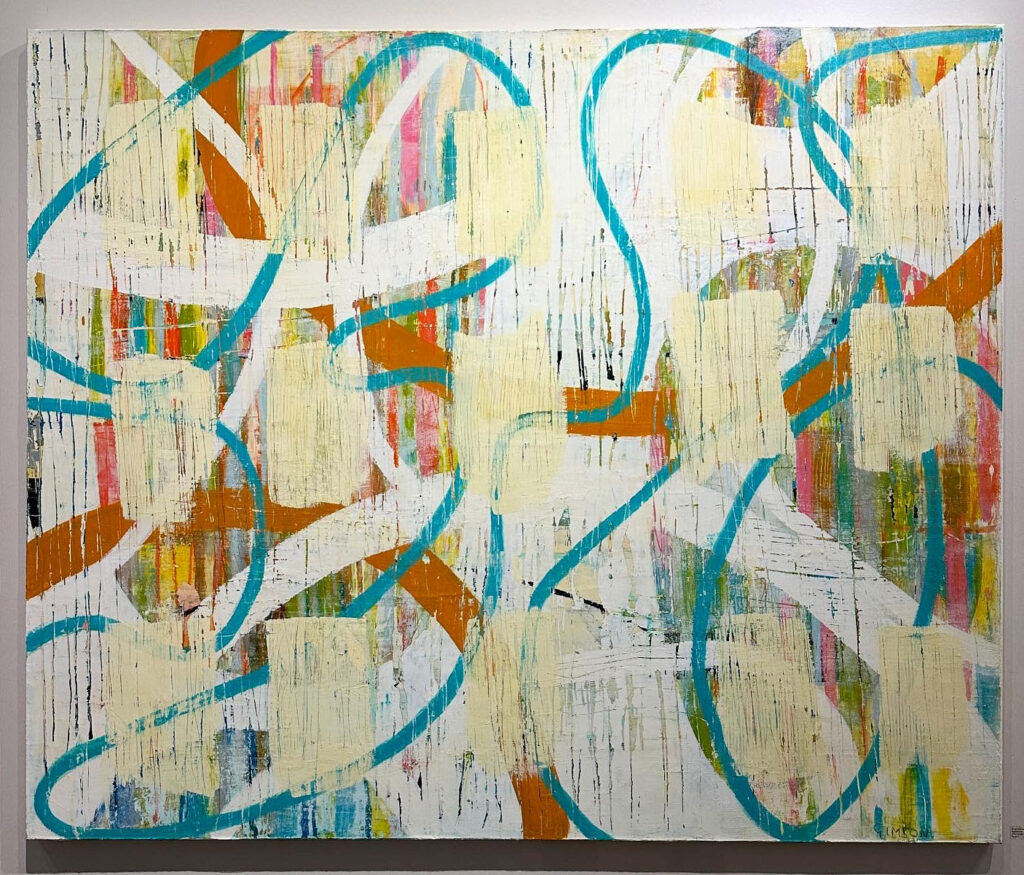
There was a lot to see at last Saturday’s ArtWalk in St. Pete, Florida. Below is a brief roundup. Many of these artists and exhibitions can also be seen for the rest of the month (if not longer).

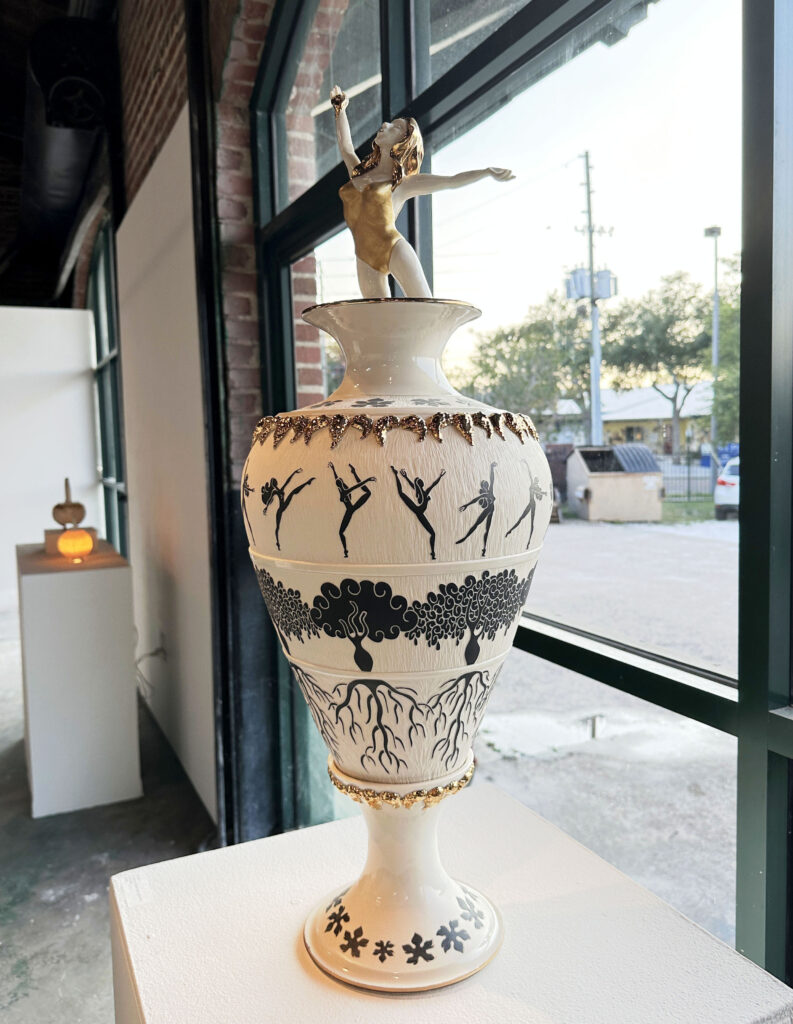
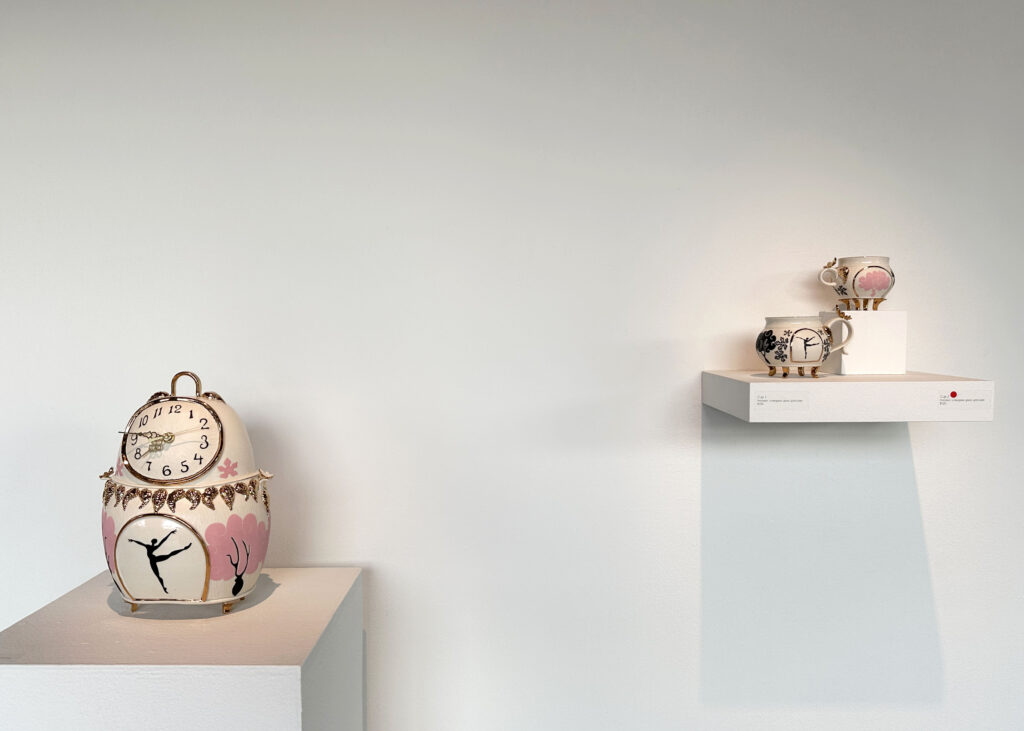
Above is ceramic work by Rebecca Stevens from her exhibition, The Good Life, at Morean Center for Clay. Her work is influenced by her experience as a ballet dancer, ancient Greek art, and by Art Nouveau.

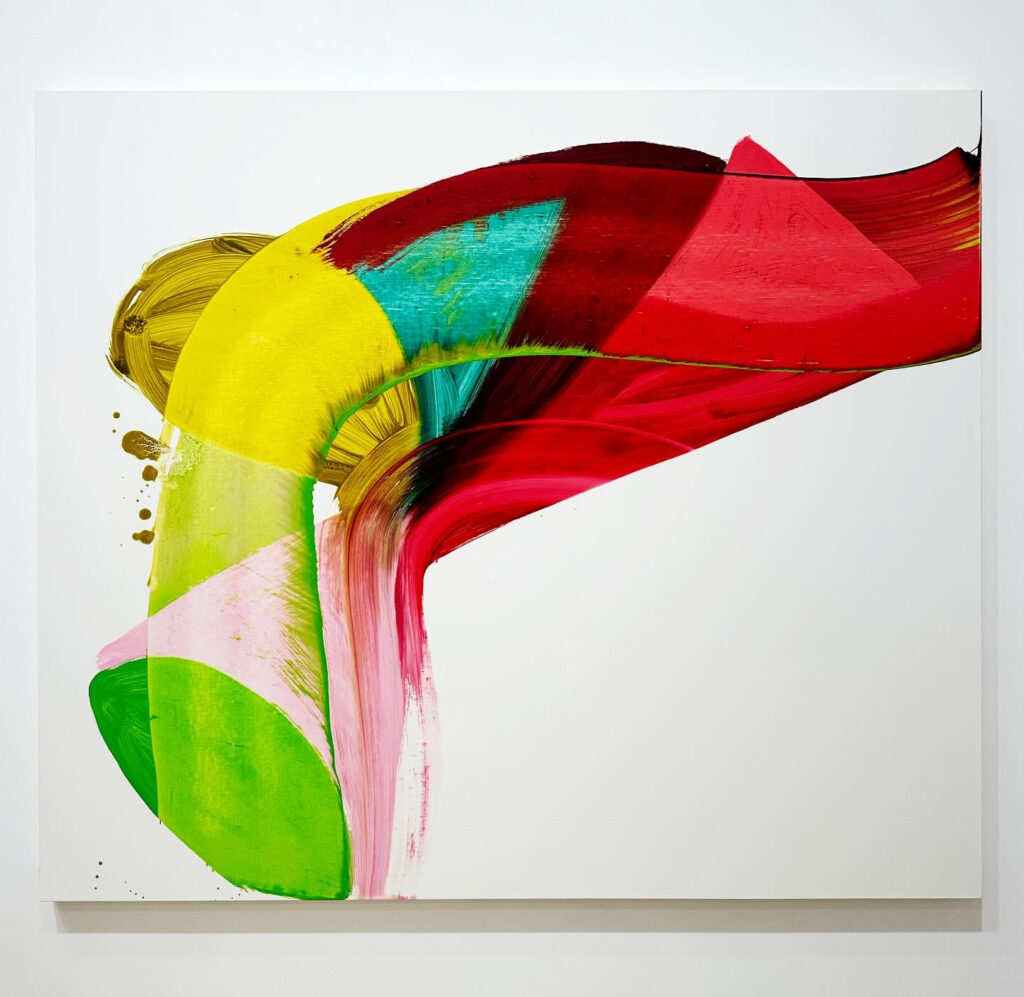
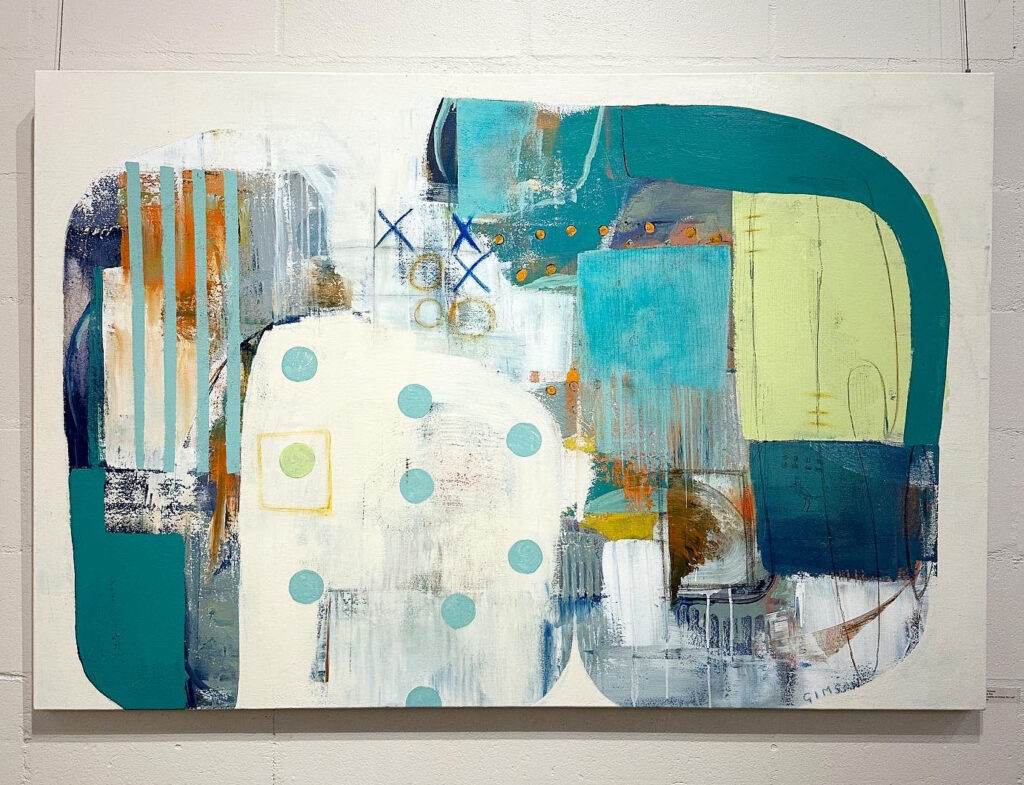
Soft Water Gallery, part of the Arts Xchange in the Warehouse District is showing Abstract Visions, work by Steph Gimson.

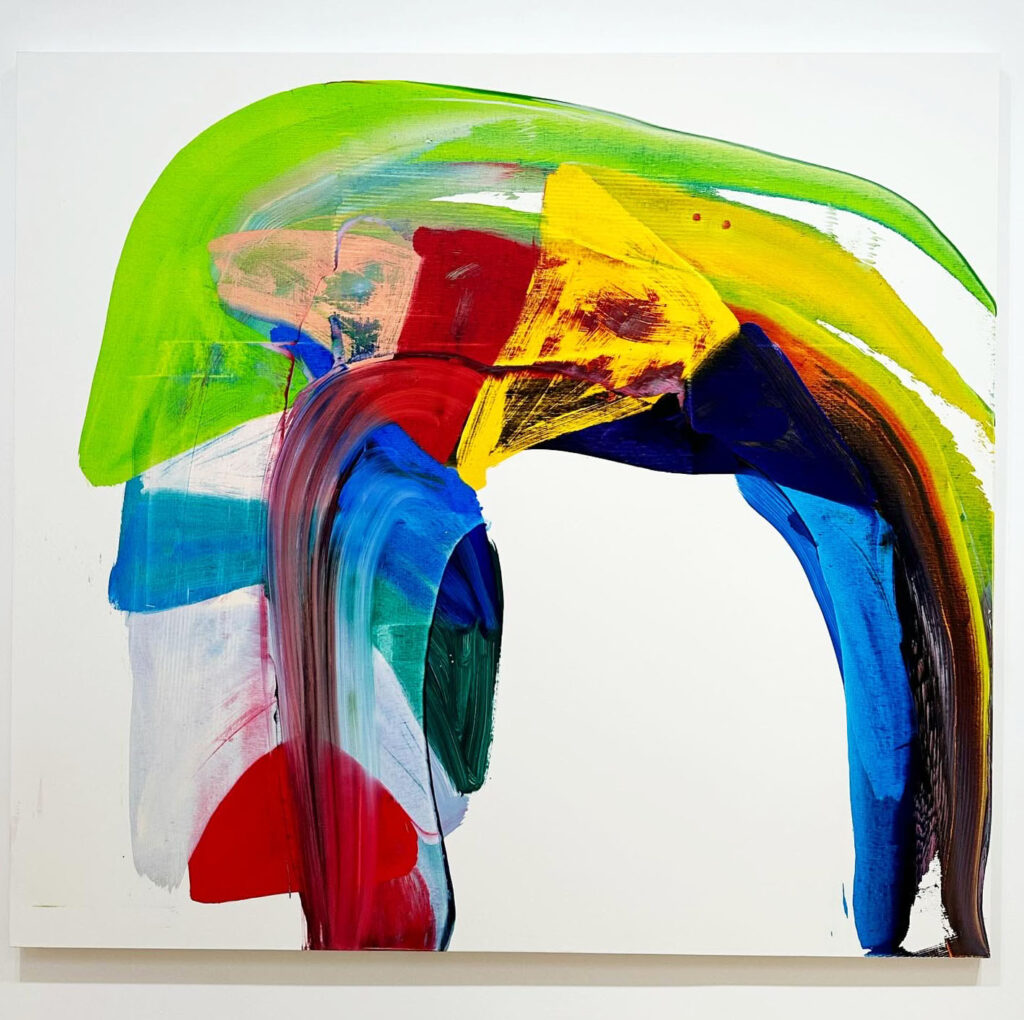
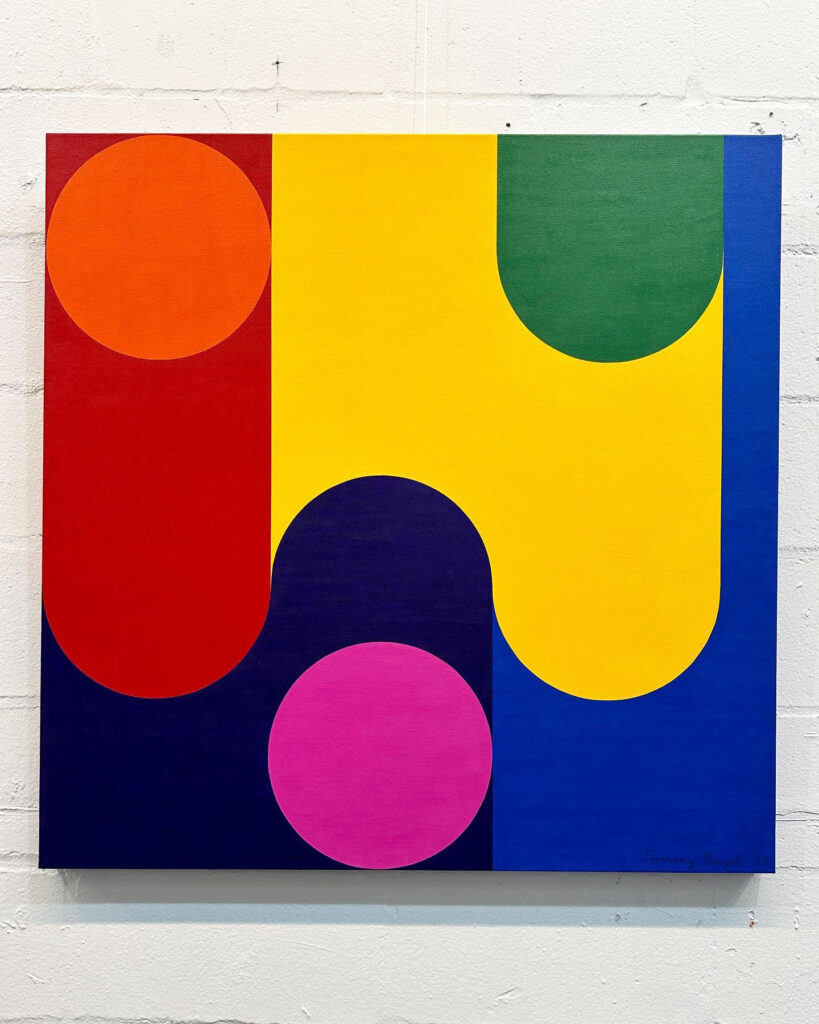
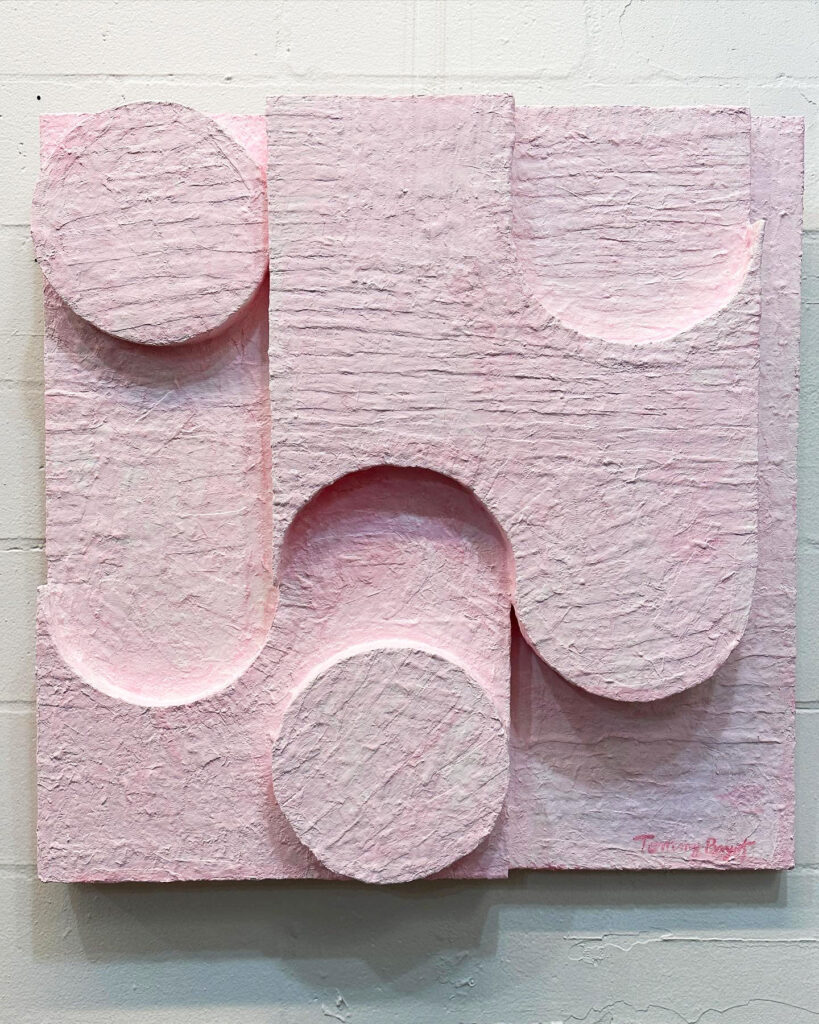
Tommy Bayot’s exhibition Lines is on view at The Factory St. Pete, part of their Pride Month celebrations. The show will be on view until 7/2/23 and includes a variety of work, in addition to the abstract pieces below. Check out his Instagram for more.

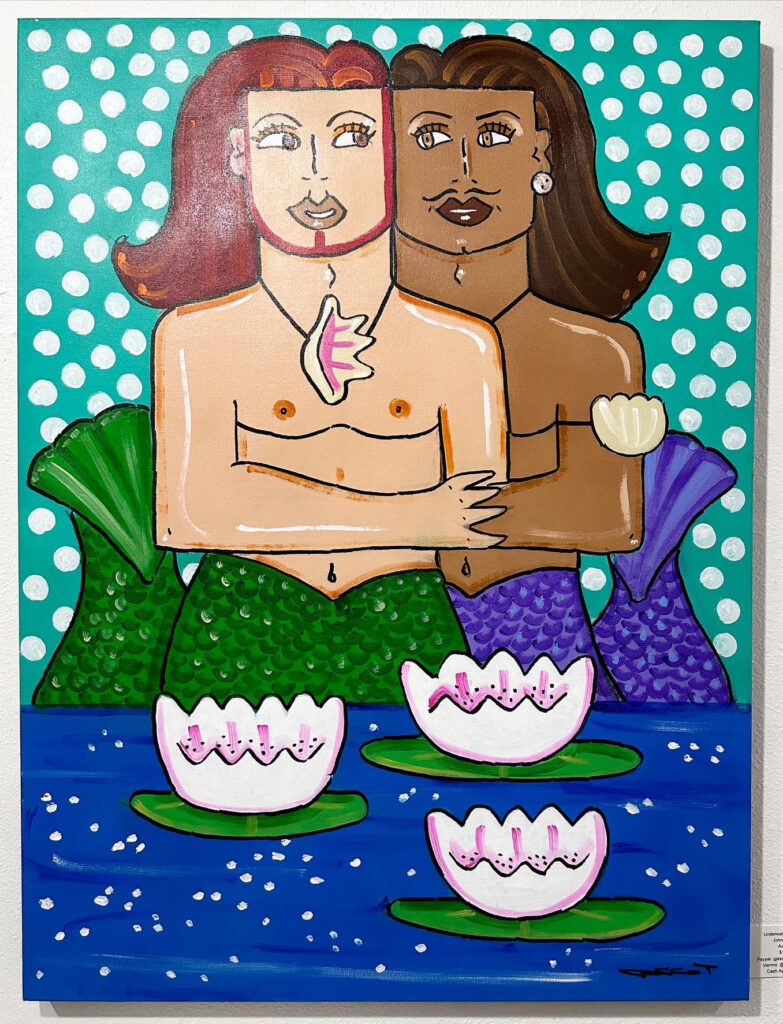
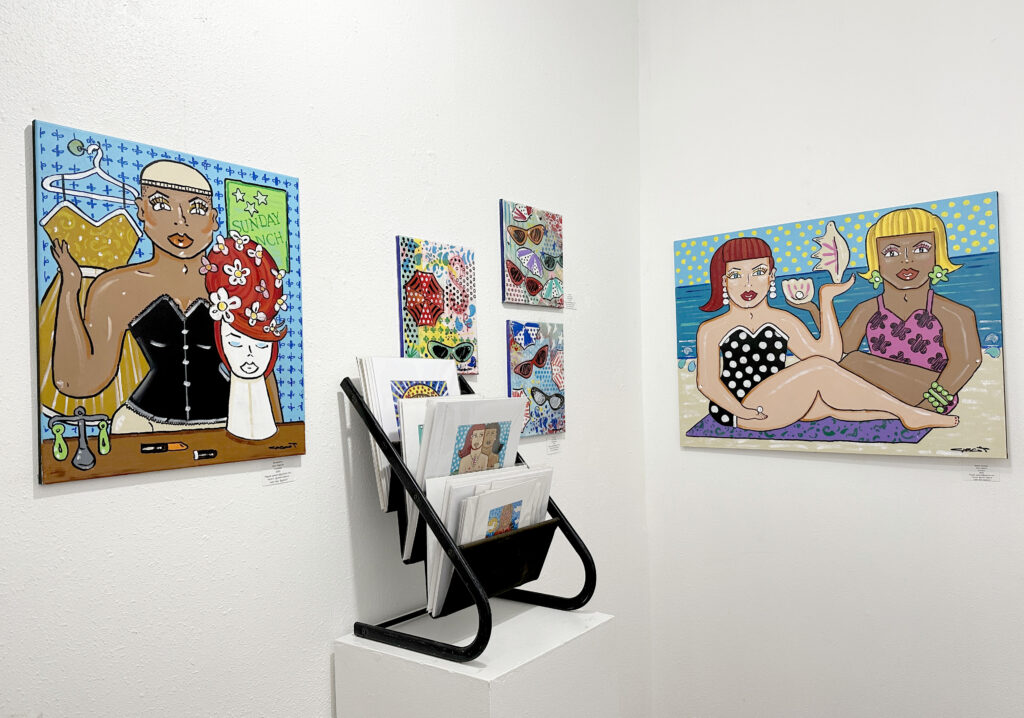
The ArtLofts are located above Florida CraftArt Gallery and are currently showing John Gascot’s Sweet Boys.

John Gascot, “Underwater Romance”

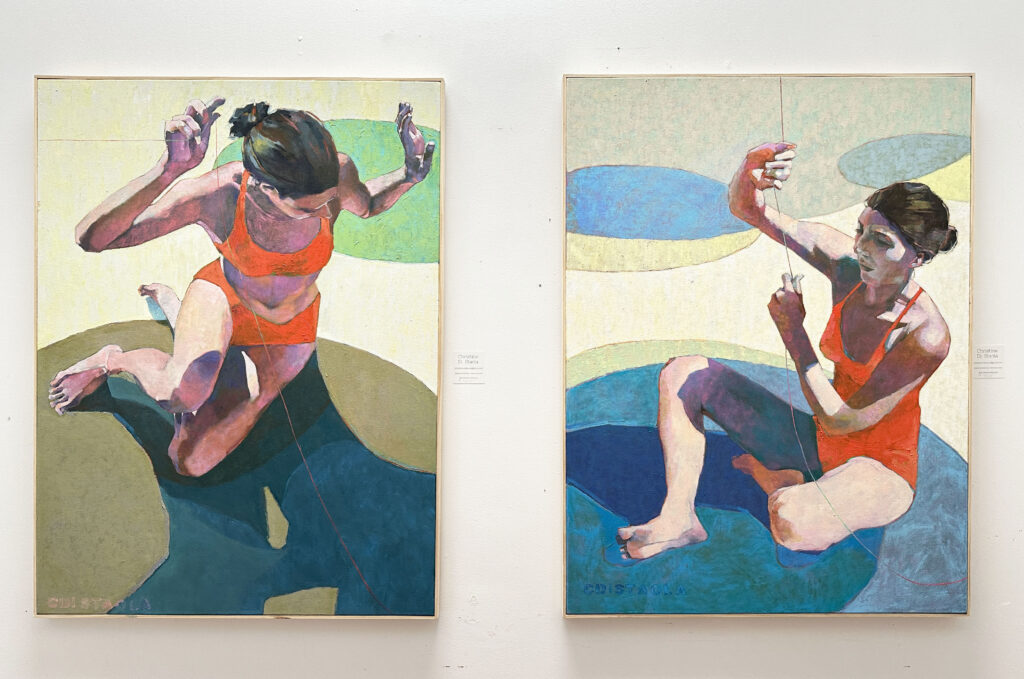
The space also contains 19 artist studios. Below are works from two of the many artists.

Christine Di Staola’s “Atlas Compass 2” and “Atlas Compass 3”

Work by Mavis Gibson

The next ArtWalk in St. Pete will be on July 8th (second Saturday of the month).