
This mural was created by Mwanel Pierre-Louis for the 2021 edition of the SHINE Mural Festival in St. Pete, Florida.
For his most recent work, also check out his Instagram.

This mural was created by Mwanel Pierre-Louis for the 2021 edition of the SHINE Mural Festival in St. Pete, Florida.
For his most recent work, also check out his Instagram.
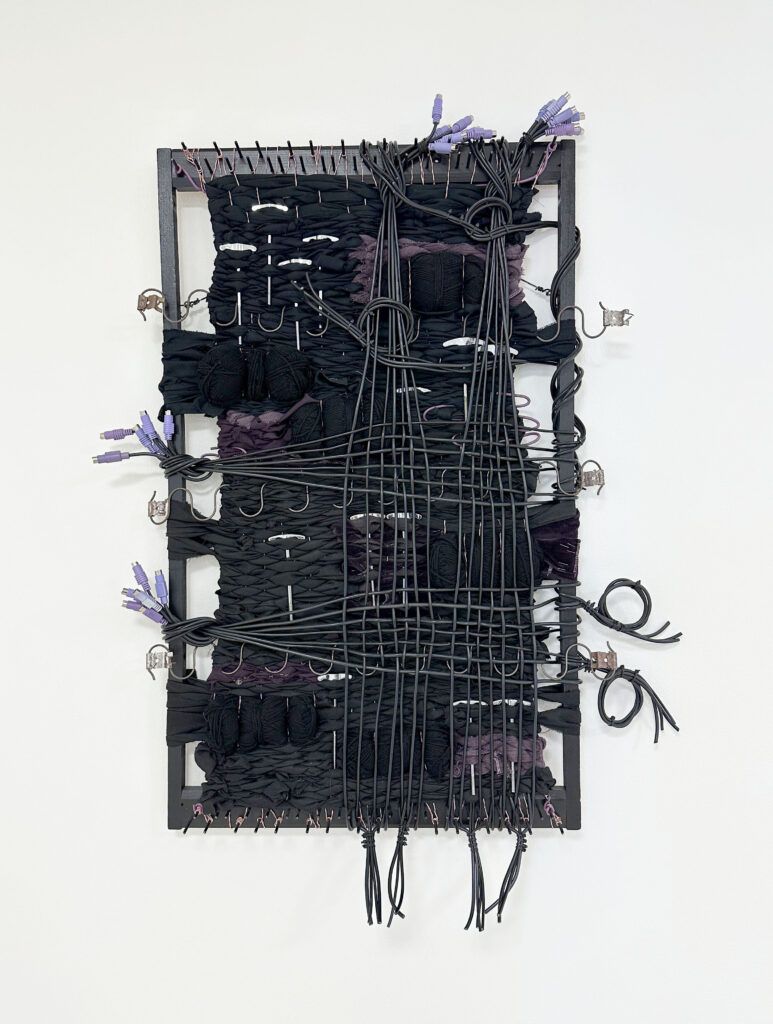
Jo Westfall, “The Queens Astronomer”, 2023, Mixed media
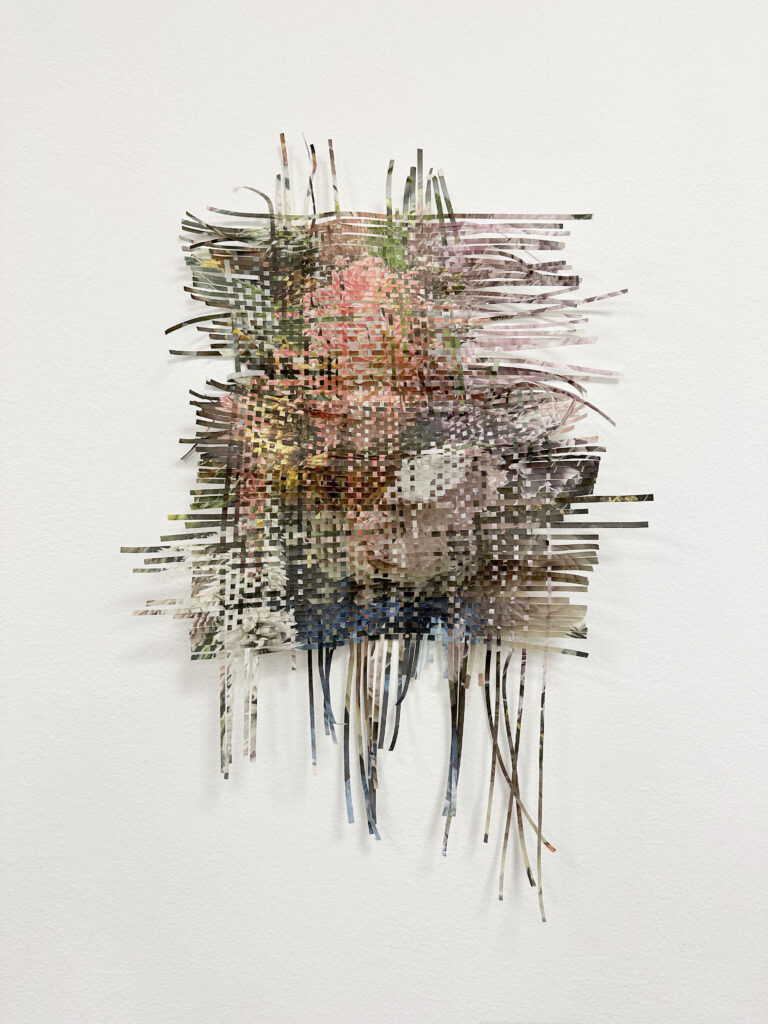
Christine Mauersberger, “Kates Bouquet”, 2022, Digital print on Japanese Kozo paper, of loom weaving
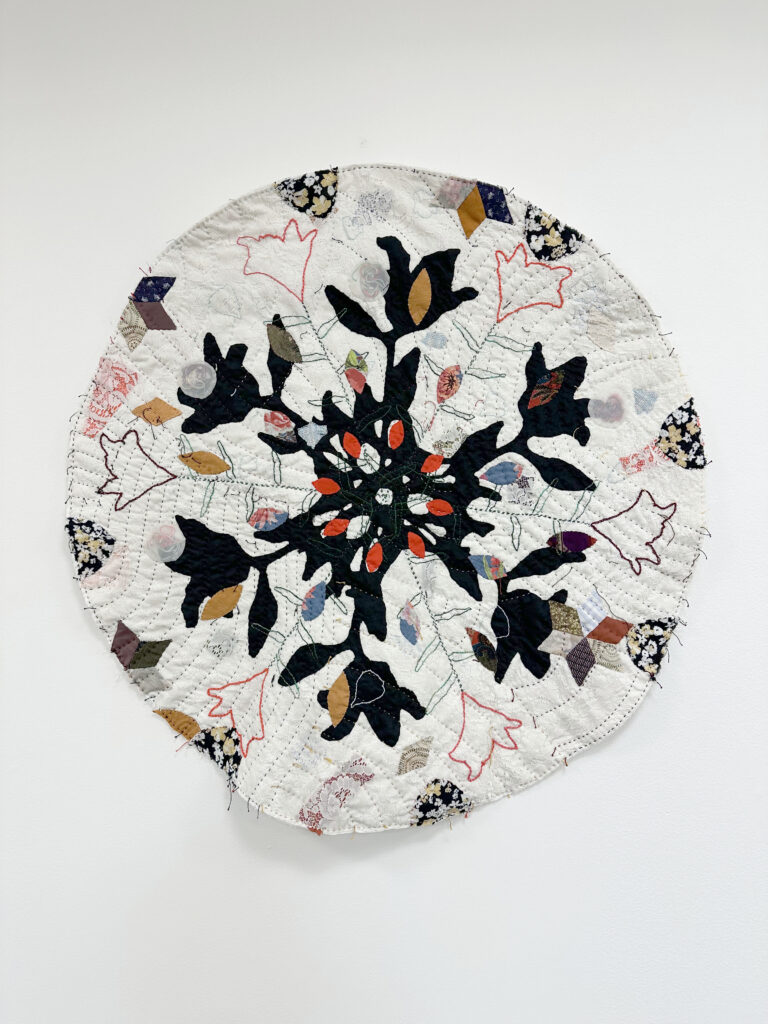
Cat Mailloux, “Rose Window”, 2023, Quilted appliqué on found fabric
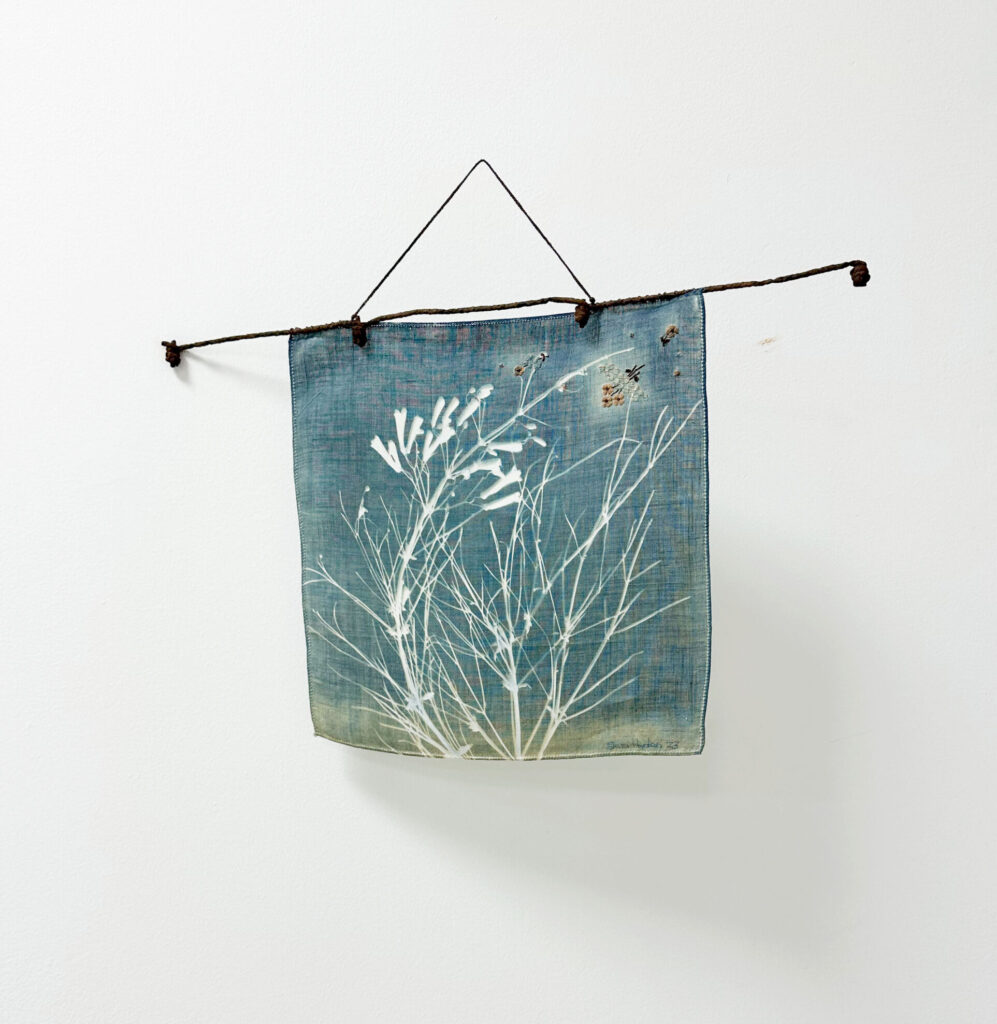
Suzi Hyden, “If the Sun Could Kiss Me”, 2023, Toned cyanotype on vintage linen hand-stitched onto metal fencing
Above are a few of the works from Common Thread, the current exhibition at Malone University’s art gallery. It is on view until 2/29/24.
From the gallery about the show-
Although quite different, all artists in this exhibition are united by the idea of textiles. Suzi Hyden’s work celebrates the environment by combining elements from nature and repurposed materials to create cyanotypes on vintage fabrics.
Cat Mailloux’s textile practice is focused in quilt making, pursuing connections between the visual language of churches, cathedrals, and domestic spaces that slowly bleed their way into imagined and limitless landscapes, exploring questions of the infinite through material.
Christine Mauersberger’s body of work is aesthetically eclectic. Hard and soft. Digital and analog. Some pieces fill a room, others can be held in your hand. The common thread is that each piece attempts to make the invisible visible.
Jo Westfall creates visual work considered resource art. It is portraiture, fiber art, and assemblage made with local materials that were discarded, overlooked, or unused. It reclaims the aesthetic capacity and utility of these items by integrating them into fresh renderings.
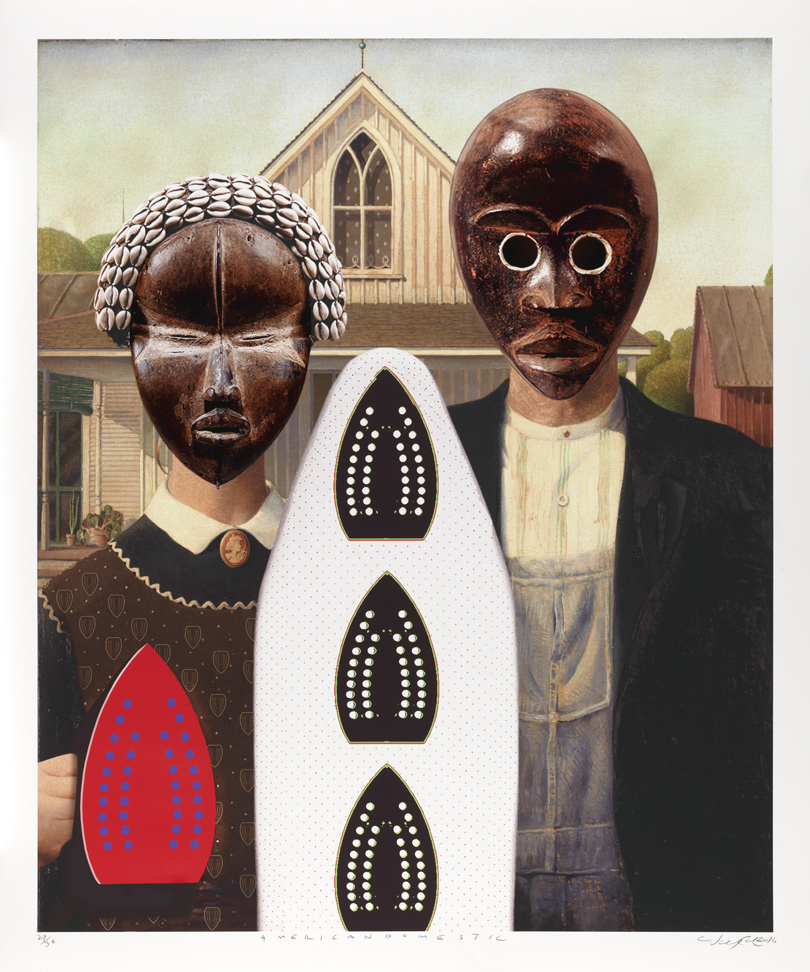
Willie Cole, “American Domestic”, 2016, Digital Print
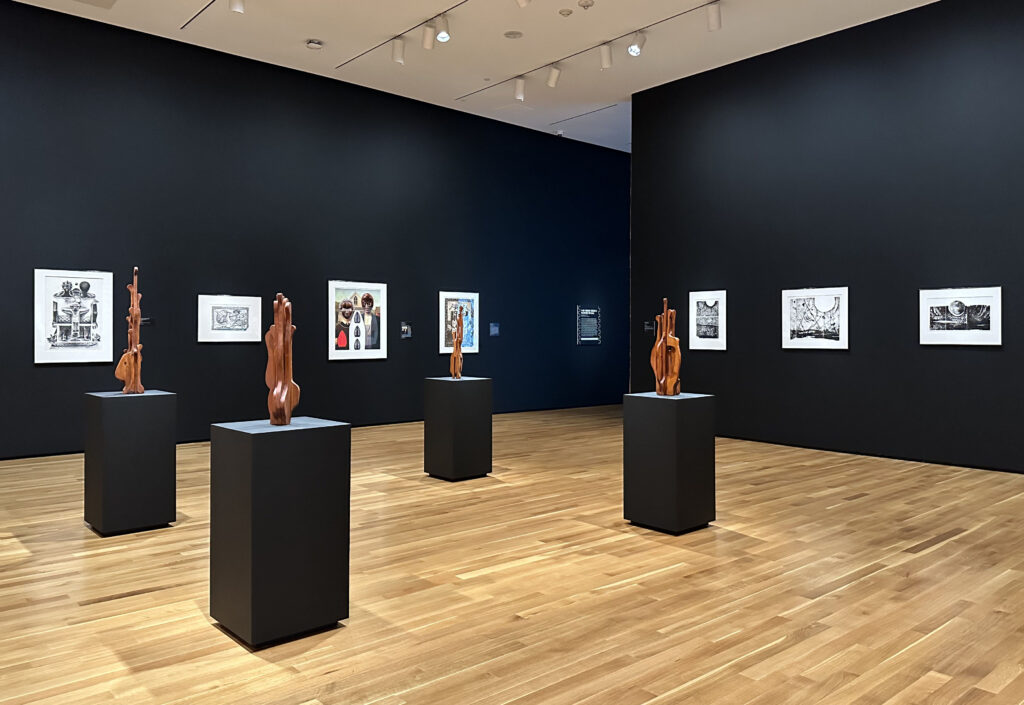
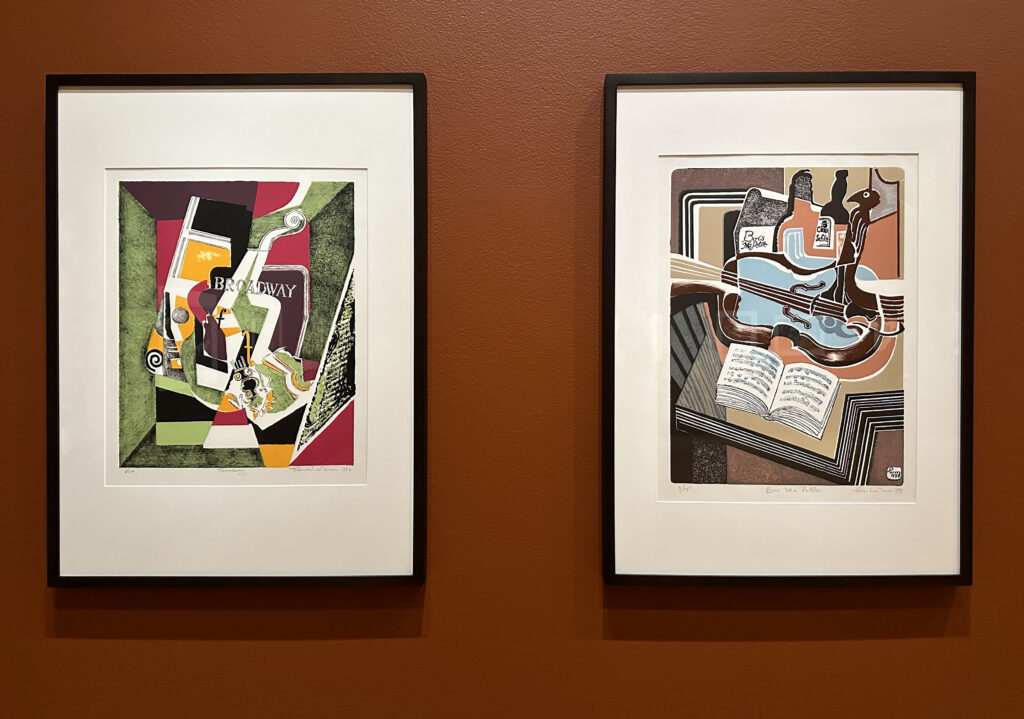
Tom Laidman, “Broadway”, 1993 and “Bois Ma Petite”, 1999, Lithograph on paper
Currently on view at Akron Museum of Art is RETOLD: African American Art and Folklore, a collection of art from the Wesley and Missy Cochran collection, organized into themes exploring aspects of African American history and culture. The show features many well known and lesser known artists including Amiri Baraka, Beverly Buchanan, Willie Cole, Trenton Doyle Hancock, William Pope.L., Tom Laidman, Jacob Lawrence, Alison Saar and more.
From the museum about the exhibition-
African folklore has been around as long as humankind, and the African diaspora in America has added new dimensions to its rich history. African American folk stories teach about culture, the mysteries of life, and the survival of a race of people bought and sold who continue to thrive in an unjust society.
“RETOLD: African American Art and Folklore” focuses on four themes: Remembering, Religion, Racialization, and Resistance. These themes provide a comprehensive retelling of the works featured in the exhibition. In many of the pieces, the artist’s muse connects closely with stories that have been told generation after generation. Folklore texts are featured throughout the space as a means to retell a richer, deeper story of African American culture.
There are more than forty artists represented in this exhibition, all holding one similar truth: their story of joy and struggle in the African American experience.
In addition to the artwork, there is also an educational video produced by Josh Toussaint-Strauss of The Guardian that explores the misconceptions about Haitian Voudou that is worth a watch.
How ‘voodoo’ became a metaphor for evil
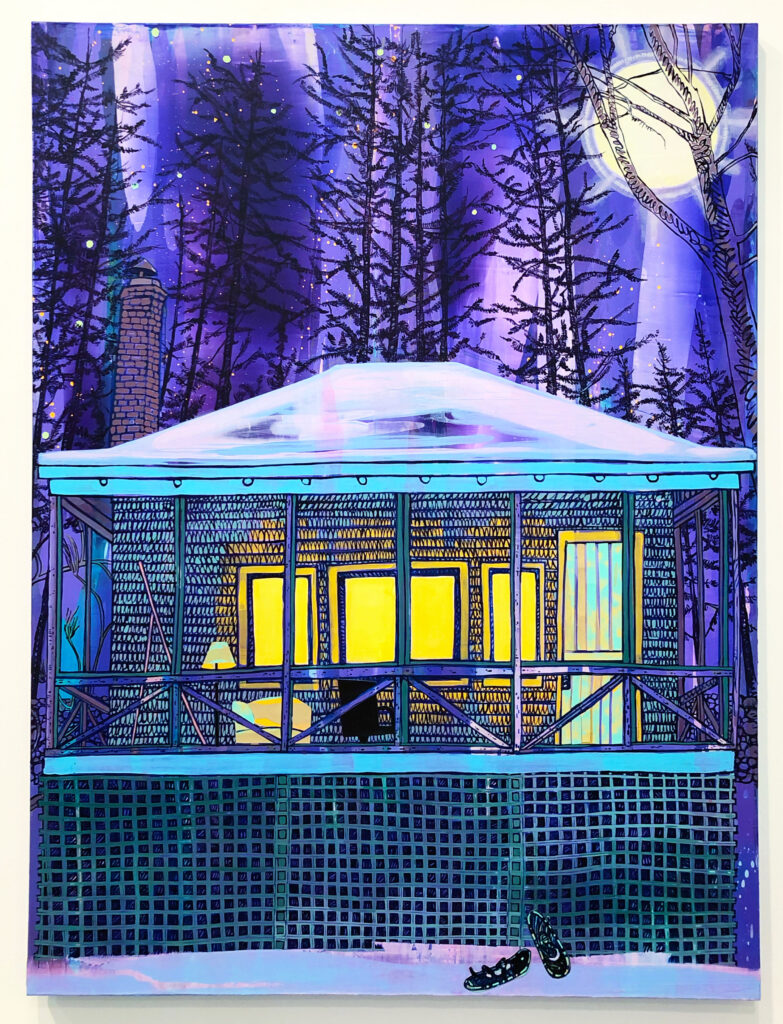
Hope Gangloff’s painting MacDowell Cheney Cabin in the Winter Super Moon, 2019, was shown at her 2019 solo exhibition at Susan Inglett Gallery in NYC. It is one of several created during her residency at MacDowell Colony in Peterborough, New Hampshire.
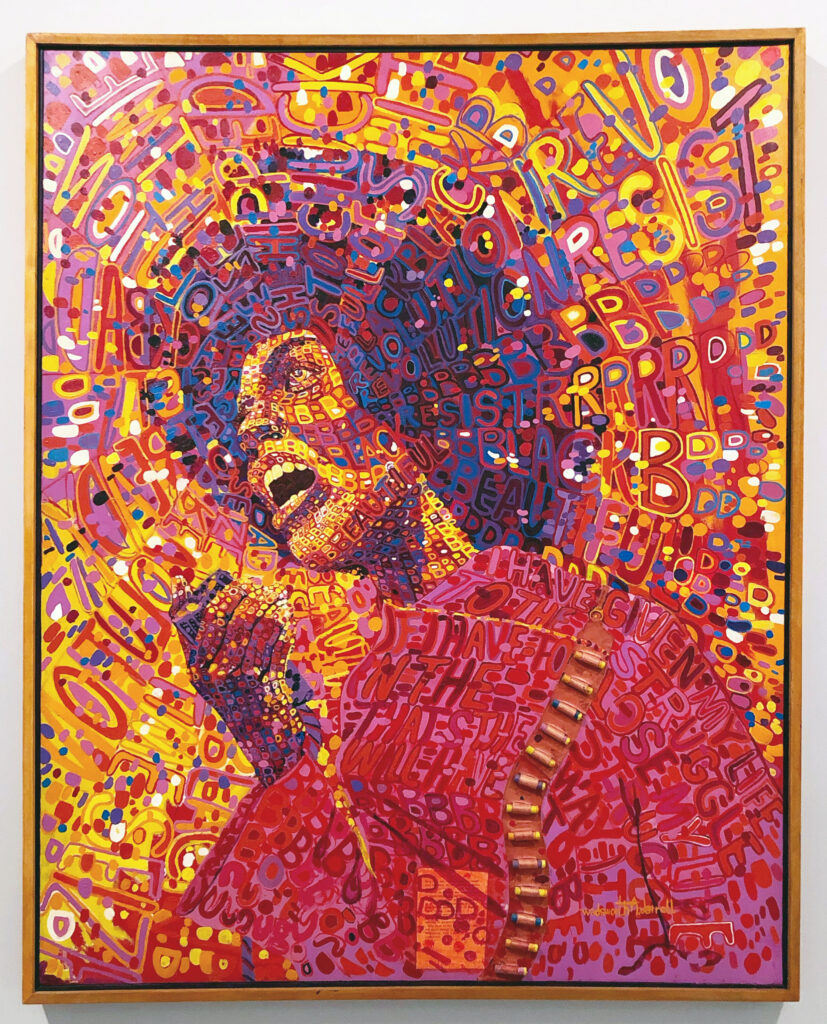
Wadsworth A. Jarrell’s Revolutionary (Angela Davis), 1971, spotted at Brooklyn Museum in 2020, is based off of a photograph of the activist. The colorful painting includes words from her speeches and actual bullet cartridges.
From the museum about the work-
Wadsworth Jarrell’s Revolutionary (Angela Davis) is one of the most recognized paintings associated with the Black Arts Movement, a cultural manifestation of the Black Power Movement. Artists of this movement sought to create uplifting images that called upon Black people to harness their collective power. The power of communal action is here expressed through a chromatic swirl of individual colors that coalesce into a unified image of the radical activist and intellectual Angela Davis. Davis’s militant clothing—complete with bullet cartridges—was modeled after the Revolutionary Suit designed by artist Jae Jarrell, Wadsworth’s wife. An icon of Black Power, Davis continues to lead the prison abolition movement today.
Jarrell, along with his wife, is part of the African American artist collective AFRICOBRA, formed in Chicago in 1968.
Below is part of a statement about the group from their website by another of the founders, Gerald Williams.
AFRICOBRA began very loosely in 1968 as an association of visual artists. We decided to commit our selves to the collective exploration, development, and perpetuation of an approach to image making which would reflect and project the moods, attitudes, and sensibilities of African Americans independent of the technical and aesthetic strictures of Euro-centric modalities. Jeff Donaldson, who spearheaded the movement,Wadsworth Jarrell, Jae Jarrell, Barbara Jones-Hogu, and myself, Gerald Williams opened the lid on what we called AFRICOBRA – African Commune of Bad Relevant Artists. It was an original name that came to identify our place within the broader context of Black art.
Our mission was to encapsulate the quintessential features of African-American consciousness and world view as reflected in real time 1968 terms. For months, beginning as early as 1967, we examined and talked about the forms of expression and images produced by previous generations of artists. We came to the realization that there was not the existence of a consistent, unequivocal, uniquely Black aesthetic in visual arts as there was in other disciplines, notably music and dance. Many of our contemporary artists, at the time, generally said that they “were artists who happened to be black”, or held the view that their work was expressing universal ideas or concepts that were not tied to such a narrow category as Black art. The notion of an intrinsically Black view point, expressed in characteristically “Black ways” was a relatively alien idea for the most part. That notion begged the question as to whether it was possible to create a style or approach to art that at its core could be identified as African-American or Black, notwithstanding the presence of Black imagery or subject matter. If imagery and subject matter were the sole criteria then the question was moot. One could conclude, thereby, that Winslow Homer or any number of artists produced Black art when they painted Black images. After numerous brain storming sessions where such topics were discussed, after test projects and critiques, the five of us mapped out the core principles that became the foundation of AFRICOBRA.


Judy’s Hand Pavilion by Tony Tasset is located outside the Museum of Contemporary Art Cleveland (moCa Cleveland) and was part of the 2018 FRONT International Cleveland Triennial for Contemporary Art.
The 7-ton, 21 foot high sculpture is an enlargement of a cast taken from the right hand of his wife, artist Judy Ledgerwood.


It may not be spring quite yet but these blooming magnolia trees created by artist Tony Tasset may have you doing a double take. For this work he created two bronze trees with hand painted flowers that sit among five live trees located in a small park in downtown Pittsburgh.
Magnolias for Pittsburgh, 2006, is the latest art installation in the park, organized by Pittsburgh Cultural Trust.

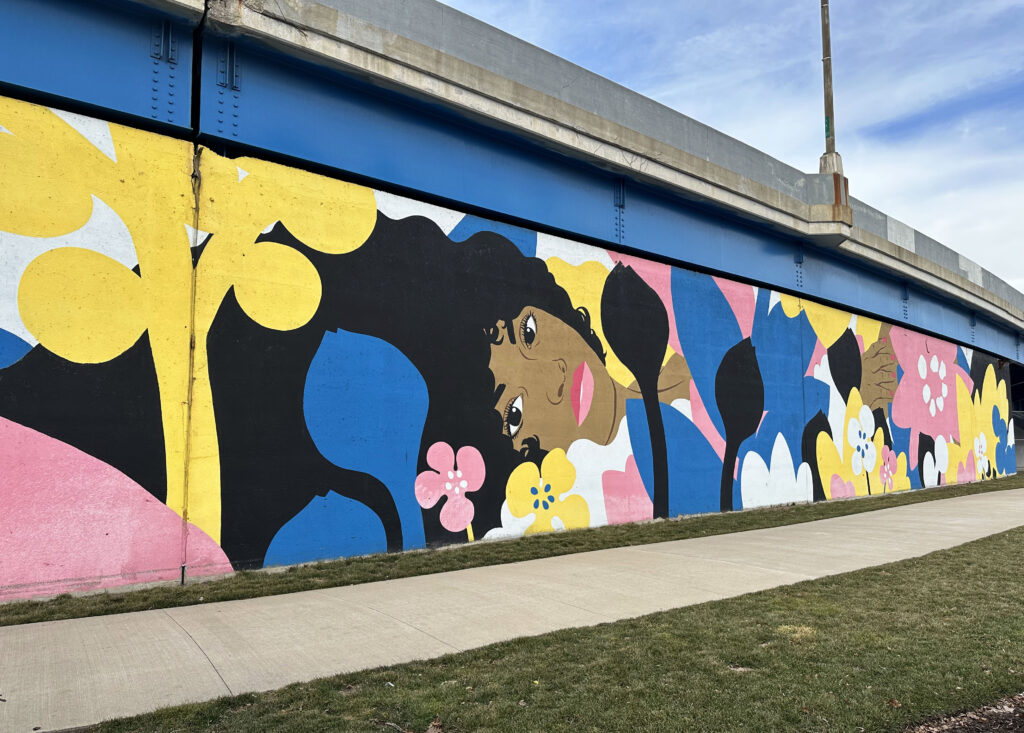
Cannaday Chapman created Flora, the mural seen above, for Hingetown Culture Works in Cleveland, Ohio, in 2018. He has created illustrations for The New York Times, The New Yorker, as well as a Google Doodle for Martin Luther King Jr. Day.
For more of his work also check out his Instagram.
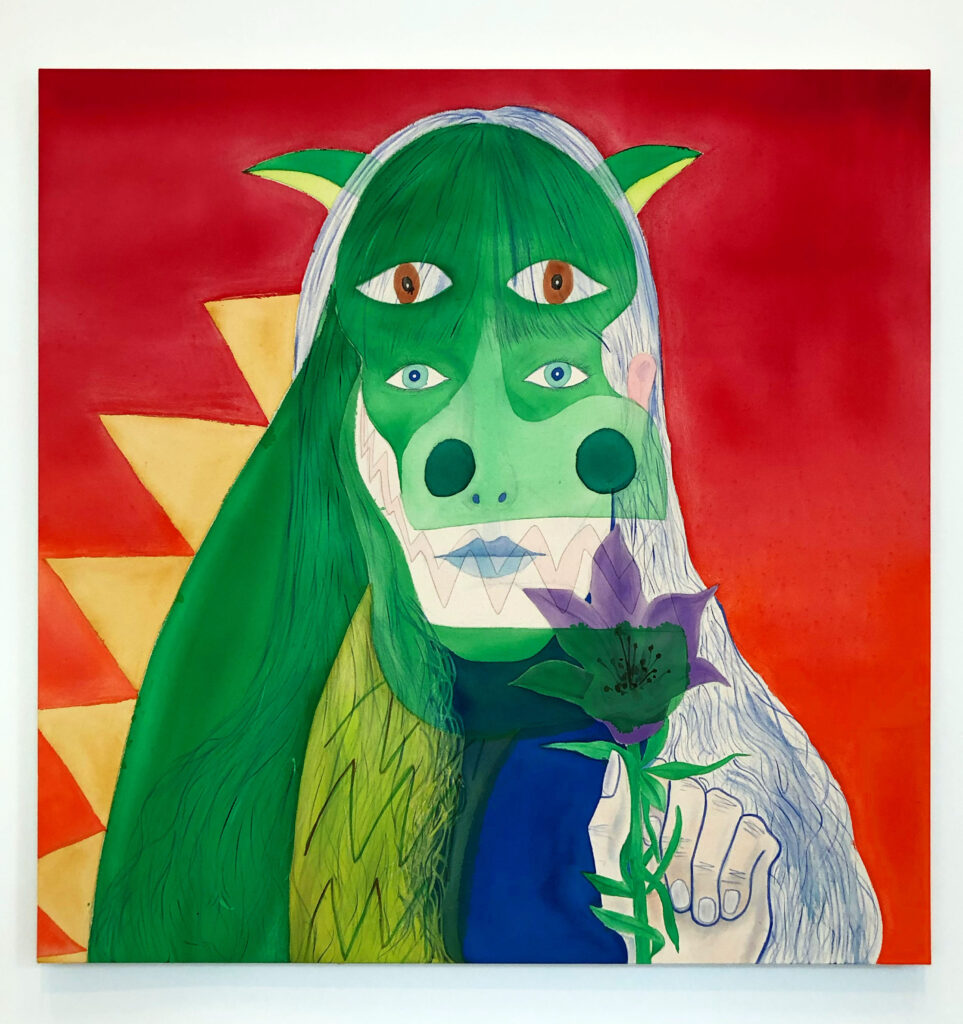
Gentle Ladies Dragon Man, 2021, (Acrylic and graphite on canvas) by Jason Fox was part of the group show Time-Slip at Petzel Gallery in New York in 2021.

This mural was created by Jose Mertz for the 2017 edition of the SHINE Mural Festival in St. Pete, Florida.
For more work by the artist, also check out his Instagram.