Oct 052023
 

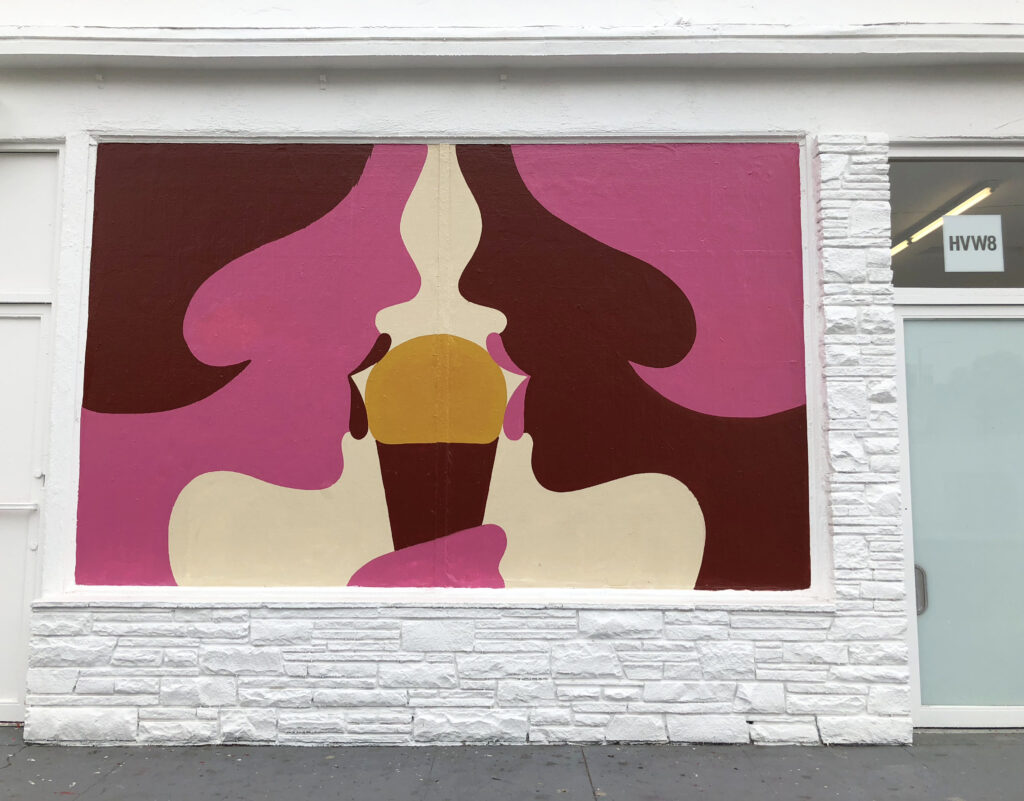
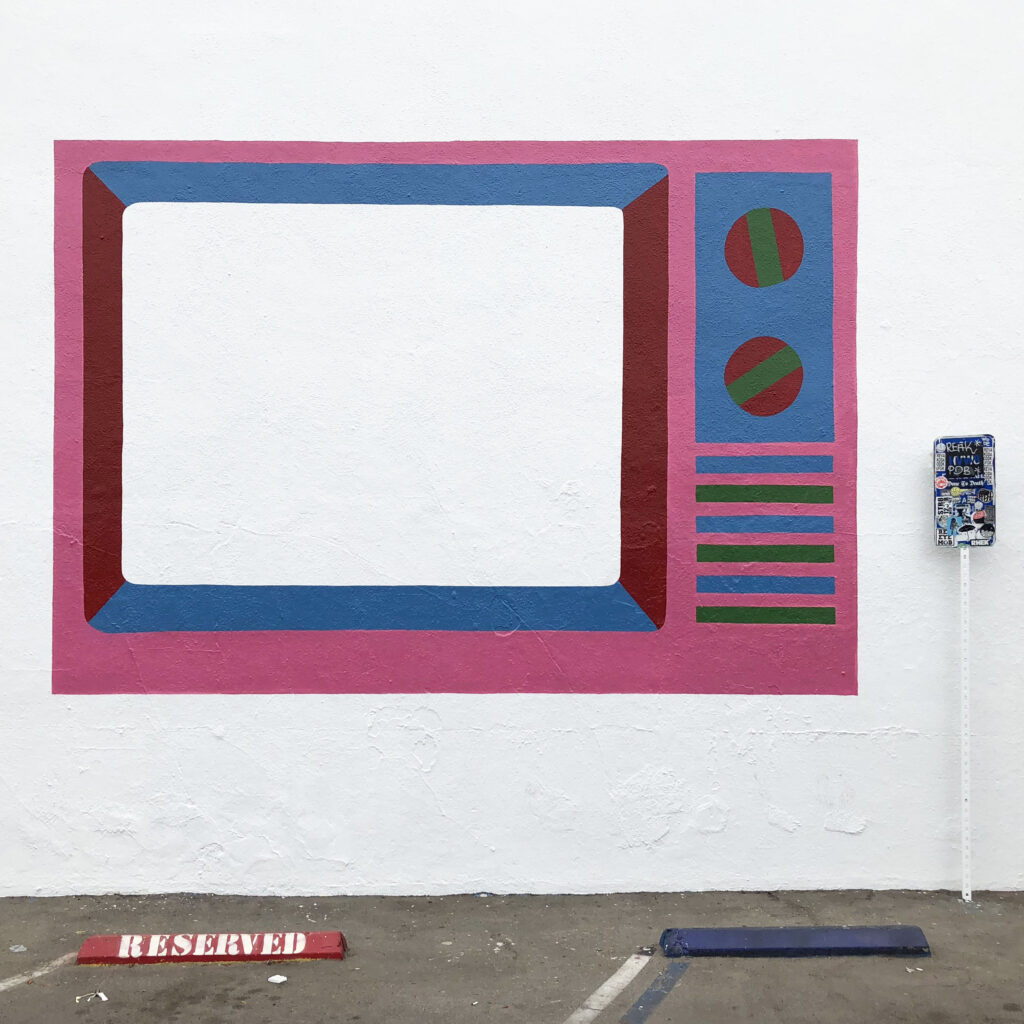
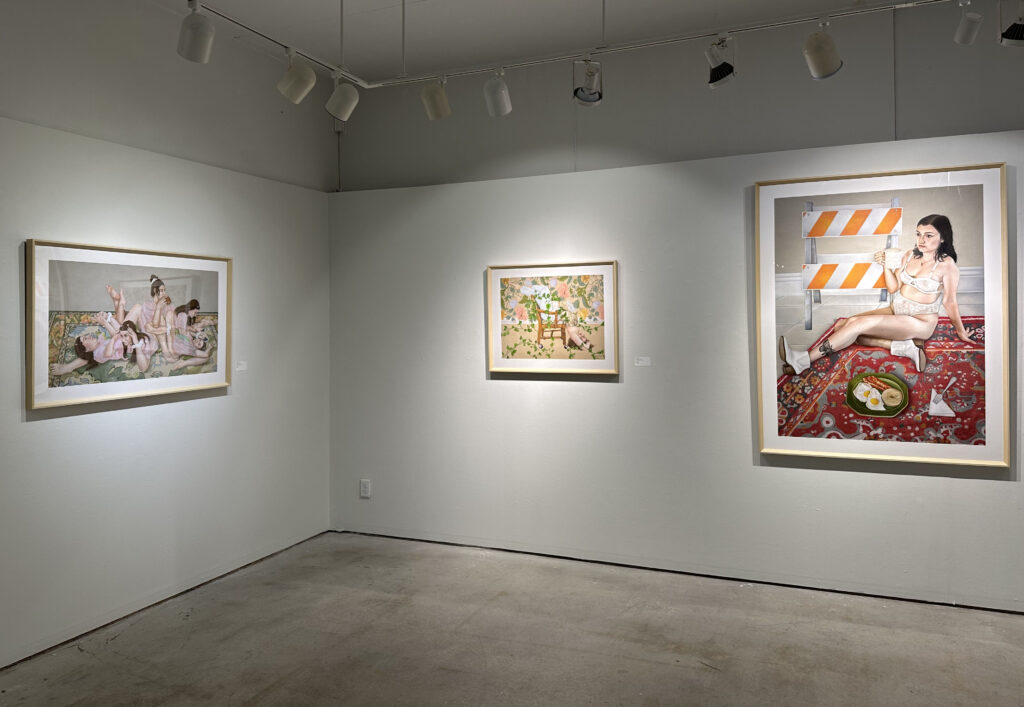
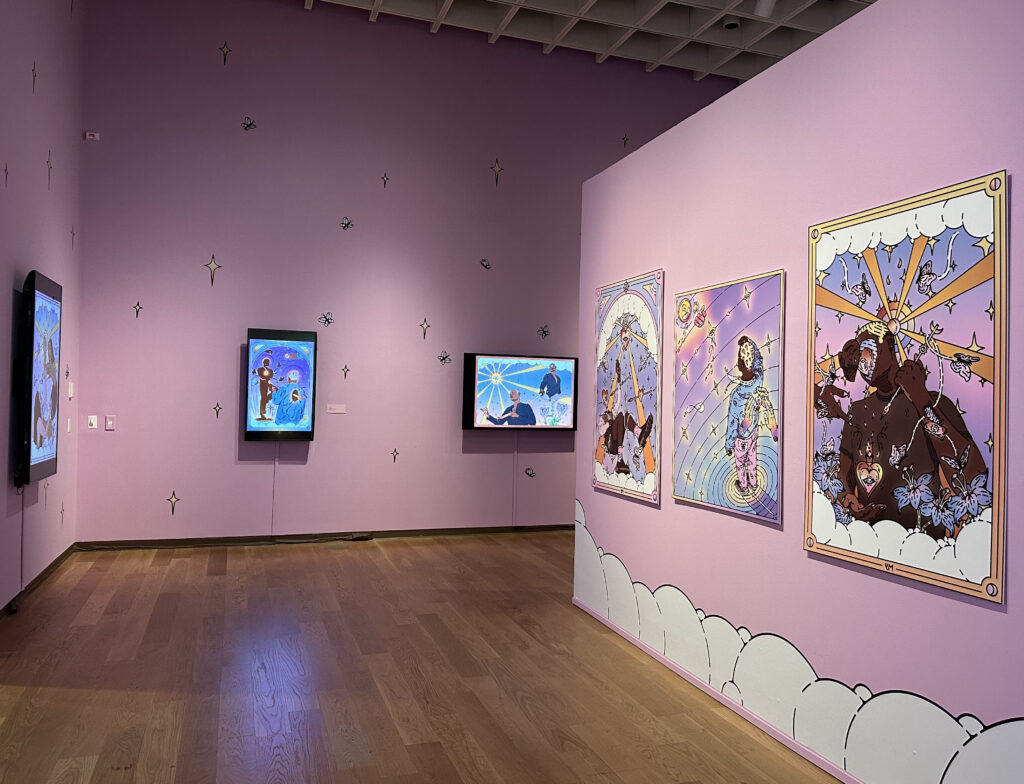
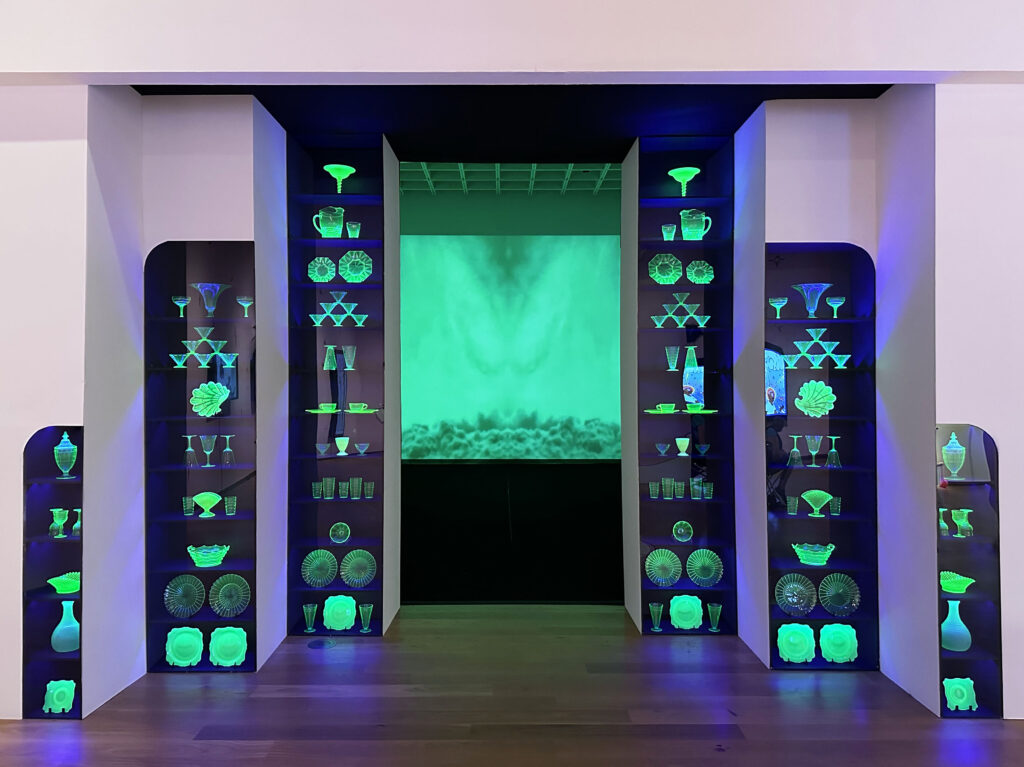
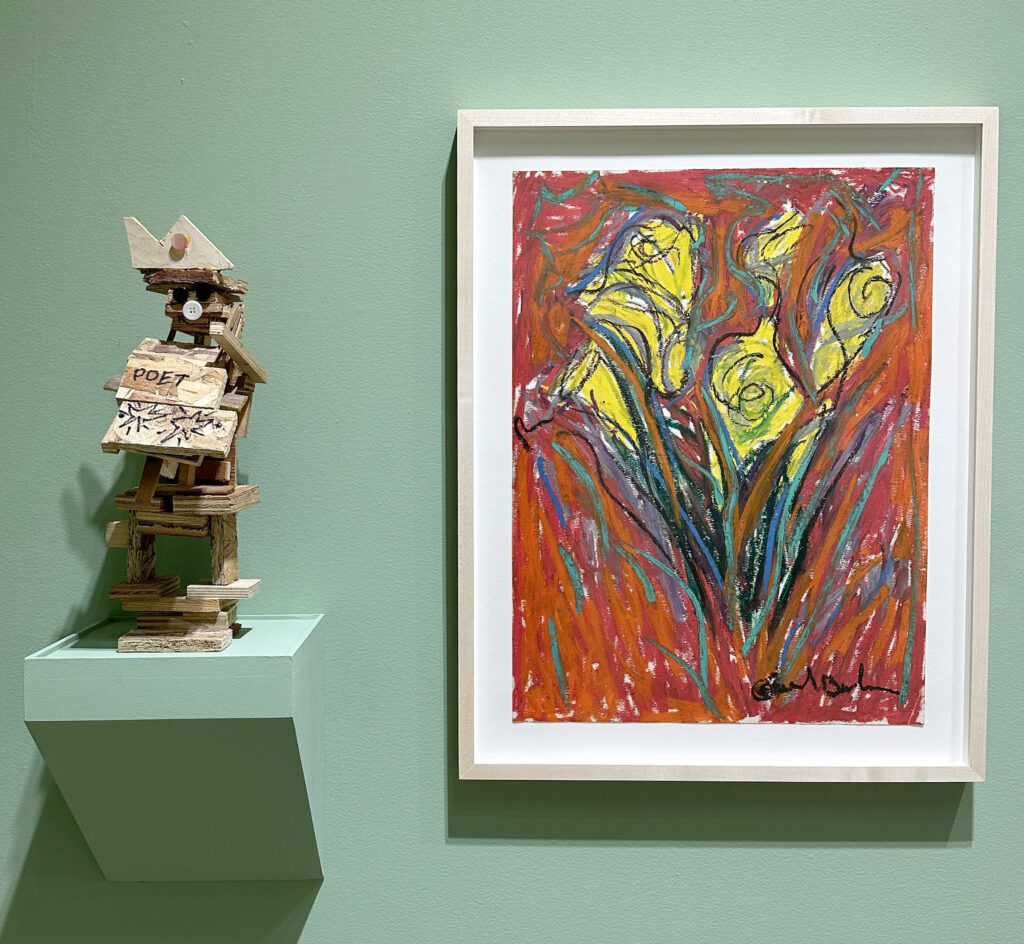
Above are images from Olimpia Zagnoli’s 2018 exhibition Cuore di Panna at HVW8 Gallery in Los Angeles. She is currently showing her work, along with her talented family at Antonio Colombo Gallery in Milan, Italy. That exhibition, ZaLiZaZa. Inventario di famiglia will be on view until 11/19/23.

The press release from the gallery-

Galleria Antonio Colombo is pleased to present the exhibition ZaLiZaZa. Inventario di famiglia, curated by Francesca Pellicciari, featuring a group of artists belonging to the same family: the photographer Miro Zagnoli (Za), the artist Emi Ligabue (Li) and their two daughters: the illustrator Olimpia Zagnoli (Za), already connected with the gallery, and the costume designer Emilia Zagnoli (Za).

The members of ZaLiZaZa are a very modern family, but also one of days gone by: were they not engaged in making their own various artifacts, we could imagine them operating in a family workshop in the Renaissance or Baroque spirit, experimenting with new painting techniques, revolutionizing styles or using them as examples to make their own; creating majestic theatrical wings, garbed in their style which is simultaneously classic and eccentric.

After all, this image is not so far from what ZaLiZaZa are doing today, in the 21st century, each in his or her own field – contiguous and often overlapping ambits – constantly coming to grips with their own research and experimentation, relying on a shared language, a true family lexicon.

The exhibition pathway is an inventory of works of all kinds – drawings and photographs, wooden books, collages, object/sculptures, fabrics, screens and magic boxes – in an intense dialogue of correspondences, where the four voices alternate and take turns, without a chronological order; a dialogue accompanied by a selection of items (sketches, notes, postcards, family photos) that document a methodology, while at the same time emphasizing the constant presence of art in the private life of ZaLiZaZa.

Thus it is no coincidence that many subjects are similar in the work of ZaLiZaZa.

While for decades design has pervaded the still analog settings and photographs of Miro (Za), it is also a recurring theme in the works of Emi (Li), from the Cicognino of Albini to the life and work of Charlotte Perriand, or anonymous design found for sale online: “I have no taboos, no type of respect or norm.” Similar use of anonymous and unconventional materials is found in the “Souvenir” clothing series by Emilia (Za), made from touristy dishtowels with the map of Italy, just as certain archetypes return in the thousands of stripes traced by Olimpia (Za), always in pursuit of the perfect synthesis between the idea and its representation.

Beyond this, beyond design, mountains, figures, bodies, portraits, chiaroscuro effects, balconies, there is the continuing echo – in the various generations of ZaLiZaZa of what Matisse said one day to Picasso, as Emi (Li) reminds us: “In the end, Picasso, we don’t have to try to be so smart. You and I are alike: what we try to rediscover in art is the atmosphere of our First Communion.” To always observe the world with the eyes of children, with the gaze of ZaLiZaZa.

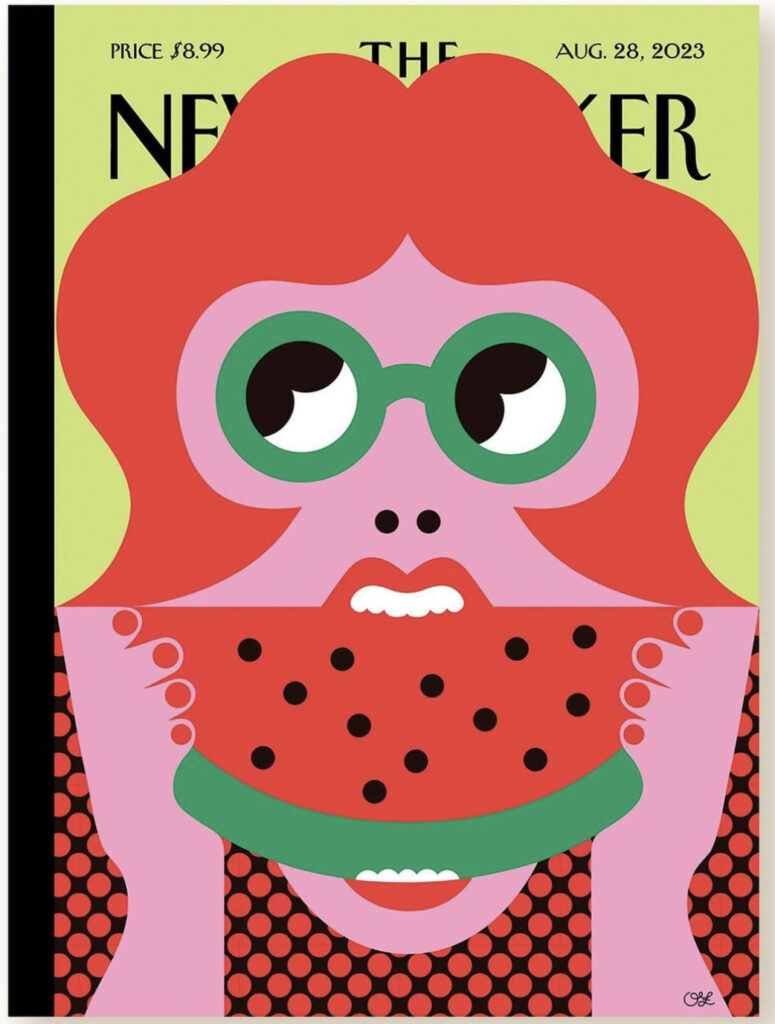
If Olimpia Zagnoli’s work looks familiar, she also designed The New Yorker’s August 28th issue, seen below.

Sep 282023
 

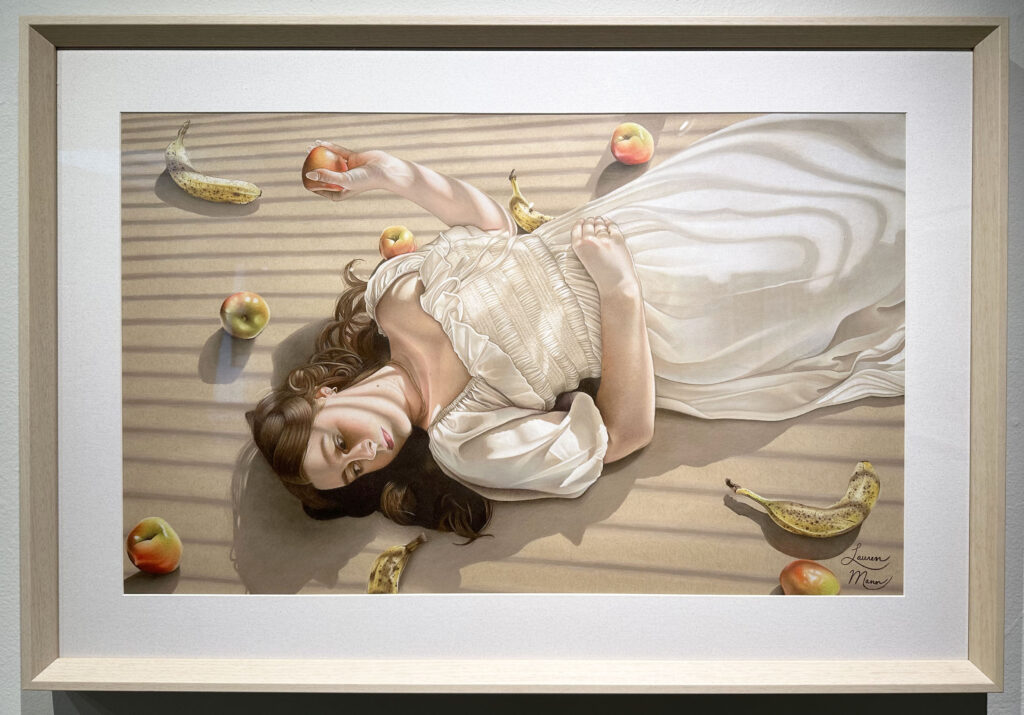
“Ripening Shadows”, 2023, Colored pencil on toned paper

It was great to see Lauren Mann’s drawings again, this time at Art Center Sarasota for her exhibition The Ephemerality of Being. Her work was previously part of 2022’s emerging artist exhibition Fresh Squeezed 6 at Morean Arts Center, in St. Petersburg, Florida.

The artist’s statement about the show-

Growing up and getting older is seeing time pass and recognizing you can’t do anything but try to take in every moment. It’s exhausting. It’s taking a deep labored breath and deciding to rest in the peaceful aftermath of the realization that your time on earth is finite.

This work combines delicate portraiture with the rich symbolism of inanimate objects to create new, contemporary still lives. Bright, sanguine memento moris. By carefully veiling these reminders of humanity’s brittle ephemerality behind the facade of beautiful and nuanced illustrations of ordinary characteristics and relationships found in everyday life, it compels the viewer to reflect on their own lived experiences and feelings towards mortality, comparatively to those conveyed in these works.

This exhibition closes 9/30/23.

Sep 152023
 

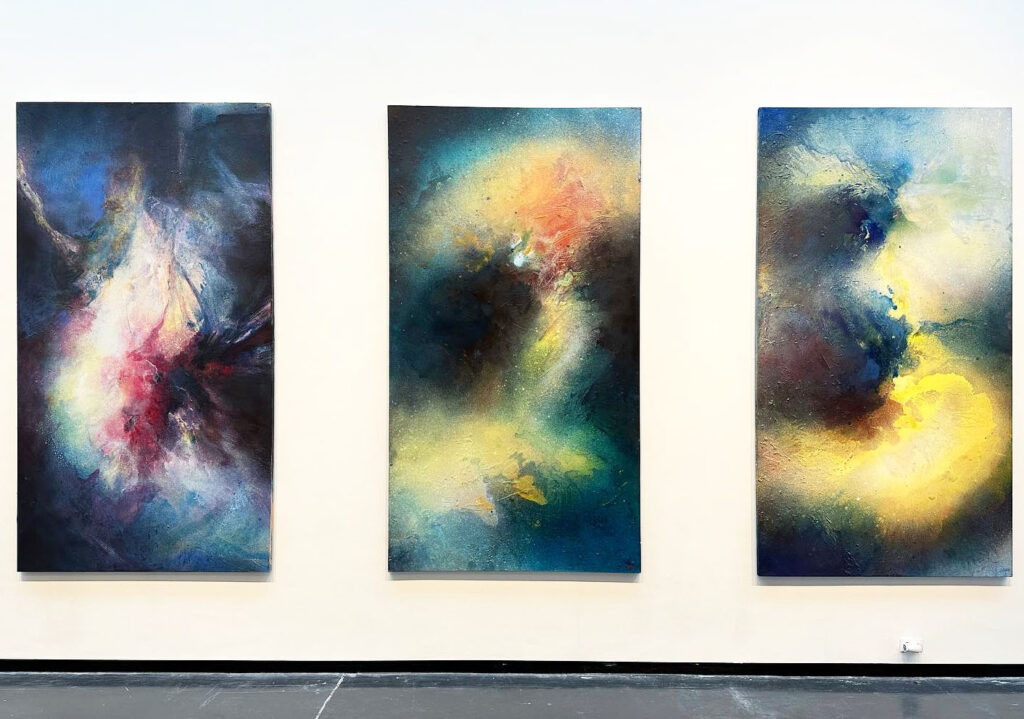
Angel Rivera Morales, “Dystopian Paradise I, II, and III”, 2023, Acrylic and oil on canvas

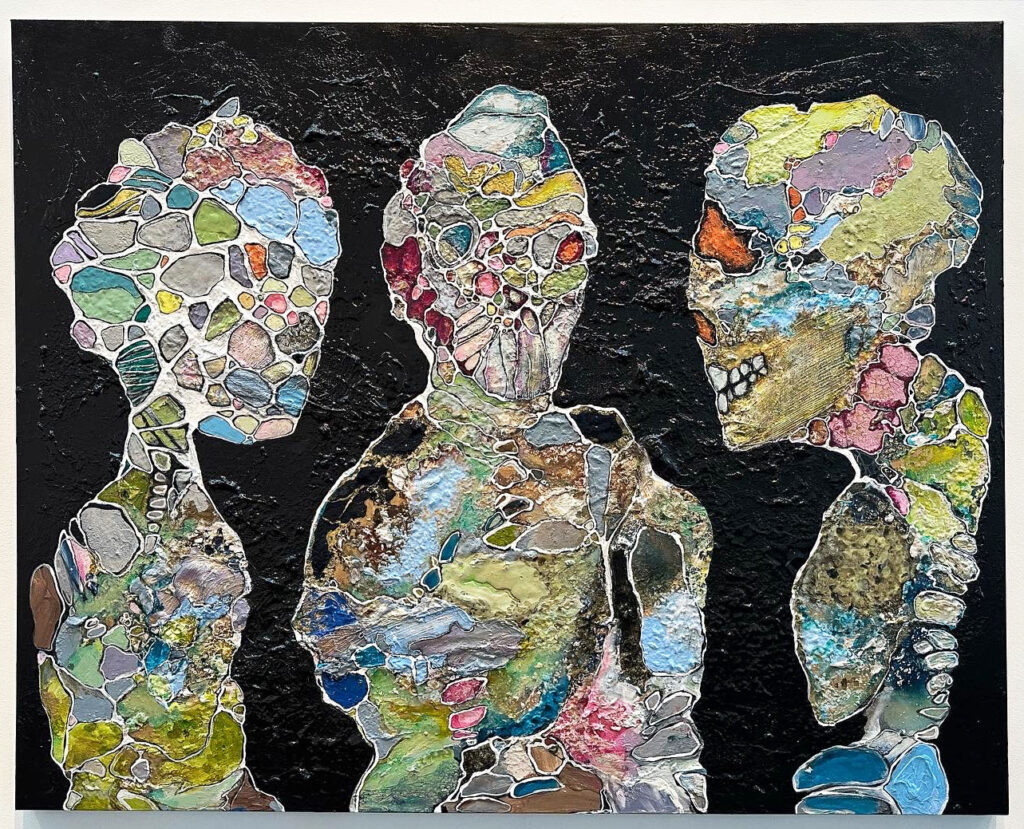
Gilbert Salinas, “As We Speak”, 2022, Mixed media on canvas

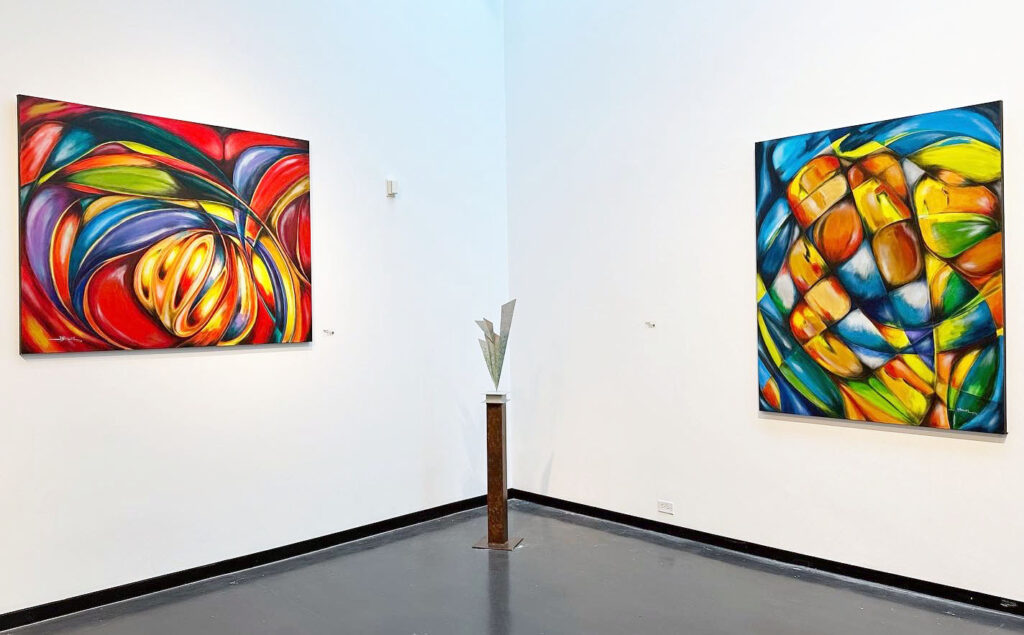
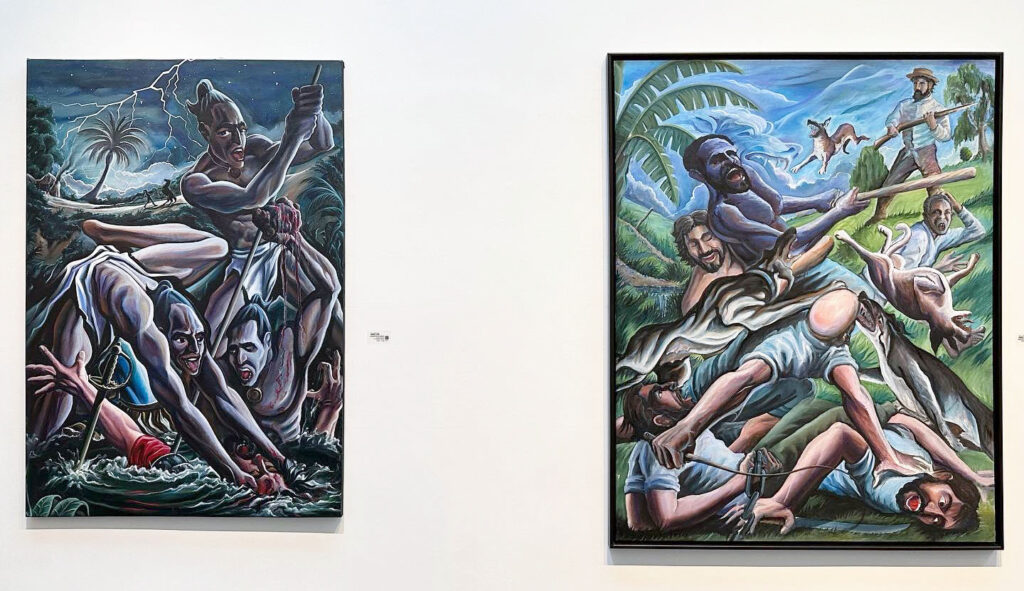
Juan Nieves Burgos, “Germinar de patria” and “Mundo sin tiranos”, 2019; Carmen Rojas Gines, “She Warrior-SW3 “Guerrera”-G3″, Steel metal

Valentin Tirado Barreto, “Salcedos Death- La Muerte de Salcedo” and “Rebellion of the slaves- Rebelión”, Acrylic on canvas

Currently at Creative Pinellas is the group exhibition Keepers of Heritage: Hidden Tales / Custodios de la Herencia: Cuentos Ocultos, on view until 10/15/23.

From the Creative Pinellas website-

Keepers of Heritage is an extended collaborative effort whose purpose is to document, present and promote the contributions of artists of Puerto Rican artists in the Caribbean archipelago and abroad.

Its roots go back to 2015 with the presentation of the “La Diaspora” exhibition at the Terrace Gallery in Orlando City Hall. Since then, the collective has expanded and traveled to institutions such as the National Museum for Puerto Rican Arts and Culture in Chicago, the Appleton Museum of Art in Ocala, and the Albin Polasek Museum in Winter Park, Florida.

Over eight years, the collective has documented and presented the work of nearly 30 artists whose artistic practices include a diversity of mediums such as painting, drawing, sculpture, engraving, multimedia, and photography.

Artists included in this exhibition-

Brenda Cruz

Alejandro de Jesus

Jose Feliciano

Carmelo Fontanez Cortijo

Domingo Garcia-Davila

Francisco García-Burgos

Martin García-Rivera

Michael Irrizary-Pagán

Juan Nieves-Burgos

Yasir Nieves

Angel Rivera-Morales

Rafael Rivera-Rosa

Carmen Rojas-Gines

Pablo Rubio

Aby Ruiz

Gilbert Salinas

Joan Emanuelli Sanchez

Luis Soto

Valentin Tirado Barreto

Rigoberto Torres

For more work by the artists head to the next page.

Aug 222023
 

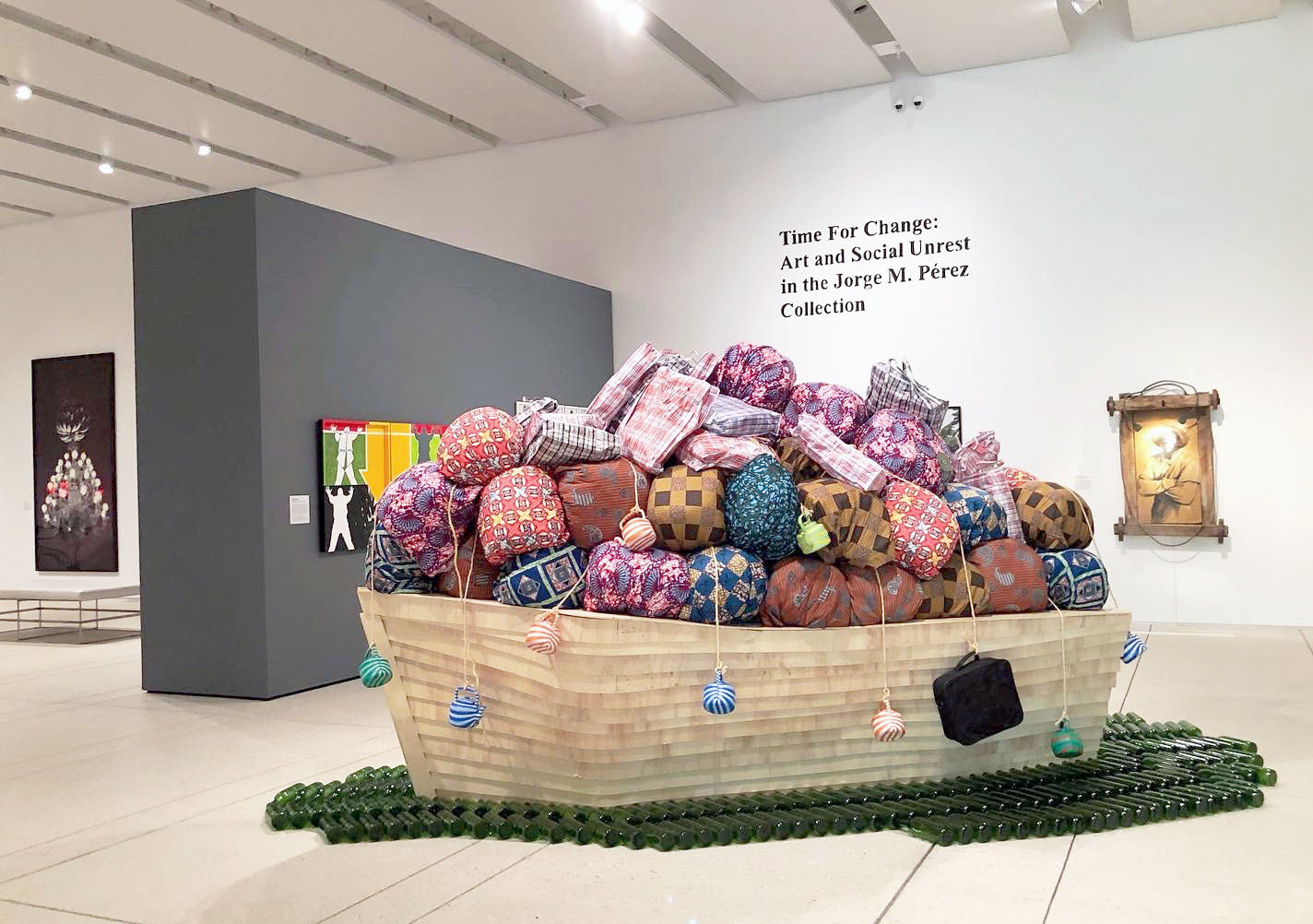
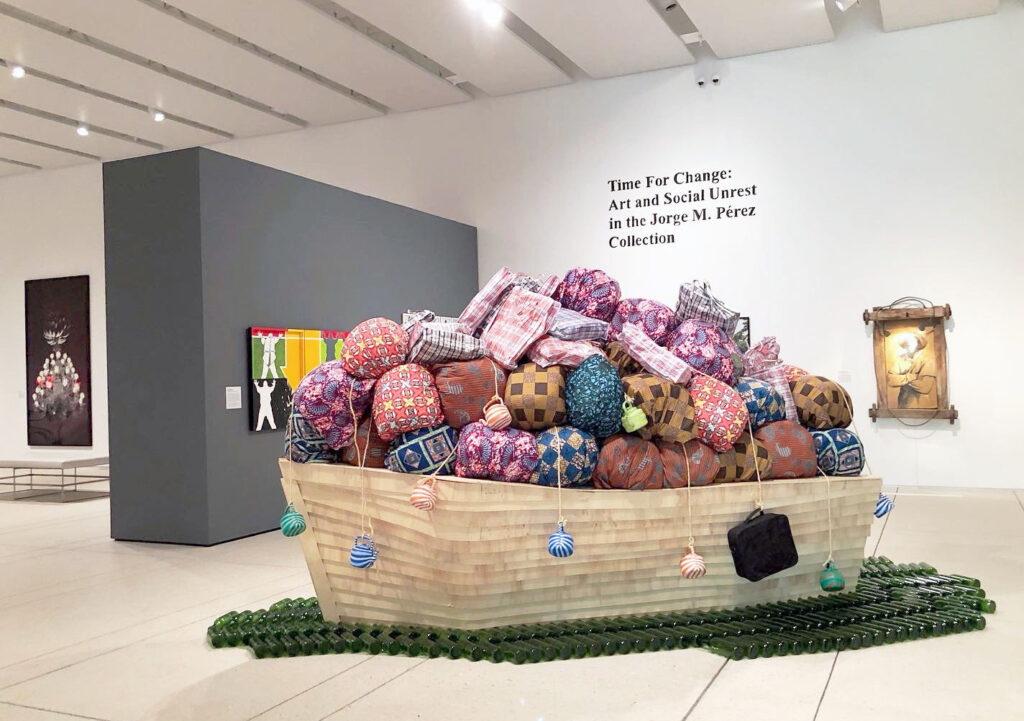
Barthélémy Toguo (Cameroonian, b. 1967), “Road to Exile”, 2018. Wooden boat, cloth bundles, glass bottles, and plastic containers

Currently on view at Tampa Museum of Art is Time for Change: Art and Social Unrest in the Jorge M. Pérez Collection. The exhibition highlights art from around the world that focuses on social issues.

From the museum-

“It is enough for the poet to be the bad conscience of his age”, stated Saint-John Perse in his 1960 Nobel Prize acceptance speech. Something similar could be said when artists address the transformations of society. We should not ask for measurable political action when their role is to point out, to render evident, to shake us from indifference. Art may not provide answers, but most of the time it interrogates and proposes uncomfortable issues, almost like rubbing salt in a wound. Artists are seldom celebratory, nor do they usually provide solutions-art’s potency lays in the symbolic efficacy of the actions it proposes more than in the practical effects they entail. Paraphrasing Brazilian poet Ferreira Gullar, “art exists because life is not enough.”

Time for Change is structured around six themes or nuclei: Entangled Histories, Extraction and Flows, Artivism, State Terror, Spatial Politics, and Emancipatory Calls. The sections are organically linked and establish dialogue and correlations among artworks that do not necessarily illustrate an argument nor are they contained by one. Entangled Histories proposes essential questions: how do we remember as a society? Who is forgotten by History, and for what reasons? Extraction and Flows examines displacement of peoples (usually forced), as well as the unequal logic on the territory. Artivism: Art in the Social Sphere focuses on political unrest and public protest on the streets. State Terror signals how protest is countered with repression and violence. The fifth section, Spatial Politics, reflects on modern architecture and its role in creating segregated communities. Lastly, Emancipatory Calls summons to reclaim difference, in the understanding that a more just society can only be built on respect for one’s right to be different.

A comprehensive look at the Jorge M. Pérez Collection reveals a tendency towards art with an interest in social change- art that examines the conflicts and contradictions of contemporary society, art that critically analyzes historical events and reframes them in the present. Many of the 60 works on view, due to their size or complexity have rarely been exhibited and are shown together for the first time in Time for Change.

About the main work pictured above, Barthélémy Toguo’s Road to Exile, from the museum

In 2018, the Parrish Art Museum in Water Mill, New York hosted Barthélémy Toguo’s first solo exhibition in the United States. While on site at the Parrish he made Road to Exile, a large-scale installation highlighting the plight of refugees, in particular African migrants in search of a better and safer quality of life. The installation features a life-sized wooden boat that rests on glass bottles. A metaphor of the dangerous voyage across the sea, the bottles represent the fragile line between life and death. The boat nearly overflows with bundles wrapped in brightly colored African textiles and serve as stand-ins for the body. In Road to Exile Toguo employs imagery of the boat as a means of escape rather than a vessel for exploration or adventure.

Below are images from the exhibition as well as some information on a few of the works.
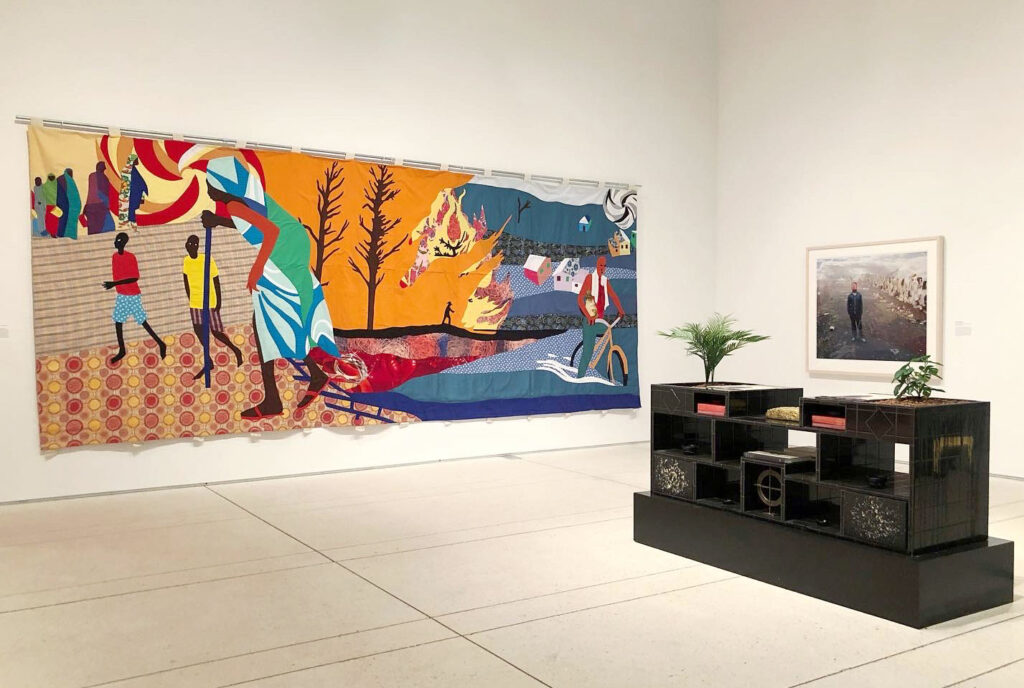
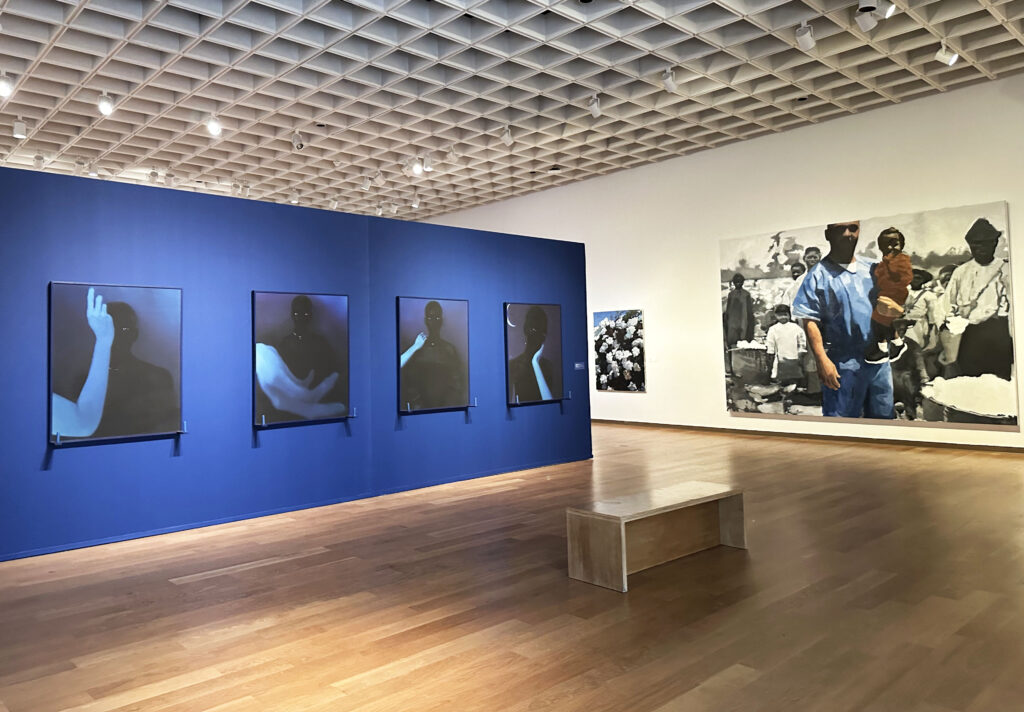
Rashid Johnson, “A Place for Black Moses, (2010), bottom right sculpture, and Christopher Myers “How to Name a Famine, a Fire, a Flood”, 2019, left wall piece
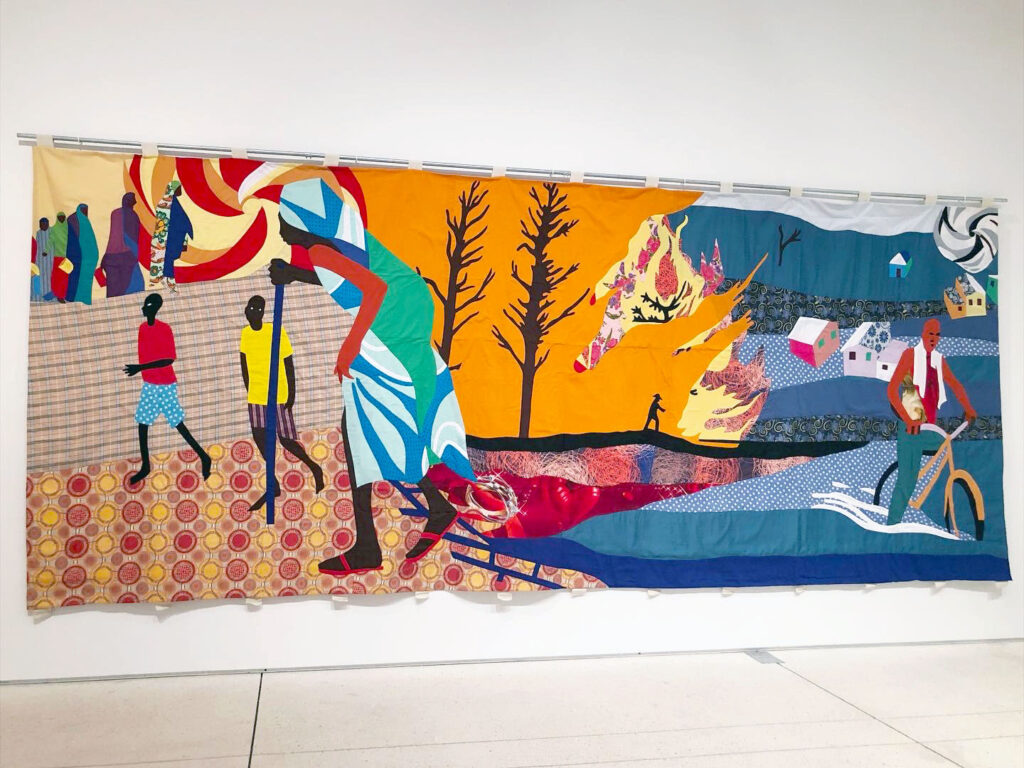
Christopher Myers “How to Name a Famine, a Fire, a Flood”, 2019, Applique fabric

From the museum about the above work-

Storytelling anchors Christopher Myers’ artistic practice. Working in a range of media, he mines history and creates art that links the past to the present. Myers’ tapestries, such as How to Name a Famine, a Fire, a Flood draws on the rich tradition of quilt making as a quiet yet radical form of resistance and protest. The stories depicted center on the effects of globalization on individuals and more specifically, communities of color. In How to Name a Famine, a Fire, a Flood, Myers portrays three different natural disasters linked to climate change. With vivid color and patterned fabric, he illustrates the impact and devastation of these catastrophic events in neighborhoods with minority populations.
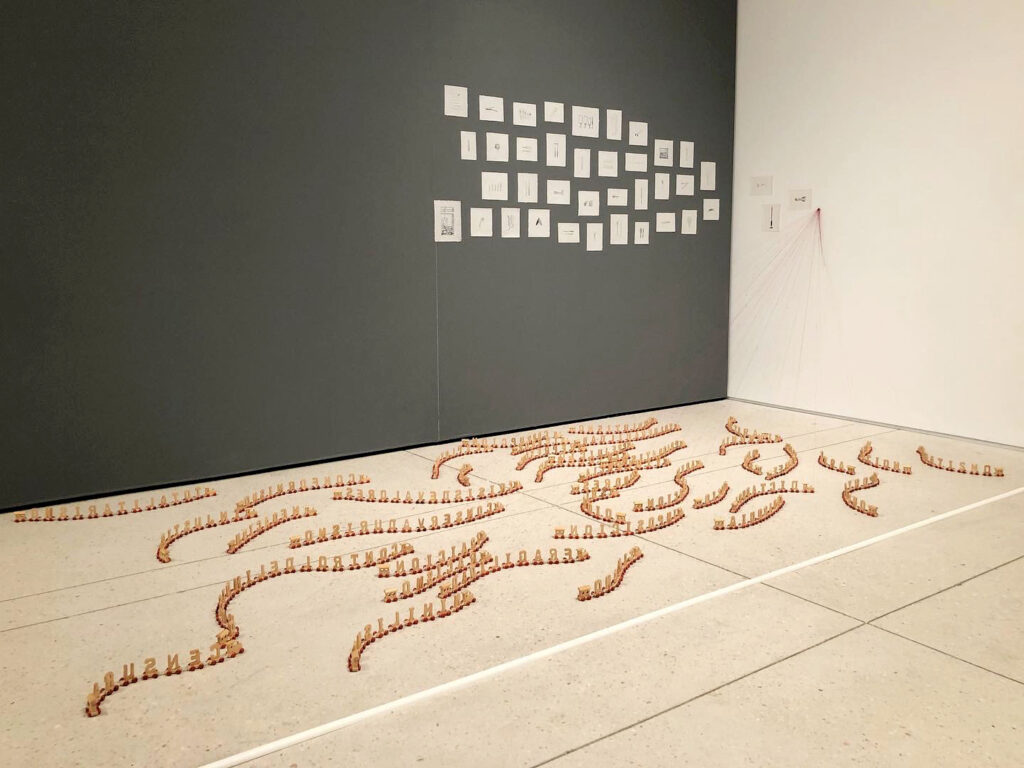
 

Carlos Garaicoa “La habitacion de mi negatividad (The Room of My Negativity)”, 2003, 39 ink and pencil drawings on rice paper and toy train installation
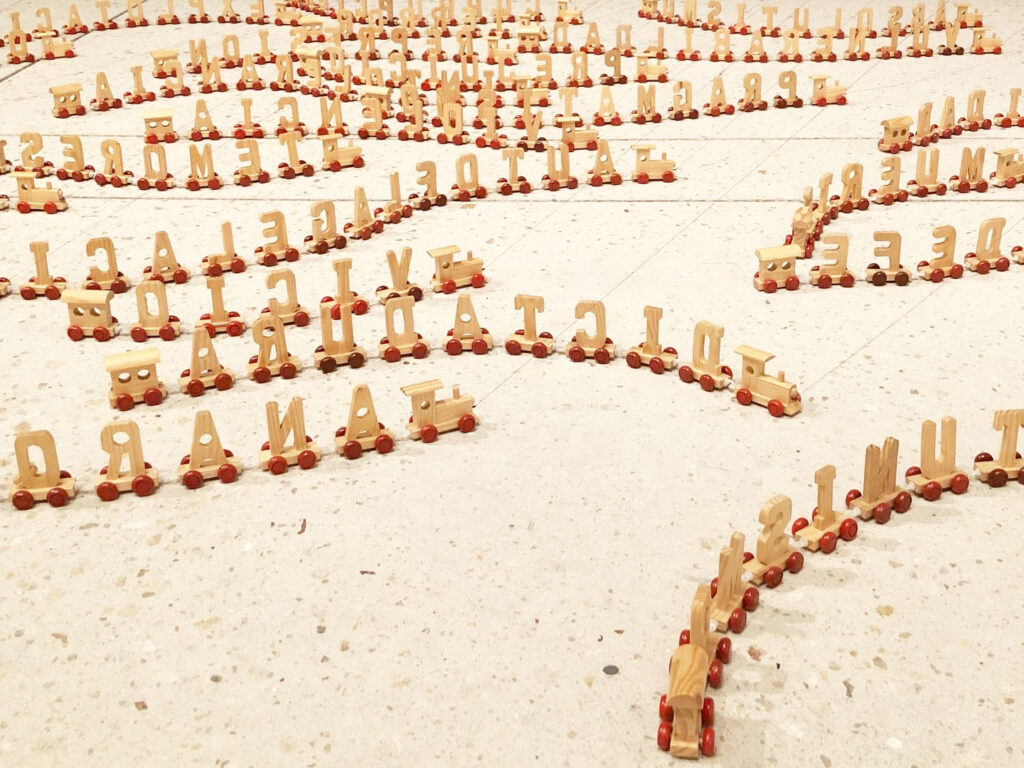
Carlos Garaicoa “La habitacion de mi negatividad (The Room of My Negativity)”, 2003 (detail)

Carlos Garaicoa “La habitacion de mi negatividad (The Room of My Negativity)”, 2003 (detail)

About the above work from the museum-

Carlos Garaicoa works in a variety of media, ranging from installation, photography, and video to performance and public interventions. His early work in the 1990s focused on the urban decay of Havana as result of its political climate and economic strife. La habitacion de mi negatividad (The Room of My Negativity), turns Garaicoa’s lens inward. In this installation, comprised of toy trains and drawings of medical instruments, the artist explores his psyche and subconscious. The train’s engine pulls words that represent Garaicoa’s negative thoughts. Each train is connected to thin red thread that acts as a vein or conduit for the negative thoughts to travel. Arrange in a curved form, the train shapes mimic brain waves or the slink of a snake. Garacoia’s drawings of medical tools serve as mechanisms in which the negatively could be excavated from one’s mind.
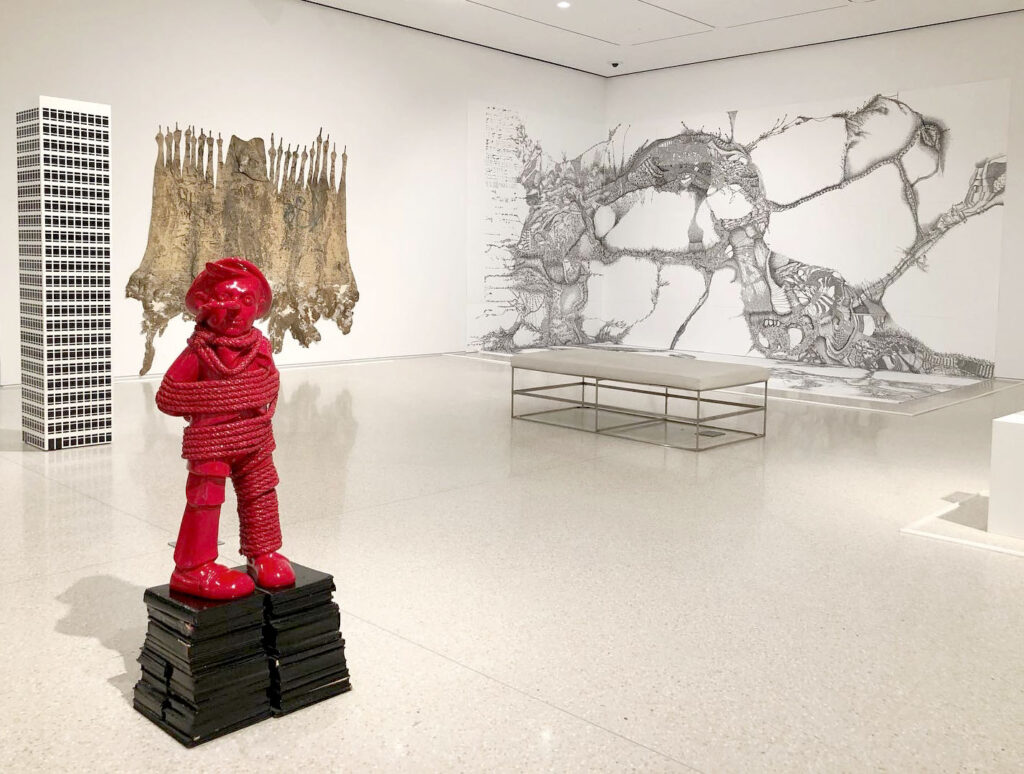
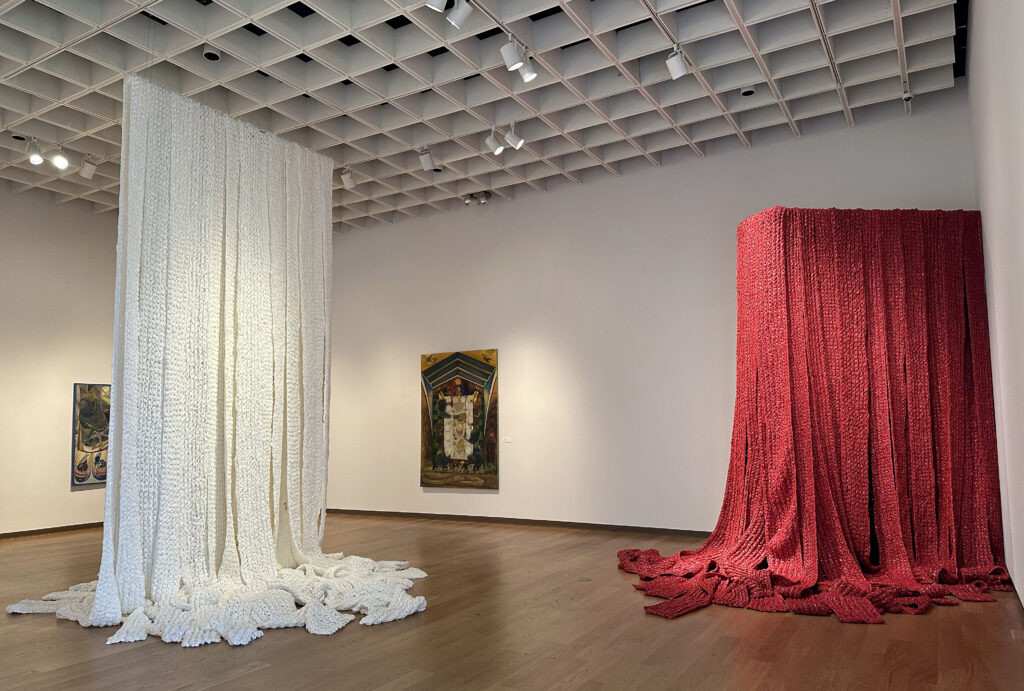
Esterio Segura, “La historia se muerde la cola (History Bites its Tail)”, 2015, (statue bottom left); Anamaría Devis, “Infinito (Infinite)”, 2018(upper right)
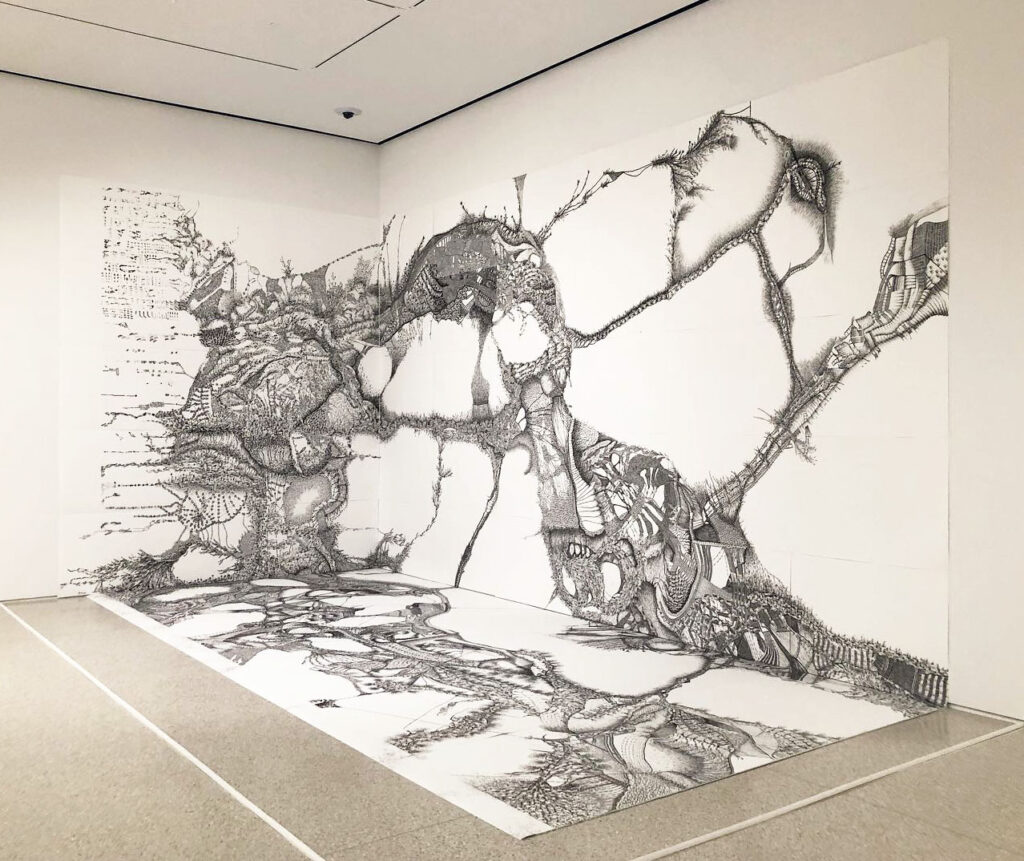
Anamaría Devis, “Infinito (Infinite)”, 2018, Ink on paper
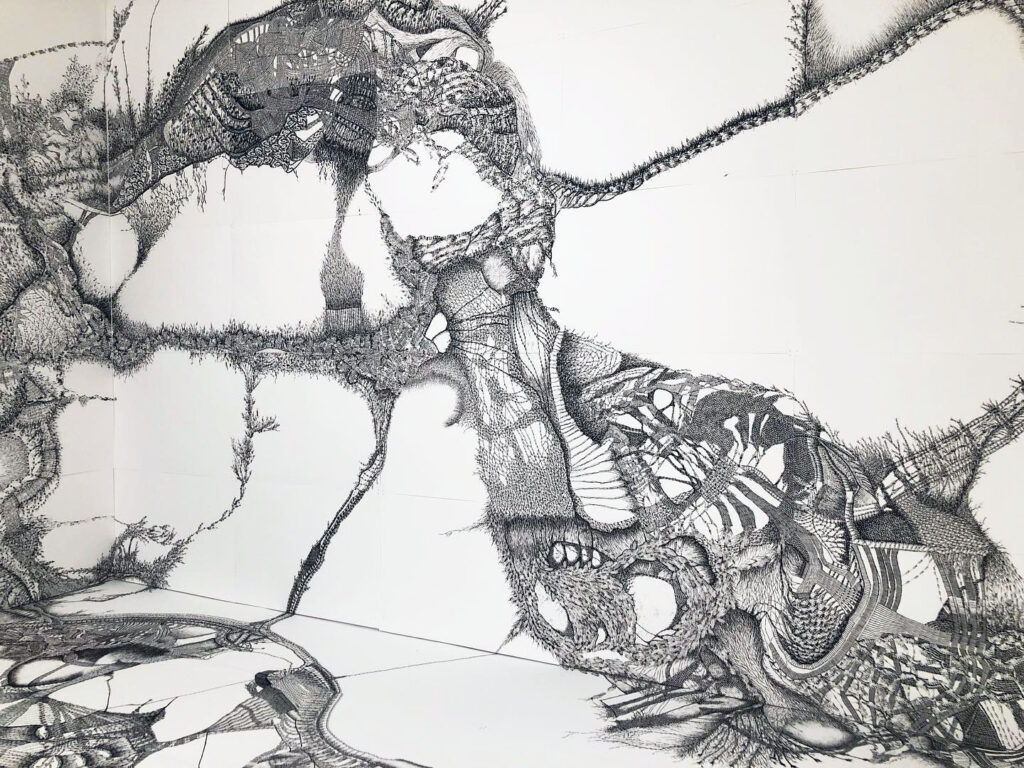
Anamaría Devis, “Infinito (Infinite)”, 2018, Ink on paper (detail)

About this work from the museum-

Anamaría Devis’ large-scale installation Infinito (Infinite) represents the artist’s study of African history in San Basilio de Palenque, Colombia. Escaped slaves founded Palenque and it was the first free town in the Americas during colonial times. While researching this history, Devis discovered that in this region of Colombia, braided hairstyles worn by Africans served as escape maps. Braid patterns reflected safe points in the area’s topography. This silent form of resistance inspired her to look at other bodily topographies like the characteristics of fingerprints, which also had names associated with cartography such as crossing, island, and fork. Devis then began to create drawings that incorporated footprints, braid patterns, and elements of nature. From the drawings she made stamps and each panel of paper that comprises Infinito (Infinite) is rendered from Devis’ various imprints. The result is an abstract representation of the body and landscape visualized through mapping and codes.
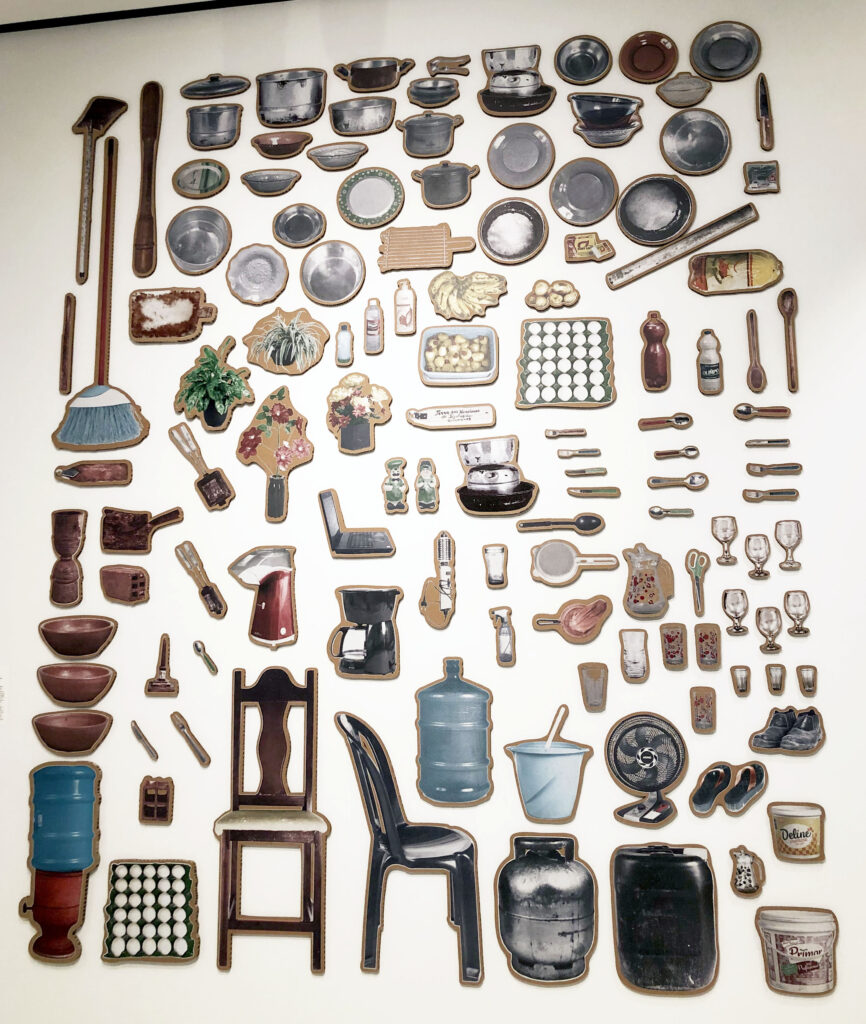
Jonathas de Andrade, “A batalha de todo dia de Dona Luzia, de Tejucupapo (The daily battle of Dona Luzia, from Tejucupapo)”, 2022 Images printed on raw falconboard

About this work from the museum-

Jonathas de Andrade collaborated with the Brazilian theater company Teatro Heroínas de Tejucupapo to create a visual reenactment of the historic 1646 Battle of Tejucupapo. For nearly 25 years, between 1630 and 1654, the Dutch occupied the northeast of Brazil including Tejucupapo, a small community in the city of Goiana. During the Battle of Tejucupapo, a brigade of black and indigenous women forced Dutch soldiers to retreat by arming themselves with household and farm objects. The Teatro Heroínas de Teiucupapo commemorates this female-led rebellion each April by restaging the battle with local actors.

Artist Jonathas de Andrade celebrates the power and courage of Tejucupapo’s women with his large-scale photographic installation A batalha do todo dia de Tejucupapo (The Battle of Tejucupapo). The work on this wall, A batalha de todo dia de Dona Luzia, de Tejucupapo (The daily battle of Dona Luzia, from Tejucupapo), presents everyday objects from the home of one of the women participating in Teatro Heroínas de Tejucupapo. This inventory explores the daily struggles, as well as strength, of Brazil’s black and indigenous women that have spanned centuries.

This exhibition will close on Sunday, 8/27/23.


Aug 122023
 

Work by Elliot and Erick Jiménez (photographs, left) and Reginald O’Neal (paintings, right)

Sculptures by Akiko Kotani, Paintings by MJ Torrecampo

Work by Denise Treizman

Work by Amy Schissel

Photography by Peggy Levison Nolan

Work by Magnus Sodamin

Work by Yosnier Miranda

Work by Cara Despain

There is some really impressive work currently on view for the 2023 Florida Prize in Contemporary Art at Orlando Museum of Art.

From the museum site about the exhibition-

The Florida Prize in Contemporary Art is organized by the Orlando Museum of Art to bring new recognition to the most progressive artists in the State. Each year OMA’s curatorial team surveys artists working throughout the State before inviting ten to participate. One artist will receive a $20,000 award made possible with the generous support of local philanthropists Gail and Michael Winn.  Artists range from emerging to mid-career, often with distinguished records of exhibitions and awards that reflect recognition at national and international levels. In all cases, they are artists who are engaged in exploring significant ideas of art and culture in original and visually exciting ways.

This year’s artists are-

Denise Treizman (@denisetreizman )

MJ Torrecampo (@mjtorrecampo )

Akiko Kotani

Peggy Levison Nolan (@peggylevisonnolan )

Amy Schissel (@amyschissel )

Reginald O’Neal (@_reginaldoneal_ )

Elliot & Erick Jimenez – (@elliotanderick )

Cara Despain (@caradespain )

Yosnier Miranda (@occurrences)

Magnus Sodamin (@magnificentmagnus )

On the following pages below are more works by the above artists and detailed information on their work in the exhibition.

May 112023


Andrew Edlin Gallery is currently showing a collection of rarely seen works by artist Beverly Buchanan. It covers her years as an abstract expressionist painter in NYC and her later work inspired by the rural South.

The gallery’s press release gives a really good history of this wonderful artist-

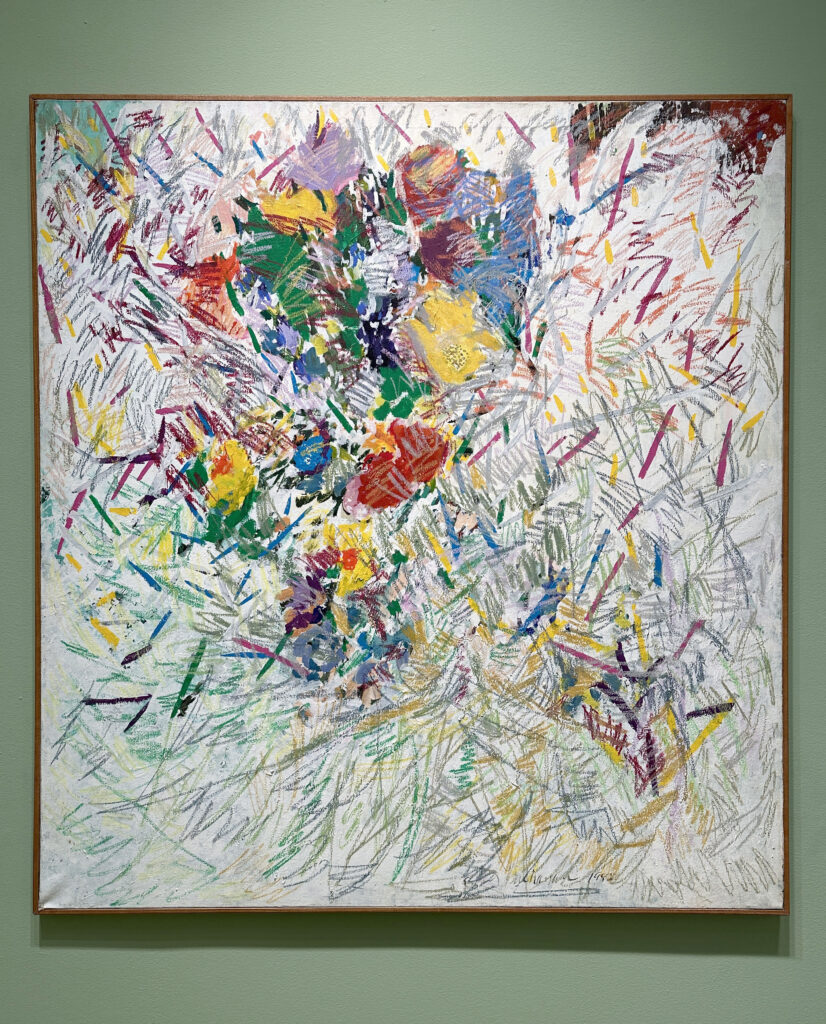
The first section of the show features the artist’s abstract paintings and works on paper from the 1970s, alongside post-minimalist sculpture from the late 1970s and early 1980s. The second section introduces a later, more personal side of Buchanan’s oeuvre, her colorful depictions of flowers and small folk-inspired assemblages created during the same period as her well-known “shacks.” A number of the works in the show, many of which were part of the artist’s private collection, have never been shown.

Though Buchanan wrote about her love of “making things” from an early age, it wasn’t until 1971, when she began taking evening classes taught by African-American painter Norman Lewis (1909-1979) at the Art Students League in New York, that her career as an artist took off. Abstract still-lifes that she made in Lewis’s class in 1972 are displayed here for the first time. That same year, her paintings were included in a group show at Cinque Gallery, a nonprofit space co-founded by Lewis and Romare Bearden (1911-1988), which showcased the art of emerging minority artists.

Having witnessed demolition sites in Harlem and SoHo, Buchanan evoked the visual erosion of architectural facades through what she dubbed her “Wall” paintings. In 1976 she presented a selection that she called “Torn Walls” in a two-person show titled City Walls at the Montclair Art Museum in New Jersey. In his New York Times review, David Shirey described the show as “indisputably a tinderbox of a display that will cause sparks to fly” and “the kind …one sees more regularly at the Whitney Museum and at some of New York’s avantgarde galleries.” Three of these paintings are being shown for the first time since that exhibition, forty-seven years ago. The show also includes a monotype, small studies, and a large painting from a series she titled “Black Walls.” The latter was originally featured in Shackworks, a seminal exhibition that opened at the Montclair Art Museum in 1994 and traveled to nine other institutions from 1994-1996.

By the late 1970s, Buchanan was further exploring the aesthetics of architectural decay through sculpture, i.e., cast concrete assemblages, made from pieces of stone, brick debris, clay, and cement mixtures. She arranged these works in clusters on the floor, documenting them with photographs, and exhibited them, notably at Truman Gallery in New York in 1978, and at the feminist artist cooperative A.I.R. Gallery in 1980 in its groundbreaking show Dialectics of Isolation, curated by Ana Mendieta. Some of the small black terracotta works on display may be considered as studies for these larger assemblages.

After moving to Georgia in 1977, Buchanan became increasingly interested in making what she referred to as “environmental sculpture,” artworks that mimicked exterior surfaces and were also site-specific installations that were allowed to decay over time and become part of the surroundings. Most notably, in 1979 she completed Ruins and Rituals (also the title of the Brooklyn Museum retrospective from 2016-2017), and in 1980 Marsh Ruins, with funding from a Guggenheim Fellowship. To construct the three mounds that comprise Marsh Ruins, Buchanan produced her own tabby cement. Composed of the lime from burned oyster shells mixed with sand, water, ash, and other shells, tabby is what colonial settlers used to build structures in coastal Georgia, the location of Marsh Ruins. In her zine “Making Tabby for Brick Sculptures,” Buchanan documented the labor-intensive process of making tabby, a task that in the eighteenth century was typically delegated to enslaved workers. Two smaller iterations of these structures, with bits of oyster shell showing in the concrete, are laid out in the show alongside four other examples of her cast concrete assemblages. Though little is known about their exhibition history, we do know that the artist placed these cast concrete works in her garden in Athens, Georgia. They retain stripes of the green, blue, black and earth-toned paint with which Buchanan initially covered them. The faint outline of her signature “B.B.” is also visible.

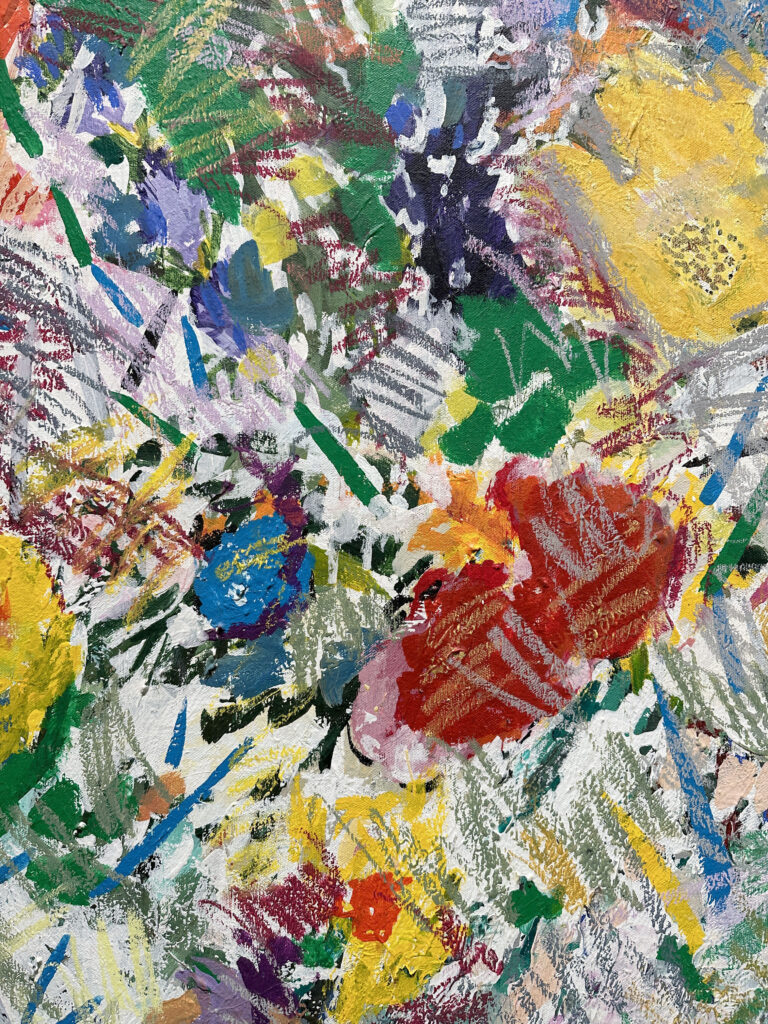
Buchanan’s later work is intimately linked to her natural surroundings and folk art. As a native Southerner, she drew on memories from her childhood as well as the lush Georgian landscape and yard art of local self-taught artists. A passionate gardener, Buchanan produced vivid oil pastel flower drawings and small assemblage works. She loved to rummage through thrift stores collecting marbles, wedding toppers, and beads, to create what she referred to as her “Christmas trees,” and “spirit jars,” her take on memory jugs, a prized Southern Folk Art form. Buchanan was particularly moved by a visit to folk artist Nellie Mae Rowe’s home in Fayette County, Georgia, and reminisced: “Being at Nellie Mae Rowe’s home was like being engulfed in a magic forest of her work because every surface had a mark from her hand and the simple chewing gum works made you never take gum as just chewing gum again.” A distinctive chewing gum jug and pin are also included in the show.

This exhibition closes 5/13/23.

Apr 282023
 

Installation by Molly A. Duff

Work by Trinity Oribio (left) and Manon VanScoder (videos on right)

Currently on view at The USF Contemporary Art Museum is SOMEDAY YOU’LL HAVE TO SAY IT OUT LOUD, an exhibition of eight students graduating with MFA degrees from the USF School of Art and Art History.

The artists included are Molly Duff, Kai Holyoke, Caitlin Nobilé, Trinity Oribio, Rachel Treide, Manon VanScoder, Alicia Watkinson, and Willow Wells.

For the artists’ statements about their work, as well as more information on the exhibition, the museum has produced this PDF.

The show will be on view until 5/6/2023.

Installation by Molly A. Duff, another view

Alicia Watkinson, “Notations in Passing II”, 2023, plywood, lightbulbs, ceramic bases, timers. Duration of light set daily according to the previous day’s activities and observations

Alicia Watkinson, “Notations in Passing II”, 2023 (detail)

Photo transfer on glass by Rachel Treide

Still from video by Rachel Treide

Caitlin Nobilé, “The gap in the door”, 2023 triptych, acrylic on wood

Willow Wells, “Whispers”, 2023, oil painting on panel

Trinidad Oribio “Untitled”, 2023 oil on canvas

Trinidad Oribio, “La Trinidad”, 2023, archival pigment print

Video installation by Manon VanScoder

Manon VanScoder, “each day is an endless scroll”, 2023

Kai Holyoke “Paradise Lakes”, 2023

Kai Holyoke “Paradise Lakes”, 2023


Apr 252023
 

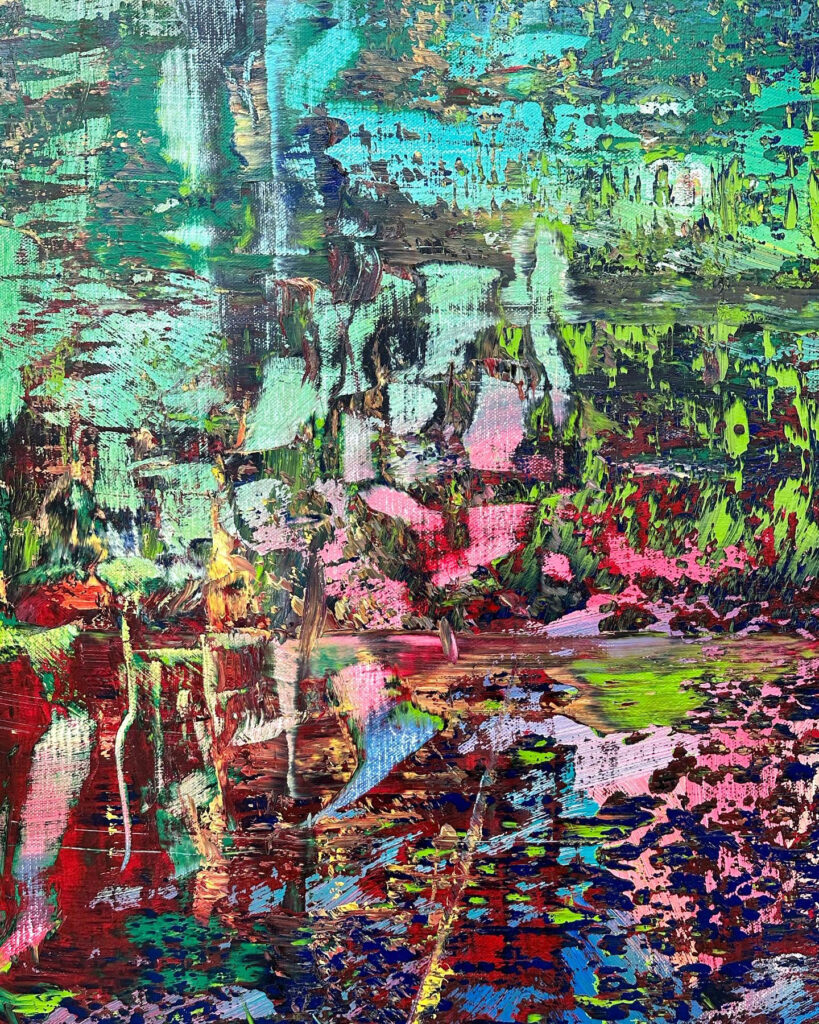
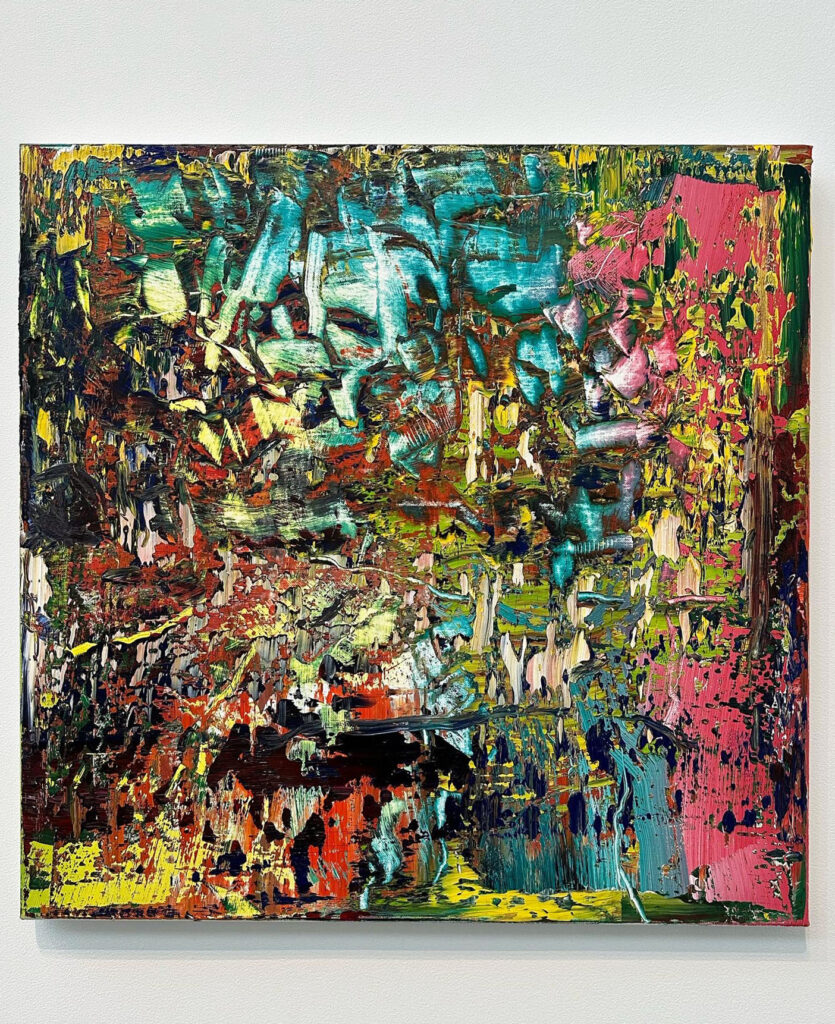
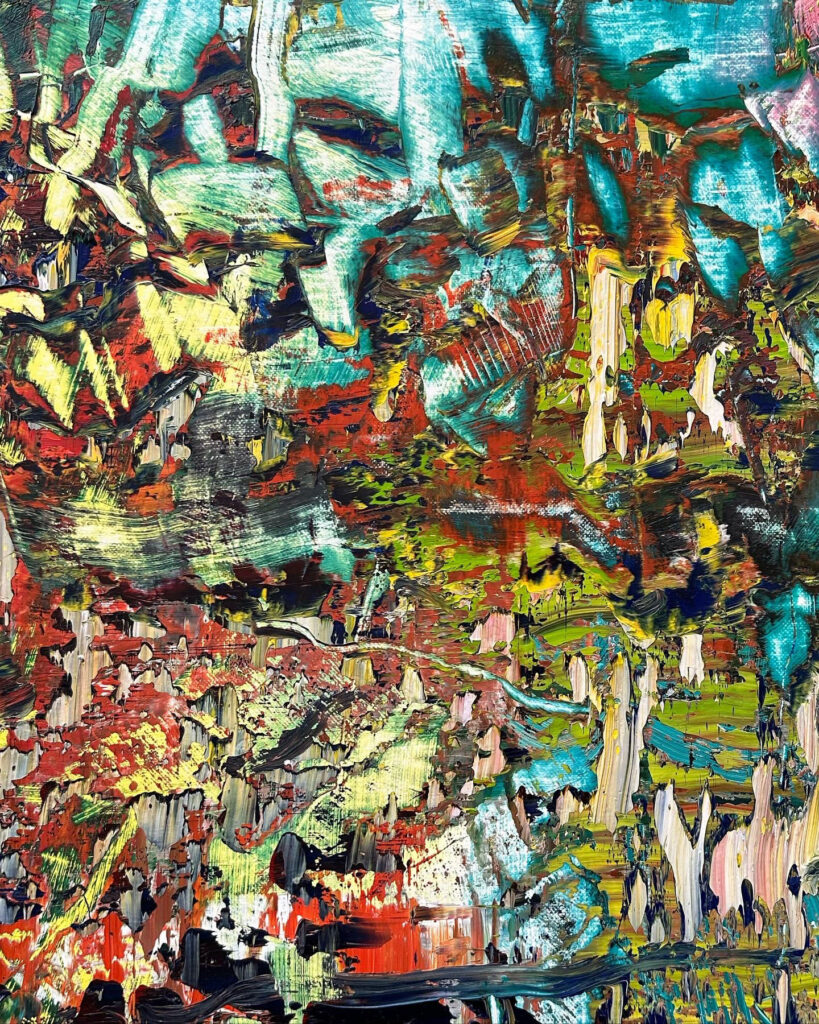
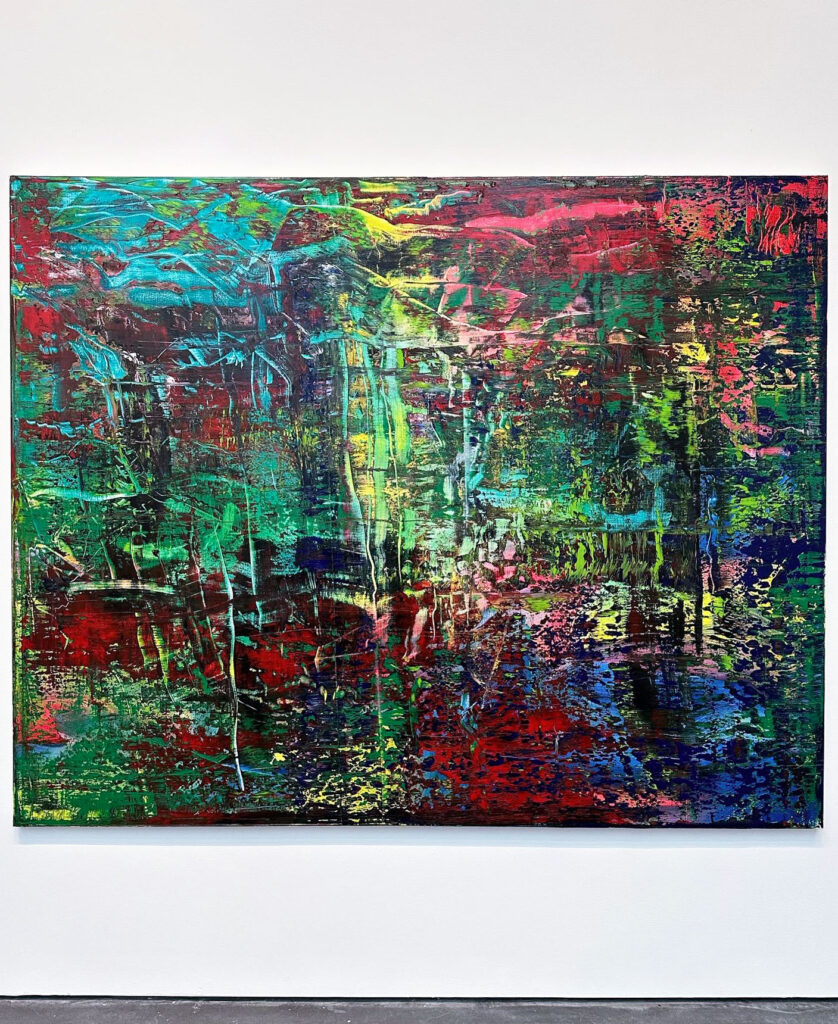
It’s the last week to see the Gerhard Richter exhibition at David Zwirner. The show includes a group of Richter’s last paintings from 2016-17, two of which are pictured above, as well as a new glass sculpture and recent works on paper.

From the press release-

Celebrated worldwide as one of the most important artists of his generation, with a career spanning from the 1960s to the present, Richter has pursued a diverse and influential practice characterized by a decades-long commitment to painting and its formal and conceptual possibilities. The artist has consistently probed the relationship between painting and photography, engaging a variety of styles and innovative techniques in a complex repositioning of genres. In Richter’s work, dual modes of representation and abstraction fundamentally question the way in which we relate to images.

The exhibition will bring together a significant group of Richter’s last oil paintings, made in 2016–2017, a number of which will be shown in New York for the first time. Richter stopped making oil paintings in 2017, and the final work on canvas he made will be on view in the exhibition. Part of the artist’s Abstrakte Bilder (Abstract Paintings) series—a cornerstone of his practice since the 1970s—the works on view exemplify Richter’s investigations into chance occurrences and the painted medium’s historical and material properties. With their highly worked and intricately stratified surfaces, the last paintings foreground the sheer physical presence of paint and color, enacting a mode of composition that is aleatory yet deliberately planned.

Centrally featured will be 3 Scheiben (3 Panes) (2023), a new glass sculpture that continues Richter’s exploration of human perception and the built environment. Comprising three sequential rectangular panes of transparent yet reflective glass—each one positioned upright and measuring almost ten feet in height—the installation invites viewers to look at, through, and beyond its surface, revealing the inherently subjective and situational nature of perceived reality. Richter has consistently created glass and mirrored works since 1967, often presenting them alongside his paintings and drawings and placing them in the larger context of their surrounding architecture. Crucially, while sculptural, these free-standing glass works are also positioned as a literal reflection on painting and image-making; they respond to the art-historical notion of the painting as both a mirror and a window, while also acting as a powerful corollary to the blurred effect of Richter’s photo paintings, which the artist began experimenting with in the 1960s. As critic Hal Foster notes, “The felt analogy between a composed painting and a contemplative viewer is so fundamental that we are not aware of it until it is interfered with. And this is precisely what the glass pieces do: our reflection, in the sense of our mirrored image, disrupts our reflection, in the sense of our contemplation.”1

An expansive suite of new works on paper from 2021–2022—some made with ink and others with graphite and colored pencil—will also be on view. Richter’s drawings constitute a significant element of his practice, allowing him to explore another aspect of the role of the artist’s hand in the creation of a dynamic and abstract pictorial narrative. Many of these works feature passages of cloudy graphite rubbings juxtaposed with equally hazy semi-erased portions. The artist embeds a sparse network of crisscrossing arcs and lines amongst this backdrop, forming an enigmatic topography that seems to map out the very possibilities of image-making itself. Other drawings on view are composed of abstract monochrome washes of ink and graphite, taking on a decisively painterly appearance; as Richter describes, these works on paper chart out a parallel but complementary path to his painted oeuvre, much like that of “a poem and a novel by the same author.”2

Also on view will be mood, a group of inkjet prints that relate to a recent series of colored ink drawings by Richter, both of which debuted at the Fondation Beyeler in Basel in 2022. Part of the artist’s extensive career-long experiments with the iterative translation and interplay of mediums, these vibrant prints are almost indistinguishable from their ink counterparts, revealing Richter’s continued fascination with the possibilities of image reproduction.

This exhibition closes 4/29/23.

Apr 142023
 

“As the Crow Flies”, 2022

“As the Crow Flies”, 2022 (detail)

“As the Crow Flies”, 2022 (detail)

“As the Crow Flies”, 2022 (detail)

“Skunk Hour”, 2022

“Dogwood”, 2022

“Dogwood”, 2022 (detail)

There’s more to Nikki Maloof’s paintings than meets the eye in her exhibition Skunk Hour at Perrotin. The more you look, the more details- often dark- begin to emerge.
From the press release-

For Nikki Maloof, painting is a way to convey the experience of existing in the world—the light, the dark, and all the shadows in between. Her language is figuration: she started out with portraits of individual animals, progressing onto still lifes and, most recently, domestic interiors and landscapes populated with a mix of creatures—human and non-human; alive, dead, and inanimate. These subjects, on one level, have an everyday familiarity. Indeed, they are in many instances collected from Maloof’s immediate environment: for the past few years, her house and studio in rural Massachusetts. But the resulting depictions, however vivid, never feel quite real. The colors are bright, the shapes cartoonish, the compositions often implausible. Everything is emotionally charged. The eyes of dead fish seem to brim with sadness, the oversized blade of a knife glints with menace. A woman who shares Maloof’s physical features stands at a window with a glum expression, her face only just visible behind a tree dense with apples. Looking at these canvases is like looking at a series of dreams, governed by a mysterious logic, their characters and events freighted with ambiguous symbolism.

Of course, unlike in a dream, Maloof chooses what to paint: hers is a conscious artistry. We see evidence of this in her equally accomplished graphite works on paper, in which images are carefully worked out before she embarks on the larger oils on linen. (It’s fun to play spot the difference between the versions in pencil and paint: notice how a glass of wine materializes on a countertop; how a cat relocates from the landing to the stairs.) Perhaps her work is more akin to confessional poetry, intensely personal yet meticulously crafted. The title of this exhibition, “Skunk Hour,” is borrowed from a well-known poem by Robert Lowell, published in 1959, which begins as a light-hearted description of a seaside town in Maine and culminates in a self-portrait of a mind in turmoil. “I myself am hell,” wrote Lowell, “nobody’s here— / only skunks, that search / in the moonlight for a bite to eat.” Similarly, Maloof describes the scenes she constructs as “vessels,” giving tangible form to psychological states or particular thoughts and feelings.

The idea for this new series of paintings hatched last spring, when one morning the artist stumbled upon the birth of a fawn near her home, and later that day witnessed the body of a recently deceased neighbor being removed from his home. She decided that she wanted to capture the weight of being made simultaneously aware of the beginning and the end of life, as well as the tension between the mundane and extraordinary. There are no laboring deer or body bags here: instead, we get paintings like Life Cycles (2022), in which five plates are arranged in a circle, showing the progression of fishes’ lives from small orange roe on crackers to clean-picked bones. Or Burning Bush (2022), in which an empty bird’s nest rests inches away from a hawk dismembering its prey on a branch of the same tree. Whether taking the form of conventional still lifes or more expansive house-and-garden scenes, Maloof’s coded pictures make clear reference to the conventions of Western religious vanitas painting, with its representations of physical objects—flowers, food, skulls—to symbolize the transience of earthly pleasures.

If this sounds unremittingly heavy, it’s not. Maloof’s paintings also offer up many of their own pleasures, both intellectual and sensuous. It would be remiss, for instance, to ignore the slapstick wit in the detail of a rolled joint on a kitchen shelf in the work entitled Skunk Hour (2022): skunk here signifying not the foul-odored mammal but the just-as-pungent strain of cannabis. Life, as Maloof understands, is nearly always funny, even when things are pretty bad. And if you’re not in the mood to laugh, well, just try to resist the delights of the paintings themselves—their profusions of color, pattern, and texture. Extending the culinary theme, we might describe her work as a feast for the eyes. See how the coiling smoke from the lit joint rhymes with the squiggles of steam rising above a pair of artichokes in a colander; notice the thick scraped impasto of the howling cat’s bristling fur. Maloof is unabashedly maximalist in her approach to her canvases, layering both imagery and brushstrokes, at times threatening to overwhelm her subjects through an abundance of painterly gesture. This makes perfect sense. In such moments it becomes clear that, despite the universality of their themes, Maloof’s paintings are a vision of the world as seen through the eyes of a singular artist.

This exhibition will close 4/15/23.

Mar 292023
 

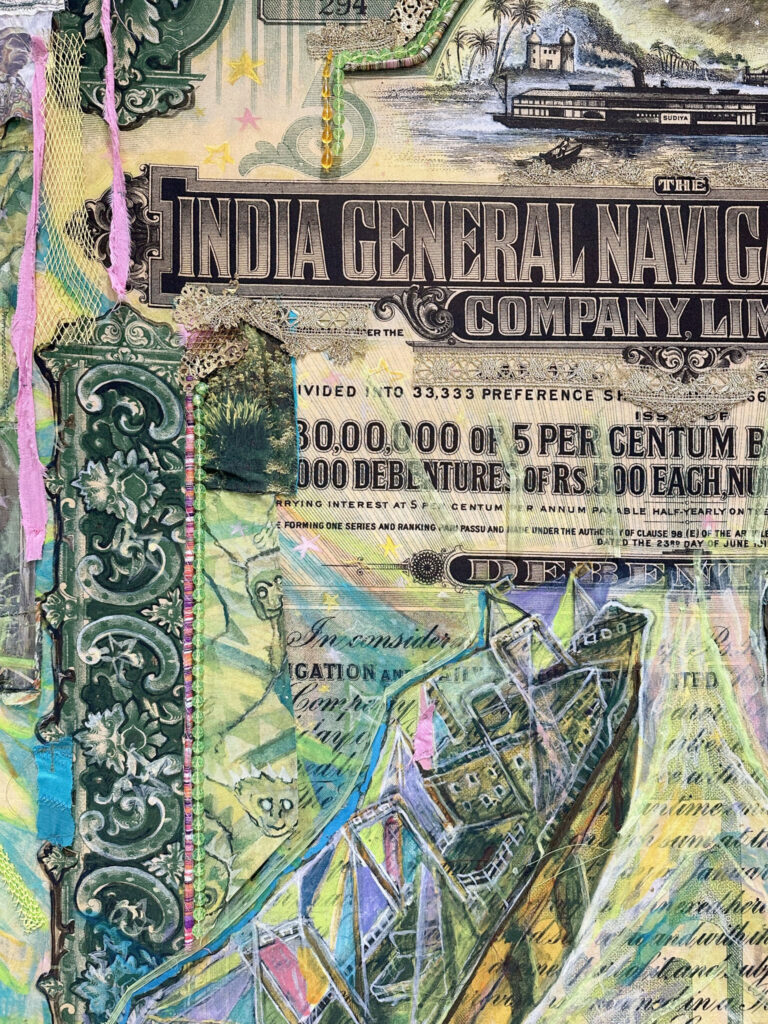
Hew Locke, “Listening to the Land” room view

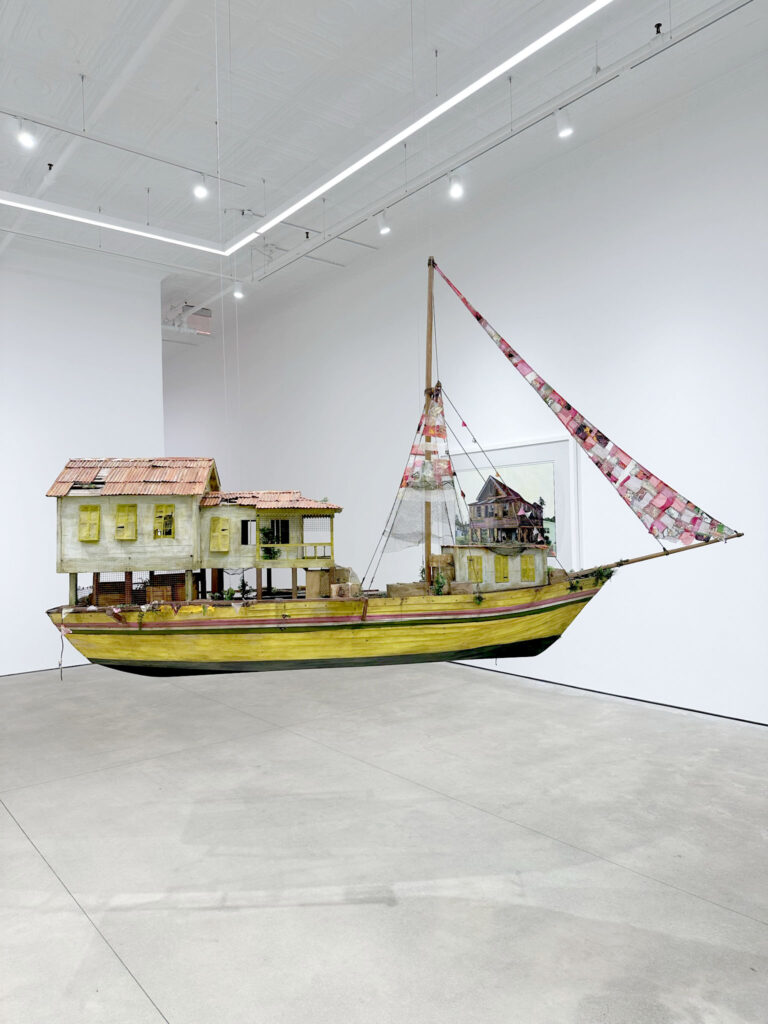
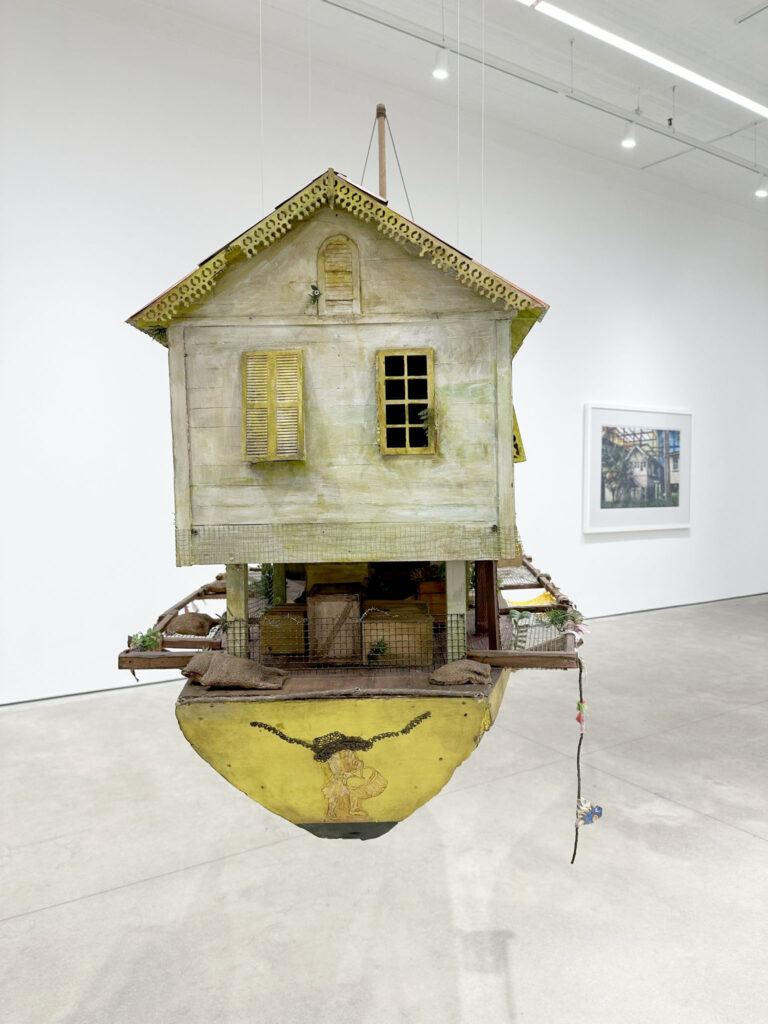
“The Relic”, 2022

“The Relic” 2022 (another side)

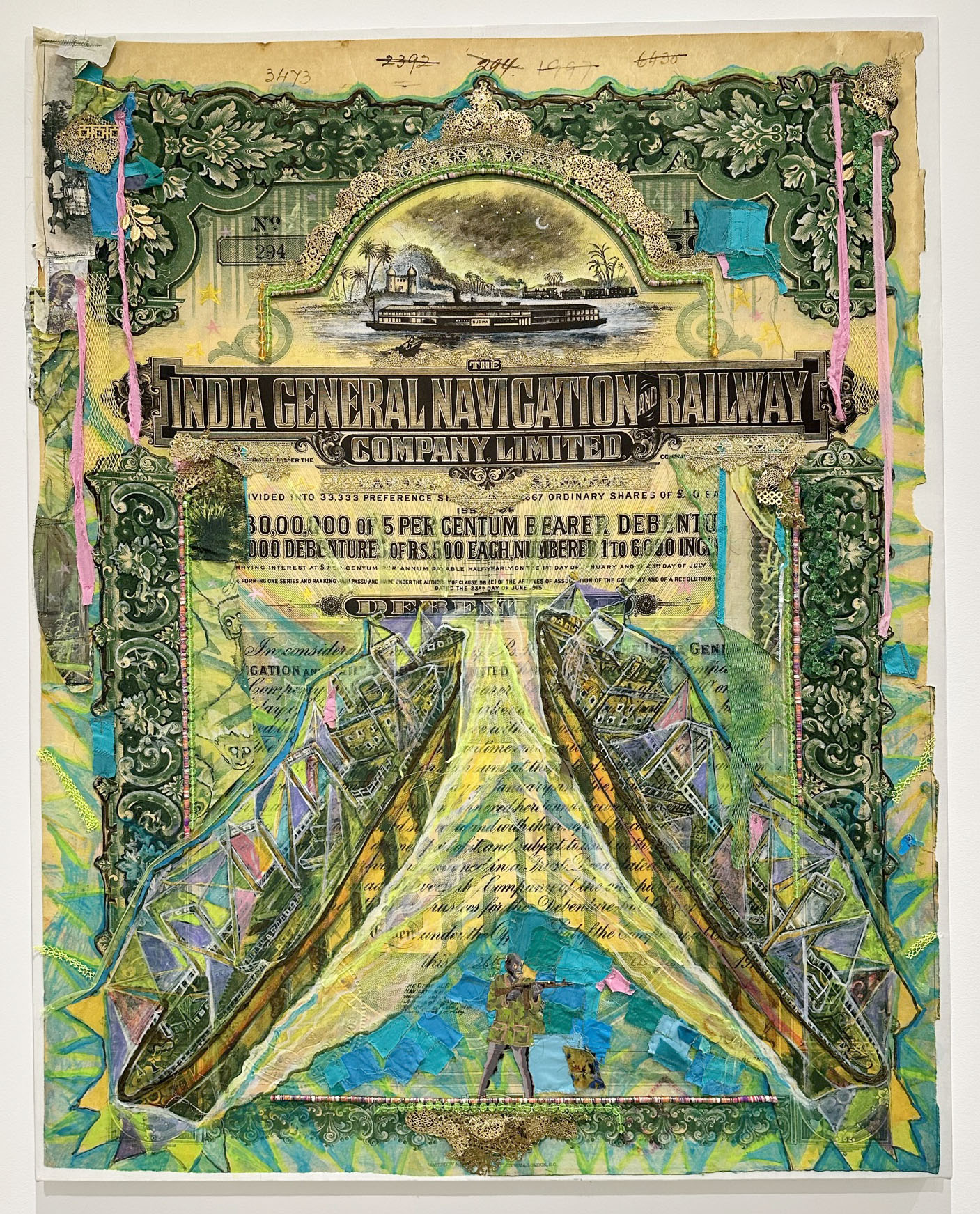
“Raw Materials 3”, 2022

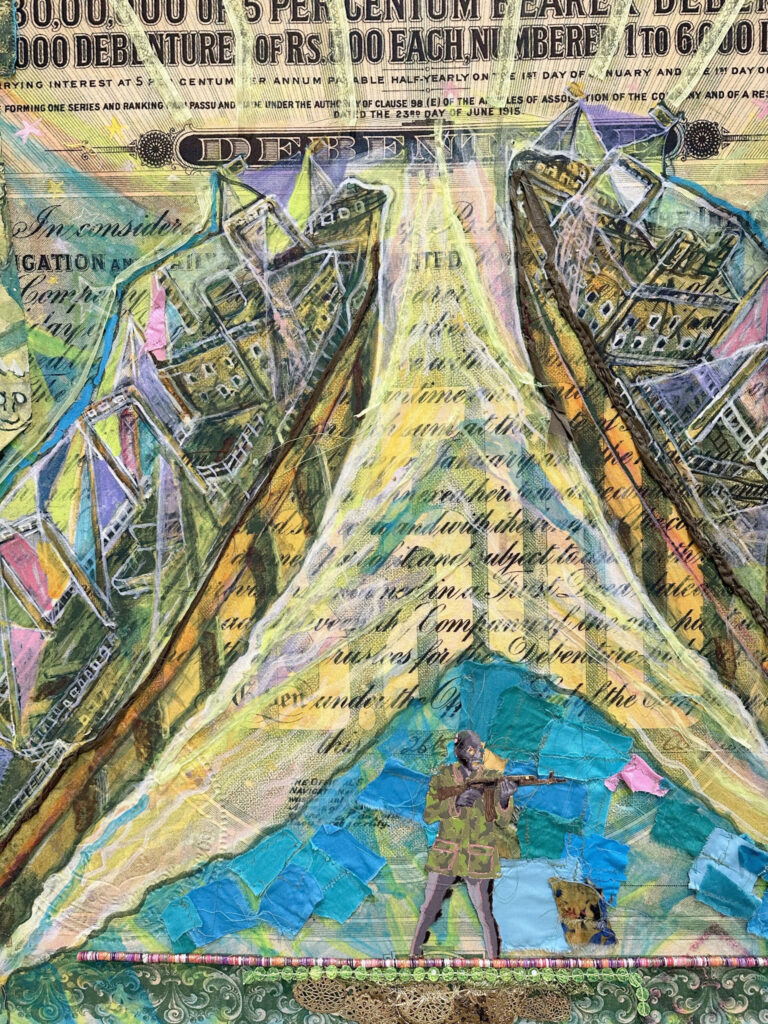
“Raw Materials 3”, 2022 (detail)

“Raw Materials 3”, 2022 (detail)

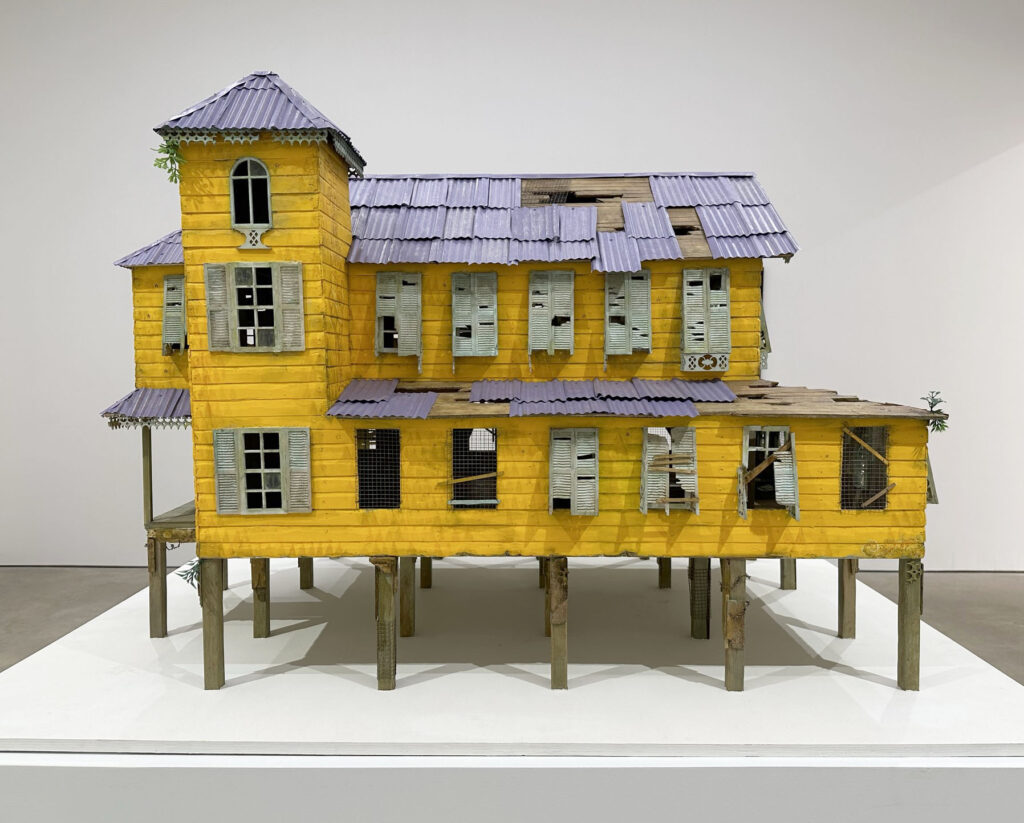
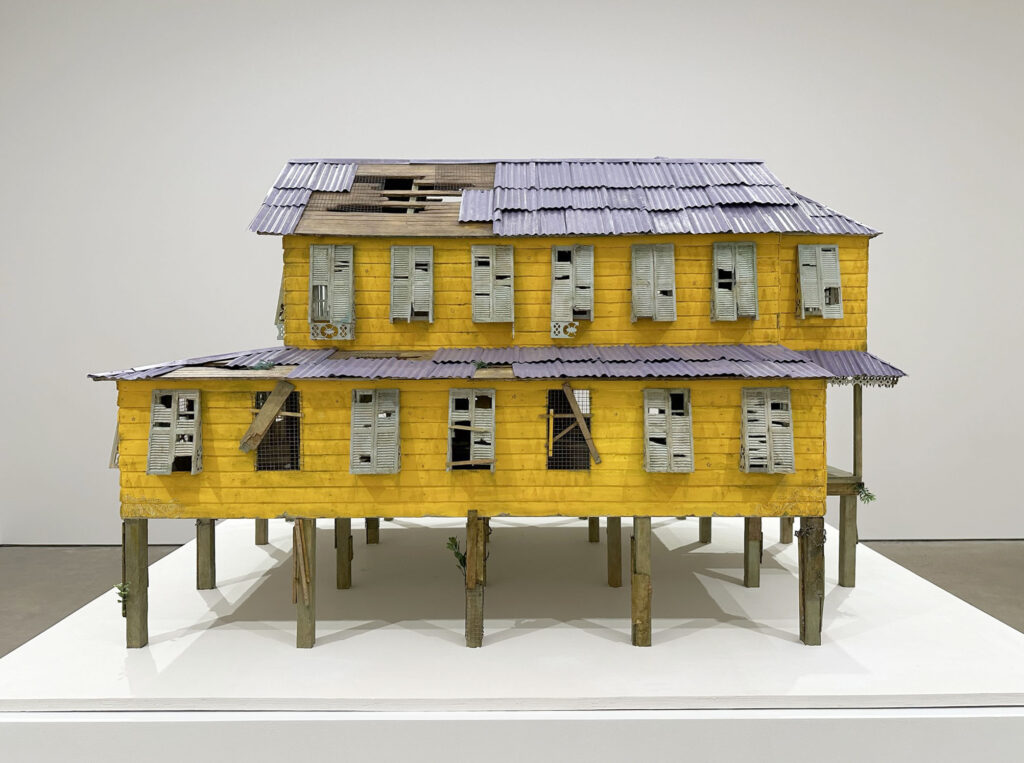
“Jumbie House 2”, 2022

“Jumbie House 2”, 2022

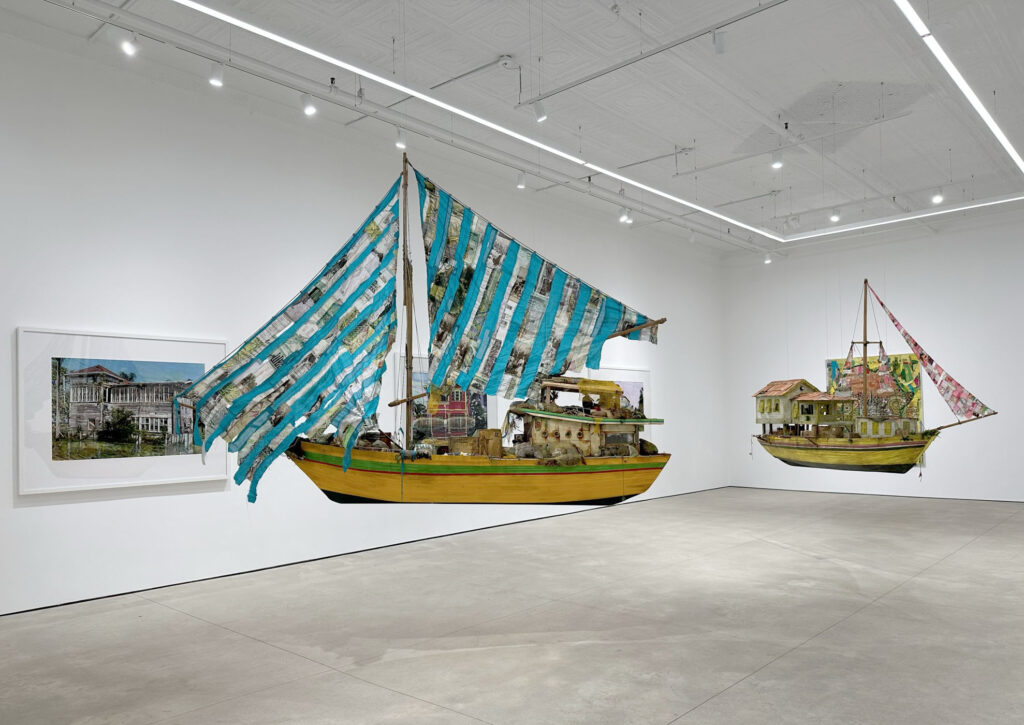
For Hew Locke’s exhibition, Listening to the Land, at P.P.O.W. he has created intricate sculptures and paintings that are fascinating in person.

From the press release-

Locke is known for exploring the languages of colonial and post-colonial power, and the symbols through which different cultures assume and assert identity. Furthering the themes explored in his celebrated commission The Procession at Tate Britain, and his concurrent installation Gilt on the façade of The Metropolitan Museum of Art, this exhibit engages with contemporary and historical inequities while reflecting on the landscape and history of the Caribbean. The exhibition draws its title from a poem by Guyanese political activist and poet Martin Carter which situates itself between two opposing forces of the landscape – sea and forest. Locke’s show features new sculptures and wall works with recurring motifs of stilt-houses, boats, memento mori, and share certificates referencing tensions between the land, the sea, and economic power. Reflecting on these links, Locke notes, “The land was created to generate money for colonial power, now the sea wants it back.”

Translating to ‘land of many waters,’ Guyana and its physical, economic, and political landscape serve as one of the primary sources for Locke’s work. Having spent his childhood in this newly independent nation, the artist witnessed first-hand an era of radical transformation. Now, the country teeters on the precipice of an oil boom and is one of the world’s fastest growing economies. Juxtaposing personal meditations on the climate crisis with political commentary on the history of a globalized world, Locke contemplates the ways in which colonies were exploited to accumulate capital, and observes how Guyana’s economic future lies in the exploitation of its waters. Locke’s new boat sculptures The Relic and The Survivor embody this broad worldview as the two battered wrecks drift through time and history. Evoking the fragmented and diverse legacies of the global diaspora, the boats’ patchwork sails are interspersed with photo transfers of 19th Century cane cutters and banana boat loaders, while their decks are loaded with cargo that could allude to colonial plunder, trade goods or personal belongings.

Based on an abandoned plantation house, Locke’s newest sculpture Jumbie House 2 features layered images that unveil the spirits that haunt this colonial vestige. Presented alongside are a series of painted photographs of dilapidated vernacular architecture across Georgetown and rural Guyana. Constantly under threat of being washed away by storms or rising sea levels, these crumbling structures echo anxieties surrounding climate change and historical erasure. A new series of mixed media wall works, Raw Materials, is derived from antique share certificates and bonds. Locke richly decorates the appliques with acrylic, beads, and patchwork to draw attention to the complex ways in which the past shapes the present. The image of an 1898 Chinese Imperial Gold Loan behind painted Congolese figures connects the global economy at the height of Empire to current Sino-African trade networks. In another work, a painted representation of a Nigerian Ife mask, alongside an image of David Livingstone, is layered on a French-African Mortgage Bond from 1923, connecting exploration and exploitation of African land, to current conversations surrounding the repatriation of artifacts. Taken together, the works in Locke’s Listening to the Land echo William Faulkner’s adage “The past is never dead. It’s not even past.”

This exhibition closes 4/1/23.

The Procession, mentioned above, can now be seen at Baltic Centre for Contemporary Art, in Gateshead, England until June 11th, 2023.

Gilt, also mentioned above, is on view at The Metropolitan Museum of Art until May 30th, 2023.