Dec 132022
 

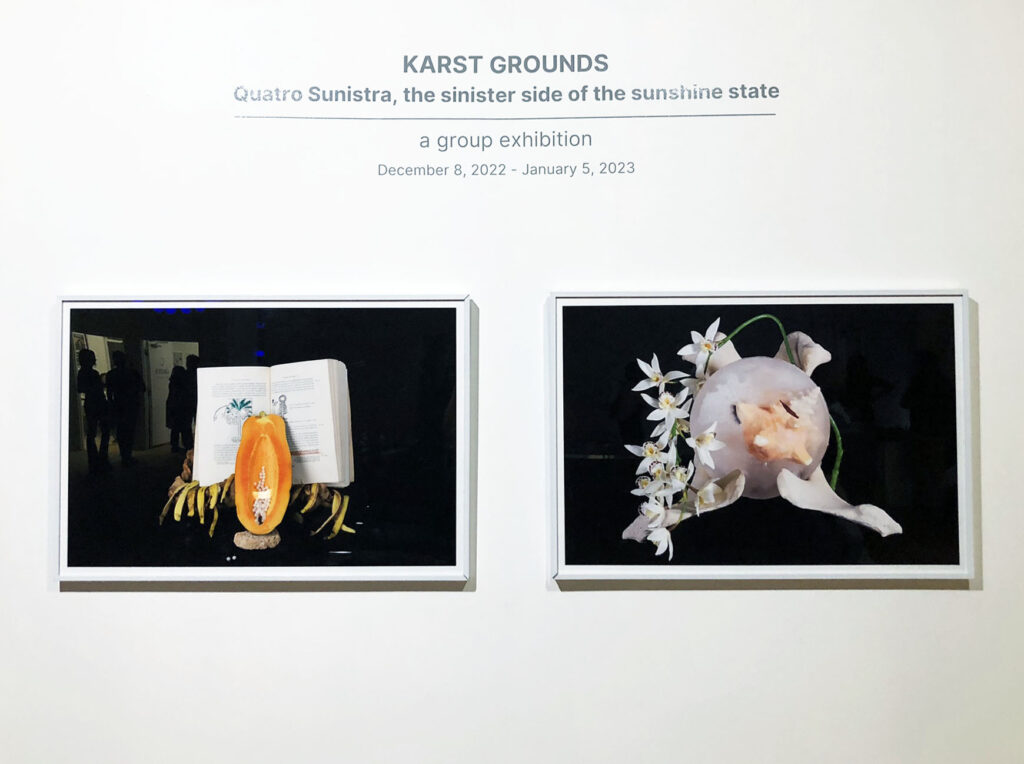
“The Great Mother Text, Papaya and Pearls” and “Frozen Conch” photographs from Cristina Molina’s “The Matriarchs” series

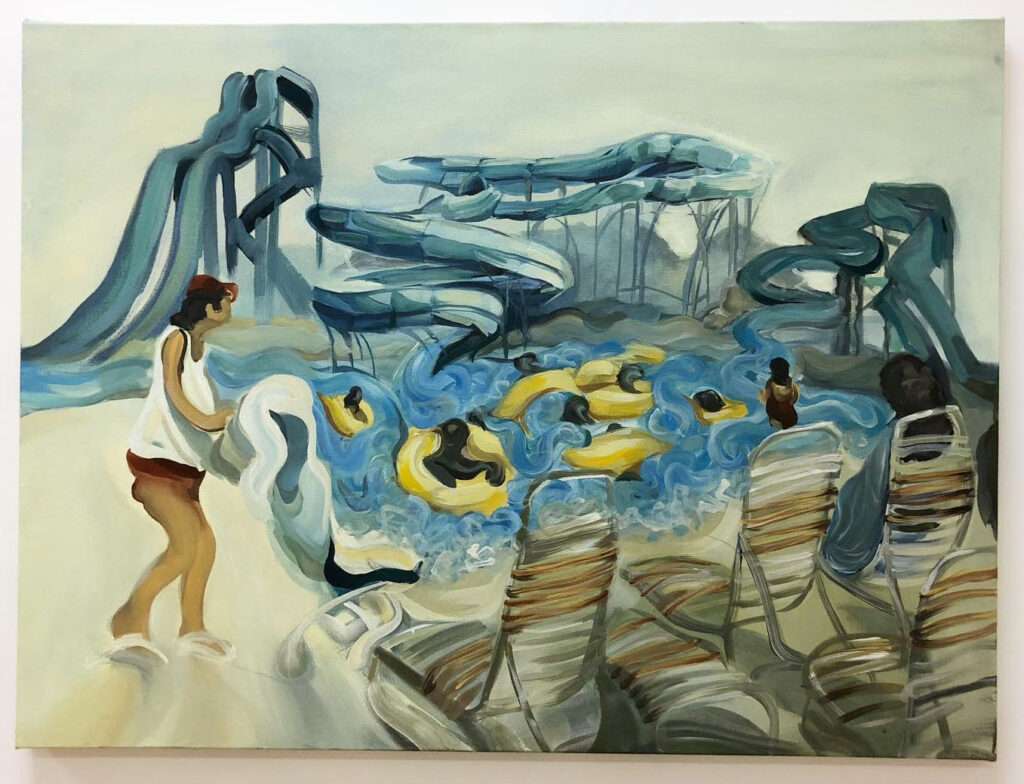
Painting by Eric Ondina

“Here, Together” Photograph by Amber Bernard

It was an exciting night for art this past Thursday in Ybor City, Tampa, as several spaces opened their doors in the Kress Building.

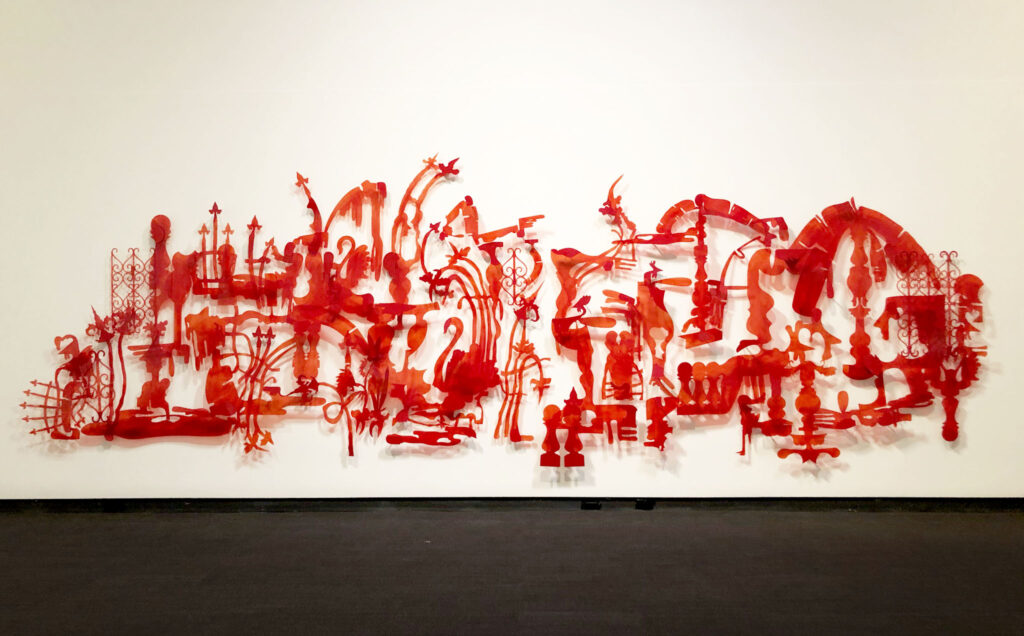
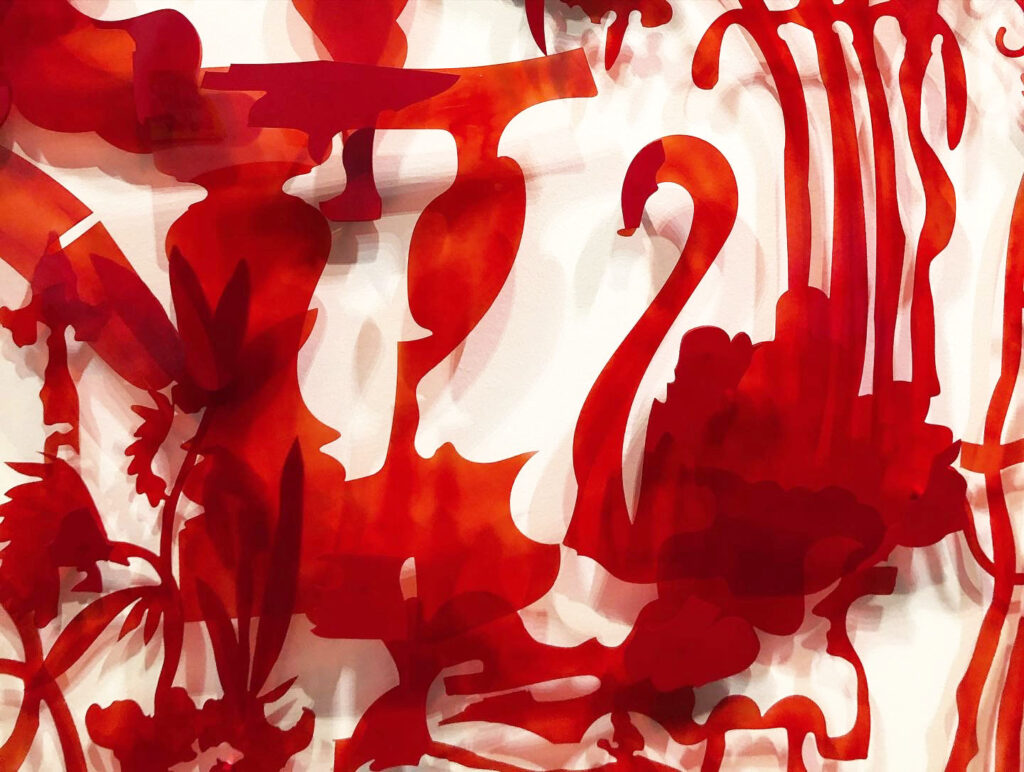
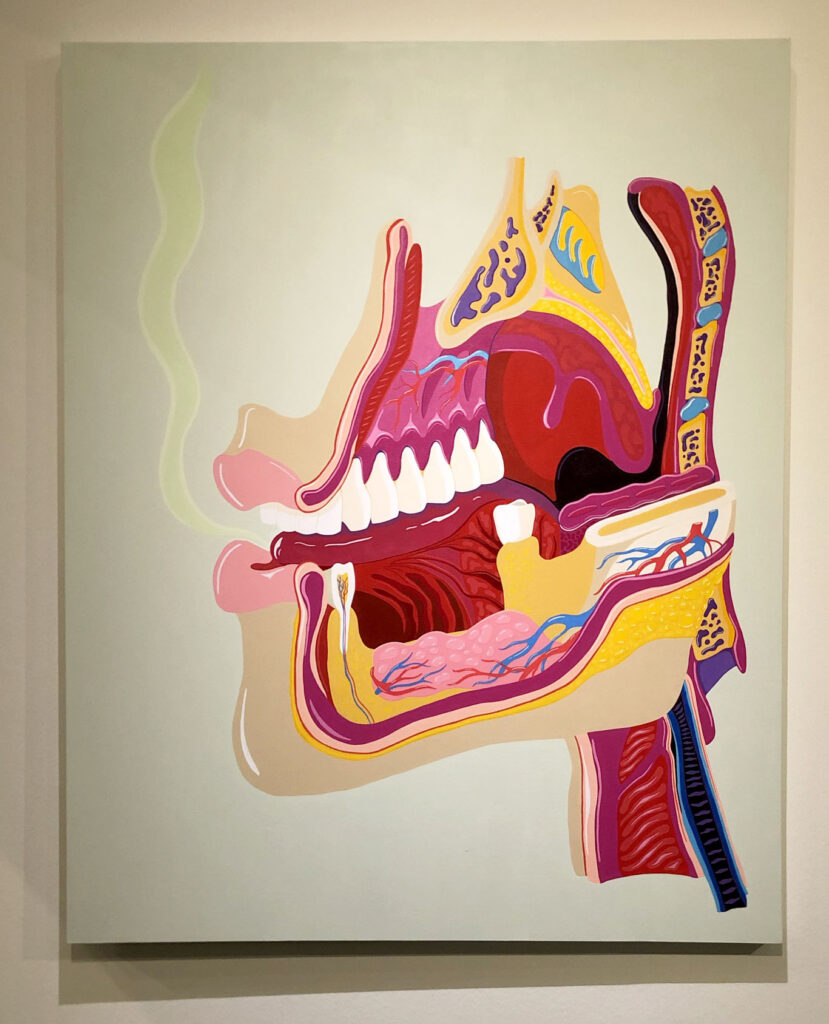
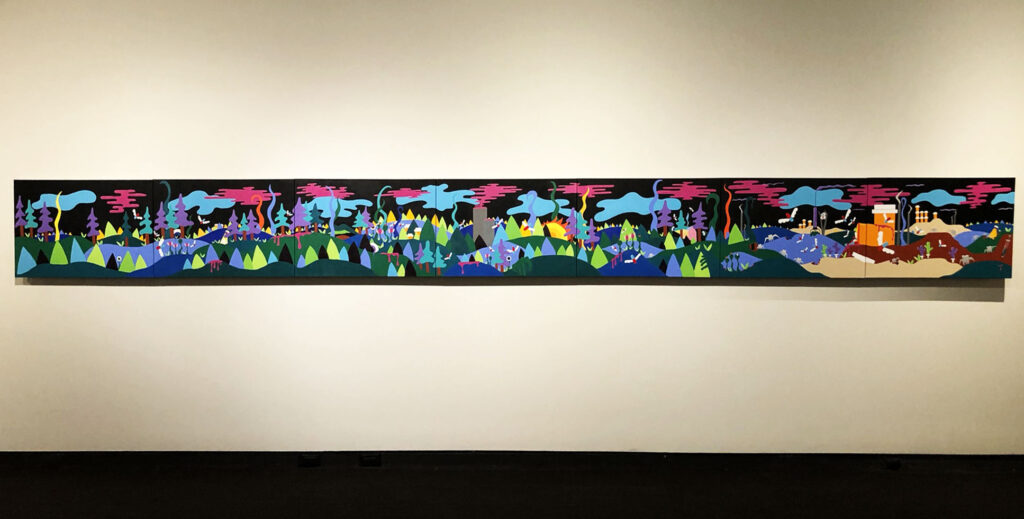
Tempus Projects now has three spaces in the building. In their main gallery was KARST GROUNDS ::QUATRO SUNISTRA, the fourth iteration of their annual open call exhibition exploring “the sinister side of the Sunshine State”. The work varied in medium, and included painting, photography, and sculpture.

From their website-

The exhibition title is a portmanteau of “sunshine” and the Latin word “sinistra”—the forebearer of the English word “sinister” which retains some of its original connotations of something that is harmful and inauspicious. The play on words reflects the often idyllic/nightmarish dichotomy Florida embodies in its natural, social, and political climates. This serves as a thematic jumping-off point for the exhibition’s applicants as the artists investigate this peculiar state through their diverse perspectives and unique approaches.

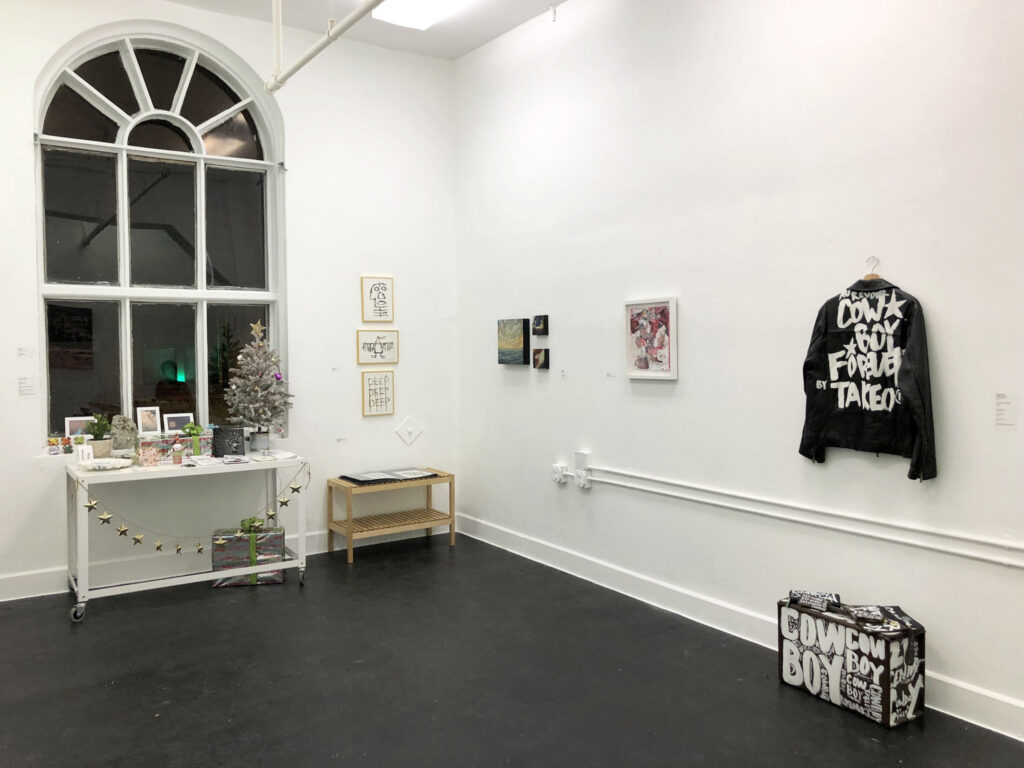
In their Tempus Volta space was Beneath the Mistletoe Screaming, a group exhibition and holiday shop with lots of great affordable art, with most pieces ranging from $5 to $500.

View inside Tempus Volta

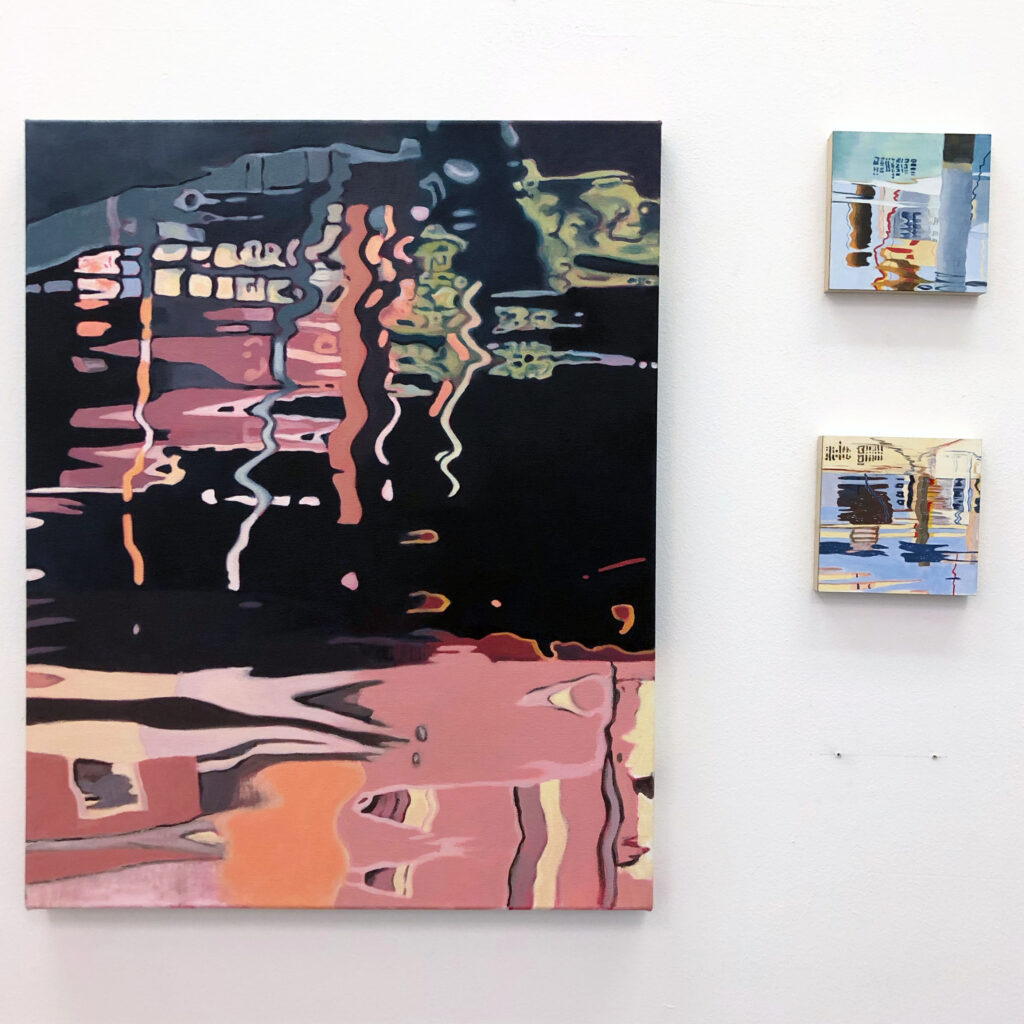
Paintings by Alex Torres

Paintings by Lynn Manos

Drift, is Tempus Projects’ independent curator’s space (seen below). On Thursday they were showing and selling work from various artists.

All three spaces were showing strong work. Make sure to check out Tempus Projects’ Instagram for updates on the galleries.


Oct 132022
 

This is the last weekend to see Jason Hackenwerth’s exhibition DARKMATTER at Creative Pinellas in Largo, Florida. It includes the two giant balloon sculptures shown above, as well as several of the artist’s paintings and drawings.

To hear the artist discuss his work, and see more views of the sculptures and artwork in the gallery, check out this video.

This weekend is also Third Saturday at Pinewood (Creative Pinellas, Florida Botanical Gardens, and Heritage Village). For this event Hackenworth will be leading a family arts workshop where he will be teaching visitors how to create sculptures from balloons.

DARKMATTER closes on Sunday, 10/16/22.

Feb 252022
 

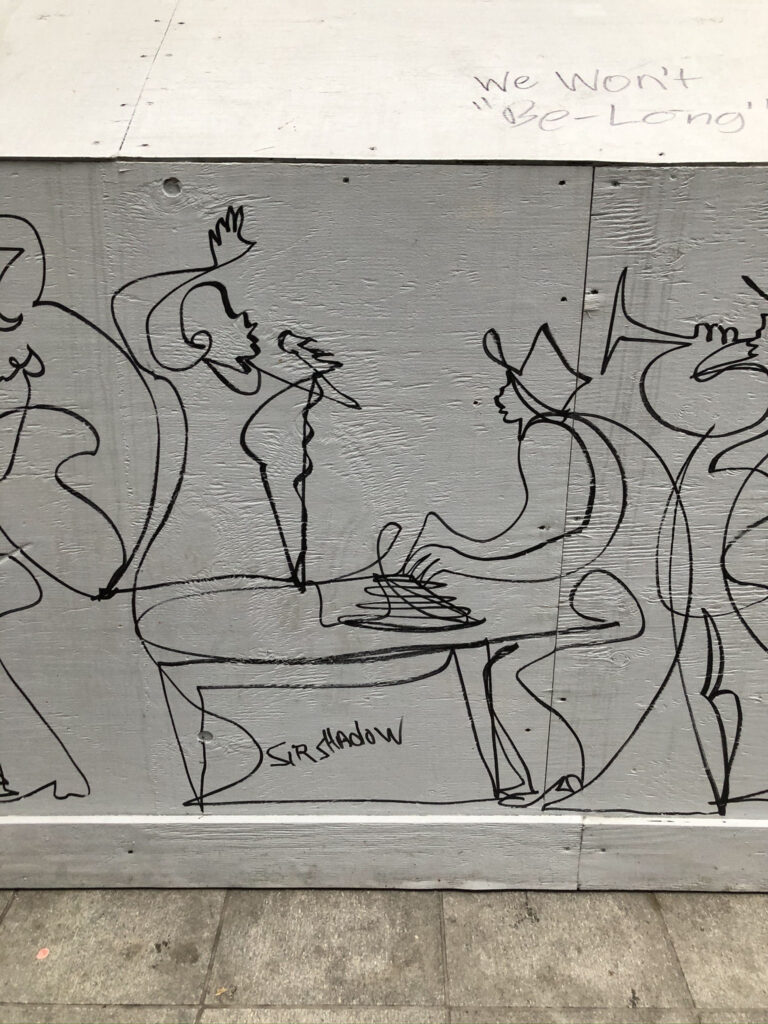
For more work by Sir Shadow, check out his website and Instagram.

The New York Times ran a profile of the artist in 2018, when he was living in the Whitehouse Hotel on Bowery.

Feb 172022
 

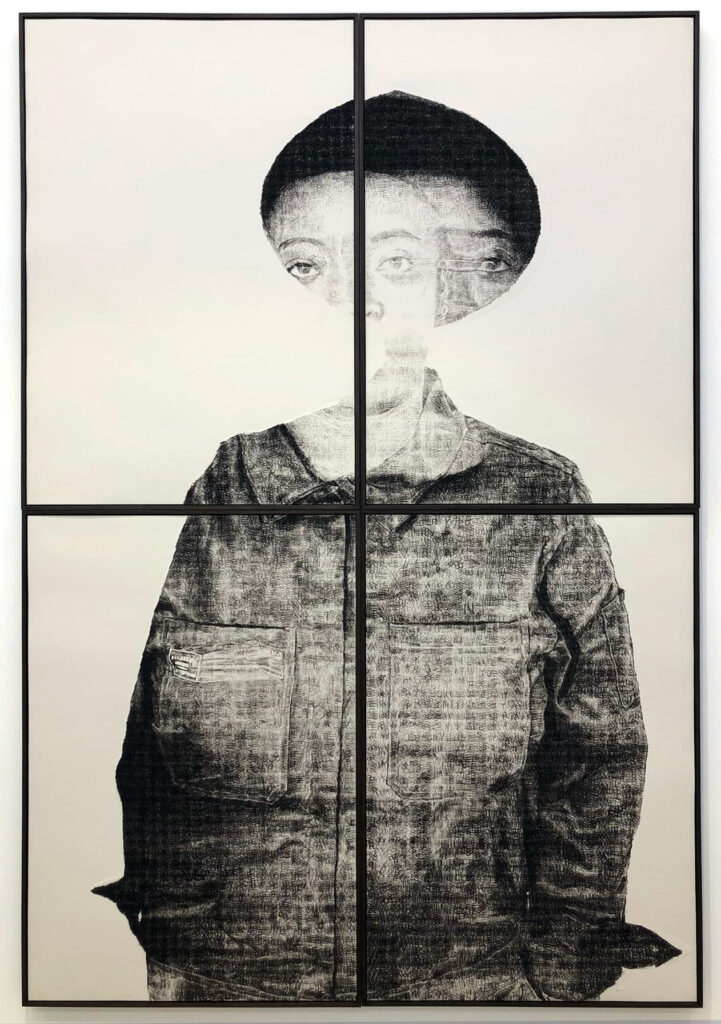
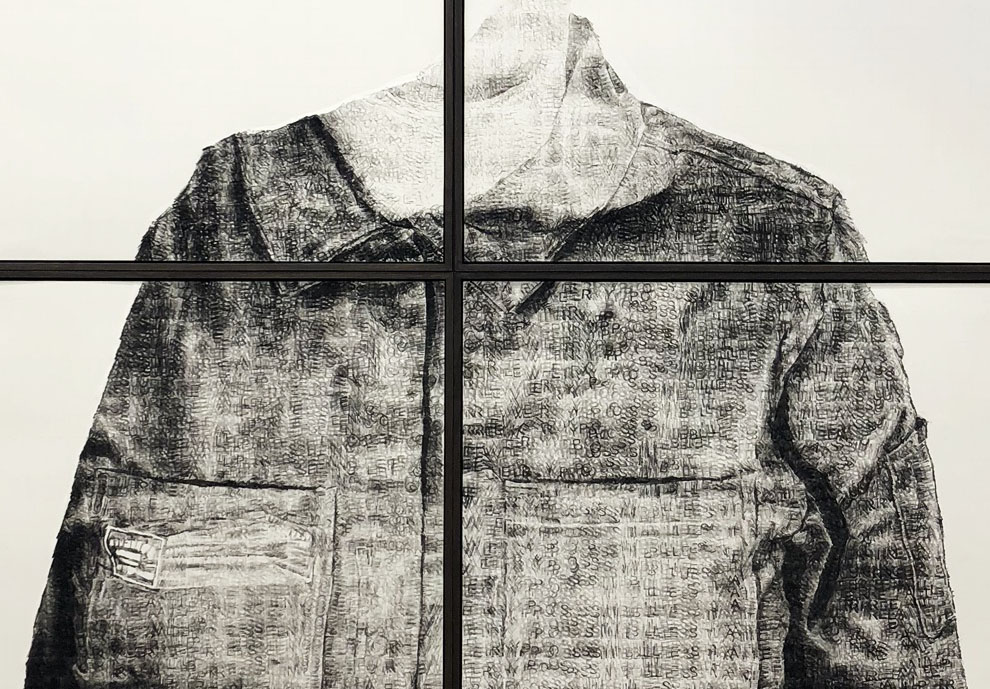
A Surreal Presence for Every Possible State, 2018 by Kenturah Davis from her 2019 exhibition, Blur in the Interest of Precision at Matthew Brown Los Angeles. The four panel work was created using oil paint applied with rubber stamp letters and graphite grid on embossed Mohachi paper.

From the press release-

Blur in the Interest of Precision is a search for parallel conditions between the poetics of our visual experience and the strangeness of our relationship to language. We often use language to carve out distinctions between one thing and another. Davis’ objective—to complicate ideas about meaning, representation and perception—have found refuge in blur and doubling. The new drawings are rendered with arrangements of text, but the words are virtually illegible. Many of the portraits pursue ideas the artist is working through via the writings of Fred Moten and Toni Morrison’s essay, Sites of Memory.

Davis’ work oscillates between various facets of portraiture and design. Using text as a point of departure, the artist explores the fundamental role that language has in shaping how we understand ourselves and the world around us. This manifests in a variety of forms including drawings, photographs and performances.

Recently Davis was commissioned by LA Metro to create work for the future Inglewood Station, slated to open in November of 2022. The work, Sonder, depicts community members photographed at gatherings at the artist’s Inglewood art studio and made into large porcelain enamel steel panels.

From Metro’s site

The photographs were hand painted with stamps incorporating letters that form the words defining the term “sonder.”

Davis was drawn to the term which alludes to the realization that every person has a unique and significant story. She hopes that the portraits inspire connections between strangers, even if only for a passing moment while waiting for the train.

(images below via LA Metro’s site)

For more images, information about the station, and a video of the artist discussing the work, check out Metro’s website.


Aug 132021
 

Dolores Coe “Perimeter”, 2019

Dolores Coe, “Borderland”, 2020

Dolores Coe, “Borderland”, 2020 (detail)

Skyway 20/21: A Contemporary Collaboration, is the second iteration of a joint exhibition across four institutions that highlights contemporary art created in the Central Florida region. Artists selected by a jury are from five counties- Hillsborough, Pinellas, Pasco, Manatee, and Sarasota. The exhibitions are an excellent sampling of the work being made in the Tampa Bay area.

The works shown in this post are from the exhibition at the Museum of Fine Arts, St. Petersburg. I’ve included links for these artists as well as those not pictured.

Gabriel Ramos, “Mi Isla”, 2021

Gabriel Ramos, “Mi Isla”, 2021 (detail)

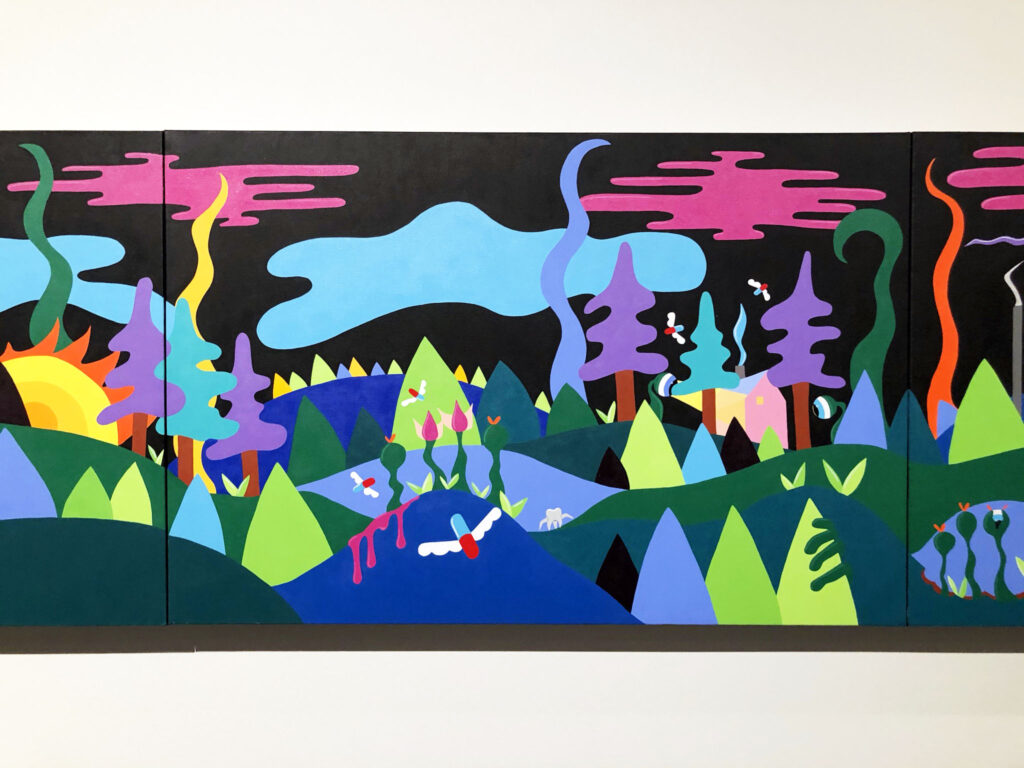
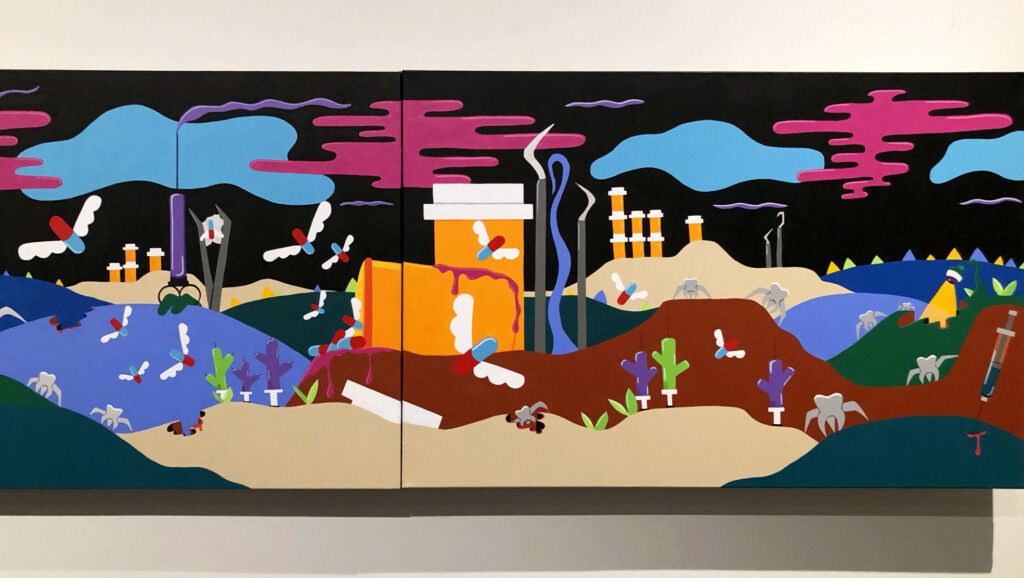
Savannah Magnolia, “Chemical Inhalation”, 2019

Savannah Magnolia “In Big Pharma We Trust”, 2019

Savannah Magnolia “In Big Pharma We Trust”, 2019 (detail)

Savannah Magnolia “In Big Pharma We Trust”, 2019 (detail)

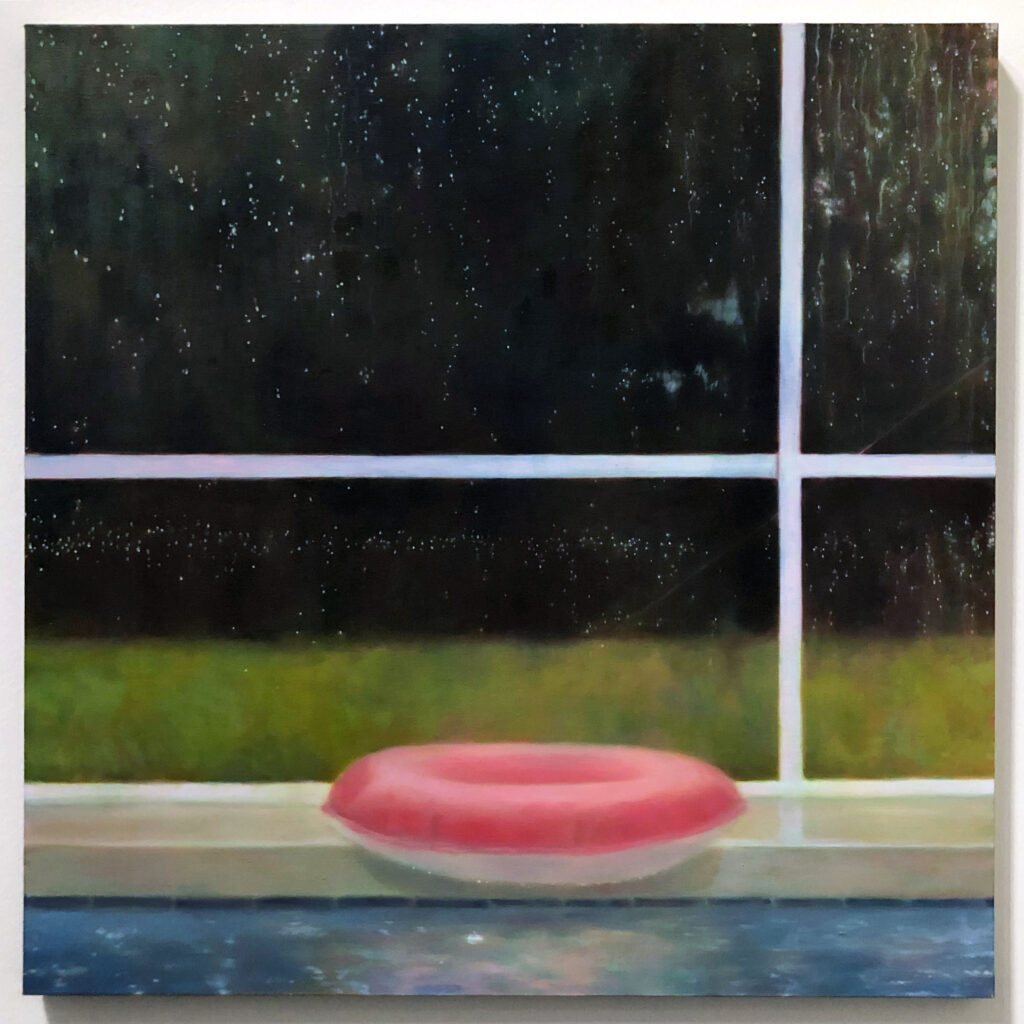
Keith Crowley, “Rain Season”, 2019

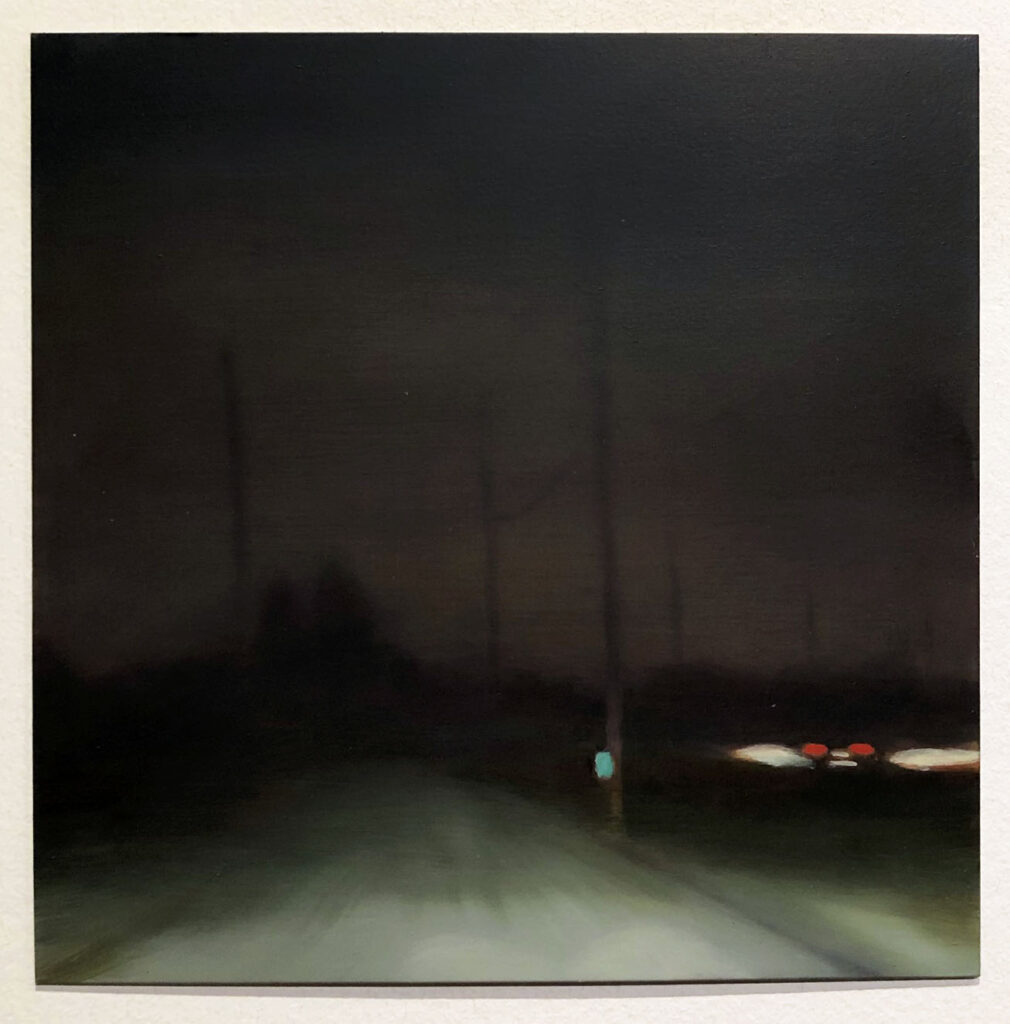
Keith Crowley, “Nocturne”, 2020

Bassmi Ibrahim, “Awareness 41”

Bassmi Ibrahim, “Isness 158”

Bassmi Ibrahim, “Isness 158” (detail)

The exhibition at this location closes 8/22/21.

Jul 142021
 

For Marlene McCarty’s current exhibition Into The Weeds: Sex & Death at Sikkema Jenkins, she has combined her large scale drawings with an indoor and outdoor garden.

From the press release-

Using everyday materials such as graphite and ballpoint pen, McCarty’s work often focuses on representations of the female body, femininity, and its position within familial and biological systems. Her subjects are depicted engaging in unorthodox or transgressive social formations, breaking down the traditional, accepted interactions among humans and other species, as well as between humans and nature. For Into the Weeds, McCarty turns to plants, and their complex ecocultural role within society to explore issues of reproductive health, physical autonomy, public space, and the symbiosis of growth and decay.

Throughout history, certain plants and weeds have been foraged and cultivated for a wide range of purposes, both curative and toxic. The alkaloids of the deadly nightshade, for example, have also been used to treat fevers and inflammation, while mugwort has been used to regulate menstruation and induce abortion. Seedlings have been cultivated and installed alongside McCarty’s densely drawn compositions of plants, weeds, body parts, clothing, and abstract geometric forms. Meticulously shaded limbs and flowers interlace one another, mirroring each other’s shape with the curl of a finger or the droop of a petal. This interplay of human body and plant is disrupted by various symbols alluding to a hegemony of white western culture: a Civil War ball gown, cowboy hat, and fragments of Modernist architecture, including the honeycomb-esque Vessel at Hudson Yards. Within these chimerical gardens lies a contentious ecosystem, constantly negotiating the power dynamics across gender, race, health, and history.

This exhibition is on view until 7/30/21.

Oct 282020
 

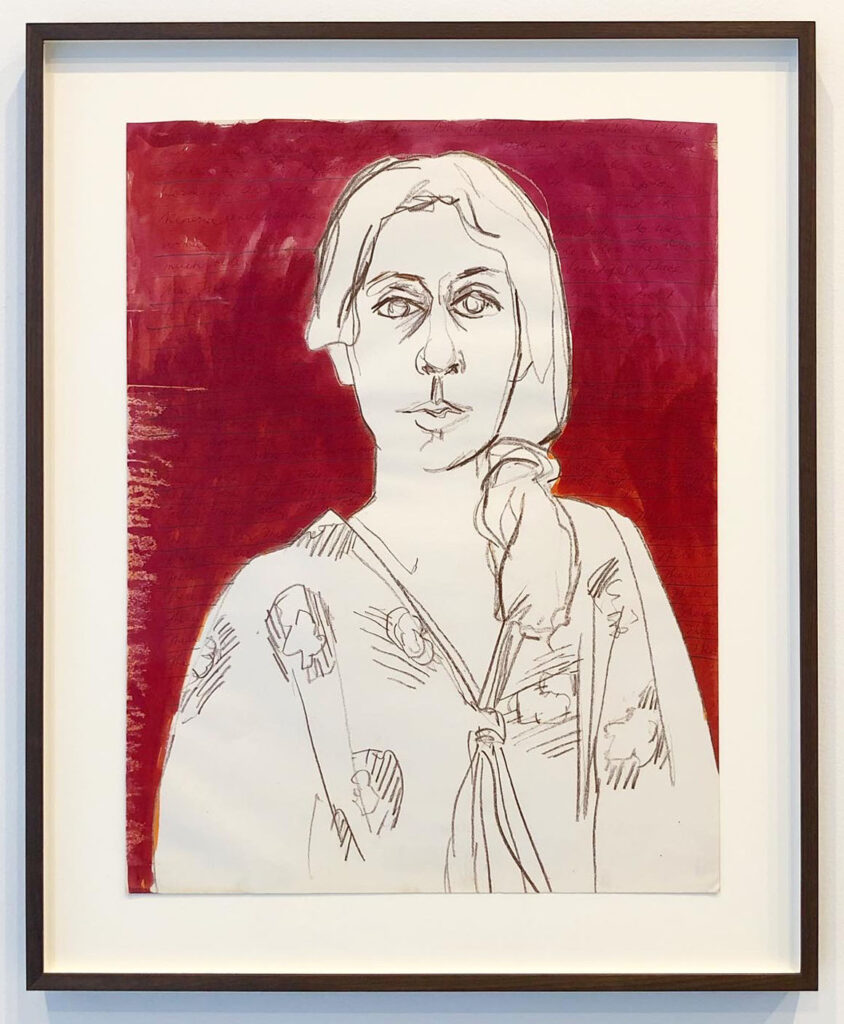
This is the last week to see the exhibition, Luchita Hurtado. Together Forever, at Hauser & Wirth’s Chelsea, New York location. The exhibition was organized with Hurtado, who sadly passed away this year at the age of 99. There is also a video on the website of Hurtado’s son discussing the exhibition and his mother’s work that is worth watching for additional insight into the artist and her work.

From the gallery’s website-

‘Together Forever’ presents over thirty works from the 1960s through the present day in which she explored the self and the surrounding world as her primary subject. Many of these highly personal artworks – recent paintings of birth along with early works on paper that have remained largely private up to this point – will be on view to the public for the first time.

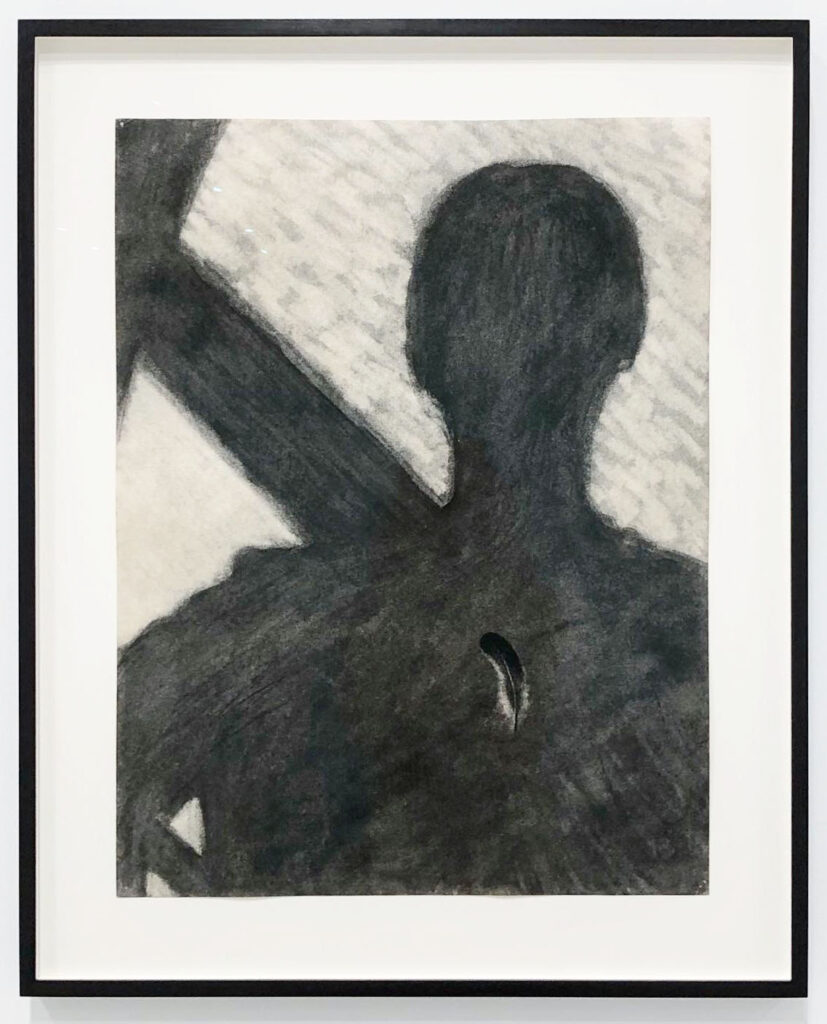
Parallel to a dynamic period of experimentation between abstraction and figuration in the early 1960s, Hurtado also focused her work inward, marking a trajectory to uncover new forms of self through portraits of herself in mirrors, looking down at her own body, and studies of her shadow. Describing this time in her practice, Hurtado explained “At a certain point, I said ‘there is no way that I can express, let’s say, except by painting myself.’ I said, ‘This is a landscape, this is the world, this is all you have, this is your home, this is where you live.’ You are what you feel, what you hear, what you know.” [1]

Throughout her practice up until recent years, Hurtado documented the forms of shadows in photographs and drawings, studying their size, shape, and potential. In early examples from the series included in this exhibition, the artist rendered her own body with oil, charcoal, or graphite on paper, sometimes juxtaposed with her own environment. In some works, a number of figures are depicted. However, these are multiple representations of her own shadow and the artist remains in solitude as her only subject. Another work from the series does not depict a figure at all, but only text where the artist states, ‘The only reasonable facsimile of me is in my shadow’.

During this solitary time of artmaking, Hurtado served as her own model and prioritized her own subjective experience in the world. These works represent significant moments of introspection, seclusion, and the claiming of time for herself. In an early self-portrait in crayon and ink on paper, the artist is surrounded with the text of her own poem written about family and memories of her life in New York before motherhood. Other works, such as ‘Untitled,’ show the artist interacting with the everyday domestic objects in her home – a bookshelf, a window, a door. Another work, also ‘Untitled,’ shows Hurtado emitting a single tear as she poses amongst plants.

In the most recent paintings on view, Hurtado evolves into the landscape as she explored ways in which her own body would transform and regenerate the earth. Functioning as a symbolic proxy and an intimate meditation on the Earth as mystic progenitor, these works underscore the interconnection between corporeality and the natural world – a delicate balance that is now in jeopardy.

‘Luchita Hurtado. Together Forever’ celebrates the various forms of the artist throughout her career and life. Even in the last days of her life, Hurtado continued to experiment and push the boundaries of her own practice.

This exhibition closes 10/31/20.

Jun 222020
 

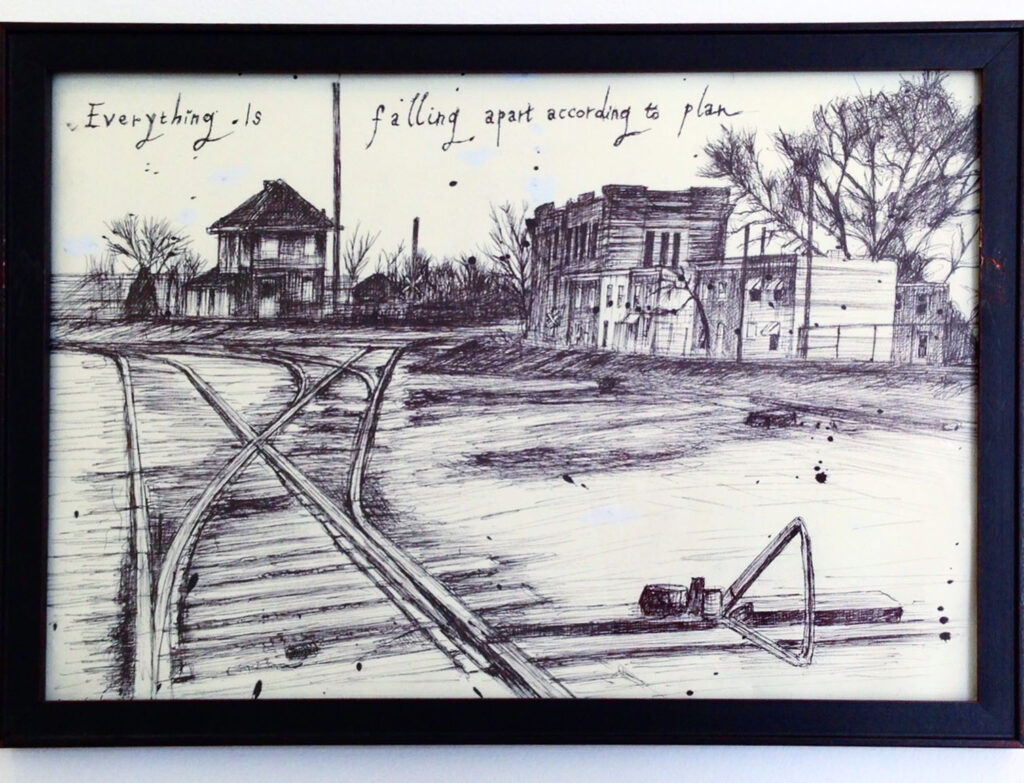
Everything is falling apart according to plan, one of artist and writer John Tottenham’s works from his show The Indifferent Sublime, at Maloney Fine Art in Culver City in 2014.

Jan 302020
 

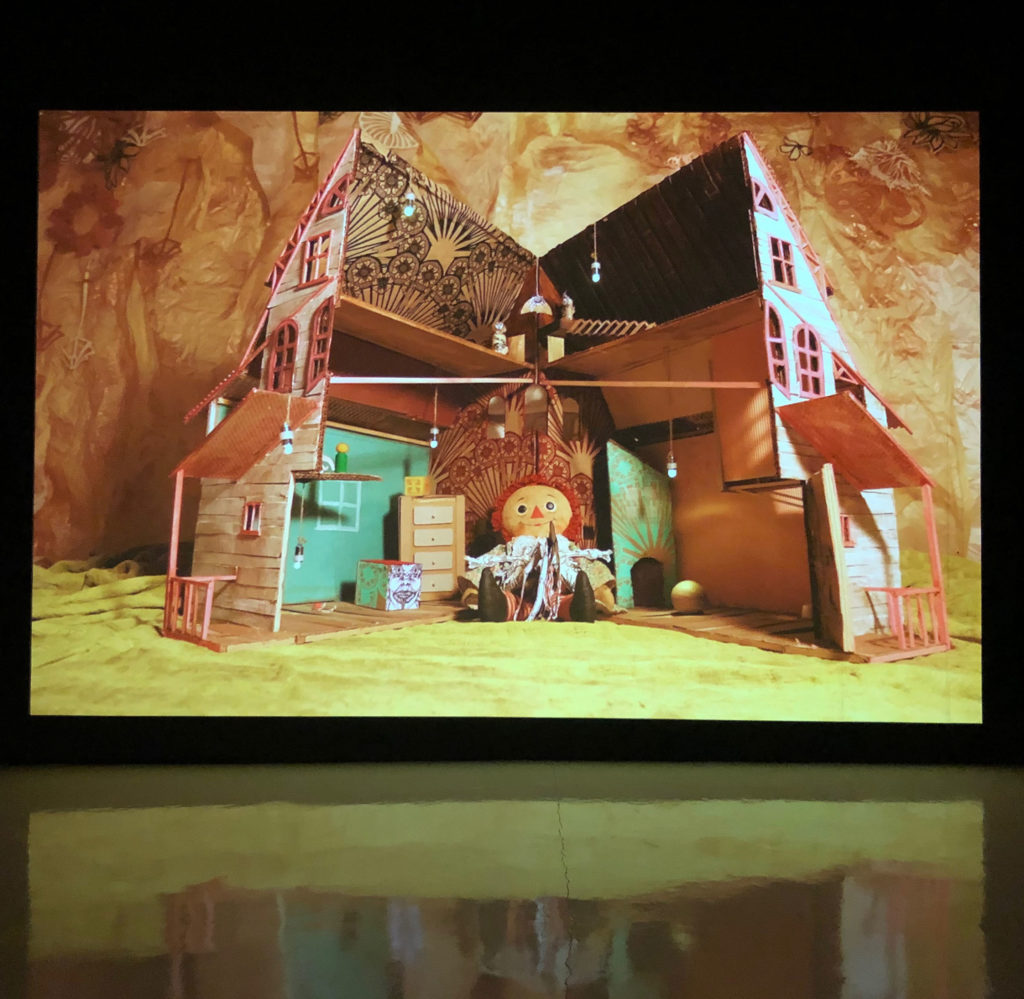
It’s the last week to see Swoon: Cicada at Jeffrey Deitch’s New York location. This exhibition of Caledonia Dance Curry (aka Swoon)’s work includes a sculptural installation, drawings, and a stop motion film.

From the gallery’s website-

Cicada marks a new development in Swoon’s practice. A celebration of rebirth and transformation, the exhibition at 76 Grand Street features recent films, drawings, and installations in which her personal story becomes more central.

Moving away from her street pasted portraits that encouraged the viewer to imagine a background story, Swoon now creates narratives that draw from her personal history as well as classical mythologies. She is also inspired by the handcrafted quality of silent era and 20th-century folkloric films. In her stop-motion animations, fragments of the subconscious coalesce into subliminal images. Open-ended stories unfold and weave recurring motifs such as birth, divination, trauma, and healing.

Swoon’s stop-motion films emphasize the body’s ability to serve as a vessel carrying memories and traditions. A house, a ship, and human figures split and open to liberate a cast of imaginative and mythological creatures trapped inside. The central figure is the “Tarantula Mother,” a half-human, half-spider allegory that evokes traumatic memories from childhood. Swoon’s response to parts of her family history – and the legacy of her parents’ addiction and substance abuse – has recurred throughout her work. These components inflict a strong element of realism to the films, grounding the otherwise- whimsical atmospheres of Cicada.

In Swoon’s work, the sea often constitutes the physical and metaphorical ground for possible encounters. In Cicada, underwater scenarios become a psychological space for introspection and subconscious explorations. Surrounded by new sculptures and her portrait series, Cicada allows viewers to immerse themselves into Swoon’s world, creating a vivid experience embedded in the present moment.

Swoon’s inner circle of friends is the subject of a new series of drawings included in the exhibition. The intimacy of these portraits recalls the romantic and humane spirit of her earlier street pasted works. A tableaux vivant of performers will accompany the exhibition on the opening night, renewing her interest in the counter culture of collectives and carnivals. Whether presented without permission or realized in a traditional gallery or institutional space, Swoon’s work connects with viewers on an emotional level.

The sculptural work is incredibly intricate and its amazing watching it come to life in the film.

This exhibition closes 2/1/20.


Jan 242020
 

Sadie Barnette’s recreation of her father Rodney Barnette’s bar, Eagle Creek Saloon for The New Eagle Creek Saloon at ICA LA is not only beautiful, but it also celebrates an important piece of history.

From the museum’s website-

For her first solo museum presentation in Los Angeles, Oakland-based artist Sadie Barnette (b. 1984) will reimagine the Eagle Creek Saloon, the first black-owned gay bar in San Francisco, established by the artist’s father Rodney Barnette, founder of the Compton, CA chapter of the Black Panther Party. From 1990–93 Barnette’s father operated the bar and offered a safe space for the multiracial LGBTQ community who were marginalized at other social spaces throughout the city at that time.

Barnette engages the aesthetics of Minimalism and Conceptualism through an idiosyncratic use of text, decoration, photographs, and found objects that approach the speculative and otherworldly. Barnette’s recent drawings, sculptures, and installations have incorporated the 500-page FBI surveillance file kept on her father and references to West Coast funk and hip-hop culture to consider the historical and present-day dynamics of race, gender, and politics in the United States. Using materials such as spray paint, crystals, and glitter, she transforms the bureaucratic remnants from a dark chapter in American history into vibrant celebrations of personal, familial, and cultural histories and visual acts of resistance. The New Eagle Creek Saloon is a glittering bar installation that exists somewhere between a monument and an altar, at once archiving the past and providing space for potential actions.

The museum is also showing No Wrong Holes: Thirty Years of Nayland Blake (pictured below).

From the museum’s website-

For over 30 years, artist, educator, and curator Nayland Blake (b. 1960) has been a critical figure in American art, working between sculpture, drawing, performance, and video. No Wrong Holes marks the most comprehensive survey of Blake’s work to date and their first solo institutional presentation in Los Angeles.

Heavily inspired by feminist and queer liberation movements, and subcultures ranging from punk to kink, Blake’s multidisciplinary practice considers the complexities of representation, particularly racial and gender identity; play and eroticism; and the subjective experience of desire, loss, and power. The artist’s sustained meditation on “passing” and duality as a queer, biracial (African American and white) person is grounded in post-minimalist and conceptual approaches made personal through an idiosyncratic array of materials (such as leather, medical equipment, and food) and the tropes of fairy tales and fantasy. Particular focus will be paid to work produced while Blake lived on the West Coast, first in the greater Los Angeles area as a graduate student at CalArts, followed by a decade in San Francisco—years bookended by the advancement of the HIV/AIDS epidemic in the 1980s and the “culture wars” of the 1990s.

Feeder 2, 1998

The gingerbread house, pictured above, is one of Blake’s best known works and was created using actual gingerbread. It references the fairy tale Hansel and Gretel as it recreates the house used to lure the children to their potential doom.

From the wall description-

Fairy tale and fantasy are themes to which the artist often returns as a mirror onto society and culture. Further, duality and the act of revealing are critical to Blake’s practice: as a biracial, white-passing, queer, gender non-binary person, Blake’s identity is one that is not obvious and is predicated on existing in two spaces at once. Though initially captivating through its inviting sight and scent, over time, the once-pleasant sensorial experience of Feeder 2, with its cold, empty interior, becomes overwhelming, even nauseating, as it challenges the truth of perception and association.

Both of these exhibitions close 1/26/20.