
This work by Phobik in Los Angeles was spotted in 2015.


This work by Phobik in Los Angeles was spotted in 2015.
No Win- Surfing
This song is from No Win’s 2022 album Dodger Stadium.
They are playing in Los Angeles at the El Rey Theatre with Sad Park, Graduating Life, and Graveyard Secrets on Saturday 9/9/23.
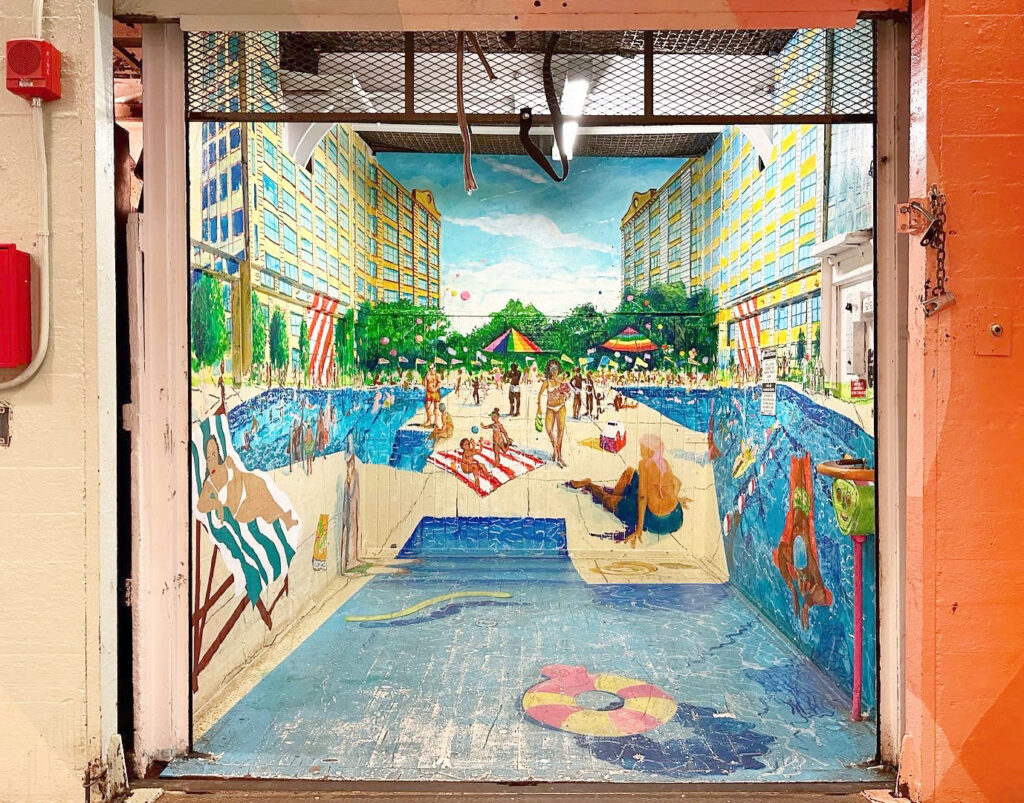
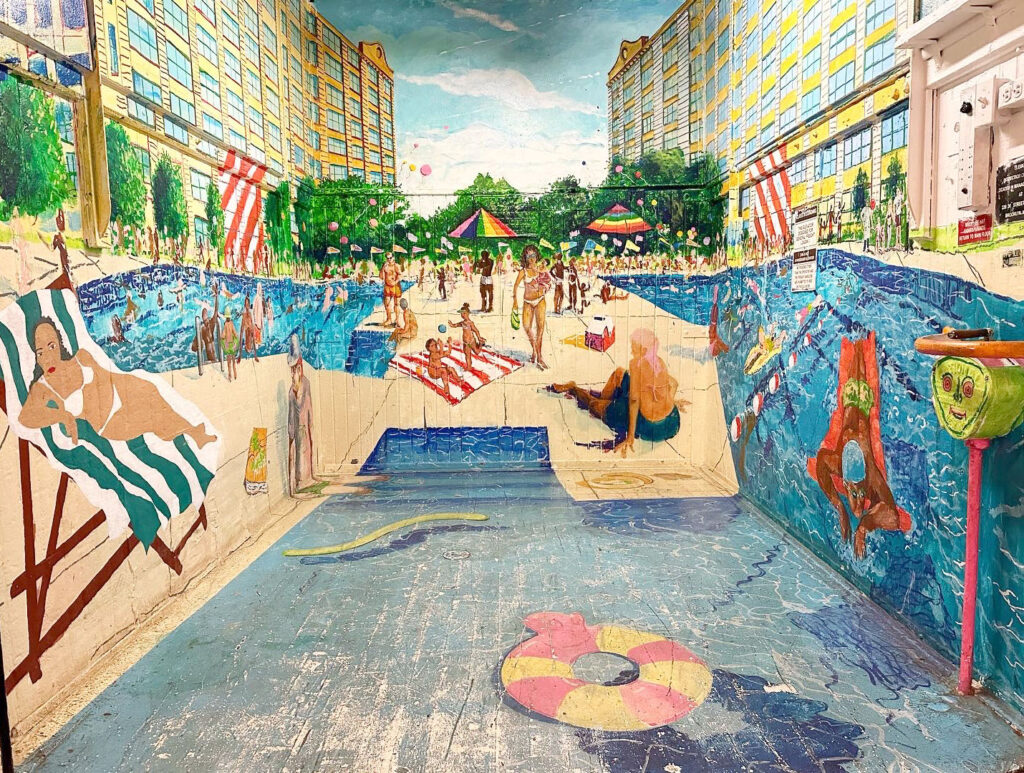
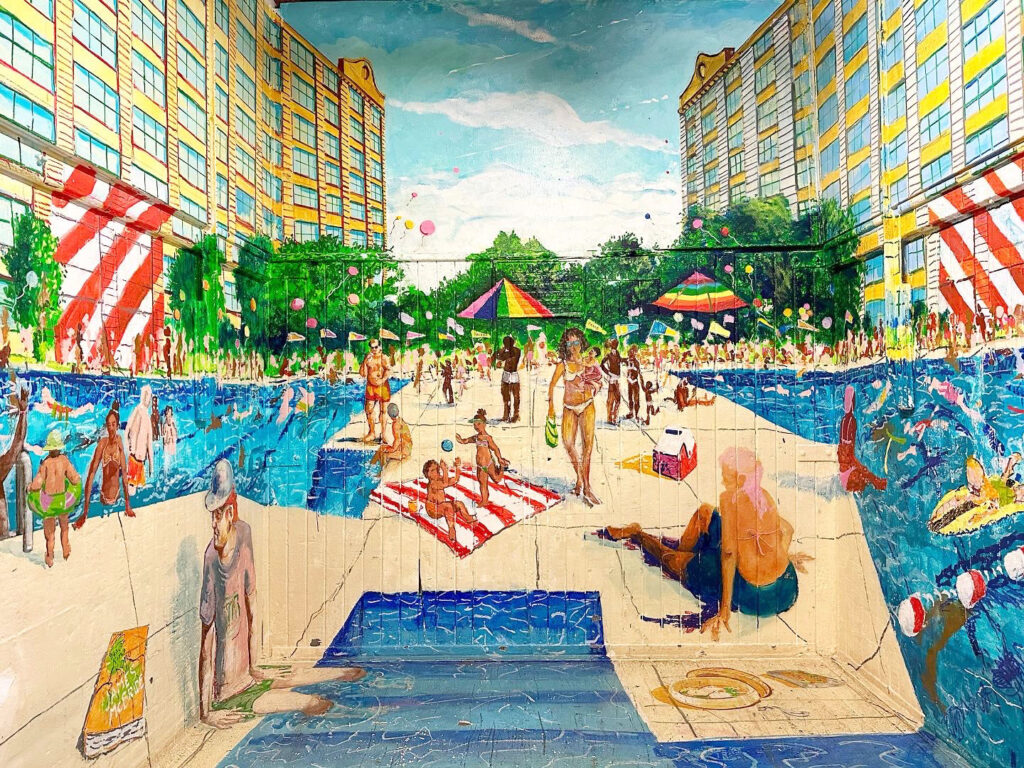
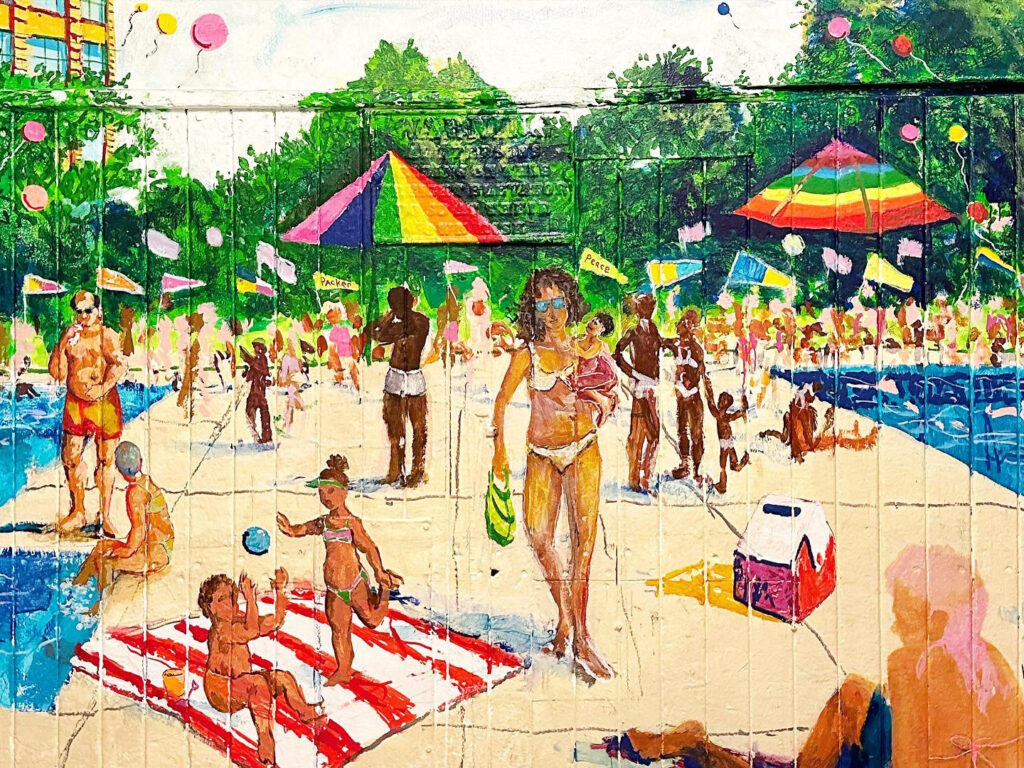
Brooklyn artist Ken Rush’s Poolevator is one of several works located in Industry City– organized by The Collision Project.
From The Collision Project about the work-
This installation represents both the reality and fantasy. The reality is depicted in the inspiring monumental architecture, while the fantasy emerges in the joyful addition of a swimming club with a celebration of swimming, sunbathing, recreation and play. For Rush, the work is a homage to Impressionist painters like Monet and Suerat, and the way that they depicted urban and rural pleasures. This is a group project between Rush and three of his students from High School Visual Arts at Packer Collegiate Institute in Brooklyn Heights.
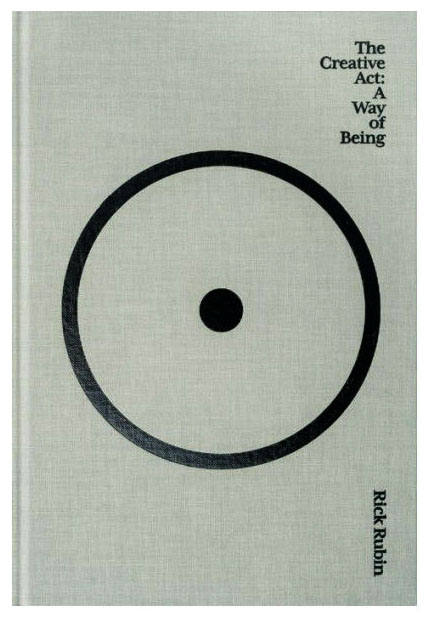
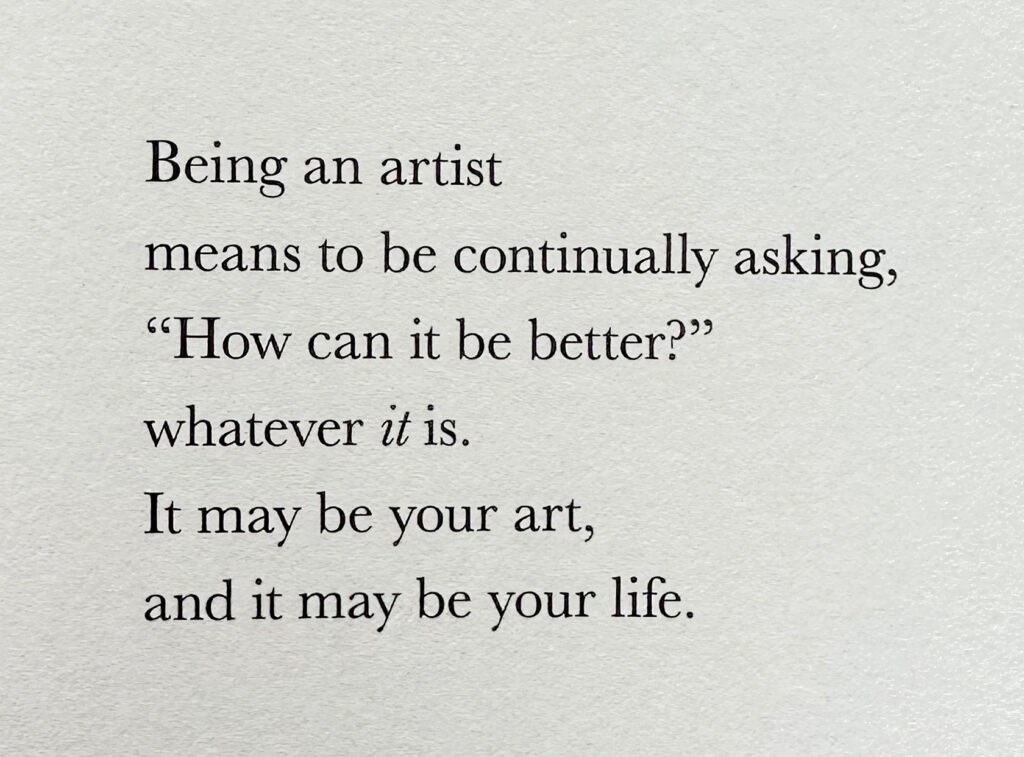
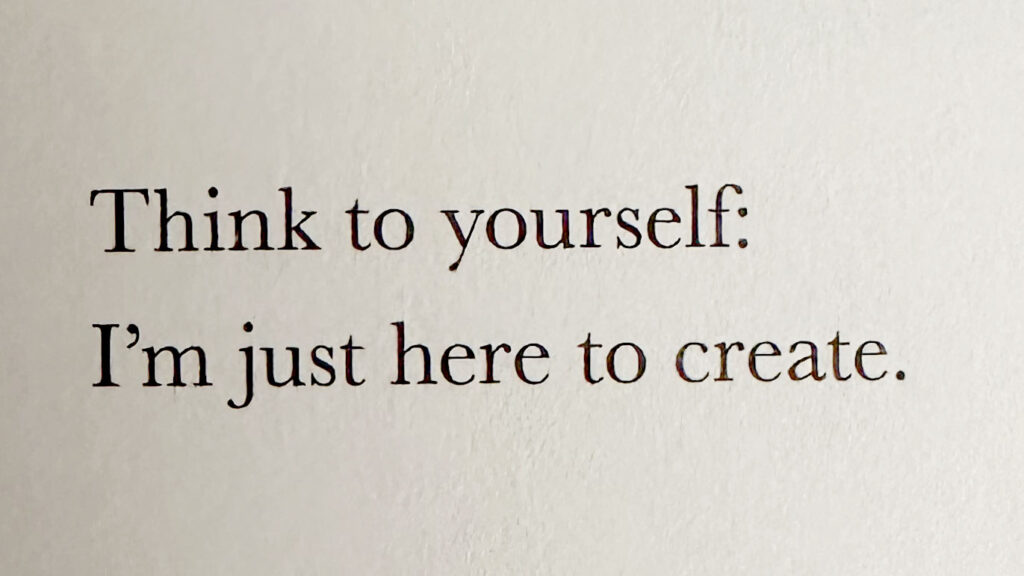

Music producer Rick Rubin’s book, The Creative Act: A Way of Being, is a quick and enjoyable read. The short chapters are broken up with smaller ideas, like the ones pictured above. Although a lot of it felt familiar, there were definitely moments and ideas that were helpful and even inspirational. His advice on editing and completing creative projects I found particularly useful. Others may find they get more out of other sections.
If you don’t know much about Rubin’s career, he’s had an amazing creative journey himself. From founding the famous Def Jam label in college and playing in a punk band to producing albums and songs for a wide variety of musicians. From early hip hop artists to Red Hot Chili Peppers to Johnny Cash and Jay Z to Adele- it’s worth checking out his wide range of work.
Below is LL Cool J’s Going Back to Cali which Rubin co-wrote and produced. Rubin talks about working on this song, as well as many others, in this article in Rolling Stone magazine.
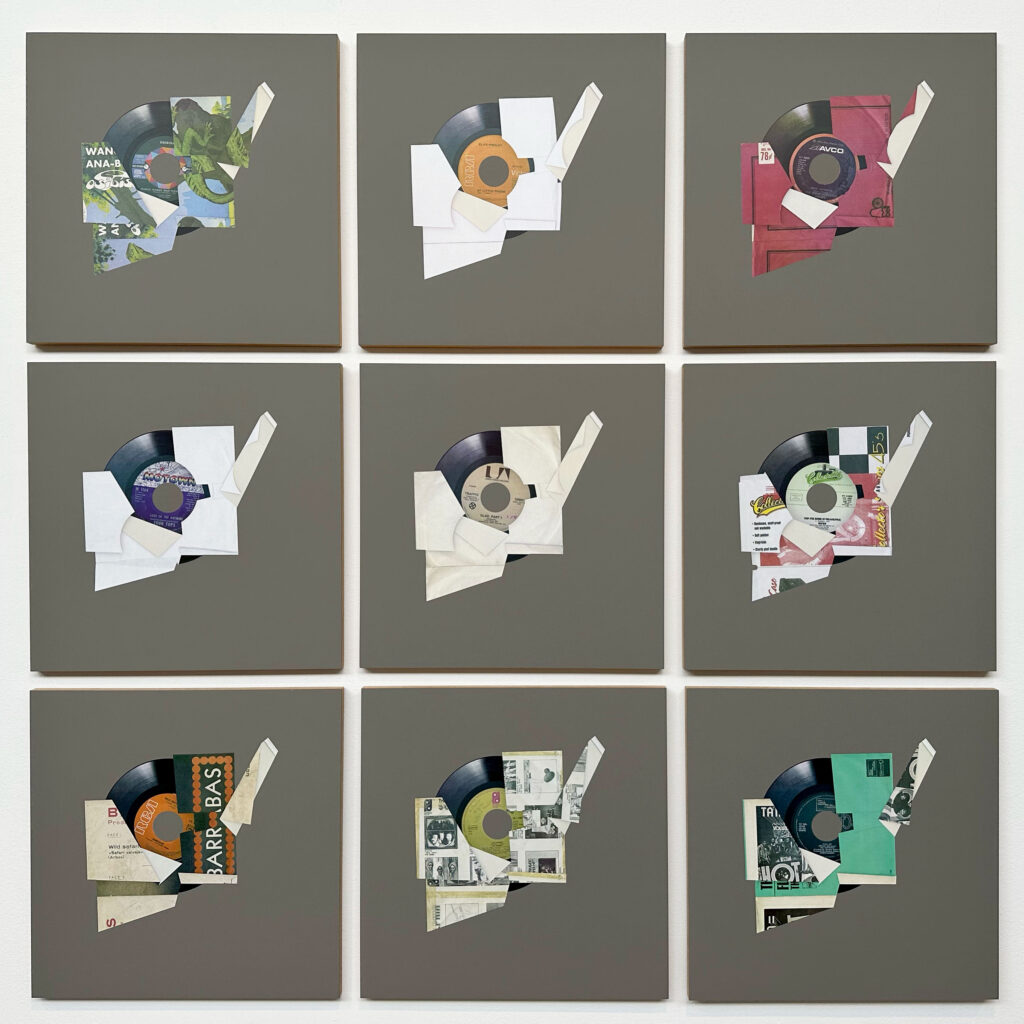
Kelley Walker, “Pioneer PL-518 7-inch Series Love (Is The Answer)” (2015), Pantone 4-color process silkscreen with acrylic ink on MDF
The work above is Kelley Walker’s Pioneer PL-518 7-inch Series Love (Is The Answer) (2015) from the exhibition Terry Adkins, Christian Marclay, Kelley Walker, that was on view at Paula Cooper Gallery in NYC this past March.
From the gallery about Kelley Walker-
Known for his manipulation of long-circulating images from advertising and other sources, Kelley Walker examines the consumption of visual culture using collage, screen-printing, sculpture, and installation. Bose Glitter Stock (2016) and Untitled (Screen to Screen) (2017) contain montages of superimposed silkscreen images printed on polyester mesh substrate, the armature for screen printing. Pioneer PL-518 7-inch Series Love (Is The Answer) (2015) is a grid of silkscreened panels that reproduce vinyl records and their packaging. Walker referenced the legendary Pioneer brand of turntables, famously advertised by Andy Warhol, as part of his investigation into the visual culture of the 1970s and 1980s New York disco scene.
Below is the song that the title references. It is included among the records pictured and is from the Four Tops album, Still Waters Run Deep.
Four Tops- Love (Is The Answer)
White Reaper- Pages
This song is from White Reaper’s 2023 album Asking for a Ride.
The band are playing with Weezer and Spoon at the FivePoint Amphitheatre in Irvine, CA on 9/2/23.
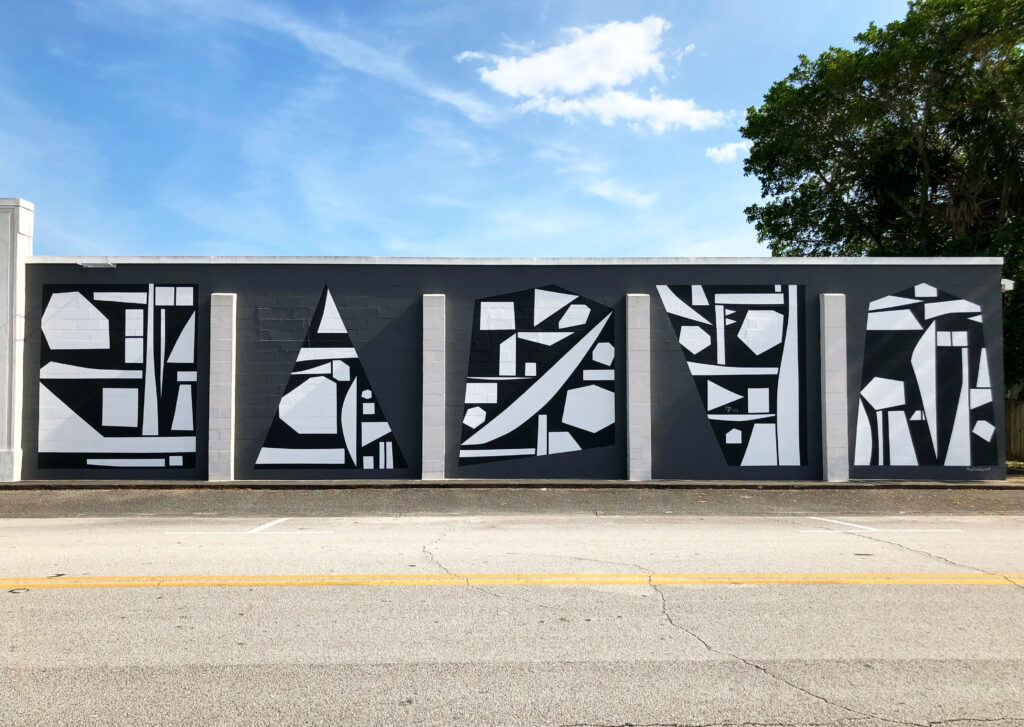
This mural was created by Hyland Mather, aka The Lost Object, in 2017 for Anti Gravity Project and The Foosaner Art Museum in the Eau Gallie Arts District in Melbourne, Florida. The museum, sadly, closed in 2021.

“Bryson Funmaker”, 2020, Inkjet print and beadwork
The Museum of Fine Arts St. Petersburg is currently showing an impressive collection of work from photographer Tom Jones. The photos, in multiple series, focus on Native American identity, history, cultural appropriation, and the Ho-Chunk Nation of Wisconsin, of which Jones is a member. The work engages visually while also being informative.
From the museum’s press release for Tom Jones: Here We Stand–
For over twenty years, Tom Jones has created a visual record and exploration of his Ho-Chunk community. Born in North Carolina and raised in Orlando after a short stint in Minneapolis, Jones returned to the Midwest, moving to Wisconsin at age 15. He then made his way to Chicago for graduate school at Columbia College. Jones’s father worked with Kodak and owned a photography lab, helping shape the artist’s understanding of the practical aspects of photography from an early age. During graduate school, Jones began an ongoing photographic essay on the contemporary life of his Ho-Chunk community, beginning first with the elders.
The show comprises over a dozen series, ranging from the documentary to the conceptual. Of his series on Veterans’ memorials at the annual Black River Falls Pow-Wow, Jones says, “I was interested in the way families made very conscious decisions about how they want their loved ones memorialized.” Other series include the emotionally intimate, though larger than life, beaded portraits. “Beading is a metaphor for our ancestors watching over us. I am also referencing an experience I had when I was about 8 or 9 years old. My mother took me to see a Sioux medicine man named Robert Stead. He led the call to the spirits, the women began to sing, and the ancestors appeared as orbs of light. This event inspired the series Strong Unrelenting Spirits.“
Jones’s photographs examine identity and geographic place with an emphasis on the experience of Native American communities. He is interested in how American Indian material culture is portrayed through commodification and popular culture. Much of his work counteracts and corrects decades of misinformation and misrepresentation of American Indians, particularly targeting the field of U.S. history. Jones’s critical assessment of the romanticized representation of Native peoples in photography re-examines historic pictures taken by white photographers. This reassessment questions the assumptions about identity within the American Indian culture by non-natives and natives alike. “While each of Jones’s series is distinctly different, the message remains consistent: the Ho-Chunk are not vanishing or frozen in time,” said Dr. Jane Aspinwall, Senior Curator of Photography. “Jones’s photographs emphasize a solid, generational commitment to family, tribal community, and land. His photographs reclaim appropriated images and set the historical record straight.”
Below are a some selections from a few of the series in the exhibition.

“Trenton and Roger Littlegeorge”, 2011

“Dorothy Crowfeather”, 1999

“Dear America” series

About the Dear America series pictured above-
Using each line from the first two verses of the song, America (“My Country Tis of Thee”) as the title of fourteen of the works in the Dear America series, Jones questions whose history is being propagated here. With dry wit and an unfailing commitment to truth, Jones exposes atrocities like the massive effort by the U.S. government to assimilate Native American children to non-Native culture, the merciless seizing of Native lands, and the mass hanging of thirty-eight Sioux and Ho-Chunk men under President Lincoln in 1862. He also highlights Native American identity in relation to cowboy culture, the thoughtless misappropriation of Native American customs, and the influence of the Iroquois Confederacy on the U. S. Constitution. Jones’s aim is to broaden the “traditional” historical American narrative to be more representative of all people, especially the original inhabitants of this land.

About the Ho-Chunk Veterans Memorials, pictured above-
“I wanted to do this photographic essay to honor our veterans… One in four American Indian males is a United States veteran. Ho-Chunks have fought in every war for the United States except for the War of 1812. The Ho-Chunks did this even though they were not granted the right to vote until 1924, and during the Indian Removal Act, were removed at least seven times from Wisconsin by the United States government. This is the conviction we have as a people… I honor these people who give of themselves freely to protect this land. Traditionally, Ho-Chunks are taught to live their lives for the betterment of others. The veterans have done this.’
-Tom Jones

From Jones’ “”Native” Commodity” series
About the “Native” Commodity” series-
The Wisconsin Dells, one of the most popular tourist destinations in the state, is home to spectacular natural scenery and the largest concentration of waterparks. Located on Ho-Chunk ancestral land, the area is now highly commercialized, with much of its identity resting on the appropriation of Native American stereotypical tropes. In this series, Jones documented this unabashed use of Native American symbols, images, and place names in advertising and popular culture. The sale of “Native American” crafts made in China, the liberal use of names of historically important figures like Black Hawk, and the indiscriminate mix of tribal communities into one conglomerate-tipis from the Plains next to totem poles from the Pacific Northwest next to Pueblo pottery. The Dells serve as a microcosm for how images of Native Americans are reproduced and reframed into a collective memory that is often distorted. Jones wryly noted that none of the Native American objects feature anything specifically attributable to the Ho-Chunk Nation.
This exhibition has been extended until 9/10/23.
Barney Bones- Westside Story feat. Duckwrth
Every month I listen to the majority of bands/singers/musicians/artists who are playing in Los Angeles and select some for a monthly playlist. It includes a variety of genres and usually newer work by the artist.
The song above is from Barney Bones’ 2023 album, ESCAPISM.
Below is the playlist for July 2023.
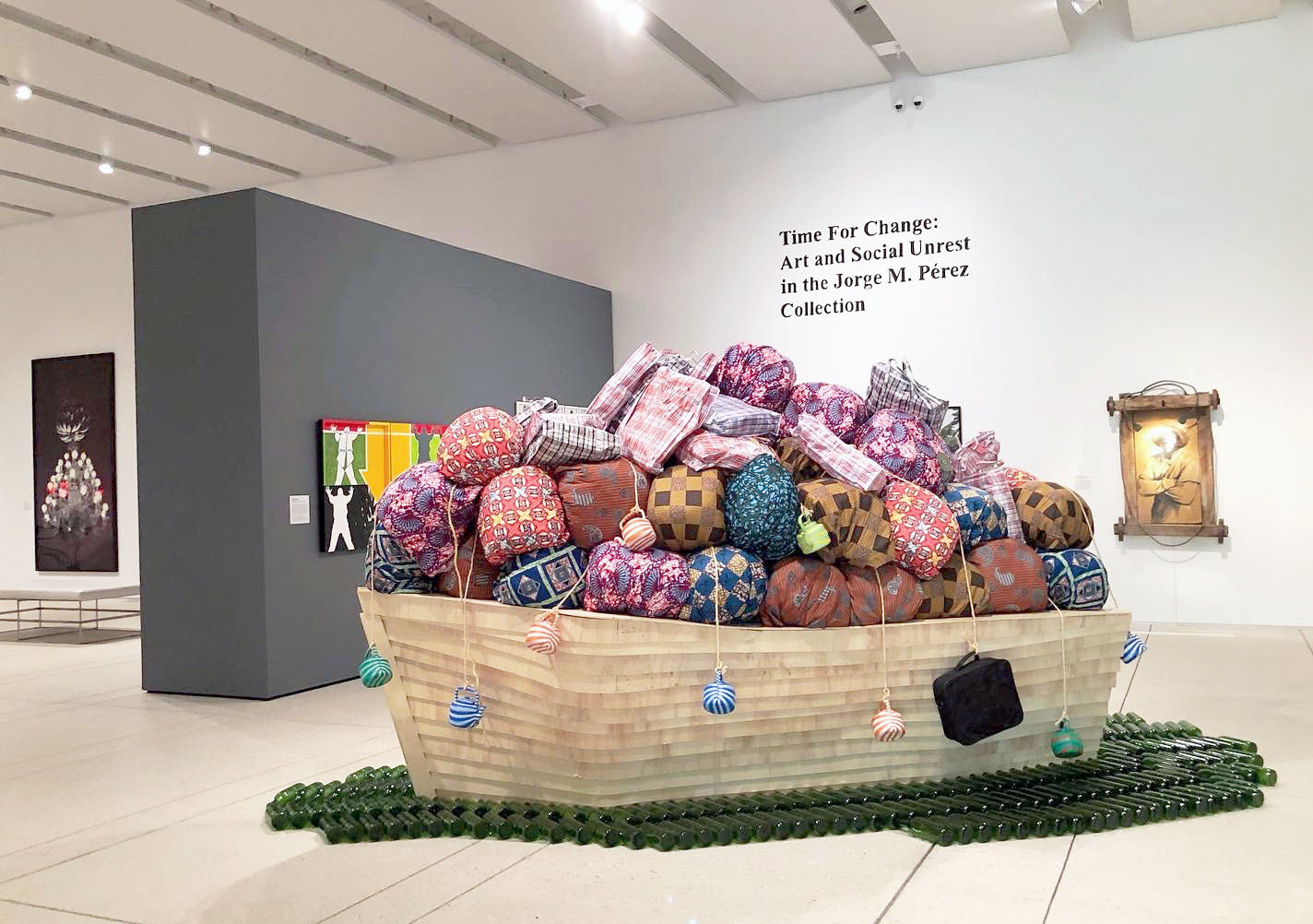
Barthélémy Toguo (Cameroonian, b. 1967), “Road to Exile”, 2018. Wooden boat, cloth bundles, glass bottles, and plastic containers
Currently on view at Tampa Museum of Art is Time for Change: Art and Social Unrest in the Jorge M. Pérez Collection. The exhibition highlights art from around the world that focuses on social issues.
From the museum-
“It is enough for the poet to be the bad conscience of his age”, stated Saint-John Perse in his 1960 Nobel Prize acceptance speech. Something similar could be said when artists address the transformations of society. We should not ask for measurable political action when their role is to point out, to render evident, to shake us from indifference. Art may not provide answers, but most of the time it interrogates and proposes uncomfortable issues, almost like rubbing salt in a wound. Artists are seldom celebratory, nor do they usually provide solutions-art’s potency lays in the symbolic efficacy of the actions it proposes more than in the practical effects they entail. Paraphrasing Brazilian poet Ferreira Gullar, “art exists because life is not enough.”
Time for Change is structured around six themes or nuclei: Entangled Histories, Extraction and Flows, Artivism, State Terror, Spatial Politics, and Emancipatory Calls. The sections are organically linked and establish dialogue and correlations among artworks that do not necessarily illustrate an argument nor are they contained by one. Entangled Histories proposes essential questions: how do we remember as a society? Who is forgotten by History, and for what reasons? Extraction and Flows examines displacement of peoples (usually forced), as well as the unequal logic on the territory. Artivism: Art in the Social Sphere focuses on political unrest and public protest on the streets. State Terror signals how protest is countered with repression and violence. The fifth section, Spatial Politics, reflects on modern architecture and its role in creating segregated communities. Lastly, Emancipatory Calls summons to reclaim difference, in the understanding that a more just society can only be built on respect for one’s right to be different.
A comprehensive look at the Jorge M. Pérez Collection reveals a tendency towards art with an interest in social change- art that examines the conflicts and contradictions of contemporary society, art that critically analyzes historical events and reframes them in the present. Many of the 60 works on view, due to their size or complexity have rarely been exhibited and are shown together for the first time in Time for Change.
About the main work pictured above, Barthélémy Toguo’s Road to Exile, from the museum–
In 2018, the Parrish Art Museum in Water Mill, New York hosted Barthélémy Toguo’s first solo exhibition in the United States. While on site at the Parrish he made Road to Exile, a large-scale installation highlighting the plight of refugees, in particular African migrants in search of a better and safer quality of life. The installation features a life-sized wooden boat that rests on glass bottles. A metaphor of the dangerous voyage across the sea, the bottles represent the fragile line between life and death. The boat nearly overflows with bundles wrapped in brightly colored African textiles and serve as stand-ins for the body. In Road to Exile Toguo employs imagery of the boat as a means of escape rather than a vessel for exploration or adventure.
Below are images from the exhibition as well as some information on a few of the works.
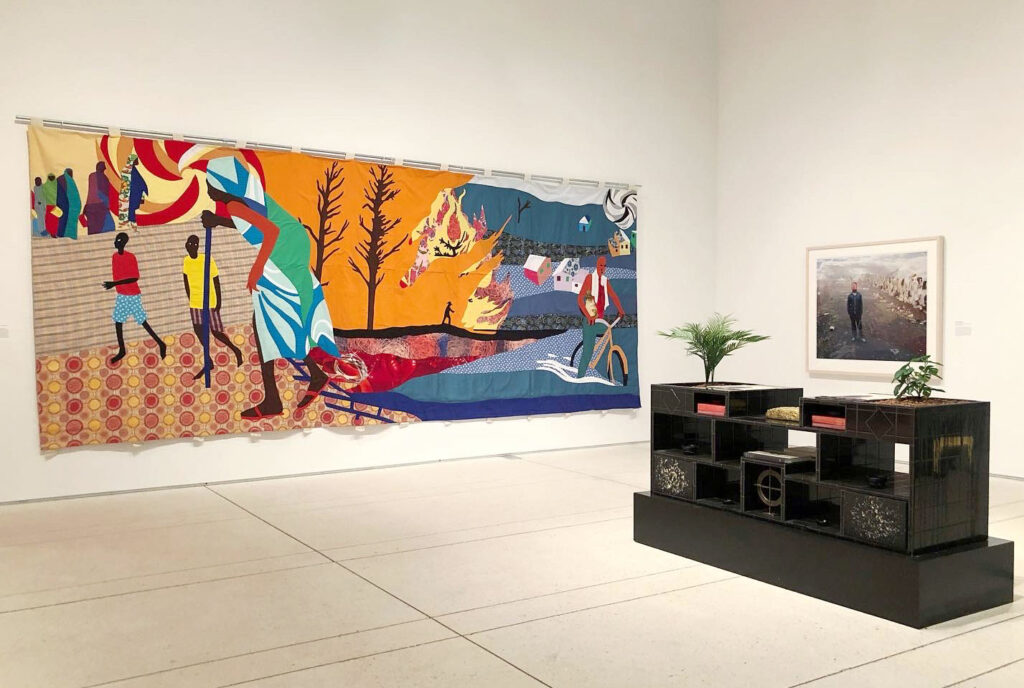
Rashid Johnson, “A Place for Black Moses, (2010), bottom right sculpture, and Christopher Myers “How to Name a Famine, a Fire, a Flood”, 2019, left wall piece
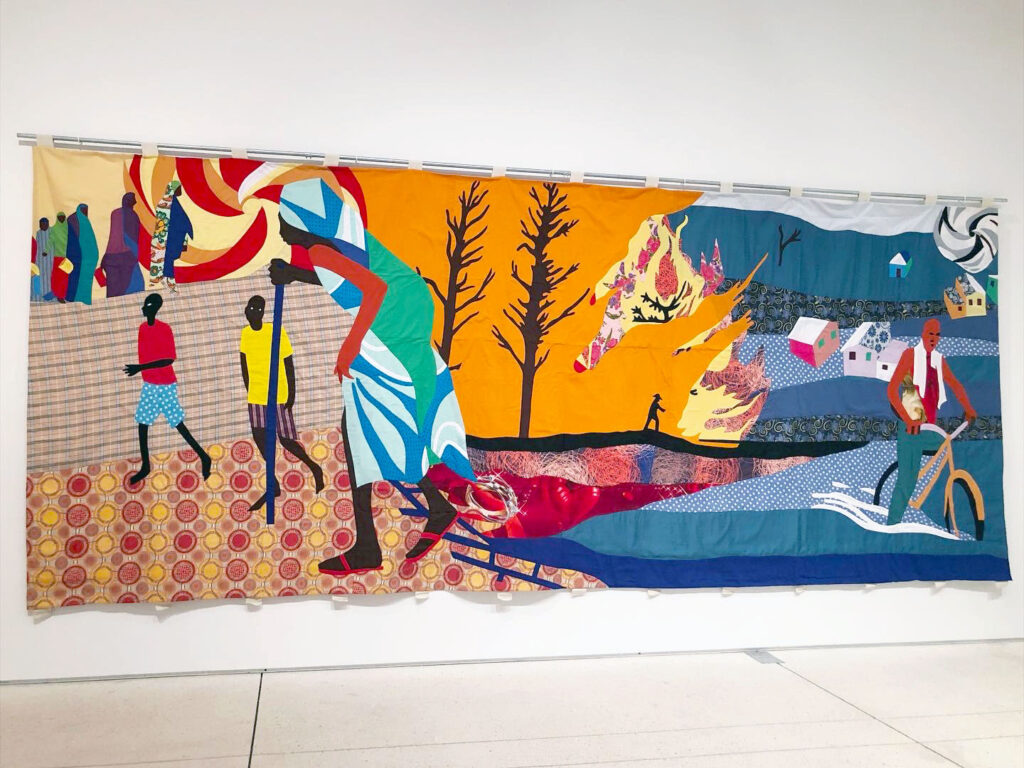
Christopher Myers “How to Name a Famine, a Fire, a Flood”, 2019, Applique fabric
From the museum about the above work-
Storytelling anchors Christopher Myers’ artistic practice. Working in a range of media, he mines history and creates art that links the past to the present. Myers’ tapestries, such as How to Name a Famine, a Fire, a Flood draws on the rich tradition of quilt making as a quiet yet radical form of resistance and protest. The stories depicted center on the effects of globalization on individuals and more specifically, communities of color. In How to Name a Famine, a Fire, a Flood, Myers portrays three different natural disasters linked to climate change. With vivid color and patterned fabric, he illustrates the impact and devastation of these catastrophic events in neighborhoods with minority populations.
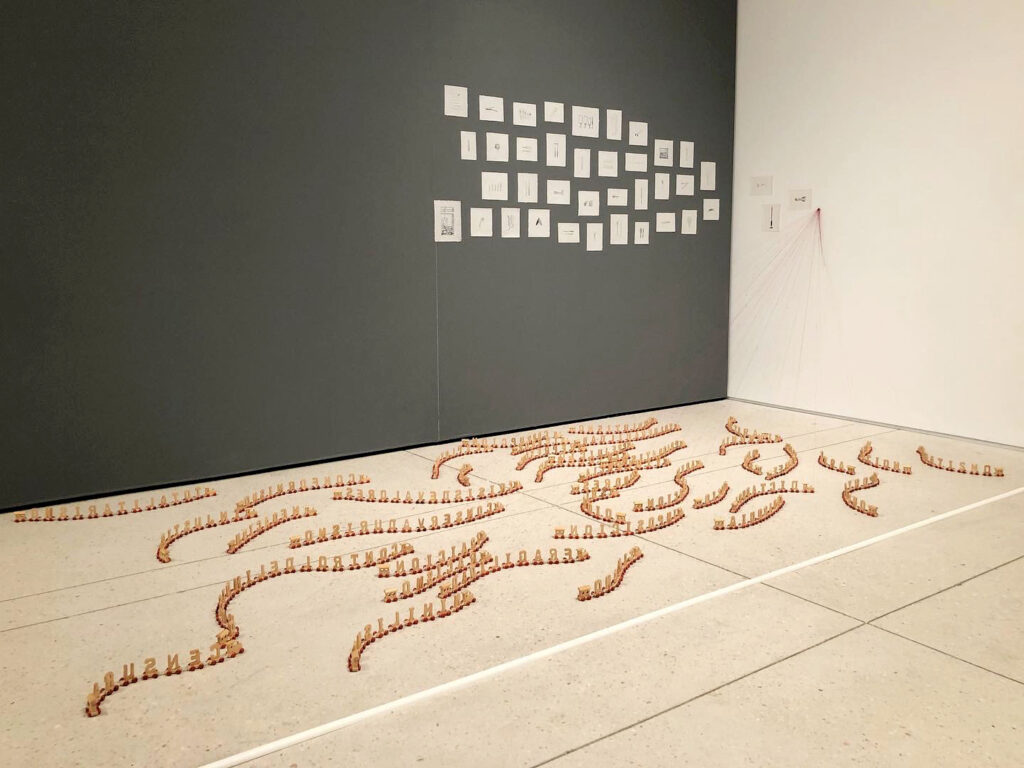
Carlos Garaicoa “La habitacion de mi negatividad (The Room of My Negativity)”, 2003, 39 ink and pencil drawings on rice paper and toy train installation
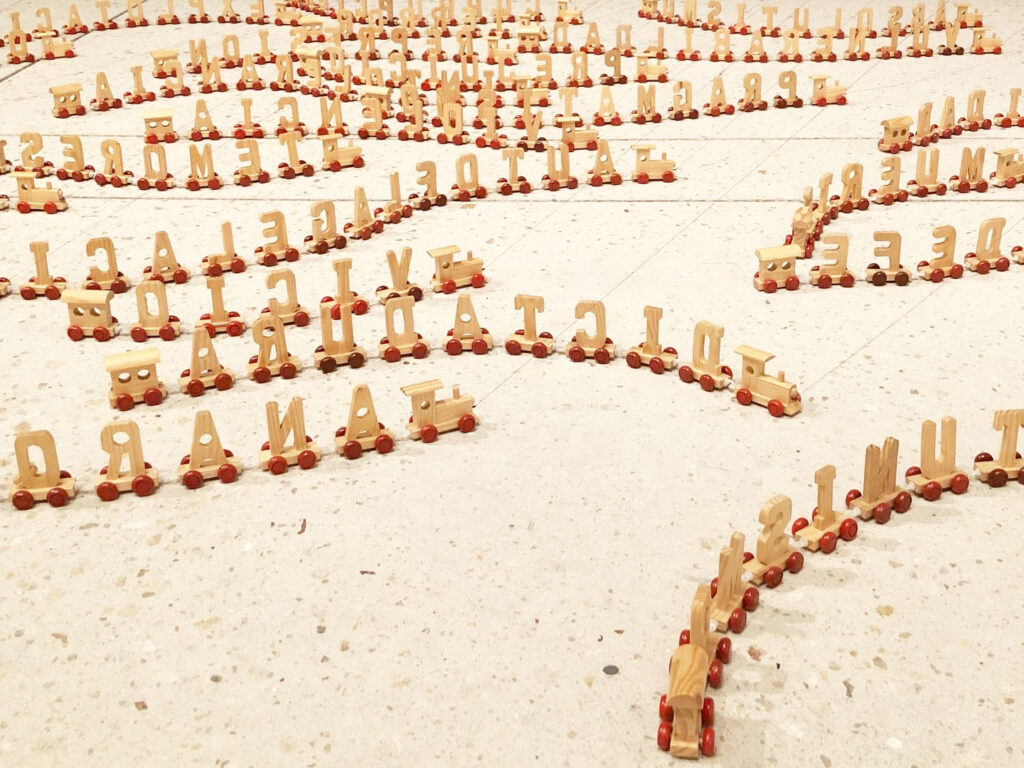
Carlos Garaicoa “La habitacion de mi negatividad (The Room of My Negativity)”, 2003 (detail)

Carlos Garaicoa “La habitacion de mi negatividad (The Room of My Negativity)”, 2003 (detail)
About the above work from the museum-
Carlos Garaicoa works in a variety of media, ranging from installation, photography, and video to performance and public interventions. His early work in the 1990s focused on the urban decay of Havana as result of its political climate and economic strife. La habitacion de mi negatividad (The Room of My Negativity), turns Garaicoa’s lens inward. In this installation, comprised of toy trains and drawings of medical instruments, the artist explores his psyche and subconscious. The train’s engine pulls words that represent Garaicoa’s negative thoughts. Each train is connected to thin red thread that acts as a vein or conduit for the negative thoughts to travel. Arrange in a curved form, the train shapes mimic brain waves or the slink of a snake. Garacoia’s drawings of medical tools serve as mechanisms in which the negatively could be excavated from one’s mind.
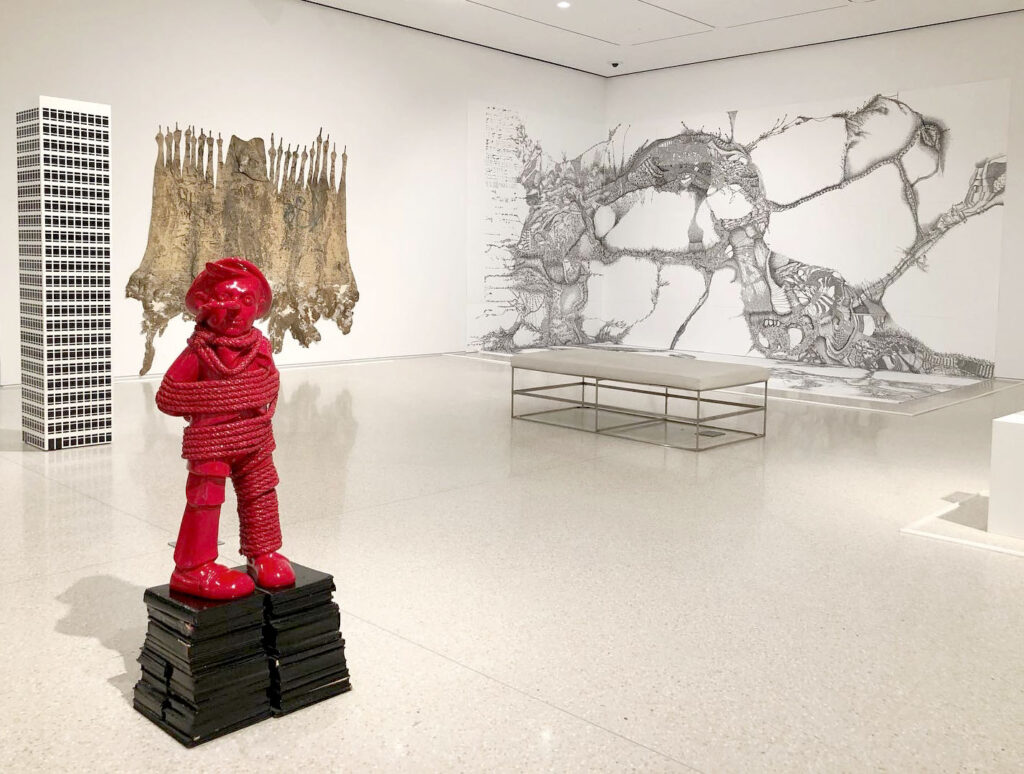
Esterio Segura, “La historia se muerde la cola (History Bites its Tail)”, 2015, (statue bottom left); Anamaría Devis, “Infinito (Infinite)”, 2018(upper right)
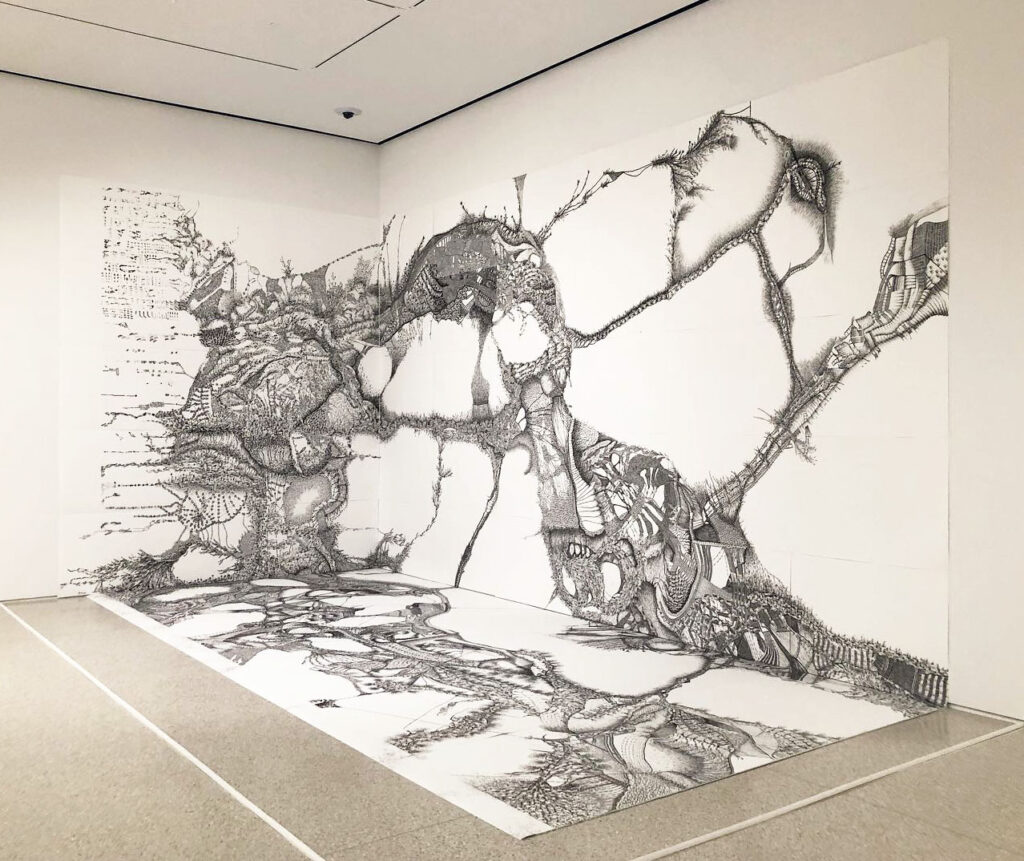
Anamaría Devis, “Infinito (Infinite)”, 2018, Ink on paper
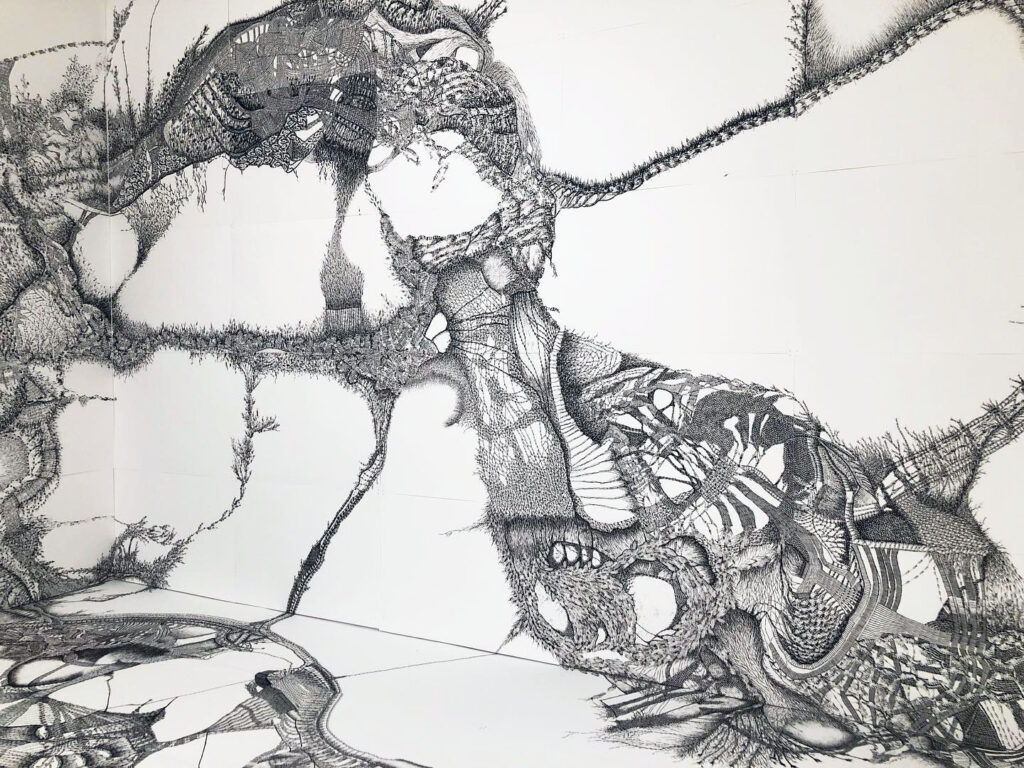
Anamaría Devis, “Infinito (Infinite)”, 2018, Ink on paper (detail)
About this work from the museum-
Anamaría Devis’ large-scale installation Infinito (Infinite) represents the artist’s study of African history in San Basilio de Palenque, Colombia. Escaped slaves founded Palenque and it was the first free town in the Americas during colonial times. While researching this history, Devis discovered that in this region of Colombia, braided hairstyles worn by Africans served as escape maps. Braid patterns reflected safe points in the area’s topography. This silent form of resistance inspired her to look at other bodily topographies like the characteristics of fingerprints, which also had names associated with cartography such as crossing, island, and fork. Devis then began to create drawings that incorporated footprints, braid patterns, and elements of nature. From the drawings she made stamps and each panel of paper that comprises Infinito (Infinite) is rendered from Devis’ various imprints. The result is an abstract representation of the body and landscape visualized through mapping and codes.
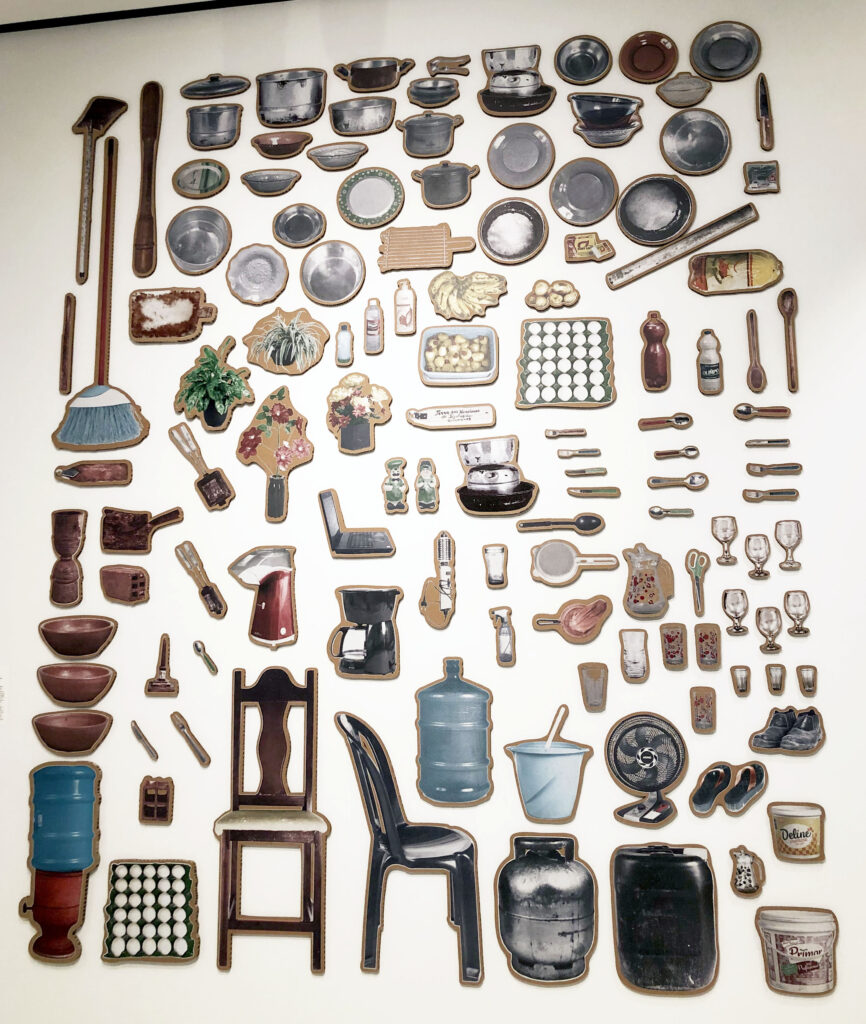
Jonathas de Andrade, “A batalha de todo dia de Dona Luzia, de Tejucupapo (The daily battle of Dona Luzia, from Tejucupapo)”, 2022 Images printed on raw falconboard
About this work from the museum-
Jonathas de Andrade collaborated with the Brazilian theater company Teatro Heroínas de Tejucupapo to create a visual reenactment of the historic 1646 Battle of Tejucupapo. For nearly 25 years, between 1630 and 1654, the Dutch occupied the northeast of Brazil including Tejucupapo, a small community in the city of Goiana. During the Battle of Tejucupapo, a brigade of black and indigenous women forced Dutch soldiers to retreat by arming themselves with household and farm objects. The Teatro Heroínas de Teiucupapo commemorates this female-led rebellion each April by restaging the battle with local actors.
Artist Jonathas de Andrade celebrates the power and courage of Tejucupapo’s women with his large-scale photographic installation A batalha do todo dia de Tejucupapo (The Battle of Tejucupapo). The work on this wall, A batalha de todo dia de Dona Luzia, de Tejucupapo (The daily battle of Dona Luzia, from Tejucupapo), presents everyday objects from the home of one of the women participating in Teatro Heroínas de Tejucupapo. This inventory explores the daily struggles, as well as strength, of Brazil’s black and indigenous women that have spanned centuries.
This exhibition will close on Sunday, 8/27/23.