Feb 292024
 

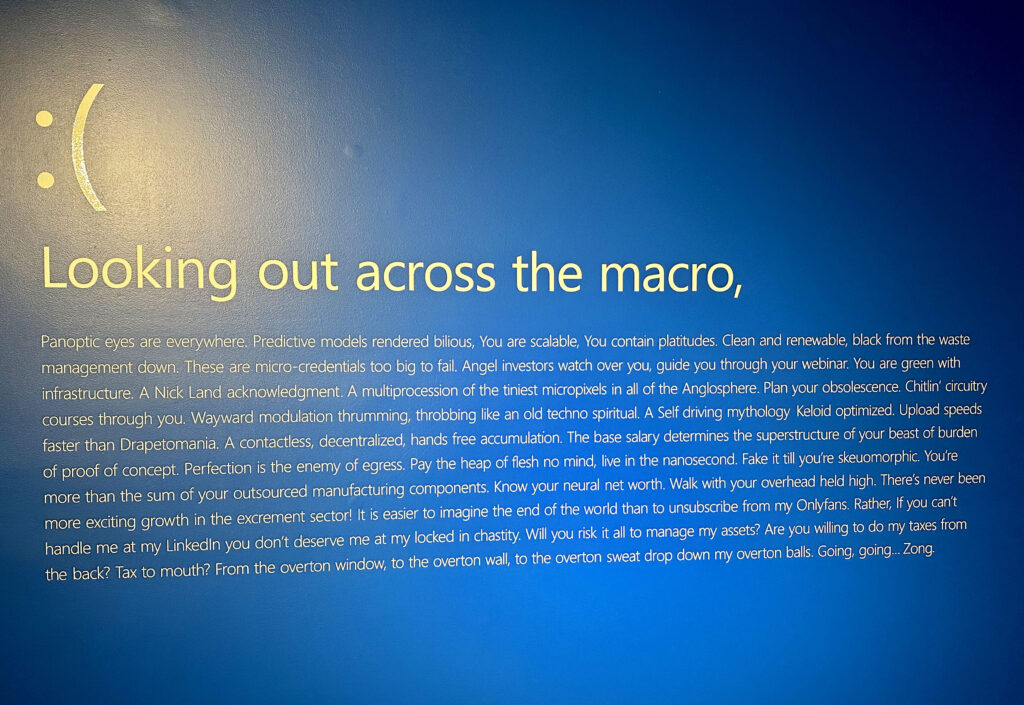
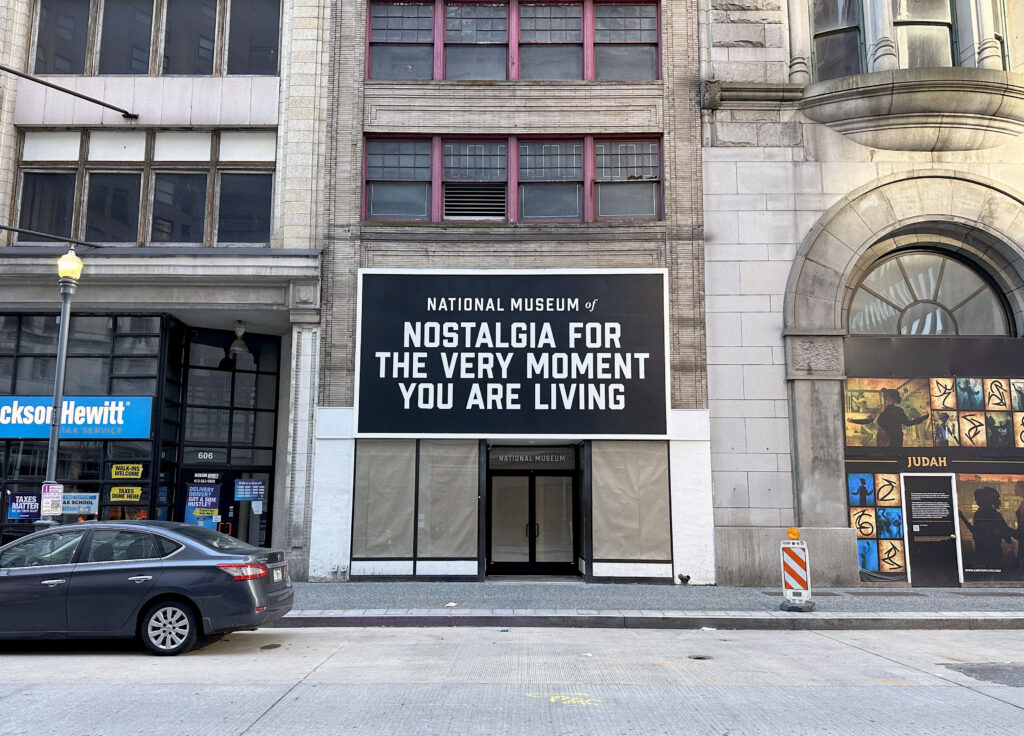
The National Museum is a public art project founded and curated by Jon Rubin and presented by Pittsburgh Cultural Trust. Different artists are invited to change the name of the museum and an essay is written using the title as a jumping off point. The first iteration is by artist and writer Pablo Helguera.

About the project from Jon Rubin’s website

The National Museum repeatedly asks which stories, histories and futures are deemed worth saving and which are ignored or forgotten. Each month, a different artist is invited to change the name of the museum and a national writer is invited to use that museum title as the jumping off point for an essay. In its first year, the project currently consists of storefront signage, street posters, printed broadsheets, a website and monthly accompanying essays.

When a name starts with “The National Museum” it triggers contentious and political associations with borders, nationhood, even citizenship and belonging. Who gets to determine the belonging of an entire group of people bound only by the fact of their geographical location. There’s something absurd about that, if you think about it. Instead of claiming ownership over a diverse populous or even a disparate set of objects, can the notion of the “national” be rethought as something that is less tangible, less object-oriented?

There is a fundamental hubris and absurdity in calling something, anything, a museum, let alone The National Museum. But, in many ways, it’s really no different than any other museum that someone, usually with far more money, privilege, and power than any of my artist peers or myself, has simply made up. So, in a way, the project functions as a kind of loophole or work-around, a participatory fiction that allows a variety of artists to put forth an ongoing series of grand propositions, a theoretical institution that repeatedly brings into question the certainty and reality of our pre-existing institutions.

The National Museum elucidates how museums, especially national ones, are perhaps no different than the nation-states in which they reside. Each is an imagined political construct, a collective fiction used to collect, categorize, narrativize, and control. Throughout modern history museums have used the collections they steward and the stories they tell to validate extractive legacies of colonialism. And, although our current museums, both national and private, are staffed by people with experience in the arts and humanities, the ultimate decision-makers in many of these institutions are wealthy donors and trustees who derive financial benefits from, and exert ideological control over, the fundamental mission of museums. So, while the general public think museums are nominally for “everyone,” the truth is that they are delimited by economic, geographic, racial, and cultural boundaries that restrict their function, design, and access to select publics.

Pablo Helguera’s essay on building façades as art and metaphor, Creditable Unrealities, is included on the broadsheet for the project (as well as his Substack Beautiful Eccentrics) and is a highly enjoyable read.

It includes this passage on how he came up with his name for the museum-

“Ultimately, I reasoned that façades are  the most direct indicator of the time when they were built:  they are the things that we try to use as visual reference to identify a city we know in a historic photograph; they are time markers. And when it comes to museums, they traditionally seek to project timelessness, especially those august institutions whose neoclassic façades promise a container of art for the ages. So I thought that this façade should be the threshold not of art history but of our own awareness of that history and our minuscule place in it, knowing that the present that we are living so vividly will soon wash away, largely unimportant within the broader scope of human life. In 2001, doing research on people who consumed ecstasy, I was struck by the effect that their drug had in some people’s temporal awareness, and how it resonated with my own  (drug-free) experiences. Thus the phrase “I have nostalgia for the moment I am living”, which gave the inaugural title to the National Museum.”

The next iteration of the museum will feature Edgar Heap of Birds (Hock E Aye Vi). The broadside will be written by poet, writer, lecturer, curator and policy advocate Suzan Shown Harjo.

Feb 282024
 

The images above are from Brianna Lynn Hernandez’s exhibition Anticipatory|Después, one of three currently on view at Spaces gallery in Cleveland. Her moving video and sculptural installations focus on themes of end-of-life-care, grief, and mourning.

From the gallery about the work-

Anticipatory|Después visualizes the anticipatory grief of caregiving and the process of dying through performative videos and photography. Each piece shares the physical and emotional state of the dying, the caregiver, and at times the two concurrently. Ranging from fast and aggressive dance-like movement to slow and meditative contemplation, the enacted scenes capture a range of emotions and thought processes of understanding and untangling the intertwined traumas of caregiving and acute grief.

As her mother’s caregiver in the final year of her life, Hernández translated her personal experience of grief into her studio practice in order to combat the isolation and shame many grievers face in our death-avoidant culture. Through several series including Anticipatory | Después, the works aim to normalize honest conversations of grief and act as an entry point into education on end-of-life planning. Hernandez states that while we will all eventually experience the pains of loss, preparing for the logistics of death and nurturing supportive communities for grievers can provide comfort and lessen the unnecessary stressors attached to loss.

A Botanical Conversation, Mehdi-Georges Lahlou’s exhibition, explores environmental, identity, and cultural issues using the natural world as a backdrop. The two large murals are of an enlarged palm tree cell as seen through a microscope.

The exhibition statement by curator Conor Moynihan-

The palm tree is a central component of Mehdi-Georges Lahlou’s practice, a motif he has explored to highlight themes of exoticism, migration, and cultural heritage. Recently, Mehdi- Georges Lahlou has used the palm tree to explore themes of colonization, climate change, and history. While members of the Arecaceae family- palm trees- can be found in many parts of the world, they are not found here in Ohio. Unless, of course, you go to the Cleveland Botanical Garden as Mehdi-Georges Lahlou did for his residency at Spaces.

For A Botanical Conversation, Mehdi-Georges Lahlou has created four new video works using the Cleveland Botanical Garden as the setting and backdrop. While many of the plants visible in these works come from elsewhere across the world, his collaborators Diwe Augustin-Glave, CHIMI x Nature, and Dr Lady J are based in Cleveland. In many ways, this body of work imagines the conversations that might happen if the flora in the Cleveland Botanical Garden could speak, sing, chant, and educate, and then transports this dialogue in the gallery space.

Microscopy, the mural that extends over two walls in the gallery, serves a double function. Based on the cell of a dead palm tree, it enlarges from an unusual perspective a motif central to the exhibition. And it also serves as a container and a frame for the four videos. This conversation emerges within the boundaries of the palm tree cell, transporting this exhibition into the botanical garden.

Characteristic of his practice, Mehdi-Georges Lahlou draws our attention to how plants and botanical gardens become ways to highlight histories of colonization, compulsory heterosexuality, and climate disaster all contained under canopies of glass. Yet, especially through the performances of Diwe Augustin-Glave, CHIMI x Nature, and Dr Lady J, they also celebrate new queer ecologies and configurations, melding African and African American musical traditions, queer theory and scholarship, ecological history, and environmental justice towards new ends.

A Botanical Conversation is a cacophony. It asks us to listen carefully to hear all the voices that make up this chorus.

Aaron D. Williams has created a video installation, ESCAPING AAWFUL LAND, that continues the work created for his previous Aawful Friends exhibition. This new creation addresses the issue of anxiety and the power of collaboration as a way to combat it.

From the gallery-

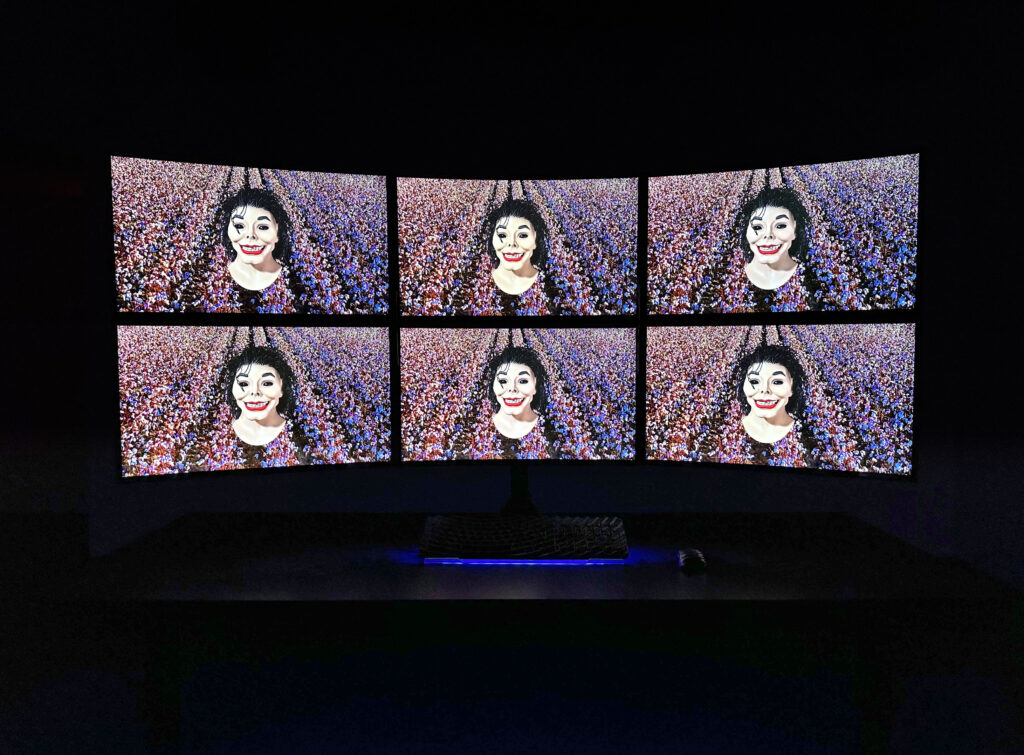
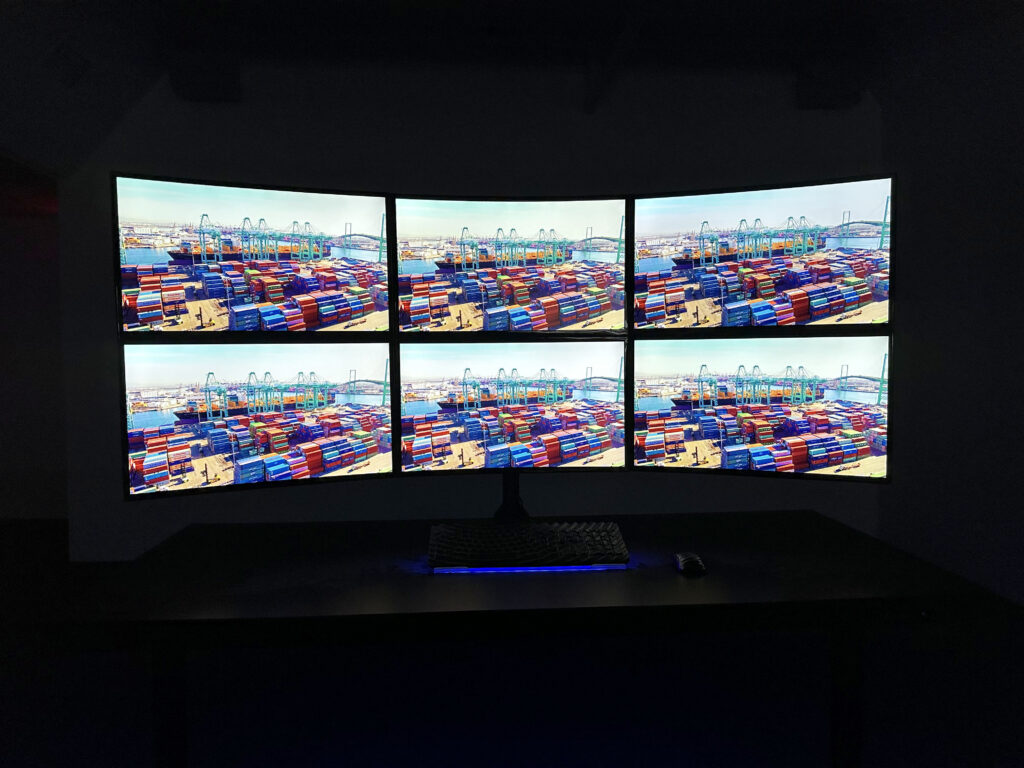
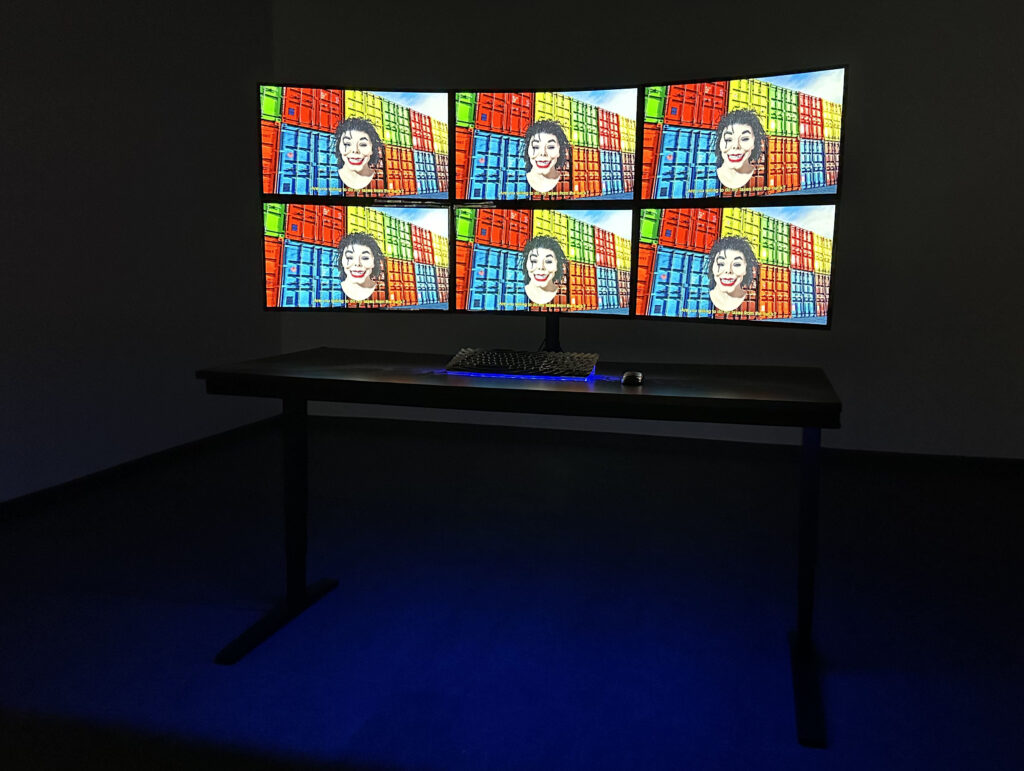
ESCAPING AAWFUL LAND is an immersive exhibition that builds upon the success of Aaron D. William’s previous Aawful Friends showcase at Zygote Press. This new showcase explores the creative journey between Williams and collaborating artists. By delving into anxiety through art, we seek to acknowledge its profound impact on our collective well-being. We must address anxiety as a shared concern and foster a future community that supports and uplifts one another. Through individual and collective artistic expression, we can overcome the gravity of the situation and find healing and unity. In our fast-paced society, anxiety affects people from all walks of life, taking various forms and manifesting in relentless thoughts, paralyzing fear, and an overwhelming sense of unease. Despite its grip, we encourage you to embrace your inner courage and take the leap. The installation will be held at The Vault in SPACES gallery, where you will be transported to AAWFUL LAND – a hidden realm within our city accessible only to those who know it exists. Guided by the mysterious GUARDIAN, you will journey through its enigmatic mysteries. As you step into AAWFUL LAND, you will be captivated by a mesmerizing video presentation. Witness AAWFUL AARON engaged in a gripping game against a formidable opponent, reminding us that we have the inner strength to persevere and pursue our dreams even amidst anxiety. In Aawful Land, anxiety takes on tangible forms and bursts forth in vibrant colors. CREATURE is at the heart of our narrative, an overbearing shadowy figure personifying anxiety and serving as the central antagonist. Aawful Aaron is locked in a fierce battle against CREATURE, desperately seeking escape from this hidden world. However, a subtle hint suggests that Aaron may need assistance to overcome his challenges. Within Aawful Land, a group of trapped artists may hold the key to their collective liberation. Together, they offer a glimmer of hope, representing collaboration’s power in overcoming Aawful Land’s perils. This work serves as a proof-of-concept or work-in-progress, paving the way for Aawful Friends II. In the forthcoming installation, we will feature this newfound group of artists, showcasing their collective efforts and unveiling the transformative power of collaboration. Their shared experience demonstrates that collective creativity and expression can lead to freedom and transcendence. ANXIETY IS HARD – TAKE YOUR SHOT ANYWAY.

All three of these exhibitions close 3/1/24.

Feb 262024
 

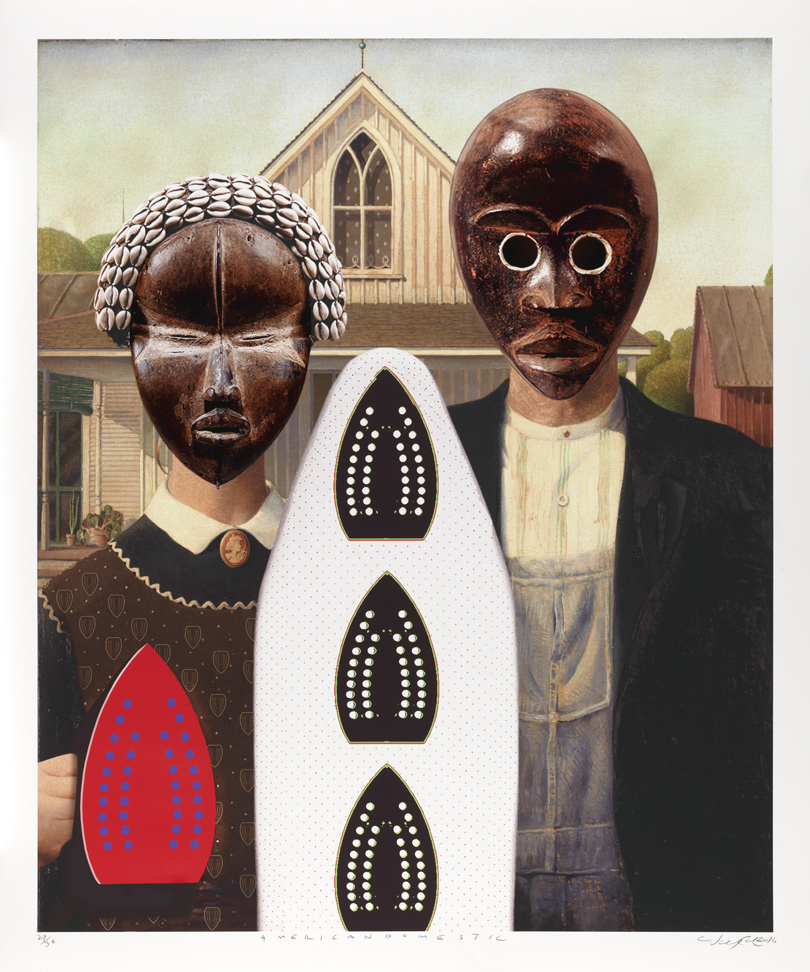
Willie Cole, “American Domestic”, 2016, Digital Print

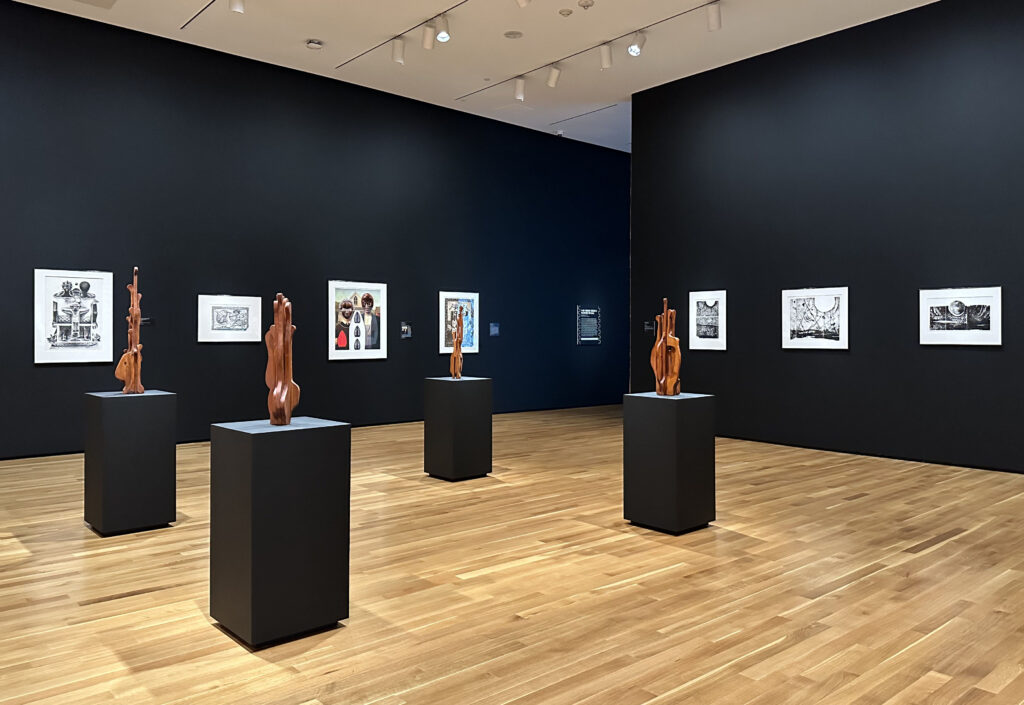
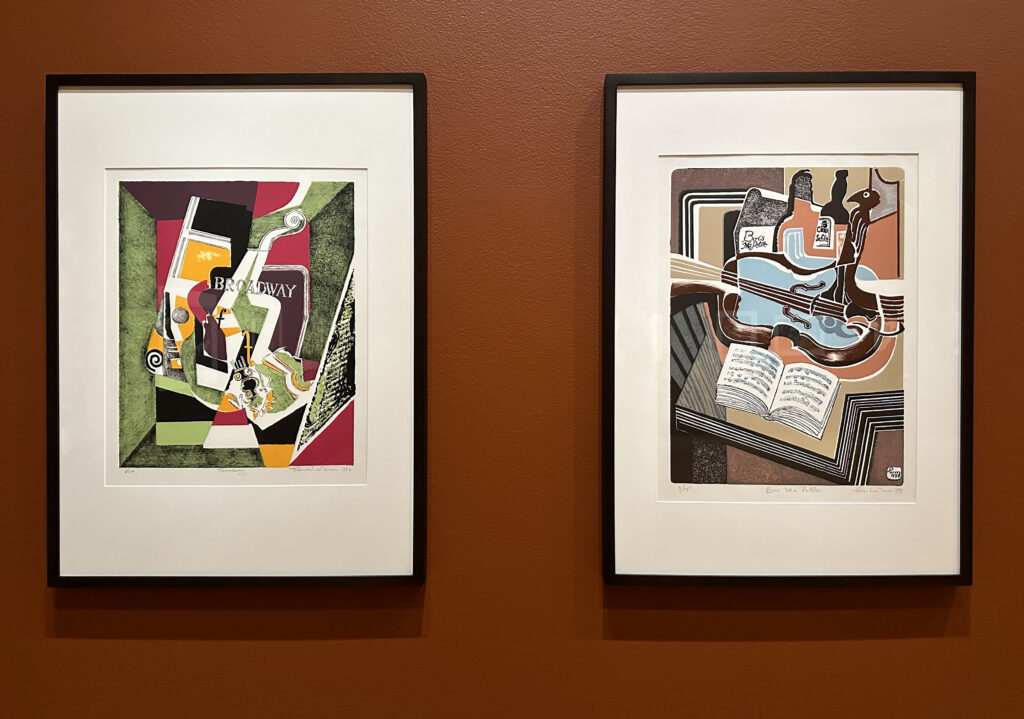
Tom Laidman, “Broadway”, 1993 and “Bois Ma Petite”, 1999, Lithograph on paper

Currently on view at Akron Museum of Art is RETOLD: African American Art and Folklore, a collection of art from the Wesley and Missy Cochran collection, organized into themes exploring aspects of African American history and culture. The show features many well known and lesser known artists including Amiri Baraka, Beverly Buchanan, Willie Cole, Trenton Doyle Hancock, William Pope.L., Tom Laidman, Jacob Lawrence, Alison Saar and more.
From the museum about the exhibition-

African folklore has been around as long as humankind, and the African diaspora in America has added new dimensions to its rich history. African American folk stories teach about culture, the mysteries of life, and the survival of a race of people bought and sold who continue to thrive in an unjust society.

“RETOLD: African American Art and Folklore” focuses on four themes: Remembering, Religion, Racialization, and Resistance. These themes provide a comprehensive retelling of the works featured in the exhibition. In many of the pieces, the artist’s muse connects closely with stories that have been told generation after generation. Folklore texts are featured throughout the space as a means to retell a richer, deeper story of African American culture.

There are more than forty artists represented in this exhibition, all holding one similar truth: their story of joy and struggle in the African American experience.

In addition to the artwork, there is also an educational video produced by Josh Toussaint-Strauss of The Guardian that explores the misconceptions about Haitian Voudou that is worth a watch.

How ‘voodoo’ became a metaphor for evil

Feb 142024
 

Esterio Segura’s Goodbye My Love, 2013, three sculptures created with fiberglass and automobile paint, are currently on view at Tampa Museum of Art.

From the museum about the work-

A new acquisition to the Museum’s permanent collection, Goodbye My Love represents Esterio Segura’s (Cuban, b. 1970) ongoing exploration of the meaning of airplanes and flight. Produced in multiple editions at different scales, this version is nearly the largest. In describing the series, Segura explained,  “In this work, the reference to the airplane hybridizes with a reference to another well-known universal symbol: a simplified image of the heart. This is fused with an easily understood title with several meanings, from the most corny and sentimental to the most controversial, from a political and social standpoint. With this work, I reference the experience of uprooting, nostalgia, memory, loss—how we experience the breakdown of everything we love.”

He discusses the work in the video below in a bit more detail.

Feb 092024
 

This sculpture, The Only Other, 2021, by the artist Midabi, was located in Union Square Park in NYC from June 2021- June 2022.

It is currently located adjacent to Palm Springs Art Museum in California.

Jan 292024
 

Whimzeyland, the “Bowling Ball House”, is a local landmark located in Safety Harbor, Florida, created by artists Todd Ramquist and Kiaralinda.

About the house from their website

In 1985, they purchased the beige house on Third Street in Safety Harbor, Florida. They traveled everywhere, actively seeking out inspirational and unusual places. Inspired by these travels, they began transforming their house. One of the earliest additions were the wooden triangles to the eaves of their house. The beige house became bold in color, too.

One day, they went to a flea market and saw a sign that said that anybody could take 10 free bowling balls. They took the bowling balls and began painting and placing them around the property. This is how they became known as the bowling ball house of Safety Harbor.

Todd and Kiaralinda even branched out of decorating their home, creating two different art cars, designed a restaurant, and making public sculptures, among other things. They began calling themselves the Whimzey Twinz because they work together on all of their projects.

Their travels soon included visits to folk artists and artists that they met at their shows. These friends visited them, too. Todd and Kiaralinda’s bowling balls inspired many of them. They would create bowling balls for Todd and Kiaralinda, who got so many of these works from artist friends that they started a gallery in their home. They created a “Call for Balls” which made a lot more of these art works roll into their home. Today, they have over 80 bowling balls from various artists around the world and people still bring them bowling balls as gifts.

If you are in the area, make sure to also stop by Safety Harbor Art and Music Center (SHAMc), a nonprofit they opened in 2017. It has an art gallery and shop, and hosts music events and art classes as well.


Dec 172023
 

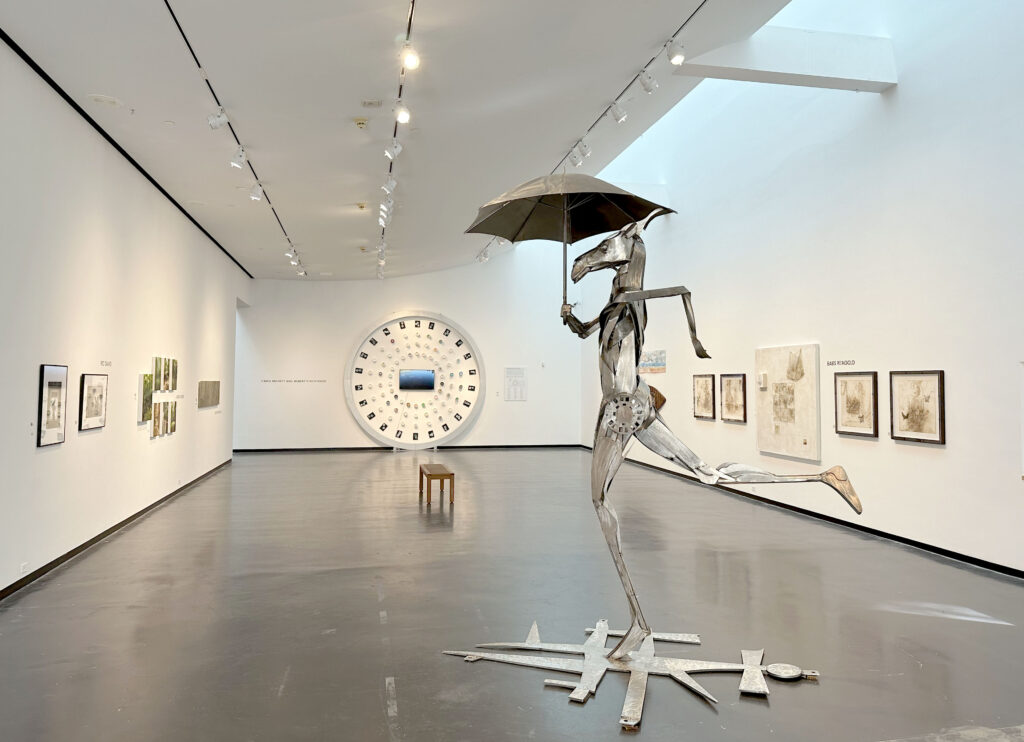
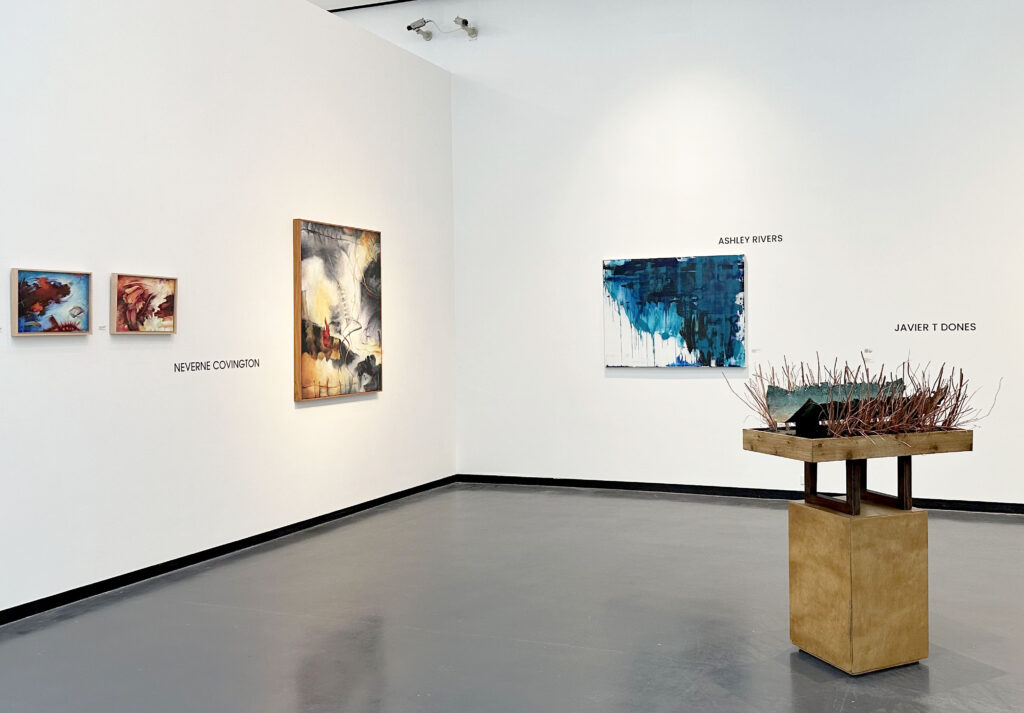
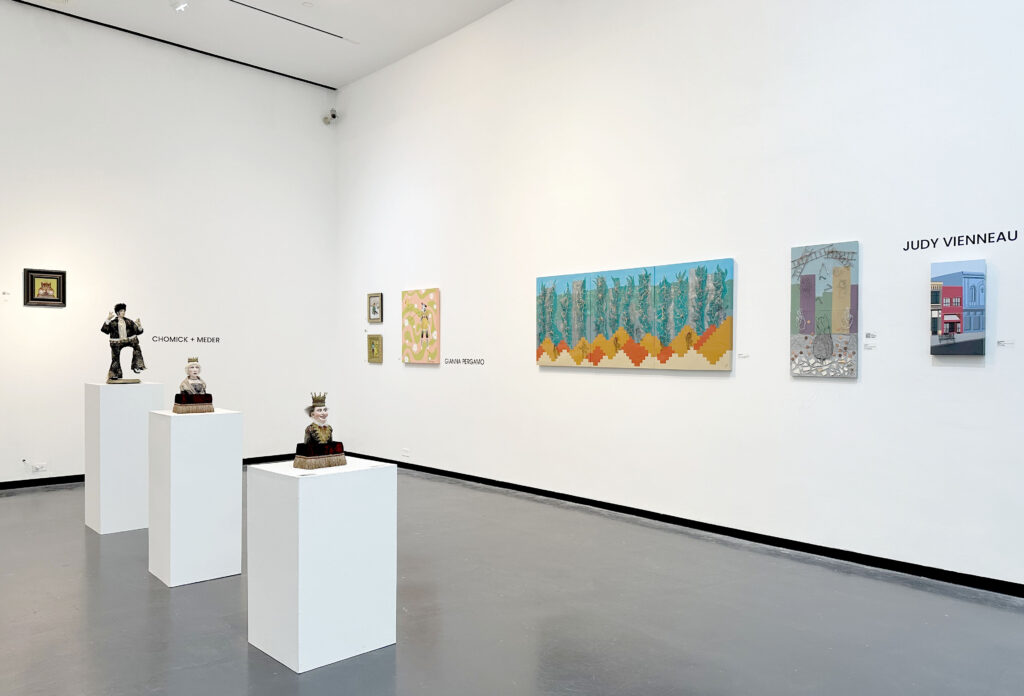
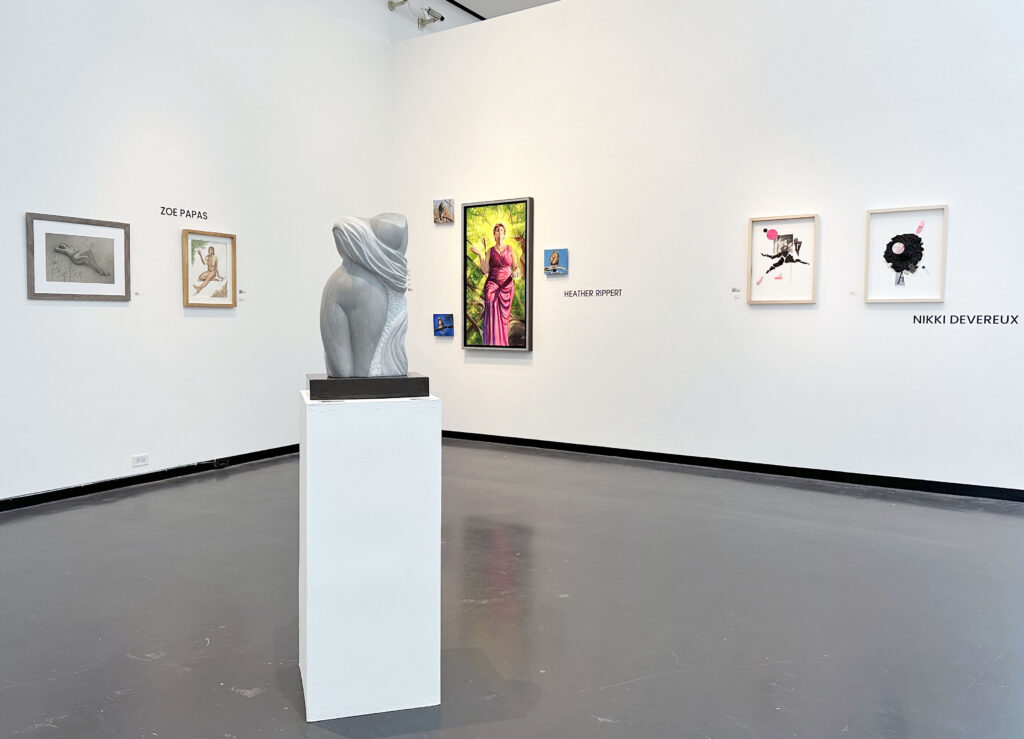
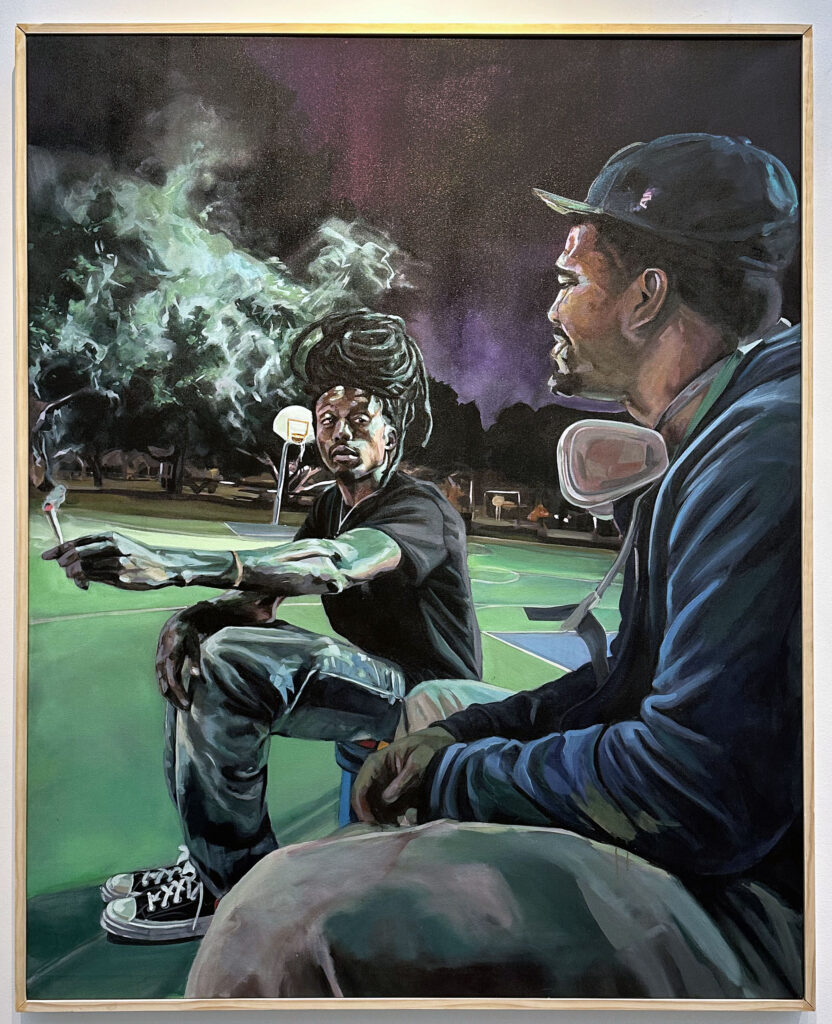
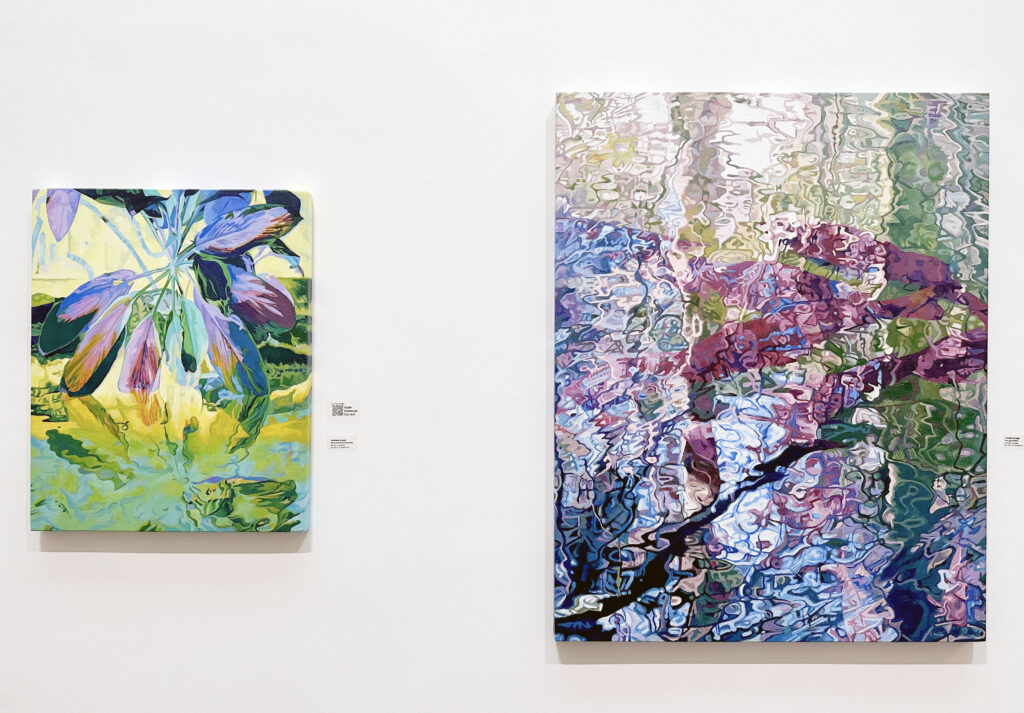
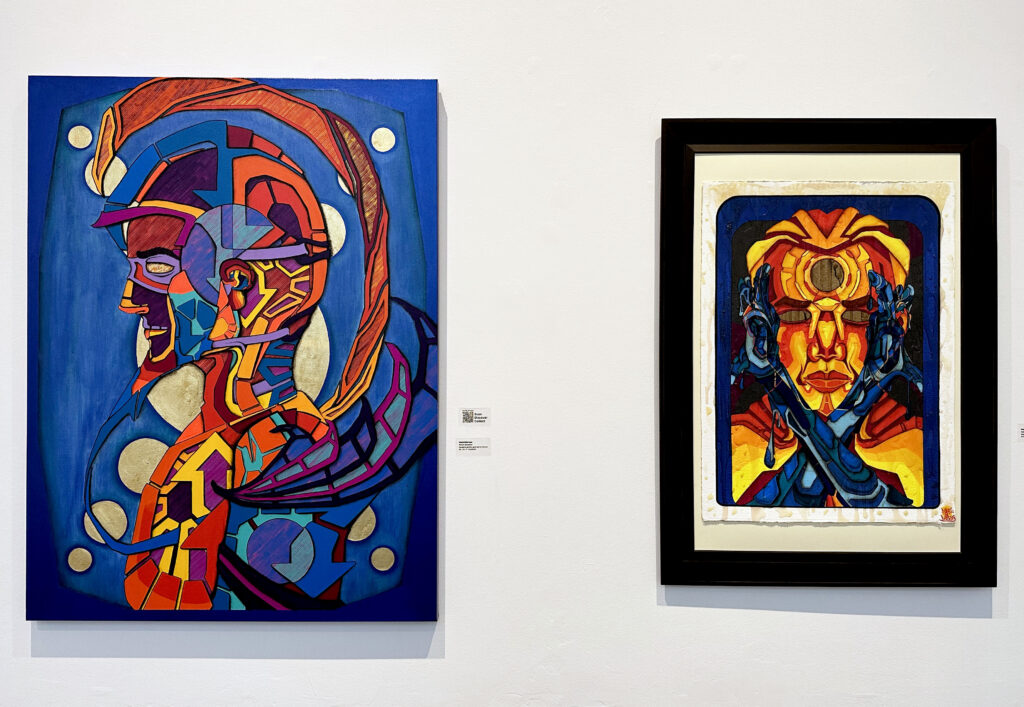
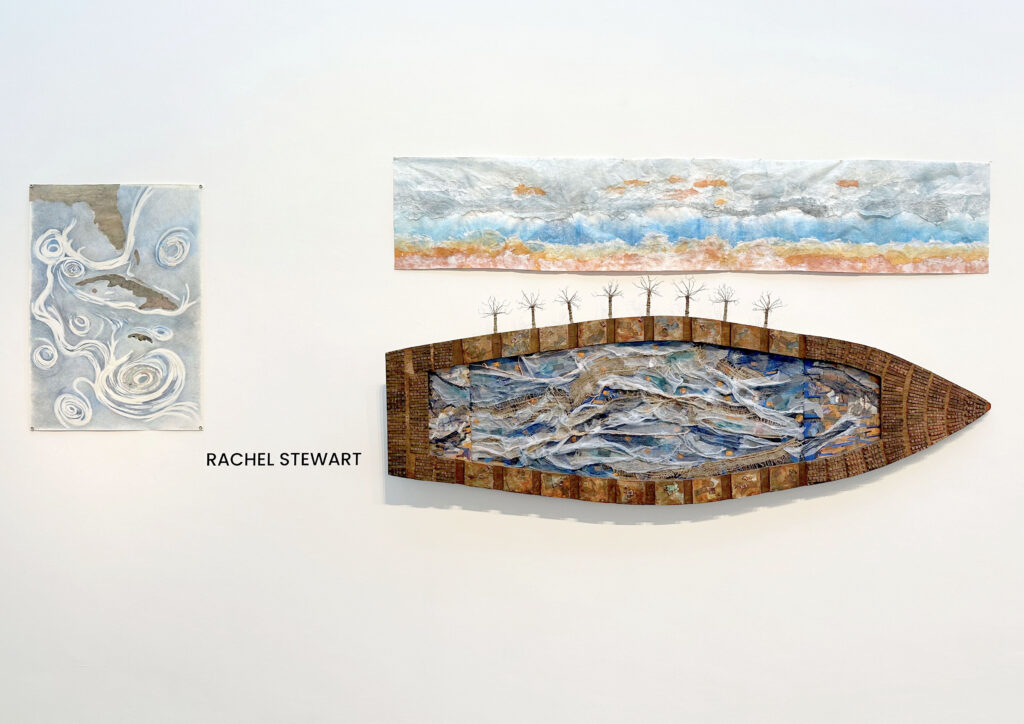
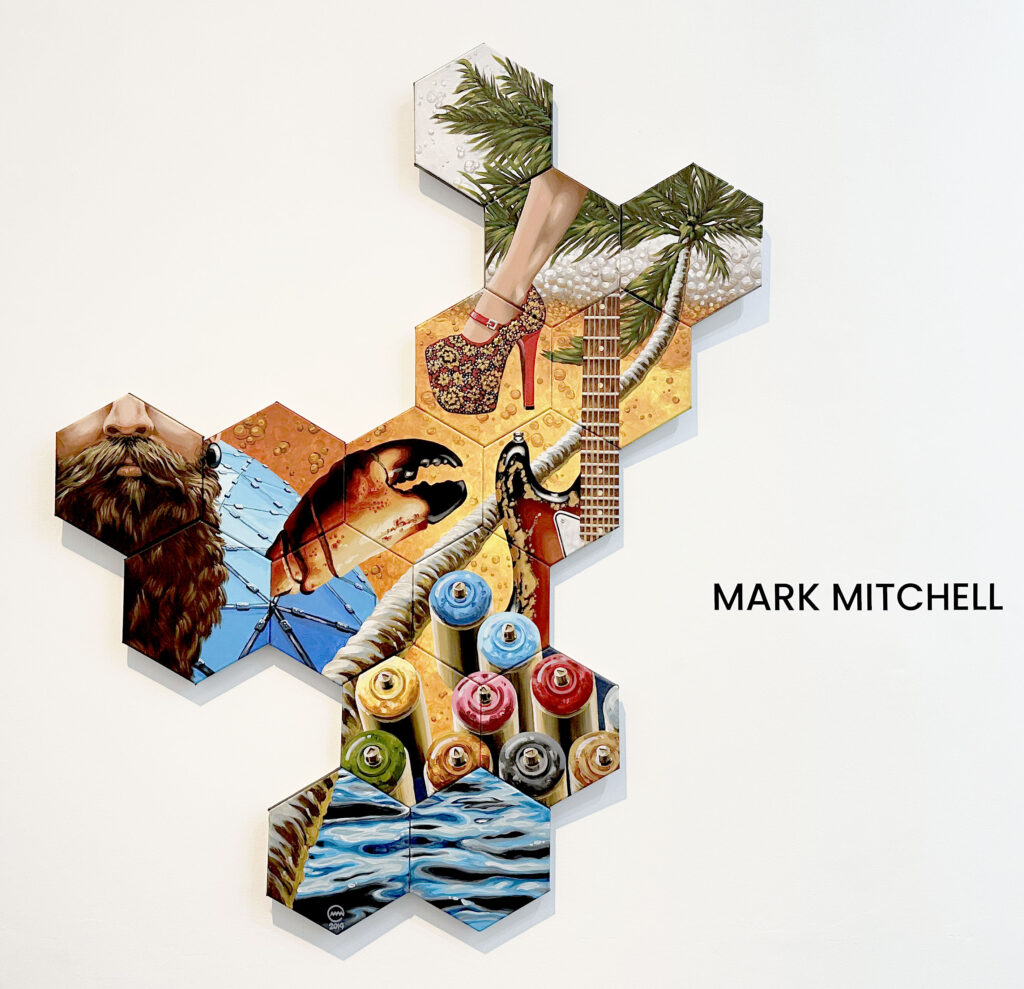
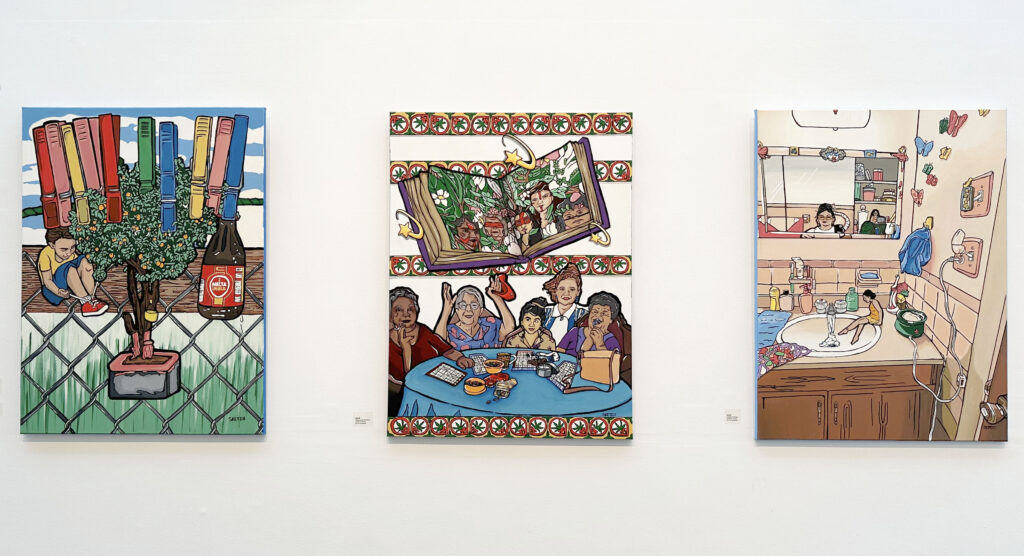
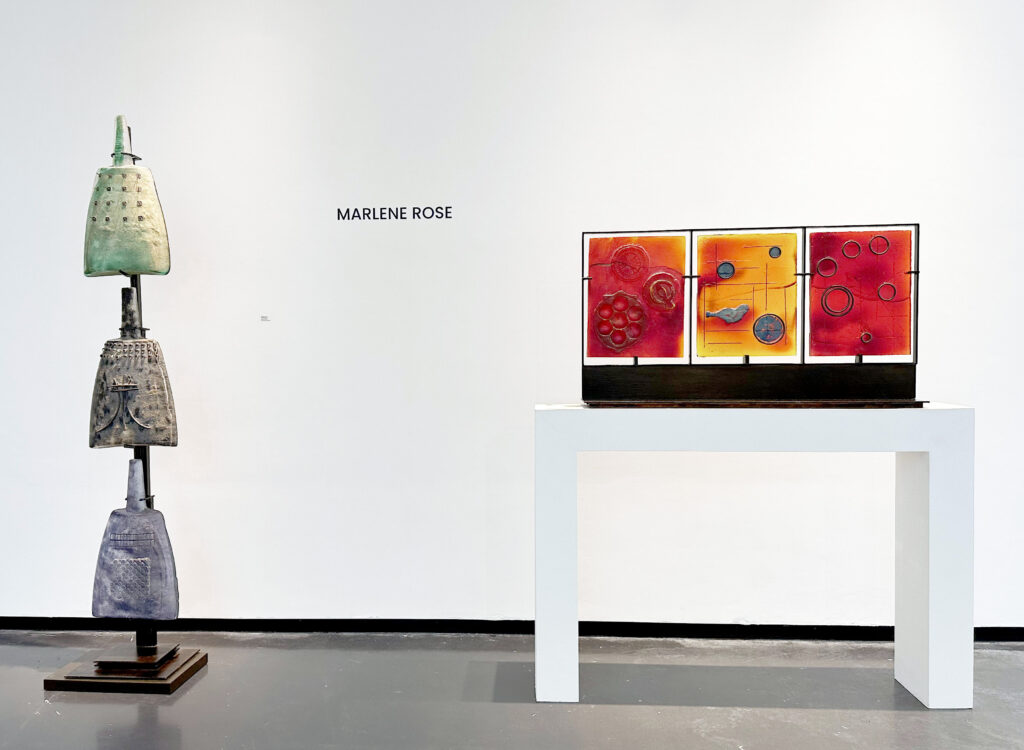
The Arts Annual at Creative Pinellas is always a great way to see what the artists in the area are creating. For 2023’s larger than ever edition, there is also a separate space for a video program that includes short films, theater productions, poetry readings, musical performances and more.

Artists included in the exhibition-

Tatiana Baccari, Elizabeth Barenis, Christina Bertsos, Daniel Barojas, Chomick + Meder, Courtney Clute, Neverne Covington, Sheila Cowley, Patricia Kluwe Derderian, Nikki Devereux, Javier T Dones, Dunedin Music Society, Sara Ries Dziekonski, Sarah Emery, Roxanne Fay, Jean Blackwell Font, John Gascot, Denis Gaston, Mason Gehring, Donald Gialanella, Jim Gigurtsis, Kevin Grass, Sheree L. Greer, Jason Hackenwerth, Steph Hargrove, Patrick Arthur Jackson, Reid Jenkins, Kenny Jensen, Charlotte Johnson, Victoria Jorgensen, Steven Kenny, Candace Knapp, Akiko Kotani, Teresa Mandala, Cora Marshall, Carol Mickett & Robert Stackhouse, Miss Crit, Mark Mitchell, Chad Mize, Desiree Moore, Zoe Papas, Gianna Pergamo, Rose Marie Prins, Gabriel Ramos, Babs Reingold, George Retkes, Heather Rippert, Ashley Rivers, Marlene Rose, Ric Savid, Tom Sivak, Sketzii, Emily Stehle, Rachel Stewart, Erica Sutherlin, Takeya Trayer, Judy Vienneau, Kirk Ke Wang, Angela Warren, and Joseph Weinzettle

The show is on view until 12/31/23.

Below are some additional selections from the exhibition.  

Reid Jenkins, “Holding Court”, Acrylic

Candace Knapp, “What the Blue Heron Sees” and “The Light Within” Acrylic on canvas

Daniel Barojas, “Future Ancestor”, Gouache, acrylic, gold leaf on canvas and “Future Ancestor #3”, Gouache and resin on paper

Rachel Stewart, “Caribbean Currents” Colored pencil, oil stick and collage on Archers archival paper; “Under a Different Sky”, Wall installation Painted relief wood construction with cooper and mixed media materials; Printing Ink and collage on rice paper

Mark Mitchell, “The BurgHive”, Acrylic on Hexagonal canvases

Sketzii,”Out of the Pink Concrete”, “Reclamando Mis Raices” and “A Señora’s Dream”, Acrylic on canvas

Steph Hargrove, “Catch You Later”, Acrylic paint, paper on canvas

Marlene Rose, “Three Bell Tower”, Sandcast glass and “Map Triptych” Sandcast glass

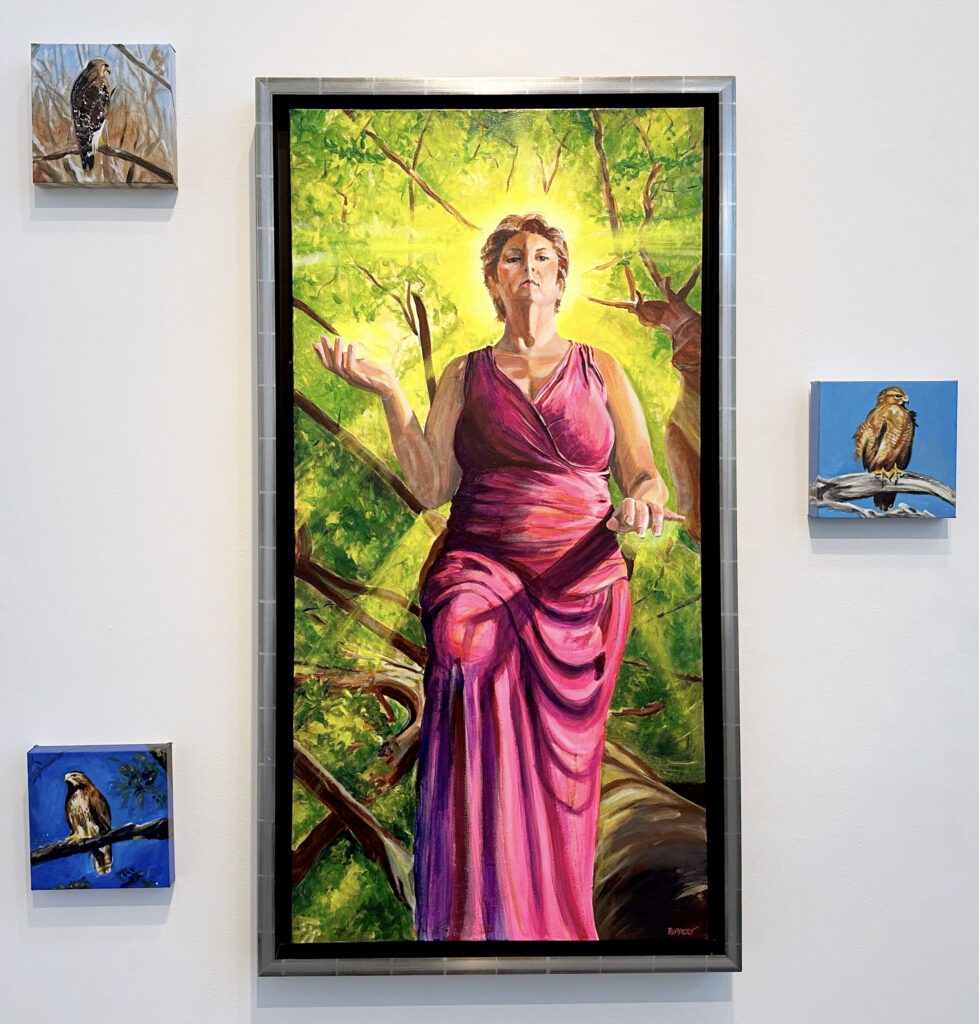
Heather Rippert, “Shakti” (center) and “Hawk 1, 2, and 3”, acrylic on canvas


Dec 122023
 

Artists from L to R: Julie Schumer, Vivien Collens (sculpture), Maggie Kruger, and Blair Vaughn-Gruler

Renee Mendler, “Rainbow Vision I and II”, Acrylic, Gold leaf, and resin on panel (left) and “Pure Joy No. 10 and No. 14”, Acrylic on canvas by Hans Petersen

Imani Bilál, “If Dreams Could Wander”, Acylic paint and ink on canvas (left) and work from the “Accumulation” series by Blair Vaughn-Gruler, Oil, mixed media, wood, on canvas

Michelle Gordon, “Ocean Splash”, Oil on canvas

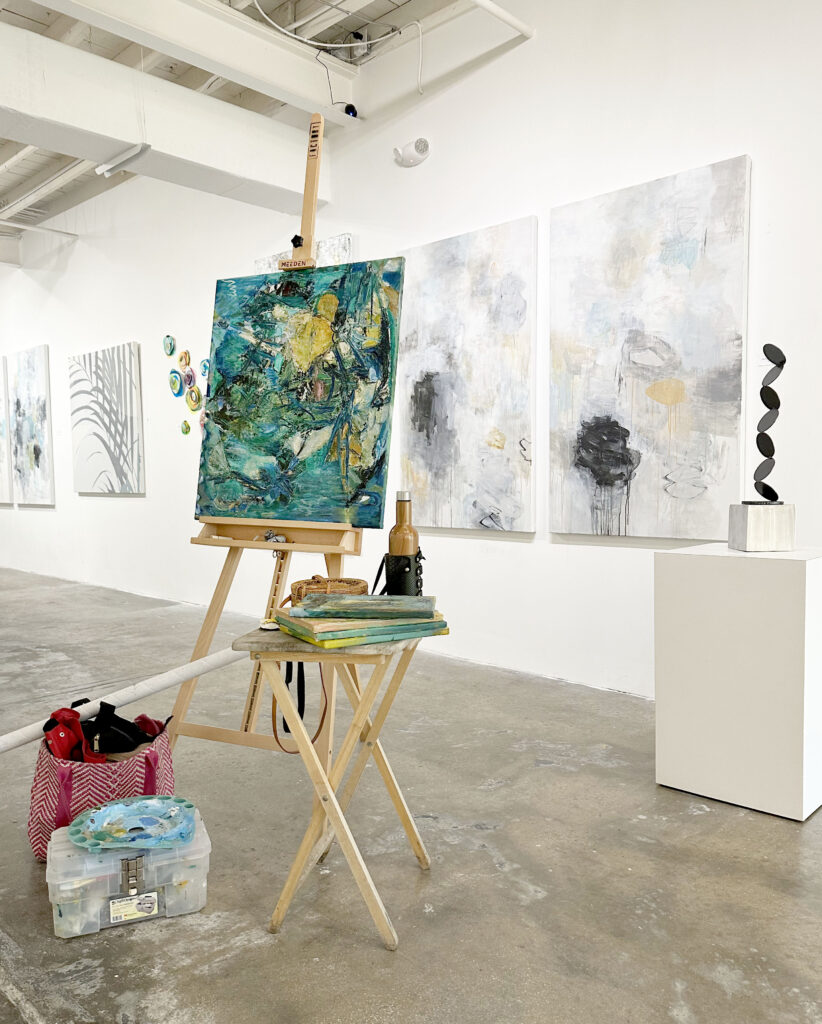
This past weekend was the Second Saturday ArtWalk in St. Pete, Florida with numerous galleries staying open into the evening. Above are images from the recently opened Drew Marc Gallery, part of The Factory St. Pete’s complex in the Warehouse District. In addition to the artwork, the gallery also had live painting by Michelle Gordon.

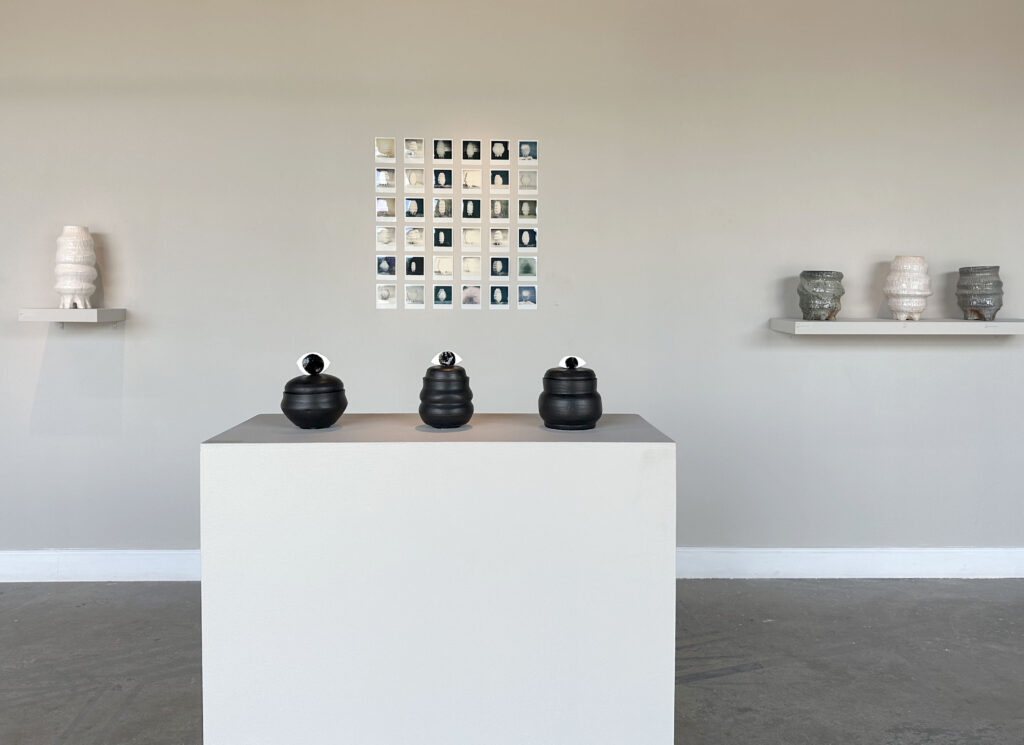
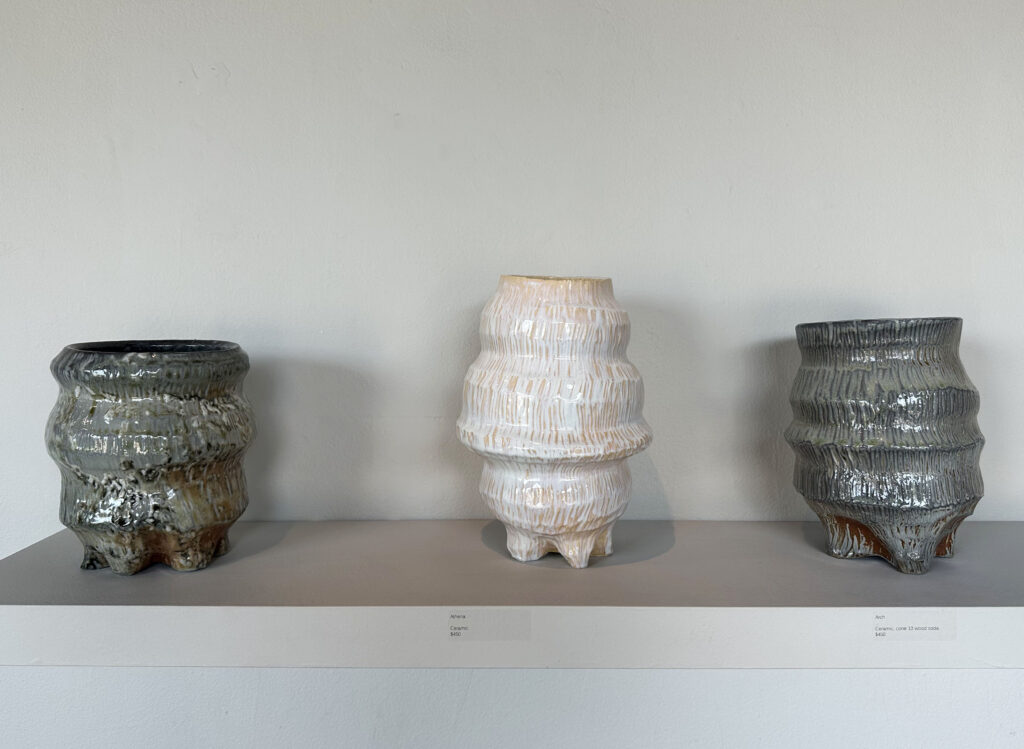
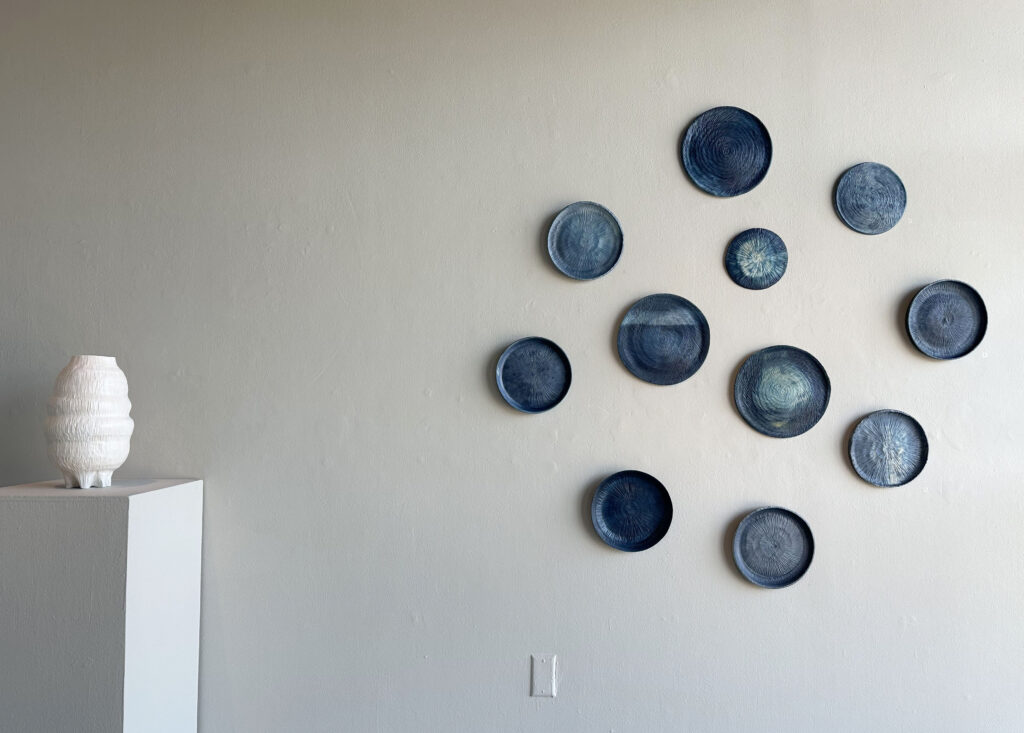
At Morean Center for Clay is Lauren Hope: Time (pictured below), a solo exhibition that includes the artist’s ceramic work and photography.

From the gallery-

...Time is an investigation of alternative photographic process, using clay as a catalyst for record keeping. Using ceramic vessels as pin hole cameras, Lauren captures moments in time and transfers them onto ceramic surfaces. This exhibition will be a collection of photographic prints, vessels, cyanotypes, and handmade pinhole cameras. 

 Her statement about her work-

My work is heavily influenced by the complexity of hues, forms, and patterns found in the natural world. This studio practice has become deeply cathartic, signifying the ephemeral and fleeting notions of time.

Ceramic vessels within this collection are wheel-thrown, altered, and sculpted. Every striation carved serves as a visual representation and a gentle reminder of the delicate passing moment. This method of subtractive carving has become transformative, developing into deep states of meditation and reflection.

Experimental photography is used as an explorative process, allowing for the convergence of internal and external experiences. By casting memories and photographic recollections onto stoneware, I attempt to immortalize my profound experiences and revelations.

This exhibition will be on view until 12/30.

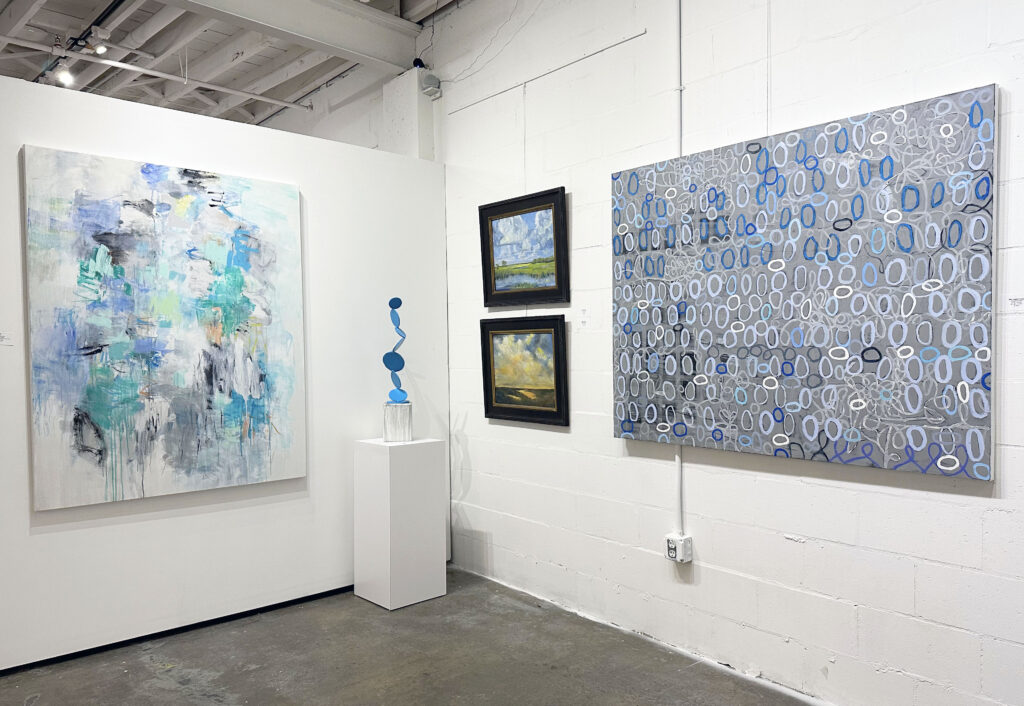
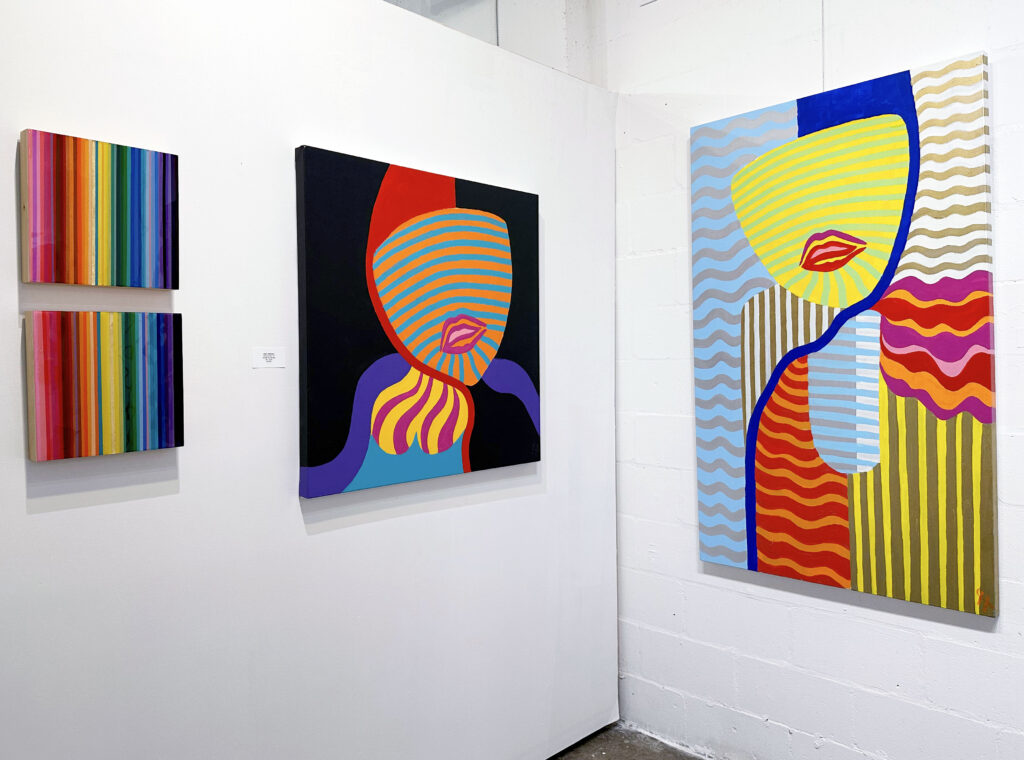
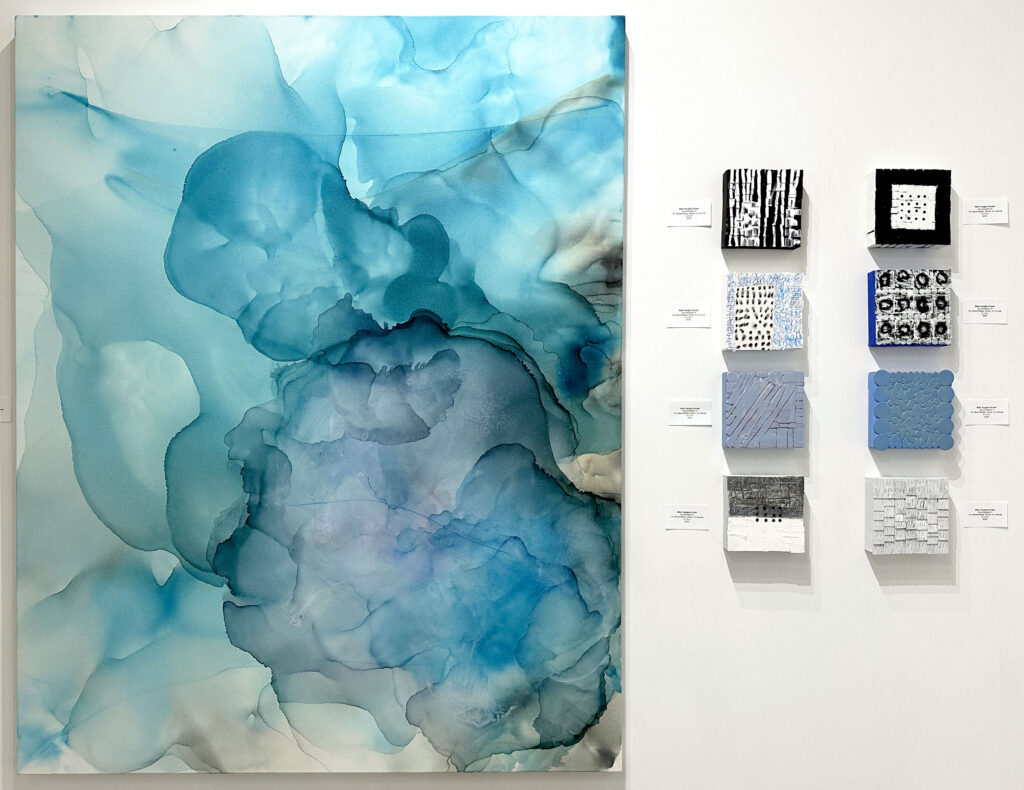
For selections from additional galleries, head to the next page.

Dec 072023
 

In the Deep Space of the Sea I Have Found My Moon by Ales Bask Hostomsky aka BASK was created for the 2020 edition of the SHINE Mural Festival in St. Pete, Florida.

You can also see his work at his exhibition B.A.S.K.: Because Art Should Kill at The University of Tampa’s Scarfone/Hartley Gallery, on view until 12/15/23.

Dec 072023
 

V.J. Hagenbuckle, “On Mars”, 2020, Oil on canvas

Paintings by V.J. Hagenbuckle

There are many incredible artists living and working in the Tampa Bay area and quite a few of them also teach. Leepa-Rattner Museum of Art in Tarpon Springs is currently showing work by faculty from the Visual Arts department at St. Petersburg College. In addition to a statement about their work, each faculty member also contributed their teaching philosophy.

Artists included in the exhibition- Jonathan Barnes, Nathan Beard, Ragan Brown, Mason Gehring, Barton Gilmore, Kevin Grass, Marjorie Greene Graff, Jennifer Guest, Jim Hagenbuckle, Elizabeth Indianos, Kim Kirchman, Michaela Oberlaender, Krishna Sadasivam, and McKenzie Smith.

Tonight, 12/7, Jim Hagenbuckle will be giving a talk at the museum at 6pm.

This exhibition is on view until 12/17/23.

Michaela Oberleander, “Bleed Out”, 2010, Acrylic on canvas

Kim Kirchman, “Cultivating What Might Be Lost”, 2022, Terra cotta with slip transfer

Work from Nathan Beard’s “LIFE LINES”

Nathan Beard’s description of this recent personal and intriguing project (pictured above)-

The Memory Map works on view here are my very newest attempt at understanding the role that fallible memory plays in the shaping of culture and self. These small watercolor studies are Phase II of LIFE LINES, a grand 3-part project in which I am examining my family’s memory of themselves and making artwork that tells their story. I plan to collect all of these studies into a singular book that can be handed down through the generations, or perhaps even preserved in a museum for everyone to see.

To create Memory Maps, I have created a survey for each family member. I ask them some general genealogy questions, since this survey will also function as a historical record, including their three favorite colors. I then ask them to try to remember each year of their life, from birth til now, and assign a rank between 0 and 5 for a) how clear their memory of the year is; b) how important that year was for them; c) how “good” or “bad” the year was. I add these columns together to get an “Accumulative” data set that I use to create a skeleton composed of alternating pentagons and hexagons that rotate as they expand. This part is important since it incorporates movement through time and space as we grow outward. Using the fact that our life’s journey always wavers, I then connect the points and end up with a “map” that resembles the cross-section of a tree, and contains all the metaphors associated with tree rings and natural growth cycles.

The most important visual development presented itself with Cate Clark, where I allowed myself the freedom to incorporate representational imagery. I asked my wife about her favorite place ever, and she surprised me with the family trip we took to Letchworth State Park in upstate NY. I found a picture from that trip with our daughter Vera standing at the edge of wood, and proceeded to paint that memory in resemblance of an antique plate. I also allowed myself the freedom to stray away from the tree ring aspect, while still using the data skeleton to place the bursts of color.

For more information, his artist talk is available here.

Work by Jonathan Barnes

Sculpture by Jonathan Barnes

Sculpture by Jonathan Barnes

Soda/Salt Fired stoneware by McKenzie Smith

Acrylic on canvas paintings by Mason C. Gehring

Relief and silkscreen by Marjorie Greene Graff


Artists continue on page 2.