Apr 122024
 

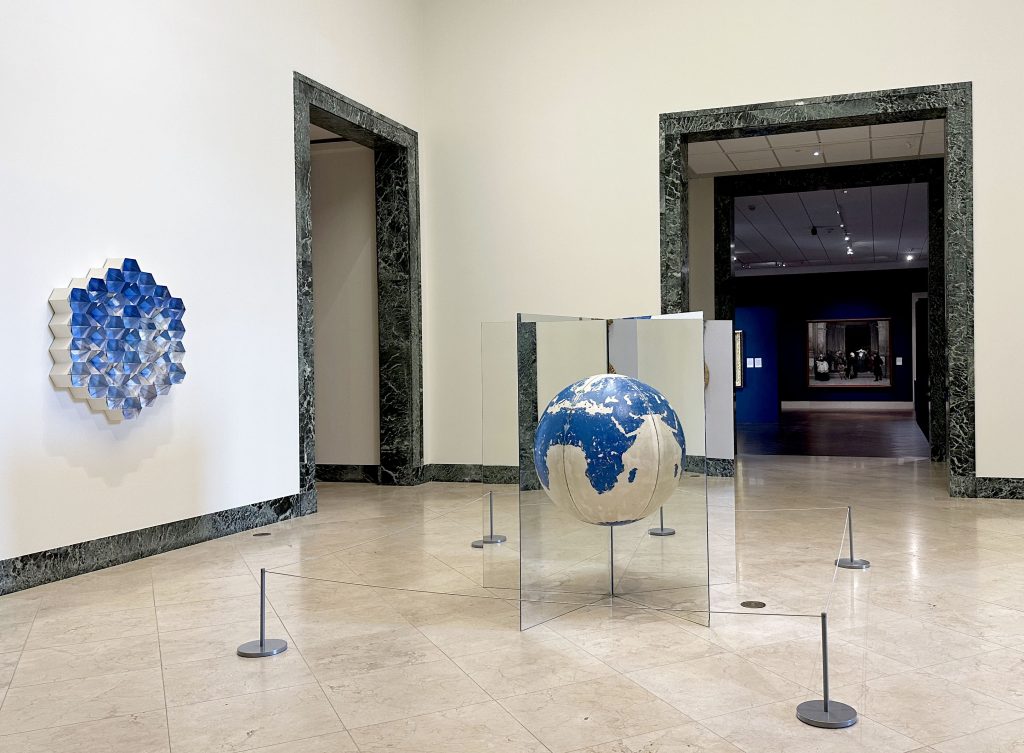
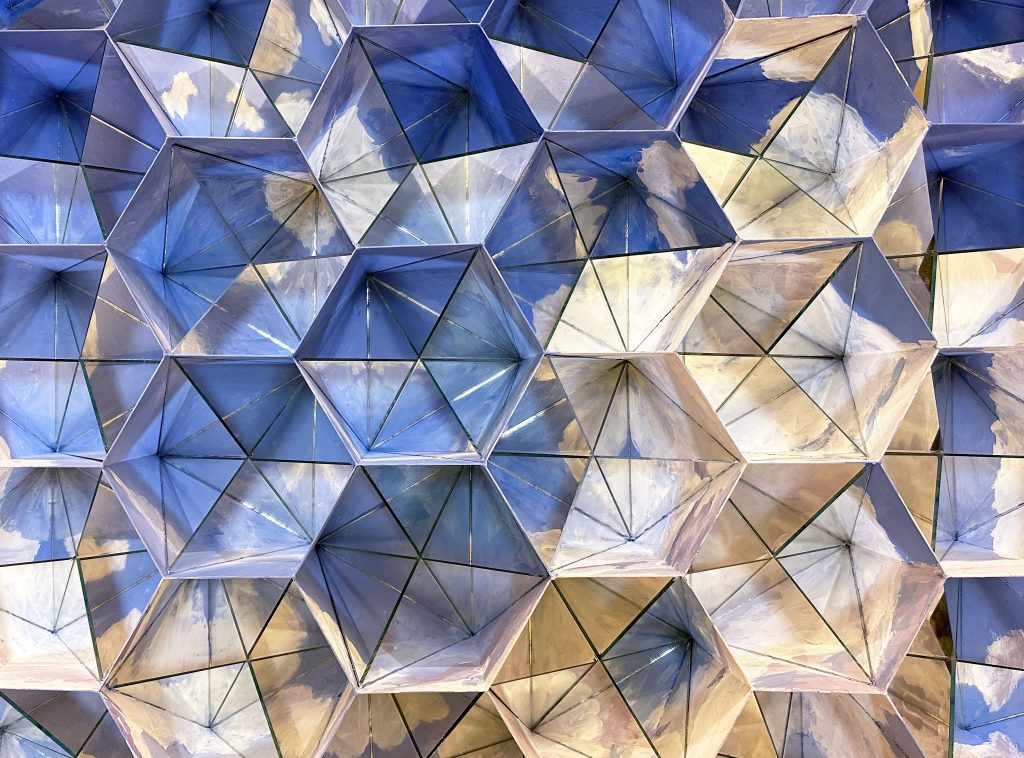
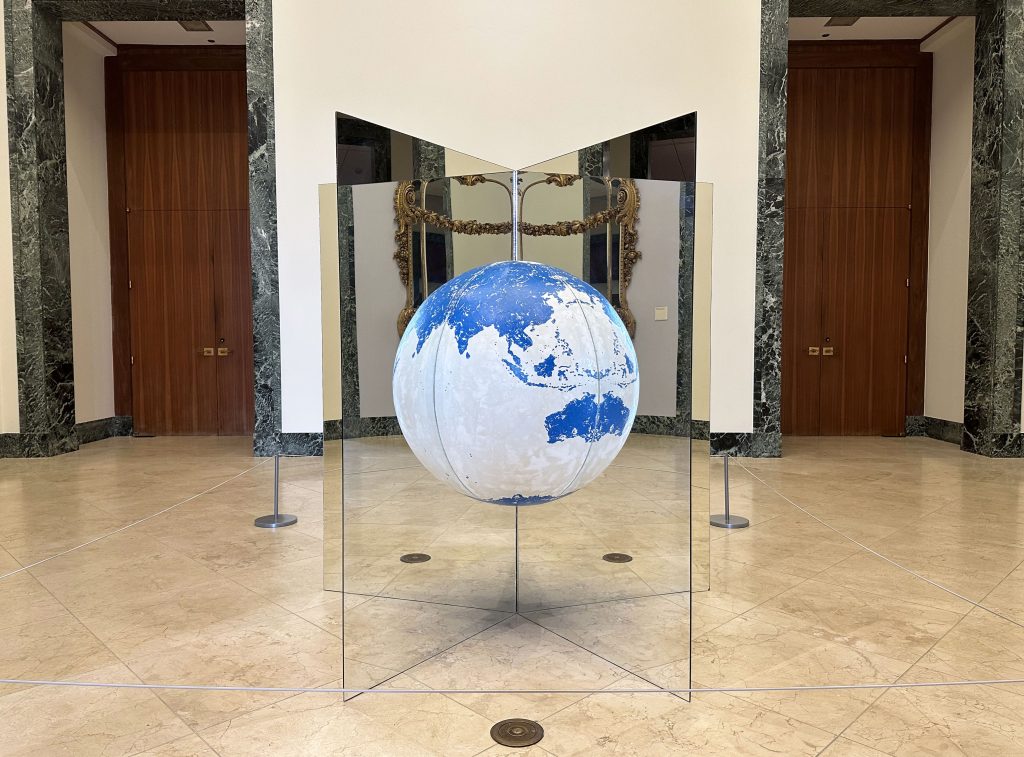
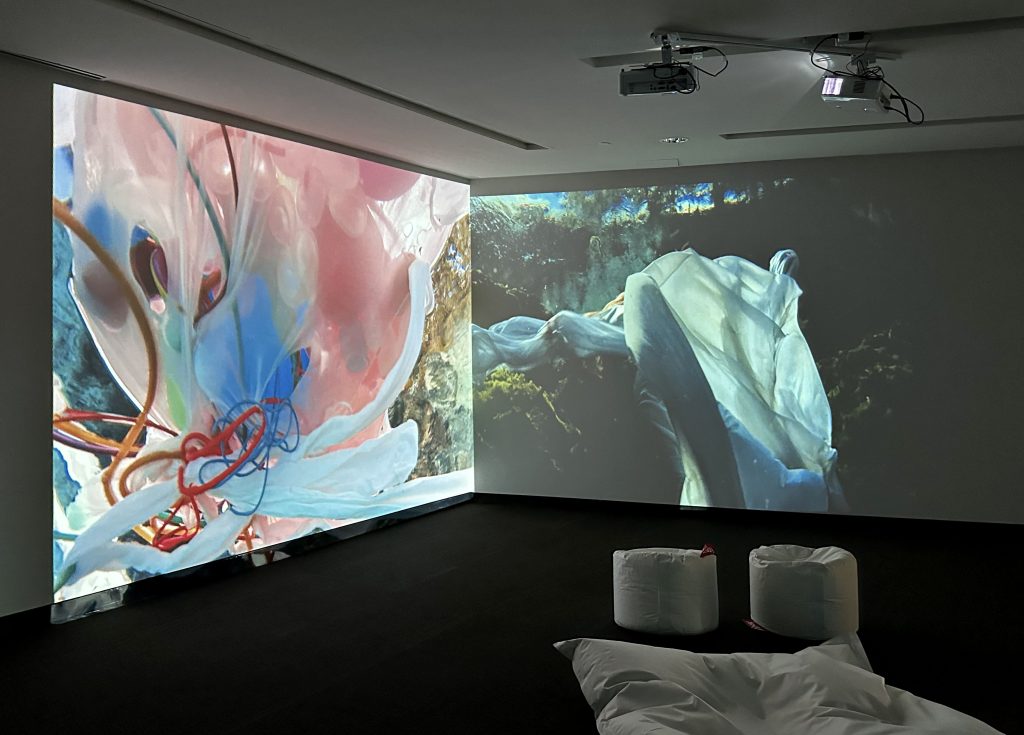
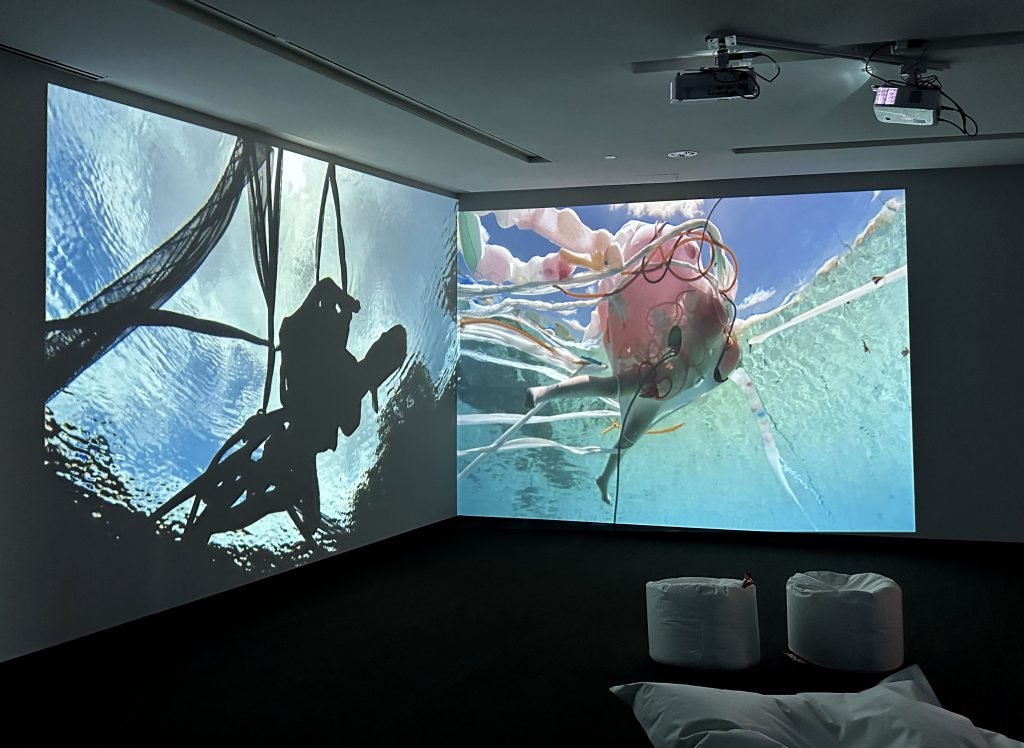
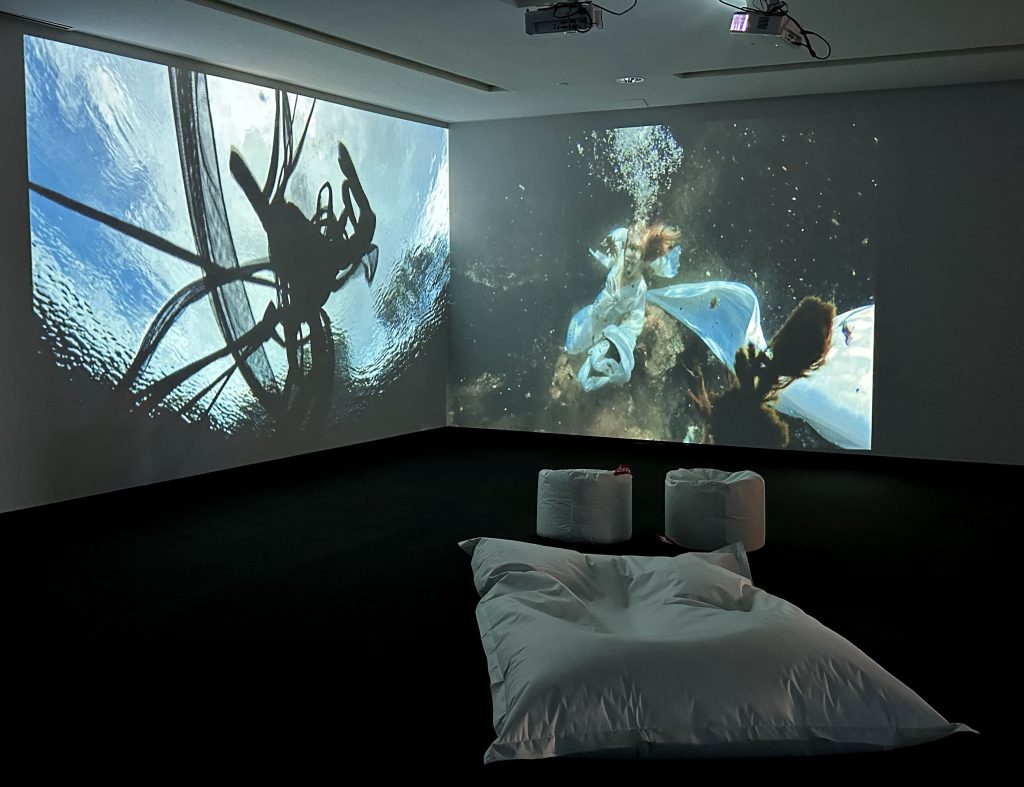
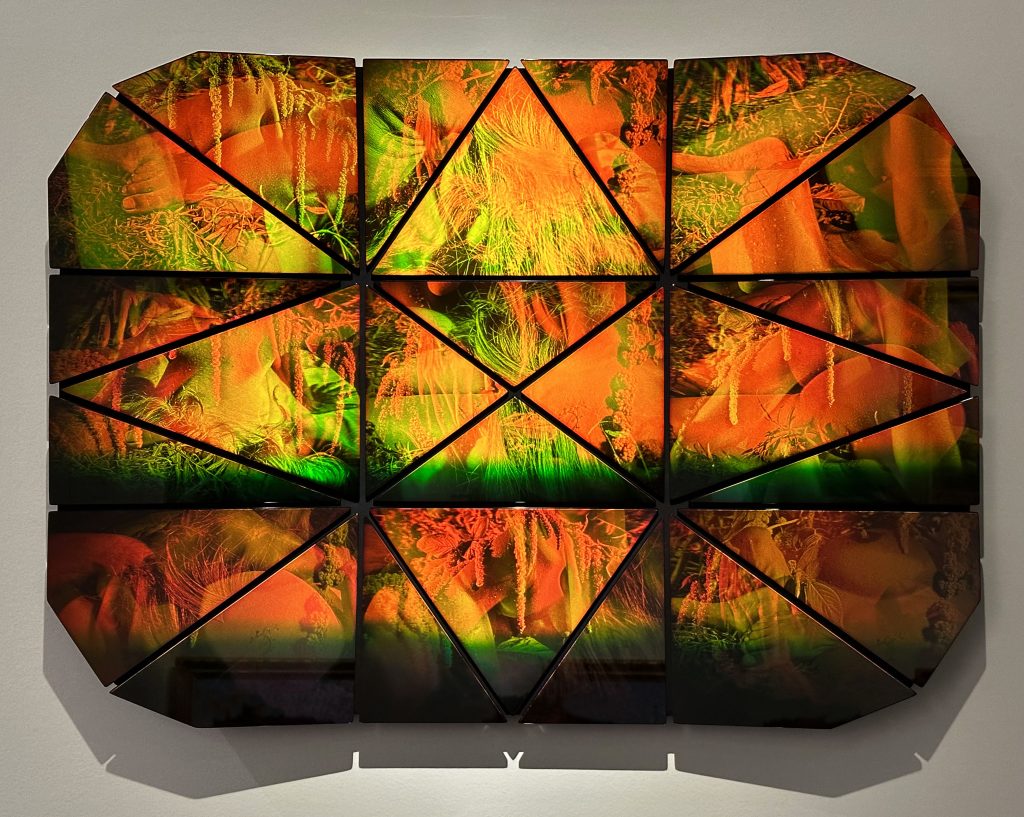
Sarah Meyohas, “Interference #19”, 2023, Holograms, mirrored black glass, aluminum
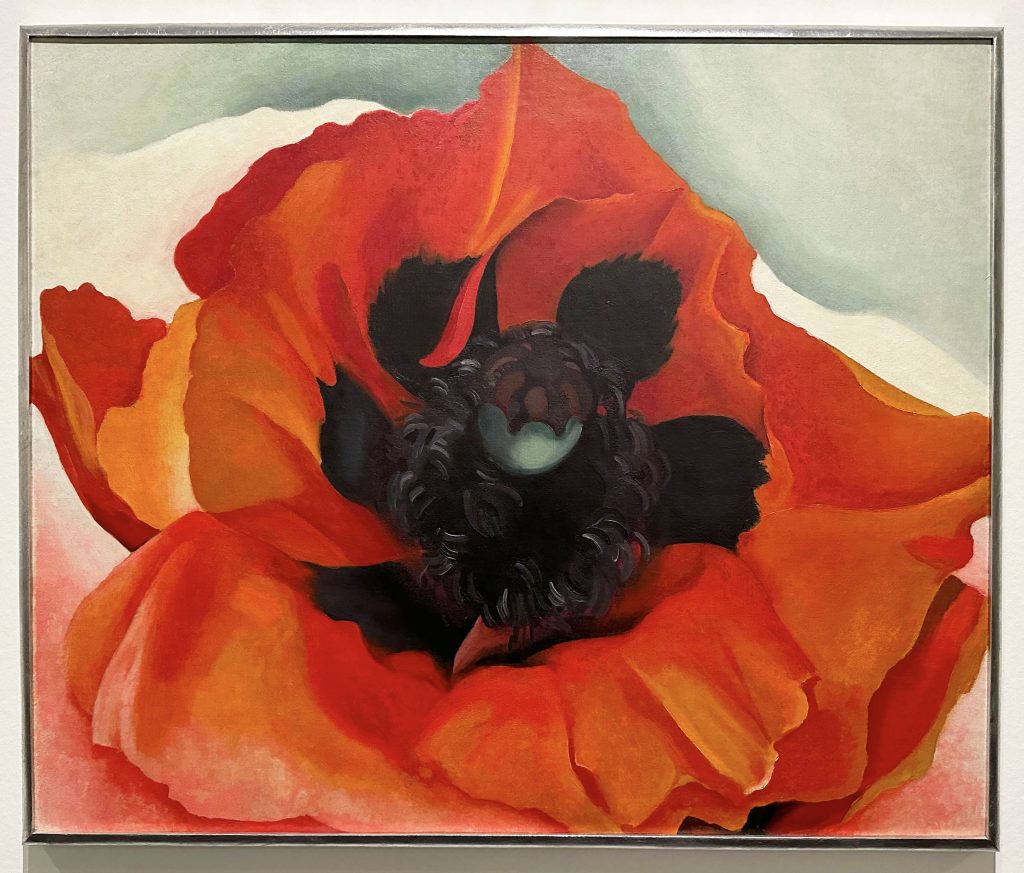
Georgia O’Keeffe, “Poppy”, 1927, Oil on canvas

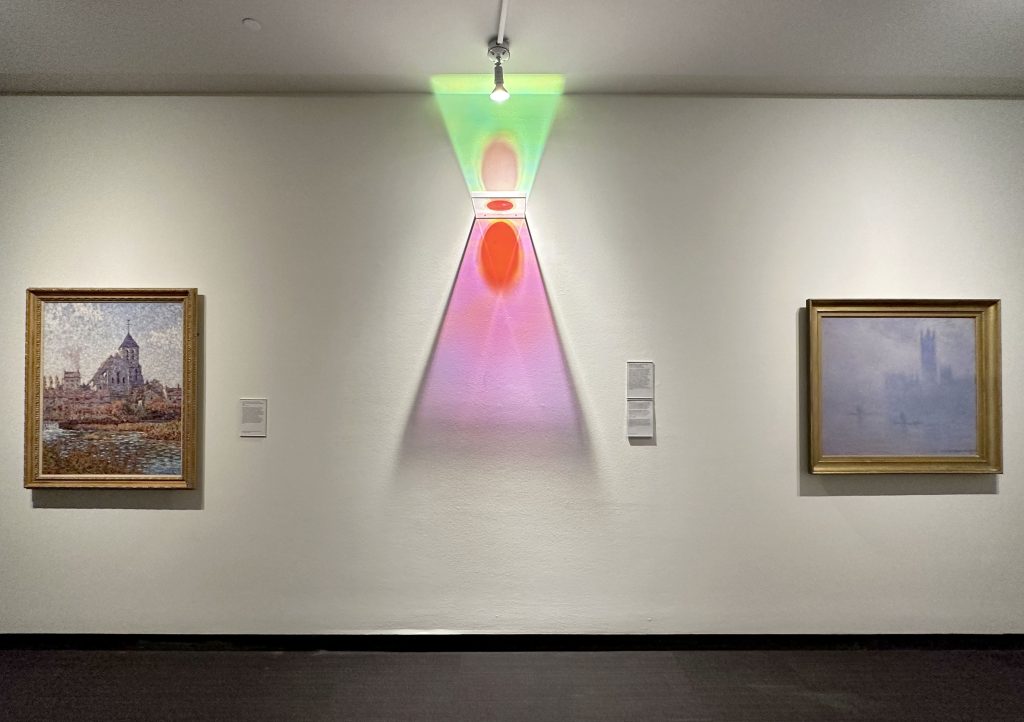
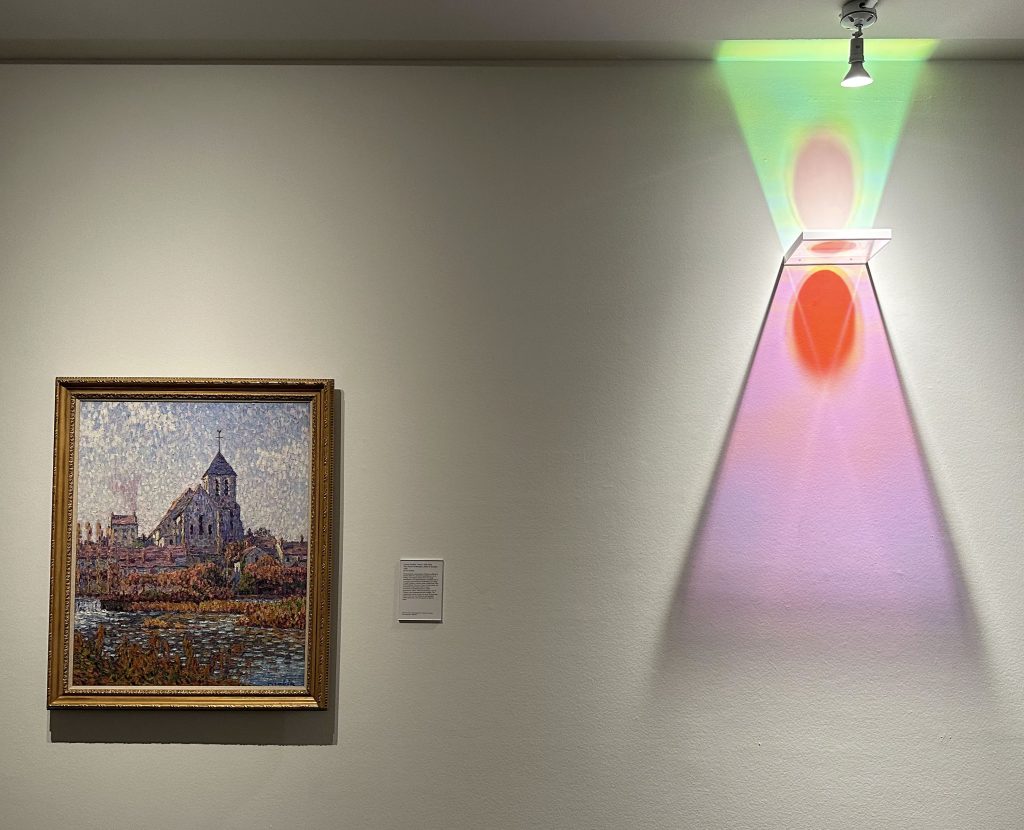
Francis Picabia “The Church of Montigny, Effect of Sunlight” 1908, Oil on canvas (left); Christian Sampson “Projection Painting”, 2023, Acrylic and films with LED light; and Claude Monet “The Houses of Parliament, Effect of Fog, London” 1904, Oil on canvas (right)
The Nature of Art exhibition at the Museum of Fine Arts St. Petersburg merges art from the museum’s collection with loaned works to explore- “art’s crucial role in our evolving quest to understand our relationship with nature and our place in the cosmos”.

One of the benefits of an encyclopedic museum is that visitors have the opportunity to experience art throughout history, and to revisit works that resonate with them. For the section titled Artist as Curator, Sarah Meyohas and Christian Sampson chose pieces from the museum’s collection to pair with their own work.

From the museum-

At first glance, perhaps, these may seem like unusual combinations, but upon deeper contemplation, their selections reveal complementary artistic intents. For instance, Meyohas and Georgia O’Keeffe share an interest in close looking, particularly in finding new ways to examine underappreciated aspects of the natural world. Sampson, influenced by the California Light and Space Movement, is interested in current scholarship that suggests the hazy fog found in Claude Monet’s work is an early depiction of air pollution, offering an entirely new perspective on the artist’s representations of light.

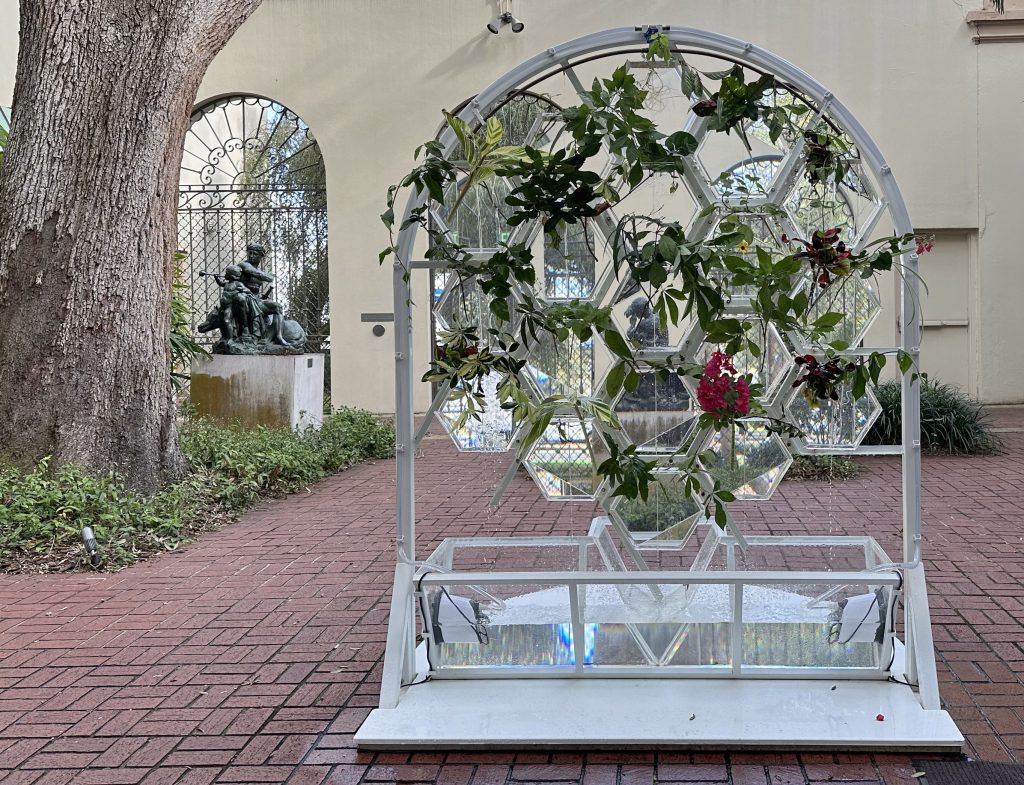
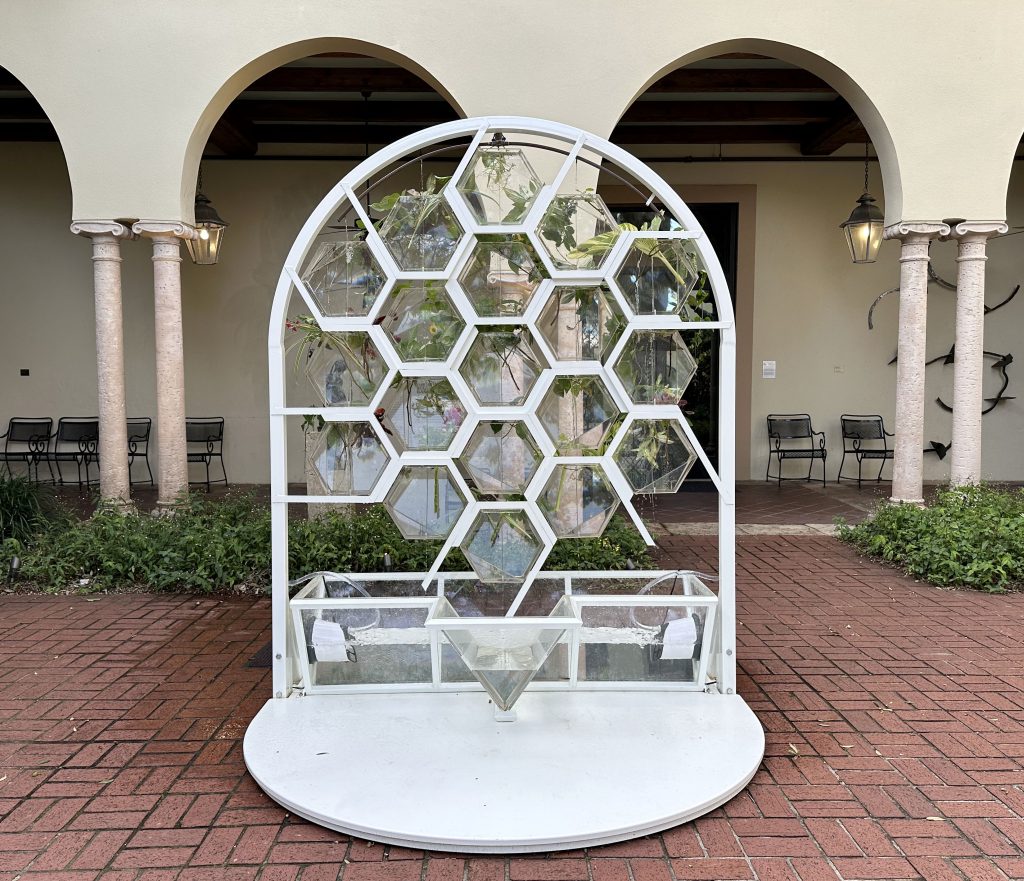
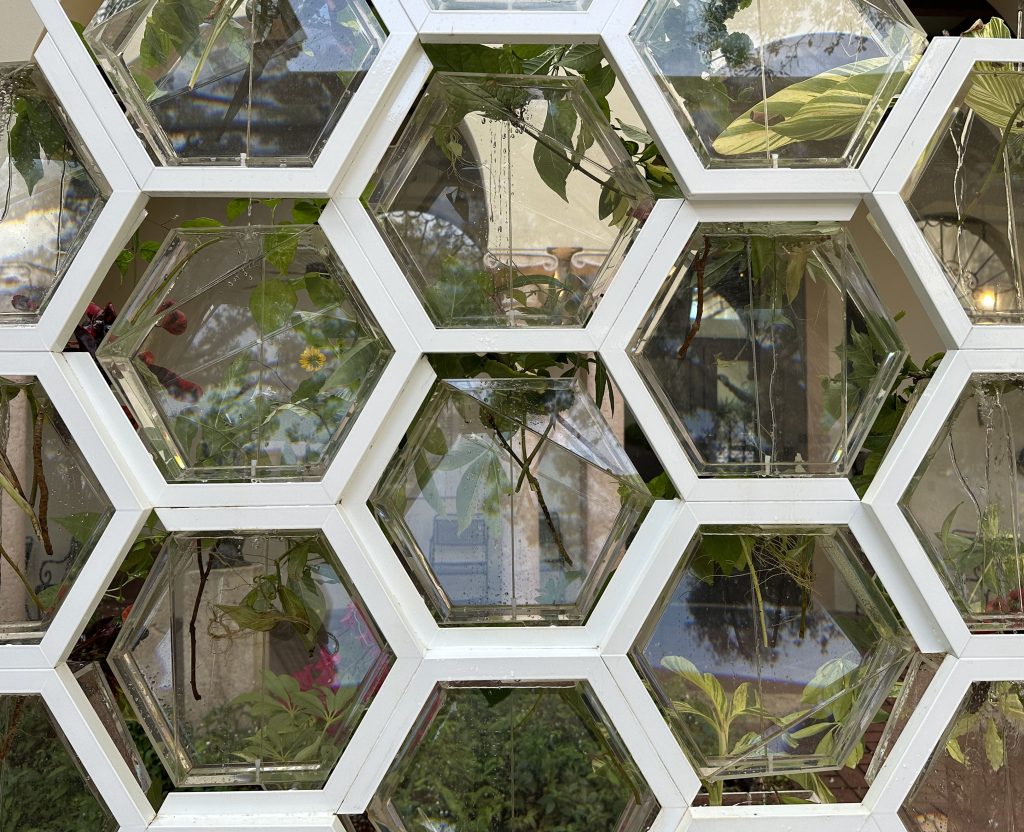
Sampson also created the four-part installation, Tempus volat, hora fugit, on view until 2025 at the museum.

Below are some of the works from additional sections of the exhibition.
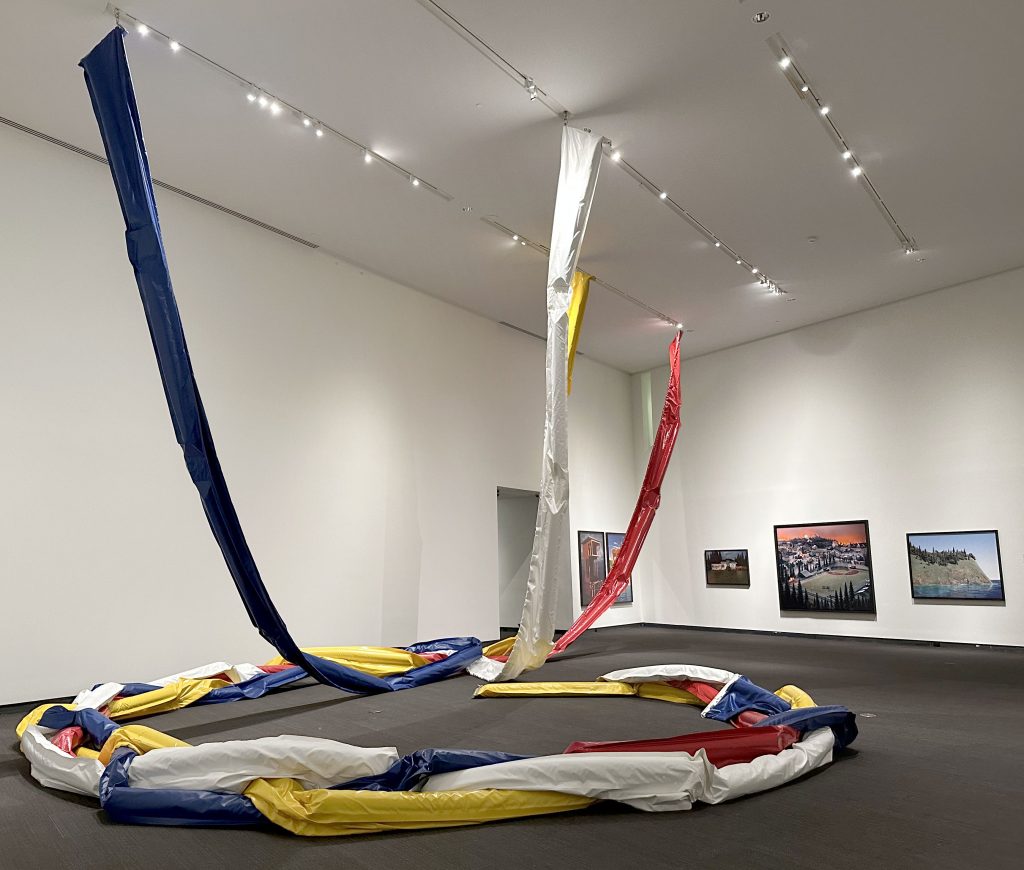
Postcommodity, “kinaypikowiyâs”, 2021, Four 30.5-metre industrial debris booms
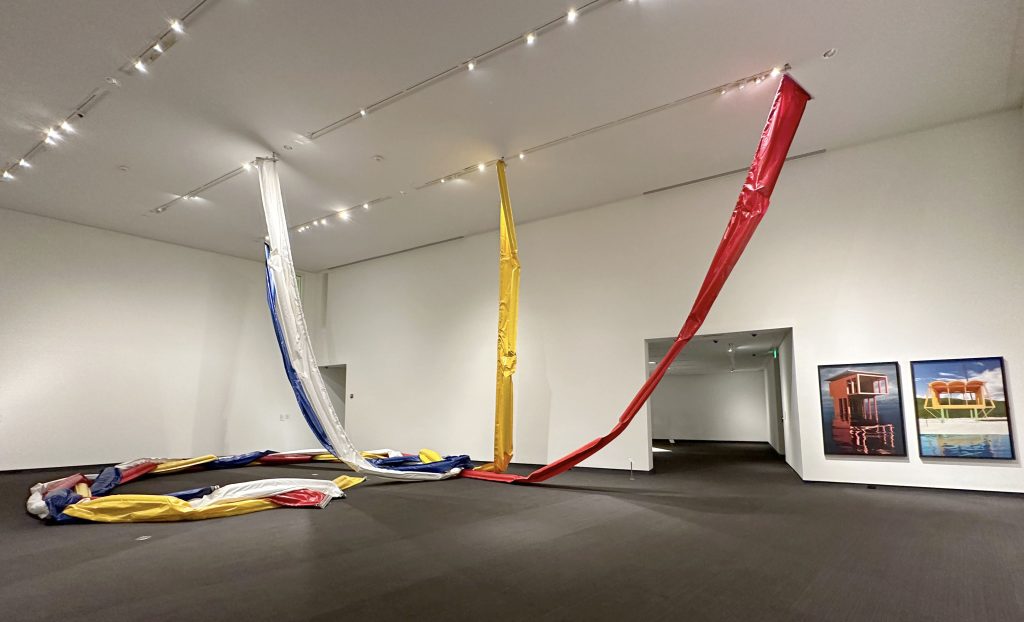
Postcommodity, “kinaypikowiyâs”, 2021, Four 30.5-metre industrial debris booms

Postcommodity is an interdisciplinary art collective comprised of Cristóbal Martínez (Genizaro, Manito, Xicano), and Kade L. Twist (Cherokee).

About Postcommodity’s work, kinaypikowiyâs, (seen above) from the museum-

This work is composed of debris booms, used to catch and hold environmental contaminants such as garbage, oil, and chemicals. The colors of the booms correspond to different types of threats— red (flammable), yellow (radioactive), blue (dangerous), and white (poisonous)-in the labeling system for hazardous materials. To indigenous peoples, these are shared medicine colors that carry knowledge, purpose and meaning throughout the Western Hemisphere. Suspended like hung meat, the booms represent a snake that has been chopped into four parts. Each part represents an area of the colonial map of the Western Hemisphere: South America, Central America, North America, and all of the surrounding islands. The title, kinaypikowiyâs, is a Plains Cree word, meaning snake meat. Divided by borders, Postcommodity asserts that all people living in the Americas are riding on the back of this snake.
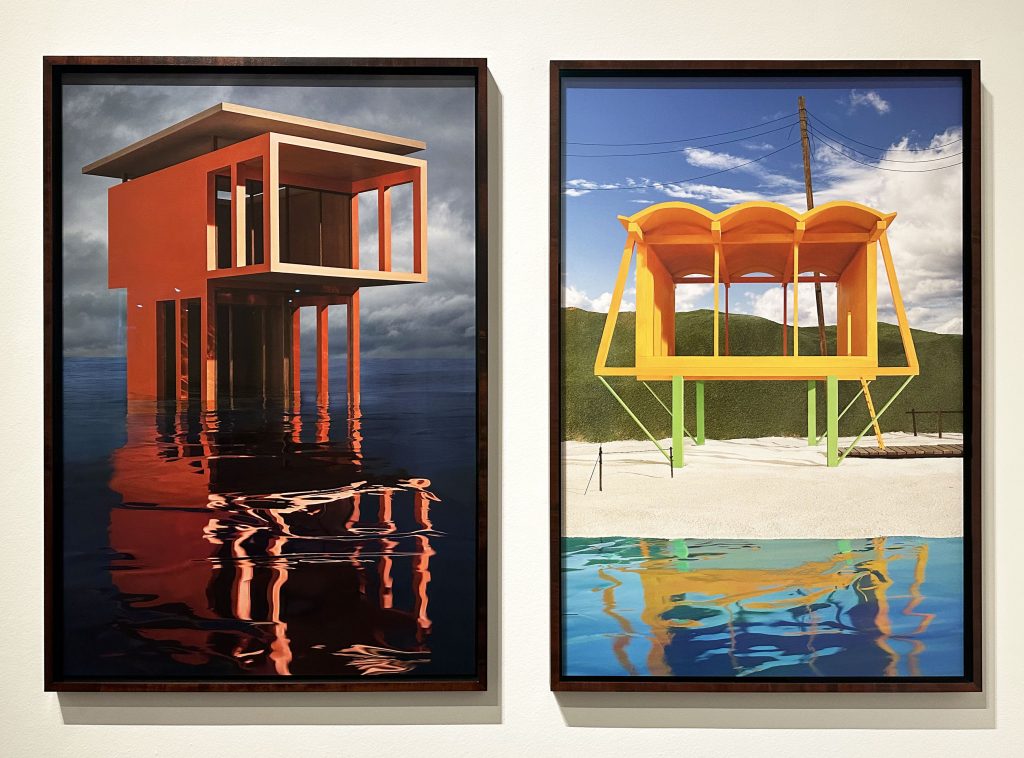
James Casebere, “Red/Orange Solo Pavilion”, and “Orange Guesthouse”, 2018, Archival pigment print mounted to Dibond
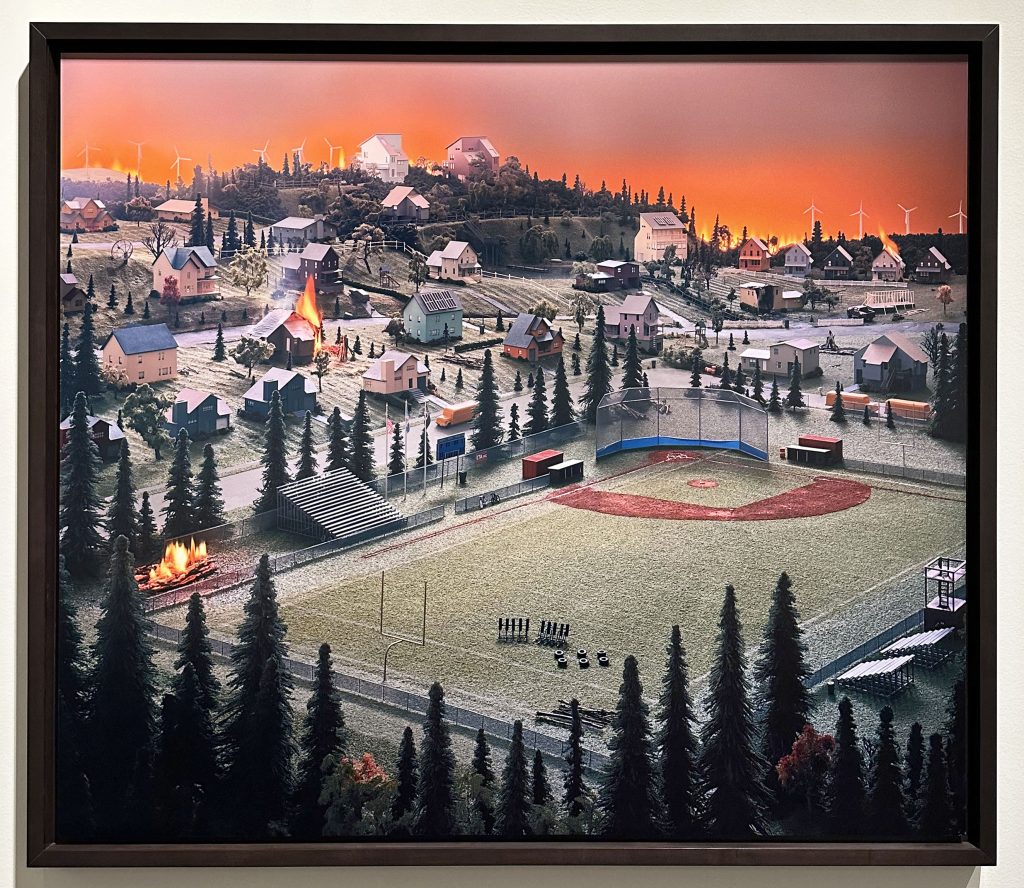
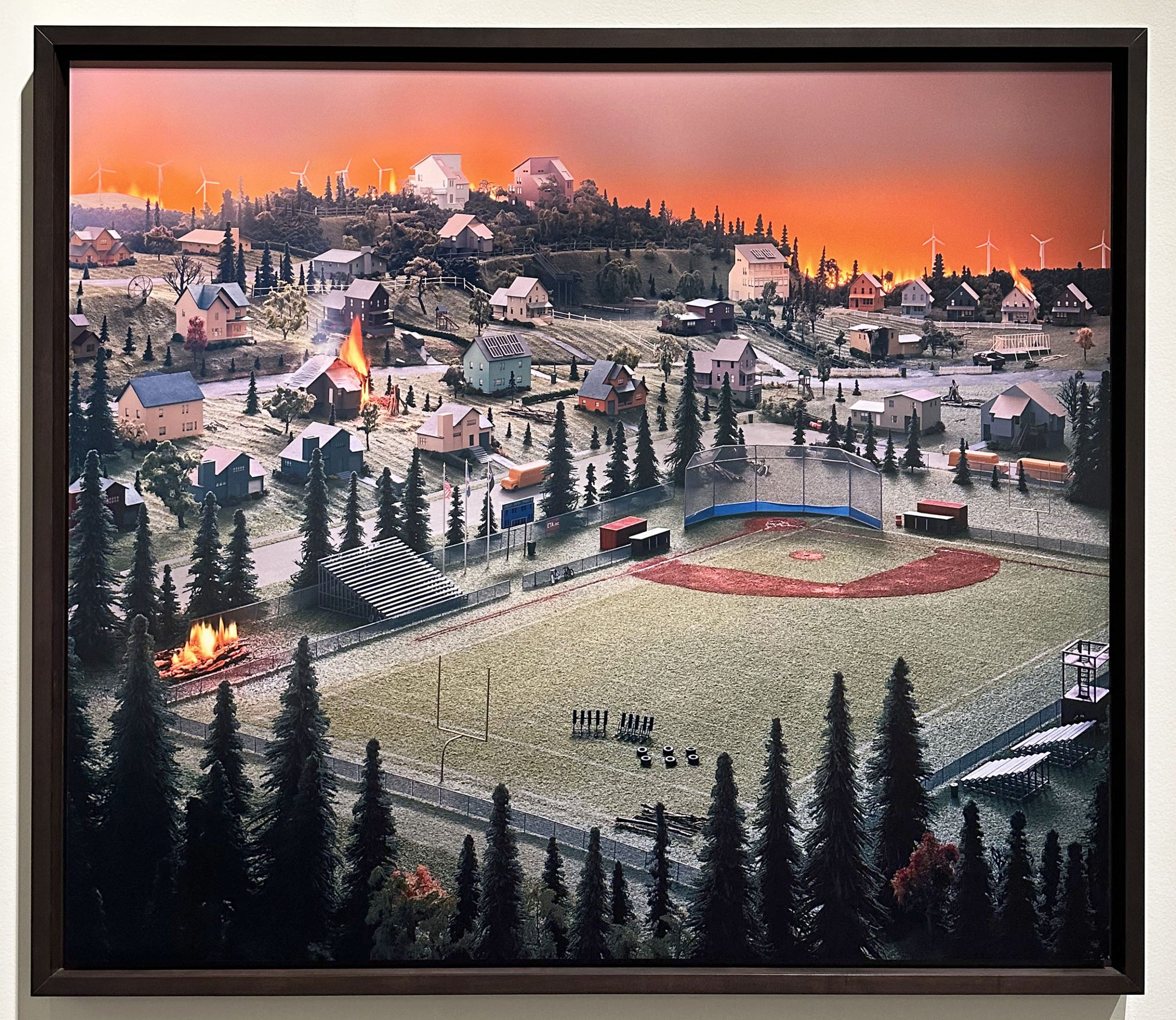
James Casebere, “Landscape with Houses (Dutchess County, NY), 2009, Archival pigment print mounted to Dibond

James Casebere creates architecturally based models for the large scale photographs seen above.
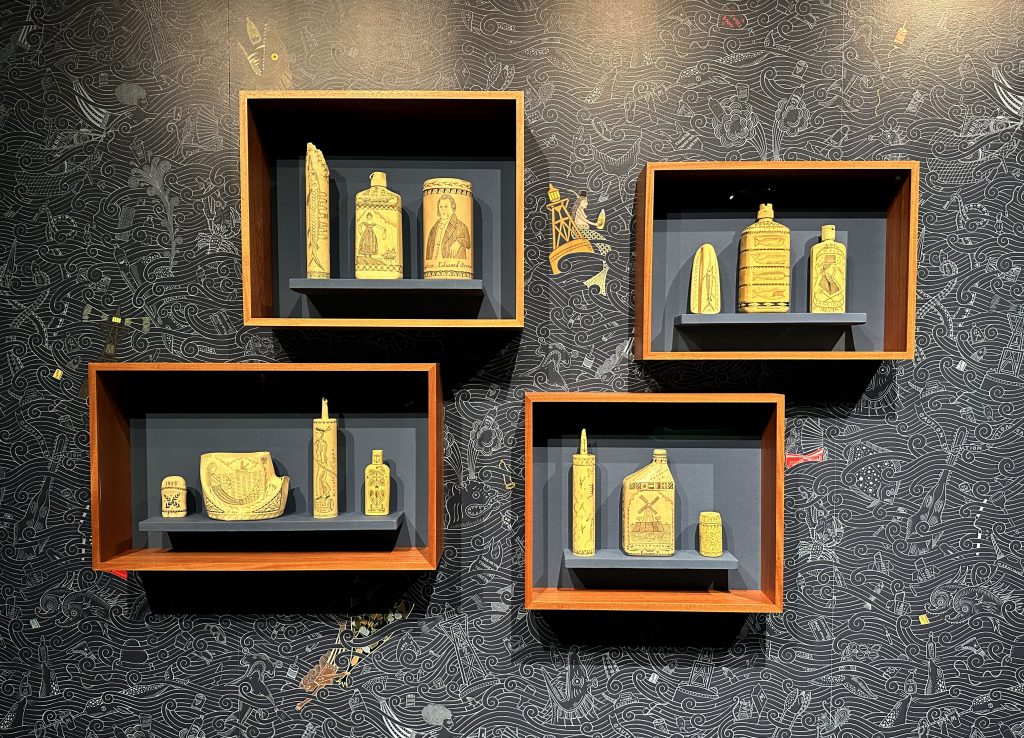
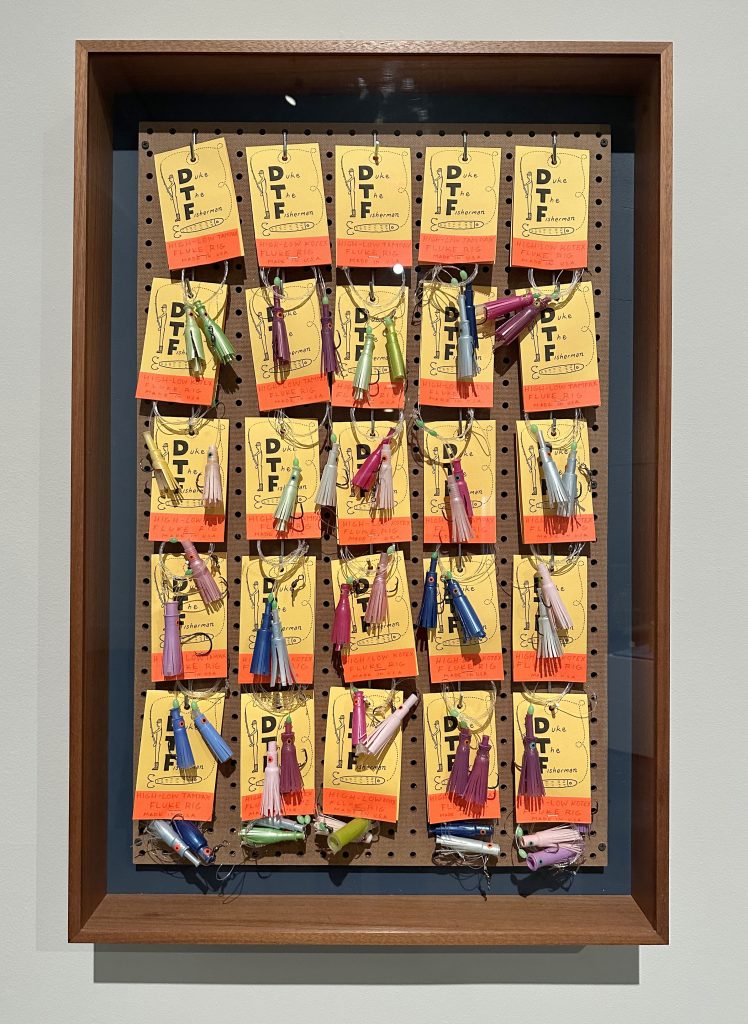
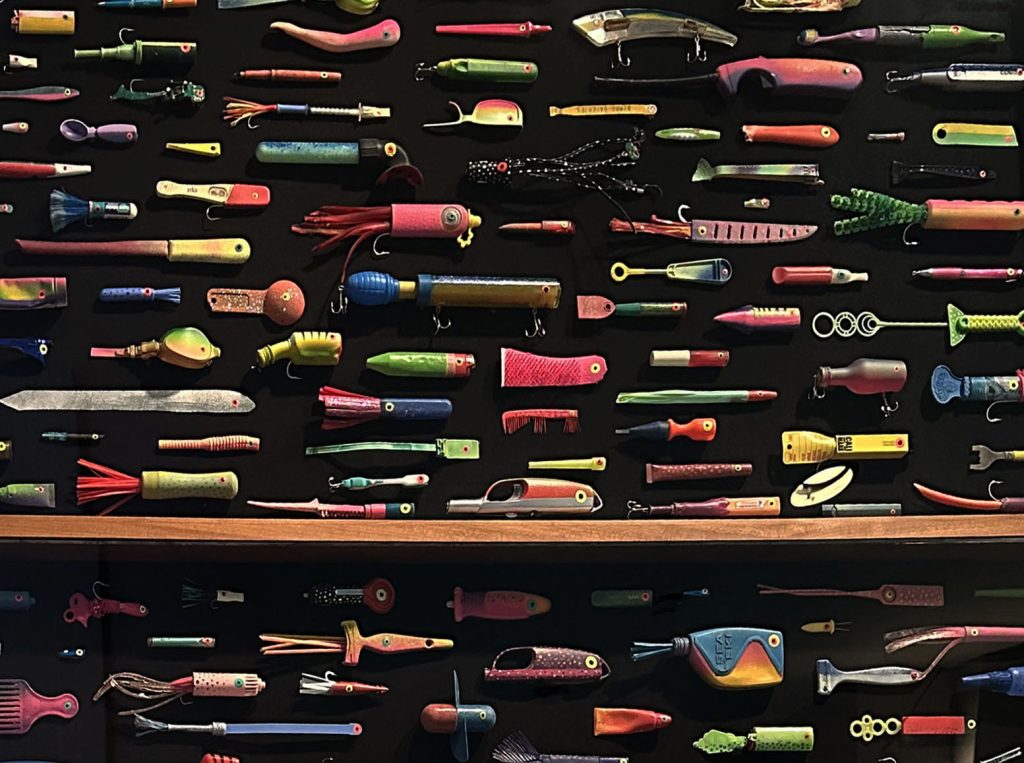
Reclaimed ocean plastic sculptures and “Tidal Fool” wallpaper by Duke Riley
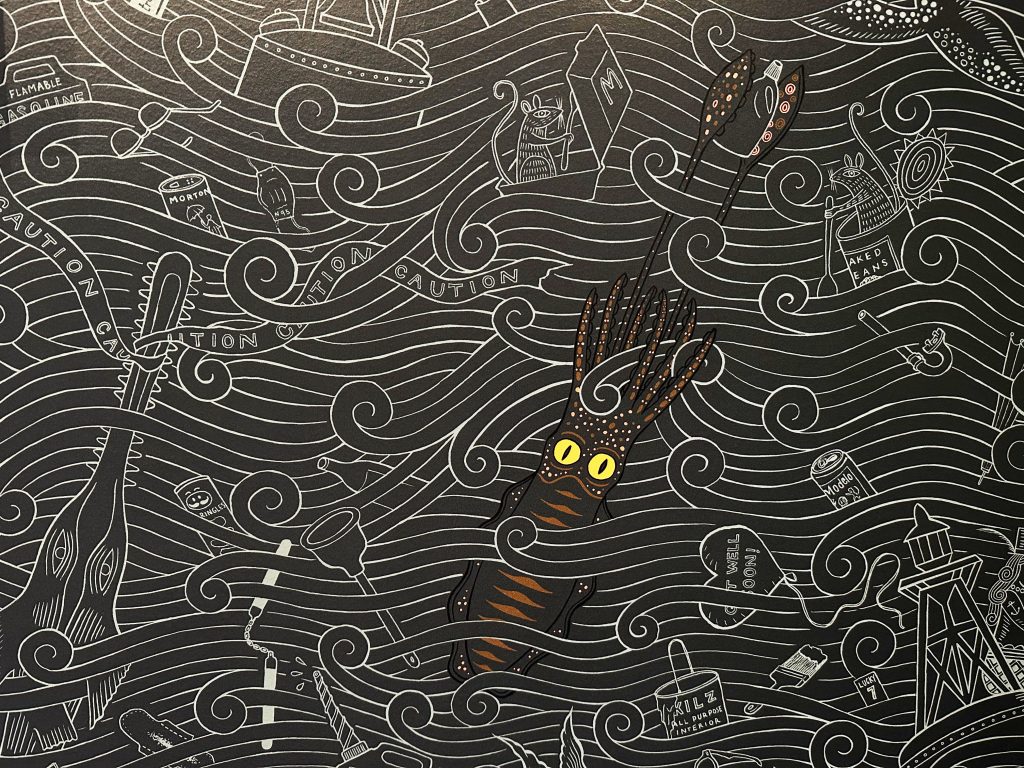
Duke Riley custom wallpaper, Tidal Fool, detail
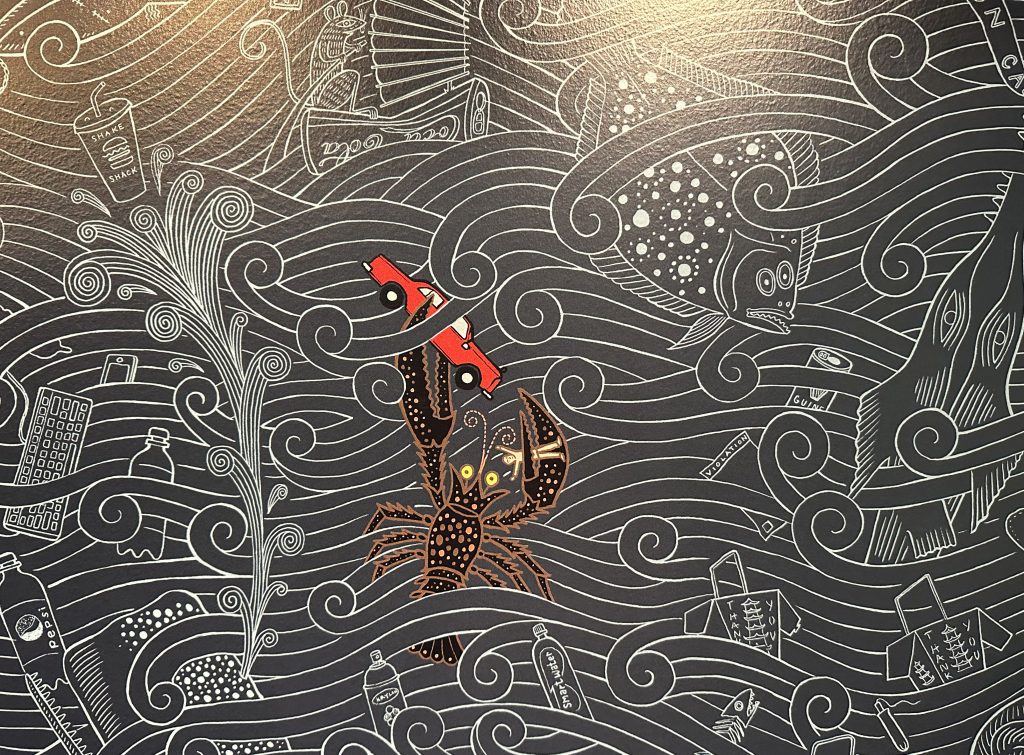
Duke Riley custom wallpaper, Tidal Fool, detail

Duke Riley’s work, which was previously shown at Brooklyn Museum, addresses issues of environmental pollution by using discarded plastics found in the ocean and other waterways to create new work inspired by the past. You can hear him discuss his work in this video.

From the museum-

Inspired by the maritime museum displays he saw while a child growing up in New England, Riley’s scrimshaw series is a cutting observation of capitalist economies-historic and today-that endanger sea life. The sculptures were created for the fictional Poly S. Tyrene Memorial Maritime Museum, and are contemporary versions of sailors’ scrimshaw, or delicately ink-etched whale teeth and bone. Riley first thought about using plastic as an ode to scrimshaw when he saw what he thought was a whale bone washed up on the beach in Rhode Island; it turned out to be the white handle of a deck brush. Riley regularly removes trash from beaches and waterways, and often uses this refuse in his work.

Riley collaborated with Brooklyn-based Flavor Paper to create these two custom wallpapers for his solo exhibition DEATH TO THE LIVING, Long Live Trash at the Brooklyn Museum. Tidal Fool exhibits Riley’s trademark humor in the face of devastating water pollution; notice the Colt 45-guzzling mermaid. Wall Bait vibrantly references Riley’s meticulous fishing lures, which he crafts from refuse found in the waters around New York City.
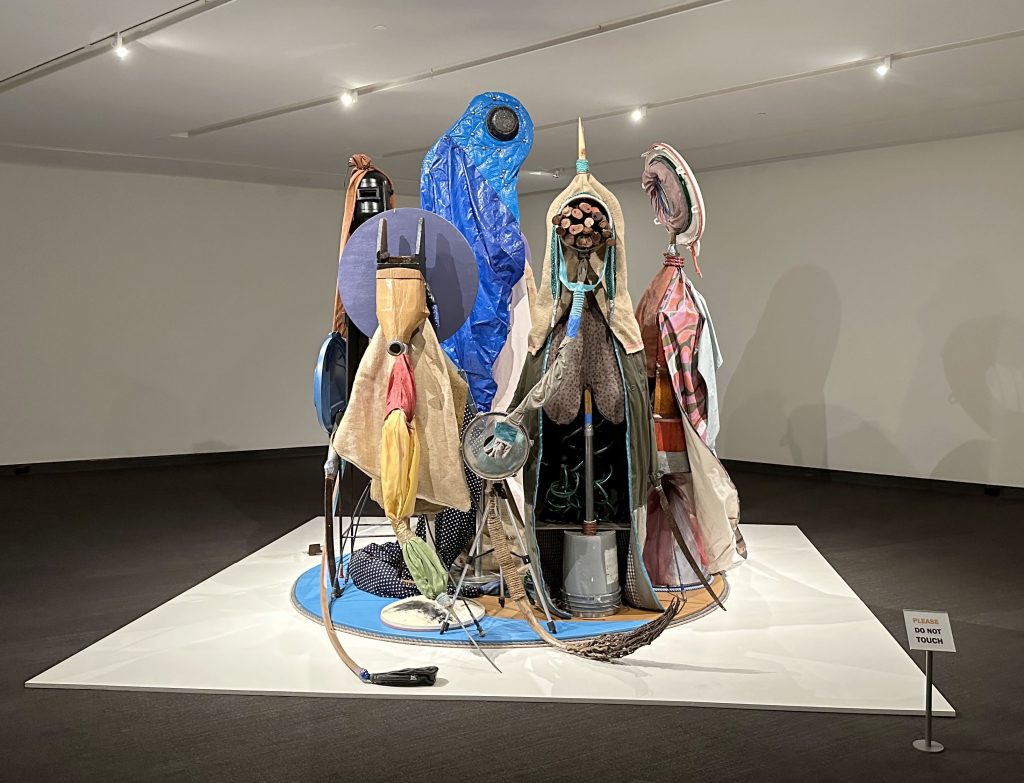
Daniel Lind-Ramos,”Centinelas de la luna nueva (Sentinels of the New Moon)”, 2022-2023, Mixed media
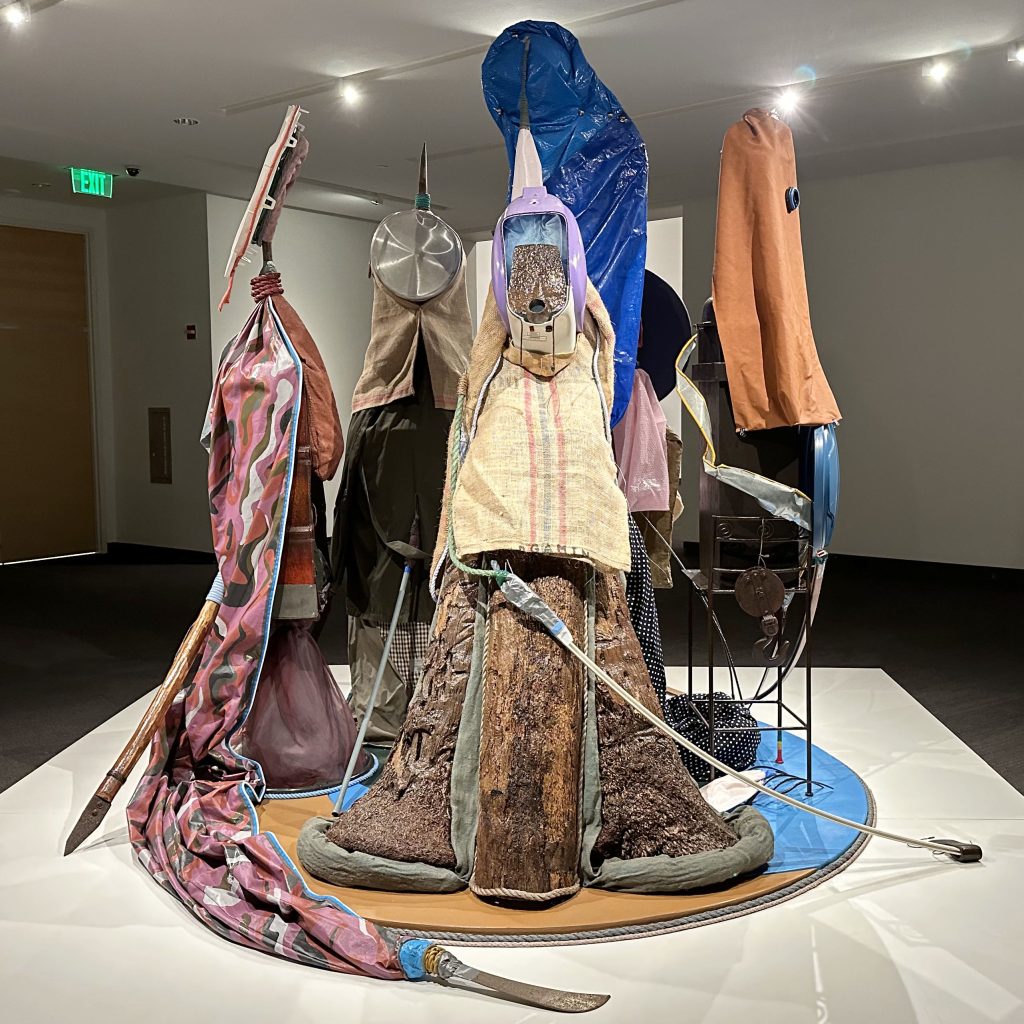
Daniel Lind-Ramos,”Centinelas de la luna nueva (Sentinels of the New Moon)”, 2022-2023, Mixed media

Daniel Lind-Ramos also uses a variety of recycled objects to create his sculptures.

From the museum about this work-

In Centinelas de la luna nueva, he evokes the elders of the mangroves, spiritual beings who watch over and ensure the health of this essential coastal tree. Mangroves are the basis for a complex ecosystem that shelters sea life and serves as the first line of defense in the tropical storms that batter the sub-tropics—including Florida.

Lind-Ramos’s practice reflects the vibrant culture of his native Loíza, Puerto Rico, by honoring local agriculture, fishing, cooking, and masquerade. His sculptures also evoke Hurricane Maria (2017), the COVID-19 pandemic, and ongoing environmental degradation. Lind-Ramos is committed to the survival and sustenance of Afro-Taíno traditions and people of the Puerto Rican archipelago. However, his art engages the global community through shared emotions, parallel histories, and the commonality of human experience.

The next post will discuss two other artists in the exhibition, Brookhart Jonquil and Janaina Tschäpe.

Apr 102024
 

Nalani Stolz “Bread Bodies”, bread, ceramic, muslin

Nalani Stolz, “”like floating in thick waters”, fermented membrane, stainless steel

Nalani Stolz, “a small ocean swallowed” baking soda, ceramic, cheesecloth, vinegar, pump, latex

“a small ocean swallowed”, closer

Nalani Stolz, “a wild wetland in our gut” ceramic, plum vinegar, muslin, stuffing, salt

Nalani Stolz, “a wild wetland in our gut” ceramic, plum vinegar, muslin, stuffing, salt

The Sculpture Center in Cleveland is currently showing Nalani Stolz’s Bodies Still Becoming and Zachary Smoker’s Inured.

With the sound of water dripping, the bread stretching fabric, and growth covered vessels leaking into mattresses- Stolz’s sculptures engage the viewers senses, at times viscerally.

She has also included her film Traces in the exhibition. For this work she and her mother slowly sew their hair together through a sheet of gauze.
From the gallery about the exhibition

The bodies Nalani Stolz crafts bulge, grow, and break down. Materials such as rising dough expand and constrict, cloth sculptures leak and ooze, fermented membranes and porous clay forms seep vinegar, growing warts across their surfaces. These bodily processes draw on the often-gendered experiences of how our physical forms take in and expel matter; the feelings of expansion and fullness and those of emptying out, of breaking down when weeping, menstruating, and experiencing miscarriage, abortion, and pregnancy. These moments shift our seemingly solid edges and reveal our porous boundaries; reminding us that we are dying, changing, decaying vessels, loosely contained by skin, muscle, and bone.

Zachary Smoker’s sculptures for Inured address issues related to U.S. currency, power, capitalism, and material culture. In two of the works, familiar items ask questions about purpose. The whiffle ball bat /police baton combination mixes violence and play. Shopping carts now have associations with living on the street, as well as for buying goods in a store- which one will this be used for when assembled?

Zachary Smoker, “Crony Tikes”, Plastic Whiffle ball bats, pegboard, double hooks, 2024

Zachary Smoker, “Anyone can make Art, not everyone can buy it”, Demonetized U.S. currency, BFK Rives, Elmer’s glue stick, safety wire glass, poplar, enamel paint, paint marker, 2023

Zachary Smoker, “A place for everyone, and everyone in their place”, Steel shopping cart, polyurethane wheels, enamel paint, 2024

Both of these exhibitions close on 4/13/24.

Apr 032024
 

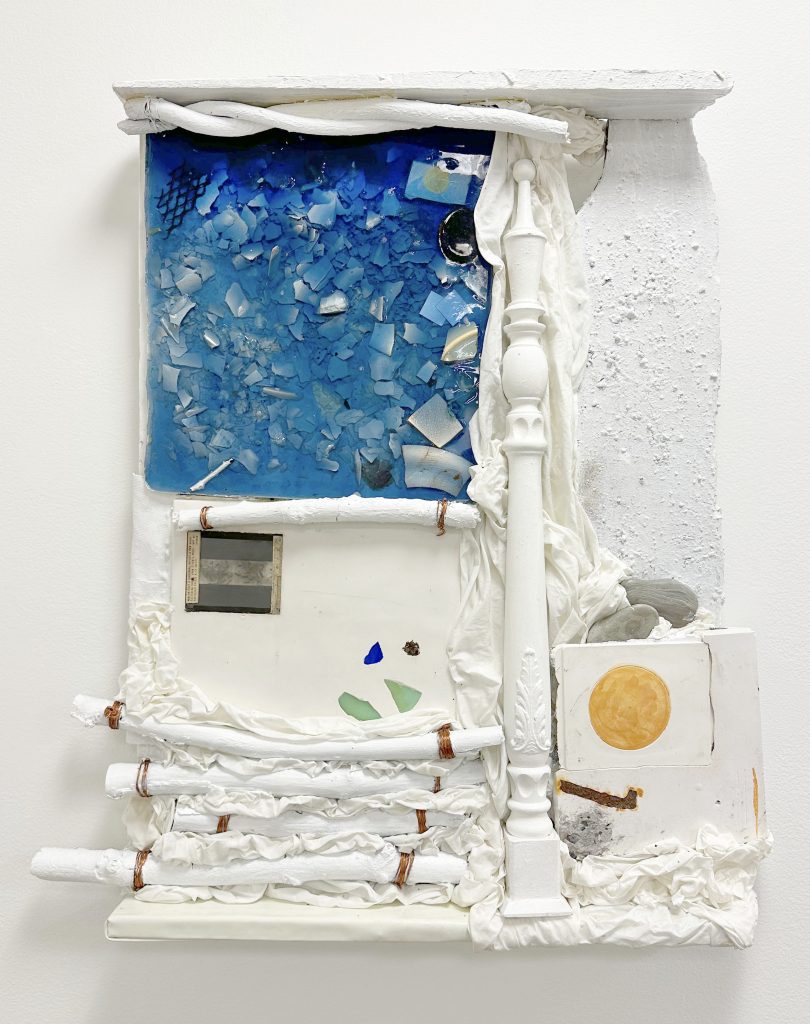
Julia Schenkelberg, “Blue Ocean”, 2020, Blue dye, resin, rusted metal from Detroit factory floors, plaster chips, vintage china, glass from Brooklyn beaches

Malone University Art Gallery’s exhibition Healing Spaces features work by Northeastern Ohio artists Julie Schenkelberg, Chen Peng, Yiyun Chen, and Emily Bartolone. Although the mediums differ, the work flows together in the room. Below are some selections and more about each artist from the gallery’s documentation.

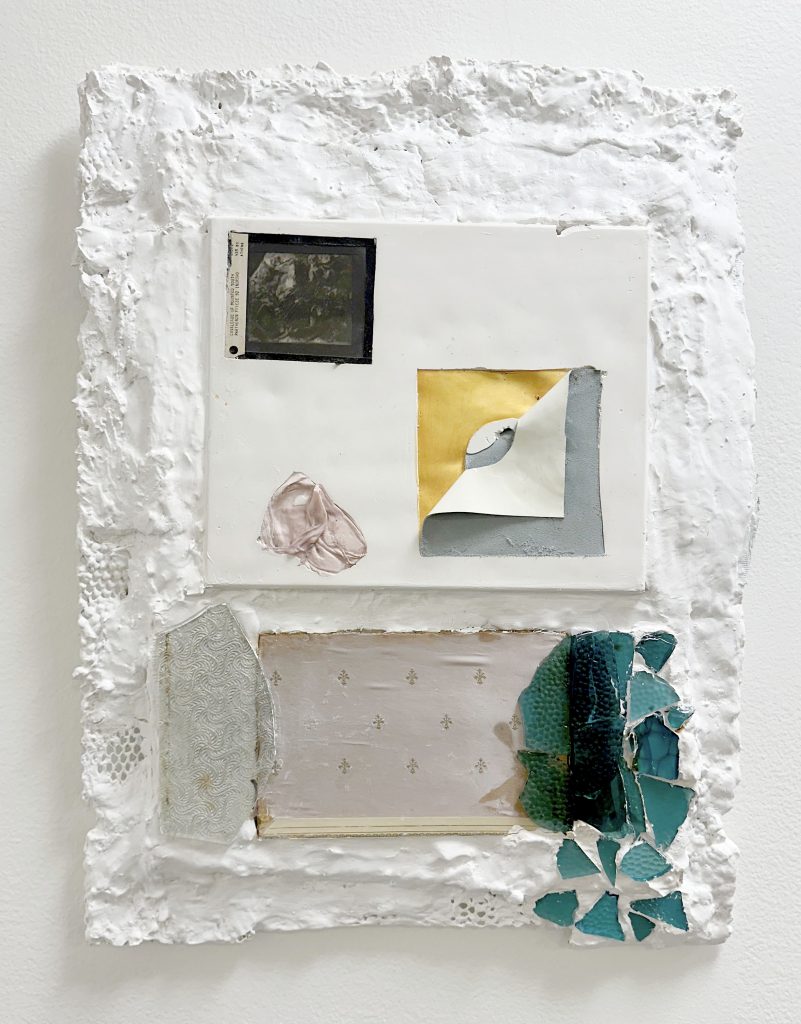
Julie Schenkelberg, “Modern Memorial”, 2020, Found screen, plaster, acrylic paint, vintage leather and fabric, jewelry box interior, glass gathered from Cleveland and Detroit auto and steel factory abandoned floors, vintage glass slide of the Parthenon Frieze

Julie Schenkelberg grew up in the post-industrial landscape of Cleveland, Ohio. Her mixed-media installations start with furniture, dishware, textiles, and marble, combined with concrete, resin, and construction materials, to transform notions of domesticity, and engage with the American Rust Belt’s legacy of abandonment and decay. Using the home as a playground for formal and conceptual subversions, the work aggressively disrupts cohesion within the physical sphere. Familiar furnishings rekindle memories or premonitions of collapse, suggesting both the utter destruction of war, calamities, or urban decay, but also the uncanny juxtapositions of fragile substances such as cloth and china, with industrial materials such as rusty metal, heavy concrete, and tool-made marks such as drilled holes and chain-sawed indentations.

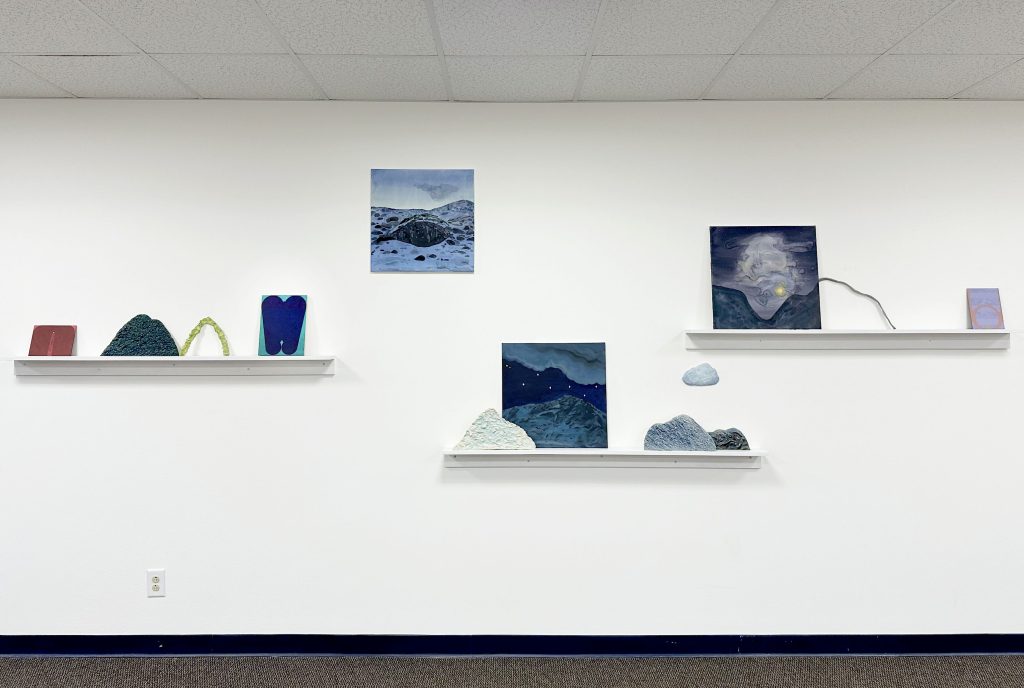
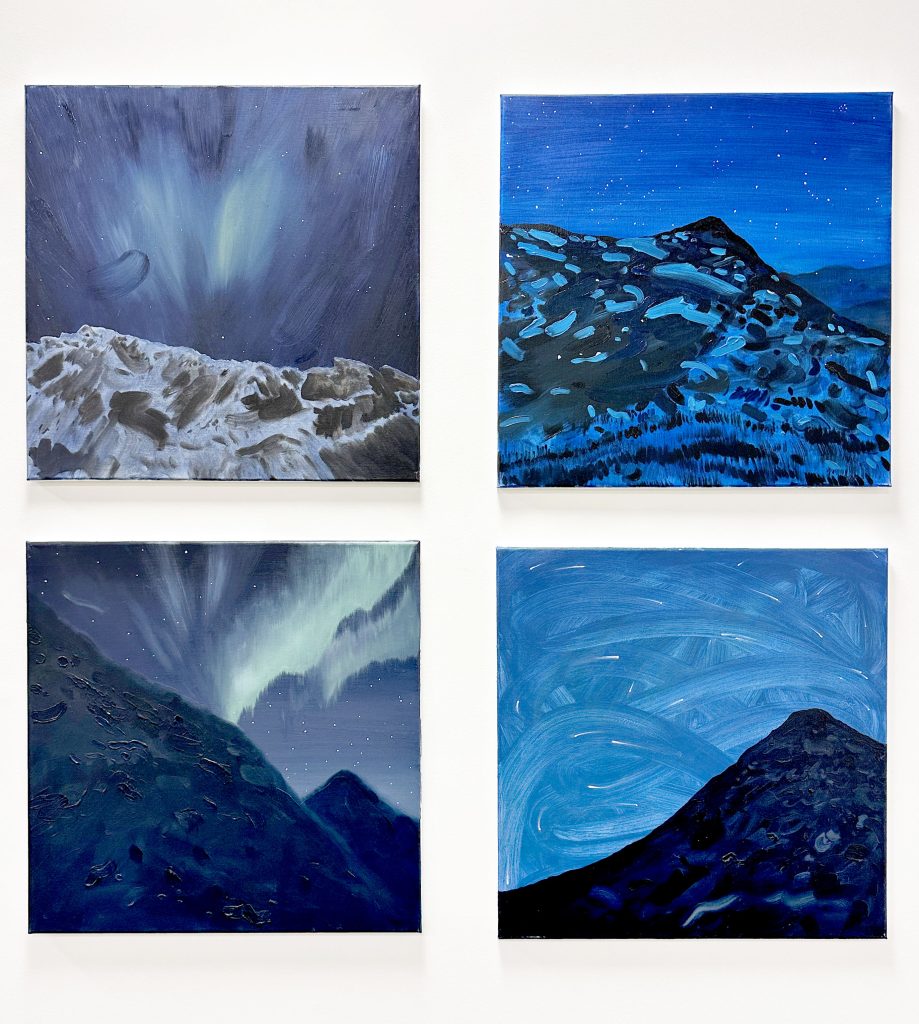
Chen Peng, Paintings from the “Mountains at Night” series, 2023, gouache, acrylic, and oil on canvas

Deriving from a desire to find stillness and grounding as an immigrant, Chen Peng explores the connection between landscape and the complexities of identity and belonging. She creates foreign landscapes from a combination of past experiences, memories, and imagination, delving into the disorienting sense of not knowing where home is. The moon, particularly in its fullness, becomes a symbol encapsulating emotions and metaphors associated with loneliness, reverence, and even terror. Her ceramic pieces extend this exploration of landscapes, featuring textures and marks that convey the essence of mountains, clouds, and the moon.

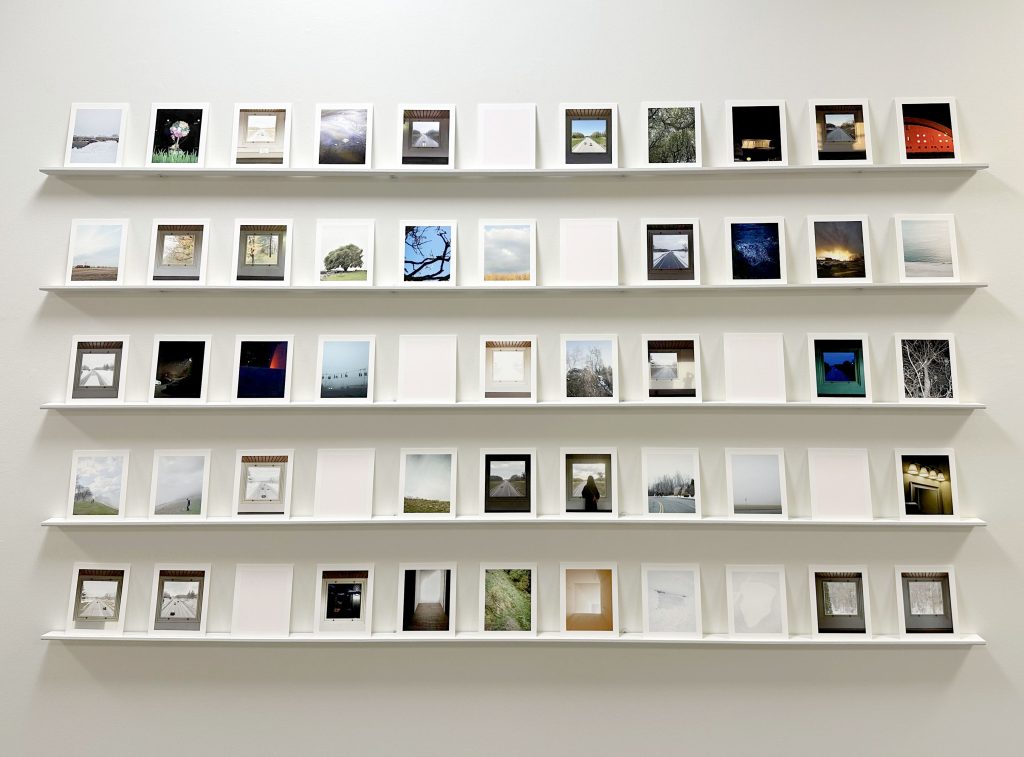
Photographs from from Yiyun Chen’s series “Velleity”, 2016-2018

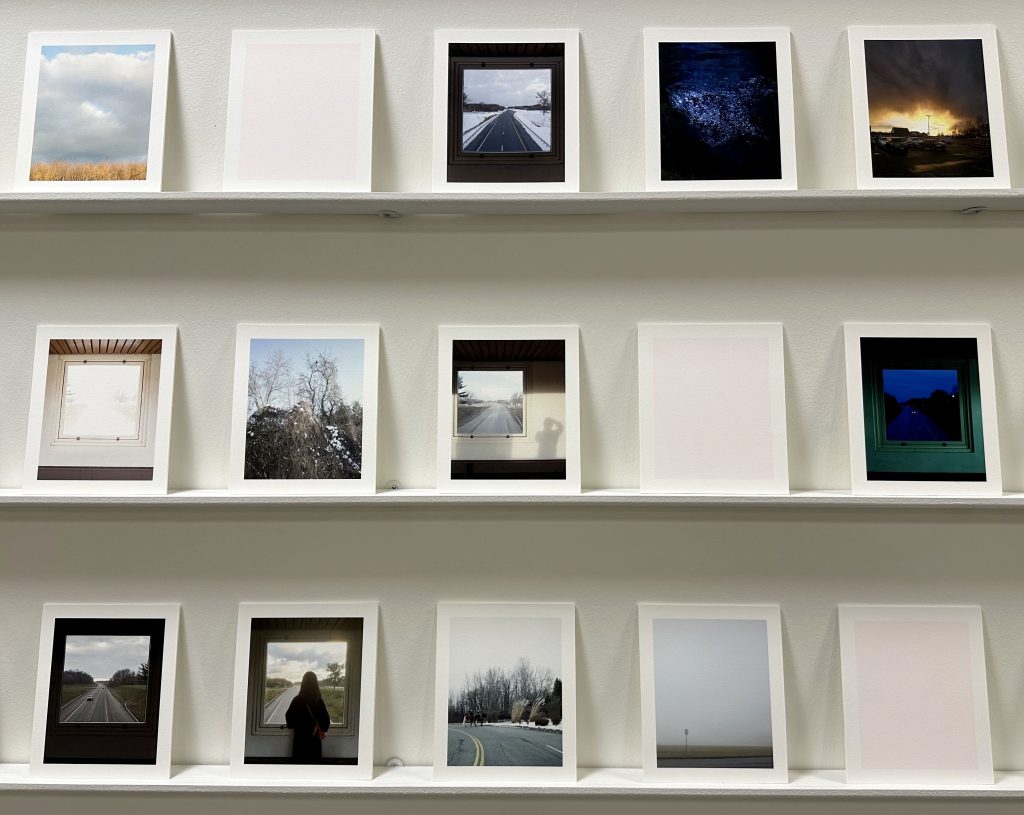
Yiyun Chen, “Velleity”, detail

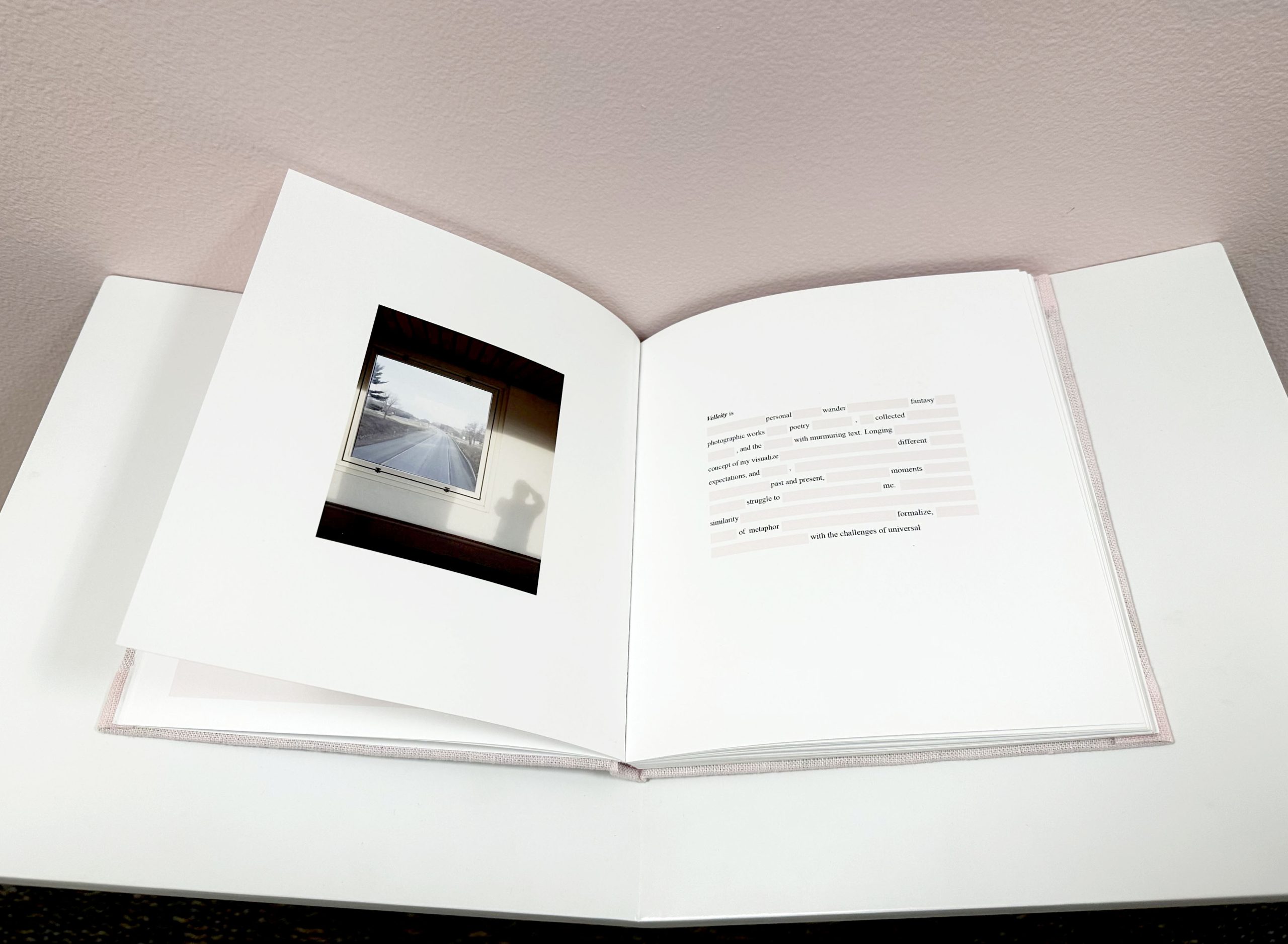
Yiyun Chen, Handmade photobook, 2018

The photography of Yiyun Chen is about the process of self-reflection and self-discovery as an Asian immigrant, exploring the relationship between people, environment and society, turning its personal experience and empathy into gentle conversations between humans and nature, capturing the poetic and distance of the environment around us. Through photography, we can take the essence of life seriously again and treat the people and things around us tenderly. Through his lens, they often have similar structure, people look tiny in nature scenes, creating an intimate visual experience. Most of his photographs are captured outdoors, with soft light and harmonious colors often used.

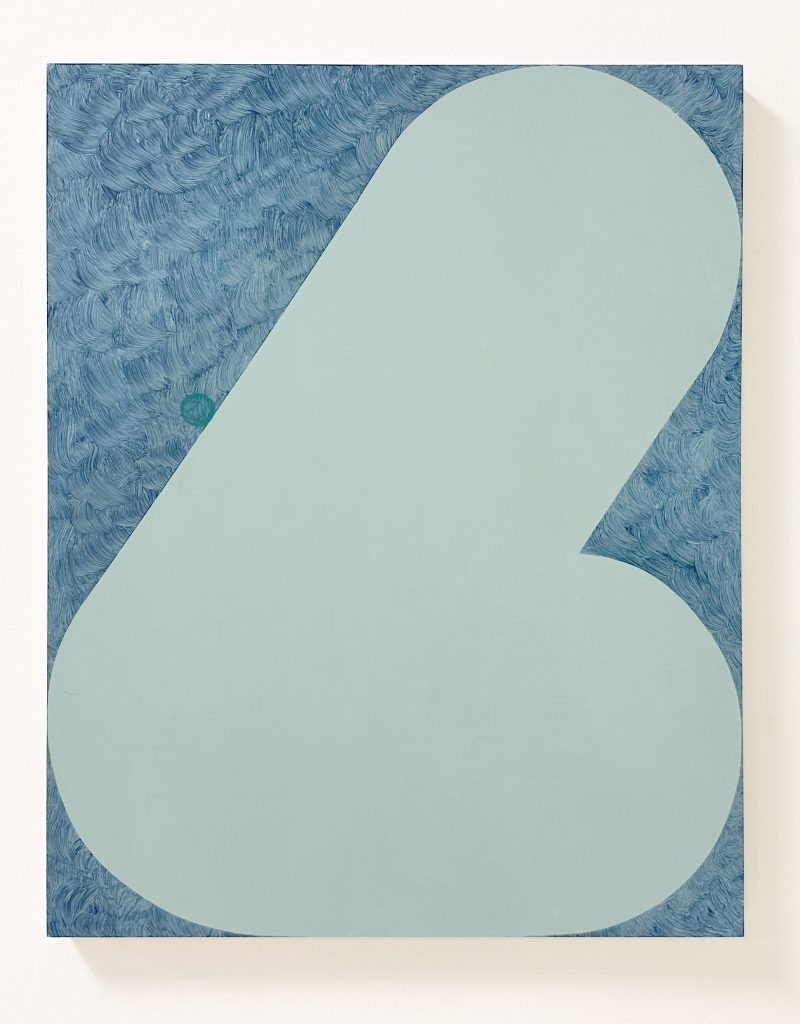
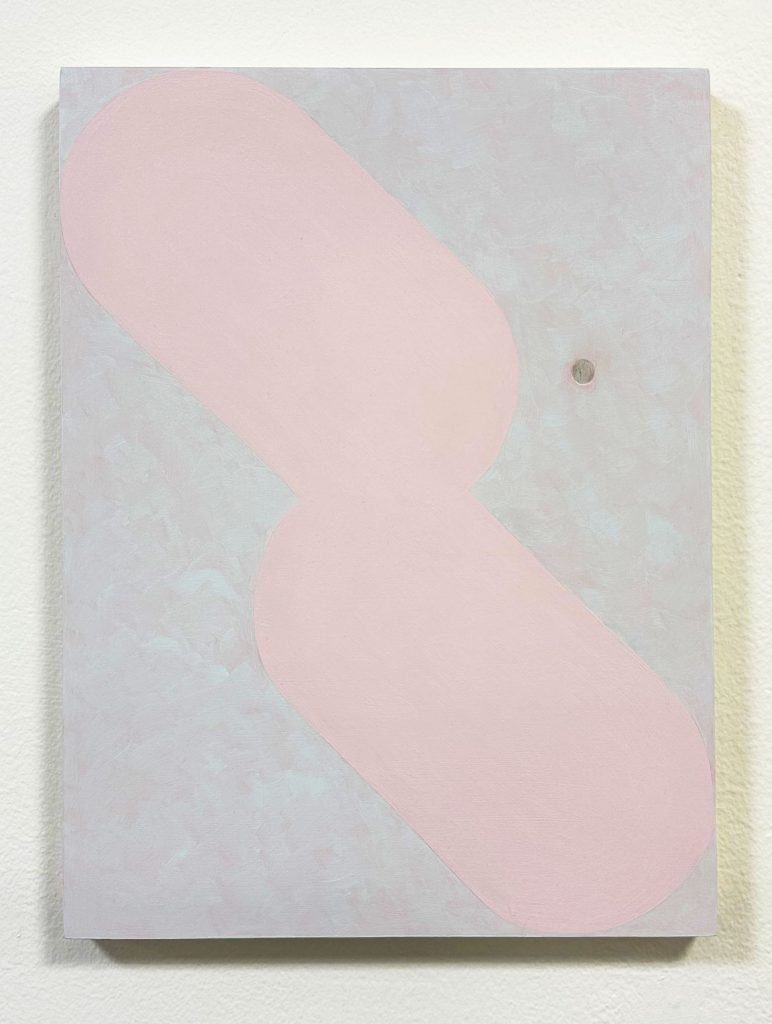
Painting by Emily Bartolone

Painting by Emily Bartolone

Stemming from her infatuation with the formal elements of painting, the work of Emily Bartolone pairs down simple, anthropomorphized shapes in an effort to explore paint and color theory while simultaneously creating tension and humor through color, edges, and texture. The playful, human qualities of painting are incorporated into the work through the use of amorphous shapes animated within the picture plane. Further informed by ideas of the mundane, the awkward, and the jovial that surround everyday life, the complexity of human relationships are mimicked by the shapes interacting on each painting’s surface. In acknowledging that life is not always cordial, moments of tension are placed within the satisfying surfaces in the form of an abrupt mark, a disparate color, or a shift in scale. These ideas are used to take viewers outside of themselves for a short period of time, hoping to offer a break from the bombardment of distractions, notifications, and news we encounter so often on a daily basis.

This exhibition closes 4/9/24.


Apr 032024
 

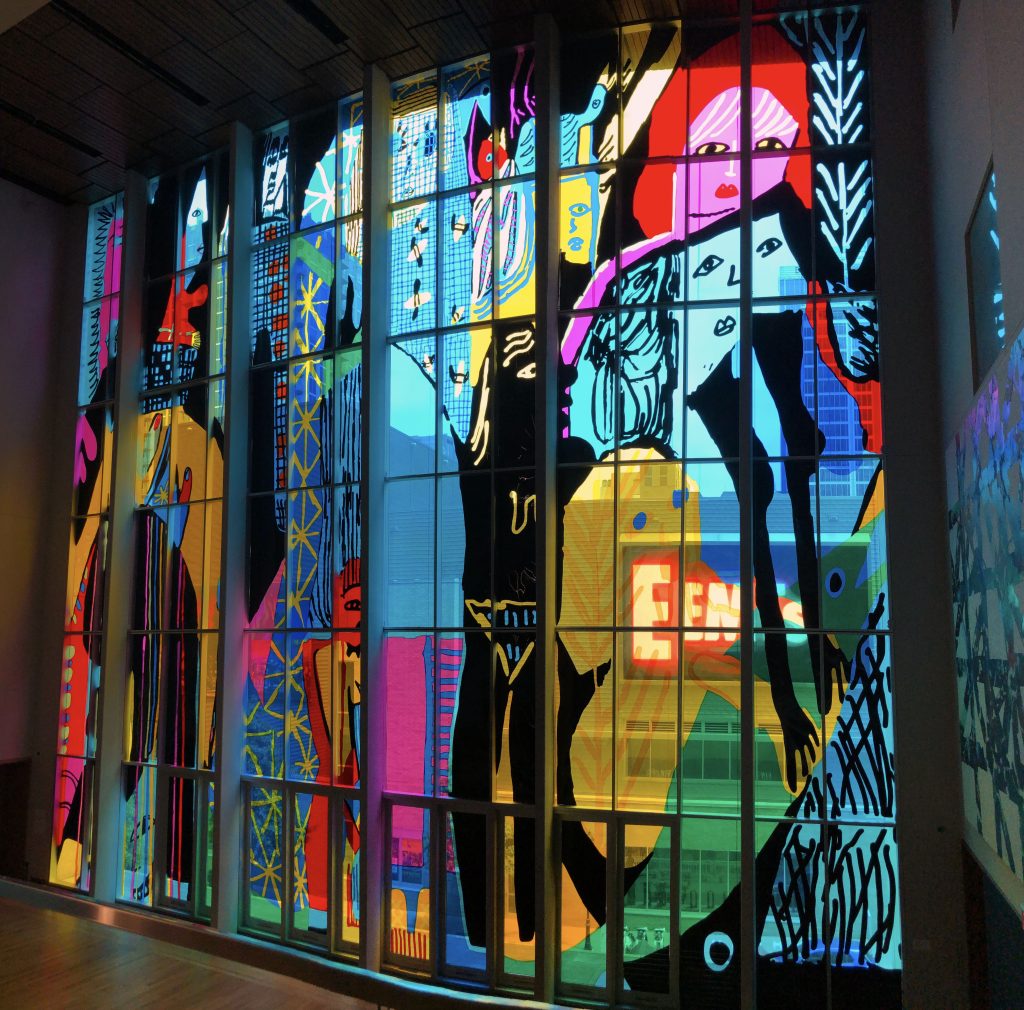
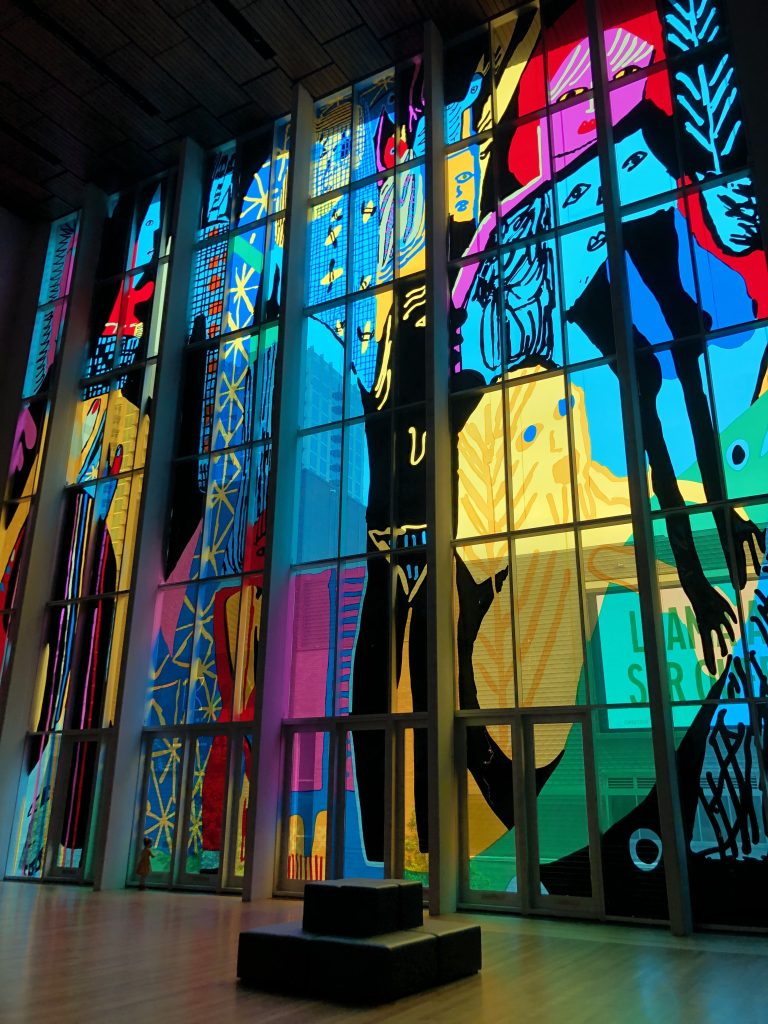
Summer Wheat created this mural, Foragers, in 2020 for the Mint Museum in Charlotte, North Carolina, where it remains on view today.

From the museum about the work-

This monumental “stained glass” installation celebrates the resilience of North Carolina’s community of makers and providers and creates a space where our present-day Charlotte community can gather for contemplation and inspiration. Collaging sheets of colored vinyl, Wheat has created a towering, prismatic composition that fills all 96 windows of the Mint atrium with female figures of varied sizes, ages, shapes, and races performing acts of labor: fisherwomen, beekeepers, hunters, mothers, caretakers, farmers, bankers.

Following the tradition of stained-glass windows found in places of worship, Wheat offers a narrative of hope and resilience that can be enjoyed in a few minutes or studied over hours. Wheat says that “Foragers presents a tradition in which women were the original hunters, technologists, and artists. This array of women connected by geometric patterns echoes the psychological space of women supporting each other. They are marching together, connecting to creatures from land and water, demonstrating their inherent link to natural elements and to the intricate depths of the unconscious.”

The women in Foragers also call attention to the underrecognized populations who have cultivated the land that we now call North Carolina, from the indigenous tribes to the colonial settlers to the enslaved Africans and all those who have followed. The region is home to myriad traditions-ceramics, basket weaving, quilting, furniture construction, textile production-and The Mint Museum specifically celebrates that legacy through its collection and exhibitions. Foragers salutes North Carolina’s history of creativity and industry, both by those whose names we know and those who remain anonymous.

Her latest exhibition, Fertile Ground, is currently on view at Nazarian/Curcio in Los Angeles, closing on 4/6/24. It includes new paintings and three stone mosaic sculptures.

Mar 292024
 

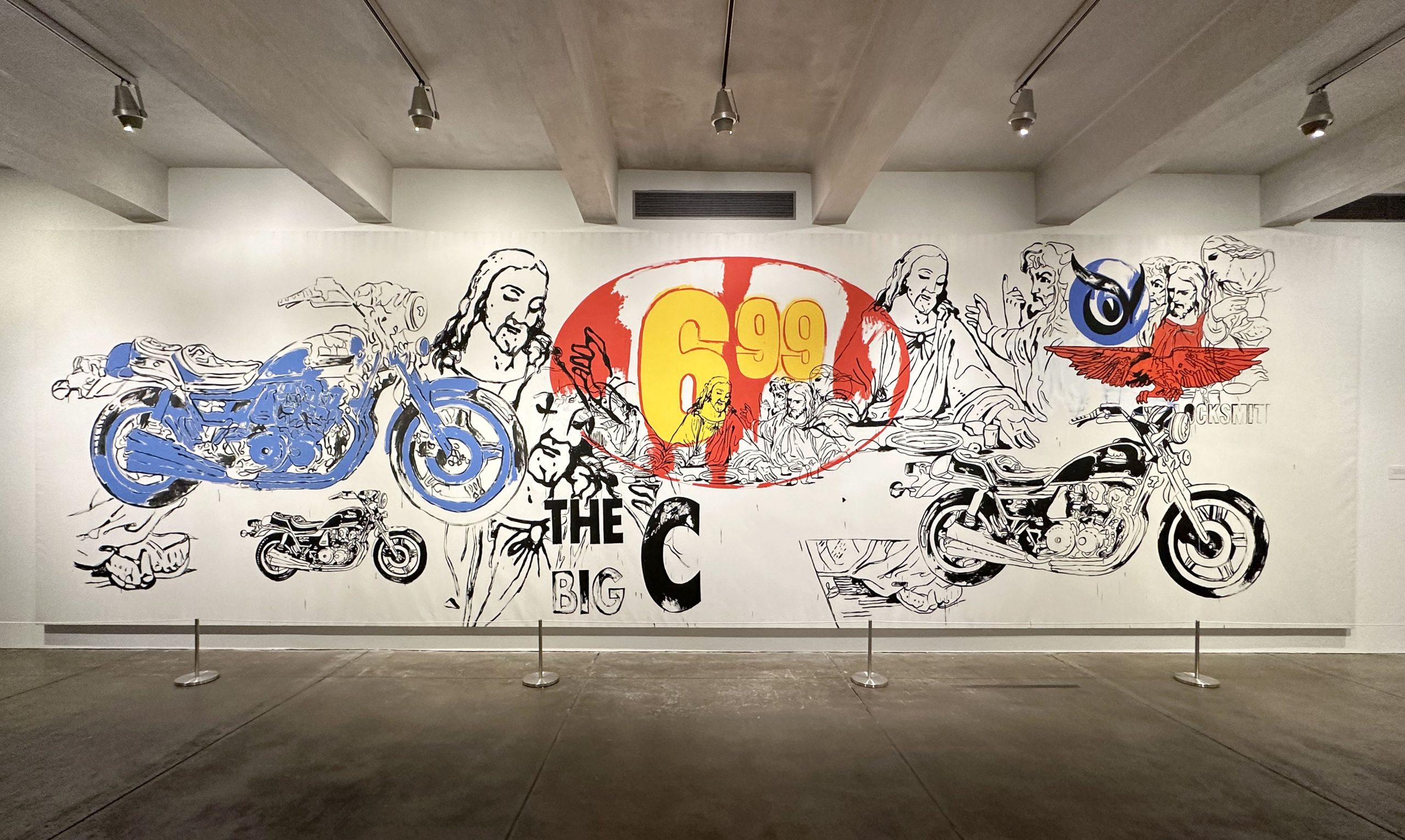
“The Last Supper”, 1986, Acrylic and silkscreen ink on linen

In the 1980s Andy Warhol created a series of paintings based around Leonardo da Vinci’s The Last Supper. The one above is currently on view at The Warhol Museum in Pittsburgh, Pennsylvania.

In 2010 it was on view as part of the Brooklyn Museum’s exhibition Andy Warhol: The Last Decade.

From their website about the work-

The Last Supper series was commissioned to inaugurate a new gallery in Milan, Italy, located across the street from the site of the Italian Renaissance artist Leonardo da Vinci’s iconic fresco (circa 1495–98) depicting Jesus’s last meal with his followers. Warhol worked obsessively for more than a year on this series, producing more than a hundred Last Supper paintings, both silkscreened and hand-painted, that were some of the largest paintings of his career.

Despite his public proclamations to the contrary, Warhol was profoundly moved by the series. Of these works, he remarked, “I painted them all by hand—I myself; so now I’ve become a Sunday painter. . . . That’s why the project took so long. But I worked with a passion.” These paintings manifest both his religious beliefs—his practice of Catholicism remained private until it was revealed at his funeral—and an irreverence toward the subject, expressed through ironic commercial logos and transgressive repetitions of Christ’s image.

Warhol created many variations using versions and pieces of da Vinci’s fresco and there is some debate as to the meanings behind them. In 2018, curator Jessica Beck wrote Warhol’s Confession: Love, Faith, and AIDs, an in-depth essay exploring possible meanings behind the work. She suggests Warhol was referencing AIDS, suffering, health, and mortality, along with his relationship to Christianity.

In this section of the essay she discusses the imagery from the painting-

The tension between Warhol’s sexuality and his religious life has its fullest expression in paintings such as The Last Supper (The Big C), in which signs and symbols create a private reference to AIDS. Hand-painted via a projection process, like paintings of 1961–62 such as Before and After, Wigs, and Dr. Scholl’s Corns, the canvas is left partly unfinished, and Warhol employs a light touch with an abstract brushstroke. On this canvas the figure of Christ recurs four times, while hands appear repeatedly. Thomas’s finger pointing to the sky, intimating that heaven knows he is free of guilt, appears prominently next to the “eye” in the Wise potato-chip logo.

…The source material for the painting, in the archives of The Andy Warhol Museum, Pittsburgh, is a collage made up of headlines from the New York Post, motorcycle ads, and clippings reading “the Big C” and “AIDS” cut from a front-page article in the Post. Warhol ultimately left out the AIDS headline while keeping the more covert “The Big C,” but given the direct references to “gay cancer” in his diaries, it becomes clear that this image of Christ was connected for him to the rapid rate at which people were dying around him. “The Big C” was synonymous with AIDS. The Last Supper (The Big C) reflects on sex and shame through appropriated images of Christ’s betrayal, the piercing owl’s eye (the Wise logo), and the numbers 699, appropriated from a price tag—$6.99—but indexing both the sexual position “69” and the “mark of the beast,” 666, in the Book of Revelations. Even the details of Christ’s feet at the far right of the canvas seem to point to the notion of punishment: for Steinberg, writing on Leonardo’s Last Supper, “as [Christ’s feet] rejoin the rest of the body, they foreshadow it glorified; and they foreshadow it crucified.”34  The image of Christ offering his flesh in the Eucharist was a symbol of salvation during a time of suffering, an unusually personal and emotional image for Warhol. In keeping with the complexities of his construction of death in the Death and Disasters, and with its repression in the diaries, the painting speaks of sex and of judgment. It is an allegorical triangulation of mourning, punishment, and fear.

For more on Warhol an his diaries, the Netflix documentary is really informative as well as entertaining. It’s a moving portrait that goes beyond what most people know about Warhol, both as an artist and as a person.

Mar 282024
 

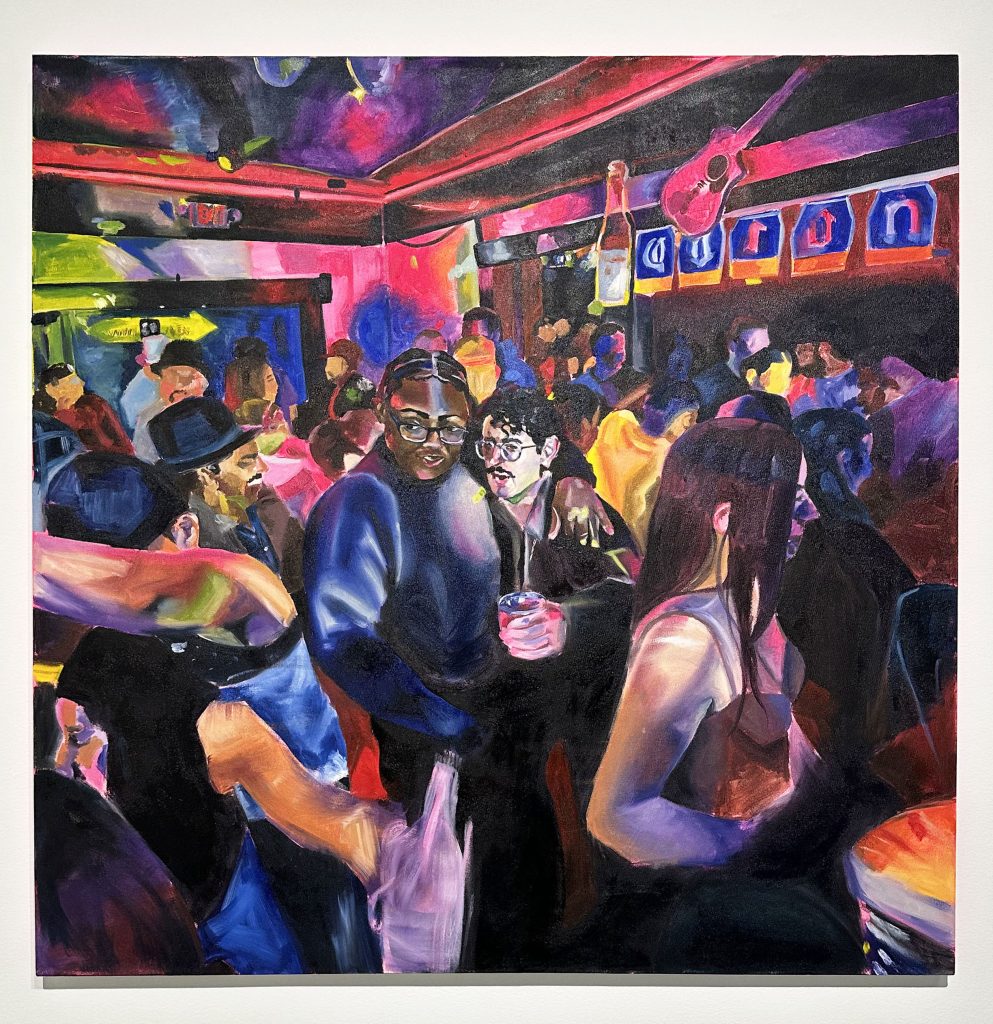
Jazzalyn Palma, “21st st”, Oil on canvas, 2023

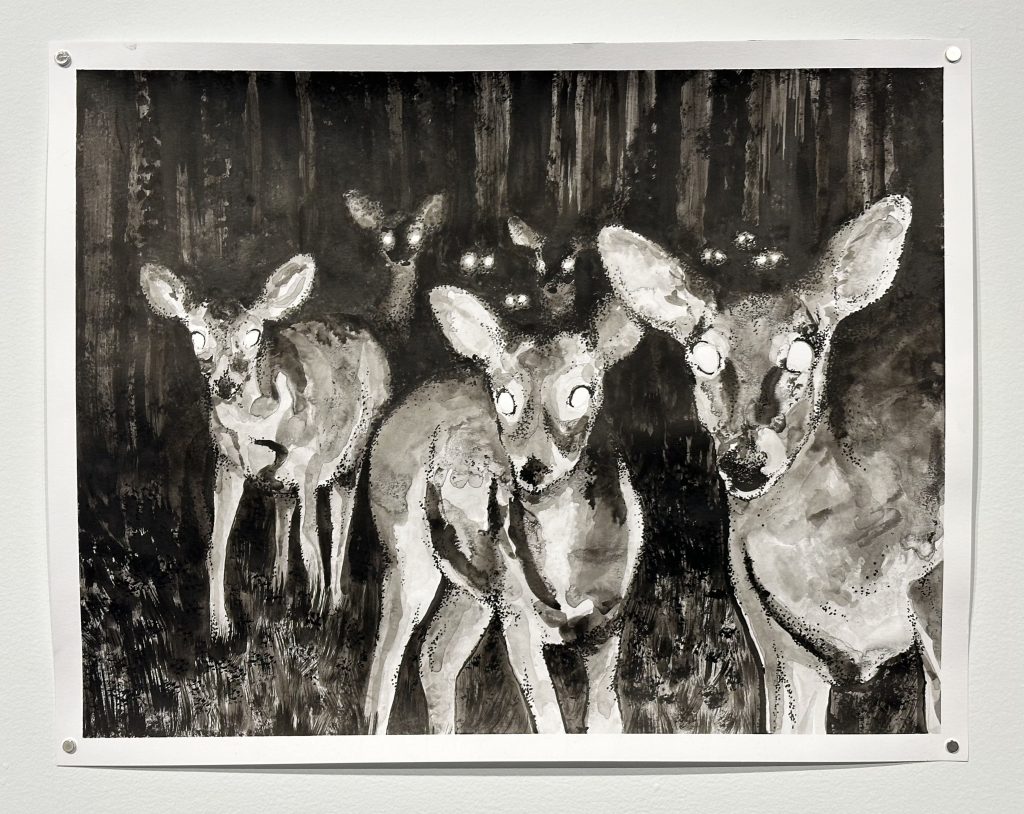
Rachel Augustson, “Gaze”, Ink on Paper, 2023

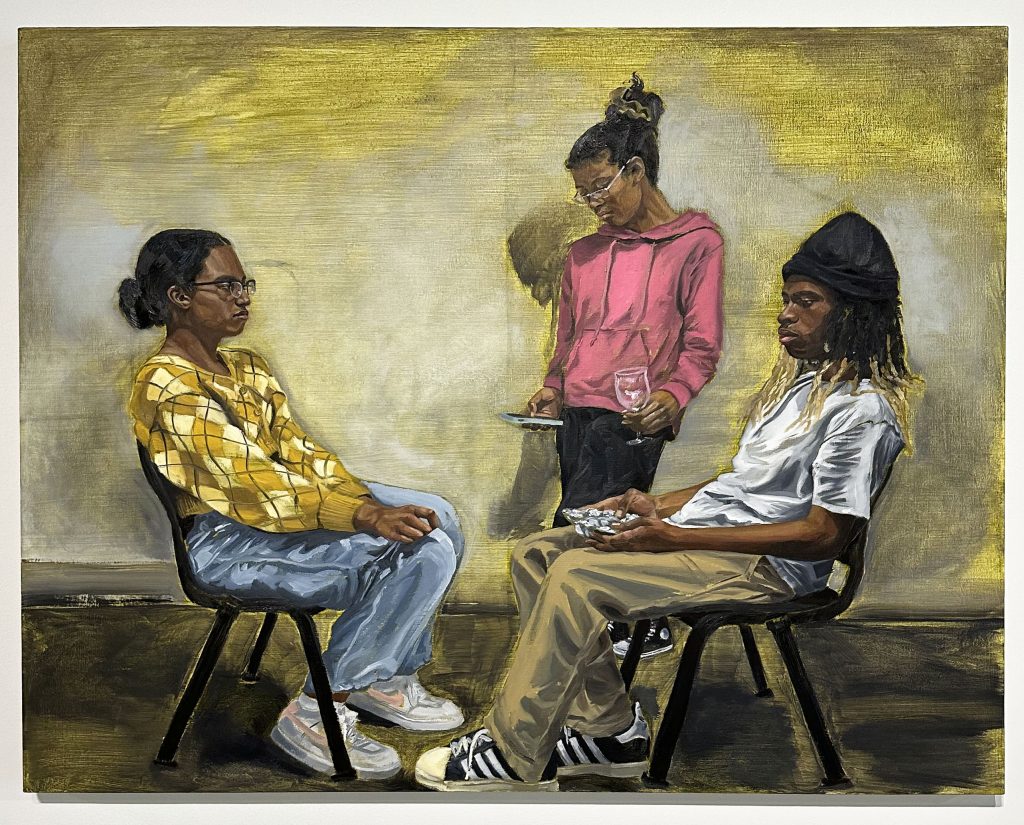
Ashton Burton, “…”, Oil on canvas, 2023

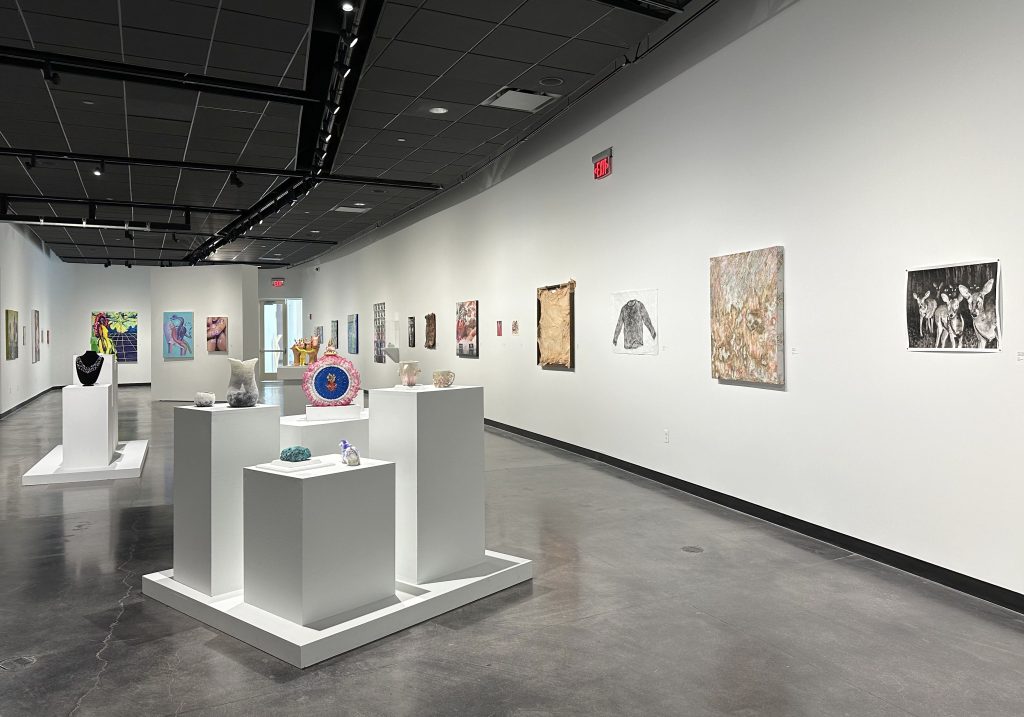
Cleveland Institute of Art’s 78th Student Independent Exhibition is currently on view in their Reinberger Gallery. The juried show is organized by the students and includes work from all mediums.

There are so many great pieces in this show, above and below are just a few selections.

This exhibition closes 4/7/24.

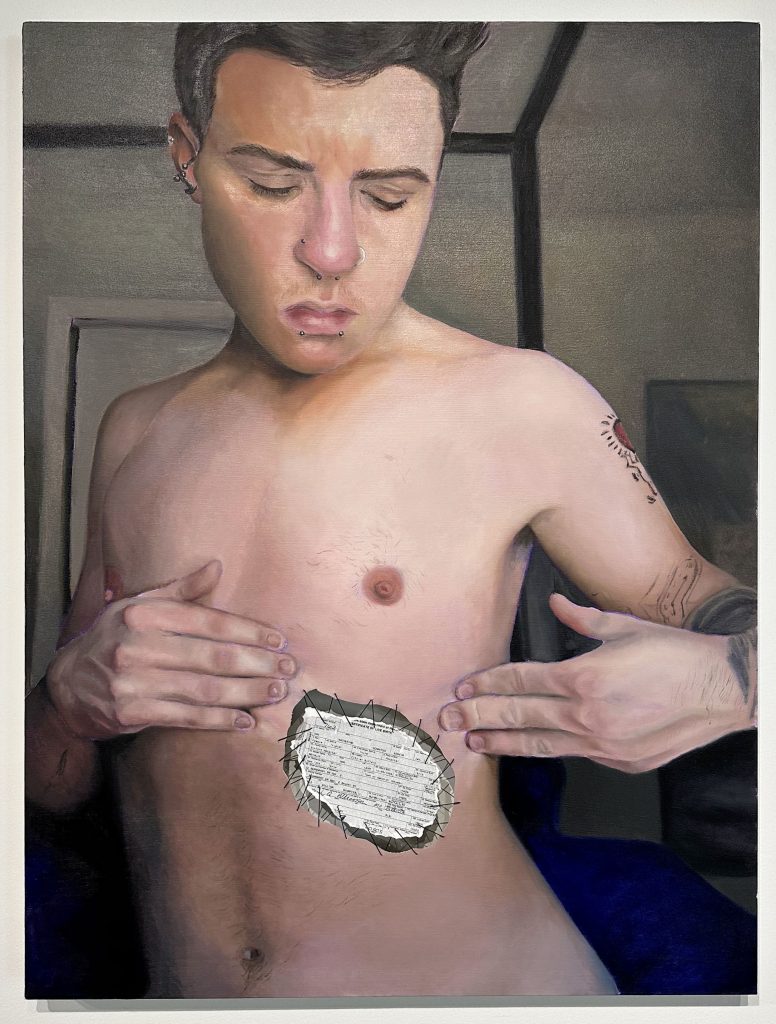
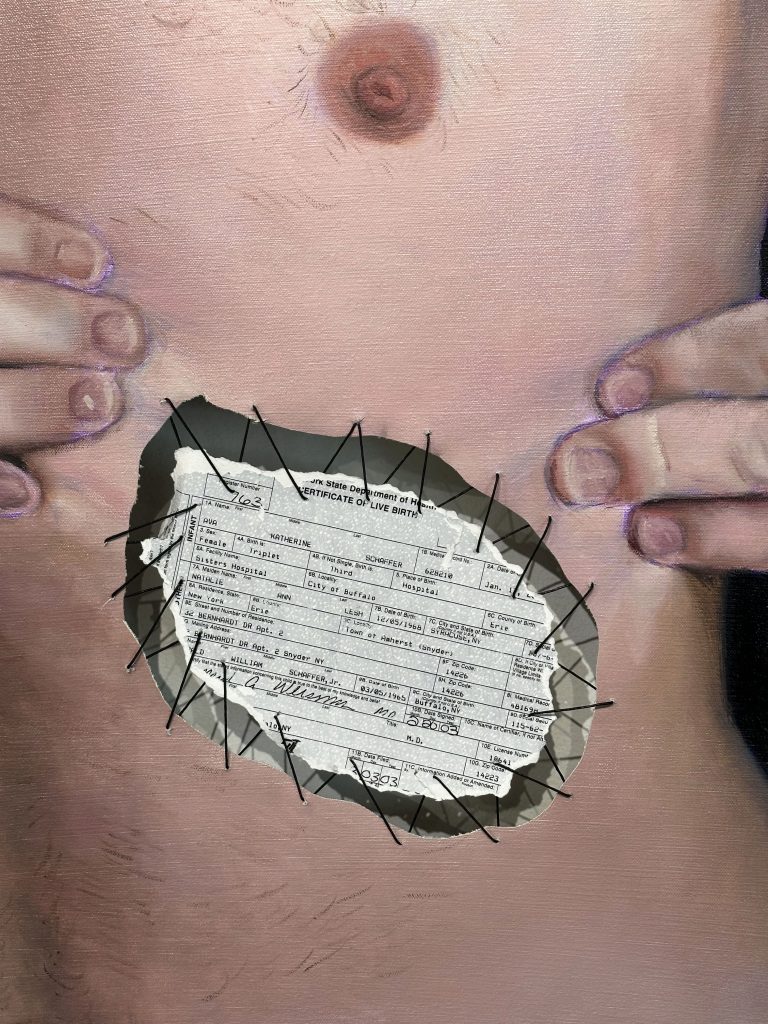
James Schaffer, “Bound”, Oil on canvas, 2023

James Schaffer, “Bound”, Oil on canvas, 2023 (detail)

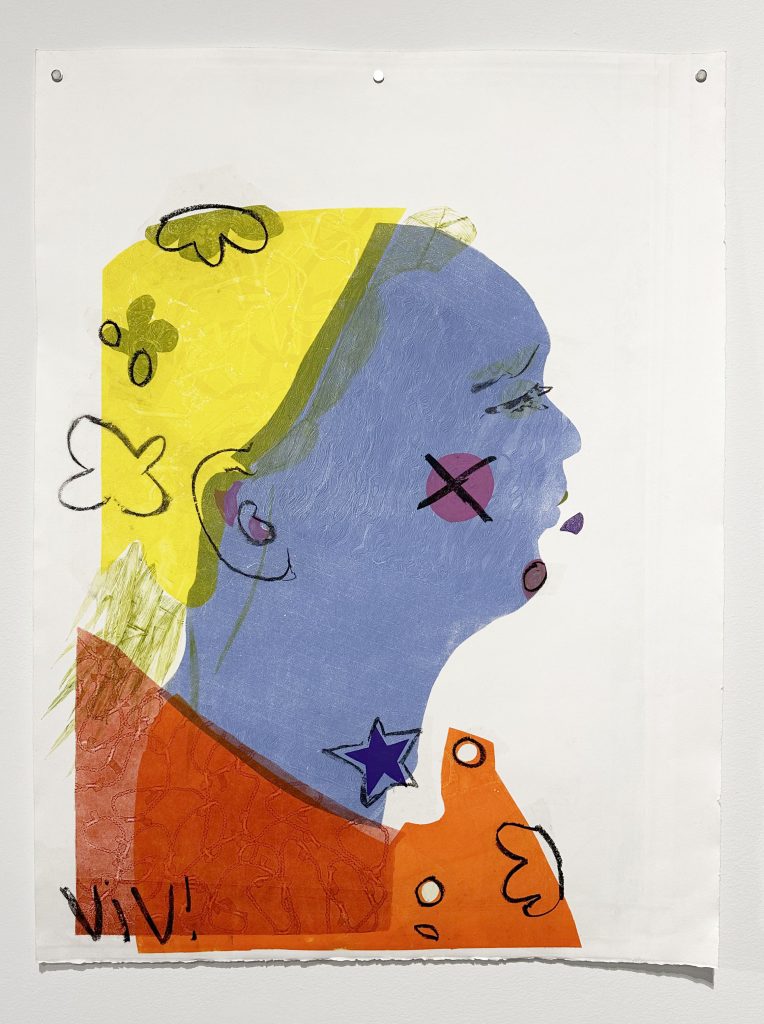
Gwen Putz, “Viv!”, Monoprint, 2023

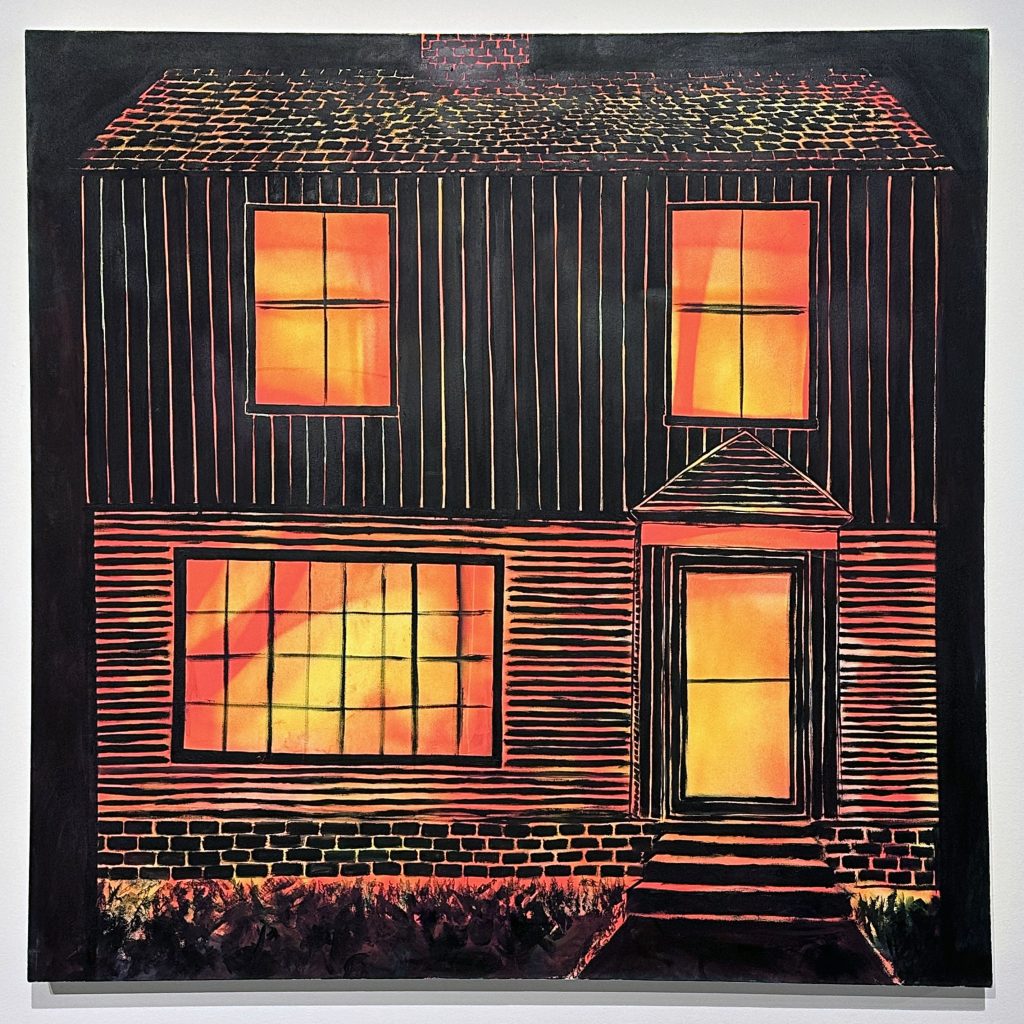
Tristen Kovacs, “897”, Spray paint and acrylic on canvas, 2023

Emily Fontana, “Untitled”, Acrylic and spackle on fabric, 2024

Emily Fontana, “Untitled”, Acrylic and spackle on fabric, 2024 (detail)

Mar 202024
 

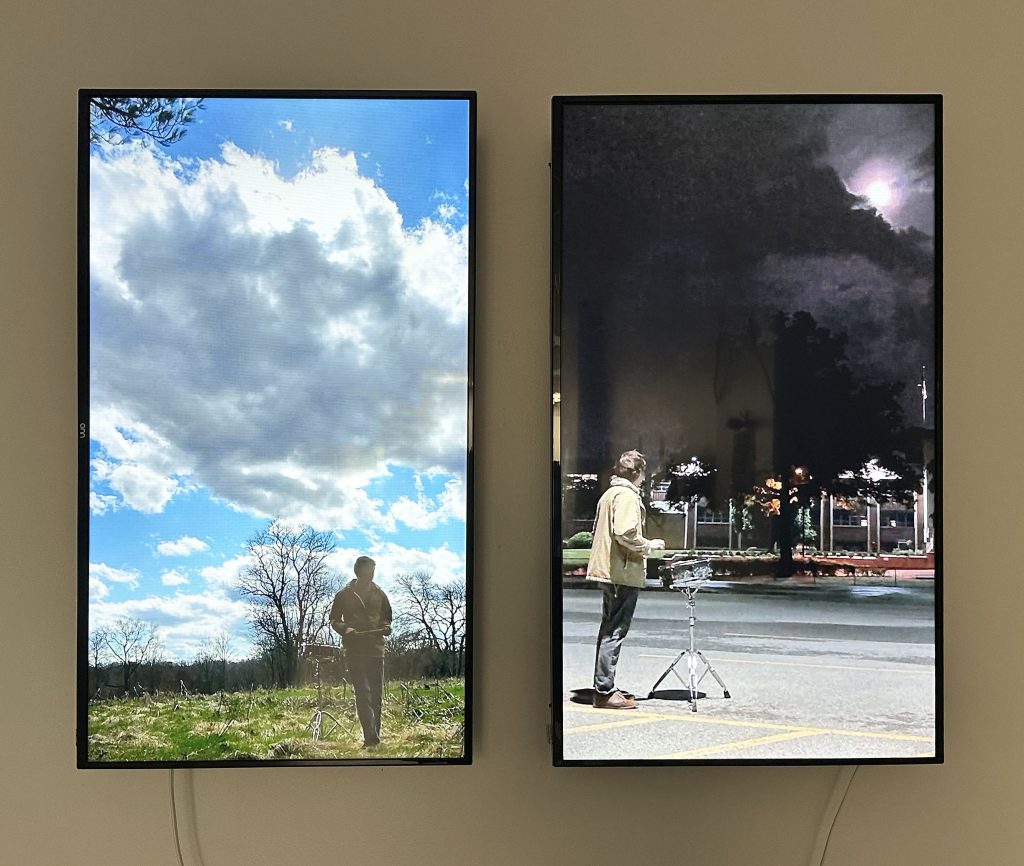
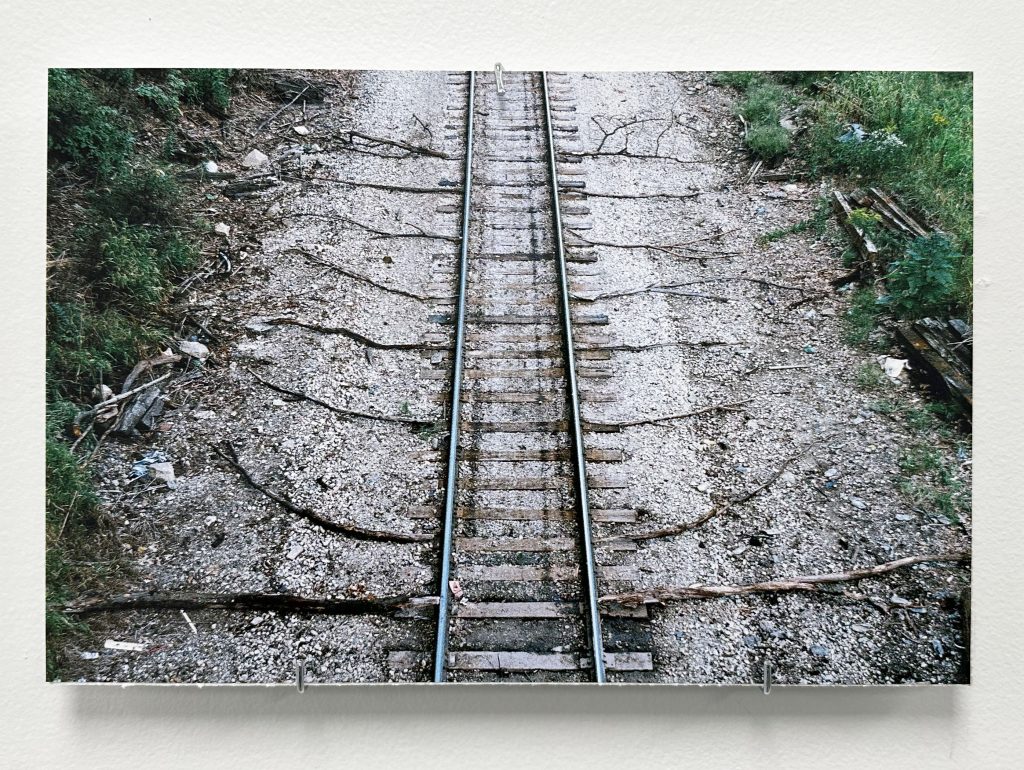
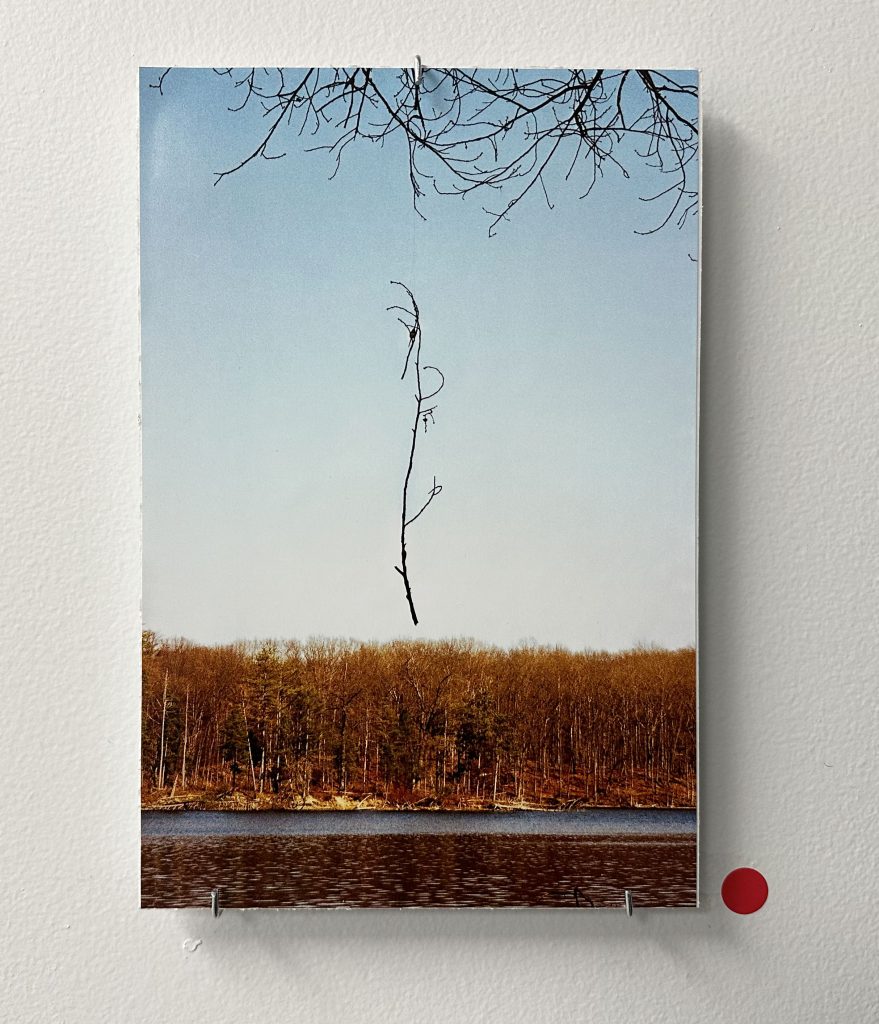
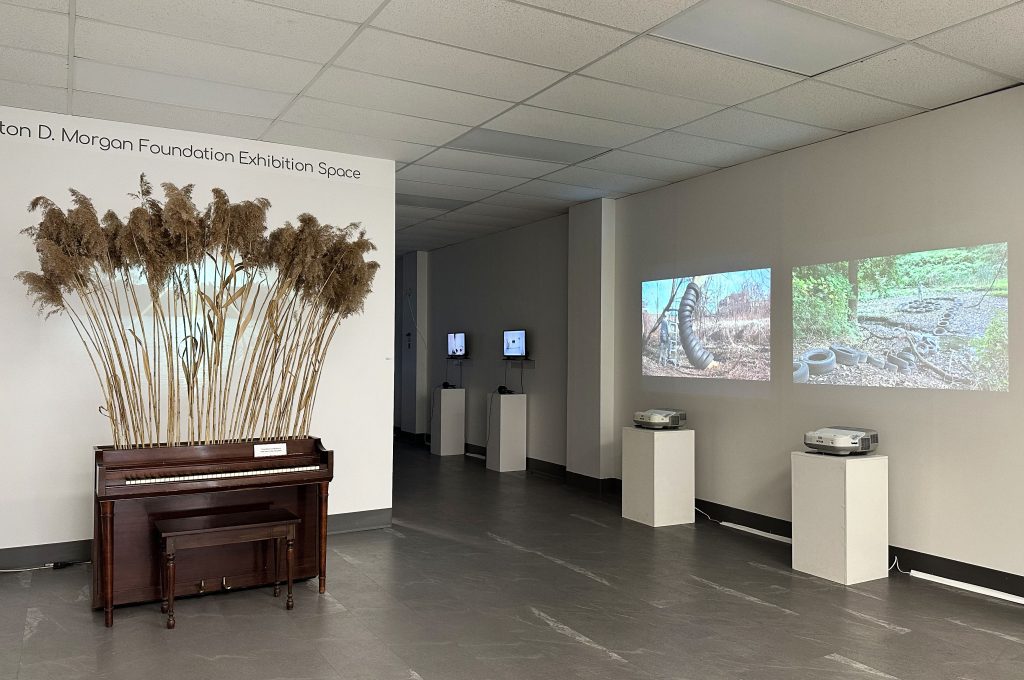
Akron Soul Train supports local artists through a residency program, exhibitions, and a shop in the front of the gallery which sells their work. Currently the gallery is showing work by Matthew Kurtz (work seen above) and Thomas Smith (work pictured below). Both artists are approaching the environment in different and interesting ways. Several of Kurz’s video pieces are focused on his upcoming performance for the solar eclipse. His photographs, for which he’s created additions to scenes he finds, are charming- as is his sculpture- a piano that moves his natural additions when played.

From the gallery-

Performance artist Matthew B. Kurtz presents Drumroll for a Total Eclipse: A Preliminary Exhibition, a prelude to his upcoming live performance with this year’s solar eclipse. Kurtz’s work fuses place, nature, sound, rhythm, and movement to question the mystery of existence. With humor, curiosity, and in tandem with his surroundings, Drumroll explores the process of trying to understand wonder.

For his upcoming performance on April 8, 2024, Kurtz will invite an audience to celebrate the total eclipse. Collaborating with the cosmos, he will perform a drumroll before “totality” passes over Northeast Ohio and creates the natural phenomenon known as “the blackout.”

“When I engage with a site for an art piece, I consider its history, recontextualize its objects, and insert my identity through intuitive gestures. I was raised to believe that humans are supposed to connect the lines between their innate feelings and the unknown. Making art is [my] attempt to reclaim this existential directive. These experiences are documented so outside viewers can participate in my examination of ambiguities, systems, and the sublime.” — Matthew B. Kurtz

Kurtz is also a musician. Check out his Instagram and Bandcamp to listen to his 2021 album 107.

For Thomas Smith’s sculptures he creates natural environments within man-made structures and uses the results as a commentary on the growth and sustainability of suburban development.

From the gallery-

In SUBARIUM II reprise, Thomas Smith combines materials from big box stores with contained terrariums to generate a sense of security and quality. However, upon second look, the viewer may see past the façade of what may look safe to what is substandard. Perhaps it is even denying growth and positive change. Smith’s sculptures dare to ask questions about survival, public image, and the landscape of today.

“Akin to an ecosystem enclosed in a terrarium, my sculptures depict a vibrant but, ultimately, unsustainable artificial environment. As plants within the terrarium grow, competition for space intensifies, turning the once-comfortable space into a struggle for survival. The metaphor extends to suburban America, where curated living conditions prioritize aesthetics over functionality, reflecting an impermanent American Dream.”

— Thomas Smith


Both of these exhibitions close 3/23/24.​

Mar 162024
 

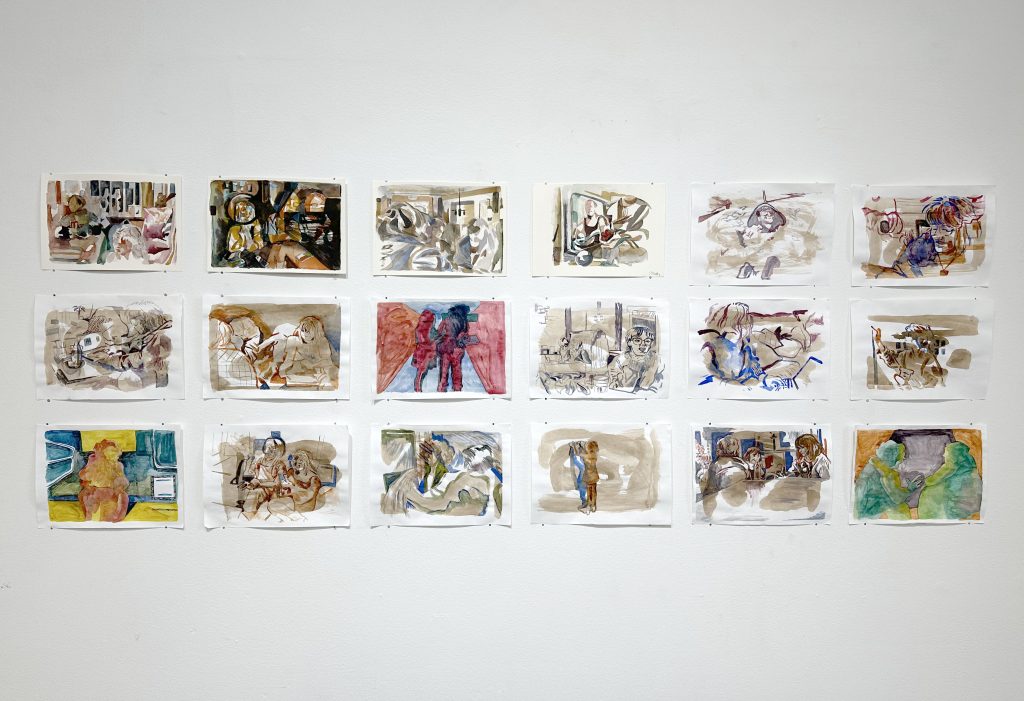
Watercolor paintings by Katherine Strobel

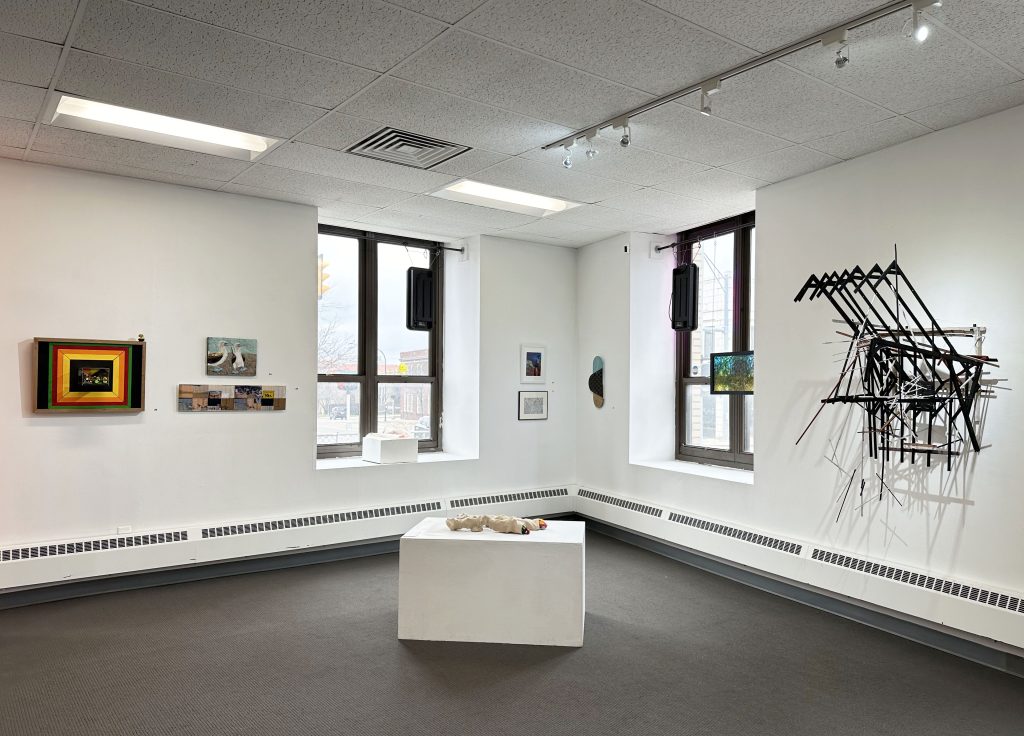
There is A LOT of work currently on view at Summit Artspace for their Winter Exhibitions (see the previous two posts) and it is worth mentioning these shows as well.

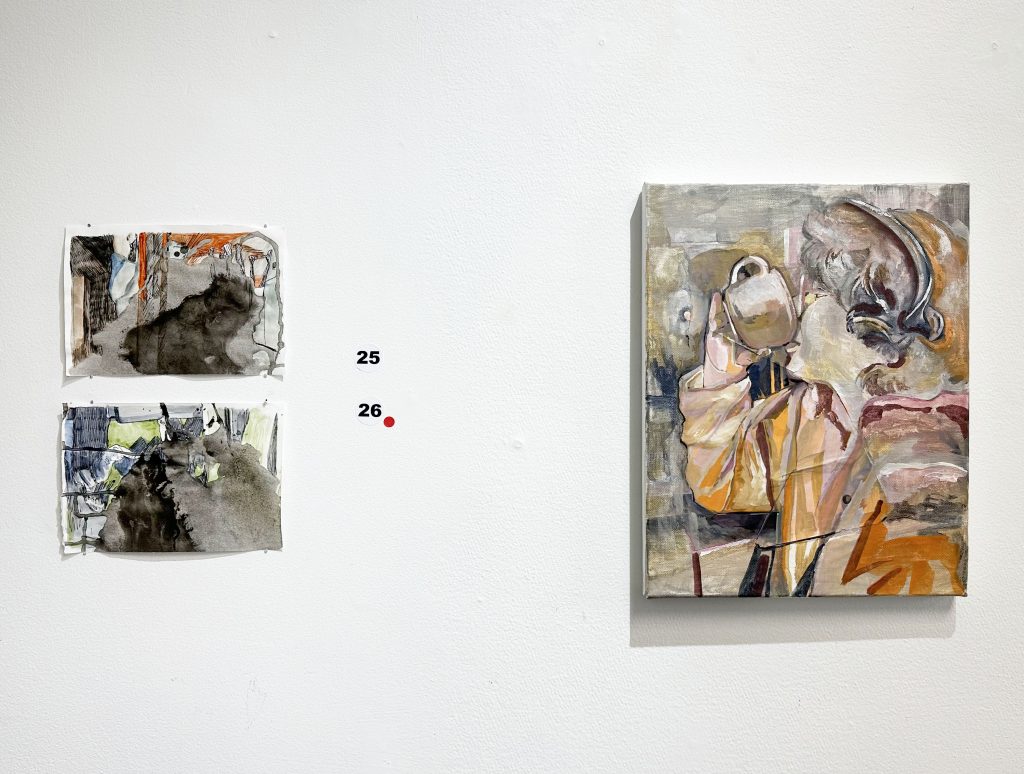
In the Welcome Gallery are watercolor paintings (seen above) by Katherine Strobel, for her exhibition, Bad Nostalgia.

Her statement about the work-

People forget to take pictures of things that don’t matter because it’s impossible to photograph qualities such as the feeling of an inside joke, the sound of an exhale through the nose, or dirty silverware that must be returned to the kitchen and replaced. These things act as set, pieces for what make up the rest of our lives. This series is a catalog of work that focuses on memory and candidness of a scene or subject. The people pictured are painted from life or candid photographs which are then emphasized from a naive image to something more. When an image is exaggerated with new colors and shapes it serves to make the mundane more desirable. The paintings are watercolors with a textured surface; the texture creates a sense of play with paper elements. In my work watercolor is often indicative of memory because of its ephemeral quality and transparent layers. This is because of how impossible it is to clarify every element that makes up a color when the layers are all compressed and viewed as a complete state.

Below are works from FRESH, an annual exhibition of local artists juried by Pita Brooks, Executive Director of Akron Soul Train. The website has all of the artists included and their statements and bios- definitely worth taking a look at what is being created in the area.

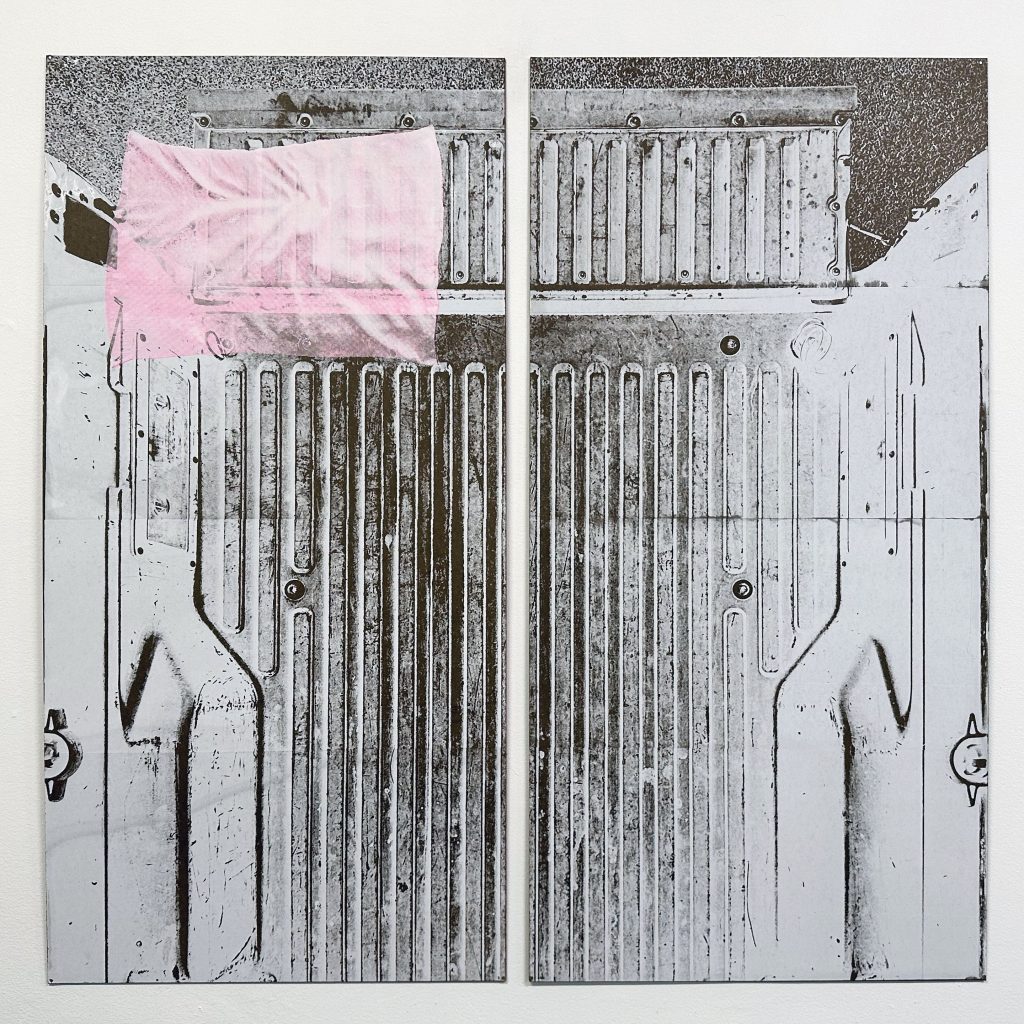
Michelle Eisen, “I’ve Made My Bed”, Silkscreen on hardboard

Steven Mastroianni “Fathomable Series #24”, Unique cameraless photogram, silver gelatin print

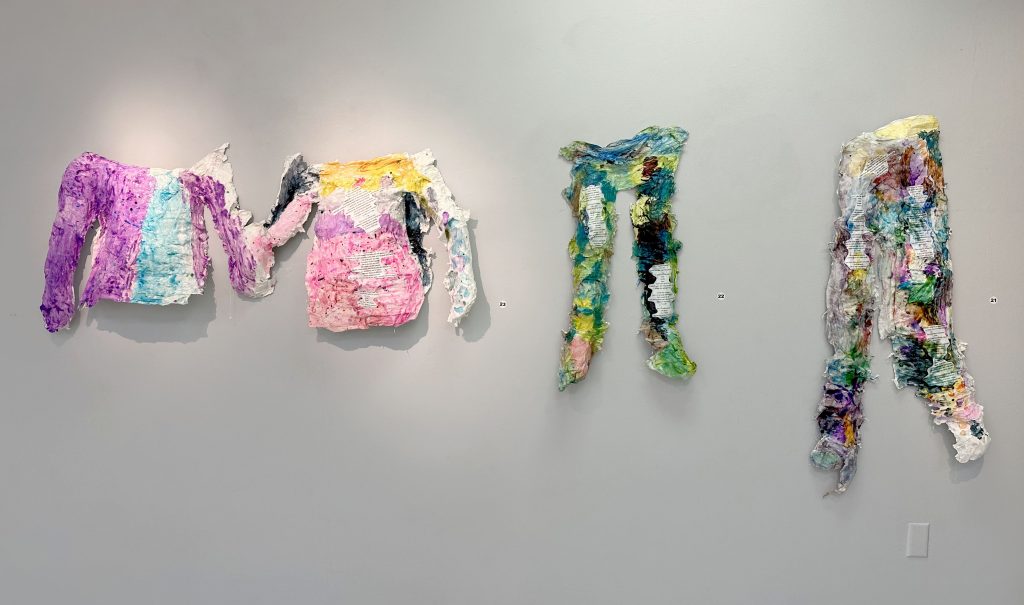
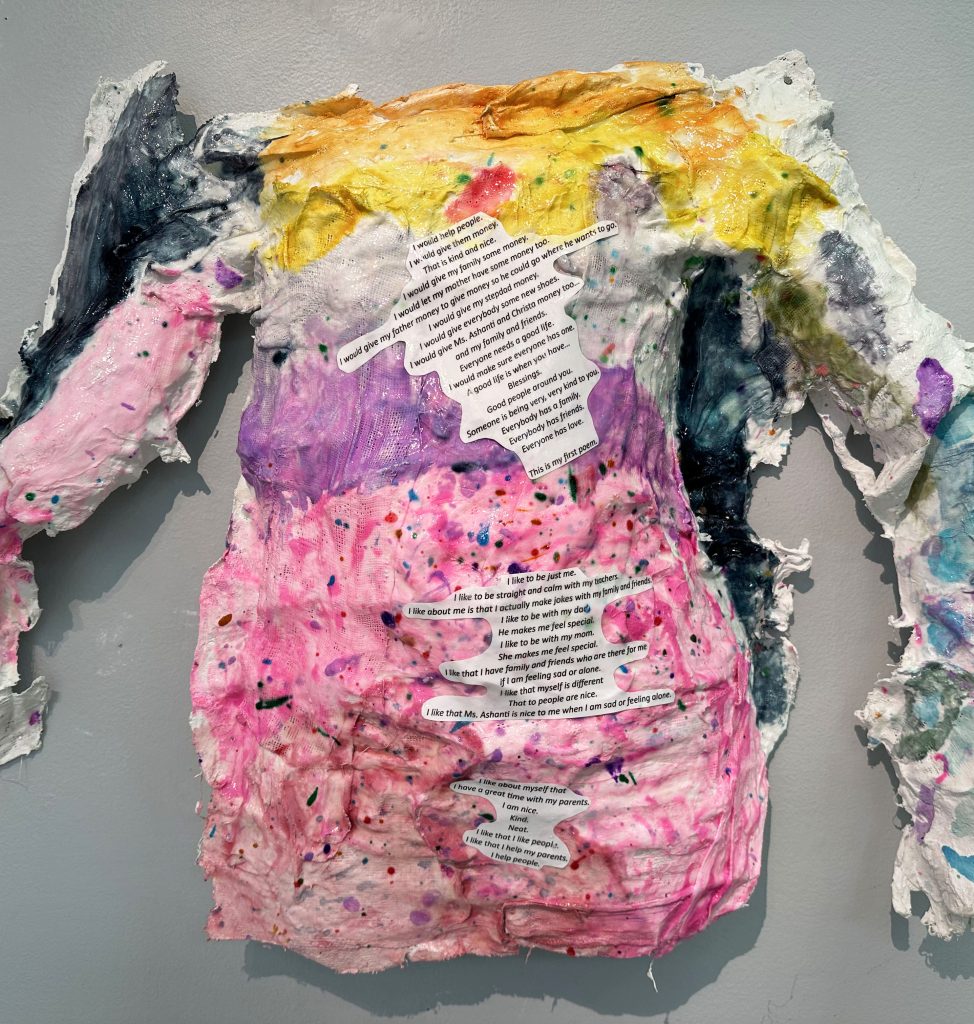
Finally, on view throughout the building are works by local students, teachers, and school leaders for Taking Care of Our House: Communities Coming Together and Making a Difference. The exhibition is made with the organization Art Resistance Through Change (ART-C). The works pictured below are a few of the sculptures created that included the personal narratives of the artists.

It’s worth mentioning that along with these exhibitions there are artists studios and galleries also in the building and worth checking out. Summit Artspace is open Fridays 12-7pm and Saturdays 11am-5pm.

Mar 162024
 

David Kruk’s solo exhibition Nobody Here at Summit Artspace in Akron, asks questions about the state of culture (or lack of culture) we are currently experiencing. Is the difference between the Venus of Willendorf and a Funko Pop just time period and material? Using the Vaporwave aesthetic, a remix of past pop culture in itself, he explores consumerism and nostalgia. Walking around the empty spaces in his video game creation, one is left wondering- what comes next?

The artist’s statement about the work-

This exhibition will consider Mark Fisher’s concept of “lost futures” through the aesthetics of Vaporwave and Funko Pops. I am interested in how these anachronistic objects utilize nostalgia through the remixing of cultural references to engage with consumer capitalism. According to Fisher, this continual referencing of the past exemplifies contemporary society’s cultural stagnation and the erosion of collective imagination towards a radically transformative future.

The sculptures in the exhibition are intended to push these anachronisms a bit further; to undergo a life cycle of adaptation and re-contextualization. I enjoy thinking about the ways in which something like Vaporwave can function as a critique of consumer culture, questioning capitalism’s impulse to commodify everything in sight, including our identities and memories. Vaporwave was born from the internet, and its aesthetic continues to be quite popular within online communities. These communities may often be collectors of pop culture paraphernalia: such as Funko Pops, which I’ve become interested in for their cultural symbolic value. Collecting Funko Pops can provide a source of aesthetic stability for some, while simultaneously operating as totems for coping with the realities of adulthood.

Conceptually within this exhibition, I wonder about the ideological trajectory from ritualistic idol to mass-produced fandom figurine, how capitalism influences our engagement with nostalgia, how the concept of a collectible operates within the spheres of the household to the museum, and how an art object may change over time through being digested through the body of consumerism.

For the video below, available on the gallery’s website, Kruk discusses his work – from tracing images using an oven light as a child, to a growing interest in sculpture, to creating the interactive video game from the show.

This exhibition closes 3/16/24.

Feb 292024
 

Today’s throwback is to Jenson Leonard’s solo exhibition Workflow, at Wood Street Galleries in Pittsburgh, from the beginning of February.

From the gallery about the work-

Workflow, the first institutional solo exhibition of artist Jenson Leonard, centers on a titular film that explores the velocity and momentum of Blackness as it relates to the philosophical concept of acceleration—the notion that the only way out of capitalism is through its intensification.

In Workflow, a spectral Michael Jackson Halloween mask recites a surrealistic quarterly earnings reports. Building on a 2017 essay by artist Aria Dean titled “Notes on Blacceleration,” the short film centers on the ways in which the Black subject grapples with its commodified status within the labor market despite—or, resultant of—its own history as a commodity, stemming back to the Trans-Atlantic slave trade. Completed during Leonard’s residency at Pioneer Works in 2021, the video utilizes uncanny humor as a mechanism to expose the shared grammars inherent in Afro-pessimism and speculative finance.

Within the exhibition, the film repeats simultaneously across two grids of computer monitors situated on ergonomic desks that flank the gallery, mimicking the workstations that can be found ubiquitously across stock trading floors and financial institutions. Sculptures modeled after computer keyboards and mouses are displayed on the desks, each rendered inoperable by concentric riffs that symbolize the erratic transformations caused by the flows of capital. The appearance of Jackson represents a transmogrification of its own; whereas many have aligned the controversial pop icon’s bleached skin and surgical procedures with Black self-hatred, Leonard positions his bodily modifications as a radical rupture from racial paradigms of being.

In Leonard’s own words, “Workflow is defined as the sequence of industrial, administrative, or other processes through which a piece of work passes from initiation to completion. My film seeks to disabuse notions of completion, whether it be completion of the human, the nation state, or civil society. As Dean notes, Blackness is ‘always already accelerationist’ via its incongruence with Western humanism, a wrench thrown into the locomotive gears of ‘capital and subjecthood.’ Her essay prompts us to look toward the way that the Black has been historically constructed outside of the human, as coterminous with the slave. Slavery therefore represents a kind of proto-automation, a mass forced coercion of labor, and the Blacks’ transition from object to subject calls for a reappraisal of accelerationist ideas about the (non)human entity and its revolutionary potential.”

The artist continues, “There is something about going to work—the repetition of it—that gets inscribed at an epigenetic level, as an everyday, embodied violence. From there, I thought about the panoptic workplace (open air plan, transparent yet closely surveilled, management that does not have to be in the room to be monitoring you), the fetish of efficiency (ergonomic mouse and keyboards so you can work longer), biometric data of a labor force (fingerprint and facial scans to help reduce repeat processing tasks). All of these methods to maximize profits and production can be traced back to methods worked out and perfected in the cotton and sugar cane fields hundreds of years prior.”

The text from the video was included on one of the gallery walls (image above) but I’ve included it below as well as it is definitely worth reading.

“Looking out across the macro- Panoptic eyes are everywhere. Predictive models rendered bilious, You are scalable, You contain platitudes. Clean and renewable, black from the waste management down. These are micro-credentials too big to fail. Angel investors watch over you, guide you through your webinar. You are green with infrastructure. A Nick Land acknowledgment. A multiprocession of the tiniest micropixels in all of the Anglosphere. Plan your obsolescence. Chitin’ circuitry courses through you. Wayward modulation thrumming, throbbing like an old techno spiritual. A Self driving mythology Keloid optimized. Upload speeds faster than Drapetomania. A contactless, decentralized, hands free accumulation. The base salary determines the superstructure of your beast of burden of proof of concept. Perfection is the enemy of egress. Pay the heap of flesh no mind, live in the nanosecond. Fake it till you’re skeuomorphic. You’re more than the sum of your outsourced manufacturing components. Know your neural net worth. Walk with your overhead held high. There’s never been more exciting growth in the excrement sector! It is easier to imagine the end of the world than to unsubscribe from my Onlyfans. Rather, If you can’t handle me at my Linkedin you don’t deserve me at my locked in chastity. Will you risk it all to manage my assets? Are you willing to do my taxes from the back? Tax to mouth? From the overton window, to the overton wall, to the overton sweat drop down my overton balls. Going, going… Zong.”