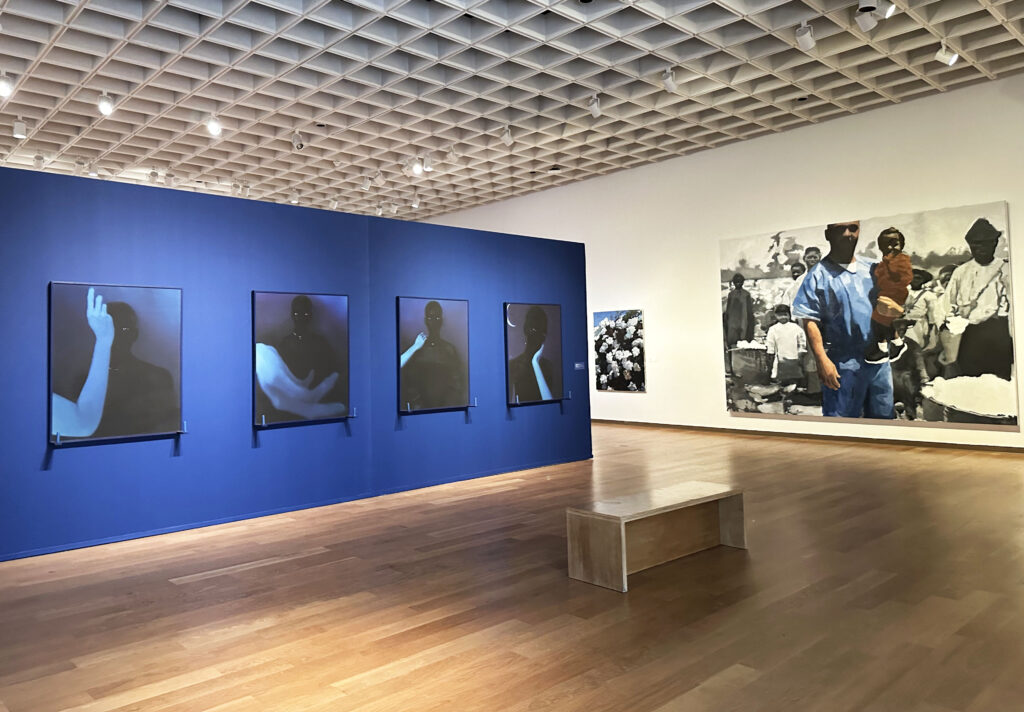
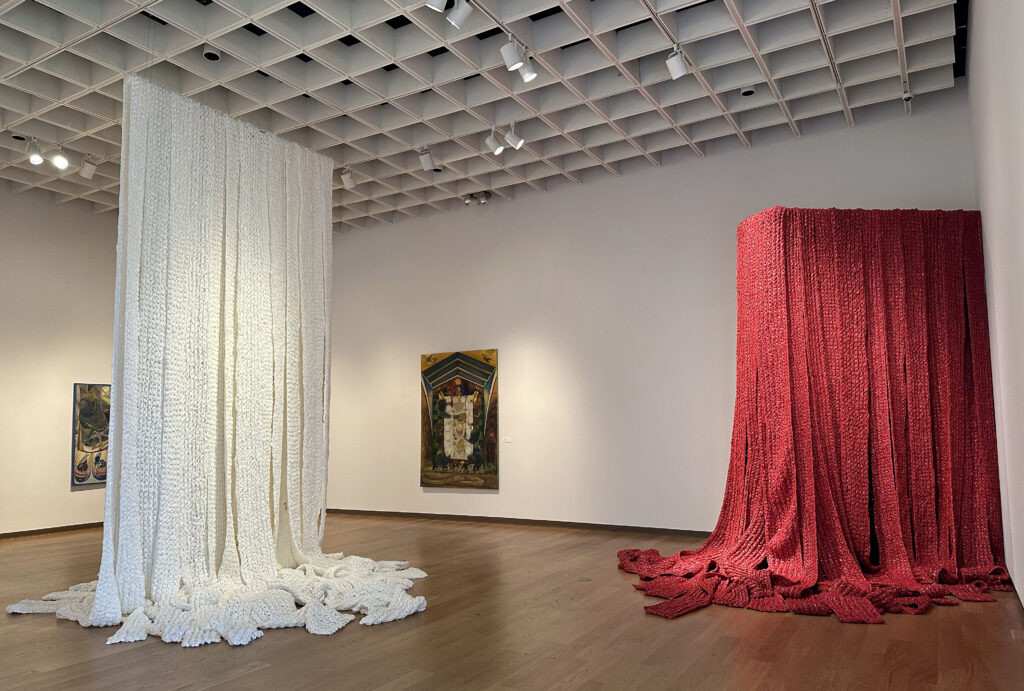
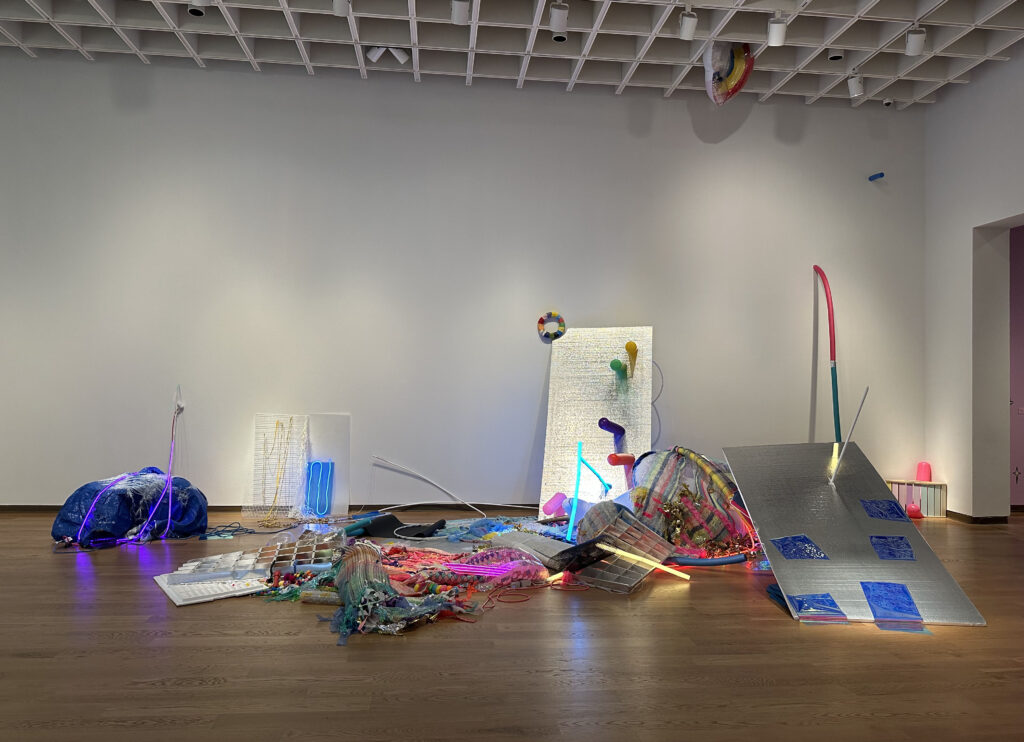
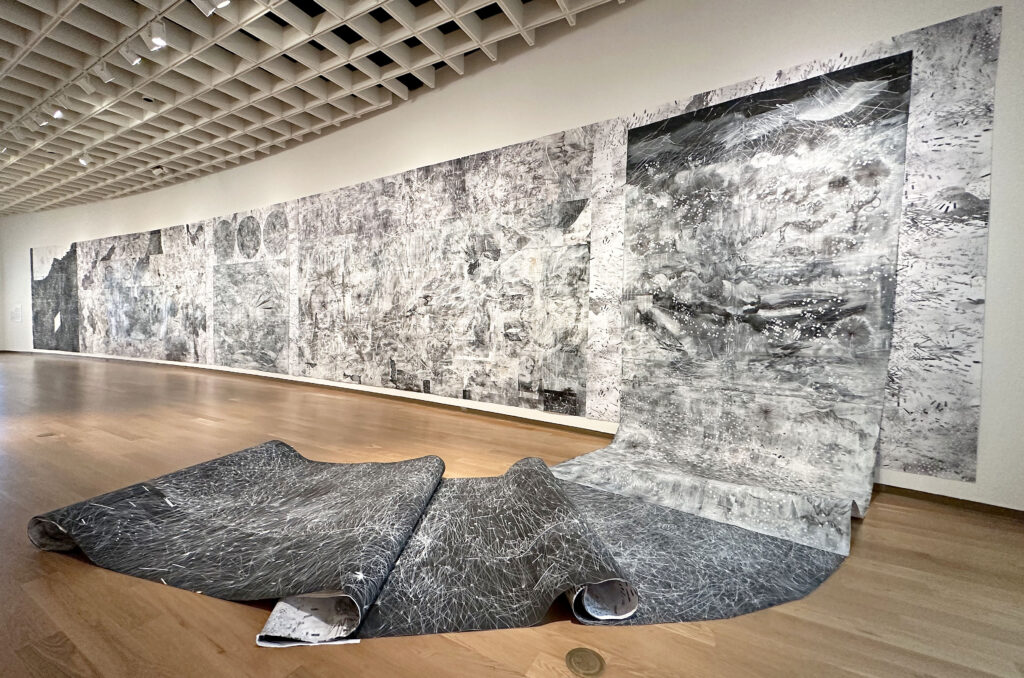
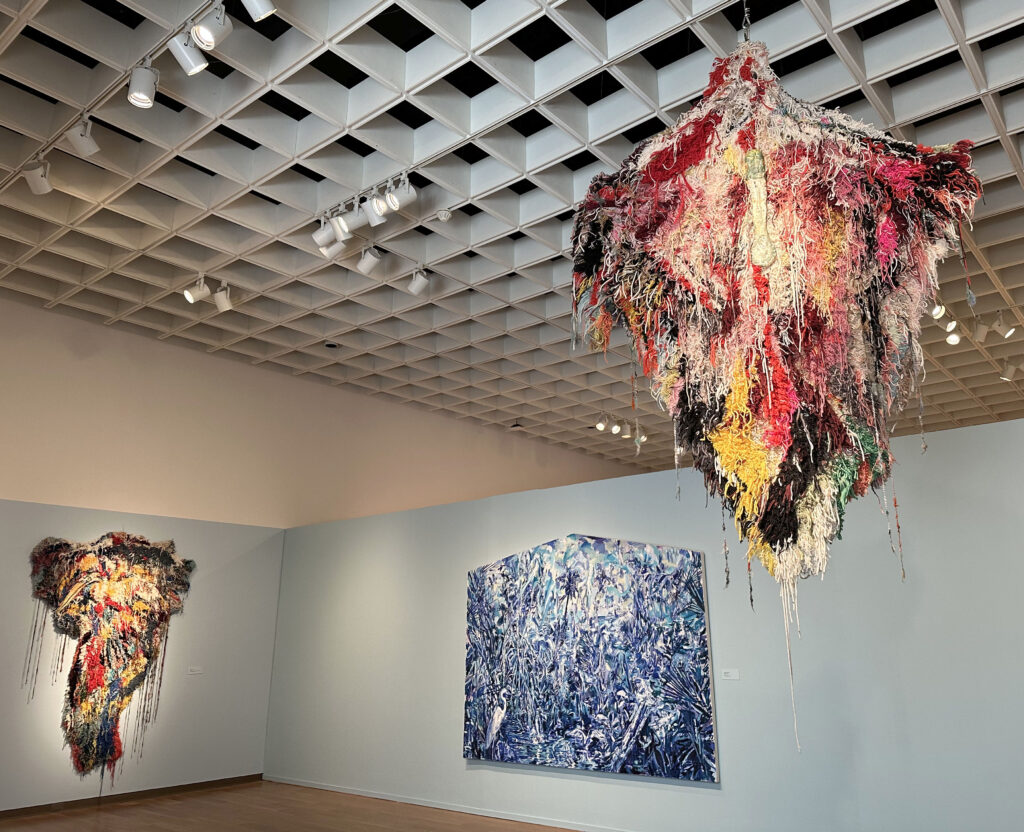
Laurent Waldron “Road Killer”, 2023, Latex and acrylic paint, rubber tire and “Last Rodeo” 2023, Acrylic paint, wirebrush frame
At the Florida Wildlife Corridor’s gallery space Wild Space is Mickett/Stackhouse Studio’sCircle of Water, a collection of paintings, drawings, and video by artists Carol Mickett and Robert Stackhouse continuing their explorations of environmental issues. This exhibition will remain on view until 1/13/24.
Work by Mickett/Stackhouse Studio– “Mitigation Paintings: Green Shade Oak, Whale Pump, Mangrove Family, Mangrove Sea Wall, Green Swamp, Green Swamp Aqua Feeder, Whale Pump & Plankton, Shade Oak”, Watercolor on paper
About the above by the artists-
Mitigation Paintings further explore the ways in which natural resources can help to remedy and even forestall the damages of climate change. The swamps, whales and trees depicted are all “carbon sink,” in other words they absorb CO2, among their other contributions.
Work by Mickett/Stackhouse Studio at Wild Space Gallery
The film above Translators, directed by Rudy Valdez, was a standout. The moving documentary short tells the story of three children in the U.S. who, as the only English speakers in the family, help their parents by translating for them. You can watch it in full for free on the film’s website, linked above.
Launched in 2006 to support the next wave of contemporary portraiture in the United States, the National Portrait Gallery’s celebrated triennial Outwin Boochever Portrait Competition is a major survey of the best American portraiture selected by internationally prominent jurors and curators. Now in its sixth edition, The Outwin: American Portraiture Today presents 42 works selected from over 2,700 entries, that foreground the vibrancy and relevance of portraiture today. In addition to paintings, photographs, drawings, and sculptures, The Outwin includes video, performance art, and textiles, highlighting the limitless possibilities of contemporary portraiture.
Open to both emerging and established artists, this year’s entrants were encouraged to submit work that moves beyond traditional definitions of portraiture, and to explore a portrait’s ability to engage with the social and political landscape of our time. The variety of media and subjects featured in the exhibition invite audiences of all backgrounds to find relation in the human experience.
Since its inception, finalists for the exhibition have been determined by a panel of jurors including three Portrait Gallery staff members and four external professionals (critics, art historians, artists). The competition is endowed by and named for Virginia Outwin Boochever (1920 – 2005) who, for 19 years, volunteered as a docent at the Portrait Gallery. Her commitment to advancing the art of portraiture is continued through the support of her children.
Below are a selection of works from the show and information about them from the museum.
Alison Elizabeth Taylor– Anthony Cuts under the Williamsburg Bridge, Morning, 2020 (pictured above)
On walks around her Brooklyn neighborhood during the COVID-19 lockdowns, Alison Elizabeth Taylor encountered the hair groomer Anthony Payne, who,with his workplace shuttered, had taken his scissors, mirror, and chair to the streets. Payne sought to financially support the Black Lives Matter movement, especially in the aftermath of George Floyd’s murder, and turned over proceeds from his donation-based haircuts to organizations advocating for social justice.
Taylor’s process, one she developed and named “marquetry hybrid,” incorporates vivid paints, inkjet prints, and the natural grains of over one hundred veneers. Marquetry, with its inlaid combination of woods, can “memorialize,” Taylor notes. She acknowledges the history of the craft, which was favored by Louis XIV (1654-1715) when he was acquiring furniture for Versailles. By giving Payne this “royal treatment,” Taylor aims to pay tribute to him.”I want him to see how much his example meant to me,” she explained.
Kira Nam Greene, “Kyung’s Gift in Pojagi (From the series “Women in Possession of Good Fortune”)”, 2019 Oil, gouache, colored pencil, and acrylic ink on canvas
Kira Nam Greene– Kyung’s Gift in Pojagi (From the series “Women in Possession of Good Fortune”), 2019
In this mixed-media work, by Kira Nam Greene, the artist Kyung Jeon faces us with relaxed self-assurance. She is carefully positioned on her couch as her long black hair falls over her orange and turquoise tunic. In the foreground, a wooden cylinder containing paint brushes reveals her medium of choice. A plate with persimmons, consumed during the harvest festival Chuseok to celebrate good fortune, brims with potential while the rest of the painting pulsates with action.
Greene situates her friend in a fantasy world that echoes Jeon’s artwork and their mutual interest in the traditional Korean fabric quilting technique of pojagi. Two rabbits, representing Jeon’s Chinese zodiac, appear to be concocting a potion. Flowers sprout as kaleidoscopic patterns envelop her. The reference to pojagi, the visible paint drips in the background painting, and the hands of the sitter- left unfinished- invoke the role of tradition, process, and exploration in artmaking.
Stuart Robertson, “Self Portrait of the Artist” from the “Out and Bad” series, 2020, Aluminum, earth, acrylic paint, enamel, paper,metallic bubble wrap, sequins, and gold foil on wood
Stuart Robertson– Self Portrait of the Artist from the Out and Bad series, 2020
“In my world, skin is high-tech, amorphous, and armored,” the artist Stuart Robertson observes. “Blackness is percussive, lustrous, flexible, and indestructible.” Self-Portrait of the Artist depicts a fragment of a man- half of his face and his upper torso-shiny and monumental. A black beard delineates his jaw, and a small gold hoop adorns his ear. Although the figure is cropped beyond recognition, the work’s title provides a clue.
Through the alternation of flat and repoussé aluminum sheets, Robertson achieves a hypnotic effect, a poignant tension playing on what he reveals or hides from us viewers. His refusal to depict his entire face or figure challenges the notion of what a portrait should be and blocks the objectification of the Black male body, so often sexualized in visual culture. Simultaneously, Robertson delivers an irrepressible, resplendent image of that body, one inspired by the aesthetics of Jamaica’s dancehall culture.
Vincent Valdez, “People of the Sun (Grandma and Grandpa Santana)”, 2019, Oil on canvas
Vincent Valdez– People of the Sun (Grandma and Grandpa Santana), 2019
An elderly couple faces us with the gentle authority that old age provides. People of the Sun (Grandma and Grandpa Santana) is a portrait of Vincent Valdez’s maternal grandparents. “My grandparents spent most of their time outside,” the artist recalled. “Grandpa spent his entire life working under the blazing Texas sun as a carpenter and yard worker, cutting lawns in the wealthy communities of San Antonio right up until he passed away. Grandma was constantly working with her hands–raising kids, washing, sewing clothes, and tending the plants in her yard.”
The Santanas are depicted in a space defined by details the artist remembers: their vintage AM radio, their plants, their homemade clothes. The bedsheet, like the Virgen de Guadalupe’s aura, signals their spiritual role in the family. This portrait connects the pair to the Indigenous and mestizo cultures of the American Southwest, including the Aztec and Maya, who honored the sun.
For more work from the exhibition, please head to page 2.
The Florida Prize in Contemporary Art is organized by the Orlando Museum of Art to bring new recognition to the most progressive artists in the State. Each year OMA’s curatorial team surveys artists working throughout the State before inviting ten to participate. One artist will receive a $20,000 award made possible with the generous support of local philanthropists Gail and Michael Winn. Artists range from emerging to mid-career, often with distinguished records of exhibitions and awards that reflect recognition at national and international levels. In all cases, they are artists who are engaged in exploring significant ideas of art and culture in original and visually exciting ways.
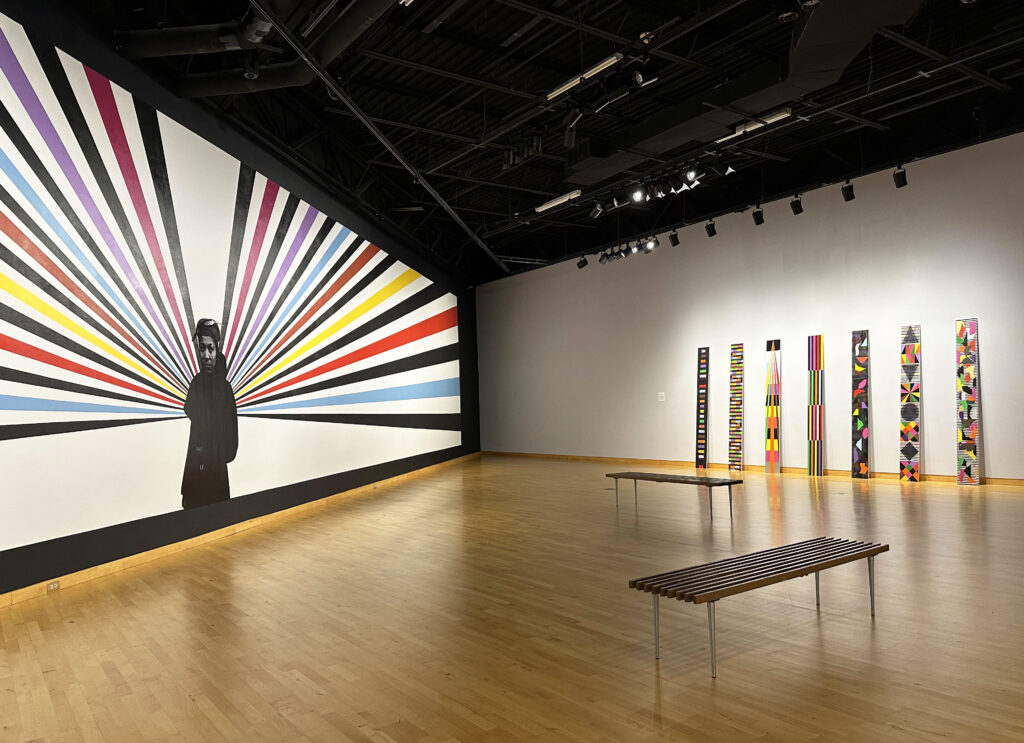
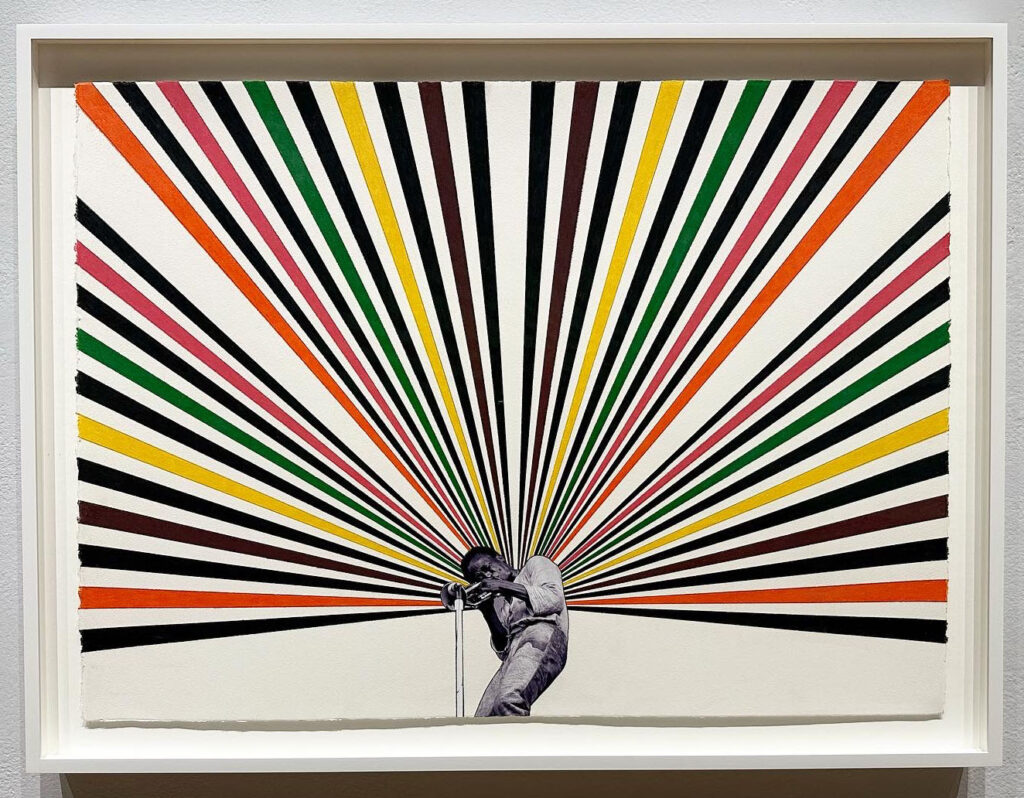
For more than two decades, Brooklyn-based artist Rico Gatson has been celebrated for his vibrant, colorful, and layered artworks. Inspired by significant moments in African American history, identity politics and spirituality, his oeuvre includes images of protests and longstanding injustices—touching on subjects like the murder of Emmett Till, the Watts Riots, and the formation of the Black Panthers—as well as dynamic abstract geometries that celebrate Pan-Africanist aesthetics and Black cultural and political figures.
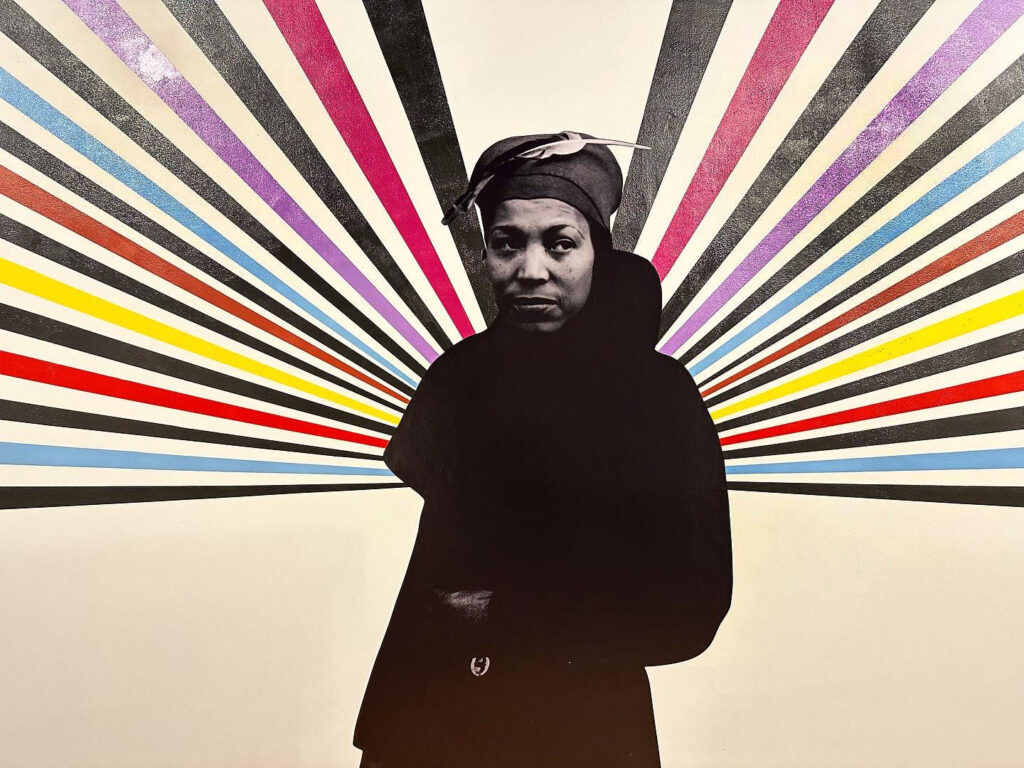
About the mural, Zora III, commissioned by the museum (pictured above)-
Zora Neale Hurston was an American author, anthropologist, and filmmaker. She portrayed racial struggles in the early-1900s American South and published research on hoodoo (a set of spiritual practices, traditions, and beliefs created by enslaved Africans in the Southern U.S.). The most popular of her four novels is Their Eyes Were Watching God, published in 1937. Born in Notasulga, Alabama, Hurston grew up near Orlando, in Eatonville, Florida, incorporated in 1887 as one of the first self-governing all-black municipalities in the country. Despite her landmark achievements, Hurston died penniless and in obscurity in 1960-her novels and other writings largely unknown, until they were single-handedly rescued by novelist Alice Walker in 1975. Through his wall painting Rico Gatson extends the monumental impact of Hurston’s legacy-and Walker’s- into a visual arena reminiscent of the Mexican Muralists and hand-painted cinema signs.
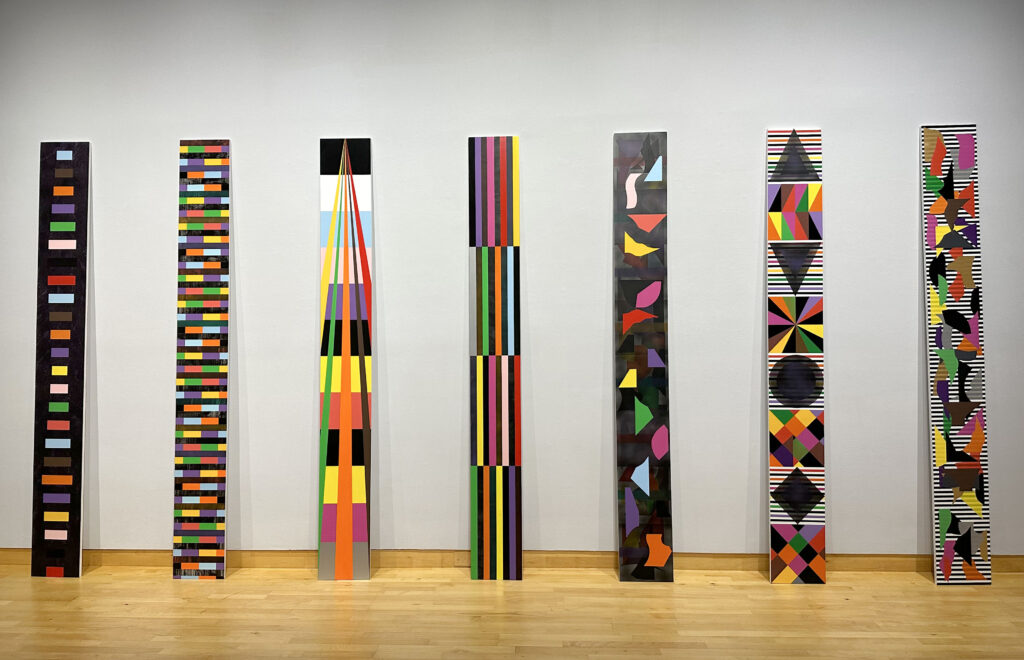
“Untitled (Seven Panels)”, 2022 acrylic paint on wood, in seven parts
From the museum’s wall plaque about the above paintings-
According to catalog contributor Mark Fredricks, Rico Gatson’s “panel paintings” resemble “a musical framework.” Arranged together along a single wall, the “rhythm” animating their colorful compositions and their “uniformity of structure” suggest, anthropomorphically speaking, musicians in a jazz combo. One of the many ways in which Gatson draws on music as a lasting influence in his art, his seven panels approximate what legendary jazz player Albert Ayler described as “the healing force of the universe,” but in three dimensions.
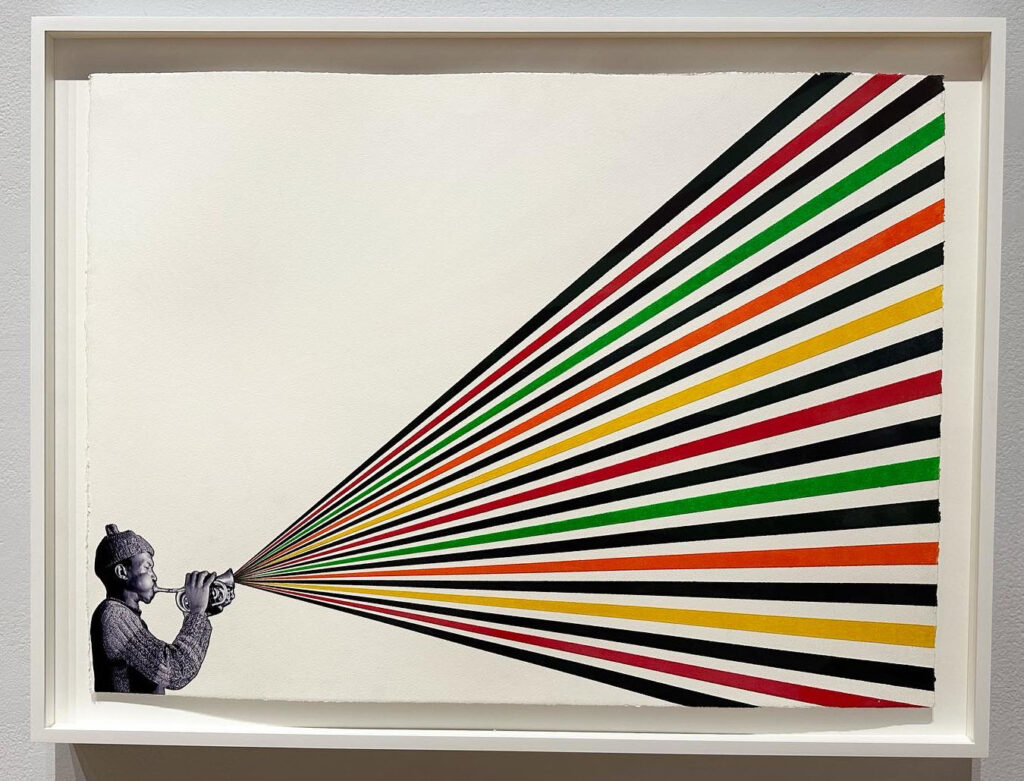
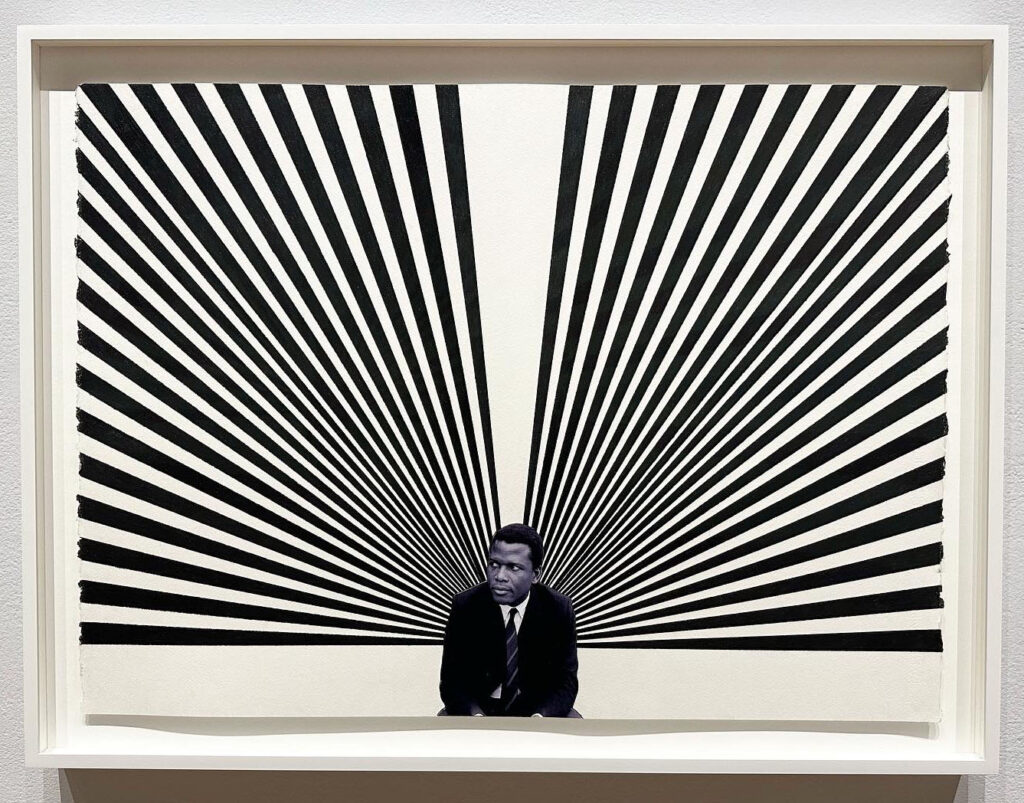
“Don” 2022, Color pencil and photo-collage on paper
“Sidney” 2022, Color pencil and photo-collage on paper
“Miles #2″ 2022, Color pencil and photo-collage on paper
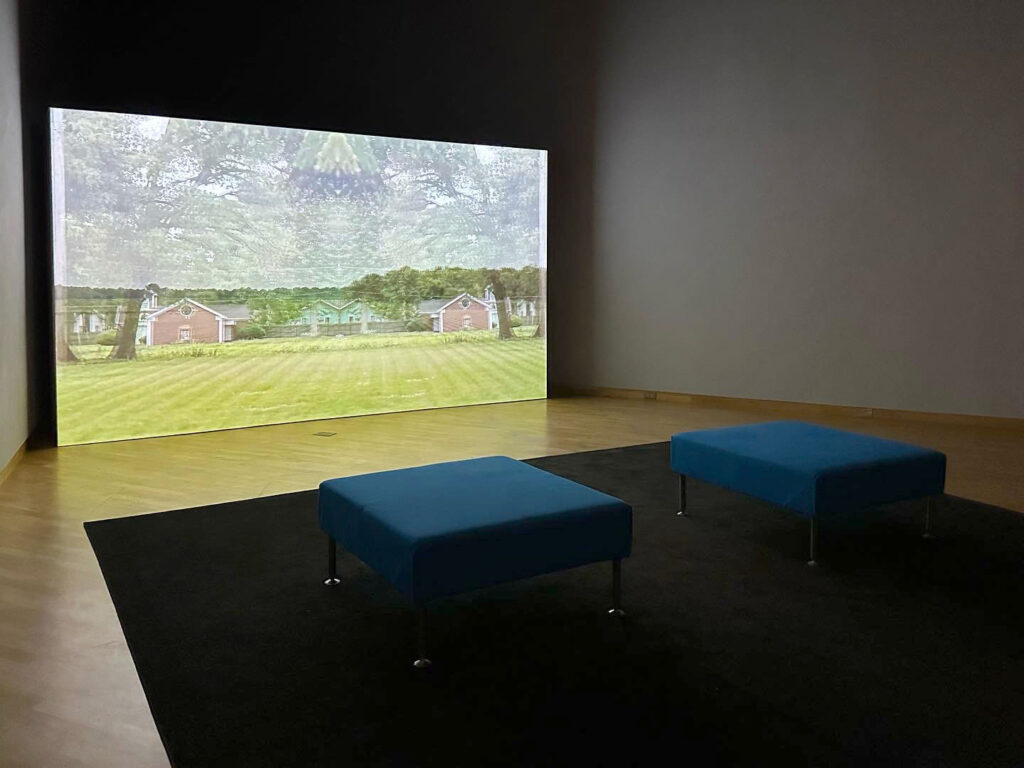
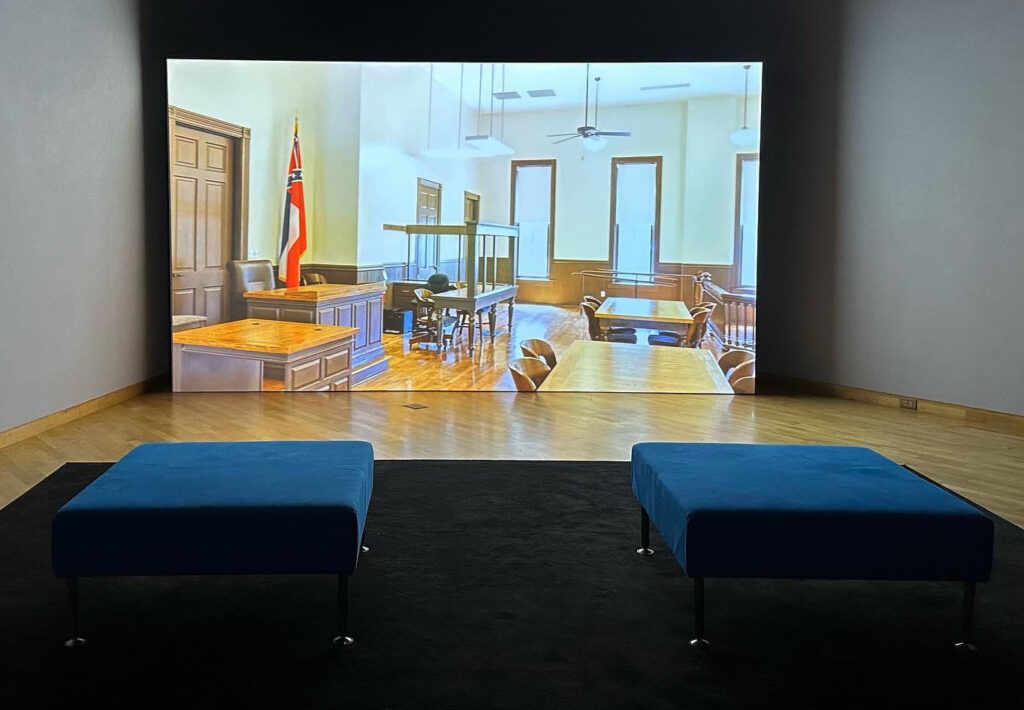
Below are images are from Four Stations, one of the five moving image works in the exhibition. For this work, Gatson traveled to Money, Mississippi and took handheld footage along the trail of places and events that led to the lynching of 14-year-old Emmett Till.
“Four Stations” 2017
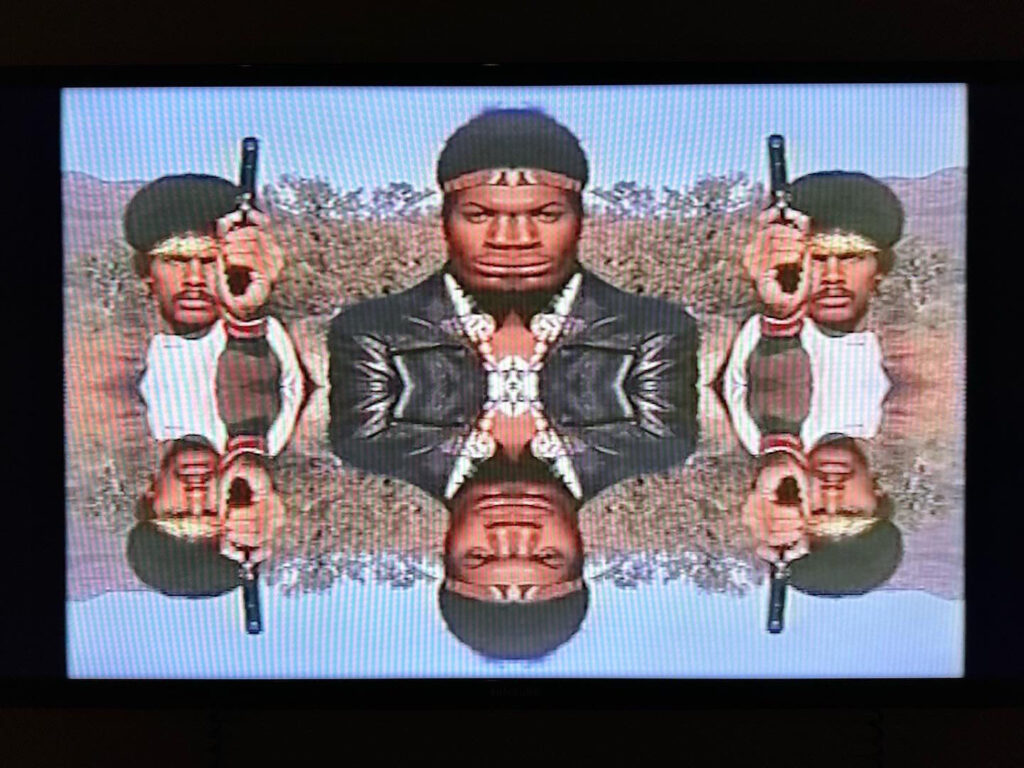
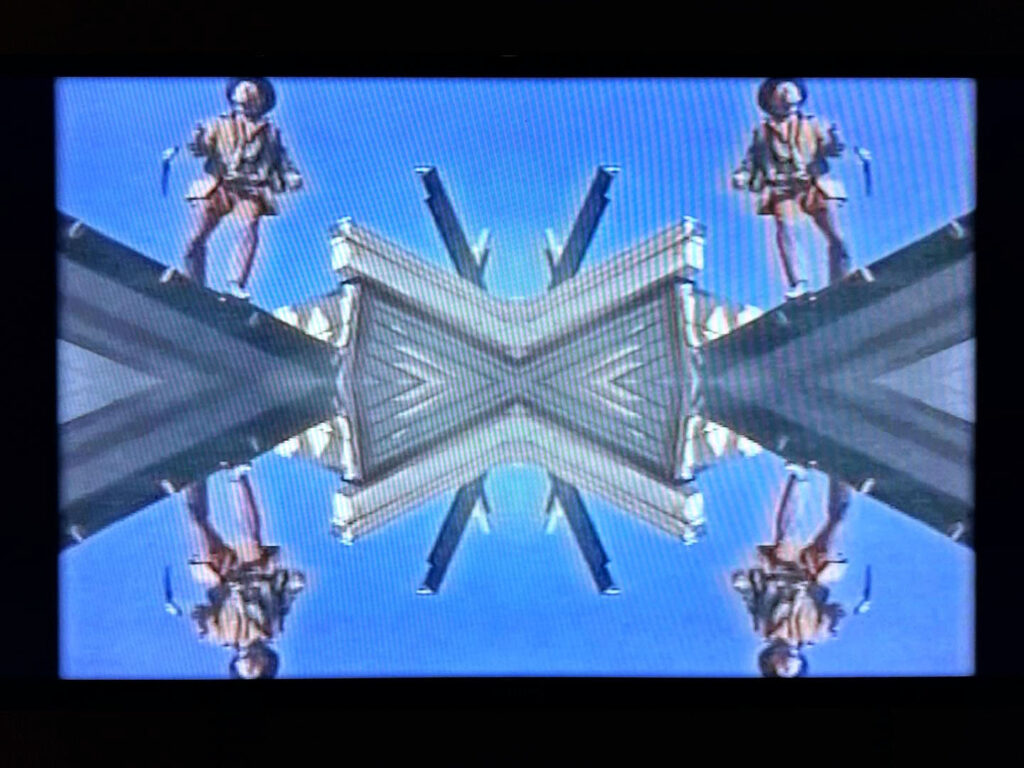
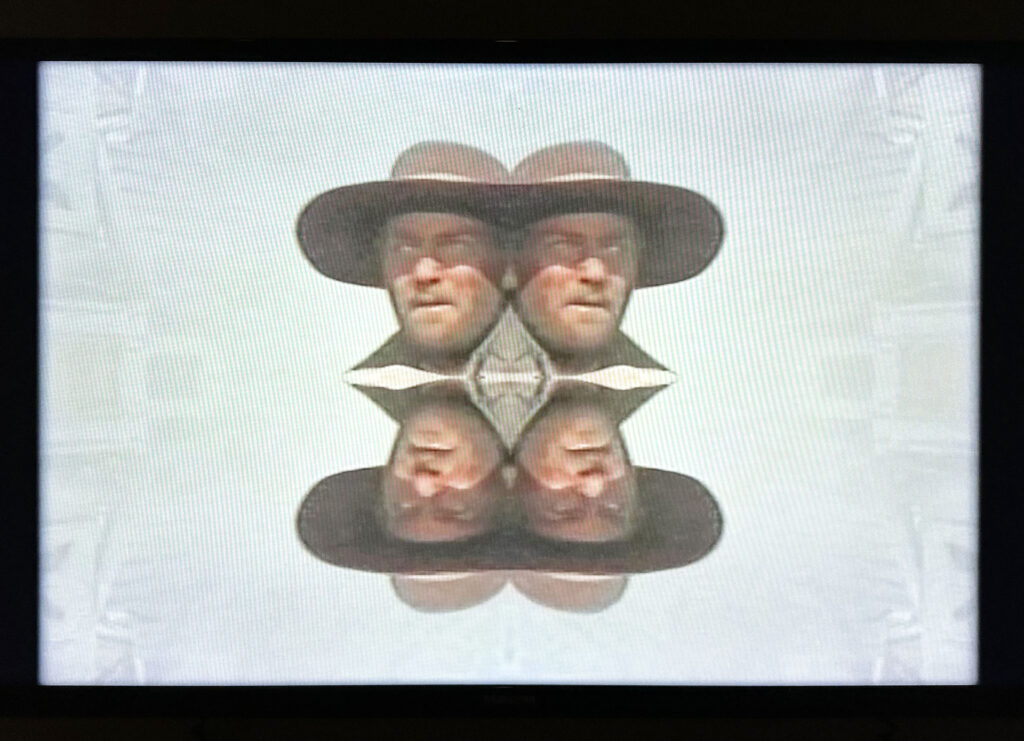
On one of the smaller screens is Gun Play, 2001, a film collage that mixes sequences from Foxy Brown and The Good, the Band and the Ugly, combining them together with kaleidoscopic effects.
This Thursday 7/27/23, the museum will be showing Spike Lee’s Do the Right Thing, the last of the three films chosen by Gatson to accompany the exhibition.
I Speak Machine is an audio/visual project founded by Los Angeles based artist Tara Busch and filmmaker/writer Maf Lewis. The song is from the 2o22 album WAR.
I Speak Machine are playing at the Moroccan Lounge in Los Angeles on Friday, 7/21/23.
Richard Linklater’s 1990 film Slacker, is a wonderful trip back in time to the pre-Internet days and a celebration of American eccentricity. If you haven’t seen it, the film follows various different Austin locals in brief scenes and conversations, all within a 24 hour period in 1989.
The film opens on a monologue from Linklater himself describing his dream to a taxi driver and then moves on to a man who hits his mother with a car. The scenes flow from one character or group to a new one almost seamlessly. Conspiracy theorists, coffee shop philosophers, a man who collects televisions and disaster footage, a group of housemates reading a story on postcards from a former housemate left behind, and on and on as the day turns to night and then back to day again.
Linklater wrote these interactions and many of them are based on stories or projects from the people seen in the film. In his director’s commentary he gives the background for many of the involved participants. He also explains how he directed them not to treat any of the people speaking as if they are strange or odd. It’s another aspect of the film that makes it special, and a reminder of the way we should try to treat people.
Sadly Teresa Taylor (pictured in the above two photos center), aka Teresa Nervosa, one time drummer for the Butthole Surfers, died last month. Her image was used for the movie poster and promotional materials. Her scene in Slacker is one of the most memorable as well. She tells a story of a highway suicide and then attempts to sell what she claims is singer Madonna’s pap smear.
Closing tomorrow, 6/24, is Cross Communication, an exhibition of Chris Burden’s relics, films, video works, and other materials that document his early performances at Gagosian’s 75th and Park location in NYC.
Walking into the gallery and hearing one of his TV commercials in which he reads off the names of famous artists followed by his own name (Chris Burden Promo (1976)), is a humorous introduction to Burden’s often audacious work. Poem for LA from 1975, which follows with the messages- “SCIENCE HAS FAILED”, “HEAT IS LIFE” and “TIME KILLS” still resonates today.
Check out the video below to see the commercials and hear Burden discuss the work.
Other videos included have him crawling across glass; lying between two sheets of glass that are on set on fire (Icarus); and one of his most infamous- being shot in the arm (Shoot, 1971). The less outrageous works are great too, including Disappearing (1971), pictured above.
For more on the artist, the excellent documentary Burden, by Richard Dewey and Timothy Marrinan, follows his career from these earlier works to the large scale sculptures like Metropolis II and Urban Light that came later. Both of these installations are on view in Los Angeles at LACMA.
These days it’s hard not to think sometimes about the end of the world. But have you started putting together a plan? Thought about who would be good in a crisis? Put together a pros and cons list of your friends, family and acquaintances? Wondered if things would actually be better?
Finn Schult’s current exhibition Everything You’ve Ever Wanted at Gallery 114 at Hillsborough Community College’s Ybor City location, presents an interesting take on the current state of things for those with the end on their minds. It includes paintings, animal traps, an ipod and walkie talkie, as well as a book containing photos, prepper information, journal entries, drawings, and some pros and cons for the people in his life, including his mom. The paintings are titled “L’appel Du Vide” a French phrase meaning “the call of the void” or the urge to jump when you are standing in a high place.
From the gallery’s website-
Everything You’ve Ever Wanted is a solo exhibition of new work by Finn Schult (b. 1993, Naples, FL) reflecting on the inevitability of the end of the world and the fantasy of apocalypse as catalyst for utopia. Schult’s multimedia series exists as fragments, sketches and interludes distilled from an otherwise deranged web of theories. At times, the artworks presented in Gallery114@HCC feel terroristic, violent and unbearably bleak–at other times, they remind us of the beauty inherent in loss, longing and love. Schult’s work yearns for a world that doesn’t yet exist and mourns for a world that isn’t yet gone, answering the cry, “How will I ever get out of this labyrinth?” with “The only way out is through.”
There is also a video in the exhibition, Where r u rn? which mixes a variety of imagery with a bit of author and mystic Terence McKenna’s 1999 final interview where he discusses “the fire in the madhouse at the end of time”- the possibility of the craziness in the world being a sign of the dying of our species.
Between 1915 and 1970, in the wake of racial terror during the post-Reconstruction period, millions of Black Americans fled from their homes to other areas within the South and to other parts of the country. This remarkable movement of people, known as the Great Migration, caused a radical shift in the demographic, economic, and sociopolitical makeup of the United States. A Movement in Every Direction: Legacies of the Great Migration brings together twelve contemporary artists to consider the complex impact of this period on their lives, as well as on social and cultural life, with newly commissioned works ranging from large-scale installation, immersive film, and tapestry to photography, painting, and mixed media. Featured artists are Akea Brionne, Mark Bradford, Zoë Charlton, Larry W. Cook, Torkwase Dyson, Theaster Gates Jr., Allison Janae Hamilton, Leslie Hewitt, Steffani Jemison, Robert Pruitt, Jamea Richmond-Edwards, and Carrie Mae Weems.
A Movement in Every Direction presents a departure from traditional accounts of the Great Migration, which are often understood through a lens of trauma, and reconceptualizes them through stories of self-possession, self-determination, and self-examination. While the South did lose generations of courageous, creative, and productive Black Americans due to racial and social inequities, the exhibition expands the narrative by introducing people who stayed in, or returned to, the region during this time. Additionally, the Brooklyn Museum’s presentation centers Brooklyn as another important site in the Great Migration, highlighting historical and contemporary census data about the borough’s migration patterns. Visitors are encouraged to share their own personal and familial stories of migration through an oral history “pod” available in the exhibition galleries.
About Robert Pruitt’s work, pictured above, from the museum’s wall information plaque-
“A Song for Travelers” celebrates the individual and Black collective experiences that have shaped the histories of rural East Texas and Houston’s Third, Fourth, and Fifth Wards. In this drawing-based on an early 1970’s photograph of a reunion of the artist’s family in Dobbin, Texas -sixteen people gather around a seated central figure about to embark on a journey. During the creation of this work, the masked traveler became a stand-in for Pruitt, who had recently left his hometown of Houston.
Pruitt often draws inspiration from his and others’ family photographs while examining historical events that have impacted Houston’s Black communities. Wearing costumes and adorned with items that reference various aspects of Black culture found in schools, social clubs, and religious spaces, the figures in the work reflect the numerous networks that remained and flourished in the South. Merging the Great Migration period with the present, Pruitt centers the Black neighborhoods across the southern region that served as safe havens and rich sites of cultural expression for migrants during the twentieth century. This link extends to today as many Black Americans leave the northern and western cities that once attracted their elders and return to the South.
Allison Janae Hamilton’sA House Called Florida, below, takes the viewer on a journey through part of northern Florida’s natural beauty.
From the museum’s information plaque about the video installation-
Allison Janae Hamilton produced the three-channel film installation A House Called Florida in her hometown region of northern Florida. The breathtaking landscapes of Apalachicola Bay and the swampy Blackwater Lakes of Florida’s Big Bend frame musicians, dancers, motorists, a Victorian house, and a slow resounding rhythm.
The artist references French Argentinian writer Julio Cortázar’s 1946 short story “Casa Tomada.” (“House Taken Over”) about ghosts that slowly take over a home and eventually push out its owners, room by room. Hamilton echoes the story’s theme of displacement with two regally dressed, spirit-like protagonists who move about the house engaging in mark-making and ritual performances. Hamilton’s film pays tribute to the Black Floridians who remained in the Red Hills and the Forgotten Coast regions, despite the racial violence and environmental precariousness they faced throughout the nineteenth and twentieth centuries.
Carrie Mae Weems‘ personal and moving contribution is in two parts- a series of photographs and a unique digital video installation.
The museum’s description of the work-
Carrie Mae Weems explores a painful family story: the disappearance of her grandfather Frank Weems, a tenant farmer and union activist who was attacked by a white mob in Earle Arkansas, in 1936. Presumed dead, he narrowly escaped and made his way to Chicago on foot, never again reuniting with his family. Frank Weems may have followed the North Star to Chicago. Weems’s series of seven prints, The North Star, makes an apt metaphor for Frank’s life. In Leave! Leave Now! Weems conjures the figure of her grandfather with a Pepper’s Ghost, a late nineteenth-century form of illusion first used in theater. By weaving historical events with fragmented family stories, photographs, poetry, music, and interviews, the artist reveals the tragedy of her grandfather’s disappearance and the aftermath.
This exhibition will close on Sunday, June 25th, 2023.